EP2416283A1 - Decision tree generation program, decision tree generation method, and decision tree generation apparatus - Google Patents
Decision tree generation program, decision tree generation method, and decision tree generation apparatus Download PDFInfo
- Publication number
- EP2416283A1 EP2416283A1 EP09842960A EP09842960A EP2416283A1 EP 2416283 A1 EP2416283 A1 EP 2416283A1 EP 09842960 A EP09842960 A EP 09842960A EP 09842960 A EP09842960 A EP 09842960A EP 2416283 A1 EP2416283 A1 EP 2416283A1
- Authority
- EP
- European Patent Office
- Prior art keywords
- decision tree
- constraint condition
- attribute
- generating
- case
- Prior art date
- Legal status (The legal status is an assumption and is not a legal conclusion. Google has not performed a legal analysis and makes no representation as to the accuracy of the status listed.)
- Ceased
Links
Images






Classifications
-
- G—PHYSICS
- G06—COMPUTING OR CALCULATING; COUNTING
- G06N—COMPUTING ARRANGEMENTS BASED ON SPECIFIC COMPUTATIONAL MODELS
- G06N20/00—Machine learning
-
- G—PHYSICS
- G06—COMPUTING OR CALCULATING; COUNTING
- G06N—COMPUTING ARRANGEMENTS BASED ON SPECIFIC COMPUTATIONAL MODELS
- G06N5/00—Computing arrangements using knowledge-based models
- G06N5/02—Knowledge representation; Symbolic representation
Definitions
- the present invention relates to a decision tree generation technique for automatically generating a decision tree from a case set.
- a decision tree is used for building of an expected model, decision-making analysis/optimization, resolution of a classification problem, description of concept/knowledge, rule extraction/generation and the like.
- the decision tree is represented with a tree diagram by hierarchizing repetitions of branches.
- a technique for automatically generating a decision tree a technique for automatically generating a decision tree based on, for example, an average amount of information (entropy) of each case in a case set.
- Patent Document 1 Japanese Laid-open Patent Publication No. HEI9-330224
- the present invention aims at providing a decision tree automatic generation technique that reduces decision tree modification operations performed by an operator by automatically generating a decision tree from a case set with introduction of a constraint condition that stipulates a structure of the decision tree.
- This decision tree generation technique newly introduces a constraint condition that stipulates a structure of a decision tree. Then, the decision tree is generated from the case set where values of a plurality of attributes and a conclusion are associated with one another so that the structure of the decision tree, which is stipulated by the constraint condition, is satisfied.
- FIG. 1 illustrates one embodiment of a decision tree generating apparatus embodying the present technique
- FIG. 1 illustrates one embodiment of a decision tree generating apparatus embodying the present technique.
- An object of this decision tree generating apparatus in this embodiment is to generate a decision tree implemented by hierarchizing troubleshooting procedures of an information system.
- the decision tree generating apparatus 10 is configured by using a general-purpose computer having an external storage device such as a hard disk or the like.
- an external storage device of the decision tree generating apparatus 10 a case DB (database) 12, a modification history DB 14, a decision tree DB 16 and a constraint condition DB 18 are respectively recorded.
- the case DB 12 holds, as a case set 12A regarding troubles of an information system, a set of records where values of attributes (branch conditions a 1 to a 3 ) of a decision tree and a cause (conclusion) are associated with one another respectively for cases (cases 1 to 4) as illustrated in FIG. 2 .
- the modification history DB 14 holds a decision tree ( FIG. 3 ) before being edited, and a decision tree ( FIG. 4 ) after being edited as illustrated in FIGs. 3 and 4 as a modification history 14A of the decision tree edited by an operator. Not the decision trees themselves illustrated in FIG. 3 and 4 but information that can identify a portion changed from the decision tree before being edited may be used as the modification history 14A of the decision tree.
- the decision tree DB 16 holds the latest decision tree automatically generated, a decision tree immediately before the latest one, and a decision tree modified or verified by an operator as various types of decision trees 16A.
- the constraint condition DB 18 holds each constraint condition 18A for stipulating a structure of the decision tree as follows.
- the constraint condition 18 at least Ignore(A) stipulating that an attribute A is ignored, AcceptAfter(A, ⁇ B,C,D ⁇ ) stipulating that the attribute A is subordinate to attributes B, C and D, and AcceptBefore(A, ⁇ B,C,D ⁇ ) stipulating that the attribute A is superordinate to the attributes B, C and D are applied.
- the braces ⁇ ⁇ represent a set of attributes.
- Ignore(A), AcceptAfter(A, ⁇ B,C,D ⁇ ) and AcceptBefore(A, ⁇ B,C,D ⁇ ) correspond to a first constraint condition, a second constraint condition and a third constraint condition, respectively.
- a case inputting unit 20, a decision tree generating unit 22, a difference displaying unit 24, a decision tree editing unit 26, a decision tree outputting unit 28, a modification history storing unit 30, and a constraint condition generating unit 32 are respectively embodied by executing a decision tree generating program stored in the external storage device.
- the decision tree generating program is installed from a computer-readable recording medium such as a CD-ROM or the like recording the decision tree generating program.
- the case inputting unit 20 reads the case set 12A from the case DB 12.
- the decision tree generating unit 22 references the constraint condition 18A held in the constraint condition DB 18 to automatically generate a decision tree from the case set 12A read by the case inputting unit 20.
- the difference displaying unit 24 references the decision tree DB 16 to display a difference between the latest decision tree automatically generated by the decision tree generating unit 22 and a decision tree immediately before the latest one on a display device such as a monitor or the like.
- the decision tree editing unit 26 provides an editing function for suitably editing the decision tree automatically generated by the decision tree generating unit 22 in an interactive environment in collaboration with the display device and a pointing device such as a mouse or the like.
- the decision tree outputting unit 28 stores a decision tree 16A (including a decision tree 16A only verified) edited by the decision tree editing unit 26 in the decision tree DB 16.
- the modification history storing unit 30 stores a modification history 14A of the decision tree edited by the decision tree editing unit 26 in the modification history DB 14.
- the constraint condition generating unit 18 automatically generates the constraint condition 18A from the modification history 14A while referencing the modification history 14A held in the modification history DB 14, and stores the automatically generated constraint condition 18A in the constraint condition DB 18.
- the case inputting unit 20 respectively corresponds to a step of reading the case set, and case inputting means
- the decision tree generating unit 22 respectively corresponds to a step of generating a decision tree, and decision tree generating means.
- the decision tree editing unit 26 respectively corresponds to a step of editing a decision tree, and decision tree editing means
- the constraint condition generating unit 32 respectively corresponds to a step of generating/storing a constraint condition, and constraint condition generating means.
- FIG. 5 illustrates a case input process executed by the case inputting unit 20 at the timing when an operator issues a decision tree generation instruction.
- step 1 abbreviated to S1 in the drawings. The same applies to the other steps hereinafter
- the case inputting unit 20 reads the case set 12A from the case DB 12.
- step 2 the case inputting unit 20 transmits the decision tree generation request to the decision tree generating unit 22.
- FIGs. 6 and 7 illustrate a decision tree generation process executed by the decision tree generating unit 22 at the timing when the decision tree generation request is issued from the case inputting unit 20. Details of the decision tree generation process, see Quinlan, J.R “Induction of Decision Trees” Machine Learning, vol.1, No.1, pp 81-106 (1986) (http://www.springerlink.com/content/ku63wm5513224245/fullt ext.pdf ) or the like, which explains known C4.5.
- step 11 the decision tree generating unit 22 extracts attributes from the case set 12A read by the case inputting unit 20, and registers all the attributes to a candidate list in a memory.
- step 12 the decision tree generating unit 22 reads a constraint condition 18A from the constraint condition DB 18.
- step 13 the decision tree generating unit 22 generates a constraint condition instance obtained by copying the constraint condition 18A in the memory.
- step 14 the decision tree generating unit 22 deletes an attribute X from the candidate list for the constraint condition Ignore(X) (X: attribute), and deletes Ignore (X) itself from the constraint condition instance. If the constraint condition Ignore (X) does not exist, no change is made to the candidate list and the constraint condition instance.
- step 15 the decision tree generating unit 22 deletes the attribute A of the constraint condition AcceptAfter(A, ⁇ A1,A2,... An ⁇ ) (A,A1,A2,...An:attributes) from the candidate list. Note that no change is made to the candidate list if the constraint condition AcceptAfter (A, ⁇ A1,A2, ... An ⁇ ) does not exist.
- step 16 the decision tree generating unit 22 creates a root node N, and makes all the cases belong to the root node N.
- step 17 the decision tree generating unit 22 determines whether or not causes Y of cases belonging to the root node N are the same. If the decision tree generating unit 22 determines that the causes Y of the cases are not the same ("NO" in step 17), the flow goes to step S18. If the decision tree generating unit 22 determines that the causes Y of the cases are the same ("YES" in step 17), the flow goes to step 26.
- the decision tree generating unit 22 computes a reduction amount of an average amount of information (entropy) that represents a deviation of a probability distribution by dividing a case set C by a value of an attribute a i .
- An index such as a Gini index, an information gain or the like may be used as a replacement for the average amount of information.
- the decision tree generating unit 22 selects an attribute a k having the largest reduction amount of the average amount of information.
- step 20 the decision tree generating unit 22 determines whether or not an attribute set ⁇ B1,B2,...,Bn ⁇ of each constraint condition AcceptBefore(B, ⁇ B1,B2,...,Bn ⁇ ) includes an attribute a k . If the decision tree generating unit 22 determines that the attribute set (B, ⁇ B1,B2,...,Bn ⁇ ) does not include the attribute a k ("NO" in step 20), the flow goes to step S21. Alternatively, if the decision tree generating unit 22 determines that the attribute set (B, ⁇ B1,B2,...,Bn ⁇ ) includes the attribute a k ("YES" in step 20), the flow goes to step S24.
- step 21 the decision tree generating unit 22 determines whether or not an attribute set (A, ⁇ A1,A2,...,An ⁇ ) of each constraint condition AcceptAfter(A, ⁇ A1,A2,...,An ⁇ ) includes the attribute a k . If the decision tree generating unit 22 determines that the attribute set (A, ⁇ A1,A2,...,An ⁇ ) does not include the attribute a k ("NO" in step 21), the flow goes to step 22. Alternatively, if the decision tree generating unit 22 determines that the attribute set (A, ⁇ A1,A2,...,An ⁇ ) includes the attribute a k ("YES" in step 21), the flow goes to step 25.
- step 22 the decision tree generating unit 22 deletes the attribute a k from the candidate list.
- step 24 the decision tree generating unit 22 sets the attribute a k for an attribute B if the attribute B of the constraint condition AcceptBefore(B, ⁇ B1,B2,...,Bn ⁇ ) is not employed.
- step 25 the decision tree generating unit 22 deletes the attribute a k from the attribute set (A, ⁇ A1,A2,...,An ⁇ ) of the constraint condition AcceptAfter(A,(A1,A2,...,An)). Then, the flow goes to step 22. If the attribute set is emptied, the decision tree generating unit 22 adds the attribute A to the candidate list, and deletes the constraint condition AcceptAfter() from the constraint condition instance.
- step 26 the decision tree generating unit 22 labels the root node with the cause Y.
- step 27 the decision tree generating unit 22 determines whether or not all the recursive processes have been terminated. If the decision tree generating unit 22 determines that all the recursive processes have been terminated ("YES" in step S27), the flow goes to step 28. Alternatively, if the decision tree generating unit 22 determines that all the recursive processes have not been terminated yet ("NO" in step S27), the flow goes back to step 17.
- step 28 the decision tree generating unit 22 stores the decision tree automatically generated with the processes of step 11 to step 27 in the decision tree DB 16.
- step 29 the decision tree generating unit 22 transmits a decision tree difference display request to the difference displaying unit 24.
- Ignore delayed process
- AcceptBefore delayed time, ⁇ influence by heavy/light load ⁇
- the cases are divided by "delayed time” and "influence by heavy/light load", which are registered to the candidate list, and a reduction amount of the average amount of information for each of the cases is computed. Since the reduction amount of the average amount of information for "delayed time” is larger than that of "influence by heavy/light load", "delayed time” is selected as the attribute a k . Moreover, the attribute set ⁇ influence by heavy/light load ⁇ of the constraint condition instance AcceptBefore (delayed time, ⁇ influence by heavy/light load ⁇ ) does not include “delayed time", and the constraint condition instance does not hold AcceptAfter().
- the root node N ⁇ case 2 ⁇ , and all of its causes Y (CPU load imposed by an increase in the amount of labor" are the same. Therefore, the root node N is labeled with "CPU load imposed by an increase in the amount of labor".
- the root node N ⁇ case 1, case 3, case 4 ⁇ , and all of their causes Y are not the same. Accordingly, the case 1, the case 3 and the case 4, which belong to the root node N, are respectively divided by "influence by heavy/light load" registered to the candidate list, and a reduction amount of the average amount of information of each of the cases is computed.
- the attribute set ⁇ influence by heavy/light load ⁇ of the constraint condition instance AcceptBefore includes “influence by heavy/light load”. Since this is employed, the constraint condition instance is not changed, and "influence by heavy/light load” is deleted from the candidate list. As a result, the candidate list is emptied. Then, as illustrated in FIG.
- FIG. 11 illustrates a difference display process executed by the difference displaying unit 24 at the timing when the decision tree generating unit 22 issues a difference display request.
- the difference displaying unit 24 reads the latest decision tree and a decision tree immediately before the latest one from the decision tree DB 16.
- the difference displaying unit 24 extracts a difference between the latest decision tree and the decision tree immediately before the latest one.
- step 33 the difference displaying unit 24 visibly displays the changed portion of the decision tree, which is identified with the difference.
- “visibly displayed” means that the changed portion is output to the display device such as a monitor or the like so that an operator can view the changed portion.
- the difference displaying unit 24 issues a decision tree editing start request to the decision tree editing unit 26. Note that the editing start request is transmitted to the decision tree editing unit 26 when the operator instructs the difference display to be terminated.
- FIG. 12 illustrates a decision tree editing process executed by the decision tree editing unit 26 at the timing when the difference displaying unit 24 issues the editing start request.
- the decision tree editing unit 26 suitably edits a decision tree generated by the decision tree generating unit 22 according to an instruction of the operator.
- the decision tree editing unit 26 determines whether or not to terminate the editing process, for example by judging whether or not the operator has issued an editing termination instruction. If the decision tree editing unit 26 determines to terminate the editing process ("YES" in step S42), the flow goes to step S43. Alternatively, if the decision tree editing unit 26 determines not to terminate the editing process ("NO" in step S42), the flow goes back to step S41.
- step 43 the decision tree editing unit 26 transmits a start request to notify the start of each of the processes respectively to the decision tree outputting unit 28 and the modification history storing unit 30.
- FIG. 13 illustrates a decision tree output process executed by the decision tree outputting unit 28 at the timing when the decision tree editing unit 26 issues the start request.
- step 51 the decision tree outputting unit 28 stores a decision tree edited by the decision tree editing unit 26 in the decision tree DB 16.
- FIG. 14 illustrates a modification history storage process executed by the modification history storing unit 30 at the timing when the decision tree editing unit 26 issues the start request.
- the modification history storing unit 30 stores the decision tree before being edited by the decision tree editing unit 26 in the modification history DB 14.
- a decision tree after being edited, which is stored in the modification history DB 14, may be used as a replacement for the decision tree before being edited.
- step 62 the modification history storing unit 30 stores the decision tree after being edited by the decision tree editing unit 26 in the modification history DB 14.
- step 63 the modification history storing unit 30 transmits a constraint condition generation request to the constraint condition generating unit 32.
- FIG. 15 illustrates a constraint condition generation process executed by the constraint condition generating unit 32 at the timing when the modification history storing unit 30 issues the generation request.
- step 71 the constraint condition generating unit 32 reads the decision tree before being edited and the decision tree after being edited respectively from the modification history DB 14.
- step 72 the constraint condition generating unit 32 extracts a difference between the decision tree before being edited and the decision tree after being edited.
- the difference between the decision tree before being edited and the decision tree after being edited an attribute deleted from the decision tree before being edited, an attribute added to the decision tree before being edited, an attribute moved to a position close to the root, or an attribute moved to a position far from the root is extracted.
- step 73 if there is an attributed deleted from the decision tree before being edited, the constraint condition generating unit 32 generates a constraint condition Ignore (deleted attribute).
- step 74 if there is an attribute added to the decision tree before being edited, the constraint condition generating unit 32 generates a constraint condition AcceptBefore (added attribute, ⁇ a set of attributes subordinate to the added attribute ⁇ ).
- step 75 if there is an attribute moved to a position close to the root in the decision tree before being edited, the constraint condition generating unit 32 generates a constraint condition AcceptBefore(moved attribute, ⁇ set of attributes subordinate to the moved attribute ⁇ ).
- step 76 if there is an attributed moved to a position far from the root in the decision tree before being edited, the constraint condition generating unit 32 generates a constraint condition AcceptAfter(moved attribute, ⁇ set of attributes superordinate to the moved attribute ⁇ ).
- step 77 the constraint condition generating unit 32 stores the constraint conditions generated in step 73 to step 76 in the constraint condition DB 18.
- a process executed until a constraint condition is generated from the decision trees before and after being edited which are illustrated in FIGs. 4 and 3 , is described to ease the understanding of the constraint condition generation process.
- the decision tree ( FIG. 3 ) before being edited and the decision tree ( FIG. 4 ) after being edited are respectively read from the modification history DB 14.
- a deletion of "delayed process” and an addition of "delayed time” prior to "influence by heavy/light load” are extracted as differences between the decision trees.
- a constraint condition 18A that stipulates a structure of a decision tree is generated from the decision tree modification history DB 14A by an operator. Then, a decision tree is generated from the case set 12A so that the structure of the decision tree, which is stipulated by the constraint condition 18A, is satisfied. Accordingly, a basic structure of the decision tree is succeeded even if a new case is added to the case set 12A. This can avoid a situation where an operator needs to significantly modify the decision tree. Accordingly, operations of modifying the decision tree by the operator can be reduced.
- the constraint condition 18A that stipulates the structure of the decision tree is automatically generated from the decision tree modification history DB 14A, leading to saving of labor needed to create the decision tree.
- the constraint condition 18A that stipulates the structure of a decision tree is represented with at least Ignore(A), AcceptAfter(A, ⁇ B,C,D ⁇ ) and AcceptBefore(A, ⁇ B,C,D ⁇ ), whereby a control can be prevented from becoming complicated.
- the second argument is represented with a set in AcceptAfter(A, ⁇ B,C,D ⁇ ) and AcceptBefore(A, ⁇ B,C,D ⁇ ). Therefore, even if a decision tree is complicated, a structure of the decision tree can be stipulated. Furthermore, a difference between the latest decision tree and a decision tree immediately before the latest one is displayed on a display device before the decision tree starts to be edited. Therefore, an operator can easily learn where to modify the decision tree.
- the constraint condition 18A that stipulates the structure of a decision tree may be created by an operator who edits the decision tree and may be stored in the constraint condition DB 18.
- the modification history DB 14, the modification history storing unit 30 and the constraint condition generating unit 32 are not necessary. Moreover, it is not always needed to include the difference displaying unit 24.
- the case DB 12 and the decision tree DB 16 may be recorded in an external storage device outside the decision tree generating apparatus 10.
Landscapes
- Engineering & Computer Science (AREA)
- Theoretical Computer Science (AREA)
- Software Systems (AREA)
- Computing Systems (AREA)
- Evolutionary Computation (AREA)
- Physics & Mathematics (AREA)
- Data Mining & Analysis (AREA)
- General Engineering & Computer Science (AREA)
- General Physics & Mathematics (AREA)
- Mathematical Physics (AREA)
- Artificial Intelligence (AREA)
- Computational Linguistics (AREA)
- Computer Vision & Pattern Recognition (AREA)
- Medical Informatics (AREA)
- Information Retrieval, Db Structures And Fs Structures Therefor (AREA)
Abstract
Description
- The present invention relates to a decision tree generation technique for automatically generating a decision tree from a case set.
- In fields such as a statistical decision theory, artificial intelligence, machine learning, data mining and the like, a decision tree is used for building of an expected model, decision-making analysis/optimization, resolution of a classification problem, description of concept/knowledge, rule extraction/generation and the like. The decision tree is represented with a tree diagram by hierarchizing repetitions of branches. As a technique for automatically generating a decision tree, a technique for automatically generating a decision tree based on, for example, an average amount of information (entropy) of each case in a case set.
- Patent Document 1: Japanese Laid-open Patent Publication No.
HEI9-330224 - In the meantime, if new cases are added to a case set one after another, there is a possibility that a decision tree used so far does not suit the new cases. For this reason, a decision tree needs to be periodically regenerated from the case set. Moreover, it cannot be always said that a decision tree automatically generated with a conventionally proposed technique suits the case set. Therefore, an operator such as an administrator or the like needs to verify an automatically generated decision tree, and to suitably modify the decision tree if necessary. Moreover, contents modified by the operator are not reflected on the decision tree automatically generated from the case set to which the new cases have been added. Accordingly, the operator needs to again make the same modifications, leading to an increase in a labor time needed to modify the decision tree.
- In light of such problems, the present invention aims at providing a decision tree automatic generation technique that reduces decision tree modification operations performed by an operator by automatically generating a decision tree from a case set with introduction of a constraint condition that stipulates a structure of the decision tree.
- This decision tree generation technique newly introduces a constraint condition that stipulates a structure of a decision tree. Then, the decision tree is generated from the case set where values of a plurality of attributes and a conclusion are associated with one another so that the structure of the decision tree, which is stipulated by the constraint condition, is satisfied.
- With this decision tree generation technique, for example, even if a new case is added to a case set, a basic structure of a decision tree is succeeded by a constraint condition, thereby avoiding a situation where an operator needs to significantly modify the decision tree. Accordingly, operations of modifying the decision tree, which are performed by the operator, can be reduced.
-
FIG. 1 illustrates one embodiment of a decision tree generating apparatus embodying the present technique; -
FIG. 2 is an explanatory view of a case set held in a case DB; -
FIG. 3 is an explanatory view of a decision tree, held in a modification history DB, before being edited; -
FIG. 4 is an explanatory view of a decision tree, held in the modification history DB, after being edited; -
FIG. 5 is a flowchart illustrating a case input process executed by a case inputting unit; -
FIG. 6 is a flowchart illustrating a decision tree generation process executed by a decision tree generating unit; -
FIG. 7 is a flowchart illustrating the decision tree generation process executed by the decision tree generating unit; -
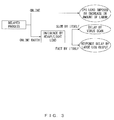
FIG. 8 is an explanatory view of an initially generated decision tree in a process executed until a decision tree is generated from a particular case set; -
FIG. 9 is an explanatory view of a decision tree generated midway in the process executed until the decision tree is generated from the particular case set; -
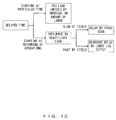
FIG. 10 is an explanatory view of a finally generated decision tree in the process executed until the decision tree is generated from the particular case set; -
FIG. 11 is a flowchart illustrating a difference display process executed by a difference displaying unit; -
FIG. 12 is a flowchart illustrating a decision tree editing process executed by a decision tree editing unit; -
FIG. 13 is a flowchart illustrating a decision tree output process executed by a decision tree outputting unit; -
FIG. 14 is a flowchart illustrating a modification history storage process executed by a modification history storing unit; and -
FIG. 15 is a flowchart illustrating a constraint condition generation process executed by a constraint condition generating unit. -
- 10
- decision tree generating apparatus
- 12
- case DB
- 12A
- case set
- 14
- modification history DB
- 14A
- modification history
- 16
- decision tree DB
- 16A
- decision tree
- 18
- constraint condition DB
- 18A
- constraint condition
- 20
- case inputting unit
- 22
- decision tree generating unit
- 24
- difference displaying unit
- 26
- decision tree editing unit
- 28
- decision tree outputting unit
- 30
- modification history storing unit
- 32
- constraint condition generating unit
- This technique is described in detail below with reference to the attached drawings.
FIG. 1 illustrates one embodiment of a decision tree generating apparatus embodying the present technique. An object of this decision tree generating apparatus in this embodiment is to generate a decision tree implemented by hierarchizing troubleshooting procedures of an information system. However, the present technique is not limited to this object.
The decisiontree generating apparatus 10 is configured by using a general-purpose computer having an external storage device such as a hard disk or the like. In the external storage device of the decisiontree generating apparatus 10, a case DB (database) 12, amodification history DB 14, adecision tree DB 16 and aconstraint condition DB 18 are respectively recorded. Thecase DB 12 holds, as a case set 12A regarding troubles of an information system, a set of records where values of attributes (branch conditions a1 to a3) of a decision tree and a cause (conclusion) are associated with one another respectively for cases (cases 1 to 4) as illustrated inFIG. 2 . Themodification history DB 14 holds a decision tree (FIG. 3 ) before being edited, and a decision tree (FIG. 4 ) after being edited as illustrated inFIGs. 3 and4 as amodification history 14A of the decision tree edited by an operator. Not the decision trees themselves illustrated inFIG. 3 and4 but information that can identify a portion changed from the decision tree before being edited may be used as themodification history 14A of the decision tree. Thedecision tree DB 16 holds the latest decision tree automatically generated, a decision tree immediately before the latest one, and a decision tree modified or verified by an operator as various types ofdecision trees 16A. Theconstraint condition DB 18 holds eachconstraint condition 18A for stipulating a structure of the decision tree as follows. - Here, as one examples of the
constraint condition 18, at least Ignore(A) stipulating that an attribute A is ignored, AcceptAfter(A,{B,C,D}) stipulating that the attribute A is subordinate to attributes B, C and D, and AcceptBefore(A,{B,C,D}) stipulating that the attribute A is superordinate to the attributes B, C and D are applied. The braces { } represent a set of attributes. Here, Ignore(A), AcceptAfter(A,{B,C,D}) and AcceptBefore(A,{B,C,D}) correspond to a first constraint condition, a second constraint condition and a third constraint condition, respectively. - Additionally, in the decision
tree generating apparatus 10, acase inputting unit 20, a decisiontree generating unit 22, adifference displaying unit 24, a decisiontree editing unit 26, a decisiontree outputting unit 28, a modificationhistory storing unit 30, and a constraintcondition generating unit 32 are respectively embodied by executing a decision tree generating program stored in the external storage device. In the external storage device of the decisiontree generating apparatus 10, the decision tree generating program is installed from a computer-readable recording medium such as a CD-ROM or the like recording the decision tree generating program. - The
case inputting unit 20 reads the case set 12A from thecase DB 12. The decisiontree generating unit 22 references theconstraint condition 18A held in theconstraint condition DB 18 to automatically generate a decision tree from the case set 12A read by thecase inputting unit 20. Thedifference displaying unit 24 references thedecision tree DB 16 to display a difference between the latest decision tree automatically generated by the decisiontree generating unit 22 and a decision tree immediately before the latest one on a display device such as a monitor or the like. The decisiontree editing unit 26 provides an editing function for suitably editing the decision tree automatically generated by the decisiontree generating unit 22 in an interactive environment in collaboration with the display device and a pointing device such as a mouse or the like. As contents of editing a decision tree, a deletion, an addition, a move or the like of an attribute are assumed. The decisiontree outputting unit 28 stores adecision tree 16A (including adecision tree 16A only verified) edited by the decisiontree editing unit 26 in thedecision tree DB 16. The modificationhistory storing unit 30 stores amodification history 14A of the decision tree edited by the decisiontree editing unit 26 in themodification history DB 14. The constraintcondition generating unit 18 automatically generates theconstraint condition 18A from themodification history 14A while referencing themodification history 14A held in themodification history DB 14, and stores the automatically generatedconstraint condition 18A in theconstraint condition DB 18. - Here, the
case inputting unit 20 respectively corresponds to a step of reading the case set, and case inputting means, and the decisiontree generating unit 22 respectively corresponds to a step of generating a decision tree, and decision tree generating means. Moreover, the decisiontree editing unit 26 respectively corresponds to a step of editing a decision tree, and decision tree editing means, and the constraintcondition generating unit 32 respectively corresponds to a step of generating/storing a constraint condition, and constraint condition generating means. -
FIG. 5 illustrates a case input process executed by thecase inputting unit 20 at the timing when an operator issues a decision tree generation instruction.
In step 1 (abbreviated to S1 in the drawings. The same applies to the other steps hereinafter), thecase inputting unit 20 reads the case set 12A from thecase DB 12.
Instep 2, thecase inputting unit 20 transmits the decision tree generation request to the decisiontree generating unit 22. -
FIGs. 6 and7 illustrate a decision tree generation process executed by the decisiontree generating unit 22 at the timing when the decision tree generation request is issued from thecase inputting unit 20. Details of the decision tree generation process, see Quinlan, J.R "Induction of Decision Trees" Machine Learning, vol.1, No.1, pp 81-106 (1986) (http://www.springerlink.com/content/ku63wm5513224245/fullt ext.pdf) or the like, which explains known C4.5. - In
step 11, the decisiontree generating unit 22 extracts attributes from the case set 12A read by thecase inputting unit 20, and registers all the attributes to a candidate list in a memory.
Instep 12, the decisiontree generating unit 22 reads aconstraint condition 18A from theconstraint condition DB 18.
Instep 13, the decisiontree generating unit 22 generates a constraint condition instance obtained by copying theconstraint condition 18A in the memory. - In
step 14, the decisiontree generating unit 22 deletes an attribute X from the candidate list for the constraint condition Ignore(X) (X: attribute), and deletes Ignore (X) itself from the constraint condition instance. If the constraint condition Ignore (X) does not exist, no change is made to the candidate list and the constraint condition instance.
Instep 15, the decisiontree generating unit 22 deletes the attribute A of the constraint condition AcceptAfter(A,{A1,A2,... An}) (A,A1,A2,...An:attributes) from the candidate list. Note that no change is made to the candidate list if the constraint condition AcceptAfter (A, {A1,A2, ... An}) does not exist. - In
step 16, the decisiontree generating unit 22 creates a root node N, and makes all the cases belong to the root node N.
Instep 17, the decisiontree generating unit 22 determines whether or not causes Y of cases belonging to the root node N are the same. If the decisiontree generating unit 22 determines that the causes Y of the cases are not the same ("NO" in step 17), the flow goes to step S18. If the decisiontree generating unit 22 determines that the causes Y of the cases are the same ("YES" in step 17), the flow goes to step 26. - In
step 18, the decisiontree generating unit 22 computes a reduction amount of an average amount of information (entropy) that represents a deviation of a probability distribution by dividing a case set C by a value of an attribute ai. An index such as a Gini index, an information gain or the like may be used as a replacement for the average amount of information.
Instep 19, the decisiontree generating unit 22 selects an attribute ak having the largest reduction amount of the average amount of information. - In
step 20, the decisiontree generating unit 22 determines whether or not an attribute set {B1,B2,...,Bn} of each constraint condition AcceptBefore(B,{B1,B2,...,Bn}) includes an attribute ak. If the decisiontree generating unit 22 determines that the attribute set (B,{B1,B2,...,Bn}) does not include the attribute ak ("NO" in step 20), the flow goes to step S21. Alternatively, if the decisiontree generating unit 22 determines that the attribute set (B,{B1,B2,...,Bn}) includes the attribute ak ("YES" in step 20), the flow goes to step S24. - In step 21, the decision
tree generating unit 22 determines whether or not an attribute set (A,{A1,A2,...,An}) of each constraint condition AcceptAfter(A,{A1,A2,...,An}) includes the attribute ak. If the decisiontree generating unit 22 determines that the attribute set (A,{A1,A2,...,An}) does not include the attribute ak ("NO" in step 21), the flow goes to step 22. Alternatively, if the decisiontree generating unit 22 determines that the attribute set (A,{A1,A2,...,An}) includes the attribute ak ("YES" in step 21), the flow goes to step 25. - In
step 22, the decisiontree generating unit 22 deletes the attribute ak from the candidate list.
Instep 23, the decisiontree generating unit 22 creates a child node Nj of the root node N by labeling the root node N with the attribute ak, and makes a case Ck belong to each child node Nj. Thereafter, the flow goes back to step 17 so that the decisiontree generating unit 22 recursively executes the processes in and after step S17 by setting the root node N=child nod Nj, and the case set C=case Ck for each child node Nj. - In
step 24, the decisiontree generating unit 22 sets the attribute ak for an attribute B if the attribute B of the constraint condition AcceptBefore(B,{B1,B2,...,Bn}) is not employed.
Instep 25, the decisiontree generating unit 22 deletes the attribute ak from the attribute set (A, {A1,A2,...,An}) of the constraint condition AcceptAfter(A,(A1,A2,...,An)). Then, the flow goes to step 22. If the attribute set is emptied, the decisiontree generating unit 22 adds the attribute A to the candidate list, and deletes the constraint condition AcceptAfter() from the constraint condition instance. - In
step 26, the decisiontree generating unit 22 labels the root node with the cause Y.
Instep 27, the decisiontree generating unit 22 determines whether or not all the recursive processes have been terminated. If the decisiontree generating unit 22 determines that all the recursive processes have been terminated ("YES" in step S27), the flow goes to step 28. Alternatively, if the decisiontree generating unit 22 determines that all the recursive processes have not been terminated yet ("NO" in step S27), the flow goes back tostep 17. - In
step 28, the decisiontree generating unit 22 stores the decision tree automatically generated with the processes ofstep 11 to step 27 in thedecision tree DB 16.
Instep 29, the decisiontree generating unit 22 transmits a decision tree difference display request to thedifference displaying unit 24.
Here, a process executed until a decision tree is generated from the case set ofFIG. 2 is described to ease the understanding of the decision tree generation process. Assume that Ignore (delayed process), and AcceptBefore (delayed time, {influence by heavy/light load}) are stored as theconstraint conditions 18A for stipulating the structure of the decision tree illustrated inFIG. 4 . - Once the decision tree generation process starts to be executed, "delayed process", "delayed time" and "influence by heavy/light load are respectively registered to the candidate list. Moreover, the
constraint conditions 18A are read from theconstraint condition DB 18, and constraint condition instances obtained by copying the constraint conditions, namely, Ignore (delayed process), and AcceptBefore(delayed time, {influence by heavy/light load}) are generated. When the constraint condition instances have been generated, the constraint condition Ignore (delayed process) exists in the constraint condition instance. Therefore, "delayed process" is deleted from the candidate list, and at the same time, Ignore (delayed process) is deleted from the constraint condition instance. As a result, "delayed time" and "influence by heavy/light load" are registered to the candidate list, whereas AcceptBefore(delayed time, {influence by heavy/light load}) is held in the constraint condition instance. Since the constraint condition AcceptAfter(A, {A1,A2, ...,An}) does not exist in the constraint condition instance, the root node N is created, and thecases 1 to 4 are made to belong to the root node N (N={case 1,case 2,case 3, case 4}). - Because the causes of the
cases 1 to 4 belonging to the root node N are not the same, the cases are divided by "delayed time" and "influence by heavy/light load", which are registered to the candidate list, and a reduction amount of the average amount of information for each of the cases is computed. Since the reduction amount of the average amount of information for "delayed time" is larger than that of "influence by heavy/light load", "delayed time" is selected as the attribute ak. Moreover, the attribute set {influence by heavy/light load} of the constraint condition instance AcceptBefore (delayed time, {influence by heavy/light load}) does not include "delayed time", and the constraint condition instance does not hold AcceptAfter(). Therefore, "delayed time" is deleted from the candidate list. As a result, only "influence by heavy/light load" is registered to the candidate list. Then, as illustrated inFIG. 8 , the root node N is labeled with "delayed time", and the case set Ck matching a branch condition is made to belong respectively to two child nodes Nj according to the number of branch conditions. Thereafter, the recursive processes are executed by setting the root node N=Nj, and the case set C=Ck for each of the child nodes Nj. - If the delayed time starts at a particular time, the root node N={case 2}, and all of its causes Y (CPU load imposed by an increase in the amount of labor" are the same. Therefore, the root node N is labeled with "CPU load imposed by an increase in the amount of labor". In contrast, if the delayed time starts at the beginning of operations, the root node N={
case 1,case 3, case 4}, and all of their causes Y are not the same. Accordingly, thecase 1, thecase 3 and thecase 4, which belong to the root node N, are respectively divided by "influence by heavy/light load" registered to the candidate list, and a reduction amount of the average amount of information of each of the cases is computed. Because an attribute having the largest reduction amount of the average amount of information is "influence by heavy/light load", "influence by heavy/light load" is selected as the attribute ak. Moreover, the attribute set {influence by heavy/light load} of the constraint condition instance AcceptBefore (delayed time, {influence by heavy/light load}) includes "influence by heavy/light load". Since this is employed, the constraint condition instance is not changed, and "influence by heavy/light load" is deleted from the candidate list. As a result, the candidate list is emptied. Then, as illustrated inFIG. 9 , the root node N is labeled with "influence by heavy/light load", and a case set Ck matching a branch condition is made to belong respectively to two child nodes Nj according to the number of branch conditions. Thereafter, the recursive processes are executed by setting the root node N=Nj, and the case set C=Ck for each of the child nodes Nj. - If "influence by heavy/light load" is slow by itself, the root node N={
case 1, case 4}, and all of their causes Y (delay by virus scan) are the same. Therefore, the root node N is labeled with "delay by virus scan". In contrast, if "influence by heavy/light load" is fast by itself, the root node N={case 3}, and all of its causes Y (response delay by a large log output) are the same. Therefore, the root node N is labeled with "response delay by a large log output". Then, all the recursive processes have been terminated, so that a decision tree illustrated inFIG. 10 is generated. -
FIG. 11 illustrates a difference display process executed by thedifference displaying unit 24 at the timing when the decisiontree generating unit 22 issues a difference display request.
Instep 31, thedifference displaying unit 24 reads the latest decision tree and a decision tree immediately before the latest one from thedecision tree DB 16.
Instep 32, thedifference displaying unit 24 extracts a difference between the latest decision tree and the decision tree immediately before the latest one. - In
step 33, thedifference displaying unit 24 visibly displays the changed portion of the decision tree, which is identified with the difference. Here, "visibly displayed" means that the changed portion is output to the display device such as a monitor or the like so that an operator can view the changed portion.
Instep 34, thedifference displaying unit 24 issues a decision tree editing start request to the decisiontree editing unit 26. Note that the editing start request is transmitted to the decisiontree editing unit 26 when the operator instructs the difference display to be terminated. -
FIG. 12 illustrates a decision tree editing process executed by the decisiontree editing unit 26 at the timing when thedifference displaying unit 24 issues the editing start request.
Instep 41, the decisiontree editing unit 26 suitably edits a decision tree generated by the decisiontree generating unit 22 according to an instruction of the operator.
Instep 42, the decisiontree editing unit 26 determines whether or not to terminate the editing process, for example by judging whether or not the operator has issued an editing termination instruction. If the decisiontree editing unit 26 determines to terminate the editing process ("YES" in step S42), the flow goes to step S43. Alternatively, if the decisiontree editing unit 26 determines not to terminate the editing process ("NO" in step S42), the flow goes back to step S41. - In step 43, the decision
tree editing unit 26 transmits a start request to notify the start of each of the processes respectively to the decisiontree outputting unit 28 and the modificationhistory storing unit 30.
FIG. 13 illustrates a decision tree output process executed by the decisiontree outputting unit 28 at the timing when the decisiontree editing unit 26 issues the start request.
Instep 51, the decisiontree outputting unit 28 stores a decision tree edited by the decisiontree editing unit 26 in thedecision tree DB 16. -
FIG. 14 illustrates a modification history storage process executed by the modificationhistory storing unit 30 at the timing when the decisiontree editing unit 26 issues the start request.
Instep 61, the modificationhistory storing unit 30 stores the decision tree before being edited by the decisiontree editing unit 26 in themodification history DB 14. A decision tree after being edited, which is stored in themodification history DB 14, may be used as a replacement for the decision tree before being edited. - In
step 62, the modificationhistory storing unit 30 stores the decision tree after being edited by the decisiontree editing unit 26 in themodification history DB 14.
In step 63, the modificationhistory storing unit 30 transmits a constraint condition generation request to the constraintcondition generating unit 32.
FIG. 15 illustrates a constraint condition generation process executed by the constraintcondition generating unit 32 at the timing when the modificationhistory storing unit 30 issues the generation request. - In
step 71, the constraintcondition generating unit 32 reads the decision tree before being edited and the decision tree after being edited respectively from themodification history DB 14.
Instep 72, the constraintcondition generating unit 32 extracts a difference between the decision tree before being edited and the decision tree after being edited. Here, as the difference between the decision tree before being edited and the decision tree after being edited, an attribute deleted from the decision tree before being edited, an attribute added to the decision tree before being edited, an attribute moved to a position close to the root, or an attribute moved to a position far from the root is extracted. - In
step 73, if there is an attributed deleted from the decision tree before being edited, the constraintcondition generating unit 32 generates a constraint condition Ignore (deleted attribute).
Instep 74, if there is an attribute added to the decision tree before being edited, the constraintcondition generating unit 32 generates a constraint condition AcceptBefore (added attribute, {a set of attributes subordinate to the added attribute}). - In
step 75, if there is an attribute moved to a position close to the root in the decision tree before being edited, the constraintcondition generating unit 32 generates a constraint condition AcceptBefore(moved attribute, {set of attributes subordinate to the moved attribute}).
Instep 76, if there is an attributed moved to a position far from the root in the decision tree before being edited, the constraintcondition generating unit 32 generates a constraint condition AcceptAfter(moved attribute, {set of attributes superordinate to the moved attribute}). - In
step 77, the constraintcondition generating unit 32 stores the constraint conditions generated instep 73 to step 76 in theconstraint condition DB 18.
Here, a process executed until a constraint condition is generated from the decision trees before and after being edited, which are illustrated inFIGs. 4 and3 , is described to ease the understanding of the constraint condition generation process.
Once the constraint condition generation process starts to be executed, the decision tree (FIG. 3 ) before being edited and the decision tree (FIG. 4 ) after being edited are respectively read from themodification history DB 14. Moreover, a deletion of "delayed process", and an addition of "delayed time" prior to "influence by heavy/light load" are extracted as differences between the decision trees. Since "delay reason" is deleted, a constraint condition Ignore (delay reason) is generated. In the meantime, since "delayed time" is added prior to "influence by heavy/light load", a constraint condition AcceptBefore(delayed time, {influence by heavy/light load}) is generated. These conditions are stored in theconstraint condition DB 18 thereafter. - With such a decision
tree generating apparatus 10, aconstraint condition 18A that stipulates a structure of a decision tree is generated from the decision treemodification history DB 14A by an operator. Then, a decision tree is generated from the case set 12A so that the structure of the decision tree, which is stipulated by theconstraint condition 18A, is satisfied. Accordingly, a basic structure of the decision tree is succeeded even if a new case is added to the case set 12A. This can avoid a situation where an operator needs to significantly modify the decision tree. Accordingly, operations of modifying the decision tree by the operator can be reduced. - At this time, the
constraint condition 18A that stipulates the structure of the decision tree is automatically generated from the decision treemodification history DB 14A, leading to saving of labor needed to create the decision tree. Moreover, theconstraint condition 18A that stipulates the structure of a decision tree is represented with at least Ignore(A), AcceptAfter(A,{B,C,D}) and AcceptBefore(A,{B,C,D}), whereby a control can be prevented from becoming complicated. Additionally, the second argument is represented with a set in AcceptAfter(A,{B,C,D}) and AcceptBefore(A,{B,C,D}). Therefore, even if a decision tree is complicated, a structure of the decision tree can be stipulated. Furthermore, a difference between the latest decision tree and a decision tree immediately before the latest one is displayed on a display device before the decision tree starts to be edited. Therefore, an operator can easily learn where to modify the decision tree. - Note that the
constraint condition 18A that stipulates the structure of a decision tree may be created by an operator who edits the decision tree and may be stored in theconstraint condition DB 18. In this case, themodification history DB 14, the modificationhistory storing unit 30 and the constraintcondition generating unit 32 are not necessary. Moreover, it is not always needed to include thedifference displaying unit 24. Furthermore, thecase DB 12 and thedecision tree DB 16 may be recorded in an external storage device outside the decisiontree generating apparatus 10.
Claims (10)
- A decision tree generating program for causing a computer having an external storage device storing a constraint condition that stipulates a structure of a decision tree to implement:a case inputting unit configured to read a case set where values of a plurality of attributes and a conclusion are associated with one another; anda decision tree generating unit configured to read the constraint condition from the external storage device, and to generate a decision tree from the case set read by the case inputting unit so that the structure of the decision tree, which is stipulated by the constraint condition, is satisfied.
- The decision tree generating program according to claim 1, further causing the computer to implement:a decision tree editing unit configured to edit the decision tree generated by the decision tree generating unit; anda constraint condition generating unit configured to generate the constraint condition from a modification history of the decision tree edited by the decision tree editing unit, and to store the generated constraint condition in the external storage device.
- The decision tree generating program according to claim 2, wherein
the constraint condition is composed of at least a first constraint condition stipulating an ignored attribute, a second constraint condition stipulating that an attribute is subordinate to other attributes, and a third constraint condition stipulating that an attribute is superordinate to other attributes. - The decision tree generating program according to claim 3, wherein
the constraint condition generating unit generates the first constraint condition that ignores an attribute if there is the attribute deleted from the decision tree, generates the second constraint condition stipulating that an attribute is subordinate to other attributes if there is the attribute moved to a position far from a root of the decision tree, or generates the third constraint condition stipulating that an attribute is superordinate to other attributes if there is the attribute added to the decision tree or if there is the attribute moved to a position close to the root of the decision tree. - The decision tree generating program according to claim 3, wherein
the other attributes in the second constraint condition and the third constraint condition are respectively represented with a set. - The decision tree generating program according to claim 1, further causing the computer to implement
a difference displaying unit configured to extract a difference between a latest decision tree generated by the decision tree generating unit and a decision tree immediately before the latest decision tree, and to display the difference on a display device. - A decision tree generating method for causing a computer having an external storage device storing a constraint condition that stipulates a structure of a decision tree to execute:a step of reading a case set where values of a plurality of attributes and a conclusion are associated with one another; anda step of reading the constraint condition from the external storage device, and of generating a decision tree from the read case set so that the structure of the decision tree, which is stipulated by the constraint condition, is satisfied.
- The decision tree generating method according to claim 7, further causing the computer to execute:a step of editing the generated decision tree according to an instruction of an operator; anda step of generating a constraint condition from a modification history of the decision tree, and of storing the generated constraint condition in the external storage device.
- A decision tree generating apparatus, comprising:an external storage device configured to store a constraint condition that stipulates a structure of a decision tree;case inputting means configured to read a case set where values of a plurality of attributes and a conclusion are associated with one another; anddecision tree generating means configured to read the constraint condition from the external storage device, and to generate a decision tree from the case set read by the case inputting means so that the structure of the decision tree, which is stipulated by the constraint condition, is satisfied.
- The decision tree generating apparatus according to claim 9, further comprising:decision tree editing means configured to edit the decision tree generated by the decision tree generating means according to an instruction of an operator; andconstraint condition generating means configured to generate a constraint condition from a modification history of the decision tree edited by the decision tree editing means, and to store the generated constraint condition in the external storage device.
Applications Claiming Priority (1)
| Application Number | Priority Date | Filing Date | Title |
|---|---|---|---|
| PCT/JP2009/056488 WO2010116450A1 (en) | 2009-03-30 | 2009-03-30 | Decision tree generation program, decision tree generation method, and decision tree generation apparatus |
Publications (2)
| Publication Number | Publication Date |
|---|---|
| EP2416283A1 true EP2416283A1 (en) | 2012-02-08 |
| EP2416283A4 EP2416283A4 (en) | 2017-12-06 |
Family
ID=42935761
Family Applications (1)
| Application Number | Title | Priority Date | Filing Date |
|---|---|---|---|
| EP09842960.8A Ceased EP2416283A4 (en) | 2009-03-30 | 2009-03-30 | Decision tree generation program, decision tree generation method, and decision tree generation apparatus |
Country Status (4)
| Country | Link |
|---|---|
| US (1) | US8606737B2 (en) |
| EP (1) | EP2416283A4 (en) |
| JP (1) | JP5293810B2 (en) |
| WO (1) | WO2010116450A1 (en) |
Cited By (2)
| Publication number | Priority date | Publication date | Assignee | Title |
|---|---|---|---|---|
| US10339681B2 (en) | 2013-11-22 | 2019-07-02 | Raytheon Company | Interactive multimedia process flow chart builder |
| CN112801231A (en) * | 2021-04-07 | 2021-05-14 | 支付宝(杭州)信息技术有限公司 | Decision model training method and device for business object classification |
Families Citing this family (3)
| Publication number | Priority date | Publication date | Assignee | Title |
|---|---|---|---|---|
| JP6795240B1 (en) | 2020-06-17 | 2020-12-02 | 株式会社エイシング | Controls, methods and programs |
| JP7502973B2 (en) * | 2020-11-19 | 2024-06-19 | 株式会社日立製作所 | Prediction rule calibration system and prediction rule calibration method |
| US20220358399A1 (en) * | 2021-05-07 | 2022-11-10 | International Business Machines Corporation | Interactive decision tree modification |
Family Cites Families (10)
| Publication number | Priority date | Publication date | Assignee | Title |
|---|---|---|---|---|
| JPH0650468B2 (en) | 1988-08-12 | 1994-06-29 | 株式会社日立製作所 | Data entry management system |
| JP2888065B2 (en) * | 1992-10-29 | 1999-05-10 | ケイディディ株式会社 | Diagnostic device using decision tree-type diagnostic knowledge |
| US5546507A (en) * | 1993-08-20 | 1996-08-13 | Unisys Corporation | Apparatus and method for generating a knowledge base |
| JP3761238B2 (en) | 1996-01-25 | 2006-03-29 | 株式会社東芝 | Judgment rule correction device and determination rule correction method |
| JPH09330224A (en) | 1996-06-10 | 1997-12-22 | Fujitsu Ltd | Decision tree generator |
| JP3323180B2 (en) * | 2000-03-31 | 2002-09-09 | 株式会社東芝 | Decision tree changing method and data mining device |
| US6704719B1 (en) * | 2000-09-27 | 2004-03-09 | Ncr Corporation | Decision tree data structure for use in case-based reasoning |
| US7287026B2 (en) * | 2002-04-05 | 2007-10-23 | Oommen John B | Method of comparing the closeness of a target tree to other trees using noisy sub-sequence tree processing |
| JP2005339529A (en) * | 2004-04-30 | 2005-12-08 | Yoichiro Ito | Expert system generation device and implementation method of expert system generation device |
| US7328218B2 (en) * | 2005-03-22 | 2008-02-05 | Salford Systems | Constrained tree structure method and system |
-
2009
- 2009-03-30 JP JP2011508093A patent/JP5293810B2/en not_active Expired - Fee Related
- 2009-03-30 EP EP09842960.8A patent/EP2416283A4/en not_active Ceased
- 2009-03-30 WO PCT/JP2009/056488 patent/WO2010116450A1/en not_active Ceased
-
2011
- 2011-09-23 US US13/200,354 patent/US8606737B2/en not_active Expired - Fee Related
Non-Patent Citations (1)
| Title |
|---|
| See references of WO2010116450A1 * |
Cited By (2)
| Publication number | Priority date | Publication date | Assignee | Title |
|---|---|---|---|---|
| US10339681B2 (en) | 2013-11-22 | 2019-07-02 | Raytheon Company | Interactive multimedia process flow chart builder |
| CN112801231A (en) * | 2021-04-07 | 2021-05-14 | 支付宝(杭州)信息技术有限公司 | Decision model training method and device for business object classification |
Also Published As
| Publication number | Publication date |
|---|---|
| US20120084236A1 (en) | 2012-04-05 |
| WO2010116450A1 (en) | 2010-10-14 |
| JPWO2010116450A1 (en) | 2012-10-11 |
| US8606737B2 (en) | 2013-12-10 |
| JP5293810B2 (en) | 2013-09-18 |
| EP2416283A4 (en) | 2017-12-06 |
Similar Documents
| Publication | Publication Date | Title |
|---|---|---|
| US11567736B2 (en) | Systems and methods for providing an instant communication channel within integrated development environments | |
| US10824691B2 (en) | Page rendering method, device, and data storage medium | |
| AU2019215515B2 (en) | Systems and methods for providing an instant communication channel within integrated development environments | |
| US8782599B2 (en) | Multi-mode editor for configuring process control blocks including both logical functions and arithmetic computations | |
| JPWO2008146341A1 (en) | Business flow diagram generation program, business flow diagram generation device, and business flow diagram generation method | |
| CN104537069A (en) | Receipt configuration and application system and method | |
| EP2416283A1 (en) | Decision tree generation program, decision tree generation method, and decision tree generation apparatus | |
| US20170371852A1 (en) | System and method for in-browser editing | |
| CN113011146A (en) | Information processing apparatus, storage medium, and information processing method | |
| US20160132305A1 (en) | Program graph display device, program graph display method, and program graph display program | |
| JP2021089667A (en) | Information processing apparatus and program | |
| US10885013B2 (en) | Automated application lifecycle tracking using batch processing | |
| JPWO2011135733A1 (en) | Web page control method, computer system, and program | |
| US9483578B2 (en) | Computer-readable storage medium storing update program, update method, and update device | |
| US20220180045A1 (en) | Text editing | |
| US20110145661A1 (en) | Selectively displaying source code defect information within a source code editor | |
| JP6157375B2 (en) | Operation procedure flow update device, method and program | |
| US7941456B2 (en) | Information management method, information management program and information management apparatus | |
| KR20140080717A (en) | Task graph construct apparatus and method of conversational processing system based on task graph | |
| US8775873B2 (en) | Data processing apparatus that performs test validation and computer-readable storage medium | |
| JP5123337B2 (en) | Verification data generation device, verification data generation program, and verification data generation method | |
| US20230142525A1 (en) | Information processing apparatus, information processing method, and program | |
| JP4484791B2 (en) | Verification data generation apparatus, verification data generation program, and verification data generation method | |
| JP5413990B2 (en) | Manual creation information management device, method and program | |
| CN103765470B (en) | Auxiliary device for creating a tree structure diagram and an auxiliary method for creating a tree structure diagram |
Legal Events
| Date | Code | Title | Description |
|---|---|---|---|
| PUAI | Public reference made under article 153(3) epc to a published international application that has entered the european phase |
Free format text: ORIGINAL CODE: 0009012 |
|
| 17P | Request for examination filed |
Effective date: 20111007 |
|
| AK | Designated contracting states |
Kind code of ref document: A1 Designated state(s): AT BE BG CH CY CZ DE DK EE ES FI FR GB GR HR HU IE IS IT LI LT LU LV MC MK MT NL NO PL PT RO SE SI SK TR |
|
| DAX | Request for extension of the european patent (deleted) | ||
| RA4 | Supplementary search report drawn up and despatched (corrected) |
Effective date: 20171106 |
|
| RIC1 | Information provided on ipc code assigned before grant |
Ipc: G06N 99/00 20100101AFI20171027BHEP |
|
| 17Q | First examination report despatched |
Effective date: 20181001 |
|
| REG | Reference to a national code |
Ref country code: DE Ref legal event code: R003 |
|
| STAA | Information on the status of an ep patent application or granted ep patent |
Free format text: STATUS: THE APPLICATION HAS BEEN REFUSED |
|
| 18R | Application refused |
Effective date: 20201211 |