EP2416274A1 - Biometric authentication device, biometric authentication method, and storage medium - Google Patents
Biometric authentication device, biometric authentication method, and storage medium Download PDFInfo
- Publication number
- EP2416274A1 EP2416274A1 EP09842980A EP09842980A EP2416274A1 EP 2416274 A1 EP2416274 A1 EP 2416274A1 EP 09842980 A EP09842980 A EP 09842980A EP 09842980 A EP09842980 A EP 09842980A EP 2416274 A1 EP2416274 A1 EP 2416274A1
- Authority
- EP
- European Patent Office
- Prior art keywords
- data
- matching
- registered
- biometric
- update
- Prior art date
- Legal status (The legal status is an assumption and is not a legal conclusion. Google has not performed a legal analysis and makes no representation as to the accuracy of the status listed.)
- Withdrawn
Links
Images




Classifications
-
- G—PHYSICS
- G06—COMPUTING OR CALCULATING; COUNTING
- G06F—ELECTRIC DIGITAL DATA PROCESSING
- G06F21/00—Security arrangements for protecting computers, components thereof, programs or data against unauthorised activity
- G06F21/30—Authentication, i.e. establishing the identity or authorisation of security principals
- G06F21/31—User authentication
- G06F21/32—User authentication using biometric data, e.g. fingerprints, iris scans or voiceprints
-
- G—PHYSICS
- G06—COMPUTING OR CALCULATING; COUNTING
- G06V—IMAGE OR VIDEO RECOGNITION OR UNDERSTANDING
- G06V30/00—Character recognition; Recognising digital ink; Document-oriented image-based pattern recognition
- G06V30/10—Character recognition
- G06V30/24—Character recognition characterised by the processing or recognition method
- G06V30/248—Character recognition characterised by the processing or recognition method involving plural approaches, e.g. verification by template match; Resolving confusion among similar patterns, e.g. "O" versus "Q"
-
- G—PHYSICS
- G06—COMPUTING OR CALCULATING; COUNTING
- G06V—IMAGE OR VIDEO RECOGNITION OR UNDERSTANDING
- G06V40/00—Recognition of biometric, human-related or animal-related patterns in image or video data
- G06V40/10—Human or animal bodies, e.g. vehicle occupants or pedestrians; Body parts, e.g. hands
- G06V40/12—Fingerprints or palmprints
- G06V40/1365—Matching; Classification
-
- G—PHYSICS
- G06—COMPUTING OR CALCULATING; COUNTING
- G06V—IMAGE OR VIDEO RECOGNITION OR UNDERSTANDING
- G06V40/00—Recognition of biometric, human-related or animal-related patterns in image or video data
- G06V40/50—Maintenance of biometric data or enrolment thereof
-
- G—PHYSICS
- G06—COMPUTING OR CALCULATING; COUNTING
- G06V—IMAGE OR VIDEO RECOGNITION OR UNDERSTANDING
- G06V40/00—Recognition of biometric, human-related or animal-related patterns in image or video data
- G06V40/10—Human or animal bodies, e.g. vehicle occupants or pedestrians; Body parts, e.g. hands
-
- G—PHYSICS
- G06—COMPUTING OR CALCULATING; COUNTING
- G06V—IMAGE OR VIDEO RECOGNITION OR UNDERSTANDING
- G06V40/00—Recognition of biometric, human-related or animal-related patterns in image or video data
- G06V40/10—Human or animal bodies, e.g. vehicle occupants or pedestrians; Body parts, e.g. hands
- G06V40/16—Human faces, e.g. facial parts, sketches or expressions
- G06V40/172—Classification, e.g. identification
-
- H—ELECTRICITY
- H04—ELECTRIC COMMUNICATION TECHNIQUE
- H04L—TRANSMISSION OF DIGITAL INFORMATION, e.g. TELEGRAPHIC COMMUNICATION
- H04L63/00—Network architectures or network communication protocols for network security
- H04L63/08—Network architectures or network communication protocols for network security for authentication of entities
- H04L63/0861—Network architectures or network communication protocols for network security for authentication of entities using biometrical features, e.g. fingerprint, retina-scan
-
- H—ELECTRICITY
- H04—ELECTRIC COMMUNICATION TECHNIQUE
- H04L—TRANSMISSION OF DIGITAL INFORMATION, e.g. TELEGRAPHIC COMMUNICATION
- H04L9/00—Cryptographic mechanisms or cryptographic arrangements for secret or secure communications; Network security protocols
- H04L9/32—Cryptographic mechanisms or cryptographic arrangements for secret or secure communications; Network security protocols including means for verifying the identity or authority of a user of the system or for message authentication, e.g. authorization, entity authentication, data integrity or data verification, non-repudiation, key authentication or verification of credentials
- H04L9/3226—Cryptographic mechanisms or cryptographic arrangements for secret or secure communications; Network security protocols including means for verifying the identity or authority of a user of the system or for message authentication, e.g. authorization, entity authentication, data integrity or data verification, non-repudiation, key authentication or verification of credentials using a predetermined code, e.g. password, passphrase or PIN
- H04L9/3231—Biological data, e.g. fingerprint, voice or retina
Definitions
- the present invention relates to a biometric authentication device, a biometric authentication method and a storage medium.
- a risk of plagiarism is relatively high with use of a password authentication, an ID card authentication or the like that are widely used conventionally. And so, a biometric authentication such as a fingerprint authentication attracts attention as a person authentication having higher reliability and is being used in many situations.
- an authentication rate may be degraded because of fluctuation of biometric condition caused by chronological change from registration. This is a major cause of degradation of usability of the biometric authentication.
- a condition of skin changes gradually as season changes. The skin condition of many people does not change much throughout a year. Therefore, the authentication rate is not degraded throughout a year, even if a fingerprint data is registered in any season.
- the skin condition of a fingerprint data registered in summer differs largely from that of a fingerprint data registered in winter.
- the authentication rate may be degraded because of the difference of the skin condition.
- the changing of the skin condition may be changing of nick of skin, changing of skin disease, or the like in addition to the changing caused by season transition.
- a method of updating registered information as necessary is supposed in order to solve the problem.
- Patent Document 1 discloses a technology where time changing distribution of a similarity calculated in advance is used; it is determined that updating of registered data is needed when a predetermined condition is satisfied; and an input data for matching is registered as a new registered data.
- Patent Document 2 discloses a technology where a plurality of data for matching are held at the time of matching; and a registered data is updated with use of one of data for matching held in advance.
- the registered data is replaced by the data for matching at the time. It is therefore possible that the registered data is replaced by a data for matching of other user if matching error occurs at the timing of the updating of the registered data. And, in the technology, the necessity of updating of the registered data is determined with use of the similarity only. However, in general, there is no proportional relationship between chronological change and the similarity of the biometric authentication. Therefore, the registered data is not updated at an adequate timing.
- any of the registered data is replaced by the data for matching. It is therefore possible that the registered data is completely replaced by a fingerprint data of other user. It is necessary to hold all users' data for matching when the technology is adapted to a large-scale system of a few thousands or a few tens thousands of people. Therefore, a response of the whole system gets worse at the time such as morning where matching is busy, because database access is a bottle neck when all users' data are stored. And, there is a problem that a large-scale storage is needed. It is therefore difficult to adapt the technology of Patent Document 2 to a large-scale system.
- the present invention has an object to provide a biometric authentication device, a biometric authentication method and a storage medium that reduce frequency of database access and storage size when registered data is updated.
- a biometric authentication device discussed herein includes: a data-for-matching generation portion generating a data for matching from biometric information; an update-demand determine portion determining whether a registered data registered for matching with the data for matching needs updating or not, based on a difference between biometric quality of the registered data and biometric quality of the data for matching; and a registered data replace portion replacing the registered data by a generated data for updating, according to a determination result of the update-demand determine portion.
- a biometric authentication method discussed herein includes: a data-for-matching generation step for generating a data-for-matching from biometric information; an update-demand determine step for determining whether a registered data registered for matching with the data for matching needs updating or not, based on a difference between biometric quality of the registered data and biometric quality of the data for matching; and a registered data replace step for replacing the registered data by a generated data for updating according to a determination result of the update-demand determine step.
- a storage medium discussed herein is readable by a computer and stores a program causing a computer to act as: a data-for-matching generation portion generating a matching data from biometric information; an update-demand determine portion determining whether a registered data registered for matching with the data for matching needs updating or not, based on a difference between biometric quality of the registered data and biometric quality of the data for matching; and a registered data replace portion replacing the registered data by a generated data for updating according to a determination result of the update-demand determine portion.
- biometric authentication device the biometric authentication method and the storage medium disclosed herein, frequency of database access and storage size are reduced when registered data is updated.
- FIG. 1 illustrates a component structure of a biometric authentication device in accordance with an embodiment 1
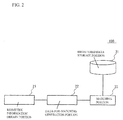
- FIG. 2 illustrates a function block diagram of the biometric authentication device with respect to a biometric matching
- FIG. 3 illustrates a function block diagram of the biometric authentication device with respect to a user selection process
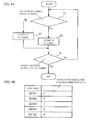
- FIG. 4A and FIG. 4B illustrate an example of a flowchart executes by the biometric authentication device in the user selection process
- FIG. 5 illustrates an example of a flowchart executes by the biometric authentication device in the user selection process
- FIG. 6 illustrates a function block diagram with respect to a matching process
- FIG. 7 illustrates an example of a flowchart executes by the biometric authentication device
- FIG. 8 illustrates a function block diagram of the biometric authentication device with respect to a updating process of a registered template
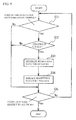
- FIG. 9 illustrates an example of a flowchart executes by the biometric authentication device in the updating process of the registered template
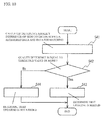
- FIG. 10 illustrates a flowchart for describing details of a Step S32 of FIG. 9 ;
- FIG. 11 illustrates a component structure of a biometric authentication device in accordance with an embodiment 2.
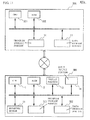
- FIG. 1 illustrates a component structure of a biometric authentication device 100 in accordance with an embodiment 1.
- the biometric authentication device 100 has a CPU (Central Processing Unit) 11, a RAM (Random Access Memory) 12, a display portion 13, an input-output portion 14, a biometric sensor 15, a program storage portion 16, a data storage portion 17 and so on.
- the components are coupled to each other with a bus or the like.
- the biometric sensor 15 is a sensor for obtaining biometric information of a user such as fingerprint information or vein information.
- a fingerprint sensor is used as the biometric sensor 15.
- the program storage portion 16 and the data storage portion 17 are a ROM (Read Only Memory), a hard disk or the like.
- FIG. 2 illustrates a function block diagram of the biometric authentication device 100 with respect to biometric matching.
- the biometric authentication device 100 acts as a biometric information obtain portion 21, a data-for-matching generation portion 22, a matching portion 23, and a registered data storage portion 31.
- the biometric information obtain portion 21, the data-for-matching generation portion 22 and the matching portion 23 operate when the CPU 11 executes a matching program stored in the program storage portion 16.
- the registered data storage portion 31 operates in the data storage portion 17 when the CPU 11 executes the matching program.
- the biometric information obtain portion 21 obtains biometric information of a user from the biometric sensor 15.
- the data-for-matching generation portion 22 generates a biometric data for matching from the biometric information obtained by the biometric information obtain portion 21.
- the registered data storage portion 31 holds a biometric data of each user (hereinafter referred to as registered data) that is registered in advance.
- the matching portion 23 matches a data for matching generated by the data-for-matching generation portion 22 and a registered data of the user held by the registered data storage portion 31.
- the matching portion 23 determines that the matching is succeeded when a similarity between the data-for-matching and the registered data is equal to a threshold value or more, and determines that the matching is failed when the similarity between the data-for-matching and the registered data is less than the threshold value.
- biometric condition may fluctuate with time. Therefore, failure rate of the matching may be increased and convenience may be degraded when the registered data is not updated. And so, the biometric authentication device 100 selects a user of which registered data needs updating, and updates the registered data of the user. A description will be given of each of processes of a user selection process, a matching process, and updating process of registered template.
- FIG. 3 illustrates a function block diagram of the biometric authentication device 100 with respect to the user selection process.
- the biometric authentication device 100 acts as a data-storage-demand determine portion 24, a quality information storage portion 32, and a data-storage-demand storage portion 33.
- the data-storage-demand determine portion 24 operates when the CPU 11 executes a program for user selection process stored in the program storage portion 16.
- the quality information storage portion 32 and the data-storage-demand storage portion 33 operate in the data storage portion 17 when the CPU 11 executes the program for user selection process.
- the program for user selection process is executed at fixed intervals during a low load or the like through a batch process.
- the quality information storage portion 32 stores quality of a registered data stored in the registered data storage portion 31.
- the quality of biometric data is biometric condition (skin condition caused by dry or humidity, skin condition caused by injury or the like), similarity, matching success rate or the like.
- the data-storage-demand storage portion 33 relates a demand of update of a registered data stored in the registered data storage portion 31 to each user and stores the demand.
- FIG. 4A and FIG. 5 illustrate an example of a flowchart executed by the biometric authentication device 100 at the user selection process.
- the data-storage-demand determine portion 24 determines whether storing of a data for matching is needed with respect to each user (Step S1). In the process of the Step S1, it is determined whether updating of a registered data of the user is needed or not. The details will be described later.
- the data-storage-demand determine portion 24 If it is determined that storing of a data for matching is needed in the Step S1, the data-storage-demand determine portion 24 writes the information in a table of the data-storage-demand storage portion 33 described with reference to FIG. 4B (Step S2). In the embodiment, the data-storage-demand storage portion 33 relates "1" to the user and stores "1". On the other hand, if it is not determined that storing of a data for matching is needed in the Step S1, the data-storage-demand determine portion 24 writes the information in the table of FIG. 4B (Step S3). In the embodiment, the data-storage-demand storage portion 33 relates "0" to the user and stores "0".
- the data-storage-demand determine portion 24 determines whether the step S1 is executed with respect to all users (Step S4). If it is determined that the step S1 is executed with respect to all users in the Step S4, the data-storage-demand determine portion 24 terminates the flowchart. If it is not determined that the step S1 is executed with respect to all users in the Step S4, the data-storage-demand determine portion 24 executes the Step S1 again with respect to another user. In the table of FIG. 4B , the information that storing of a data for matching is needed is written with respect to "User03"
- FIG. 5 illustrates an example of a flowchart for describing details of the Step S1 of FIG. 4A .
- the data-storage-demand determine portion 24 calculates "difference of biometric data quality" between a registered data and a data for matching based on information registered in the quality information storage portion 32 (Step S11). That is, the data-storage-demand determine portion 24 calculates a difference of quantified biometric condition, quantified similarity, quantified matching success rate or the like.
- the data-storage-demand determine portion 24 determines whether an objective user is a user of which data for matching needs storing on the table of FIG. 4B (Step S12). If it is not determined that the user needs storing of the data for matching in the Step S12, the data-storage-demand determine portion 24 determines whether there is a period where the above-mentioned difference is equal to a first threshold value or more in a predetermined period (Step S13).
- the data-storage-demand determine portion 24 relates "1" to the user and stores "1" in the table of FIG. 4B (Step S14). After that, the data-storage-demand determine portion 24 terminates the flowchart. If it is not determined that there is a period where the above-mentioned difference is equal to the first threshold value or more in the Step S13, the data-storage-demand determine portion 24 terminates the flowchart.
- the data-storage-demand determine portion 24 determines whether the above-mentioned difference is equal to a second threshold value or less in a predetermined period (Step S15). If it is determined that the above-mentioned difference is equal to the second threshold value or less in the Step S15, the data-storage-demand determine portion 24 relates "0" to the user and stores "0" in the table of FIG. 4B (Step S16). After that, the data-storage-demand determine portion 24 terminates the flowchart. And, if it is determined that there is a period where the above-mentioned value is equal to the second threshold value or more in the Step S15, the data-storage-demand determine portion 24 terminates the flowchart.
- a maximum number or a maximum rate of users of which data for matching needs storing may be specified.
- the maximum numbers of users in order of low matching rate are referred to as "user of which data for matching is stored”.
- long-running results for example one year
- biometric quality does not change currently but temporarily changes in the long run as "user of which data for matching is used”.
- biometric quality is calculated separately every passed period without using an average of a long time when the result of the long time is used. It is therefore possible to determine a user in which biometric quality does not change in current three months but changed four months ago as "user of which data for matching is stored", for example.
- biometric quality may change in both “automatic updating of registered data by a system” and “updating of registered data by a user”. It is therefore preferable to determine "user of which data for matching is stored” with use of a frequency of the updating of registered data. An administrator or the like may edit "user of which data for matching is stored”.
- FIG. 6 illustrates a function block diagram of the biometric authentication device 100 with respect to the matching process.
- the biometric authentication device 100 acts as the biometric information obtain portion 21, the data-for-matching generation portion 22, the matching portion 23, a quality information extract portion 25, a data-for-update extract portion 26, the registered data storage portion 31, the quality information storage portion 32, the data-storage-demand storage portion 33 and a data-for-update storage portion 34.
- the biometric information obtain portion 21, the data-for-matching generation portion 22, the matching portion 23, the quality information extract portion 25, and the data-for-update extract portion 26 operate when the CPU 11 executes the program for the matching process stored in the program storage portion 16.
- the registered data storage portion 31, the quality information storage portion 32, the data-storage-demand storage portion 33 and the data-for-update storage portion 34 operate in the data storage portion 17 when the CPU 11 executes the program for the matching process.
- the program for the matching process is executed at fixed intervals during a low load or the like through a batch process.
- FIG. 7 illustrates an example of a flowchart executed by the biometric authentication device 100.
- the matching portion 23 performs a matching process (Step S21).
- the matching process is described with reference to FIG. 2 and is omitted here.
- the data-for-update extract portion 26 refers to the table stored in the data-storage-demand storage portion 33, and determines whether the user is a user needing storing of a data for matching (Step S22).
- the matching portion 23 stores the data for matching in the data-for-update storage portion 34.
- the quality information extract portion 25 extracts biometric quality information from the data for matching, and stores the extracted data in the quality information storage portion 32 (Step S24).
- the biometric authentication device 100 terminates the flowchart.
- the quality information extract portion 25 executes the Step S24.
- the embodiment may be adapted to a large-scale system.
- a log data necessary for calculation of biometric data quality (fingerprint condition, matching result, similarity or the like) is stored with respect to all users.
- burden is small in a large-scale system because data amount of the log data is small.
- the data for matching may be stored only in a case where the biometric matching is succeeded.
- the data for matching may be stored when the similarity is larger than a predetermine threshold value other than the similarity used in the biometric matching.
- the data for matching may be stored only in a case where a predetermined time passed after the previous storing of data for matching.
- the data for matching may be stored only in case where a difference of the biometric data quality is equal to a predetermined value or more between the data for matching obtained currently and the data for matching stored previously. In this case, registered data having higher reliability may be made.
- Maximum number of the data for matching that can be stored with respect to the whole system or each user may be set.
- a new data for matching may be stored by deleting the oldest data in chronological order, by deleting one of data stored previously having the most similar quality to the new data, or the like.
- FIG. 8 illustrates a function block diagram of the biometric authentication device 100 with respect to the process for updating the registered template.
- the biometric authentication device 100 acts as an update-demand determine portion 27, a registered data generation portion 28, a registered data replace portion 29, the registered data storage portion 31, the quality information storage portion 32, the data-storage-demand storage portion 33, and the data-for-update storage portion 34.
- the update-demand determine portion 27, the registered data generation portion 28 and the registered data replace portion 29 operate when the CPU 11 executes a program for the process for updating the registered template stored in the program storage portion 16.
- the registered data storage portion 31, the quality information storage portion 32, the data-storage-demand storage portion 33 and the data-for-update storage portion 34 operate in the data-storage portion 17 when the CPU 11 executes the program for the process for the updating the registered template.
- the program for the process for the updating the registered template is executed at fixed intervals during a low load or the like through a batch process.
- FIG. 9 illustrates an example of a flowchart executed by the biometric authentication device 100 in the process for updating the registered template.
- the update-demand determine portion 27 refers to the table stored in the data-storage-demand storage portion 33, and determines whether an objective user is a user needing storing of a data for matching (Step S31). If it is determined that the objective user is a user needing storing of a data for matching, the update-demand determine portion 27 determines whether updating is needed (Step S32).
- the registered data generation portion 28 If it is determined that updating is needed in the Step S32, the registered data generation portion 28 generates a registered data for update from a data for update stored in the data-for-update storage portion 34 (Step S33).
- the registered data replace portion 29 replaces the registered data stored in the registered data storage portion 31 by the registered data for update generated in the Step S33 (Step S34).
- Step S35 determines whether updating of all users needing storing of data for matching is completed. If it is not determined that the updating is not completed in the Step S35, the Step S31 is executed again with respect to another user. If it is determined that the updating is completed in the Step S35, the execution of the flowchart is terminated.
- Step S35 is executed.
- FIG. 10 illustrates a flowchart for describing the details of the Step S32 of FIG. 9 .
- the update-demand determine portion 27 calculates a biometric quality difference such as a skin condition between the registered data and the data for matching based on the quality information stored in the quality information storage portion 32 (Step S41).
- the update-demand determine portion 27 determines whether the biometric quality difference calculated in the Step S 41 is equal to a threshold value or more (Step S42).
- the update-demand determine portion 27 writes the information that the registered data of the user needs updating in the data-storage-demand storage portion 33 (Step S43). After that, the execution of the flowchart is terminated. If it is not determined that the biometric quality is equal to the threshold or more in the Step S42, the update-demand determine portion 27 writes the information that the user does not needs updating in the data-storage-demand storage portion 33. After that, the flowchart is terminated.
- the registered data is updated with respect to only a user where the biometric quality difference appears between the registered data and the data for matching. It is therefore possible to reduce the access frequency to the database and the storage size.
- the biometric quality previously described is used. However, the determination has an object to determine a person needing updating of registered data immediately. Therefore, it is preferable to determine with use of a short-term result, being different from the determination of "user of which data for matching is used”. In the "updating process of registered data", registered data has only to be made with use of only characteristics amount having high reliability in a plurality of the registered data for matching.
- FIG. 11 illustrates a component structure of a biometric authentication device 100a in accordance with an embodiment 2.
- the biometric authentication device 100a has a structure in which a server 200 is coupled to and may communicate with a client terminal 300 via a network.
- a public line network, Internet, an intranet or the like may be used as the network.
- the server 200 has a CPU 201, a RAM 202, the program storage portion 16, the data storage portion 17 of FIG. 1 and so on.
- the client terminal 300 has the CPU 11, the RAM 12, the display portion 13, the input-output portion 14, the biometric sensor 15, a program storage portion 301, a data storage portion 302 and so on.
- the biometric information obtain portion 21, the data for matching generation portion 22, the matching portion 23, the data-storage-demand determine portion 24, the quality information extract portion 25, the data-for-update extract portion 26, the update-demand determine portion 27, the registered data generation portion 28 and the registered data replace portion 29 operate when the CPU 201 executes a program stored in the program storage portion 16.
- the biometric authentication device may be structured with a plurality of computers as in the case of the embodiment.
- the biometric authentication device as described in remark 1, characterized in that the update-demand determine portion determines whether the registered data needs updating or not, based on a difference between biometric quality of the registered data and biometric quality of a plurality of data for matching generated by the data-for-matching generation portion.
- the biometric authentication device as described in remark 1 characterized by further comprising a registered data generation portion generating the data for updating from the data for matching when the update-demand determine portion determines that the registered data needs updating.
- the biometric authentication device as described in remark 1, characterized in that the update-demand determine portion determines whether the registered data needs updating or not, based on a similarity between the data for matching and the registered data or a changing of skin condition between the data for matching and the registered data.
- the biometric authentication device as described in remark 1, characterized in that the update-demand determine portion determines that the registered data needs updating when the biometric quality difference between the data for matching and the registered data is larger than a predetermined threshold value.
- the biometric authentication device as described in remark 1, characterized in that the update-demand determine portion determines that the registered data needs updating when the quality difference between the data for matching and the registered data is larger than a first threshold value, and determines that the registered data needs updating when the quality difference between the data for matching and the registered data is smaller than a second threshold value.
- the biometric authentication device as described in remark 1 characterized by further comprising a biometric matching portion performing a matching process based on the data for matching and the registered data, wherein the update-demand determine portion determines whether the registered data needs updating or not in non-synchronization with the matching process by the biometric matching portion.
- the biometric authentication device as described in remark 1 characterized by further comprising a biometric matching portion performing a matching process based on the data for matching and the registered data, wherein the update-demand determine portion determines whether the registered data needs updating or not after the matching process by the biometric matching portion.
- the biometric authentication device as described in remark 1 characterized by further comprising a biometric matching portion performing a matching process based on the data for matching and the registered data, wherein the update-demand determine portion determines whether the registered data needs updating or not when the matching of the biometric matching portion is succeeded.
- the biometric authentication device as described in remark 1 characterized in that the update-demand determine portion determines whether the registered data needs updating or not only when a predetermined time passed after the registered data is replaced by the registered data replace portion.
- the biometric authentication device as described in remark 1 characterized in that the update-demand determine portion determines whether the registered data needs updating or not only when a difference of biometric quality between a data for matching generated by the data-for-matching generation portion previously and a data for matching generated by the data-for-matching generation portion currently.
- the biometric authentication device as described in remark 1 characterized by further comprising a data-for-update storage portion storing the data for updating, wherein the data-for-update storage portion deletes a data for updating having biometric quality that is the most similar to a data for updating that is stored newly when the number of the data for updating stored in the data-for-update storage portion is larger than a predetermined value.
- the biometric authentication device as described in remark 1 characterized by further comprising a data-for-update storage portion storing the data for updating, wherein the number of the data for updating stored in the data-for-update storage portion is a predetermined rate of all users.
- a storage medium that is readable by a computer and stores a program causing a computer to act as:
Landscapes
- Engineering & Computer Science (AREA)
- Theoretical Computer Science (AREA)
- Physics & Mathematics (AREA)
- General Physics & Mathematics (AREA)
- Multimedia (AREA)
- Computer Security & Cryptography (AREA)
- Human Computer Interaction (AREA)
- Computer Hardware Design (AREA)
- Software Systems (AREA)
- General Engineering & Computer Science (AREA)
- Computer Vision & Pattern Recognition (AREA)
- Collating Specific Patterns (AREA)
Abstract
Description
- The present invention relates to a biometric authentication device, a biometric authentication method and a storage medium.
- In a person authentication, a risk of plagiarism is relatively high with use of a password authentication, an ID card authentication or the like that are widely used conventionally. And so, a biometric authentication such as a fingerprint authentication attracts attention as a person authentication having higher reliability and is being used in many situations.
- In the biometric authentication, an authentication rate may be degraded because of fluctuation of biometric condition caused by chronological change from registration. This is a major cause of degradation of usability of the biometric authentication. As an example, a condition of skin changes gradually as season changes. The skin condition of many people does not change much throughout a year. Therefore, the authentication rate is not degraded throughout a year, even if a fingerprint data is registered in any season.
- However, there are some people of which skin is extremely dried out in winter. In this case, the skin condition of a fingerprint data registered in summer differs largely from that of a fingerprint data registered in winter. The authentication rate may be degraded because of the difference of the skin condition. The changing of the skin condition may be changing of nick of skin, changing of skin disease, or the like in addition to the changing caused by season transition.
- A method of updating registered information as necessary is supposed in order to solve the problem.
-
Patent Document 1 discloses a technology where time changing distribution of a similarity calculated in advance is used; it is determined that updating of registered data is needed when a predetermined condition is satisfied; and an input data for matching is registered as a new registered data. - Patent Document 2 discloses a technology where a plurality of data for matching are held at the time of matching; and a registered data is updated with use of one of data for matching held in advance.
- Patent Document 1: Japanese Laid-Open Patent Publication No.
2007-11764 - Patent Document 2: Japanese Laid-Open Patent Publication No.
2003-36441 - However, in the technology of
Patent Document 1, the registered data is replaced by the data for matching at the time. It is therefore possible that the registered data is replaced by a data for matching of other user if matching error occurs at the timing of the updating of the registered data. And, in the technology, the necessity of updating of the registered data is determined with use of the similarity only. However, in general, there is no proportional relationship between chronological change and the similarity of the biometric authentication. Therefore, the registered data is not updated at an adequate timing. - In the technology of Patent Document 2, any of the registered data is replaced by the data for matching. It is therefore possible that the registered data is completely replaced by a fingerprint data of other user. It is necessary to hold all users' data for matching when the technology is adapted to a large-scale system of a few thousands or a few tens thousands of people. Therefore, a response of the whole system gets worse at the time such as morning where matching is busy, because database access is a bottle neck when all users' data are stored. And, there is a problem that a large-scale storage is needed. It is therefore difficult to adapt the technology of Patent Document 2 to a large-scale system.
- In view of the problem described above, the present invention has an object to provide a biometric authentication device, a biometric authentication method and a storage medium that reduce frequency of database access and storage size when registered data is updated.
- In order to solve the above problem, a biometric authentication device discussed herein includes: a data-for-matching generation portion generating a data for matching from biometric information; an update-demand determine portion determining whether a registered data registered for matching with the data for matching needs updating or not, based on a difference between biometric quality of the registered data and biometric quality of the data for matching; and a registered data replace portion replacing the registered data by a generated data for updating, according to a determination result of the update-demand determine portion.
- In order to solve the above problem, a biometric authentication method discussed herein includes: a data-for-matching generation step for generating a data-for-matching from biometric information; an update-demand determine step for determining whether a registered data registered for matching with the data for matching needs updating or not, based on a difference between biometric quality of the registered data and biometric quality of the data for matching; and a registered data replace step for replacing the registered data by a generated data for updating according to a determination result of the update-demand determine step.
- In order to solve the above problem, a storage medium discussed herein is readable by a computer and stores a program causing a computer to act as: a data-for-matching generation portion generating a matching data from biometric information; an update-demand determine portion determining whether a registered data registered for matching with the data for matching needs updating or not, based on a difference between biometric quality of the registered data and biometric quality of the data for matching; and a registered data replace portion replacing the registered data by a generated data for updating according to a determination result of the update-demand determine portion.
- According to the biometric authentication device, the biometric authentication method and the storage medium disclosed herein, frequency of database access and storage size are reduced when registered data is updated.
-
FIG. 1 illustrates a component structure of a biometric authentication device in accordance with anembodiment 1; -
FIG. 2 illustrates a function block diagram of the biometric authentication device with respect to a biometric matching; -
FIG. 3 illustrates a function block diagram of the biometric authentication device with respect to a user selection process; -
FIG. 4A and FIG. 4B illustrate an example of a flowchart executes by the biometric authentication device in the user selection process; -
FIG. 5 illustrates an example of a flowchart executes by the biometric authentication device in the user selection process; -
FIG. 6 illustrates a function block diagram with respect to a matching process; -
FIG. 7 illustrates an example of a flowchart executes by the biometric authentication device; -
FIG. 8 illustrates a function block diagram of the biometric authentication device with respect to a updating process of a registered template; -
FIG. 9 illustrates an example of a flowchart executes by the biometric authentication device in the updating process of the registered template; -
FIG. 10 illustrates a flowchart for describing details of a Step S32 ofFIG. 9 ; and -
FIG. 11 illustrates a component structure of a biometric authentication device in accordance with an embodiment 2. - A description will be given of embodiments of the invention, with reference to drawings.
-
FIG. 1 illustrates a component structure of abiometric authentication device 100 in accordance with anembodiment 1. As illustrated inFIG. 1 , thebiometric authentication device 100 has a CPU (Central Processing Unit) 11, a RAM (Random Access Memory) 12, adisplay portion 13, an input-output portion 14, abiometric sensor 15, aprogram storage portion 16, adata storage portion 17 and so on. The components are coupled to each other with a bus or the like. - The
biometric sensor 15 is a sensor for obtaining biometric information of a user such as fingerprint information or vein information. In the embodiment, a fingerprint sensor is used as thebiometric sensor 15. Theprogram storage portion 16 and thedata storage portion 17 are a ROM (Read Only Memory), a hard disk or the like. -
FIG. 2 illustrates a function block diagram of thebiometric authentication device 100 with respect to biometric matching. As illustrated inFIG. 2 , in the biometric matching, thebiometric authentication device 100 acts as a biometric information obtainportion 21, a data-for-matchinggeneration portion 22, a matchingportion 23, and a registereddata storage portion 31. The biometric information obtainportion 21, the data-for-matchinggeneration portion 22 and the matchingportion 23 operate when theCPU 11 executes a matching program stored in theprogram storage portion 16. The registereddata storage portion 31 operates in thedata storage portion 17 when theCPU 11 executes the matching program. - The biometric information obtain
portion 21 obtains biometric information of a user from thebiometric sensor 15. The data-for-matchinggeneration portion 22 generates a biometric data for matching from the biometric information obtained by the biometric information obtainportion 21. The registereddata storage portion 31 holds a biometric data of each user (hereinafter referred to as registered data) that is registered in advance. The matchingportion 23 matches a data for matching generated by the data-for-matchinggeneration portion 22 and a registered data of the user held by the registereddata storage portion 31. The matchingportion 23 determines that the matching is succeeded when a similarity between the data-for-matching and the registered data is equal to a threshold value or more, and determines that the matching is failed when the similarity between the data-for-matching and the registered data is less than the threshold value. - Depending on a user, biometric condition may fluctuate with time. Therefore, failure rate of the matching may be increased and convenience may be degraded when the registered data is not updated. And so, the
biometric authentication device 100 selects a user of which registered data needs updating, and updates the registered data of the user. A description will be given of each of processes of a user selection process, a matching process, and updating process of registered template. -
FIG. 3 illustrates a function block diagram of thebiometric authentication device 100 with respect to the user selection process. As illustrated inFIG. 3 , thebiometric authentication device 100 acts as a data-storage-demand determineportion 24, a qualityinformation storage portion 32, and a data-storage-demand storage portion 33. - The data-storage-demand determine
portion 24 operates when theCPU 11 executes a program for user selection process stored in theprogram storage portion 16. The qualityinformation storage portion 32 and the data-storage-demand storage portion 33 operate in thedata storage portion 17 when theCPU 11 executes the program for user selection process. The program for user selection process is executed at fixed intervals during a low load or the like through a batch process. - The quality
information storage portion 32 stores quality of a registered data stored in the registereddata storage portion 31. Here, the quality of biometric data is biometric condition (skin condition caused by dry or humidity, skin condition caused by injury or the like), similarity, matching success rate or the like. The data-storage-demand storage portion 33 relates a demand of update of a registered data stored in the registereddata storage portion 31 to each user and stores the demand. -
FIG. 4A andFIG. 5 illustrate an example of a flowchart executed by thebiometric authentication device 100 at the user selection process. As illustrated inFIG. 4A , the data-storage-demand determineportion 24 determines whether storing of a data for matching is needed with respect to each user (Step S1). In the process of the Step S1, it is determined whether updating of a registered data of the user is needed or not. The details will be described later. - If it is determined that storing of a data for matching is needed in the Step S1, the data-storage-demand determine
portion 24 writes the information in a table of the data-storage-demand storage portion 33 described with reference toFIG. 4B (Step S2). In the embodiment, the data-storage-demand storage portion 33 relates "1" to the user and stores "1". On the other hand, if it is not determined that storing of a data for matching is needed in the Step S1, the data-storage-demand determineportion 24 writes the information in the table ofFIG. 4B (Step S3). In the embodiment, the data-storage-demand storage portion 33 relates "0" to the user and stores "0". - After execution of the Step S2 and the Step S3, the data-storage-demand determine
portion 24 determines whether the step S1 is executed with respect to all users (Step S4). If it is determined that the step S1 is executed with respect to all users in the Step S4, the data-storage-demand determineportion 24 terminates the flowchart. If it is not determined that the step S1 is executed with respect to all users in the Step S4, the data-storage-demand determineportion 24 executes the Step S1 again with respect to another user. In the table ofFIG. 4B , the information that storing of a data for matching is needed is written with respect to "User03" -
FIG. 5 illustrates an example of a flowchart for describing details of the Step S1 ofFIG. 4A . The data-storage-demand determineportion 24 calculates "difference of biometric data quality" between a registered data and a data for matching based on information registered in the quality information storage portion 32 (Step S11). That is, the data-storage-demand determineportion 24 calculates a difference of quantified biometric condition, quantified similarity, quantified matching success rate or the like. - Next, the data-storage-demand determine
portion 24 determines whether an objective user is a user of which data for matching needs storing on the table ofFIG. 4B (Step S12). If it is not determined that the user needs storing of the data for matching in the Step S12, the data-storage-demand determineportion 24 determines whether there is a period where the above-mentioned difference is equal to a first threshold value or more in a predetermined period (Step S13). - If it is determined that there is a period where the above-mentioned difference is equal to the first threshold value or more in the Step S13, the data-storage-demand determine
portion 24 relates "1" to the user and stores "1" in the table ofFIG. 4B (Step S14). After that, the data-storage-demand determineportion 24 terminates the flowchart. If it is not determined that there is a period where the above-mentioned difference is equal to the first threshold value or more in the Step S13, the data-storage-demand determineportion 24 terminates the flowchart. - If it is determined that the user needs storing the data for matching in the Step S12, the data-storage-demand determine
portion 24 determines whether the above-mentioned difference is equal to a second threshold value or less in a predetermined period (Step S15). If it is determined that the above-mentioned difference is equal to the second threshold value or less in the Step S15, the data-storage-demand determineportion 24 relates "0" to the user and stores "0" in the table ofFIG. 4B (Step S16). After that, the data-storage-demand determineportion 24 terminates the flowchart. And, if it is determined that there is a period where the above-mentioned value is equal to the second threshold value or more in the Step S15, the data-storage-demand determineportion 24 terminates the flowchart. - In the flowchart of
FIG. 5 , the case where it is determined "Yes" in the Step S13 and the case where it is determined "No" in the Step S15 correspond to "Yes" of the Step S1 ofFIG. 4A . And, the case where it is determined "no" in the Step S13 and the case where it is determined "Yes" in the Step S15 correspond to "No" in the Step S1 ofFIG. 4A . - A maximum number or a maximum rate of users of which data for matching needs storing may be specified. In this case, the maximum numbers of users in order of low matching rate are referred to as "user of which data for matching is stored". Thus, it is possible to control the rate of stored data for matching in a whole system. It is therefore possible to obtain an effect of the updating of registered data and reduce a burden to an extent that an operation is possible in a large-scale system.
- It is preferable that long-running results (for example one year) are used for determining "user of which data for matching is used" without using only recent results. Thus, it is possible to determine a user in which biometric quality does not change currently but temporarily changes in the long run as "user of which data for matching is used". It is preferable that the biometric quality is calculated separately every passed period without using an average of a long time when the result of the long time is used. It is therefore possible to determine a user in which biometric quality does not change in current three months but changed four months ago as "user of which data for matching is stored", for example.
- It is preferable that a history of updating of registered data is used together with the biometric quality in the determination of "user of which data for matching is stored". It is thought that the biometric quality may change in both "automatic updating of registered data by a system" and "updating of registered data by a user". It is therefore preferable to determine "user of which data for matching is stored" with use of a frequency of the updating of registered data. An administrator or the like may edit "user of which data for matching is stored".
- Next, a description will be given of a matching process.
FIG. 6 illustrates a function block diagram of thebiometric authentication device 100 with respect to the matching process. As illustrated inFIG. 6 , in the matching process, thebiometric authentication device 100 acts as the biometric information obtainportion 21, the data-for-matchinggeneration portion 22, the matchingportion 23, a quality information extract portion 25, a data-for-update extract portion 26, the registereddata storage portion 31, the qualityinformation storage portion 32, the data-storage-demand storage portion 33 and a data-for-update storage portion 34. - The biometric information obtain
portion 21, the data-for-matchinggeneration portion 22, the matchingportion 23, the quality information extract portion 25, and the data-for-update extract portion 26 operate when theCPU 11 executes the program for the matching process stored in theprogram storage portion 16. The registereddata storage portion 31, the qualityinformation storage portion 32, the data-storage-demand storage portion 33 and the data-for-update storage portion 34 operate in thedata storage portion 17 when theCPU 11 executes the program for the matching process. The program for the matching process is executed at fixed intervals during a low load or the like through a batch process. -
FIG. 7 illustrates an example of a flowchart executed by thebiometric authentication device 100. With reference toFIG. 7 , the matchingportion 23 performs a matching process (Step S21). The matching process is described with reference toFIG. 2 and is omitted here. Next, the data-for-update extract portion 26 refers to the table stored in the data-storage-demand storage portion 33, and determines whether the user is a user needing storing of a data for matching (Step S22). - If it is determined that the user is a user needing storing of the data for matching in the Step S22, the matching
portion 23 stores the data for matching in the data-for-update storage portion 34. After that, the quality information extract portion 25 extracts biometric quality information from the data for matching, and stores the extracted data in the quality information storage portion 32 (Step S24). After that, thebiometric authentication device 100 terminates the flowchart. And, if it is not determined that the user is a user needing storing the data for matching in the Step S22, the quality information extract portion 25 executes the Step S24. - In accordance with the flowchart of
FIG. 7 , it is possible to largely reduce access frequency to the database together with a storage size, compared to a case where data for matching of all users are stored. Therefore, the embodiment may be adapted to a large-scale system. - A log data necessary for calculation of biometric data quality (fingerprint condition, matching result, similarity or the like) is stored with respect to all users. However, burden is small in a large-scale system because data amount of the log data is small.
- It is possible to reduce a storing frequency of data by storing the matching data only in a case where a specific condition such as the following condition is satisfied, even if the user is a user needing storing of data for matching. For example, the data for matching may be stored only in a case where the biometric matching is succeeded. The data for matching may be stored when the similarity is larger than a predetermine threshold value other than the similarity used in the biometric matching.
- The data for matching may be stored only in a case where a predetermined time passed after the previous storing of data for matching. The data for matching may be stored only in case where a difference of the biometric data quality is equal to a predetermined value or more between the data for matching obtained currently and the data for matching stored previously. In this case, registered data having higher reliability may be made.
- Maximum number of the data for matching that can be stored with respect to the whole system or each user may be set. When the number of the data for matching needing storing is more than the maximum number, a new data for matching may be stored by deleting the oldest data in chronological order, by deleting one of data stored previously having the most similar quality to the new data, or the like.
- Next, a description will be given of a process for updating a registered template.
FIG. 8 illustrates a function block diagram of thebiometric authentication device 100 with respect to the process for updating the registered template. As illustrated inFIG. 8 , in the process for updating the registered template, thebiometric authentication device 100 acts as an update-demand determineportion 27, a registereddata generation portion 28, a registered data replaceportion 29, the registereddata storage portion 31, the qualityinformation storage portion 32, the data-storage-demand storage portion 33, and the data-for-update storage portion 34. - The update-demand determine
portion 27, the registereddata generation portion 28 and the registered data replaceportion 29 operate when theCPU 11 executes a program for the process for updating the registered template stored in theprogram storage portion 16. The registereddata storage portion 31, the qualityinformation storage portion 32, the data-storage-demand storage portion 33 and the data-for-update storage portion 34 operate in the data-storage portion 17 when theCPU 11 executes the program for the process for the updating the registered template. The program for the process for the updating the registered template is executed at fixed intervals during a low load or the like through a batch process. -
FIG. 9 illustrates an example of a flowchart executed by thebiometric authentication device 100 in the process for updating the registered template. With reference toFIG. 9 , the update-demand determineportion 27 refers to the table stored in the data-storage-demand storage portion 33, and determines whether an objective user is a user needing storing of a data for matching (Step S31). If it is determined that the objective user is a user needing storing of a data for matching, the update-demand determineportion 27 determines whether updating is needed (Step S32). - If it is determined that updating is needed in the Step S32, the registered
data generation portion 28 generates a registered data for update from a data for update stored in the data-for-update storage portion 34 (Step S33). Next, the registered data replaceportion 29 replaces the registered data stored in the registereddata storage portion 31 by the registered data for update generated in the Step S33 (Step S34). - Next, the update-demand determine
portion 27 determines whether updating of all users needing storing of data for matching is completed (Step S35). If it is not determined that the updating is not completed in the Step S35, the Step S31 is executed again with respect to another user. If it is determined that the updating is completed in the Step S35, the execution of the flowchart is terminated. - If it is not determined that the objective user is a user needing storing of data for matching in the Step S31 and if it is not determined that the updating is needed in the Step S32, the Step S35 is executed.
-
FIG. 10 illustrates a flowchart for describing the details of the Step S32 ofFIG. 9 . With reference toFIG. 10 , the update-demand determineportion 27 calculates a biometric quality difference such as a skin condition between the registered data and the data for matching based on the quality information stored in the quality information storage portion 32 (Step S41). Next, the update-demand determineportion 27 determines whether the biometric quality difference calculated in theStep S 41 is equal to a threshold value or more (Step S42). - If it is determined that the biometric quality difference is equal to the threshold value or more in the Step S42, the update-demand determine
portion 27 writes the information that the registered data of the user needs updating in the data-storage-demand storage portion 33 (Step S43). After that, the execution of the flowchart is terminated. If it is not determined that the biometric quality is equal to the threshold or more in the Step S42, the update-demand determineportion 27 writes the information that the user does not needs updating in the data-storage-demand storage portion 33. After that, the flowchart is terminated. - In accordance with the flowcharts of
FIG. 9 andFIG. 10 , the registered data is updated with respect to only a user where the biometric quality difference appears between the registered data and the data for matching. It is therefore possible to reduce the access frequency to the database and the storage size. - In the determination of "need of updating" in the flowchart of
FIG. 10 , the biometric quality previously described is used. However, the determination has an object to determine a person needing updating of registered data immediately. Therefore, it is preferable to determine with use of a short-term result, being different from the determination of "user of which data for matching is used". In the "updating process of registered data", registered data has only to be made with use of only characteristics amount having high reliability in a plurality of the registered data for matching. - As mentioned above, in accordance with the embodiment, it is possible to reduce the access frequency to the database and the storage size.
-
FIG. 11 illustrates a component structure of abiometric authentication device 100a in accordance with an embodiment 2. As illustrated inFIG. 11 , thebiometric authentication device 100a has a structure in which aserver 200 is coupled to and may communicate with aclient terminal 300 via a network. A public line network, Internet, an intranet or the like may be used as the network. - The
server 200 has aCPU 201, aRAM 202, theprogram storage portion 16, thedata storage portion 17 ofFIG. 1 and so on. Theclient terminal 300 has theCPU 11, theRAM 12, thedisplay portion 13, the input-output portion 14, thebiometric sensor 15, aprogram storage portion 301, adata storage portion 302 and so on. - In the embodiment, the biometric information obtain
portion 21, the data for matchinggeneration portion 22, the matchingportion 23, the data-storage-demand determineportion 24, the quality information extract portion 25, the data-for-update extract portion 26, the update-demand determineportion 27, the registereddata generation portion 28 and the registered data replaceportion 29 operate when theCPU 201 executes a program stored in theprogram storage portion 16. The biometric authentication device may be structured with a plurality of computers as in the case of the embodiment. - Preferred embodiments of the present invention have been described in detail. The present invention is not limited to the specific embodiments but may be varied or changed within the scope of the claimed invention.
- A biometric authentication device characterized by comprising:
- a data-for-matching generation portion generating a data for matching from biometric information;
- an update-demand determine portion determining whether a registered data registered for matching with the data for matching needs updating or not, based on a difference between biometric quality of the registered data and biometric quality of the data for matching; and
- a registered data replace portion replacing the registered data by a generated data for updating, according to a determination result of the update-demand determine portion.
- The biometric authentication device as described in
remark 1, characterized in that the update-demand determine portion determines whether the registered data needs updating or not, based on a difference between biometric quality of the registered data and biometric quality of a plurality of data for matching generated by the data-for-matching generation portion. - The biometric authentication device as described in
remark 1 characterized by further comprising a registered data generation portion generating the data for updating from the data for matching when the update-demand determine portion determines that the registered data needs updating. - The biometric authentication device as described in
remark 1, characterized in that the update-demand determine portion determines whether the registered data needs updating or not, based on a similarity between the data for matching and the registered data or a changing of skin condition between the data for matching and the registered data. - The biometric authentication device as described in
remark 1, characterized in that the update-demand determine portion determines that the registered data needs updating when the biometric quality difference between the data for matching and the registered data is larger than a predetermined threshold value. - The biometric authentication device as described in
remark 1, characterized in that the update-demand determine portion determines that the registered data needs updating when the quality difference between the data for matching and the registered data is larger than a first threshold value, and determines that the registered data needs updating when the quality difference between the data for matching and the registered data is smaller than a second threshold value. - The biometric authentication device as described in
remark 1 characterized by further comprising a biometric matching portion performing a matching process based on the data for matching and the registered data,
wherein the update-demand determine portion determines whether the registered data needs updating or not in non-synchronization with the matching process by the biometric matching portion. - The biometric authentication device as described in
remark 1 characterized by further comprising a biometric matching portion performing a matching process based on the data for matching and the registered data,
wherein the update-demand determine portion determines whether the registered data needs updating or not after the matching process by the biometric matching portion. - The biometric authentication device as described in
remark 1 characterized by further comprising a biometric matching portion performing a matching process based on the data for matching and the registered data,
wherein the update-demand determine portion determines whether the registered data needs updating or not when the matching of the biometric matching portion is succeeded. - The biometric authentication device as described in
remark 1 characterized in that the update-demand determine portion determines whether the registered data needs updating or not only when a predetermined time passed after the registered data is replaced by the registered data replace portion. - The biometric authentication device as described in
remark 1 characterized in that the update-demand determine portion determines whether the registered data needs updating or not only when a difference of biometric quality between a data for matching generated by the data-for-matching generation portion previously and a data for matching generated by the data-for-matching generation portion currently. - The biometric authentication device as described in
remark 1 characterized by further comprising a data-for-update storage portion storing the data for updating,
wherein the data-for-update storage portion deletes a data for updating having biometric quality that is the most similar to a data for updating that is stored newly when the number of the data for updating stored in the data-for-update storage portion is larger than a predetermined value. - The biometric authentication device as described in
remark 1 characterized by further comprising a data-for-update storage portion storing the data for updating,
wherein the number of the data for updating stored in the data-for-update storage portion is a predetermined rate of all users. - A biometric authentication method characterized by comprising:
- a data-for-matching generation step for generating a data-for-matching from biometric information;
- an update-demand determine step for determining whether a registered data registered for matching with the data for matching needs updating or not, based on a difference between biometric quality of the registered data and biometric quality of the data for matching; and
- a registered data replace step for replacing the registered data by a generated data for updating according to a determination result of the update-demand determine step.
- A storage medium that is readable by a computer and stores a program causing a computer to act as:
- a data-for-matching generation portion generating a matching data from biometric information;
- an update-demand determine portion determining whether a registered data registered for matching with the data for matching needs updating or not, based on a difference between biometric quality of the registered data and biometric quality of the data for matching; and
- a registered data replace portion replacing the registered data by a generated data for updating according to a determination result of the update-demand determine portion.
Claims (10)
- A biometric authentication device characterized by comprising:a data-for-matching generation portion generating a data for matching from biometric information;an update-demand determine portion determining whether a registered data registered for matching with the data for matching needs updating or not, based on a difference between biometric quality of the registered data and biometric quality of the data for matching; anda registered data replace portion replacing the registered data by a generated data for updating, according to a determination result of the update-demand determine portion.
- The biometric authentication device as claimed in claim 1, characterized in that the update-demand determine portion determines whether the registered data needs updating or not, based on a difference between biometric quality of the registered data and biometric quality of a plurality of data for matching generated by the data-for-matching generation portion.
- The biometric authentication device as claimed in claim 1 characterized by further comprising a registered data generation portion generating the data for updating from the data for matching when the update-demand determine portion determines that the registered data needs updating.
- The biometric authentication device as claimed in claim 1, characterized in that the update-demand determine portion determines whether the registered data needs updating or not, based on a similarity between the data for matching and the registered data or a changing of skin condition between the data for matching and the registered data.
- The biometric authentication device as claimed in claim 1, characterized in that the update-demand determine portion determines that the registered data needs updating when the biometric quality difference between the data for matching and the registered data is larger than a predetermined threshold value.
- The biometric authentication device as claimed in claim 1, characterized in that the update-demand determine portion determines that the registered data needs updating when the quality difference between the data for matching and the registered data is larger than a first threshold value, and determines that the registered data needs updating when the quality difference between the data for matching and the registered data is smaller than a second threshold value.
- The biometric authentication device as claimed in claim 1 characterized by further comprising a biometric matching portion performing a matching process based on the data for matching and the registered data,
wherein the update-demand determine portion determines whether the registered data needs updating or not in non-synchronization with the matching process by the biometric matching portion. - The biometric authentication device as claimed in claim 1 characterized by further comprising a biometric matching portion performing a matching process based on the data for matching and the registered data,
wherein the update-demand determine portion determines whether the registered data needs updating or not after the matching process by the biometric matching portion. - A biometric authentication method characterized by comprising:a data-for-matching generation step for generating a data-for-matching from biometric information;an update-demand determine step for determining whether a registered data registered for matching with the data for matching needs updating or not, based on a difference between biometric quality of the registered data and biometric quality of the data for matching; anda registered data replace step for replacing the registered data by a generated data for updating according to a determination result of the update-demand determine step.
- A storage medium that is readable by a computer and stores a program causing a computer to act as:a data-for-matching generation portion generating a matching data from biometric information;an update-demand determine portion determining whether a registered data registered for matching with the data for matching needs updating or not, based on a difference between biometric quality of the registered data and biometric quality of the data for matching; anda registered data replace portion replacing the registered data by a generated data for updating according to a determination result of the update-demand determine portion.
Applications Claiming Priority (1)
| Application Number | Priority Date | Filing Date | Title |
|---|---|---|---|
| PCT/JP2009/056562 WO2010116470A1 (en) | 2009-03-30 | 2009-03-30 | Biometric authentication device, biometric authentication method, and storage medium |
Publications (2)
| Publication Number | Publication Date |
|---|---|
| EP2416274A1 true EP2416274A1 (en) | 2012-02-08 |
| EP2416274A4 EP2416274A4 (en) | 2017-03-15 |
Family
ID=42935781
Family Applications (1)
| Application Number | Title | Priority Date | Filing Date |
|---|---|---|---|
| EP09842980.6A Withdrawn EP2416274A4 (en) | 2009-03-30 | 2009-03-30 | Biometric authentication device, biometric authentication method, and storage medium |
Country Status (4)
| Country | Link |
|---|---|
| US (1) | US9542543B2 (en) |
| EP (1) | EP2416274A4 (en) |
| JP (1) | JPWO2010116470A1 (en) |
| WO (1) | WO2010116470A1 (en) |
Cited By (3)
| Publication number | Priority date | Publication date | Assignee | Title |
|---|---|---|---|---|
| GB2511467A (en) * | 2014-07-09 | 2014-09-03 | Nationwide Retail Systems Ltd | Access management system and method |
| EP3252664A1 (en) * | 2016-05-30 | 2017-12-06 | Guangdong Oppo Mobile Telecommunications Corp., Ltd. | Method for fingerprint template update and terminal device |
| EP3317815A4 (en) * | 2015-06-30 | 2019-02-20 | NEC Corporation of America | FACIAL RECOGNITION SYSTEM |
Families Citing this family (18)
| Publication number | Priority date | Publication date | Assignee | Title |
|---|---|---|---|---|
| JP5423815B2 (en) | 2010-01-28 | 2014-02-19 | 富士通株式会社 | Authentication apparatus, authentication system, and authentication method |
| JP6129489B2 (en) * | 2012-07-20 | 2017-05-17 | 日立オムロンターミナルソリューションズ株式会社 | Biometric information acquisition apparatus, biometric authentication system, and biometric information acquisition method |
| US9965608B2 (en) | 2013-07-18 | 2018-05-08 | Samsung Electronics Co., Ltd. | Biometrics-based authentication method and apparatus |
| US10235582B2 (en) * | 2014-08-08 | 2019-03-19 | Gemalto Sa | Automated examination and processing of biometric data |
| US10089349B2 (en) | 2014-11-21 | 2018-10-02 | Egis Technology Inc. | Method and electronic device for updating the registered fingerprint datasets of fingerprint recognition |
| US9577992B2 (en) | 2015-02-04 | 2017-02-21 | Aerendir Mobile Inc. | Data encryption/decryption using neuro and neuro-mechanical fingerprints |
| US9590986B2 (en) * | 2015-02-04 | 2017-03-07 | Aerendir Mobile Inc. | Local user authentication with neuro and neuro-mechanical fingerprints |
| US9836896B2 (en) | 2015-02-04 | 2017-12-05 | Proprius Technologies S.A.R.L | Keyless access control with neuro and neuro-mechanical fingerprints |
| KR102415504B1 (en) * | 2015-06-30 | 2022-07-04 | 삼성전자주식회사 | Updating method and apparatus of registration database for user authentication |
| US10678896B2 (en) * | 2015-06-30 | 2020-06-09 | Samsung Electronics Co., Ltd. | Methods and apparatuses for updating user authentication data |
| US10528791B1 (en) | 2017-03-02 | 2020-01-07 | Synaptics Incorporated | Biometric template updating systems and methods |
| KR20190074782A (en) * | 2017-12-20 | 2019-06-28 | 삼성전자주식회사 | Fingerprint verification method and electronic device performing thereof |
| US11017203B1 (en) | 2019-06-19 | 2021-05-25 | Amazon Technologies, Inc. | Utilizing sensor data for automated user identification |
| US10902237B1 (en) | 2019-06-19 | 2021-01-26 | Amazon Technologies, Inc. | Utilizing sensor data for automated user identification |
| US11941629B2 (en) | 2019-09-27 | 2024-03-26 | Amazon Technologies, Inc. | Electronic device for automated user identification |
| US12198417B2 (en) | 2019-10-30 | 2025-01-14 | Nec Corporation | Image management device, control method, and storage medium |
| JP7409145B2 (en) * | 2020-02-21 | 2024-01-09 | 京セラドキュメントソリューションズ株式会社 | Password authentication device, image processing device, password authentication method |
| US11270102B2 (en) * | 2020-06-29 | 2022-03-08 | Amazon Technologies, Inc. | Electronic device for automated user identification |
Family Cites Families (16)
| Publication number | Priority date | Publication date | Assignee | Title |
|---|---|---|---|---|
| CA2308381C (en) * | 1997-11-20 | 2010-06-15 | Quo Technologies, L.L.C. | Method and system for biometric recognition using unique internal distinguishing characteristics |
| US6980672B2 (en) * | 1997-12-26 | 2005-12-27 | Enix Corporation | Lock and switch using pressure-type fingerprint sensor |
| JP2002222424A (en) * | 2001-01-29 | 2002-08-09 | Nec Corp | Fingerprint matching system |
| JP4432293B2 (en) | 2001-07-24 | 2010-03-17 | 三菱電機株式会社 | Registered data update device |
| US7155039B1 (en) * | 2002-12-18 | 2006-12-26 | Motorola, Inc. | Automatic fingerprint identification system and method |
| JP2005237509A (en) * | 2004-02-25 | 2005-09-08 | Sanyo Electric Co Ltd | Input device |
| KR100622245B1 (en) * | 2004-06-04 | 2006-09-08 | 주식회사 팬택 | Apparatus and method for fingerprint authentication in a mobile communication terminal |
| JP4564804B2 (en) * | 2004-08-31 | 2010-10-20 | セコム株式会社 | Biometric information verification device |
| JP4588069B2 (en) * | 2005-03-31 | 2010-11-24 | パイオニア株式会社 | Operator recognition device, operator recognition method, and operator recognition program |
| JP2006285768A (en) * | 2005-04-01 | 2006-10-19 | Toshiba Corp | Biometric authentication device, biometric authentication system, and biometric authentication method |
| JP2007011764A (en) | 2005-06-30 | 2007-01-18 | Casio Comput Co Ltd | Image collation device, image collation processing program, and image collation method |
| JP2008065572A (en) * | 2006-09-07 | 2008-03-21 | Konica Minolta Business Technologies Inc | Method for updating biometric information used in biometric authentication system, and biometric authentication system |
| JP4923910B2 (en) | 2006-09-22 | 2012-04-25 | 富士通株式会社 | Biometric authentication device, control method, and control program |
| JP4907282B2 (en) | 2006-09-26 | 2012-03-28 | 株式会社日立ソリューションズ | Biometric information authentication apparatus and personal authentication method using biometric information |
| JP4403426B2 (en) * | 2007-01-09 | 2010-01-27 | サイレックス・テクノロジー株式会社 | Biometric authentication device and biometric authentication program |
| JP5003242B2 (en) * | 2007-03-28 | 2012-08-15 | 富士通株式会社 | Verification device, verification method and verification program |
-
2009
- 2009-03-30 EP EP09842980.6A patent/EP2416274A4/en not_active Withdrawn
- 2009-03-30 JP JP2011508112A patent/JPWO2010116470A1/en active Pending
- 2009-03-30 WO PCT/JP2009/056562 patent/WO2010116470A1/en not_active Ceased
-
2011
- 2011-09-23 US US13/241,515 patent/US9542543B2/en active Active
Non-Patent Citations (1)
| Title |
|---|
| See references of WO2010116470A1 * |
Cited By (8)
| Publication number | Priority date | Publication date | Assignee | Title |
|---|---|---|---|---|
| GB2511467A (en) * | 2014-07-09 | 2014-09-03 | Nationwide Retail Systems Ltd | Access management system and method |
| GB2511467B (en) * | 2014-07-09 | 2015-03-11 | Nationwide Retail Systems Ltd | Access management system and method |
| EP3317815A4 (en) * | 2015-06-30 | 2019-02-20 | NEC Corporation of America | FACIAL RECOGNITION SYSTEM |
| US10657362B2 (en) | 2015-06-30 | 2020-05-19 | Nec Corporation Of America | Facial recognition system |
| US11501566B2 (en) | 2015-06-30 | 2022-11-15 | Nec Corporation Of America | Facial recognition system |
| EP3252664A1 (en) * | 2016-05-30 | 2017-12-06 | Guangdong Oppo Mobile Telecommunications Corp., Ltd. | Method for fingerprint template update and terminal device |
| US10169639B2 (en) | 2016-05-30 | 2019-01-01 | Guangdong Oppo Mobile Telecommunications Corp., Ltd. | Method for fingerprint template update and terminal device |
| US10223574B2 (en) | 2016-05-30 | 2019-03-05 | Guangdong Oppo Mobile Telecommunications Corp., Ltd. | Method for fingerprint template update and terminal device |
Also Published As
| Publication number | Publication date |
|---|---|
| EP2416274A4 (en) | 2017-03-15 |
| JPWO2010116470A1 (en) | 2012-10-11 |
| US9542543B2 (en) | 2017-01-10 |
| WO2010116470A1 (en) | 2010-10-14 |
| US20120013436A1 (en) | 2012-01-19 |
Similar Documents
| Publication | Publication Date | Title |
|---|---|---|
| EP2416274A1 (en) | Biometric authentication device, biometric authentication method, and storage medium | |
| US8242881B2 (en) | Method of adjusting reference information for biometric authentication and apparatus | |
| US10719694B2 (en) | Biometric identification and verification | |
| EP2151786A2 (en) | Identification method control device and identification method control method | |
| US10817621B2 (en) | Anonymization processing device, anonymization processing method, and program | |
| US10110634B2 (en) | Monitoring user authenticity in distributed system | |
| CN110990546B (en) | Intelligent question-answer corpus updating method and device | |
| CN111031336B (en) | Live broadcast list data updating method and device, electronic equipment and storage medium | |
| US20080148375A1 (en) | Authentication system, authentication device, and authentication method | |
| WO2019080420A1 (en) | Method for customer service of human-robot collaboration, electronic device, and storage medium | |
| EP2530645A1 (en) | Authentication device, authentication system and authentication method | |
| US10747777B2 (en) | Computer system and transaction processing management method | |
| CN107527186B (en) | Electronic reading management method and device and terminal equipment | |
| CN103345616A (en) | Fingerprint storage comparison system based on behavioral analysis | |
| CN110737719A (en) | Data synchronization method, device, equipment and computer readable storage medium | |
| EP3203436A1 (en) | Monitoring user authenticity in distributed system | |
| US20190213308A1 (en) | Information processing device, biometric authentication method, and recording medium recording biometric authentication program | |
| JP5737435B2 (en) | Biometric authentication device, biometric authentication method, and storage medium | |
| CN114266352A (en) | Model training result optimization method and device, storage medium and equipment | |
| EP3203415A1 (en) | Biometric authentication device, biometric authentication method and biometric authentication program | |
| JP7485063B2 (en) | THRESHOLD CALCULATION SYSTEM, THRESHOLD CALCULATION METHOD, AND COMPUTER PROGRAM | |
| JP6733437B2 (en) | Data processing system and data processing method | |
| JP2005301584A (en) | Summary article delivery server, summary article delivery method, and summary article delivery program | |
| CN115393100A (en) | Resource recommendation method and device | |
| CN113703898A (en) | Card type interaction method, device, equipment and medium |
Legal Events
| Date | Code | Title | Description |
|---|---|---|---|
| PUAI | Public reference made under article 153(3) epc to a published international application that has entered the european phase |
Free format text: ORIGINAL CODE: 0009012 |
|
| 17P | Request for examination filed |
Effective date: 20110928 |
|
| AK | Designated contracting states |
Kind code of ref document: A1 Designated state(s): AT BE BG CH CY CZ DE DK EE ES FI FR GB GR HR HU IE IS IT LI LT LU LV MC MK MT NL NO PL PT RO SE SI SK TR |
|
| DAX | Request for extension of the european patent (deleted) | ||
| RA4 | Supplementary search report drawn up and despatched (corrected) |
Effective date: 20170209 |
|
| RIC1 | Information provided on ipc code assigned before grant |
Ipc: G06F 21/32 20130101AFI20170203BHEP Ipc: G06K 9/00 20060101ALI20170203BHEP |
|
| STAA | Information on the status of an ep patent application or granted ep patent |
Free format text: STATUS: THE APPLICATION HAS BEEN WITHDRAWN |
|
| 18W | Application withdrawn |
Effective date: 20171218 |
|
| RIC1 | Information provided on ipc code assigned before grant |
Ipc: G06F 21/32 20130101AFI20170203BHEP Ipc: G06K 9/00 20060101ALI20170203BHEP |
|
| RIC1 | Information provided on ipc code assigned before grant |
Ipc: G06F 21/32 20130101AFI20170203BHEP Ipc: G06K 9/00 20060101ALI20170203BHEP |