EP2416257A1 - Computer-assisted name identification equipment, name identification method, and name identification program - Google Patents
Computer-assisted name identification equipment, name identification method, and name identification program Download PDFInfo
- Publication number
- EP2416257A1 EP2416257A1 EP09842644A EP09842644A EP2416257A1 EP 2416257 A1 EP2416257 A1 EP 2416257A1 EP 09842644 A EP09842644 A EP 09842644A EP 09842644 A EP09842644 A EP 09842644A EP 2416257 A1 EP2416257 A1 EP 2416257A1
- Authority
- EP
- European Patent Office
- Prior art keywords
- attribute
- merging
- database
- unit
- mdr
- Prior art date
- Legal status (The legal status is an assumption and is not a legal conclusion. Google has not performed a legal analysis and makes no representation as to the accuracy of the status listed.)
- Ceased
Links
Images






Classifications
-
- G—PHYSICS
- G06—COMPUTING OR CALCULATING; COUNTING
- G06F—ELECTRIC DIGITAL DATA PROCESSING
- G06F16/00—Information retrieval; Database structures therefor; File system structures therefor
- G06F16/20—Information retrieval; Database structures therefor; File system structures therefor of structured data, e.g. relational data
- G06F16/24—Querying
- G06F16/245—Query processing
- G06F16/2455—Query execution
- G06F16/24553—Query execution of query operations
- G06F16/24558—Binary matching operations
- G06F16/2456—Join operations
-
- G—PHYSICS
- G06—COMPUTING OR CALCULATING; COUNTING
- G06F—ELECTRIC DIGITAL DATA PROCESSING
- G06F16/00—Information retrieval; Database structures therefor; File system structures therefor
- G06F16/20—Information retrieval; Database structures therefor; File system structures therefor of structured data, e.g. relational data
- G06F16/25—Integrating or interfacing systems involving database management systems
- G06F16/256—Integrating or interfacing systems involving database management systems in federated or virtual databases
Definitions
- the embodiments discussed herein are directed to a merging apparatus, a merging method, and a merging program.
- federated configuration management database federated configuration management database
- the federated CMDB centrally manages the location of data that is managed in existing databases in a distributed manner and provides a user with databases that are managed in a centralized manner.
- candidate databases for centralized management each store therein the same data; therefore, for example, the federated CMDB merges (also called matching or reconciliation) the same data stored in these candidate databases.
- a key attribute (called a reconcile key) functioning as a key for a merging process and merging is performed using the key attribute.
- the federated CMDB merges data by determining whether the value of the key attribute matches data that is stored in a newly added database. For example, if the attribute "Internet Protocol (IP) address" is set in advance as the key attribute, the federated CMDB determines data having the same "IP address" value to be the same data and federates the determined data that is determined to be the same.
- IP Internet Protocol
- the federated CMDB merges data by, for example, by a user manually determining whether the data is the same. Furthermore, for example, after a user resets the key attribute, the federated CMDB re-merges all of the databases by using a key attribute that has been reset. Technologies for a system are disclosed in which multiple databases are federated regardless of database products or types.
- the present invention has been conceived in light of the circumstances described above, and an object thereof is to provide a merging apparatus, a merging method, and a merging program that easily perform merging.
- a merging apparatus merges databases that store therein a plurality of records associating a plurality of attribute values that are classified under one or a plurality of attributes with each other.
- the merging apparatus includes a first database in which a plurality of attributes including a key attribute that is set in advance as a key for merging is set.
- the merging apparatus includes a second database in which one or a plurality of attributes excluding the key attribute is set.
- the merging apparatus includes an extracting unit that checks the attribute that is set in the first database against the attribute that is set in the second database and extracts a common attribute that is set, in common, in both the first database and the second database.
- the merging apparatus includes a merging unit that merges the first database with the second database by determining whether attribute values classified under the common attribute that is extracted by the extracting unit match.
- an advantage is provided in that it is possible to perform the merging on a database that does not have a key attribute.
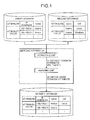
- FIG. 1 is a schematic diagram illustrating the outline of a merging apparatus according to a first embodiment.
- the merging apparatus merges databases that store therein, as records, each of attribute values that is classified under one or a plurality of attributes and is associated with each other.
- a key attribute functioning as a key for a merging process is set in advance.
- the merging is performed using the key attribute.
- the merging apparatus also merges databases in which the key attribute is not set. Specifically, the merging apparatus merges a first database, in which a plurality of attributes including the key attribute that is previously set as a key for the merging is set, with a second database, in which one or a plurality of attributes other than the key attribute is set.
- a first database in which a plurality of attributes including the key attribute that is previously set as a key for the merging is set
- a second database in which one or a plurality of attributes other than the key attribute is set.
- the key attribute is an "IP address" unless otherwise noted.
- the first database in which the attribute "IP address” functioning as the key attribute and the attribute "name” are set, is merged with the second database, in which the attribute "IP address” is not set but the attributes "name” and "OS” are set. More specifically, as will be described below, from among the records stored in the first database and the second database, the same records are federated.
- the record mentioned here means the IP address "192.168.0.1” associated with the name "host-a” or the IP address "192.168.0.5" associated with the name "host-c”.
- an extracting unit checks the attribute that is set in the first database against the attribute that is set in the second database. As illustrated in (1) of FIG. 1 , the extracting unit extracts a common attribute that is set in common in both the first database and the second database. In the example illustrated in FIG. 1 , the extracting unit extracts the common attribute "name".
- the merging unit in the merging apparatus merges, for example, using the common attribute "name", the first database with the second database by determining whether attribute values that are classified in the extracted common attribute match.
- the merging unit expansively merges databases, which previously it had not been able to merge, by using the common attribute as an alternate key that is an alternative to a key attribute.
- the merging unit merges the records in which the attribute value of the common attribute is "host-a" and federates them as a single record.
- the merging apparatus easily merges a database that does not have a key attribute.
- FIG. 2 is a block diagram illustrating the configuration of the merging apparatus according to the first embodiment.
- the merging apparatus 200 is connected to a plurality of MDRs(Management Data Repositories) 100 and includes a storing unit 300 and a control unit 400.
- each of the MDRs 100 is connected to the merging apparatus 200 and includes a database 101. As illustrated in FIG. 3 , one or a plurality of attributes is set in the database 101 in which each of the attribute values that is classified into the set attribute and is associated with each other is stored as a record. In the following, each of the MDRs 100 is simply referred to as an "MDR1", an “MDR2", and an “MDR3" unless otherwise noted.
- the attribute "IP address”, the attribute "name”, and the attribute "OS” are set as attributes that constitute a record. Furthermore, in the example illustrated in FIG. 3 , the database 101 stores therein, in an associated manner as a record, the association of the IP address "192.168.0.1", the name "host-1", and the OS “Windows (registered trademark)” or , in an associated manner as a record, the IP address "192.168.0.2", the name “host-2", and the OS "Linux”.
- FIG. 3 is a schematic diagram illustrating an example of information stored in a database according to the first embodiment.
- the database 101 is the existing database to which data is previously input by an administrator that manages the database 101.
- the database 101 further uses a "type name" in addition to the "attribute".
- the "type name” is information for identifying the type of the attribute.
- the type name corresponds to a "server”.
- the type name "server” indicates that the attribute to be associated is the attribute related to "server”.
- the "type name” is included in a record; however, the present invention is not limited thereto.
- the "type name” is not necessarily included in a record.
- each of the databases 101 is either the first database in which a plurality of attributes including a key attribute that is previously set as a key for merging is set or the second database in which one or a plurality of attributes other than the key attribute is set.
- the database 101 is the first database in which the "IP address", the "name”, and the "OS" are set as the attribute and in which a plurality of attributes including a key attribute that is previously set as a key for merging is set.
- the MDR 100 obtains the record stored in the database 101 and transmits, to the merging apparatus 200, the record stored in the database 101 and a registration request that requests the registration of the transmitted record when, for example, the MDR 100 is connected to the merging apparatus 200.
- each of the records transmitted from the MDR 100 to the merging apparatus 200 is merged, by the merging apparatus 200, with a record stored in the database 101 included in the MDR 100.
- the database 101 in the MDR 100 is merged, by the merging apparatus 200, any of the other databases 101 in the corresponding MDR 100.
- the MDR 100 that includes the first database is denoted by the "main-MDR” and the MDR 100 that includes the second database is denoted by the "sub-MDR”.
- the MDR1 and the MDR2 are the “main-MDR” and the MDR3 is the "sub-MDR”.
- FIG. 4 is a schematic diagram illustrating the relation between the merging apparatus and MDRs according to the first embodiment.
- the "federating CMDB" illustrated in FIG. 4 corresponds to the merging apparatus 200 according to the first embodiment.
- each of the MDRs 100 includes a database.
- the "MDR1" includes a database related to configuration information
- the "MDR2” includes a database related to application information
- the "MDR3" includes a database related to performance information.
- the merging apparatus 200 is connected to each of the MDRs 100 and centrally manages the records stored in each of the databases 101. Specifically, the merging apparatus 200 centrally manages the records such that which database 101 stores therein which record. Furthermore, the merging apparatus 200 centrally receives, from a client, an access request for each database and responds, to the client, with a record corresponding to the received request.
- the storing unit 300 in the merging apparatus 200 is connected to the control unit 400 and stores therein data used for various merging processes performed by the control unit 400. Furthermore, the storing unit 300 includes an FCMDB data management table 301, a type information management table 302, a uniqueness calculating table 303, a threshold table 304, and a sub-MDR information management table 305.
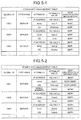
- the FCMDB data management table 301 is connected to a registration processing unit 401, a data management unit 402, a uniqueness calculating unit 403, and a merging unit 404, which will be described later. As illustrated in FIGS. 5-1 and 5-2 , the FCMDB data management table 301 stores therein each of the records transmitted to the merging apparatus 200 by the MDR 100. In other words, the FCMDB data management table 301 stores therein each of the records stored in each of the databases 101.
- FIGS. 5-1 and 5-2 are schematic diagrams each illustrating an example of information stored in an FCMDB data management table according to the first embodiment.
- the FCMDB data management table 301 further stores therein the "global ID” and the "MDR identification information” in an associated manner.
- the FCMDB data management table 301 stores therein, in an associated manner as a record, the global ID "GID1", the type name "server”, the IP address "192.168.0.1”, the name "host-1", the OS “Windows”, and the MDR identification information "MDRs".
- the "global ID” is information for uniquely identifying each record stored in the FCMDB data management table 301.
- the "global ID” corresponds to the "GID1", the "GID2", and the like.
- the "MDR identification information” identifies which database 101 in the MDR 100 stores the associated record.
- the FCMDB data management table 301 stores therein the MDR identification information "MDR1".
- the MDR identification information "MDR1" identifies the "MDR1".
- FIG. 5-2 illustrates an example of information stored in the FCMDB data management table 301 after the second database is merged by the merging unit 404, which will be described later.
- FIG. 5-2 a case is illustrated as an example in which a record containing the name "host-1", the OS “Windows", and the serial number "SN001" stored in the database 101 in the "MDR3" is merged with the record of the global ID "GID1" illustrated in FIG. 5-1 .
- the FCMDB data management table 301 stores therein, in addition to the MDR identification information "MDR1", the MDR identification information "MDR3" by associating it with the name "host-1" and the OS "Windows". Furthermore, the FCMDB data management table 301 newly stores therein the serial number "SN001". The FCMDB data management table 301 stores therein the MDR identification information "MDR3" by associating it with the serial number "SN001".
- the record stored in the first database is stored by the registration processing unit 401.
- the record is stored every time, for example, a new MDR 100 is connected to the merging apparatus 200.
- the FCMDB data management table 301 stores therein all the pieces of information illustrated in FIG. 5-1 .
- the records stored in the second database are stored by the merging unit 404.
- the "MDR3" is stored in the appropriate location.
- the information stored in the FCMDB data management table 301 is used by the data management unit 402 or the merging unit 404.
- the sub-MDR information is deleted by the uniqueness calculating unit 403 every time a new alternate key is set, and then the sub-MDR information that is merged using a new alternate key is stored.
- the alternate key will be described in detail later; therefore, a description thereof is omitted here.
- the type information management table 302 is connected to the data management unit 402 and the uniqueness calculating unit 403 that will be described later. Furthermore, the type information management table 302 stores therein, by associating with an attribute, information that identifies the database 101 in which the attribute is set.
- the type information management table 302 stores therein "main-MDR identification information” that identifies the main-MDR and "sub-MDR identification information” that identifies the sub-MDR in which the associated attribute is set.
- FIG. 6 is a schematic diagram illustrating an example of information stored in a type information management table according to the first embodiment.
- the type information management table 302 stores therein the main-MDR identification information "MDR1" and the sub-MDR identification information "MDR3" in such a manner that they are associated with the type name "server” and the attribute "name”. Specifically, the type information management table 302 stores therein information indicating that the type name "server” and the attribute "name” are set in the database 101 in the "MDR1" functioning as the main-MDR and the database 101 in the "MDR3" functioning as the sub-MDR.
- information is stored by the data management unit 402.
- information is stored by the data management unit 402 every time a new MDR 100 is connected to the merging apparatus 200 and a new record is stored in the FCMDB data management table 301.
- information is stored by the data management unit 402 every time a new record is stored in the sub-MDR information management table 305.
- the information stored in the type information management table 302 is used by the uniqueness calculating unit 403.
- FIG. 6 illustrates an example of information stored in the type information management table 302 when the information on the "MDR1", the "MDR2", and the "MDR3" is stored.
- the uniqueness calculating table 303 is connected to the data management unit 402 and the uniqueness calculating unit 403 that will be described later. Furthermore, the uniqueness calculating table 303 stores therein, for each attribute, the number of duplications for each attribute value classified under the attribute. Specifically, the uniqueness calculating table 303 stores therein the number of duplications for the attribute values. For example, as illustrated in FIGS. 7-1 to 7-3 , the uniqueness calculating table 303 stores therein "the number of duplication" such that it is associated with the "type name", the "attribute", and the "attribute value”.
- FIGS. 7-1 to 7-3 are schematic diagrams each illustrating an example of information stored in the uniqueness calculating table according to the first embodiment.
- the number of duplication indicates the number of records containing the same attribute value from among the records stored in the FCMDB data management table 301.
- the uniqueness calculating table 303 stores therein the number of duplication "1" by associating it with the type name "sever", the attribute "name", and the attribute value "host-1". Specifically, the uniqueness calculating table 303 stores therein information indicating a single record containing the attribute value "host-1", which is classified under the type name "server” and under the attribute "name”, is stored in the FCMDB data management table 301.
- the uniqueness calculating table 303 information is stored by the data management unit 402 every time, for example, a new MDR 100 is connected to the merging apparatus 200 and a new record is stored in the FCMDB data management table 301. Furthermore, the information stored by the uniqueness calculating table 303 is used by the uniqueness calculating unit 403.
- FIG. 7-1 illustrates an example of information stored in the uniqueness calculating table 303 by the data management unit 402 before the completion of the storing of the information on the "MDR" after the data management unit 402 starts the storing.
- FIG. 7-2 illustrates an example of information stored in the uniqueness calculating table 303 when the data management unit 402 stores all of the information on the "MDR1”.
- FIG. 7-3 illustrates an example of information stored in the uniqueness calculating table 303 when the data management unit 402 stores all of the information on the "MDR2" after storing the information on the "MDR1".
- the threshold table 304 is connected to the uniqueness calculating unit 403 and the merging unit 404 and stores therein a threshold that is used for the calculation performed by the uniqueness calculating unit 403. For example, as illustrated in FIGS. 8-1 and 8-2 , the threshold table 304 stores therein, for each type name, the "threshold of the uniqueness", the "threshold of the number of data", and the "alternate key” in an associated manner.
- FIGS. 8-1 and 8-2 are schematic diagrams each illustrating an example of information stored in a threshold table according to the first embodiment.
- the threshold table 304 stores therein the threshold of the uniqueness "0.8" and the threshold of the number of data "10" by associating them with the type name "server” and further stores therein the alternate key "name”.
- the alternate key mentioned here means a merge key that is used to expansively merge databases that is not merged using the key attribute while maintaining the merge result obtained using the key attribute if the merge result is present.
- the alternate key is set by the uniqueness calculating unit 403. Setting of the alternate key will be described in detail later; therefore, a description thereof is omitted here.
- the “threshold of the uniqueness” is the uniqueness threshold, which will be described later, and indicates the minimum uniqueness allowable by an administrator. Furthermore, the “threshold of the uniqueness” is used by the uniqueness calculating unit 403 and is set by, for example, an administrator. In the example illustrated in FIG. 8-1 , the threshold table 304 stores therein information indicating that the threshold of the uniqueness associated with the type name "server" is "0.8".
- the uniqueness mentioned here means a value calculated by the uniqueness calculating unit 403 for each attribute and indicates that there may possibly be another record containing the same attribute value.
- the lower the degree of uniqueness in the attribute the higher the possibility of another record containing the same attribute value existing.
- the "threshold of the number of data” indicates the minimum value of the number of data that is used when the uniqueness is calculated by the uniqueness calculating unit 403, which will be described later.
- the threshold table 304 stores therein information indicating that the threshold of the number of data associated with the type name "server" is "10".
- the "threshold of the uniqueness” and the “threshold of the number of data” are previously stored by an administrator, and, as will be described later, the "alternate key” is input by the uniqueness calculating unit 403. From among the information stored in the threshold table 304, the "type name", the "threshold of the uniqueness”, and the “threshold of the number of data” are used by the uniqueness calculating unit 403 and the “alternate key” is used by the merging unit 404.
- FIG. 8-1 illustrates an example of information stored in the threshold table 304 before the uniqueness calculating unit 403 sets the alternate key.
- FIG. 8-2 illustrates an example of information stored in the threshold table 304 after the uniqueness calculating unit 403 sets the alternate key.
- the sub-MDR information management table 305 is connected to the registration processing unit 401, the data management unit 402, the uniqueness calculating unit 403, and the merging unit 404 and stores therein information on the record stored in the second database. Specifically, the sub-MDR information management table 305 stores therein information on the record to be merged using the common attribute.
- the sub-MDR information management table 305 stores therein the "type name”, the "attribute”, and the “attribute value”. Furthermore, the sub-MDR information management table 305 further stores therein the "sub-MDR identification information", a "reconciliation candidate” and a "local ID” in an associated manner.
- FIGS. 9-1, 9-2 and 9-3 are schematic diagrams each illustrating an example of information stored in the sub-MDR information management table according to the first embodiment.
- the sub-MDR information management table 305 stores therein information on the record stored in the sub-MDR identification information "MDR3".
- the sub-MDR information management table 305 stores therein the record containing the reconciliation candidate "-", the local ID "LID1", the type name "server”, the name "host-1”, the OS "Windows", and the serial number "SN001".
- the "local ID" is information for identifying a record in the database 101 and is contained in, for example, the information transmitted from the MDR 100 to the merging apparatus 200.
- the "reconciliation candidate” indicates the merge result of the merging performed using the alternate key.
- the sub-MDR information management table 305 stores therein the global ID for the record that has already been merged with the record in the main-MDR and stores therein "-" for the record that is not merged.
- the sub-MDR information management table 305 stores therein the reconciliation candidate "GID1" by associating it with the local ID "LID1” and also stores therein the reconciliation candidate "-" by associating it with the local ID "LID2".
- the sub-MDR information management table 305 stores therein information indicating that the record identified by the "LID1" is merged with the record identified by the "GID1” and also stores therein information indicating that the record identified by the "LID2" is not merged.
- the sub-MDR information management table 305 information other than the "reconciliation candidate" is stored by the registration processing unit 401 every time, for example, a new sub-MDR is connected to the merging apparatus 200. Furthermore, in the sub-MDR information management table 305, the "reconciliation candidate" is stored by the merging unit 404. The information stored by the sub-MDR information management table 305 is used by the data management unit 402, the uniqueness calculating unit 403, and the merging unit 404.
- control unit 400 is connected to the storing unit 300, includes an internal memory for storing programs prescribing various kinds of procedures, and performs various kinds of merging. Furthermore, the control unit 400 includes the registration processing unit 401, the data management unit 402, the uniqueness calculating unit 403, and a merging unit 404.
- the registration processing unit 401 is connected to each of the MDRs 100, and is also connected to the FCMDB data management table 301, the sub-MDR information management table 305, and the uniqueness calculating unit 403. Furthermore, in the registration processing unit 401, the key attribute, such as the attribute "IP address", is previously set by an administrator.
- the registration processing unit 401 receives, each MDR 100, a record and a registration request that are stored in each database 101 in each MDR 100 when, for example, the MDR 100 is connected to the merging apparatus 200. Then, the registration processing unit 401 stores the received record in the FCMDB data management table 301 or the sub-MDR information management table 305.
- the registration processing unit 401 determines whether the record is transmitted from the main-MDR or from the sub-MDR. Specifically, the registration processing unit 401 determines whether the key attribute, i.e., the attribute "IP address", is set in the database 101 in the MDR 100 that corresponds to the transmission source. Then, if the registration processing unit 401 determines that the record is from the main-MDR, the registration processing unit 401 stores the record in the FCMDB data management table 301. If the registration processing unit 401 determines that the record is from the sub-MDR, it stores the record in the sub-MDR information management table 305.
- the key attribute i.e., the attribute "IP address”
- the registration processing unit 401 determines whether the received record contains a record containing an attribute value classified under the key attribute, for example, a record containing an attribute value classified into the attribute "IP address". Then, if the registration processing unit 401 determines that the record contains the attribute value classified under the attribute "IP address", the registration processing unit 401 stores the record in the FCMDB data management table 301. In contrast, if the registration processing unit 401 determines that the record does not contain the attribute value classified under the attribute "IP address", it stores the record in the sub-MDR information management table 305.
- FIG. 10 is a schematic diagram illustrating a merging process that uses a key attribute and is performed by a registration processing unit according to the first embodiment.
- the "FCMDB" in FIG. 10 corresponds to the FCMDB data management table 301 in the merging apparatus 200 illustrated in FIG. 2 .
- FIG. 10 illustrates a case in which an attribute unique to each of the corresponding databases 101 is set in the databases 101 managed by the "MDR A" to "MDR C".
- the attribute "IP” is set in the database 101 in the "MDR A”
- the attribute "ID” is set in the database 101 in the "MDR B”
- the attribute "IP ADDR” is set in the database 101 in the "MDR C”.
- the registration processing unit 401 when receiving the record stored in the database 101 in the MDR 100, the registration processing unit 401 changes the attribute that is set in the database 101 to the attribute of a common type for the FCMDB that is used by the merging apparatus 200. For example, the registration processing unit 401 changes the attribute "IP", the attribute "ID”, and the attribute "IP ADDR" to the attribute "IP address”. For example, the registration processing unit 401 changes the attribute by associating the attribute unique to each of the databases 101 with each of the attributes used by the merging apparatus 200 and by storing them in advance.
- the registration processing unit 401 determines that the key attribute is set and merges records stored in each of the databases 101 using the key attribute. For example, the registration processing unit 401 determines whether the attribute values classified under the attribute "IP address" match. If they match, the registration processing unit 401 merges records by recognizing them as the same record. Then, the registration processing unit 401 stores the matching record, as the same record, in the FCMDB data management table 301.
- a merging process performed by the registration processing unit 401 using the key attribute will be described in detail later; therefore, a description thereof is omitted here.
- FIG. 11 is a schematic diagram illustrating a database that is not merged by the merging process that uses the key attribute and is performed by the registration processing unit according to the first embodiment.
- the "FCMDB" illustrated in FIG. 11 corresponds to the FCMDB data management table 301 in the merging apparatus 200 illustrated in FIG. 2 .
- the registration processing unit 401 when receiving a record stored in the database 101 in the "MDR D" that corresponds to the sub-MDR, the registration processing unit 401 changes the attribute that is set in the database 101 in the "MDR D" to the attribute of a common type for the FCMDB that is used by the merging apparatus 200.
- the registration processing unit 401 determines that the key attribute is not set and stores the received record in the sub-MDR information management table 305 without processing anything. Specifically, as illustrated in FIG. 11 , because the attribute "IP address" functioning as the key attribute is not set in the "MDR D", the registration processing unit 401 does not perform the merging using the attribute "IP address”. Accordingly, the registration processing unit 401 stores the received record in the sub-MDR information management table 305 without processing the merging. As will be described later, the record stored in the sub-MDR information management table 305 is merged by the merging unit 404.
- the registration processing unit 401 determines that a record is from the sub-MDR and stores the record in the sub-MDR information management table 305, the registration processing unit 401 transmits, to the uniqueness calculating unit 403, information indicating that the record from the sub-MDR is stored.
- the data management unit 402 is connected to the FCMDB data management table 301, the sub-MDR information management table 305, the type information management table 302, the uniqueness calculating table 303, and the uniqueness calculating unit 403.
- the data management unit 402 stores information in the type information management table 302 or the uniqueness calculating table 303.
- storing of information in the type information management table 302 will be described first, and then storing information in the uniqueness calculating table 303 will be described.
- the data management unit 402 stores information in the type information management table 302.
- the data management unit 402 obtains, from the FCMDB data management table 301, the "type name”, the “attributes”, and the "MDR identification information”, all of which are associated with each other. Furthermore, the data management unit 402 obtains, from the sub-MDR information management table 305, the "type namely, the "attribute”, and the "sub-MDR identification information”, all of which are associated with each other.
- the data management unit 402 obtains, from the FCMDB data management table 301, the type name "server”, the attributes "IP address”, "name”, and “OS”, and the MDR identification information "MDRs", all of which are associated with each other. Furthermore, in the example illustrated in FIGS. 9-1, 9-2 and 9-3 , the data management unit 402 obtains, from the sub-MDR information management table 305, the type name "server”, the attributes "name", "OS”, and “serial number”, and the sub-MDR identification information "MDR3", all of which are associated with each other.
- the data management unit 402 stores, in an associated manner in the type information management table 302, the "type name”, the “attribute”, and the "MDR identification information” or the "type name”, the “attribute”, and the "sub-MDR identification information” obtained from the FCMDB data management table 301 or the sub-MDR information management table 305.
- the data management unit 402 stores, as the attribute associated with the type name "sever”, the attributes "IP address", "name”, and "OS". Furthermore, the data management unit 402 stores the "MDR1" as the MDR identification information that is associated with the attribute "IP address", the attribute "name”, the attribute "OS”, and the like.
- the data management unit 402 stores therein, as the attribute associated with the type name "serve”, the attributes "name”, “OS”, and “serial number”. Furthermore, the data management unit 402 stores therein the "MDR3" as the sub-MDR identification information that is associated with the attributes "name", the attribute "OS”, and the attribute "serial number”.
- the data management unit 402 stores information in the uniqueness calculating table 303.
- the data management unit 402 obtains, from the FCMDB data management table 301, the "type name”, the “attribute”, and the “attribute value”, which are associated with each other.
- the data management unit 402 obtains, the type name "server”, the attribute "name”, and the attribute value "host-1”, which are associated with each other, or obtains the type name "server", the attribute "name”, and the attribute value "host-2", which are associated with each other.
- the data management unit 402 stores the obtained associated items in the uniqueness calculating table 303. Specifically, the data management unit 402 stores the obtained "type name”, the "attribute”, and the “attribute value”, which are associated with each other. For example, the data management unit 402 stores the type name "server”, the attribute "name”, and the attribute value "host-1” in an associated manner or stores the type name "server”, the attribute "name”, and the attribute value "host-2" in an associated manner.
- the data management unit 402 sets "the number of duplications" that is associated with the stored "type name”, the stored "attribute”, and the stored "attribute value”.
- the data management unit 402 sets "1" as the number of the duplications. Then, if the obtained associated item is stored in the uniqueness calculating table 303, the data management unit 402 sets a value to which "1" is added to a value of the "the number of the duplications" that has already been associated with the obtained associated item and that has already been stored in the uniqueness calculating table 303. Specifically, if the number of duplications is "1", "2" is set as the number of duplications.
- the data management unit 402 constantly monitors, for example, the FCMDB data management table 301 and the sub-MDR information management table 305. Then, the data management unit 402 obtains information every time, for example, a new MDR 100 is connected to the merging apparatus 200 and a new record is stored in the FCMDB data management table 301 or the sub-MDR information management table 305 by the registration processing unit 401. Thereafter, the data management unit 402 stores the obtained information in the type information management table 302 or the uniqueness calculating table 303. Specifically, the data management unit 402 updates information stored in the type information management table 302 or in the uniqueness calculating table 303 every time the information stored in the FCMDB data management table 301 or the sub-MDR information management table 305 changes.
- the data management unit 402 Every time the data management unit 402 updates the type information management table 302 or the uniqueness calculating table 303, the data management unit 402 transmits information on completion of the update to the uniqueness calculating unit 403.
- the uniqueness calculating unit 403 is connected to the FCMDB data management table 301, the type information management table 302, the uniqueness calculating table 303, the threshold table 304, the sub-MDR information management table 305, the registration processing unit 401, the data management unit 402, and the merging unit 404.
- the uniqueness calculating unit 403 is also called an extracting unit or a calculating unit. As will be described below, the uniqueness calculating unit 403 extracts the common attribute, calculates the uniqueness, and sets it as the alternate key. In the following, a description of extracting the common attribute, calculating the uniqueness, and setting the alternate key will be given in the order they are listed in this sentence.
- the uniqueness calculating unit 403 performs a process, which will be described below, every time the uniqueness calculating unit 403 receives information indicating that a record for the sub-MDR is received from the registration processing unit 401 or receives information on completion of the update from the data management unit 402.
- the uniqueness calculating unit 403 checks the attribute that is set in the first database against the attribute that is set in the second database and extracts the common attribute that is set, in common, in the first database and the second database. For example, by referring to the type information management table 302, from among the attributes stored in the type information management table 302, the uniqueness calculating unit 403 extracts the attribute in which the MDR identification information is stored in both the "main-MDR identification information" and the "sub-MDR identification information".
- the uniqueness calculating unit 403 extracts, as the common attribute, the attribute "name” and the "OS” that correspond to the attribute common to the main-MDR identification information "MDR1" and the sub-MDR identification information "MDR3". Furthermore, the uniqueness calculating unit 403 extracts the attribute "serial number" that corresponds to the attribute common for the main-MDR identification information "MDR2" and the sub-MDR identification information "MDR3".
- the uniqueness calculating unit 403 calculates the uniqueness indicating the ratio of the number of records in which an attribute value does not match any of the attribute values contained in the other records to the number of records containing the attribute value classified under the attribute. Furthermore, the uniqueness calculating unit 403 calculates the uniqueness for each attribute extracted as the common attribute.
- the uniqueness calculating unit 403 refers to the uniqueness calculating table 303; identifies, for each attribute, the number of attribute values stored in the uniqueness calculating table 303; and calculates, for example, the sum of the corresponding number of duplications. Furthermore, the uniqueness calculating unit 403 identifies the number of attribute values associated with the number of duplications, i.e., "1". Then, the uniqueness calculating unit 403 calculates the uniqueness by dividing the number of attribute values associated with the number of duplications, i.e., "1" by the number of attribute values.
- the uniqueness calculating unit 403 calculates the uniqueness of each of the attributes "name” and "OS" classified under the type name "server". Because the number of attribute values is "10" for the attribute "name” and the number of attribute values with the number of duplications being "1" is "8", the uniqueness calculating unit 403 calculates the uniqueness "0.8” for the attribute "name”. Similarly, the uniqueness calculating unit 403 calculates the uniqueness "0.1” for the attribute "OS”.
- the uniqueness calculating unit 403 obtains a threshold by referring to the threshold table 304 and identifies the common attribute that satisfies the obtained threshold. Then, the uniqueness calculating unit 403 selects one common attribute that satisfies the threshold and sets it as the alternate key in the threshold table 304. In the following, a case in which the uniqueness calculating unit 403 sets the alternate key will be described by using an example case in which the attribute "name” or "OS” is detected and the uniqueness "0.8" or the uniqueness "0.1" is calculated for each attribute as the common attribute.
- the uniqueness calculating unit 403 identifies the common attribute that satisfies the obtained threshold.
- the uniqueness calculating unit 403 refers to the "threshold of the uniqueness” stored in the threshold table 304 and reads, in the example illustrated in FIG. 8-1 , the threshold of the uniqueness "0.8” that is associated with the type name "server". Then, the uniqueness calculating unit 403 compares the uniqueness "0.8” or “0.1” of the attribute "same” or "OS” with the threshold of the uniqueness "0.8” and determines whether the attribute "name” or "OS” is equal to or greater than the threshold of the uniqueness "0.8". Specifically, the uniqueness calculating unit 403 identifies whether the uniqueness of the common attribute is greater than a predetermined threshold. Accordingly, for example, the uniqueness calculating unit 403 determines that the attribute "name” satisfies the threshold of the uniqueness or determines that the attribute "OS” does not satisfy the threshold of the uniqueness.
- the uniqueness calculating unit 403 refers to the "threshold of the number of data" stored in the threshold table 304 and reads, in the example illustrated in FIG. 8-1 , the threshold of the uniqueness "10" associated with the type name "server". Furthermore, for the attributes "name” or "OS" detected as the common attribute, the uniqueness calculating unit 403 identifies the number of attribute values by referring to the uniqueness calculating table 303. For example, the uniqueness calculating unit 403 identifies that the number of attribute values is "10" for the attribute "name” and identifies that the number of attribute values is "10" for the attribute "OS”.
- the uniqueness calculating unit 403 determines whether “10” or the number of attribute values "10" for each attribute "name” or “OS” satisfies the threshold of the number of data "10". Then, for example, the uniqueness calculating unit 403 determines that attribute "name” or "OS” satisfies the threshold of the uniqueness.
- the uniqueness calculating unit 403 identifies the attribute "name” as the common attribute that satisfies both the "threshold of the uniqueness” and the "threshold of the number of data”.
- the uniqueness calculating unit 403 selects one common attribute that satisfies the threshold. For example, if the uniqueness calculating unit 403 identifies only one common attribute that satisfies the threshold, the uniqueness calculating unit 403 selects the identified one common attribute. Furthermore, for example, if the uniqueness calculating unit 403 identifies a plurality of common attributes that satisfy the threshold, the uniqueness calculating unit 403 selects one of the identified common attributes. For example, the uniqueness calculating unit 403 selects the attribute having the greatest uniqueness.
- the uniqueness calculating unit 403 sets the selected common attribute as the alternate key in the threshold table 304. Specifically, the uniqueness calculating unit 403 determines whether the "alternate key" is set in the threshold table 304. If the uniqueness calculating unit 403 determines that the "alternate key” is not set in the threshold table 304, the uniqueness calculating unit 403 sets the selected common attribute as the alternate key in the threshold table 304. For example, as in the example illustrated in FIG. 8-2 , if the uniqueness calculating unit 403 selects the attribute "name”, the uniqueness calculating unit 403 sets, in the threshold table 304, the attribute "name" as the alternate key for the type name "server".
- the uniqueness calculating unit 403 determines that the "alternate key" is set in the threshold table 304, the uniqueness calculating unit 403 updates the threshold table 304 by allowing the selected common attribute to be the alternate key and cancels the merge result obtained using the "alternate key" obtained before the update. For example, the uniqueness calculating unit 403 accesses the sub-MDR information management table 305 and deletes the global ID if it is stored in the "reconciliation candidate". Specifically, the merge result is deleted using the alternate key obtained before the update. Furthermore, for example, the uniqueness calculating unit 403 deletes the information on the sub-MDR stored in the FCMDB data management table 301.
- the uniqueness calculating unit 403 When the uniqueness calculating unit 403 completes the process for setting the alternate key, the uniqueness calculating unit 403 transmits information on completion of the setting process to the merging unit 404.
- the merging unit 404 is connected to the FCMDB data management table 301, the threshold table 304, the sub-MDR information management table 305, and the uniqueness calculating unit 403.
- the merging unit 404 merges the first database with the second database by determining whether the attribute values classified under the common attribute that is extracted by the uniqueness calculating unit 403 match. Furthermore, the merging unit 404 performs the following merging process every time the merging unit 404 receives information on completion of the setting process from the uniqueness calculating unit 403.
- the merging unit 404 merges the record stored in the database 101 in the sub-MDR with the record stored in the main-MDR.
- the merging unit 404 performs the merging using the attribute "name" of the type name "server".
- the merging unit 404 selects one record to be processed from the sub-MDR information management table 305, searches the FCMDB data management table 301 for a record having a matching attribute value classified under the alternate key, and determines whether a matching record is present.
- the merging unit 404 determines that a matching record is resent, the merging unit 404 performs the merging on the matching record. Specifically, the merging unit 404 stores, in the "reconciliation candidate" in the sub-MDR information management table 305, the "global ID" that identifies the determined matching record in the FCMDB data management table 301. Furthermore, the merging unit 404 federates the matching record in the FCMDB data management table 301 with the selected record.
- the merging unit 404 stores, in the FCMDB data management table 301, the MDR identification information "MDR3" in addition to the MDR identification information "MDR1" by associating the MDR identification information "MDR3" with the name "host-1” and the OS "Windows". Furthermore, the merging unit 404 newly stores, in the FCMDB data management table 301, the serial number "SN001" by associating it with the MDR identification information "MDR3".
- the merging unit 404 determines that a matching record is not present, the merging unit 404 completes the process without performing the merging. Furthermore, the merging unit 404 repeats the process until it selects all of the records.
- FIG. 12 is a schematic diagram illustrating a merging unit according to the first embodiment.
- an "MDR X" and an “MDR Y" are the main-MDR and an “MDR Z" is the sub-MDR.
- the "MDR X" and the "MDR Y" are merged by the registration processing unit 401.
- the merging unit 404 merges, by using the common attribute "name” or "OS” as the alternate key, the record in the "MDR Z" with the record in the "MDR X” or the "MDR Y".
- the merging apparatus 200 by installing the functions of the registration processing unit 401, the data management unit 402, the uniqueness calculating unit 403, and the merging unit 404 in an already-known information processing apparatus, such as a personal computer or a workstation.
- FIG. 13 is a flowchart illustrating the flow of a process performed by the merging apparatus according to the first embodiment.
- the registration processing unit 401 receives a registration request from the MDR 100 (Yes at Step S101), the registration processing unit 401 receives data. Specifically, the registration processing unit 401 receives a record stored in the database 101 in the MDR 100 functioning as the transmission source of the registration request (Step S102).
- the registration processing unit 401 determines whether the key attribute is present (Step S103). For example, the registration processing unit 401 determines whether the record contains the attribute value classified under the attribute "IP address". If the registration processing unit 401 determines that the key attribute is present (Yes at Step S103), the registration processing unit 401 performs the merging using the key attribute (Step S104). The flow of the merging process using the key attribute will be described in detail later with reference to FIG. 14 ; therefore, a description thereof is omitted here.
- the data management unit 402 updates the type information management table 302 or the uniqueness calculating table 303 (Step S105). Specifically, the data management unit 402 updates the information stored in the type information management table 302 and the uniqueness calculating table 303 every time the information stored in the FCMDB data management table 301 changes.
- Step S103 if the registration processing unit 401 determines that the key attribute is not present (No at Step S103), the registration processing unit 401 stores the received record in the sub-MDR information management table 305 (Step S106). Then, the data management unit 402 updates the type information management table 302 or the uniqueness calculating table 303 (Step S105).
- Step S105 if the data management unit 402 updates the type information management table 302 or the uniqueness calculating table 303 (Step S105), the uniqueness calculating unit 403 or the merging unit 404 in the merging apparatus 200 performs the merging using the alternate key (Step S107).
- the flow of a merging process using the alternate key will be described in detail later with reference to FIG. 15 ; therefore, a description thereof is omitted here.
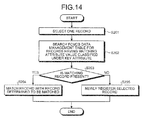
- FIG. 14 is a flowchart illustrating the flow of the merging process that uses the key attribute and is performed by the merging apparatus according to the first embodiment.
- the flow of the process that will be described using FIG. 14 corresponds to Step S104 from among the processes that have been described using FIG. 13 .
- the registration processing unit 401 when performing the merging using the key attribute, selects one record to be processed (Step S201). For example, the registration processing unit 401 selects one newly received record. Then, the registration processing unit 401 searches the FCMDB data management table 301 for records having the matching attribute value classified under the key attribute (Step S202).
- the registration processing unit 401 determines whether a matching record is present (Step S203). For example, if the attribute value of the attribute "IP address" of the selected record is "192.168.0.1", the registration processing unit 401 determines whether a record containing the IP address "192.168.0.1” is present in the records that have already been stored in the FCMDB data management table 301. If the registration processing unit 401 determines that a matching record is present (Yes at Step S203), the registration processing unit 401 merges the determined matching record with the record determined to be matched (Step S204). Specifically, from among the record that have already been stored in the FCMDB data management table 301, the registration processing unit 401 merges the record containing the IP address "192.168.0.1" with the selected record as the same data.
- the registration processing unit 401 determines that no matching record is present (No at Step S203), the registration processing unit 401 newly registers the selected record in the FCMDB data management table 301 (Step S205).
- the registration processing unit 401 performs a series of processes on all of the received records.
- FIG. 15 is a flowchart illustrating the flow of the merging process that uses an alternate key and is performed by the merging apparatus according to the first embodiment.
- the flow of the process that will be described using FIG. 15 corresponds to Step S107 from among the processes that have been described using FIG. 13 .
- the uniqueness calculating unit 403 extracts the common attribute (Step S301). Specifically, the uniqueness calculating unit 403 refers to the type information management table 302 to extract the common attribute. For example, the uniqueness calculating unit 403 extracts, as the common attribute, the attribute "name" or "OS".
- the uniqueness calculating unit 403 calculates the uniqueness (Step S302). For example, by referring to the uniqueness calculating table 303, the uniqueness calculating unit 403 calculates the uniqueness "0.8" for the common attribute "name” because the number of attribute values is "10" and the number of attribute values with the number of duplication being "1" is "8".
- the uniqueness calculating unit 403 obtains the threshold by referring to the threshold table 304 (Step S303). For example, the uniqueness calculating unit 403 obtains the threshold of the uniqueness "0.8". Then, the uniqueness calculating unit 403 identifies the common attribute that satisfies the obtained threshold and selects one common attribute (Step S304). For example, the uniqueness calculating unit 403 identifies common attribute "name" having the uniqueness "0.8" and selects the common attribute "name”.
- the uniqueness calculating unit 403 determines whether the alternate key is set in the threshold table 304 (Step S305). If the uniqueness calculating unit 403 determines that the alternate key is not set in the threshold table 304, (No at Step S305), the uniqueness calculating unit 403 sets the selected common attribute as the alternate key (Step S306).
- the uniqueness calculating unit 403 determines that the alternate key is set in the threshold table 304 (Yes at Step S305), the uniqueness calculating unit 403 updates the selected common attribute as the alternate key (Step S307) and cancels the merge result obtained using the "alternate key" obtained before the update (Step S308).
- the uniqueness calculating unit 403 accesses the sub-MDR information management table 305 and deletes the global ID if it is stored in the "reconciliation candidate ".
- the uniqueness calculating unit 403 deletes the information on the sub-MDR stored in the FCMDB data management table 301 because it is the merge result obtained by using the alternate key that has not been updated.
- the merging unit 404 selects, from the sub-MDR information management table 305, one record to be processed (Step S309) and searches the FCMDB data management table 301 for the matching record having the attribute value classified under the alternate key (Step S310).
- the merging unit 404 determines whether only one matching record is present (Step S311). If the merging unit 404 determines that only one matching record is present (Yes at Step S311), the merging unit 404 merges a record with a record determined to be a match (Step S312). Specifically, the merging unit 404 stores, in the "reconciliation candidate" in the sub-MDR information management table 305, the "global ID" that identifies the determined matching record in the FCMDB data management table 301. Furthermore, for example, the merging unit 404 federates the matching record in the FCMDB data management table 301 with the selected record. In contrast, if the merging unit 404 determines that no matching record is present (No at Step S311), the merging unit 404 does not merge anything.
- the merging unit 404 determines whether all of the records are selected (Step S313). If the merging unit 404 determines that all of the records are selected (Yes at Step S313), the merging unit 404 completes the process. In contrast, if the merging unit 404 determines that not all of the records are selected (No at Step S313), the merging unit 404 repeats the processes from Step S309 until the merging unit 404 determines that all of the records are selected.
- FIG. 16 is a flowchart illustrating the flow of a process performed by a data management unit according to the first embodiment.
- the flow of the process that will be described using the FIG. 16 corresponds to Step S105 from among the processes that have been described using FIG. 13 .
- the data management unit 402 obtains both the "type name” and the "attribute” for the newly received record (Step S401). For example, the data management unit 402 obtains, from the FCMDB data management table 301 or the sub-MDR information management table 305, the "type name", the "attribute", and the "MDR identification information” or the "sub-MDR identification information” for the newly stored record, which are associated with each other.
- the data management unit 402 determines whether the obtained "type name" is present in the type information management table 302 (Step S402). For example, the data management unit 402 determines whether the type information management table 302 stores therein the type name "server". If the data management unit 402 determines that the obtained "type name" is not present (No at Step S402), the data management unit 402 adds the obtained "type name” to the type information management table 302 (Step S403). For example, the data management unit 402 newly stores the "server” in the "type name” in the type information management table 302.
- Step S404 determines whether the obtained "attribute” is present in the type information management table 302. Specifically, the data management unit 402 determines whether the attribute "OS" classified under the type name "server " is stored. If the data management unit 402 determines that the obtained "attribute” is not present (No at Step S404), the data management unit 402 adds the obtained "attribute” to the type information management table 302 (Step S405).
- the data management unit 402 newly stores the attribute "OS” by associating it with the type name "server” that is stored in the type information management table 302. At this time, the data management unit 402 also stores the "main-MDR identification information" or the "sub-MDR identification information".
- the data management unit 402 updates the uniqueness calculating table 303 (Step S406). Specifically, the data management unit 402 stores, in the uniqueness calculating table 303, information on the attribute that is newly stored in the type information management table 302 and then completes the process. At Step S404, if the data management unit 402 determines that the obtained "attribute" is present (Yes at Step S404), the data management unit 402 ends the process without processing anything.
- the data management unit 402 When obtaining a plurality of type names at Step S401, the data management unit 402 performs the process performed at Steps S402 or S403 on all of the obtained type names. Similarly, if the data management unit 402 obtains a plurality of attributes, the data management unit 402 performs the processes performed at Steps S404 to S406 on all of the obtained attributes.
- the merging apparatus 200 checks the attribute that is set in the first database against the attribute that is set in the second database and extracts the common attribute that is set, in common, in the first database and the second database. Then, the merging apparatus 200 merges the first database with the second database by determining whether the attribute values classified under the extracted common attribute match. Accordingly, the merging apparatus 200 can easily performs the merging on the database in which the key attribute is not set. Therefore, when, for example, a database in which the key attribute is not set is subjected to the merging, the merging can be easily performed even though the key attribute is neither manually reset nor manually merged.
- the merging apparatus 200 if a plurality of common attributes are extracted by the uniqueness calculating unit 403, the merging is performed using the common attribute having the greatest uniqueness; therefore, precise merging can be performed. Specifically, by determining the common attribute functioning as the alternate key by taking into consideration the uniqueness, it is possible to prevent different records from being erroneously merged as the same records.
- the merging apparatus 200 identifies whether the calculated uniqueness of the common attribute is greater than a predetermined threshold and performs the merging by using only the identified common attribute having the ratio greater than the predetermined threshold; therefore, precise merging can be performed. Specifically, by using the uniqueness, it is possible to prevent different records from being erroneously merged as the same records.
- FIG. 17 is a schematic diagram illustrating an example of information stored in a sub-MDR information management table according to a second embodiment.
- the fixed flag mentioned here is information indicating, when the alternate key is updated, whether the merge result is cancelled.
- the fixed flag "true” means that the merge result is not cancelled
- the fixed flag "false” means that the merge result is cancelled.
- the fixed flags stored in the sub-MDR information management table 305 are usually "false”. If an administrator manually performs the merging, the "fixed flag", which is associated with a record corresponding to the merge result performed by the administrator, is set to be "true” by the data management unit 402 or the administrator.
- Step S507 and S508 in FIG. 18 with the merging apparatus 200 according to the second embodiment, if the uniqueness calculating unit 403 updates the alternate key (Step S507), the merge result is cancelled only for data other than for data for which the fixed flag is "true" (Step S508).
- Step S501 to S508 illustrated in FIG. 18 correspond to Steps S301 to S308 illustrated in FIG. 15 .
- Steps S509 to S513 illustrated in FIG. 18 correspond to Steps S309 to S313 illustrated in FIG. 15 .
- the fixed flag is set to be "true” only when a user manually performs the merging; however the present invention is not limited thereto.
- the merging apparatus 200 performs the merging, it is also possible to set the fixed flag "true" for a merge result that is selected by a user.
- the second embodiment it is possible to set a record in which the merge result remains the same even when the alternate key is updated; therefore, it is possible to prevent unwanted merging from being performed.
- the type information management table 302 or the uniqueness calculating table 303 is updated by the data management unit 402 every time a new MDR 100 is connected; however, the present invention is not limited thereto.
- an administrator previously to store information in the type information management table 302 or the uniqueness calculating table 303 and to perform the merging process by using the alternate key.
- the present invention is not limited thereto.
- the uniqueness it is also possible to set the common attribute extracted by the merging apparatus 200 as the alternate key.
- the threshold stored in the threshold table 304 it is also possible to set the common attribute extracted by the merging apparatus 200 as the alternate key.
- FIG. 19 is a schematic diagram illustrating an example of a computer that executes a merging program according to the first embodiment.
- a computer 3000 includes a communication unit 3006, a CPU 3010, a ROM 3011, an HDD 3012, and a RAM 3013, which are connected via a bus 3009 or the like.
- the ROM 3011 stores therein, in advance, a control program, i.e., a registration processing program 3011a, a data management program 3011b, a uniqueness calculating program 3011c, and a merging program 3011d exhibiting the same function as the registration processing unit 401, the data management unit 402, the uniqueness calculating unit 403, and the merging unit 404 described in the first embodiment.
- a control program i.e., a registration processing program 3011a, a data management program 3011b, a uniqueness calculating program 3011c, and a merging program 3011d exhibiting the same function as the registration processing unit 401, the data management unit 402, the uniqueness calculating unit 403, and the merging unit 404 described in the first embodiment.
- These programs 3011a to 3011d may appropriately be integrated or separated in the same manner as the components of the merging apparatus 200 illustrated in FIG. 2 .
- these programs 3011a to 3011d function as a registration processing process 3010a, a data management process 3010b, a uniqueness calculating process 3010c, and a merging process 3010d.
- the processes 3010a to 3010d correspond to, respectively, the registration processing unit 401, the data management unit 402, the uniqueness calculating unit 403, and the merging unit 404 illustrated in FIG. 2 .
- the HDD 3012 stores therein an FCMDB data management table 3012a, a type information management table 3012b, a uniqueness calculating table 3012c, a threshold table 3012d, and a sub-MDR information management table 3012e.
- the tables 3012a to 3012e correspond to, respectively, the FCMDB data management table 301, the type information management table 302, the uniqueness calculating table 303, the threshold table 304, and the sub-MDR information management table 305 illustrated in FIG. 2 .
- the CPU 3010 reads the FCMDB data management table 3012a, the type information management table 3012b, the uniqueness calculating table 3012c, the threshold table 3012d, and the sub-MDR information management table 3012e and stores them in the RAM 3013 and executes the merging program by using an FCMDB data management data 3013a, a type information management data 3013b, a uniqueness calculating data 3013c, a threshold data 3013d, and a sub-MDR information management data 3013e that are stored in the RAM 3013.
- the merging program according to the embodiments may be distributed via a network, such as the Internet. Furthermore, the merging program may be stored in a computer-readable recording medium, such as a hard disk, a flexible disk (FD), a compact disk read only memory (CD-ROM), a magneto-optical (MO) disk, and a digital versatile disk (DVD). The computer then reads and executes the program from the recording medium.
- a computer-readable recording medium such as a hard disk, a flexible disk (FD), a compact disk read only memory (CD-ROM), a magneto-optical (MO) disk, and a digital versatile disk (DVD).
- the computer then reads and executes the program from the recording medium.
Landscapes
- Engineering & Computer Science (AREA)
- Databases & Information Systems (AREA)
- Theoretical Computer Science (AREA)
- Data Mining & Analysis (AREA)
- Physics & Mathematics (AREA)
- General Engineering & Computer Science (AREA)
- General Physics & Mathematics (AREA)
- Computational Linguistics (AREA)
- Information Retrieval, Db Structures And Fs Structures Therefor (AREA)
Abstract
Description
- The embodiments discussed herein are directed to a merging apparatus, a merging method, and a merging program.
- In recent years, there has been a known technology for managing a plurality of databases in a centralized manner, such as the federated configuration management database (federated CMDB), in which databases are virtually federated. For example, the federated CMDB centrally manages the location of data that is managed in existing databases in a distributed manner and provides a user with databases that are managed in a centralized manner.
- Furthermore, in some cases, candidate databases for centralized management each store therein the same data; therefore, for example, the federated CMDB merges (also called matching or reconciliation) the same data stored in these candidate databases.
- With a conventional federated CMDB, an administrator sets, in advance, a key attribute (called a reconcile key) functioning as a key for a merging process and merging is performed using the key attribute. Specifically, with the assumption that the key attribute is set in the database to be centrally managed, the federated CMDB merges data by determining whether the value of the key attribute matches data that is stored in a newly added database. For example, if the attribute "Internet Protocol (IP) address" is set in advance as the key attribute, the federated CMDB determines data having the same "IP address" value to be the same data and federates the determined data that is determined to be the same.
- Of course, there is a database in which a key attribute is not set therein. When merging such a database, the federated CMDB merges data by, for example, by a user manually determining whether the data is the same. Furthermore, for example, after a user resets the key attribute, the federated CMDB re-merges all of the databases by using a key attribute that has been reset. Technologies for a system are disclosed in which multiple databases are federated regardless of database products or types.
-
- Patent Document 1: Japanese Laid-open Patent Publication No.
2007-531941 - Patent Document 2: Japanese Laid-open Patent Publication No.
2000-122910 - However, with the conventional merging method, there is a problem in that merging is not easily performed. Specifically, data without using a key attribute is not easily merged. In such a case, a user has to determine the identical data, which is a burden for the user. Furthermore, for example, a user has to reset the key attribute, which is also a burden for the user. Furthermore, merging is performed again using a key of the key attribute that has been reset.
- Accordingly, the present invention has been conceived in light of the circumstances described above, and an object thereof is to provide a merging apparatus, a merging method, and a merging program that easily perform merging.
- According to an aspect of an embodiment of the invention, a merging apparatus merges databases that store therein a plurality of records associating a plurality of attribute values that are classified under one or a plurality of attributes with each other. The merging apparatus includes a first database in which a plurality of attributes including a key attribute that is set in advance as a key for merging is set. The merging apparatus includes a second database in which one or a plurality of attributes excluding the key attribute is set. The merging apparatus includes an extracting unit that checks the attribute that is set in the first database against the attribute that is set in the second database and extracts a common attribute that is set, in common, in both the first database and the second database. The merging apparatus includes a merging unit that merges the first database with the second database by determining whether attribute values classified under the common attribute that is extracted by the extracting unit match.
- According to the merging apparatus disclosed in the present invention, an advantage is provided in that it is possible to perform the merging on a database that does not have a key attribute.
-
-
FIG. 1 is a schematic diagram illustrating the outline of a merging apparatus according to a first embodiment. -
FIG. 2 is a block diagram illustrating the configuration of the merging apparatus according to the first embodiment. -
FIG. 3 is a schematic diagram illustrating an example of information stored in a database according to the first embodiment. -
FIG. 4 is a schematic diagram illustrating the relation between the merging apparatus and MDRs according to the first embodiment. -
FIG. 5-1 is a schematic diagram illustrating an example of information stored in an FCMDB data management table according to the first embodiment. -
FIG. 5-2 is a schematic diagram illustrating an example of information stored in the FCMDB data management table according to the first embodiment. -
FIG. 6 is a schematic diagram illustrating an example of information stored in a type information management table according to the first embodiment. -
FIG. 7-1 is a schematic diagram illustrating an example of information stored in a uniqueness calculating table according to the first embodiment. -
FIG. 7-2 is a schematic diagram illustrating an example of information stored in the uniqueness calculating table according to the first embodiment. -
FIG. 7-3 is a schematic diagram illustrating an example of information stored in the uniqueness calculating table according to the first embodiment. -
FIG. 8-1 is a schematic diagram illustrating an example of information stored in a threshold table according to the first embodiment. -
FIG. 8-2 is a schematic diagram illustrating an example of information stored in the threshold table according to the first embodiment. -
FIG. 9-1 is a schematic diagram illustrating an example of information stored in a sub-MDR information management table according to the first embodiment. -
FIG. 9-2 is a schematic diagram illustrating an example of information stored in the sub-MDR information management table according to the first embodiment. -
FIG. 9-3 is a schematic diagram illustrating an example of information stored in the sub-MDR information management table according to the first embodiment. -
FIG. 10 is a schematic diagram illustrating a merging process that uses a key attribute and is performed by a registration processing unit according to the first embodiment. -
FIG. 11 is a schematic diagram illustrating a database that is not merged by the merging process that uses the key attribute and is performed by the registration processing unit according to the first embodiment. -
FIG. 12 is a schematic diagram illustrating a merging unit according to the first embodiment. -
FIG. 13 is a flowchart illustrating the flow of a process performed by the merging apparatus according to the first embodiment. -
FIG. 14 is a flowchart illustrating the flow of the merging process that uses the key attribute and is performed by the merging apparatus according to the first embodiment. -
FIG. 15 is a flowchart illustrating the flow of the merging process that uses an alternate key and is performed by the merging apparatus according to the first embodiment. -
FIG. 16 is a flowchart illustrating the flow of a process performed by a data management unit according to the first embodiment. -
FIG. 17 is a schematic diagram illustrating an example of information stored in a sub-MDR information management table according to a second embodiment. -
FIG. 18 is a flowchart illustrating the flow of the merging process that uses an alternate key and is performed by a merging apparatus according to the second embodiment. -
FIG. 19 is a schematic diagram illustrating an example of a computer that executes a merging program according to the first embodiment. -
- 100
- MDR
- 101
- Database
- 200
- Merging apparatus
- 300
- Storing unit
- 301
- FCMDB data management table
- 302
- Type information management table
- 303
- Uniqueness calculating table
- 304
- Threshold table
- 305
- Sub-MDR information management table
- 400
- Control unit
- 401
- Registration processing unit
- 402
- Data management unit
- 403
- Uniqueness calculating unit
- 404
- Merging unit
- Preferred embodiments of a merging apparatus, a merging method, and a merging program according to the present invention will be described in detail with reference to the accompanying drawings.
- First, the outline of a merging apparatus according to the first embodiment will be described with reference to
FIG. 1. FIG. 1 is a schematic diagram illustrating the outline of a merging apparatus according to a first embodiment. - The merging apparatus according to the first embodiment merges databases that store therein, as records, each of attribute values that is classified under one or a plurality of attributes and is associated with each other. In the merging apparatus, a key attribute functioning as a key for a merging process is set in advance. When merging databases in which the key attribute is set, the merging is performed using the key attribute.
- As will be described below, the merging apparatus according to the first embodiment also merges databases in which the key attribute is not set. Specifically, the merging apparatus merges a first database, in which a plurality of attributes including the key attribute that is previously set as a key for the merging is set, with a second database, in which one or a plurality of attributes other than the key attribute is set. In the following, a case will be described in which the key attribute is an "IP address" unless otherwise noted.
- Specifically, in the example illustrated in
FIG. 1 , the first database, in which the attribute "IP address" functioning as the key attribute and the attribute "name" are set, is merged with the second database, in which the attribute "IP address" is not set but the attributes "name" and "OS" are set. More specifically, as will be described below, from among the records stored in the first database and the second database, the same records are federated.
In the example of "the first database" illustrated inFIG. 1 , the record mentioned here means the IP address "192.168.0.1" associated with the name "host-a" or the IP address "192.168.0.5" associated with the name "host-c". - Specifically, with the merging apparatus according to the first embodiment, an extracting unit checks the attribute that is set in the first database against the attribute that is set in the second database. As illustrated in (1) of
FIG. 1 , the extracting unit extracts a common attribute that is set in common in both the first database and the second database. In the example illustrated inFIG. 1 , the extracting unit extracts the common attribute "name". - Then, as illustrated in (2) of
FIG. 1 , the merging unit in the merging apparatus according to the first embodiment merges, for example, using the common attribute "name", the first database with the second database by determining whether attribute values that are classified in the extracted common attribute match. In other words, the merging unit expansively merges databases, which previously it had not been able to merge, by using the common attribute as an alternate key that is an alternative to a key attribute. - Consequently, for example, as illustrated in the "merged database" in
FIG. 1 , from among the records stored in the first database and the second database, the merging unit merges the records in which the attribute value of the common attribute is "host-a" and federates them as a single record. - By doing so, the merging apparatus according to the first embodiment easily merges a database that does not have a key attribute.
- In the following, the configuration of a merging
apparatus 200 illustrated inFIG. 1 will be described with reference toFIG. 2. FIG. 2 is a block diagram illustrating the configuration of the merging apparatus according to the first embodiment. As illustrated inFIG. 2 , the mergingapparatus 200 is connected to a plurality of MDRs(Management Data Repositories) 100 and includes astoring unit 300 and acontrol unit 400. - As illustrated in
FIG. 2 , each of theMDRs 100 is connected to the mergingapparatus 200 and includes adatabase 101. As illustrated inFIG. 3 , one or a plurality of attributes is set in thedatabase 101 in which each of the attribute values that is classified into the set attribute and is associated with each other is stored as a record. In the following, each of theMDRs 100 is simply referred to as an "MDR1", an "MDR2", and an "MDR3" unless otherwise noted. - In the example illustrated in
FIG. 3 , in thedatabase 101, the attribute "IP address", the attribute "name", and the attribute "OS" are set as attributes that constitute a record. Furthermore, in the example illustrated inFIG. 3 , thedatabase 101 stores therein, in an associated manner as a record, the association of the IP address "192.168.0.1", the name "host-1", and the OS "Windows (registered trademark)" or , in an associated manner as a record, the IP address "192.168.0.2", the name "host-2", and the OS "Linux".FIG. 3 is a schematic diagram illustrating an example of information stored in a database according to the first embodiment. - The
database 101 is the existing database to which data is previously input by an administrator that manages thedatabase 101. - In
FIG. 3 , a case will be described as an example, in which thedatabase 101 further uses a "type name" in addition to the "attribute". Here, the "type name" is information for identifying the type of the attribute. In the example illustrated inFIG. 3 , the type name corresponds to a "server". For example, the type name "server" indicates that the attribute to be associated is the attribute related to "server". In the following, a case will be described in which the "type name" is included in a record; however, the present invention is not limited thereto. The "type name" is not necessarily included in a record. - Furthermore, each of the
databases 101 is either the first database in which a plurality of attributes including a key attribute that is previously set as a key for merging is set or the second database in which one or a plurality of attributes other than the key attribute is set. For example, in the example illustrated inFIG. 3 , thedatabase 101 is the first database in which the "IP address", the "name", and the "OS" are set as the attribute and in which a plurality of attributes including a key attribute that is previously set as a key for merging is set. - The
MDR 100 obtains the record stored in thedatabase 101 and transmits, to the mergingapparatus 200, the record stored in thedatabase 101 and a registration request that requests the registration of the transmitted record when, for example, theMDR 100 is connected to the mergingapparatus 200. As will be described later, each of the records transmitted from theMDR 100 to the mergingapparatus 200 is merged, by the mergingapparatus 200, with a record stored in thedatabase 101 included in theMDR 100. Specifically, thedatabase 101 in theMDR 100 is merged, by the mergingapparatus 200, any of theother databases 101 in thecorresponding MDR 100. - In the following, unless otherwise noted, a description will be given of a case in which the "MDR1" and the "MDR2" includes the first database and the "MDR3" includes the second database. Furthermore, in the following, unless otherwise noted, the
MDR 100 that includes the first database is denoted by the "main-MDR" and theMDR 100 that includes the second database is denoted by the "sub-MDR". In other words, the MDR1 and the MDR2 are the "main-MDR" and the MDR3 is the "sub-MDR". - In the following, the relation between the merging
apparatus 200 and theMDR 100 will be described with reference toFIG. 4. FIG. 4 is a schematic diagram illustrating the relation between the merging apparatus and MDRs according to the first embodiment. The "federating CMDB" illustrated inFIG. 4 corresponds to the mergingapparatus 200 according to the first embodiment. - As illustrated in
FIG. 4 , each of theMDRs 100 includes a database. In the example illustrated inFIG. 4 , the "MDR1" includes a database related to configuration information, the "MDR2" includes a database related to application information, and the "MDR3" includes a database related to performance information. - As illustrated in
FIG. 4 , the mergingapparatus 200 is connected to each of theMDRs 100 and centrally manages the records stored in each of thedatabases 101. Specifically, the mergingapparatus 200 centrally manages the records such that whichdatabase 101 stores therein which record. Furthermore, the mergingapparatus 200 centrally receives, from a client, an access request for each database and responds, to the client, with a record corresponding to the received request. - By referring back to
FIG. 2 , the storingunit 300 in the mergingapparatus 200 will be described. The storingunit 300 is connected to thecontrol unit 400 and stores therein data used for various merging processes performed by thecontrol unit 400. Furthermore, the storingunit 300 includes an FCMDB data management table 301, a type information management table 302, a uniqueness calculating table 303, a threshold table 304, and a sub-MDR information management table 305. - The FCMDB data management table 301 is connected to a
registration processing unit 401, adata management unit 402, auniqueness calculating unit 403, and a mergingunit 404, which will be described later. As illustrated inFIGS. 5-1 and 5-2 , the FCMDB data management table 301 stores therein each of the records transmitted to the mergingapparatus 200 by theMDR 100. In other words, the FCMDB data management table 301 stores therein each of the records stored in each of thedatabases 101.FIGS. 5-1 and 5-2 are schematic diagrams each illustrating an example of information stored in an FCMDB data management table according to the first embodiment. - As illustrated in
FIGS. 5-1 and 5-2 , in addition to the "type name", the "attribute", and the "attribute value" that are stored in thedatabase 101 described byFIG. 3 , the FCMDB data management table 301 further stores therein the "global ID" and the "MDR identification information" in an associated manner. In the example illustrated inFIG. 5-1 , the FCMDB data management table 301 stores therein, in an associated manner as a record, the global ID "GID1", the type name "server", the IP address "192.168.0.1", the name "host-1", the OS "Windows", and the MDR identification information "MDRs". - The "global ID" is information for uniquely identifying each record stored in the FCMDB data management table 301. In the example illustrated in
FIG. 5-1 , the "global ID" corresponds to the "GID1", the "GID2", and the like. The "MDR identification information" identifies whichdatabase 101 in theMDR 100 stores the associated record. In the example illustrated inFIG. 5-1 , the FCMDB data management table 301 stores therein the MDR identification information "MDR1". Furthermore, the MDR identification information "MDR1" identifies the "MDR1". -
FIG. 5-2 illustrates an example of information stored in the FCMDB data management table 301 after the second database is merged by the mergingunit 404, which will be described later. InFIG. 5-2 , a case is illustrated as an example in which a record containing the name "host-1", the OS "Windows", and the serial number "SN001" stored in thedatabase 101 in the "MDR3" is merged with the record of the global ID "GID1" illustrated inFIG. 5-1 . Specifically, as can be seen from the global ID "GID1" illustrated inFIG. 5-2 , the FCMDB data management table 301 stores therein, in addition to the MDR identification information "MDR1", the MDR identification information "MDR3" by associating it with the name "host-1" and the OS "Windows". Furthermore, the FCMDB data management table 301 newly stores therein the serial number "SN001". The FCMDB data management table 301 stores therein the MDR identification information "MDR3" by associating it with the serial number "SN001". - In the FCMDB data management table 301, the record stored in the first database is stored by the
registration processing unit 401. The record is stored every time, for example, anew MDR 100 is connected to the mergingapparatus 200. For example, the FCMDB data management table 301 stores therein all the pieces of information illustrated inFIG. 5-1 . - Furthermore, in the FCMDB data management table 301, the records stored in the second database are stored by the merging
unit 404. In the example illustrated inFIG. 5-2 , the "MDR3" is stored in the appropriate location. The information stored in the FCMDB data management table 301 is used by thedata management unit 402 or the mergingunit 404. - As will be described later, from among the information stored in the FCMDB data management table 301, the sub-MDR information is deleted by the
uniqueness calculating unit 403 every time a new alternate key is set, and then the sub-MDR information that is merged using a new alternate key is stored. The alternate key will be described in detail later; therefore, a description thereof is omitted here. - The type information management table 302 is connected to the
data management unit 402 and theuniqueness calculating unit 403 that will be described later. Furthermore, the type information management table 302 stores therein, by associating with an attribute, information that identifies thedatabase 101 in which the attribute is set. - For example, as illustrated in
FIG. 6 , by associating with the "type name" and the "attributes", the type information management table 302 stores therein "main-MDR identification information" that identifies the main-MDR and "sub-MDR identification information" that identifies the sub-MDR in which the associated attribute is set.FIG. 6 is a schematic diagram illustrating an example of information stored in a type information management table according to the first embodiment. - In the example illustrated in
FIG. 6 , the type information management table 302 stores therein the main-MDR identification information "MDR1" and the sub-MDR identification information "MDR3" in such a manner that they are associated with the type name "server" and the attribute "name". Specifically, the type information management table 302 stores therein information indicating that the type name "server" and the attribute "name" are set in thedatabase 101 in the "MDR1" functioning as the main-MDR and thedatabase 101 in the "MDR3" functioning as the sub-MDR. - In the type information management table 302, information is stored by the
data management unit 402. For example, in the type information management table 302, information is stored by thedata management unit 402 every time anew MDR 100 is connected to the mergingapparatus 200 and a new record is stored in the FCMDB data management table 301. Furthermore, as will be described later, in the type information management table 302, information is stored by thedata management unit 402 every time a new record is stored in the sub-MDR information management table 305. The information stored in the type information management table 302 is used by theuniqueness calculating unit 403. -
FIG. 6 illustrates an example of information stored in the type information management table 302 when the information on the "MDR1", the "MDR2", and the "MDR3" is stored. - The uniqueness calculating table 303 is connected to the
data management unit 402 and theuniqueness calculating unit 403 that will be described later. Furthermore, the uniqueness calculating table 303 stores therein, for each attribute, the number of duplications for each attribute value classified under the attribute. Specifically, the uniqueness calculating table 303 stores therein the number of duplications for the attribute values. For example, as illustrated inFIGS. 7-1 to 7-3 , the uniqueness calculating table 303 stores therein "the number of duplication" such that it is associated with the "type name", the "attribute", and the "attribute value". -
FIGS. 7-1 to 7-3 are schematic diagrams each illustrating an example of information stored in the uniqueness calculating table according to the first embodiment. The number of duplication indicates the number of records containing the same attribute value from among the records stored in the FCMDB data management table 301. - In the example illustrated in
FIG. 7-1 , the uniqueness calculating table 303 stores therein the number of duplication "1" by associating it with the type name "sever", the attribute "name", and the attribute value "host-1". Specifically, the uniqueness calculating table 303 stores therein information indicating a single record containing the attribute value "host-1", which is classified under the type name "server" and under the attribute "name", is stored in the FCMDB data management table 301. - Furthermore, in the uniqueness calculating table 303, information is stored by the
data management unit 402 every time, for example, anew MDR 100 is connected to the mergingapparatus 200 and a new record is stored in the FCMDB data management table 301. Furthermore, the information stored by the uniqueness calculating table 303 is used by theuniqueness calculating unit 403. -
FIG. 7-1 illustrates an example of information stored in the uniqueness calculating table 303 by thedata management unit 402 before the completion of the storing of the information on the "MDR" after thedata management unit 402 starts the storing.FIG. 7-2 illustrates an example of information stored in the uniqueness calculating table 303 when thedata management unit 402 stores all of the information on the "MDR1".FIG. 7-3 illustrates an example of information stored in the uniqueness calculating table 303 when thedata management unit 402 stores all of the information on the "MDR2" after storing the information on the "MDR1". - The threshold table 304 is connected to the
uniqueness calculating unit 403 and the mergingunit 404 and stores therein a threshold that is used for the calculation performed by theuniqueness calculating unit 403. For example, as illustrated inFIGS. 8-1 and 8-2 , the threshold table 304 stores therein, for each type name, the "threshold of the uniqueness", the "threshold of the number of data", and the "alternate key" in an associated manner.FIGS. 8-1 and 8-2 are schematic diagrams each illustrating an example of information stored in a threshold table according to the first embodiment. - In the example illustrated in
FIG. 8-2 , the threshold table 304 stores therein the threshold of the uniqueness "0.8" and the threshold of the number of data "10" by associating them with the type name "server" and further stores therein the alternate key "name". - For a record stored in a database that does not contain the key attribute, the alternate key mentioned here means a merge key that is used to expansively merge databases that is not merged using the key attribute while maintaining the merge result obtained using the key attribute if the merge result is present. The alternate key is set by the
uniqueness calculating unit 403. Setting of the alternate key will be described in detail later; therefore, a description thereof is omitted here. - The "threshold of the uniqueness" is the uniqueness threshold, which will be described later, and indicates the minimum uniqueness allowable by an administrator. Furthermore, the "threshold of the uniqueness" is used by the
uniqueness calculating unit 403 and is set by, for example, an administrator. In the example illustrated inFIG. 8-1 , the threshold table 304 stores therein information indicating that the threshold of the uniqueness associated with the type name "server" is "0.8". - As will be described later, the uniqueness mentioned here means a value calculated by the
uniqueness calculating unit 403 for each attribute and indicates that there may possibly be another record containing the same attribute value. The higher the degree of uniqueness in the attribute, the lower the possibility of another record containing the same attribute value existing. In contrast, the lower the degree of uniqueness in the attribute, the higher the possibility of another record containing the same attribute value existing. - The "threshold of the number of data" indicates the minimum value of the number of data that is used when the uniqueness is calculated by the
uniqueness calculating unit 403, which will be described later. For example, in the example illustrated inFIG. 8-1 , the threshold table 304 stores therein information indicating that the threshold of the number of data associated with the type name "server" is "10". - Furthermore, in the threshold table 304, the "threshold of the uniqueness" and the "threshold of the number of data" are previously stored by an administrator, and, as will be described later, the "alternate key" is input by the
uniqueness calculating unit 403. From among the information stored in the threshold table 304, the "type name", the "threshold of the uniqueness", and the "threshold of the number of data" are used by theuniqueness calculating unit 403 and the "alternate key" is used by the mergingunit 404. -
FIG. 8-1 illustrates an example of information stored in the threshold table 304 before theuniqueness calculating unit 403 sets the alternate key.FIG. 8-2 illustrates an example of information stored in the threshold table 304 after theuniqueness calculating unit 403 sets the alternate key. - The sub-MDR information management table 305 is connected to the
registration processing unit 401, thedata management unit 402, theuniqueness calculating unit 403, and the mergingunit 404 and stores therein information on the record stored in the second database. Specifically, the sub-MDR information management table 305 stores therein information on the record to be merged using the common attribute. - For example, as illustrated in
FIGS. 9-1, 9-2 and 9-3 , in a similar manner as with thedatabase 101 described usingFIG. 3 , the sub-MDR information management table 305 stores therein the "type name", the "attribute", and the "attribute value". Furthermore, the sub-MDR information management table 305 further stores therein the "sub-MDR identification information", a "reconciliation candidate" and a "local ID" in an associated manner.FIGS. 9-1, 9-2 and 9-3 are schematic diagrams each illustrating an example of information stored in the sub-MDR information management table according to the first embodiment. - In the example illustrated in
FIG. 9-1 , the sub-MDR information management table 305 stores therein information on the record stored in the sub-MDR identification information "MDR3". For example, the sub-MDR information management table 305 stores therein the record containing the reconciliation candidate "-", the local ID "LID1", the type name "server", the name "host-1", the OS "Windows", and the serial number "SN001". - The "local ID" is information for identifying a record in the
database 101 and is contained in, for example, the information transmitted from theMDR 100 to the mergingapparatus 200. - The "reconciliation candidate" indicates the merge result of the merging performed using the alternate key. For example, as illustrated in
FIG. 9-2 , the sub-MDR information management table 305 stores therein the global ID for the record that has already been merged with the record in the main-MDR and stores therein "-" for the record that is not merged. In the example illustrated inFIG. 9-2 , the sub-MDR information management table 305 stores therein the reconciliation candidate "GID1" by associating it with the local ID "LID1" and also stores therein the reconciliation candidate "-" by associating it with the local ID "LID2". Specifically, the sub-MDR information management table 305 stores therein information indicating that the record identified by the "LID1" is merged with the record identified by the "GID1" and also stores therein information indicating that the record identified by the "LID2" is not merged. - Furthermore, in the sub-MDR information management table 305, information other than the "reconciliation candidate" is stored by the
registration processing unit 401 every time, for example, a new sub-MDR is connected to the mergingapparatus 200. Furthermore, in the sub-MDR information management table 305, the "reconciliation candidate" is stored by the mergingunit 404. The information stored by the sub-MDR information management table 305 is used by thedata management unit 402, theuniqueness calculating unit 403, and the mergingunit 404. - Referring back to
FIG. 2 , thecontrol unit 400 is connected to thestoring unit 300, includes an internal memory for storing programs prescribing various kinds of procedures, and performs various kinds of merging. Furthermore, thecontrol unit 400 includes theregistration processing unit 401, thedata management unit 402, theuniqueness calculating unit 403, and a mergingunit 404. - The
registration processing unit 401 is connected to each of theMDRs 100, and is also connected to the FCMDB data management table 301, the sub-MDR information management table 305, and theuniqueness calculating unit 403. Furthermore, in theregistration processing unit 401, the key attribute, such as the attribute "IP address", is previously set by an administrator. - Furthermore, the
registration processing unit 401 receives, eachMDR 100, a record and a registration request that are stored in eachdatabase 101 in eachMDR 100 when, for example, theMDR 100 is connected to the mergingapparatus 200. Then, theregistration processing unit 401 stores the received record in the FCMDB data management table 301 or the sub-MDR information management table 305. - Specifically, when receiving the record and the registration request from the
MDR 100, theregistration processing unit 401 determines whether the record is transmitted from the main-MDR or from the sub-MDR. Specifically, theregistration processing unit 401 determines whether the key attribute, i.e., the attribute "IP address", is set in thedatabase 101 in theMDR 100 that corresponds to the transmission source. Then, if theregistration processing unit 401 determines that the record is from the main-MDR, theregistration processing unit 401 stores the record in the FCMDB data management table 301. If theregistration processing unit 401 determines that the record is from the sub-MDR, it stores the record in the sub-MDR information management table 305. - For example, the
registration processing unit 401 determines whether the received record contains a record containing an attribute value classified under the key attribute, for example, a record containing an attribute value classified into the attribute "IP address". Then, if theregistration processing unit 401 determines that the record contains the attribute value classified under the attribute "IP address", theregistration processing unit 401 stores the record in the FCMDB data management table 301. In contrast, if theregistration processing unit 401 determines that the record does not contain the attribute value classified under the attribute "IP address", it stores the record in the sub-MDR information management table 305. - A case in which the
registration processing unit 401 receives a record from the main-MDR will be described with reference toFIG. 10. FIG. 10 is a schematic diagram illustrating a merging process that uses a key attribute and is performed by a registration processing unit according to the first embodiment. The "FCMDB" inFIG. 10 corresponds to the FCMDB data management table 301 in the mergingapparatus 200 illustrated inFIG. 2 . - As illustrated in
FIG. 10 , when receiving a record from the main-MDR, theregistration processing unit 401 performs the merging using the key attribute and stores the record in the FCMDB data management table 301.FIG. 10 illustrates a case in which an attribute unique to each of thecorresponding databases 101 is set in thedatabases 101 managed by the "MDR A" to "MDR C". In the example illustrated inFIG. 10 , the attribute "IP" is set in thedatabase 101 in the "MDR A", the attribute "ID" is set in thedatabase 101 in the "MDR B", and the attribute "IP ADDR" is set in thedatabase 101 in the "MDR C". Here, it is assumed that the attribute "IP", the attribute "ID", and the attribute "IP ADDR" each correspond to the attribute "IP address" and it is assumed that the "MDR A" to the "MDR C" are the main-MDR. - In the example illustrated in
FIG. 10 , when receiving the record stored in thedatabase 101 in theMDR 100, theregistration processing unit 401 changes the attribute that is set in thedatabase 101 to the attribute of a common type for the FCMDB that is used by the mergingapparatus 200. For example, theregistration processing unit 401 changes the attribute "IP", the attribute "ID", and the attribute "IP ADDR" to the attribute "IP address". For example, theregistration processing unit 401 changes the attribute by associating the attribute unique to each of thedatabases 101 with each of the attributes used by the mergingapparatus 200 and by storing them in advance. - Furthermore, in the example illustrated in
FIG. 10 , because the key attribute is set in the "MDR A" to the "MDR C", theregistration processing unit 401 determines that the key attribute is set and merges records stored in each of thedatabases 101 using the key attribute. For example, theregistration processing unit 401 determines whether the attribute values classified under the attribute "IP address" match. If they match, theregistration processing unit 401 merges records by recognizing them as the same record. Then, theregistration processing unit 401 stores the matching record, as the same record, in the FCMDB data management table 301. - A merging process performed by the
registration processing unit 401 using the key attribute will be described in detail later; therefore, a description thereof is omitted here. - A case in which the
registration processing unit 401 receives a record from the sub-MDR will be described with reference toFIG. 11. FIG. 11 is a schematic diagram illustrating a database that is not merged by the merging process that uses the key attribute and is performed by the registration processing unit according to the first embodiment. The "FCMDB" illustrated inFIG. 11 corresponds to the FCMDB data management table 301 in the mergingapparatus 200 illustrated inFIG. 2 . - As illustrated in
FIG. 11 , when receiving a record stored in thedatabase 101 in the "MDR D" that corresponds to the sub-MDR, theregistration processing unit 401 changes the attribute that is set in thedatabase 101 in the "MDR D" to the attribute of a common type for the FCMDB that is used by the mergingapparatus 200. - Furthermore, in the example illustrated in
FIG. 11 , because the key attribute is not set in the "MDR D", theregistration processing unit 401 determines that the key attribute is not set and stores the received record in the sub-MDR information management table 305 without processing anything. Specifically, as illustrated inFIG. 11 , because the attribute "IP address" functioning as the key attribute is not set in the "MDR D", theregistration processing unit 401 does not perform the merging using the attribute "IP address". Accordingly, theregistration processing unit 401 stores the received record in the sub-MDR information management table 305 without processing the merging. As will be described later, the record stored in the sub-MDR information management table 305 is merged by the mergingunit 404. - When the
registration processing unit 401 determines that a record is from the sub-MDR and stores the record in the sub-MDR information management table 305, theregistration processing unit 401 transmits, to theuniqueness calculating unit 403, information indicating that the record from the sub-MDR is stored. - Referring back to
FIG. 2 , thedata management unit 402 is connected to the FCMDB data management table 301, the sub-MDR information management table 305, the type information management table 302, the uniqueness calculating table 303, and theuniqueness calculating unit 403. - By using the information stored in the FCMDB data management table 301 or the sub-MDR information management table 305, the
data management unit 402 stores information in the type information management table 302 or the uniqueness calculating table 303. In the following, storing of information in the type information management table 302 will be described first, and then storing information in the uniqueness calculating table 303 will be described. - A case will be described in which the
data management unit 402 stores information in the type information management table 302. Thedata management unit 402 obtains, from the FCMDB data management table 301, the "type name", the "attributes", and the "MDR identification information", all of which are associated with each other. Furthermore, thedata management unit 402 obtains, from the sub-MDR information management table 305, the "type namely, the "attribute", and the "sub-MDR identification information", all of which are associated with each other. - In the example illustrated in
FIG. 5-1 , thedata management unit 402 obtains, from the FCMDB data management table 301, the type name "server", the attributes "IP address", "name", and "OS", and the MDR identification information "MDRs", all of which are associated with each other. Furthermore, in the example illustrated inFIGS. 9-1, 9-2 and 9-3 , thedata management unit 402 obtains, from the sub-MDR information management table 305, the type name "server", the attributes "name", "OS", and "serial number", and the sub-MDR identification information "MDR3", all of which are associated with each other. - The
data management unit 402 stores, in an associated manner in the type information management table 302, the "type name", the "attribute", and the "MDR identification information" or the "type name", the "attribute", and the "sub-MDR identification information" obtained from the FCMDB data management table 301 or the sub-MDR information management table 305. - A description is given of a case in which the type name "server", the attributes "IP address", "name", and "OS", and the MDR identification information "MDRs". which are associated with each other, are received from the FCMDB data management table 301. As illustrated in
FIG. 6 , thedata management unit 402 stores, as the attribute associated with the type name "sever", the attributes "IP address", "name", and "OS". Furthermore, thedata management unit 402 stores the "MDR1" as the MDR identification information that is associated with the attribute "IP address", the attribute "name", the attribute "OS", and the like. - In the following, a case will be described in which the type name "server", the attributes "name", "OS", and "serial number", and the sub-MDR identification information "MDR3", which are associated with each other, are received from the sub-MDR information management table 305. As illustrated in
FIG. 6 , thedata management unit 402 stores therein, as the attribute associated with the type name "serve", the attributes "name", "OS", and "serial number". Furthermore, thedata management unit 402 stores therein the "MDR3" as the sub-MDR identification information that is associated with the attributes "name", the attribute "OS", and the attribute "serial number". - A case will be described in which the
data management unit 402 stores information in the uniqueness calculating table 303. Thedata management unit 402 obtains, from the FCMDB data management table 301, the "type name", the "attribute", and the "attribute value", which are associated with each other. In the example illustrated inFIG. 5-1 , thedata management unit 402 obtains, the type name "server", the attribute "name", and the attribute value "host-1", which are associated with each other, or obtains the type name "server", the attribute "name", and the attribute value "host-2", which are associated with each other. - Furthermore, the
data management unit 402 stores the obtained associated items in the uniqueness calculating table 303. Specifically, thedata management unit 402 stores the obtained "type name", the "attribute", and the "attribute value", which are associated with each other. For example, thedata management unit 402 stores the type name "server", the attribute "name", and the attribute value "host-1" in an associated manner or stores the type name "server", the attribute "name", and the attribute value "host-2" in an associated manner. - Furthermore, every time the
data management unit 402 stores a newly obtained associated item in the uniqueness calculating table 303, thedata management unit 402 sets "the number of duplications" that is associated with the stored "type name", the stored "attribute", and the stored "attribute value". - For example, when storing the "type name", the "attribute", and the "attribute value" that are not stored in the uniqueness calculating table 303, the
data management unit 402 sets "1" as the number of the duplications. Then, if the obtained associated item is stored in the uniqueness calculating table 303, thedata management unit 402 sets a value to which "1" is added to a value of the "the number of the duplications" that has already been associated with the obtained associated item and that has already been stored in the uniqueness calculating table 303. Specifically, if the number of duplications is "1", "2" is set as the number of duplications. - The
data management unit 402 constantly monitors, for example, the FCMDB data management table 301 and the sub-MDR information management table 305. Then, thedata management unit 402 obtains information every time, for example, anew MDR 100 is connected to the mergingapparatus 200 and a new record is stored in the FCMDB data management table 301 or the sub-MDR information management table 305 by theregistration processing unit 401. Thereafter, thedata management unit 402 stores the obtained information in the type information management table 302 or the uniqueness calculating table 303. Specifically, thedata management unit 402 updates information stored in the type information management table 302 or in the uniqueness calculating table 303 every time the information stored in the FCMDB data management table 301 or the sub-MDR information management table 305 changes. - The flow of a process performed by the
data management unit 402 will be described in detail later; therefore, a description thereof is omitted here. - Every time the
data management unit 402 updates the type information management table 302 or the uniqueness calculating table 303, thedata management unit 402 transmits information on completion of the update to theuniqueness calculating unit 403. - The
uniqueness calculating unit 403 is connected to the FCMDB data management table 301, the type information management table 302, the uniqueness calculating table 303, the threshold table 304, the sub-MDR information management table 305, theregistration processing unit 401, thedata management unit 402, and the mergingunit 404. Theuniqueness calculating unit 403 is also called an extracting unit or a calculating unit. As will be described below, theuniqueness calculating unit 403 extracts the common attribute, calculates the uniqueness, and sets it as the alternate key. In the following, a description of extracting the common attribute, calculating the uniqueness, and setting the alternate key will be given in the order they are listed in this sentence. - The
uniqueness calculating unit 403 performs a process, which will be described below, every time theuniqueness calculating unit 403 receives information indicating that a record for the sub-MDR is received from theregistration processing unit 401 or receives information on completion of the update from thedata management unit 402. - A case in which the
uniqueness calculating unit 403 extracts the common attribute will be described. Theuniqueness calculating unit 403 checks the attribute that is set in the first database against the attribute that is set in the second database and extracts the common attribute that is set, in common, in the first database and the second database. For example, by referring to the type information management table 302, from among the attributes stored in the type information management table 302, theuniqueness calculating unit 403 extracts the attribute in which the MDR identification information is stored in both the "main-MDR identification information" and the "sub-MDR identification information". - In the example illustrated in
FIG. 6 , theuniqueness calculating unit 403 extracts, as the common attribute, the attribute "name" and the "OS" that correspond to the attribute common to the main-MDR identification information "MDR1" and the sub-MDR identification information "MDR3". Furthermore, theuniqueness calculating unit 403 extracts the attribute "serial number" that corresponds to the attribute common for the main-MDR identification information "MDR2" and the sub-MDR identification information "MDR3". - A case in which the
uniqueness calculating unit 403 calculates the uniqueness will be described. Theuniqueness calculating unit 403 calculates the uniqueness indicating the ratio of the number of records in which an attribute value does not match any of the attribute values contained in the other records to the number of records containing the attribute value classified under the attribute. Furthermore, theuniqueness calculating unit 403 calculates the uniqueness for each attribute extracted as the common attribute. - Specifically, the
uniqueness calculating unit 403 refers to the uniqueness calculating table 303; identifies, for each attribute, the number of attribute values stored in the uniqueness calculating table 303; and calculates, for example, the sum of the corresponding number of duplications. Furthermore, theuniqueness calculating unit 403 identifies the number of attribute values associated with the number of duplications, i.e., "1". Then, theuniqueness calculating unit 403 calculates the uniqueness by dividing the number of attribute values associated with the number of duplications, i.e., "1" by the number of attribute values. - In the example illustrated in
FIG. 7-2 , theuniqueness calculating unit 403 calculates the uniqueness of each of the attributes "name" and "OS" classified under the type name "server". Because the number of attribute values is "10" for the attribute "name" and the number of attribute values with the number of duplications being "1" is "8", theuniqueness calculating unit 403 calculates the uniqueness "0.8" for the attribute "name". Similarly, theuniqueness calculating unit 403 calculates the uniqueness "0.1" for the attribute "OS". - A case in which the
uniqueness calculating unit 403 sets the alternate key will be described below. Theuniqueness calculating unit 403 obtains a threshold by referring to the threshold table 304 and identifies the common attribute that satisfies the obtained threshold. Then, theuniqueness calculating unit 403 selects one common attribute that satisfies the threshold and sets it as the alternate key in the threshold table 304. In the following, a case in which theuniqueness calculating unit 403 sets the alternate key will be described by using an example case in which the attribute "name" or "OS" is detected and the uniqueness "0.8" or the uniqueness "0.1" is calculated for each attribute as the common attribute. - The
uniqueness calculating unit 403 identifies the common attribute that satisfies the obtained threshold. Theuniqueness calculating unit 403 refers to the "threshold of the uniqueness" stored in the threshold table 304 and reads, in the example illustrated inFIG. 8-1 , the threshold of the uniqueness "0.8" that is associated with the type name "server". Then, theuniqueness calculating unit 403 compares the uniqueness "0.8" or "0.1" of the attribute "same" or "OS" with the threshold of the uniqueness "0.8" and determines whether the attribute "name" or "OS" is equal to or greater than the threshold of the uniqueness "0.8". Specifically, theuniqueness calculating unit 403 identifies whether the uniqueness of the common attribute is greater than a predetermined threshold. Accordingly, for example, theuniqueness calculating unit 403 determines that the attribute "name" satisfies the threshold of the uniqueness or determines that the attribute "OS" does not satisfy the threshold of the uniqueness. - Furthermore, the
uniqueness calculating unit 403 refers to the "threshold of the number of data" stored in the threshold table 304 and reads, in the example illustrated inFIG. 8-1 , the threshold of the uniqueness "10" associated with the type name "server". Furthermore, for the attributes "name" or "OS" detected as the common attribute, theuniqueness calculating unit 403 identifies the number of attribute values by referring to the uniqueness calculating table 303. For example, theuniqueness calculating unit 403 identifies that the number of attribute values is "10" for the attribute "name" and identifies that the number of attribute values is "10" for the attribute "OS". Then, theuniqueness calculating unit 403 determines whether "10" or the number of attribute values "10" for each attribute "name" or "OS" satisfies the threshold of the number of data "10". Then, for example, theuniqueness calculating unit 403 determines that attribute "name" or "OS" satisfies the threshold of the uniqueness. - Specifically, the
uniqueness calculating unit 403 identifies the attribute "name" as the common attribute that satisfies both the "threshold of the uniqueness" and the "threshold of the number of data". - The
uniqueness calculating unit 403 selects one common attribute that satisfies the threshold. For example, if theuniqueness calculating unit 403 identifies only one common attribute that satisfies the threshold, theuniqueness calculating unit 403 selects the identified one common attribute. Furthermore, for example, if theuniqueness calculating unit 403 identifies a plurality of common attributes that satisfy the threshold, theuniqueness calculating unit 403 selects one of the identified common attributes. For example, theuniqueness calculating unit 403 selects the attribute having the greatest uniqueness. - The
uniqueness calculating unit 403 sets the selected common attribute as the alternate key in the threshold table 304. Specifically, theuniqueness calculating unit 403 determines whether the "alternate key" is set in the threshold table 304. If theuniqueness calculating unit 403 determines that the "alternate key" is not set in the threshold table 304, theuniqueness calculating unit 403 sets the selected common attribute as the alternate key in the threshold table 304. For example, as in the example illustrated inFIG. 8-2 , if theuniqueness calculating unit 403 selects the attribute "name", theuniqueness calculating unit 403 sets, in the threshold table 304, the attribute "name" as the alternate key for the type name "server". - Furthermore, if the
uniqueness calculating unit 403 determines that the "alternate key" is set in the threshold table 304, theuniqueness calculating unit 403 updates the threshold table 304 by allowing the selected common attribute to be the alternate key and cancels the merge result obtained using the "alternate key" obtained before the update. For example, theuniqueness calculating unit 403 accesses the sub-MDR information management table 305 and deletes the global ID if it is stored in the "reconciliation candidate". Specifically, the merge result is deleted using the alternate key obtained before the update. Furthermore, for example, theuniqueness calculating unit 403 deletes the information on the sub-MDR stored in the FCMDB data management table 301. - When the
uniqueness calculating unit 403 completes the process for setting the alternate key, theuniqueness calculating unit 403 transmits information on completion of the setting process to the mergingunit 404. - The merging
unit 404 is connected to the FCMDB data management table 301, the threshold table 304, the sub-MDR information management table 305, and theuniqueness calculating unit 403. The mergingunit 404 merges the first database with the second database by determining whether the attribute values classified under the common attribute that is extracted by theuniqueness calculating unit 403 match. Furthermore, the mergingunit 404 performs the following merging process every time the mergingunit 404 receives information on completion of the setting process from theuniqueness calculating unit 403. - Specifically, by using the alternate key stored in the threshold table 304, the merging
unit 404 merges the record stored in thedatabase 101 in the sub-MDR with the record stored in the main-MDR. In the example illustrated inFIG. 8-2 , the mergingunit 404 performs the merging using the attribute "name" of the type name "server". - For example, the merging
unit 404 selects one record to be processed from the sub-MDR information management table 305, searches the FCMDB data management table 301 for a record having a matching attribute value classified under the alternate key, and determines whether a matching record is present. - If the merging
unit 404 determines that a matching record is resent, the mergingunit 404 performs the merging on the matching record. Specifically, the mergingunit 404 stores, in the "reconciliation candidate" in the sub-MDR information management table 305, the "global ID" that identifies the determined matching record in the FCMDB data management table 301. Furthermore, the mergingunit 404 federates the matching record in the FCMDB data management table 301 with the selected record. - A case will be described in which the matching record in the FCMDB data management table 301 is federated with the selected record. The description will be given of a case in which the record containing the name "host-1", the OS "Windows", and the serial number "SN001" stored in the
database 101 in the "MDR3" is merged with the record of the global ID "GID1" illustrated inFIG. 5-1 . As illustrated inFIG. 5-2 , the mergingunit 404 stores, in the FCMDB data management table 301, the MDR identification information "MDR3" in addition to the MDR identification information "MDR1" by associating the MDR identification information "MDR3" with the name "host-1" and the OS "Windows". Furthermore, the mergingunit 404 newly stores, in the FCMDB data management table 301, the serial number "SN001" by associating it with the MDR identification information "MDR3". - If the merging
unit 404 determines that a matching record is not present, the mergingunit 404 completes the process without performing the merging. Furthermore, the mergingunit 404 repeats the process until it selects all of the records. - In the following, the merging performed by the merging
unit 404 will further be described with reference toFIG. 12. FIG. 12 is a schematic diagram illustrating a merging unit according to the first embodiment. InFIG. 12 , an "MDR X" and an "MDR Y" are the main-MDR and an "MDR Z" is the sub-MDR. Here, from among the records from the MDRs illustrated inFIG. 12 , the "MDR X" and the "MDR Y" are merged by theregistration processing unit 401. Thereafter, if theuniqueness calculating unit 403 extracts the common attribute "name" or "OS", the mergingunit 404 merges, by using the common attribute "name" or "OS" as the alternate key, the record in the "MDR Z" with the record in the "MDR X" or the "MDR Y". - It is also possible to implement the merging
apparatus 200 by installing the functions of theregistration processing unit 401, thedata management unit 402, theuniqueness calculating unit 403, and the mergingunit 404 in an already-known information processing apparatus, such as a personal computer or a workstation. - In the following, the flow of a process performed by the merging
apparatus 200 according to the first embodiment will be described.FIG. 13 is a flowchart illustrating the flow of a process performed by the merging apparatus according to the first embodiment. - As illustrated in
FIG. 13 , in the mergingapparatus 200, if theregistration processing unit 401 receives a registration request from the MDR 100 (Yes at Step S101), theregistration processing unit 401 receives data. Specifically, theregistration processing unit 401 receives a record stored in thedatabase 101 in theMDR 100 functioning as the transmission source of the registration request (Step S102). - Then, the
registration processing unit 401 determines whether the key attribute is present (Step S103). For example, theregistration processing unit 401 determines whether the record contains the attribute value classified under the attribute "IP address". If theregistration processing unit 401 determines that the key attribute is present (Yes at Step S103), theregistration processing unit 401 performs the merging using the key attribute (Step S104). The flow of the merging process using the key attribute will be described in detail later with reference toFIG. 14 ; therefore, a description thereof is omitted here. - Thereafter, when the
registration processing unit 401 stores the record in the FCMDB data management table 301, thedata management unit 402 updates the type information management table 302 or the uniqueness calculating table 303 (Step S105). Specifically, thedata management unit 402 updates the information stored in the type information management table 302 and the uniqueness calculating table 303 every time the information stored in the FCMDB data management table 301 changes. - At Step S103, if the
registration processing unit 401 determines that the key attribute is not present (No at Step S103), theregistration processing unit 401 stores the received record in the sub-MDR information management table 305 (Step S106). Then, thedata management unit 402 updates the type information management table 302 or the uniqueness calculating table 303 (Step S105). - Thereafter, if the
data management unit 402 updates the type information management table 302 or the uniqueness calculating table 303 (Step S105), theuniqueness calculating unit 403 or the mergingunit 404 in the mergingapparatus 200 performs the merging using the alternate key (Step S107). The flow of a merging process using the alternate key will be described in detail later with reference toFIG. 15 ; therefore, a description thereof is omitted here. - In the following, the flow of a merging process that uses the key attribute and is performed by the merging
apparatus 200 according to the first embodiment will be described.FIG. 14 is a flowchart illustrating the flow of the merging process that uses the key attribute and is performed by the merging apparatus according to the first embodiment. The flow of the process that will be described usingFIG. 14 corresponds to Step S104 from among the processes that have been described usingFIG. 13 . - As illustrated in
FIG. 14 , when performing the merging using the key attribute, theregistration processing unit 401 selects one record to be processed (Step S201). For example, theregistration processing unit 401 selects one newly received record. Then, theregistration processing unit 401 searches the FCMDB data management table 301 for records having the matching attribute value classified under the key attribute (Step S202). - Then, the
registration processing unit 401 determines whether a matching record is present (Step S203). For example, if the attribute value of the attribute "IP address" of the selected record is "192.168.0.1", theregistration processing unit 401 determines whether a record containing the IP address "192.168.0.1" is present in the records that have already been stored in the FCMDB data management table 301. If theregistration processing unit 401 determines that a matching record is present (Yes at Step S203), theregistration processing unit 401 merges the determined matching record with the record determined to be matched (Step S204). Specifically, from among the record that have already been stored in the FCMDB data management table 301, theregistration processing unit 401 merges the record containing the IP address "192.168.0.1" with the selected record as the same data. - In contrast, if the
registration processing unit 401 determines that no matching record is present (No at Step S203), theregistration processing unit 401 newly registers the selected record in the FCMDB data management table 301 (Step S205). - The
registration processing unit 401 performs a series of processes on all of the received records. - In the following, the flow of the merging process that uses the alternate key and is performed by the merging
apparatus 200 according to the first embodiment will be described.FIG. 15 is a flowchart illustrating the flow of the merging process that uses an alternate key and is performed by the merging apparatus according to the first embodiment. The flow of the process that will be described usingFIG. 15 corresponds to Step S107 from among the processes that have been described usingFIG. 13 . - As illustrated in
FIG. 15 , if the merging process using the alternate key is performed, theuniqueness calculating unit 403 extracts the common attribute (Step S301). Specifically, theuniqueness calculating unit 403 refers to the type information management table 302 to extract the common attribute. For example, theuniqueness calculating unit 403 extracts, as the common attribute, the attribute "name" or "OS". - Then, the
uniqueness calculating unit 403 calculates the uniqueness (Step S302). For example, by referring to the uniqueness calculating table 303, theuniqueness calculating unit 403 calculates the uniqueness "0.8" for the common attribute "name" because the number of attribute values is "10" and the number of attribute values with the number of duplication being "1" is "8". - Then, the
uniqueness calculating unit 403 obtains the threshold by referring to the threshold table 304 (Step S303). For example, theuniqueness calculating unit 403 obtains the threshold of the uniqueness "0.8". Then, theuniqueness calculating unit 403 identifies the common attribute that satisfies the obtained threshold and selects one common attribute (Step S304). For example, theuniqueness calculating unit 403 identifies common attribute "name" having the uniqueness "0.8" and selects the common attribute "name". - Then, the
uniqueness calculating unit 403 determines whether the alternate key is set in the threshold table 304 (Step S305). If theuniqueness calculating unit 403 determines that the alternate key is not set in the threshold table 304, (No at Step S305), theuniqueness calculating unit 403 sets the selected common attribute as the alternate key (Step S306). - In contrast, if the
uniqueness calculating unit 403 determines that the alternate key is set in the threshold table 304 (Yes at Step S305), theuniqueness calculating unit 403 updates the selected common attribute as the alternate key (Step S307) and cancels the merge result obtained using the "alternate key" obtained before the update (Step S308). For example, theuniqueness calculating unit 403 accesses the sub-MDR information management table 305 and deletes the global ID if it is stored in the "reconciliation candidate ". Furthermore, theuniqueness calculating unit 403 deletes the information on the sub-MDR stored in the FCMDB data management table 301 because it is the merge result obtained by using the alternate key that has not been updated. - Thereafter, the merging
unit 404 selects, from the sub-MDR information management table 305, one record to be processed (Step S309) and searches the FCMDB data management table 301 for the matching record having the attribute value classified under the alternate key (Step S310). - Then, the merging
unit 404 determines whether only one matching record is present (Step S311). If the mergingunit 404 determines that only one matching record is present (Yes at Step S311), the mergingunit 404 merges a record with a record determined to be a match (Step S312). Specifically, the mergingunit 404 stores, in the "reconciliation candidate" in the sub-MDR information management table 305, the "global ID" that identifies the determined matching record in the FCMDB data management table 301. Furthermore, for example, the mergingunit 404 federates the matching record in the FCMDB data management table 301 with the selected record. In contrast, if the mergingunit 404 determines that no matching record is present (No at Step S311), the mergingunit 404 does not merge anything. - Then, the merging
unit 404 determines whether all of the records are selected (Step S313). If the mergingunit 404 determines that all of the records are selected (Yes at Step S313), the mergingunit 404 completes the process. In contrast, if the mergingunit 404 determines that not all of the records are selected (No at Step S313), the mergingunit 404 repeats the processes from Step S309 until the mergingunit 404 determines that all of the records are selected. - In the following, the flow of a process performed by the
data management unit 402 according to the first embodiment will be described with reference toFIG. 16. FIG. 16 is a flowchart illustrating the flow of a process performed by a data management unit according to the first embodiment. The flow of the process that will be described using theFIG. 16 corresponds to Step S105 from among the processes that have been described usingFIG. 13 . - As illustrated in
FIG. 16 , thedata management unit 402 obtains both the "type name" and the "attribute" for the newly received record (Step S401). For example, thedata management unit 402 obtains, from the FCMDB data management table 301 or the sub-MDR information management table 305, the "type name", the "attribute", and the "MDR identification information" or the "sub-MDR identification information" for the newly stored record, which are associated with each other. - Then, the
data management unit 402 determines whether the obtained "type name" is present in the type information management table 302 (Step S402). For example, thedata management unit 402 determines whether the type information management table 302 stores therein the type name "server". If thedata management unit 402 determines that the obtained "type name" is not present (No at Step S402), thedata management unit 402 adds the obtained "type name" to the type information management table 302 (Step S403). For example, thedata management unit 402 newly stores the "server" in the "type name" in the type information management table 302. - Then, if the
data management unit 402 adds the "type name" or if thedata management unit 402 determines that the obtained "type name" is present (Yes at Step S402), thedata management unit 402 determines whether the obtained "attribute" is present in the type information management table 302 (Step S404). Specifically, thedata management unit 402 determines whether the attribute "OS" classified under the type name "server " is stored. If thedata management unit 402 determines that the obtained "attribute" is not present (No at Step S404), thedata management unit 402 adds the obtained "attribute" to the type information management table 302 (Step S405). For example, thedata management unit 402 newly stores the attribute "OS" by associating it with the type name "server" that is stored in the type information management table 302. At this time, thedata management unit 402 also stores the "main-MDR identification information" or the "sub-MDR identification information". - Then, the
data management unit 402 updates the uniqueness calculating table 303 (Step S406). Specifically, thedata management unit 402 stores, in the uniqueness calculating table 303, information on the attribute that is newly stored in the type information management table 302 and then completes the process. At Step S404, if thedata management unit 402 determines that the obtained "attribute" is present (Yes at Step S404), thedata management unit 402 ends the process without processing anything. - When obtaining a plurality of type names at Step S401, the
data management unit 402 performs the process performed at Steps S402 or S403 on all of the obtained type names. Similarly, if thedata management unit 402 obtains a plurality of attributes, thedata management unit 402 performs the processes performed at Steps S404 to S406 on all of the obtained attributes. - As described above, according to the first embodiment, the merging
apparatus 200 checks the attribute that is set in the first database against the attribute that is set in the second database and extracts the common attribute that is set, in common, in the first database and the second database. Then, the mergingapparatus 200 merges the first database with the second database by determining whether the attribute values classified under the extracted common attribute match. Accordingly, the mergingapparatus 200 can easily performs the merging on the database in which the key attribute is not set. Therefore, when, for example, a database in which the key attribute is not set is subjected to the merging, the merging can be easily performed even though the key attribute is neither manually reset nor manually merged. - Furthermore, according to the first embodiment, with the merging
apparatus 200, if a plurality of common attributes are extracted by theuniqueness calculating unit 403, the merging is performed using the common attribute having the greatest uniqueness; therefore, precise merging can be performed. Specifically, by determining the common attribute functioning as the alternate key by taking into consideration the uniqueness, it is possible to prevent different records from being erroneously merged as the same records. - Furthermore, according to the first embodiment, the merging
apparatus 200 identifies whether the calculated uniqueness of the common attribute is greater than a predetermined threshold and performs the merging by using only the identified common attribute having the ratio greater than the predetermined threshold; therefore, precise merging can be performed. Specifically, by using the uniqueness, it is possible to prevent different records from being erroneously merged as the same records. - In the above explanation, it has been mentioned that in the method of the first embodiment all of the merge results on the sub-MDR is cancelled every time the alternate key is updated; however, the present invention is not limited thereto. It is not limited to canceling all of the merge results. For example, if the sub-MDR information management table 305 stores therein the merge result on the merging that is manually performed by an administrator, it is not limited to canceling the merge result on the merging that is manually performed.
- Accordingly, in the following, instead of cancelling all of the merge results every time the alternate key is updated, a method of not cancelling, for example, the merge result on the merging that is manually performed by an administrator will be described as a second embodiment. In the following, a description of components that are identical to those of the merging
apparatus 200 according to the first embodiment will be omitted. - As illustrated in
FIG. 17 , in addition to the sub-MDR information management table 305 described with reference toFIGS. 9-1 and 9-2 , the sub-MDR information management table 305 according to the second embodiment further stores therein a "fixed flag".FIG. 17 is a schematic diagram illustrating an example of information stored in a sub-MDR information management table according to a second embodiment. - The fixed flag mentioned here is information indicating, when the alternate key is updated, whether the merge result is cancelled. In the example illustrated in
FIG. 17 , the fixed flag "true" means that the merge result is not cancelled, whereas the fixed flag "false" means that the merge result is cancelled. For example, the fixed flags stored in the sub-MDR information management table 305 are usually "false". If an administrator manually performs the merging, the "fixed flag", which is associated with a record corresponding to the merge result performed by the administrator, is set to be "true" by thedata management unit 402 or the administrator. - Then, as illustrated at Steps S507 and S508 in
FIG. 18 , with the mergingapparatus 200 according to the second embodiment, if theuniqueness calculating unit 403 updates the alternate key (Step S507), the merge result is cancelled only for data other than for data for which the fixed flag is "true" (Step S508). Specifically, unlike the first embodiment, instead of uniformly cancelling the merge result, for example, only the merge result on the merging other than that manually performed by an administrator is cancelled. Steps S501 to S508 illustrated inFIG. 18 correspond to Steps S301 to S308 illustrated inFIG. 15 . Furthermore, Steps S509 to S513 illustrated inFIG. 18 correspond to Steps S309 to S313 illustrated inFIG. 15 . - In the second embodiment described above, a case has been described in which the fixed flag is set to be "true" only when a user manually performs the merging; however the present invention is not limited thereto. For example, after the merging
apparatus 200 performs the merging, it is also possible to set the fixed flag "true" for a merge result that is selected by a user. - As described above, according to the second embodiment, it is possible to set a record in which the merge result remains the same even when the alternate key is updated; therefore, it is possible to prevent unwanted merging from being performed.
- The first and second embodiments have been described; however, the present invention is not limited to the embodiments described above and may be implemented with various kinds of embodiments other than the embodiments described above. Accordingly, in the following, another embodiment will be described.
- For example, in the first embodiment, a case has been described in which the type information management table 302 or the uniqueness calculating table 303 is updated by the
data management unit 402 every time anew MDR 100 is connected; however, the present invention is not limited thereto. For example, it is also possible for an administrator previously to store information in the type information management table 302 or the uniqueness calculating table 303 and to perform the merging process by using the alternate key. - Furthermore, in the first embodiment, a case of using the uniqueness has been described; however, the present invention is not limited thereto. For example, instead of using the uniqueness, it is also possible to set the common attribute extracted by the merging
apparatus 200 as the alternate key. Similarly, instead of using the threshold stored in the threshold table 304, it is also possible to set the common attribute extracted by the mergingapparatus 200 as the alternate key. - Furthermore, the flow of the processes, the control procedures, the specific names, and the information containing various kinds of data or parameters indicated in the above specification and drawings (
FIGS. 1 to 18 ) may be arbitrarily changed unless otherwise noted. - The records of each device illustrated in the drawings are only for conceptually illustrating the functions thereof and are not necessarily physically configured as illustrated in the drawings. In other words, the specific shape of a separate or integrated device is not limited to the drawings; however, all or part of the device may be configured by functionally or physically separating or integrating any of the units depending on various loads or use conditions. For example, in the example illustrated in
FIG. 2 , with the mergingapparatus 200, a part or all of the units in thestoring unit 300 may be integrated or separated. - The various processes described in the above embodiments may be implemented by programs prepared in advance and executed by a computer such as a personal computer or a workstation. Accordingly, in the following, a computer that executes a merging program having the same function performed by the apparatus in the above embodiments will be described as an example using
FIG. 19. FIG. 19 is a schematic diagram illustrating an example of a computer that executes a merging program according to the first embodiment. - As illustrated in
FIG. 19 , acomputer 3000 according to the first embodiment includes acommunication unit 3006, aCPU 3010, aROM 3011, anHDD 3012, and aRAM 3013, which are connected via a bus 3009 or the like. - As illustrated in
FIG. 19 , theROM 3011 stores therein, in advance, a control program, i.e., aregistration processing program 3011a, adata management program 3011b, auniqueness calculating program 3011c, and amerging program 3011d exhibiting the same function as theregistration processing unit 401, thedata management unit 402, theuniqueness calculating unit 403, and the mergingunit 404 described in the first embodiment. Theseprograms 3011a to 3011d may appropriately be integrated or separated in the same manner as the components of the mergingapparatus 200 illustrated inFIG. 2 . - As illustrated in
FIG. 19 , because theCPU 3010 reads theseprograms 3011a to 3011dd from theROM 3011 and executes them, theseprograms 3011a to 3011d function as aregistration processing process 3010a, adata management process 3010b, auniqueness calculating process 3010c, and amerging process 3010d. Theprocesses 3010a to 3010d correspond to, respectively, theregistration processing unit 401, thedata management unit 402, theuniqueness calculating unit 403, and the mergingunit 404 illustrated inFIG. 2 . - The
HDD 3012 stores therein an FCMDB data management table 3012a, a type information management table 3012b, a uniqueness calculating table 3012c, a threshold table 3012d, and a sub-MDR information management table 3012e. The tables 3012a to 3012e correspond to, respectively, the FCMDB data management table 301, the type information management table 302, the uniqueness calculating table 303, the threshold table 304, and the sub-MDR information management table 305 illustrated inFIG. 2 . - The
CPU 3010 reads the FCMDB data management table 3012a, the type information management table 3012b, the uniqueness calculating table 3012c, the threshold table 3012d, and the sub-MDR information management table 3012e and stores them in theRAM 3013 and executes the merging program by using an FCMDBdata management data 3013a, a typeinformation management data 3013b, auniqueness calculating data 3013c, athreshold data 3013d, and a sub-MDRinformation management data 3013e that are stored in theRAM 3013. - The merging program according to the embodiments may be distributed via a network, such as the Internet. Furthermore, the merging program may be stored in a computer-readable recording medium, such as a hard disk, a flexible disk (FD), a compact disk read only memory (CD-ROM), a magneto-optical (MO) disk, and a digital versatile disk (DVD). The computer then reads and executes the program from the recording medium.
Claims (5)
- A merging apparatus that merges databases that store therein a plurality of records associating a plurality of attribute values that are classified under one or a plurality of attributes with each other, the merging apparatus comprising:a first database in which a plurality of attributes including a key attribute that is set in advance as a key for merging is set;a second database in which one or a plurality of attributes excluding the key attribute is set;an extracting unit that checks the attribute that is set in the first database against the attribute that is set in the second database and extracts a common attribute that is set, in common, in both the first database and the second database; anda merging unit that merges the first database with the second database by determining whether attribute values classified under the common attribute that is extracted by the extracting unit match.
- The merging apparatus according to claim 1, further comprising a calculating unit that calculates, for each attribute that is set in the first database, the ratio of the number of records in which an attribute value classified under the attribute does not match any of the attribute values contained in the other records to the number of records containing the attribute value classified under the attribute, wherein
when a plurality of common attributes is extracted by the extracting unit, the merging unit identifies, from among the extracted common attributes, a common attribute having the highest ratio calculated by the calculating unit and performs merging by determining whether attribute values classified under the identified common attribute match. - The merging apparatus according to claim 2, wherein the merging unit identifies, for the common attribute, whether the ratio calculated by the calculating unit is greater than a predetermined threshold and performs the merging using only the identified common attribute having the ratio greater than the predetermined threshold.
- A merging method for merging databases that store therein a plurality of records associating a plurality of attribute values that are classified under one or a plurality of attributes with each other, the merging method comprising:checking an attribute that is set in a first database in which a plurality of attributes including a key attribute that is set in advance as a key for merging against an attribute that is set in a second database in which one or a plurality of attributes excluding the key attribute is set and extracting a common attribute that is set, in common, in the first database and the second database; andmerging the first database with the second database by determining whether attribute values classified under the common attribute that is extracted at the extracting match.
- A merging program to be executed by a computer for merging databases that store therein a plurality of records associating a plurality of attribute values that are classified under one or a plurality of attributes with each other, the merging program causing the computer to perform a process comprising:checking an attribute that is set in a first database in which a plurality of attributes including a key attribute that is set in advance as a key for merging against an attribute that is set in a second database in which one or a plurality of attributes excluding the key attribute is set and extracting a common attribute that is set, in common, in the first database and the second database; andmerging the first database with the second database by determining whether attribute values classified under the common attribute that is extracted at the extracting match.
Applications Claiming Priority (1)
| Application Number | Priority Date | Filing Date | Title |
|---|---|---|---|
| PCT/JP2009/056741 WO2010113290A1 (en) | 2009-03-31 | 2009-03-31 | Computer-assisted name identification equipment, name identification method, and name identification program |
Publications (2)
| Publication Number | Publication Date |
|---|---|
| EP2416257A1 true EP2416257A1 (en) | 2012-02-08 |
| EP2416257A4 EP2416257A4 (en) | 2015-04-22 |
Family
ID=42827622
Family Applications (1)
| Application Number | Title | Priority Date | Filing Date |
|---|---|---|---|
| EP09842644.8A Ceased EP2416257A4 (en) | 2009-03-31 | 2009-03-31 | COMPUTER-ASSISTED NAME IDENTIFICATION EQUIPMENT, NAME IDENTIFICATION METHOD, AND NAME IDENTIFICATION PROGRAM |
Country Status (4)
| Country | Link |
|---|---|
| US (1) | US9058358B2 (en) |
| EP (1) | EP2416257A4 (en) |
| JP (1) | JP5370478B2 (en) |
| WO (1) | WO2010113290A1 (en) |
Families Citing this family (14)
| Publication number | Priority date | Publication date | Assignee | Title |
|---|---|---|---|---|
| US9135603B2 (en) | 2010-06-07 | 2015-09-15 | Quora, Inc. | Methods and systems for merging topics assigned to content items in an online application |
| JP5625858B2 (en) * | 2010-12-13 | 2014-11-19 | 富士通株式会社 | Component management apparatus, management program, and management method |
| JP5606303B2 (en) * | 2010-12-17 | 2014-10-15 | 三菱電機株式会社 | Information processing apparatus, information processing method, and program |
| JP5445696B2 (en) | 2011-01-26 | 2014-03-19 | 富士通株式会社 | Reference support device, reference support method, and reference support program |
| US8806223B2 (en) * | 2011-05-03 | 2014-08-12 | Douglas Norman Crowe | System and method for management of encrypted data |
| US9037551B2 (en) * | 2012-03-07 | 2015-05-19 | Hewlett-Packard Development Company, L.P. | Redundant attribute values |
| US20160315804A1 (en) * | 2015-04-27 | 2016-10-27 | iQuate Inc. | Method and system for unique enduring identification of a hardware or software entity within an it landscape |
| JP6604086B2 (en) * | 2015-08-18 | 2019-11-13 | 富士通株式会社 | Item value association processing method, item value association processing program, and information processing apparatus |
| JP6575219B2 (en) * | 2015-08-18 | 2019-09-18 | 富士通株式会社 | Item value association processing method, item value association processing program, and information processing apparatus |
| US10262037B2 (en) | 2015-10-19 | 2019-04-16 | International Business Machines Corporation | Joining operations in document oriented databases |
| JP6747085B2 (en) * | 2016-06-21 | 2020-08-26 | 富士ゼロックス株式会社 | Information processing apparatus and information processing program |
| US10599680B2 (en) * | 2017-03-28 | 2020-03-24 | A10 Networks, Inc. | Reduction of volume of reporting data using multiple datasets |
| JP2019053469A (en) * | 2017-09-14 | 2019-04-04 | ヤフー株式会社 | Database creating device, database creating method, and program |
| US11860876B1 (en) * | 2021-05-05 | 2024-01-02 | Change Healthcare Holdings, Llc | Systems and methods for integrating datasets |
Family Cites Families (23)
| Publication number | Priority date | Publication date | Assignee | Title |
|---|---|---|---|---|
| JPH07192053A (en) * | 1993-12-27 | 1995-07-28 | Nippon Telegr & Teleph Corp <Ntt> | How to determine the reading of customer names and how to aggregate customer names to implement this method |
| JP2000122910A (en) | 1998-10-20 | 2000-04-28 | Dainippon Printing Co Ltd | Database system and access management device therefor |
| US6853998B2 (en) * | 2001-02-07 | 2005-02-08 | International Business Machines Corporation | Customer self service subsystem for classifying user contexts |
| US6701333B2 (en) * | 2001-07-17 | 2004-03-02 | Hewlett-Packard Development Company, L.P. | Method of efficient migration from one categorization hierarchy to another hierarchy |
| JP2003242176A (en) * | 2001-12-13 | 2003-08-29 | Sony Corp | Information processing apparatus and method, recording medium, and program |
| JP4248819B2 (en) * | 2002-08-12 | 2009-04-02 | 富士通株式会社 | Name identification processing system and name identification processing method |
| US7426520B2 (en) * | 2003-09-10 | 2008-09-16 | Exeros, Inc. | Method and apparatus for semantic discovery and mapping between data sources |
| US7779039B2 (en) | 2004-04-02 | 2010-08-17 | Salesforce.Com, Inc. | Custom entities and fields in a multi-tenant database system |
| US7644077B2 (en) * | 2004-10-21 | 2010-01-05 | Microsoft Corporation | Methods, computer readable mediums and systems for linking related data from at least two data sources based upon a scoring algorithm |
| US20060178954A1 (en) * | 2004-12-13 | 2006-08-10 | Rohit Thukral | Iterative asset reconciliation process |
| US20060129415A1 (en) | 2004-12-13 | 2006-06-15 | Rohit Thukral | System for linking financial asset records with networked assets |
| US7769579B2 (en) * | 2005-05-31 | 2010-08-03 | Google Inc. | Learning facts from semi-structured text |
| JP4720213B2 (en) | 2005-02-28 | 2011-07-13 | 富士通株式会社 | Analysis support program, apparatus and method |
| EP1708099A1 (en) * | 2005-03-29 | 2006-10-04 | BRITISH TELECOMMUNICATIONS public limited company | Schema matching |
| US8682913B1 (en) * | 2005-03-31 | 2014-03-25 | Google Inc. | Corroborating facts extracted from multiple sources |
| US8019771B2 (en) * | 2006-11-30 | 2011-09-13 | International Business Machines Corporation | Method for dynamically finding relations between database tables |
| US20080228700A1 (en) * | 2007-03-16 | 2008-09-18 | Expanse Networks, Inc. | Attribute Combination Discovery |
| US8195610B1 (en) * | 2007-05-08 | 2012-06-05 | IdeaBlade, Inc. | Method and apparatus for cache management of distributed objects |
| US7840562B2 (en) * | 2007-12-14 | 2010-11-23 | Sap Ag | System and method of reconciling human resource database |
| JP5526396B2 (en) * | 2008-03-11 | 2014-06-18 | クラリオン株式会社 | Information search apparatus, information search system, and information search method |
| US9910875B2 (en) * | 2008-12-22 | 2018-03-06 | International Business Machines Corporation | Best-value determination rules for an entity resolution system |
| US8615516B2 (en) * | 2008-12-22 | 2013-12-24 | International Business Machines Corporation | Grouping similar values for a specific attribute type of an entity to determine relevance and best values |
| US8412712B2 (en) * | 2008-12-22 | 2013-04-02 | International Business Machines Corporation | Grouping methods for best-value determination from values for an attribute type of specific entity |
-
2009
- 2009-03-31 EP EP09842644.8A patent/EP2416257A4/en not_active Ceased
- 2009-03-31 WO PCT/JP2009/056741 patent/WO2010113290A1/en not_active Ceased
- 2009-03-31 JP JP2011506909A patent/JP5370478B2/en not_active Expired - Fee Related
-
2011
- 2011-09-22 US US13/240,316 patent/US9058358B2/en active Active
Also Published As
| Publication number | Publication date |
|---|---|
| US20120016837A1 (en) | 2012-01-19 |
| JP5370478B2 (en) | 2013-12-18 |
| US9058358B2 (en) | 2015-06-16 |
| EP2416257A4 (en) | 2015-04-22 |
| JPWO2010113290A1 (en) | 2012-10-04 |
| WO2010113290A1 (en) | 2010-10-07 |
Similar Documents
| Publication | Publication Date | Title |
|---|---|---|
| EP2416257A1 (en) | Computer-assisted name identification equipment, name identification method, and name identification program | |
| US8429220B2 (en) | Data exchange among data sources | |
| US10025904B2 (en) | Systems and methods for managing a master patient index including duplicate record detection | |
| US10572461B2 (en) | Systems and methods for managing a master patient index including duplicate record detection | |
| CN103530334B (en) | Based on the data matching system and method for comparing template | |
| US8489616B2 (en) | Identifying software | |
| CN113420026A (en) | Database table structure changing method, device, equipment and storage medium | |
| CN103473375A (en) | Data cleaning method and data cleaning system | |
| WO2020155508A1 (en) | Suspicious user screening method and apparatus, computer device and storage medium | |
| US9250806B2 (en) | Computer-readable recording medium, information processing device, and system | |
| JP5146020B2 (en) | Information processing apparatus, resource identification program, and resource identification method | |
| US8463792B2 (en) | Identifying software | |
| CN110515895B (en) | Method and system for carrying out associated storage on data files in big data storage system | |
| CN113836126A (en) | Data cleaning method, device, equipment and storage medium | |
| US10489466B1 (en) | Method and system for document similarity analysis based on weak transitive relation of similarity | |
| CN106156046B (en) | Information management method, device and system and analysis equipment | |
| TWI571752B (en) | Retrieval method and information management device | |
| CN108388610B (en) | Data ETL processing method and device | |
| CN106708835A (en) | Data table classification method and device | |
| EP4250160A1 (en) | Information processing system, information processing method, and computer | |
| JP6057084B2 (en) | Data processing apparatus, conditional function dependency rule integration method and program | |
| US20170262439A1 (en) | Information processing apparatus and non-transitory computer readable medium | |
| JP7045970B2 (en) | Risk identification equipment, risk identification methods, and programs | |
| CN107181715A (en) | A kind of business method of calibration and device | |
| CN108241708B (en) | Media name processing method and device |
Legal Events
| Date | Code | Title | Description |
|---|---|---|---|
| PUAI | Public reference made under article 153(3) epc to a published international application that has entered the european phase |
Free format text: ORIGINAL CODE: 0009012 |
|
| 17P | Request for examination filed |
Effective date: 20111024 |
|
| AK | Designated contracting states |
Kind code of ref document: A1 Designated state(s): AT BE BG CH CY CZ DE DK EE ES FI FR GB GR HR HU IE IS IT LI LT LU LV MC MK MT NL NO PL PT RO SE SI SK TR |
|
| DAX | Request for extension of the european patent (deleted) | ||
| RA4 | Supplementary search report drawn up and despatched (corrected) |
Effective date: 20150324 |
|
| RIC1 | Information provided on ipc code assigned before grant |
Ipc: G06F 17/30 20060101AFI20150318BHEP |
|
| STAA | Information on the status of an ep patent application or granted ep patent |
Free format text: STATUS: EXAMINATION IS IN PROGRESS |
|
| 17Q | First examination report despatched |
Effective date: 20180608 |
|
| REG | Reference to a national code |
Ref country code: DE Ref legal event code: R003 |
|
| STAA | Information on the status of an ep patent application or granted ep patent |
Free format text: STATUS: THE APPLICATION HAS BEEN REFUSED |
|
| 18R | Application refused |
Effective date: 20191031 |