EP2413862B1 - Absorbent article - Google Patents
Absorbent article Download PDFInfo
- Publication number
- EP2413862B1 EP2413862B1 EP10711775.6A EP10711775A EP2413862B1 EP 2413862 B1 EP2413862 B1 EP 2413862B1 EP 10711775 A EP10711775 A EP 10711775A EP 2413862 B1 EP2413862 B1 EP 2413862B1
- Authority
- EP
- European Patent Office
- Prior art keywords
- absorbent article
- bag
- sheet
- inner bag
- diaper
- Prior art date
- Legal status (The legal status is an assumption and is not a legal conclusion. Google has not performed a legal analysis and makes no representation as to the accuracy of the status listed.)
- Not-in-force
Links
- 230000002745 absorbent Effects 0.000 title claims description 194
- 239000002250 absorbent Substances 0.000 title claims description 194
- 229920000642 polymer Polymers 0.000 claims description 48
- 230000004308 accommodation Effects 0.000 claims description 45
- 238000003466 welding Methods 0.000 claims description 24
- 238000005192 partition Methods 0.000 claims description 15
- 239000004745 nonwoven fabric Substances 0.000 claims description 11
- 210000001124 body fluid Anatomy 0.000 claims description 9
- 239000010839 body fluid Substances 0.000 claims description 9
- 239000000843 powder Substances 0.000 claims description 7
- 239000012530 fluid Substances 0.000 claims description 6
- 230000035699 permeability Effects 0.000 claims description 6
- 230000003313 weakening effect Effects 0.000 claims description 4
- 239000000463 material Substances 0.000 description 24
- 206010021639 Incontinence Diseases 0.000 description 20
- 210000002700 urine Anatomy 0.000 description 12
- 206010062575 Muscle contracture Diseases 0.000 description 10
- 208000006111 contracture Diseases 0.000 description 10
- 238000010521 absorption reaction Methods 0.000 description 9
- 239000002689 soil Substances 0.000 description 8
- 230000008961 swelling Effects 0.000 description 8
- 230000002485 urinary effect Effects 0.000 description 7
- 239000000835 fiber Substances 0.000 description 6
- 238000000034 method Methods 0.000 description 6
- 238000009933 burial Methods 0.000 description 5
- 239000000853 adhesive Substances 0.000 description 4
- 230000001070 adhesive effect Effects 0.000 description 4
- 230000002401 inhibitory effect Effects 0.000 description 4
- 238000005304 joining Methods 0.000 description 4
- 230000035807 sensation Effects 0.000 description 4
- 238000011010 flushing procedure Methods 0.000 description 3
- 238000010438 heat treatment Methods 0.000 description 3
- 210000001519 tissue Anatomy 0.000 description 3
- 206010003694 Atrophy Diseases 0.000 description 2
- 206010012735 Diarrhoea Diseases 0.000 description 2
- 229920000805 Polyaspartic acid Polymers 0.000 description 2
- 230000037444 atrophy Effects 0.000 description 2
- 239000008280 blood Substances 0.000 description 2
- 210000004369 blood Anatomy 0.000 description 2
- 238000005520 cutting process Methods 0.000 description 2
- 230000006735 deficit Effects 0.000 description 2
- 238000007599 discharging Methods 0.000 description 2
- 239000004744 fabric Substances 0.000 description 2
- 230000002175 menstrual effect Effects 0.000 description 2
- 108010064470 polyaspartate Proteins 0.000 description 2
- 230000002829 reductive effect Effects 0.000 description 2
- 229920000742 Cotton Polymers 0.000 description 1
- 239000006096 absorbing agent Substances 0.000 description 1
- 238000006065 biodegradation reaction Methods 0.000 description 1
- 230000015572 biosynthetic process Effects 0.000 description 1
- 230000015556 catabolic process Effects 0.000 description 1
- 238000007796 conventional method Methods 0.000 description 1
- 238000006731 degradation reaction Methods 0.000 description 1
- 230000000694 effects Effects 0.000 description 1
- 230000003301 hydrolyzing effect Effects 0.000 description 1
- 238000003754 machining Methods 0.000 description 1
- 238000002844 melting Methods 0.000 description 1
- 230000008018 melting Effects 0.000 description 1
- 239000000203 mixture Substances 0.000 description 1
- 210000003205 muscle Anatomy 0.000 description 1
- 230000036961 partial effect Effects 0.000 description 1
- 210000003899 penis Anatomy 0.000 description 1
- 238000004080 punching Methods 0.000 description 1
- 230000003014 reinforcing effect Effects 0.000 description 1
- 239000000126 substance Substances 0.000 description 1
- 239000002699 waste material Substances 0.000 description 1
- 239000002759 woven fabric Substances 0.000 description 1
Images


Classifications
-
- A—HUMAN NECESSITIES
- A61—MEDICAL OR VETERINARY SCIENCE; HYGIENE
- A61F—FILTERS IMPLANTABLE INTO BLOOD VESSELS; PROSTHESES; DEVICES PROVIDING PATENCY TO, OR PREVENTING COLLAPSING OF, TUBULAR STRUCTURES OF THE BODY, e.g. STENTS; ORTHOPAEDIC, NURSING OR CONTRACEPTIVE DEVICES; FOMENTATION; TREATMENT OR PROTECTION OF EYES OR EARS; BANDAGES, DRESSINGS OR ABSORBENT PADS; FIRST-AID KITS
- A61F13/00—Bandages or dressings; Absorbent pads
- A61F13/15—Absorbent pads, e.g. sanitary towels, swabs or tampons for external or internal application to the body; Supporting or fastening means therefor; Tampon applicators
- A61F13/505—Absorbent pads, e.g. sanitary towels, swabs or tampons for external or internal application to the body; Supporting or fastening means therefor; Tampon applicators with separable parts, e.g. combination of disposable and reusable parts
-
- A—HUMAN NECESSITIES
- A61—MEDICAL OR VETERINARY SCIENCE; HYGIENE
- A61F—FILTERS IMPLANTABLE INTO BLOOD VESSELS; PROSTHESES; DEVICES PROVIDING PATENCY TO, OR PREVENTING COLLAPSING OF, TUBULAR STRUCTURES OF THE BODY, e.g. STENTS; ORTHOPAEDIC, NURSING OR CONTRACEPTIVE DEVICES; FOMENTATION; TREATMENT OR PROTECTION OF EYES OR EARS; BANDAGES, DRESSINGS OR ABSORBENT PADS; FIRST-AID KITS
- A61F13/00—Bandages or dressings; Absorbent pads
- A61F13/15—Absorbent pads, e.g. sanitary towels, swabs or tampons for external or internal application to the body; Supporting or fastening means therefor; Tampon applicators
- A61F13/53—Absorbent pads, e.g. sanitary towels, swabs or tampons for external or internal application to the body; Supporting or fastening means therefor; Tampon applicators characterised by the absorbing medium
-
- A—HUMAN NECESSITIES
- A61—MEDICAL OR VETERINARY SCIENCE; HYGIENE
- A61F—FILTERS IMPLANTABLE INTO BLOOD VESSELS; PROSTHESES; DEVICES PROVIDING PATENCY TO, OR PREVENTING COLLAPSING OF, TUBULAR STRUCTURES OF THE BODY, e.g. STENTS; ORTHOPAEDIC, NURSING OR CONTRACEPTIVE DEVICES; FOMENTATION; TREATMENT OR PROTECTION OF EYES OR EARS; BANDAGES, DRESSINGS OR ABSORBENT PADS; FIRST-AID KITS
- A61F13/00—Bandages or dressings; Absorbent pads
- A61F13/15—Absorbent pads, e.g. sanitary towels, swabs or tampons for external or internal application to the body; Supporting or fastening means therefor; Tampon applicators
- A61F13/53—Absorbent pads, e.g. sanitary towels, swabs or tampons for external or internal application to the body; Supporting or fastening means therefor; Tampon applicators characterised by the absorbing medium
- A61F13/534—Absorbent pads, e.g. sanitary towels, swabs or tampons for external or internal application to the body; Supporting or fastening means therefor; Tampon applicators characterised by the absorbing medium having an inhomogeneous composition through the thickness of the pad
- A61F13/535—Absorbent pads, e.g. sanitary towels, swabs or tampons for external or internal application to the body; Supporting or fastening means therefor; Tampon applicators characterised by the absorbing medium having an inhomogeneous composition through the thickness of the pad inhomogeneous in the plane of the pad, e.g. core absorbent layers being of different sizes
-
- A—HUMAN NECESSITIES
- A61—MEDICAL OR VETERINARY SCIENCE; HYGIENE
- A61L—METHODS OR APPARATUS FOR STERILISING MATERIALS OR OBJECTS IN GENERAL; DISINFECTION, STERILISATION OR DEODORISATION OF AIR; CHEMICAL ASPECTS OF BANDAGES, DRESSINGS, ABSORBENT PADS OR SURGICAL ARTICLES; MATERIALS FOR BANDAGES, DRESSINGS, ABSORBENT PADS OR SURGICAL ARTICLES
- A61L15/00—Chemical aspects of, or use of materials for, bandages, dressings or absorbent pads
- A61L15/16—Bandages, dressings or absorbent pads for physiological fluids such as urine or blood, e.g. sanitary towels, tampons
- A61L15/42—Use of materials characterised by their function or physical properties
- A61L15/60—Liquid-swellable gel-forming materials, e.g. super-absorbents
Definitions
- the present invention relates to an absorbent article that absorbs excreted body fluids of a wearer.
- the inventors of the present invention are working on the development of absorbent articles having compact and pad-like forms, for use in applications such as a replaceable absorptive member for incontinence pants or an absorptive member for reinforcing the absorbing capacity of a disposable diaper.
- This sort of absorbent article always has the problem of how it should be disposed after use, so a simple disposal method is desired.
- Patent Citations 2 and 3 describe examples.
- the absorbent article (laminated body (10)) described in Patent Citation 2 is configured by interposing an absorber (13) made of an absorbent polymer or the like between a top sheet (11) and a back side sheet (12) that have been joined to each other by thermal welding or the like (see paragraph [0013] and Fig. 2 , for example).
- an accommodation space formed between the top sheet (11) and the back side sheet (12) provides the absorbent polymer with a low degree of flexibility and small space allowance at the time of swelling.
- the absorbent article further has poor handleability because, when it is inserted, a cumbersome task is necessary, such as folding the absorbent article so as to be inserted into a bag-like accommodating body (20).
- a first issue to be solved by the present invention is to provide an absorbent article that has good handleability when it is inserted or removed, can make full use of the absorption performance of an absorbent polymer without inhibiting the swelling of the absorbent polymer due to the absorption of excreted body fluids, and can be biodegraded with efficiency when it is buried in the soil or the like after use.
- a second issue to be solved by the present invention is to provide an absorbent article that can make full use of the absorption performance of an absorbent polymer without inhibiting the swelling of the absorbent polymer due to the absorption of excreted body fluids, can be biodegraded with efficiency when it is buried in the soil or the like after use, can be easily separated into small pieces by hand, and can be easily disposed of by flushing it down a toilet or the like.
- At least one inner bag-like member that contains an absorbent polymer of a substantially granular or powder form in its internal accommodation space is contained in an outer bag-like member in either a layered or folded state.
- an absorbent polymer having a substantially granular or powder form is contained in each accommodation space in the inner bag-like member so as to be freely movable within the accommodation space. This ensures a sufficient space allowance for the swelling of the absorbent polymer caused by the absorption of excreted body fluids and consequently allows full use of the absorption performance of the absorbent polymer without inhibiting the swelling of the absorbent polymer.
- the absorbent article since the absorbent polymer is freely movable within each accommodation space in the inner bag-like member, the absorbent article has a high degree of flexibility in its shape when it is fitted. As a result, the shape of the absorbent article can be changed freely depending on where the absorbent article is placed or the like, and accordingly the absorbent article can be used for various purposes.
- the absorbent article according to the present invention may be provided in any arbitrary number on the inside of a tape- or pants-type diaper in order to reinforce the absorbing capacity of the diaper, for example.
- the absorbent article according to the present invention may be inserted so as to be sandwiched and held between the inner side of the diaper and the skin of a wearer (e.g., in the vicinity of a crotch portion or a discharging point), or a holder structure for holding the absorbent article according to the present invention may be provided on the skin-facing side of a diaper.
- a holder structure for holding the absorbent article according to the present invention may be provided on the skin-facing side of a diaper.
- the above-described tape-type diaper refers to a diaper provided with a fastening member, such as a hook and loop fastener, for securing the diaper to the body of a wearer.
- the pants-type diaper refers to a sort of diaper which resembles a pair of pants that is put on by inserting legs through the leg holes.
- the absorbent article according to the present invention has a thin and compact structure, it is possible to reduce unpleasantness such as an oppressive sensation or a foreign body sensation that a wearer may feel due to the arrangement of an absorbent article when the absorbent article is arranged on the inside of a diaper, incontinence pants, or the like.
- unpleasantness such as an oppressive sensation or a foreign body sensation that a wearer may feel due to the arrangement of an absorbent article when the absorbent article is arranged on the inside of a diaper, incontinence pants, or the like.
- a gap may be incurred due to body atrophy or the like between a diaper and the body, and urine or the like may leak outside through the gap.
- a urinary pad or the like be placed on the inside of the diaper in order to prevent such incurrence of a gap, but in some cases, placing a urinary pad or the like may be difficult due to contracture of the body.
- the absorbent article according to the present invention can be inserted between a diaper and the body, with a wearer wearing the diaper, so as to fill in the gap between the diaper and the body.
- contracture refers to the state in which muscles have atrophied and thereby the articular range of motion has been limited because bedridden people, for example, do not move their legs.
- At least one inner bag-like member containing an absorbent polymer is contained in the outer bag-like member. This eliminates the trouble of, for example, folding the absorbent article when the absorbent article is fitted in incontinence pants, a diaper, or the like, and also eliminates the need to accommodate the absorbent article in another bag-like body in order to keep the absorbent article in a folded state, thereby achieving good handleability at the time of fitting or removing the absorbent article.
- the used absorbent article can be disposed of by burial in the soil or the like.
- the absorbent polymer is separately contained in multiple accommodation spaces in the inner bag-like member, the absorbent polymer can be distributed and biodegraded with efficiency without being grouped in clusters when the absorbent article is disposed of by burial in the soil or the like. As a result, the whole absorbent article can be biodegraded with efficiency.
- a first sheet that forms the inner bag-like member has a higher basis weight than a second sheet that forms the outer bag-like member. This reduces the basis weight of the second sheet while preventing the absorbent polymer from leaking outside through the first sheet by narrowing gaps in the nonwoven fabric fiber of the first sheet. As a result, the material cost for the absorbent article can be reduced.
- the absorbent polymer can be reliably sealed with the inner bag-like member without using non-biodegradable tissue paper for the first sheet.
- tissue paper although being non-biodegradable, tissue paper has the property that its fiber is finer than a nonwoven fabric in normal cases.
- welding is used for every joint in the first sheet for forming the inner bag-like member and in the second sheet for forming the outer bag-like member, and accordingly no adhesive is used. This avoids impairment of the biodegradability of the absorbent article due to the use of an adhesive.
- the bag-like member can be separated into multiple pieces by breaking at the break portion.
- the used absorbent article can be easily disposed of by separating it into small pieces and flushing it down a toilet or the like.
- the absorbent article that has been separated into small pieces and flushed down a toilet or the like can be biodegraded in a water-purifier tank or the like.
- the break portion is provided along a partition portion that provides a partition between adjacent accommodation spaces in the bag-like member. This allows the formation of a break portion in the bag-like member without causing a decrease in strength or forming a hole or the like at a portion that forms an accommodation space in the bag-like member.
- the break portion is provided along the partition portion of the bag-like member, when the used bag-like member is separated at the break portion, the bag-like member can be separated into small pieces without breaking a portion that forms an accommodation space in the bag-like member. This avoids breakage of a portion that forms an accommodation space in the bag-like member when the bag-like member is separated, and thereby avoids the occurrence of inconvenience such as scattering of the absorbent polymer contained in an accommodation space.
- the absorbent article has a substantially long length extending in one direction.
- the absorbent article according to the present invention can thus be arranged in a region along a crotch portion or the like of a wearer on the inside of incontinence pants, a diaper, or the like, without giving any unpleasantness to the wearer.
- the absorbent article according to the present invention can be easily inserted into a crotch portion or the like of a wearer through the gap between a diaper and the skin side of the wearer, while the wearer is wearing the diaper.
- An absorbent article 1 includes multiple inner bag-like members 11, an absorbent polymer 12 contained in each of the inner bag-like members 11, and an outer bag-like member 13 that accommodates the multiple inner bag-like members 11.
- the absorbent article 1 is used to absorb excreted body fluids, such as moisture that is contained in urine or loose stools of a wearer, menstrual blood or the like.
- the absorbent article 1 is primarily used to absorb urine. All materials for the absorbent article 1 are biodegradable materials as will be described later, so that the used absorbent article 1 can be buried in the soil or the like.
- the outer bag-like member 13 contains three inner bag-like members 11, the number of inner bag-like members 11 is not limited to three, and may be one, two, or more than three.
- the inner bag-like members 11, as illustrated in Figs. 2 and 3 have a thin and substantially sheet-like form and are formed of two first sheets 15 and 16 made of nonwoven fabric having biodegradability and fluid permeability. Inside the inner bag-like members 11, multiple accommodation spaces 17 are formed that are detached from the outside and separated from one another.
- the nonwoven fabric material for the first sheets 15 and 16 may be polylactate, for example.
- the first sheets 15 and 16 have a substantially long-length, rectangular plan shape extending in one direction. Outer edge portions 15a and 16a of the two first sheets 15 and 16 are joined to each other by welding (heat welding or ultrasonic welding), and partition portions 15b and 16b that provide partitions between the multiple accommodation spaces 17 are joined to each other by welding (heat welding or ultrasonic welding). This produces the multiple accommodation spaces 17 that are detached from the outside and separated from one another in the inner bag-like members 11. Note that, in the present embodiment, heat welding is used for the welding of the sheets 15 and 16. Also note that, in the present embodiment, while eight accommodation spaces 17 are formed in two separate lines, the number of accommodation spaces 17 is not limited to eight.
- accommodation spaces 17 may be formed in three or more separate lines, or may be formed in only a single line.
- the inner bag-like members 11 are formed of the two first sheets 15 and 16, they may be formed by folding a single first sheet 15 in two and joining the edges thereof together.
- the absorbent polymer 12 has biodegradability and a substantially granular or powder form and is contained in each of the accommodation spaces 17 in each of the inner bag-like members 11 so as to be freely movable within the accommodation spaces 17.
- the loading weight of the absorbent polymer 12 in each of the accommodation spaces 17 is set to a value at which enough surplus space is attained within each of the accommodation spaces 17.
- the material for the absorbent polymer 12 may be polyaspartic acid, for example.
- the outer bag-like member 13, as illustrated in Fig. 1 is formed of two second sheets 18 and 19 made of nonwoven fabric having biodegradability and fluid permeability. In an accommodation space in the outer bag-like member 13, multiple inner bag-like members 11 are accommodated in a layered state.
- the nonwoven fabric material for the second sheets 18 and 19 may be polylactate, for example.
- the second sheets 18 and 19 have a substantially long-length, rectangular plan shape extending in one direction. Outer edge portions 18a and 19a of the two second sheets 18 and 19 are joined to each other by welding (heat welding or ultrasonic welding). This produces a bag-like structure of the outer bag-like member 13. Note that, in the present embodiment, heat welding is used for the welding of the sheets 18 and 19. Also note that, in the present embodiment, while the outer bag-like member 13 is formed of the two second sheets 18 and 19, the outer bag-like member 13 may be formed by folding a single second sheet 18 in two and joining the edges thereof together.
- Such configured absorbent article 1 has a thin and substantially long-length shape extending in one direction as illustrated in Fig. 1 .
- the first sheets 15 and 16 that form the inner bag-like member 11 are set to have a higher basis weight than the second sheets 18 and 19 that form the outer bag-like member 13. This is in order to prevent the absorbent polymer 12 from leaking outside through gaps of the nonwoven fabric fiber of the sheets 15 and 16.
- the basis weight of the first sheets 15 and 16 is set at approximately 30 grams per square meter
- the basis weight of the second sheets 18 and 19 is set at approximately 20 grams per square meter.
- the structure illustrated in Fig. 4 is a variation with respect to this point.
- a single inner bag-like member 11 is folded along its longitudinal or lateral direction and accommodated in the outer bag-like member 13.
- multiple inner bag-like members 11 that have been folded in their longitudinal or lateral direction may be accommodated in the outer bag-like member 13.
- the absorbent article 1 according to the present embodiment is thin and compact and has a high degree of flexibility in its shape when it is fitted, because the absorbent polymer 12 is freely movable within the accommodation spaces 17 in the inner bag-like members 11. As a result, the shape of the absorbent article 1 can be changed freely depending on where the absorbent article 1 is placed or the like, and accordingly the absorbent article 1 can be used for various purposes.
- the absorbent article 1 according to the present embodiment may be applied to incontinence pants 101 as illustrated in Figs. 5 to 8 .
- the upper side of the drawing in Fig. 6 corresponds to the front side of the incontinence pants 101.
- the incontinence pants 101 includes a pants body 111, a waterproof sheet 112, a top sheet 113, a holding portion 114, and first and second securing portions 115 and 116, and the absorbent article 1 according to the present embodiment is removably put thereon.
- the incontinence pants 101 are washable and reusable.
- the pants body 111 is formed by joining a single or multiple washable fabric materials by stitching or the like so as to form the outer shape of pants, and includes right and left leg holes 121 and a waist opening 122.
- the fabric material(s) for the pants body 111 may be woven fabric made of cotton, chemical fibers, or a fiber blend thereof, for example.
- the waterproof sheet 112 is made of a fluid-impermeable material and secured by stitching, bonding, or the like so as to cover a region that includes a crotch portion 123 of the pants body 111 on the skin-facing side of the pants body 111. This waterproof sheet 112 prevents the urine absorbed by the absorbent article 1 from seeping through the incontinence pants 101.
- the top sheet 113 is made of a sheet material having fluid permeability and has the absorbent article 1 sandwiched and held between itself and the waterproof sheet 112.
- a substantially U-shaped or substantially arc-shaped rear-side secured portion 113b of the top sheet 113 that extends along a rear-side outer edge 113a of the top sheet 113 is secured by stitching or the like to a portion located on the rear skin-facing side of the waterproof sheet 112.
- a portion of the top sheet 113 that is forward of the rear-side secured portion 113b, as illustrated in Fig. 8 is not secured to the waterproof sheet 112 or the like so that it can come in proximity to or away from the waterproof sheet 112 when the absorbent article 1 is fitted or removed.
- the holding portion 114 has a substantially pocket-like space surrounded by the rear-side secured portion 113b of the top sheet 113 and the waterproof sheet 112, and receives and holds a rear-side portion 1a of the absorbent article 1.
- the first and second securing portions 115 and 116 are provided to detachably secure a front-side portion of the top sheet 113 on the pants body 111 side (specifically, the waterproof sheet 112).
- the first securing portion 115 is secured by stitching, bonding, or the like to a front-side portion of the top sheet 113 on the outer side (on the side opposite from the skin-facing side).
- the second securing portion 116 is secured by stitching, bonding, or the like to a position that corresponds to the first securing portion 115 on the skin-facing side of the waterproof sheet 112 so that the first securing portion 115 is detachably secured.
- members used for the first securing portion 15 and the second securing portion 116 one may be made of a loop member provided with multiple loop structures and the other may be made of a hook member provided with multiple hook structures, for example.
- the first and second securing portions 115 and 116 are released from their secured state, and the front-side portion of the top sheet 113 is lifted up so as to be separated from the waterproof sheet 112. Then, the absorbent article 1 is placed on the waterproof sheet 112 so the rear-side portion 1a of the absorbent article 1 is inserted into the holding portion 114, and the front-side portion of the top sheet 113 is closed so as to secure the first securing portion 115 to the second securing portion 116. Replacement or removal of the absorbent article 1 can be easily performed by releasing the first and second securing portions 115 and 116 from their secured state.
- the absorbent article 1 may be arranged in any arbitrary number on the inner side of a diaper 131 in order to reinforce the absorbing capacity of the diaper 131, for example.
- the diaper 131 may be of either a tape type or a pants type.
- positions where the absorbent article 1 is arranged include any part of a region that ranges from a discharging portion (e.g., private parts) over the crotch portion of a wearer in a space between the inner side of the diaper 131 and the skin side of the wearer.
- the absorbent article 1 may be arranged between the leakguards 132 and a top sheet 133 on the lateral inner sides of the leakguards 132 of the diaper 131. This prevents the absorbent article 1 from being displaced in position, dropping out through the leg holes, or the like.
- a holding structure for holding the absorbent article 1 may be provided on the skin-facing side of the diaper 131.
- a gap may be incurred between the diaper 131 and the body due to body atrophy or the like, and urine or the like may leak outside through the gap.
- a urinary pad or the like be placed on the inside of the diaper 131 so as to prevent such incurrence of a gap, but in some cases, placing a urinary pad or the like may be difficult due to contracture of the body.
- the absorbent article 1 can be inserted between the diaper 131 and the body, with a wearer wearing the diaper 131, so as to fill in the gap between the diaper 131 and the body.
- the absorbent article 1 is inserted into a men's urine absorbent article 136 of a substantially bag-like form in order to reinforce the urine-absorbing capacity of the urine absorbent article 136.
- the urine absorbent article 136 has a bag-like form and has an opening through which the penis of a wearer can be inserted. In many cases, such a urine absorbent article 136 is used in combination with the diaper 131.
- the multiple inner bag-like members 11 that contain the absorbent polymer 12 having a substantially granular or powder form in their inner accommodation spaces 17 are contained in a layered state in the outer bag-like member 13. This achieves the absorbent article 1 that provides sufficient absorbing capacity with a thin and compact structure and has good handleability when it is fitted in or removed from the above-mentioned incontinence pants 101, the abovementioned diaper 131, or the like.
- the absorbent polymer 12 having a substantially granular or powder form is contained in each of the accommodation spaces 17 in the inner bag-like members 11 so as to be freely movable within the accommodation spaces 17. This ensures a sufficient space allowance for the swelling of the absorbent polymer 12 due to the absorption of excreted body fluids and consequently allows full use of the absorption performance of the absorbent polymer 12 without inhibiting the swelling of the absorbent polymer 12.
- the absorbent article 1 since the absorbent polymer 12 is freely movable in each of the accommodation spaces 17 in the inner bag-like members 11, the absorbent article 1 has a high degree of flexibility in its shape when it is fitted. As a result, the shape of the absorbent article 1 can be changed freely depending on where the absorbent article 1 is placed or the like, and accordingly the absorbent article 1 can be used for various purposes as described above.
- the absorbent article 1 according to the present invention may be arranged in any arbitrary number on the inside of a diaper in order to reinforce the absorbing capacity of the diaper, for example.
- the absorbent article 1 has a thin and compact structure as described above. This reduces unpleasantness, such as an oppressive sensation or a foreign body sensation, that a wearer may feel due to the arrangement of an absorbent article, for example in the case where the absorbent article 1 is arranged on the inside of a diaper, incontinence pants, or the like.
- the absorbent article 1 can be inserted into the space between the diaper and the body, while the wearer is wearing the diaper, so as to fill in the gap between the diaper and the body.
- the multiple inner bag-like members 11 containing the absorbent polymer 12 are contained in the outer bag-like member 13. This eliminates the trouble of, for example, folding up the absorbent article 1 when the absorbent article 1 is fitted in incontinence pants, a diaper, or the like, and also eliminates the need to accommodate the absorbent article 1 in another bag-like body in order to keep the absorbent article 1 in a folded state, thus achieving good handleability at the time of fitting or removing the article.
- the absorbent article 1 since the absorbent article 1 has a substantially long-length shape extending in one direction, the absorbent article 1 can be arranged in a region along a crotch portion or the like of a wearer on the inside of incontinence pants, a diaper, or the like, without giving any unpleasantness to the wearer.
- the absorbent article 1 can be easily inserted into a crotch portion or the like of a wearer through a gap between the diaper and the skin side of the wearer, while the wearer is wearing the diaper.
- the used absorbent article 1 can be disposed of by burial in the soil or the like.
- the absorbent polymer 12 is contained separately in the multiple inner bag-like members 11 and also contained separately in the multiple accommodation spaces 17 in each of the inner bag-like members 11, the absorbent polymer 12 can be distributed and biodegraded with efficiency without being grouped in clusters when the absorbent article 1 is disposed of by burial in the soil or the like. As a result, the whole absorbent article 1 can be biodegraded with efficiency.
- the first sheets 15 and 16 that form the inner bag-like member1 11 have a higher basis weight than the second sheets 18 and 19 that form the outer bag-like member 13. This allows a reduction in the basis weight of the second sheets 18 and 19 while preventing the absorbent polymer 12 from leaking outside through the first sheets 15 and 16 by narrowing gaps in the nonwoven fabric fiber of the first sheets 15 and 16. As a result, the material cost for the absorbent article 1 can be reduced.
- the absorbent polymer 12 can be reliably sealed with the inner bag-like members 11 without using tissue paper having no degradability for the first sheets 15 and 16.
- all materials for the inner bag-like members 11, the outer bag-like member 13, and the absorbent polymer 12 contained in the absorbent article 1 may be materials that have hydrolyzability in addition to biodegradability. This allows the hydrolytic degradation of the absorbent article 1 when the used absorbent article 1 is flushed down a toilet or the like, thus allowing the absorbent article 1 to be smoothly passed through a waste pipe or the like and thereby facilitating the progress of biodegradation.
- An absorbent article 200 is configured to include a bag-like member 211, an absorbent polymer 212 contained in the bag-like member 211, a break portion 213 formed in the bag-like member 211.
- the absorbent article 200 is used to absorb excreted body fluids, such as moisture that is contained in urine or loose stools of a wearer, menstrual blood or the like.
- the absorbent article 200 is primarily used to absorb urine. All materials for the absorbent article 200 are biodegradable materials as will be described later, as in the case of the absorbent article 1 according to the above-described first embodiment.
- the bag-like member 211 has a thin and substantially sheet-like form and is formed of two sheets 215 and 216 made of nonwoven fabric having biodegradability and fluid permeability. Inside the bag-like member 211, multiple accommodation spaces 217 are formed that are detached from the outside and separated from one another.
- the nonwoven fabric material for the sheets 215 and 216 may be polylactate, for example.
- the sheets 215 and 216 have a substantially long-length rectangular plan shape extending in one direction. Outer edge portions 215a and 216a of the two sheets 215 and 216 are joined to each other by welding (heat welding or ultrasonic welding), and partition portions 215b and 216b that provide partitions between the adjacent multiple accommodation spaces 217 are joined to each other by welding (heat welding or ultrasonic welding). This produces the multiple accommodation spaces 217 that are detached from the outside and separated from one another, in the bag-like member 211. Note that, in the present embodiment, while the bag-like member 211 is formed of the two sheets 215 and 216, the bag-like member 211 may be formed by folding a single sheet 215 in two and joining the opposed outer edge portions 215a together.
- the absorbent polymer 212 has biodegradability and a substantially granular or powder form and is contained in each of the accommodation spaces 217 in the bag-like member 211 so as to be freely movable within the accommodation spaces 217.
- the material for the absorbent polymer 212 may be polyaspartic acid, for example.
- the break portion 213 is formed by weakening a part of the bag-like member 211 as compared to the other part so as to make it breakable, and is arranged so that the bag-like member 211 can be separated into multiple pieces. More specifically, the break portion 213 is provided along the partition portions 215b and 216b that provide partitions between the adjacent accommodation spaces 217 formed between the sheets 215 and 216 of the bag-like member 211. Moreover, the break portion 213 is, for example, a perforation in the sheets 215 and 216 or a thin portion of the sheets 215 and 216 that is thinner than the other portion.
- Examples of the method for forming the break portion 213 include a method using a mechanical machining means to perform partial cutting, punching, scoring, or the like on the sheets 215 and 216, and a method using a thermal heating means to mold a part of the sheets 215 and 216 by softening or melting through heating or the application of ultrasonic waves. Note that, in the case of using a thermal heating means, there is an advantage that the break portion 213 can be formed concurrently with the process of welding for forming the partition portions 215b and 216b in the sheets 215 and 216.
- Such configured absorbent article 200 has a thin and substantially long-length shape extending in one direction as illustrated in Fig. 12 .
- the absorbent article 200 according to the present embodiment can also be used in combination with the above-mentioned incontinence pants 101 illustrated in Figs. 5 to 11 .
- the break portion 213 is formed by weakening a part of the bag-like member 211 so as to make it breakable, and accordingly the bag-like member 211 can be separated into multiple pieces by breaking at the break portion 213.
- the bag-like member 211 can be easily separated into small pieces by hand, the used absorbent article 200 can be easily disposed of by separating it into small pieces and flushing it down a toilet or the like.
- the absorbent article 200 that has been separated into small pieces and flushed down a toilet or the like can be biodegraded in a water-purifier tank or the like.
- the break portion 213 is provided along the partition portions 215b and 216b that provide partitions between the adjacent accommodation spaces 217 in the bag-like member 211, the break portion 213 can be formed in the bag-like member 211 without causing a decrease in strength or forming a hole or the like at a portion that forms the accommodation spaces 217 in the bag-like member 211.
- the break portion 213 is provided along the partition portions 215b and 216b of the bag-like member 211, when the used bag-like member 211 is separated at the break portion 213, the bag-like member 211 can be separated into small pieces without breaking a portion that forms the accommodation spaces 217 in the bag-like member 211. This avoids breakage of a portion that forms the accommodation spaces 27 in the bag-like member 211 at the time of separating the bag-like member 211, and thereby avoids inconvenience such as scattering of the absorbent polymer 212 contained in the accommodation spaces 217.
- all materials for the bag-like member 211 and the absorbent polymer 212 contained in the absorbent article 200 may be materials that have hydrolyzability in addition to biodegradability.
Landscapes
- Health & Medical Sciences (AREA)
- General Health & Medical Sciences (AREA)
- Epidemiology (AREA)
- Engineering & Computer Science (AREA)
- Veterinary Medicine (AREA)
- Public Health (AREA)
- Life Sciences & Earth Sciences (AREA)
- Animal Behavior & Ethology (AREA)
- Heart & Thoracic Surgery (AREA)
- Vascular Medicine (AREA)
- Biomedical Technology (AREA)
- Chemical & Material Sciences (AREA)
- Dispersion Chemistry (AREA)
- Hematology (AREA)
- Materials Engineering (AREA)
- Absorbent Articles And Supports Therefor (AREA)
- Orthopedics, Nursing, And Contraception (AREA)
Description
- The present invention relates to an absorbent article that absorbs excreted body fluids of a wearer.
- The inventors of the present invention are working on the development of absorbent articles having compact and pad-like forms, for use in applications such as a replaceable absorptive member for incontinence pants or an absorptive member for reinforcing the absorbing capacity of a disposable diaper. This sort of absorbent article always has the problem of how it should be disposed after use, so a simple disposal method is desired.
- As conventional techniques regarding diapers, there is a technique that enables a diaper to be disposed of by burial in the soil or the like by making the diaper from biodegradable materials (Patent Citation 1).
- As conventional auxiliary absorptive members that reinforce the absorbing capacity of diapers or the like, Patent Citations 2 and 3 describe examples. For example, the absorbent article (laminated body (10)) described in Patent Citation 2 is configured by interposing an absorber (13) made of an absorbent polymer or the like between a top sheet (11) and a back side sheet (12) that have been joined to each other by thermal welding or the like (see paragraph [0013] and
Fig. 2 , for example). In the absorbent article described in Patent Citation 2, however, an accommodation space formed between the top sheet (11) and the back side sheet (12) provides the absorbent polymer with a low degree of flexibility and small space allowance at the time of swelling. This may inhibit the swelling of the absorbent polymer when excreted body fluids are absorbed, and may impair the absorption performance (absorbing capacity) of the absorbent polymer. The absorbent article further has poor handleability because, when it is inserted, a cumbersome task is necessary, such as folding the absorbent article so as to be inserted into a bag-like accommodating body (20). -
- PTL 1: Japanese Patent Laid-open No.
2003-265522 - PTL 2: Japanese Patent Laid-open No.
2000-354609 - PTL 3: Japanese Patent Laid-open No.
2003-70843 - A first issue to be solved by the present invention is to provide an absorbent article that has good handleability when it is inserted or removed, can make full use of the absorption performance of an absorbent polymer without inhibiting the swelling of the absorbent polymer due to the absorption of excreted body fluids, and can be biodegraded with efficiency when it is buried in the soil or the like after use.
- A second issue to be solved by the present invention is to provide an absorbent article that can make full use of the absorption performance of an absorbent polymer without inhibiting the swelling of the absorbent polymer due to the absorption of excreted body fluids, can be biodegraded with efficiency when it is buried in the soil or the like after use, can be easily separated into small pieces by hand, and can be easily disposed of by flushing it down a toilet or the like.
- According to a first aspect of the absorbent article, at least one inner bag-like member that contains an absorbent polymer of a substantially granular or powder form in its internal accommodation space is contained in an outer bag-like member in either a layered or folded state. This achieves an absorbent article that provides sufficient absorbing capacity with a thin and compact structure and has good handleability when it is inserted or removed from incontinence pants, a diaper, or the like.
- In addition, an absorbent polymer having a substantially granular or powder form is contained in each accommodation space in the inner bag-like member so as to be freely movable within the accommodation space. This ensures a sufficient space allowance for the swelling of the absorbent polymer caused by the absorption of excreted body fluids and consequently allows full use of the absorption performance of the absorbent polymer without inhibiting the swelling of the absorbent polymer.
- In addition, since the absorbent polymer is freely movable within each accommodation space in the inner bag-like member, the absorbent article has a high degree of flexibility in its shape when it is fitted. As a result, the shape of the absorbent article can be changed freely depending on where the absorbent article is placed or the like, and accordingly the absorbent article can be used for various purposes. For example, the absorbent article according to the present invention may be provided in any arbitrary number on the inside of a tape- or pants-type diaper in order to reinforce the absorbing capacity of the diaper, for example. In this case, the absorbent article according to the present invention may be inserted so as to be sandwiched and held between the inner side of the diaper and the skin of a wearer (e.g., in the vicinity of a crotch portion or a discharging point), or a holder structure for holding the absorbent article according to the present invention may be provided on the skin-facing side of a diaper. Note that the above-described tape-type diaper refers to a diaper provided with a fastening member, such as a hook and loop fastener, for securing the diaper to the body of a wearer. The pants-type diaper refers to a sort of diaper which resembles a pair of pants that is put on by inserting legs through the leg holes.
- In addition, since the absorbent article according to the present invention has a thin and compact structure, it is possible to reduce unpleasantness such as an oppressive sensation or a foreign body sensation that a wearer may feel due to the arrangement of an absorbent article when the absorbent article is arranged on the inside of a diaper, incontinence pants, or the like. For a wearer who has contracture of the body, a gap may be incurred due to body atrophy or the like between a diaper and the body, and urine or the like may leak outside through the gap. In such a case, it is preferable that a urinary pad or the like be placed on the inside of the diaper in order to prevent such incurrence of a gap, but in some cases, placing a urinary pad or the like may be difficult due to contracture of the body. Even in such a case where the placement of a urinary pad or the like is difficult due to contracture of the body, the absorbent article according to the present invention can be inserted between a diaper and the body, with a wearer wearing the diaper, so as to fill in the gap between the diaper and the body. Note that contracture refers to the state in which muscles have atrophied and thereby the articular range of motion has been limited because bedridden people, for example, do not move their legs.
- In addition, at least one inner bag-like member containing an absorbent polymer is contained in the outer bag-like member. This eliminates the trouble of, for example, folding the absorbent article when the absorbent article is fitted in incontinence pants, a diaper, or the like, and also eliminates the need to accommodate the absorbent article in another bag-like body in order to keep the absorbent article in a folded state, thereby achieving good handleability at the time of fitting or removing the absorbent article.
- In addition, since all materials for the inner bag-like member, the outer bag-like member, and the absorbent polymer included in the absorbent article according to the present invention are biodegradable materials, the used absorbent article can be disposed of by burial in the soil or the like. Moreover, since the absorbent polymer is separately contained in multiple accommodation spaces in the inner bag-like member, the absorbent polymer can be distributed and biodegraded with efficiency without being grouped in clusters when the absorbent article is disposed of by burial in the soil or the like. As a result, the whole absorbent article can be biodegraded with efficiency.
- According to a second aspect of the absorbent article, a first sheet that forms the inner bag-like member has a higher basis weight than a second sheet that forms the outer bag-like member. This reduces the basis weight of the second sheet while preventing the absorbent polymer from leaking outside through the first sheet by narrowing gaps in the nonwoven fabric fiber of the first sheet. As a result, the material cost for the absorbent article can be reduced.
- In addition, since the basis weight of the first sheet is higher than the basis weight of the second sheet, the absorbent polymer can be reliably sealed with the inner bag-like member without using non-biodegradable tissue paper for the first sheet. Note that, although being non-biodegradable, tissue paper has the property that its fiber is finer than a nonwoven fabric in normal cases.
- According to a third aspect of the absorbent article, welding is used for every joint in the first sheet for forming the inner bag-like member and in the second sheet for forming the outer bag-like member, and accordingly no adhesive is used. This avoids impairment of the biodegradability of the absorbent article due to the use of an adhesive.
- According to a fourth aspect of the absorbent article, since a break portion is formed by weakening a part of the bag-like member in order to make it breakable, the bag-like member can be separated into multiple pieces by breaking at the break portion. Hence, since the bag-like member can be easily separated into small pieces by hand, the used absorbent article can be easily disposed of by separating it into small pieces and flushing it down a toilet or the like. The absorbent article that has been separated into small pieces and flushed down a toilet or the like can be biodegraded in a water-purifier tank or the like.
- According to a fifth aspect of the absorbent article, the break portion is provided along a partition portion that provides a partition between adjacent accommodation spaces in the bag-like member. This allows the formation of a break portion in the bag-like member without causing a decrease in strength or forming a hole or the like at a portion that forms an accommodation space in the bag-like member.
- In addition, since the break portion is provided along the partition portion of the bag-like member, when the used bag-like member is separated at the break portion, the bag-like member can be separated into small pieces without breaking a portion that forms an accommodation space in the bag-like member. This avoids breakage of a portion that forms an accommodation space in the bag-like member when the bag-like member is separated, and thereby avoids the occurrence of inconvenience such as scattering of the absorbent polymer contained in an accommodation space.
- According to a sixth aspect of the absorbent article, the absorbent article has a substantially long length extending in one direction. The absorbent article according to the present invention can thus be arranged in a region along a crotch portion or the like of a wearer on the inside of incontinence pants, a diaper, or the like, without giving any unpleasantness to the wearer. In particular, for a wearer who has contracture of the body, the absorbent article according to the present invention can be easily inserted into a crotch portion or the like of a wearer through the gap between a diaper and the skin side of the wearer, while the wearer is wearing the diaper.
-
- [
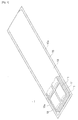
fig.1]Fig. 1 is a cutaway perspective view of an absorbent article according to a first embodiment of the present invention. - [
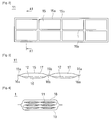
fig.2]Fig. 2 is a plan view of an inner bag-like member of the absorbent article inFig. 1 . - [
fig.3]Fig. 3 is a view illustrating the structure in cross-section of the inner bag-like member taken along the line A1-A1 inFig. 2 . - [
fig.4]Fig. 4 is a cross-sectional view illustrating a variation of the absorbent article inFig. 1 . - [
fig.5]Fig. 5 is a perspective view of incontinence pants that use the absorbent article inFig. 1 . - [
fig.6]Fig. 6 is an expansion plane obtained by cutting right and left side portions (portions indicated by virtual lines L1 inFig. 5 ) of the incontinence pants inFig. 5 . - [
fig.7]Fig. 7 is a cross-sectional view illustrating the structure in cross-section of the incontinence pants taken along the line A2-A2 inFig. 5 . - [
fig.8]Fig. 8 is a view explaining operations at the time of fitting or removing an absorbent article in or from the incontinence pants inFig. 5 . - [
fig.9]Fig. 9 illustrates an example of a use of the absorbent article inFig. 1 , showing how the absorbent article is arranged on the inside of a diaper. - [
fig.10]Fig. 10 is a cross-sectional view illustrating an example of arrangement in the case where the absorbent article inFig. 1 is arranged on the inside of a diaper. - [
fig.11]Fig. 11 illustrates another example of a use of the absorbent article inFig. 1 , showing how the absorbent article is inserted into a men's urine absorbent article of a substantially bag-like form. - [
fig.12]Fig. 12 is a plan view of an absorbent article according to a second embodiment of the present invention. - [
fig.13]Fig. 13 is a view illustrating the structure in cross-section of the absorbent article taken along the line A11-A11 inFig. 12 . - An absorbent article according to a first embodiment of the present invention will be described with reference to
Figs. 1 to 3 . - An
absorbent article 1 according to the present embodiment, as illustrated inFigs. 1 to 3 , includes multiple inner bag-like members 11, anabsorbent polymer 12 contained in each of the inner bag-like members 11, and an outer bag-like member 13 that accommodates the multiple inner bag-like members 11. Theabsorbent article 1 is used to absorb excreted body fluids, such as moisture that is contained in urine or loose stools of a wearer, menstrual blood or the like. In the present embodiment, theabsorbent article 1 is primarily used to absorb urine. All materials for theabsorbent article 1 are biodegradable materials as will be described later, so that the usedabsorbent article 1 can be buried in the soil or the like. Note that, in the present embodiment, while the outer bag-like member 13 contains three inner bag-like members 11, the number of inner bag-like members 11 is not limited to three, and may be one, two, or more than three. - The inner bag-
like members 11, as illustrated inFigs. 2 and 3 , have a thin and substantially sheet-like form and are formed of twofirst sheets like members 11,multiple accommodation spaces 17 are formed that are detached from the outside and separated from one another. The nonwoven fabric material for thefirst sheets - The
first sheets Outer edge portions first sheets partition portions multiple accommodation spaces 17 are joined to each other by welding (heat welding or ultrasonic welding). This produces themultiple accommodation spaces 17 that are detached from the outside and separated from one another in the inner bag-like members 11. Note that, in the present embodiment, heat welding is used for the welding of thesheets accommodation spaces 17 are formed in two separate lines, the number ofaccommodation spaces 17 is not limited to eight. Alternatively, theaccommodation spaces 17 may be formed in three or more separate lines, or may be formed in only a single line. Moreover, in the present embodiment, while the inner bag-like members 11 are formed of the twofirst sheets first sheet 15 in two and joining the edges thereof together. - The
absorbent polymer 12 has biodegradability and a substantially granular or powder form and is contained in each of theaccommodation spaces 17 in each of the inner bag-like members 11 so as to be freely movable within theaccommodation spaces 17. For this, the loading weight of theabsorbent polymer 12 in each of theaccommodation spaces 17 is set to a value at which enough surplus space is attained within each of theaccommodation spaces 17. The material for theabsorbent polymer 12 may be polyaspartic acid, for example. - The outer bag-
like member 13, as illustrated inFig. 1 , is formed of twosecond sheets like member 13, multiple inner bag-like members 11 are accommodated in a layered state. The nonwoven fabric material for thesecond sheets - The
second sheets Outer edge portions second sheets like member 13. Note that, in the present embodiment, heat welding is used for the welding of thesheets like member 13 is formed of the twosecond sheets like member 13 may be formed by folding a singlesecond sheet 18 in two and joining the edges thereof together. - Such configured
absorbent article 1 has a thin and substantially long-length shape extending in one direction as illustrated inFig. 1 . - Moreover, in the present embodiment, the
first sheets like member 11 are set to have a higher basis weight than thesecond sheets like member 13. This is in order to prevent theabsorbent polymer 12 from leaking outside through gaps of the nonwoven fabric fiber of thesheets first sheets second sheets - Note that, while the three inner bag-
like members 11 that are separated from one another are accommodated in a layered state in the outer bag-like member 13 in the structure illustrated inFig. 1 , the structure illustrated inFig. 4 is a variation with respect to this point. In the structure illustrated inFig. 4 , a single inner bag-like member 11 is folded along its longitudinal or lateral direction and accommodated in the outer bag-like member 13. As still another variation, multiple inner bag-like members 11 that have been folded in their longitudinal or lateral direction may be accommodated in the outer bag-like member 13. - Next, examples of the use of the
absorbent article 1 according to the present embodiment will be described with reference toFigs. 5 to 11 . Theabsorbent article 1 according to the present embodiment is thin and compact and has a high degree of flexibility in its shape when it is fitted, because theabsorbent polymer 12 is freely movable within theaccommodation spaces 17 in the inner bag-like members 11. As a result, the shape of theabsorbent article 1 can be changed freely depending on where theabsorbent article 1 is placed or the like, and accordingly theabsorbent article 1 can be used for various purposes. - For example, the
absorbent article 1 according to the present embodiment may be applied toincontinence pants 101 as illustrated inFigs. 5 to 8 . Note that the upper side of the drawing inFig. 6 corresponds to the front side of the incontinence pants 101. - The incontinence pants 101, as illustrated in
Figs. 5 to 8 , includes apants body 111, awaterproof sheet 112, atop sheet 113, a holdingportion 114, and first and second securingportions absorbent article 1 according to the present embodiment is removably put thereon. The incontinence pants 101 are washable and reusable. - The
pants body 111 is formed by joining a single or multiple washable fabric materials by stitching or the like so as to form the outer shape of pants, and includes right and left leg holes 121 and awaist opening 122. The fabric material(s) for thepants body 111 may be woven fabric made of cotton, chemical fibers, or a fiber blend thereof, for example. - The
waterproof sheet 112 is made of a fluid-impermeable material and secured by stitching, bonding, or the like so as to cover a region that includes acrotch portion 123 of thepants body 111 on the skin-facing side of thepants body 111. Thiswaterproof sheet 112 prevents the urine absorbed by theabsorbent article 1 from seeping through the incontinence pants 101. - The
top sheet 113 is made of a sheet material having fluid permeability and has theabsorbent article 1 sandwiched and held between itself and thewaterproof sheet 112. A substantially U-shaped or substantially arc-shaped rear-sidesecured portion 113b of thetop sheet 113 that extends along a rear-sideouter edge 113a of thetop sheet 113 is secured by stitching or the like to a portion located on the rear skin-facing side of thewaterproof sheet 112. A portion of thetop sheet 113 that is forward of the rear-sidesecured portion 113b, as illustrated inFig. 8 , is not secured to thewaterproof sheet 112 or the like so that it can come in proximity to or away from thewaterproof sheet 112 when theabsorbent article 1 is fitted or removed. - The holding
portion 114 has a substantially pocket-like space surrounded by the rear-sidesecured portion 113b of thetop sheet 113 and thewaterproof sheet 112, and receives and holds a rear-side portion 1a of theabsorbent article 1. - The first and second securing
portions top sheet 113 on thepants body 111 side (specifically, the waterproof sheet 112). Thefirst securing portion 115 is secured by stitching, bonding, or the like to a front-side portion of thetop sheet 113 on the outer side (on the side opposite from the skin-facing side). Thesecond securing portion 116 is secured by stitching, bonding, or the like to a position that corresponds to thefirst securing portion 115 on the skin-facing side of thewaterproof sheet 112 so that thefirst securing portion 115 is detachably secured. As for members used for the first securingportion 15 and thesecond securing portion 116, one may be made of a loop member provided with multiple loop structures and the other may be made of a hook member provided with multiple hook structures, for example. - In the case where the
absorbent article 1 is fitted in the incontinence pants 101, as illustrated inFig. 8 , the first and second securingportions top sheet 113 is lifted up so as to be separated from thewaterproof sheet 112. Then, theabsorbent article 1 is placed on thewaterproof sheet 112 so the rear-side portion 1a of theabsorbent article 1 is inserted into the holdingportion 114, and the front-side portion of thetop sheet 113 is closed so as to secure thefirst securing portion 115 to thesecond securing portion 116. Replacement or removal of theabsorbent article 1 can be easily performed by releasing the first and second securingportions - As another example of the use, as illustrated in
Fig. 9 , theabsorbent article 1 according to the present embodiment may be arranged in any arbitrary number on the inner side of adiaper 131 in order to reinforce the absorbing capacity of thediaper 131, for example. Note that thediaper 131 may be of either a tape type or a pants type. Examples of positions where theabsorbent article 1 is arranged include any part of a region that ranges from a discharging portion (e.g., private parts) over the crotch portion of a wearer in a space between the inner side of thediaper 131 and the skin side of the wearer. In this case, if leakguards 132 that stand up toward the skin side of a wearer are provided on the inner side of thediaper 131 as illustrated inFig. 10 , theabsorbent article 1 may be arranged between theleakguards 132 and atop sheet 133 on the lateral inner sides of theleakguards 132 of thediaper 131. This prevents theabsorbent article 1 from being displaced in position, dropping out through the leg holes, or the like. As another alternative, a holding structure for holding theabsorbent article 1 may be provided on the skin-facing side of thediaper 131. - Moreover, for a wearer who has contracture of the body, a gap may be incurred between the
diaper 131 and the body due to body atrophy or the like, and urine or the like may leak outside through the gap. In such a case, it is preferable that a urinary pad or the like be placed on the inside of thediaper 131 so as to prevent such incurrence of a gap, but in some cases, placing a urinary pad or the like may be difficult due to contracture of the body. Even in such a case where the placement of a urinary pad or the like is difficult due to contracture of the body, theabsorbent article 1 can be inserted between thediaper 131 and the body, with a wearer wearing thediaper 131, so as to fill in the gap between thediaper 131 and the body. - Moreover, in another example of the use illustrated in
Fig. 11 , theabsorbent article 1 according to the present embodiment is inserted into a men's urineabsorbent article 136 of a substantially bag-like form in order to reinforce the urine-absorbing capacity of the urineabsorbent article 136. The urineabsorbent article 136 has a bag-like form and has an opening through which the penis of a wearer can be inserted. In many cases, such a urineabsorbent article 136 is used in combination with thediaper 131. - As described above, in the
absorbent article 1 according to the present embodiment, the multiple inner bag-like members 11 that contain theabsorbent polymer 12 having a substantially granular or powder form in theirinner accommodation spaces 17 are contained in a layered state in the outer bag-like member 13. This achieves theabsorbent article 1 that provides sufficient absorbing capacity with a thin and compact structure and has good handleability when it is fitted in or removed from the above-mentionedincontinence pants 101, theabovementioned diaper 131, or the like. - In addition, the
absorbent polymer 12 having a substantially granular or powder form is contained in each of theaccommodation spaces 17 in the inner bag-like members 11 so as to be freely movable within theaccommodation spaces 17. This ensures a sufficient space allowance for the swelling of theabsorbent polymer 12 due to the absorption of excreted body fluids and consequently allows full use of the absorption performance of theabsorbent polymer 12 without inhibiting the swelling of theabsorbent polymer 12. - In addition, since the
absorbent polymer 12 is freely movable in each of theaccommodation spaces 17 in the inner bag-like members 11, theabsorbent article 1 has a high degree of flexibility in its shape when it is fitted. As a result, the shape of theabsorbent article 1 can be changed freely depending on where theabsorbent article 1 is placed or the like, and accordingly theabsorbent article 1 can be used for various purposes as described above. For example, as described above, theabsorbent article 1 according to the present invention may be arranged in any arbitrary number on the inside of a diaper in order to reinforce the absorbing capacity of the diaper, for example. - In addition, the
absorbent article 1 according to the present embodiment has a thin and compact structure as described above. This reduces unpleasantness, such as an oppressive sensation or a foreign body sensation, that a wearer may feel due to the arrangement of an absorbent article, for example in the case where theabsorbent article 1 is arranged on the inside of a diaper, incontinence pants, or the like. For example, as described above, even in such a case where the placement of a urinary pad or the like is difficult for a wearer due to contracture of the body, theabsorbent article 1 can be inserted into the space between the diaper and the body, while the wearer is wearing the diaper, so as to fill in the gap between the diaper and the body. - In addition, the multiple inner bag-
like members 11 containing theabsorbent polymer 12 are contained in the outer bag-like member 13. This eliminates the trouble of, for example, folding up theabsorbent article 1 when theabsorbent article 1 is fitted in incontinence pants, a diaper, or the like, and also eliminates the need to accommodate theabsorbent article 1 in another bag-like body in order to keep theabsorbent article 1 in a folded state, thus achieving good handleability at the time of fitting or removing the article. - In addition, since the
absorbent article 1 has a substantially long-length shape extending in one direction, theabsorbent article 1 can be arranged in a region along a crotch portion or the like of a wearer on the inside of incontinence pants, a diaper, or the like, without giving any unpleasantness to the wearer. In particular, as described above, for a wearer who has contracture of the body, theabsorbent article 1 can be easily inserted into a crotch portion or the like of a wearer through a gap between the diaper and the skin side of the wearer, while the wearer is wearing the diaper. - In addition, since all materials for the inner bag-
like members 11, the outer bag-like member 13, and theabsorbent polymer 12 contained in theabsorbent article 1 are biodegradable materials, the usedabsorbent article 1 can be disposed of by burial in the soil or the like. Moreover, since theabsorbent polymer 12 is contained separately in the multiple inner bag-like members 11 and also contained separately in themultiple accommodation spaces 17 in each of the inner bag-like members 11, theabsorbent polymer 12 can be distributed and biodegraded with efficiency without being grouped in clusters when theabsorbent article 1 is disposed of by burial in the soil or the like. As a result, the wholeabsorbent article 1 can be biodegraded with efficiency. - In addition, according to the present embodiment, the
first sheets like member1 11 have a higher basis weight than thesecond sheets like member 13. This allows a reduction in the basis weight of thesecond sheets absorbent polymer 12 from leaking outside through thefirst sheets first sheets absorbent article 1 can be reduced. - In addition, since the basis weight of the
first sheets second sheets absorbent polymer 12 can be reliably sealed with the inner bag-like members 11 without using tissue paper having no degradability for thefirst sheets - In addition, welding is used for every joint in the
first sheets like members 11 and in thesecond sheets like member 13, and accordingly no adhesive is used. This avoids impairment of the biodegradability of theabsorbent article 1 due to the use of an adhesive. - Note that, as a further variation of the
absorbent article 1 according to the above-described embodiment, all materials for the inner bag-like members 11, the outer bag-like member 13, and theabsorbent polymer 12 contained in theabsorbent article 1 may be materials that have hydrolyzability in addition to biodegradability. This allows the hydrolytic degradation of theabsorbent article 1 when the usedabsorbent article 1 is flushed down a toilet or the like, thus allowing theabsorbent article 1 to be smoothly passed through a waste pipe or the like and thereby facilitating the progress of biodegradation. - Next, an absorbent article according to a second embodiment of the present invention will be described with reference to
Figs. 12 and 13 . Note that in the description of the structure, effect, and any other feature of the absorbent article according to the present embodiment, the description of those parts that overlap with the contents of theabsorbent article 1 according to the above-described first embodiment will be omitted where appropriate. - An
absorbent article 200 according to the present embodiment, as illustrated inFigs. 12 and Fig. 13 , is configured to include a bag-like member 211, anabsorbent polymer 212 contained in the bag-like member 211, abreak portion 213 formed in the bag-like member 211. Theabsorbent article 200 is used to absorb excreted body fluids, such as moisture that is contained in urine or loose stools of a wearer, menstrual blood or the like. In the present embodiment, theabsorbent article 200 is primarily used to absorb urine. All materials for theabsorbent article 200 are biodegradable materials as will be described later, as in the case of theabsorbent article 1 according to the above-described first embodiment. - The bag-
like member 211 has a thin and substantially sheet-like form and is formed of twosheets like member 211,multiple accommodation spaces 217 are formed that are detached from the outside and separated from one another. The nonwoven fabric material for thesheets - The
sheets Outer edge portions sheets partition portions multiple accommodation spaces 217 are joined to each other by welding (heat welding or ultrasonic welding). This produces themultiple accommodation spaces 217 that are detached from the outside and separated from one another, in the bag-like member 211. Note that, in the present embodiment, while the bag-like member 211 is formed of the twosheets like member 211 may be formed by folding asingle sheet 215 in two and joining the opposedouter edge portions 215a together. - The
absorbent polymer 212 has biodegradability and a substantially granular or powder form and is contained in each of theaccommodation spaces 217 in the bag-like member 211 so as to be freely movable within theaccommodation spaces 217. The material for theabsorbent polymer 212 may be polyaspartic acid, for example. - The
break portion 213 is formed by weakening a part of the bag-like member 211 as compared to the other part so as to make it breakable, and is arranged so that the bag-like member 211 can be separated into multiple pieces. More specifically, thebreak portion 213 is provided along thepartition portions adjacent accommodation spaces 217 formed between thesheets like member 211. Moreover, thebreak portion 213 is, for example, a perforation in thesheets sheets break portion 213 include a method using a mechanical machining means to perform partial cutting, punching, scoring, or the like on thesheets sheets break portion 213 can be formed concurrently with the process of welding for forming thepartition portions sheets - Such configured
absorbent article 200 has a thin and substantially long-length shape extending in one direction as illustrated inFig. 12 . Quite similarly to theabsorbent article 1 according to the above-described first embodiment, theabsorbent article 200 according to the present embodiment can also be used in combination with the above-mentionedincontinence pants 101 illustrated inFigs. 5 to 11 . - As described above, in the
absorbent article 200 according to the present embodiment, thebreak portion 213 is formed by weakening a part of the bag-like member 211 so as to make it breakable, and accordingly the bag-like member 211 can be separated into multiple pieces by breaking at thebreak portion 213. Hence, since the bag-like member 211 can be easily separated into small pieces by hand, the usedabsorbent article 200 can be easily disposed of by separating it into small pieces and flushing it down a toilet or the like. Theabsorbent article 200 that has been separated into small pieces and flushed down a toilet or the like can be biodegraded in a water-purifier tank or the like. - In addition, since the
break portion 213 is provided along thepartition portions adjacent accommodation spaces 217 in the bag-like member 211, thebreak portion 213 can be formed in the bag-like member 211 without causing a decrease in strength or forming a hole or the like at a portion that forms theaccommodation spaces 217 in the bag-like member 211. - In addition, since the
break portion 213 is provided along thepartition portions like member 211, when the used bag-like member 211 is separated at thebreak portion 213, the bag-like member 211 can be separated into small pieces without breaking a portion that forms theaccommodation spaces 217 in the bag-like member 211. This avoids breakage of a portion that forms the accommodation spaces 27 in the bag-like member 211 at the time of separating the bag-like member 211, and thereby avoids inconvenience such as scattering of theabsorbent polymer 212 contained in theaccommodation spaces 217. - Also in the case of the
absorbent article 200 according to the present embodiment, as in the case of theabsorbent article 1 according to the above-described first embodiment, all materials for the bag-like member 211 and theabsorbent polymer 212 contained in theabsorbent article 200 may be materials that have hydrolyzability in addition to biodegradability. -
- 1
- Absorbent article
- 11
- Bag-like member
- 12
- Absorbent polymer
- 13
- Outer bag-like member
- 15, 16
- First sheet
- 17
- Accommodation space
- 18, 19
- Second sheet
- 200
- Absorbent article
- 211
- Bag-like member
- 212
- Absorbent polymer
- 213
- Break portion
- 215, 216
- Sheet
- 217
- Accommodation space
Claims (7)
- An absorbent article that absorbs excreted body fluids of a wearer, comprising:at least one inner bag-like member (11, 211) that is formed into a thin and substantially sheet-like form of a first sheet (15, 16, 215, 216) having biodegradability and fluid permeability, and includes a plurality of accommodation spaces (17, 217) that are detached from the outside and separated from one another;an absorbent polymer (12, 212) that has biodegradability and a substantially granular or powder form and is contained in each of the accommodation spaces (17, 217) in the inner bag-like member (11, 211) so as to be freely movable within the accommodation spaces (17, 217); andan outer bag-like member (13) that is formed of a second sheet (18, 19) having biodegradability and fluid permeability, and contains at least one inner bag-like member (11, 211) in either a layered or folded state.
- The absorbent article according to claim 1, wherein the first sheet (15, 16, 215, 216) that forms the inner bag-like member (11, 211) and the second sheet (18, 19) that forms the outer bag-like member (13) are made of nonwoven fabric, and
the first sheet (15, 16, 215, 216) has a higher basis weight than the second sheet (18, 19). - The absorbent article according to claim 1 or 2, wherein every joint in the first sheet (15, 16, 215, 216) for forming the inner bag-like member (11, 211) and every joint in the second sheet (18, 19) for forming the outer bag-like member (13, 213) is formed by welding.
- The absorbent article according to any of claims 1 to 3, wherein the at least one inner bag-like member (211) comprises a break portion (213) that is formed by weakening a part of the bag-like member (211) so as to make the part breakable, and is arranged so that, upon breaking, the bag-like member (211) is separated into a plurality of pieces.
- The absorbent article according to claim 4, wherein the break portion (213) is a perforation in the first sheet (215, 216) or a thin portion of the first sheet (215, 216) that is thinner than the other portion.
- The absorbent article according to claim 4, wherein the break portion (213) is provided along a partition portion (215b, 216b) that provides a partition between each adjacent pair of the accommodation spaces (217) in the bag-like member (211).
- The absorbent article according to any one of claims 1 to 6, wherein the absorbent article has a substantially long-length shape extending in one direction.
Applications Claiming Priority (4)
| Application Number | Priority Date | Filing Date | Title |
|---|---|---|---|
| JP2009081942A JP5346647B2 (en) | 2009-03-30 | 2009-03-30 | Absorbent articles |
| JP2009255261 | 2009-11-06 | ||
| JP2009288527A JP2011115516A (en) | 2009-11-06 | 2009-12-19 | Absorptive article |
| PCT/JP2010/001871 WO2010113398A1 (en) | 2009-03-30 | 2010-03-16 | Absorbent article |
Publications (2)
| Publication Number | Publication Date |
|---|---|
| EP2413862A1 EP2413862A1 (en) | 2012-02-08 |
| EP2413862B1 true EP2413862B1 (en) | 2016-05-04 |
Family
ID=44855592
Family Applications (1)
| Application Number | Title | Priority Date | Filing Date |
|---|---|---|---|
| EP10711775.6A Not-in-force EP2413862B1 (en) | 2009-03-30 | 2010-03-16 | Absorbent article |
Country Status (7)
| Country | Link |
|---|---|
| US (1) | US9066835B2 (en) |
| EP (1) | EP2413862B1 (en) |
| KR (1) | KR20110139682A (en) |
| CN (1) | CN102325511B (en) |
| AU (1) | AU2010231473B2 (en) |
| TW (1) | TWI496565B (en) |
| WO (1) | WO2010113398A1 (en) |
Families Citing this family (16)
| Publication number | Priority date | Publication date | Assignee | Title |
|---|---|---|---|---|
| US9278034B2 (en) | 2012-01-31 | 2016-03-08 | Butterfly Health, Inc. | Devices and methods for treating accidental bowel leakage |
| USD720848S1 (en) | 2012-05-21 | 2015-01-06 | Butterfly Health, Inc. | Body liner for anal leakage |
| US8591488B2 (en) | 2012-01-31 | 2013-11-26 | Butterfly Health, Inc. | Devices and methods for treating accidental bowel leakage |
| US10369246B2 (en) * | 2013-06-14 | 2019-08-06 | Krp U.S., Llc | Absorbent articles having pockets and related methods therefor |
| PH12020551846B1 (en) * | 2013-07-03 | 2024-06-28 | Dsg Technology Holdings Ltd | An absorbent composite, methods for making the absorbent composite, and an absorbent article employing the same |
| EP3069703A4 (en) * | 2013-11-14 | 2017-06-14 | Zuiko Corporation | Absorbent body and device for producing same |
| KR200483792Y1 (en) * | 2015-08-10 | 2017-06-27 | 주식회사 보람씨앤에치 | Absorptive article and sanitary napkin |
| KR102098554B1 (en) * | 2015-10-07 | 2020-04-08 | 카오카부시키가이샤 | Sheet-shaped object and method for producing sheet-shaped object |
| KR101727098B1 (en) * | 2015-10-15 | 2017-04-14 | 김상용 | Seperate-combined type feces and urine pad, and diaper provided with the same |
| JP6186469B1 (en) * | 2016-03-30 | 2017-08-23 | 大王製紙株式会社 | Absorbent articles |
| JP6186468B1 (en) * | 2016-03-30 | 2017-08-23 | 大王製紙株式会社 | Absorbent articles |
| US10966884B2 (en) | 2016-07-05 | 2021-04-06 | The Procter & Gamble Company | Absorbent core having funnel-shaped swelling chamber |
| US20180008485A1 (en) * | 2016-07-05 | 2018-01-11 | The Procter & Gamble Company | Absorbent core exhibiting material movement |
| EP3481353B1 (en) | 2016-07-05 | 2020-07-22 | The Procter and Gamble Company | Absorbent core having tube-shaped swelling chamber |
| JP6712219B2 (en) * | 2016-12-28 | 2020-06-17 | 花王株式会社 | Absorbent article |
| US10751227B1 (en) * | 2019-10-04 | 2020-08-25 | Kia Grose | Undergarment liner |
Family Cites Families (26)
| Publication number | Priority date | Publication date | Assignee | Title |
|---|---|---|---|---|
| US3667466A (en) * | 1970-09-21 | 1972-06-06 | Harold J Ralph | Self-disintegrating diaper liner and retainer |
| US4944734A (en) * | 1989-03-09 | 1990-07-31 | Micro Vesicular Systems, Inc. | Biodegradable incontinence device with embedded granules |
| US5149335A (en) * | 1990-02-23 | 1992-09-22 | Kimberly-Clark Corporation | Absorbent structure |
| CA2072689A1 (en) * | 1991-12-31 | 1993-07-01 | Kimberly-Clark Corporation | Disposable absorbent article with flushable insert |
| MX213505B (en) * | 1993-02-24 | 2003-04-03 | ||
| JP3205643B2 (en) * | 1993-05-19 | 2001-09-04 | ユニ・チャーム株式会社 | How to fuse pants-type disposable diapers |
| US5938650A (en) * | 1995-08-09 | 1999-08-17 | Fibertech Group, Inc. | Absorbent core for absorbing body liquids and method |
| US5863288A (en) * | 1995-09-29 | 1999-01-26 | Paragon Trade Brands, Inc. | Overlapped-style absorbent core structure comprising multiple storage and acquisition cells |
| US5643238A (en) * | 1995-09-29 | 1997-07-01 | Paragon Trade Brands, Inc. | Absorbent core structure comprised of storage and acquisition cells |
| US6623466B1 (en) * | 1997-10-23 | 2003-09-23 | Irene Richardson | Absorbent article having detachable components |
| BR0011589A (en) * | 1999-05-25 | 2002-04-16 | Bki Holding Corp | Multifunctional fibrous material with improved edge seal |
| JP3089419B1 (en) | 1999-06-15 | 2000-09-18 | 有限会社 福富ヘルスサイエンスアンドサービス | Bellows-like continuous exchange type body fluid absorbent article |
| US6524290B2 (en) * | 2000-12-15 | 2003-02-25 | Mcneil-Ppc, Inc. | Multifunctional absorbent article |
| US7037571B2 (en) * | 2000-12-28 | 2006-05-02 | Kimberly-Clark Worldwide, Inc. | Disposable shoe liner |
| JP4229309B2 (en) | 2001-09-07 | 2009-02-25 | 株式会社日本吸収体技術研究所 | Absorber that is three-dimensionalized in the center by water absorption and absorbent product using the same |
| JP2003265522A (en) | 2002-03-18 | 2003-09-24 | Ota Eizai Kk | Paper diaper |
| JP4340564B2 (en) * | 2004-03-15 | 2009-10-07 | 株式会社リブドゥコーポレーション | Disposable absorbent article |
| US20040220539A1 (en) * | 2003-05-01 | 2004-11-04 | Glaug Frank S. | Absorbent article with improved absorbency performance |
| US20060069375A1 (en) * | 2004-09-29 | 2006-03-30 | Andrew Waksmundzki | Absorbent article with C-folded moisture barrier and methods of manufacturing same |
| JP2006102227A (en) * | 2004-10-06 | 2006-04-20 | Unitika Ltd | Biodegradable hygiene products |
| JP4859606B2 (en) * | 2006-09-21 | 2012-01-25 | 大王製紙株式会社 | Absorbent articles |
| EP2022452B1 (en) * | 2007-08-10 | 2013-03-06 | The Procter & Gamble Company | Absorbent article |
| JP5072557B2 (en) | 2007-11-30 | 2012-11-14 | 花王株式会社 | Absorbent articles |
| JP5340903B2 (en) * | 2009-12-10 | 2013-11-13 | 株式会社リブドゥコーポレーション | Absorbent articles |
| JP5517290B2 (en) * | 2009-12-28 | 2014-06-11 | 株式会社リブドゥコーポレーション | Absorbent articles |
| JP5383553B2 (en) * | 2010-02-26 | 2014-01-08 | ユニ・チャーム株式会社 | Absorber manufacturing equipment |
-
2010
- 2010-03-04 TW TW099106251A patent/TWI496565B/en not_active IP Right Cessation
- 2010-03-16 WO PCT/JP2010/001871 patent/WO2010113398A1/en not_active Ceased
- 2010-03-16 CN CN2010800085866A patent/CN102325511B/en not_active Expired - Fee Related
- 2010-03-16 EP EP10711775.6A patent/EP2413862B1/en not_active Not-in-force
- 2010-03-16 AU AU2010231473A patent/AU2010231473B2/en not_active Ceased
- 2010-03-16 US US13/146,269 patent/US9066835B2/en not_active Expired - Fee Related
- 2010-03-16 KR KR20117018734A patent/KR20110139682A/en not_active Withdrawn
Also Published As
| Publication number | Publication date |
|---|---|
| US9066835B2 (en) | 2015-06-30 |
| TWI496565B (en) | 2015-08-21 |
| HK1160756A1 (en) | 2012-08-17 |
| TW201034639A (en) | 2010-10-01 |
| WO2010113398A1 (en) | 2010-10-07 |
| EP2413862A1 (en) | 2012-02-08 |
| CN102325511A (en) | 2012-01-18 |
| CN102325511B (en) | 2013-11-06 |
| KR20110139682A (en) | 2011-12-29 |
| AU2010231473A1 (en) | 2011-08-11 |
| US20120035565A1 (en) | 2012-02-09 |
| AU2010231473B2 (en) | 2015-05-07 |
Similar Documents
| Publication | Publication Date | Title |
|---|---|---|
| US9066835B2 (en) | Absorbent article | |
| RU2756261C1 (en) | Environmentally friendly absorbing structure | |
| AU2010337805B2 (en) | Absorbent article and absorbent article packaging | |
| JP2010508944A (en) | Method for manufacturing a reusable disposable article having a replaceable absorbent insert | |
| CN101193617A (en) | Absorbent article with disposal fastening means | |
| CN109069306A (en) | removable disposable absorbent article | |
| JP5764287B2 (en) | Disposable pants-type diapers | |
| JP5508136B2 (en) | Absorbent articles | |
| JP3927360B2 (en) | Diapers | |
| JP2011115516A (en) | Absorptive article | |
| EP2412340A1 (en) | Bodily fluid treatment material and wearing article including same | |
| JP6502077B2 (en) | SHEET MEMBER FOR ABSORBENT ARTICLE AND ABSORBENT ARTICLE | |
| JP2011056092A (en) | Absorbent pad | |
| JP2011160921A (en) | Liquid absorbent pad | |
| JP2008541924A (en) | Absorbent article provided with fixing means for disposal | |
| JP5346647B2 (en) | Absorbent articles | |
| HK1160756B (en) | Absorbent article | |
| JP2004223065A (en) | Humor absorbent article | |
| JP6557360B2 (en) | Absorbent articles | |
| JP2011056090A (en) | Absorbent pad | |
| JP2011041678A (en) | Urine absorbent article | |
| JP2006150107A (en) | Disposable excretion treating article | |
| JP2024077999A (en) | Absorbent articles | |
| HK1172539B (en) | Absorbent article and absorbent article packaging | |
| JP2017192562A (en) | Urine absorbing sheet for men |
Legal Events
| Date | Code | Title | Description |
|---|---|---|---|
| PUAI | Public reference made under article 153(3) epc to a published international application that has entered the european phase |
Free format text: ORIGINAL CODE: 0009012 |
|
| 17P | Request for examination filed |
Effective date: 20110920 |
|
| AK | Designated contracting states |
Kind code of ref document: A1 Designated state(s): AT BE BG CH CY CZ DE DK EE ES FI FR GB GR HR HU IE IS IT LI LT LU LV MC MK MT NL NO PL PT RO SE SI SK SM TR |
|
| DAX | Request for extension of the european patent (deleted) | ||
| GRAP | Despatch of communication of intention to grant a patent |
Free format text: ORIGINAL CODE: EPIDOSNIGR1 |
|
| INTG | Intention to grant announced |
Effective date: 20151110 |
|
| GRAS | Grant fee paid |
Free format text: ORIGINAL CODE: EPIDOSNIGR3 |
|
| GRAA | (expected) grant |
Free format text: ORIGINAL CODE: 0009210 |
|
| AK | Designated contracting states |
Kind code of ref document: B1 Designated state(s): AT BE BG CH CY CZ DE DK EE ES FI FR GB GR HR HU IE IS IT LI LT LU LV MC MK MT NL NO PL PT RO SE SI SK SM TR |
|
| REG | Reference to a national code |
Ref country code: GB Ref legal event code: FG4D |
|
| REG | Reference to a national code |
Ref country code: CH Ref legal event code: EP |
|
| REG | Reference to a national code |
Ref country code: AT Ref legal event code: REF Ref document number: 796232 Country of ref document: AT Kind code of ref document: T Effective date: 20160515 |
|
| REG | Reference to a national code |
Ref country code: IE Ref legal event code: FG4D |
|
| REG | Reference to a national code |
Ref country code: DE Ref legal event code: R096 Ref document number: 602010033030 Country of ref document: DE |
|
| REG | Reference to a national code |
Ref country code: NL Ref legal event code: MP Effective date: 20160504 |
|
| REG | Reference to a national code |
Ref country code: LT Ref legal event code: MG4D |
|
| PG25 | Lapsed in a contracting state [announced via postgrant information from national office to epo] |
Ref country code: NL Free format text: LAPSE BECAUSE OF FAILURE TO SUBMIT A TRANSLATION OF THE DESCRIPTION OR TO PAY THE FEE WITHIN THE PRESCRIBED TIME-LIMIT Effective date: 20160504 Ref country code: NO Free format text: LAPSE BECAUSE OF FAILURE TO SUBMIT A TRANSLATION OF THE DESCRIPTION OR TO PAY THE FEE WITHIN THE PRESCRIBED TIME-LIMIT Effective date: 20160804 Ref country code: FI Free format text: LAPSE BECAUSE OF FAILURE TO SUBMIT A TRANSLATION OF THE DESCRIPTION OR TO PAY THE FEE WITHIN THE PRESCRIBED TIME-LIMIT Effective date: 20160504 Ref country code: LT Free format text: LAPSE BECAUSE OF FAILURE TO SUBMIT A TRANSLATION OF THE DESCRIPTION OR TO PAY THE FEE WITHIN THE PRESCRIBED TIME-LIMIT Effective date: 20160504 |
|
| REG | Reference to a national code |
Ref country code: AT Ref legal event code: MK05 Ref document number: 796232 Country of ref document: AT Kind code of ref document: T Effective date: 20160504 |
|
| PG25 | Lapsed in a contracting state [announced via postgrant information from national office to epo] |
Ref country code: ES Free format text: LAPSE BECAUSE OF FAILURE TO SUBMIT A TRANSLATION OF THE DESCRIPTION OR TO PAY THE FEE WITHIN THE PRESCRIBED TIME-LIMIT Effective date: 20160504 Ref country code: PT Free format text: LAPSE BECAUSE OF FAILURE TO SUBMIT A TRANSLATION OF THE DESCRIPTION OR TO PAY THE FEE WITHIN THE PRESCRIBED TIME-LIMIT Effective date: 20160905 Ref country code: LV Free format text: LAPSE BECAUSE OF FAILURE TO SUBMIT A TRANSLATION OF THE DESCRIPTION OR TO PAY THE FEE WITHIN THE PRESCRIBED TIME-LIMIT Effective date: 20160504 Ref country code: GR Free format text: LAPSE BECAUSE OF FAILURE TO SUBMIT A TRANSLATION OF THE DESCRIPTION OR TO PAY THE FEE WITHIN THE PRESCRIBED TIME-LIMIT Effective date: 20160805 Ref country code: HR Free format text: LAPSE BECAUSE OF FAILURE TO SUBMIT A TRANSLATION OF THE DESCRIPTION OR TO PAY THE FEE WITHIN THE PRESCRIBED TIME-LIMIT Effective date: 20160504 Ref country code: SE Free format text: LAPSE BECAUSE OF FAILURE TO SUBMIT A TRANSLATION OF THE DESCRIPTION OR TO PAY THE FEE WITHIN THE PRESCRIBED TIME-LIMIT Effective date: 20160504 |
|
| PG25 | Lapsed in a contracting state [announced via postgrant information from national office to epo] |
Ref country code: IT Free format text: LAPSE BECAUSE OF FAILURE TO SUBMIT A TRANSLATION OF THE DESCRIPTION OR TO PAY THE FEE WITHIN THE PRESCRIBED TIME-LIMIT Effective date: 20160504 |
|
| PG25 | Lapsed in a contracting state [announced via postgrant information from national office to epo] |
Ref country code: SK Free format text: LAPSE BECAUSE OF FAILURE TO SUBMIT A TRANSLATION OF THE DESCRIPTION OR TO PAY THE FEE WITHIN THE PRESCRIBED TIME-LIMIT Effective date: 20160504 Ref country code: DK Free format text: LAPSE BECAUSE OF FAILURE TO SUBMIT A TRANSLATION OF THE DESCRIPTION OR TO PAY THE FEE WITHIN THE PRESCRIBED TIME-LIMIT Effective date: 20160504 Ref country code: RO Free format text: LAPSE BECAUSE OF FAILURE TO SUBMIT A TRANSLATION OF THE DESCRIPTION OR TO PAY THE FEE WITHIN THE PRESCRIBED TIME-LIMIT Effective date: 20160504 Ref country code: EE Free format text: LAPSE BECAUSE OF FAILURE TO SUBMIT A TRANSLATION OF THE DESCRIPTION OR TO PAY THE FEE WITHIN THE PRESCRIBED TIME-LIMIT Effective date: 20160504 Ref country code: CZ Free format text: LAPSE BECAUSE OF FAILURE TO SUBMIT A TRANSLATION OF THE DESCRIPTION OR TO PAY THE FEE WITHIN THE PRESCRIBED TIME-LIMIT Effective date: 20160504 |
|
| REG | Reference to a national code |
Ref country code: DE Ref legal event code: R097 Ref document number: 602010033030 Country of ref document: DE |
|
| PG25 | Lapsed in a contracting state [announced via postgrant information from national office to epo] |
Ref country code: AT Free format text: LAPSE BECAUSE OF FAILURE TO SUBMIT A TRANSLATION OF THE DESCRIPTION OR TO PAY THE FEE WITHIN THE PRESCRIBED TIME-LIMIT Effective date: 20160504 Ref country code: SM Free format text: LAPSE BECAUSE OF FAILURE TO SUBMIT A TRANSLATION OF THE DESCRIPTION OR TO PAY THE FEE WITHIN THE PRESCRIBED TIME-LIMIT Effective date: 20160504 Ref country code: BE Free format text: LAPSE BECAUSE OF FAILURE TO SUBMIT A TRANSLATION OF THE DESCRIPTION OR TO PAY THE FEE WITHIN THE PRESCRIBED TIME-LIMIT Effective date: 20160504 Ref country code: PL Free format text: LAPSE BECAUSE OF FAILURE TO SUBMIT A TRANSLATION OF THE DESCRIPTION OR TO PAY THE FEE WITHIN THE PRESCRIBED TIME-LIMIT Effective date: 20160504 |
|
| PLBE | No opposition filed within time limit |
Free format text: ORIGINAL CODE: 0009261 |
|
| STAA | Information on the status of an ep patent application or granted ep patent |
Free format text: STATUS: NO OPPOSITION FILED WITHIN TIME LIMIT |
|
| 26N | No opposition filed |
Effective date: 20170207 |
|
| PG25 | Lapsed in a contracting state [announced via postgrant information from national office to epo] |
Ref country code: SI Free format text: LAPSE BECAUSE OF FAILURE TO SUBMIT A TRANSLATION OF THE DESCRIPTION OR TO PAY THE FEE WITHIN THE PRESCRIBED TIME-LIMIT Effective date: 20160504 |
|
| REG | Reference to a national code |
Ref country code: CH Ref legal event code: PL |
|
| GBPC | Gb: european patent ceased through non-payment of renewal fee |
Effective date: 20170316 |
|
| PG25 | Lapsed in a contracting state [announced via postgrant information from national office to epo] |
Ref country code: MC Free format text: LAPSE BECAUSE OF FAILURE TO SUBMIT A TRANSLATION OF THE DESCRIPTION OR TO PAY THE FEE WITHIN THE PRESCRIBED TIME-LIMIT Effective date: 20160504 |
|
| REG | Reference to a national code |
Ref country code: IE Ref legal event code: MM4A |
|
| REG | Reference to a national code |
Ref country code: FR Ref legal event code: ST Effective date: 20171130 |
|
| PG25 | Lapsed in a contracting state [announced via postgrant information from national office to epo] |
Ref country code: LU Free format text: LAPSE BECAUSE OF NON-PAYMENT OF DUE FEES Effective date: 20170316 Ref country code: FR Free format text: LAPSE BECAUSE OF NON-PAYMENT OF DUE FEES Effective date: 20170331 |
|
| PG25 | Lapsed in a contracting state [announced via postgrant information from national office to epo] |
Ref country code: GB Free format text: LAPSE BECAUSE OF NON-PAYMENT OF DUE FEES Effective date: 20170316 Ref country code: IE Free format text: LAPSE BECAUSE OF NON-PAYMENT OF DUE FEES Effective date: 20170316 Ref country code: LI Free format text: LAPSE BECAUSE OF NON-PAYMENT OF DUE FEES Effective date: 20170331 Ref country code: CH Free format text: LAPSE BECAUSE OF NON-PAYMENT OF DUE FEES Effective date: 20170331 |
|
| PG25 | Lapsed in a contracting state [announced via postgrant information from national office to epo] |
Ref country code: MT Free format text: LAPSE BECAUSE OF NON-PAYMENT OF DUE FEES Effective date: 20170316 |
|
| PG25 | Lapsed in a contracting state [announced via postgrant information from national office to epo] |
Ref country code: HU Free format text: LAPSE BECAUSE OF FAILURE TO SUBMIT A TRANSLATION OF THE DESCRIPTION OR TO PAY THE FEE WITHIN THE PRESCRIBED TIME-LIMIT; INVALID AB INITIO Effective date: 20100316 |
|
| PG25 | Lapsed in a contracting state [announced via postgrant information from national office to epo] |
Ref country code: BG Free format text: LAPSE BECAUSE OF FAILURE TO SUBMIT A TRANSLATION OF THE DESCRIPTION OR TO PAY THE FEE WITHIN THE PRESCRIBED TIME-LIMIT Effective date: 20160504 |
|
| PG25 | Lapsed in a contracting state [announced via postgrant information from national office to epo] |
Ref country code: CY Free format text: LAPSE BECAUSE OF NON-PAYMENT OF DUE FEES Effective date: 20160504 |
|
| PG25 | Lapsed in a contracting state [announced via postgrant information from national office to epo] |
Ref country code: MK Free format text: LAPSE BECAUSE OF FAILURE TO SUBMIT A TRANSLATION OF THE DESCRIPTION OR TO PAY THE FEE WITHIN THE PRESCRIBED TIME-LIMIT Effective date: 20160504 |
|
| PG25 | Lapsed in a contracting state [announced via postgrant information from national office to epo] |
Ref country code: TR Free format text: LAPSE BECAUSE OF FAILURE TO SUBMIT A TRANSLATION OF THE DESCRIPTION OR TO PAY THE FEE WITHIN THE PRESCRIBED TIME-LIMIT Effective date: 20160504 |
|
| PG25 | Lapsed in a contracting state [announced via postgrant information from national office to epo] |
Ref country code: IS Free format text: LAPSE BECAUSE OF FAILURE TO SUBMIT A TRANSLATION OF THE DESCRIPTION OR TO PAY THE FEE WITHIN THE PRESCRIBED TIME-LIMIT Effective date: 20160904 |
|
| PGFP | Annual fee paid to national office [announced via postgrant information from national office to epo] |
Ref country code: DE Payment date: 20220203 Year of fee payment: 13 |
|
| REG | Reference to a national code |
Ref country code: DE Ref legal event code: R119 Ref document number: 602010033030 Country of ref document: DE |
|
| PG25 | Lapsed in a contracting state [announced via postgrant information from national office to epo] |
Ref country code: DE Free format text: LAPSE BECAUSE OF NON-PAYMENT OF DUE FEES Effective date: 20231003 |