EP2413160A1 - Method for resolving the binary offset carrier (BOC) signals tracking ambiguity in a double estimator receiver - Google Patents
Method for resolving the binary offset carrier (BOC) signals tracking ambiguity in a double estimator receiver Download PDFInfo
- Publication number
- EP2413160A1 EP2413160A1 EP10007819A EP10007819A EP2413160A1 EP 2413160 A1 EP2413160 A1 EP 2413160A1 EP 10007819 A EP10007819 A EP 10007819A EP 10007819 A EP10007819 A EP 10007819A EP 2413160 A1 EP2413160 A1 EP 2413160A1
- Authority
- EP
- European Patent Office
- Prior art keywords
- carrier
- sub
- ambiguities
- channels
- delay
- Prior art date
- Legal status (The legal status is an assumption and is not a legal conclusion. Google has not performed a legal analysis and makes no representation as to the accuracy of the status listed.)
- Granted
Links
Images


Classifications
-
- G—PHYSICS
- G01—MEASURING; TESTING
- G01S—RADIO DIRECTION-FINDING; RADIO NAVIGATION; DETERMINING DISTANCE OR VELOCITY BY USE OF RADIO WAVES; LOCATING OR PRESENCE-DETECTING BY USE OF THE REFLECTION OR RERADIATION OF RADIO WAVES; ANALOGOUS ARRANGEMENTS USING OTHER WAVES
- G01S19/00—Satellite radio beacon positioning systems; Determining position, velocity or attitude using signals transmitted by such systems
- G01S19/01—Satellite radio beacon positioning systems transmitting time-stamped messages, e.g. GPS [Global Positioning System], GLONASS [Global Orbiting Navigation Satellite System] or GALILEO
- G01S19/13—Receivers
- G01S19/24—Acquisition or tracking or demodulation of signals transmitted by the system
- G01S19/29—Acquisition or tracking or demodulation of signals transmitted by the system carrier including Doppler, related
-
- G—PHYSICS
- G01—MEASURING; TESTING
- G01S—RADIO DIRECTION-FINDING; RADIO NAVIGATION; DETERMINING DISTANCE OR VELOCITY BY USE OF RADIO WAVES; LOCATING OR PRESENCE-DETECTING BY USE OF THE REFLECTION OR RERADIATION OF RADIO WAVES; ANALOGOUS ARRANGEMENTS USING OTHER WAVES
- G01S19/00—Satellite radio beacon positioning systems; Determining position, velocity or attitude using signals transmitted by such systems
- G01S19/38—Determining a navigation solution using signals transmitted by a satellite radio beacon positioning system
- G01S19/39—Determining a navigation solution using signals transmitted by a satellite radio beacon positioning system the satellite radio beacon positioning system transmitting time-stamped messages, e.g. GPS [Global Positioning System], GLONASS [Global Orbiting Navigation Satellite System] or GALILEO
- G01S19/42—Determining position
- G01S19/43—Determining position using carrier phase measurements, e.g. kinematic positioning; using long or short baseline interferometry
- G01S19/44—Carrier phase ambiguity resolution; Floating ambiguity; LAMBDA [Least-squares AMBiguity Decorrelation Adjustment] method
Definitions
- the invention relates to a method for resolving sub-carrier ambiguities of a total number of tracking channels of a binary offset carrier (BOC) navigation signal comprising a carrier modulated by a code modulation function of a given code rate and further modulated by a sub-carrier modulation function of a given sub-carrier rate.
- BOC binary offset carrier
- the method comprises the steps of generating a first estimate of delay based on the code modulation and generating a second estimate of delay based on the sub-carrier modulation.
- a receiver estimates delays in the navigation signals received from different satellites and uses this information, combined with information on the position of the satellites, to estimate its position. The more accurate the estimation of the delays is, the more accurately the receiver can estimate its position.
- GNSS Global System for Mobile Communications
- BOC modulation involves modulating a code onto a carrier. This code is similar to that used in PSK modulation.
- BOC modulation involves further modulating the signal by a sub-carrier which can be represented by a sub-carrier modulation function having a sub-carrier rate and a sub-chip duration. Consequently, a BOC signal consists of a carrier, modulated with a pseudo random noise (PRN) code, and additionally modulated with a binary sub-carrier.
- PRN pseudo random noise
- An auto correlation function of a BOC signal shows multiple peaks, as illustrated in Fig. 1 for a BOC (15, 2.5) signal.
- the first parameter (here: 15) of the BOC signal indicates the sub-carrier rate whereas the second parameter (here: 2.5) of the BOC signal indicates the code rate.
- a receiver uses early (E) and late (L) replicas for code tracking consisting of a respective PRN code modulated with the sub-carrier, a tracking loop can settle on a sidepeak of the correlation function which introduces a bias in the delay estimate.
- the delay estimate is approximately 9.7m.
- the delay estimate is approximately 14.7m. Obviously, this bias directly translates into a position error which is highly undesirable.
- US 2010/0104046 A1 discloses an approach for BOC signal tracking which is called Double Estimator technique. While a tracking loop of a conventional receiver consists of two loops for carrier and code tracking, a Double Estimator consists of three independent but cooperative loops for the carrier, the sub-carrier and code. A simplified block diagram of a Double Estimator tracking loop is shown in Fig. 2 . For clarity, complex signals are used in this representation.
- An input signal s(t) is mixed with a carrier, generated by a numerically controlled oscillator (NCO) 10.
- NCO numerically controlled oscillator
- the mixed signal splits up in three branches and is mixed with an early (E), a prompt (P) and a late (L) subcarrier replica, respectively, which are generated by a sub-carrier NCO 12.
- the signals that were mixed with the early and late sub-carrier are mixed with a prompt code replica
- the signal that was mixed with the prompt subcarrier is split up in three branches and mixed with an early, a prompt and a late code replica. All code replicas are generated by a code NCO 14.
- the resulting signals are fed to respective adders connected to discriminators and loop filters 16.
- the discriminators and loop filters 16 are connected to the NCOs 10, 12, 14.
- the Double Estimator of US 2010/0104046 A1 provides two independent delay estimates, one from code tracking, ⁇ , and one from sub-carrier tracking, ⁇ *.
- the code tracking delay estimate ⁇ is less accurate while the sub-carrier tracking delay estimate ⁇ * is ambiguous with the sub-carrier chip duration T s .
- the above rounding operation can fail to resolve the sub-carrier ambiguity correctly which leads again to a bias in the final delay estimate.
- BOC binary offset carrier
- the invention provides a method for resolving sub-carrier ambiguities of a total number of tracking channels of a binary offset carrier (BOC) navigation signal comprising a carrier modulated by a code modulation function of a given code rate and further modulated by a sub-carrier modulation function of a given sub-carrier rate, for each channel comprising the steps of generating a first estimate of delay based on the code modulation, and generating a second estimate of delay based on the sub-carrier modulation.
- BOC binary offset carrier
- the method is characterized in that, for a simultaneously considered subset of at least four tracking channels, determining a set of sub-carrier candidate ambiguities based on the sub-carrier modulation; calculating for each possible combination of sub-carrier ambiguities position and receiver clock error; calculating predicted delays based on each calculated position and receiver clock error; calculating differences between the predicted delays and the delay candidates originating from each specific combination of subcarrier ambiguities; calculating a residual based on the differences; and selecting the set of sub-carrier ambiguities and the corresponding position and receiver clock error which leads to the smallest residual.
- the invention provides a method of jointly resolving the sub-carrier ambiguity for a number of tracking channels and calculating a position and time solution which is more robust with respect to dynamics and multipath than the code-based rounding operation described previously which is applied independently for each channel.
- the method provides a solution where the probability for a false sub-carrier ambiguity resolution, and in consequence for a bias position and clock estimate, is smaller.
- the step of calculating a residual comprises squaring and summing the differences between the predicted delays and the delay candidates, providing the residual for a specific combination of sub-carrier ambiguities.
- k i residuals are calculated with k being the number of ambiguities and i being the number of channels.
- the subset of considered tracking channels comprises a good geometric dilution of precision (GDOP).
- the predicted delays are calculated using the calculated position and receiver clock error.
- “Remaining channels” are those channels of the total number of tracking channels that are not considered in the subset of tracking channels.
- the sub-carrier ambiguities for the remaining channels are obtained using the calculated predicted delays ⁇ i for the remaining tracking channels.
- the sub-carrier ambiguities are obtained using Real-Time Kinematic-technology for carrier phase ambiguity fixing.
- the method according to the invention to resolve sub-carrier ambiguities of a BOC navigation signal makes use and improves the Double Estimator technology known from prior art, e.g. US 2010/0104046 A1 .
- the Double Estimator consists of three independent but cooperative loops for carrier, sub-carrier and code of the BOC signal.
- the Double Estimator provides two independent delay estimates, one from code tracking, ⁇ , and one from sub-carrier tracking, ⁇ *.
- the final delay estimate is calculated by resolving the sub-carrier delay ambiguity using the less accurate code delay ⁇ .
- the invention proposes to consider all receiver channels simultaneously to resolve the sub-carrier ambiguity. This is in opposite to the attempt to resolve this for each channel independently.
- Considering all receiver channels simultaneously to resolve the sub-carrier ambiguity is accomplished by calculating position and receiver clock error estimates considering several sub-carrier ambiguities, and selecting the set of sub-carrier ambiguities and the corresponding position and receiver clock error that provides the smallest residual.
- ⁇ i , k + ⁇ i , k * + T S ⁇ N i , k .
- position and receiver clock error are calculated, e.g. using a recursive weighted least squares approach. Then, based on each calculated position and receiver clock error, predicted delays are calculated. The differences between the predicted delays and the delay candidates are squared and summed, providing the residual for a specific combination of sub-carrier ambiguities. With i channels and k ambiguities to be tested, k i residuals have to be calculated. This can be done very efficiently, because the matrix relating delay estimates to position and clock error is approximately the same for all combinations of sub-carrier ambiguities, and therefore has to be calculated only once. Finally, the combination of sub-carrier ambiguities is selected which leads to the smallest residual.
- Fig. 3 shows a schematic diagram illustrating the method according to the invention.
- a BOC navigation input signal s(t) is fed to a Double Estimator tracking loop 30 consisting of channels chn.1, chn.2, ..., chn.n.
- delay estimates ⁇ 1 , ⁇ 1 * , ⁇ 2 , ⁇ 1 * , ... , ⁇ n , ⁇ n * are provided to a sub-carrier ambiguity resolution module 32.
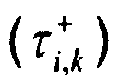
- the sub-carrier ambiguity resolution module 32 processes the delay estimates and caculates positions and receiver clock errors from delay candidates ⁇ i , k + from which predicted delays can be calculated.
- the residual for a specific combination of sub-carrier ambiguities based on the differences can be calculated as outlined above.
- the set of sub-carrier ambiguities in the corresponding position and receiver clock error is selected which leads to the smallest residual.
- An advantage of the method according to the invention is that regarding the resolution of the sub-carrier ambiguities, the resulting receiver is more robust with respect to multipath and dynamics compared to the Double Estimator receiver known from US 2010/0104046 A1 where each channel resolves the sub-carrier ambiguity independent from the other channels. Therefore, the probability for a false sub-carrier ambiguity resolution, and in consequence for a bias position and clock estimate, is smaller.
Landscapes
- Engineering & Computer Science (AREA)
- Radar, Positioning & Navigation (AREA)
- Remote Sensing (AREA)
- Computer Networks & Wireless Communication (AREA)
- Physics & Mathematics (AREA)
- General Physics & Mathematics (AREA)
- Position Fixing By Use Of Radio Waves (AREA)
Abstract


Description
- The invention relates to a method for resolving sub-carrier ambiguities of a total number of tracking channels of a binary offset carrier (BOC) navigation signal comprising a carrier modulated by a code modulation function of a given code rate and further modulated by a sub-carrier modulation function of a given sub-carrier rate. For each channel, the method comprises the steps of generating a first estimate of delay based on the code modulation and generating a second estimate of delay based on the sub-carrier modulation.
- In a global navigation satellite system (GNSS), a receiver estimates delays in the navigation signals received from different satellites and uses this information, combined with information on the position of the satellites, to estimate its position. The more accurate the estimation of the delays is, the more accurately the receiver can estimate its position.
- In current GNSS systems, navigation signals transmitted by the satellites are modulated using a phase shift keying (PSK) modulation of a code onto a carrier signal having a designated carrier frequency. In next generation GNSS systems, like the Galileo system or an improved American global positioning system (GPS), binary offset carrier (BOC) modulations will be used. Like PSK modulation, BOC modulation involves modulating a code onto a carrier. This code is similar to that used in PSK modulation. However, BOC modulation involves further modulating the signal by a sub-carrier which can be represented by a sub-carrier modulation function having a sub-carrier rate and a sub-chip duration. Consequently, a BOC signal consists of a carrier, modulated with a pseudo random noise (PRN) code, and additionally modulated with a binary sub-carrier.
- An auto correlation function of a BOC signal shows multiple peaks, as illustrated in
Fig. 1 for a BOC (15, 2.5) signal. As known to the person skilled in the art the first parameter (here: 15) of the BOC signal indicates the sub-carrier rate whereas the second parameter (here: 2.5) of the BOC signal indicates the code rate. If a receiver uses early (E) and late (L) replicas for code tracking consisting of a respective PRN code modulated with the sub-carrier, a tracking loop can settle on a sidepeak of the correlation function which introduces a bias in the delay estimate. In case of a BOC (15, 2.5) signal the delay estimate is approximately 9.7m. In case of a BOC (10, 5) signal, the delay estimate is approximately 14.7m. Obviously, this bias directly translates into a position error which is highly undesirable. - Different techniques have been proposed to overcome this problem, for example Bump Jumping or Sub-carrier Cancellation (SCC).
-
US 2010/0104046 A1 discloses an approach for BOC signal tracking which is called Double Estimator technique. While a tracking loop of a conventional receiver consists of two loops for carrier and code tracking, a Double Estimator consists of three independent but cooperative loops for the carrier, the sub-carrier and code. A simplified block diagram of a Double Estimator tracking loop is shown inFig. 2 . For clarity, complex signals are used in this representation. An input signal s(t) is mixed with a carrier, generated by a numerically controlled oscillator (NCO) 10. The mixed signal splits up in three branches and is mixed with an early (E), a prompt (P) and a late (L) subcarrier replica, respectively, which are generated by asub-carrier NCO 12. Next, the signals that were mixed with the early and late sub-carrier are mixed with a prompt code replica, the signal that was mixed with the prompt subcarrier is split up in three branches and mixed with an early, a prompt and a late code replica. All code replicas are generated by a code NCO 14. The resulting signals are fed to respective adders connected to discriminators andloop filters 16. The discriminators andloop filters 16 are connected to theNCOs - The Double Estimator of
US 2010/0104046 A1 provides two independent delay estimates, one from code tracking, τ, and one from sub-carrier tracking, τ*. The code tracking delay estimate τ is less accurate while the sub-carrier tracking delay estimate τ* is ambiguous with the sub-carrier chip duration Ts. A final delay estimate is calculated by resolving the sub-carrier delay ambiguity using a less accurate code delay estimate as follows:
- Ni denotes the sub-carrier ambiguity for a tracking channel i, obtained as follows:

- However, depending on multipath, dynamics and tracking loop bandwidths, the above rounding operation can fail to resolve the sub-carrier ambiguity correctly which leads again to a bias in the final delay estimate.
- It is therefore object of the present invention to provide a method which allows a more accurate way for resolving sub-carrier ambiguities of tracking channels of a binary offset carrier (BOC) navigation signal.
- This object is solved by a method according to
claim 1. Preferred embodiments are set out in the dependent claims. - The invention provides a method for resolving sub-carrier ambiguities of a total number of tracking channels of a binary offset carrier (BOC) navigation signal comprising a carrier modulated by a code modulation function of a given code rate and further modulated by a sub-carrier modulation function of a given sub-carrier rate, for each channel comprising the steps of generating a first estimate of delay based on the code modulation, and generating a second estimate of delay based on the sub-carrier modulation.
- According to the invention the method is characterized in that, for a simultaneously considered subset of at least four tracking channels, determining a set of sub-carrier candidate ambiguities based on the sub-carrier modulation; calculating for each possible combination of sub-carrier ambiguities position and receiver clock error; calculating predicted delays based on each calculated position and receiver clock error; calculating differences between the predicted delays and the delay candidates originating from each specific combination of subcarrier ambiguities; calculating a residual based on the differences; and selecting the set of sub-carrier ambiguities and the corresponding position and receiver clock error which leads to the smallest residual.
- The invention provides a method of jointly resolving the sub-carrier ambiguity for a number of tracking channels and calculating a position and time solution which is more robust with respect to dynamics and multipath than the code-based rounding operation described previously which is applied independently for each channel. Compared to solutions where each tracking channel resolves a sub-carrier ambiguity independent from the other channels, the method provides a solution where the probability for a false sub-carrier ambiguity resolution, and in consequence for a bias position and clock estimate, is smaller.
- According to a preferred embodiment the step of calculating a residual comprises squaring and summing the differences between the predicted delays and the delay candidates, providing the residual for a specific combination of sub-carrier ambiguities.
- According to a further preferred embodiment ki residuals are calculated with k being the number of ambiguities and i being the number of channels.
- It is further preferred when the subset of considered tracking channels comprises a good geometric dilution of precision (GDOP). Especially, for the remaining channels the predicted delays are calculated using the calculated position and receiver clock error. "Remaining channels" are those channels of the total number of tracking channels that are not considered in the subset of tracking channels.
- In a further preferred embodiment the sub-carrier ambiguities for the remaining channels are obtained using the calculated predicted delays τ̂i for the remaining tracking channels. Preferably, the sub-carrier ambiguities for the remaining channels are obtained by:

- Alternatively, the sub-carrier ambiguities are obtained using Real-Time Kinematic-technology for carrier phase ambiguity fixing.
- In a further preferred embodiment all tracking channels are considered simultaneously.
- Preferred embodiments of the invention are now described, by way of example only, with reference to the accompanying drawings.
- Fig. 1
- shows an autocorrelation function of a binary offset carrier (BOC) signal showing multiple peaks.
- Fig. 2
- shows a schematic block diagram of a known Double Estimator tracking loop.
- Fig. 3
- shows a schematic block diagram illustrating the method according to the invention.
- The method according to the invention to resolve sub-carrier ambiguities of a BOC navigation signal makes use and improves the Double Estimator technology known from prior art, e.g.
US 2010/0104046 A1 . The Double Estimator consists of three independent but cooperative loops for carrier, sub-carrier and code of the BOC signal. The Double Estimator provides two independent delay estimates, one from code tracking, τ, and one from sub-carrier tracking, τ*. The final delay estimate is calculated by resolving the sub-carrier delay ambiguity using the less accurate code delay τ. - To make the method for resolving the sub-carrier ambiguity more robust with respect to dynamics and multipaths than the code-based rounding operation of the Double Estimator technique which is applied independently for each channel, the invention proposes to consider all receiver channels simultaneously to resolve the sub-carrier ambiguity. This is in opposite to the attempt to resolve this for each channel independently.
- Considering all receiver channels simultaneously to resolve the sub-carrier ambiguity is accomplished by calculating position and receiver clock error estimates considering several sub-carrier ambiguities, and selecting the set of sub-carrier ambiguities and the corresponding position and receiver clock error that provides the smallest residual.
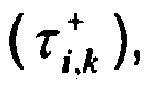
- In order to resolve the sub-carrier ambiguities of all channels, first a set of candidate ambiguities has to be determined. A set of candidate ambiguities Ni,k for a channel i is given by:

- It is to be noted that other approaches besides the one above are possible, too.
- The corresponding set of delay candidates is given by:

- Now, for each possible combination of sub-carrier ambiguities, position and receiver clock error are calculated, e.g. using a recursive weighted least squares approach. Then, based on each calculated position and receiver clock error, predicted delays are calculated. The differences between the predicted delays and the delay candidates are squared and summed, providing the residual for a specific combination of sub-carrier ambiguities. With i channels and k ambiguities to be tested, ki residuals have to be calculated. This can be done very efficiently, because the matrix relating delay estimates to position and clock error is approximately the same for all combinations of sub-carrier ambiguities, and therefore has to be calculated only once. Finally, the combination of sub-carrier ambiguities is selected which leads to the smallest residual.
- Alternatively, to considering all channels simultaneously, it is also possible to consider only a subset of at least four channels with a good geometric dilution of precision (GDOP), and resolve their sub-carrier ambiguities as described above. Then, using the calculated position and receiver clock error, predicted delays τ̂¡ can be calculated for the remaining channels. Finally, the sub-carrier ambiguities for the remaining channels are obtained using these predicted delays:

-
Fig. 3 shows a schematic diagram illustrating the method according to the invention. A BOC navigation input signal s(t) is fed to a DoubleEstimator tracking loop 30 consisting of channels chn.1, chn.2, ..., chn.n. As a result delay estimates τ1, τ1* , τ2, τ1* , ... , τ n , τ n * are provided to a sub-carrierambiguity resolution module 32. The sub-carrierambiguity resolution module 32 processes the delay estimates and caculates positions and receiver clock errors from delay candidates

- An advantage of the method according to the invention is that regarding the resolution of the sub-carrier ambiguities, the resulting receiver is more robust with respect to multipath and dynamics compared to the Double Estimator receiver known from
US 2010/0104046 A1 where each channel resolves the sub-carrier ambiguity independent from the other channels. Therefore, the probability for a false sub-carrier ambiguity resolution, and in consequence for a bias position and clock estimate, is smaller.
Claims (9)
- A method for resolving sub-carrier ambiguities of a total number of tracking channels (i) of a binary offset carrier (BOC) navigation signal (s(t)) comprising a carrier modulated by a code modulation function of a given code rate and further modulated by a sub-carrier modulation function of a given sub-carrier rate, for each channel comprising the steps of:- generating a first estimate (τ) of delay based on the code modulation;- generating a second estimate (τ*) of delay based on the sub-carrier modulation;characterized in that
for a simultaneously considered subset of at least four tracking channels- determining a set of sub-carrier candidate ambiguities based on the sub-carrier modulation;- calculating for each possible combination of sub-carrier ambiguities, position and receiver clock error;- calculating predicted delays (τ̂ ¡ ) based on each calculated position and receiver clock error;- calculating differences between the predicted delays (τ̂ ¡ ) and the delay candidate - calculating a residual for a specific combination of sub-carrier ambiguities based on the differences; and- selecting the set of sub-carrier ambiguities and the corresponding position and receiver clock error which leads to the smallest residual.
 - The method according to claim 1, wherein the step of calculation a residual comprises squaring and summing the differences between the predicted delays (τ̂ ¡ ) and the delay candidates
- The method according to claim 1 or 2, wherein k' residuals are calculated with k being the number of ambiguities and i being the number of channels.
- The method according to one of the preceding claims, wherein the subset of considered tracking channels comprises a good geometric dilution of precision (GDOP).
- The method according to claim 4, wherein for the remaining channels predicted delays (τ̂ ¡ ) are calculated using the calculated position and receiver clock error.
- The method according to claim 5, wherein the sub-carrier ambiguities for the remaining channels are obtained using the calculated predicted delays (τ̂ ¡ ) for the remaining tracking channels.
- The method according to claim 6, wherein the sub-carrier ambiguities for the remaining channels are obtained by:

- The method according to claim 6, wherein the sub-carrier ambiguities for the remaining channels are obtained using Real Time Kinematic-technology for carrier phase ambiguity fixing.
- The method according to one of claims 1 to 3, wherein all tracking channels a considered simultaneously.
Priority Applications (2)
| Application Number | Priority Date | Filing Date | Title |
|---|---|---|---|
| EP10007819.5A EP2413160B1 (en) | 2010-07-28 | 2010-07-28 | Method for resolving the binary offset carrier (BOC) signals tracking ambiguity in a double estimator receiver |
| US13/191,613 US9000975B2 (en) | 2010-07-28 | 2011-07-27 | Method for resolving sub-carrier ambiguities of a number of tracking channels of a navigation signal |
Applications Claiming Priority (1)
| Application Number | Priority Date | Filing Date | Title |
|---|---|---|---|
| EP10007819.5A EP2413160B1 (en) | 2010-07-28 | 2010-07-28 | Method for resolving the binary offset carrier (BOC) signals tracking ambiguity in a double estimator receiver |
Publications (2)
| Publication Number | Publication Date |
|---|---|
| EP2413160A1 true EP2413160A1 (en) | 2012-02-01 |
| EP2413160B1 EP2413160B1 (en) | 2016-11-23 |
Family
ID=43301921
Family Applications (1)
| Application Number | Title | Priority Date | Filing Date |
|---|---|---|---|
| EP10007819.5A Active EP2413160B1 (en) | 2010-07-28 | 2010-07-28 | Method for resolving the binary offset carrier (BOC) signals tracking ambiguity in a double estimator receiver |
Country Status (2)
| Country | Link |
|---|---|
| US (1) | US9000975B2 (en) |
| EP (1) | EP2413160B1 (en) |
Families Citing this family (5)
| Publication number | Priority date | Publication date | Assignee | Title |
|---|---|---|---|---|
| ES2592858T3 (en) * | 2013-04-25 | 2016-12-01 | Airbus Ds Gmbh | Method and device for signal tracking with at least one subcarrier |
| EP3109673B1 (en) | 2015-06-24 | 2020-01-08 | Centre National d'Etudes Spatiales | Gnss receiver with an improved capability to resolve sub-carrier tracking ambiguities |
| US10976444B2 (en) * | 2018-03-28 | 2021-04-13 | Mitsubishi Electric Research Laboratories, Inc. | System and method for GNSS ambiguity resolution |
| US11474263B2 (en) * | 2020-02-13 | 2022-10-18 | Mitsubishi Electric Research Laboratories, Inc. | System and method for GNSS ambiguity resolution |
| CN114527499B (en) * | 2022-02-21 | 2023-08-01 | 清华大学 | Fuzzy-free positioning method and device for satellite navigation system B1 broadband composite signal |
Citations (3)
| Publication number | Priority date | Publication date | Assignee | Title |
|---|---|---|---|---|
| EP1933469A1 (en) * | 2006-12-12 | 2008-06-18 | STMicroelectronics S.r.l. | Method and system for resolving the acquisition ambiguity and the problem of false lock in tracking BOC(n, n) modulated signals, particularly for satellite positioning/navigation systems |
| WO2008090323A1 (en) * | 2007-01-24 | 2008-07-31 | The University Of Surrey | A receiver of multiplexed binary offset carrier (mboc) modulated signals |
| US20100104046A1 (en) | 2006-08-10 | 2010-04-29 | Hodgart Matthew Stephen | Receiver of binary offset carrier (boc) modulated signals |
-
2010
- 2010-07-28 EP EP10007819.5A patent/EP2413160B1/en active Active
-
2011
- 2011-07-27 US US13/191,613 patent/US9000975B2/en active Active
Patent Citations (3)
| Publication number | Priority date | Publication date | Assignee | Title |
|---|---|---|---|---|
| US20100104046A1 (en) | 2006-08-10 | 2010-04-29 | Hodgart Matthew Stephen | Receiver of binary offset carrier (boc) modulated signals |
| EP1933469A1 (en) * | 2006-12-12 | 2008-06-18 | STMicroelectronics S.r.l. | Method and system for resolving the acquisition ambiguity and the problem of false lock in tracking BOC(n, n) modulated signals, particularly for satellite positioning/navigation systems |
| WO2008090323A1 (en) * | 2007-01-24 | 2008-07-31 | The University Of Surrey | A receiver of multiplexed binary offset carrier (mboc) modulated signals |
Non-Patent Citations (1)
| Title |
|---|
| FANTE R L: "Unambiguous Tracker for GPS Binary-Offset-Carrier Signals", ION ANNUAL MEETING, XX, XX, 23 June 2003 (2003-06-23), pages 141 - 145, XP002338821 * |
Also Published As
| Publication number | Publication date |
|---|---|
| US20120026035A1 (en) | 2012-02-02 |
| EP2413160B1 (en) | 2016-11-23 |
| US9000975B2 (en) | 2015-04-07 |
Similar Documents
| Publication | Publication Date | Title |
|---|---|---|
| US6922546B1 (en) | GPS signal acquisition based on frequency-domain and time-domain processing | |
| EP2257826B1 (en) | Multipath detection for received sps signal | |
| EP2263099B1 (en) | Satellite time determination for sps receiver | |
| EP2058670B1 (en) | Suppression of multipath effects for received SPS signal | |
| US11579309B2 (en) | Global Navigation Satellite System (GNSS) multipath mitigation | |
| US20040172195A1 (en) | Method and system for data detection in a global positioning system satellite receiver | |
| KR20230031239A (en) | Modernized consumer-grade GNSS secondary code acquisition and signal tracking | |
| EP3109671B1 (en) | Device for tracking a satellite radionavigation signal in a multipath environment | |
| EP1933469B1 (en) | Method and system for resolving the acquisition ambiguity and the problem of false lock in tracking BOC(n, n) modulated signals, particularly for satellite positioning/navigation systems | |
| US8970431B2 (en) | Method and apparatus for weak data bit sync in a positioning system | |
| EP2413160B1 (en) | Method for resolving the binary offset carrier (BOC) signals tracking ambiguity in a double estimator receiver | |
| US20110206090A1 (en) | Method for Optimizing an Acquisition of a Spread-Spectrum Signal from a Satellite by a Mobile Receiver | |
| KR20160116758A (en) | Method for generating an unambiguous correlation function for tracking the AltBOC signal | |
| EP3112905B1 (en) | Gnss receiver calculating a non-ambiguous discriminator to resolve subcarrier tracking ambiguities | |
| US7499710B2 (en) | Integrity monitoring for geo-location systems | |
| US20070211791A1 (en) | Coherent processing using composite codes | |
| US7876738B2 (en) | Preventing an incorrect synchronization between a received code-modulated signal and a replica code | |
| US20250123406A1 (en) | Processing a gnss signal based on doppler estimates | |
| US20250123407A1 (en) | Processing a gnss signal based on doppler estimates | |
| EP1229341B1 (en) | A method for defining the error of reference time and an electronic device | |
| Rao | Proposed LOS fast TTFF signal design for IRNSS | |
| EP3978955A1 (en) | Method and system for determining a phase of a gnss carrier | |
| KR101959494B1 (en) | Method And Device For AltBOC Signal Processing | |
| US9297905B2 (en) | Method of acquiring CDMA-modulated satellite signals and receiving apparatus implementing the method | |
| Eissfeller et al. | Implementation and Simulation of a Mass-Market GPS/Galileo Single Point Positioning Receiver |
Legal Events
| Date | Code | Title | Description |
|---|---|---|---|
| AK | Designated contracting states |
Kind code of ref document: A1 Designated state(s): AL AT BE BG CH CY CZ DE DK EE ES FI FR GB GR HR HU IE IS IT LI LT LU LV MC MK MT NL NO PL PT RO SE SI SK SM TR |
|
| AX | Request for extension of the european patent |
Extension state: BA ME RS |
|
| PUAI | Public reference made under article 153(3) epc to a published international application that has entered the european phase |
Free format text: ORIGINAL CODE: 0009012 |
|
| 17P | Request for examination filed |
Effective date: 20120730 |
|
| R17P | Request for examination filed (corrected) |
Effective date: 20120727 |
|
| 17Q | First examination report despatched |
Effective date: 20130125 |
|
| GRAP | Despatch of communication of intention to grant a patent |
Free format text: ORIGINAL CODE: EPIDOSNIGR1 |
|
| INTG | Intention to grant announced |
Effective date: 20160610 |
|
| GRAS | Grant fee paid |
Free format text: ORIGINAL CODE: EPIDOSNIGR3 |
|
| GRAA | (expected) grant |
Free format text: ORIGINAL CODE: 0009210 |
|
| RIN1 | Information on inventor provided before grant (corrected) |
Inventor name: WENDEL, JAN, DR. |
|
| AK | Designated contracting states |
Kind code of ref document: B1 Designated state(s): AL AT BE BG CH CY CZ DE DK EE ES FI FR GB GR HR HU IE IS IT LI LT LU LV MC MK MT NL NO PL PT RO SE SI SK SM TR |
|
| RAP1 | Party data changed (applicant data changed or rights of an application transferred) |
Owner name: AIRBUS DS GMBH |
|
| REG | Reference to a national code |
Ref country code: GB Ref legal event code: FG4D |
|
| REG | Reference to a national code |
Ref country code: CH Ref legal event code: EP |
|
| REG | Reference to a national code |
Ref country code: IE Ref legal event code: FG4D |
|
| REG | Reference to a national code |
Ref country code: AT Ref legal event code: REF Ref document number: 848411 Country of ref document: AT Kind code of ref document: T Effective date: 20161215 |
|
| REG | Reference to a national code |
Ref country code: DE Ref legal event code: R096 Ref document number: 602010038162 Country of ref document: DE |
|
| PG25 | Lapsed in a contracting state [announced via postgrant information from national office to epo] |
Ref country code: LV Free format text: LAPSE BECAUSE OF FAILURE TO SUBMIT A TRANSLATION OF THE DESCRIPTION OR TO PAY THE FEE WITHIN THE PRESCRIBED TIME-LIMIT Effective date: 20161123 |
|
| REG | Reference to a national code |
Ref country code: LT Ref legal event code: MG4D |
|
| REG | Reference to a national code |
Ref country code: NL Ref legal event code: MP Effective date: 20161123 |
|
| REG | Reference to a national code |
Ref country code: AT Ref legal event code: MK05 Ref document number: 848411 Country of ref document: AT Kind code of ref document: T Effective date: 20161123 |
|
| PG25 | Lapsed in a contracting state [announced via postgrant information from national office to epo] |
Ref country code: NO Free format text: LAPSE BECAUSE OF FAILURE TO SUBMIT A TRANSLATION OF THE DESCRIPTION OR TO PAY THE FEE WITHIN THE PRESCRIBED TIME-LIMIT Effective date: 20170223 Ref country code: LT Free format text: LAPSE BECAUSE OF FAILURE TO SUBMIT A TRANSLATION OF THE DESCRIPTION OR TO PAY THE FEE WITHIN THE PRESCRIBED TIME-LIMIT Effective date: 20161123 Ref country code: NL Free format text: LAPSE BECAUSE OF FAILURE TO SUBMIT A TRANSLATION OF THE DESCRIPTION OR TO PAY THE FEE WITHIN THE PRESCRIBED TIME-LIMIT Effective date: 20161123 Ref country code: GR Free format text: LAPSE BECAUSE OF FAILURE TO SUBMIT A TRANSLATION OF THE DESCRIPTION OR TO PAY THE FEE WITHIN THE PRESCRIBED TIME-LIMIT Effective date: 20170224 Ref country code: SE Free format text: LAPSE BECAUSE OF FAILURE TO SUBMIT A TRANSLATION OF THE DESCRIPTION OR TO PAY THE FEE WITHIN THE PRESCRIBED TIME-LIMIT Effective date: 20161123 |
|
| PG25 | Lapsed in a contracting state [announced via postgrant information from national office to epo] |
Ref country code: FI Free format text: LAPSE BECAUSE OF FAILURE TO SUBMIT A TRANSLATION OF THE DESCRIPTION OR TO PAY THE FEE WITHIN THE PRESCRIBED TIME-LIMIT Effective date: 20161123 Ref country code: PL Free format text: LAPSE BECAUSE OF FAILURE TO SUBMIT A TRANSLATION OF THE DESCRIPTION OR TO PAY THE FEE WITHIN THE PRESCRIBED TIME-LIMIT Effective date: 20161123 Ref country code: HR Free format text: LAPSE BECAUSE OF FAILURE TO SUBMIT A TRANSLATION OF THE DESCRIPTION OR TO PAY THE FEE WITHIN THE PRESCRIBED TIME-LIMIT Effective date: 20161123 Ref country code: AT Free format text: LAPSE BECAUSE OF FAILURE TO SUBMIT A TRANSLATION OF THE DESCRIPTION OR TO PAY THE FEE WITHIN THE PRESCRIBED TIME-LIMIT Effective date: 20161123 Ref country code: ES Free format text: LAPSE BECAUSE OF FAILURE TO SUBMIT A TRANSLATION OF THE DESCRIPTION OR TO PAY THE FEE WITHIN THE PRESCRIBED TIME-LIMIT Effective date: 20161123 Ref country code: PT Free format text: LAPSE BECAUSE OF FAILURE TO SUBMIT A TRANSLATION OF THE DESCRIPTION OR TO PAY THE FEE WITHIN THE PRESCRIBED TIME-LIMIT Effective date: 20170323 |
|
| REG | Reference to a national code |
Ref country code: FR Ref legal event code: PLFP Year of fee payment: 8 |
|
| PG25 | Lapsed in a contracting state [announced via postgrant information from national office to epo] |
Ref country code: RO Free format text: LAPSE BECAUSE OF FAILURE TO SUBMIT A TRANSLATION OF THE DESCRIPTION OR TO PAY THE FEE WITHIN THE PRESCRIBED TIME-LIMIT Effective date: 20161123 Ref country code: SK Free format text: LAPSE BECAUSE OF FAILURE TO SUBMIT A TRANSLATION OF THE DESCRIPTION OR TO PAY THE FEE WITHIN THE PRESCRIBED TIME-LIMIT Effective date: 20161123 Ref country code: DK Free format text: LAPSE BECAUSE OF FAILURE TO SUBMIT A TRANSLATION OF THE DESCRIPTION OR TO PAY THE FEE WITHIN THE PRESCRIBED TIME-LIMIT Effective date: 20161123 Ref country code: EE Free format text: LAPSE BECAUSE OF FAILURE TO SUBMIT A TRANSLATION OF THE DESCRIPTION OR TO PAY THE FEE WITHIN THE PRESCRIBED TIME-LIMIT Effective date: 20161123 Ref country code: CZ Free format text: LAPSE BECAUSE OF FAILURE TO SUBMIT A TRANSLATION OF THE DESCRIPTION OR TO PAY THE FEE WITHIN THE PRESCRIBED TIME-LIMIT Effective date: 20161123 |
|
| REG | Reference to a national code |
Ref country code: DE Ref legal event code: R097 Ref document number: 602010038162 Country of ref document: DE |
|
| PG25 | Lapsed in a contracting state [announced via postgrant information from national office to epo] |
Ref country code: SM Free format text: LAPSE BECAUSE OF FAILURE TO SUBMIT A TRANSLATION OF THE DESCRIPTION OR TO PAY THE FEE WITHIN THE PRESCRIBED TIME-LIMIT Effective date: 20161123 Ref country code: BE Free format text: LAPSE BECAUSE OF FAILURE TO SUBMIT A TRANSLATION OF THE DESCRIPTION OR TO PAY THE FEE WITHIN THE PRESCRIBED TIME-LIMIT Effective date: 20161123 Ref country code: BG Free format text: LAPSE BECAUSE OF FAILURE TO SUBMIT A TRANSLATION OF THE DESCRIPTION OR TO PAY THE FEE WITHIN THE PRESCRIBED TIME-LIMIT Effective date: 20170223 |
|
| PLBE | No opposition filed within time limit |
Free format text: ORIGINAL CODE: 0009261 |
|
| STAA | Information on the status of an ep patent application or granted ep patent |
Free format text: STATUS: NO OPPOSITION FILED WITHIN TIME LIMIT |
|
| 26N | No opposition filed |
Effective date: 20170824 |
|
| PG25 | Lapsed in a contracting state [announced via postgrant information from national office to epo] |
Ref country code: SI Free format text: LAPSE BECAUSE OF FAILURE TO SUBMIT A TRANSLATION OF THE DESCRIPTION OR TO PAY THE FEE WITHIN THE PRESCRIBED TIME-LIMIT Effective date: 20161123 |
|
| REG | Reference to a national code |
Ref country code: DE Ref legal event code: R082 Ref document number: 602010038162 Country of ref document: DE Representative=s name: WUESTHOFF & WUESTHOFF, PATENTANWAELTE PARTG MB, DE Ref country code: DE Ref legal event code: R081 Ref document number: 602010038162 Country of ref document: DE Owner name: AIRBUS DEFENCE AND SPACE GMBH, DE Free format text: FORMER OWNER: AIRBUS DS GMBH, 82024 TAUFKIRCHEN, DE |
|
| REG | Reference to a national code |
Ref country code: CH Ref legal event code: PL |
|
| GBPC | Gb: european patent ceased through non-payment of renewal fee |
Effective date: 20170728 |
|
| REG | Reference to a national code |
Ref country code: IE Ref legal event code: MM4A |
|
| PG25 | Lapsed in a contracting state [announced via postgrant information from national office to epo] |
Ref country code: IE Free format text: LAPSE BECAUSE OF NON-PAYMENT OF DUE FEES Effective date: 20170728 Ref country code: LI Free format text: LAPSE BECAUSE OF NON-PAYMENT OF DUE FEES Effective date: 20170731 Ref country code: CH Free format text: LAPSE BECAUSE OF NON-PAYMENT OF DUE FEES Effective date: 20170731 Ref country code: GB Free format text: LAPSE BECAUSE OF NON-PAYMENT OF DUE FEES Effective date: 20170728 |
|
| PG25 | Lapsed in a contracting state [announced via postgrant information from national office to epo] |
Ref country code: LU Free format text: LAPSE BECAUSE OF NON-PAYMENT OF DUE FEES Effective date: 20170728 |
|
| REG | Reference to a national code |
Ref country code: FR Ref legal event code: PLFP Year of fee payment: 9 |
|
| PG25 | Lapsed in a contracting state [announced via postgrant information from national office to epo] |
Ref country code: MT Free format text: LAPSE BECAUSE OF NON-PAYMENT OF DUE FEES Effective date: 20170728 |
|
| PG25 | Lapsed in a contracting state [announced via postgrant information from national office to epo] |
Ref country code: HU Free format text: LAPSE BECAUSE OF FAILURE TO SUBMIT A TRANSLATION OF THE DESCRIPTION OR TO PAY THE FEE WITHIN THE PRESCRIBED TIME-LIMIT; INVALID AB INITIO Effective date: 20100728 Ref country code: MC Free format text: LAPSE BECAUSE OF FAILURE TO SUBMIT A TRANSLATION OF THE DESCRIPTION OR TO PAY THE FEE WITHIN THE PRESCRIBED TIME-LIMIT Effective date: 20161123 |
|
| PG25 | Lapsed in a contracting state [announced via postgrant information from national office to epo] |
Ref country code: CY Free format text: LAPSE BECAUSE OF NON-PAYMENT OF DUE FEES Effective date: 20161123 |
|
| PG25 | Lapsed in a contracting state [announced via postgrant information from national office to epo] |
Ref country code: MK Free format text: LAPSE BECAUSE OF FAILURE TO SUBMIT A TRANSLATION OF THE DESCRIPTION OR TO PAY THE FEE WITHIN THE PRESCRIBED TIME-LIMIT Effective date: 20161123 |
|
| PG25 | Lapsed in a contracting state [announced via postgrant information from national office to epo] |
Ref country code: TR Free format text: LAPSE BECAUSE OF FAILURE TO SUBMIT A TRANSLATION OF THE DESCRIPTION OR TO PAY THE FEE WITHIN THE PRESCRIBED TIME-LIMIT Effective date: 20161123 |
|
| PG25 | Lapsed in a contracting state [announced via postgrant information from national office to epo] |
Ref country code: AL Free format text: LAPSE BECAUSE OF FAILURE TO SUBMIT A TRANSLATION OF THE DESCRIPTION OR TO PAY THE FEE WITHIN THE PRESCRIBED TIME-LIMIT Effective date: 20161123 Ref country code: IS Free format text: LAPSE BECAUSE OF FAILURE TO SUBMIT A TRANSLATION OF THE DESCRIPTION OR TO PAY THE FEE WITHIN THE PRESCRIBED TIME-LIMIT Effective date: 20170323 |
|
| PGFP | Annual fee paid to national office [announced via postgrant information from national office to epo] |
Ref country code: IT Payment date: 20220726 Year of fee payment: 13 |
|
| PGFP | Annual fee paid to national office [announced via postgrant information from national office to epo] |
Ref country code: FR Payment date: 20220720 Year of fee payment: 13 |
|
| PG25 | Lapsed in a contracting state [announced via postgrant information from national office to epo] |
Ref country code: FR Free format text: LAPSE BECAUSE OF NON-PAYMENT OF DUE FEES Effective date: 20230731 |
|
| PG25 | Lapsed in a contracting state [announced via postgrant information from national office to epo] |
Ref country code: IT Free format text: LAPSE BECAUSE OF NON-PAYMENT OF DUE FEES Effective date: 20230728 |
|
| PGFP | Annual fee paid to national office [announced via postgrant information from national office to epo] |
Ref country code: DE Payment date: 20250722 Year of fee payment: 16 |