EP2410806A1 - Method and apparatus for preventing signal interference in wireless relay network based on sync hybrid automatic repeat request (harq) - Google Patents
Method and apparatus for preventing signal interference in wireless relay network based on sync hybrid automatic repeat request (harq) Download PDFInfo
- Publication number
- EP2410806A1 EP2410806A1 EP10753109A EP10753109A EP2410806A1 EP 2410806 A1 EP2410806 A1 EP 2410806A1 EP 10753109 A EP10753109 A EP 10753109A EP 10753109 A EP10753109 A EP 10753109A EP 2410806 A1 EP2410806 A1 EP 2410806A1
- Authority
- EP
- European Patent Office
- Prior art keywords
- harq process
- uplink
- relay device
- sub
- frame
- Prior art date
- Legal status (The legal status is an assumption and is not a legal conclusion. Google has not performed a legal analysis and makes no representation as to the accuracy of the status listed.)
- Withdrawn
Links
Images


Classifications
-
- H—ELECTRICITY
- H04—ELECTRIC COMMUNICATION TECHNIQUE
- H04L—TRANSMISSION OF DIGITAL INFORMATION, e.g. TELEGRAPHIC COMMUNICATION
- H04L1/00—Arrangements for detecting or preventing errors in the information received
- H04L1/12—Arrangements for detecting or preventing errors in the information received by using return channel
- H04L1/16—Arrangements for detecting or preventing errors in the information received by using return channel in which the return channel carries supervisory signals, e.g. repetition request signals
- H04L1/18—Automatic repetition systems, e.g. Van Duuren systems
-
- H—ELECTRICITY
- H04—ELECTRIC COMMUNICATION TECHNIQUE
- H04B—TRANSMISSION
- H04B7/00—Radio transmission systems, i.e. using radiation field
- H04B7/24—Radio transmission systems, i.e. using radiation field for communication between two or more posts
- H04B7/26—Radio transmission systems, i.e. using radiation field for communication between two or more posts at least one of which is mobile
- H04B7/2603—Arrangements for wireless physical layer control
- H04B7/2606—Arrangements for base station coverage control, e.g. by using relays in tunnels
-
- H—ELECTRICITY
- H04—ELECTRIC COMMUNICATION TECHNIQUE
- H04B—TRANSMISSION
- H04B7/00—Radio transmission systems, i.e. using radiation field
- H04B7/14—Relay systems
-
- H—ELECTRICITY
- H04—ELECTRIC COMMUNICATION TECHNIQUE
- H04B—TRANSMISSION
- H04B7/00—Radio transmission systems, i.e. using radiation field
- H04B7/14—Relay systems
- H04B7/15—Active relay systems
- H04B7/155—Ground-based stations
- H04B7/15564—Relay station antennae loop interference reduction
- H04B7/15585—Relay station antennae loop interference reduction by interference cancellation
-
- H—ELECTRICITY
- H04—ELECTRIC COMMUNICATION TECHNIQUE
- H04L—TRANSMISSION OF DIGITAL INFORMATION, e.g. TELEGRAPHIC COMMUNICATION
- H04L1/00—Arrangements for detecting or preventing errors in the information received
- H04L1/12—Arrangements for detecting or preventing errors in the information received by using return channel
- H04L1/16—Arrangements for detecting or preventing errors in the information received by using return channel in which the return channel carries supervisory signals, e.g. repetition request signals
- H04L1/18—Automatic repetition systems, e.g. Van Duuren systems
- H04L1/1867—Arrangements specially adapted for the transmitter end
- H04L1/1887—Scheduling and prioritising arrangements
-
- H—ELECTRICITY
- H04—ELECTRIC COMMUNICATION TECHNIQUE
- H04L—TRANSMISSION OF DIGITAL INFORMATION, e.g. TELEGRAPHIC COMMUNICATION
- H04L27/00—Modulated-carrier systems
- H04L27/26—Systems using multi-frequency codes
-
- H—ELECTRICITY
- H04—ELECTRIC COMMUNICATION TECHNIQUE
- H04L—TRANSMISSION OF DIGITAL INFORMATION, e.g. TELEGRAPHIC COMMUNICATION
- H04L1/00—Arrangements for detecting or preventing errors in the information received
- H04L1/12—Arrangements for detecting or preventing errors in the information received by using return channel
- H04L1/16—Arrangements for detecting or preventing errors in the information received by using return channel in which the return channel carries supervisory signals, e.g. repetition request signals
- H04L1/18—Automatic repetition systems, e.g. Van Duuren systems
- H04L1/1812—Hybrid protocols; Hybrid automatic repeat request [HARQ]
-
- H—ELECTRICITY
- H04—ELECTRIC COMMUNICATION TECHNIQUE
- H04L—TRANSMISSION OF DIGITAL INFORMATION, e.g. TELEGRAPHIC COMMUNICATION
- H04L1/00—Arrangements for detecting or preventing errors in the information received
- H04L2001/0092—Error control systems characterised by the topology of the transmission link
- H04L2001/0097—Relays
Definitions
- the present invention relates to preventing signal interference, more particularly, to method and apparatus for preventing signal in a wireless relay network based on synchronous HARQ.
- LTEA 3GPP LTE-Advanced standards
- relay devices are recently introduced to improve system overall performance, such as increasing throughputs, enlarging network coverage and the like.
- LTEA 3GPP LTE-Advanced standards
- a relay device cannot send and receive signals simultaneously in one frequency band so as to avoid the relay device interfering with itself.
- self-interference the interference caused by using the same time-frequency resource to receive and send signals at the relay device is called self-interference, and those skilled in the art understands that the self-interference defined here is different from the self-interference in a CDMA system.
- downlink relay link and downlink access link share downlink frequency resources and uplink relay link and uplink access link share uplink frequency resources, in order to avoid the self-interference at a relay device, the following preconditions should be satisfied:
- a HARQ process is divided into two processes, namely uplink HARQ process and downlink HARQ process.
- uplink HARQ process a mobile terminal sends data to a relay device and the relay device thus sends back ACK or NACK to the mobile terminal; reversely, in the downlink HARQ process, a relay device sends data to a mobile terminal and the mobile terminal thus sends back ACK or NACK to the relay device.
- the uplink HARQ is based on synchronous HARQ technique. That is, there is a fixed time interval between an initial transmission and a HARQ feedback namely ACK or NACK in an uplink process, and between the ACK or NACK and a subsequent retransmission or a new initial transmission.
- the wireless relay network shown in Fig.1 comprises a base station (eNB) 0, a relay device (RN) 1 and a mobile terminal (MS) 2.
- Figs.2a-2b shows signal flow causing the self-interference at the relay device. Referring to Fig.2a or 2b in combination with Fig.1 , it can be clearly seen that there is a fixed time interval between adjacent uplink or downlink signals with the same HARQ process identifier.
- 0-13 represents 14 sub-frames.
- relay device 1 sends control information to mobile terminal 2 on PDCCH (Physical Downlink Control Channel) to instruct mobile terminal 2 to send uplink signal in uplink HARQ process 1.
- PDCCH Physical Downlink Control Channel
- uplink HARQ process 1 causes self-interference at relay device 1 in sub-frame 8, 12 and sub-frame 8, 12, 16, respectively.
- a mobile terminal judges whether its uplink HARQ process will interfere with a communication between a relay device and a base station in a sub-frame, and if yes, the mobile terminal will suspend sending the uplink signal in the uplink HARQ process in the sub-frame. Preferably, the mobile terminal will suspend sending all subsequent uplink signals in the uplink HARQ process.
- a relay device judges whether a downlink signal to be sent for a certain uplink HARQ process of a mobile terminal by itself will cause interference at the transceiver of the relay device, namely whether the downlink signal sent by itself will form spatial superposition at its antennas so as to impact the reception of downlink signals from a base station. If the judging result is that the above interference will happen, the relay device stops sending downlink signal in the uplink HARQ process in the sub-frame, such as ACK or NACK. Preferably, the relay device stops sending all subsequent downlink signals in the uplink HARQ process.
- a condition for triggering resuming is required.
- the relay device it is judged by the relay device whether a high-priority communication causing the suspending has ended or not, and if yes, it resumes sending downlink signal therein by itself and instructs the mobile terminal to resume sending uplink signal.
- the downlink signal that the relay device resumes sending is used to instruct the mobile terminal to resume sending uplink signal.
- a method of preventing signal interference in a first device of a wireless relay network based on synchronous HARQ comprises the following steps: obtaining resource allocation information, which indicates radio resources allocated to said first device and a relay device to which it belongs; and judging whether an uplink signal to be sent by said first device in a sub-frame for an uplink HARQ process of said first device will interfere with a high-priority communication of said relay device; suspending sending uplink signal for said uplink HARQ process in said sub-frame, if the uplink signal to be sent by said first device in said sub-frame for said uplink HARQ process will interfere with said high-priority communication of said relay device.
- the first device can be a mobile terminal, and can also be a relay device.
- a method of preventing signal interference in a relay device of a wireless relay network based on synchronous HARQ comprises the following steps: obtaining resource allocation information, which indicates radio resources allocated to said relay device and a first device served by said relay device; and judging, according to said resource allocation information, whether an downlink signal to be sent by said relay device in a sub-frame for an uplink HARQ process of said first device will interfere with a high-priority communication of said relay device; suspending sending downlink signal for said uplink HARQ process in said sub-frame, if the downlink signal to be sent by said relay device in said sub-frame for an uplink HARQ process of said first device will interfere with said high-priority communication of said relay device.
- the first device can be a mobile terminal, and can also be a relay device.
- a first interference preventing apparatus for preventing signal interference in a first device of a wireless relay network based on synchronous HARQ.
- the first interference preventing apparatus comprises: a first obtaining means for obtaining resource allocation information, which indicates radio resources allocated to said first device and a relay device to which it belongs; and a first judging means for judging whether an uplink signal to be sent by said first device in a sub-frame for an uplink HARQ process of said first device will interfere with a high-priority communication of said relay device; a first suspending means for making said first device suspend sending uplink signal in said sub-frame for said uplink HARQ process, if the uplink signal to be sent by said first device in said sub-frame for said uplink HARQ process will interfere with said high-priority communication of said relay device.
- the first device can be a mobile terminal, and can also be a relay device.
- a second interference preventing apparatus for preventing signal interference in a relay device of a wireless relay network based on synchronous HARQ.
- the second interference preventing apparatus comprises: a second obtaining means for obtaining resource allocation information, which indicates radio resources allocated to said relay device and a first device served by said relay device; and a third judging means for judging according to said resource allocation information whether a downlink signal to be sent by said relay device in a sub-frame for an uplink HARQ process of said first device will interfere with a high-priority communication of said relay device; a second suspending means for, if the downlink signal to be sent by said relay device in said sub-frame for an uplink HARQ process of said first device will interfere with a high-priority communication of said relay device, then making said relay device suspend sending downlink signal for said uplink HARQ process in said sub-frame.
- the first device can be a mobile terminal, and can also be a relay device.
- the present invention can effectively avoid the self-interference at the relay device caused by the uplink HARQ process of the mobile terminal. Moreover, in the present invention, no modification to the physical layer at network devices is required, and thus, the cost for backward compatibility is relatively low. Furthermore, the present invention is advantages in increasing resource utilization and system performance.
- a downlink HARQ process can occupy sub-frames 1, 5, 9... shown in Fig.2 .
- a sub-frame can be used for an uplink HARQ process and a downlink HARQ process simultaneously without causing any self-interference at the relay device.
- Fig.3 shows a flowchart of a system method according to a detailed embodiment of the present invention. The detailed description of the method is given below with reference to Fig.3 and in combination with Fig.1 and each signal flow diagram.
- step S01 base station 0 broadcasts resource allocation information to each relay device and mobile terminals served by it, wherein when a certain mobile terminal cannot directly obtain resource allocation information from base station 0, the relay device to which it belongs forwards resource allocation information to the mobile terminal.
- the relay device to which it belongs forwards resource allocation information to the mobile terminal.
- the above-mentioned resource allocation information mainly indicates sub-frames allocated by base station 0. According to the resource allocation information, relay device 1 knows which of sub-frames can be used to receive uplink signal sent from mobile terminal 2 and which of sub-frames can be used to send downlink signals to mobile terminal 2. If necessary, the resource allocation information also indicates the corresponding frequency resources of each sub-frame.
- mobile terminal 2 knows which of sub-frames can be used to send uplink signal to relay device 1 and which of sub-frames can be used to receive downlink signal sent from relay device 1.
- the system reserves sub-frames for high-priority communication between base station 0 and relay device 1.
- These reserved sub-frames can either be statically configured at base station 0, relay device 1 and mobile terminal 2, or be dynamically determined by base station 0 and relay device 1 and mobile terminal 2 are informed thereof by base station 0.
- the resource allocation information broadcasted by base station 0 in step S01 further points out each sub-frame reserved for the communication between base station 0 and relay device 1 besides sub-frames used for communication between relay device 1 and mobile terminal 2.
- such reserved sub-frames are called reserved sub-frame, and in any embodiment, the resource allocation information points out each reserved sub-frame.
- the resource allocation information of which base station 0 informs in step S01 enables relay device 1 to directly judge whether a downlink signal sent by relay 1 in a sub-frame for an uplink HARQ process (taking uplink HARQ process 1 in each signal flow diagram as an example hereinafter) of mobile terminal 2 will interfere with a high-priority communication between it and base station 0, as step S10 in Fig.3 .
- communication between base station 0 and relay device 1 normally have higher priority, and therefore, communication having higher priority such as communication between base station 0 and relay device 1 is called high-priority communication.
- high priority communication is not limited to communication between base station and relay device.
- a low-level relay device in a similar rank as mobile terminal 2 in Fig.1 .
- the so-called low-level relay device is farther away from base station than a relay device with its next higher level, and is indirectly connected to base station via the relay device with the next higher level.
- an uplink HARQ process between this low-level relay device and the relay device with the next higher level is required to be constrained because it may interfere with high-priority communication between the relay device with the next higher level and base station (or a relay device with an even higher level).
- a first device and without loss of generality, mobile terminal 2 in Fig.1 is taken as an example.
- Figs.4a , 4b is signal flow diagram of a wireless relay network after using interference preventing method and apparatus of the present invention.
- step S10 relay device 1 judges, according the obtained resource allocation information, whether a downlink signal sent in a sub-frame for uplink process 1 of mobile terminal 2 will interfere with high-priority communication between it and base station 0.
- multicast broadcast single frequency network (MBSFN) sub-frames defined in LTEA are used as reserved sub-frames.
- sub-frames are all continuously numbered in each accompanying drawings of the present invention, those skilled in the art understand that these sub-frames can belong to different frames.
- frame duration is 10 ms
- sub-frame 8 in any one of signal flow diagram is sub-frame 8 in frame i
- sub-frame 18 is sub-frame 8 in frame i+1.
- step S10 it is preferably to perform judging starting from sub-frame 8, because sub-frames 0-7 are not reserved from high-priority communication between base station 0 and relay device 1, thereby not resulting in interference problem.
- the judging procedure in step S10 is as follows: for sub-frame 8, relay device 1 considers which kind of transmission is to be performed; if in sub-frame 8, base station 0 will send a downlink signal to relay device 1 and relay device 1 will also send a downlink signal for an uplink HARQ process of mobile terminal 2, it is judged that the down signal sent in the sub-frame for the corresponding uplink HARQ process will interfere with the high-priority communication, and otherwise, the judging result is the opposite.
- a relay device 1 may serve multiple mobile terminals, and each mobile terminal may have one or more uplink HARQ processes.
- mobile terminal 2 also have an uplink HARQ process 2 which occupies sub-frames 3, 7, 11, 15....
- Relay device 1 should consider, for all these uplink HARQ processes, whether it will interfere with high-priority communication.
- uplink HARQ processes of each mobile terminal may all be performed without any constraints.
- mobile terminal 2 sends uplink data on PUSCH for uplink process HARQ process.
- this sub-frame is reserved for sending downlink signal (PDCCH+PDSCH) of high-priority communication, while relay device 1 should send back ACK or NACK to mobile terminal in 4 ms after sub-frame 4 according to the requirements of synchronous HARQ technique.
- the relay device in step S11, the relay device should not send ACK or NACK in this sub-frame.
- the data sender determines that the data receiver does not receive the data correctly and then performs retransmission.
- step S12 it is judged by relay device 1 according to the resource allocation information whether the retransmission data on PUSCH sent by mobile terminal 2 on sub-frame 12 for uplink HARQ process 1 will interfere with the high-priority communication. Hence, the judging result is positive. Then, relay device 1 indicates to mobile terminal 2 that the retransmission data on PUSCH to be sent by mobile terminal 2 on sub-frame 12 will interfere with the high-priority communication. According to the indication, mobile terminal 2 suspends sending uplink signal in uplink HARQ process 1 in step S21. Wherein, the indication can be loaded in PDCCH.
- relay device 1 can firstly execute step S11 and then execute step S12, and it can also firstly execute step S13 and then execute step S10. Wherein, since sub-frame 8 is ahead of sub-frame 12, all steps related to sub-frame 8 can have priority of executing.
- mobile station 2 In order to overcome interference caused by sending uplink signal for uplink HARQ process 1 to the high-priority communication, mobile station 2 should judge whether such interference will occur.
- One judging way is to rely on an indication of relay device 1, as shown in Fig.3 . Once relay device 1 performs the indication in step S13, mobile terminal 2 determines that sending uplink signal will cause interference to high-priority communication, and then enters into step S21 to suspend it.
- Another judging way is similar to step S12 at relay device 1, wherein mobile terminal 2 judges, directly according to the resource allocation information, whether the retransmission data to be sent in sub-frame 12 will interfere with high-priority communication, and executes the subsequent steps according the judging result.
- mobile terminal 2 will buffer the suspended data, and wait for opportunity to send the data to relay device 1.
- the high-priority between base station 0 and relay device 1 is a uni-directional communication, which is similar to TV signal normally watched or Radio signal normally listened to.
- relay device 1 will not provide feedback about signal reception status to base station 0.
- the high-priority communication will not relate to sending uplink signal, and therefore, sending uplink signal in uplink HARQ process 1 will not interfere with the high-priority communication.
- steps S12 and S13 at relay device 1 as well as step S21 at mobile terminal 2 is omittable.
- the present invention further provides a mechanism for resuming.
- the present invention further provides a mechanism for resuming.
- relay device 1 uses the downlink signal resumed to be sent for uplink HARQ process 1 in step S13 to instruct mobile terminal 2 to resume sending uplink signal for uplink HARQ process 1. That is, in sub-frame 16, relay device 1 sends mobile station 2 the NACK which should have been sent in sub-frame 8, or directly sends PDCCH to instruct the user to restart the transmission. After receiving NACK or PDCCH, mobile terminal retransmits the buffered uplink data to relay device 1.
- relay device 1 does not provide mobile terminal 2 with feedback about the receiving status in sub-frame 4 is to avoid causing interference to high-priority communication instead of not correctly receiving the data.
- relay device 1 may have correctly received the uplink data in sub-frame 4, and it is not advantageous to increasing system efficiency if a retransmission is performed. Consequently, in sub-frame 16, if relay device 1 correctly receives the uplink data in sub-frame 4, it sends ACK or PDCCH to mobile terminal 2 so as to trigger mobile terminal 2 to start a new initial transmission.
- the mobile terminal will discard the expired data and the mobile terminal 2 will send relay device 1 the uplink data that is recently generated but not yet expired in sub-frame 20.
- sub-frames 8 and 12 are reserved for a high-priority communication between relay device 1 and base station 0, and base station 0 should have sent downlink signal on PDCCH and PDSCH to relay device 1 in sub-frame 8.
- this high priority communication is forced to be cancelled, and accordingly, at a certain time point before sub-frame 8, base station 0 indicates to relay device 1 that this high-priority communication is cancelled.
- relay device 1 has preferably suspended ACK/NACK which should have been sent in uplink HARQ process 1, and can therefore obtain the information about the canceling of the high-priority communication without interference and forward it to mobile terminal 2 by sending ACK information or PDCCH such that mobile terminal 2 does not need to suspend sending uplink signal in the uplink HARQ process 1 or at least resumes sending as early as possible.
- sub-frames 8, 12 and 16 are reserved for downlink PDCCH, uplink PUSCH and downlink ACK or NACK in high-priority communication. Therefore, as shown in the figure, relay device 1 and mobile terminal 2 suspend sending corresponding signals in these 3 sub-frames. Till sub-frame 20, although the high-priority communication has ended, mobile terminal 2 still suspend sending uplink signal because it has not receive resuming indication information yet.
- Relay device 1 can send resuming indication information to mobile terminal 2 in sub-frame 24 (not shown for brevity) such that mobile terminal will resume sending uplink signal in the uplink HARQ process in sub-frame 28.
- the resuming indication information can be ACK or NACK or PDCCH information which the relay device resumes sending.
- mobile terminal 2 can start time counting since sending uplink signal for an uplink HARQ process is suspended, and resume sending uplink signal for this uplink HARQ processing by itself in a predefined duration of time.
- the high-priority communication between base station 0 and relay device 1 is not regular as those shown in Figs.4a , 4b , wherein there is, for example, an interval of 4 ms between sending an uplink signal and sending an adjacent downlink signal.
- uplink HARQ process 1 is only constrained in a sub-frame (e.g.
- sub-frame 8 in which it is judged that interference will be caused, and is resumed in the next sub-frame occupied by the uplink HARQ process.
- uplink HARQ process 1 resumes by itself in sub-frame 12.
- mobile station 2 retransmits the uplink data that is initially transmitted in sub-frame 4, etc.
- relay device 1 can perform the judging in steps S10 and/or S12 for each sub-frame so as to avoid any missing.
- Fig.5 shows a block diagram of a first interference preventing apparatus for preventing signal interference in a first device of a wireless relay network based on synchronous HARQ according to a detailed embodiment of the present invention. Since the method of preventing interference provided by the present invention has been introduced in detail in the above, the introduction to apparatuses will be relatively brief. Wherein, mobile terminal 2 shown in Fig.1 is taken as a non-limiting embodiment of the first device.
- the first interference preventing apparatus 20 comprises: a first obtaining means 200 for obtaining resource allocation information, which indicates radio resources allocated to mobile terminal 2 and relay device 1 to which it belongs; and a first judging means 201 for judging whether an uplink signal to be sent by mobile terminal 2 in a sub-frame for an uplink HARQ process of it will interfere with a high-priority communication of said relay device; a first suspending means 202 for making mobile terminal 2 suspend sending uplink signal in said sub-frame for said uplink HARQ process, if the uplink signal to be sent by mobile terminal 2 in said sub-frame for said uplink HARQ process will interfere with said high-priority communication of said relay device 1.
- said first suspending means 202 is further for: making mobile terminal 2 suspend sending uplink signal for said uplink HARQ process, if the uplink signal to be sent by mobile terminal 2 in said sub-frame for said uplink HARQ process will interfere with said high-priority communication of said relay device 1.
- said first judging means is for: judging that the uplink signal to be sent by said first device in said sub-frame for said uplink HARQ process will interfere with said high-priority communication, when any one of the following is satisfied:
- said first interference preventing apparatus 20 further comprises a second judging means 203 for judging, after said first suspending means 202 makes mobile terminal 2 suspend sending uplink signal for said uplink HARQ process, whether a predefined condition is satisfied; and a first resuming means 204 for making mobile terminal 2 resume sending uplink signal for said uplink HARQ process when said predefined condition is satisfied.
- said first interference preventing apparatus 20 further comprises a buffering means 205 for buffering, after first suspending means 202 makes mobile terminal 2 suspend sending uplink signal for said uplink HARQ process, buffering the suspended uplink signal; and first resuming means 204 is further for: making mobile terminal 2 send the uplink signal that is buffered by buffering means 205 for said uplink HARQ process when said predefined condition is satisfied.
- said second judging means 203 is further for judging said predefined condition is satisfied when any one of the following is satisfied:
- said wireless relay network is based on 3GPP Long Term Evolution or a further evolution of 3GPP Long Term Evolution.
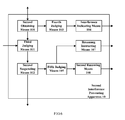
- Fig.6 is a block diagram of a second interference preventing apparatus for preventing signal interference in a relay device of a wireless relay network based on synchronous HARQ according to a detailed embodiment of the present invention.
- Relay device 1 shown in Fig.1 is taken as an example.
- the shown second interference preventing apparatus 10 comprises: a second obtaining means 100 for obtaining resource allocation information, which indicates radio resources, in particular sub-frames, allocated to relay device 1 and mobile terminal 2 served by relay device 1; and a third judging means 101 for judging, according to said resource allocation information, whether a downlink signal to be sent by relay device 1 in a sub-frame for an uplink HARQ process of mobile terminal 2 will interfere with a high-priority communication of relay device 1; a second suspending means 102 for, if the downlink signal to be sent by relay device 1 in said sub-frame for an uplink HARQ process of mobile terminal 2 will interfere with a high-priority communication of said relay device, making relay device 1 suspend sending downlink signal for said uplink HARQ process in said sub-frame.
- the second suspending means 102 is further for: if the downlink signal to be sent by relay device 1 in said sub-frame for an uplink HARQ process of mobile terminal 2 will interfere with a high-priority communication of relay device 1, making relay device 1 suspend sending downlink signal for said uplink HARQ process.
- the second interference preventing apparatus 10 further comprises a fourth judging means 103 for judging whether an uplink signal to be sent by mobile terminal 2 in a sub-frame for an uplink HARQ process of mobile terminal 2 will interfere with a high-priority communication of relay device 1; and an interference indicating means 104 for indicating to mobile terminal 2 that the uplink signal to be sent by mobile terminal 2 in said sub-frame for said uplink HARQ process will interfere with said high-priority communication, if the uplink signal to be sent by mobile terminal 2 in said sub-frame for said uplink HARQ process will interfere with said high-priority communication of relay device 1.
- a fourth judging means 103 for judging whether an uplink signal to be sent by mobile terminal 2 in a sub-frame for an uplink HARQ process of mobile terminal 2 will interfere with a high-priority communication of relay device 1
- an interference indicating means 104 for indicating to mobile terminal 2 that the uplink signal to be sent by mobile terminal 2 in said sub-frame for said uplink HAR
- the second interference preventing apparatus 10 further comprises a fifth judging means 105 for judging, after the second suspending means 102 makes relay device 1 suspend sending downlink signal for said uplink HARQ process, whether said high-priority communication ends; and a second resuming means 108 for making relay device 1 resume sending downlink signal for the uplink HARQ process, if the judging result of the fifth judging means 105 is that the high-priority communication has ended.
- the second interference preventing apparatus 10 further comprises a resuming instructing means 107 for instructing mobile terminal 2 to resume sending uplink signal for the uplink HARQ process if the judging result of said fifth judging means 105 is that the high-priority communication has ended.
- the downlink signal which relay device 1 resumes sending for the uplink HARQ process is also used to instruct mobile terminal 2 to resume sending uplink signal for the uplink HARQ process
- the wireless relay network is based on 3GPP Long Term Evolution or a further evolution of 3GPP Long Term Evolution.
Landscapes
- Engineering & Computer Science (AREA)
- Computer Networks & Wireless Communication (AREA)
- Signal Processing (AREA)
- Mobile Radio Communication Systems (AREA)
- Radio Relay Systems (AREA)
- Detection And Prevention Of Errors In Transmission (AREA)
Abstract
Description
- The present invention relates to preventing signal interference, more particularly, to method and apparatus for preventing signal in a wireless relay network based on synchronous HARQ.
- In 3GPP LTE-Advanced standards (referred to as LTEA hereinafter), relay devices are recently introduced to improve system overall performance, such as increasing throughputs, enlarging network coverage and the like. Wherein, it has been proposed by many companies that a relay device cannot send and receive signals simultaneously in one frequency band so as to avoid the relay device interfering with itself. Hereinafter, the interference caused by using the same time-frequency resource to receive and send signals at the relay device is called self-interference, and those skilled in the art understands that the self-interference defined here is different from the self-interference in a CDMA system.
- Since downlink relay link and downlink access link share downlink frequency resources and uplink relay link and uplink access link share uplink frequency resources, in order to avoid the self-interference at a relay device, the following preconditions should be satisfied:
- 1. when a base station sends downlink signal to a relay device, the relay device should not send downlink signal to a mobile terminal in the same sub-frame;
- 2. when a relay device sends uplink signal to a base station, a mobile terminal should not send uplink signal to the relay device in the same uplink sub-frame.
- A HARQ process is divided into two processes, namely uplink HARQ process and downlink HARQ process. In the uplink HARQ process, a mobile terminal sends data to a relay device and the relay device thus sends back ACK or NACK to the mobile terminal; reversely, in the downlink HARQ process, a relay device sends data to a mobile terminal and the mobile terminal thus sends back ACK or NACK to the relay device.
- In LTEA, the uplink HARQ is based on synchronous HARQ technique. That is, there is a fixed time interval between an initial transmission and a HARQ feedback namely ACK or NACK in an uplink process, and between the ACK or NACK and a subsequent retransmission or a new initial transmission.
- The wireless relay network shown in
Fig.1 comprises a base station (eNB) 0, a relay device (RN) 1 and a mobile terminal (MS) 2.Figs.2a-2b shows signal flow causing the self-interference at the relay device. Referring toFig.2a or2b in combination withFig.1 , it can be clearly seen that there is a fixed time interval between adjacent uplink or downlink signals with the same HARQ process identifier. Assume that the duration of a sub-frame is 1 millisecond (ms), PDCCH ofuplink HARQ process 1 and PUSCH ofuplink HARQ process 1 is at an interval of 4 ms, the interval between HARQ feedback (ACK/NACK and/or PDCCH) and PUSCH ofuplink HARQ process 1 is also 4 ms, and so on. Wherein, 0-13 represents 14 sub-frames. Referring toFig.2a , insub-frame 0,relay device 1 sends control information tomobile terminal 2 on PDCCH (Physical Downlink Control Channel) to instructmobile terminal 2 to send uplink signal inuplink HARQ process 1. - Just because the uplink HARQ process between the relay device and the mobile terminal is based on synchronous HARQ technique, it is difficult to well satisfy the aforementioned two preconditions. In
Figs 2a and2b , uplinkHARQ process 1 causes self-interference atrelay device 1 insub-frame sub-frame - Unfortunately, because relay devices are just introduced to the standards like LTEA, the resulting interference has not been considered and there is no corresponding solution for it.
- In order to solve the technology problems described in the above, it is provided in the present invention that a mobile terminal judges whether its uplink HARQ process will interfere with a communication between a relay device and a base station in a sub-frame, and if yes, the mobile terminal will suspend sending the uplink signal in the uplink HARQ process in the sub-frame. Preferably, the mobile terminal will suspend sending all subsequent uplink signals in the uplink HARQ process.
- Accordingly, it is further provided in the present invention that a relay device judges whether a downlink signal to be sent for a certain uplink HARQ process of a mobile terminal by itself will cause interference at the transceiver of the relay device, namely whether the downlink signal sent by itself will form spatial superposition at its antennas so as to impact the reception of downlink signals from a base station. If the judging result is that the above interference will happen, the relay device stops sending downlink signal in the uplink HARQ process in the sub-frame, such as ACK or NACK. Preferably, the relay device stops sending all subsequent downlink signals in the uplink HARQ process.
- Preferably, after suspending sending signals in an uplink HARQ process, a condition for triggering resuming is required. According to a detailed embodiment of the present invention, it is judged by the relay device whether a high-priority communication causing the suspending has ended or not, and if yes, it resumes sending downlink signal therein by itself and instructs the mobile terminal to resume sending uplink signal.
- Optionally, the downlink signal that the relay device resumes sending is used to instruct the mobile terminal to resume sending uplink signal.
- According to an aspect of the present invention, a method of preventing signal interference in a first device of a wireless relay network based on synchronous HARQ is provided. Wherein, the method comprises the following steps: obtaining resource allocation information, which indicates radio resources allocated to said first device and a relay device to which it belongs; and judging whether an uplink signal to be sent by said first device in a sub-frame for an uplink HARQ process of said first device will interfere with a high-priority communication of said relay device; suspending sending uplink signal for said uplink HARQ process in said sub-frame, if the uplink signal to be sent by said first device in said sub-frame for said uplink HARQ process will interfere with said high-priority communication of said relay device.
- Wherein, the first device can be a mobile terminal, and can also be a relay device.
- According to another aspect of the present invention, a method of preventing signal interference in a relay device of a wireless relay network based on synchronous HARQ is provided. The method comprises the following steps: obtaining resource allocation information, which indicates radio resources allocated to said relay device and a first device served by said relay device; and judging, according to said resource allocation information, whether an downlink signal to be sent by said relay device in a sub-frame for an uplink HARQ process of said first device will interfere with a high-priority communication of said relay device; suspending sending downlink signal for said uplink HARQ process in said sub-frame, if the downlink signal to be sent by said relay device in said sub-frame for an uplink HARQ process of said first device will interfere with said high-priority communication of said relay device.
- Wherein, the first device can be a mobile terminal, and can also be a relay device.
- According to another aspect of the present invention, a first interference preventing apparatus for preventing signal interference in a first device of a wireless relay network based on synchronous HARQ is provided. The first interference preventing apparatus comprises: a first obtaining means for obtaining resource allocation information, which indicates radio resources allocated to said first device and a relay device to which it belongs; and a first judging means for judging whether an uplink signal to be sent by said first device in a sub-frame for an uplink HARQ process of said first device will interfere with a high-priority communication of said relay device; a first suspending means for making said first device suspend sending uplink signal in said sub-frame for said uplink HARQ process, if the uplink signal to be sent by said first device in said sub-frame for said uplink HARQ process will interfere with said high-priority communication of said relay device.
- Wherein, the first device can be a mobile terminal, and can also be a relay device.
- According to another aspect of the present invention, a second interference preventing apparatus for preventing signal interference in a relay device of a wireless relay network based on synchronous HARQ is provided. The second interference preventing apparatus comprises: a second obtaining means for obtaining resource allocation information, which indicates radio resources allocated to said relay device and a first device served by said relay device; and a third judging means for judging according to said resource allocation information whether a downlink signal to be sent by said relay device in a sub-frame for an uplink HARQ process of said first device will interfere with a high-priority communication of said relay device; a second suspending means for, if the downlink signal to be sent by said relay device in said sub-frame for an uplink HARQ process of said first device will interfere with a high-priority communication of said relay device, then making said relay device suspend sending downlink signal for said uplink HARQ process in said sub-frame.
- Wherein, the first device can be a mobile terminal, and can also be a relay device.
- With the methods and apparatuses provided by the present invention, it can effectively avoid the self-interference at the relay device caused by the uplink HARQ process of the mobile terminal. Moreover, in the present invention, no modification to the physical layer at network devices is required, and thus, the cost for backward compatibility is relatively low. Furthermore, the present invention is advantages in increasing resource utilization and system performance.
- Other objectives, features and advantages of the present invention will become more apparent from the following detailed description of the non-limiting embodiments in connection with the accompanying drawings. Wherein, same or similar reference signs refer to same or similar apparatus or step features.
-
Fig.1 shows a typical wireless relay network; -
Figs.2a-2b show signal flow causing self-interference at a relay device in LTEA; -
Fig.3 shows a flowchart of a system method according to a detailed embodiment of the present invention; -
Figs.4a ,4b show signal flow diagram of a wireless relay network after using interference preventing method and apparatus of the present invention -
Fig.5 shows a block diagram of a first interference preventing apparatus for preventing signal interference in a first device of a wireless relay network based on synchronous HARQ according to a detailed embodiment of the present invention; -
Fig.6 is a block diagram of a second interference preventing apparatus for preventing signal interference in a relay device of a wireless relay network based on synchronous HARQ according to a detailed embodiment of the present invention. - Detailed description of the non-limiting embodiments is given below in connection with the accompanying drawings.
- It is easy to understand that, in
Figs.2a-2b and the subsequent signal flow diagrams, only one uplink HARQ process betweenrelay device 1 andmobile terminal 2 is illustrated, but those skilled in the art understands that there can simultaneously be other HARQ processes betweenmobile terminal 2 andrelay device 1. For example, a downlink HARQ process can occupysub-frames Fig.2 . Since in a frequency division system such as LTEA, there is a sufficient guard interval between uplink frequency band and downlink frequency band, a sub-frame can be used for an uplink HARQ process and a downlink HARQ process simultaneously without causing any self-interference at the relay device. In view of this, the following discussion focuses on uplink synchronous HARQ process based on synchronous HARQ technique. -
Fig.3 shows a flowchart of a system method according to a detailed embodiment of the present invention. The detailed description of the method is given below with reference toFig.3 and in combination withFig.1 and each signal flow diagram. - Wherein, in step S01,
base station 0 broadcasts resource allocation information to each relay device and mobile terminals served by it, wherein when a certain mobile terminal cannot directly obtain resource allocation information frombase station 0, the relay device to which it belongs forwards resource allocation information to the mobile terminal. In the following, it is not discussed in classification how mobile terminals obtain resource allocation. - The above-mentioned resource allocation information mainly indicates sub-frames allocated by
base station 0. According to the resource allocation information,relay device 1 knows which of sub-frames can be used to receive uplink signal sent frommobile terminal 2 and which of sub-frames can be used to send downlink signals tomobile terminal 2. If necessary, the resource allocation information also indicates the corresponding frequency resources of each sub-frame. - According to the above-mentioned resource allocation information,
mobile terminal 2 knows which of sub-frames can be used to send uplink signal to relaydevice 1 and which of sub-frames can be used to receive downlink signal sent fromrelay device 1. - Based on the present invention, the system reserves sub-frames for high-priority communication between
base station 0 andrelay device 1. These reserved sub-frames can either be statically configured atbase station 0,relay device 1 andmobile terminal 2, or be dynamically determined bybase station 0 andrelay device 1 andmobile terminal 2 are informed thereof bybase station 0. Wherein, when using the way of informing after being dynamically determined, preferably, the resource allocation information broadcasted bybase station 0 in step S01 further points out each sub-frame reserved for the communication betweenbase station 0 andrelay device 1 besides sub-frames used for communication betweenrelay device 1 andmobile terminal 2. In each embodiment described in below, such reserved sub-frames are called reserved sub-frame, and in any embodiment, the resource allocation information points out each reserved sub-frame. - The resource allocation information of which
base station 0 informs in step S01 enablesrelay device 1 to directly judge whether a downlink signal sent byrelay 1 in a sub-frame for an uplink HARQ process (takinguplink HARQ process 1 in each signal flow diagram as an example hereinafter) ofmobile terminal 2 will interfere with a high-priority communication between it andbase station 0, as step S10 inFig.3 . - Wherein, from the view of a mobile terminal like
mobile terminal 2, communication betweenbase station 0 andrelay device 1 normally have higher priority, and therefore, communication having higher priority such as communication betweenbase station 0 andrelay device 1 is called high-priority communication. - Those skilled in the art understand that high priority communication is not limited to communication between base station and relay device. For another example, in a wireless network comprising multi-level relay devices, a low-level relay device is in a similar rank as
mobile terminal 2 inFig.1 . The so-called low-level relay device is farther away from base station than a relay device with its next higher level, and is indirectly connected to base station via the relay device with the next higher level. In this case, similar tomobile terminal 2, an uplink HARQ process between this low-level relay device and the relay device with the next higher level is required to be constrained because it may interfere with high-priority communication between the relay device with the next higher level and base station (or a relay device with an even higher level). Considering that there is no substantial difference between the low-level relay device andmobile terminal 2 in the discussion in the present invention, both are referred to as a first device, and without loss of generality,mobile terminal 2 inFig.1 is taken as an example. - After the resource allocation information is obtained, the subsequent operation procedure of
relay device 1 andmobile terminal 2 is now discussed with reference toFig.3 and in combination ofFigs.4a ,4b , whereinFigs.4a ,4b is signal flow diagram of a wireless relay network after using interference preventing method and apparatus of the present invention. - In step S10,
relay device 1 judges, according the obtained resource allocation information, whether a downlink signal sent in a sub-frame foruplink process 1 ofmobile terminal 2 will interfere with high-priority communication between it andbase station 0. - Wherein, in an embodiment of the present invention, multicast broadcast single frequency network (MBSFN) sub-frames defined in LTEA are used as reserved sub-frames.
- Although the sub-frames are all continuously numbered in each accompanying drawings of the present invention, those skilled in the art understand that these sub-frames can belong to different frames. In an embodiment where the frame duration is 10 ms,
sub-frame 8 in any one of signal flow diagram is sub-frame 8 in frame i, andsub-frame 18 issub-frame 8 in frame i+1. - Suppose that the sub-frames covered by the resource allocation information broadcasted in step S01 in
Fig.3 starts fromsub-frame 0 inFig.4a . Then, in step S10, it is preferably to perform judging starting fromsub-frame 8, because sub-frames 0-7 are not reserved from high-priority communication betweenbase station 0 andrelay device 1, thereby not resulting in interference problem. - In particular, the judging procedure in step S10 is as follows: for
sub-frame 8,relay device 1 considers which kind of transmission is to be performed; if insub-frame 8,base station 0 will send a downlink signal to relaydevice 1 andrelay device 1 will also send a downlink signal for an uplink HARQ process ofmobile terminal 2, it is judged that the down signal sent in the sub-frame for the corresponding uplink HARQ process will interfere with the high-priority communication, and otherwise, the judging result is the opposite. - In practical applications, a
relay device 1 may serve multiple mobile terminals, and each mobile terminal may have one or more uplink HARQ processes. For example,mobile terminal 2 also have anuplink HARQ process 2 which occupiessub-frames Relay device 1 should consider, for all these uplink HARQ processes, whether it will interfere with high-priority communication. - As shown in
Fig.4a , in sub-frames 0-7, uplink HARQ processes of each mobile terminal may all be performed without any constraints. Wherein, insub-frame 4,mobile terminal 2 sends uplink data on PUSCH for uplink process HARQ process. Tillsub-frame 8, this sub-frame is reserved for sending downlink signal (PDCCH+PDSCH) of high-priority communication, whilerelay device 1 should send back ACK or NACK to mobile terminal in 4 ms aftersub-frame 4 according to the requirements of synchronous HARQ technique. According to an embodiment of the present invention, in order to avoid the interference caused by ACK or NACK to the signal reception on PDCCH and PDSCH, in step S11, the relay device should not send ACK or NACK in this sub-frame. - As an example of the HARQ technique, if data sender does not receive ACK or NACK from data receiver in a predefined time, the data sender determines that the data receiver does not receive the data correctly and then performs retransmission. There is an interval of 4 ms (4 sub-frames) between the sub-frame in which
mobile terminal 2 should perform retransmission, namelysub-frame 12, and the sub-frame in whichrelay device 1 should send ACK or NACK. - According to this embodiment, in step S12, it is judged by
relay device 1 according to the resource allocation information whether the retransmission data on PUSCH sent bymobile terminal 2 onsub-frame 12 foruplink HARQ process 1 will interfere with the high-priority communication. Apparently, the judging result is positive. Then,relay device 1 indicates tomobile terminal 2 that the retransmission data on PUSCH to be sent bymobile terminal 2 onsub-frame 12 will interfere with the high-priority communication. According to the indication,mobile terminal 2 suspends sending uplink signal inuplink HARQ process 1 in step S21. Wherein, the indication can be loaded in PDCCH. - Those skilled in the art understand there is no strict order between steps S10, S11 and steps S12, S13. That is,
relay device 1 can firstly execute step S11 and then execute step S12, and it can also firstly execute step S13 and then execute step S10. Wherein, sincesub-frame 8 is ahead ofsub-frame 12, all steps related tosub-frame 8 can have priority of executing. - In order to overcome interference caused by sending uplink signal for
uplink HARQ process 1 to the high-priority communication,mobile station 2 should judge whether such interference will occur. One judging way is to rely on an indication ofrelay device 1, as shown inFig.3 . Oncerelay device 1 performs the indication in step S13,mobile terminal 2 determines that sending uplink signal will cause interference to high-priority communication, and then enters into step S21 to suspend it. Another judging way is similar to step S12 atrelay device 1, whereinmobile terminal 2 judges, directly according to the resource allocation information, whether the retransmission data to be sent insub-frame 12 will interfere with high-priority communication, and executes the subsequent steps according the judging result. - Preferably, after suspending sending uplink signal in
uplink HARQ process 1,mobile terminal 2 will buffer the suspended data, and wait for opportunity to send the data to relaydevice 1. - It is easy to understand that if sending uplink signal of
uplink HARQ process 1 will not interfere with high-priority communication ofrelay device 1,mobile terminal 2 will not suspend sending the uplink signal therein; likewise, if sending downlink signal ofuplink HARQ process 1 will not interfere with the high-priority communication,mobile terminal 2 will not suspend sending the downlink signal therein. - According to a specific embodiment of the present invention, the high-priority between
base station 0 andrelay device 1 is a uni-directional communication, which is similar to TV signal normally watched or Radio signal normally listened to. Wherein,relay device 1 will not provide feedback about signal reception status tobase station 0. In this case, the high-priority communication will not relate to sending uplink signal, and therefore, sending uplink signal inuplink HARQ process 1 will not interfere with the high-priority communication. Thus, steps S12 and S13 atrelay device 1 as well as step S21 atmobile terminal 2 is omittable. - As shown in
Fig.4a , after the uplink and downlink signals are suspended to be sent, the present invention further provides a mechanism for resuming. In details: - In step S14,
relay device 1 judges whether the high-priority communication ends. For example, as shown inFig.4a , ifrelay device 1 sends an ACK tobase station 0 insub-frame 12 andbase station 0 does not have subsequent new downlink data to be sent for the moment,base station 0 provides relay device with an indication, which represents that the present high-priority communication has ended. Thus,relay device 1 obtains the judging result in step S14. As shown inFig.4a , at a certain time point beforesub-frame 16,base station 0 indicates to relaydevice 1 that the present high-priority communication has ended, and accordingly, insub-frame 16,relay device 1 instructsmobile terminal 2 to resume sending uplink signal inuplink HARQ process 1, namely executing step S16 inFig.3 . According to such instruction, in step S21,mobile terminal 2 resumes sending uplink signal in uplink HARQ process, namely sending the buffered retransmission data which should have been sent insub-frame 12 to the relay device insub-frame 20. Wherein, ifmobile terminal 2 does not buffer the data which should have been retransmitted insub-frame 12,mobile terminal 2 will starts a new initial transmission insub-frame 20. - According to a variation of the embodiment,
relay device 1 uses the downlink signal resumed to be sent foruplink HARQ process 1 in step S13 to instructmobile terminal 2 to resume sending uplink signal foruplink HARQ process 1. That is, insub-frame 16,relay device 1 sendsmobile station 2 the NACK which should have been sent insub-frame 8, or directly sends PDCCH to instruct the user to restart the transmission. After receiving NACK or PDCCH, mobile terminal retransmits the buffered uplink data to relaydevice 1. - Considering that the reason that in
sub-frame 8,relay device 1 does not providemobile terminal 2 with feedback about the receiving status insub-frame 4 is to avoid causing interference to high-priority communication instead of not correctly receiving the data. Thus,relay device 1 may have correctly received the uplink data insub-frame 4, and it is not advantageous to increasing system efficiency if a retransmission is performed. Consequently, insub-frame 16, ifrelay device 1 correctly receives the uplink data insub-frame 4, it sends ACK or PDCCH tomobile terminal 2 so as to triggermobile terminal 2 to start a new initial transmission. - Of course, if the buffered retransmission data or the initial transmission data recently generated is expired due to the long-time suspending, the mobile terminal will discard the expired data and the
mobile terminal 2 will sendrelay device 1 the uplink data that is recently generated but not yet expired insub-frame 20. - According to another embodiment of the present invention, still referring to
Fig.4a , wherein, according to the indication of the resource allocation information,sub-frames relay device 1 andbase station 0, andbase station 0 should have sent downlink signal on PDCCH and PDSCH to relaydevice 1 insub-frame 8. However, due to certain reason, this high priority communication is forced to be cancelled, and accordingly, at a certain time point beforesub-frame 8,base station 0 indicates to relaydevice 1 that this high-priority communication is cancelled. At this time,relay device 1 has preferably suspended ACK/NACK which should have been sent inuplink HARQ process 1, and can therefore obtain the information about the canceling of the high-priority communication without interference and forward it tomobile terminal 2 by sending ACK information or PDCCH such thatmobile terminal 2 does not need to suspend sending uplink signal in theuplink HARQ process 1 or at least resumes sending as early as possible. - In the example shown in
Fig.4b ,sub-frames relay device 1 andmobile terminal 2 suspend sending corresponding signals in these 3 sub-frames. Tillsub-frame 20, although the high-priority communication has ended,mobile terminal 2 still suspend sending uplink signal because it has not receive resuming indication information yet.Relay device 1 can send resuming indication information tomobile terminal 2 in sub-frame 24 (not shown for brevity) such that mobile terminal will resume sending uplink signal in the uplink HARQ process in sub-frame 28. Same as the embodiment described in combination withFig.4a , the resuming indication information can be ACK or NACK or PDCCH information which the relay device resumes sending. - Of course, according to an embodiment of the present invention,
mobile terminal 2 can start time counting since sending uplink signal for an uplink HARQ process is suspended, and resume sending uplink signal for this uplink HARQ processing by itself in a predefined duration of time. - According to yet another embodiment of the present invention, the high-priority communication between
base station 0 andrelay device 1 is not regular as those shown inFigs.4a ,4b , wherein there is, for example, an interval of 4 ms between sending an uplink signal and sending an adjacent downlink signal. Thus, even if sending downlink or uplink signal of the high-priority communication in a sub-frame is in collision withuplink HARQ process 1, the possibility that the collision continuously occurs in the subsequent sub-frames is much lower that the cases shown inFigs.4a ,4b . Thus, in these particular embodiments, preferably,uplink HARQ process 1 is only constrained in a sub-frame (e.g. sub-frame 8) in which it is judged that interference will be caused, and is resumed in the next sub-frame occupied by the uplink HARQ process. For example, referring toFig.4b , assuming that there is no above-mentioned collisions insub-frames sub-frame 8,uplink HARQ process 1 resumes by itself insub-frame 12. Particularly,mobile station 2 retransmits the uplink data that is initially transmitted insub-frame 4, etc. - Optionally,
relay device 1 can perform the judging in steps S10 and/or S12 for each sub-frame so as to avoid any missing. -
Fig.5 shows a block diagram of a first interference preventing apparatus for preventing signal interference in a first device of a wireless relay network based on synchronous HARQ according to a detailed embodiment of the present invention. Since the method of preventing interference provided by the present invention has been introduced in detail in the above, the introduction to apparatuses will be relatively brief. Wherein,mobile terminal 2 shown inFig.1 is taken as a non-limiting embodiment of the first device. - The first
interference preventing apparatus 20 comprises: a first obtaining means 200 for obtaining resource allocation information, which indicates radio resources allocated tomobile terminal 2 andrelay device 1 to which it belongs; and a first judging means 201 for judging whether an uplink signal to be sent bymobile terminal 2 in a sub-frame for an uplink HARQ process of it will interfere with a high-priority communication of said relay device; a first suspending means 202 for makingmobile terminal 2 suspend sending uplink signal in said sub-frame for said uplink HARQ process, if the uplink signal to be sent bymobile terminal 2 in said sub-frame for said uplink HARQ process will interfere with said high-priority communication of saidrelay device 1. - Preferably, said first suspending
means 202 is further for: makingmobile terminal 2 suspend sending uplink signal for said uplink HARQ process, if the uplink signal to be sent bymobile terminal 2 in said sub-frame for said uplink HARQ process will interfere with said high-priority communication of saidrelay device 1. - Preferably, said first judging means is for: judging that the uplink signal to be sent by said first device in said sub-frame for said uplink HARQ process will interfere with said high-priority communication, when any one of the following is satisfied:
- said relay device indicates to
mobile terminal 2 that the uplink signal to be sent bymobile terminal 2 in said sub-frame for said uplink HARQ process will interfere with said high-priority communication; -
mobile terminal 2 judges, according to said resource allocation information, that the uplink signal to be sent by it in said sub-frame for said uplink HARQ process will interfere with said high-priority communication. - Preferably, said first
interference preventing apparatus 20 further comprises a second judging means 203 for judging, after said first suspendingmeans 202 makesmobile terminal 2 suspend sending uplink signal for said uplink HARQ process, whether a predefined condition is satisfied; and a first resuming means 204 for makingmobile terminal 2 resume sending uplink signal for said uplink HARQ process when said predefined condition is satisfied. - Preferably, said first
interference preventing apparatus 20 further comprises a buffering means 205 for buffering, after first suspendingmeans 202 makesmobile terminal 2 suspend sending uplink signal for said uplink HARQ process, buffering the suspended uplink signal; and first resumingmeans 204 is further for: makingmobile terminal 2 send the uplink signal that is buffered by buffering means 205 for said uplink HARQ process when said predefined condition is satisfied. - Preferably, said second judging means 203 is further for judging said predefined condition is satisfied when any one of the following is satisfied:
-
mobile terminal 2 receives resuming indication information, said resuming indication information is used to instructmobile terminal 2 to resume sending uplink signal for said uplink HARQ process; - a predefined duration of time has passed since it is suspended to send uplink signal for said uplink HARQ process.
- Preferably, said wireless relay network is based on 3GPP Long Term Evolution or a further evolution of 3GPP Long Term Evolution.
-
Fig.6 is a block diagram of a second interference preventing apparatus for preventing signal interference in a relay device of a wireless relay network based on synchronous HARQ according to a detailed embodiment of the present invention.Relay device 1 shown inFig.1 is taken as an example. - The shown second
interference preventing apparatus 10 comprises: a second obtaining means 100 for obtaining resource allocation information, which indicates radio resources, in particular sub-frames, allocated to relaydevice 1 andmobile terminal 2 served byrelay device 1; and a third judging means 101 for judging, according to said resource allocation information, whether a downlink signal to be sent byrelay device 1 in a sub-frame for an uplink HARQ process ofmobile terminal 2 will interfere with a high-priority communication ofrelay device 1; a second suspending means 102 for, if the downlink signal to be sent byrelay device 1 in said sub-frame for an uplink HARQ process ofmobile terminal 2 will interfere with a high-priority communication of said relay device, makingrelay device 1 suspend sending downlink signal for said uplink HARQ process in said sub-frame. - Preferably, the second suspending means 102 is further for: if the downlink signal to be sent by
relay device 1 in said sub-frame for an uplink HARQ process ofmobile terminal 2 will interfere with a high-priority communication ofrelay device 1, makingrelay device 1 suspend sending downlink signal for said uplink HARQ process. - Preferably, the second
interference preventing apparatus 10 further comprises a fourth judging means 103 for judging whether an uplink signal to be sent bymobile terminal 2 in a sub-frame for an uplink HARQ process ofmobile terminal 2 will interfere with a high-priority communication ofrelay device 1; and an interference indicating means 104 for indicating tomobile terminal 2 that the uplink signal to be sent bymobile terminal 2 in said sub-frame for said uplink HARQ process will interfere with said high-priority communication, if the uplink signal to be sent bymobile terminal 2 in said sub-frame for said uplink HARQ process will interfere with said high-priority communication ofrelay device 1. - Preferably, the second
interference preventing apparatus 10 further comprises a fifth judging means 105 for judging, after the second suspending means 102 makesrelay device 1 suspend sending downlink signal for said uplink HARQ process, whether said high-priority communication ends; and a second resuming means 108 for makingrelay device 1 resume sending downlink signal for the uplink HARQ process, if the judging result of the fifth judging means 105 is that the high-priority communication has ended. - Preferably, the second
interference preventing apparatus 10 further comprises a resuming instructing means 107 for instructingmobile terminal 2 to resume sending uplink signal for the uplink HARQ process if the judging result of said fifth judging means 105 is that the high-priority communication has ended. - Optionally, the downlink signal which
relay device 1 resumes sending for the uplink HARQ process is also used to instructmobile terminal 2 to resume sending uplink signal for the uplink HARQ process - Preferably, the wireless relay network is based on 3GPP Long Term Evolution or a further evolution of 3GPP Long Term Evolution.
- The detailed embodiments of the present invention have been described in the above. It needs to be understood that, the present invention is not limited to the above specific embodiments, and any variation or modification can be made by those skilled in the art without departing from the scope of the appended claims.
Claims (30)
- A method of preventing signal interference in a first device of a wireless relay network based on synchronous HARQ, comprising the following steps:x. obtaining resource allocation information, which indicates radio resources allocated to said first device and a relay device to which it belongs; anda. judging whether an uplink signal to be sent by said first device in a sub-frame for an uplink HARQ process of said first device will interfere with a high-priority communication of said relay device;b. suspending sending uplink signal for said uplink HARQ process in said sub-frame, if the uplink signal to be sent by said first device in said sub-frame for said uplink HARQ process will interfere with said high-priority communication of said relay device.
- A method according to claim 1, wherein said step b comprises:- suspending sending uplink signal for said uplink HARQ process, if the uplink signal to be sent by said first device in said sub-frame for said uplink HARQ process will interfere with said high-priority communication of said relay device.
- A method according to claim 1, wherein said step a comprises:judging that the uplink signal to be sent by said first device in said sub-frame for said uplink HARQ process will interfere with said high-priority communication, when any one of the following is satisfied:- said relay device indicates to said relay device that the uplink signal to be sent by said first device in said sub-frame for said uplink HARQ process will interfere with said high-priority communication;- said first device judges, according to said resource allocation information, that the uplink signal to be sent by it in said sub-frame for said uplink HARQ process will interfere with said high-priority communication.
- A method according to claim 2, further comprising the following steps after said step b:c. judging whether a predefined condition is satisfied;d. resuming sending uplink signal for said uplink HARQ process, when said predefined condition is satisfied.
- A method according to claim 4, further comprising the following step after said step b and before said step d:- buffering the suspended uplink signal;
said step d further comprises:- sending the suspended uplink signal that is buffered. - A method according to claim 4, wherein said step c comprises:judging said predefined condition is satisfied, when any one of the following is satisfied:- resuming indication information is received, said resuming indication information is used to instruct said first device to resume sending uplink signal for said uplink HARQ process;- a predefined duration of time has passed since it is suspended to send uplink signal for said uplink HARQ process.
- A method according to any one of claims 1 to 6, wherein said wireless relay network is based on 3GPP Long Term Evolution or a further evolution of 3GPP Long Term Evolution.
- A method of preventing signal interference in a relay device of a wireless relay network based on synchronous HARQ, comprising the following steps:o. obtaining resource allocation information, which indicates radio resources allocated to said relay device and a first device served by said relay device; andi. judging, according to said resource allocation information, whether a downlink signal to be sent by said relay device in a sub-frame for an uplink HARQ process of said first device will interfere with a high-priority communication of said relay device;ii. suspending sending downlink signal for said uplink HARQ process in said sub-frame, if the downlink signal to be sent by said relay device in said sub-frame for said uplink HARQ process of said first device will interfere with said high-priority communication of said relay device.
- A method according to claim 8, wherein said step ii comprises:- suspending sending downlink signal for said uplink HARQ process, if the downlink signal to be sent by said relay device in said sub-frame for said uplink HARQ process of said first device will interfere with said high-priority communication of said relay device.
- A method according to claim 8, further comprising the following steps:- judging whether an uplink signal to be sent by said first device in a sub-frame for an uplink HARQ process of said first device will interfere with a high-priority communication of said relay device;- indicating to said first device that the uplink signal to be sent by it in said sub-frame for said uplink HARQ process will interfere with said high-priority communication, if the uplink signal to be sent by said first device in said sub-frame for said uplink HARQ process will interfere with said high-priority communication of said relay device.
- A method according to claim 9, further comprising the following steps after said step ii:iii. judging whether said high-priority communication has ended;iv. resuming sending downlink signal for said uplink HARQ process, if said high-priority communication has ended.
- A method according to claim 11, further comprising the following step after said step iii:- instructing said first device to resume sending uplink signal for said uplink HARQ process.
- A method according to claim 12, wherein downlink signal which said relay device resumes sending for said uplink HARQ process is also used to instruct said first device to resume sending uplink signal for said uplink HARQ process.
- A method according to any one of claims 8 to 13, wherein said wireless relay network is based on 3GPP Long Term Evolution or a further evolution of 3GPP Long Term Evolution.
- A first interference preventing apparatus for preventing signal interference in a first device of a wireless relay network based on synchronous HARQ, comprising:a first obtaining means for obtaining resource allocation information, which indicates radio resources allocated to said first device and a relay device to which it belongs; anda first judging means for judging whether an uplink signal to be sent by said first device in a sub-frame for an uplink HARQ process of said first device will interfere with a high-priority communication of said relay device;a first suspending means for making said first device suspend sending uplink signal in said sub-frame for said uplink HARQ process, if the uplink signal to be sent by said first device in said sub-frame for said uplink HARQ process will interfere with said high-priority communication of said relay device.
- A first interference preventing apparatus according to claim 15, wherein said first suspending means is further for:- making said first device suspend sending uplink signal for said uplink HARQ process, if the uplink signal to be sent by said first device in said sub-frame for said uplink HARQ process will interfere with said high-priority communication of said relay device.
- A first interference preventing apparatus according to claim 1, wherein said first judging means is for:judging that the uplink signal to be sent by said first device in said sub-frame for said uplink HARQ process will interfere with said high-priority communication, when any one of the following is satisfied:- said relay device indicates to said first device that the uplink signal to be sent by said first device in said sub-frame for said uplink HARQ process will interfere with said high-priority communication;- said first device judges, according to said resource allocation information, that the uplink signal to be sent by it in said sub-frame for said uplink HARQ process will interfere with said high-priority communication.
- A first interference preventing apparatus according to claim 16, further comprising:a second judging means for judging, after said first suspending means makes said first device suspend sending uplink signal for said uplink HARQ process, whether a predefined condition is satisfied;a first resuming means for making said first device resume sending uplink signal for said uplink HARQ process, when said predefined condition is satisfied.
- A first interference preventing apparatus according to claim 18, further comprising:- a buffering means for buffering, after said first suspending means makes said first device suspend sending uplink signal for said uplink HARQ process, buffering the suspended uplink signal for said uplink HARQ process;
said first resuming means is further for:- making said first device send the uplink signal that is buffered by said buffering means for said uplink HARQ process. - A first interference preventing apparatus according to claim 18, wherein said second judging means is for:judging said predefined condition is satisfied, when any one of the following is satisfied:- said first device receives resuming indication information, said resuming indication information is used to instruct said first device to resume sending uplink signal for said uplink HARQ process;- a predefined duration of time has passed since it is suspended to send uplink signal for said uplink HARQ process.
- A first interference preventing apparatus according to any one of claims 15 to 20, wherein said wireless relay network is based on 3GPP Long Term Evolution or a further evolution of 3GPP Long Term Evolution.
- A second interference preventing apparatus for preventing signal interference in a relay device of a wireless relay network based on synchronous HARQ, comprising:a second obtaining means for obtaining resource allocation information, which indicates radio resources allocated to said relay device and a first device served by said relay device; anda third judging means for judging, according to resource allocation information, whether an downlink signal to be sent by said relay device in a sub-frame for an uplink HARQ process of said first device will interfere with a high-priority communication of said relay device;a second suspending means for, if the downlink signal to be sent by said relay device in said sub-frame for an uplink HARQ process of said first device will interfere with a high-priority communication of said relay device, making said relay device suspend sending downlink signal for said uplink HARQ process in said sub-frame,.
- A second interference preventing apparatus according to claim 22, wherein said second suspending means is further for:- if the downlink signal to be sent by said relay device in said sub-frame for an uplink HARQ process of said first device will interfere with a high-priority communication of said relay device, making said relay device suspend sending downlink signal for said uplink HARQ process.
- A second interference preventing apparatus according to claim 22, further comprising:- a fourth judging means for judging whether an uplink signal to be sent by said first device in a sub-frame for an uplink HARQ process of said first device will interfere with a high-priority communication of said relay device;- an interference indicating means for indicating to said first device that the uplink signal to be sent by said first device in said sub-frame for said uplink HARQ process will interfere with said high-priority communication, if the uplink signal to be sent by said first device in said sub-frame for said uplink HARQ process will interfere with said high-priority communication of said relay device.
- A second interference preventing apparatus according to claim 23, further comprising:a fifth judging means for judging, after said second suspending means makes said relay device suspend sending downlink signal for said uplink HARQ process, whether said high-priority communication ends;a second resuming means for making said relay device resume sending downlink signal for said uplink HARQ process, if the judging result of said fifth judging means is that said high-priority communication has ended.
- A second interference preventing apparatus according to claim 25, further comprising:- a resuming instructing means for instructing said first device to resume sending uplink signal for said uplink HARQ process if the judging result of said fifth judging means is that said high-priority communication has ended.
- A second interference preventing apparatus according to claim 26, wherein a downlink signal which said relay device resumes sending for said uplink HARQ process is also used to instruct said first device to resume sending uplink signal for said uplink HARQ process.
- A second interference preventing apparatus according to any one of claims 22 to 27, wherein said wireless relay network is based on 3GPP Long Term Evolution or a further evolution of 3GPP Long Term Evolution.
- A first device in a wireless relay network based on synchronous HARQ, comprising a first interference preventing apparatus according to any one of claims 15-21.
- A relay device in a wireless relay network based on synchronous HARQ, comprising a second interference preventing apparatus according to any one of claims 22-28.
Applications Claiming Priority (2)
| Application Number | Priority Date | Filing Date | Title |
|---|---|---|---|
| CN2009100477166A CN101841816B (en) | 2009-03-16 | 2009-03-16 | Synchronous HARQ-based method and device for preventing signal interference in wireless relay network |
| PCT/CN2010/071042 WO2010105542A1 (en) | 2009-03-16 | 2010-03-15 | Method and apparatus for preventing signal interference in wireless relay network based on sync hybrid automatic repeat request (harq) |
Publications (2)
| Publication Number | Publication Date |
|---|---|
| EP2410806A1 true EP2410806A1 (en) | 2012-01-25 |
| EP2410806A4 EP2410806A4 (en) | 2017-06-14 |
Family
ID=42739196
Family Applications (1)
| Application Number | Title | Priority Date | Filing Date |
|---|---|---|---|
| EP10753109.7A Withdrawn EP2410806A4 (en) | 2009-03-16 | 2010-03-15 | Method and apparatus for preventing signal interference in wireless relay network based on sync hybrid automatic repeat request (harq) |
Country Status (7)
| Country | Link |
|---|---|
| US (1) | US20120002597A1 (en) |
| EP (1) | EP2410806A4 (en) |
| JP (1) | JP5199515B2 (en) |
| KR (1) | KR101239073B1 (en) |
| CN (1) | CN101841816B (en) |
| BR (1) | BRPI1009485A2 (en) |
| WO (1) | WO2010105542A1 (en) |
Families Citing this family (16)
| Publication number | Priority date | Publication date | Assignee | Title |
|---|---|---|---|---|
| US9655138B2 (en) * | 2010-04-01 | 2017-05-16 | Telefonaktiebolaget Lm Ericsson (Publ) | System and method for scheduling wireless transmissions |
| EP2572896B1 (en) | 2010-06-30 | 2016-05-25 | Flooring Technologies Ltd. | Device for finishing a panel |
| CN102468943B (en) * | 2010-11-05 | 2015-05-20 | 中兴通讯股份有限公司 | Method for subframe configuration switching in relay link |
| CN102468949B (en) * | 2010-11-18 | 2015-09-16 | 中兴通讯股份有限公司 | The transmission method of hybrid automatic repeat-request and device |
| US9585156B2 (en) | 2011-11-14 | 2017-02-28 | Qualcomm Incorporated | Supporting different LTE-TDD configurations in neighboring regions and/or adjacent carriers |
| CN103138885B (en) * | 2011-12-02 | 2017-08-11 | 株式会社Ntt都科摩 | Sending and detection method of downlink control information, network side device and user equipment |
| CN102647749B (en) * | 2012-03-30 | 2014-08-27 | 北京交通大学 | Terminal interference suppression method for honeycomb and end-to-end mixing network |
| US9930678B2 (en) | 2012-07-19 | 2018-03-27 | Qualcomm Incorporated | Multiplexing UEs with different TDD configurations and some techniques to mitigate UE-to-UE and base station-to-base station interference |
| KR102181020B1 (en) * | 2015-10-28 | 2020-11-19 | 에스케이텔레콤 주식회사 | Base station device and terminal, and method for transmitting traffic |
| WO2018061759A1 (en) * | 2016-09-30 | 2018-04-05 | 京セラ株式会社 | Communication control method |
| US9893759B1 (en) | 2017-04-25 | 2018-02-13 | Sprint Communications Company L.P. | Wireless relay antenna isolation |
| US11646833B2 (en) | 2018-07-24 | 2023-05-09 | Koninklijke Kpn N.V. | Reliable communication over shared resources |
| CN112771977B (en) | 2018-07-24 | 2024-10-18 | 皇家Kpn公司 | Reliable low-latency communication over shared resources |
| JP7038442B2 (en) * | 2021-01-12 | 2022-03-18 | 株式会社ユピテル | Relay system, repeater and program |
| CN113395733B (en) * | 2021-07-30 | 2023-11-21 | 上海瀚讯信息技术股份有限公司 | Method for improving user capacity of base station based on optimized HARQ (hybrid automatic repeat request) cache utilization rate |
| CN116981067A (en) * | 2022-04-19 | 2023-10-31 | 华为技术有限公司 | Data transmission methods and devices |
Family Cites Families (13)
| Publication number | Priority date | Publication date | Assignee | Title |
|---|---|---|---|---|
| JP2004350086A (en) * | 2003-05-23 | 2004-12-09 | Renesas Technology Corp | Communication control method |
| JP4394988B2 (en) * | 2004-03-19 | 2010-01-06 | 富士通株式会社 | Packet read control method and apparatus |
| EP1838125B1 (en) * | 2004-08-31 | 2009-06-03 | Panasonic Corporation | Efficient rise over thermal (RoT) control during soft handover |
| WO2007010809A1 (en) * | 2005-07-19 | 2007-01-25 | Tetsuo Tanaka | Memory card holder |
| EP1793520B1 (en) * | 2005-11-30 | 2012-02-29 | Panasonic Corporation | Configurable acknowledgement mode for a hybrid automatic repeat request protocol |
| ATE515864T1 (en) * | 2005-12-23 | 2011-07-15 | Ericsson Telefon Ab L M | METHOD AND APPARATUS FOR RESOLVING DATA PACKET TRAFFIC CONGESTION |
| KR100961746B1 (en) | 2006-10-02 | 2010-06-07 | 삼성전자주식회사 | Resource allocating apparatus and method in wireless communication system using multi-hop relay method |
| JP4983208B2 (en) * | 2006-11-07 | 2012-07-25 | 富士通株式会社 | Relay station, wireless communication method |
| CN101207536B (en) * | 2006-12-20 | 2010-08-11 | 华为技术有限公司 | A method, system and access station for acquiring associated resources in a relay network |
| CN101286792A (en) * | 2007-04-11 | 2008-10-15 | 北京三星通信技术研究有限公司 | Device and method for enhancing synchronous HARQ |
| US8576772B2 (en) | 2007-06-18 | 2013-11-05 | Intel Corporation | Cooperative multiple access in wireless networks |
| US8626181B2 (en) * | 2007-09-07 | 2014-01-07 | Samsung Electronics Co., Ltd. | Apparatus and method for allocating a dedicated access zone to relay station (RS) in broadband wireless access (BWA) communication system |
| US20100110964A1 (en) * | 2008-11-04 | 2010-05-06 | Motorola, Inc. | Method for Relays within Wireless Communication Systems |
-
2009
- 2009-03-16 CN CN2009100477166A patent/CN101841816B/en active Active
-
2010
- 2010-03-15 WO PCT/CN2010/071042 patent/WO2010105542A1/en not_active Ceased
- 2010-03-15 EP EP10753109.7A patent/EP2410806A4/en not_active Withdrawn
- 2010-03-15 KR KR1020117024333A patent/KR101239073B1/en not_active Expired - Fee Related
- 2010-03-15 BR BRPI1009485A patent/BRPI1009485A2/en not_active IP Right Cessation
- 2010-03-15 US US13/256,666 patent/US20120002597A1/en not_active Abandoned
- 2010-03-15 JP JP2012500046A patent/JP5199515B2/en not_active Expired - Fee Related
Non-Patent Citations (1)
| Title |
|---|
| See references of WO2010105542A1 * |
Also Published As
| Publication number | Publication date |
|---|---|
| US20120002597A1 (en) | 2012-01-05 |
| WO2010105542A1 (en) | 2010-09-23 |
| CN101841816A (en) | 2010-09-22 |
| KR20110126182A (en) | 2011-11-22 |
| JP5199515B2 (en) | 2013-05-15 |
| CN101841816B (en) | 2012-11-07 |
| JP2012520639A (en) | 2012-09-06 |
| EP2410806A4 (en) | 2017-06-14 |
| KR101239073B1 (en) | 2013-03-05 |
| BRPI1009485A2 (en) | 2016-10-18 |
Similar Documents
| Publication | Publication Date | Title |
|---|---|---|
| EP2410806A1 (en) | Method and apparatus for preventing signal interference in wireless relay network based on sync hybrid automatic repeat request (harq) | |
| JP7241237B2 (en) | Intermittent reception method, related device and system | |
| US12052106B2 (en) | Low latency HARQ protocol for URLLC services | |
| EP3685536B1 (en) | Enabling uplink transmission during downlink subframe based on preemption of data transmission in wireless network | |
| US10568010B2 (en) | Techniques to support ultra-reliable handover in wireless networks | |
| US20120039260A1 (en) | Method, system, and equipment for information processing | |
| CN109600850B (en) | Method and apparatus for enhancing coverage | |
| KR102247385B1 (en) | Transmission method, network equipment, and terminal equipment | |
| US10841068B2 (en) | DL HARQ timing in TDD with 1 ms tti and reduced processing time | |
| JP2020507281A (en) | Method and apparatus for transmitting grant-free based uplink data in a wireless communication system | |
| EP3881627B1 (en) | Communications with preconfigured uplink resources | |
| US12289272B2 (en) | Method and apparatus for resource reservation for NR sidelink | |
| EP3497850A1 (en) | Dl harq timing with short tti operations in tdd | |
| WO2014137079A1 (en) | Method for transmitting a harq feedback and device therefor | |
| US20210007134A1 (en) | Feedback indication for continued transmission for wireless networks | |
| US11357036B2 (en) | Method and apparatus for communication based on short transmission time intervals in a wireless communication system | |
| WO2023000275A1 (en) | Method, device and computer readable medium for communication | |
| WO2018086707A1 (en) | Feedback based flexible transmission scheme for contention-based urllc transmission | |
| CN116235625B (en) | Communication method, apparatus, and computer storage medium | |
| KR101673097B1 (en) | Method for Transmitting Uplink in Wireless Communication System | |
| US11191073B2 (en) | UL scheduling timing in TDD with 1 MS TTI and reduced processing time | |
| US20230099743A1 (en) | Resource obtaining method, resource processing method, and communications device | |
| WO2011038614A1 (en) | Downlink data transmitting method, system and relay node thereof |
Legal Events
| Date | Code | Title | Description |
|---|---|---|---|
| PUAI | Public reference made under article 153(3) epc to a published international application that has entered the european phase |
Free format text: ORIGINAL CODE: 0009012 |
|
| 17P | Request for examination filed |
Effective date: 20111017 |
|
| AK | Designated contracting states |
Kind code of ref document: A1 Designated state(s): AT BE BG CH CY CZ DE DK EE ES FI FR GB GR HR HU IE IS IT LI LT LU LV MC MK MT NL NO PL PT RO SE SI SK SM TR |
|
| RAP1 | Party data changed (applicant data changed or rights of an application transferred) |
Owner name: ALCATEL LUCENT |
|
| DAX | Request for extension of the european patent (deleted) | ||
| 111Z | Information provided on other rights and legal means of execution |
Free format text: AT BE BG CH CY CZ DE DK EE ES FI FR GB GR HR HU IE IS IT LI LT LU LV MC MK MT NL NO PL PT RO SE SI SK SM TR Effective date: 20130410 |
|
| RAP1 | Party data changed (applicant data changed or rights of an application transferred) |
Owner name: ALCATEL LUCENT |
|
| D11X | Information provided on other rights and legal means of execution (deleted) | ||
| RA4 | Supplementary search report drawn up and despatched (corrected) |
Effective date: 20170511 |
|
| RIC1 | Information provided on ipc code assigned before grant |
Ipc: H04B 7/26 20060101AFI20170505BHEP Ipc: H04L 1/18 20060101ALI20170505BHEP |
|
| STAA | Information on the status of an ep patent application or granted ep patent |
Free format text: STATUS: REQUEST FOR EXAMINATION WAS MADE |
|
| RAP1 | Party data changed (applicant data changed or rights of an application transferred) |
Owner name: ALCATEL LUCENT |
|
| STAA | Information on the status of an ep patent application or granted ep patent |
Free format text: STATUS: THE APPLICATION IS DEEMED TO BE WITHDRAWN |
|
| 18D | Application deemed to be withdrawn |
Effective date: 20171212 |