EP2410664A1 - Method and device for multiple-cell collaborative communication in mimo system - Google Patents
Method and device for multiple-cell collaborative communication in mimo system Download PDFInfo
- Publication number
- EP2410664A1 EP2410664A1 EP10753116A EP10753116A EP2410664A1 EP 2410664 A1 EP2410664 A1 EP 2410664A1 EP 10753116 A EP10753116 A EP 10753116A EP 10753116 A EP10753116 A EP 10753116A EP 2410664 A1 EP2410664 A1 EP 2410664A1
- Authority
- EP
- European Patent Office
- Prior art keywords
- base station
- mobile terminal
- determined
- cell
- downlink
- Prior art date
- Legal status (The legal status is an assumption and is not a legal conclusion. Google has not performed a legal analysis and makes no representation as to the accuracy of the status listed.)
- Ceased
Links
- 238000004891 communication Methods 0.000 title claims abstract description 62
- 238000000034 method Methods 0.000 title claims abstract description 37
- 230000005540 biological transmission Effects 0.000 claims abstract description 139
- 239000011159 matrix material Substances 0.000 claims description 58
- 230000003993 interaction Effects 0.000 description 10
- 238000010586 diagram Methods 0.000 description 8
- 238000005516 engineering process Methods 0.000 description 8
- 238000000354 decomposition reaction Methods 0.000 description 5
- 230000001413 cellular effect Effects 0.000 description 1
- 230000007774 longterm Effects 0.000 description 1
- 238000012986 modification Methods 0.000 description 1
- 230000004048 modification Effects 0.000 description 1
- 238000005457 optimization Methods 0.000 description 1
- 238000001228 spectrum Methods 0.000 description 1
Images




Classifications
-
- H—ELECTRICITY
- H04—ELECTRIC COMMUNICATION TECHNIQUE
- H04B—TRANSMISSION
- H04B7/00—Radio transmission systems, i.e. using radiation field
- H04B7/02—Diversity systems; Multi-antenna system, i.e. transmission or reception using multiple antennas
- H04B7/022—Site diversity; Macro-diversity
- H04B7/024—Co-operative use of antennas of several sites, e.g. in co-ordinated multipoint or co-operative multiple-input multiple-output [MIMO] systems
-
- H—ELECTRICITY
- H04—ELECTRIC COMMUNICATION TECHNIQUE
- H04B—TRANSMISSION
- H04B7/00—Radio transmission systems, i.e. using radiation field
- H04B7/02—Diversity systems; Multi-antenna system, i.e. transmission or reception using multiple antennas
- H04B7/04—Diversity systems; Multi-antenna system, i.e. transmission or reception using multiple antennas using two or more spaced independent antennas
- H04B7/0413—MIMO systems
- H04B7/0456—Selection of precoding matrices or codebooks, e.g. using matrices antenna weighting
Definitions
- the present invention generally relates to multiple input multiple output technology, and more particularly, to a technology of multiple input multiple output transmission performed collaboratively by multiple base stations.
- existing radio communication networks usually adopt low frequency reuse factor, i.e., all the cells share the same time-frequency resources.
- low frequency reuse factor i.e., all the cells share the same time-frequency resources.
- inter-cell interferences caused by low frequency reuse factor are an important factor restricting downlink capacity.
- a mobile terminal which is located at a cell edge (i.e., the area between neighboring cells), while receiving useful signals from the base station to which the mobile terminal pertains, it also receives signals transmitted by other base stations with the same time-frequency resources. And the signals from the other base stations constitute interferences to the mobile terminal.
- multi-cell MIMO multi-cell multiple input multiple output
- Multi-cell MIMO is a technology family and has been proposed as a candidate technical solution for the Long Term Evolution (LTE) project and IEEE 802.16m.
- LTE Long Term Evolution
- a mobile terminal located at the collaboration area can be served by multiple base stations.
- multi-cell MIMO technology changes inter-cell interferences to useful signals, thereby breaking through the restriction from frequency spectrum efficiency in conventional cellular systems.
- Technical solutions of multi-cell MIMO include technical solutions of centralized multi-cell MIMO, such as a network MIMO solution, which have high computational complexity.
- Multi-cell MIMO also include technical solutions of distributed multi-cell MIMO, such as a collaborative MIMO solution.
- multi-cell scheduling it is still a great challenge to better define the collaboration strategy between neighboring cells, which directly affects the system gain of a distributed multi-cell MIMO system.
- the present invention provides methods of and apparatuses for communicating in a MIMO system to solve the problem in the prior art.
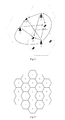
- FIG. 1 shows a schematic diagram illustrating a MIMO system according to an embodiment of the present invention.
- base stations 1 and 2 are located in two neighboring cells, respectively, and provide mobile terminals 21 and 22 with collaborative MIMO transmission.
- FIG. 2 shows an equivalent channel model in the embodiment.
- S1 represents a data steam transmitted by the base station 1 to the mobile terminal 21
- S2 represents a data steam transmitted by the base station 2 to the mobile terminal 22
- t ⁇ j represents a pre-coding vector or matrix of a data stream Si at a base station j
- h ij represents a channel state matrix between a mobile terminal 2i and a base station j.
- the equivalent channels between the two data streams and the two mobile terminals are closely related to inter-cell channels and pre-coding elements.
- one important objective is to reduce the amount of information exchanged between collaborative base stations. For example, in the above embodiment, only the base station 2 transmits a pre-coded data stream S2', i.e., t 12 S2, to the base station 1, and the base station 1 doesn't need to transmit the data stream S1 to the base station 2.
- a method of communicating in a multiple input multiple output communication system includes the steps of: determining to perform multi-cell multiple input multiple output collaboration by at least a first base station and a second base station; acquiring determined downlink transmission control information of the first base station by the second base station, wherein the determined downlink transmission control information includes the indication information of at least one determined mobile terminal in a cell in which the first base station is located; selecting collaborative mobile terminal(s) according to the downlink transmission control information of the first base station by the second base station; transmitting downlink data and downlink transmission control information of the selected collaborative mobile terminal(s) to the first base station by the second base station; adjusting downlink data transmission from the first base station to the at least one determined mobile terminal according to the downlink data and the downlink transmission control information of the collaborative mobile terminal(s) by the first base station.
- a method of communicating in a base station in a multiple input multiple output communication system includes the steps of: A. acquiring determined downlink transmission control information of at least one determined cell, wherein the determined downlink transmission control information includes the indication information of at least one determined mobile terminal in each of the at least one determined cell; B. selecting collaborative mobile terminal(s) in a cell to which the base station pertains according to the downlink transmission control information of the at least one determined cell; C. transmitting downlink data and downlink transmission control information of the selected collaborative mobile terminal(s) to base station(s) in the at least one determined cell.
- a method of communicating in a base station in a multiple input multiple output communication system includes the steps of: a. transmitting to at least one other base station the determined downlink transmission control information of a cell in which the base station is located, wherein the determined downlink transmission control information includes the indication information of at least one determined mobile terminal in the cell in which the base station is located; b. acquiring downlink data and downlink transmission control information of selected collaborative mobile terminal(s) from the at least one other base station; c. adjusting downlink data transmission from the base station to the at least one determined mobile terminal according to the downlink data and the downlink transmission control information of the collaborative mobile terminal(s).
- a first communication apparatus for communicating in a base station in a multiple input multiple output communication system.
- the first communication apparatus includes: a first acquiring device for acquiring determined downlink transmission control information of at least one determined cell, wherein the determined downlink transmission control information includes a downlink pre-coding matrix between a base station in each of the at least one determined cell and at least one determined mobile terminal, and the indication information of the at least one determined mobile terminal; a first determining device for selecting collaborative mobile terminal(s) in a cell to which the base station pertains according to the downlink transmission control information of the at least one determined cell; a first transmitting device for transmitting downlink data and downlink transmission control information of the selected collaborative mobile terminal(s) to base station(s) in the at least one determined cell.
- a second communication apparatus for communicating in a base station in a multiple input multiple output communication system.
- the second communication apparatus includes: a second transmitting device for transmitting to at least one other base station the determined downlink transmission control information of a cell in which the base station is located, wherein the determined downlink transmission control information includes a downlink pre-coding matrix between the cell in which the base station is located and at least one determined mobile terminal, and the indication information of the at least one determined mobile terminal; a second acquiring device for acquiring downlink data and downlink transmission control information of selected collaborative mobile terminal(s) from the at least one other base station; a first adjusting device for adjusting downlink data transmission from the base station to the at least one determined mobile terminal according to the downlink data and the downlink transmission control information of the collaborative mobile terminal(s).
- a radio communication network using multiple base station MIMO technology will have the following features: the amount of information exchanged between base stations is greatly reduced during multiple base station collaborative MIMO transmission; inter-cell interferences are efficiently suppressed; since one or more base station serves multiple users with the same time-frequency resources and suppressed inter-user interferences, system throughput is increased.
- FIG. 3 shows a schematic diagram illustrating a MIMO system according to an embodiment of the present invention.
- base stations 1, 2, and 3 are located in three neighboring cells, respectively, and provide mobile terminals 21, 22 and 23 with collaborative MIMO transmission.
- FIG. 4 is a flowchart illustrating a method of communicating in a multiple input multiple output communication system according to an embodiment of the present invention. The present invention will be described from the system point of view as follows in connection with FIGs. 1, 2 and 4 .
- the system determines to perform multi-cell MIMO collaboration by at least a first base station and a second base station.
- the base station 1 provides the mobile terminal 21 with MIMO transmission.
- the system determines to perform multi-cell MIMO collaboration by the base stations 1 and 2, wherein the base station 1 corresponds to the first base station, and the base station 2 corresponds to the second base station.
- the second base station acquires determined downlink transmission control information of the first base station, wherein the determined downlink transmission control information includes the indication information of at least one determined mobile terminal in a cell in which the first base station is located.
- the base station 1 retains a pre-coding t 11 during data transmission to the mobile terminal 21, and the base station 2 acquires the indication information of the mobile terminal 21 thereby knowing that the mobile terminal 21 will participate in multi-cell collaboration.
- the determined downlink transmission control information may further include one or more of channel information and downlink pre-coding information between base station(s) in determined cell(s) and determined mobile terminal(s).
- the second base station selects collaborative mobile terminal(s) according to the downlink transmission control information of the first base station.
- the base station 2 selects the mobile terminal 22 as a collaborative mobile terminal in the cell in which the base station 2 is located according to the indication information of the mobile terminal 21.
- the second base station transmits downlink data and downlink transmission control information of the selected collaborative mobile terminal(s) to the first base station.
- the base station 2 transmits to the base station 1 the pre-coded data stream S2' transmitted to the mobile terminal 22 and the indication information of the mobile terminal 22.
- the downlink transmission control information of the collaborative mobile terminal(s) may further include one or more of channel information and downlink pre-coding information relating to the collaborative mobile terminal(s); and the downlink data of the collaborative mobile terminal(s) may be raw data or pre-coded data.
- the first base station adjusts downlink data transmission from the first base station to the at least one determined mobile terminal according to the downlink data and the downlink transmission control information of the collaborative mobile terminal(s).
- the base station 1 adjusts the transmission of the data stream S1 according to the received data stream S2' and indication information of the mobile terminal 22, thereby realizing interference cancellation for the data stream S2.
- the pre-coding of the base station 1 for the mobile terminal 21 remains unchanged.
- a fundamental method of the present invention is to schedule the base stations participating in multi-cell MIMO collaboration one by one. Firstly, the first base station selects mobile terminal(s) to participate in collaboration and performs transmission setting including pre-coding setting. Then, with the scheduling and setting results of the first base station being kept unchanged, according to the scheduling and setting results of the first base station, the second base station selects mobile terminal(s) to participate in collaboration and performs transmission setting including combined pre-coding setting.
- the third base station selects mobile terminal(s) to participate in collaboration and performs transmission setting including combined pre-coding setting. If there are other base stations participating in multi-cell MIMO collaboration, then the rest can be done in the same manner.
- FIG. 5 is a flowchart illustrating a method of communicating in a base station in a multiple input multiple output communication system according to an embodiment of the present invention.
- FIG. 6 is a flowchart illustrating a method of communicating in a base station in a multiple input multiple output communication system according to an embodiment of the present invention. The present invention will be described from the base station point of view as follows in connection with FIGS. 1, 2 , 3 , 5 and 6 .
- a base station most recently joining in multi-cell MIMO collaboration acquires determined downlink transmission control information of at least one determined cell, wherein the determined downlink transmission control information includes the indication information of at least one determined mobile terminal in each of the at least one determined cell.
- multi-cell MIMO collaboration is performed between the base station 1 and the base station 2, and the base station 1 has completed user scheduling and transmission setting including pre-coding setting, wherein the mobile terminal 21 is involved in multi-cell MIMO collaboration, then, the cell in which the base station 1 is located is called a determined cell, and the mobile terminal 21 is called a determined mobile terminal.
- the base station 2 acquires the indication information of the mobile terminal 21, thereby knowing that the mobile terminal 21 will participate in multi-cell collaboration.
- multi-cell MIMO collaboration is performed among the base stations 1, 2 and 3, and the base stations 1 and 2 have completed user scheduling and transmission setting including pre-coding setting, wherein the mobile terminals 21 and 22 are involved in multi-cell MIMO collaboration, then, the cells in which the base stations 1 and 2 are located are called determined cells, and the mobile terminals 21 and 22 are called determined mobile terminals.
- the base station 3 acquires the indication information of the mobile terminals 21 and 22, thereby knowing that the mobile terminals 21 and 22 will participate in multi-cell collaboration.
- the determined downlink transmission control information may further include one or more of channel information and downlink pre-coding information between base station(s) in determined cell(s) and determined mobile terminal(s).
- the base station most recently joining in multi-cell MIMO collaboration selects collaborative mobile terminal(s) in a cell to which the base station pertains according to the downlink transmission control information of the at least one determined cell.
- multi-cell MIMO collaboration is performed between the base station 1 and the base station 2, and the base station 2 is the base station most recently joining in multi-cell MIMO collaboration, then according to the downlink transmission control information of the cell in which the base station 1 is located, the base station 2 makes a selection from the mobile terminals in the cell in which the base station 2 is located, and determines the mobile terminal 22 as a collaborative mobile terminal.
- multi-cell MIMO collaboration is performed among the base stations 1, 2 and 3, and the base station 3 is the base station most recently joining in multi-cell MIMO collaboration, then according to the downlink transmission control information of the cells in which the base stations 1 and 2 are located, the base station 3 makes a selection from the mobile terminals in the cell in which the base station 3 is located, and determines the mobile terminal 23 as a collaborative mobile terminal.
- the base station most recently joining in multi-cell MIMO collaboration transmits downlink data and downlink transmission control information of the selected collaborative mobile terminal(s) to base station(s) in the at least one determined cell.
- multi-cell MIMO collaboration is performed between the base station 1 and the base station 2, and the base station 2 is the base station most recently joining in multi-cell MIMO collaboration, and the collaborative mobile terminal determined by the base station 2 is the mobile terminal 22, then, the base station 2 transmits to the base station 1 the pre-coded data transmitted to the mobile terminal 22 and the downlink transmission control information of the mobile terminal 22.
- multi-cell MIMO collaboration is performed among the base stations 1, 2 and 3, and the base station 3 is the base station most recently joining in multi-cell MIMO collaboration, and the collaborative mobile terminal determined by the base station 3 is the mobile terminal 23, then, the base station 3 transmits to the base stations 1 and 2 the pre-coded data transmitted to the mobile terminal 23 and the downlink transmission control information of the mobile terminal 23.
- the downlink transmission control information of the collaborative mobile terminal(s) may further include one or more of channel information and downlink pre-coding information relating to the collaborative mobile terminal(s); and the downlink data of the collaborative mobile terminal(s) may be raw data or pre-coded data.
- the base station in a determined cell participating in multi-cell MIMO collaboration transmits to a base station most recently joining in multi-cell MIMO collaboration the determined downlink transmission control information of the cell, wherein the determined downlink transmission control information includes the indication information of at least one determined mobile terminal in the determined cell.
- multi-cell MIMO collaboration is performed between the base station 1 and the base station 2, and the cell in which the base station 1 is located is a determined cell, and the mobile terminal 21 is a determined mobile terminal, the base station 2 needs to determine mobile terminal(s) to participate in multi-cell MIMO collaboration in the cell in which it is located and transmission setting of the mobile terminal(s). Then, the base station 1 transmits the indication information of the mobile terminal 21 to the base station 2.
- multi-cell MIMO collaboration is performed among the base stations 1, 2 and 3, and the cells in which the base stations 1 and 2 are located are determined cells, and the mobile terminals 21 and 22 are determined mobile terminals, the base station 3 needs to determine mobile terminal(s) to participate in multi-cell MIMO collaboration in the cell in which it is located and transmission setting of the mobile terminal(s). Then, the base stations 1 and 2 transmit the indication information of the mobile terminals 21 and 22, respectively, to the base station 3.
- the determined downlink transmission control information may further include one or more of channel information and downlink pre-coding information between base station(s) in determined cell(s) and determined mobile terminal(s).
- the base station in the determined cell acquires downlink data and downlink transmission control information of selected collaborative mobile terminal(s) from the base station most recently joining in multi-cell MIMO collaboration.
- multi-cell MIMO collaboration is performed between the base station 1 and the base station 2, and the cell in which the base station 1 is located is a determined cell, then the base station 1 acquires downlink data and downlink transmission control information of selected collaborative mobile terminal(s) from the base station 2.
- multi-cell MIMO collaboration is performed among the base stations 1, 2 and 3, and the cells in which the base stations 1 and 2 are located are determined cells, then the base stations 1 and 2 acquire downlink data and downlink transmission control information of selected collaborative mobile terminal(s) from the base station 3.
- the downlink transmission control information of the collaborative mobile terminal(s) may further include one or more of channel information and downlink pre-coding information relating to the collaborative mobile terminal(s); and the downlink data of the collaborative mobile terminal(s) may be raw data or pre-coded data.
- the base station in the determined cell adjusts downlink data transmission from the determined base station to the at least one determined mobile terminal according to the downlink data and the downlink transmission control information of the collaborative mobile terminal(s).
- multi-cell MIMO collaboration is performed between the base station 1 and the base station 2, and the cell in which the base station 1 is located is a determined cell, and the mobile terminal 21 is a determined mobile terminal, then the base station 1 adjusts downlink data transmission to the mobile terminal 21 according to the downlink data and the downlink transmission control information of the collaborative mobile terminal(s) determined by the base station 2, thereby performing interference cancellation.
- the pre-coding of the base station 1 for the mobile terminal 21 remains unchanged.
- multi-cell MIMO collaboration is performed among the base stations 1, 2 and 3, and the cells in which the base stations 1 and 2 are located are determined cells, and the mobile terminals 21 and 22 are determined mobile terminals, then the base stations 1 and 2 adjust downlink data transmission to the mobile terminals 21 and 22, respectively, according to the downlink data and the downlink transmission control information of the collaborative mobile terminal(s) determined by the base station 3, thereby performing interference cancellation.
- the pre-codings of the base station 1 for the mobile terminal 21 and the base station 2 for the mobile terminal 21 remain unchanged.
- the base station 2 determines an optimum pre-coding for at least one mobile terminal in the cell in which the base station 2 is located.
- the downlink pre-coding matrix between the base station 1 and the mobile terminal 21 is t 1 ⁇ .
- the base station 2 determines an optimum pre-coding for each of the at least one mobile terminal in the cell in which the base station 2 is located.
- the first predetermined rule is a decision criteria based on signal to jamming and noise ratio (SJNR).
- SJNR signal to jamming and noise ratio
- t k is an M ⁇ 1 pre-coding vector of the k-th user
- the MIMO channel of the k-th user is an N i ⁇ M matrix H i . Since the SJNR of different users are independent, the pre-codings of the different users may be designed separately.
- t k P k ⁇ ⁇ m Y k
- ⁇ m ( Y k ) is a characteristic vector corresponding to the maximum characteristic value of Y k
- P k is the transmitter power of the k-th user
- the first predetermined rule is a decision criteria based on block diagonalization.
- V k 1 is a right-unitary matrix after singular value decomposition of H k ⁇ V ⁇ k 0 .
- the predetermined first rule may be a decision criteria based on maximum signal to noise ratio.
- the base station 2 selects the collaborative mobile terminal(s) from at least one mobile terminal with determined optimum pre-coding.
- the second predetermined rule is to maximize system throughput.
- the second predetermined rule is to satisfy fairness among the mobile terminals.
- the determined collaborative mobile terminal is the mobile terminal 22, for example.
- the base station 3 determines an optimum pre-coding for at least one mobile terminal in the cell in which the base station 3 is located.
- the base station 1 doesn't notify the base station 3 of the data stream S1 transmitted to the mobile terminal 21, and the base station 2 doesn't notify the base station 3 of the data stream S2 transmitted to the mobile terminal 22.
- H 1 ⁇ H 2 ⁇ H 3 ⁇ h 11 ⁇ t 1 ⁇ h 11 ⁇ t 12 ⁇ + h 12 ⁇ t 22 ⁇ h 13 ⁇ h 21 ⁇ t 1 ⁇ h 21 ⁇ t 12 ⁇ + h 22 ⁇ t 22 ⁇ h 23 ⁇ h 31 ⁇ t 1 ⁇ h 31 ⁇ t 12 ⁇ + h 32 ⁇ t 22 ⁇ h 33 ⁇ .
- the base station 3 determines an optimum pre-coding for each of the at least one mobile terminal in the cell in which the base station 3 is located.
- the first predetermined rule is a decision criteria based on signal to jamming and noise ratio.
- the first predetermined rule is a decision criteria based on block diagonalization.
- the first predetermined rule is a decision criteria based on maximum signal to noise ratio.
- the base station 3 selects the collaborative mobile terminal(s) from at least one mobile terminal with determined optimum pre-coding.
- the second predetermined rule is to maximize system throughput.
- the second predetermined rule is to satisfy fairness among the mobile terminals.
- the collaborative mobile terminal determined is the mobile terminal 23, for example.
- FIG. 7 is a block diagram illustrating a first communication apparatus for communicating in a base station in a multiple input multiple output communication system according to an embodiment of the present invention.
- the first communication apparatus 70 includes a first acquiring device 71, a first determining device 72, and a first transmitting device 73.
- the first acquiring device 71 is disposed in the base station in the MIMO system.
- FIG. 8 is a block diagram illustrating a second communication apparatus for communicating in a base station in a multiple input multiple output communication system according to an embodiment of the present invention.
- the second communication apparatus 80 includes a second transmitting device 81, a second acquiring device 82, and a first adjusting device 83.
- the second communication apparatus 80 is disposed in the base station in the MIMO system.
- the present invention will be described from the apparatus point of view as follows in connection with FIGs. 1, 2 , 3 , 7 and 8 .
- the first acquiring device 71 in its first communication apparatus 70 acquires determined downlink transmission control information of at least one determined cell, wherein the determined downlink transmission control information includes the indication information of at least one determined mobile terminal in each of the at least one determined cell.
- multi-cell MIMO collaboration is performed between the base station 1 and the base station 2, and the base station 1 has completed user scheduling and transmission setting including pre-coding setting, wherein the mobile terminal 21 is involved in multi-cell MIMO collaboration, then, the cell in which the base station 1 is located is called a determined cell, and the mobile terminal 21 is called a determined mobile terminal.
- the first acquiring device 71 in the base station 2 acquires the indication information of the mobile terminal 21, thereby knowing that the mobile terminal 21 will participate in multi-cell collaboration.
- multi-cell MIMO collaboration is performed among the base stations 1, 2 and 3, and the base stations 1 and 2 have completed user scheduling and transmission setting including pre-coding setting, wherein the mobile terminals 21 and 22 are involved in multi-cell MIMO collaboration, then, the cells in which the base stations 1 and 2 are located are called determined cells, and the mobile terminals 21 and 22 are called determined mobile terminals.
- the first acquiring device 71 in the base station 3 acquires the indication information of the mobile terminals 21 and 22, thereby knowing that the mobile terminals 21 and 22 will participate in multi-cell collaboration.
- the determined downlink transmission control information may further include one or more of channel information and downlink pre-coding information between base station(s) in determined cell(s) and determined mobile terminal(s).
- the base station most recently joining in multi-cell MIMO collaboration selects, via the first determining device 72 in its first communication apparatus 70, collaborative mobile terminal(s) in a cell to which the base station pertains according to the downlink transmission control information of the at least one determined cell.
- the base station 2 is the base station most recently joining in multi-cell MIMO collaboration, then according to the downlink transmission control information of the cell in which the base station 1 is located, the first determining device 72 in the base station 2 makes a selection from the mobile terminals in the cell in which the base station 2 is located, and determines the mobile terminal 22 as a collaborative mobile terminal.
- the first determining device 72 in the base station 3 makes a selection from the mobile terminals in the cell in which the base station 3 is located, and determines the mobile terminal 23 as a collaborative mobile terminal.
- the base station most recently joining in multi-cell MIMO collaboration transmits, via the first transmitting device 73 in the first communication apparatus 70, downlink data and downlink transmission control information of the selected collaborative mobile terminal(s) to base station(s) in the at least one determined cell.
- the base station 2 is the base station most recently joining in multi-cell MIMO collaboration
- the collaborative mobile terminal determined by the base station 2 is the mobile terminal 22
- the first transmitting device 73 in the base station 2 transmits to the base station 1 the pre-coded data transmitted to the mobile terminal 22 and the downlink transmission control information of the mobile terminal 22.
- multi-cell MIMO collaboration is performed among the base stations 1, 2 and 3, and the base station 3 is the base station most recently joining in multi-cell MIMO collaboration, and the collaborative mobile terminal determined by the base station 3 is the mobile terminal 23, then, the first transmitting device 73 in the base station 3 transmits to the base stations 1 and 2 the pre-coded data transmitted to the mobile terminal 23 and the downlink transmission control information of the mobile terminal 23.
- the downlink transmission control information of the collaborative mobile terminal(s) may further include one or more of channel information and downlink pre-coding information relating to the collaborative mobile terminal(s); and the downlink data of the collaborative mobile terminal(s) may be raw data or pre-coded data.
- the base station transmits, via the second transmitting device 81 in its second communication apparatus 80, to a base station most recently joining in multi-cell MIMO collaboration the determined downlink transmission control information of the cell, wherein the determined downlink transmission control information includes the indication information of at least one determined mobile terminal in the determined cell.
- multi-cell MIMO collaboration is performed between the base station 1 and the base station 2, and the cell in which the base station 1 is located is a determined cell, and the mobile terminal 21 is a determined mobile terminal, the base station 2 needs to determine mobile terminal(s) to participate in multi-cell MIMO collaboration in the cell in which it is located and transmission setting of the mobile terminal(s). Then, the second transmitting device 81 in the base station 1 transmits the indication information of the mobile terminal 21 to the base station 2.
- multi-cell MIMO collaboration is performed among the base stations 1, 2 and 3, and the cells in which the base stations 1 and 2 are located are determined cells, and the mobile terminals 21 and 22 are determined mobile terminals, the base station 3 needs to determine mobile terminal(s) to participate in multi-cell MIMO collaboration in the cell in which it is located and transmission setting of the mobile terminal(s). Then, the base stations 1 and 2 transmit the indication information of the mobile terminals 21 and 22, respectively, to the base station 3 via their respective second transmitting device 81.
- the determined downlink transmission control information may further include one or more of channel information and downlink pre-coding information between base station(s) in determined cell(s) and determined mobile terminal(s).
- the base station in the determined cell acquires, via the second acquiring device 82 in its second communication apparatus 80, downlink data and downlink transmission control information of selected collaborative mobile terminal(s) from the base station most recently joining in multi-cell MIMO collaboration.
- multi-cell MIMO collaboration is performed between the base station 1 and the base station 2, and the cell in which the base station 1 is located is a determined cell, then the base station 1 acquires downlink data and downlink transmission control information of selected collaborative mobile terminal(s) from the base station 2 via the second acquiring device 82.
- multi-cell MIMO collaboration is performed among the base stations 1, 2 and 3, and the cells in which the base stations 1 and 2 are located are determined cells, then the base stations 1 and 2 acquire downlink data and downlink transmission control information of selected collaborative mobile terminal(s) from the base station 3 via their respective second acquiring device 82.
- the downlink transmission control information of the collaborative mobile terminal(s) may further include one or more of channel information and downlink pre-coding information relating to the collaborative mobile terminal(s); and the downlink data of the collaborative mobile terminal(s) may be raw data or pre-coded data.
- the base station in the determined cell adjusts, via the first adjusting device 83 in its second communication apparatus 80, downlink data transmission from the determined base station to the at least one determined mobile terminal according to the downlink data and the downlink transmission control information of the collaborative mobile terminal(s).
- multi-cell MIMO collaboration is performed between the base station 1 and the base station 2, and the cell in which the base station 1 is located is a determined cell, and the mobile terminal 21 is a determined mobile terminal, then the base station 1 adjusts, via its first adjusting device 83, downlink data transmission to the mobile terminal 21 according to the downlink data and the downlink transmission control information of the collaborative mobile terminal(s) determined by the base station 2, thereby performing interference cancellation.
- the base station 1 adjusts, via its first adjusting device 83, downlink data transmission to the mobile terminal 21 according to the downlink data and the downlink transmission control information of the collaborative mobile terminal(s) determined by the base station 2, thereby performing interference cancellation.
- the pre-coding of the base station 1 for the mobile terminal 21 remains unchanged.
- multi-cell MIMO collaboration is performed among the base stations 1, 2 and 3, and the cells in which the base stations 1 and 2 are located are determined cells, and the mobile terminals 21 and 22 are determined mobile terminals, then the base stations 1 and 2 adjust, via their respective first adjusting device 83, downlink data transmission to the mobile terminals 21 and 22 according to the downlink data and the downlink transmission control information of the collaborative mobile terminal(s) determined by the base station 3, thereby performing interference cancellation.
- the pre-codings of the base station 1 for the mobile terminal 21 and the base station 2 for the mobile terminal 21 remain unchanged.
- the first determining device 72 in the base station 2 determines an optimum pre-coding for at least one mobile terminal in the cell in which the base station 2 is located.
- the downlink pre-coding matrix between the base station 1 and the mobile terminal 21 is t 1 ⁇ .
- the first determining device 72 in the base station 2 determines an optimum pre-coding for each of the at least one mobile terminal in the cell in which the base station 2 is located.
- the first predetermined rule is a decision criteria based on signal to jamming and noise ratio.
- the first predetermined rule is a decision criteria based on block diagonalization.
- the first predetermined rule may be a decision criteria based on maximum signal to noise ratio.
- the first determining device 72 in the base station 2 selects the collaborative mobile terminal(s) from at least one mobile terminal with determined optimum pre-coding.
- the second predetermined rule is to maximize system throughput.
- the second predetermined rule is to satisfy fairness among the mobile terminals.
- the determined collaborative mobile terminal is the mobile terminal 22, for example.
- the first determining device 72 in the base station 3 determines an optimum pre-coding for at least one mobile terminal in the cell in which the base station 3 is located.
- the base station 1 doesn't notify the base station 3 of the data stream S1 transmitted to the mobile terminal 21, and the base station 2 doesn't notify the base station 3 of the data stream S2 transmitted to the mobile terminal 22.
- H 1 ⁇ H 2 ⁇ H 3 ⁇ h 11 ⁇ t 1 ⁇ h 11 ⁇ t 12 ⁇ + h 12 ⁇ t 22 ⁇ h 13 ⁇ h 21 ⁇ t 1 ⁇ h 21 ⁇ t 12 ⁇ + h 22 ⁇ t 22 ⁇ h 23 ⁇ h 31 ⁇ t 1 ⁇ h 31 ⁇ t 12 ⁇ + h 32 ⁇ t 22 ⁇ h 33 ⁇ .
- the first determining device 72 in the base station 3 determines an optimum pre-coding for each of the at least one mobile terminal in the cell in which the base station 3 is located.
- the first predetermined rule is a decision criteria based on signal to jamming and noise ratio.
- the first predetermined rule may be a decision criteria based on block diagonalization.
- the first predetermined rule may be a decision criteria based on maximum signal to noise ratio.
- the first determining device 72 in the base station 3 selects the collaborative mobile terminal(s) from at least one mobile terminal with determined optimum pre-coding.
- the second predetermined rule is to maximize system throughput.
- the second predetermined rule is to satisfy fairness among the mobile terminals.
- the collaborative mobile terminal determined is the mobile terminal 23, for example.
- apparatus or device in the present invention may be either a hardware device or a software functional module, or even a combination of a hardware device and a software functional module.
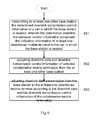
- FIG. 9 is a cell topology illustrating a distributed multiple input multiple output communication system according to an embodiment of the present invention.
- the numerals 1, 2 and 3 in FIG. 9 represent different scheduling priorities, wherein the numeral 1 represents the highest priority, and the numeral 3 represents the lowest.
- any two neighboring cells have different scheduling priorities.
- the base station in each cell performs combined pre-coding and scheduling according to an order of scheduling priority.
- multi-cell MIMO collaboration happens between neighboring cells.
- classification of scheduling priority of each cell in the system is not limited to three levels, and four or five scheduling priority levels, etc., are feasible.
- scheduling is performed in the cells with scheduling priority 1, and the base stations in the cells perform user selection and downlink transmission setting including pre-coding setting, and transmit collaboration requests according to the scheduling results.
- the cells with scheduling priority 1 become determined cells.
- the base stations in the cells with scheduling priority 2 acquire the collaboration requests relating to the determined cells neighboring on the cells in which the base stations are located, and according to the collaboration requests as well as the scheduling and setting results of the determined cells, perform scheduling in the cells with scheduling priority 2, perform user selection and downlink transmission setting including combined pre-coding setting, and transmit collaboration requests according to the scheduling results.
- the cells with either of scheduling priorities 1 and 2 become determined cells.
- the base stations in the cells with scheduling priority 3 acquire the collaboration requests relating to the determined cells neighboring on the cells in which the base stations are located, and according to the collaboration requests and the scheduling and setting results of the determined cells, perform scheduling in the cells with scheduling priority 3, and perform user selection and downlink transmission setting including combined pre-coding setting.
Landscapes
- Engineering & Computer Science (AREA)
- Computer Networks & Wireless Communication (AREA)
- Signal Processing (AREA)
- Mobile Radio Communication Systems (AREA)
Abstract
Description
- The present invention generally relates to multiple input multiple output technology, and more particularly, to a technology of multiple input multiple output transmission performed collaboratively by multiple base stations.
- To increase user capacity of the system, existing radio communication networks usually adopt low frequency reuse factor, i.e., all the cells share the same time-frequency resources. However, inter-cell interferences caused by low frequency reuse factor are an important factor restricting downlink capacity. For a mobile terminal which is located at a cell edge (i.e., the area between neighboring cells), while receiving useful signals from the base station to which the mobile terminal pertains, it also receives signals transmitted by other base stations with the same time-frequency resources. And the signals from the other base stations constitute interferences to the mobile terminal.
- In order to improve user performance at a cell edge without a loss of (or with an increase in) overall cell throughput, the applicant of the present invention has provided a multi-cell multiple input multiple output (multi-cell MIMO) technology.
- Multi-cell MIMO is a technology family and has been proposed as a candidate technical solution for the Long Term Evolution (LTE) project and IEEE 802.16m. In multi-cell MIMO technology, a mobile terminal located at the collaboration area can be served by multiple base stations. By closely coordinating data transmission and reception of multiple base stations, multi-cell MIMO technology changes inter-cell interferences to useful signals, thereby breaking through the restriction from frequency spectrum efficiency in conventional cellular systems.
- However, it should be noticed that, in a real-time system, information exchange in the backhaul network caused by multi-cell MIMO technology is a great overhead and results in problems such as additional delay.
- Technical solutions of multi-cell MIMO include technical solutions of centralized multi-cell MIMO, such as a network MIMO solution, which have high computational complexity.
- Technical solutions of multi-cell MIMO also include technical solutions of distributed multi-cell MIMO, such as a collaborative MIMO solution. In multi-cell scheduling, it is still a great challenge to better define the collaboration strategy between neighboring cells, which directly affects the system gain of a distributed multi-cell MIMO system.
- The present invention provides methods of and apparatuses for communicating in a MIMO system to solve the problem in the prior art.
-
FIG. 1 shows a schematic diagram illustrating a MIMO system according to an embodiment of the present invention. As shown inFIG. 1 ,base stations mobile terminals FIG. 2 shows an equivalent channel model in the embodiment. As shown inFIG. 2 , S1 represents a data steam transmitted by thebase station 1 to themobile terminal 21, and S2 represents a data steam transmitted by thebase station 2 to themobile terminal 22; t¡j represents a pre-coding vector or matrix of a data stream Si at a base station j; hij represents a channel state matrix between a mobile terminal 2i and a base station j. Then, the equivalent channels counting pre-coding from the data streams S1 and S2 to themobile terminals 
As can be seen from the above formula, the equivalent channels between the two data streams and the two mobile terminals are closely related to inter-cell channels and pre-coding elements. In some prior art, complete channel state information and data information needs to be exchanged between collaborative base stations, thereby resulting in great backhaul transmission overhead and high computational complexity for pre-coding optimization. In the present invention, one important objective is to reduce the amount of information exchanged between collaborative base stations. For example, in the above embodiment, only thebase station 2 transmits a pre-coded data stream S2', i.e., t12S2, to thebase station 1, and thebase station 1 doesn't need to transmit the data stream S1 to thebase station 2. - According to a first aspect of the present invention, a method of communicating in a multiple input multiple output communication system is provided. The method includes the steps of: determining to perform multi-cell multiple input multiple output collaboration by at least a first base station and a second base station; acquiring determined downlink transmission control information of the first base station by the second base station, wherein the determined downlink transmission control information includes the indication information of at least one determined mobile terminal in a cell in which the first base station is located; selecting collaborative mobile terminal(s) according to the downlink transmission control information of the first base station by the second base station; transmitting downlink data and downlink transmission control information of the selected collaborative mobile terminal(s) to the first base station by the second base station; adjusting downlink data transmission from the first base station to the at least one determined mobile terminal according to the downlink data and the downlink transmission control information of the collaborative mobile terminal(s) by the first base station.
- According to a second aspect of the present invention, a method of communicating in a base station in a multiple input multiple output communication system is provided. The method includes the steps of: A. acquiring determined downlink transmission control information of at least one determined cell, wherein the determined downlink transmission control information includes the indication information of at least one determined mobile terminal in each of the at least one determined cell; B. selecting collaborative mobile terminal(s) in a cell to which the base station pertains according to the downlink transmission control information of the at least one determined cell; C. transmitting downlink data and downlink transmission control information of the selected collaborative mobile terminal(s) to base station(s) in the at least one determined cell.
- According to a third aspect of the present invention, a method of communicating in a base station in a multiple input multiple output communication system is provided. The method includes the steps of: a. transmitting to at least one other base station the determined downlink transmission control information of a cell in which the base station is located, wherein the determined downlink transmission control information includes the indication information of at least one determined mobile terminal in the cell in which the base station is located; b. acquiring downlink data and downlink transmission control information of selected collaborative mobile terminal(s) from the at least one other base station; c. adjusting downlink data transmission from the base station to the at least one determined mobile terminal according to the downlink data and the downlink transmission control information of the collaborative mobile terminal(s).
- According to a fourth aspect of the present invention, a first communication apparatus for communicating in a base station in a multiple input multiple output communication system is provided. The first communication apparatus includes: a first acquiring device for acquiring determined downlink transmission control information of at least one determined cell, wherein the determined downlink transmission control information includes a downlink pre-coding matrix between a base station in each of the at least one determined cell and at least one determined mobile terminal, and the indication information of the at least one determined mobile terminal; a first determining device for selecting collaborative mobile terminal(s) in a cell to which the base station pertains according to the downlink transmission control information of the at least one determined cell; a first transmitting device for transmitting downlink data and downlink transmission control information of the selected collaborative mobile terminal(s) to base station(s) in the at least one determined cell.
- According to a fifth aspect of the present invention, a second communication apparatus for communicating in a base station in a multiple input multiple output communication system is provided. The second communication apparatus includes: a second transmitting device for transmitting to at least one other base station the determined downlink transmission control information of a cell in which the base station is located, wherein the determined downlink transmission control information includes a downlink pre-coding matrix between the cell in which the base station is located and at least one determined mobile terminal, and the indication information of the at least one determined mobile terminal; a second acquiring device for acquiring downlink data and downlink transmission control information of selected collaborative mobile terminal(s) from the at least one other base station; a first adjusting device for adjusting downlink data transmission from the base station to the at least one determined mobile terminal according to the downlink data and the downlink transmission control information of the collaborative mobile terminal(s).
- By employing the methods and apparatuses of the present invention, a radio communication network using multiple base station MIMO technology will have the following features: the amount of information exchanged between base stations is greatly reduced during multiple base station collaborative MIMO transmission; inter-cell interferences are efficiently suppressed; since one or more base station serves multiple users with the same time-frequency resources and suppressed inter-user interferences, system throughput is increased.
- Other features, objectives and advantages of the present invention will become more apparent after reading the following detailed description of non-limiting embodiments, with reference to the accompanying drawings, wherein below:
-
FIG.1 is a schematic diagram illustrating a MIMO system according to an embodiment of the present invention; -
FIG. 2 is an equivalent channel model according to an embodiment of the present invention; -
FIG. 3 is a schematic diagram illustrating a MIMO system according to an embodiment of the present invention; -
FIG. 4 is a flowchart illustrating a method of communicating in a multiple input multiple output communication system according to an embodiment of the present invention; -
FIG. 5 is a flowchart illustrating a method of communicating in a base station in a multiple input multiple output communication system according to an embodiment of the present invention; -
FIG. 6 is a flowchart illustrating a method of communicating in a base station in a multiple input multiple output communication system according to an embodiment of the present invention; -
FIG. 7 is a block diagram illustrating a first communication apparatus for communicating in a base station in a multiple input multiple output communication system according to an embodiment of the present invention; -
FIG. 8 is a block diagram illustrating a second communication apparatus for communicating in a base station in a multiple input multiple output communication system according to an embodiment of the present invention; -
FIG. 9 is a cell topology illustrating a distributed multiple input multiple output communication system according to an embodiment of the present invention; -
FIG. 3 shows a schematic diagram illustrating a MIMO system according to an embodiment of the present invention. As shown inFIG. 3 ,base stations mobile terminals -
FIG. 4 is a flowchart illustrating a method of communicating in a multiple input multiple output communication system according to an embodiment of the present invention. The present invention will be described from the system point of view as follows in connection withFIGs. 1, 2 and4 . - In the
step 401, the system determines to perform multi-cell MIMO collaboration by at least a first base station and a second base station. - Specifically, the
base station 1 provides themobile terminal 21 with MIMO transmission. When themobile terminal 21 moves into the overlapping area of signals from thebase stations base stations base stations base station 1 corresponds to the first base station, and thebase station 2 corresponds to the second base station. - In the
step 402, the second base station acquires determined downlink transmission control information of the first base station, wherein the determined downlink transmission control information includes the indication information of at least one determined mobile terminal in a cell in which the first base station is located. - Specifically, the
base station 1 retains a pre-coding t11 during data transmission to themobile terminal 21, and thebase station 2 acquires the indication information of themobile terminal 21 thereby knowing that themobile terminal 21 will participate in multi-cell collaboration. - According to different interaction mode employed between base stations, in some other embodiments of the present invention, the determined downlink transmission control information may further include one or more of channel information and downlink pre-coding information between base station(s) in determined cell(s) and determined mobile terminal(s).
- In the
step 403, the second base station selects collaborative mobile terminal(s) according to the downlink transmission control information of the first base station. - Specifically, the
base station 2 selects themobile terminal 22 as a collaborative mobile terminal in the cell in which thebase station 2 is located according to the indication information of themobile terminal 21. - In the
step 404, the second base station transmits downlink data and downlink transmission control information of the selected collaborative mobile terminal(s) to the first base station. - Specifically, the
base station 2 transmits to thebase station 1 the pre-coded data stream S2' transmitted to themobile terminal 22 and the indication information of themobile terminal 22. - According to different interaction mode employed between base stations, in some other embodiments of the present invention, the downlink transmission control information of the collaborative mobile terminal(s) may further include one or more of channel information and downlink pre-coding information relating to the collaborative mobile terminal(s); and the downlink data of the collaborative mobile terminal(s) may be raw data or pre-coded data.
- In the
step 405, the first base station adjusts downlink data transmission from the first base station to the at least one determined mobile terminal according to the downlink data and the downlink transmission control information of the collaborative mobile terminal(s). - Specifically, the
base station 1 adjusts the transmission of the data stream S1 according to the received data stream S2' and indication information of themobile terminal 22, thereby realizing interference cancellation for the data stream S2. When adjusting the data stream S1, the pre-coding of thebase station 1 for themobile terminal 21 remains unchanged. - A fundamental method of the present invention is to schedule the base stations participating in multi-cell MIMO collaboration one by one. Firstly, the first base station selects mobile terminal(s) to participate in collaboration and performs transmission setting including pre-coding setting. Then, with the scheduling and setting results of the first base station being kept unchanged, according to the scheduling and setting results of the first base station, the second base station selects mobile terminal(s) to participate in collaboration and performs transmission setting including combined pre-coding setting. If there is a third base station participating in multi-cell MIMO collaboration, then, with the scheduling and setting results of the first base station and the second base station being kept unchanged, according to the scheduling and setting results of the first base station and the second base station, the third base station selects mobile terminal(s) to participate in collaboration and performs transmission setting including combined pre-coding setting. If there are other base stations participating in multi-cell MIMO collaboration, then the rest can be done in the same manner.
-
FIG. 5 is a flowchart illustrating a method of communicating in a base station in a multiple input multiple output communication system according to an embodiment of the present invention. AndFIG. 6 is a flowchart illustrating a method of communicating in a base station in a multiple input multiple output communication system according to an embodiment of the present invention. The present invention will be described from the base station point of view as follows in connection withFIGS. 1, 2 ,3 ,5 and6 . - In the
step 501, a base station most recently joining in multi-cell MIMO collaboration acquires determined downlink transmission control information of at least one determined cell, wherein the determined downlink transmission control information includes the indication information of at least one determined mobile terminal in each of the at least one determined cell. - For example, multi-cell MIMO collaboration is performed between the
base station 1 and thebase station 2, and thebase station 1 has completed user scheduling and transmission setting including pre-coding setting, wherein themobile terminal 21 is involved in multi-cell MIMO collaboration, then, the cell in which thebase station 1 is located is called a determined cell, and themobile terminal 21 is called a determined mobile terminal. Thebase station 2 acquires the indication information of themobile terminal 21, thereby knowing that themobile terminal 21 will participate in multi-cell collaboration. - For another example, multi-cell MIMO collaboration is performed among the
base stations base stations mobile terminals base stations mobile terminals base station 3 acquires the indication information of themobile terminals mobile terminals - According to different interaction mode employed between base stations, in some other embodiments of the present invention, the determined downlink transmission control information may further include one or more of channel information and downlink pre-coding information between base station(s) in determined cell(s) and determined mobile terminal(s).
- In the
step 502, the base station most recently joining in multi-cell MIMO collaboration selects collaborative mobile terminal(s) in a cell to which the base station pertains according to the downlink transmission control information of the at least one determined cell. - For example, multi-cell MIMO collaboration is performed between the
base station 1 and thebase station 2, and thebase station 2 is the base station most recently joining in multi-cell MIMO collaboration, then according to the downlink transmission control information of the cell in which thebase station 1 is located, thebase station 2 makes a selection from the mobile terminals in the cell in which thebase station 2 is located, and determines themobile terminal 22 as a collaborative mobile terminal. - For another example, multi-cell MIMO collaboration is performed among the
base stations base station 3 is the base station most recently joining in multi-cell MIMO collaboration, then according to the downlink transmission control information of the cells in which thebase stations base station 3 makes a selection from the mobile terminals in the cell in which thebase station 3 is located, and determines themobile terminal 23 as a collaborative mobile terminal. - In the
step 503, the base station most recently joining in multi-cell MIMO collaboration transmits downlink data and downlink transmission control information of the selected collaborative mobile terminal(s) to base station(s) in the at least one determined cell. - For example, multi-cell MIMO collaboration is performed between the
base station 1 and thebase station 2, and thebase station 2 is the base station most recently joining in multi-cell MIMO collaboration, and the collaborative mobile terminal determined by thebase station 2 is themobile terminal 22, then, thebase station 2 transmits to thebase station 1 the pre-coded data transmitted to themobile terminal 22 and the downlink transmission control information of themobile terminal 22. - For another example, multi-cell MIMO collaboration is performed among the
base stations base station 3 is the base station most recently joining in multi-cell MIMO collaboration, and the collaborative mobile terminal determined by thebase station 3 is themobile terminal 23, then, thebase station 3 transmits to thebase stations mobile terminal 23 and the downlink transmission control information of themobile terminal 23. - According to different interaction mode employed between base stations, in some other embodiments of the present invention, the downlink transmission control information of the collaborative mobile terminal(s) may further include one or more of channel information and downlink pre-coding information relating to the collaborative mobile terminal(s); and the downlink data of the collaborative mobile terminal(s) may be raw data or pre-coded data.
- In the
step 601, the base station in a determined cell participating in multi-cell MIMO collaboration transmits to a base station most recently joining in multi-cell MIMO collaboration the determined downlink transmission control information of the cell, wherein the determined downlink transmission control information includes the indication information of at least one determined mobile terminal in the determined cell. - For example, multi-cell MIMO collaboration is performed between the
base station 1 and thebase station 2, and the cell in which thebase station 1 is located is a determined cell, and themobile terminal 21 is a determined mobile terminal, thebase station 2 needs to determine mobile terminal(s) to participate in multi-cell MIMO collaboration in the cell in which it is located and transmission setting of the mobile terminal(s). Then, thebase station 1 transmits the indication information of themobile terminal 21 to thebase station 2. - For another example, multi-cell MIMO collaboration is performed among the
base stations base stations mobile terminals base station 3 needs to determine mobile terminal(s) to participate in multi-cell MIMO collaboration in the cell in which it is located and transmission setting of the mobile terminal(s). Then, thebase stations mobile terminals base station 3. - According to different interaction mode employed between base stations, in some other embodiments of the present invention, the determined downlink transmission control information may further include one or more of channel information and downlink pre-coding information between base station(s) in determined cell(s) and determined mobile terminal(s).
- In the
step 602, the base station in the determined cell acquires downlink data and downlink transmission control information of selected collaborative mobile terminal(s) from the base station most recently joining in multi-cell MIMO collaboration. - For example, multi-cell MIMO collaboration is performed between the
base station 1 and thebase station 2, and the cell in which thebase station 1 is located is a determined cell, then thebase station 1 acquires downlink data and downlink transmission control information of selected collaborative mobile terminal(s) from thebase station 2. - For another example, multi-cell MIMO collaboration is performed among the
base stations base stations base stations base station 3. - According to different interaction mode employed between base stations, in some other embodiments of the present invention, the downlink transmission control information of the collaborative mobile terminal(s) may further include one or more of channel information and downlink pre-coding information relating to the collaborative mobile terminal(s); and the downlink data of the collaborative mobile terminal(s) may be raw data or pre-coded data.
- In the
step 603, the base station in the determined cell adjusts downlink data transmission from the determined base station to the at least one determined mobile terminal according to the downlink data and the downlink transmission control information of the collaborative mobile terminal(s). - For example, multi-cell MIMO collaboration is performed between the
base station 1 and thebase station 2, and the cell in which thebase station 1 is located is a determined cell, and themobile terminal 21 is a determined mobile terminal, then thebase station 1 adjusts downlink data transmission to themobile terminal 21 according to the downlink data and the downlink transmission control information of the collaborative mobile terminal(s) determined by thebase station 2, thereby performing interference cancellation. When adjusting the data transmission, the pre-coding of thebase station 1 for themobile terminal 21 remains unchanged. - For another example, multi-cell MIMO collaboration is performed among the
base stations base stations mobile terminals base stations mobile terminals base station 3, thereby performing interference cancellation. When adjusting the data transmission, the pre-codings of thebase station 1 for themobile terminal 21 and thebase station 2 for themobile terminal 21 remain unchanged. - Similar specific operation may be employed in the
aforementioned steps - Take two-cell MIMO collaboration between the
base stations base station 1 is located is a determined cell and themobile terminal 21 is a determined terminal. Then, the detailed steps of selecting collaborative mobile terminal(s) by thebase station 2 are as follows. - Firstly, the
base station 2 determines an optimum pre-coding for at least one mobile terminal in the cell in which thebase station 2 is located. The downlink pre-coding matrix between thebase station 1 and themobile terminal 21 is
base stations mobile terminal 21 and any mobile terminal in the cell in which thebase station 2 is located may be represented by:
- Since the
base station 1 doesn't notify thebase station 2 of the data stream S1 transmitted to themobile terminal 21, it follows that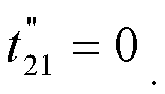
base station 1 is located, it follows that

- Then, based on a first predetermined rule, the
base station 2 determines an optimum pre-coding for each of the at least one mobile terminal in the cell in which thebase station 2 is located. - According to an embodiment of the present invention, the first predetermined rule is a decision criteria based on signal to jamming and noise ratio (SJNR).
- In a multi-user MIMO system with K users, the interference power of the k-th user is defined as the total interference power caused by the k-th user and received by other users, which may be represented by


- According to " Matrix Analysis Communications" (R. A. Horn and C. R. Johnson, Cambridge University Press, U.S.A., 1985), the optimum pre-coding tk of the k-th user is a characteristic vector corresponding to the maximum characteristic value of a matrix pair of


- And according to " Matrix Computations" (G. H. Golub and C. F. V. Loan, 3rd ed., London: Johns Hopkins University Press, 1996), when the latter of the above matrix pair is an invertible matrix, the result of optimum pre-coding may be represented by:

where ζ m (Yk ) is a characteristic vector corresponding to the maximum characteristic value of Yk, Pk is the transmitter power of the k-th user, and
- In the above case of two-cell MIMO collaboration, the optimum pre-coding determined by the
base station 2 for a mobile terminal is
- According to another embodiment of the present invention, the first predetermined rule is a decision criteria based on block diagonalization.
- For a MIMO channel with multiple users, to satisfy block diagonalization is meant to seek out a null space of the subspace composed of other users' channels for a certain user, which is represented by the formula: HiGj = 0, (i ≠ j), where Gj is the pre-coding matrix of the j-th user.
- In downlink block diagonalization algorithm, the pre-coding matrix of the k-th user is the product of two matrixes:

where

-


- In the above case of two-cell MIMO collaboration, the optimum pre-coding determined by the
base station 2 for a mobile terminal is

mobile terminal 21, i.e.,

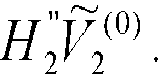
- According to yet another embodiment of the present invention, the predetermined first rule may be a decision criteria based on maximum signal to noise ratio.
- And then, based on a second predetermined rule, the
base station 2 selects the collaborative mobile terminal(s) from at least one mobile terminal with determined optimum pre-coding. - According to an embodiment of the present invention, the second predetermined rule is to maximize system throughput.
- According to another embodiment of the present invention, the second predetermined rule is to satisfy fairness among the mobile terminals.
- As shown in
FIG. 1 , the determined collaborative mobile terminal is themobile terminal 22, for example. - Take three-cell MIMO collaboration among the
base stations base stations mobile terminals base station 3 are as follows. - Firstly, the
base station 3 determines an optimum pre-coding for at least one mobile terminal in the cell in which thebase station 3 is located. The combined downlink pre-coding matrix between thebase stations mobile terminals base station 3 is located may be represented by:
- The
base station 1 doesn't notify thebase station 3 of the data stream S1 transmitted to themobile terminal 21, and thebase station 2 doesn't notify thebase station 3 of the data stream S2 transmitted to themobile terminal 22. The combined pre-coding matrix T3 is a block upper triangular matrix. In order to retain the transmission setting in the cells in which thebase stations 
- The equivalent channels between the three base stations and the three mobile terminals are updated as:

- Then, based on a first predetermined rule, the
base station 3 determines an optimum pre-coding for each of the at least one mobile terminal in the cell in which thebase station 3 is located. - According to an embodiment of the present invention, the first predetermined rule is a decision criteria based on signal to jamming and noise ratio. In the above case of three-cell MIMO collaboration, based on the criteria of maximum SJNR, the optimum pre-coding determined by the
base station 3 for a mobile terminal is
- According to another embodiment of the present invention, the first predetermined rule is a decision criteria based on block diagonalization. In the above case of three-cell MIMO collaboration, based on the block diagonalization criteria, the optimum pre-coding determined by the
base station 3 for a mobile terminal is

mobile terminals 


- According to yet another embodiment of the present invention, the first predetermined rule is a decision criteria based on maximum signal to noise ratio.
- And then, based on a second predetermined rule, the
base station 3 selects the collaborative mobile terminal(s) from at least one mobile terminal with determined optimum pre-coding. - According to an embodiment of the present invention, the second predetermined rule is to maximize system throughput.
- According to another embodiment of the present invention, the second predetermined rule is to satisfy fairness among the mobile terminals.
- As shown in
FIG. 3 , the collaborative mobile terminal determined is themobile terminal 23, for example. - In the above embodiments, there are only one mobile terminal and one data stream participating in multi-cell MIMO collaboration in the cell in which each base station is located. However, those skilled in the art will understand that, it is not a limitation to the present invention, and there may be a plurality of mobile terminals and data streams participating in multi-cell MIMO collaboration in the cell in which each base station is located.
-
FIG. 7 is a block diagram illustrating a first communication apparatus for communicating in a base station in a multiple input multiple output communication system according to an embodiment of the present invention. As shown inFIG. 7 , thefirst communication apparatus 70 includes a first acquiringdevice 71, a first determiningdevice 72, and afirst transmitting device 73. Typically, the first acquiringdevice 71 is disposed in the base station in the MIMO system. AndFIG. 8 is a block diagram illustrating a second communication apparatus for communicating in a base station in a multiple input multiple output communication system according to an embodiment of the present invention. As shown inFIG. 8 , thesecond communication apparatus 80 includes asecond transmitting device 81, a second acquiringdevice 82, and afirst adjusting device 83. Typically, thesecond communication apparatus 80 is disposed in the base station in the MIMO system. The present invention will be described from the apparatus point of view as follows in connection withFIGs. 1, 2 ,3 ,7 and 8 . - At the side of a base station most recently joining in multi-cell MIMO collaboration, firstly, the first acquiring
device 71 in itsfirst communication apparatus 70 acquires determined downlink transmission control information of at least one determined cell, wherein the determined downlink transmission control information includes the indication information of at least one determined mobile terminal in each of the at least one determined cell. - For example, multi-cell MIMO collaboration is performed between the
base station 1 and thebase station 2, and thebase station 1 has completed user scheduling and transmission setting including pre-coding setting, wherein themobile terminal 21 is involved in multi-cell MIMO collaboration, then, the cell in which thebase station 1 is located is called a determined cell, and themobile terminal 21 is called a determined mobile terminal. The first acquiringdevice 71 in thebase station 2 acquires the indication information of themobile terminal 21, thereby knowing that themobile terminal 21 will participate in multi-cell collaboration. - For another example, multi-cell MIMO collaboration is performed among the
base stations base stations mobile terminals base stations mobile terminals device 71 in thebase station 3 acquires the indication information of themobile terminals mobile terminals - According to different interaction mode employed between base stations, in some other embodiments of the present invention, the determined downlink transmission control information may further include one or more of channel information and downlink pre-coding information between base station(s) in determined cell(s) and determined mobile terminal(s).
- Then, the base station most recently joining in multi-cell MIMO collaboration selects, via the first determining
device 72 in itsfirst communication apparatus 70, collaborative mobile terminal(s) in a cell to which the base station pertains according to the downlink transmission control information of the at least one determined cell. - For example, multi-cell MIMO collaboration is performed between the
base station 1 and thebase station 2, and thebase station 2 is the base station most recently joining in multi-cell MIMO collaboration, then according to the downlink transmission control information of the cell in which thebase station 1 is located, the first determiningdevice 72 in thebase station 2 makes a selection from the mobile terminals in the cell in which thebase station 2 is located, and determines themobile terminal 22 as a collaborative mobile terminal. - For another example, assuming that multi-cell MIMO collaboration is performed among the
base stations base station 3 is the base station most recently joining in multi-cell MIMO collaboration, then according to the downlink transmission control information of the cells in which thebase stations device 72 in thebase station 3 makes a selection from the mobile terminals in the cell in which thebase station 3 is located, and determines themobile terminal 23 as a collaborative mobile terminal. - After that, the base station most recently joining in multi-cell MIMO collaboration transmits, via the
first transmitting device 73 in thefirst communication apparatus 70, downlink data and downlink transmission control information of the selected collaborative mobile terminal(s) to base station(s) in the at least one determined cell. - For example, multi-cell MIMO collaboration is performed between the
base station 1 and thebase station 2, and thebase station 2 is the base station most recently joining in multi-cell MIMO collaboration, and the collaborative mobile terminal determined by thebase station 2 is themobile terminal 22, then, thefirst transmitting device 73 in thebase station 2 transmits to thebase station 1 the pre-coded data transmitted to themobile terminal 22 and the downlink transmission control information of themobile terminal 22. - For another example, multi-cell MIMO collaboration is performed among the
base stations base station 3 is the base station most recently joining in multi-cell MIMO collaboration, and the collaborative mobile terminal determined by thebase station 3 is themobile terminal 23, then, thefirst transmitting device 73 in thebase station 3 transmits to thebase stations mobile terminal 23 and the downlink transmission control information of themobile terminal 23. - According to different interaction mode employed between base stations, in some other embodiments of the present invention, the downlink transmission control information of the collaborative mobile terminal(s) may further include one or more of channel information and downlink pre-coding information relating to the collaborative mobile terminal(s); and the downlink data of the collaborative mobile terminal(s) may be raw data or pre-coded data.
- At the side of the base station of a determined cell participating in multi-cell MIMO collaboration, firstly, the base station transmits, via the
second transmitting device 81 in itssecond communication apparatus 80, to a base station most recently joining in multi-cell MIMO collaboration the determined downlink transmission control information of the cell, wherein the determined downlink transmission control information includes the indication information of at least one determined mobile terminal in the determined cell. - For example, multi-cell MIMO collaboration is performed between the
base station 1 and thebase station 2, and the cell in which thebase station 1 is located is a determined cell, and themobile terminal 21 is a determined mobile terminal, thebase station 2 needs to determine mobile terminal(s) to participate in multi-cell MIMO collaboration in the cell in which it is located and transmission setting of the mobile terminal(s). Then, thesecond transmitting device 81 in thebase station 1 transmits the indication information of themobile terminal 21 to thebase station 2. - For another example, multi-cell MIMO collaboration is performed among the
base stations base stations mobile terminals base station 3 needs to determine mobile terminal(s) to participate in multi-cell MIMO collaboration in the cell in which it is located and transmission setting of the mobile terminal(s). Then, thebase stations mobile terminals base station 3 via their respectivesecond transmitting device 81. - According to different interaction mode employed between base stations, in some other embodiments of the present invention, the determined downlink transmission control information may further include one or more of channel information and downlink pre-coding information between base station(s) in determined cell(s) and determined mobile terminal(s).
- Then, the base station in the determined cell acquires, via the second acquiring
device 82 in itssecond communication apparatus 80, downlink data and downlink transmission control information of selected collaborative mobile terminal(s) from the base station most recently joining in multi-cell MIMO collaboration. - For example, multi-cell MIMO collaboration is performed between the
base station 1 and thebase station 2, and the cell in which thebase station 1 is located is a determined cell, then thebase station 1 acquires downlink data and downlink transmission control information of selected collaborative mobile terminal(s) from thebase station 2 via the second acquiringdevice 82. - For another example, multi-cell MIMO collaboration is performed among the
base stations base stations base stations base station 3 via their respective second acquiringdevice 82. - According to different interaction mode employed between base stations, in some other embodiments of the present invention, the downlink transmission control information of the collaborative mobile terminal(s) may further include one or more of channel information and downlink pre-coding information relating to the collaborative mobile terminal(s); and the downlink data of the collaborative mobile terminal(s) may be raw data or pre-coded data.
- After that, the base station in the determined cell adjusts, via the
first adjusting device 83 in itssecond communication apparatus 80, downlink data transmission from the determined base station to the at least one determined mobile terminal according to the downlink data and the downlink transmission control information of the collaborative mobile terminal(s). - For example, multi-cell MIMO collaboration is performed between the
base station 1 and thebase station 2, and the cell in which thebase station 1 is located is a determined cell, and themobile terminal 21 is a determined mobile terminal, then thebase station 1 adjusts, via itsfirst adjusting device 83, downlink data transmission to themobile terminal 21 according to the downlink data and the downlink transmission control information of the collaborative mobile terminal(s) determined by thebase station 2, thereby performing interference cancellation. When adjusting the data transmission, the pre-coding of thebase station 1 for themobile terminal 21 remains unchanged. - For another example, multi-cell MIMO collaboration is performed among the
base stations base stations mobile terminals base stations first adjusting device 83, downlink data transmission to themobile terminals base station 3, thereby performing interference cancellation. When adjusting the data transmission, the pre-codings of thebase station 1 for themobile terminal 21 and thebase station 2 for themobile terminal 21 remain unchanged. - The procedure of selecting collaborative mobile terminal(s) by the first determining
device 72 in thefirst communication apparatus 70 in a base station joining in multi-cell MIMO collaboration will be described in detail as follows. - Take two-cell MIMO collaboration between the
base stations base station 1 is located is a determined cell and themobile terminal 21 is a determined terminal. Then, the detailed steps of selecting collaborative mobile terminal(s) by the first determiningdevice 72 in thebase station 2 are as follows. - Firstly, the first determining
device 72 in thebase station 2 determines an optimum pre-coding for at least one mobile terminal in the cell in which thebase station 2 is located. The downlink pre-coding matrix between thebase station 1 and themobile terminal 21 is
base stations mobile terminal 21 and any mobile terminal in the cell in which thebase station 2 is located may be represented by:
- Since the
base station 1 doesn't notify thebase station 2 of the data stream S1 transmitted to themobile terminal 21, it follows that
base station 1 is located, it follows that

- Then, based on a first predetermined rule, the first determining
device 72 in thebase station 2 determines an optimum pre-coding for each of the at least one mobile terminal in the cell in which thebase station 2 is located. - According to an embodiment of the present invention, the first predetermined rule is a decision criteria based on signal to jamming and noise ratio. In the above case of two-cell MIMO collaboration, based on the criteria of maximum signal to jamming and noise ratio, the optimum pre-coding determined by the first determining
device 72 in thebase station 2 for a mobile terminal is
- According to another embodiment of the present invention, the first predetermined rule is a decision criteria based on block diagonalization. In the above case of two-cell MIMO collaboration, the optimum pre-coding determined by the first determining
device 72 in thebase station 2 for a mobile terminal is

mobile terminal 21, i.e.,


- According to yet another embodiment of the present invention, the first predetermined rule may be a decision criteria based on maximum signal to noise ratio.
- And then, based on a second predetermined rule, the first determining
device 72 in thebase station 2 selects the collaborative mobile terminal(s) from at least one mobile terminal with determined optimum pre-coding. - According to an embodiment of the present invention, the second predetermined rule is to maximize system throughput.
- According to another embodiment of the present invention, the second predetermined rule is to satisfy fairness among the mobile terminals.
- As shown in
FIG. 1 , the determined collaborative mobile terminal is themobile terminal 22, for example. - Take three-cell MIMO collaboration among the
base stations base stations mobile terminals device 72 in thebase station 3 are as follows. - Firstly, the first determining
device 72 in thebase station 3 determines an optimum pre-coding for at least one mobile terminal in the cell in which thebase station 3 is located. The combined downlink pre-coding matrix between thebase stations mobile terminals base station 3 is located may be represented by:
- The
base station 1 doesn't notify thebase station 3 of the data stream S1 transmitted to themobile terminal 21, and thebase station 2 doesn't notify thebase station 3 of the data stream S2 transmitted to themobile terminal 22. The combined pre-coding matrix T3 is a block upper triangular matrix. In order to retain the transmission setting in the cells in which thebase stations 
- The equivalent channels between the three base stations and the three mobile terminals are updated as:

- Then, based on a first predetermined rule, the first determining
device 72 in thebase station 3 determines an optimum pre-coding for each of the at least one mobile terminal in the cell in which thebase station 3 is located. - According to an embodiment of the present invention, the first predetermined rule is a decision criteria based on signal to jamming and noise ratio. In the above case of three-cell MIMO collaboration, base on the criteria of maximum signal to jamming and noise ratio, the optimum pre-coding determined by the first determining
device 72 in thebase station 3 for a mobile terminal is
- According to another embodiment of the present invention, the first predetermined rule may be a decision criteria based on block diagonalization. In the above case of three-cell MIMO collaboration, based on the block diagonalization criteria, the optimum pre-coding determined by the first determining
device 72 in thebase station 3 for a mobile terminal is

mobile terminals 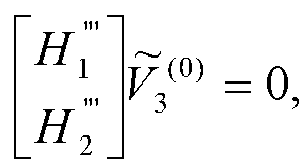


- According to yet another embodiment of the present invention, the first predetermined rule may be a decision criteria based on maximum signal to noise ratio.
- And then, based on a second predetermined rule, the first determining
device 72 in thebase station 3 selects the collaborative mobile terminal(s) from at least one mobile terminal with determined optimum pre-coding. - According to an embodiment of the present invention, the second predetermined rule is to maximize system throughput.
- According to another embodiment of the present invention, the second predetermined rule is to satisfy fairness among the mobile terminals.
- As shown in
FIG. 3 , the collaborative mobile terminal determined is themobile terminal 23, for example. - In the above embodiments, there are only one mobile terminal and one data stream participating in multi-cell MIMO collaboration in the cell in which each base station is located. However, those skilled in the art will understand that, it is not a limitation to the present invention, and there may be a plurality of mobile terminals and data streams participating in multi-cell MIMO collaboration in the cell in which each base station is located.
- Those skilled in the art will understand that the so-called apparatus or device in the present invention may be either a hardware device or a software functional module, or even a combination of a hardware device and a software functional module.
- The methods and apparatuses of the present invention may be employed in a distributed multiple input multiple output system.
FIG. 9 is a cell topology illustrating a distributed multiple input multiple output communication system according to an embodiment of the present invention. Thenumerals FIG. 9 represent different scheduling priorities, wherein thenumeral 1 represents the highest priority, and thenumeral 3 represents the lowest. As shown inFIG. 9 , in the multiple input multiple output communication system according to this embodiment, any two neighboring cells have different scheduling priorities. During multi-cell MIMO collaboration, the base station in each cell performs combined pre-coding and scheduling according to an order of scheduling priority. Usually, multi-cell MIMO collaboration happens between neighboring cells. Therefore, it facilitates the realization of gradual multi-cell MIMO collaboration to adopt the scheduling solution according to an order of scheduling priority. And those skilled in the art will understand that classification of scheduling priority of each cell in the system is not limited to three levels, and four or five scheduling priority levels, etc., are feasible. - In this embodiment, firstly, scheduling is performed in the cells with
scheduling priority 1, and the base stations in the cells perform user selection and downlink transmission setting including pre-coding setting, and transmit collaboration requests according to the scheduling results. Now, the cells withscheduling priority 1 become determined cells. - Then, the base stations in the cells with
scheduling priority 2 acquire the collaboration requests relating to the determined cells neighboring on the cells in which the base stations are located, and according to the collaboration requests as well as the scheduling and setting results of the determined cells, perform scheduling in the cells withscheduling priority 2, perform user selection and downlink transmission setting including combined pre-coding setting, and transmit collaboration requests according to the scheduling results. Now, the cells with either ofscheduling priorities - Finally, the base stations in the cells with
scheduling priority 3 acquire the collaboration requests relating to the determined cells neighboring on the cells in which the base stations are located, and according to the collaboration requests and the scheduling and setting results of the determined cells, perform scheduling in the cells withscheduling priority 3, and perform user selection and downlink transmission setting including combined pre-coding setting. - The embodiments of the present invention are described above. However, the present invention is not limited to particular systems, equipments and specific protocols. And variations or modifications can be made by those skilled in the art within the scope of the appended claims.
Claims (22)
- A method of communicating in a multiple input multiple output communication system, comprising the steps of:determining to perform multi-cell multiple input multiple output collaboration by at least a first base station and a second base station;acquiring determined downlink transmission control information of the first base station by the second base station, wherein the determined downlink transmission control information comprises the indication information of at least one determined mobile terminal in a cell in which the first base station is located;selecting collaborative mobile terminal(s) according to the downlink transmission control information of the first base station by the second base station;transmitting downlink data and downlink transmission control information of the selected collaborative mobile terminal(s) to the first base station by the second base station;adjusting downlink data transmission from the first base station to the at least one determined mobile terminal according to the downlink data and the downlink transmission control information of the collaborative mobile terminal(s) by the first base station.
- The method of claim 1, wherein the step of selecting the collaborative mobile terminal(s) by the second base station comprises:according to the determined downlink transmission control information of the first base station, and based on a first predetermined rule, constructing a combined downlink pre-coding matrix for each of at least one mobile terminal in a cell to which the second base station pertains, wherein a downlink pre-coding matrix between the first base station and the at least one determined mobile terminal is a submatrix of the combined downlink pre-coding matrix;based on a second predetermined rule, selecting the collaborative mobile terminal(s) from the at least one mobile terminal.
- The method of claim 2, wherein the combined downlink pre-coding matrix is a block-triangular matrix.
- The method of claim 3, wherein the first predetermined rule is that the combined downlink pre-coding matrix shall be constructed so that a signal of a corresponding mobile terminal satisfies maximum signal to jamming and noise ratio.
- The method of claim 3, wherein the first predetermined rule is that the combined downlink pre-coding matrix shall be constructed to satisfy block diagonalization.
- The method of any of claims 2-5, wherein the second predetermined rule is to maximize system throughput or to satisfy fairness among the mobile terminals.
- A method of communicating in a base station in a multiple input multiple output communication system, comprising the steps of:A. acquiring determined downlink transmission control information of at least one determined cell, wherein the determined downlink transmission control information comprises the indication information of at least one determined mobile terminal in each of the at least one determined cell;B. selecting collaborative mobile terminal(s) in a cell to which the base station pertains according to the downlink transmission control information of the at least one determined cell;C. transmitting downlink data and downlink transmission control information of the selected collaborative mobile terminal(s) to base station(s) in the at least one determined cell.
- The method of claim 7, wherein the step B comprises:B1. according to the determined downlink transmission control information of the at least one determined cell, and based on a first predetermined rule, constructing a combined downlink pre-coding matrix for each of at least one mobile terminal in the cell to which the base station pertains, wherein a downlink pre-coding matrix relating to each determined mobile terminal in the determined cell is a submatrix of the combined downlink pre-coding matrix;B2. based on a second predetermined rule, selecting the collaborative mobile terminal(s) from the at least one mobile terminal in the cell to which the base station pertains.
- The method of claim 8, wherein the combined downlink pre-coding matrix is a block-triangular matrix.
- The method of claim 9, wherein the first predetermined rule is that the combined downlink pre-coding matrix shall be constructed so that a signal of a corresponding mobile terminal satisfies maximum signal to jamming and noise ratio.
- The method of claim 9, wherein the first predetermined rule is that the combined downlink pre-coding matrix shall be constructed to satisfy block diagonalization.
- The method of any of claims 8-11, wherein the second predetermined rule is to maximize system throughput or to satisfy fairness among the mobile terminals.
- The method of any of claims 8-12, wherein the multiple input multiple output communication system is a distributed system, and the base station has a different scheduling priority from that of base station(s) in the at least one determined cell, and combined pre-coding and scheduling are performed according to an order of scheduling priority.
- A method of communicating in a base station in a multiple input multiple output communication system, comprising the steps of:a. transmitting to at least one other base station the determined downlink transmission control information of a cell in which the base station is located, wherein the determined downlink transmission control information comprises the indication information of at least one determined mobile terminal in the cell in which the base station is located;b. acquiring downlink data and downlink transmission control information of selected collaborative mobile terminal(s) from the at least one other base station;c. adjusting downlink data transmission from the base station to the at least one determined mobile terminal according to the downlink data and the downlink transmission control information of the collaborative mobile terminal(s).
- The method of claim 14, wherein the multiple input multiple output communication system is a distributed system, the base station has a different scheduling priority than that of the at least one other base station, and combined pre-coding and scheduling are performed according to an order of scheduling priority.
- A first communication apparatus for communicating in a base station in a multiple input multiple output communication system, comprising:a first acquiring device for acquiring determined downlink transmission control information of at least one determined cell, wherein the determined downlink transmission control information comprises a downlink pre-coding matrix between a base station in each of the at least one determined cell and at least one determined mobile terminal, and the indication information of the at least one determined mobile terminal;a first determining device for selecting collaborative mobile terminal(s) in a cell to which the base station pertains according to the downlink transmission control information of the at least one determined cell;a first transmitting device for transmitting downlink data and downlink transmission control information of the selected collaborative mobile terminal(s) to base station(s) in the at least one determined cell.
- The first communication apparatus of claim 16, wherein the first determining device is configured for:according to the determined downlink transmission control information of the at least one determined cell, and based on a first predetermined rule, constructing a combined downlink pre-coding matrix for each of at least one mobile terminal in the cell to which the base station pertains, wherein a downlink pre-coding matrix relating to each determined mobile terminal in the determined cell is a submatrix of the combined downlink pre-coding matrix;based on a second predetermined rule, selecting the collaborative mobile terminal(s) from the at least one mobile terminal in the cell to which the base station pertains.
- The first communication apparatus of claim 17, wherein the combined downlink pre-coding matrix is a block-triangular matrix.
- The first communication apparatus of claim 18, wherein the first predetermined rule is that the combined downlink pre-coding matrix shall be constructed so that a signal of a corresponding mobile terminal satisfies maximum signal to jamming and noise ratio.
- The first communication apparatus of claim 18, wherein the first predetermined rule is that the combined downlink pre-coding matrix shall be constructed to satisfy block diagonalization.
- The first communication apparatus of any of claims 17-20, wherein the second predetermined rule is to maximize system throughput or to satisfy fairness among the mobile terminals.
- A second communication apparatus for communicating in a base station in a multiple input multiple output communication system, comprising:a second transmitting device for transmitting to at least one other base station the determined downlink transmission control information of a cell in which the base station is located, wherein the determined downlink transmission control information comprises a downlink pre-coding matrix between the cell in which the base station is located and at least one determined mobile terminal, and the indication information of the at least one determined mobile terminal;a second acquiring device for acquiring downlink data and downlink transmission control information of selected collaborative mobile terminal(s) from the at least one other base station;a first adjusting device for adjusting downlink data transmission from the base station to the at least one determined mobile terminal according to the downlink data and the downlink transmission control information of the collaborative mobile terminal(s).
Applications Claiming Priority (2)
| Application Number | Priority Date | Filing Date | Title |
|---|---|---|---|
| CN2009100478309A CN101841496B (en) | 2009-03-17 | 2009-03-17 | Multi-cell cooperative communication method and device in multi-input multi-output system |
| PCT/CN2010/071064 WO2010105549A1 (en) | 2009-03-17 | 2010-03-16 | Method and device for multiple-cell collaborative communication in mimo system |
Publications (2)
| Publication Number | Publication Date |
|---|---|
| EP2410664A1 true EP2410664A1 (en) | 2012-01-25 |
| EP2410664A4 EP2410664A4 (en) | 2014-10-15 |
Family
ID=42739201
Family Applications (1)
| Application Number | Title | Priority Date | Filing Date |
|---|---|---|---|
| EP10753116.2A Ceased EP2410664A4 (en) | 2009-03-17 | 2010-03-16 | Method and device for multiple-cell collaborative communication in mimo system |
Country Status (7)
| Country | Link |
|---|---|
| US (1) | US8811316B2 (en) |
| EP (1) | EP2410664A4 (en) |
| JP (1) | JP5297557B2 (en) |
| KR (1) | KR101280854B1 (en) |
| CN (1) | CN101841496B (en) |
| BR (1) | BRPI1009545A2 (en) |
| WO (1) | WO2010105549A1 (en) |
Cited By (1)
| Publication number | Priority date | Publication date | Assignee | Title |
|---|---|---|---|---|
| EP2573954A4 (en) * | 2010-10-28 | 2017-06-14 | ZTE Corporation | Method and device for delivering service data |
Families Citing this family (9)
| Publication number | Priority date | Publication date | Assignee | Title |
|---|---|---|---|---|
| US8472550B2 (en) * | 2010-12-23 | 2013-06-25 | Mitsubishi Electric Research Laboratories, Inc. | Method for reducing interference in multi-cell multi-user wireless networks |
| CN102186212A (en) * | 2011-04-08 | 2011-09-14 | 中兴通讯股份有限公司 | Intercell cooperation scheduling method, system and user equipment |
| CN102932937B (en) * | 2011-08-11 | 2015-11-25 | 上海贝尔股份有限公司 | Method for dispatching user facility in cellular communication system and equipment |
| US9407344B2 (en) | 2011-10-16 | 2016-08-02 | Lg Electronics Inc. | Method for transmitting a downlink signal in a base station cooperative wireless communication system and an apparatus for same |
| CN103188006B (en) * | 2011-12-31 | 2017-10-17 | 中兴通讯股份有限公司 | A kind of downlink collaboration multipoint transmission method and system |
| US9628215B2 (en) * | 2012-08-01 | 2017-04-18 | Nokia Solutions And Networks Oy | Cell-specific reference signal interference cancellation improvement |
| CN104087938A (en) * | 2014-06-18 | 2014-10-08 | 京东方科技集团股份有限公司 | Etching-liquid storing apparatus and wet-method etching equipment |
| WO2021155511A1 (en) * | 2020-02-05 | 2021-08-12 | 北京小米移动软件有限公司 | Communication method and apparatus |
| CN113596782B (en) * | 2020-04-30 | 2023-08-04 | 华为技术有限公司 | A data transmission method and communication device |
Family Cites Families (20)
| Publication number | Priority date | Publication date | Assignee | Title |
|---|---|---|---|---|
| AU2003290492A1 (en) * | 2003-12-22 | 2005-07-14 | Telefonaktiebolaget Lm Ericsson (Publ) | Method and system of communications |
| US7428268B2 (en) | 2004-12-07 | 2008-09-23 | Adaptix, Inc. | Cooperative MIMO in multicell wireless networks |
| US7702353B2 (en) * | 2005-12-27 | 2010-04-20 | Nortel Networks Limited | Transmit power allocation in a distributed MIMO system |
| US8116267B2 (en) * | 2006-02-09 | 2012-02-14 | Samsung Electronics Co., Ltd. | Method and system for scheduling users based on user-determined ranks in a MIMO system |
| KR100829505B1 (en) * | 2006-02-21 | 2008-05-16 | 한국전자통신연구원 | Method of transmtting signal in base station and method of transmitting feedback information in terminal |
| US7526036B2 (en) * | 2006-04-20 | 2009-04-28 | Mitsubishi Electric Research Laboratories, Inc. | System and method for transmitting signals in cooperative base station multi-user mimo networks |
| KR20080040105A (en) * | 2006-11-02 | 2008-05-08 | 한국전자통신연구원 | Efficient Beam Based Transmission Apparatus and Method |
| US7778598B2 (en) * | 2007-01-22 | 2010-08-17 | Mitsubishi Electric Research Laboratories, Inc. | Asymmetric cooperation in downlink cellular networks with relay stations |
| US8081997B2 (en) * | 2007-01-22 | 2011-12-20 | Qualcomm Incorporated | Power and/or data rate control based on pilot channel information |
| CN101370241B (en) | 2007-08-19 | 2015-01-14 | 上海贝尔股份有限公司 | Method and device for eliminating interference between received signal of multiple mobile stations |
| CN101373998B (en) * | 2007-08-20 | 2012-07-25 | 上海贝尔阿尔卡特股份有限公司 | Low information interactive multi-base station collaboration MIMO as well as scheduling method and apparatus thereof |
| KR101424697B1 (en) * | 2007-09-03 | 2014-08-05 | 삼성전자주식회사 | Apparatus and method for signal processing to eliminate interference in multi-user multiple input multiple output wireless communication system |
| CN101159462A (en) * | 2007-11-01 | 2008-04-09 | 中国科学技术大学 | A limited feedback precoding interference suppression method in multi-antenna multi-cell system |
| US20090323849A1 (en) * | 2008-06-30 | 2009-12-31 | Interdigital Patent Holdings, Inc. | Method and apparatus for performing multiple-input multiple-output wireless communications |
| US8942165B2 (en) | 2008-08-01 | 2015-01-27 | Qualcomm Incorporated | System and method for distributed multiple-input multiple-output (MIMO) in a wireless communication system |
| CN101651880B (en) * | 2008-08-11 | 2013-12-25 | 株式会社Ntt都科摩 | Multi-cell coordination sending method |
| US9019903B2 (en) | 2008-12-08 | 2015-04-28 | Qualcomm Incorporated | Optimization to support uplink coordinated multi-point |
| US20110255526A1 (en) * | 2008-12-25 | 2011-10-20 | Shoji Kaneko | Cellular mobile communication system, base station control device, and interstation-cooperated communication control method |
| US8442566B2 (en) | 2009-01-07 | 2013-05-14 | Samsung Electronics Co., Ltd. | Coordinated multipoint (CoMP) joint transmission using channel information feedback and higher rank dedicated beam-forming |
| US8570963B2 (en) * | 2009-10-26 | 2013-10-29 | Qualcomm Incorporated | Coordinated multi-point (CoMP) network and protocol architecture |
-
2009
- 2009-03-17 CN CN2009100478309A patent/CN101841496B/en active Active
-
2010
- 2010-03-16 BR BRPI1009545A patent/BRPI1009545A2/en not_active Application Discontinuation
- 2010-03-16 WO PCT/CN2010/071064 patent/WO2010105549A1/en not_active Ceased
- 2010-03-16 JP JP2012500048A patent/JP5297557B2/en not_active Expired - Fee Related
- 2010-03-16 KR KR1020117024061A patent/KR101280854B1/en not_active Expired - Fee Related
- 2010-03-16 US US13/257,215 patent/US8811316B2/en not_active Expired - Fee Related
- 2010-03-16 EP EP10753116.2A patent/EP2410664A4/en not_active Ceased
Non-Patent Citations (5)
| Title |
|---|
| "Distributed Multi-User MIMO UL concept for LTE", 3GPP DRAFT; R1-061037, 3RD GENERATION PARTNERSHIP PROJECT (3GPP), MOBILE COMPETENCE CENTRE ; 650, ROUTE DES LUCIOLES ; F-06921 SOPHIA-ANTIPOLIS CEDEX ; FRANCE, vol. RAN WG1, no. Athens, Greece; 20060321, 21 March 2006 (2006-03-21), XP050101934, [retrieved on 2006-03-21] * |
| ALCATEL SHANGHAI BELL ET AL: "Multi-cell MIMO with distributed inter-cell interference suppression for LTE-A Uplink", 3GPP DRAFT; R1-082499_MULTICELL MIMO, 3RD GENERATION PARTNERSHIP PROJECT (3GPP), MOBILE COMPETENCE CENTRE ; 650, ROUTE DES LUCIOLES ; F-06921 SOPHIA-ANTIPOLIS CEDEX ; FRANCE, vol. RAN WG1, no. Warsaw, Poland; 20080624, 24 June 2008 (2008-06-24), XP050110767, [retrieved on 2008-06-24] * |
| SAMSUNG: "Inter-Cell Interference Mitigation Through Limited Coordination", 3GPP DRAFT; R1-082886 INTER-CELL INTERFERENCE MITIGATION THROUGH LIMITED COORDINATION, 3RD GENERATION PARTNERSHIP PROJECT (3GPP), MOBILE COMPETENCE CENTRE ; 650, ROUTE DES LUCIOLES ; F-06921 SOPHIA-ANTIPOLIS CEDEX ; FRANCE, no. Jeju; 20080812, 12 August 2008 (2008-08-12), XP050316366, [retrieved on 2008-08-12] * |
| See also references of WO2010105549A1 * |
| YANG SONG ET AL: "Collaborative MIMO, IEEE C802.16m-07/244r1", INTERNET CITATION, 7 November 2007 (2007-11-07), pages 1-9, XP002547035, Retrieved from the Internet: URL:http://www.wirelessman.org/tgm/contrib/ [retrieved on 2009-09-23] * |
Cited By (1)
| Publication number | Priority date | Publication date | Assignee | Title |
|---|---|---|---|---|
| EP2573954A4 (en) * | 2010-10-28 | 2017-06-14 | ZTE Corporation | Method and device for delivering service data |
Also Published As
| Publication number | Publication date |
|---|---|
| JP5297557B2 (en) | 2013-09-25 |
| BRPI1009545A2 (en) | 2016-03-22 |
| US20120008565A1 (en) | 2012-01-12 |
| KR20110127273A (en) | 2011-11-24 |
| CN101841496A (en) | 2010-09-22 |
| EP2410664A4 (en) | 2014-10-15 |
| JP2012521111A (en) | 2012-09-10 |
| WO2010105549A1 (en) | 2010-09-23 |
| CN101841496B (en) | 2013-03-13 |
| KR101280854B1 (en) | 2013-07-02 |
| US8811316B2 (en) | 2014-08-19 |
Similar Documents
| Publication | Publication Date | Title |
|---|---|---|
| US8811316B2 (en) | Methods and apparatuses for multi-cell collaborative communication in a multiple input multiple output system | |
| EP2627050A1 (en) | Method for reducing interference at a terminal of a wireless cellular network, wireless cellular network, node and central node of a wireless network | |
| US8649344B2 (en) | Method of coordinating precoding matrixes in a wireless communication system | |
| US10069545B2 (en) | Pre-coding system and method based on interference alignment | |
| Liu et al. | Energy-efficient resource allocation in full-duplex relaying networks | |
| Park et al. | SINR balancing techniques in coordinated multi-cell downlink systems | |
| Lakshminarayana et al. | Transmit power minimization in small cell networks under time average QoS constraints | |
| Silva et al. | Interference suppression and energy efficiency improvement with massive MIMO and relay selection in cognitive two-way relay networks | |
| US8976888B2 (en) | Method for uplink multi-user cooperation communication | |
| EP2418786B1 (en) | Pre-processing method, system and equipment for cooperative communication | |
| CN112492642A (en) | Transmission method and device based on interference coordination, storage medium and electronic device | |
| Amhaz et al. | Enhancing CoMP-RSMA performance with movable antennas: A meta-learning optimization framework | |
| Cao et al. | Joint distributed beamforming and power allocation in underlay cognitive two-way relay links using second-order channel statistics | |
| Ghauch et al. | Sum-rate maximization in sub-28-GHz millimeter-wave MIMO interfering networks | |
| Joshi et al. | Distributed SINR balancing for MISO downlink systems via the alternating direction method of multipliers | |
| Li et al. | Interference reduction in multi-cell massive MIMO Systems II: Downlink analysis for a finite number of antennas | |
| Liu et al. | Interference alignment with finite extensions in partially connected networks | |
| Jaramillo-Ramirez et al. | Coordinated multi-point transmission with quantized and delayed feedback | |
| Ghous et al. | Deep Transfer Learning-based Performance Prediction of URLLC in independent and not necessarily identically distributed Interference Networks | |
| US20160359540A1 (en) | Method and apparatus for interference alignment in multi-antenna wireless network having coexisted uplink and downlink | |
| Nosrat-Makouei et al. | User admission in MIMO interference alignment networks | |
| Zou et al. | Low-complexity coordinated beamforming for full duplex MIMO wireless cellulars | |
| Zamani et al. | Beamforming optimization with hybrid association in c-rans under a limited backhaul | |
| Sanjabi et al. | Joint base station clustering and beamformer design for partial coordinated transmission using statistical channel state information | |
| Brunner et al. | Handling unknown interference in cellular networks with interference coordination |
Legal Events
| Date | Code | Title | Description |
|---|---|---|---|
| PUAI | Public reference made under article 153(3) epc to a published international application that has entered the european phase |
Free format text: ORIGINAL CODE: 0009012 |
|
| 17P | Request for examination filed |
Effective date: 20111017 |
|
| AK | Designated contracting states |
Kind code of ref document: A1 Designated state(s): AT BE BG CH CY CZ DE DK EE ES FI FR GB GR HR HU IE IS IT LI LT LU LV MC MK MT NL NO PL PT RO SE SI SK SM TR |
|
| RAP1 | Party data changed (applicant data changed or rights of an application transferred) |
Owner name: ALCATEL LUCENT |
|
| DAX | Request for extension of the european patent (deleted) | ||
| 111Z | Information provided on other rights and legal means of execution |
Free format text: AT BE BG CH CY CZ DE DK EE ES FI FR GB GR HR HU IE IS IT LI LT LU LV MC MK MT NL NO PL PT RO SE SI SK SM TR Effective date: 20130410 |
|
| RAP1 | Party data changed (applicant data changed or rights of an application transferred) |
Owner name: ALCATEL LUCENT |
|
| A4 | Supplementary search report drawn up and despatched |
Effective date: 20140917 |
|
| RIC1 | Information provided on ipc code assigned before grant |
Ipc: H04B 7/02 20060101AFI20140911BHEP |
|
| D11X | Information provided on other rights and legal means of execution (deleted) | ||
| 17Q | First examination report despatched |
Effective date: 20170515 |
|
| RAP1 | Party data changed (applicant data changed or rights of an application transferred) |
Owner name: ALCATEL LUCENT |
|
| REG | Reference to a national code |
Ref country code: DE Ref legal event code: R003 |
|
| STAA | Information on the status of an ep patent application or granted ep patent |
Free format text: STATUS: THE APPLICATION HAS BEEN REFUSED |
|
| 18R | Application refused |
Effective date: 20190926 |