EP2407477B1 - Method for purifying bone morphogenetic protein - Google Patents
Method for purifying bone morphogenetic protein Download PDFInfo
- Publication number
- EP2407477B1 EP2407477B1 EP10840220.7A EP10840220A EP2407477B1 EP 2407477 B1 EP2407477 B1 EP 2407477B1 EP 10840220 A EP10840220 A EP 10840220A EP 2407477 B1 EP2407477 B1 EP 2407477B1
- Authority
- EP
- European Patent Office
- Prior art keywords
- bmp
- chromatography
- column
- nacl
- membrane filter
- Prior art date
- Legal status (The legal status is an assumption and is not a legal conclusion. Google has not performed a legal analysis and makes no representation as to the accuracy of the status listed.)
- Active
Links
Images



Classifications
-
- C—CHEMISTRY; METALLURGY
- C07—ORGANIC CHEMISTRY
- C07K—PEPTIDES
- C07K14/00—Peptides having more than 20 amino acids; Gastrins; Somatostatins; Melanotropins; Derivatives thereof
- C07K14/435—Peptides having more than 20 amino acids; Gastrins; Somatostatins; Melanotropins; Derivatives thereof from animals; from humans
- C07K14/475—Growth factors; Growth regulators
- C07K14/51—Bone morphogenetic factor; Osteogenins; Osteogenic factor; Bone-inducing factor
-
- A—HUMAN NECESSITIES
- A61—MEDICAL OR VETERINARY SCIENCE; HYGIENE
- A61P—SPECIFIC THERAPEUTIC ACTIVITY OF CHEMICAL COMPOUNDS OR MEDICINAL PREPARATIONS
- A61P19/00—Drugs for skeletal disorders
Definitions
- the present invention relates to a method for purifying bone morphogenetic protein 2 (BMP-2).
- Bone morphogenetic proteins belong to the TGF- ⁇ superfamily of the secreted growth and differentiation factors.
- the BMP subfamily of the TGF- ⁇ superfamily includes at least fifteen proteins, including BMP-2, BMP-3, BMP-3b, BMP-4, BMP-5, BMP-6, BMP-7, BMP-8, BMP-9, BMP-10, BMP-11, BMP-12, BMP-13, BMP-14 and BMP-15.
- BMPs regulate the growth and differentiation of cells such as osteogenic cells and particularly BMP-2, BMP-4, BMP-5, BMP-6, BMP-7 and BMP-8 are growth and differentiation factors that can induce ectopic bone formation alone in vitro and in vivo .
- BMP-2 can direct the development of neural crest cells into neural phenotypes
- BMP-4 and BMP-7 can induce a sympathetic adrenergic phenotype.
- a heterodimer composed of BMP-4 and BMP-7 is a potent inducer of mesoderm (see A. Suzuki, E. Kaneko, J. Maeda and N. Ueno, "Mesoderm induction by BMP-4 and -7 heterodimers," Biochem. Biophys. Res. Commun., vol. 232, pp. 153-156, March 1997 ).
- BMPs can form either homodimers composed of monomers of a single BMP subfamily member or heterodimers composed of monomers of two different BMP subfamily members linked by a disulfide bond in a head-to-tail arrangement (see K. Azari, B. A. Doll, C. Sfeir, Y. Mu and J. O. Hollinger, "Therapeutic potential of bone morphogenetic proteins," Expert Opinion on Investigational Drugs, vol. 10, pp. 1677-1686, September 2001 ). Also, it was reported that BMP dimers such as BMP-2 homodimers and BMP-2/7 heterodimers are active in vivo ( see D. I. Israel, J. Nove, K. M. Kerns, I. K.
- BMP-2 belonging to the TGF- ⁇ superfamily of proteins plays an important role in the development of bone and cartilage, and potentially induce osteoblastic differentiation of a variety of cell types ( see “ Regulation of human cranial osteoblast phenotype by FGF-2, FGFR-2 and BMP2 signaling", Marie PJ, Debiais F, Hay E, 2002 ). Also, BMP-2 acts to stimulate bone production, and products that induce new bone formation by implanting BMP-2 into collagen sponges are being marketed.
- the present inventors conducted a wide variety of experiments in connection with the chemical and physical characteristics of BMP-2, various types of chromatography, and the resin, column, type and concentration of buffer, washing solution or eluate, and cut-off size of membrane, which are used in each chromatography. As a result, the present inventors have reached the present invention allowing high-purity BMP-2 to be obtained in high yield while reducing the number of purification steps and the purification time.
- the present invention relates to a method for purifying bone morphogenetic protein 2 (BMP-2). Particularly, the method according to the present invention is characterized by consisting of the following steps:
- NaCl and Tris in step a) are added at concentrations of 0.2-5 M and 5-500 mM, respectively.
- the cut-off membrane filter used in step a) is a 30 kDa cut-off membrane filter, and the filtration filter has a pore size of 0.1-1.0 ⁇ m.
- the hydrophobic interaction chromatography in step b) is butyl sepharose chromatography.
- butyl sepharose 4 fast flow resin is used in the butyl sepharose chromatography.
- the chromatography in step b) comprises equilibrating a column with a buffer containing Tris and NaCl, loading the column with the solution obtained in step a), washing the column with a buffer containing Tris, NaCl and isopropanol, and then eluting the column with a buffer containing Tris, NaCl and isopropanol.
- the column-equilibrating buffer, column-washing buffer and column-eluting buffer in step b) have a pH 5-9, and the concentration of Tris, NaCl and isopropanol is 5-500 mM, 0.2-5 M and 0.1-50 wt%, respectively.
- the diafiltration in step c) comprises exchanging and concentrating the solution obtained in step b) with a buffer containing Tris, NaCl, L-arginine and glycerol using a cut-off membrane filter.
- the buffer that is exchanged in step c) has a pH 5-9, and contains 5-500 mM of Tris, 0.2-5 M of NaCl, 0.2-5 M of L-arginine and 1-50 wt% of glycerol.
- the cut-off membrane filter used in step c) is a 30 kDa cut-off membrane filter.
- the size exclusion chromatography in step d) is sephacryl chromatography.
- sephacryl S-100 resin is used in the sephacryl chromatography.
- the chromatography in step d) comprises equilibrating a column with a buffer containing Tris and NaCl, loading the column with the solution obtained in step c), and eluting the column with a buffer containing Tris and NaCl.
- the column-equilibrating buffer and column-eluting buffer in step d) have a pH 5-9, and contain 5-500 mM of Tris and 0.05-5 M of NaCl.
- the present invention also relates to a protein purified according to the above-described method.
- a solution containing a protein belonging to the TGF- ⁇ superfamily, which is used as a starting material for purification is preferably a BMP-containing solution, and more preferably a BMP-2-containing solution.
- BMP-2-producing cells the type of cell culture medium, culture reagents, and culture conditions.
- Chinese hamster ovary (CHO) cell culture fluids or E. coli culture fluids derived from microorganism, which contain BMP-2 together with other proteins or impurities may be used as a starting material to be purified in the present invention.
- the term "Da (Dalton)" used in connection with the cut-off membrane filter is the unit of molecular weight of proteins. For example, if a 30 kDa cut-off membrane filter is used, impurities including proteins having a molecular weight of 30 kDa or less will pass through the membrane filter.
- hydrophobic interaction chromatography refers to a separation/purification method that uses a hydrophobic property of proteins.
- proteins interact with each other under high ionic strength conditions the ability to separate the proteins is higher when a starting material is purified in previously partially.
- butyl sepharose chromatography, phenyl sepharose chromatography, octyl sepharose chromatography or the like may be used for purifying BMP-2 in high purity and high yield.
- a chromatographic method that uses butyl sepharose 4 fast flow resin is preferably used.
- size exclusion chromatography refers to a method for separating materials according to molecular size using uniformly sized, porous, nonionic gels as a stationary phase.
- materials that are smaller than the pore size have a long elution time, because they enter the porous stationary phase and have a longer transit time.
- materials that are larger than the pore size have a short elution time, because they cannot enter the porous stationary phase and thus move fast together with the mobile phase. Accordingly, in the size exclusion chromatography, large-sized materials are eluted fast, and small-sized materials are eluted slowly.
- size exclusion chromatography for example sephacryl chromatography, superdex chromatography or sephadex chromatography is preferably used for purifying BMP-2 in high purity and high yield.
- a chromatographic method that uses sephacryl s-100 resin is preferably used.
- pH is an important factor determining the stabilization of proteins.
- Pressure and flow rate are important factors that determine the interaction between a desired protein and a column and the ability to separate the desired protein.
- Conductivity indicates the concentration of an electrolyte in a solvent, which influences whether the desired protein is bound to or separated from the column.
- Column volume (CV) indicates the volume of a packed column, and the purification volume is determined according to the CV.
- Equilibration is a process of making a buffer in a column equal to a buffer composition of a sample before being loaded into the column, in order to prevent a protein of interest from being agglomerated or losing its activity by environmental changes.
- the composition of a buffer that is used for equilibration varies depending on the type of desired protein.
- Loading is a process of injecting a sample into a column. It is general to load about 30-40% of the column volume, but the present inventors made it possible to load about 200% or more of the column volume by controlling the detailed conditions of chromatography.
- Washing is a process of removing impurities other than a desired protein.
- concentrations and components of a buffer that is used for washing vary depending on the type of protein to be purified.
- Elution is a process of separating a desired protein from a column.
- concentrations and components of a buffer are not suitable, there is a problem in that the purity of the desired protein is reduced, because a large amount of impurities are simultaneously eluted. For this reason, the concentrations and components of a buffer that is used for elution are changed depending on the type of protein to be purified.
- Diafiltration is a combined method of dialysis and ultrafiltration. It is generally used to remove only some solutes from a fluid containing a solvent and two or more solutes having different molecular sizes.
- feed pump speed indicates the pump speed at which a buffer is flowed into a membrane filter.
- the feed pump speed is an important factor that determines the yield of BMP-2.
- Feed pressure indicates the pressure of an injection line, which is caused by the feed pump.
- Retentate pressure indicates the pressure of a solvent which is returned without passing through a membrane filter, and it is an important factor determining the yield of BMP-2.
- Permeate pressure indicates the pressure of a solvent which passes through a membrane filter, and it is an important factor determining the yield of BMP-2.
- feed pump speed, feed pressure, retentate pressure and permeate pressure should be comprehensively considered to determine their suitable values in order to purify BMP-2 in high yield and purity.
- SDS-PAGE is an abbreviation for sodium dodecyl sulfate polyacrylamide gel electrophoresis. It is a technique of separating proteins according to electrophoretic mobility (for example, factors such as the molecular weight or length of a polypeptide chain). In this case, proteins having low molecular weights show long migration distances, and when a Rf value is obtained using a molecular weight marker, the molecular weight of a desired protein can be determined or the desired protein can be identified.
- Tris is an abbreviation for an organic compound known as tris(hydroxymethyl)aminomethane having the formula (HOCH 2 ) 3 CNH 2 .
- the BMP-2-containing culture fluid was concentrated about 10-fold before the culture fluid was subjected to chromatography in the present invention, whereby the amount of materials added thereto was reduced to 1/10. This could shorten the time required for the subsequent hydrophobic interaction chromatography. Also, this could solve the problem that the degree of degradation of BMP-2 increases as the purification time is delayed. Thus, in the present invention, the yield of the finally obtained BMP-2 was increased.
- the filtered solution was subjected to a hydrophobic interaction chromatography process using butyl sepharose 4 fast flow resin.
- the chromatography column was equilibrated with 3 CV (column volume) of a buffer containing 50 mM Tris and 1 M NaCl (pH: about 7.0). Then, the filtered solution was loaded into the column up to about 2 CV of the packed column volume. Then, the column was washed with 3 CV of a buffer containing 50 mM Tris, 850 mM NaCl and 3-4 wt% isopropanol (pH: about 7.0). After that, the BMP-2-containing solution was eluted with 2 CV of a buffer containing 50 mM Tris, 600 mM NaCl and 10-15 wt% isopropanol (pH: about 7.0).
- the butyl sepharose chromatography is a process for removing most impurity proteins other than BMP-2 from the culture fluid.
- the conditions of chromatography vary depending on the type of protein, but in the present invention, the composition and concentration of the buffer used in the butyl sepharose chromatography were optimized, thereby purifying BMP-2 in high yield and high purity.
- FIG. 2 shows the result of SDS-PAGE analysis of a BMP-2 eluate recovered from the butyl sepharose chromatography step.
- the band corresponding to "M” indicates a marker for determining the molecular weight of a desired protein
- the band corresponding to "B” indicates a BMP-2 eluate recovered through butyl sepharose chromatography.
- the portion pointed out by the arrow indicates the BMP-2 to be purified in the present invention.
- the BMP-2 eluate recovered from the butyl sepharose chromatography step was analyzed and, as a result, the yield of BMP-2 was about 95% and the purity of BMP-2 was about 85%.
- the BMP-2-containing solution eluted by the hydrophobic interaction chromatography was exchanged and concentrated with a buffer containing 50 mM Tris, 600 mM NaCl, 0.5 M L-arginine and 5 wt% glycerol (pH: about 7.0) using a 30 kDa cut-off membrane filter, thus obtaining about 20 mL of a solution.
- diafiltration is a preparatory step for size exclusion chromatography after the completion of the hydrophobic interaction chromatography, in which the buffer composition of the sample is optimized to obtain a high-purity BMP-2.
- the diafiltration step of the present invention uses a 30 kDa cut-off membrane filter to remove impurities, such as proteins having a molecular weight of 30 kDa or less, from the BMP-2-containing solution.
- the 30 kDa cut-off membrane filter used in the diafiltration step of the present invention has an advantage in that it can remove a large amount of impurities compared to the 10 kDa cut-off membrane filter.
- the BMP-2 protein to be purified in the present invention has a molecular weight of about 28-32 kDa
- the 30 kDa cut-off membrane filter if used, a large amount of BMP-2 can be lost.
- the 10 kDa cut-off membrane filter was used instead of the 30 kDa cut-off membrane filter in the prior art.
- the present inventors controlled parameters, such as the type and concentration of buffer, feed pump speed and feed pressure, to the optimum conditions, whereby the loss of BMP-2 could be prevented while removing impurities having a molecular weight of 30 kDa or less using the 30 kDa cut-off membrane filter.
- the concentrated BMP-2-containing solution was subjected to a size exclusion chromatography process using sephacryl s-100 resin.
- the chromatography column was equilibrated with 1 CV of a buffer containing 50 mM Tris and 0.6 M NaCl (pH: about 7.0).
- the concentrated BMP-2-containing solution was loaded into the column up to 4% of the packed column volume.
- the column was eluted with 1 CV of a buffer containing 50 mM Tris and 0.6 M NaCl (pH: about 7.0).
- FIG. 3 shows the result of SDS-PAGE analysis of the BMP-2 eluate recovered from the sephacryl chromatography step.
- the band corresponding to "M” indicates a marker for determining the molecular weight of a desired protein
- the band corresponding to "B” indicates the BMP-2 eluate recovered through sephacryl chromatography.
- the portion pointed out by the arrow indicates the BMP-2 to be purified in the present invention.
- the BMP-2 eluate purified from the sephacryl chromatography step was analyzed and, as a result, the yield of BMP-2 was about 88% or more and the purity of BMP-2 was about 95%.
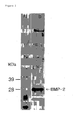
- FIG. 4 shows the result of the Western blot analysis.
- the band corresponding to "M” indicates a protein marker
- the band corresponding to "K” indicates a BMP-2 purified according to the present invention
- the band corresponding to "R” indicates a BMP-2 purchased from R&D Systems, Inc. From the results in FIG. 4 , it was confirmed that the protein purified according to the present invention was BMP-2.
- the BMP-2 purified according to the present invention had a significantly high purity compared to the BMP-2 of R&D Systems, Inc.
- the method of the invention for purifying a protein belonging to the TGF- ⁇ superfamily, particularly BMP-2 the number of purification steps is reduced and the purification process is simplified, compared to the conventional method for purifying BMP-2.
- the time required for purification of BMP-2 can be shortened and the purification cost can be reduced.
- the present invention solves the problem that as the time for purification of BMP-2 increases and the number of purification steps increases, BMP-2 is degraded by protease or lost during purification steps, resulting in a decrease in the final yield of BMP-2.
- the method of the invention increases the final yield of BMP-2.
Landscapes
- Health & Medical Sciences (AREA)
- Chemical & Material Sciences (AREA)
- Organic Chemistry (AREA)
- Life Sciences & Earth Sciences (AREA)
- Medicinal Chemistry (AREA)
- General Health & Medical Sciences (AREA)
- Genetics & Genomics (AREA)
- Molecular Biology (AREA)
- Biophysics (AREA)
- Proteomics, Peptides & Aminoacids (AREA)
- Biochemistry (AREA)
- Orthopedic Medicine & Surgery (AREA)
- Gastroenterology & Hepatology (AREA)
- Zoology (AREA)
- Toxicology (AREA)
- General Chemical & Material Sciences (AREA)
- Veterinary Medicine (AREA)
- Public Health (AREA)
- Animal Behavior & Ethology (AREA)
- Pharmacology & Pharmacy (AREA)
- Nuclear Medicine, Radiotherapy & Molecular Imaging (AREA)
- Chemical Kinetics & Catalysis (AREA)
- Physical Education & Sports Medicine (AREA)
- Bioinformatics & Cheminformatics (AREA)
- Engineering & Computer Science (AREA)
- Peptides Or Proteins (AREA)
Description
- The present invention relates to a method for purifying bone morphogenetic protein 2 (BMP-2).
- Bone morphogenetic proteins (BMPs) belong to the TGF-β superfamily of the secreted growth and differentiation factors. The BMP subfamily of the TGF-β superfamily includes at least fifteen proteins, including BMP-2, BMP-3, BMP-3b, BMP-4, BMP-5, BMP-6, BMP-7, BMP-8, BMP-9, BMP-10, BMP-11, BMP-12, BMP-13, BMP-14 and BMP-15.
- It has been reported that BMPs regulate the growth and differentiation of cells such as osteogenic cells, and particularly BMP-2, BMP-4, BMP-5, BMP-6, BMP-7 and BMP-8 are growth and differentiation factors that can induce ectopic bone formation alone in vitro and in vivo. Also, BMP-2 can direct the development of neural crest cells into neural phenotypes, and BMP-4 and BMP-7 can induce a sympathetic adrenergic phenotype. It has been reported that a heterodimer composed of BMP-4 and BMP-7 is a potent inducer of mesoderm (see A. Suzuki, E. Kaneko, J. Maeda and N. Ueno, "Mesoderm induction by BMP-4 and -7 heterodimers," Biochem. Biophys. Res. Commun., vol. 232, pp. 153-156, March 1997).
- In addition, BMPs can form either homodimers composed of monomers of a single BMP subfamily member or heterodimers composed of monomers of two different BMP subfamily members linked by a disulfide bond in a head-to-tail arrangement (see K. Azari, B. A. Doll, C. Sfeir, Y. Mu and J. O. Hollinger, "Therapeutic potential of bone morphogenetic proteins," Expert Opinion on Investigational Drugs, vol. 10, pp. 1677-1686, September 2001). Also, it was reported that BMP dimers such as BMP-2 homodimers and BMP-2/7 heterodimers are active in vivo (see D. I. Israel, J. Nove, K. M. Kerns, I. K. Moutsatsos and R. J. Kaufman, "Expression and Characterization of Bone Morphogenetic Protein-2 in Chinese Hamster Ovary Cells," Growth Factors, vol. 7, pp. 139-150, 1992; M. F. Mehler, P. C. Mabie, D. M. Zhang and J. A. Kessler, "Bone morphogenetic proteins in the nervous system," Trends Neurosci., vol. 20, pp. 309-317, 1997; T. K. Sampath, J. E. Coughlin and R. M. Whetstone, "Bovine osteogenic protein is composed of dimers of OP-1 and BMP-2A, two members of the transforming growth factor-b superfamily," J. Biol. Chem., vol. 265, pp. 13198-13205, August 1990; D. I. Israel, J. Nove, K. M. Kerns, R. J. Kaufman, V. Rosen, K. A. Cox and J. M. Wozney, "Heterodimeric bone morphogenetic proteins show enhanced activity in vitro and in vivo," Growth Factors, vol. 13, pp. 291-300, 1996).
- Particularly, it is known in the art that BMP-2 belonging to the TGF-β superfamily of proteins plays an important role in the development of bone and cartilage, and potentially induce osteoblastic differentiation of a variety of cell types (see "Regulation of human cranial osteoblast phenotype by FGF-2, FGFR-2 and BMP2 signaling", Marie PJ, Debiais F, Hay E, 2002). Also, BMP-2 acts to stimulate bone production, and products that induce new bone formation by implanting BMP-2 into collagen sponges are being marketed.
- In connection with BMP-2 playing an important role in bone tissue regeneration as described above, various studies have been conducted. Accordingly, it is required to remove proteins or impurities other than BMP-2 from cell culture fluids containing BMP-2 and to obtain BMP-2 from the cell culture fluids in high purity and high yield.
- In the prior art, in order to purify BMP-2 from culture fluids of cell, etc. in high purity and obtain it in high yield, several steps of chromatography were combined and performed depending on charges, ligands, the degree of hydrophobicity or size (see
WO 99/31120 - In order to solve the problems occurring in the prior art, the present inventors conducted a wide variety of experiments in connection with the chemical and physical characteristics of BMP-2, various types of chromatography, and the resin, column, type and concentration of buffer, washing solution or eluate, and cut-off size of membrane, which are used in each chromatography. As a result, the present inventors have reached the present invention allowing high-purity BMP-2 to be obtained in high yield while reducing the number of purification steps and the purification time.
- The present invention relates to a method for purifying bone morphogenetic protein 2 (BMP-2). Particularly, the method according to the present invention is characterized by consisting of the following steps:
- a) pre-treating a solution containing BMP-2 in which the solution is concentrated using a cut-off membrane filter; and optionally adding NaCl and Tris to the concentrated solution using the cut-off membrane filter, adjusting the solution to a pH 5-9, and then filtering the solution through a filtration filter;
- b) subjecting the solution obtained in step a) to hydrophobic interaction chromatography;
- c) diafiltering the solution obtained in step b); and
- d) subjecting the solution obtained in step c) to size exclusion chromatography.
- More preferably, NaCl and Tris in step a) are added at concentrations of 0.2-5 M and 5-500 mM, respectively.
- More preferably, the cut-off membrane filter used in step a) is a 30 kDa cut-off membrane filter, and the filtration filter has a pore size of 0.1-1.0 µm.
- More preferably, the hydrophobic interaction chromatography in step b) is butyl sepharose chromatography.
- More preferably, butyl sepharose 4 fast flow resin is used in the butyl sepharose chromatography.
- More preferably, the chromatography in step b) comprises equilibrating a column with a buffer containing Tris and NaCl, loading the column with the solution obtained in step a), washing the column with a buffer containing Tris, NaCl and isopropanol, and then eluting the column with a buffer containing Tris, NaCl and isopropanol.
- More preferably, the column-equilibrating buffer, column-washing buffer and column-eluting buffer in step b) have a pH 5-9, and the concentration of Tris, NaCl and isopropanol is 5-500 mM, 0.2-5 M and 0.1-50 wt%, respectively.
- More preferably, the diafiltration in step c) comprises exchanging and concentrating the solution obtained in step b) with a buffer containing Tris, NaCl, L-arginine and glycerol using a cut-off membrane filter.
- More preferably, the buffer that is exchanged in step c) has a pH 5-9, and contains 5-500 mM of Tris, 0.2-5 M of NaCl, 0.2-5 M of L-arginine and 1-50 wt% of glycerol.
- More preferably, the cut-off membrane filter used in step c) is a 30 kDa cut-off membrane filter.
- More preferably, the size exclusion chromatography in step d) is sephacryl chromatography.
- More preferably, sephacryl S-100 resin is used in the sephacryl chromatography.
- More preferably, the chromatography in step d) comprises equilibrating a column with a buffer containing Tris and NaCl, loading the column with the solution obtained in step c), and eluting the column with a buffer containing Tris and NaCl.
- More preferably, the column-equilibrating buffer and column-eluting buffer in step d) have a pH 5-9, and contain 5-500 mM of Tris and 0.05-5 M of NaCl.
- The present invention also relates to a protein purified according to the above-described method.
-
-
FIG. 1 is a schematic view showing a purification process according to the present invention. -
FIG. 2 shows the result of SDS-PAGE analysis of a BMP-2 eluate recovered from a butyl sepharose chromatography step. InFIG. 2 , the band corresponding to "M" indicates a marker for determining the molecular weight of a desired protein, and the band corresponding to "B" indicates a BMP-2 eluate recovered through butyl sepharose chromatography. -
FIG. 3 shows the result of SDS-PAGE analysis of a BMP-2 eluate recovered from a sephacryl chromatography step. InFIG. 3 , the band corresponding to "M" indicates a marker for determining the molecular weight of a desired protein, and the band corresponding to "B" indicates a BMP-2 eluate recovered through sephacryl chromatography. -
FIG. 4 shows the result of Western blot analysis of a BMP-2 purified according to the method of the present invention and a BMP-2 purchased from R&D Systems, Inc. InFIG. 4 , the band corresponding to "M" indicates a protein marker, the band corresponding to "K" indicates a BMP-2 purified according to the method of the present invention, and the band corresponding to "R" indicates a BMP-2 purchased from R&D Systems, Inc. - In the present invention, a solution containing a protein belonging to the TGF-β superfamily, which is used as a starting material for purification, is preferably a BMP-containing solution, and more preferably a BMP-2-containing solution. Herein, there is no limitation in the type of BMP-2-producing cells, the type of cell culture medium, culture reagents, and culture conditions. For example, Chinese hamster ovary (CHO) cell culture fluids or E. coli culture fluids derived from microorganism, which contain BMP-2 together with other proteins or impurities, may be used as a starting material to be purified in the present invention.
- As used herein, the term "Da (Dalton)" used in connection with the cut-off membrane filter is the unit of molecular weight of proteins. For example, if a 30 kDa cut-off membrane filter is used, impurities including proteins having a molecular weight of 30 kDa or less will pass through the membrane filter.
- As used herein, the term "hydrophobic interaction chromatography" refers to a separation/purification method that uses a hydrophobic property of proteins. Many various factors, including the salinity, type and pH of a buffer that is used in hydrophobic interaction, influence the ability to separate proteins. Also, because proteins interact with each other under high ionic strength conditions, the ability to separate the proteins is higher when a starting material is purified in previously partially. In the present invention, butyl sepharose chromatography, phenyl sepharose chromatography, octyl sepharose chromatography or the like may be used for purifying BMP-2 in high purity and high yield. Particularly, a chromatographic method that uses butyl sepharose 4 fast flow resin is preferably used.
- As used herein, the term "size exclusion chromatography" refers to a method for separating materials according to molecular size using uniformly sized, porous, nonionic gels as a stationary phase. Generally, materials that are smaller than the pore size have a long elution time, because they enter the porous stationary phase and have a longer transit time. On the contrary to this, materials that are larger than the pore size have a short elution time, because they cannot enter the porous stationary phase and thus move fast together with the mobile phase. Accordingly, in the size exclusion chromatography, large-sized materials are eluted fast, and small-sized materials are eluted slowly. In the present invention, size exclusion chromatography, for example sephacryl chromatography, superdex chromatography or sephadex chromatography is preferably used for purifying BMP-2 in high purity and high yield. Particularly, a chromatographic method that uses sephacryl s-100 resin is preferably used.
- In chromatography, pH is an important factor determining the stabilization of proteins.
- Pressure and flow rate are important factors that determine the interaction between a desired protein and a column and the ability to separate the desired protein.
- Conductivity indicates the concentration of an electrolyte in a solvent, which influences whether the desired protein is bound to or separated from the column.
- Column volume (CV) indicates the volume of a packed column, and the purification volume is determined according to the CV.
- Equilibration is a process of making a buffer in a column equal to a buffer composition of a sample before being loaded into the column, in order to prevent a protein of interest from being agglomerated or losing its activity by environmental changes. The composition of a buffer that is used for equilibration varies depending on the type of desired protein.
- Loading is a process of injecting a sample into a column. It is general to load about 30-40% of the column volume, but the present inventors made it possible to load about 200% or more of the column volume by controlling the detailed conditions of chromatography.
- Washing is a process of removing impurities other than a desired protein. The concentrations and components of a buffer that is used for washing vary depending on the type of protein to be purified.
- Elution is a process of separating a desired protein from a column. In case that the concentrations and components of a buffer are not suitable, there is a problem in that the purity of the desired protein is reduced, because a large amount of impurities are simultaneously eluted. For this reason, the concentrations and components of a buffer that is used for elution are changed depending on the type of protein to be purified.
- Diafiltration is a combined method of dialysis and ultrafiltration. It is generally used to remove only some solutes from a fluid containing a solvent and two or more solutes having different molecular sizes.
- In diafiltration, feed pump speed indicates the pump speed at which a buffer is flowed into a membrane filter. The feed pump speed is an important factor that determines the yield of BMP-2.
- Feed pressure indicates the pressure of an injection line, which is caused by the feed pump.
- Retentate pressure indicates the pressure of a solvent which is returned without passing through a membrane filter, and it is an important factor determining the yield of BMP-2.
- Permeate pressure indicates the pressure of a solvent which passes through a membrane filter, and it is an important factor determining the yield of BMP-2.
- Accordingly, feed pump speed, feed pressure, retentate pressure and permeate pressure should be comprehensively considered to determine their suitable values in order to purify BMP-2 in high yield and purity.
- As used herein, the term "SDS-PAGE" is an abbreviation for sodium dodecyl sulfate polyacrylamide gel electrophoresis. It is a technique of separating proteins according to electrophoretic mobility (for example, factors such as the molecular weight or length of a polypeptide chain). In this case, proteins having low molecular weights show long migration distances, and when a Rf value is obtained using a molecular weight marker, the molecular weight of a desired protein can be determined or the desired protein can be identified.
- As used herein, the term "Tris" is an abbreviation for an organic compound known as tris(hydroxymethyl)aminomethane having the formula (HOCH2)3CNH2.
- Hereinafter, the method of the present invention for purifying BMP-2 among proteins belonging to the TGF-β superfamily will be described in detail with reference to the following examples. It is to be understood, however, that these examples are for illustrative purposes only and are not to be construed to limit the scope of the present invention. In addition, it is to be understood that those ordinarily skilled in the art may make various modifications to the examples within the scope of the present invention.
- 30 L of Chinese hamster ovary (CHO) cell culture fluid containing BMP-2 was concentrated to about 3 L using a 30 kDa cut-off membrane filter. Then, NaCl (1 M) and Tris (50 mM) were added to the culture fluid which was then adjusted to a pH of about 7.0. After that, the culture fluid was filtered through a filtration filter having a pore size of 0.2 µm.
- Unlike conventional processes of purifying BMP-2, the BMP-2-containing culture fluid was concentrated about 10-fold before the culture fluid was subjected to chromatography in the present invention, whereby the amount of materials added thereto was reduced to 1/10. This could shorten the time required for the subsequent hydrophobic interaction chromatography. Also, this could solve the problem that the degree of degradation of BMP-2 increases as the purification time is delayed. Thus, in the present invention, the yield of the finally obtained BMP-2 was increased.
- In conventional processes of purifying BMP-2, it is usual to filter a BMP-2-containing culture fluid directly, but in the filtration step of the present invention, the filtration was performed after adding NaCl and Tris to the BMP-2-containing culture fluid and adjusting the pH of the culture fluid to about 7.0.
- The filtered solution was subjected to a hydrophobic interaction chromatography process using butyl sepharose 4 fast flow resin. In this step, the chromatography column was equilibrated with 3 CV (column volume) of a buffer containing 50 mM Tris and 1 M NaCl (pH: about 7.0). Then, the filtered solution was loaded into the column up to about 2 CV of the packed column volume. Then, the column was washed with 3 CV of a buffer containing 50 mM Tris, 850 mM NaCl and 3-4 wt% isopropanol (pH: about 7.0). After that, the BMP-2-containing solution was eluted with 2 CV of a buffer containing 50 mM Tris, 600 mM NaCl and 10-15 wt% isopropanol (pH: about 7.0).
- Herein, the butyl sepharose chromatography is a process for removing most impurity proteins other than BMP-2 from the culture fluid. The conditions of chromatography vary depending on the type of protein, but in the present invention, the composition and concentration of the buffer used in the butyl sepharose chromatography were optimized, thereby purifying BMP-2 in high yield and high purity.
- The specific conditions in which the butyl sepharose chromatography was performed are shown in Table 1 below.
[Table 1] Operating parameters of butyl sepharose chromatography Parameter Desired range All processes Pressure ≤10 psi pH 7.0±0.2 Equilibration Flow rate 60 cm/h Volume 3 CV Conductivity 89-90 mS/cm Loading Flow rate 30 cm/ h Volume 2 CV Conductivity 80-90 mS/cm Washing Flow rate 60 cm/h Volume 3 CV Conductivity 65-66 mS/cm Elution Flow rate 30 cm/ h Volume 2 CV Conductivity 45-46 mS/cm -
FIG. 2 shows the result of SDS-PAGE analysis of a BMP-2 eluate recovered from the butyl sepharose chromatography step. InFIG. 2 , the band corresponding to "M" indicates a marker for determining the molecular weight of a desired protein, and the band corresponding to "B" indicates a BMP-2 eluate recovered through butyl sepharose chromatography. In the band corresponding to "B", the portion pointed out by the arrow indicates the BMP-2 to be purified in the present invention. - The BMP-2 eluate recovered from the butyl sepharose chromatography step was analyzed and, as a result, the yield of BMP-2 was about 95% and the purity of BMP-2 was about 85%.
- The BMP-2-containing solution eluted by the hydrophobic interaction chromatography was exchanged and concentrated with a buffer containing 50 mM Tris, 600 mM NaCl, 0.5 M L-arginine and 5 wt% glycerol (pH: about 7.0) using a 30 kDa cut-off membrane filter, thus obtaining about 20 mL of a solution.
- Herein, diafiltration is a preparatory step for size exclusion chromatography after the completion of the hydrophobic interaction chromatography, in which the buffer composition of the sample is optimized to obtain a high-purity BMP-2.
- In the conventional BMP-2 purification process, a 10 kDa cut-off membrane filter was usually used. However, if this 10 kDa cut-off membrane filter is used, there is a problem in that the solution contains impurities such as proteins having a molecular weight of 10 kDa or more in addition to a BMP-2 intended to be purified, and for this reason, additional purification steps and time are further required. On the contrary, the diafiltration step of the present invention uses a 30 kDa cut-off membrane filter to remove impurities, such as proteins having a molecular weight of 30 kDa or less, from the BMP-2-containing solution. Thus, the 30 kDa cut-off membrane filter used in the diafiltration step of the present invention has an advantage in that it can remove a large amount of impurities compared to the 10 kDa cut-off membrane filter.
- Herein, because the BMP-2 protein to be purified in the present invention has a molecular weight of about 28-32 kDa, if the 30 kDa cut-off membrane filter is used, a large amount of BMP-2 can be lost. For this reason, the 10 kDa cut-off membrane filter was used instead of the 30 kDa cut-off membrane filter in the prior art. However, the present inventors controlled parameters, such as the type and concentration of buffer, feed pump speed and feed pressure, to the optimum conditions, whereby the loss of BMP-2 could be prevented while removing impurities having a molecular weight of 30 kDa or less using the 30 kDa cut-off membrane filter. The parameters used in the diafiltration step of the present invention are shown in Table 2 below.
[Table 2] Operating parameters of diafiltration (30 kDa cut-off) Parameter Desired range Feed pump speed 20 mL/min Feed pressure 0.8-1.2 psi Retentate pressure 0.1-0.2 psi Permeate pressure 0.1-0.2 psi TMP (trans-membrane pressure) 0.4-0.6 psi - The concentrated BMP-2-containing solution was subjected to a size exclusion chromatography process using sephacryl s-100 resin. In this step, the chromatography column was equilibrated with 1 CV of a buffer containing 50 mM Tris and 0.6 M NaCl (pH: about 7.0). Then, the concentrated BMP-2-containing solution was loaded into the column up to 4% of the packed column volume. Then, the column was eluted with 1 CV of a buffer containing 50 mM Tris and 0.6 M NaCl (pH: about 7.0).
- The conditions in which size exclusion chromatographs is performed vary depending on the type of protein, and the purity of protein purified varies depending on the buffer composition of sample injected into the column and the buffer composition eluted out of the column. Particularly preferred parameters used in the sephacryl chromatography in the present invention are shown in Table 3 below.
[Table 3] Operating parameters of sephacryl chromatography Parameter Desired range All processes Pressure ≤15 psi pH 7.0±0.2 Flow rate 10-30 cm/h Equilibration Volume 1 CV Conductivity 65-66 mS/cm Elution Volume 1 CV Conductivity 65-66 mS/cm -
FIG. 3 shows the result of SDS-PAGE analysis of the BMP-2 eluate recovered from the sephacryl chromatography step. InFIG. 3 , the band corresponding to "M" indicates a marker for determining the molecular weight of a desired protein, and the band corresponding to "B" indicates the BMP-2 eluate recovered through sephacryl chromatography. In the band corresponding to "B", the portion pointed out by the arrow indicates the BMP-2 to be purified in the present invention. - The BMP-2 eluate purified from the sephacryl chromatography step was analyzed and, as a result, the yield of BMP-2 was about 88% or more and the purity of BMP-2 was about 95%.
- The yield and purity obtained by quantitatively analyzing the BMP-2 determined from each of the BMP-2 purification steps of the present invention are shown in Table 4 below.
[Table 4] Yield and purity of BMP-2 recovered from each of the purification steps of the present invention Purification steps Yield (%) of BMP-2 Purity (%) of BMP-2 Cell culture fluid 100 5.7 Hydrophobic interaction chromatography 95 85 Diafiltration 95 85 Size exclusion chromatography 88 95 Finally purified BMP-2 88 95 - In order to confirm whether the protein purified according to the method of the present invention is BMP-2 and to compare the purity of the BMP-2 purified according to the present invention with the purity of a BMP-2 purchased from R&D Systems, Inc., Western blot analysis was performed in the following manner.
- (1) 1 µg of the finally purified rhBMP-2 is mixed with 4X SDS-PAGE sample buffer at a ratio of 1:3.
- (2) The mixed sample is boiled at 70 °C for 10 minutes.
- (3) The sample is centrifuged at 10,000Xg for 10 minutes.
- (4) The centrifuged supernatant is loaded on 4-12% Bis-Tris polyacrylamide gel.
- (5) Then, electrophoresis is performed at a constant voltage of 100 V for 2 hours.
- (6) The electrophoresed protein is transferred onto a PVDF membrane at 100 V for 1 hour.
- (7) The portion of the PVDF membrane, to which the protein is not attached, is blocked with 5% skim milk-containing TBST for 30 minutes.
- (8) The membrane is allowed to react for 2 hours with TBST containing primary antibody diluted at 3000:1 and 1% skim milk. Herein, the primary antibody is an anti-mouse IgG that binds specifically to BMP-2 and is originated from mouse.
- (9) The membrane is washed 4 times with TBST for 15 minutes each time.
- (10) The membrane is allowed to react for 30 minutes with TBST containing secondary antibody diluted at 5000:1 and 1% skim milk. Herein, the secondary antibody is a HRP-conjugated goat anti-mouse IgG that binds to the primary antibody and is originated from goat. HRP, i.e. an enzyme catalyzing a reaction with the substrate that causes the color change is attached to said secondary antibody.
- (11) The membrane is washed 4 times with TBST for 15 minutes each time.
- (12) A developing solution is added to the membrane, and then it is analyzed by an image analyzer.
-
FIG. 4 shows the result of the Western blot analysis. InFIG. 4 , the band corresponding to "M" indicates a protein marker, the band corresponding to "K" indicates a BMP-2 purified according to the present invention, and the band corresponding to "R" indicates a BMP-2 purchased from R&D Systems, Inc. From the results inFIG. 4 , it was confirmed that the protein purified according to the present invention was BMP-2. In addition, the BMP-2 purified according to the present invention had a significantly high purity compared to the BMP-2 of R&D Systems, Inc. - As described above, according to the method of the invention for purifying a protein belonging to the TGF-β superfamily, particularly BMP-2, the number of purification steps is reduced and the purification process is simplified, compared to the conventional method for purifying BMP-2. Thus, the time required for purification of BMP-2 can be shortened and the purification cost can be reduced. Also, the present invention solves the problem that as the time for purification of BMP-2 increases and the number of purification steps increases, BMP-2 is degraded by protease or lost during purification steps, resulting in a decrease in the final yield of BMP-2. Thus, the method of the invention increases the final yield of BMP-2.
- In addition, according to the method of the invention, although the number of purification steps is reduced, a high purity of BMP-2 can be finally obtained in high yield by optimizing and using filtrations and chromatographies, and columns, types and concentrations of buffers, and a cut-off size of membrane used in diafiltration, which are different from those of the conventional BMP-2 purification method.
Claims (10)
- A method for purifying bone morphogenetic protein 2 (BMP-2), consisting of the steps of:a) pre-treating a solution containing BMP-2, in which the solution is concentrated using a cut-off membrane filter; and optionally adding NaCl and Tris to the concentrated solution using the cut-off membrane filter, adjusting the solution to a pH 5-9, and then filtering the solution through a filtration filter;b) subjecting the solution obtained in step a) to hydrophobic interaction chromatography;c) diafiltering the solution obtained in step b); andd) subjecting the solution obtained in step c) to size exclusion chromatography.
- The method of claim 1 , wherein NaCl and Tris in step a) are added at concentrations of 0.2-5 M and 5-500 mM, respectively.
- The method of claim 1 , wherein the cut-off membrane filter used in step a) is a 30 kDa cut-off membrane filter, and the filtration filter has a pore size of 0.1-1.0 µm.
- The method of claim 1, wherein the hydrophobic interaction chromatography in step b) is butyl sepharose chromatography.
- The method of claim 1, wherein the chromatography in step b) comprises equilibrating a column with a buffer containing Tris and NaCl, loading the column with the solution obtained in step a), washing the column with a buffer containing Tris, NaCl and isopropanol, and then eluting the column with a buffer containing Tris, NaCl and isopropanol.
- The method of claim 1, wherein the diafiltration in step c) comprises exchanging and concentrating the solution obtained in step b) with a buffer containing Tris, NaCl, L-arginine and glycerol using a cut-off membrane filter.
- The method of claim 6, wherein the buffer that is exchanged in step c) has a pH 5-9, and contain 5-500 mM of Tris, 0.2-5 M of NaCl, 0.2-5 M of L-arginine and 1-50 wt% of glycerol.
- The method of claim 6, wherein the cut-off membrane filter used in step c) is a 30 kDa cut-off membrane filter.
- The method of claim 1, wherein the size exclusion chromatography in step d) is sephacryl chromatography.
- The method of claim 1, wherein the chromatography in step d) comprises equilibrating a column with a buffer containing Tris and NaCl, loading the column with the solution obtained in step c), and then eluting the column with a buffer containing Tris and NaCl.
Applications Claiming Priority (2)
| Application Number | Priority Date | Filing Date | Title |
|---|---|---|---|
| KR1020100043673A KR100991203B1 (en) | 2010-05-10 | 2010-05-10 | Method for purifying bone morphogenetic protein |
| PCT/KR2010/003021 WO2011142490A1 (en) | 2010-05-10 | 2010-05-12 | Method for purifying bone morphogenetic protein |
Publications (3)
| Publication Number | Publication Date |
|---|---|
| EP2407477A1 EP2407477A1 (en) | 2012-01-18 |
| EP2407477A4 EP2407477A4 (en) | 2012-10-31 |
| EP2407477B1 true EP2407477B1 (en) | 2014-07-02 |
Family
ID=43409209
Family Applications (1)
| Application Number | Title | Priority Date | Filing Date |
|---|---|---|---|
| EP10840220.7A Active EP2407477B1 (en) | 2010-05-10 | 2010-05-12 | Method for purifying bone morphogenetic protein |
Country Status (4)
| Country | Link |
|---|---|
| US (1) | US8648178B2 (en) |
| EP (1) | EP2407477B1 (en) |
| KR (1) | KR100991203B1 (en) |
| WO (1) | WO2011142490A1 (en) |
Families Citing this family (4)
| Publication number | Priority date | Publication date | Assignee | Title |
|---|---|---|---|---|
| KR101475484B1 (en) * | 2013-12-31 | 2014-12-23 | 주식회사 셀루메드 | Method for purifying bone morphogenetic protein 4 |
| EP3271380B1 (en) | 2015-03-17 | 2021-08-11 | ISTITUTO BIOCHIMICO ITALIANO GIOVANNI LORENZINI S.p.A. | Purification of bone morphogenetic proteins (bmps) |
| US20170129933A1 (en) * | 2015-10-23 | 2017-05-11 | Bioventus, Llc | Purification of tgf-beta superfamily proteins |
| KR20240064367A (en) | 2022-11-04 | 2024-05-13 | 주식회사 대웅제약 | Method for purifying protein of TGF-β3 |
Family Cites Families (6)
| Publication number | Priority date | Publication date | Assignee | Title |
|---|---|---|---|---|
| GB8927546D0 (en) | 1989-12-06 | 1990-02-07 | Ciba Geigy | Process for the production of biologically active tgf-beta |
| US6352972B1 (en) * | 1995-06-06 | 2002-03-05 | Marcel E. Nimni | Bone morphogenetic proteins and their use in bone growth |
| DE19647853A1 (en) * | 1996-11-19 | 1998-05-20 | Bioph Biotech Entw Pharm Gmbh | Compounds with improved cartilage and / or bone inducing activity |
| US20030036629A1 (en) * | 1997-12-12 | 2003-02-20 | Barry Foster | Novel tgf-beta protein purification methods |
| US7354722B1 (en) * | 1999-06-11 | 2008-04-08 | Signal Pharmaceuticals | Modulators of Smurf and BMP/TGFβ signaling pathways |
| US20040023322A1 (en) * | 2002-08-01 | 2004-02-05 | Goodheart Clyde R. | Method of producing non-recombinant BMP-2 and use thereof |
-
2010
- 2010-05-10 KR KR1020100043673A patent/KR100991203B1/en active Active
- 2010-05-12 US US13/142,928 patent/US8648178B2/en active Active
- 2010-05-12 EP EP10840220.7A patent/EP2407477B1/en active Active
- 2010-05-12 WO PCT/KR2010/003021 patent/WO2011142490A1/en not_active Ceased
Also Published As
| Publication number | Publication date |
|---|---|
| EP2407477A4 (en) | 2012-10-31 |
| KR100991203B1 (en) | 2010-11-01 |
| US20130060012A1 (en) | 2013-03-07 |
| US8648178B2 (en) | 2014-02-11 |
| WO2011142490A1 (en) | 2011-11-17 |
| EP2407477A1 (en) | 2012-01-18 |
Similar Documents
| Publication | Publication Date | Title |
|---|---|---|
| EP2914612B1 (en) | Purification of polypeptides using dual stage tangential-flow ultrafiltration | |
| US6953844B2 (en) | Isolation of neurotrophins from a mixture containing neurotrophin variants using hydrophobic interaction chromatography | |
| EP1127063B1 (en) | Methods of purifying recombinant human erythropoietin from cell culture supernatants | |
| RU2731720C2 (en) | Method of purifying vitamin k-dependent proteins, such as coagulation factor vii | |
| US8648178B2 (en) | Method for purifying bone morphogenetic protein | |
| US11014962B2 (en) | Method for protein purification | |
| KR20160131113A (en) | Novel purification process of gonadotropin | |
| US20210107938A1 (en) | Polypeptide separation method, polypeptide production method, and polypeptide purification device | |
| US7744862B2 (en) | Production process of recombinant placental growth factor | |
| CN113121637A (en) | Separation and purification method of recombinant protein | |
| WO2011156369A2 (en) | Purification of modified cytokines | |
| US10604779B2 (en) | Method for production of mutant-type human erythropoietin | |
| KR101212499B1 (en) | Method for purifying bone morphogenetic protein | |
| KR101475484B1 (en) | Method for purifying bone morphogenetic protein 4 | |
| EP3271380B1 (en) | Purification of bone morphogenetic proteins (bmps) | |
| CN119403818A (en) | Removal of aggregates from UF/DF pools for downstream antibody purification | |
| US20170129933A1 (en) | Purification of tgf-beta superfamily proteins |
Legal Events
| Date | Code | Title | Description |
|---|---|---|---|
| PUAI | Public reference made under article 153(3) epc to a published international application that has entered the european phase |
Free format text: ORIGINAL CODE: 0009012 |
|
| 17P | Request for examination filed |
Effective date: 20110705 |
|
| AK | Designated contracting states |
Kind code of ref document: A1 Designated state(s): AL AT BE BG CH CY CZ DE DK EE ES FI FR GB GR HR HU IE IS IT LI LT LU LV MC MK MT NL NO PL PT RO SE SI SK SM TR |
|
| A4 | Supplementary search report drawn up and despatched |
Effective date: 20120927 |
|
| RIC1 | Information provided on ipc code assigned before grant |
Ipc: C07K 1/36 20060101AFI20120921BHEP Ipc: C07K 14/51 20060101ALI20120921BHEP |
|
| 17Q | First examination report despatched |
Effective date: 20121024 |
|
| DAX | Request for extension of the european patent (deleted) | ||
| GRAP | Despatch of communication of intention to grant a patent |
Free format text: ORIGINAL CODE: EPIDOSNIGR1 |
|
| INTG | Intention to grant announced |
Effective date: 20131213 |
|
| GRAS | Grant fee paid |
Free format text: ORIGINAL CODE: EPIDOSNIGR3 |
|
| GRAA | (expected) grant |
Free format text: ORIGINAL CODE: 0009210 |
|
| AK | Designated contracting states |
Kind code of ref document: B1 Designated state(s): AL AT BE BG CH CY CZ DE DK EE ES FI FR GB GR HR HU IE IS IT LI LT LU LV MC MK MT NL NO PL PT RO SE SI SK SM TR |
|
| REG | Reference to a national code |
Ref country code: GB Ref legal event code: FG4D |
|
| REG | Reference to a national code |
Ref country code: CH Ref legal event code: EP Ref country code: AT Ref legal event code: REF Ref document number: 675882 Country of ref document: AT Kind code of ref document: T Effective date: 20140715 |
|
| REG | Reference to a national code |
Ref country code: IE Ref legal event code: FG4D |
|
| REG | Reference to a national code |
Ref country code: DE Ref legal event code: R096 Ref document number: 602010017300 Country of ref document: DE Effective date: 20140821 |
|
| REG | Reference to a national code |
Ref country code: AT Ref legal event code: MK05 Ref document number: 675882 Country of ref document: AT Kind code of ref document: T Effective date: 20140702 |
|
| REG | Reference to a national code |
Ref country code: NL Ref legal event code: VDEP Effective date: 20140702 |
|
| REG | Reference to a national code |
Ref country code: LT Ref legal event code: MG4D |
|
| PG25 | Lapsed in a contracting state [announced via postgrant information from national office to epo] |
Ref country code: FI Free format text: LAPSE BECAUSE OF FAILURE TO SUBMIT A TRANSLATION OF THE DESCRIPTION OR TO PAY THE FEE WITHIN THE PRESCRIBED TIME-LIMIT Effective date: 20140702 Ref country code: BG Free format text: LAPSE BECAUSE OF FAILURE TO SUBMIT A TRANSLATION OF THE DESCRIPTION OR TO PAY THE FEE WITHIN THE PRESCRIBED TIME-LIMIT Effective date: 20141002 Ref country code: PT Free format text: LAPSE BECAUSE OF FAILURE TO SUBMIT A TRANSLATION OF THE DESCRIPTION OR TO PAY THE FEE WITHIN THE PRESCRIBED TIME-LIMIT Effective date: 20141103 Ref country code: CZ Free format text: LAPSE BECAUSE OF FAILURE TO SUBMIT A TRANSLATION OF THE DESCRIPTION OR TO PAY THE FEE WITHIN THE PRESCRIBED TIME-LIMIT Effective date: 20140702 Ref country code: NO Free format text: LAPSE BECAUSE OF FAILURE TO SUBMIT A TRANSLATION OF THE DESCRIPTION OR TO PAY THE FEE WITHIN THE PRESCRIBED TIME-LIMIT Effective date: 20141002 Ref country code: ES Free format text: LAPSE BECAUSE OF FAILURE TO SUBMIT A TRANSLATION OF THE DESCRIPTION OR TO PAY THE FEE WITHIN THE PRESCRIBED TIME-LIMIT Effective date: 20140702 Ref country code: GR Free format text: LAPSE BECAUSE OF FAILURE TO SUBMIT A TRANSLATION OF THE DESCRIPTION OR TO PAY THE FEE WITHIN THE PRESCRIBED TIME-LIMIT Effective date: 20141003 Ref country code: LT Free format text: LAPSE BECAUSE OF FAILURE TO SUBMIT A TRANSLATION OF THE DESCRIPTION OR TO PAY THE FEE WITHIN THE PRESCRIBED TIME-LIMIT Effective date: 20140702 Ref country code: SE Free format text: LAPSE BECAUSE OF FAILURE TO SUBMIT A TRANSLATION OF THE DESCRIPTION OR TO PAY THE FEE WITHIN THE PRESCRIBED TIME-LIMIT Effective date: 20140702 |
|
| PG25 | Lapsed in a contracting state [announced via postgrant information from national office to epo] |
Ref country code: AT Free format text: LAPSE BECAUSE OF FAILURE TO SUBMIT A TRANSLATION OF THE DESCRIPTION OR TO PAY THE FEE WITHIN THE PRESCRIBED TIME-LIMIT Effective date: 20140702 Ref country code: IS Free format text: LAPSE BECAUSE OF FAILURE TO SUBMIT A TRANSLATION OF THE DESCRIPTION OR TO PAY THE FEE WITHIN THE PRESCRIBED TIME-LIMIT Effective date: 20141102 Ref country code: HR Free format text: LAPSE BECAUSE OF FAILURE TO SUBMIT A TRANSLATION OF THE DESCRIPTION OR TO PAY THE FEE WITHIN THE PRESCRIBED TIME-LIMIT Effective date: 20140702 Ref country code: PL Free format text: LAPSE BECAUSE OF FAILURE TO SUBMIT A TRANSLATION OF THE DESCRIPTION OR TO PAY THE FEE WITHIN THE PRESCRIBED TIME-LIMIT Effective date: 20140702 Ref country code: LV Free format text: LAPSE BECAUSE OF FAILURE TO SUBMIT A TRANSLATION OF THE DESCRIPTION OR TO PAY THE FEE WITHIN THE PRESCRIBED TIME-LIMIT Effective date: 20140702 Ref country code: NL Free format text: LAPSE BECAUSE OF FAILURE TO SUBMIT A TRANSLATION OF THE DESCRIPTION OR TO PAY THE FEE WITHIN THE PRESCRIBED TIME-LIMIT Effective date: 20140702 Ref country code: CY Free format text: LAPSE BECAUSE OF FAILURE TO SUBMIT A TRANSLATION OF THE DESCRIPTION OR TO PAY THE FEE WITHIN THE PRESCRIBED TIME-LIMIT Effective date: 20140702 |
|
| REG | Reference to a national code |
Ref country code: DE Ref legal event code: R097 Ref document number: 602010017300 Country of ref document: DE |
|
| PG25 | Lapsed in a contracting state [announced via postgrant information from national office to epo] |
Ref country code: SK Free format text: LAPSE BECAUSE OF FAILURE TO SUBMIT A TRANSLATION OF THE DESCRIPTION OR TO PAY THE FEE WITHIN THE PRESCRIBED TIME-LIMIT Effective date: 20140702 Ref country code: IT Free format text: LAPSE BECAUSE OF FAILURE TO SUBMIT A TRANSLATION OF THE DESCRIPTION OR TO PAY THE FEE WITHIN THE PRESCRIBED TIME-LIMIT Effective date: 20140702 Ref country code: DK Free format text: LAPSE BECAUSE OF FAILURE TO SUBMIT A TRANSLATION OF THE DESCRIPTION OR TO PAY THE FEE WITHIN THE PRESCRIBED TIME-LIMIT Effective date: 20140702 Ref country code: RO Free format text: LAPSE BECAUSE OF FAILURE TO SUBMIT A TRANSLATION OF THE DESCRIPTION OR TO PAY THE FEE WITHIN THE PRESCRIBED TIME-LIMIT Effective date: 20140702 Ref country code: EE Free format text: LAPSE BECAUSE OF FAILURE TO SUBMIT A TRANSLATION OF THE DESCRIPTION OR TO PAY THE FEE WITHIN THE PRESCRIBED TIME-LIMIT Effective date: 20140702 |
|
| PLBE | No opposition filed within time limit |
Free format text: ORIGINAL CODE: 0009261 |
|
| STAA | Information on the status of an ep patent application or granted ep patent |
Free format text: STATUS: NO OPPOSITION FILED WITHIN TIME LIMIT |
|
| 26N | No opposition filed |
Effective date: 20150407 |
|
| PG25 | Lapsed in a contracting state [announced via postgrant information from national office to epo] |
Ref country code: SI Free format text: LAPSE BECAUSE OF FAILURE TO SUBMIT A TRANSLATION OF THE DESCRIPTION OR TO PAY THE FEE WITHIN THE PRESCRIBED TIME-LIMIT Effective date: 20140702 |
|
| REG | Reference to a national code |
Ref country code: DE Ref legal event code: R119 Ref document number: 602010017300 Country of ref document: DE |
|
| REG | Reference to a national code |
Ref country code: CH Ref legal event code: PL |
|
| GBPC | Gb: european patent ceased through non-payment of renewal fee |
Effective date: 20150512 |
|
| PG25 | Lapsed in a contracting state [announced via postgrant information from national office to epo] |
Ref country code: LU Free format text: LAPSE BECAUSE OF FAILURE TO SUBMIT A TRANSLATION OF THE DESCRIPTION OR TO PAY THE FEE WITHIN THE PRESCRIBED TIME-LIMIT Effective date: 20150512 Ref country code: LI Free format text: LAPSE BECAUSE OF NON-PAYMENT OF DUE FEES Effective date: 20150531 Ref country code: CH Free format text: LAPSE BECAUSE OF NON-PAYMENT OF DUE FEES Effective date: 20150531 Ref country code: MC Free format text: LAPSE BECAUSE OF FAILURE TO SUBMIT A TRANSLATION OF THE DESCRIPTION OR TO PAY THE FEE WITHIN THE PRESCRIBED TIME-LIMIT Effective date: 20140702 |
|
| REG | Reference to a national code |
Ref country code: IE Ref legal event code: MM4A |
|
| PG25 | Lapsed in a contracting state [announced via postgrant information from national office to epo] |
Ref country code: DE Free format text: LAPSE BECAUSE OF NON-PAYMENT OF DUE FEES Effective date: 20151201 Ref country code: GB Free format text: LAPSE BECAUSE OF NON-PAYMENT OF DUE FEES Effective date: 20150512 Ref country code: IE Free format text: LAPSE BECAUSE OF NON-PAYMENT OF DUE FEES Effective date: 20150512 |
|
| REG | Reference to a national code |
Ref country code: FR Ref legal event code: PLFP Year of fee payment: 7 |
|
| PG25 | Lapsed in a contracting state [announced via postgrant information from national office to epo] |
Ref country code: BE Free format text: LAPSE BECAUSE OF FAILURE TO SUBMIT A TRANSLATION OF THE DESCRIPTION OR TO PAY THE FEE WITHIN THE PRESCRIBED TIME-LIMIT Effective date: 20140702 |
|
| PG25 | Lapsed in a contracting state [announced via postgrant information from national office to epo] |
Ref country code: MT Free format text: LAPSE BECAUSE OF FAILURE TO SUBMIT A TRANSLATION OF THE DESCRIPTION OR TO PAY THE FEE WITHIN THE PRESCRIBED TIME-LIMIT Effective date: 20140702 |
|
| REG | Reference to a national code |
Ref country code: FR Ref legal event code: PLFP Year of fee payment: 8 |
|
| PG25 | Lapsed in a contracting state [announced via postgrant information from national office to epo] |
Ref country code: HU Free format text: LAPSE BECAUSE OF FAILURE TO SUBMIT A TRANSLATION OF THE DESCRIPTION OR TO PAY THE FEE WITHIN THE PRESCRIBED TIME-LIMIT; INVALID AB INITIO Effective date: 20100512 Ref country code: SM Free format text: LAPSE BECAUSE OF FAILURE TO SUBMIT A TRANSLATION OF THE DESCRIPTION OR TO PAY THE FEE WITHIN THE PRESCRIBED TIME-LIMIT Effective date: 20140702 |
|
| PG25 | Lapsed in a contracting state [announced via postgrant information from national office to epo] |
Ref country code: TR Free format text: LAPSE BECAUSE OF FAILURE TO SUBMIT A TRANSLATION OF THE DESCRIPTION OR TO PAY THE FEE WITHIN THE PRESCRIBED TIME-LIMIT Effective date: 20140702 |
|
| REG | Reference to a national code |
Ref country code: FR Ref legal event code: PLFP Year of fee payment: 9 |
|
| PG25 | Lapsed in a contracting state [announced via postgrant information from national office to epo] |
Ref country code: MK Free format text: LAPSE BECAUSE OF FAILURE TO SUBMIT A TRANSLATION OF THE DESCRIPTION OR TO PAY THE FEE WITHIN THE PRESCRIBED TIME-LIMIT Effective date: 20140702 |
|
| PG25 | Lapsed in a contracting state [announced via postgrant information from national office to epo] |
Ref country code: AL Free format text: LAPSE BECAUSE OF FAILURE TO SUBMIT A TRANSLATION OF THE DESCRIPTION OR TO PAY THE FEE WITHIN THE PRESCRIBED TIME-LIMIT Effective date: 20140702 |
|
| PGFP | Annual fee paid to national office [announced via postgrant information from national office to epo] |
Ref country code: FR Payment date: 20250523 Year of fee payment: 16 |