EP2405630A1 - Method and base station for consolidating power saving classes - Google Patents
Method and base station for consolidating power saving classes Download PDFInfo
- Publication number
- EP2405630A1 EP2405630A1 EP11183994A EP11183994A EP2405630A1 EP 2405630 A1 EP2405630 A1 EP 2405630A1 EP 11183994 A EP11183994 A EP 11183994A EP 11183994 A EP11183994 A EP 11183994A EP 2405630 A1 EP2405630 A1 EP 2405630A1
- Authority
- EP
- European Patent Office
- Prior art keywords
- consolidated
- psc
- power saving
- application
- traffic
- Prior art date
- Legal status (The legal status is an assumption and is not a legal conclusion. Google has not performed a legal analysis and makes no representation as to the accuracy of the status listed.)
- Granted
Links
Images

Classifications
-
- H—ELECTRICITY
- H04—ELECTRIC COMMUNICATION TECHNIQUE
- H04W—WIRELESS COMMUNICATION NETWORKS
- H04W52/00—Power management, e.g. Transmission Power Control [TPC] or power classes
- H04W52/02—Power saving arrangements
- H04W52/0209—Power saving arrangements in terminal devices
- H04W52/0251—Power saving arrangements in terminal devices using monitoring of local events, e.g. events related to user activity
-
- H—ELECTRICITY
- H04—ELECTRIC COMMUNICATION TECHNIQUE
- H04W—WIRELESS COMMUNICATION NETWORKS
- H04W52/00—Power management, e.g. Transmission Power Control [TPC] or power classes
- H04W52/02—Power saving arrangements
- H04W52/0209—Power saving arrangements in terminal devices
- H04W52/0261—Power saving arrangements in terminal devices managing power supply demand, e.g. depending on battery level
- H04W52/0264—Power saving arrangements in terminal devices managing power supply demand, e.g. depending on battery level by selectively disabling software applications
-
- H—ELECTRICITY
- H04—ELECTRIC COMMUNICATION TECHNIQUE
- H04W—WIRELESS COMMUNICATION NETWORKS
- H04W52/00—Power management, e.g. Transmission Power Control [TPC] or power classes
- H04W52/04—Transmission power control [TPC]
- H04W52/18—TPC being performed according to specific parameters
- H04W52/20—TPC being performed according to specific parameters using error rate
-
- Y—GENERAL TAGGING OF NEW TECHNOLOGICAL DEVELOPMENTS; GENERAL TAGGING OF CROSS-SECTIONAL TECHNOLOGIES SPANNING OVER SEVERAL SECTIONS OF THE IPC; TECHNICAL SUBJECTS COVERED BY FORMER USPC CROSS-REFERENCE ART COLLECTIONS [XRACs] AND DIGESTS
- Y02—TECHNOLOGIES OR APPLICATIONS FOR MITIGATION OR ADAPTATION AGAINST CLIMATE CHANGE
- Y02D—CLIMATE CHANGE MITIGATION TECHNOLOGIES IN INFORMATION AND COMMUNICATION TECHNOLOGIES [ICT], I.E. INFORMATION AND COMMUNICATION TECHNOLOGIES AIMING AT THE REDUCTION OF THEIR OWN ENERGY USE
- Y02D30/00—Reducing energy consumption in communication networks
- Y02D30/70—Reducing energy consumption in communication networks in wireless communication networks
Definitions
- the present invention concerns power saving classes in a wireless network and more particularly, controlling such power saving classes to improve performance of mobile stations.
- Sleep mode is a state in which a mobile station (MS) conducts pre-negotiated periods of absence from a serving base station (BS) air interface.
- the Institute of Electrical and Electronics Engineers (IEEE) standard 802.16e defines sleep mode with the intent to minimize MS power use and to decrease the use of serving BS air interface resources.
- sleep mode operation is implemented in the form of power saving classes (PSC).
- PSC power saving classes
- Each PSC is a group of connections that have common demand properties.
- different PSCs will exist for real -time connections ⁇ such as voice over Internet protocol (VOIP) or push-to-talk (PTT) communications ⁇ and for non-real-time connections ⁇ like file transfer protocol (FTP).
- VOIP voice over Internet protocol
- PTT push-to-talk
- an MS may have multiple PSCs in effect at the same time when the MS is simultaneously running a mix of real-time and non-real-time applications.
- each PSC operates independently on its own sleep/awake schedule, it is only possible for an MS to turn off its transceiver and enter a sleep state when all the PSCs are in a sleep interval.
- the opportunities for the transceiver to enter a sleep state are decreased, particularly as the number of PSCs is increased.
- the MS suffers from increased power drain and shortened battery life.
- the terms “a” or “an,” as used herein, are defined as one or more than one.
- the term “plurality,” as used herein, is defined as two or more than two.
- the term “another,” as used herein, is defined as at least a second or more.
- the terms “including” and/or “having,” as used herein, are defined as comprising (i.e., open language).
- the term “coupled” as used herein, are defined as connected, although not necessarily directly, and not necessarily mechanically.
- processor can include any component or group of components, including any relevant hardware and/or software, that can carry out the functions described in relation to the inventive arrangements herein.
- the term “communication unit” or “mobile unit” or “mobile station” can be defined as any electronic device capable of at least receiving and/or transmitting wireless communication signals.
- the term “transceiver” can be any component or group of components that are capable of receiving and transmitting communications signals.
- the term “consolidate” or “consolidating” can mean to bring separate parts together into a single or unified whole.
- a “mixed media environment” can include any setting or surrounding in which at least two types of media are supported.
- An “application connection” can be defined as a logical bearer carrying signaling and traffic for an application.
- An “application” can be defined as any program that is supported by a mobile station.
- a “power saving class” can be defined as a group of application connections that have common demand properties and that substantially share the same duration and frequency of listening intervals. Also, the term “deactivate” or “deactivating” can mean to disable, shut off or suspend. The term “reactivate” can mean to reinitiate, restart or resume.
- a “demand property” can be defined as one or more specifications required for a particular application.
- the invention concerns a method and system for consolidating PSCs.
- the method can include the steps of identifying a primary application connection and defining a consolidated PSC based on a demand property of the primary application connection.
- the method can also include the step of consolidating at least some of the remaining application connections with the consolidated PSC.
- the consolidated PSC may be associated with multiple application connections. These multiple application connections may have diverse demand properties.
- the method can also include the steps of deactivating the consolidated PSC when a deactivation indicator is received and reactivating the consolidated PSC when a reactivation indicator is received.
- a transceiver of a mobile station can be afforded more opportunities to enter a sleep state, because multiple application connections have been aggregated into a single class. Nevertheless, the mobile station still has the capability of dealing with large traffic bursts, particularly where non-real-time applications are concerned, in view of the consolidated PSC being deactivated. Moreover, the mobile station can quickly reactivate the consolidated PSC through the use of the reactivation indicator, which increases the chances that the transceiver can stay in the sleep state.
- the system 100 can include one or more base stations (BS) 110 and one or more MSs 112.
- the BS 110 can include a processor 114 and a transceiver 116 for communicating with the MSs 112.
- the MS 112 can include a transceiver 118 and a processor 120, which can include an identifier 122 and a consolidation unit 124.
- the identifier 122 and the consolidation unit 124 can be units that are separate from the processor 120.
- the identifier 122 and the consolidation unit 124 may contain any suitable combination of software and/or circuitry for executing processes that will be described below.
- the BS 110 can wirelessly exchange signals with any suitable number of the MSs 112.
- the communication protocol used for this communication can be IEEE standard 802.16e (commonly referred to as WiMax, or worldwide interoperability for microwave access), although it is understood that the invention is in no way limited as such.
- the MS 112 is capable of maintaining several application connections with the BS 110.
- the MS 112 may support various applications, some of which may be real-time applications and some of which may be non-real-time applications.
- An example of a real-time application may be a push-to-talk or VolP application, while an example of a non-real-time application includes file transfer protocol (FTP). Because it supports multiple applications, the MS 112 may maintain several application connections simultaneously.
- FTP file transfer protocol
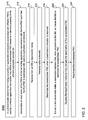
- FIG. 2 a method 200 for consolidating PSCs is shown.
- FIG. 1 a method for consolidating PSCs
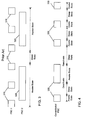
- FIGS. 3 and 4 show several PSCs.
- the steps of the method 200 are not limited to the particular order in which they are presented in FIG. 2 .
- the inventive method can also have a greater number of steps or a fewer number of steps than those shown in FIG. 2 .
- a primary application connection can be identified and a consolidated PSC can be defined based on a demand property of the primary application connection.
- at least some of the remaining application connections can be consolidated with the consolidated PSC such that the consolidated PSC is associated with multiple application connections.
- the MS 112 may support a plurality of applications, such as VolP, FTP, etc. In view of this multi-media capability, there may be times where the MS 112 is simultaneously supporting multiple applications.
- a first PSC (PSC 1) may include a plurality of listening intervals 310
- a second PSC (PSC2) may contain multiple listening intervals 320.
- the PSC 1 may be associated with a real-time application, like VolP, and as such, the listening intervals 310 may be relatively short (e.g., two frames or 10 milliseconds long) and periodic.
- the PSC 1 may be associated with a non-real-time application, like FTP, and the listening intervals 320 may not be as periodic as the listening intervals 310 and may be longer to accommodate the incoming data.
- the transceiver 118 of the MS 112 (see FIG. 1 ) may be in an awake state for a relatively lengthy amount of time, as it must accommodate the listening intervals 310, 320 of both PSC 1 and PSC 2.
- the identifier 122 can identify a primary application connection and can define a consolidated PSC based on a demand property of the primary application connection.
- the MS 112 may be currently and simultaneously supporting VolP (real-time) and FTP (non-real-time) application connections.
- the identifier 122 can select one of the application connections as the primary application connection for purposes of defining the consolidated PSC.
- the selected application connection can be a connection that is deemed the most important of the current application connections or at least exists in a most critical category of application connections.
- the selected application connection can be the application connection that is more sensitive to time delays compared to the other application connections, i.e., it can be substantially periodic in nature.
- the real-time application connections such as those associated with the exchange of voice, may be considered the most important or critical application connections.
- the identifier 122 may select the application connection associated with the VolP application to create the consolidated PSC (PSC 1) based on the demand properties of the VolP application connection.
- the demand properties of the VolP application connection may include the periodicity or frequency of its listening intervals and the number of frames in the listening interval. Selection of this PSC as the consolidated PSC can ensure that the MS 112 may maintain its listening schedule for such a critical application.
- the FTP connection is not as delay-sensitive, because it is a non-real-time application.
- the consolidation unit 124 can consolidate other application connections with PSC 1, which is shown as the consolidated PSC of FIG. 4 . That is, the consolidated PSC has essentially replaced PSC 1 and PSC 2. As a result, both application connections here (VolP and FTP) can maintain a common listening interval 330 for purposes of listening for transmissions from the BS 110. As reflected by the additional sleep states shown in FIG. 4 , this process provides more opportunities for the transceiver 118 to stay in sleep state, which can improve power management of the MS 112. As will be explained below, however, the ability of the MS 112 to properly receive and process incoming traffic is not affected. It must also be noted that any suitable number of PSCs may be consolidated, as the invention is not limited to any particular number.
- a deactivation notice can be received from the MS.
- traffic can be transmitted to the MS, and at step 218, the consolidated PSC can be deactivated when a deactivation indicator is received.
- the MS 112 can signal the BS 110 with a deactivation notice.
- the MS 112 through a sleep request, can signal the BS 110 about the formation of the consolidated PSC and any methods that may be used to deactivate the consolidated PSC.
- the BS 110 when it receives the deactivation notice, is aware that the MS 112 has consolidated its PSCs (or is about to consolidate) and may possibly deactivate it upon receipt of traffic from the BS 110. It must be noted that the deactivation notice is not limited to being transmitted from the MS 112 to the BS 110 following the consolidation step described above. In particular, this deactivation notice may be transmitted from the MS 112 to the BS 110 when the consolidated PSC is first defined.
- the BS 110 may transmit traffic to the MS 112.
- This transmitted traffic may serve as a deactivation indicator.
- a downlink (DL) data packet that is transmitted from the BS 110 may act as a deactivation indicator from the MS 110.
- This DL data packet can be any suitable type of data, such as a medium access control protocol data unit (MPDU).
- MPDU medium access control protocol data unit
- the MS 112 can be configured such that any type of traffic that is associated with application connections in the consolidated PSC and that is transmitted from the BS 110 can serve as a deactivation indicator.
- the invention is not so limited, as the MS 112 can be designed to distinguish between certain types of traffic such that only a particular form of incoming traffic may act as a deactivation indicator.
- the consolidation unit 124 of the MS 112 can deactivate the consolidated PSC.
- the second listening interval 330 of FIG. 4 shows the deactivation of the consolidated PSC.
- the consolidated PSC that was defined by, for example, the most important application connection, can be temporarily suspended.
- the BS 110 may have continuously transmitted to the MS 112 traffic relating to, as an example, the FTP application or any other application connection associated with the consolidated PSC.
- the MS 112 can maintain the listening interval 330 to accommodate the traffic exchange. This process is reflected by the additional length of the second listening interval 330.
- the consolidated PSC can be deactivated for the duration of the traffic exchange, which, in this example, is the time it takes to receive the FTP downlink data or possibly downlink data of all application connections of the consolidated PSC. It must be noted, however, that the invention is not so limited, as the consolidated PSC can be deactivated for any suitable amount of time.
- a reactivation indicator that, when received by the MS, will cause the MS to reactivate the consolidated PSC can be embedded in the transmitted traffic.
- the reactivation indicator that prompts the reactivation of the consolidated PSC can be received, as shown at step 222.
- the consolidated PSC can be reactivated.
- the BS 110 can embed or insert in traffic transmitted to the MS 112 a reactivation indicator.
- the reactivation indicator can cause the consolidation unit 124 of the MS 112 to reactivate the consolidated PSC that is associated with the multiple application connections.
- the processor 114 of the BS 110 can generate a DL data packet that indicates the end of a traffic exchange, such as a DL sleep control extended sub-header, which can be present in the payload of a DL MPDU to be sent to the MS 112. This sub-header can identify the end of the transmission coming from the BS 110.
- the BS 110 may transmit an unsolicited sleep response message to cause the MS 112 to reactivate the consolidated PSC. It must be noted that the invention contemplates other ways to provide notice to the MS 112 that a particular traffic exchange is coming to or has come to an end for purposes of reactivating a deactivated consolidated PSC.
- the MS 112 can receive the reactivation indicator, and the consolidation unit 124 can cause the consolidated PSC to be reactivated.
- the listening intervals 330 and sleep states that were associated with the consolidated PSC can be resumed. For example, focusing on the second listening interval 330 of FIG. 4 , that listening interval 330, because the traffic exchange is completed, can end, and the MS 112 can once again enter a sleep state.
- the MS 112 can enter the sleep state at a frame immediately following the frame containing the reactivation indicator. As a result, the MS 112 can have an opportunity to enter the sleep state prior to the next listening interval 330, as can be seen in FIG. 4 .
- This reactivation process that is described above can avoid a lengthy message exchange that may prevent the MS 112 from entering the sleep state. Moreover, if for any reason the MS 112 does not properly receive the reactivation indicator, the MS 112 can simply remain in an awake state until the next listening interval 330.
Landscapes
- Engineering & Computer Science (AREA)
- Computer Networks & Wireless Communication (AREA)
- Signal Processing (AREA)
- Mobile Radio Communication Systems (AREA)
- Remote Monitoring And Control Of Power-Distribution Networks (AREA)
- Supply And Distribution Of Alternating Current (AREA)
Abstract
Description
- The present invention concerns power saving classes in a wireless network and more particularly, controlling such power saving classes to improve performance of mobile stations.
- Sleep mode is a state in which a mobile station (MS) conducts pre-negotiated periods of absence from a serving base station (BS) air interface. The Institute of Electrical and Electronics Engineers (IEEE) standard 802.16e defines sleep mode with the intent to minimize MS power use and to decrease the use of serving BS air interface resources. In particular, in the specification of the 802.16e standard, sleep mode operation is implemented in the form of power saving classes (PSC). Each PSC is a group of connections that have common demand properties. Typically, different PSCs will exist for real -time connections ― such as voice over Internet protocol (VOIP) or push-to-talk (PTT) communications ― and for non-real-time connections ― like file transfer protocol (FTP). Moreover, there may even be different PSCs for the real-time connections, depending on the interval between consequent allocations for these connections. As such, an MS may have multiple PSCs in effect at the same time when the MS is simultaneously running a mix of real-time and non-real-time applications.
- Because each PSC operates independently on its own sleep/awake schedule, it is only possible for an MS to turn off its transceiver and enter a sleep state when all the PSCs are in a sleep interval. Thus, the opportunities for the transceiver to enter a sleep state are decreased, particularly as the number of PSCs is increased. As a result, the MS suffers from increased power drain and shortened battery life.
- The features of the present invention, which are believed to be novel, are set forth with particularity in the appended claims. The invention, together with further objects and advantages thereof, may best be understood by reference to the following description, taken in conjunction with the accompanying drawings, in the several figures of which like reference numerals identify like elements, and in which:
-
FIG. 1 illustrates a system for consolidating PSCs in accordance with an embodiment of the inventive arrangements; -
FIG. 2 illustrates a method for consolidating PSCs in accordance with an embodiment of the inventive arrangements; -
FIG. 3 shows several prior art PSCs; and -
FIG. 4 shows a consolidated PSC in accordance with an embodiment of the inventive arrangements. - While the specification concludes with claims defining the features of the invention that are regarded as novel, it is believed that the invention will be better understood from a consideration of the following description in conjunction with the drawings, in which like reference numerals are carried forward.
- As required, detailed embodiments of the present invention are disclosed herein; however, it is to be understood that the disclosed embodiments are merely exemplary of the invention, which can be embodied in various forms. Therefore, specific structural and functional details disclosed herein are not to be interpreted as limiting, but merely as a basis for the claims and as a representative basis for teaching one skilled in the art to variously employ the present invention in virtually any appropriately detailed structure. Further, the terms and phrases used herein are not intended to be limiting but rather to provide an understandable description of the invention.
- The terms "a" or "an," as used herein, are defined as one or more than one. The term "plurality," as used herein, is defined as two or more than two. The term "another," as used herein, is defined as at least a second or more. The terms "including" and/or "having," as used herein, are defined as comprising (i.e., open language). The term "coupled" as used herein, are defined as connected, although not necessarily directly, and not necessarily mechanically. The term "processor" can include any component or group of components, including any relevant hardware and/or software, that can carry out the functions described in relation to the inventive arrangements herein.
- The term "communication unit" or "mobile unit" or "mobile station" can be defined as any electronic device capable of at least receiving and/or transmitting wireless communication signals. The term "transceiver" can be any component or group of components that are capable of receiving and transmitting communications signals. The term "consolidate" or "consolidating" can mean to bring separate parts together into a single or unified whole. A "mixed media environment" can include any setting or surrounding in which at least two types of media are supported. An "application connection" can be defined as a logical bearer carrying signaling and traffic for an application. An "application" can be defined as any program that is supported by a mobile station. A "power saving class" can be defined as a group of application connections that have common demand properties and that substantially share the same duration and frequency of listening intervals. Also, the term "deactivate" or "deactivating" can mean to disable, shut off or suspend. The term "reactivate" can mean to reinitiate, restart or resume. A "demand property" can be defined as one or more specifications required for a particular application.
- The invention concerns a method and system for consolidating PSCs. In particular, in a mixed media environment having a plurality of application connections associated with different PSCs, the method can include the steps of identifying a primary application connection and defining a consolidated PSC based on a demand property of the primary application connection. The method can also include the step of consolidating at least some of the remaining application connections with the consolidated PSC. As such, the consolidated PSC may be associated with multiple application connections. These multiple application connections may have diverse demand properties. The method can also include the steps of deactivating the consolidated PSC when a deactivation indicator is received and reactivating the consolidated PSC when a reactivation indicator is received.
- In this arrangement, a transceiver of a mobile station can be afforded more opportunities to enter a sleep state, because multiple application connections have been aggregated into a single class. Nevertheless, the mobile station still has the capability of dealing with large traffic bursts, particularly where non-real-time applications are concerned, in view of the consolidated PSC being deactivated. Moreover, the mobile station can quickly reactivate the consolidated PSC through the use of the reactivation indicator, which increases the chances that the transceiver can stay in the sleep state.
- Referring to
FIG. 1 , asystem 100 for consolidating PSCs is shown. Thesystem 100 can include one or more base stations (BS) 110 and one ormore MSs 112. The BS 110 can include aprocessor 114 and atransceiver 116 for communicating with the MSs 112. In addition, the MS 112 can include atransceiver 118 and aprocessor 120, which can include anidentifier 122 and aconsolidation unit 124. Although shown here as internal components of theprocessor 120, theidentifier 122 and theconsolidation unit 124 can be units that are separate from theprocessor 120. Moreover, theidentifier 122 and theconsolidation unit 124 may contain any suitable combination of software and/or circuitry for executing processes that will be described below. - The BS 110 can wirelessly exchange signals with any suitable number of the
MSs 112. As an example, the communication protocol used for this communication can be IEEE standard 802.16e (commonly referred to as WiMax, or worldwide interoperability for microwave access), although it is understood that the invention is in no way limited as such. - In one arrangement, the MS 112 is capable of maintaining several application connections with the
BS 110. For example, the MS 112 may support various applications, some of which may be real-time applications and some of which may be non-real-time applications. An example of a real-time application may be a push-to-talk or VolP application, while an example of a non-real-time application includes file transfer protocol (FTP). Because it supports multiple applications, the MS 112 may maintain several application connections simultaneously. - Referring to
FIG. 2 , amethod 200 for consolidating PSCs is shown. When describing themethod 200, reference will be primarily made toFIG. 1 , although it is understood that themethod 200 can be practiced in any other suitable system or device. Reference may also be made toFIGS. 3 and 4 , which show several PSCs. The steps of themethod 200 are not limited to the particular order in which they are presented inFIG. 2 . The inventive method can also have a greater number of steps or a fewer number of steps than those shown inFIG. 2 . - At
step 210, in a mixed media environment having a plurality of application connections associated with different PSCs, a primary application connection can be identified and a consolidated PSC can be defined based on a demand property of the primary application connection. Atstep 212, at least some of the remaining application connections can be consolidated with the consolidated PSC such that the consolidated PSC is associated with multiple application connections. - For example, referring to
FIG. 1 , theMS 112, as noted earlier, may support a plurality of applications, such as VolP, FTP, etc. In view of this multi-media capability, there may be times where theMS 112 is simultaneously supporting multiple applications. Referring toFIG. 3 , several prior art PSCs are shown. Here, a first PSC (PSC 1) may include a plurality of listeningintervals 310, and a second PSC (PSC2) may contain multiple listeningintervals 320. As an example, thePSC 1 may be associated with a real-time application, like VolP, and as such, the listeningintervals 310 may be relatively short (e.g., two frames or 10 milliseconds long) and periodic. In contrast, thePSC 1 may be associated with a non-real-time application, like FTP, and the listeningintervals 320 may not be as periodic as the listeningintervals 310 and may be longer to accommodate the incoming data. As can be seen, thetransceiver 118 of the MS 112 (seeFIG. 1 ) may be in an awake state for a relatively lengthy amount of time, as it must accommodate the listeningintervals PSC 1 andPSC 2. - Referring to
FIG. 4 , an example of a consolidated PSC is shown. To describeFIG. 4 , reference will also be made toFIG. 1 . In one arrangement, when theMS 112 is supporting multiple application connections, theidentifier 122 can identify a primary application connection and can define a consolidated PSC based on a demand property of the primary application connection. For example, theMS 112 may be currently and simultaneously supporting VolP (real-time) and FTP (non-real-time) application connections. Theidentifier 122 can select one of the application connections as the primary application connection for purposes of defining the consolidated PSC. - In one arrangement, the selected application connection can be a connection that is deemed the most important of the current application connections or at least exists in a most critical category of application connections. In particular, the selected application connection can be the application connection that is more sensitive to time delays compared to the other application connections, i.e., it can be substantially periodic in nature. For example, the real-time application connections, such as those associated with the exchange of voice, may be considered the most important or critical application connections. In this example, between the VoIP and FTP connections, the
identifier 122 may select the application connection associated with the VolP application to create the consolidated PSC (PSC 1) based on the demand properties of the VolP application connection. In this case, the demand properties of the VolP application connection may include the periodicity or frequency of its listening intervals and the number of frames in the listening interval. Selection of this PSC as the consolidated PSC can ensure that theMS 112 may maintain its listening schedule for such a critical application. The FTP connection is not as delay-sensitive, because it is a non-real-time application. - Once
PSC 1 has been selected, theconsolidation unit 124 can consolidate other application connections withPSC 1, which is shown as the consolidated PSC ofFIG. 4 . That is, the consolidated PSC has essentially replacedPSC 1 andPSC 2. As a result, both application connections here (VolP and FTP) can maintain acommon listening interval 330 for purposes of listening for transmissions from theBS 110. As reflected by the additional sleep states shown inFIG. 4 , this process provides more opportunities for thetransceiver 118 to stay in sleep state, which can improve power management of theMS 112. As will be explained below, however, the ability of theMS 112 to properly receive and process incoming traffic is not affected. It must also be noted that that any suitable number of PSCs may be consolidated, as the invention is not limited to any particular number. - Referring back to
FIG. 2 , atstep 214, a deactivation notice can be received from the MS. Atstep 216, traffic can be transmitted to the MS, and atstep 218, the consolidated PSC can be deactivated when a deactivation indicator is received. For example, referring back toFIGs. 1 and4 , following the consolidation step, theMS 112 can signal theBS 110 with a deactivation notice. For example, theMS 112, through a sleep request, can signal theBS 110 about the formation of the consolidated PSC and any methods that may be used to deactivate the consolidated PSC. As such, theBS 110, when it receives the deactivation notice, is aware that theMS 112 has consolidated its PSCs (or is about to consolidate) and may possibly deactivate it upon receipt of traffic from theBS 110. It must be noted that the deactivation notice is not limited to being transmitted from theMS 112 to theBS 110 following the consolidation step described above. In particular, this deactivation notice may be transmitted from theMS 112 to theBS 110 when the consolidated PSC is first defined. - Eventually, during one of the listening
intervals 330, theBS 110 may transmit traffic to theMS 112. This transmitted traffic may serve as a deactivation indicator. For example, a downlink (DL) data packet that is transmitted from theBS 110 may act as a deactivation indicator from theMS 110. This DL data packet can be any suitable type of data, such as a medium access control protocol data unit (MPDU). That is, theMS 112 can be configured such that any type of traffic that is associated with application connections in the consolidated PSC and that is transmitted from theBS 110 can serve as a deactivation indicator. Of course, the invention is not so limited, as theMS 112 can be designed to distinguish between certain types of traffic such that only a particular form of incoming traffic may act as a deactivation indicator. - Once it receives the deactivation indicator, the
consolidation unit 124 of theMS 112 can deactivate the consolidated PSC. For example, thesecond listening interval 330 ofFIG. 4 shows the deactivation of the consolidated PSC. In particular, the consolidated PSC that was defined by, for example, the most important application connection, can be temporarily suspended. In this case, theBS 110 may have continuously transmitted to theMS 112 traffic relating to, as an example, the FTP application or any other application connection associated with the consolidated PSC. In response, theMS 112 can maintain the listeninginterval 330 to accommodate the traffic exchange. This process is reflected by the additional length of thesecond listening interval 330. As such, the consolidated PSC can be deactivated for the duration of the traffic exchange, which, in this example, is the time it takes to receive the FTP downlink data or possibly downlink data of all application connections of the consolidated PSC. It must be noted, however, that the invention is not so limited, as the consolidated PSC can be deactivated for any suitable amount of time. - Referring once again to
FIG. 2 , atstep 220, a reactivation indicator that, when received by the MS, will cause the MS to reactivate the consolidated PSC can be embedded in the transmitted traffic. In addition, the reactivation indicator that prompts the reactivation of the consolidated PSC can be received, as shown atstep 222. Atstep 224, the consolidated PSC can be reactivated. - For example, referring back to
FIGs. 1 and4 , because it is aware that theMS 112 has consolidated its PSCs, theBS 110 can embed or insert in traffic transmitted to the MS 112 a reactivation indicator. As noted above, the reactivation indicator can cause theconsolidation unit 124 of theMS 112 to reactivate the consolidated PSC that is associated with the multiple application connections. For example, theprocessor 114 of theBS 110 can generate a DL data packet that indicates the end of a traffic exchange, such as a DL sleep control extended sub-header, which can be present in the payload of a DL MPDU to be sent to theMS 112. This sub-header can identify the end of the transmission coming from theBS 110. In another arrangement, theBS 110 may transmit an unsolicited sleep response message to cause theMS 112 to reactivate the consolidated PSC. It must be noted that the invention contemplates other ways to provide notice to theMS 112 that a particular traffic exchange is coming to or has come to an end for purposes of reactivating a deactivated consolidated PSC. - The
MS 112 can receive the reactivation indicator, and theconsolidation unit 124 can cause the consolidated PSC to be reactivated. In other words, the listeningintervals 330 and sleep states that were associated with the consolidated PSC can be resumed. For example, focusing on thesecond listening interval 330 ofFIG. 4 , that listeninginterval 330, because the traffic exchange is completed, can end, and theMS 112 can once again enter a sleep state. In fact, in one arrangement, theMS 112 can enter the sleep state at a frame immediately following the frame containing the reactivation indicator. As a result, theMS 112 can have an opportunity to enter the sleep state prior to thenext listening interval 330, as can be seen inFIG. 4 . This reactivation process that is described above can avoid a lengthy message exchange that may prevent theMS 112 from entering the sleep state. Moreover, if for any reason theMS 112 does not properly receive the reactivation indicator, theMS 112 can simply remain in an awake state until thenext listening interval 330. - While the preferred embodiments of the invention have been illustrated and described, it will be clear that the invention is not so limited. Numerous modifications, changes, variations, substitutions and equivalents will occur to those skilled in the art without departing from the scope of the present invention as defined by the appended claims.
- Other aspects of the embodiments are defined in the following numbered clauses.
- 1. A method for consolidating power saving classes, comprising: in a mixed media environment having a plurality of application connections associated with different power saving classes, identifying a primary application connection; defining a consolidated power saving class based on a demand property of the primary application connection; and consolidating at least some of the remaining application connections with the consolidated power saving class such that the consolidated power saving class is associated with multiple application connections.
- 2. The method according to
clause 1 , further comprising deactivating the consolidated power saving class when a deactivation indicator is received. - 3. The method according to
clause 2, wherein the consolidated power saving class is deactivated for the duration of a traffic exchange. - 4. The method according to
clause 2, further comprising reactivating the consolidated power saving class. - 5. The method according to clause 4, further comprising receiving a reactivation indicator that prompts the reactivation of the consolidated power saving class.
- 6. The method according to clause 5, wherein the reactivation indicator is a downlink data packet or an unsolicited sleep response that indicates the end of a traffic exchange.
- 7. The method according to
clause 1 , wherein the primary application connection is a substantially periodic application connection and is part of a most critical application connection category. - 8. The method according to clause 7, wherein the primary application is a real-time application connection.
Claims (4)
- A method in a base station of facilitating the generation of a consolidated power saving class, comprising:receiving (214) from a mobile station a deactivation notice; andtransmitting (216) traffic to the mobile station, including embedding (220) in the transmitted traffic a reactivation indicator that, when received by the mobile station, can be used by the mobile station to reactivate a consolidated power saving class associated with multiple application connections.
- The method according to claim 1, wherein the reactivation indicator is a downlink data packet.
- The method according to claim 1, wherein the reactivation indicator is an unsolicited sleep response that indicates the end of a traffic exchange.
- A base station for facilitating the generation of a consolidated power saving class and being configured to perform the method of any one of claim 1 to 3.
Applications Claiming Priority (3)
| Application Number | Priority Date | Filing Date | Title |
|---|---|---|---|
| US84547706P | 2006-09-18 | 2006-09-18 | |
| US11/693,800 US7426404B2 (en) | 2006-09-18 | 2007-03-30 | Method and system for consolidating power saving classes |
| EP07814454A EP2067263B1 (en) | 2006-09-18 | 2007-08-27 | Method and system for consolidating power saving classes |
Related Parent Applications (2)
| Application Number | Title | Priority Date | Filing Date |
|---|---|---|---|
| EP07814454.0 Division | 2007-08-27 | ||
| EP07814454A Division-Into EP2067263B1 (en) | 2006-09-18 | 2007-08-27 | Method and system for consolidating power saving classes |
Publications (2)
| Publication Number | Publication Date |
|---|---|
| EP2405630A1 true EP2405630A1 (en) | 2012-01-11 |
| EP2405630B1 EP2405630B1 (en) | 2013-04-03 |
Family
ID=39189281
Family Applications (2)
| Application Number | Title | Priority Date | Filing Date |
|---|---|---|---|
| EP11183994A Not-in-force EP2405630B1 (en) | 2006-09-18 | 2007-08-27 | Method and base station for consolidating power saving classes |
| EP07814454A Active EP2067263B1 (en) | 2006-09-18 | 2007-08-27 | Method and system for consolidating power saving classes |
Family Applications After (1)
| Application Number | Title | Priority Date | Filing Date |
|---|---|---|---|
| EP07814454A Active EP2067263B1 (en) | 2006-09-18 | 2007-08-27 | Method and system for consolidating power saving classes |
Country Status (6)
| Country | Link |
|---|---|
| US (1) | US7426404B2 (en) |
| EP (2) | EP2405630B1 (en) |
| KR (1) | KR101102195B1 (en) |
| CN (1) | CN101627548B (en) |
| ES (2) | ES2395678T3 (en) |
| WO (1) | WO2008036491A2 (en) |
Families Citing this family (11)
| Publication number | Priority date | Publication date | Assignee | Title |
|---|---|---|---|---|
| US7848271B2 (en) * | 2007-06-26 | 2010-12-07 | Research In Motion Limited | System and method for conserving power for a wireless device while maintaining a connection to a network |
| KR101340177B1 (en) * | 2007-10-19 | 2014-01-15 | 삼성전자주식회사 | Method and apparatus for operating control sleep mode in a communication system |
| KR20100006110A (en) * | 2008-07-08 | 2010-01-18 | 한국전자통신연구원 | Power saving method in mobile communication network |
| EP2340614A1 (en) * | 2008-09-12 | 2011-07-06 | Nokia Siemens Networks Oy | Enhanced power saving mode for a mobile station |
| US20100110950A1 (en) | 2008-11-05 | 2010-05-06 | Industrial Technology Research Institute. | Method and apparatus for aligning power savings classes |
| US20100151878A1 (en) * | 2008-12-15 | 2010-06-17 | Ali Nader | Radio Environment Measurements in a Mobile Communication System |
| US8238280B2 (en) | 2009-02-06 | 2012-08-07 | Qualcomm Incorporated | Methods and systems for transmission scheduling during sleep mode in WIMAX networks |
| JP5170305B2 (en) * | 2009-04-03 | 2013-03-27 | 富士通株式会社 | Mobile station, radio base station, and radio communication method |
| WO2011004221A1 (en) * | 2009-07-08 | 2011-01-13 | Nokia Corporation | Method and apparatus for application power management |
| US8886132B2 (en) * | 2011-03-08 | 2014-11-11 | Skype | Controlling power saving mode in radio |
| KR102490415B1 (en) | 2016-08-02 | 2023-01-19 | 삼성전자주식회사 | Electronic device and method for power saving in the electronic device |
Citations (2)
| Publication number | Priority date | Publication date | Assignee | Title |
|---|---|---|---|---|
| US20050288022A1 (en) * | 2004-05-07 | 2005-12-29 | Lg Electronics Inc. | Method for performing handover in broadband wireless access system |
| WO2006040769A1 (en) * | 2004-10-14 | 2006-04-20 | Alvarion Ltd. | Method and apparatus for power saving in wireless systems |
Family Cites Families (4)
| Publication number | Priority date | Publication date | Assignee | Title |
|---|---|---|---|---|
| US6973052B2 (en) | 2003-12-19 | 2005-12-06 | Motorola, Inc. | Hybrid power save delivery method in a wireless local area network for real time communication |
| KR100613608B1 (en) * | 2004-09-06 | 2006-08-21 | 삼성전자주식회사 | Device having a power saving mode function and a method for controlling the power saving mode |
| KR100913087B1 (en) * | 2005-06-09 | 2009-08-21 | 엘지전자 주식회사 | How to control handover in power saving mode |
| US7751858B2 (en) * | 2006-05-05 | 2010-07-06 | Intel Corporation | Sleep-mode statistics apparatus, systems, and methods |
-
2007
- 2007-03-30 US US11/693,800 patent/US7426404B2/en active Active
- 2007-08-27 WO PCT/US2007/076848 patent/WO2008036491A2/en not_active Ceased
- 2007-08-27 CN CN2007800345147A patent/CN101627548B/en active Active
- 2007-08-27 ES ES07814454T patent/ES2395678T3/en active Active
- 2007-08-27 KR KR1020097007953A patent/KR101102195B1/en active Active
- 2007-08-27 ES ES11183994T patent/ES2403235T3/en active Active
- 2007-08-27 EP EP11183994A patent/EP2405630B1/en not_active Not-in-force
- 2007-08-27 EP EP07814454A patent/EP2067263B1/en active Active
Patent Citations (2)
| Publication number | Priority date | Publication date | Assignee | Title |
|---|---|---|---|---|
| US20050288022A1 (en) * | 2004-05-07 | 2005-12-29 | Lg Electronics Inc. | Method for performing handover in broadband wireless access system |
| WO2006040769A1 (en) * | 2004-10-14 | 2006-04-20 | Alvarion Ltd. | Method and apparatus for power saving in wireless systems |
Also Published As
| Publication number | Publication date |
|---|---|
| EP2405630B1 (en) | 2013-04-03 |
| WO2008036491A3 (en) | 2008-09-04 |
| KR20090061054A (en) | 2009-06-15 |
| CN101627548B (en) | 2013-02-13 |
| EP2067263A4 (en) | 2010-01-20 |
| ES2395678T3 (en) | 2013-02-14 |
| US7426404B2 (en) | 2008-09-16 |
| EP2067263B1 (en) | 2012-10-24 |
| KR101102195B1 (en) | 2012-01-02 |
| CN101627548A (en) | 2010-01-13 |
| WO2008036491A2 (en) | 2008-03-27 |
| US20080070642A1 (en) | 2008-03-20 |
| EP2067263A2 (en) | 2009-06-10 |
| ES2403235T3 (en) | 2013-05-16 |
Similar Documents
| Publication | Publication Date | Title |
|---|---|---|
| EP2405630B1 (en) | Method and base station for consolidating power saving classes | |
| EP2153680B1 (en) | A method and a device for saving power in a wireless user terminal | |
| JP4769303B2 (en) | Method for providing battery power conservation notification in a wireless communication system | |
| JP4913207B2 (en) | Method and apparatus for maintaining uplink synchronization and reducing battery power consumption | |
| EP2050291B1 (en) | Method and system for providing interim discontinuous reception/transmission | |
| CN104871635B (en) | Wireless device, radio network node and the method for discontinuous reception in being communicated for device-to-device | |
| CN103209469B (en) | For the method and apparatus reducing the power consumption in mobile communications network | |
| CN101583178B (en) | Method and device for dynamically controlling discontinuous reception of UE | |
| US11678366B2 (en) | Method and apparatus for resource scheduling using an access identifier | |
| CN103384394A (en) | Method and device for processing user equipment power consumption and power consumption configuration parameters | |
| TW201108806A (en) | Method and apparatus of operating in idle mode in wireless communication system | |
| CN114126093B (en) | Control method, device and equipment for discontinuous reception of sidelink and readable storage medium | |
| US20240365431A1 (en) | Communication method and communication apparatus | |
| US12108342B2 (en) | Technique for skip signal transmission | |
| JP2024513196A (en) | Sidelink intermittent reception procedure | |
| CN110574444B (en) | Method, device, terminal and medium for dynamically changing parameter of power-saving signal | |
| US20240188181A1 (en) | Methods and apparatuses for sidelink communication | |
| CN115835345B (en) | HARQ process allocation method and device, base station and storage medium | |
| CN120345342A (en) | Method, apparatus and system for multiple DRX management in a wireless network | |
| KR20140008619A (en) | Ue preference information transmission method and apparatus |
Legal Events
| Date | Code | Title | Description |
|---|---|---|---|
| AC | Divisional application: reference to earlier application |
Ref document number: 2067263 Country of ref document: EP Kind code of ref document: P |
|
| AK | Designated contracting states |
Kind code of ref document: A1 Designated state(s): AT BE BG CH CY CZ DE DK EE ES FI FR GB GR HU IE IS IT LI LT LU LV MC MT NL PL PT RO SE SI SK TR |
|
| PUAI | Public reference made under article 153(3) epc to a published international application that has entered the european phase |
Free format text: ORIGINAL CODE: 0009012 |
|
| 17P | Request for examination filed |
Effective date: 20120709 |
|
| RAP1 | Party data changed (applicant data changed or rights of an application transferred) |
Owner name: MOTOROLA MOBILITY LLC |
|
| RIC1 | Information provided on ipc code assigned before grant |
Ipc: H04M 1/00 20060101AFI20120731BHEP Ipc: H04W 52/02 20090101ALI20120731BHEP |
|
| GRAP | Despatch of communication of intention to grant a patent |
Free format text: ORIGINAL CODE: EPIDOSNIGR1 |
|
| GRAS | Grant fee paid |
Free format text: ORIGINAL CODE: EPIDOSNIGR3 |
|
| GRAA | (expected) grant |
Free format text: ORIGINAL CODE: 0009210 |
|
| AC | Divisional application: reference to earlier application |
Ref document number: 2067263 Country of ref document: EP Kind code of ref document: P |
|
| AK | Designated contracting states |
Kind code of ref document: B1 Designated state(s): AT BE BG CH CY CZ DE DK EE ES FI FR GB GR HU IE IS IT LI LT LU LV MC MT NL PL PT RO SE SI SK TR |
|
| REG | Reference to a national code |
Ref country code: GB Ref legal event code: FG4D |
|
| REG | Reference to a national code |
Ref country code: AT Ref legal event code: REF Ref document number: 605347 Country of ref document: AT Kind code of ref document: T Effective date: 20130415 Ref country code: CH Ref legal event code: EP |
|
| REG | Reference to a national code |
Ref country code: IE Ref legal event code: FG4D |
|
| REG | Reference to a national code |
Ref country code: ES Ref legal event code: FG2A Ref document number: 2403235 Country of ref document: ES Kind code of ref document: T3 Effective date: 20130516 |
|
| REG | Reference to a national code |
Ref country code: DE Ref legal event code: R096 Ref document number: 602007029576 Country of ref document: DE Effective date: 20130606 |
|
| REG | Reference to a national code |
Ref country code: NL Ref legal event code: T3 |
|
| REG | Reference to a national code |
Ref country code: AT Ref legal event code: MK05 Ref document number: 605347 Country of ref document: AT Kind code of ref document: T Effective date: 20130403 |
|
| PG25 | Lapsed in a contracting state [announced via postgrant information from national office to epo] |
Ref country code: SI Free format text: LAPSE BECAUSE OF FAILURE TO SUBMIT A TRANSLATION OF THE DESCRIPTION OR TO PAY THE FEE WITHIN THE PRESCRIBED TIME-LIMIT Effective date: 20130403 |
|
| REG | Reference to a national code |
Ref country code: LT Ref legal event code: MG4D |
|
| PG25 | Lapsed in a contracting state [announced via postgrant information from national office to epo] |
Ref country code: LT Free format text: LAPSE BECAUSE OF FAILURE TO SUBMIT A TRANSLATION OF THE DESCRIPTION OR TO PAY THE FEE WITHIN THE PRESCRIBED TIME-LIMIT Effective date: 20130403 Ref country code: AT Free format text: LAPSE BECAUSE OF FAILURE TO SUBMIT A TRANSLATION OF THE DESCRIPTION OR TO PAY THE FEE WITHIN THE PRESCRIBED TIME-LIMIT Effective date: 20130403 Ref country code: SE Free format text: LAPSE BECAUSE OF FAILURE TO SUBMIT A TRANSLATION OF THE DESCRIPTION OR TO PAY THE FEE WITHIN THE PRESCRIBED TIME-LIMIT Effective date: 20130403 Ref country code: FI Free format text: LAPSE BECAUSE OF FAILURE TO SUBMIT A TRANSLATION OF THE DESCRIPTION OR TO PAY THE FEE WITHIN THE PRESCRIBED TIME-LIMIT Effective date: 20130403 Ref country code: PT Free format text: LAPSE BECAUSE OF FAILURE TO SUBMIT A TRANSLATION OF THE DESCRIPTION OR TO PAY THE FEE WITHIN THE PRESCRIBED TIME-LIMIT Effective date: 20130805 Ref country code: BE Free format text: LAPSE BECAUSE OF FAILURE TO SUBMIT A TRANSLATION OF THE DESCRIPTION OR TO PAY THE FEE WITHIN THE PRESCRIBED TIME-LIMIT Effective date: 20130403 Ref country code: GR Free format text: LAPSE BECAUSE OF FAILURE TO SUBMIT A TRANSLATION OF THE DESCRIPTION OR TO PAY THE FEE WITHIN THE PRESCRIBED TIME-LIMIT Effective date: 20130704 Ref country code: IS Free format text: LAPSE BECAUSE OF FAILURE TO SUBMIT A TRANSLATION OF THE DESCRIPTION OR TO PAY THE FEE WITHIN THE PRESCRIBED TIME-LIMIT Effective date: 20130803 |
|
| PG25 | Lapsed in a contracting state [announced via postgrant information from national office to epo] |
Ref country code: LV Free format text: LAPSE BECAUSE OF FAILURE TO SUBMIT A TRANSLATION OF THE DESCRIPTION OR TO PAY THE FEE WITHIN THE PRESCRIBED TIME-LIMIT Effective date: 20130403 Ref country code: CY Free format text: LAPSE BECAUSE OF FAILURE TO SUBMIT A TRANSLATION OF THE DESCRIPTION OR TO PAY THE FEE WITHIN THE PRESCRIBED TIME-LIMIT Effective date: 20130403 Ref country code: PL Free format text: LAPSE BECAUSE OF FAILURE TO SUBMIT A TRANSLATION OF THE DESCRIPTION OR TO PAY THE FEE WITHIN THE PRESCRIBED TIME-LIMIT Effective date: 20130403 Ref country code: BG Free format text: LAPSE BECAUSE OF FAILURE TO SUBMIT A TRANSLATION OF THE DESCRIPTION OR TO PAY THE FEE WITHIN THE PRESCRIBED TIME-LIMIT Effective date: 20130703 |
|
| PG25 | Lapsed in a contracting state [announced via postgrant information from national office to epo] |
Ref country code: CZ Free format text: LAPSE BECAUSE OF FAILURE TO SUBMIT A TRANSLATION OF THE DESCRIPTION OR TO PAY THE FEE WITHIN THE PRESCRIBED TIME-LIMIT Effective date: 20130403 Ref country code: DK Free format text: LAPSE BECAUSE OF FAILURE TO SUBMIT A TRANSLATION OF THE DESCRIPTION OR TO PAY THE FEE WITHIN THE PRESCRIBED TIME-LIMIT Effective date: 20130403 Ref country code: EE Free format text: LAPSE BECAUSE OF FAILURE TO SUBMIT A TRANSLATION OF THE DESCRIPTION OR TO PAY THE FEE WITHIN THE PRESCRIBED TIME-LIMIT Effective date: 20130403 Ref country code: SK Free format text: LAPSE BECAUSE OF FAILURE TO SUBMIT A TRANSLATION OF THE DESCRIPTION OR TO PAY THE FEE WITHIN THE PRESCRIBED TIME-LIMIT Effective date: 20130403 |
|
| PLBE | No opposition filed within time limit |
Free format text: ORIGINAL CODE: 0009261 |
|
| STAA | Information on the status of an ep patent application or granted ep patent |
Free format text: STATUS: NO OPPOSITION FILED WITHIN TIME LIMIT |
|
| PG25 | Lapsed in a contracting state [announced via postgrant information from national office to epo] |
Ref country code: RO Free format text: LAPSE BECAUSE OF FAILURE TO SUBMIT A TRANSLATION OF THE DESCRIPTION OR TO PAY THE FEE WITHIN THE PRESCRIBED TIME-LIMIT Effective date: 20130403 |
|
| 26N | No opposition filed |
Effective date: 20140106 |
|
| REG | Reference to a national code |
Ref country code: CH Ref legal event code: PL |
|
| REG | Reference to a national code |
Ref country code: DE Ref legal event code: R097 Ref document number: 602007029576 Country of ref document: DE Effective date: 20140106 |
|
| PG25 | Lapsed in a contracting state [announced via postgrant information from national office to epo] |
Ref country code: MC Free format text: LAPSE BECAUSE OF FAILURE TO SUBMIT A TRANSLATION OF THE DESCRIPTION OR TO PAY THE FEE WITHIN THE PRESCRIBED TIME-LIMIT Effective date: 20130403 Ref country code: CH Free format text: LAPSE BECAUSE OF NON-PAYMENT OF DUE FEES Effective date: 20130831 Ref country code: LI Free format text: LAPSE BECAUSE OF NON-PAYMENT OF DUE FEES Effective date: 20130831 |
|
| REG | Reference to a national code |
Ref country code: IE Ref legal event code: MM4A |
|
| PG25 | Lapsed in a contracting state [announced via postgrant information from national office to epo] |
Ref country code: IE Free format text: LAPSE BECAUSE OF NON-PAYMENT OF DUE FEES Effective date: 20130827 |
|
| PG25 | Lapsed in a contracting state [announced via postgrant information from national office to epo] |
Ref country code: TR Free format text: LAPSE BECAUSE OF FAILURE TO SUBMIT A TRANSLATION OF THE DESCRIPTION OR TO PAY THE FEE WITHIN THE PRESCRIBED TIME-LIMIT Effective date: 20130403 Ref country code: MT Free format text: LAPSE BECAUSE OF FAILURE TO SUBMIT A TRANSLATION OF THE DESCRIPTION OR TO PAY THE FEE WITHIN THE PRESCRIBED TIME-LIMIT Effective date: 20130403 |
|
| PG25 | Lapsed in a contracting state [announced via postgrant information from national office to epo] |
Ref country code: LU Free format text: LAPSE BECAUSE OF NON-PAYMENT OF DUE FEES Effective date: 20130827 Ref country code: HU Free format text: LAPSE BECAUSE OF FAILURE TO SUBMIT A TRANSLATION OF THE DESCRIPTION OR TO PAY THE FEE WITHIN THE PRESCRIBED TIME-LIMIT; INVALID AB INITIO Effective date: 20070827 |
|
| REG | Reference to a national code |
Ref country code: FR Ref legal event code: PLFP Year of fee payment: 10 |
|
| REG | Reference to a national code |
Ref country code: FR Ref legal event code: PLFP Year of fee payment: 11 |
|
| REG | Reference to a national code |
Ref country code: NL Ref legal event code: PD Owner name: GOOGLE TECHNOLOGY HOLDINGS LLC; US Free format text: DETAILS ASSIGNMENT: CHANGE OF OWNER(S), ASSIGNMENT; FORMER OWNER NAME: MOTOROLA MOBILITY LLC Effective date: 20170626 |
|
| REG | Reference to a national code |
Ref country code: GB Ref legal event code: 732E Free format text: REGISTERED BETWEEN 20170831 AND 20170906 |
|
| REG | Reference to a national code |
Ref country code: ES Ref legal event code: PC2A Owner name: GOOGLE TECHNOLOGY HOLDINGS LLC Effective date: 20171121 |
|
| REG | Reference to a national code |
Ref country code: FR Ref legal event code: TP Owner name: GOOGLE TECHNOLOGY HOLDINGS LLC, US Effective date: 20171214 |
|
| REG | Reference to a national code |
Ref country code: FR Ref legal event code: PLFP Year of fee payment: 12 |
|
| REG | Reference to a national code |
Ref country code: DE Ref legal event code: R081 Ref document number: 602007029576 Country of ref document: DE Owner name: GOOGLE TECHNOLOGY HOLDINGS LLC, MOUNTAIN VIEW, US Free format text: FORMER OWNER: MOTOROLA MOBILITY LLC, LIBERTYVILLE, ILL., US |
|
| P01 | Opt-out of the competence of the unified patent court (upc) registered |
Effective date: 20230512 |
|
| PGFP | Annual fee paid to national office [announced via postgrant information from national office to epo] |
Ref country code: NL Payment date: 20230826 Year of fee payment: 17 |
|
| PGFP | Annual fee paid to national office [announced via postgrant information from national office to epo] |
Ref country code: IT Payment date: 20230822 Year of fee payment: 17 Ref country code: GB Payment date: 20230828 Year of fee payment: 17 Ref country code: ES Payment date: 20230901 Year of fee payment: 17 |
|
| PGFP | Annual fee paid to national office [announced via postgrant information from national office to epo] |
Ref country code: FR Payment date: 20230825 Year of fee payment: 17 |
|
| PGFP | Annual fee paid to national office [announced via postgrant information from national office to epo] |
Ref country code: DE Payment date: 20240828 Year of fee payment: 18 |
|
| REG | Reference to a national code |
Ref country code: NL Ref legal event code: MM Effective date: 20240901 |
|
| GBPC | Gb: european patent ceased through non-payment of renewal fee |
Effective date: 20240827 |
|
| PG25 | Lapsed in a contracting state [announced via postgrant information from national office to epo] |
Ref country code: NL Free format text: LAPSE BECAUSE OF NON-PAYMENT OF DUE FEES Effective date: 20240901 |
|
| PG25 | Lapsed in a contracting state [announced via postgrant information from national office to epo] |
Ref country code: GB Free format text: LAPSE BECAUSE OF NON-PAYMENT OF DUE FEES Effective date: 20240827 |
|
| PG25 | Lapsed in a contracting state [announced via postgrant information from national office to epo] |
Ref country code: IT Free format text: LAPSE BECAUSE OF NON-PAYMENT OF DUE FEES Effective date: 20240827 |
|
| PG25 | Lapsed in a contracting state [announced via postgrant information from national office to epo] |
Ref country code: FR Free format text: LAPSE BECAUSE OF NON-PAYMENT OF DUE FEES Effective date: 20240831 |
|
| REG | Reference to a national code |
Ref country code: ES Ref legal event code: FD2A Effective date: 20251001 |
|
| PG25 | Lapsed in a contracting state [announced via postgrant information from national office to epo] |
Ref country code: ES Free format text: LAPSE BECAUSE OF NON-PAYMENT OF DUE FEES Effective date: 20240828 |
|
| REG | Reference to a national code |
Ref country code: DE Ref legal event code: R119 Ref document number: 602007029576 Country of ref document: DE |