EP2405591A1 - Radio transmitting apparatus, radio receiving apparatus and preamble sequence allocating method - Google Patents
Radio transmitting apparatus, radio receiving apparatus and preamble sequence allocating method Download PDFInfo
- Publication number
- EP2405591A1 EP2405591A1 EP10748480A EP10748480A EP2405591A1 EP 2405591 A1 EP2405591 A1 EP 2405591A1 EP 10748480 A EP10748480 A EP 10748480A EP 10748480 A EP10748480 A EP 10748480A EP 2405591 A1 EP2405591 A1 EP 2405591A1
- Authority
- EP
- European Patent Office
- Prior art keywords
- antenna
- dimensions
- transmission block
- preamble sequences
- section
- Prior art date
- Legal status (The legal status is an assumption and is not a legal conclusion. Google has not performed a legal analysis and makes no representation as to the accuracy of the status listed.)
- Granted
Links
Images


Classifications
-
- H—ELECTRICITY
- H04—ELECTRIC COMMUNICATION TECHNIQUE
- H04B—TRANSMISSION
- H04B7/00—Radio transmission systems, i.e. using radiation field
- H04B7/02—Diversity systems; Multi-antenna system, i.e. transmission or reception using multiple antennas
- H04B7/04—Diversity systems; Multi-antenna system, i.e. transmission or reception using multiple antennas using two or more spaced independent antennas
- H04B7/06—Diversity systems; Multi-antenna system, i.e. transmission or reception using multiple antennas using two or more spaced independent antennas at the transmitting station
- H04B7/0613—Diversity systems; Multi-antenna system, i.e. transmission or reception using multiple antennas using two or more spaced independent antennas at the transmitting station using simultaneous transmission
- H04B7/0684—Diversity systems; Multi-antenna system, i.e. transmission or reception using multiple antennas using two or more spaced independent antennas at the transmitting station using simultaneous transmission using different training sequences per antenna
-
- H—ELECTRICITY
- H04—ELECTRIC COMMUNICATION TECHNIQUE
- H04L—TRANSMISSION OF DIGITAL INFORMATION, e.g. TELEGRAPHIC COMMUNICATION
- H04L1/00—Arrangements for detecting or preventing errors in the information received
- H04L1/02—Arrangements for detecting or preventing errors in the information received by diversity reception
- H04L1/06—Arrangements for detecting or preventing errors in the information received by diversity reception using space diversity
- H04L1/0618—Space-time coding
- H04L1/0625—Transmitter arrangements
-
- H—ELECTRICITY
- H04—ELECTRIC COMMUNICATION TECHNIQUE
- H04L—TRANSMISSION OF DIGITAL INFORMATION, e.g. TELEGRAPHIC COMMUNICATION
- H04L1/00—Arrangements for detecting or preventing errors in the information received
- H04L1/02—Arrangements for detecting or preventing errors in the information received by diversity reception
- H04L1/06—Arrangements for detecting or preventing errors in the information received by diversity reception using space diversity
- H04L1/0618—Space-time coding
- H04L1/0631—Receiver arrangements
-
- H—ELECTRICITY
- H04—ELECTRIC COMMUNICATION TECHNIQUE
- H04L—TRANSMISSION OF DIGITAL INFORMATION, e.g. TELEGRAPHIC COMMUNICATION
- H04L1/00—Arrangements for detecting or preventing errors in the information received
- H04L1/02—Arrangements for detecting or preventing errors in the information received by diversity reception
- H04L1/06—Arrangements for detecting or preventing errors in the information received by diversity reception using space diversity
- H04L1/0618—Space-time coding
- H04L1/0637—Properties of the code
- H04L1/0643—Properties of the code block codes
-
- H—ELECTRICITY
- H04—ELECTRIC COMMUNICATION TECHNIQUE
- H04L—TRANSMISSION OF DIGITAL INFORMATION, e.g. TELEGRAPHIC COMMUNICATION
- H04L25/00—Baseband systems
- H04L25/02—Details ; arrangements for supplying electrical power along data transmission lines
- H04L25/0202—Channel estimation
- H04L25/0224—Channel estimation using sounding signals
Definitions
- the present invention relates to a radio transmitting apparatus, a radio receiving apparatus, and a preamble sequence allocating method.
- the radio transmitting apparatus can obtain transmission diversity gain even when the apparatus does not know channel information (channel quality) between the subject transmitting apparatus and a radio receiving apparatus.
- channel information channel quality
- the radio transmitting apparatus performs space-time coding to the data signals s(m) and s(m+1) at the two symbol times m and (m+1) (time mT and time (m+1)T), and transmits space-time coded data x1 that is transmitted from antenna #1 and space-time coded data x2 that is transmitted from antenna #2, to the radio receiving apparatus, as expressed by following equation 1.
- the upper subscript "*" shown in equation 1 denotes a complex conjugation.
- the radio receiving apparatus performs space time decoding by using reception signals yi(m) and yi(m+1) that are received at the two continuous symbol times m and (m+1) (at time mT and time (m+1)T).
- hil denotes a channel estimation value between antenna #1 of the radio transmitting apparatus and the antenna of the radio receiving apparatus
- hi2 denotes a channel estimation value between antenna #2 of the radio transmitting apparatus and the antenna of the radio receiving apparatus.
- zi denotes a noise signal
- the radio receiving apparatus separately detects data signals s(m) and s(m+1) by using the equation 2, as expressed by following equation 3.
- the radio transmitting apparatus transmits a preamble sequence by using four antennas (antennas #1 to #4, for example).
- Antenna #4 to which the preamble sequence of sequence number #4 (the main antenna preamble sequence) is allocated becomes the main antenna, and antennas # 1 to #3 become the subordinate antennas.
- the radio receiving apparatus blind detects preamble sequences, by correlating between candidate data of the preamble sequence shared with the radio transmitting apparatus and the received preamble sequence.
- the radio receiving apparatus estimates channel quality by using the detected preamble sequence, and performs space-time coding, based on the obtained channel estimation value and the number of dimensions n of space diversity.
- hlx denotes a channel estimation value between an antenna #x of the radio transmitting apparatus and the antenna of the radio receiving apparatus. Therefore, a signal component from antenna #4 (a term that contains h14 expressed in equation 5) becomes an interference source, and the radio receiving apparatus cannot normally decode a data signal.
- the radio receiving apparatus cannot normally decode a data signal, when the apparatus fails in detecting the preamble sequence of a specific antenna (e.g. the main antenna).
- a radio transmitting apparatus includes: a determining section that determines the same number of preamble sequences as the number of dimensions in space diversity, and determines transmission block intervals of a number equal to or greater than the number of dimensions; and an allocating section that sequentially allocates the same number of preamble sequences as the number of dimensions to each antenna in the transmission block intervals, and allocates mutually different preamble sequences to each antenna at the same transmission timing in the transmission block intervals, in the same number of antennas as the number of dimensions.
- a preamble allocating method includes: determining the same number of preamble sequences as the number of dimensions in space diversity, and determining transmission block intervals of a number equal to or greater than the number of dimensions; and sequentially allocating the same number of preamble sequences as the number of dimensions to antennas in the transmission block intervals, and allocating mutually different preamble sequences to each antenna at the same transmission timing in the transmission block intervals, in the same number of antennas as the number of dimensions.
- the present invention it is possible to securely specify a number of dimensions in space diversity and normally decode a data signal, even when a preamble sequence transmitted from any antenna of the radio transmitting apparatus is detected.
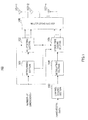
- FIG.1 shows a configuration of radio transmitting apparatus 100 according to the embodiment.
- Radio transmitting apparatus 100 shown in FIG.1 performs STBC by using n antennas (antennas 107-1 to 107-n). That is, a number of dimensions in space diversity is assumed as n.
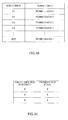
- Determining section 1012 determines n preamble sequences that are transmitted from each antenna, by arbitrarily selecting the same number of preamble sequences as the input number of dimensions n of space diversity, that is, n preamble sequences, from among candidate data of preamble sequences that are held by candidate holding section 1011 (for example, FIG.3A ). Determining section 1012 also determines a transmission block interval (hereinafter, "transmission block interval p") that becomes equal to or greater than the input number of dimensions n of space diversity. For example, determining section 1012 holds a table that shows a relationship between the number of dimensions n of space diversity and the transmission block interval p, as shown in FIG.3B .
- Determining section 1012 outputs the determined n preamble sequences to allocating section 102, and outputs the determined transmission block interval p to allocating section 102 and space-time coding section 105.
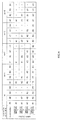
- Allocating section 102 allocates the n preamble sequences that are input from determining section 101, to each antenna (antennas 107-1 to 107-n) for each transmission block timing in the transmission block interval p that is input from determining section 101. Specifically, allocating section 102 sequentially allocates the same number of preamble sequences as the number of dimensions n of space diversity, that is, the n preamble sequences, to each antenna in the transmission block interval, in the same number of antennas 107-1 to 107-n as the number of dimensions n of space diversity. However, allocating section 102 allocates mutually different preamble sequences to each antenna, at the same transmission block timing in the transmission block interval.
- Modulating section 104 modulates transmission data that is input from channel coding section 103, and outputs the modulated transmission data to space-time coding section 105.
- Space-time coding section 105 performs space-time coding to the transmission data that is input from modulating section 104, based on the input number of dimensions n of space diversity and the transmission block interval p that is input from determining section 101. Space-time coding section 105 outputs the transmission data after the space-time coding (space-time coded data), to multiplexing section 106 for each antenna.
- space-time coding section 105 performs space-time coding to the transmission data s(m), s(m+1), s(m+2) in the transmission block interval m to (m+3).
- Multiplexing section 106 multiplexes a preamble sequence for each antenna that is input from allocating section 102 and the space-time coded data for each antenna that is input from space-time coding section 105, for each transmission block timing.
- Multiplexing section 106 transmits space-time coded data that are multiplexed with preamble sequences to radio receiving apparatus 200 via antennas 107-1 to 107-n. Preamble sequences are transmitted even when there is no transmission data (when the right-hand side of equation 6 becomes 0, for example, x3(m+1), x2(m+2), x1(m+3) that are expressed in equation 6).
- FIG. 5 shows a configuration of radio receiving apparatus 200 according to the present embodiment.
- a reception signal that is received from radio transmitting apparatus 100 via antenna 201 (that is, the space-time coded data multiplexed with preamble sequences) is input to demultiplexing section 202.
- Demultiplexing section 202 demultiplexes the reception signal into preamble sequences (hereinafter, "received preamble sequences") and space-time coded data, outputs the preamble sequences to detecting section 203, and outputs the space-time coded data to space-time decoding section 206.
- Detecting section 203 detects preamble sequences that are transmitted from antennas (107-1 to 107-n) of radio transmitting apparatus 100, from among the received preamble sequences that are input from demultiplexing section 202.
- detecting section 203 detects all kinds of preamble sequences that are transmitted from radio transmitting apparatus 100 in one of the channels between each antenna of radio transmitting apparatus 100 and antenna 201 of radio receiving apparatus 200, detecting section 203 specifies a number of transmission block timings at which all kinds of preamble sequences are detected, as the number of dimensions n of space diversity.
- FIG.6 shows an internal configuration of detecting section 203 shown in FIG.5 .
- candidate data holding section 2031 holds the same candidate data ( FIG.3A ) of preamble sequences As those of candidate data holding section 1011 ( FIG.2 ) of determining section 101.
- Candidate data holding section 2031 sequentially outputs candidate data of the preamble sequences to detecting section 2032.
- Detecting section 2032 correlates between the received preamble sequences that are input from demultiplexing section 202 and the candidate data of the preamble sequences that are held by candidate data holding section 2031. Detecting section 2032 detects candidate data of a preamble sequence that has the highest correlation value, as a preamble sequence that is transmitted from radio transmitting apparatus 100. Detecting section 2032 repeats the detection of a preamble sequence until when the same preamble sequence is detected again, at each transmission block timing. Detecting section 2032 specifies a number of transmission block timings until when the same preamble sequence is detected again, as the number of dimensions n of space diversity.
- detecting section 2032 sets, as the number of dimensions n of space diversity, a number of transmission block timings at which all kinds of preamble sequences that are transmitted from radio transmitting apparatus 100 are detected, at one of the channels between each antenna of radio transmitting apparatus 100 and antenna 201 of. In other words, detecting section 2032 sets, as the number of dimensions n of space diversity, a number of preamble sequences that are detected until when the same preamble sequence is detected again. Detecting section 2032 holds the relationship between the number of dimensions n of space diversity and the transmission block interval p ( FIG.3B ), in a similar manner to that of determining section 1012, refers to this relationship, and specifies the transmission block interval p. Detecting section 2032 outputs the specified preamble sequence to configuring section 204, and outputs the number of dimensions n of space diversity and the transmission block interval p to configuring section 204 and space-time decoding section 206.
- Configuring section 204 configures preamble sequences that are allocated respectively to antennas 107-1 to 107-n of radio transmitting apparatus 100 in the transmission block interval p equal to or greater than the number of dimensions n, based on the number of dimensions n of space diversity, the transmission block interval p, and the preambles that are input from detecting section 203.
- configuring section 204 holds the same allocation patterns as those of the allocation patterns of preamble sequences ( FIG.4 ) that are held by allocating section 102 ( FIG.1 ).
- Configuring section 204 configures all preamble sequences by specifying the preamble sequences that are allocated to each antenna for each transmission block timing, based on the preamble sequences that are detected by detecting section 203, the number of dimensions n of space diversity, and the transmission block interval p, by referring to the allocation patterns.
- Space-time decoding section 206 obtains data s(m), s(m ⁇ 1), s(m+2), by performing space-time decoding to the reception signal expressed in equation 7. Space-time decoding section 206 outputs decoded data to demodulating section 207.
- Demodulating section 207 demodulates data that is input from space-time decoding section 206, and outputs the demodulated data to channel decoding section 208.
- Channel decoding section 208 performs channel decoding to the data input from demodulating section 207, and outputs the channel-decoded data as received data.
- Determining section 101 of radio transmitting apparatus 100 and detecting section 203 of radio receiving apparatus 200 hold the relationship between the sequence number and preamble sequence shown in FIG.3A by sharing this relationship, and holds the relationship between the number of dimensions n of space diversity and the transmission block interval p shown in FIG.3B by sharing this relationship.
- Allocating section 102 of radio transmitting apparatus 100 and configuring section 204 of radio receiving apparatus 200 hold the allocation patterns of preamble sequences shown in FIG.4 .
- allocating section 102 allocates preamble sequence A of sequence number #1 to antenna 107-1 (antenna number #1), allocates the preamble sequence B of sequence number #2 to antenna 107-2 (antenna number #2), allocates the preamble sequence C of sequence number #3 to antenna 107-3 (antenna number #3), and allocates the preamble sequence D of sequence number #4 to antenna 107-4 (antenna number #4), following the allocation patterns of preamble sequences shown in FIG.4 .
- allocating section 102 allocates the preamble sequence D of sequence number #4 to antenna 107-1 (antenna number #1), allocates preamble sequence A of sequence number # 1 to antenna 107-2 (antenna number #2), allocates the preamble sequence B of sequence number #2 to antenna 107-3 (antenna number #3), and allocates the preamble sequence C of sequence number #3 to antenna 107-4 (antenna number #4), following the allocation patterns of preamble sequences shown in FIG.4 .
- allocating section 102 similarly performs allocation at the transmission block timings (m+2) and (m+3). After allocating section 102 has allocated all preamble sequences to each antenna, allocating section 102 allocates the same preamble sequence as that at the first transmission block timing m, at the next transmission block timing (at and after the transmission block timing (m+4) shown in FIG.4 ).
- allocating section 102 allocates all of four preamble sequences of sequence numbers #1, #4, #3, #2 to antenna 107-1 (antenna number #1), and allocates all of four preamble sequences of sequence numbers #2, #1, #4, #3 to antenna 107-2 (antenna number #2), at the transmission timings m, (m+1), (m+2), (m+3).
- Allocating section 102 similarly performs allocation to antenna 107-3 (antenna number #3) and antenna 107-4 (antenna number #4). That is, allocating section 102 sequentially allocates the four preamble sequences A to D to all antennas, at transmission block timings m to (m+3) in the transmission block interval p.
- detecting section 203 of radio receiving apparatus 200 correlates between the received preamble sequence and all candidate data of the preamble sequences shown in FIG.3A , and detects a preamble sequence of a sequence number that has the highest correlation value.
- detecting section 203 sequentially correlates between the received preamble sequences that are received at the transmission block timing m and all candidate data of the preamble sequences shown in FIG.3A , and detects the preamble sequence C of sequence number #3 that has the highest correlation value.
- detecting section 203 sequentially correlates between the received preamble sequences that are received at the transmission block timing (m+1) and all candidate data of the preamble sequences shown in FIG.3A , and detects the preamble sequence B of sequence number #2 that has the highest correlation value.
- Detecting section 203 similarly performs correlation and detection at the transmission block timings (m+2) and (m+3).
- detecting section 203 detects a preamble sequence of sequence numbers #3, #2, #1, #4 (the preamble sequence encircled by a broken channel shown at the right side of FIG.7B ) at the transmission block timings m to (m+3) in the transmission block interval.
- allocating section 102 of radio transmitting apparatus 100 allocates the same preamble sequence as the preamble sequence that is allocated at the transmission block timing m, to antennas 107-1 (antenna number #1) to 107-4 (antenna #4). That is, at the transmission block timing (m+4), detecting section 203 detects the preamble sequence C of sequence number #3 that is allocated to antenna 107-3 (antenna number #3) (the same preamble sequence as that at the transmission block timing m shown at the right side of FIG.7B ).
- detecting section 203 specifies, as the number of dimensions n of space diversity, a number of transmission block timings at which all kinds (n kinds) of preamble sequences (the preamble sequences of sequence numbers #1 to #4) that are transmitted by radio transmitting apparatus 100 are detected, in one of the channels between each antenna of radio transmitting apparatus 100 and the antenna of radio receiving apparatus 200. That is, detecting section 203 specifies the number of dimensions n of space diversity, based on the number of transmission block timings during which a detected preamble sequence makes one round.
- configuring section 204 configures a preamble sequence for each antenna of the transmission block interval p (transmission block timings m to (m+3)), based on the allocation patterns of preamble sequences shown in FIG.4 .
- configuring section 204 already knows the preamble sequence (sequence numbers #3, #2, #1, #4) of antenna 107-3 (antenna number #3) of the transmission block timings m to (m+3). Therefore, configuring section 204 specifies that at the transmission block timing m, the preamble sequence of antenna 107-1 (antenna number #1), antenna 107-2 (antenna number #2), and antenna 107-4 (antenna number #4) is the preamble sequence of sequence numbers #1, #2, and #4, following the allocation patterns of preamble sequences shown in FIG.4 .
- configuring section 204 specifies that at the transmission block timing (m+1), the preamble sequence of antenna 107-1 (antenna number #1), antenna 107-2 (antenna number #2), and antenna 107-4 (antenna number #4) is the preamble sequence of sequence numbers #4, #1, and #3, following the allocation patterns of preamble sequences shown in FIG.4 .
- Configuring section 204 similarly specifies preamble sequences at the transmission block timings (m+2) and (m+3).
- configuring section 204 configures all preamble sequences of antennas 107-1 to 107-4 at each transmission block timing in the transmission block interval p.
- radio receiving apparatus 200 can specify the preamble sequences of antennas other than the antenna for which the preamble sequence is normally detected, when the apparatus 200 can normally detect the preamble sequence for any antenna (antenna 107-3 of antenna number #3 in FIG.7B ).
- radio receiving apparatus 200 can detect all preamble sequences in the transmission block interval p, and can specify the number of dimensions n of space diversity based on the detected preamble sequences, in the channel of good channel quality.
- channel quality between each antenna of radio transmitting apparatus 100 and antenna 201 of radio receiving apparatus 200 is different for each channel (for each antenna), and channel quality is good in only a part of channels (antennas) in many cases.
- radio receiving apparatus 200 can specify the number of dimensions n of space diversity.
- radio receiving apparatus 200 can specify all preamble sequences in the transmission clock interval of all channels.
- radio receiving apparatus 200 can specify the number of dimensions n of space diversity and all preamble sequences, even when a preamble sequence that is transmitted from any antenna of radio transmitting apparatus 100 is detected. Therefore, transmission diversity gain can be improved. Consequently, radio receiving apparatus 200 can normally decode the received space-time coded data, by using the number of dimensions n of space diversity and the preamble sequences in the transmission block interval of each antenna.
- radio transmitting apparatus 100 can transmit all of the same number (n) of preamble sequences as the number of dimensions n of space diversity in the transmission block sequence p, in each antenna. That is, radio receiving apparatus 200 can detect all kinds (n kinds) of preamble sequences that are transmitted by radio transmitting apparatus 100, in the transmission block interval p.
- space-time decoding is performed after space-time coded data in only the transmission block sequence p is received. Therefore, even when radio transmitting apparatus 100 allocates preamble sequences that are mutually different at each transmission block timing, in each antenna, radio receiving apparatus 200 can detect all preamble sequences in the transmission block interval p, and can specify the number of dimensions n of space diversity. Therefore, delay of a decoding process does not occur.
- the radio receiving apparatus can securely specify the number of dimensions in space diversity, and can normally decode a data signal.
- the present invention can be also applied at a communication establishment time or at a relatively mild control time of a few hundred ms order.
- the radio transmitting apparatus according to the present invention can allocate preamble sequences corresponding to the number of dimensions n of space diversity to each antenna in a similar manner to that of the above-described embodiment.
- the radio receiving apparatus according to the present invention can specify the number of dimensions n of space diversity.
- the radio receiving apparatus specifies the number of dimensions n of space diversity by repeating the detection of candidate data of a preamble sequence that has the highest correlation value with the received preamble sequence, at each transmission block timing.
- detection is not limited to candidate data of a preamble sequence that has the highest correlation value.
- radio receiving apparatus can repeat the detection of candidate data of a plurality of preamble sequences that have high correlation values, at each transmission block timing.
- radio receiving apparatus can highly precisely specify the number of dimensions n of space diversity, by specifying the number of dimensions n of space diversity in plural channels.
- An antenna port indicates a theoretical antenna that is configured by one or plural physical antennas. That is, an antenna port does not necessarily indicate one physical antenna, but also indicates an antenna array that is configured by plural antennas.
- the antenna port is prescribed as a minimum unit through which a base station can transmit different reference signals.
- the antenna port is also prescribed as a minimum unit that multiplies a weight of a precoding vector.
- Each function block employed in the description of the aforementioned embodiments may typically be implemented as an LSI constituted by an integrated circuit. These may be individual chips or partially or totally contained on a single chip. "LSI” is adopted here but this may also be referred to as “IC,” “system LSI,” “super LSI,” or “ultra LSI” depending on differing extents of integration.
- circuit integration is not limited to LSI's, and implementation using dedicated circuitry or general purpose processors is also possible.
- LSI manufacture utilization of a programmable FPGA (Field Programmable Gate Array) or a reconfigurable processor where connections and settings of circuit cells within an LSI can be reconfigured is also possible.
- FPGA Field Programmable Gate Array
- the present invention can be applied to a mobile communication system and the like.
Landscapes
- Engineering & Computer Science (AREA)
- Computer Networks & Wireless Communication (AREA)
- Signal Processing (AREA)
- Power Engineering (AREA)
- Radio Transmission System (AREA)
- Mobile Radio Communication Systems (AREA)
Abstract
Description
- The present invention relates to a radio transmitting apparatus, a radio receiving apparatus, and a preamble sequence allocating method.
- As a conventional diversity transmitting method, there has been investigated a method of using a space-time coding (STC) for transmitting a transmission signal of the same content by arranging plural antennas in a radio transmitting apparatus, and by shifting time from each antenna. According to STC, the radio transmitting apparatus can obtain transmission diversity gain even when the apparatus does not know channel information (channel quality) between the subject transmitting apparatus and a radio receiving apparatus.
- As an example of STC, there is STBC (Space Time Block Coding) (for example, see non-patent
literature 1, non-patentliterature 2, and non-patent literature 3). For example, a case where two antennas (antennas # 1 and #2) are used in STBC in the radio transmitting apparatus and one antenna is used for the radio receiving apparatus is explained. The radio transmitting apparatus transmits data signals s(m) and s(m+1) at symbol times m and (m+1) of continuous times (for example, time mT and time (m+1)T). - In this case, the radio transmitting apparatus performs space-time coding to the data signals s(m) and s(m+1) at the two symbol times m and (m+1) (time mT and time (m+1)T), and transmits space-time coded data x1 that is transmitted from
antenna # 1 and space-time coded data x2 that is transmitted fromantenna # 2, to the radio receiving apparatus, as expressed by followingequation 1. However, the upper subscript "*" shown inequation 1 denotes a complex conjugation.
- Meanwhile, the radio receiving apparatus performs space time decoding by using reception signals yi(m) and yi(m+1) that are received at the two continuous symbol times m and (m+1) (at time mT and time (m+1)T). In following
equation 2, hil denotes a channel estimation value betweenantenna # 1 of the radio transmitting apparatus and the antenna of the radio receiving apparatus, and hi2 denotes a channel estimation value betweenantenna # 2 of the radio transmitting apparatus and the antenna of the radio receiving apparatus. Further, zi denotes a noise signal, and i denotes a port number of a receiving antenna (in this case, a number of receiving antennas is 1, and therefore i=1).
- The radio receiving apparatus separately detects data signals s(m) and s(m+1) by using the
equation 2, as expressed by followingequation 3.
- From the
equation 3, a reception SNR (Signal to Noise Ratio) is expressed by followingequation 4, and it is clear from the equation that maximum ratio combining diversity effect of two branches is obtained. In followingequation 4, Ps denotes signal power, and Pz denotes noise power. In this way, in STBC, transmission diversity gain can be obtained even when the radio transmitting apparatus does not know channel information.
- In the following explanation, a number of antennas that are used in STBC by the radio transmitting apparatus is called "the number of dimensions in space diversity". A time during which space-time coded data signals are continuously transmitted is called a "transmission block interval". That is, in the above-described example of STBC, because the number of antennas of the radio transmitting apparatus is two, the number of dimensions in space diversity is 2. Because the time during which data signals are continuously transmitted is two symbol times m and (m+1), a transmission block interval is 2.
- It is anticipated that a preamble sequence to estimate channel quality between the antenna of the radio transmitting apparatus and the antenna of the radio receiving apparatus that becomes necessary when decoding a space-time coded signal by using STBC is transmitted by being superimposed with data signals. In this case, because preamble sequences are preferably simultaneously transmitted at each dimension of space diversity (antenna), it is necessary to allocate mutually different preamble sequences for each antenna used in STBC. The radio receiving apparatus detects a preamble sequence from each antenna of the radio transmitting apparatus, and estimates a channel between each antenna of the radio transmitting apparatus and the antenna of the radio receiving apparatus.
- It has been investigated that the radio receiving apparatus blind detects a preamble sequence of each antenna (see
Patent Literature 1, for example). Specifically, first, the radio transmitting apparatus and the radio receiving apparatus share candidate data of a preamble sequence to be used. The radio transmitting apparatus fixedly allocates a preamble sequence to each antenna of the radio transmitting apparatus. The radio transmitting apparatus uses an antenna to which a preamble sequence of a sequence number n corresponding to the number of dimensions (n, for example) of space diversity is allocated, as a main antenna, and uses antennas other than the main antenna as subordinate antennas. In this case, a preamble sequence of the sequence number n corresponding to the number of dimensions n of space diversity is called a main antenna preamble sequence. - For example, when the number of dimensions n of space diversity is 4, the radio transmitting apparatus transmits a preamble sequence by using four antennas (
antennas # 1 to #4, for example). In this case, the radio transmitting apparatus fixedly allocates preamble sequences ofsequence numbers # 1 to #4 toantennas # 1 to #4, respectively. That is, the preamble sequence of the maximumsequence number # 4 corresponding to the number of dimensions n=4 of space diversity becomes the main antenna preamble sequence.Antenna # 4 to which the preamble sequence of sequence number #4 (the main antenna preamble sequence) is allocated becomes the main antenna, andantennas # 1 to #3 become the subordinate antennas. - On the other hand, the radio receiving apparatus blind detects preamble sequences, by correlating between candidate data of the preamble sequence shared with the radio transmitting apparatus and the received preamble sequence. The radio receiving apparatus specifies a preamble sequence of a maximum sequence number as the main antenna preamble sequence among blind detected preamble sequences, and sets the sequence number of the specified preamble sequence as the number of dimensions in space diversity. For example, when the radio receiving apparatus blind detects preamble sequences, and also when the preamble sequence of a maximum sequence number among the detected preamble sequences is the preamble sequence of
sequence number # 4, the radio receiving apparatus specifies the number of dimensions in space diversity as n=4. The radio receiving apparatus estimates channel quality by using the detected preamble sequence, and performs space-time coding, based on the obtained channel estimation value and the number of dimensions n of space diversity. -
-
PTL 1 - Japanese Patent Application Laid-Open No.
2005-244912 -
- NPL 1
- Ohgane: "Fundamentals and Element Technique of MIMOS System, IEEE, Design and Analysis Workshop of Antenna and Propagation.
- NPL 2
- W. Su, X.Xia and K.J.R.Liu, "A Systematic Design of High-Rate Complex Orthogonal Space-Time Block Codes", IEEE COM. Letters vol.8 No.6 June 2004.
- NPL 3
- Y. Karasawa, "Mysterious exploration of MIMO", Denki Kogyo technical report, No. 40, 2006
- According to STC (or STBC), as expressed by the equations (2) and (3), it becomes a premise that the channel quality in the transmission block interval (hil and hi2 in the equations (2) and (3)) becomes constant. However, channel quality between the radio transmitting apparatus and the radio receiving apparatus is different for each channel (that is, for each antenna). That is, when STC is used, channel quality is always good (or poor) in the transmission block interval, when channel quality between the antenna of the radio transmitting apparatus and the antenna of the radio receiving apparatus is good (or poor).
- Therefore, according to the above-described conventional technique, when channel quality of a channel between the main antenna of the radio transmitting apparatus and the antenna of the radio receiving apparatus is poor, the radio receiving apparatus fails in detecting the main antenna preamble sequence at all transmission block timings in the transmission block interval. Consequently, the radio receiving apparatus cannot correctly specify the number of dimensions n of space diversity, and cannot normally decode space-time coded data signals.
- For example, a case where the number of dimensions in space diversity is n=4 (when the antennas used in STBC by the radio transmitting apparatus are
antennas # 1 to #4) is explained. In this case, preamble sequences ofsequence numbers # 1 to #4 are allocated respectively toantennas # 1 to #4. Further, preamble sequences ofsequence numbers # 1 to #4 are related respectively to the number of dimensions n=1 to 4 of space diversity. That is, in this case, the preamble sequence ofsequence number # 4 corresponding to the number of dimensions n=4 of space diversity (the main antenna preamble sequence) becomes the main antenna. A case where channel quality betweenantenna # 4 and the antenna of the radio receiving apparatus is poor and also channel quality between each ofantennas # 1 to #3 and the antenna of the radio receiving apparatus is good is explained. - In this case, the radio receiving apparatus fails in detecting the preamble sequence of antenna #4 (sequence number #4), and is successful in detecting the preamble sequences of
antennas # 1 to #3 (sequence numbers # 1 to #3). Consequently, the radio receiving apparatus erroneously specifies the preamble sequence ofsequence number # 3 of the largest sequence among the detected preamble sequences (sequence numbers # 1 to #3), as the main antenna preamble sequence. That is, the radio receiving apparatus erroneously determines that the number of dimensions in space diversity is n=3. - As a result, the radio receiving apparatus performs space-time decoding based on the number of dimensions n=3 of space diversity, as expressed by following equation 5. In equation 5, hlx denotes a channel estimation value between an antenna #x of the radio transmitting apparatus and the antenna of the radio receiving apparatus. Therefore, a signal component from antenna #4 (a term that contains h14 expressed in equation 5) becomes an interference source, and the radio receiving apparatus cannot normally decode a data signal.

- As explained above, according to the above-described conventional technique, the radio receiving apparatus cannot normally decode a data signal, when the apparatus fails in detecting the preamble sequence of a specific antenna (e.g. the main antenna).
- It is an object of the present invention to provide a radio transmitting apparatus, a radio receiving apparatus, and a preamble sequence allocating method that can securely specify a number of dimensions in space diversity and can normally decode a data signal, even when a preamble sequence transmitted from any antenna of the radio transmitting apparatus is detected.
- A radio transmitting apparatus according to the present invention includes: a determining section that determines the same number of preamble sequences as the number of dimensions in space diversity, and determines transmission block intervals of a number equal to or greater than the number of dimensions; and an allocating section that sequentially allocates the same number of preamble sequences as the number of dimensions to each antenna in the transmission block intervals, and allocates mutually different preamble sequences to each antenna at the same transmission timing in the transmission block intervals, in the same number of antennas as the number of dimensions.
- A radio receiving apparatus according to the present invention includes: a detecting section that detects preamble sequences transmitted respectively from a plurality of antennas of a radio transmitting apparatus; a specifying section that specifies the number of transmission timings at which all kinds of preamble sequences transmitted from the radio transmitting apparatus are detected, as the number of dimensions in space diversity, in one of channels between the plurality of antennas and an antenna of the radio receiving apparatus; and a configuring section that configures all preamble sequences that are transmitted respectively from the plurality of antennas in the transmission block intervals of a number equal to or greater than the number of dimensions, based on the number of dimensions and the preamble sequences that are detected.
- A preamble allocating method according to the present invention includes: determining the same number of preamble sequences as the number of dimensions in space diversity, and determining transmission block intervals of a number equal to or greater than the number of dimensions; and sequentially allocating the same number of preamble sequences as the number of dimensions to antennas in the transmission block intervals, and allocating mutually different preamble sequences to each antenna at the same transmission timing in the transmission block intervals, in the same number of antennas as the number of dimensions.
- According to the present invention, it is possible to securely specify a number of dimensions in space diversity and normally decode a data signal, even when a preamble sequence transmitted from any antenna of the radio transmitting apparatus is detected.
-
-
FIG.1 is a block diagram showing a configuration of a radio transmitting apparatus according to an embodiment of the present invention; -
FIG.2 is a block diagram showing an internal configuration of a determining section of the radio transmitting apparatus according to the embodiment of the present invention; -
FIG.3A shows a relationship between a sequence number and a preamble sequence according to the embodiment of the present invention; -
FIG.3B shows a relationship between a number of dimensions in space diversity and a transmission block interval according to the embodiment of the present invention; -
FIG.4 shows allocation patterns of preamble sequences according to the embodiment of the present invention; -
Fig. 5 is a block diagram showing a configuration of a radio receiving apparatus according to the embodiment of the present invention; -
FIG.6 is a block diagram showing an internal configuration of a detecting section of the radio receiving apparatus according to the present invention; -
FIG.7A shows an example of channel quality between the radio transmitting apparatus and the radio receiving apparatus according to the embodiment of the present invention; and -
FIG.7B shows an allocation process of preamble sequences according to the embodiment of the present invention. - An embodiment of the present invention is explained in detail below reference to accompanying drawings.
-
FIG.1 shows a configuration ofradio transmitting apparatus 100 according to the embodiment.Radio transmitting apparatus 100 shown inFIG.1 performs STBC by using n antennas (antennas 107-1 to 107-n). That is, a number of dimensions in space diversity is assumed as n. - In
radio transmitting apparatus 100 shown inFIG.1 , the number of dimensions n of space diversity is input to determiningsection 101, allocatingunit 102, and space-time coding section 105. - Determining
section 101 determines n preamble sequences that are transmitted from each antenna (antennas 107-1 to 107-n) and a transmission block interval, based on the input number of dimensions n of space diversity. -
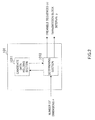
FIG.2 shows an internal configuration of determiningsection 101 shown inFIG.1 . In determiningsection 101 shown inFIG.2 , candidatedata holding section 1011 holds candidate data of a plurality of preamble sequences. For example, candidatedata holding section 1011 holds a table showing a relationship between a sequence number and a preamble sequence, as shown inFIG.3A . The table shown inFIG.3A is shared byradio transmitting apparatus 100 andradio receiving apparatus 200 described later. Candidatedata holding section 1011 outputs preamble sequences to determiningsection 1012, following an instruction from determiningsection 1012. - Determining
section 1012 determines n preamble sequences that are transmitted from each antenna, by arbitrarily selecting the same number of preamble sequences as the input number of dimensions n of space diversity, that is, n preamble sequences, from among candidate data of preamble sequences that are held by candidate holding section 1011 (for example,FIG.3A ). Determiningsection 1012 also determines a transmission block interval (hereinafter, "transmission block interval p") that becomes equal to or greater than the input number of dimensions n of space diversity. For example, determiningsection 1012 holds a table that shows a relationship between the number of dimensions n of space diversity and the transmission block interval p, as shown inFIG.3B . Determiningsection 1012 determines the transmission block interval p corresponding to the input number of dimensions n of space diversity, by referring to the relationship between the number of dimensions n of space diversity and the transmission block interval p. According to STC, the transmission block interval p is determined to be equal to or greater than the number of dimensions n of space diversity (that is, p≥n). Specifically, as shown inFIG.3B , when the number of dimensions in space diversity is n=2, 3, 4, the transmission block interval becomes p=2, 4, 4, and this satisfies the relationship of p≥n. - Determining
section 1012 outputs the determined n preamble sequences to allocatingsection 102, and outputs the determined transmission block interval p to allocatingsection 102 and space-time coding section 105. - Allocating
section 102 allocates the n preamble sequences that are input from determiningsection 101, to each antenna (antennas 107-1 to 107-n) for each transmission block timing in the transmission block interval p that is input from determiningsection 101. Specifically, allocatingsection 102 sequentially allocates the same number of preamble sequences as the number of dimensions n of space diversity, that is, the n preamble sequences, to each antenna in the transmission block interval, in the same number of antennas 107-1 to 107-n as the number of dimensions n of space diversity. However, allocatingsection 102 allocates mutually different preamble sequences to each antenna, at the same transmission block timing in the transmission block interval. For example, as shown inFIG.4 , allocatingsection 102 holds allocation patterns of preamble sequences of each antenna in the transmission block interval, and allocates the preamble sequences to each antenna based on the number of dimensions n of space diversity and the allocation patterns of the preamble sequences. The allocation patterns shown inFIG.4 are shared byradio transmitting apparatus 100 andradio receiving apparatus 200 described later. Allocatingsection 102 outputs preamble sequences Allocated to each antenna, to multiplexingsection 106. -
Channel coding section 103 performs channel coding to the input transmission data, and outputs the channel-coded transmission data to modulatingsection 104. -
Modulating section 104 modulates transmission data that is input fromchannel coding section 103, and outputs the modulated transmission data to space-time coding section 105. - Space-
time coding section 105 performs space-time coding to the transmission data that is input from modulatingsection 104, based on the input number of dimensions n of space diversity and the transmission block interval p that is input from determiningsection 101. Space-time coding section 105 outputs the transmission data after the space-time coding (space-time coded data), to multiplexingsection 106 for each antenna. Assume, for example, that transmission data s(m), s(m+1), s(m+2) are input from modulatingsection 104 to space-time coding section 105, when the number of dimensions in space diversity is n=3 (that is, three antennas are used in STBC) and also when the transmission block interval is p=4 (for example, the transmission block timings are m, (m+1), (m+2), (m+3)). In this case, space-time coding section 105 performs space-time coding to the transmission data s(m), s(m+1), s(m+2) in the transmission block interval m to (m+3). Space-time coding section 105 outputs x1(m) to x1(m+3) that are expressed in following equation 6 tomultiplexing section 106 as space-time coded data of antenna 107-1, outputs x2(m) to x2(m+3) that are expressed in equation 6 tomultiplexing section 106 as space-time coded data of antenna 107-2, and outputs x3(m) to x3(m+3) that are expressed in equation 6 tomultiplexing section 106 as space-time coded data of antenna 107-3.
- Multiplexing
section 106 multiplexes a preamble sequence for each antenna that is input from allocatingsection 102 and the space-time coded data for each antenna that is input from space-time coding section 105, for each transmission block timing. Multiplexingsection 106 transmits space-time coded data that are multiplexed with preamble sequences toradio receiving apparatus 200 via antennas 107-1 to 107-n. Preamble sequences are transmitted even when there is no transmission data (when the right-hand side of equation 6 becomes 0, for example, x3(m+1), x2(m+2), x1(m+3) that are expressed in equation 6). -
FIG. 5 shows a configuration ofradio receiving apparatus 200 according to the present embodiment. Inradio receiving apparatus 200 shown inFIG.5 , a reception signal that is received fromradio transmitting apparatus 100 via antenna 201 (that is, the space-time coded data multiplexed with preamble sequences) is input todemultiplexing section 202.Demultiplexing section 202 demultiplexes the reception signal into preamble sequences (hereinafter, "received preamble sequences") and space-time coded data, outputs the preamble sequences to detectingsection 203, and outputs the space-time coded data to space-time decoding section 206. - Detecting
section 203 detects preamble sequences that are transmitted from antennas (107-1 to 107-n) ofradio transmitting apparatus 100, from among the received preamble sequences that are input fromdemultiplexing section 202. When detectingsection 203 detects all kinds of preamble sequences that are transmitted fromradio transmitting apparatus 100 in one of the channels between each antenna ofradio transmitting apparatus 100 andantenna 201 ofradio receiving apparatus 200, detectingsection 203 specifies a number of transmission block timings at which all kinds of preamble sequences are detected, as the number of dimensions n of space diversity. -
FIG.6 shows an internal configuration of detectingsection 203 shown inFIG.5 . In detectingsection 203 shown inFIG.6 , candidatedata holding section 2031 holds the same candidate data (FIG.3A ) of preamble sequences As those of candidate data holding section 1011 (FIG.2 ) of determiningsection 101. Candidatedata holding section 2031 sequentially outputs candidate data of the preamble sequences to detectingsection 2032. - Detecting
section 2032 correlates between the received preamble sequences that are input fromdemultiplexing section 202 and the candidate data of the preamble sequences that are held by candidatedata holding section 2031. Detectingsection 2032 detects candidate data of a preamble sequence that has the highest correlation value, as a preamble sequence that is transmitted fromradio transmitting apparatus 100. Detectingsection 2032 repeats the detection of a preamble sequence until when the same preamble sequence is detected again, at each transmission block timing. Detectingsection 2032 specifies a number of transmission block timings until when the same preamble sequence is detected again, as the number of dimensions n of space diversity. That is, detectingsection 2032 sets, as the number of dimensions n of space diversity, a number of transmission block timings at which all kinds of preamble sequences that are transmitted fromradio transmitting apparatus 100 are detected, at one of the channels between each antenna ofradio transmitting apparatus 100 andantenna 201 of. In other words, detectingsection 2032 sets, as the number of dimensions n of space diversity, a number of preamble sequences that are detected until when the same preamble sequence is detected again. Detectingsection 2032 holds the relationship between the number of dimensions n of space diversity and the transmission block interval p (FIG.3B ), in a similar manner to that of determiningsection 1012, refers to this relationship, and specifies the transmission block interval p. Detectingsection 2032 outputs the specified preamble sequence to configuringsection 204, and outputs the number of dimensions n of space diversity and the transmission block interval p to configuringsection 204 and space-time decoding section 206. - Configuring
section 204 configures preamble sequences that are allocated respectively to antennas 107-1 to 107-n ofradio transmitting apparatus 100 in the transmission block interval p equal to or greater than the number of dimensions n, based on the number of dimensions n of space diversity, the transmission block interval p, and the preambles that are input from detectingsection 203. For example, configuringsection 204 holds the same allocation patterns as those of the allocation patterns of preamble sequences (FIG.4 ) that are held by allocating section 102 (FIG.1 ). Configuringsection 204 configures all preamble sequences by specifying the preamble sequences that are allocated to each antenna for each transmission block timing, based on the preamble sequences that are detected by detectingsection 203, the number of dimensions n of space diversity, and the transmission block interval p, by referring to the allocation patterns. -
Estimating section 205 estimates channel quality between each of antennas 107-1 to 107-n ofradio transmitting apparatus 100 andantenna 201 ofradio receiving apparatus 200, by using the preamble sequences that are received fromdemultiplexing section 202 and the preamble sequences of each antenna (107-1 to 107-n) input from configuringsection 204. For example, when the number of dimensions in space diversity is n=3, estimatingsection 205 estimates a channel estimation value hll between antenna 107-1 andantenna 201, a channel estimation value h12 between antenna 107-2 andantenna 201, and a channel estimation value h13 between antenna 107-3 andantenna 201.Estimating section 205 outputs the estimated channel estimation values to space-time decoding section 206. - Space-
time decoding section 206 decodes the space-time coded data input fromdemultiplexing section 202, by using the number of dimensions n of space diversity and the transmission block interval p that are input from estimatingsection 203 and the channel estimation values that are input from estimatingsection 205. For example, when the number of dimensions in space diversity is n=3 and also when the transmission block interval is p=4, a reception signal (space-time coded data) yl at each transmission block timing (m to (m+3)) in the communication block interval is expressed by following equation 7.
- Space-
time decoding section 206 obtains data s(m), s(m±1), s(m+2), by performing space-time decoding to the reception signal expressed in equation 7. Space-time decoding section 206 outputs decoded data todemodulating section 207.
-
Demodulating section 207 demodulates data that is input from space-time decoding section 206, and outputs the demodulated data to channel decodingsection 208. -
Channel decoding section 208 performs channel decoding to the data input fromdemodulating section 207, and outputs the channel-decoded data as received data. - An allocation process of preamble sequences in radio transmitting apparatus 100 (
FIG.1 ) and a detection process of preamble sequences in radio receiving apparatus 200 (FIG.5 ) are explained in detail next. - In the following explanation, the number of dimensions in space diversity is assumed as n=4. That is, antennas 107-1 (antenna number #1) to 107-4 (antenna number #4) of
radio transmitting apparatus 100 are used in STBC. Determiningsection 101 ofradio transmitting apparatus 100 and detectingsection 203 ofradio receiving apparatus 200 hold the relationship between the sequence number and preamble sequence shown inFIG.3A by sharing this relationship, and holds the relationship between the number of dimensions n of space diversity and the transmission block interval p shown inFIG.3B by sharing this relationship. Allocatingsection 102 ofradio transmitting apparatus 100 and configuringsection 204 ofradio receiving apparatus 200 hold the allocation patterns of preamble sequences shown inFIG.4 . In the following explanation, as shown inFIG.7A , out of the channel quality between antennas 107-1 to 107-4 ofradio transmitting apparatus 100 andantenna 201 ofradio receiving apparatus 200, only channel quality between antenna 107-3 (antenna number #3) andantenna 201 becomes equal to or higher than a threshold value (that is channel quality is good). - Therefore, when the number of dimensions n=4 of space diversity is input, determining
section 101 arbitrarily selects four preamble sequences (for example, preamble sequences A to D ofsequence numbers # 1 to #4) of which number is the same as the number of dimensions n=4 of space diversity, from among the preamble sequences shown inFIG.3A . Determiningsection 101 determines the transmission block interval p to four transmission block timings corresponding to the number of dimensions n=4 of space diversity, by referring to the relationship shown inFIG.3B . - Allocating
section 102 allocates the preamble sequences (preamble sequences A to D ofsequence numbers # 1 to #4) to antennas 107-1 to 107-4 respectively, based on the input number of dimensions n=4 of space diversity and the transmission block interval p=4 that is input from determiningsection 101, as shown inFIG.4 . - Specifically, as shown at the left side of
FIG.7B , at the transmission block timing m, allocatingsection 102 allocates preamble sequence A ofsequence number # 1 to antenna 107-1 (antenna number #1), allocates the preamble sequence B ofsequence number # 2 to antenna 107-2 (antenna number #2), allocates the preamble sequence C ofsequence number # 3 to antenna 107-3 (antenna number #3), and allocates the preamble sequence D ofsequence number # 4 to antenna 107-4 (antenna number #4), following the allocation patterns of preamble sequences shown inFIG.4 . - Similarly, as shown at the left side of
FIG.7B , at the transmission block timing (m+1), allocatingsection 102 allocates the preamble sequence D ofsequence number # 4 to antenna 107-1 (antenna number #1), allocates preamble sequence A ofsequence number # 1 to antenna 107-2 (antenna number #2), allocates the preamble sequence B ofsequence number # 2 to antenna 107-3 (antenna number #3), and allocates the preamble sequence C ofsequence number # 3 to antenna 107-4 (antenna number #4), following the allocation patterns of preamble sequences shown inFIG.4 . - As shown at the left side of
FIG.7B , allocatingsection 102 similarly performs allocation at the transmission block timings (m+2) and (m+3). After allocatingsection 102 has allocated all preamble sequences to each antenna, allocatingsection 102 allocates the same preamble sequence as that at the first transmission block timing m, at the next transmission block timing (at and after the transmission block timing (m+4) shown inFIG.4 ). - That is, allocating
section 102 sequentially allocates the same number of n preamble sequences (in this example case, preamble sequences A to D) as the number of dimensions n (in this example case, n=4) of space diversity, in the transmission block interval p (in this example case, p=4, the transmission block timings m to (m+3)) equal to or greater than the number of dimensions n of space diversity, to the same number of antennas (in this example case, antennas 107-1 to 107-4) as the number of dimensions n of space diversity (in this example case, n=4). Specifically, when the number of dimensions in space diversity is n=4, as shown at the left side ofFIG.7B , allocatingsection 102 allocates all of four preamble sequences ofsequence numbers # 1, #4, #3, #2 to antenna 107-1 (antenna number #1), and allocates all of four preamble sequences ofsequence numbers # 2, #1, #4, #3 to antenna 107-2 (antenna number #2), at the transmission timings m, (m+1), (m+2), (m+3). Allocatingsection 102 similarly performs allocation to antenna 107-3 (antenna number #3) and antenna 107-4 (antenna number #4). That is, allocatingsection 102 sequentially allocates the four preamble sequences A to D to all antennas, at transmission block timings m to (m+3) in the transmission block interval p. - Allocating
section 102 allocates mutually different preamble sequences to each antenna, at the same transmission block timing in the transmission block interval. Specifically, when the number of dimensions in space diversity is n=4, as shown at the left side ofFIG.7B , allocatingsection 102 allocates any of preamble sequences A to D ofsequence numbers # 1 to #4 to antennas 107-1 to 107-4, at transmission block timings m to (m+3) in the transmission block interval (p=4). That is, allocatingsection 102 allocates preamble sequences that are different for each dimension of space diversity (for each antenna), at the same transmission block timing. - Meanwhile, when received preamble sequences are input from
demultiplexing section 202, detectingsection 203 of radio receiving apparatus 200 (FIG.5 ) correlates between the received preamble sequence and all candidate data of the preamble sequences shown inFIG.3A , and detects a preamble sequence of a sequence number that has the highest correlation value. - In this case, as shown in
FIG.7A , in the transmission block interval, only channel quality between antenna 107-3 (antenna number #3) andantenna 201 is good. Accordingly, detectingsection 203 sequentially correlates between the received preamble sequences that are received at the transmission block timing m and all candidate data of the preamble sequences shown inFIG.3A , and detects the preamble sequence C ofsequence number # 3 that has the highest correlation value. Similarly, detectingsection 203 sequentially correlates between the received preamble sequences that are received at the transmission block timing (m+1) and all candidate data of the preamble sequences shown inFIG.3A , and detects the preamble sequence B ofsequence number # 2 that has the highest correlation value. Detectingsection 203 similarly performs correlation and detection at the transmission block timings (m+2) and (m+3). - As a result, as shown at the right side of
FIG.7B , detectingsection 203 detects a preamble sequence ofsequence numbers # 3, #2, #1, #4 (the preamble sequence encircled by a broken channel shown at the right side ofFIG.7B ) at the transmission block timings m to (m+3) in the transmission block interval. - In this case, when the number of dimensions in space diversity is n=4, as shown in
FIG.4 , at the transmission block timing (m+4), allocatingsection 102 ofradio transmitting apparatus 100 allocates the same preamble sequence as the preamble sequence that is allocated at the transmission block timing m, to antennas 107-1 (antenna number #1) to 107-4 (antenna #4). That is, at the transmission block timing (m+4), detectingsection 203 detects the preamble sequence C ofsequence number # 3 that is allocated to antenna 107-3 (antenna number #3) (the same preamble sequence as that at the transmission block timing m shown at the right side ofFIG.7B ). - Therefore, detecting
section 203 specifies, as the number of dimensions n of space diversity, a number of transmission block timings until when the same preamble sequence (sequence number #3) as the preamble sequence that is detected at the header transmission block timing m of the transmission block interval is detected. In this case, detectingsection 203 specifies that the number of dimensions in space diversity is n=4, because there are four transmission block timings of m to (m+3) as transmission block timings until when the same preamble sequence is detected. In other words, detectingsection 203 specifies, as the number of dimensions n of space diversity, a number of transmission block timings at which all kinds (n kinds) of preamble sequences (the preamble sequences ofsequence numbers # 1 to #4) that are transmitted byradio transmitting apparatus 100 are detected, in one of the channels between each antenna ofradio transmitting apparatus 100 and the antenna ofradio receiving apparatus 200. That is, detectingsection 203 specifies the number of dimensions n of space diversity, based on the number of transmission block timings during which a detected preamble sequence makes one round. - Then, detecting
section 203 specifies the transmission block interval p=4 that corresponds to the number of dimensions n=4 of space diversity, by referring to the relationship between the number of dimensions n of space diversity and the transmission block interval p shown inFIG.3B . - When the number of dimensions in space diversity that is specified by detecting
section 203 is n=4 and also when the transmission block interval is p=4, configuringsection 204 configures a preamble sequence for each antenna of the transmission block interval p (transmission block timings m to (m+3)), based on the allocation patterns of preamble sequences shown inFIG.4 . - Specifically, as shown at the right side of
FIG.7B , configuringsection 204 already knows the preamble sequence (sequence numbers # 3, #2, #1, #4) of antenna 107-3 (antenna number #3) of the transmission block timings m to (m+3). Therefore, configuringsection 204 specifies that at the transmission block timing m, the preamble sequence of antenna 107-1 (antenna number #1), antenna 107-2 (antenna number #2), and antenna 107-4 (antenna number #4) is the preamble sequence ofsequence numbers # 1, #2, and #4, following the allocation patterns of preamble sequences shown inFIG.4 . Similarly, configuringsection 204 specifies that at the transmission block timing (m+1), the preamble sequence of antenna 107-1 (antenna number #1), antenna 107-2 (antenna number #2), and antenna 107-4 (antenna number #4) is the preamble sequence ofsequence numbers # 4, #1, and #3, following the allocation patterns of preamble sequences shown inFIG.4 . Configuringsection 204 similarly specifies preamble sequences at the transmission block timings (m+2) and (m+3). - Based on the above, configuring
section 204 configures all preamble sequences of antennas 107-1 to 107-4 at each transmission block timing in the transmission block interval p. - Although the case where the number of dimensions in space diversity is n=4 is explained above, application of the present invention is not limited to the case where the number of dimensions in space diversity is n=4, but the invention can be also similarly applied to the case where the number of dimensions in space diversity shown in
FIG.4 is n=1 to 3. - As explained above,
radio receiving apparatus 200 can specify the preamble sequences of antennas other than the antenna for which the preamble sequence is normally detected, when theapparatus 200 can normally detect the preamble sequence for any antenna (antenna 107-3 ofantenna number # 3 inFIG.7B ). - As described above, according to STC, it is the premise that channel quality is constant in the transmission block interval, that is, there is not channel variation. That is, in the channel in which channel quality is good (the channel between antenna 107-3 and
antenna 201 inFIG.7A ), channel quality becomes good at all transmission block timings of the transmission block interval (the transmission block timings m to (m+3) inFIG.7B ). Accordingly,radio receiving apparatus 200 can detect all preamble sequences in the transmission block interval p, and can specify the number of dimensions n of space diversity based on the detected preamble sequences, in the channel of good channel quality. - As shown in
FIG.7A , for example, channel quality between each antenna ofradio transmitting apparatus 100 andantenna 201 ofradio receiving apparatus 200 is different for each channel (for each antenna), and channel quality is good in only a part of channels (antennas) in many cases. However, according to the present embodiment, when at least one channel has good channel quality among channels between each antenna ofradio transmitting apparatus 100 andantenna 201 ofradio receiving apparatus 200,radio receiving apparatus 200 can specify the number of dimensions n of space diversity. Further, when theradio receiving apparatus 200 can specify a preamble sequence in the transmission block interval of at least one channel,radio receiving apparatus 200 can specify all preamble sequences in the transmission clock interval of all channels. As explained above,radio receiving apparatus 200 can specify the number of dimensions n of space diversity and all preamble sequences, even when a preamble sequence that is transmitted from any antenna ofradio transmitting apparatus 100 is detected. Therefore, transmission diversity gain can be improved. Consequently,radio receiving apparatus 200 can normally decode the received space-time coded data, by using the number of dimensions n of space diversity and the preamble sequences in the transmission block interval of each antenna. - As described above, according to STC, there is a relationship of p≥n between the number of dimensions n of space diversity and the transmission block interval. Therefore,
radio transmitting apparatus 100 can transmit all of the same number (n) of preamble sequences as the number of dimensions n of space diversity in the transmission block sequence p, in each antenna. That is,radio receiving apparatus 200 can detect all kinds (n kinds) of preamble sequences that are transmitted byradio transmitting apparatus 100, in the transmission block interval p. - According to STC, space-time decoding is performed after space-time coded data in only the transmission block sequence p is received. Therefore, even when
radio transmitting apparatus 100 allocates preamble sequences that are mutually different at each transmission block timing, in each antenna,radio receiving apparatus 200 can detect all preamble sequences in the transmission block interval p, and can specify the number of dimensions n of space diversity. Therefore, delay of a decoding process does not occur. - As described above, according to the present embodiment, even when a preamble sequence that is transmitted from any antenna of the radio transmitting apparatus is detected, the radio receiving apparatus can securely specify the number of dimensions in space diversity, and can normally decode a data signal.
- In the present embodiment, although the case of using STC is explained, the present invention can be also similarly applied to the case where the SFC (Space Frequency Coding) is used.
- The present invention can be also applied at a communication establishment time or at a relatively mild control time of a few hundred ms order. In the present invention, even when the number of dimensions n of space diversity is dynamically changed, the radio transmitting apparatus according to the present invention can allocate preamble sequences corresponding to the number of dimensions n of space diversity to each antenna in a similar manner to that of the above-described embodiment. As a result, the radio receiving apparatus according to the present invention can specify the number of dimensions n of space diversity.
- In the present embodiment, the case is explained that the radio receiving apparatus specifies the number of dimensions n of space diversity by repeating the detection of candidate data of a preamble sequence that has the highest correlation value with the received preamble sequence, at each transmission block timing. However, in the present invention, detection is not limited to candidate data of a preamble sequence that has the highest correlation value. For example, when there are plural channels that have good channel quality, radio receiving apparatus can repeat the detection of candidate data of a plurality of preamble sequences that have high correlation values, at each transmission block timing. As a result, radio receiving apparatus can highly precisely specify the number of dimensions n of space diversity, by specifying the number of dimensions n of space diversity in plural channels.
- Although the present embodiment is explained for antennas, the present invention can be also similarly applied to antenna ports.
- An antenna port indicates a theoretical antenna that is configured by one or plural physical antennas. That is, an antenna port does not necessarily indicate one physical antenna, but also indicates an antenna array that is configured by plural antennas.
- For example, in 3GPP-LTE, how many physical antennas constitute an antenna port is not prescribed, but the antenna port is prescribed as a minimum unit through which a base station can transmit different reference signals.
- The antenna port is also prescribed as a minimum unit that multiplies a weight of a precoding vector.
- Also, although cases have been described with the above embodiment as examples where the present invention is configured by hardware, the present invention can also be realized by software.
- Each function block employed in the description of the aforementioned embodiments may typically be implemented as an LSI constituted by an integrated circuit. These may be individual chips or partially or totally contained on a single chip. "LSI" is adopted here but this may also be referred to as "IC," "system LSI," "super LSI," or "ultra LSI" depending on differing extents of integration.
- Further, the method of circuit integration is not limited to LSI's, and implementation using dedicated circuitry or general purpose processors is also possible. After LSI manufacture, utilization of a programmable FPGA (Field Programmable Gate Array) or a reconfigurable processor where connections and settings of circuit cells within an LSI can be reconfigured is also possible.
- Further, if integrated circuit technology comes out to replace LSI's as a result of the advancement of semiconductor technology or a derivative other technology, it is naturally also possible to carry out function block integration using this technology.
- The disclosure of Japanese Patent Application No.
2009-048477, filed on March 2, 2009 - The present invention can be applied to a mobile communication system and the like.
Claims (3)
- A radio transmission apparatus comprising:a determining section that determines the same number of preamble sequences as the number of dimensions in space diversity, and determines transmission block intervals, the number of the transmission block intervals being equal to or greater than the number of dimensions; andan allocating section that sequentially allocates the same number of preamble sequences as the number of dimensions to each of the same number of antennas as the number of dimensions in the transmission block intervals, and allocates mutually different preamble sequences to each of the same number of antennas as the number of dimensions at the same transmission timing in the transmission block intervals.
- A radio reception apparatus comprising:a detecting section that detects preamble sequences transmitted respectively from a plurality of antennas of a radio transmission apparatus;a specifying section that specifies the number of transmission timings at which all kinds of preamble sequences transmitted from the radio transmitting apparatus are detected, as the number of dimensions in space diversity, in one of channels between the plurality of antennas of the radio transmission apparatus and an antenna of the radio reception apparatus; anda configuring section that configures all preamble sequences that are transmitted respectively from the plurality of antennas in transmission block intervals based on the specified number of dimensions and the detected preamble sequences, the number of the transmission block intervals being equal to or greater than the specified number of dimensions.
- A preamble allocating method comprising:determining the same number of preamble sequences as the number of dimensions in space diversity, and determining transmission block intervals, the number of the transmission block intervals being equal to or greater than the number of dimensions; andsequentially allocating the same number of preamble sequences as the number of dimensions to each of the same number of antennas as the number of dimensions in the transmission block intervals, and allocating mutually different preamble sequences to each of the same number of antennas as the number of dimensions at the same transmission timing in the transmission block intervals.
Applications Claiming Priority (2)
| Application Number | Priority Date | Filing Date | Title |
|---|---|---|---|
| JP2009048477 | 2009-03-02 | ||
| PCT/JP2010/001370 WO2010100879A1 (en) | 2009-03-02 | 2010-03-01 | Radio transmitting apparatus, radio receiving apparatus and preamble sequence allocating method |
Publications (3)
| Publication Number | Publication Date |
|---|---|
| EP2405591A1 true EP2405591A1 (en) | 2012-01-11 |
| EP2405591A4 EP2405591A4 (en) | 2017-04-19 |
| EP2405591B1 EP2405591B1 (en) | 2019-05-08 |
Family
ID=42709448
Family Applications (1)
| Application Number | Title | Priority Date | Filing Date |
|---|---|---|---|
| EP10748480.0A Active EP2405591B1 (en) | 2009-03-02 | 2010-03-01 | Radio transmitting apparatus, radio receiving apparatus and preamble sequence allocating method |
Country Status (5)
| Country | Link |
|---|---|
| US (1) | US8644235B2 (en) |
| EP (1) | EP2405591B1 (en) |
| JP (1) | JP5367064B2 (en) |
| CN (1) | CN102342031A (en) |
| WO (1) | WO2010100879A1 (en) |
Families Citing this family (4)
| Publication number | Priority date | Publication date | Assignee | Title |
|---|---|---|---|---|
| US7583619B2 (en) * | 2002-12-16 | 2009-09-01 | Nortel Networks Limited | Wireless access communications network |
| JP5367064B2 (en) * | 2009-03-02 | 2013-12-11 | パナソニック株式会社 | Radio transmission apparatus, radio reception apparatus, and preamble sequence allocation method |
| CN104159573A (en) * | 2011-10-13 | 2014-11-19 | 卡斯西部储备大学 | Nanoparticles for controlling bleeding and drug delivery |
| US11271681B2 (en) | 2020-03-20 | 2022-03-08 | ANDRO Computational Solutions, LLC | Rate-2 complex space-time block codes for 3×3 and 4×4 MIMO systems |
Family Cites Families (11)
| Publication number | Priority date | Publication date | Assignee | Title |
|---|---|---|---|---|
| EP1617568B1 (en) | 2003-04-21 | 2013-09-04 | Mitsubishi Denki Kabushiki Kaisha | Radio communication apparatus, transmitter apparatus, receiver apparatus and radio communication system |
| JP4318569B2 (en) | 2004-01-28 | 2009-08-26 | 三洋電機株式会社 | Correlator and receiver using the same |
| KR100621432B1 (en) * | 2004-04-21 | 2006-09-08 | 삼성전자주식회사 | Apparatus and method for channel estimation in a multicell orthogonal frequency division multiplex communication system using a plurality of transmit antennas |
| WO2006023536A2 (en) * | 2004-08-16 | 2006-03-02 | Zte San Diego, Inc. | Fast cell search and accurate sznchronization in wireless communications |
| US7428268B2 (en) * | 2004-12-07 | 2008-09-23 | Adaptix, Inc. | Cooperative MIMO in multicell wireless networks |
| KR100698770B1 (en) * | 2005-03-09 | 2007-03-23 | 삼성전자주식회사 | Apparatus and method for subcarrier mapping of space-time encoded data in broadband wireless communication system |
| US8340232B2 (en) * | 2005-12-09 | 2012-12-25 | Samsung Electronics Co., Ltd. | Apparatus and method for channel estimation using training signals with reduced signal overhead |
| KR100772987B1 (en) * | 2006-06-30 | 2007-11-02 | 한국전자통신연구원 | Linear Space-Time Code Generation Method for Maximum Diversity and Maximum Multiplexing and Multiple-antenna System Using Space-Time Codes |
| US7720169B2 (en) * | 2007-05-10 | 2010-05-18 | Ilan Reuven | Multiple-input multiple-output (MIMO) detector incorporating efficient signal point search and soft information refinement |
| JP2009048477A (en) | 2007-08-21 | 2009-03-05 | Toshiba Elevator Co Ltd | Elevator electrical design support system |
| JP5367064B2 (en) * | 2009-03-02 | 2013-12-11 | パナソニック株式会社 | Radio transmission apparatus, radio reception apparatus, and preamble sequence allocation method |
-
2010
- 2010-03-01 JP JP2011502636A patent/JP5367064B2/en active Active
- 2010-03-01 EP EP10748480.0A patent/EP2405591B1/en active Active
- 2010-03-01 US US13/203,950 patent/US8644235B2/en not_active Expired - Fee Related
- 2010-03-01 WO PCT/JP2010/001370 patent/WO2010100879A1/en not_active Ceased
- 2010-03-01 CN CN2010800101591A patent/CN102342031A/en active Pending
Non-Patent Citations (1)
| Title |
|---|
| See references of WO2010100879A1 * |
Also Published As
| Publication number | Publication date |
|---|---|
| EP2405591A4 (en) | 2017-04-19 |
| JPWO2010100879A1 (en) | 2012-09-06 |
| EP2405591B1 (en) | 2019-05-08 |
| JP5367064B2 (en) | 2013-12-11 |
| WO2010100879A1 (en) | 2010-09-10 |
| CN102342031A (en) | 2012-02-01 |
| US8644235B2 (en) | 2014-02-04 |
| US20120051301A1 (en) | 2012-03-01 |
Similar Documents
| Publication | Publication Date | Title |
|---|---|---|
| US12191946B2 (en) | Transmission device, receiving device, transmission method, and receiving method | |
| US9065527B2 (en) | Relay station, base station and communication method | |
| US9124325B2 (en) | Terminal apparatus, base station apparatus, retransmission method and resource allocation method | |
| US8885529B2 (en) | Method for signalling in a wireless communication system | |
| EP3525378A1 (en) | Retransmission method and terminal device thereof | |
| EP1931070A1 (en) | Transmitting device, receiving device, transmitting method, receiving method and wireless communication system | |
| EP2485419B1 (en) | Terminal station apparatus, base station apparatus, transmission method and control method | |
| EP2451106B1 (en) | Wireless communication device and wireless communication method | |
| WO2009128681A3 (en) | Method for transmitting synchronization channel using multi-antenna | |
| EP3720006A1 (en) | Radio communication mobile station apparatus and radio communication method | |
| US20110105048A1 (en) | Radio receiving apparatus, and extra-use-unit-band reference signal measurement method | |
| EP2405591B1 (en) | Radio transmitting apparatus, radio receiving apparatus and preamble sequence allocating method | |
| EP2403173A1 (en) | Wireless transmission apparatus and precoding method | |
| US20210336738A1 (en) | Communication device and communication method | |
| US20100284487A1 (en) | Wireless transmission device and wireless transmission method | |
| KR101641956B1 (en) | METHOD OF CoMP REFERENCE SIGNAL TRANSMITTING AND RECEIVING IN THE MULTIPLE-CELL SITUATION | |
| US20180026825A1 (en) | Method and apparatus for spatial modulation based on virtual antenna | |
| KR101106187B1 (en) | Spatial Multiplexed Signal Detector in Multi-Input / Output Multipath Channels | |
| KR20060016190A (en) | Uplink Signal Transmission Method Through 3-Antenna of UE |
Legal Events
| Date | Code | Title | Description |
|---|---|---|---|
| PUAI | Public reference made under article 153(3) epc to a published international application that has entered the european phase |
Free format text: ORIGINAL CODE: 0009012 |
|
| 17P | Request for examination filed |
Effective date: 20110901 |
|
| AK | Designated contracting states |
Kind code of ref document: A1 Designated state(s): AT BE BG CH CY CZ DE DK EE ES FI FR GB GR HR HU IE IS IT LI LT LU LV MC MK MT NL NO PL PT RO SE SI SK SM TR |
|
| DAX | Request for extension of the european patent (deleted) | ||
| RAP1 | Party data changed (applicant data changed or rights of an application transferred) |
Owner name: PANASONIC INTELLECTUAL PROPERTY CORPORATION OF AME |
|
| REG | Reference to a national code |
Ref country code: DE Ref legal event code: R079 Ref document number: 602010058744 Country of ref document: DE Free format text: PREVIOUS MAIN CLASS: H04B0007020000 Ipc: H04B0007060000 |
|
| RA4 | Supplementary search report drawn up and despatched (corrected) |
Effective date: 20170316 |
|
| RIC1 | Information provided on ipc code assigned before grant |
Ipc: H04B 7/06 20060101AFI20170311BHEP Ipc: H04L 25/02 20060101ALI20170311BHEP Ipc: H04L 1/06 20060101ALI20170311BHEP |
|
| STAA | Information on the status of an ep patent application or granted ep patent |
Free format text: STATUS: EXAMINATION IS IN PROGRESS |
|
| 17Q | First examination report despatched |
Effective date: 20180517 |
|
| GRAP | Despatch of communication of intention to grant a patent |
Free format text: ORIGINAL CODE: EPIDOSNIGR1 |
|
| STAA | Information on the status of an ep patent application or granted ep patent |
Free format text: STATUS: GRANT OF PATENT IS INTENDED |
|
| INTG | Intention to grant announced |
Effective date: 20181008 |
|
| GRAS | Grant fee paid |
Free format text: ORIGINAL CODE: EPIDOSNIGR3 |
|
| GRAA | (expected) grant |
Free format text: ORIGINAL CODE: 0009210 |
|
| STAA | Information on the status of an ep patent application or granted ep patent |
Free format text: STATUS: THE PATENT HAS BEEN GRANTED |
|
| AK | Designated contracting states |
Kind code of ref document: B1 Designated state(s): AT BE BG CH CY CZ DE DK EE ES FI FR GB GR HR HU IE IS IT LI LT LU LV MC MK MT NL NO PL PT RO SE SI SK SM TR |
|
| REG | Reference to a national code |
Ref country code: GB Ref legal event code: FG4D |
|
| REG | Reference to a national code |
Ref country code: CH Ref legal event code: EP Ref country code: AT Ref legal event code: REF Ref document number: 1131838 Country of ref document: AT Kind code of ref document: T Effective date: 20190515 |
|
| REG | Reference to a national code |
Ref country code: DE Ref legal event code: R096 Ref document number: 602010058744 Country of ref document: DE Ref country code: IE Ref legal event code: FG4D |
|
| REG | Reference to a national code |
Ref country code: NL Ref legal event code: MP Effective date: 20190508 |
|
| REG | Reference to a national code |
Ref country code: LT Ref legal event code: MG4D |
|
| PG25 | Lapsed in a contracting state [announced via postgrant information from national office to epo] |
Ref country code: NO Free format text: LAPSE BECAUSE OF FAILURE TO SUBMIT A TRANSLATION OF THE DESCRIPTION OR TO PAY THE FEE WITHIN THE PRESCRIBED TIME-LIMIT Effective date: 20190808 Ref country code: FI Free format text: LAPSE BECAUSE OF FAILURE TO SUBMIT A TRANSLATION OF THE DESCRIPTION OR TO PAY THE FEE WITHIN THE PRESCRIBED TIME-LIMIT Effective date: 20190508 Ref country code: SE Free format text: LAPSE BECAUSE OF FAILURE TO SUBMIT A TRANSLATION OF THE DESCRIPTION OR TO PAY THE FEE WITHIN THE PRESCRIBED TIME-LIMIT Effective date: 20190508 Ref country code: NL Free format text: LAPSE BECAUSE OF FAILURE TO SUBMIT A TRANSLATION OF THE DESCRIPTION OR TO PAY THE FEE WITHIN THE PRESCRIBED TIME-LIMIT Effective date: 20190508 Ref country code: PT Free format text: LAPSE BECAUSE OF FAILURE TO SUBMIT A TRANSLATION OF THE DESCRIPTION OR TO PAY THE FEE WITHIN THE PRESCRIBED TIME-LIMIT Effective date: 20190908 Ref country code: HR Free format text: LAPSE BECAUSE OF FAILURE TO SUBMIT A TRANSLATION OF THE DESCRIPTION OR TO PAY THE FEE WITHIN THE PRESCRIBED TIME-LIMIT Effective date: 20190508 Ref country code: ES Free format text: LAPSE BECAUSE OF FAILURE TO SUBMIT A TRANSLATION OF THE DESCRIPTION OR TO PAY THE FEE WITHIN THE PRESCRIBED TIME-LIMIT Effective date: 20190508 Ref country code: LT Free format text: LAPSE BECAUSE OF FAILURE TO SUBMIT A TRANSLATION OF THE DESCRIPTION OR TO PAY THE FEE WITHIN THE PRESCRIBED TIME-LIMIT Effective date: 20190508 |
|
| PG25 | Lapsed in a contracting state [announced via postgrant information from national office to epo] |
Ref country code: GR Free format text: LAPSE BECAUSE OF FAILURE TO SUBMIT A TRANSLATION OF THE DESCRIPTION OR TO PAY THE FEE WITHIN THE PRESCRIBED TIME-LIMIT Effective date: 20190809 Ref country code: BG Free format text: LAPSE BECAUSE OF FAILURE TO SUBMIT A TRANSLATION OF THE DESCRIPTION OR TO PAY THE FEE WITHIN THE PRESCRIBED TIME-LIMIT Effective date: 20190808 Ref country code: LV Free format text: LAPSE BECAUSE OF FAILURE TO SUBMIT A TRANSLATION OF THE DESCRIPTION OR TO PAY THE FEE WITHIN THE PRESCRIBED TIME-LIMIT Effective date: 20190508 |
|
| REG | Reference to a national code |
Ref country code: AT Ref legal event code: MK05 Ref document number: 1131838 Country of ref document: AT Kind code of ref document: T Effective date: 20190508 |
|
| PG25 | Lapsed in a contracting state [announced via postgrant information from national office to epo] |
Ref country code: CZ Free format text: LAPSE BECAUSE OF FAILURE TO SUBMIT A TRANSLATION OF THE DESCRIPTION OR TO PAY THE FEE WITHIN THE PRESCRIBED TIME-LIMIT Effective date: 20190508 Ref country code: RO Free format text: LAPSE BECAUSE OF FAILURE TO SUBMIT A TRANSLATION OF THE DESCRIPTION OR TO PAY THE FEE WITHIN THE PRESCRIBED TIME-LIMIT Effective date: 20190508 Ref country code: EE Free format text: LAPSE BECAUSE OF FAILURE TO SUBMIT A TRANSLATION OF THE DESCRIPTION OR TO PAY THE FEE WITHIN THE PRESCRIBED TIME-LIMIT Effective date: 20190508 Ref country code: DK Free format text: LAPSE BECAUSE OF FAILURE TO SUBMIT A TRANSLATION OF THE DESCRIPTION OR TO PAY THE FEE WITHIN THE PRESCRIBED TIME-LIMIT Effective date: 20190508 Ref country code: AT Free format text: LAPSE BECAUSE OF FAILURE TO SUBMIT A TRANSLATION OF THE DESCRIPTION OR TO PAY THE FEE WITHIN THE PRESCRIBED TIME-LIMIT Effective date: 20190508 Ref country code: SK Free format text: LAPSE BECAUSE OF FAILURE TO SUBMIT A TRANSLATION OF THE DESCRIPTION OR TO PAY THE FEE WITHIN THE PRESCRIBED TIME-LIMIT Effective date: 20190508 |
|
| REG | Reference to a national code |
Ref country code: DE Ref legal event code: R097 Ref document number: 602010058744 Country of ref document: DE |
|
| PG25 | Lapsed in a contracting state [announced via postgrant information from national office to epo] |
Ref country code: IT Free format text: LAPSE BECAUSE OF FAILURE TO SUBMIT A TRANSLATION OF THE DESCRIPTION OR TO PAY THE FEE WITHIN THE PRESCRIBED TIME-LIMIT Effective date: 20190508 Ref country code: SM Free format text: LAPSE BECAUSE OF FAILURE TO SUBMIT A TRANSLATION OF THE DESCRIPTION OR TO PAY THE FEE WITHIN THE PRESCRIBED TIME-LIMIT Effective date: 20190508 |
|
| PLBE | No opposition filed within time limit |
Free format text: ORIGINAL CODE: 0009261 |
|
| STAA | Information on the status of an ep patent application or granted ep patent |
Free format text: STATUS: NO OPPOSITION FILED WITHIN TIME LIMIT |
|
| PG25 | Lapsed in a contracting state [announced via postgrant information from national office to epo] |
Ref country code: TR Free format text: LAPSE BECAUSE OF FAILURE TO SUBMIT A TRANSLATION OF THE DESCRIPTION OR TO PAY THE FEE WITHIN THE PRESCRIBED TIME-LIMIT Effective date: 20190508 |
|
| 26N | No opposition filed |
Effective date: 20200211 |
|
| PG25 | Lapsed in a contracting state [announced via postgrant information from national office to epo] |
Ref country code: PL Free format text: LAPSE BECAUSE OF FAILURE TO SUBMIT A TRANSLATION OF THE DESCRIPTION OR TO PAY THE FEE WITHIN THE PRESCRIBED TIME-LIMIT Effective date: 20190508 |
|
| PG25 | Lapsed in a contracting state [announced via postgrant information from national office to epo] |
Ref country code: SI Free format text: LAPSE BECAUSE OF FAILURE TO SUBMIT A TRANSLATION OF THE DESCRIPTION OR TO PAY THE FEE WITHIN THE PRESCRIBED TIME-LIMIT Effective date: 20190508 |
|
| PG25 | Lapsed in a contracting state [announced via postgrant information from national office to epo] |
Ref country code: MC Free format text: LAPSE BECAUSE OF FAILURE TO SUBMIT A TRANSLATION OF THE DESCRIPTION OR TO PAY THE FEE WITHIN THE PRESCRIBED TIME-LIMIT Effective date: 20190508 |
|
| REG | Reference to a national code |
Ref country code: CH Ref legal event code: PL |
|
| REG | Reference to a national code |
Ref country code: BE Ref legal event code: MM Effective date: 20200331 |
|
| PG25 | Lapsed in a contracting state [announced via postgrant information from national office to epo] |
Ref country code: LU Free format text: LAPSE BECAUSE OF NON-PAYMENT OF DUE FEES Effective date: 20200301 |
|
| PG25 | Lapsed in a contracting state [announced via postgrant information from national office to epo] |
Ref country code: FR Free format text: LAPSE BECAUSE OF NON-PAYMENT OF DUE FEES Effective date: 20200331 Ref country code: CH Free format text: LAPSE BECAUSE OF NON-PAYMENT OF DUE FEES Effective date: 20200331 Ref country code: LI Free format text: LAPSE BECAUSE OF NON-PAYMENT OF DUE FEES Effective date: 20200331 Ref country code: IE Free format text: LAPSE BECAUSE OF NON-PAYMENT OF DUE FEES Effective date: 20200301 |
|
| PG25 | Lapsed in a contracting state [announced via postgrant information from national office to epo] |
Ref country code: BE Free format text: LAPSE BECAUSE OF NON-PAYMENT OF DUE FEES Effective date: 20200331 |
|
| GBPC | Gb: european patent ceased through non-payment of renewal fee |
Effective date: 20200301 |
|
| PG25 | Lapsed in a contracting state [announced via postgrant information from national office to epo] |
Ref country code: GB Free format text: LAPSE BECAUSE OF NON-PAYMENT OF DUE FEES Effective date: 20200301 |
|
| PGFP | Annual fee paid to national office [announced via postgrant information from national office to epo] |
Ref country code: DE Payment date: 20220322 Year of fee payment: 13 |
|
| PG25 | Lapsed in a contracting state [announced via postgrant information from national office to epo] |
Ref country code: MT Free format text: LAPSE BECAUSE OF FAILURE TO SUBMIT A TRANSLATION OF THE DESCRIPTION OR TO PAY THE FEE WITHIN THE PRESCRIBED TIME-LIMIT Effective date: 20190508 Ref country code: CY Free format text: LAPSE BECAUSE OF FAILURE TO SUBMIT A TRANSLATION OF THE DESCRIPTION OR TO PAY THE FEE WITHIN THE PRESCRIBED TIME-LIMIT Effective date: 20190508 |
|
| PG25 | Lapsed in a contracting state [announced via postgrant information from national office to epo] |
Ref country code: MK Free format text: LAPSE BECAUSE OF FAILURE TO SUBMIT A TRANSLATION OF THE DESCRIPTION OR TO PAY THE FEE WITHIN THE PRESCRIBED TIME-LIMIT Effective date: 20190508 Ref country code: IS Free format text: LAPSE BECAUSE OF FAILURE TO SUBMIT A TRANSLATION OF THE DESCRIPTION OR TO PAY THE FEE WITHIN THE PRESCRIBED TIME-LIMIT Effective date: 20190908 |
|
| REG | Reference to a national code |
Ref country code: DE Ref legal event code: R119 Ref document number: 602010058744 Country of ref document: DE |
|
| PG25 | Lapsed in a contracting state [announced via postgrant information from national office to epo] |
Ref country code: DE Free format text: LAPSE BECAUSE OF NON-PAYMENT OF DUE FEES Effective date: 20231003 |