EP2404997A1 - Method for enhancing function of t cell - Google Patents
Method for enhancing function of t cell Download PDFInfo
- Publication number
- EP2404997A1 EP2404997A1 EP10748842A EP10748842A EP2404997A1 EP 2404997 A1 EP2404997 A1 EP 2404997A1 EP 10748842 A EP10748842 A EP 10748842A EP 10748842 A EP10748842 A EP 10748842A EP 2404997 A1 EP2404997 A1 EP 2404997A1
- Authority
- EP
- European Patent Office
- Prior art keywords
- cell
- sirna
- expression
- function
- vector
- Prior art date
- Legal status (The legal status is an assumption and is not a legal conclusion. Google has not performed a legal analysis and makes no representation as to the accuracy of the status listed.)
- Granted
Links
Images


Classifications
-
- C—CHEMISTRY; METALLURGY
- C12—BIOCHEMISTRY; BEER; SPIRITS; WINE; VINEGAR; MICROBIOLOGY; ENZYMOLOGY; MUTATION OR GENETIC ENGINEERING
- C12N—MICROORGANISMS OR ENZYMES; COMPOSITIONS THEREOF; PROPAGATING, PRESERVING, OR MAINTAINING MICROORGANISMS; MUTATION OR GENETIC ENGINEERING; CULTURE MEDIA
- C12N5/00—Undifferentiated human, animal or plant cells, e.g. cell lines; Tissues; Cultivation or maintenance thereof; Culture media therefor
- C12N5/06—Animal cells or tissues; Human cells or tissues
- C12N5/0602—Vertebrate cells
- C12N5/0634—Cells from the blood or the immune system
- C12N5/0636—T lymphocytes
-
- A—HUMAN NECESSITIES
- A61—MEDICAL OR VETERINARY SCIENCE; HYGIENE
- A61K—PREPARATIONS FOR MEDICAL, DENTAL OR TOILETRY PURPOSES
- A61K40/00—Cellular immunotherapy
- A61K40/10—Cellular immunotherapy characterised by the cell type used
- A61K40/11—T-cells, e.g. tumour infiltrating lymphocytes [TIL] or regulatory T [Treg] cells; Lymphokine-activated killer [LAK] cells
-
- A—HUMAN NECESSITIES
- A61—MEDICAL OR VETERINARY SCIENCE; HYGIENE
- A61K—PREPARATIONS FOR MEDICAL, DENTAL OR TOILETRY PURPOSES
- A61K40/00—Cellular immunotherapy
- A61K40/30—Cellular immunotherapy characterised by the recombinant expression of specific molecules in the cells of the immune system
- A61K40/32—T-cell receptors [TCR]
-
- A—HUMAN NECESSITIES
- A61—MEDICAL OR VETERINARY SCIENCE; HYGIENE
- A61K—PREPARATIONS FOR MEDICAL, DENTAL OR TOILETRY PURPOSES
- A61K40/00—Cellular immunotherapy
- A61K40/40—Cellular immunotherapy characterised by antigens that are targeted or presented by cells of the immune system
- A61K40/41—Vertebrate antigens
- A61K40/42—Cancer antigens
- A61K40/4267—Cancer testis antigens, e.g. SSX, BAGE, GAGE or SAGE
- A61K40/4268—MAGE
-
- A—HUMAN NECESSITIES
- A61—MEDICAL OR VETERINARY SCIENCE; HYGIENE
- A61P—SPECIFIC THERAPEUTIC ACTIVITY OF CHEMICAL COMPOUNDS OR MEDICINAL PREPARATIONS
- A61P31/00—Antiinfectives, i.e. antibiotics, antiseptics, chemotherapeutics
-
- A—HUMAN NECESSITIES
- A61—MEDICAL OR VETERINARY SCIENCE; HYGIENE
- A61P—SPECIFIC THERAPEUTIC ACTIVITY OF CHEMICAL COMPOUNDS OR MEDICINAL PREPARATIONS
- A61P35/00—Antineoplastic agents
-
- A—HUMAN NECESSITIES
- A61—MEDICAL OR VETERINARY SCIENCE; HYGIENE
- A61P—SPECIFIC THERAPEUTIC ACTIVITY OF CHEMICAL COMPOUNDS OR MEDICINAL PREPARATIONS
- A61P37/00—Drugs for immunological or allergic disorders
- A61P37/02—Immunomodulators
- A61P37/04—Immunostimulants
-
- A—HUMAN NECESSITIES
- A61—MEDICAL OR VETERINARY SCIENCE; HYGIENE
- A61P—SPECIFIC THERAPEUTIC ACTIVITY OF CHEMICAL COMPOUNDS OR MEDICINAL PREPARATIONS
- A61P37/00—Drugs for immunological or allergic disorders
- A61P37/02—Immunomodulators
- A61P37/06—Immunosuppressants, e.g. drugs for graft rejection
-
- C—CHEMISTRY; METALLURGY
- C12—BIOCHEMISTRY; BEER; SPIRITS; WINE; VINEGAR; MICROBIOLOGY; ENZYMOLOGY; MUTATION OR GENETIC ENGINEERING
- C12N—MICROORGANISMS OR ENZYMES; COMPOSITIONS THEREOF; PROPAGATING, PRESERVING, OR MAINTAINING MICROORGANISMS; MUTATION OR GENETIC ENGINEERING; CULTURE MEDIA
- C12N15/00—Mutation or genetic engineering; DNA or RNA concerning genetic engineering, vectors, e.g. plasmids, or their isolation, preparation or purification; Use of hosts therefor
- C12N15/09—Recombinant DNA-technology
- C12N15/11—DNA or RNA fragments; Modified forms thereof; Non-coding nucleic acids having a biological activity
- C12N15/113—Non-coding nucleic acids modulating the expression of genes, e.g. antisense oligonucleotides; Antisense DNA or RNA; Triplex- forming oligonucleotides; Catalytic nucleic acids, e.g. ribozymes; Nucleic acids used in co-suppression or gene silencing
-
- A—HUMAN NECESSITIES
- A61—MEDICAL OR VETERINARY SCIENCE; HYGIENE
- A61K—PREPARATIONS FOR MEDICAL, DENTAL OR TOILETRY PURPOSES
- A61K35/00—Medicinal preparations containing materials or reaction products thereof with undetermined constitution
- A61K35/12—Materials from mammals; Compositions comprising non-specified tissues or cells; Compositions comprising non-embryonic stem cells; Genetically modified cells
- A61K2035/124—Materials from mammals; Compositions comprising non-specified tissues or cells; Compositions comprising non-embryonic stem cells; Genetically modified cells the cells being hematopoietic, bone marrow derived or blood cells
-
- A—HUMAN NECESSITIES
- A61—MEDICAL OR VETERINARY SCIENCE; HYGIENE
- A61K—PREPARATIONS FOR MEDICAL, DENTAL OR TOILETRY PURPOSES
- A61K2239/00—Indexing codes associated with cellular immunotherapy of group A61K40/00
- A61K2239/46—Indexing codes associated with cellular immunotherapy of group A61K40/00 characterised by the cancer treated
- A61K2239/48—Blood cells, e.g. leukemia or lymphoma
-
- C—CHEMISTRY; METALLURGY
- C12—BIOCHEMISTRY; BEER; SPIRITS; WINE; VINEGAR; MICROBIOLOGY; ENZYMOLOGY; MUTATION OR GENETIC ENGINEERING
- C12N—MICROORGANISMS OR ENZYMES; COMPOSITIONS THEREOF; PROPAGATING, PRESERVING, OR MAINTAINING MICROORGANISMS; MUTATION OR GENETIC ENGINEERING; CULTURE MEDIA
- C12N2310/00—Structure or type of the nucleic acid
- C12N2310/10—Type of nucleic acid
- C12N2310/14—Type of nucleic acid interfering nucleic acids [NA]
-
- C—CHEMISTRY; METALLURGY
- C12—BIOCHEMISTRY; BEER; SPIRITS; WINE; VINEGAR; MICROBIOLOGY; ENZYMOLOGY; MUTATION OR GENETIC ENGINEERING
- C12N—MICROORGANISMS OR ENZYMES; COMPOSITIONS THEREOF; PROPAGATING, PRESERVING, OR MAINTAINING MICROORGANISMS; MUTATION OR GENETIC ENGINEERING; CULTURE MEDIA
- C12N2310/00—Structure or type of the nucleic acid
- C12N2310/50—Physical structure
- C12N2310/53—Physical structure partially self-complementary or closed
- C12N2310/531—Stem-loop; Hairpin
-
- C—CHEMISTRY; METALLURGY
- C12—BIOCHEMISTRY; BEER; SPIRITS; WINE; VINEGAR; MICROBIOLOGY; ENZYMOLOGY; MUTATION OR GENETIC ENGINEERING
- C12N—MICROORGANISMS OR ENZYMES; COMPOSITIONS THEREOF; PROPAGATING, PRESERVING, OR MAINTAINING MICROORGANISMS; MUTATION OR GENETIC ENGINEERING; CULTURE MEDIA
- C12N2501/00—Active agents used in cell culture processes, e.g. differentation
- C12N2501/40—Regulators of development
- C12N2501/48—Regulators of apoptosis
-
- C—CHEMISTRY; METALLURGY
- C12—BIOCHEMISTRY; BEER; SPIRITS; WINE; VINEGAR; MICROBIOLOGY; ENZYMOLOGY; MUTATION OR GENETIC ENGINEERING
- C12N—MICROORGANISMS OR ENZYMES; COMPOSITIONS THEREOF; PROPAGATING, PRESERVING, OR MAINTAINING MICROORGANISMS; MUTATION OR GENETIC ENGINEERING; CULTURE MEDIA
- C12N2501/00—Active agents used in cell culture processes, e.g. differentation
- C12N2501/50—Cell markers; Cell surface determinants
- C12N2501/599—Cell markers; Cell surface determinants with CD designations not provided for elsewhere
Definitions
- the present invention relates to a method for enhancing the function of a T cell by suppressing the expression of Programmed Death-1 Ligand 1 (PD-L1) and/or Programmed Death-1 Ligand 2 (PD-L2) of the T cell, etc.
- PD-L1 Programmed Death-1 Ligand 1
- PD-L2 Programmed Death-1 Ligand 2
- a signal via the B7 : CD28 costimulatory molecular family is deeply involved in activation, inhibition and adjustment of a T cell reaction. It has been known that a PD-1 (Programmed Death-1) molecule belonging to the B7 : CD28 costimulatory molecular family reacts with PD-L1 and PD-L2, and negatively controls the T cell reaction (Non-Patent Document 1). At first, it has been suggested that PD-1 expressed on a T cell reacts with PD-L1 expressed on an antigen presenting cell or a cancer cell, or PD-L2 on an antigen presenting cell to inhibit the activation of the T cell.
- Non-Patent Document 2 a possibility that PD-L1 binds with not only PD-1 but also B7-1 (CD80), and PD-L1 present on a T cell sends a negative signal to the T cell has been demonstrated.
- Non-Patent Document 2 a possibility that PD-L1 binds with not only PD-1 but also B7-1 (CD80), and PD-L1 present on a T cell sends a negative signal to the T cell has been demonstrated.
- Non-Patent Document 2 what physiological and pathological roles are played by PD-L1 expressed on a T cell, in an immune reaction, is entirely unknown.
- PD-L2 it has been only known so far that it is expressed on a dendritic cell, a macrophage, a B1B cell, and a mast cell derived from bone marrow only upon induction, and its expression on a T cell is not clear. Therefore, a role played by PD-L2, which is physiologically or forcibly expressed on a
- an immune response inhibiting signal from a costimulatory molecule induces tolerance (immunological tolerance) via suppression of priming or the effector function at the initial stage of an autoreactive T cell while balancing with an immune response activating signal from a costimulatory molecule, a representative of which is a T cell receptor (TCR) or CD28, thereby protecting tissues from the autoreactive T cell and, on the other hand, controlling infection immunity or tumor immunity.
- TCR T cell receptor
- certain tumors or viruses suppress the activation and proliferation of a T cell by a direct or indirect mechanism utilizing the costimulatory molecule, to weaken an immune reaction against themselves.
- abnormality of the costimulatory molecule is a cause for a functional disorder of a T cell.
- An object of the present invention is to provide a method for enhancing the function of a T cell, and a T cell with enhanced function.
- the present inventors have found that it is possible to control a T cell immune response by artificially controlling the expression of PD-L1 and/or PD-L2 of a T cell. Particularly, the present inventors have found that reduction of the expression of PD-L1 and/or PD-L2 in an anti-tumor T cell enhances the anti-tumor effect of the T cell, and thus it results in completion of the present invention.
- the present invention relates to:
- a method for enhancing the function of a T cell, a T cell with enhanced function, etc. are provided.
- This T cell enhances an immune response to cancer, and is useful in effective cancer immunotherapy, or treatment or prevention of an infection disease or an autoimmune disease.
- enhanced function of a T cell means that the effector function of the T cell is improved.
- the enhanced function of the T cell which does not limit the present invention, includes an improvement in the proliferation rate of the T cell, an increase in the production amount of cytokine, or an improvement in cytotoxity.
- the enhanced function of the T cell includes cancellation and suppression of tolerance of the T cell in the suppressed state such as the anergy (unresponsive) state, or the rest state, that is, transfer of the T cell from the suppressed state into the state where the T cell responds to stimulation from the outside.
- "anergy” includes unresponsiveness to an immune cell to stimulation, for example, stimulation by an activation receptor or cytokine.
- the anergy may occur due to, for example, exposure to an immune suppressor or exposure to an antigen in a high dose.
- Such anergy is generally antigen-specific, and continues even after completion of exposure to a tolerized antigen.
- the anergy in a T cell is characterized by failure of production of cytokine, for example, interleukin (IL)-2.
- IL interleukin
- the T cell anergy occurs when a first signal (signal via TCR or CD-3) is received in the absence of a second signal (costimulatory signal) upon exposure of a T cell to an antigen.
- PD-L1 means ligand 1 of PD-1, which is a costimulatory molecule expressed on a so-called antigen presenting cell such as an activated monocyte or a dendritic cell, and is also referred to as B7-H1.
- the nucleotide sequence of human PD-L1 is shown by GenBank Acc. No. AF233516, and the nucleotide sequence of mouse PD-L1 is shown by NM_021893 ( Freeman et al. (2000) J. Exp. Med. 192:1027 ).
- PD-L2 means ligand 2 of PD-1, and is also referred to as B7-DC.
- GenBank Acc. No. NM_025239 The nucleotide sequence of human PD-L2 is shown by GenBank Acc. No. NM_025239, and the nucleotide sequence of mouse PD-L2 is shown by NM_021896 ( Nature Immunology, 2001, Vol.2, No.3, pp.261-267 ).
- T cell is also referred to as T lymphocyte, and means a cell derived from thymus among lymphocytes involved in an immune response.
- the T cell includes any of a CD8-positive T cell (cytotoxic T cell: CTL), a CD4-positive T cell (helper T cell), a suppressor T cell, a regulatory T cell such as a controlling T cell, an effector cell, a naive T cell, a memory T cell, an ⁇ T cell expressing TCR ⁇ and P chains, and a ⁇ T cell expressing TCR ⁇ and ⁇ chains.
- the T cell includes a precursor cell of a T cell in which differentiation into a T cell is directed.
- cell populations containing T cells include, in addition to body fluids such as blood (peripheral blood, umbilical blood etc.) and bone marrow fluids, cell populations containing peripheral blood mononuclear cells (PBMC), hematopoietic cells, hematopoietic stem cells, umbilical blood mononuclear cells etc., which have been collected, isolated, purified or induced from the body fluids. Further, a variety of cell populations containing T cells and derived from hematopoietic cells can be used in the present invention. These cells may have been activated by cytokine such as IL-2 in vivo or ex vivo. As these cells, any of cells collected from a living body, or cells obtained via ex vivo culture, for example, a T cell population obtained by the method of the present invention as it is, or obtained by freeze preservation, can be used.
- body fluids such as blood (peripheral blood, umbilical blood etc.) and bone marrow fluids
- PBMC peripheral blood
- cancer means a malignant tumor, and refers to a cell exhibiting abnormal proliferation phenotype or the abnormal cell state, which has a feature of exhibiting autonomous proliferation and, as a result, uncontrollable cell proliferation.
- Tuor cells include “malignant tumor cells” or “benign tumor cells”, and are also referred to as “cells derived from neoplasm”.
- expression means generation of mRNA by transcription from nucleic acids such as genes, polynucleotides, and oligonucleotides, or generation of a protein or a polypeptide by transcription from mRNA.
- suppression of expression refers to a decrease of a transcription product or a translation product in a significant amount as compared with the case of no suppression.
- the suppression of expression herein shows, for example, a decrease of a transcription product or a translation product in an amount of 30% or more, preferably 50% or more, more preferably 70% or more, and further preferably 90% or more.
- the method for enhancing the function of a T cell of the present invention is a method including the step of suppressing the expression of PD-L1 and/or PD-L2 of the T cell.
- the T cell with enhanced function of the present invention is a cell obtained by the method for enhancing the function of a T cell of the present invention.
- the method of enhancing the function of a T cell of the present invention makes it possible to improve the effector function of the T cell, including an improvement in the proliferation rate of the T cell, an increase in the production amount of cytokine or an improvement in cytotoxity.
- the suppressed state of the T cell such as the anergy state, or the rest state is cancelled or suppressed, and the sensitivity of the T cell to stimulation from the outside is improved.
- the thus obtained T cell with enhanced function of the present invention is useful in treating or preventing cancer, an infection disease or an autoimmune disease.
- the step of suppressing the expression of PD-L1 and/or PD-L2 of the T cell can be performed ex vivo or in vivo.
- the method of the present invention in which the step is performed ex vivo includes the steps of: (a) preparing a T cell or a cell population containing a T cell, and (b) suppressing the expression of PD-L1 and/or PD-L2 of the T cell obtained in the step (a) to prepare a T cell with enhanced function.
- the method can be applied to cell immunotherapy including adoptive immunotherapy, and is useful.
- the step (a) may be the step of separating a T cell or a cell population containing a T cell from a living body, or the step of preparing an established T cell or a cell population containing a T cell.
- the method of the present invention may includes the step of separating the cell population containing a T cell from cell populations to prepare a cell sub-population and/or the step of culturing and stimulating the cell population. These steps can be performed at an arbitrary stage before, after or simultaneous with the step (a) and the step (b).
- the step of suppressing the expression of PD-L1 and/or PD-L2 of the T cell is performed ex vivo
- the amount and kind of the cell to which the method is applied can be controlled through a suitable means, for example, preparation of a cell sub-population, or culturing or stimulation of the cell population.
- a harmful event such as autoimmunity, which is concerned when a substance suppressing the expression of PD-L1 and/or PD-L2 or a substance inhibiting signal transmission is administered to a living body, can be reduced, and therefore it is extremely useful.
- the step of separating the cell population and cell sub-population containing a T cell can be performed, for example, by fractionation of a mononuclear cell fraction by density gradient centrifugation, or a separation means using the surface marker of the T cell as an index.
- the surface marker include CD3, CD8 and CD4, and separation methods depending on these surface markers are known in the art.
- the step can be performed by mixing a carrier such as beads or a culturing container on which an anti-CD8 antibody has been immobilized, with a cell population containing a T cell, and recovering a CD8-positive T cell bound to the carrier.
- CD8 MicroBeads manufactured by Miltenyi Biotec
- Dynabeads M450 CD8 manufactured by Invitrogen
- Eligix anti-CD8 mAb coated nickel particles manufactured by Biotransplant
- the step of culturing the cell population and cell sub-population containing a T cell can be performed by selecting suitable known culturing conditions depending on the cell population.
- known proteins and chemical ingredients, etc. may be added to the medium to perform culturing.
- cytokines, chemokines or other ingredients may be added to the medium.
- the cytokine is not particularly limited as far as it can act on the T cell, and examples thereof include IL-2, IFN- ⁇ , transforming growth factor (TGF)- ⁇ , IL-15, IL-7, IFN- ⁇ , IL-12, CD40L, and IL-27.
- IL-2, IFN- ⁇ , or IL-12 is used and, from the viewpoint of improvement in survival of a transferred T cell in vivo, IL-7, IL-15 or IL-21 is suitably used.
- the chemokine is not particularly limited as far as it acts on the T cell and exhibits migration activity, and examples thereof include RANTES, CCL21, MIP1 ⁇ , MIP1 ⁇ , CCL19, CXCL12, IP-10 and MIG.
- the stimulation of the cell population can be performed by the presence of a ligand for a molecule present on the surface of the T cell, for example, CD3, CD28, or CD44 and/or an antibody to the molecule.
- the cell population can be stimulated by contacting with other lymphocytes such as antigen presenting cells (dendritic cell) presenting a target peptide such as a peptide derived from a cancer antigen on the surface of a cell.
- dendritic cell antigen presenting cells
- the step of suppressing the expression of PD-L1 and/or PD-L2 of the T cell is performed in vivo, the step is performed by administering a means to specifically suppress the expression thereof described later to a living body.
- a suitable drug delivery system e.g. liposome, fine particles, microcapsule etc.
- the delivery system using the surface marker of the T cell as an index the expression of PD-L1 and/or PD-L2 of the T cell can be specifically suppressed.
- Examples of the means to suppress the expression of PD-L1 and/or PD-L2 of the T cell include utilization of nucleic acids such as siRNA for PD-L1 and/or PD-L2, an antisense nucleotide, and a ribozyme.
- siRNA in the present invention is for the purpose of selectively suppressing the expression of PD-L1 and/or PD-L2, and is based on RNA interference (RNAi) utilizing a double-stranded RNA molecule having a sequence homologous with the nucleotide sequence of mRNA which is transcribed from a gene encoding PD-L1 and/or PD-L2, and a sequence complementary with the nucleotide sequence.
- RNAi RNA interference
- siRNA short interfering RNA
- the siRNA may be one kind of siRNA which is homologous/complementary with one region of mRNA which is transcribed from a gene encoding PD-L1 and/or PD-L2, or may be siRNA including a plurality of RNA molecules which are homologous/complementary with different regions.
- Examples of the chain length of the siRNA used in the present invention include, from the viewpoint of suppression of interferon response in a mammal cell, those in which one strand of a duplex constituting the siRNA has a chain length of 13 to 29 base pairs, preferably a chain length of 15 to 25 base pairs, further preferably a chain length of 20 to 25 base pairs.
- all of the nucleotide sequences of the chain lengths may be derived from the nucleotide sequence of the mRNA of PD-L1 and/or PD-L2, or a part thereof may be derived from the nucleotide sequence.
- the siRNA used in the present invention may be, for example, a shape of double-stranded RNA having a single-stranded region which is protruded on a 3'-terminal side by 2 to 4 nucleotides, further preferably a shape of double-stranded RNA having a single-stranded region which is protruded on a 3'-terminal side by 2 nucleotides.
- TT deoxythymidine residue of continuous 2 to 4 nucleotides
- the siRNA used in the present invention is mainly comprised of ribonucleotides, and a part thereof may include nucleotides other than ribonucleotides, for example, deoxyribonucleotides, a derivative of deoxyribonucleotides, a derivative of ribonucleotides, etc.
- the siRNA can be synthesized by a known chemical synthesis method, but the method is not particularly limited. It may be enzymatically (e.g., using an RNA polymerase) prepared using a suitable template nucleic acid.
- the siRNA used in the present invention may be in the form of single-stranded RNA which can form a duplex in the molecule, and single-stranded RNA with a stem-loop structure (short hairpin structure: sh structure) having the si RNA part as a stem and an arbitrary sequence as a loop (shRNA) is exemplified.
- a stem-loop structure short hairpin structure: sh structure
- shRNA short hairpin structure
- shRNA short hairpin structure
- shRNA arbitrary sequence as a loop
- a sequence of 1 to 30 nucleotides is exemplified, and a sequence of preferably 1 to 25 nucleotides, further preferably 5 to 22 nucleotides is used.
- the sequence of the siRNA can be appropriately designed based on a gene sequence whose expression is desired to be suppressed.
- Many siRNA design algorisms have been reported (see, e.g., WO 2004/0455543 , and WO 2004/048566 ), and a commercially available software can also be used.
- siRNA including the nucleotide sequence of SEQ ID NO: 1 or SEQ ID NO: 9 can be used for PD-L1
- siRNA including the nucleotide sequence of SEQ ID NO: 2 or SEQ ID NO: 11 can be used for PD-L2, without particular limitation.
- an antisense nucleotide can be used for suppressing the expression of PD-L1 and/or PD-L2.
- the antisense nucleotide is used for suppressing the expression of a protein, for example, by directly interfering translation of the mRNA molecule of PD-L1 and/or PD-L2, by degradation of mRNA by an RNA degradation enzyme H, by interfering the 5' capping of mRNA, by masking the 5' cap, by preventing binding of a translation factor with mRNA, or by inhibiting polyadenylation of mRNA.
- the suppression of the expression of a protein occurs by hybridization between an antisense nucleotide and the mRNA of PD-L1 and/or PD-L2.
- a specific targeting site on the mRNA is selected.
- a nucleotide having a nucleotide sequence sufficiently complementary with the target site that is, which hybridizes sufficiently and with sufficient specificity under the physiological conditions is designed.
- the antisense nucleotide used in the method of the present invention for example, a nucleotide having a chain length of 8 to 100 nucleotides, preferably 10 to 80 nucleotides, more preferably 14 to 35 nucleotides is exemplified.
- nucleic acids such as siRNA and an antisense nucleotide used in suppressing the expression of PD-L1 and/or PD-L2 may be directly introduced into a cell, or a nucleic acid construct which has been designed so that the siRNA or the antisense nucleotide is transcribed in a cell may be introduced into a cell.
- a reagent for introducing a nucleic acid such as TransIT-TKO (manufactured by Mirus), and Human T Cell Nucleofector Kit (Amaxa) can be suitably used.
- nucleic acid construct in which the RNA molecule is transcribed when used, a nucleic acid construct can be used which is functionally connected downstream of a promoter capable of exerting the function in the T cell in the state where transcription of a nucleic acid encoding the siRNA or the antisense nucleotide can occur, but it does not particularly limit the present invention.
- a promoter capable of exerting the function in the T cell in the state where transcription of a nucleic acid encoding the siRNA or the antisense nucleotide can occur
- other regulatory sequences cooperating with a promoter or a transcription initiation site for example, an enhancer sequence or a terminator sequence may be present in the nucleic acid construct.
- the gene may be arranged between flanking sequences including nucleotide sequences, each having homology with nucleotide sequences on both sides of a desired target insertion site of a gene in the chromosome.
- the promoter used in the nucleic acid construct is not particularly limited as far as it can function in a mammal cell, and examples thereof include an RNA polymerase II promoter, an RNA polymerase III promoter, and an artificially regulatable promoter.
- Example of the RNA polymerase II promoter includes a CMV promoter.
- examples of the RNA polymerase III-based promoter include a tRNA promoter, a U6snRNA promoter, and a histone H1 promoter.
- a promoter which can be regulated with tetracycline As the promoter which can be artificially regulated with tetracycline, a promoter which can be regulated with tetracycline is exemplified, and examples thereof include a tetracycline-regulated U6 promoter, and a TR promoter. In addition, combination of the promoter with the Cre-loxP system makes it possible to control transcription more strictly.
- the nucleic acid construct used for transcribing siRNA can be constructed so that a sense strand and an antisense strand of double-stranded RNA which can suppress the function of an objective gene are transcribed by the following system: (A) a tandem type in which a nucleic acid encoding sense RNA and a nucleic acid encoding antisense RNA are connected downstream of different two promoters, respectively, and these two transcription units are arranged in the forward direction, and the sense RNA and the antisense RNA are transcribed separately, (B) a type in which a nucleic acid encoding sense RNA and a nucleic acid encoding antisense RNA are arranged downstream of one promoter, respectively, in the forward direction, and RNA having a stem-loop type (or short hairpin type) in which the sense RNA and the antisense RNA are connected directly or with a loop is transcribed, or (C) a counter type in which a promoter is arranged on both end sides of nu
- the nucleic acid construct used in the present invention may be incorporated into a suitable vector, for example, a plasmid vector or a virus vector so as to more stably exert the effect in a cell. Further, the nucleic acid construct of the present invention may be incorporated on the chromosome DNA of a cell.
- a suitable vector for example, a plasmid vector or a virus vector so as to more stably exert the effect in a cell.
- the nucleic acid construct of the present invention may be incorporated on the chromosome DNA of a cell.
- the plasmid vector include, but are not particularly limited to, a piGENE tRNA plasmid (trade name, manufactured by iGENE), siLentGene (manufactured by Promega), and pSEC Hygro Vector (manufactured by Ambion).
- a method using a carrier such as a liposome or ligand-polylysine, a calcium phosphate method, an electroporation method, a particle gun method, etc., can be used.
- the virus vector is not particularly limited, and usually, a known virus vector used in a gene introduction method, for example, a retrovirus vector (including lentivirus vector, pseudo type vector), an adenovirus vector, an adeno-associated virus vector, a simian virus vector, a vaccinia virus vector or a sendai virus vector is used. Particularly preferably, a retrovirus vector, an adenovirus vector or a lentivirus vector is used.
- a virus vector a virus vector in which the replicating ability is defective so that it cannot self-replicate in an infected cell is preferable.
- a substance improving a gene introduction efficiency such as retronectin (registered trademark, manufactured by TAKARA BIO INC.)
- retronectin registered trademark, manufactured by TAKARA BIO INC.
- An example of a commercially available adenovirus vector includes Knockout Adenoviral RNAi System (manufactured by Clonetech) and, examples of a commercially available retrovirus vector include a pSINsi vector (manufactured by TAKARA BIO INC.) and pSIREN-RetroQ Vector (manufactured by Clonetech), respectively.
- the virus vector it can be introduced into an objective cell utilizing the ability of the virus to infect a cell.
- a means to suppress the expression of PD-L1 and/or PD-L2 is implemented on the T cell. That is, in the step (b), for example, a helper T cell, a suppressor T cell, a controlling T cell, a cytotoxic T cell (CTL), a naive T cell, a memory T cell, an ⁇ T cell expressing TCR ⁇ and ⁇ chains or a ⁇ T cell expressing TCR ⁇ and ⁇ chains, or a cell population containing these cells, blood (peripheral blood, umbilical blood etc.) or a bone marrow fluid can be used.
- T cells may be derived from a mammal, or may be derived from either human or a non-human mammal.
- the suppression of the expression of PD-L1 and/or PD-L2 can be confirmed by quantitative determination of the PD-L1 and/or PD-L2 protein, or quantitative determination of RNA transcribed from the PD-L1 and/or PD-L2 gene.
- the function enhancement of the T cell in the method of the present invention can be assessed at a plurality of time points before and after each step using a cytokine assay, an antigen-specific cell assay (tetramer assay), a proliferation assay, a cytolytic cell assay, or an in vivo delayed hypersensitivity test using a recombinant tumor-associated antigen or an immunogenic fragment or an antigen-derived peptide.
- a cytokine assay an antigen-specific cell assay (tetramer assay)
- a proliferation assay e.g., a cytolytic cell assay
- an in vivo delayed hypersensitivity test a recombinant tumor-associated antigen or an immunogenic fragment or an antigen-derived peptide.
- an additional method for measuring an increase in an immune response include a delayed hypersensitivity test, flow cytometry using a peptide major histocompatibility gene complex tetramer.
- a lymphocyte proliferation assay an enzyme-linked immunosorbent assay, an enzyme-linked immunospot assay, cytokine flow cytometry, a direct cytotoxity assay, measurement of cytokine mRNA by a quantitative reverse transcriptase polymerase chain reaction, or an assay which is currently used for measuring a T cell response such as a limiting dilution method.
- the T cell with enhanced function of the present invention is enhanced in the function of the T cell as compared with a control T cell in which the expression of PD-L1 and/or PD-L2 is not suppressed.
- the T cell with enhanced function of the present invention is increased in, for example, the production amount of IFN- ⁇ as compared with a control T cell.
- the T cell of the present invention is increased in the production amount of IFN- ⁇ by 10% or more, preferably 20% or more, more preferably 30% or more as compared with a control T cell.
- Examples of one aspect of the present invention include a method of further enhancing the function of the T cell, in addition to the suppression of the expression of PD-L1 and/or PD-L2.
- introduction of a gene encoding TCR recognizing a desired antigen into a T cell makes it possible to obtain a T cell to which specificity for the antigen is imparted, and whose effector function is improved.
- the antigen include, but are not particularly limited to, a tumor antigen, a microorganism and a virus-derived antigen.
- TCR to a variety of antigens
- its amino acid sequence, and the nucleotide sequence of a gene encoding the amino acid sequence are known and, construction of a vector for TCR expression based on the information and introduction of the vector into a T cell makes it possible to produce a T cell exerting an antigen-specific action.
- simultaneous introduction of a nucleic acid construct for suppressing the expression of PD-L1 and/or PD-L2 into a T cell, or incorporation of the construct into the vector for TCR expression makes it possible to improve the effector function of an antigen-specific T cell.
- TCR including ⁇ and ⁇ chains When TCR including ⁇ and ⁇ chains is artificially expressed in a T cell, mispairing between the ⁇ and ⁇ chains derived from an endogenous TCR gene possessed by the T cell itself, etc., may hinder the imparting of desired antigen specificity.
- implementation of codon conversion of an introduced TCR gene or knockdown of an endogenous TCT gene utilizing siRNA makes it possible to produce a T cell which has acquired high antigenic specificity.
- the method for enhancing the function of a T cell of the present invention can also be utilized in producing such a T cell.
- the treating method or preventing method of the present invention has a feature of administering the T cell prepared by the method for enhancing the function of the present invention in (1) to a living body. That is, the treating method or preventing method of the present invention includes the step of: (c) administering the T cell with enhanced function obtained in the step (b) to a living body.
- the disease for which the T cell with enhanced function of the present invention is administered is not particularly limited as far as it is a disease exhibiting sensitivity to the T cell, and examples thereof include cancer (leukemia, solid tumor, etc.), hepatitis, influenza, an infectious disease, a cause of which is a virus such as HIV, a bacterium or a fungus, for example, tuberculosis, MRSA, VRE, deep mycosis.
- the cell of the present invention can also be utilized in bone mallow transplantation, or prevention of an infectious disease after radiation, or donor lymphocyte infusion for the purpose of remission of recurrent leukemia. Further, the cell improves the function of a controlling T cell, and can be utilized in preventing or treating an autoimmune disease.
- the T cell with enhanced function can be administered to a subject intradermally, intramuscularly, subcutaneously, intraperitoneally, intraarterially, intravenously (including a method performed by an indwelling catheter), intratumorally, or into an afferent lymph vessel.
- the T cell with enhanced function to be administered may be a cell which is self to a living body, or may be a cross-derived cell.
- An immune response induced in implementation of the present invention can be assessed in a living body before first administration of the T cell with enhanced function of the present invention, or at various time points after initiation of treatment, using an antigen-specific cell assay, a proliferation assay, a cytolytic cell assay, or an in vivo delayed hypersensitivity test using a recombinant tumor-associated antigen or an immunogenic fragment or an antigen-derived peptide.
- an additional method for measuring an increase in an immune response include a delayed hypersensitivity test, flow cytometry using a peptide major histocompatibility gene complex tetramer.
- an immune response can be assessed by a weight, diameter or malignant degree of a tumor possessed by a living body, the infection virus amount or infection bacterium amount of a subject, or the survival rate or survival term of a subject.
- examples of the amount of the T cell with enhanced function to be administered to a living body include, but are not particularly limited to, preferably 1 ⁇ 10 6 to 1 ⁇ 10 12 cells/day, more preferably 1 ⁇ 10 7 to 5 ⁇ 10 11 cells/day, and further preferably 1 ⁇ 10 8 to 2 ⁇ 10 11 cells/day per adult a day.
- the T cell with enhanced function prepared by the method for enhancing the function of the present invention in (1), and a composition containing the T cell as an active ingredient are useful as a therapeutic agent for a disease having sensitivity to the T cell, for example, the aforementioned cancer, hepatitis or an infectious disease.
- the therapeutic agent of the present invention can be prepared, for example, by mixing the T cell prepared by the method of present invention as an active ingredient with, for example, known organic or inorganic carrier, excipient, stabilizer, etc., which are suitable for parenteral administration, according to a method known in the pharmacy filed. In addition, use thereof may be performed according to the treating method of the present invention in (2).
- HLA-A24 restrictive MAGE-A 4 143-151 -specific cytotoxic CD8-positive T cell clone 2-28 ( Miyahara Y, and other 13 persons, Clin. Cancer Res., Vol. 11, pp.5581-5589 (2005 ), hereinafter, referred to as CD8-positive T cell clone 2-28) and a MAGE-A4 143-151 peptide were prepared.
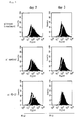
- the CD8-positive T cell clone 2-28 was co-cultured at 37°C with self lymphoblastoid cell line (LCL) which had been irradiated with 80 Gly X-ray and had been pulsed with MAGE-A4 143-151 peptide, PD-L1 on the cell surface after 0 day, 1 day, 2 days and 3 days was stained with an anti-human PD-L1 antibody (manufactured by BD bioscience), and analyzed with a flow cytometer.
- Fig. 1 shows the results of analysis with a flow cytometer. The expression of PD-L1 was highest after 1 day of culturing..
- SiRNA specific for PD-L1 having a sequence described in SEQ ID NO: 1 siRNA specific for PD-L2 having a sequence described in SEQ ID NO: 2, or negative control siRNA (all manufactured by Invitrogen) was introduced into CD8-positive T cell clone 2-28 by electroporation.
- a cell with siRNA for PD-L1 introduced therein was cultured for 3 days, and then co-cultured at 37°C with self LCL which had been irradiated with 80 Gly X-ray and had been pulsed with a MAGE-A4 143-151 peptide. On the next day, this was stained with an anti-human PD-L1 antibody, and the expression of PD-L1 on the cell surface was analyzed with a flow cytometer.
- the cell was stained with an anti-human PD-L2 antibody (manufactured by BD bioscience) and the expression of PD-L2 in the cell was analyzed with a flow cytometer, after 2 days and 3 days after introduction.
- an anti-human PD-L2 antibody manufactured by BD bioscience
- Fig. 2 The results of analysis of PD-L1 are shown in Fig. 2
- Fig. 3 The results of analysis of PD-L2 are shown in Fig. 3 , respectively.
- siRNA specific for PD-L1 introduced therein siRNA specific for PD-L1 introduced therein
- si PD-L2 siRNA specific for PD-L2 introduced therein
- Negative control siRNA siRNA specific for PD-1 having a sequence described in SEQ ID NO: 3 (manufactured by Invitrogen), siRNA specific for PD-L1 having a sequence described in SEQ ID NO: 1, or siRNA specific for PD-L2 having a sequence described in SEQ ID NO: 2 was introduced into CD8-positive T cell clone 2-28 by electroporation.
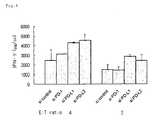
- this cell was mixed with a cell in which self LCL had been pulsed with a MAGE-A4 143-151 peptide at a ratio of 4 : 1 or 2 : 1, and the mixture was co-cultured at 37°C and, on the next day, the concentration of IFN- ⁇ in each culturing supernatant was measured by an ELISA method.
- the concentration of IFN- ⁇ in each cell supernatant is shown in Fig. 4 .
- si PD-1 change in the concentration of IFN- ⁇ was not seen at culturing with both mixing ratios, as compared with the cell with negative control siRNA introduced therein.
- siRNA specific for PD-L1 introduced therein and the cell with siRNA specific for PD-L2 introduced therein an increase in the concentration of IFN- ⁇ was significantly seen, respectively, as compared with the cell with negative control siRNA introduced therein and the cell with siRNA specific for PD-1 introduced therein.
- siRNA specific for PD-1 having a sequence described in SEQ ID NO: 3 siRNA specific for PD-L1 having a sequence described in SEQ ID NO: 1, or siRNA specific for PD-L1 having a sequence described in SEQ ID NO: 2 was introduced into MAGE-A4 46-66 -specific CD4-positive T cell clone 5 by electroporation, and this was cultured for 3 days.
- This cell was mixed with a cell in which self LCL had been pulsed with a MAGE-A4 46-66 peptide at 2 : 1, and the mixture was cultured at 37°C and, on the next day, the concentration of IFN- ⁇ in each culturing supernatant was measured by an ELISA method.
- the concentration of IFN- ⁇ in each cell supernatant is shown in Fig. 5 .
- the expression of IFN- ⁇ was not seen.
- the expression of IFN- ⁇ was significantly seen.
- SiRNAs specific for PD-L1 each having a sequence described in SEQ ID NO: 8 or 9 (sh831, sh832), or siRNAs specific for PD-L2 each having a sequence described in SEQ ID NO: 10 or 11 (sh833, sh834) (all manufactured by TAKARA BIO INC.), or the negative control siRNA used in Example 2 was introduced into LCL by electroporation, this was cultured at 37°C for 2 days, total RNA was extracted from each cell, the expression of PD-L1 and PD-L2 was measured by real time RT-PCR using QuanTitect SYBR PCR Kit (manufactured by QIAGEN), and siRNA having strong expression suppressing power was selected.
- Sequences of primers for real time RT-PCR used in measuring the expression of PD-L1 are shown in SEQ ID Nos.: 12 and 13
- sequences of primers for real time RT-PCR used in measuring the expression of PD-L2 are shown in SEQ ID Nos.: 14 and 15
- sequences of primers for real time RT-PCR of human GAPDH (glyceraldehyde-3-phosphate dehydrogenase) as a subject of measurement of the expression are shown in SEQ ID Nos.: 16 and 17, respectively.
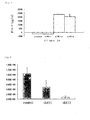
- the results of real time RT-PCR of PD-L1 are shown in Fig. 6
- the results of real time RT-PCR of PD-L2 are shown in Fig. 7 .
- an ordinate axis shows the ratio of the expression of PD-L1 or PD-L2 relative to the expression of human GAPDH.
- pMS-Ma2 and pMS-Pb2 were produced.
- These vectors include the retrovirus vector system based on MSCV (Murine Stem Cell Virus). Further, those vectors include genes encoding TCR ⁇ and ⁇ chains recognizing tumor antigen MAGE-A4, respectively and, in these genes, codons were converted so that the expression is not suppressed by RNA interference with siRNA on TCR described later (hereinafter, a gene in which codons are converted is referred to as codon conversion-type).
- a codon conversion-type TCR ⁇ gene was excised with MluI and BglII from pMS-Ma2 produced in Example 6, and TCR ⁇ -MluI/BglII was prepared.
- a siRNA cluster, a PDL1-PDL2-TCR ⁇ -TCR ⁇ artificially synthesized gene shown in SEQ ID NO: 4 was digested with BglII and NotI, and cloned into the MluI-NotI site of pMS-Pb2 together with TCR ⁇ -MluI/BglII, to prepare an MS-aPb1-siPDL_1/2_siTCR vector (vector 1).
- the vector 1 expresses the codon conversion-type TCR, and can express siRNAs for PD-L1, PD-L2, TCR ⁇ and TCR ⁇ shown in SEQ ID Nos.: 9, 11, 18 and 19. Among them, siRNA s for TCR ⁇ and TCR ⁇ suppress the expression of endogeneous wild-type TCR, and does not suppress the expression of the codon conversion-type TCR.
- a siRNA cluster a PDL1-PDL2 artificially synthesized gene shown in SEQ ID NO: 5
- a siRNA cluster PDL2 artificially synthesized gene shown in SEQ ID NO: 7 were prepared, and an MS-aPb1-siPDL_1/2 vector (vector 2), an MS-aPb1-siPDL_1 vector (vector 3), and an MS-aPb1-siPDL_2 vector (vector 4) were prepared as in the vector 1.
- the summary of genes expressed by respective vectors is shown in Table 1.
- Example 8 Production of codon conversion-type TCR and siRNA-expressing retrovirus solution
- Escherichia coli JM109 was transformed with the vectors 1 to 4 prepared in Example 7, and plasmid DNA was purified using QIAGEN Plasmid Midi Kit (manufactured by QIAGEN) to provide DNA for transfection.
- Each prepared DNA for transfection was transfected into a 293T cell according to a product protocol using Retrovirus Packing Kit Eco (manufactured by TAKARA BIO INC.) to obtain each ecotropic virus supernatant solution.
- This supernatant solution was filtered with a 0.45 ⁇ m filter (Milex HV, manufactured by Millipore), and made to infect a PG13 cell (ATCC CRL-10686) by a method using polybrene [ Kawai et al., Mol. Cell. Biol., Vol. 4, p.1172, (1984 )], the resulting culture supernatant of the cell was recovered, and filtered with a 0.45 ⁇ m filter to prepare a retrovirus solution.
- Retrovirus Packing Kit Eco manufactured by TAKARA BIO INC.
- PBMC peripheral blood mononuclear cell separated from human peripheral blood was infected with the retrovirus solution produced in Example 8 two times according to a manual using Retronectin (registered trademark, manufactured by TAKARA BIO INC.) to produce codon conversion-type TCR and a siRNA-co-expressing introduction peripheral blood mononuclear cell. After 3 days from second virus infection, the cell was recovered, genome was extracted with FastPure DNA Kit (TAKARA BIO INC.), and the average provirus copy number in each cell genome was calculated with Proviral Copy Number Detection Primer Set (manufactured by TAKARA BIO INC.) and CycleavePCR Core Kit (manufactured by TAKARA BIO INC.).
- Retronectin registered trademark, manufactured by TAKARA BIO INC.
- the provirus copy number of PBMC infected with the virus solution containing the vectors 1 to 4 was 4.6 copies/cell, 2.2 copies/cell, 3.2 copies/cell, and 4.5 copies/cell, respectively. Then, after 5 days from second virus infection, the cell was recovered, and stained with HLA-A2402 MAGE-A4 tetramer PE (manufactured by MBL) and Human CD8-FITC CONJUGATE (manufactured by Becton, Dickinson), and the ratio of a cell which is CD8-positiVe and tetramer-positive according to a flow cytometer was determined.
- the rate of an MAGE-A4 tetramer-positive cell is shown in Fig. 8 .
- An abscissa axis indicates an introduced retrovirus vector, and an ordinate axis indicates the rate of an MAGE-A4 tetramer-positive cell (%).
- the expression of an anti-MAGE-A4TCR ⁇ / ⁇ composite protein by gene introduction into a human peripheral blood mononuclear cell was confirmed by each retrovirus vector introduction.
- the expression of siRNA for PD-L1 and PD-L2 expressed by the retrovirus vector did not greatly influence on the expression of the introduced codon conversion-type TCR.
- siRNAs for TCR ⁇ and TCR ⁇ enhanced the rate of codon conversion-type TCR ⁇ / ⁇ composite protein expression by the effect of suppressing the expression of a wild-type endogeneous TCR gene by siRNA.
- the present invention provides a method for enhancing the function of a T cell, and a T cell with enhanced function.
- This T cell enhances an immune response to cancer, and can be utilized in effective cancer immunotherapy, and treatment or prevention of an infection disease or an autoimmune disease.
Landscapes
- Health & Medical Sciences (AREA)
- Life Sciences & Earth Sciences (AREA)
- Engineering & Computer Science (AREA)
- General Health & Medical Sciences (AREA)
- Biomedical Technology (AREA)
- Genetics & Genomics (AREA)
- Chemical & Material Sciences (AREA)
- Organic Chemistry (AREA)
- Bioinformatics & Cheminformatics (AREA)
- Public Health (AREA)
- Veterinary Medicine (AREA)
- Animal Behavior & Ethology (AREA)
- Biotechnology (AREA)
- Zoology (AREA)
- Immunology (AREA)
- Wood Science & Technology (AREA)
- General Engineering & Computer Science (AREA)
- Epidemiology (AREA)
- Biochemistry (AREA)
- Microbiology (AREA)
- Molecular Biology (AREA)
- Medicinal Chemistry (AREA)
- Pharmacology & Pharmacy (AREA)
- Chemical Kinetics & Catalysis (AREA)
- General Chemical & Material Sciences (AREA)
- Nuclear Medicine, Radiotherapy & Molecular Imaging (AREA)
- Cell Biology (AREA)
- Hematology (AREA)
- Physics & Mathematics (AREA)
- Biophysics (AREA)
- Plant Pathology (AREA)
- Transplantation (AREA)
- Communicable Diseases (AREA)
- Oncology (AREA)
- Medicines Containing Material From Animals Or Micro-Organisms (AREA)
- Medicines That Contain Protein Lipid Enzymes And Other Medicines (AREA)
- Micro-Organisms Or Cultivation Processes Thereof (AREA)
- Pharmaceuticals Containing Other Organic And Inorganic Compounds (AREA)
- Developmental Biology & Embryology (AREA)
- Virology (AREA)
Abstract
Description
- The present invention relates to a method for enhancing the function of a T cell by suppressing the expression of Programmed Death-1 Ligand 1 (PD-L1) and/or Programmed Death-1 Ligand 2 (PD-L2) of the T cell, etc.
- A signal via the B7 : CD28 costimulatory molecular family is deeply involved in activation, inhibition and adjustment of a T cell reaction. It has been known that a PD-1 (Programmed Death-1) molecule belonging to the B7 : CD28 costimulatory molecular family reacts with PD-L1 and PD-L2, and negatively controls the T cell reaction (Non-Patent Document 1). At first, it has been suggested that PD-1 expressed on a T cell reacts with PD-L1 expressed on an antigen presenting cell or a cancer cell, or PD-L2 on an antigen presenting cell to inhibit the activation of the T cell.
- On the other hand, it has been known that PD-L1 is also expressed on a T cell. Recently, a possibility that PD-L1 binds with not only PD-1 but also B7-1 (CD80), and PD-L1 present on a T cell sends a negative signal to the T cell has been demonstrated (Non-Patent Document 2). However, what physiological and pathological roles are played by PD-L1 expressed on a T cell, in an immune reaction, is entirely unknown. Regarding PD-L2, it has been only known so far that it is expressed on a dendritic cell, a macrophage, a B1B cell, and a mast cell derived from bone marrow only upon induction, and its expression on a T cell is not clear. Therefore, a role played by PD-L2, which is physiologically or forcibly expressed on a T cell, is not entirely known.
- There has been demonstrated a possibility that an immune response inhibiting signal from a costimulatory molecule, a representative of which is CTLA4 or PD-1, induces tolerance (immunological tolerance) via suppression of priming or the effector function at the initial stage of an autoreactive T cell while balancing with an immune response activating signal from a costimulatory molecule, a representative of which is a T cell receptor (TCR) or CD28, thereby protecting tissues from the autoreactive T cell and, on the other hand, controlling infection immunity or tumor immunity. In addition, it has been thought that certain tumors or viruses suppress the activation and proliferation of a T cell by a direct or indirect mechanism utilizing the costimulatory molecule, to weaken an immune reaction against themselves. Further, it has been thought that in a part of diseases attributed to a functional disorder of a T cell, abnormality of the costimulatory molecule is a cause for a functional disorder of a T cell.
-
- Non-Patent Document 1: Keir M, and other three persons, Annu. Rev. Immunol., Vol.26, pp.677-704 (2008)
- Non-Patent Document 2: Butte M, and other four persons, Immunity, Vol.27, pp. 111-122 (2007)
- An object of the present invention is to provide a method for enhancing the function of a T cell, and a T cell with enhanced function.
- The present inventors have found that it is possible to control a T cell immune response by artificially controlling the expression of PD-L1 and/or PD-L2 of a T cell. Particularly, the present inventors have found that reduction of the expression of PD-L1 and/or PD-L2 in an anti-tumor T cell enhances the anti-tumor effect of the T cell, and thus it results in completion of the present invention.
- That is, the present invention relates to:
- [1] a method for enhancing the function of a T cell, comprising suppressing the expression of Programmed Death-1 Ligand 1 (PD-L1) and/or Programmed Death-1 Ligand 2 (PD-L2) of the T cell;
- [2] the method for enhancing the function of a T cell according to [1], wherein the T cell is a cytotoxic T cell or a regulatory T cell;
- [3] the method for enhancing the function of a T cell according to [2], wherein the regulatory T cell is a helper T cell, a controlling T cell or a Th17 cell;
- [4] the method for enhancing the function of a T cell according to [1], wherein the function enhancement is the production enhancement of T cell interferon-γ (IFN-γ);
- [5] the method for enhancing the function of a T cell according to [1], wherein the expression of PD-L1 and/or PD-L2 is suppressed by siRNA for PD-L1 and/or PD-L2;
- [6] a T cell with enhanced function, which is suppressed in the expression of PD-L1 and/or PD-L2;
- [7] the T cell with enhanced function according to [6], wherein the T cell is a cytotoxic T cell or a regulatory T cell;
- [8] the T cell with enhanced function according to [7], wherein the regulatory T cell is a helper T cell, a controlling T cell or a Th17 cell;
- [9] the T cell with enhanced function according to [6], wherein the function enhancement is the production enhancement of T cell interferon-γ (IFN-γ);
- [10] the T cell with enhanced function according to [6], wherein the expression of PD-L1 and/or PD-L2 is suppressed by siRNA for PD-L1 and/or PD-L2; and
- [11] a therapeutic agent for a disease showing sensitivity to the T cell with enhanced function according to any one of [6] to [10], comprising the T cell as an active ingredient.
- According to the present invention, a method for enhancing the function of a T cell, a T cell with enhanced function, etc., are provided. This T cell enhances an immune response to cancer, and is useful in effective cancer immunotherapy, or treatment or prevention of an infection disease or an autoimmune disease.
-
- [
Fig. 1] Fig. 1 is a view analyzing the expression of PD-L1 of a CD8-positive T cell. - [
Fig. 2]. Fig. 2 is a view analyzing the expression of PD-L1 of a CD8-positive T cell. - [
Fig. 3] Fig. 3 is a view analyzing the expression of PD-L2 of a CD8-positive T cell. - [
Fig. 4] Fig. 4 is a view showing the concentration of interferon γ (IFN-γ) of a CD8-positive T cell. - [
Fig. 5] Fig. 5 is a view showing the concentration of IFN-γ of a CD4-positive T cell. - [
Fig. 6] Fig. 6 is a view analyzing the expression of PD-L1 of LCL. - [
Fig. 7] Fig. 7 is a view analyzing the expression of PD-L2 of LCL. - [
Fig. 8] Fig. 8 is a view showing the ratio of a CD8-positive tetramer-positive T cell. - Herein, "enhanced function of a T cell" means that the effector function of the T cell is improved. The enhanced function of the T cell, which does not limit the present invention, includes an improvement in the proliferation rate of the T cell, an increase in the production amount of cytokine, or an improvement in cytotoxity. Further, the enhanced function of the T cell includes cancellation and suppression of tolerance of the T cell in the suppressed state such as the anergy (unresponsive) state, or the rest state, that is, transfer of the T cell from the suppressed state into the state where the T cell responds to stimulation from the outside.
- In the present invention, "anergy" includes unresponsiveness to an immune cell to stimulation, for example, stimulation by an activation receptor or cytokine. The anergy may occur due to, for example, exposure to an immune suppressor or exposure to an antigen in a high dose. Such anergy is generally antigen-specific, and continues even after completion of exposure to a tolerized antigen. For example, the anergy in a T cell is characterized by failure of production of cytokine, for example, interleukin (IL)-2. The T cell anergy occurs when a first signal (signal via TCR or CD-3) is received in the absence of a second signal (costimulatory signal) upon exposure of a T cell to an antigen.
- Herein, "PD-L1" means
ligand 1 of PD-1, which is a costimulatory molecule expressed on a so-called antigen presenting cell such as an activated monocyte or a dendritic cell, and is also referred to as B7-H1. The nucleotide sequence of human PD-L1 is shown by GenBank Acc. No. AF233516, and the nucleotide sequence of mouse PD-L1 is shown by NM_021893 (Freeman et al. (2000) J. Exp. Med. 192:1027). - Herein, "PD-L2" means
ligand 2 of PD-1, and is also referred to as B7-DC. The nucleotide sequence of human PD-L2 is shown by GenBank Acc. No. NM_025239, and the nucleotide sequence of mouse PD-L2 is shown by NM_021896 (Nature Immunology, 2001, Vol.2, No.3, pp.261-267). - Herein, "T cell" is also referred to as T lymphocyte, and means a cell derived from thymus among lymphocytes involved in an immune response. The T cell includes any of a CD8-positive T cell (cytotoxic T cell: CTL), a CD4-positive T cell (helper T cell), a suppressor T cell, a regulatory T cell such as a controlling T cell, an effector cell, a naive T cell, a memory T cell, an αβT cell expressing TCR α and P chains, and a γδT cell expressing TCR γ and δ chains. The T cell includes a precursor cell of a T cell in which differentiation into a T cell is directed. Examples of "cell populations containing T cells" include, in addition to body fluids such as blood (peripheral blood, umbilical blood etc.) and bone marrow fluids, cell populations containing peripheral blood mononuclear cells (PBMC), hematopoietic cells, hematopoietic stem cells, umbilical blood mononuclear cells etc., which have been collected, isolated, purified or induced from the body fluids. Further, a variety of cell populations containing T cells and derived from hematopoietic cells can be used in the present invention. These cells may have been activated by cytokine such as IL-2 in vivo or ex vivo. As these cells, any of cells collected from a living body, or cells obtained via ex vivo culture, for example, a T cell population obtained by the method of the present invention as it is, or obtained by freeze preservation, can be used.
- Herein, "cancer" means a malignant tumor, and refers to a cell exhibiting abnormal proliferation phenotype or the abnormal cell state, which has a feature of exhibiting autonomous proliferation and, as a result, uncontrollable cell proliferation. "Tumor cells" include "malignant tumor cells" or "benign tumor cells", and are also referred to as "cells derived from neoplasm".
- Herein, "expression" means generation of mRNA by transcription from nucleic acids such as genes, polynucleotides, and oligonucleotides, or generation of a protein or a polypeptide by transcription from mRNA. "Suppression of expression" refers to a decrease of a transcription product or a translation product in a significant amount as compared with the case of no suppression. The suppression of expression herein shows, for example, a decrease of a transcription product or a translation product in an amount of 30% or more, preferably 50% or more, more preferably 70% or more, and further preferably 90% or more.
- The method for enhancing the function of a T cell of the present invention is a method including the step of suppressing the expression of PD-L1 and/or PD-L2 of the T cell. In addition, the T cell with enhanced function of the present invention is a cell obtained by the method for enhancing the function of a T cell of the present invention. The method of enhancing the function of a T cell of the present invention makes it possible to improve the effector function of the T cell, including an improvement in the proliferation rate of the T cell, an increase in the production amount of cytokine or an improvement in cytotoxity. Further, the suppressed state of the T cell such as the anergy state, or the rest state is cancelled or suppressed, and the sensitivity of the T cell to stimulation from the outside is improved. The thus obtained T cell with enhanced function of the present invention is useful in treating or preventing cancer, an infection disease or an autoimmune disease.
- In the method of the present invention, the step of suppressing the expression of PD-L1 and/or PD-L2 of the T cell can be performed ex vivo or in vivo.
- The method of the present invention in which the step is performed ex vivo includes the steps of: (a) preparing a T cell or a cell population containing a T cell, and (b) suppressing the expression of PD-L1 and/or PD-L2 of the T cell obtained in the step (a) to prepare a T cell with enhanced function. The method can be applied to cell immunotherapy including adoptive immunotherapy, and is useful. The step (a) may be the step of separating a T cell or a cell population containing a T cell from a living body, or the step of preparing an established T cell or a cell population containing a T cell. Further, the method of the present invention may includes the step of separating the cell population containing a T cell from cell populations to prepare a cell sub-population and/or the step of culturing and stimulating the cell population. These steps can be performed at an arbitrary stage before, after or simultaneous with the step (a) and the step (b). In the method of the present invention in which the step of suppressing the expression of PD-L1 and/or PD-L2 of the T cell is performed ex vivo, the amount and kind of the cell to which the method is applied can be controlled through a suitable means, for example, preparation of a cell sub-population, or culturing or stimulation of the cell population. Therefore, a harmful event such as autoimmunity, which is concerned when a substance suppressing the expression of PD-L1 and/or PD-L2 or a substance inhibiting signal transmission is administered to a living body, can be reduced, and therefore it is extremely useful.
- The step of separating the cell population and cell sub-population containing a T cell can be performed, for example, by fractionation of a mononuclear cell fraction by density gradient centrifugation, or a separation means using the surface marker of the T cell as an index. Examples of the surface marker include CD3, CD8 and CD4, and separation methods depending on these surface markers are known in the art. For example, the step can be performed by mixing a carrier such as beads or a culturing container on which an anti-CD8 antibody has been immobilized, with a cell population containing a T cell, and recovering a CD8-positive T cell bound to the carrier. As the beads on which an anti-CD8 antibody has been immobilized, for example, CD8 MicroBeads (manufactured by Miltenyi Biotec), Dynabeads M450 CD8 (manufactured by Invitrogen), and Eligix anti-CD8 mAb coated nickel particles (manufactured by Biotransplant) can be suitably used. This is also the same as in implementation using CD4 as an index and, for example, CD4 MicroBeads (manufactured by Miltenyi Biotec), Dynabeads M-450 CD4 (manufactured by Invitrogen) can be suitably used.
- The step of culturing the cell population and cell sub-population containing a T cell can be performed by selecting suitable known culturing conditions depending on the cell population. In addition, in the step of stimulating the cell population, known proteins and chemical ingredients, etc., may be added to the medium to perform culturing. For example, cytokines, chemokines or other ingredients may be added to the medium. Herein, the cytokine is not particularly limited as far as it can act on the T cell, and examples thereof include IL-2, IFN-γ, transforming growth factor (TGF)-β, IL-15, IL-7, IFN-α, IL-12, CD40L, and IL-27. From the viewpoint of enhancing cellular immunity, particularly suitably, IL-2, IFN-γ, or IL-12 is used and, from the viewpoint of improvement in survival of a transferred T cell in vivo, IL-7, IL-15 or IL-21 is suitably used. In addition, the chemokine is not particularly limited as far as it acts on the T cell and exhibits migration activity, and examples thereof include RANTES, CCL21, MIP1α, MIP1β, CCL19, CXCL12, IP-10 and MIG. The stimulation of the cell population can be performed by the presence of a ligand for a molecule present on the surface of the T cell, for example, CD3, CD28, or CD44 and/or an antibody to the molecule. Further, the cell population can be stimulated by contacting with other lymphocytes such as antigen presenting cells (dendritic cell) presenting a target peptide such as a peptide derived from a cancer antigen on the surface of a cell.
- When the step of suppressing the expression of PD-L1 and/or PD-L2 of the T cell is performed in vivo, the step is performed by administering a means to specifically suppress the expression thereof described later to a living body. Thereupon, a suitable drug delivery system (e.g. liposome, fine particles, microcapsule etc.) can be utilized. Further, for example, utilizing the delivery system using the surface marker of the T cell as an index, the expression of PD-L1 and/or PD-L2 of the T cell can be specifically suppressed.
- Examples of the means to suppress the expression of PD-L1 and/or PD-L2 of the T cell include utilization of nucleic acids such as siRNA for PD-L1 and/or PD-L2, an antisense nucleotide, and a ribozyme.
- The utilization of siRNA in the present invention is for the purpose of selectively suppressing the expression of PD-L1 and/or PD-L2, and is based on RNA interference (RNAi) utilizing a double-stranded RNA molecule having a sequence homologous with the nucleotide sequence of mRNA which is transcribed from a gene encoding PD-L1 and/or PD-L2, and a sequence complementary with the nucleotide sequence. Herein, "having a sequence homologous with the nucleotide sequence of mRNA which is transcribed from a gene encoding PD-L1 and/or PD-L2, and a sequence complementary with the nucleotide sequence" not only refers to the fact that each sequence is completely homologous or complementary with the nucleotide sequence of mRNA, but also includes the fact that each sequence is substantially homologous or complementary in such a range that the desired function is exerted. The double-stranded RNA molecule is referred to as siRNA (short interfering RNA). The siRNA may be one kind of siRNA which is homologous/complementary with one region of mRNA which is transcribed from a gene encoding PD-L1 and/or PD-L2, or may be siRNA including a plurality of RNA molecules which are homologous/complementary with different regions.
- Examples of the chain length of the siRNA used in the present invention include, from the viewpoint of suppression of interferon response in a mammal cell, those in which one strand of a duplex constituting the siRNA has a chain length of 13 to 29 base pairs, preferably a chain length of 15 to 25 base pairs, further preferably a chain length of 20 to 25 base pairs. In addition, all of the nucleotide sequences of the chain lengths may be derived from the nucleotide sequence of the mRNA of PD-L1 and/or PD-L2, or a part thereof may be derived from the nucleotide sequence. Further, the siRNA used in the present invention, from the viewpoint of effectiveness of RNA interference in a mammal cell, may be, for example, a shape of double-stranded RNA having a single-stranded region which is protruded on a 3'-terminal side by 2 to 4 nucleotides, further preferably a shape of double-stranded RNA having a single-stranded region which is protruded on a 3'-terminal side by 2 nucleotides. As the protruded single-stranded region, deoxythymidine residue of continuous 2 to 4 nucleotides (TT, TTT or TTTT) is exemplified.
- The siRNA used in the present invention is mainly comprised of ribonucleotides, and a part thereof may include nucleotides other than ribonucleotides, for example, deoxyribonucleotides, a derivative of deoxyribonucleotides, a derivative of ribonucleotides, etc. The siRNA can be synthesized by a known chemical synthesis method, but the method is not particularly limited. It may be enzymatically (e.g., using an RNA polymerase) prepared using a suitable template nucleic acid. The siRNA used in the present invention may be in the form of single-stranded RNA which can form a duplex in the molecule, and single-stranded RNA with a stem-loop structure (short hairpin structure: sh structure) having the si RNA part as a stem and an arbitrary sequence as a loop (shRNA) is exemplified. As the arbitrary sequence, a sequence of 1 to 30 nucleotides is exemplified, and a sequence of preferably 1 to 25 nucleotides, further preferably 5 to 22 nucleotides is used.
- The sequence of the siRNA can be appropriately designed based on a gene sequence whose expression is desired to be suppressed. Many siRNA design algorisms have been reported (see, e.g.,
WO 2004/0455543 WO 2004/048566 ), and a commercially available software can also be used. In addition, there are many companies which design siRNA from information of a gene sequence whose expression is desired to be suppressed, and synthesize and provide the siRNA. Therefore, a person skilled in the art can easily obtain the siRNA based on the gene sequence whose expression is desired to be suppressed. As the siRNA used in the present invention, any can be used as far as it is siRNA which selectively suppresses the expression of PD-L1 and/or PD-L2. For example, siRNA including the nucleotide sequence of SEQ ID NO: 1 or SEQ ID NO: 9 can be used for PD-L1, and siRNA including the nucleotide sequence of SEQ ID NO: 2 or SEQ ID NO: 11 can be used for PD-L2, without particular limitation. - In the present invention, an antisense nucleotide can be used for suppressing the expression of PD-L1 and/or PD-L2. The antisense nucleotide is used for suppressing the expression of a protein, for example, by directly interfering translation of the mRNA molecule of PD-L1 and/or PD-L2, by degradation of mRNA by an RNA degradation enzyme H, by interfering the 5' capping of mRNA, by masking the 5' cap, by preventing binding of a translation factor with mRNA, or by inhibiting polyadenylation of mRNA. The suppression of the expression of a protein occurs by hybridization between an antisense nucleotide and the mRNA of PD-L1 and/or PD-L2. In order to reduce stability of, or degrade mRNA, as a target of the antisense nucleotide, a specific targeting site on the mRNA is selected. When one or more target sites are identified, a nucleotide having a nucleotide sequence sufficiently complementary with the target site (that is, which hybridizes sufficiently and with sufficient specificity under the physiological conditions) is designed.
- As the antisense nucleotide used in the method of the present invention, for example, a nucleotide having a chain length of 8 to 100 nucleotides, preferably 10 to 80 nucleotides, more preferably 14 to 35 nucleotides is exemplified.
- In the present invention, nucleic acids such as siRNA and an antisense nucleotide used in suppressing the expression of PD-L1 and/or PD-L2 may be directly introduced into a cell, or a nucleic acid construct which has been designed so that the siRNA or the antisense nucleotide is transcribed in a cell may be introduced into a cell. When directly introduced into a cell, a reagent for introducing a nucleic acid such as TransIT-TKO (manufactured by Mirus), and Human T Cell Nucleofector Kit (Amaxa) can be suitably used. On the other hand, when the nucleic acid construct in which the RNA molecule is transcribed is used, a nucleic acid construct can be used which is functionally connected downstream of a promoter capable of exerting the function in the T cell in the state where transcription of a nucleic acid encoding the siRNA or the antisense nucleotide can occur, but it does not particularly limit the present invention. In addition, in order to attain effective transcription of a gene, other regulatory sequences cooperating with a promoter or a transcription initiation site, for example, an enhancer sequence or a terminator sequence may be present in the nucleic acid construct. In addition, for the purpose of insertion of a subject to be introduced into a chromosome of the T cell by homologous recombination, for example, the gene may be arranged between flanking sequences including nucleotide sequences, each having homology with nucleotide sequences on both sides of a desired target insertion site of a gene in the chromosome.
- The promoter used in the nucleic acid construct is not particularly limited as far as it can function in a mammal cell, and examples thereof include an RNA polymerase II promoter, an RNA polymerase III promoter, and an artificially regulatable promoter. Example of the RNA polymerase II promoter includes a CMV promoter. In addition, examples of the RNA polymerase III-based promoter include a tRNA promoter, a U6snRNA promoter, and a histone H1 promoter. As the promoter which can be artificially regulated with tetracycline, a promoter which can be regulated with tetracycline is exemplified, and examples thereof include a tetracycline-regulated U6 promoter, and a TR promoter. In addition, combination of the promoter with the Cre-loxP system makes it possible to control transcription more strictly.
- The nucleic acid construct used for transcribing siRNA can be constructed so that a sense strand and an antisense strand of double-stranded RNA which can suppress the function of an objective gene are transcribed by the following system: (A) a tandem type in which a nucleic acid encoding sense RNA and a nucleic acid encoding antisense RNA are connected downstream of different two promoters, respectively, and these two transcription units are arranged in the forward direction, and the sense RNA and the antisense RNA are transcribed separately, (B) a type in which a nucleic acid encoding sense RNA and a nucleic acid encoding antisense RNA are arranged downstream of one promoter, respectively, in the forward direction, and RNA having a stem-loop type (or short hairpin type) in which the sense RNA and the antisense RNA are connected directly or with a loop is transcribed, or (C) a counter type in which a promoter is arranged on both end sides of nucleic acids encoding a sense strand and an antisense strand(with both strands, respectively), respectively, and both RNA strands are transcribed with separate promoters. In the present invention, the tandem type, the stem-loop type or the counter type can be used depending on the use conditions, for example, the kind of a cell, the kind of a sense sequence or an antisense sequence etc.
- The nucleic acid construct used in the present invention may be incorporated into a suitable vector, for example, a plasmid vector or a virus vector so as to more stably exert the effect in a cell. Further, the nucleic acid construct of the present invention may be incorporated on the chromosome DNA of a cell. Examples of the plasmid vector include, but are not particularly limited to, a piGENE tRNA plasmid (trade name, manufactured by iGENE), siLentGene (manufactured by Promega), and pSEC Hygro Vector (manufactured by Ambion). In order to introduce the plasmid vector into a cell, a method using a carrier such as a liposome or ligand-polylysine, a calcium phosphate method, an electroporation method, a particle gun method, etc., can be used.
- The virus vector is not particularly limited, and usually, a known virus vector used in a gene introduction method, for example, a retrovirus vector (including lentivirus vector, pseudo type vector), an adenovirus vector, an adeno-associated virus vector, a simian virus vector, a vaccinia virus vector or a sendai virus vector is used. Particularly preferably, a retrovirus vector, an adenovirus vector or a lentivirus vector is used. As the virus vector, a virus vector in which the replicating ability is defective so that it cannot self-replicate in an infected cell is preferable. In addition, upon gene introduction, a substance improving a gene introduction efficiency such as retronectin (registered trademark, manufactured by TAKARA BIO INC.) can be also used. An example of a commercially available adenovirus vector includes Knockout Adenoviral RNAi System (manufactured by Clonetech) and, examples of a commercially available retrovirus vector include a pSINsi vector (manufactured by TAKARA BIO INC.) and pSIREN-RetroQ Vector (manufactured by Clonetech), respectively. In the case of the virus vector, it can be introduced into an objective cell utilizing the ability of the virus to infect a cell.
- In the method of the present invention, a means to suppress the expression of PD-L1 and/or PD-L2 is implemented on the T cell. That is, in the step (b), for example, a helper T cell, a suppressor T cell, a controlling T cell, a cytotoxic T cell (CTL), a naive T cell, a memory T cell, an αβT cell expressing TCR α and β chains or a γδT cell expressing TCR γ and δ chains, or a cell population containing these cells, blood (peripheral blood, umbilical blood etc.) or a bone marrow fluid can be used. These T cells may be derived from a mammal, or may be derived from either human or a non-human mammal.
- The suppression of the expression of PD-L1 and/or PD-L2 can be confirmed by quantitative determination of the PD-L1 and/or PD-L2 protein, or quantitative determination of RNA transcribed from the PD-L1 and/or PD-L2 gene.
- The function enhancement of the T cell in the method of the present invention can be assessed at a plurality of time points before and after each step using a cytokine assay, an antigen-specific cell assay (tetramer assay), a proliferation assay, a cytolytic cell assay, or an in vivo delayed hypersensitivity test using a recombinant tumor-associated antigen or an immunogenic fragment or an antigen-derived peptide. Examples of an additional method for measuring an increase in an immune response include a delayed hypersensitivity test, flow cytometry using a peptide major histocompatibility gene complex tetramer. a lymphocyte proliferation assay, an enzyme-linked immunosorbent assay, an enzyme-linked immunospot assay, cytokine flow cytometry, a direct cytotoxity assay, measurement of cytokine mRNA by a quantitative reverse transcriptase polymerase chain reaction, or an assay which is currently used for measuring a T cell response such as a limiting dilution method.
- The T cell with enhanced function of the present invention is enhanced in the function of the T cell as compared with a control T cell in which the expression of PD-L1 and/or PD-L2 is not suppressed. The T cell with enhanced function of the present invention is increased in, for example, the production amount of IFN-γ as compared with a control T cell. The T cell of the present invention is increased in the production amount of IFN-γ by 10% or more, preferably 20% or more, more preferably 30% or more as compared with a control T cell.
- Examples of one aspect of the present invention include a method of further enhancing the function of the T cell, in addition to the suppression of the expression of PD-L1 and/or PD-L2. For example, introduction of a gene encoding TCR recognizing a desired antigen into a T cell makes it possible to obtain a T cell to which specificity for the antigen is imparted, and whose effector function is improved. Examples of the antigen include, but are not particularly limited to, a tumor antigen, a microorganism and a virus-derived antigen. Regarding TCR to a variety of antigens, its amino acid sequence, and the nucleotide sequence of a gene encoding the amino acid sequence are known and, construction of a vector for TCR expression based on the information and introduction of the vector into a T cell makes it possible to produce a T cell exerting an antigen-specific action. Thereupon, simultaneous introduction of a nucleic acid construct for suppressing the expression of PD-L1 and/or PD-L2 into a T cell, or incorporation of the construct into the vector for TCR expression makes it possible to improve the effector function of an antigen-specific T cell.
- When TCR including α and β chains is artificially expressed in a T cell, mispairing between the α and β chains derived from an endogenous TCR gene possessed by the T cell itself, etc., may hinder the imparting of desired antigen specificity. For example, implementation of codon conversion of an introduced TCR gene or knockdown of an endogenous TCT gene utilizing siRNA, which is disclosed in
WO 2008/153029 , makes it possible to produce a T cell which has acquired high antigenic specificity. The method for enhancing the function of a T cell of the present invention can also be utilized in producing such a T cell. - The treating method or preventing method of the present invention has a feature of administering the T cell prepared by the method for enhancing the function of the present invention in (1) to a living body. That is, the treating method or preventing method of the present invention includes the step of: (c) administering the T cell with enhanced function obtained in the step (b) to a living body. The disease for which the T cell with enhanced function of the present invention is administered is not particularly limited as far as it is a disease exhibiting sensitivity to the T cell, and examples thereof include cancer (leukemia, solid tumor, etc.), hepatitis, influenza, an infectious disease, a cause of which is a virus such as HIV, a bacterium or a fungus, for example, tuberculosis, MRSA, VRE, deep mycosis. In addition, the cell of the present invention can also be utilized in bone mallow transplantation, or prevention of an infectious disease after radiation, or donor lymphocyte infusion for the purpose of remission of recurrent leukemia. Further, the cell improves the function of a controlling T cell, and can be utilized in preventing or treating an autoimmune disease.
- In the method of the present invention, the T cell with enhanced function can be administered to a subject intradermally, intramuscularly, subcutaneously, intraperitoneally, intraarterially, intravenously (including a method performed by an indwelling catheter), intratumorally, or into an afferent lymph vessel.
- In the treating method or preventing method of the present invention, the T cell with enhanced function to be administered may be a cell which is self to a living body, or may be a cross-derived cell.
- An immune response induced in implementation of the present invention can be assessed in a living body before first administration of the T cell with enhanced function of the present invention, or at various time points after initiation of treatment, using an antigen-specific cell assay, a proliferation assay, a cytolytic cell assay, or an in vivo delayed hypersensitivity test using a recombinant tumor-associated antigen or an immunogenic fragment or an antigen-derived peptide. Examples of an additional method for measuring an increase in an immune response include a delayed hypersensitivity test, flow cytometry using a peptide major histocompatibility gene complex tetramer. a lymphocyte proliferation assay, an enzyme-linked immunosorbent assay, an enzyme-linked immunospot assay, cytokine flow cytometry, a direct cytotoxity assay, measurement of cytokine mRNA by a quantitative reverse transcriptase polymerase chain reaction, or an assay which is currently used for measuring a T cell response such as a limiting dilution method. Further, an immune response can be assessed by a weight, diameter or malignant degree of a tumor possessed by a living body, the infection virus amount or infection bacterium amount of a subject, or the survival rate or survival term of a subject.
- In the method of the present invention, examples of the amount of the T cell with enhanced function to be administered to a living body include, but are not particularly limited to, preferably 1 × 10⁶ to 1 × 10¹² cells/day, more preferably 1 × 10⁷ to 5 × 10¹¹ cells/day, and further preferably 1 × 10⁸ to 2 × 10¹¹ cells/day per adult a day.
- The T cell with enhanced function prepared by the method for enhancing the function of the present invention in (1), and a composition containing the T cell as an active ingredient are useful as a therapeutic agent for a disease having sensitivity to the T cell, for example, the aforementioned cancer, hepatitis or an infectious disease.
- The therapeutic agent of the present invention can be prepared, for example, by mixing the T cell prepared by the method of present invention as an active ingredient with, for example, known organic or inorganic carrier, excipient, stabilizer, etc., which are suitable for parenteral administration, according to a method known in the pharmacy filed. In addition, use thereof may be performed according to the treating method of the present invention in (2).
- The present invention will be described further concretely below by way of Examples, but the present invention is not limited to only the scope of the following Examples.
- According to
WO 2007/032255 , HLA-A24 restrictive MAGE-A 4143-151-specific cytotoxic CD8-positive T cell clone 2-28 (Miyahara Y, and other 13 persons, Clin. Cancer Res., Vol. 11, pp.5581-5589 (2005), hereinafter, referred to as CD8-positive T cell clone 2-28) and a MAGE-A4143-151 peptide were prepared. The CD8-positive T cell clone 2-28 was co-cultured at 37°C with self lymphoblastoid cell line (LCL) which had been irradiated with 80 Gly X-ray and had been pulsed with MAGE-A4143-151 peptide, PD-L1 on the cell surface after 0 day, 1 day, 2 days and 3 days was stained with an anti-human PD-L1 antibody (manufactured by BD bioscience), and analyzed with a flow cytometer.Fig. 1 shows the results of analysis with a flow cytometer. The expression of PD-L1 was highest after 1 day of culturing.. - SiRNA specific for PD-L1 having a sequence described in SEQ ID NO: 1, siRNA specific for PD-L2 having a sequence described in SEQ ID NO: 2, or negative control siRNA (all manufactured by Invitrogen) was introduced into CD8-positive T cell clone 2-28 by electroporation.
- A cell with siRNA for PD-L1 introduced therein was cultured for 3 days, and then co-cultured at 37°C with self LCL which had been irradiated with 80 Gly X-ray and had been pulsed with a MAGE-A4143-151 peptide. On the next day, this was stained with an anti-human PD-L1 antibody, and the expression of PD-L1 on the cell surface was analyzed with a flow cytometer.
- Regarding a cell with siRNA for PD-L2 introduced therein, the cell was stained with an anti-human PD-L2 antibody (manufactured by BD bioscience) and the expression of PD-L2 in the cell was analyzed with a flow cytometer, after 2 days and 3 days after introduction.
- The results of analysis of PD-L1 are shown in
Fig. 2 , and the results of analysis of PD-L2 are shown inFig. 3 , respectively. In the cell with no siRNA introduced therein (non-treatment) and the cell with negative control siRNA introduced therein (si control), suppression of the expression of PD-L1 or PD-L2 was not seen. In the cell with siRNA specific for PD-L1 introduced therein (si PD-L1), and the cell with siRNA specific for PD-L2 introduced therein (si PD-L2), suppression of the expression of PD-L1 and PD-L2 was seen, respectively. - Negative control siRNA, siRNA specific for PD-1 having a sequence described in SEQ ID NO: 3 (manufactured by Invitrogen), siRNA specific for PD-L1 having a sequence described in SEQ ID NO: 1, or siRNA specific for PD-L2 having a sequence described in SEQ ID NO: 2 was introduced into CD8-positive T cell clone 2-28 by electroporation. After culturing for 3 days, this cell was mixed with a cell in which self LCL had been pulsed with a MAGE-A4143-151 peptide at a ratio of 4 : 1 or 2 : 1, and the mixture was co-cultured at 37°C and, on the next day, the concentration of IFN-γ in each culturing supernatant was measured by an ELISA method.
- The concentration of IFN-γ in each cell supernatant is shown in
Fig. 4 . In the cell with siRNA specific for PD-1 introduced therein (si PD-1), change in the concentration of IFN-γ was not seen at culturing with both mixing ratios, as compared with the cell with negative control siRNA introduced therein. In the cell with siRNA specific for PD-L1 introduced therein and the cell with siRNA specific for PD-L2 introduced therein, an increase in the concentration of IFN-γ was significantly seen, respectively, as compared with the cell with negative control siRNA introduced therein and the cell with siRNA specific for PD-1 introduced therein. - Negative control siRNA, siRNA specific for PD-1 having a sequence described in SEQ ID NO: 3, siRNA specific for PD-L1 having a sequence described in SEQ ID NO: 1, or siRNA specific for PD-L1 having a sequence described in SEQ ID NO: 2 was introduced into MAGE-A446-66-specific CD4-positive T cell clone 5 by electroporation, and this was cultured for 3 days. This cell was mixed with a cell in which self LCL had been pulsed with a MAGE-A446-66 peptide at 2 : 1, and the mixture was cultured at 37°C and, on the next day, the concentration of IFN-γ in each culturing supernatant was measured by an ELISA method.
- The concentration of IFN-γ in each cell supernatant is shown in
Fig. 5 . In the cell with negative control siRNA introduced therein, and the cell with siRNA specific for PD-1 introduced therein, the expression of IFN-γ was not seen. In the cell with siRNA specific for PD-L1 introduced therein and the cell with siRNA specific for PD-L2 introduced therein, the expression of IFN-γ was significantly seen. - SiRNAs specific for PD-L1 each having a sequence described in SEQ ID NO: 8 or 9 (sh831, sh832), or siRNAs specific for PD-L2 each having a sequence described in SEQ ID NO: 10 or 11 (sh833, sh834) (all manufactured by TAKARA BIO INC.), or the negative control siRNA used in Example 2 was introduced into LCL by electroporation, this was cultured at 37°C for 2 days, total RNA was extracted from each cell, the expression of PD-L1 and PD-L2 was measured by real time RT-PCR using QuanTitect SYBR PCR Kit (manufactured by QIAGEN), and siRNA having strong expression suppressing power was selected.
Sequences of primers for real time RT-PCR used in measuring the expression of PD-L1 are shown in SEQ ID Nos.: 12 and 13, sequences of primers for real time RT-PCR used in measuring the expression of PD-L2 are shown in SEQ ID Nos.: 14 and 15, and sequences of primers for real time RT-PCR of human GAPDH (glyceraldehyde-3-phosphate dehydrogenase) as a subject of measurement of the expression are shown in SEQ ID Nos.: 16 and 17, respectively.
The results of real time RT-PCR of PD-L1 are shown inFig. 6 , and the results of real time RT-PCR of PD-L2 are shown inFig. 7 . In the figures, an ordinate axis shows the ratio of the expression of PD-L1 or PD-L2 relative to the expression of human GAPDH. From this result, sh832 shown in SEQ ID NO: 9 as siRNA specific for PD-L1, and sh834 shown in SEQ ID NO: 11 as siRNA specific for PD-L2 were selected. - According to
WO 2008/153029 , pMS-Ma2 and pMS-Pb2 were produced. These vectors include the retrovirus vector system based on MSCV (Murine Stem Cell Virus). Further, those vectors include genes encoding TCR α and β chains recognizing tumor antigen MAGE-A4, respectively and, in these genes, codons were converted so that the expression is not suppressed by RNA interference with siRNA on TCR described later (hereinafter, a gene in which codons are converted is referred to as codon conversion-type). - A codon conversion-type TCRα gene was excised with MluI and BglII from pMS-Ma2 produced in Example 6, and TCRα-MluI/BglII was prepared. A siRNA cluster, a PDL1-PDL2-TCRα-TCRβ artificially synthesized gene shown in SEQ ID NO: 4 was digested with BglII and NotI, and cloned into the MluI-NotI site of pMS-Pb2 together with TCRα-MluI/BglII, to prepare an MS-aPb1-siPDL_1/2_siTCR vector (vector 1). The
vector 1 expresses the codon conversion-type TCR, and can express siRNAs for PD-L1, PD-L2, TCRα and TCRβ shown in SEQ ID Nos.: 9, 11, 18 and 19. Among them, siRNA s for TCRα and TCRβ suppress the expression of endogeneous wild-type TCR, and does not suppress the expression of the codon conversion-type TCR. - Further, a siRNA cluster, a PDL1-PDL2 artificially synthesized gene shown in SEQ ID NO: 5, a siRNA cluster PDL1 artificially synthesized gene shown in SEQ ID NO: 6, and a siRNA cluster PDL2 artificially synthesized gene shown in SEQ ID NO: 7 were prepared, and an MS-aPb1-siPDL_1/2 vector (vector 2), an MS-aPb1-siPDL_1 vector (vector 3), and an MS-aPb1-siPDL_2 vector (vector 4) were prepared as in the
vector 1. The summary of genes expressed by respective vectors is shown in Table 1. -
[Table 1] Expressed gene Vector 1 Vector 2Vector 3Vector 4Codon conversion-type TCRα gene ○ ○ ○ ○ Codon conversion-type TCRβ gene ○ ○ ○ ○ siRNA for TCRα ○ siRNA for TCRβ ○ siRNA for PD-L1 ○ ○ ○ siRNA for PD-L2 ○ ○ ○ - Example 8 Production of codon conversion-type TCR and siRNA-expressing retrovirus solution
Escherichia coli JM109 was transformed with thevectors 1 to 4 prepared in Example 7, and plasmid DNA was purified using QIAGEN Plasmid Midi Kit (manufactured by QIAGEN) to provide DNA for transfection. - Each prepared DNA for transfection was transfected into a 293T cell according to a product protocol using Retrovirus Packing Kit Eco (manufactured by TAKARA BIO INC.) to obtain each ecotropic virus supernatant solution. This supernatant solution was filtered with a 0.45 µm filter (Milex HV, manufactured by Millipore), and made to infect a PG13 cell (ATCC CRL-10686) by a method using polybrene [Kawai et al., Mol. Cell. Biol., Vol. 4, p.1172, (1984)], the resulting culture supernatant of the cell was recovered, and filtered with a 0.45 µm filter to prepare a retrovirus solution.
- A peripheral blood mononuclear cell (PBMC) separated from human peripheral blood was infected with the retrovirus solution produced in Example 8 two times according to a manual using Retronectin (registered trademark, manufactured by TAKARA BIO INC.) to produce codon conversion-type TCR and a siRNA-co-expressing introduction peripheral blood mononuclear cell. After 3 days from second virus infection, the cell was recovered, genome was extracted with FastPure DNA Kit (TAKARA BIO INC.), and the average provirus copy number in each cell genome was calculated with Proviral Copy Number Detection Primer Set (manufactured by TAKARA BIO INC.) and CycleavePCR Core Kit (manufactured by TAKARA BIO INC.). The provirus copy number of PBMC infected with the virus solution containing the
vectors 1 to 4 was 4.6 copies/cell, 2.2 copies/cell, 3.2 copies/cell, and 4.5 copies/cell, respectively. Then, after 5 days from second virus infection, the cell was recovered, and stained with HLA-A2402 MAGE-A4 tetramer PE (manufactured by MBL) and Human CD8-FITC CONJUGATE (manufactured by Becton, Dickinson), and the ratio of a cell which is CD8-positiVe and tetramer-positive according to a flow cytometer was determined. - The rate of an MAGE-A4 tetramer-positive cell is shown in
Fig. 8 . An abscissa axis indicates an introduced retrovirus vector, and an ordinate axis indicates the rate of an MAGE-A4 tetramer-positive cell (%). As shown inFig. 8 , the expression of an anti-MAGE-A4TCRα/β composite protein by gene introduction into a human peripheral blood mononuclear cell was confirmed by each retrovirus vector introduction. In addition, the expression of siRNA for PD-L1 and PD-L2 expressed by the retrovirus vector did not greatly influence on the expression of the introduced codon conversion-type TCR. Further, siRNAs for TCRα and TCRβ enhanced the rate of codon conversion-type TCRα/β composite protein expression by the effect of suppressing the expression of a wild-type endogeneous TCR gene by siRNA. - The present invention provides a method for enhancing the function of a T cell, and a T cell with enhanced function. This T cell enhances an immune response to cancer, and can be utilized in effective cancer immunotherapy, and treatment or prevention of an infection disease or an autoimmune disease.
-
- SEQ ID NO:1: siRNA specific for PD-L1
- SEQ ID NO:2: siRNA specific for PD-L2
- SEQ ID NO:3: siRNA specific for PD-1
- SEQ ID NO:4: siRNA cluster PDL1-PDL2-TCR alpha-TCR beta
- SEQ ID NO:5: siRNA cluster PDL1-PDL2
- SEQ ID NO:6: siRNA cluster PDL1
- SEQ ID NO:7: siRNA cluster PDL2
- SEQ ID NO:8: siRNA for PD-L1 (sh831)
- SEQ ID NO:9: siRNA for PD-L1 (sh832)
- SEQ ID NO:10: siRNA for PD-L2 (sh833)
- SEQ ID NO:11: siRNA for PD-L2 (sh834)
- SEQ ID NO:12: real time PCR F-primer for PD-L1
- SEQ ID NO:13: real time PCR R-primer for PD-L1
- SEQ ID NO:14: real time PCR F-primer for PD-L2
- SEQ ID NO:15: real time PCR R-primer for PD-L2
- SEQ ID NO:16: real time PCR F-primer for GAPDH
- SEQ ID NO:17: real time PCR R-primer for GAPDH
- SEQ ID NO:18: siRNA for TCR alpha
- SEQ ID NO:19: siRNA for TCR beta
Claims (11)
- A method for enhancing the function of a T cell, comprising suppressing the expression of Programmed Death-1 Ligand 1 (PD-L1) and/or Programmed Death-1 Ligand 2 (PD-L2) of the T cell.
- The method for enhancing the function of a T cell according to claim 1, wherein the T cell is a cytotoxic T cell or a regulatory T cell.
- The method for enhancing the function of a T cell according to claim 2, wherein the regulatory T cell is a helper T cell, a controlling T cell or a Th17 cell.
- The method for enhancing the function of a T cell according to claim 1, wherein the function enhancement is the production enhancement of T cell interferon-γ (IFN-γ).
- The method for enhancing the function of a T cell according to claim 1, wherein the expression of PD-L1 and/or PD-L2 is suppressed by siRNA for PD-L1 and/or PD-L2.
- A T cell with enhanced function, which is suppressed in the expression of PD-L1 and/or PD-L2.
- The T cell with enhanced function according to claim 6, wherein the T cell is a cytotoxic T cell or a regulatory T cell.
- The T cell with enhanced function according to claim 7, wherein the regulatory T cell is a helper T cell, a controlling T cell or a Th17 cell.
- The T cell with enhanced function according to claim 6, wherein the function enhancement is the production enhancement of T cell interferon-γ ·(IFN-γ).
- The T cell with enhanced function according to claim 6, wherein the expression of PD-L1 and/or PD-L2 is suppressed by siRNA for PD-L1 and/or PD-L2.
- A therapeutic agent for a disease showing sensitivity to the T cell with enhanced function according to any one of claims 6 to 10, comprising the T cell as an active ingredient.
Applications Claiming Priority (2)
| Application Number | Priority Date | Filing Date | Title |
|---|---|---|---|
| JP2009053536 | 2009-03-06 | ||
| PCT/JP2010/053666 WO2010101249A1 (en) | 2009-03-06 | 2010-03-05 | Method for enhancing function of t cell |
Publications (3)
| Publication Number | Publication Date |
|---|---|
| EP2404997A1 true EP2404997A1 (en) | 2012-01-11 |
| EP2404997A4 EP2404997A4 (en) | 2013-06-26 |
| EP2404997B1 EP2404997B1 (en) | 2017-10-18 |
Family
ID=42709802
Family Applications (1)
| Application Number | Title | Priority Date | Filing Date |
|---|---|---|---|
| EP10748842.1A Not-in-force EP2404997B1 (en) | 2009-03-06 | 2010-03-05 | Method for enhancing t cell function |
Country Status (5)
| Country | Link |
|---|---|
| US (2) | US9181525B2 (en) |
| EP (1) | EP2404997B1 (en) |
| JP (3) | JPWO2010101249A1 (en) |
| CN (2) | CN102428179A (en) |
| WO (1) | WO2010101249A1 (en) |
Cited By (5)
| Publication number | Priority date | Publication date | Assignee | Title |
|---|---|---|---|---|
| EP2555778A4 (en) * | 2010-04-06 | 2014-05-21 | Alnylam Pharmaceuticals Inc | COMPOSITIONS AND METHODS FOR INHIBITING CD274 / PD-L1 GENE EXPRESSION |
| WO2016196388A1 (en) * | 2015-05-29 | 2016-12-08 | Juno Therapeutics, Inc. | Composition and methods for regulating inhibitory interactions in genetically engineered cells |
| WO2020188105A1 (en) * | 2019-03-21 | 2020-09-24 | Onk Therapeutics Limited | Modified immune effector cells with increased resistance to cell death |
| US10889813B2 (en) | 2015-09-02 | 2021-01-12 | Alnylam Pharmaceuticals, Inc. | Programmed cell death 1 ligand 1 (PD-L1) iRNA compositions and methods of use thereof |
| US12552862B2 (en) | 2016-03-14 | 2026-02-17 | Hoffmann-La Roche Inc. | Oligonucleotides for reduction of PD-L1 expression |
Families Citing this family (14)
| Publication number | Priority date | Publication date | Assignee | Title |
|---|---|---|---|---|
| CN102428179A (en) * | 2009-03-06 | 2012-04-25 | 国立大学法人三重大学 | Methods for enhancing T cell function |
| WO2012095743A2 (en) * | 2011-01-12 | 2012-07-19 | Cellerix Sa | Methods and compositions for use in intralymphatic cellular therapies |
| EP4541818A3 (en) * | 2012-05-25 | 2025-07-23 | Cellectis | Methods for engineering allogeneic and immunosuppressive resistant t cell for immunotherapy |
| WO2014151006A2 (en) | 2013-03-15 | 2014-09-25 | Genentech, Inc. | Biomarkers and methods of treating pd-1 and pd-l1 related conditions |
| BR112017000497B1 (en) | 2014-07-11 | 2023-12-26 | Ventana Medical Systems, Inc | ISOLATED ANTIBODY, PROKARYOTIC HOST CELL, IMMUNOCONJUGATE AND METHOD FOR DETECTING THE PRESENCE OR LEVEL OF PD-L1 EXPRESSION |
| JP6476299B2 (en) * | 2014-09-18 | 2019-02-27 | ナショナル ヘルス リサーチ インスティテュートス | Methods for upregulating and suppressing expression of immunoregulatory cells |
| US20180265874A1 (en) * | 2014-10-10 | 2018-09-20 | Global Biopharma, Inc. | Methods for treating and/or preventing a tumor growth, invasion and/or metastasis |
| EP3415159B1 (en) | 2016-02-08 | 2023-12-13 | Mie University | Pretreatment drug for t cell infusion therapy for immune-checkpoint inhibitor-resistant tumor |
| WO2018170766A1 (en) * | 2017-03-22 | 2018-09-27 | 深圳市博奥康生物科技有限公司 | Sirna of human programmed death ligand 2 gene and application thereof |
| CN107201380B (en) * | 2017-07-11 | 2019-11-08 | 深圳华云生物技术有限公司 | T cells with antigenic specificity and its preparation method and application |
| EP3819518B1 (en) | 2018-08-01 | 2023-06-21 | Honda Motor Co., Ltd. | Clutch control apparatus |
| EP3846824B1 (en) * | 2018-09-07 | 2025-06-18 | The General Hospital Corporation | Compositions and methods for immune checkpoint inhibition |
| AU2021208433A1 (en) * | 2020-01-14 | 2022-07-14 | Adaptimmune Limited | Method of treatment of cancer or tumour |
| US20240344073A1 (en) * | 2023-04-14 | 2024-10-17 | Alnylam Pharmaceuticals, Inc. | PROGRAMMED CELL DEATH 1 LIGAND 1 (PD-L1) iRNA COMPOSITIONS AND METHODS OF USE THEREOF |
Family Cites Families (19)
| Publication number | Priority date | Publication date | Assignee | Title |
|---|---|---|---|---|
| US20060276422A1 (en) * | 2001-05-18 | 2006-12-07 | Nassim Usman | RNA interference mediated inhibition of B7-H1 gene expression using short interfering nucleic acid (siNA) |
| WO2005007855A2 (en) | 2003-07-14 | 2005-01-27 | Sirna Therapeutics, Inc. | RNA INTERFERENCE MEDIATED INHIBITION OF B7-H1 GENE EXPRESSION USING SHORT INTERFERING NUCLEIC ACID (siNA) |
| CA2388441A1 (en) * | 2002-06-10 | 2003-12-10 | Wei-Ping Min | Immunomodulation using rna interference |
| PT1537878E (en) * | 2002-07-03 | 2010-11-18 | Ono Pharmaceutical Co | IMMUNOPOTENTIAL COMPOSITIONS |
| JP2006507841A (en) | 2002-11-14 | 2006-03-09 | ダーマコン, インコーポレイテッド | Functional and ultrafunctional siRNA |
| CN101914532A (en) | 2002-11-22 | 2010-12-15 | 生物智囊团株式会社 | Method of detecting target base sequence of rna interference |
| EP1752536A4 (en) | 2004-05-11 | 2008-04-16 | Alphagen Co Ltd | Polynucleotide causing rna interfere and method of regulating gene expression with the use of the same |
| EP1769078A1 (en) * | 2004-07-01 | 2007-04-04 | VIRxSYS Corporation | Vector packaging cell line |
| EP1773857A4 (en) * | 2004-07-02 | 2009-05-13 | Protiva Biotherapeutics Inc | Immunostimulatory sirna molecules and uses therefor |
| KR101510065B1 (en) * | 2005-06-08 | 2015-04-07 | 다나-파버 캔서 인스티튜트 인크. | Methods and compositions for the treatment of persistent infections and cancer by inhibiting the programmed cell death 1 (pd-1) pathway |
| CN101287831B (en) | 2005-09-13 | 2013-05-15 | 国立大学法人三重大学 | T cell receptor and nucleic acid encoding the receptor |
| WO2007051303A1 (en) * | 2005-11-02 | 2007-05-10 | Protiva Biotherapeutics, Inc. | MODIFIED siRNA MOLECULES AND USES THEREOF |
| WO2008011344A2 (en) | 2006-07-17 | 2008-01-24 | Nationwide Children's Hospital Inc. | Disruption of programmed death-1 (pd-1) ligands to adjuvant adeno-associated virus vector vaccines |
| US8138160B2 (en) * | 2006-08-03 | 2012-03-20 | Warsaw Orthopedic, Inc. | Reagents, methods and systems to suppress pro-inflammatory cytokines |
| CA2947292C (en) | 2006-12-27 | 2019-07-23 | Emory University | Compositions and methods for the treatment of infections and tumors |
| EP2172547B1 (en) | 2007-06-11 | 2016-01-06 | Takara Bio Inc. | Method for expression of specific gene |
| JP2009011236A (en) * | 2007-07-04 | 2009-01-22 | Shizuoka Prefecture | Method for analysis and identification of T cell antigen receptor gene at single cell level |
| CN102428179A (en) * | 2009-03-06 | 2012-04-25 | 国立大学法人三重大学 | Methods for enhancing T cell function |
| AU2011237630B2 (en) * | 2010-04-06 | 2016-01-21 | Alnylam Pharmaceuticals, Inc. | Compositions and methods for inhibiting expression of CD274/PD-L1 gene |
-
2010
- 2010-03-05 CN CN201080020173XA patent/CN102428179A/en active Pending
- 2010-03-05 JP JP2011502824A patent/JPWO2010101249A1/en active Pending
- 2010-03-05 CN CN201710024263.XA patent/CN107090437A/en active Pending
- 2010-03-05 WO PCT/JP2010/053666 patent/WO2010101249A1/en not_active Ceased
- 2010-03-05 US US13/254,602 patent/US9181525B2/en not_active Expired - Fee Related
- 2010-03-05 EP EP10748842.1A patent/EP2404997B1/en not_active Not-in-force
-
2015
- 2015-09-30 US US14/870,596 patent/US9603874B2/en not_active Expired - Fee Related
-
2016
- 2016-09-20 JP JP2016183448A patent/JP6452118B2/en not_active Expired - Fee Related
-
2018
- 2018-07-02 JP JP2018126310A patent/JP6709549B2/en not_active Expired - Fee Related
Cited By (11)
| Publication number | Priority date | Publication date | Assignee | Title |
|---|---|---|---|---|
| EP2555778A4 (en) * | 2010-04-06 | 2014-05-21 | Alnylam Pharmaceuticals Inc | COMPOSITIONS AND METHODS FOR INHIBITING CD274 / PD-L1 GENE EXPRESSION |
| US9422562B2 (en) | 2010-04-06 | 2016-08-23 | Alnylam Pharmaceuticals | Compositions and methods for inhibiting expression of CD274/PD-L1 gene |
| US9932593B2 (en) | 2010-04-06 | 2018-04-03 | Alnylam Pharmaceuticals, Inc. | Compositions and methods for inhibiting expression of CD274/PD-L1 gene |
| US10745704B2 (en) | 2010-04-06 | 2020-08-18 | Alnylam Pharmaceuticals, Inc. | Compositions and methods for inhibiting expression of CD274/PD-L1 gene |
| WO2016196388A1 (en) * | 2015-05-29 | 2016-12-08 | Juno Therapeutics, Inc. | Composition and methods for regulating inhibitory interactions in genetically engineered cells |
| AU2016271147B2 (en) * | 2015-05-29 | 2022-09-08 | Juno Therapeutics, Inc. | Composition and methods for regulating inhibitory interactions in genetically engineered cells |
| US10889813B2 (en) | 2015-09-02 | 2021-01-12 | Alnylam Pharmaceuticals, Inc. | Programmed cell death 1 ligand 1 (PD-L1) iRNA compositions and methods of use thereof |
| US11685918B2 (en) | 2015-09-02 | 2023-06-27 | Alnylam Pharmaceuticals, Inc. | Programmed cell death 1 ligand 1 (PD-L1) iRNA compositions and methods of use thereof |
| US12552862B2 (en) | 2016-03-14 | 2026-02-17 | Hoffmann-La Roche Inc. | Oligonucleotides for reduction of PD-L1 expression |
| WO2020188105A1 (en) * | 2019-03-21 | 2020-09-24 | Onk Therapeutics Limited | Modified immune effector cells with increased resistance to cell death |
| JP2022526504A (en) * | 2019-03-21 | 2022-05-25 | オーエヌケー セラピューティクス リミテッド | Modified immune effector cells with increased resistance to cell death |
Also Published As
| Publication number | Publication date |
|---|---|
| JP6452118B2 (en) | 2019-01-16 |
| JPWO2010101249A1 (en) | 2012-09-10 |
| JP6709549B2 (en) | 2020-06-17 |
| US9181525B2 (en) | 2015-11-10 |
| EP2404997A4 (en) | 2013-06-26 |
| CN102428179A (en) | 2012-04-25 |
| JP2017035090A (en) | 2017-02-16 |
| CN107090437A (en) | 2017-08-25 |
| WO2010101249A1 (en) | 2010-09-10 |
| US20110318839A1 (en) | 2011-12-29 |
| EP2404997B1 (en) | 2017-10-18 |
| JP2018145205A (en) | 2018-09-20 |
| US20160015751A1 (en) | 2016-01-21 |
| US9603874B2 (en) | 2017-03-28 |
Similar Documents
| Publication | Publication Date | Title |
|---|---|---|
| US9603874B2 (en) | Method for enhancing a function of a T cell | |
| KR102883631B1 (en) | Therapeutic preparations of gamma-delta T cells and natural killer cells and methods for their manufacture and use | |
| JP5828861B2 (en) | Specific gene expression method | |
| EP1765988B1 (en) | Novel artificial antigen presenting cells and uses therefor | |
| CN108174607A (en) | Compositions and methods for modulating inhibitory interactions in genetically engineered cells | |
| WO2011024791A1 (en) | Method for producing t cell population under presence of retinoic acid | |
| WO2022210487A1 (en) | Method for producing immunocyte expressing receptor specific to antigen | |
| EP4604967A1 (en) | Attenuation of cytokine release syndrome in immunotherapy | |
| WO2024084516A1 (en) | Attenuation of cytokine release syndrome in immunotherapy | |
| EP4604964A1 (en) | Attenuation of cytokine release syndrome in | |
| AU2023362749A1 (en) | Attenuation of cytokine release syndrome in immunotherapy | |
| AU2023362748A1 (en) | Attenuation of cytokine release syndrome in immunotherapy | |
| HK1225068A1 (en) | Method for expression of specific gene | |
| HK1103760A (en) | Novel artificial antigen presenting cells and uses therefor | |
| HK1103760B (en) | Novel artificial antigen presenting cells and uses therefor | |
| HK1225068B (en) | Method for expression of specific gene |
Legal Events
| Date | Code | Title | Description |
|---|---|---|---|
| PUAI | Public reference made under article 153(3) epc to a published international application that has entered the european phase |
Free format text: ORIGINAL CODE: 0009012 |
|
| 17P | Request for examination filed |
Effective date: 20110923 |
|
| AK | Designated contracting states |
Kind code of ref document: A1 Designated state(s): AT BE BG CH CY CZ DE DK EE ES FI FR GB GR HR HU IE IS IT LI LT LU LV MC MK MT NL NO PL PT RO SE SI SK SM TR |
|
| DAX | Request for extension of the european patent (deleted) | ||
| A4 | Supplementary search report drawn up and despatched |
Effective date: 20130528 |
|
| RIC1 | Information provided on ipc code assigned before grant |
Ipc: A61P 37/06 20060101ALI20130522BHEP Ipc: C12N 5/10 20060101ALI20130522BHEP Ipc: C12N 15/09 20060101ALI20130522BHEP Ipc: C12N 5/0783 20100101ALI20130522BHEP Ipc: A61P 35/00 20060101ALI20130522BHEP Ipc: A61P 31/00 20060101ALI20130522BHEP Ipc: C12N 15/113 20100101ALI20130522BHEP Ipc: A61K 31/713 20060101ALI20130522BHEP Ipc: A61K 35/12 20060101ALI20130522BHEP Ipc: C12N 15/00 20060101AFI20130522BHEP Ipc: A61K 48/00 20060101ALI20130522BHEP Ipc: A61K 35/14 20060101ALI20130522BHEP |
|
| 17Q | First examination report despatched |
Effective date: 20140925 |
|
| RAP1 | Party data changed (applicant data changed or rights of an application transferred) |
Owner name: MIE UNIVERSITY Owner name: TAKARA BIO INC. |
|
| RIC1 | Information provided on ipc code assigned before grant |
Ipc: A61P 35/00 20060101ALI20170412BHEP Ipc: A61K 35/14 20150101ALI20170412BHEP Ipc: A61K 48/00 20060101ALI20170412BHEP Ipc: C12N 5/10 20060101ALI20170412BHEP Ipc: C12N 15/00 20060101AFI20170412BHEP Ipc: A61K 31/713 20060101ALI20170412BHEP Ipc: A61K 39/00 20060101ALI20170412BHEP Ipc: A61P 31/00 20060101ALI20170412BHEP Ipc: C12N 15/09 20060101ALI20170412BHEP Ipc: C12N 5/0783 20100101ALI20170412BHEP Ipc: A61K 35/17 20150101ALI20170412BHEP Ipc: C12N 15/113 20100101ALI20170412BHEP Ipc: A61P 37/06 20060101ALI20170412BHEP Ipc: A61K 35/12 20150101ALI20170412BHEP |
|
| GRAP | Despatch of communication of intention to grant a patent |
Free format text: ORIGINAL CODE: EPIDOSNIGR1 |
|
| INTG | Intention to grant announced |
Effective date: 20170523 |
|
| GRAS | Grant fee paid |
Free format text: ORIGINAL CODE: EPIDOSNIGR3 |
|
| GRAA | (expected) grant |
Free format text: ORIGINAL CODE: 0009210 |
|
| AK | Designated contracting states |
Kind code of ref document: B1 Designated state(s): AT BE BG CH CY CZ DE DK EE ES FI FR GB GR HR HU IE IS IT LI LT LU LV MC MK MT NL NO PL PT RO SE SI SK SM TR |
|
| REG | Reference to a national code |
Ref country code: GB Ref legal event code: FG4D |
|
| REG | Reference to a national code |
Ref country code: CH Ref legal event code: EP |
|
| REG | Reference to a national code |
Ref country code: AT Ref legal event code: REF Ref document number: 937983 Country of ref document: AT Kind code of ref document: T Effective date: 20171115 Ref country code: IE Ref legal event code: FG4D |
|
| REG | Reference to a national code |
Ref country code: DE Ref legal event code: R096 Ref document number: 602010046052 Country of ref document: DE |
|
| REG | Reference to a national code |
Ref country code: NL Ref legal event code: MP Effective date: 20171018 |
|
| REG | Reference to a national code |
Ref country code: FR Ref legal event code: PLFP Year of fee payment: 9 |
|
| REG | Reference to a national code |
Ref country code: LT Ref legal event code: MG4D |
|
| REG | Reference to a national code |
Ref country code: AT Ref legal event code: MK05 Ref document number: 937983 Country of ref document: AT Kind code of ref document: T Effective date: 20171018 |
|
| PG25 | Lapsed in a contracting state [announced via postgrant information from national office to epo] |
Ref country code: NL Free format text: LAPSE BECAUSE OF FAILURE TO SUBMIT A TRANSLATION OF THE DESCRIPTION OR TO PAY THE FEE WITHIN THE PRESCRIBED TIME-LIMIT Effective date: 20171018 |
|
| PG25 | Lapsed in a contracting state [announced via postgrant information from national office to epo] |
Ref country code: NO Free format text: LAPSE BECAUSE OF FAILURE TO SUBMIT A TRANSLATION OF THE DESCRIPTION OR TO PAY THE FEE WITHIN THE PRESCRIBED TIME-LIMIT Effective date: 20180118 Ref country code: SE Free format text: LAPSE BECAUSE OF FAILURE TO SUBMIT A TRANSLATION OF THE DESCRIPTION OR TO PAY THE FEE WITHIN THE PRESCRIBED TIME-LIMIT Effective date: 20171018 Ref country code: ES Free format text: LAPSE BECAUSE OF FAILURE TO SUBMIT A TRANSLATION OF THE DESCRIPTION OR TO PAY THE FEE WITHIN THE PRESCRIBED TIME-LIMIT Effective date: 20171018 Ref country code: FI Free format text: LAPSE BECAUSE OF FAILURE TO SUBMIT A TRANSLATION OF THE DESCRIPTION OR TO PAY THE FEE WITHIN THE PRESCRIBED TIME-LIMIT Effective date: 20171018 Ref country code: LT Free format text: LAPSE BECAUSE OF FAILURE TO SUBMIT A TRANSLATION OF THE DESCRIPTION OR TO PAY THE FEE WITHIN THE PRESCRIBED TIME-LIMIT Effective date: 20171018 |
|
| PG25 | Lapsed in a contracting state [announced via postgrant information from national office to epo] |
Ref country code: AT Free format text: LAPSE BECAUSE OF FAILURE TO SUBMIT A TRANSLATION OF THE DESCRIPTION OR TO PAY THE FEE WITHIN THE PRESCRIBED TIME-LIMIT Effective date: 20171018 Ref country code: HR Free format text: LAPSE BECAUSE OF FAILURE TO SUBMIT A TRANSLATION OF THE DESCRIPTION OR TO PAY THE FEE WITHIN THE PRESCRIBED TIME-LIMIT Effective date: 20171018 Ref country code: GR Free format text: LAPSE BECAUSE OF FAILURE TO SUBMIT A TRANSLATION OF THE DESCRIPTION OR TO PAY THE FEE WITHIN THE PRESCRIBED TIME-LIMIT Effective date: 20180119 Ref country code: IS Free format text: LAPSE BECAUSE OF FAILURE TO SUBMIT A TRANSLATION OF THE DESCRIPTION OR TO PAY THE FEE WITHIN THE PRESCRIBED TIME-LIMIT Effective date: 20180218 Ref country code: LV Free format text: LAPSE BECAUSE OF FAILURE TO SUBMIT A TRANSLATION OF THE DESCRIPTION OR TO PAY THE FEE WITHIN THE PRESCRIBED TIME-LIMIT Effective date: 20171018 Ref country code: BG Free format text: LAPSE BECAUSE OF FAILURE TO SUBMIT A TRANSLATION OF THE DESCRIPTION OR TO PAY THE FEE WITHIN THE PRESCRIBED TIME-LIMIT Effective date: 20180118 |
|
| REG | Reference to a national code |
Ref country code: DE Ref legal event code: R097 Ref document number: 602010046052 Country of ref document: DE |
|
| PG25 | Lapsed in a contracting state [announced via postgrant information from national office to epo] |
Ref country code: SK Free format text: LAPSE BECAUSE OF FAILURE TO SUBMIT A TRANSLATION OF THE DESCRIPTION OR TO PAY THE FEE WITHIN THE PRESCRIBED TIME-LIMIT Effective date: 20171018 Ref country code: EE Free format text: LAPSE BECAUSE OF FAILURE TO SUBMIT A TRANSLATION OF THE DESCRIPTION OR TO PAY THE FEE WITHIN THE PRESCRIBED TIME-LIMIT Effective date: 20171018 Ref country code: CZ Free format text: LAPSE BECAUSE OF FAILURE TO SUBMIT A TRANSLATION OF THE DESCRIPTION OR TO PAY THE FEE WITHIN THE PRESCRIBED TIME-LIMIT Effective date: 20171018 Ref country code: DK Free format text: LAPSE BECAUSE OF FAILURE TO SUBMIT A TRANSLATION OF THE DESCRIPTION OR TO PAY THE FEE WITHIN THE PRESCRIBED TIME-LIMIT Effective date: 20171018 |
|
| PLBE | No opposition filed within time limit |
Free format text: ORIGINAL CODE: 0009261 |
|
| STAA | Information on the status of an ep patent application or granted ep patent |
Free format text: STATUS: NO OPPOSITION FILED WITHIN TIME LIMIT |
|
| PG25 | Lapsed in a contracting state [announced via postgrant information from national office to epo] |
Ref country code: PL Free format text: LAPSE BECAUSE OF FAILURE TO SUBMIT A TRANSLATION OF THE DESCRIPTION OR TO PAY THE FEE WITHIN THE PRESCRIBED TIME-LIMIT Effective date: 20171018 Ref country code: IT Free format text: LAPSE BECAUSE OF FAILURE TO SUBMIT A TRANSLATION OF THE DESCRIPTION OR TO PAY THE FEE WITHIN THE PRESCRIBED TIME-LIMIT Effective date: 20171018 Ref country code: SM Free format text: LAPSE BECAUSE OF FAILURE TO SUBMIT A TRANSLATION OF THE DESCRIPTION OR TO PAY THE FEE WITHIN THE PRESCRIBED TIME-LIMIT Effective date: 20171018 Ref country code: RO Free format text: LAPSE BECAUSE OF FAILURE TO SUBMIT A TRANSLATION OF THE DESCRIPTION OR TO PAY THE FEE WITHIN THE PRESCRIBED TIME-LIMIT Effective date: 20171018 |
|
| 26N | No opposition filed |
Effective date: 20180719 |
|
| REG | Reference to a national code |
Ref country code: CH Ref legal event code: PL |
|
| PG25 | Lapsed in a contracting state [announced via postgrant information from national office to epo] |
Ref country code: SI Free format text: LAPSE BECAUSE OF FAILURE TO SUBMIT A TRANSLATION OF THE DESCRIPTION OR TO PAY THE FEE WITHIN THE PRESCRIBED TIME-LIMIT Effective date: 20171018 Ref country code: MC Free format text: LAPSE BECAUSE OF FAILURE TO SUBMIT A TRANSLATION OF THE DESCRIPTION OR TO PAY THE FEE WITHIN THE PRESCRIBED TIME-LIMIT Effective date: 20171018 |
|
| REG | Reference to a national code |
Ref country code: BE Ref legal event code: MM Effective date: 20180331 |
|
| REG | Reference to a national code |
Ref country code: IE Ref legal event code: MM4A |
|
| PG25 | Lapsed in a contracting state [announced via postgrant information from national office to epo] |
Ref country code: LU Free format text: LAPSE BECAUSE OF NON-PAYMENT OF DUE FEES Effective date: 20180305 |
|
| PG25 | Lapsed in a contracting state [announced via postgrant information from national office to epo] |
Ref country code: IE Free format text: LAPSE BECAUSE OF NON-PAYMENT OF DUE FEES Effective date: 20180305 |
|
| PG25 | Lapsed in a contracting state [announced via postgrant information from national office to epo] |
Ref country code: LI Free format text: LAPSE BECAUSE OF NON-PAYMENT OF DUE FEES Effective date: 20180331 Ref country code: CH Free format text: LAPSE BECAUSE OF NON-PAYMENT OF DUE FEES Effective date: 20180331 Ref country code: BE Free format text: LAPSE BECAUSE OF NON-PAYMENT OF DUE FEES Effective date: 20180331 |
|
| REG | Reference to a national code |
Ref country code: DE Ref legal event code: R082 Ref document number: 602010046052 Country of ref document: DE Representative=s name: ZWICKER SCHNAPPAUF & PARTNER PATENTANWAELTE PA, DE |
|
| PG25 | Lapsed in a contracting state [announced via postgrant information from national office to epo] |
Ref country code: MT Free format text: LAPSE BECAUSE OF NON-PAYMENT OF DUE FEES Effective date: 20180305 |
|
| PG25 | Lapsed in a contracting state [announced via postgrant information from national office to epo] |
Ref country code: TR Free format text: LAPSE BECAUSE OF FAILURE TO SUBMIT A TRANSLATION OF THE DESCRIPTION OR TO PAY THE FEE WITHIN THE PRESCRIBED TIME-LIMIT Effective date: 20171018 |
|
| PG25 | Lapsed in a contracting state [announced via postgrant information from national office to epo] |
Ref country code: HU Free format text: LAPSE BECAUSE OF FAILURE TO SUBMIT A TRANSLATION OF THE DESCRIPTION OR TO PAY THE FEE WITHIN THE PRESCRIBED TIME-LIMIT; INVALID AB INITIO Effective date: 20100305 Ref country code: PT Free format text: LAPSE BECAUSE OF FAILURE TO SUBMIT A TRANSLATION OF THE DESCRIPTION OR TO PAY THE FEE WITHIN THE PRESCRIBED TIME-LIMIT Effective date: 20171018 |
|
| PG25 | Lapsed in a contracting state [announced via postgrant information from national office to epo] |
Ref country code: CY Free format text: LAPSE BECAUSE OF FAILURE TO SUBMIT A TRANSLATION OF THE DESCRIPTION OR TO PAY THE FEE WITHIN THE PRESCRIBED TIME-LIMIT Effective date: 20171018 Ref country code: MK Free format text: LAPSE BECAUSE OF NON-PAYMENT OF DUE FEES Effective date: 20171018 |
|
| PGFP | Annual fee paid to national office [announced via postgrant information from national office to epo] |
Ref country code: FR Payment date: 20230208 Year of fee payment: 14 |
|
| PGFP | Annual fee paid to national office [announced via postgrant information from national office to epo] |
Ref country code: GB Payment date: 20230202 Year of fee payment: 14 Ref country code: DE Payment date: 20230131 Year of fee payment: 14 |
|
| P01 | Opt-out of the competence of the unified patent court (upc) registered |
Effective date: 20230515 |
|
| REG | Reference to a national code |
Ref country code: DE Ref legal event code: R119 Ref document number: 602010046052 Country of ref document: DE |
|
| GBPC | Gb: european patent ceased through non-payment of renewal fee |
Effective date: 20240305 |
|
| PG25 | Lapsed in a contracting state [announced via postgrant information from national office to epo] |
Ref country code: DE Free format text: LAPSE BECAUSE OF NON-PAYMENT OF DUE FEES Effective date: 20241001 |
|
| PG25 | Lapsed in a contracting state [announced via postgrant information from national office to epo] |
Ref country code: GB Free format text: LAPSE BECAUSE OF NON-PAYMENT OF DUE FEES Effective date: 20240305 |
|
| PG25 | Lapsed in a contracting state [announced via postgrant information from national office to epo] |
Ref country code: FR Free format text: LAPSE BECAUSE OF NON-PAYMENT OF DUE FEES Effective date: 20240331 |
|
| PG25 | Lapsed in a contracting state [announced via postgrant information from national office to epo] |
Ref country code: GB Free format text: LAPSE BECAUSE OF NON-PAYMENT OF DUE FEES Effective date: 20240305 Ref country code: FR Free format text: LAPSE BECAUSE OF NON-PAYMENT OF DUE FEES Effective date: 20240331 Ref country code: DE Free format text: LAPSE BECAUSE OF NON-PAYMENT OF DUE FEES Effective date: 20241001 |