EP2403940B1 - Nucleic acids for cloning and expressing multiprotein complexes - Google Patents
Nucleic acids for cloning and expressing multiprotein complexes Download PDFInfo
- Publication number
- EP2403940B1 EP2403940B1 EP10707041.9A EP10707041A EP2403940B1 EP 2403940 B1 EP2403940 B1 EP 2403940B1 EP 10707041 A EP10707041 A EP 10707041A EP 2403940 B1 EP2403940 B1 EP 2403940B1
- Authority
- EP
- European Patent Office
- Prior art keywords
- vector
- seq
- site
- dna
- vectors
- Prior art date
- Legal status (The legal status is an assumption and is not a legal conclusion. Google has not performed a legal analysis and makes no representation as to the accuracy of the status listed.)
- Active
Links
Images








Classifications
-
- C—CHEMISTRY; METALLURGY
- C12—BIOCHEMISTRY; BEER; SPIRITS; WINE; VINEGAR; MICROBIOLOGY; ENZYMOLOGY; MUTATION OR GENETIC ENGINEERING
- C12N—MICROORGANISMS OR ENZYMES; COMPOSITIONS THEREOF; PROPAGATING, PRESERVING, OR MAINTAINING MICROORGANISMS; MUTATION OR GENETIC ENGINEERING; CULTURE MEDIA
- C12N15/00—Mutation or genetic engineering; DNA or RNA concerning genetic engineering, vectors, e.g. plasmids, or their isolation, preparation or purification; Use of hosts therefor
- C12N15/09—Recombinant DNA-technology
- C12N15/87—Introduction of foreign genetic material using processes not otherwise provided for, e.g. co-transformation
- C12N15/90—Stable introduction of foreign DNA into chromosome
- C12N15/902—Stable introduction of foreign DNA into chromosome using homologous recombination
-
- C—CHEMISTRY; METALLURGY
- C12—BIOCHEMISTRY; BEER; SPIRITS; WINE; VINEGAR; MICROBIOLOGY; ENZYMOLOGY; MUTATION OR GENETIC ENGINEERING
- C12N—MICROORGANISMS OR ENZYMES; COMPOSITIONS THEREOF; PROPAGATING, PRESERVING, OR MAINTAINING MICROORGANISMS; MUTATION OR GENETIC ENGINEERING; CULTURE MEDIA
- C12N9/00—Enzymes; Proenzymes; Compositions thereof; Processes for preparing, activating, inhibiting, separating or purifying enzymes
- C12N9/14—Hydrolases (3)
- C12N9/16—Hydrolases (3) acting on ester bonds (3.1)
- C12N9/22—Ribonucleases [RNase]; Deoxyribonucleases [DNase]
-
- C—CHEMISTRY; METALLURGY
- C12—BIOCHEMISTRY; BEER; SPIRITS; WINE; VINEGAR; MICROBIOLOGY; ENZYMOLOGY; MUTATION OR GENETIC ENGINEERING
- C12N—MICROORGANISMS OR ENZYMES; COMPOSITIONS THEREOF; PROPAGATING, PRESERVING, OR MAINTAINING MICROORGANISMS; MUTATION OR GENETIC ENGINEERING; CULTURE MEDIA
- C12N15/00—Mutation or genetic engineering; DNA or RNA concerning genetic engineering, vectors, e.g. plasmids, or their isolation, preparation or purification; Use of hosts therefor
- C12N15/09—Recombinant DNA-technology
- C12N15/10—Processes for the isolation, preparation or purification of DNA or RNA
-
- C—CHEMISTRY; METALLURGY
- C12—BIOCHEMISTRY; BEER; SPIRITS; WINE; VINEGAR; MICROBIOLOGY; ENZYMOLOGY; MUTATION OR GENETIC ENGINEERING
- C12N—MICROORGANISMS OR ENZYMES; COMPOSITIONS THEREOF; PROPAGATING, PRESERVING, OR MAINTAINING MICROORGANISMS; MUTATION OR GENETIC ENGINEERING; CULTURE MEDIA
- C12N15/00—Mutation or genetic engineering; DNA or RNA concerning genetic engineering, vectors, e.g. plasmids, or their isolation, preparation or purification; Use of hosts therefor
- C12N15/09—Recombinant DNA-technology
- C12N15/63—Introduction of foreign genetic material using vectors; Vectors; Use of hosts therefor; Regulation of expression
- C12N15/64—General methods for preparing the vector, for introducing it into the cell or for selecting the vector-containing host
-
- C—CHEMISTRY; METALLURGY
- C12—BIOCHEMISTRY; BEER; SPIRITS; WINE; VINEGAR; MICROBIOLOGY; ENZYMOLOGY; MUTATION OR GENETIC ENGINEERING
- C12N—MICROORGANISMS OR ENZYMES; COMPOSITIONS THEREOF; PROPAGATING, PRESERVING, OR MAINTAINING MICROORGANISMS; MUTATION OR GENETIC ENGINEERING; CULTURE MEDIA
- C12N15/00—Mutation or genetic engineering; DNA or RNA concerning genetic engineering, vectors, e.g. plasmids, or their isolation, preparation or purification; Use of hosts therefor
- C12N15/09—Recombinant DNA-technology
- C12N15/63—Introduction of foreign genetic material using vectors; Vectors; Use of hosts therefor; Regulation of expression
- C12N15/65—Introduction of foreign genetic material using vectors; Vectors; Use of hosts therefor; Regulation of expression using markers
-
- C—CHEMISTRY; METALLURGY
- C12—BIOCHEMISTRY; BEER; SPIRITS; WINE; VINEGAR; MICROBIOLOGY; ENZYMOLOGY; MUTATION OR GENETIC ENGINEERING
- C12N—MICROORGANISMS OR ENZYMES; COMPOSITIONS THEREOF; PROPAGATING, PRESERVING, OR MAINTAINING MICROORGANISMS; MUTATION OR GENETIC ENGINEERING; CULTURE MEDIA
- C12N2800/00—Nucleic acids vectors
- C12N2800/30—Vector systems comprising sequences for excision in presence of a recombinase, e.g. loxP or FRT
Definitions
- the present invention relates to a method for producing a vector containing multiple expression cassettes by using a first and a second vector each containing at least one homing endonuclease site (HE) and at least one restriction enzyme site (X) wherein the HE and X sites are selected such that HE and X result in compatible cohesive ends when cut by the homing endonuclease and restriction enzyme, respectively, and the ligation product of HE and X cohesive ends can neither be cleaved by the homing endonuclease nor by the restriction enzyme.
- Further subject-matter of the present invention relates a method for producing multiprotein complexes.
- E. coli still remains to date the dominant work-horse in most laboratories, for many good reasons such as low-cost and availability of a multitude of specialized expression strains.
- the current co-expression systems for E.coli rely essentially on serial, mostly conventional ( i.e. restriction/ligation) subcloning of encoding genes either as single expression cassettes (Tolia et al. (2006), supra ; Chanda et al. (2006), supra ) or as polycistrons constituting several genes under the control of the same promoter (Tan et al. (2005), supra ) . This considerably limits the applicability of these co-expression techniques for production of protein complexes with many subunits, in particular at the throughput typically required for structural molecular biology.
- a vector for use in the present invention relates to a nucleic acid (or polynucleotide) containing at least one homing endonuclease site (HE) and at least one restriction enzyme site (X) wherein the HE and the X sites are selected such that HE and X result in compatible cohesive ends when cut by the homing endonuclease and restriction enzyme, respectively, and the ligation product of HE and X cohesive ends can neither be cleaved by the homing endonuclease nor the restriction enzyme.
- HE homing endonuclease site
- X restriction enzyme site
- nucleic acid and “polynucleotide” are used interchangeably and refer to DNA, RNA or species containing one or more nucleotide analogues.
- Preferred nucleic acids or polynucleotides according to the present invention are DNA, most preferred double-stranded (ds)DNA.
- the vectors for use in the present invention have the following sequence elements: HE-Prom-MCS-Term-X or HE-Prom-MCS-X wherein
- MIE multiple integration element
- Promoters useful in the present invention include, but are not limited to, promoters of prokaryotic, viral, mammalian, or insect cell origin or a combination thereof.
- terminators useful in a nucleic acid according to the invention include, but are not limited to, terminators of prokaryotic, viral, mammalian, insect cell origin or a combination thereof.
- the term "multiple cloning site" according to the present invention means a sequence having at least one restriction enzyme site different from the site X as defined above.
- the MCS for use in the methods according to the present invention may, e.g. be derived from the multiple cloning sites of any commercially available plasmid.
- Preferred prokaryotic promoters are Lac, T7, arabinose and trc promoters.
- Further promoters useful in the context of the present invention are viral promoters, in particular baculoviral promoters such as polh, p10 and p XIV very late baculoviral promoters, vp39 baculoviral late promoter, vp39 polh baculoviral late/very late hybrid promoter, P cap/poth , pcna, etl, p35, egt, da26 baculoviral early promoters.
- Further promoters useful in the context of the present invention are the promoter sequences CMV, SV40, UbC, EF-1 ⁇ , RSVLTR, MT, P DS47 , Ac5, P GAL and P ADH .
- terminator sequences useful in the context of the present invention are T7, SV40, HSVtk or BGH.
- the multiple cloning site useful in the methods according to the present invention may contain, in addition to the at least one restriction enzyme site (other than X), one or more, especially 1 to 4 homology regions.
- the restriction enzymes sites contained in the MCS can easily be chosen by the skilled person and examples of such sites together with their recognition sequences can be taken from the latest product catalogue of New England Biolabs, Ipswich, MA, USA.
- a “homing endonuclease” is a DNase specific for double-stranded DNA having a large, isometric recognition site of e.g. 12-40 base pairs or even more, preferably 20 to 30 base pairs.
- a preferred HE site for use in the methods according to the present invention is a recognition sequence of a homing endonuclease that results in a 4 nucleotide overhang when cut by the respective homing endonuclease.
- HE sites include, but are not limited to, recognition sequences of PI-SceI, I-CeuI, I-PpoI, I-HmuI I-CreI, I-DmoI, PI-PfuI and I-MsoI, PI-PspI, I-SceI, other LAGLIDAG group members and variants thereof, SegH and Hef or other GIY-YIG homing endonucleases, I-ApeII, I-AniI, Cytochrome b mRNA maturase bI3, PI-T li I and PI -Tfu II , PI -Thyl and others; see also Stoddard (2005), supra.
- a preferred restriction enzyme site X for use in the methods according to the present invention compatible with HE sites producing a 4 bp overhang is a BstXI site.
- Corresponding enzymes are commercially available, e. g. from New England Biolabs Inc., Ipswich, MA, USA.
- Especially preferred MIEs for use in the invention containing prokaryoutic promoters/terminators have one of the following structures:
- MIEs for use in the invention containing baculoviral promoters have one of the following structures:
- nucleic acids contained in vectors for use in the methods according to the present invention comprise the sequence according to SEQ ID NO: 1 (for a detailed map see Fig. 13A and B ; the sequence antisense to SEQ ID NO: 1 is outlined in SEQ ID NO: 54), SEQ ID NO: 50 (restriction map: Fig. 42), SEQ ID NO: 51 (restriction map: Fig. 43), SEQ ID NO: 52 (restriction map: Fig. 44) or SEQ ID NO: 53 (restriction map: Fig. 45).
- the above-defined vector additionally comprises at least one site for integration of the vector into a vector or host cell.
- the integration site may allow for a transient or genomic incorporation.
- the integration site is preferably compatible for integration into an adenovirus, andeno-associated virus (AAV), autonomous parvovirus, herpes simplex virus (HSV), retrovirus, rhadinovirus, Epstein-Barr virus, lentivirus, semliki forest virus or baculovirus.
- AAV adenovirus
- HSV herpes simplex virus
- retrovirus rhadinovirus
- Epstein-Barr virus Epstein-Barr virus
- lentivirus Epstein-Barr virus
- semliki forest virus semliki forest virus or baculovirus.
- Particularly preferred integration sites that may be incorporated into vectors for use in the present invention can be selected from the transposon element of Tn7, ⁇ -integrase specific attachment sites and site-specific recombinases (SSRs), in particular LoxP site or FLP recombinase specific recombination (FRT) site.
- SSRs site-specific recombinases
- FRT FLP recombinase specific recombination
- Further preferred mechanisms for integration of the vector useful in the methods according to the invention are specific homologous recombination sequences such as lef2-603/Orf1629.
- a vector for use in the methods as described herein additionally contains one or more resistance markers for selecting against otherwise toxic substances.
- resistance markers useful in the context of the present invention include, but are not limited to, antibiotics such as ampicillin, chloramphenicol, gentamycin, spectinomycind, and kanamycin resistance markers.
- a vector for use in the present invention may also contain one or more ribosome binding site(s) (RBS), preferably integrated into an MIE as defined above.
- RBS ribosome binding site(s)
- Preferred vectors for use in the present invention are plasmids, expression vectors, transfer vectors, more preferred eukaryotic gene transfer vectors, transient or viral vector-mediated gene transfer vectors.
- Other vectors for use in the invention are viruses such as adenovirus vectors, adeno-associated virus (AAV) vectors, autonomous parvovirus vectors, herpes simples virus (HSV) vectors, retrovirus vectors, rhadinovirus vectors, Epstein-Barr virus vectors, lentivirus vectors, semliki forest virus vectors and baculovirus vectors.
- viruses such as adenovirus vectors, adeno-associated virus (AAV) vectors, autonomous parvovirus vectors, herpes simples virus (HSV) vectors, retrovirus vectors, rhadinovirus vectors, Epstein-Barr virus vectors, lentivirus vectors, semliki forest virus vectors and baculovirus vectors.
- Baculovirus vectors suitable for integrating a vector useful in the methods according to the invention are also of use in the present invention and preferably contain site-specific integration sites such as a Tn7 attachment site (which may be embedded in a lacZ gene for blue/white screening of productive integration) and/or a LoxP site.
- site-specific integration sites such as a Tn7 attachment site (which may be embedded in a lacZ gene for blue/white screening of productive integration) and/or a LoxP site.
- Further preferred baculovirus for use in the methods according to the invention contain (alternative to or in addition to the above-described integration sites) a gene for expressing a substance toxic for host flanked by sequences for homologous recombination.
- An example for a gene for expressing a toxic substance is the diphtheria toxin A gene.
- a preferred pair of sequences for homologous recombination is e.g. Isf2-603/Orf1629.
- the baculovirus can also contain further marker gene(s) as described above, including also fluorescent markers such as GFP, YFP and so on.
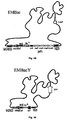
- Specific examples of corresponding baculoviruses have the structure of EMBac, EMBAcY, EMBac_Direct and EMBacY_Direct as disclosed in the schemes according to Figs. 29, 30 , 31 and 32 , respectively.
- Vectors useful in prokaryotic host cells comprise, preferably besides the above-exemplified marker genes (one or more thereof), an origin of replication (ori).
- an origin of replication ori
- examples are BR322, ColE1, and conditional origins of replication such as OriV and R6K ⁇ , the latter being a preferred conditional origin of replication which makes the propagation of the vector for use in the present invention dependent on the pir gene in a prokaryotic host.
- OriV makes the propagation of the vector for use in the present invention dependent on the trfA gene in a prokaryotic host.
- the present invention is directed to a method for multigene expression as defined in claim 11 wherein in step (ii) a vector produced according to the invention is introduced into a host cell.
- the host cells may be prokaryotic or eukaryotic.
- Eukaryotic host cells may for example be mammalian cells, preferably human cells.
- human host cells include, but are not limited to, HeLa, Huh7, HEK293, HepG2, KATO-III, IMR32, MT-2, pancreatic ⁇ -cells, keratinocytes, bone-marrow fibroblasts, CHP212, primary neural cells, W12, SK-N-MC, Saos-2, WI38, primary hepatocytes, FLC4, 143TK, DLD-1, embryonic lung fibroblasts, primery foreskin fibroblasts, MRC5, and MG63 cells.
- Further preferred host cells of the present invention are porcine cells, preferably CPK, FS-13, PK-15 cells, bovine cells, preferably MDB, BT cells, bovine cells, such as FLL-YFT cells.
- Other eukaryotic cells useful in the context of the present invention are C. elegans cells.
- Further eukaryotic cells include yeast cells such as S. cerevisiae, S. pombe, C. albicans and P. pastoris.
- the present invention is directed to insect cells as host cells which include cells from S. frugiperda, more preferably Sf9, Sf21, Express Sf+, High Five H5 cells, and cells from D. melanogaster, particularly S2 Schneider cells.
- Further host cells include Dictyostelium discoideum cells and cells from parasites such as Leishmania spec.
- Prokaryotic hosts for use according to the present invention include bacteria, in particular E . coli such as commercially available strains like TOP10, DH5 ⁇ , HB101 etc.
- a vector for use in the method as defined above additionally comprises a site for site specific recombinases (SSRs), preferably one or more LoxP sites for Cre-Iox specific recombination.
- SSRs site specific recombinases
- the vector for use in the methods according to the present invention comprises a transposon element, preferably a Tn7 attachment site.
- the attachment site as defined above is located within a marker gene.
- a marker gene is selected from luciferase, ⁇ -GAL, CAT, fluorescent encoding protein genes, preferably GFP, BFP, YFP, CFP and their variants, and the lacZ ⁇ gene.
- vectors for use in the method according to the present invention have a sequence selected from the group consisting of SEQ ID NO: 2 to SEQ ID NO: 17.
- site specific recombinase e.g. 2 to 6, more preferred 2, 3 or 4 of such recognition sequences, preferably 2 to 6, especially preferred 1 to 4 loxP sites.
- a particularly preferred example of such a vector has the sequence of SEQ ID NO. 18.
- a vector useful in the context of the present invention contains more than one recombination sequences, these can be recognition sequences of the same or different site-specific recombinases.
- the present invention relates to a method for producing a vector containing multiple expression cassettes using a first and a second vector as defined above, said method comprising the steps of:
- one or more genes into the vectors for use in the invention by methods known to the skilled person, e.g. by restriction enzyme digestion/ligation via compatible sites within the MCS or by recombination, preferably using the optionally present homology region(s), preferably using the SLIC method. If more than one gene is inserted, these can be provided as single expression cassettes. However, it is clear for the skilled person that the (several or multiple) genes can be present as a polygene within in one ORF.
- the present invention is further directed to a method for producing multiple protein complexes comprising the steps of
- the vectors for use in the present invention may contain further typical sequence elements, e.g. elements that enable or simplify the detection and/or purification of the (multiple) proteins expressed from the one or more genes of interest.
- Typical examples of such elements are sequences coding for GFP and its derivatives, His-tags, GST etc.
- the aspects of the present invention represent a building block system which provides the person skilled in the art with a hitherto unknown freedom of combining multiple genes (or polygenes) of interest for multiprotein applications.
- ACEMBL The preferred embodiments according to the present invention denoted as "ACEMBL” provide a multi-expression system for multigene expression in E. coli and insect cells using the baculovirus system.
- ACEMBL can be used both manually and also in an automated setup by using a liquid handling workstation.
- ACEMBL applies tandem recombination steps for rapidly assembling many genes into multigene expression cassettes. These can be polycistronic or multiple expression modules, or a combination of these elements.
- ACEMBL also offers the option to employ conventional approaches involving restriction enzymes and ligase, if desired.
- step-by-step protocols are provided for each of these methods for multigene cassette assembly that can be used in the ACEMBL system.
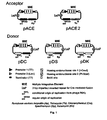
- the ACEMBL system provides as preferred exemplary embodiments for use in the methods of the invention small de novo designed vectors which are called "Acceptor” and “Donor” vectors ( Figs. 1 and 20 ; for plasmid maps, see Figs. 14 to 18 and Figs. 21 to 31 ).
- Acceptor vectors for expression of proteins in prokaryotic hosts e.g. pACE, pACE2
- origins of replication derived from ColE1 and resistance markers (ampicillin or tetracycline).
- Donor vectors contain conditional origins of replication (derived from R6K ⁇ ), which make their propagation dependent on hosts expressing the pir gene.
- Donor vectors contain resistance markers kanamycin, chloramphenicol, and spectinomycin.
- three Donor vectors are used in conjunction with one Acceptor vector.
- All Donor and Acceptor vectors according the present example contain a LoxP imperfect inverted repeat and in addition, a multiple integration element (MIE).
- MIE multiple integration element
- the preferred MIE in the context of the invention comprises an expression cassette with a promoter of choice (prokaryotic, mammalian, insect cell specific or a combination thereof) and a terminator (prokaryotic, mammalian, insect cell specific or a combination thereof).
- a DNA segment which contains a number of restriction sites that can be used for conventional cloning approaches or also for generating double-strand breaks for the integration of expression elements of choice (further promoters, ribosomal binding sites, terminators and genes).
- the MIE is completed by a homing endonuclease site and a specifically designed restriction enzyme site (BstXI) flanking the promoter and the terminator (see B.2.)
- ACEMBL vectors for expression in prokaryotic hosts are outlined in the sequence listing (pACE: SEQ ID NO: 2, pACE2: SEQ ID NO. 3; pDC: SEQ ID NO: 4; pDK: SEQ ID NO: 5; pDS: SEQ ID NO: 6; pACKS: SEQ ID NO: 18).
- Maps of the vectors pACE, pACE2, pDC, pDK and pDS are shown in Figs. 8 to 12 .
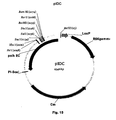
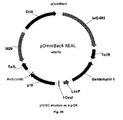
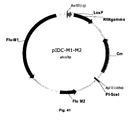
- the ACEMBL system for practicing the methods according to the present invention also provides Donor and Acceptor vectors adapted for expression of multiprotein complexes in insect cells using baculovirus (pIDC (SEQ ID NO: 7), pIDK (SEQ ID NO: 8), pIDS (SEQ ID NO: 9), pACEBac1 (SEQ ID NO: 10), pACEBac2 (SEQ ID NO: 11), pACEBac3 (SEQ ID NO: 12), pACEBac4 (SEQ ID NO: 13), pOmniBac21 (SEQ ID NO: 14), pOmniBac2 (SEQ ID NO: 15, pOmniBac3 (SEQ ID NO: 16) and pOmniBac4 (SEQ ID NO: 17)). Plasmid maps of the vectors are shown in Figs. 15 to 25 .
- Donor vectors pIDS, pIDK and pIDS contain a conditional origin of replication (from R6Kgamma phage), a homing endonuclease (HE) site (PI-SceI) and a complementary BstXI site (see the corresponding E.coli vectors pDC, pDK, pDS). Donors are propagated in cell strains containing the pir gene.
- the vectors for expression of proteins in insect cells do not contain prokaryotic promoter and terminator structures. Instead, they have either a polh expression cassette (polh EC) or a p10 expression cassette (p10 EC). These expression cassettes contain common polyhedron or p10 promoters from AcMNPV, an oligonucleotide encoding for restriction sites (different from the MIE in the prokaryotic ACEMBL version) and either SV40 or HSVtk polyadenylation signal sequences.
- the expression cassettes can be freely exchanged in between the vectors, also if they contain an inserted gene. This can be done by restriction ligation or by restriction enzyme/ligase independent methods (e.g. SLIC). Therefore, versions can be created at ease which contain a p10 or polh marker in combination with any one of the resistance markers (spectinomycin, kanamycin, chloramphenicol, or others).
- the HE/BstXI site combinations can be used to multiply expression cassettes or also to fit the vectors with combinations of p10 and polh expression cassettes.
- Donors contain a LoxP inverted imperfect repeat. This can be used for LoxP mediated constructions and deconstructions of Acceptor/Donor multifusions as described for the bacterial ACEMBL vectors.
- the present embodiment of the invention relating to vectors adapted for protein expression in insect cells provides a number of Acceptor vectors in the baculovirus-version of ACEMBL. These share common features: all contain a LoxP site, a resistance marker (gentamycin) and again either a p10 or a polh expression cassette (identical to the ones present in the Donors).
- the expression cassettes of the Acceptors are flanked by a homing endonuclease site (I-CeuI) and a corresponding BstXI site.
- the expression cassettes can be exchanged in between the Acceptors and also multiplied or combined using the HE/BstXI combination as described for the bacterial ACEMBL vectors.
- All Acceptor vectors contain the Tn7L and Tn7R sequences which enable integration of the region in between into a Tn7 attachment site by using the Tn7 transposition procedure.
- pACEBac3, pACEBac4, pOmniBac3 and pOmniBac4 contain a conditional origin of replication (OriV) from V. Cholerae which is dependent on the trfA gene that needs to be provided in trans in the cloning strains used. The function of this OriV is to eliminate the background (blue colonies) when these Acceptors, fitted with genes and if required fused with Donors, are transformed into cells that contain the baculovirus genome in form of a bacterial artificial chromosome (i.e. DH10Bac from Invitrogen and similar).
- OriV conditional origin of replication
- the Tn7 transposition system is used to integrate the regions in between Tn7L and Tn7R of the DNA transformed into the cells into a Tn7 attachment site on the viral genome of choice. Normally, unproductive integration events would result in blue colonies (if the Tn7 attachment site is embedded in a LacZalpha gene on the baculovirus genome). These blue colonies propagate the plasmid transformed outside of the baculovirus genome.
- the Acceptor vectors pOminBac1-4 contain, in addition to the Tn7L and Tn7R regions, also the lef2-603 and Orf1629 homology sequences. These are used for homologous recombination procedures for generating composite baculovirus as used by the Novagen Bacvector series, the Baculogold system from Pharmingen, FlashBac from OET and others. Thus, these Acceptor vectors can be used for every baculovirus system that is currently available, including the Tn7 based baculoviruses and all viruses relying on lef2,603/1629 homologous recombination procedures, for expressing heterolgous genes in insect cell cultures; see also the scheme in Fig. 28 .
- MIE Multiple integration element
- a preferred multiple integration element (MIE) for use in the methods according to the invention was derived from a polylinker (see Tan et al. (2005) supra) and allows for several approaches for multigene assembly (see Section C below).
- Multiple genes can be inserted into the MIE of any one of the vectors by a variety of methods, for example BD-In-Fusion recombination (see ClonTech TaKaRa Bio Europe, www.clontech.com) or SLIC (sequence and ligation independent cloning; see Li et al. (2007) Nat. Methods 4, 251 ).
- the vector needs to be linearized, which can also be carried out efficiently by PCR reaction with appropriate primers, since the vectors are all small (2-3.0 kb).
- the vectors can also be linearized by restriction digestion, and a gene of interest can be integrated by restriction / ligation (see below Section C of the present embodiment).
- the DNA sequence (SEQ ID NO: 1) and map of the present MIE is shown in Fig. 7A and 7B , respectively.
- the vectors of the ACEMBL system contain per default promoters T7 and Lac, as well as the T7 terminator element ( Figs.1 , 7 ).
- the T7 system requires bacterial strains which contain a T7 polymerase gene, e.g. in the E. coli genome.
- the Lac promoter is a strong endogenous promoter which can be utilized in most strains.
- the present ACEMBL vectors contain the lac operator element for repression of heterologous expression.
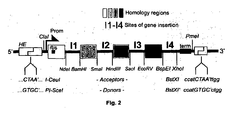
- promoters and terminators present in ACEMBL Donor and Acceptor vectors can be exchanged with an expression cassette of choice by using restriction/ligation cloning with appropriate enzymes (for example ClaI/PmeI, Fig. 2 ) or insertion into linearized ACEMBL vectors where the MIE was removed by sequence and ligation independent approaches such as SLIC.
- MIE multiple integration element
- the T7 promoter in pDC can be substituted with a trc promoter (pDC trc ), and the T7 promoter in pACE with an arabinose promoter (pACE ara ), Such variants can be used successfully in coexpression experiments by inducing with arabinose and IPTG.
- the vectors for expression in insect cells do not contain prokaryotic promoter and terminator structures. As already mentioned above, they have either a polh expression cassette (polh EC) or a p10 expression cassette (p10 EC). These expression cassettes contain common polyhedron or p10 promoters from AcMNPV, a sequence of restriction sites and either SV40 or HSVtk polyadenylation signal sequences.
- the ACEMBL system vectors of the present example do not contain DNA sequences encoding for affinity tags to facilitate purification or solubilization of the protein(s) of interest.
- typically used C- or N-terminal oligohistidine tags, with or without protease sites for tag removal can be introduced by means of the respective PCR primers used for amplification of the genes of interest prior to insertion into the MIE, e.g. by SLIC-mediated insertion.
- Donor and Acceptor vectors of the present invention may be equipped by the array of custom tags prior to inserting recombinant genes of interest. This is best done by a design which will, after tag insertion, still be compatible with the recombination based principles of ACEMBL system usage.
- the ACEMBL multigene expression vector fusions with appropriate promoters or terminators are transformed into the appropriate expression host of choice.
- appropriate promoters or terminators are transformed into the appropriate expression host of choice.
- the design of the multigene fusion is preferably such that the ACEMBL vector containing the resistance marker that is also present on the helper plasmid is not included in multigene vector construction.
- the issue can be resolved by creating alternative versions of the ACEMBL vectors containing resistance markers that circumvent the conflict. This can be easily performed by PCR amplifying the vectors minus the resistance marker, and combine the resulting fragments with a PCR amplified resistance marker by recombination (SLIC) or blunt-end ligation (using 5'phosphorylated primers).
- SLIC recombination
- blunt-end ligation using 5'phosphorylated primers
- Donor vectors of the present example depend on expression by the host of the pir gene product, due to the R6K ⁇ conditional origin of replication. In regular expression strains, they rely on fusion with an Acceptor for productive replication. Donors or Donor-Donor fusions can nonetheless be used even for expression when not fused with an Acceptor, by using expression strains carrying a genomic insertion of the pir gene. Such strains are commercially available (Novagen Inc., Madison WI, USA).
- the present ACEMBL system for expression in prokaryotic hosts contains two Acceptor vectors, pACE and pACE2, which are identical except for the resistance marker ( Figs. 1 , 7 ). These can be used to express genes present on pACE or pACE2, respectively, by cotransformation and exposure to both antibiotics simultaneously. In fact, entire Acceptor-Donor fusions containing several genes, based on pACE or pACE2 as Acceptors, can in principle be cotransformed for multi-expression, if needed.
- suitable ACEMBL vectors of the present invention need to be integrated into a baculovirus genome (composite virus generation). This is typically carried out by transformation of the desired Cre-LoxP fusion into bacterial cells containing the desired virus genome as a bacterial artificial chromosome.
- a vector system of the present invention adapted for baculovirus integration is used, three approaches are possible as outlined in Fig. 26 , 27 and 28 , respectively.
- All Donors and Acceptors of the preferred embodiment for expression prokaryotic hosts contain an identical MIE with exception of the homing endonuclease site / BstXI tandem encompassing the MIE ( Figs. 1 and 7 ).
- the MIE is tailored for sequence and ligation independent gene insertion methods.
- the MIE also contains a series of unique restriction sites, and therefore can be used as a classical polylinker for conventional gene insertion by restriction/ligation.
- insertion of genes of interest is preferably carried out by recombination approaches such as SLIC.
- the Donor vectors for expression in insect cells also contain an MIE which is, however, different for each vector (see plasmid maps of vectors pIDC, pIDK and pIDS in Figs. 15 , 16 and 17 , respectively).
- T4 DNA polymerase is used, this can be carried out in a manner that is independent of the sequences of the homology regions (Sequence and Ligation Independent Cloning, SLIC) and detailed protocols are available for the skilled person. In the context of multiprotein expression, this is particularly useful, as this approach is independent of the presence of unique restriction sites, or of their creation by mutagenesis, in the ensemble of encoding DNAs.
- the SLIC process was adapted for inserting encoding DNAs amplified by Phusion polymerase into the ACEMBL Acceptor and Donor vectors.
- ACEMBL Acceptor and Donor vectors In this way, not only seamless integration of genes into the expression cassettes, but also concatamerization of expression cassettes to multigene constructs can be achieved by applying the same, simple routine that can be readily automated.
- Protocol 1 represents an improved process based on the method described in Li et al. (2007, supra ). Protocol 1 is designed for manual operation. Other systems may be used (e.g. BD-InFusion etc.), and if so, the manufacturers' recommendations should be followed. The present protocol may be adopted for robotics applications. Corresponding modifications of the protocol are outlined in Section D).
- Protocol 1 Single gene insertion by SLIC.
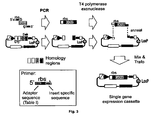
- Primers for the SLIC procedure are designed to provide the regions of homology which result in the long sticky ends upon treatment with T4 DNA polymerase in the absence of dNTP:
- ribosome binding site e.g. the gene of interest (GOI) is amplified from a vector already containing expression elements (e.g. the pET vector series). Otherwise, the forward primer needs to be designed such that a ribosome binding site is also provided in the final construct ( Fig. 3 , inset).
- Primers for PCR linearization of the vector backbone are simply complementary to the two adaptor sequences present in the primer pair chosen for insert amplification ( Fig. 3 ).
- Step 2 PCR amplification of insert and vector
- Identical reactions are prepared in 100 ⁇ l volume for DNA insert to be cloned and vector to be linearized by PCR: ddH 2 O 75 ⁇ l 5x Phusion HF Reaction buffer 20 ⁇ l dNTPs (10 mM stock) 2 ⁇ l Template DNA (100 ng/ ⁇ l) 1 ⁇ l 5 ⁇ SLIC ⁇ primer (100 ⁇ M stock) 1 ⁇ l 3 ⁇ SLIC ⁇ primer (100 ⁇ M stock) 1 ⁇ l Phusion polymerase (2 U/ ⁇ l) 0.5 ⁇ l
- Step 3 Dpnl treatment of PCR products (optional)
- PCR reactions are then supplied with 1 ⁇ l DpnI enzyme which cleaves parental plasmids (that are methylated).
- DpnI treatment is not required if the resistance marker of the template plasmid differs from the destination vector.
- Step 4 Purification of PCR products
- PCR products should be cleaned of residual dNTPs. Otherwise, the T4 DNA polymerase reaction (Step 5) is compromised.
- Product purification is preferably performed by using commercial PCR Purification Kits or NucleoSpin Kits (e.g. from Qiagen, Macherey-Nagel etc.). It is recommended to perform elution in the minimal possible volume indicated by the respective manufacturer.
- Step 5 T4 DNA polymerase exonuclease treatment
- T4 DNA polymerase exonuclease-treated insert and vector are then mixed, followed by an (optional) annealing step which enhances the efficiency: T4 DNA pol-treated insert: 10 ⁇ l T4 DNA pol-treated vector: 10 ⁇ l Annealing: 65°C for 10 min Cooling: Slowly (in heat block) to RT (room temperature)
- Reactions for pACE and pACE2 derivatives are transformed into standard E. coli cells for cloning (such as TOP10, DH5 ⁇ , HB101) and after recovery (2 - 4 h) plated on agar containing ampicillin (100 ⁇ g/ml) or tetracycline (25 ⁇ g/ml), respectively.
- Reactions for Donor derivatives are transformed into E. coli cells expressing the pir gene (such as BW23473, BW23474, or PIR1 and PIR2, Invitrogen) and plated on agar containing chloramphenicol (25 ⁇ g/ml, pDC), kanamycin (50 ⁇ g/ml, pDK), and spectinomycin (50 ⁇ g/ml, pDS).
- the pir gene such as BW23473, BW23474, or PIR1 and PIR2, Invitrogen
- Plasmids are cultured in small-scale in media containing the corresponding antibiotic, and analyzed by sequencing and (optionally) restriction mapping with an appropriate restriction enzyme.
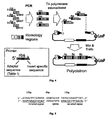
- the multiple integration element for use in the methods according to the present invention can also be used to integrate genes of interest by using multi-fragment SLIC recombination as shown in Fig. 4 .
- Genes preceded by ribosome binding sites (rbs) can be assembled in this way into polycistrons.
- Protocol 2 A detailed protocol is outlined in the following Protocol 2:
- the MIE element for use in the methods according to the present embodiment is composed of tried-and-tested primer sequences. These constitute the "Adaptor" sequences that can be used for inserting single genes or multigene constructs. Examples of useful adaptor sequences are listed below (see Table I).
- Adaptor sequences form the 5' segments of the primers used to amplify DNA fragments to be inserted into the MIE. Insert specific sequences are added at 3', DNA coding for a ribosome binding sites can be inserted optionally, if not already present on the PCR template.
- Step 2 PCR amplification of insert and primer
- Identical reactions are prepared in 100 ⁇ l volume for all DNA insert (GOI 1, 2, 3) to be cloned and the vector to be linearized by PCR: ddH 2 O 75 ⁇ l 5x Phusion HF Reaction buffer 20 ⁇ l dNTPs (10 mM stock) 2 ⁇ l Template DNA (100 ng/ ⁇ l) 1 ⁇ l 5' ⁇ SLIC ⁇ primer (100 ⁇ M stock) 1 ⁇ l 3 ⁇ ' SLIC ⁇ primer (100 ⁇ M stock) 1 ⁇ l Phusion polymerase (2 U/ ⁇ l) 0.5 ⁇ l
- Step 3 Dpnl treatment of PCR products (optional)
- PCR reactions are then supplied with 1 ⁇ l DpnI enzyme which cleaves parental plasmids (that are methylated).
- DpnI treatment is not required if the resistance marker of the template plasmids differs from the destination vector.
- Step 4 Purification of PCR products
- PCR products should be cleaned of residual dNTPs. Otherwise, the T4 DNA polymerase reaction (Step 5) is compromised.
- Product purification is preferably performed by using commercial PCR Purification Kits or NucleoSpin Kits (Qiagen, Macherey-Nagel or others). It is recommended to perform elution in the minimal possible volume indicated by the respective manufacturer.
- Step 5 T4 DNA polymerase exonuclease treatment
- T4 DNA polymerase exonuclease-treated insert and vector are then mixed, followed by an (optional) annealing step which enhances efficiency.
- T4 DNA pol-treated insert 1 (GOI 1): 5 ⁇ l T4 DNA pol-treated insert 2 (GOI 2): 5 ⁇ l T4 DNA pol-treated insert 3 (GOI 3): 5 ⁇ l T4 DNA pol-treated vector: 5 ⁇ l Annealing: 65°C for 10 min Cooling: Slowly (in heat block) to RT
- Reactions for pACE and pACE2 derivatives are transformed into standard E. coli cells for cloning (such as TOP10, DH5 ⁇ , HB101) and after recovery plated on agar containing ampicillin (100 ⁇ g/ml) or tetracycline (25 ⁇ g/ml), respectively.
- Reactions for Donor derivatives are transformed into E. coli cells expressing the pir gene (such as BW23473, BW23474, or PIR1 and PIR2, available from Invitrogen) and plated on agar containing chloramphenicol (25 ⁇ g/ml, pDC), kanamycin (50 ⁇ g/ml, pDK), and spectinomycin (50 ⁇ g/ml, pDS).
- the pir gene such as BW23473, BW23474, or PIR1 and PIR2, available from Invitrogen
- Plasmids are cultured and correct clones are selected based on specific restriction digestion and DNA sequencing of the inserts.
- Table I Adaptor DNA sequences. For single gene or multigene insertions into ACEMBL vectors by SLIC. Adaptor* Sequence Description (a) Adaptors for cloning into ACEMBL vectors for expression in prokaryotic hosts T7InsFor Forward primer for insert amplification, if gene of interest (GOI) is present in a T7 system vector (i.e. pET series). No further extension (rbs, insert specific overlap) required. T7InsRev Reverse primer for insert amplification, if GOI is present in a T7 system vector (i.e. pET series).
- T7VecFor Forward primer for vector amplification reverse complement of T7InsRev. No further extension required.
- T7VecRev Reverse primer for vector amplification reverse complement of T7InsFor. No further extension required.
- NdeInsFor Forward primer for insert amplification for insertion into MIE site I1 Fig. 2
- Further extension at 3' (insert specific overlap) required. Can be used with adaptor XhoInsRev in case of single fragment SLIC ( Fig. 3 ).
- XhoInsRev Reverse primer for insert amplification for insertion into MIE site 14 Fig. 2 ). Further extension at 3' (stop codon, insert specific overlap) required.
- P10InsRev Reverse primer for insert amplification needs to be followed by insert specific sequence (ca. 20 bp) P10VecFor Forward primer for vector amplification, reverse complement of P10InsRev. No further extension required. P10VecRev Reverse primer for vector amplification, reverse complement of P10InsFor. No further extension required.
- All Adaptor primers can be used as sequencing primers for genes of interest that were inserted into the MIE according to the present embodiment.
- the MIEs for use in the methods of the present invention can also be used as a multiple cloning site with a series of unique restriction sites.
- the MIE described herein for expression of proteins in prokaryotic hosts is preceded by a promoter and a ribosome binding site, and followed by a terminator.
- the MIEs of the preferred embodiments described herein for expression of proteins in insect cells contain a polh expression cassestte or a p10 expression cassette as already mentioned above. Therefore, cloning into the MIE by classical restriction/ligation also yields functional expression cassettes.
- Genes of interest can be subcloned by using standard cloning procedures into the multiple integration element (MIE) (see, for example, Fig. 7 ) of ACEMBL vectors.
- MIE multiple integration element
- Protocol 3 Restriction/ligation cloning into an MIE.
- PCR primers are designed containing chosen restriction sites, preceded by appropriate overhangs for efficient cutting (see, e.g. New England Biolabs catalogue), and followed by ⁇ 20 nucleotides overlapping with the gene of interest that is to be inserted.
- the MIE of the present embodiment is identical for all ACEMBL vectors. They contain a ribosome binding preceding the Ndel site. For single gene insertions, therefore, an rbs need not be included in the primer.
- primers should be designed such that an rbs preceding the gene and a stop codon at its 3'end are provided.
- PCR of insert(s) Identical PCR reactions are prepared in 100 ⁇ l volume for genes of interest to be inserted into the MIE: ddH 2 O 75 ⁇ l 5x Phusion HF Reaction buffer 20 ⁇ l dNTPs (10 mM stock) 2 ⁇ l Template DNA (100 ng/ ⁇ l) 1 ⁇ l 5 ⁇ primer (100 ⁇ M stock) 1 ⁇ l 3 ⁇ primer (100 ⁇ M stock) 1 ⁇ l Phusion polymerase (2 U/ ⁇ l) 0.5 ⁇ l PCR reactions are then carried out with a standard PCR program (unless very long DNAs are amplified, then double extension time):
- Product purification is preferably performed by using commercial PCR Purification Kits or NucleoSpin Kits (available from Qiagen, Macherey-Nagel and other manufacturers). It is recommended to perform elution in the minimal possible volume indicated by the manufacturer.
- Restriction reactions are carried out in 40 ⁇ l reaction volumes, using specific restriction enzymes as specified by manufacturer's recommendations (c.f. New England Biolabs catalogue and others).
- PCR Kit eluate ( ⁇ 1 ⁇ g) 30 ⁇ l 10x Restriction enzyme buffer 4 ⁇ l 10 mM BSA 2 ⁇ l Restriction enzyme for 5' 2 ⁇ l Restriction enzyme for 3' 2 ⁇ l (in case of double digestion, otherwise ddH 2 O)
- Restriction digestions are performed in a single reaction with both enzymes (double digestion), or, alternatively, sequentially (two single digestions) if the buffer conditions required are incompatible.
- Processed insert is then purified by agarose gel extraction using commercial kits (Qiagen, Macherey-Nagel etc). It is recommended to elute the extracted DNA in the minimal volume defined by the respectivemanufacturer.
- Restriction reactions are carried out in 40 ⁇ l reaction volumes, using specific restriction enzymes as specified by manufacturer's recommendations (see, e.g. New England Biolabs catalogue and others).
- ACEMBL plasmid ( ⁇ 0.5 ⁇ g) in ddH 2 O 30 ⁇ l 10x Restriction enzyme buffer 4 ⁇ l 10 mM BSA 2 ⁇ l Restriction enzyme for 5' 2 ⁇ l Restriction enzyme for 3' 2 ⁇ l (in case of double digestion, otherwise ddH 2 O)
- Restriction digestions are performed in a single reaction with two enzymes (double digestion), or, alternatively, sequentially (two single digestions), if the buffer conditions required are incompatible.
- the processed vector is then purified by agarose gel extraction using commercial kits (Qiagen, Macherey-Nagel etc.). It is recommended to elute the extracted DNA in the minimal volume defined by the respective manufacturer.
- Ligation reactions are carried out in 20 ⁇ l reaction volumes according to the recommendations of the supplier of the T4 DNA ligase: ACEMBL plasmid (gel extracted) 8 ⁇ l Insert (gel extracted) 10 ⁇ l 10x T4 DNA Ligase buffer 2 ⁇ l T4 DNA Ligase 0.5 ⁇ l
- Ligation reactions are performed at 25°C (sticky end) for 1h or at 16°C (blunt end) overnight.
- Reactions for Acceptor derivatives are transformed into standard E. coli cells for cloning (such as TOP10, DH5 ⁇ , HB101) and after recovery plated on agar containing ampicillin (100 ⁇ g/ml) or tetracycline (25 ⁇ g/ml), respectively.
- Reactions for Donor derivatives are transformed into E. coli cells expressing the pir gene (such as BW23473, BW23474, or PIR1 and PIR2, Invitrogen) and plated on agar containing chloramphenicol (25 ⁇ g/ml, pDC), kanamycin (50 ⁇ g/ml, pDK), and spectinomycin (50 ⁇ g/ml, pDS).
- Plasmids are cultured and correct clones are selected based on specific restriction digestion and DNA sequencing of the inserts.
- the ACEMBL system vectors for use in the methods according to the present invention contain a homing endonuclease (HE) site and a designed BstXI site that envelop the multiple integration element (MIE).
- the homing endonuclease site can be used to insert entire expression cassettes, containing single genes or polycistrons, into a vector already containing one gene or several genes of interest.
- Homing endonucleases have long recognition sites (12 to 40 base pairs or more, preferably 20-30 base pairs). Although not all equally stringent, homing endonuclease sites are most probably unique in the context of even large plasmids, or, in fact, entire genomes.
- Donor vectors contain a recognition site for homing endonuclease PI-SceI ( Fig. 2 ). This HE site yields upon cleavage a 3' overhang with the sequence -CTGC. Acceptor vectors contain the homing endonuclease site I-CeuI, which upon cleavage will result in a 3' overhang of -CTAA. On Acceptors and Donors, the respective HE site is preceding the MIE. The 3' end of the MIE contains a specifically designed BstXI site, which upon cleavage will generate a matching overhang. The basis of this is the specificity of cleavage by BstXI.
- BstXI The recognition sequence of BstXI is defined as CCANNNNN'NTGG (SEQ ID NO: 42) (apostrophe marks position of phosphodiester link cleavage).
- the residues denoted as N can be chosen freely.
- Donor vectors thus contain a BstXI recognition site of the sequence CCATGTGC'CTGG (SEQ ID NO: 43), and Acceptor vectors contain CCATCTAA'TTGG (SEQ ID NO: 44).
- the overhangs generated by BstXI cleavage in each case will match the overhangs generated by HE cleavage. Note that Acceptors and Donors have different HE sites.
- ligation of a HE/BstXI digested fragment into a HE site of an ACEMBL vector will be (1) directional and (2) result in a hybrid DNA sequence where a HE half site is combined with a BstXI half site. This site will be cut by neither HE nor BstXI. Therefore, in a construct that had been digested with a HE, insertion by ligation of HE/BstXI digested DNA fragment containing an expression cassette with one or several genes will result in a construct which contains all heterologous genes of interest, enveloped by an intact HE site in front, and a BstXI site at the end. Therefore, the process of integrating entire expression cassettes by means of HE/BstXI digestion and ligation into a HE site can be repeated iteratively.
- Protocol 4 Multiplication by using homing endonuclease/BstXI.
- Restriction reactions are carried out in 40 ⁇ l reaction volumes, using homing endonucleases PI-SceI (Donors) or I-CeuI (Acceptors) as recommended by the supplier (e.g. New England Biolabs or others).
- PI-SceI Donors
- I-CeuI Acceptors
- Reactions are then purified by PCR extraction kit or acidic ethanol precipitation, and next digested by BstXI according to the recommendations of the supplier.
- Processed insert is then purified by agarose gel extraction using commercial kits (Qiagen, Macherey-Nagel etc). It is recommended to elute the extracted DNA in the minimal volume defined by the respective manufacturer.
- Restriction reactions are carried out in 40 ⁇ l reaction volumes, using homing endonucleases PI-SceI (Donors) or I-CeuI (Acceptors) as recommended by the supplier (e.g. New England Biolabs catalogue or others).
- PI-SceI Donors
- I-CeuI Acceptors
- Reactions are then purified by PCR extraction kit or acidic ethanol precipitation, and next treated with intestinal alkaline phosphatase according to the recommendations of the respective supplier.
- Processed vector is then purified by agarose gel extraction using commercial kits (Qiagen, Macherey-Nagel etc). It is recommended to elute the extracted DNA in the minimal volume defined by the respective manufacturer.
- Ligation reactions are carried out in 20 ⁇ l reaction volumes: HE/Phosphatase treated vector (gel extracted) 4 ⁇ l HE/BstXI treated insert (gel extracted) 14 ⁇ l 10x T4 DNA Ligase buffer 2 ⁇ l T4 DNA Ligase 0.5 ⁇ l
- Ligation reactions are performed at 25°C for 1 h or at 16°C overnight.
- Reactions for Acceptor derivatives are transformed into standard E. coli cells for cloning (such as TOP10, DH5 ⁇ , HB101) and after recovery plated on agar containing ampicillin (100 ⁇ g/ml) or tetracycline (25 ⁇ g/ml), respectively.
- Reactions for Donor derivatives are transformed into E. coli cells expressing the pir gene (such as BW23473, BW23474, or PIR1 and PIR2, Invitrogen) and plated on agar containing chloramphenicol (25 ⁇ g/ml, pDC, pIDC), kanamycin (50 ⁇ g/ml, pDK, pIDK), and spectinomycin (50 ⁇ g/ml, pDS, pIDS).
- the pir gene such as BW23473, BW23474, or PIR1 and PIR2, Invitrogen
- Plasmids are cultured and correct clones selected based on specific restriction digestion and DNA sequencing of the inserts.
- Protein complexes can be expressed also from two separate vectors that were cotransformed in expression strains.
- the cotransformed vectors can have the same or different origins of replication, however, they must encode for different resistance markers. Plasmids pACE (ampicillin resistance marker) and pACE2 (tetracycline resistance marker) have both a ColE1 derived replicon and can therefore be used with all common expression strains. pACE and pACE2 derivatives (also including fused Donors if needed) can be cotransformed into expression strains, and double transformants selected for by plating on agar plates containing both ampicillin and tetracycline antibiotics.
- Transformations are carried out using standard transformation protocols (see, e.g. the latest edition of Ausubel et al. (ed.), supra.
- the pipeting device is typically equipped with liquid handling arm1 (LiHa1), 4 fixed tips (steel needles), 4 disposable tips coni (Diti's), 250 ⁇ l syringes, liquid handling arm2 (LiHa2), 8 fixed tips (steel needles), 2.5ml syringes, robotic manipulator arm (RoMa / transportation of plates), version long.
- the work station usually contains the following integrated devices: thermocycler PTC-200 (Biorad), Te-Shake, heatable plate shaker (Tecan), Variomag Thermoshaker, heat-and coolable plate shaker (Inheco), Te-Vacs, dual vacuum station for filter plates (Tecan), SafireII, UV VIS plate reader (Tecan) and cooling unit 400W (FRYKA multistar).
- FIG. 22 A schematic representation of a workflow for automated SLIC is shown in Fig. 22 .
- Step 1 Initial PCR
- Source plate 96 well standard microtiter plate containing the PCR templates (cDNA approx. 0.2 ⁇ g/ ⁇ l)
- Reaction plate 96 well PCR plate (Eppendorf)
- Sample mix plate (96 well PCR plate; Eppendorf), 1 % agarose E-Gel® (Invitrogen), Phusion® DNA Polymerase master mix, oligonucleotide primers at 20 ⁇ M, 2x DNA loading dye (2xDLD) (Fermentas), E-Gel® Low Range quantitative DNA Ladder (Invitrogen), 10x Buffer Tango® with BSA (Fermentas), DpnI (Fermentas)
- Step 6 Picking clones and setting up over Vietnamese cultures (manual step)
- Step 7 Plasmid Extraction (Miniprep)
- Plasmid yield is quantified by measuring UV absorbance with a Thermo Scientific NanoDropTM 1000 Spectrophotometer according to manufacturer. Plasmid integrity was assessed by E-gel (Invitrogen)
- the present invention is further illustrated by the following non-limiting example.
- the Homing endonuclease/BstXI module yeast RES complex
- Plasmids pCDFDuet-PmI1p, pRSFDuet-Snu17p-NHis and pETDuet-Bud13p, coding for yeast proteins (all full-length) PmI1p, Snu17p and Bud13p, respectively, were provided by Dr. Simon Trowitzsch and Dr. Markus Wahl (Max-Planck-Institute for Biophysical Chemistry, Göttingen, Germany).
- Snu17p contains a six-histidine tag fused to its N-terminus.
- the gene encoding for His6-tagged Snu17p was excised from pRSFDuet-Snu17p-NHis by using restriction enzymes Ncol and Xhol, and ligated into a NcoI/XhoI digested pACE construct (containing an unrelated gene between NcoI and Xhol sites) resulting in pACE-Snu17.
- the gene encoding for Bud13p was liberated from pETDuet-Bud13p by restriction digestion with Xbal and EcoRV, and placed into XbaI/PmeI digested pDC resulting in pDC-Bud13.
- the gene encoding for Pm1Ip was liberated from pCDFDuet-PmI1p by restriction digestion with Ndel and Xhol, and placed into NdeI/XhoI digested pDC resulting in pDC-PmI1.
- the expression cassette for Bud13p was liberated from pDC-Bud13 by digestion with PI-SceI and BstXI. The liberated fragment was inserted into PI-SceI digested and alkaline phosphatase treated pDC-PmI1p resulting in pDC-Bud13p-PmI1p.
- pACE-Snu17 and pDG-BudPmI were fused by Cre-LoxP reaction and selected for by plating on agar plates containing ampicillin and chloramphenicol. Fusion plasmids were transformed into BI21(DE3) cells. Expression and purification by Ni 2+ -capture and S200 size exclusion chromatography resulted in the trimeric RES complex.
- the strategy for cloning the yeast RES complex according to the method of the present invention is schematically illustrated in Fig. 6 .
Landscapes
- Health & Medical Sciences (AREA)
- Life Sciences & Earth Sciences (AREA)
- Genetics & Genomics (AREA)
- Engineering & Computer Science (AREA)
- Chemical & Material Sciences (AREA)
- Zoology (AREA)
- Organic Chemistry (AREA)
- Bioinformatics & Cheminformatics (AREA)
- Wood Science & Technology (AREA)
- Biomedical Technology (AREA)
- Biotechnology (AREA)
- General Engineering & Computer Science (AREA)
- Molecular Biology (AREA)
- Microbiology (AREA)
- Biochemistry (AREA)
- General Health & Medical Sciences (AREA)
- Physics & Mathematics (AREA)
- Biophysics (AREA)
- Plant Pathology (AREA)
- Medicinal Chemistry (AREA)
- Cell Biology (AREA)
- Crystallography & Structural Chemistry (AREA)
- Mycology (AREA)
- Micro-Organisms Or Cultivation Processes Thereof (AREA)
- Preparation Of Compounds By Using Micro-Organisms (AREA)
- Enzymes And Modification Thereof (AREA)
Description
- The present invention relates to a method for producing a vector containing multiple expression cassettes by using a first and a second vector each containing at least one homing endonuclease site (HE) and at least one restriction enzyme site (X) wherein the HE and X sites are selected such that HE and X result in compatible cohesive ends when cut by the homing endonuclease and restriction enzyme, respectively, and the ligation product of HE and X cohesive ends can neither be cleaved by the homing endonuclease nor by the restriction enzyme. Further subject-matter of the present invention relates a method for producing multiprotein complexes.
- Many vital processes in cells are controlled by proteins associating into interlocking molecular machines, in higher eukaryotes often containing 10 and more subunits (Rual, J.F. et al. Nature 437, 1173-1178 (2005); Charbonnier, S., Gallego, O. and Gavin, A.C. Biotechnol. Annu. Rev. 14, 1-28 (2008)). This has profound consequences for functional and structural studies that now aim to decipher physiologically relevant molecular mechanisms. Consequently, work on complexes is increasingly becoming imperative in contemporary biology. The low abundance and frequently heterogeneous nature of many multisubunit complexes, however, often preclude extraction from source.
- Recombinant production methods certainly have had a decisive impact on life science research. In particular E. coli, as an expression host, is commonplace. Successful functional analysis of proteins and elucidation of their molecular architecture often crucially depends on introducing alterations, such as truncations, mutations and extension with purification tags, or with particular promoter/terminator elements. The ensuing requirements in terms of experimental throughput are already considerable for diversifying single open reading frames (ORFs). In particular structural genomics consortia demand the standardization of subcloning routines and implementation of automation for this. The exponential increase in workload when many ORFs have to be rapidly diversified and assembled in the context of a multisubunit complex is daunting, and an unresolved challenge to date.
- A number of systems have been introduced in recent years for expression of several genes in eukaryotic and prokaryotic hosts; see, e.g. Fitzgerald et al. (2006) Nat. ; Tan et al. (2005) Protein Expr. Purif. 40, 385-395 (2005); Tolia, N.H. and Joshua-Tor (2006). Nat. ; Chanda et al. (2006) Protein Expr. Purif. 47, 217-224; Scheich et al. (2007). Nucleic Acids Res. 35, e43 (2007). In spite of considerable improvements of eukaryotic expression systems, in particular the baculovirus/insect cell expression (Fitzgerald et al. (2006), supra), E. coli still remains to date the dominant work-horse in most laboratories, for many good reasons such as low-cost and availability of a multitude of specialized expression strains. The current co-expression systems for E.coli rely essentially on serial, mostly conventional (i.e. restriction/ligation) subcloning of encoding genes either as single expression cassettes (Tolia et al. (2006), supra; Chanda et al. (2006), supra) or as polycistrons constituting several genes under the control of the same promoter (Tan et al. (2005), supra). This considerably limits the applicability of these co-expression techniques for production of protein complexes with many subunits, in particular at the throughput typically required for structural molecular biology.
- A major impediment of such largely serial (one gene at a time) constructions stems from the inherent inflexibility with regards to rapidly revising an expression experiment once the multiprotein complex has been produced, purified and characterized. However, such revisions, including variations of the protein subunits, are a sine qua non in contemporary functional and structural research.
- Fitzgerald et al. (2006), supra, and
WO-A-2005/085456 describe polynucleotides having a so-called multiplication module wherein two expression cassettes in head-to-head, head-to-tail or tail-to-tail orientation are flanked by specifically designed pairs of restriction enzyme sites allowing iterative cloning of multiple genes into the expression cassettes. - In view of the draw backs of prior art constructs it is therefore the technical problem underlying the present invention to provide versatile systems for cloning and expression of multiprotein complexes.
- The solution to the above technical problem is achieved by the provision of the methods of
claims - A vector for use in the present invention relates to a nucleic acid (or polynucleotide) containing at least one homing endonuclease site (HE) and at least one restriction enzyme site (X) wherein the HE and the X sites are selected such that HE and X result in compatible cohesive ends when cut by the homing endonuclease and restriction enzyme, respectively, and the ligation product of HE and X cohesive ends can neither be cleaved by the homing endonuclease nor the restriction enzyme.
- According to the present invention, the terms "nucleic acid" and "polynucleotide" are used interchangeably and refer to DNA, RNA or species containing one or more nucleotide analogues. Preferred nucleic acids or polynucleotides according to the present invention are DNA, most preferred double-stranded (ds)DNA.
- Preferably, the vectors for use in the present invention have the following sequence elements:
HE-Prom-MCS-Term-X or HE-Prom-MCS-X
wherein - Prom: represents a promoter;
- MCS: represent a multiple cloning site; and
- Term: represents a terminator.
- The above arrangement is hereinafter often referred to as "multiple integration element" (MIE).
- Promoters useful in the present invention include, but are not limited to, promoters of prokaryotic, viral, mammalian, or insect cell origin or a combination thereof. Likewise, terminators useful in a nucleic acid according to the invention include, but are not limited to, terminators of prokaryotic, viral, mammalian, insect cell origin or a combination thereof. The term "multiple cloning site" according to the present invention means a sequence having at least one restriction enzyme site different from the site X as defined above. The MCS for use in the methods according to the present invention may, e.g. be derived from the multiple cloning sites of any commercially available plasmid.
- Preferred prokaryotic promoters are Lac, T7, arabinose and trc promoters. Further promoters useful in the context of the present invention are viral promoters, in particular baculoviral promoters such as polh, p10 and pXIV very late baculoviral promoters, vp39 baculoviral late promoter, vp39 polh baculoviral late/very late hybrid promoter, Pcap/poth, pcna, etl, p35, egt, da26 baculoviral early promoters. Further promoters useful in the context of the present invention are the promoter sequences CMV, SV40, UbC, EF-1α, RSVLTR, MT, PDS47, Ac5, PGAL and PADH.
- Examples of terminator sequences useful in the context of the present invention are T7, SV40, HSVtk or BGH.
- The multiple cloning site useful in the methods according to the present invention may contain, in addition to the at least one restriction enzyme site (other than X), one or more, especially 1 to 4 homology regions. The restriction enzymes sites contained in the MCS can easily be chosen by the skilled person and examples of such sites together with their recognition sequences can be taken from the latest product catalogue of New England Biolabs, Ipswich, MA, USA.
- A "homing endonuclease" according to the present invention is a DNase specific for double-stranded DNA having a large, isometric recognition site of e.g. 12-40 base pairs or even more, preferably 20 to 30 base pairs. For a recent review with regard to homing endonucleases, see Stoddard B.L. (2005) Q. Rev. Biophys. 38, 49-95. Due to the length of HE recognition sequences it is highly unlikely that a corresponding site occurs in the nucleotide sequence of a gene or polygene (or any other nucleotide sequence of any origin) to be inserted into the constructs according to the present invention making this strategy particularly useful for cloning larger and/or many genes of interest ("GOI").
- A preferred HE site for use in the methods according to the present invention is a recognition sequence of a homing endonuclease that results in a 4 nucleotide overhang when cut by the respective homing endonuclease.
- Examples of such HE sites include, but are not limited to, recognition sequences of PI-SceI, I-CeuI, I-PpoI, I-HmuI I-CreI, I-DmoI, PI-PfuI and I-MsoI, PI-PspI, I-SceI, other LAGLIDAG group members and variants thereof, SegH and Hef or other GIY-YIG homing endonucleases, I-ApeII, I-AniI, Cytochrome b mRNA maturase bI3, PI-TliI and PI-TfuII, PI-Thyl and others; see also Stoddard (2005), supra.
- A preferred restriction enzyme site X for use in the methods according to the present invention compatible with HE sites producing a 4 bp overhang (examples are given above) is a BstXI site.
- Corresponding enzymes are commercially available, e. g. from New England Biolabs Inc., Ipswich, MA, USA.
- Especially preferred MIEs for use in the invention containing prokaryoutic promoters/terminators have one of the following structures:
- I-Ceul - T7 Prom - MCS - T7 Term - BstXI
- PI-SceI - T7 Prom - MCS - T7 Term - BstXI
- Especially preferred MIEs for use in the invention containing baculoviral promoters have one of the following structures:
- I-CeuI - p10 - MCS - BstXl
- PI-SceI - p10 - MCS - BstXl
- I-Ceul - polh - MCS - BstXl
- PI-SceI - polh - MCS - BstXl
- Particularly preferred examples of nucleic acids contained in vectors for use in the methods according to the present invention comprise the sequence according to SEQ ID NO: 1 (for a detailed map see
Fig. 13A and B ; the sequence antisense to SEQ ID NO: 1 is outlined in SEQ ID NO: 54), SEQ ID NO: 50 (restriction map: Fig. 42), SEQ ID NO: 51 (restriction map: Fig. 43), SEQ ID NO: 52 (restriction map: Fig. 44) or SEQ ID NO: 53 (restriction map: Fig. 45). - In preferred embodiments of the methods according to the present invention, the above-defined vector additionally comprises at least one site for integration of the vector into a vector or host cell. The integration site may allow for a transient or genomic incorporation.
- With respect to the integration into a vector, in particular into a plasmid or virus, the integration site is preferably compatible for integration into an adenovirus, andeno-associated virus (AAV), autonomous parvovirus, herpes simplex virus (HSV), retrovirus, rhadinovirus, Epstein-Barr virus, lentivirus, semliki forest virus or baculovirus.
- Particularly preferred integration sites that may be incorporated into vectors for use in the present invention can be selected from the transposon element of Tn7, λ-integrase specific attachment sites and site-specific recombinases (SSRs), in particular LoxP site or FLP recombinase specific recombination (FRT) site. Further preferred mechanisms for integration of the vector useful in the methods according to the invention are specific homologous recombination sequences such as lef2-603/Orf1629.
- In further preferred embodiments of the present invention, a vector for use in the methods as described herein additionally contains one or more resistance markers for selecting against otherwise toxic substances. Preferred examples of resistance markers useful in the context of the present invention include, but are not limited to, antibiotics such as ampicillin, chloramphenicol, gentamycin, spectinomycind, and kanamycin resistance markers.
- A vector for use in the present invention may also contain one or more ribosome binding site(s) (RBS), preferably integrated into an MIE as defined above.
- Preferred vectors for use in the present invention are plasmids, expression vectors, transfer vectors, more preferred eukaryotic gene transfer vectors, transient or viral vector-mediated gene transfer vectors. Other vectors for use in the invention are viruses such as adenovirus vectors, adeno-associated virus (AAV) vectors, autonomous parvovirus vectors, herpes simples virus (HSV) vectors, retrovirus vectors, rhadinovirus vectors, Epstein-Barr virus vectors, lentivirus vectors, semliki forest virus vectors and baculovirus vectors.
- Baculovirus vectors suitable for integrating a vector useful in the methods according to the invention (e.g. a suitable plasmid such as a transfer vector) are also of use in the present invention and preferably contain site-specific integration sites such as a Tn7 attachment site (which may be embedded in a lacZ gene for blue/white screening of productive integration) and/or a LoxP site. Further preferred baculovirus for use in the methods according to the invention contain (alternative to or in addition to the above-described integration sites) a gene for expressing a substance toxic for host flanked by sequences for homologous recombination. An example for a gene for expressing a toxic substance is the diphtheria toxin A gene. A preferred pair of sequences for homologous recombination is e.g. Isf2-603/Orf1629. The baculovirus can also contain further marker gene(s) as described above, including also fluorescent markers such as GFP, YFP and so on. Specific examples of corresponding baculoviruses have the structure of EMBac, EMBAcY, EMBac_Direct and EMBacY_Direct as disclosed in the schemes according to
Figs. 29, 30 ,31 and 32 , respectively. - Vectors useful in prokaryotic host cells comprise, preferably besides the above-exemplified marker genes (one or more thereof), an origin of replication (ori). Examples are BR322, ColE1, and conditional origins of replication such as OriV and R6Kγ, the latter being a preferred conditional origin of replication which makes the propagation of the vector for use in the present invention dependent on the pir gene in a prokaryotic host. OriV makes the propagation of the vector for use in the present invention dependent on the trfA gene in a prokaryotic host.
- Furthermore, the present invention is directed to a method for multigene expression as defined in
claim 11 wherein in step (ii) a vector produced according to the invention is introduced into a host cell. - The host cells may be prokaryotic or eukaryotic. Eukaryotic host cells may for example be mammalian cells, preferably human cells. Examples of human host cells include, but are not limited to, HeLa, Huh7, HEK293, HepG2, KATO-III, IMR32, MT-2, pancreatic β-cells, keratinocytes, bone-marrow fibroblasts, CHP212, primary neural cells, W12, SK-N-MC, Saos-2, WI38, primary hepatocytes, FLC4, 143TK, DLD-1, embryonic lung fibroblasts, primery foreskin fibroblasts, MRC5, and MG63 cells. Further preferred host cells of the present invention are porcine cells, preferably CPK, FS-13, PK-15 cells, bovine cells, preferably MDB, BT cells, bovine cells, such as FLL-YFT cells. Other eukaryotic cells useful in the context of the present invention are C. elegans cells. Further eukaryotic cells include yeast cells such as S. cerevisiae, S. pombe, C. albicans and P. pastoris. Furthermore, the present invention is directed to insect cells as host cells which include cells from S. frugiperda, more preferably Sf9, Sf21, Express Sf+, High Five H5 cells, and cells from D. melanogaster, particularly S2 Schneider cells. Further host cells include Dictyostelium discoideum cells and cells from parasites such as Leishmania spec.
- Prokaryotic hosts for use according to the present invention include bacteria, in particular E. coli such as commercially available strains like TOP10, DH5α, HB101 etc.
- The person skilled in the art is readily able to select appropriate vector construct/host cell pairs for appropriate propagation and/or transfer of the nucleic acid elements according to the present invention into a suitable host. Specific methods for introducing appropriate vector elements and vectors into appropriate host cells are equally known to the art and methods can be found in the latest edition of Ausubel et al. (ed.) Current Protocols In Molecular Biology, John Wiley & Sons, New York, USA.
- In preferred embodiments, a vector for use in the method as defined above additionally comprises a site for site specific recombinases (SSRs), preferably one or more LoxP sites for Cre-Iox specific recombination. In further preferred embodiments, the vector for use in the methods according to the present invention comprises a transposon element, preferably a Tn7 attachment site.
- It is further preferred that the attachment site as defined above is located within a marker gene. This arrangement makes it feasible to select for successfully integrated sequences into the attachment site by transposition. According to preferred embodiments, such a marker gene is selected from luciferase, β-GAL, CAT, fluorescent encoding protein genes, preferably GFP, BFP, YFP, CFP and their variants, and the lacZα gene.
- Particularly preferred embodiments of vectors for use in the method according to the present invention have a sequence selected from the group consisting of SEQ ID NO: 2 to SEQ ID NO: 17.
- Further preferred embodiments for use in the present invention are vectors containing more than one of the sequence elements as defined above and, optionally, additionally containing more than one recombination sequence for a site specific recombinase, e.g. 2 to 6, more preferred 2, 3 or 4 of such recognition sequences, preferably 2 to 6, especially preferred 1 to 4 loxP sites.
- A particularly preferred example of such a vector has the sequence of SEQ ID NO. 18.
- It is to be understood that, if a vector useful in the context of the present invention contains more than one recombination sequences, these can be recognition sequences of the same or different site-specific recombinases.
- The present invention relates to a method for producing a vector containing multiple expression cassettes using a first and a second vector as defined above, said method comprising the steps of:
- (a) inserting one or more genes between the HE and the X site of the first vector;
- (b) inserting one or more genes between the HE and the X site of the second vector;
- (c) cleaving the first vector with a homing endonuclease specific for site HE and with a restriction enzyme specific for site X yielding a fragment containing the at least one gene flanked by the cleaved HE and X sites;
- (d) cleaving the second vector with a homing endonuclease specific for site HE;
- (e) ligating the fragment obtained in step (c) into the cleaved second vector obtained in step (d) generating a third vector; and optionally
- (f) repeating steps (a) to (e) with one or more vector(s) generating a vector containing multiple genes.
- According to preferred embodiments of the method of the present invention it is possible to insert one or more genes into the vectors for use in the invention by methods known to the skilled person, e.g. by restriction enzyme digestion/ligation via compatible sites within the MCS or by recombination, preferably using the optionally present homology region(s), preferably using the SLIC method. If more than one gene is inserted, these can be provided as single expression cassettes. However, it is clear for the skilled person that the (several or multiple) genes can be present as a polygene within in one ORF.
- The present invention is further directed to a method for producing multiple protein complexes comprising the steps of
- (i) producing a vector containing multiple expression cassettes by the method as defined above;
- (ii) introducing the vector obtained in step (i) into a suitable host cells such as the host cells described above; and
- (iii) incubating the host cell under conditions allowing the simultaneous expression of the genes present in the vector.
- The introduction of the vector into suitable host cells (as exemplified above) is carried out by methods known to the skilled person (see, e.g. Ausubel et al. (ed.), supra).
- The vectors for use in the present invention may contain further typical sequence elements, e.g. elements that enable or simplify the detection and/or purification of the (multiple) proteins expressed from the one or more genes of interest. Typical examples of such elements are sequences coding for GFP and its derivatives, His-tags, GST etc.
- The aspects of the present invention represent a building block system which provides the person skilled in the art with a hitherto unknown freedom of combining multiple genes (or polygenes) of interest for multiprotein applications.
- The figures show:
- Fig. 1
- shows a schematic overview of preferred vectors for use in the methods according to the present invention for expression of multiprotein complexes in prokaryotic hosts contained in a preferred kit called "ACEMBL".
- Fig. 2
- is a graphic representation of a preferred embodiment of a nucleic acid sequence called "multiple integration element" (MIE) contained in vectors for use in the present invention.
- Fig. 3
- shows a schematic overview of a preferred method for inserting a gene of interest ("GOI") into a vector for use in the present invention by sequence and ligation independent cloning (SLIC; see Tan, S. et al. Protein Expr. Purif. 40, 385 (2005)). A gene of interest (GOI 1) is PCR amplified with specific primers and integrated into a vector (Acceptor, Donor) linearized by PCR with complementary primers (complementary regions are shaded in light gray or dark grey, respectively). Resulting PCR fragments contain homology regions at the ends. T4 DNA polymerase acts as an exonuclease in the absence of dNTP and produces long sticky overhangs. Mixing (optionally annealing) of T4 DNA polymerase exonuclease treated insert and vector is followed by transformation, yielding a single gene expression cassette.
- Fig. 4
- shows a schematic overview of a preferred method for inserting a polycistron into a vector for use in the present invention by SLIC. Genes of interest (
GOI - Fig. 5
- shows the sequence of a LoxP imperfect inverted repeat (SEQ ID NO: 19).
- Fig 6
- shows a schematic representation of the strategy for iterative cloning of the components of yeast RES complex (PmI1p, Snu17p, Bud13p) using a preferred homing endonuclease site (HE)/restriction enzyme site (X) module (PI-SceI/BstXI) according to the method of the present invention.
- Fig. 7
- shows the sequence and map of a preferred nucleic acid sequence ("multiple integration element", MIE) contained in vectors for use in methods according to the present invention (SEQ ID NO: 1). Forward and reverse primers for sequencing can be standard vector primers for T7 and lac. Adaptor primer sequences (see Table I) are indicated. DNA sequences in these homology regions contain tried-and-tested sequencing primers (Tan et al. (2005), supra). Sites of insertion (11-14) are shown. The adaptor sequences, and probably any sequence in the homology regions, can be used as adaptors for multifragment insertions. The ribosome binding site present in the MIE (rbs) is boxed in red.
- Fig. 8
- shows a plasmid map of Acceptor vector pACE.
- Fig. 9
- shows a plasmid map of Acceptor vector pACE2.
- Fig. 10
- shows a plasmid map of Donor vector pDC.
- Fig. 11
- shows a plasmid map of Donor vector pDK.
- Fig. 12
- shows a plasmid map of Donor vector pDS.
As can be seen in the above plasmid maps, Acceptor vectors pACE (Fig. 8 ) and pACE2 (Fig. 9 ) contain a T7 promoter and terminator. Donor vectors pDC (Fig. 10 ), pDK (Fig. 11 ) and pDS (Fig. 12 ) contain conditional origins of replication. pDS (Fig. 12 ) and pDK (Fig. 11 ) have a lac promoter. pDC (Fig. 10 ) has a T7 promoter. Resistance markers and origins of replication are shown. LoxP imperfect inverted repeat sequences are shown as circles. Homing endonuclease sites and corresponding BstXI sites are boxed. The restriction enzyme sites in the multiple integration element (MIE) are indicated. All MIEs have the same DNA sequence between Clal and Pmel. Differences in unique restriction site composition stem from differences in the plasmid backbone sequences. - Fig. 13
- shows the results of a restriction mapping of preferred vectors for use in the methods according to the invention. Both undigested Acceptor (pACE, pACE2) and Donor vectors (pDC, pDK, pDS) are shown as well as the same vectors digested with BamHI. All restriction reactions yield the expected sizes. Lanes 1-5 show uncut pACE, pACE2, pDC, pDK, and pDS vectors; lane M shows A Styl marker; lanes A-E show BamHI digested pACE, pACE2, pDC, pDK, and pDS vectors.
- Fig. 14
- shows a schematic workflow for an automated SLIC process.
- Fig. 15
- shows a plasmid map of a preferred vector (Donor vector) for use in the methods of the invention called pIDC (SEQ ID NO: 7).
- Fig. 16
- shows the plasmid map of a preferred vector (Donor vector) for use in the methods of the invention called pIDK (SEQ ID NO: 8).
- Fig. 17
- shows the plasmid map of a preferred vector (Donor vector) for use in the methods of the invention called pIDS (SEQ ID NO: 9).
- Fig. 18
- shows the plasmid map of a preferred vector (Acceptor vector) for use in the methods of the invention called pACEBac1 (SEQ ID NO: 10).
- Fig. 19
- shows the plasmid map of a preferred vector (Acceptor vector) for use in the methods of the invention called pACEBac2 (SEQ ID NO: 11).
- Fig. 20
- shows the plasmid map of a preferred vector (Acceptor vector) for use in the methods of the invention called pACEBac3 (SEQ ID NO: 12).
- Fig. 21
- shows the plasmid map of a preferred vector (Acceptor vector) for use in the methods of the invention called pACEBac4 (SEQ ID NO: 13).
- Fig. 22
- shows the plasmid map of a preferred vector (Acceptor vector) for use in the methods of the invention called pOmniBac1 (SEQ ID NO: 14).
- Fig. 23
- shows the plasmid map of a preferred vector (Acceptor vector) for use in the methods of the invention called pOmniBac2 (SEQ ID NO: 15).
- Fig. 24
- shows the plasmid map of a preferred vector (Acceptor vector) for use in the methods of the invention called pOmniBac3 (SEQ ID NO: 16).
- Fig. 25
- shows the plasmid map of a preferred vector (Acceptor vector) for use in the methods of the invention called pOmniBac4 (SEQ ID NO: 17).
- Fig. 26
- shows a scheme for multiprotein expression in insect cells by generating composite baculovirus using Acceptor vectors suited for the methods of the present invention carrying a ColE1 origin (pACEBac1, pACEBac2, pOmniBac1, pOmniBac2). Multigene fusions are generated by Cre-LoxP fusion of the desired Donor/Acceptor combinations (multigene construction). The fusion vector is transformed in bacteria carrying a baculoviurs genome (such as bacoluvirus EMBac or EMBAcY) as a bacterial artificial chromosome (BAC). The vector fusion is integrated into the baculovirus genome by Tn7 based transposition. Productive composite viruses are selected by blue/white screening (integration of the vector fusion into the T7 attachment site of the virus destroys a lacZ gene present on the virus). Composite viruses are prepared and suitable insect cells are transfected for protein production.
- Fig. 27
- shows a scheme for multiprotein expression in insect cells by generating composite baculovirus using Acceptor vectors suited for the methods of the present invention carrying an OriV origin (pACEBac3, pACEBac4, pOmniBac3, pOmniBac4). Multigene fusions are generated by Cre-LoxP fusion of the desired Donor/Acceptor combinations. The fusion vector is transformed in bacteria carrying a baculoviurs genome (such as bacoluvirus EMBac or EMBAcY) as a bacterial artificial chromosome (BAC). The vector fusion is integrated into the baculovirus genome by Tn7 based transposition. Since the Acceptor vectors carrying an OriV can only be propagated, if a trfA gene is provided in trans, unproductive integration events in bacteria not containing the trfA gene leads to elimination of such transformants upon exposure to the appropriate antibiotic (here: gentamycin). Thus, blue/white screening is not necessary in this case. Composite viruses are then prepared and suitable insect cells are transfected for protein production.
- Fig. 28
- shows a scheme for multiprotein expression in insect cells by generating composite baculovirus using Acceptor vectors suited for the methods of the present invention carrying lef2-603 and Orf1629 homology sequences (pOmniBac1, pOmniBac2, pOmniBac3, pOmniBac4). Multigene fusions are generated by Cre-LoxP fusion of the desired Donor/Acceptor combinations (multigene construction). The multigene construct and genomic baculovirus DNA carrying a diphtheria toxin A gene flanked by the lef2-603/Orf1629 homology sequences can be directly co-transfected into suitable insect cells for protein production. Transformation of transfer vector into bacteria containing the baculovirus genome, blue/white screening for composite viruses and preparation of composite viruses from the bacteria is no longer necessary.
- Fig. 29
- shows a schematic representation of a baculovirus vector for use in the methods according to the invention called EMBac.
- Fig. 30
- shows a schematic representation of a baculovirus vector for use in the methods according to the invention called EMBacY.
- Fig. 31
- shows a schematic representation of a baculovirus vector for use in the methods according to the invention called EMBac_Direct.
- Fig. 32
- shows a schematic representation of a baculovirus vector for use in the methods according to the invention called EMBac_DirectY.
- Fig. 33
- shows a schematic representation of an MIE for use in the methods according to the invention having the general structure I-CeuI - p10 - MCS-BstXI present, for example in Acceptor vectors such as
pACEBac 2. - Fig. 34
- shows a schematic representation of an MIE for use in the methods according to the invention having the general structure PI-SceI - p10 - MCS - BstXl present, for example in Donor vectors such as pIDS.
- Fig. 35
- shows a schematic representation of an MIE for use in the methods according to the invention having the general structure I-CeuI - polh - MCS - BstXI present, for example in Acceptor vectors such as
pACEBac 1. - Fig. 36
- shows a schematic representation of an MIE for use in the methods according to the invention having the general structure PI-SceI - polh - MCS - BstXl present, for example in Donor vectors such as pIDC.
- Fig. 37
- shows a schematic representation of vector pACEBac1-HisIKK1.
- Fig. 38
- shows a schematic representation of vector pIDC-CSIKK2.
- Fig. 39
- shows a schematic representation of vector pIDS-IKK3.
- Fig. 40
- shows a schematic representation of vector pACEBac-HA-NA.
- Fig. 41
- shows a schematic representation of vector pIDC-M1-M2.
- The present invention is in the following further described in detail with reference to preferred embodiments designated as "ACEMBL" system.
- The preferred embodiments according to the present invention denoted as "ACEMBL" provide a multi-expression system for multigene expression in E. coli and insect cells using the baculovirus system. ACEMBL can be used both manually and also in an automated setup by using a liquid handling workstation. ACEMBL applies tandem recombination steps for rapidly assembling many genes into multigene expression cassettes. These can be polycistronic or multiple expression modules, or a combination of these elements. ACEMBL also offers the option to employ conventional approaches involving restriction enzymes and ligase, if desired.
- The following strategies for multigene assembly and expression are provided for in the ACEMBL system:
- (1) Single gene insertions into vectors (recombination or restriction/ligation)
- (2) Multigene assembly into a polycistron (recombination or restriction/ligation)
- (3) Multigene assembly using homing endonucleases
- (4) Multigene plasmid fusion by Cre-LoxP reaction
- (5) Multigene expression by cotransformation in E. coli
- (6) Multigene expression in insect cells using the baculovirus system
- These strategies can be used individually or in conjunction, depending on the project and user.
- In the following Section C, step-by-step protocols are provided for each of these methods for multigene cassette assembly that can be used in the ACEMBL system.
- The ACEMBL system provides as preferred exemplary embodiments for use in the methods of the invention small de novo designed vectors which are called "Acceptor" and "Donor" vectors (
Figs. 1 and20 ; for plasmid maps, seeFigs. 14 to 18 andFigs. 21 to 31 ). Acceptor vectors for expression of proteins in prokaryotic hosts (e.g. pACE, pACE2) contain origins of replication derived from ColE1 and resistance markers (ampicillin or tetracycline). Donor vectors contain conditional origins of replication (derived from R6Kγ), which make their propagation dependent on hosts expressing the pir gene. Donor vectors contain resistance markers kanamycin, chloramphenicol, and spectinomycin. Preferably, three Donor vectors are used in conjunction with one Acceptor vector. - All Donor and Acceptor vectors according the present example contain a LoxP imperfect inverted repeat and in addition, a multiple integration element (MIE). The preferred MIE in the context of the invention comprises an expression cassette with a promoter of choice (prokaryotic, mammalian, insect cell specific or a combination thereof) and a terminator (prokaryotic, mammalian, insect cell specific or a combination thereof). In between is a DNA segment which contains a number of restriction sites that can be used for conventional cloning approaches or also for generating double-strand breaks for the integration of expression elements of choice (further promoters, ribosomal binding sites, terminators and genes). The MIE is completed by a homing endonuclease site and a specifically designed restriction enzyme site (BstXI) flanking the promoter and the terminator (see B.2.)
- The sequences of ACEMBL vectors for expression in prokaryotic hosts are outlined in the sequence listing (pACE: SEQ ID NO: 2, pACE2: SEQ ID NO. 3; pDC: SEQ ID NO: 4; pDK: SEQ ID NO: 5; pDS: SEQ ID NO: 6; pACKS: SEQ ID NO: 18). Maps of the vectors pACE, pACE2, pDC, pDK and pDS are shown in
Figs. 8 to 12 . - The ACEMBL system for practicing the methods according to the present invention also provides Donor and Acceptor vectors adapted for expression of multiprotein complexes in insect cells using baculovirus (pIDC (SEQ ID NO: 7), pIDK (SEQ ID NO: 8), pIDS (SEQ ID NO: 9), pACEBac1 (SEQ ID NO: 10), pACEBac2 (SEQ ID NO: 11), pACEBac3 (SEQ ID NO: 12), pACEBac4 (SEQ ID NO: 13), pOmniBac21 (SEQ ID NO: 14), pOmniBac2 (SEQ ID NO: 15, pOmniBac3 (SEQ ID NO: 16) and pOmniBac4 (SEQ ID NO: 17)). Plasmid maps of the vectors are shown in
Figs. 15 to 25 . - Donor vectors pIDS, pIDK and pIDS contain a conditional origin of replication (from R6Kgamma phage), a homing endonuclease (HE) site (PI-SceI) and a complementary BstXI site (see the corresponding E.coli vectors pDC, pDK, pDS). Donors are propagated in cell strains containing the pir gene.
- In contrast to the versions adapted for expression in bacteria, the vectors for expression of proteins in insect cells do not contain prokaryotic promoter and terminator structures. Instead, they have either a polh expression cassette (polh EC) or a p10 expression cassette (p10 EC). These expression cassettes contain common polyhedron or p10 promoters from AcMNPV, an oligonucleotide encoding for restriction sites (different from the MIE in the prokaryotic ACEMBL version) and either SV40 or HSVtk polyadenylation signal sequences.
- Obviously, due to the HE and BstXI sites, the expression cassettes can be freely exchanged in between the vectors, also if they contain an inserted gene. This can be done by restriction ligation or by restriction enzyme/ligase independent methods (e.g. SLIC). Therefore, versions can be created at ease which contain a p10 or polh marker in combination with any one of the resistance markers (spectinomycin, kanamycin, chloramphenicol, or others).
- The HE/BstXI site combinations can be used to multiply expression cassettes or also to fit the vectors with combinations of p10 and polh expression cassettes.
- All Donors contain a LoxP inverted imperfect repeat. This can be used for LoxP mediated constructions and deconstructions of Acceptor/Donor multifusions as described for the bacterial ACEMBL vectors.
- The present embodiment of the invention relating to vectors adapted for protein expression in insect cells provides a number of Acceptor vectors in the baculovirus-version of ACEMBL. These share common features: all contain a LoxP site, a resistance marker (gentamycin) and again either a p10 or a polh expression cassette (identical to the ones present in the Donors).
- The expression cassettes of the Acceptors are flanked by a homing endonuclease site (I-CeuI) and a corresponding BstXI site.
- The expression cassettes can be exchanged in between the Acceptors and also multiplied or combined using the HE/BstXI combination as described for the bacterial ACEMBL vectors.
- There are two families of Acceptors in terms of the origin used:
- pACEBac1, pACEBac2, pOmniBac1 and pOmniBac2 contain all a ColEI origin of replication which allows propagation in all common E.coli cloning cell strains.
- All Acceptor vectors contain the Tn7L and Tn7R sequences which enable integration of the region in between into a Tn7 attachment site by using the Tn7 transposition procedure.
- pACEBac3, pACEBac4, pOmniBac3 and pOmniBac4 contain a conditional origin of replication (OriV) from V. Cholerae which is dependent on the trfA gene that needs to be provided in trans in the cloning strains used. The function of this OriV is to eliminate the background (blue colonies) when these Acceptors, fitted with genes and if required fused with Donors, are transformed into cells that contain the baculovirus genome in form of a bacterial artificial chromosome (i.e. DH10Bac from Invitrogen and similar). Here, the Tn7 transposition system is used to integrate the regions in between Tn7L and Tn7R of the DNA transformed into the cells into a Tn7 attachment site on the viral genome of choice. Normally, unproductive integration events would result in blue colonies (if the Tn7 attachment site is embedded in a LacZalpha gene on the baculovirus genome). These blue colonies propagate the plasmid transformed outside of the baculovirus genome. With these four OriV containing plasmids, the blue colonies cannot survive upon exposure to Gentamycin (since the DH10Bac or other cells do not contain trfA) and only white colonies are produced, which all contain productively integrated composite bacmid carrying the heterologous genes provided on the plasmid transformed; see also the scheme in
Fig. 27 . - The Acceptor vectors pOminBac1-4 contain, in addition to the Tn7L and Tn7R regions, also the lef2-603 and Orf1629 homology sequences. These are used for homologous recombination procedures for generating composite baculovirus as used by the Novagen Bacvector series, the Baculogold system from Pharmingen, FlashBac from OET and others. Thus, these Acceptor vectors can be used for every baculovirus system that is currently available, including the Tn7 based baculoviruses and all viruses relying on lef2,603/1629 homologous recombination procedures, for expressing heterolgous genes in insect cell cultures; see also the scheme in
Fig. 28 . - A preferred multiple integration element (MIE) for use in the methods according to the invention was derived from a polylinker (see Tan et al. (2005) supra) and allows for several approaches for multigene assembly (see Section C below). Multiple genes can be inserted into the MIE of any one of the vectors by a variety of methods, for example BD-In-Fusion recombination (see ClonTech TaKaRa Bio Europe, www.clontech.com) or SLIC (sequence and ligation independent cloning; see Li et al. (2007) Nat. ). For this, the vector needs to be linearized, which can also be carried out efficiently by PCR reaction with appropriate primers, since the vectors are all small (2-3.0 kb). Use of ultrahigh-fidelity polymerases such as Phusion (Finnzymes/New England BioLabs, www.neb.com) is preferred. Alternatively, if more conventional approaches shall be used, e.g. in an ordinary wet lab setting without robotics, the vectors can also be linearized by restriction digestion, and a gene of interest can be integrated by restriction / ligation (see below Section C of the present embodiment). The DNA sequence (SEQ ID NO: 1) and map of the present MIE is shown in
Fig. 7A and7B , respectively. - For expression of proteins in prokaryotic hosts, the vectors of the ACEMBL system contain per default promoters T7 and Lac, as well as the T7 terminator element (
Figs.1 ,7 ). The T7 system requires bacterial strains which contain a T7 polymerase gene, e.g. in the E. coli genome. The Lac promoter is a strong endogenous promoter which can be utilized in most strains. The present ACEMBL vectors contain the lac operator element for repression of heterologous expression. - Evidently, all promoters and terminators present in ACEMBL Donor and Acceptor vectors, and in fact the entire multiple integration element (MIE), excluding the HE and X site, respectively, can be exchanged with an expression cassette of choice by using restriction/ligation cloning with appropriate enzymes (for example ClaI/PmeI,
Fig. 2 ) or insertion into linearized ACEMBL vectors where the MIE was removed by sequence and ligation independent approaches such as SLIC. For example, the T7 promoter in pDC can be substituted with a trc promoter (pDCtrc), and the T7 promoter in pACE with an arabinose promoter (pACEara), Such variants can be used successfully in coexpression experiments by inducing with arabinose and IPTG. - In contrast to the ACEMBL vectors for expression in prokaryotic hosts, the vectors for expression in insect cells do not contain prokaryotic promoter and terminator structures. As already mentioned above, they have either a polh expression cassette (polh EC) or a p10 expression cassette (p10 EC). These expression cassettes contain common polyhedron or p10 promoters from AcMNPV, a sequence of restriction sites and either SV40 or HSVtk polyadenylation signal sequences.
- The ACEMBL system vectors of the present example do not contain DNA sequences encoding for affinity tags to facilitate purification or solubilization of the protein(s) of interest. However, typically used C- or N-terminal oligohistidine tags, with or without protease sites for tag removal can be introduced by means of the respective PCR primers used for amplification of the genes of interest prior to insertion into the MIE, e.g. by SLIC-mediated insertion. Thus, Donor and Acceptor vectors of the present invention may be equipped by the array of custom tags prior to inserting recombinant genes of interest. This is best done by a design which will, after tag insertion, still be compatible with the recombination based principles of ACEMBL system usage.
- For expression in E.coli, the ACEMBL multigene expression vector fusions with appropriate promoters or terminators are transformed into the appropriate expression host of choice. With respect to the present exemplary vectors (T7 and lac promoter elements), most of the wide array of currently available expression strains can be utilized. If particular expression strains already contain helper plasmids with DNA encoding for chaperones, lysozyme or else, the design of the multigene fusion is preferably such that the ACEMBL vector containing the resistance marker that is also present on the helper plasmid is not included in multigene vector construction.
- Alternatively, if further vectors are required for complex production in an experiment, the issue can be resolved by creating alternative versions of the ACEMBL vectors containing resistance markers that circumvent the conflict. This can be easily performed by PCR amplifying the vectors minus the resistance marker, and combine the resulting fragments with a PCR amplified resistance marker by recombination (SLIC) or blunt-end ligation (using 5'phosphorylated primers).
- Donor vectors of the present example depend on expression by the host of the pir gene product, due to the R6Kγ conditional origin of replication. In regular expression strains, they rely on fusion with an Acceptor for productive replication. Donors or Donor-Donor fusions can nonetheless be used even for expression when not fused with an Acceptor, by using expression strains carrying a genomic insertion of the pir gene. Such strains are commercially available (Novagen Inc., Madison WI, USA).
- Cotransformation of two ACEMBL plasmids adapted for expression in bacteria can lead to a successful protein complex expression. The present ACEMBL system for expression in prokaryotic hosts contains two Acceptor vectors, pACE and pACE2, which are identical except for the resistance marker (
Figs. 1 ,7 ). These can be used to express genes present on pACE or pACE2, respectively, by cotransformation and exposure to both antibiotics simultaneously. In fact, entire Acceptor-Donor fusions containing several genes, based on pACE or pACE2 as Acceptors, can in principle be cotransformed for multi-expression, if needed. - For expression in insect cells (such as Sf9, Sf21, Hi5 etc.) using the baculovirus system, suitable ACEMBL vectors of the present invention need to be integrated into a baculovirus genome (composite virus generation). This is typically carried out by transformation of the desired Cre-LoxP fusion into bacterial cells containing the desired virus genome as a bacterial artificial chromosome. Using the vector system of the present invention adapted for baculovirus integration is used, three approaches are possible as outlined in
Fig. 26 ,27 and28 , respectively. - All Donors and Acceptors of the preferred embodiment for expression prokaryotic hosts contain an identical MIE with exception of the homing endonuclease site / BstXI tandem encompassing the MIE (
Figs. 1 and7 ). The MIE is tailored for sequence and ligation independent gene insertion methods. In addition, the MIE also contains a series of unique restriction sites, and therefore can be used as a classical polylinker for conventional gene insertion by restriction/ligation. For automated applications insertion of genes of interest is preferably carried out by recombination approaches such as SLIC. - The Donor vectors for expression in insect cells according to the present preferred embodiment also contain an MIE which is, however, different for each vector (see plasmid maps of vectors pIDC, pIDK and pIDS in
Figs. 15 ,16 and17 , respectively). - Several procedures for restriction/ligation independent insertion of genes into vectors have been published or commercialized (e.g. Novagen LIC, Becton-Dickinson BD InFusion etc.). These systems share in common that they rely on the exonuclease activity of DNA polymerases. In the absence of dNTPs, 5' extensions are created from blunt ends or overhangs by digestion from the 3' end. If two DNA fragments contain the same ∼20-30 bp sequence at their termini at opposite ends, this results in overhangs that share complementary sequences capable of annealing. This can be exploited for ligation independent combination of two or several DNA fragments containing homologous sequences.
- If T4 DNA polymerase is used, this can be carried out in a manner that is independent of the sequences of the homology regions (Sequence and Ligation Independent Cloning, SLIC) and detailed protocols are available for the skilled person. In the context of multiprotein expression, this is particularly useful, as this approach is independent of the presence of unique restriction sites, or of their creation by mutagenesis, in the ensemble of encoding DNAs.
- For use in the context of the present invention, the SLIC process was adapted for inserting encoding DNAs amplified by Phusion polymerase into the ACEMBL Acceptor and Donor vectors. In this way, not only seamless integration of genes into the expression cassettes, but also concatamerization of expression cassettes to multigene constructs can be achieved by applying the same, simple routine that can be readily automated.
- The following
Protocol 1 represents an improved process based on the method described in Li et al. (2007, supra).Protocol 1 is designed for manual operation. Other systems may be used (e.g. BD-InFusion etc.), and if so, the manufacturers' recommendations should be followed. The present protocol may be adopted for robotics applications. Corresponding modifications of the protocol are outlined in Section D). -
- Phusion Polymerase
- 5x HF Buffer for Phusion Polymerase
- dNTP mix (10 mM)
- T4 DNA polymerase (and10x Buffer)
- Dpnl enzyme
- E. coli competent cells
- 100mM DTT, 2M Urea, 500 mM EDTA
- Antibiotics
- Primers for the SLIC procedure are designed to provide the regions of homology which result in the long sticky ends upon treatment with T4 DNA polymerase in the absence of dNTP:
- Primers for the insert contain a DNA sequence corresponding to this region of homology ("Adaptor sequence" in
Fig. 3 , inset), followed by a sequence which specifically anneals to the insert to be amplified (Fig. 3 , inset). Useful examples of adaptor sequences for SLIC are listed below (Table I). - This "insert specific sequence" can be located upstream of a ribosome binding site (rbs), for example if the gene of interest (GOI) is amplified from a vector already containing expression elements (e.g. the pET vector series). Otherwise, the forward primer needs to be designed such that a ribosome binding site is also provided in the final construct (
Fig. 3 , inset). - Primers for PCR linearization of the vector backbone are simply complementary to the two adaptor sequences present in the primer pair chosen for insert amplification (
Fig. 3 ). - Identical reactions are prepared in 100 µl volume for DNA insert to be cloned and vector to be linearized by PCR:
ddH2O 75 µl 5x Phusion HF Reaction buffer 20 µl dNTPs (10 mM stock) 2 µl Template DNA (100 ng/µl) 1 µl 5□□SLIC□primer (100 µM stock) 1 µl 3□□SLIC□primer (100 µM stock) 1 µl Phusion polymerase (2 U/µl) 0.5 µl - PCR reactions are then carried out with a standard PCR program (unless very long DNAs are amplified, then double extension time):
- 1 x 98° C for 2 min
- 30 x [98° C for 20 sec. -> 50°C for 30 sec. -> 72°C for 3 min]
- Hold at 10°C
- Analysis of the PCR reactions by agarose gel electrophoresis and ethidium bromide staining is recommended.
- PCR reactions are then supplied with 1 µl DpnI enzyme which cleaves parental plasmids (that are methylated). For insert PCR reactions, DpnI treatment is not required if the resistance marker of the template plasmid differs from the destination vector.
- Reactions are then carried out as follows:
Incubation: 37°C for 1-4h Inactivation: 80°C for 20 min - PCR products should be cleaned of residual dNTPs. Otherwise, the T4 DNA polymerase reaction (Step 5) is compromised. Product purification is preferably performed by using commercial PCR Purification Kits or NucleoSpin Kits (e.g. from Qiagen, Macherey-Nagel etc.). It is recommended to perform elution in the minimal possible volume indicated by the respective manufacturer.
- Identical reactions are prepared in 20 µl volume for insert and for vector (eluted in Step 4):
10x T4 DNA polymerase buffer 2 µl 100mM DTT 1 µl 2M Urea 2 µl DNA eluate from Step 3 (vector or insert) 14 µl T4 DNA polymerase 1 µl - Reactions are then carried out as follows:
Incubation: 23°C for 20 min Arrest: Addition of 1 µl 500 mM EDTA Inactivation: 75°C for 20 min - T4 DNA polymerase exonuclease-treated insert and vector are then mixed, followed by an (optional) annealing step which enhances the efficiency:
T4 DNA pol-treated insert: 10 µl T4 DNA pol-treated vector: 10 µl Annealing: 65°C for 10 min Cooling: Slowly (in heat block) to RT (room temperature) - Mixtures are next transformed into competent cells following standard transformation procedures.
- Reactions for pACE and pACE2 derivatives are transformed into standard E. coli cells for cloning (such as TOP10, DH5α, HB101) and after recovery (2 - 4 h) plated on agar containing ampicillin (100 µg/ml) or tetracycline (25 µg/ml), respectively.
- Reactions for Donor derivatives are transformed into E. coli cells expressing the pir gene (such as BW23473, BW23474, or PIR1 and PIR2, Invitrogen) and plated on agar containing chloramphenicol (25 µg/ml, pDC), kanamycin (50 µg/ml, pDK), and spectinomycin (50 µg/ml, pDS).
- Plasmids are cultured in small-scale in media containing the corresponding antibiotic, and analyzed by sequencing and (optionally) restriction mapping with an appropriate restriction enzyme.
- The multiple integration element for use in the methods according to the present invention can also be used to integrate genes of interest by using multi-fragment SLIC recombination as shown in
Fig. 4 . Genes preceded by ribosome binding sites (rbs) can be assembled in this way into polycistrons. - A detailed protocol is outlined in the following Protocol 2:
- Reagents required:
- Phusion Polymerase
- 5x HF Buffer for Phusion Polymerase
- dNTP mix (10 mM)
- T4 DNA polymerase (and 10x Buffer)
- E. coli competent cells
- 100mM DTT, 2M Urea, 500 mM EDTA
- Antibiotics
- The MIE element for use in the methods according to the present embodiment is composed of tried-and-tested primer sequences. These constitute the "Adaptor" sequences that can be used for inserting single genes or multigene constructs. Examples of useful adaptor sequences are listed below (see Table I).
- Adaptor sequences form the 5' segments of the primers used to amplify DNA fragments to be inserted into the MIE. Insert specific sequences are added at 3', DNA coding for a ribosome binding sites can be inserted optionally, if not already present on the PCR template.
- Identical reactions are prepared in 100 µl volume for all DNA insert (
GOI ddH2O 75 µl 5x Phusion HF Reaction buffer 20 µl dNTPs (10 mM stock) 2 µl Template DNA (100 ng/µl) 1 µl 5'□ SLIC □primer (100 µM stock) 1 µl 3□' SLIC□ primer (100 µM stock) 1 µl Phusion polymerase (2 U/µl) 0.5 µl - PCR reactions are then carried out with a standard PCR program (unless very long DNAs are amplified, then double extension time):
- 1 x 98° C for 2 min
- 30 x [98° C for 20 sec. -> 50°C for 30 sec. -> 72°C for 3 min]
- Hold at 10°C
- Analysis of the PCR reactions by agarose gel electrophoresis and ethidium bromide staining is recommended.
- PCR reactions are then supplied with 1 µl DpnI enzyme which cleaves parental plasmids (that are methylated). For insert PCR reactions, DpnI treatment is not required if the resistance marker of the template plasmids differs from the destination vector.
- Reactions are then carried out as follows:
Incubation: 37°C for 1-4h Inactivation: 80°C for 20 min - PCR products should be cleaned of residual dNTPs. Otherwise, the T4 DNA polymerase reaction (Step 5) is compromised.
- Product purification is preferably performed by using commercial PCR Purification Kits or NucleoSpin Kits (Qiagen, Macherey-Nagel or others). It is recommended to perform elution in the minimal possible volume indicated by the respective manufacturer.
- Identical reactions are prepared in 20 µl volume for each insert (
GOI 10x T4 DNA polymerase buffer 2 µl 100mM DTT 1 µl 2M Urea 2 µl DNA eluate from Step 3 (vector or insert) 14 µl T4 DNA polymerase 1 µl - Reactions are then carried out as follows:
Incubation: 23°C for 20 min Arrest: Addition of 1 µl 500 mM EDTA Inactivation: 75°C for 20 min - T4 DNA polymerase exonuclease-treated insert and vector are then mixed, followed by an (optional) annealing step which enhances efficiency.
T4 DNA pol-treated insert 1 (GOI 1): 5 µl T4 DNA pol-treated insert 2 (GOI 2): 5 µl T4 DNA pol-treated insert 3 (GOI 3): 5 µl T4 DNA pol-treated vector: 5 µl Annealing: 65°C for 10 min Cooling: Slowly (in heat block) to RT - Mixtures are next transformed into competent cells following standard transformation procedures.
- Reactions for pACE and pACE2 derivatives are transformed into standard E. coli cells for cloning (such as TOP10, DH5α, HB101) and after recovery plated on agar containing ampicillin (100 µg/ml) or tetracycline (25 µg/ml), respectively.
- Reactions for Donor derivatives are transformed into E. coli cells expressing the pir gene (such as BW23473, BW23474, or PIR1 and PIR2, available from Invitrogen) and plated on agar containing chloramphenicol (25 µg/ml, pDC), kanamycin (50 µg/ml, pDK), and spectinomycin (50 µg/ml, pDS).
- Plasmids are cultured and correct clones are selected based on specific restriction digestion and DNA sequencing of the inserts.
Table I. Adaptor DNA sequences. For single gene or multigene insertions into ACEMBL vectors by SLIC. Adaptor* Sequence Description (a) Adaptors for cloning into ACEMBL vectors for expression in prokaryotic hosts T7InsFor 
Forward primer for insert amplification, if gene of interest (GOI) is present in a T7 system vector (i.e. pET series). No further extension (rbs, insert specific overlap) required. T7InsRev 
Reverse primer for insert amplification, if GOI is present in a T7 system vector (i.e. pET series). No further extension (stop codon, insert specific overlap) required. T7VecFor 
Forward primer for vector amplification, 
reverse complement of T7InsRev. No further extension required. T7VecRev 
Reverse primer for vector amplification, reverse complement of T7InsFor. No further extension required. NdeInsFor 
Forward primer for insert amplification for insertion into MIE site I1 ( Fig. 2 ). Further extension at 3' (insert specific overlap) required.Can be used with adaptor XhoInsRev in case of single fragment SLIC ( Fig. 3 ).XhoInsRev 
Reverse primer for insert amplification for insertion into MIE site 14 ( Fig. 2 ). Further extension at 3' (stop codon, insert specific overlap) required.Can be used with adaptor NdeInsFor in case of single fragment SLIC ( Fig. 3 ).XhoVecFor 
Forward primer for vector amplification, reverse complement of XhoInsRev. No further extension required. NdeVecRev 
Reverse primer for vector amplification, reverse complement of NdeInsFor. No further extension required. SmaBam 
Reverse primer for insert amplification (GOI1) for insertion into MIE site 11 ( Fig. 2 ).Further extension at 3' (stop codon, insert specific overlap) required. Use with adaptor NdelnsFor. BamSma 
Forward primer for insert amplification (GOI2) for insertion into site I2 ( Fig. 2 ,4 ). Further extension at 3' (rbs, insert specific over-lap) required.Use with adaptor SacHind.(multifragment SLIC, Fig. 4 )SacHind 
Reverse primer for insert amplification (GOI2) insertion into MIE site 12 ( Fig. 2 ,4 ).Further extension at 3' (stop codon, insert specific overlap) required. Use with adaptor BamSma.(multifragment SLIC, Fig. 4 )HindSac 
Forward primer for insert amplification (GOI3) for insertion into site I3 ( Fig. 2 ,4 ). Further extension at 3' (rbs, insert specific over-lap) required. Use with adaptor BspEco.(multifragment SLIC,Fig. 4 )BspEco5 
Reverse primer for insert amplification (GOI3) insertion into MIE site 13 ( Fig. 2 ,4 ).Further extension at 3' (stop codon, insert specific overlap) required. Use with adaptor HindSac.(multifragment SLIC, Fig. 4 )Eco5Bsp 
Forward primer for insert amplification (GOI3) for insertion into site I4 ( Fig. 2 ,4 ). Further extension at 3' (rbs, insert specific over-lap) required.Use with adaptor XhoInsRev .(multifragment SLIC, Fig. 4 )(b) Adaptors for cloning into ACEMBL vectors for expression in insect cells PolhInsFor 
Forward primer for insert amplification, needs to be followed by insert specific sequence (ca. 20 bp) PolhInsRev 
Reverse primer for insert amplification, needs to be followed by insert specific sequence (ca. 20 bp) PolhVecFor 
Forward primer for vector amplification, reverse complement of PolhInsRev. No further extension required. PolhVecRev 
Reverse primer for vector amplification, reverse complement of PolhInsFor. No further extension required. P10hInsFor 
Forward primer for insert amplification, needs to be followed by insert specific sequence (ca. 20 bp) P10InsRev 
Reverse primer for insert amplification, needs to be followed by insert specific sequence (ca. 20 bp) P10VecFor 
Forward primer for vector amplification, reverse complement of P10InsRev. No further extension required. P10VecRev 
Reverse primer for vector amplification, reverse complement of P10InsFor. No further extension required. *All Adaptor primers (without extension) can be used as sequencing primers for genes of interest that were inserted into the MIE according to the present embodiment. - The MIEs for use in the methods of the present invention can also be used as a multiple cloning site with a series of unique restriction sites. Preferably, the MIE described herein for expression of proteins in prokaryotic hosts is preceded by a promoter and a ribosome binding site, and followed by a terminator. The MIEs of the preferred embodiments described herein for expression of proteins in insect cells contain a polh expression cassestte or a p10 expression cassette as already mentioned above. Therefore, cloning into the MIE by classical restriction/ligation also yields functional expression cassettes.
- Genes of interest (GOI) can be subcloned by using standard cloning procedures into the multiple integration element (MIE) (see, for example,
Fig. 7 ) of ACEMBL vectors. - Reagents required:
- Phusion Polymerase
- 5x HF Buffer for Phusion Polymerase
- dNTP mix (10 mM)
- 10 mM BSA
- Restriction endonucleases (and 10x Buffer)
- T4 DNA ligase (and 10x Buffer)
- Calf or Shrimp intestinal alkaline phosphatase
- E. coli competent cells
- Antibiotics
- For conventional cloning, PCR primers are designed containing chosen restriction sites, preceded by appropriate overhangs for efficient cutting (see, e.g. New England Biolabs catalogue), and followed by ≥20 nucleotides overlapping with the gene of interest that is to be inserted.
- In the case of the ACEMBL system for expression in bacteria, the MIE of the present embodiment is identical for all ACEMBL vectors. They contain a ribosome binding preceding the Ndel site. For single gene insertions, therefore, an rbs need not be included in the primer.
- If multigene insertions are needed (for example in insertion sites 11-14 of the MIE), primers should be designed such that an rbs preceding the gene and a stop codon at its 3'end are provided.
- In particular for polycistron cloning by restriction/ligation, it is recommended to construct templates by custom gene synthesis. In the process, the restriction sites present in the MIE can be eliminated from the encoding DNAs.
- PCR of insert(s):
Identical PCR reactions are prepared in 100 µl volume for genes of interest to be inserted into the MIE:ddH2O 75 µl 5x Phusion HF Reaction buffer 20 µl dNTPs (10 mM stock) 2 µl Template DNA (100 ng/µl) 1 µl 5□□primer (100 µM stock) 1 µl 3□□primer (100 µM stock) 1 µl Phusion polymerase (2 U/µl) 0.5 µl
PCR reactions are then carried out with a standard PCR program (unless very long DNAs are amplified, then double extension time): - 1 x 98° C for 2 min
- 30 x [98° C for 20 sec. -> 50°C for 30 sec. -> 72°C for 3 min]
- Hold at 10°C
- Analysis of the PCR reactions by agarose gel electrophoresis and ethidium bromide staining is recommended.
- Product purification is preferably performed by using commercial PCR Purification Kits or NucleoSpin Kits (available from Qiagen, Macherey-Nagel and other manufacturers). It is recommended to perform elution in the minimal possible volume indicated by the manufacturer.
- Restriction reactions are carried out in 40 µl reaction volumes, using specific restriction enzymes as specified by manufacturer's recommendations (c.f. New England Biolabs catalogue and others).
PCR Kit eluate (≥ 1 µg) 30 µl 10x Restriction enzyme buffer 4 µl 10 mM BSA 2 µl Restriction enzyme for 5' 2 µl Restriction enzyme for 3' 2 µl (in case of double digestion, otherwise ddH2O) - Restriction digestions are performed in a single reaction with both enzymes (double digestion), or, alternatively, sequentially (two single digestions) if the buffer conditions required are incompatible.
- Processed insert is then purified by agarose gel extraction using commercial kits (Qiagen, Macherey-Nagel etc). It is recommended to elute the extracted DNA in the minimal volume defined by the respectivemanufacturer.
- Restriction reactions are carried out in 40 µl reaction volumes, using specific restriction enzymes as specified by manufacturer's recommendations (see, e.g. New England Biolabs catalogue and others).
ACEMBL plasmid (≥0.5 µg) in ddH2O 30 µl 10x Restriction enzyme buffer 4 µl 10 mM BSA 2 µl Restriction enzyme for 5' 2 µl Restriction enzyme for 3' 2 µl (in case of double digestion, otherwise ddH2O) - Restriction digestions are performed in a single reaction with two enzymes (double digestion), or, alternatively, sequentially (two single digestions), if the buffer conditions required are incompatible.
- The processed vector is then purified by agarose gel extraction using commercial kits (Qiagen, Macherey-Nagel etc.). It is recommended to elute the extracted DNA in the minimal volume defined by the respective manufacturer.
- Ligation reactions are carried out in 20 µl reaction volumes according to the recommendations of the supplier of the T4 DNA ligase:
ACEMBL plasmid (gel extracted) 8 µl Insert (gel extracted) 10 µl 10x T4 DNA Ligase buffer 2 µl T4 DNA Ligase 0.5 µl - Ligation reactions are performed at 25°C (sticky end) for 1h or at 16°C (blunt end) overnight.
- Mixtures are next transformed into competent cells following standard transformation procedures.
- Reactions for Acceptor derivatives are transformed into standard E. coli cells for cloning (such as TOP10, DH5α, HB101) and after recovery plated on agar containing ampicillin (100 µg/ml) or tetracycline (25 µg/ml), respectively.
Reactions for Donor derivatives are transformed into E. coli cells expressing the pir gene (such as BW23473, BW23474, or PIR1 and PIR2, Invitrogen) and plated on agar containing chloramphenicol (25 µg/ml, pDC), kanamycin (50 µg/ml, pDK), and spectinomycin (50 µg/ml, pDS). - Plasmids are cultured and correct clones are selected based on specific restriction digestion and DNA sequencing of the inserts.
- The ACEMBL system vectors for use in the methods according to the present invention contain a homing endonuclease (HE) site and a designed BstXI site that envelop the multiple integration element (MIE). The homing endonuclease site can be used to insert entire expression cassettes, containing single genes or polycistrons, into a vector already containing one gene or several genes of interest. Homing endonucleases have long recognition sites (12 to 40 base pairs or more, preferably 20-30 base pairs). Although not all equally stringent, homing endonuclease sites are most probably unique in the context of even large plasmids, or, in fact, entire genomes.
- In the ACEMBL system of the present embodiment, Donor vectors contain a recognition site for homing endonuclease PI-SceI (
Fig. 2 ). This HE site yields upon cleavage a 3' overhang with the sequence -CTGC. Acceptor vectors contain the homing endonuclease site I-CeuI, which upon cleavage will result in a 3' overhang of -CTAA. On Acceptors and Donors, the respective HE site is preceding the MIE. The 3' end of the MIE contains a specifically designed BstXI site, which upon cleavage will generate a matching overhang. The basis of this is the specificity of cleavage by BstXI. The recognition sequence of BstXI is defined as CCANNNNN'NTGG (SEQ ID NO: 42) (apostrophe marks position of phosphodiester link cleavage). The residues denoted as N can be chosen freely. Donor vectors thus contain a BstXI recognition site of the sequence CCATGTGC'CTGG (SEQ ID NO: 43), and Acceptor vectors contain CCATCTAA'TTGG (SEQ ID NO: 44). The overhangs generated by BstXI cleavage in each case will match the overhangs generated by HE cleavage. Note that Acceptors and Donors have different HE sites. - The recognition sites are not symmetric. Therefore, ligation of a HE/BstXI digested fragment into a HE site of an ACEMBL vector will be (1) directional and (2) result in a hybrid DNA sequence where a HE half site is combined with a BstXI half site. This site will be cut by neither HE nor BstXI. Therefore, in a construct that had been digested with a HE, insertion by ligation of HE/BstXI digested DNA fragment containing an expression cassette with one or several genes will result in a construct which contains all heterologous genes of interest, enveloped by an intact HE site in front, and a BstXI site at the end. Therefore, the process of integrating entire expression cassettes by means of HE/BstXI digestion and ligation into a HE site can be repeated iteratively.
- Reagents required:
- Homing endonucleases PI-SceI, I-CeuI
- 10x Buffers for homing endonucleases
- Restriction enzyme BstXI (and 10x Buffer)
- T4 DNA ligase (and 10x Buffer)
- E. coli competent cells
- Antibiotics
- Restriction reactions are carried out in 40 µl reaction volumes, using homing endonucleases PI-SceI (Donors) or I-CeuI (Acceptors) as recommended by the supplier (e.g. New England Biolabs or others).
ACEMBL plasmid (≥0.5 µg) in ddH2O 32 µl 10x Restriction enzyme buffer 4 µl 10 mM BSA 2 µl PI-SceI (Donors) or I-CeuI (acceptors) 2 µl - Reactions are then purified by PCR extraction kit or acidic ethanol precipitation, and next digested by BstXI according to the recommendations of the supplier.
HE digested DNA in ddH2O 32 µl 10x Restriction enzyme buffer 4 µl 10 mM BSA 2 µl BstXI 2 µl - Processed insert is then purified by agarose gel extraction using commercial kits (Qiagen, Macherey-Nagel etc). It is recommended to elute the extracted DNA in the minimal volume defined by the respective manufacturer.
- Restriction reactions are carried out in 40 µl reaction volumes, using homing endonucleases PI-SceI (Donors) or I-CeuI (Acceptors) as recommended by the supplier (e.g. New England Biolabs catalogue or others).
ACEMBL plasmid (≥0.5 µg) in ddH2O 33 µl 10x Restriction enzyme buffer 4 µl 10 mM BSA 2 µl PI-SceI (Donors) or I-CeuI (acceptors) 1 µl - Reactions are then purified by PCR extraction kit or acidic ethanol precipitation, and next treated with intestinal alkaline phosphatase according to the recommendations of the respective supplier.
HE digested DNA in ddH2O 17 µl 10x Alkaline phosphatase buffer 2 µl Alkaline phosphatase 1 µl - Processed vector is then purified by agarose gel extraction using commercial kits (Qiagen, Macherey-Nagel etc). It is recommended to elute the extracted DNA in the minimal volume defined by the respective manufacturer.
- Ligation reactions are carried out in 20 µl reaction volumes:
HE/Phosphatase treated vector (gel extracted) 4 µl HE/BstXI treated insert (gel extracted) 14 µl 10x T4 DNA Ligase buffer 2 µl T4 DNA Ligase 0.5 µl - Ligation reactions are performed at 25°C for 1 h or at 16°C overnight.
- Mixtures are next transformed into competent cells following standard transformation procedures.
- Reactions for Acceptor derivatives are transformed into standard E. coli cells for cloning (such as TOP10, DH5α, HB101) and after recovery plated on agar containing ampicillin (100 µg/ml) or tetracycline (25 µg/ml), respectively.
- Reactions for Donor derivatives are transformed into E. coli cells expressing the pir gene (such as BW23473, BW23474, or PIR1 and PIR2, Invitrogen) and plated on agar containing chloramphenicol (25 µg/ml, pDC, pIDC), kanamycin (50 µg/ml, pDK, pIDK), and spectinomycin (50 µg/ml, pDS, pIDS).
- Plasmids are cultured and correct clones selected based on specific restriction digestion and DNA sequencing of the inserts.
- Protein complexes can be expressed also from two separate vectors that were cotransformed in expression strains. The cotransformed vectors can have the same or different origins of replication, however, they must encode for different resistance markers. Plasmids pACE (ampicillin resistance marker) and pACE2 (tetracycline resistance marker) have both a ColE1 derived replicon and can therefore be used with all common expression strains. pACE and pACE2 derivatives (also including fused Donors if needed) can be cotransformed into expression strains, and double transformants selected for by plating on agar plates containing both ampicillin and tetracycline antibiotics.
- Transformations are carried out using standard transformation protocols (see, e.g. the latest edition of Ausubel et al. (ed.), supra.
- As already outlined above, cloning and expression of multiple protein complexes using the methods of the present invention is highly suited for automation equipment employing current robotic techniques.
- In the following general protocols as exemplified for a
Tecan Freedom Evoll 200 pipetting device are provided. The pipeting device is typically equipped with liquid handling arm1 (LiHa1), 4 fixed tips (steel needles), 4 disposable tips coni (Diti's), 250µl syringes, liquid handling arm2 (LiHa2), 8 fixed tips (steel needles), 2.5ml syringes, robotic manipulator arm (RoMa / transportation of plates), version long. The work station usually contains the following integrated devices: thermocycler PTC-200 (Biorad), Te-Shake, heatable plate shaker (Tecan), Variomag Thermoshaker, heat-and coolable plate shaker (Inheco), Te-Vacs, dual vacuum station for filter plates (Tecan), SafireII, UV VIS plate reader (Tecan) and cooling unit 400W (FRYKA multistar). - A schematic representation of a workflow for automated SLIC is shown in
Fig. 22 . - Source plate: 96 well standard microtiter plate containing the PCR templates (cDNA approx. 0.2 µg/µl)
- Reaction plate: 96 well PCR plate (Eppendorf)
- Material: Sample mix plate (96 well PCR plate; Eppendorf), 1 % agarose E-Gel® (Invitrogen), Phusion® DNA Polymerase master mix, oligonucleotide primers at 20µM, 2x DNA loading dye (2xDLD) (Fermentas), E-Gel® Low Range quantitative DNA Ladder (Invitrogen), 10x Buffer Tango® with BSA (Fermentas), DpnI (Fermentas)
- 11 x [98°C for 20 sec. → 60-50°C for 30 sec.(step down every 2nd
cycle 1°C)
→ 72°C for 3 min.]
19x [98°C for 20 sec. → 50°C for 30 sec. → 72°C for 3 min.]
72°C for 3 min.
Hold at 10°C -
- 37°C for 3 h
- 10°C for 1 min
-
- Wash tips → Pipet 89 µl PCR master-mix into reaction plate
- Wash tips →
Pipet 1 µl template DNA according to worklist - Wash tips →
Pipet 5 µl primer each to reaction plate - Wash tips → Run PCR program
- Wash tips →Pipet 10 µl 10x Buffer Tango® with BSA to reaction plate
- Wash tips →
Pipet 5 µl Dpnl to reaction plate - Wash tips → Run DpnI digest program
- Wash tips → Pipet 10 µl 2xDLD to each well of sample mix plate
- Wash tips →
Pipet 15 µl DNA marker each to the E-gel marker slots - Wash tips → Pipet 10 µl PCR product to 2xDLD on sample mix plate
- Wash tips →
Pipet 15 µl sample mix to the E-Gel sample slots - Wash tips → Run E-Gel® for 25 min.
- Assess results
-
- Source plate: 96 well PCR plate (Eppendorf) with PCR samples
- Target plate: 96 well microtiter elution plate (Macherey-Nagel)
- Material: PCR purification kit,
NucleoSpin 96 Extract II Kit (Macherey-Nagel) - Procedure: According to manufacturer's information (http://www.macherey-nagel.com/tabid/10887/default.aspx)
-
- Source plate: 96 well microtiter elution plate (Macherey-Nagel)
- Reaction plate: 96 well PCR plate (Eppendorf)
- Material: bidest. water, 10x T4 DNA polymerase reaction buffer (Novagen), 100mM DTT, 2M Urea, T4 DNA polymerase (Novagen LIC qualified), 500 mM EDTA
- Incubation program: 23°C for 10 min. (program 1) 75°C for 20 min. (program 2)
-
- Wash tips →
Pipet 6 µl water in to reaction plate - Wash tips →
Pipet 2 µl 10x reaction buffer into reaction plate - Wash tips →
Pipet 1 µl 100mM DTT into reaction plate - Wash tips →
Pipet 2 µl 2M Urea into reaction plate - Wash tips →
Pipet 8 µl DNA sample from prev. PCR into reaction plate - Wash tips → Pipet 0.5 µl T4 DNA polymerase into reaction plate
- Wash tips →
Run incubation program 1 - Wash tips →
Pipet 1 µl 500 mM EDTA into reaction plate - Wash tips →
Run incubation program 2 -
- Source plate: Reaction plate from T4 DNA polymerase reaction
- Reaction plate: 96 well PCR plate (Eppendorf)
- Material: bidest. water, 10x DNA Ligase Reaction Buffer (NEB), linearised vector
- Incubation program: 65°C for 8 min. → ramp down 0.4°C/min. to 35°C → 10°C for 1 min.
-
- Wash tips → Pipet 150 ng T4 DNA polymerase treated insert DNA according to worklist into reaction plate
- Wash tips → Pipet 150 ng linearised vector DNA according to worklist into reaction plate
- Wash tips → Run incubation program
-
- Source plate: Reaction plate from the annealing step
- Reaction plate: 96 well PCR plate (Eppendorf)
- Culture plate: 2
ml 96 well plate (Nunc) - Target plates: 12 well cell culture plates containing 2ml of LB-agar with appropriate antibiotics (standard concentrations used: Ampicillin 100 µg/ml, Kanamycin 500 µg/ml, Spectinomycin 50 µg/ml,
Chloramphenicol 30 µg/ml) - Material: E. coli cells (XI1blue) that are chemically competent for transformation , SOC-medium
- Transformation program: Heat thermocycler to 42°C
Incubate at 42°C for 30sec.
Transfer immediately to cooled (0°C) pipetting carrier -
- Wash tips → Pipet 100 µl competent E. coli cells into reaction plate
- Wash tips → Pipet 10 µl DNA sample from annealing step into reaction plate
- Wash tips → Incubate at 0°C for 30 min.
- Run transformation program
- Incubate at 0°C for 5 min.
- Wash tips → Pipet 250 µl SOC-medium into culture plate
- Wash tips → Transfer transformation mix into culture plate
- Incubate at 37°C and 720 rpm. (Te-Shake Shaker) for 2 h
- Wash tips → Pipet 50 µl culture into target plate (agar plate)
- Wash tips → Shake target plate at 12 Hz for 1 min. (plating out)
- Incubate target plates over night at 37°C
-
- Source plate: 12 well cell culture plates containing E.coli colonies
- Target plate: 24 well culture plate
- Material: 2xTY culture medium, incubator which carries culture plates
- Procedure:
Pick 4 colonies per reaction and transfer to 3 ml 2xTY medium in a 24 well culture plate. Incubate at 37°C and approx. 220 rpm over night. -
- Source plate: 24 well culture plate (usually 3 ml culture)
- Target plate: 96 well microtiter elution plate (Macherey-Nagel)
- Material: Plasmid extraction kit,
NucleoSpin Robot 96 Plasmid Kit (Macherey-Nagel) - Procedure: According to manufacturer (see http://www.machereynagel.com/tabid/10885/default.aspx)
- Plasmid yield is quantified by measuring UV absorbance with a Thermo Scientific NanoDrop™ 1000 Spectrophotometer according to manufacturer. Plasmid integrity was assessed by E-gel (Invitrogen)
- The efficacy of the SLIC protocol is assessed in manual and robotics mode. The results of the comparison are shown in Table II. Results are based on a set of 25 different Donor/Acceptor constructions prepared.
Table II: Comparison Manual versus Robotic SLIC procedure (based on 25 constructs each) Manual EvoII DNA used for T4 reaction: 200-400 ng insert 400-800 ng insert 200-400 ng vector 400-800 ng vector T4 reaction volume for transformation: 5 µl: 2.5 µl (insert) 5ul: 2.5 µl (insert) +2.5 µl (vector) +2.5 µl (vector) Volume comp. cells (XI1Blue, chem. comp): 100 µl (+300 µl SOC) 100 µl (+300 µl SOC) Volume plated 200 µl (Petri dish) 50 µl/well (12 well plate) 200 µl (petri dish) Clones obtained: 200->2000 (Petri dish) 25-250 (12 well plate) 70-5300 (petri dish) -
- Source plate: 2 ml deepwell plate (Eppendorf)
- Filter plate: Glas filter plate (Novagen)
- Target plate: standard microtiter plate (Greiner)
- Material: Ni-NTA bulk beads 50% in 20% ethanol (Ge-Healthcare), freezer at -20°C, tabletop centrifuge suitable for microtiter plates, sonication device with microtip, IMAC binding and elution buffer suitable for the specific protein (Berrow et al., Acta Cryst. (2006). D62, 1218 -1226).
-
-
Sample Preparation (off line)
- Harvest E. coli cells expressing the desired protein by centrifugation at 3000 g (4°C) directly in the source plate
- Freeze cell pellets for 30 min. at -20°C
- Thaw
cell pellets 15 min. at room temperature
-
Preparation of the filter plate
- Wash tips → Resuspend Ni-NTA bead suspension by pipetting up and down
- 20
times 200 µl →Transfer 200 µl bead suspension to filter plate - Wash tips → Apply vacuum 550 mbar for 30 sec. (remove 20% ethanol)
- Wash tips →
Pipet 1 ml equilibration buffer (e.g. binding buffer) to resin - Wash tips → Apply vacuum 300 mbar for 60 sec. (equilibration)
-
IMAC purification, preparation
- Wash tips →
Pipet 1 ml binding buffer to the samples in the source plate - Wash tips → Resuspend cell pellets by pipetting up and down 10 times 750 µl
- Wash tips
- Wash tips →
-
Sonication of samples (off line)
- Sonication of the samples to insure complete lysis of the cells
-
IMAC purification, loading and elution
- Wash tips → Transfer whole lysate to filter plate
- Wash tips → Apply vacuum 300 mbar for 90 sec. (binding step)
- Wash tips →
Pipet 1 ml wash buffer to the samples - Wash tips → Apply vacuum 300 mbar for 90 sec. (wash step)
-
Repeat wash step 3 times - Wash tips → Pipet 100 µl elution buffer to the samples
- Wash tips →
Incubate 3 min. at room temperature - Apply vacuum 650 mbar for 90 sec. (elution step)
- Eluted samples (10 µl - 12 µl) are loaded manually on 12% denaturing gels using a Biorad Minigel System, pre-run at 135 V for 25 min, and then run for 65-70 min. at 185 V. Gels arre stained with Coomassie Brilliant Blue according to standard procedures.
- A kit for carrying out the methods according to a preferred embodiment for expression in prokaryotic hosts contains:
- BW23473, BW23474 cells1 and/or Cre recombinase
- pACKS quadruple fusion vector2 made of pACE (Acceptor), and pDC, pDK, pDS (Donors)
- pACE2 vector
- pACE-[VHLbc/BFP/mGFP] control plasmid triple fusion vector made of pACE-VHLbc, pDK-BFP, pDS-mGFP3
-
- Antibiotics: ampicillin, chloramphenicol, kanamycin, spectinomycin, tetracycline
- Enzymes:
- T4 DNA polymerase (for recombination insertion of genes)
- Phusion polymerase (for PCR amplification of DNA)
- Restriction enzymes and T4 DNA ligase (for conventional cloning, if desired)
- The present invention is further illustrated by the following non-limiting example.
- Plasmids pCDFDuet-PmI1p, pRSFDuet-Snu17p-NHis and pETDuet-Bud13p, coding for yeast proteins (all full-length) PmI1p, Snu17p and Bud13p, respectively, were provided by Dr. Simon Trowitzsch and Dr. Markus Wahl (Max-Planck-Institute for Biophysical Chemistry, Göttingen, Germany). Snu17p contains a six-histidine tag fused to its N-terminus. The gene encoding for His6-tagged Snu17p was excised from pRSFDuet-Snu17p-NHis by using restriction enzymes Ncol and Xhol, and ligated into a NcoI/XhoI digested pACE construct (containing an unrelated gene between NcoI and Xhol sites) resulting in pACE-Snu17. The gene encoding for Bud13p was liberated from pETDuet-Bud13p by restriction digestion with Xbal and EcoRV, and placed into XbaI/PmeI digested pDC resulting in pDC-Bud13. The gene encoding for Pm1Ip was liberated from pCDFDuet-PmI1p by restriction digestion with Ndel and Xhol, and placed into NdeI/XhoI digested pDC resulting in pDC-PmI1. Next, the expression cassette for Bud13p was liberated from pDC-Bud13 by digestion with PI-SceI and BstXI. The liberated fragment was inserted into PI-SceI digested and alkaline phosphatase treated pDC-PmI1p resulting in pDC-Bud13p-PmI1p.
- pACE-Snu17 and pDG-BudPmI were fused by Cre-LoxP reaction and selected for by plating on agar plates containing ampicillin and chloramphenicol. Fusion plasmids were transformed into BI21(DE3) cells. Expression and purification by Ni2+-capture and S200 size exclusion chromatography resulted in the trimeric RES complex.
- The strategy for cloning the yeast RES complex according to the method of the present invention is schematically illustrated in
Fig. 6 . -
- <110> Europäisches Laboratorium für Molekularbiologie (EMBL)
- <120> Nucleic acids for cloning and expressing multiprotein complexes
- <130> E 0047 WO
- <150>
EP 09154567.3
<151> 2009-03-06 - <160> 54
- <170> PatentIn version 3.3
- <210> 1
<211> 210
<212> DNA
<213> Artificial - <220>
<223> Multiple integration element - <400> 1

- <210> 2
<211> 2652
<212> DNA
<213> Artificial - <220>
<223> pACE - <400> 2


- <210> 3
<211> 2982
<212> DNA
<213> Artificial - <220>
<223> pACE2 - <400> 3


- <210> 4
<211> 2067
<212> DNA
<213> Artificial - <220>
<223> pDC - <400> 4
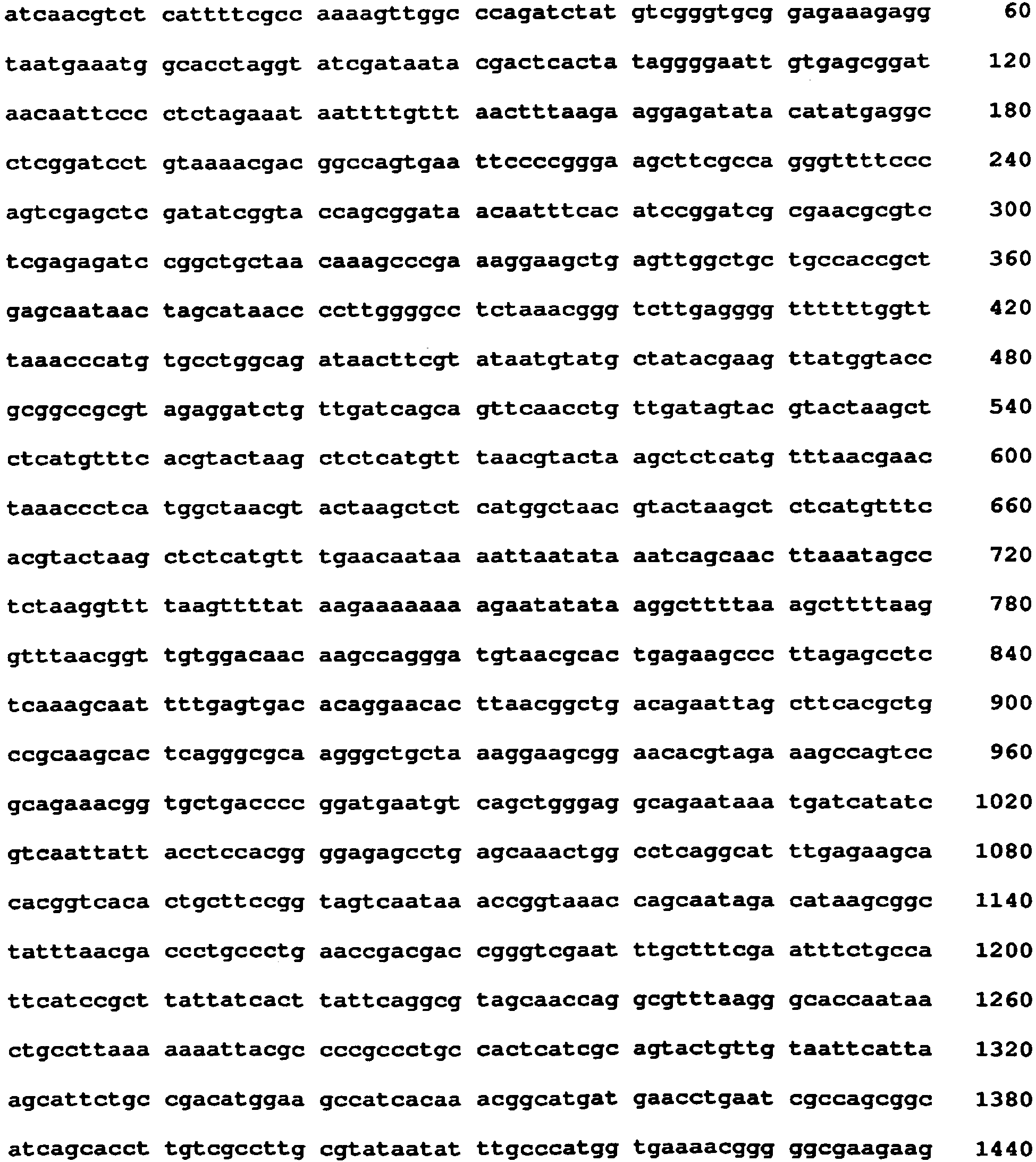

- <210> 5
<211> 2077
<212> DNA
<213> Artificial - <220>
<223> pDK - <400> 5


- <210> 6
<211> 2027
<212> DNA
<213> Artificial - <220>
<223> pDS - <400> 6

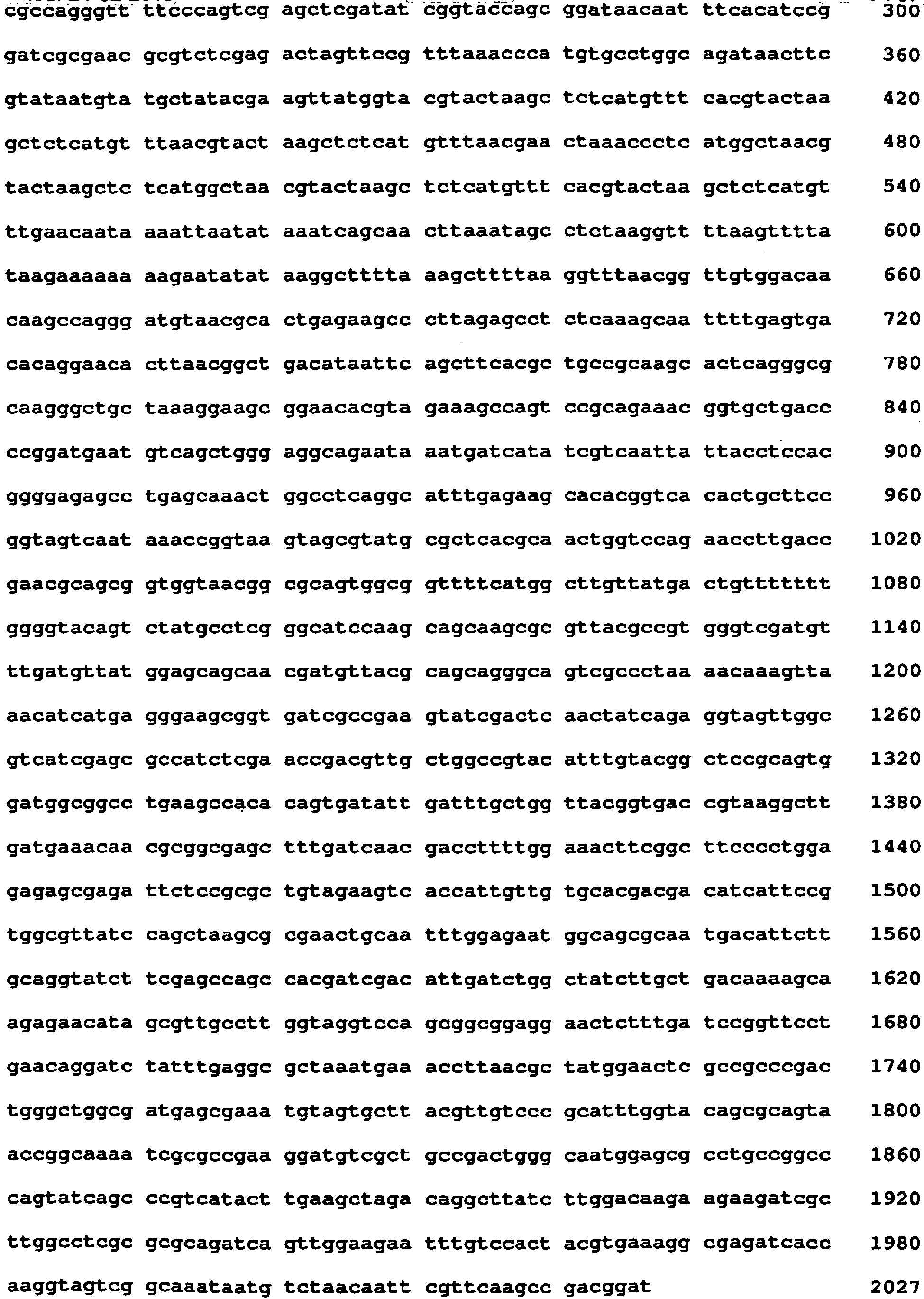
- <210> 7
<211> 2346
<212> DNA
<213> Artificial - <220>
<223> pIDC - <400> 7
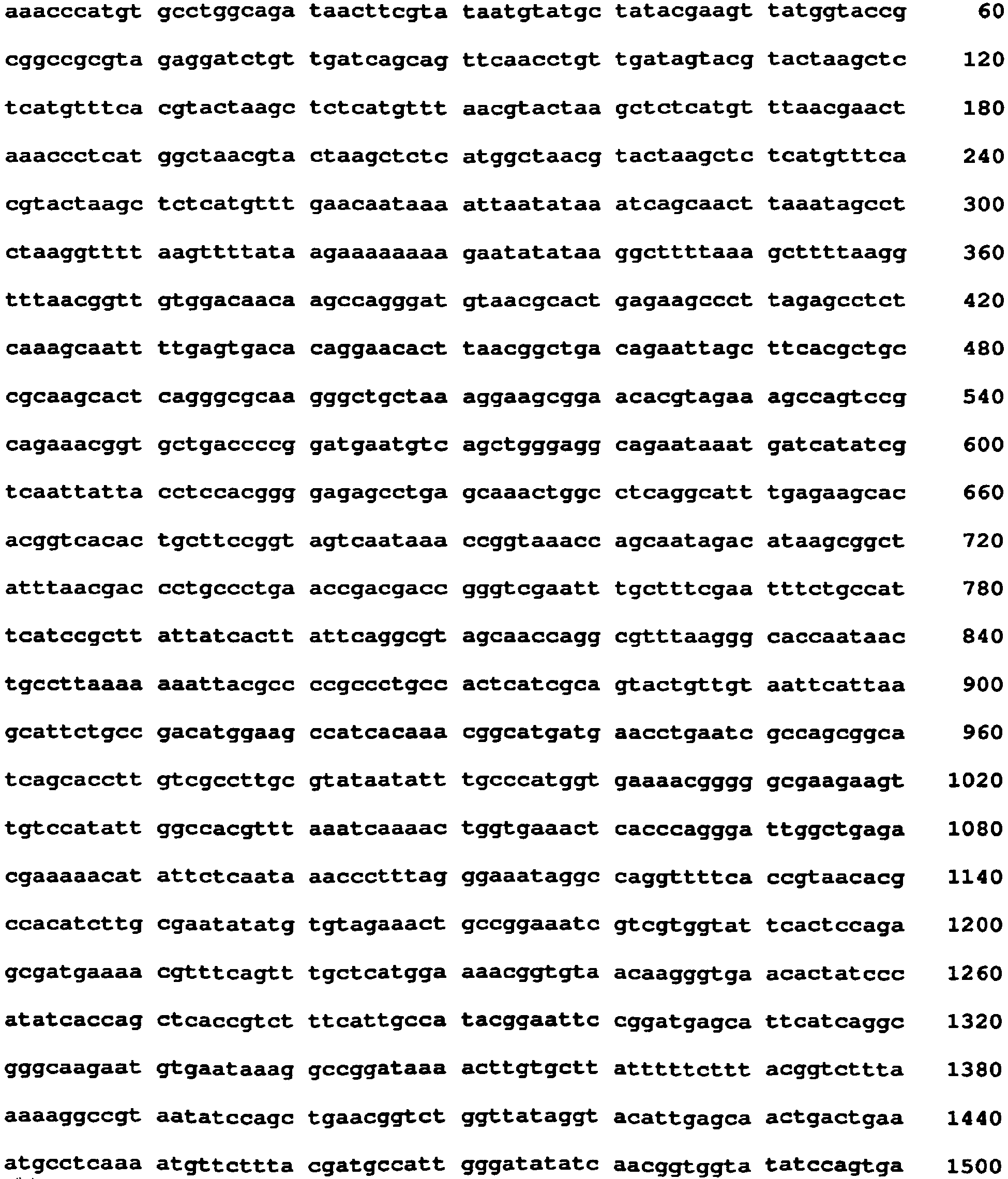

- <210> 8
<211> 2281
<212> DNA
<213> Artificial - <220>
<223> pIDK - <400> 8


- <211> 2231
<212> DNA
<213> Artificial - <220>
<223> pIDS - <400> 9


- <210> 10
<211> 2904
<212> DNA
<213> Artificial - <220>
<223> pACEBac1 - <400> 10


- <210> 11
<211> 2761
<212> DNA
<213> Artificial - <220>
<223> pACEBac2 - <400> 11


- <210> 12
<211> 2940
16/452> DNA - <220>
<223> pACEBac3 - <400> 12


- <210> 13
<211> 2805
<212> DNA
<213> Artificial - <220>
<223> pACEBac4 - <400> 13


- <210> 14
<211> 4589
<212> DNA
<213> Artificial - <220>
<223> pOmniBac1 - <400> 14


- <210> 15
<211> 4446
<212> DNA
<213> Artificial - <220>
<223> pOmniBac2 - <400> 15


- <210> 16
<211> 4625
<212> DNA
<213> Artificial - <220>
3> pOmniBac3 - <400> 16


- <210> 17
<211> 4490
<212> DNA
<213> Artificial - <220>
<223> pOmniBac4 - <400> 17
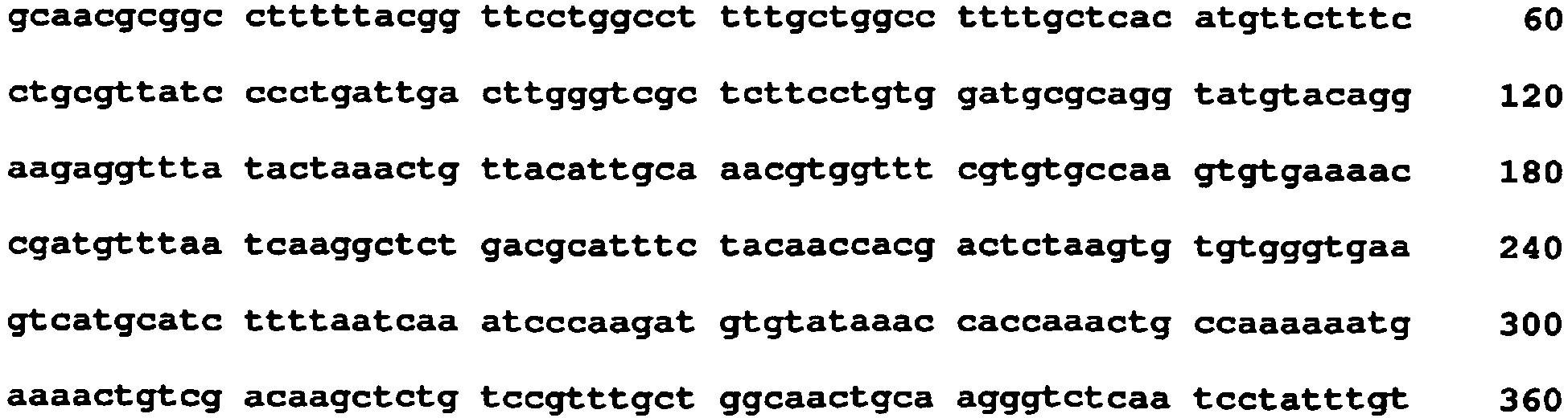


- <210> 18
<211> 8823
<212> DNA
<213> Artificial - <220>
<223> pACKS - <400> 18


- <210> 19
<211> 34
<212> DNA
<213> Artificial - <220>
<223> LoxP imperfect repeat - <400> 19
ataacttcgt atagcataca ttatacgaag ttat 34 - <210> 20
<211> 31
<212> DNA
<213> Adaptor T7InsFor - <400> 20
tcccgcgaaa ttaatacgac tcactatagg g 31 - <210> 21
<211> 39
<212> DNA
<213> Artificial - <220>
<223> Adaptor T7InsRev - <400> 21
cctcaagacc cgtttagagg ccccaagggg ttatgctag 39 - <210> 22
1> 39 - <212> DNA
<213> Adaptor T7VecFor - <400> 22
ctagcataac cccttggggc ctctaaacgg gtcttgagg 39 - <210> 23
<211> 31
<212> DNA
<213> Artificial - <220>
<223> Adaptor T7VecRev - <400> 23
ccctatagtg agtcgtatta atttcgcggg a 31 - <210> 24
<211> 30
<212> DNA
<213> Adaptor NdeInsFor - <400> 24
gtttaacttt aagaaggaga tatacatatg 30 - <210> 25
<211> 25
<212> DNA
<213> Artificial - <220>
<223> Adaptor XhoInsRev - <400> 25
gggtttaaac ggaactagtc tcgag 25 - <210> 26
<211> 25
<212> DNA
<213> Artificial - <220>
<223> Adaptor XhoVecFor - <400> 26
ctcgagacta gttccgttta aaccc 25 - <210> 27
<211> 30
<212> DNA
<213> Artificial - <220>
<223> Adaptor NdeVecRev - <400> 27
catatgtata tctccttctt aaagttaaac 30 - <210> 28
<211> 30
<212> DNA
<213> Artificial - <220>
<223> Adaptor SmaBam - <400> 28
gaattcactg gccgtcgttt tacaggatcc 30 - <210> 29
<211> 30
<212> DNA
<213> Artificial - <220>
<223> Adaptor BamSma - <400> 29
ggatcctgta aaacgacggc cagtgaattc 30 - <210> 30
<211> 29
<212> DNA
<213> Artificial - <220>
<223> Adaptor SacHind - <400> 30
gctcgactgg gaaaaccctg gcgaagctt 29 - <210> 31
<211> 29
<212> DNA
<213> Artificial - <220>
<223> Adaptor HindSac - <400> 31
aagcttcgcc agggttttcc cagtcgagc 29 - <210> 32
<211> 33
<212> DNA
<213> Artificial - <220>
<223> Adaptor BspEco5 - <400> 32
gatccggatg tgaaattgtt atccgctggt acc 33 - <210> 33
<211> 33
<212> DNA
<213> Artificial - <220>
<223> Adaptor Eco5Bsp - <400> 33
ggtaccagcg gataacaatt tcacatccgg atc 33 - <210> 34
<211> 23
<212> DNA
<213> Artificial - <220>
<223> Adaptor PolhInsFor - <400> 34
cccaccatcg ggcgcggatc ccg 23 - <210> 35
<211> 23
<212> DNA
<213> Artificial - <220>
<223> Adaptor PolhInsRev - <400> 35
cgagactgca ggctctagat tcg 23 - <210> 36
<211> 23
<212> DNA
<213> Artificial - <220>
<223> Adaptor PolhVecFor - <400> 36
cgggatccgc gcccgatggt ggg 23 - <210> 37
<211> 23
<212> DNA
<213> Artificial - <220>
<223> Adaptor PolhVecRev - <400> 37
cgaatctaga gcctgcagtc tcg 23 - <210> 38
<211> 28
<212> DNA
<213> Artificial - <220>
<223> Adaptor PlOlnsFor - <400> 38
ctcccggtac cgcatgctat gcatcagc 28 - <210> 39
<211> 26
<212> DNA
<213> Artificial - <220>
<223> Adaptor PlOInsRev - <400> 39
aatcactcga cgaagacttg atcacc 26 - <210> 40
<211> 28
<212> DNA
<213> Artificial - <220>
<223> Adaptor P10VecFor - <400> 40
gctgatgcat agcatgcggt accgggag 28 - <210> 41
<211> 26
<212> DNA
<213> Artificial - <220>
<223> Adaptor P10VecRev - <400> 41
ggtgatcaag tcttcgtcga gtgatt 26 - <210> 42
<211> 12
<212> DNA
<213> Artificial - <220>
<223> BxtXI recognition sequence general - <220>
<221> misc_feature
<222> (4)..(9)
<223> any nucleotide - <400> 42
ccannnnnnt gg 12 - <210> 43
<211> 12
<212> DNA
<213> Artificial - <220>
<223> BstXI recognition sequence contained in Donor vectors - <400> 43
ccatgtgcct gg 12 - <210> 44
<211> 12
<212> DNA
<213> Artificial - <220>
<223> BstXI recognition sequence contained in Acceptor vectors - <400> 44
ccatctaatt gg 12 - <210> 45
<211> 58
<212> DNA
<213> Artificial - <220>
<223> Primer SmaBamVHL - <400> 45
gaattcactg gccgtcgttt tacaggatcc ttaatctccc atccgttgat gtgcaatg 58 - <210> 46
<211> 58
<212> DNA
<213> Artificial - <220>
<223> Primer BamSmaEB - <400> 46
ggatcctgta aaacgacggc cagtgaattc gctagctcta gaaataattt tgtttaac 58 - <210> 47
1> 66 - <212> DNA
<213> Artificial - <220>
<223> Primer SacHindEB - <400> 47

- <210> 48
<211> 54
<212> DNA
<213> Artificial - <220>
<223> Primer HindSacEC - <400> 48
aagcttcgcc agggttttcc cagtcgagct ccaattggaa ttcgctagct ctag 54 - <210> 49
<211> 67
<212> DNA
<213> Artificial - <220>
<223> Primer BspEco5EC - <400> 49

- <210> 50
<211> 593
<212> DNA
<213> Artificial - <220>
<223> Multiple integration element - <400> 50


- <210> 51
<211> 498
<212> DNA
<213> Artificial - <220>
<223> Multiple integration element - <400> 51
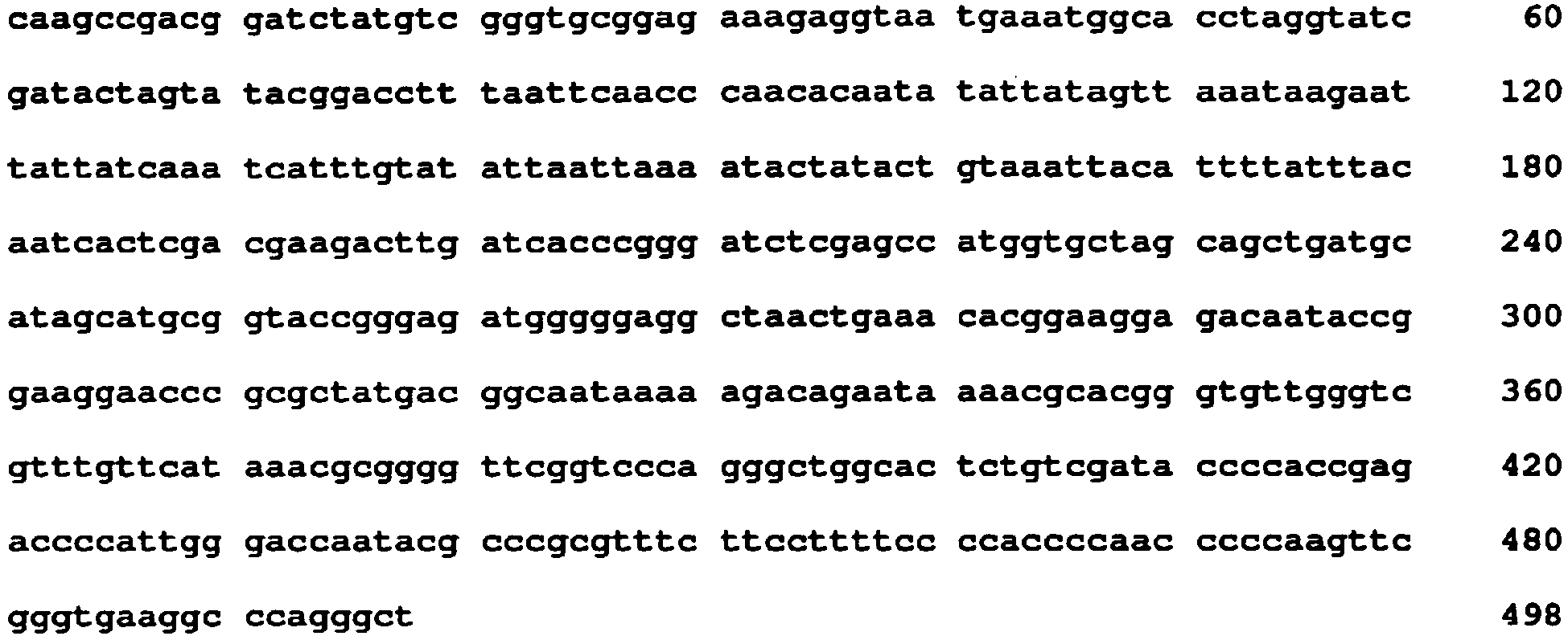
- <210> 52
<211> 593
<212> DNA
<213> Artificial - <220>
<223> Multiple integration element - <400> 52


- <210> 53
<211> 808
<212> DNA
<213> Artificial - <220>
<223> Multiple integration element - <400> 53
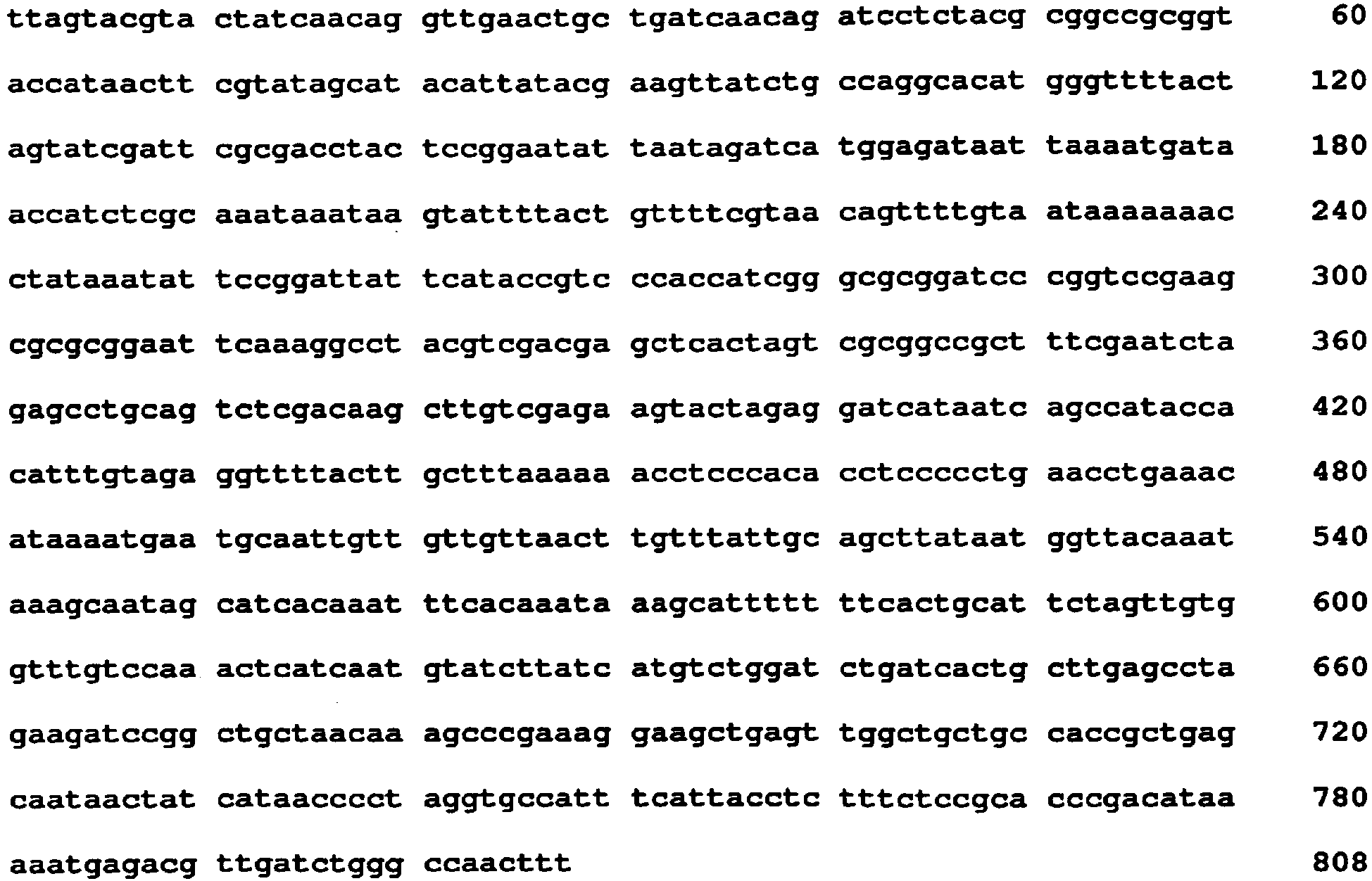
- <210> 54
<211> 211
<212> DNA
<213> Artificial - <220>
<223> Antisense sequence to multiple integration element of SEQ ID NO: 1 - <400> 54


2 This fusion vector was created by Cre-LoxP reaction of pACE, pDC, pDK and pDS. It is resistant to ampicillin, kanamycin, chloramphenicol and spectinomycin. Individual ACEMBL vectors can be liberated from this quadruple fusion by Cre-LoxP mediated deconstruction. Sequences for single ACEMBL vectors according to the present embodiment and pACKS quadruple fusion are provided in SEQ ID NO: 2 to 7.
3 pDS-mGFP contains a coiled-coil fused to the N-terminus of eGFP (see Berger et al. (2003) Proc. Natl. Acad. Sci. USA 100, 12177-82.
Claims (11)
- A method for producing a vector containing multiple expression cassettes by using a first and a second vector each containing at least one homing endonuclease site (HE) and at least one restriction enzyme site (X) wherein the HE and X sites are selected such that HE and X result in compatible cohesive ends when cut by the homing endonuclease and the restriction enzyme, respectively, and the ligation product of HE and X cohesive ends can neither be cleaved by the homing endonuclease nor the restriction enzyme, said method comprising the steps of:a. inserting one or more genes between the homing endonuclease site (HE) and the X site of the first vector;b. inserting one or more genes between the HE and the X site of the second vector;c. cleaving the first vector with a homing endonuclease specific for site HE and with a restriction enzyme specific for site X yielding a fragment containing the at least one gene flanked by the cleaved HE and X site;d. cleaving the second vector with a homing endonuclease specific for site HE;e. ligating the fragment obtained in step (c) into the cleaved second vector obtained in step (d) generating a third vector.
- The method of claim 1 further comprising the step (f):repeating steps (a) to (e) with one or more vector(s) generating a vector containing multiple genes.
- The method of claim 1 or 2 wherein said first and/or second vector contain(s) the sequence elements
HE-Prom-MCS-Term-X or HE-Prom-MCS-X
whereinProm: represents a promoter;MCS: represent a multiple cloning site; andTerm: represents a terminator. - The method according to any one of the preceding claims wherein the HE site is a recognition sequence that results in a 4 nucleotide overhang when cut by the respective homing endonuclease.
- The method of claim 4 wherein the HE site is a recognition sequence of a homing endonuclease selected from the group consisting of PI-SceI, I-CeuI, I-Ppol, I-Hmul. I-Crel, I-Dmol, PI-Pful, I-Msol, PI-PspI, I-SceI, SegH, Hef, I-Apell, I-Anil, Cytochrome b mRNA maturase bI3, PI-TliI, PI-TfuII and PI-Thyl.
- The method of claim 4 or 5 wherein the X site is a BstXI site.
- The method according to any one of the preceding claims wherein said first and/or second vector comprise(s) a nucleotide sequence selected from the group consisting of SEQ ID NO: 1, SEQ ID NO: 50, SEQ ID NO: 51, SEQ ID NO: 52 and SEQ ID NO: 53.
- The method according to any one of the preceding claims wherein said first and/or second vector further contain(s) at least one recognition sequence for a site-specific recombinase.
- The method of claim 8 wherein the recognition sequence for a site-specific recombinase is selected from the group consisting of a loxP imperfect inverted repeat and a Tn7 attachment site.
- The method according to any one of the preceding claims wherein the first and/or second vector has/have a sequence selected from the group consisting of SEQ ID NO: 2, SEQ ID NO: 3, SEQ ID NO: 4, SEQ ID NO: 5, SEQ ID NO: 6, SEQ ID NO: 7, SEQ ID NO: 8, SEQ ID NO: 9, SEQ ID NO: 10, SEQ ID NO: 11, SEQ ID NO: 12, SEQ ID NO: 13, SEQ ID NO: 14, SEQ ID NO: 15, SEQ ID NO: 16 and SEQ ID NO: 17.
- A method for multigene expression comprising the steps of(i) producing a vector containing multiple expression cassettes by the method according to any one of the preceding claims;(ii) introducing the vector obtained in step (i) into a host cell; and(iii) incubating the host cell under conditions allowing the simultaneous expression of the genes present in the vector.
Priority Applications (2)
| Application Number | Priority Date | Filing Date | Title |
|---|---|---|---|
| EP14167081.0A EP2778224A1 (en) | 2009-03-06 | 2010-03-08 | Nucleic acids for cloning and expressing multiprotein complexes |
| EP10707041.9A EP2403940B1 (en) | 2009-03-06 | 2010-03-08 | Nucleic acids for cloning and expressing multiprotein complexes |
Applications Claiming Priority (3)
| Application Number | Priority Date | Filing Date | Title |
|---|---|---|---|
| EP09154567 | 2009-03-06 | ||
| EP10707041.9A EP2403940B1 (en) | 2009-03-06 | 2010-03-08 | Nucleic acids for cloning and expressing multiprotein complexes |
| PCT/EP2010/052892 WO2010100278A2 (en) | 2009-03-06 | 2010-03-08 | Nucleic acids for cloning and expressing multiprotein complexes |
Related Child Applications (2)
| Application Number | Title | Priority Date | Filing Date |
|---|---|---|---|
| EP14167081.0A Division EP2778224A1 (en) | 2009-03-06 | 2010-03-08 | Nucleic acids for cloning and expressing multiprotein complexes |
| EP14167081.0A Division-Into EP2778224A1 (en) | 2009-03-06 | 2010-03-08 | Nucleic acids for cloning and expressing multiprotein complexes |
Publications (2)
| Publication Number | Publication Date |
|---|---|
| EP2403940A2 EP2403940A2 (en) | 2012-01-11 |
| EP2403940B1 true EP2403940B1 (en) | 2015-10-07 |
Family
ID=42244215
Family Applications (2)
| Application Number | Title | Priority Date | Filing Date |
|---|---|---|---|
| EP10707041.9A Active EP2403940B1 (en) | 2009-03-06 | 2010-03-08 | Nucleic acids for cloning and expressing multiprotein complexes |
| EP14167081.0A Withdrawn EP2778224A1 (en) | 2009-03-06 | 2010-03-08 | Nucleic acids for cloning and expressing multiprotein complexes |
Family Applications After (1)
| Application Number | Title | Priority Date | Filing Date |
|---|---|---|---|
| EP14167081.0A Withdrawn EP2778224A1 (en) | 2009-03-06 | 2010-03-08 | Nucleic acids for cloning and expressing multiprotein complexes |
Country Status (5)
| Country | Link |
|---|---|
| US (2) | US8709798B2 (en) |
| EP (2) | EP2403940B1 (en) |
| JP (1) | JP2012519476A (en) |
| CA (1) | CA2754161A1 (en) |
| WO (1) | WO2010100278A2 (en) |
Families Citing this family (9)
| Publication number | Priority date | Publication date | Assignee | Title |
|---|---|---|---|---|
| DE102013006487A1 (en) | 2013-04-10 | 2014-11-06 | ATG: biosynthetics GmbH | Iterative assembly and disassembly of predetermined, artificial DNA constructs and the specific exchange of functional genetic elements |
| CN105331604A (en) * | 2014-05-29 | 2016-02-17 | 中国科学院上海生命科学研究院 | DNA construct and DNA extracorporeal splicing method |
| EP3270960A4 (en) * | 2015-03-20 | 2018-08-08 | Bluebird Bio, Inc. | Vector formulations |
| EP3128006A1 (en) | 2015-08-06 | 2017-02-08 | Consejo Superior de Investigaciones Cientificas (CSIC) | Tools for multiprotein complex expression in pichia pastoris |
| EP3578658A1 (en) * | 2018-06-08 | 2019-12-11 | Johann Wolfgang Goethe-Universität Frankfurt | Method for generating a gene editing vector with fixed guide rna pairs |
| AU2019315713A1 (en) | 2018-07-31 | 2021-02-18 | Imophoron Limited | Multimerizing polypeptides derived from jelly roll fold domain of adenovirus penton base |
| WO2020061164A1 (en) * | 2018-09-19 | 2020-03-26 | The Trustees Of Indiana University | Vectors expressing color and selectable markers |
| MX2022009574A (en) | 2020-02-05 | 2022-11-16 | Imophoron Ltd | Engineered polypeptides derived from variable domain of adenovirus penton base. |
| AU2022211795A1 (en) * | 2021-08-06 | 2023-02-23 | Syte.Bio Inc. | Hairpin loop ended self-complementary double-stranded covalently closed linear dna vector, manufacturing system and process, and uses of said resulting dna vector |
Family Cites Families (4)
| Publication number | Priority date | Publication date | Assignee | Title |
|---|---|---|---|---|
| CN1263860C (en) * | 2002-09-30 | 2006-07-12 | 华南农业大学 | Construction method of multigene carrier and its application |
| US20080050808A1 (en) * | 2002-10-09 | 2008-02-28 | Reed Thomas D | DNA modular cloning vector plasmids and methods for their use |
| US7785871B2 (en) | 2002-10-09 | 2010-08-31 | Intrexon Corporation | DNA cloning vector plasmids and methods for their use |
| ATE442450T1 (en) | 2004-03-09 | 2009-09-15 | Eidgenissische Tech Hochschule | NEW EXPRESSION TOOLS FOR MULTIPROTEIN APPLICATIONS |
-
2010
- 2010-03-08 EP EP10707041.9A patent/EP2403940B1/en active Active
- 2010-03-08 US US13/254,831 patent/US8709798B2/en active Active
- 2010-03-08 CA CA2754161A patent/CA2754161A1/en not_active Abandoned
- 2010-03-08 WO PCT/EP2010/052892 patent/WO2010100278A2/en not_active Ceased
- 2010-03-08 JP JP2011552470A patent/JP2012519476A/en active Pending
- 2010-03-08 EP EP14167081.0A patent/EP2778224A1/en not_active Withdrawn
-
2014
- 2014-04-25 US US14/262,633 patent/US20140356960A1/en not_active Abandoned
Non-Patent Citations (1)
| Title |
|---|
| FITZGERALD DANIEL J ET AL: "PROTEIN COMPLEX EXPRESSION BY USING MULTIGENE BACULOVIRAL VECTORS", NATURE METHODS, NATURE PUBLISHING GROUP, GB, vol. 3, no. 12, 1 December 2006 (2006-12-01), pages 1021 - 1032, XP009080415, ISSN: 1548-7091, DOI: 10.1038/NMETH983 * |
Also Published As
| Publication number | Publication date |
|---|---|
| WO2010100278A2 (en) | 2010-09-10 |
| US20140356960A1 (en) | 2014-12-04 |
| EP2778224A1 (en) | 2014-09-17 |
| WO2010100278A3 (en) | 2010-12-02 |
| CA2754161A1 (en) | 2010-09-10 |
| US8709798B2 (en) | 2014-04-29 |
| EP2403940A2 (en) | 2012-01-11 |
| JP2012519476A (en) | 2012-08-30 |
| US20120149060A1 (en) | 2012-06-14 |
Similar Documents
| Publication | Publication Date | Title |
|---|---|---|
| US8709798B2 (en) | Nucleic acids for cloning and expressing multiprotein complexes | |
| US9738908B2 (en) | CRISPR/Cas systems for genomic modification and gene modulation | |
| KR102210322B1 (en) | Using rna-guided foki nucleases (rfns) to increase specificity for rna-guided genome editing | |
| US8501454B2 (en) | Homologous recombination-based DNA cloning compositions | |
| Hitchman et al. | Baculovirus expression systems for recombinant protein production in insect cells | |
| US6953689B2 (en) | Cloning system for construction of recombinant expression vectors | |
| WO2015052231A2 (en) | Multiplex editing system | |
| WO2015200334A1 (en) | Nuclease-mediated dna assembly | |
| EP1194540A1 (en) | Recombinase-based methods for producing expression vectors and compositions for use in practicing the same | |
| CN115552002A (en) | Genome modification method and genome modification kit | |
| EP3128006A1 (en) | Tools for multiprotein complex expression in pichia pastoris | |
| JP2004518419A (en) | Substrate-linked directional evolution (SLiDE) | |
| Johnson et al. | Elevated levels of recombinational DNA repair in human somatic cells expressing the Saccharomyces cerevisiae RAD52 gene | |
| Pelosse et al. | biGMamAct: efficient CRISPR/Cas9-mediated docking of large functional DNA cargoes at the ACTB locus | |
| de Jong et al. | Scarless baculovirus genome editing using lambda-red recombineering in E. coli | |
| CA3246348A1 (en) | Rt-dna fidelity and retron genome editing | |
| WO2023060589A1 (en) | Multi-transposon system | |
| Nie et al. | ACEMBLing multigene expression vectors by recombineering | |
| US20260043048A1 (en) | High-throughput in vivo dna recombineering | |
| Aulicino et al. | Baculovirus-vectored precision delivery of large DNA cargoes in human genomes | |
| WO2025235388A1 (en) | Transgene genomic identification by nuclease-mediated long read sequencing | |
| Smirnov et al. | High-Throughput Generation of Pichia pastoris Knock-Out Strains by Using CRISPR/Cas9 | |
| Sathyan et al. | The ARF-AID system: Methods that preserve endogenous protein levels and facilitate rapidly inducible protein degradation | |
| Sato | Engineered Recombinases: Tools for Therapeutic Human Genome Editing | |
| WO2017214632A2 (en) | Recombinant insect vectors and methods of use |
Legal Events
| Date | Code | Title | Description |
|---|---|---|---|
| PUAI | Public reference made under article 153(3) epc to a published international application that has entered the european phase |
Free format text: ORIGINAL CODE: 0009012 |
|
| 17P | Request for examination filed |
Effective date: 20110831 |
|
| AK | Designated contracting states |
Kind code of ref document: A2 Designated state(s): AT BE BG CH CY CZ DE DK EE ES FI FR GB GR HR HU IE IS IT LI LT LU LV MC MK MT NL NO PL PT RO SE SI SK SM TR |
|
| DAX | Request for extension of the european patent (deleted) | ||
| 17Q | First examination report despatched |
Effective date: 20120807 |
|
| GRAP | Despatch of communication of intention to grant a patent |
Free format text: ORIGINAL CODE: EPIDOSNIGR1 |
|
| INTG | Intention to grant announced |
Effective date: 20150305 |
|
| RIN1 | Information on inventor provided before grant (corrected) |
Inventor name: BERGER, IMRE |
|
| GRAS | Grant fee paid |
Free format text: ORIGINAL CODE: EPIDOSNIGR3 |
|
| GRAP | Despatch of communication of intention to grant a patent |
Free format text: ORIGINAL CODE: EPIDOSNIGR1 |
|
| GRAA | (expected) grant |
Free format text: ORIGINAL CODE: 0009210 |
|
| INTG | Intention to grant announced |
Effective date: 20150824 |
|
| AK | Designated contracting states |
Kind code of ref document: B1 Designated state(s): AT BE BG CH CY CZ DE DK EE ES FI FR GB GR HR HU IE IS IT LI LT LU LV MC MK MT NL NO PL PT RO SE SI SK SM TR |
|
| REG | Reference to a national code |
Ref country code: GB Ref legal event code: FG4D |
|
| REG | Reference to a national code |
Ref country code: AT Ref legal event code: REF Ref document number: 753791 Country of ref document: AT Kind code of ref document: T Effective date: 20151015 Ref country code: CH Ref legal event code: EP |
|
| REG | Reference to a national code |
Ref country code: CH Ref legal event code: NV Representative=s name: HABERMANN, HRUSCHKA AND SCHNABEL, CH |
|
| REG | Reference to a national code |
Ref country code: IE Ref legal event code: FG4D |
|
| REG | Reference to a national code |
Ref country code: DE Ref legal event code: R096 Ref document number: 602010028045 Country of ref document: DE |
|
| REG | Reference to a national code |
Ref country code: NL Ref legal event code: MP Effective date: 20151007 |
|
| REG | Reference to a national code |
Ref country code: AT Ref legal event code: MK05 Ref document number: 753791 Country of ref document: AT Kind code of ref document: T Effective date: 20151007 |
|
| REG | Reference to a national code |
Ref country code: LT Ref legal event code: MG4D |
|
| REG | Reference to a national code |
Ref country code: FR Ref legal event code: PLFP Year of fee payment: 7 |
|
| PG25 | Lapsed in a contracting state [announced via postgrant information from national office to epo] |
Ref country code: LT Free format text: LAPSE BECAUSE OF FAILURE TO SUBMIT A TRANSLATION OF THE DESCRIPTION OR TO PAY THE FEE WITHIN THE PRESCRIBED TIME-LIMIT Effective date: 20151007 Ref country code: HR Free format text: LAPSE BECAUSE OF FAILURE TO SUBMIT A TRANSLATION OF THE DESCRIPTION OR TO PAY THE FEE WITHIN THE PRESCRIBED TIME-LIMIT Effective date: 20151007 Ref country code: NO Free format text: LAPSE BECAUSE OF FAILURE TO SUBMIT A TRANSLATION OF THE DESCRIPTION OR TO PAY THE FEE WITHIN THE PRESCRIBED TIME-LIMIT Effective date: 20160107 Ref country code: IT Free format text: LAPSE BECAUSE OF FAILURE TO SUBMIT A TRANSLATION OF THE DESCRIPTION OR TO PAY THE FEE WITHIN THE PRESCRIBED TIME-LIMIT Effective date: 20151007 Ref country code: ES Free format text: LAPSE BECAUSE OF FAILURE TO SUBMIT A TRANSLATION OF THE DESCRIPTION OR TO PAY THE FEE WITHIN THE PRESCRIBED TIME-LIMIT Effective date: 20151007 Ref country code: IS Free format text: LAPSE BECAUSE OF FAILURE TO SUBMIT A TRANSLATION OF THE DESCRIPTION OR TO PAY THE FEE WITHIN THE PRESCRIBED TIME-LIMIT Effective date: 20160207 Ref country code: NL Free format text: LAPSE BECAUSE OF FAILURE TO SUBMIT A TRANSLATION OF THE DESCRIPTION OR TO PAY THE FEE WITHIN THE PRESCRIBED TIME-LIMIT Effective date: 20151007 |
|
| PG25 | Lapsed in a contracting state [announced via postgrant information from national office to epo] |
Ref country code: PT Free format text: LAPSE BECAUSE OF FAILURE TO SUBMIT A TRANSLATION OF THE DESCRIPTION OR TO PAY THE FEE WITHIN THE PRESCRIBED TIME-LIMIT Effective date: 20160208 Ref country code: LV Free format text: LAPSE BECAUSE OF FAILURE TO SUBMIT A TRANSLATION OF THE DESCRIPTION OR TO PAY THE FEE WITHIN THE PRESCRIBED TIME-LIMIT Effective date: 20151007 Ref country code: SE Free format text: LAPSE BECAUSE OF FAILURE TO SUBMIT A TRANSLATION OF THE DESCRIPTION OR TO PAY THE FEE WITHIN THE PRESCRIBED TIME-LIMIT Effective date: 20151007 Ref country code: GR Free format text: LAPSE BECAUSE OF FAILURE TO SUBMIT A TRANSLATION OF THE DESCRIPTION OR TO PAY THE FEE WITHIN THE PRESCRIBED TIME-LIMIT Effective date: 20160108 Ref country code: FI Free format text: LAPSE BECAUSE OF FAILURE TO SUBMIT A TRANSLATION OF THE DESCRIPTION OR TO PAY THE FEE WITHIN THE PRESCRIBED TIME-LIMIT Effective date: 20151007 Ref country code: AT Free format text: LAPSE BECAUSE OF FAILURE TO SUBMIT A TRANSLATION OF THE DESCRIPTION OR TO PAY THE FEE WITHIN THE PRESCRIBED TIME-LIMIT Effective date: 20151007 Ref country code: PL Free format text: LAPSE BECAUSE OF FAILURE TO SUBMIT A TRANSLATION OF THE DESCRIPTION OR TO PAY THE FEE WITHIN THE PRESCRIBED TIME-LIMIT Effective date: 20151007 |
|
| REG | Reference to a national code |
Ref country code: DE Ref legal event code: R097 Ref document number: 602010028045 Country of ref document: DE |
|
| PG25 | Lapsed in a contracting state [announced via postgrant information from national office to epo] |
Ref country code: CZ Free format text: LAPSE BECAUSE OF FAILURE TO SUBMIT A TRANSLATION OF THE DESCRIPTION OR TO PAY THE FEE WITHIN THE PRESCRIBED TIME-LIMIT Effective date: 20151007 |
|
| PLBE | No opposition filed within time limit |
Free format text: ORIGINAL CODE: 0009261 |
|
| STAA | Information on the status of an ep patent application or granted ep patent |
Free format text: STATUS: NO OPPOSITION FILED WITHIN TIME LIMIT |
|
| PG25 | Lapsed in a contracting state [announced via postgrant information from national office to epo] |
Ref country code: BE Free format text: LAPSE BECAUSE OF NON-PAYMENT OF DUE FEES Effective date: 20160331 Ref country code: DK Free format text: LAPSE BECAUSE OF FAILURE TO SUBMIT A TRANSLATION OF THE DESCRIPTION OR TO PAY THE FEE WITHIN THE PRESCRIBED TIME-LIMIT Effective date: 20151007 Ref country code: RO Free format text: LAPSE BECAUSE OF FAILURE TO SUBMIT A TRANSLATION OF THE DESCRIPTION OR TO PAY THE FEE WITHIN THE PRESCRIBED TIME-LIMIT Effective date: 20151007 Ref country code: EE Free format text: LAPSE BECAUSE OF FAILURE TO SUBMIT A TRANSLATION OF THE DESCRIPTION OR TO PAY THE FEE WITHIN THE PRESCRIBED TIME-LIMIT Effective date: 20151007 Ref country code: SK Free format text: LAPSE BECAUSE OF FAILURE TO SUBMIT A TRANSLATION OF THE DESCRIPTION OR TO PAY THE FEE WITHIN THE PRESCRIBED TIME-LIMIT Effective date: 20151007 Ref country code: SM Free format text: LAPSE BECAUSE OF FAILURE TO SUBMIT A TRANSLATION OF THE DESCRIPTION OR TO PAY THE FEE WITHIN THE PRESCRIBED TIME-LIMIT Effective date: 20151007 |
|
| 26N | No opposition filed |
Effective date: 20160708 |
|
| PG25 | Lapsed in a contracting state [announced via postgrant information from national office to epo] |
Ref country code: MC Free format text: LAPSE BECAUSE OF FAILURE TO SUBMIT A TRANSLATION OF THE DESCRIPTION OR TO PAY THE FEE WITHIN THE PRESCRIBED TIME-LIMIT Effective date: 20151007 Ref country code: LU Free format text: LAPSE BECAUSE OF FAILURE TO SUBMIT A TRANSLATION OF THE DESCRIPTION OR TO PAY THE FEE WITHIN THE PRESCRIBED TIME-LIMIT Effective date: 20160308 |
|
| PG25 | Lapsed in a contracting state [announced via postgrant information from national office to epo] |
Ref country code: SI Free format text: LAPSE BECAUSE OF FAILURE TO SUBMIT A TRANSLATION OF THE DESCRIPTION OR TO PAY THE FEE WITHIN THE PRESCRIBED TIME-LIMIT Effective date: 20151007 |
|
| PG25 | Lapsed in a contracting state [announced via postgrant information from national office to epo] |
Ref country code: BE Free format text: LAPSE BECAUSE OF FAILURE TO SUBMIT A TRANSLATION OF THE DESCRIPTION OR TO PAY THE FEE WITHIN THE PRESCRIBED TIME-LIMIT Effective date: 20151007 |
|
| REG | Reference to a national code |
Ref country code: FR Ref legal event code: PLFP Year of fee payment: 8 |
|
| PGFP | Annual fee paid to national office [announced via postgrant information from national office to epo] |
Ref country code: IE Payment date: 20170301 Year of fee payment: 8 |
|
| PG25 | Lapsed in a contracting state [announced via postgrant information from national office to epo] |
Ref country code: MT Free format text: LAPSE BECAUSE OF FAILURE TO SUBMIT A TRANSLATION OF THE DESCRIPTION OR TO PAY THE FEE WITHIN THE PRESCRIBED TIME-LIMIT Effective date: 20151007 |
|
| REG | Reference to a national code |
Ref country code: FR Ref legal event code: PLFP Year of fee payment: 9 |
|
| PG25 | Lapsed in a contracting state [announced via postgrant information from national office to epo] |
Ref country code: HU Free format text: LAPSE BECAUSE OF FAILURE TO SUBMIT A TRANSLATION OF THE DESCRIPTION OR TO PAY THE FEE WITHIN THE PRESCRIBED TIME-LIMIT; INVALID AB INITIO Effective date: 20100308 Ref country code: CY Free format text: LAPSE BECAUSE OF FAILURE TO SUBMIT A TRANSLATION OF THE DESCRIPTION OR TO PAY THE FEE WITHIN THE PRESCRIBED TIME-LIMIT Effective date: 20151007 |
|
| PG25 | Lapsed in a contracting state [announced via postgrant information from national office to epo] |
Ref country code: MK Free format text: LAPSE BECAUSE OF FAILURE TO SUBMIT A TRANSLATION OF THE DESCRIPTION OR TO PAY THE FEE WITHIN THE PRESCRIBED TIME-LIMIT Effective date: 20151007 Ref country code: TR Free format text: LAPSE BECAUSE OF FAILURE TO SUBMIT A TRANSLATION OF THE DESCRIPTION OR TO PAY THE FEE WITHIN THE PRESCRIBED TIME-LIMIT Effective date: 20151007 Ref country code: MT Free format text: LAPSE BECAUSE OF FAILURE TO SUBMIT A TRANSLATION OF THE DESCRIPTION OR TO PAY THE FEE WITHIN THE PRESCRIBED TIME-LIMIT Effective date: 20160331 |
|
| PG25 | Lapsed in a contracting state [announced via postgrant information from national office to epo] |
Ref country code: BG Free format text: LAPSE BECAUSE OF FAILURE TO SUBMIT A TRANSLATION OF THE DESCRIPTION OR TO PAY THE FEE WITHIN THE PRESCRIBED TIME-LIMIT Effective date: 20151007 |
|
| REG | Reference to a national code |
Ref country code: IE Ref legal event code: MM4A |
|
| PG25 | Lapsed in a contracting state [announced via postgrant information from national office to epo] |
Ref country code: IE Free format text: LAPSE BECAUSE OF NON-PAYMENT OF DUE FEES Effective date: 20180308 |
|
| PGFP | Annual fee paid to national office [announced via postgrant information from national office to epo] |
Ref country code: CH Payment date: 20250401 Year of fee payment: 16 |
|
| REG | Reference to a national code |
Ref country code: CH Ref legal event code: U11 Free format text: ST27 STATUS EVENT CODE: U-0-0-U10-U11 (AS PROVIDED BY THE NATIONAL OFFICE) Effective date: 20260401 |
|
| PGFP | Annual fee paid to national office [announced via postgrant information from national office to epo] |
Ref country code: GB Payment date: 20260313 Year of fee payment: 17 |
|
| PGFP | Annual fee paid to national office [announced via postgrant information from national office to epo] |
Ref country code: DE Payment date: 20260313 Year of fee payment: 17 |
|
| PGFP | Annual fee paid to national office [announced via postgrant information from national office to epo] |
Ref country code: FR Payment date: 20260313 Year of fee payment: 17 |