EP2403184A1 - Method and network device for using a management information base - Google Patents
Method and network device for using a management information base Download PDFInfo
- Publication number
- EP2403184A1 EP2403184A1 EP10305704A EP10305704A EP2403184A1 EP 2403184 A1 EP2403184 A1 EP 2403184A1 EP 10305704 A EP10305704 A EP 10305704A EP 10305704 A EP10305704 A EP 10305704A EP 2403184 A1 EP2403184 A1 EP 2403184A1
- Authority
- EP
- European Patent Office
- Prior art keywords
- management
- entity
- network device
- management agent
- agent
- Prior art date
- Legal status (The legal status is an assumption and is not a legal conclusion. Google has not performed a legal analysis and makes no representation as to the accuracy of the status listed.)
- Withdrawn
Links
- 238000000034 method Methods 0.000 title claims abstract description 28
- 238000004891 communication Methods 0.000 claims description 6
- 230000004044 response Effects 0.000 claims description 3
- 238000007726 management method Methods 0.000 description 46
- 230000008901 benefit Effects 0.000 description 3
- 230000005540 biological transmission Effects 0.000 description 2
- 238000013500 data storage Methods 0.000 description 2
- 230000006870 function Effects 0.000 description 2
- 230000009118 appropriate response Effects 0.000 description 1
- 230000008859 change Effects 0.000 description 1
- 238000001514 detection method Methods 0.000 description 1
- 230000000694 effects Effects 0.000 description 1
- 238000002474 experimental method Methods 0.000 description 1
- 239000000284 extract Substances 0.000 description 1
- 230000006872 improvement Effects 0.000 description 1
- 230000015654 memory Effects 0.000 description 1
- 239000007787 solid Substances 0.000 description 1
Images


Classifications
-
- H—ELECTRICITY
- H04—ELECTRIC COMMUNICATION TECHNIQUE
- H04L—TRANSMISSION OF DIGITAL INFORMATION, e.g. TELEGRAPHIC COMMUNICATION
- H04L41/00—Arrangements for maintenance, administration or management of data switching networks, e.g. of packet switching networks
- H04L41/04—Network management architectures or arrangements
- H04L41/046—Network management architectures or arrangements comprising network management agents or mobile agents therefor
-
- H—ELECTRICITY
- H04—ELECTRIC COMMUNICATION TECHNIQUE
- H04L—TRANSMISSION OF DIGITAL INFORMATION, e.g. TELEGRAPHIC COMMUNICATION
- H04L41/00—Arrangements for maintenance, administration or management of data switching networks, e.g. of packet switching networks
- H04L41/02—Standardisation; Integration
- H04L41/0213—Standardised network management protocols, e.g. simple network management protocol [SNMP]
Definitions
- the present invention relates to a method and network device for retrieving data from a management information base (MIB).
- MIB management information base
- a management information base is defined as a virtual database storing attributes and properties of the device under standardized, pre-defined names. Objects stored in the MIB can be retrieved by a manager by sending the appropriate "get" command to a management agent that has access to the MIB, i.e. to the hardware and software components to which the attributes and properties actually pertain.
- the management agents implement a version of the Simple Network Management Protocol (SNMP) protocol, which allows the managers to exchange commands and data with the agents in a simple and standardized way.
- SNMP Simple Network Management Protocol
- a “get” request may identify the target object directly, by including a unique identifier that is relevant in the context in which the management agent operates, or indirectly, by requesting the next object in reference to a certain identified object.
- the latter type of “get” request hereinafter referred to as a “get-next” request, is typically used to successively access a number of MIB objects in a standardized order, hereinafter referred to as the lexicographic order.
- MIB objects may be stored in the form of scalars or in the form of tables
- a sequence of "get-next" requests is typically used to successively access all the objects of a table.
- the end of the table is detected by comparing the identifier of the returned object with the identifier of the requested object; a different identifier indicates that the returned object does not belong to the same table as the previous one.
- the above approach has the disadvantage that the end of the table is only detected after an object not belonging to the table of interest has been returned by the management agent.
- different objects in a MIB may in fact belong to very different components of the managed device, there may be a substantial latency involved in switching from one component to another in order to retrieve the lexicographic successor of an object. Accordingly, the manager experiences the disadvantage of having to wait for the table retrieval operation to complete, and of receiving an object it is not interested in.
- a method for using a management information base containing management objects with a predetermined order comprising receiving at a management agent a first request from said requesting entity to retrieve a next management object according to said predetermined order; sending a second request pertaining to said next management object from said management agent to a managed entity; detecting an end-of-table condition at said management agent; and sending a first end-of-table message from said management agent to said requesting entity.
- the present invention is based on the insight that the management agent, interfacing more directly with the variables representing the virtual MIB objects, has the necessary information to detect the end of a table without retrieving the next MIB object in lexicographic order.
- the manager is advantageously informed of this detection by means of a dedicated signal, thus avoiding the transmission of an unnecessary object.
- the detecting of the end-of-table condition comprises receiving a second end-of-table message from the managed entity.
- the requesting entity is an SNMP entity
- said first request is a GetNextRequest-PDU
- said first end-of-table message is a modified GetResponse-PDU.
- the invention may be applied by applying minimal changes to a standardized protocol.
- said managed entity is comprised in an access node.
- the probability of having to switch between subsystems when retrieving consecutive MIB objects in lexicographic order is relatively high, making the application of the invention particularly advantageous.
- said management entity interfaces with a user via a user interface.
- the user interface comprises a graphical MIB browser.
- the user interface comprises a command line interface.
- a network device comprising a management agent and at least one managed entity operatively connected to said management agent, the network device being in communication with a requesting entity, wherein the management agent is adapted to receive a first request from the requesting entity to retrieve a next management object relative to a reference object pertaining to said managed entity and to detect an end-of-table condition with respect to said reference object, and wherein the management agent is further adapted to send an end-of-table message to said requesting entity in response to said detecting.
- the requesting entity is an SNMP entity
- said first request is a GetNextRequest-PDU
- said end-of-table message is a modified GetResponse-PDU.
- said at least one managed entity comprises at least one network interface card.
- the network device of the present invention is adapted to provide the function of an access node.
- the known methods for traversing a table of a management information base are exemplified by the method described in RFC 1157, defining a simple network management protocol (SNMP).
- Section 4.1.3.1 of that RFC provides a detailed example of table traversal.
- an SNMP application entity extracts the destination address and NextHop gateway, for each entry in the routing table of a particular network element.
- the management station sends to the SNMP agent a GetNextRequest-PDU, containing the indicated object identifier values as the requested variable names:
- the GetNextRequest/GetResponse exchange is repeated several times until the object/value pairs returned by the SNMP agent no longer correspond to the requested object identifiers, but to those objects that are next in the MIB, according to the lexicographical ordering of the object names. This response signals the end of the routing table to the management station.
- the known method is illustrated schematically in Figure 1 .
- the management station of the example of RFC 1157 is shown in Figure 1 as requester 100.
- the requester 100 may be a management protocol entity comprised in a software tool such as a MIB browser, a graphical device or network management tool, or a command line interface (CLI).
- a software tool such as a MIB browser, a graphical device or network management tool, or a command line interface (CLI).
- CLI command line interface
- the requester 100 is operatively connected by means of a suitable protocol stack supporting the chosen management protocol, to a management agent 110 such as the SNMP agent of the above mentioned example.
- a management agent 110 such as the SNMP agent of the above mentioned example.
- the message exchanges will be described in the context of the Simple Network Management Protocol (SNMP).
- the SNMP agent 110 is in turn operatively connected to a managed device 120, for example a network node such as an access node.
- the managed device 120 is shown in Figure 1 as containing multiple components or subsystems 121, 122, each of which may have different management objects associated with it. Although only two subsystems 121, 122 are shown in Figure 1 , this is done for clarity purposes only and without loss of generality.
- the sequence of message exchanges 130-135, also shown in Figure 3 corresponds to the messages exchanged in the above cited example of RFC 1157. It should be noted however that RFC 1157 does not explicitly address the communication between SNMP agent 110 and managed device 120, illustrated in Figure 1 as messages 131-134. It is nevertheless instructive to take a closer look at these exchanges because they reveal a disadvantage which embodiments of the present invention overcome.
- the requester 100 has already received the last table element corresponding to the object identifier of interest from the SNMP agent 110. Accordingly, upon receiving another GetNextRequest from the requester 100 in step 130, the SNMP agent 110 will attempt to retrieve the next table element corresponding to the object identifier from the managed device 120 in step 131 by querying the concerned subsystem of the managed device 120. Without loss of generality, we assume that the concerned subsystem is the first subsystem 121. As a result of this query, SNMP agent 110 will be made aware in step 132 of the fact that the end of the table has already been reached.
- the "end of table" situation may be detected by SNMP agent 110 by any of the means known to the person skilled in the art, such as the exchange of dedicated messages or signals between the first subsystem 121 and the SNMP agent 110, or any interrupt, register value change, or communication producing the same effect.
- the SNMP agent 110 will now determine the next object according to the lexicographic order, and address the concerned subsystem to retrieve the value of this object in step 133.
- the concerned subsystem is the second subsystem 122.
- the second subsystem 122 will return the requested object value in step 134, allowing the SNMP agent 110 to transmit the appropriate response to the requester 100 in step 135.
- Requester 100 will now detect that the received object does not pertain to the table of interest, and will conclude that the end of the table has been reached.
- Components or subsystems 121 and 122 may be implemented on different hardware, for instance different interface cards present in the same network device.
- one interface card may carry interfaces towards the subscriber lines (so-called line termination interfaces), while another interface card may carry interfaces towards the operator's network (so-called network termination interfaces). Accordingly, the management of these interface cards may be performed by different processors on the respective cards.
- Consecutively accessing a first managed object pertaining to the first subsystem 121, and the second managed object pertaining to the second subsystem 122, may involve a substantial delay due to the fact that the communication between the management agent 110 and the hardware responsible for managing the first subsystem 121 may have to be terminated, and communication between the management agent 110 and the hardware responsible for managing the second subsystem 122 may have to be set up.
- This delay may be unavoidable and relatively insignificant when the entire MIB of the managed device 120 is to be relayed from the management agent 110 to the requester 100, but it is both undesirable and unjustified if the delay is simply due to a switch from the last object of a targeted table residing in the first subsystem 121 to its lexicographical successor residing in the second subsystem 122, when the requester has not expressed an interest in obtaining the value of said successor.
- Figure 2 illustrates an exchange of management messages according to an embodiment of the present invention.
- requester 100 has already received the last element of a targeted table pertaining to the managed device 120, in particular first subsystem 121.
- requester 100 transmits a GetNextRequest pertaining to a given object identifier to SNMP agent 110 in step 130.
- SNMP agent 110 attempts to retrieve the identified object from the first subsystem 121 in step 131.
- the first subsystem 121 indicates, by any of the known means, that the end of the relevant table has been reached in step 132.
- the SNMP agent 110 transmits a dedicated end of table message 136 directly to requester 100, thus avoiding the potential and unnecessary delay involved in contacting another subsystem 122 to retrieve the lexicographically next object, which, from the point of view of requester 100, serves no other purpose than indicating the fact that the end of the table of interest has been reached.
- the exchange according to the invention reduces the delay involved in table traversal, and avoids the unnecessary transmission of management objects in which the requester 100 is not interested.
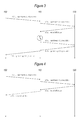
- FIG 3 provides a schematic flowchart of the message exchanges between requester 100, management agent 110 and managed device 120, in accordance with the method of the prior art.
- the same reference numerals are used to designate the same steps as those described in connection with Figures 1 and 2 . Accordingly, it will be clear that the exchanges represented by solid arrows correspond to the protocol exchange according to the prior art, wherein the requester 100 sends a GetNextRequest 130 to the SNMP agent 110, which, as a result, attempts to retrieve the next object from the managed device 120 in step 131, and subsequently detects that the end of the table has been reached in step 132.
- the SNMP agent 110 will then attempt to retrieve the next object in the lexicographic order from managed device 120 in step 133, which may incur a substantial delay if this next object is in fact associated with a second subsystem, different from the first subsystem in which the table of interest resides.
- the SNMP agent 110 will receive the next object in step 134, allowing it to relay the object value to the requester 100 in step 135.
- FIG 4 provides a schematic flowchart of the message exchanges between requester 100, management agent 110 and managed device 120, in accordance with an embodiment of the present invention.
- the same reference numerals are used to designate the same steps as those described in connection with Figures 1, 2 , and 3 .
- the improvement of the present invention is represented by the dashed arrow, designated as step 136, in which a dedicated end of table message is transmitted directly from the SNMP agent 110 to requester 100, thus avoiding the need to incur additional delay by attempting to retrieve the next object in the lexicographic order, which may reside in another subsystem of the managed device 120.
- steps 133, 134 and 135 don't have to take place.
- steps 133, 134 and 135 are able to reduce the time required to retrieve certain tables by several seconds.
- step 136 in which a dedicated end of table message is transmitted directly from the SNMP agent 110 to requester 100, may be combined with the conventional steps 133, 134 and 135. This allows applications attempting to retrieve large portions of the MIB across table boundaries, and applications attempting to retrieve just one table, to both function optimally with the same SNMP agent.
- the GetNextRequest message transmitted by the requester 100 is modified to indicate to the SNMP agent 110 that an explicit end-of-table message 136 is requested when an end-of-table situation occurs.
- FIG. 5 illustrates a network device 500 according to an embodiment of the present invention, comprising a functional managed device 120 and an integrated management agent 110, preferably an SNMP agent.
- the network device 500 according to the invention is adapted to operate according to the principles explained in connection with Figures 2 and 4 . In particular, it is adapted to transmit a dedicated "end of table" message to the requester 100.
- the network device 500 may inter alia be an access node, a switch, a router, a server, or the like.
- the term "access node” includes without limitation a digital subscriber line access multiplexer (DSLAM).
- the network device 500 may comprise a plurality of subsystems 121, 122, which, in the case of an access node, may correspond to one or more line termination cards and/or one or more network termination cards.
- the dedicated "end of table” message generated by embodiments of the present invention is preferably a modified form of a standardized message according to a known management protocol. Most preferably, it is an SNMP message substantially corresponding to the GetResponse-PDU, in which a newly defined value of an existing flag, such as the "ErrorStatus" flag, or a new flag is used to signal the "end of table” condition to the recipient.
- program storage devices e.g., digital data storage media, which are machine or computer readable and encode machine-executable or computer-executable programs of instructions, wherein said instructions perform some or all of the steps of said above-described methods.
- the program storage devices may be, e.g., digital memories, magnetic storage media such as a magnetic disks and magnetic tapes, hard drives, or optically readable digital data storage media.
- the embodiments are also intended to cover computers programmed to perform said steps of the above-described methods.
Landscapes
- Engineering & Computer Science (AREA)
- Computer Networks & Wireless Communication (AREA)
- Signal Processing (AREA)
- Data Exchanges In Wide-Area Networks (AREA)
- Computer And Data Communications (AREA)
Abstract
The invention pertains to a method for using a management information base containing management objects with a predetermined order, the method comprising receiving at a management agent a first request from the requesting entity to retrieve a next management object according to the predetermined order; sending a second request pertaining to the next management object from the management agent to a managed entity; detecting an end-of-table condition at the management agent; and sending a first end-of-table message from the management agent to said requesting entity. The invention also pertains to a network device adapted to operate according to the method.
Description
- The present invention relates to a method and network device for retrieving data from a management information base (MIB).
- To facilitate the management of network devices, a management information base (MIB) is defined as a virtual database storing attributes and properties of the device under standardized, pre-defined names. Objects stored in the MIB can be retrieved by a manager by sending the appropriate "get" command to a management agent that has access to the MIB, i.e. to the hardware and software components to which the attributes and properties actually pertain. Where the managed devices are TCP/IP-based devices, the management agents implement a version of the Simple Network Management Protocol (SNMP) protocol, which allows the managers to exchange commands and data with the agents in a simple and standardized way.
- A "get" request may identify the target object directly, by including a unique identifier that is relevant in the context in which the management agent operates, or indirectly, by requesting the next object in reference to a certain identified object. The latter type of "get" request, hereinafter referred to as a "get-next" request, is typically used to successively access a number of MIB objects in a standardized order, hereinafter referred to as the lexicographic order.
- Whereas MIB objects may be stored in the form of scalars or in the form of tables, a sequence of "get-next" requests is typically used to successively access all the objects of a table. The end of the table is detected by comparing the identifier of the returned object with the identifier of the requested object; a different identifier indicates that the returned object does not belong to the same table as the previous one.
- The above approach has the disadvantage that the end of the table is only detected after an object not belonging to the table of interest has been returned by the management agent. As different objects in a MIB may in fact belong to very different components of the managed device, there may be a substantial latency involved in switching from one component to another in order to retrieve the lexicographic successor of an object. Accordingly, the manager experiences the disadvantage of having to wait for the table retrieval operation to complete, and of receiving an object it is not interested in.
- Thus, according to a first aspect of the present invention, there is provided a method for using a management information base containing management objects with a predetermined order, the method comprising receiving at a management agent a first request from said requesting entity to retrieve a next management object according to said predetermined order; sending a second request pertaining to said next management object from said management agent to a managed entity; detecting an end-of-table condition at said management agent; and sending a first end-of-table message from said management agent to said requesting entity.
- The present invention is based on the insight that the management agent, interfacing more directly with the variables representing the virtual MIB objects, has the necessary information to detect the end of a table without retrieving the next MIB object in lexicographic order. In the present invention, the manager is advantageously informed of this detection by means of a dedicated signal, thus avoiding the transmission of an unnecessary object.
- In an embodiment of the method of the present invention, the detecting of the end-of-table condition comprises receiving a second end-of-table message from the managed entity.
- In an embodiment of the method of the present invention, the requesting entity is an SNMP entity, said first request is a GetNextRequest-PDU, and said first end-of-table message is a modified GetResponse-PDU.
- It is an advantage of this embodiment that the invention may be applied by applying minimal changes to a standardized protocol.
- In an embodiment of the method of the present invention, wherein said managed entity is comprised in an access node.
- As access nodes typically have different subsystems, the probability of having to switch between subsystems when retrieving consecutive MIB objects in lexicographic order is relatively high, making the application of the invention particularly advantageous.
- In an embodiment of the method of the present invention, said management entity interfaces with a user via a user interface. In a particular embodiment, the user interface comprises a graphical MIB browser. In another particular embodiment, the user interface comprises a command line interface.
- According to another aspect of the present invention, there is provided a network device comprising a management agent and at least one managed entity operatively connected to said management agent, the network device being in communication with a requesting entity, wherein the management agent is adapted to receive a first request from the requesting entity to retrieve a next management object relative to a reference object pertaining to said managed entity and to detect an end-of-table condition with respect to said reference object, and wherein the management agent is further adapted to send an end-of-table message to said requesting entity in response to said detecting.
- In an embodiment of the network device of the present invention, the requesting entity is an SNMP entity, said first request is a GetNextRequest-PDU, and said end-of-table message is a modified GetResponse-PDU.
- In an embodiment of the network device of the present invention, said at least one managed entity comprises at least one network interface card.
- In an embodiment, the network device of the present invention is adapted to provide the function of an access node.
- The advantages of the various embodiments of the network device according to the present invention correspond, mutatis mutandis, to the above mentioned advantages of the method according to the present invention.
- Some embodiments of apparatus and/or methods in accordance with embodiments of the present invention are now described, by way of example only, and with reference to the accompanying drawings, in which:
-
Figure 1 is a schematic view of MIB object retrieval according to the prior art; -
Figure 2 is a schematic view of MIB object retrieval according to an embodiment of the invention; -
Figure 3 represents a flow of messages according to the prior art; -
Figure 4 represents a flow of messages according to an embodiment of the invention; and -
Figure 5 represents a network device according to an embodiment of the present invention. - The known methods for traversing a table of a management information base are exemplified by the method described in RFC 1157, defining a simple network management protocol (SNMP). Section 4.1.3.1 of that RFC provides a detailed example of table traversal. In that example, an SNMP application entity extracts the destination address and NextHop gateway, for each entry in the routing table of a particular network element. The management station sends to the SNMP agent a GetNextRequest-PDU, containing the indicated object identifier values as the requested variable names:
- GetNextRequest (ipRouteDest, ipRouteNextHop, ipRouteMetric1)
- The SNMP agent responds with a GetResponse-PDU.
- The GetNextRequest/GetResponse exchange is repeated several times until the object/value pairs returned by the SNMP agent no longer correspond to the requested object identifiers, but to those objects that are next in the MIB, according to the lexicographical ordering of the object names. This response signals the end of the routing table to the management station.
- The known method is illustrated schematically in
Figure 1 . The management station of the example of RFC 1157 is shown inFigure 1 asrequester 100. Therequester 100 may be a management protocol entity comprised in a software tool such as a MIB browser, a graphical device or network management tool, or a command line interface (CLI). - The
requester 100 is operatively connected by means of a suitable protocol stack supporting the chosen management protocol, to amanagement agent 110 such as the SNMP agent of the above mentioned example. Without loss of generality, the message exchanges will be described in the context of the Simple Network Management Protocol (SNMP). - The SNMP
agent 110 is in turn operatively connected to a manageddevice 120, for example a network node such as an access node. The manageddevice 120 is shown inFigure 1 as containing multiple components orsubsystems subsystems Figure 1 , this is done for clarity purposes only and without loss of generality. The sequence of message exchanges 130-135, also shown inFigure 3 , corresponds to the messages exchanged in the above cited example of RFC 1157. It should be noted however that RFC 1157 does not explicitly address the communication betweenSNMP agent 110 and manageddevice 120, illustrated inFigure 1 as messages 131-134. It is nevertheless instructive to take a closer look at these exchanges because they reveal a disadvantage which embodiments of the present invention overcome. - In the exchange of
figure 1 we assume that therequester 100 has already received the last table element corresponding to the object identifier of interest from theSNMP agent 110. Accordingly, upon receiving another GetNextRequest from therequester 100 instep 130, the SNMPagent 110 will attempt to retrieve the next table element corresponding to the object identifier from the manageddevice 120 instep 131 by querying the concerned subsystem of the manageddevice 120. Without loss of generality, we assume that the concerned subsystem is thefirst subsystem 121. As a result of this query, SNMPagent 110 will be made aware instep 132 of the fact that the end of the table has already been reached. - The "end of table" situation may be detected by SNMP
agent 110 by any of the means known to the person skilled in the art, such as the exchange of dedicated messages or signals between thefirst subsystem 121 and theSNMP agent 110, or any interrupt, register value change, or communication producing the same effect. - In order to comply with the GetNextRequest 130, received from
requester 100, the SNMPagent 110 will now determine the next object according to the lexicographic order, and address the concerned subsystem to retrieve the value of this object instep 133. To clarify the object of the present invention, we will hereinafter assume, without loss of generality, that the concerned subsystem is thesecond subsystem 122. Thesecond subsystem 122 will return the requested object value instep 134, allowing the SNMPagent 110 to transmit the appropriate response to therequester 100 instep 135.Requester 100 will now detect that the received object does not pertain to the table of interest, and will conclude that the end of the table has been reached. - Components or
subsystems first subsystem 121, and the second managed object pertaining to thesecond subsystem 122, may involve a substantial delay due to the fact that the communication between themanagement agent 110 and the hardware responsible for managing thefirst subsystem 121 may have to be terminated, and communication between themanagement agent 110 and the hardware responsible for managing thesecond subsystem 122 may have to be set up. This delay may be unavoidable and relatively insignificant when the entire MIB of the manageddevice 120 is to be relayed from themanagement agent 110 to therequester 100, but it is both undesirable and unjustified if the delay is simply due to a switch from the last object of a targeted table residing in thefirst subsystem 121 to its lexicographical successor residing in thesecond subsystem 122, when the requester has not expressed an interest in obtaining the value of said successor. -
Figure 2 illustrates an exchange of management messages according to an embodiment of the present invention. We again assume thatrequester 100 has already received the last element of a targeted table pertaining to the manageddevice 120, in particularfirst subsystem 121. As inFigure 1 ,requester 100 transmits a GetNextRequest pertaining to a given object identifier toSNMP agent 110 instep 130.SNMP agent 110 attempts to retrieve the identified object from thefirst subsystem 121 instep 131. As before, thefirst subsystem 121 indicates, by any of the known means, that the end of the relevant table has been reached instep 132. At this point, theSNMP agent 110 according to the present invention transmits a dedicated end oftable message 136 directly torequester 100, thus avoiding the potential and unnecessary delay involved in contacting anothersubsystem 122 to retrieve the lexicographically next object, which, from the point of view ofrequester 100, serves no other purpose than indicating the fact that the end of the table of interest has been reached. - Thus, the exchange according to the invention reduces the delay involved in table traversal, and avoids the unnecessary transmission of management objects in which the
requester 100 is not interested. -
Figure 3 provides a schematic flowchart of the message exchanges betweenrequester 100,management agent 110 and manageddevice 120, in accordance with the method of the prior art. The same reference numerals are used to designate the same steps as those described in connection withFigures 1 and 2 . Accordingly, it will be clear that the exchanges represented by solid arrows correspond to the protocol exchange according to the prior art, wherein therequester 100 sends aGetNextRequest 130 to theSNMP agent 110, which, as a result, attempts to retrieve the next object from the manageddevice 120 instep 131, and subsequently detects that the end of the table has been reached instep 132. TheSNMP agent 110 will then attempt to retrieve the next object in the lexicographic order from manageddevice 120 instep 133, which may incur a substantial delay if this next object is in fact associated with a second subsystem, different from the first subsystem in which the table of interest resides. TheSNMP agent 110 will receive the next object instep 134, allowing it to relay the object value to the requester 100 instep 135. -
Figure 4 provides a schematic flowchart of the message exchanges betweenrequester 100,management agent 110 and manageddevice 120, in accordance with an embodiment of the present invention. The same reference numerals are used to designate the same steps as those described in connection withFigures 1, 2 , and3 . The improvement of the present invention is represented by the dashed arrow, designated asstep 136, in which a dedicated end of table message is transmitted directly from theSNMP agent 110 torequester 100, thus avoiding the need to incur additional delay by attempting to retrieve the next object in the lexicographic order, which may reside in another subsystem of the manageddevice 120. - Hence, according to the invention, steps 133, 134 and 135 don't have to take place. Experiments have shown that implementations of the present invention, applied to certain types of access nodes, are able to reduce the time required to retrieve certain tables by several seconds. However, according to a variant of the invention,
step 136, in which a dedicated end of table message is transmitted directly from theSNMP agent 110 torequester 100, may be combined with theconventional steps - In another variant of the invention, the GetNextRequest message transmitted by the
requester 100 is modified to indicate to theSNMP agent 110 that an explicit end-of-table message 136 is requested when an end-of-table situation occurs. - In the above embodiments of the present invention, the
SNMP agent 110 and the manageddevice 120 have been mentioned, without limitation, as independently acting entities.Figure 5 illustrates anetwork device 500 according to an embodiment of the present invention, comprising a functional manageddevice 120 and anintegrated management agent 110, preferably an SNMP agent. Thenetwork device 500 according to the invention is adapted to operate according to the principles explained in connection withFigures 2 and4 . In particular, it is adapted to transmit a dedicated "end of table" message to therequester 100. Thenetwork device 500 may inter alia be an access node, a switch, a router, a server, or the like. The term "access node" includes without limitation a digital subscriber line access multiplexer (DSLAM). Thenetwork device 500 may comprise a plurality ofsubsystems - The dedicated "end of table" message generated by embodiments of the present invention is preferably a modified form of a standardized message according to a known management protocol. Most preferably, it is an SNMP message substantially corresponding to the GetResponse-PDU, in which a newly defined value of an existing flag, such as the "ErrorStatus" flag, or a new flag is used to signal the "end of table" condition to the recipient.
- Although embodiments of the present invention have been described in connection with the simple network management protocol SNMP as defined for the TCP/IP protocol suite, it shall be clear to the skilled person that the invention is not limited thereto, and that the same principles may be applied to other management protocols that experience the same underlying disadvantages.
- A person of skill in the art would readily recognize that steps of various above-described methods can be performed by programmed computers. Herein, some embodiments are also intended to cover program storage devices, e.g., digital data storage media, which are machine or computer readable and encode machine-executable or computer-executable programs of instructions, wherein said instructions perform some or all of the steps of said above-described methods. The program storage devices may be, e.g., digital memories, magnetic storage media such as a magnetic disks and magnetic tapes, hard drives, or optically readable digital data storage media. The embodiments are also intended to cover computers programmed to perform said steps of the above-described methods.
Claims (11)
- A method for using a management information base containing management objects with a predetermined order, the method comprising:- receiving at a management agent a first request from a requesting entity to retrieve a next management object according to said predetermined order;- sending a second request pertaining to said next management object from said management agent to a managed entity;- detecting an end-of-table condition at said management agent; and- sending a first end-of-table message from said management agent to said requesting entity.
- The method of claim 1, wherein said detecting of said end-of-table condition comprises receiving a second end-of-table message from said managed entity.
- The method of any of the preceding claims, wherein the requesting entity is an SNMP entity, said first request is a GetNextRequest-PDU, and said first end-of-table message is a modified GetResponse-PDU.
- The method of any of the preceding claims, wherein said managed entity is comprised in an access node.
- The method of any of the preceding claims, wherein said management entity interfaces with a user via a user interface.
- The method of claim 5 wherein the user interface comprises a graphical MIB browser.
- The method of claim 5, wherein the user interface comprises a command line interface.
- A network device comprising a management agent and at least one managed entity operatively connected to said management agent, the network device being in communication with a requesting entity, wherein the management agent is adapted to receive a first request from the requesting entity to retrieve a next management object relative to a reference object pertaining to said managed entity and to detect an end-of-table condition with respect to said reference object, and wherein the management agent is further adapted to send an end-of-table message to said requesting entity in response to said detecting.
- The network device of claim 8, wherein the requesting entity is an SNMP entity, said first request is a GetNextRequest-PDU, and said end-of-table message is a modified GetResponse-PDU.
- The network device of claim 8 or claim 9, wherein said at least one managed entity comprises at least one network interface card.
- The network device of claim 10, adapted to provide the function of an access node.
Priority Applications (1)
| Application Number | Priority Date | Filing Date | Title |
|---|---|---|---|
| EP10305704A EP2403184A1 (en) | 2010-06-29 | 2010-06-29 | Method and network device for using a management information base |
Applications Claiming Priority (1)
| Application Number | Priority Date | Filing Date | Title |
|---|---|---|---|
| EP10305704A EP2403184A1 (en) | 2010-06-29 | 2010-06-29 | Method and network device for using a management information base |
Publications (1)
| Publication Number | Publication Date |
|---|---|
| EP2403184A1 true EP2403184A1 (en) | 2012-01-04 |
Family
ID=43063691
Family Applications (1)
| Application Number | Title | Priority Date | Filing Date |
|---|---|---|---|
| EP10305704A Withdrawn EP2403184A1 (en) | 2010-06-29 | 2010-06-29 | Method and network device for using a management information base |
Country Status (1)
| Country | Link |
|---|---|
| EP (1) | EP2403184A1 (en) |
-
2010
- 2010-06-29 EP EP10305704A patent/EP2403184A1/en not_active Withdrawn
Non-Patent Citations (5)
| Title |
|---|
| BLACK EMC CORPORATION K MCCLOGHRIE CISCO SYSTEMS J SCHOENWAELDER INTERNATIONAL UNIVERSITY BREMEN D: "Uniform Resource Identifier (URI) Scheme for the Simple Network Management Protocol (SNMP); rfc4088.txt", IETF STANDARD, INTERNET ENGINEERING TASK FORCE, IETF, CH, 1 June 2005 (2005-06-01), XP015041911, ISSN: 0000-0003 * |
| PROTOCOL OPERATIONS FOR SNMPV2 ¦ ¦ +: "Protocol Operations for Version 2 of the Simple Network Management Protocol (SNMPv2); draft-ietf-snmpv2-proto-ds-05.txt", IETF STANDARD-WORKING-DRAFT, INTERNET ENGINEERING TASK FORCE, IETF, CH, vol. snmpv2, no. 5, 1 October 1995 (1995-10-01), XP015028485, ISSN: 0000-0004 * |
| SATYEN CHANDRAGIRI RANCH NETWORKS ET AL: "Efficient Transfer of Bulk SNMP Data; draft-ietf-eos-snmpbulk-00.txt", 20010401, vol. eos, 1 April 2001 (2001-04-01), XP015018201, ISSN: 0000-0004 * |
| WIJNEN G CARPENTER T J WATSON RESEARCH CENTER B ET AL: "Simple Network Management Protocol Distributed Protocol Interface Version 2.0; rfc1592.txt", IETF STANDARD, INTERNET ENGINEERING TASK FORCE, IETF, CH, 1 March 1994 (1994-03-01), XP015007379, ISSN: 0000-0003 * |
| YEN-CHENG CHEN ET AL: "SNMP GetRows: an effective scheme for retrieving management information from MIB tables", INTERNATIONAL JOURNAL OF NETWORK MANAGEMENT WILEY UK, vol. 17, no. 1, January 2007 (2007-01-01), pages 51 - 67, ISSN: 1055-7148 * |
Similar Documents
| Publication | Publication Date | Title |
|---|---|---|
| US10733245B2 (en) | Methods and apparatus to track changes to a network topology | |
| US10868709B2 (en) | Determining the health of other nodes in a same cluster based on physical link information | |
| US7716355B2 (en) | Method and apparatus for processing simple network management protocol (SNMP) requests for bulk information | |
| US6219705B1 (en) | System and method of collecting and maintaining historical top communicator information on a communication device | |
| US8812636B2 (en) | Network management apparatus and method based on simple network management protocol | |
| US20040028069A1 (en) | Event bus with passive queuing and active routing | |
| US7895310B2 (en) | Network management system and method for supporting multiple protocols | |
| US20040158625A1 (en) | System and method for efficient master agent utilization | |
| CN101494561A (en) | Network management method and system based on simple network management protocol | |
| US20070047466A1 (en) | Network management system | |
| US8564409B2 (en) | Method and apparatus for operating server for RFID reader and method for operating RFID reader | |
| EP1079566A2 (en) | System management in a communications network comprising SNMP and CMIP agents | |
| CA2987316A1 (en) | Local object instance discovery for metric collection on network elements | |
| EP2403184A1 (en) | Method and network device for using a management information base | |
| KR100489941B1 (en) | The method for alarm status synchronization between NMS agent and network element | |
| US6847996B2 (en) | Method for managing an open computer system | |
| CN114124642A (en) | Electronic device, method of performing the same, and computer-readable medium | |
| KR100612254B1 (en) | Statistical data management method and apparatus for network management system using SNP | |
| CN102263650B (en) | Method, device and system for ending inquiry of managed object | |
| KR100474358B1 (en) | Method and apparatus for implementation function of remote network monitoring in high speed router, and storage medium for recording program thereof | |
| CN119583294B (en) | Server port management, real-time monitoring method, equipment, medium and program product | |
| JP2025522131A (en) | COMMUNICATION NETWORK DEVICE, LAWFUL INTERPRETTING SYSTEM AND LAWFUL INTERPRETTING METHOD | |
| KR100725783B1 (en) | How to configure network management agent using SNP in home gateway system and home gateway system composed of network management agent using SNP | |
| KR20090047656A (en) | Network management device and method | |
| KR20030055697A (en) | A management gateway system for transmitting a management message from network management to co-lan and the method |
Legal Events
| Date | Code | Title | Description |
|---|---|---|---|
| AK | Designated contracting states |
Kind code of ref document: A1 Designated state(s): AL AT BE BG CH CY CZ DE DK EE ES FI FR GB GR HR HU IE IS IT LI LT LU LV MC MK MT NL NO PL PT RO SE SI SK SM TR |
|
| AX | Request for extension of the european patent |
Extension state: BA ME RS |
|
| PUAI | Public reference made under article 153(3) epc to a published international application that has entered the european phase |
Free format text: ORIGINAL CODE: 0009012 |
|
| 17P | Request for examination filed |
Effective date: 20120704 |
|
| 17Q | First examination report despatched |
Effective date: 20120827 |
|
| STAA | Information on the status of an ep patent application or granted ep patent |
Free format text: STATUS: THE APPLICATION HAS BEEN WITHDRAWN |
|
| 18W | Application withdrawn |
Effective date: 20121213 |