EP2399927A1 - Novel compound, phosphorylation inhibitor, insulin resistance improving agent, agent to prevent or to treat diabetes, and screening method - Google Patents
Novel compound, phosphorylation inhibitor, insulin resistance improving agent, agent to prevent or to treat diabetes, and screening method Download PDFInfo
- Publication number
- EP2399927A1 EP2399927A1 EP10743876A EP10743876A EP2399927A1 EP 2399927 A1 EP2399927 A1 EP 2399927A1 EP 10743876 A EP10743876 A EP 10743876A EP 10743876 A EP10743876 A EP 10743876A EP 2399927 A1 EP2399927 A1 EP 2399927A1
- Authority
- EP
- European Patent Office
- Prior art keywords
- compound
- stat3
- peptide
- phosphorylation
- diabetes
- Prior art date
- Legal status (The legal status is an assumption and is not a legal conclusion. Google has not performed a legal analysis and makes no representation as to the accuracy of the status listed.)
- Granted
Links
Images


Classifications
-
- C—CHEMISTRY; METALLURGY
- C12—BIOCHEMISTRY; BEER; SPIRITS; WINE; VINEGAR; MICROBIOLOGY; ENZYMOLOGY; MUTATION OR GENETIC ENGINEERING
- C12Q—MEASURING OR TESTING PROCESSES INVOLVING ENZYMES, NUCLEIC ACIDS OR MICROORGANISMS; COMPOSITIONS OR TEST PAPERS THEREFOR; PROCESSES OF PREPARING SUCH COMPOSITIONS; CONDITION-RESPONSIVE CONTROL IN MICROBIOLOGICAL OR ENZYMOLOGICAL PROCESSES
- C12Q1/00—Measuring or testing processes involving enzymes, nucleic acids or microorganisms; Compositions therefor; Processes of preparing such compositions
- C12Q1/48—Measuring or testing processes involving enzymes, nucleic acids or microorganisms; Compositions therefor; Processes of preparing such compositions involving transferase
- C12Q1/485—Measuring or testing processes involving enzymes, nucleic acids or microorganisms; Compositions therefor; Processes of preparing such compositions involving transferase involving kinase
-
- A—HUMAN NECESSITIES
- A61—MEDICAL OR VETERINARY SCIENCE; HYGIENE
- A61P—SPECIFIC THERAPEUTIC ACTIVITY OF CHEMICAL COMPOUNDS OR MEDICINAL PREPARATIONS
- A61P3/00—Drugs for disorders of the metabolism
- A61P3/08—Drugs for disorders of the metabolism for glucose homeostasis
- A61P3/10—Drugs for disorders of the metabolism for glucose homeostasis for hyperglycaemia, e.g. antidiabetics
-
- A—HUMAN NECESSITIES
- A61—MEDICAL OR VETERINARY SCIENCE; HYGIENE
- A61P—SPECIFIC THERAPEUTIC ACTIVITY OF CHEMICAL COMPOUNDS OR MEDICINAL PREPARATIONS
- A61P43/00—Drugs for specific purposes, not provided for in groups A61P1/00-A61P41/00
-
- C—CHEMISTRY; METALLURGY
- C07—ORGANIC CHEMISTRY
- C07K—PEPTIDES
- C07K7/00—Peptides having 5 to 20 amino acids in a fully defined sequence; Derivatives thereof
- C07K7/04—Linear peptides containing only normal peptide links
- C07K7/06—Linear peptides containing only normal peptide links having 5 to 11 amino acids
-
- G—PHYSICS
- G01—MEASURING; TESTING
- G01N—INVESTIGATING OR ANALYSING MATERIALS BY DETERMINING THEIR CHEMICAL OR PHYSICAL PROPERTIES
- G01N33/00—Investigating or analysing materials by specific methods not covered by groups G01N1/00 - G01N31/00
- G01N33/48—Biological material, e.g. blood, urine; Haemocytometers
- G01N33/50—Chemical analysis of biological material, e.g. blood, urine; Testing involving biospecific ligand binding methods; Immunological testing
- G01N33/53—Immunoassay; Biospecific binding assay; Materials therefor
- G01N33/573—Immunoassay; Biospecific binding assay; Materials therefor for enzymes or isoenzymes
-
- A—HUMAN NECESSITIES
- A61—MEDICAL OR VETERINARY SCIENCE; HYGIENE
- A61K—PREPARATIONS FOR MEDICAL, DENTAL OR TOILETRY PURPOSES
- A61K38/00—Medicinal preparations containing peptides
-
- G—PHYSICS
- G01—MEASURING; TESTING
- G01N—INVESTIGATING OR ANALYSING MATERIALS BY DETERMINING THEIR CHEMICAL OR PHYSICAL PROPERTIES
- G01N2500/00—Screening for compounds of potential therapeutic value
- G01N2500/02—Screening involving studying the effect of compounds C on the interaction between interacting molecules A and B (e.g. A = enzyme and B = substrate for A, or A = receptor and B = ligand for the receptor)
-
- G—PHYSICS
- G01—MEASURING; TESTING
- G01N—INVESTIGATING OR ANALYSING MATERIALS BY DETERMINING THEIR CHEMICAL OR PHYSICAL PROPERTIES
- G01N2800/00—Detection or diagnosis of diseases
- G01N2800/04—Endocrine or metabolic disorders
- G01N2800/042—Disorders of carbohydrate metabolism, e.g. diabetes, glucose metabolism
Definitions
- the present invention relates to a new compound having an inhibitory activity against phosphorylation of Ser727 of STAT3, a phosphorylation inhibitor containing the new compound, an insulin resistance improving agent, a preventive or therapeutic agent for diabetes, and an efficient screening method for at least one of the insulin resistance improving agent and the preventive or therapeutic agent for diabetes.
- the blood glucose level is constantly controlled so as to fall within a certain range at a normal state.
- a peptide hormone called insulin is important for controlling the blood glucose level. This peptide hormone is excreted from ⁇ cells of islets of Langerhans present in the pancreas. When the insulin binds to an insulin receptor present on the cell membrane, various signal transductions occur to suppress gluconeogenesis, leading to a drop in the blood glucose level.
- glucose serves as a harmful substance causing glycosylation stress in tissue although it is a main energy source for organs including the brain.
- glucose tolerance When the control ability of the blood glucose level (glucose tolerance) is decreased, one is in a state where the blood glucose level has pathologically increased or a state where the blood glucose level potentially increases. Such a state that the glucose metabolism has been abnormal is diabetes.
- the diabetes is classified into type 1 diabetes (insulin-dependent diabetes) and type 2 diabetes (insulin-independent diabetes).
- type 2 diabetes most of the diabetes belong to, is further classified into diabetes caused due to a decrease in the level of excreted insulin and diabetes in which although insulin is excreted at a sufficiently high level, the blood glucose level does not decrease due to reduction in insulin susceptibility of glucose in the target cells. The latter case is called insulin resistance.
- the current diabetes therapy is conducted using various drugs selected depending on the pathological conditions.
- the types of the drugs are classified roughly into insulin, an insulin-excretion promoter, a glucose absorption inhibitor and an insulin resistance improving agent.
- an insulin resistance improving agent such as metformin hydrochloride, buformine hydrochloride or pioglitazone hydrochloride is used as the first-line drug.
- an insulin resistance improving agent involves gastrointestinal disorder as side effects.
- it cannot be applied to those having a history of heart failure.
- pioglitazone hydrochloride involves increase in body weight as side effects, which imposes problematic burden on patients who are receiving dietary therapy.
- STAT3 signal transducer and activator of transcription 3
- the STAT3 is a protein that works for both of signal transduction and transcription activation, and controls processes such as cell growth, differentiation and survival.
- the STAT3 exists in the cytoplasm in the non-phosphorylated form.
- the STAT3 is activated by Janus kinase (JAK) so that its Tyr705 is phosphorylated, a homodimer of the STAT3 is formed and transferred into the nucleus, where it serves as a transcriptional factor to activate the target gene.
- JNK Janus kinase
- the homodimer of the STAT3 serves in the nucleus as an antagonist against a transcriptional factor responsible for gluconeogenesis. Increase in the expression level thereof suppresses gluconeogenesis to reduce the blood glucose level.
- diabetes therapeutic drugs relating to the STAT3 have not been known.
- a first object of the present invention is to provide a new compound having an excellent phosphorylation inhibitory activity against phosphorylation of Ser727 of STAT3; a phosphorylation inhibitor containing the new compound; and an insulin resistance improving agent and a preventive or therapeutic agent for diabetes which are highly safe, which exhibit excellent effects to patients with diabetes, and which have a target molecule and mechanism different from those of the existing drugs.
- a second object of the present invention is to provide an efficient screening method for at least one of the insulin resistance improving agent and the preventive or therapeutic agent for diabetes.
- a disclosed compound inhibits phosphorylation of Ser727 of STAT3.
- a disclosed phosphorylation inhibitor contains the above compound.
- a disclosed insulin resistance improving agent contains the above phosphorylation inhibitor.
- a disclosed preventive or therapeutic agent for diabetes contains the above insulin resistance improving agent.
- a disclosed screening method for at least one of the insulin resistance improving agent and the preventive or therapeutic agent for diabetes includes determining the presence or absence of at least interaction between STAT3 and ERK2 to select a compound having a phosphorylation inhibitory activity and evaluating the compound for whether X > Y where X denotes a HOMA-IR value of a diabetes model animal to which the compound has not been administered and Y denotes a HOMA-IR value of a diabetes model animal to which the compound has been administered.
- the disclosed new compound can solve the existing problems and achieve the above objects, and can inhibit phosphorylation of Ser727 of STAT3.
- the disclosed phosphorylation inhibitor containing the new compound has an excellent phosphorylation inhibitory activity against phosphorylation of Ser727 of STAT3.
- the disclosed insulin resistance improving agent and preventive or therapeutic agent for diabetes are highly safe, exhibit excellent effects to patients with diabetes, and have a target molecule and mechanism different from those of the existing drugs.
- the disclosed screening method can efficiently screen for at least one of the insulin resistance improving agent and the preventive or therapeutic agent for diabetes.
- the disclosed new compound inhibits phosphorylation of Ser727 of the STAT3.
- the STAT3 has several phosphorylation sites. For example, when its Ser727 is phosphorylated, the STAT3 cannot form its homodimer to be transferred into the nucleus. Thus, it cannot serve as a transcriptional factor.
- the Ser727 of the STAT3 is phosphorylated by ERK2, for example.
- the ERK2 is activated through phosphorylation of its Tyr185 by MAPK/ERK kinase 1 (MEK1) and then binds to the STAT3 to form a heterodimer, where the Ser727 of the STAT3 is phosphorylated.
- MEK1 MAPK/ERK kinase 1
- the STAT3 when the phosphorylation of the Ser727 is inhibited by the above phosphorylation inhibitor, the STAT3 is not prevented from forming its homodimer and the formed homodimer of the STAT3 can serve as a transcriptional factor.
- the above new compound contains at least a peptide represented by the following amino acid sequence structure (I), for example.
- the peptide represented by the amino acid sequence structure (I) is as follows.
- the peptide represented by the amino acid sequence structure (I) is preferably at least one of peptides represented by the following amino acid sequence structures (II) and (III).
- ⁇ denotes an N terminus
- ⁇ denotes a C terminus
- ⁇ and ⁇ ' each denote lysine or arginine
- ⁇ and ⁇ ' each denote leucine or isoleucine
- ⁇ , ⁇ and ⁇ each denote any amino acid.
- the amino acid denoted by ⁇ is not particularly limited and may be appropriately selected depending on the intended purpose. It is preferably tyrosine.
- the amino acid denoted by ⁇ is not particularly limited and may be appropriately selected depending on the intended purpose. It is preferably isoleucine.
- the amino acid denoted by ⁇ is not particularly limited and may be appropriately selected depending on the intended purpose. It is preferably alanine.
- peptides represented by the amino acid sequence structures (I), (II) and (III) more preferred is a peptide containing an amino acid sequence expressed by the following SEQ ID No. 1. Particularly preferably is a peptide itself expressed by the following SEQ ID No. 1.
- the above peptide may have an amino acid sequence expressed by the above SEQ ID No. 1 in all or part of which one to several amino acids have been substituted or added.
- the peptide may be chemically modified at its N or C terminus. This chemical modification is not particularly limited and may be appropriately selected depending on the intended purpose. Examples thereof include acetylation, myristoylation and amidation.
- the amount of the peptide represented by the above amino acid sequence structure (I) contained in the new compound is not particularly limited and may be appropriately selected depending on the intended purpose. Also, the new compound may be the peptide itself represented by the above amino acid sequence structure (I).
- the method for obtaining the peptide is not particularly limited and may be appropriately selected depending on the intended purpose. Examples thereof include a method in which the peptide is obtained as a synthetic peptide produced through chemical synthesis.
- the method for chemically synthesizing the peptide is not particularly limited and may be appropriately selected depending on the intended purpose. Examples thereof include a method in which the peptide is chemically synthesized using a peptide synthesizer (product of Shimadzu Corporation).
- the above new compound may be in the form of salt.
- the salt is not particularly limited and may be appropriately selected depending on the intended purpose. Examples thereof include carboxylates, inorganic acid salts, amino acid salts and sulfonates.
- carboxylates examples include trifuoroacetate, acetate, trichloroacetate, hydroxyacetate, lactate, citrate, tartarate, oxalate, benzoate, butyrate, maleate, propionate, formate and malate.
- inorganic acid salts examples include hydrohalic acid salts, sulfate, nitrate, phosphate and carbonate.
- amino acid salts examples include alginate, aspartate and glutamate.
- sulfonates examples include methanesulfonate and p-toluenesulfonate.
- the disclosed phosphorylation inhibitor contains at least the above-described new compound or a salt thereof; and, if necessary, further contains other ingredients.
- the amount of the new compound or a salt thereof contained the above phosphorylation inhibitor is not particularly limited and may be appropriately selected depending on the intended purpose. Also, the phosphorylation inhibitor is the new compound or a salt thereof itself.
- the other ingredients contained in the phosphorylation inhibitor are not particularly limited and may be appropriately selected depending on the intended purpose. Examples thereof include pharmacologically acceptable carriers.
- the above carriers are not particularly limited and may be appropriately selected depending on, for example, the dosage form of the phosphorylation inhibitor.
- the amount of the other ingredients contained in the phosphorylation inhibitor is not particularly limited and may be appropriately selected depending on the intended purpose.
- the measurement method for the phosphorylation inhibitory activity is not particularly limited and may be appropriately selected depending on the intended purpose. Examples thereof include immunoassay.
- the immunoassay is not particularly limited and may be appropriately selected depending on the intended purpose. Examples thereof include immunostaining, immunoprecipitation, western blotting and ELISA, with western blotting being preferred.
- the application of the phosphorylation inhibitor is not particularly limited and can suitably used as a drug such as the below-described insulin resistance improving agent or preventive or therapeutic agent for diabetes.
- the phosphorylation inhibitor can be used as, for example, a reagent for assay using phosphorylation as an index.
- the method for using it is not particularly limited and may be appropriately selected depending on the intended purpose.
- the phosphorylation inhibitor may be added to a culture liquid of culture cells.
- the disclosed insulin resistance improving agent contains at least the above-described phosphorylation inhibitor; and, if necessary, further contains other ingredients.
- the amount of the phosphorylation inhibitor contained in the insulin resistance improving agent is not particularly limited and may be appropriately selected depending on the intended purpose. Also, the insulin resistance improving agent may be the phosphorylation inhibitor itself.
- the method for evaluating whether the insulin resistance improving agent improves insulin resistance is not particularly limited and may be appropriately selected depending on the intended purpose. Preferred is a method of evaluating it using the HOMA-IR (homeostasis model assessment) method.
- the HOMA-IR method is a method of calculating a HOMA-IR value serving as an index of insulin resistance using the following calculation formula.
- HOMA - IR index of insulin resistance fasting insulin level ⁇ U / mL ⁇ fasting blood glucose level mmol / L / 22.5
- the fasting is not particularly limited and may be appropriately selected depending on the intended purpose. It is preferably 12 hours to 14 hours after eating.
- the method for obtaining a blood sample used for measuring the fasting insulin level and the fasting blood glucose level is not particularly limited.
- the blood sample can be obtained by routinely-used blood sampling.
- the blood sample is not particularly limited and may be appropriately selected depending on the intended purpose. It is preferably a serum.
- the method for preparing the serum is not particularly limited and may be appropriately selected depending on the intended purpose. Examples thereof include a method in which the sampled blood is centrifuged.
- the method for determining the fasting insulin level is not particularly limited and may be appropriately selected depending on the intended purpose. Examples thereof include a method in which the fasting insulin level is determined using a mouse insulin ELISA kit (Cat. #EZRMI-13K, product of Linco Research Inc.).
- the method for determining the fasting blood glucose level is not particularly limited and may be appropriately selected depending on the intended purpose. Examples thereof include a method in which the fasting blood glucose level is determined using Johnson one-touch Ultra Glucose Monitoring System (product of Johnson & Johnson K.K.).
- the insulin resistance improving agent can suitably used as a drug such as the below-described preventive or therapeutic agent for diabetes.
- the disclosed preventive or therapeutic agent for diabetes contains at least the insulin resistance improving agent; and, if necessary, further contains other ingredients.
- the amount of the insulin resistance improving agent contained in the preventive or therapeutic agent for diabetes is not particularly limited and may be appropriately selected depending on the intended purpose. Also, the preventive or therapeutic agent for diabetes may be the insulin resistance improving agent itself.
- the other ingredients contained in the insulin resistance improving agent or the preventive or therapeutic agent for diabetes are not particularly limited and may be appropriately selected depending on the intended purpose. Examples thereof include pharmacologically acceptable carriers.
- the above carriers are not particularly limited and may be appropriately selected depending on, for example, the dosage form of the phosphorylation inhibitor, the insulin resistance improving agent or the preventive or therapeutic agent for diabetes.
- the amount of the other ingredients contained in the insulin resistance improving agent or the preventive or therapeutic agent for diabetes is not particularly limited and may be appropriately selected depending on the intended purpose.
- the phosphorylation inhibitor, the insulin resistance improving agent, and the preventive or therapeutic agent for diabetes may be used alone or in combination. Also, they are used in combination with a drug containing other active ingredients. Furthermore, the phosphorylation inhibitor, the insulin resistance improving agent, and the preventive or therapeutic agent for diabetes may be formulated into a drug containing other active ingredients before use.
- the dosage form of the phosphorylation inhibitor, the insulin resistance improving agent, or the preventive or therapeutic agent for diabetes is not particularly limited and may be appropriately selected depending on a desired administration method.
- examples thereof include an oral solid preparation, an oral liquid preparation, an inhalation powder and an injection.
- an injection is preferred since it is not digested more easily than an oral solid preparation, an oral liquid preparation or an inhalation powder is.
- the injection is not particularly limited and may be appropriately selected depending on the intended purpose.
- Examples of the injection include a solution, a suspension and a solid preparation reconstituted upon use.
- the method for producing the injection is not particularly limited and may be a routine method.
- the injection can be produced by adding a pH adjuster, a buffer, a stabilizing agent, a tonicity agent, a local anesthetic, etc. to the phosphorylation inhibitor, the insulin resistance improving agent, or the preventive or therapeutic agent for diabetes.
- the pH adjuster or buffer is not particularly limited and may be appropriately selected depending on the intended purpose.
- the pH adjuster or buffer include sodium citrate, sodium acetate and sodium phosphate.
- the stabilizing agent is not particularly limited and may be appropriately selected depending on the intended purpose. Examples of the stabilizing agent include sodium pyrosulfite, EDTA, thioglycolic acid and thiolactic acid.
- the tonicity agent is not particularly limited and may be appropriately selected depending on the intended purpose.
- Examples of the tonicity agent include sodium chloride and glucose.
- the local anesthetic is not particularly limited and may be appropriately selected depending on the intended purpose. Examples of the local anesthetic include procaine hydrochloride and lidocaine hydrochloride.
- the administration method, the administration dose, the time of administration and the subject to be administered are not particularly limited and may be appropriately selected depending on the intended purpose.
- the administration method is not particularly limited and may be appropriately selected depending on the intended purpose. Examples of the administration method include oral administration, inhalation and injection, with injection being preferred.
- the administration dose is not particularly limited and may be appropriately selected considering various factors of a subject to be administered, such as the age, body weight, constitution, symptom and the presence or absence of administration of a drug containing other active ingredients.
- the animal species serving as the subject to be administered is not particularly limited and may be appropriately selected depending on the intended purpose.
- Examples of the animal species include human, monkey, pig, bovine, sheep, goat, dog, cat, mouse, rat and bird. Among them, they are suitably administered to human.
- the production method for the phosphorylation inhibitor, the insulin resistance improving agent, or the preventive or therapeutic agent for diabetes is not particularly limited and may be appropriately selected depending on, for example, an intended dosage form described above.
- the disclosed screening method for at least one of the insulin resistance improving agent and the preventive or therapeutic agent for diabetes includes selecting a compound having at least a phosphorylation inhibitory activity and evaluating the compound based on a HOMA-IR value of a diabetes model animal to which the compound has been administered; and, if necessary, further include other steps.
- the selection is performed by measuring at least the presence or absence of interaction between STAT3 and ERK2 to select a compound having a phosphorylation inhibitory activity, and includes a mixture preparation step, an antibody reaction step and a screening step.
- the mixture preparation step is a step of preparing a mixture by, for example, mixing together at least a compound, STAT3 whose Ser727 is not phosphorylated, and an enzyme that phosphorylates the STAT3. This step further includes a treatment by which the STAT3 phosphorylation enzyme contained in the mixture is allowed to phosphorylate the Ser727 of the STAT3.
- the mixture contains at least the above compound, the STAT3 whose Ser727 is not phosphorylated, and the enzyme that phosphorylates the STAT3; and, if necessary, further contains other ingredients.
- the compound contained in the mixture is not particularly limited and may be appropriately selected depending on the intended purpose. Examples thereof include peptides.
- the method for obtaining the compound is not particularly limited and may be appropriately selected depending on the intended purpose. For example, it may be obtained by chemical synthesis or gene recombinant techniques.
- the chemical synthesis or gene recombinant technique used for obtaining the compound is not particularly limited and may be appropriately selected depending on the intended purpose from, for example, known methods in the art.
- the amount of the compound contained in the mixture is not particularly limited and may be appropriately selected depending on the intended purpose. For example, it is preferably 0.1 mM to 50 mM as a final concentration, more preferably 0.5 mM to 5 mM.
- the method for preparing the compound is not particularly limited and may be appropriately selected depending on the intended purpose. Examples thereof include a method in which the compound is prepared using a solution containing dimethylsulfoxide (DMSO).
- DMSO dimethylsulfoxide
- the final concentration of the DMSO is not particularly limited and may be appropriately selected depending on the intended purpose. It is preferably 1 mM to 100 mM, more preferably 5 mM to 15 mM.
- non-phosphorylated STAT3 The method for obtaining the STAT3 whose Ser727 is not phosphorylated (hereinafter may be referred to as "non-phosphorylated STAT3") is not particularly limited and may be appropriately selected depending on the intended purpose.
- the non-phosphorylated STAT3 may be a commercially available product.
- the amount of the non-phosphorylated STAT3 contained in the mixture is not particularly limited and may be appropriately selected depending on the intended purpose. For example, it is preferably 0.01 ⁇ g/mL to 0.5 ⁇ g/mL as a final concentration, more preferably 0.025 ⁇ g/mL to 0.075 ⁇ g/mL.
- the enzyme that phosphorylates the STAT3 refers to an enzyme that phosphorylates the Ser727 of the non-phosphorylated STAT3.
- the enzyme that phosphorylates the STAT3 is not particularly limited and may be appropriately selected depending on the intended purpose.
- it is preferably ERK2 that has been activated through phosphorylation of its Tyr185 (hereinafter may be referred to as "activated ERK2").
- the method for obtaining the activated ERK2 is not particularly limited and may be appropriately selected depending on the intended purpose. For example, it may be a commercially available product.
- the amount of the activated ERK2 contained in the mixture is not particularly limited and may be appropriately selected depending on the intended purpose. For example, it is preferably 0.0001 ⁇ g/mL to 0.015 ⁇ g/mL as a final concentration, more preferably 0.0005 ⁇ g/mL to 0.005 ⁇ g/mL.
- the other ingredients are not particularly limited and may be appropriately selected depending on the intended purpose.
- examples thereof include a reaction buffer in which the activated ERK2 can exhibit its enzymatic activity, ATP, magnesium chloride and DMSO.
- the composition of the reaction buffer is not particularly limited and may be appropriately selected depending on the intended purpose.
- the reaction buffer preferably has the following composition: 50 mM tris-HCl (pH 7.5), 10 mM magnesium chloride, 0.02% by mass bovine serum albumin (BSA) and 1 mM dithiothreitol (DTT) (these concentrations are all final concentrations).
- the concentration of the ATP is not particularly limited and may be appropriately selected depending on the intended purpose. It is preferably 0.1 mM to 5 mM as a final concentration, more preferably 0.5 mM to 2 mM.
- the concentration of the magnesium chloride is not particularly limited and may be appropriately selected depending on the intended purpose. It is preferably 1 mM to 100 mM as a final concentration, more preferably 5 mM to 20 mM.
- the concentration of the DMSO is not particularly limited and may be appropriately selected depending on the intended purpose. It is preferably 1% by mass to 25% by mass as a final concentration, more preferably 5% by mass to 22% by mass.
- the preparation method for obtaining the mixture is not particularly limited and may be appropriately selected depending on the intended purpose. Examples thereof include a method in which the mixture is suspended with a pipette.
- the timing when the compound, the non-phosphorylated STAT3, the enzyme that phosphorylates the STAT3, or the other ingredients are added is not particularly limited. They may be added to the mixture at an appropriate timing during the preparation of the mixture.
- phosphorylation treatment The treatment by which the enzyme that phosphorylates the STAT3 is allowed to phosphorylate the Ser727 of the non-phosphorylated STAT3 (hereinafter may be referred to as "phosphorylation treatment”) is not particularly limited and may be appropriately selected depending on the intended purpose.
- the temperature at the phosphorylation treatment is not particularly limited and may be appropriately selected depending on the intended purpose. It is preferably 20°C to 30°C.
- the period of the phosphorylation treatment is not particularly limited and may be appropriately selected depending on the intended purpose. It is preferably 30 min to 150 min.
- the method for terminating the phosphorylation is not particularly limited and may be appropriately selected depending on the intended purpose. Examples thereof include a method in which ethylenediamine tetrahydrochloride is added to the mixture.
- the antibody reaction step is, for example, a step of reacting the STAT3 whose Ser727 has been phosphorylated in the mixture with an antibody that binds to a phosphorylated site of the STAT3 whose Ser727 has been phosphorylated.
- This step includes a detection treatment for the bound antibody.
- the antibody that binds to the phosphorylated site of the Ser727 of the STAT3 (hereinafter may be referred to as "primary antibody”) is not particularly limited, so long as it can recognize the phosphorylated site of the Ser727 of the STAT3, and may be appropriately selected depending on the intended purpose.
- the primary antibody is not particularly limited and may be appropriately selected depending on the intended purpose. It may be, for example, anti-pS727 STAT (product of SANTA CRUZ Inc., Cat. No.: se-21876).
- the reaction is, for example, a reaction for allowing the primary antibody (i.e., the antibody that binds to the phosphorylated site of the Ser727 of the STAT3) to bind to the STAT3 whose Ser727 has been phosphorylated.
- the primary antibody i.e., the antibody that binds to the phosphorylated site of the Ser727 of the STAT3
- the temperature for the reaction between the STAT3 and the primary antibody is not particularly limited and may be appropriately selected depending on the intended purpose. It is preferably 20°C to 30°C.
- the time of the reaction between the STAT3 and the primary antibody is not particularly limited and may be appropriately selected depending on the intended purpose. It is preferably 5 min to 15 min.
- the STAT3 with which the primary antibody reacts is the STAT3 in which the phosphorylation site of the Ser727 has been phosphorylated.
- the detection treatment is, for example, a treatment for detecting the reacted STAT3.
- the method for detecting the reacted STAT3 is not particularly limited and may be appropriately selected depending on the intended purpose. Examples thereof include a detection method using an antibody that binds specifically to the primary antibody (hereinafter may be referred to as "secondary antibody).
- the secondary antibody is not particularly limited and may be appropriately selected depending on the intended purpose. It may be, for example, IgG of a host with which the primary antibody is produced.
- the secondary antibody is preferably labeled.
- the label is not particularly limited and may be appropriately selected depending on the intended purpose. Examples thereof include horseradish peroxidase (HRP).
- the method for detecting the HRP is not particularly limited and may be appropriately selected depending on the intended purpose. Examples thereof include a method using a substrate of the HRP.
- the substrate of the HRP is not particularly limited and may be appropriately selected depending on the intended purpose. Examples thereof include dimethylformamide (DMF).
- the screening step is, for example, a step of screening for the compound present in the mixture containing the STAT3 to which the antibody has not bound, as a compound having a phosphorylation inhibitory activity. Specifically, in this step, the presence or absence of the phosphorylation inhibitory activity of the compound is determined and, when the compound has the phosphorylation inhibitory activity, the degree of the phosphorylation inhibitory activity is determined.
- the method for the screening is not particularly limited and may be appropriately selected depending on the intended purpose. Examples thereof include a method in which the presence or absence of the phosphorylation inhibitory activity is determined based on the intensity of a band detected through western blotting (i.e., a band of the STAT3 whose Ser727 has been phosphorylated).
- the method for determining the presence or absence of the phosphorylation inhibitory activity based on the intensity of the band is not particularly limited and maybe appropriately selected depending on the intended purpose.
- the following method using as a control a mixture that does not contain the compound can be employed. Specifically, by comparing the mixture containing the compound with the control in terms of the band intensity, the compound contained in the mixture whose band is lighter than that of the control is determined as the compound having the phosphorylation inhibitory activity.
- the following method using no control can be employed.
- the compound contained in the mixture whose band is lighter than those of the other mixtures is determined as having the phosphorylation inhibitory activity, and this compound is determined as a compound having a higher phosphorylation inhibitory activity.
- the method for comparing the band intensities is not particularly limited and may be appropriately selected depending on the intended purpose. Examples thereof include a method in which the bands are visually compared with one another and a method in which the bands are compared with one another using a device such as a densitometer.
- the evaluation is performed by evaluating whether X > Y where X denotes a HOMA-IR of a diabetes model animal to which the compound has not been administered and Y denotes a HOMA-IR of a diabetes model animal to which the compound has been administered.
- the animal species of the diabetes model animal is not particularly limited and may be appropriately selected depending on the intended purpose. Examples thereof include monkey, pig, bovine, sheep, goat, dog, cat, mouse, rat and bird. Among them, mouse is preferred since screening for at least one of the insulin resistance improving agent and the preventive or therapeutic agent for diabetes can easily be performed.
- the diabetes model mouse is not particularly limited and may be appropriately selected depending on the intended purpose. Examples thereof include db/db mouse (genetically obese mice) (product of Shanghai SLAC Laboratory Animal).
- the HOMA-IR value can be screened for as at least one of the insulin resistance improving agent and the preventive or therapeutic agent for diabetes.
- the HOMA-IR value can be calculated by the above-described HOMA-IR method.
- the other steps are not particularly limited and may be appropriately selected depending on the intended purpose.
- further screening is performed on the compounds having made the HOMA-IR value of the diabetes model mouse lower than the HOMA-IR value (X) of the control in the above evaluation, to thereby select a compound effective as the insulin resistance improving agent and the preventive or therapeutic agent for diabetes.
- the peptide expressed by the following SEQ ID No. 1 was used as the new compound.
- the peptide expressed by the following SEQ ID No. 1 was chemically synthesized using a peptide synthesizer (product of Shimadzu Corporation).
- the peptide expressed by the above SEQ ID No. 1 was evaluated for phosphorylation inhibitory activity against phosphorylation of Ser727 of STAT3 by ERK2.
- reaction liquid 5 ⁇ reaction buffer (250 mM tris-HCl (pH 7.5), 50 mM magnesium chloride, 0.1% by mass bovine serum albumin (BSA) and 5 mM dithiothreitol (DTT)), Active ERK solution (0.1 mg/mL) (product of Biosource Inc.), STAT3 solution (0.2 mg/mL) (product of Abcam Inc.) and distilled water.
- reaction buffer 250 mM tris-HCl (pH 7.5), 50 mM magnesium chloride, 0.1% by mass bovine serum albumin (BSA) and 5 mM dithiothreitol (DTT)
- Active ERK solution 0.1 mg/mL
- STAT3 solution 0.2 mg/mL
- the compound used was the peptide chemically synthesized in Production Example 1 (SEQ ID No. 1). Also, 5-iodotubercidin (product of Calbiochem Inc.) was used as a control compound.
- the peptide (SEQ ID No. 1) indicated in Production Example 1 was suspended in dimethylsulfoxide (DMSO) so that the final concentration thereof was adjusted to 10 mM.
- DMSO dimethylsulfoxide
- the 5-iodotubercidin was suspended in DMSO so that the final concentration thereof was adjusted to 5 mM.
- a 5 ⁇ ATP-MgCl 2 solution (5 mM ATP, 50 mM magnesium chloride), dimethylsulfoxide (DMSO) and, as the above compound, the peptide (SEQ ID No. 1) or 5-iodotubercidin were added to the above reaction liquid in this order. Furthermore, distilled water was added to the samples so as to appropriately adjust the volume thereof, whereby reaction mixtures were obtained.
- reaction mixtures each containing neither the peptide (SEQ ID No. 1) nor the 5-iodotubercidin were used as a control.
- the final concentration of the STAT3 is about 0.048 ⁇ g/mL
- the final concentration of Active ERK2 is about 0.001 ⁇ g/mL
- the final concentration of DMSO is 10% by mass
- the final concentration of the peptide is 1 mM
- the final concentration of 5-iodotubercidin is 1.14 mM.
- reaction mixtures were incubated at 30°C for 130 min to allow Active ERK2 to phosphorylate the Ser727 of the STAT3.
- EDTA ethylenediamine tetraacetate
- MULTIGEL product of Daiichi Kagaku Yakuhin Co., Ltd.
- electrophoresized for 30 min at a constant current of 30 mA in an electrophoresis buffer 25 mM tris-HCl (pH 8.4), 192 mM L-glysine, 0.1% by mass SDS.
- the MULTIGEL was washed with distilled water for 10 min.
- the MULTIGEL was sufficiently immersed in a transfer buffer (25 mM tris-HCl, 192 mM L-glysine, 20% by mass methanol). Then, through blotting for 60 min at a constant current of 10 V, the electrophoresized proteins were transferred from the MULTIGEL to a PVDF membrane (Hybond-P, produce of GE Healthcare).
- a transfer buffer 25 mM tris-HCl, 192 mM L-glysine, 20% by mass methanol.
- the primary antibody reaction was performed as follows using SNAPid (product of Millipore Inc.).
- skimmed milk product of Snow Brand Milk Products Co., Ltd.
- TBS 20 mM tris-HCl (pH 7.5), 140 mM sodium chloride
- the PVDF membrane having the transferred proteins was subjected to blocking while being drawn with a vacuum pump.
- the secondary antibody reaction was performed as follows using the SNAPid.
- the PVDF membrane having undergone the secondary antibody reaction was washed for 5 min with a color-developing buffer (0.1M tris-HCl (pH 9.5), 0.1M sodium chloride, 50 mM magnesium chloride).
- a color-developing buffer 0.1M tris-HCl (pH 9.5), 0.1M sodium chloride, 50 mM magnesium chloride.
- the PVDF membrane was immersed in a color-developing reaction liquid (10 mL) for color-developing reaction. After color-developing reaction for several minutes, the color development was visually confirmed, followed by washing with TBST.
- the color-developing reaction liquid was prepared as follows. Specifically, 45 ⁇ L of a NBT solution (which had been prepared by suspending 173 mM nitroblue tetrazolium in 70% by mass dimethylformamide) and 35 ⁇ L of a BCIP solution (which had been prepared by suspending 250 mg bromochloroindolylphosphate (5-bromo-4-chloro-3-indolyl phosphate) in 5 mL of dimethylformamide (DMF)) were mixed together to obtain the color-developing reaction liquid.
- a NBT solution which had been prepared by suspending 173 mM nitroblue tetrazolium in 70% by mass dimethylformamide
- a BCIP solution which had been prepared by suspending 250 mg bromochloroindolylphosphate (5-bromo-4-chloro-3-indolyl phosphate) in 5 mL of dimethylformamide (DMF)
- Fig. 1 The whole image obtained by the western blotting is given in Fig. 1
- Fig. 2 the enlarged view of Fig. 1 is given in Fig. 2 .
- M corresponds to a lane of a molecular-weight marker
- 1 corresponds to a lane of Sample 1 serving as a control of the 5-iodotubercidin
- 2 corresponds to a lane of Sample 2 serving as a control of the peptide expressed by SEQ ID No.
- "3” corresponds to a lane of Sample 3 containing the 5-iodotubercidin
- "4" corresponds to a lane of Sample 4 containing the peptide expressed by SEQ ID No. 1.
- the peptide expressed by SEQ ID No. 1 was useful as a phosphorylation inhibitor for the phosphorylation of the Ser727 of the STAT3.
- the peptide expressed by SEQ ID No. 1 was examined for acute toxicity as follows.
- mice Fifty-four female db/db mice (body weight: 40 g to 60 g, age: 56 days old to 70 days old, product of Shanghai SLAC Laboratory Animal Inc.) were used as the test animal.
- mice After arrival of the above mice, they were evaluated for general health conditions and acclimated for 7 days before test.
- mice were kept as a population during acclimation. Then, during their lives, they were individually kept according to the guideline of the U.S. National Research Council "Guide for the Care and Use of Laboratory Animals.”
- the environment of the animal room was controlled to a temperature of 18°C to 26°C and a relative humidity of 30% to 70%.
- each of the daytime and the nighttime was controlled to become 12 hours.
- the temperature and relative humidity were measured every day.
- feed product of Shanghai SLAC Laboratory Animal inc., Cat. No.: M-01F
- feed was given to all the test animals ad libitum.
- test animals On the basis of the blood glucose levels measured during feeding and fasting, 52 test animals were selected out of the 54 test animals. The test animal exhibiting too high or low a blood glucose level was excluded.
- each of the test animals was confirmed for survival and stool in the morning, and was observed for clinical remarks in the afternoon.
- mice Two individuals of the above mice were used to study the peptide expressed by SEQ ID No. 1 for acute toxicity.
- peptide solution 1 20 mg/mL peptide solution (hereinafter may be referred to as "peptide solution 1").
- the peptide solution 1 was newly provided before administration, and stirred so that the peptide was dissolved completely and homogeneously.
- the above-prepared peptide solution 1 was intraperitoneally injected once to one mouse at a dose of 30 mg/kg and to the other mouse at a dose of 100 mg/kg.
- mice having received the peptide solution 1 were monitored for clinical signs and change in body weight for 14 days.
- the fasting blood glucose level and fasting blood insulin level were measured on Day 0 and Day 14 by the below-described method.
- the blood glucose level was determined using Johnson one-touch Ultra Glucose Monitoring System (product of Johnson & Johnson K.K.).
- the blood insulin level was determined using a mouse insulin ELISA kit (Cat. #EZRMI-13K, product of Linco Research Inc.).
- Test Example 1 The compound exhibiting a phosphorylation inhibitory activity in Test Example 1 (i.e., the peptide expressed by SEQ ID No. 1) was evaluated for efficacy as at least one of an insulin resistance improving agent and a preventive or therapeutic agent for diabetes in the following manner.
- peptide solution 2 0.8 mg/mL peptide solution
- peptide solution 3 0.27 mg/mL peptide solution
- 1 mL of the peptide solution 3 was dissolved in 2 mL of physiological saline to prepare a 0.09 mg/mL peptide solution (hereinafter may be referred to as "peptide solution 4").
- metformin solution used for an activity control group was prepared as follows. Specifically, 120 mg of metformin (product of Sigma Co.) was dissolved in 4 mL of physiological saline to prepare a 30 mg/mL metformin solution.
- Each of the peptide solutions 2 to 4 and the metformin solution was newly provided before administration and stirred so that the peptide or metformin was dissolved completely and homogeneously.
- the efficacy test was conducted using the following five administration groups: a solvent (physiological saline) control administration group, a 150 mg/kg metformin administration group (serving as an activity control group), a 4.00 mg/kg peptide (expressed by SEQ ID No. 1) administration group, a 1.33 mg/kg peptide administration group and a 0.44 mg/kg peptide administration group. Each administration group had 10 mice.
- the above-prepared metformin solution was used for the 150 mg/kg metformin administration group, the peptide solution 2 was used for the 4.00 mg/kg peptide administration group, the peptide solution 3 was used for the 1.33 mg/kg peptide administration group, and the peptide solution 4 was used for the 0.44 mg/kg peptide administration group.
- metformin administered to human is 750 mg/day. This dose was converted based on the body weight of mouse, and metformin was administered to the mice at an excessive amount of 150 mg/kg.
- the above-prepared solutions were intraperitoneally injected every day to all of the mice of the test groups at the corresponding doses given in the following Table 4 for 28 days.
- the body weight, the fasting blood glucose level, the postprandial blood glucose level and the fasting blood insulin level were measured by the below-described measuring method according to the measurement schedule given in the following Table 5.
- mice were divided into five administration groups so that the distribution of each of the fasting blood glucose level, the fasting blood insulin level and the HOMA-IR value (index of insulin resistance) (measured on Day 0) became equal between the administration groups.
- the calculating method for the HOMA-IR value is described below.
- Fig. 3 gives the fasting blood glucose level on Day 0 in each administration group.
- Fig. 5 gives the fasting blood insulin level on Day 0 in each administration group.
- Fig. 6 gives the HOMA-IR value on Day 0 in each administration group.
- the postprandial blood glucose level was measured using blood sampled from the tail vein on Day 1, Day 13, and Day 27 after administration.
- the blood glucose level and blood insulin level were measured in the same manner as in Test Example 2.
- the insulin resistance was determined by the HOMA (homeostasis model assessment) method using the following calculation formula.
- HOMA-IR index of insulin resistance
- Table 7 gives the postprandial blood glucose levels measured on Day 13 after administration and the fasting blood glucose levels measured on Day 14.
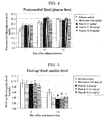
- Fig. 4 gives the postprandial blood glucose levels measured on Day 13 after administration in each administration group.
- Fig. 3 gives the fasting blood glucose levels measured on Day 14 after administration in each administration group.
- Table 7 Test group Fasting blood glucose level (mM) Postprandial blood glucose level (mM) Solvent control 17.6 ⁇ 1.1 26.1 ⁇ 2.0 Metformin (150mg/kg) 19.3 ⁇ 1.5 25.2 ⁇ 2.0 Peptide (4.00 mg/kg) 15.2+1.2 30.3 ⁇ 0.9 Peptide (1.33 mg/kg) 17.4 ⁇ 1.3 31.0 ⁇ 0.7 Peptide (0.44 mg/kg) 16.5 ⁇ 1.1 27.9 ⁇ 0.8
- Table 8 gives the HOMA-IR values calculated from the postprandial blood glucose levels measured on Day 27 after administration and the fasting blood glucose levels and the fasting blood insulin levels measured on Day 28 after administration.
- Fig. 4 gives the postprandial blood glucose levels measured on Day 27 after administration in each administration group.
- Fig. 3 gives the fasting blood glucose levels measured on Day 28 after administration in each administration group.
- Fig. 5 gives the fasting blood insulin levels measured on Day 28 after administration in each administration group.
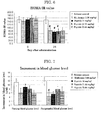
- Fig. 6 gives the fasting HOMA-IR values measured on Day 28 after administration in each administration group.
- Fig. 7 gives the increments in fasting blood glucose level and postprandial blood glucose level in each administration group.
- Fig. 8 gives the increment in fasting blood insulin level in each administration group.
- the increment of the fasting blood glucose level in the solvent control group was 11.1 ⁇ 1.7 mM
- the increment of the fasting blood glucose level in the 150 mg/kg metformin administration group was 5.8 ⁇ 2.4 mM.
- metformin suppressed increase in fasting blood glucose level from Day 0 to Day 28 (Table 9, Fig. 7 ).
- the suppression of increase in fasting blood glucose level in the 150 mg/kg metformin administration group was not statistically significant.
- the dose of the 1.33 mg/kg peptide administration group or the 4.00 mg/kg peptide administration group was lower than that of the 150 mg/kg metformin administration group, the fasting blood insulin level and the HOMA-IR level decreased as compared with the 150 mg/kg metformin administration group (Table 8, Figs. 5 and 6 ).
- the effective concentration of the peptide expressed by SECT ID No. 1 is lower than that of the existing drug metformin, the peptide is advantageously used as at least one of an insulin resistance improving agent and a preventive or therapeutic agent for diabetes.
- the disclosed new compound inhibits phosphorylation of Ser727 of STAT3 to exhibit an excellent phosphorylation inhibitory activity against phosphorylation of Ser727 of STAT3, and thus can suitably be used as a phosphorylation inhibitor for Ser727 of STAT3.
- the phosphorylation inhibitor has a target molecule and mechanism which are for reducing the blood glucose level of patients with diabetes and which are different from those of existing drugs, and thus is useful as a preventive or therapeutic agent for insulin resistance, diabetes, obesity, abnormal lipid metabolism, high blood pressure and other pathological conditions.
- the phosphorylation inhibitor is useful not only as a drug but also as a reagent for assay using phosphorylation as an index.
- the disclosed screening method can suitably used for screening for at least one of the insulin resistance improving agent and the preventive or therapeutic agent for diabetes.
Landscapes
- Health & Medical Sciences (AREA)
- Chemical & Material Sciences (AREA)
- Life Sciences & Earth Sciences (AREA)
- Organic Chemistry (AREA)
- Engineering & Computer Science (AREA)
- Immunology (AREA)
- Molecular Biology (AREA)
- General Health & Medical Sciences (AREA)
- Biochemistry (AREA)
- Proteomics, Peptides & Aminoacids (AREA)
- Medicinal Chemistry (AREA)
- Hematology (AREA)
- Biomedical Technology (AREA)
- Physics & Mathematics (AREA)
- Urology & Nephrology (AREA)
- Biotechnology (AREA)
- Zoology (AREA)
- Wood Science & Technology (AREA)
- Microbiology (AREA)
- Biophysics (AREA)
- Genetics & Genomics (AREA)
- Analytical Chemistry (AREA)
- Bioinformatics & Cheminformatics (AREA)
- Diabetes (AREA)
- General Engineering & Computer Science (AREA)
- Food Science & Technology (AREA)
- Pathology (AREA)
- General Physics & Mathematics (AREA)
- Cell Biology (AREA)
- General Chemical & Material Sciences (AREA)
- Animal Behavior & Ethology (AREA)
- Pharmacology & Pharmacy (AREA)
- Veterinary Medicine (AREA)
- Nuclear Medicine, Radiotherapy & Molecular Imaging (AREA)
- Chemical Kinetics & Catalysis (AREA)
- Public Health (AREA)
- Obesity (AREA)
- Endocrinology (AREA)
- Emergency Medicine (AREA)
- Medicines That Contain Protein Lipid Enzymes And Other Medicines (AREA)
Abstract
Description
- The present invention relates to a new compound having an inhibitory activity against phosphorylation of Ser727 of STAT3, a phosphorylation inhibitor containing the new compound, an insulin resistance improving agent, a preventive or therapeutic agent for diabetes, and an efficient screening method for at least one of the insulin resistance improving agent and the preventive or therapeutic agent for diabetes.
- The blood glucose level is constantly controlled so as to fall within a certain range at a normal state. A peptide hormone called insulin is important for controlling the blood glucose level. This peptide hormone is excreted from β cells of islets of Langerhans present in the pancreas. When the insulin binds to an insulin receptor present on the cell membrane, various signal transductions occur to suppress gluconeogenesis, leading to a drop in the blood glucose level.
- The reason why the blood glucose level is controlled is that glucose serves as a harmful substance causing glycosylation stress in tissue although it is a main energy source for organs including the brain.
- When the control ability of the blood glucose level (glucose tolerance) is decreased, one is in a state where the blood glucose level has pathologically increased or a state where the blood glucose level potentially increases. Such a state that the glucose metabolism has been abnormal is diabetes.
- The diabetes is classified into
type 1 diabetes (insulin-dependent diabetes) andtype 2 diabetes (insulin-independent diabetes). Thetype 2 diabetes, most of the diabetes belong to, is further classified into diabetes caused due to a decrease in the level of excreted insulin and diabetes in which although insulin is excreted at a sufficiently high level, the blood glucose level does not decrease due to reduction in insulin susceptibility of glucose in the target cells. The latter case is called insulin resistance. - The current diabetes therapy is conducted using various drugs selected depending on the pathological conditions. The types of the drugs are classified roughly into insulin, an insulin-excretion promoter, a glucose absorption inhibitor and an insulin resistance improving agent.
- For patients exhibiting the above-described insulin resistance, an insulin resistance improving agent such as metformin hydrochloride, buformine hydrochloride or pioglitazone hydrochloride is used as the first-line drug. However, such an insulin resistance improving agent involves gastrointestinal disorder as side effects. In addition, it cannot be applied to those having a history of heart failure. Also, pioglitazone hydrochloride involves increase in body weight as side effects, which imposes problematic burden on patients who are receiving dietary therapy.
- Meanwhile, besides insulin, signal transducer and activator of transcription 3 (STAT3) has recently been reported as a factor that decreases the blood glucose level (see NPL 1).
- The STAT3 is a protein that works for both of signal transduction and transcription activation, and controls processes such as cell growth, differentiation and survival. The STAT3 exists in the cytoplasm in the non-phosphorylated form. When the STAT3 is activated by Janus kinase (JAK) so that its Tyr705 is phosphorylated, a homodimer of the STAT3 is formed and transferred into the nucleus, where it serves as a transcriptional factor to activate the target gene.
- The homodimer of the STAT3 serves in the nucleus as an antagonist against a transcriptional factor responsible for gluconeogenesis. Increase in the expression level thereof suppresses gluconeogenesis to reduce the blood glucose level.
- Also, as has been known, when Ser727 of the STAT3 is phosphorylated by extracellular signal-regulated kinase 2 (ERK2), formation of the homodimer of the STAT3 is inhibited (see
NPLs 2 to 4). - However, diabetes therapeutic drugs relating to the STAT3 have not been known.
- Thus, in the prevention or therapy for diabetes, there have not yet been provided an effective, safe drug having a target molecule and mechanism which are different from those of these existing drugs, and an efficient screening method for a candidate substance of the above drug. At present, keen demand has arisen for the provision of them.
-
- NPL 1: Inoue H et al., Nat Med, 10(2), 2004, p. 168-74
- NPL 2: Chung J et al., Mol Cell Biol, 17(11), 1997, p. 6508-16
- NPL 3: Jain N et al., Oncogene, 17(24), 1998, p. 3157-67
- NPL 4: Liu S et al., Proc NatlAcad Sci USA, 103(14), 2006, p. 5326-31
- The present invention aims to solve the above existing problems and achieve the following objects. Specifically, a first object of the present invention is to provide a new compound having an excellent phosphorylation inhibitory activity against phosphorylation of Ser727 of STAT3; a phosphorylation inhibitor containing the new compound; and an insulin resistance improving agent and a preventive or therapeutic agent for diabetes which are highly safe, which exhibit excellent effects to patients with diabetes, and which have a target molecule and mechanism different from those of the existing drugs. Also, a second object of the present invention is to provide an efficient screening method for at least one of the insulin resistance improving agent and the preventive or therapeutic agent for diabetes.
- Means for solving the above existing problems are as follows.
- A disclosed compound inhibits phosphorylation of Ser727 of STAT3.
- A disclosed phosphorylation inhibitor contains the above compound.
- A disclosed insulin resistance improving agent contains the above phosphorylation inhibitor.
- A disclosed preventive or therapeutic agent for diabetes contains the above insulin resistance improving agent.
- A disclosed screening method for at least one of the insulin resistance improving agent and the preventive or therapeutic agent for diabetes includes determining the presence or absence of at least interaction between STAT3 and ERK2 to select a compound having a phosphorylation inhibitory activity and evaluating the compound for whether X > Y where X denotes a HOMA-IR value of a diabetes model animal to which the compound has not been administered and Y denotes a HOMA-IR value of a diabetes model animal to which the compound has been administered.
- The disclosed new compound can solve the existing problems and achieve the above objects, and can inhibit phosphorylation of Ser727 of STAT3. The disclosed phosphorylation inhibitor containing the new compound has an excellent phosphorylation inhibitory activity against phosphorylation of Ser727 of STAT3. The disclosed insulin resistance improving agent and preventive or therapeutic agent for diabetes are highly safe, exhibit excellent effects to patients with diabetes, and have a target molecule and mechanism different from those of the existing drugs. The disclosed screening method can efficiently screen for at least one of the insulin resistance improving agent and the preventive or therapeutic agent for diabetes.
-
-
Fig. 1 indicates the results of a phosphorylation inhibitory activity test performed by western blotting. -
Fig. 2 is an enlarged view ofFig. 1 . -
Fig. 3 is a graph of the fasting blood glucose levels measured in an efficacy test onDay 0,Day 14 andDay 28 after administration, wherein the five bars corresponding to each day indicate, from the left to the right, a bar for a solvent control group, a bar for a 150 mg/kg metformin administration group, a bar for a 4.00 mg/kg peptide administration group, a bar for a 1.33 mg/kg peptide administration group and a bar for a 0.44 mg/kg peptide administration group. -
Fig. 4 is a graph of the postprandial blood glucose levels measured in an efficacy test onDay 1,Day 13 andDay 27 after administration, wherein the five bars corresponding to each day indicate, from the left to the right, a bar for a solvent control group, a bar for a 150 mg/kg metformin administration group, a bar for a 4.00 mg/kg peptide administration group, a bar for a 1.33 mg/kg peptide administration group and a bar for a 0.44 mg/kg peptide administration group. -
Fig. 5 is a graph of the fasting blood insulin levels measured in an efficacy test onDay 0 andDay 28 after administration, wherein the five bars corresponding to each day indicate, from the left to the right, a bar for a solvent control group, a bar for a 150 mg/kg metformin administration group, a bar for a 4.00 mg/kg peptide administration group, a bar for a 1.33 mg/kg peptide administration group and a bar for a 0.44 mg/kg peptide administration group. -
Fig. 6 is a graph of the HOMA-IR values measured in an efficacy test onDay 0 andDay 28 after administration, wherein the five bars corresponding to each day indicate, from the left to the right, a bar for a solvent control group, a bar for a 150 mg/kg metformin administration group, a bar for a 4.00 mg/kg peptide administration group, a bar for a 1.33 mg/kg peptide administration group and a bar for a 0.44 mg/kg peptide administration group. -
Fig. 7 is a graph of increments of the blood glucose levels measured in an efficacy test, wherein the five bars corresponding to each day after administration indicate, from the left to the right, a bar for a solvent control group, a bar for a 150 mg/kg metformin administration group, a bar for a 4.00 mg/kg peptide administration group, a bar for a 1.33 mg/kg peptide administration group and a bar for a 0.44 mg/kg peptide administration group. -
Fig. 8 is a graph of increments of the fasting blood insulin levels measured in an efficacy test, wherein the five bars corresponding to each day after administration indicate, from the left to the right, a bar for a solvent control group, a bar for a 150 mg/kg metformin administration group, a bar for a 4.00 mg/kg peptide administration group, a bar for a 1.33 mg/kg peptide administration group and a bar for a 0.44 mg/kg peptide administration group. - The disclosed new compound inhibits phosphorylation of Ser727 of the STAT3.
- The STAT3 has several phosphorylation sites. For example, when its Ser727 is phosphorylated, the STAT3 cannot form its homodimer to be transferred into the nucleus. Thus, it cannot serve as a transcriptional factor.
- The Ser727 of the STAT3 is phosphorylated by ERK2, for example. Specifically, the ERK2 is activated through phosphorylation of its Tyr185 by MAPK/ERK kinase 1 (MEK1) and then binds to the STAT3 to form a heterodimer, where the Ser727 of the STAT3 is phosphorylated.
- Thus, when the phosphorylation of the Ser727 is inhibited by the above phosphorylation inhibitor, the STAT3 is not prevented from forming its homodimer and the formed homodimer of the STAT3 can serve as a transcriptional factor.
- The above new compound contains at least a peptide represented by the following amino acid sequence structure (I), for example.
- The peptide represented by the amino acid sequence structure (I) is as follows.
- α-α'-β-γ-δ'-σ-δ... Amino acid sequence structure (I)
- The peptide represented by the amino acid sequence structure (I) is preferably at least one of peptides represented by the following amino acid sequence structures (II) and (III).
- Lys-Lys-β-γ-δ'-σ-δ ··· Amino acid sequence structure (II)
- α-α'-β-γ-Leu-σ-Leu ··· Amino acid sequence structure (III)
- In the amino acid sequence structures (I), (II) and (III), α denotes an N terminus, δ denotes a C terminus, α and α' each denote lysine or arginine, δ and δ' each denote leucine or isoleucine, and β, γ and σ each denote any amino acid.
- The amino acid denoted by β is not particularly limited and may be appropriately selected depending on the intended purpose. It is preferably tyrosine.
- The amino acid denoted by γ is not particularly limited and may be appropriately selected depending on the intended purpose. It is preferably isoleucine.
- The amino acid denoted by σ is not particularly limited and may be appropriately selected depending on the intended purpose. It is preferably alanine.
- Among the peptides represented by the amino acid sequence structures (I), (II) and (III), more preferred is a peptide containing an amino acid sequence expressed by the following SEQ ID No. 1. Particularly preferably is a peptide itself expressed by the following SEQ ID No. 1.
- Lys-Lys-Tyr-Ile-Leu-Ala-Leu (SEQ ID No. 1)
- So long as the above new compound has an inhibitory activity against phosphorylation of the Ser727 of the STAT3, the above peptide may have an amino acid sequence expressed by the above SEQ ID No. 1 in all or part of which one to several amino acids have been substituted or added. Also, the peptide may be chemically modified at its N or C terminus. This chemical modification is not particularly limited and may be appropriately selected depending on the intended purpose. Examples thereof include acetylation, myristoylation and amidation.
- The amount of the peptide represented by the above amino acid sequence structure (I) contained in the new compound is not particularly limited and may be appropriately selected depending on the intended purpose. Also, the new compound may be the peptide itself represented by the above amino acid sequence structure (I).
- The method for obtaining the peptide is not particularly limited and may be appropriately selected depending on the intended purpose. Examples thereof include a method in which the peptide is obtained as a synthetic peptide produced through chemical synthesis.
- The method for chemically synthesizing the peptide is not particularly limited and may be appropriately selected depending on the intended purpose. Examples thereof include a method in which the peptide is chemically synthesized using a peptide synthesizer (product of Shimadzu Corporation).
- The above new compound may be in the form of salt. The salt is not particularly limited and may be appropriately selected depending on the intended purpose. Examples thereof include carboxylates, inorganic acid salts, amino acid salts and sulfonates.
- Examples of the carboxylates include trifuoroacetate, acetate, trichloroacetate, hydroxyacetate, lactate, citrate, tartarate, oxalate, benzoate, butyrate, maleate, propionate, formate and malate.
- Examples of the inorganic acid salts include hydrohalic acid salts, sulfate, nitrate, phosphate and carbonate.
- Examples of the amino acid salts include alginate, aspartate and glutamate.
- Examples of the sulfonates include methanesulfonate and p-toluenesulfonate.
- The disclosed phosphorylation inhibitor contains at least the above-described new compound or a salt thereof; and, if necessary, further contains other ingredients.
- The amount of the new compound or a salt thereof contained the above phosphorylation inhibitor is not particularly limited and may be appropriately selected depending on the intended purpose. Also, the phosphorylation inhibitor is the new compound or a salt thereof itself.
- The other ingredients contained in the phosphorylation inhibitor are not particularly limited and may be appropriately selected depending on the intended purpose. Examples thereof include pharmacologically acceptable carriers.
- The above carriers are not particularly limited and may be appropriately selected depending on, for example, the dosage form of the phosphorylation inhibitor.
- The amount of the other ingredients contained in the phosphorylation inhibitor is not particularly limited and may be appropriately selected depending on the intended purpose.
- The measurement method for the phosphorylation inhibitory activity is not particularly limited and may be appropriately selected depending on the intended purpose. Examples thereof include immunoassay.
- The immunoassay is not particularly limited and may be appropriately selected depending on the intended purpose. Examples thereof include immunostaining, immunoprecipitation, western blotting and ELISA, with western blotting being preferred.
- The application of the phosphorylation inhibitor is not particularly limited and can suitably used as a drug such as the below-described insulin resistance improving agent or preventive or therapeutic agent for diabetes. Also, the phosphorylation inhibitor can be used as, for example, a reagent for assay using phosphorylation as an index.
- When the phosphorylation inhibitor is used as a reagent, the method for using it is not particularly limited and may be appropriately selected depending on the intended purpose. For example, the phosphorylation inhibitor may be added to a culture liquid of culture cells.
- The disclosed insulin resistance improving agent contains at least the above-described phosphorylation inhibitor; and, if necessary, further contains other ingredients.
- The amount of the phosphorylation inhibitor contained in the insulin resistance improving agent is not particularly limited and may be appropriately selected depending on the intended purpose. Also, the insulin resistance improving agent may be the phosphorylation inhibitor itself.
- The method for evaluating whether the insulin resistance improving agent improves insulin resistance is not particularly limited and may be appropriately selected depending on the intended purpose. Preferred is a method of evaluating it using the HOMA-IR (homeostasis model assessment) method. The HOMA-IR method is a method of calculating a HOMA-IR value serving as an index of insulin resistance using the following calculation formula.

- This evaluation is based on that the lower the HOMA-IR value is, the more improved the insulin resistance is (see Matthews DR et al., Diabetologia 1985 Jul 28(7), 412-9, Kanauchi M et al., Diabetes Care, Oct 25(10), 2002, p. 1891-2).
- The fasting is not particularly limited and may be appropriately selected depending on the intended purpose. It is preferably 12 hours to 14 hours after eating.
- The method for obtaining a blood sample used for measuring the fasting insulin level and the fasting blood glucose level is not particularly limited. The blood sample can be obtained by routinely-used blood sampling. The blood sample is not particularly limited and may be appropriately selected depending on the intended purpose. It is preferably a serum. The method for preparing the serum is not particularly limited and may be appropriately selected depending on the intended purpose. Examples thereof include a method in which the sampled blood is centrifuged.
- The method for determining the fasting insulin level is not particularly limited and may be appropriately selected depending on the intended purpose. Examples thereof include a method in which the fasting insulin level is determined using a mouse insulin ELISA kit (Cat. #EZRMI-13K, product of Linco Research Inc.).
- The method for determining the fasting blood glucose level is not particularly limited and may be appropriately selected depending on the intended purpose. Examples thereof include a method in which the fasting blood glucose level is determined using Johnson one-touch Ultra Glucose Monitoring System (product of Johnson & Johnson K.K.).
- As to the application of the insulin resistance improving agent, the insulin resistance improving agent can suitably used as a drug such as the below-described preventive or therapeutic agent for diabetes.
- The disclosed preventive or therapeutic agent for diabetes contains at least the insulin resistance improving agent; and, if necessary, further contains other ingredients.
- The amount of the insulin resistance improving agent contained in the preventive or therapeutic agent for diabetes is not particularly limited and may be appropriately selected depending on the intended purpose. Also, the preventive or therapeutic agent for diabetes may be the insulin resistance improving agent itself.
- The other ingredients contained in the insulin resistance improving agent or the preventive or therapeutic agent for diabetes are not particularly limited and may be appropriately selected depending on the intended purpose. Examples thereof include pharmacologically acceptable carriers.
- The above carriers are not particularly limited and may be appropriately selected depending on, for example, the dosage form of the phosphorylation inhibitor, the insulin resistance improving agent or the preventive or therapeutic agent for diabetes.
- The amount of the other ingredients contained in the insulin resistance improving agent or the preventive or therapeutic agent for diabetes is not particularly limited and may be appropriately selected depending on the intended purpose.
- The phosphorylation inhibitor, the insulin resistance improving agent, and the preventive or therapeutic agent for diabetes may be used alone or in combination. Also, they are used in combination with a drug containing other active ingredients. Furthermore, the phosphorylation inhibitor, the insulin resistance improving agent, and the preventive or therapeutic agent for diabetes may be formulated into a drug containing other active ingredients before use.
- The dosage form of the phosphorylation inhibitor, the insulin resistance improving agent, or the preventive or therapeutic agent for diabetes is not particularly limited and may be appropriately selected depending on a desired administration method. Examples thereof include an oral solid preparation, an oral liquid preparation, an inhalation powder and an injection. Among them, an injection is preferred since it is not digested more easily than an oral solid preparation, an oral liquid preparation or an inhalation powder is.
- The injection is not particularly limited and may be appropriately selected depending on the intended purpose. Examples of the injection include a solution, a suspension and a solid preparation reconstituted upon use.
- The method for producing the injection is not particularly limited and may be a routine method. For example, the injection can be produced by adding a pH adjuster, a buffer, a stabilizing agent, a tonicity agent, a local anesthetic, etc. to the phosphorylation inhibitor, the insulin resistance improving agent, or the preventive or therapeutic agent for diabetes. Here, the pH adjuster or buffer is not particularly limited and may be appropriately selected depending on the intended purpose. Examples of the pH adjuster or buffer include sodium citrate, sodium acetate and sodium phosphate. The stabilizing agent is not particularly limited and may be appropriately selected depending on the intended purpose. Examples of the stabilizing agent include sodium pyrosulfite, EDTA, thioglycolic acid and thiolactic acid. The tonicity agent is not particularly limited and may be appropriately selected depending on the intended purpose. Examples of the tonicity agent include sodium chloride and glucose. The local anesthetic is not particularly limited and may be appropriately selected depending on the intended purpose. Examples of the local anesthetic include procaine hydrochloride and lidocaine hydrochloride.
- In the phosphorylation inhibitor, the insulin resistance improving agent, or the preventive or therapeutic agent for diabetes, the administration method, the administration dose, the time of administration and the subject to be administered are not particularly limited and may be appropriately selected depending on the intended purpose.
- The administration method is not particularly limited and may be appropriately selected depending on the intended purpose. Examples of the administration method include oral administration, inhalation and injection, with injection being preferred. The administration dose is not particularly limited and may be appropriately selected considering various factors of a subject to be administered, such as the age, body weight, constitution, symptom and the presence or absence of administration of a drug containing other active ingredients.
- The animal species serving as the subject to be administered is not particularly limited and may be appropriately selected depending on the intended purpose. Examples of the animal species include human, monkey, pig, bovine, sheep, goat, dog, cat, mouse, rat and bird. Among them, they are suitably administered to human.
- The production method for the phosphorylation inhibitor, the insulin resistance improving agent, or the preventive or therapeutic agent for diabetes is not particularly limited and may be appropriately selected depending on, for example, an intended dosage form described above.
- The disclosed screening method for at least one of the insulin resistance improving agent and the preventive or therapeutic agent for diabetes includes selecting a compound having at least a phosphorylation inhibitory activity and evaluating the compound based on a HOMA-IR value of a diabetes model animal to which the compound has been administered; and, if necessary, further include other steps.
- The selection is performed by measuring at least the presence or absence of interaction between STAT3 and ERK2 to select a compound having a phosphorylation inhibitory activity, and includes a mixture preparation step, an antibody reaction step and a screening step.
- The mixture preparation step is a step of preparing a mixture by, for example, mixing together at least a compound, STAT3 whose Ser727 is not phosphorylated, and an enzyme that phosphorylates the STAT3. This step further includes a treatment by which the STAT3 phosphorylation enzyme contained in the mixture is allowed to phosphorylate the Ser727 of the STAT3.
- The mixture contains at least the above compound, the STAT3 whose Ser727 is not phosphorylated, and the enzyme that phosphorylates the STAT3; and, if necessary, further contains other ingredients.
- The compound contained in the mixture is not particularly limited and may be appropriately selected depending on the intended purpose. Examples thereof include peptides.
- The method for obtaining the compound is not particularly limited and may be appropriately selected depending on the intended purpose. For example, it may be obtained by chemical synthesis or gene recombinant techniques.
- The chemical synthesis or gene recombinant technique used for obtaining the compound is not particularly limited and may be appropriately selected depending on the intended purpose from, for example, known methods in the art.
- The amount of the compound contained in the mixture is not particularly limited and may be appropriately selected depending on the intended purpose. For example, it is preferably 0.1 mM to 50 mM as a final concentration, more preferably 0.5 mM to 5 mM.
- The method for preparing the compound is not particularly limited and may be appropriately selected depending on the intended purpose. Examples thereof include a method in which the compound is prepared using a solution containing dimethylsulfoxide (DMSO).
- The final concentration of the DMSO is not particularly limited and may be appropriately selected depending on the intended purpose. It is preferably 1 mM to 100 mM, more preferably 5 mM to 15 mM.
- The method for obtaining the STAT3 whose Ser727 is not phosphorylated (hereinafter may be referred to as "non-phosphorylated STAT3") is not particularly limited and may be appropriately selected depending on the intended purpose. For example, the non-phosphorylated STAT3 may be a commercially available product.
- The amount of the non-phosphorylated STAT3 contained in the mixture is not particularly limited and may be appropriately selected depending on the intended purpose. For example, it is preferably 0.01 µg/mL to 0.5 µg/mL as a final concentration, more preferably 0.025 µg/mL to 0.075 µg/mL.
- The enzyme that phosphorylates the STAT3 refers to an enzyme that phosphorylates the Ser727 of the non-phosphorylated STAT3.
- The enzyme that phosphorylates the STAT3 is not particularly limited and may be appropriately selected depending on the intended purpose. For example, it is preferably ERK2 that has been activated through phosphorylation of its Tyr185 (hereinafter may be referred to as "activated ERK2").
- The method for obtaining the activated ERK2 is not particularly limited and may be appropriately selected depending on the intended purpose. For example, it may be a commercially available product.
- The amount of the activated ERK2 contained in the mixture is not particularly limited and may be appropriately selected depending on the intended purpose. For example, it is preferably 0.0001 µg/mL to 0.015 µg/mL as a final concentration, more preferably 0.0005 µg/mL to 0.005 µg/mL.
- The other ingredients are not particularly limited and may be appropriately selected depending on the intended purpose. Examples thereof include a reaction buffer in which the activated ERK2 can exhibit its enzymatic activity, ATP, magnesium chloride and DMSO.
- The composition of the reaction buffer is not particularly limited and may be appropriately selected depending on the intended purpose. The reaction buffer preferably has the following composition: 50 mM tris-HCl (pH 7.5), 10 mM magnesium chloride, 0.02% by mass bovine serum albumin (BSA) and 1 mM dithiothreitol (DTT) (these concentrations are all final concentrations).
- The concentration of the ATP is not particularly limited and may be appropriately selected depending on the intended purpose. It is preferably 0.1 mM to 5 mM as a final concentration, more preferably 0.5 mM to 2 mM.
- The concentration of the magnesium chloride is not particularly limited and may be appropriately selected depending on the intended purpose. It is preferably 1 mM to 100 mM as a final concentration, more preferably 5 mM to 20 mM.
- The concentration of the DMSO is not particularly limited and may be appropriately selected depending on the intended purpose. It is preferably 1% by mass to 25% by mass as a final concentration, more preferably 5% by mass to 22% by mass.
- The preparation method for obtaining the mixture is not particularly limited and may be appropriately selected depending on the intended purpose. Examples thereof include a method in which the mixture is suspended with a pipette.
- The timing when the compound, the non-phosphorylated STAT3, the enzyme that phosphorylates the STAT3, or the other ingredients are added is not particularly limited. They may be added to the mixture at an appropriate timing during the preparation of the mixture.
- The treatment by which the enzyme that phosphorylates the STAT3 is allowed to phosphorylate the Ser727 of the non-phosphorylated STAT3 (hereinafter may be referred to as "phosphorylation treatment") is not particularly limited and may be appropriately selected depending on the intended purpose.
- The temperature at the phosphorylation treatment is not particularly limited and may be appropriately selected depending on the intended purpose. It is preferably 20°C to 30°C.
- The period of the phosphorylation treatment is not particularly limited and may be appropriately selected depending on the intended purpose. It is preferably 30 min to 150 min.
- The method for terminating the phosphorylation is not particularly limited and may be appropriately selected depending on the intended purpose. Examples thereof include a method in which ethylenediamine tetrahydrochloride is added to the mixture.
- The antibody reaction step is, for example, a step of reacting the STAT3 whose Ser727 has been phosphorylated in the mixture with an antibody that binds to a phosphorylated site of the STAT3 whose Ser727 has been phosphorylated. This step includes a detection treatment for the bound antibody.
- The antibody that binds to the phosphorylated site of the Ser727 of the STAT3 (hereinafter may be referred to as "primary antibody") is not particularly limited, so long as it can recognize the phosphorylated site of the Ser727 of the STAT3, and may be appropriately selected depending on the intended purpose.
- The primary antibody is not particularly limited and may be appropriately selected depending on the intended purpose. It may be, for example, anti-pS727 STAT (product of SANTA CRUZ Inc., Cat. No.: se-21876).
- The reaction is, for example, a reaction for allowing the primary antibody (i.e., the antibody that binds to the phosphorylated site of the Ser727 of the STAT3) to bind to the STAT3 whose Ser727 has been phosphorylated.
- The temperature for the reaction between the STAT3 and the primary antibody is not particularly limited and may be appropriately selected depending on the intended purpose. It is preferably 20°C to 30°C.
- The time of the reaction between the STAT3 and the primary antibody is not particularly limited and may be appropriately selected depending on the intended purpose. It is preferably 5 min to 15 min.
- Here, the STAT3 with which the primary antibody reacts is the STAT3 in which the phosphorylation site of the Ser727 has been phosphorylated.
- The detection treatment is, for example, a treatment for detecting the reacted STAT3.
- The method for detecting the reacted STAT3 is not particularly limited and may be appropriately selected depending on the intended purpose. Examples thereof include a detection method using an antibody that binds specifically to the primary antibody (hereinafter may be referred to as "secondary antibody).
- The secondary antibody is not particularly limited and may be appropriately selected depending on the intended purpose. It may be, for example, IgG of a host with which the primary antibody is produced.
- Also, the secondary antibody is preferably labeled. The label is not particularly limited and may be appropriately selected depending on the intended purpose. Examples thereof include horseradish peroxidase (HRP).
- The method for detecting the HRP is not particularly limited and may be appropriately selected depending on the intended purpose. Examples thereof include a method using a substrate of the HRP.
- The substrate of the HRP is not particularly limited and may be appropriately selected depending on the intended purpose. Examples thereof include dimethylformamide (DMF).
- The screening step is, for example, a step of screening for the compound present in the mixture containing the STAT3 to which the antibody has not bound, as a compound having a phosphorylation inhibitory activity. Specifically, in this step, the presence or absence of the phosphorylation inhibitory activity of the compound is determined and, when the compound has the phosphorylation inhibitory activity, the degree of the phosphorylation inhibitory activity is determined.
- The method for the screening is not particularly limited and may be appropriately selected depending on the intended purpose. Examples thereof include a method in which the presence or absence of the phosphorylation inhibitory activity is determined based on the intensity of a band detected through western blotting (i.e., a band of the STAT3 whose Ser727 has been phosphorylated).
- The method for determining the presence or absence of the phosphorylation inhibitory activity based on the intensity of the band is not particularly limited and maybe appropriately selected depending on the intended purpose. For example, the following method using as a control a mixture that does not contain the compound can be employed. Specifically, by comparing the mixture containing the compound with the control in terms of the band intensity, the compound contained in the mixture whose band is lighter than that of the control is determined as the compound having the phosphorylation inhibitory activity. Alternatively, the following method using no control can be employed. Specifically, by comparing the mixtures containing the compounds with one another in terms of the band intensity, the compound contained in the mixture whose band is lighter than those of the other mixtures is determined as having the phosphorylation inhibitory activity, and this compound is determined as a compound having a higher phosphorylation inhibitory activity.
- The method for comparing the band intensities is not particularly limited and may be appropriately selected depending on the intended purpose. Examples thereof include a method in which the bands are visually compared with one another and a method in which the bands are compared with one another using a device such as a densitometer.
- The evaluation is performed by evaluating whether X > Y where X denotes a HOMA-IR of a diabetes model animal to which the compound has not been administered and Y denotes a HOMA-IR of a diabetes model animal to which the compound has been administered.
- The animal species of the diabetes model animal is not particularly limited and may be appropriately selected depending on the intended purpose. Examples thereof include monkey, pig, bovine, sheep, goat, dog, cat, mouse, rat and bird. Among them, mouse is preferred since screening for at least one of the insulin resistance improving agent and the preventive or therapeutic agent for diabetes can easily be performed. The diabetes model mouse is not particularly limited and may be appropriately selected depending on the intended purpose. Examples thereof include db/db mouse (genetically obese mice) (product of Shanghai SLAC Laboratory Animal).
- As described above, it can be recognized that the lower the HOMA-IR value is, the more improved the insulin resistance is. Thus, when X > Y as a result of comparison between the HOMA-IR value (X) of the diabetes model mouse to which the compound has not been administered (serving as a control) and the HOMA-IR value (Y) of the diabetes model to which the compound has been administered, the compound can be screened for as at least one of the insulin resistance improving agent and the preventive or therapeutic agent for diabetes. Notably, the HOMA-IR value can be calculated by the above-described HOMA-IR method.
- The other steps are not particularly limited and may be appropriately selected depending on the intended purpose. In one exemplary step, using as an index other diabetes-related factors and the like, further screening is performed on the compounds having made the HOMA-IR value of the diabetes model mouse lower than the HOMA-IR value (X) of the control in the above evaluation, to thereby select a compound effective as the insulin resistance improving agent and the preventive or therapeutic agent for diabetes.
- Hereinafter, the examples of the present invention will be specifically explained, but these examples shall not be construed as to limit the scope of the present invention.
- The peptide expressed by the following SEQ ID No. 1 was used as the new compound. The peptide expressed by the following SEQ ID No. 1 was chemically synthesized using a peptide synthesizer (product of Shimadzu Corporation).
- Lys-Lys-Tyr-Ile-Leu-Ala-Leu (SEQ ID No. 1)
- In the below-described manner, the peptide expressed by the above SEQ ID No. 1 was evaluated for phosphorylation inhibitory activity against phosphorylation of Ser727 of STAT3 by ERK2.
- The following ingredients were used at a composition indicated in Table 1 to prepare a reaction liquid: 5 × reaction buffer (250 mM tris-HCl (pH 7.5), 50 mM magnesium chloride, 0.1% by mass bovine serum albumin (BSA) and 5 mM dithiothreitol (DTT)), Active ERK solution (0.1 mg/mL) (product of Biosource Inc.), STAT3 solution (0.2 mg/mL) (product of Abcam Inc.) and distilled water.
Table 1 Reagents Amount added (µL) 5 × Reaction buffer 21 Active ERK solution 1 STAT3 solution 25 Distilled water 13 Total 60 - The compound used was the peptide chemically synthesized in Production Example 1 (SEQ ID No. 1). Also, 5-iodotubercidin (product of Calbiochem Inc.) was used as a control compound.
- The peptide (SEQ ID No. 1) indicated in Production Example 1 was suspended in dimethylsulfoxide (DMSO) so that the final concentration thereof was adjusted to 10 mM.
- The 5-iodotubercidin was suspended in DMSO so that the final concentration thereof was adjusted to 5 mM.
- A 5 × ATP-MgCl2 solution (5 mM ATP, 50 mM magnesium chloride), dimethylsulfoxide (DMSO) and, as the above compound, the peptide (SEQ ID No. 1) or 5-iodotubercidin were added to the above reaction liquid in this order. Furthermore, distilled water was added to the samples so as to appropriately adjust the volume thereof, whereby reaction mixtures were obtained.
- Notably, the reaction mixtures each containing neither the peptide (SEQ ID No. 1) nor the 5-iodotubercidin were used as a control.
- Each sample was prepared according to the following Table 2.
Table 2 1 2 3 4 Sample Control (22% DMSO) Control (10% DMSO) 1 mM 5-Iodotubercidin (22% DMSO) 1 mM Peptide (10% DMSO) Reaction liquid (µL) 5 5 10 10 5 × ATP-MgCl2 solution (µL) 1.75 1.75 3.5 3.5 DMSO (µL) 2 0.85 0 0 10 mM peptide (µL) - - - 1.75 5 mM 5-iodotubercidin (µL) - - 4 - Distilled water (µL) 0 1.15 0 2.25 Total (µL) 8.75 8.75 17.5 17.5 - From Table 2, the final concentration of the STAT3 is about 0.048 µg/mL, the final concentration of Active ERK2 is about 0.001 µg/mL, the final concentration of DMSO is 10% by mass, the final concentration of the peptide is 1 mM and the final concentration of 5-iodotubercidin is 1.14 mM.
- Each of the reaction mixtures was incubated at 30°C for 130 min to allow Active ERK2 to phosphorylate the Ser727 of the STAT3.
- After that, to terminate the phosphorylation, 0.5M ethylenediamine tetraacetate (EDTA) was added in an amount of 2.75 µL to the reaction mixtures serving as a control (Table 2:
Sample 1 or 2), and was added in an amount of 5.5 µL to the reaction mixture containing the 5-iodotubercidin (Table 2: Sample 3) or the reaction mixture containing the peptide (Table 2: Sample 4). - Using an aliquot (23 µL) of each of
Samples 1 to 4 indicated in Table 2 after completion of the reaction, 4 × SDS loading buffer (125 mM tris-HCl (pH 6.8), 4.3% by mass SDS, 30% by mass glycerol, 10% by mass 2-mercaptoethanol and 0.01% by mass bromophenol blue) was added in an amount of 4 µL to the aliquot of the reaction mixture serving as the control (Sample 1 or 2) and was added to in an amount of 8 µL to the aliquot of the reaction mixture containing the 5-iodotubercidin (Sample 3) or the aliquot of the reaction mixture containing the peptide (Sample 4), followed by boiling at 95°C for 5 min. - Each (15 µL) of the above samples was applied to MULTIGEL (product of Daiichi Kagaku Yakuhin Co., Ltd.), where the sample was electrophoresized for 30 min at a constant current of 30 mA in an electrophoresis buffer (25 mM tris-HCl (pH 8.4), 192 mM L-glysine, 0.1% by mass SDS).
- After completion of the electrophoresis, the MULTIGEL was washed with distilled water for 10 min.
- The MULTIGEL was sufficiently immersed in a transfer buffer (25 mM tris-HCl, 192 mM L-glysine, 20% by mass methanol). Then, through blotting for 60 min at a constant current of 10 V, the electrophoresized proteins were transferred from the MULTIGEL to a PVDF membrane (Hybond-P, produce of GE Healthcare).
- The primary antibody reaction was performed as follows using SNAPid (product of Millipore Inc.).
- Specifically, skimmed milk (product of Snow Brand Milk Products Co., Ltd.) was suspended in TBS (20 mM tris-HCl (pH 7.5), 140 mM sodium chloride) so as to have a concentration of 0.5% by mass. After the thus-prepared 0.5% by mass skimmed milk (10 mL) had been added to the wells of the SNAPid, the PVDF membrane having the transferred proteins was subjected to blocking while being drawn with a vacuum pump.
- Next, 9 µL of anti-pS727 STAT (Cat. No.: sc-21876, product of SANTA CRUZ Inc.) used as the primary antibody was suspended in 3 mL of TBST (20 mM tris-HCl (pH 7.5), 140 mM sodium chloride, 0.05% by mass tween-20). After removal of the blocking solution, the primary antibody was added to the wells, followed by being left to stand still for 10 min, to thereby allow the primary antibody to bind to the STAT3 whose Ser727 had been phosphorylated.
- After removal of the solution containing the primary antibody, 10 mL of TBST was added to the wells to wash the unbound primary antibody. The washing of the primary antibody was performed three times.
- The secondary antibody reaction was performed as follows using the SNAPid.
- First, 16.2 µL of Goat anti-rabbit IgG AP conjugated (product of Calbiochem Inc., Cat. No.: DC06L) used as the secondary antibody was suspended in 3 mL of TBST. After removal of the TBST used for washing the primary antibody, the secondary antibody was added to the wells, followed by being left to stand still for 10 min, to thereby allow the secondary antibody to bind to the primary antibody.
- Next, after removal of the solution containing the secondary antibody, 10 mL of TBST was added to the wells to wash the unbound secondary antibody. The washing of the secondary antibody was performed three times.
- The PVDF membrane having undergone the secondary antibody reaction was washed for 5 min with a color-developing buffer (0.1M tris-HCl (pH 9.5), 0.1M sodium chloride, 50 mM magnesium chloride).
- Then, the PVDF membrane was immersed in a color-developing reaction liquid (10 mL) for color-developing reaction. After color-developing reaction for several minutes, the color development was visually confirmed, followed by washing with TBST.
- Notably, the color-developing reaction liquid was prepared as follows. Specifically, 45 µL of a NBT solution (which had been prepared by suspending 173 mM nitroblue tetrazolium in 70% by mass dimethylformamide) and 35 µL of a BCIP solution (which had been prepared by suspending 250 mg bromochloroindolylphosphate (5-bromo-4-chloro-3-indolyl phosphate) in 5 mL of dimethylformamide (DMF)) were mixed together to obtain the color-developing reaction liquid.
- The whole image obtained by the western blotting is given in
Fig. 1 , and the enlarged view ofFig. 1 is given inFig. 2 . InFigs. 1 and 2 , from the right to the left, "M" corresponds to a lane of a molecular-weight marker, "1" corresponds to a lane ofSample 1 serving as a control of the 5-iodotubercidin, "2" corresponds to a lane ofSample 2 serving as a control of the peptide expressed by SEQ ID No. 1, "3" corresponds to a lane ofSample 3 containing the 5-iodotubercidin, and "4" corresponds to a lane ofSample 4 containing the peptide expressed by SEQ ID No. 1. - From the result of the western blotting in Test Example 1, the band was detected in the 5-iodotubercidin (Sample 3) but was lower in intensity than the band detected in the control (Sample 1). Thus, it was confirmed that the 5-iodotubercidin had a phosphorylation inhibitory activity. In contrast, no band was detected in the peptide expressed by SEQ ID No. 1 (Sample 4). Thus, it was thought that this peptide had a phosphorylation inhibitory activity higher than that of the 5-iodotubercidin (Sample 3).
- Therefore, it was recognized that the peptide expressed by SEQ ID No. 1 was useful as a phosphorylation inhibitor for the phosphorylation of the Ser727 of the STAT3.
- The peptide expressed by SEQ ID No. 1 was examined for acute toxicity as follows.
- Fifty-four female db/db mice (body weight: 40 g to 60 g, age: 56 days old to 70 days old, product of Shanghai SLAC Laboratory Animal Inc.) were used as the test animal.
- After arrival of the above mice, they were evaluated for general health conditions and acclimated for 7 days before test.
- The mice were kept as a population during acclimation. Then, during their lives, they were individually kept according to the guideline of the U.S. National Research Council "Guide for the Care and Use of Laboratory Animals."
- The environment of the animal room was controlled to a temperature of 18°C to 26°C and a relative humidity of 30% to 70%. In addition, each of the daytime and the nighttime was controlled to become 12 hours. The temperature and relative humidity were measured every day.
- Regarding feeding, feed (product of Shanghai SLAC Laboratory Animal inc., Cat. No.: M-01F) was given to all the test animals ad libitum.
- On the previous day before the measurement of the fasting blood glucose level and the blood insulin level, they were fed during a period of 20:30 to 21:00. After the above period had passed, the remaining feed was removed, if any. The fasting period was set to 12 hours to 14 hours, and the test animals were fed after blood sampling. After subjected to high-pressure sterilization, water was given to them ad libitum.
- On the basis of the blood glucose levels measured during feeding and fasting, 52 test animals were selected out of the 54 test animals. The test animal exhibiting too high or low a blood glucose level was excluded.
- Once a day, each of the test animals was confirmed for survival and stool in the morning, and was observed for clinical remarks in the afternoon.
- Two individuals of the above mice were used to study the peptide expressed by SEQ ID No. 1 for acute toxicity.
- The above peptide was treated in the following manner. Specifically, 8.0 mg of the peptide was dissolved in 0.4 mL of physiological saline to prepare a 20 mg/mL peptide solution (hereinafter may be referred to as "
peptide solution 1"). Thepeptide solution 1 was newly provided before administration, and stirred so that the peptide was dissolved completely and homogeneously. - The above-
prepared peptide solution 1 was intraperitoneally injected once to one mouse at a dose of 30 mg/kg and to the other mouse at a dose of 100 mg/kg. - The mice having received the
peptide solution 1 were monitored for clinical signs and change in body weight for 14 days. The fasting blood glucose level and fasting blood insulin level were measured onDay 0 andDay 14 by the below-described method. - To measure the fasting blood glucose level and blood insulin level, 50 µL of blood was sampled from the postorbital region on
Day 0 andDay 14 after administration. To obtain serum, the blood sample was left to stand in a tube on ice and, within 1 hour, the blood sample was centrifuged (5,000 g, 20 min, 2°C to 8°C). The fraction obtained through the centrifugation was transferred to a polyethylene microcentrifuge tube, which was stored in a frozen state at -80°C before analysis. - The blood glucose level was determined using Johnson one-touch Ultra Glucose Monitoring System (product of Johnson & Johnson K.K.).
- The blood insulin level was determined using a mouse insulin ELISA kit (Cat. #EZRMI-13K, product of Linco Research Inc.).
- The results of the acute toxicity test are given in the following Table 3.
Table 3 Dose (mg/kg) Day 0Day 14Body weight (g) Fasting blood glucose level (mM) Fasting blood insulin level (ng/mL) Body weight (g) Fasting blood glucose level (mM) Fasting blood insulin level (ng/mL) 30 42.53 22.7 18.78 44.6 15.3 17.68 100 43.36 18.3 13.95 44.5 25.3 12.85 - From Table 3, the mouse having received the
above peptide solution 1 at a dose of 30 mg/kg or 100 mg/kg exhibited no significant changes in the fasting blood glucose level, the fasting blood insulin level and the body weight. In addition, there were no adverse events observed from the clinical remarks. The fasting blood glucose level and the fasting blood insulin level onDay 0 andDay 14 after administration are given in Table 3. - The compound exhibiting a phosphorylation inhibitory activity in Test Example 1 (i.e., the peptide expressed by SEQ ID No. 1) was evaluated for efficacy as at least one of an insulin resistance improving agent and a preventive or therapeutic agent for diabetes in the following manner.
- Fifty mice described in Test Example 2 were used as a test animal.
- To study the efficacy of the peptide expressed by SEQ ID No. 1, a peptide solution was prepared as follows.
- Specifically, 3.8 mg of the above peptide was dissolved in 4.75 mL of physiological saline to prepare a 0.8 mg/mL peptide solution (hereinafter may be referred to as "
peptide solution 2"). Then, 1.75 mL of thepeptide solution 2 was dissolved in 3.5 mL of physiological saline to prepare a 0.27 mg/mL peptide solution (hereinafter may be referred to as "peptide solution 3"). Further, 1 mL of thepeptide solution 3 was dissolved in 2 mL of physiological saline to prepare a 0.09 mg/mL peptide solution (hereinafter may be referred to as "peptide solution 4"). - A metformin solution used for an activity control group was prepared as follows. Specifically, 120 mg of metformin (product of Sigma Co.) was dissolved in 4 mL of physiological saline to prepare a 30 mg/mL metformin solution.
- Each of the
peptide solutions 2 to 4 and the metformin solution was newly provided before administration and stirred so that the peptide or metformin was dissolved completely and homogeneously. - The efficacy test was conducted using the following five administration groups: a solvent (physiological saline) control administration group, a 150 mg/kg metformin administration group (serving as an activity control group), a 4.00 mg/kg peptide (expressed by SEQ ID No. 1) administration group, a 1.33 mg/kg peptide administration group and a 0.44 mg/kg peptide administration group. Each administration group had 10 mice.
- The above-prepared metformin solution was used for the 150 mg/kg metformin administration group, the
peptide solution 2 was used for the 4.00 mg/kg peptide administration group, thepeptide solution 3 was used for the 1.33 mg/kg peptide administration group, and thepeptide solution 4 was used for the 0.44 mg/kg peptide administration group. - The appropriate dose of metformin administered to human is 750 mg/day. This dose was converted based on the body weight of mouse, and metformin was administered to the mice at an excessive amount of 150 mg/kg.
- The above-prepared solutions were intraperitoneally injected every day to all of the mice of the test groups at the corresponding doses given in the following Table 4 for 28 days. The body weight, the fasting blood glucose level, the postprandial blood glucose level and the fasting blood insulin level were measured by the below-described measuring method according to the measurement schedule given in the following Table 5.
- Notably, as indicated in Table 6, the above 50 mice were divided into five administration groups so that the distribution of each of the fasting blood glucose level, the fasting blood insulin level and the HOMA-IR value (index of insulin resistance) (measured on Day 0) became equal between the administration groups. The calculating method for the HOMA-IR value is described below.
-
Fig. 3 gives the fasting blood glucose level onDay 0 in each administration group. -
Fig. 5 gives the fasting blood insulin level onDay 0 in each administration group. -
Fig. 6 gives the HOMA-IR value onDay 0 in each administration group. - To measure the fasting blood glucose level and blood insulin level, 50 µL of blood was sampled from the postorbital region on
Day 0,Day 14 andDay 28 after administration. The serum was obtained in the same manner as in Test Example 2. - The postprandial blood glucose level was measured using blood sampled from the tail vein on
Day 1,Day 13, andDay 27 after administration. - The blood glucose level and blood insulin level were measured in the same manner as in Test Example 2.
- The insulin resistance was determined by the HOMA (homeostasis model assessment) method using the following calculation formula.
- HOMA-IR (index of insulin resistance) = fasting insulin level (µU/mL) × fasting blood glucose level (mmol/L) / 22.5
- Here, it can be recognized that the lower the HOMA-IR value is, the more improved the insulin resistance is (see Matthews DR et al., Diabetologia 1985 Jul 28(7), 412-9, Kanauchi M et al., Diabetes Care, Oct 25(10), 2002, p. 1891-2).
- All of the values are indicated as "average value ± average error." The important differences between the groups and within each group were evaluated through one-way variance analysis and Dunnett's multiple comparison. The p-values equal to or lower than 0.05 were regarded as statistically significant.
Table 4 Test group Number/Sex Administration method Dose (mg/kg) Volume administered (mL/kg) Administration concentration (mg/mL) Solvent control 10/Female Intraperitoneal injection NA 5 NA Metformin (150 mg/kg) 10/Female Intraperitoneal injection 150 5 1.00 Peptide (4.00 mg/kg) 10/Female Intraperitoneal injection 4.00 5 0.80 Peptide (1.33 mg/kg) 10/Female Intraperitoneal injection 1.33 5 0.27 Peptide (0.44 mg/kg) 10/Female Intraperitoneal injection 0.44 5 0.09 Table 5 Measurement method Measurement days Body weight 0, 7, 14, 21, 28 Fasting blood glucose level 0, 14, 28 Postprandial blood glucose level 1, 13, 27 Fasting blood insulin level 0, 28 Table 6 Test group Fasting blood glucose level (mM) Postprandial blood glucose level (mM) Fasting blood insulin level (ng/mL) HOMA-IR value Solvent control 14.4±1.3 18.2±1.9 9.23±1.26 149.0±20.0 Metformin (150 mg/kg) 16.3±1.3 22.5±2.0 8.81±1.33 139.4±22.7 Peptide (4.00 mg/kg) 13.5+1.5 23.0±1.7 8.87±0.69 149.1±11.5 Peptide (1.33 mg/kg) 13.6±1.2 22.4±1.6 9.05±1.17 157.4±19.2 Peptide (0.44 mg/kg) 14.1±1.4 22.9±1.5 8.45±0.6 155.6±16.6 - The following Table 7 gives the postprandial blood glucose levels measured on
Day 13 after administration and the fasting blood glucose levels measured onDay 14. -
Fig. 4 gives the postprandial blood glucose levels measured onDay 13 after administration in each administration group. -
Fig. 3 gives the fasting blood glucose levels measured onDay 14 after administration in each administration group.Table 7 Test group Fasting blood glucose level (mM) Postprandial blood glucose level (mM) Solvent control 17.6±1.1 26.1±2.0 Metformin (150mg/kg) 19.3±1.5 25.2±2.0 Peptide (4.00 mg/kg) 15.2+1.2 30.3±0.9 Peptide (1.33 mg/kg) 17.4±1.3 31.0±0.7 Peptide (0.44 mg/kg) 16.5±1.1 27.9±0.8 - The following Table 8 gives the HOMA-IR values calculated from the postprandial blood glucose levels measured on
Day 27 after administration and the fasting blood glucose levels and the fasting blood insulin levels measured onDay 28 after administration. -
Fig. 4 gives the postprandial blood glucose levels measured onDay 27 after administration in each administration group. -
Fig. 3 gives the fasting blood glucose levels measured onDay 28 after administration in each administration group. -
Fig. 5 gives the fasting blood insulin levels measured onDay 28 after administration in each administration group. -
Fig. 6 gives the fasting HOMA-IR values measured onDay 28 after administration in each administration group. - Notably, "#" in
Figs. 3 ,5 and6 means that the values indicated thereby are statistically significant with respect to the solvent control group as a result of the numerical analysis.Table 8 Test group Fasting blood glucose level (mM) Postprandial blood glucose level (mM) Fasting blood insulin level (ng/mL) HOMA-IR value Solvent control 22.5±1.2 29.7±0.8 6.00±0.98 147.3±23.6 Metformin (150 mg/kg) 22.0±3.1 28.1±1.6 4.06±0.84 79.6±17.7# Peptide (4.00 mg/kg) 22.3±1.0 28.3±1.0 3.36±0.41# 71.4±8.6# Peptide (1.33 mg/kg) 21.5±1.7 30.1±1.3 3.59±0.79# 76.1±17.3# Peptide (0.44 mg/kg) 19.3±1.1# 29.4±0.8 4.23±1.12 79.8±21.4 # p < 0.05 vs. solvent control group - The difference between the fasting blood glucose levels, the postprandial blood glucose levels or the fasting blood insulin levels measured on
Day 28 andDay 0 after administration was calculated from the following calculation formulas as an increment of each level. The results are given in the following Table 9. - Increment in fasting blood glucose level = fasting blood glucose level on Day 28 - fasting blood glucose level on
Day 0 - Increment in postprandial blood glucose level = postprandial blood glucose level on Day 28 - postprandial blood glucose level on
Day 0 - Increment in fasting blood insulin level = fasting insulin level on Day 28 - fasting insulin level on
Day 0 -
Fig. 7 gives the increments in fasting blood glucose level and postprandial blood glucose level in each administration group. -
Fig. 8 gives the increment in fasting blood insulin level in each administration group. - Notably, "#" in
Fig. 7 means that the value indicated thereby is statistically significant with respect to the solvent control group as a result of the numerical analysis.Table 9 Test group Increment in fasting blood glucose level (mM) Increment in postprandial blood glucose level (mM) Increment in fasting blood insulin level (ng/mL) Solvent control 11.1±1.7 11.5±1.9 -3.94±1.64 Metformin (150 mg/kg) 5.8±2.4 4.3±2.24 -4.94±1.77 Peptide (4.00 mg/kg) 8.8±1.4 5.3±1.4 -3.51±0.96 Peptide (1.33 mg/kg) 7.9±1.5 7.7±1.4 -5.52±1.33 Peptide (0.44 mg/kg) 5.7±1.8 6.7±2.2 -4.12±1.3 # p < 0.05 vs. solvent control group - As indicated in Tables 6 to 9, the increment of the fasting blood glucose level in the solvent control group was 11.1 ± 1.7 mM, while the increment of the fasting blood glucose level in the 150 mg/kg metformin administration group was 5.8 ± 2.4 mM. Thus, metformin suppressed increase in fasting blood glucose level from
Day 0 to Day 28 (Table 9,Fig. 7 ). However, the suppression of increase in fasting blood glucose level in the 150 mg/kg metformin administration group was not statistically significant. - Meanwhile, the fasting blood insulin level measured on
Day 28 after administration decreased in the 150 mg/kg metformin administration group (Table 8,Fig. 5 ), resulting in that the HOMA-IR value (index of insulin resistance) was significantly decreased (Table 8,Fig. 6 ). - Also in the administration groups of the peptide expressed by SEQ ID No. 1, similar to metformin, the suppressions of increase in fasting blood glucose level were not statistically significant for a test period of 28 days (Table 9,
Fig. 7 ). However, in each of the 1.33 mg/kg peptide administration group and the 4.00 mg/kg peptide administration group, the fasting blood insulin level (Table 8,Fig. 5 ) and the HOMA-IR value (Table 8,Fig. 6 ) measured onDay 28 after administration significantly decreased as compared with the solvent control group. - Also, in the administration groups of the peptide expressed by SEQ ID No. 1, the fasting blood insulin level and the HOMA-IR level decreased in a dose-dependent manner (Table 8).
- Furthermore, although the dose of the 1.33 mg/kg peptide administration group or the 4.00 mg/kg peptide administration group was lower than that of the 150 mg/kg metformin administration group, the fasting blood insulin level and the HOMA-IR level decreased as compared with the 150 mg/kg metformin administration group (Table 8,
Figs. 5 and6 ). - These results indicate that the peptide expressed by SEQ ID No. 1 is effective as at least one of an insulin resistance improving agent and a preventive or therapeutic agent for diabetes.
- Also, since the effective concentration of the peptide expressed by SECT ID No. 1 is lower than that of the existing drug metformin, the peptide is advantageously used as at least one of an insulin resistance improving agent and a preventive or therapeutic agent for diabetes.
- First, the disclosed new compound inhibits phosphorylation of Ser727 of STAT3 to exhibit an excellent phosphorylation inhibitory activity against phosphorylation of Ser727 of STAT3, and thus can suitably be used as a phosphorylation inhibitor for Ser727 of STAT3. In addition, the phosphorylation inhibitor has a target molecule and mechanism which are for reducing the blood glucose level of patients with diabetes and which are different from those of existing drugs, and thus is useful as a preventive or therapeutic agent for insulin resistance, diabetes, obesity, abnormal lipid metabolism, high blood pressure and other pathological conditions. The phosphorylation inhibitor is useful not only as a drug but also as a reagent for assay using phosphorylation as an index.
- Second, the disclosed screening method can suitably used for screening for at least one of the insulin resistance improving agent and the preventive or therapeutic agent for diabetes.
Claims (20)
- A compound,
wherein the compound inhibits phosphorylation of Ser727 of STAT3. - The compound according to claim 1,
wherein the phosphorylation the compound inhibits is phosphorylation performed by ERK2. - The compound according to claim 1 or 2,
wherein the compound inhibits binding of ERK2 to the STAT3 to inhibit the phosphorylation. - The compound according to any one of claims 1 to 3, wherein the compound comprises a peptide represented by the following amino acid sequence structure (I):α-α'-β-γ-δ'-σ-δ ··· Amino acid sequence structure (I)where α denotes an N terminus, δ denotes a C terminus, α and α' each denote lysine or arginine, δ and δ'each denote leucine or isoleucine, and β, γ and σ each denote any amino acid.
- The compound according to any one of claims 1 to 4, wherein the compound comprises a peptide represented by the following amino acid sequence structure (II):Lys-Lys-β-γ-δ'-σ-δ ··· Amino acid sequence structure (II)where Lys is an N terminus, δ denotes a C terminus, δ and δ' each denote leucine or isoleucine, and β, γ and σ each denote any amino acid.
- The compound according to any one of claims 1 to 5, wherein the compound comprises a peptide represented by the following amino acid sequence structure (III):α-α'-β-γ-Leu-σ-Leu ··· Amino acid sequence structure (III)where α denotes an N terminus, Leu is a C terminus, α and α' each denote lysine or arginine, and β, γ and σ each denote any amino acid.
- The compound according to any one of claims 4 to 6, wherein the peptide comprises an amino acid sequence represented by the following SEQ ID No. 1:Lys-Lys-Tyr-Ile-Leu-Ala-Leu (SEQ ID No. 1)
- The compound according to any one of claims 4 to 7, wherein the peptide consists of an amino acid sequence represented by the following SEQ ID No. 1:Lys-Lys-Tyr-Ile-Leu-Ala-Leu (SEQ ID No. 1)
- The compound according to any one of claims 1 to 8, wherein the compound promotes formation of a homodimer of the STAT3.
- A phosphorylation inhibitor comprising:the compound according to any one of claims 1 to 9.
- An insulin resistance improving agent comprising:the phosphorylation inhibitor according to claim 10.
- A preventive or therapeutic agent for diabetes comprising:the insulin resistance improving agent according to claim 11.
- The preventive or therapeutic agent for diabetes according to claim 12, wherein the preventive or therapeutic agent for diabetes is an injection.
- A screening method for at least one of an insulin resistance improving agent and a preventive or therapeutic agent for diabetes, the screening method comprising:determining the presence or absence of at least interaction between STAT3 and ERK2 to select a compound having a phosphorylation inhibitory activity, andevaluating the compound for whether X > Y where X denotes a HOMA-IR value of a diabetes model animal to which the compound has not been administered and Y denotes a HOMA-IR value of a diabetes model animal to which the compound has been administered.
- The screening method according to claim 14, wherein the determining is performed by preparing a mixture by mixing together at least the compound, the STAT3 whose Ser727 is not phosphorylated, and an enzyme that phosphorylates the STAT3; reacting the STAT3 whose Ser727 has been phosphorylated in the mixture with an antibody that binds to a phosphorylated site of the STAT3 whose Ser727 has been phosphorylated; and screening for the compound present in the mixture containing the STAT3 to which the antibody has not bound, as a compound having the phosphorylation inhibitory activity.
- The screening method according to claim 15, wherein the preparing comprises phosphorylating the Ser727 of the STAT3 contained in the mixture.
- The screening method according to claim 15 or 16, wherein the reacting comprises detecting the antibody binding to the phosphorylated site of the STAT3 whose Ser727 has been phosphorylated.
- The screening method according to claim 17, wherein the detecting is performed with IgG derived from a host of the antibody binding to the phosphorylated site of the STAT3 whose Ser727 has been phosphorylated.
- The screening method according to claim 18, wherein the IgG is detected with a label bound thereto.
- The screening method according to any one of claims 15 to 19, wherein the screening is preformed by determining the presence or absence of the phosphorylation inhibitory activity of the compound.
Applications Claiming Priority (2)
| Application Number | Priority Date | Filing Date | Title |
|---|---|---|---|
| JP2009039997A JP5495249B2 (en) | 2009-02-23 | 2009-02-23 | Novel compound, phosphorylation inhibitor, insulin resistance improving agent, diabetes preventive or therapeutic agent, and screening method |
| PCT/JP2010/052765 WO2010095753A1 (en) | 2009-02-23 | 2010-02-23 | Novel compound, phosphorylation inhibitor, insulin resistance improving agent, agent to prevent or to treat diabetes, and screening method |
Publications (4)
| Publication Number | Publication Date |
|---|---|
| EP2399927A1 true EP2399927A1 (en) | 2011-12-28 |
| EP2399927A9 EP2399927A9 (en) | 2012-06-13 |
| EP2399927A4 EP2399927A4 (en) | 2012-08-08 |
| EP2399927B1 EP2399927B1 (en) | 2018-02-21 |
Family
ID=42634028
Family Applications (1)
| Application Number | Title | Priority Date | Filing Date |
|---|---|---|---|
| EP10743876.4A Not-in-force EP2399927B1 (en) | 2009-02-23 | 2010-02-23 | Novel compound, phosphorylation inhibitor, insulin resistance improving agent, agent to prevent or to treat diabetes, and screening method |
Country Status (4)
| Country | Link |
|---|---|
| US (3) | US8354373B2 (en) |
| EP (1) | EP2399927B1 (en) |
| JP (1) | JP5495249B2 (en) |
| WO (1) | WO2010095753A1 (en) |
Cited By (1)
| Publication number | Priority date | Publication date | Assignee | Title |
|---|---|---|---|---|
| EP3615940B1 (en) * | 2017-04-24 | 2022-03-23 | Max-Planck-Gesellschaft zur Förderung der Wissenschaften e.V. | A method for determining myeloid natural killer (nk)-cells and use thereof |
Families Citing this family (3)
| Publication number | Priority date | Publication date | Assignee | Title |
|---|---|---|---|---|
| JP2023504194A (en) * | 2019-12-03 | 2023-02-01 | ベイラー カレッジ オブ メディスン | Therapeutic compounds for method of use in insulin resistance |
| JP2023520273A (en) | 2020-01-24 | 2023-05-17 | トゥヴァルディ セラピューティクス,インク. | THERAPEUTIC COMPOUNDS, FORMULATIONS AND USES THEREOF |
| CA3254067A1 (en) | 2022-06-15 | 2023-12-21 | Tvardi Therapeutics, Inc. | Prodrugs of stat3 inhibitors |
Family Cites Families (5)
| Publication number | Priority date | Publication date | Assignee | Title |
|---|---|---|---|---|
| JPH0311097A (en) * | 1989-06-07 | 1991-01-18 | Senmi Ekisu Kk | Novel peptide |
| EP0905234A3 (en) * | 1997-09-16 | 1999-06-23 | Applied Research Systems Ars Holding N.V. | Allelic variant of human STAT3 |
| US6087478A (en) * | 1998-01-23 | 2000-07-11 | The Rockefeller University | Crystal of the N-terminal domain of a STAT protein and methods of use thereof |
| WO2004094605A2 (en) * | 2003-04-17 | 2004-11-04 | Mount Sinai School Of Medicine Of New York University | Methods and compositions for inhibiting stat signaling pathways |
| US20100035793A1 (en) * | 2005-07-27 | 2010-02-11 | Cheh Peng Lim | Modulators |
-
2009
- 2009-02-23 JP JP2009039997A patent/JP5495249B2/en not_active Expired - Fee Related
-
2010
- 2010-02-23 EP EP10743876.4A patent/EP2399927B1/en not_active Not-in-force
- 2010-02-23 WO PCT/JP2010/052765 patent/WO2010095753A1/en not_active Ceased
-
2011
- 2011-08-22 US US13/214,712 patent/US8354373B2/en not_active Expired - Fee Related
-
2012
- 2012-03-16 US US13/422,433 patent/US8916521B2/en active Active
- 2012-09-14 US US13/618,417 patent/US8492105B2/en not_active Expired - Fee Related
Cited By (1)
| Publication number | Priority date | Publication date | Assignee | Title |
|---|---|---|---|---|
| EP3615940B1 (en) * | 2017-04-24 | 2022-03-23 | Max-Planck-Gesellschaft zur Förderung der Wissenschaften e.V. | A method for determining myeloid natural killer (nk)-cells and use thereof |
Also Published As
| Publication number | Publication date |
|---|---|
| EP2399927A9 (en) | 2012-06-13 |
| US20120202969A1 (en) | 2012-08-09 |
| JP5495249B2 (en) | 2014-05-21 |
| WO2010095753A1 (en) | 2010-08-26 |
| EP2399927B1 (en) | 2018-02-21 |
| US20110318753A1 (en) | 2011-12-29 |
| JP2010195692A (en) | 2010-09-09 |
| US8492105B2 (en) | 2013-07-23 |
| US8916521B2 (en) | 2014-12-23 |
| US20130022993A1 (en) | 2013-01-24 |
| EP2399927A4 (en) | 2012-08-08 |
| US8354373B2 (en) | 2013-01-15 |
Similar Documents
| Publication | Publication Date | Title |
|---|---|---|
| US8106020B2 (en) | Calcium receptor activator | |
| Burnett et al. | Deficiency in prohormone convertase PC1 impairs prohormone processing in Prader-Willi syndrome | |
| US7186694B2 (en) | Leptin-related peptides | |
| Gkika et al. | Tissue kallikrein stimulates Ca2+ reabsorption via PKC-dependent plasma membrane accumulation of TRPV5 | |
| PT2711023T (en) | Osteogenesis promoter | |
| Mimura et al. | Functional identification of plasma membrane monoamine transporter (PMAT/SLC29A4) as an atenolol transporter sensitive to flavonoids contained in apple juice | |
| US8492105B2 (en) | Screening method for an insulin resistance improving agent or a therapeutic agent for diabetes | |
| Campese et al. | Pressor reactivity to norepinephrine and angiotensin in salt-sensitive hypertensive patients. | |
| Cluntun et al. | Direct mitochondrial import of lactate supports resilient carbohydrate oxidation | |
| Hommel et al. | On the pathogenesis of arterial blood pressure elevation early in the course of diabetic nephropathy | |
| EP2790721B1 (en) | Fragments of unacylated ghrelin for use in the treatment of prader-willi syndrome | |
| Pei et al. | Downregulation of chemerin and alleviation of endoplasmic reticulum stress by metformin in adipose tissue of rats | |
| Stridsberg et al. | Inhibition of insulin secretion, but normal peripheral insulin sensitivity, in a patient with a malignant endocrine pancreatic tumour producing high amounts of an islet amyloid polypeptide-like molecule | |
| CN101610780A (en) | Undercarboxylated/uncarboxylated osteocalcin enhances β-cell proliferation, insulin secretion, insulin sensitivity, glucose tolerance and reduces fat mass | |
| Straub et al. | Atrial natriuretic factor and digoxin-like immunoreactive factor in diabetic patients: their interrelation and the influence of the autonomic nervous system | |
| US20110214193A1 (en) | Biomarker for microdomain disease | |
| Li et al. | Advancements in the study of DLK1 in the pathogenesis of diabetes | |
| AU2006214489A1 (en) | Metabolic-based methods for modulating gene expression | |
| Airinei et al. | Postprandial protein metabolism but not a fecal test reveals protein malabsorption in patients with pancreatic exocrine insufficiency | |
| CN114555092B (en) | Use of bile acids and derivatives thereof for the preparation of GPR39 agonists | |
| EP1666607A1 (en) | METHOD OF EVALUATING COMPOUND EFFICACIOUS IN TREATING OBESITY BY USING Slc25a10 | |
| EP1938838A1 (en) | Histamine h3 agonist for use as therapeutic agent for lipid/glucose metabolic disorder | |
| TAKEDA et al. | 19-Noraldosterone, a new mineralocorticoid | |
| WO2026042078A1 (en) | Inhibitors of drp1/fis1 and methods of use thereof | |
| Thébault et al. | D. Gkika1, CN Topala1, Q. Chang1, N. Picard2 |
Legal Events
| Date | Code | Title | Description |
|---|---|---|---|
| PUAI | Public reference made under article 153(3) epc to a published international application that has entered the european phase |
Free format text: ORIGINAL CODE: 0009012 |
|
| 17P | Request for examination filed |
Effective date: 20110914 |
|
| AK | Designated contracting states |
Kind code of ref document: A1 Designated state(s): AT BE BG CH CY CZ DE DK EE ES FI FR GB GR HR HU IE IS IT LI LT LU LV MC MK MT NL NO PL PT RO SE SI SK SM TR |
|
| DAX | Request for extension of the european patent (deleted) | ||
| A4 | Supplementary search report drawn up and despatched |
Effective date: 20120711 |
|
| RIC1 | Information provided on ipc code assigned before grant |
Ipc: C07K 7/06 20060101AFI20120702BHEP Ipc: C12N 9/99 20060101ALI20120702BHEP Ipc: A61K 38/00 20060101ALI20120702BHEP Ipc: A61P 3/10 20060101ALI20120702BHEP Ipc: A61K 45/00 20060101ALI20120702BHEP Ipc: G01N 33/15 20060101ALI20120702BHEP Ipc: G01N 33/50 20060101ALI20120702BHEP Ipc: A61P 43/00 20060101ALI20120702BHEP |
|
| 17Q | First examination report despatched |
Effective date: 20140702 |
|
| GRAP | Despatch of communication of intention to grant a patent |
Free format text: ORIGINAL CODE: EPIDOSNIGR1 |
|
| STAA | Information on the status of an ep patent application or granted ep patent |
Free format text: STATUS: GRANT OF PATENT IS INTENDED |
|
| INTG | Intention to grant announced |
Effective date: 20170914 |
|
| GRAS | Grant fee paid |
Free format text: ORIGINAL CODE: EPIDOSNIGR3 |
|
| GRAA | (expected) grant |
Free format text: ORIGINAL CODE: 0009210 |
|
| STAA | Information on the status of an ep patent application or granted ep patent |
Free format text: STATUS: THE PATENT HAS BEEN GRANTED |
|
| AK | Designated contracting states |
Kind code of ref document: B1 Designated state(s): AT BE BG CH CY CZ DE DK EE ES FI FR GB GR HR HU IE IS IT LI LT LU LV MC MK MT NL NO PL PT RO SE SI SK SM TR |
|
| REG | Reference to a national code |
Ref country code: GB Ref legal event code: FG4D |
|
| REG | Reference to a national code |
Ref country code: CH Ref legal event code: EP |
|
| REG | Reference to a national code |
Ref country code: DE Ref legal event code: R096 Ref document number: 602010048628 Country of ref document: DE Ref country code: AT Ref legal event code: REF Ref document number: 971597 Country of ref document: AT Kind code of ref document: T Effective date: 20180315 |
|
| REG | Reference to a national code |
Ref country code: FR Ref legal event code: PLFP Year of fee payment: 9 |
|
| REG | Reference to a national code |
Ref country code: IE Ref legal event code: FG4D |
|
| REG | Reference to a national code |
Ref country code: NL Ref legal event code: MP Effective date: 20180221 |
|
| REG | Reference to a national code |
Ref country code: LT Ref legal event code: MG4D |
|
| REG | Reference to a national code |
Ref country code: AT Ref legal event code: MK05 Ref document number: 971597 Country of ref document: AT Kind code of ref document: T Effective date: 20180221 |
|
| PG25 | Lapsed in a contracting state [announced via postgrant information from national office to epo] |
Ref country code: ES Free format text: LAPSE BECAUSE OF FAILURE TO SUBMIT A TRANSLATION OF THE DESCRIPTION OR TO PAY THE FEE WITHIN THE PRESCRIBED TIME-LIMIT Effective date: 20180221 Ref country code: NL Free format text: LAPSE BECAUSE OF FAILURE TO SUBMIT A TRANSLATION OF THE DESCRIPTION OR TO PAY THE FEE WITHIN THE PRESCRIBED TIME-LIMIT Effective date: 20180221 Ref country code: HR Free format text: LAPSE BECAUSE OF FAILURE TO SUBMIT A TRANSLATION OF THE DESCRIPTION OR TO PAY THE FEE WITHIN THE PRESCRIBED TIME-LIMIT Effective date: 20180221 Ref country code: LT Free format text: LAPSE BECAUSE OF FAILURE TO SUBMIT A TRANSLATION OF THE DESCRIPTION OR TO PAY THE FEE WITHIN THE PRESCRIBED TIME-LIMIT Effective date: 20180221 Ref country code: FI Free format text: LAPSE BECAUSE OF FAILURE TO SUBMIT A TRANSLATION OF THE DESCRIPTION OR TO PAY THE FEE WITHIN THE PRESCRIBED TIME-LIMIT Effective date: 20180221 Ref country code: NO Free format text: LAPSE BECAUSE OF FAILURE TO SUBMIT A TRANSLATION OF THE DESCRIPTION OR TO PAY THE FEE WITHIN THE PRESCRIBED TIME-LIMIT Effective date: 20180521 Ref country code: CY Free format text: LAPSE BECAUSE OF FAILURE TO SUBMIT A TRANSLATION OF THE DESCRIPTION OR TO PAY THE FEE WITHIN THE PRESCRIBED TIME-LIMIT Effective date: 20180221 |
|
| PG25 | Lapsed in a contracting state [announced via postgrant information from national office to epo] |
Ref country code: LV Free format text: LAPSE BECAUSE OF FAILURE TO SUBMIT A TRANSLATION OF THE DESCRIPTION OR TO PAY THE FEE WITHIN THE PRESCRIBED TIME-LIMIT Effective date: 20180221 Ref country code: SE Free format text: LAPSE BECAUSE OF FAILURE TO SUBMIT A TRANSLATION OF THE DESCRIPTION OR TO PAY THE FEE WITHIN THE PRESCRIBED TIME-LIMIT Effective date: 20180221 Ref country code: GR Free format text: LAPSE BECAUSE OF FAILURE TO SUBMIT A TRANSLATION OF THE DESCRIPTION OR TO PAY THE FEE WITHIN THE PRESCRIBED TIME-LIMIT Effective date: 20180522 Ref country code: AT Free format text: LAPSE BECAUSE OF FAILURE TO SUBMIT A TRANSLATION OF THE DESCRIPTION OR TO PAY THE FEE WITHIN THE PRESCRIBED TIME-LIMIT Effective date: 20180221 Ref country code: BG Free format text: LAPSE BECAUSE OF FAILURE TO SUBMIT A TRANSLATION OF THE DESCRIPTION OR TO PAY THE FEE WITHIN THE PRESCRIBED TIME-LIMIT Effective date: 20180521 |
|
| REG | Reference to a national code |
Ref country code: CH Ref legal event code: PL |
|
| PG25 | Lapsed in a contracting state [announced via postgrant information from national office to epo] |
Ref country code: IT Free format text: LAPSE BECAUSE OF FAILURE TO SUBMIT A TRANSLATION OF THE DESCRIPTION OR TO PAY THE FEE WITHIN THE PRESCRIBED TIME-LIMIT Effective date: 20180221 Ref country code: EE Free format text: LAPSE BECAUSE OF FAILURE TO SUBMIT A TRANSLATION OF THE DESCRIPTION OR TO PAY THE FEE WITHIN THE PRESCRIBED TIME-LIMIT Effective date: 20180221 Ref country code: PL Free format text: LAPSE BECAUSE OF FAILURE TO SUBMIT A TRANSLATION OF THE DESCRIPTION OR TO PAY THE FEE WITHIN THE PRESCRIBED TIME-LIMIT Effective date: 20180221 Ref country code: RO Free format text: LAPSE BECAUSE OF FAILURE TO SUBMIT A TRANSLATION OF THE DESCRIPTION OR TO PAY THE FEE WITHIN THE PRESCRIBED TIME-LIMIT Effective date: 20180221 |
|
| REG | Reference to a national code |
Ref country code: DE Ref legal event code: R097 Ref document number: 602010048628 Country of ref document: DE |
|
| REG | Reference to a national code |
Ref country code: IE Ref legal event code: MM4A |
|
| REG | Reference to a national code |
Ref country code: BE Ref legal event code: MM Effective date: 20180228 |
|
| PG25 | Lapsed in a contracting state [announced via postgrant information from national office to epo] |
Ref country code: DK Free format text: LAPSE BECAUSE OF FAILURE TO SUBMIT A TRANSLATION OF THE DESCRIPTION OR TO PAY THE FEE WITHIN THE PRESCRIBED TIME-LIMIT Effective date: 20180221 Ref country code: CH Free format text: LAPSE BECAUSE OF NON-PAYMENT OF DUE FEES Effective date: 20180228 Ref country code: SM Free format text: LAPSE BECAUSE OF FAILURE TO SUBMIT A TRANSLATION OF THE DESCRIPTION OR TO PAY THE FEE WITHIN THE PRESCRIBED TIME-LIMIT Effective date: 20180221 Ref country code: LU Free format text: LAPSE BECAUSE OF NON-PAYMENT OF DUE FEES Effective date: 20180223 Ref country code: CZ Free format text: LAPSE BECAUSE OF FAILURE TO SUBMIT A TRANSLATION OF THE DESCRIPTION OR TO PAY THE FEE WITHIN THE PRESCRIBED TIME-LIMIT Effective date: 20180221 Ref country code: LI Free format text: LAPSE BECAUSE OF NON-PAYMENT OF DUE FEES Effective date: 20180228 Ref country code: SK Free format text: LAPSE BECAUSE OF FAILURE TO SUBMIT A TRANSLATION OF THE DESCRIPTION OR TO PAY THE FEE WITHIN THE PRESCRIBED TIME-LIMIT Effective date: 20180221 Ref country code: MC Free format text: LAPSE BECAUSE OF FAILURE TO SUBMIT A TRANSLATION OF THE DESCRIPTION OR TO PAY THE FEE WITHIN THE PRESCRIBED TIME-LIMIT Effective date: 20180221 |
|
| PLBE | No opposition filed within time limit |
Free format text: ORIGINAL CODE: 0009261 |
|
| STAA | Information on the status of an ep patent application or granted ep patent |
Free format text: STATUS: NO OPPOSITION FILED WITHIN TIME LIMIT |
|
| 26N | No opposition filed |
Effective date: 20181122 |
|
| PG25 | Lapsed in a contracting state [announced via postgrant information from national office to epo] |
Ref country code: IE Free format text: LAPSE BECAUSE OF NON-PAYMENT OF DUE FEES Effective date: 20180223 |
|
| PG25 | Lapsed in a contracting state [announced via postgrant information from national office to epo] |
Ref country code: BE Free format text: LAPSE BECAUSE OF NON-PAYMENT OF DUE FEES Effective date: 20180228 Ref country code: SI Free format text: LAPSE BECAUSE OF FAILURE TO SUBMIT A TRANSLATION OF THE DESCRIPTION OR TO PAY THE FEE WITHIN THE PRESCRIBED TIME-LIMIT Effective date: 20180221 |
|
| PG25 | Lapsed in a contracting state [announced via postgrant information from national office to epo] |
Ref country code: MT Free format text: LAPSE BECAUSE OF NON-PAYMENT OF DUE FEES Effective date: 20180223 |
|
| PG25 | Lapsed in a contracting state [announced via postgrant information from national office to epo] |
Ref country code: TR Free format text: LAPSE BECAUSE OF FAILURE TO SUBMIT A TRANSLATION OF THE DESCRIPTION OR TO PAY THE FEE WITHIN THE PRESCRIBED TIME-LIMIT Effective date: 20180221 |
|
| PG25 | Lapsed in a contracting state [announced via postgrant information from national office to epo] |
Ref country code: HU Free format text: LAPSE BECAUSE OF FAILURE TO SUBMIT A TRANSLATION OF THE DESCRIPTION OR TO PAY THE FEE WITHIN THE PRESCRIBED TIME-LIMIT; INVALID AB INITIO Effective date: 20100223 Ref country code: PT Free format text: LAPSE BECAUSE OF FAILURE TO SUBMIT A TRANSLATION OF THE DESCRIPTION OR TO PAY THE FEE WITHIN THE PRESCRIBED TIME-LIMIT Effective date: 20180221 |
|
| PG25 | Lapsed in a contracting state [announced via postgrant information from national office to epo] |
Ref country code: MK Free format text: LAPSE BECAUSE OF NON-PAYMENT OF DUE FEES Effective date: 20180221 |
|
| PG25 | Lapsed in a contracting state [announced via postgrant information from national office to epo] |
Ref country code: IS Free format text: LAPSE BECAUSE OF FAILURE TO SUBMIT A TRANSLATION OF THE DESCRIPTION OR TO PAY THE FEE WITHIN THE PRESCRIBED TIME-LIMIT Effective date: 20180621 |
|
| REG | Reference to a national code |
Ref country code: DE Ref legal event code: R082 Ref document number: 602010048628 Country of ref document: DE Representative=s name: HL KEMPNER PATENTANWAELTE, SOLICITORS (ENGLAND, DE Ref country code: DE Ref legal event code: R082 Ref document number: 602010048628 Country of ref document: DE Representative=s name: HL KEMPNER PATENTANWALT, RECHTSANWALT, SOLICIT, DE |
|
| PGFP | Annual fee paid to national office [announced via postgrant information from national office to epo] |
Ref country code: GB Payment date: 20230105 Year of fee payment: 14 Ref country code: DE Payment date: 20221229 Year of fee payment: 14 |
|
| REG | Reference to a national code |
Ref country code: DE Ref legal event code: R119 Ref document number: 602010048628 Country of ref document: DE |
|
| GBPC | Gb: european patent ceased through non-payment of renewal fee |
Effective date: 20240223 |
|
| PG25 | Lapsed in a contracting state [announced via postgrant information from national office to epo] |
Ref country code: DE Free format text: LAPSE BECAUSE OF NON-PAYMENT OF DUE FEES Effective date: 20240903 |
|
| PG25 | Lapsed in a contracting state [announced via postgrant information from national office to epo] |
Ref country code: GB Free format text: LAPSE BECAUSE OF NON-PAYMENT OF DUE FEES Effective date: 20240223 |
|
| PG25 | Lapsed in a contracting state [announced via postgrant information from national office to epo] |
Ref country code: FR Free format text: LAPSE BECAUSE OF NON-PAYMENT OF DUE FEES Effective date: 20240229 |
|
| PG25 | Lapsed in a contracting state [announced via postgrant information from national office to epo] |
Ref country code: GB Free format text: LAPSE BECAUSE OF NON-PAYMENT OF DUE FEES Effective date: 20240223 Ref country code: FR Free format text: LAPSE BECAUSE OF NON-PAYMENT OF DUE FEES Effective date: 20240229 Ref country code: DE Free format text: LAPSE BECAUSE OF NON-PAYMENT OF DUE FEES Effective date: 20240903 |
|
| PGFP | Annual fee paid to national office [announced via postgrant information from national office to epo] |
Ref country code: FR Payment date: 20230110 Year of fee payment: 14 |