EP2399925A1 - Method for fluorescently labeling protein - Google Patents
Method for fluorescently labeling protein Download PDFInfo
- Publication number
- EP2399925A1 EP2399925A1 EP10750877A EP10750877A EP2399925A1 EP 2399925 A1 EP2399925 A1 EP 2399925A1 EP 10750877 A EP10750877 A EP 10750877A EP 10750877 A EP10750877 A EP 10750877A EP 2399925 A1 EP2399925 A1 EP 2399925A1
- Authority
- EP
- European Patent Office
- Prior art keywords
- group
- formula
- halogen
- lower alkyl
- skeleton
- Prior art date
- Legal status (The legal status is an assumption and is not a legal conclusion. Google has not performed a legal analysis and makes no representation as to the accuracy of the status listed.)
- Granted
Links
- YZECKSUQVIRTFK-UHFFFAOYSA-N Cc1ccc(C(O)=O)c(C(c(ccc(O)c2)c2O2)=C(C=C3)C2=CC3=O)c1 Chemical compound Cc1ccc(C(O)=O)c(C(c(ccc(O)c2)c2O2)=C(C=C3)C2=CC3=O)c1 YZECKSUQVIRTFK-UHFFFAOYSA-N 0.000 description 2
- 0 *CCOCCOCCOCc1c(C=C(C(O)Sc2ccccc2)C(O2)=O)c2cc(O)c1 Chemical compound *CCOCCOCCOCc1c(C=C(C(O)Sc2ccccc2)C(O2)=O)c2cc(O)c1 0.000 description 1
Images



Classifications
-
- C—CHEMISTRY; METALLURGY
- C07—ORGANIC CHEMISTRY
- C07K—PEPTIDES
- C07K14/00—Peptides having more than 20 amino acids; Gastrins; Somatostatins; Melanotropins; Derivatives thereof
- C07K14/195—Peptides having more than 20 amino acids; Gastrins; Somatostatins; Melanotropins; Derivatives thereof from bacteria
- C07K14/215—Peptides having more than 20 amino acids; Gastrins; Somatostatins; Melanotropins; Derivatives thereof from bacteria from Halobacteriaceae (F)
-
- A—HUMAN NECESSITIES
- A61—MEDICAL OR VETERINARY SCIENCE; HYGIENE
- A61K—PREPARATIONS FOR MEDICAL, DENTAL OR TOILETRY PURPOSES
- A61K49/00—Preparations for testing in vivo
- A61K49/001—Preparation for luminescence or biological staining
- A61K49/0013—Luminescence
- A61K49/0017—Fluorescence in vivo
- A61K49/0019—Fluorescence in vivo characterised by the fluorescent group, e.g. oligomeric, polymeric or dendritic molecules
- A61K49/0021—Fluorescence in vivo characterised by the fluorescent group, e.g. oligomeric, polymeric or dendritic molecules the fluorescent group being a small organic molecule
- A61K49/0039—Coumarin dyes
-
- A—HUMAN NECESSITIES
- A61—MEDICAL OR VETERINARY SCIENCE; HYGIENE
- A61K—PREPARATIONS FOR MEDICAL, DENTAL OR TOILETRY PURPOSES
- A61K49/00—Preparations for testing in vivo
- A61K49/001—Preparation for luminescence or biological staining
- A61K49/0013—Luminescence
- A61K49/0017—Fluorescence in vivo
- A61K49/0019—Fluorescence in vivo characterised by the fluorescent group, e.g. oligomeric, polymeric or dendritic molecules
- A61K49/0021—Fluorescence in vivo characterised by the fluorescent group, e.g. oligomeric, polymeric or dendritic molecules the fluorescent group being a small organic molecule
- A61K49/0041—Xanthene dyes, used in vivo, e.g. administered to a mice, e.g. rhodamines, rose Bengal
- A61K49/0043—Fluorescein, used in vivo
-
- A—HUMAN NECESSITIES
- A61—MEDICAL OR VETERINARY SCIENCE; HYGIENE
- A61K—PREPARATIONS FOR MEDICAL, DENTAL OR TOILETRY PURPOSES
- A61K49/00—Preparations for testing in vivo
- A61K49/001—Preparation for luminescence or biological staining
- A61K49/0013—Luminescence
- A61K49/0017—Fluorescence in vivo
- A61K49/0019—Fluorescence in vivo characterised by the fluorescent group, e.g. oligomeric, polymeric or dendritic molecules
- A61K49/0045—Fluorescence in vivo characterised by the fluorescent group, e.g. oligomeric, polymeric or dendritic molecules the fluorescent agent being a peptide or protein used for imaging or diagnosis in vivo
-
- A—HUMAN NECESSITIES
- A61—MEDICAL OR VETERINARY SCIENCE; HYGIENE
- A61K—PREPARATIONS FOR MEDICAL, DENTAL OR TOILETRY PURPOSES
- A61K49/00—Preparations for testing in vivo
- A61K49/001—Preparation for luminescence or biological staining
- A61K49/0013—Luminescence
- A61K49/0017—Fluorescence in vivo
- A61K49/005—Fluorescence in vivo characterised by the carrier molecule carrying the fluorescent agent
- A61K49/0056—Peptides, proteins, polyamino acids
-
- C—CHEMISTRY; METALLURGY
- C07—ORGANIC CHEMISTRY
- C07D—HETEROCYCLIC COMPOUNDS
- C07D311/00—Heterocyclic compounds containing six-membered rings having one oxygen atom as the only hetero atom, condensed with other rings
- C07D311/02—Heterocyclic compounds containing six-membered rings having one oxygen atom as the only hetero atom, condensed with other rings ortho- or peri-condensed with carbocyclic rings or ring systems
- C07D311/78—Ring systems having three or more relevant rings
- C07D311/80—Dibenzopyrans; Hydrogenated dibenzopyrans
- C07D311/82—Xanthenes
-
- C—CHEMISTRY; METALLURGY
- C07—ORGANIC CHEMISTRY
- C07D—HETEROCYCLIC COMPOUNDS
- C07D405/00—Heterocyclic compounds containing both one or more hetero rings having oxygen atoms as the only ring hetero atoms, and one or more rings having nitrogen as the only ring hetero atom
- C07D405/02—Heterocyclic compounds containing both one or more hetero rings having oxygen atoms as the only ring hetero atoms, and one or more rings having nitrogen as the only ring hetero atom containing two hetero rings
- C07D405/12—Heterocyclic compounds containing both one or more hetero rings having oxygen atoms as the only ring hetero atoms, and one or more rings having nitrogen as the only ring hetero atom containing two hetero rings linked by a chain containing hetero atoms as chain links
-
- C—CHEMISTRY; METALLURGY
- C07—ORGANIC CHEMISTRY
- C07D—HETEROCYCLIC COMPOUNDS
- C07D405/00—Heterocyclic compounds containing both one or more hetero rings having oxygen atoms as the only ring hetero atoms, and one or more rings having nitrogen as the only ring hetero atom
- C07D405/14—Heterocyclic compounds containing both one or more hetero rings having oxygen atoms as the only ring hetero atoms, and one or more rings having nitrogen as the only ring hetero atom containing three or more hetero rings
-
- C—CHEMISTRY; METALLURGY
- C07—ORGANIC CHEMISTRY
- C07K—PEPTIDES
- C07K1/00—General methods for the preparation of peptides, i.e. processes for the organic chemical preparation of peptides or proteins of any length
- C07K1/13—Labelling of peptides
-
- G—PHYSICS
- G01—MEASURING; TESTING
- G01N—INVESTIGATING OR ANALYSING MATERIALS BY DETERMINING THEIR CHEMICAL OR PHYSICAL PROPERTIES
- G01N33/00—Investigating or analysing materials by specific methods not covered by groups G01N1/00 - G01N31/00
- G01N33/48—Biological material, e.g. blood, urine; Haemocytometers
- G01N33/50—Chemical analysis of biological material, e.g. blood, urine; Testing involving biospecific ligand binding methods; Immunological testing
- G01N33/53—Immunoassay; Biospecific binding assay; Materials therefor
- G01N33/531—Production of immunochemical test materials
- G01N33/532—Production of labelled immunochemicals
- G01N33/533—Production of labelled immunochemicals with fluorescent label
Definitions
- the present invention relates to a method for fluorescently labeling a protein.
- bioimaging for observing the functions of biomolecules such as proteins inside living organisms has been receiving attention.
- the observation of the biomolecule functions is being conducted widely by labeling biomolecules with fluorescence to visualize the localization or movement of the biomolecules inside living organisms.
- a general method for labeling biomolecules with fluorescence is one using a genetic engineering procedure to allow a fluorescent protein to express as a fusion protein of a target biomolecule (protein).
- This fluorescent protein has disadvantages in, for example, its large molecular size and a difficulty in observing near-infrared fluorescence with a high tissue penetration. Therefore, attention is focused on small organic molecules having smaller molecular sizes than that of a fluorescent protein and excellent fluorescent properties.
- Non-Patent Document 1 With respect to technologies for labeling target proteins with small organic molecules, there are commercialized labeling kits in which HaloTag (registered trademark) (Promega KK) (see, for example, Non-Patent Document 1) and SNAP-tag (registered trademark) (see, for example, Non-Patent Document 2) are used.
- HaloTag registered trademark
- SNAP-tag registered trademark
- Non-Patent Document 2 Non-Patent Document 2
- These labeling methods each use an enzyme reaction to label target biomolecules with fluorescence. Therefore, the specificity in labeling target biomolecules with small organic molecules is very high but fluorescence derived from the small organic molecules that are not bound to the biomolecules is observed as background signals. In order to reduce the background signals, after being fluorescently labeled with the small organic molecules, washing is necessary to remove unreacted small organic molecules.
- the present invention is intended to provide a method for fluorescently labeling a protein, which can be used for labeling a biomolecule (a protein) with fluorescence in a cell or in vivo.
- the present invention is a method for fluorescently labeling a protein that includes obtaining a fusion protein of a target protein to be labeled and a photoactive yellow protein (PYP) or a PYP-derived protein, and fluorescently labeling the target protein by reacting the fusion protein with a compound represented by Formula (I) below or a salt thereof, wherein in the compound represented by Formula (I) or the salt thereof, a coumarin skeleton in Formula (A) or a benzene skeleton in Formula (B) is intramolecularly associated with a group X and as a result, fluorescence derived from the group X is suppressed, and when in the compound represented by Formula (I) or a salt thereof, the coumarin skeleton in Formula (A) or the benzene skeleton in Formula (B) is bound to the PYP or the PYP-derived protein contained in the fusion protein, the coumarin skeleton in Formula (A) or the benzene skeleton in Formula
- Y is an oxygen atom or a sulfur atom
- R 1 is a lower alkyl group, a lower alkyl group substituted with halogen, an aryl group, an aryl group substituted with at least one selected from the group consisting of hydroxy, halogen, and lower alkoxy, a lower aralkyl group, or a lower aralkyl group substituted with at least one selected from the group consisting of hydroxy, halogen, and lower alkoxy
- R 2 is a group represented by Formula (A) including the coumarin skeleton or a group represented by Formula (B) including the benzene skeleton, wherein in Formula (A) and Formula (B), X is a fluorescent group, L is a linker for X, R 3 and R 4 are each independently a hydrogen atom, a halogen atom, a lower alkyl group, a hydroxy group, a lower alkoxy group, or a lower alkyl group substituted with hal
- the method for fluorescently labeling a protein in the method for fluorescently labeling a protein according to the present invention, high fluorescence is exhibited only when a target protein has been labeled. Therefore, the fluorescence background can be minimized without removing small organic molecules that are not labeling proteins. Accordingly, highly accurate fluorescence imaging can be carried out. Furthermore, since it is not necessary to remove unreacted small organic molecules, the method is suitable for observing biomolecules in vivo.
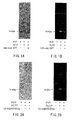
- FIG. 1(a) shows a CBB-stained image obtained after the reaction between a PYP and a compound FCTP
- FIG. 1(b) shows a fluorescent image obtained after the reaction between the PYP and the compound FCTP
- a photoactive yellow protein is a photoreceptor protein isolated from purple photosynthetic bacteria, Ectothiorhodospira halophila (Halorhodospira halophila). Since the purple photosynthetic bacteria are eubacteria, a PYP-derived endogenous protein is unlikely to adversely affect fluorescence labeling when a PYP is used in a cell. Furthermore, the PYP consists of 125 amino acid residues (SEQ ID NO: 1 of the sequence listing) and is a relatively small protein (14 kDa).
- a chromophore p-coumaric acid
- p-coumaric acid binds to the 69th cysteine residue through a thioester bond.
- various analogs other than p-coumaric acid each are bound to a PYP (see, for instance, compounds shown in Scheme 1 below as well as, for example, Cordgunke et al., Proc. Natl. Acad. Sci, USA, 1998, 95, pp7396-7401 and Koon et al., The Journal of Biological Chemistry, 1996, 271, pp. 31949-31956 ).
- the labeling method of the present invention in a compound represented by Formula (I) or a salt thereof, the coumarin skeleton in Formula (A) or the benzene skeleton in Formula (B) and the group X, which are bound to each other through the linker L, are intramolecularly associated and as a result, the fluorescence derived from the group X is suppressed (see Scheme 2).
- a fusion protein obtained by fusing a PYP or PYP-derived protein with a target protein to be labeled is reacted with the compound of Formula (I) or the salt thereof.
- a binding site of, for example, the PYP has a space into which only the coumarin skeleton in formula (A) or the benzene skeleton in Formula (B) can get and the group X cannot get into the binding site of, for example, the PYP.
- the coumarin skeleton in Formula (A) or the benzene skeleton in Formula (B) is intramolecularly dissociated from the group X and therefore fluorescence derived from the group X can be emitted (see Scheme 2).
- the compound of Formula (I) or the salt thereof that is not bonded to the fusion protein has very low fluorescence intensity. That is, it does not emit fluorescence, which allows the background signals to be low in the labeling method of the present invention.
- the target protein to be labeled biomolecule
- the target protein to be labeled can be detected accurately without any disturbance from background signals.
- the PYP or PYP-derived protein that is used in the labeling method of the present invention has a relatively low molecular weight, approximately 14 kDa, and therefore is unlikely to affect the target protein to be labeled, which is an advantage.
- the PYP or PYP-derived protein or the coumarin derivative or the coumaric acid derivative is a substance that does not exist in an animal cell, it is unlikely to affect the label, which is an advantage.
- Examples of the amino acid sequence of the PYP include amino acid sequences represented by SEQ ID NOS: 1 to 17 of the sequence listing.
- Examples of the polynucleotide for coding the PYP include base sequences represented by SEQ ID NOS: 18 to 29 of the sequence listing.
- a polynucleotide that codes a target protein to be labeled or a polynucleotide that codes a PYP or PYP-derived protein can be used to prepare such a plasmid or vector according to an ordinary method.
- the vector is a polynucleotide, preferably a polynucleotide for transfecting a cell with a polynucleotide for coding the fusion protein, and embraces a plasmid.
- the vector may be a plasmid vector or a viral vector.
- the plasmid and the vector may contain a sequence (for example, an expression-inducing promoter or a regulatory sequence) that adjusts expression of the fusion protein.
- the fusion protein can be expressed in a cell by using a polynucleotide for coding the fusion protein or a plasmid or vector that can express the fusion protein, according to an ordinary method.
- An expressed fusion protein can be isolated according to an ordinary method.
- Y is an oxygen atom or a sulfur atom
- R 1 is a lower alkyl group, a lower alkyl group substituted with halogen, an aryl group, an aryl group substituted with at least one selected from the group consisting of hydroxy, halogen, and lower alkoxy, a lower aralkyl group, or a lower aralkyl group substituted with at least one selected from the group consisting of hydroxy, halogen, and lower alkoxy
- R 2 is a group represented by Formula (A) including the coumarin skeleton or a group represented by Formula (B) including the benzene skeleton, wherein in Formula (A) and Formula (B), X is a fluorescent group, L is a linker for X, R 3 and R 4 are each independently a hydrogen atom, a halogen atom, a lower alkyl group, a hydroxy group
- the fluorescent group denotes a group having properties in which when it is irradiated with, for example, visible light, ultraviolet rays, or X-rays, it absorbs energy thereof, thereby electrons are excited, and it releases extra energy as an electromagnetic wave when it returns to the ground state.
- the fluorescent group include groups derived from, for example, fluorescein, a xanthene dye, a cyanine dye, acridine, isoindole, a dansyl dye, aminophthalic hydrazide, aminophthalimide, aminonaphthalimide, aminobenzofuran, aminoquinoline, or dicyanohydroquinone, or a luminous rare earth complex.
- the fluorescent group is a group derived from fluorescein or a xanthene dye.
- the linker L for X is a group for binding the group X and the coumarin skeleton of the group of Formula (A) or a group for binding the group X and the benzene skeleton of the group of Formula (B).
- the linker L is flexible and long to some extent so that the coumarin skeleton of Formula (A) or the benzene skeleton of Formula (B) is intramolecularly associated with the group X.
- the linker L is preferably one having a chain structure.
- the length of the linker L is, for example, 8 ⁇ to 25 ⁇ , preferably 10 ⁇ to 20 ⁇ , and more preferably 12 ⁇ to 18 ⁇ .
- examples of L include -(CH 2 ) n1 O(CH 2 ) n2 -, -(CH 2 ) n1 CONR 11 (CH 2 ) n2 -, -(CH 2 ) n1 NR 11 CO(CH 2 ) n2 -, -(CH 2 ) n1 NR 11 CONR 12 (CH 2 ) n2 -, -(CH 2 ) n1 NR 11 CSNR 12 (CH 2 ) n2 -, -(CH 2 ) n1 CONR 11 (CH 2 ) n3 CONR 12 (CH 2 ) n2 -, -(CH 2 ) n1 NR 11 CO(CH 2 ) n3 NR 12 CO(CH 2 ) n2 -, -(CH 2 ) n1 -, -(CH 2 ) n1 S(CH 2 ) n2 -, -(CH2) n1 NR 11 (CH 2 )
- n1, n2, and n3 are each independently an integer of 0 or 1 to 5, and R 11 and R 12 each are a hydrogen atom or a lower alkyl group.
- the structure of the linker for X is not limited as long as the linker is not cleaved under conditions in the method for fluorescently labeling a protein of the present invention.
- the aforementioned linker L is preferably a group represented by Formula (a), Formula (b), Formula (c), or Formula (d) below.
- n1, n2, n3, n4, n5, and n6 are each independently an integer of 0 or 1 to 5, and R 11 is a hydrogen atom or a lower alkyl group
- n1, n2, n3, n4, n5, n6, and n7 are each independently an integer of 0 or 1 to 5
- R 11 and R 12 are each independently a hydrogen atom or a lower alkyl group.
- R 1 R 2 , a group of Formula (A), and a group of Formula (B) each may have at least one chiral center. Therefore, the compound of Formula (I) may be present as a racemate or a pure stereoisomer. Furthermore, when Formula (B) includes a double bond, it may be present as a cis or trans isomer. In each case, the present invention includes both mixtures thereof and respective isomers thereof.
- the term "lower” denotes 1 to 6 carbon atoms and preferably 1 to 4 carbon atoms unless otherwise indicated.
- examples of the "halogen atom” or “halogen” include a fluorine atom, a chlorine atom, a bromine atom, and an iodine atom.
- examples of the "lower alkyl group” or “lower alkyl” include those having 1 to 6 carbon atoms.
- Specific examples of the lower alkyl group include linear or branched alkyl groups such as methyl, ethyl, n-propyl, i-propyl, n-butyl, i-butyl, sec-butyl, t-butyl, n-pentyl, i-pentyl, sec-pentyl, t-pentyl, 2-methylbutyl, n-hexyl, 1-methylpentyl, 2-methylpentyl, 3-methylpentyl, 4-methylpentyl, 1-ethylbutyl, 2-ethylbutyl, 1,1-dimethylbutyl, 2,2-dimethylbutyl, 3,3-dimethylbutyl, and 1-ethyl-1-methylpropyl, and preferably those having 1 to 3 carbon atoms.
- examples of the "lower alkoxy group” or “lower alkoxy” include alkyloxy groups having 1 to 6 carbon atoms.
- Specific examples of the lower alkoxy groups include linear or branched alkyloxy groups such as methoxy, ethoxy, n-propyloxy, i-propyloxy, n-butyloxy, i-butyloxy, sec-butyloxy, t-butyloxy, n-pentyloxy, i-pentyloxy, sec-pentyloxy, t-pentyloxy, 2-methylbutoxy, n-hexyloxy, i-hexyloxy, t-hexyloxy, sec-hexyloxy, 2-methylpentyloxy, 3-methylpentyloxy, 1-ethylbutyloxy, 2-ethylbutyloxy, 1,1-dimethylbutyloxy, 2,2-dimethylbutyloxy, 3,3-dimethylmethylbut
- examples of the "aryl group” include those having 6 to 10 carbon atoms.
- Specific examples of the aryl group include a phenyl group and a naphthyl group and preferably a phenyl group.
- examples of the "lower aralkyl group” include aryl-substituted lower alkyl groups.
- Specific examples of the lower aralkyl group include benzyl(phenylmethyl), phenethyl(phenylethyl), 3-phenylpropyl, 1-naphthylmethyl, and 2-(1-naphthyl)ethyl, and preferably a benzyl group.
- examples of the "lower alkyl group substituted with halogen” include fluoromethyl, difluoromethyl, trifluoromethyl, chloromethyl, dichloromethyl, trichloromethyl, bromomethyl, dibromomethyl, tribromomethyl, 1-fluoroethyl, 1-chloroethyl, 1-bromoethyl, 2-fluoroethyl, 2-chloroethyl, 2-bromoethyl, 1,2-difluoroethyl, and tolufluoromethyl.
- examples of the "amino group that has been mono- or di-substituted with lower alkyl” include methylamino, ethylamino, n-propylamino, i-propylamino, n-butylamino, dimethylamino, and diethylamino.
- examples of the "aryl group substituted with at least one selected from the group consisting of hydroxy, halogen, and lower alkoxy' include 4-hydroxyphenyl, 4-chlorophenyl, 4-bromophenyl, 4-fluorophenyl, 2,6-dichlorophenyl, 4-methoxyphenyl, 3,4-dimethoxyphenyl, and 2-hydroxynaphthyl.
- examples of the "lower aralkyl group substituted with at least one selected from the group consisting of hydroxy, halogen, and lower alkoxy” include 4-hydroxybenzyl, 2-chlorobenzyl, 2-bromobenzyl, and 4-methoxybenzyl.
- the salt of the compound of Formula (I) may be a salt with acid or base.
- a salt include salts of alkali metal such as sodium and potassium, salts of alkaline earth metal such as calcium and magnesium, salts with inorganic bases such as ammonium salts, salts with organic amine such as triethylamine, pyridine, picoline, ethanolamine, triethanolamine, dicyclohexylamine, and N,N'-dibenzylethyleneamine, salts with inorganic acid such as hydrochloric acid, hydrobromic acid, sulfuric acid, and phosphoric acid, salts with organic carboxylic acid such as formic acid, acetic acid, trifluoroacetic acid, maleic acid, and tartaric acid, addition salts with sulfonic acid such as methanesulfonic acid, benzenesulfonic acid, and p-toluenesulfonic acid, salts with bases such as basic or acidic amino acid, such as arginine
- the compound of Formula (I) may be in the form of a solvate and this also is included in the range of the present invention.
- the solvate include preferably a hydrate and an ethanolate.
- the compound of Formula (I) that is used in the fluorescently labeling method of the present invention may be produced in house by reference to known documents of conventional techniques or may be obtained commercially
- Obtaining a fusion protein of a target protein to be labeled and a PYP or PYP-derived protein, which is used in the fluorescently labeling method of the present invention may include, for example, obtaining a polynucleotide for coding the fusion protein, obtaining a plasmid or vector that can express the fusion protein, expressing the fusion protein in a cell, or isolating the fusion protein thus expressed.
- a plasmid or vector that can express a fusion protein can be prepared according to the ordinary method.
- a step of reacting the fusion protein with the compound of Formula (I) may be carried out in a cell or in vivo where the fusion protein is expressed or may be carried out in vitro using an isolated fusion protein.
- labeling may be carried out, for example, in a buffer (pH 6.8 to 8.5) at a temperature of 20 to 37°C.
- the amino acid sequence of the PYP or PYP-derived protein in the fusion protein is preferably one selected from the group consisting of.
- the fusion protein of the target protein to be labeled and the PYP or PYP-derived protein can be obtained by a method including at least one or all of the steps of: obtaining a polynucleotide for coding the fusion protein, obtaining a plasmid or vector that can express the fusion protein, expressing the fusion protein in a cell, or isolating the fusion protein thus expressed. That is, obtaining the fusion protein includes not only isolating the protein but also expressing the fusion protein in a cell or in vivo.
- the present invention also is a composition to be used for a method of the present invention containing a compound represented by Formula (I) or a salt thereof.
- Y is an oxygen atom or a sulfur atom
- R 1 is a lower alkyl group, a lower alkyl group substituted with halogen, an aryl group, an aryl group substituted with at least one selected from the group consisting of hydroxy, halogen, and lower alkoxy, a lower aralkyl group, or a lower aralkyl group substituted with at least one selected from the group consisting of hydroxy, halogen, and lower alkoxy
- R 2 is a group represented by Formula (A) including a coumarin skeleton or a group represented by Formula (B) including a benzene skeleton, wherein in Formula (A) and Formula (B), X is a fluorescent group, L is a linker for X, R 3 and R 4 are each independently a hydrogen atom, a halogen atom, a lower alkyl group, or a lower alkyl group substituted with halogen, R 5 is a hydroxy group, an
- the present invention also is a plasmid or vector to be used for a method of the present invention, wherein the plasmid or vector is one for cloning a polynucleotide for coding a fusion protein of a target protein to be labeled and a PYP or PYP-derived protein or one for expressing the fusion protein, and the plasmid or vector includes a base sequence selected from the group consisting of:
- the present invention is a kit for a method for fluorescently labeling a protein.
- the kit includes a plasmid or vector to be used for a method of the present invention and a composition to be used for a method of the present invention containing a compound represented by Formula (I) or a salt thereof.
- the kit for a method for fluorescently labeling a protein of the present invention further includes a host cell to be transfected with the plasmid or vector and an instruction manual for the kit.
- Y is a sulfur atom
- R 1 is an aryl group or an aryl group substituted with at least one selected from the group consisting of hydroxy, halogen, and lower alkoxy
- R 2 is a group represented by Formula (A) or Formula (B), wherein in Formula (A) and Formula (B), X is a group represented by Formula (i), L is a group represented by Formula (a), Formula (b), Formula (c), or Formula (d), R 3 and R 4 each are a hydrogen atom, R 5 is hydroxy, and
- n1, n2, n3, n4, n5, and n6 are each independently an integer of 0 or 1 to 5, and R 11 is a hydrogen atom or a lower alkyl group
- n1, n2, n3, n4, n5, n6, and n7 are each independently an integer of 0 or 1 to 5
- R 11 and R 12 are each independently a compound of Formula (I), which is a hydrogen atom or a lower alkyl group, or a salt thereof.
- the present invention is a compound represented by General Formula (I) or a salt thereof.
- Y is an oxygen atom or a sulfur atom
- R 1 is a lower alkyl group, a lower alkyl group substituted with halogen, an aryl group, an aryl group substituted with at least one selected from the group consisting of hydroxy, halogen, and lower alkoxy, a lower aralkyl group, or a lower aralkyl group substituted with at least one selected from the group consisting of hydroxy, halogen, and lower alkoxy
- R 2 is a group represented by Formula (A) including a coumarin skeleton or a group represented by Formula (B) including a benzene skeleton, wherein in Formula (A) and Formula (B), X is a fluorescent group, L is a linker for X, R 3 and R 4 are each independently a hydrogen atom, a halogen atom, a lower alkyl group, a hydroxy group, a lower alkoxy group, or a lower alkyl group substitute
- Y is a sulfur atom
- R 1 is an aryl group or an aryl group substituted with at least one selected from the group consisting of hydroxy, halogen, and lower alkoxy
- R 2 is a group represented by Formula (A) or Formula (B), wherein in Formula (A) and Formula (B), X is a group represented by Formula (i), L is a group represented by Formula (a), Formula (b), Formula (c), or Formula (d), R 3 and R 4 each are a hydrogen atom, R 5 is hydroxy, and
- n1, n2, n3, n4, n5, and n6 are each independently an integer of 0 or 1 to 5, and R 11 is a hydrogen atom or a lower alkyl group
- n1, n2, n3, n4, n5, n6, and n7 are each independently an integer of 0 or 1 to 5
- R 11 and R 12 are each independently a hydrogen atom or a lower alkyl group.
- the compound of Formula (I) is more preferably a compound FCTP represented by the following formula.
- These preferred compounds of Formula (I) are also used preferably in, for example, a method for fluorescently labeling a protein and a composition of the present invention.
- the compound of Formula (I) can be produced, for example, according to Scheme 3 below.
- Scheme 3 below shows a production example wherein in Formula (I), L is a specific group.
- the starting material may be produced in house by reference to known documents of conventional techniques or may be purchased.
- Y is an oxygen atom or a sulfur atom
- R 1 is a lower alkyl group, a lower alkyl group substituted with halogen, an aryl group, an aryl group substituted with at least one selected from the group consisting of hydroxy, halogen, and lower alkoxy, a lower aralkyl group, or a lower aralkyl group substituted with at least one selected from the group consisting of hydroxy, halogen, and lower alkoxy
- X is a fluorescent group
- L is a linker for X
- R 3 and R 4 are each independently a hydrogen atom, a halogen atom, a lower alkyl group, a hydroxy group, a lower alkoxy group, or a lower alkyl group substituted with halogen
- R 5 is a hydroxy group, an amino group, an amino group that has been mono- or di-substituted with lower alkyl, or a lower alkoxy group
- the present invention further can provide a bioimaging method that includes labeling a target protein by a method for fluorescently labeling a protein of the present invention.
- the bioimaging method of the present invention includes imaging of a cell or tissue that expresses the target protein.
- the cell or tissue is not particularly limited but is preferably an animal cell or tissue, more preferably a mammalian cell or tissue, further preferably a primate cell or tissue, and still further preferably a human cell or tissue.
- DMSO Dimethylsulfoxide
- HOBt 1-hydroxybenzotriazole
- WSCD ⁇ HCl Water-soluble carbodiimide : 1-ethyl-3-(3-dimethylaminopropyl)carbodiimide hydrochloride
- MOMCl Methoxymethylchloride
- DIEA N,N-diisopropylethylamine
- NBS N-bromosuccinimide
- AIBN Azobisbutyronitrile
- TFA Trifluoroacetic acid
- TCEP Tris[2-carboxyethyl]phosphine
- SDS-PAGE Sodium dodecyl sulfate polyacrylamide gel electrophoresis
- CBB Coomassie brilliant blue
- DTT Dithiothreitol
- MESNa 2-mercaptoethanesulfonic acid sodium salt
- NMR spectra were recorded on a JEOL JNM-AL400 instrument (JEOL Ltd.) at 400 MHz for 1 H and at 100.4 MHz for 13 NMR using tetramethylsilane as an internal standard.
- Mass spectra (EI) were taken on a Shimazu GCMS-QP2000 (Shimadzu Corporation) operating in the electron impact mode (70 eV) equipped with CBP1-M25-025 column.
- High-resolution mass spectra (HRMS) were obtained on a JEOL JMS-DX303 (JEOL Ltd.).
- ESI-TOF MS was taken on a Waters LCT-Premier XE (Nihon Waters K.K.).
- Fluorescence spectra were measured using a Hitachi F4500 spectrometer (Hitachi, Ltd.). Slit width was 2.5 nm for both excitation and emission. The photomultiplier voltage was 700 V Samples were dissolved in DMSO (biochemical grade, Wako Pure Chemical Industries, Ltd.) before fluorescence measurement. Silica gel column chromatography was performed using BW-300 (Fuji Silysia Chemical Ltd.). Fluorescence imaging was visualized usingAE-6935B VISIRAYS-B.
- DNA of the His-PYP was amplified by PCR (PrimeSTAR HS DNA Polymerase, TAKARA BIO INC.) using the primers indicated below.
- the plasmid was provided by Professor K. J. Hellingwerf of University of Amsterdam.
- the PYP is derived from Ectohiodospira halophila (Halorhodospira halophila).
- the PCR fragment was separated with a 2.0% agarose gel and then extracted using a kit (QIA quick Gel Extraction kit, QIAGEN).
- coli expression, pET-21b(+), and the insert were subjected to a restriction enzyme treatment with Hindl III and Nde I (both manufactured by TAKARA BIO INC.), and a T4-DNA ligase was used to integrate the insert into pET-21b(+).
- pET-PYP was produced.
- the pET-PYP was transformed into E. coli (BL21 (DE3)) and then grown to an OD600 of 0.6 to 0.8 ⁇ in Luria-Bertani (LB) medium at 37 °C. Next, IPTG was added with a final concentration of 100 ⁇ M and this was grown overnight at 20 °C. The E. coli thus grown was harvested and then was subjected to ultrasonic fragmentation. Thereafter, a soluble fraction was extracted. The soluble fraction PYP was purified with the Ni-NTA column (Ni-NTA agarose; QIAGEN) using the buffers described below according to the QIAGEN'S protocol.
- Conditions for Ni-NTA column include:
- enterokinase Recombinant Enterokinase; Novagen
- PYP purified PYP
- Ni-NTA column Ni-NTA agarose
- QIAGEN Ni-NTA agarose
- protease was removed.
- the purified sample was subjected to ultrafiltration (VIVASPIN 500, 5000 MWCO PES, Sartorius Stedim) to substitute Tris buffer (20 mM Tris-HCl, 150 mM NaCl, 1 mM TCEP, pH 8.0).
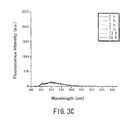
- FIG. 3(a) shows time-dependent fluorescence spectra of 8 ⁇ M of compound FCTP in the presence of 5 ⁇ M of PYP
- FIG. 3(b) shows time-dependent excitation spectra of 8 ⁇ M of compound FCTP in the presence of 5 ⁇ M of PYP
- FIG. 3(c) shows fluorescence spectra (excitation at 500 nm) of 8 ⁇ M of compound FCTP.
- a plasmid was prepared in which a gene PYP-TM obtained by fusing a PYP with the transmembrane domain of a platelet-derived growth factor receptor (PDGFR) was introduced into the multicloning site of pcDNA3.1, which is a mammalian expression vector.
- HEK293T cells were transfected with this plasmid by using lipofectamine 2000. After transfection with the plasmid, the HEK293T cells were allowed to stand at 37°C for 36 hours and then washed with a phosphoric acid buffer (PBS). A culture medium containing FCTP (20 ⁇ M) was added thereto, which then was allowed to stand for 30 minutes.
- PBS phosphoric acid buffer
- the culture media was replaced by a culture medium containing 10% fetal bovine serum (FBS) and the cells then were observed with a fluorescence microscope.
- FBS fetal bovine serum
- the fluorescence microscope having an excitation wavelength of 488 nm, the cells were observed using a fluorescent filter of 510 to 550 nm. The microscopic images obtained thereby are shown in FIG. 4 .
- a plasmid was prepared in which a gene MBP-PYP obtained by fusing a maltose binding protein (MBP) with a PYP was introduced into the multicloning site of pcDNA3.1, which was a mammalian expression vector. Furthermore, in order to express a PYP on the cell surface, a plasmid was prepared in which a gene PYP-TM obtained by fusing a PYP with the transmembrane domain of a platelet-derived growth factor receptor (PDGFR) was introduced into the multicloning site of pcDNA3.1, which was a mammalian expression vector. HEK293T cells were transfected with these plasmids by using lipofectamine 2000.
- MBP-PYP maltose binding protein
- the HEK293T cells were allowed to stand at 37°C for 36 hours and then washed with a phosphoric acid buffer (PBS).
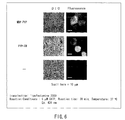
- a culture medium containing CATP (5 ⁇ M) was added thereto, which then was allowed to stand for 30 minutes. Thereafter, the culture medium was replaced by a culture medium containing 10% fetal bovine serum (FBS) and the cells then were observed with a fluorescence microscope. With the fluorescence microscope having an excitation wavelength of 436 nm, the cells were observed with a fluorescent filter of 470 to 495 nm.
- FIG. 5 shows the reaction procedure and FIG. 6 shows the fluorescence microscopic images obtained thereby.
- the method for fluorescently labeling a protein of the present invention can be used, for example, for cell imaging.
- SEQ ID NO: 30 Forward Primer
- SEQ ID NO: 31 Reverse Primer
Landscapes
- Health & Medical Sciences (AREA)
- Chemical & Material Sciences (AREA)
- Organic Chemistry (AREA)
- Life Sciences & Earth Sciences (AREA)
- Engineering & Computer Science (AREA)
- General Health & Medical Sciences (AREA)
- Biomedical Technology (AREA)
- Immunology (AREA)
- Molecular Biology (AREA)
- Veterinary Medicine (AREA)
- Epidemiology (AREA)
- Animal Behavior & Ethology (AREA)
- Public Health (AREA)
- Proteomics, Peptides & Aminoacids (AREA)
- Biochemistry (AREA)
- Medicinal Chemistry (AREA)
- Genetics & Genomics (AREA)
- Biophysics (AREA)
- Pathology (AREA)
- Analytical Chemistry (AREA)
- Urology & Nephrology (AREA)
- Hematology (AREA)
- Microbiology (AREA)
- Nuclear Medicine, Radiotherapy & Molecular Imaging (AREA)
- Food Science & Technology (AREA)
- Physics & Mathematics (AREA)
- Biotechnology (AREA)
- General Physics & Mathematics (AREA)
- Gastroenterology & Hepatology (AREA)
- Cell Biology (AREA)
- Radiology & Medical Imaging (AREA)
- Investigating Or Analysing Biological Materials (AREA)
- Measuring Or Testing Involving Enzymes Or Micro-Organisms (AREA)
- Investigating Or Analysing Materials By The Use Of Chemical Reactions (AREA)
- Medicines Containing Antibodies Or Antigens For Use As Internal Diagnostic Agents (AREA)
- Peptides Or Proteins (AREA)
- Pyrane Compounds (AREA)
- Plural Heterocyclic Compounds (AREA)
Abstract
Description
- The present invention relates to a method for fluorescently labeling a protein.
- Recently, bioimaging for observing the functions of biomolecules such as proteins inside living organisms has been receiving attention. The observation of the biomolecule functions is being conducted widely by labeling biomolecules with fluorescence to visualize the localization or movement of the biomolecules inside living organisms. A general method for labeling biomolecules with fluorescence is one using a genetic engineering procedure to allow a fluorescent protein to express as a fusion protein of a target biomolecule (protein). This fluorescent protein has disadvantages in, for example, its large molecular size and a difficulty in observing near-infrared fluorescence with a high tissue penetration. Therefore, attention is focused on small organic molecules having smaller molecular sizes than that of a fluorescent protein and excellent fluorescent properties. With respect to technologies for labeling target proteins with small organic molecules, there are commercialized labeling kits in which HaloTag (registered trademark) (Promega KK) (see, for example, Non-Patent Document 1) and SNAP-tag (registered trademark) (see, for example, Non-Patent Document 2) are used. These labeling methods each use an enzyme reaction to label target biomolecules with fluorescence. Therefore, the specificity in labeling target biomolecules with small organic molecules is very high but fluorescence derived from the small organic molecules that are not bound to the biomolecules is observed as background signals. In order to reduce the background signals, after being fluorescently labeled with the small organic molecules, washing is necessary to remove unreacted small organic molecules. However, it is generally difficult to wash biomolecules present in a cell or in vivo and it is often not possible to wash them at all. Accordingly, in order to observe the functions ofbiomolecules in a cell or in vivo, the above-mentioned labeling methods cannot be considered versatile.
-
- Non-Patent Document 1: Qureshi, M. H. et al., J. Biol. Chem., 2001, 276, p.46422-8
- Non-Patent Document 2: Proc. Natl. Acad. Sci. USA 2004,101, p.9955-9959
- Therefore, the present invention is intended to provide a method for fluorescently labeling a protein, which can be used for labeling a biomolecule (a protein) with fluorescence in a cell or in vivo.
- The present invention is a method for fluorescently labeling a protein that includes obtaining a fusion protein of a target protein to be labeled and a photoactive yellow protein (PYP) or a PYP-derived protein, and fluorescently labeling the target protein by reacting the fusion protein with a compound represented by Formula (I) below or a salt thereof,
wherein in the compound represented by Formula (I) or the salt thereof, a coumarin skeleton in Formula (A) or a benzene skeleton in Formula (B) is intramolecularly associated with a group X and as a result, fluorescence derived from the group X is suppressed, and
when in the compound represented by Formula (I) or a salt thereof, the coumarin skeleton in Formula (A) or the benzene skeleton in Formula (B) is bound to the PYP or the PYP-derived protein contained in the fusion protein, the coumarin skeleton in Formula (A) or the benzene skeleton in Formula (B) is intramolecularly dissociated from the group X, and thereby fluorescence derived from the group X can be emitted. -


- In Formula (I),
Y is an oxygen atom or a sulfur atom,
R1 is a lower alkyl group, a lower alkyl group substituted with halogen, an aryl group, an aryl group substituted with at least one selected from the group consisting of hydroxy, halogen, and lower alkoxy, a lower aralkyl group, or a lower aralkyl group substituted with at least one selected from the group consisting of hydroxy, halogen, and lower alkoxy, and
R2 is a group represented by Formula (A) including the coumarin skeleton or a group represented by Formula (B) including the benzene skeleton,
wherein in Formula (A) and Formula (B),
X is a fluorescent group,
L is a linker for X,
R3 and R4 are each independently a hydrogen atom, a halogen atom, a lower alkyl group, a hydroxy group, a lower alkoxy group, or a lower alkyl group substituted with halogen,
R5 is a hydroxy group, an amino group, an amino group that has been mono- or di-substituted with lower alkyl, or a lower alkoxy group, and - [Chemical Formula 2]
- denotes a double bond or a triple bond.
- In the method for fluorescently labeling a protein according to the present invention, high fluorescence is exhibited only when a target protein has been labeled. Therefore, the fluorescence background can be minimized without removing small organic molecules that are not labeling proteins. Accordingly, highly accurate fluorescence imaging can be carried out. Furthermore, since it is not necessary to remove unreacted small organic molecules, the method is suitable for observing biomolecules in vivo.
- [
FIG. 1] FIG. 1(a) shows a CBB-stained image obtained after the reaction between a PYP and a compound FCTP andFIG. 1(b) shows a fluorescent image obtained after the reaction between the PYP and the compound FCTP - [
FIG. 2] FIG. 2(a) shows a CBB-stained image obtained after the reaction between a PYP and a compound FCTP in a cell lysate andFIG. 2(b) shows a fluorescent image obtained after the reaction between the PYP and the compound FCTP in the cell lysate. - [
FIG. 3(a)] FIG. 3(a) shows time-dependent fluorescence spectra of 8 µM of compound FCTP in the presence of 5 µM of PYP - [
FIG. 3(b)] FIG. 3(b) shows time-dependent excitation spectra of 8 µM of compound FCTP in the presence of 5 µM of PYP. - [
FIG. 3(c)] FIG. 3(c) shows fluorescence spectra (excitation at 500 nm) of 8 µM of compound FCTP. - [
FIG. 4] FIG. 4 shows fluorescence microscopic images illustrating a labeling reaction using a FCTP in a cultured cell. - [
FIG. 5] FIG. 5 shows the procedure of a labeling reaction using a CATP in a cultured cell. - [
FIG. 6] FIG. 6 shows fluorescence microscopic images illustrating a labeling reaction using a CATP in a cultured cell. - A photoactive yellow protein (PYP) is a photoreceptor protein isolated from purple photosynthetic bacteria, Ectothiorhodospira halophila (Halorhodospira halophila). Since the purple photosynthetic bacteria are eubacteria, a PYP-derived endogenous protein is unlikely to adversely affect fluorescence labeling when a PYP is used in a cell. Furthermore, the PYP consists of 125 amino acid residues (SEQ ID NO: 1 of the sequence listing) and is a relatively small protein (14 kDa). In the PYP, a chromophore, p-coumaric acid, binds to the 69th cysteine residue through a thioester bond. It is known that various analogs other than p-coumaric acid each are bound to a PYP (see, for instance, compounds shown in
Scheme 1 below as well as, for example, Cordgunke et al., Proc. Natl. Acad. Sci, USA, 1998, 95, pp7396-7401 and Koon et al., The Journal of Biological Chemistry, 1996, 271, pp. 31949-31956). -

- According to the labeling method of the present invention, in a compound represented by Formula (I) or a salt thereof, the coumarin skeleton in Formula (A) or the benzene skeleton in Formula (B) and the group X, which are bound to each other through the linker L, are intramolecularly associated and as a result, the fluorescence derived from the group X is suppressed (see Scheme 2). In the labeling method of the present invention, a fusion protein obtained by fusing a PYP or PYP-derived protein with a target protein to be labeled is reacted with the compound of Formula (I) or the salt thereof. With respect to the PYP or PYP-derived protein of the fusion protein, when the coumarin skeleton in Formula (A) or the benzene skeleton in Formula (B) of the compound of Formula (I) is bound to the PYP or PYP-derived protein contained in the fusion protein, a binding site of, for example, the PYP has a space into which only the coumarin skeleton in formula (A) or the benzene skeleton in Formula (B) can get and the group X cannot get into the binding site of, for example, the PYP. As a result, the coumarin skeleton in Formula (A) or the benzene skeleton in Formula (B) is intramolecularly dissociated from the group X and therefore fluorescence derived from the group X can be emitted (see Scheme 2). In other words, the compound of Formula (I) or the salt thereof that is not bonded to the fusion protein has very low fluorescence intensity. That is, it does not emit fluorescence, which allows the background signals to be low in the labeling method of the present invention. As a result, after the target protein to be labeled (biomolecule) is labeled with the compound of Formula (I), even without washing, the target protein to be labeled can be detected accurately without any disturbance from background signals. Furthermore, the PYP or PYP-derived protein that is used in the labeling method of the present invention has a relatively low molecular weight, approximately 14 kDa, and therefore is unlikely to affect the target protein to be labeled, which is an advantage. Moreover, since the PYP or PYP-derived protein or the coumarin derivative or the coumaric acid derivative is a substance that does not exist in an animal cell, it is unlikely to affect the label, which is an advantage.
-


- Examples of the amino acid sequence of the PYP include amino acid sequences represented by SEQ ID NOS: 1 to 17 of the sequence listing. Examples of the polynucleotide for coding the PYP include base sequences represented by SEQ ID NOS: 18 to 29 of the sequence listing.
- In order to obtain a plasmid or vector that can express a fusion protein, for example, a polynucleotide that codes a target protein to be labeled or a polynucleotide that codes a PYP or PYP-derived protein can be used to prepare such a plasmid or vector according to an ordinary method. In the present invention, the vector is a polynucleotide, preferably a polynucleotide for transfecting a cell with a polynucleotide for coding the fusion protein, and embraces a plasmid. The vector may be a plasmid vector or a viral vector. A person skilled in the art suitably can select the sequence that allows the fusion protein to be expressed, according to the type of the cell to be transfected. The plasmid and the vector may contain a sequence (for example, an expression-inducing promoter or a regulatory sequence) that adjusts expression of the fusion protein.
- The fusion protein can be expressed in a cell by using a polynucleotide for coding the fusion protein or a plasmid or vector that can express the fusion protein, according to an ordinary method.
- An expressed fusion protein can be isolated according to an ordinary method.
- As described above, in the compound of Formula (I) that is used in the fluorescently labeling method of the present invention, Y is an oxygen atom or a sulfur atom,
R1 is a lower alkyl group, a lower alkyl group substituted with halogen, an aryl group, an aryl group substituted with at least one selected from the group consisting of hydroxy, halogen, and lower alkoxy, a lower aralkyl group, or a lower aralkyl group substituted with at least one selected from the group consisting of hydroxy, halogen, and lower alkoxy, and
R2 is a group represented by Formula (A) including the coumarin skeleton or a group represented by Formula (B) including the benzene skeleton,
wherein in Formula (A) and Formula (B),
X is a fluorescent group,
L is a linker for X,
R3 and R4 are each independently a hydrogen atom, a halogen atom, a lower alkyl group, a hydroxy group, a lower alkoxy group, or a lower alkyl group substituted with halogen,
R5 is a hydroxy group, an amino group, an amino group that has been mono- or di-substituted with lower alkyl, or a lower alkoxy group, and -

- denotes a double bond or a triple bond.
-


- In the present invention, the fluorescent group denotes a group having properties in which when it is irradiated with, for example, visible light, ultraviolet rays, or X-rays, it absorbs energy thereof, thereby electrons are excited, and it releases extra energy as an electromagnetic wave when it returns to the ground state. Specifically, examples of the fluorescent group include groups derived from, for example, fluorescein, a xanthene dye, a cyanine dye, acridine, isoindole, a dansyl dye, aminophthalic hydrazide, aminophthalimide, aminonaphthalimide, aminobenzofuran, aminoquinoline, or dicyanohydroquinone, or a luminous rare earth complex.
Preferably, the fluorescent group is a group derived from fluorescein or a xanthene dye. - In the present invention, the linker L for X is a group for binding the group X and the coumarin skeleton of the group of Formula (A) or a group for binding the group X and the benzene skeleton of the group of Formula (B). Preferably, the linker L is flexible and long to some extent so that the coumarin skeleton of Formula (A) or the benzene skeleton of Formula (B) is intramolecularly associated with the group X. In order to be flexible, the linker L is preferably one having a chain structure. Furthermore, the length of the linker L is, for example, 8Å to 25Å, preferably 10Å to 20Å, and more preferably 12Å to 18Å. Specifically, examples of L include -(CH2)n1O(CH2)n2-, -(CH2)n1CONR11(CH2)n2-, -(CH2)n1NR11CO(CH2)n2-, -(CH2)n1NR11CONR12(CH2)n2-, -(CH2)n1NR11CSNR12(CH2)n2-, -(CH2)n1CONR11(CH2)n3CONR12(CH2)n2-, -(CH2)n1NR11CO(CH2)n3NR12CO(CH2)n2-, -(CH2)n1-, -(CH2)n1S(CH2)n2-, -(CH2)n1NR11(CH2)n2-, -(CH2)n1CO2(CH2)n2-, and -(CH2)n1O(CH2)n2O(CH2)n3O(CH2)n4- as well as
-


- and those obtained by combining two or more of them. In the above-mentioned formulae, n1, n2, and n3 are each independently an integer of 0 or 1 to 5, and R11 and R12 each are a hydrogen atom or a lower alkyl group. The structure of the linker for X is not limited as long as the linker is not cleaved under conditions in the method for fluorescently labeling a protein of the present invention. The aforementioned linker L is preferably a group represented by Formula (a), Formula (b), Formula (c), or Formula (d) below.
-


-(CH2)n1O(CH2)n2O(CH2)n3O(CH2)n4-(CH2)n5NR11CO(CH2)n6NR12CO(CH2)n7- (c)
-(CH2)n5CONR11(CH2)n6CONR12(CH2)n7-(CH2)n1O(CH2)n2O(CH2)n3O(CH2)n4- (d)
- In Formula (a) and Formula (b), n1, n2, n3, n4, n5, and n6 are each independently an integer of 0 or 1 to 5, and R11 is a hydrogen atom or a lower alkyl group, and
in Formula (c) and Formula (d), n1, n2, n3, n4, n5, n6, and n7 are each independently an integer of 0 or 1 to 5, and R11 and R12 are each independently a hydrogen atom or a lower alkyl group. - In the compound of Formula (I), R1 R2, a group of Formula (A), and a group of Formula (B) each may have at least one chiral center. Therefore, the compound of Formula (I) may be present as a racemate or a pure stereoisomer. Furthermore, when Formula (B) includes a double bond, it may be present as a cis or trans isomer. In each case, the present invention includes both mixtures thereof and respective isomers thereof.
- In the present invention, the term "lower" denotes 1 to 6 carbon atoms and preferably 1 to 4 carbon atoms unless otherwise indicated.
- In the present invention, examples of the "halogen atom" or "halogen" include a fluorine atom, a chlorine atom, a bromine atom, and an iodine atom.
- In the present invention, examples of the "lower alkyl group" or "lower alkyl" include those having 1 to 6 carbon atoms. Specific examples of the lower alkyl group include linear or branched alkyl groups such as methyl, ethyl, n-propyl, i-propyl, n-butyl, i-butyl, sec-butyl, t-butyl, n-pentyl, i-pentyl, sec-pentyl, t-pentyl, 2-methylbutyl, n-hexyl, 1-methylpentyl, 2-methylpentyl, 3-methylpentyl, 4-methylpentyl, 1-ethylbutyl, 2-ethylbutyl, 1,1-dimethylbutyl, 2,2-dimethylbutyl, 3,3-dimethylbutyl, and 1-ethyl-1-methylpropyl, and preferably those having 1 to 3 carbon atoms.
- In the present invention, examples of the "lower alkoxy group" or "lower alkoxy" include alkyloxy groups having 1 to 6 carbon atoms. Specific examples of the lower alkoxy groups include linear or branched alkyloxy groups such as methoxy, ethoxy, n-propyloxy, i-propyloxy, n-butyloxy, i-butyloxy, sec-butyloxy, t-butyloxy, n-pentyloxy, i-pentyloxy, sec-pentyloxy, t-pentyloxy, 2-methylbutoxy, n-hexyloxy, i-hexyloxy, t-hexyloxy, sec-hexyloxy, 2-methylpentyloxy, 3-methylpentyloxy, 1-ethylbutyloxy, 2-ethylbutyloxy, 1,1-dimethylbutyloxy, 2,2-dimethylbutyloxy, 3,3-dimethylbutyloxy, and 1-ethyl-1-methylpropyloxy, and preferably alkyloxy groups having 1 to 3 carbon atoms.
- In the present invention, examples of the "aryl group" include those having 6 to 10 carbon atoms. Specific examples of the aryl group include a phenyl group and a naphthyl group and preferably a phenyl group.
- In the present invention, examples of the "lower aralkyl group" include aryl-substituted lower alkyl groups. Specific examples of the lower aralkyl group include benzyl(phenylmethyl), phenethyl(phenylethyl), 3-phenylpropyl, 1-naphthylmethyl, and 2-(1-naphthyl)ethyl, and preferably a benzyl group.
- In the present invention, examples of the "lower alkyl group substituted with halogen" include fluoromethyl, difluoromethyl, trifluoromethyl, chloromethyl, dichloromethyl, trichloromethyl, bromomethyl, dibromomethyl, tribromomethyl, 1-fluoroethyl, 1-chloroethyl, 1-bromoethyl, 2-fluoroethyl, 2-chloroethyl, 2-bromoethyl, 1,2-difluoroethyl, and tolufluoromethyl.
- In the present invention, examples of the "amino group that has been mono- or di-substituted with lower alkyl" include methylamino, ethylamino, n-propylamino, i-propylamino, n-butylamino, dimethylamino, and diethylamino.
- In the present invention, examples of the "aryl group substituted with at least one selected from the group consisting of hydroxy, halogen, and lower alkoxy' include 4-hydroxyphenyl, 4-chlorophenyl, 4-bromophenyl, 4-fluorophenyl, 2,6-dichlorophenyl, 4-methoxyphenyl, 3,4-dimethoxyphenyl, and 2-hydroxynaphthyl.
- In the present invention, examples of the "lower aralkyl group substituted with at least one selected from the group consisting of hydroxy, halogen, and lower alkoxy" include 4-hydroxybenzyl, 2-chlorobenzyl, 2-bromobenzyl, and 4-methoxybenzyl.
- The salt of the compound of Formula (I) may be a salt with acid or base. Examples of such a salt include salts of alkali metal such as sodium and potassium, salts of alkaline earth metal such as calcium and magnesium, salts with inorganic bases such as ammonium salts, salts with organic amine such as triethylamine, pyridine, picoline, ethanolamine, triethanolamine, dicyclohexylamine, and N,N'-dibenzylethyleneamine, salts with inorganic acid such as hydrochloric acid, hydrobromic acid, sulfuric acid, and phosphoric acid, salts with organic carboxylic acid such as formic acid, acetic acid, trifluoroacetic acid, maleic acid, and tartaric acid, addition salts with sulfonic acid such as methanesulfonic acid, benzenesulfonic acid, and p-toluenesulfonic acid, salts with bases such as basic or acidic amino acid, such as arginine, aspartic acid, and glutamic acid, as well as acid addition salts.
- The compound of Formula (I) may be in the form of a solvate and this also is included in the range of the present invention. Examples of the solvate include preferably a hydrate and an ethanolate.
- The compound of Formula (I) that is used in the fluorescently labeling method of the present invention may be produced in house by reference to known documents of conventional techniques or may be obtained commercially
- Obtaining a fusion protein of a target protein to be labeled and a PYP or PYP-derived protein, which is used in the fluorescently labeling method of the present invention, may include, for example, obtaining a polynucleotide for coding the fusion protein, obtaining a plasmid or vector that can express the fusion protein, expressing the fusion protein in a cell, or isolating the fusion protein thus expressed. With, for example, a polynucleotide for coding a target protein to be labeled or a polynucleotide for coding a PYP or PYP-derived protein being used for the polynucleotide for coding the fusion protein, a plasmid or vector that can express a fusion protein can be prepared according to the ordinary method.
- In the method for fluorescently labeling a protein of the present invention, a step of reacting the fusion protein with the compound of Formula (I) may be carried out in a cell or in vivo where the fusion protein is expressed or may be carried out in vitro using an isolated fusion protein. When carried out in vitro, labeling may be carried out, for example, in a buffer (pH 6.8 to 8.5) at a temperature of 20 to 37°C.
- In the method for fluorescently labeling a protein of the present invention, the amino acid sequence of the PYP or PYP-derived protein in the fusion protein is preferably one selected from the group consisting of.
- 1) amino acid sequences represented by SEQ ID NOS: 1 to 17 of the sequence listing,
- 2) amino acid sequences represented by SEQ ID NOS: 1 to 17 of the sequence listing in which the 1st to 24th, 25th, 26th, or 27th amino acids have been deleted,
- 3) amino acid sequences in which one to several amino acids of the amino acid sequences of either 1) or 2) described above have been deleted, substituted, or added, wherein when the fusion protein binds to the coumarin skeleton in Formula (A) or the benzene skeleton in Formula (B), the coumarin skeleton in Formula (A) or the benzene skeleton in Formula (B) is intramolecularly dissociated from the group X in the compound represented by Formula (I), and thereby fluorescence derived from the group X can be emitted, and
- 4) amino acid sequences having a homology of at least 70% with the amino acid sequences of either 1) or 2) described above, wherein when the fusion protein binds to the coumarin skeleton in Formula (A) or the benzene skeleton in Formula (B), the coumarin skeleton in Formula (A) or the benzene skeleton in Formula (B) is intramolecularly dissociated from the group X in the compound represented by Formula (I), and thereby fluorescence derived from the group X can be emitted. In this case, the amino acid sequences represented by SEQ ID NOS: 1 to 17 of the sequence listing are those of PYPs that are present in 15 types of purple bacteria. Furthermore, according to the document, Kumauchi et al. Photochemistry and Photobiology, 2008, 84:956-969, the PYPs of the purple bacteria are known to exhibit ligand-binding affinity even when the 24th to 27th amino acid sequences at the N terminus are deleted. A person skilled in the art can easily determine the sites that can be deleted at the N terminus with reference to the multiple alignment shown in
FIG. 2(a) in the document described above. - The fusion protein of the target protein to be labeled and the PYP or PYP-derived protein can be obtained by a method including at least one or all of the steps of: obtaining a polynucleotide for coding the fusion protein, obtaining a plasmid or vector that can express the fusion protein, expressing the fusion protein in a cell, or isolating the fusion protein thus expressed. That is, obtaining the fusion protein includes not only isolating the protein but also expressing the fusion protein in a cell or in vivo.
- The present invention also is a composition to be used for a method of the present invention containing a compound represented by Formula (I) or a salt thereof.
-

- In Formula (I),
Y is an oxygen atom or a sulfur atom,
R1 is a lower alkyl group, a lower alkyl group substituted with halogen, an aryl group, an aryl group substituted with at least one selected from the group consisting of hydroxy, halogen, and lower alkoxy, a lower aralkyl group, or a lower aralkyl group substituted with at least one selected from the group consisting of hydroxy, halogen, and lower alkoxy, and
R2 is a group represented by Formula (A) including a coumarin skeleton or a group represented by Formula (B) including a benzene skeleton,
wherein in Formula (A) and Formula (B),
X is a fluorescent group,
L is a linker for X,
R3 and R4 are each independently a hydrogen atom, a halogen atom, a lower alkyl group, or a lower alkyl group substituted with halogen,
R5 is a hydroxy group, an amino group, an amino group that has been mono- or di-substituted with lower alkyl, or a lower alkoxy group, and -

- denotes a double bond or a triple bond.
- The present invention also is a plasmid or vector to be used for a method of the present invention,
wherein the plasmid or vector is one for cloning a polynucleotide for coding a fusion protein of a target protein to be labeled and a PYP or PYP-derived protein or one for expressing the fusion protein, and
the plasmid or vector includes a base sequence selected from the group consisting of: - 1) base sequences represented by SEQ ID NOS: 18 to 29 of the sequence listing,
- 2) base sequences represented by SEQ ID NOS: 18 to 29 of the sequence listing in which base sequences have been deleted corresponding to deletion of the 1st to 24th, 25th, 26th, or 27th at the N terminus of the amino acid sequences that are coded with the aforementioned base sequences,
- 3) base sequences in which one to several bases of the base sequences of either 1) or 2) described above have been deleted, substituted, or added, wherein the base sequences code amino acid sequences in which when the fusion protein binds to the coumarin skeleton in Formula (A) or the benzene skeleton in Formula (B), the coumarin skeleton in Formula (A) or the benzene skeleton in Formula (B) is intramolecularly dissociated from the group X in the compound represented by Formula (I), and thereby fluorescence derived from the group X can be emitted, and
- 4) base sequences that have a homology of at least 70% with the base sequences of either 1) or 2) described above, wherein the base sequences code amino acid sequences in which when the fusion protein binds to the coumarin skeleton in Formula (A) below or the benzene skeleton in Formula (B) below, the coumarin skeleton in Formula (A) or the benzene skeleton in Formula (B) is intramolecularly dissociated from the group X in the compound represented by Formula (I), and thereby fluorescence derived from the group X can be emitted. The base sequences represented by SEQ ID NOS: 18 to 29 of the sequence listing are those for coding amino acid sequences of PYPs represented by SEQ ID NOS: 1 to 12 of the sequence listing, respectively. Deletion of 5'-side base sequences in the above-mentioned base sequences 2) is the same as described above.
- Furthermore, the present invention is a kit for a method for fluorescently labeling a protein. The kit includes a plasmid or vector to be used for a method of the present invention and a composition to be used for a method of the present invention containing a compound represented by Formula (I) or a salt thereof.
- Preferably, the kit for a method for fluorescently labeling a protein of the present invention further includes a host cell to be transfected with the plasmid or vector and an instruction manual for the kit.
- Preferably, in the method, composition, and kit of the present invention,
Y is a sulfur atom,
R1 is an aryl group or an aryl group substituted with at least one selected from the group consisting of hydroxy, halogen, and lower alkoxy, and
R2 is a group represented by Formula (A) or Formula (B),
wherein in Formula (A) and Formula (B),
X is a group represented by Formula (i),
L is a group represented by Formula (a), Formula (b), Formula (c), or Formula (d),
R3 and R4 each are a hydrogen atom,
R5 is hydroxy, and -

- denotes a double bond,
wherein in Formula (a) and Formula (b),
n1, n2, n3, n4, n5, and n6 are each independently an integer of 0 or 1 to 5, and
R11 is a hydrogen atom or a lower alkyl group, and
in Formula (c) and Formula (d),
n1, n2, n3, n4, n5, n6, and n7 are each independently an integer of 0 or 1 to 5, and R11 and R12 are each independently a compound of Formula (I), which is a hydrogen atom or a lower alkyl group, or a salt thereof. -


-(CH2)n1O(CH2)n2O(CH2)n3O(CH2)n4-(CH2)n5NR11CO(CH2)n6NR12CO(CH2)n7- (c)
-(CH2)n5CONR11(CH2)n6CONR12(CH2)n7-(CH2)n1O(CH2)n2O(CH2)n3O(CH2)n4- (d)
- Moreover, the present invention is a compound represented by General Formula (I) or a salt thereof.
-

- In Formula (I) above,
Y is an oxygen atom or a sulfur atom,
R1 is a lower alkyl group, a lower alkyl group substituted with halogen, an aryl group, an aryl group substituted with at least one selected from the group consisting of hydroxy, halogen, and lower alkoxy, a lower aralkyl group, or a lower aralkyl group substituted with at least one selected from the group consisting of hydroxy, halogen, and lower alkoxy, and
R2 is a group represented by Formula (A) including a coumarin skeleton or a group represented by Formula (B) including a benzene skeleton,
wherein in Formula (A) and Formula (B),
X is a fluorescent group,
L is a linker for X,
R3 and R4 are each independently a hydrogen atom, a halogen atom, a lower alkyl group, a hydroxy group, a lower alkoxy group, or a lower alkyl group substituted with halogen,
R5 is a hydroxy group, an amino group, an amino group that has been mono- or di-substituted with lower alkyl, or a lower alkoxy group, and - [

- denotes a double bond or a triple bond.
- Preferably, with respect to the compound of Formula (I), in Formula (I),
Y is a sulfur atom,
R1 is an aryl group or an aryl group substituted with at least one selected from the group consisting of hydroxy, halogen, and lower alkoxy, and
R2 is a group represented by Formula (A) or Formula (B),
wherein in Formula (A) and Formula (B),
X is a group represented by Formula (i),
L is a group represented by Formula (a), Formula (b), Formula (c), or Formula (d),
R3 and R4 each are a hydrogen atom,
R5 is hydroxy, and -

- denotes a double bond,
wherein in Formula (a) and Formula (b),
n1, n2, n3, n4, n5, and n6 are each independently an integer of 0 or 1 to 5, and
R11 is a hydrogen atom or a lower alkyl group, and
in Formula (c) and Formula (d),
n1, n2, n3, n4, n5, n6, and n7 are each independently an integer of 0 or 1 to 5, and
R11 and R12 are each independently a hydrogen atom or a lower alkyl group. -


-(CH2)n1O(CH2)n2O(CH2)n3O(CH2)n4-(CH2)n5NR11CO(CH2)n6NRCO(CH2)n7- (c)
-(CH2)n5CONR11(CH2)n6CONR12(CH2)n7-(CH2)n1O(CH2)n2O(CH2)n3O(CH2)n4- (d)
- Furthermore, the compound of Formula (I) is more preferably a compound FCTP represented by the following formula. These preferred compounds of Formula (I) are also used preferably in, for example, a method for fluorescently labeling a protein and a composition of the present invention.
-

- The compound of Formula (I) can be produced, for example, according to
Scheme 3 below.Scheme 3 below shows a production example wherein in Formula (I), L is a specific group. The starting material may be produced in house by reference to known documents of conventional techniques or may be purchased. -
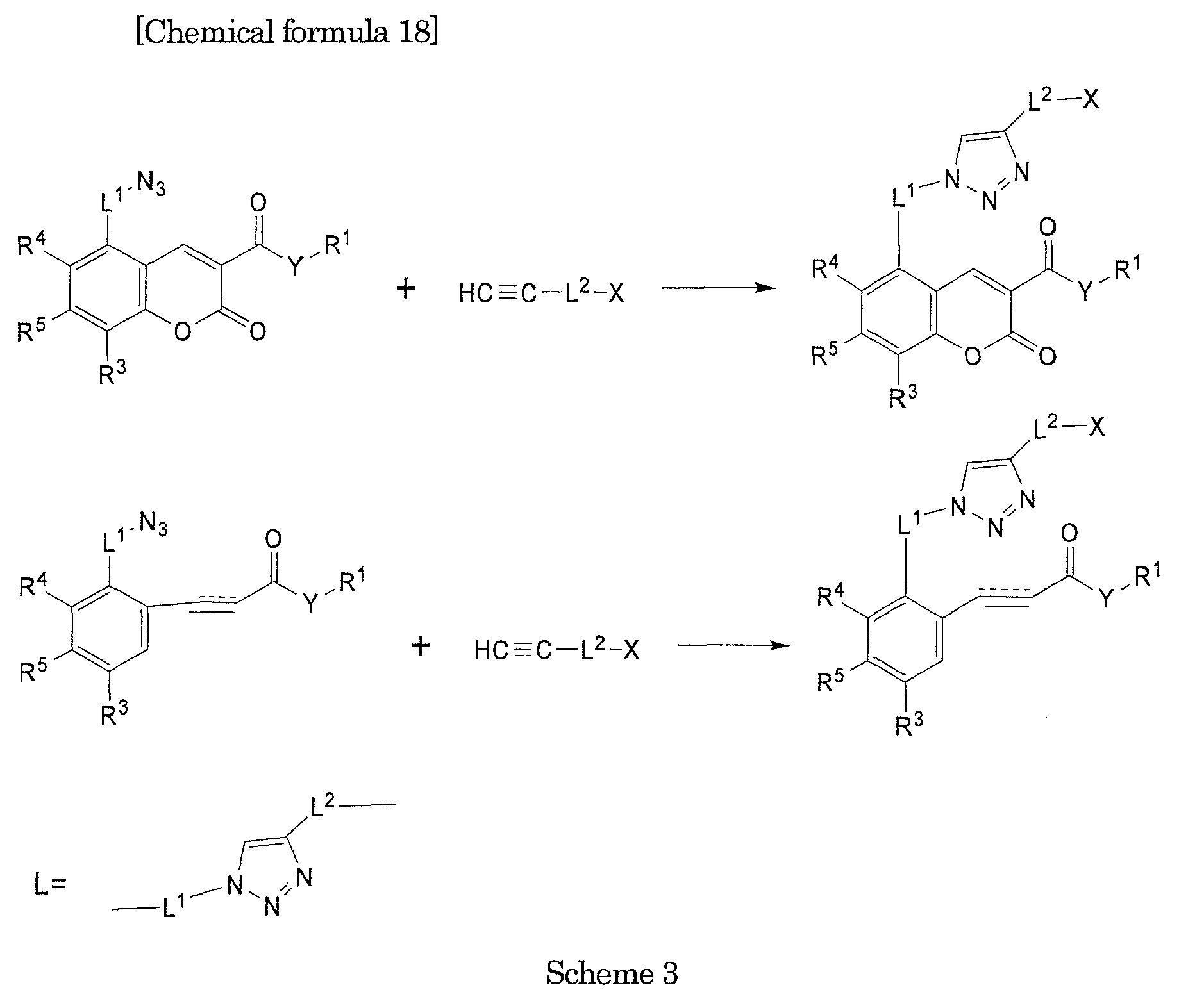
- In the above-mentioned formula,
Y is an oxygen atom or a sulfur atom,
R1 is a lower alkyl group, a lower alkyl group substituted with halogen, an aryl group, an aryl group substituted with at least one selected from the group consisting of hydroxy, halogen, and lower alkoxy, a lower aralkyl group, or a lower aralkyl group substituted with at least one selected from the group consisting of hydroxy, halogen, and lower alkoxy,
X is a fluorescent group,
L is a linker for X,
R3 and R4 are each independently a hydrogen atom, a halogen atom, a lower alkyl group, a hydroxy group, a lower alkoxy group, or a lower alkyl group substituted with halogen,
R5 is a hydroxy group, an amino group, an amino group that has been mono- or di-substituted with lower alkyl, or a lower alkoxy group, and -

- denotes a double bond or a triple bond.
- The present invention further can provide a bioimaging method that includes labeling a target protein by a method for fluorescently labeling a protein of the present invention. Preferably, the bioimaging method of the present invention includes imaging of a cell or tissue that expresses the target protein. The cell or tissue is not particularly limited but is preferably an animal cell or tissue, more preferably a mammalian cell or tissue, further preferably a primate cell or tissue, and still further preferably a human cell or tissue.
- The following abbreviations are used in the descriptions in this specification.
DMSO: Dimethylsulfoxide
HOBt: 1-hydroxybenzotriazole
DMF: Dimethylformamide
WSCD·HCl: Water-soluble carbodiimide :
1-ethyl-3-(3-dimethylaminopropyl)carbodiimide hydrochloride
MOMCl: Methoxymethylchloride
DIEA: N,N-diisopropylethylamine
NBS: N-bromosuccinimide
AIBN: Azobisbutyronitrile
TFA: Trifluoroacetic acid
TCEP: Tris[2-carboxyethyl]phosphine
SDS-PAGE: Sodium dodecyl sulfate polyacrylamide gel electrophoresis
CBB: Coomassie brilliant blue
DTT: Dithiothreitol
MESNa: 2-mercaptoethanesulfonic acid sodium salt - Compounds were of the best grade available, purchased from Tokyo Chemical Industry Co., Ltd., Wako Pure Chemical Industries, Ltd., and Sigma-Aldrich Japan, K.K., and used without further purification.
- NMR spectra were recorded on a JEOL JNM-AL400 instrument (JEOL Ltd.) at 400 MHz for 1H and at 100.4 MHz for 13NMR using tetramethylsilane as an internal standard. Mass spectra (EI) were taken on a Shimazu GCMS-QP2000 (Shimadzu Corporation) operating in the electron impact mode (70 eV) equipped with CBP1-M25-025 column. High-resolution mass spectra (HRMS) were obtained on a JEOL JMS-DX303 (JEOL Ltd.). ESI-TOF MS was taken on a Waters LCT-Premier XE (Nihon Waters K.K.). Fluorescence spectra were measured using a Hitachi F4500 spectrometer (Hitachi, Ltd.). Slit width was 2.5 nm for both excitation and emission. The photomultiplier voltage was 700 V Samples were dissolved in DMSO (biochemical grade, Wako Pure Chemical Industries, Ltd.) before fluorescence measurement. Silica gel column chromatography was performed using BW-300 (Fuji Silysia Chemical Ltd.). Fluorescence imaging was visualized usingAE-6935B
VISIRAYS-B. - The following compound FCTP was produced according to Scheme 4 below.
-


- In Scheme 4: (a) diethyl malonate, piperidine/EtOH, (b) MOMCl, DIEA/DMF, (c)NBS, AIBN/CCl4, (d) 1. 2-[2-(2-azidoethoxy)ethoxy]ethanol, NaH/DMF; 2. 2N aqueous NaOH solution; 3. TFA, (e) thiophenol, WSCD·HCl, HOBt·H2O/DMF, (f) 6-carboxyfluorescein-propargylamide, CuSO4, sodium ascorbate/DMF/H2O (4/1).
- 2,4-dihydroxy-6-methylbenzaldehyde (2.0 g), diethyl malonate (2.2 ml, 14.4 mmol), and piperidine (0.35 ml) were dissolved in ethanol (20 ml), which then was stirred at 100°C for 23 hours. After the mixture was cooled, the crystals obtained thereby were isolated by filtration and washed with cold ethanol (-20°C) to yield compound (1) (2.02 g, yield 62%).
- 1H-NMR (400 MHz, CDCl3): δ 1.41 (t, J = 7.2 Hz, 3H), 2.54 (s, 3H), 4.41 (q, J = 7.2 Hz, 2H), 6.71 (d, J = 7.2 Hz, 1H) 6.76 (d, 1H), 8.71 (s, 1H);
13C-NMR (100 MHz, CDCl3: δ 14.1, 17.9, 60.8, 99.9,109.3,110.9,115.2,140.6,146.0, 156.4, 157.9, 163.3, 164.2;
HRMS(EI+): Calculated 248.06, Found 248.06. - 7-hydroxy-5-methylcoumarin-3-carboxylic acid ethyl ester (1) (0.20 g, 0.7 mmol), diisopropylethylamine (0.40 ml, 1.8 mmol), and chloromethylmethylether (0.015 ml, 1.8 mmol) were dissolved in DMF, which then was stirred at 0°C for two hours. After the solvent was removed from the mixture, the residue thus obtained was dissolved in a 10% aqueous citric acid solution (30 mL) and extracted with ethyl acetate. The organic phase thus obtained was dried over Na2SO4 and the solvent was evaporated to dryness under reduced pressure to yield compound (2) (0.186 mg, yield 79%).
- 1H-NMR (400 MHz, CDCl3) δ 1.41 (t, J = 7.2 Hz, 3H) 2.55 (s, 1H) 3.49 (s, 3H) 4.42 (q, J =7.2 Hz, 2H) 5.23 (s, 2H) 6.82 (d, J = 6.0 Hz, 1H) 6.85 (d, J = 6.0 Hz, 1H) 8.69 (s, 1H);
13C-NMR (100 MHz, CDCl3): δ 14.3, 18.5, 56.5, 61.7, 94.2,101.2,111.7,113.8,115.3, 139.8, 145.9, 157.1, 157.9, 162.1, 163.8;
HRMS(EI+) : Calculated 292.09, Found 292.09. - 7-(methoxymethoxy)-5-methylcoumarin-3-carboxylic acid ethyl ester (2) (0.5 g, 1.3 mmol), NBS (0.365 g, 2.1 mmol), and AIBN (0.04 g, 0.24 mmol) were dissolved in CCl4 (15 ml), which then was stirred at 95°C for seven hours. After the solvent was removed from the mixture, the residue thus obtained was eluted with dichloromethane/ethyl acetate (97/3) and purified using silica gel column chromatography to yield compound (3) (0.327 g, yield 52%).
- 1H-NMR (400 MHz, CDCl3); δ 1.42 (t, J = 7.2 Hz, 3H) 3. 50 (s, 3H) 4.42 (q, J = 7.2 Hz, 2H) 4.65 (s, 1H) 5.27 (s, 2H) 6.98 (d, J = 6.0 Hz, 1H) 7.01 (d, J = 6.0 Hz, 1H) 8.77 (s, 1H);
13C-NMR(100 MHz, CDCl3): δ 14.3, 27.9, 56.7, 62.0, 94.5, 103.7, 110.7, 114.8, 115.7, 138.1, 144.5, 156.4, 157.9, 161.7, 163.3;
HRMS(EI+) : Calculated 370.01, Found 370.00. - 2-[2-(2-azidoethoxy)ethoxy]ethanol (0.233 g, 1.3 mmol) and sodium hydride (0.038 g, 1.6 mmol) were dissolved in DMF (5 ml), which then was stirred at room temperature for 15 minutes. 5-bromomethyl-7-(methoxymethoxy)coumarin-3-carboxylic acid ethyl ester (3) was added to the mixture, and the mixture thus obtained was stirred at room temperature for 1.5 hours. Then, an aqueous NaOH solution (2 N, 3 ml) was added to the mixture. After 20 minutes, the mixture was neutralized with a saturated solution of citric acid and with dichloromethane. After the solvent was removed, the residue thus obtained was dissolved in TFA (10 ml), which then was stirred at room temperature for one hour. After the solvent was removed, the residue obtained by reversed-phase HPLC in which it was eluted with H2O/acetonitrile containing 0.1% formic acid was purified to yield compound (4) (21 mg, yield 8%).
- 1H-NMR (400 MHz, CDCl3: δ 3.21 (s, 2H) 3.53-3.61 (m, 10H) 6.61 (s, 1H) 6.82 (s, 1H) 8.86 (s, 1H);
MS(ESI+) : Calculated 394.35, Found 394.11. -

- 5-((2-(2-(2-azidoethoxy)ethoxy)ethoxy)methyl)-7-hydroxycoumarin-3-carboxylic acid (4) (15.5 mg, 0.039 mmol), WSCD·HC1 (9.6 mg, 0.047 mmol), and HOBt·HzO (7.3 mg, 0.047 mmol) were dissolved in DMF (2 ml), which then was stirred at room temperature for one hour. Thereafter, thiophenol (0.0039 ml, 0.039 mmol) was added to the mixture, which then was stirred for one hour. After the solvent was removed, the residue thus obtained was eluted with dichloromethane/methanol (98/2) and purified by silica gel column chromatography to yield compound CATP (17 mg, 89%).
- 1H-NMR (400 MHz, CDCl3): δ 3.37 (t, J = 4.8 Hz, 2H) 3.60-3.75 (m, 10H) 4.73 (s, 2H) 6.71 (d, J = 2.0 Hz, 1H) 7.01 (d, J = 2.0 Hz, 1H) 7.46 (m, 5H) 8.68 (s, 1H); 13C-NMR (100 MHz, CDCl3): δ 50.5,69.6, 69.8, 70.1, 70.2, 70.6, 77.0, 70.6,102.4,109.6, 114.5, 117.6, 128.3, 129.1, 129.5, 134.9, 140.5, 158.1, 159.2,163.4,187.2;
HRMS (FAB+) Calculated 486.14, Found 486.13. - Compound CATP (32 mg, 0.068 mmol), 6-carboxyfluorescein-propargylamide (28 mg, 0.068 mmol), CuSO4 (8.5 mg, 0.034 mmol), and sodium ascorbate (13.3 mg, 0.068 mmol) were dissolved in DMF/H2O (4/1), which then was stirred at room temperature for one hour. After the solvent was removed, the residue obtained by reversed-phase HPLC in which it was eluted with 0.1% formic acid-containing H2O/acetonitrile was purified to yield Compound FCTP (10 mg, yield 16%).
- 1H-NMR (400 MHz, DMSO-d6): δ 3.35-4.35 (m, 8H) 3.70 (t, J = 4.8,2H) 4.37-4.42 (m, 4H) 4.69 (s, 2H) 6.53-6.69 (m, 7H) 6.80 (s, 1H) 7.46 (s, 5H) 7.71 (s, 1H) 7.86 (s, 1H) 8.05 (d, 1H) 8.18 (d, 1H) 8.66 (s, 1H);
13C-NMR (100 MHz, DMSO-d6): δ 34.9, 49.2, 68.6, 69.2, 69.3, 69.4, 69.5, 69.6, 69.7, 83.4, 101.7,102.2,108.3,108.4,109.1,112.7,115.8,115.9,122.3,122.4,124.8,128.3,128.4, 129.1, 129.2, 129.3, 129.4, 129.5, 134.8, 140.3, 140.9, 144.2, 151.8, 152.7, 158.4, 159.6, 164.4, 168.0, 185.3;
HRMS (FAB+) Calculated 899.22, Found 899.23. - With a plasmid (for coding DNA of a His tag fusion protein of a PYP) used as a template, DNA of the His-PYP was amplified by PCR (PrimeSTAR HS DNA Polymerase, TAKARA BIO INC.) using the primers indicated below. The plasmid was provided by Professor K. J. Hellingwerf of University of Amsterdam. The PYP is derived from Ectohiodospira halophila (Halorhodospira halophila). The PCR fragment (insert) was separated with a 2.0% agarose gel and then extracted using a kit (QIA quick Gel Extraction kit, QIAGEN). The vector for E. coli expression, pET-21b(+), and the insert were subjected to a restriction enzyme treatment with Hindl III and Nde I (both manufactured by TAKARA BIO INC.), and a T4-DNA ligase was used to integrate the insert into pET-21b(+). Thus, the pET-PYP was produced.
- Primers for PCR
Forward Primer (SEQ ID NO: 30):
CGGAGATATACATATGAGAGGATCGCATCAC
Reverse Primer (SEQ ID NO: 31):
GCTAATTAAGCTTCTAGACGC - The pET-PYP was transformed into E. coli (BL21 (DE3)) and then grown to an OD600 of 0.6 to 0.8 Å in Luria-Bertani (LB) medium at 37 °C. Next, IPTG was added with a final concentration of 100 µM and this was grown overnight at 20 °C. The E. coli thus grown was harvested and then was subjected to ultrasonic fragmentation. Thereafter, a soluble fraction was extracted. The soluble fraction PYP was purified with the Ni-NTA column (Ni-NTA agarose; QIAGEN) using the buffers described below according to the QIAGEN'S protocol. Then the fraction was subjected to final purification by gel filtration column chromatography (SuperdexTM 75 10/300 GL, GE Healthcare) using Tris buffer (20 mM Tris-HCl, 150 mM NaCl, 1 mM TCEP, pH 8.0) as a mobile phase.
- Conditions for Ni-NTA column include:
- a binding solution: phosphoric acid buffer (50 mM sodium phosphate, 300 mM NaCl, 10 mM imidazole, pH 8.0),
- a washing solution: phosphoric acid buffer (50 mM sodium phosphate, 300 mM NaCl, 20 mM imidazole, pH 8.0), and
- an eluate: phosphoric acid buffer (50 mM sodium phosphate, 300 mM NaCl, 50 mM imidazole, pH 8.0).
- A sequence to be cleaved by a protease, enterohnase, has been inserted between His tag and PYP In order to remove the His tag, enterokinase (Recombinant Enterokinase; Novagen) was added to the purified PYP, which then was allowed to stand at room temperature for 18 hours. Thereafter, a sample was added to the Ni-NTA column (Ni-NTA agarose; QIAGEN) and the His tag site was adsorbed thereto. Thus, cleaved PYP was purified. The sample from which the His tag site had been removed was added to a benzamidine column (HiTrap Benzamidine FF, GE Healthcare) and thereby protease was removed. The purified sample was subjected to ultrafiltration (
VIVASPIN 500, 5000 MWCO PES, Sartorius Stedim) to substitute Tris buffer (20 mM Tris-HCl, 150 mM NaCl, 1 mM TCEP, pH 8.0). - In Tris buffer (20 mM Tris-HCl, 150 mM NaCl, 1 mM TCEP (pH 8.0)), 5 µM of PYP was reacted with 12.5 µM of compound FCTP at 37°C for 24 hours. After completion of the reaction, the result was analyzed by SDS-PAGE (20% acrylamide separation gel). The resultant CBB-stained image is shown in
FIG. 1(a) and the resultant fluorescent image is shown inFIG. 1(b) . With reference toFIG. 1(a) , in the CBB-stained image, a slowly migrating band was observed with the addition of compound FCTP. With reference toFIG. 1(b) , similarly in the fluorescent image, fluorescence was observed. Thus, it was confirmed that compound FCTP was able to label the PYP Furthermore, since an addition of DTT (100 mM) reduced the slowly migrating band and also made the fluorescence intensity weaker, it was confirmed that the thioester bond between the PYP and compound CATP was hydrolyzed by a large excess of DTT. - In a HEK293T cell lysate dissolved in Tris buffer (20 mM Tris-HCl, 150 mM NaCl, 1 mM TCEP (pH 8.0)), 5 µM of PYP was reacted with 50 µM of compound FCTP at 37°C for 30 minutes in the presence or absence of 10 mM MESNa. After completion of the reaction, it was analyzed by SDS-PAGE (20% acrylamide separation gel). The resultant CBB-stained image is shown in
FIG. 2(a) and the resultant fluorescent image is shown inFIG. 2(b) . As shown inFIGS. 2(a) and 2(b) , with an addition of compound FCTP, fluorescence was observed in the vicinity of the PYP band confirmed by the CBB-stained image. Furthermore, another fluorescent band was observed in the high molecular weight range. On the other hand, the fluorescent band on the high molecular weight side disappeared upon addition of MESNa (10 mM), which was a type of thiol compound. It was confirmed that an addition of a certain amount of free thiol allowed labeling to be carried out specifically in the cell lysate. - In order to examine the fluorescent properties of compound FCTP bound to the PYP, Tris buffer (20 mM Tris-HCl, 150 mM NaCl, 1 mM TCEP (pH 8.0)), the fluorescence and excitation spectra were measured at 37°C.
FIG. 3(a) shows time-dependent fluorescence spectra of 8 µM of compound FCTP in the presence of 5 µM of PYP,FIG. 3(b) shows time-dependent excitation spectra of 8 µM of compound FCTP in the presence of 5 µM of PYP, andFIG. 3(c) shows fluorescence spectra (excitation at 500 nm) of 8 µM of compound FCTP. - As shown in
FIG. 3(c) , in the case of compound FCTP alone, the fluorescence intensity was very weak and no change in fluorescence spectra was observed with the passage of time. On the other hand, as shown inFIGS. 3(a) and 3(b) , the fluorescence intensity of compound FCTP increased in the presence of the PYP with the passage of time and changes in both fluorescence and excitation spectra were observed. From these results, it was confirmed that compound FCTP had a weaker fluorescence intensity before binding to the PYP and the fluorescence intensity increased considerably upon binding. - In order to express a PYP on the cell surface, a plasmid was prepared in which a gene PYP-TM obtained by fusing a PYP with the transmembrane domain of a platelet-derived growth factor receptor (PDGFR) was introduced into the multicloning site of pcDNA3.1, which is a mammalian expression vector. HEK293T cells were transfected with this plasmid by using
lipofectamine 2000. After transfection with the plasmid, the HEK293T cells were allowed to stand at 37°C for 36 hours and then washed with a phosphoric acid buffer (PBS). A culture medium containing FCTP (20 µM) was added thereto, which then was allowed to stand for 30 minutes. Thereafter, the culture media was replaced by a culture medium containing 10% fetal bovine serum (FBS) and the cells then were observed with a fluorescence microscope. With the fluorescence microscope having an excitation wavelength of 488 nm, the cells were observed using a fluorescent filter of 510 to 550 nm. The microscopic images obtained thereby are shown inFIG. 4 . - A plasmid was prepared in which a gene MBP-PYP obtained by fusing a maltose binding protein (MBP) with a PYP was introduced into the multicloning site of pcDNA3.1, which was a mammalian expression vector. Furthermore, in order to express a PYP on the cell surface, a plasmid was prepared in which a gene PYP-TM obtained by fusing a PYP with the transmembrane domain of a platelet-derived growth factor receptor (PDGFR) was introduced into the multicloning site of pcDNA3.1, which was a mammalian expression vector. HEK293T cells were transfected with these plasmids by using
lipofectamine 2000. After transfection with the plasmids, the HEK293T cells were allowed to stand at 37°C for 36 hours and then washed with a phosphoric acid buffer (PBS). A culture medium containing CATP (5 µM) was added thereto, which then was allowed to stand for 30 minutes. Thereafter, the culture medium was replaced by a culture medium containing 10% fetal bovine serum (FBS) and the cells then were observed with a fluorescence microscope. With the fluorescence microscope having an excitation wavelength of 436 nm, the cells were observed with a fluorescent filter of 470 to 495 nm.FIG. 5 shows the reaction procedure andFIG. 6 shows the fluorescence microscopic images obtained thereby. - As shown in
FIGS. 4 and6 , both fluorescent labeling with FCTP and that with CATP were observed in the PYP-TM expressed cells. On the other hand, neither fluorescent labeling with FCTP nor that with CATP was observed in the cells where PYP-TM was not expressed. These results confirmed that both FCTP and CATP specifically labeled the PYP on the cell membranes. Furthermore, as shown inFIG. 6 , fluorescent labeling with CATP was observed in the cells in which MBP-PYP was expressed, while fluorescent labeling with CATP was not observed in the cells in which MBP-PYP was not expressed. These results confirmed that CATP specifically labeled the PYP inside the cultured cell. - The method for fluorescently labeling a protein of the present invention can be used, for example, for cell imaging.
- SEQ ID NO: 30: Forward Primer
SEQ ID NO: 31: Reverse Primer


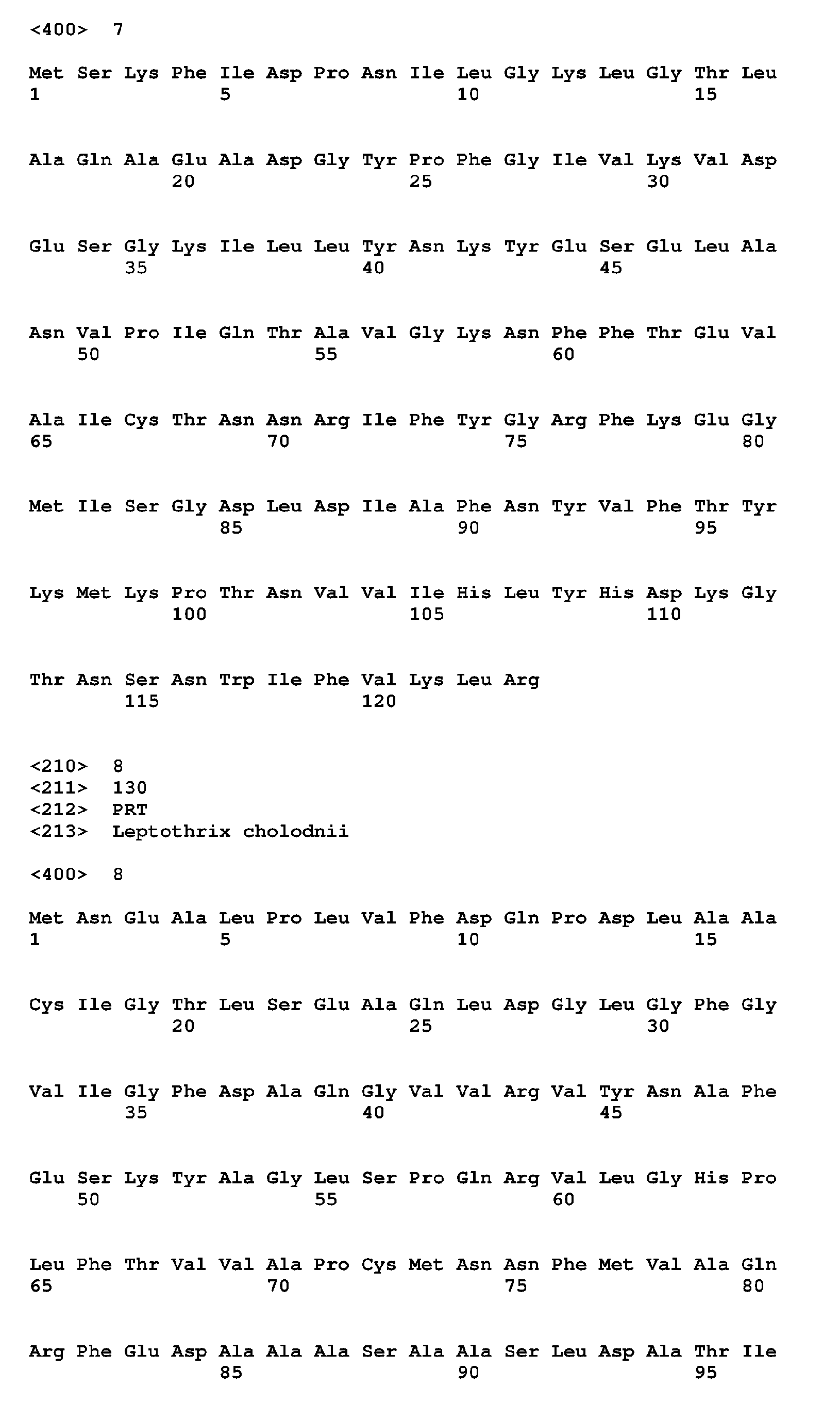


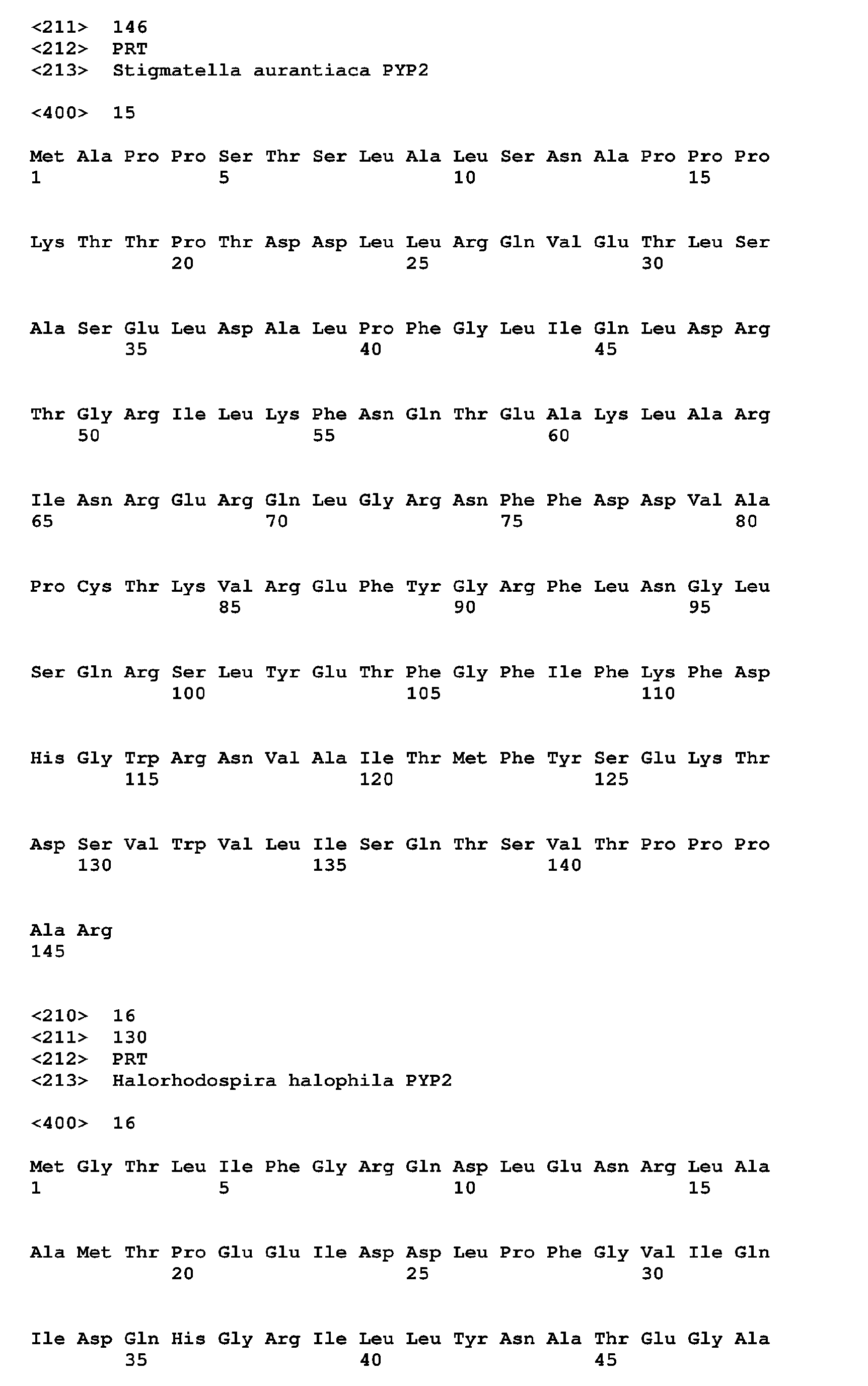


Claims (8)
- A method for fluorescently labeling a protein comprising:obtaining a fusion protein of a target protein to be labeled and a photoactive 5 yellow protein (PYP) or a PYP-derived protein, and fluorescently labeling the target protein by reacting the fusion protein with a compound represented by Formula (I) below or a salt thereofwherein in the compound represented by Formula (I) or the salt thereof, a coumarin skeleton in Formula (A) or a benzene skeleton in Formula (B) is intramolecularly associated with a group X and as a result, fluorescence derived from the group X is suppressed, andwhen in the compound represented by Formula (I) or the salt thereof, the coumarin skeleton in Formula (A) or the benzene skeleton in Formula (B) is bound to the PYP or the PYP-derived protein contained in the fusion protein, the coumarin skeleton in Formula (A) or the benzene skeleton in Formula (B) is intramolecularly dissociated from the group X, and thereby fluorescence derived from the group X can be emitted,

Y is an oxygen atom or a sulfur atom,
R1 is a lower alkyl group, a lower alkyl group substituted with halogen, an aryl group, an aryl group substituted with at least one selected from the group consisting of hydroxy, halogen, and lower alkoxy, a lower aralkyl group, or a lower aralkyl group substituted with at least one selected from the group consisting of hydroxy, halogen, and lower alkoxy, and
R2 is a group represented by Formula (A) including the coumarin skeleton or a group represented by Formula (B) including the benzene skeleton,
wherein in Formula (A) and Formula (B),
X is a fluorescent group,
L is a linker for X,
R3 and R4 are each independently a hydrogen atom, a halogen atom, a lower alkyl group, a hydroxy group, a lower alkoxy group, or a lower alkyl group substituted with halogen,
R5 is a hydroxy group, an amino group, an amino group that has been mono- or
di-substituted with lower alkyl, or a lower alkoxy group, and
- The method for fluorescently labeling a protein according to claim 1, wherein the amino acid sequence of the PYP or PYP-derived protein in the fusion protein is one selected from the group consisting of.1) amino acid sequences represented by SEQ ID NOS: 1 to 17 of the sequence listing,2) amino acid sequences represented by SEQ ID NOS: 1 to 17 of the sequence listing in which the 1st to 24th, 25th, 26th, or 27th amino acids have been deleted,3) amino acid sequences in which one to several amino acids of the amino acid sequences of either 1) or 2) described above have been deleted, substituted, or added, wherein when the fusion protein binds to the coumarin skeleton in Formula (A) or the benzene skeleton in Formula (B), the coumarin skeleton in Formula (A) or the benzene skeleton in Formula (B) is intramolecularly dissociated from the group X in the compound represented by Formula (I), and thereby fluorescence derived from the group X can be emitted, and4) amino acid sequences having a homology of at least 70% with the amino acid sequences of either 1) or 2) described above, wherein when the fusion protein binds to the coumarin skeleton in Formula (A) or the benzene skeleton in Formula (B), the coumarin skeleton in Formula (A) or the benzene skeleton in Formula (B) is intramolecularly dissociated from the group X in the compound represented by Formula (I), and thereby fluorescence derived from the group X can be emitted.
- The method for fluorescently labeling a protein according to claim 1 or 2, wherein obtaining the fusion protein comprises obtaining a polynucleotide for coding the fusion protein, obtaining a plasmid or vector that can express the fusion protein, expressing the fusion protein in a cell, or isolating the fusion protein thus expressed.
- A composition to be used for a method according to any one of claims 1 to 3, comprising a compound represented by Formula (I) or a salt thereof,

Y is an oxygen atom or a sulfur atom,
R1 is a lower alkyl group, a lower alkyl group substituted with halogen, an aryl group, an aryl group substituted with at least one selected from the group consisting of hydroxy, halogen, and lower alkoxy, a lower aralkyl group, or a lower aralkyl group substituted with at least one selected from the group consisting of hydroxy, halogen, and lower alkoxy, and
R2 is a group represented by Formula (A) including a coumarin skeleton or a group represented by Formula (B) including a benzene skeleton,
wherein in Formula (A) and Formula (B),
X is a fluorescent group,
L is a linker for X,
R3 and R4 are each independently a hydrogen atom, a halogen atom, a lower alkyl group, a hydroxy group, a lower alkoxy group, or a lower alkyl group substituted with halogen,
R5 is a hydroxy group, an amino group, an amino group that has been mono- or
di-substituted with lower alkyl, or a lower alkoxy group, and
- A plasmid or vector to be used for a method according to any one of claims 1 to 3,
wherein the plasmid or vector is one for cloning a polynucleotide for coding a fusion protein of a target protein to be labeled and a PYP or PYP-derived protein or one for expressing the fusion protein, and
the plasmid or vector comprises a base sequence selected from the group consisting of:1) base sequences represented by SEQ ID NOS: 18 to 29 of the sequence listing,2) base sequences represented by SEQ ID NOS: 18 to 29 of the sequence listing in which base sequences have been deleted corresponding to deletion of the 1st to 24th, 25th, 26th, or 27th at the N terminus of the amino acid sequences that are coded with the base sequences,3) base sequences in which one to several bases of the base sequences of either 1) or 2) described above have been deleted, substituted, or added, wherein the base sequences code amino acid sequences in which when the fusion protein binds to the coumarin skeleton in Formula (A) or the benzene skeleton in Formula (B), the coumarin skeleton in Formula (A) or the benzene skeleton in Formula (B) is intramolecularly dissociated from the group X in the compound represented by Formula (I), and thereby fluorescence derived from the group X can be emitted, and4) base sequences that have a homology of at least 70% with the base sequences of either 1) or 2) described above, wherein the base sequences code amino acid sequences in which when the fusion protein binds to the coumarin skeleton in Formula (A) below or the benzene skeleton in Formula (B) below, the coumarin skeleton in Formula (A) or the benzene skeleton in Formula (B) is intramolecularly dissociated from the group X in the compound represented by Formula (I), and thereby fluorescence derived from the group X can be emitted,
Y is an oxygen atom or a sulfur atom,
R1 is a lower alkyl group, a lower alkyl group substituted with halogen, an aryl group, an aryl group substituted with at least one selected from the group consisting of hydroxy, halogen, and lower alkoxy, a lower aralkyl group, or a lower aralkyl group substituted with at least one selected from the group consisting of hydroxy, halogen, and lower alkoxy, and
R2 is a group represented by Formula (A) including the coumarin skeleton or a group represented by Formula (B) including the benzene skeleton,
wherein in Formula (A) and Formula (B),
X is a fluorescent group,
L is a linker for X,
R3 and R4 are each independently a hydrogen atom, a halogen atom, a lower alkyl group, a hydroxy group, a lower alkoxy group, or a lower alkyl group substituted with halogen,
R5 is a hydroxy group, an amino group, an amino group that has been mono- or di-substituted with lower alkyl, or a lower alkoxy group, and

- A kit for a method for fluorescently labeling a protein, comprising a composition according to claim 4 and a plasmid or vector according to claim 5.
- A compound represented by General Formula (I) or a salt thereof,

Y is an oxygen atom or a sulfur atom,
R1 is a lower alkyl group, a lower alkyl group substituted with halogen, an aryl group, an aryl group substituted with at least one selected from the group consisting of hydroxy, halogen, and lower alkoxy, a lower aralkyl group, or a lower aralkyl group substituted with at least one selected from the group consisting of hydroxy, halogen, and lower alkoxy, and
R2 is a group represented by Formula (A) including a coumarin skeleton or a group represented by Formula (B) including a benzene skeleton,
wherein in Formula (A) and Formula (B),
X is a fluorescent group,
L is a linker for X,
R3 and R4 are each independently a hydrogen atom, a halogen atom, a lower alkyl group, a hydroxy group, a lower alkoxy group, or a lower alkyl group substituted with halogen,
R5 is a hydroxy group, an amino group, an amino group that has been mono- or di-substituted with lower alkyl, or a lower alkoxy group, and
- The compound or the salt thereof according to claim 7, wherein
Y is a sulfur atom,
R1 is an aryl group or an aryl group substituted with at least one selected from the group consisting of hydroxy, halogen, and lower alkoxy, and
R2 is a group represented by Formula (A) or Formula (B),
wherein in Formula (A) and Formula (B),
X is a group represented by Formula (i),
L is a group represented by Formula (a), Formula (b), Formula (c), or Formula (d), R3 and R4 each are a hydrogen atom,
R5 is hydroxy, and
wherein in Formula (a) and Formula (b),
n1, n2, n3, n4, n5, and n6 are each independently an integer of 0 or 1 to 5, and R11 is a hydrogen atom or a lower alkyl group, and
in Formula (c) and Formula (d),
n1, n2, n3, n4, n5, n6, and n7 are each independently an integer of 0 or 1 to 5, and R11 and R12 are each independently a hydrogen atom or a lower alkyl group, [Chemical Formula 32]


-(CH2)n1O(CH2)n2O(CH2)n3O(CH2)n4-(CH2)n5NR11CO(CH2)n6NR12CO(CH2)n7- (c)
-(CH2)n5CONR11(CH2)n6CONR12(CH2)n7-(CH2)n1O(CH2)n2O(CH2)n3O(CH2)n4- (d)
Applications Claiming Priority (2)
| Application Number | Priority Date | Filing Date | Title |
|---|---|---|---|
| JP2009056305 | 2009-03-10 | ||
| PCT/JP2010/054024 WO2010104124A1 (en) | 2009-03-10 | 2010-03-10 | Method for fluorescently labeling protein |
Publications (3)
| Publication Number | Publication Date |
|---|---|
| EP2399925A1 true EP2399925A1 (en) | 2011-12-28 |
| EP2399925A4 EP2399925A4 (en) | 2013-01-02 |
| EP2399925B1 EP2399925B1 (en) | 2015-08-19 |
Family
ID=42728412
Family Applications (1)
| Application Number | Title | Priority Date | Filing Date |
|---|---|---|---|
| EP10750877.2A Not-in-force EP2399925B1 (en) | 2009-03-10 | 2010-03-10 | Method for fluorescently labeling protein |
Country Status (4)
| Country | Link |
|---|---|
| US (1) | US20110319603A1 (en) |
| EP (1) | EP2399925B1 (en) |
| JP (1) | JP5299932B2 (en) |
| WO (1) | WO2010104124A1 (en) |
Families Citing this family (2)
| Publication number | Priority date | Publication date | Assignee | Title |
|---|---|---|---|---|
| KR101527766B1 (en) * | 2013-02-27 | 2015-06-11 | 한국과학기술원 | Methods for anylysising target protein using PYP proteins and PYP mutants therefor |
| CN116271107B (en) * | 2022-11-30 | 2025-05-13 | 上海交通大学医学院附属仁济医院 | Endogenous nano probe, preparation method and application thereof |
Family Cites Families (2)
| Publication number | Priority date | Publication date | Assignee | Title |
|---|---|---|---|---|
| US7241611B2 (en) * | 2002-06-18 | 2007-07-10 | Universiteit Gent | Methods for synthesis of holo-photoactive yellow protein |
| US7399639B2 (en) * | 2003-05-04 | 2008-07-15 | Massachusetts Institute Of Technology | Sensors, and methods of making and using the same |
-
2010
- 2010-03-10 EP EP10750877.2A patent/EP2399925B1/en not_active Not-in-force
- 2010-03-10 US US13/255,431 patent/US20110319603A1/en not_active Abandoned
- 2010-03-10 JP JP2011503847A patent/JP5299932B2/en active Active
- 2010-03-10 WO PCT/JP2010/054024 patent/WO2010104124A1/en not_active Ceased
Also Published As
| Publication number | Publication date |
|---|---|
| JPWO2010104124A1 (en) | 2012-09-13 |
| WO2010104124A1 (en) | 2010-09-16 |
| JP5299932B2 (en) | 2013-09-25 |
| US20110319603A1 (en) | 2011-12-29 |
| EP2399925A4 (en) | 2013-01-02 |
| EP2399925B1 (en) | 2015-08-19 |
Similar Documents
| Publication | Publication Date | Title |
|---|---|---|
| JP7843318B2 (en) | Activation of bioluminescence through structural complementarity | |
| US8476031B2 (en) | Methods for protein labeling based on acyl carrier protein | |
| US9701667B2 (en) | Coumarin-based fluorogenic agents and uses thereof for specific protein labelling | |
| US8178669B2 (en) | Fluorescent probe for peroxynitrite | |
| Liu et al. | A squaraine-based red emission off–on chemosensor for biothiols and its application in living cells imaging | |
| JP7140398B2 (en) | Nitrobenzene derivative or salt thereof and uses thereof | |
| US20200199174A1 (en) | Novel fluorescent labeling method | |
| US20140051109A1 (en) | Novel compounds with photoluminescence properties and applications thereof | |
| KR20050049513A (en) | Protein labelling with o6-alkylguanine-dna alkyltransferase | |
| WO2018003686A1 (en) | Enzyme-specific intracellularly-retained red fluorescent probe | |
| EP2399925B1 (en) | Method for fluorescently labeling protein | |
| JPWO2008123180A1 (en) | Target substance detection method, tag, DNA, vector, probe and detection kit used therefor | |
| JP2010119382A (en) | Method for fluorescently labeling protein | |
| JP5686385B2 (en) | Methods for fluorescently labeling proteins | |
| JP2016193897A (en) | pH-dependent fluorescent compounds | |
| JP2010207134A (en) | Method for labeling protein in two steps | |
| KR101125058B1 (en) | Compound for labeling material, intermediate therefor and process for producing the same | |
| JP5360609B2 (en) | Reagent for low oxygen environment measurement | |
| WO2016017194A1 (en) | Method for fluorescently labeling methylated dna | |
| JP2024126404A (en) | How to fluorescently label proteins | |
| JP2025133730A (en) | Methods for visualizing protein-protein interactions | |
| US20150276751A1 (en) | Reagent for imaging intracellular acetylation | |
| WO2011021581A1 (en) | Selective marker for target biopolymer | |
| WO2021153772A1 (en) | Blue fluorescent probe for detecting aldehyde dehydrogenase 1a1 | |
| US20150285814A1 (en) | Phosphorescent dye and phosphorescence immunoassay by peptide displacement |
Legal Events
| Date | Code | Title | Description |
|---|---|---|---|
| PUAI | Public reference made under article 153(3) epc to a published international application that has entered the european phase |
Free format text: ORIGINAL CODE: 0009012 |
|
| 17P | Request for examination filed |
Effective date: 20110923 |
|
| AK | Designated contracting states |
Kind code of ref document: A1 Designated state(s): AT BE BG CH CY CZ DE DK EE ES FI FR GB GR HR HU IE IS IT LI LT LU LV MC MK MT NL NO PL PT RO SE SI SK SM TR |
|
| DAX | Request for extension of the european patent (deleted) | ||
| A4 | Supplementary search report drawn up and despatched |
Effective date: 20121203 |
|
| RIC1 | Information provided on ipc code assigned before grant |
Ipc: C07D 311/82 20060101ALI20121127BHEP Ipc: C07K 14/195 20060101ALI20121127BHEP Ipc: C09K 11/06 20060101ALI20121127BHEP Ipc: C07D 405/12 20060101ALI20121127BHEP Ipc: C07K 1/13 20060101AFI20121127BHEP Ipc: C12N 15/09 20060101ALI20121127BHEP Ipc: C07K 19/00 20060101ALI20121127BHEP Ipc: C07D 405/14 20060101ALI20121127BHEP |
|
| 17Q | First examination report despatched |
Effective date: 20130726 |
|
| GRAP | Despatch of communication of intention to grant a patent |
Free format text: ORIGINAL CODE: EPIDOSNIGR1 |
|
| INTG | Intention to grant announced |
Effective date: 20150402 |
|
| GRAS | Grant fee paid |
Free format text: ORIGINAL CODE: EPIDOSNIGR3 |
|
| GRAA | (expected) grant |
Free format text: ORIGINAL CODE: 0009210 |
|
| AK | Designated contracting states |
Kind code of ref document: B1 Designated state(s): AT BE BG CH CY CZ DE DK EE ES FI FR GB GR HR HU IE IS IT LI LT LU LV MC MK MT NL NO PL PT RO SE SI SK SM TR |
|
| REG | Reference to a national code |
Ref country code: GB Ref legal event code: FG4D |
|
| REG | Reference to a national code |
Ref country code: CH Ref legal event code: EP |
|
| REG | Reference to a national code |
Ref country code: IE Ref legal event code: FG4D |
|
| REG | Reference to a national code |
Ref country code: AT Ref legal event code: REF Ref document number: 743755 Country of ref document: AT Kind code of ref document: T Effective date: 20150915 |
|
| REG | Reference to a national code |
Ref country code: DE Ref legal event code: R096 Ref document number: 602010026834 Country of ref document: DE |
|
| REG | Reference to a national code |
Ref country code: AT Ref legal event code: MK05 Ref document number: 743755 Country of ref document: AT Kind code of ref document: T Effective date: 20150819 |
|
| REG | Reference to a national code |
Ref country code: LT Ref legal event code: MG4D |
|
| REG | Reference to a national code |
Ref country code: NL Ref legal event code: MP Effective date: 20150819 |
|
| PG25 | Lapsed in a contracting state [announced via postgrant information from national office to epo] |
Ref country code: LT Free format text: LAPSE BECAUSE OF FAILURE TO SUBMIT A TRANSLATION OF THE DESCRIPTION OR TO PAY THE FEE WITHIN THE PRESCRIBED TIME-LIMIT Effective date: 20150819 Ref country code: FI Free format text: LAPSE BECAUSE OF FAILURE TO SUBMIT A TRANSLATION OF THE DESCRIPTION OR TO PAY THE FEE WITHIN THE PRESCRIBED TIME-LIMIT Effective date: 20150819 Ref country code: GR Free format text: LAPSE BECAUSE OF FAILURE TO SUBMIT A TRANSLATION OF THE DESCRIPTION OR TO PAY THE FEE WITHIN THE PRESCRIBED TIME-LIMIT Effective date: 20151120 Ref country code: NO Free format text: LAPSE BECAUSE OF FAILURE TO SUBMIT A TRANSLATION OF THE DESCRIPTION OR TO PAY THE FEE WITHIN THE PRESCRIBED TIME-LIMIT Effective date: 20151119 Ref country code: LV Free format text: LAPSE BECAUSE OF FAILURE TO SUBMIT A TRANSLATION OF THE DESCRIPTION OR TO PAY THE FEE WITHIN THE PRESCRIBED TIME-LIMIT Effective date: 20150819 |
|
| PG25 | Lapsed in a contracting state [announced via postgrant information from national office to epo] |
Ref country code: SE Free format text: LAPSE BECAUSE OF FAILURE TO SUBMIT A TRANSLATION OF THE DESCRIPTION OR TO PAY THE FEE WITHIN THE PRESCRIBED TIME-LIMIT Effective date: 20150819 Ref country code: IS Free format text: LAPSE BECAUSE OF FAILURE TO SUBMIT A TRANSLATION OF THE DESCRIPTION OR TO PAY THE FEE WITHIN THE PRESCRIBED TIME-LIMIT Effective date: 20151219 Ref country code: ES Free format text: LAPSE BECAUSE OF FAILURE TO SUBMIT A TRANSLATION OF THE DESCRIPTION OR TO PAY THE FEE WITHIN THE PRESCRIBED TIME-LIMIT Effective date: 20150819 Ref country code: AT Free format text: LAPSE BECAUSE OF FAILURE TO SUBMIT A TRANSLATION OF THE DESCRIPTION OR TO PAY THE FEE WITHIN THE PRESCRIBED TIME-LIMIT Effective date: 20150819 Ref country code: PT Free format text: LAPSE BECAUSE OF FAILURE TO SUBMIT A TRANSLATION OF THE DESCRIPTION OR TO PAY THE FEE WITHIN THE PRESCRIBED TIME-LIMIT Effective date: 20151221 Ref country code: PL Free format text: LAPSE BECAUSE OF FAILURE TO SUBMIT A TRANSLATION OF THE DESCRIPTION OR TO PAY THE FEE WITHIN THE PRESCRIBED TIME-LIMIT Effective date: 20150819 |
|
| REG | Reference to a national code |
Ref country code: FR Ref legal event code: PLFP Year of fee payment: 7 |
|
| PG25 | Lapsed in a contracting state [announced via postgrant information from national office to epo] |
Ref country code: NL Free format text: LAPSE BECAUSE OF FAILURE TO SUBMIT A TRANSLATION OF THE DESCRIPTION OR TO PAY THE FEE WITHIN THE PRESCRIBED TIME-LIMIT Effective date: 20150819 |
|
| PG25 | Lapsed in a contracting state [announced via postgrant information from national office to epo] |
Ref country code: CZ Free format text: LAPSE BECAUSE OF FAILURE TO SUBMIT A TRANSLATION OF THE DESCRIPTION OR TO PAY THE FEE WITHIN THE PRESCRIBED TIME-LIMIT Effective date: 20150819 Ref country code: EE Free format text: LAPSE BECAUSE OF FAILURE TO SUBMIT A TRANSLATION OF THE DESCRIPTION OR TO PAY THE FEE WITHIN THE PRESCRIBED TIME-LIMIT Effective date: 20150819 Ref country code: DK Free format text: LAPSE BECAUSE OF FAILURE TO SUBMIT A TRANSLATION OF THE DESCRIPTION OR TO PAY THE FEE WITHIN THE PRESCRIBED TIME-LIMIT Effective date: 20150819 Ref country code: IT Free format text: LAPSE BECAUSE OF FAILURE TO SUBMIT A TRANSLATION OF THE DESCRIPTION OR TO PAY THE FEE WITHIN THE PRESCRIBED TIME-LIMIT Effective date: 20150819 Ref country code: SK Free format text: LAPSE BECAUSE OF FAILURE TO SUBMIT A TRANSLATION OF THE DESCRIPTION OR TO PAY THE FEE WITHIN THE PRESCRIBED TIME-LIMIT Effective date: 20150819 |
|
| REG | Reference to a national code |
Ref country code: DE Ref legal event code: R097 Ref document number: 602010026834 Country of ref document: DE |
|
| PG25 | Lapsed in a contracting state [announced via postgrant information from national office to epo] |
Ref country code: RO Free format text: LAPSE BECAUSE OF FAILURE TO SUBMIT A TRANSLATION OF THE DESCRIPTION OR TO PAY THE FEE WITHIN THE PRESCRIBED TIME-LIMIT Effective date: 20150819 |
|
| PLBE | No opposition filed within time limit |
Free format text: ORIGINAL CODE: 0009261 |
|
| STAA | Information on the status of an ep patent application or granted ep patent |
Free format text: STATUS: NO OPPOSITION FILED WITHIN TIME LIMIT |
|
| 26N | No opposition filed |
Effective date: 20160520 |
|
| PG25 | Lapsed in a contracting state [announced via postgrant information from national office to epo] |
Ref country code: BE Free format text: LAPSE BECAUSE OF NON-PAYMENT OF DUE FEES Effective date: 20160331 Ref country code: SI Free format text: LAPSE BECAUSE OF FAILURE TO SUBMIT A TRANSLATION OF THE DESCRIPTION OR TO PAY THE FEE WITHIN THE PRESCRIBED TIME-LIMIT Effective date: 20150819 |
|
| PG25 | Lapsed in a contracting state [announced via postgrant information from national office to epo] |
Ref country code: MC Free format text: LAPSE BECAUSE OF FAILURE TO SUBMIT A TRANSLATION OF THE DESCRIPTION OR TO PAY THE FEE WITHIN THE PRESCRIBED TIME-LIMIT Effective date: 20150819 Ref country code: LU Free format text: LAPSE BECAUSE OF FAILURE TO SUBMIT A TRANSLATION OF THE DESCRIPTION OR TO PAY THE FEE WITHIN THE PRESCRIBED TIME-LIMIT Effective date: 20160310 |
|
| REG | Reference to a national code |
Ref country code: CH Ref legal event code: PL |
|
| REG | Reference to a national code |
Ref country code: IE Ref legal event code: MM4A |
|
| PG25 | Lapsed in a contracting state [announced via postgrant information from national office to epo] |
Ref country code: BE Free format text: LAPSE BECAUSE OF FAILURE TO SUBMIT A TRANSLATION OF THE DESCRIPTION OR TO PAY THE FEE WITHIN THE PRESCRIBED TIME-LIMIT Effective date: 20150819 |
|
| PG25 | Lapsed in a contracting state [announced via postgrant information from national office to epo] |
Ref country code: CH Free format text: LAPSE BECAUSE OF NON-PAYMENT OF DUE FEES Effective date: 20160331 Ref country code: IE Free format text: LAPSE BECAUSE OF NON-PAYMENT OF DUE FEES Effective date: 20160310 Ref country code: LI Free format text: LAPSE BECAUSE OF NON-PAYMENT OF DUE FEES Effective date: 20160331 |
|
| REG | Reference to a national code |
Ref country code: FR Ref legal event code: PLFP Year of fee payment: 8 |
|
| PG25 | Lapsed in a contracting state [announced via postgrant information from national office to epo] |
Ref country code: MT Free format text: LAPSE BECAUSE OF FAILURE TO SUBMIT A TRANSLATION OF THE DESCRIPTION OR TO PAY THE FEE WITHIN THE PRESCRIBED TIME-LIMIT Effective date: 20150819 |
|
| REG | Reference to a national code |
Ref country code: FR Ref legal event code: PLFP Year of fee payment: 9 |
|
| PGFP | Annual fee paid to national office [announced via postgrant information from national office to epo] |
Ref country code: DE Payment date: 20180322 Year of fee payment: 9 Ref country code: GB Payment date: 20180321 Year of fee payment: 9 |
|
| PG25 | Lapsed in a contracting state [announced via postgrant information from national office to epo] |
Ref country code: HU Free format text: LAPSE BECAUSE OF FAILURE TO SUBMIT A TRANSLATION OF THE DESCRIPTION OR TO PAY THE FEE WITHIN THE PRESCRIBED TIME-LIMIT; INVALID AB INITIO Effective date: 20100310 Ref country code: SM Free format text: LAPSE BECAUSE OF FAILURE TO SUBMIT A TRANSLATION OF THE DESCRIPTION OR TO PAY THE FEE WITHIN THE PRESCRIBED TIME-LIMIT Effective date: 20150819 Ref country code: CY Free format text: LAPSE BECAUSE OF FAILURE TO SUBMIT A TRANSLATION OF THE DESCRIPTION OR TO PAY THE FEE WITHIN THE PRESCRIBED TIME-LIMIT Effective date: 20150819 |
|
| PGFP | Annual fee paid to national office [announced via postgrant information from national office to epo] |
Ref country code: FR Payment date: 20180328 Year of fee payment: 9 |
|
| PG25 | Lapsed in a contracting state [announced via postgrant information from national office to epo] |
Ref country code: TR Free format text: LAPSE BECAUSE OF FAILURE TO SUBMIT A TRANSLATION OF THE DESCRIPTION OR TO PAY THE FEE WITHIN THE PRESCRIBED TIME-LIMIT Effective date: 20150819 Ref country code: MT Free format text: LAPSE BECAUSE OF FAILURE TO SUBMIT A TRANSLATION OF THE DESCRIPTION OR TO PAY THE FEE WITHIN THE PRESCRIBED TIME-LIMIT Effective date: 20160331 Ref country code: MK Free format text: LAPSE BECAUSE OF FAILURE TO SUBMIT A TRANSLATION OF THE DESCRIPTION OR TO PAY THE FEE WITHIN THE PRESCRIBED TIME-LIMIT Effective date: 20150819 Ref country code: HR Free format text: LAPSE BECAUSE OF FAILURE TO SUBMIT A TRANSLATION OF THE DESCRIPTION OR TO PAY THE FEE WITHIN THE PRESCRIBED TIME-LIMIT Effective date: 20150819 |
|
| PG25 | Lapsed in a contracting state [announced via postgrant information from national office to epo] |
Ref country code: BG Free format text: LAPSE BECAUSE OF FAILURE TO SUBMIT A TRANSLATION OF THE DESCRIPTION OR TO PAY THE FEE WITHIN THE PRESCRIBED TIME-LIMIT Effective date: 20150819 |
|
| REG | Reference to a national code |
Ref country code: DE Ref legal event code: R119 Ref document number: 602010026834 Country of ref document: DE |
|
| GBPC | Gb: european patent ceased through non-payment of renewal fee |
Effective date: 20190310 |
|
| PG25 | Lapsed in a contracting state [announced via postgrant information from national office to epo] |
Ref country code: GB Free format text: LAPSE BECAUSE OF NON-PAYMENT OF DUE FEES Effective date: 20190310 Ref country code: DE Free format text: LAPSE BECAUSE OF NON-PAYMENT OF DUE FEES Effective date: 20191001 |
|
| PG25 | Lapsed in a contracting state [announced via postgrant information from national office to epo] |
Ref country code: FR Free format text: LAPSE BECAUSE OF NON-PAYMENT OF DUE FEES Effective date: 20190331 |