EP2393334A1 - Method of performing uplink transmission and related communication device - Google Patents
Method of performing uplink transmission and related communication device Download PDFInfo
- Publication number
- EP2393334A1 EP2393334A1 EP11004498A EP11004498A EP2393334A1 EP 2393334 A1 EP2393334 A1 EP 2393334A1 EP 11004498 A EP11004498 A EP 11004498A EP 11004498 A EP11004498 A EP 11004498A EP 2393334 A1 EP2393334 A1 EP 2393334A1
- Authority
- EP
- European Patent Office
- Prior art keywords
- component carrier
- uplink
- uplink grant
- transmission
- subframe
- Prior art date
- Legal status (The legal status is an assumption and is not a legal conclusion. Google has not performed a legal analysis and makes no representation as to the accuracy of the status listed.)
- Granted
Links
Images

Classifications
-
- H—ELECTRICITY
- H04—ELECTRIC COMMUNICATION TECHNIQUE
- H04W—WIRELESS COMMUNICATION NETWORKS
- H04W72/00—Local resource management
- H04W72/12—Wireless traffic scheduling
- H04W72/1263—Mapping of traffic onto schedule, e.g. scheduled allocation or multiplexing of flows
- H04W72/1268—Mapping of traffic onto schedule, e.g. scheduled allocation or multiplexing of flows of uplink data flows
-
- H—ELECTRICITY
- H04—ELECTRIC COMMUNICATION TECHNIQUE
- H04L—TRANSMISSION OF DIGITAL INFORMATION, e.g. TELEGRAPHIC COMMUNICATION
- H04L5/00—Arrangements affording multiple use of the transmission path
- H04L5/0001—Arrangements for dividing the transmission path
- H04L5/0003—Two-dimensional division
- H04L5/0005—Time-frequency
- H04L5/0007—Time-frequency the frequencies being orthogonal, e.g. OFDM(A) or DMT
- H04L5/001—Time-frequency the frequencies being orthogonal, e.g. OFDM(A) or DMT the frequencies being arranged in component carriers
-
- H—ELECTRICITY
- H04—ELECTRIC COMMUNICATION TECHNIQUE
- H04W—WIRELESS COMMUNICATION NETWORKS
- H04W72/00—Local resource management
- H04W72/20—Control channels or signalling for resource management
- H04W72/21—Control channels or signalling for resource management in the uplink direction of a wireless link, i.e. towards the network
-
- H—ELECTRICITY
- H04—ELECTRIC COMMUNICATION TECHNIQUE
- H04W—WIRELESS COMMUNICATION NETWORKS
- H04W36/00—Hand-off or reselection arrangements
- H04W36/0005—Control or signalling for completing the hand-off
- H04W36/0083—Determination of parameters used for hand-off, e.g. generation or modification of neighbour cell lists
- H04W36/0085—Hand-off measurements
- H04W36/0088—Scheduling hand-off measurements
Definitions
- the present invention relates to a method used in a wireless communications system and related communication device, and more particularly, to a method of performing uplink transmission in a wireless communication system and related communication device.
- an evolved universal terrestrial radio access network includes a plurality of evolved Node-Bs (eNBs) and communicates with a plurality of mobile stations, also referred as to user equipments (UEs).
- eNBs evolved Node-Bs
- UEs user equipments
- a user equipment may perform measurement to measure communication quality, such as quality of a frequency layer or strength of a radio signal, which is controlled by the E-UTRAN, due to mobility of the UE. Measurement can be divided into two types according to the current operating frequency of the UE, which are an intra-frequency measurement and an inter-frequency/inter-RAT measurement.
- the intra-frequency measurement is predominantly performed for the mobility within the same frequency layer (i.e. between cells with the same carrier frequency)
- the inter-frequency/inter-RAT measurement is predominantly performed for the mobility between different frequency layers (i.e. between cells with a different carrier frequency).
- the inter-frequency/inter-RAT measurement is performed during uplink/downlink idle periods, such as a measurement gap configured by the network. During the measurement gap, both the uplink and downlink transmissions are prohibited, and thereby the inter-frequency/inter-RAT measurement can be performed within the measurement gap.
- LTE-A long term evolution-advanced
- the LTE-A system targets faster switching between power states, improves performance at a cell edge, and includes subjects, such as bandwidth extension, coordinated multipoint transmission/reception (CoMP), UL multiple-input multiple-output (MIMO), etc.
- CoMP coordinated multipoint transmission/reception
- MIMO multiple-input multiple-output
- carrier aggregation is introduced to the LTE-A system by which two or more component carriers are aggregated to achieve a wider-band transmission. Accordingly, the LTE-A system can support a wider bandwidth up to 100MHz by aggregating a maximum number of 5 component carriers, where bandwidth of each component carrier is 20MHz and is backward compatible with 3GPP Rel-8.
- An LTE-A specification supports carrier aggregation for both continuous and non-continuous component carriers with each component carrier limited to a maximum of 110 resource blocks.
- the carrier aggregation increases a bandwidth flexibility by aggregating the non-continuous component carriers.
- a component carrier is used as an UL component carrier or a downlink (DL) component carrier.
- each UL component carrier is paired with a corresponding DL component carrier.
- TDD time-division duplex
- the UE When the UE is configured with the carrier aggregation (CA), the UE is allowed to receive and transmit data on one or multiple component carriers to increase the data rate.
- CA carrier aggregation
- the eNB it is possible for the eNB to configure the UE different numbers of UL and DL component carriers which depend on UL and DL aggregation capabilities, respectively.
- the component carriers configured to the UE necessarily consists of one DL primary component carrier (PCC) and one UL primary component carrier.
- Component carriers other than the primary component carriers are named UL or DL secondary component carriers (SCCs).
- the numbers of UL and DL secondary component carriers are arbitrary, and are related to the UE capability and available radio resource.
- the UL and DL primary component carriers are used for establishing and re-establishing the radio resource control (RRC), and transmitting and receiving the system information.
- RRC radio resource control
- the UL or DL primary component carrier can not be de-activated, but can be changed by a handover procedure with the RACH procedure.
- component carriers on which the UE can perform the RACH procedure have not been known and the process of changing UL or DL primary component carrier can not be completed without performing the RACH procedure.
- the UE may choose to continue with either the grant for its RA-RNTI or the grant for its C-RNTI or Semi persistent scheduling C-RNTI.
- C-RNTI Cell Radio Network Temporary Identifier
- SPS Semi persistent scheduling
- the UE may receive a first uplink grant on a PDCCH for a secondary component carrier during a random access procedure on the primary component carrier and receive a second uplink grant in a Random Access Response message for transmissions in a same subframe.
- the UE either chooses the first uplink grant on PDCCH or the second uplink grant in the Random Access Response message for transmission in the subframe, which is not efficient since only one transmission is allowed while the first uplink grant and the second uplink grant are for different component carriers, i.e. the secondary component carrier and the primary component carrier respectively.
- a configured uplink grant i.e. an SPS grant
- UL-SCH Uplink Shared Channel
- the UE may have a measurement gap configuration for a secondary component carrier and a configured uplink grant indicating an UL-SCH transmission during the measurement gap for the primary component carrier since the UE may have different measurement gap configurations for different component carriers. Under such a situation, the UE does not perform the UL-SCH transmission. No transmission wastes the configured uplink grant resources since the measurement gap and the configured uplink grant occupy different frequency resources.
- the disclosure therefore provides a method and related communication device for performing uplink transmission.
- a method of performing uplink transmission for a mobile device configured with a primary component carrier and at least one secondary component carrier in a wireless communication system comprises steps of receiving a first uplink grant for transmission in a subframe; receiving a second uplink grant in a Random Access Response message for transmission on the primary component carrier in the subframe; and performing transmission in the subframe according to which of the primary component carrier and the at least one secondary component carrier the first uplink grant is received for.
- a method of performing uplink transmission for a mobile device configured with at least two component carriers and a measurement gap in a wireless communication system comprises steps of receiving an uplink resource for transmission on a first component carrier of the at least two component carriers in a subframe comprising the measurement gap; processing the uplink resource; and transmitting a data using the uplink resource in the subframe according to which of the at least two component carriers the measurement gap is configured for.
- a communication device of a wireless communication system for performing uplink transmission is disclosed.
- the communication device is configured with a primary component carrier and at least one secondary component carrier, and comprises means for receiving a first uplink grant for transmission in a subframe; means for receiving a second uplink grant in a Random Access Response message for transmission on the primary component carrier in the subframe; and means for performing transmission in the subframe according to which of the primary component carrier and the at least one secondary component carrier the first uplink grant is received for.
- a communication device of a wireless communication system for performing uplink transmission is disclosed.
- the communication device is configured with a primary component carrier and at least one secondary component carrier, and comprises means for receiving an uplink resource for transmission on a first component carrier of the at least two component carriers in a subframe comprising the measurement gap; means for processing the uplink resource; and means for transmitting a data using the uplink resource in the subframe according to which of the at least two component carriers the measurement gap is configured for.
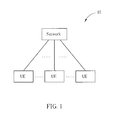
- FIG.1 is a schematic diagram of an exemplary wireless communication system.
- FIG.2 is a schematic diagram of an exemplary communication device.
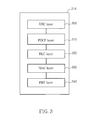
- FIG.3 illustrates the program code in FIG.2 .
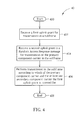
- FIG.4 is a flow chart of a process according to an embodiment of the present invention.
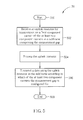
- FIG.5 is a flow chart of a process according to an embodiment of the present invention.
- FIG. 1 is a schematic diagram of an exemplary wireless communication system 10.
- the wireless communication system 10 can be an LTE-Advanced system, or other mobile communication systems (e.g. LTE, WCDMA, HSPA, GSM, EDGE, etc.).
- the wireless communication system 10 is briefly composed of a network and a plurality of user equipments (UEs), as the structure illustrated in FIG.1 .
- the network is referred as an evolved universal terrestrial radio access network (E-UTRAN) comprising a plurality of evolved base stations (eNBs).
- E-UTRAN evolved universal terrestrial radio access network
- eNBs evolved base stations
- the UEs can be devices such as mobile phones, computer systems, etc.
- the network and the UE can be seen as a transmitter or receiver according to transmission direction, e.g., for uplink (UL), the UE is the transmitter and the network is the receiver, and for downlink (DL), the network is the transmitter and the UE is the receiver.
- UL uplink
- DL downlink
- FIG.2 is a schematic diagram of an exemplary communication device 20.
- the communication device 20 can be the UE or the network shown in FIG.1 and may include a processing means 200 such as a microprocessor or ASIC, a memory unit 210, and a communication interfacing unit 220.
- the memory unit 210 may be any data storage device that can store program code 214 for access by the processing means 200. Examples of the memory unit 210 include but are not limited to a subscriber identity module (SIM), read-only memory (ROM), random-access memory (RAM), CD-ROMs, magnetic tapes, floppy disks, and optical data storage devices.
- SIM subscriber identity module
- ROM read-only memory
- RAM random-access memory
- CD-ROMs compact discs
- magnetic tapes magnetic tapes
- floppy disks floppy disks
- optical data storage devices optical data storage devices.
- the communication interfacing unit 220 is preferably a radio transceiver for wirelessly communicating with the network according to processing results of the processing means 200
- the program code 214 includes program code of multiple communications protocol layers, which from top to bottom are a radio resource control (RRC) layer 300, a packet data convergence protocol (PDCP) layer 310, a radio link control (RLC) layer 320, a medium access control (MAC) layer 330 and a physical (PHY) layer 340.
- the PHY layer 340 includes physical channels, such as Physical RandomAccess Channel (PRACH), Physical Uplink Control Channel (PUCCH), Physical Uplink Shared Channel (PUCCH), Physical Downlink Control Channel (PDCCH), Physical Downlink Shared Channel (PDCCH).
- the PHY layer 340 and the MAC layer 330 may support a Carrier Aggregation (CA) technology, which enables the UE to perform data transmission and/or reception through one or multiple component carriers.
- CA Carrier Aggregation
- the embodiments of the present invention provide the program code 214 for the UE to efficiently perform uplink transmission.
- FIG.4 is a flow chart of a process 40 according to an embodiment of the present invention.
- the process 40 is used for performing uplink transmission for a UE in a wireless communication system.
- the wireless communication system could be the wireless communication system 10, and the UE is configured with a primary component carrier and at least one secondary component carrier.
- the process 40 can be compiled into the program code 214 and includes the following steps:
- Step 400 Start.
- Step 402 Receive a first uplink grant for transmission in a subframe.
- Step 404 Receive a second uplink grant in a Random Access Response message for transmission on the primary component carrier in the subframe.
- Step 406 Perform transmission in the subframe according to which of the primary component carrier and the at least one secondary component carrier the first uplink grant is received for.
- Step 408 End.
- the UE is configured with a primary component carrier, at least one secondary component carrier (e.g. corresponding to a PCell and at least one SCell).
- a primary component carrier e.g. corresponding to a PCell and at least one SCell.
- the UE receives a first uplink grant for transmission in a subframe and receives a second uplink grant in a Random Access Response message for transmission on the primary component carrier in the same subframe, the UE performs transmission in the subframe according to which of the primary component carrier and the at least one secondary component carrier the first uplink grant is received for.
- the UE can transmit a first data block using the first uplink grant and a second data block using the second uplink grant in the same subframe since the first uplink grant and the second uplink grant are for transmissions on different component carriers (the secondary component carrier and the primary component carrier, respectively) in the same subframe.
- the UE transmits the first data block using the first uplink grant or the second data block using the second uplink grant in the subframe since the first uplink grant and the second uplink grant are for transmissions on the same primary component carrier in the same subframe.
- the UE can perform transmissions in a subframe according to which component carrier the first uplink grant is received for, so as to perform transmissions required by the first uplink grant and the second uplink grant for different component carriers in the same subframe.
- FIG.5 is a flow chart of a process 50 according to an embodiment of the present invention.
- the process 50 is used for performing uplink transmission for a UE in a wireless communication system.
- the wireless communication system could be the wireless communication system 10, and the UE is configured with at least two component carriers and a measurement gap.
- the process 50 can be compiled into the program code 214 and includes the following steps:
- Step 500 Start.
- Step 502 Receive an uplink resource for transmission on a first component carrier of the at least two component carriers in a subframe comprising the measurement gap.
- Step 504 Process the uplink resource.
- Step 506 Transmit a data using the uplink resource in the subframe according to which of the at least two component carriers the measurement gap is configured for.
- Step 508 End.
- the UE is configured with at least two component carriers, e.g. a primary component carrier, at least one secondary component carrier, and a measurement gap.
- the UE receives an uplink resource for transmission on a first component carrier of the at least two component carriers in a subframe comprising the measurement gap, the UE processes the uplink resource for transmission information, and then transmits a data using the uplink resource in the subframe according to which of the at least two component carriers the measurement gap is configured for.
- the UE transmits the data using the uplink resource since the measurement gap and the uplink resource are for different component carriers.
- the measurement gap is configured for the first component carrier
- the UE does not transmit the data using the uplink resource since the measurement gap and the uplink resource are for the same component carrier.
- the UE can perform transmission in a subframe according to which component carrier a measurement gap is configured for, so as to perform transmission required by the uplink resource when the measurement gap and the uplink resource are for different component carriers.
- the uplink resource and corresponding data are not limited to any specific type.
- the uplink resource can be an uplink grant received on PDCCH, and the data can comprise a Media Access Control (MAC) Protocol Data Unit (PDU) ;
- the uplink resource can be a physical uplink control channel (PUCCH) resource, and the data can comprise at least one of a Hybrid Automatic Repeat Request (HARQ) feedback, Channel Quality Indicator (CQI), precoding matrix indicator (PMI), rank indication (RI), scheduling request (SR), and sounding reference signal (SRS).
- HARQ Hybrid Automatic Repeat Request
- CQI Channel Quality Indicator
- PMI precoding matrix indicator
- RI rank indication
- SR scheduling request
- SRS sounding reference signal
- the abovementioned steps including suggested steps can be realized by means that could be hardware, firmware known as a combination of a hardware device and computer instructions and data that reside as read-only software on the hardware device, or an electronic system.
- hardware can include analog, digital and mixed circuits known as microcircuit, microchip, or silicon chip.
- the electronic system can include system on chip (SOC), system in package (Sip), computer on module (COM), and the communication device 20 in which the processing means 200 processes the program code 214 related to the abovementioned processes and the processed results can enhance uplink transmission in the wireless communications system 10.
- the UE when the UE receive a first uplink grant on a PDCCH for a secondary component carrier during a random access procedure on the primary component carrier and receive a second uplink grant in a Random Access Response message for transmissions in a same subframe, the UE either chooses the first uplink grant on PDCCH or the second uplink grant in the Random Access Response message for transmission in the subframe, which is not efficient since only one transmission is allowed.
- the UE have a measurement gap configuration for a secondary component carrier and a configured uplink grant indicating an UL-SCH transmission during the measurement gap for the primary component carrier, The UE does not perform the UL-SCH transmission, which wastes the configured uplink grant resources.
- the UE can perform transmissions in a subframe according to which component carrier the first uplink grant is received for, so as to perform transmissions required by the first uplink grant and the second uplink grant for different component carriers in the same subframe.
- the UE can perform transmission in a subframe according to which component carrier a measurement gap is configured for, so as to perform transmission required by the uplink resource when the measurement gap and the uplink resource are for different component carriers.
- the present invention can efficiently perform uplink transmission.
Landscapes
- Engineering & Computer Science (AREA)
- Signal Processing (AREA)
- Computer Networks & Wireless Communication (AREA)
- Mobile Radio Communication Systems (AREA)
Abstract
Description
- This application claims the benefit of
U.S. Provisional Application No. 61/351,300, filed on Jun. 4, 2010 - The present invention relates to a method used in a wireless communications system and related communication device, and more particularly, to a method of performing uplink transmission in a wireless communication system and related communication device.
- A long-term evolution (LTE) system, initiated by the third generation partnership project (3GPP), is now being regarded as a new radio interface and radio network architecture that provides a high data rate, low latency, packet optimization, and improved system capacity and coverage. In the LTE system, an evolved universal terrestrial radio access network (E-UTRAN) includes a plurality of evolved Node-Bs (eNBs) and communicates with a plurality of mobile stations, also referred as to user equipments (UEs).
- In the LTE system, a user equipment (UE) may perform measurement to measure communication quality, such as quality of a frequency layer or strength of a radio signal, which is controlled by the E-UTRAN, due to mobility of the UE. Measurement can be divided into two types according to the current operating frequency of the UE, which are an intra-frequency measurement and an inter-frequency/inter-RAT measurement. The intra-frequency measurement is predominantly performed for the mobility within the same frequency layer (i.e. between cells with the same carrier frequency), whereas the inter-frequency/inter-RAT measurement is predominantly performed for the mobility between different frequency layers (i.e. between cells with a different carrier frequency). In addition, the inter-frequency/inter-RAT measurement is performed during uplink/downlink idle periods, such as a measurement gap configured by the network. During the measurement gap, both the uplink and downlink transmissions are prohibited, and thereby the inter-frequency/inter-RAT measurement can be performed within the measurement gap.
- A long term evolution-advanced (LTE-A) system, as its name implies, is an evolution of the LTE system. The LTE-A system targets faster switching between power states, improves performance at a cell edge, and includes subjects, such as bandwidth extension, coordinated multipoint transmission/reception (CoMP), UL multiple-input multiple-output (MIMO), etc.
- For bandwidth extension, carrier aggregation is introduced to the LTE-A system by which two or more component carriers are aggregated to achieve a wider-band transmission. Accordingly, the LTE-A system can support a wider bandwidth up to 100MHz by aggregating a maximum number of 5 component carriers, where bandwidth of each component carrier is 20MHz and is backward compatible with 3GPP Rel-8. An LTE-A specification supports carrier aggregation for both continuous and non-continuous component carriers with each component carrier limited to a maximum of 110 resource blocks. The carrier aggregation increases a bandwidth flexibility by aggregating the non-continuous component carriers. A component carrier is used as an UL component carrier or a downlink (DL) component carrier. Further, there is a one-to-one correspondence between the UL component carrier and the DL component carrier, i.e., each UL component carrier is paired with a corresponding DL component carrier. In an LTE-A time-division duplex (TDD) system, the UL component carrier and DL component carrier are the same component carrier.
- When the UE is configured with the carrier aggregation (CA), the UE is allowed to receive and transmit data on one or multiple component carriers to increase the data rate. In the LTE-A system, it is possible for the eNB to configure the UE different numbers of UL and DL component carriers which depend on UL and DL aggregation capabilities, respectively. Moreover, the component carriers configured to the UE necessarily consists of one DL primary component carrier (PCC) and one UL primary component carrier. Component carriers other than the primary component carriers are named UL or DL secondary component carriers (SCCs). The numbers of UL and DL secondary component carriers are arbitrary, and are related to the UE capability and available radio resource. The UL and DL primary component carriers are used for establishing and re-establishing the radio resource control (RRC), and transmitting and receiving the system information. The UL or DL primary component carrier can not be de-activated, but can be changed by a handover procedure with the RACH procedure. However, component carriers on which the UE can perform the RACH procedure have not been known and the process of changing UL or DL primary component carrier can not be completed without performing the RACH procedure.
- According to the specification released by 3rd Generation Partnership Project (3GPP), if the UE receives both a grant in a Random Access Response and a grant for its Cell Radio Network Temporary Identifier (C-RNTI) or Semi persistent scheduling (SPS) C-RNTI requiring transmissions in the same UL subframe (i.e. transmission time interval (TTI)), the UE may choose to continue with either the grant for its RA-RNTI or the grant for its C-RNTI or Semi persistent scheduling C-RNTI.
- However, if the UE is configured with a primary component carrier and at least one secondary component carrier (i.e. corresponding to a PCell and at least a SCell, respectively), the UE may receive a first uplink grant on a PDCCH for a secondary component carrier during a random access procedure on the primary component carrier and receive a second uplink grant in a Random Access Response message for transmissions in a same subframe. Under such a situation, the UE either chooses the first uplink grant on PDCCH or the second uplink grant in the Random Access Response message for transmission in the subframe, which is not efficient since only one transmission is allowed while the first uplink grant and the second uplink grant are for different component carriers, i.e. the secondary component carrier and the primary component carrier respectively.
- On the other hand, according to the specification released by 3GPP, when a configured uplink grant (i.e. an SPS grant) is indicated during a measurement gap and indicates an UL-SCH transmission during a measurement gap, the UE processes the configured grant but does not transmit on an Uplink Shared Channel (UL-SCH), i.e. processing the SPS grant for transmission information but not transmitting corresponding data.
- However, if the UE is configured with a primary component carrier and at least one secondary component carrier (i.e. corresponding to a PCell and at least a SCell, respectively), the UE may have a measurement gap configuration for a secondary component carrier and a configured uplink grant indicating an UL-SCH transmission during the measurement gap for the primary component carrier since the UE may have different measurement gap configurations for different component carriers. Under such a situation, the UE does not perform the UL-SCH transmission. No transmission wastes the configured uplink grant resources since the measurement gap and the configured uplink grant occupy different frequency resources.
- The disclosure therefore provides a method and related communication device for performing uplink transmission.
- A method of performing uplink transmission for a mobile device configured with a primary component carrier and at least one secondary component carrier in a wireless communication system is disclosed. The method comprises steps of receiving a first uplink grant for transmission in a subframe; receiving a second uplink grant in a Random Access Response message for transmission on the primary component carrier in the subframe; and performing transmission in the subframe according to which of the primary component carrier and the at least one secondary component carrier the first uplink grant is received for.
- A method of performing uplink transmission for a mobile device configured with at least two component carriers and a measurement gap in a wireless communication system is disclosed. The method comprises steps of receiving an uplink resource for transmission on a first component carrier of the at least two component carriers in a subframe comprising the measurement gap; processing the uplink resource; and transmitting a data using the uplink resource in the subframe according to which of the at least two component carriers the measurement gap is configured for.
- A communication device of a wireless communication system for performing uplink transmission is disclosed. The communication device is configured with a primary component carrier and at least one secondary component carrier, and comprises means for receiving a first uplink grant for transmission in a subframe; means for receiving a second uplink grant in a Random Access Response message for transmission on the primary component carrier in the subframe; and means for performing transmission in the subframe according to which of the primary component carrier and the at least one secondary component carrier the first uplink grant is received for.
- A communication device of a wireless communication system for performing uplink transmission is disclosed. The communication device is configured with a primary component carrier and at least one secondary component carrier, and comprises means for receiving an uplink resource for transmission on a first component carrier of the at least two component carriers in a subframe comprising the measurement gap; means for processing the uplink resource; and means for transmitting a data using the uplink resource in the subframe according to which of the at least two component carriers the measurement gap is configured for.
- These and other objectives of the present invention will no doubt become obvious to those of ordinary skill in the art after reading the following detailed description of the preferred embodiment that is illustrated in the various figures and drawings.
-
FIG.1 is a schematic diagram of an exemplary wireless communication system. -
FIG.2 is a schematic diagram of an exemplary communication device. -
FIG.3 illustrates the program code inFIG.2 . -
FIG.4 is a flow chart of a process according to an embodiment of the present invention. -
FIG.5 is a flow chart of a process according to an embodiment of the present invention. - Please refer to
FIG. 1. FIG. 1 is a schematic diagram of an exemplarywireless communication system 10. Thewireless communication system 10 can be an LTE-Advanced system, or other mobile communication systems (e.g. LTE, WCDMA, HSPA, GSM, EDGE, etc.). Thewireless communication system 10 is briefly composed of a network and a plurality of user equipments (UEs), as the structure illustrated inFIG.1 . In the LTE-Advanced system, the network is referred as an evolved universal terrestrial radio access network (E-UTRAN) comprising a plurality of evolved base stations (eNBs). The UEs can be devices such as mobile phones, computer systems, etc. Besides, the network and the UE can be seen as a transmitter or receiver according to transmission direction, e.g., for uplink (UL), the UE is the transmitter and the network is the receiver, and for downlink (DL), the network is the transmitter and the UE is the receiver. - Please refer to
FIG.2. FIG.2 is a schematic diagram of anexemplary communication device 20. Thecommunication device 20 can be the UE or the network shown inFIG.1 and may include a processing means 200 such as a microprocessor or ASIC, amemory unit 210, and acommunication interfacing unit 220. Thememory unit 210 may be any data storage device that can storeprogram code 214 for access by the processing means 200. Examples of thememory unit 210 include but are not limited to a subscriber identity module (SIM), read-only memory (ROM), random-access memory (RAM), CD-ROMs, magnetic tapes, floppy disks, and optical data storage devices. Thecommunication interfacing unit 220 is preferably a radio transceiver for wirelessly communicating with the network according to processing results of the processing means 200. - Please refer to
FIG.3 , which illustrates theprogram code 214 inFIG.2 . Theprogram code 214 includes program code of multiple communications protocol layers, which from top to bottom are a radio resource control (RRC)layer 300, a packet data convergence protocol (PDCP)layer 310, a radio link control (RLC)layer 320, a medium access control (MAC)layer 330 and a physical (PHY)layer 340. ThePHY layer 340 includes physical channels, such as Physical RandomAccess Channel (PRACH), Physical Uplink Control Channel (PUCCH), Physical Uplink Shared Channel (PUCCH), Physical Downlink Control Channel (PDCCH), Physical Downlink Shared Channel (PDCCH). - In LTE-A system, the
PHY layer 340 and theMAC layer 330 may support a Carrier Aggregation (CA) technology, which enables the UE to perform data transmission and/or reception through one or multiple component carriers. In such a situation, the embodiments of the present invention provide theprogram code 214 for the UE to efficiently perform uplink transmission. - Please refer to
FIG.4 , which is a flow chart of aprocess 40 according to an embodiment of the present invention. Theprocess 40 is used for performing uplink transmission for a UE in a wireless communication system. The wireless communication system could be thewireless communication system 10, and the UE is configured with a primary component carrier and at least one secondary component carrier. Theprocess 40 can be compiled into theprogram code 214 and includes the following steps: - Step 400: Start.
- Step 402: Receive a first uplink grant for transmission in a subframe.
- Step 404: Receive a second uplink grant in a Random Access Response message for transmission on the primary component carrier in the subframe.
- Step 406: Perform transmission in the subframe according to which of the primary component carrier and the at least one secondary component carrier the first uplink grant is received for.
- Step 408: End.
- According to the
process 40, the UE is configured with a primary component carrier, at least one secondary component carrier (e.g. corresponding to a PCell and at least one SCell). When the UE receives a first uplink grant for transmission in a subframe and receives a second uplink grant in a Random Access Response message for transmission on the primary component carrier in the same subframe, the UE performs transmission in the subframe according to which of the primary component carrier and the at least one secondary component carrier the first uplink grant is received for. - In detail, if the first uplink grant is received for one of the at least one secondary component carrier, the UE can transmit a first data block using the first uplink grant and a second data block using the second uplink grant in the same subframe since the first uplink grant and the second uplink grant are for transmissions on different component carriers (the secondary component carrier and the primary component carrier, respectively) in the same subframe. On the other hand, if the first uplink grant is received for the primary component carrier, the UE transmits the first data block using the first uplink grant or the second data block using the second uplink grant in the subframe since the first uplink grant and the second uplink grant are for transmissions on the same primary component carrier in the same subframe. As a result, the UE can perform transmissions in a subframe according to which component carrier the first uplink grant is received for, so as to perform transmissions required by the first uplink grant and the second uplink grant for different component carriers in the same subframe.
- Please refer to
FIG.5 , which is a flow chart of aprocess 50 according to an embodiment of the present invention. Theprocess 50 is used for performing uplink transmission for a UE in a wireless communication system. The wireless communication system could be thewireless communication system 10, and the UE is configured with at least two component carriers and a measurement gap. Theprocess 50 can be compiled into theprogram code 214 and includes the following steps: - Step 500: Start.
- Step 502: Receive an uplink resource for transmission on a first component carrier of the at least two component carriers in a subframe comprising the measurement gap.
- Step 504: Process the uplink resource.
- Step 506: Transmit a data using the uplink resource in the subframe according to which of the at least two component carriers the measurement gap is configured for.
- Step 508: End.
- According to the
process 50, the UE is configured with at least two component carriers, e.g. a primary component carrier, at least one secondary component carrier, and a measurement gap. When the UE receives an uplink resource for transmission on a first component carrier of the at least two component carriers in a subframe comprising the measurement gap, the UE processes the uplink resource for transmission information, and then transmits a data using the uplink resource in the subframe according to which of the at least two component carriers the measurement gap is configured for. - In detail, if the measurement gap is configured for a second component carrier of the at least two component carriers different from the first component carrier, the UE transmits the data using the uplink resource since the measurement gap and the uplink resource are for different component carriers. On the other hand, if the measurement gap is configured for the first component carrier, the UE does not transmit the data using the uplink resource since the measurement gap and the uplink resource are for the same component carrier. As a result, the UE can perform transmission in a subframe according to which component carrier a measurement gap is configured for, so as to perform transmission required by the uplink resource when the measurement gap and the uplink resource are for different component carriers.
- Noticeably, in the
process 50, the uplink resource and corresponding data are not limited to any specific type. For example, in one embodiment, the uplink resource can be an uplink grant received on PDCCH, and the data can comprise a Media Access Control (MAC) Protocol Data Unit (PDU) ; in another embodiment, the uplink resource can be a physical uplink control channel (PUCCH) resource, and the data can comprise at least one of a Hybrid Automatic Repeat Request (HARQ) feedback, Channel Quality Indicator (CQI), precoding matrix indicator (PMI), rank indication (RI), scheduling request (SR), and sounding reference signal (SRS). - Please note that the abovementioned steps including suggested steps can be realized by means that could be hardware, firmware known as a combination of a hardware device and computer instructions and data that reside as read-only software on the hardware device, or an electronic system. Examples of hardware can include analog, digital and mixed circuits known as microcircuit, microchip, or silicon chip. Examples of the electronic system can include system on chip (SOC), system in package (Sip), computer on module (COM), and the
communication device 20 in which the processing means 200 processes theprogram code 214 related to the abovementioned processes and the processed results can enhance uplink transmission in thewireless communications system 10. - In the prior art, when the UE receive a first uplink grant on a PDCCH for a secondary component carrier during a random access procedure on the primary component carrier and receive a second uplink grant in a Random Access Response message for transmissions in a same subframe, the UE either chooses the first uplink grant on PDCCH or the second uplink grant in the Random Access Response message for transmission in the subframe, which is not efficient since only one transmission is allowed. On the other hand, when the UE have a measurement gap configuration for a secondary component carrier and a configured uplink grant indicating an UL-SCH transmission during the measurement gap for the primary component carrier, The UE does not perform the UL-SCH transmission, which wastes the configured uplink grant resources.
- In comparison, in an embodiment of the present invention, the UE can perform transmissions in a subframe according to which component carrier the first uplink grant is received for, so as to perform transmissions required by the first uplink grant and the second uplink grant for different component carriers in the same subframe. In anther embodiment of the present invention, the UE can perform transmission in a subframe according to which component carrier a measurement gap is configured for, so as to perform transmission required by the uplink resource when the measurement gap and the uplink resource are for different component carriers.
- To sum up, the present invention can efficiently perform uplink transmission.
- Those skilled in the art will readily observe that numerous modifications and alterations of the device and method may be made while retaining the teachings of the invention. Accordingly, the above disclosure should be construed as limited only by the metes and bounds of the appended claims.
Claims (15)
- A method of performing uplink transmission for a mobile device configured with a primary component carrier and at least one secondary component carrier in a wireless communication system, the method comprising:receiving a first uplink grant for transmission in a subframe;receiving a second uplink grant in a RandomAccess Response message
for transmission on the primary component carrier in the subframe; andperforming transmission in the subframe according to which of the
primary component carrier and the at least one secondary component carrier the first uplink grant is received for. - The method of claim 1, wherein the step of performing transmission in the subframe according to which of the primary component carrier and the at least one secondary component carrier the first uplink grant is received for comprises:transmitting a first data block using the first uplink grant and
a second data block using the second uplink grant in the subframe if the first uplink grant is received for one of the at least one secondary component carrier. - The method of claim 1, wherein the step of performing transmission in the subframe according to which of the primary component carrier and the at least one secondary component carrier the first uplink grant is received for comprises:transmitting a first data block using the first uplink grant or
a second data block using the second uplink grant in the subframe if the first uplink grant is received for the primary component carrier. - A method of performing uplink transmission for a mobile device configured with at least two component carriers and a measurement gap in a wireless communication system, the method comprising:receiving an uplink resource for transmission on a first component
carrier of the at least two component carriers in a subframe comprising the measurement gap;processing the uplink resource; andtransmitting a data using the uplink resource in the subframe
according to which of the at least two component carriers the measurement gap is configured for. - The method of claim 4, wherein the step of transmitting the data using the uplink resource in the subframe according to which of the at least two component carriers the measurement gap is configured for comprises:transmitting the data using the uplink resource if the measurement
gap is configured for a second component carrier of the at least two component carriers different from the first component carrier. - The method of claim 4, wherein the step of transmitting the data using the uplink resource in the subframe according to which of the at least two component carriers the measurement gap is configured for comprises:not transmitting the data using the uplink resource if the
measurement gap is configured for the first component carrier. - The method of claim 4, wherein the uplink resource is an uplink grant received on PDCCH, and the data comprises a Media Access Control (MAC) Protocol Data Unit (PDU).
- The method of claim 4, wherein the uplink resource is a physical uplink control channel (PUCCH) resource, and the data comprises at least one of a Hybrid Automatic Repeat Request (HARQ) feedback, Channel Quality Indicator (CQI), precoding matrix indicator (PMI), rank indication (RI), scheduling request (SR), and sounding reference signal (SRS).
- A communication device of a wireless communication system for performing uplink transmission, the communication device configured with a primary component carrier and at least one secondary component carrier, and comprising:means for receiving a first uplink grant for transmission in a
subframe;means for receiving a second uplink grant in a Random Access
Response message for transmission on the primary component carrier in the subframe; andmeans for performing transmission in the subframe according to
which of the primary component carrier and the at least one secondary component carrier the first uplink grant is received for. - The communication device of claim 9, wherein the means for performing transmission in the subframe according to which of the primary component carrier and the at least one secondary component carrier the first uplink grant is received for comprises:means for transmitting a first data block using the first uplink
grant and a second data block using the second uplink grant in the subframe if the first uplink grant is received for one of the at least one secondary component carrier. - The communication device of claim 9, wherein the means for performing transmission in the subframe according to which of the primary component carrier and the at least one secondary component carrier the first uplink grant is received for comprises:means for transmitting a first data block using the first uplink
grant or a second data block using the second uplink grant in the subframe if the first uplink grant is received for the primary component carrier. - A communication device of a wireless communication system for performing uplink transmission, the communication device configured with a primary component carrier and at least one secondary component carrier, and comprising:means for receiving an uplink resource for transmission on a first
component carrier of the at least two component carriers in a subframe comprising the measurement gap;means for processing the uplink resource; andmeans for transmitting a data using the uplink resource in the
subframe according to which of the at least two component carriers the measurement gap is configured for. - The communication device of claim 12, wherein the means for transmitting the data using the uplink resource in the subframe according to which of the at least two component carriers the measurement gap is configured for comprises:means for transmitting the data using the uplink resource if the
measurement gap is configured for a second component carrier of the at least two component carriers different from the first component carrier. - The communication device of claim 12, wherein the means for transmitting the data using the uplink resource in the subframe according to which of the at least two component carriers the measurement gap is configured for comprises:means for not transmitting the data using the uplink resource if
the measurement gap is configured for the first component carrier. - The communication device of claim 12, wherein the uplink resource is an uplink grant received on PDCCH, and the data comprises a Media Access Control (MAC) Protocol Data Unit (PDU).
Applications Claiming Priority (2)
| Application Number | Priority Date | Filing Date | Title |
|---|---|---|---|
| US35130010P | 2010-06-04 | 2010-06-04 | |
| US13/118,562 US8665810B2 (en) | 2010-06-04 | 2011-05-30 | Method of performing uplink transmission and related communication device |
Publications (2)
| Publication Number | Publication Date |
|---|---|
| EP2393334A1 true EP2393334A1 (en) | 2011-12-07 |
| EP2393334B1 EP2393334B1 (en) | 2014-04-02 |
Family
ID=44367032
Family Applications (1)
| Application Number | Title | Priority Date | Filing Date |
|---|---|---|---|
| EP11004498.9A Active EP2393334B1 (en) | 2010-06-04 | 2011-06-01 | Method of performing uplink transmission and related communication device |
Country Status (6)
| Country | Link |
|---|---|
| US (1) | US8665810B2 (en) |
| EP (1) | EP2393334B1 (en) |
| JP (1) | JP5302354B2 (en) |
| KR (1) | KR101206844B1 (en) |
| CN (1) | CN102271413B (en) |
| TW (1) | TWI425853B (en) |
Cited By (3)
| Publication number | Priority date | Publication date | Assignee | Title |
|---|---|---|---|---|
| WO2014031682A1 (en) * | 2012-08-22 | 2014-02-27 | Qualcomm Incorporated | Coexistence management using a-priori time domain information |
| RU2577028C2 (en) * | 2011-12-20 | 2016-03-10 | ЭлДжи ЭЛЕКТРОНИКС ИНК. | Method and apparatus for performing random access process in wireless communication system |
| CN110214432A (en) * | 2017-02-01 | 2019-09-06 | 瑞典爱立信有限公司 | Method and node for activation or deactivation of carriers in a communication network supporting carrier aggregation |
Families Citing this family (16)
| Publication number | Priority date | Publication date | Assignee | Title |
|---|---|---|---|---|
| TR201819566T4 (en) | 2009-06-25 | 2019-01-21 | Koninklijke Philips Nv | A method for communicating within a mobile network. |
| JP4989746B2 (en) * | 2010-04-30 | 2012-08-01 | 株式会社エヌ・ティ・ティ・ドコモ | Mobile communication method and mobile station |
| US20120113826A1 (en) * | 2010-11-08 | 2012-05-10 | Heng Zhou | Idle Interval Generation in Telecommunication Systems |
| CN103249169B (en) | 2012-02-03 | 2016-08-31 | 华为技术有限公司 | Method, base station and the subscriber equipment of transmission Stochastic accessing response message |
| WO2013172757A1 (en) * | 2012-05-15 | 2013-11-21 | Telefonaktiebolaget L M Ericsson (Publ) | Methods of sending feedback signaling under carrier specific measurement gaps in multi-carrier |
| US9131522B2 (en) | 2012-08-22 | 2015-09-08 | Qualcomm Incorporated | Time-frequency scheduling to improve multi-radio coexistence |
| CN104025649B (en) * | 2012-12-27 | 2018-02-23 | 华为技术有限公司 | Method for controlling uplink carrier aggregation, user equipment and base station |
| EP3107970B1 (en) | 2014-02-20 | 2020-09-02 | Merck Patent GmbH | Methods of using stable catalyst ink formulations in fiber formation, and articles comprising such fibers |
| US9942881B2 (en) | 2014-03-14 | 2018-04-10 | Telefonaktiebolaget Lm Ericsson (Publ) | Uplink multi-TTI scheduling in TDD system |
| BR112017009346B1 (en) * | 2014-11-07 | 2023-02-23 | Huawei Technologies Co., Ltd | INFORMATION TRANSMISSION METHOD, TERMINAL DEVICE, BASE STATION AND COMPUTER READABLE STORAGE MEDIA |
| EP3131226A1 (en) * | 2015-08-14 | 2017-02-15 | Alcatel Lucent | Carrier aggregation |
| US10237863B2 (en) * | 2016-03-04 | 2019-03-19 | Htc Corporation | Device and method of handling a hybrid automatic repeat request process in a licensed assisted access secondary cell |
| CN110710303B (en) * | 2018-02-09 | 2021-01-12 | Oppo广东移动通信有限公司 | Method and device for transmitting data |
| WO2019158124A1 (en) | 2018-02-16 | 2019-08-22 | Telefonaktiebolaget Lm Ericsson (Publ) | Method and system for autonomous transmission to resolve channel interference in a wireless network using a coordination indicator |
| WO2019158123A1 (en) * | 2018-02-16 | 2019-08-22 | Telefonaktiebolaget Lm Ericsson (Publ) | Method and system for scheduled uplink transmission to resolve channel interference in a wireless network using a coordination indicator |
| CN110351896B (en) | 2018-04-04 | 2021-07-09 | 华为技术有限公司 | A connection re-establishment method and device |
Citations (1)
| Publication number | Priority date | Publication date | Assignee | Title |
|---|---|---|---|---|
| EP2254381A1 (en) * | 2009-05-21 | 2010-11-24 | Innovative Sonic Corporation | Method and apparatus for measurement gap configuration in a carrier component of a carrier aggregation system |
Family Cites Families (12)
| Publication number | Priority date | Publication date | Assignee | Title |
|---|---|---|---|---|
| KR100893869B1 (en) | 2008-03-13 | 2009-04-20 | 엘지전자 주식회사 | How to operate HARV considering the measurement interval |
| WO2010002130A2 (en) * | 2008-07-03 | 2010-01-07 | Lg Electronics Inc. | Method for processing ndi in random access procedure and a method for transmitting and receiving a signal using the same |
| GB2461378C (en) | 2008-07-03 | 2013-01-09 | Lg Electronics Inc | Method for processing NDI in random access procedure and a method for transmitting and receiving a signal using the same |
| TWI414199B (en) * | 2008-08-07 | 2013-11-01 | Innovative Sonic Ltd | Method and communication device for processing uplink transmission resources |
| US8670376B2 (en) | 2008-08-12 | 2014-03-11 | Qualcomm Incorporated | Multi-carrier grant design |
| BRPI0918219B1 (en) | 2008-09-04 | 2020-11-17 | Sharp Kabushiki Kaisha | base station handset, mobile station handset, communication method of a base station handset and communication method of a mobile station handset |
| AR073833A1 (en) | 2008-10-20 | 2010-12-01 | Interdigital Patent Holdings | METHODS FOR THE ASCENDING CONTROL OF INFORMATION TRANSMISSION TO ADD CARRIER ONA |
| EP3554170A1 (en) | 2008-10-20 | 2019-10-16 | InterDigital Patent Holdings, Inc. | Carrier aggregation |
| EP2363971A3 (en) * | 2008-11-06 | 2011-09-28 | HTC Corporation | Method and apparatus for improving uplink transmission of transmission time interval bundling in a wireless communication system |
| EP2187691A1 (en) | 2008-11-12 | 2010-05-19 | Alcatel, Lucent | A method for radio communication between a base station and a user terminal using transmission on component carriers based on control information, as well as a base station, a user terminal and a communication network therefor |
| KR20110020195A (en) * | 2009-08-21 | 2011-03-02 | 엘지전자 주식회사 | Method and apparatus for transmitting data block on a plurality of uplink frequencies |
| US8917605B2 (en) * | 2009-11-19 | 2014-12-23 | Interdigital Patent Holdings, Inc. | Component carrier activation/deactivation in multi-carrier systems |
-
2011
- 2011-05-30 US US13/118,562 patent/US8665810B2/en active Active
- 2011-06-01 TW TW100119183A patent/TWI425853B/en active
- 2011-06-01 EP EP11004498.9A patent/EP2393334B1/en active Active
- 2011-06-03 KR KR1020110053797A patent/KR101206844B1/en active Active
- 2011-06-03 JP JP2011125652A patent/JP5302354B2/en active Active
- 2011-06-03 CN CN201110149188.2A patent/CN102271413B/en active Active
Patent Citations (1)
| Publication number | Priority date | Publication date | Assignee | Title |
|---|---|---|---|---|
| EP2254381A1 (en) * | 2009-05-21 | 2010-11-24 | Innovative Sonic Corporation | Method and apparatus for measurement gap configuration in a carrier component of a carrier aggregation system |
Non-Patent Citations (3)
| Title |
|---|
| LG ELECTRONICS INC: "Issues with Scheduling Request Procedure", 3GPP DRAFT; R2-081597 ISSUES WITH SCHEDULING REQUEST PROCEDURE, 3RD GENERATION PARTNERSHIP PROJECT (3GPP), MOBILE COMPETENCE CENTRE ; 650, ROUTE DES LUCIOLES ; F-06921 SOPHIA-ANTIPOLIS CEDEX ; FRANCE, vol. RAN WG2, no. Shenzhen, China; 20080324, 24 March 2008 (2008-03-24), XP050139326 * |
| NOKIA SIEMENS NETWORKS (RAPPORTEUR): "Stage 2 description of Carrier Aggregation", 3GPP DRAFT; 36300_CR0230R1-(REL-10)_R2-103291 ON CA STAGE 2, 3RD GENERATION PARTNERSHIP PROJECT (3GPP), MOBILE COMPETENCE CENTRE ; 650, ROUTE DES LUCIOLES ; F-06921 SOPHIA-ANTIPOLIS CEDEX ; FRANCE, vol. RAN WG2, no. Montreal, Canada; 20100510, 15 May 2010 (2010-05-15), XP050423405 * |
| NOKIA SIEMENS NETWORKS (RAPPORTEUR): "Stage 2 description of Carrier Aggregation", 3GPP DRAFT; 36300_CR0NNN-(REL-10)_R2-101985 ON CA STAGE 2, 3RD GENERATION PARTNERSHIP PROJECT (3GPP), MOBILE COMPETENCE CENTRE ; 650, ROUTE DES LUCIOLES ; F-06921 SOPHIA-ANTIPOLIS CEDEX ; FRANCE, vol. RAN WG2, no. Beijing, china; 20100412, 6 April 2010 (2010-04-06), XP050422506 * |
Cited By (7)
| Publication number | Priority date | Publication date | Assignee | Title |
|---|---|---|---|---|
| RU2577028C2 (en) * | 2011-12-20 | 2016-03-10 | ЭлДжи ЭЛЕКТРОНИКС ИНК. | Method and apparatus for performing random access process in wireless communication system |
| US10123353B2 (en) | 2011-12-20 | 2018-11-06 | Lg Electronics Inc. | Method and apparatus for performing random access process in wireless communication system |
| WO2014031682A1 (en) * | 2012-08-22 | 2014-02-27 | Qualcomm Incorporated | Coexistence management using a-priori time domain information |
| US9131523B2 (en) | 2012-08-22 | 2015-09-08 | Qualcomm Incorporated | Coexistence management using A-priori time domain information |
| CN110214432A (en) * | 2017-02-01 | 2019-09-06 | 瑞典爱立信有限公司 | Method and node for activation or deactivation of carriers in a communication network supporting carrier aggregation |
| CN110214432B (en) * | 2017-02-01 | 2022-05-10 | 瑞典爱立信有限公司 | Method and node for activation or deactivation of a carrier in a communication network |
| US11870732B2 (en) | 2017-02-01 | 2024-01-09 | Telefonaktiebolaget Lm Ericsson (Publ) | Methods and nodes for activation or deactivation of a carrier in a communication network supporting carrier aggregation |
Also Published As
| Publication number | Publication date |
|---|---|
| TW201204140A (en) | 2012-01-16 |
| KR101206844B1 (en) | 2012-11-30 |
| JP5302354B2 (en) | 2013-10-02 |
| US8665810B2 (en) | 2014-03-04 |
| EP2393334B1 (en) | 2014-04-02 |
| CN102271413B (en) | 2014-06-04 |
| TWI425853B (en) | 2014-02-01 |
| KR20110133444A (en) | 2011-12-12 |
| US20110299486A1 (en) | 2011-12-08 |
| CN102271413A (en) | 2011-12-07 |
| JP2011259431A (en) | 2011-12-22 |
Similar Documents
| Publication | Publication Date | Title |
|---|---|---|
| US8665810B2 (en) | Method of performing uplink transmission and related communication device | |
| US8923251B2 (en) | Method of handling uplink time alignment | |
| US8824408B2 (en) | Method of handling random access procedure associated to cell deactivation | |
| EP2512197B1 (en) | Method, apparatus and computer program product for handling semi-persistent scheduling information | |
| US8743804B2 (en) | Method of handling semi-persistent scheduling transmission and related communication device | |
| US20120113910A1 (en) | Method of Handling a Physical Uplink Control Channel Transmission and Related Communication Device | |
| EP2429239B1 (en) | Method of configuring secondary cells and related communication device | |
| EP2405679B1 (en) | Method of handling capability information of a mobile device and related communication device | |
| EP2400802A1 (en) | Method of handling transmit power control and control signaling and related communication device | |
| US20120044889A1 (en) | Method of Handling Uplink Control Information Reporting and Related Communication Device | |
| EP2373111B1 (en) | Method of changing primary component carrier and related communication device | |
| EP2451222A1 (en) | Method of handling power headroom reporting for activated serving cell with configured uplink | |
| EP2418895B1 (en) | Method of handling power headroom reporting for uplink carrier aggregation and communication device thereof | |
| EP3520283A1 (en) | Precoding management for random access procedures | |
| US9191973B2 (en) | Method of handling random access channel procedure and related communication device |
Legal Events
| Date | Code | Title | Description |
|---|---|---|---|
| 17P | Request for examination filed |
Effective date: 20110601 |
|
| AK | Designated contracting states |
Kind code of ref document: A1 Designated state(s): AL AT BE BG CH CY CZ DE DK EE ES FI FR GB GR HR HU IE IS IT LI LT LU LV MC MK MT NL NO PL PT RO RS SE SI SK SM TR |
|
| AX | Request for extension of the european patent |
Extension state: BA ME |
|
| PUAI | Public reference made under article 153(3) epc to a published international application that has entered the european phase |
Free format text: ORIGINAL CODE: 0009012 |
|
| 17Q | First examination report despatched |
Effective date: 20120622 |
|
| GRAP | Despatch of communication of intention to grant a patent |
Free format text: ORIGINAL CODE: EPIDOSNIGR1 |
|
| INTG | Intention to grant announced |
Effective date: 20131113 |
|
| GRAS | Grant fee paid |
Free format text: ORIGINAL CODE: EPIDOSNIGR3 |
|
| GRAA | (expected) grant |
Free format text: ORIGINAL CODE: 0009210 |
|
| AK | Designated contracting states |
Kind code of ref document: B1 Designated state(s): AL AT BE BG CH CY CZ DE DK EE ES FI FR GB GR HR HU IE IS IT LI LT LU LV MC MK MT NL NO PL PT RO RS SE SI SK SM TR |
|
| REG | Reference to a national code |
Ref country code: GB Ref legal event code: FG4D |
|
| REG | Reference to a national code |
Ref country code: CH Ref legal event code: EP Ref country code: AT Ref legal event code: REF Ref document number: 660766 Country of ref document: AT Kind code of ref document: T Effective date: 20140415 |
|
| REG | Reference to a national code |
Ref country code: IE Ref legal event code: FG4D |
|
| REG | Reference to a national code |
Ref country code: DE Ref legal event code: R096 Ref document number: 602011005821 Country of ref document: DE Effective date: 20140522 |
|
| REG | Reference to a national code |
Ref country code: NL Ref legal event code: T3 |
|
| REG | Reference to a national code |
Ref country code: AT Ref legal event code: MK05 Ref document number: 660766 Country of ref document: AT Kind code of ref document: T Effective date: 20140402 |
|
| REG | Reference to a national code |
Ref country code: LT Ref legal event code: MG4D |
|
| PG25 | Lapsed in a contracting state [announced via postgrant information from national office to epo] |
Ref country code: NO Free format text: LAPSE BECAUSE OF FAILURE TO SUBMIT A TRANSLATION OF THE DESCRIPTION OR TO PAY THE FEE WITHIN THE PRESCRIBED TIME-LIMIT Effective date: 20140702 Ref country code: BG Free format text: LAPSE BECAUSE OF FAILURE TO SUBMIT A TRANSLATION OF THE DESCRIPTION OR TO PAY THE FEE WITHIN THE PRESCRIBED TIME-LIMIT Effective date: 20140702 Ref country code: CY Free format text: LAPSE BECAUSE OF FAILURE TO SUBMIT A TRANSLATION OF THE DESCRIPTION OR TO PAY THE FEE WITHIN THE PRESCRIBED TIME-LIMIT Effective date: 20140402 Ref country code: CZ Free format text: LAPSE BECAUSE OF FAILURE TO SUBMIT A TRANSLATION OF THE DESCRIPTION OR TO PAY THE FEE WITHIN THE PRESCRIBED TIME-LIMIT Effective date: 20140402 Ref country code: FI Free format text: LAPSE BECAUSE OF FAILURE TO SUBMIT A TRANSLATION OF THE DESCRIPTION OR TO PAY THE FEE WITHIN THE PRESCRIBED TIME-LIMIT Effective date: 20140402 Ref country code: IS Free format text: LAPSE BECAUSE OF FAILURE TO SUBMIT A TRANSLATION OF THE DESCRIPTION OR TO PAY THE FEE WITHIN THE PRESCRIBED TIME-LIMIT Effective date: 20140802 Ref country code: LT Free format text: LAPSE BECAUSE OF FAILURE TO SUBMIT A TRANSLATION OF THE DESCRIPTION OR TO PAY THE FEE WITHIN THE PRESCRIBED TIME-LIMIT Effective date: 20140402 Ref country code: GR Free format text: LAPSE BECAUSE OF FAILURE TO SUBMIT A TRANSLATION OF THE DESCRIPTION OR TO PAY THE FEE WITHIN THE PRESCRIBED TIME-LIMIT Effective date: 20140703 |
|
| PG25 | Lapsed in a contracting state [announced via postgrant information from national office to epo] |
Ref country code: ES Free format text: LAPSE BECAUSE OF FAILURE TO SUBMIT A TRANSLATION OF THE DESCRIPTION OR TO PAY THE FEE WITHIN THE PRESCRIBED TIME-LIMIT Effective date: 20140402 Ref country code: LV Free format text: LAPSE BECAUSE OF FAILURE TO SUBMIT A TRANSLATION OF THE DESCRIPTION OR TO PAY THE FEE WITHIN THE PRESCRIBED TIME-LIMIT Effective date: 20140402 Ref country code: RS Free format text: LAPSE BECAUSE OF FAILURE TO SUBMIT A TRANSLATION OF THE DESCRIPTION OR TO PAY THE FEE WITHIN THE PRESCRIBED TIME-LIMIT Effective date: 20140402 Ref country code: HR Free format text: LAPSE BECAUSE OF FAILURE TO SUBMIT A TRANSLATION OF THE DESCRIPTION OR TO PAY THE FEE WITHIN THE PRESCRIBED TIME-LIMIT Effective date: 20140402 Ref country code: PL Free format text: LAPSE BECAUSE OF FAILURE TO SUBMIT A TRANSLATION OF THE DESCRIPTION OR TO PAY THE FEE WITHIN THE PRESCRIBED TIME-LIMIT Effective date: 20140402 Ref country code: AT Free format text: LAPSE BECAUSE OF FAILURE TO SUBMIT A TRANSLATION OF THE DESCRIPTION OR TO PAY THE FEE WITHIN THE PRESCRIBED TIME-LIMIT Effective date: 20140402 Ref country code: SE Free format text: LAPSE BECAUSE OF FAILURE TO SUBMIT A TRANSLATION OF THE DESCRIPTION OR TO PAY THE FEE WITHIN THE PRESCRIBED TIME-LIMIT Effective date: 20140402 |
|
| PG25 | Lapsed in a contracting state [announced via postgrant information from national office to epo] |
Ref country code: PT Free format text: LAPSE BECAUSE OF FAILURE TO SUBMIT A TRANSLATION OF THE DESCRIPTION OR TO PAY THE FEE WITHIN THE PRESCRIBED TIME-LIMIT Effective date: 20140804 |
|
| REG | Reference to a national code |
Ref country code: DE Ref legal event code: R097 Ref document number: 602011005821 Country of ref document: DE |
|
| PG25 | Lapsed in a contracting state [announced via postgrant information from national office to epo] |
Ref country code: EE Free format text: LAPSE BECAUSE OF FAILURE TO SUBMIT A TRANSLATION OF THE DESCRIPTION OR TO PAY THE FEE WITHIN THE PRESCRIBED TIME-LIMIT Effective date: 20140402 Ref country code: DK Free format text: LAPSE BECAUSE OF FAILURE TO SUBMIT A TRANSLATION OF THE DESCRIPTION OR TO PAY THE FEE WITHIN THE PRESCRIBED TIME-LIMIT Effective date: 20140402 Ref country code: LU Free format text: LAPSE BECAUSE OF FAILURE TO SUBMIT A TRANSLATION OF THE DESCRIPTION OR TO PAY THE FEE WITHIN THE PRESCRIBED TIME-LIMIT Effective date: 20140601 Ref country code: BE Free format text: LAPSE BECAUSE OF FAILURE TO SUBMIT A TRANSLATION OF THE DESCRIPTION OR TO PAY THE FEE WITHIN THE PRESCRIBED TIME-LIMIT Effective date: 20140402 Ref country code: RO Free format text: LAPSE BECAUSE OF FAILURE TO SUBMIT A TRANSLATION OF THE DESCRIPTION OR TO PAY THE FEE WITHIN THE PRESCRIBED TIME-LIMIT Effective date: 20140402 Ref country code: SK Free format text: LAPSE BECAUSE OF FAILURE TO SUBMIT A TRANSLATION OF THE DESCRIPTION OR TO PAY THE FEE WITHIN THE PRESCRIBED TIME-LIMIT Effective date: 20140402 Ref country code: MC Free format text: LAPSE BECAUSE OF FAILURE TO SUBMIT A TRANSLATION OF THE DESCRIPTION OR TO PAY THE FEE WITHIN THE PRESCRIBED TIME-LIMIT Effective date: 20140402 |
|
| REG | Reference to a national code |
Ref country code: CH Ref legal event code: PL |
|
| PLBE | No opposition filed within time limit |
Free format text: ORIGINAL CODE: 0009261 |
|
| STAA | Information on the status of an ep patent application or granted ep patent |
Free format text: STATUS: NO OPPOSITION FILED WITHIN TIME LIMIT |
|
| 26N | No opposition filed |
Effective date: 20150106 |
|
| REG | Reference to a national code |
Ref country code: IE Ref legal event code: MM4A |
|
| PG25 | Lapsed in a contracting state [announced via postgrant information from national office to epo] |
Ref country code: IT Free format text: LAPSE BECAUSE OF FAILURE TO SUBMIT A TRANSLATION OF THE DESCRIPTION OR TO PAY THE FEE WITHIN THE PRESCRIBED TIME-LIMIT Effective date: 20140402 |
|
| REG | Reference to a national code |
Ref country code: DE Ref legal event code: R097 Ref document number: 602011005821 Country of ref document: DE Effective date: 20150106 |
|
| PG25 | Lapsed in a contracting state [announced via postgrant information from national office to epo] |
Ref country code: IE Free format text: LAPSE BECAUSE OF NON-PAYMENT OF DUE FEES Effective date: 20140601 Ref country code: CH Free format text: LAPSE BECAUSE OF NON-PAYMENT OF DUE FEES Effective date: 20140630 Ref country code: LI Free format text: LAPSE BECAUSE OF NON-PAYMENT OF DUE FEES Effective date: 20140630 |
|
| PG25 | Lapsed in a contracting state [announced via postgrant information from national office to epo] |
Ref country code: RS Free format text: LAPSE BECAUSE OF FAILURE TO SUBMIT A TRANSLATION OF THE DESCRIPTION OR TO PAY THE FEE WITHIN THE PRESCRIBED TIME-LIMIT Effective date: 20141119 |
|
| PG25 | Lapsed in a contracting state [announced via postgrant information from national office to epo] |
Ref country code: SI Free format text: LAPSE BECAUSE OF FAILURE TO SUBMIT A TRANSLATION OF THE DESCRIPTION OR TO PAY THE FEE WITHIN THE PRESCRIBED TIME-LIMIT Effective date: 20140402 |
|
| PG25 | Lapsed in a contracting state [announced via postgrant information from national office to epo] |
Ref country code: MT Free format text: LAPSE BECAUSE OF FAILURE TO SUBMIT A TRANSLATION OF THE DESCRIPTION OR TO PAY THE FEE WITHIN THE PRESCRIBED TIME-LIMIT Effective date: 20140402 |
|
| PG25 | Lapsed in a contracting state [announced via postgrant information from national office to epo] |
Ref country code: SM Free format text: LAPSE BECAUSE OF FAILURE TO SUBMIT A TRANSLATION OF THE DESCRIPTION OR TO PAY THE FEE WITHIN THE PRESCRIBED TIME-LIMIT Effective date: 20140402 |
|
| REG | Reference to a national code |
Ref country code: FR Ref legal event code: PLFP Year of fee payment: 6 |
|
| PG25 | Lapsed in a contracting state [announced via postgrant information from national office to epo] |
Ref country code: TR Free format text: LAPSE BECAUSE OF FAILURE TO SUBMIT A TRANSLATION OF THE DESCRIPTION OR TO PAY THE FEE WITHIN THE PRESCRIBED TIME-LIMIT Effective date: 20140402 Ref country code: HU Free format text: LAPSE BECAUSE OF FAILURE TO SUBMIT A TRANSLATION OF THE DESCRIPTION OR TO PAY THE FEE WITHIN THE PRESCRIBED TIME-LIMIT; INVALID AB INITIO Effective date: 20110601 |
|
| REG | Reference to a national code |
Ref country code: FR Ref legal event code: PLFP Year of fee payment: 7 |
|
| REG | Reference to a national code |
Ref country code: FR Ref legal event code: PLFP Year of fee payment: 8 |
|
| PG25 | Lapsed in a contracting state [announced via postgrant information from national office to epo] |
Ref country code: MK Free format text: LAPSE BECAUSE OF FAILURE TO SUBMIT A TRANSLATION OF THE DESCRIPTION OR TO PAY THE FEE WITHIN THE PRESCRIBED TIME-LIMIT Effective date: 20140402 |
|
| PG25 | Lapsed in a contracting state [announced via postgrant information from national office to epo] |
Ref country code: AL Free format text: LAPSE BECAUSE OF FAILURE TO SUBMIT A TRANSLATION OF THE DESCRIPTION OR TO PAY THE FEE WITHIN THE PRESCRIBED TIME-LIMIT Effective date: 20140402 |
|
| REG | Reference to a national code |
Ref country code: FR Ref legal event code: PLFP Year of fee payment: 13 |
|
| P01 | Opt-out of the competence of the unified patent court (upc) registered |
Effective date: 20230608 |
|
| PGFP | Annual fee paid to national office [announced via postgrant information from national office to epo] |
Ref country code: NL Payment date: 20250409 Year of fee payment: 15 |
|
| PGFP | Annual fee paid to national office [announced via postgrant information from national office to epo] |
Ref country code: DE Payment date: 20250402 Year of fee payment: 15 |
|
| PGFP | Annual fee paid to national office [announced via postgrant information from national office to epo] |
Ref country code: GB Payment date: 20250401 Year of fee payment: 15 |
|
| PGFP | Annual fee paid to national office [announced via postgrant information from national office to epo] |
Ref country code: FR Payment date: 20250401 Year of fee payment: 15 |