EP2391156A2 - Frequency configuration of femto-cell base stations - Google Patents
Frequency configuration of femto-cell base stations Download PDFInfo
- Publication number
- EP2391156A2 EP2391156A2 EP20110168309 EP11168309A EP2391156A2 EP 2391156 A2 EP2391156 A2 EP 2391156A2 EP 20110168309 EP20110168309 EP 20110168309 EP 11168309 A EP11168309 A EP 11168309A EP 2391156 A2 EP2391156 A2 EP 2391156A2
- Authority
- EP
- European Patent Office
- Prior art keywords
- frequency
- femto
- cell base
- base station
- frequencies
- Prior art date
- Legal status (The legal status is an assumption and is not a legal conclusion. Google has not performed a legal analysis and makes no representation as to the accuracy of the status listed.)
- Granted
Links
Images
Classifications
-
- H—ELECTRICITY
- H04—ELECTRIC COMMUNICATION TECHNIQUE
- H04W—WIRELESS COMMUNICATION NETWORKS
- H04W16/00—Network planning, e.g. coverage or traffic planning tools; Network deployment, e.g. resource partitioning or cells structures
- H04W16/02—Resource partitioning among network components, e.g. reuse partitioning
-
- H—ELECTRICITY
- H04—ELECTRIC COMMUNICATION TECHNIQUE
- H04W—WIRELESS COMMUNICATION NETWORKS
- H04W24/00—Supervisory, monitoring or testing arrangements
- H04W24/02—Arrangements for optimising operational condition
-
- H—ELECTRICITY
- H04—ELECTRIC COMMUNICATION TECHNIQUE
- H04W—WIRELESS COMMUNICATION NETWORKS
- H04W72/00—Local resource management
- H04W72/50—Allocation or scheduling criteria for wireless resources
- H04W72/51—Allocation or scheduling criteria for wireless resources based on terminal or device properties
-
- H—ELECTRICITY
- H04—ELECTRIC COMMUNICATION TECHNIQUE
- H04W—WIRELESS COMMUNICATION NETWORKS
- H04W16/00—Network planning, e.g. coverage or traffic planning tools; Network deployment, e.g. resource partitioning or cells structures
- H04W16/18—Network planning tools
- H04W16/20—Network planning tools for indoor coverage or short range network deployment
-
- H—ELECTRICITY
- H04—ELECTRIC COMMUNICATION TECHNIQUE
- H04W—WIRELESS COMMUNICATION NETWORKS
- H04W84/00—Network topologies
- H04W84/02—Hierarchically pre-organised networks, e.g. paging networks, cellular networks, WLAN [Wireless Local Area Network] or WLL [Wireless Local Loop]
- H04W84/04—Large scale networks; Deep hierarchical networks
- H04W84/042—Public Land Mobile systems, e.g. cellular systems
- H04W84/045—Public Land Mobile systems, e.g. cellular systems using private Base Stations, e.g. femto Base Stations, home Node B
Definitions
- the present invention relates to the field of mobile communications.
- the invention relates to a method for modifying the frequency configuration of femto-cell base stations, such as 3G femto-cell base stations or Home Node Bs (HNB)
- femto-cell base stations such as 3G femto-cell base stations or Home Node Bs (HNB)
- a femto-cell base station 10 also known as Home Node B (HNB) or simply as a femto-cell.
- the Home Node B 10 typically has an xDSL router and modem, thereby facilitating the provision of different native cellular telecommunications services (both voice and data services) by using an existing customer xDSL line 11 to connect the Home Node B 10 to the core network 30 of the cellular telecommunications network 40.
- the Home Node B 10 and xDSL router and modem device may be separate devices (as in Figure 1 ) or a single hybrid device.
- a further development of the router device combines the xDSL router and modem device with a cellular telecommunications modem (e.g. an HSPA modem or HSPA USB dongle); the cellular telecommunications modem is configured to provide a wireless connection with the cellular telecommunications network 40 in case the ⁇ DSL connection fails, or also at the time of first using the device (if the xDSL line has not been provided and is not working yet).
- a cellular telecommunications modem e.g. an HSPA modem or HSPA USB dongle
- the cellular telecommunications modem is configured to provide a wireless connection with the cellular telecommunications network 40 in case the ⁇ DSL connection fails, or also at the time of first using the device (if the xDSL line has not been provided and is not working yet).
- the carrier frequency allocated to the HNB 10 (for indoor communications) can be the same as the "macro layer" carrier frequency or frequencies used by the cellular telecommunications modem. Therefore, if there is a failure in the DSL line (or there is no operational xDSL line for some other reason) and the HSPA backup starts working, there may be interference thereby preventing the femto-cell base station or Home Node B and the macro network connection from work simultaneously.
- the interference between the wireless connection to the macro network and the Home Node B connection with the customer's mobile terminal may significantly degrade the customer experience.
- the invention refers to a method for reconfiguring an operational frequency and associated bandwidth used by a femto-cell base station according to claim 1, and to an apparatus as defined in claim 7. Preferred embodiments of the method are defined in the dependent claims.
- the present invention aims to provide an optimum communication service environment at the customer's home (or office) by enabling the simultaneous operation, without interference, of a femto-cell connected to the customer and to the 3G network simultaneously.
- a first aspect of the invention relates to a method for reconfiguring an operational frequency f2 and associated bandwidth used by a femto-cell base station, preferably a Home Node B, the femto-cell being configured to provide coverage to a User Equipment by connecting said user equipment to a core telecommunications network via a gateway device (typically a Home Node B gateway), the femto-cell having a fixed network interface for establishing a fixed network connection to said core telecommunications network; and a wireless network interface for establishing a cellular wireless network connection to said core telecommunications network, said cellular wireless network connection being assigned a main frequency f1 and associated bandwidth; the method comprising the steps of:
- the list of frequencies is obtained from the network, it can be provided by the Home Node B-Gateway, the Home Node B Management System or any other equipment.
- the second frequency is selected on the basis that it is most separated from said main frequency. So, it is preferred that the step of selecting the second frequency is performed on the basis of the main and second frequencies and their associated bandwidths being as different as possible in terms of their numeric value or in terms of harmonics, thereby minimising the interference.
- said second frequency is selected on the basis that it fulfils a predefined criterion in terms of interference quality, and it is the preferred by the telecommunications network operator in terms of traffic usage (not necessarily the most separate one from the main frequency in the radio-frequency spectrum).
- the second frequency is selected on the basis that the power introduced by the second frequency into the main frequency, and vice versa, is kept to a minimum.
- the femto-cell base station or Home Node B is deactivated when no available frequency matches the one supported by the User Equipment; the user equipment being forced then to revert to a macro-cell wireless network connection rather than the femto-cell connection normally offered by the Home Node B.
- the wireless network interface is preferably a cellular modem module suitable for connecting at least one electronic processing device to the cellular telecommunications network.
- the technology used by the femto-cell or Home Node B and the wireless network interface is UMTS/3G.
- the technology used by the femto-cell or Home Node B and the wireless network interface may be LTE.
- apparatus for reconfiguring an operational frequency f2 and associated bandwidth used by a femto-cell base station; the femto-cell being configured to provide coverage to a user equipment by connecting to a core telecommunications network and having a fixed network interface for establishing a fixed network connection to said core telecommunications network; and a wireless network interface for establishing a cellular wireless network connection to said core telecommunications network, said cellular wireless network connection being assigned a main frequency f1 and associated bandwidth;
- the apparatus comprising a connection manager for setting the operational frequency of the femto-cell, the connection manager including:
- Said second frequency can be selected on the basis that is most separated from the main frequency in the radio-frequency spectrum.
- Said second frequency can be selected on the basis that the interference measured in said second frequency with respect to the main frequency is below a pre-established threshold.
- said second frequency is selected on the basis that isolation between the second frequency and the main frequency is the highest possible.
- Said second frequency can be also selected on the basis that it fulfils a predefined criterion in terms of interference quality and that it is preferred by the telecommunications network operator in terms of traffic usage.
- the femto-cell base station is deactivated when no available frequency matches the one supported by the User Equipment.
- a Home Node B 10 with a specific DSL modem combined with an HSPA modem (e.g. an integrated modem component or a detachable HSPA USB dongle).
- HSPA modem e.g. an integrated modem component or a detachable HSPA USB dongle.
- This Home Node B 10 is provided to improve the customer's 3G coverage, which can be integral with the HSPA and DSL modem or can also be a separate device.
- the operational frequency used by this Home Node B to provide coverage to a user equipment 50 is denoted f2.
- This Home Node B is also configured to detect any DSL link unavailability.
- the DSL link may be unavailable for a variety of different reasons, for instance:
- the Home Node B is configured to activate the HSPA modem to establish a cellular wireless network connection, and to automatically disable the cellular operation of the Home Node B.
- the HSPA modem detects the macro-cell frequency f1 and tries to establish the HSPA connection 12 with the cellular telecommunications network 40. In case that no frequency is detected (the HSPA USB dongle is unable to connect to the 3G network), then the Home Node B 10 is switched on again.
- the Home Node B 10 decides which frequency to use by itself from a list of frequencies (and associated bandwidths) that has been stored in the Home Node B during configuration setup, or tries again to establish a communication via a Home Node B gateway 20, HNB-GW, to obtain the list of frequencies (and associated bandwidths).
- This list of frequencies can be in the HNB-GW, in the Home Node B Management System (HMS in figure 3) or in any other network equipment.
- HNB-GW Home Node B Gateway
- RNC Radio Network Controller
- the HSPA modem is deactivated and the frequency allocation reverts to the initial frequency used.
- the Home Node B may scan -periodically, at suitable intervals or triggered by some mechanism (e.g. high interference in the current frequency used)- in order to check whether a better frequency in terms of interference can be used.
- Some mechanism e.g. high interference in the current frequency used
- An interference threshold is defined for a frequency to be considered good enough to be used.
- the Home Node B is operable to determine whether the user equipment UE of the local customer is capable of supporting the different frequency bands, using for example the UE radio capabilities (reported in the RRC messages, see TS 25.331).
- a list of the frequencies and associated bandwidths allowed to be used is checked (step 110); this list can be sent by the HNB-GW 20, or it can be already stored in the Home Node B.
- the Home Node B 10 filters the list of frequencies against the information it has regarding the capabilities of the user equipment (step 120), identifying those entries in that list of frequencies which match the frequencies determined to be supported by the user equipment UE.
- the Home Node B may, as illustrated in Figure 2 , further filter the matching frequencies to include only frequencies that exhibit interference parameters below a threshold interference parameter (step 130).
- the working frequency f2 which is most suitable for the Home Node B to provide coverage to the UE is chosen. There are several possibilities for this step of choosing the frequency (step 140):
- the latter calculation may be needed to mitigate interference between the Home Node B frequency and the main frequency arising from the harmonics of the Home Node B frequency. Isolation is understood as the power introduced by one frequency into the other one.
- the second frequency is selected as the one preferred by the mobile operator; i.e., there is a priority ranking of frequencies, given the preferred choice for certain frequencies.
- the selection of the Home Node B frequency can include a step of calculating whether the difference between a matching frequency and the main frequency exceeds a predetermined threshold.
- the selection of the Home Node B frequency includes a step of calculating a parameter corresponding to the isolation between each matching frequency and the main frequency and determining whether that parameter exceeds a predetermined threshold.
- the selection of a frequency may include one or more of the above filtering steps in any order, permutation or combination.
- the method of the present invention applies equally to other cellular telecommunications technologies and in particular to LTE.
- LTE Radio Access Technology
- 3G a mechanism is needed for reconfiguring the operational frequency of the Home Node B, and indeed the bandwidth used: in LTE the bandwidth may vary typically it will be a bandwidth selected from 1.4, 3, 5, 10 and/or 20 MHz depending on the availability.
Landscapes
- Engineering & Computer Science (AREA)
- Computer Networks & Wireless Communication (AREA)
- Signal Processing (AREA)
- Mobile Radio Communication Systems (AREA)
Abstract
the method comprising the steps of:
- checking a list of frequencies and associated bandwidths available to the wireless network interface;
- determining if any of the frequencies in said list matches the operational frequency supported by the User Equipment to which the femto-cell base station is providing coverage; and, if at least one frequency matches the one supported by the User Equipment, selecting a second frequency from the list of frequencies, said second frequency being established as the operational frequency of the femto-cell base station.
Description
- The present invention relates to the field of mobile communications. In particular, the invention relates to a method for modifying the frequency configuration of femto-cell base stations, such as 3G femto-cell base stations or Home Node Bs (HNB)
- In order to provide enhanced indoor cellular telecommunications network coverage at a customer's home or office, it is known (see
Figure 1 ) to provide the customer with a femto-cell base station 10, also known as Home Node B (HNB) or simply as a femto-cell. The Home Node B 10 typically has an xDSL router and modem, thereby facilitating the provision of different native cellular telecommunications services (both voice and data services) by using an existingcustomer xDSL line 11 to connect the Home Node B 10 to thecore network 30 of thecellular telecommunications network 40. The Home Node B 10 and xDSL router and modem device may be separate devices (as inFigure 1 ) or a single hybrid device. - A further development of the router device, combines the xDSL router and modem device with a cellular telecommunications modem (e.g. an HSPA modem or HSPA USB dongle); the cellular telecommunications modem is configured to provide a wireless connection with the
cellular telecommunications network 40 in case the ×DSL connection fails, or also at the time of first using the device (if the xDSL line has not been provided and is not working yet). - Problems may arise when both the Home Node B 10 and the cellular telecommunications modem use radio frequencies associated with the same cellular telecommunications network. In particular, problems may occur with the available carriers: the carrier frequency allocated to the HNB 10 (for indoor communications) can be the same as the "macro layer" carrier frequency or frequencies used by the cellular telecommunications modem. Therefore, if there is a failure in the DSL line (or there is no operational xDSL line for some other reason) and the HSPA backup starts working, there may be interference thereby preventing the femto-cell base station or Home Node B and the macro network connection from work simultaneously.
- Currently, such interference (i.e. whenever there the DSL link is not available for some reason and the cellular telecommunications modem has to be activated to provide backup connection), may be avoided by automatically disabling the Home Node B.
- Were the Home Node B not to be disabled, the interference between the wireless connection to the macro network and the Home Node B connection with the customer's mobile terminal may significantly degrade the customer experience.
- The invention refers to a method for reconfiguring an operational frequency and associated bandwidth used by a femto-cell base station according to claim 1, and to an apparatus as defined in claim 7. Preferred embodiments of the method are defined in the dependent claims.
- The present invention aims to provide an optimum communication service environment at the customer's home (or office) by enabling the simultaneous operation, without interference, of a femto-cell connected to the customer and to the 3G network simultaneously.
- A first aspect of the invention relates to a method for reconfiguring an operational frequency f2 and associated bandwidth used by a femto-cell base station, preferably a Home Node B, the femto-cell being configured to provide coverage to a User Equipment by connecting said user equipment to a core telecommunications network via a gateway device (typically a Home Node B gateway), the femto-cell having a fixed network interface for establishing a fixed network connection to said core telecommunications network; and a wireless network interface for establishing a cellular wireless network connection to said core telecommunications network, said cellular wireless network connection being assigned a main frequency f1 and associated bandwidth; the method comprising the steps of:
- checking a list of frequencies and associated bandwidths available to the wireless network interface, which list can be stored in the Home Node B (during the configuration setup) or it can obtained from the telecommunications network;
- determining if any of the frequencies in said list matches the operational frequency supported by the User Equipment to which the femto-cell is providing coverage;
- if at least one frequency matches the one supported by the User Equipment, selecting a second frequency from the list of frequencies, said second frequency being established as the operational frequency of the femto-cell.
- In case the list of frequencies is obtained from the network, it can be provided by the Home Node B-Gateway, the Home Node B Management System or any other equipment.
- According to a preferred embodiment, the second frequency is selected on the basis that it is most separated from said main frequency. So, it is preferred that the step of selecting the second frequency is performed on the basis of the main and second frequencies and their associated bandwidths being as different as possible in terms of their numeric value or in terms of harmonics, thereby minimising the interference.
- Another possibility is that said second frequency is selected on the basis that it fulfils a predefined criterion in terms of interference quality, and it is the preferred by the telecommunications network operator in terms of traffic usage (not necessarily the most separate one from the main frequency in the radio-frequency spectrum).
- It is also possible that the second frequency is selected on the basis that the power introduced by the second frequency into the main frequency, and vice versa, is kept to a minimum.
- Preferably, the femto-cell base station or Home Node B is deactivated when no available frequency matches the one supported by the User Equipment; the user equipment being forced then to revert to a macro-cell wireless network connection rather than the femto-cell connection normally offered by the Home Node B.
- The wireless network interface is preferably a cellular modem module suitable for connecting at least one electronic processing device to the cellular telecommunications network.
- It is preferred that the technology used by the femto-cell or Home Node B and the wireless network interface is UMTS/3G.
- Alternatively, the technology used by the femto-cell or Home Node B and the wireless network interface may be LTE.
- In accordance with a second aspect of the invention there is provided apparatus for reconfiguring an operational frequency f2 and associated bandwidth used by a femto-cell base station; the femto-cell being configured to provide coverage to a user equipment by connecting to a core telecommunications network and having a fixed network interface for establishing a fixed network connection to said core telecommunications network; and a wireless network interface for establishing a cellular wireless network connection to said core telecommunications network, said cellular wireless network connection being assigned a main frequency f1 and associated bandwidth;
- the apparatus comprising a connection manager for setting the operational frequency of the femto-cell, the connection manager including:
- means for checking a list of frequencies and associated bandwidths available to the wireless network interface;
- processing means for determining whether any of the frequencies in said list matches the operational frequency supported by the User Equipment to which the femto-cell is providing coverage; and,
- selection means for selecting a second frequency from the list of frequencies if at least one frequency matches the one supported by the User Equipment, said second frequency being established as the operational frequency of the femto-cell,
- Said second frequency can be selected on the basis that is most separated from the main frequency in the radio-frequency spectrum.
- Said second frequency can be selected on the basis that the interference measured in said second frequency with respect to the main frequency is below a pre-established threshold.
- Or said second frequency is selected on the basis that isolation between the second frequency and the main frequency is the highest possible.
- Said second frequency can be also selected on the basis that it fulfils a predefined criterion in terms of interference quality and that it is preferred by the telecommunications network operator in terms of traffic usage.
- Preferably, the femto-cell base station is deactivated when no available frequency matches the one supported by the User Equipment.
- The advantages of the proposed invention will become apparent in the description that follows.
-
-
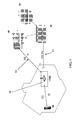
Figure 1 schematically shows a Home Node B connection at a customer's home (or office). -
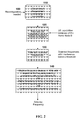
Figure 2 schematically shows how the selection of the operating frequency is carried out. - Reference will now be made in detail to a preferred embodiment of the method of the present invention.
- As it has been indicated above (and shown in
Figure 1 it is possible to provide aHome Node B 10 with a specific DSL modem combined with an HSPA modem (e.g. an integrated modem component or a detachable HSPA USB dongle). This Home Node B 10 is provided to improve the customer's 3G coverage, which can be integral with the HSPA and DSL modem or can also be a separate device. In the illustrated example the operational frequency used by this Home Node B to provide coverage to auser equipment 50 is denoted f2. - This Home Node B is also configured to detect any DSL link unavailability. The DSL link may be unavailable for a variety of different reasons, for instance:
- the DSL line may not yet have been set up for the customer;
- the DSL may fail during the lifecycle of the connection (as might happen if the relevant cable were physically cut or a DSLAM component were to fail in the exchange).
- In both cases, the Home Node B is configured to activate the HSPA modem to establish a cellular wireless network connection, and to automatically disable the cellular operation of the Home Node B.
- Then the HSPA modem detects the macro-cell frequency f1 and tries to establish the
HSPA connection 12 with thecellular telecommunications network 40. In case that no frequency is detected (the HSPA USB dongle is unable to connect to the 3G network), then the Home Node B 10 is switched on again. - If however the Home Node B has been able to create an alternative route to the core telecommunications network through the HSPA 3G network at the main macro-cell frequency f1, the Home Node B 10 decides which frequency to use by itself from a list of frequencies (and associated bandwidths) that has been stored in the Home Node B during configuration setup, or tries again to establish a communication via a Home
Node B gateway 20, HNB-GW, to obtain the list of frequencies (and associated bandwidths). This list of frequencies can be in the HNB-GW, in the Home Node B Management System (HMS in figure 3) or in any other network equipment. - It should be noted that a Home Node B Gateway, HNB-GW, is not a mere gateway; it has the purpose of an RNC presenting itself to the core network as a concentrator of Home Node B connections. The lu interface between the core network and the HNB-GW has the same purpose as the interface between the core network and an RNC. One Home Node B serves only one cell. Further details of the technical standardised Home Node B can be found in the 3GPP standard TS 25.467 "UTRAN architecture for 3G Home Node B (HNB)".
- Once the backup of the HSPA modem is no longer necessary because the DSL line works again, the HSPA modem is deactivated and the frequency allocation reverts to the initial frequency used.
- In certain implementations the Home Node B may scan -periodically, at suitable intervals or triggered by some mechanism (e.g. high interference in the current frequency used)- in order to check whether a better frequency in terms of interference can be used. An interference threshold is defined for a frequency to be considered good enough to be used.
- Naturally, this new frequency needs to be supported by the
user equipment 50. The Home Node B is operable to determine whether the user equipment UE of the local customer is capable of supporting the different frequency bands, using for example the UE radio capabilities (reported in the RRC messages, see TS 25.331). - As shown in
Figure 2 , once it has been determined that a frequency reconfiguration is necessary in the Home Node B (step 100), a list of the frequencies and associated bandwidths allowed to be used is checked (step 110); this list can be sent by the HNB-GW 20, or it can be already stored in the Home Node B. - The
Home Node B 10 filters the list of frequencies against the information it has regarding the capabilities of the user equipment (step 120), identifying those entries in that list of frequencies which match the frequencies determined to be supported by the user equipment UE. - While further filtering of the matching frequencies may be unnecessary, the Home Node B may, as illustrated in
Figure 2 , further filter the matching frequencies to include only frequencies that exhibit interference parameters below a threshold interference parameter (step 130). - Then, the working frequency f2 which is most suitable for the Home Node B to provide coverage to the UE is chosen. There are several possibilities for this step of choosing the frequency (step 140):
- 1- calculate the difference between each matching frequency and the main frequency, and select the matching frequency which represents the greatest frequency difference (e.g. when measured in MHz); or,
- 2- choose the first frequency that fulfils the previous filters of being supported by the user equipment and the interference criteria; or,
- 3- randomly choose one of the frequencies that fulfils the previous filters of being supported by the user equipment and the interference criteria; or,
- 4- calculate a parameter corresponding to the isolation between each matching frequency and the main frequency, and select the matching frequency which represents the greatest relative isolation.
- The latter calculation may be needed to mitigate interference between the Home Node B frequency and the main frequency arising from the harmonics of the Home Node B frequency. Isolation is understood as the power introduced by one frequency into the other one.
- Alternatively the second frequency is selected as the one preferred by the mobile operator; i.e., there is a priority ranking of frequencies, given the preferred choice for certain frequencies.
- The selection of the Home Node B frequency can include a step of calculating whether the difference between a matching frequency and the main frequency exceeds a predetermined threshold.
- In a further alternative, the selection of the Home Node B frequency includes a step of calculating a parameter corresponding to the isolation between each matching frequency and the main frequency and determining whether that parameter exceeds a predetermined threshold.
- Naturally, the selection of a frequency may include one or more of the above filtering steps in any order, permutation or combination.
- As will be understood by the reader, the method of the present invention applies equally to other cellular telecommunications technologies and in particular to LTE. Whatever Radio Access Technology is used (LTE or 3G), a mechanism is needed for reconfiguring the operational frequency of the Home Node B, and indeed the bandwidth used: in LTE the bandwidth may vary typically it will be a bandwidth selected from 1.4, 3, 5, 10 and/or 20 MHz depending on the availability.
- The invention is obviously not limited to the specific embodiments described herein, but also encompasses any variations that may be considered by any person skilled in the art (for example, as regards the choice of components, configuration, etc.), within the general scope of the invention as defined in the appended claims.
Claims (15)
- Method for reconfiguring an operational frequency (f2) and associated bandwidth used by a femto-cell base station (10), the femto-cell base station being configured to provide coverage to a User Equipment (50) by connecting to a core telecommunications network (30) via a gateway device (20), the femto-cell base station having a fixed network interface for establishing a fixed network connection (11) to said core telecommunications network (30), and a wireless network interface for establishing a cellular wireless network connection (12) to said core telecommunications Network, said cellular wireless network connection being assigned a main frequency (f1) and associated bandwidth;
the method comprising the steps of:- checking a list of frequencies and associated bandwidths available to the wireless network interface;- determining if any of the frequencies in said list matches the operational frequency supported by the User Equipment to which the femto-cell base station is providing coverage; and, if at least one frequency matches the one supported by the User Equipment, selecting a second frequency from the list of frequencies, said second frequency being established as the operational frequency of the femto-cell base station. - Method according to claim 1, wherein said second frequency is selected on the basis that is most separated from the main frequency in the radio-frequency spectrum.
- Method according to claim 1, wherein said second frequency is selected on the basis that the interference measured in said second frequency with respect to the main frequency is below a pre-established threshold.
- Method according to claim 1, wherein said second frequency is selected on the basis that isolation between the second frequency and the main frequency is the highest possible.
- Method according to claim 1, wherein said second frequency is selected on the basis that it fulfils a predefined criterion in terms of interference quality, and it is the preferred by the telecommunications network operator in terms of traffic usage.
- Method according to any of claims 1-5, wherein the femto-cell base station is deactivated when no available frequency matches the one supported by the User Equipment.
- Method according to any of claims 1-6, wherein the wireless network interface is a cellular modem module suitable for connecting at least one electronic device to the cellular telecommunications network (40).
- Method according to any of claims 1-7, wherein said list of frequencies is stored in the Home Node B during the configuration setup.
- Method according to any of claims 1-7, wherein said list of frequencies is obtained from the telecommunications network.
- Apparatus for reconfiguring an operational frequency (f2) and associated bandwidth used by a femto-cell base station (10), the femto-cell base station being configured to provide coverage to a user equipment (50) by connecting to a core telecommunications network (30) via a gateway device (20), the femto-cell base station having a fixed network interface for establishing a fixed network connection (11) to said core telecommunications network, and a wireless network interface for establishing a cellular wireless network (12) connection to said core telecommunications network, said cellular wireless network connection being assigned a main frequency (f1) and associated bandwidth;
the apparatus comprising a connection manager for setting the operational frequency of the femto-cell base station, the connection manager including:- means for checking a list of frequencies and associated bandwidths available to the wireless network interface;- processing means for determining whether any of the frequencies in said list matches the operational frequency supported by the User Equipment to which the femto-cell base station is providing coverage; and- selection means for selecting a second frequency from the list of frequencies provided by the core telecommunications network, if at least one frequency matches the one supported by the User Equipment, said second frequency being established as the operational frequency of the femto-cell base station,whereby the apparatus ensures that the femto-cell base station and the wireless network interface each operate at a different frequency. - Apparatus according to claim 10, wherein said second frequency is selected on the basis that is most separated from the main frequency in the radio-frequency spectrum.
- Apparatus according to claim 10, wherein said second frequency is selected on the basis that the interference measured in said second frequency with respect to the main frequency is below a pre-established threshold.
- Apparatus according to claim 10, wherein said second frequency is selected on the basis that isolation between the second frequency and the main frequency is the highest possible.
- Apparatus according to claim 10, wherein said second frequency is selected on the basis that it fulfils a predefined criterion in terms of interference quality, and that it is preferred by the telecommunications network operator in terms of traffic usage.
- Apparatus according to any of claims 10-13, wherein the femto-cell base station is deactivated when no available frequency matches the one supported by the User Equipment.
Applications Claiming Priority (1)
| Application Number | Priority Date | Filing Date | Title |
|---|---|---|---|
| ES201030831A ES2377686B1 (en) | 2010-05-31 | 2010-05-31 | METHOD FOR MODIFYING THE FREQUENCY CONFIGURATION OF A BASE STATION OF FEMTOCELL 3G OR NODE-B DOMESTIC (HNB). |
Publications (3)
| Publication Number | Publication Date |
|---|---|
| EP2391156A2 true EP2391156A2 (en) | 2011-11-30 |
| EP2391156A3 EP2391156A3 (en) | 2014-07-02 |
| EP2391156B1 EP2391156B1 (en) | 2015-11-25 |
Family
ID=44652066
Family Applications (2)
| Application Number | Title | Priority Date | Filing Date |
|---|---|---|---|
| EP11168325.6A Not-in-force EP2391157B1 (en) | 2010-05-31 | 2011-05-31 | Radio access technology configuration in femto-cell base stations |
| EP11168309.0A Not-in-force EP2391156B1 (en) | 2010-05-31 | 2011-05-31 | Frequency configuration of femto-cell base stations |
Family Applications Before (1)
| Application Number | Title | Priority Date | Filing Date |
|---|---|---|---|
| EP11168325.6A Not-in-force EP2391157B1 (en) | 2010-05-31 | 2011-05-31 | Radio access technology configuration in femto-cell base stations |
Country Status (3)
| Country | Link |
|---|---|
| US (2) | US8688097B2 (en) |
| EP (2) | EP2391157B1 (en) |
| ES (1) | ES2377686B1 (en) |
Cited By (1)
| Publication number | Priority date | Publication date | Assignee | Title |
|---|---|---|---|---|
| EP3002967A1 (en) * | 2014-10-01 | 2016-04-06 | Fujitsu Limited | Multicarrier FEMTO base station |
Families Citing this family (12)
| Publication number | Priority date | Publication date | Assignee | Title |
|---|---|---|---|---|
| GB2539735A (en) | 2015-06-25 | 2016-12-28 | Airspan Networks Inc | Sub-sampling antenna elements |
| EP3314963B1 (en) | 2015-06-25 | 2019-04-24 | Airspan Networks Inc. | Managing external interference in a wireless network |
| GB2539722B (en) | 2015-06-25 | 2021-10-13 | Airspan Ip Holdco Llc | Bearing calculation |
| GB2539733A (en) | 2015-06-25 | 2016-12-28 | Airspan Networks Inc | An antenna apparatus and method of configuring a transmission beam for the antenna apparatus |
| GB2539731B (en) | 2015-06-25 | 2021-08-04 | Airspan Ip Holdco Llc | Quality of service in wireless backhauls |
| GB2539727B (en) | 2015-06-25 | 2021-05-12 | Airspan Ip Holdco Llc | A configurable antenna and method of operating such a configurable antenna |
| GB2539736A (en) | 2015-06-25 | 2016-12-28 | Airspan Networks Inc | Wireless network configuration using path loss determination between nodes |
| GB2539732A (en) | 2015-06-25 | 2016-12-28 | Airspan Networks Inc | A configurable antenna and method of operating such a configurable antenna |
| GB2539730B (en) | 2015-06-25 | 2021-04-07 | Airspan Ip Holdco Llc | Node role assignment in networks |
| GB2539734A (en) | 2015-06-25 | 2016-12-28 | Airspan Networks Inc | An antenna apparatus and method of performing spatial nulling within the antenna apparatus |
| US12418850B2 (en) | 2022-08-26 | 2025-09-16 | T-Mobile Usa. Inc. | Disabling roaming in overlapping coverage areas of wireless telecommunications networks |
| US12225623B2 (en) | 2022-08-26 | 2025-02-11 | T-Mobile Usa, Inc. | Selective roaming in wireless telecommunications networks |
Family Cites Families (13)
| Publication number | Priority date | Publication date | Assignee | Title |
|---|---|---|---|---|
| EP1932377B1 (en) * | 2005-10-04 | 2016-07-13 | Telefonaktiebolaget LM Ericsson (publ) | Redirection of ip-connected radio base station to correct control node |
| CN101188817B (en) * | 2006-11-15 | 2014-09-17 | 华为技术有限公司 | Multi-mode base station, method for transmitting and receiving signals thereof, and wireless communication network |
| US9532399B2 (en) * | 2006-11-30 | 2016-12-27 | Kyocera Corporation | Apparatus, system and method for managing wireless local area network service to a multi-mode portable communication device |
| CN101720561A (en) * | 2007-06-29 | 2010-06-02 | 诺基亚公司 | Operation carrier selection for home network |
| US9198122B2 (en) * | 2007-10-12 | 2015-11-24 | Qualcomm Incorporated | Method and system for service redirection background |
| GB0724063D0 (en) * | 2007-12-10 | 2008-01-23 | Vodafone Group Services Ltd | Femtocell location |
| US7839771B2 (en) | 2008-02-21 | 2010-11-23 | Aerohive Networks, Inc. | Backhaul failover method and system for a wireless network |
| US20090253421A1 (en) * | 2008-04-02 | 2009-10-08 | Sony Ericsson Mobile Communications Ab | Local network management of femtocells |
| KR101400882B1 (en) * | 2008-04-25 | 2014-06-30 | 삼성전자주식회사 | A method for wireless communication between femto-BS and macro-BS, and a system thereof |
| US8750883B2 (en) * | 2008-11-12 | 2014-06-10 | Industrial Technology Research Institute | Communication network method and apparatus including macro base station and femto base station |
| GB2469676B (en) * | 2009-04-23 | 2011-11-30 | Percello Ltd | Femtocell handset assisted clock correction |
| US20110030035A1 (en) * | 2009-07-31 | 2011-02-03 | Chih-Hsiang Wu | Method of managing authorization of private node b in a wireless communication system and related device |
| US8224233B2 (en) * | 2009-10-09 | 2012-07-17 | At&T Mobility Ii Llc | Regulation of service in restricted telecommunication service area |
-
2010
- 2010-05-31 ES ES201030831A patent/ES2377686B1/en active Active
-
2011
- 2011-05-31 US US13/149,799 patent/US8688097B2/en not_active Expired - Fee Related
- 2011-05-31 EP EP11168325.6A patent/EP2391157B1/en not_active Not-in-force
- 2011-05-31 EP EP11168309.0A patent/EP2391156B1/en not_active Not-in-force
- 2011-05-31 US US13/149,805 patent/US8655349B2/en not_active Expired - Fee Related
Non-Patent Citations (1)
| Title |
|---|
| None |
Cited By (2)
| Publication number | Priority date | Publication date | Assignee | Title |
|---|---|---|---|---|
| EP3002967A1 (en) * | 2014-10-01 | 2016-04-06 | Fujitsu Limited | Multicarrier FEMTO base station |
| US9402258B2 (en) | 2014-10-01 | 2016-07-26 | Fujitsu Limited | Wireless communication method using a FEMTO base station and a FEMTO base station for use therewith |
Also Published As
| Publication number | Publication date |
|---|---|
| US20120108223A1 (en) | 2012-05-03 |
| EP2391156B1 (en) | 2015-11-25 |
| ES2377686B1 (en) | 2013-02-13 |
| EP2391157A3 (en) | 2014-07-23 |
| EP2391157B1 (en) | 2015-11-11 |
| ES2377686A1 (en) | 2012-03-30 |
| EP2391157A2 (en) | 2011-11-30 |
| US20120115462A1 (en) | 2012-05-10 |
| EP2391156A3 (en) | 2014-07-02 |
| US8688097B2 (en) | 2014-04-01 |
| US8655349B2 (en) | 2014-02-18 |
Similar Documents
| Publication | Publication Date | Title |
|---|---|---|
| EP2391156B1 (en) | Frequency configuration of femto-cell base stations | |
| US10660106B2 (en) | Radio resource manager devices and radio communication devices | |
| EP1911311B1 (en) | Automatic base station configuration | |
| JP5059881B2 (en) | Method and apparatus for assigning a service area ID in a wireless system | |
| EP2506657B1 (en) | Automatic base station configuration | |
| JP6364410B2 (en) | Small cell discovery method and apparatus | |
| EP2638751B1 (en) | Method and apparatuse for composite reporting of wireless relay power capability | |
| US20100216478A1 (en) | Method and apparatus for operating a communications arrangement comprising femto cells | |
| EP1786222B1 (en) | Access network, gateway and management server for a cellular wireless communication system | |
| CN103906082A (en) | Method for controlling access to a mobile communications network | |
| JP2010529765A (en) | Cellular base station | |
| KR20160058431A (en) | Method and apparatus for controlling operation of a access point in a wireless communication system | |
| EP3269074B1 (en) | System and method for selecting and adapting carrier aggregation configurations | |
| CN103096347A (en) | Method and device for launching base stations | |
| CN101198142B (en) | A Load Balancing Method Between Frequency Points in N-Frequency Point Cell | |
| WO2019177506A1 (en) | Managing non-coordinated radio access networks | |
| US9402258B2 (en) | Wireless communication method using a FEMTO base station and a FEMTO base station for use therewith | |
| WO2017108344A1 (en) | Mobile communications | |
| CN103634806B (en) | A kind of interference bypassing method and equipment | |
| EP1845745B1 (en) | A cell discovery method and related equipment | |
| US12543160B2 (en) | Method and apparatus for wireless communication | |
| US8868033B1 (en) | Method and system for avoiding unauthorized wireless communication devices at a femtocell | |
| WO2012006841A1 (en) | Method and apparatus for reconfigurating parameters in wireless communication systems | |
| FI123018B (en) | Procedure in a telecommunications system | |
| WO2010063328A1 (en) | Controlling transmit power |
Legal Events
| Date | Code | Title | Description |
|---|---|---|---|
| AK | Designated contracting states |
Kind code of ref document: A2 Designated state(s): AL AT BE BG CH CY CZ DE DK EE ES FI FR GB GR HR HU IE IS IT LI LT LU LV MC MK MT NL NO PL PT RO RS SE SI SK SM TR |
|
| AX | Request for extension of the european patent |
Extension state: BA ME |
|
| PUAI | Public reference made under article 153(3) epc to a published international application that has entered the european phase |
Free format text: ORIGINAL CODE: 0009012 |
|
| PUAL | Search report despatched |
Free format text: ORIGINAL CODE: 0009013 |
|
| AK | Designated contracting states |
Kind code of ref document: A3 Designated state(s): AL AT BE BG CH CY CZ DE DK EE ES FI FR GB GR HR HU IE IS IT LI LT LU LV MC MK MT NL NO PL PT RO RS SE SI SK SM TR |
|
| AX | Request for extension of the european patent |
Extension state: BA ME |
|
| RIC1 | Information provided on ipc code assigned before grant |
Ipc: H04W 24/02 20090101AFI20140527BHEP Ipc: H04W 72/02 20090101ALI20140527BHEP |
|
| 17P | Request for examination filed |
Effective date: 20141224 |
|
| RBV | Designated contracting states (corrected) |
Designated state(s): AL AT BE BG CH CY CZ DE DK EE ES FI FR GB GR HR HU IE IS IT LI LT LU LV MC MK MT NL NO PL PT RO RS SE SI SK SM TR |
|
| GRAP | Despatch of communication of intention to grant a patent |
Free format text: ORIGINAL CODE: EPIDOSNIGR1 |
|
| INTG | Intention to grant announced |
Effective date: 20150724 |
|
| GRAS | Grant fee paid |
Free format text: ORIGINAL CODE: EPIDOSNIGR3 |
|
| GRAA | (expected) grant |
Free format text: ORIGINAL CODE: 0009210 |
|
| AK | Designated contracting states |
Kind code of ref document: B1 Designated state(s): AL AT BE BG CH CY CZ DE DK EE ES FI FR GB GR HR HU IE IS IT LI LT LU LV MC MK MT NL NO PL PT RO RS SE SI SK SM TR |
|
| REG | Reference to a national code |
Ref country code: GB Ref legal event code: FG4D |
|
| REG | Reference to a national code |
Ref country code: CH Ref legal event code: EP |
|
| REG | Reference to a national code |
Ref country code: AT Ref legal event code: REF Ref document number: 763120 Country of ref document: AT Kind code of ref document: T Effective date: 20151215 |
|
| REG | Reference to a national code |
Ref country code: IE Ref legal event code: FG4D |
|
| REG | Reference to a national code |
Ref country code: DE Ref legal event code: R096 Ref document number: 602011021572 Country of ref document: DE |
|
| REG | Reference to a national code |
Ref country code: LT Ref legal event code: MG4D |
|
| REG | Reference to a national code |
Ref country code: NL Ref legal event code: MP Effective date: 20160225 |
|
| REG | Reference to a national code |
Ref country code: AT Ref legal event code: MK05 Ref document number: 763120 Country of ref document: AT Kind code of ref document: T Effective date: 20151125 |
|
| PG25 | Lapsed in a contracting state [announced via postgrant information from national office to epo] |
Ref country code: NL Free format text: LAPSE BECAUSE OF FAILURE TO SUBMIT A TRANSLATION OF THE DESCRIPTION OR TO PAY THE FEE WITHIN THE PRESCRIBED TIME-LIMIT Effective date: 20151125 Ref country code: IS Free format text: LAPSE BECAUSE OF FAILURE TO SUBMIT A TRANSLATION OF THE DESCRIPTION OR TO PAY THE FEE WITHIN THE PRESCRIBED TIME-LIMIT Effective date: 20160325 Ref country code: LT Free format text: LAPSE BECAUSE OF FAILURE TO SUBMIT A TRANSLATION OF THE DESCRIPTION OR TO PAY THE FEE WITHIN THE PRESCRIBED TIME-LIMIT Effective date: 20151125 Ref country code: NO Free format text: LAPSE BECAUSE OF FAILURE TO SUBMIT A TRANSLATION OF THE DESCRIPTION OR TO PAY THE FEE WITHIN THE PRESCRIBED TIME-LIMIT Effective date: 20160225 Ref country code: HR Free format text: LAPSE BECAUSE OF FAILURE TO SUBMIT A TRANSLATION OF THE DESCRIPTION OR TO PAY THE FEE WITHIN THE PRESCRIBED TIME-LIMIT Effective date: 20151125 Ref country code: ES Free format text: LAPSE BECAUSE OF FAILURE TO SUBMIT A TRANSLATION OF THE DESCRIPTION OR TO PAY THE FEE WITHIN THE PRESCRIBED TIME-LIMIT Effective date: 20151125 |
|
| REG | Reference to a national code |
Ref country code: FR Ref legal event code: PLFP Year of fee payment: 6 |
|
| PG25 | Lapsed in a contracting state [announced via postgrant information from national office to epo] |
Ref country code: LV Free format text: LAPSE BECAUSE OF FAILURE TO SUBMIT A TRANSLATION OF THE DESCRIPTION OR TO PAY THE FEE WITHIN THE PRESCRIBED TIME-LIMIT Effective date: 20151125 Ref country code: RS Free format text: LAPSE BECAUSE OF FAILURE TO SUBMIT A TRANSLATION OF THE DESCRIPTION OR TO PAY THE FEE WITHIN THE PRESCRIBED TIME-LIMIT Effective date: 20151125 Ref country code: PL Free format text: LAPSE BECAUSE OF FAILURE TO SUBMIT A TRANSLATION OF THE DESCRIPTION OR TO PAY THE FEE WITHIN THE PRESCRIBED TIME-LIMIT Effective date: 20151125 Ref country code: PT Free format text: LAPSE BECAUSE OF FAILURE TO SUBMIT A TRANSLATION OF THE DESCRIPTION OR TO PAY THE FEE WITHIN THE PRESCRIBED TIME-LIMIT Effective date: 20160325 Ref country code: AT Free format text: LAPSE BECAUSE OF FAILURE TO SUBMIT A TRANSLATION OF THE DESCRIPTION OR TO PAY THE FEE WITHIN THE PRESCRIBED TIME-LIMIT Effective date: 20151125 Ref country code: GR Free format text: LAPSE BECAUSE OF FAILURE TO SUBMIT A TRANSLATION OF THE DESCRIPTION OR TO PAY THE FEE WITHIN THE PRESCRIBED TIME-LIMIT Effective date: 20160226 Ref country code: FI Free format text: LAPSE BECAUSE OF FAILURE TO SUBMIT A TRANSLATION OF THE DESCRIPTION OR TO PAY THE FEE WITHIN THE PRESCRIBED TIME-LIMIT Effective date: 20151125 Ref country code: SE Free format text: LAPSE BECAUSE OF FAILURE TO SUBMIT A TRANSLATION OF THE DESCRIPTION OR TO PAY THE FEE WITHIN THE PRESCRIBED TIME-LIMIT Effective date: 20151125 |
|
| PG25 | Lapsed in a contracting state [announced via postgrant information from national office to epo] |
Ref country code: CZ Free format text: LAPSE BECAUSE OF FAILURE TO SUBMIT A TRANSLATION OF THE DESCRIPTION OR TO PAY THE FEE WITHIN THE PRESCRIBED TIME-LIMIT Effective date: 20151125 Ref country code: IT Free format text: LAPSE BECAUSE OF FAILURE TO SUBMIT A TRANSLATION OF THE DESCRIPTION OR TO PAY THE FEE WITHIN THE PRESCRIBED TIME-LIMIT Effective date: 20151125 |
|
| PGFP | Annual fee paid to national office [announced via postgrant information from national office to epo] |
Ref country code: DE Payment date: 20160520 Year of fee payment: 6 Ref country code: GB Payment date: 20160520 Year of fee payment: 6 |
|
| REG | Reference to a national code |
Ref country code: DE Ref legal event code: R097 Ref document number: 602011021572 Country of ref document: DE |
|
| PG25 | Lapsed in a contracting state [announced via postgrant information from national office to epo] |
Ref country code: SM Free format text: LAPSE BECAUSE OF FAILURE TO SUBMIT A TRANSLATION OF THE DESCRIPTION OR TO PAY THE FEE WITHIN THE PRESCRIBED TIME-LIMIT Effective date: 20151125 Ref country code: SK Free format text: LAPSE BECAUSE OF FAILURE TO SUBMIT A TRANSLATION OF THE DESCRIPTION OR TO PAY THE FEE WITHIN THE PRESCRIBED TIME-LIMIT Effective date: 20151125 Ref country code: EE Free format text: LAPSE BECAUSE OF FAILURE TO SUBMIT A TRANSLATION OF THE DESCRIPTION OR TO PAY THE FEE WITHIN THE PRESCRIBED TIME-LIMIT Effective date: 20151125 Ref country code: DK Free format text: LAPSE BECAUSE OF FAILURE TO SUBMIT A TRANSLATION OF THE DESCRIPTION OR TO PAY THE FEE WITHIN THE PRESCRIBED TIME-LIMIT Effective date: 20151125 Ref country code: RO Free format text: LAPSE BECAUSE OF FAILURE TO SUBMIT A TRANSLATION OF THE DESCRIPTION OR TO PAY THE FEE WITHIN THE PRESCRIBED TIME-LIMIT Effective date: 20151125 Ref country code: BE Free format text: LAPSE BECAUSE OF NON-PAYMENT OF DUE FEES Effective date: 20160531 |
|
| PGFP | Annual fee paid to national office [announced via postgrant information from national office to epo] |
Ref country code: FR Payment date: 20160520 Year of fee payment: 6 |
|
| PLBE | No opposition filed within time limit |
Free format text: ORIGINAL CODE: 0009261 |
|
| STAA | Information on the status of an ep patent application or granted ep patent |
Free format text: STATUS: NO OPPOSITION FILED WITHIN TIME LIMIT |
|
| 26N | No opposition filed |
Effective date: 20160826 |
|
| PG25 | Lapsed in a contracting state [announced via postgrant information from national office to epo] |
Ref country code: SI Free format text: LAPSE BECAUSE OF FAILURE TO SUBMIT A TRANSLATION OF THE DESCRIPTION OR TO PAY THE FEE WITHIN THE PRESCRIBED TIME-LIMIT Effective date: 20151125 |
|
| PG25 | Lapsed in a contracting state [announced via postgrant information from national office to epo] |
Ref country code: LU Free format text: LAPSE BECAUSE OF FAILURE TO SUBMIT A TRANSLATION OF THE DESCRIPTION OR TO PAY THE FEE WITHIN THE PRESCRIBED TIME-LIMIT Effective date: 20160531 Ref country code: BE Free format text: LAPSE BECAUSE OF FAILURE TO SUBMIT A TRANSLATION OF THE DESCRIPTION OR TO PAY THE FEE WITHIN THE PRESCRIBED TIME-LIMIT Effective date: 20151125 |
|
| REG | Reference to a national code |
Ref country code: CH Ref legal event code: PL |
|
| PG25 | Lapsed in a contracting state [announced via postgrant information from national office to epo] |
Ref country code: LI Free format text: LAPSE BECAUSE OF NON-PAYMENT OF DUE FEES Effective date: 20160531 Ref country code: CH Free format text: LAPSE BECAUSE OF NON-PAYMENT OF DUE FEES Effective date: 20160531 |
|
| REG | Reference to a national code |
Ref country code: IE Ref legal event code: MM4A |
|
| PG25 | Lapsed in a contracting state [announced via postgrant information from national office to epo] |
Ref country code: IE Free format text: LAPSE BECAUSE OF NON-PAYMENT OF DUE FEES Effective date: 20160531 |
|
| REG | Reference to a national code |
Ref country code: DE Ref legal event code: R119 Ref document number: 602011021572 Country of ref document: DE |
|
| GBPC | Gb: european patent ceased through non-payment of renewal fee |
Effective date: 20170531 |
|
| REG | Reference to a national code |
Ref country code: FR Ref legal event code: ST Effective date: 20180131 |
|
| PG25 | Lapsed in a contracting state [announced via postgrant information from national office to epo] |
Ref country code: DE Free format text: LAPSE BECAUSE OF NON-PAYMENT OF DUE FEES Effective date: 20171201 Ref country code: GB Free format text: LAPSE BECAUSE OF NON-PAYMENT OF DUE FEES Effective date: 20170531 |
|
| PG25 | Lapsed in a contracting state [announced via postgrant information from national office to epo] |
Ref country code: HU Free format text: LAPSE BECAUSE OF FAILURE TO SUBMIT A TRANSLATION OF THE DESCRIPTION OR TO PAY THE FEE WITHIN THE PRESCRIBED TIME-LIMIT; INVALID AB INITIO Effective date: 20110531 Ref country code: CY Free format text: LAPSE BECAUSE OF FAILURE TO SUBMIT A TRANSLATION OF THE DESCRIPTION OR TO PAY THE FEE WITHIN THE PRESCRIBED TIME-LIMIT Effective date: 20151125 Ref country code: FR Free format text: LAPSE BECAUSE OF NON-PAYMENT OF DUE FEES Effective date: 20170531 |
|
| PG25 | Lapsed in a contracting state [announced via postgrant information from national office to epo] |
Ref country code: MT Free format text: LAPSE BECAUSE OF NON-PAYMENT OF DUE FEES Effective date: 20160531 Ref country code: MK Free format text: LAPSE BECAUSE OF FAILURE TO SUBMIT A TRANSLATION OF THE DESCRIPTION OR TO PAY THE FEE WITHIN THE PRESCRIBED TIME-LIMIT Effective date: 20151125 Ref country code: TR Free format text: LAPSE BECAUSE OF FAILURE TO SUBMIT A TRANSLATION OF THE DESCRIPTION OR TO PAY THE FEE WITHIN THE PRESCRIBED TIME-LIMIT Effective date: 20151125 Ref country code: MC Free format text: LAPSE BECAUSE OF FAILURE TO SUBMIT A TRANSLATION OF THE DESCRIPTION OR TO PAY THE FEE WITHIN THE PRESCRIBED TIME-LIMIT Effective date: 20151125 |
|
| PG25 | Lapsed in a contracting state [announced via postgrant information from national office to epo] |
Ref country code: BG Free format text: LAPSE BECAUSE OF FAILURE TO SUBMIT A TRANSLATION OF THE DESCRIPTION OR TO PAY THE FEE WITHIN THE PRESCRIBED TIME-LIMIT Effective date: 20151125 |
|
| PG25 | Lapsed in a contracting state [announced via postgrant information from national office to epo] |
Ref country code: AL Free format text: LAPSE BECAUSE OF FAILURE TO SUBMIT A TRANSLATION OF THE DESCRIPTION OR TO PAY THE FEE WITHIN THE PRESCRIBED TIME-LIMIT Effective date: 20151125 |