EP2390283A1 - Azo pigment or tautomer thereof, process for producing same, pigment dispersion, coloring composition, inkjet recording ink, coloring composition for color filter, and color filter - Google Patents
Azo pigment or tautomer thereof, process for producing same, pigment dispersion, coloring composition, inkjet recording ink, coloring composition for color filter, and color filter Download PDFInfo
- Publication number
- EP2390283A1 EP2390283A1 EP11168044A EP11168044A EP2390283A1 EP 2390283 A1 EP2390283 A1 EP 2390283A1 EP 11168044 A EP11168044 A EP 11168044A EP 11168044 A EP11168044 A EP 11168044A EP 2390283 A1 EP2390283 A1 EP 2390283A1
- Authority
- EP
- European Patent Office
- Prior art keywords
- pigment
- azo pigment
- tautomer
- ray diffraction
- coloring composition
- Prior art date
- Legal status (The legal status is an assumption and is not a legal conclusion. Google has not performed a legal analysis and makes no representation as to the accuracy of the status listed.)
- Withdrawn
Links
- 239000000049 pigment Substances 0.000 title claims abstract description 471
- 239000000203 mixture Substances 0.000 title claims description 163
- 239000006185 dispersion Substances 0.000 title claims description 140
- 238000000034 method Methods 0.000 title claims description 79
- 238000004040 coloring Methods 0.000 title claims description 77
- 230000008569 process Effects 0.000 title claims description 29
- 238000002441 X-ray diffraction Methods 0.000 claims abstract description 75
- 150000003839 salts Chemical class 0.000 claims abstract description 24
- 239000012453 solvate Substances 0.000 claims abstract description 14
- 239000002904 solvent Substances 0.000 claims description 103
- -1 heterocyclic amine Chemical class 0.000 claims description 91
- XLYOFNOQVPJJNP-UHFFFAOYSA-N water Substances O XLYOFNOQVPJJNP-UHFFFAOYSA-N 0.000 claims description 79
- 150000001875 compounds Chemical class 0.000 claims description 76
- 238000004519 manufacturing process Methods 0.000 claims description 27
- 150000001989 diazonium salts Chemical class 0.000 claims description 24
- 238000001035 drying Methods 0.000 claims description 23
- 239000012954 diazonium Substances 0.000 claims description 22
- 238000010438 heat treatment Methods 0.000 claims description 20
- 238000006149 azo coupling reaction Methods 0.000 claims description 8
- 125000000751 azo group Chemical group [*]N=N[*] 0.000 description 208
- 239000013078 crystal Substances 0.000 description 132
- 239000000976 ink Substances 0.000 description 110
- 239000000047 product Substances 0.000 description 79
- 229920005989 resin Polymers 0.000 description 66
- 239000011347 resin Substances 0.000 description 66
- 230000000052 comparative effect Effects 0.000 description 64
- 239000007788 liquid Substances 0.000 description 64
- CSCPPACGZOOCGX-UHFFFAOYSA-N Acetone Chemical compound CC(C)=O CSCPPACGZOOCGX-UHFFFAOYSA-N 0.000 description 36
- OKKJLVBELUTLKV-UHFFFAOYSA-N Methanol Chemical compound OC OKKJLVBELUTLKV-UHFFFAOYSA-N 0.000 description 36
- 239000002245 particle Substances 0.000 description 35
- 230000015572 biosynthetic process Effects 0.000 description 33
- LYCAIKOWRPUZTN-UHFFFAOYSA-N Ethylene glycol Chemical compound OCCO LYCAIKOWRPUZTN-UHFFFAOYSA-N 0.000 description 32
- 238000002834 transmittance Methods 0.000 description 32
- 239000000243 solution Substances 0.000 description 31
- WEVYAHXRMPXWCK-UHFFFAOYSA-N Acetonitrile Chemical compound CC#N WEVYAHXRMPXWCK-UHFFFAOYSA-N 0.000 description 30
- CBENFWSGALASAD-UHFFFAOYSA-N Ozone Chemical compound [O-][O+]=O CBENFWSGALASAD-UHFFFAOYSA-N 0.000 description 28
- 239000003960 organic solvent Substances 0.000 description 28
- NBIIXXVUZAFLBC-UHFFFAOYSA-N Phosphoric acid Chemical compound OP(O)(O)=O NBIIXXVUZAFLBC-UHFFFAOYSA-N 0.000 description 26
- 239000000126 substance Substances 0.000 description 26
- 239000003086 colorant Substances 0.000 description 25
- 239000002270 dispersing agent Substances 0.000 description 25
- ZWEHNKRNPOVVGH-UHFFFAOYSA-N 2-Butanone Chemical compound CCC(C)=O ZWEHNKRNPOVVGH-UHFFFAOYSA-N 0.000 description 24
- QTBSBXVTEAMEQO-UHFFFAOYSA-N Acetic acid Chemical compound CC(O)=O QTBSBXVTEAMEQO-UHFFFAOYSA-N 0.000 description 24
- DNIAPMSPPWPWGF-UHFFFAOYSA-N Propylene glycol Chemical compound CC(O)CO DNIAPMSPPWPWGF-UHFFFAOYSA-N 0.000 description 24
- 239000000463 material Substances 0.000 description 24
- 238000002360 preparation method Methods 0.000 description 24
- 239000000178 monomer Substances 0.000 description 23
- 238000003786 synthesis reaction Methods 0.000 description 23
- PEDCQBHIVMGVHV-UHFFFAOYSA-N Glycerine Chemical compound OCC(O)CO PEDCQBHIVMGVHV-UHFFFAOYSA-N 0.000 description 22
- MTHSVFCYNBDYFN-UHFFFAOYSA-N diethylene glycol Chemical compound OCCOCCO MTHSVFCYNBDYFN-UHFFFAOYSA-N 0.000 description 21
- 238000011156 evaluation Methods 0.000 description 21
- 235000002639 sodium chloride Nutrition 0.000 description 21
- FXHOOIRPVKKKFG-UHFFFAOYSA-N N,N-Dimethylacetamide Chemical compound CN(C)C(C)=O FXHOOIRPVKKKFG-UHFFFAOYSA-N 0.000 description 20
- MCMNRKCIXSYSNV-UHFFFAOYSA-N Zirconium dioxide Chemical compound O=[Zr]=O MCMNRKCIXSYSNV-UHFFFAOYSA-N 0.000 description 20
- 239000002609 medium Substances 0.000 description 20
- 238000007639 printing Methods 0.000 description 20
- 239000007787 solid Substances 0.000 description 20
- LLHKCFNBLRBOGN-UHFFFAOYSA-N propylene glycol methyl ether acetate Chemical compound COCC(C)OC(C)=O LLHKCFNBLRBOGN-UHFFFAOYSA-N 0.000 description 19
- LFQSCWFLJHTTHZ-UHFFFAOYSA-N Ethanol Chemical compound CCO LFQSCWFLJHTTHZ-UHFFFAOYSA-N 0.000 description 18
- 239000011324 bead Substances 0.000 description 18
- LPXPTNMVRIOKMN-UHFFFAOYSA-M sodium nitrite Chemical compound [Na+].[O-]N=O LPXPTNMVRIOKMN-UHFFFAOYSA-M 0.000 description 18
- 239000004094 surface-active agent Substances 0.000 description 17
- QAOWNCQODCNURD-UHFFFAOYSA-N Sulfuric acid Chemical compound OS(O)(=O)=O QAOWNCQODCNURD-UHFFFAOYSA-N 0.000 description 16
- 239000002253 acid Substances 0.000 description 15
- 239000000654 additive Substances 0.000 description 15
- 238000003756 stirring Methods 0.000 description 15
- KFZMGEQAYNKOFK-UHFFFAOYSA-N Isopropanol Chemical compound CC(C)O KFZMGEQAYNKOFK-UHFFFAOYSA-N 0.000 description 14
- 235000014113 dietary fatty acids Nutrition 0.000 description 14
- 239000000194 fatty acid Substances 0.000 description 14
- 229930195729 fatty acid Natural products 0.000 description 14
- 238000001914 filtration Methods 0.000 description 14
- NIXOWILDQLNWCW-UHFFFAOYSA-M Acrylate Chemical compound [O-]C(=O)C=C NIXOWILDQLNWCW-UHFFFAOYSA-M 0.000 description 13
- ZMXDDKWLCZADIW-UHFFFAOYSA-N N,N-Dimethylformamide Chemical compound CN(C)C=O ZMXDDKWLCZADIW-UHFFFAOYSA-N 0.000 description 13
- 229920003171 Poly (ethylene oxide) Polymers 0.000 description 13
- 229910000147 aluminium phosphate Inorganic materials 0.000 description 13
- 239000012429 reaction media Substances 0.000 description 13
- 238000006243 chemical reaction Methods 0.000 description 12
- 239000007789 gas Substances 0.000 description 12
- 235000011187 glycerol Nutrition 0.000 description 12
- 238000002156 mixing Methods 0.000 description 12
- 239000001054 red pigment Substances 0.000 description 12
- 238000003860 storage Methods 0.000 description 12
- SECXISVLQFMRJM-UHFFFAOYSA-N N-Methylpyrrolidone Chemical compound CN1CCCC1=O SECXISVLQFMRJM-UHFFFAOYSA-N 0.000 description 11
- MZZSDCJQCLYLLL-UHFFFAOYSA-N Secalonsaeure A Natural products COC(=O)C12OC3C(CC1=C(O)CC(C)C2O)C(=CC=C3c4ccc(O)c5C(=O)C6=C(O)CC(C)C(O)C6(Oc45)C(=O)OC)O MZZSDCJQCLYLLL-UHFFFAOYSA-N 0.000 description 10
- JHIVVAPYMSGYDF-UHFFFAOYSA-N cyclohexanone Chemical compound O=C1CCCCC1 JHIVVAPYMSGYDF-UHFFFAOYSA-N 0.000 description 10
- XBDQKXXYIPTUBI-UHFFFAOYSA-N dimethylselenoniopropionate Natural products CCC(O)=O XBDQKXXYIPTUBI-UHFFFAOYSA-N 0.000 description 10
- 239000003999 initiator Substances 0.000 description 10
- 235000013772 propylene glycol Nutrition 0.000 description 10
- 238000012360 testing method Methods 0.000 description 10
- XEKOWRVHYACXOJ-UHFFFAOYSA-N Ethyl acetate Chemical compound CCOC(C)=O XEKOWRVHYACXOJ-UHFFFAOYSA-N 0.000 description 9
- KWYUFKZDYYNOTN-UHFFFAOYSA-M Potassium hydroxide Chemical compound [OH-].[K+] KWYUFKZDYYNOTN-UHFFFAOYSA-M 0.000 description 9
- 235000010288 sodium nitrite Nutrition 0.000 description 9
- 239000000758 substrate Substances 0.000 description 9
- IAZDPXIOMUYVGZ-UHFFFAOYSA-N Dimethylsulphoxide Chemical compound CS(C)=O IAZDPXIOMUYVGZ-UHFFFAOYSA-N 0.000 description 8
- LRHPLDYGYMQRHN-UHFFFAOYSA-N N-Butanol Chemical compound CCCCO LRHPLDYGYMQRHN-UHFFFAOYSA-N 0.000 description 8
- 239000002202 Polyethylene glycol Substances 0.000 description 8
- XSQUKJJJFZCRTK-UHFFFAOYSA-N Urea Chemical compound NC(N)=O XSQUKJJJFZCRTK-UHFFFAOYSA-N 0.000 description 8
- 230000002378 acidificating effect Effects 0.000 description 8
- 238000005859 coupling reaction Methods 0.000 description 8
- 239000000975 dye Substances 0.000 description 8
- 239000000839 emulsion Substances 0.000 description 8
- 239000003921 oil Substances 0.000 description 8
- 229920001223 polyethylene glycol Polymers 0.000 description 8
- 229920001187 thermosetting polymer Chemical class 0.000 description 8
- 229910052724 xenon Inorganic materials 0.000 description 8
- FHNFHKCVQCLJFQ-UHFFFAOYSA-N xenon atom Chemical compound [Xe] FHNFHKCVQCLJFQ-UHFFFAOYSA-N 0.000 description 8
- 229920000178 Acrylic resin Polymers 0.000 description 7
- 239000004925 Acrylic resin Substances 0.000 description 7
- WGCNASOHLSPBMP-UHFFFAOYSA-N hydroxyacetaldehyde Natural products OCC=O WGCNASOHLSPBMP-UHFFFAOYSA-N 0.000 description 7
- HNJBEVLQSNELDL-UHFFFAOYSA-N pyrrolidin-2-one Chemical compound O=C1CCCN1 HNJBEVLQSNELDL-UHFFFAOYSA-N 0.000 description 7
- WVDDGKGOMKODPV-UHFFFAOYSA-N Benzyl alcohol Chemical compound OCC1=CC=CC=C1 WVDDGKGOMKODPV-UHFFFAOYSA-N 0.000 description 6
- AFVFQIVMOAPDHO-UHFFFAOYSA-N Methanesulfonic acid Chemical compound CS(O)(=O)=O AFVFQIVMOAPDHO-UHFFFAOYSA-N 0.000 description 6
- XUIMIQQOPSSXEZ-UHFFFAOYSA-N Silicon Chemical compound [Si] XUIMIQQOPSSXEZ-UHFFFAOYSA-N 0.000 description 6
- PPBRXRYQALVLMV-UHFFFAOYSA-N Styrene Chemical compound C=CC1=CC=CC=C1 PPBRXRYQALVLMV-UHFFFAOYSA-N 0.000 description 6
- YXFVVABEGXRONW-UHFFFAOYSA-N Toluene Chemical compound CC1=CC=CC=C1 YXFVVABEGXRONW-UHFFFAOYSA-N 0.000 description 6
- 238000010521 absorption reaction Methods 0.000 description 6
- 230000001476 alcoholic effect Effects 0.000 description 6
- 150000001298 alcohols Chemical class 0.000 description 6
- 239000003513 alkali Substances 0.000 description 6
- 239000011230 binding agent Substances 0.000 description 6
- 239000001055 blue pigment Substances 0.000 description 6
- 239000001056 green pigment Substances 0.000 description 6
- 239000005453 ketone based solvent Substances 0.000 description 6
- 238000005259 measurement Methods 0.000 description 6
- 238000003801 milling Methods 0.000 description 6
- QJGQUHMNIGDVPM-UHFFFAOYSA-N nitrogen group Chemical group [N] QJGQUHMNIGDVPM-UHFFFAOYSA-N 0.000 description 6
- 239000011541 reaction mixture Substances 0.000 description 6
- 239000010703 silicon Substances 0.000 description 6
- 229910052710 silicon Inorganic materials 0.000 description 6
- 239000003381 stabilizer Substances 0.000 description 6
- ZIBGPFATKBEMQZ-UHFFFAOYSA-N triethylene glycol Chemical compound OCCOCCOCCO ZIBGPFATKBEMQZ-UHFFFAOYSA-N 0.000 description 6
- HZAXFHJVJLSVMW-UHFFFAOYSA-N 2-Aminoethan-1-ol Chemical compound NCCO HZAXFHJVJLSVMW-UHFFFAOYSA-N 0.000 description 5
- VEXZGXHMUGYJMC-UHFFFAOYSA-N Hydrochloric acid Chemical compound Cl VEXZGXHMUGYJMC-UHFFFAOYSA-N 0.000 description 5
- MPIAGWXWVAHQBB-UHFFFAOYSA-N [3-prop-2-enoyloxy-2-[[3-prop-2-enoyloxy-2,2-bis(prop-2-enoyloxymethyl)propoxy]methyl]-2-(prop-2-enoyloxymethyl)propyl] prop-2-enoate Chemical compound C=CC(=O)OCC(COC(=O)C=C)(COC(=O)C=C)COCC(COC(=O)C=C)(COC(=O)C=C)COC(=O)C=C MPIAGWXWVAHQBB-UHFFFAOYSA-N 0.000 description 5
- 239000003945 anionic surfactant Substances 0.000 description 5
- AOJOEFVRHOZDFN-UHFFFAOYSA-N benzyl 2-methylprop-2-enoate Chemical compound CC(=C)C(=O)OCC1=CC=CC=C1 AOJOEFVRHOZDFN-UHFFFAOYSA-N 0.000 description 5
- SZXQTJUDPRGNJN-UHFFFAOYSA-N dipropylene glycol Chemical compound OCCCOCCCO SZXQTJUDPRGNJN-UHFFFAOYSA-N 0.000 description 5
- 230000006872 improvement Effects 0.000 description 5
- 238000007641 inkjet printing Methods 0.000 description 5
- 239000002736 nonionic surfactant Substances 0.000 description 5
- 239000012860 organic pigment Substances 0.000 description 5
- 239000000843 powder Substances 0.000 description 5
- 235000019260 propionic acid Nutrition 0.000 description 5
- IUVKMZGDUIUOCP-BTNSXGMBSA-N quinbolone Chemical compound O([C@H]1CC[C@H]2[C@H]3[C@@H]([C@]4(C=CC(=O)C=C4CC3)C)CC[C@@]21C)C1=CCCC1 IUVKMZGDUIUOCP-BTNSXGMBSA-N 0.000 description 5
- 150000005846 sugar alcohols Polymers 0.000 description 5
- 239000003021 water soluble solvent Substances 0.000 description 5
- JOLQKTGDSGKSKJ-UHFFFAOYSA-N 1-ethoxypropan-2-ol Chemical compound CCOCC(C)O JOLQKTGDSGKSKJ-UHFFFAOYSA-N 0.000 description 4
- SBASXUCJHJRPEV-UHFFFAOYSA-N 2-(2-methoxyethoxy)ethanol Chemical compound COCCOCCO SBASXUCJHJRPEV-UHFFFAOYSA-N 0.000 description 4
- XNWFRZJHXBZDAG-UHFFFAOYSA-N 2-METHOXYETHANOL Chemical compound COCCO XNWFRZJHXBZDAG-UHFFFAOYSA-N 0.000 description 4
- TXBCBTDQIULDIA-UHFFFAOYSA-N 2-[[3-hydroxy-2,2-bis(hydroxymethyl)propoxy]methyl]-2-(hydroxymethyl)propane-1,3-diol Chemical compound OCC(CO)(CO)COCC(CO)(CO)CO TXBCBTDQIULDIA-UHFFFAOYSA-N 0.000 description 4
- POAOYUHQDCAZBD-UHFFFAOYSA-N 2-butoxyethanol Chemical compound CCCCOCCO POAOYUHQDCAZBD-UHFFFAOYSA-N 0.000 description 4
- ZNQVEEAIQZEUHB-UHFFFAOYSA-N 2-ethoxyethanol Chemical compound CCOCCO ZNQVEEAIQZEUHB-UHFFFAOYSA-N 0.000 description 4
- RXQNKKRGJJRMKD-UHFFFAOYSA-N 5-bromo-2-methylaniline Chemical compound CC1=CC=C(Br)C=C1N RXQNKKRGJJRMKD-UHFFFAOYSA-N 0.000 description 4
- YCKRFDGAMUMZLT-UHFFFAOYSA-N Fluorine atom Chemical compound [F] YCKRFDGAMUMZLT-UHFFFAOYSA-N 0.000 description 4
- 229910019142 PO4 Inorganic materials 0.000 description 4
- CDBYLPFSWZWCQE-UHFFFAOYSA-L Sodium Carbonate Chemical compound [Na+].[Na+].[O-]C([O-])=O CDBYLPFSWZWCQE-UHFFFAOYSA-L 0.000 description 4
- UIIMBOGNXHQVGW-UHFFFAOYSA-M Sodium bicarbonate Chemical class [Na+].OC([O-])=O UIIMBOGNXHQVGW-UHFFFAOYSA-M 0.000 description 4
- DKGAVHZHDRPRBM-UHFFFAOYSA-N Tert-Butanol Chemical compound CC(C)(C)O DKGAVHZHDRPRBM-UHFFFAOYSA-N 0.000 description 4
- WYURNTSHIVDZCO-UHFFFAOYSA-N Tetrahydrofuran Chemical compound C1CCOC1 WYURNTSHIVDZCO-UHFFFAOYSA-N 0.000 description 4
- RTAQQCXQSZGOHL-UHFFFAOYSA-N Titanium Chemical compound [Ti] RTAQQCXQSZGOHL-UHFFFAOYSA-N 0.000 description 4
- GSEJCLTVZPLZKY-UHFFFAOYSA-N Triethanolamine Chemical compound OCCN(CCO)CCO GSEJCLTVZPLZKY-UHFFFAOYSA-N 0.000 description 4
- SMEGJBVQLJJKKX-HOTMZDKISA-N [(2R,3S,4S,5R,6R)-5-acetyloxy-3,4,6-trihydroxyoxan-2-yl]methyl acetate Chemical compound CC(=O)OC[C@@H]1[C@H]([C@@H]([C@H]([C@@H](O1)O)OC(=O)C)O)O SMEGJBVQLJJKKX-HOTMZDKISA-N 0.000 description 4
- 229940081735 acetylcellulose Drugs 0.000 description 4
- 150000001252 acrylic acid derivatives Chemical class 0.000 description 4
- 230000000996 additive effect Effects 0.000 description 4
- 150000001412 amines Chemical class 0.000 description 4
- 125000000129 anionic group Chemical group 0.000 description 4
- 239000003429 antifungal agent Substances 0.000 description 4
- 229940121375 antifungal agent Drugs 0.000 description 4
- 239000012298 atmosphere Substances 0.000 description 4
- LFYJSSARVMHQJB-QIXNEVBVSA-N bakuchiol Chemical compound CC(C)=CCC[C@@](C)(C=C)\C=C\C1=CC=C(O)C=C1 LFYJSSARVMHQJB-QIXNEVBVSA-N 0.000 description 4
- 239000004202 carbamide Substances 0.000 description 4
- 125000004432 carbon atom Chemical group C* 0.000 description 4
- 229920002301 cellulose acetate Polymers 0.000 description 4
- 230000008859 change Effects 0.000 description 4
- 239000003795 chemical substances by application Substances 0.000 description 4
- 239000011362 coarse particle Substances 0.000 description 4
- 230000001276 controlling effect Effects 0.000 description 4
- ZSWFCLXCOIISFI-UHFFFAOYSA-N cyclopentadiene Chemical compound C1C=CC=C1 ZSWFCLXCOIISFI-UHFFFAOYSA-N 0.000 description 4
- 239000008367 deionised water Substances 0.000 description 4
- 229910021641 deionized water Inorganic materials 0.000 description 4
- XXJWXESWEXIICW-UHFFFAOYSA-N diethylene glycol monoethyl ether Chemical compound CCOCCOCCO XXJWXESWEXIICW-UHFFFAOYSA-N 0.000 description 4
- 229920001971 elastomer Polymers 0.000 description 4
- 239000003822 epoxy resin Substances 0.000 description 4
- XLLIQLLCWZCATF-UHFFFAOYSA-N ethylene glycol monomethyl ether acetate Natural products COCCOC(C)=O XLLIQLLCWZCATF-UHFFFAOYSA-N 0.000 description 4
- 239000011737 fluorine Substances 0.000 description 4
- 229910052731 fluorine Inorganic materials 0.000 description 4
- 239000011521 glass Substances 0.000 description 4
- 150000002334 glycols Chemical class 0.000 description 4
- 150000007857 hydrazones Chemical class 0.000 description 4
- 239000012535 impurity Substances 0.000 description 4
- 150000002576 ketones Chemical class 0.000 description 4
- 239000012528 membrane Substances 0.000 description 4
- 229940117841 methacrylic acid copolymer Drugs 0.000 description 4
- 229920003145 methacrylic acid copolymer Polymers 0.000 description 4
- 239000012046 mixed solvent Substances 0.000 description 4
- 230000003472 neutralizing effect Effects 0.000 description 4
- 239000002687 nonaqueous vehicle Substances 0.000 description 4
- NWVVVBRKAWDGAB-UHFFFAOYSA-N p-methoxyphenol Chemical compound COC1=CC=C(O)C=C1 NWVVVBRKAWDGAB-UHFFFAOYSA-N 0.000 description 4
- 235000021317 phosphate Nutrition 0.000 description 4
- 239000003880 polar aprotic solvent Substances 0.000 description 4
- 229920000647 polyepoxide Polymers 0.000 description 4
- 229920001296 polysiloxane Polymers 0.000 description 4
- 239000011148 porous material Substances 0.000 description 4
- 239000011164 primary particle Substances 0.000 description 4
- BDERNNFJNOPAEC-UHFFFAOYSA-N propan-1-ol Chemical compound CCCO BDERNNFJNOPAEC-UHFFFAOYSA-N 0.000 description 4
- 238000000746 purification Methods 0.000 description 4
- 239000004576 sand Substances 0.000 description 4
- 238000012546 transfer Methods 0.000 description 4
- DNIAPMSPPWPWGF-GSVOUGTGSA-N (R)-(-)-Propylene glycol Chemical compound C[C@@H](O)CO DNIAPMSPPWPWGF-GSVOUGTGSA-N 0.000 description 3
- MYWOJODOMFBVCB-UHFFFAOYSA-N 1,2,6-trimethylphenanthrene Chemical compound CC1=CC=C2C3=CC(C)=CC=C3C=CC2=C1C MYWOJODOMFBVCB-UHFFFAOYSA-N 0.000 description 3
- YPFDHNVEDLHUCE-UHFFFAOYSA-N 1,3-propanediol Substances OCCCO YPFDHNVEDLHUCE-UHFFFAOYSA-N 0.000 description 3
- ARXJGSRGQADJSQ-UHFFFAOYSA-N 1-methoxypropan-2-ol Chemical compound COCC(C)O ARXJGSRGQADJSQ-UHFFFAOYSA-N 0.000 description 3
- KXGFMDJXCMQABM-UHFFFAOYSA-N 2-methoxy-6-methylphenol Chemical class [CH]OC1=CC=CC([CH])=C1O KXGFMDJXCMQABM-UHFFFAOYSA-N 0.000 description 3
- QCAHUFWKIQLBNB-UHFFFAOYSA-N 3-(3-methoxypropoxy)propan-1-ol Chemical compound COCCCOCCCO QCAHUFWKIQLBNB-UHFFFAOYSA-N 0.000 description 3
- UHOVQNZJYSORNB-UHFFFAOYSA-N Benzene Chemical compound C1=CC=CC=C1 UHOVQNZJYSORNB-UHFFFAOYSA-N 0.000 description 3
- 239000004593 Epoxy Substances 0.000 description 3
- WMFOQBRAJBCJND-UHFFFAOYSA-M Lithium hydroxide Chemical compound [Li+].[OH-] WMFOQBRAJBCJND-UHFFFAOYSA-M 0.000 description 3
- 229920000877 Melamine resin Polymers 0.000 description 3
- CERQOIWHTDAKMF-UHFFFAOYSA-N Methacrylic acid Chemical compound CC(=C)C(O)=O CERQOIWHTDAKMF-UHFFFAOYSA-N 0.000 description 3
- AMQJEAYHLZJPGS-UHFFFAOYSA-N N-Pentanol Chemical compound CCCCCO AMQJEAYHLZJPGS-UHFFFAOYSA-N 0.000 description 3
- KEJOCWOXCDWNID-UHFFFAOYSA-N Nitrilooxonium Chemical compound [O+]#N KEJOCWOXCDWNID-UHFFFAOYSA-N 0.000 description 3
- OFOBLEOULBTSOW-UHFFFAOYSA-N Propanedioic acid Natural products OC(=O)CC(O)=O OFOBLEOULBTSOW-UHFFFAOYSA-N 0.000 description 3
- HEMHJVSKTPXQMS-UHFFFAOYSA-M Sodium hydroxide Chemical compound [OH-].[Na+] HEMHJVSKTPXQMS-UHFFFAOYSA-M 0.000 description 3
- 229920001807 Urea-formaldehyde Polymers 0.000 description 3
- VJMAITQRABEEKP-UHFFFAOYSA-N [6-(phenylmethoxymethyl)-1,4-dioxan-2-yl]methyl acetate Chemical compound O1C(COC(=O)C)COCC1COCC1=CC=CC=C1 VJMAITQRABEEKP-UHFFFAOYSA-N 0.000 description 3
- 239000006096 absorbing agent Substances 0.000 description 3
- 229920000180 alkyd Polymers 0.000 description 3
- 239000002280 amphoteric surfactant Substances 0.000 description 3
- 230000002421 anti-septic effect Effects 0.000 description 3
- 239000002518 antifoaming agent Substances 0.000 description 3
- IISBACLAFKSPIT-UHFFFAOYSA-N bisphenol A Chemical compound C=1C=C(O)C=CC=1C(C)(C)C1=CC=C(O)C=C1 IISBACLAFKSPIT-UHFFFAOYSA-N 0.000 description 3
- 238000001444 catalytic combustion detection Methods 0.000 description 3
- 125000002091 cationic group Chemical group 0.000 description 3
- 239000003093 cationic surfactant Substances 0.000 description 3
- 229920001577 copolymer Polymers 0.000 description 3
- 230000007423 decrease Effects 0.000 description 3
- ZBCBWPMODOFKDW-UHFFFAOYSA-N diethanolamine Chemical compound OCCNCCO ZBCBWPMODOFKDW-UHFFFAOYSA-N 0.000 description 3
- 229940028356 diethylene glycol monobutyl ether Drugs 0.000 description 3
- 229940075557 diethylene glycol monoethyl ether Drugs 0.000 description 3
- 230000007613 environmental effect Effects 0.000 description 3
- RTZKZFJDLAIYFH-UHFFFAOYSA-N ether Substances CCOCC RTZKZFJDLAIYFH-UHFFFAOYSA-N 0.000 description 3
- 150000002170 ethers Chemical class 0.000 description 3
- 238000005562 fading Methods 0.000 description 3
- 239000010419 fine particle Substances 0.000 description 3
- 125000002887 hydroxy group Chemical group [H]O* 0.000 description 3
- 229910017053 inorganic salt Inorganic materials 0.000 description 3
- 230000009878 intermolecular interaction Effects 0.000 description 3
- 239000011976 maleic acid Substances 0.000 description 3
- QSHDDOUJBYECFT-UHFFFAOYSA-N mercury Chemical compound [Hg] QSHDDOUJBYECFT-UHFFFAOYSA-N 0.000 description 3
- 229910052753 mercury Inorganic materials 0.000 description 3
- 150000002734 metacrylic acid derivatives Chemical class 0.000 description 3
- 125000005395 methacrylic acid group Chemical group 0.000 description 3
- 229940098779 methanesulfonic acid Drugs 0.000 description 3
- 150000007522 mineralic acids Chemical class 0.000 description 3
- VLKZOEOYAKHREP-UHFFFAOYSA-N n-Hexane Chemical compound CCCCCC VLKZOEOYAKHREP-UHFFFAOYSA-N 0.000 description 3
- 230000003287 optical effect Effects 0.000 description 3
- 150000007524 organic acids Chemical class 0.000 description 3
- JCGNDDUYTRNOFT-UHFFFAOYSA-N oxolane-2,4-dione Chemical compound O=C1COC(=O)C1 JCGNDDUYTRNOFT-UHFFFAOYSA-N 0.000 description 3
- 229920001568 phenolic resin Polymers 0.000 description 3
- 239000003495 polar organic solvent Substances 0.000 description 3
- 229920000642 polymer Polymers 0.000 description 3
- 229920001451 polypropylene glycol Polymers 0.000 description 3
- 125000001424 substituent group Chemical group 0.000 description 3
- VZCYOOQTPOCHFL-UHFFFAOYSA-N trans-butenedioic acid Natural products OC(=O)C=CC(O)=O VZCYOOQTPOCHFL-UHFFFAOYSA-N 0.000 description 3
- 239000000080 wetting agent Substances 0.000 description 3
- PUPZLCDOIYMWBV-UHFFFAOYSA-N (+/-)-1,3-Butanediol Chemical compound CC(O)CCO PUPZLCDOIYMWBV-UHFFFAOYSA-N 0.000 description 2
- AVQQQNCBBIEMEU-UHFFFAOYSA-N 1,1,3,3-tetramethylurea Chemical compound CN(C)C(=O)N(C)C AVQQQNCBBIEMEU-UHFFFAOYSA-N 0.000 description 2
- 229940015975 1,2-hexanediol Drugs 0.000 description 2
- CYSGHNMQYZDMIA-UHFFFAOYSA-N 1,3-Dimethyl-2-imidazolidinon Chemical compound CN1CCN(C)C1=O CYSGHNMQYZDMIA-UHFFFAOYSA-N 0.000 description 2
- RYHBNJHYFVUHQT-UHFFFAOYSA-N 1,4-Dioxane Chemical compound C1COCCO1 RYHBNJHYFVUHQT-UHFFFAOYSA-N 0.000 description 2
- RWNUSVWFHDHRCJ-UHFFFAOYSA-N 1-butoxypropan-2-ol Chemical compound CCCCOCC(C)O RWNUSVWFHDHRCJ-UHFFFAOYSA-N 0.000 description 2
- BTJPUDCSZVCXFQ-UHFFFAOYSA-N 2,4-diethylthioxanthen-9-one Chemical compound C1=CC=C2C(=O)C3=CC(CC)=CC(CC)=C3SC2=C1 BTJPUDCSZVCXFQ-UHFFFAOYSA-N 0.000 description 2
- SMZOUWXMTYCWNB-UHFFFAOYSA-N 2-(2-methoxy-5-methylphenyl)ethanamine Chemical compound COC1=CC=C(C)C=C1CCN SMZOUWXMTYCWNB-UHFFFAOYSA-N 0.000 description 2
- NIXOWILDQLNWCW-UHFFFAOYSA-N 2-Propenoic acid Natural products OC(=O)C=C NIXOWILDQLNWCW-UHFFFAOYSA-N 0.000 description 2
- COBPKKZHLDDMTB-UHFFFAOYSA-N 2-[2-(2-butoxyethoxy)ethoxy]ethanol Chemical compound CCCCOCCOCCOCCO COBPKKZHLDDMTB-UHFFFAOYSA-N 0.000 description 2
- AOBIOSPNXBMOAT-UHFFFAOYSA-N 2-[2-(oxiran-2-ylmethoxy)ethoxymethyl]oxirane Chemical compound C1OC1COCCOCC1CO1 AOBIOSPNXBMOAT-UHFFFAOYSA-N 0.000 description 2
- VSRMIIBCXRHPCC-UHFFFAOYSA-N 2-[2-[2-[2-[2-(oxiran-2-ylmethoxy)ethoxy]ethoxy]ethoxy]ethoxymethyl]oxirane Chemical compound C1OC1COCCOCCOCCOCCOCC1CO1 VSRMIIBCXRHPCC-UHFFFAOYSA-N 0.000 description 2
- UHFFVFAKEGKNAQ-UHFFFAOYSA-N 2-benzyl-2-(dimethylamino)-1-(4-morpholin-4-ylphenyl)butan-1-one Chemical compound C=1C=C(N2CCOCC2)C=CC=1C(=O)C(CC)(N(C)C)CC1=CC=CC=C1 UHFFVFAKEGKNAQ-UHFFFAOYSA-N 0.000 description 2
- NLGDWWCZQDIASO-UHFFFAOYSA-N 2-hydroxy-1-(7-oxabicyclo[4.1.0]hepta-1,3,5-trien-2-yl)-2-phenylethanone Chemical class OC(C(=O)c1cccc2Oc12)c1ccccc1 NLGDWWCZQDIASO-UHFFFAOYSA-N 0.000 description 2
- XSLWOAFWQUGVDC-UHFFFAOYSA-N 4-(4-chlorophenyl)-3-hydroxy-1-phenyl-2H-pyrrolo[3,4-c]pyrrol-6-one Chemical compound Oc1[nH]c(c2C(=O)N=C(c12)c1ccc(Cl)cc1)-c1ccccc1 XSLWOAFWQUGVDC-UHFFFAOYSA-N 0.000 description 2
- YEJRWHAVMIAJKC-UHFFFAOYSA-N 4-Butyrolactone Chemical compound O=C1CCCO1 YEJRWHAVMIAJKC-UHFFFAOYSA-N 0.000 description 2
- DLFVBJFMPXGRIB-UHFFFAOYSA-N Acetamide Chemical compound CC(N)=O DLFVBJFMPXGRIB-UHFFFAOYSA-N 0.000 description 2
- HRPVXLWXLXDGHG-UHFFFAOYSA-N Acrylamide Chemical compound NC(=O)C=C HRPVXLWXLXDGHG-UHFFFAOYSA-N 0.000 description 2
- 229920002126 Acrylic acid copolymer Polymers 0.000 description 2
- DKPFZGUDAPQIHT-UHFFFAOYSA-N Butyl acetate Natural products CCCCOC(C)=O DKPFZGUDAPQIHT-UHFFFAOYSA-N 0.000 description 2
- SOGAXMICEFXMKE-UHFFFAOYSA-N Butylmethacrylate Chemical compound CCCCOC(=O)C(C)=C SOGAXMICEFXMKE-UHFFFAOYSA-N 0.000 description 2
- ZHNUHDYFZUAESO-UHFFFAOYSA-N Formamide Chemical compound NC=O ZHNUHDYFZUAESO-UHFFFAOYSA-N 0.000 description 2
- 239000004640 Melamine resin Substances 0.000 description 2
- BAPJBEWLBFYGME-UHFFFAOYSA-N Methyl acrylate Chemical compound COC(=O)C=C BAPJBEWLBFYGME-UHFFFAOYSA-N 0.000 description 2
- NTIZESTWPVYFNL-UHFFFAOYSA-N Methyl isobutyl ketone Chemical compound CC(C)CC(C)=O NTIZESTWPVYFNL-UHFFFAOYSA-N 0.000 description 2
- UIHCLUNTQKBZGK-UHFFFAOYSA-N Methyl isobutyl ketone Natural products CCC(C)C(C)=O UIHCLUNTQKBZGK-UHFFFAOYSA-N 0.000 description 2
- YNAVUWVOSKDBBP-UHFFFAOYSA-N Morpholine Chemical compound C1COCCN1 YNAVUWVOSKDBBP-UHFFFAOYSA-N 0.000 description 2
- WHNWPMSKXPGLAX-UHFFFAOYSA-N N-Vinyl-2-pyrrolidone Chemical compound C=CN1CCCC1=O WHNWPMSKXPGLAX-UHFFFAOYSA-N 0.000 description 2
- 229930192627 Naphthoquinone Natural products 0.000 description 2
- CTQNGGLPUBDAKN-UHFFFAOYSA-N O-Xylene Chemical compound CC1=CC=CC=C1C CTQNGGLPUBDAKN-UHFFFAOYSA-N 0.000 description 2
- 239000004721 Polyphenylene oxide Substances 0.000 description 2
- 229920001214 Polysorbate 60 Polymers 0.000 description 2
- WCUXLLCKKVVCTQ-UHFFFAOYSA-M Potassium chloride Chemical compound [Cl-].[K+] WCUXLLCKKVVCTQ-UHFFFAOYSA-M 0.000 description 2
- JUJWROOIHBZHMG-UHFFFAOYSA-N Pyridine Chemical compound C1=CC=NC=C1 JUJWROOIHBZHMG-UHFFFAOYSA-N 0.000 description 2
- 239000006087 Silane Coupling Agent Substances 0.000 description 2
- FAPWRFPIFSIZLT-UHFFFAOYSA-M Sodium chloride Chemical compound [Na+].[Cl-] FAPWRFPIFSIZLT-UHFFFAOYSA-M 0.000 description 2
- BCKXLBQYZLBQEK-KVVVOXFISA-M Sodium oleate Chemical compound [Na+].CCCCCCCC\C=C/CCCCCCCC([O-])=O BCKXLBQYZLBQEK-KVVVOXFISA-M 0.000 description 2
- NINIDFKCEFEMDL-UHFFFAOYSA-N Sulfur Chemical compound [S] NINIDFKCEFEMDL-UHFFFAOYSA-N 0.000 description 2
- 238000005411 Van der Waals force Methods 0.000 description 2
- XTXRWKRVRITETP-UHFFFAOYSA-N Vinyl acetate Chemical compound CC(=O)OC=C XTXRWKRVRITETP-UHFFFAOYSA-N 0.000 description 2
- BZHJMEDXRYGGRV-UHFFFAOYSA-N Vinyl chloride Chemical compound ClC=C BZHJMEDXRYGGRV-UHFFFAOYSA-N 0.000 description 2
- SEEVRZDUPHZSOX-WPWMEQJKSA-N [(e)-1-[9-ethyl-6-(2-methylbenzoyl)carbazol-3-yl]ethylideneamino] acetate Chemical compound C=1C=C2N(CC)C3=CC=C(C(\C)=N\OC(C)=O)C=C3C2=CC=1C(=O)C1=CC=CC=C1C SEEVRZDUPHZSOX-WPWMEQJKSA-N 0.000 description 2
- 0 [*+]c([n](-c1ncccn1)nc1)c1C#N Chemical compound [*+]c([n](-c1ncccn1)nc1)c1C#N 0.000 description 2
- 150000008062 acetophenones Chemical class 0.000 description 2
- 230000002776 aggregation Effects 0.000 description 2
- 238000004220 aggregation Methods 0.000 description 2
- 150000005215 alkyl ethers Chemical class 0.000 description 2
- 125000000217 alkyl group Chemical group 0.000 description 2
- 150000008051 alkyl sulfates Chemical class 0.000 description 2
- 238000004458 analytical method Methods 0.000 description 2
- RDOXTESZEPMUJZ-UHFFFAOYSA-N anisole Chemical compound COC1=CC=CC=C1 RDOXTESZEPMUJZ-UHFFFAOYSA-N 0.000 description 2
- PYKYMHQGRFAEBM-UHFFFAOYSA-N anthraquinone Natural products CCC(=O)c1c(O)c2C(=O)C3C(C=CC=C3O)C(=O)c2cc1CC(=O)OC PYKYMHQGRFAEBM-UHFFFAOYSA-N 0.000 description 2
- 150000004056 anthraquinones Chemical class 0.000 description 2
- 229940064004 antiseptic throat preparations Drugs 0.000 description 2
- 239000008346 aqueous phase Substances 0.000 description 2
- 239000007864 aqueous solution Substances 0.000 description 2
- 150000001491 aromatic compounds Chemical class 0.000 description 2
- 239000002585 base Substances 0.000 description 2
- ISAOCJYIOMOJEB-UHFFFAOYSA-N benzoin Chemical class C=1C=CC=CC=1C(O)C(=O)C1=CC=CC=C1 ISAOCJYIOMOJEB-UHFFFAOYSA-N 0.000 description 2
- 150000008366 benzophenones Chemical class 0.000 description 2
- 235000019445 benzyl alcohol Nutrition 0.000 description 2
- 230000005540 biological transmission Effects 0.000 description 2
- PXKLMJQFEQBVLD-UHFFFAOYSA-N bisphenol F Chemical compound C1=CC(O)=CC=C1CC1=CC=C(O)C=C1 PXKLMJQFEQBVLD-UHFFFAOYSA-N 0.000 description 2
- BTANRVKWQNVYAZ-UHFFFAOYSA-N butan-2-ol Chemical compound CCC(C)O BTANRVKWQNVYAZ-UHFFFAOYSA-N 0.000 description 2
- 239000006227 byproduct Substances 0.000 description 2
- 125000003178 carboxy group Chemical group [H]OC(*)=O 0.000 description 2
- 239000002738 chelating agent Substances 0.000 description 2
- 239000003153 chemical reaction reagent Substances 0.000 description 2
- 239000011248 coating agent Substances 0.000 description 2
- 238000000576 coating method Methods 0.000 description 2
- XCJYREBRNVKWGJ-UHFFFAOYSA-N copper(II) phthalocyanine Chemical compound [Cu+2].C12=CC=CC=C2C(N=C2[N-]C(C3=CC=CC=C32)=N2)=NC1=NC([C]1C=CC=CC1=1)=NC=1N=C1[C]3C=CC=CC3=C2[N-]1 XCJYREBRNVKWGJ-UHFFFAOYSA-N 0.000 description 2
- 239000007822 coupling agent Substances 0.000 description 2
- 239000003431 cross linking reagent Substances 0.000 description 2
- 238000011161 development Methods 0.000 description 2
- SWXVUIWOUIDPGS-UHFFFAOYSA-N diacetone alcohol Chemical compound CC(=O)CC(C)(C)O SWXVUIWOUIDPGS-UHFFFAOYSA-N 0.000 description 2
- 125000000664 diazo group Chemical group [N-]=[N+]=[*] 0.000 description 2
- 238000006193 diazotization reaction Methods 0.000 description 2
- DOIRQSBPFJWKBE-UHFFFAOYSA-N dibutyl phthalate Chemical compound CCCCOC(=O)C1=CC=CC=C1C(=O)OCCCC DOIRQSBPFJWKBE-UHFFFAOYSA-N 0.000 description 2
- 238000004043 dyeing Methods 0.000 description 2
- 239000005007 epoxy-phenolic resin Substances 0.000 description 2
- 238000001704 evaporation Methods 0.000 description 2
- 230000008020 evaporation Effects 0.000 description 2
- 230000001747 exhibiting effect Effects 0.000 description 2
- NIHNNTQXNPWCJQ-UHFFFAOYSA-N fluorene Chemical compound C1=CC=C2CC3=CC=CC=C3C2=C1 NIHNNTQXNPWCJQ-UHFFFAOYSA-N 0.000 description 2
- NVVZQXQBYZPMLJ-UHFFFAOYSA-N formaldehyde;naphthalene-1-sulfonic acid Chemical compound O=C.C1=CC=C2C(S(=O)(=O)O)=CC=CC2=C1 NVVZQXQBYZPMLJ-UHFFFAOYSA-N 0.000 description 2
- 238000005469 granulation Methods 0.000 description 2
- 230000003179 granulation Effects 0.000 description 2
- LNEPOXFFQSENCJ-UHFFFAOYSA-N haloperidol Chemical compound C1CC(O)(C=2C=CC(Cl)=CC=2)CCN1CCCC(=O)C1=CC=C(F)C=C1 LNEPOXFFQSENCJ-UHFFFAOYSA-N 0.000 description 2
- 125000005842 heteroatom Chemical group 0.000 description 2
- FFUAGWLWBBFQJT-UHFFFAOYSA-N hexamethyldisilazane Chemical compound C[Si](C)(C)N[Si](C)(C)C FFUAGWLWBBFQJT-UHFFFAOYSA-N 0.000 description 2
- ZSIAUFGUXNUGDI-UHFFFAOYSA-N hexan-1-ol Chemical compound CCCCCCO ZSIAUFGUXNUGDI-UHFFFAOYSA-N 0.000 description 2
- TZMQHOJDDMFGQX-UHFFFAOYSA-N hexane-1,1,1-triol Chemical compound CCCCCC(O)(O)O TZMQHOJDDMFGQX-UHFFFAOYSA-N 0.000 description 2
- FHKSXSQHXQEMOK-UHFFFAOYSA-N hexane-1,2-diol Chemical compound CCCCC(O)CO FHKSXSQHXQEMOK-UHFFFAOYSA-N 0.000 description 2
- FUZZWVXGSFPDMH-UHFFFAOYSA-M hexanoate Chemical compound CCCCCC([O-])=O FUZZWVXGSFPDMH-UHFFFAOYSA-M 0.000 description 2
- 239000001257 hydrogen Substances 0.000 description 2
- 229910052739 hydrogen Inorganic materials 0.000 description 2
- 238000003384 imaging method Methods 0.000 description 2
- 239000003112 inhibitor Substances 0.000 description 2
- JEIPFZHSYJVQDO-UHFFFAOYSA-N iron(III) oxide Inorganic materials O=[Fe]O[Fe]=O JEIPFZHSYJVQDO-UHFFFAOYSA-N 0.000 description 2
- ZXEKIIBDNHEJCQ-UHFFFAOYSA-N isobutanol Chemical compound CC(C)CO ZXEKIIBDNHEJCQ-UHFFFAOYSA-N 0.000 description 2
- 238000004898 kneading Methods 0.000 description 2
- 230000007774 longterm Effects 0.000 description 2
- VZCYOOQTPOCHFL-UPHRSURJSA-N maleic acid Chemical compound OC(=O)\C=C/C(O)=O VZCYOOQTPOCHFL-UPHRSURJSA-N 0.000 description 2
- 239000008268 mayonnaise Substances 0.000 description 2
- 235000010746 mayonnaise Nutrition 0.000 description 2
- GTCAXTIRRLKXRU-UHFFFAOYSA-N methyl carbamate Chemical compound COC(N)=O GTCAXTIRRLKXRU-UHFFFAOYSA-N 0.000 description 2
- 150000002791 naphthoquinones Chemical class 0.000 description 2
- 150000002826 nitrites Chemical class 0.000 description 2
- 235000005985 organic acids Nutrition 0.000 description 2
- 230000001590 oxidative effect Effects 0.000 description 2
- 238000010979 pH adjustment Methods 0.000 description 2
- 239000003973 paint Substances 0.000 description 2
- 239000012071 phase Substances 0.000 description 2
- 229920002120 photoresistant polymer Polymers 0.000 description 2
- 230000000704 physical effect Effects 0.000 description 2
- 229920006122 polyamide resin Polymers 0.000 description 2
- 229920001225 polyester resin Polymers 0.000 description 2
- 239000004645 polyester resin Substances 0.000 description 2
- 229920000570 polyether Polymers 0.000 description 2
- 229920002635 polyurethane Polymers 0.000 description 2
- 239000004814 polyurethane Substances 0.000 description 2
- 229920005749 polyurethane resin Polymers 0.000 description 2
- 229920000036 polyvinylpyrrolidone Polymers 0.000 description 2
- 239000001267 polyvinylpyrrolidone Substances 0.000 description 2
- 235000013855 polyvinylpyrrolidone Nutrition 0.000 description 2
- FYNROBRQIVCIQF-UHFFFAOYSA-N pyrrolo[3,2-b]pyrrole-5,6-dione Chemical compound C1=CN=C2C(=O)C(=O)N=C21 FYNROBRQIVCIQF-UHFFFAOYSA-N 0.000 description 2
- 230000035484 reaction time Effects 0.000 description 2
- 238000001953 recrystallisation Methods 0.000 description 2
- 230000001105 regulatory effect Effects 0.000 description 2
- 229910052709 silver Inorganic materials 0.000 description 2
- 239000004332 silver Substances 0.000 description 2
- 229910000029 sodium carbonate Inorganic materials 0.000 description 2
- HXJUTPCZVOIRIF-UHFFFAOYSA-N sulfolane Chemical compound O=S1(=O)CCCC1 HXJUTPCZVOIRIF-UHFFFAOYSA-N 0.000 description 2
- 229910052717 sulfur Inorganic materials 0.000 description 2
- 239000011593 sulfur Substances 0.000 description 2
- 238000010998 test method Methods 0.000 description 2
- ZUHZGEOKBKGPSW-UHFFFAOYSA-N tetraglyme Chemical compound COCCOCCOCCOCCOC ZUHZGEOKBKGPSW-UHFFFAOYSA-N 0.000 description 2
- YLQBMQCUIZJEEH-UHFFFAOYSA-N tetrahydrofuran Natural products C=1C=COC=1 YLQBMQCUIZJEEH-UHFFFAOYSA-N 0.000 description 2
- YODZTKMDCQEPHD-UHFFFAOYSA-N thiodiglycol Chemical compound OCCSCCO YODZTKMDCQEPHD-UHFFFAOYSA-N 0.000 description 2
- YRHRIQCWCFGUEQ-UHFFFAOYSA-N thioxanthen-9-one Chemical class C1=CC=C2C(=O)C3=CC=CC=C3SC2=C1 YRHRIQCWCFGUEQ-UHFFFAOYSA-N 0.000 description 2
- 239000010936 titanium Substances 0.000 description 2
- 229910052719 titanium Inorganic materials 0.000 description 2
- 150000003918 triazines Chemical class 0.000 description 2
- JLGLQAWTXXGVEM-UHFFFAOYSA-N triethylene glycol monomethyl ether Chemical compound COCCOCCOCCO JLGLQAWTXXGVEM-UHFFFAOYSA-N 0.000 description 2
- 238000000108 ultra-filtration Methods 0.000 description 2
- 125000000391 vinyl group Chemical group [H]C([*])=C([H])[H] 0.000 description 2
- 229920002554 vinyl polymer Polymers 0.000 description 2
- 238000009736 wetting Methods 0.000 description 2
- 239000008096 xylene Substances 0.000 description 2
- 239000001052 yellow pigment Substances 0.000 description 2
- DNIAPMSPPWPWGF-VKHMYHEASA-N (+)-propylene glycol Chemical compound C[C@H](O)CO DNIAPMSPPWPWGF-VKHMYHEASA-N 0.000 description 1
- WYTZZXDRDKSJID-UHFFFAOYSA-N (3-aminopropyl)triethoxysilane Chemical compound CCO[Si](OCC)(OCC)CCCN WYTZZXDRDKSJID-UHFFFAOYSA-N 0.000 description 1
- LGPAKRMZNPYPMG-UHFFFAOYSA-N (3-hydroxy-2-prop-2-enoyloxypropyl) prop-2-enoate Chemical compound C=CC(=O)OC(CO)COC(=O)C=C LGPAKRMZNPYPMG-UHFFFAOYSA-N 0.000 description 1
- GUYIZQZWDFCUTA-UHFFFAOYSA-N (pentadecachlorophthalocyaninato(2-))-copper Chemical compound [Cu+2].N1=C([N-]2)C3=C(Cl)C(Cl)=C(Cl)C(Cl)=C3C2=NC(C2=C(Cl)C(Cl)=C(Cl)C(Cl)=C22)=NC2=NC(C2=C(Cl)C(Cl)=C(Cl)C(Cl)=C22)=NC2=NC2=C(C(Cl)=C(C(Cl)=C3)Cl)C3=C1[N-]2 GUYIZQZWDFCUTA-UHFFFAOYSA-N 0.000 description 1
- ZWVMLYRJXORSEP-UHFFFAOYSA-N 1,2,6-Hexanetriol Chemical compound OCCCCC(O)CO ZWVMLYRJXORSEP-UHFFFAOYSA-N 0.000 description 1
- LZDKZFUFMNSQCJ-UHFFFAOYSA-N 1,2-diethoxyethane Chemical compound CCOCCOCC LZDKZFUFMNSQCJ-UHFFFAOYSA-N 0.000 description 1
- CUVLMZNMSPJDON-UHFFFAOYSA-N 1-(1-butoxypropan-2-yloxy)propan-2-ol Chemical compound CCCCOCC(C)OCC(C)O CUVLMZNMSPJDON-UHFFFAOYSA-N 0.000 description 1
- RRQYJINTUHWNHW-UHFFFAOYSA-N 1-ethoxy-2-(2-ethoxyethoxy)ethane Chemical compound CCOCCOCCOCC RRQYJINTUHWNHW-UHFFFAOYSA-N 0.000 description 1
- KIAMPLQEZAMORJ-UHFFFAOYSA-N 1-ethoxy-2-[2-(2-ethoxyethoxy)ethoxy]ethane Chemical compound CCOCCOCCOCCOCC KIAMPLQEZAMORJ-UHFFFAOYSA-N 0.000 description 1
- LIPRQQHINVWJCH-UHFFFAOYSA-N 1-ethoxypropan-2-yl acetate Chemical compound CCOCC(C)OC(C)=O LIPRQQHINVWJCH-UHFFFAOYSA-N 0.000 description 1
- VILCJCGEZXAXTO-UHFFFAOYSA-N 2,2,2-tetramine Chemical compound NCCNCCNCCN VILCJCGEZXAXTO-UHFFFAOYSA-N 0.000 description 1
- NCHBYORVPVDWBJ-UHFFFAOYSA-N 2-(3-methylbutoxy)ethanol Chemical compound CC(C)CCOCCO NCHBYORVPVDWBJ-UHFFFAOYSA-N 0.000 description 1
- OEPOKWHJYJXUGD-UHFFFAOYSA-N 2-(3-phenylmethoxyphenyl)-1,3-thiazole-4-carbaldehyde Chemical compound O=CC1=CSC(C=2C=C(OCC=3C=CC=CC=3)C=CC=2)=N1 OEPOKWHJYJXUGD-UHFFFAOYSA-N 0.000 description 1
- INFFATMFXZFLAO-UHFFFAOYSA-N 2-(methoxymethoxy)ethanol Chemical compound COCOCCO INFFATMFXZFLAO-UHFFFAOYSA-N 0.000 description 1
- IZXIZTKNFFYFOF-UHFFFAOYSA-N 2-Oxazolidone Chemical compound O=C1NCCO1 IZXIZTKNFFYFOF-UHFFFAOYSA-N 0.000 description 1
- WFSMVVDJSNMRAR-UHFFFAOYSA-N 2-[2-(2-ethoxyethoxy)ethoxy]ethanol Chemical compound CCOCCOCCOCCO WFSMVVDJSNMRAR-UHFFFAOYSA-N 0.000 description 1
- LCZVSXRMYJUNFX-UHFFFAOYSA-N 2-[2-(2-hydroxypropoxy)propoxy]propan-1-ol Chemical compound CC(O)COC(C)COC(C)CO LCZVSXRMYJUNFX-UHFFFAOYSA-N 0.000 description 1
- FDSUVTROAWLVJA-UHFFFAOYSA-N 2-[[3-hydroxy-2,2-bis(hydroxymethyl)propoxy]methyl]-2-(hydroxymethyl)propane-1,3-diol;prop-2-enoic acid Chemical compound OC(=O)C=C.OC(=O)C=C.OC(=O)C=C.OC(=O)C=C.OC(=O)C=C.OCC(CO)(CO)COCC(CO)(CO)CO FDSUVTROAWLVJA-UHFFFAOYSA-N 0.000 description 1
- JTXMVXSTHSMVQF-UHFFFAOYSA-N 2-acetyloxyethyl acetate Chemical compound CC(=O)OCCOC(C)=O JTXMVXSTHSMVQF-UHFFFAOYSA-N 0.000 description 1
- 229940058020 2-amino-2-methyl-1-propanol Drugs 0.000 description 1
- UPGSWASWQBLSKZ-UHFFFAOYSA-N 2-hexoxyethanol Chemical compound CCCCCCOCCO UPGSWASWQBLSKZ-UHFFFAOYSA-N 0.000 description 1
- 125000000954 2-hydroxyethyl group Chemical group [H]C([*])([H])C([H])([H])O[H] 0.000 description 1
- QCDWFXQBSFUVSP-UHFFFAOYSA-N 2-phenoxyethanol Chemical compound OCCOC1=CC=CC=C1 QCDWFXQBSFUVSP-UHFFFAOYSA-N 0.000 description 1
- HYDWALOBQJFOMS-UHFFFAOYSA-N 3,6,9,12,15-pentaoxaheptadecane Chemical compound CCOCCOCCOCCOCCOCC HYDWALOBQJFOMS-UHFFFAOYSA-N 0.000 description 1
- YATIYDNBFHEOFA-UHFFFAOYSA-N 3-trimethoxysilylpropan-1-ol Chemical compound CO[Si](OC)(OC)CCCO YATIYDNBFHEOFA-UHFFFAOYSA-N 0.000 description 1
- XDLMVUHYZWKMMD-UHFFFAOYSA-N 3-trimethoxysilylpropyl 2-methylprop-2-enoate Chemical compound CO[Si](OC)(OC)CCCOC(=O)C(C)=C XDLMVUHYZWKMMD-UHFFFAOYSA-N 0.000 description 1
- XOJWAAUYNWGQAU-UHFFFAOYSA-N 4-(2-methylprop-2-enoyloxy)butyl 2-methylprop-2-enoate Chemical compound CC(=C)C(=O)OCCCCOC(=O)C(C)=C XOJWAAUYNWGQAU-UHFFFAOYSA-N 0.000 description 1
- MAGFQRLKWCCTQJ-UHFFFAOYSA-N 4-ethenylbenzenesulfonic acid Chemical compound OS(=O)(=O)C1=CC=C(C=C)C=C1 MAGFQRLKWCCTQJ-UHFFFAOYSA-N 0.000 description 1
- IRQWEODKXLDORP-UHFFFAOYSA-N 4-ethenylbenzoic acid Chemical compound OC(=O)C1=CC=C(C=C)C=C1 IRQWEODKXLDORP-UHFFFAOYSA-N 0.000 description 1
- HVCNXQOWACZAFN-UHFFFAOYSA-N 4-ethylmorpholine Chemical compound CCN1CCOCC1 HVCNXQOWACZAFN-UHFFFAOYSA-N 0.000 description 1
- FUGYGGDSWSUORM-UHFFFAOYSA-N 4-hydroxystyrene Chemical compound OC1=CC=C(C=C)C=C1 FUGYGGDSWSUORM-UHFFFAOYSA-N 0.000 description 1
- JHWGFJBTMHEZME-UHFFFAOYSA-N 4-prop-2-enoyloxybutyl prop-2-enoate Chemical compound C=CC(=O)OCCCCOC(=O)C=C JHWGFJBTMHEZME-UHFFFAOYSA-N 0.000 description 1
- GZVHEAJQGPRDLQ-UHFFFAOYSA-N 6-phenyl-1,3,5-triazine-2,4-diamine Chemical compound NC1=NC(N)=NC(C=2C=CC=CC=2)=N1 GZVHEAJQGPRDLQ-UHFFFAOYSA-N 0.000 description 1
- VHUUQVKOLVNVRT-UHFFFAOYSA-N Ammonium hydroxide Chemical compound [NH4+].[OH-] VHUUQVKOLVNVRT-UHFFFAOYSA-N 0.000 description 1
- PAYRUJLWNCNPSJ-UHFFFAOYSA-N Aniline Chemical compound NC1=CC=CC=C1 PAYRUJLWNCNPSJ-UHFFFAOYSA-N 0.000 description 1
- 229930185605 Bisphenol Natural products 0.000 description 1
- JGLMVXWAHNTPRF-CMDGGOBGSA-N CCN1N=C(C)C=C1C(=O)NC1=NC2=CC(=CC(OC)=C2N1C\C=C\CN1C(NC(=O)C2=CC(C)=NN2CC)=NC2=CC(=CC(OCCCN3CCOCC3)=C12)C(N)=O)C(N)=O Chemical compound CCN1N=C(C)C=C1C(=O)NC1=NC2=CC(=CC(OC)=C2N1C\C=C\CN1C(NC(=O)C2=CC(C)=NN2CC)=NC2=CC(=CC(OCCCN3CCOCC3)=C12)C(N)=O)C(N)=O JGLMVXWAHNTPRF-CMDGGOBGSA-N 0.000 description 1
- 229920002134 Carboxymethyl cellulose Polymers 0.000 description 1
- 229920000858 Cyclodextrin Polymers 0.000 description 1
- FBPFZTCFMRRESA-FSIIMWSLSA-N D-Glucitol Natural products OC[C@H](O)[C@H](O)[C@@H](O)[C@H](O)CO FBPFZTCFMRRESA-FSIIMWSLSA-N 0.000 description 1
- RPNUMPOLZDHAAY-UHFFFAOYSA-N Diethylenetriamine Chemical compound NCCNCCN RPNUMPOLZDHAAY-UHFFFAOYSA-N 0.000 description 1
- 239000001856 Ethyl cellulose Substances 0.000 description 1
- ZZSNKZQZMQGXPY-UHFFFAOYSA-N Ethyl cellulose Chemical compound CCOCC1OC(OC)C(OCC)C(OCC)C1OC1C(O)C(O)C(OC)C(CO)O1 ZZSNKZQZMQGXPY-UHFFFAOYSA-N 0.000 description 1
- JOYRKODLDBILNP-UHFFFAOYSA-N Ethyl urethane Chemical compound CCOC(N)=O JOYRKODLDBILNP-UHFFFAOYSA-N 0.000 description 1
- KMTRUDSVKNLOMY-UHFFFAOYSA-N Ethylene carbonate Chemical compound O=C1OCCO1 KMTRUDSVKNLOMY-UHFFFAOYSA-N 0.000 description 1
- IAYPIBMASNFSPL-UHFFFAOYSA-N Ethylene oxide Chemical compound C1CO1 IAYPIBMASNFSPL-UHFFFAOYSA-N 0.000 description 1
- PIICEJLVQHRZGT-UHFFFAOYSA-N Ethylenediamine Chemical compound NCCN PIICEJLVQHRZGT-UHFFFAOYSA-N 0.000 description 1
- VVQNEPGJFQJSBK-UHFFFAOYSA-N Methyl methacrylate Chemical compound COC(=O)C(C)=C VVQNEPGJFQJSBK-UHFFFAOYSA-N 0.000 description 1
- AKNUHUCEWALCOI-UHFFFAOYSA-N N-ethyldiethanolamine Chemical compound OCCN(CC)CCO AKNUHUCEWALCOI-UHFFFAOYSA-N 0.000 description 1
- AFBPFSWMIHJQDM-UHFFFAOYSA-N N-methyl-N-phenylamine Natural products CNC1=CC=CC=C1 AFBPFSWMIHJQDM-UHFFFAOYSA-N 0.000 description 1
- 238000005481 NMR spectroscopy Methods 0.000 description 1
- SIEFZVDTJZTHPL-UHFFFAOYSA-N Nc([n](-c1ncccn1)nc1)c1C#N Chemical compound Nc([n](-c1ncccn1)nc1)c1C#N SIEFZVDTJZTHPL-UHFFFAOYSA-N 0.000 description 1
- OUYJTAOERRBAMD-UHFFFAOYSA-N Nc(c1ccccc1cc1C(Nc2ccccc2)=O)c1O Chemical compound Nc(c1ccccc1cc1C(Nc2ccccc2)=O)c1O OUYJTAOERRBAMD-UHFFFAOYSA-N 0.000 description 1
- GRYLNZFGIOXLOG-UHFFFAOYSA-N Nitric acid Chemical compound O[N+]([O-])=O GRYLNZFGIOXLOG-UHFFFAOYSA-N 0.000 description 1
- IOVCWXUNBOPUCH-UHFFFAOYSA-M Nitrite anion Chemical compound [O-]N=O IOVCWXUNBOPUCH-UHFFFAOYSA-M 0.000 description 1
- 239000000020 Nitrocellulose Substances 0.000 description 1
- IOVCWXUNBOPUCH-UHFFFAOYSA-N Nitrous acid Chemical compound ON=O IOVCWXUNBOPUCH-UHFFFAOYSA-N 0.000 description 1
- JFGQHAHJWJBOPD-UHFFFAOYSA-N Oc1cc2ccccc2cc1C(Nc1ccccc1)=O Chemical compound Oc1cc2ccccc2cc1C(Nc1ccccc1)=O JFGQHAHJWJBOPD-UHFFFAOYSA-N 0.000 description 1
- ALQSHHUCVQOPAS-UHFFFAOYSA-N Pentane-1,5-diol Chemical compound OCCCCCO ALQSHHUCVQOPAS-UHFFFAOYSA-N 0.000 description 1
- 239000004952 Polyamide Substances 0.000 description 1
- 229920002873 Polyethylenimine Polymers 0.000 description 1
- 239000004743 Polypropylene Substances 0.000 description 1
- XBDQKXXYIPTUBI-UHFFFAOYSA-M Propionate Chemical compound CCC([O-])=O XBDQKXXYIPTUBI-UHFFFAOYSA-M 0.000 description 1
- 238000001069 Raman spectroscopy Methods 0.000 description 1
- 229920001800 Shellac Polymers 0.000 description 1
- PMZURENOXWZQFD-UHFFFAOYSA-L Sodium Sulfate Chemical compound [Na+].[Na+].[O-]S([O-])(=O)=O PMZURENOXWZQFD-UHFFFAOYSA-L 0.000 description 1
- ULUAUXLGCMPNKK-UHFFFAOYSA-N Sulfobutanedioic acid Chemical class OC(=O)CC(C(O)=O)S(O)(=O)=O ULUAUXLGCMPNKK-UHFFFAOYSA-N 0.000 description 1
- LSNNMFCWUKXFEE-UHFFFAOYSA-N Sulfurous acid Chemical compound OS(O)=O LSNNMFCWUKXFEE-UHFFFAOYSA-N 0.000 description 1
- UWHCKJMYHZGTIT-UHFFFAOYSA-N Tetraethylene glycol, Natural products OCCOCCOCCOCCO UWHCKJMYHZGTIT-UHFFFAOYSA-N 0.000 description 1
- 229920002433 Vinyl chloride-vinyl acetate copolymer Polymers 0.000 description 1
- AZFNGPAYDKGCRB-XCPIVNJJSA-M [(1s,2s)-2-amino-1,2-diphenylethyl]-(4-methylphenyl)sulfonylazanide;chlororuthenium(1+);1-methyl-4-propan-2-ylbenzene Chemical compound [Ru+]Cl.CC(C)C1=CC=C(C)C=C1.C1=CC(C)=CC=C1S(=O)(=O)[N-][C@@H](C=1C=CC=CC=1)[C@@H](N)C1=CC=CC=C1 AZFNGPAYDKGCRB-XCPIVNJJSA-M 0.000 description 1
- JUDXBRVLWDGRBC-UHFFFAOYSA-N [2-(hydroxymethyl)-3-(2-methylprop-2-enoyloxy)-2-(2-methylprop-2-enoyloxymethyl)propyl] 2-methylprop-2-enoate Chemical compound CC(=C)C(=O)OCC(CO)(COC(=O)C(C)=C)COC(=O)C(C)=C JUDXBRVLWDGRBC-UHFFFAOYSA-N 0.000 description 1
- HVVWZTWDBSEWIH-UHFFFAOYSA-N [2-(hydroxymethyl)-3-prop-2-enoyloxy-2-(prop-2-enoyloxymethyl)propyl] prop-2-enoate Chemical compound C=CC(=O)OCC(CO)(COC(=O)C=C)COC(=O)C=C HVVWZTWDBSEWIH-UHFFFAOYSA-N 0.000 description 1
- UKMBKKFLJMFCSA-UHFFFAOYSA-N [3-hydroxy-2-(2-methylprop-2-enoyloxy)propyl] 2-methylprop-2-enoate Chemical compound CC(=C)C(=O)OCC(CO)OC(=O)C(C)=C UKMBKKFLJMFCSA-UHFFFAOYSA-N 0.000 description 1
- FHLPGTXWCFQMIU-UHFFFAOYSA-N [4-[2-(4-prop-2-enoyloxyphenyl)propan-2-yl]phenyl] prop-2-enoate Chemical compound C=1C=C(OC(=O)C=C)C=CC=1C(C)(C)C1=CC=C(OC(=O)C=C)C=C1 FHLPGTXWCFQMIU-UHFFFAOYSA-N 0.000 description 1
- NOZAQBYNLKNDRT-UHFFFAOYSA-N [diacetyloxy(ethenyl)silyl] acetate Chemical compound CC(=O)O[Si](OC(C)=O)(OC(C)=O)C=C NOZAQBYNLKNDRT-UHFFFAOYSA-N 0.000 description 1
- 150000001242 acetic acid derivatives Chemical class 0.000 description 1
- 150000007513 acids Chemical class 0.000 description 1
- 230000003213 activating effect Effects 0.000 description 1
- 125000001931 aliphatic group Chemical group 0.000 description 1
- 150000001338 aliphatic hydrocarbons Chemical class 0.000 description 1
- 229910052783 alkali metal Inorganic materials 0.000 description 1
- 150000001340 alkali metals Chemical class 0.000 description 1
- 229910052784 alkaline earth metal Inorganic materials 0.000 description 1
- 150000001342 alkaline earth metals Chemical class 0.000 description 1
- 125000005250 alkyl acrylate group Chemical group 0.000 description 1
- 150000003973 alkyl amines Chemical class 0.000 description 1
- 150000001346 alkyl aryl ethers Chemical class 0.000 description 1
- 125000005037 alkyl phenyl group Chemical group 0.000 description 1
- 229910052782 aluminium Inorganic materials 0.000 description 1
- XAGFODPZIPBFFR-UHFFFAOYSA-N aluminium Chemical compound [Al] XAGFODPZIPBFFR-UHFFFAOYSA-N 0.000 description 1
- 229920003180 amino resin Polymers 0.000 description 1
- CBTVGIZVANVGBH-UHFFFAOYSA-N aminomethyl propanol Chemical compound CC(C)(N)CO CBTVGIZVANVGBH-UHFFFAOYSA-N 0.000 description 1
- 239000000908 ammonium hydroxide Substances 0.000 description 1
- BFNBIHQBYMNNAN-UHFFFAOYSA-N ammonium sulfate Chemical compound N.N.OS(O)(=O)=O BFNBIHQBYMNNAN-UHFFFAOYSA-N 0.000 description 1
- 229910052921 ammonium sulfate Inorganic materials 0.000 description 1
- 235000011130 ammonium sulphate Nutrition 0.000 description 1
- 239000003963 antioxidant agent Substances 0.000 description 1
- 239000012736 aqueous medium Substances 0.000 description 1
- 239000003849 aromatic solvent Substances 0.000 description 1
- 125000003118 aryl group Chemical group 0.000 description 1
- GCTPMLUUWLLESL-UHFFFAOYSA-N benzyl prop-2-enoate Chemical compound C=CC(=O)OCC1=CC=CC=C1 GCTPMLUUWLLESL-UHFFFAOYSA-N 0.000 description 1
- QUZSUMLPWDHKCJ-UHFFFAOYSA-N bisphenol A dimethacrylate Chemical compound C1=CC(OC(=O)C(=C)C)=CC=C1C(C)(C)C1=CC=C(OC(=O)C(C)=C)C=C1 QUZSUMLPWDHKCJ-UHFFFAOYSA-N 0.000 description 1
- 229920001400 block copolymer Polymers 0.000 description 1
- 238000009835 boiling Methods 0.000 description 1
- CQEYYJKEWSMYFG-UHFFFAOYSA-N butyl acrylate Chemical compound CCCCOC(=O)C=C CQEYYJKEWSMYFG-UHFFFAOYSA-N 0.000 description 1
- SXPLZNMUBFBFIA-UHFFFAOYSA-N butyl(trimethoxy)silane Chemical compound CCCC[Si](OC)(OC)OC SXPLZNMUBFBFIA-UHFFFAOYSA-N 0.000 description 1
- AXCZMVOFGPJBDE-UHFFFAOYSA-L calcium dihydroxide Chemical compound [OH-].[OH-].[Ca+2] AXCZMVOFGPJBDE-UHFFFAOYSA-L 0.000 description 1
- 239000000920 calcium hydroxide Substances 0.000 description 1
- 229910001861 calcium hydroxide Inorganic materials 0.000 description 1
- 150000004657 carbamic acid derivatives Chemical class 0.000 description 1
- 125000001951 carbamoylamino group Chemical group C(N)(=O)N* 0.000 description 1
- 239000006229 carbon black Substances 0.000 description 1
- 239000001768 carboxy methyl cellulose Substances 0.000 description 1
- 235000010948 carboxy methyl cellulose Nutrition 0.000 description 1
- 239000008112 carboxymethyl-cellulose Substances 0.000 description 1
- 239000005018 casein Substances 0.000 description 1
- BECPQYXYKAMYBN-UHFFFAOYSA-N casein, tech. Chemical compound NCCCCC(C(O)=O)N=C(O)C(CC(O)=O)N=C(O)C(CCC(O)=N)N=C(O)C(CC(C)C)N=C(O)C(CCC(O)=O)N=C(O)C(CC(O)=O)N=C(O)C(CCC(O)=O)N=C(O)C(C(C)O)N=C(O)C(CCC(O)=N)N=C(O)C(CCC(O)=N)N=C(O)C(CCC(O)=N)N=C(O)C(CCC(O)=O)N=C(O)C(CCC(O)=O)N=C(O)C(COP(O)(O)=O)N=C(O)C(CCC(O)=N)N=C(O)C(N)CC1=CC=CC=C1 BECPQYXYKAMYBN-UHFFFAOYSA-N 0.000 description 1
- 235000021240 caseins Nutrition 0.000 description 1
- 229920002678 cellulose Polymers 0.000 description 1
- 239000001913 cellulose Substances 0.000 description 1
- 229920006217 cellulose acetate butyrate Polymers 0.000 description 1
- 239000007795 chemical reaction product Substances 0.000 description 1
- 239000007810 chemical reaction solvent Substances 0.000 description 1
- 238000001246 colloidal dispersion Methods 0.000 description 1
- 239000000084 colloidal system Substances 0.000 description 1
- 230000000295 complement effect Effects 0.000 description 1
- 239000006258 conductive agent Substances 0.000 description 1
- 239000010949 copper Substances 0.000 description 1
- 238000005260 corrosion Methods 0.000 description 1
- 230000007797 corrosion Effects 0.000 description 1
- 150000003983 crown ethers Chemical class 0.000 description 1
- 238000002425 crystallisation Methods 0.000 description 1
- 230000008025 crystallization Effects 0.000 description 1
- HPXRVTGHNJAIIH-UHFFFAOYSA-N cyclohexanol Chemical compound OC1CCCCC1 HPXRVTGHNJAIIH-UHFFFAOYSA-N 0.000 description 1
- 238000000354 decomposition reaction Methods 0.000 description 1
- 239000000412 dendrimer Substances 0.000 description 1
- 229920000736 dendritic polymer Polymers 0.000 description 1
- 230000002999 depolarising effect Effects 0.000 description 1
- 238000009795 derivation Methods 0.000 description 1
- 150000005690 diesters Chemical class 0.000 description 1
- ZZNQQQWFKKTOSD-UHFFFAOYSA-N diethoxy(diphenyl)silane Chemical compound C=1C=CC=CC=1[Si](OCC)(OCC)C1=CC=CC=C1 ZZNQQQWFKKTOSD-UHFFFAOYSA-N 0.000 description 1
- OTARVPUIYXHRRB-UHFFFAOYSA-N diethoxy-methyl-[3-(oxiran-2-ylmethoxy)propyl]silane Chemical compound CCO[Si](C)(OCC)CCCOCC1CO1 OTARVPUIYXHRRB-UHFFFAOYSA-N 0.000 description 1
- 229940019778 diethylene glycol diethyl ether Drugs 0.000 description 1
- 229940105990 diglycerin Drugs 0.000 description 1
- GPLRAVKSCUXZTP-UHFFFAOYSA-N diglycerol Chemical compound OCC(O)COCC(O)CO GPLRAVKSCUXZTP-UHFFFAOYSA-N 0.000 description 1
- SBZXBUIDTXKZTM-UHFFFAOYSA-N diglyme Chemical compound COCCOCCOC SBZXBUIDTXKZTM-UHFFFAOYSA-N 0.000 description 1
- JJQZDUKDJDQPMQ-UHFFFAOYSA-N dimethoxy(dimethyl)silane Chemical compound CO[Si](C)(C)OC JJQZDUKDJDQPMQ-UHFFFAOYSA-N 0.000 description 1
- AHUXYBVKTIBBJW-UHFFFAOYSA-N dimethoxy(diphenyl)silane Chemical compound C=1C=CC=CC=1[Si](OC)(OC)C1=CC=CC=C1 AHUXYBVKTIBBJW-UHFFFAOYSA-N 0.000 description 1
- 239000004205 dimethyl polysiloxane Substances 0.000 description 1
- YYLGKUPAFFKGRQ-UHFFFAOYSA-N dimethyldiethoxysilane Chemical compound CCO[Si](C)(C)OCC YYLGKUPAFFKGRQ-UHFFFAOYSA-N 0.000 description 1
- 150000002009 diols Chemical class 0.000 description 1
- 238000009837 dry grinding Methods 0.000 description 1
- 230000000694 effects Effects 0.000 description 1
- 239000012776 electronic material Substances 0.000 description 1
- FWDBOZPQNFPOLF-UHFFFAOYSA-N ethenyl(triethoxy)silane Chemical compound CCO[Si](OCC)(OCC)C=C FWDBOZPQNFPOLF-UHFFFAOYSA-N 0.000 description 1
- NKSJNEHGWDZZQF-UHFFFAOYSA-N ethenyl(trimethoxy)silane Chemical compound CO[Si](OC)(OC)C=C NKSJNEHGWDZZQF-UHFFFAOYSA-N 0.000 description 1
- WOXXJEVNDJOOLV-UHFFFAOYSA-N ethenyl-tris(2-methoxyethoxy)silane Chemical compound COCCO[Si](OCCOC)(OCCOC)C=C WOXXJEVNDJOOLV-UHFFFAOYSA-N 0.000 description 1
- 239000004210 ether based solvent Substances 0.000 description 1
- UHKJHMOIRYZSTH-UHFFFAOYSA-N ethyl 2-ethoxypropanoate Chemical compound CCOC(C)C(=O)OCC UHKJHMOIRYZSTH-UHFFFAOYSA-N 0.000 description 1
- MHCLJIVVJQQNKQ-UHFFFAOYSA-N ethyl carbamate;2-methylprop-2-enoic acid Chemical compound CCOC(N)=O.CC(=C)C(O)=O MHCLJIVVJQQNKQ-UHFFFAOYSA-N 0.000 description 1
- UHESRSKEBRADOO-UHFFFAOYSA-N ethyl carbamate;prop-2-enoic acid Chemical compound OC(=O)C=C.CCOC(N)=O UHESRSKEBRADOO-UHFFFAOYSA-N 0.000 description 1
- 229920001249 ethyl cellulose Polymers 0.000 description 1
- 235000019325 ethyl cellulose Nutrition 0.000 description 1
- 239000000835 fiber Substances 0.000 description 1
- 238000009472 formulation Methods 0.000 description 1
- 239000000499 gel Substances 0.000 description 1
- 150000004676 glycans Chemical class 0.000 description 1
- 239000011361 granulated particle Substances 0.000 description 1
- 125000000623 heterocyclic group Chemical group 0.000 description 1
- RSKGMYDENCAJEN-UHFFFAOYSA-N hexadecyl(trimethoxy)silane Chemical compound CCCCCCCCCCCCCCCC[Si](OC)(OC)OC RSKGMYDENCAJEN-UHFFFAOYSA-N 0.000 description 1
- ACCCMOQWYVYDOT-UHFFFAOYSA-N hexane-1,1-diol Chemical compound CCCCCC(O)O ACCCMOQWYVYDOT-UHFFFAOYSA-N 0.000 description 1
- 125000004435 hydrogen atom Chemical group [H]* 0.000 description 1
- 229920001477 hydrophilic polymer Polymers 0.000 description 1
- 125000005462 imide group Chemical group 0.000 description 1
- 230000006698 induction Effects 0.000 description 1
- 230000003993 interaction Effects 0.000 description 1
- 238000011835 investigation Methods 0.000 description 1
- OWFXIOWLTKNBAP-UHFFFAOYSA-N isoamyl nitrite Chemical compound CC(C)CCON=O OWFXIOWLTKNBAP-UHFFFAOYSA-N 0.000 description 1
- 150000002596 lactones Chemical class 0.000 description 1
- 239000004816 latex Substances 0.000 description 1
- 229920000126 latex Polymers 0.000 description 1
- CDOSHBSSFJOMGT-UHFFFAOYSA-N linalool Chemical compound CC(C)=CCCC(C)(O)C=C CDOSHBSSFJOMGT-UHFFFAOYSA-N 0.000 description 1
- 239000004973 liquid crystal related substance Substances 0.000 description 1
- 150000002689 maleic acids Chemical class 0.000 description 1
- FPYJFEHAWHCUMM-UHFFFAOYSA-N maleic anhydride Chemical compound O=C1OC(=O)C=C1 FPYJFEHAWHCUMM-UHFFFAOYSA-N 0.000 description 1
- 239000011159 matrix material Substances 0.000 description 1
- 238000000691 measurement method Methods 0.000 description 1
- FQPSGWSUVKBHSU-UHFFFAOYSA-N methacrylamide Chemical compound CC(=C)C(N)=O FQPSGWSUVKBHSU-UHFFFAOYSA-N 0.000 description 1
- 239000000113 methacrylic resin Substances 0.000 description 1
- POPACFLNWGUDSR-UHFFFAOYSA-N methoxy(trimethyl)silane Chemical compound CO[Si](C)(C)C POPACFLNWGUDSR-UHFFFAOYSA-N 0.000 description 1
- UZKWTJUDCOPSNM-UHFFFAOYSA-N methoxybenzene Substances CCCCOC=C UZKWTJUDCOPSNM-UHFFFAOYSA-N 0.000 description 1
- BFXIKLCIZHOAAZ-UHFFFAOYSA-N methyltrimethoxysilane Chemical compound CO[Si](C)(OC)OC BFXIKLCIZHOAAZ-UHFFFAOYSA-N 0.000 description 1
- 238000012986 modification Methods 0.000 description 1
- 230000004048 modification Effects 0.000 description 1
- KBJFYLLAMSZSOG-UHFFFAOYSA-N n-(3-trimethoxysilylpropyl)aniline Chemical compound CO[Si](OC)(OC)CCCNC1=CC=CC=C1 KBJFYLLAMSZSOG-UHFFFAOYSA-N 0.000 description 1
- PZYDAVFRVJXFHS-UHFFFAOYSA-N n-cyclohexyl-2-pyrrolidone Chemical compound O=C1CCCN1C1CCCCC1 PZYDAVFRVJXFHS-UHFFFAOYSA-N 0.000 description 1
- 230000007935 neutral effect Effects 0.000 description 1
- 238000006386 neutralization reaction Methods 0.000 description 1
- 229910017604 nitric acid Inorganic materials 0.000 description 1
- 229920001220 nitrocellulos Polymers 0.000 description 1
- 229910017464 nitrogen compound Inorganic materials 0.000 description 1
- 150000002830 nitrogen compounds Chemical class 0.000 description 1
- SLYCYWCVSGPDFR-UHFFFAOYSA-N octadecyltrimethoxysilane Chemical compound CCCCCCCCCCCCCCCCCC[Si](OC)(OC)OC SLYCYWCVSGPDFR-UHFFFAOYSA-N 0.000 description 1
- 238000007645 offset printing Methods 0.000 description 1
- 150000001282 organosilanes Chemical class 0.000 description 1
- 125000005740 oxycarbonyl group Chemical group [*:1]OC([*:2])=O 0.000 description 1
- 239000006174 pH buffer Substances 0.000 description 1
- 230000035515 penetration Effects 0.000 description 1
- WXZMFSXDPGVJKK-UHFFFAOYSA-N pentaerythritol Chemical compound OCC(CO)(CO)CO WXZMFSXDPGVJKK-UHFFFAOYSA-N 0.000 description 1
- UWJJYHHHVWZFEP-UHFFFAOYSA-N pentane-1,1-diol Chemical compound CCCCC(O)O UWJJYHHHVWZFEP-UHFFFAOYSA-N 0.000 description 1
- 239000003208 petroleum Substances 0.000 description 1
- 239000005011 phenolic resin Substances 0.000 description 1
- 229960005323 phenoxyethanol Drugs 0.000 description 1
- 125000001997 phenyl group Chemical group [H]C1=C([H])C([H])=C(*)C([H])=C1[H] 0.000 description 1
- 239000003504 photosensitizing agent Substances 0.000 description 1
- 229920003023 plastic Polymers 0.000 description 1
- 239000004033 plastic Substances 0.000 description 1
- 229920000435 poly(dimethylsiloxane) Polymers 0.000 description 1
- 229920002037 poly(vinyl butyral) polymer Polymers 0.000 description 1
- 229920000058 polyacrylate Polymers 0.000 description 1
- 229920002647 polyamide Polymers 0.000 description 1
- 229920000768 polyamine Polymers 0.000 description 1
- 229920000728 polyester Polymers 0.000 description 1
- 229920001721 polyimide Polymers 0.000 description 1
- 239000009719 polyimide resin Substances 0.000 description 1
- 229920001155 polypropylene Polymers 0.000 description 1
- 229920001282 polysaccharide Polymers 0.000 description 1
- 239000005017 polysaccharide Substances 0.000 description 1
- 229920000166 polytrimethylene carbonate Polymers 0.000 description 1
- 239000001103 potassium chloride Substances 0.000 description 1
- 235000011164 potassium chloride Nutrition 0.000 description 1
- 239000004304 potassium nitrite Substances 0.000 description 1
- 235000010289 potassium nitrite Nutrition 0.000 description 1
- 230000003449 preventive effect Effects 0.000 description 1
- RUOJZAUFBMNUDX-UHFFFAOYSA-N propylene carbonate Chemical compound CC1COC(=O)O1 RUOJZAUFBMNUDX-UHFFFAOYSA-N 0.000 description 1
- 238000010298 pulverizing process Methods 0.000 description 1
- UMJSCPRVCHMLSP-UHFFFAOYSA-N pyridine Natural products COC1=CC=CN=C1 UMJSCPRVCHMLSP-UHFFFAOYSA-N 0.000 description 1
- 230000005855 radiation Effects 0.000 description 1
- 238000005070 sampling Methods 0.000 description 1
- HFHDHCJBZVLPGP-UHFFFAOYSA-N schardinger α-dextrin Chemical compound O1C(C(C2O)O)C(CO)OC2OC(C(C2O)O)C(CO)OC2OC(C(C2O)O)C(CO)OC2OC(C(O)C2O)C(CO)OC2OC(C(C2O)O)C(CO)OC2OC2C(O)C(O)C1OC2CO HFHDHCJBZVLPGP-UHFFFAOYSA-N 0.000 description 1
- 238000000926 separation method Methods 0.000 description 1
- ZLGIYFNHBLSMPS-ATJNOEHPSA-N shellac Chemical compound OCCCCCC(O)C(O)CCCCCCCC(O)=O.C1C23[C@H](C(O)=O)CCC2[C@](C)(CO)[C@@H]1C(C(O)=O)=C[C@@H]3O ZLGIYFNHBLSMPS-ATJNOEHPSA-N 0.000 description 1
- 239000004208 shellac Substances 0.000 description 1
- 229940113147 shellac Drugs 0.000 description 1
- 235000013874 shellac Nutrition 0.000 description 1
- 229920002050 silicone resin Polymers 0.000 description 1
- 235000017557 sodium bicarbonate Nutrition 0.000 description 1
- 229910000030 sodium bicarbonate Inorganic materials 0.000 description 1
- 239000011780 sodium chloride Substances 0.000 description 1
- 229910052938 sodium sulfate Inorganic materials 0.000 description 1
- 235000011152 sodium sulphate Nutrition 0.000 description 1
- 239000007962 solid dispersion Substances 0.000 description 1
- 239000000600 sorbitol Substances 0.000 description 1
- 238000001228 spectrum Methods 0.000 description 1
- 238000004528 spin coating Methods 0.000 description 1
- 239000007921 spray Substances 0.000 description 1
- 238000005507 spraying Methods 0.000 description 1
- 229920005792 styrene-acrylic resin Polymers 0.000 description 1
- 229940124530 sulfonamide Drugs 0.000 description 1
- 125000001174 sulfone group Chemical group 0.000 description 1
- 125000000542 sulfonic acid group Chemical group 0.000 description 1
- 238000003419 tautomerization reaction Methods 0.000 description 1
- 229920002803 thermoplastic polyurethane Polymers 0.000 description 1
- 229950006389 thiodiglycol Drugs 0.000 description 1
- CPUDPFPXCZDNGI-UHFFFAOYSA-N triethoxy(methyl)silane Chemical compound CCO[Si](C)(OCC)OCC CPUDPFPXCZDNGI-UHFFFAOYSA-N 0.000 description 1
- JCVQKRGIASEUKR-UHFFFAOYSA-N triethoxy(phenyl)silane Chemical compound CCO[Si](OCC)(OCC)C1=CC=CC=C1 JCVQKRGIASEUKR-UHFFFAOYSA-N 0.000 description 1
- ITMCEJHCFYSIIV-UHFFFAOYSA-N triflic acid Chemical compound OS(=O)(=O)C(F)(F)F ITMCEJHCFYSIIV-UHFFFAOYSA-N 0.000 description 1
- YFNKIDBQEZZDLK-UHFFFAOYSA-N triglyme Chemical compound COCCOCCOCCOC YFNKIDBQEZZDLK-UHFFFAOYSA-N 0.000 description 1
- ZNOCGWVLWPVKAO-UHFFFAOYSA-N trimethoxy(phenyl)silane Chemical compound CO[Si](OC)(OC)C1=CC=CC=C1 ZNOCGWVLWPVKAO-UHFFFAOYSA-N 0.000 description 1
- DQZNLOXENNXVAD-UHFFFAOYSA-N trimethoxy-[2-(7-oxabicyclo[4.1.0]heptan-4-yl)ethyl]silane Chemical compound C1C(CC[Si](OC)(OC)OC)CCC2OC21 DQZNLOXENNXVAD-UHFFFAOYSA-N 0.000 description 1
- BPSIOYPQMFLKFR-UHFFFAOYSA-N trimethoxy-[3-(oxiran-2-ylmethoxy)propyl]silane Chemical compound CO[Si](OC)(OC)CCCOCC1CO1 BPSIOYPQMFLKFR-UHFFFAOYSA-N 0.000 description 1
- 239000006097 ultraviolet radiation absorber Substances 0.000 description 1
- 229920006337 unsaturated polyester resin Polymers 0.000 description 1
- 230000000007 visual effect Effects 0.000 description 1
- 238000005406 washing Methods 0.000 description 1
- 229920003169 water-soluble polymer Polymers 0.000 description 1
- 238000001238 wet grinding Methods 0.000 description 1
Images

Classifications
-
- C—CHEMISTRY; METALLURGY
- C09—DYES; PAINTS; POLISHES; NATURAL RESINS; ADHESIVES; COMPOSITIONS NOT OTHERWISE PROVIDED FOR; APPLICATIONS OF MATERIALS NOT OTHERWISE PROVIDED FOR
- C09B—ORGANIC DYES OR CLOSELY-RELATED COMPOUNDS FOR PRODUCING DYES, e.g. PIGMENTS; MORDANTS; LAKES
- C09B29/00—Monoazo dyes prepared by diazotising and coupling
- C09B29/0025—Monoazo dyes prepared by diazotising and coupling from diazotized amino heterocyclic compounds
- C09B29/0029—Monoazo dyes prepared by diazotising and coupling from diazotized amino heterocyclic compounds the heterocyclic ring containing only nitrogen as heteroatom
- C09B29/0037—Monoazo dyes prepared by diazotising and coupling from diazotized amino heterocyclic compounds the heterocyclic ring containing only nitrogen as heteroatom containing a five-membered heterocyclic ring with two nitrogen atoms
-
- C—CHEMISTRY; METALLURGY
- C09—DYES; PAINTS; POLISHES; NATURAL RESINS; ADHESIVES; COMPOSITIONS NOT OTHERWISE PROVIDED FOR; APPLICATIONS OF MATERIALS NOT OTHERWISE PROVIDED FOR
- C09B—ORGANIC DYES OR CLOSELY-RELATED COMPOUNDS FOR PRODUCING DYES, e.g. PIGMENTS; MORDANTS; LAKES
- C09B29/00—Monoazo dyes prepared by diazotising and coupling
- C09B29/10—Monoazo dyes prepared by diazotising and coupling from coupling components containing hydroxy as the only directing group
- C09B29/18—Monoazo dyes prepared by diazotising and coupling from coupling components containing hydroxy as the only directing group ortho-Hydroxy carbonamides
- C09B29/20—Monoazo dyes prepared by diazotising and coupling from coupling components containing hydroxy as the only directing group ortho-Hydroxy carbonamides of the naphthalene series
-
- C—CHEMISTRY; METALLURGY
- C09—DYES; PAINTS; POLISHES; NATURAL RESINS; ADHESIVES; COMPOSITIONS NOT OTHERWISE PROVIDED FOR; APPLICATIONS OF MATERIALS NOT OTHERWISE PROVIDED FOR
- C09B—ORGANIC DYES OR CLOSELY-RELATED COMPOUNDS FOR PRODUCING DYES, e.g. PIGMENTS; MORDANTS; LAKES
- C09B29/00—Monoazo dyes prepared by diazotising and coupling
- C09B29/34—Monoazo dyes prepared by diazotising and coupling from other coupling components
- C09B29/36—Monoazo dyes prepared by diazotising and coupling from other coupling components from heterocyclic compounds
-
- C—CHEMISTRY; METALLURGY
- C09—DYES; PAINTS; POLISHES; NATURAL RESINS; ADHESIVES; COMPOSITIONS NOT OTHERWISE PROVIDED FOR; APPLICATIONS OF MATERIALS NOT OTHERWISE PROVIDED FOR
- C09B—ORGANIC DYES OR CLOSELY-RELATED COMPOUNDS FOR PRODUCING DYES, e.g. PIGMENTS; MORDANTS; LAKES
- C09B67/00—Influencing the physical, e.g. the dyeing or printing properties of dyestuffs without chemical reactions, e.g. by treating with solvents grinding or grinding assistants, coating of pigments or dyes; Process features in the making of dyestuff preparations; Dyestuff preparations of a special physical nature, e.g. tablets, films
- C09B67/0025—Crystal modifications; Special X-ray patterns
- C09B67/0028—Crystal modifications; Special X-ray patterns of azo compounds
-
- C—CHEMISTRY; METALLURGY
- C09—DYES; PAINTS; POLISHES; NATURAL RESINS; ADHESIVES; COMPOSITIONS NOT OTHERWISE PROVIDED FOR; APPLICATIONS OF MATERIALS NOT OTHERWISE PROVIDED FOR
- C09D—COATING COMPOSITIONS, e.g. PAINTS, VARNISHES OR LACQUERS; FILLING PASTES; CHEMICAL PAINT OR INK REMOVERS; INKS; CORRECTING FLUIDS; WOODSTAINS; PASTES OR SOLIDS FOR COLOURING OR PRINTING; USE OF MATERIALS THEREFOR
- C09D11/00—Inks
- C09D11/02—Printing inks
- C09D11/03—Printing inks characterised by features other than the chemical nature of the binder
-
- C—CHEMISTRY; METALLURGY
- C09—DYES; PAINTS; POLISHES; NATURAL RESINS; ADHESIVES; COMPOSITIONS NOT OTHERWISE PROVIDED FOR; APPLICATIONS OF MATERIALS NOT OTHERWISE PROVIDED FOR
- C09D—COATING COMPOSITIONS, e.g. PAINTS, VARNISHES OR LACQUERS; FILLING PASTES; CHEMICAL PAINT OR INK REMOVERS; INKS; CORRECTING FLUIDS; WOODSTAINS; PASTES OR SOLIDS FOR COLOURING OR PRINTING; USE OF MATERIALS THEREFOR
- C09D11/00—Inks
- C09D11/30—Inkjet printing inks
- C09D11/32—Inkjet printing inks characterised by colouring agents
- C09D11/322—Pigment inks
-
- G—PHYSICS
- G02—OPTICS
- G02B—OPTICAL ELEMENTS, SYSTEMS OR APPARATUS
- G02B5/00—Optical elements other than lenses
- G02B5/20—Filters
-
- G—PHYSICS
- G02—OPTICS
- G02B—OPTICAL ELEMENTS, SYSTEMS OR APPARATUS
- G02B5/00—Optical elements other than lenses
- G02B5/20—Filters
- G02B5/22—Absorbing filters
- G02B5/223—Absorbing filters containing organic substances, e.g. dyes, inks or pigments
Definitions
- the present invention relates to an azo pigment or tautomer thereof, a process for producing the same, a pigment dispersion, a coloring composition, an inkjet recording ink, a coloring composition for color filter, and a color filter.
- Dyes or pigments to be used for the above-described uses are required to have in common the following properties. Described specifically, they are required to have absorption characteristics preferable in view of color reproduction and have good fastness under the environmental conditions under which they are used, for example, light fastness, heat resistance, and fastness to an oxidizing gas such as ozone.
- a colorant is a pigment
- the pigment is further required to be substantially insoluble in water or an organic solvent, to have good fastness to chemicals, and not to lose preferable absorption characteristics in the molecularly dispersed state even if it is used as particles.
- the pigment is additionally required to have the following properties, that is, having a particle size and a particle shape necessary for realizing desired transparency, having good fastness under environmental conditions under which it is used, for example, good light fastness, heat resistance, and fastness to an oxidizing gas such as ozone, and also good fastness to organic solvents or chemicals such as a sulfurous acid gas, and being dispersed into fine particles in a used medium while keeping a stable dispersion state.
- the pigment is required to have more performances.
- the pigment is required to satisfy not only performances as colorant molecules but all of the above-described requirements as a solid which is an aggregate of colorant molecules (a dispersion of fine particles).
- a group of compounds which can be used as pigments is severely limited, in comparison with dyes.
- Azo pigments are excellent in hue and tinctorial strength which are color characteristics so that they have widely been used in printing inks, inks for inkjet recording, and electrophotographic materials.
- these widely-used azo pigments the most typically used ones are yellow diarylide pigments and red naphthol azo pigments.
- Examples of such diarylide pigments include C.I. Pigment Yellow 12, C.I. Pigment Yellow 13, and C.I. Pigment Yellow 17.
- Examples of the naphthol azo pigments include C.I. Pigment 208 and C.I. Pigment 242. These pigments are however inferior in fastness, particularly light fastness so that when a printed matter with them is exposed to light, they are decomposed, thus being not suited for long-term storage of the printed matter.
- JP-A-2010-47750 discloses an azo pigment excellent in color characteristics such as tinctorial strength and hue and at the same time excellent in durability such as light fastness.
- organic pigments for example, azo pigments
- azo pigments can be provided in the form of finely granulated particles by selecting proper reaction conditions upon synthesis.
- copper phthalocyanine green pigments are provided as a pigment by subjecting very fine and aggregated particles, which have been prepared upon synthesis, to grain growth and granulation in subsequent steps.
- Copper phthalocyanine blue pigments are provided as a pigment by subjecting coarse and uneven particles, which have been prepared upon synthesis, to miniaturization and granulation.
- a diketopyrrolopyrrole pigment is usually synthesized by reacting a succinic diester with an aromatic nitrile in an organic solvent (refer to, for example, JP-A-58-210084 ).
- the crude diketopyrrolopyrrole pigment is heat treated in water or an organic solvent, followed by pulverization such as wet grinding into a form suited for use (refer to, for example, JP-A-5-222314 ).
- C.I. Pigment Red 254 is known to have ⁇ -and ⁇ -crystal forms (refer to, for example, JP-A-8-48908 ).
- C.I. Pigment Yellow 181 which is an azo pigment is known to have several crystal forms (refer to, for example, US 2008/00585311 ).
- An object of the invention is to provide an azo compound, an azo pigment, an azo pigment dispersion, and a coloring composition excellent in color characteristics such as tinctorial strength, hue, and reproducibility and exhibiting heat resistance, light resistance, and high contrast.
- Another object of the invention is to provide a coloring composition containing the azo pigment.
- a further object of the invention is to provide a production process of an azo pigment capable of producing the azo pigment with good reproducibility at a high efficiency while controlling it to have specific structural isomerism and crystal polymorphism.
- a still further object of the invention is to provide a coloring composition containing a dispersion of the azo pigment.
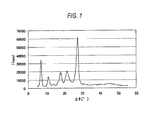
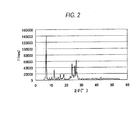
- azo pigments having a characteristic X-ray diffraction peak at a specific position exhibit markedly good color reproducibility, dispersibility, and storage stability of dispersions and have excellent color hue and tinctorial strength.
- a coloring composition having the pigment dispersed therein it is possible to provide an inkjet recording ink exhibiting excellent color reproducibility, good storage stability of dispersions, meaning that the particle size of the pigment is stable with the passage of time, and good ink liquid stability.
- the invention provides an azo pigment excellent in color characteristics such as tinctorial strength, hue, and reproducibility and also excellent in storage stability of pigment dispersions, that is, stability of the particle size of the pigment even with the passage of time, and ink liquid stability.
- a pigment dispersion having excellent coloring characteristics, storage stability of dispersions, and ink liquid stability can be obtained by dispersing the pigment of the invention in various media.
- the pigment dispersion can be used, for example, as an ink for printing such as inkjet printing, a color toner for electrophotography, a display such as LCD or PDP, a color filter to be used in photographing equipment such as CCD, a paint, and a colored plastic.
- the azo pigment or tautomer thereof may be a hydrate, solvent or salt thereof.
- the azo pigment of the invention is an azo pigment represented by the following formula (1) and having, in CuK ⁇ characteristic X-ray diffraction, a characteristic X-ray diffraction peak at Bragg angles (2 ⁇ 0.2°) of 6.9°, 17.9°, 21.5°, and 27.3° and a peak height of 0.6 or less at 11.9° relative to a peak height at 18.9°; or a tautomer thereof.
- the azo pigment represented by the following formula (1) and having, in CuK ⁇ characteristic X-ray diffraction, a characteristic X-ray diffraction peak at Bragg angles (2 ⁇ 0.2°) of 6.9°, 17.9°, 21.5°, and 27.3° and a peak height of 0.6 or less at 11.9° relative to a peak height at 10.9° will hereinafter be called " ⁇ crystal form azo pigment”.
- the azo pigment of the invention is also an azo pigment represented by the following formula (1) and having, in CuK ⁇ characteristic X-ray diffraction, a characteristic X-ray diffraction, peak at Bragg angles (2 ⁇ 0.2°) of 6.9°, 25.8°, and 27.1° and a peak height of 0.2 or less at 10.9° relative to a peak height at 11.9°; or a tautomer thereof.
- the azo pigment represented by the following formula (1) and having, in CuK ⁇ characteristic X-ray diffraction, a characteristic X-ray diffraction peak at Bragg angles (26 ⁇ 0.2°) of 6.9°, 25.8°, and 27.1° and a peak height of 0.2 or less at 10.9° relative to a peak height at 11.9° will hereinafter be called " ⁇ crystal form azo pigment,".
- Pigments are in a state wherein colorant molecules constituting them are strongly connected to each other through aggregation energy produced by strong interaction between these molecules. It is described, for example, in The Imaging Society of Japan, 43, 10 (2004 ) that van der Waals force and intermolecular hydrogen bond are necessary for creating this state.
- a polar group and/or a hetero atom into a molecule may be considered.
- introduction, into the molecule, of a substituent containing a hydrogen atom connected to a hetero atom and/or of an electron donating substituent may be considered.
- the polarity of the entire molecule may preferably be higher.
- a linear group such as alkyl group is preferably shorter and the value of a molecular weight/azo group is preferably smaller.
- the pigment molecule preferably contains an amide bond, a sulfonamide bond, an ether bond, a sulfone group, an oxycarbonyl group, an imide group, a carbamoylamino group, a heterocyclic ring, a benzene ring or the like.
- the compound represented by the formula (1) can be used as an azo pigment because, due to its specific structure, it can easily form an intermolecular interaction between colorant molecules and has low solubility in water, an organic solvent, or the like.
- pigments are finely dispersed in a solvent as solid particles such as molecular aggregates.
- the X-ray diffraction measurement of the ⁇ crystal form azo pigment represented by the above formula (1) can be conducted by using a powder X-ray diffractometer "RINT2500" (trade name; product of Rigaku Corporation) in accordance with Japanese Industrial Standards JIS K0131 (General Rules for X-ray diffractometric analysis).
- the azo pigment represented by the formula (1) or tautomer thereof has preferably a single crystal form having a characteristic X-ray diffraction peak at Bragg angles (2 ⁇ 0.2°) of 6.9°, 17.9°, 21.5°, and 27.3°, having a peak height of 0.6 or less at 11.9° relative to a peak height at 10.9°, and having no clear X-ray diffraction peak at 11.9°. It has more preferably a crystal form having a characteristic X-ray diffraction peak at 6.9°, 10.9°, 17.9°, 21.5°, and 27.3°.
- the azo pigment represented by the formula (1) or tautomer thereof has preferably a single crystal form having a characteristic X-ray diffraction peak at Bragg angles (2 ⁇ 0.2°) of 6.9°, 25.8°, and 27.1°, having a peak height of 0.2 or less at 10.9° relative to a peak height at 11.9°, and having no clear X-ray diffraction peak at 10.9°. It has more preferably a crystal form having a characteristic X-ray diffraction peak at 6.9°, 11.9°, 23.8°, 25.8°, 26.7°, and 27.1°.
- the ⁇ crystal form azo pigment and ⁇ crystal form azo pigment which have a single crystal form can be obtained using the production process of the invention which will be described later.
- Examples of the azo pigment represented by the formula (1) other than the ⁇ crystal form azo pigment and ⁇ crystal form azo pigment include a mixture of the ⁇ crystal form azo pigment and the ⁇ crystal form azo pigment.
- the ⁇ crystal form azo pigment has a hue with vivid reddish tint, and the ⁇ crystal form azo pigment has a hue with vivid yellowish tint.
- the mixture of the ⁇ crystal form azo pigment and the ⁇ crystal form azo pigment has excellent dispersibility.
- the peak height at 11.9° is preferably 0.6 or less because it may prevent the pigment from having a hue with yellowish tint.
- the peak height at a Bragg angle (26 ⁇ 0.2°) of 10.9° is 1 in the CuK ⁇ characteristic X-ray diffraction
- the peak height at a Bragg angle (2 ⁇ 0.2°) of 11.9° is therefore from 0 to 0.6, preferably from 0 to 0.5, more preferably from 0 to 0.4. This means that a single crystal form having no clear X-ray diffraction peak at 11.9° is preferred.
- the peak height at 10.9° is preferably 0.2 or less because it may prevent the pigment from having a hue with yellowish tint.
- the peak height at a Bragg angle (2 ⁇ 0.2°) of 11.9° is 1 in the CuK ⁇ characteristic X-ray diffraction
- the peak height at a Bragg angle (20 ⁇ 0.2°) of 10.9° is therefore from 0 to 0.6, preferably from 0 to 0.5, more preferably from 0 to 0.4. This means that a single crystal form having no clear X-ray diffraction peak at 10.9° is preferred.
- the primary particles of the ⁇ crystal form azo pigment and the ⁇ crystal form azo pigment represented by the formula (1) preferably have, as observed by a transmission microscope, a length in the long axis direction of 0.01 ⁇ m or greater but not greater than 30 ⁇ m, more preferably 0.02 ⁇ m or greater but not greater than to 10 ⁇ m, particularly preferably 0.03 ⁇ m or greater but not greater than 0.5 ⁇ m.
- Length in the long axis direction of the primary particle as observed by a transmission microscope is 0.01 ⁇ m or greater, fastness to light or ozone and dispersibility of the particles in a pigment can be achieved more definitely.
- Length in the long axis direction of 30 ⁇ m or less prevents overdispersion of the particles when they are dispersed into a desired volume average particle size and also prevents aggregation of them so that the storage stability of the pigment dispersion can be achieved more definitely.
- the length of the primary particles in the long axis direction falling within the above-described range is therefore preferred because fastness to light or ozone is high and the dispersion of such pigment particles has excellent storage stability.
- the volume average particle size of the pigment dispersion containing the pigment composition of the present invention can be measured using a Nanotrac UPA particle size analyzer ("UPA-EX150", trade name; product of Nikkiso Co., Ltd.). The measurement is performed according to a predetermined measurement method after placing 3 ml of the pigment dispersion in the measurement cell.
- UPA-EX150 Nanotrac UPA particle size analyzer
- an ink viscosity can be used as the viscosity and a pigment density can be used as the density of dispersed particles.
- the azo pigment of the invention has a specific structure and at the same time, has a characteristic X-ray diffraction peak at a specific position so that it exhibits excellent characteristics in color characteristics such as tinctorial strength, hue, and reproducibility and also excellent characteristics in fastness (particularly, solvent resistance).
- the invention also embraces tautomers of the azo pigment represented by the formula (1).
- the formula (1) is the canonical formula of several tautomers which are possible from the standpoint of the chemical structure. Tautomers having a structure other than that described above or mixtures containing a plurality of tautomers can also be used.
- azo-hydrazone represented by the formula (1') can be considered as a tautomer of the pigment represented by the formula (1).
- the invention embraces the compound represented by the formula (1') which is a tautomer of the azo pigment represented by the formula (1).
- a ratio of azo to hydrazone can easily be found half stoichiometrically by using solid NMR measurement or Raman absorption measurement. Both azo and hydrazone exhibit good performance, but a ratio of hydrazone is preferably greater than that of azo from the standpoint of hue. A ratio of hydrazone is preferably 50% or greater, more preferably 80% or greater, most preferably 90% or greater.
- the ⁇ crystal form azo pigment represented by the formula (1) and having, in CuK ⁇ characteristic X-ray diffraction, a characteristic X-ray diffraction peak at Bragg angles (26 ⁇ 0.2°) of 6.9°, 17.9°, 21.5°, and 27.3° and a peak height of 0.6 or less at 11.9° relative to a peak height at 10.9° features good absorption characteristics of a red pigment and are suited for fields requiring color reproducibility such as photo and CF applications.
- the ⁇ crystal form azo pigment represented by the formula (1) and having, in CuK ⁇ characteristic X-ray diffraction, a characteristic X-ray diffraction peak at Bragg angles (2 ⁇ 0.2°) of 6.9°, 25.8°, and 27.1°, having a peak height of 0.2 or less at 10.9° relative to a peak height at 11.9° features good absorption characteristics of a red pigment and are suited for fields requiring color reproducibility such as photo and CF applications.
- a production process of an azo pigment or tautomer thereof according to the invention is a process for producing an azo pigment represented by the below-described formula (1) or a tautomer thereof, which includes a step of carrying out an azo coupling reaction between a diazonium salt derived from a heterocyclic amine represented by the below-described formula (2) amine and a compound represented by the below-described formula (3).
- This production process can produce the azo pigment represented by the formula (1) (especially, an ⁇ crystal form azo pigment and a ⁇ crystal form azo pigment) or tautomer thereof at a high efficiency with good reproducibility.
- the azo pigment represented by the formula (1) has preferably, in CuK ⁇ X-ray diffraction, a characteristic X-ray diffraction peak at Bragg angles (26 ⁇ 0.2°) of 6.9°, 17.9°, 21.5°, and 27.3° and a peak height at 11.9° of 0.6 or less relative to a peak height at 10.9°, or in CuK ⁇ characteristic X-ray diffraction, a characteristic X-ray diffraction peak at Bragg angles (2 ⁇ 0.2°) of 6.9°, 25.8°, and 27.1°, having a peak height of 0.2 or less at 10.9° relative to a peak height at 11.9°
- Preparation of the diazonium salt and the coupling reaction between the diazonium salt and the compound represented by the formula (3) can be conducted in a conventional manner.
- Preparation of the diazonium salt from the heterocyclic amine represented by the formula (2) can be performed using a conventional preparation process of a diazonium salt which uses a nitrosonium ion source such as nitrous acid, a nitrite, or nitrosyl sulfuric acid in a reaction medium containing an acid (for example, hydrochloric acid, sulfuric acid, phosphoric acid, acetic acid, propionic acid, methanesulfonic acid, or trifluoromethanesulfonic acid).
- a nitrosonium ion source such as nitrous acid, a nitrite, or nitrosyl sulfuric acid
- a reaction medium containing an acid for example, hydrochloric acid, sulfuric acid, phosphoric acid, acetic acid, propionic acid, methanesulfonic acid, or trifluoromethanesulfonic acid.
- More preferred examples of the acid include acetic acid, propionic acid, methanesulfonic acid, phosphoric acid, and sulfuric acid. They may be used either singly or in combination. Among them, single use of phosphoric acid, combined use of acetic acid and sulfuric acid, combined use of acetic acid and propionic acid, and combined use of acetic acid, propionic acid, and sulfuric acid are more preferred, with single use of phosphoric acid being particularly preferred.
- reaction medium organic acids and inorganic acids are preferred. Particularly, phosphoric acid, sulfuric acid, acetic acid, propionic acid, and methanesulfonic acid are preferred. Of these, phosphoric acid is preferred.
- nitrosonium ion source examples include nitrite esters, nitrite salts, and nitrosyl sulfuric acid.
- sodium nitrite, potassium nitrite, isoamyl nitrite, and nitrosyl sulfuric acid are preferred.
- using sodium nitrite enables stable and efficient preparation of the diazonium salt.
- a proper amount of a trap agent for example, urea
- a substance for example, nitrosonium ions
- the solvent is used in an amount of preferably from 0.5 to 50 times the mass, more preferably from 1 to 20 times the mass, especially preferably from 3 to 15 times the mass of the heterocyclic amine represented by the formula (2).
- the heterocyclic amine of the formula (2) may be dispersed in the solvent or, depending on the kind of the diazo component, may be dissolved in the solvent. The latter is preferred.
- the amount of the nitrosonium ion source is preferably from 0.95 to 5.0 equivalents, more preferably from 1.00 to 3.00 equivalents, especially preferably from 1.00 to 1.50 equivalents based on the heterocyclic amine of the formula (2).
- the reaction temperature is preferably from -15 to 40°C, more preferably from -10 to 35°C, still more preferably from -5 to 30°C.
- Reaction temperatures less than -15°C are not economical because the reaction rate markedly decreases and it takes considerably long hours for synthesis.
- Reaction temperatures exceeding 40° are, on the other hand, not preferred because a generation amount of a by-product increases.
- the reaction time is preferably from 30 minutes to 300 minutes, more preferably from 30 minutes to 200 minutes, still more preferably from 30 minutes to 150 minutes.
- the compound represented by the formula (3) may be commercially available but can be prepared based on the process described in Japanese Patent Laid-Open No. 2008-13472 .
- the coupling reaction step can be conducted in reaction media from an acidic one to a basic one.
- the coupling reaction step is conducted preferably in reaction media from an acidic one to a neutral one, because such reaction media can suppress decomposition of the diazonium salt and provide an azo pigment with good efficiency.
- reaction medium examples include organic acids, inorganic acids, and organic solvents, with organic solvents being particularly preferred. Solvents not causing a liquid separation phenomenon and forming a uniform solution are preferred. Examples thereof include alcoholic organic solvents such as methanol, ethanol, propanol, isopropanol, butanol, t-butyl alcohol, and amyl alcohol; ketone-based organic solvents such as acetone and methyl ethyl ketone; diol-based organic solvents such as ethylene glycol, diethylene glycol, triethylene glycol, propylene glycol, dipropylene glycol, and 1,3-propanediol; ether-based organic solvents such as ethylene glycol monomethyl ether, ethylene glycol monoethyl ether, and ethylene glycol diethyl ether; tetrahydrofuran; dioxane; and acetonitrile. These solvents may be a mixture of two or more thereof
- Organic solvents having a polarity parameter (ET) of 40 or greater are preferred.
- ET polarity parameter
- glycol-based solvents having in the molecule thereof two or more hydroxyl groups, alcoholic solvents having 3 or less carbon atoms, and ketone-based solvents having 5 or less carbon atoms in total are more preferred, with alcoholic solvents having 2 or less carbon atoms (for example, methanol and ethylene glycol) and ketone-based solvents having 4 or less carbon atoms in total (for example, acetone and methyl ethyl ketone) being still more preferred.
- Mixed solvents thereof are also included.
- Polar aprotic solvents are also preferred as the reaction medium.
- the polar aprotic solvents include N,N-dimethylformamide, N,N-dimethylacetamide, N-metliyl-2-pyrrolidone, dimethylsulfoxide, tetramethylurea, acetone, methyl ethyl ketone, and acetonitrile and mixed solvents thereof.
- acetone, methyl ethyl ketone, N,N-dimethylacetamide, and acetonitrile are particularly preferred.
- the compound of the formula (3) may be dissolved in the solvent either completely or incompletely.
- reaction media exemplified above may contain an acid-containing reaction medium to be used for induction of the heterocyclic amine represented by the formula (2) into the corresponding diazonium salt.
- the using amount of the solvent is preferably from 1 to 100 times the mass, more preferably from 1 to 50 times the mass, still more preferably from 2 to 30 times the mass of the compound represented by the formula (3).
- the compound represented by the formula (3) may be either dispersed in the solvent or dissolved in the solvent.
- the using amount of the compound represented by the formula (3) is preferably from 0.5 to 5.0 equivalents, more preferably from 0.6 to 3.00 equivalents, particularly preferably from 0.6 to 1.5 equivalents based on the diazonium salt.
- the reaction temperature is preferably from -30°C to 30°C, more preferably from - 20°C to 20°C, still more preferably from -10°C to 10°C.
- Reaction temperatures less than - 30°C are not economical because they markedly decrease the reaction rate and time necessary for the synthesis increases seriously. Synthesis at high temperatures exceeding 30°C increases a generation amount of by-products. Temperatures outside the above range are therefore not preferred.
- the reaction time is preferably from 34 minutes to 300 minutes, more preferably from 30 minutes to 250 minutes, still more preferably from 30 minutes to 200 minutes.
- the product (crude azo pigment) obtained by these reactions may be provided for use after being treated according to an after-treating method of conventional organic synthesis reactions and then being optionally purified.
- the product isolated from the reaction system may be provided for use without purification or after purification using purifying operations such as recrystallization and salt formation either singly or in combination.
- reaction product may be provided for use after distilling off or not distilling off the reaction solvent after completion of the reaction, pouring the residue or the product in water or ice, neutralizing or not neutralizing the mixture, and not purifying or purifying the isolated product or extract with an organic solvent/water solution by using purifying operations such as recrystallization, crystallization, and salt formation either singly or in combination.
- the process for producing the azo pigment or tautomer thereof according to the invention it is preferred to carry out a coupling reaction between a diazonium compound obtained by diazotizing a heterocyclic amine represented by the formula (2) and a compound represented by the formula (3) after dissolving the compound of formula (3) in an organic solvent.
- the diazotization reaction of the heterocyclic amine represented by the formula (2) can be conducted, for example, by reacting the amine with a reagent such as sodium nitrite or nitrosylsulfuric acid in an acidic solvent such as sulfuric acid, phosphoric acid, or acetic acid at a temperature of 30°C or less for a period of from about 10 minutes to about 6 hours.
- the coupling reaction is conducted preferably by reacting the diazonium salt obtained by the above-described process with the compound represented by the formula (3) at 40°C or less, preferably 15°C or less for a period of from about 10 minutes to about 12 hours.
- an azo pigment As a production process of an azo pigment, it is preferred to use, for example, the process of the invention in which a coupling reaction is performed after dissolving the compound represented by the formula (3) in an organic solvent.
- organic solvent usable here include alcoholic solvents, ketone-based solvents, and polar aprotic solvents.
- Preferred examples of the alcoholic solvents include methanol, ethanol, isopropanol, ethylene glycol, and diethylene glycol, with methanol being particularly preferred.
- Preferred examples of the ketone-based solvents include acetone, methyl ethyl ketone, and cyclohexanone, with acetone being particularly preferred.
- Preferred examples of the polar aprotic solvents include, in addition to acetone and methyl ethyl ketone exemplified above as the ketone-based solvents, N,N-dimethylformamide, N,N-dimethylacetamide, N-methyl-2-pyrrolidone, dimethylsulfoxide, tetramethylurea, and acetonitrile, with N,N-dimethylacetamide being particularly preferred.
- the heterocyclic amine represented by the formula (2) a solution obtained by dissolving the heterocyclic amine in phosphoric acid, prepare a solution of a diazonium salt derived from the heterocyclic amine, and then mixing the solution of the diazonium salt with a solution obtained by dissolving the compound represented by the formula (3) in N,N-dimethylacetamide to effect the azo coupling reaction.
- the reaction medium used in the coupling reaction step contains, in addition to N,N-dimethylacetamide, phosphoric acid as the acid-containing reaction medium used for diazotization of the heterocyclic amine represented by the formula (2).
- Phosphoric acid used for conversion of the heterocyclic amine represented by the formula (2) into the resulting diazonium salt functions both as an acid and a reaction medium in the acid-containing reaction medium.
- the compound obtained by the above-described production process may be provided for a purification step.
- pH adjustment with a base is not inevitable.
- pH is adjusted preferably to from 4 to 10.
- a pH of from 5 to 8 is more preferred, with a pH of from 5.5 to 7.5 being particularly preferred.
- the compound When the compound has a pH of 10 or less, it does not have a hue with yellowish tint so that such a pH is preferred from the standpoint of hue. When the compound has a pH of 4 or greater and it is used, for example, as an inkjet recording ink, it does not cause problems such as corrosion of a nozzle so that such a pH is preferred.
- the compound of the formula (1) is preferably subjected to a drying step and an after treating step in order to obtain an ⁇ crystal form azo pigment with high purity; more preferably subjected to a drying step for drying the azo pigment represented by the formula (1) or tautomer thereof until its water content is reduced to 0% or greater but less than 5% and then an after-treating step.
- the composition containing water and the azo pigment represented by the formula (1) or tautomer thereof having a water content of 50 mass% or greater but not greater than 200 mass% is preferably subjected to an after-treating step in order to obtain a ⁇ crystal form azo pigment with high purity.
- the compound of the formula (1) is preferably subjected to an after-treating step in the presence of water in order to obtain a ⁇ crystal form azo pigment with high purity.
- the compound of the formula (1) may be provided for a drying step if necessary.
- the compound of the formula (1) By subjecting the compound of the formula (1) to an after-treating step after a drying step, the production of an ⁇ crystal form azo pigment at high purity.
- the compound represented by the formula (1) is preferably a compound obtained by, before subjecting to solvent heating treatment after the azo coupling reaction, neutralizing powders obtained by filtration or the like and then drying them. This operation enables to prepare an ⁇ crystal form azo pigment with better reproducibility at a higher efficiency.
- the drying step here is a step of drying, after neutralization, the compound represented by the formula (1) to reduce the water content thereof to less than 5%.
- the water content is preferably 0% or greater but less than 10%, more preferably 0% or greater but less than 5%, particularly preferably 0% or greater but less than 1%. As the water content is smaller, the amount of the solvent used for the heating treatment can be made smaller.
- the compound represented by the formula (1) in the invention is preferably subjected to solvent heating treatment as an after-treating step.
- the after-treating step preferably includes solvent heating treatment with a solvent having an SP value of from 7.0 to 14.0. Since a certain portion of the pigment is dissolved by this solvent heating treatment, impurities incorporated in the pigment can be removed.
- solvents having an SP value of from 7.0 to 1.40 are preferred; solvents having an SP value of from 9.0 to 13.0 are more preferred; ethyl acetate, dibutyl phthalate, acetone, isopropyl alcohol, acetonitrile, acetic acid, N,N-dimethylacetamide, and N,N-dimethylformamide are still more preferred; and acetone, acetone, acetonitrile, N,N-dimethylacetamide, and N.N-dimethylformamide are most preferred.
- the amount of the solvent to be used for the solvent heating treatment differs, depending on the kind of the solvent, it is preferably from 1 to 100 times the weight, more preferably from 5 to 70 times the weight, particularly preferably from 5 to 30 times the weight of the compound represented by the formula (1).
- the solvent exemplified above may further contain an inorganic or organic acid or a base.
- the temperature of the solvent heating treatment differs, depending on the primary particle size of a desired pigment. It is preferably from 40 to 150°C, more preferably from 60 to 100°C.
- the treating time is preferably from 30 minutes to 24 hours.
- the above-described tautomerism or polymorphism can be controlled by the production conditions upon after treatment.
- the method include pigment particle size controlling step by milling treatment such as solvent salt milling, salt milling, dry milling, solvent milling, or acid pasting, or by solvent heating treatment; and surface treating step with a resin, a surfactant, a dispersant, or the like.
- the solvent salt milling is performed, for example, by charging a crude azo pigment, an inorganic salt, and an organic solvent which does not dissolve it therein in a kneader and knead-milling of the mixture in the kneader.
- the inorganic salt water-soluble inorganic salts can preferably be used.
- inorganic salts such as sodium chloride, potassium chloride, and sodium sulfate is preferred.
- inorganic salts having an average particle size of from 0.5 to 50 ⁇ m is more preferred.
- the using amount of the inorganic salt is preferably a 3 to 20 times the mass, more preferably from 5 to 15 times the mass of the crude azo pigment.
- organic solvent water-soluble organic solvents can preferably be used. Since the solvent becomes easily vaporizable due to an increase in temperature upon kneading, high-boiling solvents are preferred in view of safety.
- organic solvents include diethylene glycol, glycerin, ethylene glycol, propylene glycol, liquid polyethylene glycol, liquid polypropylene glycol, 2-(methoxymethoxy)ethanol, 2-butoxyethanol, 2-(isopentyloxy)ethanol, 2-(hexyloxy)ethanol, diethylene glycol monomethyl ether, diethylene glycol monoethyl ether; diethylene glycol monobutyl ether, triethylene glycol, triethylene glycol monomethyl ether, 1-methoxy-2-propanol, 1-ethoxy-2-propanol, dipropylene glycol, dipropylene glycol monomethyl ether, dipropylene glycol monomethyl ether, and dipropylene glycol, and mixtures thereof.
- the using amount of the water-soluble organic solvent is preferably from 0.1 to 5 times the mass of the crude azo pigment.
- the kneading temperature is preferably from 20 to 130°C, particularly preferably from 40 to 110°C.
- a kneader or a mix muller can be used as the kneader.
- the composition containing water and the azo pigment represented by the formula (1) or tautomer thereof having a water content of 50 mass% or greater but not greater than 200 mass% is preferably subjected to an after-treating step.
- the compound of the formula (1) is preferably subjected to an after-treating step in the presence of water. This makes it possible to prepare the ⁇ crystal form azo pigment with better reproducibility at a higher efficiency.
- the water content can be determined by placing on an aluminum dish 100 mg of a pigment to be measured and leaving it to stand overnight at 80°C, subtracting the mass (g) of the pigment thus evaporated to dryness from the total mass (100 mg) of the pigment before evaporation to dryness, and calculating a percentage (mass%) of the difference in the total mass (100 mg) of the pigment before evaporation to dryness.
- the above-described solvent heating treatment is preferred.
- the compound represented by the formula (1) to be subjected to the solvent heating treatment is preferably a compound in the presence of water obtained by neutralizing the powder collected by filtration after the azo coupling reaction and then filtering the powder.
- the water content of the compound represented by the formula (1) when the after-treating step is performed in the presence of water is preferably 20 mass% or greater but not greater than 400 mass%, more preferably 50 mass% or greater but not greater than 200 mass%, particularly preferably 100 mass% or greater but not greater than 200 mass%.
- Water contents adjusted to 20 mass% or greater facilitate preparation of the ⁇ crystal form azo pigment not containing the ⁇ crystal form azo pigment.
- Contents adjusted to not greater than 400 mass% make it possible to obtain the ⁇ crystal form azo pigment with a uniform structure in a short period of time.
- the invention also relates to the ⁇ crystal form azo pigment produced using the above production process or a tautomer thereof, and a salt, hydrate or solvate thereof and the ⁇ crystal form azo pigment produced using the above production process or a tautomer thereof, and a salt, hydrate or solvate thereof.
- the pigment dispersion of the invention is characterized in that it contains at least one selected from the above-described ⁇ crystal form azo pigment or tautomer thereof, or the azo pigment obtained by the production process of the present invention or tautomer thereof.
- a pigment dispersion containing it can be equipped with excellent color characteristics, durability, and dispersion stability.
- the pigment dispersion of the invention may be aqueous or non-aqueous, but is preferably an aqueous pigment dispersion.
- an aqueous liquid for dispersing therein the pigment may be a mixture having water as a main component and, as needed, a hydrophilic organic solvent.
- hydrophilic organic solvent examples include alcohols such as methanol, ethanol, propanol, isopropanol, butanol, isobutanol, sec-butanol, t-butanol, pentanol, hexanol, cyclohexanol, and benzyl alcohol; polyhydric alcohols such as ethylene glycol, diethylene glycol, triethylene glycol, polyethylene glycol, propylene glycol, dipropylene glycol, polypropylene glycol, butylene glycol, hexanediol, pentanediol, glycerin, hexanetriol, and thiodiglycol; glycol derivatives such as ethylene glycol monomethyl ether, ethylene glycol monoethyl ether, ethylene glycol monobutyl ether, diethylene glycol monomethyl ether, diethylene glycol monobutyl ether, propylene glycol monoethyl ether, propylene glyco
- the aqueous pigment dispersion of the invention may further contain a water-based resin.
- the water-based resin include water-soluble resins which can be dissolved in water, water-dispersible resins which can be dispersed in water, and colloidal dispersion resins, and mixtures thereof.
- Specific examples of the water-based resins include acrylic resins, styrene-acrylic resins, polyester resins, polyamide resins, polyurethane resins, and fluorine-containing resins.
- the aqueous pigment dispersion of the invention contains the water-based resin
- the content may be from 0 to 100 mass% relative to the pigment.
- a surfactant and a dispersant may be used.
- the surfactant include anionic, nonionic, cationic, and amphoteric surfactants. Any of them may be used, but anionic or nonionic surfactants are preferred.
- the aqueous pigment dispersion of the invention contains a surfactant
- no particular limitation is imposed on its content.
- the content may be from 0 to 100 mass% relative to the pigment.
- anionic surfactant examples include fatty acid salts, alkyl sulfates, alkylbenzene sulfonates, alkyl naphthalene sulfonates, dialkyl sulfosuccinates, alkyl diaryl ether disulfonatets, alkyl phosphates, polyoxyethylene alkyl ether sulfates, polyoxyethylene alkylaryl ether sulfates, naphthalenesulfonic acid-formalin condensates, polyoxyethylene alkyl phosphates, glycerol borate fatty acid esters, and polyoxyethylene glycerol fatty acid esters.
- nonionic surfactant examples include polyoxyethylene alkyl ethers, polyoxyethylene alkylaryl ethers, polyoxyethylene-oxypropylene block copolymers, sorbitan fatty acid esters, polyoxyethylene sorbitan fatty acid esters, polyoxyethylene sorbitol fatty acid esters, glycerin fatty acid esters, polyoxyethylene fatty acid esters, polyoxyethylene alkyl amines, fluorine-containing surfactants, and silicon-containing surfactants.
- the non-aqueous pigment dispersion of the invention is obtained by dispersing the pigment represented by the formula (1) in a non-aqueous vehicle.
- a resin to be used as the non-aqueous vehicle include petroleum resin, casein, shellac, rosin-modified maleic acid resin, rosin-modified phenolic resin, nitrocellulose, cellulose acetate butyrate, cyclized rubber, chlorinated rubber, oxidized rubber, rubber hydrochloride, phenolic resin, alkyd resin, polyester resin, unsaturated polyester resin, amino resin, epoxy resin, vinyl resin, vinyl chloride, vinyl chloride-vinyl acetate copolymer, acrylic resin, methacrylic resin, polyurethane resin, silicone resin, fluorine resin, drying oil, synthetic drying oil, styrene/maleic acid resin, styrene/acrylic resin, polyamide resin, polyimide resin, benzoguanamine resin, melamine resin, urea resin, chlorinated polypropylene, but
- solvent to be used in the non-aqueous vehicles examples include aromatic solvents such as toluene, xylene, and methoxybenzene; acetates solvents such as ethyl acetate, butyl acetate, propylene glycol monomethyl ether acetate, and propylene glycol monoethyl ether acetate; propionate solvents such as ethoxyethyl propionate; alcoholic solvents such as methanol and ethanol; ether solvents such as butyl cellosolve, propylene glycol monomethyl ether, diethylene glycol ethyl ether, and diethylene glycol dimethyl ether; ketone solvents such as methyl ethyl ketone, methyl isobutyl ketone, and cyclohexanone; aliphatic hydrocarbon solvents such as hexane; nitrogen-compound containing solvents such as N,N-dimethylformamide, ⁇ -butyrolactam,
- the volume-average particle size of the pigment is preferably 10 nm or greater but not greater than 250 nm.
- the term "volume-average particle size of the pigment” means the particle size of the pigment itself or the entire size of the particle and an additive when the additive such as a dispersant has been adhered to the pigment.
- a Nanotrac UPA particle size analyzer (“UPA-EX150", trade name; product of Nikkiso Co., Ltd.) can be used as an apparatus for measuring the volume-average particle size of the pigment.
- the measurement is conducted according to a predetermined measuring method after placing 3 ml of a pigment dispersion in a measuring cell. With respect to parameters to be inputted upon measurement, an ink viscosity is used as the viscosity and a pigment density is used as the density of the dispersed particles.
- the volume-average particle size is more preferably 20 mn or greater but not greater than 250 nm, still more preferably 30 nm or greater but not greater than 230 nm.
- the volume-average particle size of the particles in the pigment dispersion is less than 20 nm, storage stability cannot always be ensured.
- it exceeds 250 nm on the other hand, an optical density may decrease.
- the concentration of the pigment contained in the pigment dispersion of the invention is preferably in a range of from 1 to 35 mass%, more preferably in a range of from 2 to 25 mass%. Concentrations less than 1 mass% cannot always provide a sufficient image density when the pigment dispersion is used singly as an ink. Concentrations exceeding 35 mass%, on the other hand, may deteriorate the dispersion stability.
- the pigment dispersion of the invention can be obtained by dispersing the azo pigment and the aqueous or non-aqueous medium through a dispersing apparatus.
- a dispersing apparatus usable here include a simple stirrer, an impeller-stirring system, an in-line stirring system, a mill system (for example, colloid mill, ball mill, sand mill, bead mill, attritor, roll mill, jet mill, paint shaker, or agitator mill), a ultrasonic system, a high-pressure emulsion dispersion system (high-pressure homogenizer; specific commercially available apparatuses being Gaulin homogenizer, a microfluidizer, and DeBEE2000).
- the azo pigments of the invention can be used as image recording materials for forming images, particularly color images.
- image recording materials include, as well as inkjet recording materials which will be described in detail later, heat sensitive recording materials, pressure sensitive recording materials, recording materials using an electrophotographic system, transfer system silver halide photosensitive materials, printing inks, and recording pens, preferably inkjet system recording materials, heat-sensitive recording materials, and recording materials using an electrophotographic system, more preferably inkjet recording materials.
- the pigments can be used for color filters for recording and reproducing color images to be used in solid state imaging devices such as CCDs and in displays such as LCD and PDP and a dye solution for dyeing various fibers therewith.
- the azo pigment of the invention may be used after adjusting, with a substituent, its physical properties such as solvent resistance, dispersibility, and thermal transfer property suited for its application.
- the azo pigment of the invention may be used in an emulsion dispersion state or in a solid dispersion state according to the system wherein it is used.
- the coloring composition of the invention means a coloring composition containing the above-described azo pigment or tautomer thereof or the above-described pigment dispersion.
- the coloring composition of the invention may contain a medium.
- the coloring composition using a solvent as the medium is particularly suited as an inkjet recording ink.
- the coloring composition of the invention can be prepared by using an oleophilic medium or a water-based medium as the medium and dispersing the azo pigment of the invention in the medium. Preferred is the coloring composition using the water-based medium.
- the coloring composition of the invention embraces a composition for ink excluding the medium.
- the coloring composition of the invention may contain, as needed, other additives without damaging the advantages of the invention.
- additives examples include known additives (described in Japanese Patent Laid-Open No 2003-306623 ) such as drying preventives (wetting agents), anti-fading agents, emulsion stabilizers, penetration accelerators, ultraviolet absorbers, antiseptics, antifungal agents, pH regulators, surface tension regulators, anti-foaming agents, viscosity regulators, dispersants, dispersion stabilizers, rust inhibitors, and chelating agents.
- drying preventives wetting agents
- anti-fading agents such as e.g., anti-fading agents
- emulsion stabilizers penetration accelerators, ultraviolet absorbers, antiseptics, antifungal agents, pH regulators, surface tension regulators, anti-foaming agents, viscosity regulators, dispersants, dispersion stabilizers, rust inhibitors, and chelating agents.
- wetting agents wetting agents
- anti-fading agents such as e.g., anti-fading agents
- emulsion stabilizers such as penetration accelerators
- the pigment dispersion described above is employed for the inkjet recording ink of the invention.
- the ink is prepared preferably by mixing with a water-soluble solvent, water, or the like.
- the pigment dispersion of the invention may be used as is.
- the content of the pigment dispersion in the ink of the invention is in a range of preferably from 1 to 100 mass%, particularly preferably from 3 to 20 mass%, most preferably from 3 to 10 mass%.
- the pigment of the invention is contained in an amount of preferably 0.1 part by mass or greater but not greater than 20 parts by mass, more preferably 0.2 part by mass or greater but not greater than 10 parts by mass, still more preferably 1 part by mass or greater but not greater than 10 parts by mass.
- the ink of the invention may further contain another pigment in combination with the pigment of the invention. When two or more pigments are used in combination, the total amount of the pigments is preferably within the above-described range.
- the ink of the invention can be used for forming not only a mono-color image but also a full-color image.
- a magenta tone ink, a cyan tone ink, and a yellow tone ink can be used and, further, a black tone ink may be used for adjusting the tone.
- the ink of the invention may contain another pigment simultaneously with the azo pigment of the invention.
- yellow pigments usable here include C.I.P.Y. 74, C.I.P.Y. 128, C.I.P.Y. 155, and C.I.P.Y. 213.
- magenta pigments usable here include C.I.P.V. 19 and C.I.P.R. 122.
- cyan pigments usable here include C.I.P.B. 15:3 and C.I.P.B. 15:4.
- any pigment may be used as each of the pigments.
- black color material usable here include disazo, trisazo, and tetrazo pigments and also a dispersion of carbon black.
- polyhydric alcohols As the water-soluble solvents to be used in the inkjet recording ink of the invention, polyhydric alcohols, polyhydric alcohol derivatives, nitrogen-containing solvents, alcohols, and sulfur-containing solvents are used.
- Specific examples of the polyhydric alcohols include ethylene glycol, diethylene glycol, propylene glycol, butylene glycol, triethylene glycol, 1,5-pentanediol, 1,2,6-hexanetriol, and glycerin.
- polyhydric alcohol derivatives examples include ethylene glycol monomethyl ether, ethylene glycol monoethyl ether, ethylene glycol monobutyl ether, diethylene glycol monomethyl ether, diethylene glycol monoethyl ether, diethylene glycol monobutyl ether, propylene glycol monobutyl ether, dipropylene glycol monobutyl ether, and an ethylene oxide adduct of diglycerin.
- nitrogen-containing solvents examples include pyrrolidone, N-methyl-2-pyrrolidone, cyclohexylpyrrolidone, and triethanolamine.
- examples of the alcohols include ethanol, isopropyl alcohol, butyl alcohol, and benzyl alcohol.
- sulfur-containing solvents examples include thiodiethanol, thiodiglycerol, sulfolane, and dimethylsulfoxide.
- propylene carbonate and ethylene carbonate may also be used.
- the water-soluble solvents to be used in the invention may be used either singly or in combination.
- the content of the water-soluble solvent in the entire ink is 1 mass% or greater but not greater than 60 mass%, preferably 5 mass% or greater but not greater than 40 mass%. Contents of the water-soluble solvent in the ink less than 1 mass% may result in an insufficient optical density. Contents exceeding 60 mass%, on the other hand, may result in unstable jet properties of the ink liquid due to an increase in the viscosity of the liquid.
- the preferred physical properties of the inkjet recording ink of the invention are as follows.
- the surface tension of the ink is preferably 20 mN/m or greater but not greater than 60 mN/m, more preferably 20 mN/m or greater but not greater than 45 mN/m, still more preferably 25 mN/m or greater but not greater than 35 mN/m.
- the surface tension is less than 20 mN/m, the liquid may overflow onto the nozzle surface of the recording head, which prevents normal printing.
- the surface tension exceeds 60 mN/m on the other hand, the ink may slowly penetrate into the recording medium after printing, which retards the drying time.
- the above surface tension is measured under the environment of 23°C and 55% RH by using a Wilhelmy surface tension balance.
- the viscosity of the ink is preferably 1.2 mPa ⁇ s or greater but not greater than 8.0 mPa ⁇ s, more preferably 1.5 mPa ⁇ s or greater but less than 6.0 mPa ⁇ s, still more preferably 1.8 mPa ⁇ s or greater but less than 4.5 mPa ⁇ s. Viscosities greater than 8.0 mPa ⁇ s may deteriorate ink ejection properties. Viscosities less than 1.2 mPa ⁇ s, on the other hand, may deteriorate the long-term ejection properties.
- the above-described viscosity (including that to be described later) is measured by using a rotational viscometer "Rheomat 115" (trade name; product of Contraves Co.) at 23°C and a shear rate of 1400 s -1 .
- water is added to the ink within a range to give the preferred surface tension and viscosity described above.
- amount of water in the ink it is preferably 10 mass% or greater but not greater than 99 mass%, more preferably 30 mass% or greater but not greater than 80 mass%.
- an alkali metal such as potassium hydroxide, sodium hydroxide, and lithium hydroxide
- nitrogen-containing compounds such as ammonium hydroxide, triethanolamine, diethanolamine, ethanolamine, and 2-amino-2-methyl-1-propanol
- compounds of an alkaline earth metal such as calcium hydroxide
- acids such as sulfuric acid, hydrochloric acid, and nitric acid
- salts between a strong acid and a weak alkali such as ammonium sulfate.
- pH buffers antioxidants, antifungal agents, viscosity regulators, conductive agents, ultraviolet absorbers, and the like.
- the color-filter coloring composition of the invention contains the above-described pigment composition of the invention. It preferably contains a polymerizable compound and a solvent further.
- the azo pigment obtained in the above-described manner may be incorporated as is or a pigment dispersion obtained by dispersing it in a solvent may be incorporated.
- a pigment dispersion obtained by dispersing it in a solvent may be incorporated.
- Using the azo pigment in the form of a pigment dispersion is preferred because it improves color characteristics, durability, dispersion stability, light fastness, and weather resistance.
- the using amount of an organic pigment in the color-filter coloring composition of the invention is preferably from 0.01 to 2 parts by mass, particularly preferably from 0.1 to 1 part by mass, based on 1 part by mass of the polymerizable compound.
- the polymerizable compound may be selected as needed in consideration of the production process of a color filter.
- Examples of the polymerizable compound include photosensitive compounds and thermosetting compounds, with photosensitive compounds being particularly preferred.
- the photosensitive compound is selected from at least one of photopolymerizable resins, photopolymerizable monomers, and photopolymerizable oligomers. That having an ethylenically unsaturated bond is preferred.
- the coloring composition for color filter is required to have a component which is converted into a resin when cured. It may have only a component which has not been converted into a resin when not cured.
- photopolymerizable compounds, photopolymerizable monomers, and photopolymerizable oligomers include (meth)acrylates such as 2-hydroxyethyl (meth)acrylate, 2-hydroxypropyl (meth)acrylate, 2-ethylhexyl (meth)acrylate, ethylene glycol di(meth)acrylate, diethylene glycol di(meth)acrylate, triethylene glycol di(meth)acrylate, polyethylene glycol di(meth)acrylate, pentaerythritol di(meth)acrylate, dipentaerythritol tetra(meth)acrylate, dipentaerythritol hexa(meth)acrylate, bisphenol A epoxy di(meth)acrylate, bisphenol F epoxy di(meth)acrylate, bisphenol fluorene-based epoxy di(meth)acrylate.
- (meth)acrylates such as 2-hydroxyethyl (meth)acrylate, 2-hydroxypropyl (me
- Additional examples include vinyl resins such as acrylic acid (co)polymers, (meth)acrylic acid (co)polymers, and maleic acid (co)polymers and resins having, on the side chain thereof, an ethylenic double bond such as polyethylene oxide, polyvinylpyrrolidone, polyamide, polyurethane, polyether, and polyester. They may be used either singly or in combination.
- the amount of the polymerizable compound is from 20 to 95 mass%, preferably from 40 to 80 mass% in the total solid content of the composition for color filter.
- the polymerizable compound is added in an amount of preferably from 40 to 95 mass%, more preferably from 50 to 90 mass%, in the total solid content of the composition for color filter.
- the composition may contain another resin or the like if necessary and in this case, it is desired that the total amount including this resin falls within the above range.
- total solid content as used herein means a content which has remained as a solid content after drying and curing and it contains not a solvent but a monomer.
- a photopolymerization initiator is used together with at least one of the monomers and oligomers exemplified as the photosensitive compound.
- the photopolymerization initiator at least one selected from compounds such as benzophenone derivatives, acetophenone derivatives, benzoin derivatives, benzoin ether derivatives, thioxanthone derivatives, anthraquinone derivatives, naphthoquinone derivatives, and triazine derivatives is used.
- a known photosensitizer may be used in combination with these photopolymerization initiators.
- thermosetting resin examples include melamine resin, urea resin, alkyd resin, epoxy resin, phenolic resin, and cyclopentadiene resin.
- photosensitive resin or "thermosetting resin” as used in this specification and claims contains not only the cured resin but also at least one of polymerizable monomers and oligomers.
- a binder resin having an acid group and a resin conventionally used for ink such as acrylic resin and urethane resin may be used as an another polymerizable compound.
- the pigment dispersion may be aqueous or nonaqueous and it differs depending on the production process of a color filter.
- a nonaqueous pigment dispersion is preferred.
- the inkjet method either one is possible.
- Examples of the solvent to be used for the coloring composition of the invention include fatty acid esters such as ethyl acetate, butyl acetate, ethylene glycol monomethyl ether acetate, and propylene glycol monomethyl ether acetate; ketones such as acetone, methyl ethyl ketone, methyl isobutyl ketone, cyclohexanone, and diacetone alcohol; aromatic compounds such as benzene, toluene, and xylene; alcohols such as methanol, ethanol, n-propanol, isopropanol, and n-butanol; glycols such as ethylene glycol, diethylene glycol, triethylene glycol, tetraethylene glycol, polyethylene glycol, propylene glycol, dipropylene glycol, tripropylene glycol, polypropylene glycol, trimethylene glycol, and hexanetriol; glycerin; alkylene glycol monoalkyl ether
- water-soluble organic solvents may be used as a water-based medium after being mixed with water.
- a mixture obtained by mixing two or more of the above solvents other than water may be used as an oil-based medium.
- the color-filter coloring composition of the invention further contains preferably at least one dispersant selected from surfactants, silicone additives, silane coupling agents, and titanium coupling agents. These dispersants may also be used in combination of two or more.
- surfactant examples include cationic, anionic, nonionic, and amphoteric surfactants.
- anionic surfactants such as alkane sulfonates, linear alkylbenzene sulfonates, branched alkylbenzene sulfonates, alkyl naphthalene sulfonates, naphthalene sulfonate formaldehyde condensates, alkyl sulfates, polyoxyethylene alkyl ether sulfates, alkyl phosphates, polyoxyethylene alkyl ether phosphates, and aliphatic monocarboxylates; cationic surfactants such as alkylamine salts and quaternary amine salts; nonionic surfactants such as glycerin fatty acid esters, sorbitan fatty acid esters, polyoxyethylene alkyl ethers,
- silicone additives include polyalkylsiloxanes, polyalkylphenylsiloxanes, polyorganosiloxanes, polydimethylsiloxane, polyorganosiloxane polyether copolymers, polyfluorosiloxanes, and organosilanes. These silicone additives may be used in combination of two or more.
- silane coupling agents may include vinyltrimethoxysilane, vinyltriethoxysilane, vinyltris( ⁇ -methoxyethoxy)silane, ⁇ -(3,4-epoxycyclohexyl) ethyltrimethoxysilane, ⁇ -glycidoxypropyltrimethoxysilane, ⁇ -glycidoxypropylmethyldiethoxysilane, ⁇ -aminopropyltriethoxysilane, N-phenyl- ⁇ -aminopropyltrimethoxysilane, ⁇ -methacryloxypropyltrimethoxysilane, vinyltriacetoxysilane, methyltrimethoxysilane, dimethyldimethoxysilane, phenyltrimethoxysilane, diphenyldimethoxysilane, methyltriethoxysilane, dimethyldiethoxysilane, phenyltriethoxysilane, diphenyl
- titanium coupling agents may include isopropyltri(N-aminoethylaminoethyl)titanate and dibutoxybistriethanolamine titanate.
- the amount of the dispersant varies, depending on the kind of the dispersant employed. It is preferably from 0.1 to 100 parts by mass, particularly preferably from 0.5 to 80 parts by mass based on 100 parts by mass of the organic pigment.
- the invention also provides a color filter available by using the above-described coloring composition for color filter.
- This color filter exhibits a high contrast and a good light transmittance. More specifically, it exhibits a light transmittance of preferably 85% or greater, more preferably 90% or greater at a wavelength of 650 nm.
- the color filter of the invention may be produced using any known method.
- Preferred examples include photolithographic method and inkjet method.
- the photolithographic method and inkjet method will hereinafter be described specifically.
- a photosensitive resin is employed as a polymerizable compound of the color-filter coloring composition of the invention.
- the photosensitive resin is incorporated, together with a photopolymerization initiator, in the coloring composition as a monomer or an oligomer and after being cured by exposure to light, it forms a film on a transparent substrate.
- the photosensitive resin a polymer or copolymer of the above-described polymerizable monomer having in the molecule thereof one or more ethylenic double bonds is suitably used.
- acrylates and methacrylates are particularly preferred. Specific examples include methyl acrylate, methyl methacrylate, butyl methacrylate, butyl acrylate, pentaerythritol tetraacrylate, pentaerythritol tetramethacrylate, pentaerythritol triacrylate, pentaerythritol trimethacrylate, dipentaerythritol hexaacrylate, dipentaerythritol hexamethacrylate, dipentaerythritol pentaacrylate, dipentaerythritol pentamethacrylate, glycerol diacrylate, glycerol dimethacrylate, 1,4-butanediol diacrylate, 1,4-butanediol dimethacrylate, bisphenol A diacrylate, and bisphenol A dimethacrylate.
- the color-filter coloring composition of the invention contains, in addition to the above-described photosensitive resin, a binder resin having an acidic group.
- a binder resin having an acidic group include resins having a carboxyl group, a hydroxy group, a sulfonic acid group, or the like. Binder resins having at least one of a carboxyl group and a hydroxyl group are preferred.
- binder resin having an acidic group preferred are copolymers obtained using a monomer having an ethylenic double bond selected from acrylates, methacrylates, styrene, vinyl acetate, vinyl chloride, N-vinylpyrrolidone, acrylamide, and the like and a monomer having an ethylenic double bond and an acidic group selected from acrylic acid, methacrylic acid, p-styrenecarboxylic acid, p-styrenesulfonic acid, p-hydroxystyrene, and maleic anhydride.
- a monomer having an ethylenic double bond selected from acrylates, methacrylates, styrene, vinyl acetate, vinyl chloride, N-vinylpyrrolidone, acrylamide, and the like
- a monomer having an ethylenic double bond and an acidic group selected from acrylic acid, methacrylic acid, p-styrenecarboxy
- the binder resin having an acidic group is used in an amount of preferably from 0.5 to 4 parts by mass, particularly preferably from 1 to 3 parts by mass, relative to 1 part by mass of the photosensitive resin (polymerizable monomer).
- At least one oil-based medium selected from fatty acid esters, ketones, aromatic compounds, alcohols, glycols, glycerin, alkylene glycol monoalkyl ethers, alkylene glycol dialkyl ethers, ethers, and nitrogen-containing polar organic solvents can be used.
- the solvent is used in an amount of from 3 to 30 times the mass, particularly preferably from 4 to 15 parts by mass of the total mass of the components of the coloring composition other than the solvent.
- the coloring composition for the photolithographic method according to the invention may contain, in addition to the above-described components, known additives (described in Japanese Patent Laid-Open No. 2003-306623 ) such as wetting agents, anti-fading agents, emulsion stabilizers, ultraviolet absorbers, antiseptics, antifungal agents, pH regulators, surface tension regulators, anti-foaming agents, viscosity regulators, dispersion stabilizers, rust inhibitors, and chelating agents. These various additives may be added to an oil phase or an aqueous phase upon preparation.
- known additives described in Japanese Patent Laid-Open No. 2003-306623
- wetting agents such as wetting agents, anti-fading agents, emulsion stabilizers, ultraviolet absorbers, antiseptics, antifungal agents, pH regulators, surface tension regulators, anti-foaming agents, viscosity regulators, dispersion stabilizers, rust inhibitors, and chelating agents.
- additives described in Japanese Patent Lai
- the color-filter coloring composition of the invention can be prepared by a process including a step of uniformly mixing and dispersing the above-described pigment composition of the invention, the polymerizable compound, the solvent, and the other additives with equipment such as bead mill, ball mill, sand mill, twin-roll mill, triple-roll mill, homogenizer, kneader, or disperser, and a step of regulating the viscosity of the resulting dispersion with the above-described solvent or the like.
- a color filter can be obtained, for example, by using a method including a step of uniformly applying the coloring composition of the invention onto a display substrate by using a known method such as printing, spraying, bar coating, roll coating, or spin coating, a step of heating to remove the solvent from the ink, a step of exposing a color filter pattern on the display substrate to a high-pressure mercury lamp or the like, a step of developing the pattern with an alkali, a step of washing, and a step of baking.
- a method including a step of uniformly applying the coloring composition of the invention onto a display substrate by using a known method such as printing, spraying, bar coating, roll coating, or spin coating, a step of heating to remove the solvent from the ink, a step of exposing a color filter pattern on the display substrate to a high-pressure mercury lamp or the like, a step of developing the pattern with an alkali, a step of washing, and a step of baking.
- the polymerizable compound of the color-filter coloring composition of the invention When a color filter is formed using the inkjet method, no particular limitation is imposed on the polymerizable compound of the color-filter coloring composition of the invention and any compound is usable insofar as it is conventionally used in an ink for inkjet system. At least one monomer of the photosensitive resins and the thermosetting resins is preferably used.
- the photosensitive resins include acrylic resins, methacrylic resins, and epoxy resins, with acrylic resins and methacrylic resins being preferred.
- Preferred examples of the acrylic resins and methacrylic resins include combinations of a photopolymerizable monomer selected from acrylates, methacrylates, urethane acrylate, urethane methacrylate, acrylic amide, methacrylic amide, alkyl acrylates, benzyl methacrylate, benzyl acrylate, aminoalkyl methacrylates, and the like and a photopolymerization initiator selected from benzophenone derivatives, acetophenone derivatives, benzoin derivatives, benzoin ether derivatives, thioxanthone derivatives, anthraquinone derivatives, naphthoquinone derivatives, and triazine derivatives, and the like.
- thermosetting resin examples include melamine resins, urea resins, alkyd resins, epoxy resins, phenolic resins, and cyclopentadiene resins.
- the solvent used in the coloring composition of the invention may be either an oil-based medium or a water-based medium.
- the water-based medium is preferred.
- water or a mixed solvent of water and a water-soluble organic solvent is used, with the mixed solvent of water and a water-soluble organic solvent being preferred.
- a deionized solvent is also preferred.
- Examples of the solvent used in the water-based medium include those selected from alcohols, ketones, ethers, glycols, glycerin, alkylene glycol monoalkyl ethers, alkylene glycol dialkyl ethers, alkanolamines, and nitrogen-containing polar organic solvents and having water solubility. These water-soluble organic solvents may be used either singly or in combination.
- the viscosity of the coloring composition at room temperature becomes 20 mPa ⁇ s or less, preferably 10 mPa ⁇ s or less.
- the coloring composition of the invention can be prepared in a similar manner to that of the coloring composition to be used in the photolithographic method including a step of dispersing and mixing the components. Upon dispersing, a dispersant may be added to the composition as in the photolithographic method.
- the coloring composition of the invention may contain, in addition to the above-described components, various known additives such as wetting agent, anti-fading agent, emulsion stabilizer, ultraviolet absorber, antiseptic, antifungal agent, pH regulator, surface tension regulator, anti-foaming agent, viscosity regulator, and dispersion stabilizer, if necessary.
- various known additives such as wetting agent, anti-fading agent, emulsion stabilizer, ultraviolet absorber, antiseptic, antifungal agent, pH regulator, surface tension regulator, anti-foaming agent, viscosity regulator, and dispersion stabilizer, if necessary.
- a color filter can be formed using a method including, for example, a step of forming predetermined color filter patterns in the form of liquid droplets on a display substrate, drying the resulting substrate, and subjecting the substrate to heat treatment or exposure to light or both of them to cure the color filter patterns on the substrate into a film.
- the coloring composition for color filter and the color filter obtained using it are still within the scope of the invention insofar as the coloring composition contains the above-described polymerizable compound and solvent and the azo compound represented by the formula (1) is used as a colorant.
- the components such as polymerizable compound, solvent, and additive and the formulation upon formation of the color filter may be determined in accordance with conventional examples and they are not limited to those exemplified above with respect to the photolithographic method and inkjet method.
- the color filter of the invention thus available forms image elements together with G (green) and B (blue) color filter patterns by a known method.
- Such a color filter can provide a liquid crystal display having very high transparency, excellent spectroscopic properties, and a less depolarizing effect, and capable of displaying a clear image.
- Examples of the formation method of a color filter include a method of first forming patterns using a photoresist and then dyeing them and a method of forming patterns with a photoresist containing a colorant as disclosed in Japanese Patent Laid-Open No. 163552/1992 , 128703/1992 , or 175753/1992 .
- the pigment composition of the invention may be incorporated in the color filter by using any of these methods, but preferred is the color filter formation method described in Japanese Patent Laid-Open No.
- a positive resist composition containing a thermosetting resin, a quinonediazide compound, a crosslinking agent, the pigment composition of the invention, and a solvent onto a substrate, exposing it through a mask, developing the exposed portion to form a positive resist pattern, exposing the entire surface of the positive resist pattern, and then curing the exposed positive resist pattern. It is also possible to obtain an RGB primary color-type or YMC complementary color-type color filter after forming a black matrix in a conventional manner. Although there is no limitation on the using amount of the organic pigment in the color filter as in the pigment composition of the invention, an amount of from 0.1 to 50 mass% is preferred.
- thermosetting resin As the thermosetting resin, the quinonediazide compound, the crosslinking agent, and the solvent and their amounts used for the formation of a color filter, those described in the above-described patent documents may be preferably used.
- X-ray diffraction of the ⁇ crystal form azo pigment is measured according to Japanese Industrial Standards JIS K0131 (General rules for X-ray diffractometric analysis) under the following conditions by using a powder X-ray diffractometer "RINT2500" (trade name; product of Rigaku Corporation) and CuK ⁇ radiation.
- Measuring apparatus used automatic X-ray diffractometer, "RINT2500” (trade name; product of Rigaku Corporation)
- the ⁇ crystal form azo pigment represented by the formula (1) was synthesized through the following route.
- the compound (20 g) represented by the formula (2) was added to 200 ml of phosphoric acid to completely dissolve the former in the latter at room temperature. The resulting solution was ice cooled and kept at -5°C. Sodium nitrite (8.0 g) was added and the mixture was stirred for 40 minutes. Then, 3.3 g of sodium nitrite was added and the mixture was stirred fur 20 minutes. To the reaction mixture was added 1.5 g of urea to obtain a diazonium salt solution.
- the resulting diazonium salt solution was added dropwise to a solution obtained by dissolving 21 g of the compound represented by the formula (3) in N,N-dimethylacetamide (DMAc) (400 ml) over 80 minutes while keeping the temperature at from 5 to 10°C.
- the solution thus obtained was stirred for 2 hours while keeping the temperature at from 5 to 10°C.
- 240 ml of methanol was added, followed by stirring for 10 minutes. Crystals thus precipitated were collected by filtration and washed while pouring 300 ml of methanol thereon. Without drying, the crystals were neutralized with 500 ml of water and 50 ml of saturated sodium bicarbonate.
- the crystals thus precipitated were collected by filtration and washed while pouring thereon 300 ml of water. Then, they were dried at 50°C for 24 hours with a blow dryer. The crystals thus obtained (water content: 0.50%) were suspended in 400 mL of DMAc. After stirring at 80°C for 30 minutes, the reaction mixture was cooled to room temperature over 2 hours. The crystals thus obtained were collected by filtration and dried for 24 hours at room temperature and then for 10 hours in a vacuum desiccator of 50°C to obtain 26.9 g of an ⁇ crystal form azo pigment. Yield: 82%.
- the ⁇ crystal form azo pigment represented by the formula (1) was synthesized through the following route.
- the compound (20 g) represented by the formula (2) was added to 200 ml of phosphoric acid to completely dissolve the former in the latter at room temperature.
- the resulting solution was ice cooled and kept at -5°C.
- Sodium nitrite (8.0 g) was added and the mixture was stirred for 40 minutes.
- 3.3 g of sodium nitrite was added again and the mixture was stirred for 20 minutes.
- To the reaction mixture was added 1.5 g of urea to obtain a diazonium salt solution.
- the resulting diazonium salt solution was added dropwise to a solution, which had been obtained by dissolving 21 g of the compound represented by the formula (3) in N,N-dimethylacetamide (DMAc) (400 ml), over 80 minutes while keeping the temperature at from 5 to 10°C.
- the solution thus obtained was stirred for 2 hours while keeping the temperature at from 5 to 10°C.
- 240 ml of methanol was added, followed by stirring for 10 minutes.
- the crystals thus precipitated were collected by filtration and washed while pouring 300 ml of methanol thereon. Without drying, the crystals were neutralized with 500 ml of water and 50 ml of saturated sodium bicarbonate.
- the crystals thus precipitated were collected by filtration and washed while pouring thereon 300 ml of water. Then, the composition (having a water content of 61 mass%) containing the resulting crystals and water was suspended in 400 mL of DMAc without drying. After stirring at 80°C for 60 minutes, the reaction mixture was cooled to room temperature over 2 hours. The crystals thus obtained were collected by filtration and dried for 24 hours at room temperature and then for 10 hours in a vacuum desiccator of 50°C to obtain 26.2 g of an ⁇ crystal form azo pigment. Yield: 80%.
- An azo pigment (D-1) represented by the formula (1) was synthesized through the following route.
- the compound (2) (1.0 g) was dissolved in 10 ml of phosphoric acid (reagent of a special grade, purity: 85%; product of Wako Pure Chemical Industries, which will equally apply hereinafter). The resulting solution was ice cooled and kept at from -5 to 0°C. Sodium nitrite (0.38 g) was added and the mixture was stirred for one hour to obtain a diazonium salt solution. Separately, 25 ml of acetonitrile was added to 1.30 g of Compound (3) and under stirring, the diazonium salt solution obtained above was added at 8°C or less. As soon as the addition was completed, ice bath was removed and stirring was performed for further 3 hours.
- the resulting azo pigment (D-1) was analyzed using CuK ⁇ characteristic X-ray diffraction. It was found, by dividing the peak intensity at 10.9° which is characteristic to the ⁇ crystal form azo pigment by the sum of the peak intensity at 10.9° which is characteristic to the ⁇ crystal form azo pigment and the peak intensity at 11.9° which is characteristic to the ⁇ crystal form azo pigment, that the azo pigment (D-1) is a mixture composed of 74% of the ⁇ crystal form azo pigment represented by the formula (1) and 26% of the ⁇ crystal form azo pigment represented by the formula (1) (a mixture of ⁇ crystal and ⁇ crystal).
- the CuK ⁇ characteristic X-ray diffraction pattern of the azo pigment (D-1) is shown in FIG. 2 .
- Example 1 In a similar manner to Example 1 except that the azo pigment (D-1) was used instead of the ⁇ crystal form azo pigment used in Example 1, a red comparative pigment dispersion 1 was obtained.
- Example 2 In a similar manner to Example 1 except that C.I. Pigment Red 254 ("B-CF", trade name; product of Ciba Specialty Chemicals) was used instead of the a crystal form azo pigment used in Example 1, a red comparative pigment dispersion 2 was obtained.
- B-CF trade name; product of Ciba Specialty Chemicals
- the pigment dispersions obtained above were each applied to photo matte paper (exclusive use for pigment> produced by Seiko Epson Corporation by using a No. 3 bar coater.
- the image density of each of the applied products was measured using a reflection densitometer ("X-Rite 938", trade name; product of X-R.ite) and the “tinctorial strength (OD: Optical Density)" was evaluated on the following criteria. The results are shown in Table 1.
- Solvent resistance was evaluated in the following manner: 10 mg of each of the ⁇ crystal form azo pigment represented by the formula (1) and used in the pigment dispersion 1 (Example 1), the ⁇ crystal form azo pigment represented by the formula (1) and used in the pigment dispersion 11 (Example 11), the azo pigment (D-1) used in the comparative pigment dispersion 1 (Comparative Example 1), and C.I. Pigment Red 254 used in the comparative pigment dispersion 2 (Comparative Example 2) was suspended in 50 mL of N-methylpyrrolidone and heated at the internal temperature of 60°C for 10 minutes. The pigment which was dissolved completely upon heating was rated B and the pigment which was not dissolved completely upon heating was rated A.
- the hue was evaluated according to the visual observation, based on the following three criteria, of the reflection spectrum of the applied product having an OD value of 1.0 as measured using the method in the above-described tinctorial strength evaluation.
- the azo pigment (D-1) used in the comparative pigment dispersion 1 (Comparative Example 1), and C.I. Pigment Red 254 used in the comparative pigment dispersion 2 (Comparative Example 2) the applied product having an image density of 1.0 used for the evaluation of tinctorial strength was exposed to a xenon light (170000 lux, in the presence of a cut-off filter of 325 nm or less) for 14 days by using a fadeometer and the image densities before and after the exposure to xenon were measured using a reflection densitometer. Light fastness was evaluated as a colorant residual ratio [(density after exposure/density before exposure) ⁇ 100%].
- Table 1 Evaluation results of water dispersion Pigment Tinctorial strength Solvent resistance Hue Light fastness
- Example 1 Pigment dispersion 1 ( ⁇ crystal form azo pigment) B A A 87.7 Comp. Ex. 1 Comparative pigment dispersion 1 (azo pigment (D-1)) B A C 88.8 Comp. Ex. 2 Comparative pigment dispersion 2 (C.I. Pigment Red 254) C A B 62.3
- the ⁇ crystal form pigment of the invention shows high solvent resistance and when provided as a pigment dispersion, it is particularly excellent in tinctorial strength and hue.
- the pigment dispersion using the pigment of the invention is therefore suited for use, for example, in ink for inkjet printing.
- the azo pigment (D-1) used in the comparative pigment dispersion 1 (Comparative Example 1), and C.I. Pigment Red 254 used in the comparative pigment dispersion 2 (Comparative Example 2) the applied product having an image density of 1.0 used for the evaluation of tinctorial strength was exposed to a xenon light (170000 lux, in the presence of a cut-off filter of 325 nm or less,) for 30 days by using a fadeometer and the image density before and after the exposure to xenon was measured using a reflection densitometer. Light fastness was evaluated as a colorant residual ratio [(density after exposure/density before exposure) ⁇ 100%]. The results are shown in Table 2.
- the ⁇ crystal form pigment of the invention shows high solvent resistance and when provided as a pigment dispersion, it is particularly excellent in tinctorial strength and hue.
- the pigment dispersion using the pigment of the invention is therefore suited for use, for example, in ink for inkjet printing.
- the high-molecular dispersant represented by Dispersant 10 described in WO2006/064193 , p. 22 was neutralized with an aqueous solution of potassium hydroxide.
- To 75 parts by mass (solid content concentration: 20 mass%) of the aqueous dispersant solution thus obtained were added 30 parts by mass of the ⁇ crystal form azo pigment synthesized in Synthesis Example 1 and 95 parts by mass of deionized water.
- the resulting mixture was mixed and roughly dispersed by using a dispersing and agitating element.
- To the mixed and roughly dispersed liquid were added 600 parts by mass of zirconia beads. After dispersing them for 4 hours in a dispersing machine (sand grinder mill), the dispersion was separated from the beads.
- Example 2 In a similar manner to Example 2 except that the azo pigment (D-1) was used instead of the ⁇ crystal form azo pigment used in Example 2, a comparative pigment dispersion 3 was obtained.
- the pigment dispersion 2 obtained in Example 2 was added to give a concentration of 5 mass% in terms of a solid content; glycerin, 10 mass%; 2-pyrrolidone, 5 mass%; 1,2-hexanediol, 2 mass%; triethylene glycol monobutyl ether, 2 mass%; propylene glycol, 0.5 mass%; and deionized water, 75.5 mass%.
- the resulting mixture was filtered through a 20-ml syringe equipped with a filter (acetyl cellulose membrane, outer diameter: 25 mm, product of Fujifilm) having a pore size of 1 ⁇ m to remove coarse particles.
- a pigment ink liquid 3 of the invention was obtained.
- Example 3 In a similar manner to Example 3 except that the comparative pigment dispersion 3 obtained in Comparative Example 3 was used instead of the pigment dispersion 2 obtained in Example 2, a comparative pigment ink liquid 4 was obtained.
- a mono-color image pattern and blue, red, and gray image patterns wherein density was stepwise changed were printed on photo paper ⁇ Glossy> manufactured by Seiko Epson Corporation and photo paper CRISPIA ⁇ High Glossy> manufactured by Seiko Epson Corporation, each used as an image receiver sheet, while selecting a recommended "high quality" mode to thereby evaluate image quality, ejection properties of the ink, and fastness of the image. Evaluations on them except the metallic gloss were conducted using printed mono-color image patterns.
- the pigment ink liquid using the pigment of the invention is excellent in ejection property and fastness, has reduced metallic gloss, and is excellent in stability of the pigment ink liquid.
- the systems using the ink liquid of the invention are excellent in all the performances.
- the systems using the ink liquid of the invention are excellent in light fastness, ozone fastness, and ink liquid stability.
- the pigment dispersions 1 and 2 and the pigment ink liquid 3 using the pigment of the invention are excellent in color tone and exhibit high tinctorial strength and light fastness.
- the pigment dispersion using the pigment of the invention can therefore be used suitably, for example, for ink for printing such as inkjet printing.
- the high-molecular dispersant represented by Dispersant 10 described in WO2006/064193 , p. 22 was neutralized with an aqueous solution of potassium hydroxide.
- To 75 parts by mass (solid content concentration: 20 mass%) of the aqueous dispersant solution thus obtained were added 30 parts by mass of the ⁇ crystal form azo pigment synthesized in Synthesis Example 1 and 95 parts by mass of deionized water.
- the resulting mixture was mixed and roughly dispersed by using a dispersing and agitating element.
- To the mixed and roughly dispersed liquid were added 600 parts by mass of zirconia beads. After dispersing them for 4 hours in a dispersing machine (sand grinder mill), the dispersion was separated from the beads.
- Nanotrac 150 (UPA-EX150; trade name) manufactured by Nikkiso Co., Ltd.) was obtained.
- Example 12 In a similar manner to Example 12 except that the azo pigment (D-1) was used instead of the ⁇ crystal form azo pigment used in Example 12, a comparative pigment dispersion 13 was obtained.
- the pigment dispersion 12 obtained in Example 12 was added to give a concentration of 5 mass% in terms of a solid content; glycerin, 10 mass%; 2-pyrrolidone, 5 mass%; 1,2-hexanediol, 2 mass%; triethylene glycol monobutyl ether, 2 mass%; propylene glycol, 0.5 mass%; and deionized water, 75.5 mass%.
- the resulting mixture was filtered through a 20-ml syringe equipped with a filter (acetyl cellulose membrane, outer diameter: 25 mm, product of Fujifilm) having a pore size of 1 ⁇ m to remove coarse particles.
- a pigment ink liquid 13 of the invention was obtained.
- Example 13 In a similar manner to Example 13 except that the comparative pigment dispersion 3 obtained in Comparative Example 13 was used instead of the pigment dispersion 12 obtained in Example 12, a comparative pigment ink liquid 14 was obtained.
- a mono-color image pattern and blue, red, and gray image patterns wherein density was stepwise changed were printed on photo paper ⁇ Glossy> manufactured by Seiko Epson Corporation and photo paper CRISPIA ⁇ High Glossy> manufactured by Seiko Epson Corporation, each used as an image receiver sheet, while selecting a recommended "high quality" mode to thereby evaluate image quality, ejection properties of the ink, and fastness of the image. Evaluations on them except the metallic gloss were conducted using printed mono-color image patterns.
- the pigment ink liquid 13 of Example 13 and the comparative pigment ink liquid 14 of Comparative Example 14 were evaluated. The results are shown in Table 4.
- the pigment ink liquid using the pigment of the invention is excellent in ejection property and fastness, has reduced metallic gloss, and is excellent in stability of the pigment ink liquid.
- the systems using the ink liquid of the invention are excellent in all the performances.
- the systems using the ink liquid of the invention are excellent in light fastness, ozone fastness, and ink liquid stability.
- the pigment dispersions 11 and 12 and the pigment ink liquid 13 using the pigment of the invention are excellent in color tone and exhibit high tinctorial strength and light fastness.
- the pigment dispersion using the pigment of the invention can therefore be used suitably, for example, for ink for printing such as inkjet printing.
- the ⁇ crystal form azo pigment synthesized in Synthesis Example 1 was used.
- a 70-cc mayonnaise bottle was charged with the materials shown below. The bottle was shaken for 6 hours by using a disperser ("DAS 200", trade name; product of LAU GmbH) for six hours to separate the zirconia beads and obtain a pigment dispersion 201.
- Table 5 Composition of Pigment dispersion 201
- ⁇ Crystal form azo pigment 0.6 g 1,2-Propanediol 1-monoethyl ether 2-acetate (product of Tokyo Chemical Industry) 5.0 g Zirconia beads (0.3 mm in diameter) 10 g
- Pigment dispersion 201 15.6 g Photosensitive resin ("Cyclomer P200", trade name; product of Daicel Chemical Industries) 2.5 g Pentaerythritol tetraacrylate (product of Aldrich) 0.2 g 2-Benzyl-2-dimethylamino-4'-morpholino-butyrophenone (product of Aldrich) 0.05 g 2,4-Diethyl-9H-thioxanthen-9-one 0.05 g 1,2-Propanediol 1-monoethyl ether 2-acetate (product of Tokyo Chemical Industry) 0.8 g Cyclohexanone (product of Tokyo Chemical Industry) 0.2 g
- Example 202 The coloring composition 202 for color filter obtained in Example 202 was applied to a slide glass by using a bar coater Rod No. 10. The slide glass was then dried in an oven of 80°C for five minutes to give an ink film.
- Example 203 In similar manners to Examples 201 to Example 203 except that a pigment dispersion was obtained as in Example 201 except that 0.5 g of a surfactant (pigment wetting dispersant: "BYK-161", trade name; product of BYK Chemie) was added further as a dispersant to 0.6 g of the ⁇ crystal form azo pigment, a color filter 204 having an equal performance to that of the color filter 203 was obtained.
- a surfactant pigment wetting dispersant: "BYK-161", trade name; product of BYK Chemie
- the color filters of Examples 203 and 204 manufactured using the color-filter coloring composition of the invention containing the ⁇ crystal form azo pigment as a colorant and the color filters of Comparative Examples 201 to 203 show a sharp rise in transmittance curve and at the same time have an excellent transmittance curve with a high transmittance in a region from 650 to 750 nm. Further, the transmittance curve of the color filter of Comparative Example 201 has a high transmittance portion at 540 nm.
- the color filters manufactured using the color-filter coloring composition of the invention have a very low transmittance of a blue light of from 350 to 400 nm and enable the display of a red color with high purity compared with the color filters obtained in Comparative Example 202 and Comparative Example 203.
- the color-filter coloring composition of the invention is useful because the coloring composition using the azo pigment represented by the formula (1) and having,in CuK ⁇ characteristic X-ray diffraction, a characteristic X-ray diffraction peak at Bragg angles (2 ⁇ 0.2°) of 6.9°, 17.9°, 21.5°, and 27.3° and a peak height at 11.9° of 0.6 or less relative to a peak height at 10.9° can provide a red color with a most suited hue, depending on the wavelength of a back light source of a display and therefore contribute to improvement in the color reproducibility.
- Heat resistance test was performed using the color filters obtained in Example 203, Example 204, and Comparative Examples 201 to 203.
- the color filters were exposed to 250°C for 90 minutes under the atmosphere and a color difference ( ⁇ E* ab ) before and after the exposure was measured using a spectrophotometer ("Macbeth Coloreye-3000", trade name; product of Sakata Inx).
- the heat resistance was evaluated in accordance with the following criteria. The results are shown in Table 8.
- the color filters of Example 203 and Example 204 manufactured using the color-filter coloring composition of the invention containing the ⁇ crystal form azo pigment as a colorant exhibit equal or superior heat resistance to the color filters of Comparative Examples 201 to 203 manufactured using the respective pigments.
- the color filters of Examples 203 and 204 were exposed for 20 days to xenon light (170000 lux; in the presence of a cut-off filter of 325 nm or less, Suga Test Instruments) by using a fadeometer.
- the color difference ( ⁇ E* ab ) before and after exposure was measured using a spectrophotometer ("Macbeth Coloreye-3000", trade name; product of Sakata Inx).
- the light resistance was evaluated in accordance with the following criteria. The results are shown in Table 9.
- the color filters of Examples 203 and 204 manufactured using the color-filter coloring composition of the invention containing the azo compound represented by the formula (1) as a colorant exhibit equal or superior light fastness to the color filters of Comparative Examples 201 to 203.
- the color filters of Examples 203 and 204 manufactured using the color-filter coloring composition of the invention containing the ⁇ crystal form azo pigment as a colorant are superior in contrast to the color filter of Comparative Example 203.
- the ⁇ crystal form azo pigment synthesized in Synthesis Example 11 was used.
- a 70-cc mayonnaise bottle was charged with the materials shown below. The bottle was shaken for 6 hours by using a disperser ("DAS 200", trade name; product of LAU GmbH) for six hours to separate the zirconia beads and obtain a pigment dispersion 301.
- Table 11 Composition of Pigment dispersion 301
- ⁇ Crystal form azo pigment 0.6 g 1,2-Propanediol 1-monoethyl ether 2-acetate (product of Tokyo Chemical Industry) 5.0 g Zirconia beads (0.3 mm in diameter) 10 g
- Color composition 302 for color filter Table 12 (Composition of Coloring composition 302 for color filter)
- Pigment dispersion 301 15.6 g Photosensitive resin ("Cyclomer P200", trade name; product of Daicel Chemical Industries) 2.5 g Pentaerythritol tetraacrylate (product of Aldrich) 0.2 g 2-Benzyl-2-dimethylamino-4'-morpholino-butyrophenone (product ofAldrich) 0.05 g 2,4-Diethyl-9H-thioxanthen-9-one 0.05 g 1,2-Propanediol 1-monomethyl ether 2-acetate (product of Tokyo Chemical Industry) 0.8 g Cyclohexanone (product of Tokyo Chemical Industry) 0.2 g
- the coloring composition 302 for color filter obtained in Example 302 was applied to a slide glass by using a bar coater Rod No. 10. The slide glass was then dried in an oven of 80°C for five minutes to give an ink film.
- Example 303 In similar manners to Examples 301 to Example 303 except that a pigment dispersion was obtained as in Example 301 except that 0.5 g of a surfactant (pigment wetting dispersant: "BYK-161", trade name; product of BYK Chemie) was added further as a dispersant to 0.6 g of the ⁇ crystal form azo pigment, a color filter 304 having an equal performance to that of the color filter 303 was obtained.
- a surfactant pigment wetting dispersant: "BYK-161", trade name; product of BYK Chemie
- the color filters of Examples 303 and 304 manufactured using the color-filter coloring composition of the invention containing the ⁇ crystal form azo pigment as a colorant and the color filters of Comparative Examples 301 to 303 show a sharp rise in transmittance curve and at the same time have an excellent transmittance curve with a high transmittance in a region from 650 to 750 nm. Further, the transmittance curve of the color filter of Comparative Example 301 has a high transmittance portion at 540 nm.
- the color filters manufactured using the color-filter coloring composition of the invention have a very low transmittance of a blue light of from 350 to 400 nm and enable the display of a red color with high purity compared with the color filters obtained in Comparative Example 302 and Comparative Example 303.
- the color-filter coloring composition of the invention is useful because the coloring composition using the azo pigment represented by the formula (1) and having, in CuK ⁇ characteristic X-ray diffraction, a characteristic X-ray diffraction peak at Bragg angles (2 ⁇ 0.2°) of 6.9°, 25.8°, and 27.1° and a peak height at 10.9° of 0.2 or less relative to a peak height at 11.9° can provide a red color with a most suited hue, depending on the wavelength of a back light source of a display and therefore contribute to improvement in the color reproducibility.
- Heat resistance test was performed using the color filters obtained in Example 303, Example 304, and Comparative Examples 301 to 303.
- the color filters were exposed to 250°C for 300 minutes under the atmosphere and a color difference ( ⁇ E* ab ) before and after the exposure was measured using a spectrophotometer ("Macbeth Coloreye-3000", trade name; product of Sakata Inx).
- the heat resistance was evaluated in accordance with the following criteria. The results are shown in Table 14.
- Example 303 and Example 304 manufactured using the color-filter coloring composition of the invention containing the ⁇ crystal form azo pigment as a colorant exhibit equal or superior heat resistance to the color filters of Comparative Examples 301 to 303 manufactured using the respective pigments.
- the color filters of Examples 303 and 304 were exposed for 40 days to xenon light (170000 lux; in the presence of a cut-off filter of 325 nm or less, Suga Test Instruments) by using a fadeometer.
- the color difference ( ⁇ E* ab ) before and after exposure was measured using a spectrophotometer ("Macbeth Coloreye-3000", trade name; product of Sakata Inx).
- the light resistance was evaluated in accordance with the following criteria. The results are shown in Table 15.
- the color filters of Examples 303 and 304 manufactured using the color-filter coloring composition of the invention containing the azo compound represented by the formula (1) as a colorant exhibit equal or superior light fastness to the color filters of Comparative Examples 301 to 303.
- Example 303 The contrast of each of the color filters obtained in Example 303, Example 304, and Comparative Examples 301 to 303 was measured using "contrast tester CT-1" (trade name; product of Tsubosaka Electric). The contrast ⁇ 23000 was ranked A, 23000>contrast ⁇ 18000 was ranked B, and 18000>cantrast was ranked C. The results are shown in Table 16.
- Table 16 Pigment Contrast Ex. 303 P Crystal form azo pigment A Ex. 304 P Crystal form azo pigment A Comp. Ex. 301 Azo pigment (D-1) A Comp. Ex. 302 P. R. 254 A Comp. Ex. 303 Compound of the formula [I] C
- the color filters of Examples 303 and 304 manufactured using the color-filter coloring composition of the invention containing the ⁇ crystal form azo pigment as a colorant are superior in contrast to the color filter of Comparative Example 303.
- a mixture liquid containing 12. 6 parts of a 100/55 (mass ratio) mixture of C.I. Pigment Green 36 and C.I. Pigment Yellow 139 as a pigment, 5.2 parts of "DISPERBYK-2001" (trade name; product of BYK Chemie, solid content concentration: 45.1 mass%) as a dispersant, 2.7 parts of benzyl methacrylate/methacrylic acid copolymer (acid value: 134 mgKOH/g, MW 30,000) as a dispersion resin, and 78.3 parts of propylene glycol monomethyl ether acetate as a solvent was mixed and dispersed for 15 hours by using a bead mill to prepare Green pigment dispersion P1.
- a mixed liquid containing 12. 1 parts of a 100/45 (mass ratio) mixture of the ⁇ crystal form azo pigment and C.I. Pigment Yellow 139 as a pigment, 10.4 parts of "DISPERBYK-2001" (trade name; product of BYK Chemie, solid content concentration: 45.1 mass%) as a dispersant, 3.8 parts of benzyl methacrylate/methacrylic acid copolymer (acid value: 134 mgKOH/g, MW 30,000) as a dispersion resin, and 73.7 parts of propylene glycol monomethyl ether acetate as a solvent was mixed and dispersed for 15 hours by using a bead mill to prepare Red pigment dispersion P2.
- a mixed liquid containing 12. 1 parts of a 100/45 (mass ratio) mixture of the ⁇ crystal form azo pigment and C.I. Pigment Yellow 139 as a pigment, 10.4 parts of "DISPERBYK-2001" (trade name; product of BYK Chemie, solid content concentration: 45.1 mass%) as a dispersant, 3.8 parts of benzyl methacrylate/methacrylic acid copolymer (acid value: 134 mgKOH/g, MW 30,000) as a dispersion resin, and 73.7 parts of propylene glycol monomethyl ether acetate as a solvent was mixed and dispersed for 15 hours by using a bead mill to prepare Red pigment dispersion P3.
- a mixed liquid containing 14 parts of a 100/25 (mass ratio) mixture of C.I. Pigment Blue 15:6 and C.I. Pigment Violet 23 as a pigment, 4.7 parts of "DISPERBYK-2001" (trade name; product of BYK Chemie (BYK), solid content concentration: 45.1 mass%) as a dispersant, 3.5 parts of a benzyl methacrylate/methacrylic acid copolymer (acid value: 134 mgKOH/g, MW 30,000) as a dispersion resin, and 77.8 parts of propylene glycol monomethyl ether acetate as a solvent was mixed and dispersed for 15 hours by using a bead mill to prepare Blue pigment dispersion P4.
- a colored photosensitive composition A-1 was prepared using the above-described Green pigment dispersion P1 and mixing and stirring the components shown below so as to give the following composition.
- a colored photosensitive composition B-1 was prepared using the above-described Red pigment dispersion P2 and mixing and stirring the components shown below so as to give the following composition.
- Table 18 ⁇ Composition> The Red pigment dispersion P2 59.6 parts Alkali soluble resin: P-1 1.2 parts "OXE-02" (trade name of photopolymerization initiator; product of Chiba Specialty Chemicals) 0.7 part Monomer 1: KARAYAD DPHA (trade name; product of Nippon Kayaku) 1.6 parts Monomer 2: SR-494 (trade name; product of Sartomer) 1.6 parts p-Methoxyphenol 0.002 part Propylene glycol monomethyl ether acetate (PGMEA (which will hereinafter be abbreviated equally); solvent) 31 parts Surfactant: a 0.2% solution of PGMEA ("F-781", trade name; product of Dainippon Ink Chemicals) 4.2 parts
- a colored photosensitive composition C-1 was prepared using the above-described Red pigment dispersion P3 and mixing and stirring the components shown below so as to give the following composition.
- Table 19 ⁇ Composition> The Red pigment dispersion P3 59.6 parts Alkali soluble resin: P-1 1.2 parts "OXE-02" (trade name of photopolymerization initiator; product of Chiba Specialty Chemicals) 0.7 part Monomer 1: KARAYAD DPHA (trade name; product of Nippon Kayaku) 1.6 parts Monomer 2: SR-494 (trade name; product of Sartomer) 1.6 parts p-Methoxyphenol 0.002 part Propylene glycol monomethyl ether acetate (PGMEA (which will hereinafter be abbreviated equally); solvent) 31 parts Surfactant: a 0.2% solution of PGMEA ("F-781", trade name; product of Dainippon Ink Chemicals) 4.2 parts
- a colored photosensitive composition D-1 was prepared using the above-described Blue pigment dispersion P4 and mixing and stirring the components shown below so as to give the following composition.
- Table 20 ⁇ Composition> The Blue pigment dispersion P4 50.6 parts Alkali soluble resin: P-1 2.1 parts "OXE-01" (trade name of photopolymerization initiator; product of Chiba Specialty Chemicals) 1.2 parts Monomer 1: KARAYAD DPHA (trade name; product of Nippon Kayaku) 1.2 parts Monomer 2: SR-494 (trade name; product of Sartomer) 3.5 parts p-Methoxyphenol 0.002 part Propylene glycol monomethyl ether acetate (PGMEA (which will hereinafter be abbreviated equally); solvent) 36 parts Surfactant: a 0.2% solution of PGMEA ("E-781", trade name; product of Dainippon Ink Chemicals) 4.2 parts
- a photocurable film was formed by applying the Green colored photosensitive composition A-1 prepared above to an 8-inch silicon wafer which had having devices formed thereon and sprayed with hexamethyldisilazane in advance.
- the resulting film was heat treated (prebaked) for 180 seconds on a hot plate of 100°C to give a dry film thickness of 1.0 ⁇ m.
- the film was exposed to light at a wavelength of 365 nm through a 1.0- ⁇ m-square Bayer pattern mask at exposure amounts of from 50 to 1000 mJ/cm 2 (while changing the exposure amount by 50 mJ/cm 2 ) by using an i-line stepper exposure apparatus "FPA-3000i5+" (trade name; product of Canon Inc.).
- the silicon wafer having the exposed film formed thereon was mounted on a horizontal rotating table of a spin shower development machine (DW-30, trade name: product of Chemitronics Co. Ltd/) and was subjected to puddle development at 23°C for 180 seconds with a 40% diluted solution of "CD-2000" (trade name; product of Fujifilm Electronic Materials), thereby forming a color pattern on the silicon wafer.
- DW-30 trade name: product of Chemitronics Co. Ltd/
- CD-2000 trade name; product of Fujifilm Electronic Materials
- the silicon wafer having thereon the color pattern was fixed on the horizontal rotating table using a vacuum chuck system and rinsed with pure water showered down from a jet nozzle from above the center of rotation while being rotated by using a rotator at a rotation speed of 50 rpm.
- the silicon wafer was then spray dried.
- the wafer was then heated for 5 minutes on a hot plate of 200°C to obtain a color filter having a pattern formed thereon.
- a color filter 401 having RGB patterns was formed by repeating the same steps as those employed for the formation of green patterns except that each of the red colored photosensitive composition B-1 and the blue colored photosensitive composition D-1 was used and the prebaked film was exposed through a 1.0- ⁇ m square island pattern mask.
- a color filter 402 having RGB patterns was formed by repeating the same steps as those employed for the formation of green patterns except that each of the red colored photosensitive composition C-1 and the blue colored photosensitive composition D-1 was used and the prebaked film was exposed through a 1.0- ⁇ m square island pattern mask.
Landscapes
- Chemical & Material Sciences (AREA)
- Organic Chemistry (AREA)
- Physics & Mathematics (AREA)
- Materials Engineering (AREA)
- Wood Science & Technology (AREA)
- Life Sciences & Earth Sciences (AREA)
- Engineering & Computer Science (AREA)
- General Physics & Mathematics (AREA)
- Optics & Photonics (AREA)
- Chemical Kinetics & Catalysis (AREA)
- General Chemical & Material Sciences (AREA)
- Inks, Pencil-Leads, Or Crayons (AREA)
- Ink Jet Recording Methods And Recording Media Thereof (AREA)
Abstract
An azo pigment selected from the group consisting of: an azo pigment represented by the following formula (1), which has: a characteristic X-ray diffraction peak at Bragg angles (2θ±0.2°) of 6.9°, 21,5°, and 27.3° in CuKα characteristic X-ray diffraction, a peak height at 11.9° of 0.6 or less relative to a peak height at 10.9° or a tautomer thereof, or a salt, hydrate, or solvate of the azo pigment or tautomer thereof; and an azo pigment represented by the following formula (1), which has: a characteristic X-ray diffraction peak at Bragg angles (2θ±0.2°) of 6.9°, 25.8°, and 27.1° in CuKα characteristic X-ray diffraction, a peak height at 10.9° of 0.2 or less relative to a peak height at 11.9° or a tautomer thereof, or a salt, hydrate, or solvate of the azo pigment or tautomer thereof.
Description
- The present invention relates to an azo pigment or tautomer thereof, a process for producing the same, a pigment dispersion, a coloring composition, an inkjet recording ink, a coloring composition for color filter, and a color filter.
- In recent years, materials for forming color images have been particularly predominant as image recording materials. More specifically, inkjet system recording materials, thermal transfer system recording materials, electrographic system recording materials, transfer type silver halide photosensitive materials, printing inks, recording pens, and the like have been used actively. In image sensors such as CCDs for photographing equipment and in LCDs and PDPs for display, color filters are used for recording or reproducing a color image. In these color image recording materials or color filters, colorants (dyes or pigments) of three primary colors in a so-called additive color mixing process or subtractive color mixing process have been used in order to display or record full-color images. At present, however, there is no colorant having absorption characteristics capable of realizing a preferred color reproduction region and at the same time, having sufficient fastness to withstand various using conditions or environmental conditions. Thus, there is an eager demand for the improvement of it.
- Dyes or pigments to be used for the above-described uses are required to have in common the following properties. Described specifically, they are required to have absorption characteristics preferable in view of color reproduction and have good fastness under the environmental conditions under which they are used, for example, light fastness, heat resistance, and fastness to an oxidizing gas such as ozone. In addition, when a colorant is a pigment, the pigment is further required to be substantially insoluble in water or an organic solvent, to have good fastness to chemicals, and not to lose preferable absorption characteristics in the molecularly dispersed state even if it is used as particles. Although the required properties described above can be controlled by adjusting the intensity of an intermolecular interaction, these two requirements are in a trade-off relation with each other, thus being difficult to satisfy both of them simultaneously.
- In using a pigment as the colorant, the pigment is additionally required to have the following properties, that is, having a particle size and a particle shape necessary for realizing desired transparency, having good fastness under environmental conditions under which it is used, for example, good light fastness, heat resistance, and fastness to an oxidizing gas such as ozone, and also good fastness to organic solvents or chemicals such as a sulfurous acid gas, and being dispersed into fine particles in a used medium while keeping a stable dispersion state.
- Compared with a dye required to have performances as colorant molecules, the pigment is required to have more performances. The pigment is required to satisfy not only performances as colorant molecules but all of the above-described requirements as a solid which is an aggregate of colorant molecules (a dispersion of fine particles). As a result, a group of compounds which can be used as pigments is severely limited, in comparison with dyes. Even when pigments are derived from high-performance dyes, only a few of the resulting pigments can satisfy the requirement for the performances as a dispersion of fine particles. Such pigments cannot be developed easily. This can be confirmed from the fact that the number of pigments registered in Color Index is below 1/10 of the number of dyes.
- Azo pigments are excellent in hue and tinctorial strength which are color characteristics so that they have widely been used in printing inks, inks for inkjet recording, and electrophotographic materials. Of these widely-used azo pigments, the most typically used ones are yellow diarylide pigments and red naphthol azo pigments. Examples of such diarylide pigments include C.I. Pigment Yellow 12, C.I. Pigment Yellow 13, and C.I. Pigment Yellow 17. Examples of the naphthol azo pigments include C.I. Pigment 208 and C.I. Pigment 242. These pigments are however inferior in fastness, particularly light fastness so that when a printed matter with them is exposed to light, they are decomposed, thus being not suited for long-term storage of the printed matter.
- When a full color is expressed using three colors including yellow, magenta, and cyan or four colors including black in addition to these three colors in accordance with a subtractive color mixing process, the gray balance of a printed matter changes with the passage of time by using only one pigment inferior in fastness, or color reproducibility upon printing is deteriorated by using a pigment inferior in color characteristics. There is therefore a demand for a pigment and a pigment dispersion having both color characteristics and fastness in order to obtain a printed matter while keeping high color reproducibility for a long period of time.
JP-A-2010-47750 - Most of the typical organic pigments are polymorphic. Such pigments are known to have two or more crystal forms, though they have the same chemical composition.
- Some of organic pigments, for example, azo pigments, can be provided in the form of finely granulated particles by selecting proper reaction conditions upon synthesis. For example, copper phthalocyanine green pigments are provided as a pigment by subjecting very fine and aggregated particles, which have been prepared upon synthesis, to grain growth and granulation in subsequent steps. Copper phthalocyanine blue pigments are provided as a pigment by subjecting coarse and uneven particles, which have been prepared upon synthesis, to miniaturization and granulation. For example, a diketopyrrolopyrrole pigment is usually synthesized by reacting a succinic diester with an aromatic nitrile in an organic solvent (refer to, for example,
JP-A-58-210084 JP-A-5-222314 JP-A-8-48908 US 2008/00585311 - An object of the invention is to provide an azo compound, an azo pigment, an azo pigment dispersion, and a coloring composition excellent in color characteristics such as tinctorial strength, hue, and reproducibility and exhibiting heat resistance, light resistance, and high contrast.
- Another object of the invention is to provide a coloring composition containing the azo pigment.
- A further object of the invention is to provide a production process of an azo pigment capable of producing the azo pigment with good reproducibility at a high efficiency while controlling it to have specific structural isomerism and crystal polymorphism.
- A still further object of the invention is to provide a coloring composition containing a dispersion of the azo pigment.
- With the foregoing in view, the present inventors have carried out an intensive investigation. As a result, they have found that in the mode of the invention, azo pigments having a characteristic X-ray diffraction peak at a specific position exhibit markedly good color reproducibility, dispersibility, and storage stability of dispersions and have excellent color hue and tinctorial strength. They have also found that by using a coloring composition having the pigment dispersed therein, it is possible to provide an inkjet recording ink exhibiting excellent color reproducibility, good storage stability of dispersions, meaning that the particle size of the pigment is stable with the passage of time, and good ink liquid stability.
- Further, they have found a production process of an azo pigment capable of producing the azo pigment with good reproducibility and at a high efficiency while controlling it to have specific structural isomerism and crystal polymorphism and have completed the invention.
- <1> An azo pigment selected from the group consisting of: an azo pigment represented by the following formula (1), which has: a characteristic X-ray diffraction peak at Bragg angles (2θ±0,2°) of 6.9°, 21.5°, and 27.3° in CuKα characteristic X-ray diffraction, a peak height at 119° of 0.6 or less relative to a peak height at 10.9° or a tautomer thereof, or a salt, hydrate, or solvate of the azo pigment or tautomer thereof; and an azo pigment represented by the following formula (1), which has; a characteristic X-ray diffraction peak at Bragg angles (2θ±0.2°) of 6.9°, 25.8°, and 27.1° in CuKα characteristic X-ray diffraction, a peak height at 10.9° of 0.2 or less relative to a peak height at 11.9° or a tautomer thereof, or a salt, hydrate, or solvate of the azo pigment or tautomer thereof.

- <2> A process for producing an azo pigment represented by the following formula (1) having a characteristic X-ray diffraction peak at Bragg angles (26±0.2°) of 6.9°, 21.5°, and 27.3° in CuKα characteristic X-ray diffraction and a peak height at 11.9° of 0.6 or less relative to a peak height at 10.9° or a tautomer thereof, having: effecting an azo coupling reaction between a diazonium salt derived from a heterocyclic amine represented by the following formula (2) and a compound represented by the following formula (3).

- <3> The process for producing the azo pigment or tautomer thereof according to <2>, further having: drying the azo pigment to a water content of 0% or greater but less than 5%; and an after-treating.
- <4> The process for producing the azo pigment or tautomer thereof according to <3>, wherein the after-treating is solvent heating treatment with a solvent having an SP value of from 7.0 to 14.0.
- <5> The process for producing the azo pigment or tautomer thereof according to <2> or <3>, wherein the azo pigment has a characteristic X-ray diffraction peak at Bragg angles (2θ±0.2°) of 6.9°, 17.9°, 21.5°, and 27.3° in CuKα characteristic X-ray diffraction and a peak height at 11.9° of 0.6 or less relative to a peak height at 10.9°.
- <6> A process for producing an azo pigment represented by the following formula (1) having a characteristic X-ray diffraction peak at Bragg angles (2θ±0.2°) of 6.9°, 25.8°, and 27.1° in CuKα characteristic X-ray diffraction and a peak height at 10.9° of 0.2 or less relative to a peak height at 11.9° or a tautomer thereof, having: effecting an azo coupling reaction between a diazonium salt derived from a heterocyclic amine represented by the following formula (2) and a compound represented by the following formula (3).

- <7> The process for producing the azo pigment or tautomer thereof according to <6>, further having: after-treating a composition containing water and the azo pigment or tautomer thereof in a water content of 50 mass% or greater but not greater than 200 mass%.
- <8> The process for producing the azo pigment or tautomer thereof according to <7>, wherein the after-treating is solvent heating treatment with a solvent having an SP value of from 7.0 to 14.0.
- <9> The process for producing the azo pigment or tautomer thereof according to <6> or <7>, wherein the azo pigment has a characteristic X-ray diffraction peak at Bragg angles (2θ±0.2°) of 6.9°, 11.9°, 23.8°, 25.8°, 26.7°, and 27.1° in CuKα characteristic X-ray diffraction and a peak height at 10.9° of 0.2 or less relative to a peak height at 11.9°.
- <10> An azo pigment or tautomer thereof obtained by the production process according to any one of <2> to <5>, or a salt, hydrate or solvate thereof.
- <11> An azo pigment or tautomer thereof obtained by the production process according to any one of <6> to <9>, or a salt, hydrate or solvate thereof.
- <12> A pigment dispersion having at least one selected from the group consisting of azo pigment, tautomer, salt, hydrate, or solvate according to <1>, <10>, and <11>.
- <13> A coloring composition having the pigment dispersion according to <12>.
- <14> An inkjet recording ink having the coloring composition according to <13>.
- <15> A coloring composition for color filter, having the coloring composition according to <13>.
- <16> A color filter produced by using the coloring composition for color filter according to <15>.
- The invention provides an azo pigment excellent in color characteristics such as tinctorial strength, hue, and reproducibility and also excellent in storage stability of pigment dispersions, that is, stability of the particle size of the pigment even with the passage of time, and ink liquid stability. A pigment dispersion having excellent coloring characteristics, storage stability of dispersions, and ink liquid stability can be obtained by dispersing the pigment of the invention in various media. The pigment dispersion can be used, for example, as an ink for printing such as inkjet printing, a color toner for electrophotography, a display such as LCD or PDP, a color filter to be used in photographing equipment such as CCD, a paint, and a colored plastic.
-
-
FIG. 1 is an X-ray diffraction pattern of an α crystal form pigment (1) synthesized according to Synthesis Example 1; -
FIG. 2 is an X-ray diffraction pattern of an β crystal form pigment (I) synthesized according to Synthesis Example 11; and -
FIG. 3 is an X-ray diffraction pattern of a pigment (D-1) synthesized according to Synthesis Example 2. - The invention will hereinafter be described specifically. The azo pigment or tautomer thereof may be a hydrate, solvent or salt thereof.
- The present invention will hereinafter be described specifically.
- The azo pigment of the invention is an azo pigment represented by the following formula (1) and having, in CuKα characteristic X-ray diffraction, a characteristic X-ray diffraction peak at Bragg angles (2θ±0.2°) of 6.9°, 17.9°, 21.5°, and 27.3° and a peak height of 0.6 or less at 11.9° relative to a peak height at 18.9°; or a tautomer thereof.
- In this specification, the azo pigment represented by the following formula (1) and having, in CuKα characteristic X-ray diffraction, a characteristic X-ray diffraction peak at Bragg angles (2θ±0.2°) of 6.9°, 17.9°, 21.5°, and 27.3° and a peak height of 0.6 or less at 11.9° relative to a peak height at 10.9° will hereinafter be called "α crystal form azo pigment".
- The azo pigment of the invention is also an azo pigment represented by the following formula (1) and having, in CuKα characteristic X-ray diffraction, a characteristic X-ray diffraction, peak at Bragg angles (2θ±0.2°) of 6.9°, 25.8°, and 27.1° and a peak height of 0.2 or less at 10.9° relative to a peak height at 11.9°; or a tautomer thereof.
- In this specification, the azo pigment represented by the following formula (1) and having, in CuKα characteristic X-ray diffraction, a characteristic X-ray diffraction peak at Bragg angles (26±0.2°) of 6.9°, 25.8°, and 27.1° and a peak height of 0.2 or less at 10.9° relative to a peak height at 11.9° will hereinafter be called "β crystal form azo pigment,".

- Pigments are in a state wherein colorant molecules constituting them are strongly connected to each other through aggregation energy produced by strong interaction between these molecules. It is described, for example, in The Imaging Society of Japan, 43, 10 (2004) that van der Waals force and intermolecular hydrogen bond are necessary for creating this state.
- In order to enhance the intermolecular van der Waals force, introduction of an aromatic group, a polar group and/or a hetero atom into a molecule may be considered. And, in order to form an intermolecular hydrogen bond, introduction, into the molecule, of a substituent containing a hydrogen atom connected to a hetero atom and/or of an electron donating substituent may be considered. Further, the polarity of the entire molecule may preferably be higher. For these purposes, a linear group such as alkyl group is preferably shorter and the value of a molecular weight/azo group is preferably smaller.
- From such a viewpoint, the pigment molecule preferably contains an amide bond, a sulfonamide bond, an ether bond, a sulfone group, an oxycarbonyl group, an imide group, a carbamoylamino group, a heterocyclic ring, a benzene ring or the like. The compound represented by the formula (1) can be used as an azo pigment because, due to its specific structure, it can easily form an intermolecular interaction between colorant molecules and has low solubility in water, an organic solvent, or the like.
- Different from dyes that dissolve in water, an organic solvent, or the like in a molecule dispersed state, pigments are finely dispersed in a solvent as solid particles such as molecular aggregates.
- In the invention, the X-ray diffraction measurement of the α crystal form azo pigment represented by the above formula (1) can be conducted by using a powder X-ray diffractometer "RINT2500" (trade name; product of Rigaku Corporation) in accordance with Japanese Industrial Standards JIS K0131 (General Rules for X-ray diffractometric analysis).
- When a pigment has a single crystal form, the molecules exist densely and the intermolecular interaction becomes stronger, resulting in improvement in solvent resistance, thermal stability, light fastness, gas resistance, and printing density and moreover, widening of a color reproduction region. The azo pigment represented by the formula (1) or tautomer thereof has preferably a single crystal form having a characteristic X-ray diffraction peak at Bragg angles (2θ±0.2°) of 6.9°, 17.9°, 21.5°, and 27.3°, having a peak height of 0.6 or less at 11.9° relative to a peak height at 10.9°, and having no clear X-ray diffraction peak at 11.9°. It has more preferably a crystal form having a characteristic X-ray diffraction peak at 6.9°, 10.9°, 17.9°, 21.5°, and 27.3°.
- Also, the azo pigment represented by the formula (1) or tautomer thereof has preferably a single crystal form having a characteristic X-ray diffraction peak at Bragg angles (2θ±0.2°) of 6.9°, 25.8°, and 27.1°, having a peak height of 0.2 or less at 10.9° relative to a peak height at 11.9°, and having no clear X-ray diffraction peak at 10.9°. It has more preferably a crystal form having a characteristic X-ray diffraction peak at 6.9°, 11.9°, 23.8°, 25.8°, 26.7°, and 27.1°.
- The α crystal form azo pigment and β crystal form azo pigment which have a single crystal form can be obtained using the production process of the invention which will be described later.
- Examples of the azo pigment represented by the formula (1) other than the α crystal form azo pigment and β crystal form azo pigment include a mixture of the α crystal form azo pigment and the β crystal form azo pigment. The α crystal form azo pigment has a hue with vivid reddish tint, and the β crystal form azo pigment has a hue with vivid yellowish tint. On the other hand, the mixture of the α crystal form azo pigment and the β crystal form azo pigment has excellent dispersibility.
- In the α crystal form azo pigment of the present invention, assuming that the peak height at a Bragg angle (2θ±0.2°) of 10.9° in the CuKα characteristic X-ray diffraction is 1, the peak height at 11.9° is preferably 0.6 or less because it may prevent the pigment from having a hue with yellowish tint.
- Assuming that the peak height at a Bragg angle (26±0.2°) of 10.9° is 1 in the CuKα characteristic X-ray diffraction, the peak height at a Bragg angle (2θ±0.2°) of 11.9° is therefore from 0 to 0.6, preferably from 0 to 0.5, more preferably from 0 to 0.4. This means that a single crystal form having no clear X-ray diffraction peak at 11.9° is preferred.
- In the β crystal form azo pigment of the present invention, assuming that the peak height at a Bragg angle (2θ±0.2°) of 11.9° in the CuKα characteristic X-ray diffraction is 1, the peak height at 10.9° is preferably 0.2 or less because it may prevent the pigment from having a hue with yellowish tint.
- Assuming that the peak height at a Bragg angle (2θ±0.2°) of 11.9° is 1 in the CuKα characteristic X-ray diffraction, the peak height at a Bragg angle (20±0.2°) of 10.9° is therefore from 0 to 0.6, preferably from 0 to 0.5, more preferably from 0 to 0.4. This means that a single crystal form having no clear X-ray diffraction peak at 10.9° is preferred.
- The primary particles of the α crystal form azo pigment and the β crystal form azo pigment represented by the formula (1) preferably have, as observed by a transmission microscope, a length in the long axis direction of 0.01 µm or greater but not greater than 30 µm, more preferably 0.02 µm or greater but not greater than to 10 µm, particularly preferably 0.03 µm or greater but not greater than 0.5 µm.
- When the length in the long axis direction of the primary particle as observed by a transmission microscope is 0.01 µm or greater, fastness to light or ozone and dispersibility of the particles in a pigment can be achieved more definitely. Length in the long axis direction of 30 µm or less, on the other hand, prevents overdispersion of the particles when they are dispersed into a desired volume average particle size and also prevents aggregation of them so that the storage stability of the pigment dispersion can be achieved more definitely.
- The length of the primary particles in the long axis direction falling within the above-described range is therefore preferred because fastness to light or ozone is high and the dispersion of such pigment particles has excellent storage stability.
- The volume average particle size of the pigment dispersion containing the pigment composition of the present invention can be measured using a Nanotrac UPA particle size analyzer ("UPA-EX150", trade name; product of Nikkiso Co., Ltd.). The measurement is performed according to a predetermined measurement method after placing 3 ml of the pigment dispersion in the measurement cell. As a parameter to be input at the measurement, an ink viscosity can be used as the viscosity and a pigment density can be used as the density of dispersed particles.
- As described above, the azo pigment of the invention has a specific structure and at the same time, has a characteristic X-ray diffraction peak at a specific position so that it exhibits excellent characteristics in color characteristics such as tinctorial strength, hue, and reproducibility and also excellent characteristics in fastness (particularly, solvent resistance).
- The invention also embraces tautomers of the azo pigment represented by the formula (1). The formula (1) is the canonical formula of several tautomers which are possible from the standpoint of the chemical structure. Tautomers having a structure other than that described above or mixtures containing a plurality of tautomers can also be used.
- For example, azo-hydrazone represented by the formula (1') can be considered as a tautomer of the pigment represented by the formula (1).
- The invention embraces the compound represented by the formula (1') which is a tautomer of the azo pigment represented by the formula (1).
- A ratio of azo to hydrazone can easily be found half stoichiometrically by using solid NMR measurement or Raman absorption measurement. Both azo and hydrazone exhibit good performance, but a ratio of hydrazone is preferably greater than that of azo from the standpoint of hue. A ratio of hydrazone is preferably 50% or greater, more preferably 80% or greater, most preferably 90% or greater.

- The α crystal form azo pigment represented by the formula (1) and having, in CuKα characteristic X-ray diffraction, a characteristic X-ray diffraction peak at Bragg angles (26±0.2°) of 6.9°, 17.9°, 21.5°, and 27.3° and a peak height of 0.6 or less at 11.9° relative to a peak height at 10.9° features good absorption characteristics of a red pigment and are suited for fields requiring color reproducibility such as photo and CF applications.
- The β crystal form azo pigment represented by the formula (1) and having, in CuKα characteristic X-ray diffraction, a characteristic X-ray diffraction peak at Bragg angles (2θ±0.2°) of 6.9°, 25.8°, and 27.1°, having a peak height of 0.2 or less at 10.9° relative to a peak height at 11.9° features good absorption characteristics of a red pigment and are suited for fields requiring color reproducibility such as photo and CF applications.
- A production process of an azo pigment or tautomer thereof according to the invention is a process for producing an azo pigment represented by the below-described formula (1) or a tautomer thereof, which includes a step of carrying out an azo coupling reaction between a diazonium salt derived from a heterocyclic amine represented by the below-described formula (2) amine and a compound represented by the below-described formula (3). This production process can produce the azo pigment represented by the formula (1) (especially, an α crystal form azo pigment and a β crystal form azo pigment) or tautomer thereof at a high efficiency with good reproducibility. In the production process of the present invention, the azo pigment represented by the formula (1) has preferably, in CuKα X-ray diffraction, a characteristic X-ray diffraction peak at Bragg angles (26±0.2°) of 6.9°, 17.9°, 21.5°, and 27.3° and a peak height at 11.9° of 0.6 or less relative to a peak height at 10.9°, or in CuKα characteristic X-ray diffraction, a characteristic X-ray diffraction peak at Bragg angles (2θ±0.2°) of 6.9°, 25.8°, and 27.1°, having a peak height of 0.2 or less at 10.9° relative to a peak height at 11.9°

- Preparation of the diazonium salt and the coupling reaction between the diazonium salt and the compound represented by the formula (3) can be conducted in a conventional manner.
- Preparation of the diazonium salt from the heterocyclic amine represented by the formula (2) can be performed using a conventional preparation process of a diazonium salt which uses a nitrosonium ion source such as nitrous acid, a nitrite, or nitrosyl sulfuric acid in a reaction medium containing an acid (for example, hydrochloric acid, sulfuric acid, phosphoric acid, acetic acid, propionic acid, methanesulfonic acid, or trifluoromethanesulfonic acid).
- More preferred examples of the acid include acetic acid, propionic acid, methanesulfonic acid, phosphoric acid, and sulfuric acid. They may be used either singly or in combination. Among them, single use of phosphoric acid, combined use of acetic acid and sulfuric acid, combined use of acetic acid and propionic acid, and combined use of acetic acid, propionic acid, and sulfuric acid are more preferred, with single use of phosphoric acid being particularly preferred.
- As the reaction medium (solvent), organic acids and inorganic acids are preferred. Particularly, phosphoric acid, sulfuric acid, acetic acid, propionic acid, and methanesulfonic acid are preferred. Of these, phosphoric acid is preferred.
- Preferred examples of the nitrosonium ion source include nitrite esters, nitrite salts, and nitrosyl sulfuric acid. Of these, sodium nitrite, potassium nitrite, isoamyl nitrite, and nitrosyl sulfuric acid (for example, an ONHSOP4 sulfuric acid solution) are preferred. Particularly, using sodium nitrite enables stable and efficient preparation of the diazonium salt. Upon preparation, a proper amount of a trap agent (for example, urea) for trapping an excess amount of a substance (for example, nitrosonium ions) derived from sodium nitrite may be added. This makes it possible to suppress generation of impurities derived from the excess amount of a substance.
- The solvent is used in an amount of preferably from 0.5 to 50 times the mass, more preferably from 1 to 20 times the mass, especially preferably from 3 to 15 times the mass of the heterocyclic amine represented by the formula (2).
- In the invention, the heterocyclic amine of the formula (2) may be dispersed in the solvent or, depending on the kind of the diazo component, may be dissolved in the solvent. The latter is preferred.
- The amount of the nitrosonium ion source is preferably from 0.95 to 5.0 equivalents, more preferably from 1.00 to 3.00 equivalents, especially preferably from 1.00 to 1.50 equivalents based on the heterocyclic amine of the formula (2).
- The reaction temperature is preferably from -15 to 40°C, more preferably from -10 to 35°C, still more preferably from -5 to 30°C. Reaction temperatures less than -15°C are not economical because the reaction rate markedly decreases and it takes considerably long hours for synthesis. Reaction temperatures exceeding 40° are, on the other hand, not preferred because a generation amount of a by-product increases.
- The reaction time is preferably from 30 minutes to 300 minutes, more preferably from 30 minutes to 200 minutes, still more preferably from 30 minutes to 150 minutes.
- The compound represented by the formula (3) may be commercially available but can be prepared based on the process described in Japanese Patent Laid-Open No.
2008-13472 - The coupling reaction step can be conducted in reaction media from an acidic one to a basic one. For the azo pigment of the invention, however, the coupling reaction step is conducted preferably in reaction media from an acidic one to a neutral one, because such reaction media can suppress decomposition of the diazonium salt and provide an azo pigment with good efficiency.
- Preferred examples of the reaction medium (solvent) include organic acids, inorganic acids, and organic solvents, with organic solvents being particularly preferred. Solvents not causing a liquid separation phenomenon and forming a uniform solution are preferred. Examples thereof include alcoholic organic solvents such as methanol, ethanol, propanol, isopropanol, butanol, t-butyl alcohol, and amyl alcohol; ketone-based organic solvents such as acetone and methyl ethyl ketone; diol-based organic solvents such as ethylene glycol, diethylene glycol, triethylene glycol, propylene glycol, dipropylene glycol, and 1,3-propanediol; ether-based organic solvents such as ethylene glycol monomethyl ether, ethylene glycol monoethyl ether, and ethylene glycol diethyl ether; tetrahydrofuran; dioxane; and acetonitrile. These solvents may be a mixture of two or more thereof.
- Organic solvents having a polarity parameter (ET) of 40 or greater are preferred. Of these, glycol-based solvents having in the molecule thereof two or more hydroxyl groups, alcoholic solvents having 3 or less carbon atoms, and ketone-based solvents having 5 or less carbon atoms in total are more preferred, with alcoholic solvents having 2 or less carbon atoms (for example, methanol and ethylene glycol) and ketone-based solvents having 4 or less carbon atoms in total (for example, acetone and methyl ethyl ketone) being still more preferred. Mixed solvents thereof are also included.
- Polar aprotic solvents are also preferred as the reaction medium. Examples of the polar aprotic solvents include N,N-dimethylformamide, N,N-dimethylacetamide, N-metliyl-2-pyrrolidone, dimethylsulfoxide, tetramethylurea, acetone, methyl ethyl ketone, and acetonitrile and mixed solvents thereof. Of these solvents, acetone, methyl ethyl ketone, N,N-dimethylacetamide, and acetonitrile are particularly preferred. When these solvents are used, the compound of the formula (3) may be dissolved in the solvent either completely or incompletely.
- The reaction media exemplified above may contain an acid-containing reaction medium to be used for induction of the heterocyclic amine represented by the formula (2) into the corresponding diazonium salt.
- The using amount of the solvent is preferably from 1 to 100 times the mass, more preferably from 1 to 50 times the mass, still more preferably from 2 to 30 times the mass of the compound represented by the formula (3).
- In the invention, the compound represented by the formula (3) may be either dispersed in the solvent or dissolved in the solvent.
- The using amount of the compound represented by the formula (3) is preferably from 0.5 to 5.0 equivalents, more preferably from 0.6 to 3.00 equivalents, particularly preferably from 0.6 to 1.5 equivalents based on the diazonium salt.
- The reaction temperature is preferably from -30°C to 30°C, more preferably from - 20°C to 20°C, still more preferably from -10°C to 10°C. Reaction temperatures less than - 30°C are not economical because they markedly decrease the reaction rate and time necessary for the synthesis increases seriously. Synthesis at high temperatures exceeding 30°C increases a generation amount of by-products. Temperatures outside the above range are therefore not preferred.
- The reaction time is preferably from 34 minutes to 300 minutes, more preferably from 30 minutes to 250 minutes, still more preferably from 30 minutes to 200 minutes.
- In the synthesis process of the azo pigment or tautomer thereof in the invention, the product (crude azo pigment) obtained by these reactions may be provided for use after being treated according to an after-treating method of conventional organic synthesis reactions and then being optionally purified.
- More specifically, the product isolated from the reaction system may be provided for use without purification or after purification using purifying operations such as recrystallization and salt formation either singly or in combination.
- Also, the reaction product may be provided for use after distilling off or not distilling off the reaction solvent after completion of the reaction, pouring the residue or the product in water or ice, neutralizing or not neutralizing the mixture, and not purifying or purifying the isolated product or extract with an organic solvent/water solution by using purifying operations such as recrystallization, crystallization, and salt formation either singly or in combination.
- The synthesis process of the azo pigment or tautomer thereof according to the invention will next be described more specifically.
- In the process for producing the azo pigment or tautomer thereof according to the invention, it is preferred to carry out a coupling reaction between a diazonium compound obtained by diazotizing a heterocyclic amine represented by the formula (2) and a compound represented by the formula (3) after dissolving the compound of formula (3) in an organic solvent.
- The diazotization reaction of the heterocyclic amine represented by the formula (2) can be conducted, for example, by reacting the amine with a reagent such as sodium nitrite or nitrosylsulfuric acid in an acidic solvent such as sulfuric acid, phosphoric acid, or acetic acid at a temperature of 30°C or less for a period of from about 10 minutes to about 6 hours. The coupling reaction is conducted preferably by reacting the diazonium salt obtained by the above-described process with the compound represented by the formula (3) at 40°C or less, preferably 15°C or less for a period of from about 10 minutes to about 12 hours.
- As a production process of an azo pigment, it is preferred to use, for example, the process of the invention in which a coupling reaction is performed after dissolving the compound represented by the formula (3) in an organic solvent. Examples of the organic solvent usable here include alcoholic solvents, ketone-based solvents, and polar aprotic solvents. Preferred examples of the alcoholic solvents include methanol, ethanol, isopropanol, ethylene glycol, and diethylene glycol, with methanol being particularly preferred. Preferred examples of the ketone-based solvents include acetone, methyl ethyl ketone, and cyclohexanone, with acetone being particularly preferred. Preferred examples of the polar aprotic solvents include, in addition to acetone and methyl ethyl ketone exemplified above as the ketone-based solvents, N,N-dimethylformamide, N,N-dimethylacetamide, N-methyl-2-pyrrolidone, dimethylsulfoxide, tetramethylurea, and acetonitrile, with N,N-dimethylacetamide being particularly preferred.
- Among the above-described production processes of the azo pigment or tautomer thereof, it is particularly preferred to use, as the heterocyclic amine represented by the formula (2), a solution obtained by dissolving the heterocyclic amine in phosphoric acid, prepare a solution of a diazonium salt derived from the heterocyclic amine, and then mixing the solution of the diazonium salt with a solution obtained by dissolving the compound represented by the formula (3) in N,N-dimethylacetamide to effect the azo coupling reaction.
- In the above preferred mode, the reaction medium used in the coupling reaction step contains, in addition to N,N-dimethylacetamide, phosphoric acid as the acid-containing reaction medium used for diazotization of the heterocyclic amine represented by the formula (2).
- Phosphoric acid used for conversion of the heterocyclic amine represented by the formula (2) into the resulting diazonium salt functions both as an acid and a reaction medium in the acid-containing reaction medium.
- The compound obtained by the above-described production process may be provided for a purification step. In the purification step, pH adjustment with a base is not inevitable. When pH adjustment is performed, pH is adjusted preferably to from 4 to 10. Of them, a pH of from 5 to 8 is more preferred, with a pH of from 5.5 to 7.5 being particularly preferred.
- When the compound has a pH of 10 or less, it does not have a hue with yellowish tint so that such a pH is preferred from the standpoint of hue. When the compound has a pH of 4 or greater and it is used, for example, as an inkjet recording ink, it does not cause problems such as corrosion of a nozzle so that such a pH is preferred.
- In the production process according to the invention, the compound of the formula (1) is preferably subjected to a drying step and an after treating step in order to obtain an α crystal form azo pigment with high purity; more preferably subjected to a drying step for drying the azo pigment represented by the formula (1) or tautomer thereof until its water content is reduced to 0% or greater but less than 5% and then an after-treating step. By these steps, derivation into a β crystal form azo pigment, which will otherwise occur due to the presence of water in the after-treating step, can be controlled, making it possible to obtain an α crystal form azo pigment with high purity.
- On the other hand, in the production process according to the invention, the composition containing water and the azo pigment represented by the formula (1) or tautomer thereof having a water content of 50 mass% or greater but not greater than 200 mass% is preferably subjected to an after-treating step in order to obtain a β crystal form azo pigment with high purity. In short, the compound of the formula (1) is preferably subjected to an after-treating step in the presence of water in order to obtain a β crystal form azo pigment with high purity.
- In the production process of the invention, the compound of the formula (1) may be provided for a drying step if necessary. By subjecting the compound of the formula (1) to an after-treating step after a drying step, the production of an α crystal form azo pigment at high purity.
- The compound represented by the formula (1) is preferably a compound obtained by, before subjecting to solvent heating treatment after the azo coupling reaction, neutralizing powders obtained by filtration or the like and then drying them. This operation enables to prepare an α crystal form azo pigment with better reproducibility at a higher efficiency. The drying step here is a step of drying, after neutralization, the compound represented by the formula (1) to reduce the water content thereof to less than 5%.
- The water content is preferably 0% or greater but less than 10%, more preferably 0% or greater but less than 5%, particularly preferably 0% or greater but less than 1%. As the water content is smaller, the amount of the solvent used for the heating treatment can be made smaller.
- The compound represented by the formula (1) in the invention is preferably subjected to solvent heating treatment as an after-treating step.
- In the invention, the after-treating step preferably includes solvent heating treatment with a solvent having an SP value of from 7.0 to 14.0. Since a certain portion of the pigment is dissolved by this solvent heating treatment, impurities incorporated in the pigment can be removed.
- As the solvent to be used for solvent heating treatment, solvents having an SP value of from 7.0 to 1.40 are preferred; solvents having an SP value of from 9.0 to 13.0 are more preferred; ethyl acetate, dibutyl phthalate, acetone, isopropyl alcohol, acetonitrile, acetic acid, N,N-dimethylacetamide, and N,N-dimethylformamide are still more preferred; and acetone, acetone, acetonitrile, N,N-dimethylacetamide, and N.N-dimethylformamide are most preferred.
- Although the amount of the solvent to be used for the solvent heating treatment differs, depending on the kind of the solvent, it is preferably from 1 to 100 times the weight, more preferably from 5 to 70 times the weight, particularly preferably from 5 to 30 times the weight of the compound represented by the formula (1).
- The solvent exemplified above may further contain an inorganic or organic acid or a base. The temperature of the solvent heating treatment differs, depending on the primary particle size of a desired pigment. It is preferably from 40 to 150°C, more preferably from 60 to 100°C. The treating time is preferably from 30 minutes to 24 hours.
- The above-described tautomerism or polymorphism can be controlled by the production conditions upon after treatment. Examples of the method include pigment particle size controlling step by milling treatment such as solvent salt milling, salt milling, dry milling, solvent milling, or acid pasting, or by solvent heating treatment; and surface treating step with a resin, a surfactant, a dispersant, or the like.
- The solvent salt milling is performed, for example, by charging a crude azo pigment, an inorganic salt, and an organic solvent which does not dissolve it therein in a kneader and knead-milling of the mixture in the kneader. As the inorganic salt, water-soluble inorganic salts can preferably be used. For example, using inorganic salts such as sodium chloride, potassium chloride, and sodium sulfate is preferred. Using inorganic salts having an average particle size of from 0.5 to 50 µm is more preferred. The using amount of the inorganic salt is preferably a 3 to 20 times the mass, more preferably from 5 to 15 times the mass of the crude azo pigment. As the organic solvent, water-soluble organic solvents can preferably be used. Since the solvent becomes easily vaporizable due to an increase in temperature upon kneading, high-boiling solvents are preferred in view of safety. Examples of such organic solvents include diethylene glycol, glycerin, ethylene glycol, propylene glycol, liquid polyethylene glycol, liquid polypropylene glycol, 2-(methoxymethoxy)ethanol, 2-butoxyethanol, 2-(isopentyloxy)ethanol, 2-(hexyloxy)ethanol, diethylene glycol monomethyl ether, diethylene glycol monoethyl ether; diethylene glycol monobutyl ether, triethylene glycol, triethylene glycol monomethyl ether, 1-methoxy-2-propanol, 1-ethoxy-2-propanol, dipropylene glycol, dipropylene glycol monomethyl ether, dipropylene glycol monomethyl ether, and dipropylene glycol, and mixtures thereof. The using amount of the water-soluble organic solvent is preferably from 0.1 to 5 times the mass of the crude azo pigment. The kneading temperature is preferably from 20 to 130°C, particularly preferably from 40 to 110°C. As the kneader, for example, a kneader or a mix muller can be used.
- In order to obtain the production of an β crystal form azo pigment at high purity, the composition containing water and the azo pigment represented by the formula (1) or tautomer thereof having a water content of 50 mass% or greater but not greater than 200 mass% is preferably subjected to an after-treating step. In short, the compound of the formula (1) is preferably subjected to an after-treating step in the presence of water. This makes it possible to prepare the β crystal form azo pigment with better reproducibility at a higher efficiency. The water content can be determined by placing on an aluminum dish 100 mg of a pigment to be measured and leaving it to stand overnight at 80°C, subtracting the mass (g) of the pigment thus evaporated to dryness from the total mass (100 mg) of the pigment before evaporation to dryness, and calculating a percentage (mass%) of the difference in the total mass (100 mg) of the pigment before evaporation to dryness.
- As the after-treating step, the above-described solvent heating treatment is preferred.
- The compound represented by the formula (1) to be subjected to the solvent heating treatment is preferably a compound in the presence of water obtained by neutralizing the powder collected by filtration after the azo coupling reaction and then filtering the powder.
- The water content of the compound represented by the formula (1) when the after-treating step is performed in the presence of water is preferably 20 mass% or greater but not greater than 400 mass%, more preferably 50 mass% or greater but not greater than 200 mass%, particularly preferably 100 mass% or greater but not greater than 200 mass%. Water contents adjusted to 20 mass% or greater facilitate preparation of the β crystal form azo pigment not containing the α crystal form azo pigment. Contents adjusted to not greater than 400 mass%, on the other hand, make it possible to obtain the β crystal form azo pigment with a uniform structure in a short period of time.
- The invention also relates to the α crystal form azo pigment produced using the above production process or a tautomer thereof, and a salt, hydrate or solvate thereof and the β crystal form azo pigment produced using the above production process or a tautomer thereof, and a salt, hydrate or solvate thereof.
- The pigment dispersion of the invention is characterized in that it contains at least one selected from the above-described α crystal form azo pigment or tautomer thereof, or the azo pigment obtained by the production process of the present invention or tautomer thereof. A pigment dispersion containing it can be equipped with excellent color characteristics, durability, and dispersion stability.
- The pigment dispersion of the invention may be aqueous or non-aqueous, but is preferably an aqueous pigment dispersion. In the aqueous pigment dispersion of the invention, an aqueous liquid for dispersing therein the pigment may be a mixture having water as a main component and, as needed, a hydrophilic organic solvent.
- Examples of the hydrophilic organic solvent include alcohols such as methanol, ethanol, propanol, isopropanol, butanol, isobutanol, sec-butanol, t-butanol, pentanol, hexanol, cyclohexanol, and benzyl alcohol; polyhydric alcohols such as ethylene glycol, diethylene glycol, triethylene glycol, polyethylene glycol, propylene glycol, dipropylene glycol, polypropylene glycol, butylene glycol, hexanediol, pentanediol, glycerin, hexanetriol, and thiodiglycol; glycol derivatives such as ethylene glycol monomethyl ether, ethylene glycol monoethyl ether, ethylene glycol monobutyl ether, diethylene glycol monomethyl ether, diethylene glycol monobutyl ether, propylene glycol monoethyl ether, propylene glycol monobutyl ether, dipropylene glycol monomethyl ether, triethylene glycol monomethyl ether, ethylene glycol diacetate, ethylene glycol monomethyl ether acetate, triethylene glycol monoethyl ether, and ethylene glycol monophenyl ether; amines such as ethanolamine, diethanolamine, triethanolamine, N-methyldiethanolarnine, N-ethyldiethanolamine, morpholine, N-ethylmorpholine, ethylenediamine, diethylenetriamine, triethylenetetramine, polyethyleneinnine, and tetramethylpropylenemamine; formamide; N,N-dimethylfarznamide; N.N-dimethylacetamide; dimethylsulfoxide; sulfolane; 2-pyrrolidone; N-methyl-2-pyrrolidone; N-vinyl-2-pyrrolidone; 2-oxazolidone; 1,3-dimethyl-2-imidazolidinone; acetonitrile; and acetone.
- The aqueous pigment dispersion of the invention may further contain a water-based resin. Examples of the water-based resin include water-soluble resins which can be dissolved in water, water-dispersible resins which can be dispersed in water, and colloidal dispersion resins, and mixtures thereof. Specific examples of the water-based resins include acrylic resins, styrene-acrylic resins, polyester resins, polyamide resins, polyurethane resins, and fluorine-containing resins.
- When the aqueous pigment dispersion of the invention contains the water-based resin, no particular limitation is imposed on its content. For example, the content may be from 0 to 100 mass% relative to the pigment.
- Further, in order to improve dispersibility of the pigment and quality of images, a surfactant and a dispersant may be used. Examples of the surfactant include anionic, nonionic, cationic, and amphoteric surfactants. Any of them may be used, but anionic or nonionic surfactants are preferred.
- When the aqueous pigment dispersion of the invention contains a surfactant, no particular limitation is imposed on its content. For example, the content may be from 0 to 100 mass% relative to the pigment.
- Examples of the anionic surfactant include fatty acid salts, alkyl sulfates, alkylbenzene sulfonates, alkyl naphthalene sulfonates, dialkyl sulfosuccinates, alkyl diaryl ether disulfonatets, alkyl phosphates, polyoxyethylene alkyl ether sulfates, polyoxyethylene alkylaryl ether sulfates, naphthalenesulfonic acid-formalin condensates, polyoxyethylene alkyl phosphates, glycerol borate fatty acid esters, and polyoxyethylene glycerol fatty acid esters.
- Examples of the nonionic surfactant include polyoxyethylene alkyl ethers, polyoxyethylene alkylaryl ethers, polyoxyethylene-oxypropylene block copolymers, sorbitan fatty acid esters, polyoxyethylene sorbitan fatty acid esters, polyoxyethylene sorbitol fatty acid esters, glycerin fatty acid esters, polyoxyethylene fatty acid esters, polyoxyethylene alkyl amines, fluorine-containing surfactants, and silicon-containing surfactants.
- The non-aqueous pigment dispersion of the invention is obtained by dispersing the pigment represented by the formula (1) in a non-aqueous vehicle. Examples of a resin to be used as the non-aqueous vehicle include petroleum resin, casein, shellac, rosin-modified maleic acid resin, rosin-modified phenolic resin, nitrocellulose, cellulose acetate butyrate, cyclized rubber, chlorinated rubber, oxidized rubber, rubber hydrochloride, phenolic resin, alkyd resin, polyester resin, unsaturated polyester resin, amino resin, epoxy resin, vinyl resin, vinyl chloride, vinyl chloride-vinyl acetate copolymer, acrylic resin, methacrylic resin, polyurethane resin, silicone resin, fluorine resin, drying oil, synthetic drying oil, styrene/maleic acid resin, styrene/acrylic resin, polyamide resin, polyimide resin, benzoguanamine resin, melamine resin, urea resin, chlorinated polypropylene, butyral resin, and vinylidene chloride resin. As the non-aqueous vehicle, a photo-curable resin may be used.
- Examples of the solvent to be used in the non-aqueous vehicles include aromatic solvents such as toluene, xylene, and methoxybenzene; acetates solvents such as ethyl acetate, butyl acetate, propylene glycol monomethyl ether acetate, and propylene glycol monoethyl ether acetate; propionate solvents such as ethoxyethyl propionate; alcoholic solvents such as methanol and ethanol; ether solvents such as butyl cellosolve, propylene glycol monomethyl ether, diethylene glycol ethyl ether, and diethylene glycol dimethyl ether; ketone solvents such as methyl ethyl ketone, methyl isobutyl ketone, and cyclohexanone; aliphatic hydrocarbon solvents such as hexane; nitrogen-compound containing solvents such as N,N-dimethylformamide, γ-butyrolactam, N-methyl-2-pyrrolidone, aniline, and pyridine; lactone solvents such as γ-butyrolactone; and carbamates such as a 48:52 mixture of methyl carbamate and ethyl carbamate.
- In the invention, the volume-average particle size of the pigment is preferably 10 nm or greater but not greater than 250 nm. The term "volume-average particle size of the pigment" means the particle size of the pigment itself or the entire size of the particle and an additive when the additive such as a dispersant has been adhered to the pigment. In the invention, as an apparatus for measuring the volume-average particle size of the pigment, a Nanotrac UPA particle size analyzer ("UPA-EX150", trade name; product of Nikkiso Co., Ltd.) can be used. The measurement is conducted according to a predetermined measuring method after placing 3 ml of a pigment dispersion in a measuring cell. With respect to parameters to be inputted upon measurement, an ink viscosity is used as the viscosity and a pigment density is used as the density of the dispersed particles.
- The volume-average particle size is more preferably 20 mn or greater but not greater than 250 nm, still more preferably 30 nm or greater but not greater than 230 nm. When the volume-average particle size of the particles in the pigment dispersion is less than 20 nm, storage stability cannot always be ensured. When it exceeds 250 nm, on the other hand, an optical density may decrease.
- The concentration of the pigment contained in the pigment dispersion of the invention is preferably in a range of from 1 to 35 mass%, more preferably in a range of from 2 to 25 mass%. Concentrations less than 1 mass% cannot always provide a sufficient image density when the pigment dispersion is used singly as an ink. Concentrations exceeding 35 mass%, on the other hand, may deteriorate the dispersion stability.
- The pigment dispersion of the invention can be obtained by dispersing the azo pigment and the aqueous or non-aqueous medium through a dispersing apparatus. Examples of the dispersing apparatus usable here include a simple stirrer, an impeller-stirring system, an in-line stirring system, a mill system (for example, colloid mill, ball mill, sand mill, bead mill, attritor, roll mill, jet mill, paint shaker, or agitator mill), a ultrasonic system, a high-pressure emulsion dispersion system (high-pressure homogenizer; specific commercially available apparatuses being Gaulin homogenizer, a microfluidizer, and DeBEE2000).
- The azo pigments of the invention can be used as image recording materials for forming images, particularly color images. Specific examples of the image recording materials include, as well as inkjet recording materials which will be described in detail later, heat sensitive recording materials, pressure sensitive recording materials, recording materials using an electrophotographic system, transfer system silver halide photosensitive materials, printing inks, and recording pens, preferably inkjet system recording materials, heat-sensitive recording materials, and recording materials using an electrophotographic system, more preferably inkjet recording materials.
- In addition, the pigments can be used for color filters for recording and reproducing color images to be used in solid state imaging devices such as CCDs and in displays such as LCD and PDP and a dye solution for dyeing various fibers therewith.
- The azo pigment of the invention may be used after adjusting, with a substituent, its physical properties such as solvent resistance, dispersibility, and thermal transfer property suited for its application. The azo pigment of the invention may be used in an emulsion dispersion state or in a solid dispersion state according to the system wherein it is used.
- The coloring composition of the invention means a coloring composition containing the above-described azo pigment or tautomer thereof or the above-described pigment dispersion. The coloring composition of the invention may contain a medium. The coloring composition using a solvent as the medium is particularly suited as an inkjet recording ink. The coloring composition of the invention can be prepared by using an oleophilic medium or a water-based medium as the medium and dispersing the azo pigment of the invention in the medium. Preferred is the coloring composition using the water-based medium. The coloring composition of the invention embraces a composition for ink excluding the medium. The coloring composition of the invention may contain, as needed, other additives without damaging the advantages of the invention. Examples of the other additives include known additives (described in Japanese Patent Laid-Open No
2003-306623 - Next, the inkjet recording ink of the invention will be described below.
- For the inkjet recording ink of the invention (which may also be called "the ink"), the pigment dispersion described above is employed. The ink is prepared preferably by mixing with a water-soluble solvent, water, or the like. When there is no particular problem, the pigment dispersion of the invention may be used as is.
- In consideration of hue, color density, saturation, and transparency of an image formed on a recording medium, the content of the pigment dispersion in the ink of the invention is in a range of preferably from 1 to 100 mass%, particularly preferably from 3 to 20 mass%, most preferably from 3 to 10 mass%.
- In 100 parts by mass of the ink of the invention, the pigment of the invention is contained in an amount of preferably 0.1 part by mass or greater but not greater than 20 parts by mass, more preferably 0.2 part by mass or greater but not greater than 10 parts by mass, still more preferably 1 part by mass or greater but not greater than 10 parts by mass. The ink of the invention may further contain another pigment in combination with the pigment of the invention. When two or more pigments are used in combination, the total amount of the pigments is preferably within the above-described range.
- The ink of the invention can be used for forming not only a mono-color image but also a full-color image. In order to form the full-color image, a magenta tone ink, a cyan tone ink, and a yellow tone ink can be used and, further, a black tone ink may be used for adjusting the tone.
- Further, the ink of the invention may contain another pigment simultaneously with the azo pigment of the invention. Examples of yellow pigments usable here include C.I.P.Y. 74, C.I.P.Y. 128, C.I.P.Y. 155, and C.I.P.Y. 213. Examples of magenta pigments usable here include C.I.P.V. 19 and C.I.P.R. 122. Examples of cyan pigments usable here include C.I.P.B. 15:3 and C.I.P.B. 15:4. In addition to these pigments, any pigment may be used as each of the pigments. Examples of a black color material usable here include disazo, trisazo, and tetrazo pigments and also a dispersion of carbon black.
- As the water-soluble solvents to be used in the inkjet recording ink of the invention, polyhydric alcohols, polyhydric alcohol derivatives, nitrogen-containing solvents, alcohols, and sulfur-containing solvents are used. Specific examples of the polyhydric alcohols include ethylene glycol, diethylene glycol, propylene glycol, butylene glycol, triethylene glycol, 1,5-pentanediol, 1,2,6-hexanetriol, and glycerin.
- Examples of the polyhydric alcohol derivatives include ethylene glycol monomethyl ether, ethylene glycol monoethyl ether, ethylene glycol monobutyl ether, diethylene glycol monomethyl ether, diethylene glycol monoethyl ether, diethylene glycol monobutyl ether, propylene glycol monobutyl ether, dipropylene glycol monobutyl ether, and an ethylene oxide adduct of diglycerin.
- Examples of the nitrogen-containing solvents include pyrrolidone, N-methyl-2-pyrrolidone, cyclohexylpyrrolidone, and triethanolamine. Examples of the alcohols include ethanol, isopropyl alcohol, butyl alcohol, and benzyl alcohol. Examples of the sulfur-containing solvents include thiodiethanol, thiodiglycerol, sulfolane, and dimethylsulfoxide. In addition, propylene carbonate and ethylene carbonate may also be used.
- The water-soluble solvents to be used in the invention may be used either singly or in combination. The content of the water-soluble solvent in the entire ink is 1 mass% or greater but not greater than 60 mass%, preferably 5 mass% or greater but not greater than 40 mass%. Contents of the water-soluble solvent in the ink less than 1 mass% may result in an insufficient optical density. Contents exceeding 60 mass%, on the other hand, may result in unstable jet properties of the ink liquid due to an increase in the viscosity of the liquid.
- The preferred physical properties of the inkjet recording ink of the invention are as follows. The surface tension of the ink is preferably 20 mN/m or greater but not greater than 60 mN/m, more preferably 20 mN/m or greater but not greater than 45 mN/m, still more preferably 25 mN/m or greater but not greater than 35 mN/m. When the surface tension is less than 20 mN/m, the liquid may overflow onto the nozzle surface of the recording head, which prevents normal printing. When the surface tension exceeds 60 mN/m, on the other hand, the ink may slowly penetrate into the recording medium after printing, which retards the drying time.
- The above surface tension is measured under the environment of 23°C and 55% RH by using a Wilhelmy surface tension balance.
- The viscosity of the ink is preferably 1.2 mPa·s or greater but not greater than 8.0 mPa·s, more preferably 1.5 mPa·s or greater but less than 6.0 mPa·s, still more preferably 1.8 mPa·s or greater but less than 4.5 mPa·s. Viscosities greater than 8.0 mPa·s may deteriorate ink ejection properties. Viscosities less than 1.2 mPa·s, on the other hand, may deteriorate the long-term ejection properties.
- The above-described viscosity (including that to be described later) is measured by using a rotational viscometer "Rheomat 115" (trade name; product of Contraves Co.) at 23°C and a shear rate of 1400 s-1.
- In addition to the above-described components, water is added to the ink within a range to give the preferred surface tension and viscosity described above. Although no particular limitation is imposed on the amount of water in the ink, it is preferably 10 mass% or greater but not greater than 99 mass%, more preferably 30 mass% or greater but not greater than 80 mass%.
- Further, for the purpose of controlling the properties of the ink, for example, improvement of ejection properties, it is possible to use, as needed, polyethyleneimine, polyamines, polyvinylpyrrolidone, polyethylene glycol, cellulose derivatives such as ethyl cellulose and carboxymethyl cellulose, polysaccharides and derivatives thereof, water-soluble polymers, polymer emulsions such as acrylic polymer emulsion, polyurethane emulsion, and hydrophilic latex, hydrophilic polymer gels, cyclodextrin, macrocyclic amines, dendrimers, crown ethers, urea and derivatives thereof, acetamide, silicone surfactants, and fluorine-containing surfactants.
- Also, for regulating electrical conductivity and pH of the ink, it is possible to use compounds of an alkali metal such as potassium hydroxide, sodium hydroxide, and lithium hydroxide; nitrogen-containing compounds such as ammonium hydroxide, triethanolamine, diethanolamine, ethanolamine, and 2-amino-2-methyl-1-propanol; compounds of an alkaline earth metal such as calcium hydroxide; acids such as sulfuric acid, hydrochloric acid, and nitric acid; and salts between a strong acid and a weak alkali such as ammonium sulfate.
- It is also possible to add, if necessary, pH buffers, antioxidants, antifungal agents, viscosity regulators, conductive agents, ultraviolet absorbers, and the like.
- The color-filter coloring composition of the invention contains the above-described pigment composition of the invention. It preferably contains a polymerizable compound and a solvent further.
- When the color-filter coloring composition of the invention is prepared, the azo pigment obtained in the above-described manner may be incorporated as is or a pigment dispersion obtained by dispersing it in a solvent may be incorporated. Using the azo pigment in the form of a pigment dispersion is preferred because it improves color characteristics, durability, dispersion stability, light fastness, and weather resistance.
- The using amount of an organic pigment in the color-filter coloring composition of the invention is preferably from 0.01 to 2 parts by mass, particularly preferably from 0.1 to 1 part by mass, based on 1 part by mass of the polymerizable compound.
- The polymerizable compound may be selected as needed in consideration of the production process of a color filter. Examples of the polymerizable compound include photosensitive compounds and thermosetting compounds, with photosensitive compounds being particularly preferred.
- The photosensitive compound is selected from at least one of photopolymerizable resins, photopolymerizable monomers, and photopolymerizable oligomers. That having an ethylenically unsaturated bond is preferred. The coloring composition for color filter is required to have a component which is converted into a resin when cured. It may have only a component which has not been converted into a resin when not cured.
- Examples of the photopolymerizable compounds, photopolymerizable monomers, and photopolymerizable oligomers include (meth)acrylates such as 2-hydroxyethyl (meth)acrylate, 2-hydroxypropyl (meth)acrylate, 2-ethylhexyl (meth)acrylate, ethylene glycol di(meth)acrylate, diethylene glycol di(meth)acrylate, triethylene glycol di(meth)acrylate, polyethylene glycol di(meth)acrylate, pentaerythritol di(meth)acrylate, dipentaerythritol tetra(meth)acrylate, dipentaerythritol hexa(meth)acrylate, bisphenol A epoxy di(meth)acrylate, bisphenol F epoxy di(meth)acrylate, bisphenol fluorene-based epoxy di(meth)acrylate. Additional examples include vinyl resins such as acrylic acid (co)polymers, (meth)acrylic acid (co)polymers, and maleic acid (co)polymers and resins having, on the side chain thereof, an ethylenic double bond such as polyethylene oxide, polyvinylpyrrolidone, polyamide, polyurethane, polyether, and polyester. They may be used either singly or in combination. The amount of the polymerizable compound is from 20 to 95 mass%, preferably from 40 to 80 mass% in the total solid content of the composition for color filter.
- The polymerizable compound is added in an amount of preferably from 40 to 95 mass%, more preferably from 50 to 90 mass%, in the total solid content of the composition for color filter. The composition may contain another resin or the like if necessary and in this case, it is desired that the total amount including this resin falls within the above range. The term "total solid content" as used herein means a content which has remained as a solid content after drying and curing and it contains not a solvent but a monomer.
- When a photosensitive compound is used as the polymerizable compound, a photopolymerization initiator is used together with at least one of the monomers and oligomers exemplified as the photosensitive compound. As the photopolymerization initiator, at least one selected from compounds such as benzophenone derivatives, acetophenone derivatives, benzoin derivatives, benzoin ether derivatives, thioxanthone derivatives, anthraquinone derivatives, naphthoquinone derivatives, and triazine derivatives is used. A known photosensitizer may be used in combination with these photopolymerization initiators.
- Examples of the thermosetting resin include melamine resin, urea resin, alkyd resin, epoxy resin, phenolic resin, and cyclopentadiene resin.
- The "photosensitive resin" or "thermosetting resin" as used in this specification and claims contains not only the cured resin but also at least one of polymerizable monomers and oligomers.
- In combination with at least one of the photosensitive resin and thermosetting resin, a binder resin having an acid group and a resin conventionally used for ink such as acrylic resin and urethane resin may be used as an another polymerizable compound.
- The pigment dispersion may be aqueous or nonaqueous and it differs depending on the production process of a color filter. For example, in the photolithographic method, a nonaqueous pigment dispersion is preferred. In the inkjet method, either one is possible.
- Examples of the solvent to be used for the coloring composition of the invention include fatty acid esters such as ethyl acetate, butyl acetate, ethylene glycol monomethyl ether acetate, and propylene glycol monomethyl ether acetate; ketones such as acetone, methyl ethyl ketone, methyl isobutyl ketone, cyclohexanone, and diacetone alcohol; aromatic compounds such as benzene, toluene, and xylene; alcohols such as methanol, ethanol, n-propanol, isopropanol, and n-butanol; glycols such as ethylene glycol, diethylene glycol, triethylene glycol, tetraethylene glycol, polyethylene glycol, propylene glycol, dipropylene glycol, tripropylene glycol, polypropylene glycol, trimethylene glycol, and hexanetriol; glycerin; alkylene glycol monoalkyl ethers such as ethylene glycol monomethyl ether, ethylene glycol monoethyl ether, diethylene glycol monomethyl ether, diethylene glycol monoethyl ether, propylene glycol monoethyl ether, and propylene glycol monoethyl ether; alkylene glycol dialkyl ethers such as triethylene glycol dimethyl ether, triethylene glycol diethyl ether, tetraethylene glycol dimethyl ether, and tetraethylene glycol diethyl ether; ethers such as tetrahydrofuran, dioxane, and diethylene glycol diethyl ether; alkanolamines such as monoethanolamine, diethanolamine, and triethanolamine; nitrogen-containing polar organic solvents such as N,N-dimethylfbrmamide, N,N-dimethylacetamide, N-methyl-2-pyrrolidone, 2-pyrrolidone, and 1,3-dimethyl-2-imidazolidinone; and water.
- Among the above-described solvents, water-soluble organic solvents may be used as a water-based medium after being mixed with water. A mixture obtained by mixing two or more of the above solvents other than water may be used as an oil-based medium.
- The color-filter coloring composition of the invention further contains preferably at least one dispersant selected from surfactants, silicone additives, silane coupling agents, and titanium coupling agents. These dispersants may also be used in combination of two or more.
- Specific examples of the dispersant will next be described.
- Although no particular limitation is imposed on the surfactant insofar as it has a surface activating effect. Examples include cationic, anionic, nonionic, and amphoteric surfactants. Specific examples include anionic surfactants such as alkane sulfonates, linear alkylbenzene sulfonates, branched alkylbenzene sulfonates, alkyl naphthalene sulfonates, naphthalene sulfonate formaldehyde condensates, alkyl sulfates, polyoxyethylene alkyl ether sulfates, alkyl phosphates, polyoxyethylene alkyl ether phosphates, and aliphatic monocarboxylates; cationic surfactants such as alkylamine salts and quaternary amine salts; nonionic surfactants such as glycerin fatty acid esters, sorbitan fatty acid esters, polyoxyethylene alkyl ethers, polyoxyethylene alkyl phenyl ethers, polyethylene glycol fatty acid esters, and polyoxyethylene sorbitan fatty acid esters; amphoteric surfactants such as alkyl betaines; and polymer surfactants which may be any of cationic, anionic, nonionic and amphoteric.
- Specific examples of the silicone additives include polyalkylsiloxanes, polyalkylphenylsiloxanes, polyorganosiloxanes, polydimethylsiloxane, polyorganosiloxane polyether copolymers, polyfluorosiloxanes, and organosilanes. These silicone additives may be used in combination of two or more.
- Examples of silane coupling agents may include vinyltrimethoxysilane, vinyltriethoxysilane, vinyltris(β-methoxyethoxy)silane, β-(3,4-epoxycyclohexyl) ethyltrimethoxysilane, γ-glycidoxypropyltrimethoxysilane, γ-glycidoxypropylmethyldiethoxysilane, γ-aminopropyltriethoxysilane, N-phenyl-γ-aminopropyltrimethoxysilane, γ-methacryloxypropyltrimethoxysilane, vinyltriacetoxysilane, methyltrimethoxysilane, dimethyldimethoxysilane, phenyltrimethoxysilane, diphenyldimethoxysilane, methyltriethoxysilane, dimethyldiethoxysilane, phenyltriethoxysilane, diphenyldiethoxysilane, n-butyltrimethoxysilane, isabutyltrimethoxysilane, trimethylmethoxysilane, hydroxypropyltrimethoxysilane, n-hexadecyltrimethoxysilane, and n-octadecyltrimethoxysilane.
- Specific examples of the titanium coupling agents may include isopropyltri(N-aminoethylaminoethyl)titanate and dibutoxybistriethanolamine titanate.
- The amount of the dispersant varies, depending on the kind of the dispersant employed. It is preferably from 0.1 to 100 parts by mass, particularly preferably from 0.5 to 80 parts by mass based on 100 parts by mass of the organic pigment.
- No particular limitation is imposed on the using method of the dispersant and it may be used in accordance with the known preparation process of a coloring composition for the photolithographic method.
- The invention also provides a color filter available by using the above-described coloring composition for color filter. This color filter exhibits a high contrast and a good light transmittance. More specifically, it exhibits a light transmittance of preferably 85% or greater, more preferably 90% or greater at a wavelength of 650 nm.
- The color filter of the invention may be produced using any known method. Preferred examples include photolithographic method and inkjet method. The photolithographic method and inkjet method will hereinafter be described specifically.
- When a color filter is formed using the photolithographic method, a photosensitive resin is employed as a polymerizable compound of the color-filter coloring composition of the invention. The photosensitive resin is incorporated, together with a photopolymerization initiator, in the coloring composition as a monomer or an oligomer and after being cured by exposure to light, it forms a film on a transparent substrate.
- As the photosensitive resin, a polymer or copolymer of the above-described polymerizable monomer having in the molecule thereof one or more ethylenic double bonds is suitably used.
- As the photosensitive resin (polymerizable monomer), acrylates and methacrylates are particularly preferred. Specific examples include methyl acrylate, methyl methacrylate, butyl methacrylate, butyl acrylate, pentaerythritol tetraacrylate, pentaerythritol tetramethacrylate, pentaerythritol triacrylate, pentaerythritol trimethacrylate, dipentaerythritol hexaacrylate, dipentaerythritol hexamethacrylate, dipentaerythritol pentaacrylate, dipentaerythritol pentamethacrylate, glycerol diacrylate, glycerol dimethacrylate, 1,4-butanediol diacrylate, 1,4-butanediol dimethacrylate, bisphenol A diacrylate, and bisphenol A dimethacrylate.
- When the photolithographic method is employed, the color-filter coloring composition of the invention contains, in addition to the above-described photosensitive resin, a binder resin having an acidic group. Examples of the binder resin having an acidic group include resins having a carboxyl group, a hydroxy group, a sulfonic acid group, or the like. Binder resins having at least one of a carboxyl group and a hydroxyl group are preferred.
- As the binder resin having an acidic group, preferred are copolymers obtained using a monomer having an ethylenic double bond selected from acrylates, methacrylates, styrene, vinyl acetate, vinyl chloride, N-vinylpyrrolidone, acrylamide, and the like and a monomer having an ethylenic double bond and an acidic group selected from acrylic acid, methacrylic acid, p-styrenecarboxylic acid, p-styrenesulfonic acid, p-hydroxystyrene, and maleic anhydride.
- The binder resin having an acidic group is used in an amount of preferably from 0.5 to 4 parts by mass, particularly preferably from 1 to 3 parts by mass, relative to 1 part by mass of the photosensitive resin (polymerizable monomer).
- As the solvent used in the coloring composition for the photolithographic method, at least one oil-based medium selected from fatty acid esters, ketones, aromatic compounds, alcohols, glycols, glycerin, alkylene glycol monoalkyl ethers, alkylene glycol dialkyl ethers, ethers, and nitrogen-containing polar organic solvents can be used.
- The solvent is used in an amount of from 3 to 30 times the mass, particularly preferably from 4 to 15 parts by mass of the total mass of the components of the coloring composition other than the solvent.
- If necessary, the coloring composition for the photolithographic method according to the invention may contain, in addition to the above-described components, known additives (described in Japanese Patent Laid-Open No.
2003-306623 - The color-filter coloring composition of the invention can be prepared by a process including a step of uniformly mixing and dispersing the above-described pigment composition of the invention, the polymerizable compound, the solvent, and the other additives with equipment such as bead mill, ball mill, sand mill, twin-roll mill, triple-roll mill, homogenizer, kneader, or disperser, and a step of regulating the viscosity of the resulting dispersion with the above-described solvent or the like.
- In order to form a color filter on a display substrate with the color-filter coloring composition of the invention, a known photolithographic method may be employed. A color filter can be obtained, for example, by using a method including a step of uniformly applying the coloring composition of the invention onto a display substrate by using a known method such as printing, spraying, bar coating, roll coating, or spin coating, a step of heating to remove the solvent from the ink, a step of exposing a color filter pattern on the display substrate to a high-pressure mercury lamp or the like, a step of developing the pattern with an alkali, a step of washing, and a step of baking.
- When a color filter is formed using the inkjet method, no particular limitation is imposed on the polymerizable compound of the color-filter coloring composition of the invention and any compound is usable insofar as it is conventionally used in an ink for inkjet system. At least one monomer of the photosensitive resins and the thermosetting resins is preferably used.
- Examples of the photosensitive resins include acrylic resins, methacrylic resins, and epoxy resins, with acrylic resins and methacrylic resins being preferred. Preferred examples of the acrylic resins and methacrylic resins include combinations of a photopolymerizable monomer selected from acrylates, methacrylates, urethane acrylate, urethane methacrylate, acrylic amide, methacrylic amide, alkyl acrylates, benzyl methacrylate, benzyl acrylate, aminoalkyl methacrylates, and the like and a photopolymerization initiator selected from benzophenone derivatives, acetophenone derivatives, benzoin derivatives, benzoin ether derivatives, thioxanthone derivatives, anthraquinone derivatives, naphthoquinone derivatives, and triazine derivatives, and the like. In addition to the above-described photopolymerizable monomers, a photopolymerizable monomer having a hydrophilic group such as acrylic acid, methacrylic acid, maleic acid, or vinyl acetate may be added to the composition.
- Examples of the thermosetting resin include melamine resins, urea resins, alkyd resins, epoxy resins, phenolic resins, and cyclopentadiene resins.
- When a color filter is formed using the inkjet method, the solvent used in the coloring composition of the invention may be either an oil-based medium or a water-based medium. The water-based medium is preferred. As the water-based medium, water or a mixed solvent of water and a water-soluble organic solvent is used, with the mixed solvent of water and a water-soluble organic solvent being preferred. A deionized solvent is also preferred.
- Although no particular limitation is imposed on the oil-based medium to be used in the coloring composition, those exemplified above as the solvent for the coloring composition to be used in the photolithographic method can be used for example.
- Examples of the solvent used in the water-based medium include those selected from alcohols, ketones, ethers, glycols, glycerin, alkylene glycol monoalkyl ethers, alkylene glycol dialkyl ethers, alkanolamines, and nitrogen-containing polar organic solvents and having water solubility. These water-soluble organic solvents may be used either singly or in combination.
- Although no particular limitation is imposed on the using amount of the solvent, it may be adjusted as needed so that the viscosity of the coloring composition at room temperature becomes 20 mPa·s or less, preferably 10 mPa·s or less.
- The coloring composition of the invention can be prepared in a similar manner to that of the coloring composition to be used in the photolithographic method including a step of dispersing and mixing the components. Upon dispersing, a dispersant may be added to the composition as in the photolithographic method.
- The coloring composition of the invention may contain, in addition to the above-described components, various known additives such as wetting agent, anti-fading agent, emulsion stabilizer, ultraviolet absorber, antiseptic, antifungal agent, pH regulator, surface tension regulator, anti-foaming agent, viscosity regulator, and dispersion stabilizer, if necessary.
- No particular limitation is imposed on the formation method of a color filter using the coloring composition thus obtained insofar as it is a formation method of a color filter using the known inkjet method. A color filter can be formed using a method including, for example, a step of forming predetermined color filter patterns in the form of liquid droplets on a display substrate, drying the resulting substrate, and subjecting the substrate to heat treatment or exposure to light or both of them to cure the color filter patterns on the substrate into a film.
- The photolithographic method and the inkjet method are described above, but the color filter of the invention may be obtained using another method.
- Even when a color filter formation method (for example, various printing methods including offset printing) other than the above-described method is used, the coloring composition for color filter and the color filter obtained using it are still within the scope of the invention insofar as the coloring composition contains the above-described polymerizable compound and solvent and the azo compound represented by the formula (1) is used as a colorant.
- For example, the components such as polymerizable compound, solvent, and additive and the formulation upon formation of the color filter may be determined in accordance with conventional examples and they are not limited to those exemplified above with respect to the photolithographic method and inkjet method.
- The color filter of the invention thus available forms image elements together with G (green) and B (blue) color filter patterns by a known method. Such a color filter can provide a liquid crystal display having very high transparency, excellent spectroscopic properties, and a less depolarizing effect, and capable of displaying a clear image.
- Examples of the formation method of a color filter include a method of first forming patterns using a photoresist and then dyeing them and a method of forming patterns with a photoresist containing a colorant as disclosed in Japanese Patent Laid-Open No.
163552/1992 128703/1992 175753/1992 175753/1992 35182/1994 - As the thermosetting resin, the quinonediazide compound, the crosslinking agent, and the solvent and their amounts used for the formation of a color filter, those described in the above-described patent documents may be preferably used.
- The invention will hereinafter be described in detail based on Examples. It should however be borne in mind that the invention is not limited to or by these Examples. Additionally, "part" or "parts" as used in Examples are part or parts by mass, respectively.
- X-ray diffraction of the α crystal form azo pigment is measured according to Japanese Industrial Standards JIS K0131 (General rules for X-ray diffractometric analysis) under the following conditions by using a powder X-ray diffractometer "RINT2500" (trade name; product of Rigaku Corporation) and CuKα radiation.
- Measuring apparatus used: automatic X-ray diffractometer, "RINT2500" (trade name; product of Rigaku Corporation)
- X-ray tube: Cu
- Tube voltage: 55 KV
- Tube current: 280 mA
- Scanning method: 2θ/θ scan
- Scanning rate: 6 deg./min
- Sampling interval: 0.100 deg.
- Starting angle (2θ): 5 deg.
- Stopping angle (2θ): 55 deg.
- Divergence slit: 2 deg.
- Scattering slit: 2 deg.
- Receiving slit: 0.6 mm
- An upright goniometer is used.
- The α crystal form azo pigment represented by the formula (1) was synthesized through the following route.

- The compound (20 g) represented by the formula (2) was added to 200 ml of phosphoric acid to completely dissolve the former in the latter at room temperature. The resulting solution was ice cooled and kept at -5°C. Sodium nitrite (8.0 g) was added and the mixture was stirred for 40 minutes. Then, 3.3 g of sodium nitrite was added and the mixture was stirred
fur 20 minutes. To the reaction mixture was added 1.5 g of urea to obtain a diazonium salt solution. The resulting diazonium salt solution was added dropwise to a solution obtained by dissolving 21 g of the compound represented by the formula (3) in N,N-dimethylacetamide (DMAc) (400 ml) over 80 minutes while keeping the temperature at from 5 to 10°C. The solution thus obtained was stirred for 2 hours while keeping the temperature at from 5 to 10°C. Then, 240 ml of methanol was added, followed by stirring for 10 minutes. Crystals thus precipitated were collected by filtration and washed while pouring 300 ml of methanol thereon. Without drying, the crystals were neutralized with 500 ml of water and 50 ml of saturated sodium bicarbonate. The crystals thus precipitated were collected by filtration and washed while pouring thereon 300 ml of water. Then, they were dried at 50°C for 24 hours with a blow dryer. The crystals thus obtained (water content: 0.50%) were suspended in 400 mL of DMAc. After stirring at 80°C for 30 minutes, the reaction mixture was cooled to room temperature over 2 hours. The crystals thus obtained were collected by filtration and dried for 24 hours at room temperature and then for 10 hours in a vacuum desiccator of 50°C to obtain 26.9 g of an α crystal form azo pigment. Yield: 82%. - As a result of X-ray diffraction measurement of the resulting α crystal form azo pigment under the above conditions, it showed a characteristic X-ray diffraction peak at Bragg angles (26±0.2°) of 6.9°, 21.5°, and 27.3°. In addition, it had a peak height of 0.6 or less at 11.9° relative to a peak height at 10.9°. The CuKα characteristic X-ray diffraction pattern is shown in
FIG. 1 . - The α crystal form azo pigment (2.5 parts) prepared in Synthesis Example 1, 0.5 part of sodium oleate, 5 parts of glycerin, and 42 parts of water were mixed and the resulting mixture was dispersed for 6 hours at a speed of 300 rotations per minute by using a planetary ball mill with 100 parts of zirconia beads having a diameter of 0.1 mm. After completion of the dispersing operation, the zirconia beads were separated to obtain a red pigment dispersion 1 (volume-average particle size: Mv: ca. 82 nm; measured using Nanotrac 150 ("UPA-EX150", trade name; product of Nikkiso Co., Ltd).
- The β crystal form azo pigment represented by the formula (1) was synthesized through the following route.

- The compound (20 g) represented by the formula (2) was added to 200 ml of phosphoric acid to completely dissolve the former in the latter at room temperature. The resulting solution was ice cooled and kept at -5°C. Sodium nitrite (8.0 g) was added and the mixture was stirred for 40 minutes. Then, 3.3 g of sodium nitrite was added again and the mixture was stirred for 20 minutes. To the reaction mixture was added 1.5 g of urea to obtain a diazonium salt solution. The resulting diazonium salt solution was added dropwise to a solution, which had been obtained by dissolving 21 g of the compound represented by the formula (3) in N,N-dimethylacetamide (DMAc) (400 ml), over 80 minutes while keeping the temperature at from 5 to 10°C. The solution thus obtained was stirred for 2 hours while keeping the temperature at from 5 to 10°C. Then, 240 ml of methanol was added, followed by stirring for 10 minutes. The crystals thus precipitated were collected by filtration and washed while pouring 300 ml of methanol thereon. Without drying, the crystals were neutralized with 500 ml of water and 50 ml of saturated sodium bicarbonate. The crystals thus precipitated were collected by filtration and washed while pouring thereon 300 ml of water. Then, the composition (having a water content of 61 mass%) containing the resulting crystals and water was suspended in 400 mL of DMAc without drying. After stirring at 80°C for 60 minutes, the reaction mixture was cooled to room temperature over 2 hours. The crystals thus obtained were collected by filtration and dried for 24 hours at room temperature and then for 10 hours in a vacuum desiccator of 50°C to obtain 26.2 g of an β crystal form azo pigment. Yield: 80%.
- As a result of X-ray diffraction measurement of the resulting crystal form azo pigment under the above conditions, it has a characteristic X-ray diffraction peak at Bragg angles (2θ±0.2°) of 7.1°, 11.7°, 20.0°, and 27.1°. In addition, it had a peak height at 10.9° of 0.2 or less relative to a peak height at 11.9°. The CuKα characteristic X-ray diffraction pattern is shown in
FIG. 2 . - The β crystal form azo pigment (2.5 parts) prepared in Synthesis Example 11, 0.5 part of sodium oleate, 5 parts of glycerin, and 42 parts of water were mixed. The resulting mixture was dispersed for 6 hours at a speed of 300 rotations per minute by using a planetary ball mill together with 100 parts of zirconia beads having a diameter of 0.1 mm. After completion of the dispersing operation, the zirconia beads were separated and a yellow pigment dispersion 1 (volume-average particle size; Mv: ca. 82 nm; measured using Nanotrac 150 ("UPA-EX150'", trade name) manufactured by Nikkiso Co., Ltd.) was obtained.
- An azo pigment (D-1) represented by the formula (1) was synthesized through the following route.

- The compound (2) (1.0 g) was dissolved in 10 ml of phosphoric acid (reagent of a special grade, purity: 85%; product of Wako Pure Chemical Industries, which will equally apply hereinafter). The resulting solution was ice cooled and kept at from -5 to 0°C. Sodium nitrite (0.38 g) was added and the mixture was stirred for one hour to obtain a diazonium salt solution. Separately, 25 ml of acetonitrile was added to 1.30 g of Compound (3) and under stirring, the diazonium salt solution obtained above was added at 8°C or less. As soon as the addition was completed, ice bath was removed and stirring was performed for further 3 hours. To the reaction mixture was added 50 ml of acetonitrile and the resulting mixture was stirred for 30 minutes. Crystals thus precipitated were collected by filtration and then washed while pouring thereon 30 ml of acetonitrile. Without drying, the crystals were added to 100 ml of water. A solution obtained by dissolving 0.5 g of sodium bicarbonate in 30 ml of water was added and the mixture was stirred at from 20 to 25°C for 30 minutes. The crystals thus precipitated were collected by filtration and washed sufficiently while pouring water thereon. Without drying, the crystals thus obtained were added to 50 ml of dimethylacetamide and the mixture was stirred for 30 minutes under heating at 100°C. After stirring at room temperature for 30 minutes, crystals thus precipitated were collected by filtration and washed while pouring thereon 30 ml of dimethylacetamide. Without drying, the crystals thus obtained were added to 50 ml of dimethylacetamide. Then, water (25 ml) was added dropwise and the reaction mixture was stirred at 80°C for 1 hour and stirred further at room temperature for 30 minutes. The crystals thus precipitated were filtered and washed while pouring thereon 20 ml of a 2:1 mixture of dimethylacetamide and water and 20 ml of methanol. The resulting crystals were dried to obtain 1.2 g of (D-1) represented by the formula (1). Yield: 52%.
- The resulting azo pigment (D-1) was analyzed using CuKα characteristic X-ray diffraction. It was found, by dividing the peak intensity at 10.9° which is characteristic to the α crystal form azo pigment by the sum of the peak intensity at 10.9° which is characteristic to the α crystal form azo pigment and the peak intensity at 11.9° which is characteristic to the β crystal form azo pigment, that the azo pigment (D-1) is a mixture composed of 74% of the α crystal form azo pigment represented by the formula (1) and 26% of the β crystal form azo pigment represented by the formula (1) (a mixture of α crystal and β crystal). The CuKα characteristic X-ray diffraction pattern of the azo pigment (D-1) is shown in
FIG. 2 . - In a similar manner to Example 1 except that the azo pigment (D-1) was used instead of the α crystal form azo pigment used in Example 1, a red comparative pigment dispersion 1 was obtained.
- In a similar manner to Example 1 except that C.I. Pigment Red 254 ("B-CF", trade name; product of Ciba Specialty Chemicals) was used instead of the a crystal form azo pigment used in Example 1, a red comparative pigment dispersion 2 was obtained.
- The pigment dispersions obtained above were each applied to photo matte paper (exclusive use for pigment> produced by Seiko Epson Corporation by using a No. 3 bar coater. The image density of each of the applied products was measured using a reflection densitometer ("X-Rite 938", trade name; product of X-R.ite) and the "tinctorial strength (OD: Optical Density)" was evaluated on the following criteria. The results are shown in Table 1.
- A: OD is 1.6 or greater.
- B: OD is 1.4 or greater but less than 1.6.
- C: OD is 1.2 or greater but less than 1.4.
- D: OD is less than 1.2.
- Solvent resistance was evaluated in the following manner: 10 mg of each of the α crystal form azo pigment represented by the formula (1) and used in the pigment dispersion 1 (Example 1), the β crystal form azo pigment represented by the formula (1) and used in the pigment dispersion 11 (Example 11), the azo pigment (D-1) used in the comparative pigment dispersion 1 (Comparative Example 1), and C.I. Pigment Red 254 used in the comparative pigment dispersion 2 (Comparative Example 2) was suspended in 50 mL of N-methylpyrrolidone and heated at the internal temperature of 60°C for 10 minutes. The pigment which was dissolved completely upon heating was rated B and the pigment which was not dissolved completely upon heating was rated A.
- The hue was evaluated according to the visual observation, based on the following three criteria, of the reflection spectrum of the applied product having an OD value of 1.0 as measured using the method in the above-described tinctorial strength evaluation.
- (1) Hue without a yellowish tint.
- (2) Hue without a bluish tint.
- (3) Clear hue.
- A: All of them are satisfied.
- B: Two of them are satisfied.
- C: One of them is satisfied.
- D: None of them are satisfied.
- As to the pigment dispersion 1 (Example 1), the azo pigment (D-1) used in the comparative pigment dispersion 1 (Comparative Example 1), and C.I. Pigment Red 254 used in the comparative pigment dispersion 2 (Comparative Example 2), the applied product having an image density of 1.0 used for the evaluation of tinctorial strength was exposed to a xenon light (170000 lux, in the presence of a cut-off filter of 325 nm or less) for 14 days by using a fadeometer and the image densities before and after the exposure to xenon were measured using a reflection densitometer. Light fastness was evaluated as a colorant residual ratio [(density after exposure/density before exposure) ×100%]. The results are shown in Table 1.
Table 1: Evaluation results of water dispersion Pigment Tinctorial strength Solvent resistance Hue Light fastness Example 1 Pigment dispersion 1 (α crystal form azo pigment) B A A 87.7 Comp. Ex. 1 Comparative pigment dispersion 1 (azo pigment (D-1)) B A C 88.8 Comp. Ex. 2 Comparative pigment dispersion 2 (C.I. Pigment Red 254) C A B 62.3 - As is apparent from the results of Table 1, the α crystal form pigment of the invention shows high solvent resistance and when provided as a pigment dispersion, it is particularly excellent in tinctorial strength and hue.
- The pigment dispersion using the pigment of the invention is therefore suited for use, for example, in ink for inkjet printing.
- As to the pigment dispersion 11 (Example 11), the azo pigment (D-1) used in the comparative pigment dispersion 1 (Comparative Example 1), and C.I. Pigment Red 254 used in the comparative pigment dispersion 2 (Comparative Example 2), the applied product having an image density of 1.0 used for the evaluation of tinctorial strength was exposed to a xenon light (170000 lux, in the presence of a cut-off filter of 325 nm or less,) for 30 days by using a fadeometer and the image density before and after the exposure to xenon was measured using a reflection densitometer. Light fastness was evaluated as a colorant residual ratio [(density after exposure/density before exposure) ×100%]. The results are shown in Table 2.
Table 2: Evaluation results of water dispersion Pigment Tinctorial strength Solvent resistance Hue Light fastness Example 1 Pigment dispersion 1 (β crystal form azo pigment) B A B 91.1 Comp. Ex. 1 Pigment dispersion 3 (azo pigment (D-1)) B A C 80.1 Comp. Ex. 2 Comparative pigment dispersion 1 (C.I. Pigment Red 254) C A B 42.1 - As is apparent from the results of Table 2, the β crystal form pigment of the invention shows high solvent resistance and when provided as a pigment dispersion, it is particularly excellent in tinctorial strength and hue.
- The pigment dispersion using the pigment of the invention is therefore suited for use, for example, in ink for inkjet printing.
- The high-molecular dispersant represented by
Dispersant 10 described inWO2006/064193 , p. 22 was neutralized with an aqueous solution of potassium hydroxide. To 75 parts by mass (solid content concentration: 20 mass%) of the aqueous dispersant solution thus obtained were added 30 parts by mass of the α crystal form azo pigment synthesized in Synthesis Example 1 and 95 parts by mass of deionized water. The resulting mixture was mixed and roughly dispersed by using a dispersing and agitating element. To the mixed and roughly dispersed liquid were added 600 parts by mass of zirconia beads. After dispersing them for 4 hours in a dispersing machine (sand grinder mill), the dispersion was separated from the beads. While stirring the resulting mixture, 2 parts by mass of polyethylene glycol diglycidyl ether ("Denacol EX-821", trade name; product of Nagase Chemtex) was gradually added at 25°C. The resulting mixture was stirred at 50°C for 6 hours. Further, impurities were removed from the mixture through a ultra-filtration membrane with molecular weight cutoffs of 300K, followed by filtration through a 20-ml syringe equipped with a filter having a pore size of 5 µm (acetyl cellulose film; outer diameter: 25 mm, manufactured by Fujifilm) to remove coarse particles. Thus, a pigment dispersion 2 having a solid content concentration of 10 mass% (particle size: 80 nm; measured by using Nanotrac 150 (UPA-EX150; trade name) manufactured by Nikkiso Co., Ltd.) was obtained. - In a similar manner to Example 2 except that the azo pigment (D-1) was used instead of the α crystal form azo pigment used in Example 2, a comparative pigment dispersion 3 was obtained.
- The pigment dispersion 2 obtained in Example 2 was added to give a concentration of 5 mass% in terms of a solid content; glycerin, 10 mass%; 2-pyrrolidone, 5 mass%; 1,2-hexanediol, 2 mass%; triethylene glycol monobutyl ether, 2 mass%; propylene glycol, 0.5 mass%; and deionized water, 75.5 mass%. The resulting mixture was filtered through a 20-ml syringe equipped with a filter (acetyl cellulose membrane, outer diameter: 25 mm, product of Fujifilm) having a pore size of 1 µm to remove coarse particles. As a result, a pigment ink liquid 3 of the invention was obtained.
- In a similar manner to Example 3 except that the comparative pigment dispersion 3 obtained in Comparative Example 3 was used instead of the pigment dispersion 2 obtained in Example 2, a comparative pigment ink liquid 4 was obtained.
- "Ejection stability", "light fastness", "heat fastness", "ozone fastness", "metallic gloss", and "ink liquid stability" in Table 3 were evaluated as follows. Each ink was filled in the cartridge of the magenta red ink liquid for an inkjet printer "PX-V630" (trade name; product of Seiko Epson Corporation). As the other color inks, pigment ink liquids for PX-V630 were used. A mono-color image pattern and blue, red, and gray image patterns wherein density was stepwise changed were printed on photo paper <Glossy> manufactured by Seiko Epson Corporation and photo paper CRISPIA <High Glossy> manufactured by Seiko Epson Corporation, each used as an image receiver sheet, while selecting a recommended "high quality" mode to thereby evaluate image quality, ejection properties of the ink, and fastness of the image. Evaluations on them except the metallic gloss were conducted using printed mono-color image patterns.
- The pigment ink liquid 3 of Example 3 and the comparative pigment ink liquid 4 of Comparative Example 4 were evaluated. The results are shown in Table 3.
-
- 1) The ejection stability was evaluated according to the below-described criteria by inserting the cartridge in the printer, confirming ejection of the ink through all nozzles, and then outputting an image on 20 sheets of A4 size paper.
- A: No disorder in printing from the start to the end.
- B: Disorder in printing occurs due to the ejection.
- C: Disorder in printing from the start to the end.
- 2) The image storage stability was evaluated in the following manner by using a printed image sample.
- [1] Light fastness was evaluated by measuring the image density (Ci) of the sample just after printing by using Photographic Densitometer 310 ("X-rite 310", trade name; product of X-Rite), exposing the sample to xenon light (100,000 lux) using a weatherometer manufactured by Atlas Co., Ltd. for 14 days, and measuring the image density (Cf) of the sample to determine an image remaining ratio (Cf/Ci×100).
The image remaining ratio was determined at 3 points having reflection densities of 1, 1.5, and 2 respectively. When the image remaining ratio was 80% or greater at all three points, light fastness was ranked A, when the image remaining ratio was less than 80% at one or two points, light fastness was ranked B, and when the image remaining ratio was less than 80% at all three points, light fastness was ranked C. - [2] Heat fastness was evaluated by measuring the densities of the printed sample by using a reflection densitometer "X-rite 310" before and after storage of the sample under conditions of 80°C and 60%RH for 7 days and determining an image remaining ratio. The image remaining ratio was determined at 3 points having reflection densities of 1, 1.5 and 2, respectively. When the image remaining ratio was 95% or greater at all three points, heat fastness was ranked A, when the image remaining ratio was less than 95% at one or two points, heat fastness was ranked B, and when the image remaining ratio was less than 95% at all three points, heat fastness was ranked C.
- [3] Ozone resistance (ozone fastness) was evaluated by leaving the printed sample for 14 days in a box in which the ozone gas concentration was adjusted to 5 ppm (25°C, 50%), measuring the image densities before and after leaving the sample in the ozone gas atmosphere by using a reflection densitometer "X-Rite 310", and determining the image remaining ratio. The image remaining ratio was determined at 3 points having reflection densities of 1, 1.5, and 2, respectively. The ozone gas concentration in the box was set using an ozone gas monitor (model: OZG-EM-01) manufactured by APPLICS. When the image remaining ratio was 80% or greater at all three points, ozone resistance was ranked A, when the image remaining ratio was less than 80% at one or two points, ozone resistance was ranked B, and when the image remaining ratio was less than 70% at all three points, ozone resistance was ranked C.
- [4] Appearance of metallic gloss:
- Solid printed portions with magenta, blue, red yellow, green, and red were visually observed and evaluated under reflected light.
- A sample from which no metallic gloss was observed was ranked A and a sample from which metallic gloss was observed was ranked B.
- [5] Ink liquid stability:
- Ink liquid stability of the pigment ink liquids obtained in Examples and Comparative Examples was evaluated by allowing them to stand at 60°C for 10 days. The pigment ink liquid undergoing no change in the particle size was ranked A and the pigment ink liquid undergoing a change in the particle size was ranked B. The results are shown in the following Table 3.
- [1] Light fastness was evaluated by measuring the image density (Ci) of the sample just after printing by using Photographic Densitometer 310 ("X-rite 310", trade name; product of X-Rite), exposing the sample to xenon light (100,000 lux) using a weatherometer manufactured by Atlas Co., Ltd. for 14 days, and measuring the image density (Cf) of the sample to determine an image remaining ratio (Cf/Ci×100).
- From the results of Table 2, it has been found that the pigment ink liquid using the pigment of the invention is excellent in ejection property and fastness, has reduced metallic gloss, and is excellent in stability of the pigment ink liquid.
- As is apparent from the results of Table 2, the systems using the ink liquid of the invention are excellent in all the performances. Particularly, compared with the systems of the comparative example, the systems using the ink liquid of the invention are excellent in light fastness, ozone fastness, and ink liquid stability.
- An image was printed on inkjet photo-quality glossy paper "Kassai" (trade name; product of Fujifilm Corporation) with the pigment ink liquid 3 prepared in Example 3 by using "PX-V630" (trade name; product of Epson) and it was evaluated in a similar manner to Example 3. Similar results are obtained.
- As is apparent from the results of Table 1 and Table 3, the pigment dispersions 1 and 2 and the pigment ink liquid 3 using the pigment of the invention are excellent in color tone and exhibit high tinctorial strength and light fastness.
- The pigment dispersion using the pigment of the invention can therefore be used suitably, for example, for ink for printing such as inkjet printing.
- The high-molecular dispersant represented by
Dispersant 10 described inWO2006/064193 , p. 22 was neutralized with an aqueous solution of potassium hydroxide. To 75 parts by mass (solid content concentration: 20 mass%) of the aqueous dispersant solution thus obtained were added 30 parts by mass of the β crystal form azo pigment synthesized in Synthesis Example 1 and 95 parts by mass of deionized water. The resulting mixture was mixed and roughly dispersed by using a dispersing and agitating element. To the mixed and roughly dispersed liquid were added 600 parts by mass of zirconia beads. After dispersing them for 4 hours in a dispersing machine (sand grinder mill), the dispersion was separated from the beads. While stirring the resulting mixture, 2 parts by mass of polyethylene glycol diglycidyl ether ("Denacol EX-821", trade name; product of Nagase Chemtex) was gradually added at 25°C. The resulting mixture was stirred at 50°C for 6 hours. Further, impurities were removed from the mixture through a ultra-filtration membrane with molecular weight cutoffs of 300K, followed by filtration through a 20-ml syringe equipped with a filter having a pore size of 5 µm (acetyl cellulose film; outer diameter: 25 mm; manufactured by Fujifilm) to remove coarse particles. Thus, a pigment dispersion 12 having a solid content concentration of 10 mass% (particle size: 80 nm; measured by using - Nanotrac 150 (UPA-EX150; trade name) manufactured by Nikkiso Co., Ltd.) was obtained.
- In a similar manner to Example 12 except that the azo pigment (D-1) was used instead of the β crystal form azo pigment used in Example 12, a comparative pigment dispersion 13 was obtained.
- The pigment dispersion 12 obtained in Example 12 was added to give a concentration of 5 mass% in terms of a solid content; glycerin, 10 mass%; 2-pyrrolidone, 5 mass%; 1,2-hexanediol, 2 mass%; triethylene glycol monobutyl ether, 2 mass%; propylene glycol, 0.5 mass%; and deionized water, 75.5 mass%. The resulting mixture was filtered through a 20-ml syringe equipped with a filter (acetyl cellulose membrane, outer diameter: 25 mm, product of Fujifilm) having a pore size of 1 µm to remove coarse particles. As a result, a pigment ink liquid 13 of the invention was obtained.
- In a similar manner to Example 13 except that the comparative pigment dispersion 3 obtained in Comparative Example 13 was used instead of the pigment dispersion 12 obtained in Example 12, a comparative pigment ink liquid 14 was obtained.
- "Ejection stability", "light fastness", "heat fastness", "ozone fastness", "metallic gloss", and "ink liquid stability" in Table 4 were evaluated as follows. Each ink was filled in the cartridge of the magenta red ink liquid for an inkjet printer "PX-V630" (trade name; product of Seiko Epson Corporation). As the other color inks, pigment ink liquids for PX-V630 were used. A mono-color image pattern and blue, red, and gray image patterns wherein density was stepwise changed were printed on photo paper <Glossy> manufactured by Seiko Epson Corporation and photo paper CRISPIA <High Glossy> manufactured by Seiko Epson Corporation, each used as an image receiver sheet, while selecting a recommended "high quality" mode to thereby evaluate image quality, ejection properties of the ink, and fastness of the image. Evaluations on them except the metallic gloss were conducted using printed mono-color image patterns.
- The pigment ink liquid 13 of Example 13 and the comparative pigment ink liquid 14 of Comparative Example 14 were evaluated. The results are shown in Table 4.
-
- 1) The ejection stability was evaluated according to the below-described criteria by inserting the cartridge in the printer, confirming ejection of the ink through all nozzles, and then outputting an image on 20 sheets of A4 size paper.
- A: No disorder in printing from the start to the end.
- B: Disorder in printing occurs due to the ejection.
- C: Disorder in printing from the start to the end.
- 2) The image storage stability was evaluated in the following manner by using a printed image sample.
- [1] Light fastness was evaluated by measuring the image density (Ci) of the sample just after printing by using Photographic Densitometer 310 ("X-rite 310", trade name; product of X-Rite), exposing the sample to xenon light (100,000 lux) using a weatherometer manufactured by Atlas Co., Ltd. for 14 days, and measuring the image density (Cf) of the sample to determine an image remaining ratio (Cf/Ci×100).
The image remaining ratio was determined at 3 points having reflection densities of 1, 1.5, and 2 respectively. When the image remaining ratio was 80% or greater at all three points, light fastness was ranked A, when the image remaining ratio was less than 80% at one or two points, light fastness was ranked B, and when the image remaining ratio was less than 80% at all three points, light fastness was ranked C. - [2] Heat fastness was evaluated by measuring the densities of the printed sample by using a reflection densitometer "X-rite 310" before and after storage of the sample under conditions of 80°C and 60%RH for 7 days and determining an image remaining ratio. The image remaining ratio was determined at 3 points having reflection densities of 1, 1.5 and 2, respectively. When the image remaining ratio was 95% or greater at all three points, heat fastness was ranked A, when the image remaining ratio was less than 95% at one or two points, heat fastness was ranked B, and when the image remaining ratio was less than 95% at all three points, heat fastness was ranked C.
- [3] Ozone resistance (ozone fastness) was evaluated by leaving the printed sample for 14 days in a box in which the ozone gas concentration was adjusted to 5 ppm (25°C, 50%), measuring the image densities before and after leaving the sample in the ozone gas atmosphere by using a reflection densitometer "X-Rite 310", and determining the image remaining ratio. The image remaining ratio was determined at 3 points having reflection densities of 1,1.5, and 2, respectively. The ozone gas concentration in the box was set using an ozone gas monitor (model: OZG-EM-01) manufactured by APPLICS. When the image remaining ratio was 80% or greater at all three points, ozone resistance was ranked A, when the image remaining ratio was less than 80% at one or two points, ozone resistance was ranked B, and when the image remaining ratio was less than 70% at all three points, ozone resistance was ranked C.
- [4] Appearance of metallic gloss:
Solid printed portions with magenta, blue, and red were visually observed and evaluated under reflected light.
A sample from which no metallic gloss was observed was ranked A and a sample from which metallic gloss was observed was ranked B. - [5] Ink liquid stability:
- Ink liquid stability of the pigment ink liquids obtained in Examples and Comparative Examples was evaluated by allowing them to stand at 60°C for 10 days. The pigment ink liquid undergoing no change in the particle size was ranked A and the pigment ink liquid undergoing a change in the particle size was ranked B. The results are shown in the following Table 4.
- [1] Light fastness was evaluated by measuring the image density (Ci) of the sample just after printing by using Photographic Densitometer 310 ("X-rite 310", trade name; product of X-Rite), exposing the sample to xenon light (100,000 lux) using a weatherometer manufactured by Atlas Co., Ltd. for 14 days, and measuring the image density (Cf) of the sample to determine an image remaining ratio (Cf/Ci×100).
- From the results of Table 2, it has been found that the pigment ink liquid using the pigment of the invention is excellent in ejection property and fastness, has reduced metallic gloss, and is excellent in stability of the pigment ink liquid.
- As is apparent from the results of Table 2, the systems using the ink liquid of the invention are excellent in all the performances. Particularly, compared with the systems of the comparative example, the systems using the ink liquid of the invention are excellent in light fastness, ozone fastness, and ink liquid stability.
- An image was printed on inkjet photo-quality glossy paper "Kassai" (trade name; product of Fujifilm Corporation) with the pigment ink liquid 13 prepared in Example 13 by using "PX-V630" (trade name; product of Epson) and it was evaluated in a similar manner to Example 13. Similar results are obtained.
- As is apparent from the results of Table 2 and Table 4, the pigment dispersions 11 and 12 and the pigment ink liquid 13 using the pigment of the invention are excellent in color tone and exhibit high tinctorial strength and light fastness.
- The pigment dispersion using the pigment of the invention can therefore be used suitably, for example, for ink for printing such as inkjet printing.
- The α crystal form azo pigment synthesized in Synthesis Example 1 was used. A 70-cc mayonnaise bottle was charged with the materials shown below. The bottle was shaken for 6 hours by using a disperser ("DAS 200", trade name; product of LAU GmbH) for six hours to separate the zirconia beads and obtain a pigment dispersion 201.
Table 5 (Composition of Pigment dispersion 201) α Crystal form azo pigment 0.6 g 1,2-Propanediol 1-monoethyl ether 2-acetate
(product of Tokyo Chemical Industry)5.0 g Zirconia beads (0.3 mm in diameter) 10 g - To the pigment dispersion 201 were added materials shown below and the resulting mixture was shaken for 30 minutes by using the above-described disperser to prepare a coloring composition 202 for color filter to be used in the photolithographic method.
Table 6 (Composition of Coloring composition 202 for color filter) Pigment dispersion 201 15.6 g Photosensitive resin ("Cyclomer P200", trade name; product of Daicel Chemical Industries) 2.5 g Pentaerythritol tetraacrylate (product of Aldrich) 0.2 g 2-Benzyl-2-dimethylamino-4'-morpholino-butyrophenone (product of Aldrich) 0.05 g 2,4-Diethyl-9H-thioxanthen-9-one 0.05 g 1,2-Propanediol 1-monoethyl ether 2-acetate (product of Tokyo Chemical Industry) 0.8 g Cyclohexanone (product of Tokyo Chemical Industry) 0.2 g - The coloring composition 202 for color filter obtained in Example 202 was applied to a slide glass by using a bar coater Rod No. 10. The slide glass was then dried in an oven of 80°C for five minutes to give an ink film.
- A portion of the film was masked properly and the film was exposed to light using a high-pressure mercury lamp under the condition of 200 mJ/cm2. The film was then developed with a 0.5% aqueous sodium carbonate solution at 25°C and then dried in an oven of 220°C for 20 minutes to form a color filter 203. The light transmittance of the resulting color filter was measured using a spectrophotometer ("U-3310", trade name; product of Hitachi, Ltd.). In addition, the wavelength, between the wavelengths from 540 to 610 nm, at which the light transmittance of the color filter 203 showed the lowest value was determined. The results are shown in Table 7.
- In similar manners to Examples 201 to Example 203 except that a pigment dispersion was obtained as in Example 201 except that 0.5 g of a surfactant (pigment wetting dispersant: "BYK-161", trade name; product of BYK Chemie) was added further as a dispersant to 0.6 g of the α crystal form azo pigment, a color filter 204 having an equal performance to that of the color filter 203 was obtained.
- In similar manners to Examples 201 to Example 203 except that the azo pigment (D-1), C.I. Pigment Red 254 ("IRGAPHORE DPP RED", trade name; product of Ciba Specialty Chemicals), and the compound of the formula [I] were used respectively instead of the α crystal form azo pigment used in Example 201, comparative color filters 201 to 203 were prepared.
- The light transmittance of the color filters thus obtained was measured and the wavelength at which the light Transmittance showed the lowest value, the light transmittance at 590 nm, and light transmittance at 540 nm were determined. The results are shown in Table 7.

Table 7 Pigment Wavelength giving the lowest transmittance Transmittance at 590 nm Transmittance at 540 nm Ex. 203 α Crystal form azo pigment 575 nm 80% 2% Ex. 204 α Crystal form azo pigment 575 nm 83% 2% Comp. Ex. 201 Azo pigment (D-1) 570 nm 60% 2% Comp. Ex. 202 C.I. Pigment Red 254 564 nm 60% 8% Comp. Ex. 203 Compound of the formula [I] 562 nm 55% 5% - The color filters of Examples 203 and 204 manufactured using the color-filter coloring composition of the invention containing the α crystal form azo pigment as a colorant and the color filters of Comparative Examples 201 to 203 show a sharp rise in transmittance curve and at the same time have an excellent transmittance curve with a high transmittance in a region from 650 to 750 nm. Further, the transmittance curve of the color filter of Comparative Example 201 has a high transmittance portion at 540 nm.
- The color filters manufactured using the color-filter coloring composition of the invention have a very low transmittance of a blue light of from 350 to 400 nm and enable the display of a red color with high purity compared with the color filters obtained in Comparative Example 202 and Comparative Example 203.
- This means that the color-filter coloring composition of the invention is useful because the coloring composition using the azo pigment represented by the formula (1) and having,in CuKα characteristic X-ray diffraction, a characteristic X-ray diffraction peak at Bragg angles (2θ±0.2°) of 6.9°, 17.9°, 21.5°, and 27.3° and a peak height at 11.9° of 0.6 or less relative to a peak height at 10.9° can provide a red color with a most suited hue, depending on the wavelength of a back light source of a display and therefore contribute to improvement in the color reproducibility.
- Heat resistance test was performed using the color filters obtained in Example 203, Example 204, and Comparative Examples 201 to 203.
- The color filters were exposed to 250°C for 90 minutes under the atmosphere and a color difference (ΔE*ab) before and after the exposure was measured using a spectrophotometer ("Macbeth Coloreye-3000", trade name; product of Sakata Inx). The heat resistance was evaluated in accordance with the following criteria. The results are shown in Table 8.
-
- A: Δ E*ab<1.0
- B: 1.0≤ΔE*ab<0.1
- C: 1.1≤ΔE*ab
- The color filters of Example 203 and Example 204 manufactured using the color-filter coloring composition of the invention containing the α crystal form azo pigment as a colorant exhibit equal or superior heat resistance to the color filters of Comparative Examples 201 to 203 manufactured using the respective pigments.
- The color filters of Examples 203 and 204 were exposed for 20 days to xenon light (170000 lux; in the presence of a cut-off filter of 325 nm or less, Suga Test Instruments) by using a fadeometer. The color difference (ΔE*ab) before and after exposure was measured using a spectrophotometer ("Macbeth Coloreye-3000", trade name; product of Sakata Inx). The light resistance was evaluated in accordance with the following criteria. The results are shown in Table 9.
-
- A: ΔE*ab≤2.0
- B: 2.0<ΔE*ab≤3.4
- C: 3.0<ΔE*ab≤6.0
- D: 6.0<E*ab
- The color filters of Examples 203 and 204 manufactured using the color-filter coloring composition of the invention containing the azo compound represented by the formula (1) as a colorant exhibit equal or superior light fastness to the color filters of Comparative Examples 201 to 203.
- The contrast of each of the color filters of Examples 203 and 204 and Comparative Examples 201 to 203 was measured using "contrast tester CT-1" (trade name; product of Tsubosaka Electric). The contrast ≥ 23000 was ranked A, 23000>contrast≥18000 was ranked B, and 18000>contrast was ranked C. The results are shown in Table 10.
Table 10 Pigment Contrast Ex. 203 α Crystal form azo pigment A Ex. 204 α Crystal form azo pigment A Comp. Ex. 201 Azo pigment (D-1) A Comp. Ex. 202 P. R. 254 A Comp. Ex. 203 Compound of the formula [I] C - The color filters of Examples 203 and 204 manufactured using the color-filter coloring composition of the invention containing the α crystal form azo pigment as a colorant are superior in contrast to the color filter of Comparative Example 203.
- The β crystal form azo pigment synthesized in Synthesis Example 11 was used. A 70-cc mayonnaise bottle was charged with the materials shown below. The bottle was shaken for 6 hours by using a disperser ("DAS 200", trade name; product of LAU GmbH) for six hours to separate the zirconia beads and obtain a pigment dispersion 301.
Table 11 (Composition of Pigment dispersion 301) β Crystal form azo pigment 0.6 g 1,2-Propanediol 1-monoethyl ether 2-acetate (product of Tokyo Chemical Industry) 5.0 g Zirconia beads (0.3 mm in diameter) 10 g - To the pigment dispersion 301 were added materials shown below and the resulting mixture was shaken for 30 minutes by using the above-described disperser to prepare a coloring composition 302 for color filter to be used in the photolithographic method.
Table 12 (Composition of Coloring composition 302 for color filter) Pigment dispersion 301 15.6 g Photosensitive resin ("Cyclomer P200", trade name; product of Daicel Chemical Industries) 2.5 g Pentaerythritol tetraacrylate (product of Aldrich) 0.2 g 2-Benzyl-2-dimethylamino-4'-morpholino-butyrophenone (product ofAldrich) 0.05 g 2,4-Diethyl-9H-thioxanthen-9-one 0.05 g 1,2-Propanediol 1-monomethyl ether 2-acetate (product of Tokyo Chemical Industry) 0.8 g Cyclohexanone (product of Tokyo Chemical Industry) 0.2 g - The coloring composition 302 for color filter obtained in Example 302 was applied to a slide glass by using a bar coater Rod No. 10. The slide glass was then dried in an oven of 80°C for five minutes to give an ink film.
- A portion of the film was masked properly and the film was exposed to light using a high-pressure mercury lamp under the condition of 200 mJ/cm2. The film was then developed with a 0.5% aqueous sodium carbonate solution at 25°C and then dried in an oven of 220°C for 20 minutes to form a color filter 303. The light transmittance of the resulting color filter was measured using a spectrophotometer ("U-3310", trade name; product of Hitachi, Ltd.). In addition, the wavelength, between the wavelengths from 540 to 610 nm, at which the light transmittance of the color filter 3 03 showed the lowest value was determined. The results are shown in Table 13.
- In similar manners to Examples 301 to Example 303 except that a pigment dispersion was obtained as in Example 301 except that 0.5 g of a surfactant (pigment wetting dispersant: "BYK-161", trade name; product of BYK Chemie) was added further as a dispersant to 0.6 g of the β crystal form azo pigment, a color filter 304 having an equal performance to that of the color filter 303 was obtained.
- In similar manners to Examples 301 to Example 303 except that the azo pigment (D-1), C.I. Pigment Red 254 ("IRGAPHORE DPP RED", trade name; product of Ciba Specialty Chemicals), and the compound of the formula [I] were used respectively instead of the β crystal form azo pigment used in Example 301, comparative color filters 301 to 303 were prepared.
- The light Transmittance of the color filters thus obtained was measured and the wavelength at which the light transmittance showed the lowest value, the light transmittance at 650 nm, and light transmittance at 540 nm were determined. The results are shown in Table 13.

Table 13 Pigment Wavelength giving the lowest transmittance Transmittance at 650 nm Transmittance at 540 nm Ex. 303 β Crystal form azo pigment 565 nm 92% 2% Ex. 304 β Crystal form azo pigment 565 nm 94% 2% Comp. Ex. 301 Azo pigment (D-1) 570 nm 90% 2% Comp. Ex. 302 P. R. 254 564 nm 88% 8% Comp. Ex. 303 Compound of the formula [I] 562 nm 65% 5% - The color filters of Examples 303 and 304 manufactured using the color-filter coloring composition of the invention containing the α crystal form azo pigment as a colorant and the color filters of Comparative Examples 301 to 303 show a sharp rise in transmittance curve and at the same time have an excellent transmittance curve with a high transmittance in a region from 650 to 750 nm. Further, the transmittance curve of the color filter of Comparative Example 301 has a high transmittance portion at 540 nm.
- The color filters manufactured using the color-filter coloring composition of the invention have a very low transmittance of a blue light of from 350 to 400 nm and enable the display of a red color with high purity compared with the color filters obtained in Comparative Example 302 and Comparative Example 303.
- This means that the color-filter coloring composition of the invention is useful because the coloring composition using the azo pigment represented by the formula (1) and having, in CuKα characteristic X-ray diffraction, a characteristic X-ray diffraction peak at Bragg angles (2θ±0.2°) of 6.9°, 25.8°, and 27.1° and a peak height at 10.9° of 0.2 or less relative to a peak height at 11.9° can provide a red color with a most suited hue, depending on the wavelength of a back light source of a display and therefore contribute to improvement in the color reproducibility.
- Heat resistance test was performed using the color filters obtained in Example 303, Example 304, and Comparative Examples 301 to 303.
- The color filters were exposed to 250°C for 300 minutes under the atmosphere and a color difference (ΔE*ab) before and after the exposure was measured using a spectrophotometer ("Macbeth Coloreye-3000", trade name; product of Sakata Inx). The heat resistance was evaluated in accordance with the following criteria. The results are shown in Table 14.
-
- A: ΔE*ab<1.0
- B: 1.0≤ΔE*ab<0.1
- C: 1.1≤ΔE*ab
- The color filters of Example 303 and Example 304 manufactured using the color-filter coloring composition of the invention containing the β crystal form azo pigment as a colorant exhibit equal or superior heat resistance to the color filters of Comparative Examples 301 to 303 manufactured using the respective pigments.
- The color filters of Examples 303 and 304 were exposed for 40 days to xenon light (170000 lux; in the presence of a cut-off filter of 325 nm or less, Suga Test Instruments) by using a fadeometer. The color difference (ΔE*ab) before and after exposure was measured using a spectrophotometer ("Macbeth Coloreye-3000", trade name; product of Sakata Inx). The light resistance was evaluated in accordance with the following criteria. The results are shown in Table 15.
-
- A: ΔE*ab≤3.0
- B: 3.0≤ΔE*ab≤6.0
- C: 6.0<E*ab
- The color filters of Examples 303 and 304 manufactured using the color-filter coloring composition of the invention containing the azo compound represented by the formula (1) as a colorant exhibit equal or superior light fastness to the color filters of Comparative Examples 301 to 303.
- The contrast of each of the color filters obtained in Example 303, Example 304, and Comparative Examples 301 to 303 was measured using "contrast tester CT-1" (trade name; product of Tsubosaka Electric). The contrast ≥ 23000 was ranked A, 23000>contrast≥18000 was ranked B, and 18000>cantrast was ranked C. The results are shown in Table 16.
Table 16 Pigment Contrast Ex. 303 P Crystal form azo pigment A Ex. 304 P Crystal form azo pigment A Comp. Ex. 301 Azo pigment (D-1) A Comp. Ex. 302 P. R. 254 A Comp. Ex. 303 Compound of the formula [I] C - The color filters of Examples 303 and 304 manufactured using the color-filter coloring composition of the invention containing the β crystal form azo pigment as a colorant are superior in contrast to the color filter of Comparative Example 303.
- A mixture liquid containing 12. 6 parts of a 100/55 (mass ratio) mixture of C.I. Pigment Green 36 and C.I. Pigment Yellow 139 as a pigment, 5.2 parts of "DISPERBYK-2001" (trade name; product of BYK Chemie, solid content concentration: 45.1 mass%) as a dispersant, 2.7 parts of benzyl methacrylate/methacrylic acid copolymer (acid value: 134 mgKOH/g, MW=30,000) as a dispersion resin, and 78.3 parts of propylene glycol monomethyl ether acetate as a solvent was mixed and dispersed for 15 hours by using a bead mill to prepare Green pigment dispersion P1.
- A mixed liquid containing 12. 1 parts of a 100/45 (mass ratio) mixture of the α crystal form azo pigment and C.I. Pigment Yellow 139 as a pigment, 10.4 parts of "DISPERBYK-2001" (trade name; product of BYK Chemie, solid content concentration: 45.1 mass%) as a dispersant, 3.8 parts of benzyl methacrylate/methacrylic acid copolymer (acid value: 134 mgKOH/g, MW=30,000) as a dispersion resin, and 73.7 parts of propylene glycol monomethyl ether acetate as a solvent was mixed and dispersed for 15 hours by using a bead mill to prepare Red pigment dispersion P2.
- A mixed liquid containing 12. 1 parts of a 100/45 (mass ratio) mixture of the β crystal form azo pigment and C.I. Pigment Yellow 139 as a pigment, 10.4 parts of "DISPERBYK-2001" (trade name; product of BYK Chemie, solid content concentration: 45.1 mass%) as a dispersant, 3.8 parts of benzyl methacrylate/methacrylic acid copolymer (acid value: 134 mgKOH/g, MW=30,000) as a dispersion resin, and 73.7 parts of propylene glycol monomethyl ether acetate as a solvent was mixed and dispersed for 15 hours by using a bead mill to prepare Red pigment dispersion P3.
- A mixed liquid containing 14 parts of a 100/25 (mass ratio) mixture of C.I. Pigment Blue 15:6 and C.I. Pigment Violet 23 as a pigment, 4.7 parts of "DISPERBYK-2001" (trade name; product of BYK Chemie (BYK), solid content concentration: 45.1 mass%) as a dispersant, 3.5 parts of a benzyl methacrylate/methacrylic acid copolymer (acid value: 134 mgKOH/g, MW=30,000) as a dispersion resin, and 77.8 parts of propylene glycol monomethyl ether acetate as a solvent was mixed and dispersed for 15 hours by using a bead mill to prepare Blue pigment dispersion P4.
- A colored photosensitive composition A-1 was prepared using the above-described Green pigment dispersion P1 and mixing and stirring the components shown below so as to give the following composition.
Table 17 < Composition> The Green pigment dispersion P1 83.3 parts Alkali soluble resin: P-1 2.05 parts "OXE-01" (trade name of photopolymerization initiator; product of Chiba Specialty Chemicals) 1.2 parts Monomer 1: KARAYAD DPHA (trade name; product of Nippon Kayaku) 1.4 parts Monomer 2: M-345 (trade name; product of Toa Gosei) 1.4 parts p-Methoxyphenol 0.001 part Propylene glycol monomethyl ether acetate (PGMEA (which will hereinafter be abbreviated equally); solvent) 7.4 parts Surfactant: a 0.2% solution of PGMEA ("F-781", trade name; product of Dainippon Ink Chemicals) 4.2 parts - A colored photosensitive composition B-1 was prepared using the above-described Red pigment dispersion P2 and mixing and stirring the components shown below so as to give the following composition.
Table 18 < Composition> The Red pigment dispersion P2 59.6 parts Alkali soluble resin: P-1 1.2 parts "OXE-02" (trade name of photopolymerization initiator; product of Chiba Specialty Chemicals) 0.7 part Monomer 1: KARAYAD DPHA (trade name; product of Nippon Kayaku) 1.6 parts Monomer 2: SR-494 (trade name; product of Sartomer) 1.6 parts p-Methoxyphenol 0.002 part Propylene glycol monomethyl ether acetate (PGMEA (which will hereinafter be abbreviated equally); solvent) 31 parts Surfactant: a 0.2% solution of PGMEA ("F-781", trade name; product of Dainippon Ink Chemicals) 4.2 parts - A colored photosensitive composition C-1 was prepared using the above-described Red pigment dispersion P3 and mixing and stirring the components shown below so as to give the following composition.
Table 19 < Composition> The Red pigment dispersion P3 59.6 parts Alkali soluble resin: P-1 1.2 parts "OXE-02" (trade name of photopolymerization initiator; product of Chiba Specialty Chemicals) 0.7 part Monomer 1: KARAYAD DPHA (trade name; product of Nippon Kayaku) 1.6 parts Monomer 2: SR-494 (trade name; product of Sartomer) 1.6 parts p-Methoxyphenol 0.002 part Propylene glycol monomethyl ether acetate (PGMEA (which will hereinafter be abbreviated equally); solvent) 31 parts Surfactant: a 0.2% solution of PGMEA ("F-781", trade name; product of Dainippon Ink Chemicals) 4.2 parts - A colored photosensitive composition D-1 was prepared using the above-described Blue pigment dispersion P4 and mixing and stirring the components shown below so as to give the following composition.
Table 20 < Composition> The Blue pigment dispersion P4 50.6 parts Alkali soluble resin: P-1 2.1 parts "OXE-01" (trade name of photopolymerization initiator; product of Chiba Specialty Chemicals) 1.2 parts Monomer 1: KARAYAD DPHA (trade name; product of Nippon Kayaku) 1.2 parts Monomer 2: SR-494 (trade name; product of Sartomer) 3.5 parts p-Methoxyphenol 0.002 part Propylene glycol monomethyl ether acetate (PGMEA (which will hereinafter be abbreviated equally); solvent) 36 parts Surfactant: a 0.2% solution of PGMEA ("E-781", trade name; product of Dainippon Ink Chemicals) 4.2 parts - A photocurable film was formed by applying the Green colored photosensitive composition A-1 prepared above to an 8-inch silicon wafer which had having devices formed thereon and sprayed with hexamethyldisilazane in advance. The resulting film was heat treated (prebaked) for 180 seconds on a hot plate of 100°C to give a dry film thickness of 1.0 µm. Then, the film was exposed to light at a wavelength of 365 nm through a 1.0-µm-square Bayer pattern mask at exposure amounts of from 50 to 1000 mJ/cm2 (while changing the exposure amount by 50 mJ/cm2) by using an i-line stepper exposure apparatus "FPA-3000i5+" (trade name; product of Canon Inc.). The silicon wafer having the exposed film formed thereon was mounted on a horizontal rotating table of a spin shower development machine (DW-30, trade name: product of Chemitronics Co. Ltd/) and was subjected to puddle development at 23°C for 180 seconds with a 40% diluted solution of "CD-2000" (trade name; product of Fujifilm Electronic Materials), thereby forming a color pattern on the silicon wafer.
- The silicon wafer having thereon the color pattern was fixed on the horizontal rotating table using a vacuum chuck system and rinsed with pure water showered down from a jet nozzle from above the center of rotation while being rotated by using a rotator at a rotation speed of 50 rpm. The silicon wafer was then spray dried.
- The wafer was then heated for 5 minutes on a hot plate of 200°C to obtain a color filter having a pattern formed thereon.
- A color filter 401 having RGB patterns was formed by repeating the same steps as those employed for the formation of green patterns except that each of the red colored photosensitive composition B-1 and the blue colored photosensitive composition D-1 was used and the prebaked film was exposed through a 1.0-µm square island pattern mask.
- A color filter 402 having RGB patterns was formed by repeating the same steps as those employed for the formation of green patterns except that each of the red colored photosensitive composition C-1 and the blue colored photosensitive composition D-1 was used and the prebaked film was exposed through a 1.0-µm square island pattern mask.
- It has been found that a camera module manufactured using the device having the color filters 401 and 402 formed thereon has good spectroscopic properties.

Acid value: 54 mgKOH/g
Mw: 15,000 - While the present invention has been shown and described with reference to certain exemplary embodiments thereof, it will be understood by those skilled in the art that various changes modifications may be made therein without departing from the spirit and scope of the present invention as defined by the appended claims.
| Ink liquid | Image receiver sheet | Ejection stability | Light fastness | Heat fastness | Ozone fastness | Metallic gloss | Ink liquid stability | Pigment |
| Ex. 3 | Gloss | A | A | A | A | A | A | Pigment dispersion 1 (α crystal form azo pigment) |
| Ex. 3 | High gloss | A | A | A | A | A | A | Pigment dispersion 1 (α crystal form azo pigment) |
| Comp. Ex. 4 | Gloss | B | C | A | C | A | B | Azo pigment (D-1) |
| Comp. Ex. 4 | High gloss | B | C | A | C | A | B | Azo pigment (D-1) |
| Ink liquid | Image receiver sheet | Ejection stability | Light fastness | Heat fastness | Ozone fastness | Metallic gloss | Ink liquid stability | Pigment |
| Ex.13 | Gloss | A | A | A | A | A | A | Pigment dispersion 11 (β crystal form azo pigment) |
| Ex. 13 | High gloss | A | A | A | A | A | A | Pigment dispersion 11 (βcrystal form azo pigment) |
| Comp. Ex.14 | Gloss | B | C | A | C | A | B | Azo pigment (D-1) |
| Comp. Ex. 14 | High gloss | B | C | A | C | A | B | Azo pigment (D-1) |
| Pigment | Test results of heat resistance Color difference (ΔE*ab) | |
| Example 203 | α Crystal form azo pigment | A |
| Example 204 | α Crystal form azo pigment | A |
| Comp. Ex. 201 | Azo pigment (D-1) | A |
| Comp. Ex. 202 | P. R. 254 | C |
| Comp. Ex. 203 | Compound of the formula [1] | B |
| Pigment | Test results of light fastness Color difference (ΔE*ab) | |
| Ex. 203 | α Crystal form azo pigment | B |
| Ex. 204 | α Crystal form azo pigment | B |
| Comp. Ex. 201 | Azo pigment (D-1) | B |
| Comp. Ex. 202 | P. R. 254 | D |
| Comp. Ex. 203 | Compound of the formula [I] | C |
| Pigment | Test results of heat resistance Color difference (ΔE*ab) | |
| Example 303 | β Crystal form azo pigment | A |
| Example 304 | β Crystal form azo pigment | A |
| Comp. Ex. 301 | Azo pigment (D-1) | B |
| Comp. Ex. 302 | P. R. 254 | C |
| Comp. Ex. 303 | Compound of the formula [1] | C |
| Pigment | Test results of light fastness Color difference (ΔE*ab) | |
| Ex. 303 | β Crystal form azo pigment | A |
| Ex. 304 | β Crystal form azo pigment | A |
| Comp. Ex. 301 | Azo pigment (D-1) | B |
| Comp. Ex. 302 | P. R. 254 | C |
| Comp. Ex. 303 | Compound of the formula [I] | C |
Claims (16)
- An azo pigment selected from the group consisting of:an azo pigment represented by the following formula (1), which has:a characteristic X-ray diffraction peak at Bragg angles (2θ±0.2°) of 6.9°, 21.5°, and 27.3° in CuKα characteristic X-ray diffraction,a peak height at 11.9° of 0.6 or less relative to a peak height at 10.9° or a tautomer thereof, or a salt, hydrate, or solvate of the azo pigment or tautomer thereof; andan azo pigment represented by the following formula (1), which has:a characteristic X-ray diffraction peak at Bragg angles (2θ±0.2°) of 69°, 25.8°, and 27.1° ° in CuKα characteristic X-ray diffraction,a peak height at 10.9° of 0.2 or less relative to a peak height at 11.9° or a tautomer thereof, or a salt, hydrate, or solvate of the azo pigment or tautomer thereof.

- A process for producing an azo pigment represented by the following formula (1) having a characteristic X-ray diffraction peak at Bragg angles (2θ+0.2°) of 6.9°, 21.5°, and 27.3° in CuKα characteristic X-ray diffraction and a peak height at 11.9° of 0.6 or less relative to a peak height at 10.9° or a tautomer thereof, comprising:effecting an azo coupling reaction between a diazonium salt derived from a heterocyclic amine represented by the following formula (2) and a compound represented by the following formula (3).

- The process for producing the azo pigment or tautomer thereof according to claim 2, further comprising:drying the azo pigment to a water content of 0% or greater but less than 5%; and an after-treating.
- The process for producing the azo pigment or tautomer thereof according to claim 3,
wherein the after-fireating is solvent heating treatment with a solvent having an SP value of from 7.0 to 14.0. - The process for producing the azo pigment or tautomer thereof according to claim 2 or 3,
wherein the azo pigment has a characteristic X-ray diffraction peak at Bragg angles (2θ±0.2°) of 6.9°, 17.9°, 21.5°, and 27.3° in CuKα characteristic X-ray diffraction and a peak height at 11.9° of 0.6 or less relative to a peak height at 10.9°. - A process for producing an azo pigment represented by the following formula (1) having a characteristic X-ray diffraction peak at Bragg angles (2θ±0.2°) of 6.9°, 25.8°, and 27.1 in CuKα characteristic X-ray diffraction and a peak height at 10.9° of 0.2 or less relative to a peak height at 11.9° or a tautomer thereof, comprising:effecting an azo coupling reaction between a diazonium salt derived from a heterocyclic amine represented by the following formula (2) and a compound represented by the following formula (3).

- The process for producing the azo pigment or tautomer thereof according to claim 6, further comprising:after-treating a composition containing water and the azo pigment or tautomer thereof in a water content of 50 mass% or greater but not greater than 200 mass%.
- The process for producing the azo pigment or tautomer thereof according to claim 7,
wherein the after-treating is solvent heating treatment with a solvent having an SP value of from 7.0 to 14.0. - The process for producing the azo pigment or tautomer thereof according to claim 6 or 7,
wherein the azo pigment has a characteristic X-ray diffraction peak at Bragg angles (2θ±0.2°) of 6.9°, 11.9°, 23.8°, 25.8°, 26.7°, and 27.1° in CuKα characteristic X-ray diffraction and a peak height at 10.9° of 0.2 or less relative to a peak height at 11.9°. - An azo pigment or tautomer thereof obtained by the production process according to any one of claims 2 to 5, or a salt, hydrate or solvate thereof.
- An azo pigment or tautomer thereof obtained by the production process according to any one of claims 6 to 9, or a salt, hydrate or solvate thereof.
- A pigment dispersion comprising at least one selected from the group consisting of the azo pigment, tautomer, salt, hydrate, or solvate according to claims 1, 10, and 11.
- A coloring composition comprising the pigment dispersion according to claim 12.
- An inkjet recording ink comprising the coloring composition according to claim 13.
- A coloring composition for color filter, comprising the coloring composition according to claim 13.
- A color filter produced by using the coloring composition for color filter according to claim 15.
Applications Claiming Priority (2)
| Application Number | Priority Date | Filing Date | Title |
|---|---|---|---|
| JP2010125326A JP5586330B2 (en) | 2010-05-31 | 2010-05-31 | Azo pigment or tautomer thereof, production method thereof, pigment dispersion, coloring composition, ink for inkjet recording, coloring composition for color filter, and color filter |
| JP2010125327A JP5544220B2 (en) | 2010-05-31 | 2010-05-31 | Azo pigment or tautomer thereof, production method thereof, pigment dispersion, coloring composition, ink for inkjet recording, coloring composition for color filter, and color filter |
Publications (1)
| Publication Number | Publication Date |
|---|---|
| EP2390283A1 true EP2390283A1 (en) | 2011-11-30 |
Family
ID=44474990
Family Applications (1)
| Application Number | Title | Priority Date | Filing Date |
|---|---|---|---|
| EP11168044A Withdrawn EP2390283A1 (en) | 2010-05-31 | 2011-05-30 | Azo pigment or tautomer thereof, process for producing same, pigment dispersion, coloring composition, inkjet recording ink, coloring composition for color filter, and color filter |
Country Status (4)
| Country | Link |
|---|---|
| US (1) | US8298299B2 (en) |
| EP (1) | EP2390283A1 (en) |
| KR (1) | KR20110132270A (en) |
| TW (1) | TWI529220B (en) |
Cited By (8)
| Publication number | Priority date | Publication date | Assignee | Title |
|---|---|---|---|---|
| EP2392621A3 (en) * | 2010-06-01 | 2013-01-09 | FUJIFILM Corporation | Pigment dispersion composition, red colored composition, colored curable composition, color filter for a solid state imaging device and method for producing the same, and solid state imaging device |
| EP2669343A1 (en) * | 2012-05-31 | 2013-12-04 | Ricoh Company, Ltd. | Photopolymerizable inkjet ink, ink cartridge, and inkjet printing device |
| CN104263087A (en) * | 2014-09-29 | 2015-01-07 | 合肥旭阳铝颜料有限公司 | Anti-corrosion bronze powder pigment and preparation method thereof |
| CN104341861A (en) * | 2014-10-25 | 2015-02-11 | 合肥旭阳铝颜料有限公司 | Low temperature resistant waterborne aluminum paste and preparation method thereof |
| CN104356762A (en) * | 2014-10-25 | 2015-02-18 | 合肥旭阳铝颜料有限公司 | Water and oil proofing water-based aluminum-silver pulp and preparation method thereof |
| CN104371426A (en) * | 2014-10-25 | 2015-02-25 | 合肥旭阳铝颜料有限公司 | Water-based aluminum paste for screen printing and preparation method thereof |
| EP2524005A4 (en) * | 2010-01-15 | 2015-04-15 | Fujifilm Corp | Process for producing azo compounds, pigment dispersion, coloring composition, ink for inkjet recording, coloring composition for color filter, and color filter |
| EP2524007A4 (en) * | 2010-01-15 | 2015-05-06 | Fujifilm Corp | Pigment dispersion composition, colored curable composition, color filter for solid-state image sensor and method of producing the same, and solid-state image sensor |
Families Citing this family (3)
| Publication number | Priority date | Publication date | Assignee | Title |
|---|---|---|---|---|
| KR20120123333A (en) * | 2010-01-15 | 2012-11-08 | 후지필름 가부시키가이샤 | Pigment composition, ink for inkjet recording, coloring composition for color filter, and color filter |
| US11358172B2 (en) * | 2015-09-24 | 2022-06-14 | Suss Microtec Photomask Equipment Gmbh & Co. Kg | Method for treating substrates with an aqueous liquid medium exposed to UV-radiation |
| JP6368844B1 (en) * | 2017-08-25 | 2018-08-01 | 東洋インキScホールディングス株式会社 | Azo pigment, colorant for color filter, contact composition and color filter |
Citations (15)
| Publication number | Priority date | Publication date | Assignee | Title |
|---|---|---|---|---|
| JPS58210084A (en) | 1982-05-17 | 1983-12-07 | チバ−ガイギ−・アクチエンゲゼルシヤフト | Manufacture of pyrrolo(3,4-c)pyrrole |
| JPH04128703A (en) | 1990-09-19 | 1992-04-30 | Fujitsu Ltd | Production of color filter |
| JPH04163552A (en) | 1990-10-29 | 1992-06-09 | Toyo Gosei Kogyo Kk | Photosensitive coloring resin composition |
| JPH04175753A (en) | 1990-11-09 | 1992-06-23 | Nippon Kayaku Co Ltd | Photosensitive resin composition material for color filter |
| JPH05222314A (en) | 1991-07-08 | 1993-08-31 | Ciba Geigy Ag | Method of conditioning of organic pigment |
| JPH0635182A (en) | 1992-07-20 | 1994-02-10 | Sumitomo Chem Co Ltd | Positive type resist composition and production of color filter using the same |
| JPH0848908A (en) | 1994-06-29 | 1996-02-20 | Ciba Geigy Ag | New crystal modification of diketopyrrolopyrrole pigment |
| JP2003306623A (en) | 2002-04-16 | 2003-10-31 | Fuji Photo Film Co Ltd | Aqueous ink |
| WO2006064193A1 (en) | 2004-12-18 | 2006-06-22 | Fujifilm Imaging Colorants Limited | Process for preparing an encapsulated particulate solid |
| JP2008013472A (en) | 2006-07-05 | 2008-01-24 | Ueno Fine Chem Ind Ltd | 2-naphthol derivative and mono azo compound |
| US20080058531A1 (en) | 2004-07-09 | 2008-03-06 | Schmidt Martin U | Novel Crystalline Modifications of C.i. Pigment Yellow 181 and Associated Production Method |
| WO2009110554A1 (en) * | 2008-03-07 | 2009-09-11 | 富士フイルム株式会社 | Azo pigment, pigment dispersion, coloring composition, and inkjet recording ink |
| WO2010008081A1 (en) * | 2008-07-17 | 2010-01-21 | 富士フイルム株式会社 | Azo compound, azo pigment, pigment dispersion, color composition, inkjet recording ink, color composition for color filter, color filter, and method for preparing color composition for color filter |
| JP2010047750A (en) | 2008-07-17 | 2010-03-04 | Fujifilm Corp | Azo compound, azo pigment, pigment dispersion, color composition, and inkjet recording ink |
| WO2010026969A1 (en) * | 2008-09-02 | 2010-03-11 | 富士フイルム株式会社 | Azo compound, azo pigment, pigment dispersion, color composition and ink for inkjet recording |
-
2011
- 2011-05-30 EP EP11168044A patent/EP2390283A1/en not_active Withdrawn
- 2011-05-31 KR KR1020110051847A patent/KR20110132270A/en not_active Ceased
- 2011-05-31 US US13/118,793 patent/US8298299B2/en not_active Expired - Fee Related
- 2011-05-31 TW TW100119017A patent/TWI529220B/en not_active IP Right Cessation
Patent Citations (15)
| Publication number | Priority date | Publication date | Assignee | Title |
|---|---|---|---|---|
| JPS58210084A (en) | 1982-05-17 | 1983-12-07 | チバ−ガイギ−・アクチエンゲゼルシヤフト | Manufacture of pyrrolo(3,4-c)pyrrole |
| JPH04128703A (en) | 1990-09-19 | 1992-04-30 | Fujitsu Ltd | Production of color filter |
| JPH04163552A (en) | 1990-10-29 | 1992-06-09 | Toyo Gosei Kogyo Kk | Photosensitive coloring resin composition |
| JPH04175753A (en) | 1990-11-09 | 1992-06-23 | Nippon Kayaku Co Ltd | Photosensitive resin composition material for color filter |
| JPH05222314A (en) | 1991-07-08 | 1993-08-31 | Ciba Geigy Ag | Method of conditioning of organic pigment |
| JPH0635182A (en) | 1992-07-20 | 1994-02-10 | Sumitomo Chem Co Ltd | Positive type resist composition and production of color filter using the same |
| JPH0848908A (en) | 1994-06-29 | 1996-02-20 | Ciba Geigy Ag | New crystal modification of diketopyrrolopyrrole pigment |
| JP2003306623A (en) | 2002-04-16 | 2003-10-31 | Fuji Photo Film Co Ltd | Aqueous ink |
| US20080058531A1 (en) | 2004-07-09 | 2008-03-06 | Schmidt Martin U | Novel Crystalline Modifications of C.i. Pigment Yellow 181 and Associated Production Method |
| WO2006064193A1 (en) | 2004-12-18 | 2006-06-22 | Fujifilm Imaging Colorants Limited | Process for preparing an encapsulated particulate solid |
| JP2008013472A (en) | 2006-07-05 | 2008-01-24 | Ueno Fine Chem Ind Ltd | 2-naphthol derivative and mono azo compound |
| WO2009110554A1 (en) * | 2008-03-07 | 2009-09-11 | 富士フイルム株式会社 | Azo pigment, pigment dispersion, coloring composition, and inkjet recording ink |
| WO2010008081A1 (en) * | 2008-07-17 | 2010-01-21 | 富士フイルム株式会社 | Azo compound, azo pigment, pigment dispersion, color composition, inkjet recording ink, color composition for color filter, color filter, and method for preparing color composition for color filter |
| JP2010047750A (en) | 2008-07-17 | 2010-03-04 | Fujifilm Corp | Azo compound, azo pigment, pigment dispersion, color composition, and inkjet recording ink |
| WO2010026969A1 (en) * | 2008-09-02 | 2010-03-11 | 富士フイルム株式会社 | Azo compound, azo pigment, pigment dispersion, color composition and ink for inkjet recording |
Non-Patent Citations (1)
| Title |
|---|
| THE IMAGING SOCIETY OF JAPAN, vol. 43, no. 10, 2004 |
Cited By (12)
| Publication number | Priority date | Publication date | Assignee | Title |
|---|---|---|---|---|
| EP2524005A4 (en) * | 2010-01-15 | 2015-04-15 | Fujifilm Corp | Process for producing azo compounds, pigment dispersion, coloring composition, ink for inkjet recording, coloring composition for color filter, and color filter |
| EP2524007A4 (en) * | 2010-01-15 | 2015-05-06 | Fujifilm Corp | Pigment dispersion composition, colored curable composition, color filter for solid-state image sensor and method of producing the same, and solid-state image sensor |
| EP2392621A3 (en) * | 2010-06-01 | 2013-01-09 | FUJIFILM Corporation | Pigment dispersion composition, red colored composition, colored curable composition, color filter for a solid state imaging device and method for producing the same, and solid state imaging device |
| EP2669343A1 (en) * | 2012-05-31 | 2013-12-04 | Ricoh Company, Ltd. | Photopolymerizable inkjet ink, ink cartridge, and inkjet printing device |
| CN103450746A (en) * | 2012-05-31 | 2013-12-18 | 株式会社理光 | Photopolymerizable inkjet ink, ink cartridge, and inkjet printing device |
| US8919947B2 (en) | 2012-05-31 | 2014-12-30 | Ricoh Company, Ltd. | Photopolymerizable inkjet ink, ink cartridge, and inkjet printing device |
| CN103450746B (en) * | 2012-05-31 | 2015-04-08 | 株式会社理光 | Photopolymerizable inkjet ink, ink cartridge, and inkjet printing device |
| CN104263087A (en) * | 2014-09-29 | 2015-01-07 | 合肥旭阳铝颜料有限公司 | Anti-corrosion bronze powder pigment and preparation method thereof |
| CN104263087B (en) * | 2014-09-29 | 2016-03-23 | 合肥旭阳铝颜料有限公司 | A kind of protection against corrosion Cu-Zn alloy powder pigment and preparation method thereof |
| CN104341861A (en) * | 2014-10-25 | 2015-02-11 | 合肥旭阳铝颜料有限公司 | Low temperature resistant waterborne aluminum paste and preparation method thereof |
| CN104356762A (en) * | 2014-10-25 | 2015-02-18 | 合肥旭阳铝颜料有限公司 | Water and oil proofing water-based aluminum-silver pulp and preparation method thereof |
| CN104371426A (en) * | 2014-10-25 | 2015-02-25 | 合肥旭阳铝颜料有限公司 | Water-based aluminum paste for screen printing and preparation method thereof |
Also Published As
| Publication number | Publication date |
|---|---|
| US8298299B2 (en) | 2012-10-30 |
| US20110294993A1 (en) | 2011-12-01 |
| KR20110132270A (en) | 2011-12-07 |
| TW201202349A (en) | 2012-01-16 |
| TWI529220B (en) | 2016-04-11 |
Similar Documents
| Publication | Publication Date | Title |
|---|---|---|
| US8298299B2 (en) | Azo pigment or tautomer thereof, process for producing same, pigment dispersion, coloring composition, inkjet recording ink, coloring composition for color filter, and color filter | |
| EP2319890B1 (en) | Azo compound, azo pigment, pigment dispersion, color composition, inkjet recording ink, color composition for color filter, color filter, and method for preparing color composition for color filter | |
| EP2264107B1 (en) | Azo pigment composition, process for production of the composition, dispersions containing the composition, colored compositions and jet printing ink | |
| US8293148B2 (en) | Azo compounds, azo pigments, pigment dispersion, coloring composition, and ink for inkjet recording | |
| US8202327B2 (en) | Pigment composition, inkjet recording ink, coloring composition for color filter, and color filter | |
| JP5486912B2 (en) | Azo pigment or tautomer thereof, production method thereof, pigment dispersion, coloring composition, ink for inkjet recording, coloring composition for color filter, and color filter | |
| US8470054B2 (en) | Azo compound, azo pigment, pigment dispersion, coloring composition, color filter, ink for inkjet recording, and printing ink | |
| JP5586330B2 (en) | Azo pigment or tautomer thereof, production method thereof, pigment dispersion, coloring composition, ink for inkjet recording, coloring composition for color filter, and color filter | |
| US8454710B2 (en) | Process for producing azo compounds, pigment dispersion, coloring composition, ink for inkjet recording, coloring composition for color filter, and color filter | |
| US8828132B2 (en) | Pigment composition, ink for inkjet recording, coloring composition for color filter, and color filter | |
| EP2230278A2 (en) | Color composition for color filter, method for preparing it, and color filter | |
| JP5544220B2 (en) | Azo pigment or tautomer thereof, production method thereof, pigment dispersion, coloring composition, ink for inkjet recording, coloring composition for color filter, and color filter | |
| JP2011252046A (en) | Azo pigment composition, manufacturing method for azo pigment composition, dispersion containing azo pigment composition, colored composition, and ink for inkjet recording | |
| JP2012136669A (en) | Azo pigment, pigment dispersion, colored composition, colored composition for color filter, color filter, preparation method of the colored composition for color filter, ink for inkjet recording, and azo compound | |
| JP2011127043A (en) | Pigment dispersion, pigmented composition, and ink for inkjet recording | |
| JP2011127044A (en) | Azo pigment and azo compound |
Legal Events
| Date | Code | Title | Description |
|---|---|---|---|
| AK | Designated contracting states |
Kind code of ref document: A1 Designated state(s): AL AT BE BG CH CY CZ DE DK EE ES FI FR GB GR HR HU IE IS IT LI LT LU LV MC MK MT NL NO PL PT RO RS SE SI SK SM TR |
|
| AX | Request for extension of the european patent |
Extension state: BA ME |
|
| PUAI | Public reference made under article 153(3) epc to a published international application that has entered the european phase |
Free format text: ORIGINAL CODE: 0009012 |
|
| STAA | Information on the status of an ep patent application or granted ep patent |
Free format text: STATUS: THE APPLICATION IS DEEMED TO BE WITHDRAWN |
|
| 18D | Application deemed to be withdrawn |
Effective date: 20120531 |