EP2387829B1 - Communication method and system - Google Patents
Communication method and system Download PDFInfo
- Publication number
- EP2387829B1 EP2387829B1 EP10700535.7A EP10700535A EP2387829B1 EP 2387829 B1 EP2387829 B1 EP 2387829B1 EP 10700535 A EP10700535 A EP 10700535A EP 2387829 B1 EP2387829 B1 EP 2387829B1
- Authority
- EP
- European Patent Office
- Prior art keywords
- node
- data packets
- communication
- channel
- determining
- Prior art date
- Legal status (The legal status is an assumption and is not a legal conclusion. Google has not performed a legal analysis and makes no representation as to the accuracy of the status listed.)
- Active
Links
Images
Classifications
-
- H—ELECTRICITY
- H04—ELECTRIC COMMUNICATION TECHNIQUE
- H04B—TRANSMISSION
- H04B1/00—Details of transmission systems, not covered by a single one of groups H04B3/00 - H04B13/00; Details of transmission systems not characterised by the medium used for transmission
- H04B1/69—Spread spectrum techniques
-
- H—ELECTRICITY
- H02—GENERATION; CONVERSION OR DISTRIBUTION OF ELECTRIC POWER
- H02H—EMERGENCY PROTECTIVE CIRCUIT ARRANGEMENTS
- H02H1/00—Details of emergency protective circuit arrangements
- H02H1/0061—Details of emergency protective circuit arrangements concerning transmission of signals
-
- H—ELECTRICITY
- H02—GENERATION; CONVERSION OR DISTRIBUTION OF ELECTRIC POWER
- H02H—EMERGENCY PROTECTIVE CIRCUIT ARRANGEMENTS
- H02H7/00—Emergency protective circuit arrangements specially adapted for specific types of electric machines or apparatus or for sectionalised protection of cable or line systems, and effecting automatic switching in the event of an undesired change from normal working conditions
- H02H7/26—Sectionalised protection of cable or line systems, e.g. for disconnecting a section on which a short-circuit, earth fault, or arc discharge has occured
- H02H7/261—Sectionalised protection of cable or line systems, e.g. for disconnecting a section on which a short-circuit, earth fault, or arc discharge has occured involving signal transmission between at least two stations
-
- H—ELECTRICITY
- H04—ELECTRIC COMMUNICATION TECHNIQUE
- H04B—TRANSMISSION
- H04B3/00—Line transmission systems
- H04B3/54—Systems for transmission via power distribution lines
-
- H—ELECTRICITY
- H04—ELECTRIC COMMUNICATION TECHNIQUE
- H04L—TRANSMISSION OF DIGITAL INFORMATION, e.g. TELEGRAPHIC COMMUNICATION
- H04L43/00—Arrangements for monitoring or testing data switching networks
- H04L43/06—Generation of reports
- H04L43/062—Generation of reports related to network traffic
-
- H—ELECTRICITY
- H04—ELECTRIC COMMUNICATION TECHNIQUE
- H04L—TRANSMISSION OF DIGITAL INFORMATION, e.g. TELEGRAPHIC COMMUNICATION
- H04L43/00—Arrangements for monitoring or testing data switching networks
- H04L43/08—Monitoring or testing based on specific metrics, e.g. QoS, energy consumption or environmental parameters
- H04L43/0805—Monitoring or testing based on specific metrics, e.g. QoS, energy consumption or environmental parameters by checking availability
-
- H—ELECTRICITY
- H04—ELECTRIC COMMUNICATION TECHNIQUE
- H04L—TRANSMISSION OF DIGITAL INFORMATION, e.g. TELEGRAPHIC COMMUNICATION
- H04L43/00—Arrangements for monitoring or testing data switching networks
- H04L43/08—Monitoring or testing based on specific metrics, e.g. QoS, energy consumption or environmental parameters
- H04L43/0852—Delays
- H04L43/0864—Round trip delays
-
- H—ELECTRICITY
- H04—ELECTRIC COMMUNICATION TECHNIQUE
- H04B—TRANSMISSION
- H04B2203/00—Indexing scheme relating to line transmission systems
- H04B2203/54—Aspects of powerline communications not already covered by H04B3/54 and its subgroups
- H04B2203/5429—Applications for powerline communications
- H04B2203/5458—Monitor sensor; Alarm systems
-
- H—ELECTRICITY
- H04—ELECTRIC COMMUNICATION TECHNIQUE
- H04J—MULTIPLEX COMMUNICATION
- H04J3/00—Time-division multiplex systems
- H04J3/02—Details
- H04J3/06—Synchronising arrangements
- H04J3/0635—Clock or time synchronisation in a network
- H04J3/0638—Clock or time synchronisation among nodes; Internode synchronisation
- H04J3/0658—Clock or time synchronisation among packet nodes
- H04J3/0661—Clock or time synchronisation among packet nodes using timestamps
- H04J3/0667—Bidirectional timestamps, e.g. NTP or PTP for compensation of clock drift and for compensation of propagation delays
-
- H—ELECTRICITY
- H04—ELECTRIC COMMUNICATION TECHNIQUE
- H04L—TRANSMISSION OF DIGITAL INFORMATION, e.g. TELEGRAPHIC COMMUNICATION
- H04L43/00—Arrangements for monitoring or testing data switching networks
- H04L43/16—Threshold monitoring
-
- Y—GENERAL TAGGING OF NEW TECHNOLOGICAL DEVELOPMENTS; GENERAL TAGGING OF CROSS-SECTIONAL TECHNOLOGIES SPANNING OVER SEVERAL SECTIONS OF THE IPC; TECHNICAL SUBJECTS COVERED BY FORMER USPC CROSS-REFERENCE ART COLLECTIONS [XRACs] AND DIGESTS
- Y04—INFORMATION OR COMMUNICATION TECHNOLOGIES HAVING AN IMPACT ON OTHER TECHNOLOGY AREAS
- Y04S—SYSTEMS INTEGRATING TECHNOLOGIES RELATED TO POWER NETWORK OPERATION, COMMUNICATION OR INFORMATION TECHNOLOGIES FOR IMPROVING THE ELECTRICAL POWER GENERATION, TRANSMISSION, DISTRIBUTION, MANAGEMENT OR USAGE, i.e. SMART GRIDS
- Y04S40/00—Systems for electrical power generation, transmission, distribution or end-user application management characterised by the use of communication or information technologies, or communication or information technology specific aspects supporting them
Definitions
- the invention relates to the field of utility communication, and in particular to communication of real-time operational data between distant sites of an electric power utility enterprise. It departs from a communication method as described in the preamble of claim 1.
- Electric power utilities or transmission system operators own and operate electric power transmission networks interconnecting sites, such as power sources and substations, which despite being distant from each other some 100 km or more, have to be coordinated in one way or the other.
- sites such as power sources and substations
- a variety of messages are transferred over long distance communication links between distant sites of the utility in order to safely transmit and distribute electric energy.
- the transmission delay between transmitter and receiver is critical and should not exceed a few milliseconds up to some 10 ms.
- Dedicated remote tripping devices or protection signal transmission devices are generally used for transmitting protection or switching commands for distance and differential protection schemes in electrical high-voltage and medium-voltage networks and systems. Protection commands result, for example, in a circuit breaker being opened directly or indirectly and, in consequence in electrical disconnection of a selected part of the network or of the system. Conversely, other protection commands result in the opening of a circuit breaker in the remote station being prevented or blocked.
- a transmitter in a remote tripping device produces signals in accordance with the protection command, which are transmitted via a physical signal link.
- a receiver in another remote tripping device detects the transmitted signals and determines the corresponding number and nature of the protection commands.
- the physical signal link may involve radio waves or fiber optics, but preferably, the protection signals are transmitted over pilot wires, analog leased lines, voice channels of analog or digital communication systems, or even high-voltage electricity transmission lines, the latter being known as power line communication (PLC).
- PLC power line communication
- US 2003/081634 A1 is concerned with conventional audio tone teleprotection via a dedicated audio telecommunication link between two substations, and including time division multiplexed frames being transmitted continuously from a sender to a receiver in a deterministic manner.
- a special framing pattern pre-selected pattern of 8 bits
- the known framing pattern is not detected repeatedly at the receiver override information signals are inserted into the de-framed data stream to prevent a noise signal from producing a false output state.
- a Wide-Area communication Network designates a packet switched communication network interconnecting two sites of the utility, and comprising a number of IP networks with specific network elements such as routers, switches, repeaters and possibly optical transmission media at the physical layer.
- WANs are in general very reliable, however said network elements may cause irregular network delays, occasional bit errors and inherent link failures, which all contribute to a non-deterministic behaviour of the network.
- packet switched networks with individual data packets carrying destination addresses heavy load on a communication channel or a specific network element may lead to increased delay or packet loss, whereas link failure can cause delays due to reconfiguration of the routers.
- WANs can also be target of unlikely, but potentially harmful acts of intrusion comprising e.g. inserting intentionally wrong commands at one of the routers.
- any communication channel involving a WAN may be considered both non-deterministic, or non-synchronous, and non-secure.
- Use of non-deterministic communications for command and control means that one can not guarantee delivery nor the actual communication path taken by a packet.
- the use of the Internet increases the risk of critical control system communications failure, as attacks against other entities could greatly impact any control communications that uses this path or shares resources that touch the Internet.
- dedicated teleprotection systems monitor the state and delay of a communication system by means of dedicated loop test messages that operate as follows: two stations, A and B, are connected via a communication link. Station A transmits a special message to station B, which receives it and immediately sends back an "echo" to station A. When station A receives this "echo", it knows that the communication link is working, and it can also measure the transmission delay (half the time it takes the loop test message to travel from A to B and back to A). A loop test messages is typically sent once every few hours, accordingly, changes of the transmission delay in real-time can not be detected.
- IEEE 1588 IEEE Standard 1588-2002, IEEE Standard for a Precision Clock Synchronization Protocol for Networked Measurement and Control Systems, aka Precision Time Protocol PTP
- Standard two-way time synchronisation protocols such as IEEE 1588 define methods for synchronising devices via a communication network such as a Local Area Network (LAN), to a high precision (better than one microsecond).
- LAN Local Area Network
- VoIP Voice over IP
- IP Internet Protocol
- QoS Quality of Service
- RTP Real-Time Protocol
- IP Internet Protocol
- UDP User Datagram Protocol
- the former ensures that all the packets arrive at the receiver, but requires more bandwidth due to protocol overhead and it introduces more delay.
- the reliable transport protocols normally measure the round-trip delay in order to derive there from when messages should be repeated.
- unreliable protocols are lightweight and faster although the data stream may be subject to packet loss.
- a method for monitoring a packet-switched network via which real time VoIP data is transmitted is provided.
- Data packets containing real-time data are sniffed in order to monitor a QoS parameter.
- the QoS parameter comprises one of egress delay, ingress delay, jitter, roundtrip delay, packet loss, throughput, instantaneous signal loss, and accumulated content loss.
- US 2002/105909 related to VoIP as long as the smoothing algorithm that adjusts for transitory effects while evaluating packet loss data yields acceptable values, calls continue to be routed over the IP network. If, on the other hand, the value exceeds a threshold, a QoS Monitor blocks routing over the IP network and routes calls over an alternative network, such as a Switched Circuit Network (SCN).
- SCN Switched Circuit Network
- a non-deterministic communication channel comprising a Wide Area Network (WAN) with packet switched communication, such as e.g. an Internet Protocol (IP) network, is being monitored based on regular network traffic, i.e. by evaluating continually sent data packets carrying real-time operational data as a payload.
- IP Internet Protocol
- a permanent determination and monitoring of a channel quality is based on an evaluation, at a receiving node, of data packets continually transmitted by a sending node. These continually or repeatedly transmitted data packets may comprise, as operational data, identical payloads reflecting current states rather than state changes. Ultimately, the reliability of a communication over a non-deterministic channel without message confirmation is increased.
- the communication method is most beneficially used in an electric power system, where the data packets comprise protection commands to protect a power line between two sites of the electric power system, and where a site is a power source, a power sink, or a substation.
- the protection of the power line may be a distance or differential protection scheme, and result e.g. in a blocking, unblocking, or permissive state of a switching device at the remote site.
- the repeatedly transmitted data packets may be seen as replacing a conventional guard signal in conventional teleprotection channels.
- the receiving node determines channel availability as a binary and rapidly updatable channel quality measure. To this purpose, the receiving node verifies whether data packets with the expected type of payload are actually received, and whether the delay in-between successively received data packets is in the expected range. If the time elapsed between successive data packets exceeds a certain threshold, the channel availability is, at least temporarily, considered insufficient. Appropriate measures are then taken at the receiving node, such as alarm generation, conversion to a stand-alone or island operation mode, or, in case a signal is deemed missing, a switching device at the second site being unblocked.
- the proposed protocol for payload transmission and channel supervision comprises including, in the data packets, a send sequence number.
- Send sequence numbers are preferred over time stamps because of possible irregularities in the time source at the sender due to e.g. clock synchronisation, manual time setting or daylight savings time.
- sequence numbers can be detected and logged, such as packet loss, packet duplication and reception of packets in the wrong order, i.e. not in the order in which they had been dispatched. All these errors point to a degrading channel quality in the WAN.
- the data packet comprises a response request flag. If the latter is set, a response message is prepared by a destination node of the original data packet and immediately returned to the source or originating node.
- the response message comprises the received "send sequence number".
- the source node can estimate a round trip delay or time of the communication channel. If this permanent response time measurement then detects a delay that exceeds a configurable threshold, an alarm is generated informing the user that the quality of the non-deterministic communication channel is no longer guaranteed, and that a different communication channel should be chosen, or that the message contents should be temporarily ignored.
- the sending node is connected to a relay at the first site or substation, and permanently transmitting a state received from the latter.
- cyber security aspects of the proposed transmission over non-secure communication channels is taken care of by a hash or message digest that is transmitted as part of the data packet and calculated on the basis of the header and payload fields.
- the hash enables to verify the authenticity of the data packet, and thus provides, if needed in combination with the sequence number and node address, for a basic protection against various security threats.
- the proposed protocol is implemented in a peer-to-peer fashion in both communication nodes, such that each node can independently measure the channel quality and signal alarms.
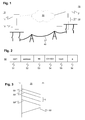
- Fig.1 depicts a utility communication network with a first node or terminal 11, a second node or terminal 21, and a Wide Area Network (WAN) 30 as part of a non-deterministic communication channel, e. g. based on User Datagram Protocol (UDP) with unacknowledged transmission between the two nodes.
- the two nodes 11,21 are dedicated teleprotection devices located at a first substation 10 and at a second substation 20, respectively, and hardwired to a number of protection relays 12, 22 or other secondary equipment of the respective substation.
- the two nodes 11, 21 may be interconnected via other communication channels, such as a Power Line Communication (PLC) channel along an overhead power line 40 between the two substations 10, 20.
- PLC Power Line Communication
- the relays 12, 22 in turn are connected to the primary equipment of the substation and provide a signal or state to be transmitted, e.g. a tripping signal or command related to a distance protection function of the overhead power line 40.
- PLC Power Line Communication
- Fig.2 shows an excerpt of an exemplary data packet 50 to be sent, by the first node 11, across the non-deterministic communication channel 30 to the second node 21.
- the data packet comprises a header, payload and trailer as part of a teleprotection application layer.
- the header includes, among other fields, special header fields with a Response-Request flag 51, a teleprotection Node Address 52, and a send sequence number 53.
- the payload field 54 comprises one or several signals or protection commands in the form of a relatively short bit sequence. It is followed by a first trailer field with a message digest or hash 55 calculated on the basis of the header and payload fields.
- the hash provides for a basic protection against, and enables, if needed in combination with the sequence number 53 and node address 52, detection of various security threats, e.g. unauthorized (faked) messages, wrong partner, man-in-the-middle, or message replay. Further trailer fields may follow, such as a retransmission count 56 that is incremented in case of a retransmission, at an increased repetition rate and following a particular event, of otherwise unchanged data packets with identical sequence number and hash.
- the application layer data is embedded in headers and trailers according to the OSI transport (UDP) network (IP) and physical (Ethernet) layers (not shown in Fig.2 ).
- Fig.3 shows an exemplary sequence of messages 50, 50', 50" exchanged between nodes 11 and 21, where time is progressing from top to bottom, and where each diagonal represents a single message.
- the first node 11 continually sends data packets at regular intervals separated by idle periods with no sending activity, e.g. every 5 ms.
- the data packets are received by the second node 21, and as long as the messages are received in order, and/or with the expected inter-message delays ⁇ t, the channel 30 is assumed to be available, and the payload conveyed by the messages is duly evaluated at the receiving end.
- the response request flag 54 in the data packet 50" is set, upon which the second node responds with a response message 60.
- the response requests are sent periodically, but at a much lower rate (e.g. every 100 ms to 10 sec) than the data packets without response request.
Landscapes
- Engineering & Computer Science (AREA)
- Computer Networks & Wireless Communication (AREA)
- Signal Processing (AREA)
- Environmental & Geological Engineering (AREA)
- Power Engineering (AREA)
- Physics & Mathematics (AREA)
- Electromagnetism (AREA)
- Data Exchanges In Wide-Area Networks (AREA)
- Small-Scale Networks (AREA)
Description
- The invention relates to the field of utility communication, and in particular to communication of real-time operational data between distant sites of an electric power utility enterprise. It departs from a communication method as described in the preamble of claim 1.
- Electric power utilities or transmission system operators own and operate electric power transmission networks interconnecting sites, such as power sources and substations, which despite being distant from each other some 100 km or more, have to be coordinated in one way or the other. Across their utility communication systems, a variety of messages are transferred over long distance communication links between distant sites of the utility in order to safely transmit and distribute electric energy. For some of these messages, and in particular for teleprotection commands, the transmission delay between transmitter and receiver is critical and should not exceed a few milliseconds up to some 10 ms.
- Dedicated remote tripping devices or protection signal transmission devices, also known as teleprotection devices, are generally used for transmitting protection or switching commands for distance and differential protection schemes in electrical high-voltage and medium-voltage networks and systems. Protection commands result, for example, in a circuit breaker being opened directly or indirectly and, in consequence in electrical disconnection of a selected part of the network or of the system. Conversely, other protection commands result in the opening of a circuit breaker in the remote station being prevented or blocked. In order for a protection command to be transmitted from one point of a power transmission or distribution network to another, a transmitter in a remote tripping device produces signals in accordance with the protection command, which are transmitted via a physical signal link. A receiver in another remote tripping device detects the transmitted signals and determines the corresponding number and nature of the protection commands. The physical signal link may involve radio waves or fiber optics, but preferably, the protection signals are transmitted over pilot wires, analog leased lines, voice channels of analog or digital communication systems, or even high-voltage electricity transmission lines, the latter being known as power line communication (PLC).
-
US 2003/081634 A1 is concerned with conventional audio tone teleprotection via a dedicated audio telecommunication link between two substations, and including time division multiplexed frames being transmitted continuously from a sender to a receiver in a deterministic manner. At the sender, a special framing pattern (pre-selected pattern of 8 bits) is inserted in the last timeslot of each frame, thus decreasing bandwidth available for operational data. If the known framing pattern is not detected repeatedly at the receiver override information signals are inserted into the de-framed data stream to prevent a noise signal from producing a false output state. - For transmitting messages over long distances from one site to the other, the utility may rely on public or proprietary communication networks with non-deterministic behaviour. In this context, a Wide-Area communication Network (WAN) designates a packet switched communication network interconnecting two sites of the utility, and comprising a number of IP networks with specific network elements such as routers, switches, repeaters and possibly optical transmission media at the physical layer. WANs are in general very reliable, however said network elements may cause irregular network delays, occasional bit errors and inherent link failures, which all contribute to a non-deterministic behaviour of the network. In packet switched networks with individual data packets carrying destination addresses, heavy load on a communication channel or a specific network element may lead to increased delay or packet loss, whereas link failure can cause delays due to reconfiguration of the routers.
- For time-critical applications, increased delay or packet loss may result in a malfunction of a system. For an electric power utility, in the worst case, substantial damage can occur to a substation if a trip signal is delayed. WANs can also be target of unlikely, but potentially harmful acts of intrusion comprising e.g. inserting intentionally wrong commands at one of the routers. As a consequence, any communication channel involving a WAN may be considered both non-deterministic, or non-synchronous, and non-secure. Use of non-deterministic communications for command and control means that one can not guarantee delivery nor the actual communication path taken by a packet. Specifically, the use of the Internet increases the risk of critical control system communications failure, as attacks against other entities could greatly impact any control communications that uses this path or shares resources that touch the Internet.
- Conventionally, dedicated teleprotection systems monitor the state and delay of a communication system by means of dedicated loop test messages that operate as follows: two stations, A and B, are connected via a communication link. Station A transmits a special message to station B, which receives it and immediately sends back an "echo" to station A. When station A receives this "echo", it knows that the communication link is working, and it can also measure the transmission delay (half the time it takes the loop test message to travel from A to B and back to A). A loop test messages is typically sent once every few hours, accordingly, changes of the transmission delay in real-time can not be detected.
- Alternatively, the delay measurement method specified in IEEE 1588 (IEEE Standard 1588-2002, IEEE Standard for a Precision Clock Synchronization Protocol for Networked Measurement and Control Systems, aka Precision Time Protocol PTP) can be used in order to monitor a state and/or availability of a communication system. Standard two-way time synchronisation protocols such as IEEE 1588 define methods for synchronising devices via a communication network such as a Local Area Network (LAN), to a high precision (better than one microsecond).
- In the field of Voice over IP (VoIP), voice calls are routed over an Internet Protocol (IP) network, and a Quality of Service (QoS) is an important issue between the service provider and the end user. In this context, and more generally for the purpose of real-time data transmission, the Real-Time Protocol (RTP) within the ISO-OSI layer reference model prescribes the encapsulation of e.g. encoded voice data in RTP packets. The latter are passed to the transport layer and further to the Internet Protocol (IP) network layer. At the transport layer, data transmission systems may use either a reliable protocol (such as a Transmission Control Protocol TCP) or an unreliable protocol (such as User Datagram Protocol UDP). The former ensures that all the packets arrive at the receiver, but requires more bandwidth due to protocol overhead and it introduces more delay. The reliable transport protocols normally measure the round-trip delay in order to derive there from when messages should be repeated. On the other hand, unreliable protocols are lightweight and faster although the data stream may be subject to packet loss.
- In the patent application
US 2007/0230361 A1 , a method is provided for monitoring a packet-switched network via which real time VoIP data is transmitted. Data packets containing real-time data are sniffed in order to monitor a QoS parameter. The QoS parameter comprises one of egress delay, ingress delay, jitter, roundtrip delay, packet loss, throughput, instantaneous signal loss, and accumulated content loss. In another patent applicationUS 2002/105909 related to VoIP, as long as the smoothing algorithm that adjusts for transitory effects while evaluating packet loss data yields acceptable values, calls continue to be routed over the IP network. If, on the other hand, the value exceeds a threshold, a QoS Monitor blocks routing over the IP network and routes calls over an alternative network, such as a Switched Circuit Network (SCN). - It is therefore an objective of the invention to enable a utility, in particular an electric power utility, to make efficient use of non-deterministic communication channels for exchanging real-time operational data between distant sites of the utility. This objective is achieved by a communication method and a communication system according to the
claims 1 and 10. Further preferred embodiments are evident from the dependent patent claims. - According to the invention, a non-deterministic communication channel comprising a Wide Area Network (WAN) with packet switched communication, such as e.g. an Internet Protocol (IP) network, is being monitored based on regular network traffic, i.e. by evaluating continually sent data packets carrying real-time operational data as a payload. Hence, no permanent occupation of bandwidth in a deterministic communication channel is required, nor is there any additional overhead network traffic in the form of test messages or message duplicates generated on the non-deterministic channel, and a minimum usage of, or interference with, the communication channel is achieved. A permanent determination and monitoring of a channel quality, including appropriate alarming in case the channel quality is found insufficient, is based on an evaluation, at a receiving node, of data packets continually transmitted by a sending node. These continually or repeatedly transmitted data packets may comprise, as operational data, identical payloads reflecting current states rather than state changes. Ultimately, the reliability of a communication over a non-deterministic channel without message confirmation is increased.
- The communication method is most beneficially used in an electric power system, where the data packets comprise protection commands to protect a power line between two sites of the electric power system, and where a site is a power source, a power sink, or a substation. The protection of the power line may be a distance or differential protection scheme, and result e.g. in a blocking, unblocking, or permissive state of a switching device at the remote site. The repeatedly transmitted data packets may be seen as replacing a conventional guard signal in conventional teleprotection channels.
- In a preferred variant, the receiving node determines channel availability as a binary and rapidly updatable channel quality measure. To this purpose, the receiving node verifies whether data packets with the expected type of payload are actually received, and whether the delay in-between successively received data packets is in the expected range. If the time elapsed between successive data packets exceeds a certain threshold, the channel availability is, at least temporarily, considered insufficient. Appropriate measures are then taken at the receiving node, such as alarm generation, conversion to a stand-alone or island operation mode, or, in case a signal is deemed missing, a switching device at the second site being unblocked.
- In an advantageous embodiment, the proposed protocol for payload transmission and channel supervision comprises including, in the data packets, a send sequence number. Send sequence numbers are preferred over time stamps because of possible irregularities in the time source at the sender due to e.g. clock synchronisation, manual time setting or daylight savings time. By proper monitoring of the sequence numbers, several types of channel errors can be detected and logged, such as packet loss, packet duplication and reception of packets in the wrong order, i.e. not in the order in which they had been dispatched. All these errors point to a degrading channel quality in the WAN.
- In a further variant, the data packet comprises a response request flag. If the latter is set, a response message is prepared by a destination node of the original data packet and immediately returned to the source or originating node. The response message comprises the received "send sequence number". By measuring the elapsed time between the transmission of a response request and the reception of a response message as identified by the same send sequence number, the source node can estimate a round trip delay or time of the communication channel. If this permanent response time measurement then detects a delay that exceeds a configurable threshold, an alarm is generated informing the user that the quality of the non-deterministic communication channel is no longer guaranteed, and that a different communication channel should be chosen, or that the message contents should be temporarily ignored.
- In a further preferred embodiment, the sending node is connected to a relay at the first site or substation, and permanently transmitting a state received from the latter. In the event of a changed state or signal being input to the node, and in order to convey the new information as fast as possible, the repetition rate or transmit frequency of the data packets carrying the new state is increased, at least temporarily. For instance, N = 16 repeats at an increased rate of one message every 2 ms are generated, before returning to a standard rate of one maintenance message every 5 ms.
- Finally, cyber security aspects of the proposed transmission over non-secure communication channels is taken care of by a hash or message digest that is transmitted as part of the data packet and calculated on the basis of the header and payload fields. The hash enables to verify the authenticity of the data packet, and thus provides, if needed in combination with the sequence number and node address, for a basic protection against various security threats.
- Preferably, the proposed protocol is implemented in a peer-to-peer fashion in both communication nodes, such that each node can independently measure the channel quality and signal alarms.
- The subject matter of the invention will be explained in more detail in the following text with reference to preferred exemplary embodiments which are illustrated in the attached drawings, in which:
- Fig.1
- schematically depicts a utility communication network,
- Fig.2
- is an excerpt of an exemplary data packet, and
- Fig.3
- schematically shows a sequence of maintenance packets and one response packet.
- The reference symbols used in the drawings, and their meanings, are listed in summary form in the list of reference symbols. In principle, identical parts are provided with the same reference symbols in the figures.
-
Fig.1 depicts a utility communication network with a first node or terminal 11, a second node or terminal 21, and a Wide Area Network (WAN) 30 as part of a non-deterministic communication channel, e. g. based on User Datagram Protocol (UDP) with unacknowledged transmission between the two nodes. The twonodes first substation 10 and at asecond substation 20, respectively, and hardwired to a number of protection relays 12, 22 or other secondary equipment of the respective substation. The twonodes overhead power line 40 between the twosubstations relays overhead power line 40. -
Fig.2 shows an excerpt of anexemplary data packet 50 to be sent, by thefirst node 11, across thenon-deterministic communication channel 30 to thesecond node 21. The data packet comprises a header, payload and trailer as part of a teleprotection application layer. The header includes, among other fields, special header fields with a Response-Request flag 51, ateleprotection Node Address 52, and asend sequence number 53. Thepayload field 54 comprises one or several signals or protection commands in the form of a relatively short bit sequence. It is followed by a first trailer field with a message digest or hash 55 calculated on the basis of the header and payload fields. The hash provides for a basic protection against, and enables, if needed in combination with thesequence number 53 andnode address 52, detection of various security threats, e.g. unauthorized (faked) messages, wrong partner, man-in-the-middle, or message replay. Further trailer fields may follow, such as aretransmission count 56 that is incremented in case of a retransmission, at an increased repetition rate and following a particular event, of otherwise unchanged data packets with identical sequence number and hash. The application layer data is embedded in headers and trailers according to the OSI transport (UDP) network (IP) and physical (Ethernet) layers (not shown inFig.2 ). -
Fig.3 shows an exemplary sequence ofmessages nodes first node 11 continually sends data packets at regular intervals separated by idle periods with no sending activity, e.g. every 5 ms. The data packets are received by thesecond node 21, and as long as the messages are received in order, and/or with the expected inter-message delays Δt, thechannel 30 is assumed to be available, and the payload conveyed by the messages is duly evaluated at the receiving end. Occasionally, theresponse request flag 54 in thedata packet 50" is set, upon which the second node responds with aresponse message 60. The reception of the latter at the first node, and in particular a round trip time delay comprising the cumulated transmission times, or delays, of the response-requestingdata packet 50" and theresponse message 60, in turn can be evaluated in view of a channel quality. The response requests are sent periodically, but at a much lower rate (e.g. every 100 ms to 10 sec) than the data packets without response request. -
- 10, 20
- substation
- 11, 21
- node
- 12, 22
- relay
- 30
- WAN
- 40
- power line
- 50
- data packet
- 51
- response request flag
- 52
- node address
- 53
- sequence number
- 54
- payload
- 55
- hash
- 56
- retransmission count
- 60
- response message
Claims (10)
- A method of communicating between a first communication node (11) at a first site (10) and a second communication node (21) at a second site (20), comprising- sending, by the first node (11), a message comprising operational data (54) over a communication channel (30) to the second node (21), and monitoring a channel quality of the communication channel (30) based on the message,characterized in that the method comprises- sending, by the first node (11) and continually at regular intervals separated by idle periods with no sending activity, data packets (50, 50', 50") comprising operational data (54) over a non-deterministic communication channel (30) comprising a packet-switched network to the second node (21), and- monitoring, by the second node (21) and based on said data packets (50, 50', 50"), the channel quality.
- The method according to claim 1, wherein the two sites (10, 20) are connected via a power line (40) of an electric power transmission network, characterized in that the method comprises- continually sending data packets (50, 50', 50") comprising operational data in the form of protection commands for the power line (40).
- The method according to claim 1 or 2, wherein the first node (11) is adapted to receive a protection command as an input signal from a relay (12) connected to the first node (11), characterized in that the method comprises- increasing, as soon as the input signal from the relay changes, a repetition rate of the continually sent data packets (50, 50', 50").
- The method according to claim 1 or 2, comprising- determining, by the second node (21), a channel availability based on an expected and an observed reception of data packets (50, 50', 50").
- The method according to claim 4, comprising- determining the channel availability based on an inter-message time delay Δt between two successively sent data packets (50, 50').
- The method according to claim 4, wherein the data packets (50, 50', 50") comprise a send sequence number (53), characterized in that the method comprises- determining the channel availability based on the send sequence numbers (53) of the received data packets.
- The method according to claim 1 or 2, wherein the data packets (50) comprise a response request flag (51), characterized in that the method comprises- responding, by the second node (21) and if the response request flag (51) of a received data packet (50") is set, with a response message (60), and- determining, by the first node (11), a channel quality based on the response message (60).
- The method according to claim 7, comprising- determining the channel quality based on a round trip time delay of the data packet with the response request flag (51) being set and the response message (60).
- The method according to claim 1 or 2, wherein the data packets (50) comprise a hash (55), characterized in that the method comprises- determining, by the second node (21) and based on the hash (55), whether the data packet (50) is authentic.
- A communication system with a first node (11), a second node (21), and a non-deterministic communication channel (30), adapted to perform a communication method according to one of the preceding claims.
Priority Applications (1)
| Application Number | Priority Date | Filing Date | Title |
|---|---|---|---|
| EP10700535.7A EP2387829B1 (en) | 2009-01-15 | 2010-01-12 | Communication method and system |
Applications Claiming Priority (3)
| Application Number | Priority Date | Filing Date | Title |
|---|---|---|---|
| EP09150630A EP2211479A1 (en) | 2009-01-15 | 2009-01-15 | Communication method and system |
| PCT/EP2010/050273 WO2010081798A1 (en) | 2009-01-15 | 2010-01-12 | Communication method and system |
| EP10700535.7A EP2387829B1 (en) | 2009-01-15 | 2010-01-12 | Communication method and system |
Publications (2)
| Publication Number | Publication Date |
|---|---|
| EP2387829A1 EP2387829A1 (en) | 2011-11-23 |
| EP2387829B1 true EP2387829B1 (en) | 2015-01-07 |
Family
ID=40791232
Family Applications (2)
| Application Number | Title | Priority Date | Filing Date |
|---|---|---|---|
| EP09150630A Withdrawn EP2211479A1 (en) | 2009-01-15 | 2009-01-15 | Communication method and system |
| EP10700535.7A Active EP2387829B1 (en) | 2009-01-15 | 2010-01-12 | Communication method and system |
Family Applications Before (1)
| Application Number | Title | Priority Date | Filing Date |
|---|---|---|---|
| EP09150630A Withdrawn EP2211479A1 (en) | 2009-01-15 | 2009-01-15 | Communication method and system |
Country Status (8)
| Country | Link |
|---|---|
| US (1) | US9001675B2 (en) |
| EP (2) | EP2211479A1 (en) |
| CN (1) | CN102282776B (en) |
| BR (1) | BRPI1007338A2 (en) |
| CA (1) | CA2748483C (en) |
| ES (1) | ES2529549T3 (en) |
| RU (1) | RU2511219C2 (en) |
| WO (1) | WO2010081798A1 (en) |
Families Citing this family (16)
| Publication number | Priority date | Publication date | Assignee | Title |
|---|---|---|---|---|
| SI2614598T1 (en) * | 2010-09-08 | 2016-08-31 | General Electric Technology Gmbh | Method for tele-protection of power line network |
| EP2432133A1 (en) | 2010-09-19 | 2012-03-21 | ABB Technology AG | Utility communication method and system |
| EP2557646B1 (en) * | 2011-08-10 | 2020-07-01 | ABB Power Grids Switzerland AG | Configuration of an IEC 61850 teleprotection IED for inter-substation communication |
| EP2608417B1 (en) * | 2011-12-23 | 2020-07-22 | Power Plus Communications AG | Method and system for monitoring the condition of a supply grid |
| FR2992791B1 (en) * | 2012-06-29 | 2016-03-11 | Alstom Technology Ltd | METHOD OF OPTIMIZING THE OPERATION OF A TELEPROTECTION SYSTEM |
| ES2572956T3 (en) * | 2012-07-31 | 2016-06-03 | Abb Research Ltd. | Synchronization of clocks for differential line protection |
| CN102970180B (en) * | 2012-11-01 | 2015-03-04 | 武汉大学 | Real-time simulation method of communication delay of wide area measurement system of electric power system |
| WO2014108173A1 (en) | 2013-01-08 | 2014-07-17 | Telefonaktiebolaget L M Ericsson (Publ) | Distributed traffic inspection in a telecommunications network |
| CN103997123B (en) * | 2014-05-07 | 2016-03-30 | 国家电网公司 | A kind of based on smelling the circuit breaker of intelligent transformer substation remote control system and method for visiting idle condition |
| US20150236904A1 (en) * | 2014-06-02 | 2015-08-20 | Hsiaokuei Tsui | Internet Device Architecture to Save Power And Cost |
| CN104659765A (en) * | 2015-02-15 | 2015-05-27 | 国家电网公司 | Channel configuration and protection scheme applied to multi-terminal radiation network of power system |
| EP3082207A1 (en) | 2015-04-14 | 2016-10-19 | ABB Technology AG | Method for transmitting a teleprotection command using sequence number |
| EP3174248A1 (en) * | 2015-11-26 | 2017-05-31 | R3 - Reliable Realtime Radio Communications GmbH | Communication system |
| EP3540910B1 (en) * | 2018-03-13 | 2021-05-05 | ABB Schweiz AG | Enabling communication between communication devices of substations |
| US11336683B2 (en) | 2019-10-16 | 2022-05-17 | Citrix Systems, Inc. | Systems and methods for preventing replay attacks |
| CN116508295A (en) * | 2020-11-30 | 2023-07-28 | 华为技术有限公司 | In-band edge-to-edge round-trip time measurement |
Family Cites Families (12)
| Publication number | Priority date | Publication date | Assignee | Title |
|---|---|---|---|---|
| US5448593A (en) * | 1984-03-06 | 1995-09-05 | Cyplex Corporation | Frequency hopping time-diversity communications systems and transceivers for local area networks |
| US7230919B2 (en) | 2001-02-07 | 2007-06-12 | Siemens Communications, Inc. | Quality-of-service monitor for voice-over-Internet-protocol calls |
| JP2002261663A (en) * | 2001-03-06 | 2002-09-13 | Hitachi Ltd | Power line carrier device and power line carrier communication method |
| RU2338327C2 (en) * | 2001-09-20 | 2008-11-10 | Нокиа Сименс Нетворкс Гмбх Унд Ко. Кг | Transmission of information in batch-oriented communications networks |
| US7061905B2 (en) * | 2001-10-26 | 2006-06-13 | Rfl Electronics Inc. | Method and apparatus for communicating signals |
| RU2216854C2 (en) * | 2001-12-27 | 2003-11-20 | Закрытое акционерное общество Информационно-аналитический центр научно-технических исследований "Континиум" | METHOD AND DEVICE FOR DATA TRANSMISSION AND RECEPTION OVER POWER supply mains |
| DE50210921D1 (en) * | 2002-02-12 | 2007-10-31 | Abb Schweiz Ag | Reception of digitally coded protection signals in a remote tripping device |
| KR101076801B1 (en) * | 2005-03-02 | 2011-10-25 | 엘지전자 주식회사 | Home Network Control System |
| US7936694B2 (en) | 2006-04-03 | 2011-05-03 | Hewlett-Packard Development Company, L.P. | Sniffing-based network monitoring |
| US20080170508A1 (en) * | 2007-01-17 | 2008-07-17 | Abb Technology Ag | Channel integrity metric calculation |
| US8218567B2 (en) * | 2007-03-12 | 2012-07-10 | Broadcom Corporation | Method and system for reducing transceiver power via a variable signal constellation |
| GB0713787D0 (en) * | 2007-07-16 | 2007-08-22 | Cellfire Security Technologies | Security protocol, secure communication system and method |
-
2009
- 2009-01-15 EP EP09150630A patent/EP2211479A1/en not_active Withdrawn
-
2010
- 2010-01-12 RU RU2011134034/07A patent/RU2511219C2/en not_active IP Right Cessation
- 2010-01-12 EP EP10700535.7A patent/EP2387829B1/en active Active
- 2010-01-12 CN CN201080004954.XA patent/CN102282776B/en active Active
- 2010-01-12 WO PCT/EP2010/050273 patent/WO2010081798A1/en not_active Ceased
- 2010-01-12 BR BRPI1007338A patent/BRPI1007338A2/en not_active IP Right Cessation
- 2010-01-12 CA CA2748483A patent/CA2748483C/en not_active Expired - Fee Related
- 2010-01-12 ES ES10700535.7T patent/ES2529549T3/en active Active
-
2011
- 2011-07-13 US US13/181,709 patent/US9001675B2/en active Active
Also Published As
| Publication number | Publication date |
|---|---|
| EP2387829A1 (en) | 2011-11-23 |
| CA2748483C (en) | 2016-05-03 |
| ES2529549T3 (en) | 2015-02-23 |
| US20110286350A1 (en) | 2011-11-24 |
| RU2511219C2 (en) | 2014-04-10 |
| RU2011134034A (en) | 2013-02-20 |
| EP2211479A1 (en) | 2010-07-28 |
| US9001675B2 (en) | 2015-04-07 |
| CN102282776A (en) | 2011-12-14 |
| CN102282776B (en) | 2016-05-11 |
| CA2748483A1 (en) | 2010-07-22 |
| WO2010081798A1 (en) | 2010-07-22 |
| BRPI1007338A2 (en) | 2016-08-09 |
Similar Documents
| Publication | Publication Date | Title |
|---|---|---|
| CA2748483C (en) | Communication method and system | |
| CN101379671B (en) | Coordinated fault protection system | |
| US8115617B2 (en) | Alarm reordering to handle alarm storms in large networks | |
| RU2534931C2 (en) | Data block transmission and communication network | |
| US9571157B2 (en) | Utility communication method and system | |
| Hou et al. | IEC 61850–what it can and cannot offer to traditional protection schemes | |
| Li et al. | The effects of flooding attacks on time-critical communications in the smart grid | |
| JP6563286B2 (en) | Protection relay and protection relay program | |
| HK1160997A (en) | Communication method and system | |
| Ward et al. | Inside the cloud-network communications basics for the relay engineer | |
| Aichhorn et al. | Secure communication interface for line current differential protection over Ethernet-based networks | |
| CN116995625B (en) | A distribution network differential protection method and system based on regional ad hoc network communication | |
| Umayabashi et al. | Proposal of high stable clock recovery method based on queuing-delay measurement scheme for TDM PWE3 over PSN | |
| Poorzare et al. | Improving performance of optical burst switching (OBS) networks by burstification time effect | |
| Jenkins et al. | Case study: Application of wide-area, communications-assisted remedial action schemes improves transmission reliability | |
| Suljanovi et al. | High-voltage PLC roles in packet-switching networks of power utilities | |
| Seeley et al. | Making peace with communications networks: Modern and future network communication for plants and substations | |
| Serizawa et al. | Examination on the applicability of IP-related communications to teleprotection systems | |
| CN113645117B (en) | IPSec protocol-based multi-channel intelligent routing method and system | |
| Fu et al. | BFD-triggered failure detection and fast reroute for OBS networks | |
| HK1185727B (en) | Utility communication method and system | |
| Mizrahi et al. | Loss and Delay Measurement in Transparent Interconnection of Lots of Links (TRILL) | |
| Nam et al. | Estimation of available bandwidth of a remote link or path segments | |
| Duvelson | Pilot Relaying communications: Will Ethernet/IP provide the dependability and security required? | |
| Peng et al. | TCP performance analysis of grid over OBS networks |
Legal Events
| Date | Code | Title | Description |
|---|---|---|---|
| PUAI | Public reference made under article 153(3) epc to a published international application that has entered the european phase |
Free format text: ORIGINAL CODE: 0009012 |
|
| 17P | Request for examination filed |
Effective date: 20110809 |
|
| AK | Designated contracting states |
Kind code of ref document: A1 Designated state(s): AT BE BG CH CY CZ DE DK EE ES FI FR GB GR HR HU IE IS IT LI LT LU LV MC MK MT NL NO PL PT RO SE SI SK SM TR |
|
| DAX | Request for extension of the european patent (deleted) | ||
| 17Q | First examination report despatched |
Effective date: 20130208 |
|
| RIC1 | Information provided on ipc code assigned before grant |
Ipc: H02H 1/00 20060101ALI20140826BHEP Ipc: H02H 7/26 20060101ALI20140826BHEP Ipc: H04J 3/06 20060101ALI20140826BHEP Ipc: H04B 1/69 20110101ALI20140826BHEP Ipc: H04B 3/54 20060101AFI20140826BHEP Ipc: H04B 15/00 20060101ALI20140826BHEP |
|
| GRAP | Despatch of communication of intention to grant a patent |
Free format text: ORIGINAL CODE: EPIDOSNIGR1 |
|
| INTG | Intention to grant announced |
Effective date: 20141016 |
|
| GRAS | Grant fee paid |
Free format text: ORIGINAL CODE: EPIDOSNIGR3 |
|
| GRAA | (expected) grant |
Free format text: ORIGINAL CODE: 0009210 |
|
| AK | Designated contracting states |
Kind code of ref document: B1 Designated state(s): AT BE BG CH CY CZ DE DK EE ES FI FR GB GR HR HU IE IS IT LI LT LU LV MC MK MT NL NO PL PT RO SE SI SK SM TR |
|
| REG | Reference to a national code |
Ref country code: GB Ref legal event code: FG4D |
|
| REG | Reference to a national code |
Ref country code: CH Ref legal event code: EP |
|
| REG | Reference to a national code |
Ref country code: IE Ref legal event code: FG4D |
|
| REG | Reference to a national code |
Ref country code: AT Ref legal event code: REF Ref document number: 706360 Country of ref document: AT Kind code of ref document: T Effective date: 20150215 |
|
| REG | Reference to a national code |
Ref country code: ES Ref legal event code: FG2A Ref document number: 2529549 Country of ref document: ES Kind code of ref document: T3 Effective date: 20150223 |
|
| REG | Reference to a national code |
Ref country code: DE Ref legal event code: R096 Ref document number: 602010021582 Country of ref document: DE Effective date: 20150226 |
|
| REG | Reference to a national code |
Ref country code: NL Ref legal event code: VDEP Effective date: 20150107 |
|
| REG | Reference to a national code |
Ref country code: AT Ref legal event code: MK05 Ref document number: 706360 Country of ref document: AT Kind code of ref document: T Effective date: 20150107 |
|
| REG | Reference to a national code |
Ref country code: LT Ref legal event code: MG4D |
|
| PG25 | Lapsed in a contracting state [announced via postgrant information from national office to epo] |
Ref country code: BE Free format text: LAPSE BECAUSE OF NON-PAYMENT OF DUE FEES Effective date: 20150131 |
|
| PG25 | Lapsed in a contracting state [announced via postgrant information from national office to epo] |
Ref country code: BG Free format text: LAPSE BECAUSE OF FAILURE TO SUBMIT A TRANSLATION OF THE DESCRIPTION OR TO PAY THE FEE WITHIN THE PRESCRIBED TIME-LIMIT Effective date: 20150407 Ref country code: HR Free format text: LAPSE BECAUSE OF FAILURE TO SUBMIT A TRANSLATION OF THE DESCRIPTION OR TO PAY THE FEE WITHIN THE PRESCRIBED TIME-LIMIT Effective date: 20150107 Ref country code: NO Free format text: LAPSE BECAUSE OF FAILURE TO SUBMIT A TRANSLATION OF THE DESCRIPTION OR TO PAY THE FEE WITHIN THE PRESCRIBED TIME-LIMIT Effective date: 20150407 Ref country code: LT Free format text: LAPSE BECAUSE OF FAILURE TO SUBMIT A TRANSLATION OF THE DESCRIPTION OR TO PAY THE FEE WITHIN THE PRESCRIBED TIME-LIMIT Effective date: 20150107 Ref country code: SE Free format text: LAPSE BECAUSE OF FAILURE TO SUBMIT A TRANSLATION OF THE DESCRIPTION OR TO PAY THE FEE WITHIN THE PRESCRIBED TIME-LIMIT Effective date: 20150107 Ref country code: FI Free format text: LAPSE BECAUSE OF FAILURE TO SUBMIT A TRANSLATION OF THE DESCRIPTION OR TO PAY THE FEE WITHIN THE PRESCRIBED TIME-LIMIT Effective date: 20150107 |
|
| REG | Reference to a national code |
Ref country code: CH Ref legal event code: PL |
|
| PG25 | Lapsed in a contracting state [announced via postgrant information from national office to epo] |
Ref country code: IS Free format text: LAPSE BECAUSE OF FAILURE TO SUBMIT A TRANSLATION OF THE DESCRIPTION OR TO PAY THE FEE WITHIN THE PRESCRIBED TIME-LIMIT Effective date: 20150507 Ref country code: GR Free format text: LAPSE BECAUSE OF FAILURE TO SUBMIT A TRANSLATION OF THE DESCRIPTION OR TO PAY THE FEE WITHIN THE PRESCRIBED TIME-LIMIT Effective date: 20150408 Ref country code: NL Free format text: LAPSE BECAUSE OF FAILURE TO SUBMIT A TRANSLATION OF THE DESCRIPTION OR TO PAY THE FEE WITHIN THE PRESCRIBED TIME-LIMIT Effective date: 20150107 Ref country code: PL Free format text: LAPSE BECAUSE OF FAILURE TO SUBMIT A TRANSLATION OF THE DESCRIPTION OR TO PAY THE FEE WITHIN THE PRESCRIBED TIME-LIMIT Effective date: 20150107 Ref country code: LV Free format text: LAPSE BECAUSE OF FAILURE TO SUBMIT A TRANSLATION OF THE DESCRIPTION OR TO PAY THE FEE WITHIN THE PRESCRIBED TIME-LIMIT Effective date: 20150107 Ref country code: AT Free format text: LAPSE BECAUSE OF FAILURE TO SUBMIT A TRANSLATION OF THE DESCRIPTION OR TO PAY THE FEE WITHIN THE PRESCRIBED TIME-LIMIT Effective date: 20150107 |
|
| REG | Reference to a national code |
Ref country code: DE Ref legal event code: R097 Ref document number: 602010021582 Country of ref document: DE |
|
| PG25 | Lapsed in a contracting state [announced via postgrant information from national office to epo] |
Ref country code: CZ Free format text: LAPSE BECAUSE OF FAILURE TO SUBMIT A TRANSLATION OF THE DESCRIPTION OR TO PAY THE FEE WITHIN THE PRESCRIBED TIME-LIMIT Effective date: 20150107 Ref country code: EE Free format text: LAPSE BECAUSE OF FAILURE TO SUBMIT A TRANSLATION OF THE DESCRIPTION OR TO PAY THE FEE WITHIN THE PRESCRIBED TIME-LIMIT Effective date: 20150107 Ref country code: DK Free format text: LAPSE BECAUSE OF FAILURE TO SUBMIT A TRANSLATION OF THE DESCRIPTION OR TO PAY THE FEE WITHIN THE PRESCRIBED TIME-LIMIT Effective date: 20150107 Ref country code: LI Free format text: LAPSE BECAUSE OF NON-PAYMENT OF DUE FEES Effective date: 20150131 Ref country code: CH Free format text: LAPSE BECAUSE OF NON-PAYMENT OF DUE FEES Effective date: 20150131 Ref country code: MC Free format text: LAPSE BECAUSE OF FAILURE TO SUBMIT A TRANSLATION OF THE DESCRIPTION OR TO PAY THE FEE WITHIN THE PRESCRIBED TIME-LIMIT Effective date: 20150107 Ref country code: SK Free format text: LAPSE BECAUSE OF FAILURE TO SUBMIT A TRANSLATION OF THE DESCRIPTION OR TO PAY THE FEE WITHIN THE PRESCRIBED TIME-LIMIT Effective date: 20150107 Ref country code: RO Free format text: LAPSE BECAUSE OF FAILURE TO SUBMIT A TRANSLATION OF THE DESCRIPTION OR TO PAY THE FEE WITHIN THE PRESCRIBED TIME-LIMIT Effective date: 20150107 |
|
| REG | Reference to a national code |
Ref country code: IE Ref legal event code: MM4A |
|
| PLBE | No opposition filed within time limit |
Free format text: ORIGINAL CODE: 0009261 |
|
| STAA | Information on the status of an ep patent application or granted ep patent |
Free format text: STATUS: NO OPPOSITION FILED WITHIN TIME LIMIT |
|
| 26N | No opposition filed |
Effective date: 20151008 |
|
| GBPC | Gb: european patent ceased through non-payment of renewal fee |
Effective date: 20150407 |
|
| REG | Reference to a national code |
Ref country code: FR Ref legal event code: PLFP Year of fee payment: 7 |
|
| PG25 | Lapsed in a contracting state [announced via postgrant information from national office to epo] |
Ref country code: IE Free format text: LAPSE BECAUSE OF NON-PAYMENT OF DUE FEES Effective date: 20150112 Ref country code: GB Free format text: LAPSE BECAUSE OF NON-PAYMENT OF DUE FEES Effective date: 20150407 |
|
| PG25 | Lapsed in a contracting state [announced via postgrant information from national office to epo] |
Ref country code: SI Free format text: LAPSE BECAUSE OF FAILURE TO SUBMIT A TRANSLATION OF THE DESCRIPTION OR TO PAY THE FEE WITHIN THE PRESCRIBED TIME-LIMIT Effective date: 20150107 |
|
| PGFP | Annual fee paid to national office [announced via postgrant information from national office to epo] |
Ref country code: IT Payment date: 20160127 Year of fee payment: 7 |
|
| PG25 | Lapsed in a contracting state [announced via postgrant information from national office to epo] |
Ref country code: BE Free format text: LAPSE BECAUSE OF FAILURE TO SUBMIT A TRANSLATION OF THE DESCRIPTION OR TO PAY THE FEE WITHIN THE PRESCRIBED TIME-LIMIT Effective date: 20150107 |
|
| PG25 | Lapsed in a contracting state [announced via postgrant information from national office to epo] |
Ref country code: MT Free format text: LAPSE BECAUSE OF FAILURE TO SUBMIT A TRANSLATION OF THE DESCRIPTION OR TO PAY THE FEE WITHIN THE PRESCRIBED TIME-LIMIT Effective date: 20150107 |
|
| REG | Reference to a national code |
Ref country code: FR Ref legal event code: PLFP Year of fee payment: 8 |
|
| REG | Reference to a national code |
Ref country code: DE Ref legal event code: R081 Ref document number: 602010021582 Country of ref document: DE Owner name: HITACHI ENERGY SWITZERLAND AG, CH Free format text: FORMER OWNER: ABB TECHNOLOGY AG, ZUERICH, CH Ref country code: DE Ref legal event code: R081 Ref document number: 602010021582 Country of ref document: DE Owner name: ABB SCHWEIZ AG, CH Free format text: FORMER OWNER: ABB TECHNOLOGY AG, ZUERICH, CH Ref country code: DE Ref legal event code: R081 Ref document number: 602010021582 Country of ref document: DE Owner name: ABB POWER GRIDS SWITZERLAND AG, CH Free format text: FORMER OWNER: ABB TECHNOLOGY AG, ZUERICH, CH Ref country code: DE Ref legal event code: R082 Ref document number: 602010021582 Country of ref document: DE Representative=s name: DENNEMEYER & ASSOCIATES S.A., DE Ref country code: DE Ref legal event code: R082 Ref document number: 602010021582 Country of ref document: DE Representative=s name: ZIMMERMANN & PARTNER PATENTANWAELTE MBB, DE |
|
| PG25 | Lapsed in a contracting state [announced via postgrant information from national office to epo] |
Ref country code: HU Free format text: LAPSE BECAUSE OF FAILURE TO SUBMIT A TRANSLATION OF THE DESCRIPTION OR TO PAY THE FEE WITHIN THE PRESCRIBED TIME-LIMIT; INVALID AB INITIO Effective date: 20100112 Ref country code: SM Free format text: LAPSE BECAUSE OF FAILURE TO SUBMIT A TRANSLATION OF THE DESCRIPTION OR TO PAY THE FEE WITHIN THE PRESCRIBED TIME-LIMIT Effective date: 20150107 |
|
| PG25 | Lapsed in a contracting state [announced via postgrant information from national office to epo] |
Ref country code: CY Free format text: LAPSE BECAUSE OF FAILURE TO SUBMIT A TRANSLATION OF THE DESCRIPTION OR TO PAY THE FEE WITHIN THE PRESCRIBED TIME-LIMIT Effective date: 20150107 |
|
| PG25 | Lapsed in a contracting state [announced via postgrant information from national office to epo] |
Ref country code: PT Free format text: LAPSE BECAUSE OF FAILURE TO SUBMIT A TRANSLATION OF THE DESCRIPTION OR TO PAY THE FEE WITHIN THE PRESCRIBED TIME-LIMIT Effective date: 20150507 |
|
| PG25 | Lapsed in a contracting state [announced via postgrant information from national office to epo] |
Ref country code: TR Free format text: LAPSE BECAUSE OF FAILURE TO SUBMIT A TRANSLATION OF THE DESCRIPTION OR TO PAY THE FEE WITHIN THE PRESCRIBED TIME-LIMIT Effective date: 20150107 |
|
| PG25 | Lapsed in a contracting state [announced via postgrant information from national office to epo] |
Ref country code: LU Free format text: LAPSE BECAUSE OF NON-PAYMENT OF DUE FEES Effective date: 20150112 |
|
| REG | Reference to a national code |
Ref country code: ES Ref legal event code: PC2A Owner name: ABB SCHWEIZ AG Effective date: 20171213 |
|
| REG | Reference to a national code |
Ref country code: FR Ref legal event code: PLFP Year of fee payment: 9 |
|
| PG25 | Lapsed in a contracting state [announced via postgrant information from national office to epo] |
Ref country code: IT Free format text: LAPSE BECAUSE OF NON-PAYMENT OF DUE FEES Effective date: 20170112 |
|
| PG25 | Lapsed in a contracting state [announced via postgrant information from national office to epo] |
Ref country code: MK Free format text: LAPSE BECAUSE OF FAILURE TO SUBMIT A TRANSLATION OF THE DESCRIPTION OR TO PAY THE FEE WITHIN THE PRESCRIBED TIME-LIMIT Effective date: 20150107 |
|
| REG | Reference to a national code |
Ref country code: FR Ref legal event code: TP Owner name: ABB SCHWEIZ AG, CH Effective date: 20180912 |
|
| REG | Reference to a national code |
Ref country code: DE Ref legal event code: R081 Ref document number: 602010021582 Country of ref document: DE Owner name: HITACHI ENERGY SWITZERLAND AG, CH Free format text: FORMER OWNER: ABB SCHWEIZ AG, BADEN, CH Ref country code: DE Ref legal event code: R082 Ref document number: 602010021582 Country of ref document: DE Representative=s name: DENNEMEYER & ASSOCIATES RECHTSANWALTSGESELLSCH, DE Ref country code: DE Ref legal event code: R081 Ref document number: 602010021582 Country of ref document: DE Owner name: HITACHI ENERGY LTD, CH Free format text: FORMER OWNER: ABB SCHWEIZ AG, BADEN, CH Ref country code: DE Ref legal event code: R082 Ref document number: 602010021582 Country of ref document: DE Representative=s name: DENNEMEYER & ASSOCIATES S.A., DE Ref country code: DE Ref legal event code: R081 Ref document number: 602010021582 Country of ref document: DE Owner name: ABB POWER GRIDS SWITZERLAND AG, CH Free format text: FORMER OWNER: ABB SCHWEIZ AG, BADEN, CH |
|
| REG | Reference to a national code |
Ref country code: ES Ref legal event code: PC2A Owner name: ABB POWER GRIDS SWITZERLAND AG Effective date: 20210520 |
|
| REG | Reference to a national code |
Ref country code: ES Ref legal event code: PC2A Owner name: HITACHI ENERGY SWITZERLAND AG Effective date: 20220526 |
|
| REG | Reference to a national code |
Ref country code: DE Ref legal event code: R081 Ref document number: 602010021582 Country of ref document: DE Owner name: HITACHI ENERGY SWITZERLAND AG, CH Free format text: FORMER OWNER: ABB POWER GRIDS SWITZERLAND AG, BADEN, CH Ref country code: DE Ref legal event code: R081 Ref document number: 602010021582 Country of ref document: DE Owner name: HITACHI ENERGY LTD, CH Free format text: FORMER OWNER: ABB POWER GRIDS SWITZERLAND AG, BADEN, CH |
|
| P01 | Opt-out of the competence of the unified patent court (upc) registered |
Effective date: 20230527 |
|
| REG | Reference to a national code |
Ref country code: DE Ref legal event code: R082 Ref document number: 602010021582 Country of ref document: DE Representative=s name: DENNEMEYER & ASSOCIATES RECHTSANWALTSGESELLSCH, DE Ref country code: DE Ref legal event code: R082 Ref document number: 602010021582 Country of ref document: DE Representative=s name: DENNEMEYER & ASSOCIATES S.A., DE Ref country code: DE Ref legal event code: R081 Ref document number: 602010021582 Country of ref document: DE Owner name: HITACHI ENERGY LTD, CH Free format text: FORMER OWNER: HITACHI ENERGY SWITZERLAND AG, BADEN, CH |
|
| REG | Reference to a national code |
Ref country code: ES Ref legal event code: PC2A Owner name: HITACHI ENERGY LTD Effective date: 20240925 |
|
| REG | Reference to a national code |
Ref country code: DE Ref legal event code: R082 Ref document number: 602010021582 Country of ref document: DE Representative=s name: DENNEMEYER & ASSOCIATES RECHTSANWALTSGESELLSCH, DE |
|
| PGFP | Annual fee paid to national office [announced via postgrant information from national office to epo] |
Ref country code: ES Payment date: 20260227 Year of fee payment: 17 |
|
| PGFP | Annual fee paid to national office [announced via postgrant information from national office to epo] |
Ref country code: DE Payment date: 20260121 Year of fee payment: 17 |
|
| PGFP | Annual fee paid to national office [announced via postgrant information from national office to epo] |
Ref country code: FR Payment date: 20260123 Year of fee payment: 17 |