EP2387221A1 - Scanner device - Google Patents
Scanner device Download PDFInfo
- Publication number
- EP2387221A1 EP2387221A1 EP20110160048 EP11160048A EP2387221A1 EP 2387221 A1 EP2387221 A1 EP 2387221A1 EP 20110160048 EP20110160048 EP 20110160048 EP 11160048 A EP11160048 A EP 11160048A EP 2387221 A1 EP2387221 A1 EP 2387221A1
- Authority
- EP
- European Patent Office
- Prior art keywords
- data
- storage device
- page
- partial data
- partial
- Prior art date
- Legal status (The legal status is an assumption and is not a legal conclusion. Google has not performed a legal analysis and makes no representation as to the accuracy of the status listed.)
- Granted
Links
Images



Classifications
-
- H—ELECTRICITY
- H04—ELECTRIC COMMUNICATION TECHNIQUE
- H04N—PICTORIAL COMMUNICATION, e.g. TELEVISION
- H04N1/00—Scanning, transmission or reproduction of documents or the like, e.g. facsimile transmission; Details thereof
- H04N1/32—Circuits or arrangements for control or supervision between transmitter and receiver or between image input and image output device, e.g. between a still-image camera and its memory or between a still-image camera and a printer device
- H04N1/32101—Display, printing, storage or transmission of additional information, e.g. ID code, date and time or title
- H04N1/32128—Display, printing, storage or transmission of additional information, e.g. ID code, date and time or title attached to the image data, e.g. file header, transmitted message header, information on the same page or in the same computer file as the image
-
- H—ELECTRICITY
- H04—ELECTRIC COMMUNICATION TECHNIQUE
- H04N—PICTORIAL COMMUNICATION, e.g. TELEVISION
- H04N1/00—Scanning, transmission or reproduction of documents or the like, e.g. facsimile transmission; Details thereof
- H04N1/00127—Connection or combination of a still picture apparatus with another apparatus, e.g. for storage, processing or transmission of still picture signals or of information associated with a still picture
- H04N1/00347—Connection or combination of a still picture apparatus with another apparatus, e.g. for storage, processing or transmission of still picture signals or of information associated with a still picture with another still picture apparatus, e.g. hybrid still picture apparatus
-
- H—ELECTRICITY
- H04—ELECTRIC COMMUNICATION TECHNIQUE
- H04N—PICTORIAL COMMUNICATION, e.g. TELEVISION
- H04N1/00—Scanning, transmission or reproduction of documents or the like, e.g. facsimile transmission; Details thereof
- H04N1/21—Intermediate information storage
- H04N1/2104—Intermediate information storage for one or a few pictures
- H04N1/2112—Intermediate information storage for one or a few pictures using still video cameras
-
- H—ELECTRICITY
- H04—ELECTRIC COMMUNICATION TECHNIQUE
- H04N—PICTORIAL COMMUNICATION, e.g. TELEVISION
- H04N1/00—Scanning, transmission or reproduction of documents or the like, e.g. facsimile transmission; Details thereof
- H04N1/21—Intermediate information storage
- H04N1/2104—Intermediate information storage for one or a few pictures
- H04N1/2158—Intermediate information storage for one or a few pictures using a detachable storage unit
-
- H—ELECTRICITY
- H04—ELECTRIC COMMUNICATION TECHNIQUE
- H04N—PICTORIAL COMMUNICATION, e.g. TELEVISION
- H04N1/00—Scanning, transmission or reproduction of documents or the like, e.g. facsimile transmission; Details thereof
- H04N1/32—Circuits or arrangements for control or supervision between transmitter and receiver or between image input and image output device, e.g. between a still-image camera and its memory or between a still-image camera and a printer device
- H04N1/32101—Display, printing, storage or transmission of additional information, e.g. ID code, date and time or title
- H04N1/32144—Display, printing, storage or transmission of additional information, e.g. ID code, date and time or title embedded in the image data, i.e. enclosed or integrated in the image, e.g. watermark, super-imposed logo or stamp
- H04N1/32149—Methods relating to embedding, encoding, decoding, detection or retrieval operations
-
- H—ELECTRICITY
- H04—ELECTRIC COMMUNICATION TECHNIQUE
- H04N—PICTORIAL COMMUNICATION, e.g. TELEVISION
- H04N1/00—Scanning, transmission or reproduction of documents or the like, e.g. facsimile transmission; Details thereof
- H04N1/32—Circuits or arrangements for control or supervision between transmitter and receiver or between image input and image output device, e.g. between a still-image camera and its memory or between a still-image camera and a printer device
- H04N1/32101—Display, printing, storage or transmission of additional information, e.g. ID code, date and time or title
- H04N1/32144—Display, printing, storage or transmission of additional information, e.g. ID code, date and time or title embedded in the image data, i.e. enclosed or integrated in the image, e.g. watermark, super-imposed logo or stamp
- H04N1/32149—Methods relating to embedding, encoding, decoding, detection or retrieval operations
- H04N1/32267—Methods relating to embedding, encoding, decoding, detection or retrieval operations combined with processing of the image
- H04N1/32283—Hashing
-
- H—ELECTRICITY
- H04—ELECTRIC COMMUNICATION TECHNIQUE
- H04N—PICTORIAL COMMUNICATION, e.g. TELEVISION
- H04N2201/00—Indexing scheme relating to scanning, transmission or reproduction of documents or the like, and to details thereof
- H04N2201/32—Circuits or arrangements for control or supervision between transmitter and receiver or between image input and image output device, e.g. between a still-image camera and its memory or between a still-image camera and a printer device
- H04N2201/3201—Display, printing, storage or transmission of additional information, e.g. ID code, date and time or title
- H04N2201/3212—Display, printing, storage or transmission of additional information, e.g. ID code, date and time or title of data relating to a job, e.g. communication, capture or filing of an image
- H04N2201/3216—Display, printing, storage or transmission of additional information, e.g. ID code, date and time or title of data relating to a job, e.g. communication, capture or filing of an image of a job size, e.g. a number of images, pages or copies, size of file, length of message
Definitions
- the present application discloses a scanner device that creates document data by utilizing original data representing a scan target object.
- Japanese Patent Application Publication No. 2008-141692 discloses a scanner device that creates PDF document data by utilizing scanned paper information. This scanner device creates a hash value from the PDF document data and then creates a timestamp token from the hash value. The scanner device also embeds the timestamp token in the document data so as to create document data with a timestamp.
- the prior art described above does not disclose at all a detailed method for creating a hash value.
- the present application provides a technology which may quickly calculate a digest value (in the above example, the hash value) even when a memory capacity of an internal storage device of a scanner device is comparatively small.
- the scanner device may comprise an internal storage device, an original data creation unit configured to create original data for one or more pages representing a scan target object which has been scanned, and a document data creation unit configured to calculate a digest value utilizing the original data for the one or more pages so as to create document data in the external storage device utilizing the original data for the one or more pages and the digest value.
- the document data creation unit may comprise a writing process performing unit, a changing unit, and a calculating process performing unit.
- the writing process performing unit may be configured to perform, for each of a plurality of partial data constituting original data for one page included in the original data for the one or more pages, a writing process for writing the partial data at least in the external storage device.
- a remaining capacity in the internal storage device is not deficient in the writing process for writing a first type of target partial data which is partial data of a target of the writing process, the writing process performing unit may write the first type of target partial data in both of the internal storage device and the external storage device.
- A2 If the remaining capacity in the internal storage device is deficient in the writing process for writing the first type of target partial data, the writing process performing unit may write the first type of target partial data only in the external storage device.
- the changing unit may be configured to change specific partial data included in the plurality of partial data after a completion of a plurality of writing processes for the plurality of partial data.
- the writing process for the specific partial data may be performed prior to the writing process for another partial data included in the plurality of partial data.
- the calculating process performing unit may be configured to sequentially perform a calculating process for calculating the digest value by sequentially utilizing each of the plurality of partial data including the specific partial data which has been changed.
- B1 If a second type of target partial data which is partial data of a target of the calculating process is stored in both of the internal storage device and the external storage device, the calculating process performing unit may perform the calculating process by utilizing the second type of target partial data being stored in the internal storage device.
- the calculating process performing unit may perform the calculating process by utilizing the second type of target partial data being stored in the external storage device.
- the scanner device can perform the calculating process by utilizing the plurality of partial data in the external storage device.
- a time required to perform a process by utilizing data in the external storage device is longer than a time required to perform the same process by utilizing the data in the internal storage device. Therefore, in this technology, the scanner device writes the partial data in not only the external storage device but also the internal storage device, so that the calculating process can be performed utilizing the partial data in the internal storage device.
- the scanner device changes the specific partial data on which the writing process is to be performed prior to the other partial data.
- the scanner device is not able to perform the calculating process utilizing the plurality of partial data, until the specific partial data is changed or, in other words, until the plurality of writing processes for the plurality of partial data is completed.
- utilizing the internal storage device having an extremely large memory capacity allows the internal storage device to hold all of the plurality of partial data simultaneously, prior to the execution of the calculating process.
- the memory capacity of the internal storage device is comparatively small, all of the plurality of partial data might not be able to be written in the internal storage device.
- the scanner device if the remaining capacity of the internal storage device is not deficient, the scanner device writes the partial data in both the external storage device and the internal storage device. Meanwhile, if the remaining capacity of the internal storage device is deficient, the scanner device writes the partial data in the external storage device only. In other words, even when the memory capacity of the internal storage device is comparatively small, the scanner device can write the partial data in the internal storage device, depending on the remaining capacity of the internal storage device. For this reason, the scanner device may perform the calculating process by utilizing the partial data in the internal storage device, and therefore may quickly calculate the digest value. This technology may quickly calculate the digest value even when the memory capacity of the internal storage device is comparatively small.
- the specific partial data may be partial data including a header portion of the original data for the one page.
- the changing unit may change the specific partial data, after a completion of scanning of the scan target object for one page, by writing size information of the scan target object for the one page in the header portion included in the specific partial data.
- the size information may be related to a size along a scanning direction of the scan target object for the one page.
- the scanner device may further comprise a particular process performing unit configured to write particular data in the internal storage device so as to perform a particular process which is different from the writing process when the particular process is to be performed between a start of the plurality of writing processes for the plurality of partial data constituting the original data for the one page and a completion of the plurality of writing processes.
- a particular process performing unit configured to write particular data in the internal storage device so as to perform a particular process which is different from the writing process when the particular process is to be performed between a start of the plurality of writing processes for the plurality of partial data constituting the original data for the one page and a completion of the plurality of writing processes.
- the particular process performing unit may write the particular data in a partial area in the internal storage device, the partial area being an area in which a part of the original data for the one page has been written.
- the document data creation unit may further comprise a signature value creation unit configured to create a signature value by encrypting the digest value.
- the document data creation unit may create the document data including the original data for the one or more pages and the signature value in the external storage device.
- the scanner device may further comprise a unit to which the external storage device is mounted.
- a communication system 2 has a PC 6 and a multi-function device 10, which is a peripheral equipment of the PC 6.
- the PC 6 and the multi-function device 10 can mutually communicate through a network cable 4.
- the multi-function device 10 is capable of performing multiple functions including a print function and a scan function.
- the multi-function device 10 has an operation unit 12, a display unit 14, a USB interface 16, a network interface 18, a control unit 20, a print performing unit 60, and a scan performing unit 70.
- Each of the units 12 to 20, 60, and 70 is connected to a bus 11.
- the operation unit 12 is constituted by a plurality of keys.
- a user can input a variety of information into the multi-function device 10 by operating the operation unit 12.
- the display unit 14 is a display for displaying the variety of information.
- the USB interface 16 is mounted with a USB memory 8, which is an external memory portable by the user.
- the network cable 4 is connected to the network interface 18.
- the control unit 20 has a CPU 22, a ROM 24, and a RAM 26.
- the CPU 22 performs a variety of processes according to a program stored in the ROM 24.
- functions such as an original data creation unit 30, a document data creation unit 40, and a particular process performing unit 50 are realized.
- the document data creation unit 40 comprises a writing process performing unit 42, a changing unit 44, a calculating process performing unit 46, and a signature value creation unit 48.
- the RAM 26, a main memory that the CPU 22 can directly access, is for storing a variety of data acquired or created by the control unit 20.
- the RAM 26 has a memory capacity that is larger than a memory capacity for storing JPEG (Joint Photographic Experts Group) data for one page, which has a maximum data size.
- JPEG data for one page, which has a maximum data size means JPEG data that is created by the scan performing unit 70 scanning a scan target object for one page at a maximum possible scanning resolution, the scan target object having a maximum scannable height and width.
- the "height" and “width" of the scan target object will be described hereinbelow in detail.
- the RAM 26 may have a memory capacity that is smaller than the memory capacity for storing the JPEG data for one page, which has the maximum data size.
- the print performing unit 60 has an inkjet type, a laser type or other type of printing mechanism. Data to be printed ("print data" hereinbelow), which is transmitted from the PC 6, is received by the network interface 18, and then the print performing unit 60 performs a print process according to the received print data.
- the scan performing unit 70 has a transparent plate, an auto document feeder (ADF), and a scanning mechanism.
- the scanning mechanism has a plurality of image sensors aligns along a first direction. Each of the image sensors may be a CCD image sensor (Charge Coupled Device Image Sensor) or a CIS (Contact Image Sensor).
- the scanning mechanism is capable of moving in a second direction that is perpendicular to the direction in which the plurality of image sensors aligns (the first direction).
- the scanning mechanism can scan the scan target object (e.g., an original document) placed on the transparent plate, by moving the plurality of image sensors in the second direction. Moreover, the scanning mechanism, when in a stationary state thereof, can scan the original document that is fed in the second direction by the auto document feeder.
- scanning the scan target object placed on the transparent plate is called "moving scan”
- scanning the original document fed by the auto document feeder is called "stationary scan.”
- the scan target object may e.g. be a paper medium. It may be one sheet of the original document, or may be a plurality of sheets of the original document.
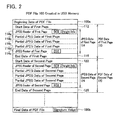
- a PDF file 100 includes beginning data 100a, final data 100b, and respective PDF data 110, 120 for each of one or more pages.
- the beginning data 100a includes a header.
- the final data 100b includes a footer, a signature value created in S28 shown in FIG. 3 as described hereinbelow, and a certificate preinstalled in the multi-function device 10.
- the certificate includes certificate information on the certificate, and a public key for decoding the signature value.
- the certificate information includes information indicating a publisher of the certificate (certificate authority (CA)), information indicating a publication destination (i.e., the multi-function device 10) of the certificate, and information indicating a date of publication of the certificate.
- CA certificate authority
- the PDF data 110 of a first page includes start data 112 of the first page, JPEG data 114 of the first page, and end data 116 of the first page.
- the start data 112 includes a character string that indicates that the JPEG data 114 is written following the start data 112.
- the end data 116 includes height information and width information of the JPEG data 114 of the first page. Note that "height information of the JPEG data 114" and “width information of the JPEG data 114" correspond to a height and width of an original scan target object of the JPEG data 114, respectively.
- the "height information of the JPEG data 114" represents a number of pixels of the JPEG data 114 along a height direction of the original scan target object of the JPEG data 114.
- the "width information of the JPEG data 114” represents a number of pixels of the JPEG data 114 along a width direction of the original scan target object of the JPEG data 114.
- the width direction of the scan target object is the direction in which the plurality of image sensors constituting the scanning mechanism aligns (the first direction).
- the height direction of the scan target object is the direction of movement of the scanning mechanism (the second direction).
- the height direction of the scan target object is the direction in which the original document is fed by the auto document feeder (the second direction).
- the JPEG data 114 of the first page includes a JPEG header 114a of the first page, a plurality of partial JPEG data 114b to 114d, and a JPEG footer 114e of the first page (i.e., JPEG final data 114e of the first page).
- the JPEG header 114a includes an SOI (Start of Image) marker and height information.
- the height information here is same as the height information included in the final data 116 of the first page (i.e., the height information of the JPEG data 114 of the first page).
- the JPEG footer 114e includes an EOI (End of Image) marker.
- Each of the partial JPEG data 114b to 114d is the data that is obtained by converting scan data in RGB bitmap format, which is created by scanning. Note that each data between the SOI marker and the EOI marker is often called a "segment.” Therefore, each of the partial JPEG data 114b to 114d can also be called “each segment.” Note that the PDF data 120 of a second page and respective PDF data of further subsequent pages have the same configuration as the PDF data 110 of the first page, thus explanation thereof will not be repeated.
- the predetermined operation mentioned above includes mounting the USB memory 8 to the USB interface 16, placing the scan target object on the transparent plate or the auto document feeder, designating a desired scanning resolution, and operating a scan performing key included in the operation unit 12.
- the document data creation unit 40 firstly creates the beginning data 100a (see FIG 2 ) in the RAM 26. Moreover, in S10, the writing process performing unit 42 (see FIG 1 ) writes the beginning data 100a, which has been created in the RAM 26, to the USB memory 8. Further, in S10, the calculating process performing unit 46 (see FIG 1 ) calculates a hash value by utilizing the beginning data 100a. Note in the present embodiment that the calculating process performing unit 46 utilizes an SHA (Secure Hash Algorithm)-1 as a hash function, but may also utilize MD4, MD5 or other hash functions.
- SHA Secure Hash Algorithm
- control unit 20 deletes the beginning data 100a from the RAM 26, once the intermediate hash value therefor is calculated in S10.
- the document data creation unit 40 creates the start data of a target page in the RAM 26.
- a first S12 i.e., the process of S12 performed for the first time after S10
- the target page is the first page. Therefore, in the first S12 the document data creation unit 40 creates the start data 112 of the first page (see FIG 2 ).
- the writing process performing unit 42 further writes the start data 112, which has been created in the RAM 26, to the USB memory 8.
- the calculating process performing unit 46 calculates a new intermediate hash value by utilizing the intermediate hash value calculated in S10 and the start data 112 of the first page. This results in the calculation of the intermediate hash value from a top of the beginning data 100a to an end of the start data 112 of the first page. Note that the control unit 20 deletes the start data 112 of the first page from the RAM 26, once the intermediate hash value therefor is calculated in S12.
- the control unit 20 performs a scan process on the target page (e.g. the first page in this example).
- the control unit 20 first secures in the RAM 26 a storage area (hereinbelow referred to as "JPEG data creation area.") that has a memory capacity of a predetermined first size.
- the control unit 20 causes the scan performing unit 70 to scan the scan target object of the first page.
- the scan performing unit 70 has a buffer (not shown) for temporarily storing the scan data in RGB bitmap format that is obtained by scanning the scan target object.
- the buffer has a memory capacity of a second size, which is smaller than the memory capacity of the first size (i.e.
- the memory capacity of the JPEG data creation area that is secured within the RAM 26 Because the second size is relatively small as the memory capacity of the buffer, not all scan data for one page can be stored in the buffer. Therefore, partial scan data is stored as a part of the scan data for one page. The part scan data within the buffer is written to the JPEG data creation area within the RAM 26. As a result, the buffer can be released so that subsequent partial scan data can be stored in the buffer.
- a process of S40 shown in FIG. 4 is performed.
- the original data creation unit 30 first creates the JPEG header 114a (see FIG 2 ) of the first page in the JPEG data creation area. Since the scanning of the scan target object of the first page is not yet finished at this stage, the height information of the JPEG data 114 of the first page is undetermined. For this reason, the original data creation unit 30 creates the JPEG header 114a that includes predetermined virtual height information.
- the original data creation unit 30 converts the partial scan data stored in the JPEG data creation area into data in JPEG format (e.g., the partial JPEG data 114b (see FIG 2 )). Note that the partial JPEG data 114b also is created within the JPEG data creation area.
- the writing process performing unit 42 determines whether a remaining capacity of the RAM 26 is deficient or not. More specifically, the writing process performing unit 42 determines whether a capacity of an unused area (i.e., the remaining capacity) among areas other than the JPEG data creation area within the RAM 26 is larger than a predetermined size (e.g., a size of data to be written (e.g., a sum of the size of the JPEG header 114a and the size of the JPEG data 114b)).
- a predetermined size e.g., a size of data to be written (e.g., a sum of the size of the JPEG header 114a and the size of the JPEG data 114b)
- the writing process performing unit 42 When the remaining capacity of the RAM 26 is not deficient (NO in S42), then in S44 the writing process performing unit 42 writes the JPEG header 114a, which has been created in S40, to a particular area other than the JPEG data creation area within the RAM 26. Next, the writing process performing unit 42 writes the partial JPEG data 114b to the abovementioned particular area. Note that the writing process of S44 is performed such that a first area within the RAM 26 to which the JPEG header 114a is written becomes adjacent to a second area within the RAM 26 to which the partial JPEG data 114b is written.
- the writing process performing unit 42 writes the JPEG header 114a and the partial JPEG data 114b, written in S40, to the USB memory 8.
- the writing process of S46 writes the data 114a, 114b such that the areas within the USB memory 8 for storing the data 114a, 114b become adjacent to each other.
- access efficiency of accessing the data 114a, 114b within the USB memory 8 is improved in S64 shown in FIG 6 , which is described hereinafter.
- the writing processes of S44 and S46 are performed thereon such that the areas for storing these data become adjacent to one another.
- the writing process of S46 writes the data 114a, 114b, as shown in the USB memory 8 in FIG 5 .
- the original data creation unit 30 deletes the partial scan data, the JPEG header 114a, and the partial JPEG data 114b from the JPEG data creation area.
- the JPEG data creation area is released so that new partial scan data is stored in the JPEG data creation area.
- the original data creation unit 30 determines whether the scanning of the scan target object of the first page is completed or not.
- Final partial scan data representing the scan target object of the first page includes information indicating that the scan target object comes at the end of the page.
- the original data creation unit 30 determines that a result of S48 is YES, and ends the scan process performed on the target page.
- the original data creation unit 30 When, on the other hand, the scanning of the scan target object of the first page is not completed (NO in S48), the original data creation unit 30 performs the processes of S40 and the subsequent steps again. Accordingly, the original data creation unit 30 sequentially creates the partial JPEG data 114c, 114d (see FIG 2 ). Also, the writing process performing unit 42 sequentially writes the partial JPEG data 114c, 114d to at least the USB memory 8 (when the remaining capacity is not deficient, the data are written to the RAM 26 as well). In a case where the final partial scan data of the first page is stored in the JPEG data creation area, the original data creation unit 30 creates not only the partial JPEG data 114d but also the JPEG footer 114 of the first page in S40. In this case, the writing process performing unit 42 writes not only the partial JPEG data 114d but also the JPEG footer 114e of the first page in S44 and S46.
- the RAM 26 has a memory capacity that is larger than the memory capacity for storing JPEG data for one page that has the maximum data size. Therefore, in a state in which the control unit 20 performs only the PDF file creation process shown in FIG 3 , normally a result of S42 shown in FIG 4 is determined as NO because the remaining capacity of the RAM 26 is sufficient, and consequently all of the data 114a to 114e constituting the JPEG data 114 of the first page are written to the RAM 26. For example, there is a possibility that the print data is transmitted from the PC 6 to the multi-function device 10 while the PDF file creation process shown in FIG 3 is performed. In this case, the particular process performing unit 50 (see FIG 1 ) performs a print process, not shown, simultaneously with the PDF file creation process shown in FIG 3 (in parallel with the PDF file creation process).
- the particular process performing unit 50 writes the print data in the RAM 26. For instance, in a case where the print process is started after the data, ranging from the JPEG header 114a of the first page to the partial JPEG data 114c, are written to the RAM 26, the particular process performing unit 50 writes print data 200 in the RAM 26, as illustrated in the RAM 26 shown in FIG 5 . As a result, the remaining capacity of the RAM 26 is decreased, and it may be determine, in the process of S42 shown in FIG 4 , that the remaining capacity of the RAM 26 is deficient.
- the remaining capacity of the RAM 26 becomes deficient when the particular process performing unit 50 needs to write the print data in the RAM 26.
- the remaining capacity of the RAM 26 might become deficient when e.g. the particular process performing unit 50 performs a process for converting the received print data into data in particular format suitable for printing (e.g., CMYK image data).
- the particular process performing unit 50 deletes, from the RAM 26, the data written to the RAM 26 in S44 shown in FIG 4 (e.g., the JPEG header 114a, etc.), and thereby releases the RAM 26.
- the particular process performing unit 50 deletes old data preferentially (data that were created previously). For example, in a state in which the data, ranging from the JPEG header 114a to the partial JPEG data 114c, are already written to the RAM 26, the particular process performing unit 50 deletes the JPEG header 114a first. When the remaining capacity still remains deficient even after this deletion, the particular process performing unit 50 further deletes the partial JPEG data 114b. When the remaining capacity still remains deficient even after this deletion, the particular process performing unit 50 further deletes the partial JPEG data 114c.
- the writing process for writing the data into the RAM 26 (S44 in FIG 4 ) is performed such that the areas within the RAM 26 for storing the respective data 114a, 114b, 114c become adjacent to one another.
- preferentially deleting the old data e.g., the data 114a
- the remaining data e.g., the data 114b, 114c
- the access efficiency of accessing the data within the RAM 26 is improved in S62 shown in FIG 6 , which is described hereinafter.
- preferentially deleting the JPEG header 114a accomplishes the following effects.
- S18 of FIG 3 which is described hereinafter, a height information changing process is performed on the JPEG header 114a.
- the height information changing process is not performed on the data other than the JPEG header 114a, such as the partial JPEG data 114b, 114c. Because the JPEG header 114a that needs to be subjected to the changing process of S18 of FIG 3 is preferentially deleted, the changing process of S18 of FIG 3 does not have to be actually performed; thereby the acceleration of the processes can be realized.
- the particular process performing unit 50 writes the data to be printed (the print data, the data in particular format mentioned above, etc.) to the areas within the RAM 26 to which the deleted data (e.g., the JPEG header 114a, the partial JPEG data 114b) are written. Accordingly, data 202 to be printed is written to the RAM 26, as illustrated in the RAM 26 shown in FIG 5 . Even in this state, it is determined, in the process of S42 shown in FIG 4 , that the remaining capacity of the RAM 26 is deficient
- the flow proceeds to S16 shown in FIG 3 .
- the height information included in the JPEG header 114a of the first page created in S40 of FIG 4 is the virtual height information.
- the changing unit 44 (see FIG 1 ) performs a process for changing the virtual height information of the JPEG header 114a.
- the changing unit 44 determines whether the height information of the first page exists within the RAM 26 or not.
- the changing unit 44 determines a result of S16 as YES, and proceeds to S18.
- the particular process performing unit 50 mentioned above deletes the JPEG header 114a of the first page from the RAM 26 (see the RAM 26 shown in FIG 5 ), while e.g, the scan process of the first page (see FIG 4 ) is performed.
- the changing unit 44 determines the result of S16 as NO, and skips S 18 to proceed to S20.
- the changing unit 44 changes the virtual information included in the JPEG header 114a of the first page in the RAM 26, to actual height information of the JPEG data 114 of the first page.
- the changing unit 44 can obtain the actual height information (a total number of pixels in the height direction of each of the partial JPEG data 114b to 114d) based on a result of scanning performed by the scan performing unit 70.
- the scanning by the scan performing unit 70 detects a front end position and rear end position of the scan target object of the first page in the scanning direction (i.e. the direction of movement of the image sensors, the direction in which the original document is fed by the ADF).
- the changing unit 44 then calculates the actual height information based on these front end and the rear end positions.
- the changing unit 44 changes the virtual height information included in the JPEG header 114a of the first page in the USB memory 8, to the actual height information of the JPEG data 114 of the first page.
- the calculating process performing unit 46 performs an intermediate hash value calculating process on the target page (e.g. the first page). As shown in FIG 6 , in S60 the calculating process performing unit 46 determines whether target data used for calculating the intermediate hash value ("target partial data" hereinafter) exists within the RAM 26 or not. Note that the target partial data is the oldest data (data that is created foremost) among the data 114a to 114e constituting the JPEG data 114 of the first page, the oldest data being data that has not yet been utilized for calculating the intermediate hash value.
- target partial data is the oldest data (data that is created foremost) among the data 114a to 114e constituting the JPEG data 114 of the first page, the oldest data being data that has not yet been utilized for calculating the intermediate hash value.
- the target partial data corresponds to the JPEG header 114a of the first page.
- the target partial data corresponds to the partial JPEG data 114b.
- the calculating process performing unit 46 determines whether the JPEG header 114a of the first page exists in the RAM 26 or not. When a result of the first S60 is YES, in S62 the calculating process performing unit 46 acquires (reads) the JPEG header 114a of the first page stored in the RAM 26. When, on the other hand, the result of the first S60 is NO, in S64 the calculating process performing unit 46 acquires (reads) the JPEG header 114a of the first page stored in the USB memory 8. More specifically, in S64 the calculating process performing unit 46 temporarily writes the JPEG header 114a of the first page stored in the USB memory 8, to the RAM 26.
- the calculating process performing unit 46 calculates a new intermediate hash value by utilizing the intermediate hash value calculated in S12 of FIG. 3 , and the JPEG header 114a of the first page acquired in S62 or S64. As a result, the intermediate hash value from the top of the beginning data 100a (see FIG 2 ) to the end of the JPEG header 114a of the first page is calculated.
- the calculating process performing unit 46 utilizes the size of the JPEG data 114 of the target page (i.e., the first page) that is written to the RAM 26 and the USB memory 8, to determine whether the process on the target page is finished or not.
- the calculating process performing unit 46 determines a result of S68 as NO when a total size of the target partial data acquired in S62 or S64 is smaller than the size of the JPEG data 114 of the first page. When the former size matches the latter size, the calculating process performing unit 46 determines the result of S68 as YES.
- the calculating process performing unit 46 determines the result of S68 as NO when the number of target partial data acquired in S62 or S64 (i.e., the number of times S62 or S64 is performed) is smaller than the number of the plurality of data 114a to 114e constituting the JPEG data 114 of the first page (the number of times S46 of FIG 4 is performed). When the former number matches the latter number, the calculating process performing unit 46 may determine the result of S68 as YES. When the result of S68 is NO, the calculating process performing unit 46 performs the processes from S60 to S66 again for the second time for the next target partial data (the partial JPEG data 114b in this example).
- the calculating process performing unit 46 determines whether the part JPEG data 114b exists within the RAM 26 or not.
- the calculating process performing unit 46 acquires the partial JPEG data 114b of the RAM 26 (S62) when the result of the second S60 is YES, and acquires the partial JPEG data 114b of the USB memory 8 when the result of the second S60 is NO.
- the calculating process performing unit 46 calculates a new intermediate hash value by utilizing the intermediate hash value calculated in the first (i.e., the previous) S66 and the partial JPEG data 114b acquired in S62 or S64. As a result, the intermediate hash value from the top of the beginning data 100a (see FIG 2 ) to the end of the partial JPEG data 114b is calculated.
- a third and subsequent sets of processes S60 to S66 are performed for each of the unprocessed partial JPEG data included in the PDF data for the first page that is to be the subsequent target partial data.
- the result in S68 is determined as YES, and consequently the intermediate hash value calculating process for the target page (i.e., the first page) is finished.
- the control unit 20 deletes all of the JPEG data existing in the RAM 26. Consequently, the RAM 26 is released so that the JPEG data of a next target page (e.g. a second page in this example) can be written to the RAM 26.
- the calculating process performing unit 46 can calculate the intermediate hash value more quickly than in the case of performing S66 through S64 shown in FIG, 6 (when utilizing the target partial data in the USB memory 8). This is because S64 shown in FIG. 6 requires a process for temporarily writing the target partial data of the USB memory 8 to the RAM 26, which is time-consuming.
- the calculating process performing unit 46 calculates the intermediate hash value by preferentially utilizing the target partial data of the RAM 26 when the target partial data is stored in both the RAM 26 and the USB memory 8 (when the result of S60 is YES).
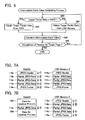
- the calculating process performing unit 46 calculates the intermediate hash value sequentially, by sequentially utilizing the data 114a to 114e of the RAM 26 in the order of numbers shown in FIG 7A .
- the calculating process performing unit 46 sequentially calculates the intermediate hash value, by sequentially utilizing the data 114a to 114e in either the RAM 26 or the USB memory 8 in the order of numbers shown in FIG 7B .
- the calculating process performing unit 46 first sequentially calculates the intermediate hash value by sequentially utilizing the data 114a, 114b of the USB memory 8, and then calculates the intermediate hash value by utilizing the data 114c of the RAM 26. Subsequently, the calculating process performing unit 46 sequentially calculates the intermediate hash value by sequentially utilizing the data 114d, 114e of the USB memory 8.
- the flow proceeds to S24.
- the document data creation unit 40 creates the end data 116 of the first page (see FIG 2 ) in the RAM 26.
- the writing process performing unit 42 writes the end data 116, which has been created in the RAM 26, to the USB memory 8.
- the calculating process performing unit 46 calculates a new intermediate hash value by utilizing the intermediate hash value calculated in S22 (the intermediate hash value from the top of the beginning data 100a (see FIG. 2 ) to the end of the JPEG footer 114e of the first page), and the end data 116 of the first page.
- control unit 20 deletes the end data 116 of the first page from the RAM 26, once the intermediate hash value is calculated in S24.
- control unit 20 determines whether the scanning of the scan target objects on all pages is finished or not. More specifically, the control unit 20 determines a result of S26 as NO when new partial scan data is stored in the JPEG data creation area of the RAM 26, and determines the result of S26 as YES when no new partial scan data is stored in the JPEG data creation area.
- the control unit 20 performs a second set of the processes S12 to S24 again, with the target page as a subsequent page (the second page in this example).
- the second set of the processes S12 to S24 is same as the first set of the processes S12 to S24.
- start data 122 of the second page, JPEG data 124 of the second page, and end data 126 of the second page are written into the USB memory 8, as shown in FIG 2 .
- the intermediate hash value from the top of the beginning data 100a to an end of the end data 126 of the second page is calculated.
- the document data creation unit 40 creates a footer for the PDF file 100 in the RAM 26. Furthermore, in S28 the calculating process performing unit 46 calculates the final hash value by utilizing the intermediate hash value calculated in the last S24 (e.g., the second S24 when the number of total pages of the scan target objects is "2"), and the footer of the PDF file 100. As a result, the final hash value from the top of the beginning data 100a to an end of the footer is calculated. In S28, moreover, the signature value creation unit 48 (see FIG. 1 ) creates the signature value (i.e., a signed hash value) by encrypting the final hash value utilizing a predetermined secret key.
- the signature value creation unit 48 creates the signature value (i.e., a signed hash value) by encrypting the final hash value utilizing a predetermined secret key.
- the document data creation unit 40 creates the final data 100b (see FIG. 2 ) including the footer of the PDF file 100, the signature value, and a predetermined certificate.
- the signature value and the certificate are not the targets utilized for calculating the final hash value (the target to be hashed).
- the writing process performing unit 42 writes the final data 100b to the USB memory 8. As a result, the PDF file 100 shown in FIG. 2 is completed in the USB memory 8.
- the user can carry the USB memory 8 that includes the PDF file 100.
- the user can display the PDF file 100 of the USB memory 8 on a display unit of an external device by mounting the USB memory 8 to a USB interface of the external device (such as the PC 6) other than the multi-function device 10.
- the external device can calculate the hash value from the top of the beginning data 100a to the end of the footer of the final data 100b ("first hash value" hereinafter).
- the external device can create a hash value by decoding the signature value included in the final data 100b by utilizing the public key included in the final data 100b ("second hash value" hereinafter).
- the external device can also compare the first hash value with the second hash value to determine whether there is a possibility that the PDF file 100 has been altered. For instance, when the first hash value does not match the second hash value, the external device displays on the display unit a message that explains that the PDF file 100 is likely to be altered. The user can view this message to find out that the PDF file 100 is likely to have been altered.
- the multi-function device 10 In the scan process performed on the target page (see FIG. 4 ) in S14 shown in FIG. 3 , the multi-function device 10 writes the plurality of data 114a to 114e constituting the JPEG data 114 for one page, to at least the USB memory 8 (S46 in FIG. 4 ). Therefore, the multi-function device 10 can calculate the intermediate hash value by utilizing each of the plurality of data 114a to 114e within the USB memory 8. However, the calculation of the intermediate hash value by utilizing the data 114a etc. of the USB memory 8, as described above, requires a comparatively long period of time. Thus, in the present embodiment, the multi-function device 10 writes the data 114a etc. to not only the USB memory 8 but also the RAM 26, (S44 in FIG. 4 ) so that the intermediate hash value can be calculated utilizing the data 114a etc. of the RAM 26.
- the multi-function device 10 changes the virtual height information included in the JPEG header 114a of the first page to the actual height information.
- the actual height information of the JPEG data 114 of the first page is undetermined until the scanning of the scan target object of the first page is finished. Therefore, after the scan process on the first page (S14 in FIG. 3 ) is finished, the multi-function device 10 changes the height information included in the JPEG header 114a of the first page.
- the data to be utilized first in order to create the intermediate hash values is the JPEG header 114a.
- the multi-function device 10 cannot utilize the data 114a to 114e constituting the JPEG data 114 of the first page to calculate the intermediate hash values.
- the RAM 26 of the multi-function device 10 smaller than that of the PC 6 etc.
- the print process is performed simultaneously, there is a possibility that not all of the data 114a to 114e are written to the RAM 26 (see the RAM 26 shown in FIG. 5 ).
- the multi-function device 10 when the remaining capacity of the RAM 26 is not deficient (NO in S42 shown in FIG. 4 ), the multi-function device 10 writes the data 1114a etc. to both the USB memory 8 and the RAM 26.
- the multi-function device 10 When, however, the remaining capacity of the RAM 26 is deficient (YES in S42 shown in FIG. 4 ), the multi-function device 10 writes the data 114a etc. to the USB memory 8 only. In other words, as long as the remaining capacity of the RAM 26 does not become deficient, the multi-function device 10 can select to write the data 114a etc. to the RAM 26 as well as to the USB memory 8. Further in other words, in the case where the remaining capacity of the RAM 26 is deficient, the multi-function device 10 selectively writes the data 114a etc. to the USB memory 8.
- the intermediate hash value can be calculated by utilizing the data 114a etc. of the RAM 26, even when the memory capacity of the RAM 26 is comparatively small.
- the intermediate hash value can be calculated more quickly than in the case where the data 114a to 114e are not written to the RAM 26 (i.e., the case where the writing process is performed only on the USB memory 8).
- the final hash value and signature value can also be calculated quickly, and the PDF file 100 can be created quickly.
- the multi-function device 10 is an example of the "scanner device.”
- the USB memory 8, the RAM 26, and the USB interface 16 are examples of the “external storage device,” the “internal storage device,” and the “unit to which the external storage device is mounted,” respectively.
- the JPEG data 114 and 124 of the first page and the second page are examples of the "original data for one or more pages.”
- the JPEG data 114 of the first page, and the plurality of data 114a to 114e constituting this JPEG data 114 are examples of the "original data for one page," and the "plurality of partial data,” respectively.
- the data to be written in S44 and S46 shown in FIG. 4 , and the target partial data acquired in S62 and S64 shown in FIG. 6 are examples of the "first type of target partial data” and the “second type of target partial data,” respectively.
- the JPEG header 114a and the height information are examples of the "specific partial data” and the "size information,” respectively.
- the print process and the data to be printed are examples of the “particular process” and the "particular data,” respectively.
- the calculating process performing unit 46 creates the "digest value" by utilizing a hashing method, but another digesting method can be utilized.
- methods for calculating "digest value” include a variety of digesting methods for creating a value that can be obtained from the original data for one or more pages, the value having a data size smaller than a total data size of the original data for one or more pages.
- the document data creation unit 40 creates the "document data” in PDF, but may instead create the "document data” in a format other than PDF (such as an XPS).
- the original data creation unit 30 creates the "original data” in JPEG, but may instead create the "original data” in a format other than JPEG (such as a TIFF or BMP).
- the USB memory 8 is utilized as the "external storage device.”
- the external storage device may instead be a hard disk embedded in the multi-function device 10, a medium such as a CD, DVD and floppy disk (registered trade mark) that can be mounted to the multi-function device 10, or a storage device within an external device (e.g., a server) that is constituted separately from the multi-function device 10.
- the particular process performing unit 50 deletes the JPEG header 114a preferentially among the data 114a to 114c. Instead of utilizing this structure, the particular process performing unit 50 may preferentially delete the partial JPEG data 114b and 114c in place of the JPEG header 114a.
- the particular process performing unit 50 when the remaining capacity of the RAM 26 is deficient, performs the data deletion in units of the data 114a to 114e, as shown by the RAM 26 in FIG. 5 . In other words, the particular process performing unit 50 performs the data deletion in units of the data written individually to the RAM 26 in S44 of FIG. 4 . Instead, the particular process performing unit 50 may delete the data in units smaller or larger than those of the data 114a to 114e. For example, when the remaining capacity of the RAM 26 is deficient, the particular process performing unit 50 may delete only partial data included in the data 114a. When the remaining capacity still remains deficient even after this deletion, the particular process performing unit 50 may delete other data included in the data 114a.
- the particular process performing unit 50 may delete the data 114a and the data 114b simultaneously.
- the particular process performing unit 50 may delete the data 114c and the data 114d simultaneously.
- "a part of the original data for the one page" may be the same unit as or different from the "partial data.”
- the units of the data acquired in S62 or S64 of FIG. 6 are same as the units of the individual data written to the RAM 26 in S44 shown in FIG. 4 .
- the calculating process performing unit 46 may perform the acquisition processes of S62, S64 shown in FIG. 6 in units smaller or larger than those of the data 114a to 114e.
- the structure of the present modification also is included in the configuration in which "sequentially perform a calculating process ...by sequentially utilizing each of the plurality of partial data ".
- the print process is an example of the "particular process,” but the "particular process” may be another process.
- the particular process performing unit 50 may create data representing a WEB page, in response to an access from the external device, and then perform a process for transmitting the data to the external device (an example of the "particular process").
- the data representing a WEB page is an example of the "particular data.”
- the changing unit 44 changes the height information included in the header of the original data for one page.
- the changing unit 44 may change other information, such as the width information, scanning resolution, and total data size.
- respective units 30 to 50 are realized as a result of the control unit 20 performing the processes according to the program. Nevertheless, at least one unit of respective units 30 to 50 may alternately be realized by a hardware resource such as a logic circuit.
Landscapes
- Engineering & Computer Science (AREA)
- Multimedia (AREA)
- Signal Processing (AREA)
- General Engineering & Computer Science (AREA)
- Facsimiles In General (AREA)
- Compression Of Band Width Or Redundancy In Fax (AREA)
- Storing Facsimile Image Data (AREA)
- Editing Of Facsimile Originals (AREA)
Abstract
Description
- The present application discloses a scanner device that creates document data by utilizing original data representing a scan target object.
- Japanese Patent Application Publication No.
2008-141692 - The prior art described above does not disclose at all a detailed method for creating a hash value. The present application provides a technology which may quickly calculate a digest value (in the above example, the hash value) even when a memory capacity of an internal storage device of a scanner device is comparatively small.
- One technique disclosed in the present application is a scanner device utilizing an external storage device. The scanner device may comprise an internal storage device, an original data creation unit configured to create original data for one or more pages representing a scan target object which has been scanned, and a document data creation unit configured to calculate a digest value utilizing the original data for the one or more pages so as to create document data in the external storage device utilizing the original data for the one or more pages and the digest value. The document data creation unit may comprise a writing process performing unit, a changing unit, and a calculating process performing unit.
- The writing process performing unit may be configured to perform, for each of a plurality of partial data constituting original data for one page included in the original data for the one or more pages, a writing process for writing the partial data at least in the external storage device. (A1) If a remaining capacity in the internal storage device is not deficient in the writing process for writing a first type of target partial data which is partial data of a target of the writing process, the writing process performing unit may write the first type of target partial data in both of the internal storage device and the external storage device. (A2) If the remaining capacity in the internal storage device is deficient in the writing process for writing the first type of target partial data, the writing process performing unit may write the first type of target partial data only in the external storage device. The changing unit may be configured to change specific partial data included in the plurality of partial data after a completion of a plurality of writing processes for the plurality of partial data. The writing process for the specific partial data may be performed prior to the writing process for another partial data included in the plurality of partial data. The calculating process performing unit may be configured to sequentially perform a calculating process for calculating the digest value by sequentially utilizing each of the plurality of partial data including the specific partial data which has been changed. (B1) If a second type of target partial data which is partial data of a target of the calculating process is stored in both of the internal storage device and the external storage device, the calculating process performing unit may perform the calculating process by utilizing the second type of target partial data being stored in the internal storage device. (B2) If the second type of target partial data is stored only in the external storage device, the calculating process performing unit may perform the calculating process by utilizing the second type of target partial data being stored in the external storage device.
- According to this technology, because the plurality of partial data constituting the original data for the one page is written to the external storage device, the scanner device can perform the calculating process by utilizing the plurality of partial data in the external storage device. However, in normal, a time required to perform a process by utilizing data in the external storage device is longer than a time required to perform the same process by utilizing the data in the internal storage device. Therefore, in this technology, the scanner device writes the partial data in not only the external storage device but also the internal storage device, so that the calculating process can be performed utilizing the partial data in the internal storage device.
- In the present technology, however, after a completion of the plurality of writing processes for the plurality of partial data, the scanner device changes the specific partial data on which the writing process is to be performed prior to the other partial data. Thus, the scanner device is not able to perform the calculating process utilizing the plurality of partial data, until the specific partial data is changed or, in other words, until the plurality of writing processes for the plurality of partial data is completed. For instance, utilizing the internal storage device having an extremely large memory capacity allows the internal storage device to hold all of the plurality of partial data simultaneously, prior to the execution of the calculating process. However, when the memory capacity of the internal storage device is comparatively small, all of the plurality of partial data might not be able to be written in the internal storage device. Therefore, in this technology, if the remaining capacity of the internal storage device is not deficient, the scanner device writes the partial data in both the external storage device and the internal storage device. Meanwhile, if the remaining capacity of the internal storage device is deficient, the scanner device writes the partial data in the external storage device only. In other words, even when the memory capacity of the internal storage device is comparatively small, the scanner device can write the partial data in the internal storage device, depending on the remaining capacity of the internal storage device. For this reason, the scanner device may perform the calculating process by utilizing the partial data in the internal storage device, and therefore may quickly calculate the digest value. This technology may quickly calculate the digest value even when the memory capacity of the internal storage device is comparatively small.
- The specific partial data may be partial data including a header portion of the original data for the one page.
- The changing unit may change the specific partial data, after a completion of scanning of the scan target object for one page, by writing size information of the scan target object for the one page in the header portion included in the specific partial data. The size information may be related to a size along a scanning direction of the scan target object for the one page.
- The scanner device may further comprise a particular process performing unit configured to write particular data in the internal storage device so as to perform a particular process which is different from the writing process when the particular process is to be performed between a start of the plurality of writing processes for the plurality of partial data constituting the original data for the one page and a completion of the plurality of writing processes.
- If the remaining capacity in the internal storage device is deficient when the particular data is to be written in the internal storage device, the particular process performing unit may write the particular data in a partial area in the internal storage device, the partial area being an area in which a part of the original data for the one page has been written.
- The document data creation unit may further comprise a signature value creation unit configured to create a signature value by encrypting the digest value. The document data creation unit may create the document data including the original data for the one or more pages and the signature value in the external storage device.
- The scanner device may further comprise a unit to which the external storage device is mounted.
- Note that a control method for realizing the above-described scanner device, a computer program, and a non-transitory computer-readable storage medium storing the computer program stored therein are also new and useful.
-
-
FIG. 1 shows a schematic configuration of a communication system. -
FIG. 2 shows a schematic configuration of a PDF file. -
FIG. 3 shows a flowchart of a PDF file creation process. -
FIG. 4 shows a flowchart of a scan process of a target page. -
FIG. 5 shows a diagram for illustrating how data in a RAM and USB memory is changed. -
FIG. 6 shows a flowchart of an intermediate hash value calculating process that is performed up to the target page. -
FIG. 7 shows a diagram for illustrating details of the intermediate hash value calculating process. - Embodiments will be described hereinbelow with reference to the drawings. As shown in
FIG. 1 , acommunication system 2 has aPC 6 and amulti-function device 10, which is a peripheral equipment of the PC 6. The PC 6 and themulti-function device 10 can mutually communicate through anetwork cable 4. - The
multi-function device 10 is capable of performing multiple functions including a print function and a scan function. Themulti-function device 10 has anoperation unit 12, adisplay unit 14, aUSB interface 16, anetwork interface 18, acontrol unit 20, aprint performing unit 60, and ascan performing unit 70. Each of theunits 12 to 20, 60, and 70 is connected to a bus 11. Theoperation unit 12 is constituted by a plurality of keys. A user can input a variety of information into themulti-function device 10 by operating theoperation unit 12. Thedisplay unit 14 is a display for displaying the variety of information. TheUSB interface 16 is mounted with aUSB memory 8, which is an external memory portable by the user. Thenetwork cable 4 is connected to thenetwork interface 18. - The
control unit 20 has aCPU 22, aROM 24, and aRAM 26. TheCPU 22 performs a variety of processes according to a program stored in theROM 24. When theCPU 22 performs the processes in accordance with the program, functions such as an originaldata creation unit 30, a documentdata creation unit 40, and a particularprocess performing unit 50 are realized. Note that the documentdata creation unit 40 comprises a writingprocess performing unit 42, a changingunit 44, a calculatingprocess performing unit 46, and a signaturevalue creation unit 48. TheRAM 26, a main memory that theCPU 22 can directly access, is for storing a variety of data acquired or created by thecontrol unit 20. Note that theRAM 26 has a memory capacity that is larger than a memory capacity for storing JPEG (Joint Photographic Experts Group) data for one page, which has a maximum data size. The "JPEG data for one page, which has a maximum data size" means JPEG data that is created by thescan performing unit 70 scanning a scan target object for one page at a maximum possible scanning resolution, the scan target object having a maximum scannable height and width. The "height" and "width" of the scan target object will be described hereinbelow in detail. In another embodiment, theRAM 26 may have a memory capacity that is smaller than the memory capacity for storing the JPEG data for one page, which has the maximum data size. - The
print performing unit 60 has an inkjet type, a laser type or other type of printing mechanism. Data to be printed ("print data" hereinbelow), which is transmitted from thePC 6, is received by thenetwork interface 18, and then theprint performing unit 60 performs a print process according to the received print data. Thescan performing unit 70 has a transparent plate, an auto document feeder (ADF), and a scanning mechanism. The scanning mechanism has a plurality of image sensors aligns along a first direction. Each of the image sensors may be a CCD image sensor (Charge Coupled Device Image Sensor) or a CIS (Contact Image Sensor). The scanning mechanism is capable of moving in a second direction that is perpendicular to the direction in which the plurality of image sensors aligns (the first direction). The scanning mechanism can scan the scan target object (e.g., an original document) placed on the transparent plate, by moving the plurality of image sensors in the second direction. Moreover, the scanning mechanism, when in a stationary state thereof, can scan the original document that is fed in the second direction by the auto document feeder. Hereinafter, scanning the scan target object placed on the transparent plate is called "moving scan," and scanning the original document fed by the auto document feeder is called "stationary scan." Further, the scan target object may e.g. be a paper medium. It may be one sheet of the original document, or may be a plurality of sheets of the original document. - The
control unit 20 of themulti-function device 10 creates the JPEG data representing the scanned scan target object, then creates a hash value utilizing the JPEG data, and creates a PDF file within theUSB memory 8 by utilizing the JPEG data and the hash value. As shown inFIG. 2 , a PDF file 100 includes beginningdata 100a,final data 100b, andrespective PDF data beginning data 100a includes a header. Thefinal data 100b includes a footer, a signature value created in S28 shown inFIG. 3 as described hereinbelow, and a certificate preinstalled in themulti-function device 10. The certificate includes certificate information on the certificate, and a public key for decoding the signature value. The certificate information includes information indicating a publisher of the certificate (certificate authority (CA)), information indicating a publication destination (i.e., the multi-function device 10) of the certificate, and information indicating a date of publication of the certificate. - The
PDF data 110 of a first page includes startdata 112 of the first page,JPEG data 114 of the first page, and enddata 116 of the first page. Thestart data 112 includes a character string that indicates that theJPEG data 114 is written following thestart data 112. Theend data 116 includes height information and width information of theJPEG data 114 of the first page. Note that "height information of theJPEG data 114" and "width information of theJPEG data 114" correspond to a height and width of an original scan target object of theJPEG data 114, respectively. More specifically, the "height information of theJPEG data 114" represents a number of pixels of theJPEG data 114 along a height direction of the original scan target object of theJPEG data 114. On the other hand, the "width information of theJPEG data 114" represents a number of pixels of theJPEG data 114 along a width direction of the original scan target object of theJPEG data 114. In other words, the greater the height of the original scan target object (and the higher the scanning resolution in the height direction), the larger the height information of the JPEG data 114 (the number of pixels in the height direction). The greater the width of the original scan target object (and the higher the scanning resolution in the width direction), the larger the width information of the JPEG data 114 (the number of pixels in the width direction). - In either the moving scan or the stationary scan, the width direction of the scan target object is the direction in which the plurality of image sensors constituting the scanning mechanism aligns (the first direction). In the case of the moving scan, the height direction of the scan target object is the direction of movement of the scanning mechanism (the second direction). In the case of the stationary scan, the height direction of the scan target object is the direction in which the original document is fed by the auto document feeder (the second direction).
- The
JPEG data 114 of the first page includes aJPEG header 114a of the first page, a plurality ofpartial JPEG data 114b to 114d, and aJPEG footer 114e of the first page (i.e., JPEGfinal data 114e of the first page). TheJPEG header 114a includes an SOI (Start of Image) marker and height information. The height information here is same as the height information included in thefinal data 116 of the first page (i.e., the height information of theJPEG data 114 of the first page). TheJPEG footer 114e includes an EOI (End of Image) marker. Each of thepartial JPEG data 114b to 114d is the data that is obtained by converting scan data in RGB bitmap format, which is created by scanning. Note that each data between the SOI marker and the EOI marker is often called a "segment." Therefore, each of thepartial JPEG data 114b to 114d can also be called "each segment." Note that thePDF data 120 of a second page and respective PDF data of further subsequent pages have the same configuration as thePDF data 110 of the first page, thus explanation thereof will not be repeated. - Next, contents of processes for creating the PDF file 100 within the
USB memory 8 will be described. Once the user performs a predetermined operation, thecontrol unit 20 performs a PDF file creation process shown inFIG 3 . The predetermined operation mentioned above includes mounting theUSB memory 8 to theUSB interface 16, placing the scan target object on the transparent plate or the auto document feeder, designating a desired scanning resolution, and operating a scan performing key included in theoperation unit 12. - As shown in S10 in
FIG 3 , the document data creation unit 40 (seeFIG 1 ), firstly creates thebeginning data 100a (seeFIG 2 ) in theRAM 26. Moreover, in S10, the writing process performing unit 42 (seeFIG 1 ) writes thebeginning data 100a, which has been created in theRAM 26, to theUSB memory 8. Further, in S10, the calculating process performing unit 46 (seeFIG 1 ) calculates a hash value by utilizing thebeginning data 100a. Note in the present embodiment that the calculatingprocess performing unit 46 utilizes an SHA (Secure Hash Algorithm)-1 as a hash function, but may also utilize MD4, MD5 or other hash functions. In addition, hereinafter, a hash value that is calculated finally in S28 ofFIG 3 is called "final hash value," and each hash value that is calculated in each process prior to the process of S28 in order to create the final hash value is each called "intermediate hash value." Note that thecontrol unit 20 deletes thebeginning data 100a from theRAM 26, once the intermediate hash value therefor is calculated in S10. - Next, in S12 the document
data creation unit 40 creates the start data of a target page in theRAM 26. In a first S12 (i.e., the process of S12 performed for the first time after S10), the target page is the first page. Therefore, in the first S12 the documentdata creation unit 40 creates thestart data 112 of the first page (seeFIG 2 ). Note that contents of processes from S12 to S24 are described hereinbelow with an example of a case in which the target page is the first page. In S12, the writingprocess performing unit 42 further writes thestart data 112, which has been created in theRAM 26, to theUSB memory 8. In addition, inS 12, the calculatingprocess performing unit 46 calculates a new intermediate hash value by utilizing the intermediate hash value calculated in S10 and thestart data 112 of the first page. This results in the calculation of the intermediate hash value from a top of thebeginning data 100a to an end of thestart data 112 of the first page. Note that thecontrol unit 20 deletes thestart data 112 of the first page from theRAM 26, once the intermediate hash value therefor is calculated in S12. - Subsequently, in S14 the
control unit 20 performs a scan process on the target page (e.g. the first page in this example). InS 14 thecontrol unit 20 first secures in the RAM 26 a storage area (hereinbelow referred to as "JPEG data creation area.") that has a memory capacity of a predetermined first size. Moreover, in S14, thecontrol unit 20 causes thescan performing unit 70 to scan the scan target object of the first page. Note that thescan performing unit 70 has a buffer (not shown) for temporarily storing the scan data in RGB bitmap format that is obtained by scanning the scan target object. The buffer has a memory capacity of a second size, which is smaller than the memory capacity of the first size (i.e. the memory capacity of the JPEG data creation area that is secured within the RAM 26). Because the second size is relatively small as the memory capacity of the buffer, not all scan data for one page can be stored in the buffer. Therefore, partial scan data is stored as a part of the scan data for one page. The part scan data within the buffer is written to the JPEG data creation area within theRAM 26. As a result, the buffer can be released so that subsequent partial scan data can be stored in the buffer. When the partial scan data is stored in the JPEG data creation area, a process of S40 shown inFIG. 4 is performed. - In a case in which beginning partial scan data of the target page (e.g. the first page) is stored in the JPEG data creation area, in S40 the original
data creation unit 30 first creates theJPEG header 114a (seeFIG 2 ) of the first page in the JPEG data creation area. Since the scanning of the scan target object of the first page is not yet finished at this stage, the height information of theJPEG data 114 of the first page is undetermined. For this reason, the originaldata creation unit 30 creates theJPEG header 114a that includes predetermined virtual height information. Furthermore, in S40, the originaldata creation unit 30 converts the partial scan data stored in the JPEG data creation area into data in JPEG format (e.g., thepartial JPEG data 114b (seeFIG 2 )). Note that thepartial JPEG data 114b also is created within the JPEG data creation area. - Next, in S42 the writing
process performing unit 42 determines whether a remaining capacity of theRAM 26 is deficient or not. More specifically, the writingprocess performing unit 42 determines whether a capacity of an unused area (i.e., the remaining capacity) among areas other than the JPEG data creation area within theRAM 26 is larger than a predetermined size (e.g., a size of data to be written (e.g., a sum of the size of theJPEG header 114a and the size of theJPEG data 114b)). - When the remaining capacity of the
RAM 26 is not deficient (NO in S42), then in S44 the writingprocess performing unit 42 writes theJPEG header 114a, which has been created in S40, to a particular area other than the JPEG data creation area within theRAM 26. Next, the writingprocess performing unit 42 writes thepartial JPEG data 114b to the abovementioned particular area. Note that the writing process of S44 is performed such that a first area within theRAM 26 to which theJPEG header 114a is written becomes adjacent to a second area within theRAM 26 to which thepartial JPEG data 114b is written. By performing the writing process such that these areas within theRAM 26 storing thedata data RAM 26 is improved in S62 shown inFIG 6 , which is described hereinafter. The writing process performed in S44 writes thedata RAM 26 as shown inFIG 5 that shows time dependent changes of contents of theRAM 26 and theUSB memory 8. Once S44 is finished, the flow proceeds to S46. Note that when the remaining capacity of theRAM 26 is deficient (YES in S42), the writing process for writing the data into the RAM 26 (the process in S44) is not performed, and the flow proceeds to S46. - In S46, the writing
process performing unit 42 writes theJPEG header 114a and thepartial JPEG data 114b, written in S40, to theUSB memory 8. As with the writing process of S44, the writing process of S46 writes thedata USB memory 8 for storing thedata data USB memory 8 is improved in S64 shown inFIG 6 , which is described hereinafter. With regard to theother data data USB memory 8 inFIG 5 . Although not shown, once S46 is finished, the originaldata creation unit 30 deletes the partial scan data, theJPEG header 114a, and thepartial JPEG data 114b from the JPEG data creation area. As a result, the JPEG data creation area is released so that new partial scan data is stored in the JPEG data creation area. - Next, in S48 the original
data creation unit 30 determines whether the scanning of the scan target object of the first page is completed or not. Final partial scan data representing the scan target object of the first page includes information indicating that the scan target object comes at the end of the page. In a case where the processes S40 to S46 are performed on the partial scan data having such information, the originaldata creation unit 30 determines that a result of S48 is YES, and ends the scan process performed on the target page. - When, on the other hand, the scanning of the scan target object of the first page is not completed (NO in S48), the original
data creation unit 30 performs the processes of S40 and the subsequent steps again. Accordingly, the originaldata creation unit 30 sequentially creates thepartial JPEG data FIG 2 ). Also, the writingprocess performing unit 42 sequentially writes thepartial JPEG data RAM 26 as well). In a case where the final partial scan data of the first page is stored in the JPEG data creation area, the originaldata creation unit 30 creates not only thepartial JPEG data 114d but also theJPEG footer 114 of the first page in S40. In this case, the writingprocess performing unit 42 writes not only thepartial JPEG data 114d but also theJPEG footer 114e of the first page in S44 and S46. - After the scan process on the first page, all of the
data 114a to 114e constituting theJPEG data 114 of the first page are written to theUSB memory 8, as illustrated in theUSB memory 8 shown inFIG 5 . However, not alldata 114a to 114e are written to theRAM 26. This is because thedata 114a and the like might not be written to theRAM 26 because it is determined in S42 ofFIG 4 that the remaining capacity of theRAM 26 is deficient. A circumstance in which the remaining capacity of theRAM 26 becomes deficient is described next. - As described earlier, the
RAM 26 has a memory capacity that is larger than the memory capacity for storing JPEG data for one page that has the maximum data size. Therefore, in a state in which thecontrol unit 20 performs only the PDF file creation process shown inFIG 3 , normally a result of S42 shown inFIG 4 is determined as NO because the remaining capacity of theRAM 26 is sufficient, and consequently all of thedata 114a to 114e constituting theJPEG data 114 of the first page are written to theRAM 26. For example, there is a possibility that the print data is transmitted from thePC 6 to themulti-function device 10 while the PDF file creation process shown inFIG 3 is performed. In this case, the particular process performing unit 50 (seeFIG 1 ) performs a print process, not shown, simultaneously with the PDF file creation process shown inFIG 3 (in parallel with the PDF file creation process). - In the print process, the particular
process performing unit 50 writes the print data in theRAM 26. For instance, in a case where the print process is started after the data, ranging from theJPEG header 114a of the first page to thepartial JPEG data 114c, are written to theRAM 26, the particularprocess performing unit 50 writesprint data 200 in theRAM 26, as illustrated in theRAM 26 shown inFIG 5 . As a result, the remaining capacity of theRAM 26 is decreased, and it may be determine, in the process of S42 shown inFIG 4 , that the remaining capacity of theRAM 26 is deficient. - Furthermore, when e.g. the size of the print data is comparatively large, there is a possibility that the remaining capacity of the
RAM 26 becomes deficient when the particularprocess performing unit 50 needs to write the print data in theRAM 26. Moreover, the remaining capacity of theRAM 26 might become deficient when e.g. the particularprocess performing unit 50 performs a process for converting the received print data into data in particular format suitable for printing (e.g., CMYK image data). When the remaining capacity of theRAM 26 becomes deficient at the time of writing the data related to printing (the print data, the data in particular format mentioned above, etc.) in theRAM 26, the particularprocess performing unit 50 deletes, from theRAM 26, the data written to theRAM 26 in S44 shown inFIG 4 (e.g., theJPEG header 114a, etc.), and thereby releases theRAM 26. - Note that, when deleting, from the
RAM 26, the data written to theRAM 26 in S44 shown inFIG 4 , the particularprocess performing unit 50 deletes old data preferentially (data that were created previously). For example, in a state in which the data, ranging from theJPEG header 114a to thepartial JPEG data 114c, are already written to theRAM 26, the particularprocess performing unit 50 deletes theJPEG header 114a first. When the remaining capacity still remains deficient even after this deletion, the particularprocess performing unit 50 further deletes thepartial JPEG data 114b. When the remaining capacity still remains deficient even after this deletion, the particularprocess performing unit 50 further deletes thepartial JPEG data 114c. As described above, the writing process for writing the data into the RAM 26 (S44 inFIG 4 ) is performed such that the areas within theRAM 26 for storing therespective data data 114a) allows the remaining data (e.g., thedata RAM 26 to become consecutive (adjacent). As a result, the access efficiency of accessing the data within theRAM 26 is improved in S62 shown inFIG 6 , which is described hereinafter. - Moreover, preferentially deleting the
JPEG header 114a accomplishes the following effects. In S18 ofFIG 3 , which is described hereinafter, a height information changing process is performed on theJPEG header 114a. However, the height information changing process is not performed on the data other than theJPEG header 114a, such as thepartial JPEG data JPEG header 114a that needs to be subjected to the changing process of S18 ofFIG 3 is preferentially deleted, the changing process of S18 ofFIG 3 does not have to be actually performed; thereby the acceleration of the processes can be realized. - The particular
process performing unit 50 writes the data to be printed (the print data, the data in particular format mentioned above, etc.) to the areas within theRAM 26 to which the deleted data (e.g., theJPEG header 114a, thepartial JPEG data 114b) are written. Accordingly,data 202 to be printed is written to theRAM 26, as illustrated in theRAM 26 shown inFIG 5 . Even in this state, it is determined, in the process of S42 shown inFIG 4 , that the remaining capacity of theRAM 26 is deficient - Once the scan process on the target page (e.g., the first page) in S14 shown in
FIG 3 is finished, the flow proceeds to S16 shown inFIG 3 . As described above, the height information included in theJPEG header 114a of the first page created in S40 ofFIG 4 is the virtual height information. From S16 to S20 shown inFIG 3 , the changing unit 44 (seeFIG 1 ) performs a process for changing the virtual height information of theJPEG header 114a. - In S16, the changing
unit 44 determines whether the height information of the first page exists within theRAM 26 or not. When theJPEG header 114a of the first page exists within theRAM 26, the changingunit 44 determines a result of S16 as YES, and proceeds to S18. On the other hand, there is a possibility that the particularprocess performing unit 50 mentioned above deletes theJPEG header 114a of the first page from the RAM 26 (see theRAM 26 shown inFIG 5 ), while e.g, the scan process of the first page (seeFIG 4 ) is performed. In this case, since theJPEG header 114a of the first page does not exist within theRAM 26, the changingunit 44 determines the result of S16 as NO, and skipsS 18 to proceed to S20. - In S18, the changing
unit 44 changes the virtual information included in theJPEG header 114a of the first page in theRAM 26, to actual height information of theJPEG data 114 of the first page. Note that the changingunit 44 can obtain the actual height information (a total number of pixels in the height direction of each of thepartial JPEG data 114b to 114d) based on a result of scanning performed by thescan performing unit 70. Specifically, the scanning by thescan performing unit 70 detects a front end position and rear end position of the scan target object of the first page in the scanning direction (i.e. the direction of movement of the image sensors, the direction in which the original document is fed by the ADF). The changingunit 44 then calculates the actual height information based on these front end and the rear end positions. In addition, in S20 the changingunit 44 changes the virtual height information included in theJPEG header 114a of the first page in theUSB memory 8, to the actual height information of theJPEG data 114 of the first page. - Once S20 is finished, in S22 the calculating
process performing unit 46 performs an intermediate hash value calculating process on the target page (e.g. the first page). As shown inFIG 6 , in S60 the calculatingprocess performing unit 46 determines whether target data used for calculating the intermediate hash value ("target partial data" hereinafter) exists within theRAM 26 or not. Note that the target partial data is the oldest data (data that is created foremost) among thedata 114a to 114e constituting theJPEG data 114 of the first page, the oldest data being data that has not yet been utilized for calculating the intermediate hash value. For example, in a case where a first set of processes S60 to S66 is performed in the intermediate hash value calculating process for the first page, the target partial data corresponds to theJPEG header 114a of the first page. In a case where a second set of processes from S60 to S66 is performed, the target partial data corresponds to thepartial JPEG data 114b. - In the first S60, the calculating
process performing unit 46 determines whether theJPEG header 114a of the first page exists in theRAM 26 or not. When a result of the first S60 is YES, in S62 the calculatingprocess performing unit 46 acquires (reads) theJPEG header 114a of the first page stored in theRAM 26. When, on the other hand, the result of the first S60 is NO, in S64 the calculatingprocess performing unit 46 acquires (reads) theJPEG header 114a of the first page stored in theUSB memory 8. More specifically, in S64 the calculatingprocess performing unit 46 temporarily writes theJPEG header 114a of the first page stored in theUSB memory 8, to theRAM 26. - Next, in the first S66, the calculating
process performing unit 46 calculates a new intermediate hash value by utilizing the intermediate hash value calculated in S12 ofFIG. 3 , and theJPEG header 114a of the first page acquired in S62 or S64. As a result, the intermediate hash value from the top of thebeginning data 100a (seeFIG 2 ) to the end of theJPEG header 114a of the first page is calculated. Once the first S66 is finished, in S68 the calculatingprocess performing unit 46 utilizes the size of theJPEG data 114 of the target page (i.e., the first page) that is written to theRAM 26 and theUSB memory 8, to determine whether the process on the target page is finished or not. Specifically, in the intermediate hash value calculating process (FIG 6 ) preformed on theJPEG data 114 of the first page, the calculatingprocess performing unit 46 determines a result of S68 as NO when a total size of the target partial data acquired in S62 or S64 is smaller than the size of theJPEG data 114 of the first page. When the former size matches the latter size, the calculatingprocess performing unit 46 determines the result of S68 as YES. Note in another embodiment that the calculatingprocess performing unit 46 determines the result of S68 as NO when the number of target partial data acquired in S62 or S64 (i.e., the number of times S62 or S64 is performed) is smaller than the number of the plurality ofdata 114a to 114e constituting theJPEG data 114 of the first page (the number of times S46 ofFIG 4 is performed). When the former number matches the latter number, the calculatingprocess performing unit 46 may determine the result of S68 as YES. When the result of S68 is NO, the calculatingprocess performing unit 46 performs the processes from S60 to S66 again for the second time for the next target partial data (thepartial JPEG data 114b in this example). - In the second S60, the calculating
process performing unit 46 determines whether thepart JPEG data 114b exists within theRAM 26 or not. The calculatingprocess performing unit 46 acquires thepartial JPEG data 114b of the RAM 26 (S62) when the result of the second S60 is YES, and acquires thepartial JPEG data 114b of theUSB memory 8 when the result of the second S60 is NO. Next, in the second S66 the calculatingprocess performing unit 46 calculates a new intermediate hash value by utilizing the intermediate hash value calculated in the first (i.e., the previous) S66 and thepartial JPEG data 114b acquired in S62 or S64. As a result, the intermediate hash value from the top of thebeginning data 100a (seeFIG 2 ) to the end of thepartial JPEG data 114b is calculated. - As with the processes described above, a third and subsequent sets of processes S60 to S66 are performed for each of the unprocessed partial JPEG data included in the PDF data for the first page that is to be the subsequent target partial data. This results in the calculation of the intermediate hash value from the top of the
beginning data 100a (seeFIG 2 ) to the end of theJPEG footer 114e of the first page. In this case, the result in S68 is determined as YES, and consequently the intermediate hash value calculating process for the target page (i.e., the first page) is finished. Although not shown, once the intermediate hash value calculating process is finished, thecontrol unit 20 deletes all of the JPEG data existing in theRAM 26. Consequently, theRAM 26 is released so that the JPEG data of a next target page (e.g. a second page in this example) can be written to theRAM 26. - Note that, when performing S66 through S62 shown in
FIG. 6 (when utilizing the target partial data in the RAM 26), the calculatingprocess performing unit 46 can calculate the intermediate hash value more quickly than in the case of performing S66 through S64 shown inFIG, 6 (when utilizing the target partial data in the USB memory 8). This is because S64 shown inFIG. 6 requires a process for temporarily writing the target partial data of theUSB memory 8 to theRAM 26, which is time-consuming. In order to calculate the intermediate hash value quickly, in the intermediate hash value calculating process shown inFIG 6 , the calculatingprocess performing unit 46 calculates the intermediate hash value by preferentially utilizing the target partial data of theRAM 26 when the target partial data is stored in both theRAM 26 and the USB memory 8 (when the result of S60 is YES). - For instance, as shown in
FIG. 7A , in a state in which all of thedata 114a to 114e constituting theJPEG data 114 of the first page are stored in both theRAM 26 and theUSB memory 8, the calculatingprocess performing unit 46 calculates the intermediate hash value sequentially, by sequentially utilizing thedata 114a to 114e of theRAM 26 in the order of numbers shown inFIG 7A . - Moreover, as shown in
FIG 7B , for example, in a state in which only thepartial data 114c constituting theJPEG data 114 of the first page is stored in both theRAM 26 and theUSB memory 8, the calculatingprocess performing unit 46 sequentially calculates the intermediate hash value, by sequentially utilizing thedata 114a to 114e in either theRAM 26 or theUSB memory 8 in the order of numbers shown inFIG 7B . In other words, in the example shown inFIG 7B , the calculatingprocess performing unit 46 first sequentially calculates the intermediate hash value by sequentially utilizing thedata USB memory 8, and then calculates the intermediate hash value by utilizing thedata 114c of theRAM 26. Subsequently, the calculatingprocess performing unit 46 sequentially calculates the intermediate hash value by sequentially utilizing thedata USB memory 8. - Once the intermediate hash value calculating process for the target page (i.e., the first page) in S22 of
FIG 3 is finished, the flow proceeds to S24. In S24, the documentdata creation unit 40 creates theend data 116 of the first page (seeFIG 2 ) in theRAM 26. Furthermore, in S24, the writingprocess performing unit 42 writes theend data 116, which has been created in theRAM 26, to theUSB memory 8. In addition, in S24, the calculatingprocess performing unit 46 calculates a new intermediate hash value by utilizing the intermediate hash value calculated in S22 (the intermediate hash value from the top of thebeginning data 100a (seeFIG. 2 ) to the end of theJPEG footer 114e of the first page), and theend data 116 of the first page. This results in the calculation of the intermediate hash value from the top of thebeginning data 100a to the end of theend data 116 of the first page. Note that thecontrol unit 20 deletes theend data 116 of the first page from theRAM 26, once the intermediate hash value is calculated in S24. - Subsequently, in S26 the
control unit 20 determines whether the scanning of the scan target objects on all pages is finished or not. More specifically, thecontrol unit 20 determines a result of S26 as NO when new partial scan data is stored in the JPEG data creation area of theRAM 26, and determines the result of S26 as YES when no new partial scan data is stored in the JPEG data creation area. - When the result of S26 is NO, the
control unit 20 performs a second set of the processes S12 to S24 again, with the target page as a subsequent page (the second page in this example). The second set of the processes S12 to S24 is same as the first set of the processes S12 to S24, As a result of the second set of the processes S 12 to S24, startdata 122 of the second page,JPEG data 124 of the second page, and enddata 126 of the second page are written into theUSB memory 8, as shown inFIG 2 . In addition, the intermediate hash value from the top of thebeginning data 100a to an end of theend data 126 of the second page is calculated. - When the result of S26 is YES, in S28 the document
data creation unit 40 creates a footer for the PDF file 100 in theRAM 26. Furthermore, in S28 the calculatingprocess performing unit 46 calculates the final hash value by utilizing the intermediate hash value calculated in the last S24 (e.g., the second S24 when the number of total pages of the scan target objects is "2"), and the footer of the PDF file 100. As a result, the final hash value from the top of thebeginning data 100a to an end of the footer is calculated. In S28, moreover, the signature value creation unit 48 (seeFIG. 1 ) creates the signature value (i.e., a signed hash value) by encrypting the final hash value utilizing a predetermined secret key. In addition, in S28 the documentdata creation unit 40 creates thefinal data 100b (seeFIG. 2 ) including the footer of the PDF file 100, the signature value, and a predetermined certificate. The signature value and the certificate are not the targets utilized for calculating the final hash value (the target to be hashed). In S28, the writingprocess performing unit 42 writes thefinal data 100b to theUSB memory 8. As a result, the PDF file 100 shown inFIG. 2 is completed in theUSB memory 8. - The user can carry the
USB memory 8 that includes the PDF file 100. The user can display the PDF file 100 of theUSB memory 8 on a display unit of an external device by mounting theUSB memory 8 to a USB interface of the external device (such as the PC 6) other than themulti-function device 10. In so doing, the external device can calculate the hash value from the top of thebeginning data 100a to the end of the footer of thefinal data 100b ("first hash value" hereinafter). In addition, the external device can create a hash value by decoding the signature value included in thefinal data 100b by utilizing the public key included in thefinal data 100b ("second hash value" hereinafter). The external device can also compare the first hash value with the second hash value to determine whether there is a possibility that the PDF file 100 has been altered. For instance, when the first hash value does not match the second hash value, the external device displays on the display unit a message that explains that the PDF file 100 is likely to be altered. The user can view this message to find out that the PDF file 100 is likely to have been altered. - The
communication system 2 of the embodiment is described above in detail. In the scan process performed on the target page (seeFIG. 4 ) in S14 shown inFIG. 3 , themulti-function device 10 writes the plurality ofdata 114a to 114e constituting theJPEG data 114 for one page, to at least the USB memory 8 (S46 inFIG. 4 ). Therefore, themulti-function device 10 can calculate the intermediate hash value by utilizing each of the plurality ofdata 114a to 114e within theUSB memory 8. However, the calculation of the intermediate hash value by utilizing thedata 114a etc. of theUSB memory 8, as described above, requires a comparatively long period of time. Thus, in the present embodiment, themulti-function device 10 writes thedata 114a etc. to not only theUSB memory 8 but also theRAM 26, (S44 inFIG. 4 ) so that the intermediate hash value can be calculated utilizing thedata 114a etc. of theRAM 26. - However, in S18 and S20 shown in
FIG. 3 , themulti-function device 10 changes the virtual height information included in theJPEG header 114a of the first page to the actual height information. As described earlier, the actual height information of theJPEG data 114 of the first page is undetermined until the scanning of the scan target object of the first page is finished. Therefore, after the scan process on the first page (S14 inFIG. 3 ) is finished, themulti-function device 10 changes the height information included in theJPEG header 114a of the first page. Moreover, of thedata 114a to 114e constituting theJPEG data 114 of the first page, the data to be utilized first in order to create the intermediate hash values is theJPEG header 114a. Thus, until the height information included in theJPEG header 114a of the first page is changed, or until the scan process on the first page (S14 inFIG. 3 ) is finished, themulti-function device 10 cannot utilize thedata 114a to 114e constituting theJPEG data 114 of the first page to calculate the intermediate hash values. However, due to the comparatively small memory capacity of theRAM 26 of the multi-function device 10 (smaller than that of thePC 6 etc.), when, for example, the print process is performed simultaneously, there is a possibility that not all of thedata 114a to 114e are written to the RAM 26 (see theRAM 26 shown inFIG. 5 ). - For this reason, when the remaining capacity of the
RAM 26 is not deficient (NO in S42 shown inFIG. 4 ), themulti-function device 10 writes the data 1114a etc. to both theUSB memory 8 and theRAM 26. When, however, the remaining capacity of theRAM 26 is deficient (YES in S42 shown inFIG. 4 ), themulti-function device 10 writes thedata 114a etc. to theUSB memory 8 only. In other words, as long as the remaining capacity of theRAM 26 does not become deficient, themulti-function device 10 can select to write thedata 114a etc. to theRAM 26 as well as to theUSB memory 8. Further in other words, in the case where the remaining capacity of theRAM 26 is deficient, themulti-function device 10 selectively writes thedata 114a etc. to theUSB memory 8. As a result, the intermediate hash value can be calculated by utilizing thedata 114a etc. of theRAM 26, even when the memory capacity of theRAM 26 is comparatively small. According to the technology of the present embodiment, the intermediate hash value can be calculated more quickly than in the case where thedata 114a to 114e are not written to the RAM 26 (i.e., the case where the writing process is performed only on the USB memory 8). As a result, the final hash value and signature value can also be calculated quickly, and the PDF file 100 can be created quickly. - The
multi-function device 10 is an example of the "scanner device." TheUSB memory 8, theRAM 26, and theUSB interface 16 are examples of the "external storage device," the "internal storage device," and the "unit to which the external storage device is mounted," respectively. TheJPEG data FIG. 2 ) are examples of the "original data for one or more pages." For example, theJPEG data 114 of the first page, and the plurality ofdata 114a to 114e constituting thisJPEG data 114 are examples of the "original data for one page," and the "plurality of partial data," respectively. The final hash value that is calculated in S28 shown inFIG. 3 is an example of the "digest value." The data to be written in S44 and S46 shown inFIG. 4 , and the target partial data acquired in S62 and S64 shown inFIG. 6 are examples of the "first type of target partial data" and the "second type of target partial data," respectively. TheJPEG header 114a and the height information are examples of the "specific partial data" and the "size information," respectively. In addition, the print process and the data to be printed are examples of the "particular process" and the "particular data," respectively. - In the foregoing embodiment, the calculating
process performing unit 46 creates the "digest value" by utilizing a hashing method, but another digesting method can be utilized. Generally speaking, methods for calculating "digest value" include a variety of digesting methods for creating a value that can be obtained from the original data for one or more pages, the value having a data size smaller than a total data size of the original data for one or more pages. - In the foregoing embodiment, the document
data creation unit 40 creates the "document data" in PDF, but may instead create the "document data" in a format other than PDF (such as an XPS). In addition, in the embodiment described above, the originaldata creation unit 30 creates the "original data" in JPEG, but may instead create the "original data" in a format other than JPEG (such as a TIFF or BMP). - In the foregoing embodiment, the
USB memory 8 is utilized as the "external storage device." However, "the external storage device" may instead be a hard disk embedded in themulti-function device 10, a medium such as a CD, DVD and floppy disk (registered trade mark) that can be mounted to themulti-function device 10, or a storage device within an external device (e.g., a server) that is constituted separately from themulti-function device 10. - In the foregoing embodiment, when the data to be printed it to be written to the
RAM 26 as shown by theRAM 26 inFIG. 5 , the particularprocess performing unit 50 deletes theJPEG header 114a preferentially among thedata 114a to 114c. Instead of utilizing this structure, the particularprocess performing unit 50 may preferentially delete thepartial JPEG data JPEG header 114a. - In the foregoing embodiment, when the remaining capacity of the
RAM 26 is deficient, the particularprocess performing unit 50 performs the data deletion in units of thedata 114a to 114e, as shown by theRAM 26 inFIG. 5 . In other words, the particularprocess performing unit 50 performs the data deletion in units of the data written individually to theRAM 26 in S44 ofFIG. 4 . Instead, the particularprocess performing unit 50 may delete the data in units smaller or larger than those of thedata 114a to 114e. For example, when the remaining capacity of theRAM 26 is deficient, the particularprocess performing unit 50 may delete only partial data included in thedata 114a. When the remaining capacity still remains deficient even after this deletion, the particularprocess performing unit 50 may delete other data included in thedata 114a. In addition, for example, when the remaining capacity of theRAM 26 is deficient, the particularprocess performing unit 50 may delete thedata 114a and thedata 114b simultaneously. When the remaining capacity still remains deficient even after this deletion, the particularprocess performing unit 50 may delete thedata 114c and thedata 114d simultaneously. Generally speaking, "a part of the original data for the one page" may be the same unit as or different from the "partial data." - In the foregoing embodiment, the units of the data acquired in S62 or S64 of
FIG. 6 are same as the units of the individual data written to theRAM 26 in S44 shown inFIG. 4 . Instead, the calculatingprocess performing unit 46 may perform the acquisition processes of S62, S64 shown inFIG. 6 in units smaller or larger than those of thedata 114a to 114e. The structure of the present modification also is included in the configuration in which "sequentially perform a calculating process ...by sequentially utilizing each of the plurality of partial data ..." - In the foregoing embodiment, the print process is an example of the "particular process," but the "particular process" may be another process. For instance, the particular
process performing unit 50 may create data representing a WEB page, in response to an access from the external device, and then perform a process for transmitting the data to the external device (an example of the "particular process"). In the present modification, the data representing a WEB page is an example of the "particular data." - In the foregoing embodiment, in S18 and S20 shown in
FIG. 3 , the changingunit 44 changes the height information included in the header of the original data for one page. Instead, the changingunit 44 may change other information, such as the width information, scanning resolution, and total data size. - In the foregoing embodiment,
respective units 30 to 50 are realized as a result of thecontrol unit 20 performing the processes according to the program. Nevertheless, at least one unit ofrespective units 30 to 50 may alternately be realized by a hardware resource such as a logic circuit.
Claims (7)
- A scanner device (10) utilizing an external storage device (8), the scanner device (10) comprising:an internal storage device (26);an original data creation unit (30) configured to create original data for one or more pages (114,124) representing a scan target object which has been scanned; anda document data creation unit (40) configured to calculate a digest value utilizing the original data for the one or more pages (114, 124) so as to create document data (100) in the external storage device (8) utilizing the original data for the one or more pages (114, 124) and the digest value,wherein the document data creation unit (40) comprises:a writing process performing unit (42) configured to perform, for each of a plurality of partial data (114a, 114b, 114c, 114d, 114e) constituting original data for one page (114) included in the original data for the one or more pages (114, 124), a writing process for writing the partial data at least in the external storage device (8),(A1) wherein if a remaining capacity in the internal storage device (26) is not deficient in the writing process for writing a first type of target partial data which is partial data of a target of the writing process, the writing process performing unit writes the first type of target partial data in both of the internal storage device (26) and the external storage device (8), and(A2) wherein if the remaining capacity in the internal storage device (26) is deficient in the writing process for writing the first type of target partial data, the writing process performing unit writes the first type of target partial data only in the external storage device (8);a changing unit (44) configured to change specific partial data (114a) included in the plurality of partial data (114a, 114b, 114c, 114d, 114e) after a completion of a plurality of writing processes for the plurality of partial data (114a, 114b, 114c, 114d, 114e), wherein the writing process for the specific partial data (114a) is performed prior to the writing process for another partial data(114b, 114c,114d, 114e) included in the plurality of partial data (114a, 114b, 114c, 114d, 114e); anda calculating process performing unit (46) configured to sequentially perform a calculating process for calculating the digest value by sequentially utilizing each of the plurality of partial data (114a, 114b, 114c, 114d, 114e) including the changed specific partial data (114a),(B1) wherein if a second type of target partial data which is partial data of a target of the calculating process is stored in both of the internal storage device (26) and the external storage device (8), the calculating process performing unit performs the calculating process by utilizing the second type of target partial data being stored in the internal storage device (26), and(B2) wherein if the second type of target partial data is stored only in the external storage device (8), the calculating process performing unit performs the calculating process by utilizing the second type of target partial data being stored in the external storage device (8).
- The scanner device (10) as in claim 1, wherein
the specific partial data (114a) is partial data including a header portion of the original data for the one page (114). - The scanner device (10) as in claim 2, wherein
the changing unit (44) changes the specific partial data (114a), after a completion of scanning of the scan target object for one page, by writing size information of the scan target object for the one page in the header portion included in the specific partial data (114a), the size information being related to a size along a scanning direction of the scan target object for the one page. - The scanner device (10) as in any one of claims 1 to 3, further comprising:a particular process performing unit (50) configured to write particular data (200, 202) in the internal storage device (26) so as to perform a particular process which is different from the writing process, when the particular process is to be performed between a start of the plurality of writing processes for the plurality of partial data (114a, 114b, 114c, 114d, 114e) constituting the original data for the one page (114) and a completion of the plurality of writing processes.
- The scanner device (10) as in claim 4, wherein
if the remaining capacity in the internal storage device (26) is deficient when the particular data (202) is to be written in the internal storage device (26), the particular process performing unit writes the particular data (202) in a partial area in the internal storage device (26), the partial area being an area in which a part of the original data for the one page (114) has been written. - The scanner device (10) as in any one of claims 1 to 5, wherein
the document data creation unit (40) further comprises a signature value creation unit (48) configured to create a signature value by encrypting the digest value, and
the document data creation unit (40) creates the document data (100) including both of the original data for the one or more pages (114, 124) and the signature value in the external storage device (8). - The scanner device (10) as in any one of claims 1 to 6, further comprising:a unit (16) to which the external storage device (8) is mounted.
Applications Claiming Priority (1)
| Application Number | Priority Date | Filing Date | Title |
|---|---|---|---|
| JP2010111310A JP4915465B2 (en) | 2010-05-13 | 2010-05-13 | Scanner device |
Publications (2)
| Publication Number | Publication Date |
|---|---|
| EP2387221A1 true EP2387221A1 (en) | 2011-11-16 |
| EP2387221B1 EP2387221B1 (en) | 2015-10-14 |
Family
ID=44168293
Family Applications (1)
| Application Number | Title | Priority Date | Filing Date |
|---|---|---|---|
| EP11160048.2A Active EP2387221B1 (en) | 2010-05-13 | 2011-03-28 | Scanner device |
Country Status (4)
| Country | Link |
|---|---|
| US (1) | US8564823B2 (en) |
| EP (1) | EP2387221B1 (en) |
| JP (1) | JP4915465B2 (en) |
| CN (1) | CN102244704B (en) |
Families Citing this family (4)
| Publication number | Priority date | Publication date | Assignee | Title |
|---|---|---|---|---|
| JP5293693B2 (en) * | 2010-06-30 | 2013-09-18 | ブラザー工業株式会社 | Scanner device |
| JP5293694B2 (en) * | 2010-07-20 | 2013-09-18 | ブラザー工業株式会社 | Scanner device |
| JP7297607B2 (en) * | 2019-09-04 | 2023-06-26 | キヤノン株式会社 | IMAGE PROCESSING DEVICE, CONTROL METHOD THEREOF, AND PROGRAM |
| JP7700441B2 (en) * | 2020-11-24 | 2025-07-01 | コニカミノルタ株式会社 | Image forming device |
Citations (8)
| Publication number | Priority date | Publication date | Assignee | Title |
|---|---|---|---|---|
| EP0911723A2 (en) * | 1997-10-27 | 1999-04-28 | Canon Kabushiki Kaisha | Printing control apparatus, printing control method, printing control system, and storage medium in which printing control program is stored |
| US20030123700A1 (en) * | 2001-12-28 | 2003-07-03 | Canon Kabushiki Kaisha | Image generation apparatus, image file generation method, image verification apparatus and image verification method |
| US20050190399A1 (en) * | 2004-01-30 | 2005-09-01 | Seiko Epson Corporation | Image output device and image output system |
| EP1827004A2 (en) * | 2006-01-27 | 2007-08-29 | Ricoh Company, Ltd. | Reading and data compression of long-sized originals |
| US20080012972A1 (en) * | 2006-07-13 | 2008-01-17 | Canon Kabushiki Kaisha | Image sensing apparatus |
| US20080037034A1 (en) * | 2006-08-10 | 2008-02-14 | Konica Minolta Business Technologies, Inc. | Image forming apparatus |
| JP2008141692A (en) | 2006-12-05 | 2008-06-19 | Ricoh Co Ltd | Image processing apparatus, time stamped image data creation method, time stamped image data creation program |
| WO2009157500A1 (en) * | 2008-06-27 | 2009-12-30 | Canon Denshi Kabushiki Kaisha | Peripheral device and image reading device |
Family Cites Families (13)
| Publication number | Priority date | Publication date | Assignee | Title |
|---|---|---|---|---|
| US5926550A (en) | 1997-03-31 | 1999-07-20 | Intel Corporation | Peripheral device preventing post-scan modification |
| US20060081714A1 (en) * | 2004-08-23 | 2006-04-20 | King Martin T | Portable scanning device |
| US7812986B2 (en) * | 2005-08-23 | 2010-10-12 | Ricoh Co. Ltd. | System and methods for use of voice mail and email in a mixed media environment |
| JP4443441B2 (en) * | 2005-03-02 | 2010-03-31 | シャープ株式会社 | Data registration system and image forming apparatus |
| US7885988B2 (en) * | 2006-08-24 | 2011-02-08 | Dell Products L.P. | Methods and apparatus for reducing storage size |
| JP4543067B2 (en) * | 2006-09-19 | 2010-09-15 | シャープ株式会社 | Image processing apparatus, image forming apparatus, image reading apparatus, image processing system, image processing method, computer program, and recording medium |
| US8103108B2 (en) * | 2007-05-01 | 2012-01-24 | Sharp Kabushiki Kaisha | Image processing apparatus, image forming apparatus, image processing system, and image processing method |
| US8184912B2 (en) * | 2007-06-06 | 2012-05-22 | Sharp Kabushiki Kaisha | Image processing apparatus, image forming apparatus, image processing system, and image processing method |
| US8050505B2 (en) * | 2007-08-01 | 2011-11-01 | Sharp Kabushiki Kaisha | Image processing apparatus, image processing system, image processing method, and image forming apparatus |
| JP4399486B2 (en) * | 2007-09-27 | 2010-01-13 | シャープ株式会社 | Image processing apparatus, external storage apparatus, image forming apparatus, image transmission apparatus, image reading apparatus, image processing system, image processing method, program, and recording medium thereof |
| US8447989B2 (en) * | 2008-10-02 | 2013-05-21 | Ricoh Co., Ltd. | Method and apparatus for tamper proof camera logs |
| US8484176B2 (en) * | 2009-09-08 | 2013-07-09 | Ricoh Co., Ltd. | Multi-provider forms processing system with retry upon failure |
| US8417966B1 (en) * | 2010-05-28 | 2013-04-09 | Adobe Systems Incorporated | System and method for measuring and reporting consumption of rights-protected media content |
-
2010
- 2010-05-13 JP JP2010111310A patent/JP4915465B2/en active Active
-
2011
- 2011-03-25 US US13/072,536 patent/US8564823B2/en active Active
- 2011-03-28 EP EP11160048.2A patent/EP2387221B1/en active Active
- 2011-03-30 CN CN201110084136.1A patent/CN102244704B/en active Active
Patent Citations (8)
| Publication number | Priority date | Publication date | Assignee | Title |
|---|---|---|---|---|
| EP0911723A2 (en) * | 1997-10-27 | 1999-04-28 | Canon Kabushiki Kaisha | Printing control apparatus, printing control method, printing control system, and storage medium in which printing control program is stored |
| US20030123700A1 (en) * | 2001-12-28 | 2003-07-03 | Canon Kabushiki Kaisha | Image generation apparatus, image file generation method, image verification apparatus and image verification method |
| US20050190399A1 (en) * | 2004-01-30 | 2005-09-01 | Seiko Epson Corporation | Image output device and image output system |
| EP1827004A2 (en) * | 2006-01-27 | 2007-08-29 | Ricoh Company, Ltd. | Reading and data compression of long-sized originals |
| US20080012972A1 (en) * | 2006-07-13 | 2008-01-17 | Canon Kabushiki Kaisha | Image sensing apparatus |
| US20080037034A1 (en) * | 2006-08-10 | 2008-02-14 | Konica Minolta Business Technologies, Inc. | Image forming apparatus |
| JP2008141692A (en) | 2006-12-05 | 2008-06-19 | Ricoh Co Ltd | Image processing apparatus, time stamped image data creation method, time stamped image data creation program |
| WO2009157500A1 (en) * | 2008-06-27 | 2009-12-30 | Canon Denshi Kabushiki Kaisha | Peripheral device and image reading device |
Also Published As
| Publication number | Publication date |
|---|---|
| JP4915465B2 (en) | 2012-04-11 |
| JP2011239345A (en) | 2011-11-24 |
| CN102244704B (en) | 2014-07-09 |
| US20110279873A1 (en) | 2011-11-17 |
| CN102244704A (en) | 2011-11-16 |
| US8564823B2 (en) | 2013-10-22 |
| EP2387221B1 (en) | 2015-10-14 |
Similar Documents
| Publication | Publication Date | Title |
|---|---|---|
| EP2490433B1 (en) | Controlling device | |
| US20110268355A1 (en) | Image processing apparatus, image processing method, and computer-readable medium | |
| US20070285712A1 (en) | Image output system, image output apparatus, information processing method, storage medium, and program | |
| EP2387221B1 (en) | Scanner device | |
| JP5202147B2 (en) | Workflow processing apparatus, computer program, and storage medium | |
| JP4738943B2 (en) | Image processing apparatus and method | |
| JP4572948B2 (en) | Image processing device | |
| JP2009037539A (en) | Information processing apparatus, preflight method, and program | |
| US8547586B2 (en) | Scanner device utilizing an internal storage unit and an external storage unit corresponding to header information | |
| US8724161B2 (en) | Method, apparatus, and computer program product for processing image data of plural images to combine for output to a recording medium | |
| JP4740166B2 (en) | Image forming apparatus, image forming system, image forming method, program, and recording medium | |
| US20110205591A1 (en) | Image processing device and image processing method | |
| US8358445B2 (en) | Image reading apparatus, control method therefor, and storage medium | |
| JP2010206399A (en) | Image processing apparatus, method and program | |
| JP4965996B2 (en) | Image processing apparatus, image processing method, image processing program, and storage medium | |
| US20190356815A1 (en) | Image processing apparatus and control program for image processing apparatus | |
| JP5293693B2 (en) | Scanner device | |
| JP4455358B2 (en) | Image processing apparatus and method | |
| JP2009147705A (en) | Image processing apparatus, image processing method, and program | |
| JP4803242B2 (en) | Image processing apparatus and image processing program | |
| JP2008130026A (en) | Image history storage method and image history storage system | |
| JP5021837B2 (en) | Image forming apparatus, image reading method, and program | |
| JP2011139161A (en) | Image processing device and method of controlling the same | |
| JP2008206184A (en) | Imaging data management device | |
| JP2019185209A (en) | Image processing system and image processing method |
Legal Events
| Date | Code | Title | Description |
|---|---|---|---|
| AK | Designated contracting states |
Kind code of ref document: A1 Designated state(s): AL AT BE BG CH CY CZ DE DK EE ES FI FR GB GR HR HU IE IS IT LI LT LU LV MC MK MT NL NO PL PT RO RS SE SI SK SM TR |
|
| AX | Request for extension of the european patent |
Extension state: BA ME |
|
| PUAI | Public reference made under article 153(3) epc to a published international application that has entered the european phase |
Free format text: ORIGINAL CODE: 0009012 |
|
| 17P | Request for examination filed |
Effective date: 20120510 |
|
| 17Q | First examination report despatched |
Effective date: 20130916 |
|
| GRAP | Despatch of communication of intention to grant a patent |
Free format text: ORIGINAL CODE: EPIDOSNIGR1 |
|
| INTG | Intention to grant announced |
Effective date: 20150508 |
|
| GRAS | Grant fee paid |
Free format text: ORIGINAL CODE: EPIDOSNIGR3 |
|
| GRAA | (expected) grant |
Free format text: ORIGINAL CODE: 0009210 |
|
| AK | Designated contracting states |
Kind code of ref document: B1 Designated state(s): AL AT BE BG CH CY CZ DE DK EE ES FI FR GB GR HR HU IE IS IT LI LT LU LV MC MK MT NL NO PL PT RO RS SE SI SK SM TR |
|
| REG | Reference to a national code |
Ref country code: GB Ref legal event code: FG4D |
|
| REG | Reference to a national code |
Ref country code: AT Ref legal event code: REF Ref document number: 755831 Country of ref document: AT Kind code of ref document: T Effective date: 20151015 Ref country code: CH Ref legal event code: EP |
|
| REG | Reference to a national code |
Ref country code: IE Ref legal event code: FG4D |
|
| REG | Reference to a national code |
Ref country code: DE Ref legal event code: R096 Ref document number: 602011020504 Country of ref document: DE |
|
| REG | Reference to a national code |
Ref country code: FR Ref legal event code: PLFP Year of fee payment: 6 |
|
| REG | Reference to a national code |
Ref country code: NL Ref legal event code: MP Effective date: 20151014 |
|
| REG | Reference to a national code |
Ref country code: LT Ref legal event code: MG4D |
|
| REG | Reference to a national code |
Ref country code: AT Ref legal event code: MK05 Ref document number: 755831 Country of ref document: AT Kind code of ref document: T Effective date: 20151014 |
|
| PG25 | Lapsed in a contracting state [announced via postgrant information from national office to epo] |
Ref country code: NO Free format text: LAPSE BECAUSE OF FAILURE TO SUBMIT A TRANSLATION OF THE DESCRIPTION OR TO PAY THE FEE WITHIN THE PRESCRIBED TIME-LIMIT Effective date: 20160114 Ref country code: HR Free format text: LAPSE BECAUSE OF FAILURE TO SUBMIT A TRANSLATION OF THE DESCRIPTION OR TO PAY THE FEE WITHIN THE PRESCRIBED TIME-LIMIT Effective date: 20151014 Ref country code: IT Free format text: LAPSE BECAUSE OF FAILURE TO SUBMIT A TRANSLATION OF THE DESCRIPTION OR TO PAY THE FEE WITHIN THE PRESCRIBED TIME-LIMIT Effective date: 20151014 Ref country code: LT Free format text: LAPSE BECAUSE OF FAILURE TO SUBMIT A TRANSLATION OF THE DESCRIPTION OR TO PAY THE FEE WITHIN THE PRESCRIBED TIME-LIMIT Effective date: 20151014 Ref country code: IS Free format text: LAPSE BECAUSE OF FAILURE TO SUBMIT A TRANSLATION OF THE DESCRIPTION OR TO PAY THE FEE WITHIN THE PRESCRIBED TIME-LIMIT Effective date: 20160214 Ref country code: ES Free format text: LAPSE BECAUSE OF FAILURE TO SUBMIT A TRANSLATION OF THE DESCRIPTION OR TO PAY THE FEE WITHIN THE PRESCRIBED TIME-LIMIT Effective date: 20151014 Ref country code: NL Free format text: LAPSE BECAUSE OF FAILURE TO SUBMIT A TRANSLATION OF THE DESCRIPTION OR TO PAY THE FEE WITHIN THE PRESCRIBED TIME-LIMIT Effective date: 20151014 |
|
| PG25 | Lapsed in a contracting state [announced via postgrant information from national office to epo] |
Ref country code: GR Free format text: LAPSE BECAUSE OF FAILURE TO SUBMIT A TRANSLATION OF THE DESCRIPTION OR TO PAY THE FEE WITHIN THE PRESCRIBED TIME-LIMIT Effective date: 20160115 Ref country code: LV Free format text: LAPSE BECAUSE OF FAILURE TO SUBMIT A TRANSLATION OF THE DESCRIPTION OR TO PAY THE FEE WITHIN THE PRESCRIBED TIME-LIMIT Effective date: 20151014 Ref country code: SE Free format text: LAPSE BECAUSE OF FAILURE TO SUBMIT A TRANSLATION OF THE DESCRIPTION OR TO PAY THE FEE WITHIN THE PRESCRIBED TIME-LIMIT Effective date: 20151014 Ref country code: PT Free format text: LAPSE BECAUSE OF FAILURE TO SUBMIT A TRANSLATION OF THE DESCRIPTION OR TO PAY THE FEE WITHIN THE PRESCRIBED TIME-LIMIT Effective date: 20160215 Ref country code: RS Free format text: LAPSE BECAUSE OF FAILURE TO SUBMIT A TRANSLATION OF THE DESCRIPTION OR TO PAY THE FEE WITHIN THE PRESCRIBED TIME-LIMIT Effective date: 20151014 Ref country code: AT Free format text: LAPSE BECAUSE OF FAILURE TO SUBMIT A TRANSLATION OF THE DESCRIPTION OR TO PAY THE FEE WITHIN THE PRESCRIBED TIME-LIMIT Effective date: 20151014 Ref country code: FI Free format text: LAPSE BECAUSE OF FAILURE TO SUBMIT A TRANSLATION OF THE DESCRIPTION OR TO PAY THE FEE WITHIN THE PRESCRIBED TIME-LIMIT Effective date: 20151014 Ref country code: PL Free format text: LAPSE BECAUSE OF FAILURE TO SUBMIT A TRANSLATION OF THE DESCRIPTION OR TO PAY THE FEE WITHIN THE PRESCRIBED TIME-LIMIT Effective date: 20151014 |
|
| REG | Reference to a national code |
Ref country code: DE Ref legal event code: R097 Ref document number: 602011020504 Country of ref document: DE |
|
| PG25 | Lapsed in a contracting state [announced via postgrant information from national office to epo] |
Ref country code: CZ Free format text: LAPSE BECAUSE OF FAILURE TO SUBMIT A TRANSLATION OF THE DESCRIPTION OR TO PAY THE FEE WITHIN THE PRESCRIBED TIME-LIMIT Effective date: 20151014 |
|
| PLBE | No opposition filed within time limit |
Free format text: ORIGINAL CODE: 0009261 |
|
| STAA | Information on the status of an ep patent application or granted ep patent |
Free format text: STATUS: NO OPPOSITION FILED WITHIN TIME LIMIT |
|
| PG25 | Lapsed in a contracting state [announced via postgrant information from national office to epo] |
Ref country code: RO Free format text: LAPSE BECAUSE OF FAILURE TO SUBMIT A TRANSLATION OF THE DESCRIPTION OR TO PAY THE FEE WITHIN THE PRESCRIBED TIME-LIMIT Effective date: 20151014 Ref country code: SM Free format text: LAPSE BECAUSE OF FAILURE TO SUBMIT A TRANSLATION OF THE DESCRIPTION OR TO PAY THE FEE WITHIN THE PRESCRIBED TIME-LIMIT Effective date: 20151014 Ref country code: DK Free format text: LAPSE BECAUSE OF FAILURE TO SUBMIT A TRANSLATION OF THE DESCRIPTION OR TO PAY THE FEE WITHIN THE PRESCRIBED TIME-LIMIT Effective date: 20151014 Ref country code: EE Free format text: LAPSE BECAUSE OF FAILURE TO SUBMIT A TRANSLATION OF THE DESCRIPTION OR TO PAY THE FEE WITHIN THE PRESCRIBED TIME-LIMIT Effective date: 20151014 Ref country code: SK Free format text: LAPSE BECAUSE OF FAILURE TO SUBMIT A TRANSLATION OF THE DESCRIPTION OR TO PAY THE FEE WITHIN THE PRESCRIBED TIME-LIMIT Effective date: 20151014 Ref country code: BE Free format text: LAPSE BECAUSE OF NON-PAYMENT OF DUE FEES Effective date: 20160331 |
|
| 26N | No opposition filed |
Effective date: 20160715 |
|
| PG25 | Lapsed in a contracting state [announced via postgrant information from national office to epo] |
Ref country code: LU Free format text: LAPSE BECAUSE OF FAILURE TO SUBMIT A TRANSLATION OF THE DESCRIPTION OR TO PAY THE FEE WITHIN THE PRESCRIBED TIME-LIMIT Effective date: 20160328 Ref country code: MC Free format text: LAPSE BECAUSE OF FAILURE TO SUBMIT A TRANSLATION OF THE DESCRIPTION OR TO PAY THE FEE WITHIN THE PRESCRIBED TIME-LIMIT Effective date: 20151014 |
|
| REG | Reference to a national code |
Ref country code: CH Ref legal event code: PL |
|
| PG25 | Lapsed in a contracting state [announced via postgrant information from national office to epo] |
Ref country code: SI Free format text: LAPSE BECAUSE OF FAILURE TO SUBMIT A TRANSLATION OF THE DESCRIPTION OR TO PAY THE FEE WITHIN THE PRESCRIBED TIME-LIMIT Effective date: 20151014 |
|
| REG | Reference to a national code |
Ref country code: IE Ref legal event code: MM4A |
|
| PG25 | Lapsed in a contracting state [announced via postgrant information from national office to epo] |
Ref country code: BE Free format text: LAPSE BECAUSE OF FAILURE TO SUBMIT A TRANSLATION OF THE DESCRIPTION OR TO PAY THE FEE WITHIN THE PRESCRIBED TIME-LIMIT Effective date: 20151014 |
|
| PG25 | Lapsed in a contracting state [announced via postgrant information from national office to epo] |
Ref country code: CH Free format text: LAPSE BECAUSE OF NON-PAYMENT OF DUE FEES Effective date: 20160331 Ref country code: IE Free format text: LAPSE BECAUSE OF NON-PAYMENT OF DUE FEES Effective date: 20160328 Ref country code: LI Free format text: LAPSE BECAUSE OF NON-PAYMENT OF DUE FEES Effective date: 20160331 |
|
| REG | Reference to a national code |
Ref country code: FR Ref legal event code: PLFP Year of fee payment: 7 |
|
| PG25 | Lapsed in a contracting state [announced via postgrant information from national office to epo] |
Ref country code: MT Free format text: LAPSE BECAUSE OF FAILURE TO SUBMIT A TRANSLATION OF THE DESCRIPTION OR TO PAY THE FEE WITHIN THE PRESCRIBED TIME-LIMIT Effective date: 20151014 |
|
| REG | Reference to a national code |
Ref country code: FR Ref legal event code: PLFP Year of fee payment: 8 |
|
| PG25 | Lapsed in a contracting state [announced via postgrant information from national office to epo] |
Ref country code: CY Free format text: LAPSE BECAUSE OF FAILURE TO SUBMIT A TRANSLATION OF THE DESCRIPTION OR TO PAY THE FEE WITHIN THE PRESCRIBED TIME-LIMIT Effective date: 20151014 Ref country code: HU Free format text: LAPSE BECAUSE OF FAILURE TO SUBMIT A TRANSLATION OF THE DESCRIPTION OR TO PAY THE FEE WITHIN THE PRESCRIBED TIME-LIMIT; INVALID AB INITIO Effective date: 20110328 |
|
| PG25 | Lapsed in a contracting state [announced via postgrant information from national office to epo] |
Ref country code: MK Free format text: LAPSE BECAUSE OF FAILURE TO SUBMIT A TRANSLATION OF THE DESCRIPTION OR TO PAY THE FEE WITHIN THE PRESCRIBED TIME-LIMIT Effective date: 20151014 Ref country code: MT Free format text: LAPSE BECAUSE OF FAILURE TO SUBMIT A TRANSLATION OF THE DESCRIPTION OR TO PAY THE FEE WITHIN THE PRESCRIBED TIME-LIMIT Effective date: 20160331 Ref country code: TR Free format text: LAPSE BECAUSE OF FAILURE TO SUBMIT A TRANSLATION OF THE DESCRIPTION OR TO PAY THE FEE WITHIN THE PRESCRIBED TIME-LIMIT Effective date: 20151014 |
|
| PG25 | Lapsed in a contracting state [announced via postgrant information from national office to epo] |
Ref country code: BG Free format text: LAPSE BECAUSE OF FAILURE TO SUBMIT A TRANSLATION OF THE DESCRIPTION OR TO PAY THE FEE WITHIN THE PRESCRIBED TIME-LIMIT Effective date: 20151014 |
|
| PG25 | Lapsed in a contracting state [announced via postgrant information from national office to epo] |
Ref country code: AL Free format text: LAPSE BECAUSE OF FAILURE TO SUBMIT A TRANSLATION OF THE DESCRIPTION OR TO PAY THE FEE WITHIN THE PRESCRIBED TIME-LIMIT Effective date: 20151014 |
|
| P01 | Opt-out of the competence of the unified patent court (upc) registered |
Effective date: 20230529 |
|
| PGFP | Annual fee paid to national office [announced via postgrant information from national office to epo] |
Ref country code: GB Payment date: 20260211 Year of fee payment: 16 |
|
| PGFP | Annual fee paid to national office [announced via postgrant information from national office to epo] |
Ref country code: DE Payment date: 20260213 Year of fee payment: 16 |
|
| PGFP | Annual fee paid to national office [announced via postgrant information from national office to epo] |
Ref country code: FR Payment date: 20260209 Year of fee payment: 16 |