EP2386990A2 - Method and system for software developer guidance based on analyzing project events - Google Patents
Method and system for software developer guidance based on analyzing project events Download PDFInfo
- Publication number
- EP2386990A2 EP2386990A2 EP11002943A EP11002943A EP2386990A2 EP 2386990 A2 EP2386990 A2 EP 2386990A2 EP 11002943 A EP11002943 A EP 11002943A EP 11002943 A EP11002943 A EP 11002943A EP 2386990 A2 EP2386990 A2 EP 2386990A2
- Authority
- EP
- European Patent Office
- Prior art keywords
- software
- developer
- data
- guidance
- computer
- Prior art date
- Legal status (The legal status is an assumption and is not a legal conclusion. Google has not performed a legal analysis and makes no representation as to the accuracy of the status listed.)
- Ceased
Links
Images





Classifications
-
- G—PHYSICS
- G06—COMPUTING OR CALCULATING; COUNTING
- G06F—ELECTRIC DIGITAL DATA PROCESSING
- G06F11/00—Error detection; Error correction; Monitoring
- G06F11/36—Prevention of errors by analysis, debugging or testing of software
- G06F11/3604—Analysis of software for verifying properties of programs
- G06F11/3616—Analysis of software for verifying properties of programs using software metrics
-
- G—PHYSICS
- G06—COMPUTING OR CALCULATING; COUNTING
- G06Q—INFORMATION AND COMMUNICATION TECHNOLOGY [ICT] SPECIALLY ADAPTED FOR ADMINISTRATIVE, COMMERCIAL, FINANCIAL, MANAGERIAL OR SUPERVISORY PURPOSES; SYSTEMS OR METHODS SPECIALLY ADAPTED FOR ADMINISTRATIVE, COMMERCIAL, FINANCIAL, MANAGERIAL OR SUPERVISORY PURPOSES, NOT OTHERWISE PROVIDED FOR
- G06Q10/00—Administration; Management
- G06Q10/06—Resources, workflows, human or project management; Enterprise or organisation planning; Enterprise or organisation modelling
Definitions
- software code comprises instructions that may be used to control or instruct the operation of one or more processing devices, such as microprocessors, microcontrollers, co-processors, etc. It is not uncommon for software development projects to require the services of numerous software code developers and their supervisors for periods of time stretching over many months or even years.
- a software development project involves several types of tasks, such as coding, writing tests for the code, performing the tests, analyzing the results, and debugging.
- the profile includes information about previous software development experience by the software developer. In another embodiment, the profile includes information about previous software coding problems faced by the software developer. In another embodiment, the previous software coding problems comprise recurring software development problems faced by the software developer. In another embodiment, the previous software coding problems comprise software development problems having a high likelihood of having been resolved. In one embodiment, the profile includes information about previous system failures associated with the software developer.
- FIG. 1 is a block diagram of an exemplary software developer guidance system
- Another progress score may be a Failed to Successful Unit Tests (FSUT) ratio. While PQS1 and PQS2 may reflect the adherence of the developer to coding best practices, FSUT may reflect functional quality of the code as determined by unit testing, as known in the art. PQS1, PQS2, and FSUT ratios are normalized to allow appropriate comparison and benchmarking.
- the field 570 may have Problem sub-fields for identifying the problems that the developer has faced, with subfields containing identifiers of the observations in which the problem was identified, so that any desired set of recurring problems across a selected number of observations could be determined based on inspection of the Problem sub-fields.
- the dynamic profile may also identify F(n), the number of times that the developer's modifications caused build failures in past ⁇ n> units of observation.
- the unit of observation could be of any suitable type, such as amount of time or number of builds.
- the value of F will be greater than or equal to zero and less than or equal, to the number of observations. For time units, 0 ⁇ F(t) ⁇ t. Therefore, a dynamic profile record stored in repository 140 may contain a field 590 for storing information related to F(n). Further, field 590 may have sub-field 592 for storing the unit value of the failure(s), sub-field 594 for storing the value of F, and/or subfields 596a - 596z for storing characteristics information about the failures themselves.
- the guidance repository 150 may also store an heuristics/decision table 815 for use in selecting the guidance to suggest.
- the rows of the table 815 will identify the categories of events that may demonstrate problems, for example, the table 815 may have a local events row 816a and a global events row 816b.
- the table 815 may also have a class column 822 to identify the classes of problems that may be associated with a selected event. For example, in the embodiment illustrated in FIG. 8b , local events may be associated with "Compile Issues," "Code Quality Issues,” or “Test Related issues” problems; while global events may be associated with "Code Quality Issues,” “Test Related Issues,” or “Integration Failure" problems.
- the events and environmental data processor 170 may also be configured to use the data presented to and created by the guidance selector 172 and the developer progress score calculator 174 to populate the Past Guidance Recommendations field 550, the Progress Scores field 560, the Recurring Problems field 570, the Non-Recurring Problems field 580, and the Failures field 590 in the exemplary dynamic profile record 500 shown in FIG. 5 .
- the events and environmental data processor 170 may be coupled to the interactive guidance console unit 190 and the periodic reporting unit 105 in order to provide the guidance alternatives and progress quality scores to the developer.
- each developer would have a console unit 190 on his or her own workstation to operate as a user interface to the software guidance system 100.
- the console unit 190 runs in the background of the developer's workstation, and an icon may be installed on a system tray (not shown) to provide easy access to the console unit 190.
- the developer may request guidance with a selected problem, monitor the project progress, or view unsolicited assistance provided by the system 100 due to a system-perceived need for assistance with a problem.
- the screen 900 has a Recurring Problems and Guidance field 950 to display information about the recurring problems that the developer has faced.
- Field 950 has a Build Failure: API Usage Alert sub-field 952 to display an alert if the code shows signs of a build failure due to improper usage of an API, a Complexity Alert sub-field 954 to display an alert if the code shows signs of being highly complex, and a Performance Alert sub-field 956 to display an alert if the developer's code shows signs of having low quality.
- the Alert sub-fields serve as drill-downs, providing links to other screens, not shown, displaying the additional information about the failures, complexity, and quality issues identified by system 100.
- the console unit 190 has a feedback section to display data relating to whether the suggested input was taken or not taken by the developer and whether the suggested input was found to be helpful or not helpful to the developer.
- the screen 900 has a Guidance Feedback field 960 to display information about the recurring problems that the developer has faced and allow the developer to provide feedback as to the usefulness of the guidance.
- the processor 170 uses the guidance alternatives and the developer profile data from the developer profile repository 140 to filter out the guidance already provided and to rank guidance according to past effectiveness.
- the processor 170 provides identifies suggested guidance to the interactive guidance console unit 190. That information may be displayed, for example, on the screen 900 in the Guidance sub-field 958 in sections 958a, 958b, 958c.
- the processor may also provide warnings about high code complexity or build failures to the console unit 190 so that the screen 900 can display an alert if the code shows signs of being highly complex or if build failures are occurring.
- the alerts may be displayed, for example, in the Build Failure: API Usage Alert sub-field 952 and Complexity Alert sub-field 954 of Guidance field 950.
- the processor 170 provides values of progress and quality metrics to the console unit 190 for display.
- the processor 170 may further provide progress and quality metrics graphs to the interactive guidance console unit 190, so that the information may be displayed, for example, on the screen 900 in the sections 910, 920, 930.
- the processor may also provide quality warnings to the console unit 190 so that the screen 900 can display an alert if there are signs of low code development quality.
- the alert may be displayed, for example, in the Alert sub-field 952 and Performance Alert sub-field 956 of Recurring Problems and Guidance field 950.
Landscapes
- Engineering & Computer Science (AREA)
- Theoretical Computer Science (AREA)
- Business, Economics & Management (AREA)
- Strategic Management (AREA)
- Entrepreneurship & Innovation (AREA)
- Software Systems (AREA)
- General Physics & Mathematics (AREA)
- Quality & Reliability (AREA)
- Physics & Mathematics (AREA)
- Human Resources & Organizations (AREA)
- Economics (AREA)
- Computer Hardware Design (AREA)
- Educational Administration (AREA)
- Game Theory and Decision Science (AREA)
- Development Economics (AREA)
- General Engineering & Computer Science (AREA)
- Marketing (AREA)
- Operations Research (AREA)
- Tourism & Hospitality (AREA)
- General Business, Economics & Management (AREA)
- Stored Programmes (AREA)
Abstract
Description
- The present disclosure relates to the field of software development. Background
- As known in the art, software code comprises instructions that may be used to control or instruct the operation of one or more processing devices, such as microprocessors, microcontrollers, co-processors, etc. It is not uncommon for software development projects to require the services of numerous software code developers and their supervisors for periods of time stretching over many months or even years. A software development project involves several types of tasks, such as coding, writing tests for the code, performing the tests, analyzing the results, and debugging.
- Software developers often face problems in performing the tasks assigned to them in a software project. While the problem remains unresolved, the developers' projects may be stalled. A developer may not have the information necessary to solve the problem. If the information is available, the developer may not know how to apply the information to solve the problem. In addition, frequently, problems may recur. In many cases, developers themselves may not be able to detect a trend of problems they are repeatedly encountering. Even if they do detect a trend, they typically have little clue how to alleviate the same.
- Problems that software developers face have often arisen before in other software development projects under similar circumstances or in similar environments. A typical software development project emits out many events related to the activities performed by developers. Analyses of those events or even just information about those events could be useful to a developer to suggest the needed guidance to mitigate problematic situations. When a problem arises, it would be helpful to a developer to obtain information about the problem as it has previously arisen, such as the frequency with which it has arisen, the environment in which it developed, other problems or events with which it has been associated, and successful and unsuccessful approaches that others may have used in attempts to resolve the problem.
- However, project tools today have a very limited ability to aid and assist a software developer when he/she gets stuck or encounters problems repeatedly, unless the developer explicitly asks for assistance. Further, conventional software development systems typically do not provide developers with assistance in detecting trends in problems.
- Not only does software development generate a considerable amount of project data pertaining to events and the operation of multiple servers, repositories, and workstations, it generates considerable data pertaining to the behavior and productivity of individual software developers and development teams. Typically, much of the generated data remains unused. Analysis of the data could provide a valuable in-process feedback on the progress of a developer or a development team with the project.
- It would be helpful to software development to leverage project data along with profiles of individual developers or development teams to assist developers and development teams in obtaining guidance and in-process feedback.
- Systems and methods for providing software developer guidance based on analyzing project events are herein described. In one embodiment, providing assistance to software developers comprises accessing a profile of a software developer and developing event data with an events extractor. The profile comprises information about a software development history of the software developer, and the event data relates to at least one software code event associated with the software developer. Guidance is selected, with an events and environmental data processor, for use by the software developer in resolving a software development problem. The guidance is selected based on an analysis of the event data, data related to the software development project, data related to an environment in which the at least one software code event occurred, and the profile of the software developer. The guidance is presented to the software developer with a display device comprising an interactive console unit.
- In one embodiment, the profile includes information about previous software development experience by the software developer. In another embodiment, the profile includes information about previous software coding problems faced by the software developer. In another embodiment, the previous software coding problems comprise recurring software development problems faced by the software developer. In another embodiment, the previous software coding problems comprise software development problems having a high likelihood of having been resolved. In one embodiment, the profile includes information about previous system failures associated with the software developer.
- In one embodiment, the guidance is selected based on heuristic rules. In another embodiment, an extent of difficulty of the software development problem is identified and is used with the other data to select the guidance. The guidance that has already been provided to the software developer may also be filtered out in guidance selection. In another embodiment, the guidance alternatives are ordered according to past effectiveness in resolving one or more software development problems.
- In one embodiment, the guidance comprises a suggestion to refer to documentation related to a second software development project and identification of the documentation related to the second software development project. The guidance may also comprise a suggestion to refer to documentation related to the software development project and an identification of the documentation related to a second software development project. The guidance may also comprise a suggestion to collaborate with another person or entity and identification of the other person or entity.
- In one embodiment, the guidance may be developed in response to an automated identification of a need for the guidance. In one embodiment, the need for the guidance is identified based on trends in software development problems faced by the software developer.
- In one embodiment, feedback may be developed relating to progress of the software developer in the development project. The feedback may be developed from the event data and the profile and presented to the software developer via a display device comprising an interactive console unit. Further embodiments comprise developing a value for at least one metric related to an extent of the developer progress in the development project, and developing a value for at least one metric related to a quality of the software developer progress in the development project. Developing the feedback may further comprise identifying a trend in the software developer progress and presenting data corresponding to the trend, and/or developing a value related to the software developer progress relative to progress by other software developers.
- It is to be understood that both the foregoing general description and the following detailed description are exemplary and explanatory only and are not restrictive of the invention, as claimed.
- The accompanying drawings, which are incorporated in and constitute a part of this specification, illustrate embodiments of the invention and together with the description, serve to explain the principles of the invention.
-
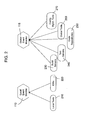
FIG. 1 is a block diagram of an exemplary software developer guidance system; -
FIG. 2 is a block diagram showing associations with an exemplarylocal event monitor 110 andglobal event monitor 115 shown inFIG. 1 ; -
FIG. 3 is a block diagram of anexemplary event 300 stored in theevent characteristics database 120 shown inFIG. 1 ; -
FIG. 4 is a block diagram of an exemplary developerstatic profile record 400 stored indeveloper profile 140 shown inFIG. 1 ; -
FIG. 5 is a block diagram of an exemplarydynamic profile record 500 stored indeveloper profile 140 shown inFIG. 1 ; -
FIG. 6 is a block diagram of an exemplaryRecurring Problems field 570 in the exemplarydynamic profile record 500 shown inFIG. 5 ; -
FIG. 7 is a block diagram of an exemplaryNon-Recurring Problems field 580 in the exemplarydynamic profile record 500 shown inFIG. 5 ; -
FIG. 8a is a block diagram of anexemplary Guidance record 800 stored in theguidance repository 150 shown inFIG. 1 ; -
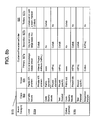
FIG. 8b is a table showing an example set of heuristic rules stored in theguidance repository 150 shown inFIG. 1 ; -
FIG. 9 an exemplary screen shot of an interactiveguidance console unit 190 shown inFIG. 1 ; -
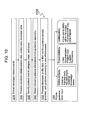
FIG. 10 is a flowchart depicting an exemplary process for providing software developer guidance; and -
FIG. 11 is a flowchart depicting an exemplary process for providing feedback to a software developer. - Reference will now be made in detail to the present embodiments (exemplary embodiments) of the invention, examples of which are illustrated in the accompanying drawings. Wherever possible, the same reference numbers will be used throughout the drawings to refer to the same or like parts.
-
FIG. 1 shows an exemplary embodiment of a softwaredeveloper guidance system 100 for providing software developer guidance consistent with the disclosure herein. Thesystem 100 provides in-process guidance and feedback to software developers using project event and environmental data, at least one developer profile, and the available sources of guidance.System 100 is configured to instrument the project environment to collect rich event data and to leverage various project and developer-related repositories and heuristic rules in order to select guidance and feedback for the software developer. - As shown in
FIG. 1 ,system 100 may comprise alocal event monitor 110, aglobal event monitor 115, anevents characteristics database 120, anevent extractor 130, adeveloper profile repository 140, aguidance repository 150, anenvironmental data repository 160, an events andenvironmental data processor 170, aguidance feedback unit 180, an interactiveguidance console unit 190, and aperiodic reporting unit 105. One of skill in the art will appreciate that although only one of each of the components identified above are depicted inFIG 1 , any number of these components may be provided. Furthermore, one of ordinary skill in the art will recognize that functions provided by one or more components ofsystem 100 may be combined or incorporated into another component shown inFIG. 1 . For example,local event monitor 110 andglobal event monitor 115 may be combined into a unitary event monitor, or they may be eliminated completely, with the inputs of event monitors 110, 115 as shown inFIG. 2 and described below input directly intoevent extractor 130. - One or more of the components depicted in
FIG. 1 may be implemented in software on one or more computing systems. For example, they may comprise one or more applications, which may comprise one or more computer units of computer-readable instructions which, when executed by a processor, cause a computer to perform steps of a method. Computer-readable instructions may be stored on a computer-readable medium, such as a memory or disk. Such media typically provide non-transitory storage. Alternatively, one or more of the components depicted inFIG. 1 may be hardware components or combinations of hardware and software such as, for example, special purpose computers or general purpose computers. A computer or computer system may also comprise an internal or external database. The components of a computer or computer system may connect through a local bus interface. - In certain embodiments, one or more of the components shown in
FIG. 1 may be a computer server with web services enabled. For example, the events andenvironmental data processor 170 could contain a processor web service for processing events and environmental data. The components depicted inFIG. 1 may be operatively connected to one another via a network, not shown, such as the Internet, an intranet, or any type of wired or wireless communication system. Connections may be implemented through a direct communication link, a local area network (LAN), a wide area network (WAN) and/or other suitable connections. -
Database 120 andrepositories FIG. 1 or as one or more internal databases stored, for example, onevent extractor 130 or on events andenvironmental data processor 170.Database 120 andrepositories system 100 directly via an external connection or via a network (not shown). - The
local event monitor 110, which in one embodiment may reside on a developer's workstation (not shown), is configured to monitor events related to the developer's activities at a workstation in creating code. Such activities may include but are not limited to writing, debugging, editing, and saving code. As shown inFIG. 2 , monitor 110 may monitor local tool events and Integrated Development Environment (IDE) events. Local tool events include events arising from the operation ofdevelopment tools 210 such as code quality or other evaluative testing tools used locally at the developer workstation. Examples of code quality tools include but are not limited to PMD, Checkstyle, Findbugs, and Jdepend, JavaNCSS, and examples of testing tools include but are not limited to Junit harnesses, Ncover, Emma, and Cobertura, IDE events relate to the operation ofIDEs 220 such as the EMC™ IDE, the Microsoft™ .NET framework, the Microsoft™ Visual Studios IDE for writing and debugging code, and the Eclipse™ IDE for incorporation of open source code. - The
global event monitor 115, which in one embodiment may comprise adaptors residing on the individual servers and repositories and a centralized monitor residing on a server on the network, is configured to monitor events that are remote from the developer workstation. As shown inFIG. 2 , monitor 115 may monitor build server events, test server events, code repository events, global tool events, and configuration management tool events. - Build server events include events arising from or at the
build servers 230 upon which the code is aggregated and compiled. Test server events include events arising from or at thetest servers 240 due to the operation of test suites. Examples of build server event data include but are not limited to identification of the test suite, the run results of the test suite, data about a failing of a test, and data from a module that failed. Code repository events include events arising from or at therepositories 250 due to checking code out of and in torepositories 250. The code repository events may include, for example, attributes such as time stamps for the beginning and end of the transaction, the sections of the code that were affected, and the identity of the person who checked out or checked in the code. Global tool events include events arising from the operation ofdevelopment tools 260 by other developers or other development teams. Configuration management tool events include events arising from the use ofconfiguration tools 270 such as, for example, particulars as to what was checked in or out, who checked them in or out, and when they were checked in or out. - The
events extractor 130 may be configured to extract events from theevent characteristics database 120, which may stores records identifying the attributes of previous events. As shown inFIG. 3 , one embodiment of arecord 300 of an event in theevent characteristics database 120 has anID field 310 for a unique identifier of the event.Record 300 may also have a CodeInvolved field 320 for storing an identifier of the code involved in the event, a Tools InUse field 330 for storing identifiers of the tools in use at the time of the event, aTime Stamp field 340 for storing time stamps for the event, aComponents field 350 for storing identifiers of the components involved in the event, a Cause(s) of the Event field 360 for storing information as to who or what caused the event, aConditions field 370 for storing information about the condition of the components and code at the time of the event, and aReport Location field 380 for storing the location of reports of the event or, in one embodiment, hyperlinks to the reports. Theevent characteristics database 120 may also have anEvent Log record 125 storing the log itself of the events that have been reported. - The
events extractor 130 is configured to extract data from thedeveloper profile repository 140, which may store developer profiles. Developer profiles, which contain a software development history of a software developer, may be of any suitable kind. In one embodiment, records for at least two types of developer profiles are stored in therepository 140, for example, static profiles and dynamic profiles. - Static profiles may contain relatively unchanging developer information. In one embodiment, as shown in
FIG. 4 , arecord 400 for the static profile may contain anID field 410 to contain an identifier of the developer (such as a name or ID number) and aContact Information field 420 for storing the contact information for the developer. Therecord 400 may also have a Developer Employment Status field 430 for storing data about the status of the developer (e.g., consultant, contractor, employee); aCompany field 440 for storing data identifying the name of the company, division, or unit employing the developer; a Time inService field 450 for storing data identifying how long the developer has been a code developer at the company identified infield 440. - The
record 400 may also contain anAvailability field 460 for identifying information regarding the developer's availability. For example, thefield 460 may contain data relating to the length of time that a developer is committed to working on a selected project, future projects to which the developer is committed, and any constraints as to availability such as upcoming vacations, sabbaticals, or agreements restricting the developer from working with selected groups or technologies or requiring the worker to work in a particular area.Record 400 may also have an Area(s) ofSpecialization field 470 for storing information related to a developer's areas of specialization, expertise, skills, or proficiency. Thefield 470 may have aprimary sub-field 472 andsecondary sub-field 474 to prioritize the areas of specialization. - Dynamic profiles may contain more current and more frequently changing information about the developer. In one embodiment, as shown in
FIG. 5 , arecord 500 for a dynamic profile may contain aName field 510 for identifying the subject developer. Therecord 500 may be configured to store project specific information. For example, it may have a Project(s)field 520 to identify the projects on which the developer has worked recently (in the last X years, months, or weeks). Therecord 500 may have a Project Activity Categories field 530 to store information about the category or categories of project activities to which the developer has been assigned recently. The categories of project activities may include, for example, writing code, testing code, reviewing code, or debugging code. - The
record 500 may also have aModules Field 535 and anAPI field 540 for identifying, respectively, the modules and the Application Programming Interfaces (APIs) with which or on which the developer has worked recently. Therecord 500 may also have a TechnicalSpecifications Library field 545 for identifying the technical specification libraries that the developer has accessed recently. As will be described below in greater detail, such project specific information may be useful to determine the pertinence of the developer's input about a problem or the pertinence of the project to a project for which guidance is being solicited. - The
record 500 may also have a Past Guidance Recommendations field 550 to store information related to the past guidance recommendations that have been presented to the developer, such as by anguidance feedback unit 180, which is described in more detail below. Thefield 550 may also have sub-fields such as sub-field 550a to record each instance of guidance supplied to the developer. The sub-field 550a may have additional sub-fields such assub-fields - The
record 500 may also have fields to store metrics values related to the developer's efforts on his or her current projects. For example, therecord 500 may haveProgress Scores field 560 for storing metrics values that measures the quality of the developer's performance as a code developer. One embodiment of such metrics is the Personal Quality Score (PQS). In one embodiment, an individual PQS is a composite score which is determined at selected intervals, such as on a daily basis, for each developer of a software development team. While PQS may be determined in any convenient manner, two examples of PQS include a Personal Quality Score 1 (PQS1) and a Personal Quality Score 2 (PQS2). - PQS1 may be a composite score based on the violations reported by code quality tools during an analysis interval, such as a ratio of the weighted sum of the violations categorized into different severity levels (e.g. High, Medium, and Low severity) to the total number of non-commenting source statements in those portions of the software code developed by the developer during the analysis interval. Weights may be assigned to each severity category based on the project manager's perception of the criticality of a category from a project perspective.
- PQS2 may be a ratio of the weighted sum of the violations categorized into different severity levels (e.g. High, Medium, and Low severity) to the total number of "modified" non-commenting source statements in those portions of the software code developed by the developer during the analysis interval. While PQS1 may give an indication of the impact on quality of the modified software code, PQS2 may be a more developer-centric and personal metric that indicates the quality of the "last modification episode" of a developer.
- Another progress score may be a Failed to Successful Unit Tests (FSUT) ratio. While PQS1 and PQS2 may reflect the adherence of the developer to coding best practices, FSUT may reflect functional quality of the code as determined by unit testing, as known in the art. PQS1, PQS2, and FSUT ratios are normalized to allow appropriate comparison and benchmarking.
- The quality metrics described above for an individual developer may be combined to provide a Developer Quality Score (DQS) for the developer. In one embodiment, DQS is calculated by first calculating a weighted average of PQS1 and FSUT. The weights may be predetermined by a project manager to reflect the importance given by the project to adherence to coding standards vis-à-vis functional testing. Based on the weighted average, a lookup table may be used to map the weighted average to the DQS score. Alternatively, DQS may be determined by associating project-specific thresholds on PQS1 and FSUT to determine whether PQS1 and FSUT individually are "good" or violating norms. Based on the individually determined sufficiency of PQS1 and FSUT, a table lookup mapping these two parameters to the DQS may provide a developer-specific DQS. In either case, it may be desirable to make the constituent PQS1 and FSUT data leading to the DQS and, likewise, the constituent violations leading to the
PQS 1, available for inspection to a user (e.g., the developer in question), thereby allowing the user to understand the rationale behind the DQS. In one embodiment, the constituent violations and constituent PQS1 and FSUT data may be stored inrecord 500 and presented to the developer on interactivefeedback console unit 105. - In a similar vein, aggregated quality metrics corresponding to portions of software attributable to more than a single developer (e.g., from a small team of developers all the way up to the entire project's development team) may be determined. Once again, such aggregated quality metrics may be determined on a daily basis or according to any convenient interval. Generally, this is accomplished by retrieving the quality metrics at the desired level of abstraction and determining scores according to that level of abstraction. Further scores at higher levels of abstraction (e.g. broader abstraction levels) may be determined by combining the initial aggregated scores. In one embodiment, the aggregate scores at various levels of abstraction may be calculated and presented to the developer on interactive
feedback console unit 105. - Embodiments of PQS, FSUT, and DQS are described in further detail in co-pending Indian Patent Application 1986-MUMNP-2009, filed September 1, 2009, and entitled "COLLECTION AND PROCESSING OF CODE DEVELOPMENT INFORMATION" (Applicant reference number 02079-PR/IN). PQS, and related values PQS1 and PQS2 described in the above-identified patent application, may be correlated to the quality of the source code produced by the developer. The
Progress Scores field 560 may have aPQS1 sub-field 562 and aPQS2 sub-field 564 to store the developer's current values of PQS1 and PQS2. - The dynamic profile may also identify the top recurring problems (RP) that the developer has faced. In one embodiment, each developer's profile only stores her own information only, while the developer profile repository may have profiles for each developer on the development team. For example, in one embodiment, RP(n) could be a set of type "Quality issues" and could constitute the set of problem issues that have been identified across the majority of the past n measurements or observations of problem issues. RP(n) having a large number of elements could indicate that the code under development is of high complexity. Alternatively, or in addition, a large RP(n) could indicate that the code under development has low tool coverage (Tcov). Tcov may be used to identify which statements have been executed and how often. A low Tcov may demonstrate that the code has not been tested enough.
- The
record 500 may have a Recurring Problem(s)field 570 that stores the set of recurring problems in the developer's current projects. In one embodiment, the set of recurring problems is the set of problems that have occurred in the majority of a series of observations of problems. One of ordinary skill in the art will understand that a problem may be characterized as recurring based on any suitable criteria. For example, a problem may be characterized as recurring if it is observed in more than a quarter of a series of observations. Further, the observations that define a problem as recurring need not be serial. The set of observations upon which a problem's characterization as recurring could be a random sample of observations. Other characterizations of a problem as recurring may be based on whether a problem has been observed a selected number of observations in a series. - The
field 570 may store numerous sets of recurring problems.FIG. 6 shows one embodiment of afield 570 for the embodiment in which a problem is characterized as recurring when it has been observed in a majority of a series of observations of problems. Thefield 570 may have a plurality of sub-fields for storing the observed sets of recurring problems identified across multiple observations of problems. For example, sub-fields 610, 620, 630 may have subfields 610a, 620a, 630a for storing sets RP(n1), RP(n2), RP(n3), which are the sets of problems that are characterized as recurring. In the embodiment in which a problem is characterized as recurring when it has been observed in a majority of a series of observations of problems, RP(n1), RP(n2), and RP(n3) are the sets of problems that are characterized as recurring in the past n1, n2, and n3 observations, respectively.Sub-fields field 570 may have Problem sub-fields for identifying the problems that the developer has faced, with subfields containing identifiers of the observations in which the problem was identified, so that any desired set of recurring problems across a selected number of observations could be determined based on inspection of the Problem sub-fields. - The dynamic profile may also identify the problems that recurred in the past, but that no longer occur. If problems no longer occur, the likelihood increases that they are solved. For example, in one embodiment, a set of problems that are likely to have been solved may be developed. The set may be known as Non-Recurring Past (NRP) issues, and is the set of recurring problems that are likely no longer recurring in the development project. One of ordinary skill in the art will understand that a problem may be characterized as no longer recurring based on any suitable criteria. In one embodiment, a problem may be characterized as not recurring and therefore included in NRP based on not having been observed for a selected amount of time, for a selected number of observations, or in a selected number of observations in a series. Alternatively, it may be characterized as not recurring if it has not been observed in a majority of observations in a set of observations. In one embodiment, NRP may be developed from two sets of recurring problems, for example, from RP(n) and RP(n-x), using the formula NRP(n) = { RP(n) } - {RP(n-x)}.
- Thus, in the embodiment in which a problem is characterized as recurring when it has been observed in a majority of a series of observations of problems, NRP(n) may be the set of problems that occurred across the majority of the past n observations of problem issues {RP(n)}, excluding the problems that occurred across the majority of the past n-x measurements of problem issues {RP(n-x)}. So, for example, for an embodiment in which 50 observations were made of problems, and a set of problems that recurred across in the last 50 observations and a set of problems that were identified across the last 20 observations, RP(50) is the set of problems with recurrence across the last 50 measurements, and RP(20) is the set of problems with recurrence across the past 20 measurements. NRP(50) is the set of problems that were contained in RP(50) but not in RP(20). Therefore, NRP(50) is the set of problems that had been observed to recur starting 50 observations ago, but that ceased to recur 20 observations ago.
- NRP may be defined in any suitable way, depending on the objectives of the developers of
system 100. System developers may be more interested, for example, in identifying trends in the number of non-recurring problems than in actually identifying the problems that are no longer recurring. There may be some problems that are recurring across a number of problem observations, but they are not appearing in a significant number such that they are counted as recurring. For example, in the embodiment in which a problem is characterized as recurring when-it has been observed in a majority of a series of observations of problems, a problem X needs to recur 26 time in 50 observations to be considered "non-recurring." However, if problem X appears five times in every ten observations during observations 1-40 and six times during observations 41-50, it will be characterized as a recurring problem in the most recent 50 observations (26 recurrences out of 50), but not in the most recent 40 observations (20 recurrences out of 40), the most recent 30 observations (15 recurrences out of 30), the most recent 20 observations (10 recurrences out of 20), and the most recent 10 observations (26 recurrences out of 50). Therefore, problem X would be included in NRP(50-30) because it was considered recurring in RP(50) but not in RP(30). In another example, if problem Y recurred frequently in observations 21-30 but was not observed starting 20 observations ago, and if NRP is developed from the most 50 and 30 observations, Problem Y might not be included in the set NRP. Nonetheless, if the developers ofsystem 100 are more interested in using NRP to analyze the trends in recurring and non-recurring problems than in using NRP to identify the actual problems that are recurring, it may be acceptable for NRP to include in its membership problems that recur at relatively low rates or to exclude certain problems that recurred for a short period of time but stopped recurring. - Therefore, depending on how RP and NRP are calculated, while new issues may have arisen in the past x observations, or old issues start recurring again, membership in NRP(n) may represent a likelihood that a problem has stopped recurring, and trends in RP and NRP may be analyzed to identify an extent of recurring or resolved problems. In other words, depending how RP and NRP are defined, there may be positive correlation between the number of member of the set NRP(n) and the number of software development issues that have been resolved.
- The
record 500 may have a Non-Recurring Problems field 580 that stores the set of non-recurring problems in the developer's current projects. Thefield 580 may store numerous sets of non-recurring problems. As shown inFIG. 7 , thefield 580 may have a plurality of sub-fields for storing the observed sets of non-recurring problems identified across multiple observations of problems. In the embodiment in which a problem is characterized as not recurring when it has been observed in a majority of a series of observations of problems but not in another, where n1 > n2 > n3, there may be two sets on NRP(n1) namely one based on (n1, n2) and a second one based on (n1, n3). In addition, there may be a set NRP(n2) based on (n2, n3).Sub-fields Sub-fields subfields Sub-fields subfields field 570 has Problem sub-fields for identifying the problems that the developer has faced, with sub-fields to identify in which measurements of problem issues the problem was identified, NRP(n) could be calculated based on inspection of the Problem sub-fields. - Returning to
FIG. 5 , the dynamic profile may also identify F(n), the number of times that the developer's modifications caused build failures in past <n> units of observation. The unit of observation could be of any suitable type, such as amount of time or number of builds. Generally, the value of F will be greater than or equal to zero and less than or equal, to the number of observations. For time units, 0 ≤ F(t) ≤ t. Therefore, a dynamic profile record stored inrepository 140 may contain afield 590 for storing information related to F(n). Further,field 590 may have sub-field 592 for storing the unit value of the failure(s),sub-field 594 for storing the value of F, and/or subfields 596a - 596z for storing characteristics information about the failures themselves. - Returning to the
system 100 ofFIG. 1 , the events andenvironmental data processor 170 is configured to obtain data from theproject environment repository 160 and theguidance repository 150. In one embodiment, theproject environment repository 160 contains aproject configuration database 162 and a project phase andcomplexity database 164. Theproject configuration database 162 may contain records storing data describing the project, identifying all components, phases, timelines, and required elements for the project, such as the identity of the developers assigned to the development project and the schedule for the project. The project phase andcomplexity database 164 may contain data specific to the current phase of the project and data related to the complexity of the code development project - The events and
environmental data processor 170 accesses data from theproject environment repository 160 in order to identify the context of the project and to determine the nature of difficulty of the problem that the developer is facing. - The
guidance repository 150 may contain records storing data describing guidance that has been or may be provided to resolve problems in the project. Theguidance repository 150, which may be a knowledge base, may contain data that is updated over time. In one embodiment, the guidance is project-specific, relating to the methodology or APIs that are in use in the project. In other embodiments, the available guidance is broader in scope. In one embodiment, the guidance is a set of guidance instantiations that have been previously implemented in a code development project. - The
guidance repository 150 may store arecord 800 such as illustrated inFIG. 8 for example. Theexemplary record 800 includes anID field 810 for identifying an instance of guidance, aType field 820 for containing information about the type of guidance, aSource field 830 for storing data about the source of the provided guidance, aSummary field 840 for storing a summary of the guidance, aLinks field 845 for identifying hyperlinks to the guidance, anEnvironment field 850 for storing data about the suggested system on which the guidance will be useful or on which the guidance was employed. - Additionally or alternatively,
record 800 may have aMethodology field 860 for identifying the suggested methodology to apply in taking the guidance or the methodology that was applied when the guidance was taken.Record 800 may also have anAPI field 870 for identifying the suggested API(s) to use in taking the guidance or the API(s) used when the guidance was taken. Therecord 800 may also have a Time Stamp(s)field 880 for storing timestamps related to when the guidance was implemented.Record 800 may also have aSuccess field 890 for storing a measure of the extent of success that developers have achieved in implementing the guidance. - The
guidance repository 150 may also store an heuristics/decision table 815 for use in selecting the guidance to suggest. In one embodiment, the rows of the table 815 will identify the categories of events that may demonstrate problems, for example, the table 815 may have alocal events row 816a and aglobal events row 816b. The table 815 may also have aclass column 822 to identify the classes of problems that may be associated with a selected event. For example, in the embodiment illustrated inFIG. 8b , local events may be associated with "Compile Issues," "Code Quality Issues," or "Test Related issues" problems; while global events may be associated with "Code Quality Issues," "Test Related Issues," or "Integration Failure" problems. - The table 815 may also have a
scope column 824 to identify the scope(s) of the classes of problem(s) that may be associated with a selected event. For example, in the embodiment illustrated inFIG. 8b , a local event in the "Compile Issues" class may be associated with a problem scope of "Public API problem" or "Private API Problem"; while a local event in the "Code Quality Issues" class may be associated with a problem scope of "Public Standard" or "Private Standard." Further, a local event in the "Test Related" class may be associated with only one problem scope, for example, "Project Specific." - The table 815 may also have a guidance precedence/
order column 826 to select the kinds of guidance may be associated with a selected event of a selected class and scope. The guidance precedence/order column 826 may have order sub-columns, for example,primary sub-column 827a,secondary sub-column 827b, andtertiary sub-column 827c to identify the kinds of guidance that may be suggested for the a selected event of a selected class and scope and the order in which the guidance may be suggested. - For example, in the embodiment illustrated in
FIG. 8b , a developer facing a global event in the "Code Quality Issues" class and of the "Public Standard" scope may first receive a suggestion to check online knowledge bases (available on the Internet). When that suggestion does not resolve the problem, the developer may receive the suggestion to check the organization's knowledge base; if that did not work, she may receive the suggestion to collaborate with a team member. On the other hand, if the global event was in the "Code Quality Issues" class but of the "Project Standard" scope, the developer may first receive a suggestion to check internal project artifacts, followed by a suggestion to collaborate with a team member, followed by a suggestion to check the organization's knowledge base. - In one embodiment, the
processor 170 has aguidance selector 172 for which theprocessor 170 obtains the data from theguidance repository 170. Theguidance selector 172 may be configured to select relevant guidance alternatives from the guidance data from theguidance repository 150 in order to present alternatives to present to the developer. Theguidance selector 172 may be configured to filter out the guidance already considered and/or to filter the guidance according to past effectiveness. - In one embodiment, the
processor 170 has a developer progress score calculator 174, which may be configured to calculate a metric representative of the quality of the progress made by the code developer. In one embodiment, the developer progress score is a composite effectiveness score which is inversely proportional to the number of coding problems that the developer has faced but not yet resolved, inversely proportional to the number of times that the developer's modifications caused build failures in past <n> units (of time or of builds), and directly proportional to the number of coding problems that the developer has resolved. - In one embodiment, the developer progress score (DPS) may be calculated as follows:

K is a project-specific constant;
|NRP| is the number of non-recurring problems in the set NRP(n) defined above,
|RP| is the number of recurring problems in the set RP(n) defined above;
F is the overall failure score defined above; and
thevalue 1 is added to the denominator to avoid division by zero. - One aim of calculating the DPS is to provide feedback to the developer regarding the quality of his or her work on the development project. The manner of feedback is described below.
- The events and
environmental data processor 170 may also be configured to use the data presented to and created by theguidance selector 172 and the developer progress score calculator 174 to populate the PastGuidance Recommendations field 550, theProgress Scores field 560, the RecurringProblems field 570, theNon-Recurring Problems field 580, and theFailures field 590 in the exemplarydynamic profile record 500 shown inFIG. 5 . - The events and
environmental data processor 170 may be coupled to the interactiveguidance console unit 190 and theperiodic reporting unit 105 in order to provide the guidance alternatives and progress quality scores to the developer. In one embodiment, each developer would have aconsole unit 190 on his or her own workstation to operate as a user interface to thesoftware guidance system 100. In one embodiment, theconsole unit 190 runs in the background of the developer's workstation, and an icon may be installed on a system tray (not shown) to provide easy access to theconsole unit 190. Using the console unit, the developer may request guidance with a selected problem, monitor the project progress, or view unsolicited assistance provided by thesystem 100 due to a system-perceived need for assistance with a problem. - The
console unit 190 may present to the developer a screen such as shown inFIG. 9 . In one embodiment, thescreen 900 has a MyProject Health section 910 to display metrics about the development project and the developer's contribution to the project. The MyProject Health section 910 may have aDPS display sub-field 910a to display in asection 912a the developer progress score (DPS) across past <n> measurements, described above, and a team DPS for the development team. The MyDPS display sub-field 910a may also have a colored "Orb" display insection 914a for showing a visual representation of the value of the developer's DPS metric relative to the value of the DPS metric for the development team. For example, in one embodiment, a green display may indicate that the developer's progress relative to her team is good; an amber display may indicate that the developer's progress needs some improvement; and a red display may indicate that the developer's progress relative to her team is poor. - The
DPS display sub-field 910a may also have section to display the developer and team DPS trends across past <n> measurements. Alternatively, as shown inFIG. 9 , the DPS trend may be displayed in aseparate field 920 of thescreen 900. Infield 920, DPS trends are shown as a bar graph but any suitable graphic display is contemplated. Percentile DPS may also be calculated, using development team level information, and displayed to provide information as to the developer's progress relative to others on the development team. In MyDPS Percentile field 930, a DPS percentile may be displayed to show the developer the percentage of team members having DPS lower than the developer's DPS. - In one embodiment, the
screen 900 has a personal quality score field to provide information about the level of quality of the developer's coding work. In the embodiment shown inFIG. 9 , the My Project Health field has aPQS display section 910b that displays one or more calculations of a developer's current PQS, described above, and other data based on PQS. For example, thePQS display section 910b may provide displays of PQS1 and/or PQS2, disclosed above, their trends across past <n> measurements, or a moving average ofPQS 1 or PQS2 - with a window of past <n> scores. Composite PQS may be developed and displayed, and the individual scores may be weighted such that the most recently calculated score contributes highest to the composite score. Percentile PQS1 or PQS2, using development team level information, may also be calculated and displayed to provide information as to the developer's quality relative to others on the development team. Such metrics could be displayed on thescreen 900. Alternatively,screen 900 may have links or tabs to access displays of the metrics. In the embodiment shown inFIG. 9 , thePQS display sub-field 910b displays in asection 912b a developer PQS1 and a team PQS1. The MyPQS1 display sub-field 910b may also have a colored "Orb" display insection 914b for showing a visual representation of the value of the developer's PQS1 metric relative to the value of the PQS1 metric for the development team. For example, in one embodiment, a green display may indicate that the developer's quality relative to her team is good; an amber display may indicate that the developer's personal quality needs some improvement; and a red display may indicate that the developer's quality relative to her team is poor. In the embodiment shown inFIG. 9 , thescreen 900 has a Quick View:Issue field 940 to display a count of the recurring issues facing the developer, solved issues, and pending guidance for the developer. In one embodiment, the counts serve as drill-downs, providing links to other screens, not shown, displaying the recurring issues, solved issues, and/or pending guidance. - In the embodiment shown in
FIG. 9 , thescreen 900 has a Recurring Problems andGuidance field 950 to display information about the recurring problems that the developer has faced.Field 950 has a Build Failure: APIUsage Alert sub-field 952 to display an alert if the code shows signs of a build failure due to improper usage of an API, a Complexity Alert sub-field 954 to display an alert if the code shows signs of being highly complex, and a Performance Alert sub-field 956 to display an alert if the developer's code shows signs of having low quality. In one embodiment, the Alert sub-fields serve as drill-downs, providing links to other screens, not shown, displaying the additional information about the failures, complexity, and quality issues identified bysystem 100. - In one embodiment, the
console unit 190 has a guidance recommendation section to display the guidance alternatives that were suggested to the developer. Referring toFIG. 9 ,field 950 has a Guidance sub-field 958 to display suggested guidance. Guidance sub-field 958 hassections FIG. 9 ,section 958a is displaying a link to a guidance record found in a project knowledge base (ProjKB),section 958b is displaying a link to a guidance record found in an internal knowledge base (IntKB), andsection 958c is displaying a suggestion to collaborate with a person ("Contact Ashok along with identified context"). As discussed in more detail below, the Guidance sub-field 958 could also display guidance in the form of links, messages, or another convenient mechanism. - In one embodiment, the
console unit 190 has a feedback section to display data relating to whether the suggested input was taken or not taken by the developer and whether the suggested input was found to be helpful or not helpful to the developer. In the embodiment shown inFIG. 9 , thescreen 900 has aGuidance Feedback field 960 to display information about the recurring problems that the developer has faced and allow the developer to provide feedback as to the usefulness of the guidance. -
Section 960 has a PastRecurring Problem sub-field 962 to display the recent problems that the developer has faced. In one embodiment, thesub-field 962 is populated with data from the developerdynamic profile 500 retrieved from thedeveloper profile repository 140. In one embodiment, the data from theDeveloper profile 500 is read automatically into thesub-field 962.Section 960 also has a Mode of Guidance sub-field 964 to identify the type of guidance that was suggested to resolve the problem, aCompletion sub-field 966 to allow the developer indicate whether the developer has completed consideration of the suggested guidance, and aHelpfulness sub-field 968 to indicate the extent of usefulness that the guidance provided. Each of the sub-fields 962, 964, 966, 968 have fields to display multiple problems, the associated suggested guidance, and completion and usefulness indicators. Further, thescreen 900 has a Submitbutton 990 to allow the developer to submit his or her feedback about the completion and usefulness of the suggested guidance. - One of skill in the art will appreciate that the above-described features may be displayed directly on the
screen 900 or alternatively, links, tabs, pull-down lists, or other display mechanisms could be utilized to provide the above features. Also, one of skill in the art will appreciate that the above-described features could be organized as shown inFIG. 9 or in any other convenient way. Further, one of skill in the art will appreciate that any information about coding quality such as metrics may be conveniently displayed onscreen 900 or through a link fromscreen 900. - In one embodiment, the displayed code quality indices may be directly based on coding violations reported through static analysis. A plurality of coding violation indications corresponding to software code are categorized according to a plurality of coding quality attributes. The coding violation indications may be reported via static analysis tools or via manual analysis of the software code. The categorized coding violations may serve as the basis for determining a plurality of code quality indices, each corresponding to a respective one of the plurality of coding quality attributes. The coding quality indices may further be processed to determine an overall code quality index for the software code. One or more of the resulting code quality indices may be displayed. Embodiments of coding quality indices are described in further detail in co-pending Indian Patent Application 1987-MUM-2009, filed September 1, 2009, and entitled "ASSESSMENT OF SOFTWARE CODE QUALITY BASED ON CODING VIOLATION INDICATIONS" (Applicant reference number 02178-PR/IN).
- The interactive
guidance console unit 190 is connected to theguidance feedback unit 180 to identify which of the guidance alternatives was considered or tried by the developer, and the extent of success of the developer in resolving the problem that could be attributed to the suggested guidance. Theguidance feedback unit 180 may be connected to thedeveloper profile repository 140 to provide input to update the dynamic profile records of the developer. - The events and
environmental data processor 170 may be connected to aperiodic reporting unit 105, which in one embodiment may provide periodic reports to the developer, the development team, or other interested party. The reports may include reports of the progress metrics created by the progress metric calculator 174 or the guidance alternatives suggested by theguidance selector 172. The reports may include an identifier of the guidance used by the developer and the extent of success based on the guidance. The reports may also include updates to theguidance repository 150,developer profile repository 140,event characteristics database 120 andenvironmental data repository 160. -
FIG. 10 shows a flowchart illustrative of one embodiment of aprocess 1000 for providing software developer guidance. Theguidance process 1000 starts atstage 1010 by theevents extractor 130 collecting data related to events. When a software development problem occurs, events from components being used in software development, such as a tool or IDE, contain details about the problem. For example, the event category, class and scope may provide identifying information about the problem. In addition, details as to where and when the problem occurred and by whom may be determined by analyzing the event data. In one embodiment, theevents extractor 130 receives event data automatically from thelocal event monitor 110 and theglobal event monitor 115. In another embodiment, theextractor 130 continually monitors such events. Theevents extractor 130 obtains data related to local or global events from themonitors event characteristics database 120. It also receives data related to developers fromdeveloper profile repository 140, and data related to previous instances of guidance from theguidance repository 150, and forwards the data to the events andenvironmental data processor 170. - At
stage 1020, theprocessor 170 processes the events data, project data, and developer data received from theevents extractor 130 to identify recurrence patterns of events that may demonstrate the existence of a problem. In addition to the data that it receives from theevents extractor 130, theprocessor 170 uses data about the system environment in which the problem arose, which it obtains from theenvironmental data repository 160. Theprocessor 170 also uses further data from the static and dynamic profiles of the developer, which it obtains from thedeveloper profile repository 140, and data related to previous instances of guidance, which it obtains from theguidance repository 150. Based on the recurrence patterns and the type of certain events, theprocessor 170 marks a problem as a recurring problem (RP). Similarly, the processor identifies the RPs which are no longer recurring, for example in the manners disclosed above, and calculates a value for Non-Recurring Problem (NRP). - At
stage 1030, theprocessor 170 identifies an event that may constitute a problem that could benefit from guidance. the processor identifies the event's category, class, and scope from the data analyzed instage 1020. From the event's category, class and scope, theprocessor 170 identifies the problem that could benefit from guidance. Theprocessor 170 may also make the identification based in part on the category/severity of the identified problem and the number of occurrences and or frequency of occurrences of the problem. Theprocessor 170 also determines the extent of difficulty that the developer is facing. - At
stage 1040, theprocessor 170 selects relevant guidance alternatives from theguidance repository 150. In one embodiment, theprocessor 170 makes the selections based on heuristic rules that are stored in an heuristic/decision table in theguidance repository 150 shown inFIG. 1 . As described above, the table 815 has rules for selecting the kinds of guidance that may be associated with a selected event of a selected class and scope. If an event "recurs", it becomes a problematic event. Based on the problematic event's category, class and scope, theprocessor 170 recommends guidance of a selected type in the order stored in the table 815. - For example, in the embodiment illustrated in
FIG. 8b , a developer facing a global event in the "Test Related" class and of the "Project Specific" scope may first receive a suggestion to check internal project artifacts, followed by a suggestion to collaborate with a team member. For each problematic event, the specific guidance suggestions for different types of guidance are stored in the guidance repository. If a developer has been offered a guidance and the problem still recurs, that factual situation is recorded in the dynamic profile. The guidance next in order may be suggested. - The order of guidance to be suggested as recorded in table 815 may change over time depending on a particular guidance type being considered more helpful for a particular event by the developers in their feedback. This table typically will also differ for developers with different levels of experience, skills and time in the project. Data about a developer's levels of experience, skills and time in the project is stored in the static developer profile and is made available to the
processor 170 in selecting the guidance to provide. - The guidance alternatives may be configured differently for developers with different levels of experience, skill, and assignment. The exemplary table 815 for guidance selection rules is just an instance to be used for a moderately experienced and skilled person. If, for example, the person is new and inexperienced, the first priority might be given to internal (project or org level) knowledge bases to make them more current date with what is common knowledge to a more experienced person. Therefore, one of ordinary skill in the art will appreciate that there may be several heuristic tables 815 for different levels of experience, skill, and assignment.
- At stage 1050, the
processor 170 uses the guidance alternatives and the developer profile data from thedeveloper profile repository 140 to filter out the guidance already provided and to rank guidance according to past effectiveness. At astage 1060, theprocessor 170 provides identifies suggested guidance to the interactiveguidance console unit 190. That information may be displayed, for example, on thescreen 900 in the Guidance sub-field 958 insections - As shown in
FIG. 10 , the suggested guidance may be in the form of on-line artifacts, project artifacts, and/or collaboration. On-line artifacts may include internal training documents, internal knowledgebase documents, or external knowledge base documents. Project artifacts may include documentation from the project, including but not limited to prior events, project logs, and logged discussions. Suggestions of collaboration with others may include a suggestion to connect to subject matter experts within the project or to experts outside of the project, for example, experts within the organization. - At
stage 1060, theprocessor 170 may also provide information about suggested guidance to theperiodic reporting unit 105, which creates reports as required, for example, for review by supervisors or for other administrative uses about or the guidance alternatives suggested by theguidance selector 172. The reports may identify the guidance used by the developer and the extent of success based on the guidance. The reports may also include updates to theguidance repository 150,developer profile repository 140,event characteristics database 120, andenvironmental data repository 160. Alternatively, as shown inFIG. 1 , the updates are provided by theguidance feedback unit 180. - At
stage 1060, the processor may also provide warnings about high code complexity or build failures to theconsole unit 190 so that thescreen 900 can display an alert if the code shows signs of being highly complex or if build failures are occurring. The alerts may be displayed, for example, in the Build Failure: APIUsage Alert sub-field 952 and Complexity Alert sub-field 954 ofGuidance field 950. -
FIG 11 shows a flowchart illustrative of one embodiment of aprocess 1100 for providing the software developer feedback regarding the quality of his code development. Thequality oversight process 1100 starts atstage 1110 when a quality review is initiated, for example by the events andenvironmental data processor 170. This quality review may occur according to any desired schedule, for example, hourly, daily, weekly, monthly, or it may be run continually, for example, updating itself every time that new data is presented to theprocessor 170. - At
stage 1120, theprocessor 170 obtains information about code development in the project. Such information may include data from the static and dynamic profiles of the developer and of the developer's team members from thedeveloper profile repository 140. Data may also include data related to local or global events from the local and global events monitors 110, 115, data from theevent characteristics database 120, data related to previous instances of guidance (and whether it was followed by the developer) from theguidance repository 150, and data about the system environment in which problems arose from theenvironmental data repository 160. - At
stage 1130, the developer progress score calculator 174 ofprocessor 170 calculates metrics values representative of the quality of the progress made by the code developer, for example, developer and team DPS across a series of measurements. The calculator 174 creates the developer and team DPS values, for example, insection 912a of thescreen 900. Theprocessor 170 may further generate the charts of DPS trends, for example, for display on the DPStrend display field 920 ofscreen 900. The calculator 174 may also generate a DPS percentile value to provide information as to the developer's progress relative to others on the development team, for example, for display in theDPS Percentile field 930 of thescreen 900. - At
stage 1140, the calculator 174 also calculates the developer and team PQS1 values to provide information about quality of the software development work and, for example, to display in thePQS display section 910b ofscreen 900. The calculator 174 may also calculate any other desired progress or quality values such as PQS2 or a moving average of PQS1 or PQS2 - with a window of past <n> scores. It may also develop percentile PQS1, percentile PQS2, composite PQS values, or composite weighted PQS values for display on screens of thescreen 900 that are not here shown. The processor may develop graphs related to PQS score, also for display onscreen 900. - At
stage 1150, theprocessor 170 provides values of progress and quality metrics to theconsole unit 190 for display. Theprocessor 170 may further provide progress and quality metrics graphs to the interactiveguidance console unit 190, so that the information may be displayed, for example, on thescreen 900 in thesections stage 1150, the processor may also provide quality warnings to theconsole unit 190 so that thescreen 900 can display an alert if there are signs of low code development quality. The alert may be displayed, for example, in theAlert sub-field 952 and Performance Alert sub-field 956 of Recurring Problems andGuidance field 950. - At
stage 1150, or in the embodiment shown inFIG. 11 atstage 1160, the databases, knowledge bases and repositories are updated. The updating may be done by theprocessor 170 or, as shown inFIG 1 , theconsole unit 190 may forward the information to theguidance feedback unit 180 so that theunit 180 may perform the updating. - One of skill in the art will appreciate that the above-described stages may be embodied in distinct software modules. Although the disclosed components have been described above as being separate units, one of ordinary skill in the art will recognize that functionalities provided by one or more units may be combined. As one of ordinary skill in the art will appreciate, one or more of units may be optional and may be omitted from implementations in certain embodiments.
- The foregoing description has been presented for purposes of illustration. It is not exhaustive and does not limit the invention to the precise forms or embodiments disclosed. Modifications and adaptations of the invention will be apparent to those skilled in the art from consideration of the specification and practice of the disclosed embodiments. For example, the described implementations may be implemented in software, hardware, or a combination of hardware and software. Examples of hardware include computing or processing systems, such as personal computers, servers, laptops, mainframes, and micro-processors. In addition, one of ordinary skill in the art will appreciate that the records and fields shown in the figures may have additional or fewer fields, and may arrange fields differently than the figures illustrate. It is intended that the specification and examples be considered as exemplary only, with a true scope and spirit of the invention being indicated by the following claims.
Claims (15)
- A computer-implemented method for supporting software developers in analyzing and/or implementing a software development project, comprising:accessing from a database profile data associated with a software developer comprising data about a software development history of the software developer;analyzing software event data with an events extractor component, wherein the software event data relates to at least one software code event associated with a software development project and associated with the software developer;determining feedback data, with an events and environmental data processor, for use by the software developer in resolving a software development problem, wherein the feedback data is selected based on an analysis of the software event data, data related to the software development project, data related to an environment in which the at least one software code event occurred, and the profile data of the software developer; anddisplaying the feedback data to the software developer with a display device comprising an interactive console unit.
- The computer-implemented method of claim 1, wherein the profile data includes information about previous software development experience by the software developer.
- The computer-implemented method of claim 1 or 2, wherein the profile data includes information about previous software coding problems faced by the software developer.
- The computer-implemented method of claim 3, wherein the previous software coding problems comprise recurring software development problems faced by the software developer.
- The computer-implemented method of claim 4, wherein the previous software coding problems comprise software development problems having a high likelihood of having been resolved.
- The computer-implemented method of any one of the preceding claims, wherein the profile data includes information about previous system failures associated with the software developer.
- The computer-implemented method of any one of the preceding claims, wherein selecting the feedback data further comprises ordering the feedback data according to past effectiveness in resolving one or more software development problems.
- The computer-implemented method of any one of the preceding claims, wherein the software development project comprises a first software development project, and wherein the feedback data comprises a suggestion to refer to documentation related to a second software development project and identification of the documentation related to the second software development project.
- The computer-implemented method of any one of the preceding claims, wherein the feedback data comprises a suggestion to refer to documentation related to the software development project and an identification of the documentation related to a second software development project.
- The computer-implemented method of any one of the preceding claims, wherein the feedback data comprises a suggestion to collaborate with another person or entity and identification of the another person or entity.
- The computer-implemented method of any one of the preceding claims, further comprising developing feedback regarding progress of the software developer in the development project from the software event data and the profile data of the software developer.
- The computer-implemented method of any one of the preceding claims, wherein developing the feedback data further comprises developing the feedback data in response to an automated identification of a need for the feedback data.
- The computer-implemented method of claim 12, further comprising identifying the need for the feedback data based on trends in software development problems faced by the software developer.
- A system for support software developer in implementing and/or analyzing a software development project, comprising: an events extractor configured to
access from a database profile data associated to a software developer comprising data about a software development history of the software developer, and
analyze software event data that relates to at least one software code event associated with a software development project and associated with the software developer; and
an events and environmental data processor configured to determine feedback data for use by the software developer in resolving a software development problem, wherein the feedback data is determined based on an analysis of the software event data, data related to the software development project, data related to an environment in which the at least one software code event occurred, and the profile data of the software developer; and
display the feedback data to the software developer via a display device comprising an interactive console unit. - Computer program product comprising computer readable instructions, which when loaded and run in a computer system and/or computer network system, causes the computer system and/or the computer network system to perform operations according to a method of any one of claims 1 to 13.
Applications Claiming Priority (2)
| Application Number | Priority Date | Filing Date | Title |
|---|---|---|---|
| IN966CH2010 | 2010-04-07 | ||
| US12/783,582 US8595685B2 (en) | 2010-04-07 | 2010-05-20 | Method and system for software developer guidance based on analyzing project events |
Publications (2)
| Publication Number | Publication Date |
|---|---|
| EP2386990A2 true EP2386990A2 (en) | 2011-11-16 |
| EP2386990A3 EP2386990A3 (en) | 2012-01-11 |
Family
ID=44761851
Family Applications (1)
| Application Number | Title | Priority Date | Filing Date |
|---|---|---|---|
| EP11002943A Ceased EP2386990A3 (en) | 2010-04-07 | 2011-04-07 | Method and system for software developer guidance based on analyzing project events |
Country Status (2)
| Country | Link |
|---|---|
| US (1) | US8595685B2 (en) |
| EP (1) | EP2386990A3 (en) |
Families Citing this family (42)
| Publication number | Priority date | Publication date | Assignee | Title |
|---|---|---|---|---|
| WO2011055801A1 (en) * | 2009-11-05 | 2011-05-12 | 日本電気株式会社 | Collaborative development support system, collaborative development support method and recording medium |
| US9311056B2 (en) * | 2010-08-06 | 2016-04-12 | International Business Machines Corporation | Automated analysis of code developer's profile |
| US20120272220A1 (en) * | 2011-04-19 | 2012-10-25 | Calcagno Cristiano | System and method for display of software quality |
| US8719179B2 (en) * | 2012-04-30 | 2014-05-06 | Gild, Inc. | Recruiting service graphical user interface |
| US20140032435A1 (en) * | 2012-07-25 | 2014-01-30 | Gild, Inc. | Method and apparatus for enhancing job recruiting |
| US8938708B2 (en) * | 2012-08-14 | 2015-01-20 | International Business Machines Corporation | Determining project status in a development environment |
| US9658939B2 (en) * | 2012-08-29 | 2017-05-23 | Hewlett Packard Enterprise Development Lp | Identifying a defect density |
| US9262282B2 (en) * | 2012-09-04 | 2016-02-16 | Opshub, Inc. | System and method for synchornisation of data and recovery of failures during synchronization between two systems |
| US9304760B2 (en) * | 2012-11-12 | 2016-04-05 | International Business Machines Corporation | Identifying software code experts |
| US11321081B2 (en) | 2012-11-20 | 2022-05-03 | International Business Machines Corporation | Affinity recommendation in software lifecycle management |
| US9052980B2 (en) * | 2013-02-20 | 2015-06-09 | Bmc Software, Inc. | Exception based quality assessment |
| CN105051776B (en) * | 2013-03-25 | 2021-02-09 | 索尼公司 | Information processing apparatus, information processing system, and information processing method |
| US20150081363A1 (en) * | 2013-06-07 | 2015-03-19 | TechCrowd Services, Inc. | Group-Oriented Software Development |
| US9720683B2 (en) | 2013-09-17 | 2017-08-01 | International Business Machines Corporation | Merit based inclusion of changes in a build of a software system |
| US9658907B2 (en) * | 2014-06-24 | 2017-05-23 | Ca, Inc. | Development tools for refactoring computer code |
| US9588876B2 (en) * | 2014-08-01 | 2017-03-07 | Microsoft Technology Licensing, Llc | Estimating likelihood of code changes introducing defects |
| US9799007B2 (en) * | 2014-08-18 | 2017-10-24 | Drexel University | Method of collaborative software development |
| US9348562B2 (en) | 2014-08-25 | 2016-05-24 | International Business Machines Corporation | Correcting non-compliant source code in an integrated development environment |
| EP3265951A4 (en) | 2015-03-06 | 2018-11-21 | Nokia Technologies Oy | Privacy management |
| AU2016203818A1 (en) * | 2015-06-12 | 2017-01-05 | Accenture Global Services Limited | Data processor for project data |
| US10157467B2 (en) | 2015-08-07 | 2018-12-18 | Arizona Board Of Regents On Behalf Of Arizona State University | System and method for detecting central pulmonary embolism in CT pulmonary angiography images |
| US9619363B1 (en) * | 2015-09-25 | 2017-04-11 | International Business Machines Corporation | Predicting software product quality |
| US10175977B2 (en) | 2015-11-04 | 2019-01-08 | International Business Machines Corporation | User profile based code review |
| US10114636B2 (en) * | 2016-04-20 | 2018-10-30 | Microsoft Technology Licensing, Llc | Production telemetry insights inline to developer experience |
| US10248919B2 (en) * | 2016-09-21 | 2019-04-02 | Red Hat Israel, Ltd. | Task assignment using machine learning and information retrieval |
| US10241892B2 (en) * | 2016-12-02 | 2019-03-26 | International Business Machines Corporation | Issuance of static analysis complaints |
| US10491496B2 (en) * | 2016-12-23 | 2019-11-26 | General Electric Company | Determining the health of an IOT application |
| AU2018200643A1 (en) * | 2017-03-09 | 2018-09-27 | Accenture Global Solutions Limited | Smart advisory for distributed and composite testing teams based on production data and analytics |
| US10169003B2 (en) | 2017-04-05 | 2019-01-01 | International Business Machines Corporation | Cognitive scope analyzer |
| US10528458B2 (en) | 2017-08-31 | 2020-01-07 | Micro Focus Llc | Continuous integration and continuous deployment system failure analysis and resolution |
| US10963226B2 (en) * | 2017-10-25 | 2021-03-30 | Aspiring Minds Assessment Private Limited | Generating compilable code from uncompilable code |
| US11710090B2 (en) | 2017-10-25 | 2023-07-25 | Shl (India) Private Limited | Machine-learning models to assess coding skills and video performance |
| US20190303107A1 (en) * | 2018-03-30 | 2019-10-03 | Ca, Inc. | Automated software programming guidance |
| US10860314B2 (en) | 2018-05-10 | 2020-12-08 | Microsoft Technology Licensing, Llc | Computing elapsed coding time |
| US10817813B2 (en) * | 2018-10-25 | 2020-10-27 | Qlytics LLC | Resource configuration and management system |
| US11194553B2 (en) * | 2019-09-17 | 2021-12-07 | International Business Machines Corporation | Identifying and recommending code snippets to be reused by software developer |
| US11321644B2 (en) | 2020-01-22 | 2022-05-03 | International Business Machines Corporation | Software developer assignment utilizing contribution based mastery metrics |
| US11269597B2 (en) * | 2020-03-31 | 2022-03-08 | Sap Se | Real-time code recommendations using machine learning and reinforcement learning |
| US11900080B2 (en) * | 2020-07-09 | 2024-02-13 | Microsoft Technology Licensing, Llc | Software development autocreated suggestion provenance |
| US11947933B2 (en) | 2021-01-08 | 2024-04-02 | Microsoft Technology Licensing, Llc | Contextual assistance and interactive documentation |
| US11995524B2 (en) * | 2021-06-24 | 2024-05-28 | Accenture Global Solutions Limited | System and method for providing automatic guidance in data flow journeys |
| US12061903B2 (en) * | 2022-09-16 | 2024-08-13 | Microsoft Technology Licensing, Llc | Software development quality assessment |
Citations (3)
| Publication number | Priority date | Publication date | Assignee | Title |
|---|---|---|---|---|
| US20050172272A1 (en) * | 2004-01-30 | 2005-08-04 | International Business Machines Corporation | Method of generating and utilizing debug history |
| US20060156286A1 (en) * | 2005-01-11 | 2006-07-13 | Morgan Fabian F | Dynamic source code analyzer |
| US20090327809A1 (en) * | 2008-06-26 | 2009-12-31 | Microsoft Corporation | Domain-specific guidance service for software development |
Family Cites Families (4)
| Publication number | Priority date | Publication date | Assignee | Title |
|---|---|---|---|---|
| US6529889B1 (en) * | 1999-07-27 | 2003-03-04 | Acappella Software, Inc. | System and method of knowledge architecture |
| US7373635B2 (en) * | 2003-12-15 | 2008-05-13 | International Business Machines Corporation | System and method for efficient development of configurable software systems in a large software development community |
| US8327316B2 (en) * | 2008-09-30 | 2012-12-04 | Ics Triplex Isagraf Inc. | Compilation model |
| US20110225565A1 (en) * | 2010-03-12 | 2011-09-15 | Van Velzen Danny | Optimal incremental workflow execution allowing meta-programming |
-
2010
- 2010-05-20 US US12/783,582 patent/US8595685B2/en not_active Expired - Fee Related
-
2011
- 2011-04-07 EP EP11002943A patent/EP2386990A3/en not_active Ceased
Patent Citations (3)
| Publication number | Priority date | Publication date | Assignee | Title |
|---|---|---|---|---|
| US20050172272A1 (en) * | 2004-01-30 | 2005-08-04 | International Business Machines Corporation | Method of generating and utilizing debug history |
| US20060156286A1 (en) * | 2005-01-11 | 2006-07-13 | Morgan Fabian F | Dynamic source code analyzer |
| US20090327809A1 (en) * | 2008-06-26 | 2009-12-31 | Microsoft Corporation | Domain-specific guidance service for software development |
Also Published As
| Publication number | Publication date |
|---|---|
| US20110252394A1 (en) | 2011-10-13 |
| US8595685B2 (en) | 2013-11-26 |
| EP2386990A3 (en) | 2012-01-11 |
Similar Documents
| Publication | Publication Date | Title |
|---|---|---|
| US8595685B2 (en) | Method and system for software developer guidance based on analyzing project events | |
| US8601441B2 (en) | Method and system for evaluating the testing of a software system having a plurality of components | |
| Malishevsky et al. | Cost-cognizant test case prioritization | |
| Moløkken-Østvold et al. | A survey on software estimation in the Norwegian industry | |
| US8375364B2 (en) | Size and effort estimation in testing applications | |
| US20060123389A1 (en) | System and method for global group reporting | |
| US20110055799A1 (en) | Collection and processing of code development information | |
| US9542160B2 (en) | System and method for software development report generation | |
| US20140123110A1 (en) | Monitoring and improving software development quality | |
| US20230214739A1 (en) | Recommendation system for improving support for a service | |
| US20070094281A1 (en) | Application portfolio assessment tool | |
| US20160110817A1 (en) | Enterprise application high availability scoring and prioritization system | |
| JP2007207029A (en) | Project progress management apparatus and method | |
| JP6975086B2 (en) | Quality evaluation method and quality evaluation equipment | |
| Bodık et al. | Advanced tools for operators at Amazon. com | |
| AU2006270407B2 (en) | System and memory for schedule quality assessment | |
| Afzal et al. | Incorporating metrics in an organizational test strategy | |
| Afzal | Metrics in software test planning and test design processes | |
| Pooley et al. | Collecting and analyzing web-based project metrics | |
| Seddio | Integrating test metrics within a software engineering measurement program at Eastman Kodak Company: A follow-up case study | |
| Sailer | Grouping and Prioritization of Test Gaps | |
| Damm et al. | Determining the improvement potential of a software development organization through fault analysis: A method and a case study | |
| Gruschwitz et al. | Towards an integrated model for managing product and process quality in agile software projects | |
| Lillemäe | Key Performance Indicators for Measuring Efficiency and Effectiveness in an Agile Software Development Team: Development of a KPI Dashboard for Measuring Individuals’ Performance Through an Entrepreneurial Study within Extenda Retail | |
| US20140304040A1 (en) | Method and system for implementing a composite quality performance index |
Legal Events
| Date | Code | Title | Description |
|---|---|---|---|
| AK | Designated contracting states |
Kind code of ref document: A2 Designated state(s): AL AT BE BG CH CY CZ DE DK EE ES FI FR GB GR HR HU IE IS IT LI LT LU LV MC MK MT NL NO PL PT RO RS SE SI SK SM TR |
|
| AX | Request for extension of the european patent |
Extension state: BA ME |
|
| PUAI | Public reference made under article 153(3) epc to a published international application that has entered the european phase |
Free format text: ORIGINAL CODE: 0009012 |
|
| PUAL | Search report despatched |
Free format text: ORIGINAL CODE: 0009013 |
|
| AK | Designated contracting states |
Kind code of ref document: A3 Designated state(s): AL AT BE BG CH CY CZ DE DK EE ES FI FR GB GR HR HU IE IS IT LI LT LU LV MC MK MT NL NO PL PT RO RS SE SI SK SM TR |
|
| AX | Request for extension of the european patent |
Extension state: BA ME |
|
| RIC1 | Information provided on ipc code assigned before grant |
Ipc: G06Q 10/00 20120101ALI20111202BHEP Ipc: G06F 11/00 20060101ALI20111202BHEP Ipc: G06F 11/36 20060101AFI20111202BHEP |
|
| 17P | Request for examination filed |
Effective date: 20120606 |
|
| 17Q | First examination report despatched |
Effective date: 20150213 |
|
| STAA | Information on the status of an ep patent application or granted ep patent |
Free format text: STATUS: THE APPLICATION HAS BEEN REFUSED |
|
| 18R | Application refused |
Effective date: 20160310 |