EP2386906A2 - Document reading apparatus and document reading method - Google Patents
Document reading apparatus and document reading method Download PDFInfo
- Publication number
- EP2386906A2 EP2386906A2 EP11163903A EP11163903A EP2386906A2 EP 2386906 A2 EP2386906 A2 EP 2386906A2 EP 11163903 A EP11163903 A EP 11163903A EP 11163903 A EP11163903 A EP 11163903A EP 2386906 A2 EP2386906 A2 EP 2386906A2
- Authority
- EP
- European Patent Office
- Prior art keywords
- print mode
- window
- confirmation window
- unit
- Prior art date
- Legal status (The legal status is an assumption and is not a legal conclusion. Google has not performed a legal analysis and makes no representation as to the accuracy of the status listed.)
- Withdrawn
Links
Images









Classifications
-
- G—PHYSICS
- G03—PHOTOGRAPHY; CINEMATOGRAPHY; ANALOGOUS TECHNIQUES USING WAVES OTHER THAN OPTICAL WAVES; ELECTROGRAPHY; HOLOGRAPHY
- G03G—ELECTROGRAPHY; ELECTROPHOTOGRAPHY; MAGNETOGRAPHY
- G03G15/00—Apparatus for electrographic processes using a charge pattern
- G03G15/50—Machine control of apparatus for electrographic processes using a charge pattern, e.g. regulating differents parts of the machine, multimode copiers, microprocessor control
- G03G15/5016—User-machine interface; Display panels; Control console
-
- G—PHYSICS
- G06—COMPUTING OR CALCULATING; COUNTING
- G06F—ELECTRIC DIGITAL DATA PROCESSING
- G06F3/00—Input arrangements for transferring data to be processed into a form capable of being handled by the computer; Output arrangements for transferring data from processing unit to output unit, e.g. interface arrangements
- G06F3/12—Digital output to print unit, e.g. line printer, chain printer
-
- G—PHYSICS
- G03—PHOTOGRAPHY; CINEMATOGRAPHY; ANALOGOUS TECHNIQUES USING WAVES OTHER THAN OPTICAL WAVES; ELECTROGRAPHY; HOLOGRAPHY
- G03G—ELECTROGRAPHY; ELECTROPHOTOGRAPHY; MAGNETOGRAPHY
- G03G15/00—Apparatus for electrographic processes using a charge pattern
-
- G—PHYSICS
- G03—PHOTOGRAPHY; CINEMATOGRAPHY; ANALOGOUS TECHNIQUES USING WAVES OTHER THAN OPTICAL WAVES; ELECTROGRAPHY; HOLOGRAPHY
- G03G—ELECTROGRAPHY; ELECTROPHOTOGRAPHY; MAGNETOGRAPHY
- G03G15/00—Apparatus for electrographic processes using a charge pattern
- G03G15/50—Machine control of apparatus for electrographic processes using a charge pattern, e.g. regulating differents parts of the machine, multimode copiers, microprocessor control
- G03G15/5016—User-machine interface; Display panels; Control console
- G03G15/502—User-machine interface; Display panels; Control console relating to the structure of the control menu, e.g. pop-up menus, help screens
-
- G—PHYSICS
- G03—PHOTOGRAPHY; CINEMATOGRAPHY; ANALOGOUS TECHNIQUES USING WAVES OTHER THAN OPTICAL WAVES; ELECTROGRAPHY; HOLOGRAPHY
- G03G—ELECTROGRAPHY; ELECTROPHOTOGRAPHY; MAGNETOGRAPHY
- G03G21/00—Arrangements not provided for by groups G03G13/00 - G03G19/00, e.g. cleaning, elimination of residual charge
-
- G—PHYSICS
- G06—COMPUTING OR CALCULATING; COUNTING
- G06F—ELECTRIC DIGITAL DATA PROCESSING
- G06F3/00—Input arrangements for transferring data to be processed into a form capable of being handled by the computer; Output arrangements for transferring data from processing unit to output unit, e.g. interface arrangements
- G06F3/14—Digital output to display device ; Cooperation and interconnection of the display device with other functional units
Definitions
- the present invention relates to an improvement of a document reading apparatus, more specifically, a document reading apparatus whose print mode may be selected between either a normal print mode or a saving print mode having print settings in which less paper is consumed than in the normal print mode.
- the document reading apparatus generates output images from read images based on the print mode.
- the present invention also relates to an improvement of a document reading method.
- the aggregate printing and the double-sided printing can save paper consumed for printing compared with normal printing, which prints read images composed of plural pages on one side of paper in order, one page per sheet of paper.
- printers including a saving print mode which automatically selects print settings of the aggregate printing, the double-sided printing, and the like, and performs printing, have been disclosed in Japanese Unexamined Patent Application Publication No. 2004-246283 and 2005-24881 .
- Embodiments of the invention provide a document reading apparatus which can prevent output images based on read images from being generated, especially while a user is not aware of the saving print mode.
- Other embodiments of the invention provide a document reading apparatus which allows print settings to be changed easily when the user notices the saving print mode.
- a document reading apparatus includes a print mode selecting unit configured to select either the normal print mode or the saving print mode as the print mode based on a user input, the normal print mode including predetermined print settings and the saving print mode including print settings associated with less paper consumption than the normal print mode, a document containing unit arranged to hold at least two pieces of documents, a document reading unit configured to read the documents in the document containing unit and to generate read images, a document detecting unit configured to detect the documents in the document containing unit, a confirmation window displaying unit configured to display a confirmation window having a mode change button based on a detection result from the document detecting unit, and an image forming unit configured to form output images from the read images based on the print mode.
- the confirmation window displaying unit determines whether or not the confirmation window is to be displayed based on the print mode, and the print mode selecting unit selects the normal print mode as the print mode in response to an input through the mode change button.
- the confirmation window is displayed based on the detection result of the documents from the document containing unit. Since whether or not the confirmation window is to be displayed is determined based on the selected print mode, whether or not the document reading apparatus is in the saving print mode can be recognized through the display of the confirmation window when the documents are in the document containing unit. Accordingly, forming the output images from the read images without the user noticing the saving print mode can be prevented. Further, since the normal print mode may be selected in response to an input through the mode change button arranged on the confirmation window, the print mode can be changed easily when the user notices the saving print mode.
- the confirmation window displaying unit does not display the confirmation window if the print mode is the normal print mode.
- a document reading apparatus includes, in addition to the above configuration, a print setting change window displaying unit configured to display a print setting change window for changing the print settings based on an input selection of an item arranged on a menu window, and a display history storage unit configured to store a display history of the print setting change window.
- the confirmation window displaying unit determines whether or not the confirmation window is to be displayed based on the display history of the print setting change window prior to the detection of the documents.
- a document reading apparatus includes a print mode selecting unit configured to select either the normal print mode or the saving print as the print mode based on a user input, the normal print mode including the predetermined print settings and the saving print mode including the print settings associated with less paper consumption than the normal print mode, a document containing unit arranged to hold at least two pieces of documents, a document reading unit configured to read the documents in the document containing unit and to generate read images, a confirmation window displaying unit configured to display a confirmation window having a mode change button in response to a first start input for causing the document reading unit to start reading the documents, and an image forming unit configured to form output images from the read images based on the print mode.
- the confirmation window displaying unit determines whether or not the confirmation window is to be displayed based on the print mode.
- the document reading unit starts reading the documents in response to the first start input if the print mode is the normal print mode, and starts reading the documents in response to a second start input when the confirmation window is being displayed if the print mode is the saving print mode.
- the print mode selecting unit selects the normal print mode as the print mode based on an input through the mode change button.
- the reading of the documents is started in response to the first start input if the print mode is the normal print mode, and is started in response to the second start input when the confirmation window is being displayed if the print mode is the saving print mode. Since whether or not the confirmation window is to be displayed is determined based on the selected print mode, whether or not the document reading apparatus is in the saving print mode can be recognized through the display of the confirmation window upon the first start input. Accordingly, forming the output images from the read images without the user noticing the saving print mode can be prevented. Further, since the normal print mode may be selected based on the input through the mode change button arranged on the confirmation window, the print mode can be changed easily when the user notices the saving print mode.
- the confirmation window displaying unit does not display the confirmation window if the print mode is the normal print mode. In such a configuration, it is possible to prevent unnecessary operations from occurring during the normal print mode.
- a document reading apparatus includes, in addition to the above configuration, a print setting change window displaying unit configured to display a print setting change window for changing the print settings based on an input selection of an item arranged on a menu window, and the display history storage unit configured to store a display history of the print setting change window.
- the confirmation window displaying unit determines whether or not the confirmation window is to be displayed based on the display history of the print setting change window prior to the first start input.
- the confirmation window displaying unit displays the confirmation window including a message indicating that the print mode is the saving print mode.
- the confirmation window it is possible to notify the user of the saving print mode through the display of the confirmation window.
- whether or not the document reading apparatus is in the saving print mode can be recognized through the display of the confirmation window when the documents are placed in the document containing unit. Further, whether or not the document reading apparatus is in the saving print mode can be recognized through the display of the confirmation window upon the first start input. Consequently, forming the output images from the read images without the user noticing the saving print mode can be prevented, thereby preventing undesirable printing so as to save paper consumption. Further, since the normal print mode may be selected in response to an input through the mode change button arranged on the confirmation window, the print mode can be changed easily when the user notices the saving print mode.
- Fig. 1 is a drawing illustrating an example of a configuration of a document reading apparatus according to Embodiment 1 of the present invention, and illustrates a MFP 100 as an example of the document reading apparatus.
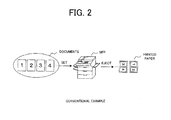
- Fig. 2 is a diagram illustrating operations in a conventional MFP during copying.
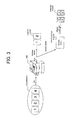
- Fig. 3 is a diagram illustrating an example of operations in the MFP 100 of Fig. 1 during copying, and illustrates an execution of a printing process according to the print mode.
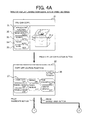
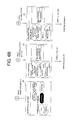
- Fig. 4a and 4b illustrate an example of operations in the MFP 100 of Fig. 1 during copying, and illustrate the window display on a display 14 during configuration of the print settings.
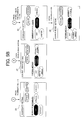
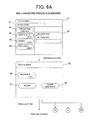
- Fig. 5a , 5b , and 5c illustrate an example of a copying process in the MFP 100 of Fig. 1 in the saving print mode, and illustrate a case when documents are placed when a menu window 21 is being displayed.
- Fig. 6a and 6b illustrate an example of a mail transmitting process in the MFP 100 of Fig. 1 in the saving print mode.
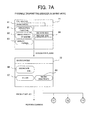
- Fig. 7a and 7b illustrate an example of a facsimile transmitting process in the MFP 100 of Fig. 1 in the saving print mode.
- Fig. 8 is a block diagram illustrating an example of a configuration of the MFP 100 of Fig. 1 , and illustrates an example of a functional configuration in the MFP 100.
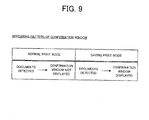
- Fig. 9 illustrates an example of operations in the MFP 100 of Fig. 1 during printing, and illustrates an appearing pattern indicating whether or not a confirmation window 25 is displayed.
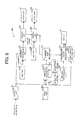
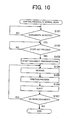
- Fig. 10 is a flow chart illustrating an example of a copying process in the MFP 100 of Fig. 8 in the normal print mode.
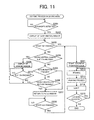
- Fig. 11 is a flow chart illustrating an example of a copying process in the MFP 100 of Fig. 8 in the saving print mode.
- Fig. 12 is a block diagram illustrating an example of a configuration of a document reading apparatus according to Embodiment 2 of the present invention, and illustrates an example of another configuration of the MFP 100.
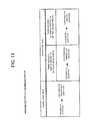
- Fig. 13 illustrates an example of operations in the MFP 100 of Fig. 12 during printing, and illustrates an appearing pattern indicating whether or not the confirmation window 25 is displayed.
- Fig. 14 is a flow chart illustrating an example of a copying process in the MFP 100 of Fig. 12 in the saving print mode.
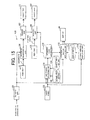
- Fig. 15 is a block diagram illustrating an example of a configuration of a document reading apparatus according to Embodiment 3 of the present invention, and illustrates an example of another configuration of the MFP 100.
- Fig. 16 illustrates an example of operations in the MFP 100 of Fig. 15 during printing, and illustrates an appearing pattern indicating whether or not the confirmation window 25 is displayed.
- Fig. 17 is a flow chart illustrating an example of a copying process in the MFP 100 of Fig. 15 in the saving print mode.
- Fig. 1a and 1b are drawings illustrating an example of a configuration of a document reading apparatus according to Embodiment 1 of the present invention, and illustrate a MFP 100 as an example of the document reading apparatus.
- Fig. 1a illustrates the entire view of the MFP 100
- Fig. 1b illustrates a control panel 13 of the MFP 100.
- the MFP (multifunction peripheral) 100 is an image processing apparatus including a scanner function, a printer function, a facsimile function, a copying function, and an e-mail transmit-receive function.
- the MFP 100 can perform these functions selectively.
- the MFP 100 includes an ADF unit 10, the control panel 13, a manual tray 1, paper containing units 2, 3, and an eject tray 4 for paper.
- the MFP 100 can print, on paper, images read from documents based on predetermined print settings.
- the paper here is printing paper on which the read images are to be printed.
- the ADF unit 10 includes an ADF (automatic document feeder) and a platen cover.
- a feed tray 11 and an eject tray 12 for documents are arranged on the platen cover.
- documents placed in the feed tray 11 are transported continuously one by one to a reading unit, and the documents which have been read by the reading unit are then ejected to the eject tray 12.
- the feed tray 11 is a document containing unit that holds plural pieces of documents before they are read.
- the eject tray 12 is a document containing unit that holds the documents which have been read, and is arranged under the feed tray 11.
- the platen cover is a cover that presses documents placed on a document table made of transparent glass.
- the manual tray 1 and the paper containing units 2, 3 are containing units that hold paper before the paper is used for printed.
- the eject tray 4 is a containing unit that holds the paper after printing.
- the control panel 13 includes a display 14, a start key 15, a stop key 16, a numeric keypad 17, a power switch 18, a function select key 19, a saving mode select key 20, and the like.
- the display 14 is a display unit that displays a menu window and the like, and displays the state of operations, details of a process and the like.
- a touch panel is arranged on the surface of the display 14 for detecting manipulations through the surface of the display 14. An input process corresponding to the position of the manipulation is executed based on the detection of the operated position.
- the start key 15 is an operation key for starting a process such as document transportation, and the stop key 16 is an operation key for canceling the process.
- the function select key 19 is an operation key for selecting a function to be performed.
- a copy key, a scan key, a facsimile transmit key, and a print key are arranged as the function select key 19.
- the saving mode select key 20 is an operation key for selecting the print mode to be either the normal print mode or the saving print mode and, for example, can change the print mode every time it is pressed.
- the saving print mode is a print mode including print settings in which less paper is consumed than the normal print mode.
- the paper saving printing could be the aggregate printing, the double-sided printing, the aggregate and double-sided printing, and the like.
- the document may be read through ADF reading using an ADF or through FBS (flat bed scanner) reading using the document table.
- the ADF reading reads the document while transporting the documents.
- the FBS reading reads the document based on the movement of a reading device while holding the document still on the document table.
- Fig. 2 is a diagram illustrating operations of a conventional MFP during copying, and illustrates the aggregate printing that aggregates read images composed of two pages and prints the aggregated images on a single piece of paper.
- the documents 1, 2, 3, 4 are held in the feed tray and are read in order when the start key is pressed.
- the read images are printed onto the paper and then the paper is ejected to the eject tray after printing.
- the read images composed of two pages read from the documents 1 and 2 are printed onto a first piece of paper, and the read images composed of two pages read from the documents 3 and 4 are printed onto a second piece of paper.
- the document reading is started so as to perform the aggregate printing. Consequently, when the user presses the start key without being aware that the aggregate printing is selected, the printing would be performed against the user's intention, thereby resulting in a waste of paper consumption.
- Fig. 3 is a diagram illustrating an example of operations in the MFP 100 of Fig. 1 during copying, and illustrates an execution of a printing process according to the print mode. If the print mode is the normal print mode, upon having plural pieces of documents in the feed tray 11 and pressing the start key 15, the document reading is started so as to perform the normal printing.
- the print mode is the saving print mode
- the documents in the feed tray 11 are detected and the confirmation window for calling the facts to user's attention is displayed on the display 14.
- the start key 15 By pressing the start key 15 when the confirmation window is displayed, the paper saving printing is performed.
- the print mode is the normal print mode
- the document reading and the printing process are started.
- the print mode is the saving print mode
- the confirmation window is displayed when the documents are placed, and then the document reading and the printing process are started by pressing the start key 15 when the confirmation window is displayed.
- Fig. 4A and 4B are drawings illustrating an example of operations in the MFP 100 of Fig. 1 during copying, and illustrate the window display on the display 14 during the configuration of the print settings.
- a menu window corresponding to a function selected through the function select key 19 is displayed on the display 14, as an initial window or a standby window.
- the menu window 21 displayed when the copy function is selected includes an application function button 31, an image quality button 32, a density button 33, a paper button 34 and a zoom button 35. These buttons 31 through 35 are item selection buttons for selecting a menu item for the print settings.
- the application function button 31 is an operation icon for changing the print settings which are preliminarily determined as application functions, and a submenu window 22 is displayed by pressing the application function button 31.
- the image quality button 32 is an operation icon for changing the quality of printing
- the density button 33 is an operation icon for changing the density of the printing.
- the paper button 34 is an operation icon for changing paper settings such as paper size and paper orientation
- the zoom button 35 is an operation icon for changing the magnification at the time of printing.
- buttons 32 through 35 details of the current settings are displayed through character strings. For example, the character string "automatic" is displayed on the image quality button 32, indicating that the selected print settings would determine the image quality automatically according to the read images
- the submenu window 22 is a print setting change window for changing the print settings, and is displayed on the display 14 based on an input through the application function button 31.
- the submenu window 22 includes a close button 36 and item selection buttons 37.
- the close button 36 is an operation icon for ending a process of changing the print settings and returning to the original menu window 21.
- the item selection buttons 37 are operation icons for selecting a print setting item for the copying, and the print settings can be changed by pressing the item selection buttons 37.
- Print setting items that are selectable include “aggregate”, “repeat”, “page decomposition”, “binding margin”, “frame remove”, “center remove”, and “double-sided”.
- the “repeat” is a setting item for repeat printing, which prints the read images composed of one page repeatedly, on plural pieces of paper.
- the "page decomposition” is a print setting for page decomposition printing, which decomposes read images composed of one page into images composed of plural pages and prints each of the decomposed pages on paper.
- the "binding margin” is a setting item for changing the binding margin when printing.
- the "frame remove” is a setting item for removing an outer frame when printing.
- the “center remove” is a setting item for removing a center part when printing.
- the current setting details are displayed in character strings on the item selection buttons 37.
- the character string "off” is displayed on each of the buttons 37, indicating that the print setting assigned thereto is not selected.
- An aggregate setting window 23 is the print setting change window for changing the print settings for the aggregate printing, and is displayed on the display 14 by pressing the "aggregate" button on the submenu window 22.
- the aggregate setting window 23 includes a cancel button 38, a confirm button 39, and item selection buttons 40.
- the cancel button 38 is an operation icon for invalidating information of the print settings changed during the time between the display of the aggregate setting window 23 and the input through the cancel button 38, and returning to the original submenu window 22.
- the confirm button 39 is an operation icon for confirming the print settings and returning to the original submenu window 22.
- the item selection buttons 40 are operation icons for selecting predetermined print settings. On the aggregate setting window 23, "off” (not selected), “2 pieces", “4 pieces” and “8 pieces” are displayed as selectable print settings. The number of documents to be aggregated onto one piece of paper can be changed through the item selection buttons 40.
- the print setting "2 pieces” is a setting for printing read images composed of two pages on one side of a single piece of paper
- "4 pieces” is a setting for printing read images composed of four pages on one side of a single piece of paper
- 8 pieces is a setting for printing read images composed of eight pages on one side of a single piece of paper.
- a double-sided setting window 24 is the print setting change window for changing the print settings for the double-sided printing, and is displayed on the display 14 by pressing the "double-sided" button on the submenu window 22.
- the double-sided setting window 24 includes a cancel button 38, a confirm button 39 and item selection buttons 40.
- the cancel button 38 is an operation icon for invalidating information of the print settings changed during the time between the display of the double-sided setting window 24 and the input through the cancel button 38, and returning to the original submenu window 22.
- the print setting "single-sided to double-sided” is a setting for printing images composed of two pages read from a single side of two pieces of documents on both sides of a single piece of paper.
- the "double-sided to double-sided” is a setting for printing images composed of two pages read from both sides of a document on both sides of paper.
- the “double-sided to single-sided” is a setting for printing images composed of two pages read from both sides of a document respectively on a single side of two pieces of paper.
- Fig. 5a , 5b , and 5c illustrate an example of a copying process in the MFP 100 of Fig. 1 in the saving print mode, and illustrate a case when documents are placed in when the menu window 21 is being displayed. If the saving print mode is selected, a message 41 indicating the saving print mode is displayed on the menu window 21. The message 41 is not displayed while the MFP 100 is in the normal print mode.
- the confirmation window 25 is an announcement window that notifies the user of the saving print mode, and is displayed based on the detection of the documents.
- the confirmation window 25 includes item selection buttons 42, a return button 43, and a saving deactivate button 44, and displays a message indicating the saving print mode.
- the return button 43 is an operation icon for closing the confirmation window 25 and returning to the original menu window 21.
- the saving deactivate button 44 is a mode change button for deactivating the saving print mode and switching the mode to the normal print mode. The print settings for the saving printing can be deactivated by pressing the saving deactivate button 44.
- the item selection buttons 42 are operation icons for changing the print settings for the saving printing, and the print settings assigned thereto can be changed through the item selection buttons 42.
- Setting items for the paper saving printing include “double-sided”, “aggregate”, and “double-sided and aggregate”, and one of these can be selected.
- the current setting details are displayed in character strings.
- the aggregate settings can be changed through the item selection buttons 40 on the aggregate setting window 23. Further, by pressing the cancel button 38, information of the print settings changed during the time between the display of the aggregate setting window 23 and the input through the cancel button 38 will be invalidated, and the original confirmation window 25 can be returned to. Furthermore, by pressing the confirm button 39, the print settings can be confirmed, and the original confirmation window 25 can be returned to.
- the double-sided setting window 24 is displayed.
- the double-sided settings can be changed.
- the cancel button 38 information of the print settings changed during the time between the display of the double-sided setting window 24 and the input through the cancel button 38 will be invalidated, and the original confirmation window 25 can be returned to.
- the confirm button 39 the print settings can be confirmed, and the original confirmation window can be returned to.
- the aggregate setting window 23 is displayed so that the aggregate settings can be changed.
- the double-sided setting window 24 is then displayed so that the double-sided settings can be changed.
- the saving deactivate button 44 on the confirmation window 25 is pressed, the saving print settings are deactivated and the menu window 21 is returned to. That is, the print mode changes to the normal print mode in which the aggregate print settings and the double-sided print settings are not selected. If the start key is then pressed after the menu window 21 has been returned to, the document reading and the printing processes are started.
- the original menu window 21 is returned to. If the start key 15 is then pressed after the original menu window 21 has been retuned to, the document reading and the printing processes are started.
- Fig. 6a and 6b illustrate an example of a mail transmitting process in the MFP 100 of Fig. 1 in the saving mode.
- a menu window 51 is displayed on the display 14.
- the menu window 51 includes an application function button 61, an image quality button 62, a density button 63, and a resolution button 64, and displays address information 65 indicating e-mail destinations and the like.
- the buttons 61 through 64 are item selection buttons for selecting a menu item for e-mail transmit settings.
- the confirmation window 52 includes an item selection button 66, a return button 67, and a saving deactivate button 68, and displays a message indicating the saving print mode.
- the item selection button 66 is an operation icon for changing the print settings for the paper saving printing. Through the item selection button 66, the print setting assigned thereto can be changed. "Aggregate" is included as the setting item for the paper saving printing, and the current setting details are displayed in character strings on the item selection button 66.
- the start key 15 is pressed when the confirmation window 52 is being displayed, the document reading process and a process of transmitting the read images as an e-mail are started.
- the "aggregate" button on the confirmation window 52 is pressed, the aggregate setting window 23 is displayed.
- the aggregate settings can be changed. Further, by pressing the cancel button 38, information of the print settings changed during the time between the display of the aggregate setting window 23 and the input through the cancel button 38 will be invalidated, and the original confirmation window 52 can be returned to. Furthermore, by pressing the confirm button 39, the print settings can be confirmed, and the original confirmation window 52 can be returned to.
- the saving deactivate button 68 on the confirmation window 52 is pressed, the saving print settings are deactivated and the menu window 51 is returned to. That is, the print mode changes to the normal print mode in which the aggregate print settings are not selected in this case. If the start key 15 is then pressed after the menu window 51 has been returned to, the document reading process and the process of transmitting the read images as an e-mail are started.
- the return button 67 on the confirmation window 52 is pressed, the original menu window 51 is returned to. If the start key 15 is then pressed after the menu window 51 has been returned to, the document reading process and the process of transmitting the read images as an e-mail are started.
- Fig. 7a and 7b illustrate an example of a facsimile transmitting process of the MFP 100 of Fig. 1 in the saving mode.
- a facsimile transmit function is selected, a menu window 71 is displayed on the display 14.
- the menu window 71 includes an application function button 81, an image quality button 82, and a density button 83, and displays number information 84 indicating facsimile destinations and the like.
- the buttons 81 through 83 are item selection buttons for selecting a menu item for facsimile transmit settings.
- the confirmation window 72 includes item selection button 66, a return button 67, and a saving deactivate button 68, and displays a message indicating the saving print mode.
- the aggregate settings can be changed. Further, by pressing the cancel button 38, information of the print settings changed during the time between the display of the aggregate setting window 23 and the input through the cancel button 38 will be invalidated, and the original confirmation window 72 can be returned to. Furthermore, by pressing the confirm button 39, the print settings can be confirmed, and the original confirmation window 72 can be returned to.
- the saving deactivate button 68 on the confirmation window 72 is pressed, the saving print settings are deactivated and the menu window 71 is then returned to. That is, the print mode changes to the normal print mode in which the aggregate print settings are not selected in this case. If the start key 15 is then pressed after the menu window 71 has been returned to, the document reading process and the process of transmitting the read images by facsimile are started.
- the return button 67 on the confirmation window 72 is pressed, the original menu window 71 is returned to. If the start key 15 is then pressed after the menu window 71 has been returned to, the document reading process and the process of transmitting the read images by facsimile are started.
- Fig. 8 is a block diagram illustrating an example of a configuration of the MFP 100 of Fig. 1 , and illustrates an example of a functional configuration in the MFP 100 in which a copy function is selected.
- the MFP 100 includes feed trays 11, 103, eject trays 12, 104, the display 14, a key input unit 101, a touch panel 102, a document detecting unit 105, a document transporting unit 106, a reading unit 107, a printing unit 108, a normal print setting storage unit 109, a saving print setting storage unit 110, a print mode selecting unit 111, a standard mode information storage unit 112, a confirmation window displaying unit 113, and a change window displaying unit 114.
- the key input unit generates a predetermined key input signal based on an input through the start key 15 or the saving mode select key 20, and transmits the generated signal to the document transporting unit 106 and the print mode selecting unit 111.
- the document transporting unit 106 withdraws documents from the feed tray 11 one by one and transports the documents to the reading unit 107 in order.
- the document transportation is started in response to an input through the start key 15.
- the reading unit 107 reads the documents optically, generates the read images, and transmits the read images to the printing unit 108.
- the feed tray 103 is a paper containing unit that holds a plurality of paper before printing.
- the eject tray 104 is a containing unit that holds the paper after printing.
- the printing unit 108 is an image forming unit that prints the images read by the reading unit 107 onto the paper.
- the touch panel 102 detects manipulations received by the surface of the display 14, generates a predetermined input signal corresponding to the manipulation position, and transmits the input signal to the print mode selecting unit 111 and the change window displaying unit 114.
- the print mode selecting unit 111 selects the print mode, which is either the normal print mode or the paper saving print mode, based on the key input signal from the key input unit 101, and writes the selected print mode into the standard mode information storage unit 112 as standard mode information.
- the normal print mode is the print mode including predetermined print settings, and the printing process associated therewith is executed based on setting data stored in the normal print setting storage unit 109.
- the saving print mode is the print mode including print settings in which less paper is consumed than in the normal print mode, and the printing process associated therewith is executed based on setting data stored in the saving print setting storage unit 110.
- Print settings for the paper saving printing include the aggregate printing and the double-sided printing. Each setting data of the normal printing and the paper saving printing is preliminarily registered based on user inputs.
- the printing unit 108 performs a printing process based on the standard mode information in the standard mode information storage unit 112.
- the document detecting unit 105 detects documents in the feed tray 11 and transmits the detection result to the confirmation window displaying unit 113.
- the confirmation window displaying unit 113 displays the confirmation window 25 on the display 14 based on the detection result received from the document detecting unit 105.
- the confirmation window 25 is an announcement window that notifies the user that the MFP 100 is in the saving print mode, and is displayed at the time when the documents are in the feed tray 11. In other words, the confirmation window 25 is displayed when the state of the feed tray 11 changes from having no documents to having documents.
- the confirmation window displaying unit 113 determines whether or not the confirmation window 25 is to be displayed based on the standard mode information. That is, the confirmation window displaying unit 113 displays the confirmation window 25 based on the detection result of the documents when the MFP 100 is in the saving print mode, and does not display the confirmation window 25 even when the documents are detected by the document detecting unit 105 when the MFP 100 is in the normal print mode.
- the print mode selecting unit 111 selects the normal print mode based on an input through the saving deactivate button 44 on the confirmation window 25. That is, if the saving deactivate button 44 is pressed, the saving print mode is deactivated and the print mode changes to the normal print mode.
- the change window displaying unit 114 displays the submenu window 22 based on an input through the application function button 31 on the menu window 21. Further, the change window displaying unit 114 displays the aggregate setting window 23 or the double-sided setting window 24 based on an input through the item selection buttons 37 on the submenu window 22. Furthermore, the change window displaying unit 114 displays the aggregate setting window 23 or the double-sided setting window 24 based on an input through the item selection button 42 on the confirmation window 25.
- the submenu window 22, the aggregate setting window 23, and the double-sided setting window 24 are all print setting change windows for changing the print settings.
- Fig. 9 illustrates an example of operations of the MFP 100 of Fig. 1 during printing, and illustrates an appearing pattern regarding whether or not the confirmation window 25 is displayed when documents are placed into the feed tray.
- the confirmation window 25 may be displayed at the time the documents are placed in the feed tray 11 when the menu window 21 is being displayed. At this time, whether or not the confirmation window 25 is to be displayed is determined according to whether the print mode is the normal print mode or the saving print mode.
- the print mode is the normal print mode
- the confirmation window 25 is not displayed. And if the start key 15 is then pressed, the document reading and the printing processes are started.
- the print mode is the saving print mode
- the confirmation window 25 is displayed when the documents are placed into the feed tray. And if the start key 15 is then pressed when the confirmation window 25 is being displayed, the document reading and the printing processes are started.
- Fig. 10 shows steps S101 through S107 in a flow chart illustrating an example of a copying process in the MFP 100 of Fig. 8 in the normal print mode.
- the document transporting unit 106 starts the document transportation when the start key 15 is pressed after the documents have been detected by the document detecting unit 105 (steps S101 through 103).
- the reading unit 107 reads the documents transported from the feed tray 11 and generates the read images in order.
- the printing unit 108 prints the read images received from the reading unit 107 on paper based on the print settings of the normal print mode, and ejects the paper after printing to the eject tray 104 (steps S104 trough S106). The procedure from step S104 to step S106 will be repeated until there is no more document left in the feed tray 11.
- Fig. 11 shows steps S201 through S215 in a flow chart illustrating an example of a copying process in the MFP 100 of Fig. 8 in the saving print mode.
- the confirmation window displaying unit 113 displays the confirmation window 25 on the display 14 when the documents are detected by the document detecting unit 105 (steps S201, S202).
- the document transporting unit 106 starts the document transportation if the start key 15 is pressed (steps S203, S211).
- the reading unit 107 then reads the documents transported from the feed tray 11 and generates the read images in order.
- the printing unit 108 then prints the read images received from the reading unit 107 on paper based on the print settings of the saving print mode, and ejects the paper after printing to the eject tray 104 (steps S212 through S214). The procedure from step S212 to step S214 will be repeated until there is no more document left in the feed tray 11(step S215).
- the change window displaying unit 114 displays the print setting change window corresponding to the item selection button 42 that has been pressed (steps S203, S204, S209). If the cancel button 38 on the print setting change window is then pressed, information of the print settings changed during the time between the display of the print setting change window and the input through the cancel button 38 is invalidated, and the original confirmation window 25 is displayed (step S210). Or, if the confirm button 39 is pressed, the print settings are confirmed and the original confirmation window 25 is then displayed (step S210).
- step S203 through 205, S207 If the return button 43 on the confirmation window 25 is pressed, the confirmation window 25 is closed and the original menu window 21 is then displayed (steps S203 through 205, S207).
- the saving deactivate button 44 on the confirmation window 25 is pressed, the saving print mode is deactivated and the menu window 21 of the normal print mode is then displayed (steps S203 through S207).
- the document transporting unit 106 starts the document transportation if the start key 15 is pressed after the menu window 21 has been returned to (steps S208, S211), and the procedure following step S212 will be executed.
- the confirmation window 25 since whether or not the confirmation window 25 is displayed is determined based on the print mode, whether or not the MFP 100 is in the saving print mode can be recognized through the display of the confirmation window 25 when documents are in the feed tray 11. Accordingly, printing the read images on paper without noticing the saving print mode can be prevented. Further, since the normal print mode may be selected based on an input through the saving deactivate button 44 on the confirmation window 25, the print mode can be changed easily when the user notices the saving print mode.
- Embodiment 1 a case has been described in which whether or not the confirmation window 25 is to be displayed is determined based on the print mode.
- Embodiment 2 another case will now be described in Embodiment 2 in which whether or not the confirmation window 25 is to be displayed is determined based on a display history of the print setting change window, such as the submenu window 22.
- Fig. 12 illustrates an example of a configuration of a document reading apparatus according to Embodiment 2 of the present invention, and illustrates an example of another configuration of the MFP 100.
- the MFP 100 includes a display history storage unit 115, which distinguishes the MFP 100 of this embodiment from the MFP 100 of Fig. 8 .
- the display history storage unit 115 stores the display history of the print setting change windows, such as the submenu window 22, the aggregate print setting window 23, and the double-sided print setting window 24.
- the confirmation window displaying unit 113 determines whether or not the confirmation window 25 is to be displayed based on the display history of the print setting change window prior to the detection of the documents. More specifically, if the print setting change window has been displayed during a given period of time prior to the detection of the documents, the confirmation window 25 is not displayed. On the other hand, if the print setting change window has not been displayed during the above period of time, the confirmation window 25 is displayed.
- Fig. 13 illustrates an example of operations in the MFP 100 of Fig. 12 during printing, and illustrates an appearing pattern regarding whether or not the confirmation window 25 is displayed when documents are placed into the feed tray. Whether or not the confirmation window 25 is to be displayed is determined according to the print mode and the display history of the print setting change window, such as the submenu window 22. If the print mode is the normal print mode, the confirmation window 25 is not displayed.
- the print mode is the saving print mode
- whether or not the confirmation window 25 is to be displayed is determined based on whether or not there has been a display history of the print setting change window. In other words, if the print setting change window has been displayed during the time between the display of the menu window 21 and the detection of the documents, the confirmation window 25 is not displayed.
- the confirmation window 25 is displayed when the documents are placed into the feed tray. If the start key 15 is pressed when the confirmation window 25 is being displayed, the document reading and the printing processes are started.
- Whether or not the confirmation window 25 is to be displayed is determined based on the display history of the print setting change window in this case. More specifically, it may also be determined based on the display history of the print setting change window which is either the aggregate setting window 23 or the double-sided setting window 24. For example, if only the aggregate setting window 23 has been displayed while the double setting window 24 has not been displayed during the time between the display of the menu window 21 and the detection of the documents, the confirmation window 25 may be displayed with different contents from those when there has been no display history of the print setting change window.
- the print settings for the aggregate printing may be unchangeable and displayed in a recognizable way indicating that the settings are unchangeable on the confirmation window 25. For example, while the setting details for the double-sided printing are displayed normally, the print settings for the aggregate printing are displayed with shading.
- the confirmation window 25 may be displayed with different contents from those when there has been no display history of the print setting change window. That is, the print settings for the double-sided printing may be unchangeable and displayed in a recognizable way indicating that the setting details are unchangeable. For example, while the setting details for the aggregate printing are displayed normally, the print settings for the double-sided printing are displayed with shading.
- the confirmation window 25 is not displayed.
- the print settings with the display history are displayed with shading if the print setting change window, i.e. either the aggregate setting window 23 or the double-sided setting window 24, has been displayed
- the present invention is not limited to this.
- the print settings may be displayed with a gray-out and the like.
- Fig. 14 shows steps S301 through S317 in a flow chart illustrating an example of a copying process in the MFP 100 of Fig. 12 in the saving print mode.
- the confirmation window displaying unit 113 displays the confirmation window 25 on the display 14 if the print setting change window has not been displayed prior to the time of the detection (steps S301 through S303).
- the document transporting unit 106 then starts the document transportation if the start key 15 is pressed (steps S304 through S313).
- the reading unit 107 then reads documents transported from the feed tray 11 and generates the read images in order.
- the printing unit 108 prints the read images received from the reading unit 107 on paper based on the print settings of the saving print mode, and ejects the paper after printing to the eject tray 104 (steps S314 through S316). The procedure from step S314 to step S316 will be repeated until there is no more document left in the feed tray 11 (step S317).
- the change window displaying unit 114 displays the print setting change window corresponding to the item selection button 42 that has been pressed (step S304, S305, S310) . If the cancel button 38 on the print setting change window is pressed, information of the print settings changed during the time between the display of the print setting change window and the input through the cancel button 38 is invalidated, and the original confirmation window 25 is then displayed (step S311). Or, if the confirm button 39 is pressed, the print settings are confirmed and the original confirmation window 25 is then displayed (step S311).
- step S304 through S306, S308) If the return button 43 on the confirmation window 25 is pressed, the confirmation window 25 is closed and the original menu window 21 is displayed (steps S304 through S306, S308) .
- the saving deactivate button 44 on the confirmation window 25 is pressed, the saving print mode is deactivated and the menu window for the normal print mode is displayed (steps S304 through S308) .
- the document transporting unit 106 then starts the document transportation if the start key 15 is pressed after the menu window 21 has been returned to (step S309, S313), and the procedure following step S314 will be executed.
- step S314 When the documents are detected, if the print setting change window has been displayed prior to the time of the detection of the documents, the confirmation window 25 is not displayed. And if the start key 15 is then pressed, the procedure following step S314 will be executed.
- the confirmation window 25 is displayed based on the display history of the print setting change window displayed in response to an input through the item selection button, such as the application function button 31, whether or not the confirmation window 25 is to be displayed can be confirmed according to the display history by the time of the detection of the documents.
- Embodiments 1 and 2 a case has been described in which the confirmation window 25 is displayed based on the detection result at the document detecting unit 105.
- Embodiment 3 another case will now be described in which the confirmation window 25 is displayed based on a start input for starting the document reading.
- Fig. 15 illustrates an example of a configuration of a document reading apparatus according to Embodiment 3 of the present invention, and illustrates an example of another configuration of the MFP 100.
- the MFP 100 does not include the document detecting unit 105, which distinguishes the MFP 100 of this embodiment from the MFP 100 of Fig. 12 .
- the confirmation window displaying unit 113 displays the confirmation window 25 based on a predetermined first start input, for example, an input through the start key 15, which causes the document transporting unit 106 to start the document transportation so as to start the document reading. That is, the confirmation window 25 is displayed at the time of the input through the start key 15.
- the confirmation window displaying unit 113 determines whether or not the confirmation window 25 is to be displayed based on the print mode. If the MFP 100 is in the saving print mode, the confirmation window 25 is displayed in response to an input through the start key 15. And if the MFP 100 is in the normal print mode, the confirmation window 25 is not displayed.
- the confirmation window displaying unit 113 may determine whether or not the confirmation window 25 is to be displayed based on the display history of the print setting change window prior to the input through the start key 15. More specifically, the confirmation window displaying unit 113 may not display the confirmation window 25 if the print setting change window has been displayed during a given period of time prior to the input through the start key 15. By contrast, if the print setting change window has not been displayed during the above period of time, the confirmation window displaying unit 113 displays the confirmation window 25.
- the document transporting unit 106 starts the document transportation in response to the input through the start key 15 if the print mode is the normal print mode, and starts the document transportation in response to a second start input when the confirmation window 25 is being displayed if the print mode is the saving print mode.
- the second start input could be an input through the start key 15 or an input through a print start button arranged on the confirmation window 25.
- Fig. 16 illustrates an example of operations of the MFP 100 of Fig. 15 during printing, and illustrates an appearing pattern regarding whether or not the confirmation window 25 is displayed when the start key 15 is pressed.
- the confirmation window 25 may be displayed at the time of the input through the start key 15 when the menu window 21 is being displayed.
- whether or not the confirmation window 25 is to be displayed is determined according to whether the print mode is the normal print mode or the saving print mode, and according to the display history of the print setting change window. If the print mode is the normal print mode, the confirmation window 25 is not displayed.
- the print mode is the saving print mode
- whether or not the confirmation window 25 is to be displayed is determined according to the display history of the print setting change window. That is, if the print setting change window has been displayed during the time between the display of the menu window 21 and the input through the start key 15, the confirmation window 25 is not displayed.
- the confirmation window 25 is displayed when the start key 15 is pressed. If the start key 15 is pressed again during the display of the confirmation window 25, the document reading and the printing processes are started.
- Fig. 17 shows steps S401 through S416 in a flow chart illustrating an example of a copying process in the MFP 100 of Fig. 15 in the saving print mode.
- the confirmation window displaying unit 113 displays the confirmation window 25 when the start key 15 is pressed if the print setting change window has not been displayed prior to the input through the start key 15 (steps S401 through S403).
- the document transporting unit 106 then starts the document transportation if the start key 15 is pressed (steps S404, S412).
- the reading unit 107 reads documents transported from the feed tray 11 and generates the read images in order.
- the printing unit 108 prints the read images on paper based on the print settings of the saving print mode, and ejects the paper after printing to the eject tray 104 (steps S413 through S415) .
- the procedure from step S413 to step S415 will be repeated until there is no more document left in the feed tray 11 (step S416).
- the change window displaying unit 114 displays the print setting change window corresponding to the item selection button 42 that has been pressed (steps S404, S405, S410). If the cancel button 38 on the print setting change window is pressed, information of the print settings during the time between the display of the print setting change window and the input through the cancel button 38 is invalidated, and the original confirmation window 25 is displayed (step S411). Or, if the confirm button 39 is pressed, the print settings are confirmed and the original confirmation window 25 is displayed (step S411).
- step S404 through S406, S408 If the return button 43 on the confirmation window 25 is pressed, the confirmation window 25 is closed and the original menu window 21 is displayed (steps S404 through S406, S408).
- the saving deactivate button 44 on the confirmation window 25 is pressed, the saving print mode is deactivated and the menu window 21 of the normal print mode is displayed (steps S404 through S408).
- the document transporting unit 106 starts the document transportation if the start key 15 is pressed after the menu window 21 has been returned to (step S409, S412), and the procedure following step S413 will be executed.
- Embodiment 1 and 2 while a case has been described in which the documents in the feed tray 11 of the ADF unit 10 are detected so that the confirmation window 25 is displayed, the present invention is not limited to this.
- the present invention also includes a case in which the documents placed in a predetermined position before being read are detected so that the confirmation window 25 is displayed based on the detection result. For example, the documents placed on the document table may be detected so that the confirmation window is displayed.
Landscapes
- Engineering & Computer Science (AREA)
- Physics & Mathematics (AREA)
- General Physics & Mathematics (AREA)
- Human Computer Interaction (AREA)
- Theoretical Computer Science (AREA)
- Microelectronics & Electronic Packaging (AREA)
- General Engineering & Computer Science (AREA)
- Facsimiles In General (AREA)
- Accessory Devices And Overall Control Thereof (AREA)
- Facsimile Scanning Arrangements (AREA)
- Control Or Security For Electrophotography (AREA)
Abstract
A print mode selecting unit configured to select a print mode based on user input to be either a normal print mode or a saving print mode including print settings associated with less paper consumption than the normal print mode, a document reading unit configured to read documents in a document containing unit and to generate read images, a document detecting unit configured to detect documents in the document containing unit, a confirmation window displaying unit configured to display a confirmation window having a mode change button based on a detection result from the document detecting unit, and an image forming unit configured to form output images from the read images based on the print mode. The confirmation window displaying unit determines whether the confirmation window is to be displayed based on the print mode, and the print mode selecting unit selects the normal print mode in response to an input through the mode change button.
Description
- The present invention relates to an improvement of a document reading apparatus, more specifically, a document reading apparatus whose print mode may be selected between either a normal print mode or a saving print mode having print settings in which less paper is consumed than in the normal print mode. The document reading apparatus generates output images from read images based on the print mode. The present invention also relates to an improvement of a document reading method.
- Most conventional copying machines have an aggregate printing function which aggregates images read from plural pieces of documents and prints the aggregated images on a single piece of paper, and a double-sided printing function which prints read images composed of two pages respectively on both sides of paper. For example, these functions can be executed selectively.
- The aggregate printing and the double-sided printing can save paper consumed for printing compared with normal printing, which prints read images composed of plural pages on one side of paper in order, one page per sheet of paper. Recently, in view of paper saving, printers including a saving print mode, which automatically selects print settings of the aggregate printing, the double-sided printing, and the like, and performs printing, have been disclosed in Japanese Unexamined Patent Application Publication No.
2004-246283 2005-24881 - It is an object of the present invention to provide a document reading apparatus which can prevent undesirable printing from being executed, thereby saving paper.
- This object is achieved by a document reading apparatus according to
claim 1, and by a document reading method according toclaim 7. - Embodiments of the invention provide a document reading apparatus which can prevent output images based on read images from being generated, especially while a user is not aware of the saving print mode. Other embodiments of the invention provide a document reading apparatus which allows print settings to be changed easily when the user notices the saving print mode.
- A document reading apparatus according to the first aspect of the present invention includes a print mode selecting unit configured to select either the normal print mode or the saving print mode as the print mode based on a user input, the normal print mode including predetermined print settings and the saving print mode including print settings associated with less paper consumption than the normal print mode, a document containing unit arranged to hold at least two pieces of documents, a document reading unit configured to read the documents in the document containing unit and to generate read images, a document detecting unit configured to detect the documents in the document containing unit, a confirmation window displaying unit configured to display a confirmation window having a mode change button based on a detection result from the document detecting unit, and an image forming unit configured to form output images from the read images based on the print mode. The confirmation window displaying unit determines whether or not the confirmation window is to be displayed based on the print mode, and the print mode selecting unit selects the normal print mode as the print mode in response to an input through the mode change button.
- In the document reading apparatus, the confirmation window is displayed based on the detection result of the documents from the document containing unit. Since whether or not the confirmation window is to be displayed is determined based on the selected print mode, whether or not the document reading apparatus is in the saving print mode can be recognized through the display of the confirmation window when the documents are in the document containing unit. Accordingly, forming the output images from the read images without the user noticing the saving print mode can be prevented. Further, since the normal print mode may be selected in response to an input through the mode change button arranged on the confirmation window, the print mode can be changed easily when the user notices the saving print mode.
- In a document reading apparatus according to the second aspect of the present invention, in addition to the above configuration, the confirmation window displaying unit does not display the confirmation window if the print mode is the normal print mode.
- A document reading apparatus according to the third aspect of the present invention includes, in addition to the above configuration, a print setting change window displaying unit configured to display a print setting change window for changing the print settings based on an input selection of an item arranged on a menu window, and a display history storage unit configured to store a display history of the print setting change window. When the documents are detected by the document detecting unit, the confirmation window displaying unit determines whether or not the confirmation window is to be displayed based on the display history of the print setting change window prior to the detection of the documents.
- In such a configuration, since the confirmation window is displayed based on the display history of the print setting change window displayed based on the input selection, whether or not the confirmation window is to be displayed can be determined according to the display history prior to the detection of the documents.
- A document reading apparatus according to the fourth aspect of the present invention includes a print mode selecting unit configured to select either the normal print mode or the saving print as the print mode based on a user input, the normal print mode including the predetermined print settings and the saving print mode including the print settings associated with less paper consumption than the normal print mode, a document containing unit arranged to hold at least two pieces of documents, a document reading unit configured to read the documents in the document containing unit and to generate read images, a confirmation window displaying unit configured to display a confirmation window having a mode change button in response to a first start input for causing the document reading unit to start reading the documents, and an image forming unit configured to form output images from the read images based on the print mode. The confirmation window displaying unit determines whether or not the confirmation window is to be displayed based on the print mode. The document reading unit starts reading the documents in response to the first start input if the print mode is the normal print mode, and starts reading the documents in response to a second start input when the confirmation window is being displayed if the print mode is the saving print mode. The print mode selecting unit selects the normal print mode as the print mode based on an input through the mode change button.
- In the document reading apparatus, the reading of the documents is started in response to the first start input if the print mode is the normal print mode, and is started in response to the second start input when the confirmation window is being displayed if the print mode is the saving print mode. Since whether or not the confirmation window is to be displayed is determined based on the selected print mode, whether or not the document reading apparatus is in the saving print mode can be recognized through the display of the confirmation window upon the first start input. Accordingly, forming the output images from the read images without the user noticing the saving print mode can be prevented. Further, since the normal print mode may be selected based on the input through the mode change button arranged on the confirmation window, the print mode can be changed easily when the user notices the saving print mode.
- In a document reading apparatus according to the fifth aspect of the present invention, in addition to the above configuration, the confirmation window displaying unit does not display the confirmation window if the print mode is the normal print mode. In such a configuration, it is possible to prevent unnecessary operations from occurring during the normal print mode.
- A document reading apparatus according to the sixth aspect of the present invention includes, in addition to the above configuration, a print setting change window displaying unit configured to display a print setting change window for changing the print settings based on an input selection of an item arranged on a menu window, and the display history storage unit configured to store a display history of the print setting change window. When the first start input is received, the confirmation window displaying unit determines whether or not the confirmation window is to be displayed based on the display history of the print setting change window prior to the first start input.
- In such a configuration, since the confirmation window is displayed based on the display history of the print setting change window, which is displayed based on the input selection, whether or not the confirmation window is to be displayed can be determined according to the display history prior to the first start input.
- In a document reading apparatus according to the seventh aspect of the present invention, in addition to the above configuration, the confirmation window displaying unit displays the confirmation window including a message indicating that the print mode is the saving print mode. In such a configuration, it is possible to notify the user of the saving print mode through the display of the confirmation window.
- According to the document reading apparatus of the present invention, whether or not the document reading apparatus is in the saving print mode can be recognized through the display of the confirmation window when the documents are placed in the document containing unit. Further, whether or not the document reading apparatus is in the saving print mode can be recognized through the display of the confirmation window upon the first start input. Consequently, forming the output images from the read images without the user noticing the saving print mode can be prevented, thereby preventing undesirable printing so as to save paper consumption. Further, since the normal print mode may be selected in response to an input through the mode change button arranged on the confirmation window, the print mode can be changed easily when the user notices the saving print mode.
- Other features, elements, processes, steps, characteristics and advantages of the present invention will become more apparent from the following detailed description of preferred embodiments of the present invention with reference to the attached drawings.
-
Fig. 1 is a drawing illustrating an example of a configuration of a document reading apparatus according toEmbodiment 1 of the present invention, and illustrates aMFP 100 as an example of the document reading apparatus. -
Fig. 2 is a diagram illustrating operations in a conventional MFP during copying. -
Fig. 3 is a diagram illustrating an example of operations in theMFP 100 ofFig. 1 during copying, and illustrates an execution of a printing process according to the print mode. -
Fig. 4a and4b illustrate an example of operations in theMFP 100 ofFig. 1 during copying, and illustrate the window display on adisplay 14 during configuration of the print settings. -
Fig. 5a ,5b , and5c illustrate an example of a copying process in theMFP 100 ofFig. 1 in the saving print mode, and illustrate a case when documents are placed when amenu window 21 is being displayed. -
Fig. 6a and6b illustrate an example of a mail transmitting process in theMFP 100 ofFig. 1 in the saving print mode. -
Fig. 7a and7b illustrate an example of a facsimile transmitting process in theMFP 100 ofFig. 1 in the saving print mode. -
Fig. 8 is a block diagram illustrating an example of a configuration of theMFP 100 ofFig. 1 , and illustrates an example of a functional configuration in theMFP 100. -
Fig. 9 illustrates an example of operations in theMFP 100 ofFig. 1 during printing, and illustrates an appearing pattern indicating whether or not aconfirmation window 25 is displayed. -
Fig. 10 is a flow chart illustrating an example of a copying process in theMFP 100 ofFig. 8 in the normal print mode. -
Fig. 11 is a flow chart illustrating an example of a copying process in theMFP 100 ofFig. 8 in the saving print mode. -
Fig. 12 is a block diagram illustrating an example of a configuration of a document reading apparatus according toEmbodiment 2 of the present invention, and illustrates an example of another configuration of theMFP 100. -
Fig. 13 illustrates an example of operations in theMFP 100 ofFig. 12 during printing, and illustrates an appearing pattern indicating whether or not theconfirmation window 25 is displayed. -
Fig. 14 is a flow chart illustrating an example of a copying process in theMFP 100 ofFig. 12 in the saving print mode. -
Fig. 15 is a block diagram illustrating an example of a configuration of a document reading apparatus according toEmbodiment 3 of the present invention, and illustrates an example of another configuration of theMFP 100. -
Fig. 16 illustrates an example of operations in theMFP 100 ofFig. 15 during printing, and illustrates an appearing pattern indicating whether or not theconfirmation window 25 is displayed. -
Fig. 17 is a flow chart illustrating an example of a copying process in theMFP 100 ofFig. 15 in the saving print mode. -
Fig. 1a and 1b are drawings illustrating an example of a configuration of a document reading apparatus according toEmbodiment 1 of the present invention, and illustrate aMFP 100 as an example of the document reading apparatus.Fig. 1a illustrates the entire view of theMFP 100, andFig. 1b illustrates acontrol panel 13 of theMFP 100. - The MFP (multifunction peripheral) 100 is an image processing apparatus including a scanner function, a printer function, a facsimile function, a copying function, and an e-mail transmit-receive function. The
MFP 100 can perform these functions selectively. TheMFP 100 includes anADF unit 10, thecontrol panel 13, amanual tray 1,paper containing units eject tray 4 for paper. TheMFP 100 can print, on paper, images read from documents based on predetermined print settings. The paper here is printing paper on which the read images are to be printed. - The
ADF unit 10 includes an ADF (automatic document feeder) and a platen cover. Afeed tray 11 and aneject tray 12 for documents are arranged on the platen cover. In theADF unit 10, documents placed in thefeed tray 11 are transported continuously one by one to a reading unit, and the documents which have been read by the reading unit are then ejected to theeject tray 12. - The
feed tray 11 is a document containing unit that holds plural pieces of documents before they are read. By contrast, theeject tray 12 is a document containing unit that holds the documents which have been read, and is arranged under thefeed tray 11. - The platen cover is a cover that presses documents placed on a document table made of transparent glass. The
manual tray 1 and thepaper containing units eject tray 4 is a containing unit that holds the paper after printing. - The
control panel 13 includes adisplay 14, astart key 15, astop key 16, anumeric keypad 17, apower switch 18, a function select key 19, a saving mode select key 20, and the like. - The
display 14 is a display unit that displays a menu window and the like, and displays the state of operations, details of a process and the like. A touch panel is arranged on the surface of thedisplay 14 for detecting manipulations through the surface of thedisplay 14. An input process corresponding to the position of the manipulation is executed based on the detection of the operated position. Thestart key 15 is an operation key for starting a process such as document transportation, and thestop key 16 is an operation key for canceling the process. - The function select key 19 is an operation key for selecting a function to be performed. In this case, a copy key, a scan key, a facsimile transmit key, and a print key are arranged as the function select key 19. The saving mode select key 20 is an operation key for selecting the print mode to be either the normal print mode or the saving print mode and, for example, can change the print mode every time it is pressed.
- While the normal print mode is a print mode including predetermined print settings, the saving print mode is a print mode including print settings in which less paper is consumed than the normal print mode. The paper saving printing could be the aggregate printing, the double-sided printing, the aggregate and double-sided printing, and the like.
- When the copy function is selected, the document may be read through ADF reading using an ADF or through FBS (flat bed scanner) reading using the document table. The ADF reading reads the document while transporting the documents. On the other hand, the FBS reading reads the document based on the movement of a reading device while holding the document still on the document table.
-
Fig. 2 is a diagram illustrating operations of a conventional MFP during copying, and illustrates the aggregate printing that aggregates read images composed of two pages and prints the aggregated images on a single piece of paper. Thedocuments - In this case, the read images composed of two pages read from the
documents documents - In the conventional MFP, upon having plural pieces of documents in the feed tray and pressing the start key, the document reading is started so as to perform the aggregate printing. Consequently, when the user presses the start key without being aware that the aggregate printing is selected, the printing would be performed against the user's intention, thereby resulting in a waste of paper consumption.
-
Fig. 3 is a diagram illustrating an example of operations in theMFP 100 ofFig. 1 during copying, and illustrates an execution of a printing process according to the print mode. If the print mode is the normal print mode, upon having plural pieces of documents in thefeed tray 11 and pressing thestart key 15, the document reading is started so as to perform the normal printing. - On the other hand, if the print mode is the saving print mode, the documents in the
feed tray 11 are detected and the confirmation window for calling the facts to user's attention is displayed on thedisplay 14. By pressing the start key 15 when the confirmation window is displayed, the paper saving printing is performed. - In other words, if the print mode is the normal print mode, by pressing the start key 15 after having the documents, the document reading and the printing process are started. On the other hand, if the print mode is the saving print mode, the confirmation window is displayed when the documents are placed, and then the document reading and the printing process are started by pressing the start key 15 when the confirmation window is displayed.
- Since whether or not the confirmation window is displayed is determined based on the selected print mode, whether or not the saving print mode is selected can be recognized with the display of the confirmation window when the documents are placed in the
feed tray 11. Accordingly, printing the read images onto the paper without in the user being aware of the saving print mode can be prevented. -
Fig. 4A and4B are drawings illustrating an example of operations in theMFP 100 ofFig. 1 during copying, and illustrate the window display on thedisplay 14 during the configuration of the print settings. In theMFP 100, a menu window corresponding to a function selected through the function select key 19 is displayed on thedisplay 14, as an initial window or a standby window. - The
menu window 21 displayed when the copy function is selected includes anapplication function button 31, animage quality button 32, adensity button 33, apaper button 34 and azoom button 35. Thesebuttons 31 through 35 are item selection buttons for selecting a menu item for the print settings. - The
application function button 31 is an operation icon for changing the print settings which are preliminarily determined as application functions, and asubmenu window 22 is displayed by pressing theapplication function button 31. Theimage quality button 32 is an operation icon for changing the quality of printing, and thedensity button 33 is an operation icon for changing the density of the printing. Further, thepaper button 34 is an operation icon for changing paper settings such as paper size and paper orientation, and thezoom button 35 is an operation icon for changing the magnification at the time of printing. - On the
buttons 32 through 35, details of the current settings are displayed through character strings. For example, the character string "automatic" is displayed on theimage quality button 32, indicating that the selected print settings would determine the image quality automatically according to the read images - The
submenu window 22 is a print setting change window for changing the print settings, and is displayed on thedisplay 14 based on an input through theapplication function button 31. Thesubmenu window 22 includes aclose button 36 anditem selection buttons 37. Theclose button 36 is an operation icon for ending a process of changing the print settings and returning to theoriginal menu window 21. - The
item selection buttons 37 are operation icons for selecting a print setting item for the copying, and the print settings can be changed by pressing theitem selection buttons 37. Print setting items that are selectable include "aggregate", "repeat", "page decomposition", "binding margin", "frame remove", "center remove", and "double-sided". - The "repeat" is a setting item for repeat printing, which prints the read images composed of one page repeatedly, on plural pieces of paper. The "page decomposition" is a print setting for page decomposition printing, which decomposes read images composed of one page into images composed of plural pages and prints each of the decomposed pages on paper. The "binding margin" is a setting item for changing the binding margin when printing. The "frame remove" is a setting item for removing an outer frame when printing. The "center remove" is a setting item for removing a center part when printing.
- The current setting details are displayed in character strings on the
item selection buttons 37. In this case, the character string "off" is displayed on each of thebuttons 37, indicating that the print setting assigned thereto is not selected. - An
aggregate setting window 23 is the print setting change window for changing the print settings for the aggregate printing, and is displayed on thedisplay 14 by pressing the "aggregate" button on thesubmenu window 22. Theaggregate setting window 23 includes a cancelbutton 38, aconfirm button 39, anditem selection buttons 40. - The cancel
button 38 is an operation icon for invalidating information of the print settings changed during the time between the display of theaggregate setting window 23 and the input through the cancelbutton 38, and returning to theoriginal submenu window 22. Theconfirm button 39 is an operation icon for confirming the print settings and returning to theoriginal submenu window 22. - The
item selection buttons 40 are operation icons for selecting predetermined print settings. On theaggregate setting window 23, "off" (not selected), "2 pieces", "4 pieces" and "8 pieces" are displayed as selectable print settings. The number of documents to be aggregated onto one piece of paper can be changed through theitem selection buttons 40. - The print setting "2 pieces" is a setting for printing read images composed of two pages on one side of a single piece of paper, "4 pieces" is a setting for printing read images composed of four pages on one side of a single piece of paper, and "8 pieces" is a setting for printing read images composed of eight pages on one side of a single piece of paper.
- A double-
sided setting window 24 is the print setting change window for changing the print settings for the double-sided printing, and is displayed on thedisplay 14 by pressing the "double-sided" button on thesubmenu window 22. The double-sided setting window 24 includes a cancelbutton 38, aconfirm button 39 anditem selection buttons 40. - The cancel
button 38 is an operation icon for invalidating information of the print settings changed during the time between the display of the double-sided setting window 24 and the input through the cancelbutton 38, and returning to theoriginal submenu window 22. - On the double-
sided setting window 24, "off" (not selected), "single-sided to double-sided", "double-sided to double-sided", and "double-sided to single-sided" are displayed as selectable print settings. The copying method can be changed through theitem selection buttons 40. - The print setting "single-sided to double-sided" is a setting for printing images composed of two pages read from a single side of two pieces of documents on both sides of a single piece of paper. The "double-sided to double-sided" is a setting for printing images composed of two pages read from both sides of a document on both sides of paper. The "double-sided to single-sided" is a setting for printing images composed of two pages read from both sides of a document respectively on a single side of two pieces of paper.
- Since the current setting details are displayed on the
item selection buttons 37, whether or not the print settings for the paper saving printing, such as the aggregate printing and the double-sided printing, are selected can be recognized through the display of thesubmenu 22. -
Fig. 5a ,5b , and5c illustrate an example of a copying process in theMFP 100 ofFig. 1 in the saving print mode, and illustrate a case when documents are placed in when themenu window 21 is being displayed. If the saving print mode is selected, amessage 41 indicating the saving print mode is displayed on themenu window 21. Themessage 41 is not displayed while theMFP 100 is in the normal print mode. - When placing documents in the
feed tray 11 during the saving print mode, the documents in thefeed tray 11 are detected and theconfirmation window 25 is then displayed on thedisplay 14. Theconfirmation window 25 is an announcement window that notifies the user of the saving print mode, and is displayed based on the detection of the documents. - The
confirmation window 25 includesitem selection buttons 42, areturn button 43, and a savingdeactivate button 44, and displays a message indicating the saving print mode. Thereturn button 43 is an operation icon for closing theconfirmation window 25 and returning to theoriginal menu window 21. The savingdeactivate button 44 is a mode change button for deactivating the saving print mode and switching the mode to the normal print mode. The print settings for the saving printing can be deactivated by pressing the savingdeactivate button 44. - The
item selection buttons 42 are operation icons for changing the print settings for the saving printing, and the print settings assigned thereto can be changed through theitem selection buttons 42. Setting items for the paper saving printing include "double-sided", "aggregate", and "double-sided and aggregate", and one of these can be selected. On each of theitem setting buttons 42, the current setting details are displayed in character strings. - If the
start key 15 is pressed while such aconfirmation window 25 is being displayed, the document reading and the printing processes are started. By contrast, if the "aggregate" button on theconfirmation window 25 is pressed, the aggregate setting window is displayed. - The aggregate settings can be changed through the
item selection buttons 40 on theaggregate setting window 23. Further, by pressing the cancelbutton 38, information of the print settings changed during the time between the display of theaggregate setting window 23 and the input through the cancelbutton 38 will be invalidated, and theoriginal confirmation window 25 can be returned to. Furthermore, by pressing theconfirm button 39, the print settings can be confirmed, and theoriginal confirmation window 25 can be returned to. - If the "double-sided" button on the
confirmation window 25 is pressed, the double-sided setting window 24 is displayed. By pressing theitem selection buttons 40 on the double-sided setting window 24, the double-sided settings can be changed. Further, by pressing the cancelbutton 38, information of the print settings changed during the time between the display of the double-sided setting window 24 and the input through the cancelbutton 38 will be invalidated, and theoriginal confirmation window 25 can be returned to. Furthermore, by pressing theconfirm button 39, the print settings can be confirmed, and the original confirmation window can be returned to. - If the "double-sided and aggregate" button is pressed, the
aggregate setting window 23 is displayed so that the aggregate settings can be changed. By pressing theconfirm button 39 on theaggregate setting window 23, the double-sided setting window 24 is then displayed so that the double-sided settings can be changed. - If the saving
deactivate button 44 on theconfirmation window 25 is pressed, the saving print settings are deactivated and themenu window 21 is returned to. That is, the print mode changes to the normal print mode in which the aggregate print settings and the double-sided print settings are not selected. If the start key is then pressed after themenu window 21 has been returned to, the document reading and the printing processes are started. - If the
return button 43 on theconfirmation window 25 is pressed, theoriginal menu window 21 is returned to. If thestart key 15 is then pressed after theoriginal menu window 21 has been retuned to, the document reading and the printing processes are started. -
Fig. 6a and6b illustrate an example of a mail transmitting process in theMFP 100 ofFig. 1 in the saving mode. If a mail transmit function is selected, amenu window 51 is displayed on thedisplay 14. Themenu window 51 includes anapplication function button 61, animage quality button 62, adensity button 63, and aresolution button 64, and displays addressinformation 65 indicating e-mail destinations and the like. Thebuttons 61 through 64 are item selection buttons for selecting a menu item for e-mail transmit settings. - When placing documents in the
feed tray 11 during the saving print mode, the documents in thefeed tray 11 are detected and theconfirmation window 52 is then displayed on thedisplay 14. Theconfirmation window 52 includes anitem selection button 66, areturn button 67, and a savingdeactivate button 68, and displays a message indicating the saving print mode. - The
item selection button 66 is an operation icon for changing the print settings for the paper saving printing. Through theitem selection button 66, the print setting assigned thereto can be changed. "Aggregate" is included as the setting item for the paper saving printing, and the current setting details are displayed in character strings on theitem selection button 66. - If the
start key 15 is pressed when theconfirmation window 52 is being displayed, the document reading process and a process of transmitting the read images as an e-mail are started. By contrast, if the "aggregate" button on theconfirmation window 52 is pressed, theaggregate setting window 23 is displayed. - By pressing the
item selection buttons 40 on theaggregate setting window 23, the aggregate settings can be changed. Further, by pressing the cancelbutton 38, information of the print settings changed during the time between the display of theaggregate setting window 23 and the input through the cancelbutton 38 will be invalidated, and theoriginal confirmation window 52 can be returned to. Furthermore, by pressing theconfirm button 39, the print settings can be confirmed, and theoriginal confirmation window 52 can be returned to. - If the saving
deactivate button 68 on theconfirmation window 52 is pressed, the saving print settings are deactivated and themenu window 51 is returned to. That is, the print mode changes to the normal print mode in which the aggregate print settings are not selected in this case. If thestart key 15 is then pressed after themenu window 51 has been returned to, the document reading process and the process of transmitting the read images as an e-mail are started. - If the
return button 67 on theconfirmation window 52 is pressed, theoriginal menu window 51 is returned to. If thestart key 15 is then pressed after themenu window 51 has been returned to, the document reading process and the process of transmitting the read images as an e-mail are started. -
Fig. 7a and7b illustrate an example of a facsimile transmitting process of theMFP 100 ofFig. 1 in the saving mode. If a facsimile transmit function is selected, amenu window 71 is displayed on thedisplay 14. Themenu window 71 includes anapplication function button 81, animage quality button 82, and adensity button 83, and displaysnumber information 84 indicating facsimile destinations and the like. Thebuttons 81 through 83 are item selection buttons for selecting a menu item for facsimile transmit settings. - When placing documents in the
feed tray 11 during the saving print mode, the documents in thefeed tray 11 are detected and aconfirmation window 72 is then displayed on thedisplay 14. Theconfirmation window 72 includesitem selection button 66, areturn button 67, and a savingdeactivate button 68, and displays a message indicating the saving print mode. - If the
start key 15 is pressed when theconfirmation window 72 is being displayed, the document reading process and the process of transmitting the read images by facsimile are started. By contrast, if the "aggregate" button on theconfirmation window 72 is pressed, theaggregate setting window 23 is displayed. - By pressing the
item selection buttons 40 on theaggregate setting window 23, the aggregate settings can be changed. Further, by pressing the cancelbutton 38, information of the print settings changed during the time between the display of theaggregate setting window 23 and the input through the cancelbutton 38 will be invalidated, and theoriginal confirmation window 72 can be returned to. Furthermore, by pressing theconfirm button 39, the print settings can be confirmed, and theoriginal confirmation window 72 can be returned to. - If the saving
deactivate button 68 on theconfirmation window 72 is pressed, the saving print settings are deactivated and themenu window 71 is then returned to. That is, the print mode changes to the normal print mode in which the aggregate print settings are not selected in this case. If thestart key 15 is then pressed after themenu window 71 has been returned to, the document reading process and the process of transmitting the read images by facsimile are started. - If the
return button 67 on theconfirmation window 72 is pressed, theoriginal menu window 71 is returned to. If thestart key 15 is then pressed after themenu window 71 has been returned to, the document reading process and the process of transmitting the read images by facsimile are started. -
Fig. 8 is a block diagram illustrating an example of a configuration of theMFP 100 ofFig. 1 , and illustrates an example of a functional configuration in theMFP 100 in which a copy function is selected. TheMFP 100 includesfeed trays trays display 14, akey input unit 101, atouch panel 102, adocument detecting unit 105, adocument transporting unit 106, areading unit 107, aprinting unit 108, a normal printsetting storage unit 109, a saving print settingstorage unit 110, a printmode selecting unit 111, a standard modeinformation storage unit 112, a confirmationwindow displaying unit 113, and a changewindow displaying unit 114. - The key input unit generates a predetermined key input signal based on an input through the start key 15 or the saving mode select key 20, and transmits the generated signal to the
document transporting unit 106 and the printmode selecting unit 111. Thedocument transporting unit 106 withdraws documents from thefeed tray 11 one by one and transports the documents to thereading unit 107 in order. The document transportation is started in response to an input through thestart key 15. Thereading unit 107 reads the documents optically, generates the read images, and transmits the read images to theprinting unit 108. - The
feed tray 103 is a paper containing unit that holds a plurality of paper before printing. Theeject tray 104 is a containing unit that holds the paper after printing. Theprinting unit 108 is an image forming unit that prints the images read by thereading unit 107 onto the paper. - The
touch panel 102 detects manipulations received by the surface of thedisplay 14, generates a predetermined input signal corresponding to the manipulation position, and transmits the input signal to the printmode selecting unit 111 and the changewindow displaying unit 114. The printmode selecting unit 111 selects the print mode, which is either the normal print mode or the paper saving print mode, based on the key input signal from thekey input unit 101, and writes the selected print mode into the standard modeinformation storage unit 112 as standard mode information. - The normal print mode is the print mode including predetermined print settings, and the printing process associated therewith is executed based on setting data stored in the normal print
setting storage unit 109. By contrast, the saving print mode is the print mode including print settings in which less paper is consumed than in the normal print mode, and the printing process associated therewith is executed based on setting data stored in the saving print settingstorage unit 110. - Print settings for the paper saving printing include the aggregate printing and the double-sided printing. Each setting data of the normal printing and the paper saving printing is preliminarily registered based on user inputs. The
printing unit 108 performs a printing process based on the standard mode information in the standard modeinformation storage unit 112. - The
document detecting unit 105 detects documents in thefeed tray 11 and transmits the detection result to the confirmationwindow displaying unit 113. The confirmationwindow displaying unit 113 displays theconfirmation window 25 on thedisplay 14 based on the detection result received from thedocument detecting unit 105. Theconfirmation window 25 is an announcement window that notifies the user that theMFP 100 is in the saving print mode, and is displayed at the time when the documents are in thefeed tray 11. In other words, theconfirmation window 25 is displayed when the state of thefeed tray 11 changes from having no documents to having documents. - The confirmation
window displaying unit 113 determines whether or not theconfirmation window 25 is to be displayed based on the standard mode information. That is, the confirmationwindow displaying unit 113 displays theconfirmation window 25 based on the detection result of the documents when theMFP 100 is in the saving print mode, and does not display theconfirmation window 25 even when the documents are detected by thedocument detecting unit 105 when theMFP 100 is in the normal print mode. - The print
mode selecting unit 111 selects the normal print mode based on an input through the savingdeactivate button 44 on theconfirmation window 25. That is, if the savingdeactivate button 44 is pressed, the saving print mode is deactivated and the print mode changes to the normal print mode. - The change
window displaying unit 114 displays thesubmenu window 22 based on an input through theapplication function button 31 on themenu window 21. Further, the changewindow displaying unit 114 displays theaggregate setting window 23 or the double-sided setting window 24 based on an input through theitem selection buttons 37 on thesubmenu window 22. Furthermore, the changewindow displaying unit 114 displays theaggregate setting window 23 or the double-sided setting window 24 based on an input through theitem selection button 42 on theconfirmation window 25. Thesubmenu window 22, theaggregate setting window 23, and the double-sided setting window 24 are all print setting change windows for changing the print settings. -
Fig. 9 illustrates an example of operations of theMFP 100 ofFig. 1 during printing, and illustrates an appearing pattern regarding whether or not theconfirmation window 25 is displayed when documents are placed into the feed tray. Theconfirmation window 25 may be displayed at the time the documents are placed in thefeed tray 11 when themenu window 21 is being displayed. At this time, whether or not theconfirmation window 25 is to be displayed is determined according to whether the print mode is the normal print mode or the saving print mode. - If the print mode is the normal print mode, the
confirmation window 25 is not displayed. And if thestart key 15 is then pressed, the document reading and the printing processes are started. By contrast, if the print mode is the saving print mode, theconfirmation window 25 is displayed when the documents are placed into the feed tray. And if thestart key 15 is then pressed when theconfirmation window 25 is being displayed, the document reading and the printing processes are started. -
Fig. 10 shows steps S101 through S107 in a flow chart illustrating an example of a copying process in theMFP 100 ofFig. 8 in the normal print mode. Thedocument transporting unit 106 starts the document transportation when thestart key 15 is pressed after the documents have been detected by the document detecting unit 105 (steps S101 through 103). - The
reading unit 107 reads the documents transported from thefeed tray 11 and generates the read images in order. Theprinting unit 108 prints the read images received from thereading unit 107 on paper based on the print settings of the normal print mode, and ejects the paper after printing to the eject tray 104 (steps S104 trough S106). The procedure from step S104 to step S106 will be repeated until there is no more document left in thefeed tray 11. -
Fig. 11 shows steps S201 through S215 in a flow chart illustrating an example of a copying process in theMFP 100 ofFig. 8 in the saving print mode. The confirmationwindow displaying unit 113 displays theconfirmation window 25 on thedisplay 14 when the documents are detected by the document detecting unit 105 (steps S201, S202). - The
document transporting unit 106 starts the document transportation if thestart key 15 is pressed (steps S203, S211). Thereading unit 107 then reads the documents transported from thefeed tray 11 and generates the read images in order. Theprinting unit 108 then prints the read images received from thereading unit 107 on paper based on the print settings of the saving print mode, and ejects the paper after printing to the eject tray 104 (steps S212 through S214). The procedure from step S212 to step S214 will be repeated until there is no more document left in the feed tray 11(step S215). - By contrast, if the
item selection button 42 on theconfirmation window 25 is pressed, the changewindow displaying unit 114 displays the print setting change window corresponding to theitem selection button 42 that has been pressed (steps S203, S204, S209). If the cancelbutton 38 on the print setting change window is then pressed, information of the print settings changed during the time between the display of the print setting change window and the input through the cancelbutton 38 is invalidated, and theoriginal confirmation window 25 is displayed (step S210). Or, if theconfirm button 39 is pressed, the print settings are confirmed and theoriginal confirmation window 25 is then displayed (step S210). - If the
return button 43 on theconfirmation window 25 is pressed, theconfirmation window 25 is closed and theoriginal menu window 21 is then displayed (steps S203 through 205, S207). By contrast, if the savingdeactivate button 44 on theconfirmation window 25 is pressed, the saving print mode is deactivated and themenu window 21 of the normal print mode is then displayed (steps S203 through S207). Thedocument transporting unit 106 starts the document transportation if thestart key 15 is pressed after themenu window 21 has been returned to (steps S208, S211), and the procedure following step S212 will be executed. - According to the embodiment, since whether or not the
confirmation window 25 is displayed is determined based on the print mode, whether or not theMFP 100 is in the saving print mode can be recognized through the display of theconfirmation window 25 when documents are in thefeed tray 11. Accordingly, printing the read images on paper without noticing the saving print mode can be prevented. Further, since the normal print mode may be selected based on an input through the savingdeactivate button 44 on theconfirmation window 25, the print mode can be changed easily when the user notices the saving print mode. - In
Embodiment 1, a case has been described in which whether or not theconfirmation window 25 is to be displayed is determined based on the print mode. On the other hand, another case will now be described inEmbodiment 2 in which whether or not theconfirmation window 25 is to be displayed is determined based on a display history of the print setting change window, such as thesubmenu window 22. -
Fig. 12 illustrates an example of a configuration of a document reading apparatus according toEmbodiment 2 of the present invention, and illustrates an example of another configuration of theMFP 100. TheMFP 100 includes a displayhistory storage unit 115, which distinguishes theMFP 100 of this embodiment from theMFP 100 ofFig. 8 . The displayhistory storage unit 115 stores the display history of the print setting change windows, such as thesubmenu window 22, the aggregateprint setting window 23, and the double-sidedprint setting window 24. - When documents are detected by the
document detecting unit 105, the confirmationwindow displaying unit 113 determines whether or not theconfirmation window 25 is to be displayed based on the display history of the print setting change window prior to the detection of the documents. More specifically, if the print setting change window has been displayed during a given period of time prior to the detection of the documents, theconfirmation window 25 is not displayed. On the other hand, if the print setting change window has not been displayed during the above period of time, theconfirmation window 25 is displayed. -
Fig. 13 illustrates an example of operations in theMFP 100 ofFig. 12 during printing, and illustrates an appearing pattern regarding whether or not theconfirmation window 25 is displayed when documents are placed into the feed tray. Whether or not theconfirmation window 25 is to be displayed is determined according to the print mode and the display history of the print setting change window, such as thesubmenu window 22. If the print mode is the normal print mode, theconfirmation window 25 is not displayed. - On the other hand, if the print mode is the saving print mode, whether or not the
confirmation window 25 is to be displayed is determined based on whether or not there has been a display history of the print setting change window. In other words, if the print setting change window has been displayed during the time between the display of themenu window 21 and the detection of the documents, theconfirmation window 25 is not displayed. - By contrast, if the print setting change window has not been displayed during the time between the display of the
menu window 21 and the detection of the documents, theconfirmation window 25 is displayed when the documents are placed into the feed tray. If thestart key 15 is pressed when theconfirmation window 25 is being displayed, the document reading and the printing processes are started. - Whether or not the
confirmation window 25 is to be displayed is determined based on the display history of the print setting change window in this case. More specifically, it may also be determined based on the display history of the print setting change window which is either theaggregate setting window 23 or the double-sided setting window 24. For example, if only theaggregate setting window 23 has been displayed while thedouble setting window 24 has not been displayed during the time between the display of themenu window 21 and the detection of the documents, theconfirmation window 25 may be displayed with different contents from those when there has been no display history of the print setting change window. - That is, the print settings for the aggregate printing may be unchangeable and displayed in a recognizable way indicating that the settings are unchangeable on the
confirmation window 25. For example, while the setting details for the double-sided printing are displayed normally, the print settings for the aggregate printing are displayed with shading. - Further, if only the double-
sided setting window 24 has been displayed while theaggregate setting window 23 has not been displayed, theconfirmation window 25 may be displayed with different contents from those when there has been no display history of the print setting change window. That is, the print settings for the double-sided printing may be unchangeable and displayed in a recognizable way indicating that the setting details are unchangeable. For example, while the setting details for the aggregate printing are displayed normally, the print settings for the double-sided printing are displayed with shading. - By contrast, if both the
aggregate setting window 23 and the double-sided setting window 24 have been displayed, theconfirmation window 25 is not displayed. While a case has been described in which the print settings with the display history are displayed with shading if the print setting change window, i.e. either theaggregate setting window 23 or the double-sided setting window 24, has been displayed, the present invention is not limited to this. For example, as long as the items in the changeable print settings and the items in the unchangeable print settings can be visually distinguished on the display, the print settings may be displayed with a gray-out and the like. -
Fig. 14 shows steps S301 through S317 in a flow chart illustrating an example of a copying process in theMFP 100 ofFig. 12 in the saving print mode. When documents are detected by thedocument detecting unit 105, the confirmationwindow displaying unit 113 displays theconfirmation window 25 on thedisplay 14 if the print setting change window has not been displayed prior to the time of the detection (steps S301 through S303). - The
document transporting unit 106 then starts the document transportation if thestart key 15 is pressed (steps S304 through S313). Thereading unit 107 then reads documents transported from thefeed tray 11 and generates the read images in order. Theprinting unit 108 prints the read images received from thereading unit 107 on paper based on the print settings of the saving print mode, and ejects the paper after printing to the eject tray 104 (steps S314 through S316). The procedure from step S314 to step S316 will be repeated until there is no more document left in the feed tray 11 (step S317). - By contrast, if the
item selection button 42 on theconfirmation window 25 is pressed, the changewindow displaying unit 114 displays the print setting change window corresponding to theitem selection button 42 that has been pressed (step S304, S305, S310) . If the cancelbutton 38 on the print setting change window is pressed, information of the print settings changed during the time between the display of the print setting change window and the input through the cancelbutton 38 is invalidated, and theoriginal confirmation window 25 is then displayed (step S311). Or, if theconfirm button 39 is pressed, the print settings are confirmed and theoriginal confirmation window 25 is then displayed (step S311). - If the
return button 43 on theconfirmation window 25 is pressed, theconfirmation window 25 is closed and theoriginal menu window 21 is displayed (steps S304 through S306, S308) . By contrast, if the savingdeactivate button 44 on theconfirmation window 25 is pressed, the saving print mode is deactivated and the menu window for the normal print mode is displayed (steps S304 through S308) . Thedocument transporting unit 106 then starts the document transportation if thestart key 15 is pressed after themenu window 21 has been returned to (step S309, S313), and the procedure following step S314 will be executed. - When the documents are detected, if the print setting change window has been displayed prior to the time of the detection of the documents, the
confirmation window 25 is not displayed. And if thestart key 15 is then pressed, the procedure following step S314 will be executed. - According to this embodiment, since the
confirmation window 25 is displayed based on the display history of the print setting change window displayed in response to an input through the item selection button, such as theapplication function button 31, whether or not theconfirmation window 25 is to be displayed can be confirmed according to the display history by the time of the detection of the documents. - In
Embodiments confirmation window 25 is displayed based on the detection result at thedocument detecting unit 105. On the other hand, inEmbodiment 3, another case will now be described in which theconfirmation window 25 is displayed based on a start input for starting the document reading. -
Fig. 15 illustrates an example of a configuration of a document reading apparatus according toEmbodiment 3 of the present invention, and illustrates an example of another configuration of theMFP 100. TheMFP 100 does not include thedocument detecting unit 105, which distinguishes theMFP 100 of this embodiment from theMFP 100 ofFig. 12 . - The confirmation
window displaying unit 113 displays theconfirmation window 25 based on a predetermined first start input, for example, an input through thestart key 15, which causes thedocument transporting unit 106 to start the document transportation so as to start the document reading. That is, theconfirmation window 25 is displayed at the time of the input through thestart key 15. - The confirmation
window displaying unit 113 determines whether or not theconfirmation window 25 is to be displayed based on the print mode. If theMFP 100 is in the saving print mode, theconfirmation window 25 is displayed in response to an input through thestart key 15. And if theMFP 100 is in the normal print mode, theconfirmation window 25 is not displayed. - Further, when the
start key 15 is pressed, the confirmationwindow displaying unit 113 may determine whether or not theconfirmation window 25 is to be displayed based on the display history of the print setting change window prior to the input through thestart key 15. More specifically, the confirmationwindow displaying unit 113 may not display theconfirmation window 25 if the print setting change window has been displayed during a given period of time prior to the input through thestart key 15. By contrast, if the print setting change window has not been displayed during the above period of time, the confirmationwindow displaying unit 113 displays theconfirmation window 25. - The
document transporting unit 106 starts the document transportation in response to the input through the start key 15 if the print mode is the normal print mode, and starts the document transportation in response to a second start input when theconfirmation window 25 is being displayed if the print mode is the saving print mode. The second start input could be an input through the start key 15 or an input through a print start button arranged on theconfirmation window 25. -
Fig. 16 illustrates an example of operations of theMFP 100 ofFig. 15 during printing, and illustrates an appearing pattern regarding whether or not theconfirmation window 25 is displayed when thestart key 15 is pressed. Theconfirmation window 25 may be displayed at the time of the input through the start key 15 when themenu window 21 is being displayed. - At this time, whether or not the
confirmation window 25 is to be displayed is determined according to whether the print mode is the normal print mode or the saving print mode, and according to the display history of the print setting change window. If the print mode is the normal print mode, theconfirmation window 25 is not displayed. - On the other hand, if the print mode is the saving print mode, whether or not the
confirmation window 25 is to be displayed is determined according to the display history of the print setting change window. That is, if the print setting change window has been displayed during the time between the display of themenu window 21 and the input through thestart key 15, theconfirmation window 25 is not displayed. - By contrast, if the print setting change window has not been displayed prior to the input through the start key 15 after the display of the
menu window 21, theconfirmation window 25 is displayed when thestart key 15 is pressed. If thestart key 15 is pressed again during the display of theconfirmation window 25, the document reading and the printing processes are started. -
Fig. 17 shows steps S401 through S416 in a flow chart illustrating an example of a copying process in theMFP 100 ofFig. 15 in the saving print mode. The confirmationwindow displaying unit 113 displays theconfirmation window 25 when thestart key 15 is pressed if the print setting change window has not been displayed prior to the input through the start key 15 (steps S401 through S403). - The
document transporting unit 106 then starts the document transportation if thestart key 15 is pressed (steps S404, S412). Thereading unit 107 reads documents transported from thefeed tray 11 and generates the read images in order. Theprinting unit 108 prints the read images on paper based on the print settings of the saving print mode, and ejects the paper after printing to the eject tray 104 (steps S413 through S415) . The procedure from step S413 to step S415 will be repeated until there is no more document left in the feed tray 11 (step S416). - By contrast, the change
window displaying unit 114 displays the print setting change window corresponding to theitem selection button 42 that has been pressed (steps S404, S405, S410). If the cancelbutton 38 on the print setting change window is pressed, information of the print settings during the time between the display of the print setting change window and the input through the cancelbutton 38 is invalidated, and theoriginal confirmation window 25 is displayed (step S411). Or, if theconfirm button 39 is pressed, the print settings are confirmed and theoriginal confirmation window 25 is displayed (step S411). - If the
return button 43 on theconfirmation window 25 is pressed, theconfirmation window 25 is closed and theoriginal menu window 21 is displayed (steps S404 through S406, S408). By contrast, if the savingdeactivate button 44 on theconfirmation window 25 is pressed, the saving print mode is deactivated and themenu window 21 of the normal print mode is displayed (steps S404 through S408). Thedocument transporting unit 106 starts the document transportation if thestart key 15 is pressed after themenu window 21 has been returned to (step S409, S412), and the procedure following step S413 will be executed. - When the start key is pressed, if the print setting change window has been displayed prior to the input through the start key, the
confirmation window 25 is not displayed and the procedure following S412 will be executed. According to this embodiment, since whether or not theconfirmation window 25 is to be displayed is determined based on the print mode, whether or not theMFP 100 is in the saving print mode can be recognized through the display of theconfirmation window 25 when thestart key 15 is pressed. Consequently, printing the read images on paper without noticing the saving print mode can be prevented. - In
Embodiment feed tray 11 of theADF unit 10 are detected so that theconfirmation window 25 is displayed, the present invention is not limited to this. The present invention also includes a case in which the documents placed in a predetermined position before being read are detected so that theconfirmation window 25 is displayed based on the detection result. For example, the documents placed on the document table may be detected so that the confirmation window is displayed.
Claims (12)
- A document reading apparatus including a document containing unit (11) arranged to hold at least two pieces of documents, a detecting unit (105) configured to detect that a part of user input for copying the documents is executed, and a document reading unit (107) configured to read the documents in the document containing unit (11) and to generate read images, comprising:a print mode selecting unit (111) configured to select either a normal print mode or a saving print mode as a print mode based on a user input, the normal print mode including predetermined print settings and the saving print mode including print settings associated with less paper consumption than the normal print mode;a confirmation window displaying unit (113) configured to display a confirmation window (25, 52, 72) based on a detection result from the detecting unit (105), the confirmation window (25, 52, 72) having a mode change button (44, 68), andan image forming unit (108) configured to form output images from the read images based on the print mode;wherein the confirmation window displaying unit (113) is configured to determine whether or not the confirmation window (25, 52, 72) is to be displayed based on the print mode; andwherein the print mode selecting unit (111) is configured to select the normal print mode as the print mode in response to an input through the mode change button (44, 68).
- The document reading apparatus according to claim 1, wherein the detecting unit (105) is a document detecting unit (105) configured to detect the documents in the document containing unit (11).
- The document reading apparatus according to claim 1, wherein the detecting unit (105) is a start input detecting unit configured to detect a first start input for causing the document reading unit (107) to start reading the documents; and
wherein the document reading unit (107) is configured to start reading the documents in response to the first start input if the print mode is the normal print mode, and is configured to start reading the documents in response to a second start input when the confirmation window (25, 52, 72) is being displayed if the print mode is the saving print mode. - The document reading apparatus according to any one of claims 1 through 3, wherein the confirmation window displaying unit (113) is configured to not display the confirmation window (25, 52, 72) if the print mode is the normal print mode.
- The document reading apparatus according to any one of claims 1 through 4, further comprising:a print setting change window displaying unit (114) configured to display a print setting change window (22, 23, 24) for changing the print settings based on an input selection of an item arranged on a menu window (21); anda display history storage unit (115) configured to store a display history of the print setting change window (22, 23, 24);wherein, when the part of user input for copying the documents is detected by the detecting unit (105), the confirmation window displaying unit (113) is configured to determine whether or not the confirmation window (25, 52, 72) is to be displayed based on the display history of the print setting change window (22, 23, 24) prior to the detection.
- The document reading apparatus according to any one of claims 1 through 5, wherein the confirmation window displaying unit (113) is configured to display the confirmation window (25, 52, 72) including a message indicating that the print mode is the saving print mode.
- A document reading method including a document reading step to read documents in a document containing unit (11) arranged to hold at least two pieces of documents, and a detecting step to detect that a part of user input for copying the documents is executed, comprising:a print mode selecting step to select either a normal print mode or a saving print mode as a print mode based on a user input, the normal print mode including predetermined print settings and the saving print mode including print settings associated with less paper consumption than the normal print mode;a confirmation window displaying step to display a confirmation window (25, 52, 72) based on a detection result from the detecting step, the confirmation window (25, 52, 72) having a mode change button (44, 68); andan image forming step to form output images from the read images based on the print mode;wherein whether or not the confirmation window (25, 52, 72) is to be displayed is determined based on the print mode before the display of the confirmation window (25, 52, 72) in the confirmation window displaying step; andwherein the normal print mode is selected as the print mode in response to an input through the mode change button (44, 68) in the print mode selecting step.
- The document reading method according to claim 7, wherein the detecting step is to detect the documents in the document containing unit (11).
- The document reading method according to claim 7, wherein the detecting step is to detect a first start input for causing the reading of the documents to start, and
wherein in the document reading step, the reading of the documents is started in response to the first start input if the print mode is the normal print mode, and is started in response to a second start input when the confirmation window (25, 52, 72) is being displayed if the print mode is the saving print mode. - The document reading method according to any one of claims 7 through 9, wherein the confirmation window (25, 52, 72) is not displayed if the print mode is the normal print mode.
- The document reading method according to any one of claims 7 through 10 further comprising:a print setting change window displaying step to display a print setting change window (22, 23, 24) for changing the print settings based on an input selection of an item arranged on a menu window (21); anda display history storing step to store a display history of the print setting change window (22, 23, 24);wherein, when the part of user input for copying the documents is detected in the detecting step, whether or not the confirmation window (25, 52, 72) is to be displayed is determined based on the display history of the print setting change window (22, 23, 24) prior to the detection.
- The document reading method according to any one of claims 7 through 11, wherein the confirmation window (25, 52, 72) including a message indicating that the print mode is the saving print mode is displayed.
Applications Claiming Priority (1)
| Application Number | Priority Date | Filing Date | Title |
|---|---|---|---|
| JP2010108057A JP2011239137A (en) | 2010-05-10 | 2010-05-10 | Manuscript reading apparatus |
Publications (1)
| Publication Number | Publication Date |
|---|---|
| EP2386906A2 true EP2386906A2 (en) | 2011-11-16 |
Family
ID=44343252
Family Applications (1)
| Application Number | Title | Priority Date | Filing Date |
|---|---|---|---|
| EP11163903A Withdrawn EP2386906A2 (en) | 2010-05-10 | 2011-04-27 | Document reading apparatus and document reading method |
Country Status (5)
| Country | Link |
|---|---|
| US (1) | US8670133B2 (en) |
| EP (1) | EP2386906A2 (en) |
| JP (1) | JP2011239137A (en) |
| KR (1) | KR20110124130A (en) |
| CN (1) | CN102244711A (en) |
Families Citing this family (7)
| Publication number | Priority date | Publication date | Assignee | Title |
|---|---|---|---|---|
| JP5746530B2 (en) * | 2011-03-17 | 2015-07-08 | キヤノン株式会社 | Apparatus for setting print setting information and control method thereof |
| JP6464821B2 (en) * | 2015-02-27 | 2019-02-06 | ブラザー工業株式会社 | Image processing apparatus and control program |
| JP7005290B2 (en) * | 2017-11-07 | 2022-01-21 | シャープ株式会社 | Image processing equipment |
| JP7139888B2 (en) * | 2018-10-31 | 2022-09-21 | 沖電気工業株式会社 | Information processing equipment |
| JP7155935B2 (en) * | 2018-11-21 | 2022-10-19 | セイコーエプソン株式会社 | PRINTING APPARATUS AND PRINTING APPARATUS CONTROL METHOD |
| JP7250513B2 (en) * | 2018-12-27 | 2023-04-03 | キヤノン株式会社 | MFP, MFP control method, and program |
| JP7283109B2 (en) * | 2019-02-19 | 2023-05-30 | 富士フイルムビジネスイノベーション株式会社 | Information processing device and program |
Citations (2)
| Publication number | Priority date | Publication date | Assignee | Title |
|---|---|---|---|---|
| JP2004246283A (en) | 2003-02-17 | 2004-09-02 | Kyocera Mita Corp | Image forming apparatus |
| JP2005024881A (en) | 2003-07-02 | 2005-01-27 | Konica Minolta Business Technologies Inc | Image forming apparatus |
Family Cites Families (6)
| Publication number | Priority date | Publication date | Assignee | Title |
|---|---|---|---|---|
| DE60045543D1 (en) * | 1999-12-03 | 2011-03-03 | Canon Kk | An image forming system, control method therefor, image forming apparatus, data processing method, and storage medium |
| JP2008027128A (en) * | 2006-07-20 | 2008-02-07 | Brother Ind Ltd | Device management system, management device, program. |
| US8223364B2 (en) * | 2007-07-17 | 2012-07-17 | Xerox Corporation | Printer driver, apparatus and methods for conrolling a printer from a devmode data structure |
| JP2009076959A (en) | 2007-09-18 | 2009-04-09 | Kyocera Mita Corp | Image forming apparatus and system |
| US8934119B2 (en) * | 2009-08-04 | 2015-01-13 | Electronics For Imaging, Inc. | Greenbooks |
| JP5114522B2 (en) * | 2010-04-02 | 2013-01-09 | 京セラドキュメントソリューションズ株式会社 | Image forming apparatus |
-
2010
- 2010-05-10 JP JP2010108057A patent/JP2011239137A/en active Pending
-
2011
- 2011-04-11 KR KR1020110033307A patent/KR20110124130A/en not_active Withdrawn
- 2011-04-19 CN CN2011101005051A patent/CN102244711A/en active Pending
- 2011-04-25 US US13/093,712 patent/US8670133B2/en not_active Expired - Fee Related
- 2011-04-27 EP EP11163903A patent/EP2386906A2/en not_active Withdrawn
Patent Citations (2)
| Publication number | Priority date | Publication date | Assignee | Title |
|---|---|---|---|---|
| JP2004246283A (en) | 2003-02-17 | 2004-09-02 | Kyocera Mita Corp | Image forming apparatus |
| JP2005024881A (en) | 2003-07-02 | 2005-01-27 | Konica Minolta Business Technologies Inc | Image forming apparatus |
Also Published As
| Publication number | Publication date |
|---|---|
| CN102244711A (en) | 2011-11-16 |
| US8670133B2 (en) | 2014-03-11 |
| JP2011239137A (en) | 2011-11-24 |
| US20110273735A1 (en) | 2011-11-10 |
| KR20110124130A (en) | 2011-11-16 |
Similar Documents
| Publication | Publication Date | Title |
|---|---|---|
| US8670133B2 (en) | Document reading apparatus and method with selection mode | |
| US7412184B2 (en) | User interface for image forming apparatus | |
| US9030692B2 (en) | Image processing apparatus | |
| JP2011234224A (en) | Image processing apparatus | |
| CN111083301B (en) | Information processing apparatus, storage medium, and setting control method | |
| JP2023168354A (en) | Image forming device and document reading method | |
| JP4252475B2 (en) | Image forming apparatus | |
| JP6911730B2 (en) | Display device, image processing device, processing execution method, processing execution program | |
| JP2004302958A (en) | Information input device and image forming device | |
| US10257371B2 (en) | Touch operation device and image forming device | |
| JP6908454B2 (en) | Image forming device, control program and control method | |
| JP2007060033A (en) | Multifunction image forming apparatus, screen display mode setting method, program, and recording medium | |
| JP4325808B2 (en) | Operation input device | |
| US10346113B2 (en) | Printing apparatus which notifies a user that a predetermined attribute of a sheet set in the printing apparatus and the predetermined attribute set as a print setting do not match, and method for controlling the printing apparatus | |
| JP2021111850A (en) | Image forming apparatus, image forming system, control method, and program | |
| JP6375543B2 (en) | Input / display device and image forming apparatus | |
| JP7383936B2 (en) | Image reading device and image forming device | |
| JP2013146874A (en) | Image forming device | |
| JP3977834B2 (en) | Image forming apparatus | |
| JP2010146500A (en) | Electronic apparatus | |
| JP2018172207A (en) | Paper feeding device and image forming apparatus | |
| JP4773289B2 (en) | Image processing device | |
| JP2003143368A (en) | Document reading system, copy system, and printing device | |
| JP3767142B2 (en) | Communication terminal device with copy function | |
| JP2014089425A (en) | Image forming apparatus and image forming method |
Legal Events
| Date | Code | Title | Description |
|---|---|---|---|
| AK | Designated contracting states |
Kind code of ref document: A2 Designated state(s): AL AT BE BG CH CY CZ DE DK EE ES FI FR GB GR HR HU IE IS IT LI LT LU LV MC MK MT NL NO PL PT RO RS SE SI SK SM TR |
|
| AX | Request for extension of the european patent |
Extension state: BA ME |
|
| PUAI | Public reference made under article 153(3) epc to a published international application that has entered the european phase |
Free format text: ORIGINAL CODE: 0009012 |
|
| STAA | Information on the status of an ep patent application or granted ep patent |
Free format text: STATUS: THE APPLICATION HAS BEEN WITHDRAWN |
|
| 18W | Application withdrawn |
Effective date: 20150227 |