EP2386087B1 - Shared virtual memory - Google Patents
Shared virtual memory Download PDFInfo
- Publication number
- EP2386087B1 EP2386087B1 EP09826579.6A EP09826579A EP2386087B1 EP 2386087 B1 EP2386087 B1 EP 2386087B1 EP 09826579 A EP09826579 A EP 09826579A EP 2386087 B1 EP2386087 B1 EP 2386087B1
- Authority
- EP
- European Patent Office
- Prior art keywords
- cpu
- gpu
- shared
- address
- physical memory
- Prior art date
- Legal status (The legal status is an assumption and is not a legal conclusion. Google has not performed a legal analysis and makes no representation as to the accuracy of the status listed.)
- Active
Links
Images



Classifications
-
- G—PHYSICS
- G06—COMPUTING OR CALCULATING; COUNTING
- G06T—IMAGE DATA PROCESSING OR GENERATION, IN GENERAL
- G06T1/00—General purpose image data processing
- G06T1/20—Processor architectures; Processor configuration, e.g. pipelining
-
- G—PHYSICS
- G06—COMPUTING OR CALCULATING; COUNTING
- G06F—ELECTRIC DIGITAL DATA PROCESSING
- G06F12/00—Accessing, addressing or allocating within memory systems or architectures
- G06F12/02—Addressing or allocation; Relocation
- G06F12/08—Addressing or allocation; Relocation in hierarchically structured memory systems, e.g. virtual memory systems
- G06F12/0802—Addressing of a memory level in which the access to the desired data or data block requires associative addressing means, e.g. caches
- G06F12/0806—Multiuser, multiprocessor or multiprocessing cache systems
- G06F12/0815—Cache consistency protocols
-
- G—PHYSICS
- G06—COMPUTING OR CALCULATING; COUNTING
- G06F—ELECTRIC DIGITAL DATA PROCESSING
- G06F12/00—Accessing, addressing or allocating within memory systems or architectures
- G06F12/02—Addressing or allocation; Relocation
- G06F12/08—Addressing or allocation; Relocation in hierarchically structured memory systems, e.g. virtual memory systems
- G06F12/10—Address translation
- G06F12/1027—Address translation using associative or pseudo-associative address translation means, e.g. translation look-aside buffer [TLB]
- G06F12/1036—Address translation using associative or pseudo-associative address translation means, e.g. translation look-aside buffer [TLB] for multiple virtual address spaces, e.g. segmentation
-
- G—PHYSICS
- G06—COMPUTING OR CALCULATING; COUNTING
- G06F—ELECTRIC DIGITAL DATA PROCESSING
- G06F12/00—Accessing, addressing or allocating within memory systems or architectures
- G06F12/02—Addressing or allocation; Relocation
- G06F12/08—Addressing or allocation; Relocation in hierarchically structured memory systems, e.g. virtual memory systems
- G06F12/10—Address translation
- G06F12/1027—Address translation using associative or pseudo-associative address translation means, e.g. translation look-aside buffer [TLB]
- G06F12/1045—Address translation using associative or pseudo-associative address translation means, e.g. translation look-aside buffer [TLB] associated with a data cache
- G06F12/1063—Address translation using associative or pseudo-associative address translation means, e.g. translation look-aside buffer [TLB] associated with a data cache the data cache being concurrently virtually addressed
-
- G—PHYSICS
- G06—COMPUTING OR CALCULATING; COUNTING
- G06F—ELECTRIC DIGITAL DATA PROCESSING
- G06F12/00—Accessing, addressing or allocating within memory systems or architectures
- G06F12/02—Addressing or allocation; Relocation
- G06F12/08—Addressing or allocation; Relocation in hierarchically structured memory systems, e.g. virtual memory systems
- G06F12/10—Address translation
- G06F12/1072—Decentralised address translation, e.g. in distributed shared memory systems
-
- G—PHYSICS
- G06—COMPUTING OR CALCULATING; COUNTING
- G06F—ELECTRIC DIGITAL DATA PROCESSING
- G06F12/00—Accessing, addressing or allocating within memory systems or architectures
- G06F12/02—Addressing or allocation; Relocation
- G06F12/08—Addressing or allocation; Relocation in hierarchically structured memory systems, e.g. virtual memory systems
- G06F12/10—Address translation
- G06F12/1081—Address translation for peripheral access to main memory, e.g. direct memory access [DMA]
-
- G—PHYSICS
- G06—COMPUTING OR CALCULATING; COUNTING
- G06F—ELECTRIC DIGITAL DATA PROCESSING
- G06F12/00—Accessing, addressing or allocating within memory systems or architectures
- G06F12/02—Addressing or allocation; Relocation
- G06F12/08—Addressing or allocation; Relocation in hierarchically structured memory systems, e.g. virtual memory systems
- G06F12/10—Address translation
- G06F12/109—Address translation for multiple virtual address spaces, e.g. segmentation
-
- G—PHYSICS
- G06—COMPUTING OR CALCULATING; COUNTING
- G06F—ELECTRIC DIGITAL DATA PROCESSING
- G06F9/00—Arrangements for program control, e.g. control units
- G06F9/06—Arrangements for program control, e.g. control units using stored programs, i.e. using an internal store of processing equipment to receive or retain programs
- G06F9/46—Multiprogramming arrangements
- G06F9/54—Interprogram communication
- G06F9/544—Buffers; Shared memory; Pipes
-
- G—PHYSICS
- G06—COMPUTING OR CALCULATING; COUNTING
- G06T—IMAGE DATA PROCESSING OR GENERATION, IN GENERAL
- G06T1/00—General purpose image data processing
- G06T1/60—Memory management
-
- G—PHYSICS
- G06—COMPUTING OR CALCULATING; COUNTING
- G06F—ELECTRIC DIGITAL DATA PROCESSING
- G06F12/00—Accessing, addressing or allocating within memory systems or architectures
- G06F12/02—Addressing or allocation; Relocation
- G06F12/08—Addressing or allocation; Relocation in hierarchically structured memory systems, e.g. virtual memory systems
- G06F12/10—Address translation
- G06F12/1009—Address translation using page tables, e.g. page table structures
-
- G—PHYSICS
- G06—COMPUTING OR CALCULATING; COUNTING
- G06F—ELECTRIC DIGITAL DATA PROCESSING
- G06F2212/00—Indexing scheme relating to accessing, addressing or allocation within memory systems or architectures
- G06F2212/16—General purpose computing application
- G06F2212/161—Portable computer, e.g. notebook
-
- G—PHYSICS
- G06—COMPUTING OR CALCULATING; COUNTING
- G06F—ELECTRIC DIGITAL DATA PROCESSING
- G06F2212/00—Indexing scheme relating to accessing, addressing or allocation within memory systems or architectures
- G06F2212/62—Details of cache specific to multiprocessor cache arrangements
- G06F2212/622—State-only directory, i.e. not recording identity of sharing or owning nodes
-
- G—PHYSICS
- G06—COMPUTING OR CALCULATING; COUNTING
- G06F—ELECTRIC DIGITAL DATA PROCESSING
- G06F2212/00—Indexing scheme relating to accessing, addressing or allocation within memory systems or architectures
- G06F2212/65—Details of virtual memory and virtual address translation
- G06F2212/656—Address space sharing
-
- G—PHYSICS
- G06—COMPUTING OR CALCULATING; COUNTING
- G06F—ELECTRIC DIGITAL DATA PROCESSING
- G06F2212/00—Indexing scheme relating to accessing, addressing or allocation within memory systems or architectures
- G06F2212/65—Details of virtual memory and virtual address translation
- G06F2212/657—Virtual address space management
Definitions
- This relates generally to shared virtual memory implementations.
- the computing industry is moving towards a heterogeneous platform architecture consisting of a general purpose CPU along with programmable GPUs attached both as a discrete or integrated device. These GPUs are connected over both coherent and non-coherent interconnects, have different industry standard architectures (ISAs) and may use their own operating systems.
- ISAs industry standard architectures
- Computing platforms composed of a combination of a general purpose processor (CPU) and a graphics processor (GPU) have become ubiquitous, especially in the client computing space.
- CPU general purpose processor
- GPU graphics processor
- some platforms have a processor paired with an integrated graphics chipset, while the remaining use a discrete graphics processor connected over an interface, such as PCI-Express.
- Some platforms ship as a combination of a CPU and a GPU. For example, some of these include a more integrated CPU-GPU platform while others include a graphics processor to complement integrated GPU offerings.
- CPU-GPU platforms may provide significant performance boost on non-graphics workloads in image processing, medical imaging, data mining, and other domains.
- the massively data parallel GPU may be used for getting high throughput on the highly parallel portions of the code.
- Heterogeneous CPU-GPU platforms may have a number of unique architectural constraints such as:
- US 2008/0109795A describes a general-purpose programming environment that allows users to program a GPU as a general-purpose computation engine using familiar C/C ++ programming constructs.
- Users may use declaration specifiers to identify which portions of a program to be compiled for a CPU.
- functions, objects and variables may be specified for GPU binary compilation using declaration specifiers.
- a compiler separates the GPU binary code and the CPU binary code in a source file using the declaration specifiers.
- the location of objects and variables in different memory locations in the system may be identified using the declaration specifiers.
- CTA threading information is also provided for the GPU to support parallel processing.
- US 2005/0168472A describes a video memory manager which manages and virtualizes memory so that an application or multiple applications can utilize both system memory and local video memory in processing graphics.
- the video memory manager allocates memory in either the system memory or the local video memory as appropriate.
- the video memory manager may also manage the system memory accessible to the graphics processing unit via an aperture of the graphics processing unit.
- the video memory manager may evict memory from the local video memory as appropriate, thereby freeing a portion of local video memory use by other applications. In this manner, a graphics processing unit and its local video memory may be more readily shared by multiple applications.
- EP 1589433A describes a virtualisation layer consisting of an operating-system extension and a hardware component. It lowers the complexity of interfacing and increases portability potentials, while it also allows the co-processor to access the user virtual memory through a virtual memory window. The burden of moving data between processor and co-processor is shifted from the programmer to the operating system.
- US 6,822,654 describes a chip that includes an interconnect, a memory interface coupled to the interconnect, the memory interface providing access to the host memory and controlling memory refresh and memory access, a host interface coupled to the interconnect, the host interface providing access to the host processor, and a programmable media processor coupled to the interconnect, the media processor accessing the host through the host interface and the media processor accessing the host memory through the memory interface, wherein the media processor processes time based media.
- Embodiments of the invention provide a programming model for CPU-GPU platforms.
- embodiments of the invention provide a uniform programming model for both integrated and discrete devices.
- the model also works uniformly for multiple GPU cards and hybrid GPU systems (discrete and integrated). This allows software vendors to write a single application stack and target it to all the different platforms.
- embodiments of the invention provide a shared memory model between the CPU and GPU. Instead of sharing the entire virtual address space, only a part of the virtual address space needs to be shared. This allows efficient implementation in both discrete and integrated settings.
- language annotations may be used to demarcate code that must run on the GPU.
- Language support may be extended to include features such as function pointers.
- Embodiments of the shared memory model provide a novel programming paradigm.
- data structures may be seamlessly shared between the CPU and GPU, and pointers may be passed from one side to the other without requiring any marshalling.
- a game engine may includes physics, artificial intelligence (AI), and rendering.
- the physics and AI code may be best executed on the CPU, while the rendering may be best executed on the GPU.
- Data structures may need to be shared, such as the scene graph, between the CPU & GPU.
- Such an execution model may not be possible in some current programming environments since the scene graph would have to be serialized (or marshaled) back and forth.
- the scene graph may simply reside in shared memory and be accessed both by the CPU and GPU.
- the full programming environment including the language and runtime support, is implemented.
- a number of highly parallel non-graphics workloads may be ported to this environment.
- the implementation may work on heterogeneous operating systems, i.e. with different operating systems running on the CPU and GPU.
- user level communication may be allowed between the CPU and GPU. This may make the application stack more efficient since the overhead of the OS driver stack in CPU-GPU communication may be eliminated.
- the programming environment may be ported to two different heterogeneous CPU-GPU platform simulators - one simulates the GPU attached as a discrete device to the CPU, while the other simulates an integrated CPU-GPU platform.
- embodiments of the programming model for CPU-GPU platforms may:
- Figure 1 is a depiction of a GPU-CPU memory model in accordance with one embodiment.
- the memory model 100 provides a window of shared virtual addresses 130 between the CPU 110 and GPU 120, such as in partitioned global address space (PGAS) languages. Any data structure that is shared between the CPU 110 and GPU 120 typically must be allocated by the programmer in this space 130.
- the system may provide a special malloc function that allocates data in this space 130.
- Static variables may be annotated with a type quantifier to have them allocated in the shared window 130.
- affinity in the shared window unlike PGAS languages there is no notion of affinity in the shared window. This is because data in the shared space 130 migrates between the CPU and GPU caches as it gets used by each processor.
- the representation of pointers does not change between the shared and private spaces.
- the remaining virtual address space is private to the CPU 110 and GPU 120. By default data gets allocated in this space and is not visible to the other side.
- This partitioned address space approach may cut down on the amount of memory that needs to be kept coherent and enables a more efficient implementation for discrete devices.
- the embodiment of the memory model may be extended to multi-GPU and hybrid configurations.
- the window of shared virtual addresses may be extended across all the devices. Any data structures allocated in this shared address window 130 may be visible to all agents and pointers in this space may be freely exchanged.
- every agent has its own private memory.
- Release consistency in the shared address space may be used due to several reasons.
- Third, the release consistency model may be a good match for the programming patterns in CPU-GPU platforms since there are natural release and acquire points. For example a call from the CPU into the GPU is one such point.
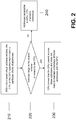
- FIG. 2 is a flow chart for one embodiment of the shared memory model augmented with ownership rights.
- a sequence 200 may be implemented in firmware, software, or hardware.
- Software embodiments may be stored on a computer-readable medium such as an optical disk, a magnetic disk, or a semiconductor memory.
- embodiments of the shared memory model may be augmented with ownership rights to enable further coherence optimizations.
- the CPU or the GPU may specify that it owns a particular chunk of addresses (block 210). If an address range in the shared window is owned by the CPU (block 220), then the CPU knows that the GPU cannot access those addresses and hence does not need to maintain coherence of those addresses with the GPU (block 230).
- GPU owned addresses If a CPU owned address is accessed by the GPU, then the address becomes un-owned (with symmetrical behavior for GPU owned addresses). Alternatively, an access to a CPU (GPU) owned address by the GPU (CPU) may trigger an error condition.
- CPU CPU
- Embodiments of the invention may provide these ownership rights to leverage common CPU-GPU usage models. For example, the CPU first accesses some data (e.g. initializing a data structure), and then hands it over to the GPU (e.g. computing on the data structure in a data parallel manner), and then the CPU analyzes the results of the computation and so on.
- the ownership rights allow an application to inform the system of this temporal locality and optimize the coherence implementation. Note that these ownership rights are optimization hints and it is legal for the system to ignore these hints.
- shared data may be privatized by copying from shared space to the private space.
- Non-pointer containing data structures may be privatized simply by copying the memory contents. While copying pointer containing data structures, pointers into shared data must be converted to pointers into private data.
- Private data may be globalized by copying from the private space to the shared space and made visible to other computations.
- Non-pointer containing data structures may be globalized simply by copying the memory contents. While copying pointer containing data structures, pointers into private data must be converted as pointers into shared data (converse of the privatization example).
- the type definition for the shared linked list is shown below. Note that the pointer to the next node is defined to reside in shared space. The user must explicitly declare both the private and shared versions of a type.
- runtime also provides APIs for mutexes and barriers to allow the application to perform explicit synchronization. These constructs are always allocated in the shared area.
- the language provides natural acquire and release points. For example, a call from the CPU to GPU is a release point on the CPU followed by an acquire point on the GPU. Similarly, a return from the GPU is a release point on the GPU and an acquire point on the CPU. Taking ownership of a mutex and releasing a mutex are acquire and release points respectively for the processor doing the mutex operation, while hitting a barrier and getting past a barrier are release and acquire points as well.
- the runtime system may provide API calls for ownership acquisition and release. For example sharedMemoryAcquire() and sharedMemoryRelease() may acquire and release ownership of the entire memory range. Alternatively, the system may provide sharedMemoryAcquire(addr, len) and sharedMemoryRelease(addr, len) to acquire ownership within a particular address range.
- the compiler generates two binaries - one for execution on the GPU and another for CPU execution. Two different executables are generated since the two operating systems may have different executable formats.
- the GPU binary contains the code that will execute on GPU, while the CPU binary contains the CPU functions.
- the runtime library has a CPU and GPU component which are linked with the CPU and GPU application binaries to create the CPU and GPU executables. When the CPU binary starts executing, it calls a runtime function that loads the GPU executable. Both the CPU and GPU binaries create a daemon thread that is used for CPU-GPU communication.
- FIG. 3 is a flow chart for one embodiment of the shared memory model.
- a sequence 300 may be implemented in firmware, software, or hardware.
- the CPU and GPU may have different page tables and different virtual to physical memory translations (block 310).
- the contents of different physical addresses for example P1 on CPU and P2 on GPU, are synched up (block 320).
- the CPU however may not have access to the GPUs page tables (and hence does not know P2) and the GPU does not have access to the CPUs page tables and does not know P1.
- FIG. 4 is a flow chart for one embodiment of the shared memory model that leverages the PCI aperture.
- a sequence 400 may be implemented in firmware, software, or hardware.
- a portion of the PCI aperture space may be mapped into the user space of the application and instantiated with a task queue, a message queue, and copy buffers (block 410).
- the runtime copies the pages into the PCI aperture copy buffers and tags the buffers with the virtual address and the process identifier (block 430).
- the daemon thread copies the contents of the buffers into its address space by using the virtual address tag (block 440).
- the copy may be performed in a 2 step process - the CPU copies from its address space into a common buffer (PCI aperture) that both CPU and GPU may access, while the GPU picks up the pages from the common buffer into its address space.
- GPU-CPU copies are done in a similar way. Since the aperture is pinned memory, the contents of the aperture are not lost if the CPU or GPU process gets context switched out. This allows the two processors to execute asynchronously which may be critical since the two processors may have different operating systems and hence the context switches may not be synchronized.
- the aperture space may be mapped into the user space of the applications thus enabling user level CPU-GPU communication. This makes the application stack vastly more efficient than going through the OS driver stack.
- Embodiments of the invention may exploit another difference between traditional software DSMs and CPU-GPU platforms.
- Traditional DSMs were designed to scale on medium to large clusters.
- CPU-GPU systems are very small scale clusters. It is unlikely that more than a handful of GPU cards and CPU sockets will be used well into the future.
- the PCI aperture provides a convenient shared physical memory space between the different processors.
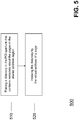
- FIG. 5 is a flow chart for one embodiment of the shared memory model that leverages the PCI aperture.
- a sequence 500 may be implemented in firmware, software, or hardware.
- a directory may be put in the PCI aperture that contains metadata about the pages in the shared address region.
- the metadata says whether the CPU or GPU holds the golden copy of a page (home for the page), contains a version number that tracks the number of updates to the page, mutexes that are acquired before updating the page, and miscellaneous metadata.
- the directory may be indexed by the virtual address of a page (block 520). Both the CPU and the GPU runtime systems maintain a similar private structure that contains the local access permissions for the pages, and the local version numbers of the pages.
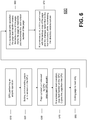
- FIG. 6 is a flow chart for one embodiment of the shared memory model in operation.
- a sequence 500 may be implemented in firmware, software, or hardware.
- a sequence 600 may be implemented in firmware, software, or hardware.
- the GPU performs an acquire operation (block 610)
- the corresponding pages may be set to no-access on the GPU (620).
- the page fault handler on the GPU copies the page from the CPU (block 640) if the page has been updated and released by the CPU since the last GPU acquire (block 630).
- the directory and private version numbers may be used to determine this.
- the page is then set to read-only(block 650).
- the page fault handler creates the backup copy of the page, marks the page as read-write and increments the local version number of the page (block 660).
- a diff is performed with the backup copy of the page and the changes transmitted to the home location, while incrementing the directory version number (block 670).
- the diff operation computes the differences in the memory locations between the two pages (i.e. the page and its backup) to find out the changes that have been made.
- the CPU operations are done in a symmetrical way. Thus, between acquire and release points the GPU and CPU operate out of their local memory and caches and communicate with each other only at the explicit synchronization points.
- the implementation decides the address range that will be shared between CPU and GPU, and makes sure that this address range always remains mapped (e.g. using mmap on Linux).
- This address range may grow dynamically, and does not have to be contiguous, though in a 64 bit address space the runtime system may reserve a continuous chunk upfront.
- Embodiments of the invention may be implemented in a processor-based system that may include a general-purpose processor coupled to a chipset in one embodiment.
- the chipset may be coupled to a system memory and a graphics processor.
- the graphics processor may be coupled to a frame buffer, in turn coupled to a display.
- the embodiments of the invention shown in Figures 1-6 may be implemented as software stored in a computer-readable medium, such as the system memory.
- embodiments of the present invention may be also implemented in hardware or firmware.
- Embodiments of the programming model provide a shared memory model for CPU-GPU platforms which enables fine-grain concurrency between the CPU and GPU.
- the uniform programming model may be implemented for both discrete and integrated configurations as well as for multi-GPU and hybrid configurations.
- User annotations may be used to demarcate code for CPU and GPU execution.
- User level communication may be provided between the CPU and GPU thus eliminating the overhead of OS driver calls.
- a full software stack may be implemented for the programming model including compiler and runtime support.
- references throughout this specification to "one embodiment” or “an embodiment” mean that a particular feature, structure, or characteristic described in connection with the embodiment is included in at least one implementation encompassed within the present invention. Thus, appearances of the phrase “one embodiment” or “in an embodiment” are not necessarily referring to the same embodiment. Furthermore, the particular features, structures, or characteristics may be instituted in other suitable forms other than the particular embodiment illustrated and all such forms may be encompassed within the claims of the present application.
Landscapes
- Engineering & Computer Science (AREA)
- Theoretical Computer Science (AREA)
- Physics & Mathematics (AREA)
- General Physics & Mathematics (AREA)
- General Engineering & Computer Science (AREA)
- Software Systems (AREA)
- Memory System Of A Hierarchy Structure (AREA)
- Devices For Executing Special Programs (AREA)
- Multi Processors (AREA)
- Stored Programmes (AREA)
Description
- This relates generally to shared virtual memory implementations.
- The computing industry is moving towards a heterogeneous platform architecture consisting of a general purpose CPU along with programmable GPUs attached both as a discrete or integrated device. These GPUs are connected over both coherent and non-coherent interconnects, have different industry standard architectures (ISAs) and may use their own operating systems.
- Computing platforms composed of a combination of a general purpose processor (CPU) and a graphics processor (GPU) have become ubiquitous, especially in the client computing space. Today, almost all desktop and notebook platforms ship with one or more CPUs along with an integrated or a discrete GPU. For example, some platforms have a processor paired with an integrated graphics chipset, while the remaining use a discrete graphics processor connected over an interface, such as PCI-Express. Some platforms ship as a combination of a CPU and a GPU. For example, some of these include a more integrated CPU-GPU platform while others include a graphics processor to complement integrated GPU offerings.
- These CPU-GPU platforms may provide significant performance boost on non-graphics workloads in image processing, medical imaging, data mining, and other domains. The massively data parallel GPU may be used for getting high throughput on the highly parallel portions of the code. Heterogeneous CPU-GPU platforms may have a number of unique architectural constraints such as:
- The GPU may be connected in both integrated and discrete forms. For example, some graphics processors are integrated with the chipset. On the other hand other current GPUs are attached in a discrete manner over an interface such as PCI-Express. While the hardware may provide cache coherence between a CPU and integrated graphics processor, it may be difficult to do that for a discrete GPU. A system may also have a hybrid configuration where a low-power lower-performance GPU is integrated with a CPU, with a higher-performance discrete GPU. Finally, a platform may also have multiple GPU cards.
- The CPU and GPU may have different operating systems. For example, a processor may have its own operating system kernel. This means that the virtual memory translation schemes may be different between the CPU and GPU. The same virtual address may be simultaneously mapped to two different physical addresses through two different page tables on the CPU and GPU. This also means that the system environment (loaders, linkers, etc.) may be different between the CPU and GPU. For example, the loader may load the application at different base addresses on the CPU and GPU.
- The CPU and the GPU may have different ISAs and hence the same code may not be run on both the processors.
-
US 2008/0109795A describes a general-purpose programming environment that allows users to program a GPU as a general-purpose computation engine using familiar C/C ++ programming constructs. Users may use declaration specifiers to identify which portions of a program to be compiled for a CPU. Specifically, functions, objects and variables may be specified for GPU binary compilation using declaration specifiers. A compiler separates the GPU binary code and the CPU binary code in a source file using the declaration specifiers. The location of objects and variables in different memory locations in the system may be identified using the declaration specifiers. CTA threading information is also provided for the GPU to support parallel processing. -
US 2005/0168472A describes a video memory manager which manages and virtualizes memory so that an application or multiple applications can utilize both system memory and local video memory in processing graphics. The video memory manager allocates memory in either the system memory or the local video memory as appropriate. The video memory manager may also manage the system memory accessible to the graphics processing unit via an aperture of the graphics processing unit. The video memory manager may evict memory from the local video memory as appropriate, thereby freeing a portion of local video memory use by other applications. In this manner, a graphics processing unit and its local video memory may be more readily shared by multiple applications. -
EP 1589433A describes a virtualisation layer consisting of an operating-system extension and a hardware component. It lowers the complexity of interfacing and increases portability potentials, while it also allows the co-processor to access the user virtual memory through a virtual memory window. The burden of moving data between processor and co-processor is shifted from the programmer to the operating system. -
US 6,822,654 describes a chip that includes an interconnect, a memory interface coupled to the interconnect, the memory interface providing access to the host memory and controlling memory refresh and memory access, a host interface coupled to the interconnect, the host interface providing access to the host processor, and a programmable media processor coupled to the interconnect, the media processor accessing the host through the host interface and the media processor accessing the host memory through the memory interface, wherein the media processor processes time based media. - Aspects of the present invention are set out in the appended independent claims.
-
-
Figure 1 is a depiction of a CPU-GPU memory model in accordance with one embodiment. -
Figure 2 is a flow chart for one embodiment of the shared memory model augmented with ownership rights. -
Figure 3 is a flow chart for one embodiment of the shared memory model. -
Figure 4 is a flow chart for one embodiment of the shared memory model that leverages the PCI aperture. -
Figure 5 is a flow chart for one embodiment of the shared memory model that leverages the PCI aperture. -
Figure 6 is a flow chart for one embodiment of the shared memory model in operation. - Embodiments of the invention provide a programming model for CPU-GPU platforms. In particular, embodiments of the invention provide a uniform programming model for both integrated and discrete devices. The model also works uniformly for multiple GPU cards and hybrid GPU systems (discrete and integrated). This allows software vendors to write a single application stack and target it to all the different platforms. Additionally, embodiments of the invention provide a shared memory model between the CPU and GPU. Instead of sharing the entire virtual address space, only a part of the virtual address space needs to be shared. This allows efficient implementation in both discrete and integrated settings. Furthermore, language annotations may be used to demarcate code that must run on the GPU. Language support may be extended to include features such as function pointers.
- Embodiments of the shared memory model provide a novel programming paradigm. In particular, data structures may be seamlessly shared between the CPU and GPU, and pointers may be passed from one side to the other without requiring any marshalling. For example, in one embodiment a game engine may includes physics, artificial intelligence (AI), and rendering. The physics and AI code may be best executed on the CPU, while the rendering may be best executed on the GPU. Data structures may need to be shared, such as the scene graph, between the CPU & GPU. Such an execution model may not be possible in some current programming environments since the scene graph would have to be serialized (or marshaled) back and forth. However, in embodiments of the shared memory model, the scene graph may simply reside in shared memory and be accessed both by the CPU and GPU.
- In one embodiment, the full programming environment, including the language and runtime support, is implemented. A number of highly parallel non-graphics workloads may be ported to this environment. The implementation may work on heterogeneous operating systems, i.e. with different operating systems running on the CPU and GPU. Moreover, user level communication may be allowed between the CPU and GPU. This may make the application stack more efficient since the overhead of the OS driver stack in CPU-GPU communication may be eliminated. The programming environment may be ported to two different heterogeneous CPU-GPU platform simulators - one simulates the GPU attached as a discrete device to the CPU, while the other simulates an integrated CPU-GPU platform.
- In summary, embodiments of the programming model for CPU-GPU platforms may:
- Provide a uniform programming model for discrete, integrated, multi-GPU cards and hybrid GPU configurations.
- Provide shared memory semantics between the CPU and GPU allowing pointers to be passed and data structures to be shared freely between the CPU and GPU
- Be implemented in a heterogeneous CPU-GPU platform with different ISAs and different operating systems on the CPU and GPU.
- Enable user-level communication between the CPU and GPU thus making the application stack much more efficient.
-
Figure 1 is a depiction of a GPU-CPU memory model in accordance with one embodiment. In one embodiment, the memory model 100 provides a window of sharedvirtual addresses 130 between the CPU 110 and GPU 120, such as in partitioned global address space (PGAS) languages. Any data structure that is shared between the CPU 110 and GPU 120 typically must be allocated by the programmer in thisspace 130. The system may provide a special malloc function that allocates data in thisspace 130. Static variables may be annotated with a type quantifier to have them allocated in the sharedwindow 130. However, unlike PGAS languages there is no notion of affinity in the shared window. This is because data in the sharedspace 130 migrates between the CPU and GPU caches as it gets used by each processor. Also unlike PGAS implementations, the representation of pointers does not change between the shared and private spaces. The remaining virtual address space is private to the CPU 110 and GPU 120. By default data gets allocated in this space and is not visible to the other side. This partitioned address space approach may cut down on the amount of memory that needs to be kept coherent and enables a more efficient implementation for discrete devices. - The embodiment of the memory model may be extended to multi-GPU and hybrid configurations. In particular, the window of shared virtual addresses may be extended across all the devices. Any data structures allocated in this shared
address window 130 may be visible to all agents and pointers in this space may be freely exchanged. In addition, every agent has its own private memory. - Release consistency in the shared address space may be used due to several reasons. First, the system only needs to remember all the writes between successive release points, not the sequence of individual writes. This may make it easier to do bulk transfers at release points (e.g. several pages at a time), which may be important in the discrete configuration. Second, it allows memory updates to be kept completely local until a release point, which may be important in a discrete configuration. Third, the release consistency model may be a good match for the programming patterns in CPU-GPU platforms since there are natural release and acquire points. For example a call from the CPU into the GPU is one such point. Making any of the CPU updates visible to the GPU before the call may not serve any purpose, and neither does it make any sense to enforce any order on how the CPU updates become visible as long as all of them are visible before the GPU starts executing. Furthermore, the proposed C/C++ memory model may be mapped easily to shared memory space. In general, race-free programs may not get affected by the weaker consistency model of the shared memory space. The implementation may not need to be restrained to provide stronger guarantees for racy programs. However different embodiments may choose to provide different consistency models for the shared space.
-
Figure 2 is a flow chart for one embodiment of the shared memory model augmented with ownership rights. A sequence 200 may be implemented in firmware, software, or hardware. Software embodiments may be stored on a computer-readable medium such as an optical disk, a magnetic disk, or a semiconductor memory. In particular, embodiments of the shared memory model may be augmented with ownership rights to enable further coherence optimizations. Within the shared virtual address window, the CPU or the GPU may specify that it owns a particular chunk of addresses (block 210). If an address range in the shared window is owned by the CPU (block 220), then the CPU knows that the GPU cannot access those addresses and hence does not need to maintain coherence of those addresses with the GPU (block 230). For example, it can avoid sending any snoops or other coherence information to the GPU. The same is true of GPU owned addresses. If a CPU owned address is accessed by the GPU, then the address becomes un-owned (with symmetrical behavior for GPU owned addresses). Alternatively, an access to a CPU (GPU) owned address by the GPU (CPU) may trigger an error condition. - Embodiments of the invention may provide these ownership rights to leverage common CPU-GPU usage models. For example, the CPU first accesses some data (e.g. initializing a data structure), and then hands it over to the GPU (e.g. computing on the data structure in a data parallel manner), and then the CPU analyzes the results of the computation and so on. The ownership rights allow an application to inform the system of this temporal locality and optimize the coherence implementation. Note that these ownership rights are optimization hints and it is legal for the system to ignore these hints.
- In one embodiment, shared data may be privatized by copying from shared space to the private space. Non-pointer containing data structures may be privatized simply by copying the memory contents. While copying pointer containing data structures, pointers into shared data must be converted to pointers into private data.
- Private data may be globalized by copying from the private space to the shared space and made visible to other computations. Non-pointer containing data structures may be globalized simply by copying the memory contents. While copying pointer containing data structures, pointers into private data must be converted as pointers into shared data (converse of the privatization example).
- For example, in one embodiment, consider a linked list of nodes in private and shared space. The type definition for the private linked list is standard:
   typedef struct {
      int val; // just an int field
     Node* next;
       } Node;
   typedef struct {
      shared int val;
      shared Node *shared next;
       } shared Node;
   myNode = (shared Node*) sharedMalloc(..);
    // head points to the private linked list
   myNode->val = head->val
   myNode->next = (shared Node*) sharedMalloc(..);
    // Allocate and free memory in the private address
    space. Maps to regular malloc
   void* privateMalloc(int);
   void privateFree(void*);
    //Allocation & free from the shared space.
    shared void* sharedMalloc(size_t size);
   void sharedFree(shared void *ptr);
    // Memory consistency for shared memory
   void sharedAcquire();
   void sharedRelease();
Claims (12)
- A method of sharing memory semantics between a central processing unit "CPU" and a graphics processing unit "GPU" including allowing pointers to be passed and data structures to be shared between the CPU and GPU, the method characterised by:partitioning address space into a shared physical memory that is accessible to both the CPU and GPU and a remaining address space that is private to the CPU and private to the GPU; anddetermining the CPU and GPU have different page tables and different virtual to physical memory translations, and, in response, synchronising the contents of a virtual address between the CPU and GPU and the contents of different physical memory addresses, wherein the synchronising further comprises:mapping, during initialization, a portion of the shared physical memory into a user space of an application and instantiating the portion of the shared physical memory with a task queue, a message queue and copy buffers; copying pages from the CPU private address space into a respective copy buffer in the shared physical memory, said copy buffer being tagged with a respective virtual address mapped to a first address of the CPU private address space, and said copy buffer being further tagged with an identifier of the process associated with the task;and having the GPU copy from the shared physical memory into an address of the GPU private address space that is associated with the virtual address; and copying pages from the GPU private address space into the shared physical memory and having the CPU access the pages from the shared physical memory into an address of the private CPU address space associated with the virtual address.
- A method according to claim 1, wherein
virtual addresses shared between the CPU and GPU map to different physical addresses for each of the CPU and GPU. - A method according to claim 1, wherein mapping the portion of shared physical memory further comprises using a malloc function that allocates data in the memory space.
- A method according to claim 3 further comprising programmer annotation of static variables to have them allocated in the shared memory space.
- A method according to claim 1 wherein copying pages from the CPU private address space and copying pages from the GPU private address space comprises:migrating data shared in a memory space between the CPU and GPU memory on demand as it gets used by either the CPU or GPU.
- A method according to claim 1, wherein the synchronising further comprises:the CPU or GPU specifying that it owns a particular chunk of addresses within a shared virtual address space.
- A method according to claim 6, wherein:when an address range in the shared virtual address space is owned by the CPU, the CPU does not maintain coherence of those addresses with the GPU; andwhen the CPU owned address is accessed by the GPU, the address becomes un-owned.
- A method according to claim 1, wherein the shared physical memory is pinned memory.
- A method according to claim 8, wherein the shared pinned physical memory comprises a PCI aperture mapped into the user space of the applications.
- A method according to claim 1, wherein copying pages from the CPU private address space or GPU private address space further comprises:placing a directory in the shared physical memory that contains metadata about the pages in the shared address region, wherein the metadata indicates whether the CPU or GPU holds the home for the page, contains a version number that tracks the number of updates to the page and mutexes that are acquired before updating the page.
- A processor apparatus comprising:a central processing unit (CPU);a graphic processing unit (GPU); andan address space including both a shared physical memory accessible to both the CPU and GPU, and a remaining address space that is private to the CPU and GPU, wherein:the CPU is to:map, during initialization, a portion of the shared physical memory into a user space of an application and instantiate the portion of the shared physical memory with a task queue, a message queue, and copy buffers; and copy pages from the private CPU address space into a respective copy buffer in the shared physical memory, said copy buffer being tagged with a respective virtual address mapped to a first address of the CPU private address space and tagged with an identifier of the process associated with the task; andthe GPU is to:copy from the shared physical memory into an address of the GPU private address space that is associated with the virtual address; andcopy pages from the private GPU address space into the shared physical memory so that the CPU may access the pages from the shared physical memory into an address of the private CPU address space associated with the virtual address.
- A computer readable medium storing instructions to enable a processor-based system having a CPU, a GPU and a memory to execute the method of any of claims 1 to 10.
Priority Applications (1)
| Application Number | Priority Date | Filing Date | Title |
|---|---|---|---|
| EP14004361.3A EP2889782A1 (en) | 2008-11-13 | 2009-11-05 | Shared virtual memory |
Applications Claiming Priority (3)
| Application Number | Priority Date | Filing Date | Title |
|---|---|---|---|
| US19909508P | 2008-11-13 | 2008-11-13 | |
| US12/317,853 US8531471B2 (en) | 2008-11-13 | 2008-12-30 | Shared virtual memory |
| PCT/US2009/063368 WO2010056587A2 (en) | 2008-11-13 | 2009-11-05 | Shared virtual memory |
Related Child Applications (2)
| Application Number | Title | Priority Date | Filing Date |
|---|---|---|---|
| EP14004361.3A Division EP2889782A1 (en) | 2008-11-13 | 2009-11-05 | Shared virtual memory |
| EP14004361.3A Division-Into EP2889782A1 (en) | 2008-11-13 | 2009-11-05 | Shared virtual memory |
Publications (3)
| Publication Number | Publication Date |
|---|---|
| EP2386087A2 EP2386087A2 (en) | 2011-11-16 |
| EP2386087A4 EP2386087A4 (en) | 2013-02-27 |
| EP2386087B1 true EP2386087B1 (en) | 2017-06-21 |
Family
ID=42164803
Family Applications (2)
| Application Number | Title | Priority Date | Filing Date |
|---|---|---|---|
| EP14004361.3A Withdrawn EP2889782A1 (en) | 2008-11-13 | 2009-11-05 | Shared virtual memory |
| EP09826579.6A Active EP2386087B1 (en) | 2008-11-13 | 2009-11-05 | Shared virtual memory |
Family Applications Before (1)
| Application Number | Title | Priority Date | Filing Date |
|---|---|---|---|
| EP14004361.3A Withdrawn EP2889782A1 (en) | 2008-11-13 | 2009-11-05 | Shared virtual memory |
Country Status (4)
| Country | Link |
|---|---|
| US (7) | US8531471B2 (en) |
| EP (2) | EP2889782A1 (en) |
| CN (2) | CN104298621B (en) |
| WO (1) | WO2010056587A2 (en) |
Cited By (1)
| Publication number | Priority date | Publication date | Assignee | Title |
|---|---|---|---|---|
| EP4625187A4 (en) * | 2022-12-09 | 2026-03-11 | Huawei Tech Co Ltd | Storage access control method and device as well as computer device and cluster of computer devices |
Families Citing this family (130)
| Publication number | Priority date | Publication date | Assignee | Title |
|---|---|---|---|---|
| US8776030B2 (en) * | 2008-04-09 | 2014-07-08 | Nvidia Corporation | Partitioning CUDA code for execution by a general purpose processor |
| US8531471B2 (en) | 2008-11-13 | 2013-09-10 | Intel Corporation | Shared virtual memory |
| US8776088B2 (en) | 2009-03-30 | 2014-07-08 | Microsoft Corporation | Operating system distributed over heterogeneous platforms |
| US9547535B1 (en) * | 2009-04-30 | 2017-01-17 | Nvidia Corporation | Method and system for providing shared memory access to graphics processing unit processes |
| US8395631B1 (en) * | 2009-04-30 | 2013-03-12 | Nvidia Corporation | Method and system for sharing memory between multiple graphics processing units in a computer system |
| US8619086B2 (en) * | 2009-04-30 | 2013-12-31 | Intel Corporation | Managing three dimensional scenes using shared and unified graphics processing unit memory |
| US8451281B2 (en) * | 2009-06-23 | 2013-05-28 | Intel Corporation | Shared virtual memory between a host and discrete graphics device in a computing system |
| US8868848B2 (en) | 2009-12-21 | 2014-10-21 | Intel Corporation | Sharing virtual memory-based multi-version data between the heterogenous processors of a computer platform |
| US20110212761A1 (en) * | 2010-02-26 | 2011-09-01 | Igt | Gaming machine processor |
| US8537169B1 (en) | 2010-03-01 | 2013-09-17 | Nvidia Corporation | GPU virtual memory model for OpenGL |
| US9128849B2 (en) * | 2010-04-13 | 2015-09-08 | Apple Inc. | Coherent memory scheme for heterogeneous processors |
| US8723877B2 (en) | 2010-05-20 | 2014-05-13 | Apple Inc. | Subbuffer objects |
| US8756590B2 (en) * | 2010-06-22 | 2014-06-17 | Microsoft Corporation | Binding data parallel device source code |
| CN102298567A (en) * | 2010-06-28 | 2011-12-28 | 安凯(广州)微电子技术有限公司 | Mobile processor architecture integrating central operation and graphic acceleration |
| CN101894051A (en) * | 2010-07-29 | 2010-11-24 | 中国科学技术大学 | CPU-GPU Cooperative Computing Method Based on Primary and Secondary Data Structure |
| US20120036301A1 (en) * | 2010-08-03 | 2012-02-09 | Caspole Eric R | Processor support for filling memory regions |
| US9164886B1 (en) | 2010-09-21 | 2015-10-20 | Western Digital Technologies, Inc. | System and method for multistage processing in a memory storage subsystem |
| KR101581796B1 (en) * | 2010-09-24 | 2016-01-04 | 인텔 코포레이션 | Sharing virtual functions in a shared virtual memory between heterogeneous processors of a computing platform |
| CN104536740B (en) * | 2010-09-24 | 2018-05-08 | 英特尔公司 | The Virtual Function in shared virtual memory between the heterogeneous processor of calculating platform is shared |
| WO2012050560A1 (en) | 2010-10-11 | 2012-04-19 | Hewlett-Packard Development Company, L.P. | First and second software stacks and discrete and integrated graphics processing units |
| US8732496B2 (en) * | 2011-03-24 | 2014-05-20 | Nvidia Corporation | Method and apparatus to support a self-refreshing display device coupled to a graphics controller |
| US8566537B2 (en) | 2011-03-29 | 2013-10-22 | Intel Corporation | Method and apparatus to facilitate shared pointers in a heterogeneous platform |
| US8949777B2 (en) | 2011-04-22 | 2015-02-03 | Intel Corporation | Methods and systems for mapping a function pointer to the device code |
| CN102253919A (en) * | 2011-05-25 | 2011-11-23 | 中国石油集团川庆钻探工程有限公司 | Parallel Numerical Simulation Method and System Based on GPU and CPU Collaborative Operation |
| US9164923B2 (en) * | 2011-07-01 | 2015-10-20 | Intel Corporation | Dynamic pinning of virtual pages shared between different type processors of a heterogeneous computing platform |
| US9633407B2 (en) * | 2011-07-29 | 2017-04-25 | Intel Corporation | CPU/GPU synchronization mechanism |
| US9075913B2 (en) * | 2012-02-27 | 2015-07-07 | Qualcomm Incorporated | Validation of applications for graphics processing unit |
| US20130262814A1 (en) * | 2012-03-29 | 2013-10-03 | Advanced Micro Devices, Inc. | Mapping Memory Instructions into a Shared Memory Address Place |
| US9116809B2 (en) | 2012-03-29 | 2015-08-25 | Ati Technologies Ulc | Memory heaps in a memory model for a unified computing system |
| US9325409B1 (en) | 2012-04-12 | 2016-04-26 | Tarana Wireless, Inc. | Non-line of sight wireless communication system and method |
| US9735940B1 (en) | 2012-04-12 | 2017-08-15 | Tarana Wireless, Inc. | System architecture for optimizing the capacity of adaptive array systems |
| US9252908B1 (en) | 2012-04-12 | 2016-02-02 | Tarana Wireless, Inc. | Non-line of sight wireless communication system and method |
| US9456354B2 (en) | 2012-04-12 | 2016-09-27 | Tarana Wireless, Inc. | Non-line of sight wireless communication system and method |
| CN104321750B (en) * | 2012-04-25 | 2019-03-08 | 英特尔公司 | Method and system for maintaining release coherency in shared memory programming |
| CN104335162B (en) * | 2012-05-09 | 2018-02-23 | 英特尔公司 | Execution using multiple page tables |
| US10025643B2 (en) * | 2012-05-10 | 2018-07-17 | Nvidia Corporation | System and method for compiler support for kernel launches in device code |
| US9009419B2 (en) * | 2012-07-31 | 2015-04-14 | Advanced Micro Devices, Inc. | Shared memory space in a unified memory model |
| US9405561B2 (en) * | 2012-08-08 | 2016-08-02 | Nvidia Corporation | Method and system for memory overlays for portable function pointers |
| US9373182B2 (en) * | 2012-08-17 | 2016-06-21 | Intel Corporation | Memory sharing via a unified memory architecture |
| US9378572B2 (en) * | 2012-08-17 | 2016-06-28 | Intel Corporation | Shared virtual memory |
| CN104487938A (en) | 2012-10-26 | 2015-04-01 | 惠普发展公司,有限责任合伙企业 | Processing streaming data with open executors |
| US9110795B2 (en) | 2012-12-10 | 2015-08-18 | Qualcomm Incorporated | System and method for dynamically allocating memory in a memory subsystem having asymmetric memory components |
| US8959298B2 (en) | 2012-12-10 | 2015-02-17 | Qualcomm Incorporated | System and method for managing performance of a computing device having dissimilar memory types |
| US9092327B2 (en) | 2012-12-10 | 2015-07-28 | Qualcomm Incorporated | System and method for allocating memory to dissimilar memory devices using quality of service |
| DE102013022169A1 (en) | 2013-03-14 | 2014-09-18 | Nvidia Corporation | ERROR BUFFER TO TRACK SIDE ERRORS IN A UNIFORM VIRTUAL STORAGE SYSTEM |
| US10110270B2 (en) | 2013-03-14 | 2018-10-23 | Tarana Wireless, Inc. | Precision array processing using semi-coherent transceivers |
| US9767036B2 (en) * | 2013-03-14 | 2017-09-19 | Nvidia Corporation | Page state directory for managing unified virtual memory |
| US10133677B2 (en) * | 2013-03-14 | 2018-11-20 | Nvidia Corporation | Opportunistic migration of memory pages in a unified virtual memory system |
| US9619364B2 (en) | 2013-03-14 | 2017-04-11 | Nvidia Corporation | Grouping and analysis of data access hazard reports |
| US10499456B1 (en) | 2013-03-15 | 2019-12-03 | Tarana Wireless, Inc. | Distributed capacity base station architecture for broadband access with enhanced in-band GPS co-existence |
| CN104102542A (en) * | 2013-04-10 | 2014-10-15 | 华为技术有限公司 | Network data packet processing method and device |
| WO2014178450A1 (en) * | 2013-04-30 | 2014-11-06 | 전자부품연구원 | Collaboration system between cpu and gpu, and method thereof |
| US10255650B2 (en) * | 2013-05-24 | 2019-04-09 | Sony Interactive Entertainment Inc. | Graphics processing using dynamic resources |
| US9495722B2 (en) | 2013-05-24 | 2016-11-15 | Sony Interactive Entertainment Inc. | Developer controlled layout |
| US9948571B2 (en) * | 2013-06-28 | 2018-04-17 | Oracle International Corporation | System and method for cloud connection pool |
| US9311011B2 (en) * | 2013-08-07 | 2016-04-12 | Qualcomm Incorporated | Dynamic address negotiation for shared memory regions in heterogenous multiprocessor systems |
| US9535826B2 (en) * | 2013-08-30 | 2017-01-03 | Nec Corporation | Automatic communication and optimization of multi-dimensional arrays for many-core coprocessor using static compiler analysis |
| US8719374B1 (en) | 2013-09-19 | 2014-05-06 | Farelogix, Inc. | Accessing large data stores over a communications network |
| US9478000B2 (en) * | 2013-09-27 | 2016-10-25 | Intel Corporation | Sharing non-page aligned memory |
| US20150091837A1 (en) * | 2013-09-27 | 2015-04-02 | Raman M. Srinivasan | Providing Touch Engine Processing Remotely from a Touch Screen |
| US9881592B2 (en) | 2013-10-08 | 2018-01-30 | Nvidia Corporation | Hardware overlay assignment |
| CN104635258B (en) * | 2013-11-06 | 2017-06-13 | 中国石油天然气集团公司 | One kind application CPU GPU platforms carry out seismic wave reverse-time migration imaging method |
| US20150134765A1 (en) * | 2013-11-11 | 2015-05-14 | Qualcomm Innovation Center, Inc. | Point-to-point shared memory protocol with feature negotiation |
| US9971576B2 (en) * | 2013-11-20 | 2018-05-15 | Nvidia Corporation | Software development environment and method of compiling integrated source code |
| CA2925753A1 (en) * | 2014-01-13 | 2015-07-16 | Huawei Technologies Co., Ltd. | Method for pattern processing |
| US9886736B2 (en) | 2014-01-20 | 2018-02-06 | Nvidia Corporation | Selectively killing trapped multi-process service clients sharing the same hardware context |
| US10152312B2 (en) | 2014-01-21 | 2018-12-11 | Nvidia Corporation | Dynamic compiler parallelism techniques |
| US10348394B1 (en) | 2014-03-14 | 2019-07-09 | Tarana Wireless, Inc. | System architecture and method for enhancing wireless networks with mini-satellites and pseudollites and adaptive antenna processing |
| US9436395B2 (en) | 2014-03-14 | 2016-09-06 | Advanced Micro Devices, Inc. | Mechanisms to save user/kernel copy for cross device communications |
| US20150301955A1 (en) * | 2014-04-21 | 2015-10-22 | Qualcomm Incorporated | Extending protection domains to co-processors |
| US9563571B2 (en) | 2014-04-25 | 2017-02-07 | Apple Inc. | Intelligent GPU memory pre-fetching and GPU translation lookaside buffer management |
| US9507726B2 (en) | 2014-04-25 | 2016-11-29 | Apple Inc. | GPU shared virtual memory working set management |
| US20160188251A1 (en) * | 2014-07-15 | 2016-06-30 | Nvidia Corporation | Techniques for Creating a Notion of Privileged Data Access in a Unified Virtual Memory System |
| JP5902273B2 (en) * | 2014-10-23 | 2016-04-13 | インテル コーポレイション | Sharing virtual functions in virtual memory shared among heterogeneous processors of computing platforms |
| KR102355573B1 (en) * | 2014-10-29 | 2022-01-27 | 삼성전자주식회사 | MEMORY SYSTEM AND SoC INCLUDING LINEAR REMAPPER AND ACCESS WINDOW |
| KR101620602B1 (en) | 2014-10-29 | 2016-05-11 | 재단법인대구경북과학기술원 | SYSTEM AND METHOD FOR PROCESSING LARGE-SCALE GRAPHS USING GPUs |
| US9342384B1 (en) | 2014-12-18 | 2016-05-17 | Intel Corporation | Function callback mechanism between a central processing unit (CPU) and an auxiliary processor |
| US9886934B2 (en) * | 2014-12-24 | 2018-02-06 | Intel Corporation | Ordering mechanism for offload graphics scheduling |
| US10734117B2 (en) | 2015-03-02 | 2020-08-04 | Strand Life Sciences Private Limited | Apparatuses and methods for determining a patient's response to multiple cancer drugs |
| CN104809078B (en) * | 2015-04-14 | 2019-05-14 | 苏州中晟宏芯信息科技有限公司 | Based on the shared cache hardware resource access method for exiting yielding mechanism |
| DE102016106939B4 (en) | 2015-04-17 | 2024-05-02 | Suunto Oy | Embedded computing device |
| US20170004647A1 (en) * | 2015-06-30 | 2017-01-05 | Microsoft Technology Licensing, Llc | Rendering graphics data on demand |
| US11068401B2 (en) * | 2015-09-25 | 2021-07-20 | Intel Corporation | Method and apparatus to improve shared memory efficiency |
| CN106651748B (en) | 2015-10-30 | 2019-10-22 | 华为技术有限公司 | Image processing method and image processing device |
| GB2546343A (en) * | 2016-01-15 | 2017-07-19 | Stmicroelectronics (Grenoble2) Sas | Apparatus and methods implementing dispatch mechanisms for offloading executable functions |
| CN105573852B (en) * | 2016-02-03 | 2018-11-30 | 南京大学 | A kind of method of Ultrahigh speed data object communication under virtual address isolation environment |
| JP6280581B2 (en) * | 2016-03-10 | 2018-02-14 | インテル コーポレイション | Sharing virtual functions in virtual memory shared among heterogeneous processors of computing platforms |
| US10019377B2 (en) * | 2016-05-23 | 2018-07-10 | Advanced Micro Devices, Inc. | Managing cache coherence using information in a page table |
| US10157440B2 (en) * | 2016-09-20 | 2018-12-18 | Intel Corporation | Static data sharing mechanism for a heterogeneous processing environment |
| CN107870800A (en) * | 2016-09-23 | 2018-04-03 | 超威半导体(上海)有限公司 | Virtual machine activity detects |
| CN107977251B (en) * | 2016-10-21 | 2023-10-27 | 超威半导体(上海)有限公司 | Exclusive access to shared registers in virtualized systems |
| CN108206937B (en) * | 2016-12-20 | 2020-05-19 | 浙江宇视科技有限公司 | Method and device for improving intelligent analysis performance |
| US10614356B2 (en) * | 2017-04-24 | 2020-04-07 | International Business Machines Corporation | Local multicast in single-host multi-GPU machine for distributed deep learning systems |
| US10872394B2 (en) * | 2017-04-27 | 2020-12-22 | Daegu Gyeongbuk Institute Of Science And Technology | Frequent pattern mining method and apparatus |
| US10489881B2 (en) * | 2017-06-30 | 2019-11-26 | H3 Platform Inc. | Direct memory access for co-processor memory |
| US11294653B2 (en) * | 2017-09-27 | 2022-04-05 | Jayant Shukla | Methods and systems of disassembling executable code |
| CN107943743A (en) * | 2017-11-17 | 2018-04-20 | 江苏微锐超算科技有限公司 | Information storage, read method and the shared virtual medium carrying chip of computing device |
| CN107958214A (en) * | 2017-11-21 | 2018-04-24 | 中国科学院深圳先进技术研究院 | Parallel parsing device, method and the mobile terminal of ECG signal |
| CN107945098B (en) * | 2017-11-24 | 2022-03-01 | 腾讯科技(深圳)有限公司 | Image processing method, image processing device, computer equipment and storage medium |
| KR102533241B1 (en) | 2018-01-25 | 2023-05-16 | 삼성전자주식회사 | Heterogeneous computing system configured to adaptively control cache coherency |
| US11792307B2 (en) | 2018-03-28 | 2023-10-17 | Apple Inc. | Methods and apparatus for single entity buffer pool management |
| CN108768940A (en) * | 2018-04-19 | 2018-11-06 | 丙申南京网络技术有限公司 | A kind of data digging system and method separating protection parallel based on computer network security |
| US10846224B2 (en) * | 2018-08-24 | 2020-11-24 | Apple Inc. | Methods and apparatus for control of a jointly shared memory-mapped region |
| CN109614086B (en) * | 2018-11-14 | 2022-04-05 | 西安翔腾微电子科技有限公司 | GPU texture buffer area data storage hardware and storage device based on SystemC and TLM models |
| KR102655094B1 (en) * | 2018-11-16 | 2024-04-08 | 삼성전자주식회사 | Storage device including heterogeneous processors which shares memory and method of operating the same |
| CN109656868B (en) * | 2018-11-19 | 2022-12-06 | 浙江大学宁波理工学院 | Memory data transfer method between CPU and GPU |
| US11734192B2 (en) | 2018-12-10 | 2023-08-22 | International Business Machines Corporation | Identifying location of data granules in global virtual address space |
| US11016908B2 (en) * | 2018-12-11 | 2021-05-25 | International Business Machines Corporation | Distributed directory of named data elements in coordination namespace |
| US20200211259A1 (en) * | 2018-12-28 | 2020-07-02 | Intel Corporation | Apparatus and method for acceleration data structure refit |
| KR102794100B1 (en) * | 2019-03-15 | 2025-04-14 | 에스케이하이닉스 주식회사 | memory system for memory sharing and data processing system including the same |
| US10761821B1 (en) * | 2019-03-27 | 2020-09-01 | Sap Se | Object oriented programming model for graphics processing units (GPUS) |
| CN110189245A (en) * | 2019-05-27 | 2019-08-30 | 武汉中导光电设备有限公司 | Image detecting method and system based on GPUDirect technology |
| US11477123B2 (en) | 2019-09-26 | 2022-10-18 | Apple Inc. | Methods and apparatus for low latency operation in user space networking |
| US11829303B2 (en) * | 2019-09-26 | 2023-11-28 | Apple Inc. | Methods and apparatus for device driver operation in non-kernel space |
| US11558348B2 (en) | 2019-09-26 | 2023-01-17 | Apple Inc. | Methods and apparatus for emerging use case support in user space networking |
| US11256522B2 (en) * | 2019-11-22 | 2022-02-22 | Advanced Micro Devices, Inc. | Loader and runtime operations for heterogeneous code objects |
| US11467812B2 (en) | 2019-11-22 | 2022-10-11 | Advanced Micro Devices, Inc. | Compiler operations for heterogeneous code objects |
| US11080111B1 (en) * | 2020-02-24 | 2021-08-03 | Nvidia Corporation | Technique for sharing context among multiple threads |
| US11606302B2 (en) | 2020-06-12 | 2023-03-14 | Apple Inc. | Methods and apparatus for flow-based batching and processing |
| CN112513817B (en) * | 2020-08-14 | 2021-10-01 | 华为技术有限公司 | A data interaction method and computing device between main CPU and NPU |
| US11775359B2 (en) | 2020-09-11 | 2023-10-03 | Apple Inc. | Methods and apparatuses for cross-layer processing |
| US11954540B2 (en) | 2020-09-14 | 2024-04-09 | Apple Inc. | Methods and apparatus for thread-level execution in non-kernel space |
| US11799986B2 (en) | 2020-09-22 | 2023-10-24 | Apple Inc. | Methods and apparatus for thread level execution in non-kernel space |
| CN112230931B (en) * | 2020-10-22 | 2021-11-02 | 上海壁仞智能科技有限公司 | Compiling method, device and medium suitable for secondary unloading of graphic processor |
| US11882051B2 (en) | 2021-07-26 | 2024-01-23 | Apple Inc. | Systems and methods for managing transmission control protocol (TCP) acknowledgements |
| US11876719B2 (en) | 2021-07-26 | 2024-01-16 | Apple Inc. | Systems and methods for managing transmission control protocol (TCP) acknowledgements |
| US12112200B2 (en) | 2021-09-13 | 2024-10-08 | International Business Machines Corporation | Pipeline parallel computing using extended memory |
| US11954785B2 (en) * | 2021-12-07 | 2024-04-09 | Canon Medical Systems Corporation | Data processing method and apparatus |
| US12032932B2 (en) * | 2022-07-11 | 2024-07-09 | Xilinx, Inc. | Compiler-based generation of transaction accurate models from high-level languages |
| EP4475000A1 (en) * | 2023-06-08 | 2024-12-11 | Samsung Electronics Co., Ltd. | Method and device with virtual memory management |
Family Cites Families (29)
| Publication number | Priority date | Publication date | Assignee | Title |
|---|---|---|---|---|
| US5479630A (en) | 1991-04-03 | 1995-12-26 | Silicon Graphics Inc. | Hybrid cache having physical-cache and virtual-cache characteristics and method for accessing same |
| US5848234A (en) * | 1993-05-21 | 1998-12-08 | Candle Distributed Solutions, Inc. | Object procedure messaging facility |
| US6822654B1 (en) * | 2001-12-31 | 2004-11-23 | Apple Computer, Inc. | Memory controller chipset |
| US6891543B2 (en) * | 2002-05-08 | 2005-05-10 | Intel Corporation | Method and system for optimally sharing memory between a host processor and graphics processor |
| US6947051B2 (en) | 2003-02-18 | 2005-09-20 | Microsoft Corporation | Video memory management |
| US7355601B2 (en) * | 2003-06-30 | 2008-04-08 | International Business Machines Corporation | System and method for transfer of data between processors using a locked set, head and tail pointers |
| US7075541B2 (en) * | 2003-08-18 | 2006-07-11 | Nvidia Corporation | Adaptive load balancing in a multi-processor graphics processing system |
| US7231632B2 (en) * | 2004-04-16 | 2007-06-12 | Apple Computer, Inc. | System for reducing the number of programs necessary to render an image |
| US7248265B2 (en) * | 2004-04-16 | 2007-07-24 | Apple Inc. | System and method for processing graphics operations with graphics processing unit |
| EP1589433A1 (en) | 2004-04-20 | 2005-10-26 | Ecole Polytechnique Federale De Lausanne | Virtual memory window with dynamic prefetching support |
| JP2005309867A (en) * | 2004-04-22 | 2005-11-04 | Fujitsu Ltd | Multi-core processor test method |
| US7489318B1 (en) * | 2004-05-20 | 2009-02-10 | Nvidia Corporation | Apparatus and method for managing memory to generate a texture from a render target when forming graphical images |
| US7305524B2 (en) * | 2004-10-08 | 2007-12-04 | International Business Machines Corporation | Snoop filter directory mechanism in coherency shared memory system |
| US7598953B2 (en) * | 2004-11-05 | 2009-10-06 | Microsoft Corporation | Interpreter for simplified programming of graphics processor units in general purpose programming languages |
| US20060164425A1 (en) * | 2005-01-24 | 2006-07-27 | Ati Technologies, Inc. | Methods and apparatus for updating a memory address remapping table |
| TWI322354B (en) * | 2005-10-18 | 2010-03-21 | Via Tech Inc | Method and system for deferred command issuing in a computer system |
| US8099538B2 (en) * | 2006-03-29 | 2012-01-17 | Intel Corporation | Increasing functionality of a reader-writer lock |
| US7685371B1 (en) * | 2006-04-19 | 2010-03-23 | Nvidia Corporation | Hierarchical flush barrier mechanism with deadlock avoidance |
| US20080030510A1 (en) | 2006-08-02 | 2008-02-07 | Xgi Technology Inc. | Multi-GPU rendering system |
| US7739466B2 (en) * | 2006-08-11 | 2010-06-15 | Intel Corporation | Method and apparatus for supporting immutable memory |
| US7769979B1 (en) * | 2006-09-19 | 2010-08-03 | Nvidia Corporation | Caching of page access parameters |
| US7928990B2 (en) * | 2006-09-27 | 2011-04-19 | Qualcomm Incorporated | Graphics processing unit with unified vertex cache and shader register file |
| US20080109795A1 (en) * | 2006-11-02 | 2008-05-08 | Nvidia Corporation | C/c++ language extensions for general-purpose graphics processing unit |
| US8860741B1 (en) * | 2006-12-08 | 2014-10-14 | Nvidia Corporation | Graphics processor with memory management unit and cache coherent link |
| US8122229B2 (en) * | 2007-09-12 | 2012-02-21 | Convey Computer | Dispatch mechanism for dispatching instructions from a host processor to a co-processor |
| US8095735B2 (en) * | 2008-08-05 | 2012-01-10 | Convey Computer | Memory interleave for heterogeneous computing |
| US8156307B2 (en) * | 2007-08-20 | 2012-04-10 | Convey Computer | Multi-processor system having at least one processor that comprises a dynamically reconfigurable instruction set |
| US8102391B2 (en) * | 2008-04-11 | 2012-01-24 | International Business Machines Corporation | Hybrid rendering of image data utilizing streaming geometry frontend interconnected to physical rendering backend through dynamic accelerated data structure generator |
| US8531471B2 (en) * | 2008-11-13 | 2013-09-10 | Intel Corporation | Shared virtual memory |
-
2008
- 2008-12-30 US US12/317,853 patent/US8531471B2/en active Active
- 2008-12-30 US US12/317,854 patent/US8397241B2/en active Active
-
2009
- 2009-11-05 EP EP14004361.3A patent/EP2889782A1/en not_active Withdrawn
- 2009-11-05 WO PCT/US2009/063368 patent/WO2010056587A2/en not_active Ceased
- 2009-11-05 CN CN201410562398.8A patent/CN104298621B/en active Active
- 2009-11-05 CN CN200980154460.7A patent/CN102625934B/en active Active
- 2009-11-05 EP EP09826579.6A patent/EP2386087B1/en active Active
-
2013
- 2013-03-11 US US13/792,427 patent/US8683487B2/en active Active
- 2013-09-04 US US14/017,498 patent/US20140049550A1/en not_active Abandoned
-
2014
- 2014-02-05 US US14/173,071 patent/US8997114B2/en active Active
- 2014-07-01 US US14/320,985 patent/US9400702B2/en active Active
- 2014-12-10 US US14/566,654 patent/US9588826B2/en active Active
Cited By (1)
| Publication number | Priority date | Publication date | Assignee | Title |
|---|---|---|---|---|
| EP4625187A4 (en) * | 2022-12-09 | 2026-03-11 | Huawei Tech Co Ltd | Storage access control method and device as well as computer device and cluster of computer devices |
Also Published As
| Publication number | Publication date |
|---|---|
| EP2889782A1 (en) | 2015-07-01 |
| WO2010056587A3 (en) | 2010-08-26 |
| CN104298621A (en) | 2015-01-21 |
| US8397241B2 (en) | 2013-03-12 |
| CN102625934A (en) | 2012-08-01 |
| CN102625934B (en) | 2015-06-17 |
| US8683487B2 (en) | 2014-03-25 |
| EP2386087A2 (en) | 2011-11-16 |
| US20150123978A1 (en) | 2015-05-07 |
| US20130187936A1 (en) | 2013-07-25 |
| US20140375662A1 (en) | 2014-12-25 |
| US20140049550A1 (en) | 2014-02-20 |
| US20100118041A1 (en) | 2010-05-13 |
| US8531471B2 (en) | 2013-09-10 |
| US8997114B2 (en) | 2015-03-31 |
| US20140306972A1 (en) | 2014-10-16 |
| US9400702B2 (en) | 2016-07-26 |
| WO2010056587A2 (en) | 2010-05-20 |
| CN104298621B (en) | 2017-09-12 |
| EP2386087A4 (en) | 2013-02-27 |
| US9588826B2 (en) | 2017-03-07 |
| US20100122264A1 (en) | 2010-05-13 |
| HK1172108A1 (en) | 2013-04-12 |
Similar Documents
| Publication | Publication Date | Title |
|---|---|---|
| US8531471B2 (en) | Shared virtual memory | |
| US11893653B2 (en) | Unified memory systems and methods | |
| KR101735222B1 (en) | Multi-core compute cache coherency with a release consistency memory ordering model | |
| Saha et al. | Programming model for a heterogeneous x86 platform | |
| US9430400B2 (en) | Migration directives in a unified virtual memory system architecture | |
| CN109643277B (en) | Apparatus and method for mediated transfer and shared memory page merging | |
| US8516220B2 (en) | Recording dirty information in software distributed shared memory systems | |
| US20110191095A1 (en) | Method and system for efficient emulation of multiprocessor address translation on a multiprocessor | |
| Gaster et al. | HRF-Relaxed: Adapting HRF to the complexities of industrial heterogeneous memory models | |
| US20130262784A1 (en) | Memory Heaps in a Memory Model for a Unified Computing System | |
| CN115509736A (en) | Memory allocation or de-allocation using graphs | |
| US11907589B2 (en) | Unified host memory for coprocessors | |
| Zhu et al. | GMEM: Generalized Memory Management for Peripheral Devices | |
| HK1172108B (en) | Shared virtual memory | |
| Saha et al. | A PROGRAMMING MODEL FOR HETEROGENEOUS INTEL X86. |
Legal Events
| Date | Code | Title | Description |
|---|---|---|---|
| PUAI | Public reference made under article 153(3) epc to a published international application that has entered the european phase |
Free format text: ORIGINAL CODE: 0009012 |
|
| 17P | Request for examination filed |
Effective date: 20110919 |
|
| AK | Designated contracting states |
Kind code of ref document: A2 Designated state(s): AT BE BG CH CY CZ DE DK EE ES FI FR GB GR HR HU IE IS IT LI LT LU LV MC MK MT NL NO PL PT RO SE SI SK SM TR |
|
| DAX | Request for extension of the european patent (deleted) | ||
| A4 | Supplementary search report drawn up and despatched |
Effective date: 20130130 |
|
| RIC1 | Information provided on ipc code assigned before grant |
Ipc: G06F 15/167 20060101AFI20130124BHEP Ipc: G06F 9/54 20060101ALI20130124BHEP Ipc: G06F 13/14 20060101ALI20130124BHEP Ipc: G06F 9/46 20060101ALI20130124BHEP Ipc: G06F 12/10 20060101ALI20130124BHEP |
|
| 17Q | First examination report despatched |
Effective date: 20130227 |
|
| RAP1 | Party data changed (applicant data changed or rights of an application transferred) |
Owner name: INTEL CORPORATION |
|
| RIN1 | Information on inventor provided before grant (corrected) |
Inventor name: FANG, JESSE Inventor name: ZHANG, PEINAN Inventor name: GAO, YING Inventor name: XIAOCHENG, ZHOU Inventor name: CHEN, HU Inventor name: YAN, SHOUMENG Inventor name: SAHA, BRATIN Inventor name: MENDELSON, AVI Inventor name: RAJAGOPALAN, MOHAN |
|
| RIN1 | Information on inventor provided before grant (corrected) |
Inventor name: XIAOCHENG, ZHOU Inventor name: MENDELSON, AVI Inventor name: ZHANG, PEINAN Inventor name: FANG, JESSE Inventor name: GAO, YING Inventor name: SAHA, BRATIN Inventor name: YAN, SHOUMENG Inventor name: CHEN, HU Inventor name: RAJAGOPALAN, MOHAN |
|
| REG | Reference to a national code |
Ref country code: DE Ref legal event code: R079 Ref document number: 602009046790 Country of ref document: DE Free format text: PREVIOUS MAIN CLASS: G06F0015167000 Ipc: G06F0012107200 |
|
| RIC1 | Information provided on ipc code assigned before grant |
Ipc: G06T 1/60 20060101ALI20161212BHEP Ipc: G06F 9/54 20060101ALI20161212BHEP Ipc: G06F 12/0815 20160101ALI20161212BHEP Ipc: G06F 12/109 20160101ALI20161212BHEP Ipc: G06F 12/1081 20160101ALI20161212BHEP Ipc: G06F 12/1009 20160101ALI20161212BHEP Ipc: G06F 12/1072 20160101AFI20161212BHEP Ipc: G06T 1/20 20060101ALI20161212BHEP |
|
| GRAP | Despatch of communication of intention to grant a patent |
Free format text: ORIGINAL CODE: EPIDOSNIGR1 |
|
| INTG | Intention to grant announced |
Effective date: 20170209 |
|
| GRAS | Grant fee paid |
Free format text: ORIGINAL CODE: EPIDOSNIGR3 |
|
| GRAA | (expected) grant |
Free format text: ORIGINAL CODE: 0009210 |
|
| AK | Designated contracting states |
Kind code of ref document: B1 Designated state(s): AT BE BG CH CY CZ DE DK EE ES FI FR GB GR HR HU IE IS IT LI LT LU LV MC MK MT NL NO PL PT RO SE SI SK SM TR |
|
| REG | Reference to a national code |
Ref country code: GB Ref legal event code: FG4D |
|
| REG | Reference to a national code |
Ref country code: CH Ref legal event code: EP |
|
| REG | Reference to a national code |
Ref country code: IE Ref legal event code: FG4D |
|
| REG | Reference to a national code |
Ref country code: AT Ref legal event code: REF Ref document number: 903513 Country of ref document: AT Kind code of ref document: T Effective date: 20170715 |
|
| REG | Reference to a national code |
Ref country code: DE Ref legal event code: R096 Ref document number: 602009046790 Country of ref document: DE |
|
| REG | Reference to a national code |
Ref country code: NL Ref legal event code: FP |
|
| PG25 | Lapsed in a contracting state [announced via postgrant information from national office to epo] |
Ref country code: NO Free format text: LAPSE BECAUSE OF FAILURE TO SUBMIT A TRANSLATION OF THE DESCRIPTION OR TO PAY THE FEE WITHIN THE PRESCRIBED TIME-LIMIT Effective date: 20170921 Ref country code: HR Free format text: LAPSE BECAUSE OF FAILURE TO SUBMIT A TRANSLATION OF THE DESCRIPTION OR TO PAY THE FEE WITHIN THE PRESCRIBED TIME-LIMIT Effective date: 20170621 Ref country code: FI Free format text: LAPSE BECAUSE OF FAILURE TO SUBMIT A TRANSLATION OF THE DESCRIPTION OR TO PAY THE FEE WITHIN THE PRESCRIBED TIME-LIMIT Effective date: 20170621 Ref country code: LT Free format text: LAPSE BECAUSE OF FAILURE TO SUBMIT A TRANSLATION OF THE DESCRIPTION OR TO PAY THE FEE WITHIN THE PRESCRIBED TIME-LIMIT Effective date: 20170621 Ref country code: GR Free format text: LAPSE BECAUSE OF FAILURE TO SUBMIT A TRANSLATION OF THE DESCRIPTION OR TO PAY THE FEE WITHIN THE PRESCRIBED TIME-LIMIT Effective date: 20170922 |
|
| REG | Reference to a national code |
Ref country code: LT Ref legal event code: MG4D |
|
| REG | Reference to a national code |
Ref country code: AT Ref legal event code: MK05 Ref document number: 903513 Country of ref document: AT Kind code of ref document: T Effective date: 20170621 |
|
| PG25 | Lapsed in a contracting state [announced via postgrant information from national office to epo] |
Ref country code: SE Free format text: LAPSE BECAUSE OF FAILURE TO SUBMIT A TRANSLATION OF THE DESCRIPTION OR TO PAY THE FEE WITHIN THE PRESCRIBED TIME-LIMIT Effective date: 20170621 Ref country code: LV Free format text: LAPSE BECAUSE OF FAILURE TO SUBMIT A TRANSLATION OF THE DESCRIPTION OR TO PAY THE FEE WITHIN THE PRESCRIBED TIME-LIMIT Effective date: 20170621 Ref country code: BG Free format text: LAPSE BECAUSE OF FAILURE TO SUBMIT A TRANSLATION OF THE DESCRIPTION OR TO PAY THE FEE WITHIN THE PRESCRIBED TIME-LIMIT Effective date: 20170921 |
|
| PG25 | Lapsed in a contracting state [announced via postgrant information from national office to epo] |
Ref country code: SK Free format text: LAPSE BECAUSE OF FAILURE TO SUBMIT A TRANSLATION OF THE DESCRIPTION OR TO PAY THE FEE WITHIN THE PRESCRIBED TIME-LIMIT Effective date: 20170621 Ref country code: EE Free format text: LAPSE BECAUSE OF FAILURE TO SUBMIT A TRANSLATION OF THE DESCRIPTION OR TO PAY THE FEE WITHIN THE PRESCRIBED TIME-LIMIT Effective date: 20170621 Ref country code: AT Free format text: LAPSE BECAUSE OF FAILURE TO SUBMIT A TRANSLATION OF THE DESCRIPTION OR TO PAY THE FEE WITHIN THE PRESCRIBED TIME-LIMIT Effective date: 20170621 Ref country code: RO Free format text: LAPSE BECAUSE OF FAILURE TO SUBMIT A TRANSLATION OF THE DESCRIPTION OR TO PAY THE FEE WITHIN THE PRESCRIBED TIME-LIMIT Effective date: 20170621 Ref country code: CZ Free format text: LAPSE BECAUSE OF FAILURE TO SUBMIT A TRANSLATION OF THE DESCRIPTION OR TO PAY THE FEE WITHIN THE PRESCRIBED TIME-LIMIT Effective date: 20170621 |
|
| PG25 | Lapsed in a contracting state [announced via postgrant information from national office to epo] |
Ref country code: IS Free format text: LAPSE BECAUSE OF FAILURE TO SUBMIT A TRANSLATION OF THE DESCRIPTION OR TO PAY THE FEE WITHIN THE PRESCRIBED TIME-LIMIT Effective date: 20171021 Ref country code: SM Free format text: LAPSE BECAUSE OF FAILURE TO SUBMIT A TRANSLATION OF THE DESCRIPTION OR TO PAY THE FEE WITHIN THE PRESCRIBED TIME-LIMIT Effective date: 20170621 Ref country code: IT Free format text: LAPSE BECAUSE OF FAILURE TO SUBMIT A TRANSLATION OF THE DESCRIPTION OR TO PAY THE FEE WITHIN THE PRESCRIBED TIME-LIMIT Effective date: 20170621 Ref country code: PL Free format text: LAPSE BECAUSE OF FAILURE TO SUBMIT A TRANSLATION OF THE DESCRIPTION OR TO PAY THE FEE WITHIN THE PRESCRIBED TIME-LIMIT Effective date: 20170621 Ref country code: ES Free format text: LAPSE BECAUSE OF FAILURE TO SUBMIT A TRANSLATION OF THE DESCRIPTION OR TO PAY THE FEE WITHIN THE PRESCRIBED TIME-LIMIT Effective date: 20170621 |
|
| REG | Reference to a national code |
Ref country code: DE Ref legal event code: R097 Ref document number: 602009046790 Country of ref document: DE |
|
| PLBE | No opposition filed within time limit |
Free format text: ORIGINAL CODE: 0009261 |
|
| STAA | Information on the status of an ep patent application or granted ep patent |
Free format text: STATUS: NO OPPOSITION FILED WITHIN TIME LIMIT |
|
| PG25 | Lapsed in a contracting state [announced via postgrant information from national office to epo] |
Ref country code: DK Free format text: LAPSE BECAUSE OF FAILURE TO SUBMIT A TRANSLATION OF THE DESCRIPTION OR TO PAY THE FEE WITHIN THE PRESCRIBED TIME-LIMIT Effective date: 20170621 |
|
| 26N | No opposition filed |
Effective date: 20180322 |
|
| PG25 | Lapsed in a contracting state [announced via postgrant information from national office to epo] |
Ref country code: MC Free format text: LAPSE BECAUSE OF FAILURE TO SUBMIT A TRANSLATION OF THE DESCRIPTION OR TO PAY THE FEE WITHIN THE PRESCRIBED TIME-LIMIT Effective date: 20170621 |
|
| PG25 | Lapsed in a contracting state [announced via postgrant information from national office to epo] |
Ref country code: LI Free format text: LAPSE BECAUSE OF NON-PAYMENT OF DUE FEES Effective date: 20171130 Ref country code: CH Free format text: LAPSE BECAUSE OF NON-PAYMENT OF DUE FEES Effective date: 20171130 |
|
| PG25 | Lapsed in a contracting state [announced via postgrant information from national office to epo] |
Ref country code: SI Free format text: LAPSE BECAUSE OF FAILURE TO SUBMIT A TRANSLATION OF THE DESCRIPTION OR TO PAY THE FEE WITHIN THE PRESCRIBED TIME-LIMIT Effective date: 20170621 Ref country code: LU Free format text: LAPSE BECAUSE OF NON-PAYMENT OF DUE FEES Effective date: 20171105 |
|
| REG | Reference to a national code |
Ref country code: FR Ref legal event code: ST Effective date: 20180731 Ref country code: BE Ref legal event code: MM Effective date: 20171130 |
|
| REG | Reference to a national code |
Ref country code: IE Ref legal event code: MM4A |
|
| PG25 | Lapsed in a contracting state [announced via postgrant information from national office to epo] |
Ref country code: MT Free format text: LAPSE BECAUSE OF NON-PAYMENT OF DUE FEES Effective date: 20171105 |
|
| PG25 | Lapsed in a contracting state [announced via postgrant information from national office to epo] |
Ref country code: FR Free format text: LAPSE BECAUSE OF NON-PAYMENT OF DUE FEES Effective date: 20171130 Ref country code: IE Free format text: LAPSE BECAUSE OF NON-PAYMENT OF DUE FEES Effective date: 20171105 |
|
| PG25 | Lapsed in a contracting state [announced via postgrant information from national office to epo] |
Ref country code: BE Free format text: LAPSE BECAUSE OF NON-PAYMENT OF DUE FEES Effective date: 20171130 |
|
| PG25 | Lapsed in a contracting state [announced via postgrant information from national office to epo] |
Ref country code: HU Free format text: LAPSE BECAUSE OF FAILURE TO SUBMIT A TRANSLATION OF THE DESCRIPTION OR TO PAY THE FEE WITHIN THE PRESCRIBED TIME-LIMIT; INVALID AB INITIO Effective date: 20091105 |
|
| PG25 | Lapsed in a contracting state [announced via postgrant information from national office to epo] |
Ref country code: CY Free format text: LAPSE BECAUSE OF NON-PAYMENT OF DUE FEES Effective date: 20170621 |
|
| PG25 | Lapsed in a contracting state [announced via postgrant information from national office to epo] |
Ref country code: MK Free format text: LAPSE BECAUSE OF FAILURE TO SUBMIT A TRANSLATION OF THE DESCRIPTION OR TO PAY THE FEE WITHIN THE PRESCRIBED TIME-LIMIT Effective date: 20170621 |
|
| PG25 | Lapsed in a contracting state [announced via postgrant information from national office to epo] |
Ref country code: TR Free format text: LAPSE BECAUSE OF FAILURE TO SUBMIT A TRANSLATION OF THE DESCRIPTION OR TO PAY THE FEE WITHIN THE PRESCRIBED TIME-LIMIT Effective date: 20170621 |
|
| PG25 | Lapsed in a contracting state [announced via postgrant information from national office to epo] |
Ref country code: PT Free format text: LAPSE BECAUSE OF FAILURE TO SUBMIT A TRANSLATION OF THE DESCRIPTION OR TO PAY THE FEE WITHIN THE PRESCRIBED TIME-LIMIT Effective date: 20170621 |
|
| P01 | Opt-out of the competence of the unified patent court (upc) registered |
Effective date: 20230518 |
|
| PGFP | Annual fee paid to national office [announced via postgrant information from national office to epo] |
Ref country code: NL Payment date: 20251024 Year of fee payment: 17 |
|
| PGFP | Annual fee paid to national office [announced via postgrant information from national office to epo] |
Ref country code: DE Payment date: 20250923 Year of fee payment: 17 |
|
| PGFP | Annual fee paid to national office [announced via postgrant information from national office to epo] |
Ref country code: GB Payment date: 20251016 Year of fee payment: 17 |