EP2385491A1 - System and method for comparing private data - Google Patents
System and method for comparing private data Download PDFInfo
- Publication number
- EP2385491A1 EP2385491A1 EP11003376A EP11003376A EP2385491A1 EP 2385491 A1 EP2385491 A1 EP 2385491A1 EP 11003376 A EP11003376 A EP 11003376A EP 11003376 A EP11003376 A EP 11003376A EP 2385491 A1 EP2385491 A1 EP 2385491A1
- Authority
- EP
- European Patent Office
- Prior art keywords
- value
- private
- comparison
- random
- party
- Prior art date
- Legal status (The legal status is an assumption and is not a legal conclusion. Google has not performed a legal analysis and makes no representation as to the accuracy of the status listed.)
- Granted
Links
Images



Classifications
-
- H—ELECTRICITY
- H04—ELECTRIC COMMUNICATION TECHNIQUE
- H04L—TRANSMISSION OF DIGITAL INFORMATION, e.g. TELEGRAPHIC COMMUNICATION
- H04L9/00—Cryptographic mechanisms or cryptographic arrangements for secret or secure communications; Network security protocols
- H04L9/32—Cryptographic mechanisms or cryptographic arrangements for secret or secure communications; Network security protocols including means for verifying the identity or authority of a user of the system or for message authentication, e.g. authorization, entity authentication, data integrity or data verification, non-repudiation, key authentication or verification of credentials
- H04L9/3218—Cryptographic mechanisms or cryptographic arrangements for secret or secure communications; Network security protocols including means for verifying the identity or authority of a user of the system or for message authentication, e.g. authorization, entity authentication, data integrity or data verification, non-repudiation, key authentication or verification of credentials using proof of knowledge, e.g. Fiat-Shamir, GQ, Schnorr, ornon-interactive zero-knowledge proofs
- H04L9/3221—Cryptographic mechanisms or cryptographic arrangements for secret or secure communications; Network security protocols including means for verifying the identity or authority of a user of the system or for message authentication, e.g. authorization, entity authentication, data integrity or data verification, non-repudiation, key authentication or verification of credentials using proof of knowledge, e.g. Fiat-Shamir, GQ, Schnorr, ornon-interactive zero-knowledge proofs interactive zero-knowledge proofs
-
- G—PHYSICS
- G06—COMPUTING OR CALCULATING; COUNTING
- G06Q—INFORMATION AND COMMUNICATION TECHNOLOGY [ICT] SPECIALLY ADAPTED FOR ADMINISTRATIVE, COMMERCIAL, FINANCIAL, MANAGERIAL OR SUPERVISORY PURPOSES; SYSTEMS OR METHODS SPECIALLY ADAPTED FOR ADMINISTRATIVE, COMMERCIAL, FINANCIAL, MANAGERIAL OR SUPERVISORY PURPOSES, NOT OTHERWISE PROVIDED FOR
- G06Q30/00—Commerce
- G06Q30/06—Buying, selling or leasing transactions
-
- H—ELECTRICITY
- H04—ELECTRIC COMMUNICATION TECHNIQUE
- H04L—TRANSMISSION OF DIGITAL INFORMATION, e.g. TELEGRAPHIC COMMUNICATION
- H04L2209/00—Additional information or applications relating to cryptographic mechanisms or cryptographic arrangements for secret or secure communication H04L9/00
- H04L2209/46—Secure multiparty computation, e.g. millionaire problem
Definitions
- Private data includes data that an owner does not want to share with another party.
- Private data can include, for example, legally protected and/or personal data.
- private data can include an amount of money that a party is willing to pay to acquire an object.
- private data can include a demanded amount of money, for which a person is willing to sell the object.
- Yao's millionaires problem which involves a comparison of private data.
- Yao's millionaire's problem includes two millionaires that would like to the amount of money that each one has without revealing the amount of money to each other.
- Implementations of the present disclosure include methods for comparing a first value associated with a first party, and a second value associated with a second party.
- a method includes accessing the first private value from a computer-readable storage medium, generating a first intermediate value based on the first private value, receiving, at a computing system associated with the first party, from a further computing system associated with the second party over a network, a second intermediate value that is based on the second private value, generating a first comparison value based on the second intermediate value, receiving over the network a second comparison value that is based on the first intermediate value, comparing the first comparison value and the second comparison value to generate a result, and displaying the result on a display of a computing device, the result indicating that the first private is greater than the second private value when the first comparison value is less than the second comparison value, and the result indicating that the first private value is less than or equal to the second private value when the first comparison value is greater than the second comparison value.
- generating the first intermediate value includes encoding the first private value to provide a first encoded value, the first encoded value having a predetermined bit-length (k), determining a first random value and a second random value, and calculating the first intermediate value as a function of the first encoded value, the first random value and the second random value.
- the first random value is determined such that the first random value has a bit-length that is equal to 2k
- the second random value is determined such that the second random value is greater than or equal to zero and has a maximum bit-length of 2k-2.
- the first comparison value is determined further based on the first random value.
- at least one of the first and second random values is selected from a plurality of pre-calculated random values.
- the second intermediate value is generated by encoding the second private value to provide a second encoded value, the second encoded value having a predetermined bit-length (k), determining a first random value and a second random value, and calculating the second intermediate value as a function of the second encoded value, the first random value and the second random value.
- the first random value is determined such that the first random value has a bit-length that is equal to 2k
- the second random value is determined such that the second random value is greater than or equal to zero and has a maximum bit-length of 2k-2.
- the second comparison value is determined further based on the first random value.
- at least one of the first and second random values is selected from a plurality of pre-calculated random values.
- generating the first comparison value includes determining a first random value and a second random value, and calculating the first comparison value as a function of the second intermediate value, the first random value and the second random value.
- the first random value is determined such that the first random value has a bit-length that is equal to 2k, where k is a predetermined bit-length, and the second random value is determined such that the second random value is greater than or equal to zero and has a maximum bit-length of 4k-1.
- the first intermediate value is determined further based on the first random value.
- the second comparison value is generated by determining a first random value and a second random value, and calculating the second comparison value as a function of the first intermediate value, the first random value and the second random value.
- the first random value is determined such that the first random value has a bit-length that is equal to 2k, where k is a predetermined bit-length, and the second random value is determined such that the second random value is greater than or equal to zero and has a maximum bit-length of 4k-1.
- the second intermediate value is determined further based on the first random value.
- the method further includes sending the first intermediate value to the computing system associated with the second party over the network.
- the method further includes sending the first comparison value to the computing system associated with the second party over the network.
- the present disclosure also provides a computer-readable storage medium coupled to one or more processors and having instructions stored thereon which, when executed by the one or more processors, cause the one or more processors to perform operations in accordance with implementations of the methods provided herein.
- the present disclosure further provides a system for implementing the methods provided herein.
- the system includes one or more processors, and a computer-readable storage medium coupled to the one or more processors having instructions stored thereon which, when executed by the one or more processors, cause the one or more processors to perform operations in accordance with implementations of the methods provided herein.
- FIG. 1 is a schematic illustration of an exemplar system architecture in accordance with implementations of the present disclosure.
- FIG. 2 is a block diagram illustrating an exemplar private value comparison between parties.
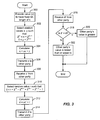
- FIG. 3 is a flowchart illustrating exemplar steps that can be executed in implementations of the present disclosure.
- FIG 4 is a schematic illustration of exemplar computer systems that can be used to execute implementations of the present disclosure.
- Implementations of the present disclosure are generally directed to comparing private values of respective parties.
- the parties would like to compare the private values without revealing the private values to the other party. Both parties contribute to the comparison, and are aware of the result of the comparison.
- implementations of the present disclosure significantly increase the efficiency and reduce the computing time required in effecting the comparison, while maintaining the security and confidentiality of the private values.
- the system 100 includes a first computing system 102, owned and/or operated by a first party, a second computing system 104, owned and/or operated by a second party, and a network 106.
- the network 106 can be provided as a large computer network, such as a local area network (LAN), wide area network (WAN), the Internet, a cellular network, or a combination thereof connecting any number of mobile clients, servers, and computing systems.
- LAN local area network
- WAN wide area network
- the Internet a cellular network, or a combination thereof connecting any number of mobile clients, servers, and computing systems.
- the computing systems 102, 104 represent various forms of processing devices including, but not limited to, a desktop computer, a laptop computer, a handheld computer, a personal digital assistant (PDA), a cellular telephone, a network appliance, a camera, a smart phone, an enhanced general packet radio service (EGPRS) mobile phone, a media player, a navigation device, an email device, a game console, or a combination of any two or more of these data processing devices or other data processing devices.
- PDA personal digital assistant
- GPRS enhanced general packet radio service
- the first computing system 102 includes an accessing unit 108, a processor unit 110 and a communication unit 112.
- the second computing system 104 includes an accessing unit 114, a processor unit 116 and a communication unit 118. Lines between components of the first computing system 102 or the second system 104 generally represent interfaces configured to exchange data in both directions between the components.
- the accessing units 108, 114 can each include volatile or non-volatile memory, such as random access memory (RAM), or read only memory (ROM) that store one or more private values associated with the first and second parties, respectively.
- the accessing unit 108, 114 can include a hard disc drive, a removable memory device (e.g., a removable universal system bus (USB) memory stick, a secure digital (SD) memory card, a compact disc (CD), a digital video disc (DVD), and/or other optical storage media), and/or a further, external computer system.
- the accessing unit 108 can store data associated with the first party, which data can include a private value (v a ) 120.
- the private value 120 is private, in that it is inaccessible by the second computing system 104 and/or any other, unauthorized computing system.
- the accessing unit 114 can store data associated with the second party, which data can include a private value (v b ) 122.
- the private value 122 is private, in that it is inaccessible by the second computing system 102 and/or any other, unauthorized computing system.
- the processor units 110, 116 can each include one or more processors that can access data stored in the accessing units 108, 114, respectively, and that can perform operations on the accessed data.
- the communication units 112, 118 each enable the respective computing systems 102, 104 to communicate with one another over the network 106.
- the first computing system 102 computes a contribution to a comparison of the first private value 120 and the second private value 122
- the second computing system 104 computes a contribution to the comparison.
- Each of the computing systems 102, 104 receives the other computing system's contribution and can independently execute the comparison.
- Block 200 indicates data values and comparison determined and/or performed by a first party (a), and block 202 indicates data values and comparison determined and/or performed by a second party (b).
- a private value (v a ) is associated with the first party, and a private value (v b ) is associated with the second party.
- the first party encodes v a (204) by adding 2 k-1 to provide v' a , such that v' a has a fixed bit-length equal to k bits.
- the processor unit 110 of the first computing system 102 can retrieve v a from the accessing unit 108; and can perform operations on v a to encode v a and generate v' a .
- the first party selects, or generates (206) random values x a and y a , such that: 2 2 ⁇ k ⁇ x a ⁇ 2 2 ⁇ k + 1 ; and 0 ⁇ y a ⁇ 2 2 ⁇ k - 2
- the processor unit 110 can select, or generate x a and y a based on k.
- x a has a bit length of 2k
- y a has a maximum bit length of 2k-2.
- the random values x a , y a can be pre-calculated and can be randomly selected from a list of pre-calculated, random values.
- the processor unit 110 calculates c a .
- the first party transmits (210) c a to the second party.
- the communication unit 112 of the first computing system 102 can transmit c a to the second computing system 104 over the network 106.
- c a can be encrypted prior to transmission to the second party.
- the second party encodes v b (212) by adding 2 k-1 to provide v' b , such that v' b has a fixed bit-length equal to k bits.
- the processor unit 116 of the second computing system 104 can retrieve v b from the accessing unit 114, and can perform operations on v b to encode v b and generate v' b .
- v b 100, in decimal (1100100, in binary).
- k 9
- v b is encoded by adding 256 (100000000, in binary).
- v' b is generated and is equal 356 (101100100, in binary, and having a bit-length equal to 9).
- the second party selects, or generates (214) random values x b and y b , such that: 2 2 ⁇ k ⁇ x b ⁇ 2 2 ⁇ k + 1 ; and 0 ⁇ y b ⁇ 2 2 ⁇ k - 2
- the processor unit 116 can select, or generate x b and y b based on k.
- x b has a bit length of 2k
- y b has a maximum bit length of 2k-2.
- the random values x b , y b can be pre-calculated and can be randomly selected from a list of pre-calculated, random values.
- the processor unit 116 calculates c b .
- the second party transmits (218) c b to the first party.
- the communication unit 118 of the second computing system 104 can transmit c b to the first computing system 102 over the network 106.
- c b can be encrypted prior to transmission to the first party.
- the first party receives (220) c b from the second party.
- the first computing system 102 receives c b from the second computing system 104 over the network 106. If c b was encrypted by the second party, the first party can decrypt c b .
- the first party selects, or generates (222) a random number r a , such that: 0 ⁇ r a ⁇ 2 4 ⁇ k - 2 4 ⁇ k - 1 + 2 2 ⁇ k + 1 + 2 2 ⁇ k - 2 - 1
- the processor unit 110 selects, or generates r a .
- the processor unit 110 calculates d a .
- the first party transmits (226) d a to the second party.
- the communication unit 112 of the first computing system 102 can transmit d a to the second computing system 104 over the network 106.
- d a can be encrypted prior to transmission to the second party.
- the second party receives (228) c a from the first party.
- the second computing system 104 receives c a from the first computing system 102 over the network 106. If c a was encrypted by the first party, the second party can decrypt c a .
- the second party selects, or generates (230) a random number r b , such that: 0 ⁇ r b ⁇ 2 4 ⁇ k - 2 4 ⁇ k - 1 + 2 2 ⁇ k + 1 + 2 2 ⁇ k - 2 - 1
- the processor unit 116 selects, or generates r b .
- the processor unit 116 calculates d b .
- the second party transmits (234) d b to the first party.
- the communication unit 118 of the second computing system 104 can transmit d b to the first computing system 102 over the network 106.
- d b can be encrypted prior to transmission to the first party.
- the first party receives (236) d b , and compares (238) d b to d a . If d b was encrypted by the second party, the first party can decrypt d b prior to comparing. Similarly, the second party receives (240) d a and compares (242) d a to d b . If d a was encrypted by the first party, the second party can decrypt d a prior to comparing. If d a is greater than d b , then v b is greater than v a . Otherwise, v a is greater than or equal to v b .
- Neither the intermediate values c a , c b , nor the comparison values d a , d b , reveals the respective private value, or relative magnitudes of the private values. For example, although the comparison indicates whether v a or v b is greater than the other, how much greater one private value is over the other is indeterminable from the information provided to the parties.
- the exemplar steps are from the point of view of one of the parties, and illustrate the particular party's contribution to the comparison of the private values (v). It is appreciated that the exemplar steps of FIG. 3 are performed by both parties to generate each party's contribution to the comparison of the private values (v).
- the private value v is encoded to generate an encoded value v' having a fixed bit-length equal to k.
- a processor unit can retrieve v from an accessing unit, and can perform operations on v to encode v and generate v'.
- random values x and y are selected.
- a processor unit can randomly generate, or select x and y.
- the intermediate value c is calculated in step 304.
- a processor unit can calculate c based on v', x and y.
- the intermediate value c is transmitted to the other party.
- a processor unit can provide c to a communication unit, which transmits c to the other party over a network.
- the party receives an intermediate value c' generated by the other party.
- a communications unit can receive c' from the other party over a network.
- the intermediate value received from the other party is designated as c'.
- a random value r is selected.
- a processor unit generates, or selects r.
- a comparison value d is calculated.
- a processor unit calculates d based on x, c' and r.
- the comparison value d is transmitted to the other party.
- a processor unit can provide d to a communication unit, which transmits d to the other party over a network.
- step 316 the party receives a comparison value d' generated by the other party.
- a communications unit can receive d' from the other party over a network.
- the comparison value received from the other party is designated as d'.
- step 318 it is determined whether d' is less than d.
- a processor unit can compare d' to d. If d' is less than d, it is determined that the other party's private value is greater in step 320, and the steps end. If d' is not less than d, it is determined that the other party's value is less than or equal in step 322, and the steps end.
- the systems and methods of the present disclosure provide a secure comparison of private values. That is, the private values of each of the first and second parties remain confidential, and neither the values themselves, their magnitudes, or their magnitude relative to one another are determinable from the intermediate value or comparison values that are transmitted between the first and second parties. Specifically, the security, or confidentiality of the private of the values is ensured using the randomly chosen summands, discussed above. Specifically, given two samples, the entropy of the random values remains at half the bit-length of the minimum random summand. This equals the entropy of the private value, such that no inferences as to the private values, magnitudes, and/or relative magnitudes is possible using either the intermediate values or the comparison values.
- the systems and methods of the present disclosure drastically improve efficiency, because a significantly reduced number of calculations are required as compared to traditional solutions, and no modular operations, such as modular exponentiation, are used. For example, for 16-bit values, the next best, traditional solution requires approximately 60,000 multiplication calculations, whereas the solution presented herein implements only 4 multiplication calculations. Consequently, the systems and methods of the present disclosure are thousands of times faster than systems and methods implementing traditional solutions.
- the system 400 can be used for the operations described in association with the implementations described herein.
- the system 400 may be included in any or all of the server components discussed herein.
- the system 400 includes a processor 410, a memory 420, a storage device 430, and an input/output device 440.
- Each of the components 410, 420, 430, and 440 are interconnected using a system bus 450.
- the processor 410 is capable of processing instructions for execution within the system 400.
- the processor 410 is a single-threaded processor.
- the processor 410 is a multi-threaded processor.
- the processor 410 is capable of processing instructions stored in the memory 420 or on the storage device 430 to display graphical information for a user interface on the input/output device 440.
- the memory 420 stores information within the system 400.
- the memory 420 is a computer-readable medium.
- the memory 420 is a volatile memory unit.
- the memory 420 is a non-volatile memory unit.
- the storage device 430 is capable of providing mass storage for the system 400.
- the storage device 430 is a computer-readable medium.
- the storage device 430 may be a floppy disk device, a hard disk device, an optical disk device, or a tape device.
- the input/output device 440 provides input/output operations for the system 400.
- the input/output device 440 includes a keyboard and/or pointing device.
- the input/output device 440 includes a display unit for displaying graphical user interfaces.
- the features described can be implemented in digital electronic circuitry, or in computer hardware, firmware, software, or in combinations of them.
- the apparatus can be implemented in a computer program product tangibly embodied in an information carrier, e.g., in a machine-readable storage device, for execution by a programmable processor; and method steps can be performed by a programmable processor executing a program of instructions to perform functions of the described implementations by operating on input data and generating output.
- the described features can be implemented advantageously in one or more computer programs that are executable on a programmable system including at least one programmable processor coupled to receive data and instructions from, and to transmit data and instructions to, a data storage system, at least one input device, and at least one output device.
- a computer program is a set of instructions that can be used, directly or indirectly, in a computer to perform a certain activity or bring about a certain result.
- a computer program can be written in any form of programming language, including compiled or interpreted languages, and it can be deployed in any form, including as a stand-alone program or as a module, component, subroutine, or other unit suitable for use in a computing environment.
- Suitable processors for the execution of a program of instructions include, by way of example, both general and special purpose microprocessors, and the sole processor or one of multiple processors of any kind of computer.
- a processor will receive instructions and data from a read-only memory or a random access memory or both.
- the essential elements of a computer are a processor for executing instructions and one or more memories for storing instructions and data.
- a computer will also include, or be operatively coupled to communicate with, one or more mass storage devices for storing data files; such devices include magnetic disks, such as internal hard disks and removable disks; magneto-optical disks; and optical disks.
- Storage devices suitable for tangibly embodying computer program instructions and data include all forms of non-volatile memory, including by way of example semiconductor memory devices, such as EPROM, EEPROM, and flash memory devices; magnetic disks such as internal hard disks and removable disks; magneto-optical disks; and CD-ROM and DVD-ROM disks.
- semiconductor memory devices such as EPROM, EEPROM, and flash memory devices
- magnetic disks such as internal hard disks and removable disks
- magneto-optical disks and CD-ROM and DVD-ROM disks.
- the processor and the memory can be supplemented by, or incorporated in, ASICs (application-specific integrated circuits).
- ASICs application-specific integrated circuits
- the features can be implemented on a computer having a display device such as a CRT (cathode ray tube) or LCD (liquid crystal display) monitor for displaying information to the user and a keyboard and a pointing device such as a mouse or a trackball by which the user can provide input to the computer.
- a display device such as a CRT (cathode ray tube) or LCD (liquid crystal display) monitor for displaying information to the user and a keyboard and a pointing device such as a mouse or a trackball by which the user can provide input to the computer.
- the features can be implemented in a computer system that includes a back-end component, such as a data server, or that includes a middleware component, such as an application server or an Internet server, or that includes a front-end component, such as a client computer having a graphical user interface or an Internet browser, or any combination of them.
- the components of the system can be connected by any form or medium of digital data communication such as a communication network. Examples of communication networks include, e.g., a LAN, a WAN, and the computers and networks forming the Internet.
- the computer system can include clients and servers.
- a client and server are generally remote from each other and typically interact through a network, such as the described one.
- the relationship of client and server arises by virtue of computer programs running on the respective computers and having a client-server relationship to each other.
Landscapes
- Engineering & Computer Science (AREA)
- Business, Economics & Management (AREA)
- Accounting & Taxation (AREA)
- Finance (AREA)
- Computer Security & Cryptography (AREA)
- Economics (AREA)
- Strategic Management (AREA)
- Physics & Mathematics (AREA)
- General Business, Economics & Management (AREA)
- General Physics & Mathematics (AREA)
- Marketing (AREA)
- Theoretical Computer Science (AREA)
- Development Economics (AREA)
- Computer Networks & Wireless Communication (AREA)
- Signal Processing (AREA)
- Information Transfer Between Computers (AREA)
- Mobile Radio Communication Systems (AREA)
- Telephonic Communication Services (AREA)
Abstract
Description
- Private data includes data that an owner does not want to share with another party. Private data can include, for example, legally protected and/or personal data. As one example, private data can include an amount of money that a party is willing to pay to acquire an object. As a counter-example, private data can include a demanded amount of money, for which a person is willing to sell the object.
- In some cases, two party's may wish to compare private data, without divulging the amount of value of the private data. Such a case is described as Yao's millionaires problem, which involves a comparison of private data. Yao's millionaire's problem includes two millionaires that would like to the amount of money that each one has without revealing the amount of money to each other. Although many solutions have been presented to resolve this problem, these solutions require significant computational efforts.
- Implementations of the present disclosure include methods for comparing a first value associated with a first party, and a second value associated with a second party. In some implementations, a method includes accessing the first private value from a computer-readable storage medium, generating a first intermediate value based on the first private value, receiving, at a computing system associated with the first party, from a further computing system associated with the second party over a network, a second intermediate value that is based on the second private value, generating a first comparison value based on the second intermediate value, receiving over the network a second comparison value that is based on the first intermediate value, comparing the first comparison value and the second comparison value to generate a result, and displaying the result on a display of a computing device, the result indicating that the first private is greater than the second private value when the first comparison value is less than the second comparison value, and the result indicating that the first private value is less than or equal to the second private value when the first comparison value is greater than the second comparison value.
- In some implementations, generating the first intermediate value includes encoding the first private value to provide a first encoded value, the first encoded value having a predetermined bit-length (k), determining a first random value and a second random value, and calculating the first intermediate value as a function of the first encoded value, the first random value and the second random value. In some implementations, the first random value is determined such that the first random value has a bit-length that is equal to 2k, and the second random value is determined such that the second random value is greater than or equal to zero and has a maximum bit-length of 2k-2. In some implementations, the first comparison value is determined further based on the first random value. In some implementations, at least one of the first and second random values is selected from a plurality of pre-calculated random values.
- In some implementations, the second intermediate value is generated by encoding the second private value to provide a second encoded value, the second encoded value having a predetermined bit-length (k), determining a first random value and a second random value, and calculating the second intermediate value as a function of the second encoded value, the first random value and the second random value. In some implementations, the first random value is determined such that the first random value has a bit-length that is equal to 2k, and the second random value is determined such that the second random value is greater than or equal to zero and has a maximum bit-length of 2k-2. In some implementations, the second comparison value is determined further based on the first random value. In some implementations, at least one of the first and second random values is selected from a plurality of pre-calculated random values.
- In some implementations, generating the first comparison value includes determining a first random value and a second random value, and calculating the first comparison value as a function of the second intermediate value, the first random value and the second random value. In some implementations, the first random value is determined such that the first random value has a bit-length that is equal to 2k, where k is a predetermined bit-length, and the second random value is determined such that the second random value is greater than or equal to zero and has a maximum bit-length of 4k-1. In some implementations, the first intermediate value is determined further based on the first random value.
- In some implementations, the second comparison value is generated by determining a first random value and a second random value, and calculating the second comparison value as a function of the first intermediate value, the first random value and the second random value. In some implementations, the first random value is determined such that the first random value has a bit-length that is equal to 2k, where k is a predetermined bit-length, and the second random value is determined such that the second random value is greater than or equal to zero and has a maximum bit-length of 4k-1. In some implementations, the second intermediate value is determined further based on the first random value.
- In some implementations, the method further includes sending the first intermediate value to the computing system associated with the second party over the network.
- In some implementations, the method further includes sending the first comparison value to the computing system associated with the second party over the network.
- The present disclosure also provides a computer-readable storage medium coupled to one or more processors and having instructions stored thereon which, when executed by the one or more processors, cause the one or more processors to perform operations in accordance with implementations of the methods provided herein.
- The present disclosure further provides a system for implementing the methods provided herein. The system includes one or more processors, and a computer-readable storage medium coupled to the one or more processors having instructions stored thereon which, when executed by the one or more processors, cause the one or more processors to perform operations in accordance with implementations of the methods provided herein.
- It is appreciated that methods in accordance with the present disclosure can include any combination of the aspects and features described herein. That is to say that methods in accordance with the present disclosure are not limited to the combinations of aspects and features specifically described herein, but also include any combination of the aspects and features provided.
- The details of one or more embodiments of the present disclosure are set forth in the accompanying drawings and the description below. Other features and advantages of the present disclosure will be apparent from the description and drawings, and from the claims.
-
FIG. 1 is a schematic illustration of an exemplar system architecture in accordance with implementations of the present disclosure. -
FIG. 2 is a block diagram illustrating an exemplar private value comparison between parties. -
FIG. 3 is a flowchart illustrating exemplar steps that can be executed in implementations of the present disclosure. -
FIG 4 is a schematic illustration of exemplar computer systems that can be used to execute implementations of the present disclosure. - Like reference symbols in the various drawings indicate like elements.
- Implementations of the present disclosure are generally directed to comparing private values of respective parties. In general, the parties would like to compare the private values without revealing the private values to the other party. Both parties contribute to the comparison, and are aware of the result of the comparison. As discussed in further detail herein, implementations of the present disclosure significantly increase the efficiency and reduce the computing time required in effecting the comparison, while maintaining the security and confidentiality of the private values.
- Referring now to
FIG 1 , a schematic illustration of anexemplar system 100 is provided. Thesystem 100 includes afirst computing system 102, owned and/or operated by a first party, asecond computing system 104, owned and/or operated by a second party, and anetwork 106. Thenetwork 106 can be provided as a large computer network, such as a local area network (LAN), wide area network (WAN), the Internet, a cellular network, or a combination thereof connecting any number of mobile clients, servers, and computing systems. Thecomputing systems - The
first computing system 102 includes anaccessing unit 108, aprocessor unit 110 and acommunication unit 112. Thesecond computing system 104 includes an accessingunit 114, aprocessor unit 116 and acommunication unit 118. Lines between components of thefirst computing system 102 or thesecond system 104 generally represent interfaces configured to exchange data in both directions between the components. - In some implementations, the accessing
units unit unit 108 can store data associated with the first party, which data can include a private value (va) 120. Theprivate value 120 is private, in that it is inaccessible by thesecond computing system 104 and/or any other, unauthorized computing system. The accessingunit 114 can store data associated with the second party, which data can include a private value (vb) 122. Theprivate value 122 is private, in that it is inaccessible by thesecond computing system 102 and/or any other, unauthorized computing system. Theprocessor units units communication units respective computing systems network 106. - As discussed in further detail herein, the
first computing system 102 computes a contribution to a comparison of the firstprivate value 120 and the secondprivate value 122, and thesecond computing system 104 computes a contribution to the comparison. Each of thecomputing systems - Referring now to
FIG. 2 , a block diagram illustrates an exemplar private value comparison between parties.Block 200 indicates data values and comparison determined and/or performed by a first party (a), andblock 202 indicates data values and comparison determined and/or performed by a second party (b). A private value (va) is associated with the first party, and a private value (vb) is associated with the second party. The first party encodes va (204) by adding 2k-1 to provide v'a, such that v'a has a fixed bit-length equal to k bits. For example, theprocessor unit 110 of thefirst computing system 102 can retrieve va from the accessingunit 108; and can perform operations on va to encode va and generate v'a. k is a fixed pre-agreed value, and is larger than the logarithm of the maximum value the first and second parties could want to compare. For example, if the first and second parties want to compare 32-bit numbers, then k = 33. - For purposes of illustration, a non-limiting example includes k = 9, and va = 7, in decimal (0111, in binary). Because k = 9, va is encoded by adding 256 (100000000, in binary). As a result, v'a is generated and is equal 263 (100000111, in binary, and having a bit-length equal to 9).
- The first party selects, or generates (206) random values xa and ya, such that:

and
For example, theprocessor unit 110 can select, or generate xa and ya based on k. In this manner, xa has a bit length of 2k, and ya has a maximum bit length of 2k-2. In some implementations, the random values xa, ya can be pre-calculated and can be randomly selected from a list of pre-calculated, random values. In this manner, processing speed can be increased, because the random values do not need to be generated to effect the comparison. The first party calculates (208) an intermediate value ca based on the following formula:
For example, theprocessor unit 110 calculates ca. The first party transmits (210) ca to the second party. For example, thecommunication unit 112 of thefirst computing system 102 can transmit ca to thesecond computing system 104 over thenetwork 106. In some implementations, ca can be encrypted prior to transmission to the second party. - The second party encodes vb (212) by adding 2k-1 to provide v'b, such that v'b has a fixed bit-length equal to k bits. For example, the
processor unit 116 of thesecond computing system 104 can retrieve vb from the accessingunit 114, and can perform operations on vb to encode vb and generate v'b. For purposes of illustration, the non-limiting example, above, includes k = 9. Continuing with this example, suppose vb = 100, in decimal (1100100, in binary). Because k = 9, vb is encoded by adding 256 (100000000, in binary). As a result, v'b is generated and is equal 356 (101100100, in binary, and having a bit-length equal to 9). - The second party selects, or generates (214) random values xb and yb, such that:

and
For example, theprocessor unit 116 can select, or generate xb and yb based on k. In this manner, xb has a bit length of 2k, and yb has a maximum bit length of 2k-2. In some implementations, the random values xb, yb can be pre-calculated and can be randomly selected from a list of pre-calculated, random values. In this manner, processing speed can be increased, because the random values do not need to be generated to effect the comparison. The second party calculates (216) an intermediate value cb based on the following formula:
For example, theprocessor unit 116 calculates cb. The second party transmits (218) cb to the first party. For example, thecommunication unit 118 of thesecond computing system 104 can transmit cb to thefirst computing system 102 over thenetwork 106. In some implementations, cb can be encrypted prior to transmission to the first party. - The first party receives (220) cb from the second party. For example, the
first computing system 102 receives cb from thesecond computing system 104 over thenetwork 106. If cb was encrypted by the second party, the first party can decrypt cb. The first party selects, or generates (222) a random number ra, such that:
For example, theprocessor unit 110 selects, or generates ra. In this manner, because the bit length is fixed to k bits, ra is fixed to a maximum bit length of 4k-1. In some implementations, the random number ra can be pre-calculated and can be randomly selected from a list of pre-calculated, random values. In this manner, processing speed can be increased, because the random number does not need to be generated to effect the comparison. The first party calculates (224) a comparison value da based on the following formula:
For example, theprocessor unit 110 calculates da. The first party transmits (226) da to the second party. For example, thecommunication unit 112 of thefirst computing system 102 can transmit da to thesecond computing system 104 over thenetwork 106. In some implementations, da can be encrypted prior to transmission to the second party. - The second party receives (228) ca from the first party. For example, the
second computing system 104 receives ca from thefirst computing system 102 over thenetwork 106. If ca was encrypted by the first party, the second party can decrypt ca. The second party selects, or generates (230) a random number rb, such that:
For example, theprocessor unit 116 selects, or generates rb. In this manner, because the bit length is fixed to k bits, rb is fixed to a maximum bit length of 4k-1. In some implementations, the random number rb can be pre-calculated and can be randomly selected from a list of pre-calculated, random values. In this manner, processing speed can be increased, because the random number does not need to be generated to effect the comparison. The second party calculates (232) a comparison value db based on the following formula:
For example, theprocessor unit 116 calculates db. The second party transmits (234) db to the first party. For example, thecommunication unit 118 of thesecond computing system 104 can transmit db to thefirst computing system 102 over thenetwork 106. In some implementations, db can be encrypted prior to transmission to the first party. - The first party receives (236) db, and compares (238) db to da. If db was encrypted by the second party, the first party can decrypt db prior to comparing. Similarly, the second party receives (240) da and compares (242) da to db. If da was encrypted by the first party, the second party can decrypt da prior to comparing. If da is greater than db, then vb is greater than va. Otherwise, va is greater than or equal to vb. Neither the intermediate values ca, cb, nor the comparison values da, db, reveals the respective private value, or relative magnitudes of the private values. For example, although the comparison indicates whether va or vb is greater than the other, how much greater one private value is over the other is indeterminable from the information provided to the parties.
- Referring now to
FIG. 3 , exemplar steps that can be executed in accordance with implementations of the present disclosure will be described. In general, the exemplar steps are from the point of view of one of the parties, and illustrate the particular party's contribution to the comparison of the private values (v). It is appreciated that the exemplar steps ofFIG. 3 are performed by both parties to generate each party's contribution to the comparison of the private values (v). - In
step 300, the private value v is encoded to generate an encoded value v' having a fixed bit-length equal to k. For example, a processor unit can retrieve v from an accessing unit, and can perform operations on v to encode v and generate v'. Instep 302, random values x and y are selected. For example, a processor unit can randomly generate, or select x and y. The intermediate value c is calculated instep 304. For example, a processor unit can calculate c based on v', x and y. Instep 306, the intermediate value c is transmitted to the other party. For example, a processor unit can provide c to a communication unit, which transmits c to the other party over a network. - In
step 308, the party receives an intermediate value c' generated by the other party. For example, a communications unit can receive c' from the other party over a network. For purposes of clarity, the intermediate value received from the other party is designated as c'. Instep 310, a random value r is selected. For example, a processor unit generates, or selects r. Instep 312, a comparison value d is calculated. For example, a processor unit calculates d based on x, c' and r. Instep 314, the comparison value d is transmitted to the other party. For example, a processor unit can provide d to a communication unit, which transmits d to the other party over a network. - In
step 316, the party receives a comparison value d' generated by the other party. For example, a communications unit can receive d' from the other party over a network. For purposes of clarity, the comparison value received from the other party is designated as d'. Instep 318, it is determined whether d' is less than d. For example, a processor unit can compare d' to d. If d' is less than d, it is determined that the other party's private value is greater instep 320, and the steps end. If d' is not less than d, it is determined that the other party's value is less than or equal instep 322, and the steps end. - The systems and methods of the present disclosure provide a secure comparison of private values. That is, the private values of each of the first and second parties remain confidential, and neither the values themselves, their magnitudes, or their magnitude relative to one another are determinable from the intermediate value or comparison values that are transmitted between the first and second parties. Specifically, the security, or confidentiality of the private of the values is ensured using the randomly chosen summands, discussed above. Specifically, given two samples, the entropy of the random values remains at half the bit-length of the minimum random summand. This equals the entropy of the private value, such that no inferences as to the private values, magnitudes, and/or relative magnitudes is possible using either the intermediate values or the comparison values.
- The systems and methods of the present disclosure drastically improve efficiency, because a significantly reduced number of calculations are required as compared to traditional solutions, and no modular operations, such as modular exponentiation, are used. For example, for 16-bit values, the next best, traditional solution requires approximately 60,000 multiplication calculations, whereas the solution presented herein implements only 4 multiplication calculations. Consequently, the systems and methods of the present disclosure are thousands of times faster than systems and methods implementing traditional solutions.
- Referring now to
FIG. 4 , a schematic diagram of anexemplar computing system 400 is provided. Thesystem 400 can be used for the operations described in association with the implementations described herein. For example, thesystem 400 may be included in any or all of the server components discussed herein. Thesystem 400 includes aprocessor 410, a memory 420, astorage device 430, and an input/output device 440. Each of thecomponents system bus 450. Theprocessor 410 is capable of processing instructions for execution within thesystem 400. In one implementation, theprocessor 410 is a single-threaded processor. In another implementation, theprocessor 410 is a multi-threaded processor. Theprocessor 410 is capable of processing instructions stored in the memory 420 or on thestorage device 430 to display graphical information for a user interface on the input/output device 440. - The memory 420 stores information within the
system 400. In one implementation, the memory 420 is a computer-readable medium. In one implementation, the memory 420 is a volatile memory unit. In another implementation, the memory 420 is a non-volatile memory unit. Thestorage device 430 is capable of providing mass storage for thesystem 400. In one implementation, thestorage device 430 is a computer-readable medium. In various different implementations, thestorage device 430 may be a floppy disk device, a hard disk device, an optical disk device, or a tape device. The input/output device 440 provides input/output operations for thesystem 400. In one implementation, the input/output device 440 includes a keyboard and/or pointing device. In another implementation, the input/output device 440 includes a display unit for displaying graphical user interfaces. - The features described can be implemented in digital electronic circuitry, or in computer hardware, firmware, software, or in combinations of them. The apparatus can be implemented in a computer program product tangibly embodied in an information carrier, e.g., in a machine-readable storage device, for execution by a programmable processor; and method steps can be performed by a programmable processor executing a program of instructions to perform functions of the described implementations by operating on input data and generating output. The described features can be implemented advantageously in one or more computer programs that are executable on a programmable system including at least one programmable processor coupled to receive data and instructions from, and to transmit data and instructions to, a data storage system, at least one input device, and at least one output device. A computer program is a set of instructions that can be used, directly or indirectly, in a computer to perform a certain activity or bring about a certain result. A computer program can be written in any form of programming language, including compiled or interpreted languages, and it can be deployed in any form, including as a stand-alone program or as a module, component, subroutine, or other unit suitable for use in a computing environment.
- Suitable processors for the execution of a program of instructions include, by way of example, both general and special purpose microprocessors, and the sole processor or one of multiple processors of any kind of computer. Generally, a processor will receive instructions and data from a read-only memory or a random access memory or both. The essential elements of a computer are a processor for executing instructions and one or more memories for storing instructions and data. Generally, a computer will also include, or be operatively coupled to communicate with, one or more mass storage devices for storing data files; such devices include magnetic disks, such as internal hard disks and removable disks; magneto-optical disks; and optical disks. Storage devices suitable for tangibly embodying computer program instructions and data include all forms of non-volatile memory, including by way of example semiconductor memory devices, such as EPROM, EEPROM, and flash memory devices; magnetic disks such as internal hard disks and removable disks; magneto-optical disks; and CD-ROM and DVD-ROM disks. The processor and the memory can be supplemented by, or incorporated in, ASICs (application-specific integrated circuits).
- To provide for interaction with a user, the features can be implemented on a computer having a display device such as a CRT (cathode ray tube) or LCD (liquid crystal display) monitor for displaying information to the user and a keyboard and a pointing device such as a mouse or a trackball by which the user can provide input to the computer.
- The features can be implemented in a computer system that includes a back-end component, such as a data server, or that includes a middleware component, such as an application server or an Internet server, or that includes a front-end component, such as a client computer having a graphical user interface or an Internet browser, or any combination of them. The components of the system can be connected by any form or medium of digital data communication such as a communication network. Examples of communication networks include, e.g., a LAN, a WAN, and the computers and networks forming the Internet.
- The computer system can include clients and servers. A client and server are generally remote from each other and typically interact through a network, such as the described one. The relationship of client and server arises by virtue of computer programs running on the respective computers and having a client-server relationship to each other.
- In addition, the logic flows depicted in the figures do not require the particular order shown, or sequential order, to achieve desirable results. In addition, other steps may be provided, or steps may be eliminated, from the described flows, and other components may be added to, or removed from, the described systems. Accordingly, other implementations are within the scope of the following claims.
- A number of implementations of the present disclosure have been described. Nevertheless, it will be understood that various modifications may be made without departing from the spirit and scope of the present disclosure. Accordingly, other implementations are within the scope of the following claims.
Claims (15)
- A computer-implemented method of comparing a first private value associated with a first party with a second private value associated with a second party, comprising:accessing the first private value from a computer-readable storage medium;generating a first intermediate value based on the first private value;receiving, at a computing system associated with the first party, from a further computing system associated with the second party over a network, a second intermediate value that is based on the second private value;generating a first comparison value based on the second intermediate value;receiving over the network a second comparison value that is based on the first intermediate value;comparing the first comparison value and the second comparison value to generate a result; anddisplaying the result on a display of a computing device, the result indicating that the first private is greater than the second private value when the first comparison value is less than the second comparison value, and the result indicating that the first private value is less than or equal to the second private value when the first comparison value is greater than the second comparison value.
- The method of claim 1, wherein generating the first intermediate value comprises:encoding the first private value to provide a first encoded value, the first encoded value having a predetermined bit-length (k);determining a first random value and a second random value; andcalculating the first intermediate value as a function of the first encoded value, the first random value and the second random value.
- The method of claim 2, wherein the first comparison value is determined further based on the first random value.
- The method of any one of the preceding claims, wherein the second intermediate value is generated by:encoding the second private value to provide a second encoded value, the second encoded value having a predetermined bit-length (k);determining a first random value and a second random value; andcalculating the second intermediate value as a function of the second encoded value, the first random value and the second random value.
- The method of claim 4, wherein the second comparison value is determined further based on the first random value.
- The method of any one of claims 2 to 5, wherein:the first random value is determined such that the first random value has a bit-length that is equal to 2k; andthe second random value is determined such that the second random value is greater than or equal to zero and has a maximum bit-length of 2k-2.
- The method of any one of the preceding claims, wherein generating the first comparison value comprises:determining a first random value and a second random value; andcalculating the first comparison value as a function of the second intermediate value, the first random value and the second random value.
- The method of claim 7, wherein the first intermediate value is determined further based on the first random value.
- The method of any one of the preceding claims, wherein the second comparison value is generated by:determining a first random value and a second random value; andcalculating the second comparison value as a function of the first intermediate value, the first random value and the second random value.
- The method of claim 9, wherein the second intermediate value is determined further based on the first random value.
- The method of any one of claims 7 to 10, wherein:the first random value is determined such that the first random value has a bit-length that is equal to 2k, where k is a predetermined bit-length; andthe second random value is determined such that the second random value is greater than or equal to zero and has a maximum bit-length of 4k-1.
- The method of any one of claims 2 to 11, wherein at least one of the first and second random values is selected from a plurality of pre-calculated random values.
- The method of any one of the preceding claims, further comprising sending the first intermediate value to the computing system associated with the second party over the network; and/or
further comprising sending the first comparison value to the computing system associated with the second party over the network. - A computer-readable storage medium coupled to one or more processors having instructions stored thereon which, when executed by the one or more processors, cause the one or more processors to perform operations to compare a first private value associated with a first party to a second private value associated with a second party, the operations comprising:accessing the first private value;generating a first intermediate value based on the first private value;receiving a second intermediate value that is based on the second private value;generating a first comparison value based on the second intermediate value;receiving over the network a second comparison value that is based on the first intermediate value;comparing the first comparison value and the second comparison value to generate a result; anddisplaying the result on a display of a computing device, the result indicating that the first private is greater than the second private value when the first comparison value is less than the second comparison value, and the result indicating that the first private value is less than or equal to the second private value when the first comparison value is greater than the second comparison value.
- A system, comprising:a display;one or more processors; anda computer-readable storage medium coupled to the one or more processors having instructions stored thereon which, when executed by the one or more processors, cause the one or more processors to perform operations to compare a first private value associated with a first party to a second private value associated with a second party, the operations comprising:accessing the first private value;generating a first intermediate value based on the first private value;receiving, from a computing system associated with the second party over a network, a second intermediate value that is based on the second private value;generating a first comparison value based on the second intermediate value;receiving over the network a second comparison value that is based on the first intermediate value;comparing the first comparison value and the second comparison value to generate a result; anddisplaying the result on the display, the result indicating that the first private is greater than the second private value when the first comparison value is less than the second comparison value, and the result indicating that the first private value is less than or equal to the second private value when the first comparison value is greater than the second comparison value.
Applications Claiming Priority (1)
| Application Number | Priority Date | Filing Date | Title |
|---|---|---|---|
| US12/772,302 US8473741B2 (en) | 2010-05-03 | 2010-05-03 | System and method for comparing private data |
Publications (2)
| Publication Number | Publication Date |
|---|---|
| EP2385491A1 true EP2385491A1 (en) | 2011-11-09 |
| EP2385491B1 EP2385491B1 (en) | 2014-04-09 |
Family
ID=44117091
Family Applications (1)
| Application Number | Title | Priority Date | Filing Date |
|---|---|---|---|
| EP11003376.8A Active EP2385491B1 (en) | 2010-05-03 | 2011-04-21 | System and method for comparing private data |
Country Status (2)
| Country | Link |
|---|---|
| US (1) | US8473741B2 (en) |
| EP (1) | EP2385491B1 (en) |
Families Citing this family (8)
| Publication number | Priority date | Publication date | Assignee | Title |
|---|---|---|---|---|
| CN103530569B (en) * | 2013-09-12 | 2016-03-30 | 北京邮电大学 | private data automatic setting method and device |
| US9740879B2 (en) | 2014-10-29 | 2017-08-22 | Sap Se | Searchable encryption with secure and efficient updates |
| US9342707B1 (en) * | 2014-11-06 | 2016-05-17 | Sap Se | Searchable encryption for infrequent queries in adjustable encrypted databases |
| US9830470B2 (en) | 2015-10-09 | 2017-11-28 | Sap Se | Encrypting data for analytical web applications |
| US10746567B1 (en) | 2019-03-22 | 2020-08-18 | Sap Se | Privacy preserving smart metering |
| CN111046409B (en) * | 2019-12-16 | 2021-04-13 | 支付宝(杭州)信息技术有限公司 | A private data multi-party secure computing method and system |
| CN113708930B (en) * | 2021-10-20 | 2022-01-21 | 杭州趣链科技有限公司 | Data comparison method, device, equipment and medium for private data |
| CN114297726B (en) * | 2021-12-28 | 2025-08-29 | 萨思数字科技(北京)有限公司 | Multiplication execution method and device based on secure multi-party computing |
Citations (1)
| Publication number | Priority date | Publication date | Assignee | Title |
|---|---|---|---|---|
| EP1804416A1 (en) * | 2006-01-02 | 2007-07-04 | Sap Ag | System and method for comparison of private values |
Family Cites Families (1)
| Publication number | Priority date | Publication date | Assignee | Title |
|---|---|---|---|---|
| US6772339B1 (en) * | 2000-03-13 | 2004-08-03 | Lucent Technologies Inc. | Mix and match: a new approach to secure multiparty computation |
-
2010
- 2010-05-03 US US12/772,302 patent/US8473741B2/en active Active
-
2011
- 2011-04-21 EP EP11003376.8A patent/EP2385491B1/en active Active
Patent Citations (1)
| Publication number | Priority date | Publication date | Assignee | Title |
|---|---|---|---|---|
| EP1804416A1 (en) * | 2006-01-02 | 2007-07-04 | Sap Ag | System and method for comparison of private values |
Non-Patent Citations (4)
| Title |
|---|
| ANONYMOUS: "Secure Supply Chain Management - WP3 Protocol Development - D3.2 Protocol Description V2", INTERNET ARTICLE, 1 January 2010 (2010-01-01), XP055003145, Retrieved from the Internet <URL:http://www.securescm.org/index.php?option=com_docman&task=doc_download&gid=11&&Itemid=24> [retrieved on 20110720] * |
| FLORIAN KERSCHBAUM ET AL: "Performance Comparison of Secure Comparison Protocols", DATABASE AND EXPERT SYSTEMS APPLICATION, 2009. DEXA '09. 20TH INTERNATIONAL WORKSHOP ON, IEEE, PISCATAWAY, NJ, USA, 31 August 2009 (2009-08-31), pages 133 - 136, XP031569418, ISBN: 978-0-7695-3763-4 * |
| HUAFEI ZHU ET AL: "A Novel Construction of Two-Party Private Bidding Protocols from Yao's Millionaires Problem", 1 January 2005, TRUST, PRIVACY AND SECURITY IN DIGITAL BUSINESS LECTURE NOTES IN COMPUTER SCIENCE;;LNCS, SPRINGER, BERLIN, DE, PAGE(S) 266 - 273, ISBN: 978-3-540-28224-2, XP019016891 * |
| VLADIMIR KOLESNIKOV ET AL: "Improved Garbled Circuit Building Blocks and Applications to Auctions and Computing Minima", 12 December 2009, CRYPTOLOGY AND NETWORK SECURITY, SPRINGER BERLIN HEIDELBERG, BERLIN, HEIDELBERG, PAGE(S) 1 - 20, ISBN: 978-3-642-10432-9, XP019134671 * |
Also Published As
| Publication number | Publication date |
|---|---|
| US8473741B2 (en) | 2013-06-25 |
| US20110271107A1 (en) | 2011-11-03 |
| EP2385491B1 (en) | 2014-04-09 |
Similar Documents
| Publication | Publication Date | Title |
|---|---|---|
| US8473741B2 (en) | System and method for comparing private data | |
| US20200162235A1 (en) | Terminal device performing homomorphic encryption, server device processing ciphertext and methods thereof | |
| US8572405B2 (en) | Collusion-resistant outsourcing of private set intersection | |
| US10951394B2 (en) | System and method for publication of private data using a blockchain network | |
| US9900147B2 (en) | Homomorphic encryption with optimized homomorphic operations | |
| JP7152909B2 (en) | Systems and methods for secure two-party evaluation of data-sharing utility | |
| US20020186837A1 (en) | Multiple prime number generation using a parallel prime number search algorithm | |
| US20130151540A1 (en) | Privacy-preserving collaborative filtering | |
| Meneses et al. | RSA encryption algorithm optimization to improve performance and security level of network messages | |
| US20230119749A1 (en) | Large-precision homomorphic comparison using bootstrapping | |
| US8891762B2 (en) | Method for privacy-preserving order selection of encrypted element | |
| US20230336344A1 (en) | Data processing methods, apparatuses, and computer devices for privacy protection | |
| CN111917533A (en) | Privacy preserving benchmark analysis with leakage reducing interval statistics | |
| US9813232B2 (en) | Device and method for resisting non-invasive attacks | |
| CN113434906B (en) | Data query method, device, computer equipment and storage medium | |
| US12362903B2 (en) | RNS-based CKKS variant with minimal rescaling error | |
| CN113645025A (en) | Data encryption storage method, storage device, user equipment and storage medium | |
| CN109495266B (en) | Data encryption method and device based on random number | |
| CN115618380B (en) | Data processing method, device, equipment and medium | |
| CN115438381A (en) | Privacy set intersection method, device, equipment and medium based on equality policy | |
| US20240039695A1 (en) | Electronic apparatus for generating homomorphic encrypted message and method therefor | |
| CN112182594A (en) | A data encryption method and device | |
| CN118118164A (en) | Data protection method, prediction method and device based on vertical federated learning model | |
| CN111461728B (en) | Risk identification method, device and system | |
| Kumar et al. | Data confidentiality and integrity preserving outsourcing algorithm for matrix chain multiplication over malicious cloud server |
Legal Events
| Date | Code | Title | Description |
|---|---|---|---|
| AK | Designated contracting states |
Kind code of ref document: A1 Designated state(s): AL AT BE BG CH CY CZ DE DK EE ES FI FR GB GR HR HU IE IS IT LI LT LU LV MC MK MT NL NO PL PT RO RS SE SI SK SM TR |
|
| AX | Request for extension of the european patent |
Extension state: BA ME |
|
| PUAI | Public reference made under article 153(3) epc to a published international application that has entered the european phase |
Free format text: ORIGINAL CODE: 0009012 |
|
| 17P | Request for examination filed |
Effective date: 20120209 |
|
| 17Q | First examination report despatched |
Effective date: 20120319 |
|
| GRAP | Despatch of communication of intention to grant a patent |
Free format text: ORIGINAL CODE: EPIDOSNIGR1 |
|
| INTG | Intention to grant announced |
Effective date: 20131217 |
|
| GRAS | Grant fee paid |
Free format text: ORIGINAL CODE: EPIDOSNIGR3 |
|
| GRAA | (expected) grant |
Free format text: ORIGINAL CODE: 0009210 |
|
| AK | Designated contracting states |
Kind code of ref document: B1 Designated state(s): AL AT BE BG CH CY CZ DE DK EE ES FI FR GB GR HR HU IE IS IT LI LT LU LV MC MK MT NL NO PL PT RO RS SE SI SK SM TR |
|
| REG | Reference to a national code |
Ref country code: GB Ref legal event code: FG4D |
|
| REG | Reference to a national code |
Ref country code: CH Ref legal event code: EP Ref country code: AT Ref legal event code: REF Ref document number: 661701 Country of ref document: AT Kind code of ref document: T Effective date: 20140415 |
|
| REG | Reference to a national code |
Ref country code: IE Ref legal event code: FG4D |
|
| REG | Reference to a national code |
Ref country code: DE Ref legal event code: R096 Ref document number: 602011005985 Country of ref document: DE Effective date: 20140522 |
|
| REG | Reference to a national code |
Ref country code: AT Ref legal event code: MK05 Ref document number: 661701 Country of ref document: AT Kind code of ref document: T Effective date: 20140409 |
|
| REG | Reference to a national code |
Ref country code: NL Ref legal event code: VDEP Effective date: 20140409 |
|
| REG | Reference to a national code |
Ref country code: LT Ref legal event code: MG4D |
|
| RAP2 | Party data changed (patent owner data changed or rights of a patent transferred) |
Owner name: SAP SE |
|
| PG25 | Lapsed in a contracting state [announced via postgrant information from national office to epo] |
Ref country code: NO Free format text: LAPSE BECAUSE OF FAILURE TO SUBMIT A TRANSLATION OF THE DESCRIPTION OR TO PAY THE FEE WITHIN THE PRESCRIBED TIME-LIMIT Effective date: 20140709 Ref country code: NL Free format text: LAPSE BECAUSE OF FAILURE TO SUBMIT A TRANSLATION OF THE DESCRIPTION OR TO PAY THE FEE WITHIN THE PRESCRIBED TIME-LIMIT Effective date: 20140409 Ref country code: BG Free format text: LAPSE BECAUSE OF FAILURE TO SUBMIT A TRANSLATION OF THE DESCRIPTION OR TO PAY THE FEE WITHIN THE PRESCRIBED TIME-LIMIT Effective date: 20140709 Ref country code: GR Free format text: LAPSE BECAUSE OF FAILURE TO SUBMIT A TRANSLATION OF THE DESCRIPTION OR TO PAY THE FEE WITHIN THE PRESCRIBED TIME-LIMIT Effective date: 20140710 Ref country code: FI Free format text: LAPSE BECAUSE OF FAILURE TO SUBMIT A TRANSLATION OF THE DESCRIPTION OR TO PAY THE FEE WITHIN THE PRESCRIBED TIME-LIMIT Effective date: 20140409 Ref country code: LT Free format text: LAPSE BECAUSE OF FAILURE TO SUBMIT A TRANSLATION OF THE DESCRIPTION OR TO PAY THE FEE WITHIN THE PRESCRIBED TIME-LIMIT Effective date: 20140409 Ref country code: IS Free format text: LAPSE BECAUSE OF FAILURE TO SUBMIT A TRANSLATION OF THE DESCRIPTION OR TO PAY THE FEE WITHIN THE PRESCRIBED TIME-LIMIT Effective date: 20140809 |
|
| PG25 | Lapsed in a contracting state [announced via postgrant information from national office to epo] |
Ref country code: SE Free format text: LAPSE BECAUSE OF FAILURE TO SUBMIT A TRANSLATION OF THE DESCRIPTION OR TO PAY THE FEE WITHIN THE PRESCRIBED TIME-LIMIT Effective date: 20140409 Ref country code: PL Free format text: LAPSE BECAUSE OF FAILURE TO SUBMIT A TRANSLATION OF THE DESCRIPTION OR TO PAY THE FEE WITHIN THE PRESCRIBED TIME-LIMIT Effective date: 20140409 Ref country code: AT Free format text: LAPSE BECAUSE OF FAILURE TO SUBMIT A TRANSLATION OF THE DESCRIPTION OR TO PAY THE FEE WITHIN THE PRESCRIBED TIME-LIMIT Effective date: 20140409 Ref country code: LV Free format text: LAPSE BECAUSE OF FAILURE TO SUBMIT A TRANSLATION OF THE DESCRIPTION OR TO PAY THE FEE WITHIN THE PRESCRIBED TIME-LIMIT Effective date: 20140409 Ref country code: HR Free format text: LAPSE BECAUSE OF FAILURE TO SUBMIT A TRANSLATION OF THE DESCRIPTION OR TO PAY THE FEE WITHIN THE PRESCRIBED TIME-LIMIT Effective date: 20140409 Ref country code: ES Free format text: LAPSE BECAUSE OF FAILURE TO SUBMIT A TRANSLATION OF THE DESCRIPTION OR TO PAY THE FEE WITHIN THE PRESCRIBED TIME-LIMIT Effective date: 20140409 Ref country code: RS Free format text: LAPSE BECAUSE OF FAILURE TO SUBMIT A TRANSLATION OF THE DESCRIPTION OR TO PAY THE FEE WITHIN THE PRESCRIBED TIME-LIMIT Effective date: 20140409 |
|
| REG | Reference to a national code |
Ref country code: CH Ref legal event code: PL |
|
| REG | Reference to a national code |
Ref country code: DE Ref legal event code: R082 Ref document number: 602011005985 Country of ref document: DE Representative=s name: MUELLER-BORE & PARTNER PATENTANWAELTE PARTG MB, DE |
|
| PG25 | Lapsed in a contracting state [announced via postgrant information from national office to epo] |
Ref country code: PT Free format text: LAPSE BECAUSE OF FAILURE TO SUBMIT A TRANSLATION OF THE DESCRIPTION OR TO PAY THE FEE WITHIN THE PRESCRIBED TIME-LIMIT Effective date: 20140811 |
|
| REG | Reference to a national code |
Ref country code: DE Ref legal event code: R097 Ref document number: 602011005985 Country of ref document: DE |
|
| REG | Reference to a national code |
Ref country code: DE Ref legal event code: R082 Ref document number: 602011005985 Country of ref document: DE Representative=s name: MUELLER-BORE & PARTNER PATENTANWAELTE PARTG MB, DE Effective date: 20141210 Ref country code: DE Ref legal event code: R081 Ref document number: 602011005985 Country of ref document: DE Owner name: SAP SE, DE Free format text: FORMER OWNER: SAP AG, 69190 WALLDORF, DE Effective date: 20141210 |
|
| REG | Reference to a national code |
Ref country code: IE Ref legal event code: MM4A |
|
| PG25 | Lapsed in a contracting state [announced via postgrant information from national office to epo] |
Ref country code: BE Free format text: LAPSE BECAUSE OF FAILURE TO SUBMIT A TRANSLATION OF THE DESCRIPTION OR TO PAY THE FEE WITHIN THE PRESCRIBED TIME-LIMIT Effective date: 20140409 Ref country code: EE Free format text: LAPSE BECAUSE OF FAILURE TO SUBMIT A TRANSLATION OF THE DESCRIPTION OR TO PAY THE FEE WITHIN THE PRESCRIBED TIME-LIMIT Effective date: 20140409 Ref country code: SK Free format text: LAPSE BECAUSE OF FAILURE TO SUBMIT A TRANSLATION OF THE DESCRIPTION OR TO PAY THE FEE WITHIN THE PRESCRIBED TIME-LIMIT Effective date: 20140409 Ref country code: CZ Free format text: LAPSE BECAUSE OF FAILURE TO SUBMIT A TRANSLATION OF THE DESCRIPTION OR TO PAY THE FEE WITHIN THE PRESCRIBED TIME-LIMIT Effective date: 20140409 Ref country code: MC Free format text: LAPSE BECAUSE OF FAILURE TO SUBMIT A TRANSLATION OF THE DESCRIPTION OR TO PAY THE FEE WITHIN THE PRESCRIBED TIME-LIMIT Effective date: 20140409 Ref country code: DK Free format text: LAPSE BECAUSE OF FAILURE TO SUBMIT A TRANSLATION OF THE DESCRIPTION OR TO PAY THE FEE WITHIN THE PRESCRIBED TIME-LIMIT Effective date: 20140409 Ref country code: RO Free format text: LAPSE BECAUSE OF FAILURE TO SUBMIT A TRANSLATION OF THE DESCRIPTION OR TO PAY THE FEE WITHIN THE PRESCRIBED TIME-LIMIT Effective date: 20140409 Ref country code: LI Free format text: LAPSE BECAUSE OF NON-PAYMENT OF DUE FEES Effective date: 20140430 Ref country code: CH Free format text: LAPSE BECAUSE OF NON-PAYMENT OF DUE FEES Effective date: 20140430 |
|
| PLBE | No opposition filed within time limit |
Free format text: ORIGINAL CODE: 0009261 |
|
| STAA | Information on the status of an ep patent application or granted ep patent |
Free format text: STATUS: NO OPPOSITION FILED WITHIN TIME LIMIT |
|
| 26N | No opposition filed |
Effective date: 20150112 |
|
| PG25 | Lapsed in a contracting state [announced via postgrant information from national office to epo] |
Ref country code: IT Free format text: LAPSE BECAUSE OF FAILURE TO SUBMIT A TRANSLATION OF THE DESCRIPTION OR TO PAY THE FEE WITHIN THE PRESCRIBED TIME-LIMIT Effective date: 20140409 |
|
| REG | Reference to a national code |
Ref country code: DE Ref legal event code: R097 Ref document number: 602011005985 Country of ref document: DE Effective date: 20150112 |
|
| PG25 | Lapsed in a contracting state [announced via postgrant information from national office to epo] |
Ref country code: IE Free format text: LAPSE BECAUSE OF NON-PAYMENT OF DUE FEES Effective date: 20140421 |
|
| PG25 | Lapsed in a contracting state [announced via postgrant information from national office to epo] |
Ref country code: SI Free format text: LAPSE BECAUSE OF FAILURE TO SUBMIT A TRANSLATION OF THE DESCRIPTION OR TO PAY THE FEE WITHIN THE PRESCRIBED TIME-LIMIT Effective date: 20140409 |
|
| REG | Reference to a national code |
Ref country code: FR Ref legal event code: PLFP Year of fee payment: 6 |
|
| PG25 | Lapsed in a contracting state [announced via postgrant information from national office to epo] |
Ref country code: MT Free format text: LAPSE BECAUSE OF FAILURE TO SUBMIT A TRANSLATION OF THE DESCRIPTION OR TO PAY THE FEE WITHIN THE PRESCRIBED TIME-LIMIT Effective date: 20140409 |
|
| PG25 | Lapsed in a contracting state [announced via postgrant information from national office to epo] |
Ref country code: SM Free format text: LAPSE BECAUSE OF FAILURE TO SUBMIT A TRANSLATION OF THE DESCRIPTION OR TO PAY THE FEE WITHIN THE PRESCRIBED TIME-LIMIT Effective date: 20140409 |
|
| PG25 | Lapsed in a contracting state [announced via postgrant information from national office to epo] |
Ref country code: CY Free format text: LAPSE BECAUSE OF FAILURE TO SUBMIT A TRANSLATION OF THE DESCRIPTION OR TO PAY THE FEE WITHIN THE PRESCRIBED TIME-LIMIT Effective date: 20140409 |
|
| PG25 | Lapsed in a contracting state [announced via postgrant information from national office to epo] |
Ref country code: TR Free format text: LAPSE BECAUSE OF FAILURE TO SUBMIT A TRANSLATION OF THE DESCRIPTION OR TO PAY THE FEE WITHIN THE PRESCRIBED TIME-LIMIT Effective date: 20140409 Ref country code: LU Free format text: LAPSE BECAUSE OF NON-PAYMENT OF DUE FEES Effective date: 20140421 Ref country code: HU Free format text: LAPSE BECAUSE OF FAILURE TO SUBMIT A TRANSLATION OF THE DESCRIPTION OR TO PAY THE FEE WITHIN THE PRESCRIBED TIME-LIMIT; INVALID AB INITIO Effective date: 20110421 |
|
| REG | Reference to a national code |
Ref country code: FR Ref legal event code: PLFP Year of fee payment: 7 |
|
| REG | Reference to a national code |
Ref country code: FR Ref legal event code: PLFP Year of fee payment: 8 |
|
| PG25 | Lapsed in a contracting state [announced via postgrant information from national office to epo] |
Ref country code: MK Free format text: LAPSE BECAUSE OF FAILURE TO SUBMIT A TRANSLATION OF THE DESCRIPTION OR TO PAY THE FEE WITHIN THE PRESCRIBED TIME-LIMIT Effective date: 20140409 |
|
| PG25 | Lapsed in a contracting state [announced via postgrant information from national office to epo] |
Ref country code: AL Free format text: LAPSE BECAUSE OF FAILURE TO SUBMIT A TRANSLATION OF THE DESCRIPTION OR TO PAY THE FEE WITHIN THE PRESCRIBED TIME-LIMIT Effective date: 20140409 |
|
| PGFP | Annual fee paid to national office [announced via postgrant information from national office to epo] |
Ref country code: DE Payment date: 20250422 Year of fee payment: 15 |
|
| PGFP | Annual fee paid to national office [announced via postgrant information from national office to epo] |
Ref country code: GB Payment date: 20250423 Year of fee payment: 15 |
|
| PGFP | Annual fee paid to national office [announced via postgrant information from national office to epo] |
Ref country code: FR Payment date: 20250424 Year of fee payment: 15 |