EP2385344A2 - Systems and methods for improved ring laser gyroscope devices through mix ratio optimization - Google Patents
Systems and methods for improved ring laser gyroscope devices through mix ratio optimization Download PDFInfo
- Publication number
- EP2385344A2 EP2385344A2 EP11164374A EP11164374A EP2385344A2 EP 2385344 A2 EP2385344 A2 EP 2385344A2 EP 11164374 A EP11164374 A EP 11164374A EP 11164374 A EP11164374 A EP 11164374A EP 2385344 A2 EP2385344 A2 EP 2385344A2
- Authority
- EP
- European Patent Office
- Prior art keywords
- neon
- ratio
- lim
- helium
- voltage
- Prior art date
- Legal status (The legal status is an assumption and is not a legal conclusion. Google has not performed a legal analysis and makes no representation as to the accuracy of the status listed.)
- Withdrawn
Links
- 238000000034 method Methods 0.000 title claims abstract description 13
- 238000005457 optimization Methods 0.000 title abstract description 3
- 229910052754 neon Inorganic materials 0.000 claims abstract description 64
- GKAOGPIIYCISHV-UHFFFAOYSA-N neon atom Chemical compound [Ne] GKAOGPIIYCISHV-UHFFFAOYSA-N 0.000 claims abstract description 64
- 239000000203 mixture Substances 0.000 claims abstract description 50
- 239000007789 gas Substances 0.000 claims abstract description 37
- 229910052734 helium Inorganic materials 0.000 claims abstract description 33
- 239000001307 helium Substances 0.000 claims abstract description 33
- SWQJXJOGLNCZEY-UHFFFAOYSA-N helium atom Chemical compound [He] SWQJXJOGLNCZEY-UHFFFAOYSA-N 0.000 claims abstract description 33
- 230000003287 optical effect Effects 0.000 claims abstract description 5
- 238000012360 testing method Methods 0.000 claims description 13
- 230000035945 sensitivity Effects 0.000 claims description 3
- 230000007246 mechanism Effects 0.000 description 4
- 238000010586 diagram Methods 0.000 description 3
- 230000015556 catabolic process Effects 0.000 description 2
- 238000006731 degradation reaction Methods 0.000 description 2
- 230000006978 adaptation Effects 0.000 description 1
- 230000000712 assembly Effects 0.000 description 1
- 238000000429 assembly Methods 0.000 description 1
- 230000002596 correlated effect Effects 0.000 description 1
- 230000008878 coupling Effects 0.000 description 1
- 238000010168 coupling process Methods 0.000 description 1
- 238000005859 coupling reaction Methods 0.000 description 1
- 238000005259 measurement Methods 0.000 description 1
- 230000008542 thermal sensitivity Effects 0.000 description 1
Images


Classifications
-
- G—PHYSICS
- G01—MEASURING; TESTING
- G01C—MEASURING DISTANCES, LEVELS OR BEARINGS; SURVEYING; NAVIGATION; GYROSCOPIC INSTRUMENTS; PHOTOGRAMMETRY OR VIDEOGRAMMETRY
- G01C19/00—Gyroscopes; Turn-sensitive devices using vibrating masses; Turn-sensitive devices without moving masses; Measuring angular rate using gyroscopic effects
- G01C19/58—Turn-sensitive devices without moving masses
- G01C19/64—Gyrometers using the Sagnac effect, i.e. rotation-induced shifts between counter-rotating electromagnetic beams
- G01C19/66—Ring laser gyrometers
- G01C19/661—Ring laser gyrometers details
Definitions
- RLG Ring Laser Gyro
- An RLG measures the angular rotation around a specified axis by splitting a polarized laser beam in opposite directions within an enclosed cavity and measuring frequency difference of the two beams.
- RLG design utilizes a mixture of helium and neon gas within the enclosed cavity. Excitement of the gas mixture generates the light for forming the polarized laser beam.
- loss of neon pressure within the cavity over time either through leaks or consumption of the neon by the RLG's cathode, causes a degradation of laser intensity as measured by the RLG's readout assembly.
- RLGs that ultimately fail due to the depletion of neon are said to have neon depletion as their life limiter.
- Embodiments of the present invention provide methods and systems for improved ring laser gyroscope devices through mix ratio optimization and will be understood by reading and studying the following specification.
- a ring laser gyroscope device comprises: a laser block assembly having a cavity therein that defines a ring shaped laser beam path around the laser block assembly, the cavity containing a fill gas mixture comprising Helium and Neon, wherein the laser block assembly is characterized as having a Neon depletion life limiter; and a readout assembly optically coupled to the laser block assembly.
- the readout assembly outputs a laser intensity monitor (LIM) voltage that represents optical energy within the cavity.
- the fill gas mixture has a Helium to Neon ratio richer in Neon than a ratio that would produce a peak LIM voltage from the readout assembly.
- Figure 1 is a simplified block diagram of a laser block assembly for a ring laser gyroscope of one embodiment of the present invention
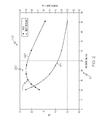
- Figure 2 is a graph illustrating LIM voltage verse fill gas mixture ratio for a LIM voltage test of one embodiment of the present invention.
- Figure 3 is a flow chart illustrating a method of one embodiment of the present invention.
- FIG. 1 is a simplified block diagram of a laser block assembly 105 for a ring laser gyroscope (RLG) 100 of one embodiment of the present invention.
- Laser block assembly 105 is triangular in shape having three sides (106-1, 106-2 and 106-3) and three blunted corners 107-1, 107-2 and 107-3.
- Laser block assembly 105 includes two cathodes 110 and 112 and an anode 114 each positioned on the respective sides 106-1, 106-2 and 106-3 of the laser block assembly 105.
- the laser block assembly may alternately include two anodes and a single cathode.
- Mirrors 120, 122 and 124 are located as shown at the blunted corners 107-1, 107-2 and 107-3 of laser block assembly 105, located between each of the sides 106-1, 106-2 and 106-3.
- a cavity 130 which in conjunction with the mirrors 120, 122 and 124 forms a ring shaped laser beam path around the laser block assembly.
- the performance of RLG 100 is observed by coupling optical energy information from the cavity 130 to a readout assembly 140.
- the readout assembly in one body that, includes a beam combining mechanism plus two photo diodes 142.
- the readout assembly provides to voltage signals from which the difference frequency and hence the rotation information may be obtained.
- the readout assembly in this embodiment, also provides a voltage signal correlated with a laser intensity called the Laser Intensity Monitor (LIM).
- LIM Laser Intensity Monitor
- This LIM signal referred to herein as the "LIM voltage” provides information regarding the optical energy within the cavity 130 of RLG 100.
- LIM voltage provides information regarding the optical energy within the cavity 130 of RLG 100.
- the particular mechanism used for obtaining the LIM voltage is not pertinent with respect to embodiments of the present invention, and any such mechanism may be used in conjunction with realizing readout assembly 140.
- Cavity 130 is filled with a fill gas mixture 132 of Helium and Neon and laser block assembly 105 is characterized as having neon depletion as its life limiter.
- Figure 1 illustrates a simplified block diagram that provides sufficient detail to facilitate an enabled written description of embodiments of the present invention. Additional details not shown regarding the physical structure and electronic circuitry associated with a laser block assembly for a ring laser gyroscope are considered within the knowledge and skill of one of ordinary skill in the art and are not discussed herein.
- Figure 1 represents a laser block assembly having the same physical structure of a Honeywell GG1308 sensor.
- any particular laser block assembly they are using can be characterized as having neon depletion as its life limiter.
- Embodiments of the present invention differ from the prior art in that the fill gas mixture 132 of Helium and Neon within cavity 130 is not optimized to initially provide a peak LIM voltage at the onset of the RLG 100's service life. Rather, cavity 130 is filled with a fill gas mixture 132 of Helium and Neon that will produce a sub-optimal LIM voltage on the onset of the RLG 100's designed service life by altering the gas mixture ratio as described below with respect to Figures 2 and 3 .
- the present inventors have found that the gas mixtures provided by embodiments of the present invention have the benefits of providing extended life and reduced thermal sensitivity when compared to designs using gas mixtures that maximize the initial LIM voltage from the onset.
- Embodiments of the present invention optimize fill gas mixture 132 to provide for a longer service life by giving up a certain level of LIM voltage margin at the early stages of RLG 100's life.
- Currently existing life constraints are overcome by understanding the physics of having neon depletion as a life limiter and compensating for it. This process is described below with reference to the graph shown generally at 200 in Figure 2 and the flow chart illustrated in Figure 3 .
- the process begins at 310 in Figure 3 with determining a peak LIM voltage ratio for a given laser block assembly under test.
- the laser block assembly under test is known to have a neon depletion life limiter.
- determining a peak LIM voltage ratio is accomplished through a LIM voltage test such as illustrated in Figure 2 .
- the purpose of the LIM voltage test is to test cavity fill gas mixtures of different Helium to Neon ratios, all under equivalent temperature conditions, to identify the Helium to Neon ratio that produces a peak LIM voltage.
- the total pressure that is, the partial pressure of Helium plus the partial pressure of Neon, is held constant while the mix ratio of Helium partial pressure to Neon partial pressure is varied to produce the data for each of the different mixture ratios.
- Figure 2 provides a plot at 210 of the Neon pressure within the cavity for each tested mixture ratio.
- Figure 2 also provides a plot at 220 of the resulting LIM voltage for each tested mixture ratio. Values for these curves between each data point may be interpolated or extrapolated using best curve fit algorithms known in the art.
- the gas mixture ratio associated with the peak LIM voltage (shown generally at 230) is referred to herein as the "peak LIM voltage ratio" (shown generally as 231).
- the peak LIM voltage ratio occurs at a Helium to Neon ratio of 20:1.
- the peak LIM voltage ratio for embodiments using other laser block assemblies may occur at ratios other than 20:1.
- the selected fill gas mixture has a Helium to Neon ratio of 15:1 (shown generally at 235), it will have a Helium to Neon ratio richer in Neon than the peak LIM voltage ratio of 20:1 (shown at 231).
- the resulting usable life of the laser block assembly will be increased at least by the amount of time it will take for neon depletion to raise the LIM voltage from its starting level shown at 235 to the peak LIM voltage level shown at 230.
- the method proceeds in Figure 3 to 320 with selecting a fill gas mixture that has a Helium to Neon ratio richer in Neon than the peak LIM voltage ratio.
- the mix ratio for the fill gas mixture selected at 320 should not (when the laser block assembly is expected to be in operation) result in a LIM voltage that will be below the minimum LIM voltage threshold level.
- the laser block assembly may by initially manufactured with a Helium to Neon ratio sufficiently rich in Neon to result in an LIM voltage below the minimum LIM voltage threshold level. In such a case, it would be understood that sufficient neon depletion would need to occur prior to placing the laser block assembly into service to bring the LIM voltage within tolerance.
Landscapes
- Physics & Mathematics (AREA)
- Engineering & Computer Science (AREA)
- Optics & Photonics (AREA)
- Electromagnetism (AREA)
- Power Engineering (AREA)
- General Physics & Mathematics (AREA)
- Radar, Positioning & Navigation (AREA)
- Remote Sensing (AREA)
- Gyroscopes (AREA)
- Lasers (AREA)
Abstract
Systems and methods for improved ring laser gyroscope devices through mix ratio optimization are provided. In one embodiment, a ring laser gyroscope device comprises: a laser block assembly having a cavity therein that defines a ring shaped laser beam path around the laser block assembly, the cavity containing a fill gas mixture comprising Helium and Neon, wherein the laser block assembly is characterized as having a Neon depletion life limiter; and a readout assembly optically coupled to the laser block assembly. The readout assembly outputs a laser intensity monitor (LIM) voltage that represents optical energy within the cavity. The fill gas mixture has a Helium to Neon ratio richer in Neon than a ratio that would produce a peak LIM voltage from the readout assembly.
Description
- Ring Laser Gyro ("RLG") devices are a measurement tool used to calculate the angular rotation around a specified axis. An RLG measures the angular rotation around a specified axis by splitting a polarized laser beam in opposite directions within an enclosed cavity and measuring frequency difference of the two beams. RLG design utilizes a mixture of helium and neon gas within the enclosed cavity. Excitement of the gas mixture generates the light for forming the polarized laser beam. However, loss of neon pressure within the cavity over time, either through leaks or consumption of the neon by the RLG's cathode, causes a degradation of laser intensity as measured by the RLG's readout assembly. RLGs that ultimately fail due to the depletion of neon are said to have neon depletion as their life limiter.
- For the reasons stated above and for other reasons stated below which will become apparent to those skilled in the art upon reading and understanding the specification, there is a need in the art for improved systems and methods for extending the usable life of RLGs having neon depletion as their life limiter.
- The Embodiments of the present invention provide methods and systems for improved ring laser gyroscope devices through mix ratio optimization and will be understood by reading and studying the following specification.
- In one embodiment, a ring laser gyroscope device comprises: a laser block assembly having a cavity therein that defines a ring shaped laser beam path around the laser block assembly, the cavity containing a fill gas mixture comprising Helium and Neon, wherein the laser block assembly is characterized as having a Neon depletion life limiter; and a readout assembly optically coupled to the laser block assembly. The readout assembly outputs a laser intensity monitor (LIM) voltage that represents optical energy within the cavity. The fill gas mixture has a Helium to Neon ratio richer in Neon than a ratio that would produce a peak LIM voltage from the readout assembly.
- Embodiments of the present invention can be more easily understood and further advantages and uses thereof more readily apparent, when considered in view of the description of the preferred embodiments and the following figures in which:
-
Figure 1 is a simplified block diagram of a laser block assembly for a ring laser gyroscope of one embodiment of the present invention; -
Figure 2 is a graph illustrating LIM voltage verse fill gas mixture ratio for a LIM voltage test of one embodiment of the present invention; and -
Figure 3 is a flow chart illustrating a method of one embodiment of the present invention. - In accordance with common practice, the various described features are not drawn to scale but are drawn to emphasize features relevant to the present invention. Reference characters denote like elements throughout figures and text.
- In the following detailed description, reference is made to the accompanying drawings that form a part hereof, and in which is shown by way of specific illustrative embodiments in which the invention may be practiced. These embodiments are described in sufficient detail to enable those skilled in the art to practice the invention, and it is to be understood that other embodiments may be utilized and that logical, mechanical and electrical changes may be made without departing from the scope of the present invention. The following detailed description is, therefore, not to be taken in a limiting sense.
-
Figure 1 is a simplified block diagram of alaser block assembly 105 for a ring laser gyroscope (RLG) 100 of one embodiment of the present invention.Laser block assembly 105 is triangular in shape having three sides (106-1, 106-2 and 106-3) and three blunted corners 107-1, 107-2 and 107-3.Laser block assembly 105 includes twocathodes 110 and 112 and ananode 114 each positioned on the respective sides 106-1, 106-2 and 106-3 of thelaser block assembly 105. In other embodiments, the laser block assembly may alternately include two anodes and a single cathode.Mirrors laser block assembly 105, located between each of the sides 106-1, 106-2 and 106-3. Within laser block assembly is acavity 130, which in conjunction with themirrors cavity 130 to areadout assembly 140. The readout assembly, in one body that, includes a beam combining mechanism plus twophoto diodes 142. The readout assembly provides to voltage signals from which the difference frequency and hence the rotation information may be obtained. In addition to the rotation information, the readout assembly, in this embodiment, also provides a voltage signal correlated with a laser intensity called the Laser Intensity Monitor (LIM). This LIM signal, referred to herein as the "LIM voltage" provides information regarding the optical energy within thecavity 130 ofRLG 100. As would be appreciated by one of ordinary skill in the art upon reading this specification, there are a number of mechanisms for obtaining the LIM voltage. The particular mechanism used for obtaining the LIM voltage is not pertinent with respect to embodiments of the present invention, and any such mechanism may be used in conjunction with realizingreadout assembly 140.Cavity 130 is filled with afill gas mixture 132 of Helium and Neon andlaser block assembly 105 is characterized as having neon depletion as its life limiter. - One of ordinary skill in the art after reading this specification would appreciate that
Figure 1 illustrates a simplified block diagram that provides sufficient detail to facilitate an enabled written description of embodiments of the present invention. Additional details not shown regarding the physical structure and electronic circuitry associated with a laser block assembly for a ring laser gyroscope are considered within the knowledge and skill of one of ordinary skill in the art and are not discussed herein. In one embodimentFigure 1 represents a laser block assembly having the same physical structure of a Honeywell GG1308 sensor. In addition, one of ordinary skill in the art upon reading this specification can appreciate whether any particular laser block assembly they are using can be characterized as having neon depletion as its life limiter. - Embodiments of the present invention differ from the prior art in that the
fill gas mixture 132 of Helium and Neon withincavity 130 is not optimized to initially provide a peak LIM voltage at the onset of theRLG 100's service life. Rather,cavity 130 is filled with afill gas mixture 132 of Helium and Neon that will produce a sub-optimal LIM voltage on the onset of theRLG 100's designed service life by altering the gas mixture ratio as described below with respect toFigures 2 and3 . The present inventors have found that the gas mixtures provided by embodiments of the present invention have the benefits of providing extended life and reduced thermal sensitivity when compared to designs using gas mixtures that maximize the initial LIM voltage from the onset. - Embodiments of the present invention optimize
fill gas mixture 132 to provide for a longer service life by giving up a certain level of LIM voltage margin at the early stages ofRLG 100's life. Currently existing life constraints are overcome by understanding the physics of having neon depletion as a life limiter and compensating for it. This process is described below with reference to the graph shown generally at 200 inFigure 2 and the flow chart illustrated inFigure 3 . - The process begins at 310 in
Figure 3 with determining a peak LIM voltage ratio for a given laser block assembly under test. As discussed above, the laser block assembly under test is known to have a neon depletion life limiter. In one embodiment, determining a peak LIM voltage ratio is accomplished through a LIM voltage test such as illustrated inFigure 2 . The purpose of the LIM voltage test is to test cavity fill gas mixtures of different Helium to Neon ratios, all under equivalent temperature conditions, to identify the Helium to Neon ratio that produces a peak LIM voltage. InFigure 2 , the total pressure, that is, the partial pressure of Helium plus the partial pressure of Neon, is held constant while the mix ratio of Helium partial pressure to Neon partial pressure is varied to produce the data for each of the different mixture ratios.Figure 2 provides a plot at 210 of the Neon pressure within the cavity for each tested mixture ratio.Figure 2 also provides a plot at 220 of the resulting LIM voltage for each tested mixture ratio. Values for these curves between each data point may be interpolated or extrapolated using best curve fit algorithms known in the art. The gas mixture ratio associated with the peak LIM voltage (shown generally at 230) is referred to herein as the "peak LIM voltage ratio" (shown generally as 231). For the example test illustrated inFigure 2 , the peak LIM voltage ratio occurs at a Helium to Neon ratio of 20:1. As would be appreciated by one of ordinary skill in the art upon reading this specification, the peak LIM voltage ratio for embodiments using other laser block assemblies may occur at ratios other than 20:1. - As revealed by
Figure 2 , selecting a fill gas mixture that has a Helium to Neon ratio richer in Neon than the peak LIM voltage ratio (such as shown at 235), will result in a relatively lower LIM voltage output from the readout assembly. As would be appreciated by one of ordinary skill in the art upon reading this specification, in collecting the data forFigure 2 testing is performed at a standard testing temperature. This curve ofFigure 2 indicates that the sensitivity over the operating temperature range of the RLG at the gas mixture at 235 will be less than for the gas mixture at 230. Testing performed by the inventors has shown that at the mix ratio at 235 (versus the mix ratio at 230), the LIM voltage over the operating temperature range of the RLG remains more stable. Further, deviations over time as the device ages are less over the operating temperature range. - Prior to this disclosure, one of ordinary skill in the art would consider intentionally selecting a mix ratio that did not produce a peak LIM voltage at the onset of the devices life as sub-optimal and undesirable. However, as revealed by
Figure 2 , by selecting such an initial fill gas mixture ratio, as neon depletion occurs and the pressure of neon in the cavity drops, the LIM voltage will actually improve over time until it reaches the peak LIM voltage at 230. After reaching the peak LIM voltage at 230, the LIM voltage will then begin to slowly decrease over time as a function of the continued neon depletion, as would have occurred if the peakLIM voltage ratio 231 were initially selected for the fill gas mixture. In other words, if the selected fill gas mixture has a Helium to Neon ratio of 15:1 (shown generally at 235), it will have a Helium to Neon ratio richer in Neon than the peak LIM voltage ratio of 20:1 (shown at 231). The resulting usable life of the laser block assembly will be increased at least by the amount of time it will take for neon depletion to raise the LIM voltage from its starting level shown at 235 to the peak LIM voltage level shown at 230. For example for the Honeywell GG1308 sensor, the inventors have found that a fill gas mixture of 15:1 will result in approximately a 2-times life increase over a fill gas mixture of 20:1 for that device. Accordingly, the method proceeds inFigure 3 to 320 with selecting a fill gas mixture that has a Helium to Neon ratio richer in Neon than the peak LIM voltage ratio. - As would be appreciated by one of ordinary skill in the art after reading this specification, when a LIM voltage output from a readout assembly drops below a certain minimum LIM voltage threshold level, the LIM voltage output will be insufficient to drive the ring laser gyroscope circuitry receiving the output, resulting in RLG performance degradation and associated bit faults. Accordingly the mix ratio for the fill gas mixture selected at 320 should not (when the laser block assembly is expected to be in operation) result in a LIM voltage that will be below the minimum LIM voltage threshold level. In at least one alternative embodiment however, if it is known that some period of time will pass before the laser block assembly will need to be in an operational state, it may by initially manufactured with a Helium to Neon ratio sufficiently rich in Neon to result in an LIM voltage below the minimum LIM voltage threshold level. In such a case, it would be understood that sufficient neon depletion would need to occur prior to placing the laser block assembly into service to bring the LIM voltage within tolerance.
- Although specific embodiments have been illustrated and described herein, it will be appreciated by those of ordinary skill in the art that any arrangement, which is calculated to achieve the same purpose, may be substituted for the specific embodiment shown. This application is intended to cover any adaptations or variations of the present invention. Therefore, it is manifestly intended that this invention be limited only by the claims and the equivalents thereof.
Claims (10)
- A ring laser gyroscope (100) device, the device comprising:a laser block assembly (105) having a cavity (130) therein that defines a ring shaped laser beam path around the laser block assembly (105), the cavity (130) containing a fill gas mixture (132) comprising Helium and Neon, wherein the laser block assembly (105) is characterized as having a Neon depletion life limiter; anda readout assembly (140) optically coupled to the laser block assembly (105), wherein the readout assembly (140) outputs a laser intensity monitor (LIM) voltage that represents optical energy within the cavity (130); andwherein the fill gas mixture (132) has a Helium to Neon ratio richer in Neon than a ratio that would produce a peak LIM voltage from the readout assembly (140).
- The device of claim 1, wherein the Helium to Neon ratio of the fill gas mixture (132) has at least 20% more Neon than a peak LIM voltage ratio that produces the peak LIM voltage.
- The device of claim 1, wherein sensitivity of the LIM voltage to temperature in the ring laser gyroscope (100) increases over a first period of service life time as a function of neon depletion within the cavity (130).
- The device of claim 1, wherein the sensitivity of the LIM voltage in the ring laser gyroscope (100) over an operating temperature range, increases over time until the neon pressure reaches a pressure equivalent to a peak LIM voltage ratio for the laser block assembly (105).
- The device of claim 1, wherein the fill gas mixture (132) has a Helium to Neon ratio that produces an LIM voltage above a minimum LIM voltage threshold level for an electronic device coupled to the readout assembly (140).
- The device of claim 1, wherein the fill gas mixture (132) has a Helium to Neon ratio that produces an LIM voltage output below a minimum LIM voltage threshold level for an electronic device coupled to the readout assembly (140).
- A method for optimizing service life of a ring laser gyroscope (100), the method comprising:determining (310) a peak laser intensity monitor (LIM) voltage ratio for a laser block assembly (105), wherein the laser block assembly (105) is characterized in having a neon depletion life limiter; andselecting (320) a fill gas mixture (132) that has a Helium to Neon ratio richer in Neon than the peak LIM voltage ratio.
- The method of claim 7, wherein determining a peak LIM voltage ratio further comprises:performing a LIM voltage test of the laser block assembly (105) with fill gas mixtures (132) at a plurality of different Helium to Neon ratios;wherein the plurality of the fill gas mixtures (132) at a plurality of different Helium to Neon ratios each have the same pressure of Helium; andwherein the LIM voltage test is performed at equivalent temperature conditions for each of the plurality of different Helium to Neon ratios.
- The method of claim 8, wherein performing a LIM voltage test of the laser block assembly (105) with fill gas mixtures (132) at a plurality of different Helium to Neon ratios further comprises:generating LIM voltage versus mixture ratio data for each of the plurality of different Helium to Neon ratios;generating neon pressure versus mixture ratio data for each of the plurality of difference Helium to Neon ratios; andidentifying the peak LIM voltage ratio associated with a peak LIM voltage based on the LIM voltage versus mixture ratio data.
- The method of claim 7, wherein selecting a fill gas mixture (132) that has a Helium to Neon ratio richer in Neon than the peak LIM voltage ratio further comprises one of:selecting a fill gas mixture (132) having a Helium to Neon ratio that produces an LIM voltage from a readout assembly (140) that is above a minimum LIM voltage threshold level for an electronic device coupled to the readout assembly (140).
Applications Claiming Priority (1)
| Application Number | Priority Date | Filing Date | Title |
|---|---|---|---|
| US12/774,074 US20110274133A1 (en) | 2010-05-05 | 2010-05-05 | Systems and methods for improved ring laser gyroscope devices through mix ratio optimization |
Publications (1)
| Publication Number | Publication Date |
|---|---|
| EP2385344A2 true EP2385344A2 (en) | 2011-11-09 |
Family
ID=44246323
Family Applications (1)
| Application Number | Title | Priority Date | Filing Date |
|---|---|---|---|
| EP11164374A Withdrawn EP2385344A2 (en) | 2010-05-05 | 2011-04-29 | Systems and methods for improved ring laser gyroscope devices through mix ratio optimization |
Country Status (2)
| Country | Link |
|---|---|
| US (1) | US20110274133A1 (en) |
| EP (1) | EP2385344A2 (en) |
Cited By (1)
| Publication number | Priority date | Publication date | Assignee | Title |
|---|---|---|---|---|
| CN104810709A (en) * | 2015-05-15 | 2015-07-29 | 中国船舶重工集团公司第七一七研究所 | Ring laser |
Families Citing this family (4)
| Publication number | Priority date | Publication date | Assignee | Title |
|---|---|---|---|---|
| US8905635B2 (en) * | 2011-09-30 | 2014-12-09 | Honeywell International Inc. | Temperature sensor attachment facilitating thermal conductivity to a measurement point and insulation from a surrounding environment |
| US9389080B2 (en) * | 2014-01-08 | 2016-07-12 | Honeywell International Inc. | Ring laser gyroscope with integrated polarization |
| US10739137B2 (en) | 2018-08-17 | 2020-08-11 | Honeywell International Inc. | Solid state ring laser gyroscope using rare-earth gain dopants in glassy hosts |
| US11962118B2 (en) | 2020-10-27 | 2024-04-16 | Honeywell International Inc. | Ultraviolet filter for ring laser gyroscope mirrors |
Family Cites Families (4)
| Publication number | Priority date | Publication date | Assignee | Title |
|---|---|---|---|---|
| US3998557A (en) * | 1974-06-03 | 1976-12-21 | Massachusetts Institute Of Technology | Gas detector |
| US7061951B2 (en) * | 2002-12-20 | 2006-06-13 | Elantec Semiconductor, Inc. | Systems and methods for automatic power control of laser diodes |
| US20060045159A1 (en) * | 2004-08-31 | 2006-03-02 | Honeywell International Inc. | System and method for maintaining a purity level of a lasing gas |
| US20080304076A1 (en) * | 2007-06-11 | 2008-12-11 | Honeywell International Inc. | Systems and methods for packaging and mounting readout and laser intensity monitor sensors |
-
2010
- 2010-05-05 US US12/774,074 patent/US20110274133A1/en not_active Abandoned
-
2011
- 2011-04-29 EP EP11164374A patent/EP2385344A2/en not_active Withdrawn
Non-Patent Citations (1)
| Title |
|---|
| None |
Cited By (2)
| Publication number | Priority date | Publication date | Assignee | Title |
|---|---|---|---|---|
| CN104810709A (en) * | 2015-05-15 | 2015-07-29 | 中国船舶重工集团公司第七一七研究所 | Ring laser |
| CN104810709B (en) * | 2015-05-15 | 2018-03-27 | 中国船舶重工集团公司第七一七研究所 | A kind of ring laser |
Also Published As
| Publication number | Publication date |
|---|---|
| US20110274133A1 (en) | 2011-11-10 |
Similar Documents
| Publication | Publication Date | Title |
|---|---|---|
| EP2385344A2 (en) | Systems and methods for improved ring laser gyroscope devices through mix ratio optimization | |
| Romanowsky et al. | Mapping the dark side with DEIMOS: globular clusters, X-ray gas, and dark matter in the NGC 1407 group | |
| CN106066485B (en) | A kind of Cycle Slips Detection and device | |
| JP2006322834A (en) | Distance measuring device and distance measuring method | |
| US9635277B2 (en) | Image sensor, image sensing method, and image photographing apparatus including image sensor | |
| CN108180954A (en) | For the drift temperature-compensation method of ultrasonic transducer | |
| Szymaniec et al. | An evaluation of the frequency shift caused by collisions with background gas in the primary frequency standard NPL-CsF2 | |
| KR20220016114A (en) | Systems and methods for determining reactivity | |
| Xiangdong et al. | Performance tests and outdoor comparison observations of domestic remade ECC ozonesondes | |
| EP3327438B1 (en) | Extrapolation of interpolated sensor data to increase sample throughput | |
| CN108873023A (en) | A kind of processing method for the observed quantity improving positioning accuracy | |
| JP2006234648A (en) | Method for quick loading test of pile | |
| Nitta et al. | New pulsating DB white dwarf stars from the Sloan digital sky survey | |
| JP2020024107A (en) | Charging rate calculation device and vehicle | |
| Pastor-Graells et al. | Impact of the laser phase noise on chirped-pulse phase-sensitive OTDR | |
| CN111413627A (en) | Prediction method and device of fuel cell service life based on volt-ampere curve | |
| KR100765154B1 (en) | Surveying method using distance adjustment before and after when leveling on slope | |
| CN110334319A (en) | Emit flight reliability appraisal procedure | |
| CN103115748B (en) | Fiber-optic gyroscope light source reliability detecting method based on Bayesian theory | |
| Bidin et al. | Binaries among Extreme Horizontal Branch Stars in Globular Clusters | |
| Russell | Integrating INS and GNSS sensors to provide reliable surface positioning | |
| Christensen-Dalsgaard et al. | Ages for exoplanet host stars | |
| CN108038317B (en) | Method and system for predicting retention period of performance parameters of precision instrument | |
| Grebel | Dwarf galaxies in the local group and in the local volume | |
| RU2444741C1 (en) | Method of testing device reliability |
Legal Events
| Date | Code | Title | Description |
|---|---|---|---|
| 17P | Request for examination filed |
Effective date: 20110429 |
|
| AK | Designated contracting states |
Kind code of ref document: A2 Designated state(s): AL AT BE BG CH CY CZ DE DK EE ES FI FR GB GR HR HU IE IS IT LI LT LU LV MC MK MT NL NO PL PT RO RS SE SI SK SM TR |
|
| AX | Request for extension of the european patent |
Extension state: BA ME |
|
| PUAI | Public reference made under article 153(3) epc to a published international application that has entered the european phase |
Free format text: ORIGINAL CODE: 0009012 |
|
| STAA | Information on the status of an ep patent application or granted ep patent |
Free format text: STATUS: THE APPLICATION HAS BEEN WITHDRAWN |
|
| 18W | Application withdrawn |
Effective date: 20120516 |