EP2383011A2 - Device for insertion of a cannula of an infusion device - Google Patents
Device for insertion of a cannula of an infusion device Download PDFInfo
- Publication number
- EP2383011A2 EP2383011A2 EP11174404A EP11174404A EP2383011A2 EP 2383011 A2 EP2383011 A2 EP 2383011A2 EP 11174404 A EP11174404 A EP 11174404A EP 11174404 A EP11174404 A EP 11174404A EP 2383011 A2 EP2383011 A2 EP 2383011A2
- Authority
- EP
- European Patent Office
- Prior art keywords
- needle
- housing
- patient
- cannula
- hub
- Prior art date
- Legal status (The legal status is an assumption and is not a legal conclusion. Google has not performed a legal analysis and makes no representation as to the accuracy of the status listed.)
- Withdrawn
Links
Images












Classifications
-
- A—HUMAN NECESSITIES
- A61—MEDICAL OR VETERINARY SCIENCE; HYGIENE
- A61M—DEVICES FOR INTRODUCING MEDIA INTO, OR ONTO, THE BODY; DEVICES FOR TRANSDUCING BODY MEDIA OR FOR TAKING MEDIA FROM THE BODY; DEVICES FOR PRODUCING OR ENDING SLEEP OR STUPOR
- A61M5/00—Devices for bringing media into the body in a subcutaneous, intra-vascular or intramuscular way; Accessories therefor, e.g. filling or cleaning devices, arm-rests
- A61M5/14—Infusion devices, e.g. infusing by gravity; Blood infusion; Accessories therefor
- A61M5/158—Needles for infusions; Accessories therefor, e.g. for inserting infusion needles, or for holding them on the body
-
- A—HUMAN NECESSITIES
- A61—MEDICAL OR VETERINARY SCIENCE; HYGIENE
- A61B—DIAGNOSIS; SURGERY; IDENTIFICATION
- A61B5/00—Measuring for diagnostic purposes; Identification of persons
- A61B5/145—Measuring characteristics of blood in vivo, e.g. gas concentration or pH-value ; Measuring characteristics of body fluids or tissues, e.g. interstitial fluid or cerebral tissue
- A61B5/14503—Measuring characteristics of blood in vivo, e.g. gas concentration or pH-value ; Measuring characteristics of body fluids or tissues, e.g. interstitial fluid or cerebral tissue invasive, e.g. introduced into the body by a catheter or needle or using implanted sensors
-
- A—HUMAN NECESSITIES
- A61—MEDICAL OR VETERINARY SCIENCE; HYGIENE
- A61B—DIAGNOSIS; SURGERY; IDENTIFICATION
- A61B5/00—Measuring for diagnostic purposes; Identification of persons
- A61B5/145—Measuring characteristics of blood in vivo, e.g. gas concentration or pH-value ; Measuring characteristics of body fluids or tissues, e.g. interstitial fluid or cerebral tissue
- A61B5/14532—Measuring characteristics of blood in vivo, e.g. gas concentration or pH-value ; Measuring characteristics of body fluids or tissues, e.g. interstitial fluid or cerebral tissue for measuring glucose, e.g. by tissue impedance measurement
-
- A—HUMAN NECESSITIES
- A61—MEDICAL OR VETERINARY SCIENCE; HYGIENE
- A61M—DEVICES FOR INTRODUCING MEDIA INTO, OR ONTO, THE BODY; DEVICES FOR TRANSDUCING BODY MEDIA OR FOR TAKING MEDIA FROM THE BODY; DEVICES FOR PRODUCING OR ENDING SLEEP OR STUPOR
- A61M5/00—Devices for bringing media into the body in a subcutaneous, intra-vascular or intramuscular way; Accessories therefor, e.g. filling or cleaning devices, arm-rests
- A61M5/14—Infusion devices, e.g. infusing by gravity; Blood infusion; Accessories therefor
- A61M5/158—Needles for infusions; Accessories therefor, e.g. for inserting infusion needles, or for holding them on the body
- A61M2005/1581—Right-angle needle-type devices
-
- A—HUMAN NECESSITIES
- A61—MEDICAL OR VETERINARY SCIENCE; HYGIENE
- A61M—DEVICES FOR INTRODUCING MEDIA INTO, OR ONTO, THE BODY; DEVICES FOR TRANSDUCING BODY MEDIA OR FOR TAKING MEDIA FROM THE BODY; DEVICES FOR PRODUCING OR ENDING SLEEP OR STUPOR
- A61M5/00—Devices for bringing media into the body in a subcutaneous, intra-vascular or intramuscular way; Accessories therefor, e.g. filling or cleaning devices, arm-rests
- A61M5/14—Infusion devices, e.g. infusing by gravity; Blood infusion; Accessories therefor
- A61M5/158—Needles for infusions; Accessories therefor, e.g. for inserting infusion needles, or for holding them on the body
- A61M2005/1583—Needle extractors
-
- A—HUMAN NECESSITIES
- A61—MEDICAL OR VETERINARY SCIENCE; HYGIENE
- A61M—DEVICES FOR INTRODUCING MEDIA INTO, OR ONTO, THE BODY; DEVICES FOR TRANSDUCING BODY MEDIA OR FOR TAKING MEDIA FROM THE BODY; DEVICES FOR PRODUCING OR ENDING SLEEP OR STUPOR
- A61M5/00—Devices for bringing media into the body in a subcutaneous, intra-vascular or intramuscular way; Accessories therefor, e.g. filling or cleaning devices, arm-rests
- A61M5/14—Infusion devices, e.g. infusing by gravity; Blood infusion; Accessories therefor
- A61M5/158—Needles for infusions; Accessories therefor, e.g. for inserting infusion needles, or for holding them on the body
- A61M2005/1585—Needle inserters
-
- A—HUMAN NECESSITIES
- A61—MEDICAL OR VETERINARY SCIENCE; HYGIENE
- A61M—DEVICES FOR INTRODUCING MEDIA INTO, OR ONTO, THE BODY; DEVICES FOR TRANSDUCING BODY MEDIA OR FOR TAKING MEDIA FROM THE BODY; DEVICES FOR PRODUCING OR ENDING SLEEP OR STUPOR
- A61M5/00—Devices for bringing media into the body in a subcutaneous, intra-vascular or intramuscular way; Accessories therefor, e.g. filling or cleaning devices, arm-rests
- A61M5/178—Syringes
- A61M5/31—Details
- A61M5/32—Needles; Details of needles pertaining to their connection with syringe or hub; Accessories for bringing the needle into, or holding the needle on, the body; Devices for protection of needles
- A61M5/3287—Accessories for bringing the needle into the body; Automatic needle insertion
Definitions
- the present invention relates to a device for assisting in the introduction of a cannula of an infusion device into the skin of a patient for delivery of a substance to the patient.
- Infusion devices are used to deliver substances such as medications into the subcutaneous layer of skin of a patient.
- Devices for assisting in insertion of the cannula of an infusion device into the skin of the patient are known.
- some devices utilize springs to automatically drive a needle into the skin of a patient to introduce the cannula of the infusion device into the subcutaneous layer.
- a needle is used to introduce the cannula of the infusion device into the subcutaneous layer of skin, there is a risk associated with inadvertent exposure to the needle. Further, patients may react adversely to viewing the needle prior to insertion and may, for example, be reluctant to place the needle into the skin. Prior devices may not adequately shroud this needle prior to and/or after introduction of the infusion device.
- Embodiments made in accordance with the present invention include devices that can be used to assist in the introduction of the cannula of an infusion device into the skin of a patient for delivery of a substance to the patient.
- one embodiment of a device includes a needle used to insert the cannula of an infusion device into the skin of a patient. Once the cannula of the infusion device is inserted into the skin, the device moves the needle to a retracted state within the device.
- a device is configured to move a needle and associated cannula of an infusion device from a delivery state to a trigger state at which the cannula of the infusion device is inserted into the or a patient. Upon full insertion of the cannula at the trigger state, the device is then configured to move the needle to a retracted state within the device.
- a device in another embodiment, includes a needle that can be used to insert a cannula of a site into the skin of a patient. Upon insertion of the cannula, the needle can be removed from the skin.
- a cap is provided that can be placed onto the device prior to and after use of the device to provide a sterile environment and/or to reduce exposure to the needle.
- Embodiments of the present invention relate to devices for assisting in the introduction of an infusion device, specifically a cannula of the infusion device, into the subcutaneous layer of skin of a patient.
- a device 100 is shown.
- the device 100 is used to introduce a cannula of an infusion device, such as a set, site, or other access device, into the skin of the patient.
- the set, site, or other access device can then be used to deliver drugs or other fluid to the patient, such as from an infusion pump.
- the device 100 generally includes a housing 110, a cylinder hub 120, a needle hub 130, a sleeve 140, a spring 150, an adhesive portion 160, and a cap 170.
- Each of the components of the device 100 is configured to assist in the introduction of a cannula of an infusion device into the skin of a patient.
- the housing 110 is shown.
- the housing 110 is preferably cylindrical in shape and includes a closed upper end 111 and an open lower end 112.
- the housing 110 further preferably includes a portion 118 with a knurled surface to enhance a patient's grip on the housing 110, as well as a threaded portion 113 positioned adjacent the open lower end 112.
- the cylinder hub 120 includes first and second ends 221 and 222 and an interior passage 223.
- two opposing slots 225 are formed on opposite sides of the cylinder hub 120 and generally extend from a mid-portion 224 of the hub 120 to the first end 221.
- the cylinder hub 120 includes opposing apertures 226 formed in the cylinder hub 120 adjacent the second end 222.
- the first end 221 of the cylinder hub 120 is coupled to the upper end 111 of the housing 110 by tabs 119 on the housing 110 engaging shoulders 228 formed by the cylinder hub 120. See, for example, Figures 6-8 , 26A, and 26B .
- members 121 of the housing 110 are received in slots 229 of the cylinder hub 120.
- the housing 110 and cylinder hub 120 can be formed as a single unit.
- the needle hub 130 includes a main body 331 with first and second ends 332 and 333, and a needle 336 (hollow or solid) coupled to the main body 331.
- the main body 331 includes opposing wings 334 formed at the first end 332 and opposing barbs 335 at the second end 333.
- the needle hub 130 is positioned in the interior passage 223 of the cylinder hub 120 such that the opposing wings 334 of the needle hub 130 extend through the opposing slots 225 of the cylinder hub 120. See Figures 6, 8 , 26B , 27B , 28B , 29B , and 30B .
- the opposing barbs 335 of the needle hub 130 extend through the opposing apertures 226 of the cylinder hub 120 and engage shoulders 227 formed by the apertures 226 so that the needle hub 130 is held in a fixed position relative to the cylinder hub 120 and the housing 110. See, for example, Figures 6, 8 , 26A , 27A , and 28A .
- the sleeve 140 is shown.
- the sleeve 140 is preferably cylindrical in shape and includes first and second ends 441 and 442 and interior passage 443. Opposing projections 444 extend into the passage 443 adjacent to a shoulder 445.
- channels 446 are formed, as well as railways 447 with barbs 448 formed on ends thereof.
- the sleeve 140 is coupled to the housing 110 such that the housing 110 can be moved longitudinally with respect to the sleeve 140.
- the railways 114 of the housing are received in the channels 446 of the sleeve 140.
- the railways 447 of the sleeve 140 are received in the channels 115 of the housing 110.
- Barbs 448 on the railways 447 of the sleeve 140 engage projections 116 in the channels 115 of the housing 110 so that the housing 110 remains slideably coupled to the sleeve 140 in opposition to the force exerted by the spring 150 (described further below).
- the spring 150 includes first and second ends 152 and 154. See, for example, Figure 26B .
- the spring 150 surrounds a portion of the cylinder hub 120 and extends within the passage 443 of the sleeve 140.
- the first end 152 of the spring 150 is seated on the shoulder 445 of the sleeve 140, and the second end 154 of the spring 150 engages the opposing wings 334 of the needle hub 130 extending through the opposing slots 225 of the cylinder hub 120.
- the spring 150 is in a compressed state as shown in Figures 26A, 26B , 27A, 27B , 28A, and 28B and therefore applies force against the wings 334 of the needle hub 130, biasing the needle hub 130 in an upward direction.
- barbs 335 of the main body 331 of the needle hub 130 are engaged against shoulders 227 of the apertures 226 of the cylinder hub 120 to retain the needle hub 130 in place with respect to the cylinder hub 120. See, for example, Figure 26A .
- the spring 150 forces the housing 110 and the sleeve 140 apart until barbs 448 of the sleeve 140 engage projections 115 of the housing 110 to maintain coupling between the housing 110 and the sleeve 140.
- an adhesive portion 160 is positioned on a surface 449 at the second end 442 of the sleeve 140 (see Figures 14 and 17 ).
- the surface 449 preferably acts as a framework that stabilizes the adhesive portion 160 prior to placement on the patient.
- the adhesive portion 160 includes layers 662, 663, and 664, as well as liners 661 and 665. Liners 661 and 665 also preferably include tabs 666 and 667 that allow for removal of the liners 661 and 665 as described below.
- the adhesive portion 160 can be coupled to the surface 449 of sleeve 140 in a variety of manners.
- the liner 661 is removed, and layer 662 is coupled to the surface 449 using an adhesive.
- a top surface 669 of layer 664 and/or a lower end of the infusion device includes an adhesive to couple the infusion device to the adhesive portion 160 as the infusion device is moved into contact with the adhesive portion. See Figures 28A, 28B , and 28C .
- the liner 665 is preferably removed, and a lower surface 668 of the layer 664 includes an adhesive to couple the adhesive portion 160 to the skin of the patient.
- the site is loaded into the device 100 prior to application of the adhesive portion 160 onto the device 100, and preferably both liners 661 and 665 are removed as described above prior to attachment of the adhesive portion to the sleeve 140 and coupling of the cap 170 to the housing 110.
- the patient preferably does not need to remove any liners prior to application of the adhesive portion 160 to the skin and introduction of the site into the skin.
- the layer 664 does not include any holes, but instead is pierced by the needle 336 as the needle 336 is advanced towards the skin, as described further below. This configuration can enhance the fit between the adhesive portion 160 and the skin of the patient.
- the adhesive portion 160 includes adhesive on one or more of surfaces 668 and 669 to allow the adhesive portion 160 to be coupled to the sleeve 140, site, and/or to the skin of the patient.
- Typical adhesives that can be used on the adhesive portion 160 include, without limitation, acrylic adhesive, synthetic rubber-based adhesive, acrylate adhesive, and silicone-based adhesive.
- the adhesive portion 160 includes films with adhesives thereon, such as a TegadermTM film manufactured by 3MTM or an IV3000 TM film manufactured by Smith & Nephew.
- the tape layer 662 is 3MTM 9731 tape, and layers 663 and 664 are 3MTM TegadermTM p/n 9842.
- the cap 170 includes a closed first end 772 and an open second end 774.
- the cap 170 preferably includes an exterior with a knurled surface 778 to enhance the patient's grip on the cap 170.
- the interior of the cap 170 includes a threaded portion 776 positioned adjacent the open second end 774 so that the threaded portion 776 can be threaded onto the threaded portion 113 of the housing 110 to seal the device 100. See Figures 1 , 26A, and 26B .
- a gasket 122 is provided on the threaded portion 113 of the housing 110 to create a seal between the cap 170 and the housing 110 as the cap 170 is threaded onto the housing 110. See Figures 26A and 26B .
- the internal components of the device 100 e.g., needle 33 6 and site 800
- the cap 170 can function to maintain the device 100 in a ship state (i.e., the housing 110 can not be moved relative to the sleeve 140) prior to removal of the cap 170 from the housing 110.
- the cap 170 and/or housing 110 can be formed to provide a tamper-evident seal so that the patient can determine when the cap 170 has been previously uncoupled from the housing 110.
- a tamper-evident band 178 is shown.
- the band 178 includes tabs 179 that are coupled to the cap 170 as shown in Figure 50 .
- the tabs 179 break away from the cap 170, and the seal 178 remains coupled to the housing 110, as shown in Figure 51 . If the cap 170 is later threaded back onto the device 100', the breaks between the tabs 179 and the cap 170 are evident, allowing the patient to identify that the cap 170 of the device 100' has been previously removed.
- the cap 170 and band 178 can be placed on the device 100' during manufacturing as a single unit.
- the cap 170 and band 178 can be pushed onto the device 100' (note that threads 512 and 514 can be rounded to allow the cap 170 to be pressed onto the device 100') so that portion 520 of the band 178 passes over and engages shoulder 522 of the housing 110 to retain the band 178 on the housing 110 when the cap 170 is unthreaded and tabs 179 are broken.
- notches 524 formed periodically along the band 178 prevent the cap 170 from bottoming out against the band 178 as the cap 170 and band 178 are pushed onto the device 100' so that the tabs 179 remain intact.
- a portion 502 extending along an interior circumference of the cap 170 can also be formed to engage the outer surface of the housing 110 to create a seal between the housing 110 and the cap 170.
- tamper-evident seal for example, so that the patient can assure that the device 100' is has not been previously opened and is sterile prior to use.
- Other methods of indicating tampering can also be used.
- the device 100 can be used to introduce a cannula of an infusion device into the subcutaneous layer of skin of the patient.
- the infusion device includes a site 800, the site 800 including a cannula for delivery of a substance into the subcutaneous layer of skin of the patient.
- Site 800 is linked by tubing (not shown) with a fluid source, such as an infusion pump (not shown) to deliver fluid to the patient through the cannula.
- the site 800 can be made in accordance with that disclosed in U.S. Patent Application Serial No. 10/705,736 , the entirety of which is hereby incorporated by reference. However, sites of other configurations can also be used.
- the device 100 is illustrated in various states of use. As shown in Figures 1 , 26A, and 26B , the device 100 is in a ship state prior to use. As shown in Figures 24 , 27A, and 27B , the device 100 is in a delivery state ready to deliver the cannula of an infusion device into the skin of the patient. As shown in Figures 25 , 28A , 28B , and 28C the device 100 is in a trigger state, or the state at which the needle 336 and the cannula of the site 800 have been fully inserted into the subcutaneous layer of skin of the patient, and the needle hub 130 and associated needle 336 are about to be retracted.
- a trigger state or the state at which the needle 336 and the cannula of the site 800 have been fully inserted into the subcutaneous layer of skin of the patient, and the needle hub 130 and associated needle 336 are about to be retracted.
- the device 100 is in a retracted state with the needle hub 130 and associated needle 336 having been retracted into the device 100.
- the device 100 is in a fully retracted state with the housing 110 and sleeve 140 returned to an uncompressed position relative to one another.
- the device 100 is provided to a patient with the cap 170 coupled to the housing 110, as shown in Figures 1 , 26A, and 26B .
- the site 800 has been previously loaded (i.e., preloaded) into the device 100 during, for example, the manufacturing process for the device 100.
- the cap 170 is then unthreaded from the housing 110, and the sleeve 140 of the device 100 is positioned so that the adhesive portion 160 (i.e., surface 668) contacts the skin 900 of the patient. See Figures 24 , 27A, and 27B .
- the patient applies pressure to the upper end 111 of the housing 110 to move the housing 110 and associated structures including the cylinder hub 120 and needle hub 130 (including needle 336 and site 800) in a direction A with respect to the sleeve 140 and toward the skin 900 of the patient.
- the needle 336 of the needle hub 130 and associated site 800 are moved in the direction A, the needle 336 and the cannula 806 of the site 800 are introduced into the skin 900 of the patient.
- the spring 150 is further compressed.
- the device 100 is in a trigger state, as illustrated in Figures 25 , 28A , 28B , and 28C .
- the barbs 335 that couple the needle hub 130 to the cylinder hub 120 are biased inwardly through contact with the projections 444 formed by the sleeve 140.
- the needle hub 130 is positioned so that a lower portion of the site 800 travels slightly beyond the second end 442 of the sleeve 140 as shown in Figure 28C .
- This "over-travel" assures that the adhesive portion 160 is properly sheared away from the surface 449 of the sleeve 140 and allows for the coupling of the site 800 to the adhesive portion 160.
- the lower portion of the site 800 travels beyond the second end 442 of the sleeve 140 by between 50 to 100 thousandths of an inch, more preferably approximately 70 thousandths of an inch.
- the spring 150 which has been compressed through the movement of the housing 110 in the direction A, propels the needle hub 130 and associated needle 336 in the direction B up through the cylinder hub 120 into the upper end 111 of the housing 110, while leaving the site 800 and associated cannula 806 positioned in the skin 900 of the patient, as shown in Figures 29A and 29B .
- the spring 150 causes the housing 110 and cylinder hub 120 to move in the direction B as shown in Figures 30A and 30B to a fully retracted state.
- the sleeve 140 is removed from contact with the skin 900, and the cap 170 can be replaced onto the threaded portion 113 of the housing 110 of the device 100. Subsequently, the device 100 can be discarded.
- FIG. 31 a portion of an alternative device is shown including cylinder hub 120' and needle hub 130'.
- the cylinder hub 120' and needle hub 130' are similar to cylinder hub 120 and needle hub 130 described above, except that the cylinder hub 120' includes projections 129 formed near the first end 221 of the cylinder hub 120', and the needle hub 130' includes barbs 139 formed on the first end 332.
- the barbs 139 are configured to ride inside the interior passage 223 of the cylinder hub 120' during retraction of the needle 336 in the direction B until the barbs 139 extend beyond the projections 129 of the cylinder hub 120'. Once this occurs, the barbs 139 expand outward slightly.
- the barbs 139 prevent the needle hub 130' and associated needle 336 from being moved back in the direction A. In this manner, the barbs 129 lock the needle hub 130' in the retracted position.
- This configuration can be beneficial, used separately or in conjunction with the force of the spring 150 forcing the needle hub 130' in the direction B, to further reduce the possibility of inadvertent exposure to the needle 336 after retraction.
- a device 100" is illustrated in Figures 32-38 .
- Device 100" is similar to device 100 described above, except that the sleeve (e.g., sleeve 140) is replaced with a trigger 140'.
- the trigger 140' does not function as sleeve 140 to shroud the needle 336 prior to insertion, but instead trigger 140' functions to cause retraction of the needle 336 upon full insertion, as described further below.
- needle 336 is exposed as shown in Figures 33A and 33B .
- the patient simply inserts the needle 336 and associated canula 806 of the site into the skin by grasping the housing 110 and introducing the exposed needle 336 into the skin.
- the trigger 140' contacts the skin and thereby causes the needle hub 130 including the needle 336 to be retracted into the housing 110, leaving the site 800 in place on the skin.
- the trigger 140' is automatic, in that the trigger 140' is configured to cause barbs 335 of the needle hub 130 to be displace inwardly to release the needle hub 130 from the cylinder hub 120, and the spring 150 can thereupon move the needle hub 130 and associated needle 336 in the direction B into an upper portion of the housing 110 as shown in Figures 34A and 34B .
- the trigger 140' can be configured to be manually actuated by the patient to cause retraction of the needle hub 130 and associated needle 336 once the cannula 806 has been fully inserted.
- the device 100'" is a manual device in that the device 100"' includes only a housing 110', needle 336, and cap (not shown) that can be threaded onto the housing 110'.
- a site (not shown) can be preloaded onto the needle 336 and the cap placed on the housing 110' to create a sterile environment prior to use.
- the patient preferably removes the cap from the housing 110' and, holding the housing 110' inserts the needle and associated cannula of the site into the skin. Once the cannula is completely inserted, the patient moves the housing 110' in the opposite direction to remove the needle from the skin while leaving the site in place. Finally, the patient preferably reapplies the cap to the housing 110' to reduce the chance for further inadvertent exposure to the needle 336.
- the device 100'" can then be discarded or reused as desired.
- FIG. 44-49 another example embodiment of a device 950 for assisting in the introduction of a site 970 is shown.
- the device 950 differs from the device 100.
- the device 950 is automated in that a spring 960 is used to drive the needle and cannula of the site into the skin of the patient.
- the device 950 includes a housing 958, cap 952, lock member 962, needle hub 965, main body 980, retainer body 978, and sleeve 982. Also included are the first spring 960 and a second spring 966.
- the device 950 functions as follows.
- the lock member 962, needle hub 964, and retainer body 978 are moveable longitudinally with respect to the housing 958 and sleeve 982 of the device 950.
- the lock member 962 is positioned so that needle 968 of the needle hub 965 is accessible from open end 984 of the device 950.
- the site 970 can then be loaded onto the needle 968 by threading the cannula of the site 970 onto the needle 968.
- Openings 986 are formed by the housing 958 to accommodate sites 970 of various sizes (e.g., wings formed on sites).
- the lock member 962 is moved in a direction C by the patient using projections 974 that are accessible through slot 976 of housing 958 until barbs 956 of the lock member 962 engage an outer surface of the housing 958, as shown in Figure 49 .
- the device 950 is ready to insert the site 970 into the skin of the patient.
- the sleeve 982 of the device 950 is placed against the skin of the patient.
- the cap 952 is pressed by the patient. Once pressed, shoulders 954 on an opposite end of the cap 952 engage and push the barbs 956 of the lock member 962 toward one another to disengage the barbs 956 from the housing 958.
- the lock member 962, main body 980, needle hub 965, retainer body 978, and associated site 970 are moved by the first spring 960 a the direction D.
- the device 950 continues to move the site 970 towards the skin, thereby introducing the needle 968 and cannula of the site 970 into the skin.
- barbs 964 of the needle hub 965 engage ramped surfaces 972 of the sleeve 982, causing the barbs 964 to be forced toward one another.
- the barbs 964 have been forced inwardly by the surfaces 972 sufficiently to clear ends 988 of the main body 980, and the second spring 966 moves the needle hub 965 in the direction C into a passage 990 formed by the main body 980.
- the needle 968 is removed from the site 970, leaving the site 970 in place on the skin.
- the retainer body 978 remains in a position adjacent the open end 984 of the sleeve 982 so that once the device 950 is removed from the skin of the patient, the retainer body 978 protects the patient from further contact with the needle 968.
- each device can provide ease in placement of the site on the skin, preferably allowing the user to place the site with the device where desired on the body using a single hand to operate the device.
- inventions disclosed herein include structures that cover or hide the needle prior to insertion of the site, and also cause the needle to be retracted into the device after insertion to protect against inadvertent contact with the needle.
- several embodiments of the devices disclosed herein can automatically retract the needle while leaving the site placed on the skin, thereby reducing the patient's contact with the exposed needle.
- this retraction is automatic in that once the device reaches the trigger state there is no further action required by the patient to cause the needle to be retracted.
- the automatic retraction of the needle also limits the dwell time of the needle in the patient, increasing comfort for the patient.
- the action of inserting the needle into position on the skin using the devices disclosed herein can function to hold the site on the surface of the skin during needle retraction. This can assist in adherence of the adhesive portion to the skin and reduce the chances of separation between the adhesive portion and site and the skin during needle retraction.
- the housing and cap of several of embodiments of the devices disclosed herein allow the various components of the devices including the needle and infusion device to be delivered to the patient in a self-contained, sterile environment prior to use.
- the configuration further minimizes the need for packaging surrounding the devices, reducing manufacturing cost and increasing ease in use of the devices.
- the configuration also allows the housing and cap to protect and maintain the infusion device on the needle of the device.
- the configuration and disposable nature of the devices further allow ease in discarding of the devices after use.
- the configuration of several embodiments of the devices disclosed herein can allow the site to be preloaded into the device, thereby providing ease of use for the patient and reducing the patient's exposure to the needle.
- single-use embodiments disclosed herein preferably do not require that the patient load the site into the device prior to insertion, but instead provide the device with the site preloaded.
- Some embodiments of the devices allow for both automatic delivery of the site and withdrawal of the needle, thereby automating the entire introduction process for the patient.
Landscapes
- Health & Medical Sciences (AREA)
- Life Sciences & Earth Sciences (AREA)
- Public Health (AREA)
- Veterinary Medicine (AREA)
- Biomedical Technology (AREA)
- Heart & Thoracic Surgery (AREA)
- Physics & Mathematics (AREA)
- Engineering & Computer Science (AREA)
- Animal Behavior & Ethology (AREA)
- General Health & Medical Sciences (AREA)
- Vascular Medicine (AREA)
- Anesthesiology (AREA)
- Hematology (AREA)
- Optics & Photonics (AREA)
- Biophysics (AREA)
- Pathology (AREA)
- Medical Informatics (AREA)
- Molecular Biology (AREA)
- Surgery (AREA)
- Emergency Medicine (AREA)
- Infusion, Injection, And Reservoir Apparatuses (AREA)
Abstract
Description
- The present invention relates to a device for assisting in the introduction of a cannula of an infusion device into the skin of a patient for delivery of a substance to the patient.
- Infusion devices are used to deliver substances such as medications into the subcutaneous layer of skin of a patient. Devices for assisting in insertion of the cannula of an infusion device into the skin of the patient are known. For example, some devices utilize springs to automatically drive a needle into the skin of a patient to introduce the cannula of the infusion device into the subcutaneous layer.
- Because a needle is used to introduce the cannula of the infusion device into the subcutaneous layer of skin, there is a risk associated with inadvertent exposure to the needle. Further, patients may react adversely to viewing the needle prior to insertion and may, for example, be reluctant to place the needle into the skin. Prior devices may not adequately shroud this needle prior to and/or after introduction of the infusion device.
- Other issues of concern in the design and use of insertion devices include ease of use by the patient and sterilization. For example, some patients may have difficulty loading the infusion device into the insertion device.
- It is therefore desirable to provide new designs for devices used to assist in the introduction of an infusion device into the skin of a patient.
- Embodiments made in accordance with the present invention include devices that can be used to assist in the introduction of the cannula of an infusion device into the skin of a patient for delivery of a substance to the patient.
- For example, one embodiment of a device includes a needle used to insert the cannula of an infusion device into the skin of a patient. Once the cannula of the infusion device is inserted into the skin, the device moves the needle to a retracted state within the device.
- In another embodiment, a device is configured to move a needle and associated cannula of an infusion device from a delivery state to a trigger state at which the cannula of the infusion device is inserted into the or a patient. Upon full insertion of the cannula at the trigger state, the device is then configured to move the needle to a retracted state within the device.
- In another embodiment, a device includes a needle that can be used to insert a cannula of a site into the skin of a patient. Upon insertion of the cannula, the needle can be removed from the skin. In one embodiment, a cap is provided that can be placed onto the device prior to and after use of the device to provide a sterile environment and/or to reduce exposure to the needle.
- The above summary of the present invention is not intended to describe each disclosed embodiment or every implementation of the present invention. Figures in the detailed description that follow more particularly exemplify embodiments of the invention. While certain embodiments will be illustrated and described, the invention is not limited to use in such embodiments.
-
-
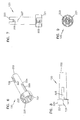
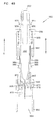
Figure 1 is a side view of an example embodiment of a device used to introduce a cannula of an infusion device into a patient made in accordance with the present invention. -
Figure 2 is an exploded side view of the device ofFigure 1 . -
Figure 3 is a perspective view of a housing of the device ofFigure 1 . -
Figure 4 is a side view of the housing ofFigure 3 . -
Figure 5 is an end view of the housing ofFigure 3 . -
Figure 6 is a perspective view of a cylinder hub of the device ofFigure 1 . -
Figure 7 is side view of the cylinder hub ofFigure 6 . -
Figure 8 is another side view of the cylinder hub ofFigure 6 . -
Figure 9 is an end view of the cylinder hub ofFigure 6 . -
Figure 10 is a perspective view of a needle hub of the device ofFigure 1 . -
Figure 11 is a side view of the needle hub ofFigure 10 . -
Figure 12 is another side view of the needle hub ofFigure 10 . -
Figure 13 is an end view of the needle hub ofFigure 10 . -
Figure 14 is a perspective view of a sleeve of the device ofFigure 1 . -
Figure 15 is a side view of the sleeve ofFigure 14 . -
Figure 16 is another side view of the sleeve ofFigure 14 . -
Figure 17 is an end view of the sleeve ofFigure 14 . -
Figure 18 is a top view of an adhesive portion of the device ofFigure 1 . -
Figure 19 is a cross-sectional view taken along line 19-19 of the adhesive portion ofFigure 18 . -
Figure 20 is an exploded view of the adhesive portion ofFigure 18 . -
Figure 21 is a perspective view of a cap of the device ofFigure 1 . -
Figure 22 is a side view of the cap ofFigure 21 . -
Figure 23 is an end view of the cap ofFigure 21 . -
Figure 24 is a side view of the device ofFigure 1 with the cap removed. -
Figure 25 is a side view of the device ofFigure 24 in a trigger state. -
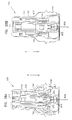
Figure 26A is a cross-sectional view taken alongline 26A-26A of the device ofFigure 1 in a ship state. -
Figure 26B is a cross-sectional view taken alongline 26B-26B of the device ofFigure 1 in the ship state. -
Figure 27A is a cross-sectional view taken alongline 27A-27A of the device ofFigure 24 in a delivery state. -
Figure 27B is a cross-sectional view taken along line 27B-27B of the device ofFigure 24 in the delivery state. -
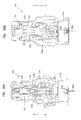
Figure 28A is a cross-sectional view taken alongline 28A-28A of the device ofFigure 25 in a trigger state. -
Figure 28B is a cross-sectional view taken alongline 28B-28B of the device ofFigure 25 in the trigger state. -
Figure 28C is a cross-sectional view of the device ofFigure 28B illustrating the adhesive portion being sheared from a surface of the sleeve. -
Figure 29A is a cross-sectional view of the device ofFigure 28A with the needle hub retracted. -
Figure 29B is a cross-sectional view of the device ofFigure 28B with the needle hub retracted. -
Figure 30A is a cross-sectional view taken alongline 30A-30A of the device ofFigure 24 in a retracted state. -
Figure 30B is a cross-sectional view taken along line 30B-30B of the device ofFigure 24 in the retracted state. -
Figure 31 is a cross-sectional view of a portion of another example embodiment of a device used to introduce an infusion device into a patient made in accordance with the present invention. -
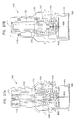
Figure 32A is a cross-sectional view of another example embodiment of a device used to introduce an infusion device into a patient in a ship state made in accordance with the present invention. -
Figure 32B is a cross-sectional view along a perpendicular plane of the device ofFigure 32A . -
Figure 33A is a cross-sectional view of the device ofFigure 32A in a delivery state. -
Figure 33B is a cross-sectional view of the device ofFigure 32B in the delivery state. -
Figure 34A is a cross-sectional view of the device ofFigure 32A in a retracted state. -
Figure 34B is a cross-sectional view of the device ofFigure 32B in the retracted state. -
Figure 35 is a perspective view of a sleeve of the device ofFigure 32A . -
Figure 36 is a side view of the sleeve ofFigure 35 . -
Figure 37 is another side view of the sleeve ofFigure 35 . -
Figure 38 is an end view of the sleeve ofFigure 35 . -
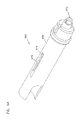
Figure 39 is a perspective view of another example embodiment of a device used to introduce an infusion device into a patient made in accordance with the present invention. -
Figure 40 is another perspective view of the device ofFigure 39 . -
Figure 41 is a side view of the device ofFigure 39 . -
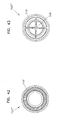
Figure 42 is an end view of the device ofFigure 39 . -
Figure 43 is an opposite end view of the device ofFigure 39 . -
Figure 44 is a perspective view of another example embodiment of a device used to introduce an infusion device into a patient made in accordance with the present invention. -
Figure 45 is a side view of the device ofFigure 44 . -
Figure 46 is another side view of the device ofFigure 44 . -
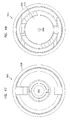
Figure 47 is an end view of the device ofFigure 44 . -
Figure 48 is another end view of the device ofFigure 44 . -
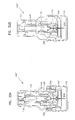
Figure 49 is a cross-sectional view taken along line 49-49 of the device ofFigure 45 . -
Figure 50 is a side view of another example embodiment of a device used to introduce a cannula of an infusion device into a patient including a tamper-evident seal made in accordance with the present invention. -
Figure 51 is a side view of the device ofFigure 50 with the cap uncoupled and the tamper-evident seal having been broken. -
Figure 52 is a cross-sectional view taken along line 52-52 of a portion of the device ofFigure 50 . - Embodiments of the present invention relate to devices for assisting in the introduction of an infusion device, specifically a cannula of the infusion device, into the subcutaneous layer of skin of a patient.
- Referring to
Figures 1 and2 , one example embodiment of adevice 100 is shown. Thedevice 100 is used to introduce a cannula of an infusion device, such as a set, site, or other access device, into the skin of the patient. The set, site, or other access device can then be used to deliver drugs or other fluid to the patient, such as from an infusion pump. - The
device 100 generally includes ahousing 110, acylinder hub 120, aneedle hub 130, asleeve 140, aspring 150, anadhesive portion 160, and acap 170. Each of the components of thedevice 100, described further below, is configured to assist in the introduction of a cannula of an infusion device into the skin of a patient. - Referring now to
Figures 3-5 , thehousing 110 is shown. Thehousing 110 is preferably cylindrical in shape and includes a closedupper end 111 and an openlower end 112. Thehousing 110 further preferably includes aportion 118 with a knurled surface to enhance a patient's grip on thehousing 110, as well as a threadedportion 113 positioned adjacent the openlower end 112. - Referring now to
Figures 6-9 , thecylinder hub 120 is shown in greater detail. Thecylinder hub 120 includes first and second ends 221 and 222 and aninterior passage 223. In addition, two opposingslots 225 are formed on opposite sides of thecylinder hub 120 and generally extend from a mid-portion 224 of thehub 120 to thefirst end 221. Further, thecylinder hub 120 includes opposingapertures 226 formed in thecylinder hub 120 adjacent thesecond end 222. - The
first end 221 of thecylinder hub 120 is coupled to theupper end 111 of thehousing 110 bytabs 119 on thehousing 110 engagingshoulders 228 formed by thecylinder hub 120. See, for example,Figures 6-8 ,26A, and 26B . In addition,members 121 of thehousing 110 are received inslots 229 of thecylinder hub 120. In alternative designs, thehousing 110 andcylinder hub 120 can be formed as a single unit. - Referring now to
Figures 10-13 , theneedle hub 130 includes amain body 331 with first and second ends 332 and 333, and a needle 336 (hollow or solid) coupled to themain body 331. Themain body 331 includes opposingwings 334 formed at thefirst end 332 and opposingbarbs 335 at thesecond end 333. - The
needle hub 130 is positioned in theinterior passage 223 of thecylinder hub 120 such that the opposingwings 334 of theneedle hub 130 extend through the opposingslots 225 of thecylinder hub 120. SeeFigures 6, 8 ,26B ,27B ,28B ,29B , and30B . In addition, the opposingbarbs 335 of theneedle hub 130 extend through the opposingapertures 226 of thecylinder hub 120 and engageshoulders 227 formed by theapertures 226 so that theneedle hub 130 is held in a fixed position relative to thecylinder hub 120 and thehousing 110. See, for example,Figures 6, 8 ,26A ,27A , and28A . - Referring now to
Figures 14-17 , thesleeve 140 is shown. Thesleeve 140 is preferably cylindrical in shape and includes first and second ends 441 and 442 andinterior passage 443. Opposingprojections 444 extend into thepassage 443 adjacent to ashoulder 445. On the exterior of thesleeve 140channels 446 are formed, as well asrailways 447 withbarbs 448 formed on ends thereof. - The
sleeve 140 is coupled to thehousing 110 such that thehousing 110 can be moved longitudinally with respect to thesleeve 140. Specifically, therailways 114 of the housing are received in thechannels 446 of thesleeve 140. Likewise, therailways 447 of thesleeve 140 are received in thechannels 115 of thehousing 110.Barbs 448 on therailways 447 of thesleeve 140 engageprojections 116 in thechannels 115 of thehousing 110 so that thehousing 110 remains slideably coupled to thesleeve 140 in opposition to the force exerted by the spring 150 (described further below). - The
spring 150 includes first and second ends 152 and 154. See, for example,Figure 26B . Thespring 150 surrounds a portion of thecylinder hub 120 and extends within thepassage 443 of thesleeve 140. Thefirst end 152 of thespring 150 is seated on theshoulder 445 of thesleeve 140, and thesecond end 154 of thespring 150 engages the opposingwings 334 of theneedle hub 130 extending through the opposingslots 225 of thecylinder hub 120. - The
spring 150 is in a compressed state as shown inFigures 26A, 26B ,27A, 27B ,28A, and 28B and therefore applies force against thewings 334 of theneedle hub 130, biasing theneedle hub 130 in an upward direction. However,barbs 335 of themain body 331 of theneedle hub 130 are engaged againstshoulders 227 of theapertures 226 of thecylinder hub 120 to retain theneedle hub 130 in place with respect to thecylinder hub 120. See, for example,Figure 26A . Likewise, thespring 150 forces thehousing 110 and thesleeve 140 apart untilbarbs 448 of thesleeve 140 engageprojections 115 of thehousing 110 to maintain coupling between thehousing 110 and thesleeve 140. - Referring now to
Figures 18-20 , anadhesive portion 160 is positioned on asurface 449 at thesecond end 442 of the sleeve 140 (seeFigures 14 and 17 ). Thesurface 449 preferably acts as a framework that stabilizes theadhesive portion 160 prior to placement on the patient. ln a preferred embodiment shown, theadhesive portion 160 includeslayers liners Liners liners - The
adhesive portion 160 can be coupled to thesurface 449 ofsleeve 140 in a variety of manners. In a preferred embodiment, theliner 661 is removed, andlayer 662 is coupled to thesurface 449 using an adhesive. In addition, as described further below, in a preferred embodiment atop surface 669 oflayer 664 and/or a lower end of the infusion device includes an adhesive to couple the infusion device to theadhesive portion 160 as the infusion device is moved into contact with the adhesive portion. SeeFigures 28A, 28B , and28C . - In addition, the
liner 665 is preferably removed, and alower surface 668 of thelayer 664 includes an adhesive to couple theadhesive portion 160 to the skin of the patient. - Preferably, the site is loaded into the
device 100 prior to application of theadhesive portion 160 onto thedevice 100, and preferably bothliners sleeve 140 and coupling of thecap 170 to thehousing 110. In this manner, the patient preferably does not need to remove any liners prior to application of theadhesive portion 160 to the skin and introduction of the site into the skin. - Preferably, the
layer 664 does not include any holes, but instead is pierced by theneedle 336 as theneedle 336 is advanced towards the skin, as described further below. This configuration can enhance the fit between theadhesive portion 160 and the skin of the patient. - In a preferred embodiment, the
adhesive portion 160 includes adhesive on one or more ofsurfaces adhesive portion 160 to be coupled to thesleeve 140, site, and/or to the skin of the patient. Typical adhesives that can be used on theadhesive portion 160 include, without limitation, acrylic adhesive, synthetic rubber-based adhesive, acrylate adhesive, and silicone-based adhesive. - In example embodiments, the
adhesive portion 160 includes films with adhesives thereon, such as a Tegaderm™ film manufactured by 3M™ or an IV3000TM film manufactured by Smith & Nephew. For example, in the preferred embodiment shown, thetape layer 662 is 3M™ 9731 tape, and layers 663 and 664 are 3M™ Tegaderm™ p/n 9842. - Referring now to
Figures 21-23 , thecap 170 is illustrated. Thecap 170 includes a closedfirst end 772 and an opensecond end 774. Thecap 170 preferably includes an exterior with aknurled surface 778 to enhance the patient's grip on thecap 170. in addition, the interior of thecap 170 includes a threadedportion 776 positioned adjacent the opensecond end 774 so that the threadedportion 776 can be threaded onto the threadedportion 113 of thehousing 110 to seal thedevice 100. SeeFigures 1 ,26A, and 26B . - In a preferred embodiment, a
gasket 122 is provided on the threadedportion 113 of thehousing 110 to create a seal between thecap 170 and thehousing 110 as thecap 170 is threaded onto thehousing 110. SeeFigures 26A and 26B . In this manner, the internal components of the device 100 (e.g., needle 33 6 and site 800) can be maintained in a substantially sterile state prior to removal of thecap 170. Further, thecap 170 can function to maintain thedevice 100 in a ship state (i.e., thehousing 110 can not be moved relative to the sleeve 140) prior to removal of thecap 170 from thehousing 110. - In alternative embodiments, the
cap 170 and/orhousing 110 can be formed to provide a tamper-evident seal so that the patient can determine when thecap 170 has been previously uncoupled from thehousing 110. For example, in an alternative embodiment of the device 100' shown inFigures 50-52 , a tamper-evident band 178 is shown. Theband 178 includestabs 179 that are coupled to thecap 170 as shown inFigure 50 . As thecap 170 is removed from the housing 110 (i.e.,threads 514 oncap 170 are unthreaded fromthreads 512 on housing 110), thetabs 179 break away from thecap 170, and theseal 178 remains coupled to thehousing 110, as shown inFigure 51 . If thecap 170 is later threaded back onto the device 100', the breaks between thetabs 179 and thecap 170 are evident, allowing the patient to identify that thecap 170 of the device 100' has been previously removed. - The
cap 170 andband 178 can be placed on the device 100' during manufacturing as a single unit. For example, as shown inFigure 52 , thecap 170 andband 178 can be pushed onto the device 100' (note thatthreads cap 170 to be pressed onto the device 100') so thatportion 520 of theband 178 passes over and engagesshoulder 522 of thehousing 110 to retain theband 178 on thehousing 110 when thecap 170 is unthreaded andtabs 179 are broken. In addition,notches 524 formed periodically along theband 178 prevent thecap 170 from bottoming out against theband 178 as thecap 170 andband 178 are pushed onto the device 100' so that thetabs 179 remain intact. Aportion 502 extending along an interior circumference of thecap 170 can also be formed to engage the outer surface of thehousing 110 to create a seal between thehousing 110 and thecap 170. - It can be desirable to provide a tamper-evident seal, for example, so that the patient can assure that the device 100' is has not been previously opened and is sterile prior to use. Other methods of indicating tampering can also be used.
- As previously noted, the
device 100 can be used to introduce a cannula of an infusion device into the subcutaneous layer of skin of the patient. In a preferred embodiment, the infusion device includes asite 800, thesite 800 including a cannula for delivery of a substance into the subcutaneous layer of skin of the patient.Site 800 is linked by tubing (not shown) with a fluid source, such as an infusion pump (not shown) to deliver fluid to the patient through the cannula. In a preferred embodiment, thesite 800 can be made in accordance with that disclosed inU.S. Patent Application Serial No. 10/705,736 , the entirety of which is hereby incorporated by reference. However, sites of other configurations can also be used. - Referring now to
Figures 1 and24-30 , thedevice 100 is illustrated in various states of use. As shown inFigures 1 ,26A, and 26B , thedevice 100 is in a ship state prior to use. As shown inFigures 24 ,27A, and 27B , thedevice 100 is in a delivery state ready to deliver the cannula of an infusion device into the skin of the patient. As shown inFigures 25 ,28A ,28B , and28C thedevice 100 is in a trigger state, or the state at which theneedle 336 and the cannula of thesite 800 have been fully inserted into the subcutaneous layer of skin of the patient, and theneedle hub 130 and associatedneedle 336 are about to be retracted. As shown inFigures 29A and 29B , thedevice 100 is in a retracted state with theneedle hub 130 and associatedneedle 336 having been retracted into thedevice 100. As shown inFigures 30A and 30B , thedevice 100 is in a fully retracted state with thehousing 110 andsleeve 140 returned to an uncompressed position relative to one another. - An example method of use of the
device 100 is as follows. Thedevice 100 is provided to a patient with thecap 170 coupled to thehousing 110, as shown inFigures 1 ,26A, and 26B . Preferably, thesite 800 has been previously loaded (i.e., preloaded) into thedevice 100 during, for example, the manufacturing process for thedevice 100. - The
cap 170 is then unthreaded from thehousing 110, and thesleeve 140 of thedevice 100 is positioned so that the adhesive portion 160 (i.e., surface 668) contacts theskin 900 of the patient. SeeFigures 24 ,27A, and 27B . - Next, in the illustrated preferred embodiment, the patient applies pressure to the
upper end 111 of thehousing 110 to move thehousing 110 and associated structures including thecylinder hub 120 and needle hub 130 (includingneedle 336 and site 800) in a direction A with respect to thesleeve 140 and toward theskin 900 of the patient. As theneedle 336 of theneedle hub 130 and associatedsite 800 are moved in the direction A, theneedle 336 and thecannula 806 of thesite 800 are introduced into theskin 900 of the patient. In addition, as theneedle hub 130 is moved toward thesleeve 140, thespring 150 is further compressed. - Once the
needle 336 andcannula 806 of thesite 800 have been fully inserted into theskin 900, thedevice 100 is in a trigger state, as illustrated inFigures 25 ,28A ,28B , and28C . In this state, thebarbs 335 that couple theneedle hub 130 to thecylinder hub 120 are biased inwardly through contact with theprojections 444 formed by thesleeve 140. - As the
housing 110,cylinder hub 120, andneedle hub 130 are displaced further in the direction A, it is preferable that theneedle hub 130 is positioned so that a lower portion of thesite 800 travels slightly beyond thesecond end 442 of thesleeve 140 as shown inFigure 28C . This "over-travel" assures that theadhesive portion 160 is properly sheared away from thesurface 449 of thesleeve 140 and allows for the coupling of thesite 800 to theadhesive portion 160. For example, in preferred embodiments, the lower portion of thesite 800 travels beyond thesecond end 442 of thesleeve 140 by between 50 to 100 thousandths of an inch, more preferably approximately 70 thousandths of an inch. - In addition, as the
housing 110,cylinder hub 120, andneedle hub 130 are displaced further in the direction A as described above,barbs 335 of theneedle hub 130 are forced inwardly by theprojections 444 of thesleeve 140, and thebarbs 335 are thereby uncoupled from engagement with thecylinder hub 120. Once thebarbs 335 of theneedle hub 130 are released from thecylinder hub 120, theneedle hub 130 is free to move longitudinally within thepassage 223 of thecylinder hub 120 in a direction B opposite to that of the direction A. Thespring 150, which has been compressed through the movement of thehousing 110 in the direction A, propels theneedle hub 130 and associatedneedle 336 in the direction B up through thecylinder hub 120 into theupper end 111 of thehousing 110, while leaving thesite 800 and associatedcannula 806 positioned in theskin 900 of the patient, as shown inFigures 29A and 29B . - Once the patient removes pressure from the
upper end 111 of thehousing 110, thespring 150 causes thehousing 110 andcylinder hub 120 to move in the direction B as shown inFigures 30A and 30B to a fully retracted state. - Finally, the
sleeve 140 is removed from contact with theskin 900, and thecap 170 can be replaced onto the threadedportion 113 of thehousing 110 of thedevice 100. Subsequently, thedevice 100 can be discarded. - Many alternative designs for the device can be provided. For example, in
Figure 31 a portion of an alternative device is shown including cylinder hub 120' and needle hub 130'. The cylinder hub 120' and needle hub 130' are similar tocylinder hub 120 andneedle hub 130 described above, except that the cylinder hub 120' includesprojections 129 formed near thefirst end 221 of the cylinder hub 120', and the needle hub 130' includesbarbs 139 formed on thefirst end 332. Thebarbs 139 are configured to ride inside theinterior passage 223 of the cylinder hub 120' during retraction of theneedle 336 in the direction B until thebarbs 139 extend beyond theprojections 129 of the cylinder hub 120'. Once this occurs, thebarbs 139 expand outward slightly. In this configuration as shown inFigure 31 , thebarbs 139 prevent the needle hub 130' and associatedneedle 336 from being moved back in the direction A. In this manner, thebarbs 129 lock the needle hub 130' in the retracted position. This configuration can be beneficial, used separately or in conjunction with the force of thespring 150 forcing the needle hub 130' in the direction B, to further reduce the possibility of inadvertent exposure to theneedle 336 after retraction. - According to another alternative embodiment, a
device 100" is illustrated inFigures 32-38 .Device 100" is similar todevice 100 described above, except that the sleeve (e.g., sleeve 140) is replaced with a trigger 140'. Indevice 100", the trigger 140' (seeFigures 35-38 ) does not function assleeve 140 to shroud theneedle 336 prior to insertion, but instead trigger 140' functions to cause retraction of theneedle 336 upon full insertion, as described further below. - In this embodiment of
device 100", once thecap 170 has been removed,needle 336 is exposed as shown inFigures 33A and 33B . In this configuration, instead of moving thehousing 110,cylinder hub 120, andneedle hub 130 longitudinally with respect to the housing, the patient simply inserts theneedle 336 and associatedcanula 806 of the site into the skin by grasping thehousing 110 and introducing the exposedneedle 336 into the skin. - As the
needle 336 andcannula 806 reaches full insertion, the trigger 140' contacts the skin and thereby causes theneedle hub 130 including theneedle 336 to be retracted into thehousing 110, leaving thesite 800 in place on the skin. In the illustrated embodiment, the trigger 140' is automatic, in that the trigger 140' is configured to causebarbs 335 of theneedle hub 130 to be displace inwardly to release theneedle hub 130 from thecylinder hub 120, and thespring 150 can thereupon move theneedle hub 130 and associatedneedle 336 in the direction B into an upper portion of thehousing 110 as shown inFigures 34A and 34B . - In alternative embodiments, the trigger 140' can be configured to be manually actuated by the patient to cause retraction of the
needle hub 130 and associatedneedle 336 once thecannula 806 has been fully inserted. - Referring now to
Figures 39-43 , another embodiment of adevice 100"' is shown. The device 100'" is a manual device in that thedevice 100"' includes only a housing 110',needle 336, and cap (not shown) that can be threaded onto the housing 110'. Preferably, a site (not shown) can be preloaded onto theneedle 336 and the cap placed on the housing 110' to create a sterile environment prior to use. To usedevice 100"', the patient preferably removes the cap from the housing 110' and, holding the housing 110' inserts the needle and associated cannula of the site into the skin. Once the cannula is completely inserted, the patient moves the housing 110' in the opposite direction to remove the needle from the skin while leaving the site in place. Finally, the patient preferably reapplies the cap to the housing 110' to reduce the chance for further inadvertent exposure to theneedle 336. The device 100'" can then be discarded or reused as desired. - Referring now to
Figures 44-49 , another example embodiment of adevice 950 for assisting in the introduction of asite 970 is shown. Thedevice 950 differs from thedevice 100. For example, while thedevice 100 can be manually driven by the patient to insert the needle and cannula of the site into the skin, thedevice 950 is automated in that aspring 960 is used to drive the needle and cannula of the site into the skin of the patient. - The
device 950 includes ahousing 958,cap 952,lock member 962,needle hub 965,main body 980,retainer body 978, andsleeve 982. Also included are thefirst spring 960 and asecond spring 966. - The
device 950 functions as follows. Thelock member 962,needle hub 964, andretainer body 978 are moveable longitudinally with respect to thehousing 958 andsleeve 982 of thedevice 950. Thelock member 962 is positioned so thatneedle 968 of theneedle hub 965 is accessible fromopen end 984 of thedevice 950. Thesite 970 can then be loaded onto theneedle 968 by threading the cannula of thesite 970 onto theneedle 968.Openings 986 are formed by thehousing 958 to accommodatesites 970 of various sizes (e.g., wings formed on sites). - Once the
site 970 has been loaded onto theneedle 968, thelock member 962 is moved in a direction C by thepatient using projections 974 that are accessible throughslot 976 ofhousing 958 untilbarbs 956 of thelock member 962 engage an outer surface of thehousing 958, as shown inFigure 49 . In this position, thedevice 950 is ready to insert thesite 970 into the skin of the patient. - Next, the
sleeve 982 of thedevice 950 is placed against the skin of the patient. To initiate insertion of thesite 970, thecap 952 is pressed by the patient. Once pressed,shoulders 954 on an opposite end of thecap 952 engage and push thebarbs 956 of thelock member 962 toward one another to disengage thebarbs 956 from thehousing 958. When thebarbs 956 clear thehousing 958, thelock member 962,main body 980,needle hub 965,retainer body 978, and associatedsite 970 are moved by the first spring 960 a the direction D. - The
device 950 continues to move thesite 970 towards the skin, thereby introducing theneedle 968 and cannula of thesite 970 into the skin. As the cannula of thesite 970 is fully inserted into the skin,barbs 964 of theneedle hub 965 engage rampedsurfaces 972 of thesleeve 982, causing thebarbs 964 to be forced toward one another. When the cannula of thesite 970 is fully inserted into the skin, thebarbs 964 have been forced inwardly by thesurfaces 972 sufficiently to clear ends 988 of themain body 980, and thesecond spring 966 moves theneedle hub 965 in the direction C into apassage 990 formed by themain body 980. - As the
needle hub 965 is moved by thesecond spring 966 into themain body 980, theneedle 968 is removed from thesite 970, leaving thesite 970 in place on the skin. In addition, theretainer body 978 remains in a position adjacent theopen end 984 of thesleeve 982 so that once thedevice 950 is removed from the skin of the patient, theretainer body 978 protects the patient from further contact with theneedle 968. - Devices made in accordance with the principles described herein can be advantageous for various reasons. For example, each device can provide ease in placement of the site on the skin, preferably allowing the user to place the site with the device where desired on the body using a single hand to operate the device.
- Further, several embodiments disclosed herein include structures that cover or hide the needle prior to insertion of the site, and also cause the needle to be retracted into the device after insertion to protect against inadvertent contact with the needle.
- In addition, several embodiments of the devices disclosed herein can automatically retract the needle while leaving the site placed on the skin, thereby reducing the patient's contact with the exposed needle. Preferably, this retraction is automatic in that once the device reaches the trigger state there is no further action required by the patient to cause the needle to be retracted. The automatic retraction of the needle also limits the dwell time of the needle in the patient, increasing comfort for the patient.
- In addition, the action of inserting the needle into position on the skin using the devices disclosed herein can function to hold the site on the surface of the skin during needle retraction. This can assist in adherence of the adhesive portion to the skin and reduce the chances of separation between the adhesive portion and site and the skin during needle retraction.
- In addition, the housing and cap of several of embodiments of the devices disclosed herein allow the various components of the devices including the needle and infusion device to be delivered to the patient in a self-contained, sterile environment prior to use. The configuration further minimizes the need for packaging surrounding the devices, reducing manufacturing cost and increasing ease in use of the devices. The configuration also allows the housing and cap to protect and maintain the infusion device on the needle of the device. The configuration and disposable nature of the devices further allow ease in discarding of the devices after use.
- Also, the configuration of several embodiments of the devices disclosed herein can allow the site to be preloaded into the device, thereby providing ease of use for the patient and reducing the patient's exposure to the needle. For example, single-use embodiments disclosed herein preferably do not require that the patient load the site into the device prior to insertion, but instead provide the device with the site preloaded.
- Some embodiments of the devices allow for both automatic delivery of the site and withdrawal of the needle, thereby automating the entire introduction process for the patient.
- While single use devices are preferred, reusable devices wherein the needle retracts but can be reloaded are also anticipated.
- The above specification, examples and data provide a complete description of the manufacture and of the invention. Since many embodiments of the invention can be made without departing from the spirit and scope of the invention, the invention resides in the claims hereinafter appended.
- Selected embodiments described in the present disclosure can be summarized as follows:
- 1 A device for automatically retracting a needle used to introduce a cannula of a subcutaneous infusion device into a subcutaneous layer of skin of a patient, the device comprising:
- a housing defining an internal cavity;
- a needle hub coupled to the housing and including a needle, the needle being coupled to a cannula of a subcutaneous infusion device;
- a spring configured to move the needle into a retracted state; and
- a trigger member including projections;
- wherein, upon full introduction of the needle and associated cannula of the subcutaneous infusion device into a subcutaneous layer of skin of a patient, the projections release the needle hub, and the spring automatically moves the needle into the internal cavity of the housing into the retracted state while leaving the cannula of the subcutaneous infusion device in the subcutaneous layer of skin of the patient.
- 2 The device of aspect1, further comprising a second spring configured to introduce the needle and associated cannula of the subcutaneous infusion device into the subcutaneous layer of skin of the patient.
- 3 The device of
aspect 1, wherein the housing includes a first portion coupled to the needle, and a second portion that is slideably received in the first portion, wherein the first portion slides relative to the second portion to introduce the needle into the subcutaneous layer of skin of the patient. - 4 The device of aspect1, further comprising means for covering the needle prior to introduction of the needle into the subcutaneous layer of skin of the patient.
- 5 The device of aspect1, further comprising a sleeve coupled to the housing to cover the needle prior to introduction of the needle into the subcutaneous layer of skin of the patient. 17
- 6 The device of
aspect 1, wherein the device is Configured to allow the subcutaneous infusion device to be preloaded into the device. - 7 The device of
aspect 1, further comprising a cap that is coupled to the housing of the device. - 8 The device of aspect 7, wherein the cap includes a tamper-evident seal.
- 9 A device for inserting a subcutaneous infusion device into skin of a patient, comprising:
- a housing;
- a hub coupled to the housing and defining an interior passage;
- a needle hub including a needle, the needle hub being positioned in the interior passage of the hub so that the needle hub is held in a fixed position relative to the hub and the housing;
- a sleeve; and
- a spring engaging the needle hub;
- wherein the housing, hub, and needle hub are movable relative to the sleeve to introduce the needle of the needle hub and associated cannula of an infusion device into a subcutaneous layer of skin, and wherein, upon the needle and associated infusion device being fully inserted into the subcutaneous layer of skin, the needle hub is slideable relative to the hub, and the needle hub including the needle are moveable by the spring through the passage of the hub to a retracted state, leaving the infusion device positioned on the skin of the patient.
- 10 The device of aspect 9, further comprising a cap configured to be coupled to the housing.
- 11 The device of aspect 10, wherein the cap includes a tamper-evident band, wherein the tamper-evident band remains coupled to the housing when the cap is removed from the housing.
- 12 The device of aspect 9, further comprising another spring engaging the needle hub, the spring being positioned to automatically introduce the needle of the needle hub and associated cannula of the infusion device into the subcutaneous layer of the skin of the patient.
- 13 The device of aspect 9, wherein the device is configured to allow the subcutaneous infusion device to be preloaded into the device.
- 14 A device for inserting a subcutaneous infusion device into skin of a patient, inserting a subcutaneous infusion device into skin of a patient, comprising:
- a housing including a closed upper end, defining an open lower end, and a threaded portion positioned adjacent the open lower end;
- a cylinder hub including first and second ends, the cylinder hub defining an interior passage and two opposing slots extending from a mid-portion of the hub to the first end, and the cylinder hub defining opposing apertures adjacent the second end of the cylinder hub, wherein the first end of the cylinder hub is coupled to the upper end of the housing;
- a needle hub including a main body with first and second ends, and a needle coupled to the main body, the main body including opposing wings formed at the first end and opposing barbs at the second end, wherein the needle hub is positioned in the interior passage of the cylinder hub such that the opposing wings extend through the opposing slots of the cylinder hub, and the opposing barbs of the needle hub extend through the opposing apertures of the cylinder hub and engage the cylinder hub so that the needle hub is held in a fixed position relative to the cylinder hub and the housing;
- a sleeve including first and second ends and defining an interior passage, the sleeve including opposing projections extending inwardly into the interior passage of the sleeve at a mid-portion of the sleeve, and a cylindrical shoulder formed in the interior passage at the mid-portion of the sleeve, wherein the second end of the cylinder hub extends through the passage of the sleeve, and a portion of the sleeve including the first end is received within the housing;
- a spring with first and second ends, wherein the spring surrounds the cylinder hub and extends within the passage of the sleeve, and wherein the first end of the spring is seated on the shoulder of he sleeve, and the second end of the spring engages the opposing wings of the needle hub extending through the opposing slots of the cylinder hub; and
- a cap including a closed first end, defining an open second end, and a threaded portion positioned adjacent the open second end, wherein the threaded portion of the cap is threaded onto the threaded portion of the housing to seal the device;
- wherein, upon removal of the cap from the housing, the second end of the sleeve is positioned relative to skin of a patient, and the housing, cylinder hub, and needle hub are moved relative to the sleeve in a direction towards the skin of the patient so that the needle of the needle hub and associated cannula of an infusion device are introduced into a subcutaneous layer of the skin, and wherein, upon the needle and associated infusion device being fully inserted into the skin and the cylinder hub being moved, relative to the sleeve, the opposing projections of sleeve contact and force the barbs of the needle hub inwardly until the barbs disengage from the opposing apertures of the cylinder hub, and wherein upon disengagement of the barbs from the cylinder hub, the needle hub including the needle are moved by the spring through the passage of the cylinder hub to the first end of the cylinder hub adjacent the closed upper end of the housing, leaving the infusion device positioned on the skin of the patient.
- 15 A device for inserting a subcutaneous infusion device into skin of a patient, comprising:
- a housing;
- a needle coupled to the housing for receiving a cannula of a subcutaneous infusion device; and
- a cap coupled to the housing;
- wherein the needle is inserted through the cannula of the subcutaneous infusion device and is introduced into the skin of the patient to insert the cannula into the skin; and
- wherein the cap is coupled to the housing prior to use to create a sterile environment.
- 16 The device of aspect 15, wherein the cap is coupled to the housing after use to protect against exposure to the needle.
- 17 A method for retracting a needle of a device used to introduce a cannula of a subcutaneous infusion device into a subcutaneous layer of skin of a patient, the method comprising:
- removing a cap from the device;
- introducing a cannula of a subcutaneous infusion device into a subcutaneous layer of skin of a patient using a needle of a device; and
- upon the full insertion of the cannula by the device and the device reaching a trigger state, automatically retracting the needle while leaving the infusion device positioned on the skin of the patient.
- 18 The method of aspect 17, further comprising reapplying the cap after introduction of the cannula.
- 19 The method of aspect 17, further comprising preloading the infusion device in the device prior to application of the cap.
- 20 The method of aspect 17, wherein the step of introducing the cannula further comprises providing a member in the device to automatically introduce the cannula of the subcutaneous infusion device into the subcutaneous layer of skin of the patient using the needle.
- 21 The method of aspect 17, further comprising preloading the subcutaneous infusion device into the device.
- 22 A method for inserting a subcutaneous infusion device into skin of a patient, comprising:
- providing a housing and a needle coupled to the housing for receiving a cannula of a subcutaneous infusion device
- positioning the cannula of the subcutaneous infusion device on the needle; and
- coupling cap to the housing to create a sterile environment.
- 23 The method of aspect 22, further comprising:
- uncoupling the cap from the housing; and
- introducing the needle, and associated cannula into the skin of the patient.
- 24 The method of aspect23, further comprising recoupling the cap to the housing after the cannula has been inserted into the skin of the patient.
- 25 The method of aspect 22, further comprising:
- providing a tamper-evident band coupled to the cap by tabs;
- coupling the tamper-evident hand to the housing; and
- uncoupling the cap from the housing so that the tabs are broken and the tamper-evident band remains coupled to the housing.
Claims (15)
- A device for subcutaneously introducing a cannula of a subcutaneous infusion device into a patient, the device comprising:a housing defining a cavity;a needle hub disposed in the cavity having a first position and a second position relative to the housing and along an axis, and comprising a needle;a site removably coupled in the housing and comprising the cannula; anda biasing member aligned with the axis and interacting with the needle hub such that when the housing is selectively displaced in a first direction along the axis, the biasing member is deformed in a first manner, the needle hub is maintained in the first position relative to the housing while moving in the first direction to introduce the needle and the cannula into the patient until the needle hub has moved a distance in the first direction at which the biasing member is deformed in a second manner to move the needle hub in a second direction, opposite the first direction, to the second position along the axis to retract the needle relative to the housing.
- The device of claim 1, wherein the needle is aligned longitudinally with the axis.
- The device of claim 1, wherein the needle hub is positioned within the biasing member.
- The device of claim 1, wherein the site is decoupled and left on the skin of the patient after the needle is retracted relative to the housing.
- The device of claim 4, wherein the site comprises an adhesive to coupie the site to the skin of the patient.
- The device of claim 1, further comprising a sleeve at least partially disposed in the cavity and having a first position and a second position relative to the housing, wherein when the housing is selectively displaced in the first direction, the sleeve moves from the first to the second position and the needle hub is maintained in the first position relative to the housing while moving toward the second position relative to the sleeve to introduce the needle and the cannula into the patient until the needle hub reaches the second position relative to the housing, when the biasing member is deformed in the second manner to move the needle hub to the second position relative to the housing to retract the needle within the sleeve.
- The device of claim 1, wherein the needle is introduced through the cannula to the skin of the patient.
- A device for subcutaneously introducing a cannula of a subcutaneous infusion device into a patient, the device comprising:a housing defining a cavity;a sleeve at least partially disposed in the cavity and having a first position and a second position relative to the housing along an axis;a site removably coupled to the sleeve and comprising the cannula; anda biasing member interacting with the sleeve, wherein when the housing is selectively displaced in a first direction along the axis, the biasing member is deformed in a first manner and the sleeve moves along the axis from the first to the second position to introduce the cannula into the patient, the site thereafter being decoupled form the sleeve to remain on the skin of the patient.
- The device of claim 8, wherein the site comprises a contact surface for coupling to the skin of the patient.
- The device of claim 9, wherein the contact surface comprises an adhesive.
- The device of claim 8, further comprising a needle inserted into the skin of the patient with the cannula.
- The device of claim 11, wherein the needle is retracted relative to the housing after the site is decoupled.
- The device of claim 12, wherein the needle has a first starting position and along the axis, a second insertion position along the axis and a third retracted position along the axis.
- The device of claim 11, wherein the needle is aligned longitudinally with the axis.
- The device of claim 8, wherein the needle hub is positioned within the biasing member.
Applications Claiming Priority (2)
| Application Number | Priority Date | Filing Date | Title |
|---|---|---|---|
| US10/705,725 US7699807B2 (en) | 2003-11-10 | 2003-11-10 | Device and method for insertion of a cannula of an infusion device |
| EP04784263.8A EP1691877B1 (en) | 2003-11-10 | 2004-09-15 | Device for insertion of a cannula of an infusion device |
Related Parent Applications (1)
| Application Number | Title | Priority Date | Filing Date |
|---|---|---|---|
| EP04784263.8 Division | 2004-09-15 |
Publications (2)
| Publication Number | Publication Date |
|---|---|
| EP2383011A2 true EP2383011A2 (en) | 2011-11-02 |
| EP2383011A3 EP2383011A3 (en) | 2012-08-29 |
Family
ID=34552434
Family Applications (3)
| Application Number | Title | Priority Date | Filing Date |
|---|---|---|---|
| EP04784263.8A Expired - Lifetime EP1691877B1 (en) | 2003-11-10 | 2004-09-15 | Device for insertion of a cannula of an infusion device |
| EP11174425A Withdrawn EP2380620A3 (en) | 2003-11-10 | 2004-09-15 | Device for insertion of a cannula of an infusion device |
| EP11174404A Withdrawn EP2383011A3 (en) | 2003-11-10 | 2004-09-15 | Device for insertion of a cannula of an infusion device |
Family Applications Before (2)
| Application Number | Title | Priority Date | Filing Date |
|---|---|---|---|
| EP04784263.8A Expired - Lifetime EP1691877B1 (en) | 2003-11-10 | 2004-09-15 | Device for insertion of a cannula of an infusion device |
| EP11174425A Withdrawn EP2380620A3 (en) | 2003-11-10 | 2004-09-15 | Device for insertion of a cannula of an infusion device |
Country Status (6)
| Country | Link |
|---|---|
| US (1) | US7699807B2 (en) |
| EP (3) | EP1691877B1 (en) |
| JP (1) | JP4685024B2 (en) |
| CN (1) | CN100506310C (en) |
| CA (1) | CA2544303C (en) |
| WO (1) | WO2005046781A1 (en) |
Cited By (2)
| Publication number | Priority date | Publication date | Assignee | Title |
|---|---|---|---|---|
| US10898644B2 (en) | 2011-03-30 | 2021-01-26 | Uno Medical A/S | Subcutaneous inserter device |
| US11229753B2 (en) | 2016-04-29 | 2022-01-25 | Smiths Medical Asd, Inc. | Subcutaneous insertion systems, devices and related methods |
Families Citing this family (487)
| Publication number | Priority date | Publication date | Assignee | Title |
|---|---|---|---|---|
| US6813519B2 (en) | 2000-01-21 | 2004-11-02 | Medtronic Minimed, Inc. | Ambulatory medical apparatus and method using a robust communication protocol |
| US8152789B2 (en) | 2001-10-23 | 2012-04-10 | Medtronic Minimed, Inc. | System and method for providing closed loop infusion formulation delivery |
| US6830562B2 (en) | 2001-09-27 | 2004-12-14 | Unomedical A/S | Injector device for placing a subcutaneous infusion set |
| US10080529B2 (en) | 2001-12-27 | 2018-09-25 | Medtronic Minimed, Inc. | System for monitoring physiological characteristics |
| ITTO20011228A1 (en) | 2001-12-28 | 2003-06-28 | Cane Srl | DISPOSABLE NEEDLE CONTAINER. |
| US9486581B2 (en) * | 2002-09-11 | 2016-11-08 | Becton, Dickinson And Company | Injector device with force lock-out and injection rate limiting mechanisms |
| US6926694B2 (en) * | 2003-05-09 | 2005-08-09 | Medsolve Technologies, Llc | Apparatus and method for delivery of therapeutic and/or diagnostic agents |
| WO2004110527A1 (en) * | 2003-06-12 | 2004-12-23 | Disetronic Licensing Ag | Insertion device for infusion sets |
| US7731691B2 (en) * | 2003-11-10 | 2010-06-08 | Smiths Medical Asd, Inc. | Subcutaneous infusion device and device for insertion of a cannula of an infusion device and method |
| US7309326B2 (en) * | 2003-11-18 | 2007-12-18 | Icu Medical, Inc. | Infusion set |
| WO2005065748A1 (en) * | 2003-12-30 | 2005-07-21 | Disetronic Licensing Ag | Insertion unit for puncture devices |
| MXPA06010784A (en) | 2004-03-26 | 2006-12-15 | Unomedical As | Injector device for infusion set. |
| WO2005120623A2 (en) * | 2004-06-07 | 2005-12-22 | C.R. Bard, Inc. | Subcutaneous infusion devices |
| US7585287B2 (en) * | 2004-06-16 | 2009-09-08 | Smiths Medical Md, Inc. | Device and method for insertion of a cannula of an infusion device |
| US8062250B2 (en) | 2004-08-10 | 2011-11-22 | Unomedical A/S | Cannula device |
| US10737028B2 (en) | 2004-11-22 | 2020-08-11 | Kaleo, Inc. | Devices, systems and methods for medicament delivery |
| US7947017B2 (en) | 2004-11-22 | 2011-05-24 | Intelliject, Inc. | Devices, systems and methods for medicament delivery |
| US11590286B2 (en) | 2004-11-22 | 2023-02-28 | Kaleo, Inc. | Devices, systems and methods for medicament delivery |
| AU2004325202B2 (en) | 2004-11-22 | 2009-02-19 | Kaleo, Inc. | Devices, systems, and methods for medicament delivery |
| US7648483B2 (en) * | 2004-11-22 | 2010-01-19 | Intelliject, Inc. | Devices, systems and methods for medicament delivery |
| KR20070086306A (en) | 2004-12-10 | 2007-08-27 | 우노메디컬 에이/에스 | Injector |
| US7697967B2 (en) | 2005-12-28 | 2010-04-13 | Abbott Diabetes Care Inc. | Method and apparatus for providing analyte sensor insertion |
| US8029441B2 (en) | 2006-02-28 | 2011-10-04 | Abbott Diabetes Care Inc. | Analyte sensor transmitter unit configuration for a data monitoring and management system |
| US8512243B2 (en) | 2005-09-30 | 2013-08-20 | Abbott Diabetes Care Inc. | Integrated introducer and transmitter assembly and methods of use |
| US10226207B2 (en) | 2004-12-29 | 2019-03-12 | Abbott Diabetes Care Inc. | Sensor inserter having introducer |
| US9788771B2 (en) | 2006-10-23 | 2017-10-17 | Abbott Diabetes Care Inc. | Variable speed sensor insertion devices and methods of use |
| DK2058020T3 (en) | 2005-02-01 | 2013-01-07 | Intelliject Inc | Device for administering drug |
| US7985199B2 (en) | 2005-03-17 | 2011-07-26 | Unomedical A/S | Gateway system |
| DK1896097T3 (en) | 2005-06-28 | 2010-11-22 | Unomedical As | Packaging for infusion sets and method of using an infusion set |
| DE602006005674D1 (en) | 2005-07-06 | 2009-04-23 | Vascular Pathways Inc | DEVICE FOR INTRAVENOUS CATHETER INTRODUCTION AND USE METHOD |
| PT1762259E (en) | 2005-09-12 | 2010-12-10 | Unomedical As | INSERTER FOR AN INFUSION ASSEMBLY WITH A FIRST AND SECOND SPRING UNITS |
| DE502005009907D1 (en) | 2005-09-15 | 2010-08-26 | Roche Diagnostics Gmbh | Insertion head with handle |
| DK1764125T5 (en) | 2005-09-15 | 2011-11-14 | Hoffmann La Roche | Insert head system and insertion system |
| CA2621634A1 (en) | 2005-09-15 | 2007-03-22 | F. Hoffmann-La Roche Ag | Insertion head with needle protection integrated into the handle |
| USD655807S1 (en) | 2005-12-09 | 2012-03-13 | Unomedical A/S | Medical device |
| EP2077128B1 (en) | 2005-12-23 | 2010-12-22 | Unomedical A/S | Injection Device |
| US11298058B2 (en) | 2005-12-28 | 2022-04-12 | Abbott Diabetes Care Inc. | Method and apparatus for providing analyte sensor insertion |
| US7892216B2 (en) * | 2006-02-07 | 2011-02-22 | Icu Medical, Inc. | Infusion set |
| US9186455B2 (en) | 2006-02-14 | 2015-11-17 | B. Braun Medical Inc. | Port access device |
| US9211379B2 (en) | 2006-02-28 | 2015-12-15 | Unomedical A/S | Inserter for infusion part and infusion part provided with needle protector |
| EP2023818A2 (en) | 2006-06-07 | 2009-02-18 | Unomedical A/S | Inserter for transcutaneous sensor |
| US8790311B2 (en) | 2006-06-09 | 2014-07-29 | Unomedical A/S | Mounting pad |
| AU2007280850B9 (en) | 2006-08-02 | 2010-09-02 | Unomedical A/S | Cannula and delivery device |
| US7682338B2 (en) * | 2006-08-23 | 2010-03-23 | Medtronic Minimed, Inc. | Infusion medium delivery system, device and method with needle inserter and needle inserter device and method |
| JP2010501211A (en) | 2006-08-24 | 2010-01-21 | エフ.ホフマン−ラ ロシュ アーゲー | Puncture device for puncturing a puncture head such as an infusion set |
| FR2905273B1 (en) * | 2006-09-06 | 2009-04-03 | Becton Dickinson France Soc Pa | AUTOMATIC INJECTION DEVICE WITH TIMING MEANS. |
| US9056165B2 (en) | 2006-09-06 | 2015-06-16 | Medtronic Minimed, Inc. | Intelligent therapy recommendation algorithm and method of using the same |
| EP1917990A1 (en) | 2006-10-31 | 2008-05-07 | Unomedical A/S | Infusion set |
| WO2008065646A1 (en) * | 2006-11-28 | 2008-06-05 | Medingo Ltd. | An insertion device and method for inserting a subcutaneously insertable element into a body |
| AU2008213677A1 (en) | 2007-02-06 | 2008-08-14 | Glumetrics, Inc. | Optical systems and methods for rationmetric measurement of blood glucose concentration |
| HUE065834T2 (en) * | 2007-04-10 | 2024-06-28 | Hoffmann La Roche | Apparatus and method for pumping fluid |
| JP5139518B2 (en) | 2007-05-07 | 2013-02-06 | バスキュラー・パスウェイズ・インコーポレイテッド | Venous catheter insertion device |
| US8456301B2 (en) | 2007-05-08 | 2013-06-04 | Abbott Diabetes Care Inc. | Analyte monitoring system and methods |
| JP5517919B2 (en) | 2007-05-10 | 2014-06-11 | グルメトリクス、 インク. | Balanced non-consumable fluorescent sensor for immediate intravascular glucose measurement |
| RU2469751C2 (en) | 2007-06-20 | 2012-12-20 | Уномедикал А/С | Method of catheter manufacturing and device for its realisation |
| US8002752B2 (en) | 2007-06-25 | 2011-08-23 | Medingo, Ltd. | Protector apparatus |
| US8160900B2 (en) | 2007-06-29 | 2012-04-17 | Abbott Diabetes Care Inc. | Analyte monitoring and management device and method to analyze the frequency of user interaction with the device |
| JP2010531692A (en) | 2007-07-03 | 2010-09-30 | ウノメディカル アクティーゼルスカブ | Inserter with bistable equilibrium |
| AU2008274311A1 (en) | 2007-07-10 | 2009-01-15 | Unomedical A/S | Inserter having two springs |
| CA2694952A1 (en) | 2007-07-18 | 2009-01-22 | Unomedical A/S | Insertion device with pivoting action |
| US8409145B2 (en) * | 2007-09-17 | 2013-04-02 | Tecpharma Licensing Ag | Insertion devices for infusion devices |
| DE102007049446A1 (en) * | 2007-10-16 | 2009-04-23 | Cequr Aps | Catheter introducer |
| DK2231231T3 (en) * | 2007-12-10 | 2019-05-06 | Medtronic Minimed Inc | INTRODUCTION SYSTEM AND INSTALLATION DEVICE |
| AU2009214047A1 (en) | 2008-02-13 | 2009-08-20 | Unomedical A/S | Sealing between a cannula part and a fluid path |
| MX2010009087A (en) | 2008-02-20 | 2011-05-03 | Unomedical As | Insertion device with horizontally moving part. |
| JP5694920B2 (en) * | 2008-05-14 | 2015-04-01 | ベクトン・ディキンソン・アンド・カンパニーBecton, Dickinson And Company | Separable infusion set with cleanable interface and straight line attachment |
| US8700114B2 (en) | 2008-07-31 | 2014-04-15 | Medtronic Minmed, Inc. | Analyte sensor apparatuses comprising multiple implantable sensor elements and methods for making and using them |
| JP5125876B2 (en) * | 2008-08-20 | 2013-01-23 | ニプロ株式会社 | Insertion device |
| GB0815748D0 (en) * | 2008-08-29 | 2008-10-08 | Liversidge Barry P | Medical needle assembly |
| US12097357B2 (en) | 2008-09-15 | 2024-09-24 | West Pharma. Services IL, Ltd. | Stabilized pen injector |
| US9393369B2 (en) | 2008-09-15 | 2016-07-19 | Medimop Medical Projects Ltd. | Stabilized pen injector |
| US9427529B2 (en) | 2008-09-15 | 2016-08-30 | Medimop Medical Projects Ltd. | Safeguard mechanism for autoinjector needle |
| WO2010072664A1 (en) | 2008-12-22 | 2010-07-01 | Unomedical A/S | Medical device comprising adhesive pad |
| EP2376142B1 (en) | 2009-01-12 | 2018-06-20 | Becton, Dickinson and Company | Infusion set and/or patch pump having at least one of an in-dwelling rigid catheter with flexible features and/or a flexible catheter attachment |
| US9402544B2 (en) | 2009-02-03 | 2016-08-02 | Abbott Diabetes Care Inc. | Analyte sensor and apparatus for insertion of the sensor |
| US8795309B2 (en) * | 2009-07-29 | 2014-08-05 | Smiths Medical Asd, Inc. | Device for insertion of a cannula of an infusion device and method |
| RU2012107433A (en) | 2009-07-30 | 2013-09-10 | Уномедикал А/С | HORIZONTAL MOVING PART INTRODUCTION DEVICE |
| US9533092B2 (en) | 2009-08-07 | 2017-01-03 | Unomedical A/S | Base part for a medication delivery device |
| US8672873B2 (en) | 2009-08-18 | 2014-03-18 | Cequr Sa | Medicine delivery device having detachable pressure sensing unit |
| US8547239B2 (en) | 2009-08-18 | 2013-10-01 | Cequr Sa | Methods for detecting failure states in a medicine delivery device |
| WO2011025549A1 (en) | 2009-08-31 | 2011-03-03 | Abbott Diabetes Care Inc. | Medical devices and methods |
| US8070723B2 (en) | 2009-12-31 | 2011-12-06 | Medtronic Minimed, Inc. | Activity guard |
| USD924406S1 (en) | 2010-02-01 | 2021-07-06 | Abbott Diabetes Care Inc. | Analyte sensor inserter |
| CA2766685A1 (en) | 2010-03-24 | 2011-12-29 | Abbott Diabetes Care Inc. | Medical device inserters and processes of inserting and using medical devices |
| JP2013523233A (en) | 2010-03-30 | 2013-06-17 | ウノメディカル アクティーゼルスカブ | Medical device |
| US10384039B2 (en) | 2010-05-14 | 2019-08-20 | C. R. Bard, Inc. | Catheter insertion device including top-mounted advancement components |
| US11925779B2 (en) | 2010-05-14 | 2024-03-12 | C. R. Bard, Inc. | Catheter insertion device including top-mounted advancement components |
| US9950139B2 (en) | 2010-05-14 | 2018-04-24 | C. R. Bard, Inc. | Catheter placement device including guidewire and catheter control elements |
| US8932258B2 (en) | 2010-05-14 | 2015-01-13 | C. R. Bard, Inc. | Catheter placement device and method |
| US9872971B2 (en) | 2010-05-14 | 2018-01-23 | C. R. Bard, Inc. | Guidewire extension system for a catheter placement device |
| US9215995B2 (en) | 2010-06-23 | 2015-12-22 | Medtronic Minimed, Inc. | Sensor systems having multiple probes and electrode arrays |
| US11064921B2 (en) | 2010-06-29 | 2021-07-20 | Abbott Diabetes Care Inc. | Devices, systems and methods for on-skin or on-body mounting of medical devices |
| CA2807533C (en) | 2010-09-10 | 2019-04-23 | Molnlycke Health Care Ab | Fixation device |
| EP2433663A1 (en) | 2010-09-27 | 2012-03-28 | Unomedical A/S | Insertion system |
| EP2436412A1 (en) | 2010-10-04 | 2012-04-04 | Unomedical A/S | A sprinkler cannula |
| US8784383B2 (en) | 2010-11-30 | 2014-07-22 | Becton, Dickinson And Company | Insulin pump dermal infusion set having partially integrated mechanized cannula insertion with disposable activation portion |
| US9950109B2 (en) | 2010-11-30 | 2018-04-24 | Becton, Dickinson And Company | Slide-activated angled inserter and cantilevered ballistic insertion for intradermal drug infusion |
| US8795234B2 (en) * | 2010-11-30 | 2014-08-05 | Becton, Dickinson And Company | Integrated spring-activated ballistic insertion for drug infusion device |
| US8795230B2 (en) | 2010-11-30 | 2014-08-05 | Becton, Dickinson And Company | Adjustable height needle infusion device |
| US8814831B2 (en) | 2010-11-30 | 2014-08-26 | Becton, Dickinson And Company | Ballistic microneedle infusion device |
| US8628510B2 (en) | 2010-12-22 | 2014-01-14 | Medtronic Minimed, Inc. | Monitoring the operating health of a force sensor in a fluid infusion device |
| US8627816B2 (en) | 2011-02-28 | 2014-01-14 | Intelliject, Inc. | Medicament delivery device for administration of opioid antagonists including formulations for naloxone |
| US8939943B2 (en) | 2011-01-26 | 2015-01-27 | Kaleo, Inc. | Medicament delivery device for administration of opioid antagonists including formulations for naloxone |
| US9173999B2 (en) | 2011-01-26 | 2015-11-03 | Kaleo, Inc. | Devices and methods for delivering medicaments from a multi-chamber container |
| US8690833B2 (en) | 2011-01-31 | 2014-04-08 | Vascular Pathways, Inc. | Intravenous catheter and insertion device with reduced blood spatter |
| US8945068B2 (en) | 2011-02-22 | 2015-02-03 | Medtronic Minimed, Inc. | Fluid reservoir having a fluid delivery needle for a fluid infusion device |
| US11266823B2 (en) | 2011-02-22 | 2022-03-08 | Medtronic Minimed, Inc. | Retractable sealing assembly for a fluid reservoir of a fluid infusion device |
| EP3563898B1 (en) | 2011-02-25 | 2020-11-11 | C.R. Bard, Inc. | Medical component insertion device including a retractable needle |
| EP2495001A1 (en) * | 2011-03-03 | 2012-09-05 | Debiotech S.A. | Cannula inserter |
| US10194938B2 (en) | 2011-03-14 | 2019-02-05 | UnoMedical, AS | Inserter system with transport protection |
| US9008744B2 (en) | 2011-05-06 | 2015-04-14 | Medtronic Minimed, Inc. | Method and apparatus for continuous analyte monitoring |
| US8795231B2 (en) | 2011-05-10 | 2014-08-05 | Medtronic Minimed, Inc. | Automated reservoir fill system |
| USD903101S1 (en) | 2011-05-13 | 2020-11-24 | C. R. Bard, Inc. | Catheter |
| EP2760432B1 (en) | 2011-09-27 | 2019-03-20 | Medtronic Minimed, Inc. | Method for functionalizing a porous membrane covering of an optical sensor to facilitate coupling of an antithrombogenic agent |
| EP2763723B1 (en) | 2011-10-05 | 2016-04-13 | Unomedical A/S | Inserter for simultaneous insertion of multiple transcutaneous parts |
| EP2583715A1 (en) | 2011-10-19 | 2013-04-24 | Unomedical A/S | Infusion tube system and method for manufacture |
| US9440051B2 (en) | 2011-10-27 | 2016-09-13 | Unomedical A/S | Inserter for a multiplicity of subcutaneous parts |
| US9989522B2 (en) | 2011-11-01 | 2018-06-05 | Medtronic Minimed, Inc. | Methods and materials for modulating start-up time and air removal in dry sensors |
| US8999720B2 (en) | 2011-11-17 | 2015-04-07 | Medtronic Minimed, Inc. | Aqueous radiation protecting formulations and methods for making and using them |
| CA3066835C (en) | 2011-12-07 | 2021-09-14 | Becton, Dickinson And Company | Needle shielding assemblies and infusion devices for use therewith |
| EP2788070B1 (en) | 2011-12-07 | 2018-04-25 | Becton, Dickinson and Company | Infusion device with releasable fluid connector |
| WO2013090215A2 (en) | 2011-12-11 | 2013-06-20 | Abbot Diabetes Care Inc. | Analyte sensor devices, connections, and methods |
| US9827380B2 (en) * | 2011-12-15 | 2017-11-28 | Shl Group Ab | Cap assembly |
| US9610401B2 (en) | 2012-01-13 | 2017-04-04 | Medtronic Minimed, Inc. | Infusion set component with modular fluid channel element |
| JP6051204B2 (en) | 2012-03-22 | 2016-12-27 | テルモ株式会社 | Puncture device and drug solution administration device |
| US9931065B2 (en) | 2012-04-04 | 2018-04-03 | Dexcom, Inc. | Transcutaneous analyte sensors, applicators therefor, and associated methods |
| USD685084S1 (en) | 2012-04-13 | 2013-06-25 | Becton, Dickinson And Company | Infusion device |
| USD687536S1 (en) | 2012-04-13 | 2013-08-06 | Becton, Dickinson And Company | Infusion device |
| USD687141S1 (en) | 2012-04-13 | 2013-07-30 | Becton, Dickinson And Company | Infusion device |
| USD685083S1 (en) | 2012-04-13 | 2013-06-25 | Becton, Dickinson And Company | Infusion device |
| USD688784S1 (en) | 2012-04-13 | 2013-08-27 | Becton, Dickinson And Company | Infusion device |
| USD687140S1 (en) | 2012-04-13 | 2013-07-30 | Becton, Dickinson And Company | Infusion device |
| US9522235B2 (en) | 2012-05-22 | 2016-12-20 | Kaleo, Inc. | Devices and methods for delivering medicaments from a multi-chamber container |
| US9493807B2 (en) | 2012-05-25 | 2016-11-15 | Medtronic Minimed, Inc. | Foldover sensors and methods for making and using them |
| US20130331676A1 (en) | 2012-06-08 | 2013-12-12 | Medtronic Minimed, Inc. | Application of electrochemical impedance spectroscopy in sensor systems, devices, and related methods |
| US9682188B2 (en) | 2012-08-21 | 2017-06-20 | Medtronic Minimed, Inc. | Reservoir fluid volume estimator and medical device incorporating same |
| US9662445B2 (en) | 2012-08-30 | 2017-05-30 | Medtronic Minimed, Inc. | Regulating entry into a closed-loop operating mode of an insulin infusion system |
| US10130767B2 (en) | 2012-08-30 | 2018-11-20 | Medtronic Minimed, Inc. | Sensor model supervisor for a closed-loop insulin infusion system |
| US9731069B2 (en) | 2012-09-27 | 2017-08-15 | Becton, Dickinson And Company | Perpendicular infusion set and disposable inserter |
| US9119528B2 (en) | 2012-10-30 | 2015-09-01 | Dexcom, Inc. | Systems and methods for providing sensitive and specific alarms |
| WO2014074621A1 (en) | 2012-11-07 | 2014-05-15 | Glumetrics, Inc. | Dry insertion and one-point in vivo calibration of an optical analyte sensor |
| US9265455B2 (en) | 2012-11-13 | 2016-02-23 | Medtronic Minimed, Inc. | Methods and systems for optimizing sensor function by the application of voltage |
| US10194840B2 (en) | 2012-12-06 | 2019-02-05 | Medtronic Minimed, Inc. | Microarray electrodes useful with analyte sensors and methods for making and using them |
| USD747456S1 (en) | 2012-12-07 | 2016-01-12 | Becton, Dickinson And Company | Infusion set assembly |
| USD747459S1 (en) | 2012-12-07 | 2016-01-12 | Becton, Dickinson And Company | Infusion set assembly |
| USD756504S1 (en) | 2012-12-07 | 2016-05-17 | Becton, Dickinson And Company | Infusion set base |
| USD754843S1 (en) | 2012-12-07 | 2016-04-26 | Becton, Dickinson And Company | Infusion set assembly |
| USD747458S1 (en) | 2012-12-07 | 2016-01-12 | Becton, Dickinson And Company | Infusion set insertion needle assembly |
| US10426383B2 (en) | 2013-01-22 | 2019-10-01 | Medtronic Minimed, Inc. | Muting glucose sensor oxygen response and reducing electrode edge growth with pulsed current plating |
| CN105102054B (en) | 2013-01-30 | 2018-04-20 | 血管通路股份有限公司 | Systems and methods for venipuncture and catheter placement |
| US9943641B2 (en) | 2013-03-14 | 2018-04-17 | Becton, Dickinson And Company | Package for medical product |
| USD709767S1 (en) | 2013-03-14 | 2014-07-29 | Becton, Dickinson And Company | Package portion for a medical product |
| US9338819B2 (en) | 2013-05-29 | 2016-05-10 | Medtronic Minimed, Inc. | Variable data usage personal medical system and method |
| US10194864B2 (en) | 2013-06-21 | 2019-02-05 | Medtronic Minimed, Inc. | Anchoring apparatus and method for attaching device on body |
| US9880528B2 (en) | 2013-08-21 | 2018-01-30 | Medtronic Minimed, Inc. | Medical devices and related updating methods and systems |
| EP4442299A3 (en) * | 2013-09-30 | 2025-08-13 | Medimop Medical Projects Ltd | Stabilized pen injector |
| US8979808B1 (en) | 2013-10-14 | 2015-03-17 | Medtronic Minimed, Inc. | On-body injector and method of use |
| US9375537B2 (en) | 2013-10-14 | 2016-06-28 | Medtronic Minimed, Inc. | Therapeutic agent injection device |
| US8979799B1 (en) | 2013-10-14 | 2015-03-17 | Medtronic Minimed, Inc. | Electronic injector |
| US9265881B2 (en) | 2013-10-14 | 2016-02-23 | Medtronic Minimed, Inc. | Therapeutic agent injection device |
| US10517892B2 (en) | 2013-10-22 | 2019-12-31 | Medtronic Minimed, Inc. | Methods and systems for inhibiting foreign-body responses in diabetic patients |
| US9226709B2 (en) | 2013-11-04 | 2016-01-05 | Medtronic Minimed, Inc. | ICE message system and method |
| US9267875B2 (en) | 2013-11-21 | 2016-02-23 | Medtronic Minimed, Inc. | Accelerated life testing device and method |
| US9750877B2 (en) | 2013-12-11 | 2017-09-05 | Medtronic Minimed, Inc. | Predicted time to assess and/or control a glycemic state |
| US10105488B2 (en) | 2013-12-12 | 2018-10-23 | Medtronic Minimed, Inc. | Predictive infusion device operations and related methods and systems |
| US9849240B2 (en) | 2013-12-12 | 2017-12-26 | Medtronic Minimed, Inc. | Data modification for predictive operations and devices incorporating same |
| US9649059B2 (en) | 2013-12-16 | 2017-05-16 | Medtronic Minimed, Inc. | Methods and systems for improving the reliability of orthogonally redundant sensors |
| US20150164382A1 (en) | 2013-12-16 | 2015-06-18 | Medtronic Minimed, Inc. | Use of electrochemical impedance spectroscopy (eis) in continuous glucose monitoring |
| US9779226B2 (en) | 2013-12-18 | 2017-10-03 | Medtronic Minimed, Inc. | Fingerprint enhanced authentication for medical devices in wireless networks |
| US9143941B2 (en) | 2013-12-18 | 2015-09-22 | Medtronic Minimed, Inc. | Secure communication by user selectable communication range |
| US9694132B2 (en) | 2013-12-19 | 2017-07-04 | Medtronic Minimed, Inc. | Insertion device for insertion set |
| US9861748B2 (en) | 2014-02-06 | 2018-01-09 | Medtronic Minimed, Inc. | User-configurable closed-loop notifications and infusion systems incorporating same |
| MX2016010376A (en) * | 2014-02-12 | 2017-02-06 | Abbvie Inc | Self-injection tool with movable needle shroud. |
| USD760891S1 (en) | 2014-02-12 | 2016-07-05 | Abbvie Inc. | Injection tool |
| US10420884B2 (en) | 2014-03-07 | 2019-09-24 | C. R. Bard, Inc. | Stabilization and guide apparatus for access to an implanted access port and related methods |
| US9388805B2 (en) | 2014-03-24 | 2016-07-12 | Medtronic Minimed, Inc. | Medication pump test device and method of use |
| US9689830B2 (en) | 2014-04-03 | 2017-06-27 | Medtronic Minimed, Inc. | Sensor detection pads with integrated fuse |
| US9707336B2 (en) | 2014-04-07 | 2017-07-18 | Medtronic Minimed, Inc. | Priming detection system and method of using the same |
| US10232113B2 (en) | 2014-04-24 | 2019-03-19 | Medtronic Minimed, Inc. | Infusion devices and related methods and systems for regulating insulin on board |
| US10434247B2 (en) * | 2014-04-24 | 2019-10-08 | Becton, Dickinson And Company | Catheter insertion device |
| WO2015164648A1 (en) * | 2014-04-24 | 2015-10-29 | Becton, Dickinson And Company | Catheter insertion mechanism for a patch pump |
| US9681828B2 (en) | 2014-05-01 | 2017-06-20 | Medtronic Minimed, Inc. | Physiological characteristic sensors and methods for forming such sensors |
| US9901305B2 (en) | 2014-06-13 | 2018-02-27 | Medtronic Minimed, Inc. | Physiological sensor history backfill system and method |
| US9517307B2 (en) | 2014-07-18 | 2016-12-13 | Kaleo, Inc. | Devices and methods for delivering opioid antagonists including formulations for naloxone |
| US9452255B2 (en) | 2014-07-21 | 2016-09-27 | Medtronic Minimed, Inc. | Smart connection interface |
| CH709930A2 (en) | 2014-07-29 | 2016-01-29 | Tecpharma Licensing Ag | Insertion device for an infusion. |
| US9717845B2 (en) | 2014-08-19 | 2017-08-01 | Medtronic Minimed, Inc. | Geofencing for medical devices |
| US20160051755A1 (en) | 2014-08-25 | 2016-02-25 | Medtronic Minimed, Inc. | Low cost fluid delivery device |
| WO2016037127A1 (en) | 2014-09-05 | 2016-03-10 | C.R. Bard, Inc. | Catheter insertion device including retractable needle |
| US9839753B2 (en) | 2014-09-26 | 2017-12-12 | Medtronic Minimed, Inc. | Systems for managing reservoir chamber pressure |
| US10279126B2 (en) | 2014-10-07 | 2019-05-07 | Medtronic Minimed, Inc. | Fluid conduit assembly with gas trapping filter in the fluid flow path |
| US9592335B2 (en) | 2014-10-20 | 2017-03-14 | Medtronic Minimed, Inc. | Insulin pump data acquisition device |
| US9841014B2 (en) | 2014-10-20 | 2017-12-12 | Medtronic Minimed, Inc. | Insulin pump data acquisition device and system |
| US9901675B2 (en) * | 2014-11-25 | 2018-02-27 | Medtronic Minimed, Inc. | Infusion set insertion device and method of use |
| US9731067B2 (en) | 2014-11-25 | 2017-08-15 | Medtronic Minimed, Inc. | Mechanical injection pump and method of use |
| US9943645B2 (en) | 2014-12-04 | 2018-04-17 | Medtronic Minimed, Inc. | Methods for operating mode transitions and related infusion devices and systems |
| US9636453B2 (en) | 2014-12-04 | 2017-05-02 | Medtronic Minimed, Inc. | Advance diagnosis of infusion device operating mode viability |
| US10307535B2 (en) | 2014-12-19 | 2019-06-04 | Medtronic Minimed, Inc. | Infusion devices and related methods and systems for preemptive alerting |
| US9717848B2 (en) | 2015-01-22 | 2017-08-01 | Medtronic Minimed, Inc. | Data derived pre-bolus delivery |
| US9872954B2 (en) | 2015-03-02 | 2018-01-23 | Medtronic Minimed, Inc. | Belt clip |
| US10307528B2 (en) | 2015-03-09 | 2019-06-04 | Medtronic Minimed, Inc. | Extensible infusion devices and related methods |
| EP3274021B1 (en) | 2015-03-24 | 2024-02-14 | Kaleo, Inc. | Devices and methods for delivering a lyophilized medicament |
| US10449298B2 (en) | 2015-03-26 | 2019-10-22 | Medtronic Minimed, Inc. | Fluid injection devices and related methods |
| USD903100S1 (en) | 2015-05-01 | 2020-11-24 | C. R. Bard, Inc. | Catheter placement device |
| US10130757B2 (en) | 2015-05-01 | 2018-11-20 | Medtronic Minimed, Inc. | Method and system for leakage detection in portable medical devices |
| CN110013577A (en) | 2015-05-08 | 2019-07-16 | 以色列三级跳远有限责任公司 | For to the systems, devices and methods being infused in vivo |
| AU2016260547B2 (en) * | 2015-05-14 | 2020-09-03 | Abbott Diabetes Care Inc. | Compact medical device inserters and related systems and methods |
| US10213139B2 (en) | 2015-05-14 | 2019-02-26 | Abbott Diabetes Care Inc. | Systems, devices, and methods for assembling an applicator and sensor control device |
| WO2016187037A1 (en) | 2015-05-15 | 2016-11-24 | C.R.Bard, Inc. | Catheter placement device including an extensible needle safety component |
| US9999721B2 (en) | 2015-05-26 | 2018-06-19 | Medtronic Minimed, Inc. | Error handling in infusion devices with distributed motor control and related operating methods |
| AU2016287571C1 (en) | 2015-06-30 | 2021-12-23 | Kaleo, Inc. | Auto-injectors for administration of a medicament within a prefilled syringe |
| US10463297B2 (en) | 2015-08-21 | 2019-11-05 | Medtronic Minimed, Inc. | Personalized event detection methods and related devices and systems |
| US10478557B2 (en) | 2015-08-21 | 2019-11-19 | Medtronic Minimed, Inc. | Personalized parameter modeling methods and related devices and systems |
| US10293108B2 (en) | 2015-08-21 | 2019-05-21 | Medtronic Minimed, Inc. | Infusion devices and related patient ratio adjustment methods |
| US10201657B2 (en) | 2015-08-21 | 2019-02-12 | Medtronic Minimed, Inc. | Methods for providing sensor site rotation feedback and related infusion devices and systems |
| US10117992B2 (en) | 2015-09-29 | 2018-11-06 | Medtronic Minimed, Inc. | Infusion devices and related rescue detection methods |
| US9992818B2 (en) | 2015-10-06 | 2018-06-05 | Medtronic Minimed, Inc. | Protocol translation device |
| US9757511B2 (en) | 2015-10-19 | 2017-09-12 | Medtronic Minimed, Inc. | Personal medical device and method of use with restricted mode challenge |
| US11666702B2 (en) | 2015-10-19 | 2023-06-06 | Medtronic Minimed, Inc. | Medical devices and related event pattern treatment recommendation methods |
| US11501867B2 (en) | 2015-10-19 | 2022-11-15 | Medtronic Minimed, Inc. | Medical devices and related event pattern presentation methods |
| CN108024716B (en) | 2015-10-21 | 2022-04-29 | 德克斯康公司 | Transdermal analyte sensors, applicators therefor, and associated methods |
| US10146911B2 (en) | 2015-10-23 | 2018-12-04 | Medtronic Minimed, Inc. | Medical devices and related methods and systems for data transfer |
| US10037722B2 (en) | 2015-11-03 | 2018-07-31 | Medtronic Minimed, Inc. | Detecting breakage in a display element |
| US10827959B2 (en) | 2015-11-11 | 2020-11-10 | Medtronic Minimed, Inc. | Sensor set |
| US11806502B2 (en) | 2015-11-20 | 2023-11-07 | Tandem Diabetes Care Switzerland Sarl | Micropump |
| US9848805B2 (en) | 2015-12-18 | 2017-12-26 | Medtronic Minimed, Inc. | Biostable glucose permeable polymer |
| US10349872B2 (en) | 2015-12-28 | 2019-07-16 | Medtronic Minimed, Inc. | Methods, systems, and devices for sensor fusion |
| US20170184527A1 (en) | 2015-12-28 | 2017-06-29 | Medtronic Minimed, Inc. | Sensor systems, devices, and methods for continuous glucose monitoring |
| US10327686B2 (en) | 2015-12-28 | 2019-06-25 | Medtronic Minimed, Inc. | Sensor systems, devices, and methods for continuous glucose monitoring |
| US20170181672A1 (en) | 2015-12-28 | 2017-06-29 | Medtronic Minimed, Inc. | Sensor systems, devices, and methods for continuous glucose monitoring |
| US10327680B2 (en) | 2015-12-28 | 2019-06-25 | Medtronic Minimed, Inc. | Sensor systems, devices, and methods for continuous glucose monitoring |
| EP3804611B1 (en) | 2015-12-30 | 2024-07-17 | Dexcom, Inc. | Transcutaneous analyte sensor systems and methods |
| US20230368046A9 (en) | 2016-01-28 | 2023-11-16 | Medtronic Minimed, Inc. | Activation of Ancillary Sensor Systems Based on Triggers from a Wearable Gesture Sensing Device |
| US10790054B1 (en) | 2016-12-07 | 2020-09-29 | Medtronic Minimed, Inc. | Method and apparatus for tracking of food intake and other behaviors and providing relevant feedback |
| CN113035322B (en) | 2016-01-28 | 2024-12-10 | 美敦力迷你迈德公司 | Methods and apparatus for tracking food intake and other behaviors and providing relevant feedback |
| RS66283B1 (en) | 2016-02-05 | 2025-01-31 | Hoffmann La Roche | Medical device for detecting at least one analyte in a body fluid |
| SI3909506T1 (en) | 2016-02-05 | 2023-09-29 | F. Hoffmann - La Roche Ag | Medical device for detecting at least one analyte in a body fluid |
| US10765369B2 (en) | 2016-04-08 | 2020-09-08 | Medtronic Minimed, Inc. | Analyte sensor |
| US12419547B2 (en) | 2016-04-08 | 2025-09-23 | Medtronic Minimed, Inc. | Sensor and transmitter product |
| US10765348B2 (en) | 2016-04-08 | 2020-09-08 | Medtronic Minimed, Inc. | Sensor and transmitter product |
| US10413183B2 (en) | 2016-04-08 | 2019-09-17 | Medtronic Minimed, Inc. | Insertion device |
| US10589038B2 (en) | 2016-04-27 | 2020-03-17 | Medtronic Minimed, Inc. | Set connector systems for venting a fluid reservoir |
| US9970893B2 (en) | 2016-04-28 | 2018-05-15 | Medtronic Minimed, Inc. | Methods, systems, and devices for electrode capacitance calculation and application |
| US10324058B2 (en) | 2016-04-28 | 2019-06-18 | Medtronic Minimed, Inc. | In-situ chemistry stack for continuous glucose sensors |
| US10426389B2 (en) | 2016-04-28 | 2019-10-01 | Medtronic Minimed, Inc. | Methods, systems, and devices for electrode capacitance calculation and application |
| US9968737B2 (en) | 2016-05-26 | 2018-05-15 | Medtronic Minimed, Inc. | Systems for set connector assembly with lock |
| US10086133B2 (en) | 2016-05-26 | 2018-10-02 | Medtronic Minimed, Inc. | Systems for set connector assembly with lock |
| US10086134B2 (en) | 2016-05-26 | 2018-10-02 | Medtronic Minimed, Inc. | Systems for set connector assembly with lock |
| US11179078B2 (en) | 2016-06-06 | 2021-11-23 | Medtronic Minimed, Inc. | Polycarbonate urea/urethane polymers for use with analyte sensors |
| US11134872B2 (en) | 2016-06-06 | 2021-10-05 | Medtronic Minimed, Inc. | Thermally stable glucose limiting membrane for glucose sensors |
| USD806862S1 (en) | 2016-06-06 | 2018-01-02 | Medsource International Llc | Safety I.V. catheter |
| EP3978047B1 (en) | 2016-08-01 | 2023-08-23 | West Pharma Services IL, Ltd | Partial door closure prevention spring |
| US10449291B2 (en) | 2016-09-06 | 2019-10-22 | Medtronic Minimed, Inc. | Pump clip for a fluid infusion device |
| CN109715093B (en) | 2016-09-12 | 2020-11-06 | C·R·巴德股份有限公司 | Blood Control for Catheterization Devices |
| AU2017350937B2 (en) | 2016-10-27 | 2021-12-23 | C. R. Bard, Inc. | Intraosseous access device |
| US10854324B2 (en) | 2016-12-21 | 2020-12-01 | Medtronic Minimed, Inc. | Infusion systems and methods for prospective closed-loop adjustments |
| US10709834B2 (en) | 2016-12-21 | 2020-07-14 | Medtronic Minimed, Inc. | Medication fluid infusion set component with integrated physiological analyte sensor, and corresponding fluid infusion device |
| US10272201B2 (en) | 2016-12-22 | 2019-04-30 | Medtronic Minimed, Inc. | Insertion site monitoring methods and related infusion devices and systems |
| WO2018119218A1 (en) | 2016-12-23 | 2018-06-28 | Kaleo, Inc. | Medicament delivery device and methods for delivering drugs to infants and children |
| US11197949B2 (en) | 2017-01-19 | 2021-12-14 | Medtronic Minimed, Inc. | Medication infusion components and systems |
| US10821225B2 (en) | 2017-01-20 | 2020-11-03 | Medtronic Minimed, Inc. | Cannulas for drug delivery devices |
| CN115444410B (en) | 2017-01-23 | 2025-08-15 | 雅培糖尿病护理公司 | Applicator and assembly for insertion into an in vivo analyte sensor |
| US10552580B2 (en) | 2017-02-07 | 2020-02-04 | Medtronic Minimed, Inc. | Infusion system consumables and related calibration methods |
| EP3582835A4 (en) | 2017-02-16 | 2020-08-19 | Becton, Dickinson and Company | OPTIMIZING THE INJECTION DEPTH OF A PIN NEEDLE END |
| US10646649B2 (en) | 2017-02-21 | 2020-05-12 | Medtronic Minimed, Inc. | Infusion devices and fluid identification apparatuses and methods |
| US11400260B2 (en) | 2017-03-01 | 2022-08-02 | C. R. Bard, Inc. | Catheter insertion device |
| US20180249935A1 (en) | 2017-03-06 | 2018-09-06 | Medtronic Minimed, Inc. | Colorometric sensor for the non-invasive screening of glucose in sweat in pre and type 2 diabetes |
| US11134868B2 (en) | 2017-03-17 | 2021-10-05 | Medtronic Minimed, Inc. | Metal pillar device structures and methods for making and using them in electrochemical and/or electrocatalytic applications |
| US20180272065A1 (en) | 2017-03-24 | 2018-09-27 | Medtronic Minimed, Inc. | Patient management systems and uplift recommendation methods |
| EP3618712A1 (en) | 2017-05-03 | 2020-03-11 | Abbott Diabetes Care Inc. | Systems, devices, and methods with duration-based adjustment of sensor data |
| US20180328877A1 (en) | 2017-05-11 | 2018-11-15 | Medtronic Minimed, Inc. | Analyte sensors and methods for fabricating analyte sensors |
| EP3630226B1 (en) | 2017-05-30 | 2025-10-22 | West Pharma. Services Il, Ltd. | Modular drive train for wearable injector |
| WO2018222011A1 (en) * | 2017-06-02 | 2018-12-06 | 주식회사 아이센스 | Sensor applicator assembly for continuous glucose monitoring system |
| EP4397236B1 (en) * | 2017-06-02 | 2026-02-25 | i-Sens, Inc. | Sensor applicator assembly for continuous glucose monitoring system |
| WO2018222009A1 (en) * | 2017-06-02 | 2018-12-06 | 주식회사 아이센스 | Sensor applicator assembly for continuous glucose monitoring system |
| WO2018222010A1 (en) * | 2017-06-02 | 2018-12-06 | 주식회사 아이센스 | Sensor applicator assembly for continuous glucose monitoring system |
| CN119868710A (en) | 2017-06-15 | 2025-04-25 | 以色列三级跳远有限责任公司 | Patch pump system and device for managing diabetes and method thereof |
| EP3928688B1 (en) | 2017-06-23 | 2022-06-01 | Dexcom, Inc. | Transcutaneous analyte sensors, applicators therefor, and needle hub comprising anti-rotation feature |
| US10856784B2 (en) | 2017-06-30 | 2020-12-08 | Medtronic Minimed, Inc. | Sensor initialization methods for faster body sensor response |
| FI3668400T3 (en) | 2017-08-18 | 2023-08-29 | Abbott Diabetes Care Inc | Method for the individualized calibration of analyte sensors |
| CN111032120A (en) * | 2017-08-28 | 2020-04-17 | 以色列三级跳远有限责任公司 | Systems, methods, devices and devices for drug or substance delivery |
| US10596295B2 (en) | 2017-08-28 | 2020-03-24 | Medtronic Minimed, Inc. | Adhesive patch arrangement for a physiological characteristic sensor, and related sensor assembly |
| US11412960B2 (en) | 2017-08-28 | 2022-08-16 | Medtronic Minimed, Inc. | Pedestal for sensor assembly packaging and sensor introducer removal |
| US11344235B2 (en) | 2017-09-13 | 2022-05-31 | Medtronic Minimed, Inc. | Methods, systems, and devices for calibration and optimization of glucose sensors and sensor output |
| US10874300B2 (en) | 2017-09-26 | 2020-12-29 | Medtronic Minimed, Inc. | Waferscale physiological characteristic sensor package with integrated wireless transmitter |
| US10524730B2 (en) | 2017-09-28 | 2020-01-07 | Medtronic Minimed, Inc. | Medical devices with microneedle arrays and methods for operating such medical devices |
| US10525244B2 (en) | 2017-09-28 | 2020-01-07 | Medtronic Minimed, Inc. | Microneedle arrays and methods for fabricating microneedle arrays |
| US11331022B2 (en) | 2017-10-24 | 2022-05-17 | Dexcom, Inc. | Pre-connected analyte sensors |
| EP3928687B1 (en) | 2017-10-24 | 2024-06-26 | Dexcom, Inc. | Wearable device with pre-connected analyte sensor |
| US11676734B2 (en) | 2017-11-15 | 2023-06-13 | Medtronic Minimed, Inc. | Patient therapy management system that leverages aggregated patient population data |
| CN111432860B (en) | 2017-12-08 | 2023-08-08 | 坦德姆糖尿病护理瑞士有限责任公司 | Drug delivery device |
| US11213230B2 (en) | 2017-12-13 | 2022-01-04 | Medtronic Minimed, Inc. | Optional sensor calibration in continuous glucose monitoring |
| US11471082B2 (en) | 2017-12-13 | 2022-10-18 | Medtronic Minimed, Inc. | Complex redundancy in continuous glucose monitoring |
| DE202018006862U1 (en) | 2017-12-21 | 2023-11-16 | Roche Diabetes Care Gmbh | Medical system |
| US11439352B2 (en) | 2018-01-17 | 2022-09-13 | Medtronic Minimed, Inc. | Medical device with adhesive patch longevity |
| DE102018101283A1 (en) * | 2018-01-22 | 2019-07-25 | Eyesense Gmbh | Injector for transcutaneously introducing a sensor into a patient |
| US12042284B2 (en) | 2018-01-23 | 2024-07-23 | Medtronic Minimed, Inc. | Implantable polymer surfaces exhibiting reduced in vivo inflammatory responses |
| US11890442B2 (en) | 2018-01-26 | 2024-02-06 | Bard Peripheral Vascular, Inc. | Systems and methods for locating and identifying an implanted medical device |
| US11186859B2 (en) | 2018-02-07 | 2021-11-30 | Medtronic Minimed, Inc. | Multilayer electrochemical analyte sensors and methods for making and using them |
| US11583213B2 (en) | 2018-02-08 | 2023-02-21 | Medtronic Minimed, Inc. | Glucose sensor electrode design |
| US11220735B2 (en) | 2018-02-08 | 2022-01-11 | Medtronic Minimed, Inc. | Methods for controlling physical vapor deposition metal film adhesion to substrates and surfaces |
| CN115671504A (en) | 2018-03-07 | 2023-02-03 | 巴德阿克塞斯系统股份有限公司 | Guidewire advancement and blood flashback system for medical device insertion systems |
| US11672446B2 (en) | 2018-03-23 | 2023-06-13 | Medtronic Minimed, Inc. | Insulin delivery recommendations based on nutritional information |
| US11158413B2 (en) | 2018-04-23 | 2021-10-26 | Medtronic Minimed, Inc. | Personalized closed loop medication delivery system that utilizes a digital twin of the patient |
| US11147919B2 (en) | 2018-04-23 | 2021-10-19 | Medtronic Minimed, Inc. | Methodology to recommend and implement adjustments to a fluid infusion device of a medication delivery system |
| US20190341149A1 (en) | 2018-05-07 | 2019-11-07 | Medtronic Minimed, Inc. | Augmented reality guidance for medical devices |
| AU2019282729B2 (en) | 2018-06-07 | 2022-03-17 | Abbott Diabetes Care Inc. | Focused sterilization and sterilized sub-assemblies for analyte monitoring systems |
| USD926325S1 (en) | 2018-06-22 | 2021-07-27 | Dexcom, Inc. | Wearable medical monitoring device |
| USD921884S1 (en) | 2018-07-27 | 2021-06-08 | Bard Access Systems, Inc. | Catheter insertion device |
| KR102185833B1 (en) * | 2018-07-31 | 2020-12-03 | 주식회사 아이센스 | Continuous glucose monitoring system |
| US11761077B2 (en) | 2018-08-01 | 2023-09-19 | Medtronic Minimed, Inc. | Sputtering techniques for biosensors |
| US11122697B2 (en) | 2018-08-07 | 2021-09-14 | Medtronic Minimed, Inc. | Method of fabricating an electronic medical device, including overmolding an assembly with thermoplastic material |
| US11021731B2 (en) | 2018-08-23 | 2021-06-01 | Medtronic Minimed, Inc. | Analyte sensing layers, analyte sensors and methods for fabricating the same |
| US10828419B2 (en) | 2018-09-04 | 2020-11-10 | Medtronic Minimed, Inc. | Infusion set with pivoting metal cannula and strain relief |
| US11547799B2 (en) | 2018-09-20 | 2023-01-10 | Medtronic Minimed, Inc. | Patient day planning systems and methods |
| CN112292166B (en) * | 2018-09-22 | 2023-02-21 | 艾斯曲尔医疗公司 | Syringe Needle Insertion and Retraction Assembly |
| US11097052B2 (en) | 2018-09-28 | 2021-08-24 | Medtronic Minimed, Inc. | Insulin infusion device with configurable target blood glucose value for automatic basal insulin delivery operation |
| US11071821B2 (en) | 2018-09-28 | 2021-07-27 | Medtronic Minimed, Inc. | Insulin infusion device with efficient confirmation routine for blood glucose measurements |
| US10894126B2 (en) | 2018-09-28 | 2021-01-19 | Medtronic Minimed, Inc. | Fluid infusion system that automatically determines and delivers a correction bolus |
| US10980942B2 (en) | 2018-09-28 | 2021-04-20 | Medtronic Minimed, Inc. | Infusion devices and related meal bolus adjustment methods |
| US10946140B2 (en) | 2018-10-11 | 2021-03-16 | Medtronic Minimed, Inc. | Systems and methods for measurement of fluid delivery |
| US20200116748A1 (en) | 2018-10-11 | 2020-04-16 | Medtronic Minimed, Inc. | Systems and methods for measurement of fluid delivery |
| US11367516B2 (en) | 2018-10-31 | 2022-06-21 | Medtronic Minimed, Inc. | Automated detection of a physical behavior event and corresponding adjustment of a medication dispensing system |
| US20200289373A1 (en) | 2018-10-31 | 2020-09-17 | Medtronic Minimed, Inc. | Automated detection of a physical behavior event and corresponding adjustment of a physiological characteristic sensor device |
| US11363986B2 (en) | 2018-10-31 | 2022-06-21 | Medtronic Minimed, Inc. | Automated detection of a physical behavior event and corresponding adjustment of a medication dispensing system |
| US11367517B2 (en) | 2018-10-31 | 2022-06-21 | Medtronic Minimed, Inc. | Gesture-based detection of a physical behavior event based on gesture sensor data and supplemental information from at least one external source |
| US11382541B2 (en) | 2018-11-16 | 2022-07-12 | Medtronic Minimed, Inc. | Miniaturized analyte sensor |
| US11540750B2 (en) | 2018-12-19 | 2023-01-03 | Medtronic Minimed, Inc | Systems and methods for physiological characteristic monitoring |
| WO2020131159A1 (en) | 2018-12-21 | 2020-06-25 | Abbott Diabetes Care Inc. | Systems, devices, and methods for analyte sensor insertion |
| EP3902584A4 (en) | 2018-12-29 | 2022-09-07 | Kaleo, Inc. | DEVICES AND METHODS FOR DELIVERING SUBSTANCES IN A PRE-FILLED SYRINGE |
| CN113365679B (en) * | 2019-01-30 | 2024-02-20 | 旭石墨尼龙株式会社 | cannula inserter |
| US12114972B2 (en) | 2019-02-01 | 2024-10-15 | Medtronic Minimed, Inc. | Methods, systems, and devices for continuous glucose monitoring |
| US12156988B2 (en) | 2019-02-01 | 2024-12-03 | Medtronic Minimed, Inc. | Methods and devices for occlusion detection using actuator sensors |
| US11389587B2 (en) | 2019-02-06 | 2022-07-19 | Medtronic Minimed, Inc. | Patient monitoring systems and related presentation methods |
| US20200253513A1 (en) | 2019-02-12 | 2020-08-13 | Medtronic Minimed, Inc. | Miniaturized noninvasive glucose sensor and continuous glucose monitoring system |
| US11191899B2 (en) | 2019-02-12 | 2021-12-07 | Medtronic Minimed, Inc. | Infusion systems and related personalized bolusing methods |
| US12507914B2 (en) | 2019-02-12 | 2025-12-30 | Medtronic Minimed, Inc. | Miniaturized noninvasive glucose sensor and continuous glucose monitoring system |
| US12082910B2 (en) | 2019-02-12 | 2024-09-10 | Medtronic Minimed, Inc. | Miniaturized noninvasive glucose sensor and continuous glucose monitoring system |
| US12539361B2 (en) | 2019-02-22 | 2026-02-03 | Deka Products Limited Partnership | Infusion set and inserter assembly apparatuses, systems, and methods |
| CA3208266C (en) | 2019-02-22 | 2024-04-16 | Deka Products Limited Partnership | Infusion set and inserter assembly systems and methods |
| US11311215B2 (en) | 2019-04-04 | 2022-04-26 | Medtronic Minimed, Inc. | Measurement of device materials using non-Faradaic electrochemical impedance spectroscopy |
| US11986629B2 (en) | 2019-06-11 | 2024-05-21 | Medtronic Minimed, Inc. | Personalized closed loop optimization systems and methods |
| US12588843B2 (en) | 2019-04-22 | 2026-03-31 | Medtronic Minimed, Inc. | Sensor with substrate including integrated electrical and chemical components and methods for fabricating the same |
| US11317867B2 (en) | 2019-04-23 | 2022-05-03 | Medtronic Minimed, Inc. | Flexible physiological characteristic sensor assembly |
| US11224361B2 (en) | 2019-04-23 | 2022-01-18 | Medtronic Minimed, Inc. | Flexible physiological characteristic sensor assembly |
| US10939488B2 (en) | 2019-05-20 | 2021-03-02 | Medtronic Minimed, Inc. | Method and system for controlling communication between devices of a wireless body area network for an medical device system |
| USD1002852S1 (en) | 2019-06-06 | 2023-10-24 | Abbott Diabetes Care Inc. | Analyte sensor device |
| US11642454B2 (en) | 2019-06-06 | 2023-05-09 | Medtronic Minimed, Inc. | Fluid infusion systems |
| US11448611B2 (en) | 2019-07-03 | 2022-09-20 | Medtronic Minimed, Inc. | Structurally reinforced sensor and method for manufacturing the same |
| US11617828B2 (en) | 2019-07-17 | 2023-04-04 | Medtronic Minimed, Inc. | Reservoir connection interface with detectable signature |
| US11718865B2 (en) | 2019-07-26 | 2023-08-08 | Medtronic Minimed, Inc. | Methods to improve oxygen delivery to implantable sensors |
| US11523757B2 (en) | 2019-08-01 | 2022-12-13 | Medtronic Minimed, Inc. | Micro-pillar working electrodes design to reduce backflow of hydrogen peroxide in glucose sensor |
| US12343172B2 (en) | 2019-08-02 | 2025-07-01 | Bionime Corporation | Insertion device for a biosensor |
| US12427253B2 (en) * | 2019-08-02 | 2025-09-30 | Bionime Corporation | Insertion device for a biosensor and insertion method thereof |
| TWI735138B (en) | 2019-08-02 | 2021-08-01 | 華廣生技股份有限公司 | Physiological signal sensing device |
| US11883208B2 (en) | 2019-08-06 | 2024-01-30 | Medtronic Minimed, Inc. | Machine learning-based system for estimating glucose values based on blood glucose measurements and contextual activity data |
| US11617522B2 (en) | 2019-08-06 | 2023-04-04 | Medtronic Minimed, Inc. | Sensor inserter with disposal lockout state |
| US20220039755A1 (en) | 2020-08-06 | 2022-02-10 | Medtronic Minimed, Inc. | Machine learning-based system for estimating glucose values |
| US11167087B2 (en) | 2019-08-09 | 2021-11-09 | Kaleo, Inc. | Devices and methods for delivery of substances within a prefilled syringe |
| CN213312819U (en) | 2019-08-19 | 2021-06-01 | 贝克顿·迪金森公司 | Midline catheter placement device |
| US11724045B2 (en) | 2019-08-21 | 2023-08-15 | Medtronic Minimed, Inc. | Connection of a stopper and piston in a fluid delivery device |
| US20210060244A1 (en) | 2019-08-28 | 2021-03-04 | Medtronic Minimed, Inc. | Method and system for verifying whether a non-medical client device is operating correctly with a medical device controlled by the non-medical client device and causing a notification to be generated |
| US11571515B2 (en) | 2019-08-29 | 2023-02-07 | Medtronic Minimed, Inc. | Controlling medical device operation and features based on detected patient sleeping status |
| WO2021048867A1 (en) | 2019-09-10 | 2021-03-18 | Neeraj Gupta | An intravenous catheter device |
| US11654235B2 (en) | 2019-09-12 | 2023-05-23 | Medtronic Minimed, Inc. | Sensor calibration using fabrication measurements |
| US11565044B2 (en) | 2019-09-12 | 2023-01-31 | Medtronic Minimed, Inc. | Manufacturing controls for sensor calibration using fabrication measurements |
| US11213623B2 (en) | 2019-09-20 | 2022-01-04 | Medtronic Minimed, Inc. | Infusion systems and related personalized bolusing methods |
| US11241537B2 (en) | 2019-09-20 | 2022-02-08 | Medtronic Minimed, Inc. | Contextual personalized closed-loop adjustment methods and systems |
| WO2021054980A1 (en) | 2019-09-20 | 2021-03-25 | Bard Peripheral Vascular, Inc. | Intravenous catheter-placement device |
| EP4031017B1 (en) | 2019-09-27 | 2024-10-30 | Bard Access Systems, Inc. | Step needle for intraosseous access device |
| US11633214B2 (en) | 2019-09-27 | 2023-04-25 | Bard Access Systems, Inc. | Various operating mechanisms for intraosseous access medical devices and methods thereof |
| CN120531451A (en) | 2019-09-27 | 2025-08-26 | 巴德阿克塞斯系统股份有限公司 | Self-advancement feature of intraosseous devices |
| EP4034008B1 (en) | 2019-09-27 | 2025-06-04 | Bard Access Systems, Inc. | Constant-torque intraosseous access devices |
| US11511099B2 (en) | 2019-10-08 | 2022-11-29 | Medtronic Minimed, Inc. | Apparatus for detecting mating of a cap with a fluid delivery device and method |
| US12329926B2 (en) | 2019-10-10 | 2025-06-17 | Medtronic Minimed, Inc. | Adjustable insertion device |
| US11638545B2 (en) | 2019-10-16 | 2023-05-02 | Medtronic Minimed, Inc. | Reducing sensor foreign body response via high surface area metal structures |
| US12315631B2 (en) | 2019-11-07 | 2025-05-27 | Medtronic Minimed, Inc. | Medical device site monitoring methods and related devices and systems |
| US11805997B2 (en) * | 2019-11-10 | 2023-11-07 | Revedeon, LLC | Skin biopsy device |
| US12263327B2 (en) | 2019-11-14 | 2025-04-01 | Medtronic Minimed, Inc. | Synergistic features and functions related to operation of a medication delivery system and a meal transaction application |
| US11496083B2 (en) | 2019-11-15 | 2022-11-08 | Medtronic Minimed, Inc. | Devices and methods for controlling electromechanical actuators |
| US11944784B2 (en) | 2019-11-18 | 2024-04-02 | Medtronic Minimed, Inc. | Combined analyte sensor and infusion set |
| US12247941B2 (en) | 2019-11-21 | 2025-03-11 | Medtronic Minimed, Inc. | Glucose biosensor encasement, glucose biosensor package, and method |
| US11324881B2 (en) | 2019-11-21 | 2022-05-10 | Medtronic Minimed, Inc. | Systems for wearable infusion port and associated pump |
| US11559624B2 (en) | 2019-11-21 | 2023-01-24 | Medtronic Minimed, Inc. | Systems for wearable infusion port and associated pump |
| US12610742B2 (en) | 2019-11-25 | 2026-04-21 | Aita Bio Inc. | Micropump and method of fabricating the same |
| US20210174960A1 (en) | 2019-12-09 | 2021-06-10 | Medtronic Minimed, Inc. | Generative modeling methods and systems for simulating sensor measurements |
| US11938301B2 (en) | 2019-12-13 | 2024-03-26 | Medtronic Minimed, Inc. | Controlling medication delivery system operation and features based on automatically detected muscular movements |
| WO2021119549A1 (en) | 2019-12-13 | 2021-06-17 | Medtronic Minimed, Inc. | Method and system for training a mathematical model of a user based on data received from a discrete insulin therapy system |
| US12133969B2 (en) | 2019-12-13 | 2024-11-05 | Medtronic Minimed, Inc. | Translating therapy parameters of an insulin therapy system to translated therapy parameters for use at a different insulin therapy system |
| US20210178063A1 (en) | 2019-12-13 | 2021-06-17 | Medtronic Minimed, Inc. | Controlling medication delivery system operation and features based on automatically detected user stress level |
| US11488700B2 (en) | 2019-12-13 | 2022-11-01 | Medtronic Minimed, Inc. | Medical device configuration procedure guidance responsive to detected gestures |
| US12478286B2 (en) | 2019-12-13 | 2025-11-25 | Medtronic Minimed, Inc. | Synergistic features and functions related to operation of a medication delivery system and a physical activity detection system |
| US11786655B2 (en) | 2019-12-13 | 2023-10-17 | Medtronic Minimed, Inc. | Context-sensitive predictive operation of a medication delivery system in response to gesture-indicated activity changes |
| US11375955B2 (en) | 2019-12-18 | 2022-07-05 | Medtronic Minimed, Inc. | Systems for skin patch gravity resistance |
| US11690573B2 (en) | 2019-12-18 | 2023-07-04 | Medtronic Minimed, Inc. | Systems for skin patch gravity resistance |
| US11821022B2 (en) | 2019-12-23 | 2023-11-21 | Medtronic Minimed, Inc. | Ethylene oxide absorption layer for analyte sensing and method |
| US11244753B2 (en) | 2020-01-30 | 2022-02-08 | Medtronic Minimed, Inc. | Activity monitoring systems and methods |
| US11957488B2 (en) | 2020-02-07 | 2024-04-16 | Medtronic Minimed, Inc. | Systems for medical device breathability |
| US12186098B2 (en) | 2020-02-07 | 2025-01-07 | Medtronic Minimed, Inc. | Systems for medical device breathability |
| CN113317840A (en) | 2020-02-28 | 2021-08-31 | 巴德阿克塞斯系统股份有限公司 | Flexible intra-osseous obturator |
| US11833327B2 (en) | 2020-03-06 | 2023-12-05 | Medtronic Minimed, Inc. | Analyte sensor configuration and calibration based on data collected from a previously used analyte sensor |
| USD958167S1 (en) | 2020-03-23 | 2022-07-19 | Companion Medical, Inc. | Display screen with graphical user interface |
| US12191017B2 (en) | 2020-03-23 | 2025-01-07 | Medtronic Minimed, Inc. | Systems and methods for medicine administration and tracking |
| USD958817S1 (en) | 2020-03-31 | 2022-07-26 | Medtronic Minimed, Inc. | Display screen with graphical user interface |
| US11596359B2 (en) | 2020-04-09 | 2023-03-07 | Medtronic Minimed, Inc. | Methods and systems for mitigating sensor error propagation |
| CN113520512B (en) | 2020-04-21 | 2026-01-02 | 巴德阿克塞斯系统股份有限公司 | Reusable push-activated intraosseous access device |
| US11583631B2 (en) | 2020-04-23 | 2023-02-21 | Medtronic Minimed, Inc. | Intuitive user interface features and related functionality for a therapy delivery system |
| US11690955B2 (en) | 2020-04-23 | 2023-07-04 | Medtronic Minimed, Inc. | Continuous analyte sensor quality measures and related therapy actions for an automated therapy delivery system |
| US20210377726A1 (en) | 2020-05-27 | 2021-12-02 | Medtronic Minimed, Inc. | Method and system for automatically associating a non-medical device with a medical device |
| US11998237B2 (en) | 2020-06-03 | 2024-06-04 | Bard Access Systems, Inc. | Intraosseous device including a sensing obturator |
| US12433538B2 (en) | 2020-06-04 | 2025-10-07 | Medtronic Minimed, Inc. | Liner for adhesive skin patch |
| US11272884B2 (en) | 2020-06-04 | 2022-03-15 | Medtronic Minimed, Inc. | Liner for adhesive skin patch |
| US12213782B2 (en) | 2020-06-04 | 2025-02-04 | Medtronic Minimed, Inc. | Physiological characteristic sensor system |
| WO2021247039A1 (en) * | 2020-06-05 | 2021-12-09 | Garwood Medical Devices, Llc | Subdermal needle electrode apparatus for biofilm infection control |
| US12064236B2 (en) | 2020-06-11 | 2024-08-20 | Medtronic Minimed, Inc. | Methods, systems, and devices for improved sensors for continuous glucose monitoring |
| US20210393876A1 (en) | 2020-06-19 | 2021-12-23 | Medtronic Minimed, Inc. | Default carbohydrate consumption counts based on characteristics of persons |
| WO2022016095A1 (en) | 2020-07-17 | 2022-01-20 | Bard Access Systems, Inc. | Safety mechanism |
| US12335342B2 (en) | 2020-07-21 | 2025-06-17 | Abbott Diabetes Care Inc. | Transmitting analyte data using low-power instruction sets |
| US11960311B2 (en) | 2020-07-28 | 2024-04-16 | Medtronic Minimed, Inc. | Linear voltage regulator with isolated supply current |
| US11650248B2 (en) | 2020-07-28 | 2023-05-16 | Medtronic Minimed, Inc. | Electrical current measurement system |
| US12082924B2 (en) | 2020-07-31 | 2024-09-10 | Medtronic Minimed, Inc. | Sensor identification and integrity check design |
| US11445807B2 (en) | 2020-07-31 | 2022-09-20 | Medtronic Minimed, Inc. | Pump clip with tube clamp for a fluid infusion device |
| CN114098918B (en) | 2020-08-25 | 2025-12-12 | 巴德阿克塞斯系统股份有限公司 | Angled intraosseous access system |
| CN115942909A (en) | 2020-08-31 | 2023-04-07 | 雅培糖尿病护理公司 | Systems, devices, and methods for analyte sensor insertion |
| EP4203821B1 (en) | 2020-09-01 | 2025-10-29 | Bard Access Systems, Inc. | Retractable intraosseous access system |
| CN215839325U (en) | 2020-09-09 | 2022-02-18 | 巴德阿克塞斯系统股份有限公司 | Suction device for an intraosseous access system |
| JP2023541266A (en) | 2020-09-15 | 2023-09-29 | アボット ダイアベティス ケア インコーポレイテッド | Systems, devices, and methods for analyte sensors |
| ES3000715T3 (en) | 2020-09-15 | 2025-03-03 | Abbott Diabetes Care Inc | Device for analyte monitoring |
| EP3973870A1 (en) * | 2020-09-25 | 2022-03-30 | Roche Diabetes Care GmbH | Insertion device and method for inserting a medical device |
| US11839743B2 (en) | 2020-10-07 | 2023-12-12 | Medtronic Minimed, Inc. | Graphic user interface for automated infusate delivery |
| US11737783B2 (en) | 2020-10-16 | 2023-08-29 | Medtronic Minimed, Inc. | Disposable medical device introduction system |
| US11844930B2 (en) | 2020-10-29 | 2023-12-19 | Medtronic Minimed, Inc. | User-mountable electronic device with accelerometer-based activation feature |
| US11806503B2 (en) | 2020-10-29 | 2023-11-07 | Medtronic Minimed, Inc. | Removable wearable device and related attachment methods |
| US11534086B2 (en) | 2020-10-30 | 2022-12-27 | Medtronic Minimed, Inc. | Low-profile wearable medical device |
| US12447269B2 (en) | 2020-11-11 | 2025-10-21 | Medtronic Minimed, Inc. | Torsional insertion devices |
| US11951281B2 (en) | 2020-11-11 | 2024-04-09 | Medtronic Minimed, Inc. | Fluid conduit insertion devices |
| US11241530B1 (en) | 2020-11-23 | 2022-02-08 | Amf Medical Sa | Insulin patch pump having photoplethysmography module |
| JP7581516B2 (en) | 2020-11-24 | 2024-11-12 | バード・ペリフェラル・バスキュラー・インコーポレーテッド | Access needle indicator system for locating and accessing subcutaneous medical devices - Patents.com |
| WO2022119788A1 (en) | 2020-12-01 | 2022-06-09 | Medtronic Minimed, Inc. | Systems and methods for optimizing medicament dosing |
| US20220189630A1 (en) | 2020-12-14 | 2022-06-16 | Medtronic Minimed, Inc. | Machine learning models for detecting outliers and erroneous sensor use conditions and correcting, blanking, or terminating glucose sensors |
| USD999913S1 (en) | 2020-12-21 | 2023-09-26 | Abbott Diabetes Care Inc | Analyte sensor inserter |
| CN116709978A (en) | 2020-12-31 | 2023-09-05 | 雅培糖尿病护理公司 | Embedded Systems in Medical Monitoring Systems |
| US12138047B2 (en) | 2021-01-22 | 2024-11-12 | Medtronic Minimed, Inc. | Micro models and layered prediction models for estimating sensor glucose values and reducing sensor glucose signal blanking |
| US11998330B2 (en) | 2021-01-29 | 2024-06-04 | Medtronic Minimed, Inc. | Interference rejection membranes useful with analyte sensors |
| US12423490B2 (en) | 2021-01-29 | 2025-09-23 | Medtronic Minimed, Inc. | Model mosaic framework for modeling glucose sensitivity |
| CN116830208A (en) | 2021-02-02 | 2023-09-29 | 美敦力迷你迈德公司 | Dynamic adjustment of physiological data |
| CN114903553A (en) | 2021-02-08 | 2022-08-16 | 巴德阿克塞斯系统股份有限公司 | Intraosseous access system and method for drilling through bone |
| US12268847B1 (en) | 2021-02-10 | 2025-04-08 | Kaleo, Inc. | Devices and methods for delivery of substances within a medicament container |
| WO2022172281A1 (en) | 2021-02-10 | 2022-08-18 | Neeraj Gupta | Intravenous cannula |
| US11883070B2 (en) * | 2021-04-13 | 2024-01-30 | Erick Anderson | Needle removal device for intraosseous infusion |
| US12337123B2 (en) | 2021-05-06 | 2025-06-24 | Medsource Labs, Llc | Safety intravenous cannula |
| US12569199B2 (en) | 2021-05-20 | 2026-03-10 | Medtronic Minimed, Inc. | Skin adhesive patch with refreshable perimeter, and related device assembly |
| US12594377B2 (en) | 2021-06-01 | 2026-04-07 | Tandem Diabetes Care Switzerland Sàrl | Systems and methods for delivering microdoses of medication |
| US11541169B2 (en) | 2021-06-01 | 2023-01-03 | Amf Medical Sa | Applicators for systems and methods for delivering microdoses of medication |
| US11679199B2 (en) | 2021-06-01 | 2023-06-20 | Amf Medical Sa | Systems and methods for delivering microdoses of medication |
| US11857757B2 (en) | 2021-06-01 | 2024-01-02 | Tandem Diabetes Care Switzerland Sàrl | Systems and methods for delivering microdoses of medication |
| US12214173B2 (en) | 2021-06-08 | 2025-02-04 | Medtronic Minimed, Inc. | Injection pens for medicine administration and tracking |
| US11904146B2 (en) | 2021-06-08 | 2024-02-20 | Medtronic Minimed, Inc. | Medicine injection devices, systems, and methods for medicine administration and tracking |
| US12478742B2 (en) | 2021-06-09 | 2025-11-25 | Medtronic Minimed, Inc. | Injection pens for medicine administration |
| US11792714B2 (en) | 2021-06-16 | 2023-10-17 | Medtronic Minimed, Inc. | Medicine administration in dynamic networks |
| US12370320B2 (en) | 2021-06-21 | 2025-07-29 | Medtronic Minimed, Inc. | Accessory devices, systems, and methods for medicine administration and tracking |
| MY202051A (en) | 2021-07-16 | 2024-03-30 | Abbott Diabetes Care Inc | Systems, devices, and methods for analyte monitoring |
| US12433515B2 (en) | 2021-08-13 | 2025-10-07 | Medtronic Minimed, Inc. | Dry electrochemical impedance spectroscopy metrology for conductive chemical layers |
| USD1125276S1 (en) | 2021-08-26 | 2026-05-05 | Deka Products Limited Partnership | Inserter assembly |
| USD1107897S1 (en) | 2021-08-26 | 2025-12-30 | Deka Products Limited Partnership | Infusion set component and adhering assembly combination |
| CN215985845U (en) * | 2021-08-26 | 2022-03-08 | 深圳硅基传感科技有限公司 | Medical device capable of being activated based on magnetic action |
| CA3282164A1 (en) * | 2021-08-26 | 2025-11-29 | Deka Products Limited Partnership | Infusion set and inserter assembly apparatuses, systems, and methods |
| USD1013864S1 (en) | 2021-08-26 | 2024-02-06 | Deka Products Limited Partnership | Fluid administration apparatus assembly |
| US11587742B1 (en) | 2021-09-02 | 2023-02-21 | Medtronic Minimed, Inc. | Ingress-tolerant input devices |
| US11817285B2 (en) | 2021-09-02 | 2023-11-14 | Medtronic Minimed, Inc. | Ingress-tolerant input devices comprising sliders |
| WO2023043814A2 (en) | 2021-09-15 | 2023-03-23 | Abbott Diabetes Care Inc. | Modular analyte connectivity system for extendible communication with different types of physiological sensors |
| CN118043903A (en) | 2021-09-29 | 2024-05-14 | 雅培糖尿病护理公司 | Mobile app updates for analyte data receiving devices |
| US12201421B2 (en) | 2021-10-08 | 2025-01-21 | Medtronic Minimed, Inc. | Immunosuppressant releasing coatings |
| US12442786B2 (en) | 2021-10-14 | 2025-10-14 | Medtronic Minimed, Inc. | Sensors for 3-hydroxybutyrate detection |
| US12527500B2 (en) | 2021-12-02 | 2026-01-20 | Medtronic Minimed, Inc. | Ketone limiting membrane and dual layer membrane approach for ketone sensing |
| US12186497B2 (en) | 2022-01-14 | 2025-01-07 | Medsource International Llc | Intravenous cannula |
| US12502486B2 (en) | 2022-03-14 | 2025-12-23 | Medtronic Minimed, Inc. | Safeguards against usage of incorrect portable medicine delivery devices |
| US11896447B2 (en) | 2022-03-14 | 2024-02-13 | Medtronic Minimed, Inc. | Safeguards against separation from portable medicine delivery devices |
| US11997806B2 (en) | 2022-04-26 | 2024-05-28 | Medtronic Minimed, Inc. | Energy management based on an open switch configuration |
| US12011293B2 (en) | 2022-04-26 | 2024-06-18 | Medtronic Minimed, Inc. | Energy management based on a closed switch configuration |
| US12551148B2 (en) | 2022-05-27 | 2026-02-17 | Medtronic Minimed, Inc. | Systems and methods for compensating for agent elution |
| CN115300069B (en) * | 2022-06-06 | 2025-07-11 | 乐普(北京)医疗器械股份有限公司 | A driving mechanism of a cannula needle return device and a cannula needle return device |
| JP2025527479A (en) * | 2022-08-19 | 2025-08-22 | エスディ バイオセンサー,インク | Insertion apparatus assembly for inserting an analyte monitoring device - Patent Application 20070122997 |
| USD1057941S1 (en) | 2022-08-26 | 2025-01-14 | Deka Products Limited Partnership | Patient care assembly component |
| USD1090862S1 (en) | 2022-08-26 | 2025-08-26 | Deka Products Limited Partnership | Adhering assembly for medical devices and the like |
| USD1043976S1 (en) | 2022-08-26 | 2024-09-24 | Deka Products Limited Partnership | Fluid transfer connector |
| US12522853B2 (en) | 2022-10-28 | 2026-01-13 | Medtronic Minimed, Inc. | Enzyme mediator functionalized polymers for use with analyte sensors |
Family Cites Families (90)
| Publication number | Priority date | Publication date | Assignee | Title |
|---|---|---|---|---|
| US2682A (en) * | 1842-06-22 | Sekaphiwe | ||
| US125669A (en) * | 1872-04-16 | Improvement in permutation locks | ||
| US225374A (en) * | 1880-03-09 | higginbottom | ||
| US45867A (en) * | 1865-01-10 | Improved | ||
| US109829A (en) * | 1870-12-06 | Improvement in steam-boilers | ||
| US130619A (en) * | 1872-08-20 | Improvement in vegetable-cutters | ||
| US77599A (en) * | 1868-05-05 | Improvement in stbaw-cutter | ||
| US158520A (en) * | 1875-01-05 | Improvement in flour-bolts | ||
| US53889A (en) * | 1866-04-10 | Improvement in watchmen s registers | ||
| US225373A (en) * | 1880-03-09 | Water-wheel | ||
| US199823A (en) * | 1878-01-29 | Improvement in metallurgic crucibles | ||
| US161332A (en) * | 1875-03-30 | Improvement in combined tippets and muffs | ||
| US173769A (en) * | 1876-02-22 | Improvement in condensers for fumes of mercury | ||
| US60781A (en) * | 1867-01-01 | Improved process foe finishing sheet metal | ||
| US3547119A (en) * | 1967-12-08 | 1970-12-15 | Baxter Laboratories Inc | Catheter assembly |
| US4531937A (en) * | 1983-01-24 | 1985-07-30 | Pacesetter Systems, Inc. | Introducer catheter apparatus and method of use |
| US4755173A (en) * | 1986-02-25 | 1988-07-05 | Pacesetter Infusion, Ltd. | Soft cannula subcutaneous injection set |
| CA1272423A (en) | 1986-02-25 | 1990-08-07 | Peter C. Lord | Soft cannula subcutaneous injection set and method of making same |
| US4747831A (en) | 1987-04-29 | 1988-05-31 | Phase Medical, Inc. | Cannula insertion set with safety retracting needle |
| US4805791A (en) * | 1988-05-04 | 1989-02-21 | Continental White Cap, Inc. | Band with lock ring for tamper-evident cap |
| ES2056244T3 (en) * | 1989-05-17 | 1994-10-01 | Vetter & Co Apotheker | SYRINGE FOR MEDICAL APPLICATIONS. |
| US4994042A (en) * | 1989-10-02 | 1991-02-19 | Vadher Dinesh L | Combined catheter and needle |
| GB8926825D0 (en) * | 1989-11-28 | 1990-01-17 | Glaxo Group Ltd | Device |
| US5129884A (en) * | 1990-01-16 | 1992-07-14 | Dysarz Edward D | Trap in barrel one handed retracted intervenous catheter device |
| IE911031A1 (en) | 1990-04-03 | 1991-10-23 | Knutson Richard A | Closed system intravenous catheter |
| US5176662A (en) * | 1990-08-23 | 1993-01-05 | Minimed Technologies, Ltd. | Subcutaneous injection set with improved cannula mounting arrangement |
| US5092853A (en) * | 1991-02-04 | 1992-03-03 | Couvertier Ii Douglas | Automatic retractable medical needle and method |
| US5451210A (en) | 1991-04-29 | 1995-09-19 | Lifequest Medical, Inc. | System and method for rapid vascular drug delivery |
| US5176643A (en) * | 1991-04-29 | 1993-01-05 | George C. Kramer | System and method for rapid vascular drug delivery |
| US5645076A (en) * | 1991-08-14 | 1997-07-08 | Yoon; Inbae | Automatic retractable safety penetrating instrument |
| US5176650A (en) * | 1992-02-10 | 1993-01-05 | Haining Michael L | Intravenous catheter and insertion device |
| US5545143A (en) * | 1993-01-21 | 1996-08-13 | T. S. I. Medical | Device for subcutaneous medication delivery |
| DK25793A (en) * | 1993-03-09 | 1994-09-10 | Pharma Plast Int As | Infusion set for intermittent or continuous administration of a therapeutic agent |
| US5257980A (en) * | 1993-04-05 | 1993-11-02 | Minimed Technologies, Ltd. | Subcutaneous injection set with crimp-free soft cannula |
| WO1996032981A1 (en) | 1995-04-17 | 1996-10-24 | Med Design Corporation | Safety stylet for intravenous catheter insertion |
| CA2132277C (en) * | 1993-10-22 | 2005-05-10 | Giorgio Cirelli | Injection device |
| CA2135706C (en) * | 1993-11-15 | 1999-06-15 | Walter E. Cover | Retractable-needle cannula insertion set with refinements to better control leakage, retraction speed, and reuse |
| US5833666A (en) * | 1993-11-23 | 1998-11-10 | Uresil Corporation | Catheter fixation assembly |
| US5573510A (en) * | 1994-02-28 | 1996-11-12 | Isaacson; Dennis R. | Safety intravenous catheter assembly with automatically retractable needle |
| IL109294A (en) * | 1994-04-12 | 1998-02-08 | Wais Med Ltd | Surgical instrument for impact insertion of an intraosseous trocar- needle |
| US5584813A (en) * | 1995-06-07 | 1996-12-17 | Minimed Inc. | Subcutaneous injection set |
| US5738641A (en) * | 1996-07-31 | 1998-04-14 | Watson; Robert L. | Blood withdrawal patch |
| US5817058A (en) | 1996-12-23 | 1998-10-06 | Shaw; Thomas J. | Retractable catheter introducer structure |
| US6607509B2 (en) | 1997-12-31 | 2003-08-19 | Medtronic Minimed, Inc. | Insertion device for an insertion set and method of using the same |
| US7329239B2 (en) | 1997-02-05 | 2008-02-12 | Medtronic Minimed, Inc. | Insertion device for an insertion set and method of using the same |
| US5851197A (en) * | 1997-02-05 | 1998-12-22 | Minimed Inc. | Injector for a subcutaneous infusion set |
| US6093172A (en) * | 1997-02-05 | 2000-07-25 | Minimed Inc. | Injector for a subcutaneous insertion set |
| US20070142776A9 (en) | 1997-02-05 | 2007-06-21 | Medtronic Minimed, Inc. | Insertion device for an insertion set and method of using the same |
| US5968011A (en) * | 1997-06-20 | 1999-10-19 | Maersk Medical A/S | Subcutaneous injection set |
| US6077244A (en) * | 1998-04-30 | 2000-06-20 | Mdc Investment Holdings, Inc. | Catheter insertion device with retractable needle |
| CA2575064C (en) * | 1997-12-31 | 2010-02-02 | Medtronic Minimed, Inc. | Insertion device for an insertion set and method of using the same |
| US6056718A (en) * | 1998-03-04 | 2000-05-02 | Minimed Inc. | Medication infusion set |
| DE29905072U1 (en) | 1998-03-20 | 1999-09-09 | Maersk Medical A/S, Lynge | Subcutaneous infusion device |
| US6123690A (en) * | 1998-03-20 | 2000-09-26 | Maersk Medical A/S | Subcutaneous infusion device |
| US5980506A (en) * | 1998-03-20 | 1999-11-09 | Mathiasen; Orla | Subcutaneous infusion device |
| US6086575A (en) * | 1998-03-20 | 2000-07-11 | Maersk Medical A/S | Subcutaneous infusion device |
| GB9808408D0 (en) * | 1998-04-18 | 1998-06-17 | Owen Mumford Ltd | Improvements relating to injection devices |
| US6949084B2 (en) | 1998-05-14 | 2005-09-27 | Disetronic Licensing Ag | Catheter head for subcutaneous administration of an active substance |
| DE19821723C2 (en) * | 1998-05-14 | 2000-07-06 | Disetronic Licensing Ag | Catheter head for subcutaneous administration of an active ingredient |
| US6736797B1 (en) * | 1998-06-19 | 2004-05-18 | Unomedical A/S | Subcutaneous infusion set |
| US6355021B1 (en) * | 1998-07-14 | 2002-03-12 | Maersk Medical A/S | Medical puncturing device |
| US6547762B1 (en) * | 1999-05-13 | 2003-04-15 | Mdc Investment Holdings, Inc. | Retractable needle medical device |
| US6620136B1 (en) | 1999-02-18 | 2003-09-16 | Medsafe Technologies, Llc | Retractable I-V catheter placement device |
| JP4383572B2 (en) * | 1999-03-05 | 2009-12-16 | メディキット株式会社 | Safety indwelling needle |
| US6450992B1 (en) * | 1999-07-02 | 2002-09-17 | Smith & Nephew, Inc. | Cannula interface |
| US6572586B1 (en) * | 2000-07-25 | 2003-06-03 | Animas Corporation | Low profile infusion set |
| US6986760B2 (en) * | 2000-08-02 | 2006-01-17 | Becton, Dickinson And Company | Pen needle and safety shield system |
| US7052483B2 (en) * | 2000-12-19 | 2006-05-30 | Animas Corporation | Transcutaneous inserter for low-profile infusion sets |
| US6579267B2 (en) * | 2001-01-05 | 2003-06-17 | Applied Diabetes Research, Inc. | Pivoting joint infusion assembly |
| IL157561A0 (en) * | 2001-03-04 | 2004-03-28 | Sterling Medivations Inc | Infusion hub assembly and fluid line disconnect system |
| DK3210637T3 (en) | 2001-04-06 | 2021-04-06 | Hoffmann La Roche | Infusion set |
| WO2002083206A2 (en) | 2001-04-13 | 2002-10-24 | Nipro Diabetes Systems | Infusion set with tape |
| ATE352334T1 (en) | 2001-05-18 | 2007-02-15 | Deka Products Lp | INFUSION DEVICE FOR A LIQUID PUMP |
| CA2446585A1 (en) | 2001-06-08 | 2002-12-19 | Grant Richard Wilson | Needle hiding assembly for a medication injector |
| AUPR568901A0 (en) | 2001-06-14 | 2001-07-12 | Occupational & Medical Innovations Ltd | A retractable needle assembly for a catheter and which uses an elastomeric member to retract the needle |
| GB0118419D0 (en) | 2001-07-28 | 2001-09-19 | Owen Mumford Ltd | Improvements relating to injection devices |
| US20030109829A1 (en) | 2001-09-28 | 2003-06-12 | Mogensen Lasse Wesseltoft | Injector device for placing a subcutaneous infusion set |
| US6830562B2 (en) * | 2001-09-27 | 2004-12-14 | Unomedical A/S | Injector device for placing a subcutaneous infusion set |
| AU2003208296A1 (en) | 2002-02-12 | 2003-09-04 | Unomedial A/S | Infusion device with needle shield |
| WO2003072164A2 (en) * | 2002-02-26 | 2003-09-04 | Sterling Medivations, Inc. | Insertion device for an insertion set and method of using the same |
| EP1536855A4 (en) | 2002-08-30 | 2007-09-12 | Sterling Medivations Inc | Adapter connector for an infusion set and inserter system |
| DE20220543U1 (en) | 2002-11-29 | 2003-10-02 | Disetronic Licensing Ag, Burgdorf | Catheter head for medical and pharmaceutical use comprises cannula fitted with seal and connected by a fluid channel to catheter connection |
| US7018344B2 (en) * | 2003-01-21 | 2006-03-28 | Becton, Dickinson And Company | Retractable needle shielding device |
| US20040158202A1 (en) * | 2003-02-12 | 2004-08-12 | Soren Jensen | Cover |
| US7070580B2 (en) | 2003-04-01 | 2006-07-04 | Unomedical A/S | Infusion device and an adhesive sheet material and a release liner |
| US6926694B2 (en) * | 2003-05-09 | 2005-08-09 | Medsolve Technologies, Llc | Apparatus and method for delivery of therapeutic and/or diagnostic agents |
| US7431713B2 (en) | 2003-06-18 | 2008-10-07 | Command Medical Products, Inc. | Infusion device with safety guard |
| US7699808B2 (en) * | 2003-11-10 | 2010-04-20 | Smiths Medical Asd, Inc. | Subcutaneous infusion device and method |
| US7309326B2 (en) * | 2003-11-18 | 2007-12-18 | Icu Medical, Inc. | Infusion set |
| US20060173413A1 (en) * | 2004-12-21 | 2006-08-03 | Taiject Medical Device Co., Ltd. | Intravenous catheter insertion device with retractable needle |
-
2003
- 2003-11-10 US US10/705,725 patent/US7699807B2/en active Active
-
2004
- 2004-09-15 JP JP2006539475A patent/JP4685024B2/en not_active Expired - Lifetime
- 2004-09-15 EP EP04784263.8A patent/EP1691877B1/en not_active Expired - Lifetime
- 2004-09-15 EP EP11174425A patent/EP2380620A3/en not_active Withdrawn
- 2004-09-15 CA CA2544303A patent/CA2544303C/en not_active Expired - Lifetime
- 2004-09-15 EP EP11174404A patent/EP2383011A3/en not_active Withdrawn
- 2004-09-15 CN CNB2004800328928A patent/CN100506310C/en not_active Expired - Lifetime
- 2004-09-15 WO PCT/US2004/030344 patent/WO2005046781A1/en not_active Ceased
Cited By (4)
| Publication number | Priority date | Publication date | Assignee | Title |
|---|---|---|---|---|
| US10898644B2 (en) | 2011-03-30 | 2021-01-26 | Uno Medical A/S | Subcutaneous inserter device |
| US11957871B2 (en) | 2011-03-30 | 2024-04-16 | Unomedical A/S | Coated subcutaneous device and inserter system |
| US11229753B2 (en) | 2016-04-29 | 2022-01-25 | Smiths Medical Asd, Inc. | Subcutaneous insertion systems, devices and related methods |
| US11998727B2 (en) | 2016-04-29 | 2024-06-04 | Smiths Medical Asd, Inc. | Subcutaneous insertion systems; devices and related methods |
Also Published As
| Publication number | Publication date |
|---|---|
| US20050101912A1 (en) | 2005-05-12 |
| JP4685024B2 (en) | 2011-05-18 |
| CA2544303C (en) | 2013-06-11 |
| EP2380620A3 (en) | 2012-04-04 |
| CA2544303A1 (en) | 2005-05-26 |
| AU2004289185A1 (en) | 2005-05-26 |
| EP1691877B1 (en) | 2013-12-18 |
| CN100506310C (en) | 2009-07-01 |
| EP2383011A3 (en) | 2012-08-29 |
| WO2005046781A1 (en) | 2005-05-26 |
| CN1878591A (en) | 2006-12-13 |
| US7699807B2 (en) | 2010-04-20 |
| JP2007510499A (en) | 2007-04-26 |
| EP2380620A2 (en) | 2011-10-26 |
| EP1691877A1 (en) | 2006-08-23 |
Similar Documents
| Publication | Publication Date | Title |
|---|---|---|
| CA2544303C (en) | Device and method for insertion of a cannula of an infusion device | |
| EP1789116B1 (en) | Device for insertion of a cannula of an infusion device | |
| US7731691B2 (en) | Subcutaneous infusion device and device for insertion of a cannula of an infusion device and method | |
| CA2093227C (en) | Safety syringe with retractable needle | |
| EP4643909A2 (en) | Inserter assembly for infusion sets | |
| MX2009000876A (en) | Insertion device. | |
| US20050027256A1 (en) | Medical device with shield having a retractable needle | |
| AU2004289185B2 (en) | Device and method for insertion of a cannula of an infusion device |
Legal Events
| Date | Code | Title | Description |
|---|---|---|---|
| AC | Divisional application: reference to earlier application |
Ref document number: 1691877 Country of ref document: EP Kind code of ref document: P |
|
| AK | Designated contracting states |
Kind code of ref document: A2 Designated state(s): AT BE BG CH CY CZ DE DK EE ES FI FR GB GR HU IE IT LI LU MC NL PL PT RO SE SI SK TR |
|
| PUAI | Public reference made under article 153(3) epc to a published international application that has entered the european phase |
Free format text: ORIGINAL CODE: 0009012 |
|
| PUAL | Search report despatched |
Free format text: ORIGINAL CODE: 0009013 |
|
| AK | Designated contracting states |
Kind code of ref document: A3 Designated state(s): AT BE BG CH CY CZ DE DK EE ES FI FR GB GR HU IE IT LI LU MC NL PL PT RO SE SI SK TR |
|
| RIC1 | Information provided on ipc code assigned before grant |
Ipc: A61M 5/32 20060101ALI20120723BHEP Ipc: A61M 25/06 20060101AFI20120723BHEP Ipc: A61M 5/158 20060101ALI20120723BHEP |
|
| 17P | Request for examination filed |
Effective date: 20130228 |
|
| 17Q | First examination report despatched |
Effective date: 20140213 |
|
| STAA | Information on the status of an ep patent application or granted ep patent |
Free format text: STATUS: THE APPLICATION IS DEEMED TO BE WITHDRAWN |
|
| 18D | Application deemed to be withdrawn |
Effective date: 20160824 |