EP2381708A1 - Method and apparatus for providing files to electronic devices - Google Patents
Method and apparatus for providing files to electronic devices Download PDFInfo
- Publication number
- EP2381708A1 EP2381708A1 EP11158409A EP11158409A EP2381708A1 EP 2381708 A1 EP2381708 A1 EP 2381708A1 EP 11158409 A EP11158409 A EP 11158409A EP 11158409 A EP11158409 A EP 11158409A EP 2381708 A1 EP2381708 A1 EP 2381708A1
- Authority
- EP
- European Patent Office
- Prior art keywords
- wireless device
- receiving
- receiving wireless
- sending
- list
- Prior art date
- Legal status (The legal status is an assumption and is not a legal conclusion. Google has not performed a legal analysis and makes no representation as to the accuracy of the status listed.)
- Granted
Links
Images




Classifications
-
- H—ELECTRICITY
- H04—ELECTRIC COMMUNICATION TECHNIQUE
- H04L—TRANSMISSION OF DIGITAL INFORMATION, e.g. TELEGRAPHIC COMMUNICATION
- H04L67/00—Network arrangements or protocols for supporting network services or applications
- H04L67/01—Protocols
- H04L67/06—Protocols specially adapted for file transfer, e.g. file transfer protocol [FTP]
-
- H—ELECTRICITY
- H04—ELECTRIC COMMUNICATION TECHNIQUE
- H04M—TELEPHONIC COMMUNICATION
- H04M1/00—Substation equipment, e.g. for use by subscribers
- H04M1/72—Mobile telephones; Cordless telephones, i.e. devices for establishing wireless links to base stations without route selection
- H04M1/724—User interfaces specially adapted for cordless or mobile telephones
- H04M1/72448—User interfaces specially adapted for cordless or mobile telephones with means for adapting the functionality of the device according to specific conditions
-
- H—ELECTRICITY
- H04—ELECTRIC COMMUNICATION TECHNIQUE
- H04W—WIRELESS COMMUNICATION NETWORKS
- H04W12/00—Security arrangements; Authentication; Protecting privacy or anonymity
- H04W12/06—Authentication
- H04W12/069—Authentication using certificates or pre-shared keys
-
- H—ELECTRICITY
- H04—ELECTRIC COMMUNICATION TECHNIQUE
- H04W—WIRELESS COMMUNICATION NETWORKS
- H04W4/00—Services specially adapted for wireless communication networks; Facilities therefor
-
- H—ELECTRICITY
- H04—ELECTRIC COMMUNICATION TECHNIQUE
- H04W—WIRELESS COMMUNICATION NETWORKS
- H04W4/00—Services specially adapted for wireless communication networks; Facilities therefor
- H04W4/20—Services signaling; Auxiliary data signalling, i.e. transmitting data via a non-traffic channel
- H04W4/21—Services signaling; Auxiliary data signalling, i.e. transmitting data via a non-traffic channel for social networking applications
-
- H—ELECTRICITY
- H04—ELECTRIC COMMUNICATION TECHNIQUE
- H04W—WIRELESS COMMUNICATION NETWORKS
- H04W4/00—Services specially adapted for wireless communication networks; Facilities therefor
- H04W4/80—Services using short range communication, e.g. near-field communication [NFC], radio-frequency identification [RFID] or low energy communication
-
- H—ELECTRICITY
- H04—ELECTRIC COMMUNICATION TECHNIQUE
- H04W—WIRELESS COMMUNICATION NETWORKS
- H04W8/00—Network data management
- H04W8/005—Discovery of network devices, e.g. terminals
Definitions
- the present patent disclosure relates generally to communication of information between electronic devices and in particular to providing information between wireless devices.
- Short-range wireless systems provide interconnections between wireless devices, and wireless accessories.
- short-range wireless systems use a wireless personal area network (PAN), which uses low-cost, low-power wireless devices that have a typical range of tens of meters.
- PAN personal area network
- BluetoothTM operates in the 2.4 GHz Industrial, Scientific, and Medical (ISM) band and provides a peak air-link speed of one Mbps and a power consumption low enough for use in personal, portable electronics such as a personal digital assistance or mobile phone.
- ISM Industrial, Scientific, and Medical
- a piconet is a network linking a group of wireless devices that are physically close enough to exchange information using, for example, Bluetooth TM .
- Wireless devices join and leave the network as they enter and exit the proximity of the remaining wireless devices.
- Each Bluetooth TM device is capable to find other Bluetooth TM devices as they enter and leave the effective range of the short-range wireless network.
- the requesting Bluetooth TM device, operating in a client role, and the responding Bluetooth TM device, operating in a server role establish a proximity link between the two devices in a process called pairing.
- Two devices need to be paired at least once to communicate with each other.
- a pairing may be established through a semi-automatic process. For example, a wireless device may send a signal identifying itself as a Bluetooth TM - enabled device.
- a second wireless device such as a mobile phone detects this signal and thus determine that the first wireless device is available for pairing.
- the second device then prompts the user to enter a "passcode” or "PIN code” for the accessory. Once a pairing has been established, it is remembered by the devices, which can then connect to each other without user intervention.
- wireless PAN technology examples include Infrared Data Association (IrDA), Ultra-Wideband (UWB), Z-Wave and ZigBee.
- IrDA Infrared Data Association
- UWB Ultra-Wideband
- Z-Wave Z-Wave
- ZigBee ZigBee
- Today's wireless devices such a BlackBerry phone, for example, are also multi-function devices which can function, for example, as a camera, as an audio recorder or as a video camera to record movies.
- a user of a wireless device may take a picture or record an audio clip, and wish to share the file with other users.
- the sending wireless device needs to be connected, associated, and, in the non-limiting example of a Bluetooth TM device, paired with the receiving wireless device. In the example of a Bluetooth TM device, this often requires numerous manual steps to pair these two devices.
- a method for transferring a file from a sending wireless device to a receiving wireless device in a short-range wireless system A file to be sent to the receiving wireless device is selected on the sending wireless device.
- the sending wireless device has a device list of receiving wireless devices. If the receiving wireless device is not present on the device list, new devices are searched and identified. A device among the identified new devices may be identified as a new receiving wireless device.
- a connection between the sending wireless device and the receiving wireless device is then established, and the file is sent to the receiving wireless device.
- a wireless device used in a short-range wireless system comprising: a transceiver for communicating with a receiving wireless device; a memory including a device list; and a processor for: selecting, on the sending wireless device, a file to be sent to the receiving wireless device, the sending wireless device having a device list of receiving wireless devices; ensuring the receiving wireless device is absent on the device list; searching and identifying new devices; selecting a device among the identified new devices as the receiving wireless device; establishing a connection between the sending wireless device and the receiving wireless device; and sending the file to the receiving wireless device.
- short-range wireless system is a Bluetooth TM system; and the connection is established through pairing the sending wireless device with the receiving wireless device.
- the device list is a paired device list.
- the short-range wireless system may use one of Infrared Data Association (IrDA), Ultra-Wideband (UWB), Z-Wave or ZigBee, or any other short-range wireless protocol.
- IrDA Infrared Data Association
- UWB Ultra-Wideband
- Z-Wave Z-Wave
- ZigBee ZigBee
- the short-range wireless system is a wireless personal area network (PAN).
- PAN wireless personal area network
- the receiving mobile device may be selected from a group consisting of: a mobile phone, an audio player, an adapter for portable devices, an adapter for home entertainment device, a personal computer, a personal digital assistants (PDA), a digital camera, a Global Positioning System (GPS)and a video game console.
- PDA personal digital assistants
- GPS Global Positioning System
- a wireless device for example but not limited to, a mobile phone 102 is in communication with a plurality of wireless devices (five shown): a laptop 104, a tablet computer 106, a personal computer 108, and two mobile phones 110 and 112.
- a wireless device for example but not limited to, a mobile phone 102 is in communication with a plurality of wireless devices (five shown): a laptop 104, a tablet computer 106, a personal computer 108, and two mobile phones 110 and 112.
- wireless device is intended to describe a device used in a short-range wireless system.
- wireless device may include, for example but not limited to, mobile phones; smart phones; portable devices such as personal music players; home entertainment devices such as home stereo system; personal digital assistants (PDA); pagers; Global Positioning System (GPS) receivers; digital cameras; video game consoles, "hands-free” automotive kits, tablet computing devices, and other devices capable of communicating in a short-range wireless system.
- PDA personal digital assistants
- GPS Global Positioning System
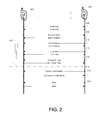
- FIG. 2 describes an association 200 between a sending wireless device 202 and a receiving wireless device 204.
- the sending wireless device 202 is in the radio coverage area provided by the receiving wireless device 204
- the receiving wireless device 204 detects the presence of the sending wireless device 202, while the sending wireless device 202 discovers the presence of receiving wireless device 204.
- the effective radio coverage area is a piconet.
- a Bluetooth TM device in discoverable mode transmits on demand information such as device name, device class, list of services, device features, manufacturer, Bluetooth TM specification used, etc..
- the sending wireless device 202 and the receiving wireless device 204 start to associate by first exchanging public keys 206.
- the public keys in general need to be generated only once per device and may be computed in advance of pairing.
- a device may, at any time, choose to discard its public-private key pair and generate a new one, although there is not a requirement to do so. Pairing is initiated by the initiating device sending its public key to the receiving device. The responding device replies with its own public key.
- each wireless device authenticates the other wireless device 208.
- a number of protocols are available for authentication, for example but not limited to, numeric comparison, out-of-band (OOB), Just Works, and passkey entry.
- OOB out-of-band
- the authentication generally results in a new shared key between the sending wireless device 202 and the receiving wireless device 204.
- the sending wireless device 202 and the receiving wireless device 204 may further compute 210 a new confirmation value that includes the previously exchanged values and the newly derived shared key.
- a link key used to maintain the pairing, is computed by the sending wireless device 202 and the receiving wireless device 204 from the derived shared key and the previously publicly exchanged data.
- an encryption key is generated 214 for the association 200 between the sending wireless device 202 and the receiving wireless device 204.
- the sending wireless device 202 is associated with the receiving wireless device 204, an identification of the receiving wireless device 204 is sent to the sending wireless device 202 216 and a connection is established 218. If there is data to be sent, as described below, data is exchanged between the sending wireless device 202 and the receiving wireless device 204 220.
- Bluetooth TM services generally require either encryption or authentication, and as such require pairing before they allow a remote device to use the given service. However, some Bluetooth TM services elect not to explicitly require authentication or encryption so that pairing does not interfere with the user experience.
- SSP Secure Simple Paring
- OOB out-of-band
- passkey entry As mentioned in the above, and reduces the number of steps with minimal or no user action.
- the user will have a smaller set of devices to access a particular service.
- EIR Extended Inquiry Response
- filtering of discovered devices is also possible based on the service class UUIDs present in the response, compared to the legacy Class of Device (CoD) based filtering.
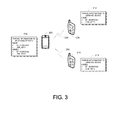
- FIG. 3 shows according to an embodiment of the present patent disclosure, a sending wireless device 302 as an exemplary use of the wireless device of FIG. 1 .
- the sending wireless device 302 may be in simultaneous communication via connections 304, 306 to a first receiving wireless device 308 and a second receiving wireless device 310.
- the second receiving wireless device 310 may also be another type of device, for example, an MP3 player.
- Each of the first receiving wireless device 308 and the second receiving wireless device 310 contains pairing information 312, 314 that may be sent to the wireless accessory 302.
- the first receiving wireless device 308 may contain pairing information 312 for example, which may include a name of the sending wireless device 302, the Bluetooth TM address of the first receiving wireless device 308, and a link key that may be used for secure communication between the first receiving wireless device 308 and the sending wireless device 302.
- the second receiving wireless device 310 may contain pairing information 314, for example, which may include a name of the sending wireless device 310, the Bluetooth TM address of the second receiving wireless device 310, and a link key that may be used for secure communication between the second receiving wireless device 310 and the sending wireless accessory 302.
- the names and Bluetooth TM addresses are passed to the sending wireless device 302 by each of the first receiving wireless device 308 and the receiving wireless device 310.
- the sending wireless device 302 stores the pairing information 316, including a name of each wireless accessory and a Bluetooth TM address for the receiving devices, that are passed to the first receiving wireless device 308 and the second mobile device 310.
- Each of the first mobile device 308 and the second receiving wireless device 310 negotiates a link key with the sending wireless device 302.
- the link keys are shared between paired devices, that is, there is a link key shared between the first receiving wireless device 308 and the sending wireless device 302, and a different link key shared between the second receiving wireless device 310 and the sending wireless device 302.
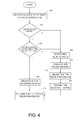
- FIG. 4 an exemplary flow diagram for sending a file from a wireless device to another wireless device, using Bluetooth TM as non-limiting example, in accordance with an embodiment of the patent disclosure, is shown.
- a file for example, a picture, an audio or a video file, is selected at a wireless device to be sent to another wireless device, at 402.
- the sending wireless device checks to see whether there is a list of paired devices available, at 404. If there is no list for the paired device, or if the intended receiving device is not on the paired device list, at 406, the sending wireless device searches for new devices, at 408. At 409, the devises found are presented and at 410, a receiving device is selected from the found devices. The selected receiving device is then paired to the sending wireless device, at 412, and the file is sent from the sending wireless device to the receiving wireless device, at 414. If the receiving wireless device is one of the paired device, at 406, then the file is sent directly to the receiving device, at 414.
- FIG. 5 is a block diagram illustrating an exemplary Bluetooth TM enabled wireless device 502, in accordance with an embodiment of the patent disclosure.
- the wireless device 502 is capable of communication with another Bluetooth TM enabled wireless device for transmission and reception of, for example, picture, music, or other data.
- the wireless device 502 that is capable of pairing with multiple wireless devices includes a processor 506 executing computer instructions.
- the processor 506 is also coupled to a transceiver 508 that is configured to transmit and receive signals from other wireless devices.
- the processor 506 may comprise suitable logic, circuitry, and/or code that may enable control and/or management operations in at least portions of the wireless device 502.
- the processor 506 may be utilized to process data received by the wireless device 502 and/or to process data to be transmitted by wireless device 502.
- the wireless device 502 may further include a speaker 510, a digital-to-analog converter (DAC) 512, a microphone 514, an analog-to-digital converter (ADC) 516, and at least one user I/O device 518.
- the user I/O device 518 may comprise, for example, a button, a scroll wheel, a keyboard, an optical trackpad, a trackball, a joystick, and/or a touch screen display that may be used to input or output information.
- a button may be used to select the receiving wireless device from the paired device list.
- the button may be a hardware button or a software enabled button.
- the display 520 may, for example, show the paired device list.
- Bluetooth TM software may be stored in the memory 522, where the Bluetooth TM software may comprise at least some layers of Bluetooth TM protocol.
- the layers of Bluetooth TM protocol may comprise, for example, logical link control and adaptation protocol (L2CAP), RFCOMM protocol, and service discovery protocol (SDP).
- the memory 522 is configured to store data, which may include a paired device list 504.
- the memory may further include computer executable code 524 for executing a method according to the embodiments described herein in the processor 506.
- the memory 522 may further hold the file 526 to be transferred.
- the paired device list 504 may include device names, profile types, and other data relating to devices recently connected to the wireless accessory 502.
- the paired device list 504 may list a plurality of paired devices.
- the device list 504 may list phone A , phone B, phone C, an audio player, and a GPS, each type of device may have a particular profile.
- the paired device list 504 lists a profile type for each device. For example, phone A and the phone B may connect to the wireless device 502, according to Profile 1.
- the paired device list 504 may further include an authentication protocol for each listed device.
- cell phone B uses passkey entry while phone A uses numeric comparison.
- the device list 504 is only a non-limiting example. Other parameters may also be used.
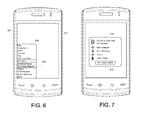
- FIGS. 6-12 show examples of user interface in accordance with one embodiment of the present patent disclosure. Referring to FIG. 4 and FIGS. 6-12 , sending a file from a sending wireless device to a receiving wireless device, in accordance with an embodiment of the patent disclosure using the non-limiting example of Bluetooth TM , is shown.
- a user may decide to share a picture 604 with her friend.
- the user selects 402 the picture either in the viewing area or from a file list.
- the menu 606 provides an option 608 to "Send Using Bluetooth".
- a list 616 of paired devices is presented. If the intended receiving wireless device is not on the list 616, the user may select the "Add new device" 612. Referring to FIG. 4 and FIG. 8 , the sending wireless device 602 then searches 614 for new devices 408.
- a list 616 of newly found devices is presented to the user.
- the user may select 410 a receiving wireless device 618. If the authentication is numeric passkey, referring to FIG. 4 and FIG. 10 , the user enters a temporary numeric passkey 620 and the receiving wireless device and sending wireless device are paired 412. Referring to FIG. 4 and FIG. 11 , the file is then sent to the receiving wireless device 414, 622. Referring to FIG. 5 and FIG. 12 , after the transfer the user is offered the options remember the recent receiving wireless device 624, whereby the new receiving wireless device will be added to the paired device list 504, and to turn the Bluetooth off 626.
- Embodiments within the scope of the present patent disclosure can be implemented in digital electronic circuitry, or in computer hardware, firmware, software, or in combinations thereof. Apparatus within the scope of the present patent disclosure can be implemented in a computer program product tangibly embodied in a machine-readable storage medium for execution by a programmable processor; and method actions within the scope of the present patent disclosure can be performed by a programmable processor executing a program of instructions to perform functions of the patent disclosure by operating on input data and generating output.
- Embodiments within the scope of the present patent disclosure may be implemented advantageously in one or more computer programs that are executable on a programmable system including at least one programmable processor coupled to receive data and instructions from, and to transmit data and instructions to, a data storage system, at least one input device, and at least one output device.
- Each computer program can be implemented in a high-level procedural or object oriented programming language, or in assembly or machine language if desired; and in any case, the language can be a compiled or interpreted language.
- Suitable processors include, by way of example, both general and special purpose microprocessors. Generally, a processor will receive instructions and data from a read-only memory and/or a random access memory.
- a computer will include one or more mass storage devices for storing data files.
- Embodiments within the scope of the present patent disclosure include computer-readable media for carrying or having computer-executable instructions, computer-readable instructions, or data structures stored thereon.
- Such computer-readable media may be any available media, which is accessible by a general-purpose or special-purpose computer system.
- Examples of computer-readable media may include physical storage media such as RAM, ROM, EPROM, CD-ROM or other optical disk storage, magnetic disk storage or other magnetic storage devices, or any other media which can be used to carry or store desired program code means in the form of computer-executable instructions, computer-readable instructions, or data structures and which may be accessed by a general-purpose or special-purpose computer system.
- ASICs application-specific integrated circuits
- embodiments of the present patent disclosure may be used in a variety of applications. Although the present patent disclosure is not limited in this respect, the methods disclosed herein may be used in many apparatuses such as in the transmitters, receivers and transceivers of a radio system.
- Radio systems intended to be included within the scope of the present patent disclosure include, by way of example only, cellular radiotelephone communication systems, satellite communication systems, two-way radio communication systems, one-way pagers, two-way pagers, personal communication systems (PCS), personal digital assistants (PDA's), notebook computers in wireless local area networks (WLAN), wireless metropolitan area networks (WMAN), wireless wide area networks (WWAN), or wireless personal area networks (WPAN, and the like).
- PCS personal communication systems
- PDA's personal digital assistants
- WLAN wireless local area networks
- WMAN wireless metropolitan area networks
- WWAN wireless wide area networks
- WPAN wireless personal area networks
Landscapes
- Engineering & Computer Science (AREA)
- Computer Networks & Wireless Communication (AREA)
- Signal Processing (AREA)
- Databases & Information Systems (AREA)
- Computer Security & Cryptography (AREA)
- Human Computer Interaction (AREA)
- Mobile Radio Communication Systems (AREA)
- Telephone Function (AREA)
Abstract
Description
- The present patent disclosure relates generally to communication of information between electronic devices and in particular to providing information between wireless devices.
- Short-range wireless systems provide interconnections between wireless devices, and wireless accessories. Generally, short-range wireless systems use a wireless personal area network (PAN), which uses low-cost, low-power wireless devices that have a typical range of tens of meters.
- An example of a wireless PAN technology uses the Bluetooth™ communication protocol. Bluetooth™ operates in the 2.4 GHz Industrial, Scientific, and Medical (ISM) band and provides a peak air-link speed of one Mbps and a power consumption low enough for use in personal, portable electronics such as a personal digital assistance or mobile phone.
- A piconet is a network linking a group of wireless devices that are physically close enough to exchange information using, for example, Bluetooth™. Wireless devices join and leave the network as they enter and exit the proximity of the remaining wireless devices. Each Bluetooth™ device is capable to find other Bluetooth™ devices as they enter and leave the effective range of the short-range wireless network. The requesting Bluetooth™ device, operating in a client role, and the responding Bluetooth™ device, operating in a server role, establish a proximity link between the two devices in a process called pairing. Two devices need to be paired at least once to communicate with each other. A pairing may be established through a semi-automatic process. For example, a wireless device may send a signal identifying itself as a Bluetooth™ - enabled device. A second wireless device, such as a mobile phone, detects this signal and thus determine that the first wireless device is available for pairing. The second device then prompts the user to enter a "passcode" or "PIN code" for the accessory. Once a pairing has been established, it is remembered by the devices, which can then connect to each other without user intervention.
- Other examples of wireless PAN technology include Infrared Data Association (IrDA), Ultra-Wideband (UWB), Z-Wave and ZigBee.
- Today's wireless devices, such a BlackBerry phone, for example, are also multi-function devices which can function, for example, as a camera, as an audio recorder or as a video camera to record movies. A user of a wireless device may take a picture or record an audio clip, and wish to share the file with other users.
- Currently, when a user desires to share a file with another user, the sending wireless device needs to be connected, associated, and, in the non-limiting example of a Bluetooth™ device, paired with the receiving wireless device. In the example of a Bluetooth™ device, this often requires numerous manual steps to pair these two devices.
- Therefore, there is a need to provide an approach to transfer a file from a sending wireless device to a receiving wireless device which minimizes the user's intervention and maximizes the user's experience.
- These and other features of the patent disclosure will become more apparent from the following description in which reference is made to the appended drawings wherein:
-
FIG. 1 is an overview of a short-range wireless system in which the present patent disclosure may be implemented; -
FIG. 2 depicts interactions between two mobile devices; -
FIG. 3 shows a wireless accessory as an exemplary use of the wireless accessory ofFIG. 1 ; -
FIG. 4 depicts an exemplary flow diagram for sending a file from a wireless device to another wireless device, using Bluetooth™ as non-limiting example; -
FIG. 5 is a block diagram illustrating an exemplary Bluetooth enabled wireless device; and -
FIGS. 6 -12 shows exemplary user interfaces in accordance with another embodiment. - In accordance with one aspect of the present patent disclosure there is provided a method for transferring a file from a sending wireless device to a receiving wireless device in a short-range wireless system. A file to be sent to the receiving wireless device is selected on the sending wireless device. The sending wireless device has a device list of receiving wireless devices. If the receiving wireless device is not present on the device list, new devices are searched and identified. A device among the identified new devices may be identified as a new receiving wireless device. A connection between the sending wireless device and the receiving wireless device is then established, and the file is sent to the receiving wireless device.
- In accordance with another aspect of the present patent disclosure there is provided a computer readable storage medium storing instructions or statements for use in the execution in a processor of the method described above.
- In accordance with another aspect of the present patent disclosure there is provided a wireless device used in a short-range wireless system, the wireless device comprising: a transceiver for communicating with a receiving wireless device; a memory including a device list; and a processor for: selecting, on the sending wireless device, a file to be sent to the receiving wireless device, the sending wireless device having a device list of receiving wireless devices; ensuring the receiving wireless device is absent on the device list; searching and identifying new devices; selecting a device among the identified new devices as the receiving wireless device; establishing a connection between the sending wireless device and the receiving wireless device; and sending the file to the receiving wireless device.
- In accordance with one aspect, short-range wireless system is a Bluetooth™ system; and the connection is established through pairing the sending wireless device with the receiving wireless device.
- In accordance with another aspect, the device list is a paired device list.
- The short-range wireless system may use one of Infrared Data Association (IrDA), Ultra-Wideband (UWB), Z-Wave or ZigBee, or any other short-range wireless protocol.
- In accordance with one aspect, the short-range wireless system is a wireless personal area network (PAN).
- The receiving mobile device may be selected from a group consisting of: a mobile phone, an audio player, an adapter for portable devices, an adapter for home entertainment device, a personal computer, a personal digital assistants (PDA), a digital camera, a Global Positioning System (GPS)and a video game console.
- Referring to
FIG. 1 , a short-rangewireless system 100 in which the present patent disclosure may be implemented is shown. A wireless device, for example but not limited to, amobile phone 102 is in communication with a plurality of wireless devices (five shown): alaptop 104, atablet computer 106, apersonal computer 108, and twomobile phones - The term "wireless device" is intended to describe a device used in a short-range wireless system. Examples of wireless device may include, for example but not limited to, mobile phones; smart phones; portable devices such as personal music players; home entertainment devices such as home stereo system; personal digital assistants (PDA); pagers; Global Positioning System (GPS) receivers; digital cameras; video game consoles, "hands-free" automotive kits, tablet computing devices, and other devices capable of communicating in a short-range wireless system.
-
FIG. 2 describes anassociation 200 between a sendingwireless device 202 and a receivingwireless device 204. When the sendingwireless device 202 is in the radio coverage area provided by the receivingwireless device 204, the receivingwireless device 204 detects the presence of the sendingwireless device 202, while the sendingwireless device 202 discovers the presence of receivingwireless device 204. In the example of the Bluetooth™, the effective radio coverage area is a piconet. A Bluetooth™ device in discoverable mode transmits on demand information such as device name, device class, list of services, device features, manufacturer, Bluetooth™ specification used, etc.. - Using the Bluetooth™ protocol as a non-limiting example, the sending
wireless device 202 and the receivingwireless device 204 start to associate by first exchangingpublic keys 206. The public keys in general need to be generated only once per device and may be computed in advance of pairing. A device may, at any time, choose to discard its public-private key pair and generate a new one, although there is not a requirement to do so. Pairing is initiated by the initiating device sending its public key to the receiving device. The responding device replies with its own public key. - Using the exchanged public keys, each wireless device authenticates the other
wireless device 208. A number of protocols are available for authentication, for example but not limited to, numeric comparison, out-of-band (OOB), Just Works, and passkey entry. The authentication generally results in a new shared key between the sendingwireless device 202 and the receivingwireless device 204. - The sending
wireless device 202 and the receivingwireless device 204 may further compute 210 a new confirmation value that includes the previously exchanged values and the newly derived shared key. - During the
link key exchange 212, a link key, used to maintain the pairing, is computed by the sendingwireless device 202 and the receivingwireless device 204 from the derived shared key and the previously publicly exchanged data. - Finally, an encryption key is generated 214 for the
association 200 between the sendingwireless device 202 and the receivingwireless device 204. - The above steps are described using the Bluetooth™ technology as an example, it should be apparent to a person skilled in the art that other technologies may be used for the short-range wireless system.
- Once the sending
wireless device 202 is associated with the receivingwireless device 204, an identification of the receivingwireless device 204 is sent to the sendingwireless device 202 216 and a connection is established 218. If there is data to be sent, as described below, data is exchanged between the sendingwireless device 202 and the receivingwireless device 204 220. - It should be apparent to a skilled artisan that many steps such as authentication, encryption may be optional as the requirements for the security vary from profile to profile. For example, if sending
wireless device 202 is sending a music piece to the receivingwireless device 204, the data may not need to be encrypted, and the receivingwireless device 204 does not need to be authenticated. The exemplary Bluetooth™ services generally require either encryption or authentication, and as such require pairing before they allow a remote device to use the given service. However, some Bluetooth™ services elect not to explicitly require authentication or encryption so that pairing does not interfere with the user experience. For example, Secure Simple Paring (SSP) may use one of the associate models, numeric comparison, out-of-band (OOB), Just Works, and passkey entry as mentioned in the above, and reduces the number of steps with minimal or no user action. The user will have a smaller set of devices to access a particular service. With the Extended Inquiry Response (EIR) feature of Bluetooth™ specification 2.1+EDR, filtering of discovered devices is also possible based on the service class UUIDs present in the response, compared to the legacy Class of Device (CoD) based filtering. - The embodiments of the present patent disclosure as described below can be practiced in any short-range wireless system as long as the sending
wireless device 202 and the receivingwireless device 204 are associated 200, and the receivingwireless device 204 is aware of the associated sendingwireless device 202. -
FIG. 3 shows according to an embodiment of the present patent disclosure, a sendingwireless device 302 as an exemplary use of the wireless device ofFIG. 1 . The sendingwireless device 302 may be in simultaneous communication viaconnections receiving wireless device 308 and a secondreceiving wireless device 310. - The second
receiving wireless device 310, may also be another type of device, for example, an MP3 player. Each of the first receivingwireless device 308 and the secondreceiving wireless device 310 containspairing information wireless accessory 302. The firstreceiving wireless device 308 may containpairing information 312 for example, which may include a name of the sendingwireless device 302, the Bluetooth™ address of the first receivingwireless device 308, and a link key that may be used for secure communication between the first receivingwireless device 308 and the sendingwireless device 302. Similarly, the secondreceiving wireless device 310 may containpairing information 314, for example, which may include a name of the sendingwireless device 310, the Bluetooth™ address of the secondreceiving wireless device 310, and a link key that may be used for secure communication between the secondreceiving wireless device 310 and the sendingwireless accessory 302. The names and Bluetooth™ addresses are passed to the sendingwireless device 302 by each of the first receivingwireless device 308 and the receivingwireless device 310. The sendingwireless device 302 stores thepairing information 316, including a name of each wireless accessory and a Bluetooth™ address for the receiving devices, that are passed to the first receivingwireless device 308 and the secondmobile device 310. Each of the firstmobile device 308 and the secondreceiving wireless device 310 negotiates a link key with the sendingwireless device 302. The link keys are shared between paired devices, that is, there is a link key shared between the first receivingwireless device 308 and the sendingwireless device 302, and a different link key shared between the secondreceiving wireless device 310 and the sendingwireless device 302. - Referring to
FIG. 4 , an exemplary flow diagram for sending a file from a wireless device to another wireless device, using Bluetooth™ as non-limiting example, in accordance with an embodiment of the patent disclosure, is shown. - A file, for example, a picture, an audio or a video file, is selected at a wireless device to be sent to another wireless device, at 402. The sending wireless device checks to see whether there is a list of paired devices available, at 404. If there is no list for the paired device, or if the intended receiving device is not on the paired device list, at 406, the sending wireless device searches for new devices, at 408. At 409, the devises found are presented and at 410, a receiving device is selected from the found devices. The selected receiving device is then paired to the sending wireless device, at 412, and the file is sent from the sending wireless device to the receiving wireless device, at 414. If the receiving wireless device is one of the paired device, at 406, then the file is sent directly to the receiving device, at 414.
-
FIG. 5 is a block diagram illustrating an exemplary Bluetooth™ enabledwireless device 502, in accordance with an embodiment of the patent disclosure. Thewireless device 502 is capable of communication with another Bluetooth™ enabled wireless device for transmission and reception of, for example, picture, music, or other data. - The
wireless device 502 that is capable of pairing with multiple wireless devices includes aprocessor 506 executing computer instructions. Theprocessor 506 is also coupled to atransceiver 508 that is configured to transmit and receive signals from other wireless devices. Theprocessor 506 may comprise suitable logic, circuitry, and/or code that may enable control and/or management operations in at least portions of thewireless device 502. Moreover, theprocessor 506 may be utilized to process data received by thewireless device 502 and/or to process data to be transmitted bywireless device 502. - The
wireless device 502 may further include aspeaker 510, a digital-to-analog converter (DAC) 512, amicrophone 514, an analog-to-digital converter (ADC) 516, and at least one user I/O device 518. The user I/O device 518 may comprise, for example, a button, a scroll wheel, a keyboard, an optical trackpad, a trackball, a joystick, and/or a touch screen display that may be used to input or output information. For example, a button may be used to select the receiving wireless device from the paired device list. The button may be a hardware button or a software enabled button. Thedisplay 520 may, for example, show the paired device list. Bluetooth™ software may be stored in thememory 522, where the Bluetooth™ software may comprise at least some layers of Bluetooth™ protocol. The layers of Bluetooth™ protocol may comprise, for example, logical link control and adaptation protocol (L2CAP), RFCOMM protocol, and service discovery protocol (SDP). - The
memory 522 is configured to store data, which may include a paireddevice list 504. The memory may further include computerexecutable code 524 for executing a method according to the embodiments described herein in theprocessor 506. Thememory 522 may further hold thefile 526 to be transferred. - The paired
device list 504 may include device names, profile types, and other data relating to devices recently connected to thewireless accessory 502. The paireddevice list 504 may list a plurality of paired devices. For example, thedevice list 504 may list phone A , phone B, phone C, an audio player, and a GPS, each type of device may have a particular profile. - The paired
device list 504 lists a profile type for each device. For example, phone A and the phone B may connect to thewireless device 502, according to Profile 1. - The paired
device list 504 may further include an authentication protocol for each listed device. InFIG.5 , cell phone B uses passkey entry while phone A uses numeric comparison. - It should be apparent to a person skilled in the art that the
device list 504 is only a non-limiting example. Other parameters may also be used. -
FIGS. 6-12 show examples of user interface in accordance with one embodiment of the present patent disclosure. Referring toFIG. 4 and FIGS. 6-12 , sending a file from a sending wireless device to a receiving wireless device, in accordance with an embodiment of the patent disclosure using the non-limiting example of Bluetooth™, is shown. - Referring to
FIG. 4 andFIG. 6 , on the sendingwireless device 602, a user may decide to share apicture 604 with her friend. The user selects 402 the picture either in the viewing area or from a file list. Themenu 606 provides anoption 608 to "Send Using Bluetooth". Referring toFIG. 4 andFIG. 7 , after the user selects the sending using Bluetooth option, alist 616 of paired devices is presented. If the intended receiving wireless device is not on thelist 616, the user may select the "Add new device" 612. Referring toFIG. 4 andFIG. 8 , the sendingwireless device 602 then searches 614 fornew devices 408. - Referring to
FIG. 4 andFIG. 9 , alist 616 of newly found devices is presented to the user. The user may select 410 a receivingwireless device 618. If the authentication is numeric passkey, referring toFIG. 4 andFIG. 10 , the user enters a temporarynumeric passkey 620 and the receiving wireless device and sending wireless device are paired 412. Referring toFIG. 4 andFIG. 11 , the file is then sent to the receivingwireless device FIG. 5 andFIG. 12 , after the transfer the user is offered the options remember the recent receivingwireless device 624, whereby the new receiving wireless device will be added to the paireddevice list 504, and to turn the Bluetooth off 626. - While the patent disclosure is described in conjunction with the specific embodiments, it will be understood that it is not intended to limit the patent disclosure to the described embodiments. On the contrary, it is intended to cover alternatives, modifications, and equivalents as may be included within the scope of the patent disclosure as defined by the appended claims. In the above description, numerous specific details are set forth in order to provide a thorough understanding of the present patent disclosure. The present patent disclosure may be practiced without some or all of these specific details. In other instances, well-known process operations have not been described in detail in order not to unnecessarily obscure the present patent disclosure.
- The terminology used herein is for the purpose of describing particular embodiments only and is not intended to be limiting of the patent disclosure. As used herein, the singular forms "a", "an" and "the" are intended to include the plural forms as well, unless the context clearly indicates otherwise. It will be further understood that the terms "comprises" or "comprising", or both when used in this specification, specify the presence of stated features, integers, steps, operations, elements, and/or components, but do not preclude the presence or addition of one or more other features, integers, steps, operations, elements, components, and/or groups thereof.
- Embodiments within the scope of the present patent disclosure can be implemented in digital electronic circuitry, or in computer hardware, firmware, software, or in combinations thereof. Apparatus within the scope of the present patent disclosure can be implemented in a computer program product tangibly embodied in a machine-readable storage medium for execution by a programmable processor; and method actions within the scope of the present patent disclosure can be performed by a programmable processor executing a program of instructions to perform functions of the patent disclosure by operating on input data and generating output. Embodiments within the scope of the present patent disclosure may be implemented advantageously in one or more computer programs that are executable on a programmable system including at least one programmable processor coupled to receive data and instructions from, and to transmit data and instructions to, a data storage system, at least one input device, and at least one output device. Each computer program can be implemented in a high-level procedural or object oriented programming language, or in assembly or machine language if desired; and in any case, the language can be a compiled or interpreted language. Suitable processors include, by way of example, both general and special purpose microprocessors. Generally, a processor will receive instructions and data from a read-only memory and/or a random access memory. Generally, a computer will include one or more mass storage devices for storing data files. Embodiments within the scope of the present patent disclosure include computer-readable media for carrying or having computer-executable instructions, computer-readable instructions, or data structures stored thereon. Such computer-readable media may be any available media, which is accessible by a general-purpose or special-purpose computer system. Examples of computer-readable media may include physical storage media such as RAM, ROM, EPROM, CD-ROM or other optical disk storage, magnetic disk storage or other magnetic storage devices, or any other media which can be used to carry or store desired program code means in the form of computer-executable instructions, computer-readable instructions, or data structures and which may be accessed by a general-purpose or special-purpose computer system. Any of the foregoing can be supplemented by, or incorporated in, ASICs (application-specific integrated circuits). It should be understood that embodiments of the present patent disclosure may be used in a variety of applications. Although the present patent disclosure is not limited in this respect, the methods disclosed herein may be used in many apparatuses such as in the transmitters, receivers and transceivers of a radio system. Radio systems intended to be included within the scope of the present patent disclosure include, by way of example only, cellular radiotelephone communication systems, satellite communication systems, two-way radio communication systems, one-way pagers, two-way pagers, personal communication systems (PCS), personal digital assistants (PDA's), notebook computers in wireless local area networks (WLAN), wireless metropolitan area networks (WMAN), wireless wide area networks (WWAN), or wireless personal area networks (WPAN, and the like).
Claims (15)
- A method of transferring a file from a sending wireless device (102, 502) to a receiving wireless device (110) in a short-range wireless system (100), the method comprising:receiving (402), on the sending wireless device (102, 502), a selection of a file (526) to be sent to the receiving wireless device (110), the sending wireless device (102, 502) having a device list (504) of receiving wireless devices;determining (404) that the receiving wireless device (110) is absent from the device list (504);searching for (408) and identifying at least one new device;receiving (410) a selection of a device among the identified at least one new devices as the receiving wireless device;establishing (412) a connection between the sending wireless device (102) andthe receiving wireless device (110); andsending (414) the file to the receiving wireless device (110).
- The method according to claim 1, wherein the short-range wireless system (100) is a Bluetooth™ system; and the establishing a connection comprises pairing (412) the sending wireless device (102) with the receiving wireless device (110).
- The method according to any one of claims 1 and 2, wherein the device list (504) is a paired device list.
- The method according to any one of claims 1 to 3, wherein the short-range wireless system (100) uses at least one of Infrared Data Association (IrDA), Ultra-Wideband (UWB), Z-Wave and ZigBee.
- The method according to any one of claims 1 to 4, wherein the receiving mobile device (110) is one of a mobile phone, an audio player, an adapter for portable devices, an adapter for home entertainment device, a personal computer, a personal digital assistants (PDA), a digital camera, a Global Positioning System (GPS) and a video game console.
- A wireless device (502) used in a short-range wireless system (110), the wireless device comprising:a transceiver (508) configured for communicating with a receiving wireless device;a memory (522) including a device list (504) of receiving wireless devices; anda processor (506) electrically coupled with the transceiver (508) and the memory (522), the processor configured for:receiving (402) a selection of a file to be sent to a receiving wireless device (110);determining (404) that the receiving wireless device (110) is absent from the device list (504);searching for (408) and identifying at least one new device;receiving (410) a selection of a device among the identified at least one new device as the receiving wireless device;establishing (412) a connection with the receiving wireless device (110); andsending (414) the file to the receiving wireless device.
- The wireless device according to claim 6, wherein the short-range wireless system (110) is a Bluetooth™ system; and the establishing a connection comprises pairing the wireless device (102) with the receiving wireless device (110).
- The wireless device according to any one of claims 6 and 7, wherein the device list (504) is a paired device list.
- The wireless device according to any one of claims 6 to 8, wherein the short-range wireless system uses Infrared Data Association (IrDA), Ultra-Wideband (UWB), Z-Wave or ZigBee.
- The wireless device according to any one of claims 6 to 9, wherein the receiving wireless device (110) is one of a mobile phone, an audio player, an adapter for portable devices, an adapter for home entertainment device, a personal computer, a personal digital assistants (PDA), a digital camera, a Global Positioning System (GPS) and a video game console.
- A computer readable storage medium storing instructions executable by a processor of a wireless device (102, 502) which, when executed cause the wireless device to:receive a selection of a file (526) to be sent to a receiving wireless device (110), the wireless device (102, 502) having a device list (504) of receiving wireless devices;determine (404) that the receiving wireless device (110) is absent from the device list (504);search for (408) and identifying at least one new device;receive (410) a selection of a device among the identified at least one new device as the receiving wireless device;establish (412) a connection with the receiving wireless device (110); andsend (414) the file to the receiving wireless device (110).
- The computer readable storage medium according to claim 11, wherein the short-range wireless system (100) is a Bluetooth™ system; and the establishing a connection comprises pairing (412) the sending wireless device (102) with the receiving wireless device (110).
- The computer readable storage medium according to any one of claims 11 and 12, wherein the device list (504) is a paired device list.
- The computer readable storage medium according to any one of claims 11 to 13, wherein the short-range wireless system uses one of Infrared Data Association (IrDA), Ultra-Wideband (UWB), Z-Wave and ZigBee.
- The computer readable storage medium according to any one of claims 11 to 14, wherein the receiving wireless device (110) is one of a mobile phone, an audio player, an adapter for portable devices, an adapter for home entertainment device, a personal computer, a personal digital assistants (PDA), a digital camera, a Global Positioning System (GPS)and a video game console.
Applications Claiming Priority (1)
| Application Number | Priority Date | Filing Date | Title |
|---|---|---|---|
| US32729510P | 2010-04-23 | 2010-04-23 |
Publications (2)
| Publication Number | Publication Date |
|---|---|
| EP2381708A1 true EP2381708A1 (en) | 2011-10-26 |
| EP2381708B1 EP2381708B1 (en) | 2019-12-25 |
Family
ID=43858044
Family Applications (1)
| Application Number | Title | Priority Date | Filing Date |
|---|---|---|---|
| EP11158409.0A Active EP2381708B1 (en) | 2010-04-23 | 2011-03-16 | Method and apparatus for providing files to electronic devices |
Country Status (2)
| Country | Link |
|---|---|
| US (3) | US9155116B2 (en) |
| EP (1) | EP2381708B1 (en) |
Cited By (2)
| Publication number | Priority date | Publication date | Assignee | Title |
|---|---|---|---|---|
| CN104469968A (en) * | 2013-09-12 | 2015-03-25 | 中兴通讯股份有限公司 | Method, device and terminal for data transmission |
| CN105025590A (en) * | 2014-04-23 | 2015-11-04 | 宏碁股份有限公司 | Electronic device and wireless network connection method thereof |
Families Citing this family (15)
| Publication number | Priority date | Publication date | Assignee | Title |
|---|---|---|---|---|
| US10238794B2 (en) * | 2010-02-05 | 2019-03-26 | Deka Products Limited Partnership | Devices, methods and systems for wireless control of medical devices |
| EP2381708B1 (en) * | 2010-04-23 | 2019-12-25 | BlackBerry Limited | Method and apparatus for providing files to electronic devices |
| US9253168B2 (en) | 2012-04-26 | 2016-02-02 | Fitbit, Inc. | Secure pairing of devices via pairing facilitator-intermediary device |
| US8744803B2 (en) | 2010-09-30 | 2014-06-03 | Fitbit, Inc. | Methods, systems and devices for activity tracking device data synchronization with computing devices |
| US20140302794A1 (en) * | 2011-12-07 | 2014-10-09 | Arto Palin | Close proximity based event triggering |
| US9092969B2 (en) * | 2011-12-29 | 2015-07-28 | Verizon Patent And Licensing Inc. | Method and system for invoking a security function of a device based on proximity to another device |
| US20130171967A1 (en) * | 2012-01-04 | 2013-07-04 | Ayman S. Ashour | Providing Secure Execution of Mobile Device Workflows |
| US11372536B2 (en) * | 2012-11-20 | 2022-06-28 | Samsung Electronics Company, Ltd. | Transition and interaction model for wearable electronic device |
| KR102092063B1 (en) * | 2013-04-26 | 2020-03-23 | 삼성전자 주식회사 | Method And Apparatus For Performing Communication Service |
| KR102002407B1 (en) | 2013-05-07 | 2019-07-23 | 삼성전자주식회사 | Method and apparatus for transmitting contents in a portable terminal |
| CA3036616A1 (en) * | 2014-06-20 | 2015-12-20 | Guest Tek Interactive Entertainment Ltd. | Device pairing and login for different network services offered at hospitality establishment |
| EP3018877B1 (en) * | 2014-11-10 | 2018-01-10 | Motorola Solutions, Inc. | Methods and systems for joining a sub-talkgroup of a first talkgroup |
| US11400247B2 (en) | 2016-12-22 | 2022-08-02 | Fisher & Paykel Healthcare Limited | Breathing assistance apparatus |
| JP7129233B2 (en) | 2018-06-14 | 2022-09-01 | キヤノン株式会社 | Information processing device, control method, program |
| CN109976770B (en) * | 2019-03-22 | 2023-02-28 | 深圳市元征科技股份有限公司 | ECU (electronic control Unit) flashing method and system and related equipment |
Citations (3)
| Publication number | Priority date | Publication date | Assignee | Title |
|---|---|---|---|---|
| US20070141989A1 (en) * | 2005-12-21 | 2007-06-21 | Patent Navigation Inc. | Proximity facilitate device pairing |
| US20080194203A1 (en) * | 2007-02-12 | 2008-08-14 | Samsung Electronics Co. Ltd. | Apparatus and method for bluetooth connection in a portable communication system |
| US20090177783A1 (en) * | 2008-01-07 | 2009-07-09 | Mitch Adler | Pairing and storage access scheme between a handheld device and a computing system |
Family Cites Families (8)
| Publication number | Priority date | Publication date | Assignee | Title |
|---|---|---|---|---|
| US7512685B2 (en) * | 2000-11-30 | 2009-03-31 | 3Com Corporation | Method and system for implementing wireless data transfers between a selected group of mobile computing devices |
| US7376696B2 (en) * | 2002-08-27 | 2008-05-20 | Intel Corporation | User interface to facilitate exchanging files among processor-based devices |
| US7831199B2 (en) * | 2006-01-03 | 2010-11-09 | Apple Inc. | Media data exchange, transfer or delivery for portable electronic devices |
| US8594568B2 (en) * | 2006-05-08 | 2013-11-26 | Koninklijke Philips N.V. | Method of transferring application data from a first device to a second device, and a data transfer system |
| GB2439610A (en) * | 2006-06-29 | 2008-01-02 | Symbian Software Ltd | Storing Bluetooth (RTM) contact details in a mobile device |
| US7747223B2 (en) * | 2007-03-29 | 2010-06-29 | Research In Motion Limited | Method, system and mobile device for prioritizing a discovered device list |
| KR101442544B1 (en) * | 2007-12-18 | 2014-09-23 | 엘지전자 주식회사 | Mobile terminal and its method for displaying radio device |
| EP2381708B1 (en) * | 2010-04-23 | 2019-12-25 | BlackBerry Limited | Method and apparatus for providing files to electronic devices |
-
2011
- 2011-03-16 EP EP11158409.0A patent/EP2381708B1/en active Active
- 2011-03-16 US US13/049,131 patent/US9155116B2/en active Active
-
2015
- 2015-09-01 US US14/842,510 patent/US9426640B2/en active Active
-
2016
- 2016-08-22 US US15/243,570 patent/US9723435B2/en active Active
Patent Citations (3)
| Publication number | Priority date | Publication date | Assignee | Title |
|---|---|---|---|---|
| US20070141989A1 (en) * | 2005-12-21 | 2007-06-21 | Patent Navigation Inc. | Proximity facilitate device pairing |
| US20080194203A1 (en) * | 2007-02-12 | 2008-08-14 | Samsung Electronics Co. Ltd. | Apparatus and method for bluetooth connection in a portable communication system |
| US20090177783A1 (en) * | 2008-01-07 | 2009-07-09 | Mitch Adler | Pairing and storage access scheme between a handheld device and a computing system |
Cited By (5)
| Publication number | Priority date | Publication date | Assignee | Title |
|---|---|---|---|---|
| CN104469968A (en) * | 2013-09-12 | 2015-03-25 | 中兴通讯股份有限公司 | Method, device and terminal for data transmission |
| EP3046266A4 (en) * | 2013-09-12 | 2016-08-31 | Zte Corp | Data transmission method, device and terminal |
| JP2016535542A (en) * | 2013-09-12 | 2016-11-10 | ゼットティーイー コーポレイション | Data transmission method, apparatus and terminal |
| CN105025590A (en) * | 2014-04-23 | 2015-11-04 | 宏碁股份有限公司 | Electronic device and wireless network connection method thereof |
| CN105025590B (en) * | 2014-04-23 | 2020-02-18 | 宏碁股份有限公司 | Electronic device and wireless network connection method thereof |
Also Published As
| Publication number | Publication date |
|---|---|
| US20160373886A1 (en) | 2016-12-22 |
| US9723435B2 (en) | 2017-08-01 |
| EP2381708B1 (en) | 2019-12-25 |
| US20110263201A1 (en) | 2011-10-27 |
| US20150373526A1 (en) | 2015-12-24 |
| US9155116B2 (en) | 2015-10-06 |
| US9426640B2 (en) | 2016-08-23 |
Similar Documents
| Publication | Publication Date | Title |
|---|---|---|
| US9723435B2 (en) | Method and apparatus for providing files to electronic devices | |
| EP2387201B1 (en) | Automatic application management in a short-range wireless system | |
| EP2375709B1 (en) | Method and apparatus for providing active connection to electronic devices | |
| CN101682529B (en) | Method, system and mobile device for prioritizing a list of discovered devices | |
| US8892038B2 (en) | Method for searching and connecting Bluetooth devices and apparatus using the same | |
| KR102693979B1 (en) | Electronic device suporting link sharing and method therefor | |
| US9125002B2 (en) | Apparatus and method for connecting with bluetooth device in portable terminal | |
| CN101095318B (en) | Method and device for bluetooth pairing | |
| US8817642B2 (en) | Efficient pairing of networked devices | |
| EP2965546B1 (en) | Method and apparatus for peer-2-peer wi-fi ranging using near field communication | |
| US7299008B2 (en) | Call management system and method for servicing multiple wireless communication devices | |
| RU2619924C2 (en) | System and method for transmitting, storing, receiving and / or extracting identification information or data, and/or overlapping information or data for accessories or related products and intelligent electronic devices to a particular server or storage media or from particular server or storage media | |
| CN113366439A (en) | Method and device for connecting Bluetooth device | |
| WO2009117017A1 (en) | Sophisticated automated relationship alerter | |
| CN105898841A (en) | Smart terminal and method for sharing WLAN (Wireless Local Area Network) resources by terminal | |
| US8666394B1 (en) | Methods and apparatus for use in negotiating a group owner for a P2P network having external network connectivity | |
| CN101222266A (en) | Document transmission method and device | |
| US20080144566A1 (en) | Architecture for MANET Over Bluetooth | |
| KR20100018415A (en) | Method and device for making buddy group using short distance wireless communication network | |
| EP4597150A1 (en) | Positioning method and apparatus | |
| US12407382B2 (en) | Method for determining transmission/reception array of OAM system, terminal device, access network device and storage medium | |
| KR20080022661A (en) | Bluetooth connection device and method of portable terminal | |
| CN119071788A (en) | Wearable device connection method and device | |
| HK1138959B (en) | Method, system and mobile device for prioritizing a discovered device list |
Legal Events
| Date | Code | Title | Description |
|---|---|---|---|
| 17P | Request for examination filed |
Effective date: 20110316 |
|
| AK | Designated contracting states |
Kind code of ref document: A1 Designated state(s): AL AT BE BG CH CY CZ DE DK EE ES FI FR GB GR HR HU IE IS IT LI LT LU LV MC MK MT NL NO PL PT RO RS SE SI SK SM TR |
|
| AX | Request for extension of the european patent |
Extension state: BA ME |
|
| PUAI | Public reference made under article 153(3) epc to a published international application that has entered the european phase |
Free format text: ORIGINAL CODE: 0009012 |
|
| RAP1 | Party data changed (applicant data changed or rights of an application transferred) |
Owner name: BLACKBERRY LIMITED |
|
| RAP1 | Party data changed (applicant data changed or rights of an application transferred) |
Owner name: BLACKBERRY LIMITED |
|
| 17Q | First examination report despatched |
Effective date: 20150914 |
|
| STAA | Information on the status of an ep patent application or granted ep patent |
Free format text: STATUS: EXAMINATION IS IN PROGRESS |
|
| REG | Reference to a national code |
Ref country code: DE Ref legal event code: R079 Ref document number: 602011064180 Country of ref document: DE Free format text: PREVIOUS MAIN CLASS: H04W0008000000 Ipc: H04W0076000000 |
|
| GRAP | Despatch of communication of intention to grant a patent |
Free format text: ORIGINAL CODE: EPIDOSNIGR1 |
|
| STAA | Information on the status of an ep patent application or granted ep patent |
Free format text: STATUS: GRANT OF PATENT IS INTENDED |
|
| RIC1 | Information provided on ipc code assigned before grant |
Ipc: H04W 76/00 20180101AFI20190708BHEP |
|
| INTG | Intention to grant announced |
Effective date: 20190813 |
|
| RIN1 | Information on inventor provided before grant (corrected) |
Inventor name: BUKURAK DAVID Inventor name: ABRATOWSKI, PRZEMYSLAW Inventor name: KRAMER, KEM-LAURIN |
|
| GRAS | Grant fee paid |
Free format text: ORIGINAL CODE: EPIDOSNIGR3 |
|
| GRAA | (expected) grant |
Free format text: ORIGINAL CODE: 0009210 |
|
| STAA | Information on the status of an ep patent application or granted ep patent |
Free format text: STATUS: THE PATENT HAS BEEN GRANTED |
|
| AK | Designated contracting states |
Kind code of ref document: B1 Designated state(s): AL AT BE BG CH CY CZ DE DK EE ES FI FR GB GR HR HU IE IS IT LI LT LU LV MC MK MT NL NO PL PT RO RS SE SI SK SM TR |
|
| REG | Reference to a national code |
Ref country code: GB Ref legal event code: FG4D |
|
| REG | Reference to a national code |
Ref country code: CH Ref legal event code: EP |
|
| REG | Reference to a national code |
Ref country code: AT Ref legal event code: REF Ref document number: 1218574 Country of ref document: AT Kind code of ref document: T Effective date: 20200115 |
|
| REG | Reference to a national code |
Ref country code: DE Ref legal event code: R096 Ref document number: 602011064180 Country of ref document: DE |
|
| REG | Reference to a national code |
Ref country code: IE Ref legal event code: FG4D |
|
| REG | Reference to a national code |
Ref country code: NL Ref legal event code: FP |
|
| PG25 | Lapsed in a contracting state [announced via postgrant information from national office to epo] |
Ref country code: BG Free format text: LAPSE BECAUSE OF FAILURE TO SUBMIT A TRANSLATION OF THE DESCRIPTION OR TO PAY THE FEE WITHIN THE PRESCRIBED TIME-LIMIT Effective date: 20200325 Ref country code: FI Free format text: LAPSE BECAUSE OF FAILURE TO SUBMIT A TRANSLATION OF THE DESCRIPTION OR TO PAY THE FEE WITHIN THE PRESCRIBED TIME-LIMIT Effective date: 20191225 Ref country code: LV Free format text: LAPSE BECAUSE OF FAILURE TO SUBMIT A TRANSLATION OF THE DESCRIPTION OR TO PAY THE FEE WITHIN THE PRESCRIBED TIME-LIMIT Effective date: 20191225 Ref country code: SE Free format text: LAPSE BECAUSE OF FAILURE TO SUBMIT A TRANSLATION OF THE DESCRIPTION OR TO PAY THE FEE WITHIN THE PRESCRIBED TIME-LIMIT Effective date: 20191225 Ref country code: NO Free format text: LAPSE BECAUSE OF FAILURE TO SUBMIT A TRANSLATION OF THE DESCRIPTION OR TO PAY THE FEE WITHIN THE PRESCRIBED TIME-LIMIT Effective date: 20200325 Ref country code: LT Free format text: LAPSE BECAUSE OF FAILURE TO SUBMIT A TRANSLATION OF THE DESCRIPTION OR TO PAY THE FEE WITHIN THE PRESCRIBED TIME-LIMIT Effective date: 20191225 Ref country code: GR Free format text: LAPSE BECAUSE OF FAILURE TO SUBMIT A TRANSLATION OF THE DESCRIPTION OR TO PAY THE FEE WITHIN THE PRESCRIBED TIME-LIMIT Effective date: 20200326 |
|
| REG | Reference to a national code |
Ref country code: LT Ref legal event code: MG4D |
|
| PG25 | Lapsed in a contracting state [announced via postgrant information from national office to epo] |
Ref country code: HR Free format text: LAPSE BECAUSE OF FAILURE TO SUBMIT A TRANSLATION OF THE DESCRIPTION OR TO PAY THE FEE WITHIN THE PRESCRIBED TIME-LIMIT Effective date: 20191225 Ref country code: RS Free format text: LAPSE BECAUSE OF FAILURE TO SUBMIT A TRANSLATION OF THE DESCRIPTION OR TO PAY THE FEE WITHIN THE PRESCRIBED TIME-LIMIT Effective date: 20191225 |
|
| PG25 | Lapsed in a contracting state [announced via postgrant information from national office to epo] |
Ref country code: AL Free format text: LAPSE BECAUSE OF FAILURE TO SUBMIT A TRANSLATION OF THE DESCRIPTION OR TO PAY THE FEE WITHIN THE PRESCRIBED TIME-LIMIT Effective date: 20191225 |
|
| PG25 | Lapsed in a contracting state [announced via postgrant information from national office to epo] |
Ref country code: CZ Free format text: LAPSE BECAUSE OF FAILURE TO SUBMIT A TRANSLATION OF THE DESCRIPTION OR TO PAY THE FEE WITHIN THE PRESCRIBED TIME-LIMIT Effective date: 20191225 Ref country code: PT Free format text: LAPSE BECAUSE OF FAILURE TO SUBMIT A TRANSLATION OF THE DESCRIPTION OR TO PAY THE FEE WITHIN THE PRESCRIBED TIME-LIMIT Effective date: 20200520 Ref country code: RO Free format text: LAPSE BECAUSE OF FAILURE TO SUBMIT A TRANSLATION OF THE DESCRIPTION OR TO PAY THE FEE WITHIN THE PRESCRIBED TIME-LIMIT Effective date: 20191225 Ref country code: EE Free format text: LAPSE BECAUSE OF FAILURE TO SUBMIT A TRANSLATION OF THE DESCRIPTION OR TO PAY THE FEE WITHIN THE PRESCRIBED TIME-LIMIT Effective date: 20191225 |
|
| PG25 | Lapsed in a contracting state [announced via postgrant information from national office to epo] |
Ref country code: IS Free format text: LAPSE BECAUSE OF FAILURE TO SUBMIT A TRANSLATION OF THE DESCRIPTION OR TO PAY THE FEE WITHIN THE PRESCRIBED TIME-LIMIT Effective date: 20200425 Ref country code: SK Free format text: LAPSE BECAUSE OF FAILURE TO SUBMIT A TRANSLATION OF THE DESCRIPTION OR TO PAY THE FEE WITHIN THE PRESCRIBED TIME-LIMIT Effective date: 20191225 Ref country code: SM Free format text: LAPSE BECAUSE OF FAILURE TO SUBMIT A TRANSLATION OF THE DESCRIPTION OR TO PAY THE FEE WITHIN THE PRESCRIBED TIME-LIMIT Effective date: 20191225 |
|
| REG | Reference to a national code |
Ref country code: DE Ref legal event code: R097 Ref document number: 602011064180 Country of ref document: DE |
|
| PG25 | Lapsed in a contracting state [announced via postgrant information from national office to epo] |
Ref country code: ES Free format text: LAPSE BECAUSE OF FAILURE TO SUBMIT A TRANSLATION OF THE DESCRIPTION OR TO PAY THE FEE WITHIN THE PRESCRIBED TIME-LIMIT Effective date: 20191225 Ref country code: DK Free format text: LAPSE BECAUSE OF FAILURE TO SUBMIT A TRANSLATION OF THE DESCRIPTION OR TO PAY THE FEE WITHIN THE PRESCRIBED TIME-LIMIT Effective date: 20191225 Ref country code: MC Free format text: LAPSE BECAUSE OF FAILURE TO SUBMIT A TRANSLATION OF THE DESCRIPTION OR TO PAY THE FEE WITHIN THE PRESCRIBED TIME-LIMIT Effective date: 20191225 |
|
| PLBE | No opposition filed within time limit |
Free format text: ORIGINAL CODE: 0009261 |
|
| REG | Reference to a national code |
Ref country code: CH Ref legal event code: PL |
|
| STAA | Information on the status of an ep patent application or granted ep patent |
Free format text: STATUS: NO OPPOSITION FILED WITHIN TIME LIMIT |
|
| REG | Reference to a national code |
Ref country code: AT Ref legal event code: MK05 Ref document number: 1218574 Country of ref document: AT Kind code of ref document: T Effective date: 20191225 |
|
| PG25 | Lapsed in a contracting state [announced via postgrant information from national office to epo] |
Ref country code: SI Free format text: LAPSE BECAUSE OF FAILURE TO SUBMIT A TRANSLATION OF THE DESCRIPTION OR TO PAY THE FEE WITHIN THE PRESCRIBED TIME-LIMIT Effective date: 20191225 |
|
| 26N | No opposition filed |
Effective date: 20200928 |
|
| REG | Reference to a national code |
Ref country code: BE Ref legal event code: MM Effective date: 20200331 |
|
| PG25 | Lapsed in a contracting state [announced via postgrant information from national office to epo] |
Ref country code: LU Free format text: LAPSE BECAUSE OF NON-PAYMENT OF DUE FEES Effective date: 20200316 |
|
| PG25 | Lapsed in a contracting state [announced via postgrant information from national office to epo] |
Ref country code: LI Free format text: LAPSE BECAUSE OF NON-PAYMENT OF DUE FEES Effective date: 20200331 Ref country code: CH Free format text: LAPSE BECAUSE OF NON-PAYMENT OF DUE FEES Effective date: 20200331 Ref country code: IT Free format text: LAPSE BECAUSE OF FAILURE TO SUBMIT A TRANSLATION OF THE DESCRIPTION OR TO PAY THE FEE WITHIN THE PRESCRIBED TIME-LIMIT Effective date: 20191225 Ref country code: IE Free format text: LAPSE BECAUSE OF NON-PAYMENT OF DUE FEES Effective date: 20200316 Ref country code: AT Free format text: LAPSE BECAUSE OF FAILURE TO SUBMIT A TRANSLATION OF THE DESCRIPTION OR TO PAY THE FEE WITHIN THE PRESCRIBED TIME-LIMIT Effective date: 20191225 |
|
| PG25 | Lapsed in a contracting state [announced via postgrant information from national office to epo] |
Ref country code: BE Free format text: LAPSE BECAUSE OF NON-PAYMENT OF DUE FEES Effective date: 20200331 Ref country code: PL Free format text: LAPSE BECAUSE OF FAILURE TO SUBMIT A TRANSLATION OF THE DESCRIPTION OR TO PAY THE FEE WITHIN THE PRESCRIBED TIME-LIMIT Effective date: 20191225 |
|
| PG25 | Lapsed in a contracting state [announced via postgrant information from national office to epo] |
Ref country code: TR Free format text: LAPSE BECAUSE OF FAILURE TO SUBMIT A TRANSLATION OF THE DESCRIPTION OR TO PAY THE FEE WITHIN THE PRESCRIBED TIME-LIMIT Effective date: 20191225 Ref country code: MT Free format text: LAPSE BECAUSE OF FAILURE TO SUBMIT A TRANSLATION OF THE DESCRIPTION OR TO PAY THE FEE WITHIN THE PRESCRIBED TIME-LIMIT Effective date: 20191225 Ref country code: CY Free format text: LAPSE BECAUSE OF FAILURE TO SUBMIT A TRANSLATION OF THE DESCRIPTION OR TO PAY THE FEE WITHIN THE PRESCRIBED TIME-LIMIT Effective date: 20191225 |
|
| PG25 | Lapsed in a contracting state [announced via postgrant information from national office to epo] |
Ref country code: MK Free format text: LAPSE BECAUSE OF FAILURE TO SUBMIT A TRANSLATION OF THE DESCRIPTION OR TO PAY THE FEE WITHIN THE PRESCRIBED TIME-LIMIT Effective date: 20191225 |
|
| REG | Reference to a national code |
Ref country code: DE Ref legal event code: R081 Ref document number: 602011064180 Country of ref document: DE Owner name: MALIKIE INNOVATIONS LTD., IE Free format text: FORMER OWNER: BLACKBERRY LIMITED, WATERLOO, ONTARIO, CA |
|
| PGFP | Annual fee paid to national office [announced via postgrant information from national office to epo] |
Ref country code: GB Payment date: 20260319 Year of fee payment: 16 |
|
| PGFP | Annual fee paid to national office [announced via postgrant information from national office to epo] |
Ref country code: DE Payment date: 20260320 Year of fee payment: 16 |
|
| PGFP | Annual fee paid to national office [announced via postgrant information from national office to epo] |
Ref country code: NL Payment date: 20260323 Year of fee payment: 16 |
|
| PGFP | Annual fee paid to national office [announced via postgrant information from national office to epo] |
Ref country code: FR Payment date: 20260323 Year of fee payment: 16 |