EP2380892A1 - Imidazothiazole derivative having proline ring structure - Google Patents
Imidazothiazole derivative having proline ring structure Download PDFInfo
- Publication number
- EP2380892A1 EP2380892A1 EP10731281A EP10731281A EP2380892A1 EP 2380892 A1 EP2380892 A1 EP 2380892A1 EP 10731281 A EP10731281 A EP 10731281A EP 10731281 A EP10731281 A EP 10731281A EP 2380892 A1 EP2380892 A1 EP 2380892A1
- Authority
- EP
- European Patent Office
- Prior art keywords
- group
- compound
- nmr
- halogen atom
- reference example
- Prior art date
- Legal status (The legal status is an assumption and is not a legal conclusion. Google has not performed a legal analysis and makes no representation as to the accuracy of the status listed.)
- Granted
Links
- 0 CC(C)C(N1[C@@]2*(cc3)cc(F)c3Cl)=C(C(N3[C@](*)CCC3)OC)SC1=N[C@]2c(cc1)cnc1Cl Chemical compound CC(C)C(N1[C@@]2*(cc3)cc(F)c3Cl)=C(C(N3[C@](*)CCC3)OC)SC1=N[C@]2c(cc1)cnc1Cl 0.000 description 15
- ACMJJQYSPUPMPN-UHFFFAOYSA-N Nc(cc1F)ccc1Cl Chemical compound Nc(cc1F)ccc1Cl ACMJJQYSPUPMPN-UHFFFAOYSA-N 0.000 description 5
- QSNSCYSYFYORTR-UHFFFAOYSA-N Nc(cc1)ccc1Cl Chemical compound Nc(cc1)ccc1Cl QSNSCYSYFYORTR-UHFFFAOYSA-N 0.000 description 3
- CRRVZRDISHOQQL-UHFFFAOYSA-N Nc1cc(F)c(C(F)(F)F)cc1 Chemical compound Nc1cc(F)c(C(F)(F)F)cc1 CRRVZRDISHOQQL-UHFFFAOYSA-N 0.000 description 3
- CPGBRUXITCHRNM-UHFFFAOYSA-N CC(C(C=C1F)N)C=C1Cl Chemical compound CC(C(C=C1F)N)C=C1Cl CPGBRUXITCHRNM-UHFFFAOYSA-N 0.000 description 1
- CLARVLAULZOHNF-UHFFFAOYSA-N CC(C=C1)=CNC1Cl Chemical compound CC(C=C1)=CNC1Cl CLARVLAULZOHNF-UHFFFAOYSA-N 0.000 description 1
- KMICJWNZGYIBFT-UHFFFAOYSA-N CC(CC#C1)(CN=C1Cl)N Chemical compound CC(CC#C1)(CN=C1Cl)N KMICJWNZGYIBFT-UHFFFAOYSA-N 0.000 description 1
- CQTDEXADGZUGQQ-UHFFFAOYSA-N CC(CC(C(F)=C1)Cl)C1I Chemical compound CC(CC(C(F)=C1)Cl)C1I CQTDEXADGZUGQQ-UHFFFAOYSA-N 0.000 description 1
- RTCLXIMDHCCTIV-UHFFFAOYSA-N CC1(C(F)=CC(N)=CC1)Cl Chemical compound CC1(C(F)=CC(N)=CC1)Cl RTCLXIMDHCCTIV-UHFFFAOYSA-N 0.000 description 1
- ASPGPNABSPPRLU-ZETCQYMHSA-N CC[C@@H]1NCC2(CC2)NC1 Chemical compound CC[C@@H]1NCC2(CC2)NC1 ASPGPNABSPPRLU-ZETCQYMHSA-N 0.000 description 1
- YNQLUTRBYVCPMQ-UHFFFAOYSA-N CCc1ccccc1 Chemical compound CCc1ccccc1 YNQLUTRBYVCPMQ-UHFFFAOYSA-N 0.000 description 1
- DTRHDTNCCUUQCD-UHFFFAOYSA-N C[IH]c(cn1)ccc1Cl Chemical compound C[IH]c(cn1)ccc1Cl DTRHDTNCCUUQCD-UHFFFAOYSA-N 0.000 description 1
- QQUAVMQWIBHZTL-UHFFFAOYSA-N Cc(cc1F)c(C)cc1Cl Chemical compound Cc(cc1F)c(C)cc1Cl QQUAVMQWIBHZTL-UHFFFAOYSA-N 0.000 description 1
- MHXNHUSVBYUTJL-UHFFFAOYSA-N Cc(cc1F)ccc1Cl Chemical compound Cc(cc1F)ccc1Cl MHXNHUSVBYUTJL-UHFFFAOYSA-N 0.000 description 1
- MGRHBBRSAFPBIN-UHFFFAOYSA-N Cc(ccc(N)c1)c1F Chemical compound Cc(ccc(N)c1)c1F MGRHBBRSAFPBIN-UHFFFAOYSA-N 0.000 description 1
- OKDGRDCXVWSXDC-UHFFFAOYSA-N Clc1ccccn1 Chemical compound Clc1ccccn1 OKDGRDCXVWSXDC-UHFFFAOYSA-N 0.000 description 1
- ZCJAYDKWZAWMPR-UHFFFAOYSA-N Fc(cccc1)c1Cl Chemical compound Fc(cccc1)c1Cl ZCJAYDKWZAWMPR-UHFFFAOYSA-N 0.000 description 1
- KLXPSMHBXJAQTM-UHFFFAOYSA-N NC(C=C1F)=CCC1Cl Chemical compound NC(C=C1F)=CCC1Cl KLXPSMHBXJAQTM-UHFFFAOYSA-N 0.000 description 1
- VRBSMFICHXFDBS-UHFFFAOYSA-N NC(CC=C1Cl)C=C1F Chemical compound NC(CC=C1Cl)C=C1F VRBSMFICHXFDBS-UHFFFAOYSA-N 0.000 description 1
- PRYOGUNTLHQPTO-UHFFFAOYSA-N NC1C=CC(Cl)=CC1 Chemical compound NC1C=CC(Cl)=CC1 PRYOGUNTLHQPTO-UHFFFAOYSA-N 0.000 description 1
- JSYBAZQQYCNZJE-UHFFFAOYSA-N Nc(cc1)cc(N)c1N Chemical compound Nc(cc1)cc(N)c1N JSYBAZQQYCNZJE-UHFFFAOYSA-N 0.000 description 1
- CBCKQZAAMUWICA-UHFFFAOYSA-N Nc(cc1)ccc1N Chemical compound Nc(cc1)ccc1N CBCKQZAAMUWICA-UHFFFAOYSA-N 0.000 description 1
- QAJYCQZQLVENRZ-UHFFFAOYSA-N Nc(cn1)ccc1Cl Chemical compound Nc(cn1)ccc1Cl QAJYCQZQLVENRZ-UHFFFAOYSA-N 0.000 description 1
Classifications
-
- A—HUMAN NECESSITIES
- A61—MEDICAL OR VETERINARY SCIENCE; HYGIENE
- A61K—PREPARATIONS FOR MEDICAL, DENTAL OR TOILETRY PURPOSES
- A61K31/00—Medicinal preparations containing organic active ingredients
- A61K31/33—Heterocyclic compounds
- A61K31/395—Heterocyclic compounds having nitrogen as a ring hetero atom, e.g. guanethidine or rifamycins
- A61K31/495—Heterocyclic compounds having nitrogen as a ring hetero atom, e.g. guanethidine or rifamycins having six-membered rings with two or more nitrogen atoms as the only ring heteroatoms, e.g. piperazine or tetrazines
- A61K31/499—Spiro-condensed pyrazines or piperazines
-
- A—HUMAN NECESSITIES
- A61—MEDICAL OR VETERINARY SCIENCE; HYGIENE
- A61K—PREPARATIONS FOR MEDICAL, DENTAL OR TOILETRY PURPOSES
- A61K31/00—Medicinal preparations containing organic active ingredients
- A61K31/33—Heterocyclic compounds
- A61K31/395—Heterocyclic compounds having nitrogen as a ring hetero atom, e.g. guanethidine or rifamycins
- A61K31/41—Heterocyclic compounds having nitrogen as a ring hetero atom, e.g. guanethidine or rifamycins having five-membered rings with two or more ring hetero atoms, at least one of which being nitrogen, e.g. tetrazole
- A61K31/425—Thiazoles
- A61K31/429—Thiazoles condensed with heterocyclic ring systems
-
- A—HUMAN NECESSITIES
- A61—MEDICAL OR VETERINARY SCIENCE; HYGIENE
- A61P—SPECIFIC THERAPEUTIC ACTIVITY OF CHEMICAL COMPOUNDS OR MEDICINAL PREPARATIONS
- A61P35/00—Antineoplastic agents
-
- A—HUMAN NECESSITIES
- A61—MEDICAL OR VETERINARY SCIENCE; HYGIENE
- A61P—SPECIFIC THERAPEUTIC ACTIVITY OF CHEMICAL COMPOUNDS OR MEDICINAL PREPARATIONS
- A61P35/00—Antineoplastic agents
- A61P35/02—Antineoplastic agents specific for leukemia
-
- A—HUMAN NECESSITIES
- A61—MEDICAL OR VETERINARY SCIENCE; HYGIENE
- A61P—SPECIFIC THERAPEUTIC ACTIVITY OF CHEMICAL COMPOUNDS OR MEDICINAL PREPARATIONS
- A61P43/00—Drugs for specific purposes, not provided for in groups A61P1/00-A61P41/00
-
- C—CHEMISTRY; METALLURGY
- C07—ORGANIC CHEMISTRY
- C07D—HETEROCYCLIC COMPOUNDS
- C07D513/00—Heterocyclic compounds containing in the condensed system at least one hetero ring having nitrogen and sulfur atoms as the only ring hetero atoms, not provided for in groups C07D463/00, C07D477/00 or C07D499/00 - C07D507/00
- C07D513/02—Heterocyclic compounds containing in the condensed system at least one hetero ring having nitrogen and sulfur atoms as the only ring hetero atoms, not provided for in groups C07D463/00, C07D477/00 or C07D499/00 - C07D507/00 in which the condensed system contains two hetero rings
- C07D513/04—Ortho-condensed systems
Definitions
- the present invention relates to a compound having a proline ring structure having anti-tumor activity by inhibition of murine double minute 2 (Mdm2) or a salt thereof.
- p53 is known as an important factor for inhibiting canceration of cells.
- p53 is a transcription factor that induces the expression of genes involved in the cell cycle and cellular apoptosis in response to various stresses.
- p53 is thought to inhibit canceration of cells by a transcription regulating function thereof. In fact, deletion or mutation of the p53 gene is observed in about half of human cancer cases.
- Mdm2 murine double minute 2
- E3 ubiquitin ligase a type of E3 ubiquitin ligase
- Mdm2 is a protein of which expression is induced by p53.
- Mdm2 negatively regulates p53 by mediating degradation of p53 by binding to the transcription activity domain of p53 to decrease the transcription activity of p53, exporting p53 out of the nucleus, and further acting as a ubiquitination ligase against p53. Therefore, it is thought that inactivation of functions of and degradation of p53 are promoted in cells in which Mdm2 is overexpressed, resulting in canceration (Non Patent Document 1).
- Mdm2 inhibitors targeting the Mdm2-p53 binding site include imidazoline derivatives having two sites substituted with halogenobenzene (for example, refer to Non Patent Documents 1 and 2 and Patent Documents 1 to 8) and imidazothiazole derivatives having two sites substituted with halogenobenzene (for example, refer to Patent Document 9).
- imidazoline derivatives having two sites substituted with halogenobenzene for example, refer to Non Patent Documents 1 and 2 and Patent Documents 1 to 8
- imidazothiazole derivatives having two sites substituted with halogenobenzene for example, refer to Patent Document 9
- the present invention provides a novel Mdm2 inhibiting compound. Furthermore, the present invention provides an anti-tumor agent containing the Mdm2 inhibiting compound.
- the present invention provides:
- the present invention provides a novel imidazothiazole derivative represented by the above formula (1), which has Mdm2 inhibiting activity. Such a novel compound is useful as an anti-tumor agent.
- Mdm2 means a protein encoded by the murine double minute 2 gene.
- Mdm2 includes Mdm2 proteins encoded by a complete length of the Mdm2 gene, Mdm2 proteins encoded by mutated Mdm2 genes (including deletion mutants, substitution mutants, and addition mutants), and so forth.
- Mdm2 also includes homologues derived from various animal species such as, for example, human Mdm2 homologue (HDM2).
- p53 means a protein encoded by the p53 gene.
- p53 means the p53 protein encoded by a full length p53 gene or a p53 protein that has a mutation (including mutations by deletion, substitution, and addition), but functions normally.
- Mdm2 inhibitor means a factor that restores p53 functions suppressed by Mdm2 by acting on either Mdm2 or p53, or on both p53 and Mdm2.
- the p53 functions are not particularly limited so long as they are functions which p53 normally has. Examples thereof include inhibition of canceration of cells by inducing the expression of genes involved in the cell cycle or cellular apoptosis.
- Mdm2 inhibitors include factors that inhibit binding of Mdm2 to p53 (hereinafter, referred to as p53-Mdm2 binding inhibitors) or factors that inhibit ubiquitination of p53 by Mdm2 (hereinafter, referred to as Mdm2 ubiquitin ligase inhibitors).
- inhibitor of suppression of p53 transcription activity means a factor that restores the functions of p53 as a transcription factor suppressed by Mdm2.
- inhibitor of p53 degradation means a factor that inhibits degradation of p53 in proteasomes by inhibiting ubiquitination of p53 by Mdm2.
- tumor malignant tumor
- cancer malignant neoplasm
- carcinoma sarcoma
- sarcoma sarcoma
- C 1 -C 6 alkyl group means a straight, branched, or cyclic alkyl group having 1 to 6 carbon atoms.
- Examples of a “C 1 -C 6 alkyl group” include a methyl group, an ethyl group, a propyl group, an isopropyl group, a cyclopropyl group, a butyl group, a tert-butyl group, a cyclobutyl group, a cyclopentyl group, and a cyclohexyl group.
- C 1 -C 6 alkoxy group means an alkoxy group having a straight, branched, or cyclic alkyl group having 1 to 6 carbon atoms.
- Examples of a “C 1 -C 6 alkoxy group” include a methoxy group, an ethoxy group, a propoxy group, an isopropoxy group, a butoxy group, and a cyclopentyloxy group.
- C 1 -C 6 alkanoyl group means an alkanoyl group having a straight, branched, or cyclic alkyl group having 1 to 6 carbon atoms.
- Examples of a “C 1 -C 6 alkanoyl group” include a formyl group, an acetyl group, a propionyl group, and a methylpropionyl group.
- halogen atom examples include a fluorine atom, a chlorine atom, a bromine atom, and an iodine atom.
- R 1 represents a C 1 -C 6 alkyl group which may have one or more substituents selected from a halogen atom, a hydroxy group, a C 1 -C 6 alkoxy group, a carbamoyl group, an amino group, a C 1 -C 6 alkanoyl group, and a cyano group, a C 1 -C 6 alkanoyl group which may have one or more substituents selected from a halogen atom, a hydroxy group, a C 1 -C 6 alkoxy group, a carbamoyl group, an amino group, and a cyano group, a hydrogen atom, or a hydroxy group.
- the "C 1 -C 6 alkyl group which may have one or more substituents” and the "C 1 -C 6 alkanoyl group which may have one or more substituents” preferably have 0 to 3 substituents.
- the substituent(s) is preferably a halogen atom, a hydroxy group, a C 1 -C 6 alkoxy group, a carbamoyl group, an amino group, a C 1 -C 6 alkanoyl group, or a cyano group.
- the substituent(s) is more preferably a halogen atom, a hydroxy group, or a C 1 -C 6 alkoxy group.
- C 1 -C 6 alkyl group which may have one or more substituents is more preferably an unsubstituted C 1 -C 6 alkyl group or a C 1 -C 6 alkyl group having one or more halogen atoms, hydroxy groups, or C 1 -C 6 alkoxy groups as a substituent, yet more preferably an unsubstituted C 1 -C 6 alkyl group or a C 1 -C 6 alkyl group having 1 to 3 fluorine atoms as a substituent.
- C 1 -C 6 alkanoyl group which may have one or more substituents is preferably an unsubstituted C 1 -C 6 alkanoyl group or a C 1 -C 6 alkanoyl group having 1 to 3 halogen atoms as a substituent, particularly preferably a formyl group, an acetyl group, or a trifluoromethylcarbonyl group.
- R 1 is preferably an unsubstituted C 1 -C 6 alkyl group or a C 1 -C 6 alkyl group substituted with halogen atom(s), an unsubstituted C 1 -C 6 alkanoyl group or a C 1 -C 6 alkanoyl group substituted with halogen atom(s), or a hydrogen atom.
- R 2 and R 3 each independently represent a C 1 -C 6 alkyl group which may have one or more substituents selected from a halogen atom, a hydroxy group, a C 1 -C 6 alkoxy group, a carbamoyl group, an amino group, a C 1 -C 6 alkanoyl group, and a cyano group, a carboxy group, or a hydrogen atom, or R 2 and R 3 may together form an oxo group, or R 2 and R 3 together with the carbon atoms to which R 2 and R 3 are respectively bonded may form a 3- to 5-membered saturated hydrocarbon ring in a spiro or condensed form.
- C 1 -C 6 alkyl group which may have one or more substituents
- R 1 has the same meaning as defined above in R 1 and also has the same preferred examples.
- R 2 and R 3 are respectively a carboxy group or one of R 2 and R 3 is a carboxy group
- compounds in which the carboxy group is esterified or amidated are also included in the scope of the present invention.
- examples thereof include compounds in which the carboxy group is ethyl esterified, phenyl esterified, carboxymethyl esterified, dimethylaminomethyl esterified, pivaloyloxymethyl esterified, ethoxycarbonyloxyethyl esterified, amidated, or methylamidated.
- Examples of the "3- to 5-membered saturated hydrocarbon ring” include a cyclopropane ring, a cyclobutane ring, and a cyclopentane ring.
- R 2 and R 3 are each independently a hydrogen atom, a C 1 -C 6 alkyl group which may have substituent(s), or a carboxy group.
- the substituent substituted on the C 1 -C 6 alkyl group is preferably a fluorine atom or a hydroxy group.
- R 2 and R 3 are respectively a hydrogen atom, or one of R 2 and R 3 is a hydrogen atom and the other moiety is a methyl group or an ethyl group, or R 2 and R 3 which are C 1 -C 6 alkyl groups bonded to the same carbon atom form a 3- to 4-membered saturated hydrocarbon ring in a spiro form, together with the carbon atom to which they are bonded.
- Both R 2 and R 3 are preferably substituents at the 6-position on a piperazine ring.
- R 4 represents a C 1 -C 6 alkyl group which may have one or more substituents.
- the "C 1 -C 6 alkyl group which may have one or more substituents" has the same meaning as defined above in R 1 .
- R 4 is preferably an unsubstituted C 1 -C 6 alkyl group, more preferably an unsubstituted C 1 -C 3 alkyl group, yet more preferably an isopropyl group.
- R 5 represents a C 1 -C 6 alkyl group which may have one or more substituents.
- the "C 1 -C 6 alkyl group which may have one or more substituents" has the same meaning as defined above in R 1 .
- R 5 is preferably an unsubstituted C 1 -C 6 alkyl group, more preferably an unsubstituted C 1 -C 3 alkyl group, yet more preferably a methyl group or an ethyl group.
- R 6 represents a halogen atom or a hydrogen atom.
- R 6 is preferably a fluorine atom, a chlorine atom, a bromine atom, or a hydrogen atom, more preferably a fluorine atom or a hydrogen atom.
- R 7 represents a halogen atom.
- R 7 is preferably a fluorine atom, a chlorine atom, or a bromine atom, more preferably a fluorine atom.
- Ar 1 represents a phenyl group which may have one or more substituents.
- Ar 1 is preferably a phenyl group having 1 to 3 C 1 -C 6 alkyl groups, cyano groups, or halogen atoms as a substituent, more preferably a phenyl group having 1 to 3 halogen atoms as a substituent.
- the substituent may be positioned at any position. More preferably, Ar 1 is a 4-chlorophenyl group or a 3-fluoro-4-chlorophenyl group.
- Ar 2 represents a phenyl group which may have one or more substituents or a pyridyl group which may have one or more substituents.
- Ar 2 is preferably a phenyl group having 1 to 3 halogen atoms, C 1 -C 6 alkyl groups, or cyano groups as a substituent or a pyridyl group having 1 to 3 halogen atoms, C 1 -C 6 alkyl groups, or cyano groups as a substituent.
- the substituent may be positioned at any position. More preferably, Ar 2 is a 4-chlorophenyl group or a 6-chloropyridin-3-yl group.
- the absolute configurations of Ar 1 and Ar 2 in the imidazothiazole skeleton are preferably 5R and 6S, respectively.
- the compound represented by the formula (1) of the present invention is preferably a compound represented by the following general formula (2):
- R 1 , R 2 , R 3 , R 4 , R 5 , R 6 , and R 7 are the same as described above in general formula (1).
- the compound of the present invention is preferably one compound selected from the following group:
- the compound represented by formula (1) of the present invention may have stereoisomers or optical isomers due to asymmetric carbon atoms, and all these stereoisomers, optical isomers, and mixtures thereof are included in the present invention.
- a compound having an absolute configuration represented by formula (3) is preferred: wherein Ar 1 , Ar 2 , R 1 to R 7 have the same meanings as defined above.
- the compound of general formula (1) is preferably a compound, a salt or a hydrate thereof described in any of the Examples and/or Tables 1 to 12 described later.
- the compound represented by general formula (1) of the present invention can form a pharmaceutically acceptable salt, if desired, when having a basic group such as an amino group.
- salts can include: hydrohalides such as hydrochloride and hydroiodide; inorganic acid salts such as nitrate, perchlorate, sulfate, and phosphate; lower alkanesulfonates such as methanesulfonate, trifluoromethanesulfonate, and ethanesulfonate; arylsulfonates such as benzenesulfonate and p-toluenesulfonate; organic acid salts such as formic acid, acetic acid, malic acid, fumarate, succinate, citrate, tartrate, oxalate, and maleate; and amino acid salts such as ornithine salt, glutamate, and aspartate. Hydrohalides and organic acid salts are preferred.
- the compound represented by general formula (1) of the present invention may generally form a base addition salt when having an acidic group such as a carboxy group.
- pharmaceutically acceptable salts can include: alkali metal salts such as sodium salt, potassium salt, and lithium salt; alkaline earth metal salts such as calcium salt and magnesium salt; inorganic salts such as ammonium salt; and organic amine salts such as dibenzylamine salt, morpholine salt, phenylglycine alkyl ester salt, ethylenediamine salt, N-methylglucamine salt, diethylamine salt, triethylamine salt, cyclohexylamine salt, dicyclohexylamine salt, N,N'-dibenzylethylenediamine salt, diethanolamine salt, N-benzyl-N-(2-phenylethoxy)amine salt, piperazine salt, tetramethylammonium salt, and tris(hydroxymethyl)aminomethane salt.
- the compound represented by general formula (1) of the present invention or the salt thereof may be present in a free or solvate form.
- the compound represented by general formula (1) of the present invention or the salt thereof may be present in a hydrate form, for example, by absorbing moisture in the air.
- the solvate is not particularly limited so long as it is pharmaceutically acceptable. Specifically, the solvate is preferably a hydrate, an ethanol solvate, or the like.
- the compound represented by general formula (1) of the present invention may be in an N-oxide form when containing a nitrogen atom. These solvate and N-oxide forms are also included in the present invention.
- the compound represented by general formula (1) of the present invention may have various isomers such as geometrical isomers (e.g., cis and trans forms), tautomers, and optical isomers (e.g., d and 1 forms), depending on the types or combinations of substituents.
- the compound of the present invention also encompasses all these isomers, stereoisomers, and mixtures of these isomers and stereoisomers in any ratio, unless otherwise specified.
- the compound represented by general formula (1) of the present invention may contain an isotope in a non-natural proportion as one or more constituent atoms.
- an isotope include deuterium ( 2 H), tritium ( 3 H), iodine-125 ( 125 I), and carbon-14 ( 14 C). These compounds are useful as a therapeutic or preventive agent, a research reagent (e.g., an assay reagent), and a diagnostic agent (e.g., an in vivo diagnostic imaging agent). All isotopic variants of the compound represented by general formula (1) are included in the scope of the present invention, regardless of the presence or absence of radioactivity.
- the present invention also encompasses a compound that is converted to the compound (1) as an active ingredient in the pharmaceutical composition of the present invention due to a reaction induced by an enzyme, gastric acid, or the like under physiological conditions in vivo, i.e., a compound that is converted to the compound (1) through enzymatic oxidation, reduction, hydrolysis, or the like or a "pharmaceutically acceptable prodrug compound” that is converted to the compound (1) through hydrolysis or the like induced by gastric acid or the like.
- Examples of a prodrug can include: compounds in which an amino group in the compound (1) is acylated, alkylated, or phosphorylated (e.g., compounds in which the amino group is eicosanoylated, alanylated, pentylaminocarbonylated, (5-methyl-2-oxo-1,3-dioxolen-4-yl)methoxycarbonylated, tetrahydrofuranylated, pyrrolidylmethylated, pivaloyloxymethylated, or tert-butylated); compounds in which a hydroxy group in the compound (1) is acylated, alkylated, phosphorylated, or borated (e.g., compounds in which the hydroxy group is acetylated, palmitoylated, propanoylated, pivaloylated, succinylated, fumarylated, alanylated, or dimethylaminomethylcarbonylated); and compounds in which a
- a prodrug of the compound of the present invention can be produced from the compound (1) according to a method known in the art. Moreover, a prodrug of the compound of the present invention also includes those converted to the compound (1) under physiological conditions as described in " Development of Pharmaceutical Products", vol. 7, Molecule Design, p. 163-198, Hirokawa-Shoten Ltd. (1990 ).
- Specific examples of the compound represented by general formula (1) of the present invention can include compounds described in, for example, the following Compound Tables 1 to 12. These compounds can be synthesized according to [Production Method 1] to [Production Method 4] described later or methods described in the Examples.
- R 1 , R 2 , R 3 , R 4 , R 5 , R 6 , R 7 , Ar 1 , and Ar 2 means groups represented by the following general formula (1a). [Table 1] No.
- the compound of the present invention can be produced by various production methods and the following production methods are illustrative and should not be construed in any limitative way. Reactions shown below can be performed by protecting substituents with appropriate protective groups, if necessary, and the types of protective groups are not particularly limited.
- Z means a halogen atom such as a chlorine atom or a bromine atom
- R 11 means a protective group for the carboxy group
- R 12 means a protective group for the amino group. It is to be noted that these “protective groups” may be the same or different while the reaction steps are gone through, as long as they are “protective groups”.
- Ar 1 , Ar 2 , and R 1 to R 7 have the same meanings as defined above.
- Examples of the protective group for the carboxy group include substituted or unsubstituted alkyl groups or aralkyl groups such as a methyl group, an ethyl group, a tert-butyl group, and a benzyl group.
- a compound (4) can be obtained by reacting an optically active diamine compound (3) having the positional configuration shown above with carbon disulfide or 1,1'-thiocarbonyldiimidazole.
- the solvent used in the reaction is not particularly limited and examples thereof include ethanol, tetrahydrofuran, dioxane, acetonitrile, dimethylformamide, dichloromethane, chloroform, toluene, and mixed solvents thereof.
- the reaction temperature is usually in the range from -78 to 100°C or the boiling point of the solvent, preferably in the range from around room temperature to 100°C.
- a compound (5) can be obtained by reacting compound (4) with a compound (A).
- the solvent used in the reaction is not particularly limited and examples thereof include ethanol, tetrahydrofuran, dioxane, acetonitrile, dimethylformamide, chloroform, toluene, and mixed solvents thereof.
- the reaction temperature is usually in the range from -78 to 100°C or the boiling point of the solvent, preferably in the range from around room temperature to 100°C.
- This step is performed for the deprotection of R 11 .
- R 11 may be deprotected by hydrolysis.
- a compound (6) can be obtained by treating compound (5) with a base (e.g., sodium hydroxide, potassium hydroxide, lithium hydroxide, or potassium tert-butoxide) or hydrochloric acid, p-toluenesulfonic acid, or the like.
- a base e.g., sodium hydroxide, potassium hydroxide, lithium hydroxide, or potassium tert-butoxide
- hydrochloric acid e.g., sodium hydroxide, potassium hydroxide, lithium hydroxide, or potassium tert-butoxide
- hydrochloric acid e.g., sodium hydroxide, potassium hydroxide, lithium hydroxide, or potassium tert-butoxide
- examples of the solvent used in the reaction include methanol, ethanol, water, tetrahydrofuran, dioxane, and mixed solvents thereof.
- organic solvents that can be mixed with water in an arbitrary ratio are
- the reaction temperature is usually in the range from -78 to 100°C or the boiling point of the solvent, preferably in the range from around room temperature to 100°C.
- R 11 is a tert-butyl group or the like
- compound (5) is preferably treated with trifluoroacetic acid or hydrochloric acid or the like.
- the solvent used in the reaction is not particularly limited and examples thereof include dichloromethane, chloroform, and mixed solvents thereof.
- the reaction temperature is usually in the range from -78 to 100°C or the boiling point of the solvent, preferably in the range from -20°C to around room temperature.
- a compound (7) can be obtained by reacting compound (6) with an acid halogenating reagent such as thionyl chloride, oxalyl chloride, phosphorus oxychloride, or 1-chloro-N,N,2-trimethyl-1-propenylamine.
- an acid halogenating reagent such as thionyl chloride, oxalyl chloride, phosphorus oxychloride, or 1-chloro-N,N,2-trimethyl-1-propenylamine.
- the solvent used in the reaction is not particularly limited and examples thereof include dichloromethane, chloroform, toluene, and mixed solvents thereof.
- the reaction can be performed in the absence of a solvent.
- the reaction temperature is usually in the range from -78 to 100°C or the boiling point of the solvent, preferably in the range from 0 to 100°C.
- a compound (8) can be obtained by reacting compound (7) with a compound (B) in the presence of a base.
- a base can include organic bases such as triethylamine, diisopropylethylamine, 4-dimethylaminopyridine, N-methylmorpholine, pyridine, and 2,6-lutidine, and diazabicyclo[5.4.0]undec-7-ene, and inorganic bases such as potassium carbonate, sodium carbonate, and sodium bicarbonate.
- the solvent used in the reaction is not particularly limited and examples thereof include dichloromethane, chloroform, tetrahydrofuran, ethyl acetate, toluene, and mixed solvents thereof. However, dried solvents are preferred.
- the reaction temperature is usually in the range from -78 to 100°C or the boiling point of the solvent, preferably in the range from -10°C to around room temperature.
- a compound (8) can be obtained by reacting compound (6) with a compound (B) in the presence of a condensing agent.
- the condensing agent used can include N,N'-dicyclohexylcarbodiimide and 1-ethyl-3-(3-dimethylaminopropyl)carbodiimide.
- the solvent used in the reaction is not particularly limited and examples thereof include dichloromethane, dimethylformamide, tetrahydrofuran, ethyl acetate, and mixed solvents thereof.
- the reaction temperature is usually in the range from -78 to 100°C or the boiling point of the solvent, preferably in the range from 0 to 50°C.
- a base such as triethylamine, diisopropylethylamine, N-methylmorpholine, or 4-dimethylaminopyridine can be added, if necessary.
- 1-hydroxybenzotriazole, N-hydroxysuccinimide, or the like may be added as a reaction accelerator.
- a compound (9) can be obtained by performing deprotection under the reaction conditions used in the method for producing compound (6) above.
- a compound (1) can be obtained from compound (9) and a compound (C) under reaction conditions described above in another method for producing compound (8) above using a condensing agent. Moreover, in another method, a compound (1) can be obtained by reacting compound (9) and a compound (C) with an acid halogenating reagent such as 1-chloro-N,N,2-trimethyl-1-propenylamine in the presence of a base.
- an acid halogenating reagent such as 1-chloro-N,N,2-trimethyl-1-propenylamine
- examples of the base used can include organic bases such as triethylamine, diisopropylethylamine, 4-dimethylaminopyridine, N-methylmorpholine, pyridine, 2,6-lutidine, and diazabicyclo[5.4.0]undec-7-ene, and inorganic bases such as potassium carbonate, sodium carbonate, and sodium bicarbonate.
- organic bases such as triethylamine, diisopropylethylamine, 4-dimethylaminopyridine, N-methylmorpholine, pyridine, 2,6-lutidine, and diazabicyclo[5.4.0]undec-7-ene
- inorganic bases such as potassium carbonate, sodium carbonate, and sodium bicarbonate.
- the solvent used in the reaction is not particularly limited and examples thereof include dichloromethane, chloroform, toluene, and mixed solvents thereof.
- the reaction temperature is usually in the range from -78 to 100°C or the boiling point of the solvent, preferably in
- the compound (1) of the present invention can also be produced by the following method.
- R 12 means a protective group for the amino group; and R 1 to R 3 , R 6 , and R 7 have the same meanings as defined above.
- Examples of the protective group for the amino group include a benzyloxycarbonyl group, a tert-butyloxycarbonyl group, and a benzyl group.
- a compound (10) can be obtained from a compound (B') and a compound (C) under the reaction conditions used in the method for producing compound (1) (amidation of compound (9) with a compound (C)) according to Production Method 1 above.
- Deprotection reaction conditions differ depending on the type of R 12 .
- the synthesis may be performed under reaction conditions usually used in this field.
- R 12 is a benzyloxycarbonyl group or a benzyl group or the like
- deprotection can be performed by adding a reduction catalyst such as palladium carbon and reacting compound (10) in a hydrogen atmosphere or in the presence of a hydrogen source such as ammonium formate.
- the solvent used in the reaction is not particularly limited and examples thereof include alcohols such as methanol and ethanol, tetrahydrofuran, dioxane, ethyl acetate, water, and mixed solvents thereof.
- the reaction temperature is usually in the range from -78 to 100°C or the boiling point of the solvent, preferably in the range from 0°C to around room temperature.
- R 12 is a tert-butyloxycarbonyl group or the like
- deprotection can be performed by treating the compound (10) with trifluoroacetic acid or hydrochloric acid or the like.
- the reaction solvent used in the reaction is not particularly limited and examples thereof include dichloromethane, chloroform, tetrahydrofuran, dioxane, methanol, ethanol, water, and mixed solvents thereof.
- the reaction temperature is usually in the range from -78 to 100°C or the boiling point of the solvent, preferably in the range from 0°C to around room temperature.
- a compound (1) can be obtained from compound (11) and compound (6) or compound (7) under the reaction conditions used in the method for producing compound (8) (amidation of compound (B) with a compound (6) or a compound (7)) according to Production Method 1 above.
- R 1 in compound (1) of the present invention is a tert-butoxycarbonyl group, a benzyloxycarbonyl group, or a trifluoroacetyl group, or the like usually used as a protective group
- a compound (1) wherein R 1 is a hydrogen atom can be obtained under the reaction conditions used in the method for producing compound (11) (deprotection of R 12 in compound (10)) according to Production Method 2 above or by treatment with a base such as sodium hydroxide, potassium hydroxide, sodium carbonate, or potassium carbonate in a mixed solvent of methanol or ethanol and water.
- R 1 is a hydrogen atom, it can be converted to the defined substituent using a conventional organic chemical method.
- R 1 can be converted to an alkyl group or the like by treatment with a reducing agent such as sodium cyanoborohydride or sodium triacetoxyborohydride in the presence of an aldehyde derivative.
- R 1 can be converted to an alkanoyl group or an alkylsulfonyl group by reaction with an acid chloride derivative in the presence of a base such as triethylamine.
- the starting material compound (3) can be synthesized according to the method described in the document ( Synlett, 1998, 623 or US2005/26916 ). Moreover, compound (3) can also be synthesized by the following method.
- Z means a halogen atom such as a chlorine atom or a bromine atom
- R 13 means a trichloroethyloxysulfonyl group, a p-toluenesulfonyl group, or the like
- Ar 1 , Ar 2 , and R 5 have the same meanings as defined above.
- a compound (13) can be obtained by treating a phosphonium salt or a phosphonic acid ester obtained from a reaction of a compound (12) and an organic phosphorous compound such as triphenylphosphine or triethyl phosphite with a base such as alkyl lithium, lithium diisopropylamide, lithium bis(trimethylsilyl)amide, sodium hydride, or potassium tert-butoxide and then reacting the resulting product with a compound (D).
- the solvent used in this reaction is not particularly limited and examples thereof include diethyl ether, tetrahydrofuran, toluene, dimethylformamide, dimethyl sulfoxide, and mixed solvents thereof. However, dried solvents are preferred.
- the reaction temperature is usually in the range from -78 to 100°C or the boiling point of the solvent, preferably in the range from -78°C to room temperature.
- a compound (14) can be synthesized according to synthesis methods reported in various documents (e.g., Tetrahedron Lett., 2005, 46 4031 ; J. Am. Chem. Soc., 2002, 124, 136672 ; J. Am. Chem. Soc., 2001, 123, 7707 ; Synlett, 2004, 525 ; and Japanese Patent Laid-Open No. 2000-72743 ).
- a compound (14) can be obtained by reacting compound (13) with an alkoxysulfonamide derivative or an arylsulfonamide derivative in the presence of a rhodium catalyst after addition of an oxidizing agent such as iodosobenzene acetate and a base such as magnesium oxide.
- the solvent used in this reaction is not particularly limited and examples thereof include diethyl ether, tetrahydrofuran, toluene, acetonitrile, and mixed solvents thereof. However, dried solvents are preferred.
- the reaction temperature is usually in the range from -78 to 100°C or the boiling point of the solvent, preferably in the range from -20 to 80°C.
- a compound (15) can be obtained by treating the compound (14) with ammonia water.
- the solvent used in this reaction is not particularly limited and examples thereof include methanol, ethanol, water, tetrahydrofuran, dioxane, and mixed solvents thereof. However, organic solvents that can be mixed with water in an arbitrary ratio are preferred.
- the reaction temperature is usually in the range from -78 to 100°C or the boiling point of the solvent, preferably in the range from room temperature to 80°C.
- a compound (3) can be obtained by treating compound (15) with hydrochloric acid, sulfuric acid, or trifluoroacetic acid, or the like.
- the solvent used in this reaction is not particularly limited and examples thereof include methanol, ethanol, water, tetrahydrofuran, dioxane, and mixed solvents thereof. However, organic solvents that can be mixed with water in an arbitrary ratio are preferred.
- the reaction temperature is usually in the range from -78 to 100°C or the boiling point of the solvent, preferably in the range from room temperature to 80°C.
- R 11 means a protective group for the carboxyl group
- Z means a halogen atom such as a chlorine atom or a bromine atom
- Ar 1 , Ar 2 , and R 5 have the same meanings as defined above.
- a compound (16) can be obtained by treating an aminonitrile form obtained from a reaction (Strecker reaction) of a compound (D) with potassium cyanide or sodium cyanide, ammonium chloride, and ammonia water with a mineral acid (e.g., hydrochloric acid or sulfuric acid) or an organic acid (e.g., p-toluenesulfonic acid or methanesulfonic acid).
- a mineral acid e.g., hydrochloric acid or sulfuric acid
- an organic acid e.g., p-toluenesulfonic acid or methanesulfonic acid.
- the solvent used in the reaction is not particularly limited and examples thereof include methanol, ethanol, water, tetrahydrofuran, dioxane, and mixed solvents thereof.
- the reaction temperature is usually in the range from -20 to 100°C or the boiling point of the solvent, preferably in the range from around room temperature to 100°C.
- Each of the carboxyl group and the amino group in the compound (16) may be protected according to a standard method.
- the order in which protective groups are introduced is not particularly limited.
- Esterification can be performed by treatment with a halogenating reagent such as hydrogen chloride, sulfuric acid, or thionyl chloride in a lower alcohol appropriate for R 11 , such as methanol or ethanol.
- the reaction temperature is usually in the range from -78 to 100°C or the boiling point of the solvent, preferably in the range from 0 to 100°C.
- the tert-butoxycarbonylation of the amino group can be performed by reaction with di-tert-butyl dicarbonate in the presence of a base such as triethylamine, diisopropylethylamine, or 4-dimethylaminopyridine.
- a base such as triethylamine, diisopropylethylamine, or 4-dimethylaminopyridine.
- the solvent used in the reaction is not particularly limited and examples thereof include dichloromethane, chloroform, tetrahydrofuran, ethyl acetate, acetonitrile, toluene, and mixed solvents thereof. However, dried solvents are preferred.
- the reaction temperature is usually in the range from -78 to 100°C or the boiling point of the solvent, preferably in the range from 0 to 100°C.
- the ester group in compound (17) can be reduced by reaction using a water-reactive reagent such as lithium aluminum hydride at a temperature equal to or lower than room temperature (preferably -40 to 0°C) in an aprotic solvent such as diethyl ether, tetrahydrofuran, or dioxane to give an alcohol form.
- a water-reactive reagent such as lithium aluminum hydride
- an aprotic solvent such as diethyl ether, tetrahydrofuran, or dioxane
- the reaction using sodium borohydride or the like can be performed at a temperature equal to or lower than room temperature (preferably -20°C to around room temperature) using a protic solvent such as methanol, ethanol, or water, or a mixed solvent of the protic solvent and the aprotic solvent to give an alcohol form.
- a compound (18) can be obtained by reacting the alcohol form thus obtained with an oxidizing agent such as chromic acid [pyridinium chlorochromate (PCC), pyridinium dichromate (PDC), etc.], dimethyl sulfoxide with oxalyl chloride (Swern oxidation), dimethyl sulfoxide with acetic anhydride, dimethyl sulfoxide with a sulfur trioxide-pyridine complex, 1,1,1-triacetoxy-1,1-dihydro-1,2-benziodoxol-3(1H)-one (Dess-Martin reagent), or 2,2,6,6-tetramethyl-1-piperidinyloxy (TEMPO) with hypochlorous acid.
- an oxidizing agent such as chromic acid [pyridinium chlorochromate (PCC), pyridinium dichromate (PDC), etc.], dimethyl sulfoxide with oxalyl chloride (Swern oxidation), dimethyl sul
- the solvent used in the reaction is not particularly limited and examples thereof include dichloromethane, chloroform, tetrahydrofuran, ethyl acetate, dimethyl sulfoxide, water, toluene, and mixed solvents thereof.
- the reaction temperature is usually in the range from -78 to 100°C or the boiling point of the solvent, preferably in the range from -78°C to around room temperature.
- a compound (19) can be obtained by reacting compound (18) with an aryl lithium compound (Ar 1 Li) or a Grignard reagent (Ar 1 MgZ).
- the corresponding aryl lithium compound or Grignard reagent is a commercially available product or can be synthesized according to a standard method.
- the Grignard reagent can be synthesized from the corresponding aryl halide and magnesium metal, and the organic lithium reagent can be synthesized by halogen-metal exchange from the corresponding aryl halide and a commercially available alkyl lithium reagent or the like.
- the solvent used in the reaction is not particularly limited and examples thereof include diethyl ether, tetrahydrofuran, dioxane, toluene, and mixed solvents thereof. However, dried solvents are preferred.
- the reaction temperature is usually in the range from -78 to 100°C or the boiling point of the solvent, preferably in the range from -78°C to around room temperature.
- a compound (20) can be obtained by appropriately selecting and using the oxidation reaction conditions described in the method for producing compound (19).
- a compound (21) can be obtained under the reaction conditions used in the method for producing the compound (11) according to Production Method 2 above, wherein R 12 is a tert-butyloxycarbonyl group.
- a compound (22) can be obtained by heating compound (21) in the presence of sulfamide and a base such as 1,8-diazabicyclo[5.4.0]undec-7-eno.
- the solvent used in the reaction is not particularly limited and examples thereof include diethyl ether, tetrahydrofuran, dioxane, ethyl acetate, methanol, ethanol, isopropyl alcohol, ethylene glycol, acetonitrile, toluene, and mixed solvents thereof.
- the reaction temperature is usually in the range from -78 to 180°C or the boiling point of the solvent, preferably in the range from 70 to 150°C.
- a compound (23) can be obtained from compound (22) by appropriately selecting and using the reduction reaction conditions described in the method for producing compound (18).
- a compound (3) can be synthesized from compound (23) according to the method described in the document ( Synlett, 1998, 623-624 and US2005/0026916 ). Moreover, in another method, a compound (3) can be obtained from compound (23) by hydrolyzation in the presence of a base such as pyridine or ethylenediamine.
- a base such as pyridine or ethylenediamine.
- examples of the solvent used in the reaction include methanol, ethanol, water, tetrahydrofuran, dioxane, ethylene glycol, and mixed solvents thereof. However, organic solvents that can be mixed with water in an arbitrary ratio are preferred.
- the reaction temperature is usually in the range from 0 to 180°C or the boiling point of the solvent, preferably in the range from 60 to 120°C.
- the racemic compound (3) obtained by the production method can be optically resolved according to the method described in the document ( US2005/26916 , Japanese Patent Laid-Open No. 2005-75754 , and Tetrahedron Asymmetry, 1995, 6, 3 ).
- the racemic compound (3) can be treated with an optical resolving agent such as L-(+)-tartaric acid in a mixed solvent of methanol or ethanol and water to give crystalline tartrate.
- This tartrate is treated with a base such as sodium hydroxide to give an optically active diamine (3) having the positional configuration shown above.
- the starting material compound (A) is a commercially available product or can be synthesized according to the method described in the document ( Tetrahedron Asymmetry, 1995, 6, 2199 ).
- the starting material compounds (B) and (C) are commercially available products or can be synthesized according to methods described in the Reference Examples.
- the starting material compound (D) is a commercially available product or can be synthesized according to the method described in various documents (e.g., J. Med. Chem. 2000, 43, 4781 ).
- the compound of the present invention can be used as a p53-Mdm2 binding inhibitor and/or an Mdm2 ubiquitin ligase inhibitor because it inhibits the binding of p53 with Mdm2 and the ubiquitination of p53 by Mdm2.
- the condition of the p53-Mdm2 binding can be examined by a method conventionally used by those skilled in the art to examine binding conditions between proteins (for example, immunological techniques, surface plasmon resonance techniques, etc.).
- immunological techniques for example, immunological techniques, surface plasmon resonance techniques, etc.
- methods for examining the condition of the Mdm2-p53 binding using an immunological technique include an immuno-sedimentation method and enzyme-linked-immuno-sorbent assay (ELISA).
- An antibody used in such immunological techniques may be an anti-Mdm2 antibody and/or an anti-p53 antibody that can directly detect Mdm2 and/or p53.
- Mdm2 and/or p53 is labeled with a tag (for example, a GST tag or a histidine tag) or the like
- an antibody suitable for labeling for example, an anti-GST antibody or an anti-histidine antibody
- Methods for examining the condition of the Mdm2-p53 binding using an immunological technique are described in, for example, WO2003/51359 WO2003/51360 U.S. Patent Application Publication No. 2004/259867 or 2004/259884 , and W02005/110996 .
- Methods for examining the condition of the Mdm2-p53 binding using a surface plasmon resonance technique are described in, for example, Science, vol.303, p.844-848, 2004 .
- Ubiquitin ligase activity of Mdm2 against p53 can be examined by an ubiquitin ligase assay conventionally used by those skilled in the art.
- the ubiquitin ligase activity can be detected by, for example, comparing ubiquitination of p53 by ubiquitin activation enzyme (E1), ubiquitin binding enzyme (E2), and ubiquitin ligase (E3) (Mdm2) in the presence and absence of a test compound (for example, refer to WO2001/7514 and W02003/76608 ).
- the compound of the present invention can be used as an inhibitor of suppression of the p53 transcription activity because it restores functions of p53 as a transcription factor that is suppressed by Mdm2 by inhibiting the binding of Mdm2 to the p53 transcription activation domain.
- the inhibitor of suppression of the p53 transcription activity can be obtained by, for example, measuring the mRNA level or the protein level of a protein whose transcription is regulated by p53 (for example, p21 waf1/cip1 ) in the presence or absence of a test compound by an mRNA measuring method (for example, Northern blot) or a protein measuring method (for example, Western blot) conventionally used by those skilled in the art and selecting the test compound as an inhibitor of suppression of the p53 transcription activity when the mRNA level or the protein level is increased in the presence of the test compound as compared with that in the absence of the test compound.
- the inhibitor of suppression of the p53 transcription activity can also be identified by a reporter assay using the reporter activity of a reporter gene including a p53 responsive element as an indicator.
- the compound of the present invention can be used as a p53 degradation inhibitor because it inhibits ubiquitination of p53 by Mdm2 and thereby prevents the degradation of p53 in proteasomes.
- the p53 degradation inhibitor can be obtained by, for example, measuring the protein level of p53 in the presence or absence of a test compound by a protein measuring method (for example, Western blot) conventionally used by those skilled in the art and selecting the test compound as a p53 degradation inhibitor when the protein level is increased in the presence of the test compound as compared with that in the absence of the test compound.
- the compound of the present invention can be used as an anti-tumor agent because it normalizes functions of p53 as a cancer-restraining gene by inhibition of the Mdm2-p53 binding and/or ubiquitination of p53 by Mdm2.
- Cellular growth inhibiting activity can be examined by methods for testing growth inhibition conventionally used by those skilled in the art.
- the cell growth inhibition activity can be determined by, for example, comparing the levels of cellular growth (for example, tumor cells) in the presence or absence of a test compound as described in the following Test Example 2.
- the levels of cellular growth can be examined by using, for example, a test system for measuring living cells. Examples of the method for measuring living cells include the [ 3 H]-thymidine uptake test, the BrdU method, the MTT assay, and so forth.
- in vivo anti-tumor activity can be examined by methods for testing anti-tumor activity conventionally used by those skilled in the art.
- the in vivo anti-tumor activity of the present invention can be confirmed by, for example, transplanting various tumor cells to mice, rats, or the like; after confirming the engraftment of the transplanted cells, orally or intravenously administering the compound of the present invention to the animals; a few days or a few weeks later, comparing tumor growth in a drug-non-administered group with that in the compound-administered group.
- the compound of the present invention can be used for the treatment of tumors or cancers, for example, lung cancer, digestive system cancer, ovary cancer, uterine cancer, breast cancer, liver cancer, head/neck region cancer, blood cancer, renal cancer, and testicular tumors, more preferably lung cancer, breast cancer, prostate cancer, colon cancer, acute myeloid leukemia, malignant lymphoma, retinoblastoma, neuroblastoma, and sarcoma.
- lung cancer, breast cancer, prostate cancer, colon cancer, acute myeloid leukemia, malignant lymphoma, retinoblastoma, neuroblastoma, and sarcoma are examples of these cancers.
- a pharmaceutical composition of the present invention can contain a compound of the present invention and a pharmaceutically acceptable carrier and can be administered as various injections such as intravenous injection, intramuscular injection, and subcutaneous injection or by various methods such as oral administration or percutaneous administration.
- Pharmaceutically acceptable carrier means a pharmacologically acceptable material that is involved in transport of the compound of the present invention or a composition containing the compound of present invention (for example, an excipient, a diluent, an additive, a solvent, etc.) from a given organ to another organ.
- a formulation can be prepared by selecting a suitable formulation form (for example, oral formulation or injection) depending on the administration method and using various conventionally used methods for preparing a formulation.
- oral formulations include tablets, powders, granules, capsules, pills, lozenges, solutions, syrups, elixirs, emulsions, oily or aqueous suspensions, and so forth.
- the free compound or a salt form may be used.
- An aqueous formulation can be prepared by forming an acid adduct with a pharmacologically acceptable acid or by forming an alkali metal salt such as sodium.
- a stabilizer, a preservative, a dissolving aid, and the like can be used in the formulation.
- a formulation for use may be prepared as a solid formulation by lyophilization or the like. Furthermore, one dose may be filled in one vessel, or two or more doses may be filled in a vessel.
- solid formulations include tablets, powders, granules, capsules, pills, and lozenges. These solid formulations may contain pharmaceutically acceptable additives together with a compound of the present invention.
- additives include fillers, extenders, binders, disintegrating agents, dissolution promoting agents, skin wetting agents, and lubricants, and these can be selected and mixed as required to prepare a formulation.
- liquid formulations include solutions, syrups, elixirs, emulsions, and suspensions. These liquid formulations may contain pharmaceutically acceptable additives together with a compound of the present invention.
- additives include suspending agents and emulsifiers, and these are selected and mixed as required to prepare a formulation.
- the compound of the present invention can be used in cancer treatment of mammals, in particular, humans.
- the dose and the administration interval can be suitably selected depending on the site of the disease, the patient's height, body weight, sex, or medical history, according to a physician's judgment.
- the dose range is approx. 0.01 to 500 mg/kg body weight per day, preferably, approx 0.1 to 100 mg/kg body weight.
- the compound of the present invention is administered to a human once a day, or the dose is divided two to four times, and administration is repeated at an appropriate interval.
- the daily dose may exceed the above-mentioned dose at a physician's discretion, if necessary.
- the compound of the present invention may be used in combination with an additional anti-tumor agent.
- additional anti-tumor agent examples include anti-tumor antibiotics, anti-tumor plant constituents, BRMs (biological response modifiers), hormones, vitamins, anti-tumor antibodies, molecular target drugs, and other anti-tumor agents.
- alkylating agents include: alkylating agents such as nitrogen mustard, nitrogen mustard N-oxide, and chlorambucil; aziridine alkylating agents such as carboquone and thiotepa; epoxide alkylating agents such as dibromomannitol and dibromodulcitol; nitrosourea alkylating agents such as carmustine, lomustine, semustine, nimustine hydrochloride, streptozocin, chlorozotocin, and ranimustine; and busulfan, improsulfan tosylate, and dacarbazine.
- alkylating agents such as nitrogen mustard, nitrogen mustard N-oxide, and chlorambucil
- aziridine alkylating agents such as carboquone and thiotepa
- epoxide alkylating agents such as dibromomannitol and dibromodulcitol
- nitrosourea alkylating agents such as car
- Examples of various metabolic antagonists include: purine metabolic antagonists such as 6-mercaptopurine, 6-thioguanine, and thioinosine; pyrimidine metabolic antagonists such as fluorouracil, tegafur, tegafur-uracil, carmofur, doxifluridine, broxuridine, cytarabine, and enocitabine; and folic acid metabolic antagonists such as methotrexate and trimetrexate.
- purine metabolic antagonists such as 6-mercaptopurine, 6-thioguanine, and thioinosine
- pyrimidine metabolic antagonists such as fluorouracil, tegafur, tegafur-uracil, carmofur, doxifluridine, broxuridine, cytarabine, and enocitabine
- folic acid metabolic antagonists such as methotrexate and trimetrexate.
- anti-tumor antibiotics examples include: anti-tumor anthracycline antibiotics such as mitomycin C, bleomycin, peplomycin, daunorubicin, aclarubicin, doxorubicin, pirarubicin, THP-adriamycin, 4'-epidoxorubicin, and epirubicin; and chromomycin A3 and actinomycin D.
- anti-tumor anthracycline antibiotics such as mitomycin C, bleomycin, peplomycin, daunorubicin, aclarubicin, doxorubicin, pirarubicin, THP-adriamycin, 4'-epidoxorubicin, and epirubicin
- chromomycin A3 and actinomycin D examples include: anti-tumor anthracycline antibiotics such as mitomycin C, bleomycin, peplomycin, daunorubicin, aclarubi
- anti-tumor plant constituents include: vinca alkaloids such as vindesine, vincristine, and vinblastine; taxanes such as paclitaxel and docetaxel; and epipodophyllotoxins such as etoposide and teniposide.
- BRMs include tumor necrosis factors and indomethacin.
- hormones include hydrocortisone, dexamethasone, methylprednisolone, prednisolone, prasterone, betamethasone, triamcinolone, oxymetholone, nandrolone, metenolone, fosfestrol, ethinylestradiol, chlormadinone, and medroxyprogesterone.
- vitamins examples include vitamin C and vitamin A.
- anti-tumor antibodies and molecular target drugs examples include trastuzumab, rituximab, cetuximab, nimotuzumab, denosumab, bevacizumab, infliximab, imatinib mesilate, gefitinib, erlotinib, sunitinib, lapatinib, and sorafenib.
- anti-tumor agents examples include cisplatin, carboplatin, oxaliplatin, tamoxifen, camptothecin, ifosfamide, cyclophosphamide, melphalan, L-asparaginase, aceglatone, sizofiran, picibanil, procarbazine, pipobroman, neocarzinostatin, hydroxyurea, ubenimex, and krestin.
- the present invention also includes a method for preventing and/or treating cancer, comprising administering a compound of the present invention or a salt thereof.
- the present invention further includes use of a compound of the present invention, a salt, or a solvate thereof for the manufacture of the medicament.
- Step 1 7-[(4R)-1- ⁇ [(5R,6S)-5-(4-chloro-3-fluorophenyl)-6-(6-chloropyridin-3-yl)-3-isopropyl-6-methyl-5,6-dihydroimidazo[2,1-b][1,3]thiazol-2-yl]carbonyl ⁇ -4-fluoro-L-prolyl]-4-(trifluoroacetyl)-4,7-diazaspiro[2.5]octane
- the reaction mixture was diluted with ethyl acetate and the organic layer was washed with saturated aqueous sodium bicarbonate solution and saturated brine and dried over anhydrous sodium sulfate.
- Step 2 7-[(4R)-1- ⁇ [(5R,6S)-5-(4-chloro-3-fluorophenyl)-6-(6-chloropyridin-3-yl)-3-isopropyl-6-methyl-5,6-dihydroimidazo[2,1-b][1,3]thiazol-2-yl]carbonyl ⁇ -4-fluoro-L-prolyl]-4,7-diazaspiro[2.5]octane
- Step 1 (6S)-7-[(4R)-1- ⁇ [(5R,6S)-5-(4-chloro-3-fluorophenyl)-6-(6-chloropyridin-3-yl)-3-isopropyl-6-methyl-5,6-dihydroimidazo[2,1-b][1,3]thiazol-2-yl]carbonyl ⁇ -4-fluoro-L-prolyl]-6-methyl-4-(trifluoroacetyl)-4,7-diazaspiro[2.5]octane
- Triethylamine (0.12 ml, 0.86 mmol), 1-(3-dimethylaminopropyl)-3-ethylcarbodiimide hydrochloride (100 mg, 0.52 mmol), and 1-hydroxybenzotriazole (53 mg, 0.43 mmol) were added to a dimethylformamide (3 ml) solution of the compound (200 mg, 0.43 mmol) obtained in Step 13 of Reference Example 1 and the compound (159 mg, 0.47 mmol) obtained in Step 2 of Reference Example 5 and the resulting mixture was stirred at room temperature for 24 hours.
- reaction mixture was diluted with ethyl acetate, washed with saturated aqueous sodium bicarbonate solution, water, and saturated brine, and then dried over anhydrous sodium sulfate.
- Step 2 (65)-7-[(4R)-1- ⁇ [(5R,6S)-5-(4-chloro-3-fluorophenyl)-6-(6-chloropyridin-3-yl)-3-isopropyl-6-methyl-5,6-dihydroimidazo[2,1-b][1,3]thiazol-2-yl]carbonyl ⁇ -4-fluoro-L-prolyl]-6-methyl-4,7-diazaspiro[2.5]octane
- Step 1 (6R)-7-[(4R)-1- ⁇ [(5R,6S)-5-(4-chloro-3-fluorophenyl)-6-(6-Chloropyridin-3-yl)-3-isopropyl-6-methyl-5,6-dihydroimidazo[2,1-b][1,3]thiazol-2-yl]carbonyl ⁇ -4-fluoro-L-prolyl]-6-methyl-4-(trifluoroacetyl)-4,7-diazaspiro[2.5]octane
- Step 2 (6R)-7-[(4R)-1- ⁇ [(5R,6S)-5-(4-chloro-3-fluorophenyl)-6-(6-chloropyridin-3-yl)-3-isopropyl-6-methyl-5,6-dihydroimidazo[2,1-b][1,3]thiazol-2-yl]carbonyl ⁇ -4-fluoro-L-prolyl]-6-methyl-4,7-diazaspiro[2.5]octane
- Step 1 (6S)-7-[(4R)-1- ⁇ [(5R,6S)-5-(4-chloro-3-fluorophenyl)-6-(6-chloropyridin-3-yl)-3-isopropyl-6-methyl-5,6-dihydroimidazo[2,1-b][1,3]thiazol-2-yl]carbonyl ⁇ -4-fluoro-L-prolyl]-6-ethyl-4-(trifluoroacetyl)-4,7-diazaspiro[2.5]octane
- Step 2 (6S)-7-[(4R)-1- ⁇ [(5R,6S)-5-(4-chloro-3-fluorophenyl)-6-(6-chloropyridin-3-yl)-3-isopropyl-6-methyl-5,6-dihydroimidazo[2,1-b][1,3]thiazol-2-yl]carbonyl ⁇ -4-fluoro-L-prolyl]-6-ethyl-4,7-diazaspiro[2.5]octane
- Example 5 The compound obtained in Example 5 was reacted in the same way as in Step 2 of Example 1 to give the title compound as a colorless solid.
- Step 1 (6S)-7-(1- ⁇ [(5R,6S)-5-(4-chloro-3-fluorophenyl)-6-(6-chloropyridin-3-yl)-3-isopropyl-6-methyl-5,6-dihydroimidazo[2,1-b][1,3]thiazol-2-yl]carbonyl ⁇ -4,4-difluoro-L-prolyl)-6-methyl-4-(trifluoroacetyl)-4,7-diazaspiro[2.5]octane
- Step 2 (6S)-7-(1- ⁇ [(5R,6S)-5-(4-chloro-3-fluorophenyl)-6-(6-chloropyridin-3-yl)-3-isopropyl-6-methyl-5,6-dihydroimidazo[2,1-b][1,3]thiazol-2-yl]carbonyl ⁇ -4,4-difluoro-L-prolyl)-6-methyl-4,7-diazaspiro[2.5]octane
- Step 1 (6R)-7-(1- ⁇ [(5R,6S)-5-(4-chloro-3-fluorophenyl)-6-(6-chloropyridin-3-yl)-3-isopropyl-6-methyl-5,6-dihydroimldazo[2,1-b][1,3]thiazol-2-yl]carbonyl ⁇ -4,4-difluoro-L-prolyl)-6-methyl-4-(trifluoroacetyl)-4,7-diazaspiro[2.5]octane
- Step 2 (6R)-7-(1- ⁇ [(5R,6S)-5-(4-chloro-3-fluorophenyl)-6-(6-chloropyridin-3-yl)-3-isopropyl-6-methyl-5,6-dihydroimidazo[2,1-b][1,3]thiazol-2-yl]carbonyl ⁇ -4,4-difluoro-L-prolyl)-6-methyl-4,7-diazaspiro[2.5]octane
- Step 1 (6R)-6-( ⁇ [tert-butyl(dimethyl)silyl]oxy ⁇ methyl)-7-[(4R)-1- ⁇ [(5R,6S)-5-(4-chloro-3-fluorophenyl)-6-(6-chloropyridin-3-yl)-3-isopropyl-6-methyl-5,5-dihydroimidazo[2,1-b][1,3]thiazol-2-yl]carbonyl ⁇ -4-fluoro-L-prolyl]-4-(trifluoxoacetyl)-4,7-diazaspiro[2.5]octane
- Step 2 ⁇ (6R)-7-[(4R)-1- ⁇ [(5R,6S)-5-(4-chloro-3-fluorophenyl)-5-(6-chloropyridin-3-yl)-3-isopropyl-6-methyl-5,6-dihydroimidazo[2,1-b][1,3]thiazol-2-yl]carbonyl ⁇ -4-fluoro-L-prolyl]-4,7-diazaspiro[2.5]oct-6-yl ⁇ methanol
- Tetra-n-butylammonium fluoride (1 M tetrahydrofuran solution) (0.42 ml, 0.42 mmol) was added to a tetrahydrofuran (4 ml) solution of the compound (255 mg, 0.28 mmol) obtained in Step 1 above and the resulting mixture was stirred at room temperature for 3 hours. The solvent was concentrated under reduced pressure, then the residue obtained was diluted with ethyl acetate and the organic layer was washed with saturated aqueous sodium bicarbonate solution and saturated brine and dried over anhydrous sodium sulfate.
- Step 1 (6S)-6-( ⁇ [tert-butyl(dimethyl)silyl]oxy ⁇ methyl)-7-[(4R)-1- ⁇ [(5R,6S)-5-(4-chloro-3-fluorophenyl)-6-(6-chloropyridin-3-yl)-3-isopropyl-6-methyl-5,6-dihydroimidazo[2,1-b][1,3]thiazol-2-yl]carbonyl ⁇ -4-fluoro-L-prolyl]-4-(trifluoroacetyl)-4,7-diazaspiro[2.5]octane
- Step 2 ⁇ (6S)-7-[(4R)-1- ⁇ [(5R, 6S)-5-(4-chloro-3-fluorophenyl)-6-(6-chloropyridin-3-yl)-3-isopropyl-6-methyl-5,6-dihydroimidazo[2,1-b][1,3]thiazol-2-yl]carbonyl ⁇ -9-fluoro-L-prolyl]-4,7-diazaspiro[2.5]oct-6-yl ⁇ methanol
- Step 1 tert-butyl (6R)-6-( ⁇ [tert-butyl(dimethyl)silyl]oxy ⁇ methyl)-7-[(4R)-1- ⁇ [(5R,6S)-5-(4-chloro-3-fluorophenyl)-6-(6-chloropyridin-3-yl)-3-isopropyl-6-methyl-5,6-dihydroimidazo[2,1-b][1,3]thiazol-2-yl]carbonyl ⁇ -4-fluoro-L-prolyl]-4,7-diazaspiro[2.5]octane-4-carboxylate
- Step 2 tert-butyl (6R)-7-[(4R)-1-([(5R,65)-5-(4-chloro-3-fluorophenyl)-6-(6-chloropyridin-3-yl)-3-isopropyl-6-methyl-5,6-dihydroimidazo[2,1-b][1,3]thiazol-2-yl]carbonyl ⁇ -4-fluoro-L-prolyl]-6-(hydroxymethyl)-4,7-diazaspiro[2.5]octane-4-carboxylate
- Step 3 (6R)-4-(tert-butoxycarbonyl)-7-[(4R)-1- ⁇ [(5R,6S)-5-(4-chloro-3-fluorophenyl)-6-(6-chloropyridin-3-yl)-3-isopropyl-6-methyl-5,6-dihydroimidazo[2,1-b][1,3]thiazol-2-yl]carbonyl ⁇ -4-fluoro-L-prolyl]-4,7-diazaspiro[2.5]octane-6-carboxylic acid
- Step 4 (6R)-7-[(4R)-1- ⁇ [(5R,6S)-5-(4-chloro-3-fluorophenyl)-6-(6-chloropyridin-3-yl)-3-isopropyl-6-methyl-5,6-dihydroimidazo[2,1-b][1,3]thiazol-2-yl]carbonyl ⁇ -4-fluoro-L-prolyl]-4,7-diazaspiro[2.5]octane-6-carboxylic acid dihydrochloride
- Step 1 ethyl 2-(6-chloropyridin-3-yl)propanoate
- Step 2 ethyl 2-[(tert-butoxycarbonyl)amino]-2-(5-chloropyridin-3-yl)propanoate
- Triethylamine (1.22 ml, 8.75 mmol) and di-tert-butyl dicarbonate (1.12 ml, 4.81 mmol) were added to a tetrahydrofuran (20 ml) solution of the compound (1.00 g, 4.37 mmol) obtained in Step 1 above and the resulting mixture was heated to reflux for 18 hours. Further di-tert-butyl dicarbonate (0.51 ml, 2.19 mmol) was added and the resulting mixture was heated to reflux for 18 hours.
- the reaction mixture was concentrated under reduced pressure and then the residue obtained was diluted with ethyl acetate, washed with 10% aqueous citric acid solution and saturated brine, and then dried over anhydrous magnesium sulfate.
- Step 3 tert-butyl [1-(6-chloropyridin-3-yl)-1-methyl-2-oxoethyl] carbamate
- Triethylamine (60 ml) and a sulfur trioxide-pyridine complex (5.52 g, 34.7 mmol) were added at room temperature and the resulting mixture was stirred for 2 hours.
- the reaction mixture was poured into water, followed by extraction with ethyl acetate.
- the organic layer was washed with saturated brine.
- Step 4 tert-butyl [2-(4-chloro-3-fluorophenyl)-1-(6-chloropyridin-3-yl)-2-hydroxy-1-methylethyl]carbamate
- Step 5 tert-butyl [2-(4-chloro-3-fluorophenyl)-1-(6-chloropyridin-3-yl)-1-methyl-2-oxoethyl]carbamate
- Step 6 2-amino-1-(4-chloro-3-fluorophenyl)-2-(6-chloropyridin-3-yl)propan-1-one
- a dioxane (1 ml) solution of the compound (1.23 g, 2.55 mmol) obtained in Step 5 above was added to a 4 N hydrochloric acid/dioxane solution (5 ml) under ice cooling and the resulting mixture was gradually warmed and stirred at room temperature for 2 hours.
- the reaction mixture was diluted with water and washed with an n-hexane/ethyl acetate mixed solvent and then the aqueous layer was made alkaline by the addition of 15% aqueous sodium hydroxide solution, followed by extraction with dichloromethane.
- Step 7 2-chloro--5-[4-(4-chloro-3-fluorophenyl)-3-methyl-1,1-dioxido-2,3-dihydro-1,2,5-thiadiazol-3-yl]pyridine
- a molecular sieve 4A (4.5 g), sulfamide (2.75 g, 28.6 mmol), and 1,8-diazabicyclo[5.4.0]undec-7-ene (1.45 g, 9.52 mmol) were added to a dioxane (60 ml) solution of the compound (2.99 g, 9.55 mmol) obtained in Step 6 above and the resulting mixture was stirred under heating at 95°C for 18 hours. Further sulfamide (2.75 g, 28.6 mmol) was added and the resulting mixture was stirred under heating for 24 hours.
- reaction mixture was concentrated under reduced pressure and then the residue obtained was diluted with ethyl acetate, washed with 10% aqueous citric acid solution and saturated brine, and then dried over anhydrous magnesium sulfate.
- a diisopropyl ether/ethyl acetate mixed solvent was added to the residue obtained and the resulting precipitate was collected by filtration and dried to give the title compound (2.86 g, 80%) as a colorless solid.
- Step 8 2-chloro-5-[(3R*,4S*)-4-(4-chloro-3-fluorophenyl)-3-methyl-1,1-dioxido-1,2,5-thiadiazolidin-3-yl]pyridine
- Step 9 (1R*,2S*)-1-(9-chloro-3-fluorophenyl)-2-(6-chloropyridin-3-yl)propane-1,2-diamine
- Step 10 (1R,2S)-1-(4-chloro-3-fluorophenyl)-2-(6-chloropyridin-3-yl)propane-1,2-diamine
- Step 11 (4S,5R)-5-(4-chloro-3-fluorophenyl)-4-(6-chloropyridin-3-yl)-4-methylimidazolidine-2-thione
- Step 12 ethyl (5R,6S)-5-(4-chloro-3-fluorophenyl)-6-(6-chloropyridin-3-yl)-3-isopropyl-6-methyl-5,6-dihydroimidazo[2,1-b][1,3]thiazole-2-carboxylate
- Step 13 (5R,6S)-5-(4-chloro-3-fluorophenyl)-6-(6-chloropyridin-3-yl)-3-isopropyl-6-methyl-5,6-dihydroimidazo[2,1-b][1,3]thiazole-2-carboxylic acid
- Step 1 ethyl N-benzyl-N-[(1- ⁇ [(benzyloxy)carbonyl]amino ⁇ cyclopropyl)carbonyl]glycinate
- 1-(3-dimethylaminopropyl)-3-ethylcarbodiimide hydrochloride (21.0 g, 110 mmol) and 1-hydroxybenzotriazole (2.70 g, 20 mmol) were added to a dichloromethane (235 ml) solution of 1- ⁇ [(benzyloxy)carbonyl]amino ⁇ cyclopropanecarboxylic acid (23.5 g, 100 mmol) and ethyl N-benzylglycinate (19.3 g, 100 mmol) under ice cooling and the resulting mixture was stirred at room temperature for 24 hours.
- Trifluoroacetic anhydride (8.50 ml, 61.1 mmol) was added dropwise to a dichloromethane (200 ml) solution of the compound (10.3 g, 50.9 mmol) obtained in Step 3 above and triethylamine (17 ml, 122 mmol) under ice cooling and the resulting mixture was stirred at the same temperature for 1 hour. Saturated aqueous sodium bicarbonate solution was added to the reaction mixture and the resulting mixture was diluted with chloroform, then washed with saturated brine, and dried over anhydrous sodium sulfate. The solvent was evaporated under reduced pressure to give the title compound (15.5 g, 100%) as a colorless oil. MS (ESI) m/z: 299 [(M+H) + ].
- Step 1 tert-butyl (2S,4R)-4-fluoro-2- ⁇ [4-(trifluoroacetyl)-4,7-diazaspiro[2.5]oct-7-yl]carbonyl ⁇ pyrrolidine-1-carboxylate
- the reaction mixture was diluted with ethyl acetate and the organic layer was washed with saturated aqueous sodium bicarbonate solution and saturated brine and then dried over anhydrous sodium sulfate.
- Step 2 7-[(4R)-4-fluoro-L-prolyl]-4-(trifluoroacetyl)-4,7-diazaspiro[2.5]octane
- Trifluoroacetic acid (10 ml) was added to a dichloromethane (10 ml) solution of the compound (560 mg, 1.32 mmol) obtained in Step 1 above and the resulting mixture was stirred at room temperature for 1 hour.
- the reaction solvent was concentrated under reduced pressure and then saturated aqueous sodium bicarbonate solution (30 ml) was added, followed by extraction with chloroform three times. The organic layer was washed with saturated brine and dried over anhydrous sodium sulfate. The solvent was evaporated under reduced pressure to give the title compound (380 mg, 89%) as a pale yellow solid.
- Step 1 methyl N-benzyl-N-[(1- ⁇ [(benzyloxy)carbonyl]amino ⁇ cyclopropyl)carbonyl]-L-alaninate
- N,N'-dicyclohexylcarbodiimide (6.0 g, 29.0 mmol) was added to a dichloromethane (150 ml) solution of methyl N-benzyl-L-alaninate (5.20 g, 26.9 mmol) and 1- ⁇ [(benzyloxy)carbonyl]amino ⁇ cyclopropanecarboxylic acid (6.30 g, 26.7 mmol) under ice cooling and the resulting mixture was stirred overnight at room temperature.
- reaction mixture was concentrated under reduced pressure and then diluted with ethyl acetate, insoluble matter was removed by filtration and then the filtrate was washed with 1 N aqueous hydrochloric acid solution and saturated brine and dried over anhydrous sodium sulfate.
- Step 1 tert-butyl (2S,4R)-4-fluoro-2- ⁇ [(6S)-6-methyl-4-(trifluoroacetyl)-4,7-diazaspiro[2.5]oct-7-yl]carbonyl ⁇ pyrrolidine-1-carboxylate
- Step 1 methyl N-benzyl-N-[(1- ⁇ [(benzyloxy)carbonyl]amino ⁇ cyclopropyl)carbonyl]-D-alaninate
- Step 1 tert-butyl (2S,4R)-4-fluoro-2- ⁇ [(6R)-6-methyl-4-(trlfluoroacetyl)-4,7-diazaspiro[2.5]oct-7-yl]carbonyl ⁇ pyrrolidine-1-carboxylate
- Step 1 methyl (2S)-2- ⁇ benzyl[(1- ⁇ [(benzyloxy)carbonyl]amino ⁇ cyclopropyl)carbonyl]amino ⁇ bu tanoate
- Step 3 (65)-7-benzyl-6-ethyl-4-(trifluoroacetyl)-4,7-diazaspiro[2.5]octane
- Step 1 tert-butyl (2S,4R)-2- ⁇ [(6S)-5-ethyl-4-(trifluoroacetyl)-4,7-diazaspiro[2.5]oct-7-yl]carbonyl ⁇ -4-fluoropyrrolidine-1-carboxylate
- reaction mixture was diluted with chloroform and the organic layer was washed with saturated aqueous sodium bicarbonate solution and saturated brine and dried over anhydrous sodium sulfate.
- Step 1 methyl (2R)-2- ⁇ benzyl[ ⁇ 1- ⁇ [(benzyloxy)carbonyl]amino ⁇ cyclopropyl)carbonyl]amino ⁇ bu tanoate
- Step 1 tert-butyl (2S,4R)-2- ⁇ [(6R)-6-ethyl-4-(trifluoroacetyl)-4,7-diazaspiro[2.5]oct-7-yl]carbonyl ⁇ -4-fluoropyrrolidine-1-carboxylate
- Step 1 methyl N-[(1- ⁇ [(benzyloxy)carbonyl]amino ⁇ cyclopropyl)methyl]-D-leucinate
- Methyl D-leucinate hydrochloride (2.73 g, 15.1 mmol), zinc chloride (2.8 g, 20.5 mmol), and sodium triacetoxyborohydride (9.16 g, 41.1 mmol) were added to a dichloromethane (200 ml) solution of benzyl (1-formylcyclopropyl)carbamate (3.0 g, 13.7 mmol) and the resulting mixture was stirred at room temperature for 18 hours. The reaction mixture was concentrated under reduced pressure, the residue obtained was diluted with ethyl acetate and washed with saturated aqueous sodium bicarbonate solution and saturated brine and then the organic layer was dried over anhydrous magnesium sulfate.
- Step 2 methyl N-[ ⁇ 1- ⁇ [(benzyloxy)carbonyl]amino ⁇ cyclopropyl)methyl]-N-(tert-butoxycarbonyl)-D-leucinate
- Step 3 benzyl [1-( ⁇ (tert-butoxycarbonyl)[(1R)-1-(hydroxymethyl)-3-methylbutyl]amino ⁇ methyl ⁇ cyclopropyl]carbamate
- Step 4 4-benzyl 7-tert-butyl (6R)-6-isobutyl-4,7-diazaspiro[2.5]octane-4,7-dicarboxylate
- Triphenylphosphine (1.57 g, 5.99 mmol) and diisopropyl azodicarboxylate (0.93 ml, 4.49 mmol) were added to a toluene (100 ml) solution of the compound (1.26 g, 3.00 mmol) obtained in Step 3 above under ice cooling and the resulting mixture was gradually returned to room temperature while being stirred for 18 hours. Further triphenylphosphine (1.57 g, 5.99 mmol) and diisopropyl azodicarboxylate (0.93 ml, 4.49 mmol) were added and the resulting mixture was heated to reflux for 4 hours.
- Step 1 benzyl (6R)-7- ⁇ [(2S,4R)-1-(tert-butoxycarbonyl)-9-fluoropyrrolidin-2-yl]carbonyl ⁇ -6-isobutyl-4,7-diazaspiro[2.5]octane-4-carboxylate
- Step 2 tert-butyl (2S,4R)-4-fluoro-2- ⁇ [(6R)-6-isobutyl-4-(trifluoroacetyl)-4,7-diazaspiro[2.5]oct-7-yl]carbonyl ⁇ pyrrolidine-1-carboxylate
- the residue obtained was diluted with ethyl acetate and washed with saturated aqueous sodium bicarbonate solution, 10% aqueous citric acid solution, and saturated brine and then the organic layer was dried over anhydrous magnesium sulfate.
- the solvent was evaporated under reduced pressure, the residue obtained was dissolved in dichloromethane (20 ml), trifluoroacetic acid (10 ml) was added under ice cooling and the resulting mixture was stirred at room temperature for 2 hours.
- the reaction mixture was concentrated under reduced pressure, then the residue obtained was diluted with chloroform and washed with saturated aqueous sodium bicarbonate solution and saturated brine and then the organic layer was dried over anhydrous magnesium sulfate.
- a borane-tetrahydrofuran complex (1.02 M tetrahydrofuran solution) (41 ml, 41.6 mmol) was added dropwise to a tetrahydrofuran (20 ml) solution of 4,9-diazadispiro[2.2.2.2]decane-5,10-dione (1.70 g, 10.4 mmol) under ice cooling and then the resulting mixture was heated to reflux for 18.5 hours.
- Methanol 50 ml was added to the reaction mixture under ice cooling, the resulting mixture was stirred for 60 minutes and then the solvent was concentrated under reduced pressure.
- the solvent was concentrated under reduced pressure and the residue obtained was diluted with ethyl acetate, washed with aqueous solution of saturated ammonium chloride and saturated brine, and then dried over anhydrous sodium sulfate.
- the solvent was evaporated under reduced pressure, trifluoroacetic acid (20 ml) was added to a chloroform (20 ml) solution of the residue obtained and the resulting mixture was stirred at room temperature for 1 hour.
- the solvent was concentrated under reduced pressure, 4 N hydrochloric acid/dioxane (50 ml) was added to the residue obtained and the resulting mixture was stirred for 2 hours.
- Step 1 tert-butyl (2S,4R)-4-fluoro-2- ⁇ [9-(trifluoroacetyl)-4,9-diazadispiro[2.2.2.2]decan-4-yl]carbonyl ⁇ pyrrolidine-1-carboxylate
- Step 2 4-[(4R)-4-fluoro-L-prolyl]-9-(trifluoroacetyl)-4,9-diazadispiro[2.2.2.2]decane
- Step 1 tert-butyl (2S)-4,4-difluoro-2-][(6S)-6-methyl-4-(trifluoroacetyl)-4,7-diazaspiro[2.5]oct-7-yl]carbonyl ⁇ pyrrolidine-1-carboxylate
- Step 1 tert-butyl (2S)-4,4-difluoro-2- ⁇ [(6R)-6-methyl-4-(trifluoroacetyl)-4,7-diazaspiro[2.5]-oct-7-yl]carbonyl ⁇ pyrrolidine-1-carboxylate
- Step 1 methyl N-benzyl-O-tert-butylserinate
- Triethylamine (9.5 ml, 68.0 mmol) and benzaldehyde (6.37 ml, 63.0 mmol) were added to a methanol (300 ml) solution of methyl O-tert-butyl-L-serinate hydrochloride (12.0 g, 57.0 mmol) and the resulting mixture was stirred at room temperature for 6 hours.
- Sodium borohydride (3.23 g, 86.0 mmol) was gradually added under ice cooling and then the resulting mixture was stirred at room temperature for 2 hours.
- An aqueous solution of saturated ammonium chloride (100 ml) was added to the reaction mixture.
- Step 2 methyl N-benzyl-N-[(1- ⁇ [(benzyloxy)carbonyl]amino ⁇ cyclopropyl)carbonyl]-O-tert-butylserinate
- Trifluoroacetic acid (30 ml) was added to a chloroform (50 ml) solution of the compound (10.5 g, 33.0 mmol) obtained in Step 3 above and the resulting mixture was stirred at room temperature for 1 hour and then further stirred under heating at 40°C for 6 hours.
- the solvent was concentrated under reduced pressure, then the reaction mixture was subjected to azeotropic distillation with toluene and the residue was diluted with ethyl acetate, then washed with saturated aqueous sodium bicarbonate solution and saturated brine, and dried over anhydrous magnesium sulfate.
- Step 5 7-benzyl-6-( ⁇ [tert-butyl(dimethyl)silyl]oxy ⁇ methyl)-4,7-diazaspiro[2.5]octane-5,8-dione
- Step 6 7-benzyl-6-( ⁇ [tert-butyl(dimethyl)silyl]oxy ⁇ methyl ⁇ -4,7-diazaspiro[2.5]octane
- Step 7 7-benzyl-6-( ⁇ [tert-butyl(dimethyl)silyl]oxy ⁇ methyl)-4-(trifluoroacetyl)-4,7-diazaspiro[2.5]octane
- Step 8 6-( ⁇ [tert-butyl(dimethyl)silyl]oxy ⁇ methyl ⁇ -4-(trifluoroacetyl)-4,7-diazaspiro[2.5]octane
- Step 9 tert-butyl (2S,4R)-2- ⁇ [(6R)-6-( ⁇ [tert-butyl(dimethyl)silyl]oxy ⁇ methyl)-4-(trifluoroacetyl)-4,7-diazaspiro[2.5]oct-7-yl]carbonyl ⁇ -4-fluoropyrrolidine-1-carboxylate (isomer A) and tert-butyl (2S,4R)-2- ⁇ [(6S)-6-( ⁇ [tert-butyl(dimethyl)silyl]oxy ⁇ methyl)-4-(trifluoroacetyl)-4,7-diazaspiro[2.5]oct-7-yl]carbonyl ⁇ -4-fluoropyrrolidine-1-carboxylate (isomer B)
- Step 1 tert-butyl 7-benzyl-6-( ⁇ [tert-butyl(dimethyl)silyl]oxy ⁇ methyl)-4,7-diazaspiro[2.5]octane-4-carboxylate
- Step 2 tert-butyl 6-( ⁇ [tert-butyl(dimethyl)silyl]oxy ⁇ methyl)-4,7-diazaspiro[2.5]octane-4-carboxylate
- Step 3 tert-butyl (6R)-7-( ⁇ (2S,4R)-1-[(benzyloxy)carbonyl]-4-fluoropyrrolidin-2-ylcarbonyl)-6-( ⁇ [tert-butyl(dimethyl)silyl]oxy ⁇ methyl)-4,7-diazaspiro[2.5]octane-4-carboxylate (isomer A) and tert-butyl (6S)-7-( ⁇ (2S,4R)-1-[(benzyloxy)carbonyl-4-fluoropyrrolidin-2-ylcarbonyl)-6-( ⁇ [tert-butyl(dimethyl)silyl]oxy ⁇ methyl)-4,7-diazaspiro[2.5]octane-4-carboxylate (isomer B)
- Step 1 methyl N-benzyl-O-tert-butyl-L-serinate
- Methyl O-tert-butyl-L-serinate hydrochloride (12 g, 56.7 mmol) was dissolved in methanol (120 ml), acetic acid (6.50 ml, 114 mmol), benzaldehyde (6.25 ml, 61.8 mmol), and sodium cyanoborohydride (1 M tetrahydrofuran solution, 75 ml) were added and the resulting mixture was stirred at room temperature for 48 hours. The reaction mixture was concentrated, diluted with water, and neutralized with sodium bicarbonate under ice cooling, followed by extraction with chloroform. The organic layer was dried over anhydrous magnesium sulfate, then the drying agent was removed by filtration and the solvent was concentrated under reduced pressure.
- Step 2 methyl N-benzyl-N-[(1- ⁇ [(benzyloxy)carbonyl]amino ⁇ cyclopropyl)carbonyl]-O-tert-butyl-L-serinate
- Step 6 tert-butyl (6R)-7-benzyl-6-(hydroxymethyl)-4,7-diazaspiro[2.5]octane-4-carboxylate
- Step 7 tert-butyl (6R)-7-benzyl-6-(fluoromethyl)-4,7-diazaspiro[2.5]octane-4-carboxylate
- Step 8 (6R)-7-benzyl-6-(fluoromethyl)-4-(trifluoroacetyl)-4,7-diazaspiro[2.5]octane
- Step 1 tert-butyl (2S,4R)-4-fluoro-2- ⁇ [(6R)-6-(fluoromethyl)-4-(trifluoroacetyl)-4,7-diazaspiro[2.5]oct-7-yl]carbonyl ⁇ -4-fluoropyrrolidine-1-carboxylate
- Methyl magnesium bromide (0.89 M tetrahydrofuran solution, 43.1 ml) was added dropwise to a toluene (200 ml) suspension of the compound (10.0 g, 29.5 mmol) obtained in Step 1 above at 0°C.
- the resulting mixture was stirred at room temperature for 1 hour and then 1 N aqueous hydrochloric acid solution was added, followed by extraction with ethyl acetate. Then, the organic layer was washed with saturated aqueous sodium bicarbonate solution and saturated brine and dried over anhydrous sodium sulfate and the solvent was evaporated under reduced pressure to give the title compound (11.1 g, quantitative) as a colorless oil.
- Step 4 (1R*, 2S* ) -1,2-bis(4-chlorophenyl)propane-1,2-diamine
- Step 7 ethyl (5R,6S)-5,6-bis(4-chlorophenyl)-3-isopropyl-6-methyl-5,6-dihydroimidazo[2,1-b][1,3]thiazole-2-carboxylate
- Step 8 (5R,6S)-5,6-bis(4-chlorophenyl)-3-isopropyl-6-methyl-5,6-dihydroimidazo[2,1-b][1,3]thiazole-2-carboxylic acid
- Step 1 ethyl 2-amino-2-(4-chlorophenyl)propionate
- Step 2 ethyl 2-[(tert-butoxycarbonyl)amino]-2-(4-chlorophenyl)propionate
- Step 3 tert-butyl [1-(4-chlorophenyl)-1-methy-2-oxoethyl]carbamate
- Step 4 tert-butyl [2-(4-chloro-3-fluorophenyl)-1-(4-chlorophenyl)-2-hydroxy-1-methylethyl]carbamate
- Step 5 tert-butyl [2-(4-chloro-3-fluorophenyl)-1-(4-chlorophenyl)-1-methyl-2-oxoethyl]carbamate
- Step 6 2-amino-1-(4-chloro-3-fluorophenyl)-2-(4-chlorophenyl)propan-1-one
- Step 7 4-(4-chloro-3-fluorophenyl)-3-(4-chlorophenyl)-3-methyl-2,3-dihydro-1,2,5-thiadiazole 1,1-dioxide
- Step 8 (3S*,4R*)-4-(4-chloro-3-fluorophenyl)-3-(4-chlorophenyl)-3-methyl-1,2,5-thiadiazole 1,1-dioxide
- Step 9 (1R*,25*)-1-(4-chloro-3-fluorophenyl)-2-(4-chlorophenyl)propane-1,2-diamine
- Step 10 (1R,2S)-1-(4-chloro-3-fluorophenyl)-2-(4-chlorophenyl)propane-1,2-diamine
- Step 10 The compound obtained in Step 10 above was reacted in the same way as in Step 11 of Reference Example 1 to give the title compound as a pale yellow oil. This compound was used in next reaction without being purified.
- Step 12 ethyl (5R,6S)-5-(9-chloro-3-fluorophenyl)-6-(4-chlorophenyl)-3-isopropyl-6-methyl-5,6-dihydroimidazo[2,1-b][1,3]thiazole-2-carboxylate
- Step 13 (5R,6S)-5-(4-chloro-3-fluorophenyl)-6-(4-chlorophenyl)-3-isopropyl-6-methyl-5,6-dihydroimidazo[2,1-b][1,3]thiazole-2-carboxylic acid
- Step 1 tert-butyl [2-(4-chlorophenyl)-1-(6-chloropyridin-3-yl)-2-hydroxy-1-methylethyl]carbamate
- Step 2 tert-butyl [2-(4-chlorophenyl)-1-(6-chloropyridin-3-yl)-1-methyl-2-oxoethyl]carbamate
- Step 3 2-amino-1-(4-chlorophenyl)-2-(6-chloropyridin-3-yl)propan-1-one
- Step 4 2-chloro-5-[4-(4-chlorophenyl)-3-methyl-1,1-dioxido-2,3-dihydro-1,2,5-thiadiazol-3-yl]pyridine
- Step 5 (3S*, 9R*)-2-chloro-5-[(3S,4R)-4-(4-chlorophenyl)-3-methyl-1,1-dioxido-1,2,5-thiadiazolidin-3-yl]pyridine
- Step 7 (1R,2S)-1-(4-chlorophenyl)-2-(6-chloropyridin-3-yl)propane-1,2-diamine
- Step 8 (4S,5R)-5-(4-chlorophenyl)-4-(6-chloropyridin-3-yl)-4-methylimidazolidine-2-thione
- Step 9 ethyl (5R,6S)-5-(4-chlorophenyl)-6-(6-chloropyridin-3-yl)-3-isopropyl-6-methyl-5,6-dihydroimidazo[2,1-b][1,3]thiazole-2-carboxylate
- Step 10 (5R,6S)-5-(4-chlorophenyl)-6-(6-chloropyridin-3-yl)-3-isopropyl-6-methyl-5,6-dihydroimidazo[2,1-b][1,3]thiazole-2-carboxylic acid
- a protein dilution containing 6.25 nM each of His-p53 (fusion protein of a p53 partial protein having p53 amino acids at positions 1 to 132, with a histidine protein) and GST-Mdm2 (fusion protein of a Mdm2 partial protein, having Mdm2 amino acids at positions 25 to 108 with leucine residue 33 substituted by glutamic acid, with glutathione transferase) proteins was prepared using a protein buffer solution (20 mM HEPES pH 7.4, 150 mM NaCl, 0.1% BSA). This protein dilution was added in an amount of 8 ⁇ L/well to a 384-well plate (384-well low volume NBC, Corning Inc., catalog No: 3676).
- test compound was diluted with DMSO to produce protein buffer solution containing 10% dilution, and this buffer solution was added in an amount of 4 ⁇ L/well to the plate.
- a solution containing an XL665-labeled anti-His antibody (HTRF monoclonal anti-6HIS antibody labeled with XL665 (catalog No: 61HISXLB), Schering/Cisbio Bioassays) and a europium (Eu)-labeled anti-GST antibody (HTRF monoclonal anti-GST antibody labeled with europium cryptate, Schering/Cisbio Bioassays, catalog No: 61GSTKLB) at concentrations of 2.5 ⁇ g/mL and 0.325 ⁇ g/mL, respectively, was prepared using an antibody diluting buffer solution (20 mM HEPES pH 7.4, 150 mM NaCl, 0.1% BSA, 0.5 M KF). These dilutions were added in an amount of 8 ⁇ L/well (total reaction solution volume: 20 ⁇ l/well). Then, the plate was left at 25°C for 1 hour.
- a and D each measured value at 665 nm and 620 nm of reaction solution supplemented with only Eu-labeled anti-GST antibody solution.
- the R value calculated from the well supplemented with His-p53, GST-Mdm2, the test compound, and each antibody was defined as R (sample).
- the R value calculated from the well supplemented with His-p53, GST-Mdm2, and each antibody but without the test compound was defined as R (control).
- the R value calculated from the well supplemented with GST-Mdm2, the test compound, and each antibody but without His-p53 was defined as R (background).
- T/C was calculated from the formula shown below.
- An IC 50 value for Mdm2/p53 binding was calculated by sigmoid fitting. The results are shown in Table 1.
- T / C R s ⁇ a ⁇ m ⁇ p ⁇ l ⁇ e - R b ⁇ a ⁇ c ⁇ k ⁇ g ⁇ r ⁇ o ⁇ u ⁇ n ⁇ d / R c ⁇ o ⁇ n ⁇ t ⁇ r ⁇ o ⁇ l - R b ⁇ a ⁇ c ⁇ k ⁇ g ⁇ r ⁇ o ⁇ u ⁇ n ⁇ d
- a cell growth inhibition assay was conducted using human lung cancer-derived cell line NCI-H460 having wild-type p53.
- NCI-H460 cells were suspended in a medium (RPMI1640 medium containing 10% fetal bovine serum) and the suspension was inoculated in an amount of 500 cells/150 ⁇ L/well to a 96-well multiwell plate.
- a test compound was dissolved in DMSO and this solution was diluted with medium to prepare a sample solution (DMSO concentration: 1% or lower).
- DMSO concentration 1% or lower.
- medium nonsupplemented with the test compound or the sample solution was added in an amount of 50 ⁇ L/well.
- the MTT assay was conducted immediately after the medium was added in an amount of 50 ⁇ L on the next day of cell inoculation, and after the sample solution or the medium was added to cells followed by culturing at 37°C for 3 days in a 5% CO 2 atmosphere.
- the MTT assay was conducted as shown below.
- MTT (3-(4,5-dimethylthiazol-2-yl)-2,5-diphenyltetrazolium bromide, Sigma-Aldrich Co., M-2128) solution was prepared using a phosphate buffer solution (Dulbecco's Phosphate-buffered Saline). This MTT solution was added in an amount of 20 ⁇ L/well. Then, the plate was cultured at 37°C for 4 hours in a 5% CO 2 atmosphere. The plate was centrifuged at 1200 rpm for 5 minutes and then the culture supernatant was removed by aspiration using a dispenser. DMSO was added in an amount of 150 ⁇ L/well to dissolve generated formazan.
- the plate was stirred using a plate mixer for uniform color development from each well.
- the absorbance of each well was measured under conditions of OD 540 nm and reference 660 nm using a plate reader (SpectraMax PLUS384, Molecular Devices, CA, VISA).
- T/C (%) was determined at each concentration according to the calculation formula shown below to prepare a dose response curve, from which 50% growth inhibition concentration (GI 5o value) was calculated.
- T / C % T - S / C - S ⁇ 100
- the compounds of Examples 1 to 6, 8 to 10, 15, 16, 18 to 25, 27, 29, and 31 exhibited anti-cellular effect of GI 50 ( ⁇ M) ⁇ 0.4.
- the compounds of Examples 7, 11 to 14, 17, 26, 28, and 30 exhibited anti-cellular effect of 0.4 ⁇ GI 50 ⁇ 2.5 ( ⁇ M).
- a human osteosarcoma cell line SJSA-1 or SJSA-1-RE (cells in which a p53 reporter gene was incorporated in SJSA-1) was subcutaneously transplanted to nude mice (BALB/C-nu/nu SLC, male, Japan SLC, Inc.). At the point in time when the tumor size reached approximately 100 to 200 mm 3 , the mice were divided into groups (6 mice/group). A test compound was suspended in 0.5% methylcellulose solution and orally administered twice a day (bid) at a dose of 50 mg/kg for 4 consecutive days. After 2-day drug holiday, the mice were dissected, the tumors were excised and then their weights were measured.
- Example 2 The compound of Example 2 exhibited anti-tumor effect of 50 ⁇ IR (%) ⁇ 70.
- the compounds of Examples 3, 4, 6, and 9 exhibited anti-tumor effect of 70 ⁇ IR (%) ⁇ 100.
- 100 ⁇ L of 100 mM phosphate buffer solution (pH 7.4) containing 3 ⁇ M test compound was added to 100 ⁇ L of reaction solution containing 100 mM phosphate buffer solution (pH 7.4), 30 mM glucose 6-phosphate, 10 mM MgCl 2 ⁇ 6H 2 O, 3 units/mL glucose 6-phosphate 1-dehydrogenase, and 0.3 to 1.5 mgP/mL human liver microsomes and the mixture was incubated at 37°C for 20 minutes. Then, 70 ⁇ L of 100 mM phosphate buffer solution (pH 7.4) containing 3 mM NADP+ was added and the mixture was further incubated at 37°C for 30 minutes to conduct a microsomal metabolism test.
Landscapes
- Health & Medical Sciences (AREA)
- Chemical & Material Sciences (AREA)
- Organic Chemistry (AREA)
- Animal Behavior & Ethology (AREA)
- Veterinary Medicine (AREA)
- Public Health (AREA)
- Medicinal Chemistry (AREA)
- General Health & Medical Sciences (AREA)
- Pharmacology & Pharmacy (AREA)
- Life Sciences & Earth Sciences (AREA)
- Epidemiology (AREA)
- General Chemical & Material Sciences (AREA)
- Nuclear Medicine, Radiotherapy & Molecular Imaging (AREA)
- Chemical Kinetics & Catalysis (AREA)
- Oncology (AREA)
- Engineering & Computer Science (AREA)
- Bioinformatics & Cheminformatics (AREA)
- Hematology (AREA)
- Pharmaceuticals Containing Other Organic And Inorganic Compounds (AREA)
- Nitrogen And Oxygen Or Sulfur-Condensed Heterocyclic Ring Systems (AREA)
- Pyrrole Compounds (AREA)
Abstract
Description
- The present invention relates to a compound having a proline ring structure having anti-tumor activity by inhibition of murine double minute 2 (Mdm2) or a salt thereof.
- p53 is known as an important factor for inhibiting canceration of cells. p53 is a transcription factor that induces the expression of genes involved in the cell cycle and cellular apoptosis in response to various stresses. p53 is thought to inhibit canceration of cells by a transcription regulating function thereof. In fact, deletion or mutation of the p53 gene is observed in about half of human cancer cases.
- Meanwhile, overexpression of murine double minute 2 (Mdm2), a type of E3 ubiquitin ligase, is known as a factor for canceration of cells that are cancerated in spite of the presence of normal p53. Mdm2 is a protein of which expression is induced by p53. Mdm2 negatively regulates p53 by mediating degradation of p53 by binding to the transcription activity domain of p53 to decrease the transcription activity of p53, exporting p53 out of the nucleus, and further acting as a ubiquitination ligase against p53. Therefore, it is thought that inactivation of functions of and degradation of p53 are promoted in cells in which Mdm2 is overexpressed, resulting in canceration (Non Patent Document 1).
- Paying attention to such functions of Mdm2, many approaches have been attempted using substances that inhibit the suppression of p53 functions by Mdm2, as candidate anti-tumor agents. Examples of the Mdm2 inhibitors targeting the Mdm2-p53 binding site have been reported, which include imidazoline derivatives having two sites substituted with halogenobenzene (for example, refer to Non Patent Documents 1 and 2 and Patent Documents 1 to 8) and imidazothiazole derivatives having two sites substituted with halogenobenzene (for example, refer to Patent Document 9). However, no report has demonstrated that these compounds actually showed efficacy in clinical practice.
-
- [Patent Document 1]
WO2003/51359 - [Patent Document 2]
WO2003/51360 - [Patent Document 3]
WO2005/309 - [Patent Document 4]
WO2005/257 - [Patent Document 5]
WO2005/11099 - [Patent Document 6]
WO2005/12369 - [Patent Document 7]
WO2007/63013 - [Patent Document 8]
WO2008/12548 - [Patent Document 9]
WO2008/072655 -
- [Non Patent Document 1] Science, 2004, 303, 844-848
- [Non Patent Document 2] Proceedings of the National Academy of Sciences of the United States of America, 2006, 103, 1888-1893
- The present invention provides a novel Mdm2 inhibiting compound. Furthermore, the present invention provides an anti-tumor agent containing the Mdm2 inhibiting compound.
- As a result of extensive studies, the present inventors have found that a compound having a structure represented by the following general formula (1) or a salt thereof had potent Mdm2 inhibiting activity and accomplished the present invention.
- More specifically, the present invention provides:
- [1] A compound represented by general formula (1) or a salt thereof:

Ar1 represents a phenyl group which may have one or more substituents selected from a halogen atom, a cyano group, and a C1-C6 alkyl group;
Ar2 represents a phenyl group which may have one or more substituents selected from a halogen atom, a C1-C6 alkyl group, and a cyano group, or a pyridyl group which may have one or more substituents selected from a halogen atom, a C1-C6 alkyl group, and a cyano group;
R1 represents a C1-C6 alkyl group which may have one or more substituents selected from a halogen atom, a hydroxy group, a C1-C6 alkoxy group, a carbamoyl group, an amino group, a C1-C6 alkanoyl group, and a cyano group, a C1-C6 alkanoyl group which may have one or more substituents selected from a halogen atom, a hydroxy group, a C1-C6 alkoxy group, a carbamoyl group, an amino group, and a cyano group, a hydrogen atom, or a hydroxy group;
R2 and R3 each independently represent a C1-C6 alkyl group which may have one or more substituents selected from a halogen atom, a hydroxy group, a C1-C6 alkoxy group, a carbamoyl group, an amino group, a C1-C6 alkanoyl group, and a cyano group, a carboxy group, or a hydrogen atom, or R2 and R3 may together form an oxo group, or R2 and R3 together with the carbon atoms to which R2 and R3 are respectively bonded may form a 3- to 5-membered saturated hydrocarbon ring in a spiro or condensed form;
R4 represents a C1-C6 alkyl group which may have one or more substituents selected from a halogen atom, a hydroxy group, a C1-C6 alkoxy group, a carbamoyl group, an amino group, a C1-C6 alkanoyl group, and a cyano group;
R5 represents a C1-C6 alkyl group which may have one or more substituents selected from a halogen atom, a hydroxy group, a C1-C6 alkoxy group, a carbamoyl group, an amino group, a C1-C6 alkanoyl group, and a cyano group;
R6 represents a halogen atom or a hydrogen atom; and
R7 represents a halogen atom. - [2] A compound represented by general formula (2) or a salt thereof:
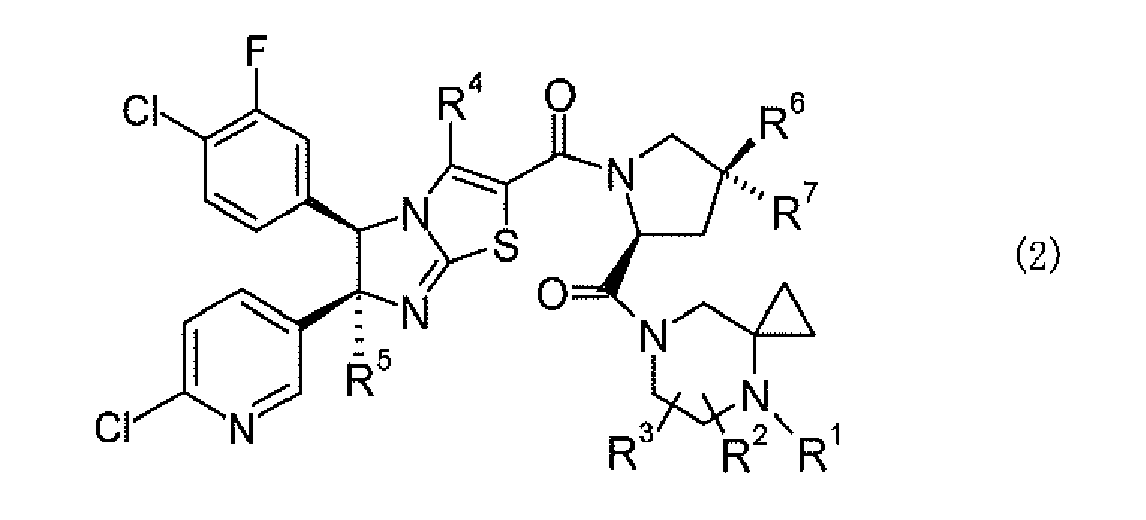
R1 represents a C1-C6 alkyl group which may have one or more substituents selected from a halogen atom, a hydroxy group, a C1-C6 alkoxy group, a carbamoyl group, an amino group, a C1-C6 alkanoyl group, and a cyano group, a C1-C6 alkanoyl group which may have one or more substituents selected from a halogen atom, a hydroxy group, a C1-C6 alkoxy group, a carbamoyl group, an amino group, and a cyano group, a hydrogen atom, or a hydroxy group;
R2 and R3 each independently represent a C1-C6 alkyl group which may have one or more substituents selected from a halogen atom, a hydroxy group, a C1-C6 alkoxy group, a carbamoyl group, an amino group, a C1-C6 alkanoyl group, and a cyano group, a carboxy group, or a hydrogen atom, or R2 and R3 may together form an oxo group, or R2 and R3 together with the carbon atoms to which R2 and R3 are respectively bonded may form a 3- to 5-membered saturated hydrocarbon ring in a spiro or condensed form;
R4 represents a C1-C6 alkyl group which may have one or more substituents selected from a halogen atom, a hydroxy group, a C1-C6 alkoxy group, a carbamoyl group, an amino group, a C1-C6 alkanoyl group, and a cyano group;
R5 represents a C1-C6 alkyl group which may have one or more substituents selected from a halogen atom, a hydroxy group, a C1-C6 alkoxy group, a carbamoyl group, an amino group, a C1-C6 alkanoyl group, and a cyano group;
R6 represents a halogen atom or a hydrogen atom; and
R7 represents a halogen atom. - [3] A compound according to [1] or [2] or a salt thereof, wherein R1 is a C1-C6 alkyl group, a C1-C6 alkanoyl group which may be substituted with one or more halogen atoms, or a hydrogen atom.
- [4] A compound according to any one of [1] to [3] or a salt thereof, wherein R4 is a C1-C6 alkyl group.
- [5] A compound according to any one of [1] to [4] or a salt thereof, wherein R5 is a C1-C6 alkyl group.
- [6] A compound represented by the following formula:

- [7] A compound represented by the following formula:

- [8] A compound represented by the following formula:

- [9] A compound represented by the following formula:

- [10] A compound represented by the following formula:

- [11] An inhibitor of Mdm2 comprising a compound according to any one of [1] to [10] or a salt thereof.
- [12] An inhibitor of p53-Mdm2 binding comprising a compound according to any one of [1] to [10] or a salt thereof.
- [13] A medicament comprising a compound according to any one of [1] to [10] or a salt thereof as an active ingredient.
- [14] A pharmaceutical composition comprising a compound according to any one of [1] to [10] or a salt thereof and a pharmaceutically acceptable carrier.
- [15] Use of a compound according to any one of [1] to [10] or a salt thereof for the manufacture of a medicament.
- [16] An anticancer agent comprising a compound according to any one of [1] to [10] or a salt thereof as an active ingredient.
- [17] A method for treating cancer, comprising administering a compound according to any one of [1] to [10] or a salt thereof.
- [18] An anticancer agent according to [16], wherein the cancer is any selected from lung cancer, breast cancer, prostate cancer, colon cancer, acute myeloid leukemia, malignant lymphoma, retinoblastoma, neuroblastoma, and sarcoma.
- [19] A method for treating cancer according to [17], wherein the cancer is any selected from lung cancer, breast cancer, prostate cancer, colon cancer, acute myeloid leukemia, malignant lymphoma, retinoblastoma, neuroblastoma, and sarcoma.
- The present invention provides a novel imidazothiazole derivative represented by the above formula (1), which has Mdm2 inhibiting activity. Such a novel compound is useful as an anti-tumor agent.
- In the present invention, "Mdm2" means a protein encoded by the murine double minute 2 gene. "Mdm2" includes Mdm2 proteins encoded by a complete length of the Mdm2 gene, Mdm2 proteins encoded by mutated Mdm2 genes (including deletion mutants, substitution mutants, and addition mutants), and so forth. In the present invention, "Mdm2" also includes homologues derived from various animal species such as, for example, human Mdm2 homologue (HDM2).
- In the present invention, "p53" means a protein encoded by the p53 gene. "p53" means the p53 protein encoded by a full length p53 gene or a p53 protein that has a mutation (including mutations by deletion, substitution, and addition), but functions normally.
- In the present invention, "Mdm2 inhibitor" means a factor that restores p53 functions suppressed by Mdm2 by acting on either Mdm2 or p53, or on both p53 and Mdm2. The p53 functions are not particularly limited so long as they are functions which p53 normally has. Examples thereof include inhibition of canceration of cells by inducing the expression of genes involved in the cell cycle or cellular apoptosis. Examples of Mdm2 inhibitors include factors that inhibit binding of Mdm2 to p53 (hereinafter, referred to as p53-Mdm2 binding inhibitors) or factors that inhibit ubiquitination of p53 by Mdm2 (hereinafter, referred to as Mdm2 ubiquitin ligase inhibitors).
- In the present invention, "inhibitor of suppression of p53 transcription activity" means a factor that restores the functions of p53 as a transcription factor suppressed by Mdm2.
- In the present invention, "inhibitor of p53 degradation" means a factor that inhibits degradation of p53 in proteasomes by inhibiting ubiquitination of p53 by Mdm2.
- In the present invention, the terms "tumor" and "cancer" are used interchangeably. Furthermore, in the present invention, tumor, malignant tumor, cancer, malignant neoplasm, carcinoma, sarcoma, and the like may be collectively referred to as "tumor" or "cancer."
- In the present invention, "C1-C6 alkyl group" means a straight, branched, or cyclic alkyl group having 1 to 6 carbon atoms. Examples of a "C1-C6 alkyl group" include a methyl group, an ethyl group, a propyl group, an isopropyl group, a cyclopropyl group, a butyl group, a tert-butyl group, a cyclobutyl group, a cyclopentyl group, and a cyclohexyl group.
- "C1-C6 alkoxy group" means an alkoxy group having a straight, branched, or cyclic alkyl group having 1 to 6 carbon atoms. Examples of a "C1-C6 alkoxy group" include a methoxy group, an ethoxy group, a propoxy group, an isopropoxy group, a butoxy group, and a cyclopentyloxy group.
- "C1-C6 alkanoyl group" means an alkanoyl group having a straight, branched, or cyclic alkyl group having 1 to 6 carbon atoms. Examples of a "C1-C6 alkanoyl group" include a formyl group, an acetyl group, a propionyl group, and a methylpropionyl group.
- Examples of "halogen atom" include a fluorine atom, a chlorine atom, a bromine atom, and an iodine atom.
- "Oxo group" means a group represented by "=O" unless otherwise specified.
- Hereafter, each substituent in formula (1) will be explained.
- In the following general formula (1),

- R1 represents a C1-C6 alkyl group which may have one or more substituents selected from a halogen atom, a hydroxy group, a C1-C6 alkoxy group, a carbamoyl group, an amino group, a C1-C6 alkanoyl group, and a cyano group, a C1-C6 alkanoyl group which may have one or more substituents selected from a halogen atom, a hydroxy group, a C1-C6 alkoxy group, a carbamoyl group, an amino group, and a cyano group, a hydrogen atom, or a hydroxy group.
- Here, the "C1-C6 alkyl group which may have one or more substituents" and the "C1-C6 alkanoyl group which may have one or more substituents" preferably have 0 to 3 substituents. The substituent(s) is preferably a halogen atom, a hydroxy group, a C1-C6 alkoxy group, a carbamoyl group, an amino group, a C1-C6 alkanoyl group, or a cyano group. The substituent(s) is more preferably a halogen atom, a hydroxy group, or a C1-C6 alkoxy group.
- The "C1-C6 alkyl group which may have one or more substituents" is more preferably an unsubstituted C1-C6 alkyl group or a C1-C6 alkyl group having one or more halogen atoms, hydroxy groups, or C1-C6 alkoxy groups as a substituent, yet more preferably an unsubstituted C1-C6 alkyl group or a C1-C6 alkyl group having 1 to 3 fluorine atoms as a substituent.
- The "C1-C6 alkanoyl group which may have one or more substituents" is preferably an unsubstituted C1-C6 alkanoyl group or a C1-C6 alkanoyl group having 1 to 3 halogen atoms as a substituent, particularly preferably a formyl group, an acetyl group, or a trifluoromethylcarbonyl group.
- R1 is preferably an unsubstituted C1-C6 alkyl group or a C1-C6 alkyl group substituted with halogen atom(s), an unsubstituted C1-C6 alkanoyl group or a C1-C6 alkanoyl group substituted with halogen atom(s), or a hydrogen atom.
- R2 and R3 each independently represent a C1-C6 alkyl group which may have one or more substituents selected from a halogen atom, a hydroxy group, a C1-C6 alkoxy group, a carbamoyl group, an amino group, a C1-C6 alkanoyl group, and a cyano group, a carboxy group, or a hydrogen atom, or R2 and R3 may together form an oxo group, or R2 and R3 together with the carbon atoms to which R2 and R3 are respectively bonded may form a 3- to 5-membered saturated hydrocarbon ring in a spiro or condensed form.
- Here, the "C1-C6 alkyl group which may have one or more substituents" has the same meaning as defined above in R1 and also has the same preferred examples.
- When both R2 and R3 are respectively a carboxy group or one of R2 and R3 is a carboxy group, compounds in which the carboxy group is esterified or amidated are also included in the scope of the present invention. Examples thereof include compounds in which the carboxy group is ethyl esterified, phenyl esterified, carboxymethyl esterified, dimethylaminomethyl esterified, pivaloyloxymethyl esterified, ethoxycarbonyloxyethyl esterified, amidated, or methylamidated.
- The phrase "R2 and R3 together with the carbon atoms to which R2 and R3 are respectively bonded may form a 3-to 5-membered saturated hydrocarbon ring in a spiro or condensed form" means that R2 and R3 may be bonded to form a 3- to 5-membered saturated hydrocarbon ring in a spiro form when R2 and R3 are substituents bonded to the same carbon atom, or R2 and R3 may be bonded to form a 3-to 5-membered saturated hydrocarbon ring in a condensed form when R2 and R3 are bonded to different carbon atoms. Examples of the "3- to 5-membered saturated hydrocarbon ring" include a cyclopropane ring, a cyclobutane ring, and a cyclopentane ring.
- Preferably, R2 and R3 are each independently a hydrogen atom, a C1-C6 alkyl group which may have substituent(s), or a carboxy group. The substituent substituted on the C1-C6 alkyl group is preferably a fluorine atom or a hydroxy group. More preferably, R2 and R3 are respectively a hydrogen atom, or one of R2 and R3 is a hydrogen atom and the other moiety is a methyl group or an ethyl group, or R2 and R3 which are C1-C6 alkyl groups bonded to the same carbon atom form a 3- to 4-membered saturated hydrocarbon ring in a spiro form, together with the carbon atom to which they are bonded. Both R2 and R3 are preferably substituents at the 6-position on a piperazine ring.
- R4 represents a C1-C6 alkyl group which may have one or more substituents. Here, the "C1-C6 alkyl group which may have one or more substituents" has the same meaning as defined above in R1.
- R4 is preferably an unsubstituted C1-C6 alkyl group, more preferably an unsubstituted C1-C3 alkyl group, yet more preferably an isopropyl group.
- R5 represents a C1-C6 alkyl group which may have one or more substituents. Here, the "C1-C6 alkyl group which may have one or more substituents" has the same meaning as defined above in R1.
- R5 is preferably an unsubstituted C1-C6 alkyl group, more preferably an unsubstituted C1-C3 alkyl group, yet more preferably a methyl group or an ethyl group.
- R6 represents a halogen atom or a hydrogen atom. R6 is preferably a fluorine atom, a chlorine atom, a bromine atom, or a hydrogen atom, more preferably a fluorine atom or a hydrogen atom.
- R7 represents a halogen atom. R7 is preferably a fluorine atom, a chlorine atom, or a bromine atom, more preferably a fluorine atom.
- Ar1 represents a phenyl group which may have one or more substituents. Ar1 is preferably a phenyl group having 1 to 3 C1-C6 alkyl groups, cyano groups, or halogen atoms as a substituent, more preferably a phenyl group having 1 to 3 halogen atoms as a substituent. The substituent may be positioned at any position. More preferably, Ar1 is a 4-chlorophenyl group or a 3-fluoro-4-chlorophenyl group.
- Ar2 represents a phenyl group which may have one or more substituents or a pyridyl group which may have one or more substituents. Ar2 is preferably a phenyl group having 1 to 3 halogen atoms, C1-C6 alkyl groups, or cyano groups as a substituent or a pyridyl group having 1 to 3 halogen atoms, C1-C6 alkyl groups, or cyano groups as a substituent. The substituent may be positioned at any position. More preferably, Ar2 is a 4-chlorophenyl group or a 6-chloropyridin-3-yl group.
- The absolute configurations of Ar1 and Ar2 in the imidazothiazole skeleton are preferably 5R and 6S, respectively.
- Furthermore, the compound represented by the formula (1) of the present invention is preferably a compound represented by the following general formula (2):

- Here, definitions, examples, and preferred examples of R1, R2, R3, R4, R5, R6, and R7 are the same as described above in general formula (1).
- Furthermore, the compound of the present invention is preferably one compound selected from the following group:


- The compound represented by formula (1) of the present invention may have stereoisomers or optical isomers due to asymmetric carbon atoms, and all these stereoisomers, optical isomers, and mixtures thereof are included in the present invention.
- In one embodiment of the present invention, a compound having an absolute configuration represented by formula (3) is preferred:

- Furthermore, the compound of general formula (1) is preferably a compound, a salt or a hydrate thereof described in any of the Examples and/or Tables 1 to 12 described later.
- The compound represented by general formula (1) of the present invention can form a pharmaceutically acceptable salt, if desired, when having a basic group such as an amino group. Examples of such salts can include: hydrohalides such as hydrochloride and hydroiodide; inorganic acid salts such as nitrate, perchlorate, sulfate, and phosphate; lower alkanesulfonates such as methanesulfonate, trifluoromethanesulfonate, and ethanesulfonate; arylsulfonates such as benzenesulfonate and p-toluenesulfonate; organic acid salts such as formic acid, acetic acid, malic acid, fumarate, succinate, citrate, tartrate, oxalate, and maleate; and amino acid salts such as ornithine salt, glutamate, and aspartate. Hydrohalides and organic acid salts are preferred.
- The compound represented by general formula (1) of the present invention may generally form a base addition salt when having an acidic group such as a carboxy group. Examples of pharmaceutically acceptable salts can include: alkali metal salts such as sodium salt, potassium salt, and lithium salt; alkaline earth metal salts such as calcium salt and magnesium salt; inorganic salts such as ammonium salt; and organic amine salts such as dibenzylamine salt, morpholine salt, phenylglycine alkyl ester salt, ethylenediamine salt, N-methylglucamine salt, diethylamine salt, triethylamine salt, cyclohexylamine salt, dicyclohexylamine salt, N,N'-dibenzylethylenediamine salt, diethanolamine salt, N-benzyl-N-(2-phenylethoxy)amine salt, piperazine salt, tetramethylammonium salt, and tris(hydroxymethyl)aminomethane salt.
- The compound represented by general formula (1) of the present invention or the salt thereof may be present in a free or solvate form. The compound represented by general formula (1) of the present invention or the salt thereof may be present in a hydrate form, for example, by absorbing moisture in the air. The solvate is not particularly limited so long as it is pharmaceutically acceptable. Specifically, the solvate is preferably a hydrate, an ethanol solvate, or the like. Moreover, the compound represented by general formula (1) of the present invention may be in an N-oxide form when containing a nitrogen atom. These solvate and N-oxide forms are also included in the present invention.
- The compound represented by general formula (1) of the present invention may have various isomers such as geometrical isomers (e.g., cis and trans forms), tautomers, and optical isomers (e.g., d and 1 forms), depending on the types or combinations of substituents. The compound of the present invention also encompasses all these isomers, stereoisomers, and mixtures of these isomers and stereoisomers in any ratio, unless otherwise specified.
- The compound represented by general formula (1) of the present invention may contain an isotope in a non-natural proportion as one or more constituent atoms. Examples of an isotope include deuterium (2H), tritium (3H), iodine-125 (125I), and carbon-14 (14C). These compounds are useful as a therapeutic or preventive agent, a research reagent (e.g., an assay reagent), and a diagnostic agent (e.g., an in vivo diagnostic imaging agent). All isotopic variants of the compound represented by general formula (1) are included in the scope of the present invention, regardless of the presence or absence of radioactivity.
- Moreover, the present invention also encompasses a compound that is converted to the compound (1) as an active ingredient in the pharmaceutical composition of the present invention due to a reaction induced by an enzyme, gastric acid, or the like under physiological conditions in vivo, i.e., a compound that is converted to the compound (1) through enzymatic oxidation, reduction, hydrolysis, or the like or a "pharmaceutically acceptable prodrug compound" that is converted to the compound (1) through hydrolysis or the like induced by gastric acid or the like.
- Examples of a prodrug can include: compounds in which an amino group in the compound (1) is acylated, alkylated, or phosphorylated (e.g., compounds in which the amino group is eicosanoylated, alanylated, pentylaminocarbonylated, (5-methyl-2-oxo-1,3-dioxolen-4-yl)methoxycarbonylated, tetrahydrofuranylated, pyrrolidylmethylated, pivaloyloxymethylated, or tert-butylated); compounds in which a hydroxy group in the compound (1) is acylated, alkylated, phosphorylated, or borated (e.g., compounds in which the hydroxy group is acetylated, palmitoylated, propanoylated, pivaloylated, succinylated, fumarylated, alanylated, or dimethylaminomethylcarbonylated); and compounds in which a carboxy group in the compound (1) is esterified or amidated (e.g., compounds in which the carboxy group is ethyl esterified, phenyl esterified, carboxymethyl esterified, dimethylaminomethyl esterified, pivaloyloxymethyl esterified, ethoxycarbonyloxyethyl esterified, amidated, or methylamidated).
- A prodrug of the compound of the present invention can be produced from the compound (1) according to a method known in the art. Moreover, a prodrug of the compound of the present invention also includes those converted to the compound (1) under physiological conditions as described in "Development of Pharmaceutical Products", vol. 7, Molecule Design, p. 163-198, Hirokawa-Shoten Ltd. (1990).
- Specific examples of the compound represented by general formula (1) of the present invention can include compounds described in, for example, the following Compound Tables 1 to 12. These compounds can be synthesized according to [Production Method 1] to [Production Method 4] described later or methods described in the Examples. In the tables, R1, R2, R3, R4, R5, R6, R7, Ar1, and Ar2 means groups represented by the following general formula (1a).
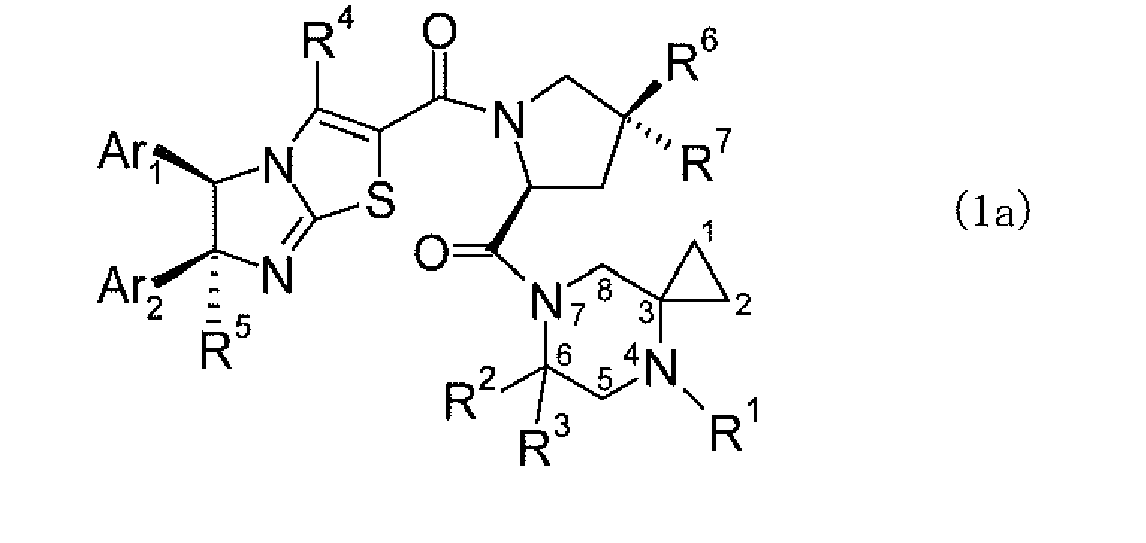
[Table 1] No. R1 R2 R3 R4 R5 R6 R7 Ar1 Ar2 1 H H H CH(CH3)2 CH3 H F 

2 H CH3 H CH(CH3)2 CH3 H F 

3 H CH3 CH3 CH(CH3)2 CH3 H F 

4 H CH2CH3 H CH(CH3)2 CH3 H F 
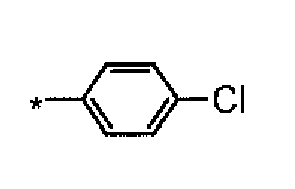
5 H CH(CH3)2 H CH(CH3)2 CH3 H F 

6 H CH2CH(CH3)2 H CH(CH3)2 CH3 H F 

7 H CH2OH H CH(CH3)2 CH3 H F 

8 H CO2H H CH(CH3)2 CH3 H F 

9 H CH2F H CH(CH3)2 CH3 H F 

10 H CHF2 H CH(CH3)2 CH3 H F 

11 H cyclopropyl CH(CH3)2 CH3 H F 

12 H cyclobutyl CH(CH3)2 CH3 H F 

13 CH3 H H CH(CH3)2 CH3 H F 

14 CH3 CH3 H CH4(CH3)2 CH3 H F 

15 CH3 CH3 CH3 CH(CH3)2 CH3 H F 

[Table 2] No. R1 R2 R3 R4 R5 R6 R7 Ar1 Ar2 16 CH3 CH2CH3 H CH(CH3)2 CH3 H F 

17 CH3 CH(CH3)2 H CH(CH3)2 CH3 CH3 H F 

18 CH3 CH2CH(CH3)2 H CH(CH3)2 CH3 H F 

19 CH3 CH2F H CH(CH3)2 CH3 H F 

20 CH3 CHF2 H CH(CH3)1 CH3 H F 

21 CH3 cyclopropyl CH(CH3)2 CH3 H F 

22 CH3 cyclobutyl CH(CH3)2 CH3 H F 

23 CH2CH2OH CH3 H CH(CH3)2 GH3 H F 

24 CHO CH3 H CH(CH3)2 CH3 H F 

25 CHO CH2CH3 H CH(CH3)2 CH3 H F 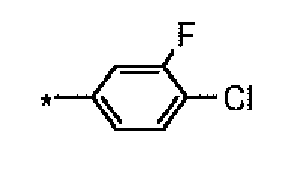
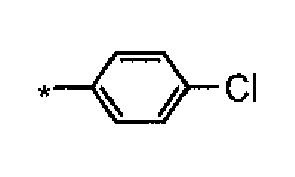
26 COCH3 CH3 H CH(CH3)2 CH3 H F 

27 COCH3 CH2CH3 H CH(CH3)2 CH3 H F 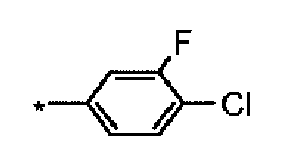

28 COCF3 CH3 H CH(CH3)2 CH3 H F 

29 COCF3 CH2CH3 H CH(CH3)1 CH3 H F 

30 H H H CH(CH3)2 CH3 H F 

[Table 3] No. R1 R2 R3 R4 R5 R6 R7 Ar1 Ar2 31 H CH3 H CH(CH3)2 CH3 F F 

32 H CH3 CH3 CH(CH3)2 CH3 F F 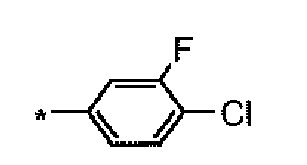

33 H CH2CH3 H CH(CH3)2 CH3 F F 

34 H CH(CH3)2 H CH(CH3)2 CH3 F F 

35 H CH:CH(CH3)2 H CH(CH3)2 CH3 F F 

36 H CH2OH H CH(CH3)2 CH3 F F 
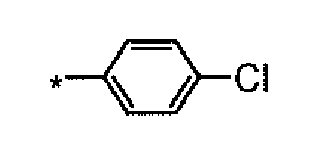
37 H CO2H H CH(CH3)2 CH3 F F 

38 H CH2F H CH(CH3)2 CH3 F F 

39 H CHF2 H CH(CH3)2 CH3 F F 

40 H cyclopropyl CH(CH3)2 CH3 F F 

41 H cyclobutyl CH(CH3)2 CH3 F F 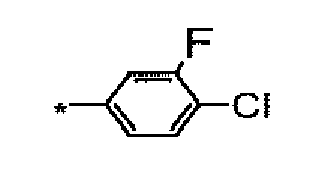
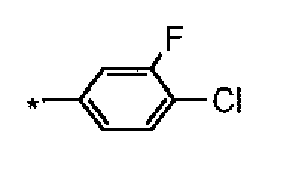
42 CH3 H H CH(CH3)2 CH3 F F 

43 CH3 CH3 H CH(CH3)2 CH3 F F 

44 CH3 CH3 CH3 CH(CH3)2 CH3 F F 

45 CH3 CH2CH3 H CH(CH3)2 CH3 F F 

[Table 4] No. R1 R2 R3 R4 R5 R6 R7 Ar1 Ar2 46 CH3 CH(CH3)2 H CH(CH3)2 CH3 F F 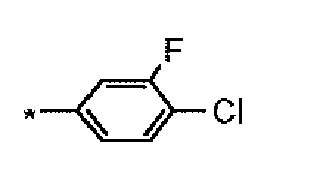

47 CH3 CH2CH(CH3)2 H CH(CH3)2 CH3 F F 

48 CH3 CH2F H CH(CH3)2 CH3 F F 

49 CH3 CHF2 H CH(CH3)2 CH3 F F 

50 CH3 cyclopropyl CH(CH3)2 CH3 F F 
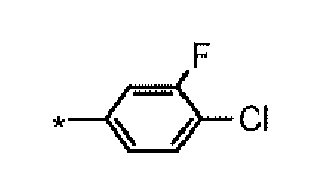
51 CH3 cyclobutyl CH(CH3)2 CH3 F F 

52 CH2CH2OH CH3 H CR(CH3)2 CH3 F F 

53 CHO CH3 H CH(CH3)2 CH3 F F 

54 CHO CH2CH3 H CH(CH3)2 CH3 F F 

55 COCH3 CH3 H CH(CH3)1 CH3 F F 

56 COCH3 CH2CH3 H CH(CH3)2 CH3 F F 

57 COCF3 CH3 H CH(CH3)2 CH3 F F 

58 COCF3 CH2CH3 H CH(CH3)2 CH3 F F 

59 H H H CH(CH3)2 CH3 H F 

60 H CH3 H CH(CH3)2 CH3 H F 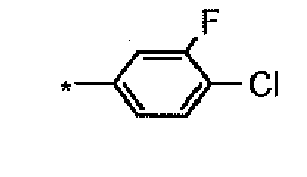

[Table 5] No. R1 R2 R3 R4 R5 R6 R7 Ar1 Ar2 61 H CH3 CH3 CH3 CH(CH3)2 CH3 H F 

62 H CH2CH3 H CH(CH3)2 CH3 H F 

63 H CH(CH3)2 H CH(CH3)2 CH3 H F 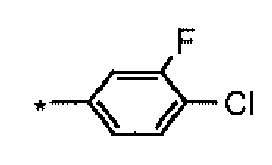

64 H CH2CH(CH3)2 H CH(CH3)2 CH3 H F 

65 H CH2OH H CH(CH3)2 CH3 H F 

66 H CO2H H CH(CH3)1 CH3 H F 

67 H CH2F H CH(CH3)2 CH3 H F 

68 H CHF2 H CH(CH3)2 CH3 H F 
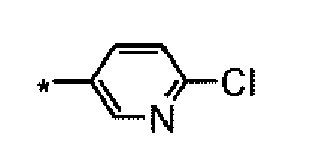
69 H cyclopropyl CH(CH3)2 CH3 H F 

70 H cyclobutyl CH(CH3)2 CH3 H F 

71 CH3 H H CH(CH3)2 CH3 H F 

72 CH3 CH3 H CH(CH3)2 CH3 H F 

73 CH3 CH3 CH3 CH(CH3)2 CH3 H F 

74 CH3 CH2CH3 H CH(CH3)2 CH3 H F 

75 CH3 CH(CH3)2 H CH(CH3)2 CH3 H F 

[Table 6] No. R1 R2 R3 R4 R5 R6 R7 Ar1 Ar2 76 CH3 CH2CH(CH3)2 H CH(CH3)2 CH3 H F 

77 CH3 CH2F H CH(CH3)2 CH3 H F 

78 CH3 CHF2 H CH(CH3)2 CH3 H F 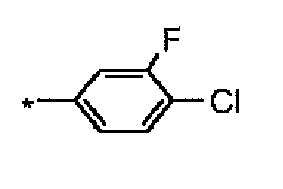

79 CH3 cyclopropyl CH(CH3)2 CH3 H F 
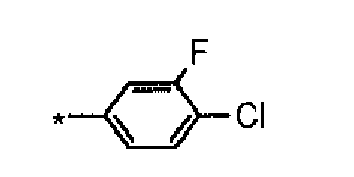
80 CH3 cyclobutyl CH(CH3)2 CH3 H F 

81 CH2CH2OH CH3 H CH(CH3)2 CH3 H F 
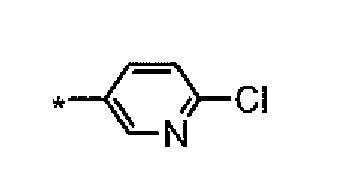
82 CHO CH3 H CH(CH3)2 CH3 H F 

83 CHO CH2CH3 H CH(CH3)2 CH3 H F 

84 COCH3 CH3 H CH(CH3)2 CH3 H F 

85 COCH3 CH2CH1 H CH(CH3)2 CH3 H F 

86 COCF3 CH3 H CH(CH3)2 CH3 H F 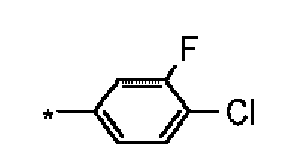

87 COCF3 CH2CH3 H CH(CH3)2 CH3 H F 

88 H H H CH(CH3)2 CH3 F F 

89 H CH3 H CH(CH3)2 CH3 F F 
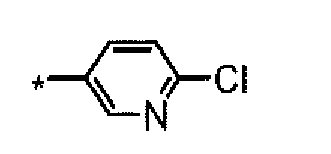
90 H CH4 CH3 CH(CH3)2 CH3 F F 

[Table 7] No. R1 R2 R3 R4 R5 R6 R7 Ar1 Ar2 91 H CH2CH3 H CH(CH3)2 CH3 F F 

92 H CH(CH3)2 H CH(CH3)2 CH3 F F 

93 H CH2CH(CH3)2 H CH(CH3)2 CH3 F F 

94 H CH2OH H CH(CH3)2 CH3 F F 

95 H CO2H H CH(CH3)2 CH3 F F 

96 H CH2F H CH(CH3)2 CH3 F F 

97 H CHF2 H CH(CH3)2 CH3 F F 

98 H cyclopropyl CH(CH3)2 CH3 F F 

99 H cyclobutyl CH(CH3)2 CH3 F F 
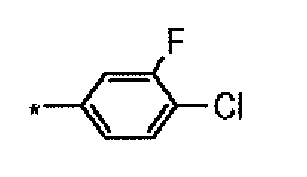
100 CH3 H H CH(CH3)2 CH3 F F 

101 CH3 CH3 H CH(CH3)2 CH3 F F 

102 CH3 CH3 CH3 CH(CH3)2 CH3 F F 

103 CH3 CH2CH3 H CH(CH3)2 CH3 F F 

104 CH3 CH(CH3)2 H CH(CH3)2 CH3 F F 

105 CH3 CH2CH(CH3)2 H CH(CH3)2 CH3 F F 

[Table 8] No. R1 R2 R3 R4 R5 R6 R7 Ar1 Ar2 106 CH3 CH2F H CH(CH3)2 CH3 F F 

107 CH3 CHF2 H CH(CH3)2 CH3 F F 

108 CH3 cyclopropyl CH(CH3)2 CH3 F F 

109 CH3 cyclobutyl CH(CH3)2 CH3 F F 

110 CH2CH2OH CH3 H CH(CH3)2 CH3 F F 

111 CHO CH3 CH3 H CH(CH3)2 CH3 F F 

112 CHO CH2CH3 H CH(CH3)2 CH3 F F 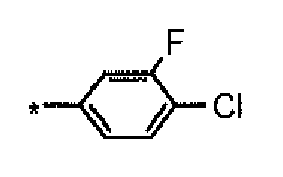

113 CONCH3 CH3 H CH(CH3)2 CH3 F F 

114 COCH3 CH2CH3 H CH(CH3)2 CH3 F F 

115 COCF3 CH3 H CH(CH3)2 CH3 F F 

116 CDCF3 CH2CH3 H CH(CH3)2 CH3 F F 

117 H CH3 H CH(CR3)2 CH3 H F 

118 H CH2CH3 H CH(CH3)2 CH3 H F 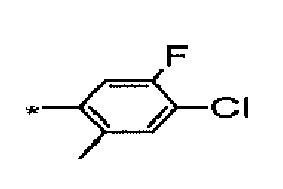

119 H CH(CH3)2 H CH(CH3)2 CH3 H F 

120 H CH2F H CH(CH3)2 CH3 H F 

[Table 9] No. R1 R2 R3 R4 R5 R6 R7 Ar1 Ar2 121 H CHF2 H CH(CH3)2 CH3 H F 

122 H cyclopropyl CH(CH3)2 CH3 H F 

123 CH3 CH3 H CH(CH3)2 CH3 H F 

124 CH3 CH2CH3 H CH(CH3)2 CH3 H F 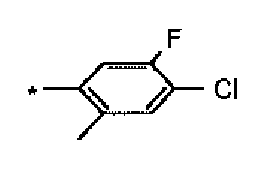

125 CH3 CH(CH3)2 H CH(CH3)2 CH3 H F 

126 CH3 CH2F H CH(CH3)2 CH3 H F 

127 CH3 CHF2 H CH(CH3)2 CH3 H F 

128 CH3 cyclopropyl CH(CH3)2 CH3 H F 

129 H CH3 H CH(CH3)2 CH3 F F 

130 H CH2CH3 H CH(CH3)2 CH3 F F 

131 H CH(CH3)2 H CH(CH3)2 CH3 F F 

132 H CH2F H CH(CH3)2 CH3 F F 

133 H CHF2 H CH(CH3)2 CH3 F F 

134 H cyclopropyl CH(CH3)2 CH3 F F 

135 CH3 CH3 H CH(CH3)2 CH3 F F 

[Table 10] No. R1 R2 R3 R4 R5 R6 R7 Ar1 Ar2 136 CH3 CH2CH3 H CH(CH3)2 CH3 F F 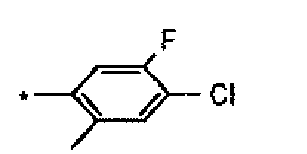

137 CH3 CH(CH3)2 H CH(CH3)2 CH3 F F 

138 CH3 CH2F H CH(CH3)2 CH3 F F 

139 CH3 CHF2 H CH(CH3)2 CH3 F F 

140 CH3 cyclopropyl CH(CH3)1 CH3 F F 

141 H CH3 H CH(CH3)2 CH3 H F 

142 H CH2CH3 H CH(CH3)2 CH3 H F 

143 H CH3 H CH(CH3)2 CH3 F F 

144 H CH2CH3 H CH(CH3)2 CH3 F F 

145 H CH3 H CH(CH3)2 CH3 H F 

146 H CH2CH3 H CH(CH3)2 CH3 H F 

147 H CH3 H CH(CH3)2 CH3 F F 

148 H CH2CH3 H CH(CH3)2 CH3 F F 

149 H CH3 H CH(CH3)2 CH3 H F 

150 H CH2CH3 H CH(CH3)2 CH3 H F 

[Table 11] No. R1 R2 R3 R 4 R5 R6 R7 Ar1 Ar2 151 H CH3 H CH(CH3)2 CH3 F F 

152 H CH2CH3 H CH(CH3)2 CH3 F F 

153 H CH3 H CH(CH3)2 CH3 H F 

154 H CH2CH3 H CH(CH3)2 CH3 H F 

155 H CH3 H CH(CH3)2 CH3 F F 

156 H CH2CH3 H CH(CH3)2 CH3 F F 

157 H CH3 H CH(CH3)2 CH3 H F 

158 H CH2CH3 H CH(CH3)2 CH3 H F 

159 H CH3 H CH(CH3)2 CH3 F F 

160 H CH2CH3 H CH(CH3)2 CH3 F F 

[Table 12] No. R1 R2 R3 R4 R5 R6 R7 Ar1 Ar2 161 H H H CH(CH3)2 CH3 H F 

162 H CH3 H CH(CH3)2 CH3 H F 

163 H CH2CH3 H CH(CH3)2 CH3 H F 

164 H H H CH(CH3)2 CH3 H F 

165 H CH3 H CH(CH3)2 CH3 H F 

166 H CH2CH3 H CH(CH3)2 CH3 H F 

- Next, a representative method for producing a compound represented by general formula (1) will be explained. The compound of the present invention can be produced by various production methods and the following production methods are illustrative and should not be construed in any limitative way. Reactions shown below can be performed by protecting substituents with appropriate protective groups, if necessary, and the types of protective groups are not particularly limited.
-

- Examples of the protective group for the carboxy group include substituted or unsubstituted alkyl groups or aralkyl groups such as a methyl group, an ethyl group, a tert-butyl group, and a benzyl group.
- A compound (4) can be obtained by reacting an optically active diamine compound (3) having the positional configuration shown above with carbon disulfide or 1,1'-thiocarbonyldiimidazole. Here, the solvent used in the reaction is not particularly limited and examples thereof include ethanol, tetrahydrofuran, dioxane, acetonitrile, dimethylformamide, dichloromethane, chloroform, toluene, and mixed solvents thereof. The reaction temperature is usually in the range from -78 to 100°C or the boiling point of the solvent, preferably in the range from around room temperature to 100°C.
- A compound (5) can be obtained by reacting compound (4) with a compound (A). Here, the solvent used in the reaction is not particularly limited and examples thereof include ethanol, tetrahydrofuran, dioxane, acetonitrile, dimethylformamide, chloroform, toluene, and mixed solvents thereof. The reaction temperature is usually in the range from -78 to 100°C or the boiling point of the solvent, preferably in the range from around room temperature to 100°C.
- This step is performed for the deprotection of R11.
- Although deprotection reaction conditions differ depending on the type of R11, R11 may be deprotected by hydrolysis. When R11 is a methyl group, an ethyl group, a benzyl group, or the like, a compound (6) can be obtained by treating compound (5) with a base (e.g., sodium hydroxide, potassium hydroxide, lithium hydroxide, or potassium tert-butoxide) or hydrochloric acid, p-toluenesulfonic acid, or the like. Here, examples of the solvent used in the reaction include methanol, ethanol, water, tetrahydrofuran, dioxane, and mixed solvents thereof. However, organic solvents that can be mixed with water in an arbitrary ratio are preferred. The reaction temperature is usually in the range from -78 to 100°C or the boiling point of the solvent, preferably in the range from around room temperature to 100°C. When R11 is a tert-butyl group or the like, compound (5) is preferably treated with trifluoroacetic acid or hydrochloric acid or the like. Here, the solvent used in the reaction is not particularly limited and examples thereof include dichloromethane, chloroform, and mixed solvents thereof. The reaction temperature is usually in the range from -78 to 100°C or the boiling point of the solvent, preferably in the range from -20°C to around room temperature.
- A compound (7) can be obtained by reacting compound (6) with an acid halogenating reagent such as thionyl chloride, oxalyl chloride, phosphorus oxychloride, or 1-chloro-N,N,2-trimethyl-1-propenylamine. Here, the solvent used in the reaction is not particularly limited and examples thereof include dichloromethane, chloroform, toluene, and mixed solvents thereof. Alternatively, the reaction can be performed in the absence of a solvent. The reaction temperature is usually in the range from -78 to 100°C or the boiling point of the solvent, preferably in the range from 0 to 100°C.
- A compound (8) can be obtained by reacting compound (7) with a compound (B) in the presence of a base. Examples of the base used can include organic bases such as triethylamine, diisopropylethylamine, 4-dimethylaminopyridine, N-methylmorpholine, pyridine, and 2,6-lutidine, and diazabicyclo[5.4.0]undec-7-ene, and inorganic bases such as potassium carbonate, sodium carbonate, and sodium bicarbonate. Here, the solvent used in the reaction is not particularly limited and examples thereof include dichloromethane, chloroform, tetrahydrofuran, ethyl acetate, toluene, and mixed solvents thereof. However, dried solvents are preferred. The reaction temperature is usually in the range from -78 to 100°C or the boiling point of the solvent, preferably in the range from -10°C to around room temperature. Moreover, in another method, a compound (8) can be obtained by reacting compound (6) with a compound (B) in the presence of a condensing agent. Here, examples of the condensing agent used can include N,N'-dicyclohexylcarbodiimide and 1-ethyl-3-(3-dimethylaminopropyl)carbodiimide. The solvent used in the reaction is not particularly limited and examples thereof include dichloromethane, dimethylformamide, tetrahydrofuran, ethyl acetate, and mixed solvents thereof. The reaction temperature is usually in the range from -78 to 100°C or the boiling point of the solvent, preferably in the range from 0 to 50°C. Moreover, a base such as triethylamine, diisopropylethylamine, N-methylmorpholine, or 4-dimethylaminopyridine can be added, if necessary. Furthermore, 1-hydroxybenzotriazole, N-hydroxysuccinimide, or the like may be added as a reaction accelerator.
- A compound (9) can be obtained by performing deprotection under the reaction conditions used in the method for producing compound (6) above.
- A compound (1) can be obtained from compound (9) and a compound (C) under reaction conditions described above in another method for producing compound (8) above using a condensing agent. Moreover, in another method, a compound (1) can be obtained by reacting compound (9) and a compound (C) with an acid halogenating reagent such as 1-chloro-N,N,2-trimethyl-1-propenylamine in the presence of a base. Here, examples of the base used can include organic bases such as triethylamine, diisopropylethylamine, 4-dimethylaminopyridine, N-methylmorpholine, pyridine, 2,6-lutidine, and diazabicyclo[5.4.0]undec-7-ene, and inorganic bases such as potassium carbonate, sodium carbonate, and sodium bicarbonate. The solvent used in the reaction is not particularly limited and examples thereof include dichloromethane, chloroform, toluene, and mixed solvents thereof. The reaction temperature is usually in the range from -78 to 100°C or the boiling point of the solvent, preferably in the range from -20 to 50°C.
- The compound (1) of the present invention can also be produced by the following method.
-
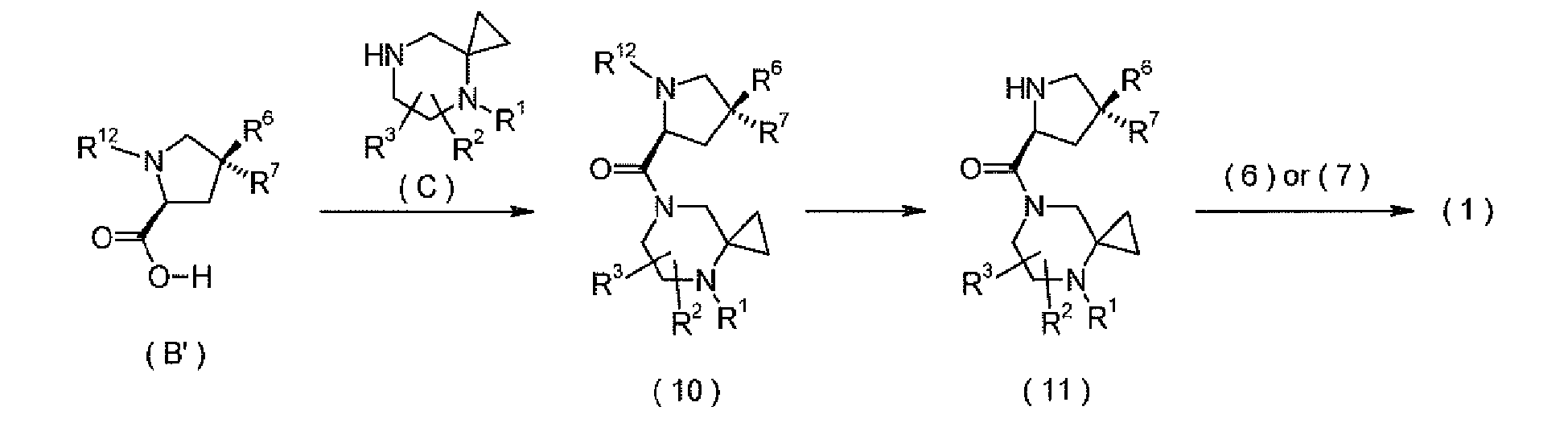
- Examples of the protective group for the amino group include a benzyloxycarbonyl group, a tert-butyloxycarbonyl group, and a benzyl group.
- A compound (10) can be obtained from a compound (B') and a compound (C) under the reaction conditions used in the method for producing compound (1) (amidation of compound (9) with a compound (C)) according to Production Method 1 above.
- Deprotection reaction conditions differ depending on the type of R12. The synthesis may be performed under reaction conditions usually used in this field. When R12 is a benzyloxycarbonyl group or a benzyl group or the like, deprotection can be performed by adding a reduction catalyst such as palladium carbon and reacting compound (10) in a hydrogen atmosphere or in the presence of a hydrogen source such as ammonium formate. Here, the solvent used in the reaction is not particularly limited and examples thereof include alcohols such as methanol and ethanol, tetrahydrofuran, dioxane, ethyl acetate, water, and mixed solvents thereof. The reaction temperature is usually in the range from -78 to 100°C or the boiling point of the solvent, preferably in the range from 0°C to around room temperature. Moreover, when R12 is a tert-butyloxycarbonyl group or the like, deprotection can be performed by treating the compound (10) with trifluoroacetic acid or hydrochloric acid or the like. Here, the reaction solvent used in the reaction is not particularly limited and examples thereof include dichloromethane, chloroform, tetrahydrofuran, dioxane, methanol, ethanol, water, and mixed solvents thereof. The reaction temperature is usually in the range from -78 to 100°C or the boiling point of the solvent, preferably in the range from 0°C to around room temperature.
- A compound (1) can be obtained from compound (11) and compound (6) or compound (7) under the reaction conditions used in the method for producing compound (8) (amidation of compound (B) with a compound (6) or a compound (7)) according to Production Method 1 above.
- When R1 in compound (1) of the present invention is a tert-butoxycarbonyl group, a benzyloxycarbonyl group, or a trifluoroacetyl group, or the like usually used as a protective group, a compound (1) wherein R1 is a hydrogen atom can be obtained under the reaction conditions used in the method for producing compound (11) (deprotection of R12 in compound (10)) according to Production Method 2 above or by treatment with a base such as sodium hydroxide, potassium hydroxide, sodium carbonate, or potassium carbonate in a mixed solvent of methanol or ethanol and water. Furthermore, when R1 is a hydrogen atom, it can be converted to the defined substituent using a conventional organic chemical method. For example, R1 can be converted to an alkyl group or the like by treatment with a reducing agent such as sodium cyanoborohydride or sodium triacetoxyborohydride in the presence of an aldehyde derivative. Moreover, R1 can be converted to an alkanoyl group or an alkylsulfonyl group by reaction with an acid chloride derivative in the presence of a base such as triethylamine.
- The starting material compound (3) can be synthesized according to the method described in the document (Synlett, 1998, 623 or
US2005/26916 ). Moreover, compound (3) can also be synthesized by the following method. -
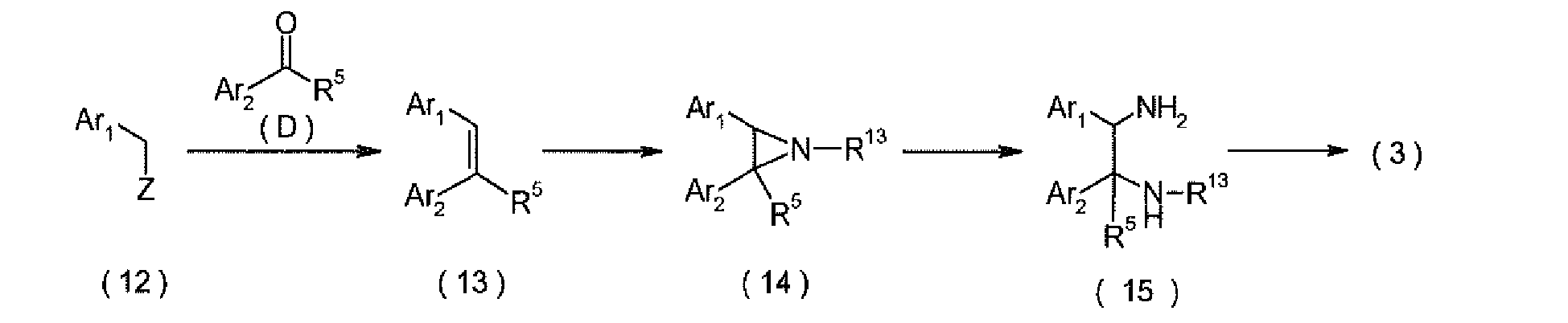
- A compound (13) can be obtained by treating a phosphonium salt or a phosphonic acid ester obtained from a reaction of a compound (12) and an organic phosphorous compound such as triphenylphosphine or triethyl phosphite with a base such as alkyl lithium, lithium diisopropylamide, lithium bis(trimethylsilyl)amide, sodium hydride, or potassium tert-butoxide and then reacting the resulting product with a compound (D). Here, the solvent used in this reaction is not particularly limited and examples thereof include diethyl ether, tetrahydrofuran, toluene, dimethylformamide, dimethyl sulfoxide, and mixed solvents thereof. However, dried solvents are preferred. The reaction temperature is usually in the range from -78 to 100°C or the boiling point of the solvent, preferably in the range from -78°C to room temperature.
- A compound (14) can be synthesized according to synthesis methods reported in various documents (e.g., Tetrahedron Lett., 2005, 46 4031; J. Am. Chem. Soc., 2002, 124, 136672; J. Am. Chem. Soc., 2001, 123, 7707; Synlett, 2004, 525; and Japanese Patent Laid-Open No.
2000-72743 - A compound (15) can be obtained by treating the compound (14) with ammonia water. Here, the solvent used in this reaction is not particularly limited and examples thereof include methanol, ethanol, water, tetrahydrofuran, dioxane, and mixed solvents thereof. However, organic solvents that can be mixed with water in an arbitrary ratio are preferred. The reaction temperature is usually in the range from -78 to 100°C or the boiling point of the solvent, preferably in the range from room temperature to 80°C.
- A compound (3) can be obtained by treating compound (15) with hydrochloric acid, sulfuric acid, or trifluoroacetic acid, or the like. Here, the solvent used in this reaction is not particularly limited and examples thereof include methanol, ethanol, water, tetrahydrofuran, dioxane, and mixed solvents thereof. However, organic solvents that can be mixed with water in an arbitrary ratio are preferred. The reaction temperature is usually in the range from -78 to 100°C or the boiling point of the solvent, preferably in the range from room temperature to 80°C.
-

- A compound (16) can be obtained by treating an aminonitrile form obtained from a reaction (Strecker reaction) of a compound (D) with potassium cyanide or sodium cyanide, ammonium chloride, and ammonia water with a mineral acid (e.g., hydrochloric acid or sulfuric acid) or an organic acid (e.g., p-toluenesulfonic acid or methanesulfonic acid). Here, the solvent used in the reaction is not particularly limited and examples thereof include methanol, ethanol, water, tetrahydrofuran, dioxane, and mixed solvents thereof. The reaction temperature is usually in the range from -20 to 100°C or the boiling point of the solvent, preferably in the range from around room temperature to 100°C.
- Each of the carboxyl group and the amino group in the compound (16) may be protected according to a standard method. Here, the order in which protective groups are introduced is not particularly limited. Hereinafter, each reaction will be described. Esterification can be performed by treatment with a halogenating reagent such as hydrogen chloride, sulfuric acid, or thionyl chloride in a lower alcohol appropriate for R11, such as methanol or ethanol. The reaction temperature is usually in the range from -78 to 100°C or the boiling point of the solvent, preferably in the range from 0 to 100°C. Moreover, the tert-butoxycarbonylation of the amino group can be performed by reaction with di-tert-butyl dicarbonate in the presence of a base such as triethylamine, diisopropylethylamine, or 4-dimethylaminopyridine. Here, the solvent used in the reaction is not particularly limited and examples thereof include dichloromethane, chloroform, tetrahydrofuran, ethyl acetate, acetonitrile, toluene, and mixed solvents thereof. However, dried solvents are preferred. The reaction temperature is usually in the range from -78 to 100°C or the boiling point of the solvent, preferably in the range from 0 to 100°C.
- The ester group in compound (17) can be reduced by reaction using a water-reactive reagent such as lithium aluminum hydride at a temperature equal to or lower than room temperature (preferably -40 to 0°C) in an aprotic solvent such as diethyl ether, tetrahydrofuran, or dioxane to give an alcohol form. Moreover, similarly, the reaction using sodium borohydride or the like can be performed at a temperature equal to or lower than room temperature (preferably -20°C to around room temperature) using a protic solvent such as methanol, ethanol, or water, or a mixed solvent of the protic solvent and the aprotic solvent to give an alcohol form. A compound (18) can be obtained by reacting the alcohol form thus obtained with an oxidizing agent such as chromic acid [pyridinium chlorochromate (PCC), pyridinium dichromate (PDC), etc.], dimethyl sulfoxide with oxalyl chloride (Swern oxidation), dimethyl sulfoxide with acetic anhydride, dimethyl sulfoxide with a sulfur trioxide-pyridine complex, 1,1,1-triacetoxy-1,1-dihydro-1,2-benziodoxol-3(1H)-one (Dess-Martin reagent), or 2,2,6,6-tetramethyl-1-piperidinyloxy (TEMPO) with hypochlorous acid. Here, the solvent used in the reaction is not particularly limited and examples thereof include dichloromethane, chloroform, tetrahydrofuran, ethyl acetate, dimethyl sulfoxide, water, toluene, and mixed solvents thereof. The reaction temperature is usually in the range from -78 to 100°C or the boiling point of the solvent, preferably in the range from -78°C to around room temperature.
- A compound (19) can be obtained by reacting compound (18) with an aryl lithium compound (Ar1Li) or a Grignard reagent (Ar1MgZ). The corresponding aryl lithium compound or Grignard reagent is a commercially available product or can be synthesized according to a standard method. The Grignard reagent can be synthesized from the corresponding aryl halide and magnesium metal, and the organic lithium reagent can be synthesized by halogen-metal exchange from the corresponding aryl halide and a commercially available alkyl lithium reagent or the like.
- Here, the solvent used in the reaction is not particularly limited and examples thereof include diethyl ether, tetrahydrofuran, dioxane, toluene, and mixed solvents thereof. However, dried solvents are preferred. The reaction temperature is usually in the range from -78 to 100°C or the boiling point of the solvent, preferably in the range from -78°C to around room temperature.
- A compound (20) can be obtained by appropriately selecting and using the oxidation reaction conditions described in the method for producing compound (19).
- A compound (21) can be obtained under the reaction conditions used in the method for producing the compound (11) according to Production Method 2 above, wherein R12 is a tert-butyloxycarbonyl group.
- A compound (22) can be obtained by heating compound (21) in the presence of sulfamide and a base such as 1,8-diazabicyclo[5.4.0]undec-7-eno. Here, the solvent used in the reaction is not particularly limited and examples thereof include diethyl ether, tetrahydrofuran, dioxane, ethyl acetate, methanol, ethanol, isopropyl alcohol, ethylene glycol, acetonitrile, toluene, and mixed solvents thereof. The reaction temperature is usually in the range from -78 to 180°C or the boiling point of the solvent, preferably in the range from 70 to 150°C.
- A compound (23) can be obtained from compound (22) by appropriately selecting and using the reduction reaction conditions described in the method for producing compound (18).
- A compound (3) can be synthesized from compound (23) according to the method described in the document (Synlett, 1998, 623-624 and
US2005/0026916 ). Moreover, in another method, a compound (3) can be obtained from compound (23) by hydrolyzation in the presence of a base such as pyridine or ethylenediamine. Here, examples of the solvent used in the reaction include methanol, ethanol, water, tetrahydrofuran, dioxane, ethylene glycol, and mixed solvents thereof. However, organic solvents that can be mixed with water in an arbitrary ratio are preferred. The reaction temperature is usually in the range from 0 to 180°C or the boiling point of the solvent, preferably in the range from 60 to 120°C. - The racemic compound (3) obtained by the production method can be optically resolved according to the method described in the document (
US2005/26916 , Japanese Patent Laid-Open No.2005-75754 - The starting material compound (A) is a commercially available product or can be synthesized according to the method described in the document (Tetrahedron Asymmetry, 1995, 6, 2199).
- The starting material compounds (B) and (C) are commercially available products or can be synthesized according to methods described in the Reference Examples.
- The starting material compound (D) is a commercially available product or can be synthesized according to the method described in various documents (e.g., J. Med. Chem. 2000, 43, 4781).
- In one embodiment of the present invention, the compound of the present invention can be used as a p53-Mdm2 binding inhibitor and/or an Mdm2 ubiquitin ligase inhibitor because it inhibits the binding of p53 with Mdm2 and the ubiquitination of p53 by Mdm2.
- The condition of the p53-Mdm2 binding can be examined by a method conventionally used by those skilled in the art to examine binding conditions between proteins (for example, immunological techniques, surface plasmon resonance techniques, etc.). Examples of methods for examining the condition of the Mdm2-p53 binding using an immunological technique include an immuno-sedimentation method and enzyme-linked-immuno-sorbent assay (ELISA). An antibody used in such immunological techniques may be an anti-Mdm2 antibody and/or an anti-p53 antibody that can directly detect Mdm2 and/or p53. When Mdm2 and/or p53 is labeled with a tag (for example, a GST tag or a histidine tag) or the like, an antibody suitable for labeling (for example, an anti-GST antibody or an anti-histidine antibody) can be used. Methods for examining the condition of the Mdm2-p53 binding using an immunological technique are described in, for example,
WO2003/51359 WO2003/51360 U.S. Patent Application Publication No. 2004/259867 or2004/259884 , andW02005/110996 . Methods for examining the condition of the Mdm2-p53 binding using a surface plasmon resonance technique are described in, for example, Science, vol.303, p.844-848, 2004. - Ubiquitin ligase activity of Mdm2 against p53 can be examined by an ubiquitin ligase assay conventionally used by those skilled in the art. The ubiquitin ligase activity can be detected by, for example, comparing ubiquitination of p53 by ubiquitin activation enzyme (E1), ubiquitin binding enzyme (E2), and ubiquitin ligase (E3) (Mdm2) in the presence and absence of a test compound (for example, refer to
WO2001/7514 W02003/76608 - In another embodiment, the compound of the present invention can be used as an inhibitor of suppression of the p53 transcription activity because it restores functions of p53 as a transcription factor that is suppressed by Mdm2 by inhibiting the binding of Mdm2 to the p53 transcription activation domain. The inhibitor of suppression of the p53 transcription activity can be obtained by, for example, measuring the mRNA level or the protein level of a protein whose transcription is regulated by p53 (for example, p21waf1/cip1) in the presence or absence of a test compound by an mRNA measuring method (for example, Northern blot) or a protein measuring method (for example, Western blot) conventionally used by those skilled in the art and selecting the test compound as an inhibitor of suppression of the p53 transcription activity when the mRNA level or the protein level is increased in the presence of the test compound as compared with that in the absence of the test compound. Furthermore, the inhibitor of suppression of the p53 transcription activity can also be identified by a reporter assay using the reporter activity of a reporter gene including a p53 responsive element as an indicator.
- In another embodiment, the compound of the present invention can be used as a p53 degradation inhibitor because it inhibits ubiquitination of p53 by Mdm2 and thereby prevents the degradation of p53 in proteasomes. The p53 degradation inhibitor can be obtained by, for example, measuring the protein level of p53 in the presence or absence of a test compound by a protein measuring method (for example, Western blot) conventionally used by those skilled in the art and selecting the test compound as a p53 degradation inhibitor when the protein level is increased in the presence of the test compound as compared with that in the absence of the test compound.
- In another embodiment, the compound of the present invention can be used as an anti-tumor agent because it normalizes functions of p53 as a cancer-restraining gene by inhibition of the Mdm2-p53 binding and/or ubiquitination of p53 by Mdm2.
- Cellular growth inhibiting activity can be examined by methods for testing growth inhibition conventionally used by those skilled in the art. The cell growth inhibition activity can be determined by, for example, comparing the levels of cellular growth (for example, tumor cells) in the presence or absence of a test compound as described in the following Test Example 2. The levels of cellular growth can be examined by using, for example, a test system for measuring living cells. Examples of the method for measuring living cells include the [3H]-thymidine uptake test, the BrdU method, the MTT assay, and so forth.
- Moreover, in vivo anti-tumor activity can be examined by methods for testing anti-tumor activity conventionally used by those skilled in the art. The in vivo anti-tumor activity of the present invention can be confirmed by, for example, transplanting various tumor cells to mice, rats, or the like; after confirming the engraftment of the transplanted cells, orally or intravenously administering the compound of the present invention to the animals; a few days or a few weeks later, comparing tumor growth in a drug-non-administered group with that in the compound-administered group.
- The compound of the present invention can be used for the treatment of tumors or cancers, for example, lung cancer, digestive system cancer, ovary cancer, uterine cancer, breast cancer, liver cancer, head/neck region cancer, blood cancer, renal cancer, and testicular tumors, more preferably lung cancer, breast cancer, prostate cancer, colon cancer, acute myeloid leukemia, malignant lymphoma, retinoblastoma, neuroblastoma, and sarcoma. However, the present invention is not limited to these cancers.
- A pharmaceutical composition of the present invention can contain a compound of the present invention and a pharmaceutically acceptable carrier and can be administered as various injections such as intravenous injection, intramuscular injection, and subcutaneous injection or by various methods such as oral administration or percutaneous administration. Pharmaceutically acceptable carrier means a pharmacologically acceptable material that is involved in transport of the compound of the present invention or a composition containing the compound of present invention (for example, an excipient, a diluent, an additive, a solvent, etc.) from a given organ to another organ.
- A formulation can be prepared by selecting a suitable formulation form (for example, oral formulation or injection) depending on the administration method and using various conventionally used methods for preparing a formulation. Examples of oral formulations include tablets, powders, granules, capsules, pills, lozenges, solutions, syrups, elixirs, emulsions, oily or aqueous suspensions, and so forth. In oral administration, the free compound or a salt form may be used. An aqueous formulation can be prepared by forming an acid adduct with a pharmacologically acceptable acid or by forming an alkali metal salt such as sodium. As an injection, a stabilizer, a preservative, a dissolving aid, and the like can be used in the formulation. After filling a solution that may contain these aids and the like in a vessel, a formulation for use may be prepared as a solid formulation by lyophilization or the like. Furthermore, one dose may be filled in one vessel, or two or more doses may be filled in a vessel.
- Examples of solid formulations include tablets, powders, granules, capsules, pills, and lozenges. These solid formulations may contain pharmaceutically acceptable additives together with a compound of the present invention. Examples of additives include fillers, extenders, binders, disintegrating agents, dissolution promoting agents, skin wetting agents, and lubricants, and these can be selected and mixed as required to prepare a formulation.
- Examples of liquid formulations include solutions, syrups, elixirs, emulsions, and suspensions. These liquid formulations may contain pharmaceutically acceptable additives together with a compound of the present invention. Examples of additives include suspending agents and emulsifiers, and these are selected and mixed as required to prepare a formulation.
- The compound of the present invention can be used in cancer treatment of mammals, in particular, humans. The dose and the administration interval can be suitably selected depending on the site of the disease, the patient's height, body weight, sex, or medical history, according to a physician's judgment. When the compound of the present invention is administered to a human, the dose range is approx. 0.01 to 500 mg/kg body weight per day, preferably, approx 0.1 to 100 mg/kg body weight. Preferably, the compound of the present invention is administered to a human once a day, or the dose is divided two to four times, and administration is repeated at an appropriate interval. Furthermore, the daily dose may exceed the above-mentioned dose at a physician's discretion, if necessary.
- The compound of the present invention may be used in combination with an additional anti-tumor agent. Examples thereof include anti-tumor antibiotics, anti-tumor plant constituents, BRMs (biological response modifiers), hormones, vitamins, anti-tumor antibodies, molecular target drugs, and other anti-tumor agents.
- More specifically, examples of alkylating agents include: alkylating agents such as nitrogen mustard, nitrogen mustard N-oxide, and chlorambucil; aziridine alkylating agents such as carboquone and thiotepa; epoxide alkylating agents such as dibromomannitol and dibromodulcitol; nitrosourea alkylating agents such as carmustine, lomustine, semustine, nimustine hydrochloride, streptozocin, chlorozotocin, and ranimustine; and busulfan, improsulfan tosylate, and dacarbazine.
- Examples of various metabolic antagonists include: purine metabolic antagonists such as 6-mercaptopurine, 6-thioguanine, and thioinosine; pyrimidine metabolic antagonists such as fluorouracil, tegafur, tegafur-uracil, carmofur, doxifluridine, broxuridine, cytarabine, and enocitabine; and folic acid metabolic antagonists such as methotrexate and trimetrexate.
- Examples of anti-tumor antibiotics include: anti-tumor anthracycline antibiotics such as mitomycin C, bleomycin, peplomycin, daunorubicin, aclarubicin, doxorubicin, pirarubicin, THP-adriamycin, 4'-epidoxorubicin, and epirubicin; and chromomycin A3 and actinomycin D.
- Examples of anti-tumor plant constituents include: vinca alkaloids such as vindesine, vincristine, and vinblastine; taxanes such as paclitaxel and docetaxel; and epipodophyllotoxins such as etoposide and teniposide.
- Examples of BRMs include tumor necrosis factors and indomethacin.
- Examples of hormones include hydrocortisone, dexamethasone, methylprednisolone, prednisolone, prasterone, betamethasone, triamcinolone, oxymetholone, nandrolone, metenolone, fosfestrol, ethinylestradiol, chlormadinone, and medroxyprogesterone.
- Examples of vitamins include vitamin C and vitamin A.
- Examples of anti-tumor antibodies and molecular target drugs include trastuzumab, rituximab, cetuximab, nimotuzumab, denosumab, bevacizumab, infliximab, imatinib mesilate, gefitinib, erlotinib, sunitinib, lapatinib, and sorafenib.
- Examples of other anti-tumor agents include cisplatin, carboplatin, oxaliplatin, tamoxifen, camptothecin, ifosfamide, cyclophosphamide, melphalan, L-asparaginase, aceglatone, sizofiran, picibanil, procarbazine, pipobroman, neocarzinostatin, hydroxyurea, ubenimex, and krestin.
- The present invention also includes a method for preventing and/or treating cancer, comprising administering a compound of the present invention or a salt thereof.
- The present invention further includes use of a compound of the present invention, a salt, or a solvate thereof for the manufacture of the medicament.
- Hereinafter, the present invention will be specifically explained with reference to the Examples. However, the present invention is not limited to these examples, and they should not be construed in any limitative way. Furthermore, reagents, solvents, and starting materials in the specification can be readily obtained from commercially available supply sources unless otherwise specified.
-

- Thionyl chloride (0.50 ml) and dimethylformamide (2 drops) were added to a 1,2-dichloroethane (10 ml) suspension of the compound (470 mg, 1.00 mmol) obtained in Step 13 of Reference Example 1, the resulting mixture was stirred under heating at 70°C for 1 hour and then the solvent was concentrated under reduced pressure. The residue obtained was dissolved in tetrahydrofuran (10 ml) and added dropwise to a tetrahydrofuran (10 ml) solution of the compound (380 mg, 1.20 mmol) obtained in Step 2 of Reference Example 3 and triethylamine (0.42 ml, 3.00 mmol) under ice cooling and the resulting mixture was stirred at room temperature for 20 hours. The reaction mixture was diluted with ethyl acetate and the organic layer was washed with saturated aqueous sodium bicarbonate solution and saturated brine and dried over anhydrous sodium sulfate. The solvent was evaporated under reduced pressure and the residue obtained was purified by NH-silica gel column chromatography [n-hexane:ethyl acetate = 1:5 (v/v)] to give the title compound (399 mg, 51%) as a colorless solid.
1H-NMR (400 MHz, DMSO-d6, 90°C) δ: 0.93 (3H, d, J=7.1 Hz), 0.93 (3H, d, J=7.1 Hz), 0.98-1.12 (4H, m), 1.77 (3H, s), 2.05-2.15 (1H, m), 2.54-2.60 (1H, m), 2.61-2.67 (1H, m), 3.49-3.57 (2H, m), 3.63-3.83 (5H, m), 3.87-3.97 (1H, m), 5.06-5.09 (1H, m), 5.36 (1H, d, J=53.7 Hz), 5.51 (1H, s), 6.73-6.77 (1H, m), 6.91-6.97 (1H, m), 7.17 (1H, d, J=8.3 Hz), 7.34 (1H, t, J=7.9 Hz), 7.65 (1H, dd, J=8.3, 2.7 Hz), 8.26 (1H, d, J=2.4 Hz).
MS (ESI) m/z: 771 [(M+H)+]. - The compound (390 mg, 0.51 mmol) obtained in Step 1 above was dissolved in 10% aqueous methanol (8 ml), potassium carbonate (400 mg, 2.89 mmol) was added and the resulting mixture was stirred under heating at 40°C for 2 hours. The solvent was concentrated under reduced pressure and then the residue obtained was diluted with ethyl acetate, washed with saturated brine, and then dried over anhydrous sodium sulfate. The solvent was evaporated under reduced pressure and the residue obtained was purified by silica gel column chromatography [chloroform:methanol = 15:1 (v/v)] to give the title compound (190 mg, 55%) as a colorless solid.
1H-NMR (400 MHz, DMSO-d6, 90°C) δ: 0.44-0.52 (4H, m), 0.93 (3H, d, J=6.8 Hz), 0.94 (3H, d, J=6. Hz), 1.78 (3H, s), 2.05-2.15 (1H, m), 2.56-2.64 (1H, m), 2.61-2.69 (1H, m), 2.73-2.79 (2H, m), 3.31-3.39 (2H, m), 3.43-3.50 (2H, m), 3.74 (1H, dd, J=35.8, 12.1 Hz), 3.91 (1H, dd, J=19.2, 12.6 Hz), 5.02-5.06 (1H, m), 5.35 (1H, d, J=53.7 Hz), 5.52 (1H, s), 6.73-6.78 (1H, m), 6.92-6.99 (1H, m), 7.18 (1H, dd, J=8.3, 0.7 Hz), 7.35 (1H, t, J=8.1 Hz), 7.66 (1H, dd, J=8.3, 2.7 Hz), 8.27 (1H, d, J=2.4 Hz).
MS (ESI) m/z: 675 [(M+H)+].
Anal. Calcd. for C32H34Cl2F2N6O2S.0.25 H2O: C, 56.51; H, 5.11; N, 12.36; F, 5.59; Cl, 10.43; S, 4.71.
Found: C, 56.33; H, 5.10; N, 12.20; F, 5.55; Cl, 10.21; S, 4.73. -

- Triethylamine (0.12 ml, 0.86 mmol), 1-(3-dimethylaminopropyl)-3-ethylcarbodiimide hydrochloride (100 mg, 0.52 mmol), and 1-hydroxybenzotriazole (53 mg, 0.43 mmol) were added to a dimethylformamide (3 ml) solution of the compound (200 mg, 0.43 mmol) obtained in Step 13 of Reference Example 1 and the compound (159 mg, 0.47 mmol) obtained in Step 2 of Reference Example 5 and the resulting mixture was stirred at room temperature for 24 hours. The reaction mixture was diluted with ethyl acetate, washed with saturated aqueous sodium bicarbonate solution, water, and saturated brine, and then dried over anhydrous sodium sulfate. The solvent was evaporated under reduced pressure and the residue obtained was purified by silica gel column chromatography [n-hexane:ethyl acetate = 1:1 (v/v)] to give the title compound (286 mg, 85%) as a pale yellow solid.
1H-NMR (400 MHz, DMSO-d6, 100°C) δ: 0.72-0.74 (2H, m), 0.92 (3H, d, J=7.1 Hz), 0.96 (3H, d, J=7.1 Hz), 1.12 (3H, brd, J=6.1 Hz), 1.30 (1H, m), 1.49 (1H, m), 1.78 (3H, s), 2.17 (1H, m), 2.58-2.65 (2H, m), 3.54-3.57 (3H, m), 3.78-3.92 (3H, m), 4.69 (1H, m), 5.01 (1H, m), 5.39 (1H, d, J=53.1 Hz), 5.51 (1H, s), 6.76 (1H, d, J=8.3 Hz), 6.95 (1H, d, J=8.3 Hz), 7.17 (1H, d, J=8.3 Hz), 7.34 (1H, t, J=8.3 Hz), 7.65 (1H, dd, J-8.3, 2.7 Hz), 8.26 (1H, d, J=2.7 Hz).
MS (ESI) m/z: 785 [(M+H)+]. - The compound obtained in Step 1 above was reacted in the same way as in Step 2 of Example 1 to give the title compound as a colorless solid.
1H-NMR (400 MHz, DMSO-d6, 100°C) δ: 0.35-0.41 (2H, m), 0.57-0.59 (2H, m), 0.92 (3H, d, J=7.1 Hz), 0.95 (3H, d, J=7.1 Hz), 1.21-1.22 (3H, brd, J=5.6 Hz), 1.28 (1H, m), 1.78 (3H, s), 2.14 (1H, m), 2.55-2.66 (3H, m), 3.21-3.44 (2H, m), 3.75 (1H, ddd, J=36.6, 12.8, 2.9 Hz), 3.92 (1H, dd, J=18.2, 12.8 Hz), 4.33 (1H, m), 4.97 (1H, m), 5.36 (1H, d, J=52.9 Hz), 5.50 (1H, s), 6.75 (1H, d, J=8.3 Hz), 6.95 (1H, d, J=8.3 Hz), 7.17 (1H, dd, J=8.3, 0.6 Hz), 7.34 (1H, t, J=8.3 Hz), 7.65 (1H dd, J=8.3, 2.4 Hz), 8.26 (1H, dd, J=2.4, 0.6 Hz).
MS (ESI) m/z: 689 [(M+H)+].
Anal. Calcd. for C33H36Cl2F2N6O2S·1.25 H2O: C, 55.65; H, 5.45; N, 11.80.
Found: C, 55.25; H, 5.23; N, 11.32. -

- The compound obtained in Step 13 of Reference Example 1 was reacted in the same way as in Step 1 of Example 2 using the compound obtained in Step 2 of Reference Example 7 instead of the compound obtained in Step 2 of Reference Example 5 to give the title compound as a colorless solid.
1H-NMR (400 MHz, DMSO-d6, 100°C) δ: 0.71-0.73 (1H, m), 0.89-0.92 (1H, m), 0.93 (6H, d, J=7.1 Hz), 1.10-1.13 (3H, m), 1.30-1.32 (1H, m), 1.47-1.49 (1H, m), 1.77 (3H, s), 2.06-2.08 (1H, m), 2.61-2.68 (1H, m), 3.51-3.54 (3H, m), 3.71-3.81 (1H, m), 3.90-3.95 (2H, m), 4.61 (1H, brs), 5.04 (1H, t, J=8.1 Hz), 5.34 (1H, d, J=54.0 Hz), 5.50 (1H, s), 6.74 (1H, d, J=7.8 Hz), 6.93 (1H, d, J=7.8 Hz), 7.16 (1H, dd, J=8.3, 0.7 Hz), 7.33 (1H, t, J=7.8 Hz), 7.64 (1H, dd, J=8.3, 2.4 Hz), 8.25 (1H, t, J=1.3 Hz). - The compound obtained in Step 1 above was reacted in the same way as in Step 2 of Example 1 to give the title compound as a colorless solid.
1H-NMR (400 MHz, DMSO-d6, 100°C) δ: 0.35-0.37 (2H, m), 0.55-0.57 (2H, m), 0.92 (3H, d, J=7.1 Hz), 0.93 (3H, d, J=7.1 Hz), 1.26 (3H, brs), 1.76 (3H, s), 1.99-2.02 (1H, m), 2.32-2.34 (1H, m), 2.61-2.68 (3H, m), 2.86-2.92 (1H, m), 3.30-3.32 (1H, m), 3.72 (1H, dd, J=36.3, 11.9 Hz), 3.90 (1H, dd, J=19.9, 12.8 Hz), 4.17-4.20 (1H, m), 5.00 (1H, t, J=8.0 Hz), 5.32 (1H, d, J=53.1 Hz), 5.48 (1H, s), 6.73 (1H, d, J=8.3 Hz), 6.92 (1H, d, J=8.3 Hz), 7.15 (1H, d, J=8.3 Hz), 7.31 (1H, t, J=7.9 Hz), 7.63 (1H, dd, J=8.3, 2.7 Hz), 8.24 (1H, d, J=2.7 Hz).
MS (ESI) m/z: 689 [(M+H)+].
Anal. Calcd. for C33H36Cl2F2N6o2S·1.25 H2O: C, 55.65; H, 5.45; N, 11.80.
Found: C, 55.26; H, 5.19; N, 11.85. -

- The compound obtained in Step 13 of Reference Example 1 was reacted in the same way as in Step 1 of Example 2 using the compound obtained in Step 2 of Reference Example 9 instead of the compound obtained in Step 2 of Reference Example 5 to give the title compound as a colorless solid.
1H-NMR (400 MHz, DMSO-d6, 90°C) δ: 0.67-0.74 (2H, m), 0.80-0.85 (3H, m), 0.91 (3H, d, J=7.1 Hz), 0.94 (3H, d, J=6.8 Hz), 1.25-1.33 (1H, m), 1.43-1.53 (3H, m), 1.77 (3H, s), 2.17-2.27 (2H, m), 2.55-2.63 (1H, m), 3.37-3.97 (6H, m), 4.06-4.13 (1H, m), 4.49-4.53 (1H, m), 5.40 (1H, d, J=52.2 Hz), 5.51 (1H, s), 6.72-6.78 (1H, m), 6.92-6.99 (1H, m), 7.17 (1H, d, J=8.3 Hz), 7.34 (1H, t, J=8.1 Hz), 7.65 (1H, dd, J=8.4, 2.6 Hz), 8.26 (1H, d, J=2.2 Hz).
MS (ESI) m/z: 799 [(M+H)+]. - The compound obtained in Step 1 above was reacted in the same way as in Step 2 of Example 1 to give the title compound as a colorless solid.
1H-NMR (400 MHz, DMSO-d6, 90°C) δ: 0.31-0.39 (2H, m), 0.50-0.58 (2H, m), 0.78-0.84 (3H, m), 0.91 (3H, d, J=7.3 Hz), 0.93 (3H, d, J=7.1 Hz), 1.65-1.73 (2H, m), 1.77 (3H, s), 2.09-2.22 (1H, m), 2.30-2.36 (1H, m), 2.56-2.63 (1H, m), 2.72-2.77 (2H, m), 3.46-3.58 (2H, m), 3.70-3.95 (2H, m), 4.12-4.20 (1H, m), 4.89-4.95 (1H, m), 5.37 (1H, d, J=53.2 Hz), 5.50 (1H, s), 6.72-6.79 (1H, m), 6.91-6.99 (1H, m), 7.17 (1H, d, J=8.3 Hz), 7.34 (1H, t, J=7.9 Hz), 7.65 (1H, dd, J=8.4, 2.6 Hz), 8.25 (1H, d, J=2.4 Hz).
MS (ESI) m/z: 703 [(M+H)+].
Anal. Calcd. for C34H38Cl2F2N6o2S·0.25 H2O: C, 57.66; H, 5.48; N, 11.87; F, 5.37; Cl, 10.01; S, 4.53.
Found: C, 57.56; H, 5.49; N, 11.74; F, 5.32; Cl, 9.78; S, 4.49. -

- The compound obtained in Step 13 of Reference Example 1 was reacted in the same way as in Step 1 of Example 2 using the compound obtained in Step 2 of Reference Example 11 instead of the compound obtained in Step 2 of Reference Example 5 to give the title compound as a colorless solid.
1H-NMR (400 MHz, DMSO-d6, 90°C) δ: 0.69-0.75 (2H, m), 0.79-0.86 (3H, m), 0.94 (6H, d, J=7.1 Hz), 1.05-1.14 (1H, m), 1.26-1.33 (1H, m), 1.45-1.53 (3H, m), 1.78 (3H, s), 1.92-2.12 (1H, m), 2.60-2.70 (1H, m), 3.27-3.49 (2H, m), 3.64-3.84 (2H, m), 3.89-3.99 (1H, m), 4.14-4.25 (1H, m), 4.58-4.64 (1H, m), 5.06-5.12 (1H, m), 5.35 (1H, d, J=55.7 Hz), 5.52 (1H, s), 6.74-6.79 (1H, m), 6.92-6.98 (1H, m), 7.18 (1H, d, J=8.3 Hz), 7.35 (1H, t, J=7.9 Hz), 7.66 (1H, dd, J=8.2, 2.3 Hz), 8.27 (1H, d, J=2.2 Hz).
MS (ESI) m/z: 799 [(M+H)+].
Anal. Calcd. for C36H37Cl2F5N6O3S·0.5 H2O: C, 53.47; H,
4.74; N, 10.39; F, 11.75; Cl, 8.77; S, 3.97.
Found: C, 52.97; H, 4.52; N, 10.37; F, 12.45; Cl, 7.90; S, 3.94. -
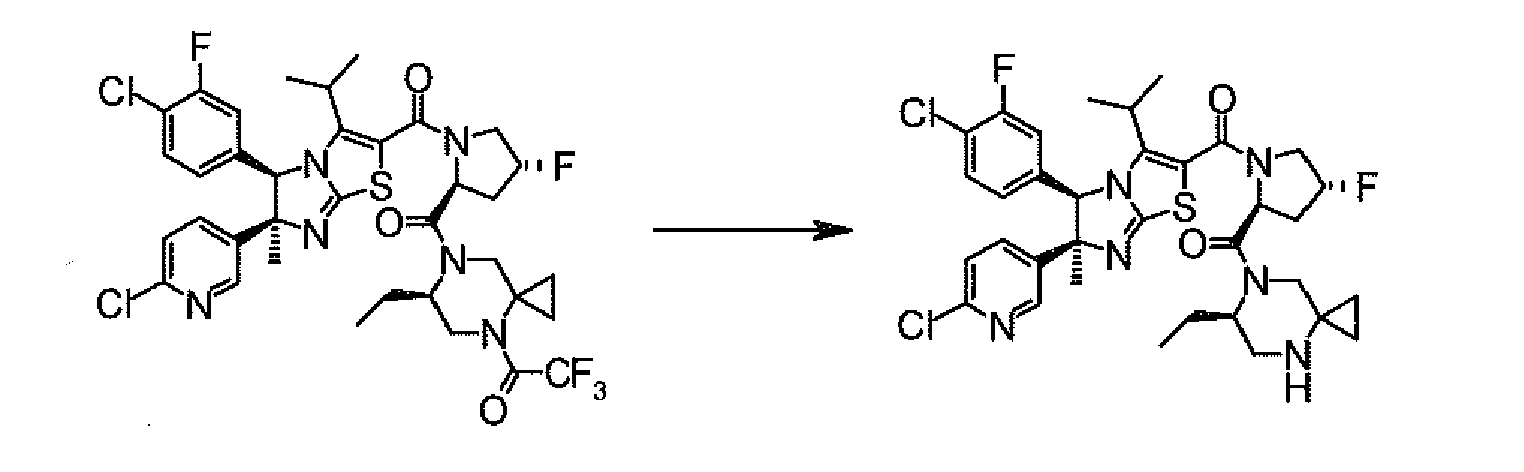
- The compound obtained in Example 5 was reacted in the same way as in Step 2 of Example 1 to give the title compound as a colorless solid.
1H-NMR (400 MHz, DMSO-d6, 70°C) δ: 0.25-0.38 (2H, m), 0.49-0.55 (1H, m), 0.57-0.64 (1H, m), 0.78-0.98 (3H, m), 0.93 (6H, d, J=7.1 Hz), 1.62-1.72 (1H, m), 1.77 (3H, s), 1.86-2.13 (1H, m), 2.40-2.45 (1H, m), 2.59-2.67 (1H, m), 2.69-2.84 (3H, m), 3.49 (1H, dd, J=13.3, 6.5 Hz), 3.63-3.82 (2H, m), 3.86-3.97 (1H, m), 4.17-4.24 (1H, m), 4.98-5.06 (1H, m), 5.33 (1H, dd, J=53.1, 20.1 Hz), 5.53 (1H, s), 6.71-6.75 (1H, m), 6.93-6.99 (1H, m), 7.19 (1H, d, J=8.3 Hz), 7.35 (1H, t, J=7.4 Hz), 7.66 (1H, dd, J=8.4, 2.3 Hz), 8.26 (1H, d, J=2.2 Hz).
MS (ESI) m/z: 703 [(M+H)+].
Anal. Calcd. for C34H38Cl2F2N6O2S·0.25 H2O: C, 57.66; H, 5.48; N, 11.87; F, 5.36; Cl, 10.01; S, 4.53.
Found: C, 57.71; H, 5.40; N, 11.65; F, 4.99; Cl, 9.43; S, 4.43. -

- The compound obtained in Step 13 of Reference Example 1 was reacted in the same way as in Step 1 of Example 2 using the compound obtained in Step 2 of Reference Example 13 instead of the compound obtained in Step 2 of Reference Example 5 and then reacted in the same way as in Step 2 of Example 1 to give the title compound as a pale yellow solid.
1H-NMR (400 MHz, DMSO-d6, 100°C) δ: 0.22-0.76 (4H, m), 0.83-1.03 (13H, m), 1.40-1.56 (1H, m), 1.59-1.76 (1H, m), 1.79 (3H, s), 1.81-3.04 (7H, m), 3.06-3.22 (1H, m), 3.44-3.63 (1H, m), 3.64-3.85 (1H, m), 3.92 (1H, dd, J=19.9, 12.8 Hz), 4.92-5.10 (1H, m), 5.22-5.46 (1H, m), 5.51 (1H, s), 6.76 (1H, d, J=8.1 Hz), 6.95 (1H, d, J=8.1 Hz), 7.18 (1H, d, J=8.3 Hz), 7.34 (1H, t, J=8.1 Hz), 7.66 (1H, dd, J=8.3, 2.4 Hz), 8.27 (1H, d, J=2.4 Hz).
MS (ESI) m/z: 731 [(M+H)+].
Anal. Calcd. for C36H42Cl2F2N6O2S·0.5 H2O: C, 58.37; H, 5.85; N, 11.35.
Found: C, 58.42; H, 5.77; N, 11.17. -

- The compound obtained in Step 13 of Reference Example 1 was reacted in the same way as in Step 1 of Example 2 using the compound obtained in Step 2 of Reference Example 15 instead of the compound obtained in Step 2 of Reference Example 5 and then reacted in the same way as in Step 2 of Example 1 to give the title compound as a colorless solid.
1H-NMR (400 MHz, DMSO-d6, 100°C) δ: 0.60 (4H, d, J=5.1 Hz), 0.87 (1H, t, J=7.0 Hz), 0.94 (6H, t, J=6.8 Hz), 1.08-1.23 (5H, m), 1.79 (3H, s), 2.13 (1H, dd, J=36.3, 6.2 Hz), 2.59-2.74 (3H, m), 3.58 (2H, dd, J=34.9, 12.9 Hz), 3.79-4.00 (2H, m), 5.21 (1H, s), 5.39 (1H, d, J=53.5 Hz), 5.51 (1H, s), 6.76 (1H, d, J=7.8 Hz), 6.95 (1H, d, J=9.3 Hz), 7.17 (1H, d, J=8.3 Hz), 7.34 (1H, t, J=7.9 Hz), 7.65 (1H, dd, J=8.4, 2.3 Hz), 8.26 (1H, d, J=2.4 Hz).
MS (ESI) m/z: 701 [(M+H)+].
Anal. Calcd. for C34H36Cl2F2N6O2S·1.75 H2O: C, 55.69; H, 5.43; N, 11.46.
Found: C, 55.58; H, 5.32; N, 11.01. -
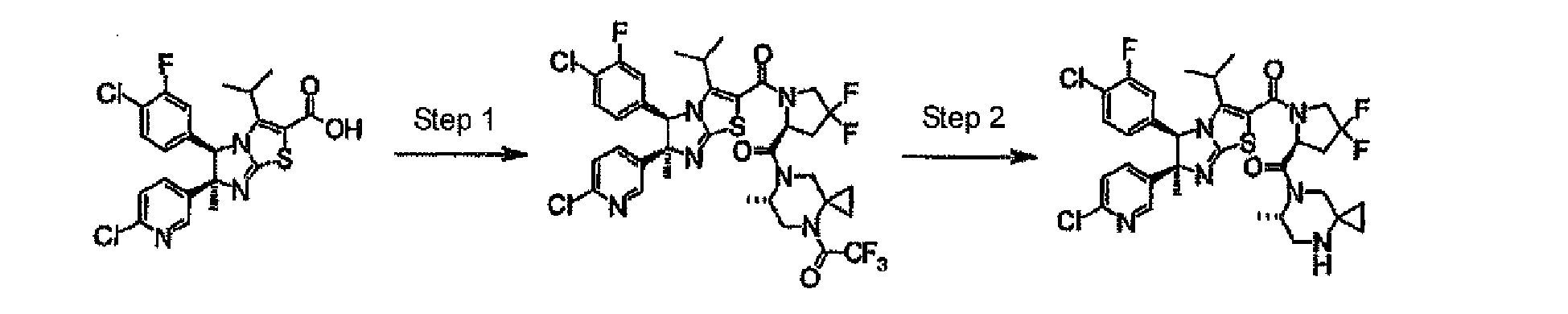
- The compound obtained in Step 13 of Reference Example 1 was reacted in the same way as in Step 1 of Example 2 using the compound obtained in Step 2 of Reference Example 16 instead of the compound obtained in Step 2 of Reference Example 5 to give the title compound as a colorless solid.
1H-NMR (400 MHz, DMSO-d6, 100°C) δ: 0.73 (2H, brs), 0.90-0.95 (6H, m), 1.12 (3H, brs), 1.25-1.31 (1H, m), 1.48-1.50 (1H, m), 1.77 (3H, s), 2.31-2.45 (2H, m), 2.58-2.65 (1H, m), 2.91-2.96 (2H, m), 3.38-3.58 (3H, m), 3.93-4.19 (2H, m), 4.65 (1H, brs), 5.10 (1H, br), 5.50 (1H, s), 6.77 (1H, d, J=7.5 Hz), 6.96 (1H, d, J=10.0 Hz), 7.17 (1H, d, J=8.2 Hz), 7.32 (1H, t, J=8.0 Hz), 7.64 (1H, dd, J=8.2, 2.2 Hz), 8.25 (1H, d, J=2.2 Hz).
MS (ESI) m/z: 803 [(M+H)+]. - The compound obtained in Step 1 above was reacted in the same way as in Step 2 of Example 1 to give the title compound as a colorless solid.
1H-NMR (400 MHz, DMSO-d6, 100°C) δ: 0.39 (2H, t, J=7.7 Hz), 0.57 (2H, t, J=7.7 Hz), 0.92 (6H, t, J=7.6 Hz), 1.18-1.29 (5H, m), 1.77 (3H, s), 2.28-2.41 (1H, m), 2.62-2.68 (2H, m), 3.39 (3H, br), 3.90-4.01 (1H, m), 4.09 (1H, t, J=12.5 Hz), 4.28 (1H, br), 5.10 (1H, br), 5.50 (1H, s), 6.76 (1H, d, J=7.8 Hz), 6.96 (1H, d, J=9.5 Hz), 7.16 (1H, dd, J=8.3, 0.5 Hz), 7.32 (1H, t, J=8.0 Hz), 7.64 (1H, dd, J=8.3, 2.5 Hz), 8.24 (1H, d, J=2.0 Hz).
MS (ESI) m/z: 707 [(M+H)+].
Anal. Calcd. for C33H35Cl2F3N6O2S·0.5 H2O: C, 55.31; H, 5.06; N, 11.73.
Found: C, 55.69; H, 5.28; N, 11.52. -

- The compound obtained in Step 13 of Reference Example 1 was reacted in the same way as in Step 1 of Example 2 using the compound obtained in Step 2 of Reference Example 17 instead of the compound obtained in Step 2 of Reference Example 5 to give the title compound as a colorless solid.
MS (ESI) m/z: 803 [(M+H)+]. - The compound obtained in Step 1 above was reacted in the same way as in Step 2 of Example 1 to give the title compound as a colorless solid.
1H-NMR (400 MHz, DMSO-d6, 100°C) δ: 0.38 (1H br), 0.58 (3H, br), 0.93 (6H, t, J=7.3 Hz), 1.23-1.28 (3H, m), 1.78 (3H, s), 2.32 (1H, br), 2.46-2.50 (2H, m), 2.66-2.72 (2H, m), 2.93-3.01 (3H, m), 3.94-4.12 (2H, m), 5.13 (1H, dd, J=9.6, 5.1 Hz), 5.51 (1H, s), 6.76 (1H, d, J=8.0 Hz), 6.95 (1H, d, J=9.8 Hz), 7.16 (1H, dd, J=8.0, 0.5 Hz), 7.32 (1H, t, J=8.0 Hz), 7.64 (1H, dd, J=8.3, 2.5 Hz), 8.24 (1H, d, J=2.5 Hz).
MS (ESI) m/z: 707 [(M+H)+].
Anal. Calcd. for C33H35Cl2F3N6O2S·0.5 H2O: C, 55.31; H, 5.06; N, 11.73.
Found: C, 55.49; H, 5.18; N, 11.47. -

- The compound obtained in Step 13 of Reference Example 1 was reacted in the same way as in Step 1 of Example 2 using the compound obtained in Reference Example 19 instead of the compound obtained in Step 2 of Reference Example 5 to give the title compound as a colorless solid.
1H-NMR (400 MHz, DMSO-d6, 90°C) δ: -0.01 (3H, s), 0.00 (3H, s), 0.63-0.76 (2H, m), 0.83 (9H, s), 0.88 (3H, d, J=7.1 Hz), 0.92 (3H, d, J=7.1 Hz), 1.23-1.30 (1H, m), 1.38-1.47 (1H, m), 1.74 (3H, s), 2.07-2.29 (2H, m), 2.52-2.62 (1H, m), 3.47-3.96 (7H, m), 4.10-4.22 (1H, m), 4.41-4.53 (1H, m), 4.92-5.04 (1H, m), 5.37 (1H, d, J=53.0 Hz), 5.49 (1H, s), 6.70-6.74 (1H, m), 6.89-6.95 (1H, m), 7.14 (1H, d, J=8.5 Hz), 7.31 (1H, t, J=8.1 Hz), 7.62 (1H, dd, J=8.3, 2.4 Hz), 8.23 (1H, d, J=2.4 Hz).
MS (ESI) m/z: 915 [(M+1)+]. - Tetra-n-butylammonium fluoride (1 M tetrahydrofuran solution) (0.42 ml, 0.42 mmol) was added to a tetrahydrofuran (4 ml) solution of the compound (255 mg, 0.28 mmol) obtained in Step 1 above and the resulting mixture was stirred at room temperature for 3 hours. The solvent was concentrated under reduced pressure, then the residue obtained was diluted with ethyl acetate and the organic layer was washed with saturated aqueous sodium bicarbonate solution and saturated brine and dried over anhydrous sodium sulfate. The solvent was evaporated under reduced pressure and the residue obtained was purified by NH-silica gel column chromatography [chloroform:methanol = 40:1 (v/v)] to give the title compound (102 mg, 52%) as a colorless solid.
1H-NMR (400 MHz, DMSO-d6, 90°C) δ: 0.33-0.41 (2H, m), 0.51-0.59 (2H, m), 0.92 (3H, d, J=7.1 Hz), 0.95 (3H, d, J=7.1 Hz), 1.78 (3H, s), 2.11-2.31 (2H, m), 2.56-2.64 (1H, m), 3.50-3.97 (6H, m), 4.09-4.18 (1H, m), 4.47-4.64 (1H, m), 4.83-4.94 (1H, m), 5.08-5.19 (1H, m), 5.37 (1H, d, J=53.2 Hz), 5.51 (1H, s), 6.72-6.78 (1H, m), 6.93-7.00 (1H, m), 7.18 (1H, d, J=8.3 Hz), 7.35 (1H, t, J=7.9 Hz), 7.66 (1H, dq, J=8.4, 1.2 Hz), 8.27 (1H, d, J=2.2 Hz).
MS (ESI) m/z: 705 [(M+H)+].
Anal. Calcd. for C33H36Cl2F2N6O3S·0.5 H2O: C, 55.46; H,
5.22; N, 11.60; F, 5.32; Cl, 9.92; S, 4.49.
Found: C, 55.42; H, 5.24; N, 11.73; F, 5.28; Cl, 9.77; S, 4.43. -

- The compound obtained in Step 13 of Reference Example 1 was reacted in the same way as in Step 1 of Example 2 using the compound obtained in Reference Example 20 instead of the compound obtained in Step 2 of Reference Example 5 to give the title compound as a colorless solid.
1H-NMR (400 MHz, DMSO-d6, 90°C) δ: 0.00 (3H, s), 0.01 (3H, s), 0.67-0.75 (1H, m), 0.82-0.88 (1H, m), 0.84 (9H, s), 0.87-0.94 (6H, m), 1.26-1.36 (1H, m), 1.39-1.47 (1H, m), 1.74 (3H, s), 1.90-2.10 (2H, m), 2.56-2.65 (1H, m), 3.40-3.95 (7H, m), 4.16-4.29 (1H, m), 4.44-4.56 (1H, m), 4.99-5.12 (1H, m), 5.32 (1H, d, J=54.2 Hz), 5.48 (1H, s), 6.69-6.74 (1H, m), 6.88-6.93 (1H, m), 7.14 (1H, d, J=8.3 Hz), 7.30 (1H, t, J=8.1 Hz), 7.62 (1H, dd, J=8.3, 2.7 Hz), 8.23 (1H, d, J=2.2 Hz).
MS (ESI) m/z: 915 [(M+H)+]. - The compound obtained in Step 1 above was reacted in the same way as in Step 2 of Example 11 to give the title compound as a colorless solid.
1H-NMR (400 MHz, DMSO-d6, 90°C) δ: 0.25-0.40 (2H, m), 0.48-0.66 (2H, m), 0.93 (3H, d, J=7.8 Hz), 0.94 (3H, d, J=7.1 Hz), 1.78 (3H, s), 1.97-2.15 (2H, m), 2.64-2.69 (1H, m), 2.75-2.85 (2H, m), 3.45-3.53 (1H, m), 3.65-3.97 (4H, m), 4.20-4.30 (1H, m), 4.41-4.51 (1H, m), 5.06 (1H, t, J=8.1 Hz), 5.34 (1H, d, J=57.1 Hz), 5.51 (1H, s), 6.71-6.77 (1H, m), 6.91-6.98 (1H, m), 7.18 (1H, d, J=8.3 Hz), 7.34 (1H, t, J=8.1 Hz), 7.66 (1H, dd, J=8.3, 2.4 Hz), 8.26 (1H, d, J=2.4 Hz).
MS (ESI) m/z: 705 [(M+H)+].
Anal. Calcd. for C33H36Cl2F2N6O3S·0.75 H2O: C, 55.11; H, 5.25; N, 11.60; F, 5.28; Cl, 9.86; S, 4.46.
Found: C, 55.00; H, 5.14; N, 11.62; F, 5.27; Cl, 9.75; S, 4.45. -

- The compound obtained in Step 13 of Reference Example 1 was reacted in the same way as in Step 1 of Example 1 using the compound obtained in Reference Example 22 instead of the compound obtained in Step 2 of Reference Example 3 to give the title compound as a pale yellow solid.
1H-NMR (400 MHz, DMSO-d6, 90°C) δ: 0.05 (6H, s), 0.46-0.54 (2H, m), 0.88 (9H, s), 0.92 (3H, d, J=7.1 Hz), 0.95 (3H, d, J=6.8 Hz), 1.03-1.10 (1H, m), 1.28-1.35 (1H, m), 1.42 (9H, s), 1.78 (3H, s), 2.17-2.36 (2H, m), 2.57-2.63 (1H, m), 3.14-3.26 (2H, m), 3.48-3.77 (2H, m), 3.84-3.99 (4H, m), 4.37-4.48 (1H, m), 4.99-5.13 (1H, m), 5.39 (1H, d, J=52.5 Hz), 5.52 (1H, s), 6.74-6.78 (1H, m), 6.93-6.99 (1H, m), 7.17 (1H, d, J=8.3 Hz), 7.34 (1H, t, J=8.1 Hz), 7.66 (1H, dd, J=8.3, 2.4 Hz), 8.26 (1H, d, J=2.0 Hz).
MS (ESI) m/z: 920 [(M+1)]+. - The compound obtained in Step 1 above was reacted in the same way as in Step 2 of Example 11 to give the title compound as a light brown solid.
1H-NMR (400 MHz, DMSO-d6, 90°C) δ: 0.43-0.53 (2H, m), 0.92 (3H, d, J=5.1 Hz), 0.96 (3H, d, J=6.8 Hz), 1.01-1.08 (1H, m), 1.29-1.34 (1H, m), 1.42 (9H, s), 1.78 (3H, s), 2.17-2.31 (2H, m), 2.56-2.61 (1H, m), 3.17-3.24 (1H, m), 3.46-3.54 (2H, m), 3.56-3.62 (1H, m), 3.70-3.77 (1H, m), 3.84-4.01 (2H, m), 4.32-4.36 (1H, m), 4.64-4.70 (1H, m), 5.09-5.15 (1H, m), 5.38 (1H, d, J=51.3 Hz), 5.51 (1H, s), 6.72-6.79 (1H, m), 6.93-6.99 (1H, m), 7.18 (1H, d, J=7.8 Hz), 7.31-7.38 (1H, m), 7.62-7.68 (1H, m), 8.24-8.29 (1H, m).
MS (ESI) m/z: 805 [(M+1)]+. - The compound (100 mg, 0.12 mmol) obtained in Step 2 above was dissolved in a mixed solvent of acetonitrile (1.5 ml) and water (1.5 ml), iodobenzene diacetate (88 mg, 0.26 mmol) and 2,2,6,6-tetramethylpiperidine 1-oxyl (20 mg, 0.12 mmol) were added and the resulting mixture was stirred at room temperature for 4 hours. Aqueous sodium thiosulfate solution (4 ml) was added, followed by extraction with ethyl acetate. The organic layer was washed with saturated brine and dried over anhydrous sodium sulfate. The solvent was evaporated under reduced pressure and the residue obtained was purified by silica gel chromatography [chloroform:methanol = 40:1 → 10:1 (v/v)] to give the title compound (58 mg, 59%) as a colorless solid.
1H-NMR (400 MHz, DMSO-d6, 90°C) δ: 0.49-0.61 (2H, m), 0.92 (3H, d, J=7.1 Hz), 0.95 (3H, d, J=7.1 Hz), 1.07-1.16 (1H, m), 1.27-1.34 (1H, m), 1.39 (9H, s), 1.78 (3H, s), 2.07-2.20 (2H, m), 2.59-2.65 (1H, m), 3.16-3.22 (1H, m), 3.33-3.41 (1H, m), 3.74 (1H, dd, J=36.4, 11.0 Hz), 3.87-4.04 (2H, m), 4.35-4.48 (1H, m), 4.67-4.74 (1H, m), 5.03-5.10 (1H, m), 5.35 (1H, d, J=53.0 Hz), 5.51 (1H, s), 6.74-6.78 (1H, m), 6.93-6.99 (1H, m), 7.18 (1H, d, J=8.3 Hz), 7.35 (1H, t, J=8.1 Hz), 7.66 (1H, dd, J=8.4, 2.6 Hz), 8.26 (1H, d, J=2.2 Hz).
MS (ESI) m/z: 819 [(M+1)]+. - The compound obtained in Step 3 above was reacted in the same way as in Step 2 of Reference Example 3 to give the title compound as a pale yellow solid.
1H-NMR (400 MHz, DMSO-d6, 90°C) δ: 0.85-0.90 (1H, m), 0.92 (3H, d, J=6.8 Hz), 0.98-1.02 (1H, m), 1.03 (3H, d, J=7.1 Hz), 1.10-1.19 (2H, m), 2.00 (3H, s), 2.17-2.23 (1H, m), 2.26-2.33 (1H, m), 2.61-2.68 (1H, m), 3.29-3.35 (2H, m), 3.68-3.74 (1H, m), 3.77-3.86 (1H, m), 4.02 (1H, dd, J=19.8, 13.4 Hz), 5.17-5.31 (2H, m), 5.42 (1H, d, J=53.5 Hz), 5.52-5.56 (1H, m), 5.93 (1H, s), 6.83-6.90 (1H, m), 7.11-7.17 (1H, m), 7.27 (1H, d, J=8.5 Hz), 7.40 (1H, t, J=7.9 Hz), 7.68 (1H, dd, J=8.4, 2.6 Hz), 8.29 (1H, d, J=2.2 Hz).
MS (ESI) m/z: 719 [(M+1)]+. - The compound obtained in Step 13 of Reference Example 1 and the compound obtained in Reference Example 23 were reacted in the same way as in Example 13 above to give the compound in the following table.
[Table 13] Example 14 
1H-NMR (400MHz, DMSO-d6, 90°C) δ: 0.92 (3H, d, J=6.1HZ), 0.98-1.03(2H, m), 1.04(3H, d, J=6.1Hz), 1.16-1.23(2H, m), 2.05(3H, s), 2.05-2.10(1H, m), 2.13-2.22(1H, m), 2.63-2.72(1H, m), 3.27-3.35(1H, m), 3.64-3.80(4H, m), 4.00-4.10(1H, m), 5.25-5.31(2H, m), 5.39(1H, d, J=53.2Hz), 6.04(1H, s), 6.87-6.93(1H, m), 7.14-7.21 (1H, m), 7.28(1H, d, J=8.3Hz), 7.40(1H, t, J=7.9Hz), 7.69(1H, dd, J=8.5, 2.7Hz), 8.30(1H, d, J=2.2Hz). MS(ESI)m/z: 719[(M+1)]+. -

- Sodium triacetoxyborohydride (267 mg, 1.26 mmol) was added to a 1,4-dioxane (10 ml) solution of the compound (340 mg, 0.503 mmol) obtained in Step 2 of Example 1 and 37% aqueous paraformaldehyde solution (0.41 ml, 5.05 mmol) at room temperature and the resulting mixture was stirred for 17 hours. Saturated aqueous sodium bicarbonate solution was added, followed by extraction with ethyl acetate. The organic layer was washed with water and saturated brine and dried over anhydrous sodium sulfate and the solvent was concentrated under reduced pressure. The residue obtained was purified by silica gel chromatography [chloroform:methanol = 50:1 (v/v)) to give the title compound (309 mg, 89%) as a colorless solid.
1H-NMR (400 MHz, d6-DMSO, 100°C) δ: 0.43-0.48 (2H, m), 0.56-0.62 (2H, m), 0.93 (6H, d, J=7.1 Hz), 1.77 (3H, s), 2.03.-2.18 (1H, m), 3.30 (3H, s), 2.60-2.67 (2H, m), 2.73-2.78 (2H, m), 3.34 (2H, brs), 3.54 (2H, brs), 3.68-3.78 (1H, m), 3.80-3.95 (1H, m), 5.04 (1H, t, J=7.8 Hz), 5.34 (1H, d, J=53.0 Hz), 5.50 (1H, s), 6.75 (1H, d, J=8.0 Hz), 6.93 (1H, d, J=9.0 Hz), 7.16 (1H, d, J=8.3 Hz), 7.33 (1H, t, J=8.0 Hz), 7.64 (1H, dd, J=8.3, 2.3 Hz), 8.25 (1H, d, J=2.3 Hz).
MS (ESI) m/z: 689 [(M+1)]+. - The compound obtained in Step 2 of Example 2 or the compound obtained in Step 2 of Example 3 was reacted in the same way as in Example 15 above to give the compounds in the following table.
[Table 14] Example 16 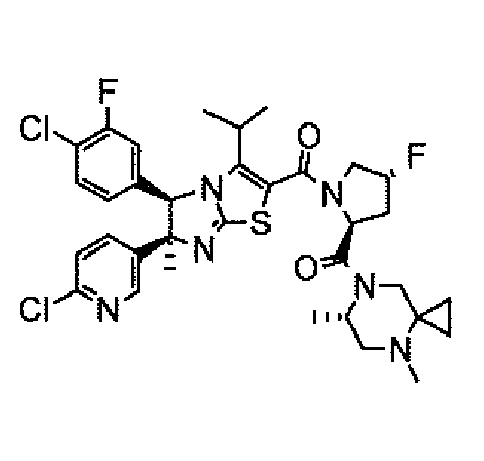
1H-NMR(400MHz, d6-DMSO, 100°C)δ: 0.20-0.25(1H, m), 0.46-0.51(1H, m), 0.61-0.65(1H, m), 0.84-0.90(1H, m), 0.91 (3H, d, J=7.1Hz), 0.94(3H, d, J=7.1Hz), 1.25-1.28(3H, m), 1.77(3H, s), 2.08(3H, s), 2.10-2.21(1H, m), 2.50-2.64(4H, m), 3.18-3.26(1H, m), 3.53-3.60(1H, m), 3.68-3.78(1H, m), 3.80-3.95(1H, m), 4.37-4.40(1H, m), 4.98(1H, t, J=7.8Hz), 5.34(1H, d, J=53Hz), 5.49(1H, s), 6.75(1H, d, J=8.0Hz), 6.93(1H, d, J=9.0Hz), 7.16 (1H, d, J=8.3Hz), 7.33(1H, t, J=8.0Hz), 7.64(1H, dd, J=8.3, 2.4Hz), 8.25(1H, d, J=2.4Hz). MS(ESI)m/z: 703[(M+1)]+. Example 17 
1H-NMR (400MHz, d6-DMSO, 100°C) δ: 0.30 (1H, br), 0.45-0.50 (1H, m), 0.60-0.54 (1H, m), 0.85-0.90 (1H, m), 0.92(3H, d, J=7.1Hz), 0.93 (3H, d, J=7.1Hz), 1.25-1.35(3H, m), 1.77(3H, s), 1.92-2.07(1H, m), 2.09(3H, s), 2.62-2.68 (4H, m), 3.22-3.34 (1H, m), 3.43-3.51(1H, m), 3.67-3.79(1H, m), 3.86-3.95(1H, m), 4.27-4.35(1H, m), 5.00(1H, t, J=7.8Hz), 5.34(1H, d, J=53Hz), 5.49(1H, s), 6.74(1H, d, J=8.3Hz), 6.92(1H, d, J=9.5Hz), 7.16 (1H, d, J=8.3Hz), 7.33(1H, t, J=8.0Hz), 7.64(1H, dd, J=8.3, 2.5Hz), 8.25(1H, d, J=2.5Hz). MS(ESI)m/z: 703[(M+1)]+. - The following compounds were synthesized according to the descriptions of the general production methods and Examples 1 to 12.
[Table 15] Example 18 
1H-NMR(400MHz, d6-DMSO, 100°C) δ: 0.43-0.49 (4H, m), 0.88 (3H, d, J=7.1Hz), 0.91(3H, d, J=7.1Hz), 1.73(3H, s), 2.01-2.31(1H, m), 2.55-2.66(2H, m), 2.71-2.76(2H, m), 3.31-3.36(2H, m), 3.43-3.47 (2H, m), 3.67-3.80 (1H, m), 3.85-3.93 (1H, m), 5.03(1H, t, J=7.8Hz), 5.32(1H, d, J=53Hz), 5.39 (1H, s), 5.89(2H, d, J=8.5Hz), 7.03-7.07(2H, m), 7.11(2H, d, J=8.5Hz), 7.22-7.25(2H, m). MS(ESI)m/z: 656[(M+1)]+. Example 19 
1H-NMR (400MHz, d6-DMSO, 100°C) δ: 0.35-0.39(2H, m), 0.54-0.59(2H, m), 0.85 (3H, d, J=7.1Hz), 0.92 (3H, d, J=7.1Hz), 1.20(3H, brd, J=6.1Hz), 1.73(3H, s), 2.05-2.21(1H, m), 2.51-2.65(3H, m), 2.88-2.91(1H, m), 3.23(1H, br), 3.45(1H, br), 3.67-3.71(1H, m), 3.76-3.93(1H, m), 4.31(1H, br), 4.96(1H, br), 5.34(1H, d, J=53Hz), 5.38(1H, s), 6.89 (2H, d, J=7.5Hz), 7.04-7.07(2H, m), 7.11(2H, d, J=7.5Hz), 7.22-7.25(2H, m). MS(ESI)m/z: 670[(M+1)]+. Example 20 
1H-NMR(400MHz, d6-DMSO, 100°C) δ: 0.35(1H, br), 0.56 (2H, br), 0.86(1H, br), 0.88(3H, d, J=7.1Hz), 0.90(3H, d, J=7.1Hz), 1.25.(3H, brs), 1.73(3H, s), 2.01(1H, br), 2.57-2.69(3H, m), 2.87-2.92(1H, m), 3.35(2H, br), 3.66-3.78(1H, m), 3.85-3.93(1H, m), 4.52(1H, br), 5.00(1H, t, J=8.1Hz), 5.32(1H, d, J=53Hz), 5.38(1H, s), 6.88 (2H, d, J=8.6Hz), 7.03-7.07(2H, m), 7.10(2H, d, J=8.6Hz), 7.22-7.25(2H, m). MS(ESI)m/z: 670[(M+1)]+. [Table 16] Example 21 
1H-NMR(400MHz, d6-DMSO, 100°C) δ: 0.33-0.38(2H, m), 0.52-0.58(2H, m), 0.80-0.83(3H, m), 0.86(3H, d, J=7.1Hz), 0.92(3H, d, J=7.1Hz), 1.66-1.70(2H, m), 1.73(3H, s), 2.10-2.24(1H, m), 2.43-2.65(3H, m), 2.73-2.78(1H, m), 3.65(2H, br), 3.70-3.80 (1H, m), 3.82-3.94(1H, m), 4.05(1H, br), 4.98(1H, br), 5.36(1H, d, J=53Hz), 5.38 (1H, s), 6. 90 (2H, d, J=8.3Hz), 7.04-7.07(2H, m), 7.11 (2H, d, J=8.3Hz), 7.22-7.25(2H, m). MS (ESI) m/z: 684 [(M-1)]+. Example 22 
1H-NMR(400MHz, d6-DMSO, 100°C) δ: 0.32-0.36(1H, m), 0.50-0.57(3H, m), 0.83-0.86 (3H, m), 0.88(3H, d, J=7.1Hz), 0.91(3H, d, J=7.1Hz), 1.62-1.68(2H, m), 1.73(3H, s), 2.09-2.22 (1H, m), 2.59-2.F4 (2H, m), 2.81-2.85(2H, m), 3.10(1H, br), 3.50 (1H, br), 3.66-3.78 (1H, m), 3.85-3.93 (1H, m), 4.21(H, br), 5.02(1H, t, J=8.0Hz), 5.36 (1H, d, J=53Hz), 5.38(1H, s), 6.89(2H, d, J=8.3Hz), 7.03-7.07(2H, m), 7.10(2H, d, J=8.3Hz), 7.22-7.25(2H, m). MS(ESI)m/z: 684[(M+1)]+. Example 23 
1H-NMR (400MHz, d6-DMSO, 100°C) δ: 0.44-0.48(4H, m), 0.91(3H, d, J=7.1Hz), 0.93(3H, d, J=7.1Hz), 1.74(3H, s), 2.02-2.34(1H, m), 2.53-2.66(2H, m), 2.72-2.76(2H, m), 3.32-3.37(2H, m), 3.42-3.48(2H, m), 3.67-3.80(1H, m), 3.86-3.93(1H, m), 5.03(1H, t, J=7.8Hz), 5.33(1H, d, J=53Hz), 5.43(1H, s), 6.71(1H, d, J=8.0Hz), 6.88(1H, d, J=10.0Hz), 7.07-7.10(2H, m), 7.24-7.29(3H, m). MS(ESI)m/z: 674 [(M+1)]+. [Table 17] Example 24 
1H-NMR(400MHz, d6-DMSO, 100°C) δ: 0.33-0.38(2H, m), 0.54-0.58(2H, m), 0.89(3H, d, J=6.8Hz), 0.93(3H, d, J=6.8Hz), 7.19(3H, brd, J=6.5Hz), 1.73(3H, s), 2.07-2.19(1H, m), 2.54-2.64(3H, m), 2.87-2.91(1H, m), 3.19(1H, br), 3.44 (1H, br), 3.67-3.70(1H, m), 3.76-3.93(1H, m), 4.31(1H, br), 4.95(1H, br), 5.35(1H, d, J=53.6Hz), 5.44(1H, s), 6.71 (1H, d, J=7.8Hz), 6.88(1H, d, J=9.1Hz), 7.07-7.10(2H, m), 7.25-7.30(3H, m). MS(ESI)m/z: 688[(M+1)]+. Example 25 
1H-NMR(400MHz, d6-DMSO, 100°C) δ: 0.35(1H, br), 0.55(2H, br), 0.88(1H, br), 0.91(3H, d, J=6.9Hz), 0.92(3H, d, J=6.9Hz), 1.20(3H, brs), 1.73(3H, s), 1.98(1H, br), 2.59-2.68(3H, m), 2.87-2.91(1H, m), 3.41(2H, br), 3.68-3.78 (1H, m), 3.85-3.93 (1H, m), 4.50(1H, br), 5.00(1H, t, J=8.2Hz), 5.33 (1H, d, J=53Hz), 5.38(1H, s), 6.71(1H, d, J=8.2Hz), 6.88(1H, d, J=10.0Hz), 7.08-7.11(2H, m), 7.24-7.29(3H, m). MS(ESI)m/z: 688[(M+1)]+. Example 26 
1H-NMR(400MHz, d6-DMSO, 100°C) δ: 0.44-0.48(4H, m), 0.90(3H, d, J=7.1Hz), 0.91(3H, d, J-7.1Hz), 1.76(3H, s), 2.01-2.36(1H, m), 2.53-2.66(2H, m), 2.72-2.76(2H, m), 3.28-3.37(2H, m), 3.44-3.48(2H, m), 3.67-3.79(1H, m), 3.86-3.94(1H, m), 5.04 (1H, t, J=7.8Hz), 5.33(1H, d, J=53Hz), 5.46(1H, s), 6.92(2H, d, J=8.3Hz), 7.11-7.18(3H, m), 7.62(1H, dd, J=8.3, 2.4Hz), 8.23(1H, d, J=2.4Hz). MS(ESI)m/z: 657[(M+1)]+. [Table 18] Example 27 
1H-NMR(400MHz, d6-DMSO, 100°C) δ: 0.36-0.38 (2H, m), 0.54-0.58 (2H, m), 0.89(3H, d, J=7.1Hz), 0.92(3H, d, J=7.1Hz), 1.20(3H, brd, J=5.8Hz), 1.76(3H, s), 2.05-2.21(1H, m), 2.50-2.65(3H, m), 2.88-2.91 (1H, m), 3.24(1H, br), 3.44(1H, br), 3.67-3.71(1H, m) , 3.76-3.94(1H, m), 4.31 (1H, br), 4.97 (1H, br), 5.34(1H, d, J=53Hz), 5.45 (1H, s), 6.92(2H, d, J=8.3Hz), 7.11-7.17(3H, m), 7.62(1H, dd, J=8.3, 2.7Hz), 8.22(1H, d, J=2.7Hz). MS(ESI)m/z: 671[(M+1)]+. Example 28 
1H-NMR(400MHz, d6-DMSO, 100°C) δ: 0.36 (1H, br), 0.56 (2H, br), 0.85 (1H, br), 0.90 (6H, d, J = 7.1 Hz), 1.25 (3H, brs), 1.76 (3H, s), 2.17 (1H, br), 2.60-2.69 (3H, m), 2.88-2.92 (1H, m), 3.39 (2H, br), 3.66-3.78 (1H, m), 3.86-3.94 (1H, m), 4.45 (1H, br), 5.00 (1H, t, J=8.3 Hz), 5.33 (1H, d, J=54Hz), 5.45 (1H, s), 6.91 (2H, d, J=8.4 Hz), 7.11-7.17 (3H, m), 7.61 (1H, dd, J=8.4, 2.7Hz), 8.23 (1H, d, J=2.7Hz). MS(ESI)m/z: 671[(M+1)]+. Example 29 
1H-NMR(400MHz, d6-BMSO, 100°C) δ: 0.34-0.38 (2H, m), 0.52-0.57 (2H, m), 0.81-0.83(3H, m), 0.88(3H, d, J=7.1Hz), 0.91(3H, d, J=7.1Hz), 1.68-1.72(2H, m), 1.76(3H, s), 2.12-2.27(1H, m), 2.50-2.65 (3H, m), 2.73-2.76(1H, m), 3.69 (2H, br), 3.70-3.80(1H, m), 3.82-3.95(1H, m), 4.12(1H, br), 4.97(1H,br), 5.36(1H, d, J=54Hz), 5.45(1H, s), 6.92 (2H, d, J=8.3Hz), 7.11-7.18(3H, m), 7.62(1H, dd, J=8.3, 2.2Hz), 8.23(1H, d, J=2.2Hz). MS(ESI)m/z: 685[(M+1)]+. [Table 19] Example 30 
1H-NMR(400MHz, d6-DMSO, 100°C) δ: 0.33-0.37(1H, m), 0.51-0.57(3H, m), 0.82-0.87(3H, m), 0.90(6H, d, J-7.1Hz), 1.68-1.72(2H, m), 1.76(3H, s), 1.99-2.13(1H, m), 2.60-2.65 (2H, m), 2.81-2.94(2H, m), 3.11(1H, br), 3.49(1H, br), 3.66-3.78 (1H, m), 3.86-3.95 (1H, m), 4.21(1H, br), 5.02(1H, t, J=8.0Hz), 5.36(1H, d, J=55Hz), 5.45(1H, s), 6.92(2H, d, J=8.0Hz), 7.11-7.17(3H, m), 7.61(1H, dd, J=8.0, 2.4Hz), 8.22(1H, d, J=2.4Hz). MS(ESI)m/z: 685[(M+1)]+. Example 31 
1H-NMR(400MHz, d6-DMSO, 100°C) δ: 0.55(4H, brs), 0.92(3H, d, J=7.2Hz), 0.94(3H, d, J=7.2Hz), 1.77(3H, s), 2.10-2.30(2H, m), 2.53-2.66(2H, m), 2.86-2.94(1H, m), 3.05-3.20(1H, m), 3.39(1H, br), 3.51-3.54 (1H, m), 3.76-3.98(3H, m), 4.97(1H, br), 5.04(1H, t, J=7.8Hz), 5.37(1H, d, J=54Hz), 5.48(1H, s), 6.75(1H, d, J=8.3Hz), 6.92(1H, d, J=8.8Hz), 7.14(1H, d, J=8.3Hz), 7.31(1H, t, J=8.0Hz), 7.63(1H, dd, J=8.3, 2.5Hz), 8.24(1H, d, J=2.5Hz). MS(ESI)m/z: 707[(M+1)]+. -

- A methanol (200 ml) solution of ammonium chloride (6.88 g, 129 mmol) and 1-(6-chloropyridin-3-yl)ethanone (10.0 g, 64.3 mmol) was added to an aqueous concentrated ammonia solution (100 ml) of potassium cyanide (10.7 g, 161 mmol) under ice cooling and the resulting mixture was returned to room temperature while being stirred for 3 days. The reaction solution was concentrated under reduced pressure and the residue was subjected to extraction with dichloromethane. The organic layer was dried over anhydrous magnesium sulfate and then the solvent was evaporated under reduced pressure. Concentrated hydrochloric acid (100 ml) was added to the residue obtained under ice cooling and then the resulting mixture was heated to reflux for 2 hours. The reaction mixture was concentrated under reduced pressure and then subjected to azeotropic distillation with toluene and thionyl chloride (10 ml) was added dropwise to an ethanol (100 ml) solution of the residue obtained under ice cooling. The resulting mixture was heated to reflux for 3 hours, then the reaction mixture was concentrated under reduced pressure and the residue obtained was diluted with dichloromethane and then washed with saturated aqueous sodium bicarbonate solution and saturated brine. The organic layer was dried over anhydrous magnesium sulfate and the solvent was evaporated under reduced pressure. The residue obtained was purified by silica gel column chromatography (ethyl acetate) to give the title compound (7.24 g, 49%) as a pale yellow oil.
1H-NMR (400 MHz, CDCl3) δ: 1.25 (3H, t, J=7.1 Hz), 1.70 (3H, s), 1.98 (2H, brs), 4.19 (2H, q, J=7.1 Hz), 7.30 (1H, d, J=8.3 Hz), 7.85 (1H, dd, J=8.3, 2.4 Hz), 8.56 (1H, d, J=2.4 Hz). - Triethylamine (1.22 ml, 8.75 mmol) and di-tert-butyl dicarbonate (1.12 ml, 4.81 mmol) were added to a tetrahydrofuran (20 ml) solution of the compound (1.00 g, 4.37 mmol) obtained in Step 1 above and the resulting mixture was heated to reflux for 18 hours. Further di-tert-butyl dicarbonate (0.51 ml, 2.19 mmol) was added and the resulting mixture was heated to reflux for 18 hours. The reaction mixture was concentrated under reduced pressure and then the residue obtained was diluted with ethyl acetate, washed with 10% aqueous citric acid solution and saturated brine, and then dried over anhydrous magnesium sulfate. The solvent was evaporated under reduced pressure and the residue obtained was purified by silica gel column chromatography [n-hexane:ethyl acetate = 2:18 (v/v)] to give the title compound (1.20 g, 84%) as a pale yellow oil.
1H-NMR (400 MHz, CDCl3) δ: 1.19 (3H, t, J=7.2 Hz), 1.38 (9H, brs), 1.99 (3H, s), 4.08-4.26 (2H, m), 7.30 (1H, d, J=8.5 Hz), 7.74 (1H, dd, J=8.5, 2.7 Hz), 8.47 (1H, d, J=2.7 Hz) - A tetrahydrofuran (100 ml) solution of the compound (5.70 g, 17.3 mmol) obtained in Step 2 above was added dropwise to a tetrahydrofuran (20 ml) suspension of lithium aluminum hydride (1.43 g, 34.7 mmol) under ice cooling and the resulting mixture was stirred at the same temperature for 1 hour. 1 N aqueous sodium hydroxide solution (6 ml) was added to the reaction mixture under ice cooling and the precipitated insoluble matter was removed by filtration. The filtrate was concentrated under reduced pressure and the residue obtained was dissolved in dimethyl sulfoxide (100 ml). Triethylamine (60 ml) and a sulfur trioxide-pyridine complex (5.52 g, 34.7 mmol) were added at room temperature and the resulting mixture was stirred for 2 hours. The reaction mixture was poured into water, followed by extraction with ethyl acetate. The organic layer was washed with saturated brine. The organic layer was dried over anhydrous magnesium sulfate, then the solvent was evaporated under reduced pressure and the residue obtained was purified by silica gel column chromatography [n-hexane:ethyl acetate = 2:1 (v/v)] to give the title compound (2.77 g, 56%) as a pale yellow oil.
1H-NMR (400 MHz, CDCl3) δ: 1.43 (9H, s), 1.79 (3H, s), 5.73 (1H, brs), 7.36 (1H, d, J=8.5 Hz), 7.69 (1H, dd, J=8.5, 2.7 Hz), 8.42 (1H, s), 9.34 (1H, s). - A tetrahydrofuran (20 ml) solution of the compound (6.47 g, 22.7 mmol) obtained in Step 3 above was added dropwise to 4-chloro-3-fluorophenyl magnesium bromide (0.5 M tetrahydrofuran solution) (100 ml, 50.0 mmol) under ice cooling and the resulting mixture was stirred at the same temperature for 1 hour. An aqueous solution of saturated ammonium chloride was added to the reaction mixture to terminate the reaction, followed by extraction with ethyl acetate. The organic layer was dried over anhydrous magnesium sulfate and then the solvent was evaporated under reduced pressure. An n-hexane/ethyl acetate mixed solvent was added to the residue obtained and the resulting precipitate was collected by filtration and dried to give the title compound (7.92 g, 84%) as a white solid.
1H-NMR (400 MHz, CDCl3) δ: 1.45 (9H, brs), 1.56 (3H, brs), 5.08 (2H, brs), 6.86 (1H, brs), 7.09 (1H, d, J=8.8 Hz), 7.31-7.35 (2H, m), 7.68 (1H, d, J=7.3 Hz), 8.44 (1H, s). MS (API) m/z: 415 [(M+1)+]. - Acetic anhydride (2.3 ml, 24.7 mmol) was added to a dimethyl sulfoxide (8 ml) solution of the compound (1.14 g, 2.75 mmol) obtained in Step 4 above under ice cooling and the resulting mixture was gradually returned to room temperature while being stirred for 18 hours. The reaction mixture was diluted with ethyl acetate, washed with 6% aqueous sodium perchlorate solution, 10% aqueous sodium thiosulfate solution, and saturated brine, and then dried over anhydrous magnesium sulfate. The solvent was evaporated under reduced pressure and the residue obtained was purified by silica gel column chromatography [n-hexane:ethyl acetate = 4:1 (v/v)] to give the title compound (1.10 g, 97%) as a pale yellow solid.
1H-NMR (400 MHz, CDCl3) δ: 1.31 (9H, s), 2.03 (3H, s), 6.28 (1H, brs), 7.26-7.37 (3H, m), 7.49 (1H, d, J=9.5 Hz), 7.71 (1H, d, J=6.3 Hz), 8.45 (1H, s). - A dioxane (1 ml) solution of the compound (1.23 g, 2.55 mmol) obtained in Step 5 above was added to a 4 N hydrochloric acid/dioxane solution (5 ml) under ice cooling and the resulting mixture was gradually warmed and stirred at room temperature for 2 hours. The reaction mixture was diluted with water and washed with an n-hexane/ethyl acetate mixed solvent and then the aqueous layer was made alkaline by the addition of 15% aqueous sodium hydroxide solution, followed by extraction with dichloromethane. The organic layer was dried over anhydrous magnesium sulfate, then the solvent was evaporated under reduced pressure and the residue obtained was purified by silica gel column chromatography [n-hexane:ethyl acetate = 1:1 (v/v)] to give the title compound (0.75 g, 95%) as a pale yellow solid.
MS (API) m/z: 313 [(M-1)+]. - A molecular sieve 4A (4.5 g), sulfamide (2.75 g, 28.6 mmol), and 1,8-diazabicyclo[5.4.0]undec-7-ene (1.45 g, 9.52 mmol) were added to a dioxane (60 ml) solution of the compound (2.99 g, 9.55 mmol) obtained in Step 6 above and the resulting mixture was stirred under heating at 95°C for 18 hours. Further sulfamide (2.75 g, 28.6 mmol) was added and the resulting mixture was stirred under heating for 24 hours. The reaction mixture was concentrated under reduced pressure and then the residue obtained was diluted with ethyl acetate, washed with 10% aqueous citric acid solution and saturated brine, and then dried over anhydrous magnesium sulfate. A diisopropyl ether/ethyl acetate mixed solvent was added to the residue obtained and the resulting precipitate was collected by filtration and dried to give the title compound (2.86 g, 80%) as a colorless solid.
1H-NMR (400 MHz, CDCl3) δ: 2.25 (3H, s), 7.29-7.47 (3H, m), 7.59 (1H, dd, J=9.5, 2.0 Hz), 7.68 (1H, dd, J=8.5, 2.9 Hz), 8.53 (1H, d, J=2.9 Hz). - Sodium borohydride (1.00 g, 26.4 mmol) was gradually added to an ethanol (63 ml) solution of the compound (7.13 g, 19.1 mmol) obtained in Step 7 above under ice cooling and the resulting mixture was stirred at the same temperature for 2 hours. The reaction mixture was concentrated under reduced pressure and then the residue obtained was diluted with ethyl acetate, washed with 1 N aqueous hydrochloric acid solution and saturated brine, and then dried over anhydrous magnesium sulfate. The solvent was evaporated under reduced pressure and the residue obtained was purified by silica gel column chromatography [n-hexane:ethyl acetate = 1:2 (v/v)] to give the title compound (4.36 g, 59%) as a pale yellow solid.
1H-NMR (400 MHz, CDCl3) δ: 1.85 (3H, s), 3.23-3.32 (4H, m), 4.92 (1H, d, J=5.6 Hz), 6.74-6.76 (1H, m), 6.80-6.83 (1H, m), 7.23-7.26 (2H, m), 7.55-7.60 (1H, m), 7.94-7.95 (1H, m). - Ethylenediamine (7.40 ml, 111 mmol) was added to a dioxane (80 ml) solution of the compound (4.15 g, 11.0 mmol) obtained in Step 8 above and the resulting mixture was stirred under heating at 100°C for 18 hours. The reaction mixture was concentrated under reduced pressure and the residue obtained was diluted with chloroform, washed with 1 N aqueous sodium hydroxide solution and saturated brine, and then dried over anhydrous magnesium sulfate. The solvent was evaporated under reduced pressure and the residue obtained was purified by silica gel column chromatography [chloroform:methanol = 93:7 (v/v)] to give the title compound (3.35 g, 97%) as a pale yellow oil.
1H-NMR (400 MHz, CDCl3) δ: 1.54 (3H, s), 1.58 (4H, brs), 4.08 (1H, s), 6.72 (1H, dd, J=8.3, 2.0 Hz), 6.96 (1H, dd, J=10.3, 2.0 Hz), 7.21 (1H, t, J=7.9 Hz), 7.23 (1H, dd, J=8.3, 0.7 Hz), 7.59 (1H, dd, J=8.5, 2.7 Hz), 8.36 (1H, dd, J=2.7, 0.7 Hz).
MS (ESI) m/z: 314 [(M+1)+]. - L-(+)-tartaric acid (6.3 g, 42.0 mmol) was added to an ethanol (200 ml) solution of the compound (12.6 g, 40.0 mmol) obtained in Step 9 above and the resulting mixture was heated to reflux at 110°C for 30 minutes. Water (8 ml) was added, the resulting mixture was further heated to reflux for 10 minutes, then returned to room temperature, and left overnight and then the precipitated solid was collected by filtration. The solid obtained was made into an alkaline solution by the addition of 5 N aqueous sodium hydroxide solution, followed by extraction with diethyl ether. The organic layer was dried over potassium carbonate and then the solvent was evaporated under reduced pressure to give the title compound (5.68 g, 45%) as a colorless solid.
1H-NMR (400 MHz, CDCl3) δ: 1.54 (3H, s), 1.56 (4H, brs), 4.08 (1H, s), 6.72 (1H, dd, J=8.3, 2.0 Hz), 6.96 (1H, dd, J=10.4, 2.1 Hz), 7.20-7.24 (2H, m), 7.59 (1H, dd, J=8.4, 2.6 Hz), 8.36 (1H, dd, J=2.7, 0.7 Hz).
MS (ESI) m/z: 314 [(M+1)+].
[α]D=+55.5° (C=1.00, chloroform, 20°C). - Carbon disulfide (0.58 ml, 9.21 mmol) was added to an ethanol (30 ml) solution of the compound (1.93 g, 6.14 mmol) obtained in Step 10 above at room temperature and the resulting mixture was heated to reflux for 20 hours. After cooling, the reaction mixture was concentrated under reduced pressure and the residue obtained was diluted with ethyl acetate, washed with saturated brine, and then dried over anhydrous magnesium sulfate. The solvent was evaporated under reduced pressure and the residue obtained was purified by silica gel column chromatography [chloroform:methanol = 40:1 (v/v)] to give the title compound (1.94 g, 89%) as a colorless solid. 1H-NMR (400 MHz, CDCl3) δ: 1.94 (3H, s), 5.00 (1H, s), 6.67 (1H, d, J=7.8 Hz), 6.68 (1H, brs), 6.75 (1H, dd, J=9.5, 2.0 Hz), 7.10 (1H, brs), 7.15 (1H, d, J=8.3 Hz), 7.21 (1H, t, J=7.8 Hz), 7.31 (1H, dd, J=8.5, 2.7 Hz), 8.01 (1H, d, J=2.2 Hz).
MS (ESI) m/z: 356 [(M+1)+]. - Ethyl 2-chloro-4-methyl-3-oxopentanoate (1.36 g, 7.09 mmol) was added to an ethanol (20 ml) solution of the compound (1.94 g, 5.45 mmol) obtained in Step 11 above at room temperature and the resulting mixture was heated to reflux for 16 hours. The reaction mixture was returned to room temperature and the reaction solvent was evaporated under reduced pressure. The residue obtained was diluted with ethyl acetate and the organic layer was washed with saturated aqueous sodium bicarbonate solution and saturated brine and dried over anhydrous magnesium sulfate. The solvent was evaporated under reduced pressure and the residue obtained was purified by silica gel column chromatography [n-hexane:ethyl acetate = 3:1 (v/v)] to give the title compound (2.06 g, 76%) as a colorless solid.
1H-NMR (400 MHz, CDCl3) δ: 0.90 (3H, d, J=7.3 Hz), 1.04 (3H, d, J=7.1 Hz), 1.34 (3H, t, J=7.2 Hz), 1.83 (3H, s), 4.26 (2H, q, J=7.2 Hz), 5.10 (1H, s), 5.51-6.62 (2H, m), 7.04 (1H, d, J=8.3 Hz), 7.16 (1H, t, J=7.7 Hz), 7.51-7.55 (1H, m), 8.20-8.22 (1H, m).
MS (ESI) m/z: 494 [(M+1)+]. - 1 N aqueous sodium hydroxide solution (6 ml) was added to an ethanol (30 ml) solution of the compound (2.06 g, 4.17 mmol) obtained in Step 12 above and the resulting mixture was stirred under heating at 60°C for 16 hours. After cooling, the solvent was concentrated under reduced pressure and the residue obtained was diluted with water and then washed with diethyl ether. The aqueous layer was made into an acidic solution by the gradual addition of 1 N aqueous hydrochloric acid solution under ice cooling, followed by extraction with ethyl acetate. The organic layer was washed with saturated brine and then dried over anhydrous magnesium sulfate. The solvent was evaporated under reduced pressure, a diethyl ether/n-hexane mixed solvent was added to the residue and the resulting precipitate was collected by filtration and dried to give the title compound (1.51 g, 87%) as a pale yellow solid.
1H-NMR (400 MHz, DMSO-d6) δ: 0.79 (3H, d, J=7.1 Hz), 0.98 (3H, d, J=7.1 Hz), 1.73 (3H, s), 3.32-3.40 (1H, m), 5.71 (1H, s), 6.38-6.48 (1H, m), 7.23 (1H, d, J=8.3 Hz), 7.34-7.46 (2H, m), 7.66 (1H, dd, J=8.3, 2.4 Hz), 8.25 (1H, d, J=2.4 Hz).
MS (ESI) m/z: 466 [(M+1)+].
[α]D=+120.5° (C=1.00, methanol, 25°C). -

- 1-(3-dimethylaminopropyl)-3-ethylcarbodiimide hydrochloride (21.0 g, 110 mmol) and 1-hydroxybenzotriazole (2.70 g, 20 mmol) were added to a dichloromethane (235 ml) solution of 1-{[(benzyloxy)carbonyl]amino}cyclopropanecarboxylic acid (23.5 g, 100 mmol) and ethyl N-benzylglycinate (19.3 g, 100 mmol) under ice cooling and the resulting mixture was stirred at room temperature for 24 hours. The solvent was concentrated under reduced pressure and then the residue was diluted with ethyl acetate, washed with 1 N aqueous hydrochloric acid solution, saturated aqueous sodium bicarbonate solution, and saturated brine, and then dried over anhydrous sodium sulfate. The solvent was evaporated under reduced pressure and the residue obtained was purified by silica gel column chromatography [n-hexane:ethyl acetate = 2:1 (v/v)] to give the title compound (35.7 g, 87%) as a colorless solid.
1H-NMR (400 MHz, CDCl3) δ: 1.13 (2H, br), 1.22 (3H, t, J=7.4 Hz), 1.25 (2H, br), 1.66 (2H, s), 3.91 (1H, br), 4.12 (2H, q, J=7.4 Hz), 4.91 (2H, brs), 5.36 (2H, brs), 7.19-7.31 (10H, m). - 5% palladium carbon (3.6 g) was added to an ethanol (700 ml) solution of the compound (35.5 g, 86.5 mmol) obtained in Step 1 above and the resulting mixture was subjected to catalytic reduction for 2 hours in a hydrogen atmosphere. The catalyst was removed by filtration through celite, then the filtrate was concentrated under reduced pressure and the residue obtained was purified by silica gel column chromatography [ethyl acetate:n-hexane = 1:1 (v/v)] to give the title compound (20 g, 100%) as a colorless solid.
1H-NMR (400 MHz, CDCl3) δ: 0.93-1.00 (2H, m), 1.55-1.59 (2H, m), 3.91 (2H, s), 4.60 (2H, s), 7.25-7.37 (5H, m), 7.86 (1H, brs).
MS (ESI) m/z: 231 [(M+H)+]. - A borane-tetrahydrofuran complex (0.93 M tetrahydrofuran solution) (375 ml, 0.35 mol) was added to a tetrahydrofuran (200 ml) solution of the compound (20 g, 86.8 mmol) obtained in Step 2 above under ice cooling and then the resulting mixture was heated to reflux for 19 hours. Methanol (130 ml) was added to the reaction mixture under ice cooling, the resulting mixture was stirred for 60 minutes and then the solvent was concentrated under reduced pressure. Ethanol (450 ml), water (150 ml), and triethylamine (150 ml) were added to the residue obtained, the resulting mixture was heated to reflux for 2 hours and then the solvent was concentrated under reduced pressure. The residue obtained was diluted with ethyl acetate, washed with saturated aqueous sodium bicarbonate solution and saturated brine, and then dried over anhydrous sodium sulfate. The solvent was evaporated under reduced pressure and the residue obtained was purified by silica gel column chromatography [chloroform:methanol = 10:1 (v/v)] to give the title compound (10.4 g, 59%) as a colorless oil.
1H-NMR (400 MHz, CDCl3) δ: 0.41-0.44 (2H, m), 0.57-0.60 (2H, m), 1.49 (1H, br), 2.22 (2H, s), 2.45 (2H, brs), 2.97 (2H, t, J=4.9 Hz), 3.50 (2H, s), 7.22-7.32 (5H, m). - Trifluoroacetic anhydride (8.50 ml, 61.1 mmol) was added dropwise to a dichloromethane (200 ml) solution of the compound (10.3 g, 50.9 mmol) obtained in Step 3 above and triethylamine (17 ml, 122 mmol) under ice cooling and the resulting mixture was stirred at the same temperature for 1 hour. Saturated aqueous sodium bicarbonate solution was added to the reaction mixture and the resulting mixture was diluted with chloroform, then washed with saturated brine, and dried over anhydrous sodium sulfate. The solvent was evaporated under reduced pressure to give the title compound (15.5 g, 100%) as a colorless oil.
MS (ESI) m/z: 299 [(M+H)+]. - 1 N hydrochloric acid/ethanol (105 ml, 105 mmol) and 5% palladium carbon (3 g) were added to an ethanol (250 ml) solution of the compound (15.5 g, 51 mmol) obtained in Step 4 above and the resulting mixture was subjected to catalytic reduction for 15 hours in a hydrogen atmosphere. The catalyst was removed by filtration through celite and then the filtrate was concentrated under reduced pressure. An ethanol/diethyl ether mixed solvent was added to the residue obtained and the deposited solid was collected by filtration to give the title compound (10.3 g, 83%) as a colorless solid.
1H-NMR (400 MHz, DMSO-d6, 80°C) δ: 1.18 (4H, s), 3.16 (2H, s), 3.25 (2H, t, J=5.1 Hz), 3.89 (2H, brs), 9.71 (2H, br).
MS (ESI) m/z: 209 [(M+H)+]. -

- 1-hydroxybenzotriazole (46 mg, 0.34 mmol) and 1-(3-dimethylaminopropyl)-3-ethylcarbodiimide hydrochloride (502 mg, 2.61 mmol) were added to a dimethylformamide (8 ml) solution of (9R)-1-(tert-butoxycarbonyl)-4-fluoro-L-proline (400 mg, 1.71 mmol) and the resulting mixture was stirred at room temperature for 15 minutes. Subsequently, the compound (460 mg, 2.05 mmol) obtained in Step 5 of Reference Example 2 and diisopropylethylamine (0.45 ml, 2.57 mmol) were added and the resulting mixture was stirred at room temperature for 16 hours. The reaction mixture was diluted with ethyl acetate and the organic layer was washed with saturated aqueous sodium bicarbonate solution and saturated brine and then dried over anhydrous sodium sulfate. The solvent was evaporated under reduced pressure and the residue obtained was purified by silica gel column chromatography [n-hexane:ethyl acetate = 1:1 (v/v)] to give the title compound (560 mg, 77%) as a colorless solid.
1H-NMR (400 MHz, DMSO-d6, 90°C) δ: 0.98-1.10 (4H, m), 1.37 (9H, s), 1.95-2.09 (1H, m), 2.49-2.54 (1H, m), 3.41-3.54 (3H, m), 3.60-3.75 (5H, m), 4.73-4.80 (1H, m), 5.26 (1H, d, J=53.7 Hz).
MS (ESI) m/z: 424 [(M+H)+]. - Trifluoroacetic acid (10 ml) was added to a dichloromethane (10 ml) solution of the compound (560 mg, 1.32 mmol) obtained in Step 1 above and the resulting mixture was stirred at room temperature for 1 hour. The reaction solvent was concentrated under reduced pressure and then saturated aqueous sodium bicarbonate solution (30 ml) was added, followed by extraction with chloroform three times. The organic layer was washed with saturated brine and dried over anhydrous sodium sulfate. The solvent was evaporated under reduced pressure to give the title compound (380 mg, 89%) as a pale yellow solid.
1H-NMR (400 MHz, DMSO-d6, 90°C) δ: 0.98-1.11 (4H, m), 2.00-2.07 (1H, m), 2.10-2.16 (1H, m), 2.68-2.77 (1H, m), 3.04-3.14 (1H, m), 3.51 (2H, s), 3.63-3.78 (4H, m), 4.05-4.13 (1H, m), 5.23 (1H, d, J=53.5 Hz).
MS (ESI) m/z: 324 [(M+H)+]. -

- N,N'-dicyclohexylcarbodiimide (6.0 g, 29.0 mmol) was added to a dichloromethane (150 ml) solution of methyl N-benzyl-L-alaninate (5.20 g, 26.9 mmol) and 1-{[(benzyloxy)carbonyl]amino}cyclopropanecarboxylic acid (6.30 g, 26.7 mmol) under ice cooling and the resulting mixture was stirred overnight at room temperature. The reaction mixture was concentrated under reduced pressure and then diluted with ethyl acetate, insoluble matter was removed by filtration and then the filtrate was washed with 1 N aqueous hydrochloric acid solution and saturated brine and dried over anhydrous sodium sulfate. The solvent was evaporated under reduced pressure and the obtained residue was purified by silica gel column chromatography [n-hexane:ethyl acetate = 1:3 (v/v)] to give the title compound (7.80 g, 71%) as a colorless oil. 1H-NMR (400 MHz, CDCl3 70°C) δ: 1.03-1.11 (2H, m), 1.37 (3H, d, J=7.1 Hz), 1.43-1.47 (2H, m), 3.72 (3H, s), 4.48 (1H, brs), 4.61 (1H, d, J=16.6 Hz), 4.91 (1H, d, J=16.6 Hz), 4.99 (2H, s), 5.20 (1H, brs), 7.20-7.34 (10H, m).
- The compound obtained in Step 1 above was reacted in the same way as in Step 2 of Reference Example 2 to give the title compound as a colorless oil.
1H-NMR (400 MHz, CDCl3) δ: 0.98-1.07 (2H, m), 1.36 (1H, m), 1.47 (3H, d, J=7.1 Hz), 1.85 (1H, m), 3.91 (1H, q, J=7.1 Hz), 4.06 (1H, d, J=14.9 Hz), 5.21 (1H, d, J=14.9 Hz), 7.26-7.37 (5H, m). - The compound obtained in Step 2 above was reacted in the same way as in Step 3 of Reference Example 2 to give the title compound as a colorless solid.
1H-NMR (400 MHz, CDCl3) δ: 0.30-0.34 (1H, m), 0.36-0.40 (1H, m), 0.48-0.53 (1H, m), 0.55-0.61 (1H, m), 1.16 (3H, d, J=6.3 Hz), 2.12 (1H, d, J=11.7 Hz), 2.26-2.33 (2H, m), 2.74 (1H, dd, J=13.2, 9.3 Hz), 2.90 (1H, dd, J=13.2, 3.4 Hz), 3.15 (1H, d, J=13.4 Hz), 4.07 (1H, d, J=13.4 Hz), 7.20-7.34 (6H, m). - The compound obtained in Step 3 above was reacted in the same way as in Step 4 of Reference Example 2 to give the title compound as a colorless oil.
1H-NMR (400 MHz, CDCl3) δ: 0.68 (1H, m), 0.79 (1H, m), 0.93 (1H, m), 1.21 (3H, d, J=6.1 Hz), 1.33 (1H, m), 2.17 (1H, d, J=12.0 Hz), 2.49 (1H, d, J=12.0 Hz), 2.59 (1H, m), 3.16 (1H, d, J=13.4 Hz), 3.33 (1H, dd, J=13.4, 9.3 Hz), 3.77 (1H, d, J=13.4 Hz), 4.04 (1H, d, J=13.4 Hz), 7.23-7.34 (5H, m). - The compound obtained in Step 4 above was reacted in the same way as in Step 5 of Reference Example 2 to give the title compound as a colorless solid.
1H-NMR (400 MHz, DMSO-d6) δ: 0.95 (1H, brs), 1.12 (1H, brs), 1.27 (1H, m), 1.33 (3H, d, J=6.3 Hz), 1.41 (1H, brs), 2.90 (1H, m), 3.38-3.59 (3H, m), 4.03 (1H, brs).
MS (ESI) m/z: 223 [(M+H)+]. -
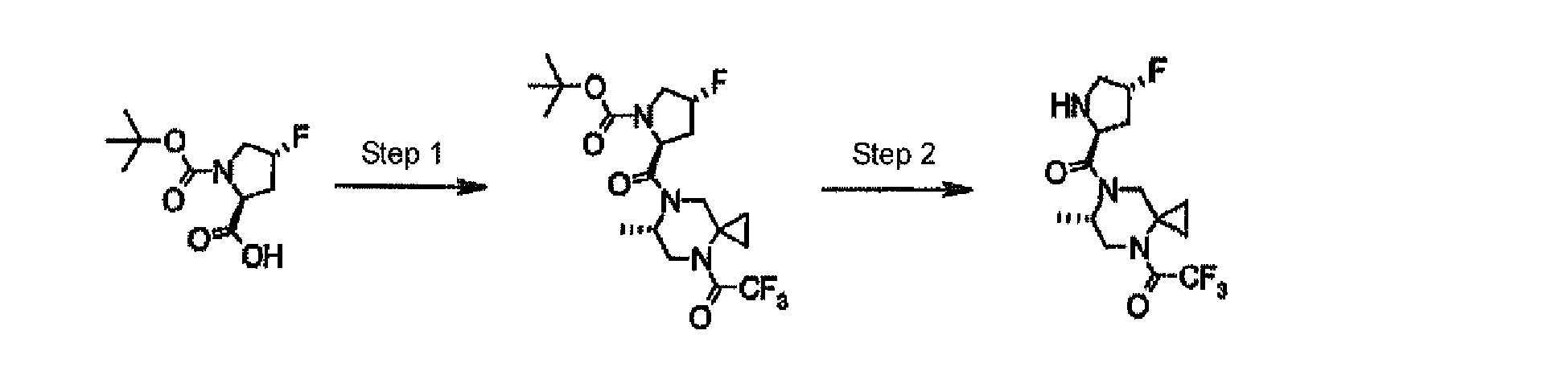
- The compound obtained in Step 5 of Reference Example 4 instead of the compound obtained in Step 5 of Reference Example 2 was reacted in the same way as in Step 1 of Reference Example 3 to give the title compound as a pale yellow oil.
1H-NMR (400 MHz, DMSO-d6, 100°C) δ: 0.69-0.71 (2H, m), 1.11 (3H, d, J=6.6 Hz), 1.28-1.32 (2H, m), 1.37 (9H, s), 1.49 (1H, m), 2.05 (1H, m), 3.49-3.68 (5H, m), 3.88 (1H, brs), 4.67-4.75 (2H, m), 5.27 (1H, d, J=54.0 Hz).
MS (ESI) m/z: 460 [(M+Na)+]. - The compound obtained in Step 1 above was reacted in the same way as in Step 2 of Reference Example 3 to give the title compound as a pale yellow oil.
1H-NMR (400 MHz, DMSO-d6, 100°C) δ: 0.68-0.77 (2H, m), 1.12 (3H, d, J=6.6 Hz), 1.28 (1H, dd, J=17.0, 7.1 Hz), 1.49 (1H, dd, J=17.0, 7.1 Hz), 2.01-2.24 (2H, m), 2.65-2.68 (1H, m), 3.00-3.14 (1H, m), 3.42-3.61 (3H, m), 3.90 (1H, brs), 4.08 (1H, t, J=7.6 Hz), 4.66-4.69 (1H, m), 5.25 (1H, dt, J=55.6, 4.5 Hz). -

- Methyl N-benzyl-D-alaninate instead of methyl N-benzyl-L-alaninate was reacted in the same way as in Step 1 of Reference Example 4 to give the title compound as a colorless oil.
1H-NMR (400 MHz, CDCl3) δ: 1.07 (2H, brs), 1.36 (3H, d, J=7.1 Hz), 1.43 (2H, brs), 3.61 (3H, s), 4.48-4.52 (1H, m), 4.61 (1H, d, J=17.4 Hz), 4.87 (1H, d, J=17.4 Hz), 4.98 (2H, s), 5.12 (1H, brs), 7.20-7.32 (10H, m).
MS (ESI) m/z: 411 [(M+H)+]. - The compound obtained in Step 1 above was reacted in the same way as in Step 2 of Reference Example 2 to give the title compound as a colorless oil.
1H-NMR (400 MHz, CDCl3) δ: 0.97-1.03 (2H, m), 1.34-1.41 (2H, m), 1.47 (3H, d, J=7.1 Hz), 1.81-1.88 (1H, m), 4.06 (1H, d, J=14.9 Hz), 5.19 (1H, d, J=14.9 Hz), 6.74 (1H, brs), 7.25-7.37 (5H, m). - The compound obtained in Step 2 above was reacted in the same way as in Step 3 of Reference Example 2 to give the title compound as a colorless solid.
1H-NMR (400 MHz, CDCl3) δ: 0.30-0.40 (2H, m), 0.48-0.61 (2H, m), 1.16 (3H, d, J=6.3 Hz), 1.58 (1H, brs), 2.12 (1H, d, J=11.5 Hz), 2.25-2.33 (2H, m), 2.73 (1H, dd, J=13.1, 9.3 Hz), 2.90 (1H, dd, J=13.1, 3.0 Hz), 3.15 (1H, d, J=13.4 Hz), 4.08 (1H, d, J=13.4 Hz), 7.20-7.33 (5H, m). - The compound obtained in Step 3 above was reacted in the same way as in Step 4 of Reference Example 2 to give the title compound as a colorless oil.
1H-NMR (400 MHz, CDCl3) δ: 0.64-0.92 (3H, m), 1.20 (3H, d, J=6.1 Hz), 1.30-1.36 (1H, m), 2.16 (1H, d, J=12.0 Hz), 2.48 (1H, d, J=12.0 Hz), 2.58 (1H, brs), 3.15 (1H, d, J=13.4 Hz), 3.31 (1H, dd, J=13.4, 9.5 Hz), 3.76 (1H, d, J=13.4 Hz), 4.02 (1H, d, J=13.4 Hz), 7.23-7.33 (5H, m). - The compound obtained in Step 4 above was reacted in the same way as in Step 5 of Reference Example 2 to give the title compound as a colorless solid.
1H-NMR (400 MHz, DMSO-d6, 70°C) δ: 0.93 (1H, brs), 1.17 (1H, brs), 1.24-1.30 (1H, m), 1.34 (3H, d, J=6.3 Hz), 1.40 (1H, brs), 2.89 (1H, d, J=12.0 Hz), 3.14 (1H, brs), 3.40-3.46 (2H, m), 4.04 (1H, brs), 9.84 (2H, brs).
MS (ESI) m/z: 223 [(M+H)+]. -

- The compound obtained in Step 5 of Reference Example 6 instead of the compound obtained in Step 5 of Reference Example 2 was reacted in the same way as in Step 1 of Reference Example 3 to give the title compound as a colorless solid.
1H-NMR (400 MHz, DMSO-d6, 100°C) δ: 0.68-0.71 (2H, m), 1.09 (3H, brs), 1.28-1.31 (2H, m), 1.36 (9H, s), 1.47 (1H, m), 1.95 (1H, brs), 3.46-3.68 (5H, m), 3.91 (1H, brs), 4.59-4.71 (2H, m), 5.23 (1H, d, J=54.6 Hz). - The compound obtained in Step 1 above was reacted in the same way as in Step 2 of Reference Example 3 to give the title compound as a pale yellow oil.
1H-NMR (400 MHz, DMSO-d6, 100°C) δ: 0.67-0.73 (1H, m), 0.86 (1H, brs), 1.12 (3H, d, J=5.9 Hz), 1.28 (1H, dt, J=12.4, 5.0 Hz), 1.49 (1H, dt, J=12.4, 5.2 Hz), 1.94-2.22 (2H, m), 2.65-2.68 (1H, m), 3.13 (1H, ddd, J=32.5, 13.0, 4.2 Hz), 3.43-3.61 (3H, m), 3.92 (1H, brs), 4.04-4.06 (1H, m), 4.65 (1H, brs), 5.24 (1H, dt, J=55.6, 4.6 Hz). -

- Methyl (2S)-2-(benzylamino)butanoate instead of methyl N-benzyl-L-alaninate was reacted in the same way as in Step 1 of Reference Example 4 to give the title compound as a colorless solid.
1H-NMR (400 MHz, DMSO-d6, 90°C) δ: 0.70 (3H, t, J=7.4 Hz), 0.83-0.89 (1H, m), 1.00-1.06 (1H, m), 1.09-1.16 (1H, m), 1.30-1.37 (1H, m), 1.58-1.68 (1H, m), 1.83-1.92 (1H, m), 2.87-2.92 (1H, m), 3.48 (3H, s), 4.50-4.56 (1H, m), 4.64 (1H, d, J=15.9 Hz), 5.00 (2H, q, J=12.1 Hz), 7.17-7.33 (10H, m), 7.76 (1H, brs).
MS (ESI) m/z: 425 [(M+H)+]. - The compound obtained in Step 1 above was reacted in the same way as in Step 2 of Reference Example 2 to give the title compound as a colorless solid.
1H-NMR (400 MHz, CDCl3) δ: 0.93-0.98 (2H, m), 0.99 (3H, t, J=7.4 Hz), 1.35-1.40 (1H, m), 1.79-1.86 (1H, m), 1.91-1.97 (2H, m), 3.90 (1H, t, J=5.4 Hz), 3.94 (1H, d, J=14.9 Hz), 5.35 (1H, d, J=14.9 Hz), 7.25-7.36 (5H, m), 7.39 (1H, brs).
MS (ESI) m/z: 259 [(M+H)+]. - The compound obtained in Step 2 above was reacted in the same way as in Step 3 of Reference Example 2 and then the compound obtained was reacted in the same way as in Step 4 of Reference Example 2 to give the title compound as a colorless oil.
1H-NMR (400 MHz, DMSO-d6, 90°C) δ: 0.65-0.70 (1H, m), 0.85-0.90 (2H, m), 0.91 (3H, t, J=7.4 Hz), 1.18-1.23 (1H, m), 1.46-1.53 (1H, m), 1.66-1.75 (1H, m), 2.31-2.36 (1H, m), 2.38-2.45 (2H, m), 3.32 (1H, d, J=13.9 Hz), 3.40-3.47 (1H, m), 3.84 (1H, d, J=11.7 Hz), 3.97 (1H, d, J=13.9 Hz), 7.18-7.23 (1H, m), 7.27-7.31 (4H, m).
MS (ESI) m/z: 327 [(M+H)+]. - The compound obtained in Step 3 above was reacted in the same way as in Step 5 of Reference Example 2 to give the title compound as a colorless solid.
1H-NMR (400 MHz, DMSO-d6, 90°C) δ: 0.89-0.94 (1H, m), 0.99 (3H, t, J=7.6 Hz), 1.16-1.21 (1H, m), 1.25-1.31 (1H, m), 1.41-1.48 (1H, m), 1.66-1.74 (1H, m), 1.77-1.85 (1H, m), 2.86 (1H, d, J=12.9 Hz), 3.24-3.32 (1H, m), 3.37-3.44 (1H, m), 3.45 (1H, d, J=12.9 Hz), 4.06-4.14 (1H, m).
MS (ESI) m/z: 237 [(M+H)+]. -

- 1-chloro-N,N,2-trimethyl-1-propenylamine (0.35 ml, 2.68 mmol) was added to a dichloromethane (8 ml) solution of (4R)-1-(tert-butoxycarbonyl)-4-fluoro-L-proline (520 mg, 2.23 mmol) under ice cooling. The resulting mixture was stirred at the same temperature for 1 hour, then the compound (730 mg, 2.68 mmol) obtained in Step 4 of Reference Example 8 and triethylamine (0.78 ml, 5.58 mmol) were added and the resulting mixture was further stirred at room temperature for 3 hours. The reaction mixture was diluted with chloroform and the organic layer was washed with saturated aqueous sodium bicarbonate solution and saturated brine and dried over anhydrous sodium sulfate. The solvent was evaporated under reduced pressure and the residue obtained was purified by silica gel column chromatography [n-hexane:ethyl acetate = 2:1 (v/v)] to give the title compound (780 mg, 77%) as a colorless solid.
1H-NMR (400 MHz, DMSO-d6, 90°C) δ: 0.67-0.73 (2H, m), 0.83-0.88 (3H, m), 1.29-1.33 (1H, m), 1.39 (9H, s), 1.45-1.52 (3H, m), 2.07-2.17 (1H, m), 2.43-2.47 (1H, m), 3.36-3.77 (6H, m), 4.40-4.55 (1H, m), 4.70-4.86 (1H, m), 5.30 (1H, d, J=54.9 Hz).
MS (ESI) m/z: 452 [(M+H)+]. - The compound obtained in Step 1 above was reacted in the same way as in Step 2 of Reference Example 3 to give the title compound as a colorless solid.
1H-NMR (400 MHz, DMSO-d6, 90°C) δ: 0.66-0.75 (2H, m), 0.83 (3H, t, J=7.2 Hz), 1.24-1.31 (1H, m), 1.43-1.53 (3H, m), 1.96-2.08 (1H, m), 2.16-2.32 (1H, m), 2.67-2.74 (1H, m), 2.91-2.99 (1H, m), 3.38-3.57 (4H, m), 4.05-4.16 (1H, m), 4.43-4.53 (1H, m), 5.24 (1H, d, J=56.1 Hz).
MS (ESI) m/z: 352 [(M+H)+]. -

- Methyl (2R)-2-(benzylamino)butanoate instead of methyl N-benzyl-L-alaninate was reacted in the same way as in Step 1 of Reference Example 4 to give the title compound as a pale yellow solid.
1H-NMR (400 MHz, DMSO-d6, 90°C) δ: 0.71 (3H, t, J=7.4 Hz), 0.85-0.90 (1H, m), 1.02-1.08 (1H, m), 1.11-1.16 (1H, m), 1.32-1.38 (1H, m), 1.59-1.68 (1H, m), 1.84-1.93 (1H, m), 3.49 (3H, s), 4.30-4.38 (1H, m), 4.49-4.57 (1H, m), 4.65 (1H, d, J=16.1 Hz), 5.01 (2H, q, J=12.2 Hz), 7.18-7.34 (10H, m), 7.77 (1H, brs).
MS (ESI) m/z: 425 [(M+H)+]. - The compound obtained in Step 1 above was reacted in the same way as in Step 2 of Reference Example 2 to give the title compound as a colorless solid.
1H-NMR (400 MHz, CDCl3) δ: 0.93-0.98 (2H, m), 0.99 (3H, t, J=7.6 Hz), 1.35-1.40 (1H, m), 1.80-1.86 (1H, m), 1.91-1.98 (2H, m), 3.89 (1H, t, J=5.2 Hz), 3.94 (1H, d, J=14.9 Hz), 5.35 (1H, d, J=14.9 Hz), 7.25-7.35 (5H, m), 7.51 (1H, brs).
MS (ESI) m/z: 259 [(M+1)+]. - The compound obtained in Step 2 above was reacted in the same way as in Step 3 of Reference Example 2 and then the compound obtained was reacted in the same way as in Step 4 of Reference Example 2 to give the title compound as a colorless oil.
1H-NMR (400 MHz, DMSO-d6, 90°C) δ: 0.65-0.70 (1H, m), 0.85-0.90 (2H, m), 0.91 (3H, t, J=7.4 Hz), 1.18-1.23 (1H, m), 1.46-1.53 (1H m), 1.66-1.75 (1H m), 2.31-2.36 (1H, m), 2.38-2.45 (2H, m), 3.32 (1H, d, J=13.9 Hz), 3.40-3.47 (1H m), 3.84 (1H, d, J=11.7 Hz), 3.97 (1H, d, J=13.9 Hz), 7.18-7.23 (1H m), 7.27-7.31 (4H, m).
MS (ESI) m/z: 327 [(M+H)+]. - The compound obtained in Step 3 above was reacted in the same way as in Step 5 of Reference Example 2 to give the title compound as a colorless solid.
1H-NMR (400 MHz, DMSO-d6, 70°C) δ: 0.89-0.94 (1H, m), 0.99 (3H, t, J=7.6 Hz), 1.16-1.21 (1H, m), 1.25-1.31 (1H, m), 1.41-1.48 (1H, m), 1.66-1.74 (1H, m), 1.77-1.85 (1H, m), 2.86 (1H, d, J=12.9 Hz), 3.24-3.32 (1H, m), 3.37-3.44 (1H, m), 3.45 (1H, d, J=12.9 Hz), 4.06-4.14 (1H, m).
MS (ESI) m/z: 237 [(M+H)+]. -

- The compound obtained in Step 4 of Reference Example 10 instead of the compound obtained in Step 4 of Reference Example 8 was reacted in the same way as in Step 1 of Reference Example 9 to give the title compound as a colorless solid.
1H-NMR (400 MHz, DMSO-d6, 100°C) δ: 0.69-0.73 (1H, m), 0.76-0.84 (2H, m), 0.93-0.98 (1H, m), 1.30-1.38 (3H, m), 1.39 (9H, s), 1.44-1.51 (2H, m), 1.85-2.08 (2H, m), 3.25-3.61 (4H, m), 3.66-3.77 (1H, m), 4.00-4.07 (1H, m), 4.58-4.80 (2H, m), 5.25 (1H, d, J=51.3 Hz).
MS (ESI) m/z: 474 [(M+Na)+]. - The compound obtained in Step 1 above was reacted in the same way as in Step 2 of Reference Example 3 to give the title compound as a pale yellow solid.
1H-NMR (400 MHz, DMSO-d6, 100°C) δ: 0.65-0.72 (1H, m), 0.79-0.85 (3H, m), 1.24-1.32 (1H, m), 1.42-1.55 (4H, m), 1.89-2.05 (1H, m), 2.12-2.20 (1H, m), 2.64-2.69 (1H, m), 2.91 (1H, t, J=12.5 Hz), 3.07-3.20 (1H, m), 3.38-3.58 (3H, m), 3.97-4.09 (1H, m), 4.51-4.64 (1H, m), 5.23 (1H, d, J=55.7 Hz).
MS (ESI) m/z: 352 [(M+H)+]. -

- Methyl D-leucinate hydrochloride (2.73 g, 15.1 mmol), zinc chloride (2.8 g, 20.5 mmol), and sodium triacetoxyborohydride (9.16 g, 41.1 mmol) were added to a dichloromethane (200 ml) solution of benzyl (1-formylcyclopropyl)carbamate (3.0 g, 13.7 mmol) and the resulting mixture was stirred at room temperature for 18 hours. The reaction mixture was concentrated under reduced pressure, the residue obtained was diluted with ethyl acetate and washed with saturated aqueous sodium bicarbonate solution and saturated brine and then the organic layer was dried over anhydrous magnesium sulfate. The solvent was evaporated under reduced pressure and the residue obtained was purified by silica gel column chromatography [n-hexane:ethyl acetate = 2:1 (v/v)] to give the title compound (2.24 g, 47%) as a pale yellow oil.
1H-NMR (400 MHz, CDCl3) δ: 0.62-0.94 (4H, m), 0.88 (3H, d, J=6.6 Hz), 0.91 (3H, d, J=6.6 Hz), 1.37-1.66 (2H, m), 1.70-1.77 (1H, m), 2.46 (1H, d, J=12.9 Hz), 2.82 (1H, d, J-12.9 Hz), 3.24 (1H, t, J=7.4 Hz), 3.68 (3H, s), 5.08 (1H, brs), 5.11 (2H, s), 7.22-7.42 (5H, m). - The compound obtained in Step 1 above was reacted in the same way as in Step 2 of Reference Example 1 to give the title compound as a colorless oil.
1H-NMR (400 MHz, CDCl3) δ: 0.64-0.76 (1H, m), 0.78-0.97 (2H, m), 0.87 (3H, d, J=6.6 Hz), 0.90 (3H, d, J=6.6 Hz), 1.32-1.40 (1H, m), 1.41 (9H, s), 1.42-1.67 (1H, m), 1.72-1.89 (2H, m), 3.00-3.19 (1H, m), 3.39-3.72 (1H, m), 3.73 (3H, s), 3.74-4.18 (1H, m), 5.03 (1H, d, J=11.7 Hz), 5.13 (1H, d, J=11.7 Hz), 5.92-6.08 (1H, m), 7.25-7.41 (5H, m). - A tetrahydrofuran (30 ml) solution of the compound (1.95 g, 4.35 mmol) obtained in Step 2 above was added dropwise to a tetrahydrofuran (20 ml) suspension of lithium aluminum hydride (0.50 g, 12.2 mmol) under ice cooling and the resulting mixture was stirred at the same temperature for 1 hour. Water and 10% aqueous citric acid solution were added to terminate the reaction. Then, the reaction mixture was diluted with ethyl acetate, washed with saturated brine, and then dried over anhydrous magnesium sulfate. The solvent was evaporated under reduced pressure and the residue obtained was purified by silica gel column chromatography [n-hexane:ethyl acetate = 2:3 (v/v)] to give the title compound (1.26 g, 64%) as a colorless oil.
1H-NMR (400 MHz, CDCl3) δ: 0.69-1.01 (10H, m), 1.35-1.43 (1H, m), 1.44 (9H, s), 1.45-1.53 (1H, m), 1.56-1.63 (2H, m), 3.09-4.00 (5H, m), 4.98-5.13 (2H, m), 5.60 (1H, brs), 7.24-7.38 (5H, m). - Triphenylphosphine (1.57 g, 5.99 mmol) and diisopropyl azodicarboxylate (0.93 ml, 4.49 mmol) were added to a toluene (100 ml) solution of the compound (1.26 g, 3.00 mmol) obtained in Step 3 above under ice cooling and the resulting mixture was gradually returned to room temperature while being stirred for 18 hours. Further triphenylphosphine (1.57 g, 5.99 mmol) and diisopropyl azodicarboxylate (0.93 ml, 4.49 mmol) were added and the resulting mixture was heated to reflux for 4 hours. The reaction mixture was concentrated under reduced pressure and the residue obtained was purified by silica gel column chromatography [n-hexane:ethyl acetate = 3:1 (v/v)] to give the title compound (0.57 g, 47%) as a colorless oil.
1H-NMR (400 MHz, CDCl3, 60°C) δ: 0.45-0.54 (1H, m), 0.61-0.71 (1H, m), 0.85 (3H, d, J=6.6 Hz), 0.86 (3H, d, J=6.6 Hz), 0.96-1.05 (1H, m), 1.21-1.62 (13H, m), 3.11-3.26 (2H, m), 3.42 (1H, d, J=14.0 Hz), 3.99 (1H, d, J=14.0 Hz), 4.19 (1H, s), 5.12 (2H, s), 7.23-7.39 (5H, m). - 4 N hydrochloric acid/dioxane (8 ml) was added to a dioxane (10 ml) solution of the compound (0.57 g, 1.42 mmol) obtained in Step 4 above under ice cooling and the resulting mixture was gradually returned to room temperature while being stirred for 24 hours. The reaction mixture was concentrated under reduced pressure to give the title compound as a colorless solid.
-

- The compound obtained in Step 5 of Reference Example 12 instead of the compound obtained in Step 4 of Reference Example 8 was reacted in the same way as in Step 1 of Reference Example 9 to give the title compound as a pale yellow oil.
1H-NMR (400 MHz, DMSO-d6, 100°C) δ: 0.44-0.59 (1H, m), 0.76-0.96 (7H, m), 1.04-1.58 (15H, m), 1.65-2.23 (1H, m), 2.86-3.09 (2H, m), 3.17 (1H, d, J=11.2 Hz), 3.34-3.80 (3H, m), 4.01 (1H, d, J=13.2 Hz), 4.45-4.82 (1H, m), 5.03-5.39 (1H, m), 5.11 (2H, s), 7.28-7.45 (5H, m). - 5% palladium carbon (0.10 g) was added to an ethanol (20 ml) solution of the compound (0.65 g, 1.25 mmol) obtained in Step 1 above and the resulting mixture was subjected to catalytic reduction at room temperature for 18 hours in a hydrogen atmosphere. The catalyst was removed by filtration through celite and then the filtrate was concentrated under reduced pressure. The residue obtained was dissolved in dichloromethane (20 ml), diisopropylamine (1.3 ml, 7.52 mmol) was added and trifluoroacetic anhydride (0.53 ml, 3.76 mmol) was added under ice cooling. The resulting mixture was gradually returned to room temperature while being stirred for 2 hours and the reaction mixture was concentrated under reduced pressure. The residue obtained was diluted with ethyl acetate and washed with saturated aqueous sodium bicarbonate solution, 10% aqueous citric acid solution, and saturated brine and then the organic layer was dried over anhydrous magnesium sulfate. The solvent was evaporated under reduced pressure, the residue obtained was dissolved in dichloromethane (20 ml), trifluoroacetic acid (10 ml) was added under ice cooling and the resulting mixture was stirred at room temperature for 2 hours. The reaction mixture was concentrated under reduced pressure, then the residue obtained was diluted with chloroform and washed with saturated aqueous sodium bicarbonate solution and saturated brine and then the organic layer was dried over anhydrous magnesium sulfate. The solvent was evaporated under reduced pressure and the residue obtained was purified by silica gel column chromatography [ethyl acetate:ethanol = 4:1 (v/v)] to give the title compound (0.28 g, 59%) as a pale yellow oil.
MS (ESI) m/z: 380 [(M+H)+]. -

- A borane-tetrahydrofuran complex (1.02 M tetrahydrofuran solution) (41 ml, 41.6 mmol) was added dropwise to a tetrahydrofuran (20 ml) solution of 4,9-diazadispiro[2.2.2.2]decane-5,10-dione (1.70 g, 10.4 mmol) under ice cooling and then the resulting mixture was heated to reflux for 18.5 hours. Methanol (50 ml) was added to the reaction mixture under ice cooling, the resulting mixture was stirred for 60 minutes and then the solvent was concentrated under reduced pressure. Ethanol (50 ml), water (25 ml), and triethylamine (25 ml) were added to the residue obtained, the resulting mixture was heated to reflux for 4 hours and then the solvent was concentrated under reduced pressure. The residue obtained was dissolved in tetrahydrofuran (20 ml), triethylamine (4.3 ml, 31.2 mmol) and di-tert-butyl dicarbonate (6.80 g, 31.2 mmol) were added under ice cooling and the resulting mixture was stirred at room temperature for 14 hours. The solvent was concentrated under reduced pressure and the residue obtained was diluted with ethyl acetate, washed with aqueous solution of saturated ammonium chloride and saturated brine, and then dried over anhydrous sodium sulfate. The solvent was evaporated under reduced pressure, trifluoroacetic acid (20 ml) was added to a chloroform (20 ml) solution of the residue obtained and the resulting mixture was stirred at room temperature for 1 hour. The solvent was concentrated under reduced pressure, 4 N hydrochloric acid/dioxane (50 ml) was added to the residue obtained and the resulting mixture was stirred for 2 hours. The solvent was evaporated under reduced pressure, diethyl ether was added to the residue and the deposited solid was collected by filtration to give the title compound (2.00 g, 91%) as a colorless solid.
1H-NMR (400 MHz, DMSO-d6) δ: 1.02 (4H, t, J=6.5 Hz), 1.24 (4H, t, J=6.3 Hz), 3.41 (4H, s), 10.30 (2H, s).
MS (ESI) m/z: 212 [(M+H)+]. -

- Diisopropylethylamine (1.15 ml, 6.60 mmol) and (benzotriazol-1-yloxy)tripyrrolidinophosphonium hexafluorophosphate (1.14 g, 2.20 mmol) were added to a dimethylformamide (10 ml) solution of (4R)-1-(tert-butoxycarbonyl)-4-fluoro-L-proline (466 mg, 2.00 mmol) and the compound (422 mg, 2.00 mmol) obtained in Reference Example 14 under ice cooling. The resulting mixture was stirred at room temperature for 19 hours and then the reaction mixture was diluted with ethyl acetate, washed with an aqueous solution of saturated ammonium chloride, saturated aqueous sodium bicarbonate solution, and saturated brine, and then dried over anhydrous sodium sulfate. The solvent was evaporated under reduced pressure, then the residue obtained was dissolved in dichloromethane (10 ml) and triethylamine (0.56 ml, 4.00 mmol) was added. After ice cooling, trifluoroacetic anhydride (0.28 ml, 2.00 mmol) was added. The resulting mixture was stirred at room temperature for 7 hours and then the reaction mixture was concentrated under reduced pressure, diluted with ethyl acetate, washed with an aqueous solution of saturated ammonium chloride and saturated brine, and then dried over anhydrous sodium sulfate. The solvent was evaporated under reduced pressure and the residue was purified by silica gel column chromatography [n-hexane:ethyl acetate = 1:1 (v/v)] to give the title compound (349 mg, 39%) as a pale yellow oil.
1H-NMR (400 MHz, DMSO-d6, 100°C) δ: 1.15-1.33 (18H, m), 2.04 (1H, dt, J=35.5, 7.0 Hz), 2.53 (1H, s), 3.59-3.69 (5H, m), 4.97 (1H, s), 5.31 (1H, d, J=54.2 Hz).
MS (ESI) m/z: 472 [(M+Na)+]. - The compound obtained in Step 1 above was reacted in the same way as in Step 2 of Reference Example 3 to give the title compound as a pale yellow solid.
1H-NMR (400 MHz, CDCl3) δ: 1.08-1.23 (8H, m), 2.13 (1H, s), 2.63 (1H, s), 3.67-3.73 (5H, m), 5.16 (1H, s), 5.41 (1H, d, J=53.5 Hz), 5.91 (2H, s).
MS (ESI) m/z: 350 [(M+H)+]. -

- 1-(tert-butoxycarbonyl)-4,4-difluoro-L-proline instead of (4R)-1-(tert-butoxycarbonyl)-4-fluoro-L-proline and the compound obtained in Step 5 of Reference Example 4 instead of the compound obtained in Step 5 of Reference Example 2 were reacted in the same way as in Step 1 of Reference Example 3 to give the title compound as a colorless solid.
1H-NMR (400 MHz, DMSO-d6, 80°C) δ: 0.72 (2H, brs), 1.11 (3H, brs), 1.25-1.29 (2H, m), 1.38 (9H, s), 1.48 (1H, brs), 2.21-2.33 (1H, m), 2.87 (1H, brs), 3.02-3.10 (2H, m), 3.54 (2H, brs), 3.65-3.75 (1H, m), 3.79-3.87 (1H, m), 4.64 (1H, brs).
MS (ESI) m/z: 456 [(M+H)+]. - The compound obtained in Step 1 above was reacted in the same way as in Step 2 of Reference Example 3 to give the title compound as a colorless oil.
1H-NMR (400 MHz, DMSO-d6, 80°C) δ: 0.70-0.74 (2H, m), 1.11 (3H, d, J=6.6 Hz), 1.23-1.29 (1H, m), 1.45-1.51 (1H, m), 2.32-2.45 (2H, m), 2.92-3.08 (2H, m), 3.16-3.26 (1H, m), 3.56 (3H, brs), 3.88 (1H, brs), 4.02-4.07 (1H, m), 4.64 (1H, brs).
MS (ESI) m/z: 356 [(M+H)+]. -

- 1-(tert-butoxycarbonyl)-4,4-difluoro-L-proline instead of (4R)-1-(tert-butoxycarbonyl)-4-fluoro-L-proline and the compound obtained in Step 5 of Reference Example 6 instead of the compound obtained in Step 5 of Reference Example 2 were reacted in the same way as in Step 1 of Reference Example 3 to give the title compound as a colorless solid.
1H-NMR (400 MHz, DMSO-d6, 100°C) δ: 0.72 (2H, brs), 1.11 (3H, brs), 1.25-1.31 (2H, m), 1.38 (9H, s), 1.46-1.52 (2H, m), 2.07 (1H, brs), 2.82-2.92 (1H, m), 3.53 (2H, brs), 3.64-3.86 (3H, m), 4.82 (1H, brs).
MS (ESI) m/z: 478 [(M+Ha)+]. - The compound obtained in Step 1 above was reacted in the same way as in Step 2 of Reference Example 3 to give the title compound as a colorless oil.
1H-NMR (400 MHz, DMSO-d6, 100°C) δ: 0.66-0.83 (2H, m), 1.10 (3H, d, J=6.5 Hz), 1.22-1.28 (1H, m), 1.44-1.51 (1H, m), 2.23-2.46 (2H, m), 2.92-3.01 (2H, m), 3.22-3.26 (1H, m), 3.43-3.60 (3H, m), 4.14 (1H, brs), 4.61 (1H, brs). MS (ESI) m/z: 356 [(M+H)+]. -
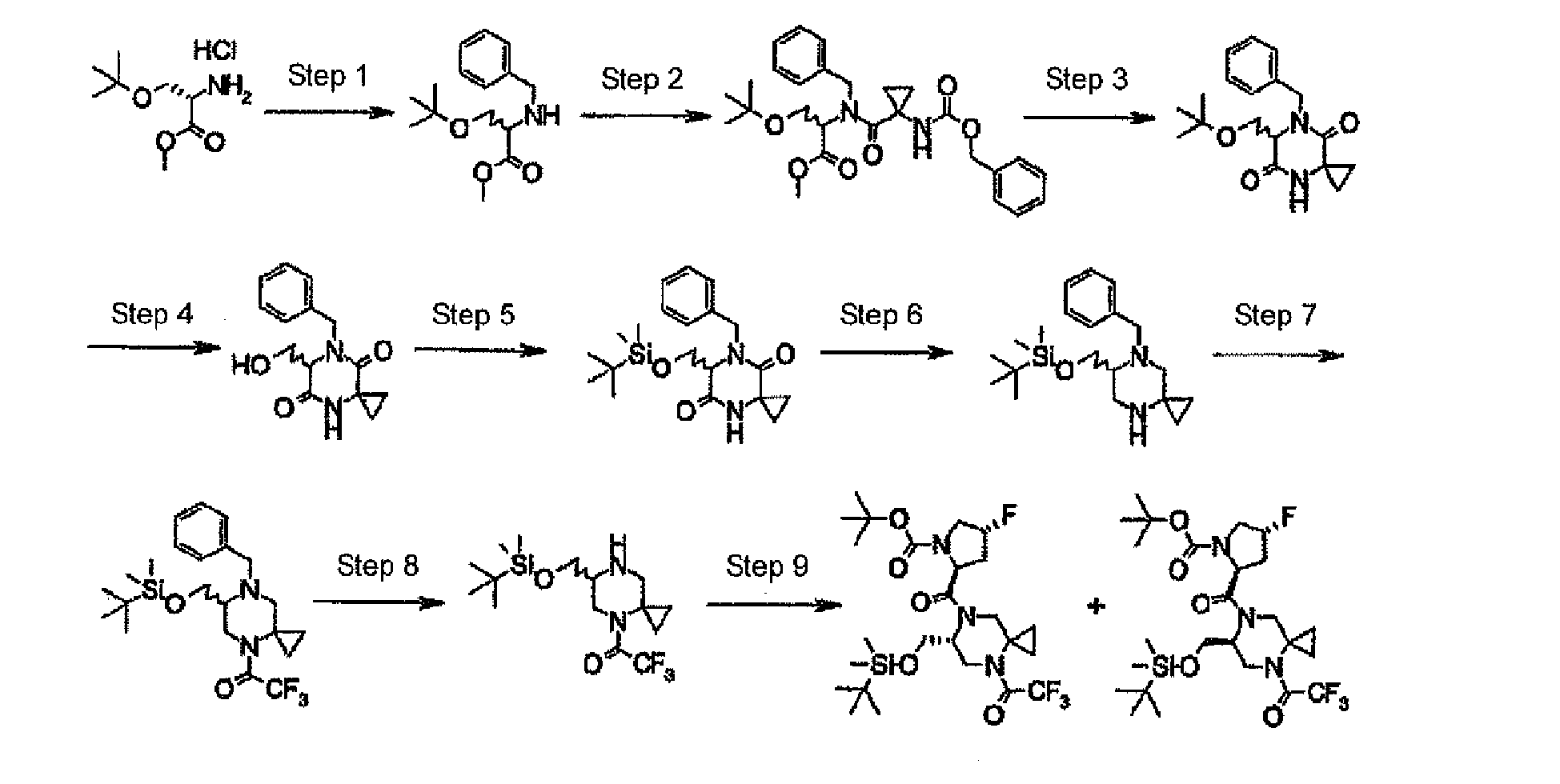
- Triethylamine (9.5 ml, 68.0 mmol) and benzaldehyde (6.37 ml, 63.0 mmol) were added to a methanol (300 ml) solution of methyl O-tert-butyl-L-serinate hydrochloride (12.0 g, 57.0 mmol) and the resulting mixture was stirred at room temperature for 6 hours. Sodium borohydride (3.23 g, 86.0 mmol) was gradually added under ice cooling and then the resulting mixture was stirred at room temperature for 2 hours. An aqueous solution of saturated ammonium chloride (100 ml) was added to the reaction mixture. After concentration under reduced pressure, the residue was diluted with ethyl acetate and the precipitated insoluble matter was removed by filtration. The organic layer was washed with saturated brine and then dried over anhydrous sodium sulfate. The solvent was evaporated under reduced pressure to give the title compound (15.3 g, 100%) as a colorless oil.
1H-NMR (400 MHz, CDCl3) δ: 1.14 (9H, s), 2.09 (1H, brs), 3.44 (1H, t, J=5.0 Hz), 3.55-3.63 (2H, m), 3.70-3.73 (1H, m), 3.72 (3H, s), 3.91 (1H, d, J=13.2 Hz), 7.23-7.38 (5H, m).
MS (ESI) m/z: 266 [(M+H)+]. - The compound obtained in Step 1 above instead of methyl N-benzyl-L-alaninate was reacted in the same way as in Step 1 of Reference Example 4 to give the title compound as a colorless solid.
1H-NMR (400 MHz, DMSO-d6, 90°C) δ: 0.94-0.97 (2H, m), 0.98 (9H, s), 1.16-1.24 (2H, m), 3.53 (3H, s), 3.63-3.72 (2H, m), 4.46-4.53 (1H, m), 4.60-4.70 (1H, m), 4.83 (1H, d, J=17.3 Hz), 4.94-5.01 (2H, m), 7.16-7.35 (10H, m), 7.66 (1H, brs).
MS (ESI) m/z: 483 [(M+H)+]. - The compound obtained in Step 2 above was reacted in the same way as in Step 2 of Reference Example 2 to give the title compound as a colorless solid.
1H-HMR (400 MHz, CDCl3, 50°C) δ: 0.88-0.97 (2H, m), 1.15 (9H, s), 1.36-1.41 (1H, m), 1.77-1.83 (1H, m), 3.69 (2H, ddd, J=20.5, 9.6, 3.1 Hz), 3.96 (1H, t, J=3.1 Hz), 4.07 (1H, d, J=15.1 Hz), 5.29 (1H, d, J=14.9 Hz), 6.64 (1H, brs), 7.24-7.34 (5H, m).
MS (ESI) m/z: 261 [(M-tBu}+]. - Trifluoroacetic acid (30 ml) was added to a chloroform (50 ml) solution of the compound (10.5 g, 33.0 mmol) obtained in Step 3 above and the resulting mixture was stirred at room temperature for 1 hour and then further stirred under heating at 40°C for 6 hours. The solvent was concentrated under reduced pressure, then the reaction mixture was subjected to azeotropic distillation with toluene and the residue was diluted with ethyl acetate, then washed with saturated aqueous sodium bicarbonate solution and saturated brine, and dried over anhydrous magnesium sulfate. The solvent was evaporated under reduced pressure and the residue obtained was purified by silica gel column chromatography [chloroform:methanol = 15:1 (v/v)] to give the title compound (7.15 g, 83%) as a colorless solid.
1H-NMR (400 MHz, CDCl3) δ: 0.96-1.06 (2H, m), 1.36-1.42 (1H, m), 1.74-1.80 (1H, m), 2.98-3.05 (1H, m), 3.91 (1H, s), 3.91-4.00 (1H, m), 4.11 (1H, d, J=15.1 Hz), 5.28 (1H, d, J=15.1 Hz), 7.25-7.42 (6H, m).
MS (ESI) m/z: 261 [(M+H)+]. - 4-dimethylaminopyridine (660 mg, 5.00 mmol) and tert-butyldimethylchlorosilane (4.90 g, 32.0 mmol) were added to a dimethylformamide (100 ml) solution of the compound (7.15 g, 27.0 mmol) obtained in Step 4 above and triethylamine (4.5 ml, 32.0 mmol). The resulting mixture was stirred at room temperature for 16 hours, then ice water (200 ml) was added to the reaction mixture and the precipitated solid was collected by filtration. The solid obtained was purified by silica gel column chromatography [n-hexane:ethyl acetate = 3:1 (v/v)] to give the title compound (8.63 g, 85%) as a colorless solid.
1H-NMR (400 MHz, CDCl3) δ: 0.04 (3H, s), 0.05 (3H, s), 0.89 (9H, s), 0.91-1.00 (2H, m), 1.40-1.46 (1H, m), 1.74-1.81 (1H, m), 3.90-3.94 (2H, m), 4.00 (1H, dd, J=11.1, 3.5 Hz), 4.08 (1H, d, J=15.1 Hz), 5.32 (1H, d, J=15.1 Hz), 7.25-7.38 (5H, m).
MS (ESI) m/z: 375 [(M+H)+]. - The compound obtained in Step 5 above was reacted in the same way as in Step 3 of Reference Example 2 to give the title compound as a colorless oil.
1H-NMR (400 MHz, CDCl3) δ: 0.05 (3H, s), 0.06 (3H, s), 0.31-0.38 (2H, m), 0.51-0.59 (2H, m), 0.89 (9H, s), 2.23 (1H, d, J=11.7 Hz), 2.30 (1H, d, J=11.7 Hz), 2.40-2.45 (1H, m), 2.81 (1H, dd, J=13.2, 8.3 Hz), 3.16 (1H, dd, J=13.2, 3.4 Hz), 3.34 (1H, d, J=13.9 Hz), 3.65 (1H, dd, J=10.4, 6.5 Hz), 3.96 (1H, dd, J=10.3, 4.4 Hz), 4.10 (1H, d, J=13.7 Hz), 7.21-7.37 (5H, m)..
MS (ESI) m/z: 347 [(M+H)+]. - The compound obtained in Step 6 above was reacted in the same way as in Step 4 of Reference Example 2 to give the title compound as a pale yellow oil.
1H-NMR (400 MHz, DMSO-d6, 90°C) δ: 0.00 (3H, s), 0.01 (3H, s), 0.61-0.68 (1H, m), 0.84 (9H, s), 0.85-0.90 (2H, m), 1.18-1.25 (1H, m), 2.28 (1H, d, J=11.7 Hz), 2.45-2.49 (1H m), 2.54-2.58 (1H, m), 3.34-3.41 (2H, m), 3.50 (1H, dd, J=10.3, 7.8 Hz), 3.91 (1H, dd, J=11.5, 5.1 Hz), 3.95 (1H, d, J=14.2 Hz), 4.03 (1H, d, J=14.2 Hz), 7.16-7.20 (1H, m), 7.24-7.28 (4H, m).
MS (ESI) m/z: 443 [(M+H)+]. - The compound obtained in Step 7 above was reacted in the same way as in Step 5 of Reference Example 2 to give the title compound as a colorless solid.
1H-NMR (400 MHz, DMSO-d6, 90°C) δ: 0.08 (6H, s), 0.76-0.80 (1H, m), 0.90 (9H, s), 0.91-0.94 (1H, m), 1.10-1.16 (1H, m), 1.36-1.42 (1H, m), 2.54 (1H, d, J=12.9 Hz), 3.04-3.09 (1H, m), 3.22-3.29 (2H, m), 3.66 (1H, dd, J=10.4, 7.0 Hz), 3.74 (1H, dd, J=10.5, 4.9 Hz), 4.04-4.12 (1H, m).
MS (ESI) m/z: 353 [(M+H)+]. - The compound obtained in Step 8 above instead of the compound obtained in Step 4 of Reference Example 8 was reacted in the same way as in Step 1 of Reference Example 9 and then the mixture of diastereomers obtained was resolved by silica gel column chromatography [n-hexane:ethyl acetate = 3:1 (v/v)] to respectively give the title compounds as a colorless solid.
Isomer A: 1H-NMR (400 MHz, DMSO-d6, 90°C) δ: 0.00 (3H, s), 0.01 (3H, s), 0.68-0.76 (1H, m), 0.84 (9H, s), 0.85-0.87 (1H, m), 1.23-1.30 (1H, m), 1.35 (9H, s), 1.40-1.45 (1H, m), 1.99-2.16 (1H, m), 2.31-2.49 (1H, m), 3.33-3.77 (7H, m), 4.12-4.28 (1H, m), 4.34-4.48 (1H, m), 4.60-4.76 (1H, m), 5.26 (1H, d, J=52.7 Hz).
MS (ESI) m/z: 590 [(M+Na)+].
Isomer B: 1H-NMR (400 MHz, DMSO-d6, 90°C) δ: -0.01 (3H, s), 0.01 (3H, s), 0.66-0.75 (1H, m), 0.83 (9H, s), 1.26-1.34 (3H, m), 1.35 (9H, s), 1.74-1.96 (2H, m), 3.27-3.73 (7H, m), 4.12-4.28 (1H, m), 4.38-4.52 (1H, m), 4.68-4.78 (1H, m), 5.20 (1H, d, J=55.2 Hz).
MS (ESI) m/z: 590 [(M+Na)+]. -

- The compound (isomer A) obtained in Step 9 of Reference Example 18 was reacted in the same way as in Step 2 of Reference Example 3 to give the title compound as a colorless solid.
1H-NMR (400 MHz, DMSO-d6, 90°C) δ: 0.01 (6H, s), 0.66-0.79 (2H, m), 0.83 (9H, s), 1.20-1.31 (1H, m), 1.37-1.47 (1H, m), 1.92-2.07 (1H, m), 2.09-2.26 (1H, m), 2.80-2.92 (2H, m), 3.39-3.71 (6H, m), 3.98-4.18 (1H, m), 4.35-4.53 (1H, m), 5.22 (1H, d, J=55.4 Hz).
MS (ESI) m/z: 468 [(M+H)+]. -

- The compound (isomer B) obtained in Step 9 of Reference Example 18 was reacted in the same way as in Step 2 of Reference Example 3 to give the title compound as a colorless solid.
1H-NMR (400 MHz, DMSO-d6, 90°C) δ: 0.01 (6H, s), 0.67-0.73 (1H, m), 0.83 (9H, s), 1.20-1.28 (2H, m), 1.38-1.47 (1H, m), 1.89-2.15 (2H, m), 2.68-2.80 (1H, m), 2.85-2.92 (1H, m), 3.08-3.18 (1H, m), 3.39-3.72 (4H, m), 4.02-4.19 (2H, m), 4.39-4.53 (1H, m), 5.21 (1H, d, J=55.7 Hz).
MS (ESI) m/z: 468 [(M+H)+]. -

- The compound obtained in Step 7 of Reference Example 18 was reacted in the same way as in Step 2 of Example 1 and then reacted in the same way as in Step 2 of Reference Example 1 to give the title compound as a colorless oil.
1H-NMR (400 MHz, DMSO-d6, 90°C) δ: 0.00 (6H, s), 0.39-0.46 (1H, m), 0.60-0.70 (2H, m), 0.84 (9H, s), 0.97-1.02 (1H, m), 1.35 (9H, s), 2.16 (1H, d, J=11.7 Hz), 2.27 (1H, d, J=11.7 Hz), 3.08 (1H, dd, J=12.9, 8.3 Hz), 3.32 (1H, d, J=14.2 Hz), 3.49 (1H, dd, J=10.5, 6.6 Hz), 3.79-3.88 (2H, m), 3.95 (1H, d, J=14.2 Hz), 7.13-7.16 (1H, m), 7.21-7.27 (4H, m).
MS (ESI) m/z: 447 ((M+1)]+. - The compound obtained in Step 1 above was reacted in the same way as in Step 5 of Reference Example 2 to give the title compound as a pale yellow oil.
1H-NMR (400 MHz, DMSO-d6, 90°C) δ: 0.06 (6H, s), 0.48-0.57 (2H, m), 0.78-0.83 (1H, m), 0.89 (9H, s), 1.14-1.20 (1H, m), 1.40 (9H, s), 2.16 (1H, d, J=12.5 Hz), 2.62-2.68 (1H, m), 2.75 (1H, dd, J=12.5, 10.0 Hz), 2.96 (1H, dd, J=12.5, 2.0 Hz), 3.47 (1H, dd, J=10.1, 6.2 Hz), 3.54 (1H, dd, J=10.0, 5.1 Hz), 3.87 (1H, dd, J=12.5, 2.9 Hz).
MS (ESI) m/z: 357 [(M+1)]+ . - The compound obtained in Step 2 above instead of the compound obtained in Step 4 of Reference Example 8 was reacted in the same way as in Step 1 of Reference Example 9 and then the mixture of diastereomers obtained was resolved by silica gel column chromatography in the same way as in Step 9 of Reference Example 18 to give the title compounds respectively as colorless solids. Isomer A: 1H-NMR (400 MHz, DMSO-d6, 90°C) δ: -0.06 (3H, brs), 0.00 (3H, s), 0.46-0.52 (1H, m), 0.82 (9H, s), 0.94-1.04 (1H, m), 1.15-1.28 (2H, m), 1.36 (9H, s), 1.92-2.12 (2H, m), 2.71-2.83 (1H, m), 3.21-3.29 (1H, m), 3.42-3.64 (4H, m), 3.69-3.78 (1H, m), 4.10-4.24 (1H, m), 4.57-5.12 (4H, m), 5.28 (1H, d, J=52.7 Hz), 7.24-7.33 (5H, m). MS (ESI) m/z: 628 [(M+Na)]+.
Isomer B: 1H-NMR (400 MHz, DMSO-d6, 90°C) δ: -0.01 (3H, s), 0.00 (3H, s), 0.74-0.79 (1H, m), 0.79-0.85 (1H, m), 0.82 (9H, s), 0.95-1.04 (1H, m), 1.22-1.30 (1H, m), 1.37 (9H, s), 1.80-2.01 (2H, m), 3.19-3.26 (1H, m), 3.34-3.60 (4H, m), 3.67-3.83 (2H, m), 3.98-4.13 (1H, m), 4.31-4.45 (1H, m), 4.78-4.84 (1H, m), 4.87-5.10 (2H, m), 5.21, 5.28 (1H, each d, J=55.2, 54.2 Hz), 7.23-7.34 (5H, m).
MS (ESI) m/z: 628 [(M+Na)]+. -

- The compound (isomer A) obtained in Step 3 of Reference Example 21 was reacted in the same way as in Step 5 of Reference Example 2 to give the title compound as a colorless solid.
1H-NMR (400 MHz, DMSO-d6, 90°C) δ: 0.06 (6H, s), 0.49-0.59 (2H, m), 0.87 (9H, s), 1.07-1.14 (1H, m), 1.31-1.39 (1H, m), 1.42 (9H, s), 2.16-2.34 (2H, m), 3.00-3.43 (6H, m), 3.55-3.77 (2H, m), 3.95-4.17 (1H, m), 4.29-4.38 (1H, m), 5.37 (1H, d, J=54.4 Hz).
MS (ESI) m/z: 472 [(M+1)1+. -

- The compound (isomer B) obtained in Step 3 of Reference Example 21 was reacted in the same way as in Step 5 of Reference Example 2 to give the title compound as a colorless solid.
1H-NMR (400 MHz, DMSO-d6, 90°C) δ: 0.05 (6H, s), 0.51-0.58 (1H m), 0.87 (9H, s), 1.07-1.16 (1H, m), 1.30-1.40 (2H, m), 1.43 (9H, s), 1.94-2.13 (2H, m), 3.03-3.20 (3H, m), 3.27-3.41 (1H, m), 3.45-3.56 (1H, m), 3.59-3.74 (1H, m), 3.90-4.11 (2H, m), 4.43-4.63 (2H, m), 5.39 (1H, d, J=53.5 Hz).
MS (ESI) m/z: 472 [(M+1)]+. -

- Methyl O-tert-butyl-L-serinate hydrochloride (12 g, 56.7 mmol) was dissolved in methanol (120 ml), acetic acid (6.50 ml, 114 mmol), benzaldehyde (6.25 ml, 61.8 mmol), and sodium cyanoborohydride (1 M tetrahydrofuran solution, 75 ml) were added and the resulting mixture was stirred at room temperature for 48 hours. The reaction mixture was concentrated, diluted with water, and neutralized with sodium bicarbonate under ice cooling, followed by extraction with chloroform. The organic layer was dried over anhydrous magnesium sulfate, then the drying agent was removed by filtration and the solvent was concentrated under reduced pressure. The residue obtained was purified by silica gel chromatography [ethyl acetate:n-hexane = 1:4 (v/v)] to give the title compound (7.75 g, 52%) as a colorless solid.
1H-NMR (400 MHz, CDCl3) δ: 1.14 (9H, s), 2.09 (1H, brs), 3.44 (1H, t, J=5.0 Hz), 3.55-3.63 (2H, m), 3.70-3.73 (1H, m), 3.72 (3H, s), 3.91 (1H, d, J=13.2 Hz), 7.23-7.38 (5H, m).
MS (ESI) m/z: 266 [(M+1)]+. - The compound obtained in Step 1 above instead of methyl N-benzyl-L-alaninate was reacted in the same way as in Step 1 of Reference Example 4 to give the title compound as a colorless oil.
1H-NMR (400 MHz, DMSO-d6) δ: 0.94-0.98 (2H, m), 0.98 (9H, s), 1.16-1.24 (2H, m), 3.53 (3H, s), 3.63-3.72 (2H, m), 4.46-4.53 (1H, m), 4.60-4.70 (1H, m), 4.83 (1H, d, J=17.3 Hz), 4.94-5.01 (2H, m), 7.16-7.35 (10H, m), 7.66 (1H, brs).
MS (ESI) m/z: 483 [(M+1)]+. - The compound obtained in Step 2 above was reacted in the same way as in Step 2 of Reference Example 2 to give the title compound as a colorless solid.
1H-NMR (400 MHz, CDCl3) δ: 0.88-0.97 (2H, m), 1.15 (9H, s), 1.36-1.41 (1H, m), 1.77-1.83 (1H, m), 3.69 (2H, ddd, J=20.5, 9.6, 3.1 Hz), 3.96 (1H, t, J=3.1 Hz), 4.07 (1H, d, J=15.1 Hz), 5.29 (1H, d, J=14.9 Hz), 6.64 (1H, brs), 7.24-7.34 (5H, m).
MS (ESI) m/z: 317 [(M+1)]+. - The compound obtained in Step 3 above was reacted in the same way as in Step 3 of Reference Example 2 to give the title compound as a colorless solid.
1H-NMR (400 MHz, CDCl3) δ: 0.30-0.38 (2H, m), 0.48-0.59 (2H, m), 1.19 (9H, s), 1.62 (1H, br), 2.27 (2H, AB type d, J=11.9 Hz), 2.40-2.48 (1H, m), 2.80 (1H, dd, J=13.3, 8.2 Hz), 3.14 (1H, dd, J=7.3, 3.2 Hz), 3.34-3.41 (2H, m), 3.69 (1H, dd, J=9.3, 4.6 Hz), 4.12 (1H, d, J=13.7 Hz), 7.21-7.35 (5H, m).
MS (ESI) m/z: 289 [(M+1)]+. - The compound obtained in Step 4 above was reacted in the same way as in Step 4 of Reference Example 18 to give the title compound as a colorless solid.
1H-NMR (400 MHz, CDCl3) δ: 0.33-0.43 (2H, m), 0.52-0.61 (2H, m), 1.71 (1H, br), 2.36-2.45 (3H, m), 3.06 (2H, d, J=6.0 Hz), 3.36 (1H, d, J=13.7 Hz), 3.60 (1H dd, J=11.0, 3.5 Hz), 3.95 (1H, dd, J=11.0, 4.5 Hz), 4.15 (1H, d, J=13.7 Hz), 7.24-7.32 (5H, m).
MS (ESI) m/z: 233 [(M+1)]+. - The compound obtained in Step 5 above was reacted in the same way as in Step 2 of Reference Example 1 to give the title compound as a colorless solid.
1H-NMR (400 MHz, d6-DMSO, 100°C) δ: 0.44-0.49 (1H, m), 0.62-0.72 (2H, m), 1.00-1.05 (1H, m), 1.39 (9H, s), 2.18 (1H, d, J=11.7 Hz), 2.28 (1H, dd, J=11.7, 1.2 Hz), 2.41-2.46 (1H, m), 3.13 (1H, dd, J=13.2, 8.5 Hz), 3.34 (1H, d, J=14.0 Hz), 3.40-3.46 (1H, m), 3.66-3.72 (1H m), 3.82 (1H, dd, J=13.2, 3.5 Hz), 4.02 (1H, d, J=14.0 Hz), 4.14 (1H, t, J=5.4 Hz), 7.16-7.30 (5H, m).
MS (ESI) m/z: 333 [(M+1)]+. - A dichloromethane (8 ml) solution of the compound (360 mg, 1.08 mmol) obtained in Step 6 above was cooled to -78°C. Subsequently, bis(2-methoxyethyl)aminosulfur trifluoride (0.26 ml, 1.41 mmol) was added dropwise and the resulting mixture was gradually heated and stirred for 20 hours. The reaction mixture was neutralized with saturated aqueous sodium bicarbonate solution, followed by extraction with chloroform. The organic layer was dried over anhydrous sodium sulfate, then the drying agent was removed by filtration and the solvent was concentrated under reduced pressure. The residue obtained was purified by silica gel chromatography [ethyl acetate:n-hexane = 1:10 (v/v)] to give the title compound (325 mg, 90%) as a colorless oil.
1H-NMR (400 MHz, d6-DMSO, 100°C) δ: 0.60-0.67 (2H, m), 0.79-0.90 (2H, m), 1.40 (9H, s), 2.45 (1H, d, J=12.7 Hz), 2.64 (1H, d, J=12.7 Hz), 2.83-2.93 (2H, m), 3.35-3.45 (1H, m), 3.71 (2H, d, J=3.2 Hz), 3.72-3.79 (1H, m), 4.66-4.81 (1H, m), 7.19-7.31 (5H, m).
MS (ESI) m/z: 335 [(M+1)]+. - The compound obtained in Step 7 above was reacted in the same way as in Step 5 of Reference Example 12 and then reacted in the same way as in Step 4 of Reference Example 2 to give the title compound as a colorless oil. 1H-NMR (400 MHz, d6-DMSO, 100°C) δ: 0.84 (2H, brs), 0.92 (2H, br), 2.55, 2.76 (1H, each br), 2.94 (2H, s), 2.95-2.98 (1H, m), 3.72 (2H, s), 3.73-3.94 (2H, m), 4.74, 4.86 (1H, each br), 7.20-7.31 (5H, m).
- The compound obtained in Step 8 above was reacted in the same way as in Step 5 of Reference Example 2 to give the title compound as a colorless solid.
1H-NMR (400 MHz, d6-DMSO, 100°C) δ: 1.06-1.11 (4H, m), 2.65-2.90 (3H, m), 3.37-3.65 (2H, m), 3.92 (1H, br), 5.21-5.34 (1H, m), 9.55 (2H, br).
MS (ESI) m/z: 241 [(M+1)]+. -

- The compound obtained in Step 9 of Reference Example 24 instead of the compound obtained in Step 4 of Reference Example 8 was reacted in the same way as in Step 1 of Reference Example 9 to give the title compound as a colorless solid.
MS (ESI) m/z: 456 [(M+1)]+. - The compound obtained in Step 1 above was reacted in the same way as in Step 5 of Reference Example 12 to give the title compound as a colorless solid.
1H-NMR (400 MHz, d6-DMSO, 100°C) δ: 1.07-1.11 (4H, m), 2.04-2.31 (1H, m), 2.65-2.73 (1H, m), 3.13-3.23 (2H, m), 3.43-3.58 (2H, m), 3.62-3.75 (2H, m), 4.20-4.37 (2H, m), 4.57-4.78 (1H, m), 4.92-4.98 (1H, m), 5.46 (1H, d, J=53.2 Hz), 9.77 (2H, br).
MS (ESI) m/z: 356 [(M+1)]+. -

- 1,2-bis(4-chlorophenyl)ethane-1,2-dione was used as a starting material and reacted in the same way as in Step 7 of Reference Example 1 to give the title compound as a pale yellow solid.
1H-NMR (400 MHz, CDCl3) δ: 7.47 (4H, d, J=8.8 Hz), 7.53 (4H, d, J=8.8 Hz). - Methyl magnesium bromide (0.89 M tetrahydrofuran solution, 43.1 ml) was added dropwise to a toluene (200 ml) suspension of the compound (10.0 g, 29.5 mmol) obtained in Step 1 above at 0°C. The resulting mixture was stirred at room temperature for 1 hour and then 1 N aqueous hydrochloric acid solution was added, followed by extraction with ethyl acetate. Then, the organic layer was washed with saturated aqueous sodium bicarbonate solution and saturated brine and dried over anhydrous sodium sulfate and the solvent was evaporated under reduced pressure to give the title compound (11.1 g, quantitative) as a colorless oil.
1H-NMR (400 MHz, CDCl3) δ: 2.06 (3H, s), 4.70 (1H, s), 7.30-7.48 (6H, m), 7.63 (2H, d, J=9.0 Hz). - The compound obtained in Step 2 above was reacted in the same way as in Step 8 of Reference Example 1 to give the title compound as a colorless solid.
1H-NMR (400 MHz, CDCl3) δ: 1.85 (3H, s), 4.63 (1H, d, J=6.8 Hz), 4.72 (1H, s), 4.93 (1H, d, J=6.8 Hz), 6.77 (2H, d, J=8.5 Hz), 7.01 (2H, d, J=8.5 Hz), 7.17 (2H, d, J=8.5 Hz), 7.18 (2H, d, J=8.5 Hz). - The compound obtained in Step 3 above was reacted in the same way as in Step 9 of Reference Example 1 to give the title compound as a colorless solid.
1H-NMR (400 MHz, CDCl3) δ: 1.49 (3H, s), 4.08 (1H, s), 6.98 (2H, d, J=8.5 Hz), 7.17 (2H, d, J=8.3 Hz), 7.25-7.28 (4H, m). - The compound obtained in Step 4 above was optically resolved in the same way as in Step 10 of Reference Example 1 to give the title compound as a colorless solid.
[α]D=+69.2° (c.1.05, methanol, 23°C - The compound obtained in Step 5 above was reacted in the same way as in Step 11 of Reference Example 1 to give the title compound as a colorless solid.
1H-NMR (400 MHz, DMSO-d6) δ: 1.71 (3H, s), 4.94 (1H, s), 6.89 (2H, dt, J=8.9, 2.1 Hz), 6.97 (2H, dt, J=8.9, 2.1 Hz), 7.17-7.12 (4H, m), 8.74 (1H, s), 8.92 (1H, s). - The compound obtained in Step 6 above was reacted in the same way as in Step 12 of Reference Example 1 to give the title compound as a colorless solid.
1H-NMR (400 MHz, CDCl3) δ: 1.03 (3H, d, J=7.0 Hz), 1.03 (3H, d, J=7.0 Hz), 1.37 (3H, t, J=7.1 Hz), 2.10 (3H, s), 3.28-3.47 (1H, m), 4.33 (2H, q, J=7.1 Hz), 5.57 (1H, s), 6.45-7.18 (8H, m). - Step 8: (5R,6S)-5,6-bis(4-chlorophenyl)-3-isopropyl-6-methyl-5,6-dihydroimidazo[2,1-b][1,3]thiazole-2-carboxylic acid
- The compound obtained in Step 7 above was reacted in the same way as in Step 13 of Reference Example 1 to give the title compound as a colorless solid.
1H-NMR (400 MHz, DMSO-d6) δ: 0.83 (3H, d, J=7.1 Hz), 0.93 (3H, d, J=7.1 Hz), 1.78 (3H, s), 2.99-3.67 (1H, m), 5.79 (1H, s), 6.44-7.43 (8H, m).
MS (ESI) m/z: 447 [(M+1)]+. -

- 4'-chloroacetophenone instead of 1-(6-chloropyridin-3-yl)ethanone was reacted in the same way as in Step 1 of Reference Example 1 to give the title compound as a yellow oil.
- The compound obtained in Step 1 above was reacted in the same way as in Step 2 of Reference Example 1 to give the title compound as a colorless solid.
1H-NMR (400 MHz, CDCl3) δ: 1.17 (3H, t, J=7.3 Hz), 1.37 (9H, brs), 1.97 (3H, s), 4.08-4.21 (2H, m), 5.92 (1H, br), 7.29-7.33 (2H, m), 7.36-7.41 (2H, m).
MS (ESI) m/z: 350 [(M+Na)]+. - The compound obtained in Step 2 above was reacted in the same way as in Step 3 of Reference Example 1 to give the title compound as a colorless solid.
1H-NMR (400 MHz, CDCl3) δ: 1.42 (9H, brs), 1.81 (3H, s), 5.71 (1H, br), 7.31-7.39 (4H, m), 9.27 (1H, s). - The compound obtained in Step 3 above was reacted in the same way as in Step 4 of Reference Example 1 to give the title compound as a colorless solid.
1H-NMR (400 MHz, CDCl3) δ: 1.43 (9H, brs), 1.55 (3H, brs), 5.08 (2H, br), 5.40 (1H, br), 6.80 (1H, br), 7.02-7.07 (1H, m), 7.24-7.35 (5H, m).
MS (ESI) m/z: 436 [(M+Na)+. - The compound obtained in Step 4 above was reacted in the same way as in Step 5 of Reference Example 1 to give the title compound as a colorless solid.
1H-NMR (400 MHz, CDCl3) δ: 1.29 (9H, brs), 1. 96 (3H, s), 6.19 (1H, br), 7.28-7.42 (7H, m).
MS (ESI) m/z: 434 [(M+Na)]+. - The compound obtained in Step 5 above was reacted in the same way as in Step 6 of Reference Example 1 to give the title compound as a colorless solid.
MS (ESI) m/z: 312 [(M+1)]+. - The compound obtained in Step 6 above was reacted in the same way as in Step 7 of Reference Example 1 to give the title compound as a colorless solid.
1H-NMR (400 MHz, CDCl3) δ: 2.06 (3H, s), 4.74 (1H, br), 7.34-7.54 (7H, m). - The compound obtained in Step 7 above was reacted in the same way as in Step 8 of Reference Example 1 to give the title compound as a colorless solid.
1H-NMR (400 MHz, CDCl3) δ: 1.78 (3H, s), 4.93 (1H, d,
J=2.3 Hz), 6.95 (1H, d, J=8.5 Hz), 7.07-7.14 (3H, m), 7.21 (2H, d, J=8.8 Hz), 7.35 (1H, t, J=8.1 Hz), 7.94-7.97 (2H, m).
MS (ESI) m/z: 375 [(M+1)]+. - The compound obtained in Step 8 above was reacted in the same way as in Step 9 of Reference Example 1 to give the title compound as a colorless solid.
1H-NMR (400 MHz, CDCl3) δ: 1.49 (3H, s), 1.50 (4H, rbs), 4.08 (1H, s), 6.75 (1H, d, J=8.2 Hz), 6.94 (1H, dd,
J=10.5, 1.3 Hz), 7.19 (1H, t, J=7.8 Hz), 7.26 (4H, s).
MS (ESI) m/z: 313 [(M+1)]+. - The compound obtained in Step 9 above was optically resolved in the same way as in Step 10 of Reference Example 1 to give the title compound as a pale yellow oil. MS (ESI) m/z: 313 [(M+1)]+.
[α]D=+67.4° (c=1.0, chloroform, 25°C) - The compound obtained in Step 10 above was reacted in the same way as in Step 11 of Reference Example 1 to give the title compound as a pale yellow oil. This compound was used in next reaction without being purified.
- The compound obtained in Step 11 above was reacted in the same way as in Step 12 of Reference Example 1 to give the title compound as a pale yellow solid.
1H-NMR (400 MHz, CDCl3) δ: 0.90 (3H, d, J=7.3 Hz), 1.02 (3H, d, J=7.1 Hz), 1.34 (3H, t, J=7.2 Hz), 1.80 (3H, s), 3.35-3.37 (1H, m), 4.25 (2H, q, J=7.1 Hz), 5.03 (1H, s), 6.54 (2H, brs), 7.07-7.12 (5H, m). - The compound obtained in Step 12 above was reacted
in the same way as in Step 13 of Example 1 to give the title compound as a colorless solid.
1H-NMR (400 MHz, DMSO-d6) δ: 0.91 (3H, d, J=7.3 Hz), 0.98 (3H, d, J=7.1 Hz), 1.18 (1H, td, J=7.1, 0.9 Hz), 1.89 (3H, s), 5.98 (1H, s), 7.20-7.38 (7H, m). -

- 4-chlorophenyl magnesium bromide instead of 4-chloro-3-fluorophenyl magnesium bromide was reacted in the same way as in Step 4 of Reference Example 1 to give the title compound as a colorless solid.
1H-NMR (400 MHz, CDCl3) δ: 1.45 (9H, brs), 1.57 (3H, s), 4.89 (1H, br), 5.01 (1H, br), 5.17 (1H, br), 6.74-6.81 (1H, m), 7.09 (1H, brs), 7.17-7.21 (1H, m), 7.28-7.36 (2H, m), 7.64 (1H, br), 8.40 (1H, br). - The compound obtained in Step 1 above was reacted in the same way as in Step 5 of Example 1 to give the title compound as a colorless solid.
1H-NMR (400 MHz, CDCl3) δ: 1.31 (9H, brs), 2.04 (3H, s), 6.45 (1H, br), 7.28-7.35 (3H, m), 7.54 (2H, d, J=7.6 Hz), 7.71 (1H, br), 8.46 (1H, s). - The compound obtained in Step 2 above was reacted in the same way as in Step 6 of Example 1 to give the title compound as a colorless oil.
MS (ESI) m/z: 295 [(M+1)]+. - The compound obtained in Step 3 above was reacted in the same way as in Step 7 of Example 1 to give the title compound as a colorless solid.
- MS (ESI) m/z: 356 [(M+H)]+.
- The compound obtained in Step 4 above was reacted in the same way as in Step 8 of Example 1 to give the title compound as a colorless solid. 1H-NMR (400 MHz, CDCl3) δ: 1.77 (3H, s), 4.95 (1H, d,
J=5.0 Hz), 7.09 (2H, d, J=8.2 Hz), 7.25 (2H, d, J=8.2 Hz), 7.32 (1H, d, J=8.5 Hz), 7.48-7.50 (1H, m), 7.95 (1H, d, J=5.0 Hz), 8.01-8.06 (2H, m).
MS (ESI) m/z: 358 [(M+1)]+. - The compound obtained in Step 5 above was reacted in the same way as in Step 9 of Example 1 to give the title compound as a pale yellow oil.
1H-NMR (400 MHz, CDCl3) δ: 1.52 (3H, s), 1.58 (4H, brs), 4.08 (1H, s), 6.96 (2H, d, J=8.3 Hz), 7.17-7.22 (3H, m), 7.57 (1H, dd, J=8.4, 2.6 Hz), 8.33 (1H, d, J=2.4 Hz).
MS (ESI) m/z: 296 [(M+1)]+. - The compound obtained in Step 6 above was optically resolved in the same way as in Step 10 of Example 1 to give the title compound as a yellow oil.
1H-NMR (400 MHz, CDCl3) δ: 1.52 (3H, s), 1.58 (4H, brs), 4.08 (1H, s), 6.96 (2H, d, J=8.3 Hz), 7.17-7.22 (3H, m), 7.57 (1H, dd, J=8.4, 2.6 Hz), 8.33 (1H, d, J=2.4 Hz).
[α]D=+69.4° (c=2.0, chloroform, 24°C) - The compound obtained in Step 7 above was reacted in the same way as in Step 11 of Example 1 to give the title compound as a colorless solid.
1H-NMR (400 MHz, CDCl3) δ: 1.93 (3H, s), 5.02 (1H, s), 6.36 (1H, brs), 6.70 (1H, brs), 6.85 (2H, d, J=8.5 Hz), 7.12 (1H, d, J=8.3 Hz), 7.15 (2H, d, J=8.3 Hz), 7.25-7.30 (1H, m), 7.97 (1H, d, J=2.7 Hz).
MS (ESI) m/z: 338 [(M+1)]+. - The compound obtained in Step 8 above was reacted in the same way as in Step 12 of Example 1 to give the title compound as a colorless solid.
1H-NMR (400 MHz, CDCl3) δ: 0.88 (3H, d, J=7.1 Hz), 1.01 (3H, d, J=7.1 Hz), 1.33 (3H, t, J=7.1 Hz), 1.83 (3H, s), 3.32-3.43 (1H, m), 4.26 (2H, q, J=7.2 Hz), 5.12 (1H, s), 6.68-6.81 (2H, brm), 7.00 (1H, d, J=8.3 Hz), 7.09 (2H, d, J=8.8 Hz), 7.49 (1H, dd, J=8.3, 2.7 Hz), 8.20 (1H, d, J=2.7 Hz).
MS (ESI) m/z: 476 [(M+1)]+. - The compound obtained in Step 9 above was reacted in the same way as in Step 13 of Example 1 to give the title compound as a colorless solid.
1H-NMR (400 MHz, DMSO-d6) δ: 0.76 (3H, d, J=7.1 Hz), 0.96 (3H, d, J=7.1 Hz), 1.72 (3H, s), 5.70 (1H, s), 6.46-6.62 (2H, m), 7.15-7.29 (3H, m), 7.65 (1H, dd, J=8.2, 2.3 Hz), 8.25 (1H, s).
MS (ESI) m/z: 448 [(M+1)]+. - A protein dilution containing 6.25 nM each of His-p53 (fusion protein of a p53 partial protein having p53 amino acids at positions 1 to 132, with a histidine protein) and GST-Mdm2 (fusion protein of a Mdm2 partial protein, having Mdm2 amino acids at positions 25 to 108 with leucine residue 33 substituted by glutamic acid, with glutathione transferase) proteins was prepared using a protein buffer solution (20 mM HEPES pH 7.4, 150 mM NaCl, 0.1% BSA). This protein dilution was added in an amount of 8 µL/well to a 384-well plate (384-well low volume NBC, Corning Inc., catalog No: 3676).
- Next, a test compound was diluted with DMSO to produce protein buffer solution containing 10% dilution, and this buffer solution was added in an amount of 4 µL/well to the plate.
- Subsequently, a solution containing an XL665-labeled anti-His antibody (HTRF monoclonal anti-6HIS antibody labeled with XL665 (catalog No: 61HISXLB), Schering/Cisbio Bioassays) and a europium (Eu)-labeled anti-GST antibody (HTRF monoclonal anti-GST antibody labeled with europium cryptate, Schering/Cisbio Bioassays, catalog No: 61GSTKLB) at concentrations of 2.5 µg/mL and 0.325 µg/mL, respectively, was prepared using an antibody diluting buffer solution (20 mM HEPES pH 7.4, 150 mM NaCl, 0.1% BSA, 0.5 M KF). These dilutions were added in an amount of 8 µL/well (total reaction solution volume: 20 µl/well). Then, the plate was left at 25°C for 1 hour.
- Time-resolved fluorescence at 620 and 665 nm was measured at an excitation wavelength of 320 nm using a plate reader (ARVOsx, PerkinElmer Co., Ltd. or PHERAstar, BMG LABTECH). Ratio (R) was calculated using the measured values (RFU 620 nm and RFU 665 nm) according to the following formula:

BI: measured value at 665 nm of reaction solution (only each buffer solution) nonsupplemented with each protein, the compound, and the antibodies
- A and D: each measured value at 665 nm and 620 nm of reaction solution supplemented with only Eu-labeled anti-GST antibody solution.
The R value calculated from the well supplemented with His-p53, GST-Mdm2, the test compound, and each antibody was defined as R (sample). The R value calculated from the well supplemented with His-p53, GST-Mdm2, and each antibody but without the test compound was defined as R (control). The R value calculated from the well supplemented with GST-Mdm2, the test compound, and each antibody but without His-p53 was defined as R (background). T/C was calculated from the formula shown below. An IC50 value for Mdm2/p53 binding was calculated by sigmoid fitting. The results are shown in Table 1.
- The results are shown in Table 20.
[Table 20] IC50 (µM) Compound of Example 1 0.0028 Compound of Example 2 0.0022 Compound of Example 3 0.0039 Compound of Example 4 0.0025 Compound of Example 5 0.0053 Compound of Example 6 0.0024 Compound of Example 7 0.0036 Compound of Example 8 0.0022 Compound of Example 9 0.0041 Compound of Example 10 0.014 Compound of Example 11 0.0032 Compound of Example 12 0.0050 Compound of Example 13 0.0054 Compound of Example 14 0.016 Compound of Example 15 0.0027 Compound of Example 16 0.0023 Compound of Example 17 0.0033 Compound of Example 18 0.0016 Compound of Example 19 0.0016 Compound of Example 20 0.0014 Compound of Example 21 0.0022 Compound of Example 22 0.0026 Compound of Example 23 0.0016 Compound of Example 24 0.0012 Compound of Example 25 0.0017 Compound of Example 26 0.0027 Compound of Example 27 0.0019 Compound of Example 28 0.0031 Compound of Example 29 0.0026 Compound of Example 30 0.0031 Compound of Example 31 0.0031 - A cell growth inhibition assay was conducted using human lung cancer-derived cell line NCI-H460 having wild-type p53.
- NCI-H460 cells were suspended in a medium (RPMI1640 medium containing 10% fetal bovine serum) and the suspension was inoculated in an amount of 500 cells/150 µL/well to a 96-well multiwell plate. A test compound was dissolved in DMSO and this solution was diluted with medium to prepare a sample solution (DMSO concentration: 1% or lower). On the next day of inoculation, medium nonsupplemented with the test compound or the sample solution was added in an amount of 50 µL/well. The MTT assay was conducted immediately after the medium was added in an amount of 50 µL on the next day of cell inoculation, and after the sample solution or the medium was added to cells followed by culturing at 37°C for 3 days in a 5% CO2 atmosphere. The MTT assay was conducted as shown below.
- A 5 mg/mL MTT (3-(4,5-dimethylthiazol-2-yl)-2,5-diphenyltetrazolium bromide, Sigma-Aldrich Co., M-2128) solution was prepared using a phosphate buffer solution (Dulbecco's Phosphate-buffered Saline). This MTT solution was added in an amount of 20 µL/well. Then, the plate was cultured at 37°C for 4 hours in a 5% CO2 atmosphere. The plate was centrifuged at 1200 rpm for 5 minutes and then the culture supernatant was removed by aspiration using a dispenser. DMSO was added in an amount of 150 µL/well to dissolve generated formazan.
The plate was stirred using a plate mixer for uniform color development from each well. The absorbance of each well was measured under conditions of OD 540 nm and reference 660 nm using a plate reader (SpectraMax PLUS384, Molecular Devices, CA, VISA). - The OD value measured on the day of adding the sample solution was defined as S. The OD value measured three days after addition of the sample solution was defined as T. The OD value measured three days after addition of the DMSO dilution was defined as C. T/C (%) was determined at each concentration according to the calculation formula shown below to prepare a dose response curve, from which 50% growth inhibition concentration (GI5o value) was calculated.

- The compounds of Examples 1 to 6, 8 to 10, 15, 16, 18 to 25, 27, 29, and 31 exhibited anti-cellular effect of GI50 (µM)<0.4. The compounds of Examples 7, 11 to 14, 17, 26, 28, and 30 exhibited anti-cellular effect of 0.4≤GI50<2.5 (µM).
- A human osteosarcoma cell line SJSA-1 or SJSA-1-RE (cells in which a p53 reporter gene was incorporated in SJSA-1) was subcutaneously transplanted to nude mice (BALB/C-nu/nu SLC, male, Japan SLC, Inc.). At the point in time when the tumor size reached approximately 100 to 200 mm3, the mice were divided into groups (6 mice/group). A test compound was suspended in 0.5% methylcellulose solution and orally administered twice a day (bid) at a dose of 50 mg/kg for 4 consecutive days. After 2-day drug holiday, the mice were dissected, the tumors were excised and then their weights were measured.
- The anti-tumor effect (IR (%)) was calculated according to the following formula:

- The compound of Example 2 exhibited anti-tumor effect of 50<IR (%)<70. The compounds of Examples 3, 4, 6, and 9 exhibited anti-tumor effect of 70<IR (%)<100.
- 100 µL of 100 mM phosphate buffer solution (pH 7.4) containing 3 µM test compound was added to 100 µL of reaction solution containing 100 mM phosphate buffer solution (pH 7.4), 30 mM glucose 6-phosphate, 10 mM MgCl2·6H2O, 3 units/mL glucose 6-phosphate 1-dehydrogenase, and 0.3 to 1.5 mgP/mL human liver microsomes and the mixture was incubated at 37°C for 20 minutes. Then, 70 µL of 100 mM phosphate buffer solution (pH 7.4) containing 3 mM NADP+ was added and the mixture was further incubated at 37°C for 30 minutes to conduct a microsomal metabolism test. The compound was quantified by the internal standard method using a quadrupole mass spectrometer connected to a high performance liquid chromatography apparatus. The metabolic stability (residual percentage of compound: MS%) was determined according to the following formula:

(peak area ratio: peak area of test compound divided by that of internal standard substance)
The results are shown in Table 21.[Table 21] MS (human) % Compound of Example 1 77 Compound of Example 2 100 Compound of Example 3 68 Compound of Example 4 100 Compound of Example 5 ND Compound of Example 6 69 Compound of Example 7 100 Compound of Example 8 95 Compound of Example 9 80 Compound of Example 10 48 Compound of Example 11 100 Compound of Example 12 69 Compound of Example 13 100 Compound of Example 14 100 Compound of Example 15 44 Compound of Example 16 56 Compound of Example 17 44 Compound of Example 18 6 Compound of Example 19 93 Compound of Example 20 36 Compound of Example 21 96 Compound of Example 22 60 Compound of Example 23 24 Compound of Example 24 89 Compound of Example 25 47 Compound of Example 26 57 Compound of Example 27 91 Compound of Example 28 51 Compound of Example 29 96 Compound of Example 30 62 Compound of Example 31 6 (ND: Not Determined)
Claims (19)
- A compound represented by general formula (1) or a salt thereof:

Ar1 represents a phenyl group which may have one or more substituents selected from a halogen atom, a cyano group,
and a C1-C6 alkyl group;
Ar2 represents a phenyl group which may have one or more substituents selected from a halogen atom, a C1-C6 alkyl group, and a cyano group, or a pyridyl group which may have one or more substituents selected from a halogen atom, a C1-C6 alkyl group, and a cyano group;
R1 represents a C1-C6 alkyl group which may have one or more substituents selected from a halogen atom, a hydroxy group, a C1-C6 alkoxy group, a carbamoyl group, an amino group, a C1-C6 alkanoyl group, and a cyano group, a C1-C6 alkanoyl group which may have one or more substituents selected from a halogen atom, a hydroxy group, a C1-C6 alkoxy group, a carbamoyl group, an amino group, and a cyano group, a hydrogen atom, or a hydroxy group;
R2 and R3 each independently represent a C1-C6 alkyl group which may have one or more substituents selected from a halogen atom, a hydroxy group, a C1-C6 alkoxy group, a carbamoyl group, an amino group, a C1-C6 alkanoyl group,
and a cyano group, a carboxy group, or a hydrogen atom,
or R2 and R3 may together form an oxo group, or R2 and R3 together with the carbon atoms to which R2 and R3 are respectively bonded may form a 3- to 5-membered saturated hydrocarbon ring in a spiro or condensed form;
R4 represents a C1-C6 alkyl group which may have one or more substituents selected from a halogen atom, a hydroxy group, a C1-C6 alkoxy group, a carbamoyl group, an amino group, a C1-C6 alkanoyl group, and a cyano group;
R5 represents a C1-C6 alkyl group which may have one or more substituents selected from a halogen atom, a hydroxy group, a C1-C6 alkoxy group, a carbamoyl group, an amino group, a C1-C6 alkanoyl group, and a cyano group;
R6 represents a halogen atom or a hydrogen atom; and
R7 represents a halogen atom. - A compound represented by general formula (2) or a salt thereof:

R1 represents a C1-C6 alkyl group which may have one or more substituents selected from a halogen atom, a hydroxy group, a C1-C6 alkoxy group, a carbamoyl group, an amino group, a C1-C6 alkanoyl group, and a cyano group, a C1-C6 alkanoyl group which may have one or more substituents selected from a halogen atom, a hydroxy group, a C1-C6 alkoxy group, a carbamoyl group, an amino group, and a cyano group, a hydrogen atom, or a hydroxy group;
R2 and R3 each independently represent a C1-C6 alkyl group which may have one or more substituents selected from a halogen atom, a hydroxy group, a C1-C6 alkoxy group, a carbamoyl group, an amino group, a C1-C6 alkanoyl group, and a cyano group, a carboxy group, or a hydrogen atom,
or R2 and R3 may together form an oxo group, or R2 and R3 together with the carbon atoms to which R2 and R3 are respectively bonded may form a 3- to 5-membered saturated hydrocarbon ring in a spiro or condensed form;
R4 represents a C1-C6 alkyl group which may have one or more substituents selected from a halogen atom, a hydroxy group, a C1-C6 alkoxy group, a carbamoyl group, an amino group, a C1-C6 alkanoyl group, and a cyano group;
R5 represents a C1-C6 alkyl group which may have one or more substituents selected from a halogen atom, a hydroxy group, a C1-C6 alkoxy group, a carbamoyl group, an amino group, a C1-C6 alkanoyl group, and a cyano group;
R6 represents a halogen atom or a hydrogen atom; and
R7 represents a halogen atom. - A compound according to claim 1 or 2 or a salt thereof, wherein R1 is a C1-C6 alkyl group, a C1-C6 alkanoyl group which may be substituted with one or more halogen atoms, or a hydrogen atom.
- A compound according to any one of claims 1 to 3 or a salt thereof, wherein R4 is a C1-C6 alkyl group.
- A compound according to any one of claims 1 to 4 or a salt thereof, wherein R5 is a C1-C6 alkyl group.
- A compound represented by the following formula:

- A compound represented by the following formula:

- A compound represented by the following formula:

- A compound represented by the following formula:

- A compound represented by the following formula:

- An inhibitor of Mdm2 comprising a compound according to any one of claims 1 to 10 or a salt thereof.
- An inhibitor of p53-Mdm2 binding comprising a compound according to any one of claims 1 to 10 or a salt thereof.
- A medicament comprising a compound according to any one of claims 1 to 10 or a salt thereof as an active ingredient.
- A pharmaceutical composition comprising a compound according to any one of claims 1 to 10 or a salt thereof and a pharmaceutically acceptable carrier.
- Use of a compound according to any one of claims 1 to 10 or a salt thereof for the manufacture of a medicament.
- An anticancer agent comprising a compound according to any one of claims 1 to 10 or a salt thereof as an active ingredient.
- A method for treating cancer, comprising administering a compound according to any one of claims 1 to 10 or a salt thereof.
- An anticancer agent according to claim 16, wherein the cancer is any selected from lung cancer, breast cancer, prostate cancer, colon cancer, acute myeloid leukemia, malignant lymphoma, retinoblastoma, neuroblastoma, and sarcoma.
- A method for treating cancer according to claim 17, wherein the cancer is any selected from lung cancer, breast cancer, prostate cancer, colon cancer, acute myeloid leukemia, malignant lymphoma, retinoblastoma, neuroblastoma, and sarcoma.
Priority Applications (3)
| Application Number | Priority Date | Filing Date | Title |
|---|---|---|---|
| PL10731281T PL2380892T3 (en) | 2009-01-16 | 2010-01-15 | Imidazothiazole derivative having proline ring structure |
| SI201030589T SI2380892T1 (en) | 2009-01-16 | 2010-01-15 | Imidazothiazole derivative having proline ring structure |
| CY20141100460T CY1115234T1 (en) | 2009-01-16 | 2014-06-25 | Imidazothiazole derivative having a proline ring structure |
Applications Claiming Priority (2)
| Application Number | Priority Date | Filing Date | Title |
|---|---|---|---|
| JP2009007536 | 2009-01-16 | ||
| PCT/JP2010/050372 WO2010082612A1 (en) | 2009-01-16 | 2010-01-15 | Imidazothiazole derivative having proline ring structure |
Publications (3)
| Publication Number | Publication Date |
|---|---|
| EP2380892A1 true EP2380892A1 (en) | 2011-10-26 |
| EP2380892A4 EP2380892A4 (en) | 2012-08-29 |
| EP2380892B1 EP2380892B1 (en) | 2014-04-02 |
Family
ID=42339866
Family Applications (1)
| Application Number | Title | Priority Date | Filing Date |
|---|---|---|---|
| EP10731281.1A Not-in-force EP2380892B1 (en) | 2009-01-16 | 2010-01-15 | Imidazothiazole derivative having proline ring structure |
Country Status (24)
| Country | Link |
|---|---|
| US (2) | US8404691B2 (en) |
| EP (1) | EP2380892B1 (en) |
| JP (1) | JP5520236B2 (en) |
| KR (1) | KR20110119641A (en) |
| CN (1) | CN102356085A (en) |
| AU (1) | AU2010205201A1 (en) |
| BR (1) | BRPI1007334A2 (en) |
| CA (1) | CA2750009A1 (en) |
| CO (1) | CO6420347A2 (en) |
| CY (1) | CY1115234T1 (en) |
| DK (1) | DK2380892T3 (en) |
| ES (1) | ES2463820T3 (en) |
| HR (1) | HRP20140409T1 (en) |
| IL (1) | IL214117A0 (en) |
| MX (1) | MX2011007598A (en) |
| PL (1) | PL2380892T3 (en) |
| PT (1) | PT2380892E (en) |
| RU (1) | RU2011134283A (en) |
| SG (1) | SG173028A1 (en) |
| SI (1) | SI2380892T1 (en) |
| SM (1) | SMT201400082B (en) |
| TW (1) | TW201030011A (en) |
| WO (1) | WO2010082612A1 (en) |
| ZA (1) | ZA201105132B (en) |
Cited By (2)
| Publication number | Priority date | Publication date | Assignee | Title |
|---|---|---|---|---|
| WO2016056673A1 (en) * | 2014-10-09 | 2016-04-14 | Daiichi Sankyo Company, Limited | Algorithms for gene signature-based predictor of sensitivity to mdm2 inhibitors |
| EP3360865A1 (en) | 2017-02-13 | 2018-08-15 | F.I.S.- Fabbrica Italiana Sintetici S.p.A. | Process for the preparation of cyclopropyldiketopiperazines, and of a key intermediate of ds-5272 |
Families Citing this family (8)
| Publication number | Priority date | Publication date | Assignee | Title |
|---|---|---|---|---|
| JPWO2009151069A1 (en) * | 2008-06-12 | 2011-11-17 | 第一三共株式会社 | Imidazothiazole derivatives having 4,7-diazaspiro [2.5] octane ring structure |
| TR201807311T4 (en) | 2011-03-10 | 2018-06-21 | Daiichi Sankyo Co Ltd | Dispiropyrrolidine derivative. |
| TWI586668B (en) | 2012-09-06 | 2017-06-11 | 第一三共股份有限公司 | Crystals of dispiropyrrolidine derivative |
| CN109152843A (en) | 2016-05-20 | 2019-01-04 | 豪夫迈·罗氏有限公司 | PROTAC antibody conjugates and methods of using the same |
| CN111943894A (en) * | 2019-05-17 | 2020-11-17 | 南京爱德程医药科技有限公司 | Synthesis method of 4, 7-diazaspiro [2.5] octane compound |
| WO2022183006A1 (en) | 2021-02-25 | 2022-09-01 | Mayo Foundation For Medical Education And Research | Compounds for programmable protein degradation and methods of use for the disease treatment |
| WO2023056069A1 (en) | 2021-09-30 | 2023-04-06 | Angiex, Inc. | Degrader-antibody conjugates and methods of using same |
| WO2024240858A1 (en) | 2023-05-23 | 2024-11-28 | Valerio Therapeutics | Protac molecules directed against dna damage repair system and uses thereof |
Family Cites Families (20)
| Publication number | Priority date | Publication date | Assignee | Title |
|---|---|---|---|---|
| JP2000072743A (en) | 1998-08-31 | 2000-03-07 | Japan Science & Technology Corp | Aziridination of alkenes |
| US6979551B2 (en) | 2000-04-03 | 2005-12-27 | Rigel Pharmaceuticals, Inc. | Assays for identifying ubiquitin agents and for identifying agents that modify the activity of ubiquitin agents |
| US6740495B1 (en) | 2000-04-03 | 2004-05-25 | Rigel Pharmaceuticals, Inc. | Ubiquitin ligase assay |
| JP4361798B2 (en) | 2001-12-18 | 2009-11-11 | エフ.ホフマン−ラ ロシュ アーゲー | Cis-imidazoline as an MDM2 inhibitor |
| KR100650966B1 (en) | 2001-12-18 | 2006-11-30 | 에프. 호프만-라 로슈 아게 | Cis-2,4,5-triphenyl-imidazoline and its use in tumor treatment |
| MXPA05013465A (en) | 2003-06-17 | 2006-03-09 | Hoffmann La Roche | Cis-imidazolines as mdm2 inhibitors. |
| US7132421B2 (en) | 2003-06-17 | 2006-11-07 | Hoffmann-La Roche Inc. | CIS-imidazoles |
| WO2005003097A1 (en) | 2003-06-17 | 2005-01-13 | F. Hoffmann-La Roche Ag | Cis-2,4,5-triaryl-imidazolines |
| US7425638B2 (en) | 2003-06-17 | 2008-09-16 | Hoffmann-La Roche Inc. | Cis-imidazolines |
| GB0324498D0 (en) | 2003-07-21 | 2003-11-26 | Aventis Pharma Inc | Heterocyclic compounds as P2X7 ion channel blockers |
| JP2005075754A (en) | 2003-08-29 | 2005-03-24 | Mitsui Chemicals Inc | Method for optical resolution of trans-1,2-bis(3,5-dimethylphenyl)-1,2-ethanediamine |
| KR20080027969A (en) | 2004-05-18 | 2008-03-28 | 에프. 호프만-라 로슈 아게 | New CIS-imidazolines |
| US7893278B2 (en) | 2004-06-17 | 2011-02-22 | Hoffman-La Roche Inc. | CIS-imidazolines |
| CN101316823B (en) | 2005-12-01 | 2013-05-22 | 霍夫曼-拉罗奇有限公司 | 2,4,5-Triphenylimidazoline derivatives as inhibitors of interaction between p53 and MDM2 proteins useful as anticancer agents |
| CN101605798A (en) * | 2006-12-14 | 2009-12-16 | 第一三共株式会社 | Imidazothiazole derivative |
| JP5019102B2 (en) * | 2006-12-14 | 2012-09-05 | 東芝機械株式会社 | Manufacturing method of glass mold |
| BRPI0810082A2 (en) * | 2007-03-29 | 2014-10-21 | Novartis Ag | 3-IMIDAZOLIL-INDOS FOR TREATMENT OF PROLIFERATIVE DISEASES |
| US7625895B2 (en) | 2007-04-12 | 2009-12-01 | Hoffmann-Le Roche Inc. | Diphenyl-dihydro-imidazopyridinones |
| JP2009298713A (en) * | 2008-06-11 | 2009-12-24 | Daiichi Sankyo Co Ltd | Imidazothiazole derivative |
| JPWO2009151069A1 (en) | 2008-06-12 | 2011-11-17 | 第一三共株式会社 | Imidazothiazole derivatives having 4,7-diazaspiro [2.5] octane ring structure |
-
2010
- 2010-01-15 ES ES10731281.1T patent/ES2463820T3/en active Active
- 2010-01-15 PT PT107312811T patent/PT2380892E/en unknown
- 2010-01-15 SI SI201030589T patent/SI2380892T1/en unknown
- 2010-01-15 SG SG2011051703A patent/SG173028A1/en unknown
- 2010-01-15 AU AU2010205201A patent/AU2010205201A1/en not_active Abandoned
- 2010-01-15 JP JP2010546646A patent/JP5520236B2/en not_active Expired - Fee Related
- 2010-01-15 WO PCT/JP2010/050372 patent/WO2010082612A1/en not_active Ceased
- 2010-01-15 PL PL10731281T patent/PL2380892T3/en unknown
- 2010-01-15 HR HRP20140409AT patent/HRP20140409T1/en unknown
- 2010-01-15 MX MX2011007598A patent/MX2011007598A/en unknown
- 2010-01-15 BR BRPI1007334A patent/BRPI1007334A2/en not_active Application Discontinuation
- 2010-01-15 DK DK10731281.1T patent/DK2380892T3/en active
- 2010-01-15 EP EP10731281.1A patent/EP2380892B1/en not_active Not-in-force
- 2010-01-15 CA CA2750009A patent/CA2750009A1/en not_active Abandoned
- 2010-01-15 CN CN2010800126404A patent/CN102356085A/en active Pending
- 2010-01-15 RU RU2011134283/04A patent/RU2011134283A/en unknown
- 2010-01-15 TW TW099101006A patent/TW201030011A/en unknown
- 2010-01-15 KR KR1020117016110A patent/KR20110119641A/en not_active Withdrawn
-
2011
- 2011-07-12 ZA ZA2011/05132A patent/ZA201105132B/en unknown
- 2011-07-14 IL IL214117A patent/IL214117A0/en unknown
- 2011-07-15 US US13/183,762 patent/US8404691B2/en not_active Expired - Fee Related
- 2011-08-12 CO CO11102791A patent/CO6420347A2/en not_active Application Discontinuation
-
2013
- 2013-01-31 US US13/755,161 patent/US20130172362A1/en not_active Abandoned
-
2014
- 2014-06-25 SM SM201400082T patent/SMT201400082B/en unknown
- 2014-06-25 CY CY20141100460T patent/CY1115234T1/en unknown
Cited By (5)
| Publication number | Priority date | Publication date | Assignee | Title |
|---|---|---|---|---|
| WO2016056673A1 (en) * | 2014-10-09 | 2016-04-14 | Daiichi Sankyo Company, Limited | Algorithms for gene signature-based predictor of sensitivity to mdm2 inhibitors |
| EP3360865A1 (en) | 2017-02-13 | 2018-08-15 | F.I.S.- Fabbrica Italiana Sintetici S.p.A. | Process for the preparation of cyclopropyldiketopiperazines, and of a key intermediate of ds-5272 |
| WO2018145860A1 (en) | 2017-02-13 | 2018-08-16 | F.I.S. - Fabbrica Italiana Sintetici S.P.A. | Process for the preparation of cyclopropyldiketopiperazines and of a key intermediate of ds-5272 |
| US10836778B2 (en) | 2017-02-13 | 2020-11-17 | F.I.S.—Fabbrica Italiana Sintetici S.p.A. | Process for the preparation of cyclopropyldiketopiperazines and of a key intermediate of DS-5272 |
| US11370800B2 (en) | 2017-02-13 | 2022-06-28 | F.I.S.—Fabbrica Italiana Sintetici S.p.A. | Process for the preparation of cyclopropyldiketopiperazines and of a key intermediate of DS-5272 |
Also Published As
| Publication number | Publication date |
|---|---|
| PL2380892T3 (en) | 2014-08-29 |
| ES2463820T3 (en) | 2014-05-29 |
| CA2750009A1 (en) | 2010-07-22 |
| JPWO2010082612A1 (en) | 2012-07-05 |
| CY1115234T1 (en) | 2017-01-04 |
| TW201030011A (en) | 2010-08-16 |
| ZA201105132B (en) | 2012-03-28 |
| US20110301176A1 (en) | 2011-12-08 |
| SMT201400082B (en) | 2014-09-08 |
| JP5520236B2 (en) | 2014-06-11 |
| SG173028A1 (en) | 2011-08-29 |
| RU2011134283A (en) | 2013-02-27 |
| WO2010082612A1 (en) | 2010-07-22 |
| EP2380892B1 (en) | 2014-04-02 |
| PT2380892E (en) | 2014-06-09 |
| AU2010205201A1 (en) | 2011-08-04 |
| EP2380892A4 (en) | 2012-08-29 |
| US20130172362A1 (en) | 2013-07-04 |
| IL214117A0 (en) | 2011-08-31 |
| HRP20140409T1 (en) | 2014-06-06 |
| KR20110119641A (en) | 2011-11-02 |
| US8404691B2 (en) | 2013-03-26 |
| SI2380892T1 (en) | 2014-05-30 |
| BRPI1007334A2 (en) | 2016-02-10 |
| MX2011007598A (en) | 2011-08-08 |
| CN102356085A (en) | 2012-02-15 |
| DK2380892T3 (en) | 2014-06-30 |
| CO6420347A2 (en) | 2012-04-16 |
Similar Documents
| Publication | Publication Date | Title |
|---|---|---|
| EP2380892B1 (en) | Imidazothiazole derivative having proline ring structure | |
| EP2298778A1 (en) | Imidazothiazole derivative having 4,7-diazaspiroý2.5¨octane ring structure | |
| EP3121175B1 (en) | 1,3-benzodioxole derivatives as ezh1 and/or ezh2 inhibitors | |
| EP3845533A1 (en) | Optically active azabicyclic derivative | |
| US20240336631A1 (en) | Pyrido[4,3-d]pyrimidine Compounds | |
| EP3762393B1 (en) | Alpha-hydroxy phenylacetic acid pharmacophore or bioisostere mcl-1 protein antagonists | |
| EP2103619A1 (en) | Imidazothiazole derivatives | |
| KR20170043661A (en) | Tetrahydronaphthalene derivatives that inhibit mcl-1 protein | |
| CN107889487B (en) | Bicyclic tetrahydrothiazepine derivatives for the treatment of tumor and/or infectious diseases | |
| EP3341379B1 (en) | Inhibitors of ezh2 | |
| EP3643703A1 (en) | Ep300/crebbp inhibitor | |
| EA029774B1 (en) | Compounds | |
| EP2684880A1 (en) | Dispiropyrrolidine derivative | |
| JP2017125029A (en) | 5'-substituted nucleoside compounds | |
| EP3842437A1 (en) | High activity sting protein agonist | |
| CA3119882A1 (en) | Heterocyclic spiro-compounds as am2 receptor inhibitors | |
| CA3119886A1 (en) | Heterocyclic spiro-compounds as am2 receptor inhibitors | |
| HK1162034A (en) | Imidazothiazole derivative having proline ring structure | |
| JP2012036181A (en) | Imidazothiazole derivative having proline ring structure | |
| CN116507617B (en) | 1- (2- (4-Cyclopropyl-1H-1, 2, 3-triazol-1-yl) acetyl) -4-hydroxypyrrolidine-2-carboxamide derivatives as VHL inhibitors | |
| WO2024084364A1 (en) | Compounds for the treatment of cancer | |
| HK40055661A (en) | Optically active azabicyclic derivative | |
| HK1130058A (en) | Imidazothiazole derivatives | |
| HK40044966A (en) | High activity sting protein agonist | |
| HK40044966B (en) | High activity sting protein agonist |
Legal Events
| Date | Code | Title | Description |
|---|---|---|---|
| PUAI | Public reference made under article 153(3) epc to a published international application that has entered the european phase |
Free format text: ORIGINAL CODE: 0009012 |
|
| 17P | Request for examination filed |
Effective date: 20110704 |
|
| AK | Designated contracting states |
Kind code of ref document: A1 Designated state(s): AT BE BG CH CY CZ DE DK EE ES FI FR GB GR HR HU IE IS IT LI LT LU LV MC MK MT NL NO PL PT RO SE SI SK SM TR |
|
| DAX | Request for extension of the european patent (deleted) | ||
| REG | Reference to a national code |
Ref country code: HK Ref legal event code: DE Ref document number: 1162034 Country of ref document: HK |
|
| A4 | Supplementary search report drawn up and despatched |
Effective date: 20120727 |
|
| RIC1 | Information provided on ipc code assigned before grant |
Ipc: A61P 35/00 20060101ALI20120723BHEP Ipc: C07D 513/04 20060101AFI20120723BHEP Ipc: A61P 43/00 20060101ALI20120723BHEP Ipc: A61K 31/499 20060101ALI20120723BHEP |
|
| 17Q | First examination report despatched |
Effective date: 20130315 |
|
| GRAP | Despatch of communication of intention to grant a patent |
Free format text: ORIGINAL CODE: EPIDOSNIGR1 |
|
| INTG | Intention to grant announced |
Effective date: 20131011 |
|
| GRAS | Grant fee paid |
Free format text: ORIGINAL CODE: EPIDOSNIGR3 |
|
| GRAA | (expected) grant |
Free format text: ORIGINAL CODE: 0009210 |
|
| AK | Designated contracting states |
Kind code of ref document: B1 Designated state(s): AT BE BG CH CY CZ DE DK EE ES FI FR GB GR HR HU IE IS IT LI LT LU LV MC MK MT NL NO PL PT RO SE SI SK SM TR |
|
| REG | Reference to a national code |
Ref country code: GB Ref legal event code: FG4D |
|
| REG | Reference to a national code |
Ref country code: CH Ref legal event code: EP Ref country code: AT Ref legal event code: REF Ref document number: 660056 Country of ref document: AT Kind code of ref document: T Effective date: 20140415 Ref country code: CH Ref legal event code: NV Representative=s name: MARKS AND CLERK (LUXEMBOURG) LLP, CH |
|
| REG | Reference to a national code |
Ref country code: HR Ref legal event code: TUEP Ref document number: P20140409 Country of ref document: HR |
|
| REG | Reference to a national code |
Ref country code: IE Ref legal event code: FG4D |
|
| REG | Reference to a national code |
Ref country code: DE Ref legal event code: R096 Ref document number: 602010014818 Country of ref document: DE Effective date: 20140515 |
|
| REG | Reference to a national code |
Ref country code: ES Ref legal event code: FG2A Ref document number: 2463820 Country of ref document: ES Kind code of ref document: T3 Effective date: 20140529 |
|
| REG | Reference to a national code |
Ref country code: HR Ref legal event code: T1PR Ref document number: P20140409 Country of ref document: HR |
|
| REG | Reference to a national code |
Ref country code: PT Ref legal event code: SC4A Free format text: AVAILABILITY OF NATIONAL TRANSLATION Effective date: 20140529 |
|
| REG | Reference to a national code |
Ref country code: RO Ref legal event code: EPE |
|
| REG | Reference to a national code |
Ref country code: DK Ref legal event code: T3 Effective date: 20140626 |
|
| REG | Reference to a national code |
Ref country code: NL Ref legal event code: T3 |
|
| REG | Reference to a national code |
Ref country code: SE Ref legal event code: TRGR |
|
| REG | Reference to a national code |
Ref country code: EE Ref legal event code: FG4A Ref document number: E009335 Country of ref document: EE Effective date: 20140625 |
|
| REG | Reference to a national code |
Ref country code: PL Ref legal event code: T3 |
|
| REG | Reference to a national code |
Ref country code: NO Ref legal event code: T2 Effective date: 20140402 |
|
| REG | Reference to a national code |
Ref country code: GR Ref legal event code: EP Ref document number: 20140401227 Country of ref document: GR Effective date: 20140718 Ref country code: SK Ref legal event code: T3 Ref document number: E 16581 Country of ref document: SK |
|
| REG | Reference to a national code |
Ref country code: HR Ref legal event code: ODRP Ref document number: P20140409 Country of ref document: HR Payment date: 20141204 Year of fee payment: 6 |
|
| REG | Reference to a national code |
Ref country code: DE Ref legal event code: R097 Ref document number: 602010014818 Country of ref document: DE |
|
| PGFP | Annual fee paid to national office [announced via postgrant information from national office to epo] |
Ref country code: BG Payment date: 20141212 Year of fee payment: 6 Ref country code: MC Payment date: 20141209 Year of fee payment: 6 Ref country code: EE Payment date: 20141229 Year of fee payment: 6 Ref country code: RO Payment date: 20141210 Year of fee payment: 6 Ref country code: GR Payment date: 20141211 Year of fee payment: 6 Ref country code: SK Payment date: 20141218 Year of fee payment: 6 Ref country code: LT Payment date: 20141217 Year of fee payment: 6 |
|
| PLBE | No opposition filed within time limit |
Free format text: ORIGINAL CODE: 0009261 |
|
| STAA | Information on the status of an ep patent application or granted ep patent |
Free format text: STATUS: NO OPPOSITION FILED WITHIN TIME LIMIT |
|
| PGFP | Annual fee paid to national office [announced via postgrant information from national office to epo] |
Ref country code: NL Payment date: 20141210 Year of fee payment: 6 Ref country code: HR Payment date: 20141204 Year of fee payment: 6 Ref country code: IS Payment date: 20141209 Year of fee payment: 6 Ref country code: LU Payment date: 20150105 Year of fee payment: 6 |
|
| 26N | No opposition filed |
Effective date: 20150106 |
|
| REG | Reference to a national code |
Ref country code: DE Ref legal event code: R097 Ref document number: 602010014818 Country of ref document: DE Effective date: 20150106 |
|
| PGFP | Annual fee paid to national office [announced via postgrant information from national office to epo] |
Ref country code: CZ Payment date: 20150105 Year of fee payment: 6 Ref country code: FI Payment date: 20150112 Year of fee payment: 6 Ref country code: PT Payment date: 20150113 Year of fee payment: 6 Ref country code: HU Payment date: 20141216 Year of fee payment: 6 Ref country code: NO Payment date: 20150109 Year of fee payment: 6 Ref country code: DK Payment date: 20150112 Year of fee payment: 6 Ref country code: SM Payment date: 20150131 Year of fee payment: 6 Ref country code: CH Payment date: 20150114 Year of fee payment: 6 Ref country code: IE Payment date: 20150112 Year of fee payment: 6 |
|
| PGFP | Annual fee paid to national office [announced via postgrant information from national office to epo] |
Ref country code: PL Payment date: 20150112 Year of fee payment: 6 Ref country code: LV Payment date: 20150106 Year of fee payment: 6 Ref country code: SI Payment date: 20141219 Year of fee payment: 6 Ref country code: SE Payment date: 20150113 Year of fee payment: 6 Ref country code: TR Payment date: 20150114 Year of fee payment: 6 Ref country code: AT Payment date: 20141222 Year of fee payment: 6 |
|
| REG | Reference to a national code |
Ref country code: HU Ref legal event code: AG4A Ref document number: E022977 Country of ref document: HU |
|
| PGFP | Annual fee paid to national office [announced via postgrant information from national office to epo] |
Ref country code: MK Payment date: 20150115 Year of fee payment: 6 Ref country code: BE Payment date: 20150112 Year of fee payment: 6 |
|
| PGFP | Annual fee paid to national office [announced via postgrant information from national office to epo] |
Ref country code: CY Payment date: 20141208 Year of fee payment: 6 |
|
| REG | Reference to a national code |
Ref country code: FR Ref legal event code: PLFP Year of fee payment: 7 |
|
| PGFP | Annual fee paid to national office [announced via postgrant information from national office to epo] |
Ref country code: FR Payment date: 20151208 Year of fee payment: 7 Ref country code: ES Payment date: 20151214 Year of fee payment: 7 |
|
| PGFP | Annual fee paid to national office [announced via postgrant information from national office to epo] |
Ref country code: DE Payment date: 20160112 Year of fee payment: 7 Ref country code: IT Payment date: 20160127 Year of fee payment: 7 |
|
| PG25 | Lapsed in a contracting state [announced via postgrant information from national office to epo] |
Ref country code: BE Free format text: LAPSE BECAUSE OF NON-PAYMENT OF DUE FEES Effective date: 20160131 |
|
| PGFP | Annual fee paid to national office [announced via postgrant information from national office to epo] |
Ref country code: GB Payment date: 20160113 Year of fee payment: 7 |
|
| REG | Reference to a national code |
Ref country code: HR Ref legal event code: PBON Ref document number: P20140409 Country of ref document: HR Effective date: 20160115 |
|
| REG | Reference to a national code |
Ref country code: LT Ref legal event code: MM4D Effective date: 20160115 |
|
| REG | Reference to a national code |
Ref country code: EE Ref legal event code: MM4A Ref document number: E009335 Country of ref document: EE Effective date: 20160131 |
|
| REG | Reference to a national code |
Ref country code: NO Ref legal event code: MMEP Ref country code: DK Ref legal event code: EBP Effective date: 20160131 |
|
| PG25 | Lapsed in a contracting state [announced via postgrant information from national office to epo] |
Ref country code: LU Free format text: LAPSE BECAUSE OF NON-PAYMENT OF DUE FEES Effective date: 20160115 |
|
| REG | Reference to a national code |
Ref country code: CH Ref legal event code: PL |
|
| REG | Reference to a national code |
Ref country code: AT Ref legal event code: MM01 Ref document number: 660056 Country of ref document: AT Kind code of ref document: T Effective date: 20160115 |
|
| PG25 | Lapsed in a contracting state [announced via postgrant information from national office to epo] |
Ref country code: MC Free format text: LAPSE BECAUSE OF NON-PAYMENT OF DUE FEES Effective date: 20160201 |
|
| REG | Reference to a national code |
Ref country code: SK Ref legal event code: MM4A Ref document number: E 16581 Country of ref document: SK Effective date: 20160115 Ref country code: GR Ref legal event code: ML Ref document number: 20140401227 Country of ref document: GR Effective date: 20160803 |
|
| REG | Reference to a national code |
Ref country code: NL Ref legal event code: MM Effective date: 20160201 |
|
| REG | Reference to a national code |
Ref country code: SI Ref legal event code: KO00 Effective date: 20160906 |
|
| PG25 | Lapsed in a contracting state [announced via postgrant information from national office to epo] |
Ref country code: FI Free format text: LAPSE BECAUSE OF NON-PAYMENT OF DUE FEES Effective date: 20160115 Ref country code: HU Free format text: LAPSE BECAUSE OF NON-PAYMENT OF DUE FEES Effective date: 20160116 Ref country code: LI Free format text: LAPSE BECAUSE OF NON-PAYMENT OF DUE FEES Effective date: 20160131 Ref country code: BG Free format text: LAPSE BECAUSE OF NON-PAYMENT OF DUE FEES Effective date: 20160930 Ref country code: EE Free format text: LAPSE BECAUSE OF NON-PAYMENT OF DUE FEES Effective date: 20160131 Ref country code: NO Free format text: LAPSE BECAUSE OF NON-PAYMENT OF DUE FEES Effective date: 20160131 Ref country code: CH Free format text: LAPSE BECAUSE OF NON-PAYMENT OF DUE FEES Effective date: 20160131 Ref country code: LT Free format text: LAPSE BECAUSE OF NON-PAYMENT OF DUE FEES Effective date: 20160115 Ref country code: IS Free format text: LAPSE BECAUSE OF FAILURE TO SUBMIT A TRANSLATION OF THE DESCRIPTION OR TO PAY THE FEE WITHIN THE PRESCRIBED TIME-LIMIT Effective date: 20160731 |
|
| REG | Reference to a national code |
Ref country code: IE Ref legal event code: MM4A |
|
| PG25 | Lapsed in a contracting state [announced via postgrant information from national office to epo] |
Ref country code: CZ Free format text: LAPSE BECAUSE OF NON-PAYMENT OF DUE FEES Effective date: 20160115 Ref country code: CY Free format text: LAPSE BECAUSE OF NON-PAYMENT OF DUE FEES Effective date: 20160115 Ref country code: RO Free format text: LAPSE BECAUSE OF NON-PAYMENT OF DUE FEES Effective date: 20160115 Ref country code: SK Free format text: LAPSE BECAUSE OF NON-PAYMENT OF DUE FEES Effective date: 20160115 Ref country code: LV Free format text: LAPSE BECAUSE OF NON-PAYMENT OF DUE FEES Effective date: 20160115 Ref country code: SM Free format text: LAPSE BECAUSE OF NON-PAYMENT OF DUE FEES Effective date: 20160805 Ref country code: HR Free format text: LAPSE BECAUSE OF NON-PAYMENT OF DUE FEES Effective date: 20160115 Ref country code: AT Free format text: LAPSE BECAUSE OF NON-PAYMENT OF DUE FEES Effective date: 20160115 Ref country code: PT Free format text: LAPSE BECAUSE OF NON-PAYMENT OF DUE FEES Effective date: 20160715 Ref country code: SI Free format text: LAPSE BECAUSE OF NON-PAYMENT OF DUE FEES Effective date: 20160116 Ref country code: NL Free format text: LAPSE BECAUSE OF NON-PAYMENT OF DUE FEES Effective date: 20160201 Ref country code: GR Free format text: LAPSE BECAUSE OF NON-PAYMENT OF DUE FEES Effective date: 20160803 Ref country code: SE Free format text: LAPSE BECAUSE OF NON-PAYMENT OF DUE FEES Effective date: 20160116 |
|
| PGFP | Annual fee paid to national office [announced via postgrant information from national office to epo] |
Ref country code: MT Payment date: 20150323 Year of fee payment: 6 |
|
| PG25 | Lapsed in a contracting state [announced via postgrant information from national office to epo] |
Ref country code: IE Free format text: LAPSE BECAUSE OF NON-PAYMENT OF DUE FEES Effective date: 20160115 Ref country code: DK Free format text: LAPSE BECAUSE OF NON-PAYMENT OF DUE FEES Effective date: 20160131 |
|
| PG25 | Lapsed in a contracting state [announced via postgrant information from national office to epo] |
Ref country code: PL Free format text: LAPSE BECAUSE OF NON-PAYMENT OF DUE FEES Effective date: 20160115 |
|
| REG | Reference to a national code |
Ref country code: DE Ref legal event code: R119 Ref document number: 602010014818 Country of ref document: DE |
|
| PG25 | Lapsed in a contracting state [announced via postgrant information from national office to epo] |
Ref country code: MT Free format text: LAPSE BECAUSE OF NON-PAYMENT OF DUE FEES Effective date: 20160131 |
|
| GBPC | Gb: european patent ceased through non-payment of renewal fee |
Effective date: 20170115 |
|
| REG | Reference to a national code |
Ref country code: FR Ref legal event code: ST Effective date: 20170929 |
|
| PG25 | Lapsed in a contracting state [announced via postgrant information from national office to epo] |
Ref country code: FR Free format text: LAPSE BECAUSE OF NON-PAYMENT OF DUE FEES Effective date: 20170131 |
|
| PG25 | Lapsed in a contracting state [announced via postgrant information from national office to epo] |
Ref country code: DE Free format text: LAPSE BECAUSE OF NON-PAYMENT OF DUE FEES Effective date: 20170801 Ref country code: GB Free format text: LAPSE BECAUSE OF NON-PAYMENT OF DUE FEES Effective date: 20170115 |
|
| PG25 | Lapsed in a contracting state [announced via postgrant information from national office to epo] |
Ref country code: IT Free format text: LAPSE BECAUSE OF NON-PAYMENT OF DUE FEES Effective date: 20170115 |
|
| PG25 | Lapsed in a contracting state [announced via postgrant information from national office to epo] |
Ref country code: ES Free format text: LAPSE BECAUSE OF NON-PAYMENT OF DUE FEES Effective date: 20170116 |
|
| REG | Reference to a national code |
Ref country code: ES Ref legal event code: FD2A Effective date: 20180628 |
|
| REG | Reference to a national code |
Ref country code: HK Ref legal event code: WD Ref document number: 1162034 Country of ref document: HK |
|
| PG25 | Lapsed in a contracting state [announced via postgrant information from national office to epo] |
Ref country code: MK Free format text: LAPSE BECAUSE OF NON-PAYMENT OF DUE FEES Effective date: 20160116 |
|
| PG25 | Lapsed in a contracting state [announced via postgrant information from national office to epo] |
Ref country code: MT Free format text: LAPSE BECAUSE OF NON-PAYMENT OF DUE FEES Effective date: 20160115 |
|
| PG25 | Lapsed in a contracting state [announced via postgrant information from national office to epo] |
Ref country code: TR Free format text: LAPSE BECAUSE OF NON-PAYMENT OF DUE FEES Effective date: 20160115 |