EP2380563B1 - A enteric formulation of duloxetine and its core and prepration method - Google Patents
A enteric formulation of duloxetine and its core and prepration method Download PDFInfo
- Publication number
- EP2380563B1 EP2380563B1 EP09834058.1A EP09834058A EP2380563B1 EP 2380563 B1 EP2380563 B1 EP 2380563B1 EP 09834058 A EP09834058 A EP 09834058A EP 2380563 B1 EP2380563 B1 EP 2380563B1
- Authority
- EP
- European Patent Office
- Prior art keywords
- medicine core
- enteric
- duloxetine
- layer
- materials
- Prior art date
- Legal status (The legal status is an assumption and is not a legal conclusion. Google has not performed a legal analysis and makes no representation as to the accuracy of the status listed.)
- Not-in-force
Links
- ZEUITGRIYCTCEM-KRWDZBQOSA-N (S)-duloxetine Chemical compound C1([C@@H](OC=2C3=CC=CC=C3C=CC=2)CCNC)=CC=CS1 ZEUITGRIYCTCEM-KRWDZBQOSA-N 0.000 title claims description 49
- 229960002866 duloxetine Drugs 0.000 title claims description 46
- 239000000203 mixture Substances 0.000 title claims description 35
- 238000009472 formulation Methods 0.000 title claims description 32
- 238000000034 method Methods 0.000 title description 24
- 239000003814 drug Substances 0.000 claims description 105
- 239000000463 material Substances 0.000 claims description 82
- 239000010410 layer Substances 0.000 claims description 76
- HQKMJHAJHXVSDF-UHFFFAOYSA-L magnesium stearate Chemical compound [Mg+2].CCCCCCCCCCCCCCCCCC([O-])=O.CCCCCCCCCCCCCCCCCC([O-])=O HQKMJHAJHXVSDF-UHFFFAOYSA-L 0.000 claims description 68
- 239000012055 enteric layer Substances 0.000 claims description 64
- 229960002496 duloxetine hydrochloride Drugs 0.000 claims description 63
- JFTURWWGPMTABQ-UHFFFAOYSA-N n,n-dimethyl-3-naphthalen-1-yloxy-3-thiophen-2-ylpropan-1-amine Chemical group C=1C=CC2=CC=CC=C2C=1OC(CCN(C)C)C1=CC=CS1 JFTURWWGPMTABQ-UHFFFAOYSA-N 0.000 claims description 63
- 239000000454 talc Substances 0.000 claims description 51
- 229910052623 talc Inorganic materials 0.000 claims description 51
- 229940033134 talc Drugs 0.000 claims description 51
- 235000012222 talc Nutrition 0.000 claims description 51
- 238000004519 manufacturing process Methods 0.000 claims description 35
- 235000019359 magnesium stearate Nutrition 0.000 claims description 34
- 235000013809 polyvinylpolypyrrolidone Nutrition 0.000 claims description 34
- 229920000523 polyvinylpolypyrrolidone Polymers 0.000 claims description 34
- WHNWPMSKXPGLAX-UHFFFAOYSA-N N-Vinyl-2-pyrrolidone Chemical compound C=CN1CCCC1=O WHNWPMSKXPGLAX-UHFFFAOYSA-N 0.000 claims description 33
- 229960000913 crospovidone Drugs 0.000 claims description 33
- CZMRCDWAGMRECN-UGDNZRGBSA-N Sucrose Chemical compound O[C@H]1[C@H](O)[C@@H](CO)O[C@@]1(CO)O[C@@H]1[C@H](O)[C@@H](O)[C@H](O)[C@@H](CO)O1 CZMRCDWAGMRECN-UGDNZRGBSA-N 0.000 claims description 32
- 229930006000 Sucrose Natural products 0.000 claims description 32
- 239000005720 sucrose Substances 0.000 claims description 32
- 229960004793 sucrose Drugs 0.000 claims description 32
- 238000005469 granulation Methods 0.000 claims description 30
- 230000003179 granulation Effects 0.000 claims description 30
- 239000012943 hotmelt Substances 0.000 claims description 30
- 239000003826 tablet Substances 0.000 claims description 28
- 229920000168 Microcrystalline cellulose Polymers 0.000 claims description 20
- 239000008108 microcrystalline cellulose Substances 0.000 claims description 20
- 229940016286 microcrystalline cellulose Drugs 0.000 claims description 20
- 235000019813 microcrystalline cellulose Nutrition 0.000 claims description 20
- 239000008187 granular material Substances 0.000 claims description 19
- 238000002844 melting Methods 0.000 claims description 17
- 230000008018 melting Effects 0.000 claims description 17
- 239000011248 coating agent Substances 0.000 claims description 15
- 238000000576 coating method Methods 0.000 claims description 15
- 239000000546 pharmaceutical excipient Substances 0.000 claims description 15
- VYPSYNLAJGMNEJ-UHFFFAOYSA-N Silicium dioxide Chemical compound O=[Si]=O VYPSYNLAJGMNEJ-UHFFFAOYSA-N 0.000 claims description 13
- 150000003839 salts Chemical class 0.000 claims description 13
- 238000003756 stirring Methods 0.000 claims description 12
- FBPFZTCFMRRESA-KVTDHHQDSA-N D-Mannitol Chemical compound OC[C@@H](O)[C@@H](O)[C@H](O)[C@H](O)CO FBPFZTCFMRRESA-KVTDHHQDSA-N 0.000 claims description 11
- 229930195725 Mannitol Natural products 0.000 claims description 11
- 229940075614 colloidal silicon dioxide Drugs 0.000 claims description 11
- 239000000594 mannitol Substances 0.000 claims description 11
- 235000010355 mannitol Nutrition 0.000 claims description 11
- 229960001855 mannitol Drugs 0.000 claims description 11
- CDBYLPFSWZWCQE-UHFFFAOYSA-L Sodium Carbonate Chemical compound [Na+].[Na+].[O-]C([O-])=O CDBYLPFSWZWCQE-UHFFFAOYSA-L 0.000 claims description 10
- UIIMBOGNXHQVGW-UHFFFAOYSA-M Sodium bicarbonate Chemical compound [Na+].OC([O-])=O UIIMBOGNXHQVGW-UHFFFAOYSA-M 0.000 claims description 10
- DBMJMQXJHONAFJ-UHFFFAOYSA-M Sodium laurylsulphate Chemical compound [Na+].CCCCCCCCCCCCOS([O-])(=O)=O DBMJMQXJHONAFJ-UHFFFAOYSA-M 0.000 claims description 10
- 239000000945 filler Substances 0.000 claims description 10
- 235000019333 sodium laurylsulphate Nutrition 0.000 claims description 10
- 239000002202 Polyethylene glycol Substances 0.000 claims description 9
- 229920001223 polyethylene glycol Polymers 0.000 claims description 9
- RVGRUAULSDPKGF-UHFFFAOYSA-N Poloxamer Chemical compound C1CO1.CC1CO1 RVGRUAULSDPKGF-UHFFFAOYSA-N 0.000 claims description 8
- TVXBFESIOXBWNM-UHFFFAOYSA-N Xylitol Natural products OCCC(O)C(O)C(O)CCO TVXBFESIOXBWNM-UHFFFAOYSA-N 0.000 claims description 8
- 239000000314 lubricant Substances 0.000 claims description 8
- HEBKCHPVOIAQTA-UHFFFAOYSA-N meso ribitol Natural products OCC(O)C(O)C(O)CO HEBKCHPVOIAQTA-UHFFFAOYSA-N 0.000 claims description 8
- 229960000502 poloxamer Drugs 0.000 claims description 8
- 229920001983 poloxamer Polymers 0.000 claims description 8
- 239000000811 xylitol Substances 0.000 claims description 8
- 235000010447 xylitol Nutrition 0.000 claims description 8
- HEBKCHPVOIAQTA-SCDXWVJYSA-N xylitol Chemical compound OC[C@H](O)[C@@H](O)[C@H](O)CO HEBKCHPVOIAQTA-SCDXWVJYSA-N 0.000 claims description 8
- 229960002675 xylitol Drugs 0.000 claims description 8
- 239000004094 surface-active agent Substances 0.000 claims description 7
- 229920002153 Hydroxypropyl cellulose Polymers 0.000 claims description 6
- 229920002701 Polyoxyl 40 Stearate Polymers 0.000 claims description 6
- 239000002775 capsule Substances 0.000 claims description 6
- 239000007884 disintegrant Substances 0.000 claims description 6
- 238000010438 heat treatment Methods 0.000 claims description 6
- 239000001863 hydroxypropyl cellulose Substances 0.000 claims description 6
- 235000010977 hydroxypropyl cellulose Nutrition 0.000 claims description 6
- 229940071676 hydroxypropylcellulose Drugs 0.000 claims description 6
- 239000000845 maltitol Substances 0.000 claims description 6
- 235000010449 maltitol Nutrition 0.000 claims description 6
- VQHSOMBJVWLPSR-WUJBLJFYSA-N maltitol Chemical compound OC[C@H](O)[C@@H](O)[C@@H]([C@H](O)CO)O[C@H]1O[C@H](CO)[C@@H](O)[C@H](O)[C@H]1O VQHSOMBJVWLPSR-WUJBLJFYSA-N 0.000 claims description 6
- 229940035436 maltitol Drugs 0.000 claims description 6
- 239000004475 Arginine Substances 0.000 claims description 5
- 229920000881 Modified starch Polymers 0.000 claims description 5
- 239000004480 active ingredient Substances 0.000 claims description 5
- ODKSFYDXXFIFQN-UHFFFAOYSA-N arginine Natural products OC(=O)C(N)CCCNC(N)=N ODKSFYDXXFIFQN-UHFFFAOYSA-N 0.000 claims description 5
- ZLNQQNXFFQJAID-UHFFFAOYSA-L magnesium carbonate Chemical compound [Mg+2].[O-]C([O-])=O ZLNQQNXFFQJAID-UHFFFAOYSA-L 0.000 claims description 5
- 239000001095 magnesium carbonate Substances 0.000 claims description 5
- 229910000021 magnesium carbonate Inorganic materials 0.000 claims description 5
- 229940057948 magnesium stearate Drugs 0.000 claims description 5
- 238000002156 mixing Methods 0.000 claims description 5
- 229910000030 sodium bicarbonate Inorganic materials 0.000 claims description 5
- 235000017557 sodium bicarbonate Nutrition 0.000 claims description 5
- 229910000029 sodium carbonate Inorganic materials 0.000 claims description 5
- 239000008109 sodium starch glycolate Substances 0.000 claims description 5
- 229920003109 sodium starch glycolate Polymers 0.000 claims description 5
- 229940079832 sodium starch glycolate Drugs 0.000 claims description 5
- ODLHGICHYURWBS-LKONHMLTSA-N trappsol cyclo Chemical compound CC(O)COC[C@H]([C@H]([C@@H]([C@H]1O)O)O[C@H]2O[C@@H]([C@@H](O[C@H]3O[C@H](COCC(C)O)[C@H]([C@@H]([C@H]3O)O)O[C@H]3O[C@H](COCC(C)O)[C@H]([C@@H]([C@H]3O)O)O[C@H]3O[C@H](COCC(C)O)[C@H]([C@@H]([C@H]3O)O)O[C@H]3O[C@H](COCC(C)O)[C@H]([C@@H]([C@H]3O)O)O3)[C@H](O)[C@H]2O)COCC(O)C)O[C@@H]1O[C@H]1[C@H](O)[C@@H](O)[C@@H]3O[C@@H]1COCC(C)O ODLHGICHYURWBS-LKONHMLTSA-N 0.000 claims description 5
- 229920002785 Croscarmellose sodium Polymers 0.000 claims description 4
- ODKSFYDXXFIFQN-BYPYZUCNSA-P L-argininium(2+) Chemical compound NC(=[NH2+])NCCC[C@H]([NH3+])C(O)=O ODKSFYDXXFIFQN-BYPYZUCNSA-P 0.000 claims description 4
- DPXJVFZANSGRMM-UHFFFAOYSA-N acetic acid;2,3,4,5,6-pentahydroxyhexanal;sodium Chemical compound [Na].CC(O)=O.OCC(O)C(O)C(O)C(O)C=O DPXJVFZANSGRMM-UHFFFAOYSA-N 0.000 claims description 4
- 239000004359 castor oil Substances 0.000 claims description 4
- 235000019438 castor oil Nutrition 0.000 claims description 4
- 229960001681 croscarmellose sodium Drugs 0.000 claims description 4
- 235000010947 crosslinked sodium carboxy methyl cellulose Nutrition 0.000 claims description 4
- 239000002662 enteric coated tablet Substances 0.000 claims description 4
- ZEMPKEQAKRGZGQ-XOQCFJPHSA-N glycerol triricinoleate Natural products CCCCCC[C@@H](O)CC=CCCCCCCCC(=O)OC[C@@H](COC(=O)CCCCCCCC=CC[C@@H](O)CCCCCC)OC(=O)CCCCCCCC=CC[C@H](O)CCCCCC ZEMPKEQAKRGZGQ-XOQCFJPHSA-N 0.000 claims description 4
- 239000000395 magnesium oxide Substances 0.000 claims description 4
- CPLXHLVBOLITMK-UHFFFAOYSA-N magnesium oxide Inorganic materials [Mg]=O CPLXHLVBOLITMK-UHFFFAOYSA-N 0.000 claims description 4
- 235000012245 magnesium oxide Nutrition 0.000 claims description 4
- AXZKOIWUVFPNLO-UHFFFAOYSA-N magnesium;oxygen(2-) Chemical compound [O-2].[Mg+2] AXZKOIWUVFPNLO-UHFFFAOYSA-N 0.000 claims description 4
- 229920003171 Poly (ethylene oxide) Polymers 0.000 claims description 3
- MVPICKVDHDWCJQ-UHFFFAOYSA-N ethyl 3-pyrrolidin-1-ylpropanoate Chemical compound CCOC(=O)CCN1CCCC1 MVPICKVDHDWCJQ-UHFFFAOYSA-N 0.000 claims description 3
- 229940057838 polyethylene glycol 4000 Drugs 0.000 claims description 3
- -1 polyoxyethylene Polymers 0.000 claims description 3
- 229940045902 sodium stearyl fumarate Drugs 0.000 claims description 3
- 238000001816 cooling Methods 0.000 claims description 2
- 235000010482 polyoxyethylene sorbitan monooleate Nutrition 0.000 claims description 2
- 229920000053 polysorbate 80 Polymers 0.000 claims description 2
- MTHSVFCYNBDYFN-UHFFFAOYSA-N diethylene glycol Chemical compound OCCOCCO MTHSVFCYNBDYFN-UHFFFAOYSA-N 0.000 description 31
- GWEVSGVZZGPLCZ-UHFFFAOYSA-N Titan oxide Chemical compound O=[Ti]=O GWEVSGVZZGPLCZ-UHFFFAOYSA-N 0.000 description 30
- 239000001866 hydroxypropyl methyl cellulose Substances 0.000 description 27
- 229920003088 hydroxypropyl methyl cellulose Polymers 0.000 description 27
- 235000010979 hydroxypropyl methyl cellulose Nutrition 0.000 description 27
- 229960003943 hypromellose Drugs 0.000 description 26
- 239000008118 PEG 6000 Substances 0.000 description 25
- 229920002584 Polyethylene Glycol 6000 Polymers 0.000 description 25
- LFQSCWFLJHTTHZ-UHFFFAOYSA-N Ethanol Chemical compound CCO LFQSCWFLJHTTHZ-UHFFFAOYSA-N 0.000 description 21
- XLYOFNOQVPJJNP-UHFFFAOYSA-N water Substances O XLYOFNOQVPJJNP-UHFFFAOYSA-N 0.000 description 21
- DOOTYTYQINUNNV-UHFFFAOYSA-N Triethyl citrate Chemical compound CCOC(=O)CC(O)(C(=O)OCC)CC(=O)OCC DOOTYTYQINUNNV-UHFFFAOYSA-N 0.000 description 18
- 239000001069 triethyl citrate Substances 0.000 description 18
- VMYFZRTXGLUXMZ-UHFFFAOYSA-N triethyl citrate Natural products CCOC(=O)C(O)(C(=O)OCC)C(=O)OCC VMYFZRTXGLUXMZ-UHFFFAOYSA-N 0.000 description 18
- 235000013769 triethyl citrate Nutrition 0.000 description 18
- 238000012360 testing method Methods 0.000 description 16
- 239000006185 dispersion Substances 0.000 description 15
- 239000004408 titanium dioxide Substances 0.000 description 15
- 239000004925 Acrylic resin Substances 0.000 description 14
- 229920000178 Acrylic resin Polymers 0.000 description 14
- 239000000243 solution Substances 0.000 description 11
- GUBGYTABKSRVRQ-QKKXKWKRSA-N Lactose Natural products OC[C@H]1O[C@@H](O[C@H]2[C@H](O)[C@@H](O)C(O)O[C@@H]2CO)[C@H](O)[C@@H](O)[C@H]1O GUBGYTABKSRVRQ-QKKXKWKRSA-N 0.000 description 10
- 239000008101 lactose Substances 0.000 description 10
- 229960001375 lactose Drugs 0.000 description 10
- 230000008569 process Effects 0.000 description 10
- YMWUJEATGCHHMB-UHFFFAOYSA-N Dichloromethane Chemical compound ClCCl YMWUJEATGCHHMB-UHFFFAOYSA-N 0.000 description 9
- 229920002594 Polyethylene Glycol 8000 Polymers 0.000 description 9
- 239000007787 solid Substances 0.000 description 9
- 239000012535 impurity Substances 0.000 description 8
- 239000003960 organic solvent Substances 0.000 description 8
- 238000005550 wet granulation Methods 0.000 description 8
- 230000009286 beneficial effect Effects 0.000 description 7
- 229940079593 drug Drugs 0.000 description 7
- 238000002360 preparation method Methods 0.000 description 7
- XPCTZQVDEJYUGT-UHFFFAOYSA-N 3-hydroxy-2-methyl-4-pyrone Chemical compound CC=1OC=CC(=O)C=1O XPCTZQVDEJYUGT-UHFFFAOYSA-N 0.000 description 6
- 229920001030 Polyethylene Glycol 4000 Polymers 0.000 description 6
- 238000007909 melt granulation Methods 0.000 description 6
- 239000002245 particle Substances 0.000 description 6
- 229920001903 high density polyethylene Polymers 0.000 description 5
- 239000004700 high-density polyethylene Substances 0.000 description 5
- 239000000155 melt Substances 0.000 description 5
- 239000008194 pharmaceutical composition Substances 0.000 description 5
- 229920000435 poly(dimethylsiloxane) Polymers 0.000 description 5
- DGAQECJNVWCQMB-PUAWFVPOSA-M Ilexoside XXIX Chemical compound C[C@@H]1CC[C@@]2(CC[C@@]3(C(=CC[C@H]4[C@]3(CC[C@@H]5[C@@]4(CC[C@@H](C5(C)C)OS(=O)(=O)[O-])C)C)[C@@H]2[C@]1(C)O)C)C(=O)O[C@H]6[C@@H]([C@H]([C@@H]([C@H](O6)CO)O)O)O.[Na+] DGAQECJNVWCQMB-PUAWFVPOSA-M 0.000 description 4
- 229920003081 Povidone K 30 Polymers 0.000 description 4
- 229920002472 Starch Polymers 0.000 description 4
- 239000000853 adhesive Substances 0.000 description 4
- 230000001070 adhesive effect Effects 0.000 description 4
- 230000015556 catabolic process Effects 0.000 description 4
- 238000006731 degradation reaction Methods 0.000 description 4
- 229920000639 hydroxypropylmethylcellulose acetate succinate Polymers 0.000 description 4
- 239000011734 sodium Substances 0.000 description 4
- 229940083542 sodium Drugs 0.000 description 4
- 229910052708 sodium Inorganic materials 0.000 description 4
- 239000002904 solvent Substances 0.000 description 4
- 229940032147 starch Drugs 0.000 description 4
- 239000008107 starch Substances 0.000 description 4
- 235000019698 starch Nutrition 0.000 description 4
- HYMLWHLQFGRFIY-UHFFFAOYSA-N Maltol Natural products CC1OC=CC(=O)C1=O HYMLWHLQFGRFIY-UHFFFAOYSA-N 0.000 description 3
- 238000013019 agitation Methods 0.000 description 3
- 238000004090 dissolution Methods 0.000 description 3
- 229940043353 maltol Drugs 0.000 description 3
- 229920003023 plastic Polymers 0.000 description 3
- 239000004033 plastic Substances 0.000 description 3
- 239000004014 plasticizer Substances 0.000 description 3
- 239000000843 powder Substances 0.000 description 3
- 239000007779 soft material Substances 0.000 description 3
- 238000003860 storage Methods 0.000 description 3
- 239000000126 substance Substances 0.000 description 3
- 239000000725 suspension Substances 0.000 description 3
- VEXZGXHMUGYJMC-UHFFFAOYSA-N Hydrochloric acid Chemical compound Cl VEXZGXHMUGYJMC-UHFFFAOYSA-N 0.000 description 2
- ZUAAPNNKRHMPKG-UHFFFAOYSA-N acetic acid;butanedioic acid;methanol;propane-1,2-diol Chemical compound OC.CC(O)=O.CC(O)CO.OC(=O)CCC(O)=O ZUAAPNNKRHMPKG-UHFFFAOYSA-N 0.000 description 2
- 230000000181 anti-adherent effect Effects 0.000 description 2
- 235000009697 arginine Nutrition 0.000 description 2
- 239000000470 constituent Substances 0.000 description 2
- FLKPEMZONWLCSK-UHFFFAOYSA-N diethyl phthalate Chemical compound CCOC(=O)C1=CC=CC=C1C(=O)OCC FLKPEMZONWLCSK-UHFFFAOYSA-N 0.000 description 2
- 238000005516 engineering process Methods 0.000 description 2
- 239000002702 enteric coating Substances 0.000 description 2
- 238000009505 enteric coating Methods 0.000 description 2
- 238000002474 experimental method Methods 0.000 description 2
- 238000004128 high performance liquid chromatography Methods 0.000 description 2
- 229920003132 hydroxypropyl methylcellulose phthalate Polymers 0.000 description 2
- 229940031704 hydroxypropyl methylcellulose phthalate Drugs 0.000 description 2
- 239000011259 mixed solution Substances 0.000 description 2
- 229940124531 pharmaceutical excipient Drugs 0.000 description 2
- 239000008363 phosphate buffer Substances 0.000 description 2
- 150000005846 sugar alcohols Chemical class 0.000 description 2
- 238000010792 warming Methods 0.000 description 2
- GUBGYTABKSRVRQ-XLOQQCSPSA-N Alpha-Lactose Chemical compound O[C@@H]1[C@@H](O)[C@@H](O)[C@@H](CO)O[C@H]1O[C@@H]1[C@@H](CO)O[C@H](O)[C@H](O)[C@H]1O GUBGYTABKSRVRQ-XLOQQCSPSA-N 0.000 description 1
- KRKNYBCHXYNGOX-UHFFFAOYSA-K Citrate Chemical compound [O-]C(=O)CC(O)(CC([O-])=O)C([O-])=O KRKNYBCHXYNGOX-UHFFFAOYSA-K 0.000 description 1
- FBPFZTCFMRRESA-FSIIMWSLSA-N D-Glucitol Natural products OC[C@H](O)[C@H](O)[C@@H](O)[C@H](O)CO FBPFZTCFMRRESA-FSIIMWSLSA-N 0.000 description 1
- FBPFZTCFMRRESA-JGWLITMVSA-N D-glucitol Chemical compound OC[C@H](O)[C@@H](O)[C@H](O)[C@H](O)CO FBPFZTCFMRRESA-JGWLITMVSA-N 0.000 description 1
- WQZGKKKJIJFFOK-GASJEMHNSA-N Glucose Natural products OC[C@H]1OC(O)[C@H](O)[C@@H](O)[C@@H]1O WQZGKKKJIJFFOK-GASJEMHNSA-N 0.000 description 1
- 241000500881 Lepisma Species 0.000 description 1
- 239000004677 Nylon Substances 0.000 description 1
- 239000004372 Polyvinyl alcohol Substances 0.000 description 1
- WEVYAHXRMPXWCK-UHFFFAOYSA-N acetonitrile Substances CC#N WEVYAHXRMPXWCK-UHFFFAOYSA-N 0.000 description 1
- 239000002253 acid Substances 0.000 description 1
- 230000002378 acidificating effect Effects 0.000 description 1
- NIXOWILDQLNWCW-UHFFFAOYSA-N acrylic acid group Chemical group C(C=C)(=O)O NIXOWILDQLNWCW-UHFFFAOYSA-N 0.000 description 1
- 239000008186 active pharmaceutical agent Substances 0.000 description 1
- 239000000935 antidepressant agent Substances 0.000 description 1
- 229960003121 arginine Drugs 0.000 description 1
- 238000003556 assay Methods 0.000 description 1
- WQZGKKKJIJFFOK-VFUOTHLCSA-N beta-D-glucose Chemical compound OC[C@H]1O[C@@H](O)[C@H](O)[C@@H](O)[C@@H]1O WQZGKKKJIJFFOK-VFUOTHLCSA-N 0.000 description 1
- XAAHAAMILDNBPS-UHFFFAOYSA-L calcium hydrogenphosphate dihydrate Chemical compound O.O.[Ca+2].OP([O-])([O-])=O XAAHAAMILDNBPS-UHFFFAOYSA-L 0.000 description 1
- 125000002057 carboxymethyl group Chemical group [H]OC(=O)C([H])([H])[*] 0.000 description 1
- 230000003197 catalytic effect Effects 0.000 description 1
- 238000006243 chemical reaction Methods 0.000 description 1
- 239000003153 chemical reaction reagent Substances 0.000 description 1
- 239000003795 chemical substances by application Substances 0.000 description 1
- 238000005260 corrosion Methods 0.000 description 1
- 230000007797 corrosion Effects 0.000 description 1
- 230000007423 decrease Effects 0.000 description 1
- 230000003247 decreasing effect Effects 0.000 description 1
- 235000019700 dicalcium phosphate Nutrition 0.000 description 1
- 230000000694 effects Effects 0.000 description 1
- 238000003912 environmental pollution Methods 0.000 description 1
- 238000011049 filling Methods 0.000 description 1
- 210000004051 gastric juice Anatomy 0.000 description 1
- 239000008103 glucose Substances 0.000 description 1
- 229960001031 glucose Drugs 0.000 description 1
- 235000001727 glucose Nutrition 0.000 description 1
- 230000005484 gravity Effects 0.000 description 1
- 239000007902 hard capsule Substances 0.000 description 1
- 230000002209 hydrophobic effect Effects 0.000 description 1
- 230000003993 interaction Effects 0.000 description 1
- 235000014380 magnesium carbonate Nutrition 0.000 description 1
- 230000014759 maintenance of location Effects 0.000 description 1
- 229960002900 methylcellulose Drugs 0.000 description 1
- 230000005012 migration Effects 0.000 description 1
- 238000013508 migration Methods 0.000 description 1
- 239000002767 noradrenalin uptake inhibitor Substances 0.000 description 1
- 229940127221 norepinephrine reuptake inhibitor Drugs 0.000 description 1
- 229920001778 nylon Polymers 0.000 description 1
- 239000003605 opacifier Substances 0.000 description 1
- 239000008188 pellet Substances 0.000 description 1
- 238000005453 pelletization Methods 0.000 description 1
- XNGIFLGASWRNHJ-UHFFFAOYSA-L phthalate(2-) Chemical compound [O-]C(=O)C1=CC=CC=C1C([O-])=O XNGIFLGASWRNHJ-UHFFFAOYSA-L 0.000 description 1
- 229920002451 polyvinyl alcohol Polymers 0.000 description 1
- 239000001253 polyvinylpolypyrrolidone Substances 0.000 description 1
- 239000002994 raw material Substances 0.000 description 1
- 229940124834 selective serotonin reuptake inhibitor Drugs 0.000 description 1
- 239000012896 selective serotonin reuptake inhibitor Substances 0.000 description 1
- 239000000377 silicon dioxide Substances 0.000 description 1
- 235000012239 silicon dioxide Nutrition 0.000 description 1
- 229940001593 sodium carbonate Drugs 0.000 description 1
- 235000017550 sodium carbonate Nutrition 0.000 description 1
- 239000007962 solid dispersion Substances 0.000 description 1
- 239000002195 soluble material Substances 0.000 description 1
- 239000000600 sorbitol Substances 0.000 description 1
- 229960002920 sorbitol Drugs 0.000 description 1
- 230000007306 turnover Effects 0.000 description 1
- 239000002699 waste material Substances 0.000 description 1
- 239000000080 wetting agent Substances 0.000 description 1
Images
Classifications
-
- A—HUMAN NECESSITIES
- A61—MEDICAL OR VETERINARY SCIENCE; HYGIENE
- A61K—PREPARATIONS FOR MEDICAL, DENTAL OR TOILETRY PURPOSES
- A61K31/00—Medicinal preparations containing organic active ingredients
- A61K31/33—Heterocyclic compounds
- A61K31/38—Heterocyclic compounds having sulfur as a ring hetero atom
- A61K31/381—Heterocyclic compounds having sulfur as a ring hetero atom having five-membered rings
-
- A—HUMAN NECESSITIES
- A61—MEDICAL OR VETERINARY SCIENCE; HYGIENE
- A61K—PREPARATIONS FOR MEDICAL, DENTAL OR TOILETRY PURPOSES
- A61K9/00—Medicinal preparations characterised by special physical form
- A61K9/20—Pills, tablets, discs, rods
- A61K9/28—Dragees; Coated pills or tablets, e.g. with film or compression coating
- A61K9/2806—Coating materials
- A61K9/2833—Organic macromolecular compounds
- A61K9/284—Organic macromolecular compounds obtained by reactions only involving carbon-to-carbon unsaturated bonds, e.g. polyvinyl pyrrolidone
- A61K9/2846—Poly(meth)acrylates
-
- A—HUMAN NECESSITIES
- A61—MEDICAL OR VETERINARY SCIENCE; HYGIENE
- A61K—PREPARATIONS FOR MEDICAL, DENTAL OR TOILETRY PURPOSES
- A61K9/00—Medicinal preparations characterised by special physical form
- A61K9/20—Pills, tablets, discs, rods
- A61K9/28—Dragees; Coated pills or tablets, e.g. with film or compression coating
- A61K9/2806—Coating materials
- A61K9/2833—Organic macromolecular compounds
- A61K9/286—Polysaccharides, e.g. gums; Cyclodextrin
- A61K9/2866—Cellulose; Cellulose derivatives, e.g. hydroxypropyl methylcellulose
-
- A—HUMAN NECESSITIES
- A61—MEDICAL OR VETERINARY SCIENCE; HYGIENE
- A61K—PREPARATIONS FOR MEDICAL, DENTAL OR TOILETRY PURPOSES
- A61K9/00—Medicinal preparations characterised by special physical form
- A61K9/20—Pills, tablets, discs, rods
- A61K9/28—Dragees; Coated pills or tablets, e.g. with film or compression coating
- A61K9/2886—Dragees; Coated pills or tablets, e.g. with film or compression coating having two or more different drug-free coatings; Tablets of the type inert core-drug layer-inactive layer
-
- A—HUMAN NECESSITIES
- A61—MEDICAL OR VETERINARY SCIENCE; HYGIENE
- A61K—PREPARATIONS FOR MEDICAL, DENTAL OR TOILETRY PURPOSES
- A61K9/00—Medicinal preparations characterised by special physical form
- A61K9/48—Preparations in capsules, e.g. of gelatin, of chocolate
- A61K9/50—Microcapsules having a gas, liquid or semi-solid filling; Solid microparticles or pellets surrounded by a distinct coating layer, e.g. coated microspheres, coated drug crystals
- A61K9/5073—Microcapsules having a gas, liquid or semi-solid filling; Solid microparticles or pellets surrounded by a distinct coating layer, e.g. coated microspheres, coated drug crystals having two or more different coatings optionally including drug-containing subcoatings
-
- A—HUMAN NECESSITIES
- A61—MEDICAL OR VETERINARY SCIENCE; HYGIENE
- A61K—PREPARATIONS FOR MEDICAL, DENTAL OR TOILETRY PURPOSES
- A61K9/00—Medicinal preparations characterised by special physical form
- A61K9/48—Preparations in capsules, e.g. of gelatin, of chocolate
- A61K9/50—Microcapsules having a gas, liquid or semi-solid filling; Solid microparticles or pellets surrounded by a distinct coating layer, e.g. coated microspheres, coated drug crystals
- A61K9/5089—Processes
-
- A—HUMAN NECESSITIES
- A61—MEDICAL OR VETERINARY SCIENCE; HYGIENE
- A61P—SPECIFIC THERAPEUTIC ACTIVITY OF CHEMICAL COMPOUNDS OR MEDICINAL PREPARATIONS
- A61P25/00—Drugs for disorders of the nervous system
- A61P25/24—Antidepressants
Definitions
- the present invention belongs to the field of pharmaceutical formulation, especially relates to an enteric formulation of duloxetine, its core and preparing method thereof
- Duloxetine is a selective serotonin and norepinephrine reuptake inhibitors (SNRIs). It is a safe and effective antidepressant drug. Its chemical designation is (+)-(S)-N-methyl- ⁇ -(1-naphthyloxy) 2-thiophenepropylamine. It is usually used in the form of its hydrochloride. As duloxetine is unstable and easily degraded in acidic condition, it is suitable to make duloxetine or its salts into enteric formulation to resist the corrosion of gastric juice.
- SNRIs norepinephrine reuptake inhibitors
- US5,508,276 relates to a kind of duloxetine enteric pellet, which comprising a) a core consisting of duloxetine and a pharmaceutically acceptable excipient; b) an optional separating layer; c) an enteric layer comprising hydroxypropyl methylcellulose acetate succinate (HPMCAS) and a pharmaceutically acceptable excipient; d) an optional finishing layer.
- HPMCAS hydroxypropyl methylcellulose acetate succinate
- sugar alleviates the migration and interaction between enteric coating material and duloxetine to improve the acid resistance and stability.
- Z1200410067160.4 relates to a kind of duloxetine enteric coating tablet and manufacturing process thereof.
- Duloxetine hydrochloride, water-soluble solid disperse carrier and thinner are dissolved in ethanol aqueous; it is to be sieved and pelletized, dryed, granulated, added lubricant and then preformed using the methods commonly known in this field; and the tablet core is coated with separating layer and the separating layer is coated with enteric layer.
- This method uses solid dispersion technology, increases the solubility of the main drug and improves the final release amount so as to improve the bioavailability of duloxetine.
- duloxetine easily tends to take place reactions of degradation etc. In which water plays an accelerated or catalytic role.
- the solution or suspension of duloxetine hydrochloride is made first, or the wetting agent or adhesion agent is added first, and in both conditions, duloxetine hydrochloride has contacted with water and some organic solvents such as ethanol, which influences the stability of duloxetine hydrochloride; moreover, when removing the water or the organic solvents, it wastes tine and labor force and increases cost, and the unstable factor will also be increased.If the organic solvents are used, it will be an environmental pollution.
- WO2008/129501 discloses pharmaceutical compositions of duloxetine or pharmaceutically acceptable salts thereof, and processes for their preparation.
- the technical problem to be solved by the present invention is to overcome the disadvantage that the unstable factor of the pharmaceutical active ingredient duloxetine is increased and the solvents are remained as water or organic solvent is contacted during the preparation of the medicine core of duloxetine, and to provide a new medicine core of duloxetine and enteric formulation thereof and manufacturing process thereof.
- the preparation of the said medicine core of duloxetine neither water nor organic solvent is contacted, the degradation of the pharmaceutical active ingredient duloxetine is less, the duloxetine is stable, the content of the pharmaceutical active ingredient is high, and the dissolution is good.
- duloxetine hydrochloride without addition of solvents such as water. But as the specific gravity of duloxetine hydrochloride is small, and the flowability is not good, duloxetine hydrochloride cannot be mixed thoroughly with other excipient. So it is difficult to conduct the method of direct pression of the medicine core in the form of powder. Duloxetine hydrochloride is loose, its viscosity is bad, and it is difficult to be mixed in dry form, so it forms poorly and the yield is low when the pelletization method of squeeze is used.
- the hot melt method can mix the medicine and the excipient without water or organic solvent.
- the hot melt method doesn't only mix the medicine and the excipient well, but also finishes the forming of the medicine core at the same time. Therefore, the inventor prepares the medicine core and enteric formulation of duloxetine using the hot melt method. After effect experiments, the obtained duloxetine enteric formulation satisfies the purpose of this invention completely and this invention is completed.
- the present invention provides a medicine core of duloxetine enteric formulation according to claim 1.
- the said water-soluble hot melt materials are the pharmaceutically acceptable water-soluble materials which are solid in the environment of 18 ⁇ 26°C, and can be soften or melt by heating.
- the preferable softening or melting temperature of the said water-soluble hot melt material is 40 ⁇ 65°C.
- the water-soluble hot melt materials in this invention have specific softening or melting temperature so that it produces adhesive force after it melts, and it is solid again when it is in room temperature, which satisfies the need of melt-granulation.
- its water-solubility can make the main drug release from the tablet core.
- the said water-soluble hot melt material is one or more selected from the group consisting of polyethyleneglycol (PEG), poloxamer and polyoxyl (40) stearate.
- the said polyethyleneglycol is preferably one or more selected from polyethyleneglycol 4000 ⁇ 10000. It is preferred, the content of the said water-soluble hot melt material is 5% ⁇ 40%, more preferably is 10 ⁇ 25%; the percentage of the water-soluble hot melt material accounts for the total mass of the medicine core.
- the said duloxetine salt is preferably duloxetine hydrochloride.
- the content of duloxetine or its salt is 15% ⁇ 60%; the percentage of duloxetine or its salt accounts for the total mass of the medicine core.
- the average diameter of the said duloxetine or its salt is preferably less than 100 ⁇ m.
- the said other pharmaceutically acceptable excipient is one or more selected from the group consisting of filler, disintegrant, lubricant and surfactant.
- the said filler is preferably one or more selected from the group consisting of sucrose, mannitol, xylitol, glucose, maltol, sorbitol, hydroxypropyl- ⁇ -cyclodextrin, starch, microcrystalline cellulose, pre-colloidization starch, magnesium oxide, arginine, magnesium carbonate, sodium carbonate, sodium bicarbonate and calcium hydrogenphosphate dihydrate, and more preferably one or more selected from the group consisting of sucrose, mannitol, xylitol, maltol, hydroxypropyl- ⁇ -cyclodextrin, microcrystalline cellulose, pre-colloidization starch, magnesium oxide, arginine, sodium carbonate, sodium bicarbonate and magnesium carbonate.
- the studies in this invention show that some sugar and sugar alcohol are not only beneficial to the release of the main drug from the medicine core, but also beneficial to the stability of the main drug, especially sucrose, mannitol, xylitol and maltol. Otherwise, using lactose as the main filler will affect the stability of the preparation, thus lactose is not the preferable filler.
- the content of the said filler may be 0% ⁇ 65% of the mass of the medicine core, preferably 10% ⁇ 65%, and more preferably 20% ⁇ 50%.
- the said disintegrant is preferably selected from the group consisting of sodium starch glycolate, hydroxypropyl cellulose, crospovidone and croscarmellose sodium, and more preferably selected from the group consisting of sodium starch glycolate crospovidone and croscarmellose sodium.
- the content of the said disintegrant may be 0% ⁇ 18% of the mess of the medicine core, preferably 1% ⁇ 18%, and more preferably 2% ⁇ 10%.
- the said lubricant may be selected from the conventional materials of pharmaceutical formulation, and preferably one or more selected from the group consisting of magnesium stearate, colloidal silicon dioxide, sodium stearyl fumarate and talc.
- the content of the said lubricant may be 0% ⁇ 3% of the mass of the medicine core, preferably 0.1% ⁇ 3%, and more preferably 0.5% ⁇ 1.5%.
- the said surfactant may be selected from the conventional materials of pharmaceutical formulation, and preferably selected from the group consisting of Tween-80, polyoxyethylene castor oil and sodium lauryl sulfate etc.
- the content of the said surfactant maybe 0% ⁇ 3% of the mass of the medicine core, preferably 0.1% ⁇ 1.5%.
- the process by which the medicine core of duloxetine enteric formulation of the present invention is obtainable by contains the following steps: mixing duloxetine or its salt, water-soluble hot melt material and pharmaceutically acceptable excipient, heating the water-soluble hot melt materials until they are softened or melted, and granulating in the state that the water-soluble hot melt materials are softened or melted, then just cooling down.
- the said granulation is hot melting stirring granulation.
- Other granulation methods disclosed herein are hot melting fluidifying granulation or hot melting squeezing granulation.
- the materials are put into the jacket heating granulation container.
- the triaxial mixing blade is turned on and turns at a certain speed.
- the materials are heated to the temperature needed by the jacket of the granulation container.
- the hot melt materials produce adhesive action when they are melted, which make the materials become soft materials.
- the soft materials turn over and rotate along the wall in the container.
- the massive materials are broken into pieces by slickers rotating in high speed. By the rubbing of the particles with the task wall and the gathering and rubbing of the particles, the granules are formed.
- the said hot melting fluidifying granulation is done in the fluidized bed granulator.
- the materials are heated to the temperature needed by hot air.
- the hot melt materials produce adhesive action when they are melted which make the powder gather around them to form the particle cores.
- larger granules are formed.
- the materials are mixed and put into the jacket heating and warming squeezing container. After the hot melt materials are melted, the materials become wet materials. The wet materials are squeezed through the sieve plate with certain aperture by propeller propulsion to get the cylindrical banding extrudate which is cut off at once to form the granules.
- the amount of the hot melting materials, the stirring time of granulation, the temperature in the jacket and the temperature of the materials have great influence on the property, the forming and the quality of the granules.
- the stirring time of granulation can be controlled based on adjusting of the constituent and amounts of the hot melting materials.
- the stirring time is controlled within 10 minutes when the hot melting materials reach the melt temperature.
- the temperature in the jacket is commonly 60 ⁇ 90°C, and it can be controlled in 15 ⁇ 25°C higher than the melt temperature of the hot melting materials based on the different constituent of the melting materials. All of these are beneficial to the preparation of granules with good compressibility and good fluxility.
- the present invention also provides a duloxetine enteric formulation which contains a medicine core, a separating layer and an enteric layer.
- the said medicine core is the medicine core mentioned above.
- the said duloxetine enteric formulation is preferably enteric-coated tablet, enteric granules or enteric micro-tablet capsule.
- the medicine core in this invention mentioned above is coated in sequence with a separating layer and an enteric layer.
- the said enteric micro-tablet capsule is a common hard capsule within the medicine core mentioned above coated with the separatin layer and the enteric layer.
- the said separating layer can comprise kinds of the separating layer materials that are common in this field. Preferably, it can be one or more selected from the group consisting of hypromellose, hydroxypropyl cellulose and methylcellulose.
- the separating layer can also contain sugar and xylitol further which can increase the stability of the enteric formulation of duloxetine or its salts; and it can also contain other pharmaceutical excipients selected from the group consisting of filling excipient, opacifier, plasticizer and anti-adhesive agent etc.
- the said enteric layer can contain the enteric materials commonly used in the field of pharmaceutical formulation.
- the enteric materials can be one or more selected from the group consisting of acrylic, polyvinyl alcohol phthalate, hydroxypropylmethylcellulose acetate succinate (HPMCAS) and hydroxypropylmethyl cellulose phthalate (HPMCP).
- the said enteric layer can preferably also contain plasticizer further.
- the said plasticizer is preferably one or more selected from the group consisting of triethyl citrate, diethyl phthalate, methyl silicone oil, castor oil and polyethylene glycol.
- the enteric layer can also contain other pharmaceutical excipients further such as anti-adhesive agent, lubricant, surfactant etc. There can also be modified layer outside the said enteric layer, but not necessarily.
- the moistureproof ability of the enteric formulation during storage can be increased and the appearance will be more intact and more glabrous by selecting proper modified layer.
- the said modified layer can contain one or more selected from the group consisting of film-former of hypromellose etc., talc, silicon dioxide, titanium dioxide, polyethylene glycol or hydrophobic materials such as wax etc.
- the present invention also provides a manufacturing process of the duloxetine enteric formulation mentioned above which contains the following steps:
- the beneficial effects of this invention is as follows: in this invention, the medicine core of the enteric formulation of duloxetine or its salt is prepared using hot-melt technique, which avoids the introduction of water or organic solvents, reduces the residual of solvents, also decreases the degradation of duloxetine, and increases the stability of the formulation in preparation and storage.
- the adhesive is not needed to add and the granules are not needed to dry in this invention,which simplifies the manufacture steps greatly and reduces wear and tear.The cost is reduced as well.
- the hot melting materials in this invention such as polyethylene glycol, poloxamer and polyoxyl (40) stearates are hydrosoluble, which achieves the release of the main drug from the medicine core and make dissolution rate be good and increases the biological availability of the medicine.
- the content of the active pharmaceutical ingredients of the enteric formulation of duloxetine or its salt in this invention is high.
- the softening temperature of polyethylene glycol 4000 ⁇ 10000 is 48 ⁇ 63°C
- the melt temperature of poloxamer is 49 ⁇ 57°C
- the melt temperature of polyoxyl (40) stearates is 46 ⁇ 51°C.
- Bill of materials the medicine core duloxetine hydrochloride 187.2g sucrose 500.4g PEG6000 169.2g microcrystalline cellulose 250.2g crospovidone 86.4g magnesium stearate 6.2g the separating layer hypromellose 31.8g talc 15.6g sucrose 40.0g titanium dioxide 6.3g the enteric layer Acryl-EZE ® MP 74.9g methyl silicone oil 0.37g
- duloxetine hydrochloride, sucrose, microcrystalline cellulose, 70% amount of polyvinylpolypyrrolidone and PEG6000 were mixed homogeneously, and placed into the high speed agitator with the temperature in the jacket of 80 ⁇ 85°C.
- the agitator of the granulator was turned on. When the temperature of the materials reached 60°C, the agitation went on for 6min. The materials were gave out, cooled down, and granulated by 24 mesh sieve. The remaining crospovidone and magnesium stearate were added, mixed homogeneously, and squashed. Then the medicine core was obtained.
- the duloxetine hydrochloride enteric tablet was prepared in this example.
- the manufacturing process of coating is that: after the hypromellose was dispersed using hot water of 70°C, then water was added and stirred to dissolve. The homogenized talc and titanium dioxide were added. The solution of separating layer with the solid content of about 1.5wt% was prepared. The medicine core was placed into the coating pan. Adjusting the entering air temperature to make the temperature of the tablet bed be 30 ⁇ 40°C and the nebulized pressure be 4.0kg/cm 2 . The rotation rate of the cauldron was 12rpm. The separating layer was coated the medine core.
- the Acryl-EZE ® MP was prepared to an aqueous dispersion with a solid content of about 20wt%. Then the methyl silicone oil of 0.5wt% of the amount of the Acryl-EZE ® MP was added and stirred for 20min. Adjusting the entering air temperature to make the temperature of the tablet bed be 28 ⁇ 32°C and the nebulized pressure be 2.0kg/cm 2 . The rotation rate of the cauldron was 12rpm. The enteric layer was coated the medine core.
- the medicine core duloxetine hydrochloride 33.6mg sucrose 115.9mg PEG6000 25.7mg crospovidone 13.6mg magnesium stearate 1.8mg the separating layer hypromellose 8.1mg talc 8mg sucrose 4.1mg titanium dioxide 1.6mg the enteric layer acrylic resin aqueous dispersion (L30D-55) 35.8mg triethyl citrate 1.2mg talc 1.2mg
- duloxetine hydrochloride, sucrose, 70% amount of crospovidone and PEG6000 were mixed homogeneously, and placed into the high speed agitator with the temperature in the jacket of 80 ⁇ 85°C.
- the agitator of the granulator was turned on. When the temperature of the materials reached 60°C, the agitation went on for 8min. The materials were gave out, cooled down, and granulated using 24 mesh sieve. The remaining crospovidone and magnesium stearate were added, mixed homogeneously, and squashed. Then the medicine core was obtained.
- the duloxetine hydrochloride enteric tablet was prepared in this example.
- the manufacturing process of coating is that.: after the hypromellose was dispersed using hot water of 70°C, then water was added and stirred to dissolve. The homogenized talc and titanium dioxide were added. The solution of separating layer with the solid content of about 15wt% was prepared. The medicine core was placed into the coating pan. Adjusting the entering air temperature to make the temperature of the tablet bed be 30 ⁇ 40°C and the nebulized pressure be 2.0kg/cm 2 . The rotation rate of the cauldron was 20rpm. The separating layer was coated the medine core.
- the enteric layer the triethyl citrate and talc were added to water and homogenized sufficiently for 5 ⁇ 10min with high shear pulp refiner, then was added to the aqueous dispersion of acrylic resin, stirred slowly for 30min, and passed through 80mesh fineness to make the solution of the enteric layer with the solid content of about 20wt%.
- the medicine core coated with the separating layer was placed into the coating pan to be coated with the enteric layer.
- the medicine core duloxetine hydrochloride 33.6mg maltitol 99.6mg PEG6000 34.3mg Hydroxypropyl cellulose 17.7mg arginine 10mg crospovidone 3.6mg colloidal silicon dioxide 0.3mg magnesium stearate 1mg the separating layer hypromellose 5.1mg talc 10mg titanium dioxide 1mg the enteric layer HPMCAS-LF 13.7mg triethyl citrate 3.83mg talc 4.1mg sodium lauryl sulfate 0.4mg
- duloxetine hydrochloride, maltitol, hydroxypropyl cellulose, arginine and PEG6000 were mixed homogeneously, and made into granules as Example 2.
- the colloidal silicon dioxide and magnesium stearate were added, mixed homogeneously and squashed. Then the medicine core was obtained.
- the medicine core duloxetine hydrochloride 33.6mg sucrose 99.6mg PEG6000 34.3mg pregelatinized starch 15.7mg sodium bicarbonate 12mg crospovidone 3.6mg colloidal silicon dioxide 1mg magnesium stearate 1mg the separating layer hypromellose 5.1mg talc 10mg titanium dioxide 1mg the enteric layer HPMCP-55S 14.3mg talc 4.29mg dichloromethane 107mg ethanol 133.6mg water 26.9mg
- duloxetine hydrochloride, sucrose, pregelatinized starch, sodium bicarbonate and PEG6000 were mixed homogeneously, and made into granules in the same manner as Example 2 above.
- the colloidal silicon dioxide, magnesium stearate and crospovidone were added, mixed homogeneously and squashed. Then the medicine core was obtained.
- the medicine core duloxetine hydrochloride 33.6mg sucrose 100.6mg PEG6000 33.4mg microcrystalline cellulose 28.0mg crospovidone 2.1mg magnesium stearate 1mg the separating layer hypromellose 8mg talc 5mg sucrose 3mg the enteric layer acrylic resin aqueous dispersion (L30D-55) 35.8mg triethyl citrate 1.2mg talc 1.2mg
- the medicine core duloxetine hydrochloride 33.6mg mannitol 77.7mg pregelatinized starch 24.3mg PEG4000 29.0mg PEG8000 31.1mg crospovidone 2.0mg magnesium stearate 1.5mg
- the separating layer Opadry 03K19229 8mg the enteric layer Acryl-Eze ® MP 12mg Methyl silicone oil 0.06mg
- the duloxetine hydrochloride, mannitol, pregelatinized starch, PEG4000, PEG8000 and 70% amount of the crospovidone were mixed homogeneously, and made into granules in the same manner as Example 2 above.
- the remaining crospovidone and magnesium stearate were added, mixed homogeneously and squashed. Then the medicine core was obtained.
- Opadry 03K19229 (OPADRY CLEAR 03K19229) was homodispersed in water of about 80°C, high speed sheared for 10 minutes, and stirred for another 45 minutes to make a solution with the solid content of about 15wt%.
- the medicine core was coated with the separating layer.
- the operation of the enteric layer was the same as Example 1 above.
- the medicine core duloxetine hydrochloride 33.6mg mannitol 78.1mg sodium starch glycolate 24.3mg poloxamer 17.3mg PEG8000 16.3mg crospovidone 1.9mg colloidal silicon dioxide 0.3mg magnesium stearate 0.8mg the separating layer hypromellose 7mg talc 20mg the enteric layer acrylic resin aqueous dispersion (L30D-55) 35.8mg triethyl citrate 1.2mg talc 1.2mg the modified layer hypromellose 4.6mg talc 1.5mg titanium dioxide 1.6mg
- duloxetine hydrochloride, mannitol, sodium starch glycolate, poloxamer and PEG8000 were mixed homogeneously, and made into granules in the same manner as Example 2 above.
- crospovidone, colloidal silicon dioxide and magnesium stearate were added, mixed homogeneously and squashed. Then the medicine core was obtained.
- the operation of the separating layer and the enteric layer were the same as Example 2 above.
- the operation of the modified layer hypromellose was dispersed in hot water of 70°C, and then water was added and stirred to dissolve. Homogenized talc and titanium dioxide were added to make a solution of the modified layer with the solid content of about 15wt%.
- the medicine core was placed into the coating pan and coated with the modified layer.
- the medicine core duloxetine hydrochloride 33.6mg maltitol 73.1mg hydroxypropyl- ⁇ -cyclodextrin 18.5mg polyoxyl (40) stearate 17.7mg PEG8000 16.7mg crospovidone 1.9mg magnesium carbonate 6mg magnesium stearate 0.8mg the separating layer hypromellose 6.2mg talc 6.0mg titanium dioxide 1.6mg the enteric layer acrylic resin aqueous dispersion (L30D-55) 35.8mg triethyl citrate 1.2mg talc 1.2mg The modified layer hypromellose 4.6mg talc 1.5mg
- duloxetine hydrochloride, maltitol, hydroxypropyl- ⁇ -cyclodextrin, polyoxyl (40) stearate, magnesium carbonate and PEG8000 were mixed homogeneously, and made into granules in the same manner as Example 2 above. crospovidone and magnesium stearate were added, mixed homogeneously and squashed. Then the medicine core was obtained.
- Example 7 The operation of the separating layer and the enteric layer were the same as Example 2 above.
- the operation of granulation the duloxetine hydrochloride, sucrose, microcrystalline cellulose, sodium carbonate, PEG6000 and 70% amount of crospovidone were mixed homogeneously.
- the fluidized bed granulator was turned on, and the air ratio of the fan was set to 12 ⁇ 15Hz, until the temperature of the materials was 60 ⁇ 65°C.
- the materials were gave out, cooled down, and granuled using 24 mesh sieve.
- the remaining crospovidone and magnesium stearate were added, mixed homogeneously and squashed. Then the medicine core was obtained.
- the Duloxetine hydrochloride, sucrose, microcrystalline cellulose, 70% amount of crospovidone and PEG6000 were mixed homogeneously, and made into granules in the same manner as Example 2 above.
- the remaining crospovidone, colloidal silicon dioxide and magnesium stearate were added, mixed homogeneously and squashed. Then the medicine core was obtained.
- Example 6 The operation of the separating layer was the same as Example 6 above; the operation of the enteric layer was the same as Example 2 above.
- the medicine core duloxetine hydrochloride 33.6mg mannitol 55.5mg PEG4000 41mg PEG 10000 20.2mg crospovidone 12.5mg magnesium stearate 1.5mg the separating layer hypromellose 4.4mg talc 5.0mg the enteric layer acrylic resin aqueous dispersion (L30D-55) 35.5mg triethyl citrate 1.2mg talc 1.3mg
- Example 2 The operation of granulation and the separating layer referred to Example 2; the operation of the enteric layer was the same as Example 2 above.
- the medicine core duloxetine hydrochloride 33.6mg microcrystalline cellulose 32.5mg PEG6000 25.1mg crospovidone 8.1 mg magnesium stearate 1mg the separating layer hypromellose 3.8mg talc 5.7mg titanium dioxide 0.8mg the enteric layer acrylic resin aqueous dispersion (L30D-55) 30.7mg triethyl citrate 1mg talc 1mg
- the medicine core duloxetine hydrochloride 33.6mg microcrystalline cellulose 40.2mg PEG4000 20.1mg PEG8000 19.4mg xylitol 13.7mg croscarmellose sodium 2.9mg magnesium stearate 0.5mg talc 2.1mg the separating layer hypromellose 4.2mg talc 8.4mg titanium dioxide 0.9mg the enteric layer acrylic resin aqueous dispersion (L30D-55) 42.5mg triethyl citrate 1.3mg talc 1.3mg
- the Duloxetine hydrochloride, microcrystalline cellulose, PEG4000, PEG8000 and xylitol were mixed homogeneously and put into the high speed mixing granulator with the temperature of 80 ⁇ 85°C in the jacket.
- the agitator of the granulator was turned on. When the temperature of the materials reached 60°C, stirring went on for another 6 minutes. The materials were gave out, cooled down, and granuled using 24 mesh sieve.
- the croscarmelose sodium and talc were added, mixed homogeneously and squashed to micro-tablets of 25mg. Then the medicine core was obtained.
- Example 3 The operation of the separating layer referred to Example 3; the operation of the enteric layer was the same as Example 2 above.
- micro-tablets coated with the enteric layer were put into the capsule and the enteric micro-tablet capsule was obtained.
- the medicine core duloxetine hydrochloride 67.2mg microcrystalline cellulose 20.5mg PEG4000 35.2mg PEG8000 33.4mg magnesium oxide 15.0mg croscarmelose sodium 3.4mg magnesium stearate 2.0mg the separating layer hypromellose 3.4mg talc 7.3mg titanium dioxide 0.7mg the enteric layer acrylic resin aqueous dispersion (L30D-55) 35.0mg triethyl citrate 1.1mg talc 1.2mg
- Example 1 The operation of granulation and the separating layer referred to Example 1; the operation of the enteric layer was the same as Example 2 above.
- Example 16 Enteric granule (Extruding Granulation)
- the medicine core duloxetine hydrochloride 67.2mg microcrystalline cellulose 20mg PEG6000 25mg poloxamer 8mg crospovidone 3mg sodium lauryl sulfate 0.2mg talc 3.7mg the separating layer hypromellose 8mg talc 4mg sucrose 5mg the enteric layer HPMCAS-LF 17mg triethyl citrate 4.8mg talc 5mg sodium lauryl sulfate 0.5mg
- the duloxetine hydrochloride, microcrystalline cellulose, PEG6000, poloxamer, crospovidone, sodium lauryl sulfate and talc were mixed homogeneously and put into the extruding machine with the warming temperature of 75 ⁇ 85°C in the jacket.
- the wet materials were extruded through the sieve plate with the aperture of 1mm by propeller propulsion to get the cylindrical banding extrudate which was cut off at once and made into granules after cooled down. And the fine powder was sieved out by 30 mesh sieve.
- the operation of the separating layer the solution of the separating layer was made according to Example 1.
- the separating layer was coated in the wurster fluidifying coating machine.
- the operation of the enteric layer the solution of the enteric layer was made according to Example 3.
- the enteric layer was coated in the wurster fluidifying coating machine.
- the medicine core duloxctine hydrochloride 33.6mg PEG6000 11.76mg Hydroxypropyl cellulose 4.0mg croscarmelose sodium 3.0mg carboxymethyl starch sodium 3.0mg magnesium stearate 0.56mg
- the medicine core duloxetine hydrochloride 56mg PEG6000 22.4mg sucrose 30mg crospovidone 2.24mg magnesium stearate 1.1mg
- the operation of the enteric layer was the same as Example 3 above.
- the medicine core duloxetine hydrochloride 33.6mg PEG6000 11mg sucrose 14.0mg microcrystalline cellulose 3.0mg sodium lauryl sulfate 0.06mg
- the separating layer hypromellose 2.5mg talc 1.4mg
- the hot-melt materials used in this invention were all water soluble, the dissolution and release of the main drug were accelerated and the biological availability of the medicine was enhanced.
- the inventor prepared the duloxetine hydrochloride enteric tablet according to the two lists in the following table that were mainly the same in the prescription materials using the hot melt granulation process and the common wet granulation process, respectively, and the releasing rate of the two samples were compared.
- Bill of materials of the prescription compared the medicine cores the material list of the hot melt granulation process the material list of the common wet granulation process duloxetine hydrochloride 10mg duloxetine hydrochloride 10mg Povidone K30 3.64mg Povidone K30 3.64mg sucrose 125mg sucrose 125mg lactose 75mg lactose 75mg PEG6000 34mg 60% (wt) ethanol 20mg magnesium stearate 1.33mg magnesium stearate 1.33mg Bill of materials of the separating layer and the enteric layer: the separating layer hypromellose 10mg talc 6mg sucrose 4mg the enteric layer acrylic resin aqueous dispersion (L30D-55) 45mg triethyl citrate 1.5mg talc 1.5mg
- the process of the medicine core of the hot melt granulation The duloxetine hydrochloride, sucrose, lactose, povidone K30 and PEG6000 were mixed homogeneously, and placed into the high speed mixing granulator with the temperature in the jacket of 80 ⁇ 85°C.
- the agitator of the granulator was turned on. When the temperature of the materials reached 60°C, the agitation went on for 6 min. The materials were gave out, cooled down, and granuled using 24 mesh sieve.
- the magnesium stearate was added, and mixed homogeneously, and squashed. Then the medicine core was obtained.
- the process of the medicine core of the common wet granulation the povidone K30 was dissolved in the solution of 60% (wt) ethanol.
- the duloxetine hydrochloride was added, and after it was dissolved, the sucrose and the lactose were added and stirred to soft materials in the groove shaped mixer.
- the wet granules were made using the oscillating granulator (fitted with 20mesh nylon net).
- the wet granules were dried at 50 ⁇ 60°C in the convection oven, then cooled down, and granulated using the 20 mesh sieve.
- the magnesium stearate was added, mixed homogeneously, and squashed. Then the medicine core was obtained.
- Example 2 The operation of the separating layer and the enteric layer coated out the medicine core mentioned above were the same as Example 2 above, respectively.
- the two portions of duloxetine hydrochloride enteric tablet were respectively put into a high density polyethylene plastic bottle. Then the bottle was sealed up and put into an accelerated testing box. And the contrasted stability (the data of releasing rate) was studied at the temperature of 40°C ⁇ 2°C and the relative humidity of 75% ⁇ 5%.
- the medicine core of the enteric formulation of duloxetine or its salt was prepared using the hot-melt process, it avoided the introduction of water or organic solvents, reduced the residual of solvents, also decreased the degradation of duloxetine, and increased the stability of the formulation in preparation and storage.
- the inventor compared the stability of the enteric tablet prepared in Example 5 and that prepared in Trial Example 1 using the common wet granulation process.
- the two portions of duloxetine hydrochloride enteric tablet were put into a high density polyethylene plastic bottle. Then the bottle was sealed up and put into an accelerated testing box. And the stability (the total amount of the impurity) was contrasted and inspected after they were placed at the temperature of 40°C ⁇ 2°C and the relative humidity of 75% ⁇ 5% for 6 months.
- the phosphate buffer (pH5.8)-acetonitrile (63:37) was used as the mobile phase, and the determine wavelength was 230nm.
- the solution of the two samples was taken accurately and injected into HPLC.
- the chromatogram was recorded to the time that was two times of the retention time of the main peak.
- the data of the total amount of the impurity was as follows.
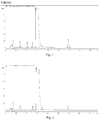
- the HPLC chromatogram were to see Figure 1 and Figure 2 , respectively.
- the inventors have the opinion that sugar and sugar alcohol, especially sucrose, mannitol, xylitol and maltitol, were beneficial to the release of the main drug from the medicine core.
- sugar and sugar alcohol especially sucrose, mannitol, xylitol and maltitol
- lactose as the main filler would affect the stability of the formulation. So lactose was not the preferable filler.
- Example 5 Made one portion of medicine core as Example 5 and made another portion of medicine core in the same manner as Example 5 but using lactose instead of sucrose. The two portions of medicine core were coated with the separating layer and the enteric layer in the same manner as Example 5 above respectively.
- duloxetine hydrochloride enteric tablet The two portions of duloxetine hydrochloride enteric tablet were put into a high density polyethylene plastic bottle respectively. Then the bottle was sealed up and put into an accelerated testing box. The stability, namely the releasing rate and the total amount of the impurity, was contrasted and inspected after they were placed at the temperature of 40°C ⁇ 2°C and the relative humidity of 75% ⁇ 5% for 6 months.
- Example 5 of this invention list of materials of the medicine core in Example 5 of this invention list of materials of the contrasted sample duloxetine hydrochloride 30mg duloxetine hydrochloride 30mg sucrose 100.6mg lactose 100.6mg PEG6000 33.4mg PEG6000 33.4mg microcrystalline cellulose 28.0mg microcrystalline cellulose 28.0mg crospovidone 2.1mg crospovidone 2.1mg magnesium stearate 1mg magnesium stearate 1mg magnesium stearate 1mg magnesium stearate 1mg magnesium stearate 1mg magnesium stearate 1mg
- the releasing rate was determined according to the method as that in Trial Example 2. The data were follows: Samples The releasing rate of the duloxetine hydrochloride enteric tablet prepared in Example 5 The releasing rate of the contrasted sample accelerated testing 0 month 95% 85% accelerated testing 3 months 96% 80% accelerated testing 6 months 93% 78%
- the total amount of the impurity was determined according to the method as that in Trial Example 2. The data were follows: Samples The total amount of the impurity of the duloxetine hydrochloride enteric tablet prepared in Example 5 The total amount of the impurity of the contrasted sample accelerated testing 0 month 0.08% 0.11% accelerated testing 3 months 0.14% 0.45% accelerated testing 6 months 0.30% 1.21%
Landscapes
- Health & Medical Sciences (AREA)
- Engineering & Computer Science (AREA)
- Bioinformatics & Cheminformatics (AREA)
- Public Health (AREA)
- Medicinal Chemistry (AREA)
- Pharmacology & Pharmacy (AREA)
- Life Sciences & Earth Sciences (AREA)
- Animal Behavior & Ethology (AREA)
- General Health & Medical Sciences (AREA)
- Chemical & Material Sciences (AREA)
- Veterinary Medicine (AREA)
- Epidemiology (AREA)
- Pain & Pain Management (AREA)
- Psychiatry (AREA)
- Biomedical Technology (AREA)
- Neurology (AREA)
- Neurosurgery (AREA)
- Chemical Kinetics & Catalysis (AREA)
- General Chemical & Material Sciences (AREA)
- Nuclear Medicine, Radiotherapy & Molecular Imaging (AREA)
- Organic Chemistry (AREA)
- Medicinal Preparation (AREA)
- Pharmaceuticals Containing Other Organic And Inorganic Compounds (AREA)
Description
- The present invention belongs to the field of pharmaceutical formulation, especially relates to an enteric formulation of duloxetine, its core and preparing method thereof
- Duloxetine is a selective serotonin and norepinephrine reuptake inhibitors (SNRIs). It is a safe and effective antidepressant drug. Its chemical designation is (+)-(S)-N-methyl-γ-(1-naphthyloxy) 2-thiophenepropylamine. It is usually used in the form of its hydrochloride. As duloxetine is unstable and easily degraded in acidic condition, it is suitable to make duloxetine or its salts into enteric formulation to resist the corrosion of gastric juice.
-
US5,508,276 relates to a kind of duloxetine enteric pellet, which comprising a) a core consisting of duloxetine and a pharmaceutically acceptable excipient; b) an optional separating layer; c) an enteric layer comprising hydroxypropyl methylcellulose acetate succinate (HPMCAS) and a pharmaceutically acceptable excipient; d) an optional finishing layer. In the separating layer, sugar alleviates the migration and interaction between enteric coating material and duloxetine to improve the acid resistance and stability. - Z1200410067160.4 relates to a kind of duloxetine enteric coating tablet and manufacturing process thereof. Duloxetine hydrochloride, water-soluble solid disperse carrier and thinner are dissolved in ethanol aqueous; it is to be sieved and pelletized, dryed, granulated, added lubricant and then preformed using the methods commonly known in this field; and the tablet core is coated with separating layer and the separating layer is coated with enteric layer. This method uses solid dispersion technology, increases the solubility of the main drug and improves the final release amount so as to improve the bioavailability of duloxetine.
- Duloxetine easily tends to take place reactions of degradation etc. In which water plays an accelerated or catalytic role. As for the published duloxetine hydrochloride enteric formulation, during the manufacture of the medicine core of duloxetine hydrochloride, the solution or suspension of duloxetine hydrochloride is made first, or the wetting agent or adhesion agent is added first, and in both conditions, duloxetine hydrochloride has contacted with water and some organic solvents such as ethanol, which influences the stability of duloxetine hydrochloride; moreover, when removing the water or the organic solvents, it wastes tine and labor force and increases cost, and the unstable factor will also be increased.If the organic solvents are used, it will be an environmental pollution.
-
WO2008/129501 discloses pharmaceutical compositions of duloxetine or pharmaceutically acceptable salts thereof, and processes for their preparation. - The technical problem to be solved by the present invention is to overcome the disadvantage that the unstable factor of the pharmaceutical active ingredient duloxetine is increased and the solvents are remained as water or organic solvent is contacted during the preparation of the medicine core of duloxetine, and to provide a new medicine core of duloxetine and enteric formulation thereof and manufacturing process thereof. During the preparation of the said medicine core of duloxetine, neither water nor organic solvent is contacted, the degradation of the pharmaceutical active ingredient duloxetine is less, the duloxetine is stable, the content of the pharmaceutical active ingredient is high, and the dissolution is good.
- The inventor has tried preparing the medicine core of duloxetine hydrochloride without addition of solvents such as water. But as the specific gravity of duloxetine hydrochloride is small, and the flowability is not good, duloxetine hydrochloride cannot be mixed thoroughly with other excipient. So it is difficult to conduct the method of direct pression of the medicine core in the form of powder. Duloxetine hydrochloride is loose, its viscosity is bad, and it is difficult to be mixed in dry form, so it forms poorly and the yield is low when the pelletization method of squeeze is used. The hot melt method can mix the medicine and the excipient without water or organic solvent. And the hot melt method doesn't only mix the medicine and the excipient well, but also finishes the forming of the medicine core at the same time. Therefore, the inventor prepares the medicine core and enteric formulation of duloxetine using the hot melt method. After effect experiments, the obtained duloxetine enteric formulation satisfies the purpose of this invention completely and this invention is completed.
- Consequently, the present invention provides a medicine core of duloxetine enteric formulation according to claim 1.
- According to this invention, the said water-soluble hot melt materials are the pharmaceutically acceptable water-soluble materials which are solid in the environment of 18∼26°C, and can be soften or melt by heating. The preferable softening or melting temperature of the said water-soluble hot melt material is 40∼65°C. On one hand, the water-soluble hot melt materials in this invention have specific softening or melting temperature so that it produces adhesive force after it melts, and it is solid again when it is in room temperature, which satisfies the need of melt-granulation. On the other hand, its water-solubility can make the main drug release from the tablet core. The said water-soluble hot melt material is one or more selected from the group consisting of polyethyleneglycol (PEG), poloxamer and polyoxyl (40) stearate. The said polyethyleneglycol is preferably one or more selected from polyethyleneglycol 4000∼10000. It is preferred, the content of the said water-soluble hot melt material is 5%∼40%, more preferably is 10∼25%; the percentage of the water-soluble hot melt material accounts for the total mass of the medicine core.
- According to this invention, the said duloxetine salt is preferably duloxetine hydrochloride. The content of duloxetine or its salt is 15%∼60%; the percentage of duloxetine or its salt accounts for the total mass of the medicine core. The average diameter of the said duloxetine or its salt is preferably less than 100µm.
- According to this invention, the said other pharmaceutically acceptable excipient is one or more selected from the group consisting of filler, disintegrant, lubricant and surfactant. The said filler is preferably one or more selected from the group consisting of sucrose, mannitol, xylitol, glucose, maltol, sorbitol, hydroxypropyl-β-cyclodextrin, starch, microcrystalline cellulose, pre-colloidization starch, magnesium oxide, arginine, magnesium carbonate, sodium carbonate, sodium bicarbonate and calcium hydrogenphosphate dihydrate, and more preferably one or more selected from the group consisting of sucrose, mannitol, xylitol, maltol, hydroxypropyl-β-cyclodextrin, microcrystalline cellulose, pre-colloidization starch, magnesium oxide, arginine, sodium carbonate, sodium bicarbonate and magnesium carbonate. The studies in this invention show that some sugar and sugar alcohol are not only beneficial to the release of the main drug from the medicine core, but also beneficial to the stability of the main drug, especially sucrose, mannitol, xylitol and maltol. Otherwise, using lactose as the main filler will affect the stability of the preparation, thus lactose is not the preferable filler. The content of the said filler may be 0%∼65% of the mass of the medicine core, preferably 10%∼65%, and more preferably 20%∼50%.
- According to this invention, the said disintegrant is preferably selected from the group consisting of sodium starch glycolate, hydroxypropyl cellulose, crospovidone and croscarmellose sodium, and more preferably selected from the group consisting of sodium starch glycolate crospovidone and croscarmellose sodium. The content of the said disintegrant may be 0%∼18% of the mess of the medicine core, preferably 1%∼18%, and more preferably 2%∼10%.
- According to this invention, the said lubricant may be selected from the conventional materials of pharmaceutical formulation, and preferably one or more selected from the group consisting of magnesium stearate, colloidal silicon dioxide, sodium stearyl fumarate and talc. The content of the said lubricant may be 0%∼3% of the mass of the medicine core, preferably 0.1%∼3%, and more preferably 0.5%∼1.5%. The said surfactant may be selected from the conventional materials of pharmaceutical formulation, and preferably selected from the group consisting of Tween-80, polyoxyethylene castor oil and sodium lauryl sulfate etc. The content of the said surfactant maybe 0%∼3% of the mass of the medicine core, preferably 0.1%∼1.5%.
- The process by which the medicine core of duloxetine enteric formulation of the present invention is obtainable by contains the following steps: mixing duloxetine or its salt, water-soluble hot melt material and pharmaceutically acceptable excipient, heating the water-soluble hot melt materials until they are softened or melted, and granulating in the state that the water-soluble hot melt materials are softened or melted, then just cooling down.
- According to this invention, the said granulation is hot melting stirring granulation. Other granulation methods disclosed herein are hot melting fluidifying granulation or hot melting squeezing granulation. In the said hot melting stirring granulation, the materials are put into the jacket heating granulation container. The triaxial mixing blade is turned on and turns at a certain speed. The materials are heated to the temperature needed by the jacket of the granulation container. The hot melt materials produce adhesive action when they are melted, which make the materials become soft materials. The soft materials turn over and rotate along the wall in the container. The massive materials are broken into pieces by slickers rotating in high speed. By the rubbing of the particles with the task wall and the gathering and rubbing of the particles, the granules are formed. The said hot melting fluidifying granulation is done in the fluidized bed granulator. In which the materials are heated to the temperature needed by hot air. In the fluidifying process of the materials, the hot melt materials produce adhesive action when they are melted which make the powder gather around them to form the particle cores. As the combination between one particle core and another, and the combination between particle core and particle go on, larger granules are formed. In the said hot melting squeezing granulation, the materials are mixed and put into the jacket heating and warming squeezing container. After the hot melt materials are melted, the materials become wet materials. The wet materials are squeezed through the sieve plate with certain aperture by propeller propulsion to get the cylindrical banding extrudate which is cut off at once to form the granules.
- According to this invention, in the said hot melting stirring granulation, the amount of the hot melting materials, the stirring time of granulation, the temperature in the jacket and the temperature of the materials have great influence on the property, the forming and the quality of the granules. The stirring time of granulation can be controlled based on adjusting of the constituent and amounts of the hot melting materials. The stirring time is controlled within 10 minutes when the hot melting materials reach the melt temperature. The temperature in the jacket is commonly 60∼90°C, and it can be controlled in 15∼25°C higher than the melt temperature of the hot melting materials based on the different constituent of the melting materials. All of these are beneficial to the preparation of granules with good compressibility and good fluxility.
- The present invention also provides a duloxetine enteric formulation which contains a medicine core, a separating layer and an enteric layer. Wherein, the said medicine core is the medicine core mentioned above.
- According to this invention, the said duloxetine enteric formulation is preferably enteric-coated tablet, enteric granules or enteric micro-tablet capsule. Wherein, as for the said enteric coated tablet or enteric granules, the medicine core in this invention mentioned above is coated in sequence with a separating layer and an enteric layer. The said enteric micro-tablet capsule is a common hard capsule within the medicine core mentioned above coated with the separatin layer and the enteric layer.
- As the common enteric formulation in this field, the said separating layer can comprise kinds of the separating layer materials that are common in this field. Preferably, it can be one or more selected from the group consisting of hypromellose, hydroxypropyl cellulose and methylcellulose. The separating layer can also contain sugar and xylitol further which can increase the stability of the enteric formulation of duloxetine or its salts; and it can also contain other pharmaceutical excipients selected from the group consisting of filling excipient, opacifier, plasticizer and anti-adhesive agent etc. As the common enteric formulation in this field, the said enteric layer can contain the enteric materials commonly used in the field of pharmaceutical formulation. Preferably, the enteric materials can be one or more selected from the group consisting of acrylic, polyvinyl alcohol phthalate, hydroxypropylmethylcellulose acetate succinate (HPMCAS) and hydroxypropylmethyl cellulose phthalate (HPMCP). The said enteric layer can preferably also contain plasticizer further. The said plasticizer is preferably one or more selected from the group consisting of triethyl citrate, diethyl phthalate, methyl silicone oil, castor oil and polyethylene glycol. The enteric layer can also contain other pharmaceutical excipients further such as anti-adhesive agent, lubricant, surfactant etc. There can also be modified layer outside the said enteric layer, but not necessarily. In some prescriptions, the moistureproof ability of the enteric formulation during storage can be increased and the appearance will be more intact and more glabrous by selecting proper modified layer. Preferably, the said modified layer can contain one or more selected from the group consisting of film-former of hypromellose etc., talc, silicon dioxide, titanium dioxide, polyethylene glycol or hydrophobic materials such as wax etc.
- The present invention also provides a manufacturing process of the duloxetine enteric formulation mentioned above which contains the following steps:
- (1) Coating the medicine core mentioned above with the separating layer using the common manufacturing procedure in this field;
- (2) Coating with the enteric layer using the common manufacturing procedure in this field. According to this invention, the said manufacturing process of the duloxetine enteric formulation can also contain the step: (3) Coating with the modified layer.
- All the raw materials and reagents in this invention are commercially available unless specified.
- In comparison with the existing technologies, the beneficial effects of this invention is as follows: in this invention, the medicine core of the enteric formulation of duloxetine or its salt is prepared using hot-melt technique, which avoids the introduction of water or organic solvents, reduces the residual of solvents, also decreases the degradation of duloxetine, and increases the stability of the formulation in preparation and storage. The adhesive is not needed to add and the granules are not needed to dry in this invention,which simplifies the manufacture steps greatly and reduces wear and tear.The cost is reduced as well. The hot melting materials in this invention such as polyethylene glycol, poloxamer and polyoxyl (40) stearates are hydrosoluble, which achieves the release of the main drug from the medicine core and make dissolution rate be good and increases the biological availability of the medicine. The content of the active pharmaceutical ingredients of the enteric formulation of duloxetine or its salt in this invention is high.
- The feature and beneficial effects of this invention are illuminated in combination with the drawings.
-
Figure 1 is the determination spectrogram of related substances of the medicine core of duloxetine hydrochloride prepared by common wet granulation method, which is sealed up in high density polyethylene bottle and placed in the temperature of 40°C±2°C and the relative humidity of 75%±5%. -
Figure 2 is the determination spectrogram of related substances of the medicine core of duloxetine hydrochloride prepared in Example 5, which is sealed up in high density polyethylene bottle and placed in the temperature of 40°C±2°C and the relative humidity of 75%±5%. - The following examples are used to further explain this invention, but not to restrict the scope of this invention. In the following examples the experimental methods which are not indicated by the actual conditions are usually done in the common conditions or conditions suggested by the manufacturer. Wherein, the softening temperature of polyethylene glycol 4000∼10000 is 48∼63°C, the melt temperature of poloxamer is 49∼57°C, and the melt temperature of polyoxyl (40) stearates is 46∼51°C.
-
Bill of materials: the medicine core duloxetine hydrochloride 187.2g sucrose 500.4g PEG6000 169.2g microcrystalline cellulose 250.2g crospovidone 86.4g magnesium stearate 6.2g the separating layer hypromellose 31.8g talc 15.6g sucrose 40.0g titanium dioxide 6.3g the enteric layer Acryl-EZE® MP 74.9g methyl silicone oil 0.37g - The duloxetine hydrochloride, sucrose, microcrystalline cellulose, 70% amount of polyvinylpolypyrrolidone and PEG6000 were mixed homogeneously, and placed into the high speed agitator with the temperature in the jacket of 80∼85°C. The agitator of the granulator was turned on. When the temperature of the materials reached 60°C, the agitation went on for 6min. The materials were gave out, cooled down, and granulated by 24 mesh sieve. The remaining crospovidone and magnesium stearate were added, mixed homogeneously, and squashed. Then the medicine core was obtained.
- The duloxetine hydrochloride enteric tablet was prepared in this example. The manufacturing process of coating is that: after the hypromellose was dispersed using hot water of 70°C, then water was added and stirred to dissolve. The homogenized talc and titanium dioxide were added. The solution of separating layer with the solid content of about 1.5wt% was prepared. The medicine core was placed into the coating pan. Adjusting the entering air temperature to make the temperature of the tablet bed be 30∼40°C and the nebulized pressure be 4.0kg/cm2. The rotation rate of the cauldron was 12rpm. The separating layer was coated the medine core.
- The Acryl-EZE® MP was prepared to an aqueous dispersion with a solid content of about 20wt%. Then the methyl silicone oil of 0.5wt% of the amount of the Acryl-EZE® MP was added and stirred for 20min. Adjusting the entering air temperature to make the temperature of the tablet bed be 28∼32°C and the nebulized pressure be 2.0kg/cm2. The rotation rate of the cauldron was 12rpm. The enteric layer was coated the medine core.
-
the medicine core duloxetine hydrochloride 33.6mg sucrose 115.9mg PEG6000 25.7mg crospovidone 13.6mg magnesium stearate 1.8mg the separating layer hypromellose 8.1mg talc 8mg sucrose 4.1mg titanium dioxide 1.6mg the enteric layer acrylic resin aqueous dispersion (L30D-55) 35.8mg triethyl citrate 1.2mg talc 1.2mg - The duloxetine hydrochloride, sucrose, 70% amount of crospovidone and PEG6000 were mixed homogeneously, and placed into the high speed agitator with the temperature in the jacket of 80∼85°C. The agitator of the granulator was turned on. When the temperature of the materials reached 60°C, the agitation went on for 8min. The materials were gave out, cooled down, and granulated using 24 mesh sieve. The remaining crospovidone and magnesium stearate were added, mixed homogeneously, and squashed. Then the medicine core was obtained.
- The duloxetine hydrochloride enteric tablet was prepared in this example. The manufacturing process of coating is that.: after the hypromellose was dispersed using hot water of 70°C, then water was added and stirred to dissolve. The homogenized talc and titanium dioxide were added. The solution of separating layer with the solid content of about 15wt% was prepared. The medicine core was placed into the coating pan. Adjusting the entering air temperature to make the temperature of the tablet bed be 30∼40°C and the nebulized pressure be 2.0kg/cm2. The rotation rate of the cauldron was 20rpm. The separating layer was coated the medine core.
- The operation of the enteric layer: the triethyl citrate and talc were added to water and homogenized sufficiently for 5∼10min with high shear pulp refiner, then was added to the aqueous dispersion of acrylic resin, stirred slowly for 30min, and passed through 80mesh fineness to make the solution of the enteric layer with the solid content of about 20wt%. The medicine core coated with the separating layer was placed into the coating pan to be coated with the enteric layer.
-
the medicine core duloxetine hydrochloride 33.6mg maltitol 99.6mg PEG6000 34.3mg Hydroxypropyl cellulose 17.7mg arginine 10mg crospovidone 3.6mg colloidal silicon dioxide 0.3mg magnesium stearate 1mg the separating layer hypromellose 5.1mg talc 10mg titanium dioxide 1mg the enteric layer HPMCAS-LF 13.7mg triethyl citrate 3.83mg talc 4.1mg sodium lauryl sulfate 0.4mg - The duloxetine hydrochloride, maltitol, hydroxypropyl cellulose, arginine and PEG6000 were mixed homogeneously, and made into granules as Example 2. The colloidal silicon dioxide and magnesium stearate were added, mixed homogeneously and squashed. Then the medicine core was obtained.
- The operation of the separating layer was the same as Example 2 above.
The operation of the enteric layer: - First, the triethyl citrate was dissolved in water. The solution was cooled down to 10°C.
- HPMCAS-LF, sodium lauryl sulfate and talc were added slowly and carefully to make a 75% (W/V) suspension of HPMCAS-LF. The medicine core was placed into the coating pan and coated with the enteric layer.
-
the medicine core duloxetine hydrochloride, 33.6mg sucrose 99.6mg PEG6000 34.3mg pregelatinized starch 15.7mg sodium bicarbonate 12mg crospovidone 3.6mg colloidal silicon dioxide 1mg magnesium stearate 1mg the separating layer hypromellose 5.1mg talc 10mg titanium dioxide 1mg the enteric layer HPMCP-55S 14.3mg talc 4.29mg dichloromethane 107mg ethanol 133.6mg water 26.9mg - The duloxetine hydrochloride, sucrose, pregelatinized starch, sodium bicarbonate and PEG6000 were mixed homogeneously, and made into granules in the same manner as Example 2 above. The colloidal silicon dioxide, magnesium stearate and crospovidone were added, mixed homogeneously and squashed. Then the medicine core was obtained.
- The operation of the separating layer was the same as Example 2 above.
- The operation of the enteric layer:
- HPMCP-55S was added to the mixed solution of ethanol and dichloromethane with stirring to mix homogeneously. The talc was added to water, stirred homogeneously, and added to the above mixed solution of ethanol and dichloromethane slowly. Keeping stirring until they dissolve thoroughly. The 5wt% suspension of HPMCP-55S was passed through the 24 mesh sieve. The medicine core was coated with the enteric layer.
-
the medicine core duloxetine hydrochloride 33.6mg sucrose 100.6mg PEG6000 33.4mg microcrystalline cellulose 28.0mg crospovidone 2.1mg magnesium stearate 1mg the separating layer hypromellose 8mg talc 5mg sucrose 3mg the enteric layer acrylic resin aqueous dispersion (L30D-55) 35.8mg triethyl citrate 1.2mg talc 1.2mg - The operation of granulation, the separating layer and the enteric layer were the same as Example 2 above.
-
the medicine core duloxetine hydrochloride 33.6mg mannitol 77.7mg pregelatinized starch 24.3mg PEG4000 29.0mg PEG8000 31.1mg crospovidone 2.0mg magnesium stearate 1.5mg the separating layer Opadry 03K19229 8mg the enteric layer Acryl-Eze® MP 12mg Methyl silicone oil 0.06mg - The duloxetine hydrochloride, mannitol, pregelatinized starch, PEG4000, PEG8000 and 70% amount of the crospovidone were mixed homogeneously, and made into granules in the same manner as Example 2 above. The remaining crospovidone and magnesium stearate were added, mixed homogeneously and squashed. Then the medicine core was obtained.
- The operation of the separating layer: Opadry 03K19229 (OPADRY CLEAR 03K19229) was homodispersed in water of about 80°C, high speed sheared for 10 minutes, and stirred for another 45 minutes to make a solution with the solid content of about 15wt%. The medicine core was coated with the separating layer.
- The operation of the enteric layer was the same as Example 1 above.
-
the medicine core duloxetine hydrochloride 33.6mg mannitol 78.1mg sodium starch glycolate 24.3mg poloxamer 17.3mg PEG8000 16.3mg crospovidone 1.9mg colloidal silicon dioxide 0.3mg magnesium stearate 0.8mg the separating layer hypromellose 7mg talc 20mg the enteric layer acrylic resin aqueous dispersion (L30D-55) 35.8mg triethyl citrate 1.2mg talc 1.2mg the modified layer hypromellose 4.6mg talc 1.5mg titanium dioxide 1.6mg - The duloxetine hydrochloride, mannitol, sodium starch glycolate, poloxamer and PEG8000 were mixed homogeneously, and made into granules in the same manner as Example 2 above. crospovidone, colloidal silicon dioxide and magnesium stearate were added, mixed homogeneously and squashed. Then the medicine core was obtained.
- The operation of the separating layer and the enteric layer were the same as Example 2 above. The operation of the modified layer: hypromellose was dispersed in hot water of 70°C, and then water was added and stirred to dissolve. Homogenized talc and titanium dioxide were added to make a solution of the modified layer with the solid content of about 15wt%. The medicine core was placed into the coating pan and coated with the modified layer.
-
the medicine core duloxetine hydrochloride, 33.6mg maltitol 73.1mg hydroxypropyl-β-cyclodextrin 18.5mg polyoxyl (40) stearate 17.7mg PEG8000 16.7mg crospovidone 1.9mg magnesium carbonate 6mg magnesium stearate 0.8mg the separating layer hypromellose 6.2mg talc 6.0mg titanium dioxide 1.6mg the enteric layer acrylic resin aqueous dispersion (L30D-55) 35.8mg triethyl citrate 1.2mg talc 1.2mg The modified layer hypromellose 4.6mg talc 1.5mg - The duloxetine hydrochloride, maltitol, hydroxypropyl-β-cyclodextrin, polyoxyl (40) stearate, magnesium carbonate and PEG8000 were mixed homogeneously, and made into granules in the same manner as Example 2 above. crospovidone and magnesium stearate were added, mixed homogeneously and squashed. Then the medicine core was obtained.
- The operation of the separating layer and the enteric layer were the same as Example 2 above. The operation of the modified layer referred to Example 7.
-
the medicine core duloxetine hydrochloride 33.6mg sucrose 82.0mg PEG6000 34mg microcrystalline cellulose 25.4mg sodium carbonate 5mg crospovidone 14.2mg magnesium stearate 1mg the separating layer hypromellose 5.1mg talc 10mg titanium dioxide 1mg the enteric layer Acryl-Eze® MP 12mg - The operation of granulation: the duloxetine hydrochloride, sucrose, microcrystalline cellulose, sodium carbonate, PEG6000 and 70% amount of crospovidone were mixed homogeneously. The fluidized bed granulator was turned on, and the air ratio of the fan was set to 12∼15Hz, until the temperature of the materials was 60∼65°C. The materials were gave out, cooled down, and granuled using 24 mesh sieve. The remaining crospovidone and magnesium stearate were added, mixed homogeneously and squashed. Then the medicine core was obtained.
- The operation of the separating layer and the enteric layer were the same as Example 1 above.
-
the medicine core duloxetine hydrochloride 33.6mg sucrose 40.5mg PEG6000 19.8mg microcrystalline cellulose 10.5mg crospovidone 12.1mg colloidal silicon dioxide 0.3mg magnesium stearate 1mg the separating layer OPADRY CLEAR 03K19229 4.3mg the enteric layer Acryl-Eze® MP 6.5mg Methyl silicone oil 0.032mg - The Duloxetine hydrochloride, sucrose, microcrystalline cellulose, 70% amount of crospovidone and PEG6000 were mixed homogeneously, and made into granules in the same manner as Example 2 above. The remaining crospovidone, colloidal silicon dioxide and magnesium stearate were added, mixed homogeneously and squashed. Then the medicine core was obtained.
- The operation of the separating layer was the same as Example 6 above; the operation of the enteric layer was the same as Example 2 above.
-
the medicine core duloxetine hydrochloride 33.6mg sucrose 35.2mg PEG6000 8.0mg crospovidone 6.1mg colloidal silicon dioxide 0.2mg magnesium stearate 0.8mg the separating layer hypromellose 3.6mg talc 3.2mg titanium dioxide 0.72mg the enteric layer acrylic resin aqueous dispersion (L30D-55) 21.3mg triethyl citrate 0.7mg talc 0.7mg - The operation of granulation, the separating layer and the enteric layer were the same as Example 2 above.
-
the medicine core duloxetine hydrochloride 33.6mg mannitol 55.5mg PEG4000 41mg PEG 10000 20.2mg crospovidone 12.5mg magnesium stearate 1.5mg the separating layer hypromellose 4.4mg talc 5.0mg the enteric layer acrylic resin aqueous dispersion (L30D-55) 35.5mg triethyl citrate 1.2mg talc 1.3mg - The operation of granulation and the separating layer referred to Example 2; the operation of the enteric layer was the same as Example 2 above.
-
the medicine core duloxetine hydrochloride 33.6mg microcrystalline cellulose 32.5mg PEG6000 25.1mg crospovidone 8.1 mg magnesium stearate 1mg the separating layer hypromellose 3.8mg talc 5.7mg titanium dioxide 0.8mg the enteric layer acrylic resin aqueous dispersion (L30D-55) 30.7mg triethyl citrate 1mg talc 1mg - The operation of granulation, the separating layer and the enteric layer were the same as
-
the medicine core duloxetine hydrochloride 33.6mg microcrystalline cellulose 40.2mg PEG4000 20.1mg PEG8000 19.4mg xylitol 13.7mg croscarmellose sodium 2.9mg magnesium stearate 0.5mg talc 2.1mg the separating layer hypromellose 4.2mg talc 8.4mg titanium dioxide 0.9mg the enteric layer acrylic resin aqueous dispersion (L30D-55) 42.5mg triethyl citrate 1.3mg talc 1.3mg - The Duloxetine hydrochloride, microcrystalline cellulose, PEG4000, PEG8000 and xylitol were mixed homogeneously and put into the high speed mixing granulator with the temperature of 80∼85°C in the jacket. The agitator of the granulator was turned on. When the temperature of the materials reached 60°C, stirring went on for another 6 minutes. The materials were gave out, cooled down, and granuled using 24 mesh sieve. The croscarmelose sodium and talc were added, mixed homogeneously and squashed to micro-tablets of 25mg. Then the medicine core was obtained.
- The operation of the separating layer referred to Example 3; the operation of the enteric layer was the same as Example 2 above.
- The micro-tablets coated with the enteric layer were put into the capsule and the enteric micro-tablet capsule was obtained.
-
the medicine core duloxetine hydrochloride 67.2mg microcrystalline cellulose 20.5mg PEG4000 35.2mg PEG8000 33.4mg magnesium oxide 15.0mg croscarmelose sodium 3.4mg magnesium stearate 2.0mg the separating layer hypromellose 3.4mg talc 7.3mg titanium dioxide 0.7mg the enteric layer acrylic resin aqueous dispersion (L30D-55) 35.0mg triethyl citrate 1.1mg talc 1.2mg - The operation of granulation and the separating layer referred to Example 1; the operation of the enteric layer was the same as Example 2 above.
-
the medicine core duloxetine hydrochloride 67.2mg microcrystalline cellulose 20mg PEG6000 25mg poloxamer 8mg crospovidone 3mg sodium lauryl sulfate 0.2mg talc 3.7mg the separating layer hypromellose 8mg talc 4mg sucrose 5mg the enteric layer HPMCAS-LF 17mg triethyl citrate 4.8mg talc 5mg sodium lauryl sulfate 0.5mg - The operation of granulation.: the duloxetine hydrochloride, microcrystalline cellulose, PEG6000, poloxamer, crospovidone, sodium lauryl sulfate and talc were mixed homogeneously and put into the extruding machine with the warming temperature of 75∼85°C in the jacket. The wet materials were extruded through the sieve plate with the aperture of 1mm by propeller propulsion to get the cylindrical banding extrudate which was cut off at once and made into granules after cooled down. And the fine powder was sieved out by 30 mesh sieve.
- The operation of the separating layer: the solution of the separating layer was made according to Example 1. The separating layer was coated in the wurster fluidifying coating machine. The operation of the enteric layer: the solution of the enteric layer was made according to Example 3. The enteric layer was coated in the wurster fluidifying coating machine.
-
the medicine core duloxctine hydrochloride 33.6mg PEG6000 11.76mg Hydroxypropyl cellulose 4.0mg croscarmelose sodium 3.0mg carboxymethyl starch sodium 3.0mg magnesium stearate 0.56mg the separating layer hypromellose 2.5mg talc 1.4mg the enteric layer acrylic resin aqueous dispersion (L30D-55) 17mg triethy citrate 0.6mg talc 0.6mg - The operation of granulation, the separating layer and the enteric layer were the same as Example 2 above.
-
the medicine core duloxetine hydrochloride 56mg PEG6000 22.4mg sucrose 30mg crospovidone 2.24mg magnesium stearate 1.1mg the separating layer hypromellose 4.18mg talc 2.5mg mannitol 3mg the enteric layer HPMCAS-LF 9.5mg triethyl citrate 2.6mg talc 2.8mg sodium lauryl sulfate 0.25mg - The operation of granulation and the operation of the separating layer were the same as Example 2 above.
- The operation of the enteric layer was the same as Example 3 above.
-
the medicine core duloxetine hydrochloride 33.6mg PEG6000 11mg sucrose 14.0mg microcrystalline cellulose 3.0mg sodium lauryl sulfate 0.06mg the separating layer hypromellose 2.5mg talc 1.4mg the enteric layer acrylic resin aqueous dispersion (L30D-55) 17mg triethyl citrate 0.6mg talc 0.6mg - The operation of granulation, the separating layer and the enteric layer were the same as Example 2 above.
-
the medicine core duloxetine hydrochloride 44mg PEG6000 18mg sucrose 4.0mg microcrystalline cellulose 4.0mg polyoxyethylene castor oil 1.0mg sodium stearyl fumarate 0.6mg sodium lauryl sulfate 1.1mg the separating layer hypromellose 3.0mg sucrose 2.0mg talc 1.4mg the enteric layer acrylic resin aqueous dispersion (L30D-55) 17mg triethyl citrate 0.6mg talc 0.6mg - The operation of granulation, the separating layer and the enteric layer were the same as Example 2 above.
- The following trial examples are given as further illustrations of the beneficial effects of this invention.
- As the hot-melt materials used in this invention were all water soluble, the dissolution and release of the main drug were accelerated and the biological availability of the medicine was enhanced. To verify the releasing rate of the duloxetine hydrochloride enteric tablet prepared by the hot melt granulation process used in this invention was better than that prepared by the common wet granulation process, the inventor prepared the duloxetine hydrochloride enteric tablet according to the two lists in the following table that were mainly the same in the prescription materials using the hot melt granulation process and the common wet granulation process, respectively, and the releasing rate of the two samples were compared.
Bill of materials of the prescription compared the medicine cores: the material list of the hot melt granulation process the material list of the common wet granulation process duloxetine hydrochloride 10mg duloxetine hydrochloride 10mg Povidone K30 3.64mg Povidone K30 3.64mg sucrose 125mg sucrose 125mg lactose 75mg lactose 75mg PEG6000 34mg 60% (wt) ethanol 20mg magnesium stearate 1.33mg magnesium stearate 1.33mg Bill of materials of the separating layer and the enteric layer: the separating layer hypromellose 10mg talc 6mg sucrose 4mg the enteric layer acrylic resin aqueous dispersion (L30D-55) 45mg triethyl citrate 1.5mg talc 1.5mg - The process of the medicine core of the hot melt granulation: The duloxetine hydrochloride, sucrose, lactose, povidone K30 and PEG6000 were mixed homogeneously, and placed into the high speed mixing granulator with the temperature in the jacket of 80∼85°C. The agitator of the granulator was turned on. When the temperature of the materials reached 60°C, the agitation went on for 6 min. The materials were gave out, cooled down, and granuled using 24 mesh sieve. The magnesium stearate was added, and mixed homogeneously, and squashed. Then the medicine core was obtained.
- The process of the medicine core of the common wet granulation: the povidone K30 was dissolved in the solution of 60% (wt) ethanol. The duloxetine hydrochloride was added, and after it was dissolved, the sucrose and the lactose were added and stirred to soft materials in the groove shaped mixer. The wet granules were made using the oscillating granulator (fitted with 20mesh nylon net). The wet granules were dried at 50∼60°C in the convection oven, then cooled down, and granulated using the 20 mesh sieve. The magnesium stearate was added, mixed homogeneously, and squashed. Then the medicine core was obtained.
- The operation of the separating layer and the enteric layer coated out the medicine core mentioned above were the same as Example 2 above, respectively. The two portions of duloxetine hydrochloride enteric tablet were respectively put into a high density polyethylene plastic bottle. Then the bottle was sealed up and put into an accelerated testing box. And the contrasted stability (the data of releasing rate) was studied at the temperature of 40°C±2°C and the relative humidity of 75%±5%.
- According to the assay method of the enteric formulation described in the appendix of Pharmacopoeia of the People's Republic of China (2005) Volume II , 900ml of the phosphate buffer (pH6.8) was used as the release medium, the rotational speed was 100r/min, and the releasing rate of the two samples was determined. The results are as follows:
Samples The releasing rate of the duloxetine hydrochloride enteric tablet prepared by the hot melt granulation process The releasing rate of the duloxetine hydrochloride enteric tablet prepared by the common wet granulation process accelerated testing 0 month95% 85% accelerated testing 3 months 94% 80% accelerated testing 6 months 95% 81% - As in this invention the medicine core of the enteric formulation of duloxetine or its salt was prepared using the hot-melt process, it avoided the introduction of water or organic solvents, reduced the residual of solvents, also decreased the degradation of duloxetine, and increased the stability of the formulation in preparation and storage. The inventor compared the stability of the enteric tablet prepared in Example 5 and that prepared in Trial Example 1 using the common wet granulation process. The two portions of duloxetine hydrochloride enteric tablet were put into a high density polyethylene plastic bottle. Then the bottle was sealed up and put into an accelerated testing box. And the stability (the total amount of the impurity) was contrasted and inspected after they were placed at the temperature of 40°C±2°C and the relative humidity of 75%±5% for 6 months.
- Testing Method: the phosphate buffer (pH5.8)-acetonitrile (63:37) was used as the mobile phase, and the determine wavelength was 230nm. The solution of the two samples was taken accurately and injected into HPLC. The chromatogram was recorded to the time that was two times of the retention time of the main peak. The data of the total amount of the impurity was as follows. The HPLC chromatogram were to see
Figure 1 and Figure 2 , respectively.Samples The content of the impurity of the duloxetine hydrochloride enteric tablet prepared in Example 5 of this invention The content of the impurity of the duloxetine hydrochloride enteric tablet prepared by the common wet granulation accelerated testing 0 month0.08% 0.08% accelerated testing 3 months 0.14% 0.33% accelerated testing 6 months 0.25% 0.57% - The inventors have the opinion that sugar and sugar alcohol, especially sucrose, mannitol, xylitol and maltitol, were beneficial to the release of the main drug from the medicine core. However, using lactose as the main filler would affect the stability of the formulation. So lactose was not the preferable filler.
- Made one portion of medicine core as Example 5 and made another portion of medicine core in the same manner as Example 5 but using lactose instead of sucrose. The two portions of medicine core were coated with the separating layer and the enteric layer in the same manner as Example 5 above respectively.
- The two portions of duloxetine hydrochloride enteric tablet were put into a high density polyethylene plastic bottle respectively. Then the bottle was sealed up and put into an accelerated testing box. The stability, namely the releasing rate and the total amount of the impurity, was contrasted and inspected after they were placed at the temperature of 40°C±2°C and the relative humidity of 75%±5% for 6 months.
-
list of materials of the medicine core in Example 5 of this invention list of materials of the contrasted sample duloxetine hydrochloride 30mg duloxetine hydrochloride 30mg sucrose 100.6mg lactose 100.6mg PEG6000 33.4mg PEG6000 33.4mg microcrystalline cellulose 28.0mg microcrystalline cellulose 28.0mg crospovidone 2.1mg crospovidone 2.1mg magnesium stearate 1mg magnesium stearate 1mg - The releasing rate was determined according to the method as that in Trial Example 2. The data were follows:
Samples The releasing rate of the duloxetine hydrochloride enteric tablet prepared in Example 5 The releasing rate of the contrasted sample accelerated testing 0 month95% 85% accelerated testing 3 months 96% 80% accelerated testing 6 months 93% 78% - The total amount of the impurity was determined according to the method as that in Trial Example 2. The data were follows:
Samples The total amount of the impurity of the duloxetine hydrochloride enteric tablet prepared in Example 5 The total amount of the impurity of the contrasted sample accelerated testing 0 month0.08% 0.11% accelerated testing 3 months 0.14% 0.45% accelerated testing 6 months 0.30% 1.21%
Claims (13)
- A medicine core of duloxetine enteric formulation, consisting of pharmaceutical active ingredient duloxetine or its salt and pharmaceutically acceptable excipient; characterized in that the said pharmaceutically acceptable excipient contains water-soluble hot melt materials selected from the group consisting of polyethylene glycol, poloxamer and polyoxyl (40) stearate or mixtures thereof, the content of which is 10%∼25%; the content of pharmaceutical active ingredient duloxetine or its salt is 15%∼60%; and the rest is other pharmaceutically acceptable excipient; the percentage describes their quality of accounting for the total mass of the medicine core; the said medicine core of duloxetine enteric formulation obtainable by the manufacturing process containing the following steps: mixing duloxetine or its salt, water-soluble hot melt material and other pharmaceutically acceptable excipient, heating the water-soluble hot melt materials until they are softened or melted; and granulating in the state that the water-soluble hot melt materials are softened or melted, then just cooling down;wherein the granulation is hot melting stirring granulation, in which the materials are put into a jacket heating granulation container, the stirring time of the hot melt stirring granulation is controlled within 10 minutes when the hot melt materials reach melt temperature, and the temperature in the jacket is 60-90°C; andwherein said other pharmaceutically acceptable excipient is one or more selected from the group consisting of filler, disintegrant, lubricant and surfactant.
- The medicine core according to claim 1, characterized in that the softening or melting temperature of the said water-soluble hot melt material is 40∼65°C.
- The medicine core according to claim 1, characterized in that the said polyethylene glycol is one or more selected from polyethylene glycol 4000∼10000.
- The medicine core according to claim 1, characterized in that the said duloxetine salt is duloxetine hydrochloride.
- The medicine core according to claim 1, characterized in that the said filler is one or more selected from the group consisting of sucrose, mannitol, xylitol, maltitol, hydroxypropyl-β-cyclodextrin, microcrystalline cellulose, pregelatinized starch, magnesium oxide, arginine, sodium carbonate, sodium bicarbonate and magnesium carbonate; and the content of the said filler is 10%∼65% of the mass of the medicine core.
- The medicine core according to claim 1, characterized in that the said disintegrant is selected from the group consisting of sodium starch glycolate, hydroxypropyl cellulose, crospovidone and croscarmellose sodium; the content of the said disintegrant is 1%∼18% of the mass of the medicine core.
- The medicine core according to claim 1, characterized in that the said lubricant is one or more selected from the group consisting of magnesium stearate, colloidal silicon dioxide, sodium stearyl fumarate and talc; the content of the said lubricant is 0.1%∼3% of the mass of the medicine core.
- The medicine core according to claim 1, characterized in that the said surface active agent is selected from the group consisting of Tween-80, polyoxyethylene castor oil and sodium lauryl sulfate; the content of the said surface active agent is 0.1%∼1.5% of the mess of the medicine core.
- A duloxetine enteric formulation, which contains a medicine core, a separating layer and an enteric layer, characterized in that the said medicine core is the medicine core that mentioned in any one of claim 1-8.
- The duloxetine enteric formulation according to claim 9, characterized in that the said duloxetine enteric formulation is enteric coated tablet, enteric granules or enteric micro-tablet capsule.
- The duloxetine enteric formulation according to claim 9, characterized in that there is also a modified layer outside the said enteric layer.
- A manufacturing process of a duloxetine enteric formulation, wherein the formulation is according to claim 9, characterized in that it contains the following steps:(1) coating the medicine core according to any one of claims 1-8 with the separating layer using the common manufacturing procedure in this field;(2) coating with the enteric layer using the common manufacturing procedure in this field.
- The manufacturing process according to claim 12, characterized in that it also contains the step: (3) coating with the modified layer.
Applications Claiming Priority (2)
| Application Number | Priority Date | Filing Date | Title |
|---|---|---|---|
| CN2008102078772A CN101756960B (en) | 2008-12-26 | 2008-12-26 | Duloxetine enteric-coated preparation and core material and preparation method thereof |
| PCT/CN2009/074786 WO2010072105A1 (en) | 2008-12-26 | 2009-11-04 | A enteric formulation of duloxetine and its core and prepration method |
Publications (3)
| Publication Number | Publication Date |
|---|---|
| EP2380563A1 EP2380563A1 (en) | 2011-10-26 |
| EP2380563A4 EP2380563A4 (en) | 2012-07-25 |
| EP2380563B1 true EP2380563B1 (en) | 2016-04-27 |
Family
ID=42286884
Family Applications (1)
| Application Number | Title | Priority Date | Filing Date |
|---|---|---|---|
| EP09834058.1A Not-in-force EP2380563B1 (en) | 2008-12-26 | 2009-11-04 | A enteric formulation of duloxetine and its core and prepration method |
Country Status (4)
| Country | Link |
|---|---|
| US (1) | US8980314B2 (en) |
| EP (1) | EP2380563B1 (en) |
| CN (1) | CN101756960B (en) |
| WO (1) | WO2010072105A1 (en) |
Families Citing this family (11)
| Publication number | Priority date | Publication date | Assignee | Title |
|---|---|---|---|---|
| CN102579403B (en) * | 2011-12-26 | 2013-08-21 | 天津市嵩锐医药科技有限公司 | Duloxetine hydrochloride drug composition |
| CN102988181B (en) * | 2012-12-31 | 2015-01-14 | 广州白云山天心制药股份有限公司 | Granulating method and application for oral solid preparation |
| CN103127023B (en) * | 2013-03-01 | 2014-08-27 | 河北天成药业股份有限公司 | Duloxetine hydrochloride enteric-coated tablet and preparation method |
| GR1008228B (en) * | 2013-04-23 | 2014-06-16 | "Φαρματεν Α.Β.Ε.Ε.", | Pharmaceutical composition comprising a dual reuptake inhibitor and method for the preparation thereof |
| WO2014194872A1 (en) * | 2013-06-04 | 2014-12-11 | Zentiva, K.S. | Taste masking of water soluble drugs using poloxamers |
| PL224543B1 (en) * | 2013-08-21 | 2017-01-31 | Pabianickie Zakłady Farm Polfa Spółka Akcyjna | Duloxetine enteric tablet |
| CN106176659B (en) * | 2015-05-05 | 2019-07-12 | 四川科瑞德制药股份有限公司 | A kind of Tandospirone enteric coatel tablets and preparation method thereof |
| US20160331689A1 (en) | 2015-05-12 | 2016-11-17 | SE Tylose USA, Inc. | Aqueous enteric coating composition |
| CN105520920B (en) * | 2016-01-04 | 2018-09-07 | 浙江美华鼎昌医药科技有限公司 | Duloxetine hydrochloride capsule and preparation method thereof |
| CN105534949A (en) * | 2016-01-06 | 2016-05-04 | 北京修正创新药物研究院有限公司 | Duloxetine hydrochloride enteric mini-pill preparation |
| CN105534940B (en) * | 2016-02-19 | 2018-12-07 | 国药集团致君(深圳)坪山制药有限公司 | A kind of diclofenac sodium extended action tablet composition and preparation method thereof |
Family Cites Families (11)
| Publication number | Priority date | Publication date | Assignee | Title |
|---|---|---|---|---|
| US5508276A (en) * | 1994-07-18 | 1996-04-16 | Eli Lilly And Company | Duloxetine enteric pellets |
| JP2006109851A (en) * | 2004-10-12 | 2006-04-27 | Moritex Corp | Illumination device and endoscope with objective illumination using the same |
| CN100362997C (en) * | 2004-10-14 | 2008-01-23 | 上海医药工业研究院 | A kind of duloxetine enteric-coated tablet and preparation method thereof |
| CN100362996C (en) * | 2004-10-14 | 2008-01-23 | 上海医药工业研究院 | A kind of duloxetine enteric-coated pellet capsule and preparation method thereof |
| EP1904039A2 (en) | 2005-06-20 | 2008-04-02 | Cadila Healthcare Ltd. | Controlled release dosage formulation of duloxetine |
| CN1883473A (en) * | 2005-06-22 | 2006-12-27 | 北京德众万全医药科技有限公司 | An enteric coated tablet of dulouxetine |
| CN101370476A (en) * | 2006-01-18 | 2009-02-18 | 霍夫曼-拉罗奇有限公司 | Pharmaceutical compositions and methods |
| CN100525760C (en) * | 2006-10-17 | 2009-08-12 | 重庆圣华曦药业有限公司 | Duloxetine hydrochloride sustained release medicine |
| CN101190208B (en) * | 2006-11-30 | 2011-11-02 | 石药集团中奇制药技术(石家庄)有限公司 | Medicinal preparations containing duloxetine hydrochloride and preparation method thereof |
| WO2008129501A2 (en) * | 2007-04-20 | 2008-10-30 | Wockhardt Research Centre | Pharmaceutical compositions of duloxetine |
| US20110150942A1 (en) * | 2008-06-13 | 2011-06-23 | Natalija Zajc | Gastro-resistant pharmaceutical oral compositions comprising duloxetine or its pharmaceutically acceptable derivatives |
-
2008
- 2008-12-26 CN CN2008102078772A patent/CN101756960B/en active Active
-
2009
- 2009-11-04 US US13/142,116 patent/US8980314B2/en not_active Expired - Fee Related
- 2009-11-04 WO PCT/CN2009/074786 patent/WO2010072105A1/en not_active Ceased
- 2009-11-04 EP EP09834058.1A patent/EP2380563B1/en not_active Not-in-force
Also Published As
| Publication number | Publication date |
|---|---|
| US20110274750A1 (en) | 2011-11-10 |
| EP2380563A4 (en) | 2012-07-25 |
| CN101756960B (en) | 2012-06-27 |
| WO2010072105A1 (en) | 2010-07-01 |
| EP2380563A1 (en) | 2011-10-26 |
| CN101756960A (en) | 2010-06-30 |
| US8980314B2 (en) | 2015-03-17 |
Similar Documents
| Publication | Publication Date | Title |
|---|---|---|
| EP2380563A1 (en) | A enteric formulation of duloxetine and its core and prepration method | |
| AU778389B2 (en) | Novel pharmaceutical compositions of anti-tubercular drugs and process for their preparation | |
| EP1830855B1 (en) | Solid, orally applicable pharmaceutical administration forms containing rivaroxaban having modified release | |
| CN100352432C (en) | Nateglinide-containing preparation | |
| KR101141508B1 (en) | Pantoprazole multiparticulate formulations | |
| US20050095293A1 (en) | Administration form for the oral application of poorly soluble drugs | |
| JP2002523443A (en) | Omeprazole preparation | |
| US20080305165A1 (en) | Sustained release oral formulation and process for the preparation thereof | |
| JP2001525366A (en) | New dosage forms containing acid-labile active compounds. | |
| CZ300497B6 (en) | Pharmaceutical composition, its spheronized core and the method of preparation of nuclei and pharmaceutical composition | |
| BG64967B1 (en) | Method for peroral pharmaceutical preparation including a compound with antiulcerous activity | |
| US6855336B2 (en) | Omeprazole formulation | |
| US20100047343A1 (en) | Multiparticulate formulation having tramadol in immediate and controlled release form | |
| CN107260700A (en) | A kind of preparation method of ticagrelor compound oral solid pharmaceutical preparation | |
| TW200848056A (en) | Solid dispersion of a neurokinin antagonist | |
| CN111012756B (en) | Dabigatran etexilate pharmaceutical composition and preparation method thereof | |
| CN107106494A (en) | A Ruiluomo preparations | |
| CN111514142A (en) | Pharmaceutical composition containing nitroxoline prodrug and preparation method and application thereof | |
| SK50442006A3 (en) | Pellets containing venlafaxine hydrochloride | |
| JPWO2008114859A1 (en) | Pharmaceutical composition containing pyrazole derivative | |
| JP2000053563A (en) | Rapid releasable fine granule having masked bitterness | |
| EP2308483A1 (en) | Process for production of spherical microparticles comprising tamsulosin hydrochloride | |
| WO2005053659A1 (en) | An improved pharmaceutical formulation containing tamsulosin salt and a process for its preparation | |
| WO2025074298A1 (en) | An extended-release pharmaceutical formulation of viloxazine and process for preparation thereof | |
| CN104274444B (en) | Oral double pellet pharmaceutical compositions of dabigatran etcxilate or its salt |
Legal Events
| Date | Code | Title | Description |
|---|---|---|---|
| PUAI | Public reference made under article 153(3) epc to a published international application that has entered the european phase |
Free format text: ORIGINAL CODE: 0009012 |
|
| 17P | Request for examination filed |
Effective date: 20110629 |
|
| AK | Designated contracting states |
Kind code of ref document: A1 Designated state(s): AT BE BG CH CY CZ DE DK EE ES FI FR GB GR HR HU IE IS IT LI LT LU LV MC MK MT NL NO PL PT RO SE SI SK SM TR |
|
| DAX | Request for extension of the european patent (deleted) | ||
| A4 | Supplementary search report drawn up and despatched |
Effective date: 20120627 |
|
| RIC1 | Information provided on ipc code assigned before grant |
Ipc: A61P 25/24 20060101ALI20120621BHEP Ipc: A61K 47/30 20060101ALI20120621BHEP Ipc: A61K 31/381 20060101ALI20120621BHEP Ipc: A61K 9/50 20060101ALI20120621BHEP Ipc: A61K 9/28 20060101AFI20120621BHEP |
|
| 17Q | First examination report despatched |
Effective date: 20130724 |
|
| GRAP | Despatch of communication of intention to grant a patent |
Free format text: ORIGINAL CODE: EPIDOSNIGR1 |
|
| INTG | Intention to grant announced |
Effective date: 20151222 |
|
| GRAS | Grant fee paid |
Free format text: ORIGINAL CODE: EPIDOSNIGR3 |
|
| GRAA | (expected) grant |
Free format text: ORIGINAL CODE: 0009210 |
|
| AK | Designated contracting states |
Kind code of ref document: B1 Designated state(s): AT BE BG CH CY CZ DE DK EE ES FI FR GB GR HR HU IE IS IT LI LT LU LV MC MK MT NL NO PL PT RO SE SI SK SM TR |
|
| REG | Reference to a national code |
Ref country code: GB Ref legal event code: FG4D |
|
| REG | Reference to a national code |
Ref country code: CH Ref legal event code: EP |
|
| REG | Reference to a national code |
Ref country code: AT Ref legal event code: REF Ref document number: 793978 Country of ref document: AT Kind code of ref document: T Effective date: 20160515 |
|
| REG | Reference to a national code |
Ref country code: IE Ref legal event code: FG4D |
|
| REG | Reference to a national code |
Ref country code: DE Ref legal event code: R096 Ref document number: 602009038281 Country of ref document: DE |
|
| REG | Reference to a national code |
Ref country code: LT Ref legal event code: MG4D |
|
| REG | Reference to a national code |
Ref country code: NL Ref legal event code: MP Effective date: 20160427 |
|
| REG | Reference to a national code |
Ref country code: AT Ref legal event code: MK05 Ref document number: 793978 Country of ref document: AT Kind code of ref document: T Effective date: 20160427 |
|
| PG25 | Lapsed in a contracting state [announced via postgrant information from national office to epo] |
Ref country code: NL Free format text: LAPSE BECAUSE OF FAILURE TO SUBMIT A TRANSLATION OF THE DESCRIPTION OR TO PAY THE FEE WITHIN THE PRESCRIBED TIME-LIMIT Effective date: 20160427 |
|
| PG25 | Lapsed in a contracting state [announced via postgrant information from national office to epo] |
Ref country code: NO Free format text: LAPSE BECAUSE OF FAILURE TO SUBMIT A TRANSLATION OF THE DESCRIPTION OR TO PAY THE FEE WITHIN THE PRESCRIBED TIME-LIMIT Effective date: 20160727 Ref country code: PL Free format text: LAPSE BECAUSE OF FAILURE TO SUBMIT A TRANSLATION OF THE DESCRIPTION OR TO PAY THE FEE WITHIN THE PRESCRIBED TIME-LIMIT Effective date: 20160427 Ref country code: LT Free format text: LAPSE BECAUSE OF FAILURE TO SUBMIT A TRANSLATION OF THE DESCRIPTION OR TO PAY THE FEE WITHIN THE PRESCRIBED TIME-LIMIT Effective date: 20160427 Ref country code: FI Free format text: LAPSE BECAUSE OF FAILURE TO SUBMIT A TRANSLATION OF THE DESCRIPTION OR TO PAY THE FEE WITHIN THE PRESCRIBED TIME-LIMIT Effective date: 20160427 |
|
| PG25 | Lapsed in a contracting state [announced via postgrant information from national office to epo] |
Ref country code: HR Free format text: LAPSE BECAUSE OF FAILURE TO SUBMIT A TRANSLATION OF THE DESCRIPTION OR TO PAY THE FEE WITHIN THE PRESCRIBED TIME-LIMIT Effective date: 20160427 Ref country code: SE Free format text: LAPSE BECAUSE OF FAILURE TO SUBMIT A TRANSLATION OF THE DESCRIPTION OR TO PAY THE FEE WITHIN THE PRESCRIBED TIME-LIMIT Effective date: 20160427 Ref country code: PT Free format text: LAPSE BECAUSE OF FAILURE TO SUBMIT A TRANSLATION OF THE DESCRIPTION OR TO PAY THE FEE WITHIN THE PRESCRIBED TIME-LIMIT Effective date: 20160829 Ref country code: ES Free format text: LAPSE BECAUSE OF FAILURE TO SUBMIT A TRANSLATION OF THE DESCRIPTION OR TO PAY THE FEE WITHIN THE PRESCRIBED TIME-LIMIT Effective date: 20160427 Ref country code: AT Free format text: LAPSE BECAUSE OF FAILURE TO SUBMIT A TRANSLATION OF THE DESCRIPTION OR TO PAY THE FEE WITHIN THE PRESCRIBED TIME-LIMIT Effective date: 20160427 Ref country code: GR Free format text: LAPSE BECAUSE OF FAILURE TO SUBMIT A TRANSLATION OF THE DESCRIPTION OR TO PAY THE FEE WITHIN THE PRESCRIBED TIME-LIMIT Effective date: 20160728 Ref country code: LV Free format text: LAPSE BECAUSE OF FAILURE TO SUBMIT A TRANSLATION OF THE DESCRIPTION OR TO PAY THE FEE WITHIN THE PRESCRIBED TIME-LIMIT Effective date: 20160427 |
|
| PG25 | Lapsed in a contracting state [announced via postgrant information from national office to epo] |
Ref country code: BE Free format text: LAPSE BECAUSE OF FAILURE TO SUBMIT A TRANSLATION OF THE DESCRIPTION OR TO PAY THE FEE WITHIN THE PRESCRIBED TIME-LIMIT Effective date: 20160427 Ref country code: IT Free format text: LAPSE BECAUSE OF FAILURE TO SUBMIT A TRANSLATION OF THE DESCRIPTION OR TO PAY THE FEE WITHIN THE PRESCRIBED TIME-LIMIT Effective date: 20160427 |
|
| REG | Reference to a national code |
Ref country code: FR Ref legal event code: PLFP Year of fee payment: 8 |
|
| REG | Reference to a national code |
Ref country code: DE Ref legal event code: R097 Ref document number: 602009038281 Country of ref document: DE |
|
| PG25 | Lapsed in a contracting state [announced via postgrant information from national office to epo] |
Ref country code: EE Free format text: LAPSE BECAUSE OF FAILURE TO SUBMIT A TRANSLATION OF THE DESCRIPTION OR TO PAY THE FEE WITHIN THE PRESCRIBED TIME-LIMIT Effective date: 20160427 Ref country code: RO Free format text: LAPSE BECAUSE OF FAILURE TO SUBMIT A TRANSLATION OF THE DESCRIPTION OR TO PAY THE FEE WITHIN THE PRESCRIBED TIME-LIMIT Effective date: 20160427 Ref country code: CZ Free format text: LAPSE BECAUSE OF FAILURE TO SUBMIT A TRANSLATION OF THE DESCRIPTION OR TO PAY THE FEE WITHIN THE PRESCRIBED TIME-LIMIT Effective date: 20160427 Ref country code: DK Free format text: LAPSE BECAUSE OF FAILURE TO SUBMIT A TRANSLATION OF THE DESCRIPTION OR TO PAY THE FEE WITHIN THE PRESCRIBED TIME-LIMIT Effective date: 20160427 Ref country code: SK Free format text: LAPSE BECAUSE OF FAILURE TO SUBMIT A TRANSLATION OF THE DESCRIPTION OR TO PAY THE FEE WITHIN THE PRESCRIBED TIME-LIMIT Effective date: 20160427 |
|
| PG25 | Lapsed in a contracting state [announced via postgrant information from national office to epo] |
Ref country code: SM Free format text: LAPSE BECAUSE OF FAILURE TO SUBMIT A TRANSLATION OF THE DESCRIPTION OR TO PAY THE FEE WITHIN THE PRESCRIBED TIME-LIMIT Effective date: 20160427 |
|
| PLBE | No opposition filed within time limit |
Free format text: ORIGINAL CODE: 0009261 |
|
| STAA | Information on the status of an ep patent application or granted ep patent |
Free format text: STATUS: NO OPPOSITION FILED WITHIN TIME LIMIT |
|
| 26N | No opposition filed |
Effective date: 20170130 |
|
| PG25 | Lapsed in a contracting state [announced via postgrant information from national office to epo] |
Ref country code: SI Free format text: LAPSE BECAUSE OF FAILURE TO SUBMIT A TRANSLATION OF THE DESCRIPTION OR TO PAY THE FEE WITHIN THE PRESCRIBED TIME-LIMIT Effective date: 20160427 |
|
| REG | Reference to a national code |
Ref country code: CH Ref legal event code: PL |
|
| PG25 | Lapsed in a contracting state [announced via postgrant information from national office to epo] |
Ref country code: LI Free format text: LAPSE BECAUSE OF NON-PAYMENT OF DUE FEES Effective date: 20161130 Ref country code: CH Free format text: LAPSE BECAUSE OF NON-PAYMENT OF DUE FEES Effective date: 20161130 |
|
| REG | Reference to a national code |
Ref country code: IE Ref legal event code: MM4A |
|
| PG25 | Lapsed in a contracting state [announced via postgrant information from national office to epo] |
Ref country code: LU Free format text: LAPSE BECAUSE OF NON-PAYMENT OF DUE FEES Effective date: 20161130 |
|
| PG25 | Lapsed in a contracting state [announced via postgrant information from national office to epo] |
Ref country code: IE Free format text: LAPSE BECAUSE OF NON-PAYMENT OF DUE FEES Effective date: 20161104 |
|
| REG | Reference to a national code |
Ref country code: FR Ref legal event code: PLFP Year of fee payment: 9 |
|
| PG25 | Lapsed in a contracting state [announced via postgrant information from national office to epo] |
Ref country code: CY Free format text: LAPSE BECAUSE OF FAILURE TO SUBMIT A TRANSLATION OF THE DESCRIPTION OR TO PAY THE FEE WITHIN THE PRESCRIBED TIME-LIMIT Effective date: 20160427 Ref country code: HU Free format text: LAPSE BECAUSE OF FAILURE TO SUBMIT A TRANSLATION OF THE DESCRIPTION OR TO PAY THE FEE WITHIN THE PRESCRIBED TIME-LIMIT; INVALID AB INITIO Effective date: 20091104 |
|
| PG25 | Lapsed in a contracting state [announced via postgrant information from national office to epo] |
Ref country code: IS Free format text: LAPSE BECAUSE OF FAILURE TO SUBMIT A TRANSLATION OF THE DESCRIPTION OR TO PAY THE FEE WITHIN THE PRESCRIBED TIME-LIMIT Effective date: 20160427 Ref country code: MK Free format text: LAPSE BECAUSE OF FAILURE TO SUBMIT A TRANSLATION OF THE DESCRIPTION OR TO PAY THE FEE WITHIN THE PRESCRIBED TIME-LIMIT Effective date: 20160427 Ref country code: MC Free format text: LAPSE BECAUSE OF FAILURE TO SUBMIT A TRANSLATION OF THE DESCRIPTION OR TO PAY THE FEE WITHIN THE PRESCRIBED TIME-LIMIT Effective date: 20160427 Ref country code: TR Free format text: LAPSE BECAUSE OF FAILURE TO SUBMIT A TRANSLATION OF THE DESCRIPTION OR TO PAY THE FEE WITHIN THE PRESCRIBED TIME-LIMIT Effective date: 20160427 |
|
| PG25 | Lapsed in a contracting state [announced via postgrant information from national office to epo] |
Ref country code: BG Free format text: LAPSE BECAUSE OF FAILURE TO SUBMIT A TRANSLATION OF THE DESCRIPTION OR TO PAY THE FEE WITHIN THE PRESCRIBED TIME-LIMIT Effective date: 20160427 |
|
| PG25 | Lapsed in a contracting state [announced via postgrant information from national office to epo] |
Ref country code: MT Free format text: LAPSE BECAUSE OF NON-PAYMENT OF DUE FEES Effective date: 20161104 |
|
| PGFP | Annual fee paid to national office [announced via postgrant information from national office to epo] |
Ref country code: FR Payment date: 20201120 Year of fee payment: 12 Ref country code: GB Payment date: 20201119 Year of fee payment: 12 Ref country code: DE Payment date: 20201119 Year of fee payment: 12 |
|
| REG | Reference to a national code |
Ref country code: DE Ref legal event code: R119 Ref document number: 602009038281 Country of ref document: DE |
|
| GBPC | Gb: european patent ceased through non-payment of renewal fee |
Effective date: 20211104 |
|
| PG25 | Lapsed in a contracting state [announced via postgrant information from national office to epo] |
Ref country code: GB Free format text: LAPSE BECAUSE OF NON-PAYMENT OF DUE FEES Effective date: 20211104 Ref country code: DE Free format text: LAPSE BECAUSE OF NON-PAYMENT OF DUE FEES Effective date: 20220601 |
|
| PG25 | Lapsed in a contracting state [announced via postgrant information from national office to epo] |
Ref country code: FR Free format text: LAPSE BECAUSE OF NON-PAYMENT OF DUE FEES Effective date: 20211130 |