EP2379175B1 - A process for preparation of hexadecyl cis-9-tetradecenoate and hexadecyl cis-10-tetradecenoate - Google Patents
A process for preparation of hexadecyl cis-9-tetradecenoate and hexadecyl cis-10-tetradecenoate Download PDFInfo
- Publication number
- EP2379175B1 EP2379175B1 EP10706759.7A EP10706759A EP2379175B1 EP 2379175 B1 EP2379175 B1 EP 2379175B1 EP 10706759 A EP10706759 A EP 10706759A EP 2379175 B1 EP2379175 B1 EP 2379175B1
- Authority
- EP
- European Patent Office
- Prior art keywords
- cis
- tetradecenoate
- hexadecyl
- myristoleate
- hexadecyl cis
- Prior art date
- Legal status (The legal status is an assumption and is not a legal conclusion. Google has not performed a legal analysis and makes no representation as to the accuracy of the status listed.)
- Not-in-force
Links
- DYIOQMKBBPSAFY-BENRWUELSA-N Palmityl myristoleate Chemical compound CCCCCCCCCCCCCCCCOC(=O)CCCCCCC\C=C/CCCC DYIOQMKBBPSAFY-BENRWUELSA-N 0.000 title claims description 97
- DYIOQMKBBPSAFY-UHFFFAOYSA-N palmityl myristoleate Natural products CCCCCCCCCCCCCCCCOC(=O)CCCCCCCC=CCCCC DYIOQMKBBPSAFY-UHFFFAOYSA-N 0.000 title claims description 76
- 125000000913 palmityl group Chemical group [H]C([*])([H])C([H])([H])C([H])([H])C([H])([H])C([H])([H])C([H])([H])C([H])([H])C([H])([H])C([H])([H])C([H])([H])C([H])([H])C([H])([H])C([H])([H])C([H])([H])C([H])([H])C([H])([H])[H] 0.000 title claims description 59
- 238000002360 preparation method Methods 0.000 title claims description 28
- 238000000034 method Methods 0.000 title claims description 14
- WYURNTSHIVDZCO-UHFFFAOYSA-N Tetrahydrofuran Chemical compound C1CCOC1 WYURNTSHIVDZCO-UHFFFAOYSA-N 0.000 claims description 34
- 229940093532 cetyl myristoleate Drugs 0.000 claims description 34
- VLKZOEOYAKHREP-UHFFFAOYSA-N n-Hexane Chemical compound CCCCCC VLKZOEOYAKHREP-UHFFFAOYSA-N 0.000 claims description 30
- 241000700159 Rattus Species 0.000 claims description 28
- BXWNKGSJHAJOGX-UHFFFAOYSA-N hexadecan-1-ol Chemical compound CCCCCCCCCCCCCCCCO BXWNKGSJHAJOGX-UHFFFAOYSA-N 0.000 claims description 28
- 206010003246 arthritis Diseases 0.000 claims description 20
- YMWUJEATGCHHMB-UHFFFAOYSA-N Dichloromethane Chemical compound ClCCl YMWUJEATGCHHMB-UHFFFAOYSA-N 0.000 claims description 18
- 238000006243 chemical reaction Methods 0.000 claims description 17
- RTZKZFJDLAIYFH-UHFFFAOYSA-N Diethyl ether Chemical compound CCOCC RTZKZFJDLAIYFH-UHFFFAOYSA-N 0.000 claims description 16
- QMMFVYPAHWMCMS-UHFFFAOYSA-N Dimethyl sulfide Chemical compound CSC QMMFVYPAHWMCMS-UHFFFAOYSA-N 0.000 claims description 16
- 239000002904 solvent Substances 0.000 claims description 16
- YLQBMQCUIZJEEH-UHFFFAOYSA-N tetrahydrofuran Natural products C=1C=COC=1 YLQBMQCUIZJEEH-UHFFFAOYSA-N 0.000 claims description 16
- 206010061218 Inflammation Diseases 0.000 claims description 15
- 230000004054 inflammatory process Effects 0.000 claims description 15
- 229960000541 cetyl alcohol Drugs 0.000 claims description 14
- 239000011541 reaction mixture Substances 0.000 claims description 14
- 208000009386 Experimental Arthritis Diseases 0.000 claims description 13
- QYDYPVFESGNLHU-KHPPLWFESA-N methyl oleate Chemical compound CCCCCCCC\C=C/CCCCCCCC(=O)OC QYDYPVFESGNLHU-KHPPLWFESA-N 0.000 claims description 13
- XEKOWRVHYACXOJ-UHFFFAOYSA-N Ethyl acetate Chemical compound CCOC(C)=O XEKOWRVHYACXOJ-UHFFFAOYSA-N 0.000 claims description 12
- MZRVEZGGRBJDDB-UHFFFAOYSA-N N-Butyllithium Chemical compound [Li]CCCC MZRVEZGGRBJDDB-UHFFFAOYSA-N 0.000 claims description 10
- 238000004440 column chromatography Methods 0.000 claims description 10
- 239000012043 crude product Substances 0.000 claims description 10
- 150000002148 esters Chemical class 0.000 claims description 9
- RIOQSEWOXXDEQQ-UHFFFAOYSA-N triphenylphosphine Chemical class C1=CC=CC=C1P(C=1C=CC=CC=1)C1=CC=CC=C1 RIOQSEWOXXDEQQ-UHFFFAOYSA-N 0.000 claims description 9
- 241001465754 Metazoa Species 0.000 claims description 8
- 108010048733 Lipozyme Proteins 0.000 claims description 7
- 230000000903 blocking effect Effects 0.000 claims description 7
- QYDYPVFESGNLHU-UHFFFAOYSA-N elaidic acid methyl ester Natural products CCCCCCCCC=CCCCCCCCC(=O)OC QYDYPVFESGNLHU-UHFFFAOYSA-N 0.000 claims description 7
- FCCDDURTIIUXBY-UHFFFAOYSA-N lipoamide Chemical compound NC(=O)CCCCC1CCSS1 FCCDDURTIIUXBY-UHFFFAOYSA-N 0.000 claims description 7
- LVGKNOAMLMIIKO-UHFFFAOYSA-N Elaidinsaeure-aethylester Natural products CCCCCCCCC=CCCCCCCCC(=O)OCC LVGKNOAMLMIIKO-UHFFFAOYSA-N 0.000 claims description 6
- 238000001914 filtration Methods 0.000 claims description 6
- 238000010992 reflux Methods 0.000 claims description 6
- 239000007787 solid Substances 0.000 claims description 6
- 238000003756 stirring Methods 0.000 claims description 6
- 108010084311 Novozyme 435 Proteins 0.000 claims description 5
- 206010030113 Oedema Diseases 0.000 claims description 5
- 238000005949 ozonolysis reaction Methods 0.000 claims description 5
- OYHFEIYRVJBRMG-UHFFFAOYSA-N pentyl(triphenyl)phosphanium Chemical class C=1C=CC=CC=1[P+](C=1C=CC=CC=1)(CCCCC)C1=CC=CC=C1 OYHFEIYRVJBRMG-UHFFFAOYSA-N 0.000 claims description 5
- HEDRZPFGACZZDS-UHFFFAOYSA-N Chloroform Chemical compound ClC(Cl)Cl HEDRZPFGACZZDS-UHFFFAOYSA-N 0.000 claims description 4
- 108090000790 Enzymes Proteins 0.000 claims description 4
- 102000004190 Enzymes Human genes 0.000 claims description 4
- CBENFWSGALASAD-UHFFFAOYSA-N Ozone Chemical compound [O-][O+]=O CBENFWSGALASAD-UHFFFAOYSA-N 0.000 claims description 4
- BEVHTMLFDWFAQF-UHFFFAOYSA-N butyl(triphenyl)phosphanium Chemical class C=1C=CC=CC=1[P+](C=1C=CC=CC=1)(CCCC)C1=CC=CC=C1 BEVHTMLFDWFAQF-UHFFFAOYSA-N 0.000 claims description 4
- 239000003480 eluent Substances 0.000 claims description 4
- 238000001704 evaporation Methods 0.000 claims description 4
- YWWVWXASSLXJHU-WAYWQWQTSA-N myristoleic acid Chemical compound CCCC\C=C/CCCCCCCC(O)=O YWWVWXASSLXJHU-WAYWQWQTSA-N 0.000 claims description 4
- 239000003960 organic solvent Substances 0.000 claims description 4
- XLYOFNOQVPJJNP-UHFFFAOYSA-N water Substances O XLYOFNOQVPJJNP-UHFFFAOYSA-N 0.000 claims description 4
- 230000005587 bubbling Effects 0.000 claims description 2
- 238000001816 cooling Methods 0.000 claims description 2
- 238000000605 extraction Methods 0.000 claims description 2
- 238000000746 purification Methods 0.000 claims description 2
- 238000010791 quenching Methods 0.000 claims description 2
- 230000000171 quenching effect Effects 0.000 claims description 2
- FDNCPIRKQFHDBX-UHFFFAOYSA-N methyl undec-2-enoate Chemical compound CCCCCCCCC=CC(=O)OC FDNCPIRKQFHDBX-UHFFFAOYSA-N 0.000 claims 2
- YWWVWXASSLXJHU-AATRIKPKSA-N (9E)-tetradecenoic acid Chemical compound CCCC\C=C\CCCCCCCC(O)=O YWWVWXASSLXJHU-AATRIKPKSA-N 0.000 description 22
- YWWVWXASSLXJHU-UHFFFAOYSA-N 9E-tetradecenoic acid Natural products CCCCC=CCCCCCCCC(O)=O YWWVWXASSLXJHU-UHFFFAOYSA-N 0.000 description 12
- 210000002683 foot Anatomy 0.000 description 11
- WRIDQFICGBMAFQ-UHFFFAOYSA-N (E)-8-Octadecenoic acid Natural products CCCCCCCCCC=CCCCCCCC(O)=O WRIDQFICGBMAFQ-UHFFFAOYSA-N 0.000 description 10
- 238000005160 1H NMR spectroscopy Methods 0.000 description 10
- LQJBNNIYVWPHFW-UHFFFAOYSA-N 20:1omega9c fatty acid Natural products CCCCCCCCCCC=CCCCCCCCC(O)=O LQJBNNIYVWPHFW-UHFFFAOYSA-N 0.000 description 10
- QSBYPNXLFMSGKH-UHFFFAOYSA-N 9-Heptadecensaeure Natural products CCCCCCCC=CCCCCCCCC(O)=O QSBYPNXLFMSGKH-UHFFFAOYSA-N 0.000 description 10
- ZQPPMHVWECSIRJ-UHFFFAOYSA-N Oleic acid Natural products CCCCCCCCC=CCCCCCCCC(O)=O ZQPPMHVWECSIRJ-UHFFFAOYSA-N 0.000 description 10
- -1 cis-10 myristoleic acids Chemical class 0.000 description 10
- 238000002290 gas chromatography-mass spectrometry Methods 0.000 description 10
- QXJSBBXBKPUZAA-UHFFFAOYSA-N isooleic acid Natural products CCCCCCCC=CCCCCCCCCC(O)=O QXJSBBXBKPUZAA-UHFFFAOYSA-N 0.000 description 10
- 239000005642 Oleic acid Substances 0.000 description 9
- ZQPPMHVWECSIRJ-KTKRTIGZSA-N oleic acid Chemical compound CCCCCCCC\C=C/CCCCCCCC(O)=O ZQPPMHVWECSIRJ-KTKRTIGZSA-N 0.000 description 9
- 238000003786 synthesis reaction Methods 0.000 description 9
- FAPWRFPIFSIZLT-UHFFFAOYSA-M Sodium chloride Chemical compound [Na+].[Cl-] FAPWRFPIFSIZLT-UHFFFAOYSA-M 0.000 description 8
- HEDRZPFGACZZDS-MICDWDOJSA-N Trichloro(2H)methane Chemical compound [2H]C(Cl)(Cl)Cl HEDRZPFGACZZDS-MICDWDOJSA-N 0.000 description 8
- 230000003110 anti-inflammatory effect Effects 0.000 description 7
- 230000015572 biosynthetic process Effects 0.000 description 7
- 238000011156 evaluation Methods 0.000 description 7
- FRPZMMHWLSIFAZ-UHFFFAOYSA-N 10-undecenoic acid Chemical compound OC(=O)CCCCCCCCC=C FRPZMMHWLSIFAZ-UHFFFAOYSA-N 0.000 description 6
- 230000002456 anti-arthritic effect Effects 0.000 description 6
- CGIGDMFJXJATDK-UHFFFAOYSA-N indomethacin Chemical compound CC1=C(CC(O)=O)C2=CC(OC)=CC=C2N1C(=O)C1=CC=C(Cl)C=C1 CGIGDMFJXJATDK-UHFFFAOYSA-N 0.000 description 6
- 239000000047 product Substances 0.000 description 6
- IOCYQQQCJYMWDT-UHFFFAOYSA-N (3-ethyl-2-methoxyquinolin-6-yl)-(4-methoxycyclohexyl)methanone Chemical compound C=1C=C2N=C(OC)C(CC)=CC2=CC=1C(=O)C1CCC(OC)CC1 IOCYQQQCJYMWDT-UHFFFAOYSA-N 0.000 description 5
- 108090001060 Lipase Proteins 0.000 description 5
- 239000004367 Lipase Substances 0.000 description 5
- 102000004882 Lipase Human genes 0.000 description 5
- KHAVLLBUVKBTBG-UHFFFAOYSA-N caproleic acid Natural products OC(=O)CCCCCCCC=C KHAVLLBUVKBTBG-UHFFFAOYSA-N 0.000 description 5
- 239000000679 carrageenan Substances 0.000 description 5
- 229940113118 carrageenan Drugs 0.000 description 5
- 235000010418 carrageenan Nutrition 0.000 description 5
- 229920001525 carrageenan Polymers 0.000 description 5
- 235000019421 lipase Nutrition 0.000 description 5
- 239000000758 substrate Substances 0.000 description 5
- 229960002703 undecylenic acid Drugs 0.000 description 5
- UHVMMEOXYDMDKI-JKYCWFKZSA-L zinc;1-(5-cyanopyridin-2-yl)-3-[(1s,2s)-2-(6-fluoro-2-hydroxy-3-propanoylphenyl)cyclopropyl]urea;diacetate Chemical compound [Zn+2].CC([O-])=O.CC([O-])=O.CCC(=O)C1=CC=C(F)C([C@H]2[C@H](C2)NC(=O)NC=2N=CC(=CC=2)C#N)=C1O UHVMMEOXYDMDKI-JKYCWFKZSA-L 0.000 description 5
- 241000699670 Mus sp. Species 0.000 description 4
- PMZURENOXWZQFD-UHFFFAOYSA-L Sodium Sulfate Chemical compound [Na+].[Na+].[O-]S([O-])(=O)=O PMZURENOXWZQFD-UHFFFAOYSA-L 0.000 description 4
- 239000002671 adjuvant Substances 0.000 description 4
- 150000001875 compounds Chemical class 0.000 description 4
- 230000000694 effects Effects 0.000 description 4
- 230000005764 inhibitory process Effects 0.000 description 4
- KISVAASFGZJBCY-UHFFFAOYSA-N methyl undecenate Chemical compound COC(=O)CCCCCCCCC=C KISVAASFGZJBCY-UHFFFAOYSA-N 0.000 description 4
- 239000011780 sodium chloride Substances 0.000 description 4
- 230000003595 spectral effect Effects 0.000 description 4
- OKKJLVBELUTLKV-UHFFFAOYSA-N Methanol Chemical compound OC OKKJLVBELUTLKV-UHFFFAOYSA-N 0.000 description 3
- 206010036030 Polyarthritis Diseases 0.000 description 3
- 241000700157 Rattus norvegicus Species 0.000 description 3
- 235000014113 dietary fatty acids Nutrition 0.000 description 3
- 239000000194 fatty acid Substances 0.000 description 3
- 229930195729 fatty acid Natural products 0.000 description 3
- 150000004665 fatty acids Chemical class 0.000 description 3
- 229960000905 indomethacin Drugs 0.000 description 3
- SYSQUGFVNFXIIT-UHFFFAOYSA-N n-[4-(1,3-benzoxazol-2-yl)phenyl]-4-nitrobenzenesulfonamide Chemical class C1=CC([N+](=O)[O-])=CC=C1S(=O)(=O)NC1=CC=C(C=2OC3=CC=CC=C3N=2)C=C1 SYSQUGFVNFXIIT-UHFFFAOYSA-N 0.000 description 3
- GYHFUZHODSMOHU-UHFFFAOYSA-N nonanal Chemical compound CCCCCCCCC=O GYHFUZHODSMOHU-UHFFFAOYSA-N 0.000 description 3
- 208000030428 polyarticular arthritis Diseases 0.000 description 3
- 206010039073 rheumatoid arthritis Diseases 0.000 description 3
- 235000015112 vegetable and seed oil Nutrition 0.000 description 3
- 239000008158 vegetable oil Substances 0.000 description 3
- MPPPKRYCTPRNTB-UHFFFAOYSA-N 1-bromobutane Chemical compound CCCCBr MPPPKRYCTPRNTB-UHFFFAOYSA-N 0.000 description 2
- 239000005640 Methyl decanoate Substances 0.000 description 2
- XKGDWZQXVZSXAO-ADYSOMBNSA-N Ricinoleic Acid methyl ester Chemical compound CCCCCC[C@@H](O)C\C=C/CCCCCCCC(=O)OC XKGDWZQXVZSXAO-ADYSOMBNSA-N 0.000 description 2
- XKGDWZQXVZSXAO-SFHVURJKSA-N Ricinolsaeure-methylester Natural products CCCCCC[C@H](O)CC=CCCCCCCCC(=O)OC XKGDWZQXVZSXAO-SFHVURJKSA-N 0.000 description 2
- QAOWNCQODCNURD-UHFFFAOYSA-N Sulfuric acid Chemical compound OS(O)(=O)=O QAOWNCQODCNURD-UHFFFAOYSA-N 0.000 description 2
- 238000007239 Wittig reaction Methods 0.000 description 2
- 230000002917 arthritic effect Effects 0.000 description 2
- 239000004359 castor oil Substances 0.000 description 2
- 235000019438 castor oil Nutrition 0.000 description 2
- 239000012153 distilled water Substances 0.000 description 2
- 239000003814 drug Substances 0.000 description 2
- 229940079593 drug Drugs 0.000 description 2
- 235000019197 fats Nutrition 0.000 description 2
- 235000019387 fatty acid methyl ester Nutrition 0.000 description 2
- ZEMPKEQAKRGZGQ-XOQCFJPHSA-N glycerol triricinoleate Natural products CCCCCC[C@@H](O)CC=CCCCCCCCC(=O)OC[C@@H](COC(=O)CCCCCCCC=CC[C@@H](O)CCCCCC)OC(=O)CCCCCCCC=CC[C@H](O)CCCCCC ZEMPKEQAKRGZGQ-XOQCFJPHSA-N 0.000 description 2
- 230000002401 inhibitory effect Effects 0.000 description 2
- 238000002955 isolation Methods 0.000 description 2
- DLEDOFVPSDKWEF-UHFFFAOYSA-N lithium butane Chemical compound [Li+].CCC[CH2-] DLEDOFVPSDKWEF-UHFFFAOYSA-N 0.000 description 2
- 150000004702 methyl esters Chemical class 0.000 description 2
- 239000002480 mineral oil Substances 0.000 description 2
- 235000010446 mineral oil Nutrition 0.000 description 2
- 239000003921 oil Substances 0.000 description 2
- 235000019198 oils Nutrition 0.000 description 2
- 150000002888 oleic acid derivatives Chemical class 0.000 description 2
- 201000008482 osteoarthritis Diseases 0.000 description 2
- 230000000144 pharmacologic effect Effects 0.000 description 2
- 238000000197 pyrolysis Methods 0.000 description 2
- 239000002994 raw material Substances 0.000 description 2
- XKGDWZQXVZSXAO-UHFFFAOYSA-N ricinoleic acid methyl ester Natural products CCCCCCC(O)CC=CCCCCCCCC(=O)OC XKGDWZQXVZSXAO-UHFFFAOYSA-N 0.000 description 2
- 239000002002 slurry Substances 0.000 description 2
- 229910052938 sodium sulfate Inorganic materials 0.000 description 2
- 235000011152 sodium sulphate Nutrition 0.000 description 2
- 208000024891 symptom Diseases 0.000 description 2
- 238000012360 testing method Methods 0.000 description 2
- 239000003981 vehicle Substances 0.000 description 2
- YZWKKMVJZFACSU-UHFFFAOYSA-N 1-bromopentane Chemical compound CCCCCBr YZWKKMVJZFACSU-UHFFFAOYSA-N 0.000 description 1
- 235000003276 Apios tuberosa Nutrition 0.000 description 1
- 244000105624 Arachis hypogaea Species 0.000 description 1
- 235000010777 Arachis hypogaea Nutrition 0.000 description 1
- 235000010744 Arachis villosulicarpa Nutrition 0.000 description 1
- 241000283690 Bos taurus Species 0.000 description 1
- 241000283153 Cetacea Species 0.000 description 1
- 208000001640 Fibromyalgia Diseases 0.000 description 1
- 241000282414 Homo sapiens Species 0.000 description 1
- 241000124008 Mammalia Species 0.000 description 1
- 240000008821 Menyanthes trifoliata Species 0.000 description 1
- 235000011779 Menyanthes trifoliata Nutrition 0.000 description 1
- 241001661345 Moesziomyces antarcticus Species 0.000 description 1
- 208000023178 Musculoskeletal disease Diseases 0.000 description 1
- 240000007817 Olea europaea Species 0.000 description 1
- 208000002193 Pain Diseases 0.000 description 1
- 241000274588 Pycnanthus Species 0.000 description 1
- 244000000231 Sesamum indicum Species 0.000 description 1
- 235000003434 Sesamum indicum Nutrition 0.000 description 1
- 241000223258 Thermomyces lanuginosus Species 0.000 description 1
- 239000002253 acid Substances 0.000 description 1
- 150000001299 aldehydes Chemical class 0.000 description 1
- 238000003556 assay Methods 0.000 description 1
- 235000015278 beef Nutrition 0.000 description 1
- 230000037396 body weight Effects 0.000 description 1
- 235000014121 butter Nutrition 0.000 description 1
- IKWKJIWDLVYZIY-UHFFFAOYSA-M butyl(triphenyl)phosphanium;bromide Chemical compound [Br-].C=1C=CC=CC=1[P+](C=1C=CC=CC=1)(CCCC)C1=CC=CC=C1 IKWKJIWDLVYZIY-UHFFFAOYSA-M 0.000 description 1
- 239000007795 chemical reaction product Substances 0.000 description 1
- 230000007012 clinical effect Effects 0.000 description 1
- 235000012343 cottonseed oil Nutrition 0.000 description 1
- 230000006378 damage Effects 0.000 description 1
- 238000011161 development Methods 0.000 description 1
- 230000018109 developmental process Effects 0.000 description 1
- 231100000673 dose–response relationship Toxicity 0.000 description 1
- 239000003937 drug carrier Substances 0.000 description 1
- 238000007876 drug discovery Methods 0.000 description 1
- 230000002255 enzymatic effect Effects 0.000 description 1
- 230000032050 esterification Effects 0.000 description 1
- 238000005886 esterification reaction Methods 0.000 description 1
- 238000004508 fractional distillation Methods 0.000 description 1
- 210000000548 hind-foot Anatomy 0.000 description 1
- 230000003053 immunization Effects 0.000 description 1
- 230000002757 inflammatory effect Effects 0.000 description 1
- 238000007912 intraperitoneal administration Methods 0.000 description 1
- 238000013332 literature search Methods 0.000 description 1
- 125000002496 methyl group Chemical group [H]C([H])([H])* 0.000 description 1
- RWIPSJUSVXDVPB-SREVYHEPSA-N methyl myristoleate Chemical compound CCCC\C=C/CCCCCCCC(=O)OC RWIPSJUSVXDVPB-SREVYHEPSA-N 0.000 description 1
- 229940073769 methyl oleate Drugs 0.000 description 1
- 239000000203 mixture Substances 0.000 description 1
- 208000017445 musculoskeletal system disease Diseases 0.000 description 1
- 125000000740 n-pentyl group Chemical group [H]C([H])([H])C([H])([H])C([H])([H])C([H])([H])C([H])([H])* 0.000 description 1
- 239000002417 nutraceutical Substances 0.000 description 1
- 235000021436 nutraceutical agent Nutrition 0.000 description 1
- 239000004006 olive oil Substances 0.000 description 1
- 235000008390 olive oil Nutrition 0.000 description 1
- 238000011160 research Methods 0.000 description 1
- 241000894007 species Species 0.000 description 1
- 239000003760 tallow Substances 0.000 description 1
- 238000005809 transesterification reaction Methods 0.000 description 1
- 150000003672 ureas Chemical class 0.000 description 1
- 235000013311 vegetables Nutrition 0.000 description 1
Images



Classifications
-
- C—CHEMISTRY; METALLURGY
- C07—ORGANIC CHEMISTRY
- C07C—ACYCLIC OR CARBOCYCLIC COMPOUNDS
- C07C67/00—Preparation of carboxylic acid esters
- C07C67/30—Preparation of carboxylic acid esters by modifying the acid moiety of the ester, such modification not being an introduction of an ester group
- C07C67/333—Preparation of carboxylic acid esters by modifying the acid moiety of the ester, such modification not being an introduction of an ester group by isomerisation; by change of size of the carbon skeleton
-
- C—CHEMISTRY; METALLURGY
- C07—ORGANIC CHEMISTRY
- C07C—ACYCLIC OR CARBOCYCLIC COMPOUNDS
- C07C67/00—Preparation of carboxylic acid esters
- C07C67/02—Preparation of carboxylic acid esters by interreacting ester groups, i.e. transesterification
-
- A—HUMAN NECESSITIES
- A61—MEDICAL OR VETERINARY SCIENCE; HYGIENE
- A61P—SPECIFIC THERAPEUTIC ACTIVITY OF CHEMICAL COMPOUNDS OR MEDICINAL PREPARATIONS
- A61P19/00—Drugs for skeletal disorders
- A61P19/02—Drugs for skeletal disorders for joint disorders, e.g. arthritis, arthrosis
-
- A—HUMAN NECESSITIES
- A61—MEDICAL OR VETERINARY SCIENCE; HYGIENE
- A61P—SPECIFIC THERAPEUTIC ACTIVITY OF CHEMICAL COMPOUNDS OR MEDICINAL PREPARATIONS
- A61P29/00—Non-central analgesic, antipyretic or antiinflammatory agents, e.g. antirheumatic agents; Non-steroidal antiinflammatory drugs [NSAID]
-
- C—CHEMISTRY; METALLURGY
- C07—ORGANIC CHEMISTRY
- C07C—ACYCLIC OR CARBOCYCLIC COMPOUNDS
- C07C67/00—Preparation of carboxylic acid esters
- C07C67/30—Preparation of carboxylic acid esters by modifying the acid moiety of the ester, such modification not being an introduction of an ester group
- C07C67/333—Preparation of carboxylic acid esters by modifying the acid moiety of the ester, such modification not being an introduction of an ester group by isomerisation; by change of size of the carbon skeleton
- C07C67/343—Preparation of carboxylic acid esters by modifying the acid moiety of the ester, such modification not being an introduction of an ester group by isomerisation; by change of size of the carbon skeleton by increase in the number of carbon atoms
-
- C—CHEMISTRY; METALLURGY
- C11—ANIMAL OR VEGETABLE OILS, FATS, FATTY SUBSTANCES OR WAXES; FATTY ACIDS THEREFROM; DETERGENTS; CANDLES
- C11C—FATTY ACIDS FROM FATS, OILS OR WAXES; CANDLES; FATS, OILS OR FATTY ACIDS BY CHEMICAL MODIFICATION OF FATS, OILS, OR FATTY ACIDS OBTAINED THEREFROM
- C11C3/00—Fats, oils, or fatty acids by chemical modification of fats, oils, or fatty acids obtained therefrom
- C11C3/04—Fats, oils, or fatty acids by chemical modification of fats, oils, or fatty acids obtained therefrom by esterification of fats or fatty oils
- C11C3/10—Ester interchange
-
- C—CHEMISTRY; METALLURGY
- C12—BIOCHEMISTRY; BEER; SPIRITS; WINE; VINEGAR; MICROBIOLOGY; ENZYMOLOGY; MUTATION OR GENETIC ENGINEERING
- C12P—FERMENTATION OR ENZYME-USING PROCESSES TO SYNTHESISE A DESIRED CHEMICAL COMPOUND OR COMPOSITION OR TO SEPARATE OPTICAL ISOMERS FROM A RACEMIC MIXTURE
- C12P7/00—Preparation of oxygen-containing organic compounds
- C12P7/64—Fats; Fatty oils; Ester-type waxes; Higher fatty acids, i.e. having at least seven carbon atoms in an unbroken chain bound to a carboxyl group; Oxidised oils or fats
- C12P7/6436—Fatty acid esters
- C12P7/6445—Glycerides
- C12P7/6458—Glycerides by transesterification, e.g. interesterification, ester interchange, alcoholysis or acidolysis
-
- C—CHEMISTRY; METALLURGY
- C12—BIOCHEMISTRY; BEER; SPIRITS; WINE; VINEGAR; MICROBIOLOGY; ENZYMOLOGY; MUTATION OR GENETIC ENGINEERING
- C12P—FERMENTATION OR ENZYME-USING PROCESSES TO SYNTHESISE A DESIRED CHEMICAL COMPOUND OR COMPOSITION OR TO SEPARATE OPTICAL ISOMERS FROM A RACEMIC MIXTURE
- C12P7/00—Preparation of oxygen-containing organic compounds
- C12P7/64—Fats; Fatty oils; Ester-type waxes; Higher fatty acids, i.e. having at least seven carbon atoms in an unbroken chain bound to a carboxyl group; Oxidised oils or fats
- C12P7/6436—Fatty acid esters
- C12P7/649—Biodiesel, i.e. fatty acid alkyl esters
-
- C—CHEMISTRY; METALLURGY
- C12—BIOCHEMISTRY; BEER; SPIRITS; WINE; VINEGAR; MICROBIOLOGY; ENZYMOLOGY; MUTATION OR GENETIC ENGINEERING
- C12P—FERMENTATION OR ENZYME-USING PROCESSES TO SYNTHESISE A DESIRED CHEMICAL COMPOUND OR COMPOSITION OR TO SEPARATE OPTICAL ISOMERS FROM A RACEMIC MIXTURE
- C12P7/00—Preparation of oxygen-containing organic compounds
- C12P7/64—Fats; Fatty oils; Ester-type waxes; Higher fatty acids, i.e. having at least seven carbon atoms in an unbroken chain bound to a carboxyl group; Oxidised oils or fats
-
- Y—GENERAL TAGGING OF NEW TECHNOLOGICAL DEVELOPMENTS; GENERAL TAGGING OF CROSS-SECTIONAL TECHNOLOGIES SPANNING OVER SEVERAL SECTIONS OF THE IPC; TECHNICAL SUBJECTS COVERED BY FORMER USPC CROSS-REFERENCE ART COLLECTIONS [XRACs] AND DIGESTS
- Y02—TECHNOLOGIES OR APPLICATIONS FOR MITIGATION OR ADAPTATION AGAINST CLIMATE CHANGE
- Y02E—REDUCTION OF GREENHOUSE GAS [GHG] EMISSIONS, RELATED TO ENERGY GENERATION, TRANSMISSION OR DISTRIBUTION
- Y02E50/00—Technologies for the production of fuel of non-fossil origin
- Y02E50/10—Biofuels, e.g. bio-diesel
Definitions
- the present invention relates to a process for the preparation of two isomers of cetyl myristoleate namely hexadecyl cis -9-tetradecenoate and hexadecyl cis -10-tetradecenoate. More particularly, the present invention also relates to evaluation of both the isomers hexadecyl cis -9-tetradecenoate and hexadecyl cis -10-tetradecenoate for blocking inflammation and reduction of adjuvant-induced arthritis in rats.
- Cetyl myristoleate is the common name for hexadecyl cis -9-myristoleate.
- CMO is the ester of cis -9-tetradecenoic acid (myristoleic acid) and 1-hexadecanol (cetyl alcohol).
- Cetyl myristoleate is well known for its anti arthritis properties. Hexadecyl cis -9-tetradecenoate was found only in very selective number of species of animals including cows, whales, beavers and mice. Cetyl myristoleate was isolated from mice in 1972 by Harry W. Diehl, a researcher at the National Institutes of Health ( Diehl HW., May EL.
- Cetyl myristoleate has been used for immunizing against inflammatory rheumatoid arthritis in mammals ( Diehl, US 4,049,824 , Levin, WO 01/41783 ), treatment of rheumatoid arthritis ( Diehl, US 4,113,881 ) and osteoarthritis ( Diehl, US 5,569,676 ). Vegetable butter-based cetyl myristoleate was also used for treating osteoarthritis and other musculoskeletal disease conditions and injuries. ( Leonard, US. 20030181521 ).
- cis -9-Myristoleic acid is naturally available as a mixture of fatty acids along with other fatty acids in beef tallow fat with cis -9-myristoleic acid content of 8% ( Lord G, WO 00/64436 ) and seed fat of Pycnanthus Komb with 20-30% of cis -9-myristoleic acid ( Leonard, US 20030181521 ).
- Literature search revealed that there is no synthetic route reported for the preparation of cis -9-myristoleic acid.
- the present invention reported synthetic route for the first time from methyl oleate. As it is difficult to isolate pure oleic acid from any vegetable oil source, the present invention reported the synthesis of a new isomer cis -10-myristoleic acid for the first time from commercially available raw material namely undecenoic acid. Cetyl myristoleate was then prepared by transesterifying both methyl cis -10-myristoleate and cis -9-myristoleate separately with cetyl alcohol and evaluated for anti-inflammatory and anti-arthritis activity. The anti-inflammatory and anti-arthritis properties of the new isomer i.e. cetyl cis -10-myristoleate was compared with that of known CMO containing cis -9-myristoleic acid prepared as described above.
- the first step of the synthetic route is preparation of cis- 9-myristoleic acid from oleic acid.
- Oleic acid is not available in pure form, and has to be prepared from oleic acid-rich oils like olive oil by employing methodologies like urea adducts or fractional distillation.
- the isolation of pure oleic acid from natural sources is very expensive, the cost of cetyl myristoleate based on cis-9 myristoleic acid will also be very high.
- an alternate source of myristoleic acid for the preparation of CMO.
- not much work was reported in this direction either for the chemical synthesis of cis-9 myristoleic acid or any other alternate raw material for the preparation of CMO.
- 10-undecenoic acid for the preparation of cis -10 myristoleic acid.
- 10-Undecenoic acid is a pyrolysis product of castor oil fatty acid methyl esters (methyl ricinoleate) and is commercially available in bulk in pure form.
- both the isomers of methyl esters of cis -9 and cis -10 myristoleic acids were prepared from oleic and undecenoic acid methyl esters and further transesterified with cetyl alcohol to obtain hexadecyl cis -9-tetradecenoate, 4 and hexadecyl cis -10-tetcadecenoate, 8.
- hexadecyl cis -9-tetradecenoate, 4 and hexadecyl cis -10-tetradecenoate, 8 were evaluated for anti-arthritis properties and found that hexadecyl cis -10-tetradecenoate, 8 is comparable with that of hexadecyl cis -9-tetradecenoate, 4 in inhibiting inflammation and effective in adjuvant-induced arthritis in rats.
- the main objective of the present invention is to provide a process for the preparation of two isomers of cetyl myristoleate namely hexadecyl cis -9-tetradecenoate and hexadecyl cis -10-tetradecenoate.
- Still another objective of the present application is the evaluation of hexadecyl cis -10-tetradecenoate for blocking inflammation and reduction of adjuvant-induced arthritis in rats.
- the present invention provides a process for the preparation of two isomers of cetyl myristoleate namely hexadecyl cis -9-tetradecenoate and hexadecyl cis -10-tetradecenoate and evaluation of hexadecyl cis -10-tetradecenoate for blocking inflammation and reduction of adjuvant-induced arthritis in rats
- step (a) a process, wherein the solvent used in step (a) is dichloromethane or chloroform.
- oleic acid methyl ester used in step (a) and n-pentyl-triphenyl phosphonium salt used in step (f) for the preparation of cis-9-tetradecenoate In another embodiment of the present invention oleic acid methyl ester used in step (a) and n-pentyl-triphenyl phosphonium salt used in step (f) for the preparation of cis-9-tetradecenoate.
- methyl undecenoate used in step (a) and n-butyl-triphenyl phosphonium salt used m step (f) for the preparation of cis -10-tetradecenoate In another embodiment of the present invention methyl undecenoate used in step (a) and n-butyl-triphenyl phosphonium salt used m step (f) for the preparation of cis -10-tetradecenoate.
- hexadecyl cis -9-tetradecenoate yielded in the range of 88 - 95%.
- hexadecyl cis -9-tetradecenoate purity is in the range of 92-95%.
- hexadecyl cis -10-tetradecenoate yielded in the range of 80 - 90%.
- hexadecyl cis -10-tetradecenoate purity is in the range of 90-95%.
- the present application discloses the said isomers hexadecyl cis -9-tetradecenoate and hexadecyl cis -10-tetradecenoate for blocking inflammation and reduction of adjuvant-induced arthritis in rats.
- the present application discloses use of isomers hexadecyl cis -9-tetradecenoate and hexadecyl cis -10-tetradecenoate for blocking inflammation and reduction of adjuvant-induced arthritis.
- the present application discloses of isomers for blocking inflammation,wherein the isomers hexadecyl cis -9-tetradecenoate and hexadecyl cis -10-tetradecenoate are effective to reduce the inflammation and edema of the animals equally up to 36 % compared to control group at a dose 400 mg/kg body wt.
- present application discloses use of isomers for reduction of adjuvant-induced arthritis activity, wherein the isomers hexadecyl cis -9-tetradecenoate and hexadecyl cis -10-tetradecenoate are effective to reduce arthritis equally up to 10 to 15% at the dose of 100 mg/kg body wt.
- the present application discloses use of isomers for anti-arthritic activity,wherein the isomer hexadecyl cis -10-tetradecenoate is effective for 21 days in 80% rats while in 20 % rats it is effective for 32 days.
- the present invention relates to the synthesis of two isomers of cetyl myristoleate namely hexadecyl cis -9-tetradecenoate, 4 and hexadecyl cis -10-tetradecenoate, 8 according to Scheme 1 and Scheme 2.
- the main component of CMO is cis -9 myristoleic acid, and is being isolated from selective natural sources along with other fatty acids.
- the literature reveals that there is no source, which can provide pure cis-9 myristoleic acid. Only solution to address this problem is its chemical synthesis starting from oleic acid.
- 10-undecenoic acid for the preparation of cis-10 myristoleic acid.
- 10-Undecenoic acid is a pyrolysis product of castor oil fatty acid methyl esters (methyl ricinoleate) and is commercially available in pure form.
- the product thus obtained was rich in 1-al-methylnonoate, 2 along with 1-nonanal (C-9 aldehyde) and the same was subjected to Wittig reaction with triphenyl phosphine salt of n-pentyl bromide in n-BuLi/THF to get cis -9-myristoleate, 3 in 55-65% yield with 66-70% purity.
- the cis -9-myristoleate, 3 was transesterified with cetyl alcohol using either 1,3-specific or non-specific lipases like Lipozyme TL IM ( Thermomyces lanuginosa ) and Novozyme 435 ( Candida antarctica) at 65 °C to 70 °C for 8 hr to get hexadecyl cis -9-tetradecanoate, 4 in 88-95 % yield with 92-95% purity. The purity of all the products was checked by GC and the structures were confirmed by GC-MS, IR and 1 H NMR.
- 1,3-specific or non-specific lipases like Lipozyme TL IM ( Thermomyces lanuginosa ) and Novozyme 435 ( Candida antarctica) at 65 °C to 70 °C for 8 hr to get hexadecyl cis -9-tetradecanoate, 4 in 88-95 % yield
- the crude aldehyde, 6 was subjected to Wittig reaction with triphenyl phosphine salt of n-butyl bromide in n-BuLi/THF to get cis -10-myristoleate, 7 in 65-68% yield with 75-78% purity.
- the cis -10myristoleate, 7 was transesterified with cetyl alcohol using Lipozyme TL IM at 65 °C to 70 °C for 8 hr to get hexadecyl cis -10-tetradecanoate, 8 in 88-90% yield with 90-95% purity.
- the purity of all the products was checked by GC and the structures were confirmed by GC-MS, IR and 1 H NMR.
- n-Pentyl-triphenyl phosphonium salt (11.16 g, 0.027 mol) was taken in 50 ml of dry THF and cooled to 0 ° C. To this slurry, n-butyl lithium (17.0 ml, 1.6 M in hexane) was added, stirred the reaction mixture for 0.5 hr to obtain an orange solution.
- n-Butyl-triphenyl phosphonium bromide salt (10.0 g, 0.0251 mol) was taken in dry THF (50 ml) and cooled to 0 °C. To this slurry, n-Butyl lithium (17.0 ml, 1.6 M in hexane) was added and stirred for 0.5 hr. 1-Al-methyl deaconate containing crude product 6 (5.01 g, 0.025 mol) dissolved in dry THF (50 ml) was added slowly to the above contents and allowed the reaction mixture to warm to room temperature and then heated to reflux temperature to reflux for 4 hr.
- cis -10-Myristoleate 7 (3.35 g, 0.014 mol) was enzymatically transesterified with cetyl alcohol (4.07 g, 0.0168 mol) in the presence of Lipozyme TL IM (0.745 g, 10 wt% of the total substrate), at 65 °C for 8 hr.
- hexane 50 ml was added and the lipase was separated by filtration and the solvent was evaporated to get the crude product and was purified by column chromatography to obtain hexadecyl cis -10-tetradecenoate, 8 (5.55 g, 0.0123) in 88% yield with 95% purity by GC.
- the structure of hexadecyl cis -10-tetradecenoate, 8 was confirmed by 1 H NMR, IR, and GC-MS.
- hexane 50 ml was added and the lipase was separated by filtration and the solvent was evaporated to get the crude product and was purified by column chromatography to obtain hexadecyl cis -10-tetradecenoate, 8 (5.55 g, 0.0123) in 80% yield with 90% purity by GC.
- the structure of hexadecyl cis -10-tetradecenoate, 8 was confirmed by 1 H NMR, IR, and GC-MS.
- Hexadecyl cis -9-Tetradecenoate and Hexadecyl cis -10-Tetradecenoate for Anti-inflammatory Potential Hexadecyl cis -9-tetradecenoate, 4 and Hexadecyl cis -10-tetradecenoate, 8 produced synthetically exemplified above in Scheme 1 and Scheme 2 were assessed for the anti-inflammatory potential against carrageenan induced paw edema model. Rats were divided into 4 groups. Hexadecyl cis -9-tetradecenoate, 4.
- hekadexyl cis -9-tetradecenoate, 4 and hexadecyl cis- 10-tetradecenoate, 8 were assessed by measuring the inhibition of the paw volumes with reference to mean paw volume in control group. Both hexadecyl cis -9-tetradecenoate, 4 and hexadecyl cis -10-tetradecenoate, 8 were found to reduce the inflammation and edema of the animals equally up to 36 % compared to control group ( Fig. 3 ).
- the percent inhibition of arthritis in the treated groups was calculated with reference to control group ( Fig. 4 ). It was found that hexadecyl cis -9-tetradecenoate, 4 and hexadecyl cis -10-tetradecenoate, 8 reduced the paw volumes and the symptoms associated with the arthritis equally up to 10 to 15% at the dose of 100 mg/kg and this inhibition was dose dependent when dose was increased from 100 mg/kg to 300 mg/kg, which indicates that hexadecyl cis -9-tetradecenoate, 4 and hexadecyl cis -10-tetradecenoate, 8 are useful in alleviating the symptoms associated with the established arthritis.
- the hexadecyl cis -10-tetradecenoate, 8 produced synthetically exemplified above in Scheme 2 was administered parenterally, particularly, by intraperitoneal route, either alone or in a compatible pharmaceutical carrier such as vegetable oils namely groundnut, sesame and cottonseed [for adjusting the dose volume of the active compound(s)] to male rats ranging in weight from 150 to 180 g.
- a compatible pharmaceutical carrier such as vegetable oils namely groundnut, sesame and cottonseed [for adjusting the dose volume of the active compound(s)] to male rats ranging in weight from 150 to 180 g.
- a compatible pharmaceutical carrier such as vegetable oils namely groundnut, sesame and cottonseed
- Paw volumes were measured on every alternate day. All the rats in the control group developed severe polyarthritis as indicated by the increase in the paw volumes. Whereas, rats treated with hexadecyl cis-10-tetradecenoate, 8 were protected from the polyarthritis. Around 80% of the animals in the hexadecyl cis -10-tetradecenoate treated group were protected from developing arthritis in a period of 21 days. The remaining 20% rats were protected from arthritis in a period of 32 days. It was also found that the effective range for protection of arthritis by hexadecyl cis -10-tetradecenoate, 8 was 0.1 to 1.0 gm/kg body weight of the animal. However doses less or more than this range were found to protect developments of the Freund's Complete Adjuvant induced poly arthritis in rats.
Landscapes
- Chemical & Material Sciences (AREA)
- Organic Chemistry (AREA)
- Life Sciences & Earth Sciences (AREA)
- Health & Medical Sciences (AREA)
- Engineering & Computer Science (AREA)
- Wood Science & Technology (AREA)
- Zoology (AREA)
- General Chemical & Material Sciences (AREA)
- Chemical Kinetics & Catalysis (AREA)
- General Health & Medical Sciences (AREA)
- Oil, Petroleum & Natural Gas (AREA)
- Bioinformatics & Cheminformatics (AREA)
- Genetics & Genomics (AREA)
- General Engineering & Computer Science (AREA)
- Biochemistry (AREA)
- Microbiology (AREA)
- Biotechnology (AREA)
- Public Health (AREA)
- Animal Behavior & Ethology (AREA)
- Medicinal Chemistry (AREA)
- Rheumatology (AREA)
- Pharmacology & Pharmacy (AREA)
- Veterinary Medicine (AREA)
- Nuclear Medicine, Radiotherapy & Molecular Imaging (AREA)
- Physical Education & Sports Medicine (AREA)
- Pain & Pain Management (AREA)
- Immunology (AREA)
- Orthopedic Medicine & Surgery (AREA)
- Acyclic And Carbocyclic Compounds In Medicinal Compositions (AREA)
- Organic Low-Molecular-Weight Compounds And Preparation Thereof (AREA)
- Preparation Of Compounds By Using Micro-Organisms (AREA)
- Pharmaceuticals Containing Other Organic And Inorganic Compounds (AREA)
Description
- The present invention relates to a process for the preparation of two isomers of cetyl myristoleate namely hexadecyl cis-9-tetradecenoate and hexadecyl cis-10-tetradecenoate. More particularly, the present invention also relates to evaluation of both the isomers hexadecyl cis-9-tetradecenoate and hexadecyl cis-10-tetradecenoate for blocking inflammation and reduction of adjuvant-induced arthritis in rats.
- Cetyl myristoleate (CMO) is the common name for hexadecyl cis-9-myristoleate. CMO is the ester of cis-9-tetradecenoic acid (myristoleic acid) and 1-hexadecanol (cetyl alcohol). Cetyl myristoleate is well known for its anti arthritis properties. Hexadecyl cis-9-tetradecenoate was found only in very selective number of species of animals including cows, whales, beavers and mice. Cetyl myristoleate was isolated from mice in 1972 by Harry W. Diehl, a researcher at the National Institutes of Health (Diehl HW., May EL. J Pharm Sci 1994; 83:296-9). Cetyl myristoleate has been used for immunizing against inflammatory rheumatoid arthritis in mammals (
Diehl, US 4,049,824 ,Levin, WO 01/41783 Diehl, US 4,113,881 ) and osteoarthritis (Diehl, US 5,569,676 ). Vegetable butter-based cetyl myristoleate was also used for treating osteoarthritis and other musculoskeletal disease conditions and injuries. (Leonard, US. 20030181521 ). Nutraceuticals containing CMO are widely used for reducing pain inflammation, and with the exception of a report suggesting a positive clinical effect of cerasomol-CMO in patients with fibromyalgia (Edwards AM. J. Nutr. Environ. Med. 2001; 11:105-11). As Swiss Albino Mice is the only natural source for CMO, Kenneth et al, synthesized pure hexadecyl cis-9-tetradecenoate by esterifying cis-9-tertadecenoic acid (purchased from commercial source) with 1-hexadecanol by chemically and confirmed its anti arthritic properties in a collagen-induced arthritis model in DBA / 1 Lac J mice (Kenneth W. Hunter, Jr., Ruth A. Gault, Jeffrey S. Stehouwer, Suk-Wah Tam-Chang. Pharmacological Research 2003; 47:43-47). cis-9-Myristoleic acid is naturally available as a mixture of fatty acids along with other fatty acids in beef tallow fat with cis-9-myristoleic acid content of 8% (Lord G, WO 00/64436 Leonard, US 20030181521 ). Literature search revealed that there is no synthetic route reported for the preparation of cis-9-myristoleic acid. Sine the natural availability of cis-9-myristoleic acid is scarce, the present invention reported synthetic route for the first time from methyl oleate. As it is difficult to isolate pure oleic acid from any vegetable oil source, the present invention reported the synthesis of a new isomer cis-10-myristoleic acid for the first time from commercially available raw material namely undecenoic acid. Cetyl myristoleate was then prepared by transesterifying both methyl cis-10-myristoleate and cis-9-myristoleate separately with cetyl alcohol and evaluated for anti-inflammatory and anti-arthritis activity. The anti-inflammatory and anti-arthritis properties of the new isomer i.e. cetyl cis-10-myristoleate was compared with that of known CMO containing cis-9-myristoleic acid prepared as described above. - The first step of the synthetic route is preparation of cis-9-myristoleic acid from oleic acid. Oleic acid is not available in pure form, and has to be prepared from oleic acid-rich oils like olive oil by employing methodologies like urea adducts or fractional distillation. As the isolation of pure oleic acid from natural sources is very expensive, the cost of cetyl myristoleate based on cis-9 myristoleic acid will also be very high. Hence, there is a need for the identification of an alternate source of myristoleic acid for the preparation of CMO. Surprisingly, not much work was reported in this direction either for the chemical synthesis of cis-9 myristoleic acid or any other alternate raw material for the preparation of CMO. Keeping these points in view, the present invention explored the possibility of synthesis of alternative isomers of myristoleic acid, for the preparation of cetyl myristoleate. An attractive substrate in this direction is 10-undecenoic acid for the preparation of cis-10 myristoleic acid. 10-Undecenoic acid is a pyrolysis product of castor oil fatty acid methyl esters (methyl ricinoleate) and is commercially available in bulk in pure form. In the present invention, both the isomers of methyl esters of cis-9 and cis-10 myristoleic acids (3 and 7) were prepared from oleic and undecenoic acid methyl esters and further transesterified with cetyl alcohol to obtain hexadecyl cis-9-tetradecenoate, 4 and hexadecyl cis-10-tetcadecenoate, 8. Both hexadecyl cis-9-tetradecenoate, 4 and hexadecyl cis-10-tetradecenoate, 8 were evaluated for anti-arthritis properties and found that hexadecyl cis-10-tetradecenoate, 8 is comparable with that of hexadecyl cis-9-tetradecenoate, 4 in inhibiting inflammation and effective in adjuvant-induced arthritis in rats.
- The main objective of the present invention is to provide a process for the preparation of two isomers of cetyl myristoleate namely hexadecyl cis-9-tetradecenoate and hexadecyl cis-10-tetradecenoate.
- Still another objective of the present application is the evaluation of hexadecyl cis-10-tetradecenoate for blocking inflammation and reduction of adjuvant-induced arthritis in rats.
- Accordingly, the present invention provides a process for the preparation of two isomers of cetyl myristoleate namely hexadecyl cis-9-tetradecenoate and hexadecyl cis-10-tetradecenoate and evaluation of hexadecyl cis-10-tetradecenoate for blocking inflammation and reduction of adjuvant-induced arthritis in rats
- In an embodiment of the present invention a process for the preparation of two isomers of cetyl myristoleate namely hexadecyl cis-9-tetradecenoate and hexadecyl cis-10-tetradecenoate having
general formula 1,
- a. cooling of an ester selected from the group consisting of oleic acid methyl ester and methyl undecenoate in the presence of an organic solvent at temperature ranges between -70 to -78°C;
- b.ozonolysis of cooled ester by bubbling of ozone for a period ranging between 60 - 90 min;
- c. quenching the reaction with dimethyl sulphide (DMS) followed by stirring for a period ranging between 6 - 8 hr at temperature ranging between 25 - 35°C;
- d. evaporating the solvent and DMS from the reaction mixture as obtained in step (c) under vacuum to get crude solid containing 1-al-methyl nonoate or 1-al-methyl deaconate depending upon the ester used in step (a);
- e. dissolving crude solid containing 1-al-methylalkyloate as obtained in step (d) in dry THF (tetra hydro furan);
- f. simultaneously, dissolving triphenyl phosphine salt selected from the group consisting of n-pentyl-triphenyl phosphonium salt and n-butyl-triphenyl phosphonium salt in dry THF and cooled to a temperature ranging between 0 - 5°C and followed by addition of n-butyl lithium;
- g. stirring the reaction mixture as obtained in step (f) for a period ranging between 30 - 60 min to obtain an orange solution;
- h.adding solution of crude solid in dry THF as obtained in step (e) into the solution of triphenyl phosphine salt in dry THF as obtained in step (f) followed by refluxing for a period of 3 - 8 hrs,
- i. removing THF from the reaction mixture as obtained in step (h) under reduced pressure to get residue;
- j. adding water in the residue as obtained in step (i) and followed by extraction with ether;
- k. removing ether under vacuum to get the residue followed by carrying out purification using column chromatography using hexane and ethyl acetate (98.2) as eluent to get cis-9- myristoleate and cis-10- myristoleate depending upon the ester used in step(a) and triphenyl phosphine salt used in step (f);
- l.11 transesterifying myristoleate as obtained in step (k) with cetyl alcohol in the presence of enzyme selected from the group consisting of Lipozyme TL IM and Novozyme 435 at temperature ranging between 65- 70°C for a period ranging between 8 to 10 hr;
- m. separating enzyme by filtration and evaporating the solvent to get the crude product having respective isomer of cetyl myristoleate;
- n. purifying the crude product as obtained in step (1) by column chromatography to obtain pure cetyl myristoleate of
formula 1. - In another embodiment of the present invention a process, wherein the solvent used in step (a) is dichloromethane or chloroform.
- In another embodiment of the present invention oleic acid methyl ester used in step (a) and n-pentyl-triphenyl phosphonium salt used in step (f) for the preparation of cis-9-tetradecenoate.
- In another embodiment of the present invention methyl undecenoate used in step (a) and n-butyl-triphenyl phosphonium salt used m step (f) for the preparation of cis-10-tetradecenoate.
- In another embodiment of the present invention hexadecyl cis-9-tetradecenoate yielded in the range of 88 - 95%.
- In another embodiment of the present invention hexadecyl cis-9-tetradecenoate purity is in the range of 92-95%.
- In another embodiment of the present invention hexadecyl cis-10-tetradecenoate yielded in the range of 80 - 90%.
- In another embodiment of the present invention hexadecyl cis-10-tetradecenoate purity is in the range of 90-95%.
- The present application discloses the said isomers hexadecyl cis-9-tetradecenoate and hexadecyl cis-10-tetradecenoate for blocking inflammation and reduction of adjuvant-induced arthritis in rats.
- The present application discloses use of isomers hexadecyl cis-9-tetradecenoate and hexadecyl cis-10-tetradecenoate for blocking inflammation and reduction of adjuvant-induced arthritis.
- The present application discloses of isomers for blocking inflammation,wherein the isomers hexadecyl cis-9-tetradecenoate and hexadecyl cis-10-tetradecenoate are effective to reduce the inflammation and edema of the animals equally up to 36 % compared to control group at a dose 400 mg/kg body wt.
- present application discloses use of isomers for reduction of adjuvant-induced arthritis activity, wherein the isomers hexadecyl cis-9-tetradecenoate and hexadecyl cis-10-tetradecenoate are effective to reduce arthritis equally up to 10 to 15% at the dose of 100 mg/kg body wt.
- The present application discloses use of isomers for anti-arthritic activity,wherein the isomer hexadecyl cis-10-tetradecenoate is effective for 21 days in 80% rats while in 20 % rats it is effective for 32 days.
-
-
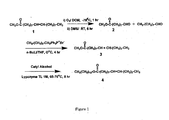
Fig. 1 . : Scheme 1: Preparation of Hexadecyl cis-9-Tetradecenoate -
Fig. 2 .: Scheme 2: Preparation of Hexadecyl cis-10-Tetradecenoate -
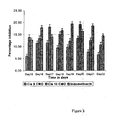
Fig.3 .: Anti-inflammatory activity of Hexadecyl cis- 9-Tetradecenoate (cis-9 CMO) and Hexadecyl cis-10-Tetradecenoate (cis-10 CMO) -
Fig. 4 : Effect of Hexadecyl cis-9-Tetradecenoate (cis-9 CMO) and Hexadecyl cis-10-Tetradecenoate (cis-10 CMO) on the Arthritic Rats -
Fig. 5 : Anti-arthritic Potential of Hexadecyl cis-10-Tetradecenoate (cis-10 CMO) - The present invention relates to the synthesis of two isomers of cetyl myristoleate namely hexadecyl cis-9-tetradecenoate, 4 and hexadecyl cis-10-tetradecenoate, 8 according to
Scheme 1 andScheme 2. The main component of CMO is cis-9 myristoleic acid, and is being isolated from selective natural sources along with other fatty acids. The literature reveals that there is no source, which can provide pure cis-9 myristoleic acid. Only solution to address this problem is its chemical synthesis starting from oleic acid. As the isolation of pure oleic acid from natural sources like olive or any other vegetable oils is very expensive, the cost of cetyl myristoleate based on cis-9 myristoleic acid will also be very high. Hence, there is a need for the identification of an alternate source of myristoleic acid for the preparation of CMO. An attractive substrate in this direction is 10-undecenoic acid for the preparation of cis-10 myristoleic acid. 10-Undecenoic acid is a pyrolysis product of castor oil fatty acid methyl esters (methyl ricinoleate) and is commercially available in pure form. Hence, in the present invention synthesis of two isomers namely cis-9-tetradecenoic acid methyl ester, 3 and cis-10-tetradecenoic acid methyl ester, 7 were prepared from methyl esters of oleic and 10-undecenoic acid respectively. The synthesis of 3 and 7 involves ozonolysis (Santiago de la Moya et al. Tetrahedron Letters 2005; 46:5157-5159) of oleic acid and undecenoic acid methyl esters to get 1-al-methylnonoate, 2 and 1-al-methyldecanoate 6. These aldehydes were subjected to Wittig reaction [Marco Appel, Steffen Blaurock, Stefan Berger. Eur. J. Org. Chem. 2002; 1143-1148] with triphenyl phosphine salt of n-pentyl and n-butyl bromide prepared according to Peter et al., [Peter Vinczer, Gabor Baan, Zoltan Juvancz, Lajos Novak, and Csaba Szantay, Synthetic Communications 1985; 15(14):1257-1270] to get cis-9-myristoleate, 3 and cis-10-myristoleate, 7 and were subjected to enzymatic transesterification with cetyl alcohol using lipozyme TL IM to obtain hexadecyl cis-9-tetradecenoate, 4 and hexadecyl cis-10-tetradecenoate, 8 Both these compounds were evaluated for anti arthritis properties and found that hexadecyl cis-10-tetradecenoate, 8 is comparable with that of hexadecyl cis-9-tetradecenoate, 4 in inhibiting inflammation and effective in adjuvant-induced arthritis in rats. - The synthesis of hexadecyl cis-9-tetradecenoate, 4 was carried out as shown in
Scheme 1, comprising ozonolysis of oleic acid methyl ester, 1 [prepared by esterification of oleic acid (>98% purity) with 2% sulfuric acid/methanol] using dichloromethane as solvent, at - 78 degree C for 1 hr. The reaction was quenched with dimethyl sulphide (DMS) and continued the stirring for 6 hr. The solvent and DMS from the reaction mixture was evaporated and dried under vacuum. The product thus obtained was rich in 1-al-methylnonoate, 2 along with 1-nonanal (C-9 aldehyde) and the same was subjected to Wittig reaction with triphenyl phosphine salt of n-pentyl bromide in n-BuLi/THF to get cis-9-myristoleate, 3 in 55-65% yield with 66-70% purity. The cis-9-myristoleate, 3 was transesterified with cetyl alcohol using either 1,3-specific or non-specific lipases like Lipozyme TL IM (Thermomyces lanuginosa) and Novozyme 435 (Candida antarctica) at 65 °C to 70 °C for 8 hr to get hexadecyl cis-9-tetradecanoate, 4 in 88-95 % yield with 92-95% purity. The purity of all the products was checked by GC and the structures were confirmed by GC-MS, IR and 1H NMR. - The synthesis of hexadecyl cis-10-tetradecenoate, 8 was carried out as shown in
Scheme 2, ozonolysis of 10-undecenoic acid methyl ester, 5 (>99% pure) using dichloromethane as solvent at -78 °C for 1 hr. The reaction was quenched with dimethyl sulphide (DMS) and continued the stirring for 6 hr. The solvent and DMS from the reaction mixture was evaporated and dried under vacuum to get 1-al-methyldecanoate, 6 in 90% yield. The crude aldehyde, 6 was subjected to Wittig reaction with triphenyl phosphine salt of n-butyl bromide in n-BuLi/THF to get cis-10-myristoleate, 7 in 65-68% yield with 75-78% purity. The cis-10myristoleate, 7 was transesterified with cetyl alcohol using Lipozyme TL IM at 65 °C to 70 °C for 8 hr to get hexadecyl cis-10-tetradecanoate, 8 in 88-90% yield with 90-95% purity. The purity of all the products was checked by GC and the structures were confirmed by GC-MS, IR and 1H NMR. - The anti-inflammatory activity potential of both the isomers of the cetyl myristoleate (4 & 8) was evaluated initially in carrageenan induced rat paw edema model employing the method of Winter et al (Winter CA, Risley EA and Nuss GW, J. Pharmacolo. Exp. Ther. 1963; 141:369-376). The arthritis developed by injecting Freund's Complete Adjuvant in Wistar rats is almost similar to the rheumatoid arthritis of the human beings. Hence, further studies on anti-arthritic activity were done employing the method of Pearson et. al (Pearson CM, Proc. Soc. Exper. Biol. Med. 1953; 91:95-101). The studies of anti-arthritis properties were evaluated for both the isomers of cetyl myristoleates and found that hexadecyl cis-10-tetradecenoate, 8 was also comparable with that of hexadecyl cis-9-tetradecenoate, 4 in inhibition of inflammation and reduction of adjuvant-induced arthritis in rats.
- Preparation of Hexadecyl cis-9-Tetradecenoate: Preparation of hexadecyl cis-9-tetradecenoate, 4 was carried out according to the
Scheme 1. Oleic acid methyl ester, 1 (12.0 g, 0.0314 mol) in dichloromethane (100 ml) was cooled to -78 degree. C and ozone gas was bubbled into the reaction mixture for 1 hr. After reaction, the reaction was quenched by adding dimethyl sulphide (DMS, 8 ml) and was stirred for 6 hr at 25°C. The solvents were removed under vacuum and theresidue 2 thus obtained (4.25 g, 0.022 mol) was used directly for the preparation of cis-9-myristoleate, 3. n-Pentyl-triphenyl phosphonium salt (11.16 g, 0.027 mol) was taken in 50 ml of dry THF and cooled to 0 ° C. To this slurry, n-butyl lithium (17.0 ml, 1.6 M in hexane) was added, stirred the reaction mixture for 0.5 hr to obtain an orange solution. 1-Al-methyl nonanoate containing crude product 2 (5.0 g, 0.027 mol) dissolved in dry THF (20 ml) was added to the above contents slowly and allowed the reaction mixture to reach to 25 degree. C and then heated to reflux temperature to reflux for 4 hr. The reaction was monitored by TLC and after completion of the reaction, THF was removed from the reaction mixture under reduced pressure, and to the residue distilled water 825 ml) was added and extracted with ether (25ml X 3 times). The combined ether layer was dried over anhydrous sodium sulphate and solvent was removed and dried under vacuum to get the residue and was purified by column chromatography using hexane and ethyl acetate (98:2) as eluent to get cis-9-myristoleate, 3 (4.2 g, 0.0175 mol) in 65% yield with 66% purity by GC. cis-9-Myristoleate, 3 (4.2 g, 0.0175 mol) was enzymatically transesterified with cetyl alcohol (5.08 g, 0.021 mol) in the presence of Lipozyme TL IM (0.930 g, 10 wt% of the total substate) at 68 °C for 8 hr. The reaction was monitored by TLC and after completion of the reaction, hexane (50 ml) was added and the lipase was separated by filtration and the solvent was evaporated to get the crude product and was purified by column chromatography to obtain hexadecyl cis-9-tetradecenoate, 4 (7.48 g, 0.0166 mol) in 95% yield with 92% purity by GC. The structure of hexadecyl cis-9-tetradecenoate, 4 was confirmed by 1H NMR, IR, and GC-MS. - 1H NMR (600 MHz, CDCl3): δ 5.36-5.33 (m, 2H, J= 3 Hz, -CH=CH-), 4.01 (t, 2H, - CH 2-O-


IR (neat/NaCl): 2926, 1738, 1654, 1242, 721 Cm-1.
GC-MS: m/z: C30H5802 (M+): 450. - Preparation of Hexadecyl cis-9-Tetradecenoate: cis-9-Myristoleate, 3 (4.2 g, 0.0175 mol) was enzymatically transesterified with cetyl alcohol (5.08 g, 0.021 mol) in the presence of Novozyme 435 (0.930 g, 10 wt% of the total substrate) at 68 °C for 8 hr. The reaction was monitored by TLC and after completion of the reaction, hexane (50 ml) was added and the lipase was separated by filtration and the solvent was evaporated to get the crude product and was purified by column chromatography to obtain hexadecyl cis-9-tetradecenoate, 4 (7.48 g, 0.0166 mol) in 90% yield with 90% purity by GC. The structure of hexadecyl cis-9-tetradecenoate, 4 was confirmed by 1H NMR, IR, and GC-MS.
- 1H NMR: (600 MHz, CDCl3): δ 5.36-5.33 (m, 2H, J = 3 Hz, -CH=CH-), 4.01 (t, 2H, - CH 2-O-


IR (neat/NaCl): 2926, 1738, 1654, 1242, 721 Cm-1.
GC-MS: m/z: C30H5802(M+): 450. - Preparation of Hexadecyl cis-10-Tetradecanoate: Preparation of hexadecyl cis-10-tetradecenoate, 8 was carried out according to the
Scheme 2. Methyl undecenoate, 5 (10.21 g, 0.0515 mol) in dichloromethane (150 ml) was cooled to -78 °C and ozone gas was bubbled into the reaction mixture for 1 hr. The reaction was quenched by adding dimethyl sulphide (DMS, 5 ml) and was stirred for 6 hr at 25°C. The solvents were removed under vacuum and theresidue 6 thus obtained was used directly further preparation of cis-10-myristoleate, 7. n-Butyl-triphenyl phosphonium bromide salt (10.0 g, 0.0251 mol) was taken in dry THF (50 ml) and cooled to 0 °C. To this slurry, n-Butyl lithium (17.0 ml, 1.6 M in hexane) was added and stirred for 0.5 hr. 1-Al-methyl deaconate containing crude product 6 (5.01 g, 0.025 mol) dissolved in dry THF (50 ml) was added slowly to the above contents and allowed the reaction mixture to warm to room temperature and then heated to reflux temperature to reflux for 4 hr. THF was removed from the reaction product under reduced pressure, and to the residue distilled water (25 ml) was added and extracted with ether (25ml X 3 times). The combined ether layer was dried over anhydrous sodium sulphate and solvent was evaporated and dried under vacuum to get the product and was further purified by column chromatography using hexane and ethyl acetate (98:2) as eluent to obtain cis-10-myristoleate, 7 (3.35 g, 0.014 mol) in 56% yield with 97% purity by GC. cis-10-Myristoleate, 7 (3.35 g, 0.014 mol) was enzymatically transesterified with cetyl alcohol (4.07 g, 0.0168 mol) in the presence of Lipozyme TL IM (0.745 g, 10 wt% of the total substrate), at 65 °C for 8 hr. The reaction was monitored by TLC and after completion of reaction, hexane (50 ml) was added and the lipase was separated by filtration and the solvent was evaporated to get the crude product and was purified by column chromatography to obtain hexadecyl cis-10-tetradecenoate, 8 (5.55 g, 0.0123) in 88% yield with 95% purity by GC. The structure of hexadecyl cis-10-tetradecenoate, 8 was confirmed by 1H NMR, IR, and GC-MS. - 1H NMR (600 MHz, CDCl3): δ 5.30 (m, 2H, -CH=CH-), 4.01 (t, 2H, -CH 2-O-


IR (neat/NaCl): 2926, 1738, 1654, 1242, 721 Cm-1.
GC-MS: m/z: C30H5802 (M+): 450. - Preparation of Hexadecyl cis-10-Tetradecanoate: cis-10-Myristoleate, 7 (3.35 g, 0.014 mol) was enzymatically transesterified with cetyl alcohol (4.07 g, 0.0168 mol) in the presence of Novozyme 435 (0.745 g, 10 wt% of the total substrate), at 65 degree.C for 8 hr. The reaction was monitored by TLC and after completion of reaction, hexane (50 ml) was added and the lipase was separated by filtration and the solvent was evaporated to get the crude product and was purified by column chromatography to obtain hexadecyl cis-10-tetradecenoate, 8 (5.55 g, 0.0123) in 80% yield with 90% purity by GC. The structure of hexadecyl cis-10-tetradecenoate, 8 was confirmed by 1H NMR, IR, and GC-MS.
- 1H NMR (600 MHz, CDCl3): δ 5.30 (m, 2H, -CH=CH-), 4.01 (t, 2H, -CH 2-O-


IR (neat/NaCl): 2926, 1738, 1654, 1242, 721 Cm-1.
GC-MS: m/z: C30H5802 (M+): 450. - Evaluation Studies of Hexadecyl cis-9-Tetradecenoate and Hexadecyl cis-10-Tetradecenoate for Anti-inflammatory Potential: Hexadecyl cis-9-tetradecenoate, 4 and Hexadecyl cis-10-tetradecenoate, 8 produced synthetically exemplified above in
Scheme 1 andScheme 2 were assessed for the anti-inflammatory potential against carrageenan induced paw edema model. Rats were divided into 4 groups. Hexadecyl cis-9-tetradecenoate, 4. and hexadecyl cis-10-tetradecenoate, 8 were administered intraperitoneally to rats in two different groups at a dose of 400 mg/kg. Another test group received indomethacin at a dose of 10 mg/kg, which is used as reference standard. Control group received vehicle alone. One hour after the administration of test compounds carrageenan (1%, 0.1 ml) was injected into the sub plantar region of animals in all the groups. Paw volumes were measured using plethysmometer before injecting carrageenan. Paw volumes were again measured 3 hr after the carrageenan administration. The anti-inflammatory potential of hekadexyl cis-9-tetradecenoate, 4 and hexadecyl cis-10-tetradecenoate, 8 were assessed by measuring the inhibition of the paw volumes with reference to mean paw volume in control group. Both hexadecyl cis-9-tetradecenoate, 4 and hexadecyl cis-10-tetradecenoate, 8 were found to reduce the inflammation and edema of the animals equally up to 36 % compared to control group (Fig. 3 ). - Effect of Hexadecyl cis-9-Tetradecenoate and Hexadecyl cis-10-Tetradeeenoate on the Arthritic Rats: The hexadecyl cis-9-tetradecenoate, 4 and hexadecyl cis-10-tetradecenoate, 8 produced synthetically given above in
Scheme Fig. 4 ). It was found that hexadecyl cis-9-tetradecenoate, 4 and hexadecyl cis-10-tetradecenoate, 8 reduced the paw volumes and the symptoms associated with the arthritis equally up to 10 to 15% at the dose of 100 mg/kg and this inhibition was dose dependent when dose was increased from 100 mg/kg to 300 mg/kg, which indicates that hexadecyl cis-9-tetradecenoate, 4 and hexadecyl cis-10-tetradecenoate, 8 are useful in alleviating the symptoms associated with the established arthritis. - Evaluation of Hexadecyl cis-10-Tetradecenoate for Anti-arthritic Potential in Rats: The hexadecyl cis-10-tetradecenoate, 8 produced synthetically exemplified above in
Scheme 2 was administered parenterally, particularly, by intraperitoneal route, either alone or in a compatible pharmaceutical carrier such as vegetable oils namely groundnut, sesame and cottonseed [for adjusting the dose volume of the active compound(s)] to male rats ranging in weight from 150 to 180 g. It should be noted that use of the mineral oil is not mandatory as the active compounds are oils themselves. The procedure as described in (Vogel's Drug Discovery and Evaluation Pharmacological assays, 2nd ed, 2002, Springer Verlag, pages 802-803) was followed. Male Wistar rats were divided into one control and two treated groups. All the animals in three groups received Freund's complete adjuvant (1mg/rat). This day was designated asday 1. After a period of 24 hr, hexadecyl cis-10-tetradecenoate, 8 was administered at a dose of 300 mg/kg to one treated group and another treated group received 2.5 mg/kg of indomethacin (used as standard drug). Dosing was continued for 15 days (Fig. 3 ). Control group received the vehicle (mineral oil) without any drug. Paw volumes (left and right) were measured on every alternate day. All the rats in the control group developed severe polyarthritis as indicated by the increase in the paw volumes. Whereas, rats treated with hexadecyl cis-10-tetradecenoate, 8 were protected from the polyarthritis. Around 80% of the animals in the hexadecyl cis-10-tetradecenoate treated group were protected from developing arthritis in a period of 21 days. The remaining 20% rats were protected from arthritis in a period of 32 days. It was also found that the effective range for protection of arthritis by hexadecyl cis-10-tetradecenoate, 8 was 0.1 to 1.0 gm/kg body weight of the animal. However doses less or more than this range were found to protect developments of the Freund's Complete Adjuvant induced poly arthritis in rats.
Claims (8)
- A process for the preparation of two isomers of cetyl myristoleate namely hexadecyl cis-9-tetradecenoate and hexadecyl cis-10-tetradecenoate having general formula 1,

comprising the steps of:a.cooling of an ester selected from the group consisting of oleic acid methyl ester and methyl undecenoate in the presence of an organic solvent at temperature ranges between -70 to -78°C;b.ozonolysis of cooled ester by bubbling of ozone for a period ranging between 60 - 90 min;c.quenching the reaction with dimethyl sulphide (DMS) followed by stirring for a period ranging between 6 - 8 hr at temperature ranging between 25 - 35°C;d. evaporating the organic solvent and DMS from the reaction mixture as obtained in step (c) under vacuum to get a crude solid containing 1-al-methyl nonoate or 1-as-methyl deaconate depending upon the ester used in step (a);e. dissolving crude solid containing 1-al-methyl nonoate or 1-al-methyl deaconate as obtained in step (d) in dry THF (tetra hydro furan);f. simultaneously, dissolving triphenyl phosphine salt selected from the group consisting of n-pentyl-triphenyl phosphonium salt and n-butyl-triphenyl phosphonium salt in dry THF and cooled to a temperature ranging between 0 - 5°C and followed by addition of n-butyl lithium;g. stirring the reaction mixture as obtained in step (f) for a period ranging between 30 - 60 min to obtain an orange solution;h.adding solution of crude solid in dry THF as obtained in step (e) into the solution of triphenyl phosphine salt in dry THF as obtained in step (f) followed by refluxing for a period of 3 - 8 hrs;i.removing THF from the reaction mixture as obtained in step (h) under reduced pressure to get residue;j.adding water in the residue as obtained in step (i) and followed by extraction with ether;k. removing ether under vacuum to get the residue followed by carrying out purification using column chromatography using hexane and ethyl acetate (98:2) as eluent to get cis-9- myristoleate and cis-10- myristoleate depending upon the ester used in step(a) and triphenyl phosphine salt used in step (f);l. transesterifying myristoleate as obtained in step (k) with cetyl alcohol in the presence of enzyme selected from the group consisting of Lipozyme TLIM and Novozyme 435 at temperature ranging between 65-70°C for a period ranging between 8 to 10 hr;m.separating enzyme by filtration and evaporating the solvent to get the crude product having respective isomer of cetyl myristoleate;n. purifying the crude product as obtained in step (I) by column chromatography to obtain pure cetyl myristoleate of formula 1. - A process as claimed in step (a) claim 1, wherein the organic solvent used in step (a) is dichloromethane or chloroform.
- A process as claimed in claim 1, wherein oleic acid methyl ester used in step (a) and n-pentyl-triphenyl phosphonium salt used in step (f) for the preparation of cis-9-tetradecenoate.
- A process as claimed in claim 1, wherein methyl undecenoate used in step (a) and n-butyl-triphenyl phosphonium salt used in step (f) for the preparation of cis-10-tetradecenoate.
- Hexadecyl cis-10-tetradecenoate according to general formula 1 of claim 1 for use in treating inflammation and adjuvant-induced arthritis.
- Hexadecyl cis-10-tetradecenoate according to general formula 1 of claim 1 for use in treating inflammation and edema of the animals up to 36 % at a dose 400 mg/kg body wt.
- Hexadecyl cis-10-tetradecenoate according to general formula 1 of claim 1 for use in reducing arthritis up to 10 to 15% at the dose of 100 mg/kg body wt.
- Hexadecyl cis-10-tetradecenoate according to general formula 1 of claim 1 for use in blocking inflammation and reducing adjuvant-induced arthritis being effective for 21 days in 80% rats and for 32 days in 20 % rats.
Applications Claiming Priority (2)
| Application Number | Priority Date | Filing Date | Title |
|---|---|---|---|
| IN45DE2009 | 2009-01-12 | ||
| PCT/IN2010/000021 WO2010079514A1 (en) | 2009-01-12 | 2010-01-12 | A process for preparation of hexadecyl cis-9-tetradecenoate and hexadecyl cis-10-tetradecenoate |
Publications (2)
| Publication Number | Publication Date |
|---|---|
| EP2379175A1 EP2379175A1 (en) | 2011-10-26 |
| EP2379175B1 true EP2379175B1 (en) | 2013-07-17 |
Family
ID=42111923
Family Applications (1)
| Application Number | Title | Priority Date | Filing Date |
|---|---|---|---|
| EP10706759.7A Not-in-force EP2379175B1 (en) | 2009-01-12 | 2010-01-12 | A process for preparation of hexadecyl cis-9-tetradecenoate and hexadecyl cis-10-tetradecenoate |
Country Status (4)
| Country | Link |
|---|---|
| US (1) | US8816109B2 (en) |
| EP (1) | EP2379175B1 (en) |
| CN (1) | CN102348482B (en) |
| WO (1) | WO2010079514A1 (en) |
Cited By (1)
| Publication number | Priority date | Publication date | Assignee | Title |
|---|---|---|---|---|
| KR101514011B1 (en) * | 2014-04-30 | 2015-04-21 | 티케이엘 주식회사 | Food composition with cetylated fatty for alleviaton of symptoms and pains |
Families Citing this family (4)
| Publication number | Priority date | Publication date | Assignee | Title |
|---|---|---|---|---|
| IT201700089258A1 (en) | 2017-08-02 | 2019-02-02 | Pharmanutra S P A | Composition for use in the prevention and treatment of iron deficiency |
| IT201900007311A1 (en) * | 2019-05-27 | 2020-11-27 | Alesco Srl | Process for the preparation of a composition comprising cetylated fatty acids |
| IT201900007326A1 (en) | 2019-05-27 | 2020-11-27 | Alesco Srl | Compositions comprising cetylated fatty acids and their use in the treatment of arthritis and joint inflammatory states |
| CN115404118B (en) * | 2022-09-16 | 2023-04-18 | 季华实验室 | Aluminum shell stretching oil composition |
Family Cites Families (8)
| Publication number | Priority date | Publication date | Assignee | Title |
|---|---|---|---|---|
| US4049824A (en) | 1976-05-03 | 1977-09-20 | Harry Weldon Diehl | Cetyl myristoleate |
| US4409824A (en) | 1981-09-14 | 1983-10-18 | Conoco Inc. | Fatigue gauge for drill pipe string |
| US5569676A (en) | 1995-05-24 | 1996-10-29 | Diehl; Harry W. | Method for the treatment of osteoarthritis |
| US6417227B1 (en) | 1999-04-28 | 2002-07-09 | Cg And Associates | Methods of delivery of cetyl myristoleate |
| AU1953701A (en) | 1999-12-09 | 2001-06-18 | Bruce Levin | Methods and compositions for treatment of inflammatory disease |
| US6677321B1 (en) | 1999-12-09 | 2004-01-13 | Bruce Levin | Methods and compositions for treatment of inflammatory disease |
| US7772279B2 (en) | 2002-03-21 | 2010-08-10 | Botanoceuticals, Inc. | Use of vegetable butter-based cetyl myristoleate for treating osteoarthritis and other musculoskeletal disease conditions and injuries |
| US20060062859A1 (en) * | 2004-08-05 | 2006-03-23 | Kenneth Blum | Composition and method to optimize and customize nutritional supplement formulations by measuring genetic and metabolomic contributing factors to disease diagnosis, stratification, prognosis, metabolism, and therapeutic outcomes |
-
2010
- 2010-01-12 CN CN201080011046.3A patent/CN102348482B/en not_active Expired - Fee Related
- 2010-01-12 EP EP10706759.7A patent/EP2379175B1/en not_active Not-in-force
- 2010-01-12 WO PCT/IN2010/000021 patent/WO2010079514A1/en not_active Ceased
- 2010-01-12 US US13/144,260 patent/US8816109B2/en active Active
Cited By (1)
| Publication number | Priority date | Publication date | Assignee | Title |
|---|---|---|---|---|
| KR101514011B1 (en) * | 2014-04-30 | 2015-04-21 | 티케이엘 주식회사 | Food composition with cetylated fatty for alleviaton of symptoms and pains |
Also Published As
| Publication number | Publication date |
|---|---|
| CN102348482A (en) | 2012-02-08 |
| CN102348482B (en) | 2014-05-14 |
| US20110269987A1 (en) | 2011-11-03 |
| WO2010079514A4 (en) | 2010-09-23 |
| WO2010079514A1 (en) | 2010-07-15 |
| EP2379175A1 (en) | 2011-10-26 |
| US8816109B2 (en) | 2014-08-26 |
Similar Documents
| Publication | Publication Date | Title |
|---|---|---|
| US8816109B2 (en) | Process for preparation of hexadecyl cis-9-tetradecenoate and hexadecyl cis-10-tetradecenoate | |
| CN102089263A (en) | Process for the extraction of squalene, sterols and vitamin e contained in condensates of physical refining and/or in distillates of deodorization of plant oils | |
| Shimada et al. | Ring-opening aldol-type reaction of 2, 2-dialkoxycyclopropanecarboxylic esters with carbonyl compounds. 3. The diastereoselective synthesis of 2, 3, 4-trisubstituted. gamma.-lactones | |
| FI955957A0 (en) | Process for the preparation of fatty acid alkyl esters | |
| US8957231B2 (en) | Concentrate of omega 3 | |
| Lee et al. | A new and concise synthetic route to an enantiopure (+)-conduritol-E derivative from diethyl l-tartrate | |
| Chinta et al. | Identification and synthesis of branched wax‐type esters, novel surface lipids from the spider Argyrodes elevatus (Araneae: Theridiidae) | |
| CN113329990A (en) | Method for producing hydroxy carboxylic acid glyceride | |
| US3676472A (en) | Certain linoleic and linolenic acid ester fractions of vegetable oils and derivatives thereof | |
| Compton et al. | Purification of 1, 2-diacylglycerols from vegetable oils: Comparison of molecular distillation and liquid CO2 extraction | |
| CA2107150C (en) | Chromenic derivatives having a triene lateral chain, process for the preparation thereof and pharmaceutical compositions containing them | |
| RU2005141141A (en) | METHOD FOR PRODUCING FATTY ACIDS HAVING A LOW CONTENT OF TRANS-FATTY ACIDS | |
| Patel et al. | C-2 dimethyl seco-mevinic acids. Synthesis of monocyclic HMG-CoA reductase inhibitors from (R)-(-)-carvone. | |
| Prasad et al. | Stereoselective synthesis of (−)-6-acetoxyhexadecanolide: a mosquito oviposition attractant pheromone | |
| Carballeira et al. | Identification of novel iso/anteiso nonacosadienoic acids from the phospholipids of the sponges Chondrosia remiformis and Myrmekioderma styx | |
| JPH0645570B2 (en) | Process for producing glycerin ester of eicosapentaenoic acid | |
| CN104592017A (en) | Method for producing 2-isopropylidene-5-methyl-4-hexenyl butyrate | |
| JPH07267898A (en) | Glyceride of docosahexaenoic acid | |
| CN114728874B (en) | Method for preparing maxacalcitol and intermediates therefor | |
| CA1333397C (en) | Fluorinated arachidonic acid derivatives | |
| JP2511407B2 (en) | Method for producing monoglyceride of highly unsaturated higher fatty acid | |
| CS217994B2 (en) | Method of making the substituted triarylthiazole derivatives | |
| Mase et al. | Imidazo [2, 1-b] benzothiazoles 3: syntheses and immunosuppressive activities of 2-(m-acyloxyphenyl) imidazo [2, 1-b] benzothiazoles | |
| CA1308028C (en) | Pharmaceutical compositions for treating adrenoleukodystrophy | |
| US10961483B2 (en) | Method for preparing 2-monoacylglycerides |
Legal Events
| Date | Code | Title | Description |
|---|---|---|---|
| PUAI | Public reference made under article 153(3) epc to a published international application that has entered the european phase |
Free format text: ORIGINAL CODE: 0009012 |
|
| 17P | Request for examination filed |
Effective date: 20110711 |
|
| AK | Designated contracting states |
Kind code of ref document: A1 Designated state(s): AT BE BG CH CY CZ DE DK EE ES FI FR GB GR HR HU IE IS IT LI LT LU LV MC MK MT NL NO PL PT RO SE SI SK SM TR |
|
| DAX | Request for extension of the european patent (deleted) | ||
| GRAP | Despatch of communication of intention to grant a patent |
Free format text: ORIGINAL CODE: EPIDOSNIGR1 |
|
| GRAJ | Information related to disapproval of communication of intention to grant by the applicant or resumption of examination proceedings by the epo deleted |
Free format text: ORIGINAL CODE: EPIDOSDIGR1 |
|
| GRAP | Despatch of communication of intention to grant a patent |
Free format text: ORIGINAL CODE: EPIDOSNIGR1 |
|
| GRAS | Grant fee paid |
Free format text: ORIGINAL CODE: EPIDOSNIGR3 |
|
| GRAA | (expected) grant |
Free format text: ORIGINAL CODE: 0009210 |
|
| AK | Designated contracting states |
Kind code of ref document: B1 Designated state(s): AT BE BG CH CY CZ DE DK EE ES FI FR GB GR HR HU IE IS IT LI LT LU LV MC MK MT NL NO PL PT RO SE SI SK SM TR |
|
| REG | Reference to a national code |
Ref country code: GB Ref legal event code: FG4D |
|
| REG | Reference to a national code |
Ref country code: CH Ref legal event code: EP |
|
| REG | Reference to a national code |
Ref country code: IE Ref legal event code: FG4D |
|
| REG | Reference to a national code |
Ref country code: AT Ref legal event code: REF Ref document number: 621787 Country of ref document: AT Kind code of ref document: T Effective date: 20130815 |
|
| REG | Reference to a national code |
Ref country code: DE Ref legal event code: R096 Ref document number: 602010008619 Country of ref document: DE Effective date: 20130912 |
|
| REG | Reference to a national code |
Ref country code: AT Ref legal event code: MK05 Ref document number: 621787 Country of ref document: AT Kind code of ref document: T Effective date: 20130717 |
|
| REG | Reference to a national code |
Ref country code: NL Ref legal event code: VDEP Effective date: 20130717 |
|
| REG | Reference to a national code |
Ref country code: LT Ref legal event code: MG4D |
|
| PG25 | Lapsed in a contracting state [announced via postgrant information from national office to epo] |
Ref country code: PT Free format text: LAPSE BECAUSE OF FAILURE TO SUBMIT A TRANSLATION OF THE DESCRIPTION OR TO PAY THE FEE WITHIN THE PRESCRIBED TIME-LIMIT Effective date: 20131118 Ref country code: LT Free format text: LAPSE BECAUSE OF FAILURE TO SUBMIT A TRANSLATION OF THE DESCRIPTION OR TO PAY THE FEE WITHIN THE PRESCRIBED TIME-LIMIT Effective date: 20130717 Ref country code: CY Free format text: LAPSE BECAUSE OF FAILURE TO SUBMIT A TRANSLATION OF THE DESCRIPTION OR TO PAY THE FEE WITHIN THE PRESCRIBED TIME-LIMIT Effective date: 20130724 Ref country code: HR Free format text: LAPSE BECAUSE OF FAILURE TO SUBMIT A TRANSLATION OF THE DESCRIPTION OR TO PAY THE FEE WITHIN THE PRESCRIBED TIME-LIMIT Effective date: 20130717 Ref country code: SE Free format text: LAPSE BECAUSE OF FAILURE TO SUBMIT A TRANSLATION OF THE DESCRIPTION OR TO PAY THE FEE WITHIN THE PRESCRIBED TIME-LIMIT Effective date: 20130717 Ref country code: NO Free format text: LAPSE BECAUSE OF FAILURE TO SUBMIT A TRANSLATION OF THE DESCRIPTION OR TO PAY THE FEE WITHIN THE PRESCRIBED TIME-LIMIT Effective date: 20131017 Ref country code: BE Free format text: LAPSE BECAUSE OF FAILURE TO SUBMIT A TRANSLATION OF THE DESCRIPTION OR TO PAY THE FEE WITHIN THE PRESCRIBED TIME-LIMIT Effective date: 20130717 Ref country code: IS Free format text: LAPSE BECAUSE OF FAILURE TO SUBMIT A TRANSLATION OF THE DESCRIPTION OR TO PAY THE FEE WITHIN THE PRESCRIBED TIME-LIMIT Effective date: 20131117 Ref country code: AT Free format text: LAPSE BECAUSE OF FAILURE TO SUBMIT A TRANSLATION OF THE DESCRIPTION OR TO PAY THE FEE WITHIN THE PRESCRIBED TIME-LIMIT Effective date: 20130717 |
|
| PG25 | Lapsed in a contracting state [announced via postgrant information from national office to epo] |
Ref country code: SI Free format text: LAPSE BECAUSE OF FAILURE TO SUBMIT A TRANSLATION OF THE DESCRIPTION OR TO PAY THE FEE WITHIN THE PRESCRIBED TIME-LIMIT Effective date: 20130717 Ref country code: PL Free format text: LAPSE BECAUSE OF FAILURE TO SUBMIT A TRANSLATION OF THE DESCRIPTION OR TO PAY THE FEE WITHIN THE PRESCRIBED TIME-LIMIT Effective date: 20130717 Ref country code: NL Free format text: LAPSE BECAUSE OF FAILURE TO SUBMIT A TRANSLATION OF THE DESCRIPTION OR TO PAY THE FEE WITHIN THE PRESCRIBED TIME-LIMIT Effective date: 20130717 Ref country code: FI Free format text: LAPSE BECAUSE OF FAILURE TO SUBMIT A TRANSLATION OF THE DESCRIPTION OR TO PAY THE FEE WITHIN THE PRESCRIBED TIME-LIMIT Effective date: 20130717 Ref country code: ES Free format text: LAPSE BECAUSE OF FAILURE TO SUBMIT A TRANSLATION OF THE DESCRIPTION OR TO PAY THE FEE WITHIN THE PRESCRIBED TIME-LIMIT Effective date: 20131028 Ref country code: LV Free format text: LAPSE BECAUSE OF FAILURE TO SUBMIT A TRANSLATION OF THE DESCRIPTION OR TO PAY THE FEE WITHIN THE PRESCRIBED TIME-LIMIT Effective date: 20130717 Ref country code: GR Free format text: LAPSE BECAUSE OF FAILURE TO SUBMIT A TRANSLATION OF THE DESCRIPTION OR TO PAY THE FEE WITHIN THE PRESCRIBED TIME-LIMIT Effective date: 20131018 |
|
| PG25 | Lapsed in a contracting state [announced via postgrant information from national office to epo] |
Ref country code: CY Free format text: LAPSE BECAUSE OF FAILURE TO SUBMIT A TRANSLATION OF THE DESCRIPTION OR TO PAY THE FEE WITHIN THE PRESCRIBED TIME-LIMIT Effective date: 20130717 |
|
| PG25 | Lapsed in a contracting state [announced via postgrant information from national office to epo] |
Ref country code: CZ Free format text: LAPSE BECAUSE OF FAILURE TO SUBMIT A TRANSLATION OF THE DESCRIPTION OR TO PAY THE FEE WITHIN THE PRESCRIBED TIME-LIMIT Effective date: 20130717 Ref country code: EE Free format text: LAPSE BECAUSE OF FAILURE TO SUBMIT A TRANSLATION OF THE DESCRIPTION OR TO PAY THE FEE WITHIN THE PRESCRIBED TIME-LIMIT Effective date: 20130717 Ref country code: RO Free format text: LAPSE BECAUSE OF FAILURE TO SUBMIT A TRANSLATION OF THE DESCRIPTION OR TO PAY THE FEE WITHIN THE PRESCRIBED TIME-LIMIT Effective date: 20130717 Ref country code: SK Free format text: LAPSE BECAUSE OF FAILURE TO SUBMIT A TRANSLATION OF THE DESCRIPTION OR TO PAY THE FEE WITHIN THE PRESCRIBED TIME-LIMIT Effective date: 20130717 Ref country code: DK Free format text: LAPSE BECAUSE OF FAILURE TO SUBMIT A TRANSLATION OF THE DESCRIPTION OR TO PAY THE FEE WITHIN THE PRESCRIBED TIME-LIMIT Effective date: 20130717 |
|
| PLBE | No opposition filed within time limit |
Free format text: ORIGINAL CODE: 0009261 |
|
| STAA | Information on the status of an ep patent application or granted ep patent |
Free format text: STATUS: NO OPPOSITION FILED WITHIN TIME LIMIT |
|
| PG25 | Lapsed in a contracting state [announced via postgrant information from national office to epo] |
Ref country code: IT Free format text: LAPSE BECAUSE OF FAILURE TO SUBMIT A TRANSLATION OF THE DESCRIPTION OR TO PAY THE FEE WITHIN THE PRESCRIBED TIME-LIMIT Effective date: 20130717 |
|
| 26N | No opposition filed |
Effective date: 20140422 |
|
| REG | Reference to a national code |
Ref country code: DE Ref legal event code: R097 Ref document number: 602010008619 Country of ref document: DE Effective date: 20140422 |
|
| PG25 | Lapsed in a contracting state [announced via postgrant information from national office to epo] |
Ref country code: LU Free format text: LAPSE BECAUSE OF FAILURE TO SUBMIT A TRANSLATION OF THE DESCRIPTION OR TO PAY THE FEE WITHIN THE PRESCRIBED TIME-LIMIT Effective date: 20140112 |
|
| REG | Reference to a national code |
Ref country code: CH Ref legal event code: PL |
|
| GBPC | Gb: european patent ceased through non-payment of renewal fee |
Effective date: 20140112 |
|
| PG25 | Lapsed in a contracting state [announced via postgrant information from national office to epo] |
Ref country code: CH Free format text: LAPSE BECAUSE OF NON-PAYMENT OF DUE FEES Effective date: 20140131 Ref country code: LI Free format text: LAPSE BECAUSE OF NON-PAYMENT OF DUE FEES Effective date: 20140131 |
|
| REG | Reference to a national code |
Ref country code: IE Ref legal event code: MM4A |
|
| PG25 | Lapsed in a contracting state [announced via postgrant information from national office to epo] |
Ref country code: GB Free format text: LAPSE BECAUSE OF NON-PAYMENT OF DUE FEES Effective date: 20140112 |
|
| PG25 | Lapsed in a contracting state [announced via postgrant information from national office to epo] |
Ref country code: IE Free format text: LAPSE BECAUSE OF NON-PAYMENT OF DUE FEES Effective date: 20140112 |
|
| PG25 | Lapsed in a contracting state [announced via postgrant information from national office to epo] |
Ref country code: MC Free format text: LAPSE BECAUSE OF FAILURE TO SUBMIT A TRANSLATION OF THE DESCRIPTION OR TO PAY THE FEE WITHIN THE PRESCRIBED TIME-LIMIT Effective date: 20130717 |
|
| REG | Reference to a national code |
Ref country code: FR Ref legal event code: PLFP Year of fee payment: 7 |
|
| PG25 | Lapsed in a contracting state [announced via postgrant information from national office to epo] |
Ref country code: MT Free format text: LAPSE BECAUSE OF FAILURE TO SUBMIT A TRANSLATION OF THE DESCRIPTION OR TO PAY THE FEE WITHIN THE PRESCRIBED TIME-LIMIT Effective date: 20130717 |
|
| PG25 | Lapsed in a contracting state [announced via postgrant information from national office to epo] |
Ref country code: SM Free format text: LAPSE BECAUSE OF FAILURE TO SUBMIT A TRANSLATION OF THE DESCRIPTION OR TO PAY THE FEE WITHIN THE PRESCRIBED TIME-LIMIT Effective date: 20130717 |
|
| PG25 | Lapsed in a contracting state [announced via postgrant information from national office to epo] |
Ref country code: BG Free format text: LAPSE BECAUSE OF FAILURE TO SUBMIT A TRANSLATION OF THE DESCRIPTION OR TO PAY THE FEE WITHIN THE PRESCRIBED TIME-LIMIT Effective date: 20130717 |
|
| PG25 | Lapsed in a contracting state [announced via postgrant information from national office to epo] |
Ref country code: HU Free format text: LAPSE BECAUSE OF FAILURE TO SUBMIT A TRANSLATION OF THE DESCRIPTION OR TO PAY THE FEE WITHIN THE PRESCRIBED TIME-LIMIT; INVALID AB INITIO Effective date: 20100112 Ref country code: TR Free format text: LAPSE BECAUSE OF FAILURE TO SUBMIT A TRANSLATION OF THE DESCRIPTION OR TO PAY THE FEE WITHIN THE PRESCRIBED TIME-LIMIT Effective date: 20130717 |
|
| REG | Reference to a national code |
Ref country code: FR Ref legal event code: PLFP Year of fee payment: 8 |
|
| REG | Reference to a national code |
Ref country code: FR Ref legal event code: PLFP Year of fee payment: 9 |
|
| PG25 | Lapsed in a contracting state [announced via postgrant information from national office to epo] |
Ref country code: MK Free format text: LAPSE BECAUSE OF FAILURE TO SUBMIT A TRANSLATION OF THE DESCRIPTION OR TO PAY THE FEE WITHIN THE PRESCRIBED TIME-LIMIT Effective date: 20130717 |
|
| PGFP | Annual fee paid to national office [announced via postgrant information from national office to epo] |
Ref country code: DE Payment date: 20220118 Year of fee payment: 13 |
|
| PGFP | Annual fee paid to national office [announced via postgrant information from national office to epo] |
Ref country code: FR Payment date: 20220124 Year of fee payment: 13 |
|
| REG | Reference to a national code |
Ref country code: DE Ref legal event code: R119 Ref document number: 602010008619 Country of ref document: DE |
|
| PG25 | Lapsed in a contracting state [announced via postgrant information from national office to epo] |
Ref country code: DE Free format text: LAPSE BECAUSE OF NON-PAYMENT OF DUE FEES Effective date: 20230801 |
|
| PG25 | Lapsed in a contracting state [announced via postgrant information from national office to epo] |
Ref country code: FR Free format text: LAPSE BECAUSE OF NON-PAYMENT OF DUE FEES Effective date: 20230131 |