EP2377851A1 - Isoquinoline derivative - Google Patents
Isoquinoline derivative Download PDFInfo
- Publication number
- EP2377851A1 EP2377851A1 EP09835040A EP09835040A EP2377851A1 EP 2377851 A1 EP2377851 A1 EP 2377851A1 EP 09835040 A EP09835040 A EP 09835040A EP 09835040 A EP09835040 A EP 09835040A EP 2377851 A1 EP2377851 A1 EP 2377851A1
- Authority
- EP
- European Patent Office
- Prior art keywords
- group
- formula
- compound
- nmr
- phenyl
- Prior art date
- Legal status (The legal status is an assumption and is not a legal conclusion. Google has not performed a legal analysis and makes no representation as to the accuracy of the status listed.)
- Withdrawn
Links
- 0 C=*NC(Nc1ccc(*c2ncc(CC(O)=O)c3ccccc23)cc1)=O Chemical compound C=*NC(Nc1ccc(*c2ncc(CC(O)=O)c3ccccc23)cc1)=O 0.000 description 5
Classifications
-
- C—CHEMISTRY; METALLURGY
- C07—ORGANIC CHEMISTRY
- C07D—HETEROCYCLIC COMPOUNDS
- C07D217/00—Heterocyclic compounds containing isoquinoline or hydrogenated isoquinoline ring systems
- C07D217/12—Heterocyclic compounds containing isoquinoline or hydrogenated isoquinoline ring systems with radicals, substituted by hetero atoms, attached to carbon atoms of the nitrogen-containing ring
- C07D217/14—Heterocyclic compounds containing isoquinoline or hydrogenated isoquinoline ring systems with radicals, substituted by hetero atoms, attached to carbon atoms of the nitrogen-containing ring other than aralkyl radicals
- C07D217/16—Heterocyclic compounds containing isoquinoline or hydrogenated isoquinoline ring systems with radicals, substituted by hetero atoms, attached to carbon atoms of the nitrogen-containing ring other than aralkyl radicals substituted by oxygen atoms
-
- A—HUMAN NECESSITIES
- A61—MEDICAL OR VETERINARY SCIENCE; HYGIENE
- A61K—PREPARATIONS FOR MEDICAL, DENTAL OR TOILETRY PURPOSES
- A61K31/00—Medicinal preparations containing organic active ingredients
- A61K31/33—Heterocyclic compounds
- A61K31/395—Heterocyclic compounds having nitrogen as a ring hetero atom, e.g. guanethidine or rifamycins
- A61K31/435—Heterocyclic compounds having nitrogen as a ring hetero atom, e.g. guanethidine or rifamycins having six-membered rings with one nitrogen as the only ring hetero atom
- A61K31/47—Quinolines; Isoquinolines
- A61K31/472—Non-condensed isoquinolines, e.g. papaverine
-
- A—HUMAN NECESSITIES
- A61—MEDICAL OR VETERINARY SCIENCE; HYGIENE
- A61P—SPECIFIC THERAPEUTIC ACTIVITY OF CHEMICAL COMPOUNDS OR MEDICINAL PREPARATIONS
- A61P11/00—Drugs for disorders of the respiratory system
- A61P11/02—Nasal agents, e.g. decongestants
-
- A—HUMAN NECESSITIES
- A61—MEDICAL OR VETERINARY SCIENCE; HYGIENE
- A61P—SPECIFIC THERAPEUTIC ACTIVITY OF CHEMICAL COMPOUNDS OR MEDICINAL PREPARATIONS
- A61P11/00—Drugs for disorders of the respiratory system
- A61P11/06—Antiasthmatics
-
- A—HUMAN NECESSITIES
- A61—MEDICAL OR VETERINARY SCIENCE; HYGIENE
- A61P—SPECIFIC THERAPEUTIC ACTIVITY OF CHEMICAL COMPOUNDS OR MEDICINAL PREPARATIONS
- A61P17/00—Drugs for dermatological disorders
- A61P17/04—Antipruritics
-
- A—HUMAN NECESSITIES
- A61—MEDICAL OR VETERINARY SCIENCE; HYGIENE
- A61P—SPECIFIC THERAPEUTIC ACTIVITY OF CHEMICAL COMPOUNDS OR MEDICINAL PREPARATIONS
- A61P37/00—Drugs for immunological or allergic disorders
- A61P37/08—Antiallergic agents
-
- A—HUMAN NECESSITIES
- A61—MEDICAL OR VETERINARY SCIENCE; HYGIENE
- A61P—SPECIFIC THERAPEUTIC ACTIVITY OF CHEMICAL COMPOUNDS OR MEDICINAL PREPARATIONS
- A61P43/00—Drugs for specific purposes, not provided for in groups A61P1/00-A61P41/00
-
- C—CHEMISTRY; METALLURGY
- C07—ORGANIC CHEMISTRY
- C07D—HETEROCYCLIC COMPOUNDS
- C07D217/00—Heterocyclic compounds containing isoquinoline or hydrogenated isoquinoline ring systems
- C07D217/12—Heterocyclic compounds containing isoquinoline or hydrogenated isoquinoline ring systems with radicals, substituted by hetero atoms, attached to carbon atoms of the nitrogen-containing ring
- C07D217/18—Aralkyl radicals
-
- C—CHEMISTRY; METALLURGY
- C07—ORGANIC CHEMISTRY
- C07D—HETEROCYCLIC COMPOUNDS
- C07D217/00—Heterocyclic compounds containing isoquinoline or hydrogenated isoquinoline ring systems
- C07D217/12—Heterocyclic compounds containing isoquinoline or hydrogenated isoquinoline ring systems with radicals, substituted by hetero atoms, attached to carbon atoms of the nitrogen-containing ring
- C07D217/18—Aralkyl radicals
- C07D217/20—Aralkyl radicals with oxygen atoms directly attached to the aromatic ring of said aralkyl radical, e.g. papaverine
-
- C—CHEMISTRY; METALLURGY
- C07—ORGANIC CHEMISTRY
- C07D—HETEROCYCLIC COMPOUNDS
- C07D401/00—Heterocyclic compounds containing two or more hetero rings, having nitrogen atoms as the only ring hetero atoms, at least one ring being a six-membered ring with only one nitrogen atom
- C07D401/02—Heterocyclic compounds containing two or more hetero rings, having nitrogen atoms as the only ring hetero atoms, at least one ring being a six-membered ring with only one nitrogen atom containing two hetero rings
- C07D401/12—Heterocyclic compounds containing two or more hetero rings, having nitrogen atoms as the only ring hetero atoms, at least one ring being a six-membered ring with only one nitrogen atom containing two hetero rings linked by a chain containing hetero atoms as chain links
-
- C—CHEMISTRY; METALLURGY
- C07—ORGANIC CHEMISTRY
- C07D—HETEROCYCLIC COMPOUNDS
- C07D405/00—Heterocyclic compounds containing both one or more hetero rings having oxygen atoms as the only ring hetero atoms, and one or more rings having nitrogen as the only ring hetero atom
- C07D405/02—Heterocyclic compounds containing both one or more hetero rings having oxygen atoms as the only ring hetero atoms, and one or more rings having nitrogen as the only ring hetero atom containing two hetero rings
- C07D405/12—Heterocyclic compounds containing both one or more hetero rings having oxygen atoms as the only ring hetero atoms, and one or more rings having nitrogen as the only ring hetero atom containing two hetero rings linked by a chain containing hetero atoms as chain links
-
- C—CHEMISTRY; METALLURGY
- C07—ORGANIC CHEMISTRY
- C07D—HETEROCYCLIC COMPOUNDS
- C07D409/00—Heterocyclic compounds containing two or more hetero rings, at least one ring having sulfur atoms as the only ring hetero atoms
- C07D409/02—Heterocyclic compounds containing two or more hetero rings, at least one ring having sulfur atoms as the only ring hetero atoms containing two hetero rings
- C07D409/12—Heterocyclic compounds containing two or more hetero rings, at least one ring having sulfur atoms as the only ring hetero atoms containing two hetero rings linked by a chain containing hetero atoms as chain links
-
- C—CHEMISTRY; METALLURGY
- C07—ORGANIC CHEMISTRY
- C07D—HETEROCYCLIC COMPOUNDS
- C07D417/00—Heterocyclic compounds containing two or more hetero rings, at least one ring having nitrogen and sulfur atoms as the only ring hetero atoms, not provided for by group C07D415/00
- C07D417/02—Heterocyclic compounds containing two or more hetero rings, at least one ring having nitrogen and sulfur atoms as the only ring hetero atoms, not provided for by group C07D415/00 containing two hetero rings
- C07D417/12—Heterocyclic compounds containing two or more hetero rings, at least one ring having nitrogen and sulfur atoms as the only ring hetero atoms, not provided for by group C07D415/00 containing two hetero rings linked by a chain containing hetero atoms as chain links
-
- C—CHEMISTRY; METALLURGY
- C07—ORGANIC CHEMISTRY
- C07D—HETEROCYCLIC COMPOUNDS
- C07D471/00—Heterocyclic compounds containing nitrogen atoms as the only ring hetero atoms in the condensed system, at least one ring being a six-membered ring with one nitrogen atom, not provided for by groups C07D451/00 - C07D463/00
- C07D471/02—Heterocyclic compounds containing nitrogen atoms as the only ring hetero atoms in the condensed system, at least one ring being a six-membered ring with one nitrogen atom, not provided for by groups C07D451/00 - C07D463/00 in which the condensed system contains two hetero rings
- C07D471/04—Ortho-condensed systems
Definitions
- the present invention relates to a compound having an inhibitory effect on CRTH2 (Chemoattractant Receptor-homologous molecule expressed on Th2 cells), and pharmaceutical preparations containing the compound as an active ingredient.
- CRTH2 Cosmetic Receptor-homologous molecule expressed on Th2 cells
- CRTH2 is a G-protein coupled 7th transmembrane domain molecule cloned by Nagata et al. in 1999 as a molecule expressed selectively on Th2 cells (see Non Patent Document 1).
- Th2 cell is one form of activated T cells and induces production of IgE from B cells via production of cytokines such as IL-4, IL-5, and IL-13 (see Non Patent Document 2). Furthermore, it has been reported that the cytokines induce the activation of eosinophil and basophil (see Non Patent Documents 3 and 4). From the above reports, it has been believed that the The2 cells are strongly involved in the formation of pathologic conditions of allergic diseases such as asthma, allergic rhinitis, and atopic dermatitis directly or indirectly via other cells or factors (see Non Patent Document 5).
- CRTH2 is cloned as a molecule expressed selectively on the Th2 cell as mentioned above, and also, it has relatively high homology to a chemokine receptor (see Non Patent Document 6), it has been assumed that CRTH2 is involved in immune responses or immune-related disorders. Thereafter, it has been revealed that CRTH2 is expressed in eosinophil and basophil in addition to the Th2 cell, and that the ligand is PGD2 and the action thereof induces a cell migration reaction and the like (see Non Patent Document 7). In particular, it has been suggested that CRTH2 is involved in allergic diseases.
- Non Patent Document 8 In addition to such in vitro tests, in exacerbation of symptoms in an asthma model by a CRTH2-specific ligand and in a dermatitis model (see Non Patent Document 8), suppression of symptoms in dermatitis in a CRTH2 defective mouse (see Non Patent Document 9), increase in expression of CRTH2 in human patients with allergic rhinitis (Non Patent Document 10), and the like, the possibility that CRTH2 is involved in allergic diseases such as asthma, atopic dermatitis, and allergic rhinitis has been reported. From such information, the possibility of creation of therapeutic agents for the above-mentioned diseases, which have a mechanism of inhibiting CRTH2, has been suggested.
- An object of the present invention is to provide a compound having an inhibitory effect on CRTH2 and being useful as pharmaceutical preparations.
- the present inventors have keenly carried out investigations for achieving the above-mentioned objects, and resulted in finding that novel isoquinoline derivatives achieve the above-mentioned object and have arrived at the present invention.
- the compound of the present invention has an inhibitory effect on CRTH2.
- the C 1 - 6 alkyl group refers to a linear or branched alkyl group having 1 to 6 carbon atoms, and examples thereof include a methyl group, an ethyl group, a n-propyl group, an isopropyl group, a n-butyl group, an isobutyl group, a tert-butyl group, a see-butyl group, a n-pentyl group, an isopentyl group, a neopentyl group, a tert-pentyl group, and a n-hexyl group.
- the C 2-6 alkenyl group refers to a linear or branched alkenyl group having 2 to 6 carbon atoms, and examples thereof include a vinyl group, an allyl group, a -propenyl group, an isopropenyl group, a 1-butenyl group, a 2-butenyl group, a 3-butenyl group, a 1-pentenyl group, a 2-pentenyl group, a 1-hexenyl group, and a 1,3-butadienyl group.
- the C 1-6 alkylene group refers to a linear or branched alkylene group having 1 to 6 carbon atoms, and examples thereof include a methylene group, an ethylene group, a trimethylene group, a tetramethylene group, a pentamethylene group, a hexamethylene group, an ethylidene group, a dimethyl methylene group, and a methyl ethylene group.
- Examples of the C 2-6 alkylene group including a carbon atom that is also a member of a C 3-6 cycloalkyl ring include a 1,1-ethylene ethylene group, a 1,1-trimethylene ethylene group, a 1,1-tetramethylene ethylene group, a 1,1-pentamethylene ethylene group, a 1,1-ethylene trimethylene group, and a 2,2-ethylene tirmethylene group.
- a 1,1-ethylene ethylene group a 1,1-trimethylene ethylene group, a 1,1-tetramethylene ethylene group, a 1,1-pentamethylene ethylene group, a 1,1-ethylene trimethylene group, and a 2,2-ethylene tirmethylene group.
- the C 2-6 alkenylene group refers to a linear or branched alkenylene group having 2 to 6 carbon atoms, and examples thereof include an ethenylene group, a propenylene group, and a methylethenylene group.
- the C 3-6 cycloalkyl group refers to a cyclopropyl group, a cyclobutyl group, a cyclopentyl group, and a cyclohexyl group.
- the C 3-6 cycloalkenyl group refers to a cycloalkenyl group having 3 to 6 carbon atoms, and examples thereof include a cyclobutenyl group, a cyclopentenyl group, a cyclohexenyl group, a cyclopentadienyl group, and a cyclohexadienyl group.
- the C 3-6 cycloalkylene group refers to a cycloalkylene group having 3 to 6 carbon atoms, and examples thereof include a cyclopropane-1,1-diyl group, a cydobutane-1,1-diyl group, a cyclopentane-1,1-diyl group, a cyclohexane-1,1-diyl group, and a cyclohexane-1,4-diyl group.
- the aromatic heterocyclic group refers to a monocyclic aromatic heterocyclic group or a condensed ring aromatic heterocyclic group including one or two heteroatom(s) selected from an oxygen atom, a nitrogen atom, and a sulfur atom in its ring, and examples thereof include a pyridyl group, a pyrimidyl group, a pyridazyl group, a pyrazinyl group, an oxazolyl group, a thiazolyl group, an isoxazolyl group, an isothiazolyl group, an indolyl group, a benzofuranyl group, a benzothienyl group, an imidazolyl group, a thienyl group, a furyl group, a pyrazolyl group, a pyrrolyl group, a quinoxalyl group, a quinolyl group, an isoquinolyl group, a quinazolyl group, a cinn
- the halogen atom refers to a fluorine atom, a chlorine atom, a bromine atom, and an iodine atom.
- the C 1-6 alkoxy group refers to a linear or branched alkoxy group having 1 to 6 carbon atoms, and examples thereof include a methoxy group, an ethoxy group, a n-propoxy group, an isopropoxy group, a n-butoxy group, an isobutoxy group, a tert-butoxy group, a sec-butoxy group, a n-pentyloxy group, an isopentyloxy group, a neopentyloxy group, a tert-pentyloxy group, and a n-hexyloxy group.
- the C 1-6 alkylthio group refers to a linear or branched alkylthio group having 1 to 6 carbon atoms, and examples thereof include a methylthio group, an ethylthio group, a n-propylthio group, an isopropylthio group, a n-butylthio group, an isobutylthio group, a tert-butylthio group, a sec-butylthio group, a n-pentylthio group, an isopentylthio group, a neopentylthio group, a tert-pentylthio group, and a n-hexylthio group.
- the C 1-6 haloalkyl group refers to a linear or branched alkyl group having 1 to 6 carbon atoms, substituted with halogen atoms, in which the preferable number of halogen atoms is a to 5. Examples thereof include a trifluoromethyl group and a pentafluoroethyl group.
- the C 1-6 haloalkylthio group refers to a linear or branched alkylthio group having I to 6 carbon atoms, substituted with halogen atoms, in which the preferable number of halogen atoms is 3 to 5. Examples thereof include a trifluoromethylthio group and a pentafluoroethylthio group.
- the C 1-6 haloalkoxy group refers to a linear or branched alkoxy group having 1 to 6 carbon atoms, substituted with halogen atoms, in which the preferable number of halogen atoms is 3 to 5. Examples thereof include a trifluoromethoxy group and a pentafluoroethoxy group.
- the C 1-6 alkylsulfonyl group refers to a linear or branched alkylsulfonyl group having 1 to 6 carbon atoms, and examples thereof include a methylsulfonyl group, an ethylsulfonyl group, a n-propylsulfonyl group, an isopropylsulfonyl group, a n-butylsulfbnyl group, an isobutylsulfonyl group, a tert-butylsulfonyl group, a sec-butylsulfonyl group, a n-pentylsulfonyl group, an isopentylsulfonyl group, a neopentylsulfonyl group, a tert-pentylsulfonyl group, and a n-hexylsulfonyl group.
- the C 2-7 alkoxycarbonyl group refers to a linear or branched alkoxycarbonyl group having 2 to 7 carbon atoms, and examples thereof include a methoxycarbonyl group, an ethoxycarbonyl group, a n-propoxycarbonyl group, an isopropoxycarbonyl group, a n-butoxycarbonyl group, an isobutoxycarbonyl group, a tert-butoxycarbonyl group, a sec-butoxycarbonyl group, a n-pentyloxycarbonyl group, an isopentyloxycarbonyl group, a neopentyloxycarbonyl group, a tert-pentyloxycarbonyl group, and a n-hexyloxycarbonyl group.
- the C 2-7 alkanoyloxy group refers to a linear or branched alkanoyloxy group having 2 to 7 carbon atoms, and examples thereof include an acetoxy group, propanoyloxy group, a n-butanoyloxy group, and an isobutyroyloxy group.
- the pharmaceutically-acceptable salt refers to a salt with an alkali metal, an alkali earth metal, ammonium, alkylammonium, or the like, or a salt with a mineral acid or an organic acid.
- examples thereof include sodium salts, potassium salts, calcium salts, ammonium salts, aluminum salts, triethylammonium salts, acetates, propionates, butyrates, formates, trifluoroacetates, maleates, tartarates, citrates, stearates, succinates, ethylsuccinates, lactobionates, gluconates, glucoheptonates, benzoates, methanesulfonates, ethanesulfonates, 2-hydroxyethanesulfonates, benzenesulfonates, para-toluenesulfonates, laurylsulfates, malates, aspartates, glutamates, adipates, salts with
- the compound of the present invention or a pharmaceutically acceptable salt thereof may be present as a solvate.
- the solvate may include hydrates of the compounds, and hydrates of the pharmaceutically acceptable salts of the compounds. They are all encompassed in the present invention.
- the compounds of the present invention may be formulated, by the addition of commonly used excipients, extenders, pH adjusting agents, solubilizers, and the like, into tablets, granules, pills, capsules, powders, solutions, suspensions, injectable agents, liniment, and the like, by using standard techniques.
- the pharmaceutical preparations can be administered via oral route or percutaneous route, or via intravenous route.
- the compound of the present invention can be administered to an adult patient in a dosage of 0.01 to 100 mg/kg, given as a single dose or in divided several doses per day. This dose can be appropriately increased or decreased depending on the type of diseases, age and body weight, symptoms of the patient, and the like.
- a preferable aspect of the compound of the present invention includes the following compounds.
- a compound in which X is the formula: -CH 2 - or the formula: -CO- is preferred.
- a compound in which Z is a benzene ring is preferred. More preferably, X and Y are bonded in the para position.
- R a is a carboxy group
- R b and R° are hydrogen atoms
- R d , R e , R f and R g are each a hydrogen atom
- the compounds of the present invention can be synthesized by, for example, the below-mentioned production method.
- Z, Y, R 1 , R d , R e , R f and R g are the same as defined above, and Hal represents a chlorine atom, a bromine atom, and an iodine atom, and L 1 represents general protective groups of carboxylic acid, for example, groups described in Protective Groups in Organic Synthesis (third edition, 1999, P. G M. Wuts and T. Green ) etc., and specifically represents a C 1-6 alkyl group, a benzyl group, a 4-methoxybenzyl group, or the like.
- Step (1-1) Compound 1-c can be produced by allowing compound 1-a to react with compound 1-b in an ether solvent such as tetrahydrofuran and dioxane, a halogen solvent such as methylene chloride and chloroform, an aromatic hydrocarbon solvent such as toluene and xylene, or an aprotic polar solvent such as N,N-dimethylformamide, in the presence of bases such as sodium hydride, tert-butoxy potassium and sodium hexamethyldisilazide, and furthermore by stirring the reacted product in the presence of oxygen.
- an ether solvent such as tetrahydrofuran and dioxane
- a halogen solvent such as methylene chloride and chloroform
- an aromatic hydrocarbon solvent such as toluene and xylene
- an aprotic polar solvent such as N,N-dimethylformamide
- compound 1-d can be produced by subjecting compound 1-c to hydrolysis with mineral acid such as hydrochloric acid or an inorganic base such as sodium hydroxide and potassium hydroxide in an alcohol solvent such as methanol and ethanol, or in an ether solvent such as tetrahydrofuran and dioxane.
- compound 1-d When L 1 is a benzyl group or a 4-methoxybenzyl group, compound 1-d may be produced by subjecting compound 1-c to hydrogenation in an alcohol solvent such as methanol and ethanol, an ether solvent such as tetrahydrofuran and dioxane, a halogen solvent such as methylene chloride and chloroform, an aromatic hydrocarbon solvent such as toluene and xylene, in the presence of a catalyst such as palladium carbon.
- compound 1-d When L 1 is a 4-methoxybenzyl group, compound 1-d may be produced by deprotection reaction using ceric ammonium nitrate (CAN) or 2,3-dichloro-5,6-dicyano-1,4-benzoquinone (DDQ).
- a halogen solvent such as methylene chloride and chloroform or in an aromatic hydrocarbon solvent such as toluene and xylene
- This compound is allowed to react with silver oxide, silver acetate, or the like, in a mixture solvent of water and an ether solvent such as tetrahydrofuran and dioxane, or in an aqueous solution, and thereby compound 1-e of the present invention can be produced.
- Z, R d , R e , R f , R g , L 1 , and Hal are the same as defined above, and Q 1 represents the formula: -NH-, the formula: -O-, the formula: -CO 2 - the formula: -CH 2 O-, the formula: -CH 2 NH-, and L 2 represents general protective groups of aniline, phenol, carboxylic acid, primary amine, or primary alcohol, for example, groups described in Protective Groups in Organic Synthesis (third edition, 1999, P. G M. Wuts and T.
- Green etc., and specifically represents a tert-butoxycarbonyl group, a benzyl group, a 4-methoxybenzyl group, a methyl group, an acetyl group, a trimethylsilyl group, a tert-butyldimethylsilyl group, or the like, when Q 1 is the formula: -NH-, the formula: -O-, the formula: -CH 2 O, or the formula: -CH 2 NH-, and represents a C 1 - 6 alkyl group, a benzyl group, a 4-methoxybenzyl group, or the like, when Q 1 is the formula: -CO 2 -.
- Step (2-3): Compound 2-d can be produced by using compound 2-c by the same procedure as used in step (1-3).
- Step (2-4): Compound 2-e can be produced by subjecting compound 2-d to esterification with C 1-6 alkyl alcohol, benzyl alcohol, 4-methoxybenzyl alcohol, or the like in the presence of mineral acid such as sulfuric acid.
- compound 2-e may be produced by allowing compound 2-d to react with C 1-6 alkyl alcohol, benzyl alcohol, 4-methoxybenzyl alcohol, or the like, in ether solvent such as tetrahydrofuran and dioxane, a halogen solvent such as methylene chloride and chloroform, an aromatic hydrocarbon solvent such as toluene and xylene, or an aprotic polar solvent such as N,N-dimethylformamide, in the presence or the absence of a base such as triethylamine and pyridine, and in the presence of a condensing agent such as dicyclohexyl carbodiimide (DCC), 1-ethyl-3-(dimethylaminopropyl)
- compound 2-e may be produced by reacting carboxylic acid chloride obtained by treating compound 2-d with oxalyl chloride, thionyl chloride, or the like, in a halogen solvent such as methylene chloride and chloroform or an aromatic hydrocarbon solvent such as toluene and xylene, with C 1-6 alkyl alcohol, benzyl alcohol, 4-methoxybenzyl alcohol, or the like.
- a halogen solvent such as methylene chloride and chloroform or an aromatic hydrocarbon solvent such as toluene and xylene
- C 1-6 alkyl alcohol benzyl alcohol, 4-methoxybenzyl alcohol, or the like
- compound 2-e may be produced by allowing compound 2-d to react with diazomethane, trimethylsilyl diazomethane, or the like, in an alcohol solvent such as methanol and ethanol.
- compound 2-e may be produced by allowing compound 2-d to react with iodomethane in an ether solvent such as tetrahydrofuran and dioxane, a halogen solvent such as methylene chloride and chloroform, an aromatic hydrocarbon solvent such as toluene and xylene, or an aprotic polar solvent such as N,N-dimethylformamide in the presence of a base such as triethylamine, pyridine, potassium carbonate, or the like.
- an ether solvent such as tetrahydrofuran and dioxane
- a halogen solvent such as methylene chloride and chloroform
- an aromatic hydrocarbon solvent such as toluene and xylene
- an aprotic polar solvent such as N,N-dimethylformamide
- Step (2-5) This reaction may be carried out by the method described in, for example, Protective Groups in Organic Synthesis (third edition 1999, P. G M. Wuts and T. Green ) etc., or methods similar to this method.
- L 2 is a tert- butoxycarbonyl group, a tert-butyl group, a 4-methoxybenzyl group, or a trimethylsilyl group
- compound 2-f can be produced by subjecting compound 2-e to deprotection reaction using mineral acid such as hydrochloric acid, acetic acid, trifluoroacetic acid, or the like, in an ether solvent such as tetrahydrofuran and dioxane, a halogen solvent such as methylene chloride and chloroform, or an aromatic hydrocarbon solvent such as toluene and xylene.
- compound 2-f may be produced by subjecting compound 2-e to hydrogenation in an alcohol solvent such as methanol and ethanol, an ether solvent such as tetrahydrofuran and dioxane, a halogen solvent such as methylene chloride and chloroform, an aromatic hydrocarbon solvent such as toluene and xylene, in the presence of a catalyst such as palladium carbon,
- an alcohol solvent such as methanol and ethanol
- an ether solvent such as tetrahydrofuran and dioxane
- a halogen solvent such as methylene chloride and chloroform
- an aromatic hydrocarbon solvent such as toluene and xylene
- compound 2-f can be produced by treating compound 2-e with potassium fluoride, tetrabutylammonium fluoride, or the like.
- compound 2-f can be produced by treating compound 2-e with BBr 3 in a halogen solvent such as methylene chloride and chloroform or an aromatic hydrocarbon solvent such as toluene and xylene.
- a halogen solvent such as methylene chloride and chloroform or an aromatic hydrocarbon solvent such as toluene and xylene.
- L 2 is an acetyl group
- compound 2-f can be produced by subjecting compound 2-e to hydrolysis with mineral acid such as hydrochloric acid or an inorganic base such as sodium hydroxide and potassium hydroxide in an alcohol solvent such as methanol and ethanol or an ether solvent such as tetrahydrofuran and dioxane.
- Q 1 is the formula:-CO 2 -
- compound 2-f can be produced by the same procedure as used in step (1-2).
- T 1 represents the formula: -CO-W-R 1 , the formula: CO 2 -W-R 1 the formula: -CO-W-O-R 1 , the formula: -SO 2 -W-R 1 , or the formula: -CO-W-NR 4 SO 2 -R 1 (W, R 1 an.d R 4 are the same as defined above),
- U 1 represents a general leaving group, for example, a chlorine atom, a bromine atom, an iodine atom, a phenoxy group, an imidazolyl group, a triazolyl group, and the like.
- Step (3-1) When U 1 is a chlorine atom, a bromine atom, an iodine atom, a phenoxy group, an imidazolyl group, or a triazolyl group, compound 3-b can be produced by allowing compound 3-a to react with compound 2-f 1 in an ether solvent such as tetrahydrofuran and dioxane, a halogen solvent such as methylene chloride and chloroform, an aromatic hydrocarbon solvent such as toluene and xylene, or an aprotic polar solvent such as NN-dimethylformamide, in the presence or absence of a base such as triethylamine and pyridine.
- an ether solvent such as tetrahydrofuran and dioxane
- a halogen solvent such as methylene chloride and chloroform
- an aromatic hydrocarbon solvent such as toluene and xylene
- an aprotic polar solvent such as NN-dimethylformamide
- compound 3-b may be produced by allowing compound 3-a to react with compound 2-f 1 by using a base such as pyridine and triethylamine as a solvent.
- T 1 is the formula: -COW-R 1
- the formula: -CO-W-O-R 1 or the formula: -CO-W-NR 4 SO 2 -R 1
- U 1 may be a hydroxyl group
- compound 3-b may be produced by allowing compound 3-a with compound 2-f 1 in an ether solvent such as tetrahydrofuran and dioxane, a halogen solvent such as methylene chloride and chloroform, an aromatic hydrocarbon solvent such as toluene and xylene, or an aprotic polar solvent such as N,N-dimethylformamide, in the presence or absence of a base such as triethylamine and pyridine, and in the presence of a condensing agent such as dicyclohexyl carbodiimide (DCC), 1-
- Step (3-2) Compound 3-c can be produced by using compound 3-b by the same procedure as used in step (1-2).
- Step (4-1) Compound 4-b can be produced by allowing compound 4-a to react with compound 2-f 1 in an ether solvent such as tetrahydrofuran and dioxane, a halogen solvent such as methylene chloride and chloroform, an aromatic hydrocarbon solvent such as toluene and xylene, or an aprotic polar solvent such as N,N-dimethylformamide.
- an ether solvent such as tetrahydrofuran and dioxane
- a halogen solvent such as methylene chloride and chloroform
- an aromatic hydrocarbon solvent such as toluene and xylene
- an aprotic polar solvent such as N,N-dimethylformamide.
- Step (4-2) Compound 4-c can be produced by using compound 4-b by the same procedure as used in step (1-2).
- Z, R d , R e , R f , R g and L 1 are the same as defined above, and Q 2 represents the formula: -NH-, the formula: -O-, the formula: -CH 2 O-, or the formula: -CH 2 NH-, T 2 represents the formula: -W-R 1 , or the formula: -W-O-R 1 (W, R 1 are the same as defined above),
- U 2 represents a general leaving group, for example, a chlorine atom, a bromine atom, an iodine atom, a methane sulfonyloxy group, a p-toluene sulfonyloxy group, or the like.
- Step (5-1) Compound 5-b can be produced by allowing compound 5-a to react with compound 2-f 2 in an ether solvent such as tetrahydrofuran and dioxane, a halogen solvent such as methylene chloride and chloroform, an aromatic hydrocarbon solvent such as toluene and xylene, or an aprotic polar solvent such as N,N-dimethylformamide, in the presence or absence of a base such as triethylamine, pyridine, and potassium carbonate.
- an ether solvent such as tetrahydrofuran and dioxane
- a halogen solvent such as methylene chloride and chloroform
- an aromatic hydrocarbon solvent such as toluene and xylene
- an aprotic polar solvent such as N,N-dimethylformamide
- U 2 may be a hydroxyl group
- compound 5-b may be produced by allowing compound 5-a to react with compound 2-f 2 in an ether solvent such as tetrahydrofuran and dioxane, a halogen solvent such as methylene chloride and chloroform, an aromatic hydrocarbon solvent such as toluene and xylene, or an aprotic polar solvent such as N,N'-dimethylformamide, in the presence of a reagent such as triphenylphosphine and tri-n-butyl phosphine, diethyl azodicarboxylate and tetramethyl azodicarboxy amide.
- a reagent such as triphenylphosphine and tri-n-butyl phosphine, diethyl azodicarboxylate and tetramethyl azodicarboxy amide.
- Step (5-2) Compound 5-c can be produced by using compound 5-b by the same procedure as used in step (1-2).
- T 3 represents the formula: -W-R 1 , the formula: -W-O-R 1 , or the formula: -W-NR 4 CO-R 1 (W, R 1 and R 4 are the same as defined above).
- Step (6-1) Compound 6-b can be produced by allowing compound 6-a to react with compound 2-f 3 in an ether solvent such as tetrahydrofuran and dioxane, a halogen solvent such as methylene chloride and chloroform, an aromatic hydrocarbon solvent such as toluene and xylene, or an aprotic polar solvent such as N,N-dimethylformamide, in the presence or absence of a base such as triethylamine and pyridine, in the presence of a condensing agent such as dicyclohexyl carbodiimide (DCC), 1-ethyl-3-(dimethylaminopropyl)-carbodiimide hydrochloride (EDC), benzotriazol-1-yloxytnpyrrolidinophosphonium hexafluorophosphate (PyBOP (registered trademark)), 1 -hydroxybenzotriazole hydrate (HOBt), or the like.
- ether solvent such as
- compound 6-b may be produced by allowing carboxylic acid chloride obtained by treating compound 2-f 3 with oxalyl chloride, thionyl chloride, or the like, in a halogen solvent such as methylene chloride and chloroform, or an aromatic hydrocarbon solvent such as toluene and xylene to react with compound 6-a in an ether solvent such as tetrahydrofuran and dioxane, a halogen solvent such as methylene chloride and chloroform, or an aromatic hydrocarbon solvent such as toluene and xylene.
- a halogen solvent such as methylene chloride and chloroform
- an aromatic hydrocarbon solvent such as toluene and xylene
- Step (6-2) Compound 6-c can be produced by using compound 6-b by the same procedure as used in step (1-2).
- Step (7-1) Compound 7-a can be produced by treating compound 2-f 2 with a reducing agent such as sodium borohydride and lithium aluminum hydride in an alcohol solvent such as methanol and ethanol, an ether solvent such as tetrahydrofuran and dioxane, a halogen solvent such as methylene chloride and chloroform, or an aromatic hydrocarbon solvent such as toluene and xylene.
- a reducing agent such as sodium borohydride and lithium aluminum hydride in an alcohol solvent such as methanol and ethanol, an ether solvent such as tetrahydrofuran and dioxane, a halogen solvent such as methylene chloride and chloroform, or an aromatic hydrocarbon solvent such as toluene and xylene.
- Compound 7-a may be produced by reacting with trimethylsilane in an ether solvent such as tetrahydrofuran and dioxane, a halogen solvent such as methylene chloride and chloroform, or an aromatic hydrocarbon solvent such as toluene and xylene in the presence of trifluoroacetic acid, boron trifluoride etherate, or the like.
- an ether solvent such as tetrahydrofuran and dioxane
- a halogen solvent such as methylene chloride and chloroform
- an aromatic hydrocarbon solvent such as toluene and xylene
- compound 7-a may be produced by hydrogenating compound 2-f 2 in an alcohol solvent such as methanol and ethanol, an ether solvent such as tetrahydrofuran and dioxane, a halogen solvent such as methylene chloride and chloroform, or an aromatic hydrocarbon solvent such as toluene and xylene, in the presence of a catalyst such as palladium carbon.
- an alcohol solvent such as methanol and ethanol
- an ether solvent such as tetrahydrofuran and dioxane
- a halogen solvent such as methylene chloride and chloroform
- an aromatic hydrocarbon solvent such as toluene and xylene
- Y represents the formula: -NR 3 COW-, the formula: -NR 3 CO-W-O-, the formula: -NR 3 CO 2 -W-, the formula: -NR 3 -W-, the formula: -NR 3 SO 2 -W-, the formula: -NR 3 CONR 4 -W-, the formula: -NR 3 CO-W-NR 4 SO 2 -, the formula:-CH 2 -O-W-, the formula: -CH 2 NR 3 -W-, the formula: -O-W-, or the formula: -O-W-O- (W, R 3 , and R 4 are the same as defined above).
- Z, Y, R 1 , R d , R e , R f , R g , L 1 and Hal are the same as defined above, and R 15 , R 16 , and R 17 represent a C 1-6 alkyl group.
- Step (8-1) Compound 8-b can be produced by allowing compound 8-a to react with compound 1-a in an ether solvent such as tetrahydrofuran and dioxane, a halogen solvent such as methylene chloride and chloroform, an aromatic hydrocarbon solvent such as toluene and xylene, or an aprotic polar solvent such as N,N-dimethylformamide, in the presence of a base such as sodium hydride, tert-butoxy potassium and sodium hexamethyldisilazide, and further treating the reacted product in an aqueous solution of sodium carbonate, potassium carbonate, or the like.
- an ether solvent such as tetrahydrofuran and dioxane
- a halogen solvent such as methylene chloride and chloroform
- an aromatic hydrocarbon solvent such as toluene and xylene
- an aprotic polar solvent such as N,N-dimethylformamide
- Step (8-2) Compound 8-c can be produced by using compound 8-b by the same procedure as used in step (1-2).
- Step (8-3): Compound 8-d can be produced by using compound 8-c by the same procedure as used in step (1-3).
- Step (9-1) Compound 9-b can be produced by using compound 9-a by the same procedure as used in step (8-1).
- Step (9-2): Compound 9-c can be produced by using compound 9-b by the same procedure as used in step (1-2).
- Step (9-3): Compound 9-d can be produced by using compound 9-c by the same procedure as used in step (1-3).
- Step (9-4): Compound 9-e can be produced by using compound 9-d by the same procedure as used in step (2-4).
- Step (9-5): Compound 9-f can be produced by using compound 9-e by the same procedure as used in step (2-5).
- Y represents the formula: -NR 3 COW-, the formula: -NR 3 CO-W-O-, the formula: -NR 3 CO 2 -W-, the formula: -NR 3 -W-, the formula: -NR 3 SO 2 -W-, the formula: -NR 3 CONR 4 -W-, the formula,: -NR 3 CO-W-NWSO 2 -, the formula: - CONR 3 -W-, the formula: -CONR 3 -W-O-, the formula: -CH 2 -O-W-, the formula: -CH 2 NR 3 -W-, the formula: -CONR 3 -W-NR 4 CO-, the formula: -O-W-, or the formula: -O-W-O- (W, R 3 , and R 4 are the same as defined above).
- Z, Y, R 1 , R d , R e , R f , R g , L 1 , and Hal are the same as defined above, and Q 3 represents an oxygen atom, a sulfur atom, or the formula: -NR 2 - (R 2 is the same as defined above).
- Step (10-1) Compound 10-b can be produced by allowing compound 10-a to react with compound 1-a in an ether solvent such as tetrahydrofuran and dioxane, a halogen solvent such as methylene chloride and chloroform, an aromatic hydrocarbon solvent such as toluene and xylene, or an aprotic polar solvent such as N,N-dimethylformamide, in the presence or absence of a base such as triethylamine, pyridine, and potassium carbonate.
- an ether solvent such as tetrahydrofuran and dioxane
- a halogen solvent such as methylene chloride and chloroform
- an aromatic hydrocarbon solvent such as toluene and xylene
- an aprotic polar solvent such as N,N-dimethylformamide
- Step (10-2) Compound 10-c can be produced by using compound 10-b by the same procedure as used in step (1-2).
- Step (10-3): Compound 10-d can be produced by using compound 10-c by the same procedure as used in step (1-3).
- Step (11-1) Compound 11-b can be produced by using compound 11-a by the same procedure as used in step (10-1).
- Y represents the formula: - NR 3 CO-W-, the formula: -NR 3 CO-W-O-, the formula: -NR 3 CO 2 -W-, the formula: -NR 3 -W-, the formula: -NR 3 SO 2 -W-, the formula: -NR 3 CONR 4 -W-, the formula: -NR 3 CO-W-NR 4 SO 2 -, the formula: -CONR 3 -W-, the formula: -CONR 3 -W-O-, the formula: -CH 2 -O-W-, the formula: - CH 2 NR 3 -W-, the formula: -CONR 3 -W-NR 4 CO-, the formula: -O-W-, or the formula: -O-W-O-(W, R 3 , and R 4 are the same as defined above).
- T 4 represents the formula: -W-R 1 , the formula: -CO-W-R 1 , the formula: -CO 2 -W-R 1 , the formula: - CO-W-O-R 1 , or the formula: -SO 2 -W-R 1 (W, and R 1 are the same as defined above); and R 18 is a C 1-6 alkyl group.
- Compound 12-c of the present invention can be produced by allowing compound 12-b to react with compound 12-a in an ether solvent such as tetrahydrofuran and dioxane, a halogen solvent such as methylene chloride and chloroform, an aromatic hydrocarbon solvent such as toluene and xylene, and an aprotic polar solvent such as N,N-dimethylformamide, in the presence of a base such as sodium hydride.
- a compound of the present invention in which a nitrogen atom is C 1-6 alkylated can be produced by carrying out the same reaction using compound 4-c, compound 6-c, compound 5-c in which Q 2 is the formula: -CH 2 NH-.
- Z, Y, R 1 , R d , R e , R f , R g , R 18 , L 1 L 2 , and U 2 are the same as defined above
- Q 4 represents the formula: -O-, the formula: -CO 2 -, or the formula: -CH 2 O-
- Q 5 represents the formula: -CH 2 - or the formula -CO-.
- Step (13-1) Compound 13-b can be produced by allowing compound 12-b to react with compound 13-a in an ether solvent such as tetrahydrofuran and dioxane, a halogen solvent such as methylene chloride and chloroform, an aromatic hydrocarbon solvent such as toluene and xylene, and an aprotic polar solvent such as N,N-dimethylformamide, in the presence of a base such as sodium hydride and tert-butoxy potassium.
- an ether solvent such as tetrahydrofuran and dioxane
- a halogen solvent such as methylene chloride and chloroform
- an aromatic hydrocarbon solvent such as toluene and xylene
- an aprotic polar solvent such as N,N-dimethylformamide
- Step (13-2); Compound 13-c can be produced by using compound 13-b by the same procedure as used in step (2-5).
- Step (13 -3): A compound of the present invention 13-d can be produced by using compound 13-c by the same procedure as in the schemes 5 to 6.
- Y represents the formula: -O-W-, the formula: -O-W-O-, the formula: -CH 2 -O-W-, the formula: - CONR 3 -W-, the formula: -CONR 3 -W-O-, or the formula: -CONR 3 -W-NR 4 CO- (W, R 3 , and R 4 are the same as defined above).
- Step (14-1) Compound 14-c can be produced by using compound 14-b by the same procedure as used in step (13-1).
- Y represents the formula: -O-W-, the formula: -O-W-O-, the formula: -CH 2 -O-W-, the formula: -CONR 3 -W-, the formula: - CONR 3 -W-O-, or the formula: -CONR 3 -W-NR 4 CO- (W, R 3 , and R 4 are the same as defined above).
- Z, Y, R 1 , and L 1 are the same as defined above, and R 20 and R 21 represent a C 1-6 alkoxy group or a hydrogen atom.
- Step (15-1) Compound 15-c can be produced by allowing compound 15-b to react with compound 15-a in an ether solvent such as tetrahydrofuran and dioxane, a halogen solvent such as methylene chloride and chloroform, an aromatic hydrocarbon solvent such as toluene and xylene, or an aprotic polar solvent such as N,N-dimethylformamide, in the presence or absence of a base such as triethylamine and pyridine, and in the presence of a condensing agent such as dicyclohexyl carbodiimide (DCC), 1-ethyl-3-(dimethylaminopropyl)-carbodiimide hydrochloride (EDC), benzotriazol-1-yloxytripyrrolidinophosphonium hexafluorophosphate (PyBOP (registered trademark)), 1-hydroxybenzotriazole hydrate (HOBt), or the like.
- ether solvent such as
- compound 15-c may be produced by allowing a carboxylic acid chloride obtained by treating compound 15-b with oxalyl chloride, thionyl chloride, or the like, in a halogen solvent such as methylene chloride and chloroform, or an aromatic hydrocarbon solvent such as toluene and xylene with compound 15-a in an ether solvent such as tetrahydrofuran and dioxane, a halogen solvent such as methylene chloride and chloroform, and an aromatic hydrocarbon solvent such as toluene and xylene.
- a halogen solvent such as methylene chloride and chloroform
- an aromatic hydrocarbon solvent such as toluene and xylene
- Step (15-2): Compound 15-d can be produced by treating compound 15-c with phosphorus oxychloride, diphosphorus pentaoxide, polyphosphoric acid, trifluoroacetic anhydride, trifluoromethanesulfonic anhydride, or the like, in a halogen solvent such as methylene chloride and chloroform, or an aromatic hydrocarbon solvent such as toluene and xylene, in the presence or absence of additives such as 2-chloropyridine.
- a halogen solvent such as methylene chloride and chloroform
- an aromatic hydrocarbon solvent such as toluene and xylene
- Step (15-3) Compound 15-e can be produced by treating compound 15-d with sulfur.
- compound 15-e may be produced by treating compound 15-d with palladium carbon or the like in an aromatic hydrocarbon solvent such as toluene and xylene, or an aliphatic hydrocarbon solvent such as decahydronaphthalene.
- Step (15-4) Compound 15-f can be produced by using compound 15-e by the same procedure as used in step (1-2).
- Step (15-5): Compound 15-g can be produced by using compound 15-f by the same procedure as used in step (1-3).
- Step (16-1) Compound 16-b can be produced by using compound 16-a by the same procedure as used in step (15-1).
- Step (16-2): Compound 16-c can be produced by using compound 16-b by the same procedure as used in step (15-2).
- Step (16-3): Compound 16-d can be produced by using compound 16-c by the same procedure as used in step (15-3).
- Step (16-4): Compound 16-e can be produced by using compound 16-d by the same procedure as used in step (1-2)
- Step (17-1) Compound 17-b can be produced by allowing compound 17-a with aqueous ammonia solution in an ether solvent such as tetrahydrofuran and dioxane, a halogen solvent such as methylene chloride and chloroform, an aromatic hydrocarbon solvent such as toluene and xylene, or an aprotic polar solvent such as N,N-dimethylformamide, in the presence or absence of a base such as triethylamine and pyridine, and in the presence of a condensing agent such as dicyclohexyl carbodiimide (DCC), 1-ethyl-3-(dimethylaminopropyl)-carbodiimide hydrochloride (EDC), benzotriazol-1-yloxytripyrrolidinophosphonium
- ether solvent such as tetrahydrofuran and dioxane
- a halogen solvent such as methylene chloride and chloroform
- compound 17-b of the present invention may be produced by allowing a carboxylic acid chloride obtained by treating compound 17-a with oxalyl chloride, thionyl chloride, or the like, in a halogen solvent such as methylene chloride and chloroform, or an aromatic hydrocarbon solvent such as toluene and xylene with an aqueous ammonia solution in an ether solvent such as tetrahydrofuran and dioxane, a halogen solvent such as methylene chloride and chloroform, and an aromatic hydrocarbon solvent such as toluene and xylene.
- a halogen solvent such as methylene chloride and chloroform
- an aromatic hydrocarbon solvent such as toluene and xylene
- Step (17-2): Compound 17-c can be obtained by treating compound 17-b with phosphoryl chloride, thionyl chloride, oxalyl chloride, or the like, in a halogen solvent such as methylene chloride and chloroform, or an aromatic hydrocarbon solvent such as toluene and xylene.
- a halogen solvent such as methylene chloride and chloroform
- an aromatic hydrocarbon solvent such as toluene and xylene.
- Step (17-3) A compound of the present invention 17-d can be produced by allowing compound 17-c to react with sodium azide in an ether solvent such as tetrahydrofuran and dioxane, a halogen solvent such as methylene chloride and chloroform, an aromatic hydrocarbon solvent such as toluene and xylene, or an aprotic polar solvent such as N,N-dimethylformamide, in the presence or absence of triethylamine hydrochloride, ammonium chloride, or the like.
- an ether solvent such as tetrahydrofuran and dioxane
- a halogen solvent such as methylene chloride and chloroform
- an aromatic hydrocarbon solvent such as toluene and xylene
- an aprotic polar solvent such as N,N-dimethylformamide
- Step (18-1) Compound 18-a of the present invention can be produced by allowing compound 17-a with hydroxylamine or hydroxylamine hydrochloride in ether solvent such as tetrahydrofuran and dioxane, a halogen solvent such as methylene chloride and chloroform, an aromatic hydrocarbon solvent such as toluene and xylene, or an aprotic polar solvent such as N,N-dimethylformamide, in the presence or the absence of a base such as triethylamine and pyridine, and in the presence of a condensing agent such as dicyclohexyl carbodiimide (DCC), 1-ethyl-3-(dimethylaminopropyl)-carbodiimide hydrochloride (EDC), benzotriazol-1-yloxytri
- ether solvent such as tetrahydrofuran and dioxane
- a halogen solvent such as methylene chloride and chloroform
- Compound 18-a of the present invention can be produced by the same procedure by using a reagent such as O-(tetrahydro-2H-pyran-2-yl)hydroxylamine, and O-benzyl hydroxylamine in which a hydroxyl group is protected, instead of using hydroxylamine. Then, the obtained compound is subjected to deprotection reaction by, for example, a method described in Protective Groups in Organic Synthesis (third edition 1999, P. G M. Wuts and T. Green ) etc., or methods similar to this method, and thus compound 18-a of the present invention can be produced.
- a reagent such as O-(tetrahydro-2H-pyran-2-yl)hydroxylamine
- O-benzyl hydroxylamine in which a hydroxyl group is protected
- compound 18-a of the present invention can be produced by deprotection reaction using mineral acid such as hydrochloric acid, acetic acid, trifluoroacetic acid, or the like, in an ether solvent such as tetrahydrofuran and dioxane, a halogen solvent such as methylene chloride and chloroform, or an aromatic hydrocarbon solvent such as toluene and xylene.
- mineral acid such as hydrochloric acid, acetic acid, trifluoroacetic acid, or the like
- an ether solvent such as tetrahydrofuran and dioxane
- a halogen solvent such as methylene chloride and chloroform
- an aromatic hydrocarbon solvent such as toluene and xylene.
- compound 18-a of the present invention can be produced by hydrogenation in the presence of a catalyst such as palladium carbon in an alcohol solvent such as methanol and ethanol, an ether solvent such as tetrahydrofuran and dioxane, a halogen solvent such as methylene chloride and chloroform, or an aromatic hydrocarbon solvent such as toluene and xylene.
- a catalyst such as palladium carbon in an alcohol solvent such as methanol and ethanol, an ether solvent such as tetrahydrofuran and dioxane, a halogen solvent such as methylene chloride and chloroform, or an aromatic hydrocarbon solvent such as toluene and xylene.
- the reaction is carried out in an appropriate temperature selected from - 78°C to boiling points of the solvents to be used in the reaction, and can be used at room temperature, under pressure, under irradiation with microwave, or the like.
- Example 2-(3) To a suspension of sodium hydride (48 mg, oiliness: 60%) in tetrahydrofuran (4 ml), the compound (190 mg) obtained in Example 2-(3) was added in an ice bath, and the mixture was stirred at room temperature for one hour. To the reaction solution, iodomethane (0.5 ml) was added, and the mixed solution was stirred at room temperature for three hours. To the solution, 2 N aqueous hydrochloric acid solution was added, followed by extraction with ethyl acetate. The organic layer was washed with a saturated saline solution, dried over anhydrous magnesium sulfate, and then evaporated under reduced pressure to remove the solvent. To the resulting crude product, diethyl ether was added, and the mixture was stirred. The precipitate was filtered and dried to give the titled compound (60 mg) as a colorless solid.
- Example 141 By carrying out the same procedure as in Example 141, compounds of Examples 142 and Example 143 were obtained.
- Example 145 By carrying out the same procedure as in Example 144, a compound of Example 145 was obtained.
- CRTH2 binding inhibitory activity of the compound of the present invention was considered by using a binding test between human CRTH2 expression cell KB8 (BML, INC.) and 3 H-labeled prostaglandin D2 (hereinafter, abbreviated as 3 H-PGD2, manufactured by GE Healthcare).
- KB8 was suspended in a reaction buffer solution (Hank's balanced salt solution (Invitrogen) containing 10 mM HEPES (Invitrogen)), which was dispensed in a 96 well plate (Coaster) so that 2 ⁇ 10 5 cells/well are placed. Furthermore, the compound of the present invention and 3 H-PGD2 (final concentration: 5 nM) were added, stirred, and incubated at 4°C.
- a reaction buffer solution Hort's balanced salt solution (Invitrogen) containing 10 mM HEPES (Invitrogen)
- 3 H-PGD2 final concentration: 5 nM
- the CRTH2 binding inhibitory activity of a compound to be tested was calculated as a value (IC 50 value) exhibiting 50% inhibitory activity with respect to the binding amount in the absence of the compound. That is to say, by using binding inhibition rates of compounds to be tested having various concentrations, the IC 50 value was calculated according to a dose-dependent inhibition curve analyzed by using XLfit (IDBS) as a data analysis software, and the calculated value was defined as an indicator of the inhibitory activity.
- IDBS XLfit
- A denotes an inhibitory activity showing the IC 50 value of less than 50 nM
- B denotes an inhibitory activity showing the IC 50 value of 50 nM or greater and less than 500 nM
- C denotes an inhibitory activity showing the IC 50 value of 500 nM or greater and less than 1000 nM
- D denotes an inhibitory activity showing theIC 50 value of 1000 nM or greater.
- Specific values include, for example, Example 18 (IC 50 value; 3.5 nM), Example 57 (IC 50 value; 3.4 nM), Example 75 (IC 50 value; 2.9 nM), Example 82 (IC 50 value; 2.8 nM) and Example 143 (IC 50 value; 9.9 nM).
- binding inhibitory activity Example binding inhibitory activity 1 A 50 A 2 A 57 A 3 A 75 A 4 A 82 A 5 A 83 A 6 A 92 A 7 A 127 B 8 A 128 B 9 A 129 B 10 A 130 A 11 A 131 A 12 A 132 A 13 A 133 A 14 A 134 A 15 A 135 A 16 A 136 A 17 A 137 A 18 A 138 A 19 B 139 A 20 A 141 A 21 A 142 A 22 A 143 A 23 A 144 B 27 A 148 A 29 A 153 A 34 A
- the antagonist activity of the compound of the present invention was considered by using the intracellular calcium ion concentration increase reaction induced when the prostaglandin D2 was added to KB8 cells.
- Fluo-4-AM (4-(6-acetoxymethoxy-2,7-difluoro-3-oxo-9-xanthenyl)-4'-methyl-2,2'-(ethylenedioxy)dianilide-N,N,N',N'-tetraacetic acid tetrakis(acetoxymethyl) ester (SIGMA, final concentration: 1 ⁇ M) was added to KB8 cells, and the cells were incubated at 37°C for 30 min, washed with phosphate buffer (Invitrogen), and then suspended in Hank's balanced salt solution (Invitrogen)) containing a reaction buffer solution (10 mM HEPES (Invitrogen), and 1 mM calcium chloride (SIGMA).
- the suspension was dispensed in a 96 well plate (Nunc) so that 2x10 5 cells/well were placed, and the compound of the present invention and PGD2 (final concentration: 100 nM) were added.
- the fluorescence intensity thereof was measured over time by using FDSS6000 (Hamamatsu Photonics), and thus the maximum fluorescence intensity value "d” was obtained.
- the same procedure was carried out in the absence of the compound, and the maximum fluorescence intensity value "e” was obtained; and the same procedure was carried out in the absence of the compound and in the presence of non-labeled PGD2, and the maximum fluorescence intensity value "f' was obtained.
- the CRTH22 antagonist activity of a compound to be tested was calculated as a value (IC 50 value) exhibiting 50% inhibitory activity with respect to the calcium ion concentration increase in the absence of the compound. That is to say, by using calcium ion concentration increase inhibitory rates of compounds to be tested having various concentrations, the IC 50 value was calculated according to a dose-dependent inhibition curve analyzed by using XLfit (IDBS) as a data analysis software, and the value was defined as an indicator of the antagonist activity. The test results are shown in Tables 10-1 and 10-2.
- A denotes an inhibitory activity showing the IC 50 value of less than 50 nM
- B denotes an inhibitory activity showing the IC 50 value of 50 nix or greater and less than 500 nM
- C denotes an inhibitory activity showing the IC 50 value of 500 nM or greater and less than 1000 nM
- D denotes an inhibitory activity showing the IC 50 value of 1000 nM or greater.
- Specific values include, for example, Example 122 (IC 50 value; 2.3 nor4), Example 153 (IC 50 value; 12 nM), Example 201 (IC 50 value; 20 razz, Example 234 (IC 50 value; 5.9 nM), and Example 240 (IC 50 value; 6.6 nM).
- Example antagonist activity Example antagonist activtty Example antagonist activity 1 B 54 A 104 D 2 A 55 C 105 C 3 A 56 B 106 B 4 A 57 A 107 A 5 B 58 D 108 A 6 A 59 B 109 B 7 A 60 B 110 A 8 A 61 B 111 A 9 B 62 B 112 A 10 A 63 B 113 A 11 A 64 A 114 A 12 A 69 C 115 A 13 D 66 D 116 A 14 A 67 B 117 C 15 A 68 B 118 C 17 A 69 D 119 A 18 A 70 B 120 A 21 B 71 B 121 B 22 B 72 A 122.
- a compound of the present invention has a CRTH2 inhibitory activity, and can be used as preventive agents or therapeutic agents for allergic diseases such as asthma, atopic dermatitis, and allergic rhinitis.
Landscapes
- Chemical & Material Sciences (AREA)
- Organic Chemistry (AREA)
- Health & Medical Sciences (AREA)
- General Health & Medical Sciences (AREA)
- Veterinary Medicine (AREA)
- Public Health (AREA)
- Medicinal Chemistry (AREA)
- Animal Behavior & Ethology (AREA)
- Life Sciences & Earth Sciences (AREA)
- Pharmacology & Pharmacy (AREA)
- Bioinformatics & Cheminformatics (AREA)
- Nuclear Medicine, Radiotherapy & Molecular Imaging (AREA)
- Engineering & Computer Science (AREA)
- General Chemical & Material Sciences (AREA)
- Chemical Kinetics & Catalysis (AREA)
- Pulmonology (AREA)
- Immunology (AREA)
- Otolaryngology (AREA)
- Dermatology (AREA)
- Epidemiology (AREA)
- Pharmaceuticals Containing Other Organic And Inorganic Compounds (AREA)
- Plural Heterocyclic Compounds (AREA)
- Nitrogen Condensed Heterocyclic Rings (AREA)
- Other In-Based Heterocyclic Compounds (AREA)
Abstract
Description
- The present invention relates to a compound having an inhibitory effect on CRTH2 (Chemoattractant Receptor-homologous molecule expressed on Th2 cells), and pharmaceutical preparations containing the compound as an active ingredient.
- CRTH2 is a G-protein coupled 7th transmembrane domain molecule cloned by Nagata et al. in 1999 as a molecule expressed selectively on Th2 cells (see Non Patent Document 1).
- It has been reported that the Th2 cell is one form of activated T cells and induces production of IgE from B cells via production of cytokines such as IL-4, IL-5, and IL-13 (see Non Patent Document 2). Furthermore, it has been reported that the cytokines induce the activation of eosinophil and basophil (see Non Patent Documents 3 and 4). From the above reports, it has been believed that the The2 cells are strongly involved in the formation of pathologic conditions of allergic diseases such as asthma, allergic rhinitis, and atopic dermatitis directly or indirectly via other cells or factors (see Non Patent Document 5).
- Because CRTH2 is cloned as a molecule expressed selectively on the Th2 cell as mentioned above, and also, it has relatively high homology to a chemokine receptor (see Non Patent Document 6), it has been assumed that CRTH2 is involved in immune responses or immune-related disorders. Thereafter, it has been revealed that CRTH2 is expressed in eosinophil and basophil in addition to the Th2 cell, and that the ligand is PGD2 and the action thereof induces a cell migration reaction and the like (see Non Patent Document 7). In particular, it has been suggested that CRTH2 is involved in allergic diseases.
- In addition to such in vitro tests, in exacerbation of symptoms in an asthma model by a CRTH2-specific ligand and in a dermatitis model (see Non Patent Document 8), suppression of symptoms in dermatitis in a CRTH2 defective mouse (see Non Patent Document 9), increase in expression of CRTH2 in human patients with allergic rhinitis (Non Patent Document 10), and the like, the possibility that CRTH2 is involved in allergic diseases such as asthma, atopic dermatitis, and allergic rhinitis has been reported. From such information, the possibility of creation of therapeutic agents for the above-mentioned diseases, which have a mechanism of inhibiting CRTH2, has been suggested.
- Conventionally, as CRTH2 inhibitors, indolyl acetic acid derivatives (see Patent Document 1), phenoxy acetic acid derivatives (see Patent Document 2), pyrimidinyl acetic acid derivative (see Patent Document 3) and the like have been reported. However, a compound having the structure of the present invention has not been disclosed. Furthermore, although a compound of which the structure is similar to that of the compound of the present invention has been reported, there is neither description nor suggestion that such compounds have a CRTH2 inhibitory effect (see Patent Document 4).
-
- Patent Document 1:
WO2005/019171 - Patent Document 2:
WO2005/115382 - Patent Document 3:
WO2004/096777 - Patent Document 4:
WO2004/101528 -
- Non Patent Document 1: Nagata. et al. J. Immunol. 162. 1278. 1999
- Non Patent Document 2: Del Prete. et al. Allergy. 47. 450. 1992
- Non Patent Document 3: Pope. et al. J. Allergy. Clin. Immunol. 108. 594. 2001
- Non Patent Document 4: Min. et al. Curr. Opin. Hematol. 15. 59. 2008
- Non Patent Document 5: Broide. et al. J. Allergy. Clin. Immunol. 108 (2 suppl.). S65.2001
- Non Patent Document 6: Abe. et al. Gene. 227. 71. 1999
- Non Patent Document 7: Hirai. et al. J. Exp. Med. 193.225.2001
- Non Patent Document 8: Shiraishi. et al. J. Pharmacol. Exp. Ther. 312. 954. 2005
- Non Patent Document 9: Satoh. et al. J. Immunol. 177. 2621. 2006
- Non Patent Document 10: Kano. et al. Am. J. Rhinol. 20. 342. 2006
- An object of the present invention is to provide a compound having an inhibitory effect on CRTH2 and being useful as pharmaceutical preparations.
- The present inventors have keenly carried out investigations for achieving the above-mentioned objects, and resulted in finding that novel isoquinoline derivatives achieve the above-mentioned object and have arrived at the present invention.
- That is to say, the present invention is
- (1) a compound represented by formula (I):

R1 represents a C1-6 alkyl group, a C2-6 alkenyl group, a C3-6 cycloalkyl group, a C3-6 cycloalkenyl group, an adamantyl group, an indanyl group, a tetrahydronaphthyl group, a tetrahydroindolyl group, a tetrahydropyranyl group, a morpholinyl group, a phenyl group, a naphthyl group, or an aromatic heterocyclic group, wherein the phenyl group, the naphthyl group, and the aromatic heterocyclic group may be substituted with 1 to 5 substituent(s) selected from the group consisting of a C1-6 alkyl group, a C2-6 alkenyl group, a C3-6 cycloalkyl group, a halogen atom, a C1-6 alkoxy group, a hydroxy group, a C1-6 alkylthio group, a C1-6 haloalkyl group, a C1-6 haloalkoxy group, a C1-6 haloalkylthio group, a cyano group, a nitro group, a guanidino group, a C1-6 alkylsulfonyl group, a carboxy group, a C2-7 alkoxycarbonyl group, a C2-7 alkanoyloxy group, a phenyl group, a benzoyl group, a phenoxy group, a pyrrolyl group, a thienyl group, an imidazolyl group, a thiadiazolyl group, a morpholino group, the formula: -NR5R6, the formula: - SO2NR7R8, the formula: -NR9SO2R10, the formula: -CONR11R12, and the formula; -NR13COR14, wherein R5, R6, R7, R8, R9, R10, R11, R12, R13, and R14 each independently represent a hydrogen atom or a C1-6 alkyl group;
X represents an oxygen atom, a sulfur atom, the formula: -CH2-, the formula: -CO-, or the formula: -NR2-, wherein R2 represents a hydrogen atom or a C1-6 alkyl group;
Y represents a single bond, the formula: -NR3CO-W-, the formula: -NR3CO-W-O-, the formula: - NR3CO2-W-, the formula: -NR3-W-, the formula: -NR3SO2-W-, the formula: -NR3CONR4-W-, the formula: -NR3CO-W-NR4SO2-, the formula: -SO2NR3-W-, the formula: -CH2-W-, the formula: -CONR3-W-, the formula: -CONR3-W-O-, the formula: -CH2-O-W-, the formula: - CH2NR3-W-, the formula: -CONR3-W-NR4CO-, the formula: -O-W-, or the formula: -O-W-O-, wherein R3 and R4 each independently represent a hydrogen atom or a C1-6 alkyl group, W is a single bond, a C1-6 alkylene group, a C2-6 alkylene group including a carbon atom that is also a member of a C3-6 cycloalkyl ring, a C2-6 alkenylene group, or a C3-6 cycloalkylene group (provided that, when Y is the formula: -CONR3-W-NR4CO- or the formula: -O-W-O-, W is not a single bond);
Z is a benzene ring, a pyrimidine ring, or a pyrazine ring;
Ra is a carboxy group, a carbamoyl group, a tetrazolyl group, or the formula: -CONHOH;
Rb and Rc each independently represent a hydrogen atom, a halogen atom, or a C1-6 alkyl group; and
Rd, Re, Rf and Rg each independently represent a hydrogen atom, a halogen atom, a C1-6 alkyl group, or a C1-6 alkoxy group (provided that the compound is not {1-[3-(butan-2-yloxy)benzyl]-6,7-dimethoxyisoquinolin-4-yl} acetic acid, (1- {[3-(butan-2-yl)phenyl]carbonyl}-6,7-dimethoxyisoquinolin-4-yl)acetic acid, (1- {[3-(butan-2-yloxy)phenyl]carbonyl}-6,7-dimethoxyisoquinolin-4-yl)acetic acid, 2-(6,7-dinethoxy-1-{[3-(propan-2-yloxy)phenyl]carbonyl}isoquinolin-4-yl)acetamide, (6,7-dimethoxy-1-{[3-(propan-2-yloxy)phenyl]carbonyl}isoquinolin-4-yl)acetic acid, 2-{6,7-dimethoxy-1-[(3-methoxyphenyl)carbonyl]isoquinolin-4-yl}acetamide, or {6,7-dimethoxy-1-[(3-methoxyphenyl)carbonyl] isoquinolin-4-yl}acetic acid). - (2) The compound or a pharmaceutically acceptable salt thereof as stated in (1), wherein Rd, Re, Rf and Rg each independently represent a hydrogen atom, a halogen atom, a C1-6 alkyl group, or a C1-6 alkoxy group (except the compound or a pharmaceutically acceptable salt thereof in which both Rd and Rg are hydrogen atoms and both Re and Rf are C1-6 alkoxy groups).
- (3) The compound or a pharmaceutically acceptable salt thereof as stated in (1) or (2), wherein
R1 is a C1-6 alkyl group, a C2-6 alkenyl group, a C3-6 cycloalkyl group, a C3-6 cycloalkenyl group, an adamantyl group, an indanyl group, a tetrahydronaphthyl group, a tetrahydroindolyl group, a tetrahydropyranyl group, a morpholinyl group, a phenyl group, a naphthyl group, or an aromatic heterocyclic group, wherein the phenyl group, the naphthyl group, and the aromatic heterocyclic group may be substituted with 1 to 5 substituent(s) selected from the group consisting of a C1-6 alkyl group, a C2-6 alkenyl group, a C3-6 cycloalkyl group, a halogen atom, a C1-6 alkoxy group, a hydroxy group, a C1-6 haloalkyl group, a C1-6 haloalkoxy group, a cyano group, a nitro group, a C1-6 alkylsulfonyl group, a carboxy group, a phenyl group, a benzoyl group, a phenoxy group, the formula: -NR5R6, and the formula: -SO2NR7R8;
X is an oxygen atom, the formula: -CH2-, or the formula: -CO-;
Z is a benzene ring;
Ra is a carboxy group, a carbamoyl group, a tetrazolyl group, or the formula: -CONHOH;
Rb and Rc each independently represent a hydrogen atom, or a C1-6 alkyl group; and
Rd, Re, Rf and Rg each independently represent a hydrogen atom, a halogen atom, or a C1-6 alkoxy group. - (4) The compound or a pharmaceutically acceptable salt thereof as stated in (1), wherein
R1 is a C1-6 alkyl group, a C3-6 cycloalkyl group, a phenyl group, a naphthyl group, or an aromatic heterocyclic group, wherein the phenyl group, the naphthyl group, and the aromatic heterocyclic group may be substituted with 1 to 3 substituent(s) selected from the group consisting of a C1-6 alkyl group, a halogen atoms, a C1-6 alkoxy group, a hydroxy group, a C1-6 alkylthio group, a C1-6 haloalkyl group, a C1-6 haloalkoxy group, a C1-6 haloalkylthio group, a cyano group, a nitro group, a guanidino group, a C1-6 alkylsulfonyl group, a carboxy group, a C2-7 alkoxycarbonyl group, a C2-7 alkanoyloxy group, a phenyl group, a phenoxy group, a pyrrolyl group, a thienyl group, an imidazolyl group, a thiadiazolyl group, a morpholino group, the formula: -NR5R6, the formula: -SO2NR7R8, the formula: =NR9SO2R10, the formula: -CONR11R12, and the formula: - NR13COR14;
Y is a single bond, the formula: -NR3CO-W-, the formula: -NR3CO-W-O-, the formula: - NR3CO2-W-, the formula: -NR3-W-, the formula: -NR3SO2-W-, the formula: -NR3CONR4-W-, the formula: -CONR3-W-, the formula: -O-W-, the formula: -CH2O-, or the formula: -CH2NR3-; W is a single bond, a C1-6 alkylene group, a C2-6 alkenylene group, or a C3-6 cycloalkylene group; Ra is a carboxy group;
Rb and Rc are each a hydrogen atom, and
Rd, Re, Rf and Rg are each a hydrogen atom. - (5) The compound or a pharmaceutically acceptable salt thereof as stated in (1), wherein
R1 is a C1-6 alkyl group, a C3-6 cycloalkyl group, a phenyl group, a naphthyl group, or an aromatic heterocyclic group, wherein the phenyl group, the naphthyl group, and the aromatic heterocyclic group may be substituted with 1 to 3 substituent(s) selected from the group consisting of a C1-6 alkyl group, a halogen atom, a C1-6 alkoxy group, a C1-6 haloalkyl group, a C1-6 haloalkoxy group, a cyano group, a nitro group, a phenyl group, a phenoxy group, and the formula: -NR5R6;
X is the formula: -CH2-, or the formula: -CO-;
Y is the formula: -NR3CO-W-, the formula: -NR3CO-W-O-, the formula: -NR3CO2-W-, the formula: -NR3-W-, the formula: -NR3SO2-W-, the formula: -NR3CONR4-W-, or the formula: -O-W-;
W is a single bond, a C1-6 alkylene group, a C2-6 alkenylene group, or a C3-6 cycloalkylene group;
Z is a benzene ring;
Ra is a carboxy group;
Rb and Rc are each a hydrogen atom, and
Rd, Re, Rf and Rg are each a hydrogen atom. - (6) The compound or a pharmaceutically acceptable salt thereof as stated in (1), which is represented by formula (II):

R1' is a C3-6 cycloalkyl group, a C3-6 cycloalkenyl group, an adamantyl group, an indanyl group, a tetrahydronaphthyl group, a tetrahydroindolyl group, a phenyl group, a naphthyl group, or an aromatic heterocyclic group, wherein the phenyl group, the naphthyl group, and the aromatic heterocyclic group may be substituted with 1 to 5 substituent(s) selected from the group consisting of a C1-6 alkyl group, a C2-6 alkenyl group, a C3-6 cycloalkyl group, a halogen atom, a C1-6 alkoxy group, a hydroxy group, a C1-6 haloalkyl group, a C1-6 haloalkoxy group, a cyano group, a nitro group, a C1-6 alkylsulfonyl group, a phenyl group, a benzoyl group, a phenoxy group, the formula: -NR5R6, and the formula: -SO2NR7R8, wherein R5, R6, R7, and R8 each independently represent a hydrogen atom or a C1-6 alkyl group;
X' is the formula: -CH2-, or the formula: -CO-; and
W' is a single bond, a C1-6 alkylene group, a C2-6 alkenylene group, or a C3-6 cycloalkylene group. - (7) The compound or a pharmaceutically acceptable salt thereof as stated in (6), wherein
R1' is a C3-6 cycloalkyl group, a tetrahydronaphthyl group, a tetrahydroindolyl group, a phenyl group, a naphthyl group, an indolyl group, a benzofuranyl group, a benzothienyl group, a quinolyl group, or an isoquinolyl group, wherein the phenyl group, the naphthyl group, the indolyl group, the benzofuranyl group, the benzothienyl group, the quinolyl group, or the isoquinolyl group may be substituted with 1 to 3 substituent(s) selected from the group consisting of a C1-6 alkyl group, a halogen atom, a C1-6 alkoxy group, a C1-6 haloalkyl group, a C1-6 haloalkoxy group, a cyano group, a nitro group, a phenyl group, a phenoxy group, and the formula: -NR5R6. - (8) The compound or a pharmaceutically acceptable salt thereof as stated in (6),
wherein
R1' is a phenyl group, which may be substituted with 1 to 3 substituent(s) selected from the group consisting of a C1-6 alkyl group, a halogen atom, a C1-6 alkoxy group, a C1-6 haloalkyl group, a C1-6 haloalkoxy group, a cyano group, a nitro group, a phenyl group, a phenoxy group, and the formula: -NR5R6; and
W' is a single bond. - (9) The compound or a pharmaceutically acceptable salt thereof as stated in any one of (6) to (8), wherein X' is the formula: -CH2-.
- (10) The compound or a pharmaceutically acceptable salt thereof as stated in (8), wherein X' is the formula: -CO-.
- (11) The compound or a pharmaceutically acceptable salt thereof as stated in (1) which is represented by formula (III):

In the formula,
R1" is a C3-6 cycloalkyl group, a C3-6 cycloalkenyl group, an adamantyl group, a tetrahydronaphthyl group, a tetrahydroindolyl group, a phenyl group, a naphthyl group, or an aromatic heterocyclic group, wherein the phenyl group, the naphthyl group, and the aromatic heterocyclic group may be substituted with 1 to 5 substituent(s) selected from the group consisting of a C1-6 alkyl group, a C3-6 cycloalkyl group, a halogen atom, a C1-6 alkoxy group, a hydroxy group, a C1-6 haloalkyl group, a C1-6 haloalkoxy group, a cyano group, a nitro group, a phenyl group, a phenoxy group, and the formula: -NR5R6;
R5 and R6 each independently represent a hydrogen atom or a C1-6 alkyl group;
X" is the formula: -CH2-, or the formula: -CO-; and
W" is a single bond, a C2-6 alkylene group including a carbon atom that is also a member of a C3-6 cycloalkyl ring, or a C1-6 alkylene group.] - (12) The compound or a pharmaceutically acceptable salt thereof as stated in (11), R1" is a C3-6 cycloalkyl group, an adamantyl group, a tetrahydronaphthyl group, a phenyl group, a naphthyl group, an indolyl group, a benzothiazolyl group, a benzofuranyl group, or a benzothienyl group, wherein the phenyl group, the naphthyl group, the indolyl group, benzothiazolyl group, the benzofuranyl group, and the benzothienyl group may be substituted with 1 to 3 substituent(s) selected from the group consisting of a C1-6 alkyl group, a C3-6 cycloalkyl group, a halogen atom, a C1-6 alkoxy group, a C1-6 haloalkyl group, a C1-6 haloalkoxy group, a phenyl group, and a phenoxy group.
- (13) The compound or a pharmaceutically acceptable salt thereof as stated in (11) or (12), wherein X" is the formula: -CH2-.
- (14) The compound or a pharmaceutically acceptable salt thereof as stated in any one of (11) to (13), wherein W" is a C1-6 alkylene group.
- (15) A preventive agent or a therapeutic agent for allergic diseases such as asthma, atopic dermatitis, and allergic rhinitis including a compound or a pharmaceutically acceptable salt thereof as stated in any one of the above-mentioned (1) to (14) as an active ingredient.
- The compound of the present invention has an inhibitory effect on CRTH2.
- In the present invention, the C1-6 alkyl group refers to a linear or branched alkyl group having 1 to 6 carbon atoms, and examples thereof include a methyl group, an ethyl group, a n-propyl group, an isopropyl group, a n-butyl group, an isobutyl group, a tert-butyl group, a see-butyl group, a n-pentyl group, an isopentyl group, a neopentyl group, a tert-pentyl group, and a n-hexyl group.
- The C2-6 alkenyl group refers to a linear or branched alkenyl group having 2 to 6 carbon atoms, and examples thereof include a vinyl group, an allyl group, a -propenyl group, an isopropenyl group, a 1-butenyl group, a 2-butenyl group, a 3-butenyl group, a 1-pentenyl group, a 2-pentenyl group, a 1-hexenyl group, and a 1,3-butadienyl group.
- The C1-6 alkylene group refers to a linear or branched alkylene group having 1 to 6 carbon atoms, and examples thereof include a methylene group, an ethylene group, a trimethylene group, a tetramethylene group, a pentamethylene group, a hexamethylene group, an ethylidene group, a dimethyl methylene group, and a methyl ethylene group.
- Examples of the C2-6 alkylene group including a carbon atom that is also a member of a C3-6 cycloalkyl ring include a 1,1-ethylene ethylene group, a 1,1-trimethylene ethylene group, a 1,1-tetramethylene ethylene group, a 1,1-pentamethylene ethylene group, a 1,1-ethylene trimethylene group, and a 2,2-ethylene tirmethylene group. Each of the above-mentioned groups is shown below.

- The C2-6 alkenylene group refers to a linear or branched alkenylene group having 2 to 6 carbon atoms, and examples thereof include an ethenylene group, a propenylene group, and a methylethenylene group.
- The C3-6 cycloalkyl group refers to a cyclopropyl group, a cyclobutyl group, a cyclopentyl group, and a cyclohexyl group.
- The C3-6 cycloalkenyl group refers to a cycloalkenyl group having 3 to 6 carbon atoms, and examples thereof include a cyclobutenyl group, a cyclopentenyl group, a cyclohexenyl group, a cyclopentadienyl group, and a cyclohexadienyl group.
- The C3-6 cycloalkylene group refers to a cycloalkylene group having 3 to 6 carbon atoms, and examples thereof include a cyclopropane-1,1-diyl group, a cydobutane-1,1-diyl group, a cyclopentane-1,1-diyl group, a cyclohexane-1,1-diyl group, and a cyclohexane-1,4-diyl group.
- The aromatic heterocyclic group refers to a monocyclic aromatic heterocyclic group or a condensed ring aromatic heterocyclic group including one or two heteroatom(s) selected from an oxygen atom, a nitrogen atom, and a sulfur atom in its ring, and examples thereof include a pyridyl group, a pyrimidyl group, a pyridazyl group, a pyrazinyl group, an oxazolyl group, a thiazolyl group, an isoxazolyl group, an isothiazolyl group, an indolyl group, a benzofuranyl group, a benzothienyl group, an imidazolyl group, a thienyl group, a furyl group, a pyrazolyl group, a pyrrolyl group, a quinoxalyl group, a quinolyl group, an isoquinolyl group, a quinazolyl group, a cinnolinyl group, a pyrrolopyridyl group, a naphthyridyl group, an imidazopyridyl group, an indazolyl group, a benzothiazolyl group, a benzoimidazolyl group, and a benzooxazolyl group.
- The halogen atom refers to a fluorine atom, a chlorine atom, a bromine atom, and an iodine atom.
- The C1-6 alkoxy group refers to a linear or branched alkoxy group having 1 to 6 carbon atoms, and examples thereof include a methoxy group, an ethoxy group, a n-propoxy group, an isopropoxy group, a n-butoxy group, an isobutoxy group, a tert-butoxy group, a sec-butoxy group, a n-pentyloxy group, an isopentyloxy group, a neopentyloxy group, a tert-pentyloxy group, and a n-hexyloxy group.
- The C1-6 alkylthio group refers to a linear or branched alkylthio group having 1 to 6 carbon atoms, and examples thereof include a methylthio group, an ethylthio group, a n-propylthio group, an isopropylthio group, a n-butylthio group, an isobutylthio group, a tert-butylthio group, a sec-butylthio group, a n-pentylthio group, an isopentylthio group, a neopentylthio group, a tert-pentylthio group, and a n-hexylthio group.
- The C1-6 haloalkyl group refers to a linear or branched alkyl group having 1 to 6 carbon atoms, substituted with halogen atoms, in which the preferable number of halogen atoms is a to 5. Examples thereof include a trifluoromethyl group and a pentafluoroethyl group.
- The C1-6 haloalkylthio group refers to a linear or branched alkylthio group having I to 6 carbon atoms, substituted with halogen atoms, in which the preferable number of halogen atoms is 3 to 5. Examples thereof include a trifluoromethylthio group and a pentafluoroethylthio group.
- The C1-6 haloalkoxy group refers to a linear or branched alkoxy group having 1 to 6 carbon atoms, substituted with halogen atoms, in which the preferable number of halogen atoms is 3 to 5. Examples thereof include a trifluoromethoxy group and a pentafluoroethoxy group.
- The C1-6 alkylsulfonyl group refers to a linear or branched alkylsulfonyl group having 1 to 6 carbon atoms, and examples thereof include a methylsulfonyl group, an ethylsulfonyl group, a n-propylsulfonyl group, an isopropylsulfonyl group, a n-butylsulfbnyl group, an isobutylsulfonyl group, a tert-butylsulfonyl group, a sec-butylsulfonyl group, a n-pentylsulfonyl group, an isopentylsulfonyl group, a neopentylsulfonyl group, a tert-pentylsulfonyl group, and a n-hexylsulfonyl group.
- The C2-7 alkoxycarbonyl group refers to a linear or branched alkoxycarbonyl group having 2 to 7 carbon atoms, and examples thereof include a methoxycarbonyl group, an ethoxycarbonyl group, a n-propoxycarbonyl group, an isopropoxycarbonyl group, a n-butoxycarbonyl group, an isobutoxycarbonyl group, a tert-butoxycarbonyl group, a sec-butoxycarbonyl group, a n-pentyloxycarbonyl group, an isopentyloxycarbonyl group, a neopentyloxycarbonyl group, a tert-pentyloxycarbonyl group, and a n-hexyloxycarbonyl group.
- The C2-7 alkanoyloxy group refers to a linear or branched alkanoyloxy group having 2 to 7 carbon atoms, and examples thereof include an acetoxy group, propanoyloxy group, a n-butanoyloxy group, and an isobutyroyloxy group.
- The pharmaceutically-acceptable salt refers to a salt with an alkali metal, an alkali earth metal, ammonium, alkylammonium, or the like, or a salt with a mineral acid or an organic acid. Examples thereof include sodium salts, potassium salts, calcium salts, ammonium salts, aluminum salts, triethylammonium salts, acetates, propionates, butyrates, formates, trifluoroacetates, maleates, tartarates, citrates, stearates, succinates, ethylsuccinates, lactobionates, gluconates, glucoheptonates, benzoates, methanesulfonates, ethanesulfonates, 2-hydroxyethanesulfonates, benzenesulfonates, para-toluenesulfonates, laurylsulfates, malates, aspartates, glutamates, adipates, salts with cysteine, salts with N-acetylcysteines, hydrochlorides, hydrobromides, phosphates, sulfates, hydroiodides, nicotinates, oxalates, picrates, thiocyanates, undecanates, salts with acrylic acid polymers, and salts with carboxyvinyl polymers.
- The compound of the present invention or a pharmaceutically acceptable salt thereof may be present as a solvate. Examples of the solvate may include hydrates of the compounds, and hydrates of the pharmaceutically acceptable salts of the compounds. They are all encompassed in the present invention.
- When the compounds of the present invention are used as pharmaceutical preparations, the compounds of the present invention may be formulated, by the addition of commonly used excipients, extenders, pH adjusting agents, solubilizers, and the like, into tablets, granules, pills, capsules, powders, solutions, suspensions, injectable agents, liniment, and the like, by using standard techniques. The pharmaceutical preparations can be administered via oral route or percutaneous route, or via intravenous route.
- The compound of the present invention can be administered to an adult patient in a dosage of 0.01 to 100 mg/kg, given as a single dose or in divided several doses per day. This dose can be appropriately increased or decreased depending on the type of diseases, age and body weight, symptoms of the patient, and the like.
- A preferable aspect of the compound of the present invention includes the following compounds. A compound in which X is the formula: -CH2- or the formula: -CO- is preferred. A compound in which Y is the formula: -NR3CO-W-, the formula: -NR3CO-W-O-, the formula: -NR3CO2W-, the formula: -NR3-W-, the formula: -NR3SO2-W-, the formula:-NR3CONR4-W-, the formula: -NR3CO-W-NR4SO2-, the formula: -CONR3-W-, the formula:-CONR3-W-O-, the formula: -CH2-O-W-, the formula; -CH2NR3-W-, the formula: -CONR3-W-NR4CO-, the formula:-O-W-, or the formula: -O-W-O- is preferred; a compound in which Y is the formula: -NR3CO-W-, or the formula: -CONR3-W- is more preferred; and a compound in which Y is the formula; -NHCO-, or the formula: -CONH-W- (W is a C1-6 alkylene group) is further preferred. A compound in which Z is a benzene ring is preferred. More preferably, X and Y are bonded in the para position. A compound in which R1 is a C3-6 cycloalkyl group, a C3-6 cycloalkenyl group, an adamantyl group, an indanyl group, a tetrahydronaphthyl group, a tetrahydroindolyl group, a phenyl group, a naphthyl group, an indolyl group, a benzofuranyl group, a benzothienyl group, a quinolyl group, or an isoquinolyl group, in which the phenyl group, the naphthyl group, the indolyl group, the benzofuranyl group, the benzothienyl group, the quinolyl group, and the isoquinolyl group may be substituted with 1 to 5 substituent(s) selected from the group consisting of a C1-6 alkyl group, a C2-6 alkenyl group, a C3-6 cycloalkyl group, a halogen atom, a C1-6 alkoxy group, a hydroxy group, a C1-6 haloalkyl group, a C1-6 haloalkoxy group, a cyano group, a nitro group, a C1-6 alkylsulfonyl group, a phenyl group, a benzoyl group, a phenoxy group, the formula: -NR5R6, and the formula: -SO2NR7R8is preferred; a compound in which R1 is a phenyl group, which may be substituted with I to 3 substituent(s) selected from the group consisting of a C1-6 alkyl group, a halogen atom, a C1-6 alkoxy group, a C1-6 haloalkyl group, a C1-6 haloalkoxy group, a cyano group, a nitro group, a phenyl group, a phenoxy group, and the formula: -NR5R6 is more preferred; and a compound in which R1 is a phenyl group, which is substituted with 1 to 3 halogen atom(s) is further preferred. A compound in which Ra is a carboxy group is preferred. A compound in which both Rb and R° are hydrogen atoms is referred, A compound in which Rd, Re, Rf and Rg are each a hydrogen atom is preferred.
- The compounds of the present invention can be synthesized by, for example, the below-mentioned production method.

- In the scheme, Z, Y, R1, Rd, Re, Rf and Rg are the same as defined above, and Hal represents a chlorine atom, a bromine atom, and an iodine atom, and L1 represents general protective groups of carboxylic acid, for example, groups described in Protective Groups in Organic Synthesis (third edition, 1999, P. G M. Wuts and T. Green) etc., and specifically represents a C1-6 alkyl group, a benzyl group, a 4-methoxybenzyl group, or the like.
- Step (1-1): Compound 1-c can be produced by allowing compound 1-a to react with compound 1-b in an ether solvent such as tetrahydrofuran and dioxane, a halogen solvent such as methylene chloride and chloroform, an aromatic hydrocarbon solvent such as toluene and xylene, or an aprotic polar solvent such as N,N-dimethylformamide, in the presence of bases such as sodium hydride, tert-butoxy potassium and sodium hexamethyldisilazide, and furthermore by stirring the reacted product in the presence of oxygen.
- Step (1-2): This reaction may be carried out by the method described in, for example, Protective Groups in Organic Synthesis (third edition 1999, P. G M. Wuts and T. Green) etc., or methods similar to this method. Specifically, compound 1-d can be produced by subjecting compound 1-c to hydrolysis with mineral acid such as hydrochloric acid or an inorganic base such as sodium hydroxide and potassium hydroxide in an alcohol solvent such as methanol and ethanol, or in an ether solvent such as tetrahydrofuran and dioxane. When L1 is a benzyl group or a 4-methoxybenzyl group, compound 1-d may be produced by subjecting compound 1-c to hydrogenation in an alcohol solvent such as methanol and ethanol, an ether solvent such as tetrahydrofuran and dioxane, a halogen solvent such as methylene chloride and chloroform, an aromatic hydrocarbon solvent such as toluene and xylene, in the presence of a catalyst such as palladium carbon. When L1 is a 4-methoxybenzyl group, compound 1-d may be produced by deprotection reaction using ceric ammonium nitrate (CAN) or 2,3-dichloro-5,6-dicyano-1,4-benzoquinone (DDQ).
- Step (1-3): Carboxylic acid chloride obtained by treating compound 1-d with oxalyl chloride, thionyl chloride, or the like, in a halogen solvent such as methylene chloride and chloroform or in an aromatic hydrocarbon solvent such as toluene and xylene, is treated with diazomethane, trimethylsilyl diazomethane, or the like, in ether solvent such as tetrahydrofuran and dioxane and in a polar solvent such as acetonitrile, or the like. Thereby, α-diazomethyl ketone can be produced. This compound is allowed to react with silver oxide, silver acetate, or the like, in a mixture solvent of water and an ether solvent such as tetrahydrofuran and dioxane, or in an aqueous solution, and thereby compound 1-e of the present invention can be produced.
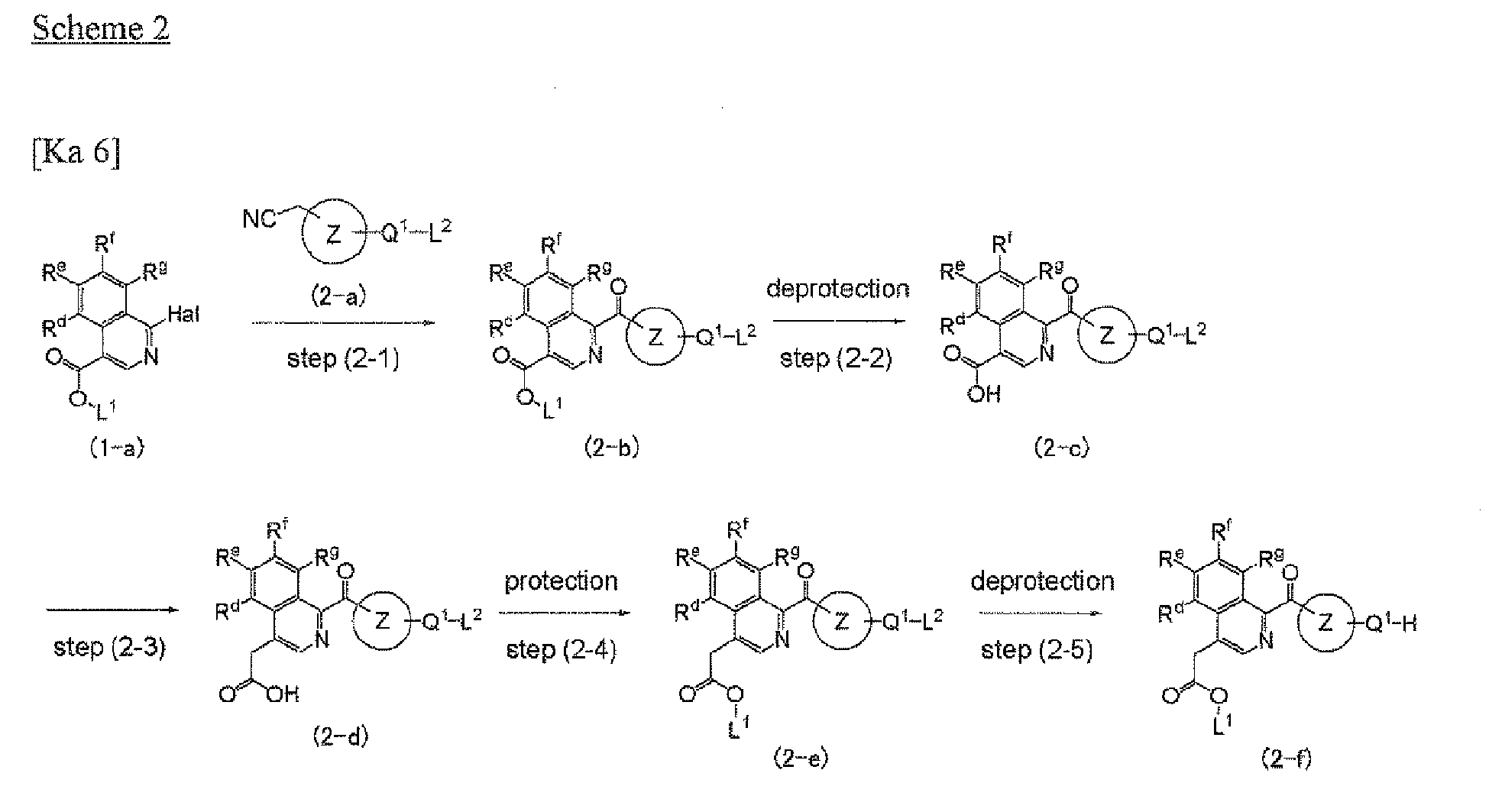
- In the scheme, Z, Rd, Re, Rf, Rg, L1, and Hal are the same as defined above, and Q1 represents the formula: -NH-, the formula: -O-, the formula: -CO2- the formula: -CH2O-, the formula: -CH2NH-, and L2 represents general protective groups of aniline, phenol, carboxylic acid, primary amine, or primary alcohol, for example, groups described in Protective Groups in Organic Synthesis (third edition, 1999, P. G M. Wuts and T. Green) etc., and specifically represents a tert-butoxycarbonyl group, a benzyl group, a 4-methoxybenzyl group, a methyl group, an acetyl group, a trimethylsilyl group, a tert-butyldimethylsilyl group, or the like, when Q1 is the formula: -NH-, the formula: -O-, the formula: -CH2O, or the formula: -CH2NH-, and represents a C1-6 alkyl group, a benzyl group, a 4-methoxybenzyl group, or the like, when Q1 is the formula: -CO2-.
- Step (2-1): Compound 2-b can be produced by using compound 2-a by the same procedure as used in step (1-1).
Step (2-2): Compound 2-c can be produced by using compound 2-b by the same procedure as used in step (1-2).
Step (2-3): Compound 2-d can be produced by using compound 2-c by the same procedure as used in step (1-3). - Step (2-4): Compound 2-e can be produced by subjecting compound 2-d to esterification with C1-6 alkyl alcohol, benzyl alcohol, 4-methoxybenzyl alcohol, or the like in the presence of mineral acid such as sulfuric acid. Alternatively, compound 2-e may be produced by allowing compound 2-d to react with C1-6 alkyl alcohol, benzyl alcohol, 4-methoxybenzyl alcohol, or the like, in ether solvent such as tetrahydrofuran and dioxane, a halogen solvent such as methylene chloride and chloroform, an aromatic hydrocarbon solvent such as toluene and xylene, or an aprotic polar solvent such as N,N-dimethylformamide, in the presence or the absence of a base such as triethylamine and pyridine, and in the presence of a condensing agent such as dicyclohexyl carbodiimide (DCC), 1-ethyl-3-(dimethylaminopropyl)-carbodiimide hydrochloride (EDC), benzotriazol-1-yloxytripyrrolidinophosphonum hexafluorophosphate (PyBOP (registered trademark)), 1-hydroxybenzotriazole hydrate (HOBt), or the like. Alternately, compound 2-e may be produced by reacting carboxylic acid chloride obtained by treating compound 2-d with oxalyl chloride, thionyl chloride, or the like, in a halogen solvent such as methylene chloride and chloroform or an aromatic hydrocarbon solvent such as toluene and xylene, with C1-6 alkyl alcohol, benzyl alcohol, 4-methoxybenzyl alcohol, or the like. Furthermore, when L1 is a methyl group, compound 2-e may be produced by allowing compound 2-d to react with diazomethane, trimethylsilyl diazomethane, or the like, in an alcohol solvent such as methanol and ethanol. Also, compound 2-e may be produced by allowing compound 2-d to react with iodomethane in an ether solvent such as tetrahydrofuran and dioxane, a halogen solvent such as methylene chloride and chloroform, an aromatic hydrocarbon solvent such as toluene and xylene, or an aprotic polar solvent such as N,N-dimethylformamide in the presence of a base such as triethylamine, pyridine, potassium carbonate, or the like.
- Step (2-5): This reaction may be carried out by the method described in, for example, Protective Groups in Organic Synthesis (third edition 1999, P. G M. Wuts and T. Green) etc., or methods similar to this method. Specifically, when L2 is a tert- butoxycarbonyl group, a tert-butyl group, a 4-methoxybenzyl group, or a trimethylsilyl group, compound 2-f can be produced by subjecting compound 2-e to deprotection reaction using mineral acid such as hydrochloric acid, acetic acid, trifluoroacetic acid, or the like, in an ether solvent such as tetrahydrofuran and dioxane, a halogen solvent such as methylene chloride and chloroform, or an aromatic hydrocarbon solvent such as toluene and xylene. When L2 is a benzyl group or a 4-methoxybenzyl group, compound 2-f may be produced by subjecting compound 2-e to hydrogenation in an alcohol solvent such as methanol and ethanol, an ether solvent such as tetrahydrofuran and dioxane, a halogen solvent such as methylene chloride and chloroform, an aromatic hydrocarbon solvent such as toluene and xylene, in the presence of a catalyst such as palladium carbon, When L2 is a trimethylsilyl group or a tert- butyldimethylsilyl group, compound 2-f can be produced by treating compound 2-e with potassium fluoride, tetrabutylammonium fluoride, or the like. When Q1 is the formula: -O- or the formula: -CH2O-, and L2 is a methyl group, compound 2-f can be produced by treating compound 2-e with BBr3 in a halogen solvent such as methylene chloride and chloroform or an aromatic hydrocarbon solvent such as toluene and xylene. When L2 is an acetyl group, compound 2-f can be produced by subjecting compound 2-e to hydrolysis with mineral acid such as hydrochloric acid or an inorganic base such as sodium hydroxide and potassium hydroxide in an alcohol solvent such as methanol and ethanol or an ether solvent such as tetrahydrofuran and dioxane. When Q1 is the formula:-CO2-, compound 2-f can be produced by the same procedure as used in step (1-2).

- In the scheme, Z, Rd, Re, Rf, Rg, and L1 are the same as defined above, and T1 represents the formula: -CO-W-R1, the formula: CO2-W-R1 the formula: -CO-W-O-R1, the formula: -SO2-W-R1, or the formula: -CO-W-NR4SO2-R1 (W, R1 an.d R4 are the same as defined above), U1 represents a general leaving group, for example, a chlorine atom, a bromine atom, an iodine atom, a phenoxy group, an imidazolyl group, a triazolyl group, and the like.
- Step (3-1): When U1 is a chlorine atom, a bromine atom, an iodine atom, a phenoxy group, an imidazolyl group, or a triazolyl group, compound 3-b can be produced by allowing compound 3-a to react with compound 2-f1 in an ether solvent such as tetrahydrofuran and dioxane, a halogen solvent such as methylene chloride and chloroform, an aromatic hydrocarbon solvent such as toluene and xylene, or an aprotic polar solvent such as NN-dimethylformamide, in the presence or absence of a base such as triethylamine and pyridine. Also, compound 3-b may be produced by allowing compound 3-a to react with compound 2-f1 by using a base such as pyridine and triethylamine as a solvent. When T1 is the formula: -COW-R1, the formula: -CO-W-O-R1, or the formula: -CO-W-NR4SO2-R1, U1 may be a hydroxyl group, and compound 3-b may be produced by allowing compound 3-a with compound 2-f1 in an ether solvent such as tetrahydrofuran and dioxane, a halogen solvent such as methylene chloride and chloroform, an aromatic hydrocarbon solvent such as toluene and xylene, or an aprotic polar solvent such as N,N-dimethylformamide, in the presence or absence of a base such as triethylamine and pyridine, and in the presence of a condensing agent such as dicyclohexyl carbodiimide (DCC), 1-ethyl-3-(dimethylaminopropyl)-carbodiimide hydrochloride (EDC), benzotriazol-1-yloxytripyrrolidinophosphonium hexafluorophosphate (PyBOP (registered trademark)), 1-hydroxybenzotriazole hydrate (HOBt), or the like.
- Step (3-2): Compound 3-c can be produced by using compound 3-b by the same procedure as used in step (1-2).
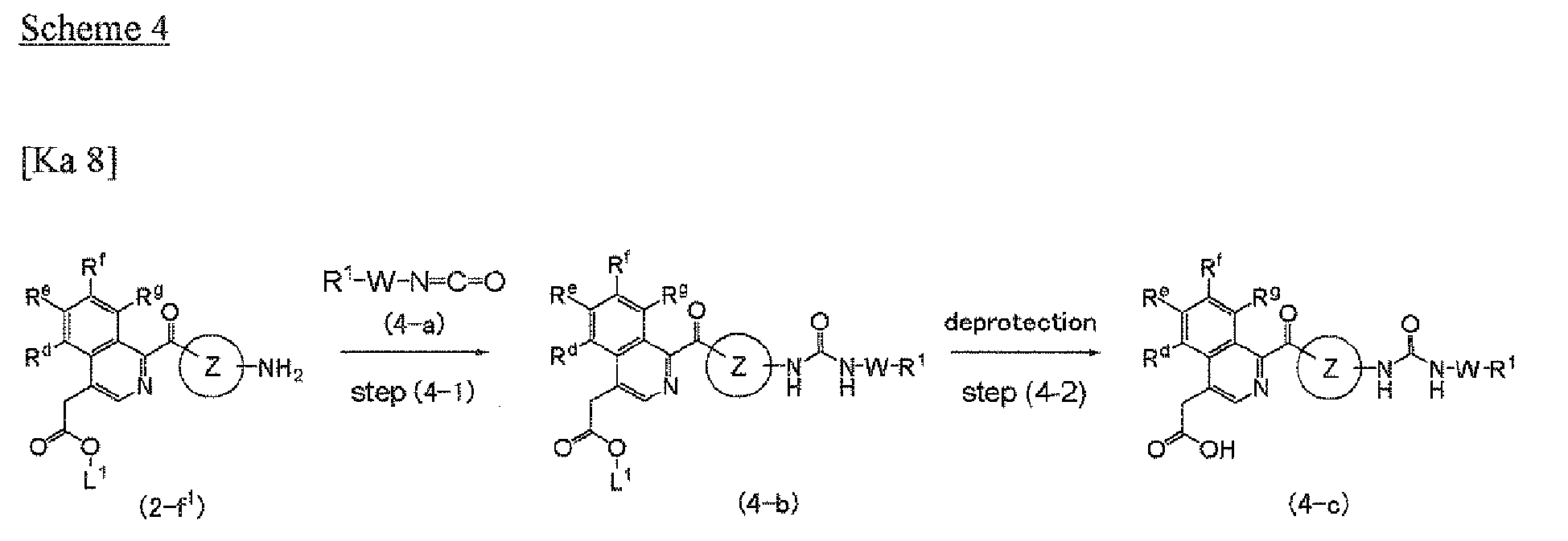
- In the scheme, Z, R1, Rd, Re, Rf Rg, W, and L1 are the same as defined above.
Step (4-1): Compound 4-b can be produced by allowing compound 4-a to react with compound 2-f1 in an ether solvent such as tetrahydrofuran and dioxane, a halogen solvent such as methylene chloride and chloroform, an aromatic hydrocarbon solvent such as toluene and xylene, or an aprotic polar solvent such as N,N-dimethylformamide. - Step (4-2): Compound 4-c can be produced by using compound 4-b by the same procedure as used in step (1-2).


- In the scheme, Z, Rd, Re, Rf, Rg and L1 are the same as defined above, , and Q2 represents the formula: -NH-, the formula: -O-, the formula: -CH2O-, or the formula: -CH2NH-, T2 represents the formula: -W-R1, or the formula: -W-O-R1 (W, R1 are the same as defined above), U2 represents a general leaving group, for example, a chlorine atom, a bromine atom, an iodine atom, a methane sulfonyloxy group, a p-toluene sulfonyloxy group, or the like.
- Step (5-1): Compound 5-b can be produced by allowing compound 5-a to react with compound 2-f2 in an ether solvent such as tetrahydrofuran and dioxane, a halogen solvent such as methylene chloride and chloroform, an aromatic hydrocarbon solvent such as toluene and xylene, or an aprotic polar solvent such as N,N-dimethylformamide, in the presence or absence of a base such as triethylamine, pyridine, and potassium carbonate. When Q2 is the formula: -0-, U2 may be a hydroxyl group, and compound 5-b may be produced by allowing compound 5-a to react with compound 2-f2 in an ether solvent such as tetrahydrofuran and dioxane, a halogen solvent such as methylene chloride and chloroform, an aromatic hydrocarbon solvent such as toluene and xylene, or an aprotic polar solvent such as N,N'-dimethylformamide, in the presence of a reagent such as triphenylphosphine and tri-n-butyl phosphine, diethyl azodicarboxylate and tetramethyl azodicarboxy amide.
- Step (5-2): Compound 5-c can be produced by using compound 5-b by the same procedure as used in step (1-2).


- In the scheme, Z, Rd, Re, Rf, Rg and L1 are the same as defined above, and T3 represents the formula: -W-R1, the formula: -W-O-R1, or the formula: -W-NR4CO-R1 (W, R1and R4 are the same as defined above).
- Step (6-1): Compound 6-b can be produced by allowing compound 6-a to react with compound 2-f3 in an ether solvent such as tetrahydrofuran and dioxane, a halogen solvent such as methylene chloride and chloroform, an aromatic hydrocarbon solvent such as toluene and xylene, or an aprotic polar solvent such as N,N-dimethylformamide, in the presence or absence of a base such as triethylamine and pyridine, in the presence of a condensing agent such as dicyclohexyl carbodiimide (DCC), 1-ethyl-3-(dimethylaminopropyl)-carbodiimide hydrochloride (EDC), benzotriazol-1-yloxytnpyrrolidinophosphonium hexafluorophosphate (PyBOP (registered trademark)), 1 -hydroxybenzotriazole hydrate (HOBt), or the like. Alternatively, compound 6-b may be produced by allowing carboxylic acid chloride obtained by treating compound 2-f3 with oxalyl chloride, thionyl chloride, or the like, in a halogen solvent such as methylene chloride and chloroform, or an aromatic hydrocarbon solvent such as toluene and xylene to react with compound 6-a in an ether solvent such as tetrahydrofuran and dioxane, a halogen solvent such as methylene chloride and chloroform, or an aromatic hydrocarbon solvent such as toluene and xylene.
- Step (6-2): Compound 6-c can be produced by using compound 6-b by the same procedure as used in step (1-2).


- In the scheme, Z, R1, Rd, Re, Rf, Rg, L1 and Q2 are the same as defined above.
Step (7-1): Compound 7-a can be produced by treating compound 2-f2 with a reducing agent such as sodium borohydride and lithium aluminum hydride in an alcohol solvent such as methanol and ethanol, an ether solvent such as tetrahydrofuran and dioxane, a halogen solvent such as methylene chloride and chloroform, or an aromatic hydrocarbon solvent such as toluene and xylene. Compound 7-a may be produced by reacting with trimethylsilane in an ether solvent such as tetrahydrofuran and dioxane, a halogen solvent such as methylene chloride and chloroform, or an aromatic hydrocarbon solvent such as toluene and xylene in the presence of trifluoroacetic acid, boron trifluoride etherate, or the like. Alternatively, compound 7-a may be produced by hydrogenating compound 2-f2 in an alcohol solvent such as methanol and ethanol, an ether solvent such as tetrahydrofuran and dioxane, a halogen solvent such as methylene chloride and chloroform, or an aromatic hydrocarbon solvent such as toluene and xylene, in the presence of a catalyst such as palladium carbon. - Step (7-2): Compound 7-b can be produced by using compound 7-a by the same procedure as in the schemes 3 to 5. In this case, however, Y represents the formula: -NR3COW-, the formula: -NR3CO-W-O-, the formula: -NR3CO2-W-, the formula: -NR3-W-, the formula: -NR3SO2-W-, the formula: -NR3CONR4-W-, the formula: -NR3CO-W-NR4SO2-, the formula:-CH2-O-W-, the formula: -CH2NR3-W-, the formula: -O-W-, or the formula: -O-W-O- (W, R3, and R4 are the same as defined above).


- In the scheme, Z, Y, R1, Rd, Re, Rf, Rg, L1 and Hal are the same as defined above, and R15, R16, and R17represent a C1-6 alkyl group.
- Step (8-1): Compound 8-b can be produced by allowing compound 8-a to react with compound 1-a in an ether solvent such as tetrahydrofuran and dioxane, a halogen solvent such as methylene chloride and chloroform, an aromatic hydrocarbon solvent such as toluene and xylene, or an aprotic polar solvent such as N,N-dimethylformamide, in the presence of a base such as sodium hydride, tert-butoxy potassium and sodium hexamethyldisilazide, and further treating the reacted product in an aqueous solution of sodium carbonate, potassium carbonate, or the like.
- Step (8-2): Compound 8-c can be produced by using compound 8-b by the same procedure as used in step (1-2).
Step (8-3): Compound 8-d can be produced by using compound 8-c by the same procedure as used in step (1-3).

- In the scheme, Z, R1, Rd, Re, Rf, Rg, R15, R16 , R17, Q1 L1, L2, and Hal are the same as defined above.
Step (9-1): Compound 9-b can be produced by using compound 9-a by the same procedure as used in step (8-1).
Step (9-2): Compound 9-c can be produced by using compound 9-b by the same procedure as used in step (1-2).
Step (9-3): Compound 9-d can be produced by using compound 9-c by the same procedure as used in step (1-3).
Step (9-4): Compound 9-e can be produced by using compound 9-d by the same procedure as used in step (2-4).
Step (9-5): Compound 9-f can be produced by using compound 9-e by the same procedure as used in step (2-5). - Step (9-6): Compound 9-g can be produced by using compound 9-f by the same procedure as in the schemes 3 to 6. In this case, however, Y represents the formula: -NR3COW-, the formula: -NR3CO-W-O-, the formula: -NR3CO2-W-, the formula: -NR3-W-, the formula: -NR3SO2-W-, the formula: -NR3CONR4-W-, the formula,: -NR3CO-W-NWSO2-, the formula: - CONR3-W-, the formula: -CONR3-W-O-, the formula: -CH2-O-W-, the formula: -CH2NR3-W-, the formula: -CONR3-W-NR4CO-, the formula: -O-W-, or the formula: -O-W-O- (W, R3, and R4 are the same as defined above).

- In the scheme, Z, Y, R1, Rd, Re, Rf, Rg, L1, and Hal are the same as defined above, and Q3 represents an oxygen atom, a sulfur atom, or the formula: -NR2- (R2 is the same as defined above).
- Step (10-1): Compound 10-b can be produced by allowing compound 10-a to react with compound 1-a in an ether solvent such as tetrahydrofuran and dioxane, a halogen solvent such as methylene chloride and chloroform, an aromatic hydrocarbon solvent such as toluene and xylene, or an aprotic polar solvent such as N,N-dimethylformamide, in the presence or absence of a base such as triethylamine, pyridine, and potassium carbonate.
- Step (10-2): Compound 10-c can be produced by using compound 10-b by the same procedure as used in step (1-2).
Step (10-3): Compound 10-d can be produced by using compound 10-c by the same procedure as used in step (1-3).
- In the scheme, Z, Y, R1, Rd, Re, Rf, Rg, Q1, Q3, L1, L2, and Hal are the same as defined above.
Step (11-1): Compound 11-b can be produced by using compound 11-a by the same procedure as used in step (10-1).
Step (11-2): Compound 11-c can be produced by using compound 11-b by the same procedure as used in step (1-2).
Step (11-3): Compound 11-d can be produced by using compound 11-c by the same procedure as used in step (1-3).
Step (11-4): Compound 11-e can be produced by using compound 11-d by the same procedure as used in step (2-4).
Step (11-5): Compound 11-fcan be produced by using compound 11-e by the same procedure as used in step (2-5). - Step (11-6): Compound 11-g can be produced by using compound 11-f by the same procedure as in the schemes 3 to 6. In this case, however, Y represents the formula: - NR3CO-W-, the formula: -NR3CO-W-O-, the formula: -NR3CO2-W-, the formula: -NR3-W-, the formula: -NR3SO2-W-, the formula: -NR3CONR4-W-, the formula: -NR3CO-W-NR4SO2-, the formula: -CONR3-W-, the formula: -CONR3-W-O-, the formula: -CH2-O-W-, the formula: - CH2NR3-W-, the formula: -CONR3-W-NR4CO-, the formula: -O-W-, or the formula: -O-W-O-(W, R3, and R4 are the same as defined above).

- In the scheme, Z, Rd, Re, Rf, Rg, and U2 are the same as defined above; T4 represents the formula: -W-R1, the formula: -CO-W-R1, the formula: -CO2-W-R1, the formula: - CO-W-O-R1, or the formula: -SO2-W-R1 (W, and R1 are the same as defined above); and R18 is a C1-6 alkyl group.
- Step (12-1); Compound 12-c of the present invention can be produced by allowing compound 12-b to react with compound 12-a in an ether solvent such as tetrahydrofuran and dioxane, a halogen solvent such as methylene chloride and chloroform, an aromatic hydrocarbon solvent such as toluene and xylene, and an aprotic polar solvent such as N,N-dimethylformamide, in the presence of a base such as sodium hydride. Furthermore, a compound of the present invention in which a nitrogen atom is C1-6 alkylated can be produced by carrying out the same reaction using compound 4-c, compound 6-c, compound 5-c in which Q2 is the formula: -CH2NH-.

- In the scheme, Z, Y, R1, Rd, Re, Rf, Rg, R18, L1 L2, and U2 are the same as defined above, Q4 represents the formula: -O-, the formula: -CO2-, or the formula: -CH2O-; and Q5 represents the formula: -CH2- or the formula -CO-.
- Step (13-1): Compound 13-b can be produced by allowing compound 12-b to react with compound 13-a in an ether solvent such as tetrahydrofuran and dioxane, a halogen solvent such as methylene chloride and chloroform, an aromatic hydrocarbon solvent such as toluene and xylene, and an aprotic polar solvent such as N,N-dimethylformamide, in the presence of a base such as sodium hydride and tert-butoxy potassium.
- Step (13-2); Compound 13-c can be produced by using compound 13-b by the same procedure as used in step (2-5).
Step (13 -3): A compound of the present invention 13-d can be produced by using compound 13-c by the same procedure as in the schemes 5 to 6. In this case, however, Y represents the formula: -O-W-, the formula: -O-W-O-, the formula: -CH2-O-W-, the formula: - CONR3-W-, the formula: -CONR3-W-O-, or the formula: -CONR3-W-NR4CO- (W, R3, and R4 are the same as defined above).
- In the scheme, Z, Y, R1, Rd, Re, Rf, Rg, R18, L1, L2, U2 and Q4 are the same as defined above, and R19 represents a C1-6 alkyl group.
Step (14-1): Compound 14-c can be produced by using compound 14-b by the same procedure as used in step (13-1).
Step (14-2): Compound 14-d can be produced by using compound 14-b by the same procedure as used in step (2-5). - Step (14-3): Compound 14-e can be produced by using compound 14-d by the same procedure as in the schemes 5 to 6. In this case, however, Y represents the formula: -O-W-, the formula: -O-W-O-, the formula: -CH2-O-W-, the formula: -CONR3-W-, the formula: - CONR3-W-O-, or the formula: -CONR3-W-NR4CO- (W, R3, and R4 are the same as defined above).
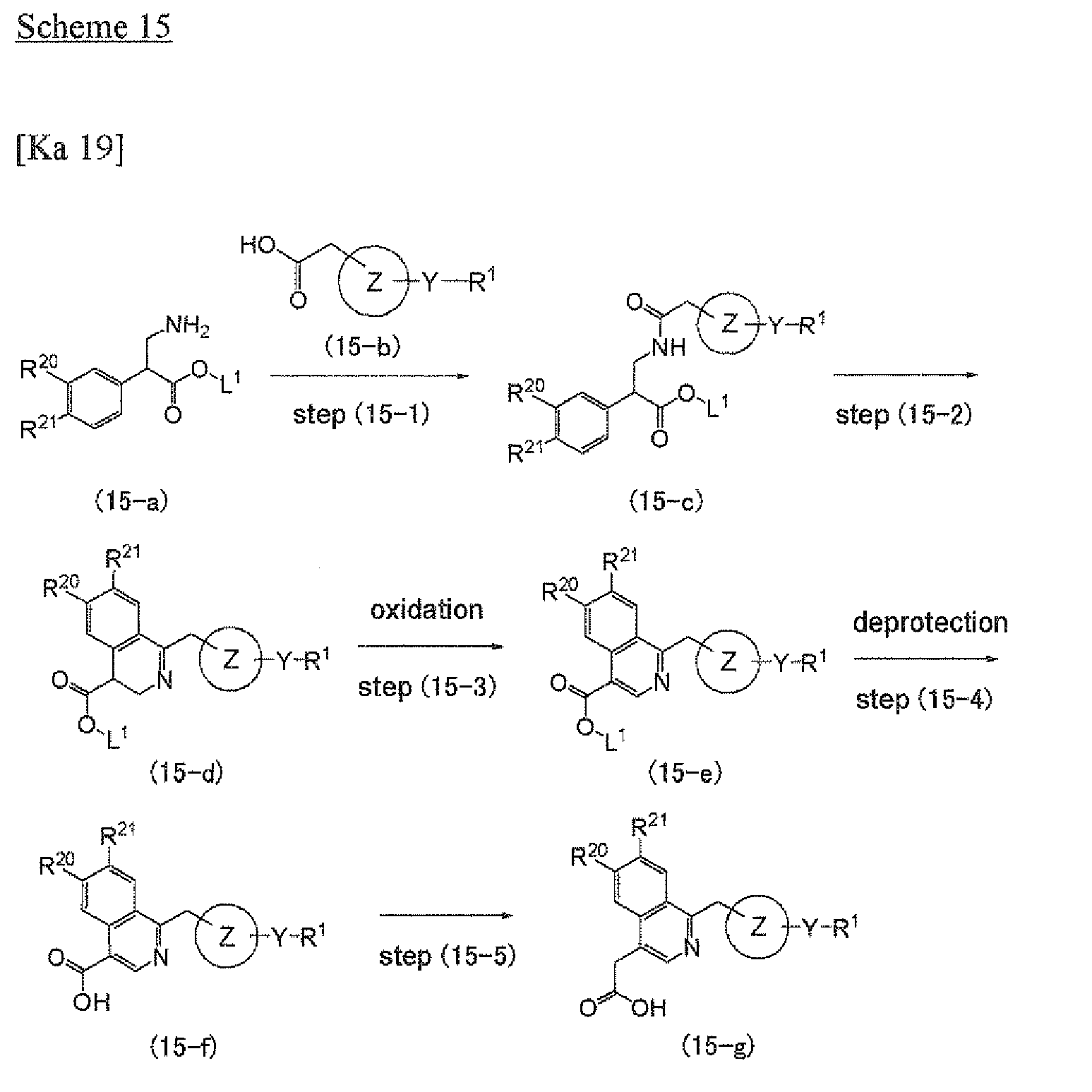
- In the scheme, Z, Y, R1, and L1 are the same as defined above, and R20 and R21 represent a C1-6 alkoxy group or a hydrogen atom.
- Step (15-1): Compound 15-c can be produced by allowing compound 15-b to react with compound 15-a in an ether solvent such as tetrahydrofuran and dioxane, a halogen solvent such as methylene chloride and chloroform, an aromatic hydrocarbon solvent such as toluene and xylene, or an aprotic polar solvent such as N,N-dimethylformamide, in the presence or absence of a base such as triethylamine and pyridine, and in the presence of a condensing agent such as dicyclohexyl carbodiimide (DCC), 1-ethyl-3-(dimethylaminopropyl)-carbodiimide hydrochloride (EDC), benzotriazol-1-yloxytripyrrolidinophosphonium hexafluorophosphate (PyBOP (registered trademark)), 1-hydroxybenzotriazole hydrate (HOBt), or the like. Alternatively, compound 15-c may be produced by allowing a carboxylic acid chloride obtained by treating compound 15-b with oxalyl chloride, thionyl chloride, or the like, in a halogen solvent such as methylene chloride and chloroform, or an aromatic hydrocarbon solvent such as toluene and xylene with compound 15-a in an ether solvent such as tetrahydrofuran and dioxane, a halogen solvent such as methylene chloride and chloroform, and an aromatic hydrocarbon solvent such as toluene and xylene.
- Step (15-2): Compound 15-d can be produced by treating compound 15-c with phosphorus oxychloride, diphosphorus pentaoxide, polyphosphoric acid, trifluoroacetic anhydride, trifluoromethanesulfonic anhydride, or the like, in a halogen solvent such as methylene chloride and chloroform, or an aromatic hydrocarbon solvent such as toluene and xylene, in the presence or absence of additives such as 2-chloropyridine.
- Step (15-3): Compound 15-e can be produced by treating compound 15-d with sulfur. Alternatively, compound 15-e may be produced by treating compound 15-d with palladium carbon or the like in an aromatic hydrocarbon solvent such as toluene and xylene, or an aliphatic hydrocarbon solvent such as decahydronaphthalene.
- Step (15-4): Compound 15-f can be produced by using compound 15-e by the same procedure as used in step (1-2).
Step (15-5): Compound 15-g can be produced by using compound 15-f by the same procedure as used in step (1-3).

- In the scheme, Z, Y, R1, R20, R21, and L1 are the same as defined above.
Step (16-1): Compound 16-b can be produced by using compound 16-a by the same procedure as used in step (15-1).
Step (16-2): Compound 16-c can be produced by using compound 16-b by the same procedure as used in step (15-2).
Step (16-3): Compound 16-d can be produced by using compound 16-c by the same procedure as used in step (15-3).
Step (16-4): Compound 16-e can be produced by using compound 16-d by the same procedure as used in step (1-2)

- In the scheme, Z, Y, R1, Rd, Re, Rf, Rg, and Q5 are the same as defined above.
Step (17-1): Compound 17-b can be produced by allowing compound 17-a with aqueous ammonia solution in an ether solvent such as tetrahydrofuran and dioxane, a halogen solvent such as methylene chloride and chloroform, an aromatic hydrocarbon solvent such as toluene and xylene, or an aprotic polar solvent such as N,N-dimethylformamide, in the presence or absence of a base such as triethylamine and pyridine, and in the presence of a condensing agent such as dicyclohexyl carbodiimide (DCC), 1-ethyl-3-(dimethylaminopropyl)-carbodiimide hydrochloride (EDC), benzotriazol-1-yloxytripyrrolidinophosphonium hexafluorophosphate (PyBOP (registered trademark)), 1-hydroxybenzotriazole hydrate (HOBt), and 1,1'-carboxyl diimidazole (CDI). Alternatively, compound 17-b of the present invention may be produced by allowing a carboxylic acid chloride obtained by treating compound 17-a with oxalyl chloride, thionyl chloride, or the like, in a halogen solvent such as methylene chloride and chloroform, or an aromatic hydrocarbon solvent such as toluene and xylene with an aqueous ammonia solution in an ether solvent such as tetrahydrofuran and dioxane, a halogen solvent such as methylene chloride and chloroform, and an aromatic hydrocarbon solvent such as toluene and xylene. - Step (17-2): Compound 17-c can be obtained by treating compound 17-b with phosphoryl chloride, thionyl chloride, oxalyl chloride, or the like, in a halogen solvent such as methylene chloride and chloroform, or an aromatic hydrocarbon solvent such as toluene and xylene.
- Step (17-3): A compound of the present invention 17-d can be produced by allowing compound 17-c to react with sodium azide in an ether solvent such as tetrahydrofuran and dioxane, a halogen solvent such as methylene chloride and chloroform, an aromatic hydrocarbon solvent such as toluene and xylene, or an aprotic polar solvent such as N,N-dimethylformamide, in the presence or absence of triethylamine hydrochloride, ammonium chloride, or the like.

- In the scheme, Z, Y, R1, Rd, Re, Rf, Rg, and Q5 are the same as defined above.
Step (18-1): Compound 18-a of the present invention can be produced by allowing compound 17-a with hydroxylamine or hydroxylamine hydrochloride in ether solvent such as tetrahydrofuran and dioxane, a halogen solvent such as methylene chloride and chloroform, an aromatic hydrocarbon solvent such as toluene and xylene, or an aprotic polar solvent such as N,N-dimethylformamide, in the presence or the absence of a base such as triethylamine and pyridine, and in the presence of a condensing agent such as dicyclohexyl carbodiimide (DCC), 1-ethyl-3-(dimethylaminopropyl)-carbodiimide hydrochloride (EDC), benzotriazol-1-yloxytripyrrolidinophosphonium hexafluorophosphate (PyBOP (registered trademark)), 1-hydroxybenzotriazole hydrate (HOBt), 1,1'-carbonyl diimidazole (CDI). Compound 18-a of the present invention can be produced by the same procedure by using a reagent such as O-(tetrahydro-2H-pyran-2-yl)hydroxylamine, and O-benzyl hydroxylamine in which a hydroxyl group is protected, instead of using hydroxylamine. Then, the obtained compound is subjected to deprotection reaction by, for example, a method described in Protective Groups in Organic Synthesis (third edition 1999, P. G M. Wuts and T. Green) etc., or methods similar to this method, and thus compound 18-a of the present invention can be produced. Specifically, when the protecting group is a tetrahydropyranyl group, compound 18-a of the present invention can be produced by deprotection reaction using mineral acid such as hydrochloric acid, acetic acid, trifluoroacetic acid, or the like, in an ether solvent such as tetrahydrofuran and dioxane, a halogen solvent such as methylene chloride and chloroform, or an aromatic hydrocarbon solvent such as toluene and xylene. When the protecting group is a benzyl group, compound 18-a of the present invention can be produced by hydrogenation in the presence of a catalyst such as palladium carbon in an alcohol solvent such as methanol and ethanol, an ether solvent such as tetrahydrofuran and dioxane, a halogen solvent such as methylene chloride and chloroform, or an aromatic hydrocarbon solvent such as toluene and xylene. - Herein, the reaction is carried out in an appropriate temperature selected from - 78°C to boiling points of the solvents to be used in the reaction, and can be used at room temperature, under pressure, under irradiation with microwave, or the like.
- Hereinafter, Examples and Test Examples are shown for describing the present invention in detail.
-
- (1) To a solution of 4-aminophenyl acetonitrile (1.41 g) in ethanol (5 ml), a solution of di-tert-butyl dicarbonate (3.10 g) in ethanol (5 ml) was added, and the mixed solution was stirred at room temperature for two hours. The precipitate was filtered and dried to give [4-(cyanomethyl)phenyl] carbamic acid 1, 1-dimethylethyl ester (984 mg) as a colorless solid. 1H NMR (600 MHz, CHLOROFORM-d) d ppm 1.52 (s, 9 H), 3.69 (s, 2 H), 6.49 (br. s., I H), 7.22 - 7.26 (m, 2 H), 7.35 - 7.41 (m, 2 H)
- (2) To a solution of the compound (286 mg) obtained in Example 1-(1) in tetrahydrofuran (2 ml), sodium bis(trimethylsilyl)amide (2.6 ml, 1 M solution) was added in an ice bath, and the mixed solution was stirred in an ice bath for 30 main. A solution of 1-chloro-isoquinoline-4-carboxylic acid methyl ester in tetrahydrofuran (3 ml) was added in an ice bath, and stirred at room temperature for 2.5 hours. Furthermore, the reaction solution was stirred in an oxygen atmosphere at room temperature for 17 hours. A saturated solution of ammonium chloride was added, followed by extraction with ethyl acetate, and the organic layer was washed with a saturated saline solution. The organic layer was dried over anhydrous magnesium sulfate and evaporated under reduced pressure to remove the solvent. The resulting crude product was purified by column chromatography (NH-type silica gel (NH-DM1020 manufactured by Fuji Silysia Chemical Ltd.) with ethyl acetate / n-hexane = 10 to 30%) to give methyl 1-({4-(tert-butoxycarbonyl)amino]phenyl}carbonyl)isoquinoline-4-carboxylate (289 mg) as a yellow amorphous substance.
1H NMR (600 MHz, CHLOROFORM-d) d ppm 1.53 (s, 9 H), 4.07 (s, 3 H), 6.72 (br. s., 1 H), 7.43 - 7.49 (m, 2 H), 7.62 - 7.66 (m, 1 H), 7.83 - 7.89 (m, 3 H),8.09 - 8.13 (m, 1 H), 8.99 - 9.03 (m, 1H), 9.20 (s, 1H) - (3) To a suspension of the compound (1.33 g) obtained in Example 1-(2) in methanol (30 ml), 1 N aqueous solution of sodium hydroxide (30 ml) was added, and the mixed solution was stirred at room temperature for 15 hours. The resulting solution was further stirred at 35°C for three hours, and acetic acid and water were added thereto. The precipitate was filtered, washed with water, and dried to give 1-({4-[(tert-butoxycarbonyl)amino]phenyl}carbonyl)isoquinoline-4-carboxylic acid (1.08 g) as an orange-colored solid.
1H NMR (600 MHz, CHLOROFORM-d) d ppm 1.53 (s, 9 H), 6.90 (br. s., 1 H), 7.45 - 7.50 (m, 2 H), 7.65 - 7.69 (m, 1 H), 7.86 - 7.93 (m, 3 H), 8.12 - 8,15(m, 1 H), 9.11 - 9.15 (razz I H), 9.39 (s, 1H) - (4) To a solution of the compound (1.08 g) obtained in Example 1-(3) in chloroform (20 ml), oxalyl chloride (0.709 ml) was added dropwise in an ice bath. The solution was stirred at room temperature for 3.5 hours and evaporated under reduced pressure to remove the solvent. To the resulting crude product, tetrahydrofuran (10 ml) and acetonitrile (10 ml) were added, and (trimethylsilyl)diazomethane (2.75 ml, 2 M solution) was added dropwise in an ice bath, and the resulting solution was stirred for two hours in an ice bath. The resulting solution was evaporated under reduced pressure to remove the solvent, and to the resulting crude product, water (10 ml), 1,4-dioxane (10 ml), and silver acetate (138 mg) were added and stirred at 60°C for 30 min. The solution was returned to room temperature, and water was added to the solution, followed by extraction with ethyl acetate. The organic layer was washed with a saturated saline solution. The organic layer was dried over anhydrous magnesium sulfate, and evaporated under reduced pressure to remove the solvent. To the resulting crude product, methanol (20 ml) was added, (trimethylsilyl)diazomethane (4.54 ml, 2 M solution) was added dropwise, and the solution was stirred at room temperature for 30 min. Water was added thereto, followed by extraction with ethyl acetate. The organic layer was dried over anhydrous magnesium sulfate and evaporated under reduced pressure to remove the solvent. The resulting crude product was purified by column chromatography (neutral OH type silica gel, ethyl acetate /n-hexane = 10 to 35%) to give methyl[1-({4-[(tert-butoxycarbonyl)amino]phenyl}carbonyl)isoquinolin-4-yl]acetate (578 mg) as a yellow solid. 1H NMR (600 MHz, CHLOROFORM-d) d ppm 1.51 (s, 9 H), 3.72 (s, 3 H), 4.10 (s, 2 H), 6.72 (br. s., 1 H), 7.42 - 7.47 (m, 2 H), 7.58 - 7.63 (m, 1 H), 7.75 -7.81 (m, 1 H), 7.88 - 7.93 (m, 2 H), 8.02 - 8.06 (m, I H), 8.16 - 8.20 (m, 1 H), 8.50 (s, 1 H)
- (5) To a solution of the compound (1.09 g) obtained in Example 1-(4) in methanol (10 ml), 1.3 N aqueous sodium hydroxide solution (10 ml) was added, and tetrahydrofuran (5 ml) was further added and stirred at room temperature for 1.5 hours. The solution was stirred at 50°C for 1.5 hours, and then 2N aqueous hydrochloric acid solution was added to the solution, followed by extraction with ethyl acetate. The organic layer was washed with a saturated saline solution, dried over anhydrous magnesium sulfate, and evaporated under reduced pressure to remove the solvent. The resulting crude product was recrystallized (ethyl acetate) to give the titled compound (144 mg) as a colorless solid.
-
- (1) To a solution of the compound (100 mg) obtained in Example 1-(4) in chloroform (1 ml), trifluoroacetic acid (1 ml) was added in an ice bath, and the mixed solution was stirred at room temperature for 1.5 hours. A saturated aqueous solution of sodium hydrogencarbonate was added thereto, followed by extraction with chloroform. The organic layer was dried over anhydrous magnesium sulfate, and evaporated under reduced pressure to remove the solvent to give methyl {1-[(4-aminophenyl)carbonyl]isoquinotin-4-yl]acetate (91 mg) as a yellow oily substance.
1H NMR (600 MHz, CHLOROFORM-d) d ppm 3.73 (s, 3 H), 4.09 (s, 2 H), 6.62 - 6.66 (m, 2 H), 7.58 - 7.62 (m, 1 H), 7.75 - 7.82 (m, 3 H), 8.01 - 8.04 (m, 1H), 8.15-8.18 (m, 1 H), 8.50 (s, 1H) - (2) To a solution of the compound (500 mg) obtained in Example 2-(1) in pyridine (8 ml), 3,4-dichlorobenzoyl chloride (490 mg) was added in an ice bath, and the mixed solution was stirred at room temperature for 13.5 hours. Ethyl acetate, chloroform, and water were added to the solution, followed by extraction with ethyl acetate. The organic layer was washed with diluted hydrochloric acid and a saturated saline solution, dried over anhydrous magnesium sulfate, and then evaporated under reduced pressure to remove the solvent. The resulting crude product was purified by column chromatography (neutral OH type silica gel, ethyl acetate / n-hexane = 20 to 50%) to give methyl{ 1-[(4-{[(3,4-dichlorophenyl)carbonyl]amino}phenyl)carbonyl]isoquinolin-4-yl}acetate (685 mg) as a pale yellow solid.
1H NMR (600 MHz, CHLOROFORM-d) d ppm 3.74 (s, 3 H), 4.12 (s, 2 H), 7.55-7.83 (m, 7 H), 7.97-8.08 (m, 4 H), 8.21- 8.24 (m, 1H), 8.52 (s, 1H) - (3) To a suspension of the compound (650 mg) obtained in Example 2-(2) in methanol (10 ml), 1 N aqueous sodium hydroxide solution (10 ml) was added in an ice bath. Furthermore, tetrahydrofuran (10 ml) was added thereto at room temperature, and the mixture was stirred at room temperature for 30 min. Water and hydrochloric acid were added in an ice bath, which was extracted with chloroform. The organic layer was dried over anhydrous magnesium sulfate, and then evaporated under reduced pressure to remove the solvent. The resulting crude product was recrystallized (ethanol - water) to give the titled compound (489 mg) as a colorless solid.
- Compounds of Examples 3 to 126 were obtained by carrying out the same procedures as in Example 2. Structural formulae and NMR values of Examples 1 to 126 are shown in Tables 1-1 to 1-13.

-
[Table 1-1] Example X Z Y R1 1H MMR (d ppm) 1 


1H NMR (600 MHz, CHLOROFORM-d) 1.53 (s, 9 H), 4.10 (s, 2 H), 6.98 (br. s, 1 H), 7.36-7.46 (m, 2H), 7.56-7.64 (m, 1H), 7.74- 7,81 (m, 1H), 7.83 - 7,90 (m, 2H), 7.98 - 8.06 (m, 1 11), 8.12 8.20 (m, 1H), 8.50 (s, 1 H) 2 


1H NMR (600 MHz, DMSO-d6) 4.17 (s, 2 H)w, 7.70 - 7.74 (m, 1H), 7.83-7,93 (m, 4H), 7.94-7.99(m, 3H), 8.02 -8.06 (m, 1H), 8.13 - 8.16 (m, i, 1H), 8.24-8.26 (m, 1H), 8.54 (s, 1 H), 10.78 (br.s., 1H) H) 3 


1H NMR (600 MHz, DMSO-d6) 3.76 (s, 2H), 4.16 (s, 2H), 7.31 - 7.34 (m, 1 H), 7.58 - 7.62(m, 2H), 7.68-7.72 (m, 1H), 7.73 - 7.77 (m, 2H), 7.80-7.83 (m, 2H), 7.87- 7.91 (m, 1 H), 7.99 -8.02 (m, 1H), 8.11 - 8.14 (m, 1 H), 8.52 (s, 1H), 10.62 (br. s., 1H), 12,67 (br. s., 1H) 4 


1H NMR (600 MHz, DMSO-d6) 2.70 (t, J=7.6 Hz, 2 H), 2.92 (t, J=7.6 Hz, 2 H), 4.17 (s, 2H), 7.24 - -7.27 (m, 1H), 7.52 - 7.56 (m, 2H), 7.68 - 7.75(m, 3 H), 7.78- 7.82 (m, 2H), 7.87-7.91 (m, 1 H), 7.99-8.02 1 H), 8.11 -8.15 (m, 1 H), 8.52 (s, 1 H), 10.36 (br. s, 1 H), 12.68 (br. s., 1H) 5 


1H NMR (600 MHz, DMSO-d6) 1.1.9 -1.2S(m;2H), 1.49-1.54(m,2H), . 4.15 (s, 2H), 7.37- 7.40 (m, 1 H), 7.59 - 7.61 (m, 1H), 7.62 - 7.64 (m, 1H), 7.67 - 7.79 (m, 5 H), 7-86-7.91 (m, H), 7.97 - 8.00(m, 1 H), 8.11 - 8.14 (m, 1H),8.51(s,1H), 9.59(br.s.,1H) 6 


1H NMR (600 MHz, DMSO-d6). 4.16 (s, 2H), 6.92 (d,J= 15.1 Hz, 1 H), 7.58 - 8.17 (m, 12 H), 8.53 (s, 1 H), 10.68 (s, 1H) 7 


1H NMR (600 MHz, DMSO-d6) 3.85 (s, 3H), 4.18 (s, 2H), 7.05-7.11(m,2 H), 7.68 -8.17(m, 10H), 8.54(s, 1H), 10.49 (s, 1 H), 12.74 (br, s, 1H) 8 


1H NMR (600 MHz, DMSO-d6) 4. 17 (s, 2H), 7.51-8.17 (m, 12H), 8.54 (s, 1H), 10.75(s, 1H), 12.79 (br. s., 1H) -
[Table 1-2] Example X Z Y R1 1H NMR (d ppm) 9 


1H NMR (600 MHz, DMSO-d6) 4.16 (s, 2H), 7.09-7.14(m,4H), 7.22-7.26 (m, 1 H), 7.44 -7,49 (m, 2 H), 7.69 - 7.73 (m, 1 H), 7.83.7.92(m, 3H),7.95-7.99(m,2 H), 8.00 - 8.05 (m, 3 H), 8.13 - 8.17 (m, 1H), 8.53 (s, 1 H), 10.59 (br. s., 1H) 10 


1H NMR (600 MHz, DMSO-d6) 4.19 (s, 2H), 7.42-7.46 (m, 1H), 7.50-7.54(m,2H), 7.70-7.74(m, 1H), 7.75 - 7.79 (m, 2H), 7.84-7.93 (m, 5H), 7.99 - 8.06 (m, 3H), 8.07- 8.11 (m, 2H), 8.13- 8.16(m, 1H), 8.55 (s, 1H), 10.70 (br. s., 1H), 12.65 (br. s., 1H) 11 


1H NMR (600 MHz, DMSO-d6) 4.18 (s,2 H), 7.70-7.74 (m, 1H), 7.86-8.01 (m, 7H), 8.02-8.06 (m, 1H), 8.11 -8.20 (m, 3H), 8.54 (s,1H), 10.86 (br, s., 1H) 12.70 (br.s., 1 H) 12 


1H NMR (600 MHz, DMSO-d6) 3.00 (s, 6 H), 4.18 (s,2H), 6.75-6.79 (m, 2 H), 7.69-7.73 (m, 1H), 7.80-7.84 (m, 2H), 7.87-7.92 (m, 3H), 7.95-7.99 (m, 2H), 8.00-8.04 (m, 1H), 8.12-8.15 (m, 1H), 8.53 (s, 1H), 10.17(br,s., 1H), 12.69 (br. s., 1H) 13 


1H NMR (600 MHz, DMSO-d6) 4.17 (s, 2H), 7.70-7.74 (m,1H), 7.86-7.92 (m, 3H), 7.96- 8.00 (m,2 H), 8.02-8.07 (m, 3H), 8.11-8.16 (m, 3H), 8.54 (s, 1H), 10.88 (br. s., 1H) 14 


1H NMR (600 MHz, DMSO-d6) 4.19 (s,2H), 7.61-8.17 (m, 14 H), 8.55 (s,1H), 8.6 (s, 1H), 10.84 (s, 1H), 12.72 (br, s., 1H) 15 


1H NMR (600MHz, DMSO-d6) 4.19 (s, 2H), 7.70-7.74 (m, 1H), 7.87-7.93 (m, 3H), 7.96-8.01 (m, 2 H), 8.03-8.06 (m, 1H), 8.13-8.166 (m, 1H), 8.19-8.23 (m, 2H), 8.37-8.41 (m, 2H), 8.55 (s, 1H), 10.96 (br. s., 1 H), 12.70 (br. s., 1H) 16 


1H NMR (600 MHz, DMSO-d6) 4.18 (s, 2H), 7.68-8.21 (m, 11H), 8.54 (s,1 H), 8.75-8.78 (m, 1 H), 11.04 (s, 1H), 12.71 (br. s., 1H) -
[Table 1-3] Example X Z Y R1 1H NMR (d ppm) 17 


1H NMR (600 MHz, DMSO-d6) 2.40 (s, 3H), 4.18 (s, 2 H), 7.34 - 7.38 (m, 2 H), 7.70 7.74 (m, 1 H), 7.83-7.92 (m, 5 H), 7.97 - -8.00 (m,2 2 H), 8.02-8.05 (m, 1 H), 8.12 -8.15 (m, 1 H), 8.54 (s, 1 H), 10.56 (br. s., 1H), 12.69 (br. s., 1 H) 18 
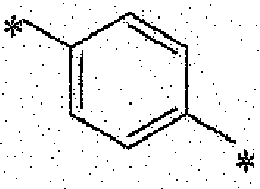


1H NMR (600 MHz, DMSO-d6) 4.18 (s, 2 H), 7.05-8.17(m, 13 H), 8.54 (s, 1 H), 10.60 (s, 1 H), 11.83 (br. s., 1 H), 12.73 (br, 1 H) 19 

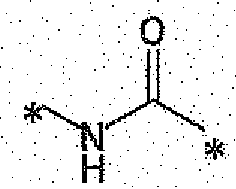

1H NMR (600 MHz, DMSO-d6) 2.09 (s, 3 H), 4.16 (s, 2 H), 7.67-8.15 (m, 8 H), 8.52 (s, 1 H), 10.37 (s, 1 H), 12.73 (br. s., 1H) 20 


1H NMR (600 MHz, DMSO-d6) 0.79-0.87 (m, 4H), 1.80 1.87 (m, 1 H), 4.15 (s, 2 H), 7.67-8.16 (m, 8 H), 8.51 (s, 1 H.), 10.65 (s, 1 H), 12.70 (br. s., 1 H) 21 

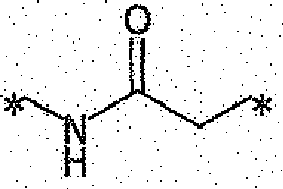

1H NMR (600 MHz, DMSO-d6) 0.80-1.33 (m, 5 H), 1.55-1.83 (m, 6 H), 2.24 (d, J=7.3 Hz, 2 H), 4.16 (s, 2H), 7.65 8.16 (m, 8 H), 8.52 (s, 1 H), 10.29 (s, 1 H), 12.73 (br. s., 1 H) 22 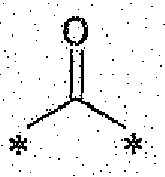


1H NMR (600 MHz, DMSO-d6) 3.75 (s, 2 H), 4.15 (s, 2 H), 7.34-7.37 (m, 1 H), 7.41-7.47 (m, 4 H), 7.61 -7.66 (m, 4 H), 7.68-7.71 (m, 1 H), 7.76 -7.83 (m, 4 H), 7.87-7.90 (m, 1 H), 7.99 - 8.01 (m, 1 H), 8.12-8.15 (m, 1 H), 8.52 (s, 1 H), 10.65 (br. s., 1 H) 23 

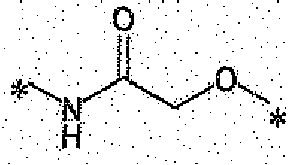

1H NMR (600 MHz, DMSO-d6) 4.18 (s, 2 H), 4.84.(s, 2 H), 7.02-7.06 (m, 1 H), 7.31-7.34 (m, 1 H), 7.55-7.57 (m, 1 H), 7.69-7.73 (m, 1H), 7.79-7.86 (m, 4 H), 7.88 -7.92 (m, 1 H), 8.01-8.04 (m, 1 H), 8.12- 8.15 (m, 1 H), 8.53 (s, 1 H), 10.53 (br. s., 1 H), 12.68 (br. s., 1 H) 24 


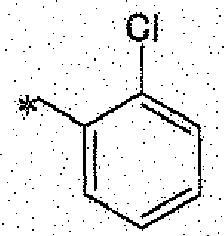
1H RNMR (600 MHz, DMSO-d6) 4.18 (s, 2 H), 7.44-8.16 (m, 12 H), 8.54 (s, 1 H), 10.05 (br. s, 1 H), 12.67 (br, s, 1 H) -
[Table 1-4] Example X Z Y R1 1H NMR(d ppm) 25 
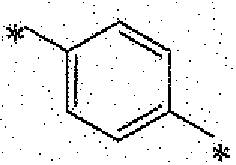


1H NMR (660 MHz, DMSO-d6)4.18 (s, 2 H), 7,42-8.16 (m, 12H), 8.54 (s, 1H),10.93(br.s,1H), 12.68 (br, s., 1H) 26 


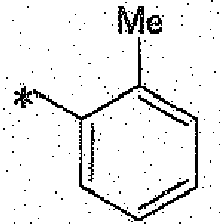
1H NMR (600 MHz, DMSO-d6)2,39 (s, 3H), 4.17 (s, 2 H), 7.28-8.16(m, 12 H), 8.53 (s, 1 H), 10.73 (br. s, 1 H), 12.69 (br. s, 1H) 27 


1H NMR (600 MHz, DMSO-d6) 4,18 (s, 2 H), 7.57 - 8.16 (m, 12 H), 8.54 (s, 1H), 10.73 (s, 1 H), 12.72 (br, s., 1H) 28 


1H NMR (600 MHz, DMSO-d6) 4.18 (s, 2 H), 7.35 - 8.17 (m, 12 H), 8.54 (s, 1 H), 10.66 (s, 1H), 12.72 (br, s., 1 H) 29 


1H NMR (600 MHz, DMSO-)4.17 (s,2 H), 7.61 8.16 (m, 12 H), 8.54 (s, 1 H), 10.71 (s, 1H) 30 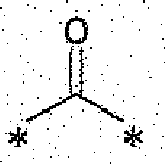


1HNMR(600 MHz, DMSO-d6)4.17 (s,2 H), 7.48 - 8. 16 (m, 11 H), 8.53 (s,1 H),11.03(s,1 H) 31 


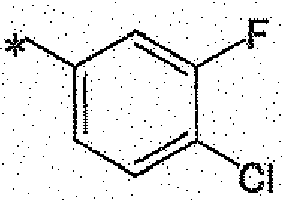
1H NMR (600 MHz, DMSO-d6) 4.17 (s, 2H), 7.70 - 8.16 (m, 11 H), 8.54 (s, 1 H), 10.74 (s, 1H) 32 

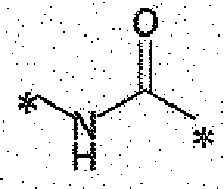

1H NMR (600 MHz, DMSO-d6)4.18 (br: s., 2 H), 7 69 - 8.16 (m, 12 H), 8.53(s, 1 H), 10.71 (br, s, 1 H), 12.70 (br. s,1H) 33 


1HNMR(600MHz,DMSO-d6) 4.18 (s,2 H), 7.51 - 8.16(m, 11 H), 8.54 (s, 1 H), 11.20 (br. s, 1 H), 12,67 (br. s., 1 H) 34 


1H NMR (600 MHz, DMSO-d6) 4.18 (s,2H),758-8.25 (m 11H),8.54 (s, 1 H), 10.72 (br. s, 1 H) 12.68 (br. s.,1H) 35 


1H NMR (600 MHz, DMSO-d6) 4.18 (s.2 H), 7.61 - 8.16 (m, 11 H), 8.54 (s, 1H),10.69(br.s, 1 H), 12.68 (br. s.,1H) 36 


1H NMR (600 MHz, DMSO-d6) 4.18 (s,2H), 7.38-8.17 (m, 11 H), 8.54 (s, 1H),11.23 (s, 1 H), 12.71(br. s., 1 H) -
[Table 1-5] Example X Z Y R1 1H NMR(dppm) 37 


1H NMR (600 MHz, DMSO-d6) 4.18 (s,2.H),7.70-8.16(m,11H),8.54 (s, 1 H), 10.79 (s, 1 H), 12.72 (br. s., 1H) 38 


1H NMR(600 MHz DMSO-d6)4.18 (s,2H), 7.52 - 8.16 (m, 13 H), 8.54 (s, 1 H), 10,65 (s, 1 H), 12.72 (br., 1 H) 39 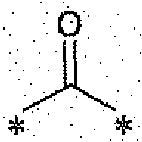


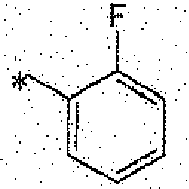
1H NMR(600 MHz, DMSO-d6)4.77 (s, 2 H), 7.32 - 8.16 (m, 12 H), 8.54 (s, 1 H), 10.86(s, 1H) 40 


1H:N NMR (600 MHz, DMSO-d6) 3.89 1H NMR (600 MHz, DMSO-d6) 3.89 (s, 3 H), 4.17 (s, 2 H), 7.05 - 7.21 (m, 2 H), 7.50-8.16 (m, 10 H), 8.53(s, 1 H), 10.53(s, 1H) 41 


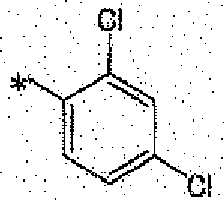
1H NMR (600 MHz, DMSO-d6) 4.17 (s, 2 H), 7.56 - 8.17 (m, 11 H), 8.53 (s,1H), 10.97(s,1H) 42 


1HNMR(600 MHz, DMSO-d6) 4.18 (s; 2 H), 7.38 - 8.16 (m, 11 H), 8.54 (s, 1 H), 11.00(s, 1H), 12.70 (br. s., 1H) 43 


1HNMR(600 MHz, DMSO-d6) 4.18 (s, 2H), 7.59- 8.16 (m, 11H), 8.54 (s, 1 H), 11.00 (br. s, 1 H), 12.66 (br. s, 1H) 44 


1H NMR (600 MHz, DMSO-d6) 2.33 (s,3H), 2.33 (s,3H), 4.18(s, 2H), 7.18 - 8. 16(m, 11 H), 8.53 (s, 1 H), 10,69 (br. s,1H),12.66 (br.s., 1 H) 45 


1H NMP, (600 MHz, DMSO-d6) 4.18 (s, 2 H), 7.70 - 8.16(m, 10 H), 8.54 (s, 1 H), 11.07 (br. s, 1 H), 12,67 (br. s., 1 H) 46 

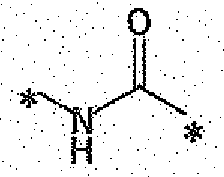

1H NMR (600 MHz, DMSO-d6)4.19 (s,2H), 7.58-8.21(m,15H), 8.55 (s,1H), 11,00(br.s, 1 H), 12.67 (br. s., 1 H) 47 


1H NMR(600 MHz, DMSO-d6)4.17 (s,2H), 7.34 -8.16 (m, 11H), 5.53 (s, 1H), 10.94(s,1H) 48 


1H NMR(600MHz, DMSO-d6) 4.17 (s, 2 H), 7.68-8.16 (m, 10 H), 8.53 (s, 1H),11.21(s, 1 H), 12.71 (br.s., 1H) -
[Table 1-6] Example X Z Y R1 1H NMR (d ppm) 49 
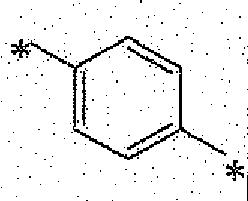

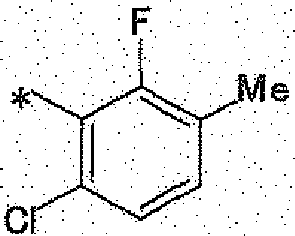
1H NMR (600 MHz, DMSO-d6)2.28 (s, 3 H), 4.15 (s, 2 H), 7.33-8.17 (m, 10 H), 8.52 (s, 1 H), 11.18(s, 1H) 50 


1HNMR (600 MHz, DMSO-d6)4.18 (s, 2 H), 7.36-8.16 (m,13H), 8.55 (s,1 H), 10.91(s, 1H), 12.71 (br.s., 1H) 51 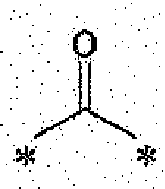


1H NMR (600 MHz, DMSO-d6) 4.17 (s, 2H), 7.69 - 8.16(m, 10H),8.54 (s,1H), 8.79 .8.82 (m, 2H), 10.88 (s, 1 H) 52 


1H NMR (600 MHz, DMSO-d6) 4.17 (s, 2H), 7.46 8.16 (m, 10 H), 8.54 (s, 1 H), 10.95(s, 1H),12.69(br.s., 1 H) 53 


1H NMR (600 MHz, DMSO-d6)1.56 -1.69(m,12H), 1.90 - 1.96(m,3H), 2.11 (s, 2 H), 4.16 (s, 2 H), 7.67-8.15 (m, 8 H), 8.52 (s, 1H),10.19 (br. s, 1H), 12.67(br. s., 1 H) 54 


1H NMR(600 MHz, DMSO-d6 1.73 -1.81 (m,4H), 2.76-2.85(m, 4 H), 4.18 (s, 2 H), 7.19-8.16(m, 11 H), 8.54(s,1H), 10.51 (br. s, 1H), 12.67 (br.s., 1H) 55 
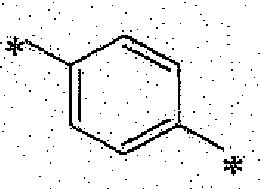


1H NMR (600 MHz,DMSO-d6) 4.14 (s,2 H),7.66-8.13(m,9H), 8.51 (s, 1H), 9.01-9.05(m,2H),11.10(br. s, 1H), 12.64(br. s., 1H) 56 


1H NMR (600 MHz, DMSO-d6) 4.17 (s,2H),7.70-8.16 (m, 10 H), 8.53 (s, 1H),11.02 (s,1H) 57 


1H NMR (600 MHz, DMSO-d6) 0.86 (t, J=7.1 Hz, 3 H), 1.24 - 1.35(m, 4 H), 1.57-1.64 (m, 2 H), 2.66 (t, J=7.6 Hz, 2H),4.17 (s,2H),7.34-8.16(m, 12 H), 8.53 (s, 1H),10.56 (s,1H) 58 


1H NMR (600 MHz,DMSO-d6) 4.17 (s, 2 H),7.69- 8.59 (m, 10 H), 9.28-9.30 (m, 1H),10.74 (s, 1H), 12.69 (br. s., 1H) -
[Table 1-7] Example X Z Y R1 1H NMR (d ppm) 59 


1H NMR (600 MHz, DMSO-d6) 1.60 -1,72 (m, 4 H), 1.89-1.97 (m, 2 H), 2.56 2.64 (m, 2 H, 4,16 (s, 2 H), 7.38-8.14 (m, 12 H), 8.51 (s, 1H), 9.61 (s, 1H), 12.69 (br. s.,1 H) 60 


1H NMR (600 MHz, DMSO-d6) 3.12 - 3.24 (m, 4 H), 3.42-3.49 (m, 1H), 4.17 (s, 2 H), 7.12 - 8.15 (m, 12H), 8.53 (s, 1H), 10.48 (br. s, 1 H), 12.65 (br.s., 1H) 61 


1H NMR (600 MHz, DMSO-d6) 2.41 (s, 3 H), 4.18 (s, 2 H), 7.12 - 8.16 (m, 11 H), 8.53 (s, 1 H), 10.73 (br. s,1 H), 12.66 (br. s., 1H) 62 


1H NMR (600 MHz, DMSO-d6) 2.35 (s, 3H), 4.18 (s, 2H), 7.23-8.16(m, 11H), 8.54(s, 1H), 10.78 (br. s,1 H), 12.65 (br. s., 1H) 63 
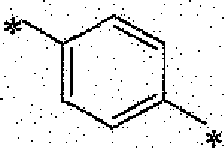


1H NMR (600 MHz, DMSO-d6) 3.74 (s, 3H), 3.88 (s, 6H), 4.18 (s, 2H), 7.28 - 8.16 (m,10 H), 8.54 (s,1H), 10.50 (s, 1H), 12.70(br.s., 1H) 67 

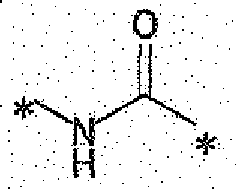

1H NMR(600 MHz,DMSO-d6) 4.17 (s,2H), 5.42 (d, J=11.10 Hz, 1 H), 6.0 1 (d, J=17.7 Hz, 1 H), 6.83 (dd, J=17.7, 11.0 Hz, 1H), 7.63-8.16(m, 12H), 8.54(s,1H), 10.62 (s, 1 H), 12,70(br.s., 1H) 65 


1H NMR (600 MHz, DMSO-d6) 1.87 - 1.89 (m, 3 H), 2.16(m, 3 H), 4.16 (s,2 H), 5.90 - 5,92 (m, 1 H), 7.68-8.15. (m, 8 H), 8.52 (s, 1H), 10.26 (s, 1H), 12.68(br. s., 1H) 66 


1H NMR (600 MHz, DMSO-d6) 4.17 (s, 2 H), 7.57 - 8.34 (m, 10 H), 8.54 (s, 1 H), 8.77-8.80(m,1 H), 9.11-9.14(m,1H),10.83(s,1 H) 67 


1H NMR (600 MHz, DMSO-d6) 4. 18 (s, 2 H),7.63 - 9.05 (m, 15 H), 10.91 (br.s,1 H), 12.67 (br. s., 1H) 68 


1H NMR (600 MHz, DMSO-d6) 2.34 (s, 3 H), 3.67-3.71 (m, 2 H), 4.17 (s, 2 H), 7.33 - 8.15 (m, 13 H), 8.52 (s, 1 H), 10.31 (br. s, 1 H), 12.62 (br. s., 1 H) -
[Table 1-8] Example X Z Y R1 1H NMR (d ppm) 69 


1H NMR (600 MHz, DMSO-d6)4.18 (s, 2 H), 7.69-9.34(m,12H), 11.12 (br. s, 1 H), 12.67 (br. s., 1H) 70 


1H NMR (660 MHz, DMSO-d6) 41.18 (s, 2 H), 7.35 - 8.16 (m, 11 H), 8.54 (s, 1H), 10.97(br.s, 1 H), 12.66 (br. s.,1 H) 71 


1H NMR (600 MHz, DMSO-d6) 4.18 (s, 2 H), 7-45 - 8.16 (m, 12 H), 8.54 (s, 1 H), 10.70 (s, 1 H), 12.70 (br, s., 1 H) 72 


1H NMR (600 MHz, DMSO-d6 ) 3.85 (s, 3 H),4.18(s, 2 H), 7.44-8.16 (m, 12 H), 8.54 (s, 1H), 10.61 (s, 1H), 12.68 (br. s., 1H) 73 


1H NMR (600 MHz, DMSO-d6) 2.41 (s,3 H), 4.17 (s, 2 H), 7.41 - 8.16(m, 12 H), 8.34(s,1 H), 10.60 (s,1 H), 12.70 (br. s., 1 H) 74 


1H NMR (600 MHz, DMSO-d6) 3.31 (s, 3H), 4.18(s, 2 H), 7.70-8.22 (m, 12 H), 8.54 (s, 1 H), 10.88 (br. s,1 H), 12.67(br.s, 1H) 75 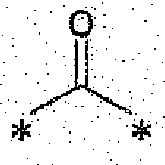


1H NMR (600 MHz, DMSO-d6) 4.18 (s, 2 H), 7.50-8.18(m, 12 H), 8.54 (s, 1H), 10.72 (br. s, 1H), 12.66 (br. s., 1 H) 76 


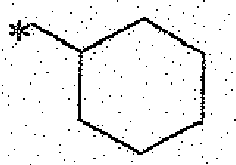
1H NMR (600 MHz, DMSO-d6) 1.14 -1.84 (m, 10 H), 2,34-2.40 (m, 1 H), 4.16 (s, 2H), 7.67-8.15 (m, 8 H), 8.52 (s, 1 H), 10.24 (br.s, 1 H), 12.67 (br.s., 1H) 77 


1H NMR (600 MHz, DMSO-d6) 0.84 - 1.27(m, 6H), 1.47-1.53 (m,2H), 1.57-1.73 (m, 5 H), 2.34-2.39(m,2 H), 4.17 (s, 2H), 7.68-8.15 (m, 8 H),52(s, 1H), 10.30(br.s, 1 H), 12.66 (br. s., 1 H) 78 


1H NMR (600 MHz, DMSO-d6) 2.12 (s, 3 H), 4.17(s,2H), 7.34-8.16 (m, 14 H), 8.53 (s, 1 H), 10-36(s,1 H), 12.71(br. s., 1 H) 79 


1H NMR (600 MHz, DMSO-d6) 4.18 (s, 2 H), 7.70-8.16 (m, 12 H), 8.54 (s,1 H), 10.80(s, 1 H) -
[Table 1-9] Example X Z Y R1 1H NMR (d ppm) 80 

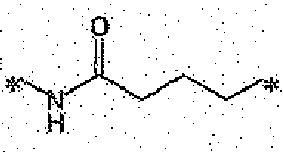

1H NMR (600 MHz, DMSO-d6) 0.90 (t, J=7.6 Hz, 3 H), 1.28-1.37(m,2 H), 1.54 - 1.61 (m, 2 H), 2.36 (t, J=7.6 Hz, 2 H), 4.16 (s, 2H), 7,67 - 8. 15 (m, 8 H), 8.52 (s, 1 H), 10.30 (s, 1 H), 12.69(br.s., 1 H) 81 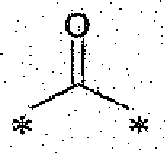


1H NMR (600 MHz, DMSO-d6) 1.61 -1.75 (m, 4 H), 2.60 - 2.67 (m, 1 H), 3.32 - 3.37 (m, 2 H), 3.88 - 3.94 (m, 2 H), 4.16 (s, 2 H), 7.67 - 8.16 (m, 8 H), 8.52 (s,1 H), 10.33 (s, 1H), 12.69 (br. s., 1H) 82 


1H NMR (600 MHz, DM80-d6) 1.40 -1.65 (m, 4 H), 1.83 - 2.02 (m, 4 H), 2.42 - 2.49 (m, 1 H), 2.53 - 2.68 (m, 1 H), 4.16 (s, 2 H), 7.26 - 7.36 (m, 4 H), 7.68-8.15 (m,8 H), 8.52(s,1 H), 10.34 (s, 1 H), 12.69(br.s., 1 H) 83 


1H NMR (600 MHz, DMSO-d6) 4.17 (s, 2 H), 6.78-8.16 (m, 14 H), 8.53 (s, 1 H), 10.63 (s, 1 H), 12.69 (br. s., 1H) 84 


1H NMR(600 MHz, DMSO-d6) 3.81 (s, 3 H), 4.17 (s, 2H), 6.72 (d, J=15.6 Hz, 1H), 7.00 - 7.64 (m, 2 H), 7.57 - 8.15 (m, 9 H), 8.53 (s, 1 H), 10.55 (s, 1 H), 12.62 (br, s., 1H) 85 


1H NMR (600 MHz, DMSO-d6) 4.17 (s, 2 H), 7.14- 8.39 (m, 13 H), 8.54 (s, 1H), 10.12 (s, 1 H), 11.79 - 11.88 (m, 1 H), 12.70 (br. s., 1H) 86 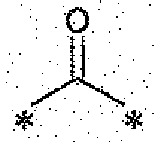
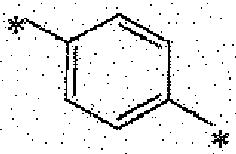
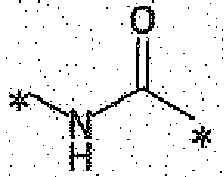

1H NMR (600 MHz, DMSO-d6) 4.12 (s, 2 H), 7.69- 8.35 (m, 12 H), 8.53 (s.1 H), 9.57 (s, 1 H), 11.22 (s, 1H) 87 


1H NMR (600 MHz, DMSO-d6) 4.07 (s, 2 H), 4.77 (s, 2 H), 7.00 - 8.20 (m, 12 H), 8.49 (s, 1H), 10.55 (s,1H) 88 


1H NMR (600 MHz, DMSO-d6) 4.18 (s, 2H), 7.44 - 8.45 (m, 12 H), 8.55 (s, 1 H), 8.67 (s, 1 H), 10.74(s, 1 H), 12.70 (br.s., 1 H) 89 


1H NMR (600 MHz, DMSO-d6) 4.17 (s, 2 H), 6.85 - 6.90 (m, 2 H), 7.68 - 8.16 (m, 10 H), 8.53 (s, 1 H), 10.19 (br. s., 1 H), 10.38 (s, 1 H), 12.69 (br. s., 1H) -
[Table 1-10] Example X Z Y R1 R1 1H NMR (d ppm) 90 


1H NMR (600 MHz, DMSO-d6 )1.54 -1.66(m,4H), 2.17- 2.29(m,4 H), 4.17 (s, 2 H), 6.71 6.75 (m, 1 H), 7.68 - 8.15 (m,8 H),8.52 (s, 1 H). 10.01 (br. s, 1 H), 12.66 (br. s., 1 H) 91 


1H NMR (600 MHz, DMSO-d6) 4.18 (s,2H),7.57- 8.16 (m,17H), 8.55 (s,1H); 10.84 (br. s, 1 H), 12.67 (br, s,1H) , 92 


1H NMR(600 MHz, DMSO-d6) 4.18 1H NMR(600 MHz, DMSO-d6) 4.18. (s,2H), 7.23 - 8.17 (m, 12 H), 8.55 (s,1H),10.67(br.s,1H),12.02(br. s,1H),12.67(br.s,1H). 93 


1H NMR (600 MHz, DMSO-d6 4.19 (s,2H),7.71- -8.68 (m,15), 11.13: (br.s, 1H), 12.68 (br.s 1H) 94 


1H NMR (600 MHz, DMSO-d6) 1.65 - 1,75 (m,4 H), 2.43 - 2.47 (m, 2 H), 2.53 - 2.57 (m,2H), 4.16 (s,2H), 6.81-6.89 (m, 1H), 7.67 8,15 (m, 8 H),8.52 s, 1H),9.92 (s, 1H), 11.25 (s,1H) 95 


1HNMR(600 MHz, DMSO-d6) 4.16 (s, 2H),7,22 -7.25 (m, 1H), 7.69-8.54 (m, 12H), 10.22 (s, 1H),12.34-12.37 (m,1H), 12.71 (br.s., 1H) 96 


1H NMR (600 MHz, DMSO-d6) 3.78 (s, 3H), 4.15 (s,2H), 6,88 - 8.18 (m, 12H), 853 (s, 1H), 10.55 (s, 1H), 11.68 (s,1H), 12.72 (br. s.,1H) 97 


1H NMR (600 MHz, DMSO-d6) 4.17 (s, 2H), 7.68 - 8.15 (m, 10H), 8.58 (s,H), 10.24 (br, s., 1H), 12.66 (br. s., 1H), 12.71 (br.s., 1H) 98 


1H NMR (600 MHz, DMSO-d6) 4.18 (s, 2H), 7.70 - 8.36 10H), 8,55 (s, 1H), 9.48 - 9.51 (m, 1H), 11.46 (br. s, 1H), 12.67 (br.s., 1H) 99 


1H NMR (600 MHz, D34SO-d6) 2.42 (s, 3H), 4.18 (s, 2H), 7.52 - 8.16 (m, 11 H), 8.54 (s, 1H), 10.65 (br. s1 H), 12.67 (br. s., 1H) -
[Table 1-11] Example X Z Y R1 1H NMR (d ppm) 100 


1H NMR (600 MHz, DMSO-d6) 2.23 (s, 3H), 3.89 (s, 3H), 4.18 (s, 2H), 7.29. 8.16 (m, 11H), 8.54 (s, 1H), 10.53 (br.s, 1H), 12,69 (br.s., 1H) 101 


1H NMR (600 MHz, DMSO-d6) 2.30 (s, 3H), 2.32 (s, 3H), 4.18 (s, 2H), 7.29 - 8.16 (m, 11H), 8.54 (s, 1H), 10.52 (br. s, 1H), 12.67 (br. s., 1H) 102 


1H NMR (600 MHz, DMSO-d6 2.46 (s,3H), 4,18 (s, 2 H), 7.33 - 8.56 (m, 13 H), 10.86 (br. s, 1H), 12.68 (br. s., 1H) 103 

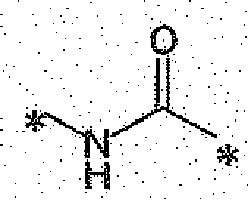

1H NMR (600 MHz DMSO-d6) 2.34 - 2.39 (m, 6H), 4.17 (s, 2H), 7.23 8.16 (m, 11H), 8.54(s, 1H), 10.56 (br.s, 1H), 12.71 (br., 1H) 104 


1H NMR (600 MHz, DMSO-d6) 4.18 (s, 2H), 7.70-9.19 (m, 15H), 12.71 (br.s., 1H), 13.53 (s, 1H) 105 


1H NMR (600 MHz, DMSO-d6) 4.15 (s, 2H), 7.69 - 9.28 (m, 14 H), 11.22 (br.s, 1H) 106 


1H NMR (600 MHz, DMSO-d6 ) 3.85 (s, 3H), 3.85 (s, 3H), 4.15 (s, 2H) 7.08 - 8.17 (m, 11H), 8.53 (s, 1H), 10.46 (br.s, 1H), 12.74 (br.s., 1H) 107 


1H NMR (600 MHz, DMSO-d6) 2.43 (s, 3H), 4,17(s, 2H), 758-8 (m, 11 H), 8.53 (s, 1H), 10.66 (br. s, 1 H), 12.71 (br. s., 1H) 108 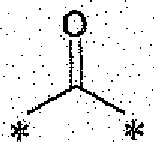
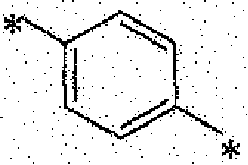


1H NMR (600 MHz, DMSO-d6 ) 3.95 (s, 3H), 4.16(s, 2 H), 7.29 - 8.17(m, 11 H), 8.53 (s, 1H), 10.56 (br. s, 1 H) 109 


1H NMR (600 MHz, DMSO-d6) 4.18 (s, 2H), 7.53 (br.s,2H), 7.70 8.16 (m, 12 H), 8.54 (s, 1H), 10.8.1 (br.s, 1H), 12.67 (br.s, 1H) 110 


1H NMR (600 MHz, DMSO-d6) 0.99 (t, J=7.3 Hz, 3H ), 1.72 - 1.80 (m, 2 H), 4.0.3 (t, J=)6.4 Hz, 2H), 4.16 (s, 2 H), 7.05 8.17 (m, 12 H), 8.53 (s,1 H), 10.47 (br.s,1H) -
[Table 1-12] Example X Z Y R1 1H NMR (d ppm) 111 
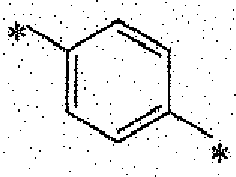


1H NMR (600 MHz, DMSO-d6) 1.32 (s, 9 H), 4.17 (s, 2H), 7,54 - 8.16 (m, 12H), 8.54 (s, 1H), 10.57 (br. s, 1 H), 12.70 (br. s., 1H) 112 
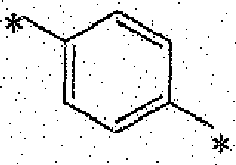


1H NMR (600 MHz, DMSO-d6) 4.19 (s, 2H), 7.70 - 9,39 (m, 15H), 11.00 (br. s, 1H), 12.68 (br. s., 1H) 113 


1H NMR (600 MHz, DMSO-d6) 4.19 (s, 2H), 7.70 - 9.51 (m, 15H), 11.14 (br.s, 1H), 12.69 2(br.s., 1H) 114 
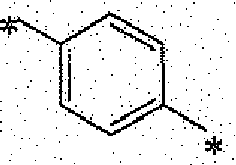


1H NMR (600 MHz, DMSO-d6) 1.20 -1.49 (m, 5H), 1.68 - 1.74 (m, 1H), 1.77 - 1.83 (m, 4H.), 2.58 - 2.63 (m,1 H), 4.16 (s, 2H), 7.36 - 8.15 (m, 12 H), 8.53 (s, H), 10.55 (br.s 1H) 115 
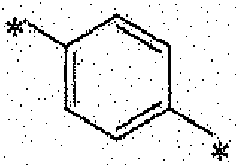


1H NMR (600MHz, DMSO-d6) 1.30 (d, J=6.0 Hz, 6H), 4.16 2H), 4.71 - 4.79 (m, 1H), 7.01 - 8.16(m, 12H), 8.53 (s,.1H), 10,46 (br. s, 1H) 116 


1H NMR (600 MHz, DMSO-d6) 4.17 (s, 2H), 7.12 - 7.14 (m, 1H), 7.70 - 8.16 (m, 11H), 8.34 - 8.35 (m, 1H), 8.54 (s,1H), 10.69 (s,1H), 12.72 (br.s., 1H) 117 


1H NMR (600MHz, DMSO-d6) 4.18 (s, 2H), 7.70 - 9.10 (m, 14H), 11.02 (s, 1H), 12,70 (br.s., 1H) 118 


1H NMR (600 MHz, DMSO-d6) 3.95 (s, 2H), 7.64 - 8.26 (m, 9H), 8.47 (s, 1H), 11.06 (br.s., 1H) 119 


1HNMR (600 MHz, DMSO-d6) 4.18 s, 2H), 7.46 - 8.56 (m, 14H), 10.90 (br.s, 1H), 12.71 (br.s., 1H) 120 


1H NMR (600 MHz, DMSO-d6) 0.82 0.88 (m, 3H), 1.24 - 1.33 (m,6H), 1.57 - 1.63 (m, 2H), 2.63 - 2.69 (m, 2 H), 4.17 (s,2H), 7.34 - 8.16 (m, 12 H), 8.53 (s, 1H), 10.56 (s, 1H) 121 


1H NMR (600 MHz, DMSO-d6) 4.18 (s, 2H), 7.02 - 8.66 (m, 14H) 10.71 (br.s, 1H), 12.67 (br.s., 1H) -
[Table 1-13] Example X Z Y R1 1H NMR (d ppm) 122 


1H NMR (600 MHz, DMSO-d6) 4.18 1H NMR (600 MHz, DMSO - d6) 4.18 (s, 2H), 7.08 - 8.17 (m, 2H), 8.54 (s, 1H), 10.63 (br.s, 1H), 11.92 (br. s, 1H), 12.67 (br, s., 1H) 123 


1H NMR (600 MHz, DMSO - d6) 4.03 (s, 3H), 4.18 (s, 2H), 7.12 - 8.16 (m, 13 H), 8.55 (s, 1H), 10.69 (br.s, 1 H), 12.68 (br.s., 1H) 124 


1H NMR (600 MHz, DMSO-d6) 4.18 (s, 2H), 7,69 - 9,60 (m, 14H), 11.22 (br.s, 1 H) 12.68 (br.s., 1H). 125 


1H NMR (600 MHz, DMSO-d6 ) 2.33 (s, 3H), 4.17 (s, 2H), 7.69 - 8.16 (m, 8H), 8.54 (s, 1 H), 11.34 (br.s, 1H), 12.71 (br.s., 1H) 126 


1HNMR (600 MHz, DMSO - d6) 3.74 -3.85 (m, 4H), 7.56 - 8.43 (m, 14 H), 10.56 (s, 1 H), 10,93. (s, 1H) -
- (1) The same procedure as used in Example 1-(2) was carried out using [3-(cyanomethyl)phenyl]carbamic acid 1,1-dimethylethyl ester (2.32 g) to give methyl 1-({3-[(tert-butoxycarbonyl)amino]phenyl}carbonyl)isoquinoline-4-carboxylate (3.59 g) as a pale yellow amorphous substance.
1H NMR (600 MHz, CHLOROFORM-d) d ppm 1.49 (s, 9H), 4.07 (s, 3H), 6.58 (br. s., 1H), 7.36 - 8.16 (m, 7 H), 8.99 - 9.04 (m, 1H), 9.19 (s, 1H) - (2) The same procedure as used in Example 1-(3) was carried out using the compound (3.59 g) obtained in Example 127-(1) to give 1-({3-[(tert-butoxycarbonyl)amino]phenyl}carbonyl)isoquinoline-4-carboxylic acid (3.46 g) as a pale yellow amorphous substance.
1H NMR (600 MHz, CHLOROFORM-d) d ppm 1.49 (s, 9 H), 6.79 (br. s., 1H), 7.39 - 8.18 (m, 7 H), 9.09 - 9.13 (m, 1H), 9.35 (s, 1H) - (3) The same procedure as used in Example 1-(4) was carried out using the compound (3.46g) obtained in Example 127-(2) to give methyl[1-({3-[(tert-butoxycarbonyl)amino]pheny})carbonyl)isoquinolin-4-yl]acetate (1.03 g) as a pale yellow solid. 1H NMR (600 MHz, CHLOROFORM-d) d ppm 1.50 (s, 9 H), 3.73 (s, 3 H), 4.11 (s, 2 H), 6.56 (br. s., 1 H), 7.40 (s, 8 H), 8.51 (s, 1H)
- (4) The same procedure as used in Example 2-(1) was carried out using the compound (1.03 g) obtained in Example 127-(3) to give methyl{1-[(3-aminophenyl)carbonyl]isoquinolin-4-yl}acetate (534 mg) as a yellow solid.
1H NMR (600 MHz, CHLOROFORM-d) d ppm 3.73 (s, 3H), 3.79 (br. s., 2 H), 4.10 (s, 2 H), 6.84 - 8.21 (m, 8 H), 8.51 (s, 1 H) - (5) The same procedure as used in Example 2-(2) was carried out using the compound (320 mg) obtained in Example 127-(4) and 3,4-dichlorobenzoyl chloride to give methyl {1-[(3-{[(3,4-dichlorophenyl)carbonyl] amino}phenyl)carbonyl]isoquinolin-4-yl} acetate (438 mg) as a pale yellow amorphous substance.
1H NMR (600 MHz, CHLOROFORM-d) d ppm 3.75 (s, 3 H), 4.08 (s, 2 H), 7.33 - 8.43 (m, 12 H), 8.45 (s, 1H) - (6) The same procedure as used in Example 2-(3) was carried out using the compound (438 mag) obtained in Example 127-(5) to give the titled compound (178 mg) as a pale yellow solid.
- To a suspension of sodium hydride (48 mg, oiliness: 60%) in tetrahydrofuran (4 ml), the compound (190 mg) obtained in Example 2-(3) was added in an ice bath, and the mixture was stirred at room temperature for one hour. To the reaction solution, iodomethane (0.5 ml) was added, and the mixed solution was stirred at room temperature for three hours. To the solution, 2 N aqueous hydrochloric acid solution was added, followed by extraction with ethyl acetate. The organic layer was washed with a saturated saline solution, dried over anhydrous magnesium sulfate, and then evaporated under reduced pressure to remove the solvent. To the resulting crude product, diethyl ether was added, and the mixture was stirred. The precipitate was filtered and dried to give the titled compound (60 mg) as a colorless solid.
-
- (1) To a solution of the compound (320 mg) obtained in Example 2-(1) in pyridine (5 ml)), 3,4-dichlorobenzenesulfonyl chloride (368 mg) was added in an ice bath, and the mixed solution was stirred at room temperature for one hour. Furthermore, 3,4-dichlorobenzenesulfonyl chloride (368 mg) was added thereto, and the resulting solution was stirred at room temperature for one hour. Ethyl acetate was added, the resulting solution was washed with water, and then washed with a saturated saline solution. The organic layer was dried over anhydrous magnesium sulfate, and evaporated under reduced pressure to remove the solvent. The resulting crude product was purified by column chromatography (neutral OH type silica gel, ethyl acetate / chloroform = 0 to 40%) to give methyl {1-[(4-{[(3,4-dichlorophenyl)sulfonyl]amino}phenyl)carbonyl]isoquinolin-4-yl}acetate (207 mg) as a pale yellow amorphous substance.
1H NMR (600 MHz, CHLOROFORM-d) d ppm 3.73 (s, 3H), 4.11 (s, 2 H), 7.11 - 8.24 (m, 12 H), 8.49 (s, 1H) - (2) The same procedure as used in Example 2-(3) was carried out using the compound (207 mg) obtained in Example 129-(1) to give the titled compound (24 mg) as a colorless solid.
-
- (1) To a solution of the compound (320 mg) obtained in Example 2-(1) in N,N-dimethylformamide (3 ml), a solution of 3,4-dichlorophenyl isocyanate (282 mg) in N,N-dimethylformamide (2 ml) was added in an ice bath. The mixed solution was stirred at room temperature for one hour. To the resulting solution, ethyl acetate was added, and the resulting solution was washed with water, and then washed with a saturated saline solution. The organic layer was dried over anhydrous magnesium sulfate, and evaporated under reduced pressure to remove the solvent. The resulting crude product was purified by column chromatography (neutral OH type silica gel, ethyl acetate / chloroform = 0 to 70%) to give methyl {1-[(4-{[(3,4-dichlorophenyl)carbamoyl]amino}phenyl)carbonyl]isoquinolin-4-yl}acetate(287 mg) as a colorless solid.
1H NMR (600 MHz, DMSO-d6 ) d ppm 3.67 (s, 3H), 4.29 (s, 2 H), 7.33 - 8.15 (m, 11 H), 8.54(s, 1 H), 9.19 (br. s., 1H), 9.42 (br. s., 1 H) - (2) The same procedure as used in Example 2-(3) was carried out using the compound (287 mg) obtained in Example 130-(1) to give the titled compound (248 mg) as a yellow solid.
-
- (1) To a solution of the compound (320 mg) obtained in Example 2-(1) in chloroform (5 ml), pyridine (0.324 ml) and phenyl chloroformate (0.189 ml) were added in an ice bath, and the mixed solution was stirred at room temperature for one hour. The resulting solution was evaporated under reduced pressure to remove the solvent to give methyl [1-({4-[(phenoxycarbonyl)amino]phenyl}carbonyl)isoquinolin-4-yl]acetate (440 mg) as a brownish-colored oily substance.
1H NMR (600 MHz, CHLOROFORM-d) d ppm 3.73 (s, 3 H), 4.11 (s, 2 H), 7.13 - 8.23 (m, 14 H), 8.52 (s, 1H) - (2) To a solution of the compound (440 mg) obtained in Example 131-(1) in tetrahydrofuran (10 ml,), 3,4-dichlorobenzyl alcohol (354 mg) and N,N-diisopropyl ethyl amine (0.680 ml) were added, and the mixed solution was refluxed for eight hours. Furthermore, 3,4-dichlorobenzyl alcohol (354 mg) was added thereto, and the resulting solution was refluxed for eight hours. The solution was returned to room temperature, and ethyl acetate was added thereto. The resulting solution was washed with water, and then washed with a saturated saline solution. The organic layer was dried over anhydrous magnesium sulfate and evaporated under reduced pressure to remove the solvent. The resulting crude product was purified by column chromatography (neutral OH type silica gel, ethyl acetate In-hexane = 0 to 50%) to give methyl (1-{[4-({[(3,4-dichlorobenzyl)oxy]carbonyl}amino)phenyl]carbonyl}isoquinolin-4-yl) acetate (280 mg) as a pale yellow amorphous substance.
1H NMR (600 MHz, CHLOROFORM-d) d ppm 3.73 (s, 3H), 4.11 (s, 2 H), 5.15 (s, 2H), 6.99 (br. s., 1H), 7.20 - 8.25 (m, 11H), 8.51 (s, 1H) - (3) The same procedure as used in Example 2-(3) was carried out using the compound (280 mg) obtained in Example 131-(2) to give the titled compound (235 mg) as a pale yellow solid.
-
- (1) To a solution of the compound (440 mg) obtained in Example 131-(1) in tetrahydrofuran (5 ml)), 3,4-dichlorobenzylamine (0.397 ml) was added, and the mixed solution was stirred at 80°C for five hours. The solution was returned to room temperature, and ethyl acetate was added thereto. The resulting solution was washed with water and then washed with a saturated saline solution. The organic layer was dried over anhydrous magnesium sulfate, and evaporated under reduced pressure to remove the solvent. The resulting crude product was purified by column chromatography (neutral OH type silica gel, methanol / chloroform = 0 to 5%) to give methyl {1-[(4-{[(3,4-dichlorobenzyl)carbamoyl]amino}phenyl)carbonyl]isoquinolin-4-yl} acetate (233 mg) as a pale yellow solid.
1H NMR (600 MHz, DMSO-d6 ) d ppm 3.66 (s, 3 H), 4.23 - 4.34 (m, 4 H), 7.08 (br. s., 1H), 7.27 - 8.15 (m, 11 H), 8.53 (s, 1H), 9.40 (br. s., 1H) - (2) The same procedure as used in Example 2-(3) was carried out using the compound (233 mg) obtained in Example 132-(1) to give the titled compound (60 mg) as a yellow solid.
-
- (1) To a solution of the compound (180 mg) obtained in Example 2-(1) in N,N-dimethylformamide (6 ml)), 3,4-dichlorobenzyl bromide (162 mg) and potassium carbonate (93 mg) were added, and the mixed solution was refluxed for five hours. Furthermore, 3,4-dichlorobenzyl bromide (162 mg) was added thereto, and the resulting solution was refluxed for one hour. The resulting solution was returned to room temperature, and the ethyl acetate was added to the solution. The resulting solution was washed with water and then washed with a saturated saline solution. The organic layer was dried over anhydrous magnesium sulfate, and evaporated under reduced pressure to remove the solvent. The resulting crude product was purified by column chromatography (neutral OH type silica gel, ethyl acetate / n-hexane = 0 to 50%) to give methyl [1-({4-[(3,4-dichlorobenzyl)amino]phenyl}carbonyl)isoquinolin-4-yl]acetate (94 mg) as a yellow amorphous substance.
1H NMR (600 MHz, DMSO-d6 ) d ppm 3.65 (s, 3 H), 4.25 (s, 2 H), 4.38 - 4.41 (m, 2H), 6.62 - 6.66 (m, 2 H), 7.29 - 8.09 (m, 10 H), 8.47 (s, 1 H) - (2) The same procedure as used in Example 2-(3) was carried out using the compound (94 mg) obtained in Example 133-(1) to give the titled compound (53 mg) as a yellow solid.
-
- (1) The same procedure as used in Example 1-(2) was carried out using 4-methoxybenzyl cyanide (2.94 g) to give methyl 1-[(4-methoxyphenyl)carbonyl]isoquinoline-4-carboxylate (5.42 g).
1H NMR (600 MHz, CHLOROFORM-d) d ppm 3.88 (s, 3 H), 4.07 (s, 3 H), 6.91 - 6.98 (m, 2 H), 7.62 - 8.16 (m, 5 H), 8.99 - 9.03 (m, 1H), 9.20 (s, 1H) - (2) The same procedure as used in Example 1-(3) was carried out using the compound (3.00 g) obtained in Example 134-(1) to give 1-[(4-methoxyphenyl)carbonyl]isoquinoline-4-carboxylic acid (1.97 g) as a brownish-colored solid. 1H NMR (600 MHz, DMSO-d6 ) d ppm 3.86 (s, 3 H), 7.05 - 7.10 (m, 2 H), 7.72 - 8.01 (m, 5 H), 8. 97 - 9.01 (m, 1 H), 9.10 (s, 1 H), 13.79 (br. s., 1H)
- (3) The same procedure as used in Example 1-(4) was carried out using the compound (1.97 g) obtained in Example 134-(2) to give methyl {1-[(4-methoxyphenyl)carbonyl]isoquinolin-4-yl} acetate (1.03 g) as a pale brownish-colored solid.
1H NMR (600 MHz, CHLOROFORM-d) d ppm 3.73 (s, 3 H), 3.88 (s, 3 H), 4.11 (s, 2 H), 6.92 - 6.97 (m, 2 H), 7.59 - 8.23 (m, 6 H), 8.51 (s, 1H) - (4) To a solution of the compound (1.03 g) obtained in Example 134-(3) in chloroform (30 ml), a solution of boron tribromide (3.70 ml) in chloroform (30 ml) was added dropwise in an ice bath, and the mixed solution was stirred at room temperature for two hours. Methanol was added dropwise thereto in an ice bath, and the reaction solution was washed with water and then washed with a saturated saline solution. The organic layer was dried over anhydrous magnesium sulfate, and evaporated under reduced pressure to remove the solvent.
The resulting crude product was purified by column chromatography (neutral OH type silica gel, methanol / chloroform = 0 to 5%) to give methyl {1-[(4-hydroxyphenyl)carbonyl]isoquinolin-4-yl} acetate (463 mg) as a yellow solid.
1H NMR (600 MHz, CHLOROFORM-d) d ppm 3.74 (s, 3 H), 4.12 (s, 2 H), 6.71 - 6.76 (m, 2 H), 7.31-8.19(m, 7 H), 8.49 (s, 1H) - (5) To a solution of the compound (200 mg) obtained in Example 134-(4) in N,N-dimethylformamide (5 ml), 3,4-dichlorobenzyl bromide (0.111. ml) and potassium carbonate (103 mg) were added, and the mixed solution was stirred at 80°C for four hours. Ethyl acetate was added thereto, and the resulting solution washed with water and then washed with a saturated saline solution. The organic layer was dried over anhydrous magnesium sulfate, and evaporated under reduced pressure to remove the solvent. The resulting crude product was purified by column chromatography (neutral OH type silica gel, ethyl acetate / n-hexane = 0 to 50%) to give methyl [1-({4-[(3,4-dichlorabenzyl)oxy]phenyl}carbonyl)isoquinolin-4-yl]acetate (70 mg) as a yellow amorphous substance.
1H NMR (600 MHz, CHLOROFORM-d) d ppm 3.73 (s, 3 H), 4.11 (s, 2 He, 5.no (s, 2 H), 6,97 - 7.02 (m, 2 H), 7.23 8.23 (m, 9 H), 8.50 (s, 1 H) - (6) The same procedure as used in Example 2-(3) was carried out using the compound (70 mg) obtained in Example 134-(5) to give the titled compound (33 mg) as a colorless amorphous substance.
- Structural formulae and NMR values of Examples 127 to 134 are shown in Table 2.

-
[Table 2] Example X Z Y R1 1H NMR (d ppm). 127 


NMR (600 MHz, DMSO-d6) 4.18 s, 2.H), 7.82. (s, 11H) 8.55 .(s, 1 H), 10.60 (s, 1 H),12.75(br.s., 1 H 128 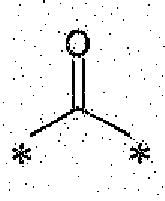

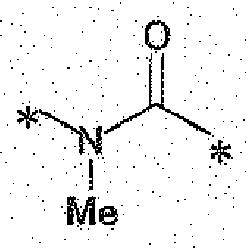

1H NMR (6003 MHz, DMSO-d6) 3.42 .(s,3H),4.17(s,2H), 7.22-7.26 (m, 1H), 7.37-7.41(m,2 H),7,54-7.57 (m, 1H),7.62- 7.64 m 1 H), 7.69 - 7.74m 1H 7.76-7.80 (m,2 H), 7.88 - 7.92 (m, 1H), 8.04 - 8.07 (m 1 H), 812 - 8.15 (m,1H), 8.52 (s, 1 H),12.68(br. s.,1H) 129 


1HNM (600 MHz, DMSO-d6) 4.16 (s, 2H), 7.23-7.27 (m, 2H), 7.66- 8.14 (m, 9H),8.49 (s 1H), 11.16 (br. s, 1H)13,67 (br.6.,1H) 130 

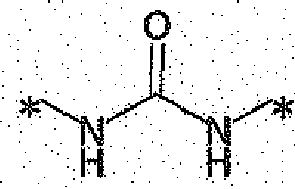
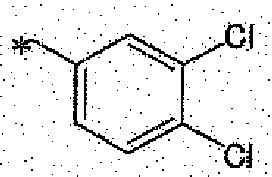
HNMR (600 MHz, DMSO-d6) 4.17 (s, 2H), 7.33 -8.17 (m, 11H) 8.17 (m, 11H), 8.53 (s, 1H), 9.19 (br. s., 1H), 9.42 (br. s., 1H), .12.67(br.s., 1H 131 


1HNMR (600 MHz, DMSO-d6) 4.16 (s, 2H), 5.19 (s,2H),7.41-8.17 (m, 11 H), 8.52(s, 1H 10.35 (s, 1 H), 12.73(br.s., 1H 133 


1HNMR.'(600 MHz, DMSO-d6) 4.13 (s,2.H),.4.27 - 4.34.(m,2H),7.12 (br. s., 1H), 7.25 8.16(m, 11.H), 8.50 (s, 1H), 9.42 (br.s., 1H) 133 


1HNMR. (600 MHz, DMSO-d6) 4.11 (s, 2H),4.37-4.41(m,2H),6.61 -6.66 (m,2H), 7.29-8.12 (m,10H), 8.44 - 8.47 (m, 1H), 12.72 (br. s., 1 H). 134 


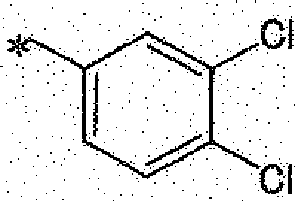
1H NMR (600MHz, DMSO-d6) 4.12 -4.15 (m,2 H, 5.24(s, 2 H), 7.14 -8.16 (m.11 H), 8.50.(s, 1H) -
- (1) The same procedure as used in Example 1-(2) was carried out using tert-butyl 4-(cyanomethyl)benzoate(10.3 g) to give methyl 1-{4-(tert-butoxycarbonyl)phenyl]carbonyl}isoquinoline-4-carboxylate (11.6 g) as a yellow oily substance.
1H NMR (600 MHz, CHLOROFORM-d) d ppm 1.61 (s, 9 H), 4.08 (s, 3 H), 7.65 - 9.04 (m,8 H), 9.20 (s, 1 H) - (2) The same procedure as used in Example 1-(3) was carried out using the compound (11.5 g) obtained in Example 135-(1) to give 1-{[4-(tert-butoxycarbonyl)phenyl]carbonyl)isoquinoline-4-carboxylic acid (9.47 g) as a colorless solid. 1H NMR (600 MHz, DMSO-d6) d ppm 1.56 (s, 9 H), 7.45 - 9.01 (m, 8 H), 9.11 (s, 1 H), 13.83 (br. s., 1 H)
- (3) The same procedure as used in Example 1-(4) was carried out using the compound (9.47 g) obtained in Example 135-(2) to give tert-butyl 4-{[4-(2-methoxy-2-oxoethyl)isoquinolin-1-yl]carbonyl}benzoate (4.09 g) as an orange-colored amorphous substance.
1HNMR (600 MHz, CHLOROFORM-d) d ppm 1.61 (s, 9 H), 3.73 (s, 3 H), 4.12 (s, 2 H), 7.64 - 8.33 (m, 8 H), 8.52 (s, 1 H) - (4) To a solution of the compound (4.09 g) obtained in Example 135-(3) in chloroform (200 ml), trifluoroacetic acid (33 ml) was added, and the mixed solution was stirred at 50°C for one hour. The solution was returned to room temperature, and water was added to the solution, followed by extraction with chloroform. The organic layer was dried over anhydrous magnesium sulfate, and evaporated under reduced pressure to remove the solvent to give 4-{[4-(2-methoxy-2-oxoethyl)isoquinolin-l-yl]carbonyl}benzoic acid (3.39 g) as a yellow solid.
1H NMR (600 MHz, CHLOROFORM-d) d ppm 3.74 (s, 3 H), 4.14 (s, 2 H), 7.66 - 8.39 (m, 8 H), 8.54(s, 1H) - (5) To a solution of the compound (1.20 g) obtained in Example 135-(4) in chloroform (23 ml), oxalyl chloride (0.457 ml) and N,N-dimethylformamide (1 drop) were added, and the mixed solution was stirred at room temperature for one hour. The reacting solution was removed by evaporation under reduced pressure. To the resulting crude product (316 6 mg), chloroform (3 ml), 2-(4-chlorophenyl)ethyl amine (267 mg) and pyridine (0.139 ml) were added, and the mixed solution was stirred at room temperature for 14 hours. The reaction solution was washed with a saturated solution of ammonium chloride. The organic layer was dried over anhydrous magnesium sulfate, and evaporated under reduced pressure to remove the solvent. The resulting crude product was purified by column chromatography (NH type silica gel, ethyl acetate / n-hexane = 0 to 50%, chloroform), and recrystallized (n-hexane / ethyl acetate) to give methyl {1-[(4-([2-(4-chlorophenyl)ethyl]carbamoyl}phenyl)carbonyl]isoquinolin-4-yl}acetate (188 mg) as a colorless solid.
1H NMR (600 MHz, CHLOROFORM-d) d ppm 2.90 - 2.95 (m, 2 H), 3.68 - 3.76 (m, 5 H), 4.12 (s, 2 H), 6.13 - 6.20 (m, 1 H), 7.13 - 8.35 (m, 12 H), 8.51 (s, 1 H) - (6) To a solution of the compound (188 mg) obtained in Example 135-(5) in tetrahydrofuran (3 ml), 1 N aqueous sodium hydroxide solution (1.5 ml) was added in an ice bath, and the mixed solution was stirred at room temperature for one hour. Water and 1 N aqueous hydrochloric acid solution were added in an ice bath, followed by extraction with ethyl acetate. The organic layer was washed with a saturated saline solution, was dried over anhydrous magnesium sulfate, and evaporated under reduced pressure to remove the solvent. The resulting crude product was recrystallized (ethanol- water) to give the titled compound (143 mg) as a colorless solid.
- Compounds of Examples 136 to 140 were obtained by carrying out the same procedures as in Example 135. Structural formulae and NMR values of Examples 135 to 140 are shown in Table 3.

-
[Table 3] Example X Z Y R1 1HNMR (d ppm) 135 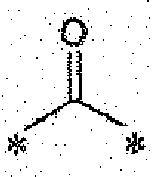


1HNMR (600 MHz, DMSO-d6) 2.83 2.88 (m, 2H), 3.47-3.53(m,2H), 4.18(s.2H), 7.24-8.77(ur,14H), 12.74(br.s., 1H) 136 


1H NMR 600 MHz, DMSO-d6) 4.17 br. s.,2 H), 7.62 - 8.56 (m,12H), 10.72 (br.s,1H) 137 


1H NMR (600 MHz, DMSO-d6) 285 - 2,90 (m, 2H), 3.50 - 3.55 (m, 2H), 4.18 (br. s.,2H). 7.21-8.77(m, 13), 13 H), 12.69 (br.s, 1H) 138 


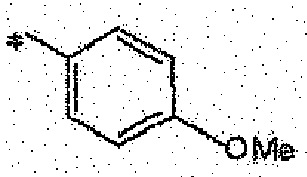
1HNMR (600 MH, DMSO-d6) 2-76 2,82 (m, 2H) 3.43 3.49 (m, 2H) 3.71 (s 3H), 4.18 (s,2H), 6.82-8.76 (m, 14H) 139 
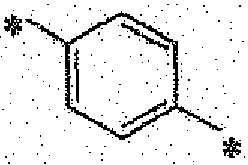


1HNMR (600 MHz DMSO-d6) 2.85 - 2.90 (m, 2H).3.49-3,55 (m,2H), 4.18 (s, 2H), 7.18-8.78 (m, 14H), 12.72(br,s,. 1H) 140 


1H NMR (600 MHz DMSO-d6) 4.19 s, 2H), 7.41- 8.24 m, 12H) 8.56 (s, 1H),10.58 (s 1H), 12.75 (br. s., 1H -
- (1) To a solution of the compound (100 mg) obtained in Example 134-(4) in tetrahydrofuran (2 ml), 2-(4-chlorophenyl)ethanol, tri-n-butyl phosphine (0.116 ml) and tetramethyl azodicarboxyamide (80 mg) were added. The mixed solution was stirred at room temperature for 18 hours. To the reaction solution, water was added, followed by extraction with ethyl acetate. The organic layer was dried over anhydrous magnesium sulfate, and evaporated under reduced pressure to remove the solvent. The resulting crude product was purified by column chromatography (neutral OH type silica gel, ethyl acetate / n-hexane = 10 to 50%) to give methyl [1-({4-[2-(4-chlorophenyl)ethoxy]phenyl}carbonyl)isoquinolin-4-yl]acetate (41 mg) as a colorless oily substance.
1H NMR (600 MHz, CHLOROFORM-d) d ppm 3.09 (t, J=6.8 Hz, 2 H), z (s, 3 H), 4.10 (s, 2 H), 4.22 (t, J=6.8 Hz, 2 H), 6.89 - 8.52 (m, 13 H) - (2) The same procedure as used in Example 135-(6) was carried out using the compound (38 mg) obtained in Example 141-(1) to give the titled compound (35 mg) as a colorless amorphous substance.
- By carrying out the same procedure as in Example 141, compounds of Examples 142 and Example 143 were obtained.
-
- (1) The same procedure as used in Example 1-(2) was carried out using 4-benzyl phenyl acetonitrile (2.06 g) to give methyl 1-[(4-benzyl phenyl)carbonyl]isoquinoline-4-carboxylate (1.82 g).
1H NMR (600 MHz, CHLOROFORM-d) d ppm 4.05 (s, 2 H), 4.07 (s, 3 H), 7.13 - 9.05 (m, 13 3 H), 9.19 (s, I H) - (2) The same procedure as used in Example 1-(3) was carried out using the compound (1.81 g) obtained in Example 144-(1) to give 1-[(4-benzyl phenyl)carbonyl]isoquinoline-4-carboxylic acid (1.10 g).
1H NMR (600 MHz, CHLOROFORM-d) d ppm 4.03 (s, 2 H), 7.07 - 9.14 (m, 13 H), 9.34 (s, 1 H) - (3) The same procedure as used in Example 1-(4) was carried out using the compound (1.10 g) obtained in Example 144-(2) to give methyl {1-[(4-benzyl phenyl)carbonyl]isoquinolin-4-yl)acetate (550 mg).
1HNMR (600 MHz, CHLOROFORM-d) d ppm 3.72 (s, 3 H), 4.05 5 (s, 2 H), 4.10 (s, 2 H), 7.15 - 8.26 (m, 13 H), 8.50 (s, 1H) - (4) The same procedure as used in Example 135-(6) was carried out using the compound (538 mg) obtained in Example 144-(3) to give the titled compound (35 mg) as a pale yellow amorphous substance.
- By carrying out the same procedure as in Example 144, a compound of Example 145 was obtained.
-
- (1) To a solution of 4-chlorobenzyl alcohol (4.10 g) in N,N-dimethylformamide (110 ml), sodium hydride (60 to 72%, 952 mg) was added in an ice bath, and the mixed solution was stirred for 30 min. Then, to the resulting solution, 4-(bromomethyl)benzoic acid methyl ester (5,00 g) was added, and the mixed solution was stirred at room temperature for three hours. To the resulting solution, ethyl acetate was added. The resulting solution was washed with water and with a saturated saline solution, sequentially, dried over anhydrous sodium sulfate, and evaporated under reduced pressure to remove the solvent. The resulting crude product was purified by column chromatography (neutral OH type silica gel, ethyl acetate / n-hexane = 5 to 9%) to give methyl 4-{[2-(4-chlorophenyl)ethoxy]methyl}benzoate (5.25 g).
1H NMR (600 MHz, CHLOROFORM-d) d ppm 2.90 (t, J=6.6 Hz, 2 H), 3.68 (t, J=6.6 Hz, 2 H), 3.31 (s,3 H), 4.56 (s, 2 H), 7.11 - 7.37 (m, 6 H), 7.92 - 8.05 (m, 2 H) - (2) To a solution of the compound (2.50 g) obtained in Example 146-(1) in tetrahydrofuran (40 ml), lithium aluminum hydride (467 mg) was added in an ice bath, and the mixed solution was stirred for 15 min, and then stirred at room temperature for two hours. Water was added to the solution in an ice bath, and then 2.5 N aqueous sodium hydroxide solution was added. The solution was stirred for 30 min, and then stirred at room temperature for 1.5 hours. The reaction solution was filtered through celite, and the filtrate was removed by evaporation under reduced pressure. The resulting crude product was purified by column chromatography (neutral OH type silica gel, ethyl acetate / n-hexane = 9 to 15%) to give (4-{[2-(4-chlorophenyl)ethoxy]methyl}phenyl) methanol (2.24 g).
1H NMR (600 MHz, CHLOROFORM-d) d ppm 1.62 (t, J=6.0 Hz, 1H), 2.88 (t, J-6.9 Hz, 2 H), 3.66 (t, J-6.9 Hz, 2 H), 4.50 (s, 2 H), 4.69 (d, J=6.0 Hz, 2 H), 7.02 - 7.44 (m, 8 H) - (3) To a solution of the compound (2.24 g) obtained in Example 146-(2) in chloroform (40 ml), triethylamine (1.12 ml) was added, and thionyl chloride (0.646 ml) was added in an ice bath. Then, the mixed solution was stirred at room temperature for one hour. Water was added thereto, followed by extraction with chloroform. The organic layer was washed with a saturated saline solution, dried over anhydrous sodium sulfate, and evaporated under reduced pressure to remove the solvent. To a solution of the resulting crude product in DMSO (27 ml), sodium cyanide (436 mg) was added, and the mixed solution was stirred at room temperature for one hour, and then stirred at 60°C for 30 min. Water was added to the solution, and the solution as extracted with ethyl acetate. The organic layer was dried over anhydrous sodium sulfate, was evaporated under reduced pressure to remove the solvent. The resulting crude product was purified by column chromatography (neutral OH type silica gel, ethyl acetate / n-hexane = 15 to 25%) to give (4-{[2-(4-chlorophenyl)ethoxy]methyl}phenyl) acetonitrile (1.62 g)
1H NMR (600 MHz, CHLOROFORM-d) d ppm 2.89 (t, J=6.9 Hz, 2 H), 3.66 (t, J=6.9 Hz, 2H), 3.74 (s, 2 H), 4.50 (s, 2 H), 7.04 - 7.34 (m, 8 H) - (4) The same procedure as used in Example 1-(2) was carried out using the compound (1.42 g) obtained in Example 146-(3) to give methyl 1-[(4-{[2-(4-chlorophenyl)ethoxy]methyl}phenyl)carbonyl]isoquinoline-4-carboxylate (950 mg).
1H NMR (600 MHz, CHLOROFORM-d) d ppm 2.84 - 2.94 (m, 2 H), 3.64 - 3.71 (m, 2 H), 4.08 (s, 3 H), 4.56 (s, 2 H), 7.11 - 8.17 (m, 11 H), 9.02 (d, J=8.7 Hz, 1 H), 9.20 (s, 1 H) - (5) The same procedure as used in Example 135-(6) was carried out using the compound (951 1 mg) obtained in Example 146-(4) to give 1-[(4-{[2-(4-chlorophenyl)ethoxy]methyl}phenyl)carbonyl]isoquinoline-4-carboxylic acid (950 mg). 1HNMR (600 MHz, CHLOROFORM-d) d ppm 2.82 - 2.95 (m, 2 H), 3.59 - 3.77 (m, 2 H), 4.59 (s, 2 H), 7.00 - 9.19 (m, 12 H), 9.38 8 (s, 1 H)
- (6) The same procedure as used in Example 1-(4) was carried out using the compound (674 mg) obtained in Example 146-(5) to give methyl {1-[(4-{[2-(4-chlorophenyl)ethoxy]methyl}phenyl)carbonyl]isoquinolin-4-yl} acetate (260 mg).
1H NMR (600 MHz, CHLOROFORM-d) d ppm 2.89 (t, J=6.6 Hz, 2 H), 3.68 (t, J=6.6 Hz, 2 H), 3.73 (s, 3 H), 4.11 (s, 2 H), 4.58 (s, 2 H), 7.12 - 8.27 (m, 12 H), 8.52 (s, 1H) - (7) The same procedure as used in Example 135-(6) was carried out using the compound (253 mg) obtained in Example 146-(6) to give the titled compound (140 mg) as a pale yellow amorphous substance.
-
- (1) To a solution of 4-formyl benzoic acid methyl (10.0 g) in chloroform (300 ml), 4-chlorobenzylamine (11.2 g) was added, and the mixed solution was stirred for 15 min. Then, to the resulting solution, sodium triacetoxyborohydride (16.8 g) was added, and the mixed solution was stirred at room temperature for two hours. To the resulting solution, acetic acid (10.5 ml) was added, and the solution was stirred for four hours. Saturated sodium bicarbonate water was added, followed by extraction with chloroform. The organic layer was dried over anhydrous sodium sulfate, evaporated under reduced pressure to remove the solvent, and the resulting crude product was purified by column chromatography (neutral OH type silica gel, ethyl acetate / n-hexane = 15 to 50%) to give methyl 4-{[(4-chlorobenzyl)amino]methyl}benzoate (13.8 g).
1H NMR (600 MHz, CHLOROFORM-d) d ppm 3.77 (s, 2 H), 3.84 (s, 2 H), 3.91 (s, 3 H), 7.24-7.33 (m, 4 H), 7.41 (d, J=8,7 Hz, 2 H), 7.97 - 8.04 (m, 2 H) - (2) To a solution of the compound (13.8 g) obtained in Example 147-(1) in chloroform (239 ml), di-tert-butyl dicarbonate (12.5 g) was added, and 4-dimethyl amino pyridine (5.80 g) was added in an ice bath. The mixed solution was stirred at room temperature for three hours, and the reaction solution was removed by evaporation under reduced pressure. The resulting crude product was purified by column chromatography (neutral OH type silica gel, ethyl acetate / n-hexane = 3 to 7%) to give methyl 4-{[(tert-butoxycarbonyl) (4-chlorobenzyl)ammo]methyl}benzoate (12.9 g).
1H NMR (600 MHz, CHLOROFORM-d) d ppm 1.47 (s, 9 H), 3.92 (s, 3 H), 4.23 - 4.55 (m, 4 H), 7.05 - 7.33 (m, 6 H), 7.96 - 8.03 (m, 2 H) - (3) The same procedure as used in Example 146-(2) was carried out using the compound (2,00 g) obtained in Example 147-(2) to give tert-butyl (4-chlorobenzyl)[4-(hydroxymethyl) benzyl]carbamate (1.79 g).
1H NMR (600 MHz, CHLOROFORM-d) d ppm 1.49 (s, 9 H), 1.63-1.67 (m, 1 H), 4.25 - 4.45 (m, 4 H), 4.66 - 4.73 (m, 2 H), 7.07 - 7.35 (m, 8 H) - (4) The same procedure as used in Example 146-(3) was carried out using the compound (1.70 g) obtained in Example 147-(3) to give tert-butyl (4-chlorobenzyl)[4-(cyanomethyl)benzyl]carbamate (1.30 g).
1H NMR (600 MHz, CHLOROFORM-d) d ppm 1.49 (s, 9 H), 3.74 (s, 2 H), 4.22 - 4.48 (m, 4 H), 7.06 - 7.32 (m, 8H) - (5) The same procedure as used in Example 1-(2) was carried out using the compound (1.30 g) obtained in Example 147-(4) to give methyl 1-[(4-1[(tert-butoxycarbonyl)(4-chlorobenzyl)amino]methyl)phenyl)carbonyl]isoquinoline-4-carboxylate (750 mg).
1H NMR (600 MHz, CHLOROFORM-d) d ppm 1.48 (s, 9 H), 4.08 (s, 3 H), 4.26 - 4.53 (m, 4 H), 7.04 - 8.22 (m, 11 H), 8,98 - 9.05 (m, 1H), 9.20 (s, 1H) - (6) The same procedure as used in Example 135-(6) was carried out using the compound (749 mg) obtained in Example 147-(5) to give 1-(4-{[(tert-butoxycarbonyl)(4-chlorobenzyl)amino]methyl}phenyl)carbonyl]isoquinoline-4-carboxylic acid (684 mg).
1H NMR. (600 MHz, CHLOROFORM-d) d ppm 1.47 (br, s., 9 H), 4.21 - 4.58 (m, 4 H), 7.05 - 8.22 (m, 11 H), 9.09 - 9.17 (m, 1H), 9.37 (s, 1 H) - (7) The same procedure as used in Example 1-(4) was carried out using the compound (681 mg) obtained in Example 147-(6) to give methyl (1-[(4-([(tert-butoxycarbonyl) (4-chlorobenzyl)amino]methyl }phenyl)carbonyl]isoquinolin-4-yl}acetate (230 mg).
1H NMR (600 MHz, CHLOROFORM-d) d ppm 1.48 (s, 9 H), 4.12 (s, 2 H), 4.25 - 4.51 (m, 4 z 7.06 - 8.30 (m, 12 H), 8.52 (s, 1H) - (8) The same procedure as used in Example 13 5-(6) was carried out using the compound (223 mg) obtained in Example 147-(7) to give {1-(4-{[(tert-butoxycarbonyl) (4-chlorobenzyl)amino]methyl}phenyl)carbonyl]isoquinolin-4-yl]acetic acid (170 mg).
1H NMR (600 MHz, CHLOROFORM-d) d ppm 1.47 (s, 9 H), 4.12 (s, 2 H), 4.23 - 4.54 (m, 4 H), 6.99 - 8.32 (m, 12 H), 8.52 (s, 1 H) - (9) To a solution of the compound (168 mg) obtained in Example 147-(8) in ethyl acetate (1 ml), 4 N hydrochloric acid-ethyl acetate (1 ml) was added, and the mixed solution was stirred at room temperature for 15 hours. The produced solid was filtered out to give the titled compound (120 mg) as a colorless solid.
- Structural formulae and NMR values of Examples 141 to 147 are shown in Table 4.

-
[Table 4] Example X Z Y R1 1H NMR (d ppm) 141 


NMR (600 MHz, DMSO-d6) 3.06 (t, J=6.6 Hz, 2H), 4.16(s, 2H), 4.30 (t, J=6.6Hz,2H) 7.04 - 8.14(m, 12 H), 8.51 (s,1 H), 12.69 (br.s., 1H 142 


1H NMR (600 MHz, DMSO-d6) 2.00 -,2.07 (m, 2H), 2.72 - 2.76 (m, 2H) 4.07 (t, J=6.4 Hz 2H), 4.15 (s, 2 H), 7.03 8.15(m, 12H), 8.51 (s, 1H 143 


1H NMR (600 MHz, DMSO-d6) 4.16 (s, 2H), 4.32 - 4.37 (m, 2H), 4.40 - 4.46 (m, 2 H), 6.99 - 8.16 (m, 12 H), 8.52 (s,1H), 12..69 (br. s., 1H) 144 


1H NMR (600 MHz, DMSO-d6) 4.03 -4.06 (m,2H) ,4. 14.(s,2H),7J8. 8.16(m. 13H), 8.50 (s, 1H) 145 


1H NMR (600 MHz, DMSO-d6) 4.17 (s, 2H), 7.05- 815 (m,13H),8.52 (s, 1H),12,68(br.s.,1H). 146 

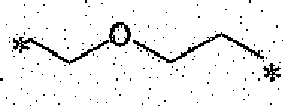

1H NMR (600 MHz, DMSO-d6) 2.84 2.90 (m, 2H),3-65 - 3.70 (m, 2H), 4.14(s, 2H), 4.59(s, 2H),726-8.18(m,12H), 8.51 (s, 1H) 147 

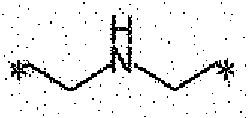

1H NMR (600 MHz,DMSO-d6) 4.15 4.28. (m, 6H), 7.47- 8.18(m, 12 H), 854(s, 1H) 9.90 9.97 (m,2H) -
- (1) To a solution of the compound (500 mg) obtained in Example 2-(1) in tetrahydrofuran (10 ml)- methanol (3 ml), sodium borohydride (173 mg) was added in an ice bath, and the mixed solution was stirred for 15 min. Furthermore, sodium borohydride (177 mg) was added to the solution, and the mixed solution was stirred for 30 min in an ice bath. In addition, sodium borohydride (354 mg) was added three times every 30 min in an ice bath. A saturated aqueous solution of ammonium chloride was added, followed by extraction with chloroform. The organic layer was dried over anhydrous magnesium sulfate, and evaporated under reduced pressure to remove the solvent. To a solution of the resulting crude product in chloroform (7 ml), triethylsilane (1.5 ml) and trifluoroacetic acid (1.5 ml) were added, and the mixed solution was stirred at 60°C for 14 hours. A saturated aqueous solution of sodium hydrogencarbonate was added to the solution, followed by extraction with chloroform. The organic layer was dried over anhydrous magnesium sulfate, and evaporated under reduced pressure to remove the solvent. The resulting crude product was purified by column chromatography (NH type silica gel, ethyl acetate / n-hexane = 40 to 60%) to give methyl [1-(4-amino benzyl)isoquinolin-4-yl]acetate (165 mg) as a colorless solid.
1H NMR (600 MHz, CHLOROFORM-d) d ppm 3.53 (br. s., 2 H), 3.69 (s, 3 H), 3.99 (s, 2 H), 4.54 (s, 2 H), 6.56 - 6.61 (m, 2 H), 7.05 - 7.09 (m, 2 H), 7.51 -7.56 (m, 1 H), 7.66 - 7.70 (m, 1 H), 7.92 - 7.95 (m, 1 H), 8.1.8 - 8.22 (m, it), 8.39 (s, 1 H) - (2) To a solution of the compound (190 mg) obtained in Example 148-(1) in pyridine (3 ml), 3,4-dichlorobenzoyl chloride (195 mg) was added in an ice bath, and the mixed solution was stirred at room temperature for 14 hours. A saturated aqueous sodium hydrogencarbonate solution was added, followed by extraction with ethyl acetate. The organic layer was washed with diluted hydrochloric acid, to which a saturated aqueous solution of sodium hydrogencarbonate was added, followed by extraction with ethyl acetate. The organic layer was dried over anhydrous magnesium sulfate, and then evaporated under reduced pressure to remove the solvent. The resulting crude product was purified by column chromatography (acidic OH type silica gel, ethyl acetate / n-hexane = 30 to 60%) to give methyl [1-(4-{[(3,4-dichlorophenyl)carbonyl]amino}benzyl)isoquinolin-4-yl]acetate (210 mg) as a pale brown solid. 1H NMR (600 MHz, CHLOROFORM-d) d ppm 3.69 (s, 3 H), 4.00 (s, 2 H), 4.64 (s, 2 H), 7.26 - 7.28 (m, 2 H), 7.45 - 7.72 (m, 7 H), 7.90 - 7.97 (m, 2 H), 8.13- 8.17 (m, 1 H), 8.40 (s, 1 H)
- (3) To a solution of the compound (200 mg) obtained in Example 148-(2) in tetrahydrofuran (4 ml) - methanol (4 ml), 1 N aqueous sodium hydroxide solution (6 ml) was added in an ice bath, and the mixed solution was stirred in an ice bath for 20 min. Water and acetic acid were added thereto, and a precipitate was filtered, washed with water, and then dried. The resulting crude product was recrystallized (ethanol - water) to give the titled compound (165 mg) as a colorless solid.
-
- (1) The same procedure as used in Example 148-(1) was carried out using the compound (1.00 g) obtained in Example 134-(3) to give methyl [1-(4-methoxybenzyl)isoquinolin-4-yl]acetate (621 mg) as a pale yellow solid.
1H NMR (600 MHz, CHLOROFORM-d) d ppm 3.69 (s, 3 H), 3.74 (s, 3 H), 4.00 (s, 2 H), 4.60 (s, 2 H), 6.76 - 8.42 (m, 9 H) - (2) To a solution of the compound (678 mg) obtained in Example 149-(1) in chloroform (20 ml), a solution of boron tribromide (1.09 ml) in chloroform (10 ml) was added dropwise at -50°C, and the mixed solution was stirred in an ice bath for one hour. Methanol was added dropwise thereto in an ice bath, and saturated sodium bicarbonate water was added, followed by extraction with chloroform. The solution as washed with a saturated saline solution, dried over anhydrous magnesium sulfate, and evaporated under reduced pressure to remove the solvent. The resulting crude product was purified by column chromatography (neutral OH type silica gel, ethyl acetate / n-hexane = 20 to 60%) to give methyl [1-(4-hydroxybenzyl)isoquinolin-4-yl]acetate (418 mg) as a colorless solid.
1H NMR (600 MHz, CHLOROFORM-d) d ppm 3.69 (s, 3 H), 4.00 (s, 2 H), 4.58 (s, 2 H), 6.66 - 8.40 (m, 9 H) - (3) The same procedure as used in Example 141-(1) was carried out using the compound (120 mg) obtained in Example 149-(2) to give methyl (1-{4-[2-(4-chlorophenyl)ethoxy]benzyl}isoquinolin-4-yl)acetate (95 mg) as a colorless solid.
1H NMR (600 MHz, CHLOROFORM-d) d ppm 3.00 (t, J=6.9 Hz, 2 H), 3.69 (s, 3 H), 3.99 (s, 2 H), 4.08 (t, J=6.9 Hz, 2 H), 4.58 (s, 2 H), 6.73 - 8.41 (m, 13 H) - (4) To a solution of the compound (83 mg) obtained in Example 149-(3) in tetrahydrofuran (2 ml), 1 N sodium hydroxide aqueous solution (1ml) was added, and the mixed solution was stirred at room temperature for 23 hours. A saturated aqueous ammonium chloride solution was added thereto, and acetic acid was added thereto, followed by extraction with ethyl acetate. The organic layer was washed with a saturated saline solution, dried over anhydrous magnesium sulfate, and evaporated under reduced pressure to remove the solvent. To the resulting crude product, diethyl ether was added, and the mixture was stirred at room temperature for 14 hours. The produced solid was filtered out to give the titled compound (58 mg) as a colorless solid.
- By the same procedure as in Example 149, compounds of Examples 150 and 151 were obtained.
-
- (1) To a solution of 2-{4-chlorophenyl)ethylamine (2.83 g) and triethylamine (1.46 ml) in tetrahydrofuran (50 ml), 4-(bromomethyl)benzenesulphonyl chloride (1.63 g) was added, and the mixed solution was stirred at room temperature for one hour. Ethyl acetate was added thereto, and the solution was washed with a saturated solution of ammonium chloride and then washed with water. The organic layer was dried over anhydrous magnesium sulfate, and evaporated under reduced pressure to remove the solvent. The resulting crude product was purified by column chromatography (neutral OH type silica gel, ethyl acetate / n-hexane = 10 to 30%) to give 4-(bromomethyl)-N-[2-(4-chlorophenyl)ethyl]benzene sulfonamide (2.04 g) as a colorless solid.
1H NMR (600 MHz, CHLOROFORM-d) d ppm 2.67 - 2.82 (m, 2 H), 3.12 - 3.33 (m, 2 H), 4.38 (t, J=6.2 Hz, 1 H), 4.50 (s, 2 H), 6.93 - 7.80 (m, 8 H) - (2) To a solution of the compound (927 mg) obtained in Example 152-(1) in toluene (12 ml), tri-n-butyl phosphine (0.883 ml) was added, and the mixed solution was stirred at 60°C for 30 min. The reaction solution was removed by evaporation under reduced pressure, and to a solution of the resulting crude product in chloroform (10 ml), n-hexane (200 ml) was added dropwise. The solution was stirred at room temperature for one hour. After decantation, tributyl(4-{[2-(4-chlorophenyl)ethyl]sulfamoyl}benzyl)phosphonium bromide (1.37 g) was obtained as a colorless amorphous substance.
1H NMR (600 MHz, CHLOROFORM-d) d ppm 0.88 - 0.96 (m, 9 H), 1.40 - 1.52 (m, 12 H), 2.31 - 2.40 (m, 6 H), 2.85 (t, J=7.3 Hz, 2 H), 3.14 - 3.20 (m, 2 H), 4.46 - 4.58 (m, 2 H), 5.90 - 5.97 (m, 1H), 7.07 - 7.24 (m, 4 H), 7.57 - 7.85 (m, 4 H) - (3) To a solution of the compound (1.02 g) obtained in Example 152-(2) and 1-chloro-isoquinoline-4-carboxylic acid methyl ester (381 mg) in tetrahydrofuran (9 ml), sodium bis(trimethylsilyl)amide (2.72 ml, 1.9 M solution) was added dropwise at -30°C, and the solution was stirred at room temperature for two hours. Furthermore, the solution was stirred at 50°C for one hour, and then 1 M aqueous sodium carbonate solution (3.44 ml) was added thereto, and the solution was stirred at 50°C for two hours. Ethyl acetate was added thereto, and the solution was washed with a saturated aqueous ammonium chloride solution, and then washed with a saturated saline solution. The organic layer was dried over anhydrous magnesium sulfate, and then evaporated under reduced pressure to remove the solvent. The resulting crude product was purified by column chromatography (neutral OH type silica gel, ethyl acetate / n-hexane = 10 to 50%) to give methyl 1-(4-{[2- (4-chlorophenyl)ethyl]sulfamoyl}benzyl)isoquinoline-4-carboxylate (124 mg) as a pale yellow solid.
1H NMR (600 MHz, DMSO-d6 ) d ppm 2.57 - 2.63 (m, 2 H), 2.88 - 2.95 (m, 2 H), 3.96 (s, 3 H), 4.83 (s, 2 H), 7.07 - 8.83 (m, 13 H), 9.00 (s, 1 H) - (4) To a solution of the compound (169 mg) obtained in Example 152-(3) in tetrahydrofuran (4 ml), 1 N aqueous sodium hydroxide solution (2 ml) was added. The mixed solution was stirred at room temperature for three hours. Water and 1 N aqueous hydrochloric acid solution were added in an ice bath, followed by extraction with ethyl acetate. The organic layer was washed with a saturated saline solution, dried over anhydrous magnesium sulfate, and evaporated under reduced pressure to remove the solvent to give 1-(4-{[2-(4-chlorophenyl)ethyl]sulfamoyl}benzyl)isoquinoline-4-carboxylic acid (164 mg) as a pale yellow solid.
1H NMR (600 MHz, DMSO-d6) d ppm 2.58 - 2.65 (m, 2 H), 2.87 - 2.96 (m, 2 H), 4.82 (s, 2 H), 7.05 - 9.03 (m, 14 H), 13.45 (br. s., 1 H) - (5) To a solution of the compound (164 mg) obtained in Example 152-(4) in chloroform (4 ml), oxalyl chloride (0.058 ml) and N,N-dimethylformamide (0.004 ml) were added in an ice bath, and the mixed solution was stirred at room temperature for one hour, and evaporated under reduced pressure to remove the solvent. To the resulting crude product, tetrahydrofuran (2 ml) and acetonitrile (2 ml) were added, and (trimethylsilyl)diazomethane (4.341 ml, 2 M solution) was added dropwise in an ice bath. The mixed solution, was stirred in an ice bath for one hour. The solution was evaporated under reduced pressure to remove the solvent. To the resulting crude product, water (2 ml), 1,4-dioxane (2 ml) and silver acetate (17 mg) were added, and the solution was stirred at 60°C for 30 min. The reaction solution was filtered through celite, and water was added to the filtrate, followed by extraction with ethyl acetate. The organic layer was washed with a saturated saline solution, dried over anhydrous magnesium sulfate, and evaporated under reduced pressure to remove the solvent. The resulting crude product was purified by column chromatography (acidic OH type silica gel, methanol / chloroform, = 0 to 15%), and diethyl ether was added thereto, and the purified product was stirred at room temperature for 15 hours. The resultant solid was filtered out and dried to give the titled compound (50 mg) as a pale yellow solid.
- Structural formulae and NMR values of Examples 148 to 152 are shown in Table 5.

-
[Table 5] Example X Z Y R1 1HNMR (d ppm) 148 


1HNMR (600 MHz, DMSO-d6) 4.00 (s 2H). 4.60 (s, 2 H), 7.24 - 7.32 (m, 2 H), 7,58 - 7-67 (m,3 H), 7.73 - 7.83 (m, 2 H), 7.87 - 7.92 (m, 1H), 7.94 - 8.00 (m, 1 H). 8.14- 8.19 (m,1H), 8-29-8.37 7 (m, 2H), 10.31 (br.s., 1 H),12.59 (br.s, 1H) 149 


1H NMR (600 MHz, DMSO-d6) 2.97 (t, J=6.6 Hz, 2 H), 3.99 (s, 2 H), 4.09 (t, J=6.6 Hz, 2 H), 4.53 (s, 2 H), 6.77 - 8.35 (m, 13 H), 12.55 (br.s., 1 H) 150 


1H NMR (600 MHz, DMSO-d6) 1.91 - 1.98 (m, 2 H), 2.66 - 2.71 (m, 2 H), 3.86 (t, J=6.4 Hz, 2 H), 3.98.(s, 2 H), 4.53 (s,2 H), 6.77-8.36 (m, 13 H) 151 


1H NMR (600 MHz, DMSO-d6) 4.00 s, 2 H), 4.20 - 4.27 (m, 4 H), 4.55 (s, 2 H), 6.80 - 8.38 8 (m, 1.3 H), 12.50 (br. s., 1 H) 152 


1H NMR (600. MHz, DMSO-d6) 2.60 = 2.65 (m, 2 H), 2.89 - 2.95 (m, 2 H), 4.01 (s, 2 H), 4.72 (s, 2 H), 7.09 - 8.37 (m, 14H), 12.57 (br.s., 1 H) -
- (1) To a solution of 4-(bromomethyl)benzoic acid tert-butyl ester (22. 1. g) in toluene (440 ml), tri-n-butylphosphine (30.5 ml) was added, and the mixed solution was stirred at 60°C for 70 min. The reaction solution was removed by evaporation under reduced pressure, and to the resulting crude product, n-hexane was added and stirred. The resulting solid was filtered out to give [4-(tert-butoxycarbonyl)benzyl](tributyl)phosphonium bromide (36.0 g) as a colorless solid.
1H NMR (600 MHz, CHLOROFORM-d) d ppm 0.93 - 0.98 (m, 9 H), 1.44-1.52 (m, 12 H), 1.60 (s, 9 H), 2.37 - 2.46 (m, 6 H), 4.34 - 4.40 (m, 2 H), 7.50 - 8.02 (m, 4 H) - (2) To a solution of the compound (33,8 g) obtained in Example 153-(1) and 1-chloro-isoquinoline-4-carboxylic acid methyl ester (11.3 g) in tetrahydrofuran (235 ml), sodium bis(trimethylsilyl)amide (64 ml, 1.9 M solution) was added dropwise at -30°C, and the resulting solution was stirred at room temperature for 45 min. Furthermore, the resulting solution was stirred at 50°C for 75 min, and then a solution of sodium carbonate (10.2 g) in water (120 ml) was added, the resulting solution was stirred 60°C for two hours. 1 N aqueous hydrochloric acid solution was added so as to adjust the solution to pH5, followed by extraction with ethyl acetate. The organic layer was dried over anhydrous magnesium sulfate, and evaporated under reduced pressure to remove the solvent. The resulting crude product was purified by column chromatography (neutral OH type silica gel, ethyl acetate / n-hexane = 10 to 30%) to give methyl 1-[4-(tert-butoxycarbonyl)benzyl]isoquinoline-4-carboxylate (12.0 g) as an orange-colored oily substance.
1H NMR (600 MHz, CHLOROFORM-d) d ppm 1.55 (s, 9 H), 4.02 (s, 3 H), 4.76 (s, 2 H), 7.27 - 8.98(m,8H),9.14(s, 1H) - (3) To a solution of the compound (11,8 g) obtained in Example 153-(2) in tetrahydrofuran (150 ml), 1 N aqueous sodium hydroxide solution (150 ml) was added, and the mixed solution was stirred at 50°C for 2.5 hours. The resulting solution was returned to room temperature, 1 N aqueous hydrochloric acid solution was added to adjust the solution to pH5, followed by extraction with ethyl acetate. The organic layer was washed with a saturated saline solution, dried over anhydrous magnesium sulfate, and then evaporated under reduced pressure to remove the solvent to give 1-[4-(tert-butoxycarbonyl)benzyl]isoquinoline-4-carboxylic acid (11,1 g) as a pale orange-colored solid.
1H NMR (600 MHz, DMSO-d6) d ppm 1.50 (s, 9 H), 4.76 (s, 2 H), 7.38 - 8.99 (m, 9 H) - (4) To a solution of the compound (11.1 g) obtained in Example 153-(3) in chloroform (265 ml), oxalyl chloride (5.1 ml) and N,N-dimethylformamide (0.1 ml) were added in an ice bath, and the mixed solution was stirred in an ice bath for 70 min, and evaporated under reduced pressure to remove the solvent. To the resulting crude product, tetrahydrofuran (133 ml) and acetonitrile (133 ml) were added, and (trimethylsilyl)diazomethane (29.5 ml, 2 M solution) was added dropwise in an ice bath. The mixed solution was stirred in an ice bath for three hours. The solvent was removed by evaporation under reduced pressure, and to the resulting crude product, water (133 ml) and 1,4-dioxane (133 ml) and silver acetate (2.95 g) were added, and the mixed solution was stirred at 60°C for 45 min. The solution was returned to room temperature, and water was added to the solution, followed by extraction with ethyl acetate. The organic layer was washed with a saturated saline solution, dried over anhydrous magnesium sulfate, and evaporated under reduced pressure to remove the solvent. To the resulting crude product, methanol (265 ml) was added, and (trimethylsilyl)diazomethane (44.2 ml, 2 M solution) was added dropwise at room temperature, and the solution was stirred for 20 min. The solvent was removed by evaporation under reduced pressure, and resulting crude product was purified by column chromatography (neutral OH type silica gel, ethyl acetate / n-hexane = 10 to 40%) to give ten-butyl 4-{[4-(2-methoxy-2-oxoethyl)isoquinolin-1-yl]methyl}benzoate (4.07 g) as a brown oily substance.
1H NMR (600 MHz, CHLOROFORM-d) d ppm 1.55 (s, 9 H), 3.69 (s, 3 H), 4.01 (s, 2 H), 4.70 (s, 2 H), 7.29 - 8.13 (m, 8 H), 8.41 (s, 1 H) - (5) To a solution of the compound (4.07 g) obtained in Example 153-(4) in chloroform (40 ml), trifluoroacetic acid (20 me) was added in an ice bath, and the mixed solution was stirred in an ice bath for 30 min. Furthermore, the solution was stirred at room temperature for 3.5 hours, and then 1 N sodium hydroxide aqueous solution was added to the solution in an ice bath to adjust the solution to pH5, followed by extraction with ethyl acetate. The organic layer washed with a saturated saline solution, then dried over anhydrous magnesium sulfate, and then evaporated under reduced pressure to remove the solvent to give 4-{[4-(2-methoxy-2-oxoethyl)isoquinolin-1-yl]methyl}benzoic acid (3.42 g) as a pale brown solid.
1H NMR (600 MHz, DMSO-d6) d ppm 3.62 (s, 3 H), 4.13 (s, 2 H), 4.71 (s, 2 H), 7.39 - 8.36 (m, 8 H), 8.37 (s, 1 H), 12.79 (br. s., 1 H) - (6) To a solution of the compound (2.69 g) obtained in Example 153-(5) in chloroform (40 ml), oxalyl chloride (1.07 ml) and N,N-dimethylformamide (3 drops) were added in an ice bath, and the mixed solution was stirred for one hour. The reaction solution was removed by evaporation under reduced pressure. To the resulting crude product, chloroform (40 ml) was added, and 2-(4-chlorophenyl)ethylamine (1.68 ml) and pyridine (0.973 ml) were added in an ice bath, and the resulting solution was stirred for one hour. The reaction solution was washed with a saturated solution of ammonium chloride, and the organic layer was dried over anhydrous magnesium sulfate, and evaporated under reduced pressure to remove the solvent. The resulting crude product was purified by column chromatography (NH type silica gel, ethyl acetate / n-hexane = 10 to 100%) to give methyl [1-(4-{[2-(4-chlorophenyl)ethyl]carbamoyl}benzyl)isoquinolin-4-yl]acetate (1.31 g) as a pale yellow solid.
1H NMR (600 MHz, CHLOROFORM-d) d ppm 2.87 (t, J=6.9 Hz, 2 H), 3.61 - 3.67 (m, 2 H), 3.70 (s, 3 H), 4.01 (s, 2 H), 4.68 (s, 2 H), 6.04 (t, J=5.3 Hz, 1 H), 7.11 - 8.13 (m, 12 H), 8.40 (s, 1 H) - (7) To a solution of the compound (1.31 g) obtained in Example 153-(6) in tetrahydrofuran (55 ml), 1 N sodium hydroxide aqueous solution (14 ml) was added in an ice bath, and the mixed solution was stirred at room temperature for 2.5 hours. 1 N aqueous hydrochloric acid solution was added to the solution in an ice bath to adjust the solution to pH5, followed by extraction with ethyl acetate. The organic layer was washed with a saturated saline solution, dried over anhydrous magnesium sulfate, and evaporated under reduced pressure to remove the solvent. The resulting crude product was purified by column chromatography (acidic OH type silica gel, methanol / chloroform = 0 to 15%). To the obtained solid, diethyl ether was added, and the mixture was stirred at room temperature for 17 hours to be filtered out to give a pale yellow solid (1.05 g). The obtained solid was dissolved in ethanol (250 ml) at 40°C, and water (2500 ml) was added dropwise thereto, and the resulting solution was stirred at room temperature for 17 hours. The precipitated solid was filtered out and dried to give the titled compound (944 mg) as a pale yellow solid.
- Compounds of Examples 154 to 160 were obtained by carrying out the same procedures as in Example 153. Structural formulae and NMR values of Examples 153 to 160 are shown in Table 6.

-
[Table 6] Example X Z Y R1 1H NMR (dppm) 153 


1H NMR (600 MHz, DMSO-d6) 2.79 (t, J=7.3 Hz, 2 H), 3.39 - 3.46 (m, 2 H), 4.00 (s, 2H), 4.67 (s, 2 H), 7.20 - 8.43 (m, 14 H) 154 


1H NMR (600 MHz, DMSO-d6) 3.98 (s, 2H), 4.37-4.41 (m, 2H), 4.65 (s, 2H), 7.24-8.94 (m, 14 H) 155 


1H NMR (600 MHz, DMSO-d6) 2.79 -2.84 (m, 2 H), 3.42 - 3.47 (m, 2 H), 3.98 (s. 2 H), 4.67 (s, 2 H), 7.14 - 8.45 (m, 14 H) 156 


1H NMR (600 MHz, DMSO-d6) 2.70 - 2,76 (m, 2 H), 3.37-3.42 (m, 2 H), 3.70 (s, 3 H), 4,01 (s, 2 H), 4.67 (s, 2 H), 6.79 - 8.42 (m, 14 H), 12.53 (br. s, 1H) 157 


1H NMR (600 MHz, DMSO-d6) 2.71 - 2.75 (m, 3 H), 3.35 - 3.42 (m, 2 H), 3.79 (s,3 H), 4.00 (s, 2 H), 4.66 (s, 2 H), 7.01-8,41 (m, 13 H) 158 
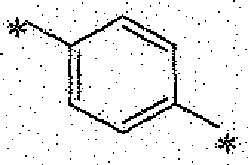


1H NMR (600 MHz, DMSO-d6) 3.87 (br. s., 2 H), 4.71 (s, 2 H), 7.45-8,35 (m, 12 H), 10.39 (s, 1 H) 159 

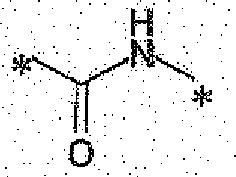

1H NMR (600 MHz, DMSO-d6) 3.88 (br. s., 2 H), 4.70 (s, 2 H), 7.36-,8,35 (m, 13 H), 10.25 (s, 1 H) 160 

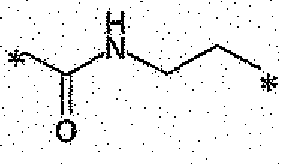

1H NMR (600 MHz, DMSO)-d6) 2.79 - 2.83 (m, 2 H), 3.42 - 3.47 (m, 2 H), 3.99 (s, 2 H), 4.67 (s, 2 H), 7,1 8 - 8.42 (m, 13 H) -
- (1) To a suspension of the compound (100 mg) obtained in Example 153-(5), 2-phenylethylamine (0.045 ml) and 1-hydroxybenzotriazole hydrate (55 mg) in chloroform (3 ml), 1-ethyl-3-(dimethylaminopropyl)-carbodiimide hydrochloride (69 mg) was added, and the mixture was stirred at room temperature for three hours. The reaction solution was washed with water, and evaporated under reduced pressure to remove the solvent. The resulting crude product was purified by column chromatography (NH type silica gel, ethyl acetate / n-hexane = 60 to 100%) to give methyl (1-{4-[(2-phenyl ethyl)carbamoyl]benzyl}isoquinolin-4-yl)acetate (90 mg) as a pale brownish-colored solid.
1H NMR (600 MHz, CHLOROFORM-d) d ppm2.90 (t, J=6.9 Hz, 2 H), 3.66 - 3.72 (m, 5 H), 4.01 (s, 2 H), 4.68 (s, 2 H), 5.98 - 6.07 (m, 1 H), 7.18 - 8.14 (m, 13 H), 8.40 (s, 1 H) - (2) The same procedure as used in Example 1.49-(4) was carried out using the compound (90 mg) obtained in Example 161-(1) to give the titled compound (73 mg) as a pale yellow solid.
- Compounds of Examples 162 to 251 were obtained by carrying out the same procedures as in Example 161. Structural formulae and NMR values of Examples 161 to 251 are shown in Tables 7-1 to 7-9.

-
[Table 7- 1] Example X Z Y R1 1H NMR (d ppm) 161 
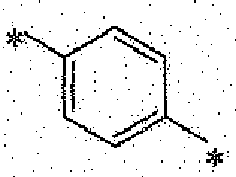


1H NMR (600 MHz, DMSO-d6) 2.80 (t, J=7.3 Hz, 2 H), 3.41 - 3.46 (m, 2 H), 4.02, (s, 2 H), 4.68 (s, 2 H), 7.16 - 8.45 (m, 15 H), 12.52 (br. s., 1 H) 162 


1H NMR (600 MHz, DMSO-d6) 2.91 - 2,97 (m, 2 H), 3.44 - 3.50 (m, 2 H), 4.01 (s, 2H), 4.7. (s, 2 H), 7.21 8.49 (m, 14H), 12.52 (br. s., 1H) 163 


1H NMR (600 MHz, DMSO-d6) 2.82 (t, J=7.1 Hz, 2 H), 3.42 - 3.48 (m, 2 H), 4,01 (s, 2 H), 4.67 (s, 2 H), 7,14 - 8.45 (m, 14H), 12.54 br. s., 1 H) 164 


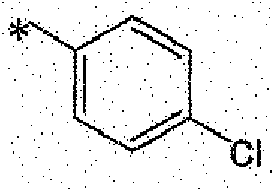
1H MNR (600 MHz, DMSO-d6= 1.74 1.80 (m, 2 H), 2.56 - 2.61 (m, 2 H), 3.19 - 3.25 (m, 2 H), 4.01 (s, 2 H), 4.67 (s, 2 H), 7.21 - 8.37 (m, 14 H), 12.54 (br. s., 1 H) 165 


1H NMR (600 MHz, DMSO-d6) 2.24) (s, 3 H), 2.75 (t, J=7.6 Hz, 2 H), 3.36 - 3.43 (m, 2 H), 4.19 (s, 2 H), 4.90 (s, 2H), 7.05 - 8.58 (m, 14 H) 166 


1H NMR (600 MHz, DMSO-d6) 2.26 (s, 3 H), 2.73 - 2.78 (m, 2 H), 3.38 - 3.44 (m, 2 H), 4.01 (s, 2 H), 4.67 (s, 2 H), 6.97 - 8.45 (m, 14 H) 167 


1H NMR (600 MHz, DMSO-d6) 2.3 (s, 3 H), 2.77 - 2.82 (m, 2 H), 3.36-3.41 (m, 2 H), 4.01 (s, 2 H), 4.68 (s, 2 H), 7.05-8.52 (m, 14H) 168 


1H NMR (600 MHz, DMSO-d6) 2.15 (s, 3 H), 2.17 (s, 3 H), 2.71 (t, J=7.3 Hz, 2 H), 3.36- 3,42 (mg 2 H), 4.02 (s, 2 H), 4.68 (s, 2 H), 6.88 - 8.43 (m, 1.3 H), 12.52 (br. s., 1 H) 169 

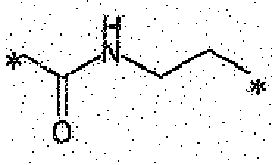

1H NMR (600 MHz, DMSO-d6) 2.21 (s, 3 H), 2.24 (s, 3 H), 2.71 - 2.77 (m, 2 H), 3.33-3.38 (m, 2 H), 3.98 (s, 2 H), 4.67 (s, 2 H), 6.88- 8.51 (m, 13 H) 170 


1H NMR (600 MHz, DMSO-d6) 2.74 (t, J=7.1 Hz, 2 H), 3.37 - 3.43 (m, 2 H), 3.80 (s, H), 3.98 (s, 2 H), 4.67 (s, 2 H), 7.01 - 8.41 (m, 13 H) 171 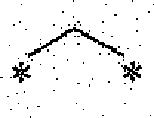


1H NMR (600 MHz, DMSO-d6) 2.10. (s, 3 H), 2.69 (t, J=7.3 Hz, 2 H), 3.35 - 3.40 (m, 2 H), 3.73 (s, 3 H), 3.99 (s, 2 H), 4.67 (s, 2 H), 6.80 - 8.42 (m, 13 H) -
[Table 7-2] Example X Z Y R1 1H NMR (d ppm) 172 


1H NMR (600 MHz, DMDO-d6) 2.81 (t, J=7.1Hz, 2H), 3.41 - 3.47 (m, 2 H), 4.01 (s, 2H), 4.07 (s, 2 H), 7.19 8.44 (m, 14 H), 12.54 (br. s., 1 H) 173 


1H NMR (600 MHz, DMSO-d6) 2.84 (t, J=7.1 Hz,2 H)= 3.41- 3.46 (m, 2 H), 3.98 (s, 2 H), 4.64 (s, 2H), 7.28- 8.43 (m, 14 H), 12.62 (br. s., 1H) 174 


1H NMR (600 MHz, DMSO-d6) 2.96 (t, J=6.9 Hz, 2 H), 3.48 - 3.54 (m, 2 H), 4.01 (s, 2 H), 4.67 (s, 2 H), 7.34 - 8.47 (m, 14 H), 12.58 (br.s., 1 H) 175 


1H NMR (600 MHz, DMSO-d6) 2.9 - 2.98 (m, 2 H), 3.53 3.59 (m, 2 H), 3.64 (br. s., 2 H), 4.63 (s, 2 H), 7.16 - 8.50 (m, 14 H) 176 


1H NMR (600 MHz, DMSO-d6) 2.83 (t, .J=7.1 Hz, 2 H), 3.43 - 3.49 (m, 2 H), 3.99 (s, 2 H), 4.67 (s, 2 H), 7.27- 8.46 (m, 14 H) 177 


1H NMR (600 MHz, DMSO-d6) 2.80 -2.86 (m, 2 H), 3.45 - 3.51 (m, 2 H), 3.69 (br. s., 2 H), 4.63 (s, 2 H), 7.19- 8.48 (m, 14 H) 178 


1H NMR (600 (MHz, DMSO-d6) 3.52 - 3.57 (m, 2 H), 3.97 (s, 2H), 4.03 (t, J=6.0 Hz, 2 H), 4.64 (s, 2 H), 6.90 -. 8.56 (m, 14H) 179 


1H NMR (600 MHz, DMSO-d6) 2.90 (t, J=7.6 Hz, 2 H), 3.47 - 3.52 (m, 2. H), 4,01 (s, 2 H), 4.68 (s, 2 H), 6.94 - 8.50 (m, 15 H), 10,78 (br. s, 1 H) 180 


1H NMR (600 MHz, DMSO-d6) 2.92 (t, J=7.1 Hz, 2 H), 3.43 - 3.49 (m, 2 H), 4.01 (s, 2 H), 4.67 (s, 2H), 7.30 - 8.47 (m, 13 H) 181 


1H NMR (600 MHz, DMSO-d6) 2.84 (t, J=7.3 Hz, 2 H), 3,40 - 3,47 (m, 2 H), 3.93 (br. s., 2 H), 4.66 (s, 2 H), 7.08 - 8.49 (m, 14H) 182 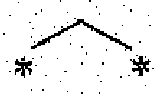


1H NMR (600 MHz, DMSO-d6) 2.83 (t, J=7.3 Hz, 2 H), 3.42-3.48 (m, 2 H), 4.06 (s, 2H), 4.72 (s, 2 H), 6.97 - 8.46 (m, 14 H) 183 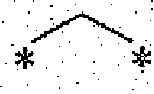


1H NMR (600 MHz, DMSO-d6) 2.94 (t, J=7.1 Hz, 2 H), 3.43 - .3.49 (m, 2 H), 4.02 (s, 2 H), 4.68 (s, 2 H), 7.12 8.50 (m, 14 H) -
[Table 7-3] Example X Z Y R1 1HNMR(dppm) 184 

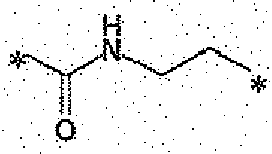

1HNMR(600 MHz,DMSO-d6) 2.76 -2.80 (m, 2H), 3.37 - 3,42 (m, 2 H), 3-77 (s, 3H), 4.04 (s, 2 H), 4.70 (s, 2 H), 6.81-8.42 (m, 14H) 185 


1H NMR (600 MHz, DMSO-d6) 2.36 - 2.43 (m, 6H), 2.60-2.62 (m, 2H), 3.54 (s, 4 H), 3.95 (br. s., 2H), 4.67 (s, 2H), 7.32 - 8.36 (m, 10H) 186 
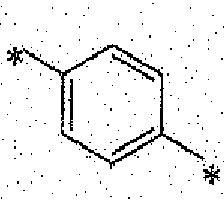


1H NMR (600 MHz, DMSO-d6) 0.87 (t, J=7.3 Hz, 3H), 1.25 - 1.33 (m, 2 H), 1.43 - 1.49 (m, 2 H), 3.18 - 3.23 (m, 2H), 4.01 (s, 2H), 4.67 (s, 2H), 7.34-8.38 (m, 10 H), 12.54 (br. s., 1 H) 187 


1H NMR (600 MHz, DMSO-d6) 0.82 - 1.72 (m, 13H), 3:20 -3.26 (m, 2 H), 4,01 (s, 2H), 4.67 (s, 2H), 7.34 - 8.39 (m, 10 H), 12.52 (br. s., 1 H) 188 

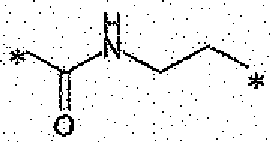

1H NMR (600 MHz, DMSO-d6) 1.44 - 2.13 (m, 10 H), 3.25 - 3.30, (m, 2H), 4.01 (s, 2H), 4.67 (s, 2H), 5,38 (br. s., 1H), 7.33 - 8.37 (m, 10H), 12.53 : (br. s., 1 H) 189 


1H NMR (600 MHz, DMSO-d6) 2.73 (t, J=1.3 Hz, 2H), 3.38 - 3.44 (m, 2 H), 3.68 (s, 3H), 7.69 (s, 3H), 4.00 (s, 2H), 4.67 (s,2 H), 6.68 = 8.41 (m, 13H) 190 


1H NMR (600 MHz, DMSO-d6) 2.98 (t, J=7.Hz, 2 H), 3,40 - 3.45 (m, 2 H), 3-98 (s, 2 H), 4.67 (s, H), 7.15- 8.54 (m, 13H) 191 
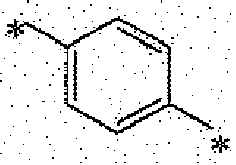
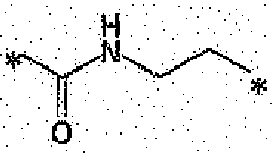

1H NMR (600 MHz, DMSO-d6) 3.13 (t, J=7.1 Hz, 2H), 3.43 - 3.48 (m, 2 H), 4.00 (s, 2H), 4.67 (s, 2 H), 7.24 - 8.55 (m, 13 M 192 


1H NMR (600 MHz, DMSO-d6) 2.12 - 2.15 (m, 9H), 2.24 (s, 6 H), 2.80 - 2.85 (m, 2 H), 3.17 - 3.23 (m, 2 H), 4.01 (s, 2H), 4.69 (s, 2 H), 7.37- 8.63 (m, 10 H) 183 


1H NMR (600MHz, CHLOROFORM-d) 1.29 (s, 9:H), 2.83 (t, J=7:1 Hz, 2H), 3.60 - 3.67 (m, 2 H), 4.01 (s, 2H), 4.66 (s, 2 H), 6.27 (t, J=6.0 Hz, 1 H), 7.10 - 8.11 (m, 12 H), 8.40 (s, 1 H) -
[Table 7-4] Example X Z Y R1 1H NMR (d ppm) 194 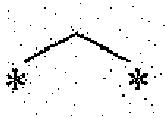


1H NMR (600 MNz, DMSO-d6) 2.85 (t, 3=7.3 Hz, 2H), 3.44 - 3.50 (m, 2 H), 4.00 (s, 2 H), 4,67 (s, 2H), 7.27-8.50 (m, 19H) 195 


1H NMR (600 MHz, DMSO-d6) 2.79 (t, J=7.6Hz, 2 H), 3.40 3.46 (m, 2 H), 3.99 (s, 2 H), 4.67 (s, 2H), 6.89 - 8.45 (m,19 H) 196 


1H NMR (600 MHz, DMSO-d6) 2.67 (t, J=7.6 Hz, 2 H), 3.34 - 3.39 (m, 2 H), 4.00 (s, 2 H), 4.67 (s, 2 H) , 6.63 - 8.41 (m,14 H), 9.15 (br. s., 1 H) 197 


1H NMR (600 MHz, DMSO-d6) 2.77 (t, J=7.3 Hz, 2 H), 3.41 - 3.46 (m, 2 H), 3.63 (s, 3 H), 4.17 (br. s., 2 H), 4.87 (br.s., 2 H), 6.73-8.55 (m,14 H) 198 


1H NMR (600 MHz, DMSO-d6) 2.73 (t, J=7.3 Hz, 2 H) , 3.36 - 3.42 (m, 2 H) 3.70 (s, 3 H), 4.22 (s, 2 H), 4.94 (br. s., 2 H), 6.81 - 8.62 (m, 14 H) 199 


1H NMR (600 MHz, DMSO-d6) 2.78 (t, J=7.1 Hz, 2 H), 3.39 - 3.47 (m, 2 H), 4.23 (s, 2 H), 4.96 (br. s., 2 H), 7.15 - 8.64 (m, 14H) 200 


1H NMR (600 MHz, DMSO-d6) 2.79 (t, J=7.3 Hz, 2 H), 3.39 - 3.45 (m, 2 H), 4.04 (s, 2 H), 4.70 (s, 2 H), 7.06 - 8.44 (m, 14 H) 201 


1H NMR (600 MHz, DMSO-d6) 2.90 (t, J=7.1 Hz, 2 H), 3.45 - 3.51 (m, 2 H), 4.01 (s, 2 H), 4.67 (s, 2 H), 7.34 - 8.48 (m, 14 H), 12.54 (br. s., 1H) 202 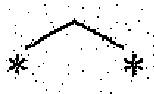


1H NMR (600 MHR, DMSO-d6) 3.15 (t, J=7.3 Hz, 2 H), 3.66 - 3.72 mm (m, 2 H), 4.01 (s, 2H), 4.67 (s,2H), 7.35 - 8.52 mm (m, 16 H), 12.55 (br. s., 1 H) 203 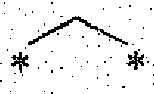


H NMR (600 MHz, DMSO-d6) 2.84 (t, J=7.3 Hz, 2 H), 3.42 - 3.47 (m, 2 H), 4.00 (s, 2H), 4.67 (s, 2 H), 7.24 8.46 (m, 14 H) 204 


1H NMR (600 MHz, DMSO-d6) 2.17 (s, 3 H), 2.78 (t, J=7.3 Hz, 2 H), 3.40 3.45 (m, 2H), 4.01 (s, 2H), 4.67 (s, 2 H), 6.91 - 8.42 (m, 13 H) -
[Table 7-5] Example X Z Y R1 1H NMR (d ppm) 205 


1H NMR (600 MHz, DMSO-d6) 2.98 (t, J=7.3 Hz, 2 H), 3.50 - 3.57 (m, 2 H), 4.01 (s, 2 H), 4.67 (s, 2 H, 7.33 - 8.51 (m, 17 H), 12,56 (br. s., 1 H) 206 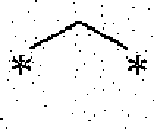


1H NMR (600 MHz, DMSO-d6) 2.67 (t, J=7.6 Hz, 2 H), 2.83 (s, 6.H), 3.32 - 3.38 (m, 2H), 4.00 (s, 2 H), 4.67 (s, 2 H), 6.62-8.40 (m, 14 H) 207 


1H NMR (600 MHz, DMSO-d6) 2.89 - 2.95 (m, 2 H), 3.17 (s, 3H), 3.45- 3.51 (m, 2 H), 4.00 (s, 2 H), 4.67 (s, 2 H), 7.35 -8.47 (m, 14 H) 208 


1H NMR (600 MHz, DMSO-d6) 2.21 (s, 3 H), 2.26 (s, 3H), 2.71 - 2.77 (m, 2 H), 3.30 - 3.39 (m, 2 H), 4.04 (s, 2 H), 4.71 (s, 2 H), 6.87 - 8. 50 (m, 13 H) 209 


1H NMR (600 MHz, DMSO-d6) 2.69 (t, 3=7.3 Hz, 2 H), 3.37 - 3.43 (m, 2 H), 3.68 (s, 6 H), 4.01 (s, 2 H), 4.67 (s, 2 H), 6.44 (s, 2 H), 7.34 - 8.40 (m, 11 H), 12.55 (br. s., 1 H) 210 


1H NMR (600 MHz, DMSO-d6) 2.80 (t, J=6.9 Hz, 2 H), 3.41 - 3.47 (m, 2 H), 4.01 (s, 2 H), 4.67 (s, 2 H), 7.18- 8.42 (m, 13H), 12.55 (br. s., 1 H) 211 


1H NMR (600 MHz, DMSO-d6) 2.08 (s, 3 H), 2.76 (t, J=7.3 Hz, 2 H), 3.40 - 3.46 (m, 2 H), 3.71 (s, 3H), 4.02 (s, 2 H), 4.68 (s, 2 H), 6.65 - 8.44 (m, 13 H), 12.53 (br. s., 1 H) 212 


1H:NMR (600 MHz, DMSO-d6) 2.84 (t, J=6.9 Hz, 2 H), 3.43 - 3.50 (m, 2 H), 4.01 (s, 2 H), 4.67 (s, 2 H), 6.92 - 8.46 (m, 13 H), 12.55 (br.s., 1 H) 213 

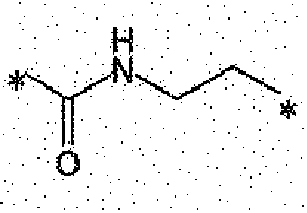

1H NMR (600 MHz, DMSO-d6) 2.25 (s, 3 H), 2.79 (t, J=7.6 Hz, 2 H), 3.38 - 3.43 (m, 2H), 4.01 (s, 2 H), 4.68 (S, 2 H), 6.88 - 8.52 (m, 13 H), 12.55 (br. s., 1 H) 214 

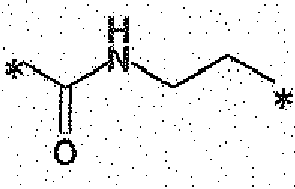
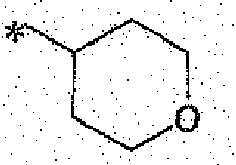
1H-NMR (600 MHz, DMSO-d6) 1.07 1.61 (m, 7H), 3.20 - 3.28 (m, 4 H), 3.77 - 3.83 (m, 2 H), 4.01 (s, 2 H), 12.57 (br. s., 1 H) -
[Table 7-6] Example X Z Y R1 1H NMR (d ppm) 215 


1H NMR (600 MHz, DMSO-d6) 2.93 (t, J=6.9 Hz, 2 H), 3.47 - 3.53 (m, 2 H), 4.01 (s,2H), 4.67 (s, 2H), 7.33 - 8.44 (m, 13 H, 12.52 (br. s., 1 H) 216 

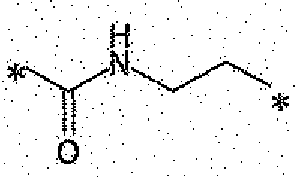
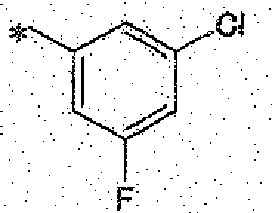
1H NMR (600 MHz, DMSO-d6) 2.83 (t, J=6.9 Hz, 2 H), 3.44 - 3.49 (m, 2 H), 4.01 (s, 2 H), 4.67 (s, 2 H), 7.05- 8.44 (m, 13 H), 12.52 (br.s., 1 H) 217 


1H NMR (600 MHz, DMSO-d6) 2.33 (s, 6 H), 2.77 - 2.83 (m, 2 H), 3.23 - 3.29 (m, 2 H), 4.01 (s, 2 H), 4.68 (s, 2 H), 6.96 - 8,65 (m, 13 H), 12.58 (br. s., 1 H) 218 


1H NMR (600 MNz, DMSO-d6) 1.66 -1.72 (m,4 H), 2.62 - 2.68 (m, 4 H), 2.70 (t, J=73 Hz, 2 H), .3.35 - 3.41 (m, 2 H), 4.01 (s, 2 H), 4.67 (s, 2 H), 6.87 - 8.43 (m, 13 H), 12.55 (br. s., H) 219 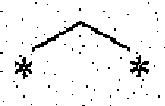


1H NMR (600 MHz, DMSO-d6) 2.82 (t, J=6.9 Hz, 2 H), 3.4 - 3.50 (m, 2 H), 4.07 (s, 2 H), 4.74 (br.s., 2 H), 7.27 - 8.45 (m, 13 H), 12.60 (br. s., 1 H) 220 
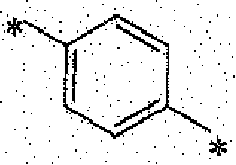


1H NMR (600 MHz, DM$O-d6) 2.73 (d, J=4.6 Hz, 3 H), 4.00 (s, 2 H), 4.67 (s, 2H), 7.32-8.38 (m, 10H) 221 


1H NMR (600 MHz, DMSO-d6) 2.82 (t, J=7.1 Hz, 2 H), 3.42- 3.48 (m, 2 H), 4.00 (s, 2 H), 4.67 (s, 2 H), 7.03 - 8.44 (m, 13) 222 


1H NMR (600 MHz, DMSO-d6) 3.03 (t, J=6.9 Hz, 2 H), 3.49 - 3.56 (m, 2 H), 4.01 (s, 2 H), 4.67 (s, 2 H), 7.33 - 8.43 (m, 13 H) 223 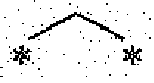
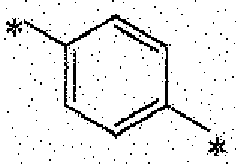


1H NMR (600 MHz, DMSO-d6) 2.90 (t, J=7.1 Hz, 2 H), 3.45 - 3.50 (m, 2 H), 4.00 (s, 2 H), 4.67 (s, 2 H), 7.33 - 8.46 (m, 14 H), 12.57 (br. s., 1 H) 224 


1H NMR (600 MHz, DMSO-d6) 2.93 (t, J=7.1 Hz, 2 H), 3.45 - 3.50 (m, 2 H), 3.97 (br. s., 2 H), 4.67 (s, 2 H), 7.28 - 8.47 (m, 13 H) -
[Table 7-7] Example X Z Y R1 1H NMR (d ppm) 225 


1H NMR (600 MHz, DMSO-d6) 1.22 (d, J=6.0 Hz, 6 H), 2.72 (t, J=7.3 Hz, 2 H), 3.36-3.41 (m, 2 H), 4.01 (s, 2 H), 4.49 - 4.56 (m, 1 H), 4.67 (s, 2 H), 6.77 -8.43 (m, 14 H), 12.57 (br. s., 1 H) 226 


1H NMR (600 MHz, DMSO-d6) 2.99 (t, J=7.1 Hz, 2 H), 3.45 - 3.52 (m, 2 H), 4.00 (s, 2 H), 4.67 (s, 2H), 7.23 - 8.49 (m, 13 H), 12.59 (br. s., 1 H) 227 


1H NMR (600 MHz, DMSO-d6) 2.90 (t, J=7.3 Hz, 2 H), 3.52 - 3.58 (m, 2 H), 3.80 (br.s., 2H), 4.65 (s, 2 H), 6.78 - 8.52 (m, 15H) 228 
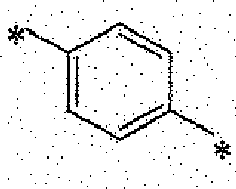

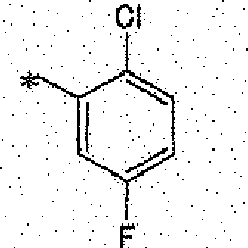
1H NMR (600 MHz, DMSO-d6) 2.93 (t, J=6.9 Hz, 2H), 3.45 - 3.52 (m, 2 H), 4.01 (s, 2 H), 4.67 (s, 2 H), 7.06- 8.49 (m, 13 H), 12.54 (br. s., 1 H) 229 


1H NMR (600 NMz, DMSO-d6) 2.80 (t, J=7.1 Hz, 2 H), 3.41 - 3.47 (m, 2 H), 4.01 (s, 2 H), 4.67 (s, 2 H), 7.01 - 8.43 (m, 13 H), 12.55 (br. s., 1 H) 230 


1B NMR (600 MHz, DMSO-d6) 3.06 (t, J=7.1 Hz, 2H), 3.53 - 3.58 (m, 2 H), 4.01 (s, 2 H), 4. 68 (s, 2 H), 7.33 -' 8.57 (m, 15H),12.55 (br. s., 1 H) 231 


1H NMR (600 MHz, DMSO-d6) 2.21 (s, 6 H), 2.68 - 2.73 (m, 2 H), 3.36 - 3.42 (m, 2 H), 4.00 (s, 2 H), 4.67 (s, 2 H), 6.78 - 8.46 (m, 13 H), 13.59 (br. s., 1 H) 232 


1H NMR (600 MHz, DMSO-d6) 2.74 (t, J=7.1 Hz, 2 H) 3.37 - 3.45 (m, 2 H), 3.78 (s, 3 H), 4.00 (s, 2 H), 4.67 (s, 2 H), 6.93 8.43 (m, 13 H), 12.60 (br. s., 1H) 233 


1H NMR (600 MHz, DMSO-d6) 2.91 (t, J=7.1 Hz, 2 H), 3.42 - 3.42 (m, 2 H), 4.01 (s, 2H), 4.67 (s, 2H), 7.10 - 8.47 (m, 13H), 12.59 (br. s., 1H) 234 


1H NMR (600 MHz, DMSO-d6) 2.94 (t, J=7.3 Hz, 2 H), 3.53 - 3.59 (m, 2 H), 3.98 (s, 2 H), 4.67 (s, 2 H), 6.17 - 8.52 (m, 14H), 11.19 (s, 1 H), 12,63 (br.s., 1 H) -
[Table 7-8] Example X Z Y R1 1H NMR (d ppm) 235 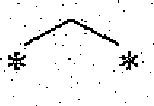


1H NMR (600 MHz, DMSO-d6) 2.94 (t, J=7,3 Hz, 2H), 3.52 - 3.59 (m, 2 H), 3.98 (br. s., 2H), 4.67 (s, 2 H), 6.16 - 8.53 (m, 14 H), 11.08 (s, 1 H), 12.56 (br. s., 1 H) 236 


1H NMR (600 MHz, DMSO-d6) 2.92 (t, J=7.3 Hz, 2 H), 3.51 - 3.58 (m, 2 H), 3.71 (s, 3 H), 4.01 (s, 2 H), 4.67 (s, 2 H), 6.08 - 8.52 (m, 14 H), 10.79 (s, 1 H, 12.53 (br. s., 1 H) 237 


1H NMR (600 MHz, DMSO-d6) 1.15 -1.41 (m, 5 H), 1.63 -1.81 (m, 5 H), 2.39 - 2.47 (m, 1 H), 2.75 (t, J=7.6 Hz, 2 H), 3.37 - 3.43 (m, 2H), 4.00 (s, 2 H), 4.67 (s, 2 H), 7.08 - 8.49 (m, 14 H), 12.56 (br. s., 1 H) 238 


1H NMR (600 MHz, DMS9O-d6) 0.81 -0.87 (m, 3 H), 1.22 - 1.30 (m, 6 H), 1.48 - 1.56 (m, 2 H), 1.48 - 2.54 (m, 2 H), 2.75 (t, J=7,6 Hz, 2H), 3.37 - 3.44 (m, 2 H), 4.00 (s, 2 H), 4.67(s, 2 H), 7,05 - 8.44 (m, 14 H), 12.52 (br. s, 1 H) 239 


1H NMR (600 MHz, DMSO-d6) 0.00 - 0.06 (m, 2 H), 0.34 - 0.42 (m, 2 H), 0.64 - 0.74 (m, 1 H), 1.33 - 1.44 (m, 2 H), 3.23 - 3,32 (m, 2H), 4.00 (s, 2 H), 4.67 (s, 2 H), 7.32 - 8,40 (m, 10 H), 12.57 (br. s., 1 H) 240 


1H NMR (600 MHz, DMSO-d6) 1.24 -1.70 (m, 14 H), 1.87 - 1.95 (m, 3 H), 3.18 - 3.26 (m, 2 H), 4.00 (s, 2 H), 4.67 (s, 2 H), 7.32 - 8.37 (m, 10 H), 12.57 (br. s., 1 H) 241 


1H NMR (600 MHz, DMSO-d6) 0.95 (t, J=7.3 Hz, 3 H), 1.65 - 1.73 (m, 2 H), 2.72 (t, J=7.3 Hz, 2 H), 3.35 - 3.42 (m, 2 H), 3.86 (t, J=6.6 Hz, 2 H), 4.01 (s, 2 H), 4.67 (s, 2 H), 6.78 - 8.43 (m, 14 H), 12.57 (br. s., 1 H) 242 

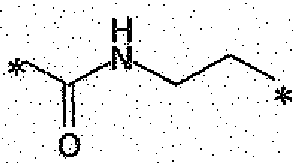

1H NMR (600 MHz, DMSO-d6) 2.38 (s, 3 H), 3.10 (t, J=7.1 Hz, 2 H), 3.50 - 3.57 (m 2 H), 4.00 (s, 2 H), 4.68 (s, 2 H), 7.06 - 8.59 (m, 14 H), 12.54 (br. s., 1 H) 243 


1H NMR (600 MHz, DMSO-d6) 2.78 (t, J=7.1 Hz, 2 H), 3.39 - 3.46 (m, 2 H), 4,00 (s, 2 H), 4.67 (s, 2H), 6.79 - 8.42 (m, 19 H) [Table 7-9] Example X Z Y Rf 1H NMR (d ppm) 244 


1H NMR (600 MHz, DMSO-d6) 2.88 (t, J=6.9 Hz, 2 H), 3.42 - 3.49 (m, 2 H), 4.00 2 H), 4.67 (s, 2 H), 7.10 - 8.48 (m, 13 H) 245 

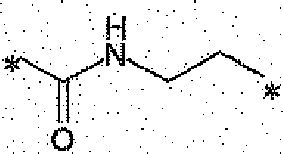

1H NMR (600 MHz, DMSO-d6) 2.27 (s, 3 H), 2, 76 (t, J=7.3 Hz, 2 H), 3.38 - 3.45 (m, 2 H), 4.00 (s, 2 H), 4.67 (s, 2 H), 7.02 - 8.44 (m, 13 H) 246 
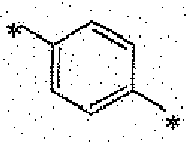


1H NMR (600 MHz, DMSO-d6) 0.70 -0.75 (m, 2 H), 0.92 - 0.96 (m, 2 H), 3.47 (d, J=60 Hz, 2 H), 4.00 (s, 2 H), 4.66 (s, 2 H), 7.26 - 8.36 (m, 14 H), 12.57 (br. s., 1 H) 247 


1H NMR (600 MHz, DMSO-d6) 3.36 - 3.42 (m, 4 H), 4.00 (s, 2 H), 4.67 (s, 2 H), 7.35 - 8.65 (m, 15 H), 12.55 (br. 248 


1H NMR (600 MHz, DMSO-d6) 3.04 (t, J=7.3 Hz, 2H), 3.64 - 3.69(m, 2 H), 3.98 (s, 2 H), 4.67 (s, 2 H), 7.07 - 8.59 (m, 14 H), 12.24 (br. s., 1 H) 249 

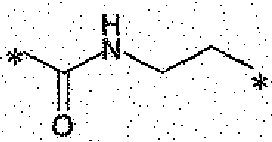

1H NMR (600 MHz, DMSO-d6) 3.01 (t, J=6.9 Hz, 2 H), 3.56 - 3.62 (m, 2 H), 3.99 (s, 2 H), 4.67 (s, 2 H), 6.61 - 8.57 (m, 15 H), 12.57 (br. s, 1 H) 250 


1H NMR (600 MHz, DMSO-J6) 3.31 -3.36 (m, 2 H), 3.65 - 3.72 (m, 2 H), 4.00 (s, 2 H), 4.67 (s, 2 H), 7.34 8.64 (m, 14 H), 12.57 (br, s., 1 H) 251 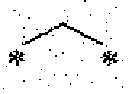


1H NMR (686 MHz, DMSO-d6) 1.25 (s, 6 H), 3,39 (d, J=6.4 Hz, 2 H), 3,99 (s, 2 H), 4.66 (s, 2 H), 7.29 - 8.35 (m, 14 H) -
- (1) The same procedure as used in Example 153-(1) was carried out using 2-methoxybenzyl chloride (3.81 g) to give tributyl(2-methoxybenzyl)phosphonium chloride (8.13 g) as a colorless solid.
1H NMR (600 MHz, CHLOROFORM-d) d ppm 0.89 - 0.97 (m, 9 H), 1.38 -1.51 (m, 12 H), 2.37 - 2.47 (m, 6 H), 3.85 (s, 3 H), 4.10 - 4.16 (m, 2 H), 6.87 - 7.75 (m, 4 H) - (2) The same procedure as used in Example 153-(2) was carried out using the compound (2.27 g) obtained in Example 252-(1) to give methyl 1-(2-methoxybenzyl)isoquinoline-4-carboxylate (436 mg) as a pale orange-colored solid,
1H NMR (600 MHz, CHLOROFORM-d) d ppm 3.89 (s, 3 H), 4.01 (s, 3 H), 4.71 (s, 2 H), 6.75 - 8.99 (m, 8 H), 9.13 (s, 1 H) - (3) The same procedure as used in Example 153-(3) was carried out using the compound (436 mg) obtained in Example 252-(2) to give 1-(2-methoxybenzyl)isoquinoline-4-carboxylic acid (335 mg) as a pale yellow solid.
1H NMR (600 MHz, DMSO-d6) d ppm 3.82 (s, 3 H), 4.63 (s, 2 H), 6.76 - 8.93 (m, 8 H), 8.96 (s, 1 H), 13.38 (br. s., 1 H) - (4) The same procedure as used in Example 153-(4) was carried out using the compound (335 mg) obtained in Example 252-(3) to give methyl [1-(2-methoxybenzyl)isoquinolin-4-yl]acetate (108 mg) as a brown oily substance.
1H NMR (600 MHz, CHLOROFORM-d) d ppm 3.69 (s, 3 H), 3.91 (s, 3 H), 4.01 (s, 2 H), 4.65 (s, 2 H), 6.75 - 8.24 (m, 8 H), 8.40 (s, 1 H) - (5) The same procedure as used in Example 149-(2) was carried out using the compound (70 mg) obtained in Example 252-(4) to give methyl [1-(2-hydroxybenzyl)isoquinolin-4-yl]acetate (39 mg) as a yellow solid.
1H NMR (600 MHz, CHLOROFORM-d) d ppm 3.68 (s, 3 H), 3.98 (s, 2 H), 4.60 (s, 2 H), 6.79 - 8.52 (m, 9 H), 11.41 (br. s., 1 H) - (6) The same procedure as used in Example 134-(5) was carried out using the compound (39 mg) obtained in Example 252-(5) and 4-chlorobenzyl bromide (42 mg) to give methyl {1-[2-(4-chlorobenzyloxy)benzyl]isoquinolin-4-yl} acetate (57 mg) as a yellow oily substance.
1H NMR (600 MHz, CHLOROFORM-d) d ppm 3.69 (s, 3 H), 4.00 (s, 2 H), 4.68 (s, 2 H), 5.08 (s, 2 H), 6.81 - 8.20 (m, 12 H), 8.38 (s, 1 H) - (7) The same procedure as used in Example 149-(4) was carried out using the compound (57 mg) obtained in Example 252-(6) to give the titled compound (25 mg) as a pale yellow solid.
-
- (1) To methyl 6-fluoro-1oxo-1,2-dihydroisoquinoline-4-carboxylate (756 mg), phosphoryl chloride (5 ml) was added, and the mixture was stirred at 100°C for one hour. The resulting solution was returned to room temperature, and evaporated under reduced pressure to remove the solvent. To the resulting crude product, saturated sodium bicarbonate water was added, followed by extraction with ethyl acetate. The organic layer was washed with a saturated saline solution, dried over anhydrous magnesium sulfate, and evaporated under reduced pressure to remove the solvent to give methyl 1-chloro-6-fluoroisoquinoline-4-carboxylate (792 mg) as a brown solid.
1H NMR (600 MHz, CHLOROFORM-d) d ppm 4.03 (s, 3 H), 7.48 - 8.77 (m, 3 H), 8.97 (s, 1 H) - (2) To a solution of 4-(bromomethyl)benzoic acid (5.00 g) in chloroform (40 ml), oxalyl chloride (4 ml) and N,N-dimethylformamide (2 drops) were added in an ice bath, and the mixed solution was stirred at room temperature for three hours. The reaction solution was removed by evaporation under reduced pressure, and to the resulting crude product, toluene (70 ml) and n-hexane (70 ml) were added. The resulting solution was stirred at room temperature while 2-(4-chlorophenyl)ethylamine (3.02 g) and pyridine (1.6 ml) were added dropwise. The resulting solution was stirred at room temperature for 65 hours, and then 1 N aqueous hydrochloric acid solution was added thereto, followed by extraction with ethyl acetate. The organic layer was washed with a saturated saline solution, dried over anhydrous magnesium sulfate, and evaporated under reduced pressure to remove the solvent. The resulting crude product was purified by column chromatography (neutral OH type silica gel, ethyl acetate / n-hexane = 10 to 80%) to give 4-(bromomethyl)-N-[2-(4-chlorophenyl)ethyl]benzamide (4.36 g) as a colorless solid.
1H NMR (600 MHz, DMSO-d6) d ppm 2.84. (t, J=7.1 Hz, 2 H), 3.44 - 3.51 (m, 2 H), 4.73 (s, 1 H), 4.80 (s, 1 H), 7.22 - 7.83 (m, 8 H), 8.51 - 8.59 (m, 1 H) - (3) The same procedure as used in Example 153-(1) was carried out using the compound (4.35 g) obtained in Example 253-(2) to give tributyl(4-{[2-(4-chlorophenyl)ethyl]carbamoyl}benzyl)phosphonium bromide (6.01 g) as a colorless solid.
1H NMR (600 MHz, CHLOROFORM-d) d ppm 0.86 - 0.96 (m, 9 H), 1.40 - 1.50 (m, 12 H), 2.28 - 2.38 (m, 6 H), 3.00 (t, J=7.6 Hz, 2 H), 3.67 - 3.74 (m, 2 H), 4.36 - 4.42 (m, 2 H), 7.21 - 7.90 (m, 9 H) - (4) To a solution of the compound (787 mg) obtained in Example 253-(1) and compound (2.19 g) obtained in Example 253-(3) in tetrahydrofuran (15 ml), sodium bis(trimethylsilyl)amide (5.5 ml, 1.9 M solution) was added dropwise at -30°C, and the solution was stirred at room temperature for one hour. Furthermore, the solution was stirred at 50°C for two hours, and then, a solution of sodium carbonate (695 mg) in water (7 ml) was added. The solution was stirred at 60°C for five hours. The solution was stirred at room temperature for 16 hours, and then 1 N aqueous hydrochloric acid solution was added, followed by extraction with ethyl acetate. The organic layer was washed with a saturated saline solution, dried over anhydrous magnesium sulfate, and evaporated under reduced pressure to remove the solvent. The resulting crude product was purified by column chromatography (neutral OH type silica gel, methanol / chloroform = 10%) to give 1-(4-{[2-(4-chlorophenyl)ethyl]carbamoyl}benzyl)-6-fluoroisoquinoline-4-carboxylic acid (180 mg) as a colorless solid.
1H NMR (600 MHz, DMSO-d6) d ppm 2.80 (t, J=7.3 Hz, 2 H), 3.40 - 3.47 (m, 2 H), 4.77 (s, 2 H), 7.21 - 8.71 (m, 12 H), 9.07 (s, 1 H), 13.55 (br. s., 1 H) - (5) The same procedure as used in Example 152-(5) was carried out using the compound (173 mg) obtained in Example 253-(4) to give the titled compound (5 mg) as a colorless solid.
-
- (1) To a solution of the compound (500 mg) obtained in Example 153-(4) in tetrahydrofuran (5 ml), tert-butoxy potassium (150 mg) was added at -30°C, and the mixed solution was stirred for 5 min, and then methyl iodide (0.159 ml) was added. The mixed solution was stirred for 1.5 hours. Furthermore, methyl iodide (0.159 ml) was added thereto at -30°C, and the solution was stirred for 1.5 hours, and a saturated aqueous ammonium chloride solution was added, followed by extraction with ethyl acetate. The organic layer was dried over anhydrous magnesium sulfate, and evaporated under reduced pressure to remove the solvent. The resulting crude product was purified by column chromatography (neutral OH type silica gel, ethyl acetate /n-hexane = 10 to 20%) to give tert-butyl 4-{[4-(1-methoxy-1-oxopropan-2-yl)isoquinolin-1-yl]methyl}benzoate (319 mg) as a yellow oily substance.
1H NMR (600 MHz, CHLOROFORM-d) d ppm 1.55 (s, 9 H), 1.70 (d, J=7.0 Hz, 3 H), 3.67 (s, 3 H), 4.36 (q, J=7.0 Hz, 1 H), 4.70 (s, 2 H), 7.30 - 8.14 (m, 8 H), 8.45 (s, 1 H) - (2) The same procedure as used in Example 153-(5) was carried out using the compound (319 mg) obtained in Example 254-(1) to give 4-{[4-(1-methoxy-1-oxopropan-2-yl)isoquinolin-1-yl]methyl}benzoic acid (254 mg) as a pale yellow solid.
1H NMR (600 MHz, DMSO-d6) d ppm 1.58 (d, J=6.9 Hz, 3 H), 3.59 (s, 3 H), 4.56 (q, J=6.9 Hz, 1 H), 4.73 (s, 2 H), 7.42 - 8.41 (m, 9 H) - (3) The same procedure as used in Example 161-(1) was carried out using the compound (254 mg) obtained in Example 254-(2) to give methyl 2-[1-(4-{[2-(4-chlorophenyl)ethyl]carbamoyl}benzyl)isoquinolin-4-yl]propanoate (234 mg) as a pale yellow amorphous substance.
1H NMR (600 MHz, CLOROFORM-d) d ppm 1.70 (d, J=7.2 Hz, 3 H), 2.87 (t, J=6.9 Hz, 2 H), 3.63 - 3.66 (m, 2 H), 3.67 (s, 3 H), 4.36 (q, J=7.2 Hz, 1 H), 4.68 (s, 2 H), 6.03 (br. s., 1 H), 7.12 - 8.14 (m, 12 H), 8.45 (s, 1 H) - (4) The same procedure as used in Example 149-(4) was carried out using the compound (110 mg) obtained in Example 254-(3) to give the titled compound (58 mg) as a colorless solid.
-
- (1) To a solution of the compound (181 mg) obtained in Example 135-(3) in N,N-dimethylformamide (3.6 ml), sodium hydride (38 mg) was added in an ice bath. The mixed solution was stirred for 10 min, and methyl iodide (0.058 ml) was added thereto, and the mixed solution was stirred for 1.5 hours. A saturated aqueous of ammonium chloride solution was added, followed by extraction with ethyl acetate. Then, the organic layer was dried over anhydrous magnesium sulfate, and evaporated under reduced pressure to remove the solvent. The resulting crude product was purified by column chromatography (neutral OH type silica gel, ethyl acetate / n-hexane = 10 to 30%) to give tert-butyl 4-{[4-(1-methoxy-2-methyl-1-oxopropan-2-yl)isoquinolin-1-yl]carbonyl}benzoate (139 mg) as a colorless amorphous substance.
1H NMR (600 MHz, CHLOROFORM-d) d ppm 1.61 (s, 9 H), 1.84 (s, 6 H), 3.63 (s, 3 H), 7.59 - 8.31 (m, 8 H), 8.65 (s, 1 H) - (2) The same procedure as used in Example 153-(5) was carried out using the compound (139 mg) obtained in Example 255-(1) to give 4-{[4-(1-methoxy-2-methyl-1-oxopropan-2-yl)isoquinolin-1-yl]carbonyl}benzoic acid (128 mg) as a colorless amorphous substance.
1H NMR (600 MHz, DMSO-d6) d ppm 1.75 (s, 6 H), 3.55 (s, 3 H), 7.68 - 8.17 (m, 8 H), 8.66 (s, 1 H) - (3) The same procedure as used in Example 161-(1) was carried out using the compound (128 mg) obtained in Example 255-(2) to give methyl 2-{1-[(4-{[2-(4-chlorophenyl)ethyl]carbamoyl}phenyl)carbonyl]isoquinolin-4-yl}-2-methylpropanoate (73 mg) as a colorless amorphous substance.
1H NMR (600 MHz, CHLOROFORM-d) d ppm 1.84 (s, 6 H), 2.91 - 2.95 (m, 2 H), 3.63 (s, 3 H), 3.69 - 3.75 (m, 2 H), 6.10 - 6.15 (m, 1 H), 7.15 - 8.33 (m, 12 H), 8.64 (s, 1 H) - (4) To a solution of the compound (70 mg) obtained in Example 255-(3) in 1,4-dioxane (1.4 ml), 1 N aqueous lithium hydroxide solution (1.4 ml) was added, and the mixed solution was stirred at 100°C for one hour. The solution was adjusted to pH4 by adding 1 N aqueous hydrochloric acid solution, and then extracted with ethyl acetate. The organic layer was washed with a saturated saline solution, dried over anhydrous magnesium sulfate, and evaporated under reduced pressure to remove the solvent. The resulting crude product was purified by column chromatography (acidic OH type silica gel, ethyl acetate / n-hexane = 30 to 60%), diethyl ether was added thereto, and the resulting solution was stirred for 15 hours. The produced solid was filtered out to give the titled compound (21 mg) as a pale yellow solid.
- To a suspension of the compound (400 mg) obtained in Example 153-(7) in tetrahydrofuran (9 ml), 1,1'-carbonyl diimidazole (283 mg) was added. The mixed solution was stirred at room temperature for two hours. Then, 28% aqueous ammonia (0.45 ml) was added thereto, and the resulting solution was stirred at room temperature for one hour. The precipitate was filtered out and dried to give the titled compound (384 mg) as a colorless solid.
-
- (1) To the compound (362 mg) obtained in Example 256-(1), phosphoryl chloride (0.088 ml) was added, and the mixed solution was stirred at room temperature for one hour. To the reaction solution, ice water was added, followed by extraction with chloroform. Then, the organic layer was dried over anhydrous magnesium sulfate and evaporated under reduced pressure to remove the solvent. The resulting crude product was purified by column chromatography (neutral OH type silica gel, methanol / chloroform = 2 to 10%) to give N-[2-(4-chlorophenyl)ethyl]-4-{[4-(cyanomethyl)isoquinolin-1-yl]methyl}benzamide (256 mg) as a pale yellow solid.
1H NMR (600 MHz, DMSO-d6) d ppm 2.80 (t, J=7.3 Hz, 2 H), 3.40 - 3.47 (m, 2 H), 4.45 (s, 2 H), 4.70 (s, 2 H), 7.20 - 8.44 (m, 13 H), 8.49 (s, 1 H) - (2) To a suspension of the compound (20 mg) obtained in Example 257-(1) in toluene (0.45 ml), sodium azide (9 mg) and triethylamine hydrochloride (19 mg) were added, and the mixture was refluxed for 72 hours. Methanol / chloroform (10%) was added thereto. The organic layer was washed with water, dried over anhydrous magnesium sulfate, and evaporated under reduced pressure to remove the solvent. The resulting crude product was purified by column chromatography (neutral OH type silica gel, methanol / chloroform = 10 to 20%). To the resulting solid, methanol / chloroform (10%) was added, and the mixture was washed with 0.5 N aqueous hydrochloric acid solution, and then washed with water. The organic layer was dried over anhydrous magnesium sulfate and then evaporated under reduced pressure to remove the solvent to give the titled compound (3.1 mg) as a colorless solid.
-
- (1) To a solution of the compound (41 mg) obtained in Example 153-(7), O-(tetrahydro-2H-pyran-2-yl)hydroxylamine (12 mg) and 1-hydroxybenzotriazole hydrate (15 mg) in N,N-dimethylformamide (2 ml), 1-ethyl-3-(dimethylaminopropyl)-carbodiimide hydrochloride (19 mg) was added, and the mixture solution was stirred at room temperature for one hour. Ethyl acetate was added, and the reaction solution was washed with water and then washed with a saturated saline solution. The organic layer was dried over anhydrous magnesium sulfate, and then evaporated under reduced pressure to remove the solvent. The resulting crude product was purified by column chromatography (neutral OH type silica gel, methanol / chloroform = 0 to 20%) to give N-[2-(4-chlorophenyl)ethyl]-4-[(4-{2-oxo-2-[(tetrahydro-2H-pyran-2-yloxy)amino]ethyl}isoquinolin-1-yl)methyl]benzamide (49 mg) as a pale yellow solid.
1H NMR (600 MHz, CHLOROFORM-d) d ppm 1.20 - 1.85 (m, 6 H), 2.83 - 2.91 (m, 4 H), 3.59 - 3.98 (m, 5 H), 4.67 (s, 2 H), 4.84 - 4.95 (m, 1 H), 5.98 - 6.07 (m, I H), 7.10 - 8.29 (m, 12 H), 8.40 (s, 1 H) - (2) To a solution of the compound (49 mg) obtained in Example 258-(1) in methanol (2 ml), 4 N hydrochloric acid - ethyl acetate (0.223 ml) was added in an ice bath, and the mixed solution was stirred at room temperature for three hours. Chloroform was added thereto, and the reaction solution was washed with water and then washed with a saturated saline solution. The organic layer was dried over anhydrous magnesium sulfate, and then evaporated under reduced pressure to remove the solvent. The resulting crude product was purified by column chromatography (neutral OH type silica gel, methanol / chloroform = 2 to 20%) to give the titled compound (17 mg) as a pale yellow solid.
-
- (1) To a solution of 4-(2-methoxy-2-oxoethyl) benzoic acid (1.00 g) in acetonitrile (50 ml), N,N-diisopropyl ethyl amine (2.63 ml), O-(7-azabenzotriazol-1-yl)-1,1,3,3-tetramethyluronium hexafluorophosphate (2.94 g) and 2-(4-chlorophenyl)ethylamine (790 ml) were added, and the mixed solution was stirred at room temperature for 16 hours. The solvent was removed by evaporation under reduced pressure, and the resulting crude product was purified by column chromatography (neutral OH type silica gel, ethyl acetate / n-hexane = 30 to 50%) to give methyl (4-{[2-(4-chlorophenyl)ethyl]carbamoyl}phenyl)acetate (2.02 g).
1H NMR (600 MHz, CHLOROFORM-d) d ppm 2.88 - 2.93 (m, 2 H), 3.65 - 3.72 (m, 7 H), 6.08 - 6.19 (m, 1 H), 7.14 - 7.35 (m, 7 H), 7.63 - 7.67 (m, 1 H) - (2) The same procedure as used in Example 153-(3) was carried out using the compound (2.02 g) obtained in Example 259-(1) to give (4-{[2-(4-chlorophenyl)ethyl]carbamoyl}phenyl)acetic acid (1.78 g).
1H NMR (600 MHz, CHLOROFORM-d) d ppm 2.88 - 2.93 (m, 2 H), 3.67 - 3.72 (m, 4 H), 6.09 (br. s., 1 H), 7.15 - 7.67 (m, 8 H) - (3) To a solution of the compound (250 mg) obtained in Example 259-(2) in N,N-dimethylformamide (8 ml), N,N-diisopropyl ethyl amine (0.401 ml), O-(7-azabenzotriazol-1-yl)-1,1,3,3-tetramethyluronium hexafluorophosphate (449 mg) and ethyl 4-amino-3-(3,4-dimethoxyphenyl)butanoate (231 mg) was added, and the mixed solution was stirred at room temperature for 15 hours. Ethyl acetate was added thereto, and the reaction solution was washed with water and then washed with a saturated saline solution. The solvent was removed by evaporation under reduced pressure, and the resulting crude product was purified by column chromatography (neutral OH type silica gel, ethyl acetate / n-hexane = 30 to 75%) to give ethyl 4-{[(4-{[2-(4-chlorophenyl)ethyl]carbamoyl}phenyl)acetyl]amino}-3-(3,4-dimethoxyphenyl)butanoate (130 mg),
1H NMR (600 MHz, CHLOROFORM-d) d ppm 1.11 - 1.20 (m, 3 H), 2.49 - 4.10 (m, 19 H), 5.18 - 5.24 (m, 1 H), 6.30 - 6.36 (m, 1 H), 6.51 - 7.57 (m, 11 H) - (4) To a solution of the compound (130 mg) obtained in Example 259-(3) in chloroform (2.3 ml), 2-chloropyridine (0.026 ml) was added and cooled to -60°C, and then trifluoromethanesulfonic anhydride (0.042 ml) was added. The mixed solution was stirred for 5 min. The resulting solution was stirred for 5 min in an ice bath, and further stirred at room temperature for one hour. Saturated sodium bicarbonate water was added, followed by extraction with chloroform. The organic layer was dried over anhydrous sodium sulfate, and then evaporated under reduced pressure to remove the solvent. To the resulting crude product, sulfur (9 mg) was added, and the mixed solution was stirred at 165°C for 15 min. Ethanol was added and insolubles were removed by filtration, and the solvent in the filtrate was removed by evaporation under reduced pressure. The resulting crude product was purified by column chromatography (neutral OH type silica gel, ethyl acetate / n-hexane = 33 to 75%) to give ethyl {1-[(4-{[2-(4-chlorophenyl)ethyl]carbamoyl}phenyl)carbonyl]-6,7-dimethoxyisoquinolin-4-yl} acetate (30 mg).
1H NMR (600 MHz, CHLOROFORM-d) d ppm 1.23 - 1.28 (m, 3 H), 2.91 - 2.95 (m, 2 H), 3.69 - 3.74 (m, 2 H), 3.99 (s, 3 H), 4.03 (s, 2 H), 4.07 (s, 3 H), 4.16 - 4.21 (m, 2 H), 6.13 - 6.17 (m, 1 H), 7.15 - 8.02 (m, 10 H), 8.38 (s, 1 H) - (5) The same procedure as used in Example 149-(4) was carried out using the compound (27 mg) obtained in Example 259-(4) to give the titled compound (7 mg) as a pale yellow solid.
-
- (1) To a solution of ethyl 3-cyano-3-(3-methoxyphenyl)propanoate (11.9 g) in ethanol (41 ml), 12 N hydrochloric acid (3.8 ml) and 20% palladium hydroxide on carbon (2.10 g) was added, and the mixed solution was stirred in hydrogen atmosphere at room temperature for 15 hours. The solvent was removed by evaporation under reduced pressure, and resulting crude product was purified by column chromatography (neutral OH type silica gel, methanol /chloroform = 2 to 9%) to give ethyl 4-amino-3-(3-methoxyphenyl)butanoate (3.80 g).
1H NMR (600 MHz, CHLOROFORM-d) d ppm 1.11 - 1.16 (m, 3 H), 2.65 - 2.72 (m, 1 H), 2.79 - 2.86 (m, 1 H), 3,06 - 3.12 (m, 1 H), 3.24 - 3.30 (m, 1 H), 3.46 - 3.53 (m, 1 H), 3.76 - 3.79 (m, 3 H), 4.00 - 4.07 (m, 2 H), 6.76 - 7.26 (m, 4 H) - (2) The same procedure as used in Example 153-(6) was carried out using the compound (280 mg) obtained in Example 260-(1) and the compound (250 mg) obtained in Example 259-(2) to give ethyl 4-{[(4-([2-(4-chlorophenyl)ethyl]carbamoyl}phenyl)acetyl]amino}-3-(3-methoxyphenyl)butanoate (210 mg),
1H NMR (600 MHz, CHLOROFORM-d) d pom 1.12 - 1,18 (m, 3 H), 2.52 - 2.61 (m, 2 H), 2.90 - 2.95 (m, 2 H), 3.18 3.32 (m, 2 H), 3.48 (s, 2 H), 3.58 3.64 (m, 1 H), 3.68 - 3.73 (m, 2 H), 3.74 (s, 3H), 4.01 - 4.07 (m, 2 H), 5.25 - 5.30 (m, 1H), 6,14 - 6.19 (m, 1 H), 6.57 - 7.60 (m, 12 H) - (3) The same procedure as used in Example 259-(4) was carried out using the compound (201 mg) obtained in Example 260-(2) to give ethyl {1-[(4-{[2-(4-chlorophenyl)ethyl]carbamoyl)phenyl)carbonyl]-6-methoxyisoquinolin-4-yl} acetate (40 mg).
1HNMR (600 MHz, CHLOROFORM-d) d ppm 1.26 (t, J=7.3 Hz, 3 H), 2.90 - 2.95 (m, 2 H), 3.69 - 3.73 (m, 2 H), 3.99 (s, 3 H), 4.04 (s, 2 H), 4.20 (q, J=7.3 Hz, 2 H), 6.12 - 6.16 (m, 1 H), 7.15 - 8.24 (m, 11 H), 8.44 (s, 1 H) - (4) The same procedure as used in Example 149-(4) was carried out using the compound (37 mg) obtained in Example 260-(3) to give the titled compound (20 mg) as a pale yellow solid.
-
- (1) A suspension of N-[2-(4-chlorophenyl)ethyl]-4-hydroxy benzamide (605 mg) and 1-chloro-isoquinoline-4-carboxylic acid methyl ester (443 mag) and potassium carbonate (332 mg) in DMF (4 ml) was stirred at 60°C for two hours. Ethyl acetate was added thereto, and the reaction solution was washed with water, and then washed with a saturated saline solution. The organic layer was dried over anhydrous magnesium sulfate, and then evaporated under reduced pressure to remove the solvent. The resulting crude product was purified by column chromatography (NH type silica gel, chloroform / n-hexane = 50 to 80%) to give methyl 1-(4-{[2-(4-chlorophenyl)ethyl]carbamoyl)phenoxy)isoquinoline-4-carboxylate (782 mg) as a colorless solid.
1H NMR (600 MHz, CHLOROFORM-d) d ppm 2.93 (t, Z=7. Hz, 2 H), 3.70 - 3.76 (m, 2 H), 3.98 (s, 3 H), 6.10 (t, J=5.5 Hz, 1 H), 7.15 - 8.52 (m, 11 H), 8.72 (s, 1 H), 9.01 (d, J=8.3 Hz, is - (2) The same procedure as used in Example 152-(4) was carried out using the compound (782 mg) obtained in Example 261-(1) to give 1-(4-{[2-(4-chlorophenyl)ethyl]carbamoyl}phenoxy)isoquinoline-4-carboxylic acid (781 mg) as a colorless solid.
1H NMR (600 MHz, DMSO-d6) d ppm 2.87 (t, J=7.1 Hz, H), 3.48 - 3.54 (m, 2 H), 7.26 - 9.01 (m, 14 H) - (3) The same procedure as used in Example 152-(5) was carried out using the compound (350 mg) obtained in Example 261-(2) to give the titled compound (5 mg) as a colorless solid.
- Structural formulae and NMR values of Examples 252 to 261 are shown in Tables 8-1 to 8-2.
-
[Table 8-1] Example Structural formula 1H NMR. ppm) 252 
1HNMR (600 MHz, DMSO-d6) 3.94 (br. s., 2 H), 4.58 (s, 2H), 5.14 (s,2H), 6.78 - 8.30 (m, 1.3 H). 253 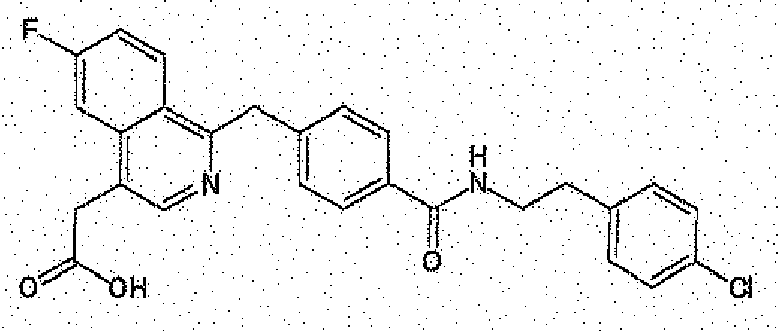
1H NMR(600 MHz, DMSO-d6) 2.80 (t, J=7.3 Hz,2H), 3.41 - 3.46 (m, 2 H), 4.05 (s, 2 H), 4.72(s, 2H),7.19-R54(m, 13H 254 
1HNMR (600 MHz, DMSO-d6) 1.55 (d,J=7.3 Hz, 3H),2.77-2.83 (m, 2H), 3.40- 3.46 (m,2 H), 4.39 (q,J=7.3Hz, 1H),4.67 (s,2H) 7.21 - 8.44 (m, 14H) 255 
1H NMR (600 MHz,: DMSO-d6) 1.76 (s, 6 H), 2.83- 2.89 (m, 2H), 3.47-3.53 (m, 2H),7.24 8.77 (m, 14H) 12.80(br. s 1H 256 
1HNMR(600 MHz, DMSO-d6)2.77-2.82(m, 2H),3.40 - 3.45 (m, 2H), 3,81(s, 2H), 4.66 (s, 2H),7.00- 8.43 (m,16H) 257 
1HNMR (600 MHz, DMSO-d6) 2.77-2.82 (m, 2H), 3.40-3,46 (m,2H. 4.69(s, 2H),4,68 (s, 2H) 7.21-8.45 (m,14H) 258 
1HNMR (600 MHz, DMSO-d6) 2.76- 2.82 (m, 2H), 3.39-3.46 (m,2H),3.74 (s, 2H), 3,74(s 2H),4.66(s, 2 H), 7.21-8.45(m,14H),8.87(br,s., 1H) -
[Table 8-2] Example Structural formula HNMR(dppm) 259 
1HNMR (600MHz,DMSO-d6) 2.82.- 2.90 (m, 2 H),3.46 -3.54 (m, 2 H), 3.84 (s, 3H), 3.87 (br. s., 2H) 3.96 (s, 3 H), 7.23 - 8.82 (m, 12 H) 260 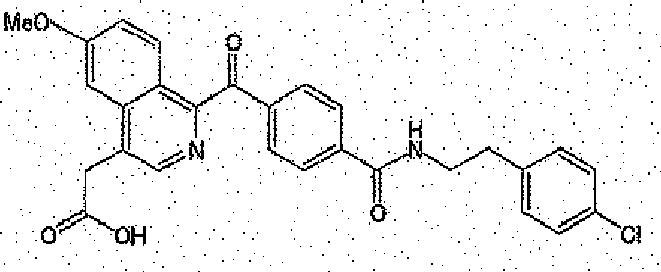
1HNMR(600MHz, DMSO-d6) 2.81 2,89. (m, 2 H), 3.46 - 3.54 (m, 2H),3.95(s., 3H),4.05 (br.s.,2H),7.23-8.79(m,13H) 261 
1HNMR (600 MHz, DMSO-d6) 2.87.(t, J=7.1 Hz, 2H), 3.46 - 3.55 (m, 2H), 3.92 (s, 2H), 7.26.-8.91 (m,14H) - CRTH2 binding inhibitory activity of the compound of the present invention was considered by using a binding test between human CRTH2 expression cell KB8 (BML, INC.) and 3H-labeled prostaglandin D2 (hereinafter, abbreviated as 3H-PGD2, manufactured by GE Healthcare).
- KB8 was suspended in a reaction buffer solution (Hank's balanced salt solution (Invitrogen) containing 10 mM HEPES (Invitrogen)), which was dispensed in a 96 well plate (Coaster) so that 2×10⁵ cells/well are placed. Furthermore, the compound of the present invention and 3H-PGD2 (final concentration: 5 nM) were added, stirred, and incubated at 4°C.
- One hour later, cells were collected on GF/C Filter Plate (PerkinElmer) that had been pre-coated with 0.5% polyethyleneimine solution (STIGMA) by using a Cell Harvester (Packard Bioscience), and the radioactivity of the cells was measured by using Top count NXT (PerkinElmer) (a value measured herein was represented by a measurement value "a"). The same procedure was carried out in the absence of the compound, and a measurement value "b" was obtained; and the same procedure was carried out in the absence of the compound and in the presence of non-labeled PGD2 (final concentration: 50 µM), a measurement value flue" was obtained.
The binding inhibition rate of the compound was calculated by the following calculation formula:
- Furthermore, the CRTH2 binding inhibitory activity of a compound to be tested was calculated as a value (IC50 value) exhibiting 50% inhibitory activity with respect to the binding amount in the absence of the compound. That is to say, by using binding inhibition rates of compounds to be tested having various concentrations, the IC50 value was calculated according to a dose-dependent inhibition curve analyzed by using XLfit (IDBS) as a data analysis software, and the calculated value was defined as an indicator of the inhibitory activity. The test results are shown in Table 9. In Table 9, A denotes an inhibitory activity showing the IC50 value of less than 50 nM; B denotes an inhibitory activity showing the IC50 value of 50 nM or greater and less than 500 nM; C denotes an inhibitory activity showing the IC50 value of 500 nM or greater and less than 1000 nM; and D denotes an inhibitory activity showing theIC50 value of 1000 nM or greater. Specific values include, for example, Example 18 (IC50 value; 3.5 nM), Example 57 (IC50 value; 3.4 nM), Example 75 (IC50 value; 2.9 nM), Example 82 (IC50 value; 2.8 nM) and Example 143 (IC50 value; 9.9 nM).
-
[Table 9] Examples binding inhibitory activity Example binding inhibitory activity 1 A 50 A 2 A 57 A 3 A 75 A 4 A 82 A 5 A 83 A 6 A 92 A 7 A 127 B 8 A 128 B 9 A 129 B 10 A 130 A 11 A 131 A 12 A 132 A 13 A 133 A 14 A 134 A 15 A 135 A 16 A 136 A 17 A 137 A 18 A 138 A 19 B 139 A 20 A 141 A 21 A 142 A 22 A 143 A 23 A 144 B 27 A 148 A 29 A 153 A 34 A - The antagonist activity of the compound of the present invention was considered by using the intracellular calcium ion concentration increase reaction induced when the prostaglandin D2 was added to KB8 cells.
- Fluo-4-AM (4-(6-acetoxymethoxy-2,7-difluoro-3-oxo-9-xanthenyl)-4'-methyl-2,2'-(ethylenedioxy)dianilide-N,N,N',N'-tetraacetic acid tetrakis(acetoxymethyl) ester (SIGMA, final concentration: 1 µM) was added to KB8 cells, and the cells were incubated at 37°C for 30 min, washed with phosphate buffer (Invitrogen), and then suspended in Hank's balanced salt solution (Invitrogen)) containing a reaction buffer solution (10 mM HEPES (Invitrogen), and 1 mM calcium chloride (SIGMA). The suspension was dispensed in a 96 well plate (Nunc) so that 2x10⁵ cells/well were placed, and the compound of the present invention and PGD2 (final concentration: 100 nM) were added. The fluorescence intensity thereof was measured over time by using FDSS6000 (Hamamatsu Photonics), and thus the maximum fluorescence intensity value "d" was obtained. The same procedure was carried out in the absence of the compound, and the maximum fluorescence intensity value "e" was obtained; and the same procedure was carried out in the absence of the compound and in the presence of non-labeled PGD2, and the maximum fluorescence intensity value "f' was obtained.
The calcium ion concentration increase inhibition rate of a compound was calculated by the following calculation formula:
- Furthermore, the CRTH22 antagonist activity of a compound to be tested was calculated as a value (IC50 value) exhibiting 50% inhibitory activity with respect to the calcium ion concentration increase in the absence of the compound. That is to say, by using calcium ion concentration increase inhibitory rates of compounds to be tested having various concentrations, the IC50 value was calculated according to a dose-dependent inhibition curve analyzed by using XLfit (IDBS) as a data analysis software, and the value was defined as an indicator of the antagonist activity. The test results are shown in Tables 10-1 and 10-2. In Tables, A denotes an inhibitory activity showing the IC50 value of less than 50 nM; B denotes an inhibitory activity showing the IC50 value of 50 nix or greater and less than 500 nM; C denotes an inhibitory activity showing the IC50 value of 500 nM or greater and less than 1000 nM; and D denotes an inhibitory activity showing the IC50 value of 1000 nM or greater. Specific values include, for example, Example 122 (IC50 value; 2.3 nor4), Example 153 (IC50 value; 12 nM), Example 201 (IC50 value; 20 razz, Example 234 (IC50 value; 5.9 nM), and Example 240 (IC50 value; 6.6 nM).
-
[Table 10-1] Example antagonist activity Example antagonist activtty Example antagonist activity 1 B 54 A 104 D 2 A 55 C 105 C 3 A 56 B 106 B 4 A 57 A 107 A 5 B 58 D 108 A 6 A 59 B 109 B 7 A 60 B 110 A 8 A 61 B 111 A 9 B 62 B 112 A 10 A 63 B 113 A 11 A 64 A 114 A 12 A 69 C 115 A 13 D 66 D 116 A 14 A 67 B 117 C 15 A 68 B 118 C 17 A 69 D 119 A 18 A 70 B 120 A 21 B 71 B 121 B 22 B 72 A 122. A 23 A 73 A 123 A 24 D 74 B 124 C 25 D 75 A 125 C 26 B 76 B 126 A 27 A 77 A 130 A 28 A 78 A 131 A 29 A 79 D 132 B 30 A 80 B 133 A 31 C 81 D 134 B 32 A 82 A 135 A 33 D 83 A 136 A 34 A 84 A 137 A 35 A 85 A 138 A 36 D 86 B 139 A 37 A 87 B 140 A 38 A 88 A 141 B 39 C 89 A 142 B 40 D 90 B 143 B 41 B 91 A 145 D 42 C 92 A 146 B 43 B 93 A 147 D 44 B 94 A 148 A 45 B 95 B 149 C 46 B 96 A 150 B 47 C 97 D 151 B 48 D 98 D 152 B 49 D 99 A 153 A 50 A 100 A 154 B 51 D 101 A 155 A 52 B 102 A 156 B 53 B 103 A 157 A -
[Table 10-2] Exampl: antagonist activity Example antagonist activity Example antagonist activity 158 A 193 A 228 A 159 A 194 A 229 A 160 A 195 A 230 A 161 B 196 C 231 A 162 A 197 B 232 A 163 A 198 B 233 A 164 A 199 A 234 A 165 A 200 B 235 A 166 A 201 A 236 A 167 A 202 B 237 A 168 B 203 A 238 A 169 B 204 A 239 B 170 B 205 A 240 A 171 B 206 B 241 A 172 B 207 D 242 A 173 D 208 A 243 A 174 B 209 D 244 A 175 D 210 A 245 A 176 D 211 B 246 B 177 D 212 B 247 B 178 B 213 B 248 B 179 A 214 D 249 A 180 A 215 B 250 A 181 B 216 B 251 B 182 B 217 A 252 D 183 A 218 A 253 A 184 B 219 B 254 C 185 D 220 D 255 D 186 C 221 A 256 D 187 A 222 A 257 D 188 B 223 B 258 D 189 D 224 B 259 B 190 B 225 A 260 B 191 B 226 A 261 D 192 A 227 D - A compound of the present invention has a CRTH2 inhibitory activity, and can be used as preventive agents or therapeutic agents for allergic diseases such as asthma, atopic dermatitis, and allergic rhinitis.
Claims (14)
- A compound represented by formula (I):

X represents an oxygen atom, a sulfur atom, the formula: -CH2-, the formula: -CO-, or the formula: -NR2-, wherein R2 represents a hydrogen atom or a C1-6 alkyl group;
Y represents a single bond, the formula: -NR3CO-W-, the formula: -NR3CO-W-O-, the formula: - NR3CO2-W-, the formula: -NR3-W-, the formula: -NR3SO2-W-, the formula: -NR3CONR4-W-, the formula: -NR3CO-W-NR4SO2-, the formula: -SO2NR3-W-, the formula: -CH2-W-, the formula: -CONR3-W-, the formula: -CONR3-W-O-, the formula: -CH2-O-W-, the formula: - CH2NR3-W-, the formula: -CONR3-W-NR4CO-, the formula: -O-W-, or the formula: -O-W-O-, wherein R3 and R4 each independently represent a hydrogen atom or a C1-6 alkyl group, W is a single bond, a C1-6 alkylene group, a C2-6 alkylene group including a carbon atom that is also a member of a C3-6 cycloalkyl ring, a C2-6 alkenylene group, or a C3-6 cycloalkylene group (provided that, when Y is the formula: -CONR3-W-NR4CO- or the formula: -O-W-O-, W is not a single bond);
Z represents a benzene ring, a pyrimidine ring, or a pyrazine ring;
Ra represents a carboxy group, a carbamoyl group, a tetrazolyl group, or the formula: - CONHOH;
Rb and Rc each independently represent a hydrogen atom, a halogen atom, or a C1-6 alkyl group; and
Rd, Re, Rf and Rg each independently represent a hydrogen atom, a halogen atom, a C1-6 alkyl group, or a C1-6 alkoxy group (provided that the compound is not {1-[3-(butan-2-yloxy)benzy]-6,7-dimethoxyisoquinolin-4-yl}acetic acid, (1-([3-(butan-2-yl)phenyl]carbonyl)-6,7-dimethoxyisoquinolin-4-yl)acetic acid, (1-{[3-(butan-2-yloxy)phenyl]carbonyl}-6,7-dimethoxyisoquinolin-4-yl)acetic acid, 2-(6,7-dimethoxy-1-{[3-(propan-2-yloxy)phenyl]carbonyl}isoquinolin-4-yl)acetamide, (6,7-dimethoxy-1-{[3-(propan-2-yloxy)phenyl]carbonyl}isoquinolin-4-yl)acetic acid, 2-{6,7-dimethoxy-1-[(3-methoxyphenyl)carbonyl]isoquinolin-4-yl}acetamide, or {6,7-dimethoxy-1-[(3-methoxyphenyl)carbonyl] isoquinolin-4-yl}acetic acid);
or a pharmaceutically acceptable salt thereof - The compound or a pharmaceutically acceptable salt thereof according to claim 1, wherein Rd, Re, Rf and Rg each independently represent a hydrogen atom, a halogen atom, a C1-6 alkyl group, or a C1-6 alkoxy group (except the compound or a pharmaceutically acceptable salt thereof in which both Rd and Rg are hydrogen atoms and both Re and Rf are C1-6 alkoxy groups).
- The compound or a pharmaceutically acceptable salt thereof according to claim 1 or 2, wherein
R1 is a C1-6 alkyl group, a C2-6 alkenyl group, a C3-6 cycloalkyl group, a C3-6 cycloalkenyl group, an adamantyl group, an indanyl group, a tetrahydronaphthyl group, a tetrahydroindolyl group, a tetrahydropyranyl group, a morpholinyl group, a phenyl group, a naphthyl group, or an aromatic heterocyclic group, wherein the phenyl group, the naphthyl group, and the aromatic heterocyclic group may be substituted with 1 to 5 substituent(s) selected from the group consisting of a C1-6 alkyl group, a C2-6 alkenyl group, a C3-6 cycloalkyl group, a halogen atom, a C1-6 alkoxy group, a hydroxy group, a C1-6 haloalkyl group, a C1-6 haloalkoxy group, a cyano group, a nitro group, a C1-6 alkylsulfonyl group, a carboxy group, a phenyl group, a benzoyl group, a phenoxy group, the formula: -NR5R6, and the formula: -SO2NR7R8;
X is an oxygen atom, the formula: -CH2-, or the formula: -CO-;
Z is a benzene ring;
Ra is a carboxy group, a carbamoyl group, a tetrazolyl group, or the formula: -CONHOH;
Rb and Rc each independently represent a hydrogen atom, or a C1-6 alkyl group; and
Rd, Re, Rf and Rg each independently represent a hydrogen atom, a halogen atom, or a C1-6 alkoxy group. - The compound or a pharmaceutically acceptable salt thereof according to claim 1, wherein
R1 is a C1-6 alkyl group, a C3-6 cycloalkyl group, a phenyl group, a naphthyl group, or an aromatic heterocyclic group, wherein the phenyl group, the naphthyl group, and the aromatic heterocyclic group may be substituted with 1 to 3 substituent(s) selected from the group consisting of a C1-6 alkyl group, a halogen atom, a C1-6 alkoxy group, a hydroxy group, a C1-6 alkylthio group, a C1-6 haloalkyl group, a C1-6 haloalkoxy group, a C1-6 haloalkylthio group, a cyano group, a nitro group, a guanidino group, a C1-6 alkylsulfonyl group, a carboxy group, a C2-7 alkoxycarbonyl group, a C2-7 alkanoyloxy group, a phenyl group, a phenoxy group, a pyrrolyl group, a thienyl group, an imidazolyl group, a thiadiazolyl group, a morpholino group, the formula: -NR5R6, the formula: -SO2NR7R8, the formula: -NR9SO2R10, the formula: -CONR11R12, and the formula: - NR13COR14;
Y is a single bond, the formula: -NR3CO-W-, the formula: -NR3CO-W-O-, the formula: - NR3CO2-W-, the formula: -NR3-W-, the formula: -NR3SO2-W-, the formula: -NR3CONR4-W-, the formula: -CONR3-W-, the formula: -O-W-, the formula: -CH2O-, or the formula: -CH2NR3-;
W is a single bond, a C1-6 alkylene group, a C2-6 alkenylene group, or a C3-6 cycloalkylene group;
Ra is a carboxy group;
Rb and Rc are each a hydrogen atom, and
Rd, Re, Rf and Rg are each a hydrogen atom. - The compound or a pharmaceutically acceptable salt thereof according to claim 1, wherein
R3 is a C1-6 alkyl group, a C3-6 cycloalkyl group, a phenyl group, a naphthyl group, or an aromatic heterocyclic group, wherein the phenyl group, the naphthyl group, and the aromatic heterocyclic group may be substituted with 1 to 3 substituent(s) selected from the group consisting of a C1-6 alkyl group, a halogen atom, a C1-6 alkoxy group, a C1-6 haloalkyl group, a C1-6 haloalkoxy group, a cyano group, a nitro group, a phenyl group, a phenoxy group, and the formula: -NR6R6;
X is the formula: -CH2-, or the formula: -CO-;
Y is the formula: -NR3CO-W-, the formula: -NR3CO-W-O-, the formula: -NR3CO2-W-, the formula: -NR3-W-, the formula: -NR3 SO2-W-, the formula: -NR3CONR4-W-, or the formula: -O-W-;
W is a single bond, a C1-6 alkylene group, a C2-6 alkenylene group, or a C3-6 cycloalkylene group;
Z is a benzene ring;
Ra is a carboxy group;
Rb and Rc are each a hydrogen atom, and
Rd, Re, Rf and Rg are each a hydrogen atom. - The compound or a pharmaceutically acceptable salt thereof according to claim 1, which is represented by formula (II):

R1' is a C3-6 cycloalkyl group, a C3-6 cycloalkenyl group, an adamantyl group, an indanyl group, a tetrahydronaphthyl group, a tetrahydroindolyl group, a phenyl group, a naphthyl group, or an aromatic heterocyclic group, wherein the phenyl group, the naphthyl group, and the aromatic heterocyclic group may be substituted with 1 to 5 substituent(s) selected from the group consisting of a C1-6 alkyl group, a C2-6 alkenyl group, a C3-6 cycloalkyl group, a halogen atom, a C1-6 alkoxy group, a hydroxy group, a C1-6 haloalkyl group, a C1-6 haloalkoxy group, a cyano group, a nitro group, a C1-6 alkylsulfonyl group, a phenyl group, a benzoyl group, a phenoxy group, the formula: -NR5R6, and the formula: -SO2NR7R8, wherein R5, R6, R7, and R8 each independently represent a hydrogen atom or a C1-6 alkyl group;
X' is the formula: -CH2-, or the formula: -CO-; and
W' is a single bond, a C1-6 alkylene group, a C2-6 alkenylene group, or a C3-6 cycloalkylene group. - The compound or a pharmaceutically acceptable salt thereof according to claim 6,
wherein
R1' is a C3-6 cycloalkyl group, a tetrahydronaphthyl group, a tetrahydroindolyl group, a phenyl group, a naphthyl group, an indolyl group, a benzofuranyl group, a benzothienyl group, a quinolyl group, or an isoquinolyl group, wherein the phenyl group, the naphthyl group, the indolyl group, the benzofuranyl group, the benzothienyl group, the quinolyl group, and the isoquinolyl group may be substituted with 1 to 3 substituent(s) selected from the group consisting of a C1-6 alkyl group, a halogen atom, a C1-6 alkoxy group, a C1-6 haloalkyl group, a C1-6 haloalkoxy group, a cyano group, a nitro group, a phenyl group, a phenoxy group, and the formula: -NR5R6. - The compound or a pharmaceutically acceptable salt thereof according to claim 6, wherein
R1' is a phenyl group, which may be substituted with 1 to 3 substituent(s) selected from the group consisting of a C1-6 alkyl group, a halogen atom, a C1-6 alkoxy group, a C1-6 haloalkyl group, a C1-6 haloalkoxy group, a cyano group, a nitro group, a phenyl group, a phenoxy group, and the formula: -NR5R6; and
W' is a single bond. - The compound or a pharmaceutically acceptable salt thereof according to any one of claims 6 to 8, wherein X' is the formula: -CH2-.
- The compound or a pharmaceutically acceptable salt thereof according to claim 8, wherein X' is the formula: -CO-.
- The compound or a pharmaceutically acceptable salt thereof according to claim 1, which is represented by formula (III):

R1" is a C3-6 cycloalkyl group, a C3-6 cycloalkenyl group, an adamantyl group, a tetrahydronaphthyl group, a tetrahydroindolyl group, a phenyl group, a naphthyl group, or an aromatic heterocyclic group, wherein the phenyl group, the naphthyl group, and the aromatic heterocyclic group may be substituted with 1 to 5 substituent(s) selected from the group consisting of a C1-6 alkyl group, a C3-6 cycloalkyl group, a halogen atom, a C1-6 alkoxy group, a hydroxy group, a C1-6 haloalkyl group, a C1-6 haloalkoxy group, a cyano group, a nitro group, a phenyl group, a phenoxy group, and the formula: -NR5R6;
R5 and R6 each independently represent a hydrogen atom or a C1-6 alkyl group;
X" is the formula: -CH2-, or the formula: -CO-; and
W" is a single bond, a C2-6 alkylene group including a carbon atom that is also a member of C3-6 cycloalkyl ring, or a C1-6 alkylene group. - The compound or a pharmaceutically acceptable salt thereof according to claim 11, wherein
R1" is a C3-6 cycloalkyl group, an adamantyl group, a tetrahydronaphthyl group, a phenyl group, a naphthyl group, an indolyl group, a benzothiazolyl group, a benzofuranyl group, or a benzothienyl group, wherein the phenyl group, the naphthyl group, the indolyl group, benzothiazolyl group, the benzofuranyl group, and the benzothienyl group may be substituted with 1 to 3 substituent(s) selected from the group consisting of a C1-6 alkyl group, a C3-6 cycloalkyl group, a halogen atom, a C1-6 alkoxy group, a C1-6 haloalkyl group, a C1-6 haloalkoxy group, a phenyl group, and a phenoxy group. - The compound or a pharmaceutically acceptable salt thereof according to claim It or 12, wherein X" is the formula: "CH2-.
- The compound or a pharmaceutically acceptable salt thereof according to any one of claims 11 to 13, wherein W" is a C1-6 alkylene group.
Applications Claiming Priority (2)
| Application Number | Priority Date | Filing Date | Title |
|---|---|---|---|
| JP2008329064 | 2008-12-25 | ||
| PCT/JP2009/071633 WO2010074244A1 (en) | 2008-12-25 | 2009-12-25 | Isoquinoline derivative |
Publications (2)
| Publication Number | Publication Date |
|---|---|
| EP2377851A1 true EP2377851A1 (en) | 2011-10-19 |
| EP2377851A4 EP2377851A4 (en) | 2012-06-20 |
Family
ID=42287848
Family Applications (1)
| Application Number | Title | Priority Date | Filing Date |
|---|---|---|---|
| EP09835040A Withdrawn EP2377851A4 (en) | 2008-12-25 | 2009-12-25 | ISOQUINOLINE DERIVATIVE |
Country Status (15)
| Country | Link |
|---|---|
| US (1) | US8461329B2 (en) |
| EP (1) | EP2377851A4 (en) |
| JP (1) | JPWO2010074244A1 (en) |
| KR (1) | KR20110098749A (en) |
| CN (1) | CN102264704B (en) |
| AU (1) | AU2009331144A1 (en) |
| BR (1) | BRPI0923592A2 (en) |
| CA (1) | CA2747795A1 (en) |
| IL (1) | IL213631A0 (en) |
| MX (1) | MX2011006515A (en) |
| MY (1) | MY150774A (en) |
| RU (1) | RU2011130793A (en) |
| SG (1) | SG172383A1 (en) |
| WO (1) | WO2010074244A1 (en) |
| ZA (1) | ZA201104421B (en) |
Cited By (2)
| Publication number | Priority date | Publication date | Assignee | Title |
|---|---|---|---|---|
| WO2013093508A3 (en) * | 2011-12-22 | 2013-10-24 | Oslo University Hospital Hf | Wnt pathway inhibitors |
| EP2586772A4 (en) * | 2010-06-23 | 2013-11-13 | Taisho Pharmaceutical Co Ltd | ISOQUINOLINE DERIVATIVE |
Families Citing this family (8)
| Publication number | Priority date | Publication date | Assignee | Title |
|---|---|---|---|---|
| ES2635030T3 (en) * | 2010-12-23 | 2017-10-02 | Merck Sharp & Dohme Corp. | Quinoxalines and aza-quinoxalines as modulators of the CRTH2 receptor |
| US9309212B2 (en) | 2011-05-24 | 2016-04-12 | The Wistar Institute | Compositions and methods for modulating the activity of Epstein-Barr nuclear antigen 1 |
| MX350516B (en) | 2011-11-17 | 2017-09-08 | Kbp Biosciences Co Ltd | Nitrogen-containing fused ring compounds for use as crth2 antagonists. |
| TWI695831B (en) | 2014-09-13 | 2020-06-11 | 香港商南北兄弟藥業投資有限公司 | Compounds as crth2 antagonist and uses thereof |
| EA202092442A3 (en) | 2016-06-07 | 2021-08-31 | Джакобио Фармасьютикалс Ко., Лтд. | NEW HETEROCYCLIC DERIVATIVES USED AS SHP2 INHIBITORS |
| WO2018172984A1 (en) | 2017-03-23 | 2018-09-27 | Jacobio Pharmaceuticals Co., Ltd. | Novel heterocyclic derivatives useful as shp2 inhibitors |
| CN112839935A (en) | 2018-09-26 | 2021-05-25 | 北京加科思新药研发有限公司 | Novel heterocyclic derivatives useful as SHP2 inhibitors |
| CN113135855B (en) * | 2020-01-17 | 2023-01-24 | 江苏恒瑞医药股份有限公司 | Preparation method of papaverine compound |
Family Cites Families (4)
| Publication number | Priority date | Publication date | Assignee | Title |
|---|---|---|---|---|
| ES2257616T3 (en) * | 2003-04-25 | 2006-08-01 | Actimis Pharmaceuticals, Inc. | USEFUL PYRIMIDINYLACETIC ACID DERIVATIVES FOR THE TREATMENT OF DISEASES MEDIATED BY CRTH2. |
| US7067529B2 (en) * | 2003-05-19 | 2006-06-27 | Hoffmann-La Roche Inc. | Glutamine fructose-y-phosphate amidotransferase (GFAT) inhibitors |
| SE0302232D0 (en) | 2003-08-18 | 2003-08-18 | Astrazeneca Ab | Novel Compounds |
| JP2008500991A (en) | 2004-05-29 | 2008-01-17 | 7ティーエム ファーマ エイ/エス | CRTH2 receptor ligands for medical use |
-
2009
- 2009-12-25 CN CN200980152382.7A patent/CN102264704B/en not_active Expired - Fee Related
- 2009-12-25 AU AU2009331144A patent/AU2009331144A1/en not_active Abandoned
- 2009-12-25 RU RU2011130793/04A patent/RU2011130793A/en not_active Application Discontinuation
- 2009-12-25 MX MX2011006515A patent/MX2011006515A/en active IP Right Grant
- 2009-12-25 JP JP2010544165A patent/JPWO2010074244A1/en active Pending
- 2009-12-25 US US13/142,230 patent/US8461329B2/en not_active Expired - Fee Related
- 2009-12-25 CA CA2747795A patent/CA2747795A1/en not_active Abandoned
- 2009-12-25 EP EP09835040A patent/EP2377851A4/en not_active Withdrawn
- 2009-12-25 SG SG2011046653A patent/SG172383A1/en unknown
- 2009-12-25 MY MYPI20112977 patent/MY150774A/en unknown
- 2009-12-25 BR BRPI0923592A patent/BRPI0923592A2/en not_active Application Discontinuation
- 2009-12-25 KR KR1020117014363A patent/KR20110098749A/en not_active Withdrawn
- 2009-12-25 WO PCT/JP2009/071633 patent/WO2010074244A1/en not_active Ceased
-
2011
- 2011-06-14 ZA ZA2011/04421A patent/ZA201104421B/en unknown
- 2011-06-16 IL IL213631A patent/IL213631A0/en unknown
Cited By (2)
| Publication number | Priority date | Publication date | Assignee | Title |
|---|---|---|---|---|
| EP2586772A4 (en) * | 2010-06-23 | 2013-11-13 | Taisho Pharmaceutical Co Ltd | ISOQUINOLINE DERIVATIVE |
| WO2013093508A3 (en) * | 2011-12-22 | 2013-10-24 | Oslo University Hospital Hf | Wnt pathway inhibitors |
Also Published As
| Publication number | Publication date |
|---|---|
| US20110288293A1 (en) | 2011-11-24 |
| AU2009331144A1 (en) | 2011-07-14 |
| CA2747795A1 (en) | 2010-07-01 |
| RU2011130793A (en) | 2013-01-27 |
| MY150774A (en) | 2014-02-28 |
| US8461329B2 (en) | 2013-06-11 |
| ZA201104421B (en) | 2012-08-29 |
| CN102264704B (en) | 2014-06-04 |
| CN102264704A (en) | 2011-11-30 |
| IL213631A0 (en) | 2011-07-31 |
| EP2377851A4 (en) | 2012-06-20 |
| BRPI0923592A2 (en) | 2016-01-26 |
| KR20110098749A (en) | 2011-09-01 |
| JPWO2010074244A1 (en) | 2012-06-21 |
| WO2010074244A1 (en) | 2010-07-01 |
| MX2011006515A (en) | 2011-07-12 |
| SG172383A1 (en) | 2011-07-28 |
Similar Documents
| Publication | Publication Date | Title |
|---|---|---|
| US8461329B2 (en) | Isoquinoline derivative | |
| AU680870B2 (en) | New heterocyclic compounds | |
| CA2675884A1 (en) | Quinoxaline compounds and use thereof | |
| KR20050074571A (en) | Phenyl or heteroaryl amino alkane derivatives as ip receptor antagonist | |
| US5574042A (en) | Imidazo [1,2-a] pyridines and their pharmaceutical use | |
| EP2970100A1 (en) | Ship1 modulators and methods related thereto | |
| CN115703761A (en) | Compound as WWP1 inhibitor and application thereof | |
| CA3085879A1 (en) | Substituted pyrrolidine amides ii | |
| US9029378B2 (en) | Substituted bicyclic aromatic carboxamide and urea compounds as vanilloid receptor ligands | |
| WO2013006596A1 (en) | Voltage-gated sodium channel blockers | |
| JP6200495B2 (en) | α-Substituted glycinamide derivatives | |
| US20130096310A1 (en) | Isoquinoline derivative | |
| EP3130589A1 (en) | Heterocyclic aza compounds | |
| CN111372928B (en) | Benzimidazole derivatives as potassium channel inhibitors | |
| HK1160462A (en) | Isoquinoline derivative | |
| JP2012025742A (en) | Medicine containing isoquinoline derivative | |
| JP2016094407A (en) | Novel trpm8 inhibitor | |
| HK1180679A (en) | Isoquinoline derivative | |
| HK1147262A (en) | 4,5-dihydro-(1h)-pyrazole derivatives as cannabinoid cb1 receptor modulators |
Legal Events
| Date | Code | Title | Description |
|---|---|---|---|
| PUAI | Public reference made under article 153(3) epc to a published international application that has entered the european phase |
Free format text: ORIGINAL CODE: 0009012 |
|
| 17P | Request for examination filed |
Effective date: 20110620 |
|
| AK | Designated contracting states |
Kind code of ref document: A1 Designated state(s): AT BE BG CH CY CZ DE DK EE ES FI FR GB GR HR HU IE IS IT LI LT LU LV MC MK MT NL NO PL PT RO SE SI SK SM TR |
|
| AX | Request for extension of the european patent |
Extension state: AL BA RS |
|
| A4 | Supplementary search report drawn up and despatched |
Effective date: 20120522 |
|
| RIC1 | Information provided on ipc code assigned before grant |
Ipc: C07D 405/12 20060101ALI20120511BHEP Ipc: C07D 417/12 20060101ALI20120511BHEP Ipc: A61P 17/04 20060101ALI20120511BHEP Ipc: A61K 31/501 20060101ALI20120511BHEP Ipc: C07D 217/16 20060101AFI20120511BHEP Ipc: A61P 37/08 20060101ALI20120511BHEP Ipc: C07D 401/12 20060101ALI20120511BHEP Ipc: A61K 31/498 20060101ALI20120511BHEP Ipc: C07D 217/20 20060101ALI20120511BHEP Ipc: C07D 471/04 20060101ALI20120511BHEP Ipc: A61K 31/472 20060101ALI20120511BHEP Ipc: A61K 31/506 20060101ALI20120511BHEP Ipc: A61P 11/06 20060101ALI20120511BHEP Ipc: A61P 11/02 20060101ALI20120511BHEP Ipc: C07D 409/12 20060101ALI20120511BHEP Ipc: C07D 217/18 20060101ALI20120511BHEP Ipc: A61P 43/00 20060101ALI20120511BHEP Ipc: A61K 31/4725 20060101ALI20120511BHEP |
|
| STAA | Information on the status of an ep patent application or granted ep patent |
Free format text: STATUS: THE APPLICATION HAS BEEN WITHDRAWN |
|
| 18W | Application withdrawn |
Effective date: 20140804 |