EP2374478B1 - Nsaid-disaccharide inclusion complexes for alleviating damage to the gastrointestinal mucosa - Google Patents
Nsaid-disaccharide inclusion complexes for alleviating damage to the gastrointestinal mucosa Download PDFInfo
- Publication number
- EP2374478B1 EP2374478B1 EP09830211.0A EP09830211A EP2374478B1 EP 2374478 B1 EP2374478 B1 EP 2374478B1 EP 09830211 A EP09830211 A EP 09830211A EP 2374478 B1 EP2374478 B1 EP 2374478B1
- Authority
- EP
- European Patent Office
- Prior art keywords
- trehalose
- pharmaceutical composition
- peak
- nsaid
- nsaids
- Prior art date
- Legal status (The legal status is an assumption and is not a legal conclusion. Google has not performed a legal analysis and makes no representation as to the accuracy of the status listed.)
- Active
Links
Images







Classifications
-
- A—HUMAN NECESSITIES
- A61—MEDICAL OR VETERINARY SCIENCE; HYGIENE
- A61K—PREPARATIONS FOR MEDICAL, DENTAL OR TOILETRY PURPOSES
- A61K31/00—Medicinal preparations containing organic active ingredients
- A61K31/70—Carbohydrates; Sugars; Derivatives thereof
- A61K31/7016—Disaccharides, e.g. lactose, lactulose
-
- A—HUMAN NECESSITIES
- A61—MEDICAL OR VETERINARY SCIENCE; HYGIENE
- A61K—PREPARATIONS FOR MEDICAL, DENTAL OR TOILETRY PURPOSES
- A61K31/00—Medicinal preparations containing organic active ingredients
- A61K31/185—Acids; Anhydrides, halides or salts thereof, e.g. sulfur acids, imidic, hydrazonic or hydroximic acids
- A61K31/19—Carboxylic acids, e.g. valproic acid
- A61K31/192—Carboxylic acids, e.g. valproic acid having aromatic groups, e.g. sulindac, 2-aryl-propionic acids, ethacrynic acid
-
- A—HUMAN NECESSITIES
- A61—MEDICAL OR VETERINARY SCIENCE; HYGIENE
- A61K—PREPARATIONS FOR MEDICAL, DENTAL OR TOILETRY PURPOSES
- A61K31/00—Medicinal preparations containing organic active ingredients
- A61K31/185—Acids; Anhydrides, halides or salts thereof, e.g. sulfur acids, imidic, hydrazonic or hydroximic acids
- A61K31/19—Carboxylic acids, e.g. valproic acid
- A61K31/195—Carboxylic acids, e.g. valproic acid having an amino group
- A61K31/196—Carboxylic acids, e.g. valproic acid having an amino group the amino group being directly attached to a ring, e.g. anthranilic acid, mefenamic acid, diclofenac, chlorambucil
-
- A—HUMAN NECESSITIES
- A61—MEDICAL OR VETERINARY SCIENCE; HYGIENE
- A61K—PREPARATIONS FOR MEDICAL, DENTAL OR TOILETRY PURPOSES
- A61K31/00—Medicinal preparations containing organic active ingredients
- A61K31/33—Heterocyclic compounds
- A61K31/395—Heterocyclic compounds having nitrogen as a ring hetero atom, e.g. guanethidine or rifamycins
- A61K31/40—Heterocyclic compounds having nitrogen as a ring hetero atom, e.g. guanethidine or rifamycins having five-membered rings with one nitrogen as the only ring hetero atom, e.g. sulpiride, succinimide, tolmetin, buflomedil
- A61K31/403—Heterocyclic compounds having nitrogen as a ring hetero atom, e.g. guanethidine or rifamycins having five-membered rings with one nitrogen as the only ring hetero atom, e.g. sulpiride, succinimide, tolmetin, buflomedil condensed with carbocyclic rings, e.g. carbazole
- A61K31/404—Indoles, e.g. pindolol
- A61K31/405—Indole-alkanecarboxylic acids; Derivatives thereof, e.g. tryptophan, indomethacin
-
- A—HUMAN NECESSITIES
- A61—MEDICAL OR VETERINARY SCIENCE; HYGIENE
- A61K—PREPARATIONS FOR MEDICAL, DENTAL OR TOILETRY PURPOSES
- A61K31/00—Medicinal preparations containing organic active ingredients
- A61K31/33—Heterocyclic compounds
- A61K31/395—Heterocyclic compounds having nitrogen as a ring hetero atom, e.g. guanethidine or rifamycins
- A61K31/54—Heterocyclic compounds having nitrogen as a ring hetero atom, e.g. guanethidine or rifamycins having six-membered rings with at least one nitrogen and one sulfur as the ring hetero atoms, e.g. sulthiame
- A61K31/5415—Heterocyclic compounds having nitrogen as a ring hetero atom, e.g. guanethidine or rifamycins having six-membered rings with at least one nitrogen and one sulfur as the ring hetero atoms, e.g. sulthiame ortho- or peri-condensed with carbocyclic ring systems, e.g. phenothiazine, chlorpromazine, piroxicam
-
- A—HUMAN NECESSITIES
- A61—MEDICAL OR VETERINARY SCIENCE; HYGIENE
- A61K—PREPARATIONS FOR MEDICAL, DENTAL OR TOILETRY PURPOSES
- A61K31/00—Medicinal preparations containing organic active ingredients
- A61K31/60—Salicylic acid; Derivatives thereof
- A61K31/612—Salicylic acid; Derivatives thereof having the hydroxy group in position 2 esterified, e.g. salicylsulfuric acid
- A61K31/616—Salicylic acid; Derivatives thereof having the hydroxy group in position 2 esterified, e.g. salicylsulfuric acid by carboxylic acids, e.g. acetylsalicylic acid
-
- A—HUMAN NECESSITIES
- A61—MEDICAL OR VETERINARY SCIENCE; HYGIENE
- A61K—PREPARATIONS FOR MEDICAL, DENTAL OR TOILETRY PURPOSES
- A61K45/00—Medicinal preparations containing active ingredients not provided for in groups A61K31/00 - A61K41/00
- A61K45/06—Mixtures of active ingredients without chemical characterisation, e.g. antiphlogistics and cardiaca
-
- A—HUMAN NECESSITIES
- A61—MEDICAL OR VETERINARY SCIENCE; HYGIENE
- A61K—PREPARATIONS FOR MEDICAL, DENTAL OR TOILETRY PURPOSES
- A61K47/00—Medicinal preparations characterised by the non-active ingredients used, e.g. carriers or inert additives; Targeting or modifying agents chemically bound to the active ingredient
- A61K47/06—Organic compounds, e.g. natural or synthetic hydrocarbons, polyolefins, mineral oil, petrolatum or ozokerite
- A61K47/26—Carbohydrates, e.g. sugar alcohols, amino sugars, nucleic acids, mono-, di- or oligo-saccharides; Derivatives thereof, e.g. polysorbates, sorbitan fatty acid esters or glycyrrhizin
-
- A—HUMAN NECESSITIES
- A61—MEDICAL OR VETERINARY SCIENCE; HYGIENE
- A61P—SPECIFIC THERAPEUTIC ACTIVITY OF CHEMICAL COMPOUNDS OR MEDICINAL PREPARATIONS
- A61P1/00—Drugs for disorders of the alimentary tract or the digestive system
-
- A—HUMAN NECESSITIES
- A61—MEDICAL OR VETERINARY SCIENCE; HYGIENE
- A61P—SPECIFIC THERAPEUTIC ACTIVITY OF CHEMICAL COMPOUNDS OR MEDICINAL PREPARATIONS
- A61P29/00—Non-central analgesic, antipyretic or antiinflammatory agents, e.g. antirheumatic agents; Non-steroidal antiinflammatory drugs [NSAID]
-
- C—CHEMISTRY; METALLURGY
- C07—ORGANIC CHEMISTRY
- C07H—SUGARS; DERIVATIVES THEREOF; NUCLEOSIDES; NUCLEOTIDES; NUCLEIC ACIDS
- C07H3/00—Compounds containing only hydrogen atoms and saccharide radicals having only carbon, hydrogen, and oxygen atoms
- C07H3/04—Disaccharides
Definitions
- the present invention relates to a pharmaceutical composition which reduces damage of gastrointestinal mucosa induced by non-steroidal anti-inflammatory Drugs, NSAIDs, and the method for manufacturing thereof.
- NSAIDs non-steroidal anti-inflammatory Drugs
- NSAIDs are commonly used as a pain killer, antipyretic, and anti-inflammatory Drugs. Even though the NSAIDs have a suitable effect, it has a drawback to induce damage of gastrointestinal mucosa.
- Japanese Patent Publication 2005-343886 disclose that damage of gastrointestinal mucosa induced by Ibuprofen, which is categorized in NSAID, is reduced by mixing sugars (Patent document 1). However the alleviative effect caused by the mixture of Ibuprofen and sugars at a dry sate is not sufficient.
- Japanese Patent Publication 2005-139165 disclose that damage of gastrointestinal mucosa induced by NSAIDs including Loxoprofen is reduced by mixing sugars (Patent document 2). However the alleviative effect caused by the mixture of NSAIDs and sugars at a dry state is not sufficient.
- the object of the present invention is to provide a pharmaceutical composition which reduce damage of gastrointestinal mucosa induced by NSAIDs.
- the present invention is basically based on the new substance that is Intermolecular compounds with a NSAID and a disaccharide. As shown in the following examples, the Intermolecular compounds, new compounds, have extremely high effect to alleviate damage of gastrointestinal mucosa induced by NSAIDs.
- the present invention is also related to a method for manufacturing the drug medicine which includes a step of manufacturing the intermolecular compounds.
- the first aspect of the invention relates to a pharmaceutical composition which reduces damage of gastrointestinal mucosa induced by a non-steroidal anti-inflammatory Drug (NSAID), the pharmaceutical composition comprising an intermolecular compound of a NSAID and a disaccharide; wherein the pharmaceutical composition is produced by a method comprising the steps of mixing a disaccharide and a NSAID so as to obtain a liquid mixture comprising dissolved disaccharide and dissolved NSAID; and drying the liquid mixture so as to obtain the pharmaceutical composition.
- NSAID non-steroidal anti-inflammatory Drug
- the pharmaceutical composition of the invention has the anti-inflammatory effect of the NSAID and can reduce damage induced by the NSAID.
- the Intermolecular compounds, new compounds have extremely high effect to alleviate damage of gastrointestinal mucosa induced by NSAIDs
- the example of a pharmaceutical composition which reduce damage of gastrointestinal mucosa induced by NSAIDs is a pharmaceutical composition which reduce damage of gastric mucosa induced by NSAIDs.
- the pharmaceutical composition of the present invention which is manufactured by the above method interacts with molecular.
- the pharmaceutical composition (lyophilized agent) has reduced damage of gastrointestinal mucosa induced by NSAID better than the mixture of NSAIDs and a disaccharide (mixture of powders).
- the pharmaceutical composition of the present invention which is manufactured by the above method, has intermolecular compound between a NSAID and a disaccharide, thereby the intermolecular compound effectively reduce damage of gastrointestinal mucosa induced by NSAIDs.
- NSAIDs are acidic NSAIDs.
- the example of the NSAIDs is one or more selected from the group of aspirin, sodium salicylate, salicylamide, sazapirin, diflunisal, ethenzamide, aluminum aspirin, 5 - amino salicylic acid, indomethacin, etodolac, sodium diclofenac, sulindac, proglumetacin maleate, acemetacin, nabumeton, mofezolac, ibuprofen, naproxen, loxoprofen, flurbiprofen, flurbiprofen axetil, oxaprozin, tiaprofenic acid, pranoprofen, aluminoprophen, zaltoprofen, Mefenamic acid, tolFenamic acid, aluminium flufenamate, ketophenylbutazone, clofezone, bucolome
- the preferred NSAIDs are one or more of aspirin, indomethacin, sodium diclofenac, ibuprofen, piroxicam, loxoprofen and Mefenamic acid.
- the pharmaceutical composition can effectively reduce damage of gastrointestinal mucosa induced by NSAIDs by using the above NSAIDs.
- the pharmaceutical composition comprises, as the disaccharide, one or more selected from trehalose, maltose, lactose and sucrose.
- Trehalose is more preferred as the disaccharide.
- a preferred working example of the first aspect of the invention is that the form of the pharmaceutical composition is tablets, granules, or capsules.
- the disaccharides and the NSAID are attached by means of molecular interactions by dissolving disaccharides and NSAIDs jointly, drying the dissolved disaccharides and NSAIDs and forming them into tablets, granules or capsules.
- forms of pharmaceutical composition bring high reduction effect for damage of gastrointestinal mucosa induced NSAIDs.
- a preferred working example of the first aspect of the invention is that the NSAID is Indomethacin and the disaccharide is trehalose.
- the DSC curve of the intermolecular compound obtained by the method of differential scanning calorimetry, DSC has a first peak and a second peak at 80 to 95 degrees Celsius and 260 to 270 degrees Celsius, respectively.
- a preferred working example of the first aspect of the invention is that the NSAID is ibuprofen and the disaccharide is trehalose.
- the DSC curve of the intermolecular compound obtained by the method of differential scanning calorimetry, DSC has a third peak and a fourth peak at 175 to 190 degrees Celsius and 130 to 145 degrees Celsius, respectively.
- a preferred working example of the first aspect of the invention is that the NSAID is aspirin and the disaccharide is trehalose.
- the DSC curve of the intermolecular compound obtained by the method of differential scanning calorimetry, DSC has a first peak and a second peak at 110 to 120 degrees Celsius and 135 to 145 degrees Celsius, respectively.
- a preferred working example of the first aspect of the invention is that the NSAID is sodium diclofenac and the disaccharide is trehalose.
- the DSC curve of the intermolecular compound obtained by the method of differential scanning calorimetry, DSC has a first peak and a second peak at 90 to 100 degrees Celsius and 130 to 145 degrees Celsius, respectively.
- a preferred working example of the first aspect of the invention is that the NSAID is Mefenamic acid and the disaccharide is trehalose.
- the DSC curve of the intermolecular compound obtained by the method of differential scanning calorimetry, DSC has a first peak and a second peak at 225 to 235 degrees Celsius and 90 to 110 degrees Celsius, respectively.
- the absolute values of the first peak and the second peak are larger than absolute values of a peak at 225 to 235 degrees Celsius and a peak at 90 to 110 degrees Celsius in a DSC curve of Mefenamic acid obtained by the method of DSC, respectively.
- a preferred working example of the first aspect of the invention is that the NSAID is piroxicam and the disaccharide is trehalose.
- the DSC curve of the intermolecular compound obtained by the method of differential scanning calorimetry, DSC has a first peak and a second peak at 90 to 105 degrees Celsius and 195 to 205 degrees Celsius, respectively.
- the absolute values of the first peak and the second peak are smaller than absolute values of a peak at 90 to 105 degrees Celsius and a peak at 195 to 205 degrees Celsius in a DSC curve of Mefenamic acid obtained by the method of DSC, respectively.
- the second aspect of the invention relates to a method of manufacturing a pharmaceutical composition which alleviates damage of gastrointestinal mucosa induced by a non-steroidal anti-inflammatory drug (NSAID), the method comprising the steps of mixing a disaccharide and a NSAID so as to obtain a liquid mixture of the disaccharide and the NSAID; and drying the liquid mixture so as to obtain the pharmaceutical composition.
- NSAID non-steroidal anti-inflammatory drug
- NSAIDs are acid NSAIDs.
- the example of the NSAIDs is one or more selected from the group of aspirin, sodium salicylate, salicylamide, sazapirin, diflunisal, ethenzamide, aluminum aspirin, 5 - amino salicylic acid, indomethacin, etodolac, sodium diclofenac, sulindac, proglumetacin maleate, acemetacin, nabumeton, mofezolac, ibuprofen, naproxen, loxoprofen, flurbiprofen, flurbiprofen axetil, oxaprozin, tiaprofenic acid, pranoprofen, aluminoprophen, zaltoprofen, Mefenamic acidic, tolfenamic acid, aluminium flufenamate, ketophenylbutazone, clofezone, bucolome
- the preferred NSAIDs are one or more of aspirin, indomethacin, sodium diclofenac, ibuprofen, piroxicam, loxoprofen and Mefenamic acid.
- the pharmaceutical composition can effectively reduce damage of gastrointestinal mucosa induced by NSAIDs by using the above NSAIDs.
- the present invention can provide a pharmaceutical composition which reduces damage of gastrointestinal mucosa induced by NSAIDs without decreasing the technical effect caused by NSAIDs.
- the first aspect of the invention relates to a pharmaceutical composition which reduces damage of gastrointestinal mucosa induced by non-steroidal anti-inflammatory Drugs, NSAIDs.
- a pharmaceutical composition which reduces damage of gastrointestinal mucosa induced by NSAIDs is a pharmaceutical composition that can alleviate damage of gastrointestinal mucosa induced by NSAIDs, which keeps the anti-inflammatory effect caused by NSAIDs.
- the term damage of gastrointestinal mucosa induced by NSAIDs includes not only pathological changes of gastric mucosa (e. g. erosion, ulcer, and edema) induced by NSAIDs but also disorders of duodenum which is close part of stomach and disorders of small intestine and large intestine.
- the term Gastrointestinal Tract includes stomach, duodenum, small intestine and large intestine.
- NSAIDs may bring intestinal perforation at small intestine.
- the pharmaceutical composition which reduces damage of gastrointestinal mucosa induced by NSAIDs is effective for an intestinal perforation at small intestine caused by NSAIDs.
- the present invention is most effective for Gastric mucosa disorders.
- the most effective working example of the pharmaceutical composition which reduces damage of gastrointestinal mucosa induced by NSAIDs of the present invention is the pharmaceutical composition which reduces damage of gastric mucosa induced by NSAIDs.
- disaccharide examples include maltose, sucrose, cellobiose, lactose, and trehalose.
- disaccharides the preferred disaccharides are maltose, sucrose, lactose, and trehalose, and most preferable disaccharide is trehalose.
- Trehalose is one of disaccharides in which two D- glucoses are connected. Trehalose has three isomers, which are different in their connecting style, ⁇ , ⁇ body ( ⁇ -D-glucopyranosyl ⁇ -D-glucopyranoside), ⁇ , ⁇ body ( ⁇ -D-glucopyranosyl ⁇ -D-glucopyranoside)) and ⁇ , ⁇ body ( ⁇ -D-glucopyranoyl ⁇ -D-glucopyranoside)).
- the pharmaceutical composition comprises effective amount of one or more of these isomers in total, it is possible to use any isomers produced by any production method, with any purity and with any states.
- the pharmaceutical composition of the present invention may comprise each of acidic NSAIDs and base NSAIDs.
- Preferred NSAIDs of the invention is acidic NSAIDs.
- Further preferred NSAIDs of the invention is Carboxylic acid NSAIDs.
- the pharmaceutical composition of the invention may comprise one or more kinds of NSAIDs.
- the pharmaceutical composition may comprise NSAIDs in the same category (for example, two kinds of salicylic acid NSAIDs) or NSAIDs in the different categories (for example, salicylic acid NSAID and Aryl acetic acid NSAID).
- These NSAIDs may be manufactured using well known methods or it is possible to use commercially obtainable NSAIDs.
- NSAIDs are categorized in salicylic acid NSAIDs, aryl acetic acid NSAIDs, propionic acid NSAIDs, Fenamic acid NSAIDs, enol acid NSAIDs, and basic NSAIDs.
- the examples of salicylic acid NSAIDs are aspirin, sodium salicylate, salicylamide, sazapirin, diflunisal, ethenzamide, aluminum aspirin, and 5 - amino salicylic acid,
- aryl acetic acid NSAIDs are indomethacin, etodolac, sodium diclofenac, sulindac, proglumetacin maleate, acemetacin, nabumeton, and mofezolac.
- propionic acid NSAIDs are ibuprofen, naproxen, loxoprofen, flurbiprofen, flurbiprofen axetil, oxaprozin, tiaprofenic acid, pranoprofen, aluminoprophen and zaltoprofen.
- Fenamic acid examples are Mefenamic acid, tolfenamic acid, and aluminium flufenamate.
- enol acid NSAIDs are Pyrazolone NSAIDs, Pyrimidine NSAIDs and oxycum NSAIDs.
- the examples of Pyrazolone NSAIDs are ketophenylbutazone and clofezone.
- the example of Pyrimidine NSAIDs is bucolome.
- the examples of oxycum NSAIDs are piroxicam, lornoxicam, tenoxicam, meloxicam, and ampiroxicam.
- the examples of basic NSAIDs are epirizole, and tiaramide.
- intermolecular bonding means that two or more molecules connect each other.
- the examples of such intermolecular bonding are ionic bonding, complex bonding, hydrophobic bonding, hydrogen bonding, and van der Waals bonding.
- the pharmaceutical composition of the invention which has such a bonding, is manufactured by means of the method explained defined in the claims. It is possible to investigate that the molecular interaction of NSAIDs and disaccharide that are included in the manufactured pharmaceutical composition by means of conventional analysis methods.
- the examples of the analysis methods are DSC (Differential Scanning Calorimetry), FTIR (Fourier Transform Infrared Spectroscopy), XPS (X-ray photoelectron spectroscopy) and NMR (nuclear magnetic resonance).
- DSC Different Scanning Calorimetry
- FTIR Fastier Transform Infrared Spectroscopy
- XPS X-ray photoelectron spectroscopy
- NMR nuclear magnetic resonance
- the pharmaceutical composition of the invention may comprise a pharmaceutically acceptable carrier or a pharmaceutically acceptable medium.
- the examples of the pharmaceutically acceptable carrier and a pharmaceutically acceptable medium are the pharmaceutically acceptable substances including an anti oxidant and a retainer. It is possible to use polymers like Polyethylene glycol (PEG), and Conjugated compounds such as cyclodextrin.
- the examples of the stabilizer are albumin, gelatin, sorbitol, mannitol, lactose, sucrose, maltose, and glucose.
- the examples of the anti-oxidant are sodium sulfite, ascorbic acid, tocopherol, cysteine hydrochloride, thioglycolic acid, and catechol.
- the examples of the retainer are phenol, thimerosal, and benzalkonium chloride.
- the pharmaceutical composition of the invention is manufactured by the method of the invention.
- the method comprises a step of mixing a disaccharide and NSAIDs so as to obtain a liquid mixture of the disaccharide and the NSAIDs; and a step of drying the liquid mixture so as to obtain the pharmaceutical composition.
- the liquid mixture comprises dissolved disaccharide and dissolved NSAIDs.
- the examples of the step of drying are a step of lyophilize, a step of Granulating and Spray Drying, a step of spray drying and a step of Crushing after drying for granulation. Conventionally, the skilled person would mix powdered NSAIDs and powdered disaccharides to manufacture powdered pharmaceutical composition.
- NSAIDs solution and disaccharide solution would mix NSAIDs solution and disaccharide solution, would pour powdered NSAIDs and powdered disaccharides separately into a liquid and would stir the solution so as to dissolve the powders, or would pour the mixture of powders that includes powdered NSAIDs and powdered disaccharides into a liquid and would stir the solution so as to dissolve the powders.
- the mixed solution of NSAIDs solution and disaccharide solution has not sufficient effect to alleviate damage of gastrointestinal mucosa induced by NSAID. The reason of the fact is thought that the disaccharide and NSAIDs in liquid pharmaceutical composition do not form intermolecular connections enough.
- the present invention intentionally makes NSAIDs and disaccharide to be dissolved to obtain a liquid mixture so as to bring interactions and then the present invention makes the liquid mixture to be dried so as to obtain a pharmaceutical composition that has enough activity to reduce damage of gastrointestinal mucosa induced by NSAID.
- the pharmaceutical composition manufactured by the method has molecular interactions as explained below. Namely, the pharmaceutical composition manufactured by the method comprises molecular interactions between disaccharide and NSAIDs.
- the pharmaceutical composition of the invention therefore has NSAIDs molecular dispersed into disaccharide molecules with keeping molecular interactions of NSAIDs and thus it can alleviate damage of gastrointestinal mucosa induced by NSAID effectively.
- the step of mixing is a step for mixing a disaccharide and NSAIDs so as to obtain a liquid mixture of the disaccharide and the NSAIDs.
- the liquid mixture comprises dissolved disaccharide and dissolved NSAIDs.
- the examples of solvates for dissolving disaccharide and NSAIDs jointly are already known solutions that are used for manufacturing pharmaceutical composition that includes water, distilled water, de-ionized water, Milli Q water, and saline. It is possible to obtain a liquid mixture by mixing NSAIDs solution and disaccharide solution.
- a liquid mixture by the method that includes dissolving one of powdered NSAIDs and powdered disaccharides to obtain a liquid solution of one ingredient and then dissolving other ingredient into the solution. Further it is possible to obtain a liquid mixture by mixing and dissolving powdered NSAIDs and powdered disaccharides into a liquid. Further it is possible to dissolve NSAIDs into a solvate such as ethanol because NSAIDs has less solubility and make such NSAIDs to be dissolved and then disaccharides are dissolved into the solution to obtain the mixed solution.
- the example of the weight rate of NSAIDs and disaccharides in the mixed solution is 1 ⁇ 10 2 :1 ⁇ 1:1 ⁇ 10 2 , preferably is 1 ⁇ 10:1 ⁇ 1:5 ⁇ 10 and more preferably is 1:1 ⁇ 1:1 ⁇ 30.
- the example of the concentration of disaccharide in the mixed solution in manufacturing the pharmaceutical composition of the invention is 1 ⁇ 10 -2 ⁇ 5 ⁇ 10 wt%, preferably is 1 ⁇ 10 0 ⁇ 4.5 ⁇ 10 wt% and more preferably is 1 ⁇ 10 ⁇ 4 ⁇ 10 wt%.
- the step of lyophilization is a step of sublimating water from the freeze sample under decompression circumstance.
- the step of lyophilization may have following steps.
- the method of lyophilization of the above freezes the sample at low temperature and sublimates water (ice) under high vacuum.
- the lyophilized compound of the invention may be manufactured in accordance with the above described protocol.
- the method of lyophilization is not limited to the above protocol and the skilled person may alter the parameters that include temperatures, pressures, and duration times of each of steps.
- the method of Granulating and Spray Drying is a method for obtain dried granules by contacting hot wind to the samples that include moiety with moving the samples.
- the step of Granulating and Spray Drying is attained by means of already known Granulating and Spray Drying apparatus.
- composition of the invention may be manufactured in accordance with the following steps.
- the method of Granulating and Spray Drying obtain granules by attaching hot wind to the sample so as to dry the sample with the sample floating in the air.
- the pharmaceutical composition of the invention may be manufactured in accordance with the above described protocol.
- the method of Granulating and Spray Drying is not limited to the above protocol and the skilled person may alter the parameters that include temperatures, pressures, and duration times of each of steps.
- the examples of the form of the pharmaceutical composition of the invention when the pharmaceutical composition is manufactured by means of the method of Granulating and Spray Drying are tablets, granules, or capsules. It is possible to manufacture tablets, granules, or capsules by compacting pharmaceutical compositions using conventional compacting method, in which the pharmaceutical compositions are manufactured by wet granulating method. It is possible to obtain capsule pharmaceutical composition by filling tablets or granules into the capsule.
- the volume of the each of the pharmaceutical composition is not limited but it is possible to adjust the volume based on the amount of disaccharides and NSAIDs.
- the disaccharides and NSAIDs are attached by means of molecular interactions by dissolving disaccharides and NSAIDs jointly, drying the dissolved disaccharides and NSAIDs and forming them into tablets, granules or capsules.
- Such forms of pharmaceutical composition bring high alleviative effect for damage of gastrointestinal mucosa induced NSAIDs.
- the above described forms of the pharmaceutical compositions are preferred.
- the step of spray drying is a step of drying object quickly by spraying liquid samples with heated wind though narrow nozzle such that the samples become minute drops in the chamber. It is possible to manufacture the spray dried object by means of a conventional spray dryer. It is possible to manufacture the pharmaceutical composition of the invention using the following steps.
- the method of spray drying is the method for drying and granulating samples by contacting heated wind to the minute drops that are made by spraying the sample into high temperature chamber. It is possible to manufacture the pharmaceutical composition of the invention by means of the above method. However the invention is not limited to the pharmaceutical composition manufactured the above method. It is possible for the skilled person to adjust the parameters that include temperature and duration time for each step.
- the step of crushing after drying for granulation is a step for manufacturing granules by crushing dried samples that contained moiety. It is possible to manufacture the pharmaceutical composition of the invention is based on the following steps.
- the method of Crushing after drying for granulation is a method for manufacturing a powders with predetermined size by crashing lump of samples. It is possible to manufacture the pharmaceutical composition of the invention by means of the above method. However the invention is not limited to the pharmaceutical composition manufactured the above method. It is possible for the skilled person to adjust the parameters that include temperature and duration time for each step.
- the molecular compound of disaccharide and NSAIDs by melting and mixing disaccharide and NSAIDs under an anaerobic condition and at the temperature higher than the melting point of disaccharide and NSAIDs.
- the pharmaceutical compositions manufactured by the method of the invention were superior to the pharmaceutical compositions manufactured by such a method in the effect of alleviating damage of gastrointestinal mucosa induced by NSAID effectively.
- the apparatus for dissolving and mixing is already known. It is possible to use such conventional apparatus to execute the dissolving and mixing step.
- the example of apparatus for executing the dissolving and mixing step is a satirizing apparatus. It is possible to obtain crystal of molecular compound by stirring mixed solution of disaccharide and NSAIDs at the temperature that is higher than the melting point of disaccharide and NSAIDs and by executing static crystallization after the stirring for predetermined time. It is possible to obtain molecular compound with high purity by repeating the processes of melting, stirring and executing static crystallization.
- the melting and mixing step is executed under an anaerobic condition. More specifically, the melting and mixing step is executed under the existence of nitrogen gas or inert gas.
- the examples of the inert gas are noble gases and the examples of the novel gases are helium, neon, argon, and krypton. Within the noble gasses, argon is most preferred.
- the melting and mixing step is executed under atmospheric pressure, reduced pressure and high pressure. It is possible to use conventional catalyst at the melting and mixing step.
- the bicrystal furnace is an apparatus that can control the boundary at which seed crystals contact (grain boundary) and grow the seed crystals by melting contacted part of ingredients crystals and moving the cast.
- the method of contact melting is the method that comprises crashing crystals of disaccharide and NSAIDs continuously for a long period, locally dissolving contacted points of crystals and growing the molecular compound of disaccharide and NSAIDs.
- the pharmaceutical composition of the invention has effects of anti-inflammatory, analgesic, and antipyretic of NSAIDs.
- the pharmaceutical composition of the invention which comprises disaccharide and NSAIDs can alleviate damage of gastrointestinal mucosa induced by NSAID and thus it is possible to be used for the patients whom NSAIDs are effective to cure or prevent diseases to take an effective amount of the pharmaceutical composition of the invention.
- a method for treatment or prevention which includes a step of giving a pharmaceutical composition which reduces damage of gastrointestinal mucosa induced by NSAIDs to a subject.
- the subject may be a human.
- the preferred example of the pharmaceutical composition which reduce damage of gastrointestinal mucosa induced by NSAIDs that comprises disaccharide and NSAIDs with molecular interactions are the pharmaceutical composition which is manufactured by a step of lyophilization or a step of wet granulating.
- NSAIDs usually have stimulated taste such as sour taste and bitter taste and thus the taste of NSAIDs is not suitable for oral doses.
- the pharmaceutical compositions of the invention comprise disaccharide as well as NSAID in which disaccharide and NSAIDs have molecular interactions.
- the disaccharide softens the taste of NSAIDs.
- the pharmaceutical composition of tablet form, especially of granules is easy to take. Further anti-oxidant effect of disaccharide strengthens the chemical stability of NSAIDs.
- the pharmaceutical composition manufactured by the above method is mainly used for oral doses. However it is possible to use the pharmaceutical composition of the invention to non oral doses.
- the pharmaceutical composition of the invention is used as an oral dose, the patient shall take the pharmaceutical composition together with a pharmaceutically acceptable solution such as water.
- a pharmaceutically acceptable solution such as water.
- the example of non oral dose is syringe.
- the pharmaceutical composition of the invention is given by means of syringe, the pharmaceutical composition should be dissolved into a predetermined pharmaceutically acceptable solvent such that the solution contains predetermined concentrate.
- the examples of the pharmaceutically acceptable solvent are water for injection, saline solution, and glucose solution.
- the amount of dose varies in accordance with the kind of patient, the age of patient and symptoms.
- the daily dose is from 10 mg to 1000 mg, preferably from 100mg to 500mg, of NSAIDs as a part of an active ingredient. It is possible to give the pharmaceutical composition of the invention twice to five times a day. By giving the pharmaceutical composition separately to several times it is possible to escape drastic change of concentrate of the pharmaceutical composition in blood and it is possible to prevent side effect and reduce load to the patient.
- a preferred working example of the invention is to provide a use of disaccharide and NSAIDs in manufacturing a Pharmaceutical composition which reduce damage of gastrointestinal mucosa induced by NSAIDs. Further disclosed herein is the use of disaccharide and NSAIDs that have intermolecular bonding for manufacturing a pharmaceutical composition which reduce damage of gastrointestinal mucosa induced by NSAID.
- a preferred example of the disaccharide and NSAIDs that have intermolecular bonding are those manufactured by the methods of lyophilization or wet granules. It is possible to use the above explained one or more kinds of NSAIDs.
- aspirin, indomethacin, ibuprofen, and sodium diclofenac were used as NSAIDs.
- trehalose solution using purified water (Milli Q grade (milli Q water)). Suitable amount of NSAIDs were dissolved in 99.5 % ethyl alcohol and mixed with trehalose solution at suitable ratio. After enough stirred, the mixed solutions were dried for more than 48 hours by means of a lyophilizing apparatus (Tokyo Rika Co., EYELA, lyophilizing apparatus, FDU-1100).
- a lyophilizing apparatus Tokyo Rika Co., EYELA, lyophilizing apparatus, FDU-1100.
- test substances were adjusted by suspending or dissolving them into 0.5% CMC.Na solution.
- Each of 9 mL of Liquid doses was given per 1 kg weight by oral dose.
- 0.5 % CMC.Na solutions were given to control group.
- the rats were kept fasting and test substances were fed though mouse. After 5 hours passed, these rats were killed by carbon dioxide gas and stomachs were picked up. The duodenums were tagged. 6 mL of neutral formalin was poured from the esophaguses so as to fix the stomachs for 30 minutes. The stomachs were cut along with the greater curvature. The cut stomachs were gently washed by saline, the presence of blood spot were observed by a stereoscopic microscope. The area of blood spots was measured by 0.5 mm x 0.5 mm unit as an index of ulcer and the sum of each animal was calculated.
- Rate of suppressed ulcer 1 ⁇ A / B ⁇ 100
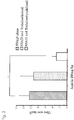
- Figure 1 is a graph, which is a substitute of a drawing, which shows ulcer index (mm2) when test substances are administered.
- the horizontal axis of figure 1 indicates that the tested substances that were administered.
- the vertical axis of figure 1 indicates the area of ulcer. The result shows that, for all of NSAIDs, when lyophilized NSAIDs as well as trehalose were administered have a tendency to suppress the generation of ulcer compared to NSAIDs alone were administered.
- the stomach ulcer model induced by indomethacin was examined.
- indomethacin alone (30 mg/kg) was administered ulcer of 4.83 ⁇ 0.90 (average of 10 cases ⁇ standard deviation) mm 2 was observed.
- lyophilized indomethacin and trehalose (30 mg/kg of indomethacin and 800 mg/kg of trehalose) was administered 2.98 ⁇ 0.90 (average of 10 cases ⁇ standard deviation) mm 2 was observed.
- the rate of suppressed ulcer caused by lyophilizing was 38.8 %.
- the stomach ulcer model induced by ibuprofen was examined.
- ibuprofen alone 400 mg/kg
- trehalose 400 mg/kg of ibuprofen and 800 mg/kg of trehalose
- 1.90 ⁇ 0.69 average of 5 cases ⁇ standard deviation
- the stomach ulcer model induced by aspirin was examined.
- aspirin alone 200 mg/kg
- ulcer of 10.40 ⁇ 2.80 average of 5 cases ⁇ standard deviation
- lyophilized aspirin and trehalose 200 mg/kg of aspirin and 800 mg/kg of trehalose
- 3.00 ⁇ 1.20 average of 5 cases ⁇ standard deviation
- the stomach ulcer model induced by diclofenac was examined.
- diclofenac alone 40 mg/kg
- trehalose 40 mg/kg of diclofenac and 800 mg/kg of trehalose
- 1.65 ⁇ 0.43 average of 10 cases ⁇ standard deviation
- the working example 1 shows that by using lyophilized NSAIDs and trehalose, it is possible to suppress ulcer.
- indomethacin, aspirin and sodium diclofenac were used as NSAIDs.
- indomethacin from Wako Pure Chemical Industries and bought sodium diclofenac from Cayman Inc.
- trehalose manufactured by Hayashibara and used Sodium carboxy methyl cellulose manufactured by Dai-ichi Kogyo Seiyaku Co., Ltd.
- trehalose solution using purified water (Milli Q grade (milli Q water)). Suitable amount of NSAIDs were dissolved in 99.5 % ethyl alcohol and mixed with trehalose solution at suitable ratio. After enough stirred, the mixed solutions were dried for more than 48 hours by means of a lyophilizing apparatus (Tokyo Rika Co., EYELA, lyophilizing apparatus, FDU-1100).
- a lyophilizing apparatus Tokyo Rika Co., EYELA, lyophilizing apparatus, FDU-1100.
- the liquid dozes were prepared on the date when the examination was executed. Weighted NSAIDs were suspended or dissolved into 0.5% CMC.Na solution to prepare dozes of administrating NSAIDs only. Suspension of NSAIDs and solution of trehalose were prepared. Then the same amount of the suspension and solution were mixed to prepare the dozed of mixture of trehalose and NSAIDs just before administrating them. Predetermined amount of lyophilized compounds that contains lyophilized trehalose and NSAIDs with predetermined rate were weighted and each of them was mixed with 0.5% CMC.Na solution to prepare dozes of lyophilized trehalose and NSAIDs. For each groups the amount of dose was 8 mL per kg or rat.
- the rats were kept fasting and test substances were fed though mouse. After 5 hours passed, these rats were killed by carbon dioxide gas and stomachs were picked up. The duodenums were tagged. 6 mL of neutral formalin were poured from the esophaguses so as to fix the stomachs for 30 minutes. The stomachs were cut along with the greater curvature. The cut stomachs were gently washed by saline, the presence of blood spot were observed by a stereoscopic microscope.
- Rate of suppressed ulcer % 1 ⁇ A / B ⁇ 100
- ulcer index mm 2
- indomethacin, aspirin, or diclofenac was administered are shown in figure 2 , figure 3 and figure 4 .
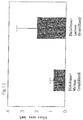
- Figure 2 is a graph, which is a substitute of a drawing, which shows a rat ulcer index (mm 2 ) when indomethacin alone, a mixture of indomethacin and trehalose and lyophilized indomethacin and trehalose are administered.
- the horizontal axis of the figure 2 indicates tested substances.
- the vertical axis of the figure 2 indicates ulcer area.
- Figure 3 is a graph, which is a substitute of a drawing, which shows a rat ulcer index (mm 2 ) when aspirin alone, a mixture of aspirin and trehalose and lyophilized aspirin and trehalose are administered.
- the horizontal axis of the figure 3 indicates tested substances.
- the vertical axis of the figure 3 indicates ulcer area.
- the mark * indicates that there is effective difference.
- Figure 4 is a graph, which is a substitute of a drawing, which shows a rat ulcer index (mm 2 ) when diclofenac alone, a mixture of diclofenac and trehalose and lyophilized diclofenac and trehalose are administered.
- the horizontal axis of the figure 4 indicates tested substances.
- the vertical axis of the figure 4 indicates ulcer area.
- p indicates a rejection rate.
- the working example 2 shows that lyophilized NSAIDs and trehalose can effectively suppress ulcer.
- the medium that comprised 1 mM diclofenac or the medium that comprised 1 mM diclofenac and 5%trehalose were added separately to the medium; in figure 5 , the which is described as "Mix" were added to the 9 to 22 cells of Ca, which are different from those described above. All of the cells were incubated for 16 hours and cell viability and cell lethality were measured by means of LIVE/DEAD Assay (Molecular Probes). We also analyzed for the cells incubated by the usual medium as a control. In the example, the number of samples, N, were 4 to 6. The result is shown in the figure 5 .
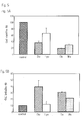
- Figure 5 is a graph, which is a substitute of a drawing, which shows an effect for gastric mucosa damages with lyophilized state and mixed state.
- Figure 5A is a graph, which is a substitute of a drawing, which shows cell viability rate. The vertical axis of the figure 5A indicates cell viability [%] and higher value means more cells are alive.
- Figure 5B is a graph, which is a substitute of a drawing, which shows cell lethality rate. The vertical axis of the figure 5B indicates cell lethality [%] and higher value means more cells have been dead. Thus high cell viability and low cell lethality indicate that cell disorder induced by diclofenac is suppressed.
- Figure 5 shows that the mixed sample that was merely mixed with solutions (“Mix” in figure 5 ) had the effect of trehalose to suppress cell disorder induced by the diclofenac. However, lyophilized sample (“Lyo" in figure 5 ) shows more effect of suppressing cell disorder induced by the diclofenac.
- DSC Differential Scanning Calorimetry
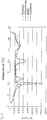
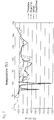
- Figures 6 to 11 indicates the result of DSC measurement.
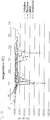
- Figure 6 is a graph, which is a substitute of a drawing, which shows the result of DSC of trehalose alone, indomethacin alone, a mixture of indomethacin and trehalose and lyophilized indomethacin.
- Figure 7 is a graph, which is a substitute of a drawing, which shows the result of DSC of trehalose alone, ibuprofen alone, a mixture of ibuprofen and trehalose and lyophilized ibuprofen.
- Figure 8 is a graph, which is a substitute of a drawing, which shows the result of DSC of trehalose alone, aspirin alone, a mixture of aspirin and trehalose and lyophilized aspirin.
- Figure 9 is a graph, which is a substitute of a drawing, which shows the result of DSC of trehalose alone, diclofenac alone, a mixture of diclofenac and trehalose and lyophilized diclofenac.
- Figure 10 is a graph, which is a substitute of a drawing, which shows the result of DSC of trehalose alone, piroxicam alone, a mixture of piroxicam and trehalose and lyophilized piroxicam.
- Figure 11 is a graph, which is a substitute of a drawing, which shows the result of DSC of trehalose alone, Mefenamic acid alone, a mixture of Mefenam acid and trehalose and lyophilized Mefenamic acid.
- the term “Mixture” means DSC curve for the mixture of trehalose and NSAIDs.
- the term “lyophilize” means DSC curve for the lyophilized trehalose and NSAIDs.
- the vertical axis indicates heat flow per mole [W/mol] for trehalose alone or NSAIDs alone.
- the vertical axis indicates heat flow per one mole of trehalose [W/mol] for the mixture and the lyophilized compound.
- the horizontal axis indicates temperature(degrees C).
- the peaks of the mixture of NSAIDs and trehalose are similar to the sum of the peaks of NSAIDs alone and the peaks of trehalose alone.
- the peak which is around 120 degrees C and derives from trehalose is extinguished or is shifted to low temperature direction or high temperature direction.
- the result shown in figure 6 indicates that the mixture of indomethacin and trehalose had the first peak at the region of 98 to 102 degrees C, the second peak at the region of 190 to 210 degrees C and the third peak at the region of 115 to 125 degrees C.
- the first peak means the highest peak (the largest peak of absolute value of DSC measured value) in a DSC curve.
- the DSC curve of the lyophilized indomethacin and trehalose had the first peak at the region of 80 to 95 degrees C and the second peak at the region of 260 to 270 degrees C.
- the DSC curve of the lyophilized indomethacin and trehalose further had the third peak at the range of 270 to 280 degrees C.
- the result shown in figure 7 indicates that the mixture of ibuprofen and trehalose had the first peak at the region of 98 to 102 degrees C, the second peak at the region of 70 to 80 degrees C, the third peak at the region of 190 to 210 degrees C and the fourth peak at the region of 115 to 125 degrees C.
- the result of the mixture almost coincides with the peaks of DSC curves of trehalose alone and ibuprofen alone.
- the DSC curve of the lyophilized ibuprofen and trehalose had the first peak at the region of 98 to 102 degrees C and the second peak at the region of 70 to 80 degrees C, the third peak at the range of 175 to 190 degrees C and the fourth peak at the region of 130 to 145 degrees C.
- the peaks of at the range of 175 to 190 degrees C and at the region of 130 to 145 degrees C were not found in the DSC curve of the mixture.
- the intermolecular compound of ibuprofen and trehalose was generated by lyophilizing the mixed solution after ibuprofen and trehalose were dissolved jointly.
- the result shown in figure 8 indicates that the mixture of aspirin and trehalose had the first peak at the region of 145 to 150 degrees C and the second peak at the region of 98 to 102 degrees C.
- the DSC curve of the lyophilized aspirin and trehalose had the first peak at the region of 110 to 120 degrees C and the second peak at the region of 135 to 145 degrees C.
- the differences of the positions of peaks between the mixture and the lyophilized compound indicate that the intermolecular compound of aspirin and trehalose was generated by lyophilizing the mixed solution after aspirin and trehalose were dissolved jointly.
- the result shown in figure 9 indicates that the mixture of sodium diclofenac and trehalose had the first peak at the region of 95 to 110 degrees C and the second peak at the region of 190 to 220 degrees C.
- the DSC curve of the lyophilized sodium diclofenac and trehalose had the first peak at the region of 90 to 100 degrees C and the second peak at the region of 135 to 145 degrees C.
- the differences of the positions of peaks between the mixture and the lyophilized compound indicate that the intermolecular compound of sodium diclofenac and trehalose was generated by lyophilizing the mixed solution after sodium diclofenac and trehalose were dissolved jointly.
- the result shown in figure 10 indicates that the mixture of Mefenamic acid and trehalose had the first peak at the region of 98 to 102 degrees C, the second peak at the region of 225 to 235 degrees C and the third peak at the region of 190 to 210 degrees C.
- the DSC curve of the lyophilized Mefenamic acid and trehalose had the first peak at the region of 225 to 235 degrees C and the second peak at the region of 90 to 110 degrees C.
- the absolute values of peak top of the first peak and the second peak of the lyophilized compound are larger than the peaks at the regions of 225 to 235 and 90 to 110 degrees C for Mefenamic acid alone.
- the result shown in figure 11 indicates that the mixture of piroxicam and trehalose had the first peak at the region of 98 to 102 degrees C, the second peak at the region of 225 to 235 degrees C and the third peak at the region of 190 to 210 degrees C.
- the DSC curve of the lyophilized piroxicam and trehalose had the first peak at the region of 90 to 105 degrees C and the second peak at the region of 195 to 205 degrees C.
- the absolute values of peak top of the first peak and the second peak of the lyophilized compound are larger than the peaks at the regions of 90 to 105 degrees C and 195 to 205 degrees C.
- the peaks of the mixture of NSAIDs and trehalose are similar to the sum of the peaks of NSAIDs alone and the peaks of trehalose alone.
- the peak which is around 120 degrees C and derives from trehalose is extinguished or is shifted to low temperature direction or high temperature direction.
- the pharmaceutical composition that comprises trehalose and NSAIDs that have molecular interactions between them, thereby it can alleviate damage of gastrointestinal mucosa induced by NSAIDs, such as disorder of gastric mucosa induced by NSAIDs.
- the pharmaceutical composition of the invention reduce damage of gastrointestinal mucosa induced by NSAIDs.
- Ulcer area was measured by the same conditions in working example 2 except for replacing trehalose with maltose, sucrose, or lactose.
- the obtained ulcer area is shown in figure 12 .
- Aspirin effectively suppress ulcer by forming molecular compound of aspirin with disaccharide.
- Ulcer area was measured by the same conditions in working example 2 except for replacing trehalose with maltose, or lactose.
- the obtained ulcer area is shown in figure 13 .
- diclofenac effectively suppress ulcer by forming molecular compound of diclofenac with disaccharide.
- the present invention may be used in medical industry.
Landscapes
- Health & Medical Sciences (AREA)
- Chemical & Material Sciences (AREA)
- Life Sciences & Earth Sciences (AREA)
- General Health & Medical Sciences (AREA)
- Medicinal Chemistry (AREA)
- Public Health (AREA)
- Pharmacology & Pharmacy (AREA)
- Veterinary Medicine (AREA)
- Animal Behavior & Ethology (AREA)
- Epidemiology (AREA)
- Organic Chemistry (AREA)
- Molecular Biology (AREA)
- Engineering & Computer Science (AREA)
- Biochemistry (AREA)
- Chemical Kinetics & Catalysis (AREA)
- General Chemical & Material Sciences (AREA)
- Oil, Petroleum & Natural Gas (AREA)
- Biotechnology (AREA)
- Genetics & Genomics (AREA)
- Nuclear Medicine, Radiotherapy & Molecular Imaging (AREA)
- Bioinformatics & Cheminformatics (AREA)
- Rheumatology (AREA)
- Pain & Pain Management (AREA)
- Medicinal Preparation (AREA)
- Acyclic And Carbocyclic Compounds In Medicinal Compositions (AREA)
- Pharmaceuticals Containing Other Organic And Inorganic Compounds (AREA)
- Medicines That Contain Protein Lipid Enzymes And Other Medicines (AREA)
Description
- The present invention relates to a pharmaceutical composition which reduces damage of gastrointestinal mucosa induced by non-steroidal anti-inflammatory Drugs, NSAIDs, and the method for manufacturing thereof.
- NSAIDs, non-steroidal anti-inflammatory Drugs, are commonly used as a pain killer, antipyretic, and anti-inflammatory Drugs. Even though the NSAIDs have a suitable effect, it has a drawback to induce damage of gastrointestinal mucosa.
- Japanese Patent Publication
2005-343886 - Japanese Patent Publication
2005-139165 - [Patent document 1] Japanese Patent Publication
2005-343886 - [Patent document 2] Japanese Patent Publication
2005-139165 - The object of the present invention is to provide a pharmaceutical composition which reduce damage of gastrointestinal mucosa induced by NSAIDs.
- The present invention is basically based on the new substance that is Intermolecular compounds with a NSAID and a disaccharide. As shown in the following examples, the Intermolecular compounds, new compounds, have extremely high effect to alleviate damage of gastrointestinal mucosa induced by NSAIDs. The present invention is also related to a method for manufacturing the drug medicine which includes a step of manufacturing the intermolecular compounds.
- The first aspect of the invention relates to a pharmaceutical composition which reduces damage of gastrointestinal mucosa induced by a non-steroidal anti-inflammatory Drug (NSAID), the pharmaceutical composition comprising an intermolecular compound of a NSAID and a disaccharide; wherein the pharmaceutical composition is produced by a method comprising the steps of mixing a disaccharide and a NSAID so as to obtain a liquid mixture comprising dissolved disaccharide and dissolved NSAID; and drying the liquid mixture so as to obtain the pharmaceutical composition.
- The pharmaceutical composition of the invention has the anti-inflammatory effect of the NSAID and can reduce damage induced by the NSAID.
- As shown in the following examples, the Intermolecular compounds, new compounds, have extremely high effect to alleviate damage of gastrointestinal mucosa induced by NSAIDs The example of a pharmaceutical composition which reduce damage of gastrointestinal mucosa induced by NSAIDs is a pharmaceutical composition which reduce damage of gastric mucosa induced by NSAIDs.
- As shown in the following examples, the pharmaceutical composition of the present invention which is manufactured by the above method interacts with molecular. As shown in the following examples, the pharmaceutical composition (lyophilized agent) has reduced damage of gastrointestinal mucosa induced by NSAID better than the mixture of NSAIDs and a disaccharide (mixture of powders). In other words, the pharmaceutical composition of the present invention, which is manufactured by the above method, has intermolecular compound between a NSAID and a disaccharide, thereby the intermolecular compound effectively reduce damage of gastrointestinal mucosa induced by NSAIDs.
- As shown in the following working examples preferred NSAIDs are acidic NSAIDs. The example of the NSAIDs is one or more selected from the group of aspirin, sodium salicylate, salicylamide, sazapirin, diflunisal, ethenzamide, aluminum aspirin, 5 - amino salicylic acid, indomethacin, etodolac, sodium diclofenac, sulindac, proglumetacin maleate, acemetacin, nabumeton, mofezolac, ibuprofen, naproxen, loxoprofen, flurbiprofen, flurbiprofen axetil, oxaprozin, tiaprofenic acid, pranoprofen, aluminoprophen, zaltoprofen, Mefenamic acid, tolFenamic acid, aluminium flufenamate, ketophenylbutazone, clofezone, bucolome , piroxicam, lornoxicam, tenoxicam, meloxicam, ampiroxicam, epirizole, and tiaramide. Within the above compounds, the preferred NSAIDs are one or more of aspirin, indomethacin, sodium diclofenac, ibuprofen, piroxicam, loxoprofen and Mefenamic acid. The pharmaceutical composition can effectively reduce damage of gastrointestinal mucosa induced by NSAIDs by using the above NSAIDs.
- A preferred working example of the first aspect of the invention is that the pharmaceutical composition comprises, as the disaccharide, one or more selected from trehalose, maltose, lactose and sucrose. Trehalose is more preferred as the disaccharide.
- A preferred working example of the first aspect of the invention is that the form of the pharmaceutical composition is tablets, granules, or capsules. The disaccharides and the NSAID are attached by means of molecular interactions by dissolving disaccharides and NSAIDs jointly, drying the dissolved disaccharides and NSAIDs and forming them into tablets, granules or capsules. Thus such forms of pharmaceutical composition bring high reduction effect for damage of gastrointestinal mucosa induced NSAIDs.
- A preferred working example of the first aspect of the invention is that the NSAID is Indomethacin and the disaccharide is trehalose. Further, the DSC curve of the intermolecular compound obtained by the method of differential scanning calorimetry, DSC, has a first peak and a second peak at 80 to 95 degrees Celsius and 260 to 270 degrees Celsius, respectively.
- A preferred working example of the first aspect of the invention is that the NSAID is ibuprofen and the disaccharide is trehalose. Further the DSC curve of the intermolecular compound obtained by the method of differential scanning calorimetry, DSC, has a third peak and a fourth peak at 175 to 190 degrees Celsius and 130 to 145 degrees Celsius, respectively.
- A preferred working example of the first aspect of the invention is that the NSAID is aspirin and the disaccharide is trehalose. Further the DSC curve of the intermolecular compound obtained by the method of differential scanning calorimetry, DSC, has a first peak and a second peak at 110 to 120 degrees Celsius and 135 to 145 degrees Celsius, respectively.
- A preferred working example of the first aspect of the invention is that the NSAID is sodium diclofenac and the disaccharide is trehalose. Further the DSC curve of the intermolecular compound obtained by the method of differential scanning calorimetry, DSC, has a first peak and a second peak at 90 to 100 degrees Celsius and 130 to 145 degrees Celsius, respectively.
- A preferred working example of the first aspect of the invention is that the NSAID is Mefenamic acid and the disaccharide is trehalose. Further the DSC curve of the intermolecular compound obtained by the method of differential scanning calorimetry, DSC, has a first peak and a second peak at 225 to 235 degrees Celsius and 90 to 110 degrees Celsius, respectively. Still further the absolute values of the first peak and the second peak are larger than absolute values of a peak at 225 to 235 degrees Celsius and a peak at 90 to 110 degrees Celsius in a DSC curve of Mefenamic acid obtained by the method of DSC, respectively.
- A preferred working example of the first aspect of the invention is that the NSAID is piroxicam and the disaccharide is trehalose. Further the DSC curve of the intermolecular compound obtained by the method of differential scanning calorimetry, DSC, has a first peak and a second peak at 90 to 105 degrees Celsius and 195 to 205 degrees Celsius, respectively. Still further, the absolute values of the first peak and the second peak are smaller than absolute values of a peak at 90 to 105 degrees Celsius and a peak at 195 to 205 degrees Celsius in a DSC curve of Mefenamic acid obtained by the method of DSC, respectively.
- The second aspect of the invention relates to a method of manufacturing a pharmaceutical composition which alleviates damage of gastrointestinal mucosa induced by a non-steroidal anti-inflammatory drug (NSAID), the method comprising the steps of mixing a disaccharide and a NSAID so as to obtain a liquid mixture of the disaccharide and the NSAID; and drying the liquid mixture so as to obtain the pharmaceutical composition. As shown by the following examples, by making a pharmaceutical composition through the above method, it is possible to manufacture a pharmaceutical composition which can effectively strengthen the technical effect of the disaccharide that reduce damage of gastrointestinal mucosa induced by NSAIDs.
- As shown in the following working examples preferred NSAIDs are acid NSAIDs. The example of the NSAIDs is one or more selected from the group of aspirin, sodium salicylate, salicylamide, sazapirin, diflunisal, ethenzamide, aluminum aspirin, 5 - amino salicylic acid, indomethacin, etodolac, sodium diclofenac, sulindac, proglumetacin maleate, acemetacin, nabumeton, mofezolac, ibuprofen, naproxen, loxoprofen, flurbiprofen, flurbiprofen axetil, oxaprozin, tiaprofenic acid, pranoprofen, aluminoprophen, zaltoprofen, Mefenamic acidic, tolfenamic acid, aluminium flufenamate, ketophenylbutazone, clofezone, bucolome , piroxicam, lornoxicam, tenoxicam, meloxicam, ampiroxicam, epirizole, and tiaramide. Within the above compounds, the preferred NSAIDs are one or more of aspirin, indomethacin, sodium diclofenac, ibuprofen, piroxicam, loxoprofen and Mefenamic acid. The pharmaceutical composition can effectively reduce damage of gastrointestinal mucosa induced by NSAIDs by using the above NSAIDs.
- The present invention can provide a pharmaceutical composition which reduces damage of gastrointestinal mucosa induced by NSAIDs without decreasing the technical effect caused by NSAIDs.
-
- [
Fig.1] Figure 1 is a graph, which is a substitute of a drawing, which shows ulcer index (mm2) when test substances are administered. - [
Fig.2] Figure 2 is a graph, which is a substitute of a drawing, which shows a rat ulcer index (mm2) when indomethacin alone, a mixture of indomethacin and trehalose and lyophilized indomethacin and trehalose are administered. - [
Fig.3] Figure 3 is a graph, which is a substitute of a drawing, which shows a rat ulcer index (mm2) when aspirin alone, a mixture of aspirin and trehalose and lyophilized aspirin and trehalose are administered. - [
Fig.4] Figure 4 is a graph, which is a substitute of a drawing, which shows a rat ulcer index (mm2) when diclofenac alone, a mixture of diclofenac and trehalose and lyophilized diclofenac and trehalose are administered. - [
Fig.5] Figure 5 is a graph, which is a substitute of a drawing, which shows an effect for gastric mucosal damages with lyophilized state and mixed state.Figure 5A is a graph, which is a substitute of a drawing, which shows cell viability rate.Figure 5B is a graph, which is a substitute of a drawing, which shows cell lethality rate. - [
Fig.6] Figure 6 is a graph, which is a substitute of a drawing, which shows the result of DSC of trehalose alone, indomethacin alone, a mixture of indomethacin and trehalose and lyophilized indomethacin and trehalose. - [
Fig.7] Figure 7 is a graph, which is a substitute of a drawing, which shows the result of DSC of trehalose alone, ibuprofen alone, a mixture of ibuprofen and trehalose and lyophilized ibuprofen and trehalose. - [
Fig.8] Figure 8 is a graph, which is a substitute of a drawing, which shows the result of DSC of trehalose alone, aspirin alone, a mixture of aspirin and trehalose and lyophilized aspirin and trehalose. - [
Fig.9] Figure 9 is a graph, which is a substitute of a drawing, which shows the result of DSC of trehalose alone, diclofenac alone, a mixture of diclofenac and trehalose and lyophilized diclofenac and trehalose. - [
Fig.10] Figure 10 is a graph, which is a substitute of a drawing, which shows the result of DSC of trehalose alone, piroxicam alone, a mixture of piroxicam and trehalose and lyophilized piroxicam and trehalose. - [
Fig.11] Figure 11 is a graph, which is a substitute of a drawing, which shows the result of DSC of trehalose alone, Mefenamic acid alone, a mixture of Mefenamic acid and trehalose and lyophilized Mefenamic acid and trehalose. - [
Fig.12] Figure 12 is a graph, which is a substitute of a drawing, which shows the result of measurement of ulcer area when each of maltose, sucrose, and lactose were lyophilized with aspirin to conform a molecular compound. - [
Fig.13] Figure 13 is a graph, which is a substitute of a drawing, which shows the result of measurement of ulcer area when each of maltose and lactose were lyophilized with diclofenac to conform a molecular compound. - The first aspect of the invention relates to a pharmaceutical composition which reduces damage of gastrointestinal mucosa induced by non-steroidal anti-inflammatory Drugs, NSAIDs. A pharmaceutical composition which reduces damage of gastrointestinal mucosa induced by NSAIDs is a pharmaceutical composition that can alleviate damage of gastrointestinal mucosa induced by NSAIDs, which keeps the anti-inflammatory effect caused by NSAIDs. It is preferred for the pharmaceutical composition of the invention to comprise disaccharide and NSAIDs that have molecular interactions between them. It is preferred for the pharmaceutical composition of the invention to comprise an effective amount of disaccharide to alleviate damage of gastrointestinal mucosa induced by NSAIDs. Namely, disaccharide and NSAIDs that have molecular interactions between them are main ingredients for alleviating damage of gastrointestinal mucosa induced by NSAIDs.
- In this specification, the term damage of gastrointestinal mucosa induced by NSAIDs includes not only pathological changes of gastric mucosa (e. g. erosion, ulcer, and edema) induced by NSAIDs but also disorders of duodenum which is close part of stomach and disorders of small intestine and large intestine. In this specification, the term Gastrointestinal Tract includes stomach, duodenum, small intestine and large intestine. NSAIDs may bring intestinal perforation at small intestine. The pharmaceutical composition which reduces damage of gastrointestinal mucosa induced by NSAIDs is effective for an intestinal perforation at small intestine caused by NSAIDs. As shown by the examples, the present invention is most effective for Gastric mucosa disorders. Namely, the most effective working example of the pharmaceutical composition which reduces damage of gastrointestinal mucosa induced by NSAIDs of the present invention is the pharmaceutical composition which reduces damage of gastric mucosa induced by NSAIDs.
- The examples of disaccharide are maltose, sucrose, cellobiose, lactose, and trehalose. Within these disaccharides, the preferred disaccharides are maltose, sucrose, lactose, and trehalose, and most preferable disaccharide is trehalose.
- Trehalose is one of disaccharides in which two D- glucoses are connected. Trehalose has three isomers, which are different in their connecting style, α, α body (α-D-glucopyranosyl α-D-glucopyranoside), α, β body (β-D-glucopyranosyl α-D-glucopyranoside)) and β, β body (β-D-glucopyranoyl β-D-glucopyranoside)). As for the present invention, if the pharmaceutical composition comprises effective amount of one or more of these isomers in total, it is possible to use any isomers produced by any production method, with any purity and with any states.
- The pharmaceutical composition of the present invention may comprise each of acidic NSAIDs and base NSAIDs. Preferred NSAIDs of the invention is acidic NSAIDs. Further preferred NSAIDs of the invention is Carboxylic acid NSAIDs. The pharmaceutical composition of the invention may comprise one or more kinds of NSAIDs. When the pharmaceutical composition comprises two or more kinds of NSAIDs, the pharmaceutical composition may comprise NSAIDs in the same category (for example, two kinds of salicylic acid NSAIDs) or NSAIDs in the different categories (for example, salicylic acid NSAID and Aryl acetic acid NSAID). These NSAIDs may be manufactured using well known methods or it is possible to use commercially obtainable NSAIDs.
- NSAIDs are categorized in salicylic acid NSAIDs, aryl acetic acid NSAIDs, propionic acid NSAIDs, Fenamic acid NSAIDs, enol acid NSAIDs, and basic NSAIDs. The examples of salicylic acid NSAIDs are aspirin, sodium salicylate, salicylamide, sazapirin, diflunisal, ethenzamide, aluminum aspirin, and 5 - amino salicylic acid,
- The examples of aryl acetic acid NSAIDs are indomethacin, etodolac, sodium diclofenac, sulindac, proglumetacin maleate, acemetacin, nabumeton, and mofezolac.
- The examples of propionic acid NSAIDs are ibuprofen, naproxen, loxoprofen, flurbiprofen, flurbiprofen axetil, oxaprozin, tiaprofenic acid, pranoprofen, aluminoprophen and zaltoprofen.
- The examples of Fenamic acid are Mefenamic acid, tolfenamic acid, and aluminium flufenamate.
- The examples of enol acid NSAIDs are Pyrazolone NSAIDs, Pyrimidine NSAIDs and oxycum NSAIDs. The examples of Pyrazolone NSAIDs are ketophenylbutazone and clofezone. The example of Pyrimidine NSAIDs is bucolome. The examples of oxycum NSAIDs are piroxicam, lornoxicam, tenoxicam, meloxicam, and ampiroxicam.
- The examples of basic NSAIDs are epirizole, and tiaramide.
- It is thought that the pharmaceutical composition of the invention has intermolecular bonding by means of molecular interactions. The term intermolecular bonding means that two or more molecules connect each other. The examples of such intermolecular bonding are ionic bonding, complex bonding, hydrophobic bonding, hydrogen bonding, and van der Waals bonding. The pharmaceutical composition of the invention, which has such a bonding, is manufactured by means of the method explained defined in the claims. It is possible to investigate that the molecular interaction of NSAIDs and disaccharide that are included in the manufactured pharmaceutical composition by means of conventional analysis methods. The examples of the analysis methods are DSC (Differential Scanning Calorimetry), FTIR (Fourier Transform Infrared Spectroscopy), XPS (X-ray photoelectron spectroscopy) and NMR (nuclear magnetic resonance). The skilled person would be able to analyze the molecular interaction by means of the conventional method.
- It is possible for the pharmaceutical composition of the invention to comprise a pharmaceutically acceptable carrier or a pharmaceutically acceptable medium. The examples of the pharmaceutically acceptable carrier and a pharmaceutically acceptable medium are the pharmaceutically acceptable substances including an anti oxidant and a retainer. It is possible to use polymers like Polyethylene glycol (PEG), and Conjugated compounds such as cyclodextrin. The examples of the stabilizer are albumin, gelatin, sorbitol, mannitol, lactose, sucrose, maltose, and glucose. The examples of the anti-oxidant are sodium sulfite, ascorbic acid, tocopherol, cysteine hydrochloride, thioglycolic acid, and catechol. The examples of the retainer are phenol, thimerosal, and benzalkonium chloride.
- The pharmaceutical composition of the invention is manufactured by the method of the invention. The method comprises a step of mixing a disaccharide and NSAIDs so as to obtain a liquid mixture of the disaccharide and the NSAIDs; and a step of drying the liquid mixture so as to obtain the pharmaceutical composition. The liquid mixture comprises dissolved disaccharide and dissolved NSAIDs. The examples of the step of drying are a step of lyophilize, a step of Granulating and Spray Drying, a step of spray drying and a step of Crushing after drying for granulation. Conventionally, the skilled person would mix powdered NSAIDs and powdered disaccharides to manufacture powdered pharmaceutical composition. Further, to manufacture a liquid pharmaceutical composition, the skilled person would mix NSAIDs solution and disaccharide solution, would pour powdered NSAIDs and powdered disaccharides separately into a liquid and would stir the solution so as to dissolve the powders, or would pour the mixture of powders that includes powdered NSAIDs and powdered disaccharides into a liquid and would stir the solution so as to dissolve the powders. However, as is shown by the following examples, the mixed solution of NSAIDs solution and disaccharide solution has not sufficient effect to alleviate damage of gastrointestinal mucosa induced by NSAID. The reason of the fact is thought that the disaccharide and NSAIDs in liquid pharmaceutical composition do not form intermolecular connections enough. The present invention intentionally makes NSAIDs and disaccharide to be dissolved to obtain a liquid mixture so as to bring interactions and then the present invention makes the liquid mixture to be dried so as to obtain a pharmaceutical composition that has enough activity to reduce damage of gastrointestinal mucosa induced by NSAID. The pharmaceutical composition manufactured by the method has molecular interactions as explained below. Namely, the pharmaceutical composition manufactured by the method comprises molecular interactions between disaccharide and NSAIDs. The pharmaceutical composition of the invention therefore has NSAIDs molecular dispersed into disaccharide molecules with keeping molecular interactions of NSAIDs and thus it can alleviate damage of gastrointestinal mucosa induced by NSAID effectively.
- The step of mixing is a step for mixing a disaccharide and NSAIDs so as to obtain a liquid mixture of the disaccharide and the NSAIDs. The liquid mixture comprises dissolved disaccharide and dissolved NSAIDs. The examples of solvates for dissolving disaccharide and NSAIDs jointly are already known solutions that are used for manufacturing pharmaceutical composition that includes water, distilled water, de-ionized water, Milli Q water, and saline. It is possible to obtain a liquid mixture by mixing NSAIDs solution and disaccharide solution. It is possible to obtain a liquid mixture by the method that includes dissolving one of powdered NSAIDs and powdered disaccharides to obtain a liquid solution of one ingredient and then dissolving other ingredient into the solution. Further it is possible to obtain a liquid mixture by mixing and dissolving powdered NSAIDs and powdered disaccharides into a liquid. Further it is possible to dissolve NSAIDs into a solvate such as ethanol because NSAIDs has less solubility and make such NSAIDs to be dissolved and then disaccharides are dissolved into the solution to obtain the mixed solution. The example of the weight rate of NSAIDs and disaccharides in the mixed solution is 1×10²:1∼1:1×10², preferably is 1×10:1∼1:5×10 and more preferably is 1:1∼1:1×30. The example of the concentration of disaccharide in the mixed solution in manufacturing the pharmaceutical composition of the invention is 1×10⁻²∼5×10 wt%, preferably is 1×100∼4.5×10 wt% and more preferably is 1×10∼4×10 wt%.
- The step of lyophilization is a step of sublimating water from the freeze sample under decompression circumstance. The step of lyophilization may have following steps.
- (1) Cooling the sample (mixed solution) by keeping it for 2 to 3 hours under 4 degrees C, at Ordinary pressure (Cooling step);
- (2) Freezing the sample by keeping it for 12 to 15 hours under -50 degrees C at Ordinary pressure (Freezing step);
- (3) Crystallizing the sample by keeping it for 4 to 6 hours under - 20 degrees C at Ordinary pressure (Crystallizing step);
- (4) Refreezing the sample by keeping it for 14 to 16 hours under -50 degrees C at Ordinary pressure (Refreezing step);
- (5) Drying the sample by keeping it for 24 to 26 hours under -13 degrees C at 10 to 20 kPa (under high vacuum) (the first drying step);
- (6) Drying the sample by keeping it for 10 to 121 hours under 24 degrees C at 10 to 20 kPa (under high vacuum) (the second drying step); and
- (7) Keeping the sample under 24 degrees C at Ordinary pressure.
- The method of lyophilization of the above freezes the sample at low temperature and sublimates water (ice) under high vacuum. The lyophilized compound of the invention may be manufactured in accordance with the above described protocol. However, the method of lyophilization is not limited to the above protocol and the skilled person may alter the parameters that include temperatures, pressures, and duration times of each of steps.
- The method of Granulating and Spray Drying is a method for obtain dried granules by contacting hot wind to the samples that include moiety with moving the samples. The step of Granulating and Spray Drying is attained by means of already known Granulating and Spray Drying apparatus.
- The pharmaceutical composition of the invention may be manufactured in accordance with the following steps.
- (1) pre drying the sample by attaching hot wind of 50 to 100 degrees C with 1 to 2 m/s speed for 10 to 30 minutes to the sample with stirring the sample (mixed solution) (pre drying step);
- (2) granulating the sample by attaching hot wind of 20 to 50 degrees C with 2 to 3 m/s speed for 30 minutes to 1 hour to the sample (granulating step);
- (3) drying the sample by attaching hot wind of 50 to 100 degrees C with 1 to 2 m/s speed for 30 minutes to 2 hours to the sample (drying step); and
- (4) cooling the sample by attaching cool wind of 5 to 20 degrees C with 1 to 2 m/s speed for 10 minutes to 60 minutes to the sample (cooling step).
- The method of Granulating and Spray Drying obtain granules by attaching hot wind to the sample so as to dry the sample with the sample floating in the air. The pharmaceutical composition of the invention may be manufactured in accordance with the above described protocol. However, the method of Granulating and Spray Drying is not limited to the above protocol and the skilled person may alter the parameters that include temperatures, pressures, and duration times of each of steps.
- The examples of the form of the pharmaceutical composition of the invention when the pharmaceutical composition is manufactured by means of the method of Granulating and Spray Drying are tablets, granules, or capsules. It is possible to manufacture tablets, granules, or capsules by compacting pharmaceutical compositions using conventional compacting method, in which the pharmaceutical compositions are manufactured by wet granulating method. It is possible to obtain capsule pharmaceutical composition by filling tablets or granules into the capsule. The volume of the each of the pharmaceutical composition is not limited but it is possible to adjust the volume based on the amount of disaccharides and NSAIDs. The disaccharides and NSAIDs are attached by means of molecular interactions by dissolving disaccharides and NSAIDs jointly, drying the dissolved disaccharides and NSAIDs and forming them into tablets, granules or capsules. Such forms of pharmaceutical composition bring high alleviative effect for damage of gastrointestinal mucosa induced NSAIDs. Thus the above described forms of the pharmaceutical compositions are preferred.
- The step of spray drying (Step of spray drying) is a step of drying object quickly by spraying liquid samples with heated wind though narrow nozzle such that the samples become minute drops in the chamber. It is possible to manufacture the spray dried object by means of a conventional spray dryer. It is possible to manufacture the pharmaceutical composition of the invention using the following steps.
- (1) spraying samples (mixed solution) though nozzle with 0.5 to 1 mm aperture with heated wind of 100 to 300 degrees C into the chamber, with air pressure of 0.5 to 2.5 kg/m2 and flow speed of 25 to 50 l/min (spray step);
- (2) drying sprayed samples by contacting heated wind of 100 to 300 degrees C with flow speed of 0.5 to 1 m/s for 30 seconds to 5 minutes (drying step).
- As described the above the method of spray drying is the method for drying and granulating samples by contacting heated wind to the minute drops that are made by spraying the sample into high temperature chamber. It is possible to manufacture the pharmaceutical composition of the invention by means of the above method. However the invention is not limited to the pharmaceutical composition manufactured the above method. It is possible for the skilled person to adjust the parameters that include temperature and duration time for each step.
- The step of crushing after drying for granulation is a step for manufacturing granules by crushing dried samples that contained moiety. It is possible to manufacture the pharmaceutical composition of the invention is based on the following steps.
- (1) stirring samples (mixed solution) for 1 to 5 hours with attaching hot wind of 50 to 80 degrees C and stirring speed of 10 to 100 round per minute (drying step);
- (2) cooling samples by contacting cold wind of 5 to 15 degrees C with the dried samples (Cooling step);
- (3) crushing the cooled samples by means of a crasher (crushing step); and
- (4) sieving the crashed samples by means of a sieving apparatus with predetermined size of sieves (sieving step).
- As described the above the method of Crushing after drying for granulation is a method for manufacturing a powders with predetermined size by crashing lump of samples. It is possible to manufacture the pharmaceutical composition of the invention by means of the above method. However the invention is not limited to the pharmaceutical composition manufactured the above method. It is possible for the skilled person to adjust the parameters that include temperature and duration time for each step.
- Although not within the scope of the present invention, it is possible to manufacture the molecular compound of disaccharide and NSAIDs by melting and mixing disaccharide and NSAIDs under an anaerobic condition and at the temperature higher than the melting point of disaccharide and NSAIDs. However the pharmaceutical compositions manufactured by the method of the invention were superior to the pharmaceutical compositions manufactured by such a method in the effect of alleviating damage of gastrointestinal mucosa induced by NSAID effectively.
- The apparatus for dissolving and mixing is already known. It is possible to use such conventional apparatus to execute the dissolving and mixing step. The example of apparatus for executing the dissolving and mixing step is a satirizing apparatus. It is possible to obtain crystal of molecular compound by stirring mixed solution of disaccharide and NSAIDs at the temperature that is higher than the melting point of disaccharide and NSAIDs and by executing static crystallization after the stirring for predetermined time. It is possible to obtain molecular compound with high purity by repeating the processes of melting, stirring and executing static crystallization.
- The melting and mixing step is executed under an anaerobic condition. More specifically, the melting and mixing step is executed under the existence of nitrogen gas or inert gas. The examples of the inert gas are noble gases and the examples of the novel gases are helium, neon, argon, and krypton. Within the noble gasses, argon is most preferred.
- The melting and mixing step is executed under atmospheric pressure, reduced pressure and high pressure. It is possible to use conventional catalyst at the melting and mixing step.
- Although not within the scope of the invention, it is possible to obtain the molecular compound of disaccharide and NSAIDs by contact melting of crystals of disaccharide and NSAIDs as well as the method as described above. However the pharmaceutical compositions manufactured by the method of the invention were superior to the pharmaceutical compositions manufactured by such a method in the effect of alleviating damage of gastrointestinal mucosa induced by NSAID effectively.
- It is possible to execute the contact melting of disaccharide and NSAIDs by means of a bicrystal furnace. The bicrystal furnace is an apparatus that can control the boundary at which seed crystals contact (grain boundary) and grow the seed crystals by melting contacted part of ingredients crystals and moving the cast. More specifically, the method of contact melting is the method that comprises crashing crystals of disaccharide and NSAIDs continuously for a long period, locally dissolving contacted points of crystals and growing the molecular compound of disaccharide and NSAIDs.
- The pharmaceutical composition of the invention has effects of anti-inflammatory, analgesic, and antipyretic of NSAIDs. The pharmaceutical composition of the invention which comprises disaccharide and NSAIDs can alleviate damage of gastrointestinal mucosa induced by NSAID and thus it is possible to be used for the patients whom NSAIDs are effective to cure or prevent diseases to take an effective amount of the pharmaceutical composition of the invention. In other words, disclosed herein is a method for treatment or prevention which includes a step of giving a pharmaceutical composition which reduces damage of gastrointestinal mucosa induced by NSAIDs to a subject. The subject may be a human. The preferred example of the pharmaceutical composition which reduce damage of gastrointestinal mucosa induced by NSAIDs that comprises disaccharide and NSAIDs with molecular interactions are the pharmaceutical composition which is manufactured by a step of lyophilization or a step of wet granulating.
- NSAIDs usually have stimulated taste such as sour taste and bitter taste and thus the taste of NSAIDs is not suitable for oral doses. However the pharmaceutical compositions of the invention comprise disaccharide as well as NSAID in which disaccharide and NSAIDs have molecular interactions. The disaccharide softens the taste of NSAIDs. Thus it is possible to improve the taste of tablets that comprise NSAIDs and, especially the taste of granules. The pharmaceutical composition of tablet form, especially of granules, is easy to take. Further anti-oxidant effect of disaccharide strengthens the chemical stability of NSAIDs.
- The pharmaceutical composition manufactured by the above method is mainly used for oral doses. However it is possible to use the pharmaceutical composition of the invention to non oral doses. When the pharmaceutical composition of the invention is used as an oral dose, the patient shall take the pharmaceutical composition together with a pharmaceutically acceptable solution such as water. The example of non oral dose is syringe. When the pharmaceutical composition of the invention is given by means of syringe, the pharmaceutical composition should be dissolved into a predetermined pharmaceutically acceptable solvent such that the solution contains predetermined concentrate. The examples of the pharmaceutically acceptable solvent are water for injection, saline solution, and glucose solution.
- The amount of dose varies in accordance with the kind of patient, the age of patient and symptoms. In general, the daily dose is from 10 mg to 1000 mg, preferably from 100mg to 500mg, of NSAIDs as a part of an active ingredient. It is possible to give the pharmaceutical composition of the invention twice to five times a day. By giving the pharmaceutical composition separately to several times it is possible to escape drastic change of concentrate of the pharmaceutical composition in blood and it is possible to prevent side effect and reduce load to the patient.
- A preferred working example of the invention is to provide a use of disaccharide and NSAIDs in manufacturing a Pharmaceutical composition which reduce damage of gastrointestinal mucosa induced by NSAIDs. Further disclosed herein is the use of disaccharide and NSAIDs that have intermolecular bonding for manufacturing a pharmaceutical composition which reduce damage of gastrointestinal mucosa induced by NSAID. A preferred example of the disaccharide and NSAIDs that have intermolecular bonding are those manufactured by the methods of lyophilization or wet granules. It is possible to use the above explained one or more kinds of NSAIDs.
- We explain the working examples of the invention.
- The reduce effect of trehalose for the damage of gastrointestinal mucosa induced by NSAIDs
- In this example, aspirin, indomethacin, ibuprofen, and sodium diclofenac were used as NSAIDs. We bought aspirin, indomethacin and ibuprofen from Wako Pure Chemical Industries and bought sodium diclofenac from Cayman Inc. We used trehalose manufactured by Hayashibara and used Sodium carboxy-methyl cellulose manufactured by Dai-ichi Kogyo Seiyaku Co., Ltd.
- We prepared 30 % (w/v) trehalose solution using purified water (Milli Q grade (milli Q water)). Suitable amount of NSAIDs were dissolved in 99.5 % ethyl alcohol and mixed with trehalose solution at suitable ratio. After enough stirred, the mixed solutions were dried for more than 48 hours by means of a lyophilizing apparatus (Tokyo Rika Co., EYELA, lyophilizing apparatus, FDU-1100).
- Specifically the preparation was executed by the following steps.
- (1) Trehalose was dissolved in milli Q water so as to obtain 30 % (w/v) trehalose solution
- (2) 1.0 g of each of NSAIDs was dissolved in 2.0 mL ethyl alcohol.
- (3) Suitable amount of trehalose solutions were added to the ethyl alcohol solutions in which each of NSAIDs was dissolved. Please note that indomethacin and ibuprofen solution brings precipitation if all of the trehalose solution required were to be added. Thus as for the indomethacin and ibuprofen solution, maximum amount of trehalose solutions which were not bring precipitation were added and then the mixed solutions were stirred for about 10 to 20 minutes.
- (4) Milli Q water was added so that the final concentrate of ethyl alcohol to be less than 10 %, preferably less than 5%. As for aspirin and sodium diclofenac, it was not found percipations. Thus each of the solutions of and sodium diclofenac was stired for about 10 to 20 minutes.
- (5) The mixed solutions were dried for more than 48 hours by means of a lyophilizing apparatus (Tokyo Rika Co., EYELA, lyophilizing apparatus, FDU-1100).
- Each of the test substances were adjusted by suspending or dissolving them into 0.5% CMC.Na solution. Each of 9 mL of Liquid doses was given per 1 kg weight by oral dose. 0.5 % CMC.Na solutions were given to control group.
- We bought Winster male rats (Japan SLC) that were 8 weeks old. We breed these rats keeping 20 to 26 degrees C, humidity of 30 to 70 %,
housing 2 to 3 rats in a rat breeding gage (mouse and rat breeding CE-2), giving enough amount of filtered tap water. After breeding 7 days, 5 to 10 rats per group were picked to execute the example. The rats were fasting for 24 hours without giving no food and then the rats were fed no food and no water for 1 hour just before the examination. - From 11 am on the previous day of the examination date, the rats were kept fasting and test substances were fed though mouse. After 5 hours passed, these rats were killed by carbon dioxide gas and stomachs were picked up. The duodenums were tagged. 6 mL of neutral formalin was poured from the esophaguses so as to fix the stomachs for 30 minutes. The stomachs were cut along with the greater curvature. The cut stomachs were gently washed by saline, the presence of blood spot were observed by a stereoscopic microscope. The area of blood spots was measured by 0.5 mm x 0.5 mm unit as an index of ulcer and the sum of each animal was calculated. The rate of suppressed ulcer was calculated, using the ulcer index for the group in which each of test sample was given and the group in which trehalose was also given, in accordance with the following equation.

- A : Ulcer index for the group in which NSAID was given alone
- B : Ulcer index for the group in which NSAID and trehalose was given
- Obtained rate of suppressed ulcer for the group in which trehalose was also given was shown in table 1 and
figure 1 .
[Table 1]Table1 Test substances(mg/kg) Rate of suppressed ulcer(%) Indomethacin(30) + Trehalose(800) 38.3 Ibuprofen(400) + Trehalose(800) 64.5 Aspirin(200) + Trehalose(800) 71.6 Diclofenac(40) + Trehalose(800) 61.6 -
Figure 1 is a graph, which is a substitute of a drawing, which shows ulcer index (mm2) when test substances are administered. The horizontal axis offigure 1 indicates that the tested substances that were administered. The vertical axis offigure 1 indicates the area of ulcer. The result shows that, for all of NSAIDs, when lyophilized NSAIDs as well as trehalose were administered have a tendency to suppress the generation of ulcer compared to NSAIDs alone were administered. - The stomach ulcer model induced by indomethacin was examined. When indomethacin alone (30 mg/kg) was administered ulcer of 4.83 ± 0.90 (average of 10 cases ± standard deviation) mm2 was observed. When lyophilized indomethacin and trehalose (30 mg/kg of indomethacin and 800 mg/kg of trehalose) was administered 2.98 ± 0.90 (average of 10 cases ± standard deviation) mm2 was observed. Thus the rate of suppressed ulcer caused by lyophilizing was 38.8 %.
- The stomach ulcer model induced by ibuprofen was examined. When ibuprofen alone (400 mg/kg) was administered ulcer of 5.35 ± 1.86 (average of 5 cases ± standard deviation) mm2 was observed. When lyophilized ibuprofen and trehalose (400 mg/kg of ibuprofen and 800 mg/kg of trehalose) was administered 1.90 ± 0.69 (average of 5 cases ± standard deviation) mm2 was observed. Thus the rate of suppressed ulcer caused by lyophilizing was 64.5 %.
- The stomach ulcer model induced by aspirin was examined. When aspirin alone (200 mg/kg) was administered ulcer of 10.40 ± 2.80 (average of 5 cases ± standard deviation) mm2 was observed. When lyophilized aspirin and trehalose (200 mg/kg of aspirin and 800 mg/kg of trehalose) was administered 3.00 ± 1.20 (average of 5 cases ± standard deviation) mm2 was observed. Thus the rate of suppressed ulcer caused by lyophilizing was 71.2 %.
- The stomach ulcer model induced by diclofenac was examined. When diclofenac alone (40 mg/kg) was administered ulcer of 4.30 ± 0.71 (average of 10 cases ± standard deviation) mm2 was observed. When lyophilized diclofenac and trehalose (40 mg/kg of diclofenac and 800 mg/kg of trehalose) was administered 1.65 ± 0.43 (average of 10 cases ± standard deviation) mm2 was observed. Thus the rate of suppressed ulcer caused by lyophilizing was 61.6 %.
- The working example 1 shows that by using lyophilized NSAIDs and trehalose, it is possible to suppress ulcer.
- In this example, indomethacin, aspirin and sodium diclofenac were used as NSAIDs. We bought indomethacin from Wako Pure Chemical Industries and bought sodium diclofenac from Cayman Inc. We used trehalose manufactured by Hayashibara and used Sodium carboxy methyl cellulose manufactured by Dai-ichi Kogyo Seiyaku Co., Ltd.
- We prepared 30 % (w/v) trehalose solution using purified water (Milli Q grade (milli Q water)). Suitable amount of NSAIDs were dissolved in 99.5 % ethyl alcohol and mixed with trehalose solution at suitable ratio. After enough stirred, the mixed solutions were dried for more than 48 hours by means of a lyophilizing apparatus (Tokyo Rika Co., EYELA, lyophilizing apparatus, FDU-1100).
- The liquid dozes were prepared on the date when the examination was executed. Weighted NSAIDs were suspended or dissolved into 0.5% CMC.Na solution to prepare dozes of administrating NSAIDs only. Suspension of NSAIDs and solution of trehalose were prepared. Then the same amount of the suspension and solution were mixed to prepare the dozed of mixture of trehalose and NSAIDs just before administrating them. Predetermined amount of lyophilized compounds that contains lyophilized trehalose and NSAIDs with predetermined rate were weighted and each of them was mixed with 0.5% CMC.Na solution to prepare dozes of lyophilized trehalose and NSAIDs. For each groups the amount of dose was 8 mL per kg or rat.
- We bought Winster male rats (Japan SLC) that were 8 weeks old. We breed these rats keeping 20 to 26 degrees C, humidity of 30 to 70 %,
housing 2 to 3 rats in a rat breeding gage (mouse and rat breeding CE-2), giving enough amount of filtered tap water. After breeding 7 days, 5 to 10 rats per group were picked to execute the example. The rats were fasting for 24 hours without giving no food and then the rats were fed no food and no water for 1 hour just before the examination. - From 11 am on the previous day of the examination date, the rats were kept fasting and test substances were fed though mouse. After 5 hours passed, these rats were killed by carbon dioxide gas and stomachs were picked up. The duodenums were tagged. 6 mL of neutral formalin were poured from the esophaguses so as to fix the stomachs for 30 minutes. The stomachs were cut along with the greater curvature. The cut stomachs were gently washed by saline, the presence of blood spot were observed by a stereoscopic microscope.
- The area of blood spots was measured by 0.5 mm x 0.5 mm unit as an index of ulcer and the sum of each animals was calculated. The rate of suppressed ulcer was calculated, using the ulcer index for the group in which each of test samples were given and the group in which trehalose was also given, in accordance with the following equation.

- A : Ulcer index for the group in which NSAID was given alone
- B : Ulcer index for the group in which NSAID and trehalose was given
- Measured area of ulcer for the groups in which indomethacin alone was given, mixed indomethacin and trehalose, and lyophilized indomethacin and trehalose were given was shown in table 2.
[Table 2]Table2 Test substances(mg/kg) Ulcer index (mm2, average ± standard deviation) Indomethacin alone 4.83 ± 0.90 Indomethacin + Trehalose (mixed) 4.15 ± 0.86 Indomethacin + Trehalose (Lyophilized) 2.98 ± 0.54 - Measured area of ulcer for the groups in which aspirin alone was given, mixed aspirin and trehalose, and lyophilized aspirin and trehalose were given was shown in table 3.
[Table 3]Table 3 Test substances(mg/kg) Ulcer index (mm2, average ± standard deviation) Aspirin alone 10.40 ± 2.73 Aspirin + Trehalose (mixed) 9.25 ± 3.45 Aspirin + Trehalose (lyophilized) 2.95 ± 1.14 - Measured area of ulcer for the groups in which diclofenac alone was given, mixed diclofenac and trehalose, and lyophilized diclofenac and trehalose were given was shown in table 4
[Table 4]Table4 Test substances(mg/kg) Ulcer index (mm2, average ± standard deviation) Diclofenac alone 4.30 ± 0.71 Diclofenac + Trehalose (mixed) 4.20 ± 1.11 Diclofenac + Trehalose (lyophilized) 1.65 ± 0.43 - The results of ulcer index (mm2) when indomethacin, aspirin, or diclofenac was administered are shown in
figure 2 ,figure 3 andfigure 4 . -
Figure 2 is a graph, which is a substitute of a drawing, which shows a rat ulcer index (mm2) when indomethacin alone, a mixture of indomethacin and trehalose and lyophilized indomethacin and trehalose are administered. The horizontal axis of thefigure 2 indicates tested substances. The vertical axis of thefigure 2 indicates ulcer area. - When indomethacin alone (30 mg/kg) was administered ulcer of 4.83 ± 0.90 (average of 10 cases ± standard deviation) mm2 was observed. When mixture of indomethacin and trehalose (30 mg/kg of indomethacin and 800 mg/kg of trehalose) was administered ulcer of 4.15 ± 0.86 (average of 5 cases ± standard deviation) mm2 was observed. Thus the rate of suppressed ulcer caused by mixed with trehalose was 14.0 %. When lyophilized indomethacin and trehalose (30 mg/kg of indomethacin and 800 mg/kg of trehalose) was administered ulcer of 2.98 ± 0.54 (average of 10 cases ± standard deviation) mm2 was observed. Thus the rate of suppressed ulcer caused by lyophilizing was 38.8 %.
-
Figure 3 is a graph, which is a substitute of a drawing, which shows a rat ulcer index (mm2) when aspirin alone, a mixture of aspirin and trehalose and lyophilized aspirin and trehalose are administered. The horizontal axis of thefigure 3 indicates tested substances. The vertical axis of thefigure 3 indicates ulcer area. Infigure 3 , the mark * indicates that there is effective difference. - When aspirin alone (200 mg/kg) was administered ulcer of 10.40 ± 2.73 (average of 5 cases ± standard deviation) mm2 was observed. When mixture of aspirin and trehalose (200 mg/kg of aspirin and 800 mg/kg of trehalose) was administered ulcer of 9.25 ± 3.54 (average of 5 cases ± standard deviation) mm2 was observed. Thus the rate of suppressed ulcer caused by mixed with trehalose was 11.5 %. When lyophilized aspirin and trehalose (200 mg/kg of aspirin and 800 mg/kg of trehalose) was administered ulcer of 2.95 ± 1.14 (average of 10 cases ± standard deviation) mm2 was observed. Thus the rate of suppressed ulcer caused by lyophilizing was 71.6 %.
-
Figure 4 is a graph, which is a substitute of a drawing, which shows a rat ulcer index (mm2) when diclofenac alone, a mixture of diclofenac and trehalose and lyophilized diclofenac and trehalose are administered. The horizontal axis of thefigure 4 indicates tested substances. The vertical axis of thefigure 4 indicates ulcer area. In thefigure 4 , p indicates a rejection rate. When diclofenac alone (40 mg/kg) was administered ulcer of 4.30 ± 0.71 (average of 10 cases ± standard deviation) mm2 was observed. When mixture of diclofenac and trehalose (40 mg/kg of diclofenac and 800 mg/kg of trehalose) was administered ulcer of 4.20 ± 1.11 (average of 5 cases ± standard deviation) mm2 was observed. Thus the rate of suppressed ulcer caused by mixed with trehalose was 2.3 %. When lyophilized diclofenac and trehalose (40 mg/kg of diclofenac and 800 mg/kg of trehalose) was administered ulcer of 1.65 ± 0.43 (average of 10 cases ± standard deviation) mm2 was observed. Thus the rate of suppressed ulcer caused by lyophilizing was 61.6 %. - The working example 2 shows that lyophilized NSAIDs and trehalose can effectively suppress ulcer.
- Cell viability and cell lethality were measured so as to investigate the suppression of gastric mucosa disorder caused by molecular interactions between NSAIDs (diclofenac) and trehalose. Powdered diclofenac alone (in
figure 5 , which is described as "Dic") and lyophilized diclofenac and trehalose (weight rate diclofenac:trehalose=1:20; iffigure 5 , which is described as "Lyo") were added and were dissolved separately to DMEM media (Sigma) so that the final concentrate in the both of media became 2 mM. Then the media were added to 9 to 22 cells of oral epithelial cells Ca. The medium that comprised 1 mM diclofenac or the medium that comprised 1 mM diclofenac and 5%trehalose (diclofenac solution and trehalose solution were added separately to the medium; infigure 5 , the which is described as "Mix") were added to the 9 to 22 cells of Ca, which are different from those described above. All of the cells were incubated for 16 hours and cell viability and cell lethality were measured by means of LIVE/DEAD Assay (Molecular Probes). We also analyzed for the cells incubated by the usual medium as a control. In the example, the number of samples, N, were 4 to 6. The result is shown in thefigure 5 . -
Figure 5 is a graph, which is a substitute of a drawing, which shows an effect for gastric mucosa damages with lyophilized state and mixed state.Figure 5A is a graph, which is a substitute of a drawing, which shows cell viability rate. The vertical axis of thefigure 5A indicates cell viability [%] and higher value means more cells are alive.Figure 5B is a graph, which is a substitute of a drawing, which shows cell lethality rate. The vertical axis of thefigure 5B indicates cell lethality [%] and higher value means more cells have been dead. Thus high cell viability and low cell lethality indicate that cell disorder induced by diclofenac is suppressed. -
Figure 5 shows that the mixed sample that was merely mixed with solutions ("Mix" infigure 5 ) had the effect of trehalose to suppress cell disorder induced by the diclofenac. However, lyophilized sample ("Lyo" infigure 5 ) shows more effect of suppressing cell disorder induced by the diclofenac. - DSC, Differential Scanning Calorimetry, was executed to investigate the intermolecular bonding between trehalose and NSAIDs (indomethacin, ibuprofen, aspirin, diclofenac, piroxicam, and Mefenamic acid). DSC measurement was executed for trehalose alone, NSAIDs alone, mixture of trehalose and NSAIDs, and lyophilized trehalose and NSAIDs. The weight rate between trehalose and NSAIDs is shown in the following table 5.
[Table 5]Table5 NSAIDs : Trehalose Weight rate Indomethacin : Trehalose = 3 : 80 Ibuprofen : Trehalose = 1 : 2 Aspirin : Trehalose = 1 : 4 Diclofenac : Trehalose = 1 : 20 Piroxicam : Trehalose = 3 : 80 Mefenamic acid : Trehalose = 1 : 4 -
Figures 6 to 11 indicates the result of DSC measurement.Figure 6 is a graph, which is a substitute of a drawing, which shows the result of DSC of trehalose alone, indomethacin alone, a mixture of indomethacin and trehalose and lyophilized indomethacin.Figure 7 is a graph, which is a substitute of a drawing, which shows the result of DSC of trehalose alone, ibuprofen alone, a mixture of ibuprofen and trehalose and lyophilized ibuprofen.Figure 8 is a graph, which is a substitute of a drawing, which shows the result of DSC of trehalose alone, aspirin alone, a mixture of aspirin and trehalose and lyophilized aspirin.Figure 9 is a graph, which is a substitute of a drawing, which shows the result of DSC of trehalose alone, diclofenac alone, a mixture of diclofenac and trehalose and lyophilized diclofenac.Figure 10 is a graph, which is a substitute of a drawing, which shows the result of DSC of trehalose alone, piroxicam alone, a mixture of piroxicam and trehalose and lyophilized piroxicam.Figure 11 is a graph, which is a substitute of a drawing, which shows the result of DSC of trehalose alone, Mefenamic acid alone, a mixture of Mefenam acid and trehalose and lyophilized Mefenamic acid. In thefigures 6 to 11 , the term "Mixture" means DSC curve for the mixture of trehalose and NSAIDs. In thefigures 6 to 11 , the term "lyophilize" means DSC curve for the lyophilized trehalose and NSAIDs. In thefigures 6 to 11 , the vertical axis indicates heat flow per mole [W/mol] for trehalose alone or NSAIDs alone. For the mixture and lyophilized compound, the vertical axis indicates heat flow per one mole of trehalose [W/mol] for the mixture and the lyophilized compound. In thefigures 6 to 11 , the horizontal axis indicates temperature(degrees C). - As shown in
figures 6 to 11 , the peaks of the mixture of NSAIDs and trehalose are similar to the sum of the peaks of NSAIDs alone and the peaks of trehalose alone. To the contrary, in the DSC curve of lyophilized compound, the peak which is around 120 degrees C and derives from trehalose is extinguished or is shifted to low temperature direction or high temperature direction. These facts indicate that lyophilized compound has NSAIDs and trehalos that have interactive force between them. - The result shown in
figure 6 indicates that the mixture of indomethacin and trehalose had the first peak at the region of 98 to 102 degrees C, the second peak at the region of 190 to 210 degrees C and the third peak at the region of 115 to 125 degrees C. The first peak means the highest peak (the largest peak of absolute value of DSC measured value) in a DSC curve. - The result of the mixture almost coincides with the peaks of DSC curve of trehalose alone.
- The DSC curve of the lyophilized indomethacin and trehalose had the first peak at the region of 80 to 95 degrees C and the second peak at the region of 260 to 270 degrees C. The DSC curve of the lyophilized indomethacin and trehalose further had the third peak at the range of 270 to 280 degrees C.
- The differences of the positions of peaks between the mixture and the lyophilized compound indicate that the intermolecular compound of indomethacin and trehalose was generated by lyophilizing the mixed solution after indomethacin and trehalose were dissolved jointly.
- The result shown in
figure 7 indicates that the mixture of ibuprofen and trehalose had the first peak at the region of 98 to 102 degrees C, the second peak at the region of 70 to 80 degrees C, the third peak at the region of 190 to 210 degrees C and the fourth peak at the region of 115 to 125 degrees C. The result of the mixture almost coincides with the peaks of DSC curves of trehalose alone and ibuprofen alone. - The DSC curve of the lyophilized ibuprofen and trehalose had the first peak at the region of 98 to 102 degrees C and the second peak at the region of 70 to 80 degrees C, the third peak at the range of 175 to 190 degrees C and the fourth peak at the region of 130 to 145 degrees C. Within the DSC peaks of lyophilized ibuprofen and trehalose, the peaks of at the range of 175 to 190 degrees C and at the region of 130 to 145 degrees C were not found in the DSC curve of the mixture. Thus it shows that the intermolecular compound of ibuprofen and trehalose was generated by lyophilizing the mixed solution after ibuprofen and trehalose were dissolved jointly.
- The result shown in
figure 8 indicates that the mixture of aspirin and trehalose had the first peak at the region of 145 to 150 degrees C and the second peak at the region of 98 to 102 degrees C. The DSC curve of the lyophilized aspirin and trehalose had the first peak at the region of 110 to 120 degrees C and the second peak at the region of 135 to 145 degrees C. The differences of the positions of peaks between the mixture and the lyophilized compound indicate that the intermolecular compound of aspirin and trehalose was generated by lyophilizing the mixed solution after aspirin and trehalose were dissolved jointly. - The result shown in
figure 9 indicates that the mixture of sodium diclofenac and trehalose had the first peak at the region of 95 to 110 degrees C and the second peak at the region of 190 to 220 degrees C. The DSC curve of the lyophilized sodium diclofenac and trehalose had the first peak at the region of 90 to 100 degrees C and the second peak at the region of 135 to 145 degrees C. The differences of the positions of peaks between the mixture and the lyophilized compound indicate that the intermolecular compound of sodium diclofenac and trehalose was generated by lyophilizing the mixed solution after sodium diclofenac and trehalose were dissolved jointly. - The result shown in
figure 10 indicates that the mixture of Mefenamic acid and trehalose had the first peak at the region of 98 to 102 degrees C, the second peak at the region of 225 to 235 degrees C and the third peak at the region of 190 to 210 degrees C. The DSC curve of the lyophilized Mefenamic acid and trehalose had the first peak at the region of 225 to 235 degrees C and the second peak at the region of 90 to 110 degrees C. The absolute values of peak top of the first peak and the second peak of the lyophilized compound (Absolute value of DSC measured value) are larger than the peaks at the regions of 225 to 235 and 90 to 110 degrees C for Mefenamic acid alone. - The differences of the positions of peaks between the mixture and the lyophilized compound and the difference of SDC result between Mefenamic acid and trehalose indicate that the intermolecular compound of Mefenamic acid and trehalose was generated by lyophilizing the mixed solution after Mefenamic acid and trehalose were dissolved jointly.
- The result shown in
figure 11 indicates that the mixture of piroxicam and trehalose had the first peak at the region of 98 to 102 degrees C, the second peak at the region of 225 to 235 degrees C and the third peak at the region of 190 to 210 degrees C. The DSC curve of the lyophilized piroxicam and trehalose had the first peak at the region of 90 to 105 degrees C and the second peak at the region of 195 to 205 degrees C. The absolute values of peak top of the first peak and the second peak of the lyophilized compound (Absolute value of DSC measured value) are larger than the peaks at the regions of 90 to 105 degrees C and 195 to 205 degrees C. The differences of the positions of peaks between the mixture and the lyophilized compound and the difference of SDC result between piroxicam and trehalose indicate that the intermolecular compound of piroxicam and trehalose was generated by lyophilizing the mixed solution after piroxicam and trehalose were dissolved jointly. - As shown in
figures 6 to 11 , the peaks of the mixture of NSAIDs and trehalose are similar to the sum of the peaks of NSAIDs alone and the peaks of trehalose alone. To the contrary, in the DSC curve of lyophilized compound, the peak which is around 120 degrees C and derives from trehalose is extinguished or is shifted to low temperature direction or high temperature direction. These facts indicate that lyophilized compound has NSAIDs and trehalos that have interactive force between them. - As described the above, the pharmaceutical composition that comprises trehalose and NSAIDs that have molecular interactions between them, thereby it can alleviate damage of gastrointestinal mucosa induced by NSAIDs, such as disorder of gastric mucosa induced by NSAIDs. Thus it is shown that the pharmaceutical composition of the invention reduce damage of gastrointestinal mucosa induced by NSAIDs.
- Ulcer area was measured by the same conditions in working example 2 except for replacing trehalose with maltose, sucrose, or lactose. We formed lyophilized molecular compound of aspirin with disaccharide (maltose, sucrose, or lactose). The obtained ulcer area is shown in
figure 12 . Compared tofigure 3 andfigure 12 , it is shown that aspirin effectively suppress ulcer by forming molecular compound of aspirin with disaccharide. - Ulcer area was measured by the same conditions in working example 2 except for replacing trehalose with maltose, or lactose. We formed lyophilized molecular compound of diclofenac with disaccharide (maltose, or lactose). The obtained ulcer area is shown in
figure 13 . Compared tofigure 4 andfigure 13 , it is shown that diclofenac effectively suppress ulcer by forming molecular compound of diclofenac with disaccharide. - The present invention may be used in medical industry.
Claims (16)
- A pharmaceutical composition which reduces damage of gastrointestinal mucosa induced by a non-steroidal anti-inflammatory Drug (NSAID), the pharmaceutical composition comprising an intermolecular compound of a NSAID and a disaccharide; wherein the pharmaceutical composition is produced by a method comprising the steps of
mixing a disaccharide and a NSAID so as to obtain a liquid mixture comprising dissolved disaccharide and dissolved NSAID; and
drying the liquid mixture so as to obtain the pharmaceutical composition. - The pharmaceutical composition in accordance with claim 1, wherein the NSAID is acidic NSAID.
- The pharmaceutical composition in accordance with claim 1, wherein the NSAID is one or more selected from the group of Aspirin, Sodium salicylate, Salicylamide, Sazapirin, Diflunisal, Ethenzamide, Aluminum aspirin, 5 - Amino salicylic acid, Indomethacin, Etodolac, Sodium diclofenac, sulindac, proglumetacin maleate, acemetacin, nabumeton, mofezolac, Ibuprofen, Naproxen, Loxoprofen, Flurbiprofen, Flurbiprofen Axetil, Oxaprozin, Tiaprofenic acid, Pranoprofen, Aluminoprophen, Zaltoprofen, Mefenamic acid, Tolfenamic acid, Aluminium flufenamate, Ketophenylbutazone, Clofezone, Bucolome, Piroxicam, Lornoxicam, Tenoxicam, Meloxicam, Ampiroxicam, Epirizole and Tiaramide.
- The pharmaceutical composition in accordance with claim 1, wherein the disaccharide is one or more selected from Trehalose, Maltose, Lactose and Sucrose.
- The pharmaceutical composition in accordance with claim 1, wherein the form of the pharmaceutical composition is tablets, granules, or capsules.
- The pharmaceutical composition in accordance with claim 1, wherein the NSAID is Indomethacin,
wherein the disaccharide is Trehalose, and
wherein a DSC curve of the intermolecular compound obtained by the method of differential scanning calorimetry, DSC, has a first peak and a second peak at 80 to 95 degrees Celsius and 260 to 270 degrees Celsius, respectively. - The pharmaceutical composition in accordance with claim 1, wherein the NSAID is Ibuprofen,
wherein the disaccharide is Trehalose, and
wherein a DSC curve of the intermolecular compound obtained by the method of differential scanning calorimetry, DSC, has a third peak and a fourth peak at 175 to 190 degrees Celsius and 130 to 145 degrees Celsius, respectively. - The pharmaceutical composition in accordance with claim 1, wherein the NSAID is Aspirin,
wherein the disaccharide is Trehalose, and
wherein a DSC curve of the intermolecular compound obtained by the method of differential scanning calorimetry, DSC, has a first peak and a second peak at 110 to 120 degrees Celsius and 135 to 145 degrees Celsius, respectively. - The pharmaceutical composition in accordance with claim 1, wherein the NSAID is sodium diclofenac,
wherein the disaccharide is Trehalose, and
wherein a DSC curve of the intermolecular compound obtained by the method of differential scanning calorimetry, DSC, has a first peak and a second peak at 90 to 100 degrees Celsius and 130 to 145 degrees Celsius, respectively. - The pharmaceutical composition in accordance with claim 1, wherein the NSAID is Mefenamic acid,
wherein the disaccharide is Trehalose,
wherein a DSC curve of the intermolecular compound obtained by the method of differential scanning calorimetry, DSC, has a first peak and a second peak at 225 to 235 degrees Celsius and 90 to 110 degrees Celsius, respectively, and
wherein the absolute values of the first peak and the second peak are larger than absolute values of a peak at 225 to 235 degrees Celsius and a peak at 90 to 110 degrees Celsius in a DSC curve of Mefenamic acid obtained by the method of DSC, respectively. - The pharmaceutical composition in accordance with claim 1, wherein the NSAID is piroxicam,
wherein the disaccharide is Trehalose,
wherein a DSC curve of the intermolecular compound obtained by the method of differential scanning calorimetry, DSC, has a first peak and a second peak at 90 to 105 degrees Celsius and 195 to 205 degrees Celsius, respectively, and
wherein the absolute values of the first peak and the second peak are smaller than absolute values of a peak at 90 to 105 degrees Celsius and a peak at 195 to 205 degrees Celsius in a DSC curve of piroxicam obtained by the method of DSC, respectively. - The pharmaceutical composition in accordance with claim 1, wherein the pharmaceutical composition alleviates damage of gastric mucosa.
- A method of manufacturing a pharmaceutical composition which alleviates damage of gastrointestinal mucosa induced by a non-steroidal anti-inflammatory Drug (NSAID), the method comprising the steps of:mixing a disaccharide and a NSAID so as to obtain a liquid mixture comprising dissolved disaccharide and dissolved NSAID; anddrying the liquid mixture so as to obtain the pharmaceutical composition.
- The method in accordance with claim 13, wherein the NSAID is acidic NSAID.
- The method in accordance with claim 13, wherein the NSAID is one or more selected from the group of Aspirin, Sodium salicylate, Salicylamide, Sazapirin, Diflunisal, Ethenzamide, Aluminum aspirin, 5 - Amino salicylic acid, Indomethacin, Etodolac, Sodium diclofenac, Sulindac, Proglumetacin Maleate, Acemetacin, Nabumeton, Mofezolac, Ibuprofen, Naproxen, Loxoprofen, Flurbiprofen, Flurbiprofen Axetil, Oxaprozin, Tiaprofenic acid, Pranoprofen, Aluminoprophen, Zaltoprofen, Mefenamic acid, TolFenamic acid, Aluminium flufenamate, Ketophenylbutazone, Clofezone, Bucolome, Piroxicam, Lornoxicam, Tenoxicam, Meloxicam, Ampiroxicam, Epirizole and Tiaramide.
- The method in accordance with claim 13, wherein the disaccharide is one or more selected from trehalose, maltose, lactose and sucrose.
Applications Claiming Priority (2)
| Application Number | Priority Date | Filing Date | Title |
|---|---|---|---|
| JP2008310085 | 2008-12-04 | ||
| PCT/JP2009/006603 WO2010064441A1 (en) | 2008-12-04 | 2009-12-03 | Nsaids-induced gastrointestinal mucosal disorder alleviator and manufacturing method thereof |
Publications (3)
| Publication Number | Publication Date |
|---|---|
| EP2374478A1 EP2374478A1 (en) | 2011-10-12 |
| EP2374478A4 EP2374478A4 (en) | 2012-06-20 |
| EP2374478B1 true EP2374478B1 (en) | 2017-08-23 |
Family
ID=42233099
Family Applications (1)
| Application Number | Title | Priority Date | Filing Date |
|---|---|---|---|
| EP09830211.0A Active EP2374478B1 (en) | 2008-12-04 | 2009-12-03 | Nsaid-disaccharide inclusion complexes for alleviating damage to the gastrointestinal mucosa |
Country Status (5)
| Country | Link |
|---|---|
| US (2) | US20110301116A1 (en) |
| EP (1) | EP2374478B1 (en) |
| JP (1) | JP5649453B2 (en) |
| CN (1) | CN102238964B (en) |
| WO (1) | WO2010064441A1 (en) |
Families Citing this family (4)
| Publication number | Priority date | Publication date | Assignee | Title |
|---|---|---|---|---|
| US20040077604A1 (en) * | 2001-12-19 | 2004-04-22 | Lenard Lichtenberger | Method and compositions employing formulations of lecithin oils and nsaids for protecting the gastrointestinal tract and providingenhanced therapeutic activity |
| CN102470118B (en) * | 2009-07-24 | 2014-12-17 | 21世纪国际新技术株式会社 | External preparation containing NSAIDs and method for producing same |
| ITCT20130013A1 (en) * | 2013-06-06 | 2014-12-07 | Domuspharma Srl | TREALOSE AS A COLON PROTECTOR AND INTESTINAL CATALYST |
| CN111295198A (en) * | 2017-11-01 | 2020-06-16 | 表飞鸣制药株式会社 | Prophylactic or therapeutic agent for small bowel injury induced by specific NSAIDs and PPIs |
Family Cites Families (12)
| Publication number | Priority date | Publication date | Assignee | Title |
|---|---|---|---|---|
| BE894286A (en) * | 1981-09-04 | 1983-03-02 | Glaxo Group Ltd | PHARMACEUTICAL COMPOSITION CONTAINING NON-STEROID SYSTEMIC ANTI-INFLAMMATORY DRUG AND 1-METHYL-5 - ((3- (3- (3- (1-PIPERIDINYLMETHYL) PHENOXY) -PROPYL) AMINO -1H-1,2,4-TRIAZOLE-3- METHANOL OR A SALT OF THIS COMPOUND |
| JP3996691B2 (en) * | 1998-01-20 | 2007-10-24 | エーザイ・アール・アンド・ディー・マネジメント株式会社 | Emulsified powder and method for producing the same |
| CN1469737A (en) * | 2000-10-16 | 2004-01-21 | ��һ��������ҩ��ʽ���� | Oral rapidly disintegrating pharmaceutical composition and preparation method thereof |
| DE10153934A1 (en) * | 2001-11-06 | 2003-05-22 | Basf Ag | Process for the crystallization of profenes |
| JP4904811B2 (en) * | 2003-02-13 | 2012-03-28 | 株式会社林原生物化学研究所 | External preparation for skin comprising a carbohydrate derivative of α, α-trehalose |
| JP4585220B2 (en) * | 2003-04-09 | 2010-11-24 | 第一三共株式会社 | Oral composition containing loxoprofen |
| JP4913359B2 (en) | 2004-05-07 | 2012-04-11 | 第一三共ヘルスケア株式会社 | Ibuprofen-containing pharmaceutical composition |
| JP4754211B2 (en) * | 2004-12-28 | 2011-08-24 | ライオン株式会社 | Granular pharmaceutical composition and method for producing the same |
| JP5026675B2 (en) * | 2005-03-08 | 2012-09-12 | 洋文 竹内 | Tablet and method for producing the same |
| KR100912351B1 (en) * | 2007-02-14 | 2009-08-14 | 한미약품 주식회사 | Method for preparing rapidly disintegrating formulation for oral administration and medicine packing machine for the same |
| EP2170282A4 (en) * | 2007-06-27 | 2014-11-05 | Hanmi Pharm Ind Co Ltd | METHOD FOR PREPARING RAPID DISAGGREGATION FORMULATION FOR ORAL ADMINISTRATION AND APPARATUS FOR PREPARING AND PACKAGING THEREFOR |
| CN102470118B (en) * | 2009-07-24 | 2014-12-17 | 21世纪国际新技术株式会社 | External preparation containing NSAIDs and method for producing same |
-
2009
- 2009-12-03 JP JP2010541245A patent/JP5649453B2/en active Active
- 2009-12-03 US US13/132,613 patent/US20110301116A1/en not_active Abandoned
- 2009-12-03 EP EP09830211.0A patent/EP2374478B1/en active Active
- 2009-12-03 CN CN200980148763.8A patent/CN102238964B/en active Active
- 2009-12-03 WO PCT/JP2009/006603 patent/WO2010064441A1/en not_active Ceased
-
2014
- 2014-06-03 US US14/295,154 patent/US9452180B2/en active Active
Non-Patent Citations (1)
| Title |
|---|
| None * |
Also Published As
| Publication number | Publication date |
|---|---|
| CN102238964A (en) | 2011-11-09 |
| JPWO2010064441A1 (en) | 2012-05-10 |
| EP2374478A1 (en) | 2011-10-12 |
| US20110301116A1 (en) | 2011-12-08 |
| JP5649453B2 (en) | 2015-01-07 |
| WO2010064441A1 (en) | 2010-06-10 |
| US9452180B2 (en) | 2016-09-27 |
| US20140323429A1 (en) | 2014-10-30 |
| CN102238964B (en) | 2014-08-06 |
| EP2374478A4 (en) | 2012-06-20 |
Similar Documents
| Publication | Publication Date | Title |
|---|---|---|
| JP4638148B2 (en) | Treatment of neurodegenerative diseases and brain cancer | |
| US11925648B2 (en) | Solid dosage form having excellent stability | |
| ES2401664T3 (en) | Modification procedures for beta amyloid oligomers using non-peptide compounds | |
| JP2021152032A (en) | Treatment of protein aggregation myopathic and neurodegenerative diseases by parenteral administration of trehalose | |
| US9452180B2 (en) | NSAIDs-induced gastrointestinal mucosal disorder alleviator and manufacturing method thereof | |
| CN100518726C (en) | Pharmaceutical solutions of modafinil compounds | |
| ES2426501T3 (en) | Procedures for improving cognitive function using non-peptide compounds | |
| CN113336768B (en) | A multi-targeted tyrosine kinase inhibitor | |
| US12427156B2 (en) | Solid dosage form having excellent stability | |
| BRPI0922653B1 (en) | USE OF A PSEUDOMONES BACTERIAL LIPASE IN WATER SOLUTION | |
| TW200820995A (en) | Rapidly disintegrating lyophilized oral formulations of a thrombin receptor antagonist | |
| JP2018508479A (en) | Use of biphenols in the preparation of drugs to prevent and treat ischemic stroke | |
| CN104557532B (en) | Bigeminy benzene derivative and its application | |
| ES2584403T3 (en) | Process for the preparation of enteric alginate microcapsules by ionic gelation containing diclofenac or one of its salts and multiparticulate pharmaceutical composition containing them | |
| CA3145661C (en) | Composition for preventing or treating parkinson's disease comprising o-cyclic phytosphingosine-1-phosphate | |
| KR102416478B1 (en) | Benzodiazepines fused to phenolic compounds and 1,4-dihydropyridine and combinations thereof for the treatment of diseases of the central nervous system and vascular system | |
| US20140336144A1 (en) | External Preparation Containing NSAIDS And Method For Producing The External Preparation | |
| US20240173296A1 (en) | Pharmaceutical composition of (s)-ketorolac and preparation method therefor | |
| CN111643498B (en) | A kind of pharmaceutical composition for treating kidney stones and use thereof | |
| CN102525908B (en) | Carbazochrome sodium sulfonate pharmaceutical composition and preparation method thereof | |
| CN106692067B (en) | Dipyridamole solid dispersion, orally disintegrating tablet and preparation method thereof | |
| CN105434335A (en) | Liensinine suppository and preparation method and purpose thereof | |
| WO2022247609A1 (en) | Tizanidine liquid preparation and use thereof | |
| AHMED | GASTRO RETENTIVE SYSTEMS FOR EFFECTIVE DELIVERY OF CAPTOPRIL AND DILTIAZEM | |
| BR122024007218A2 (en) | PHARMACEUTICAL COMPOSITION AND MEDICINE COMPRISING CARBOXYLIC ACID BISAMIDE DERIVATIVE AND USES THEREOF |
Legal Events
| Date | Code | Title | Description |
|---|---|---|---|
| PUAI | Public reference made under article 153(3) epc to a published international application that has entered the european phase |
Free format text: ORIGINAL CODE: 0009012 |
|
| 17P | Request for examination filed |
Effective date: 20110704 |
|
| AK | Designated contracting states |
Kind code of ref document: A1 Designated state(s): AT BE BG CH CY CZ DE DK EE ES FI FR GB GR HR HU IE IS IT LI LT LU LV MC MK MT NL NO PL PT RO SE SI SK SM TR |
|
| DAX | Request for extension of the european patent (deleted) | ||
| A4 | Supplementary search report drawn up and despatched |
Effective date: 20120522 |
|
| RIC1 | Information provided on ipc code assigned before grant |
Ipc: A61K 31/5415 20060101ALI20120515BHEP Ipc: A61K 31/192 20060101ALI20120515BHEP Ipc: A61K 9/48 20060101ALI20120515BHEP Ipc: A61K 9/20 20060101ALI20120515BHEP Ipc: A61K 47/26 20060101AFI20120515BHEP Ipc: A61K 31/196 20060101ALI20120515BHEP Ipc: A61K 31/405 20060101ALI20120515BHEP Ipc: A61K 9/14 20060101ALI20120515BHEP Ipc: A61K 31/616 20060101ALI20120515BHEP Ipc: A61K 45/00 20060101ALI20120515BHEP Ipc: A61P 29/00 20060101ALI20120515BHEP |
|
| 17Q | First examination report despatched |
Effective date: 20150708 |
|
| RAP1 | Party data changed (applicant data changed or rights of an application transferred) |
Owner name: NEXT 21 K.K. |
|
| REG | Reference to a national code |
Ref country code: DE Ref legal event code: R079 Ref document number: 602009047968 Country of ref document: DE Free format text: PREVIOUS MAIN CLASS: A61K0047260000 Ipc: A61K0009140000 |
|
| GRAP | Despatch of communication of intention to grant a patent |
Free format text: ORIGINAL CODE: EPIDOSNIGR1 |
|
| RIC1 | Information provided on ipc code assigned before grant |
Ipc: A61K 31/616 20060101ALI20170223BHEP Ipc: A61K 31/192 20060101ALI20170223BHEP Ipc: A61K 9/14 20060101AFI20170223BHEP Ipc: A61K 9/20 20060101ALI20170223BHEP Ipc: A61K 9/48 20060101ALI20170223BHEP Ipc: A61K 31/196 20060101ALI20170223BHEP Ipc: A61K 31/405 20060101ALI20170223BHEP Ipc: A61K 45/06 20060101ALI20170223BHEP Ipc: A61P 29/00 20060101ALI20170223BHEP Ipc: A61K 47/26 20060101ALI20170223BHEP Ipc: A61K 31/5415 20060101ALI20170223BHEP |
|
| INTG | Intention to grant announced |
Effective date: 20170315 |
|
| GRAS | Grant fee paid |
Free format text: ORIGINAL CODE: EPIDOSNIGR3 |
|
| GRAA | (expected) grant |
Free format text: ORIGINAL CODE: 0009210 |
|
| AK | Designated contracting states |
Kind code of ref document: B1 Designated state(s): AT BE BG CH CY CZ DE DK EE ES FI FR GB GR HR HU IE IS IT LI LT LU LV MC MK MT NL NO PL PT RO SE SI SK SM TR |
|
| REG | Reference to a national code |
Ref country code: GB Ref legal event code: FG4D |
|
| REG | Reference to a national code |
Ref country code: CH Ref legal event code: EP |
|
| REG | Reference to a national code |
Ref country code: AT Ref legal event code: REF Ref document number: 920562 Country of ref document: AT Kind code of ref document: T Effective date: 20170915 |
|
| REG | Reference to a national code |
Ref country code: IE Ref legal event code: FG4D |
|
| REG | Reference to a national code |
Ref country code: DE Ref legal event code: R096 Ref document number: 602009047968 Country of ref document: DE |
|
| REG | Reference to a national code |
Ref country code: NL Ref legal event code: MP Effective date: 20170823 |
|
| REG | Reference to a national code |
Ref country code: LT Ref legal event code: MG4D |
|
| REG | Reference to a national code |
Ref country code: AT Ref legal event code: MK05 Ref document number: 920562 Country of ref document: AT Kind code of ref document: T Effective date: 20170823 |
|
| PG25 | Lapsed in a contracting state [announced via postgrant information from national office to epo] |
Ref country code: FI Free format text: LAPSE BECAUSE OF FAILURE TO SUBMIT A TRANSLATION OF THE DESCRIPTION OR TO PAY THE FEE WITHIN THE PRESCRIBED TIME-LIMIT Effective date: 20170823 Ref country code: LT Free format text: LAPSE BECAUSE OF FAILURE TO SUBMIT A TRANSLATION OF THE DESCRIPTION OR TO PAY THE FEE WITHIN THE PRESCRIBED TIME-LIMIT Effective date: 20170823 Ref country code: SE Free format text: LAPSE BECAUSE OF FAILURE TO SUBMIT A TRANSLATION OF THE DESCRIPTION OR TO PAY THE FEE WITHIN THE PRESCRIBED TIME-LIMIT Effective date: 20170823 Ref country code: NO Free format text: LAPSE BECAUSE OF FAILURE TO SUBMIT A TRANSLATION OF THE DESCRIPTION OR TO PAY THE FEE WITHIN THE PRESCRIBED TIME-LIMIT Effective date: 20171123 Ref country code: NL Free format text: LAPSE BECAUSE OF FAILURE TO SUBMIT A TRANSLATION OF THE DESCRIPTION OR TO PAY THE FEE WITHIN THE PRESCRIBED TIME-LIMIT Effective date: 20170823 Ref country code: AT Free format text: LAPSE BECAUSE OF FAILURE TO SUBMIT A TRANSLATION OF THE DESCRIPTION OR TO PAY THE FEE WITHIN THE PRESCRIBED TIME-LIMIT Effective date: 20170823 Ref country code: HR Free format text: LAPSE BECAUSE OF FAILURE TO SUBMIT A TRANSLATION OF THE DESCRIPTION OR TO PAY THE FEE WITHIN THE PRESCRIBED TIME-LIMIT Effective date: 20170823 |
|
| PG25 | Lapsed in a contracting state [announced via postgrant information from national office to epo] |
Ref country code: PL Free format text: LAPSE BECAUSE OF FAILURE TO SUBMIT A TRANSLATION OF THE DESCRIPTION OR TO PAY THE FEE WITHIN THE PRESCRIBED TIME-LIMIT Effective date: 20170823 Ref country code: IS Free format text: LAPSE BECAUSE OF FAILURE TO SUBMIT A TRANSLATION OF THE DESCRIPTION OR TO PAY THE FEE WITHIN THE PRESCRIBED TIME-LIMIT Effective date: 20171223 Ref country code: LV Free format text: LAPSE BECAUSE OF FAILURE TO SUBMIT A TRANSLATION OF THE DESCRIPTION OR TO PAY THE FEE WITHIN THE PRESCRIBED TIME-LIMIT Effective date: 20170823 Ref country code: GR Free format text: LAPSE BECAUSE OF FAILURE TO SUBMIT A TRANSLATION OF THE DESCRIPTION OR TO PAY THE FEE WITHIN THE PRESCRIBED TIME-LIMIT Effective date: 20171124 Ref country code: BG Free format text: LAPSE BECAUSE OF FAILURE TO SUBMIT A TRANSLATION OF THE DESCRIPTION OR TO PAY THE FEE WITHIN THE PRESCRIBED TIME-LIMIT Effective date: 20171123 Ref country code: ES Free format text: LAPSE BECAUSE OF FAILURE TO SUBMIT A TRANSLATION OF THE DESCRIPTION OR TO PAY THE FEE WITHIN THE PRESCRIBED TIME-LIMIT Effective date: 20170823 |
|
| PG25 | Lapsed in a contracting state [announced via postgrant information from national office to epo] |
Ref country code: DK Free format text: LAPSE BECAUSE OF FAILURE TO SUBMIT A TRANSLATION OF THE DESCRIPTION OR TO PAY THE FEE WITHIN THE PRESCRIBED TIME-LIMIT Effective date: 20170823 Ref country code: CZ Free format text: LAPSE BECAUSE OF FAILURE TO SUBMIT A TRANSLATION OF THE DESCRIPTION OR TO PAY THE FEE WITHIN THE PRESCRIBED TIME-LIMIT Effective date: 20170823 Ref country code: RO Free format text: LAPSE BECAUSE OF FAILURE TO SUBMIT A TRANSLATION OF THE DESCRIPTION OR TO PAY THE FEE WITHIN THE PRESCRIBED TIME-LIMIT Effective date: 20170823 |
|
| REG | Reference to a national code |
Ref country code: DE Ref legal event code: R097 Ref document number: 602009047968 Country of ref document: DE |
|
| PG25 | Lapsed in a contracting state [announced via postgrant information from national office to epo] |
Ref country code: EE Free format text: LAPSE BECAUSE OF FAILURE TO SUBMIT A TRANSLATION OF THE DESCRIPTION OR TO PAY THE FEE WITHIN THE PRESCRIBED TIME-LIMIT Effective date: 20170823 Ref country code: SK Free format text: LAPSE BECAUSE OF FAILURE TO SUBMIT A TRANSLATION OF THE DESCRIPTION OR TO PAY THE FEE WITHIN THE PRESCRIBED TIME-LIMIT Effective date: 20170823 Ref country code: SM Free format text: LAPSE BECAUSE OF FAILURE TO SUBMIT A TRANSLATION OF THE DESCRIPTION OR TO PAY THE FEE WITHIN THE PRESCRIBED TIME-LIMIT Effective date: 20170823 Ref country code: IT Free format text: LAPSE BECAUSE OF FAILURE TO SUBMIT A TRANSLATION OF THE DESCRIPTION OR TO PAY THE FEE WITHIN THE PRESCRIBED TIME-LIMIT Effective date: 20170823 |
|
| PLBE | No opposition filed within time limit |
Free format text: ORIGINAL CODE: 0009261 |
|
| STAA | Information on the status of an ep patent application or granted ep patent |
Free format text: STATUS: NO OPPOSITION FILED WITHIN TIME LIMIT |
|
| REG | Reference to a national code |
Ref country code: CH Ref legal event code: PL |
|
| 26N | No opposition filed |
Effective date: 20180524 |
|
| PG25 | Lapsed in a contracting state [announced via postgrant information from national office to epo] |
Ref country code: SI Free format text: LAPSE BECAUSE OF FAILURE TO SUBMIT A TRANSLATION OF THE DESCRIPTION OR TO PAY THE FEE WITHIN THE PRESCRIBED TIME-LIMIT Effective date: 20170823 |
|
| REG | Reference to a national code |
Ref country code: IE Ref legal event code: MM4A |
|
| PG25 | Lapsed in a contracting state [announced via postgrant information from national office to epo] |
Ref country code: MT Free format text: LAPSE BECAUSE OF NON-PAYMENT OF DUE FEES Effective date: 20171203 Ref country code: LU Free format text: LAPSE BECAUSE OF NON-PAYMENT OF DUE FEES Effective date: 20171203 |
|
| REG | Reference to a national code |
Ref country code: FR Ref legal event code: ST Effective date: 20180831 |
|
| REG | Reference to a national code |
Ref country code: BE Ref legal event code: MM Effective date: 20171231 |
|
| PG25 | Lapsed in a contracting state [announced via postgrant information from national office to epo] |
Ref country code: FR Free format text: LAPSE BECAUSE OF NON-PAYMENT OF DUE FEES Effective date: 20180102 Ref country code: IE Free format text: LAPSE BECAUSE OF NON-PAYMENT OF DUE FEES Effective date: 20171203 |
|
| PG25 | Lapsed in a contracting state [announced via postgrant information from national office to epo] |
Ref country code: CH Free format text: LAPSE BECAUSE OF NON-PAYMENT OF DUE FEES Effective date: 20171231 Ref country code: LI Free format text: LAPSE BECAUSE OF NON-PAYMENT OF DUE FEES Effective date: 20171231 Ref country code: BE Free format text: LAPSE BECAUSE OF NON-PAYMENT OF DUE FEES Effective date: 20171231 |
|
| PG25 | Lapsed in a contracting state [announced via postgrant information from national office to epo] |
Ref country code: HU Free format text: LAPSE BECAUSE OF FAILURE TO SUBMIT A TRANSLATION OF THE DESCRIPTION OR TO PAY THE FEE WITHIN THE PRESCRIBED TIME-LIMIT; INVALID AB INITIO Effective date: 20091203 Ref country code: MC Free format text: LAPSE BECAUSE OF FAILURE TO SUBMIT A TRANSLATION OF THE DESCRIPTION OR TO PAY THE FEE WITHIN THE PRESCRIBED TIME-LIMIT Effective date: 20170823 |
|
| PG25 | Lapsed in a contracting state [announced via postgrant information from national office to epo] |
Ref country code: CY Free format text: LAPSE BECAUSE OF NON-PAYMENT OF DUE FEES Effective date: 20170823 |
|
| PG25 | Lapsed in a contracting state [announced via postgrant information from national office to epo] |
Ref country code: MK Free format text: LAPSE BECAUSE OF FAILURE TO SUBMIT A TRANSLATION OF THE DESCRIPTION OR TO PAY THE FEE WITHIN THE PRESCRIBED TIME-LIMIT Effective date: 20170823 |
|
| PG25 | Lapsed in a contracting state [announced via postgrant information from national office to epo] |
Ref country code: TR Free format text: LAPSE BECAUSE OF FAILURE TO SUBMIT A TRANSLATION OF THE DESCRIPTION OR TO PAY THE FEE WITHIN THE PRESCRIBED TIME-LIMIT Effective date: 20170823 |
|
| PG25 | Lapsed in a contracting state [announced via postgrant information from national office to epo] |
Ref country code: PT Free format text: LAPSE BECAUSE OF FAILURE TO SUBMIT A TRANSLATION OF THE DESCRIPTION OR TO PAY THE FEE WITHIN THE PRESCRIBED TIME-LIMIT Effective date: 20170823 |
|
| PGFP | Annual fee paid to national office [announced via postgrant information from national office to epo] |
Ref country code: DE Payment date: 20241029 Year of fee payment: 16 |
|
| PGFP | Annual fee paid to national office [announced via postgrant information from national office to epo] |
Ref country code: GB Payment date: 20241031 Year of fee payment: 16 |