EP2374473A1 - Dimensional analysis of saccharide conjugates with GPC & SEC-MALS - Google Patents
Dimensional analysis of saccharide conjugates with GPC & SEC-MALS Download PDFInfo
- Publication number
- EP2374473A1 EP2374473A1 EP11163751A EP11163751A EP2374473A1 EP 2374473 A1 EP2374473 A1 EP 2374473A1 EP 11163751 A EP11163751 A EP 11163751A EP 11163751 A EP11163751 A EP 11163751A EP 2374473 A1 EP2374473 A1 EP 2374473A1
- Authority
- EP
- European Patent Office
- Prior art keywords
- saccharide
- serogroup
- conjugate
- molar mass
- batch
- Prior art date
- Legal status (The legal status is an assumption and is not a legal conclusion. Google has not performed a legal analysis and makes no representation as to the accuracy of the status listed.)
- Granted
Links
Images



Classifications
-
- A—HUMAN NECESSITIES
- A61—MEDICAL OR VETERINARY SCIENCE; HYGIENE
- A61K—PREPARATIONS FOR MEDICAL, DENTAL OR TOILETRY PURPOSES
- A61K39/00—Medicinal preparations containing antigens or antibodies
- A61K39/02—Bacterial antigens
- A61K39/095—Neisseria
-
- A—HUMAN NECESSITIES
- A61—MEDICAL OR VETERINARY SCIENCE; HYGIENE
- A61K—PREPARATIONS FOR MEDICAL, DENTAL OR TOILETRY PURPOSES
- A61K47/00—Medicinal preparations characterised by the non-active ingredients used, e.g. carriers or inert additives; Targeting or modifying agents chemically bound to the active ingredient
- A61K47/50—Medicinal preparations characterised by the non-active ingredients used, e.g. carriers or inert additives; Targeting or modifying agents chemically bound to the active ingredient the non-active ingredient being chemically bound to the active ingredient, e.g. polymer-drug conjugates
- A61K47/51—Medicinal preparations characterised by the non-active ingredients used, e.g. carriers or inert additives; Targeting or modifying agents chemically bound to the active ingredient the non-active ingredient being chemically bound to the active ingredient, e.g. polymer-drug conjugates the non-active ingredient being a modifying agent
- A61K47/62—Medicinal preparations characterised by the non-active ingredients used, e.g. carriers or inert additives; Targeting or modifying agents chemically bound to the active ingredient the non-active ingredient being chemically bound to the active ingredient, e.g. polymer-drug conjugates the non-active ingredient being a modifying agent the modifying agent being a protein, peptide or polyamino acid
- A61K47/64—Drug-peptide, drug-protein or drug-polyamino acid conjugates, i.e. the modifying agent being a peptide, protein or polyamino acid which is covalently bonded or complexed to a therapeutically active agent
- A61K47/646—Drug-peptide, drug-protein or drug-polyamino acid conjugates, i.e. the modifying agent being a peptide, protein or polyamino acid which is covalently bonded or complexed to a therapeutically active agent the entire peptide or protein drug conjugate elicits an immune response, e.g. conjugate vaccines
-
- A—HUMAN NECESSITIES
- A61—MEDICAL OR VETERINARY SCIENCE; HYGIENE
- A61P—SPECIFIC THERAPEUTIC ACTIVITY OF CHEMICAL COMPOUNDS OR MEDICINAL PREPARATIONS
- A61P31/00—Antiinfectives, i.e. antibiotics, antiseptics, chemotherapeutics
- A61P31/04—Antibacterial agents
-
- A—HUMAN NECESSITIES
- A61—MEDICAL OR VETERINARY SCIENCE; HYGIENE
- A61K—PREPARATIONS FOR MEDICAL, DENTAL OR TOILETRY PURPOSES
- A61K39/00—Medicinal preparations containing antigens or antibodies
- A61K2039/555—Medicinal preparations containing antigens or antibodies characterised by a specific combination antigen/adjuvant
- A61K2039/55511—Organic adjuvants
- A61K2039/55544—Bacterial toxins
-
- G—PHYSICS
- G01—MEASURING; TESTING
- G01N—INVESTIGATING OR ANALYSING MATERIALS BY DETERMINING THEIR CHEMICAL OR PHYSICAL PROPERTIES
- G01N30/00—Investigating or analysing materials by separation into components using adsorption, absorption or similar phenomena or using ion-exchange, e.g. chromatography or field flow fractionation
- G01N30/02—Column chromatography
Definitions
- This invention is in the field of analysis and quality control of vaccines that include bacterial capsular saccharides that are conjugated to a carrier.
- Immunogens comprising capsular saccharide antigens conjugated to carrier proteins are well known in the art. Conjugation converts T-independent antigens into T-dependent antigens, thereby enhancing memory responses and allowing protective immunity to develop, and the prototype conjugate vaccine was for Haemophilus influenzae type b (Hib) [ e.g. see chapter 14 of ref. 1]. Since the Hib vaccine, conjugated saccharide vaccines for protecting against Neisseria meningitidis (meningococcus) and against Streptococcus pneumoniae (pneumococcus) have been developed.
- Hib conjugated saccharide vaccines for protecting against Neisseria meningitidis (meningococcus) and against Streptococcus pneumoniae (pneumococcus) have been developed.
- Streptococcus agalactiae group B streptococcus
- Pseudomonas aeruginosa 3
- Staphylococcus aureus 4
- conjugates are included in a vaccine
- quality control for manufacturing and release generally requires that they have a defined molecular size and/or molar mass, and also that these parameters are consistent between batches.
- Molecular size and molar mass can also be used for monitoring vaccine stability, as conjugates can aggregate over time, causing an increase in size and mass.
- gel permeation chromatography and SEC-MALS size exclusion chromatography with detection by multi-angle light-scattering photometry
- SEC-MALS size exclusion chromatography with detection by multi-angle light-scattering photometry
- the invention provides a process for measuring the molecular size of a conjugated saccharide antigen within a sample, comprising a step of analysing the sample by gel permeation chromatography.
- the retention time from the chromatography analysis can be converted into a viscosity radius (R ⁇ ) e.g . by comparison to a calibration curve, thereby permitting simple calculation of the molecular size.
- R ⁇ viscosity radius
- the average molecular size and/or distribution of molecular sizes of conjugates in the sample can easily be determined in this way.
- the invention also provides a process for measuring the molar mass of a conjugated saccharide antigen within a sample, comprising a step of analysing the sample by SEC-MALS.
- the SEC retention time can be converted into molar mass.
- the average molar mass and/or distribution of molar mass (polydispersity) of conjugates in the sample can easily be determined in this way.
- Reference 9 reports that SEC-MALS has previously been used for measuring pre-conjugation pneumococcal and meningococcal saccharides, but no post-conjugation data are reported.
- the invention allows measurement of parameters for conjugated saccharide antigens.
- the saccharide antigen is typically a bacterial capsular saccharide e.g . from Neisseria meningitidis (serogroups A, B, C, W135 or Y), Streptococcus pneumoniae (serotypes 4, 6B, 9V, 14, 18C, 19F, or 23F), Streptococcus agalactiae (types Ia, Ib, II, III, IV, V, VI, VII, or VIII), Haemophilus influenzae (typeable strains: a, b, c, d, e or f), Pseudomonas aeruginosa, Staphylococcus aureus, etc.
- Neisseria meningitidis serogroups A, B, C, W135 or Y
- Streptococcus pneumoniae serotypes 4, 6B, 9V, 14, 18C, 19F,
- saccharide analytes include glucans (e.g. fungal glucans, such as those in Candida albicans), and fungal capsular saccharides e.g. from the capsule of Cryptococcus neoformans.
- the invention is particularly useful for analysing capsular saccharides from serogroups A, C, W135 and Y of N.meningitidis.
- the N.meningitidis serogroup A capsule is a homopolymer of ( ⁇ 1 ⁇ 6)-linked N-acetyl-D-mannosamine-1-phosphate, with partial O-acetylation in the C3 and C4 positions.
- the N.meningitidis serogroup B capsule is a homopolymer of ( ⁇ 2 ⁇ 8) linked sialic acids.
- the N.meningitidis serogroup C capsular saccharide is a homopolymer of ( ⁇ 2 ⁇ 9) linked sialic acid ( N -acetyl neuraminic acid, or 'NeuNAc'), with variable O-acetylation at positions 7 and/or 8.
- the N.meningitidis serogroup W135 saccharide is a polymer consisting of sialic acid-galactose disaccharide units [ ⁇ 4)-D-Neu p 5Ac(7/9OAc)- ⁇ -(2 ⁇ 6)-D-Gal- ⁇ -(1 ⁇ ], with variable O-acetylation at the 7 and 9 positions of the sialic acid [10].
- the N.meningitidis serogroup Y saccharide is similar to the serogroup W135 saccharide, except that the disaccharide repeating unit includes glucose instead of galactose [ ⁇ 4)-D-Neu p 5Ac(7/9OAc)- ⁇ -(2 ⁇ 6)-D-Glc- ⁇ -(1 ⁇ ].
- the H.influenzae type b capsular saccharide is a polymer of ribose, ribitol, and phosphate [ ⁇ PRP', ( p oly-3- ⁇ -D- r ibose-(1,1)-D-ribitol-5- p hosphate)].
- saccharide antigens are eukaryotic saccharides e.g . fungal saccharides, plant saccharides, human saccharides (e.g. cancer antigens), etc.
- Other preferred saccharides are lipopolysaccharides and lipooligosaccharides.
- the saccharide antigen can be in a form as found in nature, or can be in a derived form e.g. a saccharide that has been subjected to chemical alteration and/or depolymerisation.
- the invention is particular useful for analysing oligosaccharide fragments of capsular polysaccharides.
- Natural polysaccharides generally have a degree of polymerisation of at least 20 ( e.g . 20, 30, 40, 50, 60 or more), and these may be converted into oligosaccharide fragments ( e.g . with a degree of polymerisation of less than 20) by depolymerisation e.g . by hydrolysis.
- Chemical hydrolysis of saccharides generally involves treatment with either acid or base under conditions that are standard in the art. Conditions for depolymerisation of capsular saccharides to their constituent monosaccharides are known in the art. For serogroup W135 and Y saccharides, acid hydrolysis is preferred. Acid hydrolysis usng TFA (trifluoroacetic acid) can be used for hydrolysis of all of serogroups C, W135 and Y, with a slightly lower incubation temperature being preferred for serogroup C to avoid degradation of its sialic acids (90°C rather than 100°C). A typical TFA treatment involves addition of TFA to a final concentration of 2 M, followed by heating to 90-100°C for 90 minutes.
- TFA trifluoroacetic acid
- the serogroup C saccharide can be hydrolysed for total saccharide content analysis by treatment with 100 mM HCl at 80°C for 2 hours [11].
- Other typical hydrolysis conditions involve millimolar concentrations of a weak acid (e.g. acetic acid) at elevated temperatures (e.g. 70-80°C).
- a weak acid e.g. acetic acid
- the invention is particularly useful for use with conjugate samples that include various saccharides of different lengths e.g . different fragments of the same parent saccharide.
- the saccharide antigen to be analysed is conjugated to a carrier.
- Covalent conjugation is used to enhance immunogenicity of saccharides by converting them from T-independent antigens to T-dependent antigens, thus allowing priming for immunological memory. Conjugation is particularly useful for paediatric vaccines and is a well known technique [ e.g . reviewed in refs. 12 to 21]. Saccharides may be linked to carriers directly [22, 23], but a linker or spacer is generally used e.g.
- Typical carrier proteins in conjugates are bacterial toxins or toxoids, such as diphtheria toxoid or tetanus toxoid.
- the CRM197 diphtheria toxin derivative [31-33] is the carrier protein in MenjugateTM and MeningitecTM, whereas tetanus toxoid is used in NeisVacTM. Diphtheria toxoid is used as the carrier in MenactraTM.
- CRM197 is the carrier protein in PrevnarTM.
- compositions may use more than one carrier protein e.g .
- Conjugates generally have a saccharide:protein ratio (w/w) of between 1:5 (i.e. excess protein) and 5:1 ( i.e. excess saccharide).
- Compositions may include free carrier protein in addition to the conjugates [49].
- the invention is particularly suitable for analysing conjugates of meningococcal saccharides (serogroups A, C, W135 and Y) to CRM197 carrier.
- conjugates can be prepared by the methods disclosed in references 50-53.
- Preferred conjugates are those prepared according to reference 51 i.e . oligosaccharide fragments with a CRM197 carrier and an adipic acid linker.
- GPC Gel permeation chromatography
- the retention time on a GPC column can be converted to a viscosity radius (R ⁇ ) by standard techniques.
- retention time on a column will be determined for standards of known molecular size, thereby permitting correlation of these two parameters.
- the molecular size of a conjugate can then be inferred from its retention time on the column. For example, calibration of a column using dextrans of known molecular size, and their retention times can be correlated with the viscosity radius using a third order polynomial equation [54,55].
- the viscosity radius uses intrinsic viscosity and molecular mass to account for the effect that shape of the molecule has on retention.
- the GPC technique can be used to determine both the average molecular size and/or distribution of molecular size in the mixture.
- Size exclusion chromatography is a well known technique.
- the results of separation can be analysed by multi-angle light-scattering (MALS) photometry and differential refractometry.
- MALS multi-angle light-scattering
- This method can provide information on the distribution of molar mass and hydrodynamic radius (molecular size), confirmation and other physical parameters of a polymer, independent of chromatographic parameters such as flow rate and stationary phase and without the need for calibration for molar mass [9].
- molecular mass determination by MALS is based on prior determination of the specific refractive index (dn/dc) for the polymer of interest in the solvent of interest at the wavelength and temperature of interest.
- SEC-MALS can be used to determine the molar mass of a conjugate.
- the molar mass of a sample is determined at each data slice of a SEC peak, as seen from a typical Debye plot, with molar mass being determined from the intercept of the plot [56-58].
- Refractive index signal proportional to concentration, and the 90° MALS signal proportional to concentration and molar mass can be superimposed to determine molar mass distributions.
- the SEC-MALS technique can be used to determine both the average molar mass and/or distribution of molar mass (polydispersity) in the mixture.
- the invention provides a composition comprising a conjugate of a capsular saccharide from serogroup A N.meningitidis, wherein the molecular size of the conjugate is 57.1 ⁇ and/or the molar mass of the conjugate is 88.5 kDa.
- the composition may also include a conjugate of a capsular saccharide from serogroup A N.meningitidis, wherein the molar mass of the conjugate is 190 kDa.
- the invention provides a composition comprising a conjugate of a capsular saccharide from serogroup C N.meningitidis, wherein the molecular size of the conjugate is 57.0 ⁇ and/or the molar mass of the conjugate is 85.2 kDa.
- the invention provides a composition comprising a conjugate of a capsular saccharide from serogroup W135 N.meningitidis, wherein the molecular size of the conjugate is 68.7 ⁇ and/or the molar mass of the conjugate is 110.1 kDa.
- the composition may also include a conjugate of a capsular saccharide from serogroup W135 N.meningitidis, wherein the molar mass of the conjugate is 347 kDa.
- the invention provides a composition comprising a conjugate of a capsular saccharide from serogroup Y N.meningitidis, wherein the molecular size of the conjugate is 63.3 ⁇ and/or the molar mass of the conjugate is 84.7 kDa.
- the composition may also include a conjugate of a capsular saccharide from serogroup Y N.meningitidis, wherein the molar mass of the conjugate is 486 kDa.
- the invention also provides a composition comprising two or more (i.e. 2, 3, or 4) of the serogroup A, C, W135 and Y conjugates as described above.
- the invention also provides a process for preparing a multivalent conjugate vaccine, comprising the steps of (a) analysing two or more conjugates using a method of the invention, and (b) combining the analysed conjugates to form the multivalent vaccine.
- the invention also provides a process for preparing a multivalent conjugate vaccine, comprising the steps of mixing two or more conjugates that have been analysed using a method of the invention.
- the invention allows analysis in compositions that comprise conjugates of capsular saccharides.
- the invention will be used for samples containing a single type of conjugate (i.e . saccharides derived from the same capsular saccharide, linked to the same carrier).
- a single type of conjugate i.e . saccharides derived from the same capsular saccharide, linked to the same carrier.
- multivalent conjugate vaccines e.g . MenactraTM, PrevnarTM
- the invention will generally be used on individual conjugates before they are combined to make the final multivalent product, rather than on the final product itself. If two conjugates have very different molecular sizes and molar masses, however, then parallel analysis is straightforward.
- the invention can be used to monitor stability of conjugates during storage.
- the methods of the invention can be performed on samples from the same material at time t1 and t2 and the results of the analysis can be compared.
- a significant change in molar mass and/or molecular size indicates that the vaccine is not fully stable.
- the invention can be used to select stable vaccines and reject unstable vaccines.
- the processes of the invention may include analysis of other components or properties e.g . osmolality, pH, degree of polymerisation for individual saccharides or conjugates, protein content (particularly for carrier proteins), aluminium content, detergent content, preservative content, etc.
- other components or properties e.g . osmolality, pH, degree of polymerisation for individual saccharides or conjugates, protein content (particularly for carrier proteins), aluminium content, detergent content, preservative content, etc.
- the invention provides a method for preparing a vaccine composition, comprising a step of molar mass and/or molecular size analysis of a conjugate according to the invention, and a step of pH measurement of the composition, optionally followed by a step of adjusting the pH of the composition to a desired value e.g . between 6 and 8, or about 7.
- the invention also provides a method for preparing a vaccine composition, comprising the steps of: (a) providing one or more conjugates that have been as described above; (b) formulating the conjugate(s) into a bulk vaccine; (c) analysing the bulk vaccine for pH and/or other properties; and, if the results from step (c) indicate that the bulk vaccine is acceptable for clinical use, (d) preparing and packaging the vaccine for human use from the bulk.
- Step (c) may involve assessment of minimum saccharide concentration, assessment of unconjugated:conjugated saccharide ratio, etc.
- Step (d) may involve packaging into unit dose form or in multiple dose form e.g . into vials or into syringes.
- a typical human dose for injection has a volume of 0.5ml.
- the invention also provides a method for preparing a vaccine composition, comprising the steps of: (a) providing one or more conjugates that have been as described above; and (b) mixing the conjugated saccharide with one or more further antigens e.g . with
- Such antigens may be adsorbed to an aluminium salt adjuvant (e.g . a hydroxide or a phosphate). Any further saccharide antigens are preferably included as conjugates.
- aluminium salt adjuvant e.g . a hydroxide or a phosphate.
- Any further saccharide antigens are preferably included as conjugates.
- Conjugates of the invention may similarly be adsorbed to an aluminium salt adjuvant (e.g . a hydroxide or a phosphate), or they may be unadsorbed ( e.g . free in solution).
- an aluminium salt adjuvant e.g . a hydroxide or a phosphate
- they may be unadsorbed (e.g . free in solution).
- the processes of the invention are reliable and consistent, and thus allow valid comparisons of different batches of conjugates. Different batches of conjugates can thus be prepared, assayed, and consistent batches can be selected for release and use in preparing conjugate vaccines, whereas aberrant batches can be rejected.
- the invention provides two batches of a vaccine, wherein: (a) both of the batches of vaccine comprise: (i) a conjugate of a capsular saccharide from serogroup A of Neisseria meningitidis; (ii) a conjugate of a capsular saccharide from serogroup C of Neisseria meningitidis; (iii) a conjugate of a capsular saccharide from serogroup W135 of Neisseria meningitidis; (iv) a conjugate of a capsular saccharide from serogroup Y of Neisseria meningitidis; (b) the molecular size of the serogroup A saccharide in the first batch is A 1 and the molecular size of the serogroup A saccharide in the second batch is A 2 ; (c) the molecular size of the serogroup C saccharide in the first batch is C 1 and the molecular size of the serogroup C saccharide in the second batch is C 2
- the invention provides two batches of a vaccine, wherein: (a) both of the batches of vaccine comprise: (i) a conjugate of a capsular saccharide from serogroup A of Neisseria meningitidis; (ii) a conjugate of a capsular saccharide from serogroup C of Neisseria meningitidis; (iii) a conjugate of a capsular saccharide from serogroup W135 of Neisseria meningitidis; (iv) a conjugate of a capsular saccharide from serogroup Y of Neisseria meningitidis; (b) the molar mass of the serogroup A saccharide in the first batch is A 1 and the molar mass of the serogroup A saccharide in the second batch is A 2 ; (c) the molar mass of the serogroup C saccharide in the first batch is C 1 and the molar mass of the serogroup C saccharide in the second batch is C 2
- the ratios specified in (f) may be based on a single sample from each batch being compared, but will typically be based on average values (e.g. means) from multiple samples of each batch.
- the two batches may be subjected to multiple sampling, and each sample may be subjected to multiple measurements of A 1 , A 2 , C 1 , C 2 , W 1 , W 2 , Y 1 and Y 2 , with averages then being calculated for each batch, and with the averages being used to calculate the necessary ratios.
- Each batch (or lot) of vaccine will have been prepared separately.
- two different batches can be made by separate mixings of the same bulk single conjugates, or by mixing bulk single conjugates that were separately prepared.
- Different samples of the same bulk mixture are not different batches, as these samples are not subject to the batch-to-batch variations that result from differences that arise when preparing mixtures of different conjugates.
- composition comprising X may consist exclusively of X or may include something additional e.g . X + Y.
- CRM197 conjugates of oligosaccharides from serogroups A, C, W135 and Y of meningococcus were prepared as generally described in reference 51. Each of these conjugates was analysed by HPGPC and SEC-MALS according to the invention.
- Glycoconjugate vaccines generally consist of an array of glycoforms with a range of saccharides of different lengths, attached to a protein carrier at multiple sites.
- HPGPC was used to characterise the meningococcal glycoconjugates in terms of molecular size, by determining their hydrodynamic size and size distribution.
- the serogroup A conjugate was analysed in a 50 ⁇ l injection volume on a TSK-Gel G4000SW ( 300 x 7,5mm ID), with a 0.1M sodium phosphate / 0.2M ammonium sulphate mobile phase, pH 7.0.
- the flow rate was 0.5ml/min.
- a Waters 410 refaction index detector was used.
- the conjugates were analysed by SEC-MALS.
- the molar mass of the samples were determined at each data slice of a SEC peak, as seen from a typical Debye plot in Figure 9 .
- the molar mass was determined from the intercept of the plot [56-58].
- the RI signal blue
- proportional to concentration and molar mass can be superimposed ( Figure 10 ).
Landscapes
- Health & Medical Sciences (AREA)
- Life Sciences & Earth Sciences (AREA)
- Bioinformatics & Cheminformatics (AREA)
- Engineering & Computer Science (AREA)
- Animal Behavior & Ethology (AREA)
- Chemical & Material Sciences (AREA)
- Veterinary Medicine (AREA)
- Medicinal Chemistry (AREA)
- Public Health (AREA)
- General Health & Medical Sciences (AREA)
- Pharmacology & Pharmacy (AREA)
- Epidemiology (AREA)
- Molecular Biology (AREA)
- Proteomics, Peptides & Aminoacids (AREA)
- Immunology (AREA)
- Mycology (AREA)
- Microbiology (AREA)
- Virology (AREA)
- Oncology (AREA)
- Organic Chemistry (AREA)
- Chemical Kinetics & Catalysis (AREA)
- Communicable Diseases (AREA)
- General Chemical & Material Sciences (AREA)
- Nuclear Medicine, Radiotherapy & Molecular Imaging (AREA)
- Medicines Containing Antibodies Or Antigens For Use As Internal Diagnostic Agents (AREA)
- Measuring Or Testing Involving Enzymes Or Micro-Organisms (AREA)
- Spectrometry And Color Measurement (AREA)
- Investigating Or Analysing Materials By Optical Means (AREA)
Abstract
Description
- All documents cited herein are incorporated by reference in their entirety.
- This invention is in the field of analysis and quality control of vaccines that include bacterial capsular saccharides that are conjugated to a carrier.
- Immunogens comprising capsular saccharide antigens conjugated to carrier proteins are well known in the art. Conjugation converts T-independent antigens into T-dependent antigens, thereby enhancing memory responses and allowing protective immunity to develop, and the prototype conjugate vaccine was for Haemophilus influenzae type b (Hib) [e.g. see chapter 14 of ref. 1]. Since the Hib vaccine, conjugated saccharide vaccines for protecting against Neisseria meningitidis (meningococcus) and against Streptococcus pneumoniae (pneumococcus) have been developed. Other organisms where conjugate vaccines are of interest are Streptococcus agalactiae (group B streptococcus) [2], Pseudomonas aeruginosa [3] and Staphylococcus aureus [4].
- Rather than use full-length capsular saccharides, it is possible to select oligosaccharide fragments of desired size after a hydrolysis step [e.g. ref. 5], and it has been reported that conjugates made with intermediate chain-length oligosaccharides offer improved immunogenicity [e.g. refs. 6 & 7]. Of the three N.meningitidis serogroup C conjugated vaccines that have been approved for human use, Menjugate™ [8] and Meningitec™ are based on oligosaccharides, whereas NeisVac-C™ uses full-length polysaccharide.
- Where conjugates are included in a vaccine, quality control for manufacturing and release generally requires that they have a defined molecular size and/or molar mass, and also that these parameters are consistent between batches. Molecular size and molar mass can also be used for monitoring vaccine stability, as conjugates can aggregate over time, causing an increase in size and mass.
- It is an object of the invention to provide new and improved methods for measuring molecular size, molar mass and related parameters for conjugated saccharide antigens, in particular for conjugates of meningococcal saccharides.
- The inventors have discovered that gel permeation chromatography and SEC-MALS (size exclusion chromatography with detection by multi-angle light-scattering photometry) can be used to accurately and reliably measure molecular size and molar mass, respectively, of saccharide conjugates.
- Thus the invention provides a process for measuring the molecular size of a conjugated saccharide antigen within a sample, comprising a step of analysing the sample by gel permeation chromatography. The retention time from the chromatography analysis can be converted into a viscosity radius (Rη) e.g. by comparison to a calibration curve, thereby permitting simple calculation of the molecular size. The average molecular size and/or distribution of molecular sizes of conjugates in the sample can easily be determined in this way.
- The invention also provides a process for measuring the molar mass of a conjugated saccharide antigen within a sample, comprising a step of analysing the sample by SEC-MALS. The SEC retention time can be converted into molar mass. The average molar mass and/or distribution of molar mass (polydispersity) of conjugates in the sample can easily be determined in this way. Reference 9 reports that SEC-MALS has previously been used for measuring pre-conjugation pneumococcal and meningococcal saccharides, but no post-conjugation data are reported.
- The invention allows measurement of parameters for conjugated saccharide antigens. The saccharide antigen is typically a bacterial capsular saccharide e.g. from Neisseria meningitidis (serogroups A, B, C, W135 or Y), Streptococcus pneumoniae (
serotypes 4, 6B, 9V, 14, 18C, 19F, or 23F), Streptococcus agalactiae (types Ia, Ib, II, III, IV, V, VI, VII, or VIII), Haemophilus influenzae (typeable strains: a, b, c, d, e or f), Pseudomonas aeruginosa, Staphylococcus aureus, etc. Other saccharide analytes include glucans (e.g. fungal glucans, such as those in Candida albicans), and fungal capsular saccharides e.g. from the capsule of Cryptococcus neoformans. The invention is particularly useful for analysing capsular saccharides from serogroups A, C, W135 and Y of N.meningitidis. - The N.meningitidis serogroup A capsule is a homopolymer of (α1→6)-linked N-acetyl-D-mannosamine-1-phosphate, with partial O-acetylation in the C3 and C4 positions. The N.meningitidis serogroup B capsule is a homopolymer of (α 2→8) linked sialic acids. The N.meningitidis serogroup C capsular saccharide is a homopolymer of (α 2→9) linked sialic acid (N-acetyl neuraminic acid, or 'NeuNAc'), with variable O-acetylation at
positions 7 and/or 8. The N.meningitidis serogroup W135 saccharide is a polymer consisting of sialic acid-galactose disaccharide units [→4)-D-Neup5Ac(7/9OAc)-α-(2→6)-D-Gal-α-(1→], with variable O-acetylation at the 7 and 9 positions of the sialic acid [10]. The N.meningitidis serogroup Y saccharide is similar to the serogroup W135 saccharide, except that the disaccharide repeating unit includes glucose instead of galactose [→4)-D-Neup5Ac(7/9OAc)-α-(2→6)-D-Glc-α-(1→]. The H.influenzae type b capsular saccharide is a polymer of ribose, ribitol, and phosphate [`PRP', (poly-3-β-D-ribose-(1,1)-D-ribitol-5-phosphate)]. - Other preferred saccharide antigens are eukaryotic saccharides e.g. fungal saccharides, plant saccharides, human saccharides (e.g. cancer antigens), etc. Other preferred saccharides are lipopolysaccharides and lipooligosaccharides.
- The saccharide antigen can be in a form as found in nature, or can be in a derived form e.g. a saccharide that has been subjected to chemical alteration and/or depolymerisation. The invention is particular useful for analysing oligosaccharide fragments of capsular polysaccharides. Natural polysaccharides generally have a degree of polymerisation of at least 20 (e.g. 20, 30, 40, 50, 60 or more), and these may be converted into oligosaccharide fragments (e.g. with a degree of polymerisation of less than 20) by depolymerisation e.g. by hydrolysis.
- Chemical hydrolysis of saccharides generally involves treatment with either acid or base under conditions that are standard in the art. Conditions for depolymerisation of capsular saccharides to their constituent monosaccharides are known in the art. For serogroup W135 and Y saccharides, acid hydrolysis is preferred. Acid hydrolysis usng TFA (trifluoroacetic acid) can be used for hydrolysis of all of serogroups C, W135 and Y, with a slightly lower incubation temperature being preferred for serogroup C to avoid degradation of its sialic acids (90°C rather than 100°C). A typical TFA treatment involves addition of TFA to a final concentration of 2 M, followed by heating to 90-100°C for 90 minutes. The serogroup C saccharide can be hydrolysed for total saccharide content analysis by treatment with 100 mM HCl at 80°C for 2 hours [11]. Other typical hydrolysis conditions involve millimolar concentrations of a weak acid (e.g. acetic acid) at elevated temperatures (e.g. 70-80°C).
- The invention is particularly useful for use with conjugate samples that include various saccharides of different lengths e.g. different fragments of the same parent saccharide.
- The saccharide antigen to be analysed is conjugated to a carrier. Covalent conjugation is used to enhance immunogenicity of saccharides by converting them from T-independent antigens to T-dependent antigens, thus allowing priming for immunological memory. Conjugation is particularly useful for paediatric vaccines and is a well known technique [e.g. reviewed in refs. 12 to 21]. Saccharides may be linked to carriers directly [22, 23], but a linker or spacer is generally used e.g. adipic acid, β-propionamido [24], nitrophenyl-ethylamine [25], haloacyl halides [26], glycosidic linkages [27], 6-aminocaproic acid [28], ADH [29], C4 to C12 moieties [30], etc.
- Typical carrier proteins in conjugates are bacterial toxins or toxoids, such as diphtheria toxoid or tetanus toxoid. The CRM197 diphtheria toxin derivative [31-33] is the carrier protein in Menjugate™ and Meningitec™, whereas tetanus toxoid is used in NeisVac™. Diphtheria toxoid is used as the carrier in Menactra™. CRM197 is the carrier protein in Prevnar™. Other known carrier proteins include the N.meningitidis outer membrane protein [34], synthetic peptides [35,36], heat shock proteins [37,38], pertussis proteins [39,40], cytokines [41], lymphokines [41], hormones [41], growth factors [41], artificial proteins comprising multiple human CD4+ T cell epitopes from various pathogen-derived antigens [42], protein D from H.influenzae [43,44], pneumococcal surface protein PspA [45], iron-uptake proteins [46], toxin A or B from C.difficile [47], etc. Compositions may use more than one carrier protein e.g. to reduce the risk of carrier suppression, and a single carrier protein might carry more than one saccharide antigen [48]. Conjugates generally have a saccharide:protein ratio (w/w) of between 1:5 (i.e. excess protein) and 5:1 (i.e. excess saccharide). Compositions may include free carrier protein in addition to the conjugates [49].
- The invention is particularly suitable for analysing conjugates of meningococcal saccharides (serogroups A, C, W135 and Y) to CRM197 carrier. Such conjugates can be prepared by the methods disclosed in references 50-53. Preferred conjugates are those prepared according to reference 51 i.e. oligosaccharide fragments with a CRM197 carrier and an adipic acid linker.
- Gel permeation chromatography (GPC) is a well known and standard technique. The invention will generally use HPGPC (high performance GPC). The GPC techniques are used according to the invention to determine the hydrodynamic size (in a mixture, the average size and/or distribution of sizes) of a conjugate in a sample.
- The retention time on a GPC column can be converted to a viscosity radius (Rη) by standard techniques. Typically, retention time on a column will be determined for standards of known molecular size, thereby permitting correlation of these two parameters. The molecular size of a conjugate can then be inferred from its retention time on the column. For example, calibration of a column using dextrans of known molecular size, and their retention times can be correlated with the viscosity radius using a third order polynomial equation [54,55]. The viscosity radius uses intrinsic viscosity and molecular mass to account for the effect that shape of the molecule has on retention.
- In a heterogeneous mixture, the GPC technique can be used to determine both the average molecular size and/or distribution of molecular size in the mixture.
- Size exclusion chromatography (SEC) is a well known technique. The results of separation can be analysed by multi-angle light-scattering (MALS) photometry and differential refractometry. This method can provide information on the distribution of molar mass and hydrodynamic radius (molecular size), confirmation and other physical parameters of a polymer, independent of chromatographic parameters such as flow rate and stationary phase and without the need for calibration for molar mass [9]. Rather than requiring calibration for molar mass, molecular mass determination by MALS is based on prior determination of the specific refractive index (dn/dc) for the polymer of interest in the solvent of interest at the wavelength and temperature of interest.
- Thus SEC-MALS can be used to determine the molar mass of a conjugate. The molar mass of a sample is determined at each data slice of a SEC peak, as seen from a typical Debye plot, with molar mass being determined from the intercept of the plot [56-58]. Refractive index signal proportional to concentration, and the 90° MALS signal proportional to concentration and molar mass, can be superimposed to determine molar mass distributions.
- In a heterogeneous mixture, the SEC-MALS technique can be used to determine both the average molar mass and/or distribution of molar mass (polydispersity) in the mixture.
- The invention provides a composition comprising a conjugate of a capsular saccharide from serogroup A N.meningitidis, wherein the molecular size of the conjugate is 57.1 Å and/or the molar mass of the conjugate is 88.5 kDa. The composition may also include a conjugate of a capsular saccharide from serogroup A N.meningitidis, wherein the molar mass of the conjugate is 190 kDa.
- The invention provides a composition comprising a conjugate of a capsular saccharide from serogroup C N.meningitidis, wherein the molecular size of the conjugate is 57.0 Å and/or the molar mass of the conjugate is 85.2 kDa.
- The invention provides a composition comprising a conjugate of a capsular saccharide from serogroup W135 N.meningitidis, wherein the molecular size of the conjugate is 68.7 Å and/or the molar mass of the conjugate is 110.1 kDa. The composition may also include a conjugate of a capsular saccharide from serogroup W135 N.meningitidis, wherein the molar mass of the conjugate is 347 kDa.
- The invention provides a composition comprising a conjugate of a capsular saccharide from serogroup Y N.meningitidis, wherein the molecular size of the conjugate is 63.3 Å and/or the molar mass of the conjugate is 84.7 kDa. The composition may also include a conjugate of a capsular saccharide from serogroup Y N.meningitidis, wherein the molar mass of the conjugate is 486 kDa.
- Although the above values for molecular size and molar mass are given as single figures, the invention extends to conjugates where these figures are ±20%, ±15%, ±10%, ±5%, ±2%, etc.
- The invention also provides a composition comprising two or more (i.e. 2, 3, or 4) of the serogroup A, C, W135 and Y conjugates as described above.
- The invention also provides a process for preparing a multivalent conjugate vaccine, comprising the steps of (a) analysing two or more conjugates using a method of the invention, and (b) combining the analysed conjugates to form the multivalent vaccine.
- The invention also provides a process for preparing a multivalent conjugate vaccine, comprising the steps of mixing two or more conjugates that have been analysed using a method of the invention.
- The invention allows analysis in compositions that comprise conjugates of capsular saccharides. In general, the invention will be used for samples containing a single type of conjugate (i.e. saccharides derived from the same capsular saccharide, linked to the same carrier). For multivalent conjugate vaccines (e.g. Menactra™, Prevnar™), therefore, the invention will generally be used on individual conjugates before they are combined to make the final multivalent product, rather than on the final product itself. If two conjugates have very different molecular sizes and molar masses, however, then parallel analysis is straightforward.
- The invention can be used to monitor stability of conjugates during storage. Thus the methods of the invention can be performed on samples from the same material at time t1 and t2 and the results of the analysis can be compared. A significant change in molar mass and/or molecular size indicates that the vaccine is not fully stable. Thus the invention can be used to select stable vaccines and reject unstable vaccines.
- As well as analysing conjugates in a composition, the processes of the invention may include analysis of other components or properties e.g. osmolality, pH, degree of polymerisation for individual saccharides or conjugates, protein content (particularly for carrier proteins), aluminium content, detergent content, preservative content, etc.
- The invention provides a method for preparing a vaccine composition, comprising a step of molar mass and/or molecular size analysis of a conjugate according to the invention, and a step of pH measurement of the composition, optionally followed by a step of adjusting the pH of the composition to a desired value e.g. between 6 and 8, or about 7.
- The invention also provides a method for preparing a vaccine composition, comprising the steps of: (a) providing one or more conjugates that have been as described above; (b) formulating the conjugate(s) into a bulk vaccine; (c) analysing the bulk vaccine for pH and/or other properties; and, if the results from step (c) indicate that the bulk vaccine is acceptable for clinical use, (d) preparing and packaging the vaccine for human use from the bulk. Step (c) may involve assessment of minimum saccharide concentration, assessment of unconjugated:conjugated saccharide ratio, etc. Step (d) may involve packaging into unit dose form or in multiple dose form e.g. into vials or into syringes. A typical human dose for injection has a volume of 0.5ml.
- The invention also provides a method for preparing a vaccine composition, comprising the steps of: (a) providing one or more conjugates that have been as described above; and (b) mixing the conjugated saccharide with one or more further antigens e.g. with
- a capsular saccharide antigen from serogroup C of N.meningitidis.
- a capsular saccharide antigen from serogroup A of N.meningitidis.
- a protein antigen from serogroup B of N.meningitidis.
- preparations of N.meningitidis serogroup B microvesicles [59], 'native OMVs' [60], blebs or outer membrane vesicles [e.g. refs. 61 to 66 etc.].
- a saccharide antigen from Haemophilus influenzae type b.
- an antigen from Streptococcus pneumoniae, such as polyvalent conjugated saccharide antigens [e.g. refs. 67 to 69].
- an antigen from hepatitis A virus, such as inactivated virus [e.g. 70, 71].
- an antigen from hepatitis B virus, such as the surface and/or core antigens [e.g. 71, 72].
- an antigen from Bordetella pertussis, such as pertussis holotoxin (PT) and filamentous haemagglutinin (FHA) from B.pertussis, optionally also in combination with pertactin and/or agglutinogens 2 and 3 [e.g. refs. 73 & 74]. Cellular pertussis antigens may be used.
- a diphtheria antigen, such as a diphtheria toxoid [e.g. chapter 3 of ref. 75] e.g. the CRM197 mutant [e.g. 76].
- a tetanus antigen, such as a tetanus toxoid [e.g.
chapter 4 of ref. 75]. - polio antigen(s) [e.g. 77, 78], such as IPV.
- Such antigens may be adsorbed to an aluminium salt adjuvant (e.g. a hydroxide or a phosphate). Any further saccharide antigens are preferably included as conjugates.
- Conjugates of the invention may similarly be adsorbed to an aluminium salt adjuvant (e.g. a hydroxide or a phosphate), or they may be unadsorbed (e.g. free in solution).
- The processes of the invention are reliable and consistent, and thus allow valid comparisons of different batches of conjugates. Different batches of conjugates can thus be prepared, assayed, and consistent batches can be selected for release and use in preparing conjugate vaccines, whereas aberrant batches can be rejected.
- The invention provides two batches of a vaccine, wherein: (a) both of the batches of vaccine comprise: (i) a conjugate of a capsular saccharide from serogroup A of Neisseria meningitidis; (ii) a conjugate of a capsular saccharide from serogroup C of Neisseria meningitidis; (iii) a conjugate of a capsular saccharide from serogroup W135 of Neisseria meningitidis; (iv) a conjugate of a capsular saccharide from serogroup Y of Neisseria meningitidis; (b) the molecular size of the serogroup A saccharide in the first batch is A1 and the molecular size of the serogroup A saccharide in the second batch is A2; (c) the molecular size of the serogroup C saccharide in the first batch is C1 and the molecular size of the serogroup C saccharide in the second batch is C2 ; (d) the molecular size of the serogroup W135 saccharide in the first batch is W1 and the molecular size of the serogroup W135 saccharide in the second batch is W2; (e) the molecular size of the serogroup Y saccharide in the first batch is Y1 and the molecular size of the serogroup Y saccharide in the second batch is Y2; (f) the ratios A1lA2, C1lC2, W1 /W2 and Y1lY2 are each between 0.90 and 1.10, and preferably are each between 0.95 and1.05.
- The invention provides two batches of a vaccine, wherein: (a) both of the batches of vaccine comprise: (i) a conjugate of a capsular saccharide from serogroup A of Neisseria meningitidis; (ii) a conjugate of a capsular saccharide from serogroup C of Neisseria meningitidis; (iii) a conjugate of a capsular saccharide from serogroup W135 of Neisseria meningitidis; (iv) a conjugate of a capsular saccharide from serogroup Y of Neisseria meningitidis; (b) the molar mass of the serogroup A saccharide in the first batch is A1 and the molar mass of the serogroup A saccharide in the second batch is A2; (c) the molar mass of the serogroup C saccharide in the first batch is C1 and the molar mass of the serogroup C saccharide in the second batch is C2 ; (d) the molar mass of the serogroup W135 saccharide in the first batch is W1 and the molar mass of the serogroup W135 saccharide in the second batch is W2; (e) the molar mass of the serogroup Y saccharide in the first batch is Y1 and the molar mass of the serogroup Y saccharide in the second batch is Y2; (f) the ratios A1lA2, C1lC2, W1lW2 and Y1lY2 are each between 0.90 and 1.10, and preferably are each between 0.95 and1.05.
- The ratios specified in (f) may be based on a single sample from each batch being compared, but will typically be based on average values (e.g. means) from multiple samples of each batch. Thus the two batches may be subjected to multiple sampling, and each sample may be subjected to multiple measurements of A1, A2, C1, C2, W1, W2, Y1 and Y2 , with averages then being calculated for each batch, and with the averages being used to calculate the necessary ratios.
- Each batch (or lot) of vaccine will have been prepared separately. For example, two different batches can be made by separate mixings of the same bulk single conjugates, or by mixing bulk single conjugates that were separately prepared. Different samples of the same bulk mixture are not different batches, as these samples are not subject to the batch-to-batch variations that result from differences that arise when preparing mixtures of different conjugates.
- The term "comprising" encompasses "including" as well as "consisting" e.g. a composition "comprising" X may consist exclusively of X or may include something additional e.g. X + Y.
- The word "substantially" does not exclude "completely" e.g. a composition which is "substantially free" from Y may be completely free from Y. Where necessary, the word "substantially" may be omitted from the definition of the invention.
- The term "about" in relation to a numerical value x means, for example, x±10%.
-
-
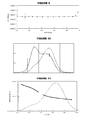
Figure 1 shows a calibration curve of six dextrans of known hydrodynamic sizes. -
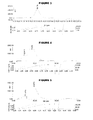
Figures 2 to 5 show HPGPC analysis of CRM197 conjugates from serogroups A, C, W135 and Y. -
Figure 6 shows the adjusted voltage output of known concentrations, for dn/dc calibration inFigures 7 and 8 . -
Figure 9 shows a Debye plot from SEC-MALS, andFigure 10 shows a superimposition of the RI signal and the 90° MALS signal. -
Figures 11 to 14 show molar mass analyses by SEC-MALS for CRM197 conjugates from serogroups A, C, W135 and Y. - CRM197 conjugates of oligosaccharides from serogroups A, C, W135 and Y of meningococcus were prepared as generally described in reference 51. Each of these conjugates was analysed by HPGPC and SEC-MALS according to the invention.
- Glycoconjugate vaccines generally consist of an array of glycoforms with a range of saccharides of different lengths, attached to a protein carrier at multiple sites. HPGPC was used to characterise the meningococcal glycoconjugates in terms of molecular size, by determining their hydrodynamic size and size distribution.
- Calibration used a set of six dextrans with hydrodynamic size ranging from 17 to 115 Å. The HPGPC analysis of the standards in shown in
figure 1 . Standard molecular weights and calculated molecular weights were as follows:Standard 115360 54130 26000 91840 38560 17590 Calculated 115666 53847 25425 91514 39280 17767 - The dextran analysis was used to correlate the viscosity radius (Rη) with the GPC retention time using a third-order polynomial equation [54,55]:

where: Mp = apical Mw and [η] = intrinsic viscosity in dL/g The viscosity radii of the conjugates were calculated from this equation, which uses intrinsic viscosity and Mw to account for the effect that shape of the molecule has on retention. - The analyses of individual conjugates are shown in
figures 2 to 5 . The hydrodynamic sizes were calculated as follows:Serogroup A C W135 Y Size (Å) 57.1 57.0 68.7 63.3 Polydispersity 1.032 1.018 1.040 1.035 - As example conditions for the analysis, the serogroup A conjugate was analysed in a 50µl injection volume on a TSK-Gel G4000SW ( 300 x 7,5mm ID), with a 0.1M sodium phosphate / 0.2M ammonium sulphate mobile phase, pH 7.0. The flow rate was 0.5ml/min. A Waters 410 refaction index detector was used.
- Prior to SEC-MALS analysis, the refractive indices (dn/dc) of the conjugates were determined under the anlysis conditions. An example volt output for set concentration is shown in
Figure 6 . This output leads to the standard curves shown inFigures 7 and 8 . Calculated values were as follows:Serogroup A C W135 Y dn/dc 0.163 0.190 0.159 0.201 - The conjugates were analysed by SEC-MALS. The molar mass of the samples were determined at each data slice of a SEC peak, as seen from a typical Debye plot in
Figure 9 . The molar mass was determined from the intercept of the plot [56-58]. The RI signal (blue), proportional to concentration, and the 90° MALS detector (red), proportional to concentration and molar mass, can be superimposed (Figure 10 ). - The analyses of molar mass (grams per mole) are shown in
Figures 11 to 14 . The analyses show that the MenA, MenW135 and MenY glycoconjugates have a major peak with a low concentration shoulder of higher MW, while the MenC conjugate has a single peak of more homogeneous material. - The results of the analyses for the peaks (MW in kDa; polydispersity in Mw/Mn) were as follows:
A C W135 Y Major peak MW 88.540 85.230 110.100 84.650 Polydispersity 1.012 1.011 1.049 1.050 Shoulder MW 190.000 - 485.800 347.200 Polydispersity 1.053 - 1.090 1.096 - It will be understood that the invention has been described by way of example only and modifications may be made whilst remaining within the scope and spirit of the invention.
-
- [1] Vaccines (eds. Plotkin et al.) 4th edition, ISBN: 0721696880.
- [2] Baker et al. (2003) J Infect Dis 188:66-73.
- [3] Theilacker et al. (2003) Infect Immun 71:3875-84.
- [4] Anonymous (2003) Drugs R D 4:383-5.
- [5] Ravenscroft et al. (1999) Vaccine 17:2802-2816.
- [6] Paoletti et al. (1992) J Clin Invest 89:203-9.
- [7] Anderson et al. (1986) J Immunol 137:1181-6 .
- [8] Jones (2001) Curr Opin Investig Drugs 2:47-49.
- [9] D'Ambra et al. (2000) Dev Biol Basel 103:241-242.
- [10]
W02005/033148 . - [11] Jumel et al. (2002) Biotechnol Appl Biochem 36:219-226.
- [12] Ramsay et al. (2001) Lancet 357(9251):195-196.
- [13] Lindberg (1999) Vaccine 17 Supp12:S28-36.
- [14] Buttery & Moxon (2000) J R Coll Physicians Lond 34:163-168.
- [15] Ahmad & Chapnick (1999) Infect Dis Clin North Am 13:113-133, vii.
- [16] Goldblatt (1998) J. Med. Microbiol. 47:563-567.
- [17] European patent
0477508 . - [18]
US patent 5,306,492 . - [19]
WO98/42721 - [20] Conjugate Vaccines (eds. Cruse et al.) ISBN 3805549326, particularly vol. 10:48-114.
- [21] Hermanson (1996) Bioconjugate Techniques ISBN: 0123423368 or 012342335X.
- [22]
US patent 4,761,283 - [23]
US patent 4,356,170 - [24]
WO00/10599 - [25] Gever et al. Med. Microbiol. Immunol, 165 : 171-288 (1979).
- [26]
US patent 4,057,685 . - [27]
US patents 4,673,574 ;4,761,283 ;4,808,700 . - [28]
US patent 4,459,286 . - [29]
US patent 4,965,338 - [30]
US patent 4,663,160 . - [31] Anonymous (Jan 2002) Research Disclosure, 453077.
- [32] Anderson (1983) Infect Immun 39(1):233-238.
- [33] Anderson et al. (1985) J Clin Invest 76(1):52-59.
- [34]
EP-A-0372501 . - [35]
EP-A-0378881 . - [36]
EP-A-0427347 . - [37]
WO93/17712 - [38]
WO94/03208 - [39]
WO98/58668 - [40]
EP-A-0471177 . - [41]
WO91/01146 - [42] Falugi et al. (2001) Eur J Immunol 31:3816-3824.
- [43]
EP-A-0594610 . - [44]
WO00/56360 - [45]
WO02/091998 - [46]
WO01/72337 - [47]
WO00/61761 - [48]
WO99/42130 - [49]
WO96/40242 - [50]
WO02/058737 - [51]
WO03/007985 - [52] Rennels et al. (2002) Pediatr Infect Dis J 21:978-979.
- [53] Campbell et al. (2002) J Infect Dis 186:1848-1851.
- [54] Kunitani et al. (1991) J Chrom 588:125ff.
- [55] Kunitani et al. (1993) J Chrom 632:19ff.
- [56] Wyatt (1997) Instrumentation Science & Technology 25(1):1ff.
- [57] Wen et al. (1996) Anal Biochem 240:155ff.
- [58] Rollings (1992) in Laser Light Scattering in Biochemistry, chapter 19.
- [59]
WO02/09643 - [60] Katial et al. (2002) Infect Immun 70:702-707.
- [61]
WO01/52885 - [62] European patent
0301992 . - [63] Bjune et al. (1991) Lancet 338(8775):1093-1096.
- [64] Fukasawa et al. (1999) Vaccine 17:2951-2958.
- [65]
WO02/09746 - [66] Rosenqvist et al. (1998) Dev. Biol. Stand. 92:323-333.
- [67] Watson (2000) Pediatr Infect Dis J 19:331-332.
- [68] Rubin (2000) Pediatr Clin North Am 47:269-285, v.
- [69] Jedrzejas (2001) Microbiol Mol Biol Rev 65:187-207.
- [70] Bell (2000) Pediatr Infect Dis J 19:1187-1188.
- [71] Iwarson (1995) APMIS 103:321-326.
- [72] Gerlich et al. (1990) Vaccine 8 Supp1:S63-68 & 79-80.
- [73] Gustafsson et al. (1996) N. Engl. J. Med. 334:349-355.
- [74] Rappuoli et al. (1991) TIBTECH 9:232-238.
- [75] Vaccines (1988) eds. Plotkin & Mortimer. ISBN 0-7216-1946-0.
- [76] Del Guidice et al. (1998) Molecular Aspects of Medicine 19:1-70.
- [77] Sutter et al. (2000) Pediatr Clin North Am 47:287-308.
- [78] Zimmerman & Spann (1999) Am Fam Physician 59:113-118, 125-126.
- The invention also provides the following numbered embodiments:
- 1. A process for measuring the molecular size of a conjugated saccharide antigen within a sample, comprising a step of analysing the sample by gel permeation chromatography.
- 2. A process for measuring the molar mass of a conjugated saccharide antigen within a sample, comprising a step of analysing the sample by SEC MALS.
- 3. The process of
embodiment 1 or embodiment 2, wherein the saccharide is a bacterial capsular saccharide. - 4. The process of embodiment 3, wherein the capsular saccharide is from serogroup A, C, W135 or Y of Neisseria meningitidis.
- 5. The process of
embodiment 4, wherein the saccharide is an oligosaccharide. - 6. The process of any preceding embodiment, wherein the conjugate has a protein carrier.
- 7. The process of
embodiment 6, wherein the protein carrier is CRM197 or a diphtheria toxoid. - 8. A composition comprising a conjugate of a capsular saccharide from serogroup A N.meningitidis, wherein the molecular size of the conjugate is 57.1±20% Å and/or the molar mass of the conjugate is 88.5±20% kDa.
- 9. A composition comprising a conjugate of a capsular saccharide from serogroup C N.meningitidis, wherein the molecular size of the conjugate is 57.0±20% Å and/or the molar mass of the conjugate is 85.2±20% kDa.
- 10. A composition comprising a conjugate of a capsular saccharide from serogroup W135 N.meningitidis, wherein the molecular size of the conjugate is 68.7±20% Å and/or the molar mass of the conjugate is 110.1±20% kDa.
- 11. A composition comprising a conjugate of a capsular saccharide from serogroup Y N.meningitidis, wherein the molecular size of the conjugate is 63.3±20% Å and/or the molar mass of the conjugate is 84.7±20% kDa.
- 12. A composition comprising two or more of the conjugates as defined in embodiments 8 to 11.
- 13. Two batches of a vaccine, wherein: (a) both of the batches of vaccine comprise: (i) a conjugate of a capsular saccharide from serogroup A of Neisseria meningitidis; (ii) a conjugate of a capsular saccharide from serogroup C of Neisseria meningitidis; (iii) a conjugate of a capsular saccharide from serogroup W135 of Neisseria meningitidis; (iv) a conjugate of a capsular saccharide from serogroup Y of Neisseria meningitidis; (b) the molecular size of the serogroup A saccharide in the first batch is A1 and the molecular size of the serogroup A saccharide in the second batch is A2; (c) the molecular size of the serogroup C saccharide in the first batch is C1 and the molecular size of the serogroup C saccharide in the second batch is C2; (d) the molecular size of the serogroup W135 saccharide in the first batch is W1 and the molecular size of the serogroup W135 saccharide in the second batch is W2; (e) the molecular size of the serogroup Y saccharide in the first batch is Y1 and the molecular size of the serogroup Y saccharide in the second batch is Y2; (f) the ratios A1/A2, C1/C2, W1/W2 and Y1/Y2 are each between 0.90 and 1.10.
- 14. Two batches of a vaccine, wherein: (a) both of the batches of vaccine comprise: (i) a conjugate of a capsular saccharide from serogroup A of Neisseria meningitidis; (ii) a conjugate of a capsular saccharide from serogroup C of Neisseria meningitidis; (iii) a conjugate of a capsular saccharide from serogroup W135 of Neisseria meningitidis; (iv) a conjugate of a capsular saccharide from serogroup Y of Neisseria meningitidis; (b) the molar mass of the serogroup A saccharide in the first batch is A1 and the molar mass of the serogroup A saccharide in the second batch is A2; (c) the molar mass of the serogroup C saccharide in the first batch is C1 and the molar mass of the serogroup C saccharide in the second batch is C2; (d) the molar mass of the serogroup W135 saccharide in the first batch is W1 and the molar mass of the serogroup W135 saccharide in the second batch is W2; (e) the molar mass of the serogroup Y saccharide in the first batch is Y1 and the molar mass of the serogroup Y saccharide in the second batch is Y2; (f) the ratios A1/A2, C1/C2, W1/W2 and Y1/Y2 are each between 0.90 and 1.10.
Claims (9)
- A composition comprising a conjugate of a capsular saccharide from a) serogroup A N.meningitidis, wherein the molecular size of the conjugate is 57.12±20% Å and/or the molar mass of the conjugate is 88.5±20% kDa; or b) serogroup C N.meningitidis, wherein the molecular size of the conjugate is 57.0±20% Å and/or the molar mass of the conjugate is 85.2±20% kDa; or c) serogroup W135 N.meningitidis, wherein the molecular size of the conjugate is 68.7±20% Å and/or the molar mass of the conjugate is 110.1±20% kDa; or d) serogroup Y N.meningitidis, wherein the molecular size of the conjugate is 63.3±20% Å and/or the molar mass of the conjugate is 84.7±20% kDa.
- A composition comprising two or more of the conjugates as defined in claim 1.
- Two batches of a vaccine, wherein:(a) both of the batches of vaccine comprise: (i) a conjugate of a capsular saccharide from serogroup A of Neisseria meningitidis; (ii) a conjugate of a capsular saccharide from serogroup C of Neisseria meningitidis; (iii) a conjugate of a capsular saccharide from serogroup W135 of Neisseria meningitidis; (iv) a conjugate of a capsular saccharide from serogroup Y of Neisseria meningitidis; (b) the molecular size of the serogroup A saccharide in the first batch is A1 and the molecular size of the serogroup A saccharide in the second batch is A2; (c) the molecular size of the serogroup C saccharide in the first batch is C1 and the molecular size of the serogroup C saccharide in the second batch is C2; (d) the molecular size of the serogroup W135 saccharide in the first batch is W1 and the molecular size of the serogroup W135 saccharide in the second batch is W2; (e) the molecular size of the serogroup Y saccharide in the first batch is Y1 and the molecular size of the serogroup Y saccharide in the second batch is Y2; (f) the ratios A1/A2, C1/C2, W1/W2 and Y1/Y2 are each between 0.90 and 1.10; or (a) both of the batches of vaccine comprise: (i) a conjugate of a capsular saccharide from serogroup A of Neisseria meningitidis; (ii) a conjugate of a capsular saccharide from serogroup C of Neisseria meningitidis; (iii) a conjugate of a capsular saccharide from serogroup W135 of Neisseria meningitidis; (iv) a conjugate of a capsular saccharide from serogroup Y of Neisseria meningitidis; (b) the molar mass of the serogroup A saccharide in the first batch is A1 and the molar mass of the serogroup A saccharide in the second batch is A2; (c) the molar mass of the serogroup C saccharide in the first batch is C1 and the molar mass of the serogroup C saccharide in the second batch is C2; (d) the molar mass of the serogroup W135 saccharide in the first batch is W1 and the molar mass of the serogroup W135 saccharide in the second batch is W2; (e) the molar mass of the serogroup Y saccharide in the first batch is Y1 and the molar mass of the serogroup Y saccharide in the second batch is Y2; (f) the ratios A1/A2, C1/C2, W1/W2 and Y1/Y2 are each between 0.90 and 1.10.
- A process for measuring a) the molecular size of a conjugated saccharide antigen within a sample, comprising a step of analysing the sample by gel permeation chromatography; or b) the molar mass of a conjugated saccharide antigen within a sample, comprising a step of analysing the sample by SEC MALS.
- The process of claim 4, wherein the saccharide is a bacterial capsular saccharide.
- The process of claim 5, wherein the capsular saccharide is from serogroup A, C, W135 or Y of Neisseria meningitidis.
- The process of claim 6, wherein the saccharide is an oligosaccharide.
- The process of any one of claims 4 to 7, wherein the conjugate has a protein carrier.
- The process of claim 8, wherein the protein carrier is CRM197 or a diphtheria toxoid.
Applications Claiming Priority (3)
| Application Number | Priority Date | Filing Date | Title |
|---|---|---|---|
| GBGB0413868.1A GB0413868D0 (en) | 2004-06-21 | 2004-06-21 | Dimensional anlaysis of saccharide conjugates |
| EP05770612.9A EP1778291B1 (en) | 2004-06-21 | 2005-06-21 | Dimensional analysis of saccharide conjugates with gpc & sec-mals |
| PCT/IB2005/002532 WO2006000920A2 (en) | 2004-06-21 | 2005-06-21 | Dimensional analysis of saccharide conjugates with gpc & sec-mals |
Related Parent Applications (2)
| Application Number | Title | Priority Date | Filing Date |
|---|---|---|---|
| EP05770612.9 Division | 2005-06-21 | ||
| EP05770612.9A Division EP1778291B1 (en) | 2004-06-21 | 2005-06-21 | Dimensional analysis of saccharide conjugates with gpc & sec-mals |
Publications (2)
| Publication Number | Publication Date |
|---|---|
| EP2374473A1 true EP2374473A1 (en) | 2011-10-12 |
| EP2374473B1 EP2374473B1 (en) | 2018-07-18 |
Family
ID=32750313
Family Applications (2)
| Application Number | Title | Priority Date | Filing Date |
|---|---|---|---|
| EP05770612.9A Expired - Lifetime EP1778291B1 (en) | 2004-06-21 | 2005-06-21 | Dimensional analysis of saccharide conjugates with gpc & sec-mals |
| EP11163751.8A Expired - Lifetime EP2374473B1 (en) | 2004-06-21 | 2005-06-21 | Dimensional analysis of saccharide conjugates with GPC & SEC-MALS |
Family Applications Before (1)
| Application Number | Title | Priority Date | Filing Date |
|---|---|---|---|
| EP05770612.9A Expired - Lifetime EP1778291B1 (en) | 2004-06-21 | 2005-06-21 | Dimensional analysis of saccharide conjugates with gpc & sec-mals |
Country Status (13)
| Country | Link |
|---|---|
| US (2) | US8163296B2 (en) |
| EP (2) | EP1778291B1 (en) |
| JP (5) | JP2008503716A (en) |
| CN (1) | CN1976725B (en) |
| AU (1) | AU2005256961B2 (en) |
| BR (1) | BRPI0512281A (en) |
| CA (1) | CA2571565C (en) |
| ES (2) | ES2443465T3 (en) |
| GB (1) | GB0413868D0 (en) |
| MX (2) | MXPA06015188A (en) |
| NZ (1) | NZ552449A (en) |
| RU (1) | RU2422156C2 (en) |
| WO (1) | WO2006000920A2 (en) |
Families Citing this family (28)
| Publication number | Priority date | Publication date | Assignee | Title |
|---|---|---|---|---|
| MX339524B (en) | 2001-10-11 | 2016-05-30 | Wyeth Corp | NEW IMMUNOGENIC COMPOSITIONS FOR THE PREVENTION AND TREATMENT OF MENINGOCOCICAL DISEASE. |
| GB0413868D0 (en) * | 2004-06-21 | 2004-07-21 | Chiron Srl | Dimensional anlaysis of saccharide conjugates |
| LT2351578T (en) * | 2005-06-27 | 2017-04-10 | Glaxosmithkline Biologicals S.A. | METHOD OF RECEIVING VACCINES |
| AR064642A1 (en) | 2006-12-22 | 2009-04-15 | Wyeth Corp | POLINUCLEOTIDE VECTOR THAT INCLUDES IT RECOMBINATING CELL THAT UNDERSTANDS THE VECTOR POLYPEPTIDE, ANTIBODY, COMPOSITION THAT UNDERSTANDS THE POLINUCLEOTIDE, VECTOR, RECOMBINATING CELL POLYPEPTIDE OR ANTIBODY, USE OF THE COMPOSITION AND A COMPOSITION AND A METHOD |
| TW201009337A (en) | 2008-05-30 | 2010-03-01 | Intervet Int Bv | Analytical method to monitor vaccine potency and stability |
| WO2010141426A1 (en) | 2009-06-01 | 2010-12-09 | Waters Technologies Corporation | Hybrid material for chromatographic separations |
| US8195405B2 (en) * | 2009-06-30 | 2012-06-05 | Wyatt Technology Corporation | Method for characterizing reversible association of macromolecules at high concentration |
| PL2493498T3 (en) * | 2009-10-30 | 2017-08-31 | Glaxosmithkline Biologicals Sa | Purification of staphylococcus aureus type 5 and type 8 capsular saccharides |
| EP4023330A1 (en) * | 2009-12-15 | 2022-07-06 | Waters Technologies Corporation | Device and methods for performing size exclusion chromatography |
| CN102905728B (en) * | 2010-05-26 | 2015-11-25 | 西莱克塔生物科技公司 | Nanocarrier compositions with uncoupled adjuvants |
| US12623205B2 (en) | 2010-07-26 | 2026-05-12 | Waters Technologies Corporation | Superficially porous materials comprising a substantially nonporous hybrid core having narrow particle size distribution |
| JP6199184B2 (en) | 2010-07-26 | 2017-09-20 | ウオーターズ・テクノロジーズ・コーポレイシヨン | Surface porous material comprising a substantially non-porous core with a narrow particle size distribution, process for its production and its use for chromatographic separation |
| RU2580620C2 (en) | 2010-08-23 | 2016-04-10 | ВАЙЕТ ЭлЭлСи | STABLE COMPOSITIONS OF ANTIGENS Neisseria meningitidis rLP2086 |
| WO2012032489A1 (en) | 2010-09-10 | 2012-03-15 | Wyeth Llc | Non-lipidated variants of neisseria meningitidis orf2086 antigens |
| CA2865745C (en) | 2012-03-09 | 2018-01-09 | Pfizer Inc. | Neisseria meningitidis compositions and methods thereof |
| SA115360586B1 (en) | 2012-03-09 | 2017-04-12 | فايزر انك | Neisseria meningitidis compositions and methods thereof |
| US10481164B2 (en) | 2012-03-26 | 2019-11-19 | Amgen Inc. | Method for using light scattering in real time to directly monitor and control impurity removal in purification processes |
| US9802987B2 (en) | 2013-03-08 | 2017-10-31 | Pfizer Inc. | Immunogenic fusion polypeptides |
| RU2662968C2 (en) | 2013-09-08 | 2018-07-31 | Пфайзер Инк. | Immunogenic composition for neisseria meningitidis (options) |
| AU2016221318B2 (en) | 2015-02-19 | 2020-06-25 | Pfizer Inc. | Neisseria meningitidis compositions and methods thereof |
| RS65362B1 (en) | 2016-09-02 | 2024-04-30 | Sanofi Pasteur Inc | Neisseria meningitidis vaccine |
| US11951165B2 (en) | 2016-12-30 | 2024-04-09 | Vaxcyte, Inc. | Conjugated vaccine carrier proteins |
| MX2019007910A (en) | 2016-12-30 | 2019-12-05 | Sutrovax Inc | POLYPEPTIDE-ANTIGEN CONJUGATES WITH NON-NATURAL AMINO ACIDS. |
| US10183070B2 (en) | 2017-01-31 | 2019-01-22 | Pfizer Inc. | Neisseria meningitidis compositions and methods thereof |
| CN109459523B (en) * | 2017-09-06 | 2022-11-08 | 上海绿谷制药有限公司 | A kind of method for measuring the weight-average molecular weight and content of acid sugar soluble salt |
| CN109459504B (en) * | 2017-09-06 | 2022-05-27 | 绿谷(上海)医药科技有限公司 | Method for measuring weight average molecular weight and content of polyguluronic acid sulfate |
| EP4034157A1 (en) | 2019-09-27 | 2022-08-03 | Pfizer Inc. | Neisseria meningitidis compositions and methods thereof |
| JP7409055B2 (en) * | 2019-12-05 | 2024-01-09 | 株式会社島津製作所 | How to correct detector output and multi-angle light scattering detectors |
Citations (37)
| Publication number | Priority date | Publication date | Assignee | Title |
|---|---|---|---|---|
| US4057685A (en) | 1972-02-02 | 1977-11-08 | Abbott Laboratories | Chemically modified endotoxin immunizing agent |
| US4356170A (en) | 1981-05-27 | 1982-10-26 | Canadian Patents & Development Ltd. | Immunogenic polysaccharide-protein conjugates |
| US4459286A (en) | 1983-01-31 | 1984-07-10 | Merck & Co., Inc. | Coupled H. influenzae type B vaccine |
| US4663160A (en) | 1983-03-14 | 1987-05-05 | Miles Laboratories, Inc. | Vaccines for gram-negative bacteria |
| US4673574A (en) | 1981-08-31 | 1987-06-16 | Anderson Porter W | Immunogenic conjugates |
| US4761283A (en) | 1983-07-05 | 1988-08-02 | The University Of Rochester | Immunogenic conjugates |
| EP0301992A2 (en) | 1987-07-30 | 1989-02-01 | Centro Nacional De Biopreparados | Vaccine against group B Neisseria meningitidis, gammaglobulin and transfer factor |
| US4808700A (en) | 1984-07-09 | 1989-02-28 | Praxis Biologics, Inc. | Immunogenic conjugates of non-toxic E. coli LT-B enterotoxin subunit and capsular polymers |
| EP0372501A2 (en) | 1988-12-07 | 1990-06-13 | BEHRINGWERKE Aktiengesellschaft | Synthetic antigens, method for their preparation and their use |
| EP0378881A1 (en) | 1989-01-17 | 1990-07-25 | ENIRICERCHE S.p.A. | Synthetic peptides and their use as universal carriers for the preparation of immunogenic conjugates suitable for the development of synthetic vaccines |
| US4965338A (en) | 1988-08-18 | 1990-10-23 | General Electric Company | PBT with improved tracking resistance |
| WO1991001146A1 (en) | 1989-07-14 | 1991-02-07 | Praxis Biologics, Inc. | Cytokine and hormone carriers for conjugate vaccines |
| EP0427347A1 (en) | 1989-11-10 | 1991-05-15 | ENIRICERCHE S.p.A. | Synthetic peptides useful as universal carriers for the preparation of immunogenic conjugates and their use in the development of synthetic vaccines |
| EP0471177A2 (en) | 1990-08-13 | 1992-02-19 | American Cyanamid Company | Filamentous hemagglutinin of bordetella pertussis as a carrier molecule for conjugate vaccines |
| EP0477508A1 (en) | 1990-09-28 | 1992-04-01 | American Cyanamid Company | Improved oligosaccharide conjugate vaccines |
| WO1993017712A2 (en) | 1992-03-06 | 1993-09-16 | Biocine Spa | Conjugates formed from heat shock proteins and oligo- or polysaccharides |
| WO1994003208A1 (en) | 1992-07-30 | 1994-02-17 | Yeda Research And Development Company Ltd. | Conjugates of poorly immunogenic antigens and synthetic peptide carriers and vaccines comprising them |
| EP0594610A1 (en) | 1990-05-31 | 1994-05-04 | Arne Forsgren | PROTEIN D - AN IgD-BINDING PROTEIN OF HAEMOPHILUS INFLUENZAE |
| WO1996040242A1 (en) | 1995-06-07 | 1996-12-19 | Smithkline Beecham Biologicals S.A. | Vaccine comprising a polysaccharide antigen-carrier protein conjugate and free carrier protein |
| WO1998042721A1 (en) | 1997-03-24 | 1998-10-01 | Andrew Lees | Uronium salt conjugate vaccines |
| WO1998058668A2 (en) | 1997-06-20 | 1998-12-30 | Microbiological Research Authority | Bordetella pertussis antigens as carriers in vaccinating conjugates and oral vaccines comprising bordetella pertussis fimbriae |
| WO1999042130A1 (en) | 1998-02-23 | 1999-08-26 | Connaught Laboratories Limited | Multi-oligosaccharide glycoconjugate bacterial meningitis vaccines |
| WO2000010599A2 (en) | 1998-08-19 | 2000-03-02 | North American Vaccine, Inc. | IMMUNOGENIC β-PROPIONAMIDO-LINKED POLYSACCHARIDE PROTEIN CONJUGATE USEFUL AS A VACCINE PRODUCED USING AN N-ACRYLOYLATED POLYSACCHARIDE |
| WO2000056360A2 (en) | 1999-03-19 | 2000-09-28 | Smithkline Beecham Biologicals S.A. | Vaccine against antigens from bacteriae |
| WO2000061761A2 (en) | 1999-04-09 | 2000-10-19 | Techlab, Inc. | Recombinant clostridium toxin a protein carrier for polysaccharide conjugate vaccines |
| WO2001052885A1 (en) | 2000-01-17 | 2001-07-26 | Chiron Spa | Outer membrane vesicle (omv) vaccine comprising n. meningitidis serogroup b outer membrane proteins |
| WO2001072337A1 (en) | 2000-03-27 | 2001-10-04 | Microbiological Research Authority | Proteins for use as carriers in conjugate vaccines |
| WO2002009643A2 (en) | 2000-07-27 | 2002-02-07 | Children's Hospital & Research Center At Oakland | Vaccines for broad spectrum protection against diseases caused by neisseria meningitidis |
| WO2002009746A2 (en) | 2000-07-31 | 2002-02-07 | Glaxosmithkline Biologicals S.A. | Vaccines comprising outer membrane vesciles from gram negative bacteria |
| WO2002058737A2 (en) | 2001-01-23 | 2002-08-01 | Aventis Pasteur | Multivalent meningococcal polysaccharide-protein conjugate vaccine |
| WO2002091998A2 (en) | 2001-05-11 | 2002-11-21 | Aventis Pasteur, Inc. | Novel meningitis conjugate vaccine |
| WO2003007985A2 (en) | 2001-06-20 | 2003-01-30 | Chiron Srl. | Capsular polysaccharide solubilisation and combination vaccines |
| WO2004032958A1 (en) * | 2002-10-11 | 2004-04-22 | Chiron Srl | Polypeptide-vaccines for broad protection against hypervirulent meningococcal lineages |
| WO2004067030A2 (en) * | 2003-01-30 | 2004-08-12 | Chiron Srl | Injectable vaccines against multiple meningococcal serogroups |
| WO2005033148A1 (en) | 2003-10-02 | 2005-04-14 | Chiron Srl | Hypo- and hyper-acetylated meningococcal capsular saccharides |
| WO2005032583A2 (en) * | 2003-10-02 | 2005-04-14 | Chiron Srl | Liquid vaccines for multiple meningococcal serogroups |
| WO2005103230A2 (en) * | 2004-04-22 | 2005-11-03 | Chiron Srl | Soy peptone as a nitrogen source in preparing meningococcal conjugates |
Family Cites Families (1)
| Publication number | Priority date | Publication date | Assignee | Title |
|---|---|---|---|---|
| GB0413868D0 (en) * | 2004-06-21 | 2004-07-21 | Chiron Srl | Dimensional anlaysis of saccharide conjugates |
-
2004
- 2004-06-21 GB GBGB0413868.1A patent/GB0413868D0/en not_active Ceased
-
2005
- 2005-06-21 CN CN2005800204436A patent/CN1976725B/en not_active Expired - Lifetime
- 2005-06-21 AU AU2005256961A patent/AU2005256961B2/en not_active Expired
- 2005-06-21 MX MXPA06015188A patent/MXPA06015188A/en active IP Right Grant
- 2005-06-21 EP EP05770612.9A patent/EP1778291B1/en not_active Expired - Lifetime
- 2005-06-21 RU RU2007102016/15A patent/RU2422156C2/en active IP Right Revival
- 2005-06-21 NZ NZ552449A patent/NZ552449A/en not_active IP Right Cessation
- 2005-06-21 ES ES05770612.9T patent/ES2443465T3/en not_active Expired - Lifetime
- 2005-06-21 US US11/630,545 patent/US8163296B2/en active Active
- 2005-06-21 EP EP11163751.8A patent/EP2374473B1/en not_active Expired - Lifetime
- 2005-06-21 WO PCT/IB2005/002532 patent/WO2006000920A2/en not_active Ceased
- 2005-06-21 ES ES11163751.8T patent/ES2688796T3/en not_active Expired - Lifetime
- 2005-06-21 CA CA2571565A patent/CA2571565C/en not_active Expired - Lifetime
- 2005-06-21 JP JP2007516078A patent/JP2008503716A/en not_active Withdrawn
- 2005-06-21 BR BRPI0512281-3A patent/BRPI0512281A/en not_active Application Discontinuation
-
2006
- 2006-12-20 MX MX2011011568A patent/MX344621B/en unknown
-
2011
- 2011-09-02 JP JP2011192126A patent/JP2011246490A/en not_active Withdrawn
-
2012
- 2012-04-24 US US13/454,658 patent/US20120207781A1/en not_active Abandoned
-
2014
- 2014-03-11 JP JP2014047555A patent/JP6218327B2/en not_active Expired - Lifetime
-
2015
- 2015-07-21 JP JP2015143718A patent/JP2015180707A/en active Pending
-
2017
- 2017-04-21 JP JP2017084454A patent/JP6661568B2/en not_active Expired - Lifetime
Patent Citations (38)
| Publication number | Priority date | Publication date | Assignee | Title |
|---|---|---|---|---|
| US4057685A (en) | 1972-02-02 | 1977-11-08 | Abbott Laboratories | Chemically modified endotoxin immunizing agent |
| US4356170A (en) | 1981-05-27 | 1982-10-26 | Canadian Patents & Development Ltd. | Immunogenic polysaccharide-protein conjugates |
| US4673574A (en) | 1981-08-31 | 1987-06-16 | Anderson Porter W | Immunogenic conjugates |
| US4459286A (en) | 1983-01-31 | 1984-07-10 | Merck & Co., Inc. | Coupled H. influenzae type B vaccine |
| US4663160A (en) | 1983-03-14 | 1987-05-05 | Miles Laboratories, Inc. | Vaccines for gram-negative bacteria |
| US4761283A (en) | 1983-07-05 | 1988-08-02 | The University Of Rochester | Immunogenic conjugates |
| US4808700A (en) | 1984-07-09 | 1989-02-28 | Praxis Biologics, Inc. | Immunogenic conjugates of non-toxic E. coli LT-B enterotoxin subunit and capsular polymers |
| EP0301992A2 (en) | 1987-07-30 | 1989-02-01 | Centro Nacional De Biopreparados | Vaccine against group B Neisseria meningitidis, gammaglobulin and transfer factor |
| US4965338A (en) | 1988-08-18 | 1990-10-23 | General Electric Company | PBT with improved tracking resistance |
| EP0372501A2 (en) | 1988-12-07 | 1990-06-13 | BEHRINGWERKE Aktiengesellschaft | Synthetic antigens, method for their preparation and their use |
| EP0378881A1 (en) | 1989-01-17 | 1990-07-25 | ENIRICERCHE S.p.A. | Synthetic peptides and their use as universal carriers for the preparation of immunogenic conjugates suitable for the development of synthetic vaccines |
| WO1991001146A1 (en) | 1989-07-14 | 1991-02-07 | Praxis Biologics, Inc. | Cytokine and hormone carriers for conjugate vaccines |
| EP0427347A1 (en) | 1989-11-10 | 1991-05-15 | ENIRICERCHE S.p.A. | Synthetic peptides useful as universal carriers for the preparation of immunogenic conjugates and their use in the development of synthetic vaccines |
| EP0594610A1 (en) | 1990-05-31 | 1994-05-04 | Arne Forsgren | PROTEIN D - AN IgD-BINDING PROTEIN OF HAEMOPHILUS INFLUENZAE |
| EP0471177A2 (en) | 1990-08-13 | 1992-02-19 | American Cyanamid Company | Filamentous hemagglutinin of bordetella pertussis as a carrier molecule for conjugate vaccines |
| EP0477508A1 (en) | 1990-09-28 | 1992-04-01 | American Cyanamid Company | Improved oligosaccharide conjugate vaccines |
| US5306492A (en) | 1990-09-28 | 1994-04-26 | American Cyanamid Company | Oligosaccharide conjugate vaccines |
| WO1993017712A2 (en) | 1992-03-06 | 1993-09-16 | Biocine Spa | Conjugates formed from heat shock proteins and oligo- or polysaccharides |
| WO1994003208A1 (en) | 1992-07-30 | 1994-02-17 | Yeda Research And Development Company Ltd. | Conjugates of poorly immunogenic antigens and synthetic peptide carriers and vaccines comprising them |
| WO1996040242A1 (en) | 1995-06-07 | 1996-12-19 | Smithkline Beecham Biologicals S.A. | Vaccine comprising a polysaccharide antigen-carrier protein conjugate and free carrier protein |
| WO1998042721A1 (en) | 1997-03-24 | 1998-10-01 | Andrew Lees | Uronium salt conjugate vaccines |
| WO1998058668A2 (en) | 1997-06-20 | 1998-12-30 | Microbiological Research Authority | Bordetella pertussis antigens as carriers in vaccinating conjugates and oral vaccines comprising bordetella pertussis fimbriae |
| WO1999042130A1 (en) | 1998-02-23 | 1999-08-26 | Connaught Laboratories Limited | Multi-oligosaccharide glycoconjugate bacterial meningitis vaccines |
| WO2000010599A2 (en) | 1998-08-19 | 2000-03-02 | North American Vaccine, Inc. | IMMUNOGENIC β-PROPIONAMIDO-LINKED POLYSACCHARIDE PROTEIN CONJUGATE USEFUL AS A VACCINE PRODUCED USING AN N-ACRYLOYLATED POLYSACCHARIDE |
| WO2000056360A2 (en) | 1999-03-19 | 2000-09-28 | Smithkline Beecham Biologicals S.A. | Vaccine against antigens from bacteriae |
| WO2000061761A2 (en) | 1999-04-09 | 2000-10-19 | Techlab, Inc. | Recombinant clostridium toxin a protein carrier for polysaccharide conjugate vaccines |
| WO2001052885A1 (en) | 2000-01-17 | 2001-07-26 | Chiron Spa | Outer membrane vesicle (omv) vaccine comprising n. meningitidis serogroup b outer membrane proteins |
| WO2001072337A1 (en) | 2000-03-27 | 2001-10-04 | Microbiological Research Authority | Proteins for use as carriers in conjugate vaccines |
| WO2002009643A2 (en) | 2000-07-27 | 2002-02-07 | Children's Hospital & Research Center At Oakland | Vaccines for broad spectrum protection against diseases caused by neisseria meningitidis |
| WO2002009746A2 (en) | 2000-07-31 | 2002-02-07 | Glaxosmithkline Biologicals S.A. | Vaccines comprising outer membrane vesciles from gram negative bacteria |
| WO2002058737A2 (en) | 2001-01-23 | 2002-08-01 | Aventis Pasteur | Multivalent meningococcal polysaccharide-protein conjugate vaccine |
| WO2002091998A2 (en) | 2001-05-11 | 2002-11-21 | Aventis Pasteur, Inc. | Novel meningitis conjugate vaccine |
| WO2003007985A2 (en) | 2001-06-20 | 2003-01-30 | Chiron Srl. | Capsular polysaccharide solubilisation and combination vaccines |
| WO2004032958A1 (en) * | 2002-10-11 | 2004-04-22 | Chiron Srl | Polypeptide-vaccines for broad protection against hypervirulent meningococcal lineages |
| WO2004067030A2 (en) * | 2003-01-30 | 2004-08-12 | Chiron Srl | Injectable vaccines against multiple meningococcal serogroups |
| WO2005033148A1 (en) | 2003-10-02 | 2005-04-14 | Chiron Srl | Hypo- and hyper-acetylated meningococcal capsular saccharides |
| WO2005032583A2 (en) * | 2003-10-02 | 2005-04-14 | Chiron Srl | Liquid vaccines for multiple meningococcal serogroups |
| WO2005103230A2 (en) * | 2004-04-22 | 2005-11-03 | Chiron Srl | Soy peptone as a nitrogen source in preparing meningococcal conjugates |
Non-Patent Citations (51)
| Title |
|---|
| "Conjugate Vaccines", vol. 10, pages: 48 - 114 |
| "Vaccines" |
| "Vaccines", 1988 |
| AHMAD, CHAPNICK, INFECT DIS CLIN NORTH AM, vol. 13, 1999, pages 113 - 133 |
| ANDERSON ET AL., J CLIN INVEST, vol. 76, no. 1, 1985, pages 52 - 59 |
| ANDERSON ET AL., J IMMUNOL, vol. 137, 1986, pages 1181 - 6 |
| ANDERSON, INFECT IMMUN, vol. 39, no. 1, 1983, pages 233 - 238 |
| ANONYMOUS, DRUGS R D, vol. 4, 2003, pages 383 - 5 |
| ANONYMOUS, RESEARCH DISCLOSURE, January 2002 (2002-01-01), pages 453077 |
| BAKER ET AL., J INFECT DIS, vol. 188, 2003, pages 66 - 73 |
| BELL, PEDIATR INFECT DIS J, vol. 19, 2000, pages 1187 - 1188 |
| BJUNE ET AL., LANCET, vol. 338, no. 8775, 1991, pages 1093 - 1096 |
| BUTTERY, MOXON, JR COLL PHYSICIANS LOND, vol. 34, 2000, pages 163 - 168 |
| CAMPBELL ET AL., J INFECT DIS, vol. 186, 2002, pages 1848 - 1851 |
| D'AMBRA A J ET AL: "Absolute molecular-size and molar-mass analysis of meningococcal and pneumococcal conjugates and polysaccharide intermediates by size-exclusion chromatography with detection by multiangle light-scattering photometry and differential refractometry.", DEVELOPMENTS IN BIOLOGICALS. 2000, vol. 103, 2000, pages 241 - 242, XP009058013, ISSN: 1424-6074 * |
| D'AMBRA ET AL., DEV BIOL BASEL, vol. 103, 2000, pages 241 - 242 |
| DEL GUIDICE ET AL., MOLECULAR ASPECTS OF MEDICINE, vol. 19, 1998, pages 1 - 70 |
| FALUGI ET AL., EUR J IMMUNOL, vol. 31, 2001, pages 38L6 - 3824 |
| FUKASAWA ET AL., VACCINE, vol. 17, 1999, pages 2951 - 2958 |
| GERLICH ET AL., VACCINE, vol. 8, 1990, pages 63 - 68,79-80 |
| GEVER ET AL., MED. MICROBIOL. IMMUNOL, vol. 165, 1979, pages 171 - 288 |
| GOLDBLATT, J. MED. MICROBIOL., vol. 47, 1998, pages 563 - 567 |
| GUSTAFSSON ET AL., N. ENGL. J. MED., vol. 334, 1996, pages 349 - 355 |
| HERMANSON: "Bioconjugate Techniques", 1996 |
| HO M M ET AL: "Assessment of the stability and immunogenicity of meningococcal oligosaccharide C-CRM197 conjugate vaccines", VACCINE, BUTTERWORTH SCIENTIFIC. GUILDFORD, GB, vol. 19, no. 7-8, 22 November 2000 (2000-11-22), pages 716 - 725, XP004225388, ISSN: 0264-410X * |
| IWARSON, APMIS, vol. 103, 1995, pages 321 - 326 |
| JEDRZEJAS, MICROBIOL MOL BIOL REV, vol. 65, 2001, pages 187 - 207 |
| JONES, CURR OPIN INVESTIG DRUGS, vol. 2, 2001, pages 47 - 49 |
| JUMEL ET AL., BIOTECHNOL APPL BIOCHEM, vol. 36, 2002, pages 219 - 226 |
| JUMEL KORNELIA ET AL: "Evaluation of meningococcal C oligosaccharide conjugate vaccines by size-exclusion chromatography/multi-angle laser light scattering.", BIOTECHNOLOGY AND APPLIED BIOCHEMISTRY, vol. 36, no. 3, December 2002 (2002-12-01), pages 219 - 226, XP009058011, ISSN: 0885-4513 * |
| KATIAL ET AL., INFECT IMMUN, vol. 70, 2002, pages 702 - 707 |
| KUNITANI ET AL., J CHROM, vol. 632, 1993, pages 19FF |
| KUNITANI ET AL., JCHROM, vol. 588, 1991, pages 125FF |
| LEMERCINIER X ET AL: "Analytical procedures used in the control of bacterial glycoconjugate vaccines", PHARMACEUTICAL SCIENCES 1997 UNITED KINGDOM, vol. 3, no. 1, 1997, pages 19 - 23, XP009058020, ISSN: 1356-6881 * |
| LINDBERG, VACCINE, vol. 17, no. 12, 1999, pages 28 - 36 |
| PAOLETTI ET AL., J CLIN INVEST, vol. 89, 1992, pages 203 - 9 |
| PELTOLA H: "MENINGOCOCCAL VACCINES CURRENT STATUS AND FUTURE POSSIBILITIES", DRUGS, ADIS INTERNATIONAL LTD, AT, vol. 55, no. 3, March 1998 (1998-03-01), pages 347 - 366, XP008022620, ISSN: 0012-6667 * |
| RAMSAY ET AL., LANCET, vol. 357, no. 9251, 2001, pages 195 - 196 |
| RAPPUOLI ET AL., TIBTECH, vol. 9, 1991, pages 232 - 238 |
| RAVENSCROFT ET AL., VACCINE, vol. 17, 1999, pages 2802 - 2816 |
| RENNELS ET AL., PEDIATR INFECT DIS J, vol. 21, 2002, pages 978 - 979 |
| ROLLINGS: "Laser Light Scattering in Biochemistry", 1992 |
| ROSENQVIST ET AL., DEV. BIOL. STAND., vol. 92, 1998, pages 323 - 333 |
| RUBIN, PEDIATR CLIN NORTH AM, vol. 47, 2000, pages 269 - 285 |
| SUTTER ET AL., PEDIATR CLIN NORTH AM, vol. 47, 2000, pages 287 - 308 |
| THEILACKER ET AL., INFECT IMMUN, vol. 71, 2003, pages 3875 - 84 |
| VON HUNOLSTEIN C ET AL: "A routine high-performance size-exclusion chromatography to determine molecular size distribution of Haemophilus influenzae type b conjugate vaccines", VACCINE, BUTTERWORTH SCIENTIFIC. GUILDFORD, GB, vol. 17, no. 2, January 1999 (1999-01-01), pages 118 - 125, XP004139966, ISSN: 0264-410X * |
| WATSON, PEDIATR INFECT DIS J, vol. 19, 2000, pages 331 - 332 |
| WEN ET AL., ANAL BIOCHEM, vol. 240, 1996, pages 155FF |
| WYATT, INSTRUMENTATION SCIENCE & TECHNOLOGY, vol. 25, no. 1, 1997, pages 1FF |
| ZIMMERMAN, SPANN, AM FAM PHYSICIAN, vol. 59, 1999, pages 113 - 118,125-126 |
Also Published As
| Publication number | Publication date |
|---|---|
| WO2006000920A3 (en) | 2006-03-30 |
| CA2571565A1 (en) | 2006-01-05 |
| EP1778291A2 (en) | 2007-05-02 |
| GB0413868D0 (en) | 2004-07-21 |
| ES2443465T3 (en) | 2014-02-19 |
| JP6661568B2 (en) | 2020-03-11 |
| WO2006000920A2 (en) | 2006-01-05 |
| JP2014111654A (en) | 2014-06-19 |
| MXPA06015188A (en) | 2007-03-27 |
| CA2571565C (en) | 2014-08-12 |
| RU2422156C2 (en) | 2011-06-27 |
| AU2005256961B2 (en) | 2011-06-23 |
| US8163296B2 (en) | 2012-04-24 |
| MX344621B (en) | 2017-01-03 |
| AU2005256961A1 (en) | 2006-01-05 |
| JP2008503716A (en) | 2008-02-07 |
| JP6218327B2 (en) | 2017-10-25 |
| US20120207781A1 (en) | 2012-08-16 |
| JP2011246490A (en) | 2011-12-08 |
| CN1976725B (en) | 2012-08-29 |
| BRPI0512281A (en) | 2008-02-26 |
| ES2688796T3 (en) | 2018-11-07 |
| JP2015180707A (en) | 2015-10-15 |
| NZ552449A (en) | 2010-05-28 |
| EP1778291B1 (en) | 2013-10-30 |
| US20080248059A1 (en) | 2008-10-09 |
| EP2374473B1 (en) | 2018-07-18 |
| CN1976725A (en) | 2007-06-06 |
| RU2007102016A (en) | 2008-07-27 |
| JP2017134084A (en) | 2017-08-03 |
Similar Documents
| Publication | Publication Date | Title |
|---|---|---|
| EP1778291B1 (en) | Dimensional analysis of saccharide conjugates with gpc & sec-mals | |
| EP1725872B1 (en) | Analysis of saccharide vaccines without interference | |
| US20110159029A1 (en) | Measuring degree of polymerisation for meningococcal capsular saccharides that contain sialic acid | |
| EP2005165B1 (en) | Separation of conjugated and unconjugated components | |
| MXPA06015185A (en) | Optical disc having plurality of recording layers, and method and apparatus for recordin data thereon. | |
| HK1098192B (en) | Analysis of saccharide vaccines without interference | |
| AU2013206610A1 (en) | Analysis of saccharide vaccines without interference |
Legal Events
| Date | Code | Title | Description |
|---|---|---|---|
| PUAI | Public reference made under article 153(3) epc to a published international application that has entered the european phase |
Free format text: ORIGINAL CODE: 0009012 |
|
| AC | Divisional application: reference to earlier application |
Ref document number: 1778291 Country of ref document: EP Kind code of ref document: P |
|
| AK | Designated contracting states |
Kind code of ref document: A1 Designated state(s): AT BE BG CH CY CZ DE DK EE ES FI FR GB GR HU IE IS IT LI LT LU MC NL PL PT RO SE SI SK TR |
|
| AX | Request for extension of the european patent |
Extension state: AL BA HR LV MK YU |
|
| RAP1 | Party data changed (applicant data changed or rights of an application transferred) |
Owner name: NOVARTIS AG |
|
| 17P | Request for examination filed |
Effective date: 20120412 |
|
| 17Q | First examination report despatched |
Effective date: 20130816 |
|
| RIC1 | Information provided on ipc code assigned before grant |
Ipc: A61K 39/08 20060101ALI20170120BHEP Ipc: A61K 39/095 20060101AFI20170120BHEP |
|
| RIC1 | Information provided on ipc code assigned before grant |
Ipc: A61K 39/095 20060101AFI20170127BHEP Ipc: A61K 39/08 20060101ALI20170127BHEP |
|
| GRAP | Despatch of communication of intention to grant a patent |
Free format text: ORIGINAL CODE: EPIDOSNIGR1 |
|
| STAA | Information on the status of an ep patent application or granted ep patent |
Free format text: STATUS: GRANT OF PATENT IS INTENDED |
|
| INTG | Intention to grant announced |
Effective date: 20170314 |
|
| RAP1 | Party data changed (applicant data changed or rights of an application transferred) |
Owner name: GLAXOSMITHKLINE BIOLOGICALS SA |
|
| GRAS | Grant fee paid |
Free format text: ORIGINAL CODE: EPIDOSNIGR3 |
|
| GRAJ | Information related to disapproval of communication of intention to grant by the applicant or resumption of examination proceedings by the epo deleted |
Free format text: ORIGINAL CODE: EPIDOSDIGR1 |
|
| GRAL | Information related to payment of fee for publishing/printing deleted |
Free format text: ORIGINAL CODE: EPIDOSDIGR3 |
|
| STAA | Information on the status of an ep patent application or granted ep patent |
Free format text: STATUS: EXAMINATION IS IN PROGRESS |
|
| GRAP | Despatch of communication of intention to grant a patent |
Free format text: ORIGINAL CODE: EPIDOSNIGR1 |
|
| STAA | Information on the status of an ep patent application or granted ep patent |
Free format text: STATUS: GRANT OF PATENT IS INTENDED |
|
| INTC | Intention to grant announced (deleted) | ||
| INTG | Intention to grant announced |
Effective date: 20170825 |
|
| RIN1 | Information on inventor provided before grant (corrected) |
Inventor name: D'ASCENZI, SANDRO Inventor name: CAPANNOLI, GIORGIO Inventor name: CARINCI, VALERIA Inventor name: MAGAGNOLI, CLAUDIA |
|
| GRAJ | Information related to disapproval of communication of intention to grant by the applicant or resumption of examination proceedings by the epo deleted |
Free format text: ORIGINAL CODE: EPIDOSDIGR1 |
|
| GRAL | Information related to payment of fee for publishing/printing deleted |
Free format text: ORIGINAL CODE: EPIDOSDIGR3 |
|
| STAA | Information on the status of an ep patent application or granted ep patent |
Free format text: STATUS: EXAMINATION IS IN PROGRESS |
|
| GRAP | Despatch of communication of intention to grant a patent |
Free format text: ORIGINAL CODE: EPIDOSNIGR1 |
|
| STAA | Information on the status of an ep patent application or granted ep patent |
Free format text: STATUS: GRANT OF PATENT IS INTENDED |
|
| INTC | Intention to grant announced (deleted) | ||
| INTG | Intention to grant announced |
Effective date: 20180123 |
|
| GRAA | (expected) grant |
Free format text: ORIGINAL CODE: 0009210 |
|
| STAA | Information on the status of an ep patent application or granted ep patent |
Free format text: STATUS: THE PATENT HAS BEEN GRANTED |
|
| AC | Divisional application: reference to earlier application |
Ref document number: 1778291 Country of ref document: EP Kind code of ref document: P |
|
| AK | Designated contracting states |
Kind code of ref document: B1 Designated state(s): AT BE BG CH CY CZ DE DK EE ES FI FR GB GR HU IE IS IT LI LT LU MC NL PL PT RO SE SI SK TR |
|
| AX | Request for extension of the european patent |
Extension state: AL BA HR LV MK YU |
|
| REG | Reference to a national code |
Ref country code: GB Ref legal event code: FG4D |
|
| REG | Reference to a national code |
Ref country code: CH Ref legal event code: EP |
|
| REG | Reference to a national code |
Ref country code: IE Ref legal event code: FG4D |
|
| REG | Reference to a national code |
Ref country code: DE Ref legal event code: R096 Ref document number: 602005054294 Country of ref document: DE |
|
| REG | Reference to a national code |
Ref country code: AT Ref legal event code: REF Ref document number: 1018652 Country of ref document: AT Kind code of ref document: T Effective date: 20180815 |
|
| REG | Reference to a national code |
Ref country code: NL Ref legal event code: FP |
|
| REG | Reference to a national code |
Ref country code: ES Ref legal event code: FG2A Ref document number: 2688796 Country of ref document: ES Kind code of ref document: T3 Effective date: 20181107 |
|
| REG | Reference to a national code |
Ref country code: LT Ref legal event code: MG4D |
|
| REG | Reference to a national code |
Ref country code: AT Ref legal event code: MK05 Ref document number: 1018652 Country of ref document: AT Kind code of ref document: T Effective date: 20180718 |
|
| PG25 | Lapsed in a contracting state [announced via postgrant information from national office to epo] |
Ref country code: SE Free format text: LAPSE BECAUSE OF FAILURE TO SUBMIT A TRANSLATION OF THE DESCRIPTION OR TO PAY THE FEE WITHIN THE PRESCRIBED TIME-LIMIT Effective date: 20180718 Ref country code: BG Free format text: LAPSE BECAUSE OF FAILURE TO SUBMIT A TRANSLATION OF THE DESCRIPTION OR TO PAY THE FEE WITHIN THE PRESCRIBED TIME-LIMIT Effective date: 20181018 Ref country code: AT Free format text: LAPSE BECAUSE OF FAILURE TO SUBMIT A TRANSLATION OF THE DESCRIPTION OR TO PAY THE FEE WITHIN THE PRESCRIBED TIME-LIMIT Effective date: 20180718 Ref country code: LT Free format text: LAPSE BECAUSE OF FAILURE TO SUBMIT A TRANSLATION OF THE DESCRIPTION OR TO PAY THE FEE WITHIN THE PRESCRIBED TIME-LIMIT Effective date: 20180718 Ref country code: PL Free format text: LAPSE BECAUSE OF FAILURE TO SUBMIT A TRANSLATION OF THE DESCRIPTION OR TO PAY THE FEE WITHIN THE PRESCRIBED TIME-LIMIT Effective date: 20180718 Ref country code: FI Free format text: LAPSE BECAUSE OF FAILURE TO SUBMIT A TRANSLATION OF THE DESCRIPTION OR TO PAY THE FEE WITHIN THE PRESCRIBED TIME-LIMIT Effective date: 20180718 Ref country code: IS Free format text: LAPSE BECAUSE OF FAILURE TO SUBMIT A TRANSLATION OF THE DESCRIPTION OR TO PAY THE FEE WITHIN THE PRESCRIBED TIME-LIMIT Effective date: 20181118 Ref country code: GR Free format text: LAPSE BECAUSE OF FAILURE TO SUBMIT A TRANSLATION OF THE DESCRIPTION OR TO PAY THE FEE WITHIN THE PRESCRIBED TIME-LIMIT Effective date: 20181019 |
|
| REG | Reference to a national code |
Ref country code: DE Ref legal event code: R097 Ref document number: 602005054294 Country of ref document: DE |
|
| PG25 | Lapsed in a contracting state [announced via postgrant information from national office to epo] |
Ref country code: CZ Free format text: LAPSE BECAUSE OF FAILURE TO SUBMIT A TRANSLATION OF THE DESCRIPTION OR TO PAY THE FEE WITHIN THE PRESCRIBED TIME-LIMIT Effective date: 20180718 Ref country code: RO Free format text: LAPSE BECAUSE OF FAILURE TO SUBMIT A TRANSLATION OF THE DESCRIPTION OR TO PAY THE FEE WITHIN THE PRESCRIBED TIME-LIMIT Effective date: 20180718 Ref country code: EE Free format text: LAPSE BECAUSE OF FAILURE TO SUBMIT A TRANSLATION OF THE DESCRIPTION OR TO PAY THE FEE WITHIN THE PRESCRIBED TIME-LIMIT Effective date: 20180718 |
|
| PLBE | No opposition filed within time limit |
Free format text: ORIGINAL CODE: 0009261 |
|
| STAA | Information on the status of an ep patent application or granted ep patent |
Free format text: STATUS: NO OPPOSITION FILED WITHIN TIME LIMIT |
|
| PG25 | Lapsed in a contracting state [announced via postgrant information from national office to epo] |
Ref country code: SK Free format text: LAPSE BECAUSE OF FAILURE TO SUBMIT A TRANSLATION OF THE DESCRIPTION OR TO PAY THE FEE WITHIN THE PRESCRIBED TIME-LIMIT Effective date: 20180718 Ref country code: DK Free format text: LAPSE BECAUSE OF FAILURE TO SUBMIT A TRANSLATION OF THE DESCRIPTION OR TO PAY THE FEE WITHIN THE PRESCRIBED TIME-LIMIT Effective date: 20180718 |
|
| 26N | No opposition filed |
Effective date: 20190423 |
|
| PG25 | Lapsed in a contracting state [announced via postgrant information from national office to epo] |
Ref country code: SI Free format text: LAPSE BECAUSE OF FAILURE TO SUBMIT A TRANSLATION OF THE DESCRIPTION OR TO PAY THE FEE WITHIN THE PRESCRIBED TIME-LIMIT Effective date: 20180718 |
|
| PG25 | Lapsed in a contracting state [announced via postgrant information from national office to epo] |
Ref country code: MC Free format text: LAPSE BECAUSE OF FAILURE TO SUBMIT A TRANSLATION OF THE DESCRIPTION OR TO PAY THE FEE WITHIN THE PRESCRIBED TIME-LIMIT Effective date: 20180718 |
|
| REG | Reference to a national code |
Ref country code: CH Ref legal event code: PL |
|
| PG25 | Lapsed in a contracting state [announced via postgrant information from national office to epo] |
Ref country code: LI Free format text: LAPSE BECAUSE OF NON-PAYMENT OF DUE FEES Effective date: 20190630 Ref country code: LU Free format text: LAPSE BECAUSE OF NON-PAYMENT OF DUE FEES Effective date: 20190621 Ref country code: CH Free format text: LAPSE BECAUSE OF NON-PAYMENT OF DUE FEES Effective date: 20190630 |
|
| PG25 | Lapsed in a contracting state [announced via postgrant information from national office to epo] |
Ref country code: PT Free format text: LAPSE BECAUSE OF FAILURE TO SUBMIT A TRANSLATION OF THE DESCRIPTION OR TO PAY THE FEE WITHIN THE PRESCRIBED TIME-LIMIT Effective date: 20181118 |
|
| PG25 | Lapsed in a contracting state [announced via postgrant information from national office to epo] |
Ref country code: CY Free format text: LAPSE BECAUSE OF FAILURE TO SUBMIT A TRANSLATION OF THE DESCRIPTION OR TO PAY THE FEE WITHIN THE PRESCRIBED TIME-LIMIT Effective date: 20180718 |
|
| PG25 | Lapsed in a contracting state [announced via postgrant information from national office to epo] |
Ref country code: HU Free format text: LAPSE BECAUSE OF FAILURE TO SUBMIT A TRANSLATION OF THE DESCRIPTION OR TO PAY THE FEE WITHIN THE PRESCRIBED TIME-LIMIT; INVALID AB INITIO Effective date: 20050621 |
|
| P01 | Opt-out of the competence of the unified patent court (upc) registered |
Effective date: 20230331 |
|
| PGFP | Annual fee paid to national office [announced via postgrant information from national office to epo] |
Ref country code: NL Payment date: 20240521 Year of fee payment: 20 |
|
| PGFP | Annual fee paid to national office [announced via postgrant information from national office to epo] |
Ref country code: IE Payment date: 20240523 Year of fee payment: 20 |
|
| PGFP | Annual fee paid to national office [announced via postgrant information from national office to epo] |
Ref country code: GB Payment date: 20240521 Year of fee payment: 20 |
|
| PGFP | Annual fee paid to national office [announced via postgrant information from national office to epo] |
Ref country code: DE Payment date: 20240521 Year of fee payment: 20 |
|
| PGFP | Annual fee paid to national office [announced via postgrant information from national office to epo] |
Ref country code: IT Payment date: 20240522 Year of fee payment: 20 Ref country code: FR Payment date: 20240521 Year of fee payment: 20 |
|
| PGFP | Annual fee paid to national office [announced via postgrant information from national office to epo] |
Ref country code: TR Payment date: 20240524 Year of fee payment: 20 Ref country code: BE Payment date: 20240521 Year of fee payment: 20 |
|
| PGFP | Annual fee paid to national office [announced via postgrant information from national office to epo] |
Ref country code: ES Payment date: 20240701 Year of fee payment: 20 |
|
| REG | Reference to a national code |
Ref country code: DE Ref legal event code: R071 Ref document number: 602005054294 Country of ref document: DE |
|
| REG | Reference to a national code |
Ref country code: NL Ref legal event code: MK Effective date: 20250620 |
|
| PG25 | Lapsed in a contracting state [announced via postgrant information from national office to epo] |
Ref country code: GB Free format text: LAPSE BECAUSE OF EXPIRATION OF PROTECTION Effective date: 20250620 |
|
| REG | Reference to a national code |
Ref country code: GB Ref legal event code: PE20 Expiry date: 20250620 |
|
| REG | Reference to a national code |
Ref country code: IE Ref legal event code: MK9A |
|
| REG | Reference to a national code |
Ref country code: BE Ref legal event code: MK Effective date: 20250621 |
|
| PG25 | Lapsed in a contracting state [announced via postgrant information from national office to epo] |
Ref country code: IE Free format text: LAPSE BECAUSE OF EXPIRATION OF PROTECTION Effective date: 20250621 |