EP2372360A1 - Substrate which mimics intercellular lipid of stratum corneum, and method for evaluation of skin damage using same - Google Patents
Substrate which mimics intercellular lipid of stratum corneum, and method for evaluation of skin damage using same Download PDFInfo
- Publication number
- EP2372360A1 EP2372360A1 EP09834583A EP09834583A EP2372360A1 EP 2372360 A1 EP2372360 A1 EP 2372360A1 EP 09834583 A EP09834583 A EP 09834583A EP 09834583 A EP09834583 A EP 09834583A EP 2372360 A1 EP2372360 A1 EP 2372360A1
- Authority
- EP
- European Patent Office
- Prior art keywords
- substrate
- stratum corneum
- myelin
- lipids
- lipid
- Prior art date
- Legal status (The legal status is an assumption and is not a legal conclusion. Google has not performed a legal analysis and makes no representation as to the accuracy of the status listed.)
- Granted
Links
- 150000002632 lipids Chemical class 0.000 title claims abstract description 93
- 239000000758 substrate Substances 0.000 title claims abstract description 80
- 210000000434 stratum corneum Anatomy 0.000 title claims abstract description 52
- 238000000034 method Methods 0.000 title claims description 13
- 238000011156 evaluation Methods 0.000 title description 11
- 230000037380 skin damage Effects 0.000 title 1
- HVYWMOMLDIMFJA-DPAQBDIFSA-N cholesterol Chemical compound C1C=C2C[C@@H](O)CC[C@]2(C)[C@@H]2[C@@H]1[C@@H]1CC[C@H]([C@H](C)CCCC(C)C)[C@@]1(C)CC2 HVYWMOMLDIMFJA-DPAQBDIFSA-N 0.000 claims abstract description 47
- IPCSVZSSVZVIGE-UHFFFAOYSA-N hexadecanoic acid Chemical compound CCCCCCCCCCCCCCCC(O)=O IPCSVZSSVZVIGE-UHFFFAOYSA-N 0.000 claims abstract description 40
- 235000012000 cholesterol Nutrition 0.000 claims abstract description 23
- 239000012528 membrane Substances 0.000 claims abstract description 23
- 229940106189 ceramide Drugs 0.000 claims abstract description 21
- 235000021314 Palmitic acid Nutrition 0.000 claims abstract description 20
- WQEPLUUGTLDZJY-UHFFFAOYSA-N n-Pentadecanoic acid Natural products CCCCCCCCCCCCCCC(O)=O WQEPLUUGTLDZJY-UHFFFAOYSA-N 0.000 claims abstract description 20
- YDNKGFDKKRUKPY-JHOUSYSJSA-N C16 ceramide Natural products CCCCCCCCCCCCCCCC(=O)N[C@@H](CO)[C@H](O)C=CCCCCCCCCCCCCC YDNKGFDKKRUKPY-JHOUSYSJSA-N 0.000 claims abstract description 18
- CRJGESKKUOMBCT-VQTJNVASSA-N N-acetylsphinganine Chemical compound CCCCCCCCCCCCCCC[C@@H](O)[C@H](CO)NC(C)=O CRJGESKKUOMBCT-VQTJNVASSA-N 0.000 claims abstract description 18
- ZVEQCJWYRWKARO-UHFFFAOYSA-N ceramide Natural products CCCCCCCCCCCCCCC(O)C(=O)NC(CO)C(O)C=CCCC=C(C)CCCCCCCCC ZVEQCJWYRWKARO-UHFFFAOYSA-N 0.000 claims abstract description 18
- VVGIYYKRAMHVLU-UHFFFAOYSA-N newbouldiamide Natural products CCCCCCCCCCCCCCCCCCCC(O)C(O)C(O)C(CO)NC(=O)CCCCCCCCCCCCCCCCC VVGIYYKRAMHVLU-UHFFFAOYSA-N 0.000 claims abstract description 18
- 102000006386 Myelin Proteins Human genes 0.000 claims description 53
- 108010083674 Myelin Proteins Proteins 0.000 claims description 53
- 210000005012 myelin Anatomy 0.000 claims description 53
- 210000003491 skin Anatomy 0.000 claims description 39
- 239000004094 surface-active agent Substances 0.000 claims description 34
- 238000007788 roughening Methods 0.000 claims description 24
- 238000001727 in vivo Methods 0.000 claims description 4
- 150000001783 ceramides Chemical class 0.000 claims description 3
- 230000015572 biosynthetic process Effects 0.000 description 17
- 239000000203 mixture Substances 0.000 description 12
- 230000036572 transepidermal water loss Effects 0.000 description 12
- 238000005259 measurement Methods 0.000 description 10
- 239000000463 material Substances 0.000 description 9
- 239000002537 cosmetic Substances 0.000 description 7
- 230000000694 effects Effects 0.000 description 7
- 238000012360 testing method Methods 0.000 description 7
- OKKJLVBELUTLKV-UHFFFAOYSA-N Methanol Chemical compound OC OKKJLVBELUTLKV-UHFFFAOYSA-N 0.000 description 6
- 239000012472 biological sample Substances 0.000 description 6
- 230000008591 skin barrier function Effects 0.000 description 6
- XLYOFNOQVPJJNP-UHFFFAOYSA-N water Substances O XLYOFNOQVPJJNP-UHFFFAOYSA-N 0.000 description 6
- 238000002441 X-ray diffraction Methods 0.000 description 5
- 239000006059 cover glass Substances 0.000 description 5
- 238000000113 differential scanning calorimetry Methods 0.000 description 5
- 239000002736 nonionic surfactant Substances 0.000 description 5
- 239000002904 solvent Substances 0.000 description 5
- 239000000126 substance Substances 0.000 description 5
- IJGRMHOSHXDMSA-UHFFFAOYSA-N Atomic nitrogen Chemical compound N#N IJGRMHOSHXDMSA-UHFFFAOYSA-N 0.000 description 4
- HEDRZPFGACZZDS-UHFFFAOYSA-N Chloroform Chemical compound ClC(Cl)Cl HEDRZPFGACZZDS-UHFFFAOYSA-N 0.000 description 4
- 230000004888 barrier function Effects 0.000 description 4
- 235000014113 dietary fatty acids Nutrition 0.000 description 4
- 229930195729 fatty acid Natural products 0.000 description 4
- 239000000194 fatty acid Substances 0.000 description 4
- 239000002563 ionic surfactant Substances 0.000 description 4
- CSCPPACGZOOCGX-UHFFFAOYSA-N Acetone Chemical compound CC(C)=O CSCPPACGZOOCGX-UHFFFAOYSA-N 0.000 description 3
- XEKOWRVHYACXOJ-UHFFFAOYSA-N Ethyl acetate Chemical compound CCOC(C)=O XEKOWRVHYACXOJ-UHFFFAOYSA-N 0.000 description 3
- ATGQXSBKTQANOH-UWVGARPKSA-N N-oleoylphytosphingosine Chemical compound CCCCCCCCCCCCCC[C@@H](O)[C@@H](O)[C@H](CO)NC(=O)CCCCCCC\C=C/CCCCCCCC ATGQXSBKTQANOH-UWVGARPKSA-N 0.000 description 3
- 125000000217 alkyl group Chemical group 0.000 description 3
- 239000000470 constituent Substances 0.000 description 3
- 150000004665 fatty acids Chemical class 0.000 description 3
- 238000000338 in vitro Methods 0.000 description 3
- 238000010874 in vitro model Methods 0.000 description 3
- 230000003993 interaction Effects 0.000 description 3
- VLKZOEOYAKHREP-UHFFFAOYSA-N n-Hexane Chemical compound CCCCCC VLKZOEOYAKHREP-UHFFFAOYSA-N 0.000 description 3
- 230000000704 physical effect Effects 0.000 description 3
- 239000000243 solution Substances 0.000 description 3
- OKTJSMMVPCPJKN-UHFFFAOYSA-N Carbon Chemical compound [C] OKTJSMMVPCPJKN-UHFFFAOYSA-N 0.000 description 2
- 241001340526 Chrysoclista linneella Species 0.000 description 2
- 241001465754 Metazoa Species 0.000 description 2
- 150000005215 alkyl ethers Chemical group 0.000 description 2
- 239000007864 aqueous solution Substances 0.000 description 2
- 239000011248 coating agent Substances 0.000 description 2
- 238000000576 coating method Methods 0.000 description 2
- 239000000084 colloidal system Substances 0.000 description 2
- 238000001816 cooling Methods 0.000 description 2
- 238000011161 development Methods 0.000 description 2
- 239000006185 dispersion Substances 0.000 description 2
- 238000005516 engineering process Methods 0.000 description 2
- 239000004973 liquid crystal related substance Substances 0.000 description 2
- 238000002844 melting Methods 0.000 description 2
- 230000008018 melting Effects 0.000 description 2
- 239000000693 micelle Substances 0.000 description 2
- 238000000386 microscopy Methods 0.000 description 2
- 238000002156 mixing Methods 0.000 description 2
- 229910052757 nitrogen Inorganic materials 0.000 description 2
- 230000009467 reduction Effects 0.000 description 2
- 239000000523 sample Substances 0.000 description 2
- 230000007704 transition Effects 0.000 description 2
- 230000005068 transpiration Effects 0.000 description 2
- 241000894006 Bacteria Species 0.000 description 1
- 102000008186 Collagen Human genes 0.000 description 1
- 108010035532 Collagen Proteins 0.000 description 1
- 238000004435 EPR spectroscopy Methods 0.000 description 1
- 238000005079 FT-Raman Methods 0.000 description 1
- 238000005033 Fourier transform infrared spectroscopy Methods 0.000 description 1
- 102000004890 Interleukin-8 Human genes 0.000 description 1
- 108090001007 Interleukin-8 Proteins 0.000 description 1
- 102000011782 Keratins Human genes 0.000 description 1
- 108010076876 Keratins Proteins 0.000 description 1
- 241000124008 Mammalia Species 0.000 description 1
- 238000001237 Raman spectrum Methods 0.000 description 1
- XUIMIQQOPSSXEZ-UHFFFAOYSA-N Silicon Chemical compound [Si] XUIMIQQOPSSXEZ-UHFFFAOYSA-N 0.000 description 1
- 239000004990 Smectic liquid crystal Substances 0.000 description 1
- FAPWRFPIFSIZLT-UHFFFAOYSA-M Sodium chloride Chemical class [Na+].[Cl-] FAPWRFPIFSIZLT-UHFFFAOYSA-M 0.000 description 1
- 238000000862 absorption spectrum Methods 0.000 description 1
- 230000009471 action Effects 0.000 description 1
- 239000002280 amphoteric surfactant Substances 0.000 description 1
- 238000004458 analytical method Methods 0.000 description 1
- 239000003945 anionic surfactant Substances 0.000 description 1
- 239000004359 castor oil Substances 0.000 description 1
- 235000019438 castor oil Nutrition 0.000 description 1
- 210000004027 cell Anatomy 0.000 description 1
- 230000007541 cellular toxicity Effects 0.000 description 1
- 239000000919 ceramic Substances 0.000 description 1
- 229920001436 collagen Polymers 0.000 description 1
- 150000001875 compounds Chemical class 0.000 description 1
- 230000002596 correlated effect Effects 0.000 description 1
- 239000013078 crystal Substances 0.000 description 1
- 238000001938 differential scanning calorimetry curve Methods 0.000 description 1
- 238000007598 dipping method Methods 0.000 description 1
- HJUFTIJOISQSKQ-UHFFFAOYSA-N fenoxycarb Chemical compound C1=CC(OCCNC(=O)OCC)=CC=C1OC1=CC=CC=C1 HJUFTIJOISQSKQ-UHFFFAOYSA-N 0.000 description 1
- 235000021588 free fatty acids Nutrition 0.000 description 1
- 229910052732 germanium Inorganic materials 0.000 description 1
- GNPVGFCGXDBREM-UHFFFAOYSA-N germanium atom Chemical compound [Ge] GNPVGFCGXDBREM-UHFFFAOYSA-N 0.000 description 1
- 239000011521 glass Substances 0.000 description 1
- PEDCQBHIVMGVHV-UHFFFAOYSA-N glycerol group Chemical group OCC(O)CO PEDCQBHIVMGVHV-UHFFFAOYSA-N 0.000 description 1
- ZEMPKEQAKRGZGQ-XOQCFJPHSA-N glycerol triricinoleate Natural products CCCCCC[C@@H](O)CC=CCCCCCCCC(=O)OC[C@@H](COC(=O)CCCCCCCC=CC[C@@H](O)CCCCCC)OC(=O)CCCCCCCC=CC[C@H](O)CCCCCC ZEMPKEQAKRGZGQ-XOQCFJPHSA-N 0.000 description 1
- 239000010439 graphite Substances 0.000 description 1
- 229910002804 graphite Inorganic materials 0.000 description 1
- 239000000383 hazardous chemical Substances 0.000 description 1
- 230000001771 impaired effect Effects 0.000 description 1
- 230000008595 infiltration Effects 0.000 description 1
- 238000001764 infiltration Methods 0.000 description 1
- XKTZWUACRZHVAN-VADRZIEHSA-N interleukin-8 Chemical compound C([C@H](NC(=O)[C@H](CC(O)=O)NC(=O)[C@H](CC=1C2=CC=CC=C2NC=1)NC(=O)[C@@H](NC(C)=O)CCSC)C(=O)N[C@@H](CC(O)=O)C(=O)N[C@@H](CC(O)=O)C(=O)N[C@@H](CC(C)C)C(=O)N[C@@H](CC(N)=O)C(=O)N[C@@H](CC=1C=CC=CC=1)C(=O)N[C@@H]([C@@H](C)O)C(=O)NCC(=O)N[C@@H](CCSC)C(=O)N1[C@H](CCC1)C(=O)N1[C@H](CCC1)C(=O)N[C@@H](C)C(=O)N[C@H](CC(O)=O)C(=O)N[C@H](CCC(O)=O)C(=O)N[C@H](CC(O)=O)C(=O)N[C@H](CC=1C=CC(O)=CC=1)C(=O)N[C@H](CO)C(=O)N1[C@H](CCC1)C(N)=O)C1=CC=CC=C1 XKTZWUACRZHVAN-VADRZIEHSA-N 0.000 description 1
- 229940096397 interleukin-8 Drugs 0.000 description 1
- 230000001788 irregular Effects 0.000 description 1
- 239000007788 liquid Substances 0.000 description 1
- 230000002535 lyotropic effect Effects 0.000 description 1
- 230000007246 mechanism Effects 0.000 description 1
- 229910052751 metal Inorganic materials 0.000 description 1
- 239000002184 metal Substances 0.000 description 1
- 239000010445 mica Substances 0.000 description 1
- 229910052618 mica group Inorganic materials 0.000 description 1
- 239000012046 mixed solvent Substances 0.000 description 1
- 239000012299 nitrogen atmosphere Substances 0.000 description 1
- 230000003287 optical effect Effects 0.000 description 1
- 239000008188 pellet Substances 0.000 description 1
- 238000002360 preparation method Methods 0.000 description 1
- 230000008569 process Effects 0.000 description 1
- 230000005855 radiation Effects 0.000 description 1
- 229910052710 silicon Inorganic materials 0.000 description 1
- 239000010703 silicon Substances 0.000 description 1
- 239000000344 soap Substances 0.000 description 1
- 239000007787 solid Substances 0.000 description 1
- 238000001228 spectrum Methods 0.000 description 1
- 229910001220 stainless steel Inorganic materials 0.000 description 1
- 239000010935 stainless steel Substances 0.000 description 1
- 208000024891 symptom Diseases 0.000 description 1
- 238000010998 test method Methods 0.000 description 1
- 238000009736 wetting Methods 0.000 description 1
Images




Classifications
-
- G—PHYSICS
- G01—MEASURING; TESTING
- G01N—INVESTIGATING OR ANALYSING MATERIALS BY DETERMINING THEIR CHEMICAL OR PHYSICAL PROPERTIES
- G01N33/00—Investigating or analysing materials by specific methods not covered by groups G01N1/00 - G01N31/00
- G01N33/48—Biological material, e.g. blood, urine; Haemocytometers
- G01N33/50—Chemical analysis of biological material, e.g. blood, urine; Testing involving biospecific ligand binding methods; Immunological testing
- G01N33/92—Chemical analysis of biological material, e.g. blood, urine; Testing involving biospecific ligand binding methods; Immunological testing involving lipids, e.g. cholesterol, lipoproteins, or their receptors
-
- G—PHYSICS
- G01—MEASURING; TESTING
- G01N—INVESTIGATING OR ANALYSING MATERIALS BY DETERMINING THEIR CHEMICAL OR PHYSICAL PROPERTIES
- G01N2800/00—Detection or diagnosis of diseases
- G01N2800/20—Dermatological disorders
-
- Y—GENERAL TAGGING OF NEW TECHNOLOGICAL DEVELOPMENTS; GENERAL TAGGING OF CROSS-SECTIONAL TECHNOLOGIES SPANNING OVER SEVERAL SECTIONS OF THE IPC; TECHNICAL SUBJECTS COVERED BY FORMER USPC CROSS-REFERENCE ART COLLECTIONS [XRACs] AND DIGESTS
- Y10—TECHNICAL SUBJECTS COVERED BY FORMER USPC
- Y10T—TECHNICAL SUBJECTS COVERED BY FORMER US CLASSIFICATION
- Y10T436/00—Chemistry: analytical and immunological testing
- Y10T436/10—Composition for standardization, calibration, simulation, stabilization, preparation or preservation; processes of use in preparation for chemical testing
- Y10T436/104165—Lipid, cholesterol, or triglyceride standard or control
Definitions
- the present invention relates to a novel in vitro model substrate which mimics stratum corneum intercellular lipids, and to a method of evaluating skin roughening using the substrate.
- the stratum corneum located on the outermost layer of skin, has a barrier function that protects the body from contact and infiltration of foreign matter such as bacteria and hazardous substances, while also maintaining skin in a healthy state by preventing transpiration of moisture from the body.
- TEWL transepidermal water loss
- the barrier function is impaired, transepidermal water loss (TEWL) from the skin surface increases, thus lowering the relative moisture content in stratum corneum.
- TEWL transepidermal water loss
- Reduction of moisture content in stratum corneum resulting in an irregular texture of dermatoglyphs composed of sulci cutis and cristae cutis, creates a dry, roughened skin condition ( Sone, T. et al., Koshokaishi, Vol.15 No.2. pp. 60-65(1991 )).
- the intercellular lipids in the stratum corneum which play an important role in the barrier function, are composed mainly of ceramides, free fatty acids and cholesterol, and they are known to form a lamellar structure ( Bouwstra JA, et al., Acta Derm Venereol Suppl (Stockh). 2000 208:pp. 23-30 .; Bouwstra JA, et al., Int J Cosmet Sci. 2008 Oct 30(5): p. 388 ).
- a biological sample is exposed to the candidate material and then its intercellular lipid structure is subjected to X-ray analysis, electron spin resonance (ESR), differential scanning calorimetry (DSC), infrared ray analysis (IR) or the like.
- ESR electron spin resonance
- DSC differential scanning calorimetry
- IR infrared ray analysis
- stratum corneum intercellular lipids obtained from the samples also have different structures that depend on the particular sample. Furthermore, complex procedures are required to obtain specific stratum corneum intercellular lipids from animals, and measuring methods are limited in light of animal protection.
- Surfactants are among the components included in skin care products and the like. Surfactants penetrate the stratum corneum and are absorbed into the keratin of cornified cells, mixing with intercellular lipids ( Friberg, S.E. et al., Colloids Surf. 1988, 30, pp.1-12 ; Rhein, L.D. Ibid. 1997, 48, pp.253-274 ). Surfactants are also known to remove cutaneous lipids such as fatty acids, fatty acid glycerides and cholesteryl esters, thus incurring damage to the skin even if the removed lipids are minimal ( Fulmer, A.W. et al., J. Invest. Dermatol. 1986, 86, pp. 598-602 ; Denda, M.
- the present inventors formed a lipid mixture composed of the three components ceramide, palmitic acid and cholesterol on a substrate such as cover glass, and found that the lipid membrane formed on the substrate is similar to the lipid lamellar structure of the stratum corneum, and as a result of analyzing the physical properties thereof, it was found that the nature of the lipid membrane is similar to the intercellular lipids of the stratum corneum. Considering the lamellar structure and the results of analyzing the physical properties, the lipid membrane formed by the mixed lipids composed of the three components is concluded to be similar to the intercellular lipid structure of the stratum corneum.
- the present inventors reached the conclusion that the lipid membrane composed of the three components of ceramide, palmitic acid and cholesterol can serve as an in vitro model for stratum corneum intercellular lipids, and that quantitative and qualitative evaluation of the myelin figure formed by adding specific surfactants to the lipid membrane can serve as an index for measurement of the interaction between the stratum corneum intercellular lipids and cosmetic materials.
- the substrate that mimicks stratum corneum intercellular lipids according to the invention is a simplified model membrane composed of 3 different lipids (ceramide, palmitic acid and cholesterol), as the major constitutive substances of the stratum corneum which has a complex structure.
- a myelin figure is formed by addition of specific surfactants to the substrate of the invention. Depending on the type of surfactant added, the distance from the tip of the myelin figure to the edge of the substrate is long in some cases. Surfactants that increase this distance also increase the TEWL value in human patch tests.
- the lipids-mimicking substrate of the invention may be used for in vitro evaluation of the interaction between stratum corneum intercellular lipids and cosmetic materials, and thus of the effects of cosmetic materials on skin roughening, without using a biological sample.
- the lipids-mimicking substrate of the invention can be applied to skin roughening test methods that are specialized for evaluating reduction in skin barrier function (disruption of the stratum corneum lipid structure).
- a substrate mimicking intercellular lipids in stratum corneum consisting of a substrate and a lipid membrane formed on the substrate, wherein the lipid membrane is formed from ceramide, palmitic acid and cholesterol, and the ceramide, palmitic acid and cholesterol are present at a mass ratio of 20-70%:10-60%:20-40% (ceramide:palmitic acid:cholesterol).
- a plate such as cover glass, mica or a silicon wafer is used as the basic substrate for formation of the lipid membrane.
- a metal such as stainless steel or a ceramic can be used for the substrate.
- the lipid membrane employs a lipid mixture, for example, a lipid mixture comprising ceramide, palmitic acid and cholesterol, as a constituent material.
- ceramide III is preferred as it has the most standard structure and is inexpensive.
- the lipid mixture is dissolved in a solvent at 20-70%:10-60%:20-40% (ceramide:palmitic acid:cholesterol) as the mass ratio.
- the proportion of the mixed lipids is preferably a mass ratio of 2:1:1 (ceramide:palmitic acid:cholesterol).
- the solvent used may be methanol, chloroform, hexane, acetone, ethyl acetate or the like, or a mixture thereof.
- the solvent is not limited to these specific solvents, and may be any one that is capable of dissolving the lipids.
- the solution is developed on a plate, such as cover glass, and dried.
- the plate is melted in an oven at high temperature (for example, 120°C) and allowed to stand for a prescribed period of time under a nitrogen stream.
- the plate may be wetted by addition of water or immersed (for example, extended dipping in water or water addition), to prepare a lipids-mimicking substrate of the invention.
- a method of wetting the solid lipid mixture after melting may also be employed.
- a method of evaluating skin roughening which comprises measuring the distance between the tip of the myelin figure formed by addition of a surfactant to a substrate mimicking intercellular lipids in stratum corneum, and the edge of the substrate, and using the increase in distance as an indicator of skin roughening.
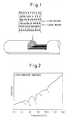
- a myelin figure is an aggregate of tube-shaped molecules formed when the molecules are in a liquid crystal state in water ( Fig. 1 ).
- a myelin figure is generally formed when a lyotropic smectic A phase (a type of liquid crystal) contacts with an appropriate medium. Formation of the myelin figure can be visually confirmed with a microscope after a specific surfactant has been added to the substrate.
- myelin figures are formed in a specific range from the substrate of the invention by addition of specific surfactants.
- the range differs depending on the type of surfactant added.
- a longer distance from the edge of the substrate to the tip of the formed myelin figure corresponds to increased transepidermal water loss (TEWL) from skin to which the same surfactant has been applied.
- TEWL transepidermal water loss
- “Skin roughening” refers to a condition of increased TEWL (transdermal moisture transpiration) compared to the one prior to application of a test substance, for example, and a larger increase in TEWL corresponds to a lower skin barrier function.
- “skin roughening” is considered to be a condition in which a myelin figure is formed upon application of a test substance to the substrate mimicking intercellular lipids in stratum corneum. Since the range in which the myelin figure is formed on the substrate of the invention is correlated with the TEWL value, a larger range can be evaluated as a poorer degree of skin roughening when the test substance is actually applied to skin. For reproducibility by this evaluation method, the shortest distance between the tip of the myelin figure and the interface of the substrate is used as an indicator of aggravated skin roughening according to the invention.
- the distance will differ depending on the measuring conditions, and measurement is therefore carried out under a consistent condition. For example, if the thickness of the lipid membrane formed on the substrate is too small there will be greater variation in the distance, and if the thickness is too large it will be difficult to distinguish the border between the two. From the viewpoint of ensuring reproducibility, therefore, the lipid membrane has a thickness of preferably 5-100 ⁇ m and in particular about 50 ⁇ m.
- the shortest distance between the myelin figure and the skin intercellular lipid substrate increases with greater time from exposure to the surfactant and with higher temperature.
- the method of evaluating skin roughening according to the invention is not limited to these conditions.
- the surfactant that is added can form a myelin figure in an essentially constant range if it is at or above the critical micelle concentration.
- the surfactant is added at a constant concentration of at least the critical micelle concentration, the shortest distance between the tip of the myelin figure and the edge of the substrate will not vary significantly, and therefore the method of evaluating skin roughening according to the invention can be conducted in a high-concentration system, and with high reproducibility.
- Ceramide III (95.9%, 0.3 g) (product of Evonik Degussa, Essen, Germany), palmitic acid (0.15 g) (product of Nacalai Tesque, Inc., Kyoto, Japan) and cholesterol (0.15 g) (product of Nacalai Tesque, Inc., Kyoto, Japan) were dissolved in a mixed solvent of chloroform (50 cm 3 ) and methanol (10 cm 3 ). Next, the lipid mixture solution (0.2 cm 3 ) was spread onto 18 x 18 mm cover glass and dried. The produced lipid mixture membrane was melted in a glass tube oven at 120°C and then allowed to stand for 1 hour in a nitrogen atmosphere at the same temperature. After cooling the sample to room temperature, it was dipped in water for 24 hours. Finally, it was stored in a desiccator (relative humidity: 75%) containing saturated sodium chloride until use.
- a desiccator relative humidity: 75%) containing saturated sodium chloride until use.
- the stratum corneum intercellular lipid pseudosubstrate formed on cover glass was directly observed using an ECLIPSE TE 2000U microscope, (Nikon, Japan), and imaged using a pickup camera by Canon, Inc. Images were taken continuously once every minute.
- the differential scanning calorimetry (DSC) measurement was conducted using a DSC-100 (product of Seiko Instruments Inc., Japan) equipped with an SII SSC/5200 analyzer.
- the infrared (IR) absorption spectrum was obtained by measurement in transparent mode using KBr pellets, in a Digilab FTS-60A spectrometer by Bio-Rad. The spectra were all obtained with an average of 64 scans between 4000-400 cm -1 .
- the Raman spectrum was measured using a Bomem FT-Raman accessory (Bomem Inc., Canada), on an MB FT-IR optical bench mounting a germanium diode detector cooled with liquid nitrogen, with a Nd:Yag laser as the light source emitting near infrared rays of 533 nm.
- the substrate of the invention was subjected to DSC measurement, and 5 endothermic peaks: T 1 (42°C), Tx (54.8°C), T 2 (70°C), T 3 (88°C) and T 4 (100.2°C), were confirmed ( Fig. 2 ).
- the peak temperatures approximately matched the values for the human stratum corneum, according to the following table ( Spectrochimica Acta Part A 1998, 54, 543-558 .).
- the phase transition temperature of the substrate differs from the melting point of each lipid alone, it is seen that the lipids composing the substrate of the invention do not exist as the simple lipid crystals but rather in a mixed state.
- the mixed state is highly similar to the human stratum corneum.
- Stratum corneum intercellular lipids from the body comprise ceramides, fatty acids, cholesterol and the like as constituent components, and a lamellar structure is formed by blending these components.
- Two lamellar periodicities of stratum corneum intercellular lipids exist in mammals, 13 nm (long-periodicity lamellar structure) and 6 nm (short-periodicity lamellar structure).
- XRD X-ray diffraction
- Microscopy of the exposed substrate confirmed formation of a myelin figure within a constant range from the lipids-mimicking substrate ( Fig. 3 ).
- a myelin figure was formed with some and not formed with others.
- the shortest distance from the edge of the substrate to the tip of the myelin figure (hereunder referred to as "myelin figure formation distance") was measured. The results are shown in Figs. 4 to 6 .
- Figs. 4 to 6 show that a larger surfactant structure resulted in a greater myelin figure creation distance, and that ionic surfactants resulted in longer myelin figure formation distances than nonionic surfactants (see Figs. 4A and 4B ).
- the myelin figure formation distance was longest with fatty acid soaps, followed by amphoteric surfactants and anionic surfactants.
- Nonionic surfactants had effects on the myelin figure formation distance, in the order of compounds with straight-chain alkyl ethers and cholesterol skeletons.
- Nonionic surfactants with branched alkyl ethers, glycerin skeletons and hydrogenated castor oil skeletons resulted in short myelin figure formation distances.
- Fig. 7 and 8 show the effects of alkyl chain length and mole number of added EO on myelin figure formation distance.
- the graphs show that longer alkyl chain length, and lower mole number of added EO, increase the myelin figure formation distance.
- a correlation was also found between surfactant molecular weight and myelin figure formation distance. As shown in Fig. 9 , a smaller molecular weight was associated with longer myelin figure formation distance.
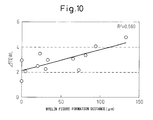
- ⁇ TEWL value (g/m 2 ⁇ h) was calculated based on the transepidermal water loss 1 hour after coating and the value immediately before coating. The results are shown in Fig. 10 .
- the lipids-mimicking substrate of the invention can be utilized as an in vitro model substrate of stratum corneum intercellular lipids.
- the substrate of the invention has high structural homogeneity and facilitates measurement of changes in lipid structure.
- the substrate of the invention allows in vitro evaluation of skin roughening without using biological samples.
Landscapes
- Life Sciences & Earth Sciences (AREA)
- Health & Medical Sciences (AREA)
- Molecular Biology (AREA)
- Engineering & Computer Science (AREA)
- Urology & Nephrology (AREA)
- Chemical & Material Sciences (AREA)
- Biomedical Technology (AREA)
- Immunology (AREA)
- Hematology (AREA)
- Medicinal Chemistry (AREA)
- General Health & Medical Sciences (AREA)
- Microbiology (AREA)
- Biophysics (AREA)
- Endocrinology (AREA)
- Food Science & Technology (AREA)
- Biotechnology (AREA)
- Analytical Chemistry (AREA)
- Cell Biology (AREA)
- Biochemistry (AREA)
- Physics & Mathematics (AREA)
- General Physics & Mathematics (AREA)
- Pathology (AREA)
- Investigating Or Analysing Biological Materials (AREA)
- Acyclic And Carbocyclic Compounds In Medicinal Compositions (AREA)
Abstract
Description
- The present invention relates to a novel in vitro model substrate which mimics stratum corneum intercellular lipids, and to a method of evaluating skin roughening using the substrate.
- The stratum corneum, located on the outermost layer of skin, has a barrier function that protects the body from contact and infiltration of foreign matter such as bacteria and hazardous substances, while also maintaining skin in a healthy state by preventing transpiration of moisture from the body. When the barrier function is impaired, transepidermal water loss (TEWL) from the skin surface increases, thus lowering the relative moisture content in stratum corneum. Reduction of moisture content in stratum corneum, resulting in an irregular texture of dermatoglyphs composed of sulci cutis and cristae cutis, creates a dry, roughened skin condition (Sone, T. et al., Koshokaishi, Vol.15 No.2. pp. 60-65(1991)).
- The intercellular lipids in the stratum corneum, which play an important role in the barrier function, are composed mainly of ceramides, free fatty acids and cholesterol, and they are known to form a lamellar structure (Bouwstra JA, et al., Acta Derm Venereol Suppl (Stockh). 2000 208:pp. 23-30.; Bouwstra JA, et al., Int J Cosmet Sci. 2008 Oct 30(5): p. 388). For development of cosmetics, it is necessary to examine the interaction between stratum corneum intercellular lipids and cosmetic materials beforehand to avoid impairing the barrier function of the skin, and to screen for effective materials.
- For examination of the effects of cosmetic materials on skin barrier function, usually a biological sample is exposed to the candidate material and then its intercellular lipid structure is subjected to X-ray analysis, electron spin resonance (ESR), differential scanning calorimetry (DSC), infrared ray analysis (IR) or the like. Using a biological sample allows the necessary data to be obtained which can be linked directly to product information.
- However, because of individual differences in biological samples, the stratum corneum intercellular lipids obtained from the samples also have different structures that depend on the particular sample. Furthermore, complex procedures are required to obtain specific stratum corneum intercellular lipids from animals, and measuring methods are limited in light of animal protection.
- For development of new cosmetics, therefore, it has been necessary to employ convenient and highly reproducible indicators that do not rely on biological samples, in order to determine what effects the substances have on stratum corneum intercellular lipids.
- Surfactants are among the components included in skin care products and the like. Surfactants penetrate the stratum corneum and are absorbed into the keratin of cornified cells, mixing with intercellular lipids (Friberg, S.E. et al., Colloids Surf. 1988, 30, pp.1-12; Rhein, L.D. Ibid. 1997, 48, pp.253-274). Surfactants are also known to remove cutaneous lipids such as fatty acids, fatty acid glycerides and cholesteryl esters, thus incurring damage to the skin even if the removed lipids are minimal (Fulmer, A.W. et al., J. Invest. Dermatol. 1986, 86, pp. 598-602; Denda, M. et al., Arch. Dermatol. Res. 1994, 286, pp.41-46; Ronald, R.W. et al., J. Invest. Dermatol. 1999, 113, pp. 960-966; Lopez, O. et al. Bioch. et Biophy Acta 2000, 1508, pp. 196-209; Ebba, B. et al., Inter J. Pharma. 2000, 195, pp.189-195).
- The effects of surfactants on stratum corneum intercellular lipids have been an object of interest in the past in connection with the skin barrier function (Harada, K. et al, J. Invest. Dermatol. 1992, 99, pp. 278-282; Lavrijsen, A.P.M. et al., J. Invest. Dermatol. 1995, 105, pp. 619-624), and as regards changes in lipid composition related to various cutaneous symptoms (Holleran, W.M. et al, J. Lipid Res. 1991, 32, pp. 1151-1158; Murata, Y. et al., J. Invest. Dermatol. 1996, 106, pp. 1242-1249; Ponec, M. et al, J. Invest. Dermatol. 1997, 109, pp. 348-355). Nevertheless, the action processes and mechanisms are still poorly understood.
-
- [Non-patent document 1] Sone, T. et al., Koshokaishi, Vol.15 No.2. pp. 60-65(1991).
- [Non-patent document 2] Bouwstra JA, et al., Acta Derm Venereol Suppl (Stockh). 2000; 208: pp. 23-30 [Non-patent document 3] Bouwstra JA, et al., Int J Cosmet Sci. 2008 Oct; 30(5): p. 388
- [Non-patent document 4] Friberg, S.E. et al., Colloids Surf. 1988, 30, pp.1-12
- [Non-patent document 5] Rhein, L.D. Ibid. 1997, 48, pp.253-274
- [Non-patent document 6] Fulmer, A.W. et al., J. Invest. Dermatol. 1986, 86, pp. 598-602
- [Non-patent document 7] Denda, M. et al., Arch. Dermatol. Res. 1994, 286, pp.41-46
- [Non-patent document 8] Ronald, R.W. et al., J. Invest. Dermatol. 1999, 113, pp. 960-966
- [Non-patent document 9] Lopez, O. et al. Bioch. et Biophy Acta 2000, 1508, pp. 196-209
- [Non-patent document 10] Ebba, B. et al., Inter J. Phama. 2000, 195, pp.189-195
- [Non-patent document 11] Harada, K. et al, J. Invest. Dermatol. 1992, 99, pp. 278-282
- [Non-patent document 12] Lavrijsen, A.P.M. et al, J. Invest. Dermatol. 1995, 105, pp. 619-624
- [Non-patent document 13] Holleran, W.M. et al, J. Lipid Res. 1991, 32, pp. 1151-1158
- [Non-patent document 14] Murata, Y. et al., J. Invest. Dermatol. 1996, 106, pp. 1242-1249
- [Non-patent document 15] Ponec, M. et al, J. Invest. Dermatol. 1997, 109, pp. 348-355
- [Non-patent document 16] ○. Lopez et al., J. dispersion science and technology, 18 (5), pp. 503-515 (1997)
- It is an object of the present invention to provide an in vitro substrate modeled on stratum corneum intercellular lipids, which has high structural homogeneity and allows easy measurement of structural changes in lipids, and a method of evaluating skin roughening using the substrate.
- As a simple skin model for the stratum corneum, the present inventors formed a lipid mixture composed of the three components ceramide, palmitic acid and cholesterol on a substrate such as cover glass, and found that the lipid membrane formed on the substrate is similar to the lipid lamellar structure of the stratum corneum, and as a result of analyzing the physical properties thereof, it was found that the nature of the lipid membrane is similar to the intercellular lipids of the stratum corneum. Considering the lamellar structure and the results of analyzing the physical properties, the lipid membrane formed by the mixed lipids composed of the three components is concluded to be similar to the intercellular lipid structure of the stratum corneum.
- It is known that when a surfactant is applied to porcine skin, the stratum corneum lipid structure is converted from a lamellar structure to a vesicular form (○. Lopez et al., J. Dispersion Science and Technology, 18(5), pp. 503-515 (1997)). The present inventors therefore added specific surfactants to a lipid membrane formed from the aforementioned lipid mixture, and found that the stratum corneum lipid structure was disrupted and the molecules composing the lipid membrane assembled into tubes, creating a myelin figure. Upon examining the relationship between the distance from the tip of the myelin figure to the edge of the lipids-mimicking substrate, and the TEWL value as evaluation of the skin barrier function, a correlation was found between the two.
- Based on this knowledge, the present inventors reached the conclusion that the lipid membrane composed of the three components of ceramide, palmitic acid and cholesterol can serve as an in vitro model for stratum corneum intercellular lipids, and that quantitative and qualitative evaluation of the myelin figure formed by adding specific surfactants to the lipid membrane can serve as an index for measurement of the interaction between the stratum corneum intercellular lipids and cosmetic materials.
- Specifically, the scope of the invention encompasses the following.
-
- [1] A stratum corneum intercellular lipids-mimicking substrate, consisting of a substrate and a lipid membrane formed on the substrate, wherein the lipid membrane is formed of ceramide, palmitic acid and cholesterol.
- [2] A stratum corneum intercellular lipids-mimicking substrate according to [1], wherein the ceramide, palmitic acid and cholesterol are present in a mass ratio of 20-70%:10-60%:20-40% (ceramide:palmitic acid:cholesterol).
- [3] A method for evaluating skin roughening, wherein a surfactant is added to a stratum corneum intercellular lipids-mimicking substrate according to [1] or [2], and the surfactant is evaluated as causing skin roughening in vivo if a myelin figure is formed on the substrate, and the degree of skin roughening is evaluated as poorer the longer the shortest distance between the tip of the myelin figure and the edge of the substrate.
- The substrate that mimicks stratum corneum intercellular lipids according to the invention (hereunder referred to throughout the present specification as "substrate mimicking intercellular lipids in stratum corneum" or "lipids-mimicking substrate") is a simplified model membrane composed of 3 different lipids (ceramide, palmitic acid and cholesterol), as the major constitutive substances of the stratum corneum which has a complex structure. A myelin figure is formed by addition of specific surfactants to the substrate of the invention. Depending on the type of surfactant added, the distance from the tip of the myelin figure to the edge of the substrate is long in some cases. Surfactants that increase this distance also increase the TEWL value in human patch tests. Since an increase in TEWL value corresponds to a reduced skin barrier function, the lipids-mimicking substrate of the invention may be used for in vitro evaluation of the interaction between stratum corneum intercellular lipids and cosmetic materials, and thus of the effects of cosmetic materials on skin roughening, without using a biological sample.
- Upon evaluating surfactants that form a myelin figure, by a patch test or a test using collagen or interleukin-8, no correlation was found between myelin figure formation and cellular toxicity. Thus, it is believed that the lipids-mimicking substrate of the invention can be applied to skin roughening test methods that are specialized for evaluating reduction in skin barrier function (disruption of the stratum corneum lipid structure).
-
-
Fig. 1 is a schematic view of a myelin figure. -
Fig. 2 is a DSC curve obtained by DSC of a substrate of the invention. -
Fig. 3 is a microgram of a substrate after exposure to an aqueous SDS solution. A myelin figure was formed in a fixed range from the substrate. -
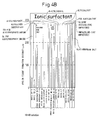
Fig. 4A is a graph showing the relationship between the nonionic surfactants and the distances at which the myelin figures were formed. -
Fig. 4B is a graph showing the relationship between the ionic surfactants and the distances at which the myelin figures were formed. -
Fig. 5 is a graph showing the relationship between the ionic surfactant and the distances at which the myelin figure were formed. -
Fig. 6 is a graph showing the relationship between the nonionic surfactant structure and the distances at which the myelin figures were formed. -
Fig. 7 is a graph showing the relationship between the alkyl chain lengths of the surfactant and the distances at which the myelin figures were formed. -
Fig. 8 is a graph showing the relationship between the mole number of added EO of the surfactants and the distances at which the myelin figures were formed. -
Fig. 9 is a graph showing the relationship between the molecular weight of the surfactants and the distances at which the myelin figures were formed. -
Fig. 10 is a graph showing the relationship between the distance at which the myelin figure is formed, and the ATEWL value. - According to a first aspect of the invention, there is provided a substrate mimicking intercellular lipids in stratum corneum consisting of a substrate and a lipid membrane formed on the substrate, wherein the lipid membrane is formed from ceramide, palmitic acid and cholesterol, and the ceramide, palmitic acid and cholesterol are present at a mass ratio of 20-70%:10-60%:20-40% (ceramide:palmitic acid:cholesterol).
- For the lipids-mimicking substrate of the invention, a plate such as cover glass, mica or a silicon wafer is used as the basic substrate for formation of the lipid membrane. If the material of the substrate is desired to be treated to obtain a smooth surface and to have heat resistance, a metal such as stainless steel or a ceramic can be used for the substrate. The lipid membrane employs a lipid mixture, for example, a lipid mixture comprising ceramide, palmitic acid and cholesterol, as a constituent material. Of the ceramide in the lipid mixture, ceramide III is preferred as it has the most standard structure and is inexpensive.
- The lipid mixture is dissolved in a solvent at 20-70%:10-60%:20-40% (ceramide:palmitic acid:cholesterol) as the mass ratio. From the viewpoint of mimicking the compositional ratio of stratum corneum intercellular lipids present in the skin, the proportion of the mixed lipids is preferably a mass ratio of 2:1:1 (ceramide:palmitic acid:cholesterol). The solvent used may be methanol, chloroform, hexane, acetone, ethyl acetate or the like, or a mixture thereof. The solvent is not limited to these specific solvents, and may be any one that is capable of dissolving the lipids.
- After the lipid mixture has been dissolved in the solvent, the solution is developed on a plate, such as cover glass, and dried. Next, the plate is melted in an oven at high temperature (for example, 120°C) and allowed to stand for a prescribed period of time under a nitrogen stream. After cooling to room temperature, the plate may be wetted by addition of water or immersed (for example, extended dipping in water or water addition), to prepare a lipids-mimicking substrate of the invention. A method of wetting the solid lipid mixture after melting may also be employed.
- According to a second aspect of the invention there is provided a method of evaluating skin roughening, which comprises measuring the distance between the tip of the myelin figure formed by addition of a surfactant to a substrate mimicking intercellular lipids in stratum corneum, and the edge of the substrate, and using the increase in distance as an indicator of skin roughening.
- A myelin figure is an aggregate of tube-shaped molecules formed when the molecules are in a liquid crystal state in water (
Fig. 1 ). A myelin figure is generally formed when a lyotropic smectic A phase (a type of liquid crystal) contacts with an appropriate medium. Formation of the myelin figure can be visually confirmed with a microscope after a specific surfactant has been added to the substrate. - Multiple myelin figures are formed in a specific range from the substrate of the invention by addition of specific surfactants. The range differs depending on the type of surfactant added. A longer distance from the edge of the substrate to the tip of the formed myelin figure corresponds to increased transepidermal water loss (TEWL) from skin to which the same surfactant has been applied. In other words, when the distance between the myelin figure formed by addition of a given surfactant and the substrate is long, application of that surfactant to human skin is expected to disrupt the stratum corneum lipid structure and cause skin roughening.
- "Skin roughening" refers to a condition of increased TEWL (transdermal moisture transpiration) compared to the one prior to application of a test substance, for example, and a larger increase in TEWL corresponds to a lower skin barrier function. In the evaluation method of the invention, however, "skin roughening" is considered to be a condition in which a myelin figure is formed upon application of a test substance to the substrate mimicking intercellular lipids in stratum corneum. Since the range in which the myelin figure is formed on the substrate of the invention is correlated with the TEWL value, a larger range can be evaluated as a poorer degree of skin roughening when the test substance is actually applied to skin. For reproducibility by this evaluation method, the shortest distance between the tip of the myelin figure and the interface of the substrate is used as an indicator of aggravated skin roughening according to the invention.
- When the shortest distance between the tip of the myelin figure and the edge of the stratum corneum intercellular lipid substrate is used as an indicator of aggravated skin roughening, the distance will differ depending on the measuring conditions, and measurement is therefore carried out under a consistent condition. For example, if the thickness of the lipid membrane formed on the substrate is too small there will be greater variation in the distance, and if the thickness is too large it will be difficult to distinguish the border between the two. From the viewpoint of ensuring reproducibility, therefore, the lipid membrane has a thickness of preferably 5-100 µm and in particular about 50 µm. In addition, the shortest distance between the myelin figure and the skin intercellular lipid substrate increases with greater time from exposure to the surfactant and with higher temperature. From the viewpoint of minimizing variation, it is preferable to measure the myelin
figure 6 hours after exposure, at a temperature of approximately 25°C. However, the method of evaluating skin roughening according to the invention is not limited to these conditions. The surfactant that is added can form a myelin figure in an essentially constant range if it is at or above the critical micelle concentration. Thus, when the surfactant is added at a constant concentration of at least the critical micelle concentration, the shortest distance between the tip of the myelin figure and the edge of the substrate will not vary significantly, and therefore the method of evaluating skin roughening according to the invention can be conducted in a high-concentration system, and with high reproducibility. - Concrete examples will now be provided for a more detailed explanation of the invention. However, the invention is not intended to be restricted by these examples.
- Ceramide III (95.9%, 0.3 g) (product of Evonik Degussa, Essen, Germany), palmitic acid (0.15 g) (product of Nacalai Tesque, Inc., Kyoto, Japan) and cholesterol (0.15 g) (product of Nacalai Tesque, Inc., Kyoto, Japan) were dissolved in a mixed solvent of chloroform (50 cm3) and methanol (10 cm3). Next, the lipid mixture solution (0.2 cm3) was spread onto 18 x 18 mm cover glass and dried. The produced lipid mixture membrane was melted in a glass tube oven at 120°C and then allowed to stand for 1 hour in a nitrogen atmosphere at the same temperature. After cooling the sample to room temperature, it was dipped in water for 24 hours. Finally, it was stored in a desiccator (relative humidity: 75%) containing saturated sodium chloride until use.
- The stratum corneum intercellular lipid pseudosubstrate formed on cover glass was directly observed using an ECLIPSE TE 2000U microscope, (Nikon, Japan), and imaged using a pickup camera by Canon, Inc. Images were taken continuously once every minute. The differential scanning calorimetry (DSC) measurement was conducted using a DSC-100 (product of Seiko Instruments Inc., Japan) equipped with an SII SSC/5200 analyzer. X-ray diffraction (XRD) measurement was conducted with an X-ray diffraction apparatus (RAD-RC by Rigaku Co., Ltd., Japan and D8 Discover by Bruker, Germany) using high density CuKα radiation (λ = 0.154 nm) monochromatized with a graphite monochromator, under conditions of 50 mA, 60 kV and 40 mA, 40 kV. The infrared (IR) absorption spectrum was obtained by measurement in transparent mode using KBr pellets, in a Digilab FTS-60A spectrometer by Bio-Rad. The spectra were all obtained with an average of 64 scans between 4000-400 cm-1. The Raman spectrum was measured using a Bomem FT-Raman accessory (Bomem Inc., Canada), on an MB FT-IR optical bench mounting a germanium diode detector cooled with liquid nitrogen, with a Nd:Yag laser as the light source emitting near infrared rays of 533 nm.
- The substrate of the invention was subjected to DSC measurement, and 5 endothermic peaks: T1 (42°C), Tx (54.8°C), T2 (70°C), T3 (88°C) and T4 (100.2°C), were confirmed (
Fig. 2 ). The peak temperatures approximately matched the values for the human stratum corneum, according to the following table (Spectrochimica Acta Part A 1998, 54, 543-558.). -
[Table 1] Phase transition temperature (°C) T1 Tx T2 T3 T4 Lipids-mimicking substrate 42 54.8 70 88 100.2 Human stratum corneum 41-42 51-55 72 83 100 - Since the phase transition temperature of the substrate differs from the melting point of each lipid alone, it is seen that the lipids composing the substrate of the invention do not exist as the simple lipid crystals but rather in a mixed state. The mixed state is highly similar to the human stratum corneum.
- Stratum corneum intercellular lipids from the body comprise ceramides, fatty acids, cholesterol and the like as constituent components, and a lamellar structure is formed by blending these components. Two lamellar periodicities of stratum corneum intercellular lipids exist in mammals, 13 nm (long-periodicity lamellar structure) and 6 nm (short-periodicity lamellar structure).
- A substrate of the invention composed of ceramide III, palmitic acid and cholesterol, prepared as described above, was subjected to X-ray diffraction (XRD) to examine the lamellar structure of the substrate. As a result, the majority of the lipids-mimicking substrate was found to have a lamellar spacing of 4.43 nm. This value differs from the value of the lamellar spacing formed by the lipids alone. Furthermore, the fact that the lamellar spacing was of a single type suggested miscibility of the lipids.
- The results mentioned above demonstrated that a lamellar structure having a periodicity of 4.43 nm had been formed in the substrate of the invention. This periodicity differs from the lamellar periodicity in a lipid membrane from the body, but the difference exists because only 3 different types of constituent lipids were used in the substrate of the invention. Despite the difference in periodicity, from the viewpoint of lipid miscibility and lamellar structure, the substrate of the invention can be concluded to be similar to the in vivo intercellular lipid structure of the stratum corneum.
- Multiple substrates mimicking intercellular lipids in stratum corneum, each having a lipid membrane controlled to a thickness of 50 µm were exposed to an aqueous solution (5.0 mg/cm3) of SDS (99.0%) (Nacalai Tesque, Inc., Kyoto, Japan) at a temperature of 25°C for 6 hours. Each exposed substrate was rinsed with a small amount of water and dried, and used for the following evaluation test.
- Microscopy of the exposed substrate confirmed formation of a myelin figure within a constant range from the lipids-mimicking substrate (
Fig. 3 ). Upon examination of surfactants other than SDS, a myelin figure was formed with some and not formed with others. For each of the examined surfactants, the shortest distance from the edge of the substrate to the tip of the myelin figure (hereunder referred to as "myelin figure formation distance") was measured. The results are shown inFigs. 4 to 6 . - The results in
Figs. 4 to 6 show that a larger surfactant structure resulted in a greater myelin figure creation distance, and that ionic surfactants resulted in longer myelin figure formation distances than nonionic surfactants (seeFigs. 4A and4B ). Among the ionic surfactants, in particular, the myelin figure formation distance was longest with fatty acid soaps, followed by amphoteric surfactants and anionic surfactants. Nonionic surfactants had effects on the myelin figure formation distance, in the order of compounds with straight-chain alkyl ethers and cholesterol skeletons. Nonionic surfactants with branched alkyl ethers, glycerin skeletons and hydrogenated castor oil skeletons resulted in short myelin figure formation distances. -
Fig. 7 and8 show the effects of alkyl chain length and mole number of added EO on myelin figure formation distance. The graphs show that longer alkyl chain length, and lower mole number of added EO, increase the myelin figure formation distance. A correlation was also found between surfactant molecular weight and myelin figure formation distance. As shown inFig. 9 , a smaller molecular weight was associated with longer myelin figure formation distance. - Human arm skin was coated with a surfactant at 5% concentration (n = 6, where one arm is n = 1). The ΔTEWL value (g/m2·h) was calculated based on the
transepidermal water loss 1 hour after coating and the value immediately before coating. The results are shown inFig. 10 . - As seen by the results in
Fig. 10 , a high correlation was observed between the myelin figure formation distance and the ΔTEWL value. Since effusion of stratum corneum intercellular lipids by the surfactant is believed to be connected with myelin figure formation, this indicates that the correlation with the ΔTEWL value, as an evaluation index of in vivo skin roughening, is useful for evaluation of skin roughening using a substrate of the invention, which serves as an indicator of myelin figure formation. - The lipids-mimicking substrate of the invention can be utilized as an in vitro model substrate of stratum corneum intercellular lipids. The substrate of the invention has high structural homogeneity and facilitates measurement of changes in lipid structure. The substrate of the invention allows in vitro evaluation of skin roughening without using biological samples.
Claims (3)
- A substrate mimicking lipids in stratum corneum intercellular lipid, consisting of a substrate and a lipid membrane formed on the substrate, wherein the lipid membrane is formed of ceramides, palmitic acid and cholesterol.
- The lipids-mimicking substrate according to claim 1, wherein the ceramide, palmitic acid and cholesterol are present in a mass ratio of 20-70%:10-60%:20-40% (ceramide:palmitic acid:cholesterol).
- A method for evaluating skin roughening, wherein a surfactant is added to a substrate mimicking intercellular lipids in stratum corneum according to claim 1 or 2, and the surfactant is evaluated as causing skin roughening in vivo if a myelin figure is formed on the substrate, and the degree of skin roughening is evaluated as poorer the longer the shortest distance between the tip of the myelin figure and the edge of the substrate.
Applications Claiming Priority (2)
| Application Number | Priority Date | Filing Date | Title |
|---|---|---|---|
| JP2008335319 | 2008-12-26 | ||
| PCT/JP2009/065268 WO2010073777A1 (en) | 2008-12-26 | 2009-09-01 | Substrate which mimics intercellular lipid of stratum corneum, and method for evaluation of skin damage using same |
Publications (3)
| Publication Number | Publication Date |
|---|---|
| EP2372360A1 true EP2372360A1 (en) | 2011-10-05 |
| EP2372360A4 EP2372360A4 (en) | 2012-06-06 |
| EP2372360B1 EP2372360B1 (en) | 2015-07-15 |
Family
ID=42287404
Family Applications (1)
| Application Number | Title | Priority Date | Filing Date |
|---|---|---|---|
| EP09834583.8A Not-in-force EP2372360B1 (en) | 2008-12-26 | 2009-09-01 | Substrate which mimics intercellular lipid of stratum corneum, and method for evaluation of skin damage using same |
Country Status (7)
| Country | Link |
|---|---|
| US (1) | US8969088B2 (en) |
| EP (1) | EP2372360B1 (en) |
| JP (2) | JP4670089B2 (en) |
| KR (1) | KR101613759B1 (en) |
| CN (1) | CN102265153B (en) |
| ES (1) | ES2543627T3 (en) |
| WO (1) | WO2010073777A1 (en) |
Families Citing this family (2)
| Publication number | Priority date | Publication date | Assignee | Title |
|---|---|---|---|---|
| JP5330076B2 (en) * | 2009-04-27 | 2013-10-30 | 株式会社 資生堂 | Risk assessment method for skin roughness |
| JP5806928B2 (en) * | 2010-12-28 | 2015-11-10 | 株式会社Adeka | Method for producing silica nanotube |
Family Cites Families (6)
| Publication number | Priority date | Publication date | Assignee | Title |
|---|---|---|---|---|
| CN2132488Y (en) | 1992-08-28 | 1993-05-12 | 北京日用化学研究所 | Test instrument for skin roughness |
| DE10325829A1 (en) * | 2003-06-06 | 2004-12-30 | Asc Biotech Gmbh | Derivatives of natural, semi-synthetic and synthetic lipids from the group of ceramides and sphingosines and their use as therapeutics in medicine, especially in dermatology |
| KR101286833B1 (en) | 2005-03-18 | 2013-07-17 | 가부시키가이샤 시세이도 | Evaluation method for skin condition utilizing squamous cell carcinoma-related antigen as measure |
| CN1850021A (en) | 2005-04-23 | 2006-10-25 | 中山市尤利卡天然药物有限公司 | Use of conjugated linoleic acid and its derivatives for deep skin maintenance |
| WO2008143145A1 (en) | 2007-05-15 | 2008-11-27 | Anbas Corporation | Skin-moisturizing effect evaluation method, and screening method for moisturizing substance by using the evaluation method |
| JP2008285432A (en) * | 2007-05-16 | 2008-11-27 | Fujifilm Corp | Skin preparation |
-
2009
- 2009-08-31 JP JP2009200252A patent/JP4670089B2/en active Active
- 2009-09-01 EP EP09834583.8A patent/EP2372360B1/en not_active Not-in-force
- 2009-09-01 CN CN200980152302.8A patent/CN102265153B/en active Active
- 2009-09-01 WO PCT/JP2009/065268 patent/WO2010073777A1/en not_active Ceased
- 2009-09-01 ES ES09834583.8T patent/ES2543627T3/en active Active
- 2009-09-01 KR KR1020117014308A patent/KR101613759B1/en not_active Expired - Fee Related
- 2009-09-01 US US12/998,985 patent/US8969088B2/en active Active
-
2010
- 2010-09-29 JP JP2010219533A patent/JP4762358B2/en active Active
Non-Patent Citations (6)
| Title |
|---|
| MATSUZAKI K ET AL: "DEVELOPMENT OF A MODEL MEMBRANE SYSTEM USING STRATUM CORNEUM LIPIDSFOR ESTIMATION OF DRUG SKIN PERMEABILITY", CHEMICAL & PHARMACEUTICAL BULLETIN, PHARMACEUTICAL SOCIETY OF JAPAN, vol. 41, no. 3, 1 March 1993 (1993-03-01), pages 575-579, XP000601628, ISSN: 0009-2363 * |
| PIER PAOLO PARNIGOTTO ET AL: 'Characterization and applications of human epidermis reconstructed in vitro on de-epidermized derma' IL FARMACO, [Online] 01 January 1998, ITALY, pages 125 - 131, XP055154523 DOI: 10.1016/S0014-827X(97)00020-7 Retrieved from the Internet: <URL:http://www.sciencedirect.com/science/article/pii/S0014827X97000207> * |
| PILGRAM G S ET AL: "Study on the lipid organization of stratum corneum lipid models by (cryo-) electron diffraction", JOURNAL OF LIPID RESEARCH, AMERICAN SOCIETY FOR BIOCHEMISTRY AND MOLECULAR BIOLOGY, INC, US, vol. 39, no. 8, 1 August 1998 (1998-08-01) , pages 1669-1676, XP009158380, ISSN: 0022-2275 * |
| ROWAT A C ET AL: "Interactions of oleic acid and model stratum corneum membranes as seen by <2>H NMR", INTERNATIONAL JOURNAL OF PHARMACEUTICS, ELSEVIER BV, NL, vol. 307, no. 2, 13 January 2006 (2006-01-13), pages 225-231, XP025113449, ISSN: 0378-5173, DOI: 10.1016/J.IJPHARM.2005.10.008 [retrieved on 2006-01-13] * |
| See also references of WO2010073777A1 * |
| UHODA E ET AL: "Repair kinetics of the stratum corneum under repeated insults", EXOGENOUS DERMATOLOGY 2004 CH LNKD- DOI:10.1159/000083463, vol. 3, no. 1, 2004, pages 7-11, XP002673858, ISSN: 1424-4616 * |
Also Published As
| Publication number | Publication date |
|---|---|
| WO2010073777A1 (en) | 2010-07-01 |
| EP2372360B1 (en) | 2015-07-15 |
| JP2011022159A (en) | 2011-02-03 |
| KR20110115569A (en) | 2011-10-21 |
| JP4670089B2 (en) | 2011-04-13 |
| US8969088B2 (en) | 2015-03-03 |
| JP4762358B2 (en) | 2011-08-31 |
| JP2010169653A (en) | 2010-08-05 |
| US20130000394A1 (en) | 2013-01-03 |
| CN102265153A (en) | 2011-11-30 |
| KR101613759B1 (en) | 2016-04-19 |
| CN102265153B (en) | 2014-04-16 |
| ES2543627T3 (en) | 2015-08-20 |
| EP2372360A4 (en) | 2012-06-06 |
Similar Documents
| Publication | Publication Date | Title |
|---|---|---|
| de Jager et al. | Preparation and characterization of a stratum corneum substitute for in vitro percutaneous penetration studies | |
| KR100786030B1 (en) | A composition for scalp and hair comprising a substance having absorption through hair follicles and an ingredient for accelerating absorption through hair follicles | |
| Sahle et al. | Polyglycerol fatty acid ester surfactant–based microemulsions for targeted delivery of ceramide AP into the stratum corneum: Formulation, characterisation, in vitro release and penetration investigation | |
| Lu et al. | Comparison of artificial sebum with human and hamster sebum samples | |
| Reich et al. | Fatty acid profile of the initial oral biofilm (pellicle): an in-situ study | |
| Rodríguez et al. | Bicellar systems to modify the phase behaviour of skin stratum corneum lipids | |
| EP2372360B1 (en) | Substrate which mimics intercellular lipid of stratum corneum, and method for evaluation of skin damage using same | |
| Lee et al. | Water quantitatively induces the mucoadhesion of liquid crystalline phases of glyceryl monooleate | |
| Guo | Triglyceride content in skeletal muscle: variability and the source | |
| Martins et al. | A human skin high-throughput formulation screening method using a model hydrophilic drug | |
| Chevala et al. | Design and development of tranexamic acid loaded film‐forming gel to alleviate melasma | |
| Kessner et al. | Impact of the long chain ω-acylceramides on the stratum corneum lipid nanostructure. Part 1: Thermotropic phase behaviour of CER [EOS] and CER [EOP] studied using X-ray powder diffraction and FT-Raman spectroscopy | |
| Cape et al. | Mechanisms of water permeation and diffusive API release from stearyl alcohol and glyceryl behenate modified release matrices | |
| Hodzic et al. | Revealing hidden molecular nanostructure details in the pellet formulation of ibuprofen by combining Synchrotron and laboratory sources | |
| AU2015328052B2 (en) | Dissolution testing of hydrophobic active pharmaceutical ingredients such as avermectins with or without pyrantel | |
| JP2010237098A (en) | Horny layer evaluation method and method for sorting skin roughness preventing component | |
| Thomsom et al. | Uptake of a homologous series of saturated fatty acids into rabbit intestine using three in vitro techniques | |
| Steinbach et al. | Retarder action of isosorbide in a microemulsion for a targeted delivery of ceramide NP into the stratum corneum | |
| Zaccheo et al. | Investigating the effects of alcohols and cholesterol manipulations on bovine aortic endothelial cell membrane properties using phasor analysis of laurdan fluorescence lifetime microscopy and spectral imaging | |
| US20250325256A1 (en) | Lipid patch | |
| Funari | Effect of procaine hydrochoride on lipid bilayers | |
| He et al. | Sesquiterpenes from galangal essential oil as potent penetration enhancer: Effect on stratum corneum components and cutaneous TRPV4 ion channel | |
| CN119792130A (en) | A mild and stable retinol composition, retinol cosmetics and preparation method thereof | |
| Feliczak-Guzik et al. | Analysis of Cosmetic Products in Biological Matrices | |
| Velásquez González | Skin barrier: Extraction and characterization of Stratum Corneum lipids |
Legal Events
| Date | Code | Title | Description |
|---|---|---|---|
| PUAI | Public reference made under article 153(3) epc to a published international application that has entered the european phase |
Free format text: ORIGINAL CODE: 0009012 |
|
| 17P | Request for examination filed |
Effective date: 20110622 |
|
| AK | Designated contracting states |
Kind code of ref document: A1 Designated state(s): AT BE BG CH CY CZ DE DK EE ES FI FR GB GR HR HU IE IS IT LI LT LU LV MC MK MT NL NO PL PT RO SE SI SK SM TR |
|
| DAX | Request for extension of the european patent (deleted) | ||
| RIC1 | Information provided on ipc code assigned before grant |
Ipc: G01N 33/15 20060101ALI20120420BHEP Ipc: G01N 33/50 20060101AFI20120420BHEP |
|
| A4 | Supplementary search report drawn up and despatched |
Effective date: 20120507 |
|
| 17Q | First examination report despatched |
Effective date: 20130103 |
|
| RAP1 | Party data changed (applicant data changed or rights of an application transferred) |
Owner name: SHISEIDO CO., LTD. |
|
| GRAP | Despatch of communication of intention to grant a patent |
Free format text: ORIGINAL CODE: EPIDOSNIGR1 |
|
| INTG | Intention to grant announced |
Effective date: 20150218 |
|
| GRAS | Grant fee paid |
Free format text: ORIGINAL CODE: EPIDOSNIGR3 |
|
| GRAA | (expected) grant |
Free format text: ORIGINAL CODE: 0009210 |
|
| AK | Designated contracting states |
Kind code of ref document: B1 Designated state(s): AT BE BG CH CY CZ DE DK EE ES FI FR GB GR HR HU IE IS IT LI LT LU LV MC MK MT NL NO PL PT RO SE SI SK SM TR |
|
| REG | Reference to a national code |
Ref country code: CH Ref legal event code: EP Ref country code: GB Ref legal event code: FG4D |
|
| REG | Reference to a national code |
Ref country code: IE Ref legal event code: FG4D |
|
| REG | Reference to a national code |
Ref country code: AT Ref legal event code: REF Ref document number: 737058 Country of ref document: AT Kind code of ref document: T Effective date: 20150815 |
|
| REG | Reference to a national code |
Ref country code: ES Ref legal event code: FG2A Ref document number: 2543627 Country of ref document: ES Kind code of ref document: T3 Effective date: 20150820 |
|
| REG | Reference to a national code |
Ref country code: DE Ref legal event code: R096 Ref document number: 602009032290 Country of ref document: DE |
|
| REG | Reference to a national code |
Ref country code: FR Ref legal event code: PLFP Year of fee payment: 7 |
|
| REG | Reference to a national code |
Ref country code: AT Ref legal event code: MK05 Ref document number: 737058 Country of ref document: AT Kind code of ref document: T Effective date: 20150715 |
|
| REG | Reference to a national code |
Ref country code: NL Ref legal event code: MP Effective date: 20150715 |
|
| REG | Reference to a national code |
Ref country code: LT Ref legal event code: MG4D |
|
| PG25 | Lapsed in a contracting state [announced via postgrant information from national office to epo] |
Ref country code: GR Free format text: LAPSE BECAUSE OF FAILURE TO SUBMIT A TRANSLATION OF THE DESCRIPTION OR TO PAY THE FEE WITHIN THE PRESCRIBED TIME-LIMIT Effective date: 20151016 Ref country code: LV Free format text: LAPSE BECAUSE OF FAILURE TO SUBMIT A TRANSLATION OF THE DESCRIPTION OR TO PAY THE FEE WITHIN THE PRESCRIBED TIME-LIMIT Effective date: 20150715 Ref country code: LT Free format text: LAPSE BECAUSE OF FAILURE TO SUBMIT A TRANSLATION OF THE DESCRIPTION OR TO PAY THE FEE WITHIN THE PRESCRIBED TIME-LIMIT Effective date: 20150715 Ref country code: NO Free format text: LAPSE BECAUSE OF FAILURE TO SUBMIT A TRANSLATION OF THE DESCRIPTION OR TO PAY THE FEE WITHIN THE PRESCRIBED TIME-LIMIT Effective date: 20151015 Ref country code: FI Free format text: LAPSE BECAUSE OF FAILURE TO SUBMIT A TRANSLATION OF THE DESCRIPTION OR TO PAY THE FEE WITHIN THE PRESCRIBED TIME-LIMIT Effective date: 20150715 |
|
| PG25 | Lapsed in a contracting state [announced via postgrant information from national office to epo] |
Ref country code: PL Free format text: LAPSE BECAUSE OF FAILURE TO SUBMIT A TRANSLATION OF THE DESCRIPTION OR TO PAY THE FEE WITHIN THE PRESCRIBED TIME-LIMIT Effective date: 20150715 Ref country code: HR Free format text: LAPSE BECAUSE OF FAILURE TO SUBMIT A TRANSLATION OF THE DESCRIPTION OR TO PAY THE FEE WITHIN THE PRESCRIBED TIME-LIMIT Effective date: 20150715 Ref country code: AT Free format text: LAPSE BECAUSE OF FAILURE TO SUBMIT A TRANSLATION OF THE DESCRIPTION OR TO PAY THE FEE WITHIN THE PRESCRIBED TIME-LIMIT Effective date: 20150715 Ref country code: PT Free format text: LAPSE BECAUSE OF FAILURE TO SUBMIT A TRANSLATION OF THE DESCRIPTION OR TO PAY THE FEE WITHIN THE PRESCRIBED TIME-LIMIT Effective date: 20151116 Ref country code: SE Free format text: LAPSE BECAUSE OF FAILURE TO SUBMIT A TRANSLATION OF THE DESCRIPTION OR TO PAY THE FEE WITHIN THE PRESCRIBED TIME-LIMIT Effective date: 20150715 |
|
| REG | Reference to a national code |
Ref country code: DE Ref legal event code: R097 Ref document number: 602009032290 Country of ref document: DE |
|
| PG25 | Lapsed in a contracting state [announced via postgrant information from national office to epo] |
Ref country code: SK Free format text: LAPSE BECAUSE OF FAILURE TO SUBMIT A TRANSLATION OF THE DESCRIPTION OR TO PAY THE FEE WITHIN THE PRESCRIBED TIME-LIMIT Effective date: 20150715 Ref country code: DK Free format text: LAPSE BECAUSE OF FAILURE TO SUBMIT A TRANSLATION OF THE DESCRIPTION OR TO PAY THE FEE WITHIN THE PRESCRIBED TIME-LIMIT Effective date: 20150715 Ref country code: EE Free format text: LAPSE BECAUSE OF FAILURE TO SUBMIT A TRANSLATION OF THE DESCRIPTION OR TO PAY THE FEE WITHIN THE PRESCRIBED TIME-LIMIT Effective date: 20150715 Ref country code: CZ Free format text: LAPSE BECAUSE OF FAILURE TO SUBMIT A TRANSLATION OF THE DESCRIPTION OR TO PAY THE FEE WITHIN THE PRESCRIBED TIME-LIMIT Effective date: 20150715 Ref country code: MC Free format text: LAPSE BECAUSE OF FAILURE TO SUBMIT A TRANSLATION OF THE DESCRIPTION OR TO PAY THE FEE WITHIN THE PRESCRIBED TIME-LIMIT Effective date: 20150715 Ref country code: LU Free format text: LAPSE BECAUSE OF FAILURE TO SUBMIT A TRANSLATION OF THE DESCRIPTION OR TO PAY THE FEE WITHIN THE PRESCRIBED TIME-LIMIT Effective date: 20150901 |
|
| REG | Reference to a national code |
Ref country code: CH Ref legal event code: PL |
|
| PLBE | No opposition filed within time limit |
Free format text: ORIGINAL CODE: 0009261 |
|
| STAA | Information on the status of an ep patent application or granted ep patent |
Free format text: STATUS: NO OPPOSITION FILED WITHIN TIME LIMIT |
|
| PG25 | Lapsed in a contracting state [announced via postgrant information from national office to epo] |
Ref country code: RO Free format text: LAPSE BECAUSE OF FAILURE TO SUBMIT A TRANSLATION OF THE DESCRIPTION OR TO PAY THE FEE WITHIN THE PRESCRIBED TIME-LIMIT Effective date: 20150715 |
|
| 26N | No opposition filed |
Effective date: 20160418 |
|
| GBPC | Gb: european patent ceased through non-payment of renewal fee |
Effective date: 20151015 |
|
| REG | Reference to a national code |
Ref country code: IE Ref legal event code: MM4A |
|
| PG25 | Lapsed in a contracting state [announced via postgrant information from national office to epo] |
Ref country code: IS Free format text: LAPSE BECAUSE OF FAILURE TO SUBMIT A TRANSLATION OF THE DESCRIPTION OR TO PAY THE FEE WITHIN THE PRESCRIBED TIME-LIMIT Effective date: 20150715 |
|
| PG25 | Lapsed in a contracting state [announced via postgrant information from national office to epo] |
Ref country code: GB Free format text: LAPSE BECAUSE OF NON-PAYMENT OF DUE FEES Effective date: 20151015 Ref country code: LI Free format text: LAPSE BECAUSE OF NON-PAYMENT OF DUE FEES Effective date: 20150930 Ref country code: IE Free format text: LAPSE BECAUSE OF NON-PAYMENT OF DUE FEES Effective date: 20150901 Ref country code: CH Free format text: LAPSE BECAUSE OF NON-PAYMENT OF DUE FEES Effective date: 20150930 |
|
| REG | Reference to a national code |
Ref country code: FR Ref legal event code: PLFP Year of fee payment: 8 |
|
| PG25 | Lapsed in a contracting state [announced via postgrant information from national office to epo] |
Ref country code: SI Free format text: LAPSE BECAUSE OF FAILURE TO SUBMIT A TRANSLATION OF THE DESCRIPTION OR TO PAY THE FEE WITHIN THE PRESCRIBED TIME-LIMIT Effective date: 20150715 |
|
| PG25 | Lapsed in a contracting state [announced via postgrant information from national office to epo] |
Ref country code: BE Free format text: LAPSE BECAUSE OF FAILURE TO SUBMIT A TRANSLATION OF THE DESCRIPTION OR TO PAY THE FEE WITHIN THE PRESCRIBED TIME-LIMIT Effective date: 20150715 |
|
| PG25 | Lapsed in a contracting state [announced via postgrant information from national office to epo] |
Ref country code: MT Free format text: LAPSE BECAUSE OF FAILURE TO SUBMIT A TRANSLATION OF THE DESCRIPTION OR TO PAY THE FEE WITHIN THE PRESCRIBED TIME-LIMIT Effective date: 20150715 |
|
| PG25 | Lapsed in a contracting state [announced via postgrant information from national office to epo] |
Ref country code: HU Free format text: LAPSE BECAUSE OF FAILURE TO SUBMIT A TRANSLATION OF THE DESCRIPTION OR TO PAY THE FEE WITHIN THE PRESCRIBED TIME-LIMIT; INVALID AB INITIO Effective date: 20090901 Ref country code: SM Free format text: LAPSE BECAUSE OF FAILURE TO SUBMIT A TRANSLATION OF THE DESCRIPTION OR TO PAY THE FEE WITHIN THE PRESCRIBED TIME-LIMIT Effective date: 20150715 Ref country code: BG Free format text: LAPSE BECAUSE OF FAILURE TO SUBMIT A TRANSLATION OF THE DESCRIPTION OR TO PAY THE FEE WITHIN THE PRESCRIBED TIME-LIMIT Effective date: 20150715 |
|
| PG25 | Lapsed in a contracting state [announced via postgrant information from national office to epo] |
Ref country code: CY Free format text: LAPSE BECAUSE OF FAILURE TO SUBMIT A TRANSLATION OF THE DESCRIPTION OR TO PAY THE FEE WITHIN THE PRESCRIBED TIME-LIMIT Effective date: 20150715 Ref country code: NL Free format text: LAPSE BECAUSE OF FAILURE TO SUBMIT A TRANSLATION OF THE DESCRIPTION OR TO PAY THE FEE WITHIN THE PRESCRIBED TIME-LIMIT Effective date: 20150715 |
|
| REG | Reference to a national code |
Ref country code: FR Ref legal event code: PLFP Year of fee payment: 9 |
|
| PG25 | Lapsed in a contracting state [announced via postgrant information from national office to epo] |
Ref country code: TR Free format text: LAPSE BECAUSE OF FAILURE TO SUBMIT A TRANSLATION OF THE DESCRIPTION OR TO PAY THE FEE WITHIN THE PRESCRIBED TIME-LIMIT Effective date: 20150715 |
|
| PG25 | Lapsed in a contracting state [announced via postgrant information from national office to epo] |
Ref country code: MK Free format text: LAPSE BECAUSE OF FAILURE TO SUBMIT A TRANSLATION OF THE DESCRIPTION OR TO PAY THE FEE WITHIN THE PRESCRIBED TIME-LIMIT Effective date: 20150715 |
|
| REG | Reference to a national code |
Ref country code: FR Ref legal event code: PLFP Year of fee payment: 10 |
|
| PGFP | Annual fee paid to national office [announced via postgrant information from national office to epo] |
Ref country code: DE Payment date: 20190912 Year of fee payment: 11 Ref country code: FR Payment date: 20190823 Year of fee payment: 11 Ref country code: IT Payment date: 20190923 Year of fee payment: 11 |
|
| PGFP | Annual fee paid to national office [announced via postgrant information from national office to epo] |
Ref country code: ES Payment date: 20191004 Year of fee payment: 11 |
|
| REG | Reference to a national code |
Ref country code: DE Ref legal event code: R119 Ref document number: 602009032290 Country of ref document: DE |
|
| PG25 | Lapsed in a contracting state [announced via postgrant information from national office to epo] |
Ref country code: DE Free format text: LAPSE BECAUSE OF NON-PAYMENT OF DUE FEES Effective date: 20210401 Ref country code: FR Free format text: LAPSE BECAUSE OF NON-PAYMENT OF DUE FEES Effective date: 20200930 |
|
| PG25 | Lapsed in a contracting state [announced via postgrant information from national office to epo] |
Ref country code: IT Free format text: LAPSE BECAUSE OF NON-PAYMENT OF DUE FEES Effective date: 20200901 |
|
| REG | Reference to a national code |
Ref country code: ES Ref legal event code: FD2A Effective date: 20220114 |
|
| PG25 | Lapsed in a contracting state [announced via postgrant information from national office to epo] |
Ref country code: ES Free format text: LAPSE BECAUSE OF NON-PAYMENT OF DUE FEES Effective date: 20200902 |