EP2371853B1 - Insulin derivatives or its pharmaceutically acceptable salt, pharmaceutical composition, use of insulin derivative or its pharmaceutically acceptable salt and method of treatment - Google Patents
Insulin derivatives or its pharmaceutically acceptable salt, pharmaceutical composition, use of insulin derivative or its pharmaceutically acceptable salt and method of treatment Download PDFInfo
- Publication number
- EP2371853B1 EP2371853B1 EP11003008.7A EP11003008A EP2371853B1 EP 2371853 B1 EP2371853 B1 EP 2371853B1 EP 11003008 A EP11003008 A EP 11003008A EP 2371853 B1 EP2371853 B1 EP 2371853B1
- Authority
- EP
- European Patent Office
- Prior art keywords
- denotes
- insulin
- formula
- seq
- group
- Prior art date
- Legal status (The legal status is an assumption and is not a legal conclusion. Google has not performed a legal analysis and makes no representation as to the accuracy of the status listed.)
- Not-in-force
Links
- NOESYZHRGYRDHS-UHFFFAOYSA-N insulin Chemical class N1C(=O)C(NC(=O)C(CCC(N)=O)NC(=O)C(CCC(O)=O)NC(=O)C(C(C)C)NC(=O)C(NC(=O)CN)C(C)CC)CSSCC(C(NC(CO)C(=O)NC(CC(C)C)C(=O)NC(CC=2C=CC(O)=CC=2)C(=O)NC(CCC(N)=O)C(=O)NC(CC(C)C)C(=O)NC(CCC(O)=O)C(=O)NC(CC(N)=O)C(=O)NC(CC=2C=CC(O)=CC=2)C(=O)NC(CSSCC(NC(=O)C(C(C)C)NC(=O)C(CC(C)C)NC(=O)C(CC=2C=CC(O)=CC=2)NC(=O)C(CC(C)C)NC(=O)C(C)NC(=O)C(CCC(O)=O)NC(=O)C(C(C)C)NC(=O)C(CC(C)C)NC(=O)C(CC=2NC=NC=2)NC(=O)C(CO)NC(=O)CNC2=O)C(=O)NCC(=O)NC(CCC(O)=O)C(=O)NC(CCCNC(N)=N)C(=O)NCC(=O)NC(CC=3C=CC=CC=3)C(=O)NC(CC=3C=CC=CC=3)C(=O)NC(CC=3C=CC(O)=CC=3)C(=O)NC(C(C)O)C(=O)N3C(CCC3)C(=O)NC(CCCCN)C(=O)NC(C)C(O)=O)C(=O)NC(CC(N)=O)C(O)=O)=O)NC(=O)C(C(C)CC)NC(=O)C(CO)NC(=O)C(C(C)O)NC(=O)C1CSSCC2NC(=O)C(CC(C)C)NC(=O)C(NC(=O)C(CCC(N)=O)NC(=O)C(CC(N)=O)NC(=O)C(NC(=O)C(N)CC=1C=CC=CC=1)C(C)C)CC1=CN=CN1 NOESYZHRGYRDHS-UHFFFAOYSA-N 0.000 title claims description 393
- 239000004026 insulin derivative Substances 0.000 title claims description 29
- 150000003839 salts Chemical class 0.000 title claims description 25
- 239000008194 pharmaceutical composition Substances 0.000 title claims description 13
- 238000011282 treatment Methods 0.000 title claims description 12
- 238000000034 method Methods 0.000 title description 26
- 206010012601 diabetes mellitus Diseases 0.000 claims description 43
- 239000000243 solution Substances 0.000 claims description 32
- 238000004519 manufacturing process Methods 0.000 claims description 28
- 108090000765 processed proteins & peptides Proteins 0.000 claims description 17
- 150000001413 amino acids Chemical group 0.000 claims description 13
- 230000002378 acidificating effect Effects 0.000 claims description 11
- 239000011701 zinc Substances 0.000 claims description 9
- HCHKCACWOHOZIP-UHFFFAOYSA-N Zinc Chemical compound [Zn] HCHKCACWOHOZIP-UHFFFAOYSA-N 0.000 claims description 8
- 238000002347 injection Methods 0.000 claims description 8
- 239000007924 injection Substances 0.000 claims description 8
- 229910052725 zinc Inorganic materials 0.000 claims description 8
- 239000003814 drug Substances 0.000 claims description 7
- 229920001184 polypeptide Polymers 0.000 claims description 6
- 102000004196 processed proteins & peptides Human genes 0.000 claims description 6
- 230000007935 neutral effect Effects 0.000 claims description 5
- 125000003277 amino group Chemical group 0.000 claims description 4
- 150000008575 L-amino acids Chemical class 0.000 claims description 3
- 230000002265 prevention Effects 0.000 claims description 3
- 108090001061 Insulin Proteins 0.000 description 173
- 102000004877 Insulin Human genes 0.000 description 173
- 229940125396 insulin Drugs 0.000 description 173
- 108090000623 proteins and genes Proteins 0.000 description 62
- 239000013612 plasmid Substances 0.000 description 61
- 238000002360 preparation method Methods 0.000 description 49
- WQZGKKKJIJFFOK-GASJEMHNSA-N Glucose Natural products OC[C@H]1OC(O)[C@H](O)[C@@H](O)[C@@H]1O WQZGKKKJIJFFOK-GASJEMHNSA-N 0.000 description 45
- 239000008103 glucose Substances 0.000 description 45
- COCFEDIXXNGUNL-RFKWWTKHSA-N Insulin glargine Chemical class C([C@@H](C(=O)N[C@@H](CC(C)C)C(=O)N[C@H]1CSSC[C@H]2C(=O)N[C@H](C(=O)N[C@@H](CO)C(=O)N[C@H](C(=O)N[C@H](C(N[C@@H](CO)C(=O)N[C@@H](CC(C)C)C(=O)N[C@@H](CC=3C=CC(O)=CC=3)C(=O)N[C@@H](CCC(N)=O)C(=O)N[C@@H](CC(C)C)C(=O)N[C@@H](CCC(O)=O)C(=O)N[C@@H](CC(N)=O)C(=O)N[C@@H](CC=3C=CC(O)=CC=3)C(=O)N[C@@H](CSSC[C@H](NC(=O)[C@H](C(C)C)NC(=O)[C@H](CC(C)C)NC(=O)[C@H](CC=3C=CC(O)=CC=3)NC(=O)[C@H](CC(C)C)NC(=O)[C@H](C)NC(=O)[C@H](CCC(O)=O)NC(=O)[C@H](C(C)C)NC(=O)[C@H](CC(C)C)NC(=O)[C@H](CC=3NC=NC=3)NC(=O)[C@H](CO)NC(=O)CNC1=O)C(=O)NCC(=O)N[C@@H](CCC(O)=O)C(=O)N[C@@H](CCCNC(N)=N)C(=O)NCC(=O)N[C@@H](CC=1C=CC=CC=1)C(=O)N[C@@H](CC=1C=CC=CC=1)C(=O)N[C@@H](CC=1C=CC(O)=CC=1)C(=O)N[C@@H]([C@@H](C)O)C(=O)N1[C@@H](CCC1)C(=O)N[C@@H](CCCCN)C(=O)N[C@@H]([C@@H](C)O)C(=O)N[C@@H](CCCNC(N)=N)C(=O)N[C@@H](CCCNC(N)=N)C(O)=O)C(=O)NCC(O)=O)=O)CSSC[C@@H](C(N2)=O)NC(=O)[C@H](CCC(N)=O)NC(=O)[C@H](CCC(O)=O)NC(=O)[C@H](C(C)C)NC(=O)[C@@H](NC(=O)CN)[C@@H](C)CC)[C@@H](C)CC)[C@@H](C)O)NC(=O)[C@H](CCC(N)=O)NC(=O)[C@H](CC(N)=O)NC(=O)[C@@H](NC(=O)[C@@H](N)CC=1C=CC=CC=1)C(C)C)C1=CN=CN1 COCFEDIXXNGUNL-RFKWWTKHSA-N 0.000 description 44
- 108010076181 Proinsulin Proteins 0.000 description 44
- 108010057186 Insulin Glargine Proteins 0.000 description 43
- 241000700159 Rattus Species 0.000 description 42
- 230000000694 effects Effects 0.000 description 40
- 101000976075 Homo sapiens Insulin Proteins 0.000 description 38
- 210000004369 blood Anatomy 0.000 description 36
- 239000008280 blood Substances 0.000 description 36
- 229940060975 lantus Drugs 0.000 description 35
- PBGKTOXHQIOBKM-FHFVDXKLSA-N insulin (human) Chemical compound C([C@@H](C(=O)N[C@@H](CC(C)C)C(=O)N[C@H]1CSSC[C@H]2C(=O)N[C@H](C(=O)N[C@@H](CO)C(=O)N[C@H](C(=O)N[C@H](C(N[C@@H](CO)C(=O)N[C@@H](CC(C)C)C(=O)N[C@@H](CC=3C=CC(O)=CC=3)C(=O)N[C@@H](CCC(N)=O)C(=O)N[C@@H](CC(C)C)C(=O)N[C@@H](CCC(O)=O)C(=O)N[C@@H](CC(N)=O)C(=O)N[C@@H](CC=3C=CC(O)=CC=3)C(=O)N[C@@H](CSSC[C@H](NC(=O)[C@H](C(C)C)NC(=O)[C@H](CC(C)C)NC(=O)[C@H](CC=3C=CC(O)=CC=3)NC(=O)[C@H](CC(C)C)NC(=O)[C@H](C)NC(=O)[C@H](CCC(O)=O)NC(=O)[C@H](C(C)C)NC(=O)[C@H](CC(C)C)NC(=O)[C@H](CC=3NC=NC=3)NC(=O)[C@H](CO)NC(=O)CNC1=O)C(=O)NCC(=O)N[C@@H](CCC(O)=O)C(=O)N[C@@H](CCCNC(N)=N)C(=O)NCC(=O)N[C@@H](CC=1C=CC=CC=1)C(=O)N[C@@H](CC=1C=CC=CC=1)C(=O)N[C@@H](CC=1C=CC(O)=CC=1)C(=O)N[C@@H]([C@@H](C)O)C(=O)N1[C@@H](CCC1)C(=O)N[C@@H](CCCCN)C(=O)N[C@@H]([C@@H](C)O)C(O)=O)C(=O)N[C@@H](CC(N)=O)C(O)=O)=O)CSSC[C@@H](C(N2)=O)NC(=O)[C@H](CCC(N)=O)NC(=O)[C@H](CCC(O)=O)NC(=O)[C@H](C(C)C)NC(=O)[C@@H](NC(=O)CN)[C@@H](C)CC)[C@@H](C)CC)[C@@H](C)O)NC(=O)[C@H](CCC(N)=O)NC(=O)[C@H](CC(N)=O)NC(=O)[C@@H](NC(=O)[C@@H](N)CC=1C=CC=CC=1)C(C)C)C1=CN=CN1 PBGKTOXHQIOBKM-FHFVDXKLSA-N 0.000 description 30
- 108020004705 Codon Proteins 0.000 description 28
- 241000588724 Escherichia coli Species 0.000 description 28
- ZSJLQEPLLKMAKR-UHFFFAOYSA-N Streptozotocin Natural products O=NN(C)C(=O)NC1C(O)OC(CO)C(O)C1O ZSJLQEPLLKMAKR-UHFFFAOYSA-N 0.000 description 25
- 238000006243 chemical reaction Methods 0.000 description 25
- ZSJLQEPLLKMAKR-GKHCUFPYSA-N streptozocin Chemical compound O=NN(C)C(=O)N[C@H]1[C@@H](O)O[C@H](CO)[C@@H](O)[C@@H]1O ZSJLQEPLLKMAKR-GKHCUFPYSA-N 0.000 description 25
- 229960001052 streptozocin Drugs 0.000 description 25
- PEDCQBHIVMGVHV-UHFFFAOYSA-N Glycerine Chemical compound OCC(O)CO PEDCQBHIVMGVHV-UHFFFAOYSA-N 0.000 description 24
- DHMQDGOQFOQNFH-UHFFFAOYSA-N Glycine Chemical compound NCC(O)=O DHMQDGOQFOQNFH-UHFFFAOYSA-N 0.000 description 20
- 241000282414 Homo sapiens Species 0.000 description 20
- 238000004128 high performance liquid chromatography Methods 0.000 description 20
- 238000002703 mutagenesis Methods 0.000 description 18
- 231100000350 mutagenesis Toxicity 0.000 description 18
- 230000002035 prolonged effect Effects 0.000 description 18
- 239000000203 mixture Substances 0.000 description 15
- 239000002243 precursor Substances 0.000 description 15
- 239000000126 substance Substances 0.000 description 15
- 239000002773 nucleotide Substances 0.000 description 14
- 125000003729 nucleotide group Chemical group 0.000 description 14
- 108090000848 Ubiquitin Proteins 0.000 description 13
- 125000003275 alpha amino acid group Chemical group 0.000 description 13
- 238000010276 construction Methods 0.000 description 13
- 239000012634 fragment Substances 0.000 description 13
- 201000001421 hyperglycemia Diseases 0.000 description 13
- 210000003000 inclusion body Anatomy 0.000 description 13
- 239000000825 pharmaceutical preparation Chemical class 0.000 description 13
- 230000008569 process Effects 0.000 description 13
- 235000018102 proteins Nutrition 0.000 description 13
- 102000004169 proteins and genes Human genes 0.000 description 13
- 108010007262 peptidylglycine monooxygenase Proteins 0.000 description 12
- 102100039087 Peptidyl-alpha-hydroxyglycine alpha-amidating lyase Human genes 0.000 description 11
- 238000007792 addition Methods 0.000 description 11
- 235000001014 amino acid Nutrition 0.000 description 11
- 229940024606 amino acid Drugs 0.000 description 11
- 238000011160 research Methods 0.000 description 11
- 230000015572 biosynthetic process Effects 0.000 description 10
- 210000004027 cell Anatomy 0.000 description 10
- 235000011187 glycerol Nutrition 0.000 description 10
- RLSSMJSEOOYNOY-UHFFFAOYSA-N m-cresol Chemical compound CC1=CC=CC(O)=C1 RLSSMJSEOOYNOY-UHFFFAOYSA-N 0.000 description 10
- 241000620209 Escherichia coli DH5[alpha] Species 0.000 description 9
- 241001465754 Metazoa Species 0.000 description 9
- 230000004071 biological effect Effects 0.000 description 9
- 239000012620 biological material Substances 0.000 description 9
- KRKNYBCHXYNGOX-UHFFFAOYSA-N citric acid Chemical compound OC(=O)CC(O)(C(O)=O)CC(O)=O KRKNYBCHXYNGOX-UHFFFAOYSA-N 0.000 description 9
- XLYOFNOQVPJJNP-UHFFFAOYSA-N water Substances O XLYOFNOQVPJJNP-UHFFFAOYSA-N 0.000 description 9
- 239000004475 Arginine Substances 0.000 description 8
- 241000894006 Bacteria Species 0.000 description 8
- KDXKERNSBIXSRK-UHFFFAOYSA-N Lysine Natural products NCCCCC(N)C(O)=O KDXKERNSBIXSRK-UHFFFAOYSA-N 0.000 description 8
- 102000044159 Ubiquitin Human genes 0.000 description 8
- ODKSFYDXXFIFQN-UHFFFAOYSA-N arginine Natural products OC(=O)C(N)CCCNC(N)=N ODKSFYDXXFIFQN-UHFFFAOYSA-N 0.000 description 8
- 230000002218 hypoglycaemic effect Effects 0.000 description 8
- 229960002869 insulin glargine Drugs 0.000 description 8
- 238000004949 mass spectrometry Methods 0.000 description 8
- 239000004471 Glycine Substances 0.000 description 7
- 108010089308 Insulin Detemir Proteins 0.000 description 7
- DCXYFEDJOCDNAF-REOHCLBHSA-N L-asparagine Chemical compound OC(=O)[C@@H](N)CC(N)=O DCXYFEDJOCDNAF-REOHCLBHSA-N 0.000 description 7
- 150000001875 compounds Chemical class 0.000 description 7
- 238000002955 isolation Methods 0.000 description 7
- UGOZVNFCFYTPAZ-IOXYNQHNSA-N levemir Chemical compound CCCCCCCCCCCCCC(=O)NCCCC[C@@H](C(O)=O)NC(=O)[C@@H]1CCCN1C(=O)[C@H]([C@@H](C)O)NC(=O)[C@@H](NC(=O)[C@H](CC=1C=CC=CC=1)NC(=O)[C@H](CC=1C=CC=CC=1)NC(=O)CNC(=O)[C@H](CCCNC(N)=N)NC(=O)[C@H](CCC(O)=O)NC(=O)CNC(=O)[C@H]1NC(=O)[C@H](C(C)C)NC(=O)[C@H](CC(C)C)NC(=O)[C@H](CC=2C=CC(O)=CC=2)NC(=O)[C@H](CC(C)C)NC(=O)[C@H](C)NC(=O)[C@H](CCC(O)=O)NC(=O)[C@H](C(C)C)NC(=O)[C@H](CC(C)C)NC(=O)[C@H](CC=2N=CNC=2)NC(=O)[C@H](CO)NC(=O)CNC(=O)[C@@H](NC(=O)[C@H](CC(C)C)NC(=O)[C@H](CC=2N=CNC=2)NC(=O)[C@H](CCC(N)=O)NC(=O)[C@H](CC(N)=O)NC(=O)[C@@H](NC(=O)[C@@H](N)CC=2C=CC=CC=2)C(C)C)CSSC[C@@H]2NC(=O)[C@@H](NC(=O)[C@H](CCC(N)=O)NC(=O)[C@H](CCC(O)=O)NC(=O)[C@@H](NC(=O)[C@@H](NC(=O)CN)[C@@H](C)CC)C(C)C)CSSC[C@H](NC(=O)[C@H]([C@@H](C)CC)NC(=O)[C@H](CO)NC(=O)[C@H]([C@@H](C)O)NC2=O)C(=O)N[C@@H](CO)C(=O)N[C@@H](CC(C)C)C(=O)N[C@@H](CC=2C=CC(O)=CC=2)C(=O)N[C@@H](CCC(N)=O)C(=O)N[C@@H](CC(C)C)C(=O)N[C@@H](CCC(O)=O)C(=O)N[C@@H](CC(N)=O)C(=O)N[C@@H](CC=2C=CC(O)=CC=2)C(=O)N[C@@H](CSSC1)C(=O)N[C@@H](CC(N)=O)C(O)=O)CC1=CC=C(O)C=C1 UGOZVNFCFYTPAZ-IOXYNQHNSA-N 0.000 description 7
- 238000012795 verification Methods 0.000 description 7
- 125000003295 alanine group Chemical group N[C@@H](C)C(=O)* 0.000 description 6
- 238000011109 contamination Methods 0.000 description 6
- 238000000746 purification Methods 0.000 description 6
- 239000004472 Lysine Substances 0.000 description 5
- 108091005804 Peptidases Proteins 0.000 description 5
- 239000004365 Protease Substances 0.000 description 5
- 102100037486 Reverse transcriptase/ribonuclease H Human genes 0.000 description 5
- 235000004279 alanine Nutrition 0.000 description 5
- 230000001851 biosynthetic effect Effects 0.000 description 5
- 125000003178 carboxy group Chemical group [H]OC(*)=O 0.000 description 5
- 102000037865 fusion proteins Human genes 0.000 description 5
- 108020001507 fusion proteins Proteins 0.000 description 5
- 229940102988 levemir Drugs 0.000 description 5
- 239000011541 reaction mixture Substances 0.000 description 5
- 238000007920 subcutaneous administration Methods 0.000 description 5
- CIWBSHSKHKDKBQ-JLAZNSOCSA-N Ascorbic acid Chemical compound OC[C@H](O)[C@H]1OC(=O)C(O)=C1O CIWBSHSKHKDKBQ-JLAZNSOCSA-N 0.000 description 4
- DCXYFEDJOCDNAF-UHFFFAOYSA-N Asparagine Natural products OC(=O)C(N)CC(N)=O DCXYFEDJOCDNAF-UHFFFAOYSA-N 0.000 description 4
- VEXZGXHMUGYJMC-UHFFFAOYSA-N Hydrochloric acid Chemical compound Cl VEXZGXHMUGYJMC-UHFFFAOYSA-N 0.000 description 4
- FAPWRFPIFSIZLT-UHFFFAOYSA-M Sodium chloride Chemical compound [Na+].[Cl-] FAPWRFPIFSIZLT-UHFFFAOYSA-M 0.000 description 4
- 125000000637 arginyl group Chemical group N[C@@H](CCCNC(N)=N)C(=O)* 0.000 description 4
- 235000009582 asparagine Nutrition 0.000 description 4
- 229960001230 asparagine Drugs 0.000 description 4
- 125000000613 asparagine group Chemical group N[C@@H](CC(N)=O)C(=O)* 0.000 description 4
- 230000001580 bacterial effect Effects 0.000 description 4
- 230000001588 bifunctional effect Effects 0.000 description 4
- 230000008859 change Effects 0.000 description 4
- 238000012512 characterization method Methods 0.000 description 4
- 230000007423 decrease Effects 0.000 description 4
- 238000000855 fermentation Methods 0.000 description 4
- 230000004151 fermentation Effects 0.000 description 4
- 230000004048 modification Effects 0.000 description 4
- 238000012986 modification Methods 0.000 description 4
- 229920000642 polymer Polymers 0.000 description 4
- 239000012266 salt solution Substances 0.000 description 4
- 239000008215 water for injection Substances 0.000 description 4
- XLOMVQKBTHCTTD-UHFFFAOYSA-N zinc oxide Inorganic materials [Zn]=O XLOMVQKBTHCTTD-UHFFFAOYSA-N 0.000 description 4
- AYFVYJQAPQTCCC-GBXIJSLDSA-N L-threonine Chemical compound C[C@@H](O)[C@H](N)C(O)=O AYFVYJQAPQTCCC-GBXIJSLDSA-N 0.000 description 3
- HEMHJVSKTPXQMS-UHFFFAOYSA-M Sodium hydroxide Chemical compound [OH-].[Na+] HEMHJVSKTPXQMS-UHFFFAOYSA-M 0.000 description 3
- 239000004098 Tetracycline Substances 0.000 description 3
- 229960000723 ampicillin Drugs 0.000 description 3
- AVKUERGKIZMTKX-NJBDSQKTSA-N ampicillin Chemical compound C1([C@@H](N)C(=O)N[C@H]2[C@H]3SC([C@@H](N3C2=O)C(O)=O)(C)C)=CC=CC=C1 AVKUERGKIZMTKX-NJBDSQKTSA-N 0.000 description 3
- 238000010241 blood sampling Methods 0.000 description 3
- 210000004899 c-terminal region Anatomy 0.000 description 3
- 238000002425 crystallisation Methods 0.000 description 3
- 230000002068 genetic effect Effects 0.000 description 3
- 238000010353 genetic engineering Methods 0.000 description 3
- 239000000463 material Substances 0.000 description 3
- 239000000178 monomer Substances 0.000 description 3
- 206010033675 panniculitis Diseases 0.000 description 3
- 108010066381 preproinsulin Proteins 0.000 description 3
- 239000001509 sodium citrate Substances 0.000 description 3
- NLJMYIDDQXHKNR-UHFFFAOYSA-K sodium citrate Chemical compound O.O.[Na+].[Na+].[Na+].[O-]C(=O)CC(O)(CC([O-])=O)C([O-])=O NLJMYIDDQXHKNR-UHFFFAOYSA-K 0.000 description 3
- 210000004304 subcutaneous tissue Anatomy 0.000 description 3
- 229960002180 tetracycline Drugs 0.000 description 3
- 229930101283 tetracycline Natural products 0.000 description 3
- 235000019364 tetracycline Nutrition 0.000 description 3
- 150000003522 tetracyclines Chemical class 0.000 description 3
- 230000009466 transformation Effects 0.000 description 3
- 102000016938 Catalase Human genes 0.000 description 2
- 108010053835 Catalase Proteins 0.000 description 2
- ZGTMUACCHSMWAC-UHFFFAOYSA-L EDTA disodium salt (anhydrous) Chemical compound [Na+].[Na+].OC(=O)CN(CC([O-])=O)CCN(CC(O)=O)CC([O-])=O ZGTMUACCHSMWAC-UHFFFAOYSA-L 0.000 description 2
- 102000004190 Enzymes Human genes 0.000 description 2
- 108090000790 Enzymes Proteins 0.000 description 2
- 241001202975 Isophanes Species 0.000 description 2
- XUJNEKJLAYXESH-REOHCLBHSA-N L-Cysteine Chemical compound SC[C@H](N)C(O)=O XUJNEKJLAYXESH-REOHCLBHSA-N 0.000 description 2
- QNAYBMKLOCPYGJ-REOHCLBHSA-N L-alanine Chemical compound C[C@H](N)C(O)=O QNAYBMKLOCPYGJ-REOHCLBHSA-N 0.000 description 2
- 239000006137 Luria-Bertani broth Substances 0.000 description 2
- NPBGTPKLVJEOBE-IUCAKERBSA-N Lys-Arg Chemical group NCCCC[C@H](N)C(=O)N[C@H](C(O)=O)CCCNC(N)=N NPBGTPKLVJEOBE-IUCAKERBSA-N 0.000 description 2
- ISWSIDIOOBJBQZ-UHFFFAOYSA-N Phenol Chemical compound OC1=CC=CC=C1 ISWSIDIOOBJBQZ-UHFFFAOYSA-N 0.000 description 2
- ONIBWKKTOPOVIA-UHFFFAOYSA-N Proline Natural products OC(=O)C1CCCN1 ONIBWKKTOPOVIA-UHFFFAOYSA-N 0.000 description 2
- MTCFGRXMJLQNBG-UHFFFAOYSA-N Serine Natural products OCC(N)C(O)=O MTCFGRXMJLQNBG-UHFFFAOYSA-N 0.000 description 2
- CDBYLPFSWZWCQE-UHFFFAOYSA-L Sodium Carbonate Chemical compound [Na+].[Na+].[O-]C([O-])=O CDBYLPFSWZWCQE-UHFFFAOYSA-L 0.000 description 2
- 125000000539 amino acid group Chemical group 0.000 description 2
- 238000004458 analytical method Methods 0.000 description 2
- 229960005070 ascorbic acid Drugs 0.000 description 2
- 235000010323 ascorbic acid Nutrition 0.000 description 2
- 239000011668 ascorbic acid Substances 0.000 description 2
- 235000003704 aspartic acid Nutrition 0.000 description 2
- CKLJMWTZIZZHCS-REOHCLBHSA-N aspartic acid group Chemical group N[C@@H](CC(=O)O)C(=O)O CKLJMWTZIZZHCS-REOHCLBHSA-N 0.000 description 2
- OQFSQFPPLPISGP-UHFFFAOYSA-N beta-carboxyaspartic acid Natural products OC(=O)C(N)C(C(O)=O)C(O)=O OQFSQFPPLPISGP-UHFFFAOYSA-N 0.000 description 2
- 239000000872 buffer Substances 0.000 description 2
- 239000003795 chemical substances by application Substances 0.000 description 2
- ARUVKPQLZAKDPS-UHFFFAOYSA-L copper(II) sulfate Chemical compound [Cu+2].[O-][S+2]([O-])([O-])[O-] ARUVKPQLZAKDPS-UHFFFAOYSA-L 0.000 description 2
- 229910000366 copper(II) sulfate Inorganic materials 0.000 description 2
- 230000006240 deamidation Effects 0.000 description 2
- 230000003111 delayed effect Effects 0.000 description 2
- 238000010586 diagram Methods 0.000 description 2
- 230000029087 digestion Effects 0.000 description 2
- 239000000539 dimer Substances 0.000 description 2
- 229940079593 drug Drugs 0.000 description 2
- 230000001747 exhibiting effect Effects 0.000 description 2
- 238000001914 filtration Methods 0.000 description 2
- 229960003948 insulin detemir Drugs 0.000 description 2
- 238000004255 ion exchange chromatography Methods 0.000 description 2
- 239000007951 isotonicity adjuster Substances 0.000 description 2
- 238000003819 low-pressure liquid chromatography Methods 0.000 description 2
- 238000013094 purity test Methods 0.000 description 2
- 230000009467 reduction Effects 0.000 description 2
- 230000001105 regulatory effect Effects 0.000 description 2
- 238000004153 renaturation Methods 0.000 description 2
- 238000002741 site-directed mutagenesis Methods 0.000 description 2
- 239000011780 sodium chloride Substances 0.000 description 2
- 238000003756 stirring Methods 0.000 description 2
- 238000012360 testing method Methods 0.000 description 2
- 238000002560 therapeutic procedure Methods 0.000 description 2
- 238000013518 transcription Methods 0.000 description 2
- 230000035897 transcription Effects 0.000 description 2
- WGIWBXUNRXCYRA-UHFFFAOYSA-H trizinc;2-hydroxypropane-1,2,3-tricarboxylate Chemical compound [Zn+2].[Zn+2].[Zn+2].[O-]C(=O)CC(O)(CC([O-])=O)C([O-])=O.[O-]C(=O)CC(O)(CC([O-])=O)C([O-])=O WGIWBXUNRXCYRA-UHFFFAOYSA-H 0.000 description 2
- 239000011746 zinc citrate Substances 0.000 description 2
- 235000006076 zinc citrate Nutrition 0.000 description 2
- 229940068475 zinc citrate Drugs 0.000 description 2
- JIAARYAFYJHUJI-UHFFFAOYSA-L zinc dichloride Chemical compound [Cl-].[Cl-].[Zn+2] JIAARYAFYJHUJI-UHFFFAOYSA-L 0.000 description 2
- 239000011787 zinc oxide Substances 0.000 description 2
- DSLBDPPHINVUID-REOHCLBHSA-N (2s)-2-aminobutanediamide Chemical compound NC(=O)[C@@H](N)CC(N)=O DSLBDPPHINVUID-REOHCLBHSA-N 0.000 description 1
- AYKYXWQEBUNJCN-UHFFFAOYSA-N 3-methylfuran-2,5-dione Chemical compound CC1=CC(=O)OC1=O AYKYXWQEBUNJCN-UHFFFAOYSA-N 0.000 description 1
- 102000010553 ALAD Human genes 0.000 description 1
- 101150082527 ALAD gene Proteins 0.000 description 1
- OMLWNBVRVJYMBQ-YUMQZZPRSA-N Arg-Arg Chemical compound NC(N)=NCCC[C@H](N)C(=O)N[C@@H](CCCN=C(N)N)C(O)=O OMLWNBVRVJYMBQ-YUMQZZPRSA-N 0.000 description 1
- KXDHJXZQYSOELW-UHFFFAOYSA-N Carbamic acid Chemical group NC(O)=O KXDHJXZQYSOELW-UHFFFAOYSA-N 0.000 description 1
- 102000005572 Cathepsin A Human genes 0.000 description 1
- 108010059081 Cathepsin A Proteins 0.000 description 1
- FBPFZTCFMRRESA-KVTDHHQDSA-N D-Mannitol Chemical compound OC[C@@H](O)[C@@H](O)[C@H](O)[C@H](O)CO FBPFZTCFMRRESA-KVTDHHQDSA-N 0.000 description 1
- 229920002271 DEAE-Sepharose Polymers 0.000 description 1
- 108010016626 Dipeptides Proteins 0.000 description 1
- KCXVZYZYPLLWCC-UHFFFAOYSA-N EDTA Chemical compound OC(=O)CN(CC(O)=O)CCN(CC(O)=O)CC(O)=O KCXVZYZYPLLWCC-UHFFFAOYSA-N 0.000 description 1
- 102100034009 Glutamate dehydrogenase 1, mitochondrial Human genes 0.000 description 1
- 241000282412 Homo Species 0.000 description 1
- 101000870042 Homo sapiens Glutamate dehydrogenase 1, mitochondrial Proteins 0.000 description 1
- 101800000120 Host translation inhibitor nsp1 Proteins 0.000 description 1
- 208000013016 Hypoglycemia Diseases 0.000 description 1
- 108010065920 Insulin Lispro Proteins 0.000 description 1
- 101800000517 Leader protein Proteins 0.000 description 1
- 229930195725 Mannitol Natural products 0.000 description 1
- 101800000512 Non-structural protein 1 Proteins 0.000 description 1
- 102400000050 Oxytocin Human genes 0.000 description 1
- 101800000989 Oxytocin Proteins 0.000 description 1
- XNOPRXBHLZRZKH-UHFFFAOYSA-N Oxytocin Natural products N1C(=O)C(N)CSSCC(C(=O)N2C(CCC2)C(=O)NC(CC(C)C)C(=O)NCC(N)=O)NC(=O)C(CC(N)=O)NC(=O)C(CCC(N)=O)NC(=O)C(C(C)CC)NC(=O)C1CC1=CC=C(O)C=C1 XNOPRXBHLZRZKH-UHFFFAOYSA-N 0.000 description 1
- 239000012564 Q sepharose fast flow resin Substances 0.000 description 1
- AYFVYJQAPQTCCC-UHFFFAOYSA-N Threonine Natural products CC(O)C(N)C(O)=O AYFVYJQAPQTCCC-UHFFFAOYSA-N 0.000 description 1
- 239000004473 Threonine Substances 0.000 description 1
- GXBMIBRIOWHPDT-UHFFFAOYSA-N Vasopressin Natural products N1C(=O)C(CC=2C=C(O)C=CC=2)NC(=O)C(N)CSSCC(C(=O)N2C(CCC2)C(=O)NC(CCCN=C(N)N)C(=O)NCC(N)=O)NC(=O)C(CC(N)=O)NC(=O)C(CCC(N)=O)NC(=O)C1CC1=CC=CC=C1 GXBMIBRIOWHPDT-UHFFFAOYSA-N 0.000 description 1
- 108010004977 Vasopressins Proteins 0.000 description 1
- 102000002852 Vasopressins Human genes 0.000 description 1
- PTFCDOFLOPIGGS-UHFFFAOYSA-N Zinc dication Chemical compound [Zn+2] PTFCDOFLOPIGGS-UHFFFAOYSA-N 0.000 description 1
- ZOIORXHNWRGPMV-UHFFFAOYSA-N acetic acid;zinc Chemical compound [Zn].CC(O)=O.CC(O)=O ZOIORXHNWRGPMV-UHFFFAOYSA-N 0.000 description 1
- 239000002253 acid Substances 0.000 description 1
- 239000013543 active substance Substances 0.000 description 1
- 238000005273 aeration Methods 0.000 description 1
- 125000001931 aliphatic group Chemical group 0.000 description 1
- 238000007112 amidation reaction Methods 0.000 description 1
- 150000001408 amides Chemical group 0.000 description 1
- 150000003863 ammonium salts Chemical class 0.000 description 1
- 108010068380 arginylarginine Proteins 0.000 description 1
- KBZOIRJILGZLEJ-LGYYRGKSSA-N argipressin Chemical compound C([C@H]1C(=O)N[C@@H](CCC(N)=O)C(=O)N[C@@H](CC(N)=O)C(=O)N[C@@H](CSSC[C@@H](C(N[C@@H](CC=2C=CC(O)=CC=2)C(=O)N1)=O)N)C(=O)N1[C@@H](CCC1)C(=O)N[C@@H](CCCN=C(N)N)C(=O)NCC(N)=O)C1=CC=CC=C1 KBZOIRJILGZLEJ-LGYYRGKSSA-N 0.000 description 1
- 230000003115 biocidal effect Effects 0.000 description 1
- 239000006172 buffering agent Substances 0.000 description 1
- 238000005251 capillar electrophoresis Methods 0.000 description 1
- 125000003917 carbamoyl group Chemical group [H]N([H])C(*)=O 0.000 description 1
- 125000004432 carbon atom Chemical group C* 0.000 description 1
- 210000004978 chinese hamster ovary cell Anatomy 0.000 description 1
- 238000004587 chromatography analysis Methods 0.000 description 1
- 238000012790 confirmation Methods 0.000 description 1
- 230000001276 controlling effect Effects 0.000 description 1
- 235000018417 cysteine Nutrition 0.000 description 1
- XUJNEKJLAYXESH-UHFFFAOYSA-N cysteine Natural products SCC(N)C(O)=O XUJNEKJLAYXESH-UHFFFAOYSA-N 0.000 description 1
- 230000009615 deamination Effects 0.000 description 1
- 238000006481 deamination reaction Methods 0.000 description 1
- 238000011161 development Methods 0.000 description 1
- 238000011026 diafiltration Methods 0.000 description 1
- 238000000502 dialysis Methods 0.000 description 1
- 229940000406 drug candidate Drugs 0.000 description 1
- 230000009977 dual effect Effects 0.000 description 1
- 230000002255 enzymatic effect Effects 0.000 description 1
- 230000002349 favourable effect Effects 0.000 description 1
- 239000011521 glass Substances 0.000 description 1
- 125000003630 glycyl group Chemical group [H]N([H])C([H])([H])C(*)=O 0.000 description 1
- 101150055960 hemB gene Proteins 0.000 description 1
- 229940088597 hormone Drugs 0.000 description 1
- 239000005556 hormone Substances 0.000 description 1
- WNRQPCUGRUFHED-DETKDSODSA-N humalog Chemical compound C([C@H](NC(=O)[C@H](CC(C)C)NC(=O)[C@H](CO)NC(=O)[C@H](CS)NC(=O)[C@H]([C@@H](C)CC)NC(=O)[C@H](CO)NC(=O)[C@H]([C@@H](C)O)NC(=O)[C@H](CS)NC(=O)[C@H](CS)NC(=O)[C@H](CCC(N)=O)NC(=O)[C@H](CCC(O)=O)NC(=O)[C@H](C(C)C)NC(=O)[C@@H](NC(=O)CN)[C@@H](C)CC)C(=O)N[C@@H](CCC(N)=O)C(=O)N[C@@H](CC(C)C)C(=O)N[C@@H](CCC(O)=O)C(=O)N[C@@H](CC(N)=O)C(=O)N[C@@H](CC=1C=CC(O)=CC=1)C(=O)N[C@@H](CS)C(=O)N[C@@H](CC(N)=O)C(O)=O)C1=CC=C(O)C=C1.C([C@@H](C(=O)N[C@@H](CC(C)C)C(=O)N[C@H](C(=O)N[C@@H](CCC(O)=O)C(=O)N[C@@H](C)C(=O)N[C@@H](CC(C)C)C(=O)N[C@@H](CC=1C=CC(O)=CC=1)C(=O)N[C@@H](CC(C)C)C(=O)N[C@@H](C(C)C)C(=O)N[C@@H](CS)C(=O)NCC(=O)N[C@@H](CCC(O)=O)C(=O)N[C@@H](CCCNC(N)=N)C(=O)NCC(=O)N[C@@H](CC=1C=CC=CC=1)C(=O)N[C@@H](CC=1C=CC=CC=1)C(=O)N[C@@H](CC=1C=CC(O)=CC=1)C(=O)N[C@@H]([C@@H](C)O)C(=O)N[C@@H](CCCCN)C(=O)N1[C@@H](CCC1)C(=O)N[C@@H]([C@@H](C)O)C(O)=O)C(C)C)NC(=O)[C@H](CO)NC(=O)CNC(=O)[C@H](CS)NC(=O)[C@H](CC(C)C)NC(=O)[C@H](CC=1NC=NC=1)NC(=O)[C@H](CCC(N)=O)NC(=O)[C@H](CC(N)=O)NC(=O)[C@@H](NC(=O)[C@@H](N)CC=1C=CC=CC=1)C(C)C)C1=CN=CN1 WNRQPCUGRUFHED-DETKDSODSA-N 0.000 description 1
- 229940038661 humalog Drugs 0.000 description 1
- 230000006872 improvement Effects 0.000 description 1
- 238000011534 incubation Methods 0.000 description 1
- 230000006698 induction Effects 0.000 description 1
- 239000002054 inoculum Substances 0.000 description 1
- 238000005342 ion exchange Methods 0.000 description 1
- 150000002500 ions Chemical class 0.000 description 1
- 230000005923 long-lasting effect Effects 0.000 description 1
- 239000000594 mannitol Substances 0.000 description 1
- 235000010355 mannitol Nutrition 0.000 description 1
- 239000002609 medium Substances 0.000 description 1
- 239000002207 metabolite Substances 0.000 description 1
- 229910052751 metal Inorganic materials 0.000 description 1
- 239000002184 metal Substances 0.000 description 1
- 244000005700 microbiome Species 0.000 description 1
- 238000002156 mixing Methods 0.000 description 1
- 230000000422 nocturnal effect Effects 0.000 description 1
- 230000003287 optical effect Effects 0.000 description 1
- XNOPRXBHLZRZKH-DSZYJQQASA-N oxytocin Chemical compound C([C@H]1C(=O)N[C@H](C(N[C@@H](CCC(N)=O)C(=O)N[C@@H](CC(N)=O)C(=O)N[C@@H](CSSC[C@H](N)C(=O)N1)C(=O)N1[C@@H](CCC1)C(=O)N[C@@H](CC(C)C)C(=O)NCC(N)=O)=O)[C@@H](C)CC)C1=CC=C(O)C=C1 XNOPRXBHLZRZKH-DSZYJQQASA-N 0.000 description 1
- 229960001723 oxytocin Drugs 0.000 description 1
- 239000002245 particle Substances 0.000 description 1
- 239000000813 peptide hormone Substances 0.000 description 1
- 108010040793 peptidylamidoglycolate lyase Proteins 0.000 description 1
- 229920001192 peptidylglycine Polymers 0.000 description 1
- 230000003285 pharmacodynamic effect Effects 0.000 description 1
- 230000000704 physical effect Effects 0.000 description 1
- 210000002381 plasma Anatomy 0.000 description 1
- 238000001556 precipitation Methods 0.000 description 1
- 239000003755 preservative agent Substances 0.000 description 1
- 238000011321 prophylaxis Methods 0.000 description 1
- 238000001243 protein synthesis Methods 0.000 description 1
- 230000002441 reversible effect Effects 0.000 description 1
- 230000028327 secretion Effects 0.000 description 1
- 238000011218 seed culture Methods 0.000 description 1
- 229940125944 selective estrogen receptor degrader Drugs 0.000 description 1
- 229910000029 sodium carbonate Inorganic materials 0.000 description 1
- 238000013112 stability test Methods 0.000 description 1
- 239000003381 stabilizer Substances 0.000 description 1
- 238000010561 standard procedure Methods 0.000 description 1
- 238000010254 subcutaneous injection Methods 0.000 description 1
- 239000007929 subcutaneous injection Substances 0.000 description 1
- 239000000758 substrate Substances 0.000 description 1
- 239000000725 suspension Substances 0.000 description 1
- 230000001225 therapeutic effect Effects 0.000 description 1
- 210000001519 tissue Anatomy 0.000 description 1
- 230000014616 translation Effects 0.000 description 1
- GPRLSGONYQIRFK-MNYXATJNSA-N triton Chemical compound [3H+] GPRLSGONYQIRFK-MNYXATJNSA-N 0.000 description 1
- 238000000108 ultra-filtration Methods 0.000 description 1
- 229960003726 vasopressin Drugs 0.000 description 1
- 239000004246 zinc acetate Substances 0.000 description 1
- 239000011592 zinc chloride Substances 0.000 description 1
- 235000005074 zinc chloride Nutrition 0.000 description 1
Images




Classifications
-
- C—CHEMISTRY; METALLURGY
- C07—ORGANIC CHEMISTRY
- C07K—PEPTIDES
- C07K14/00—Peptides having more than 20 amino acids; Gastrins; Somatostatins; Melanotropins; Derivatives thereof
- C07K14/435—Peptides having more than 20 amino acids; Gastrins; Somatostatins; Melanotropins; Derivatives thereof from animals; from humans
- C07K14/575—Hormones
- C07K14/62—Insulins
-
- A—HUMAN NECESSITIES
- A61—MEDICAL OR VETERINARY SCIENCE; HYGIENE
- A61P—SPECIFIC THERAPEUTIC ACTIVITY OF CHEMICAL COMPOUNDS OR MEDICINAL PREPARATIONS
- A61P3/00—Drugs for disorders of the metabolism
- A61P3/08—Drugs for disorders of the metabolism for glucose homeostasis
- A61P3/10—Drugs for disorders of the metabolism for glucose homeostasis for hyperglycaemia, e.g. antidiabetics
-
- A—HUMAN NECESSITIES
- A61—MEDICAL OR VETERINARY SCIENCE; HYGIENE
- A61K—PREPARATIONS FOR MEDICAL, DENTAL OR TOILETRY PURPOSES
- A61K38/00—Medicinal preparations containing peptides
Definitions
- the subjects of the invention are insulin derivative or its pharmaceutically acceptable salt, pharmaceutical composition, use of insulin derivative or its pharmaceutically acceptable salt and method of treatment of patients suffering from diabetes mellitus. More particularly the invention concerns new biosynthetic analogues of recombined human insulin of prolonged therapeutic activity, which may find use in prophylaxis and treatment of diabetes mellitus.
- Insulin and its various derivatives are used in large amounts in treatments of diabetes mellitus and are often manufactured on a large industrial scale. While there are many different known modified derivatives of insulin and many pharmaceutical preparations of diverse activity profiles, a drug is still sought, which would enable to maintain a constant level of glucose in a human organism for an extended period of time.
- some preparations of normal human insulin contain specific additions, e.g. various amounts of protamin, a protein that forms an insoluble complex with insulin which forms deposits in subcutaneous tissues, and from which insulin is gradually released.
- insulin derivatives characterised by accelerated activity is lispro-insulin (Humalog®), in which the sequence of proline (28)-lysine (29) in chain B has been inverted. It makes difficult, from the sterical point, to form dimers of insulin in a solution.
- Second such a derivative is insulin in which proline in the position 28 of chain B has been replaced with aspartic acid. Such introduced negative charge lowers possibility of self-association of insulin monomers. Both these insulin derivatives are absorbed faster due to their structure.
- Prolonged-activity recombined human insulin analogues are constructed by elongating chain B with alkaline amino acids or acylating ⁇ -amino group in lysine in chain B with aliphatic acid of about a dozen carbon atoms.
- LysArg sequence at C terminus of chain B of human insulin is found in human proinsulin, and one should expect transformation of lizarginsulin into human insulin by present carboxypeptidase C.
- first metabolite of lizarginsulin in human organism can be human insulin of well known and acceptable characteristics, even in the case of exogenous hormone.
- the aim of this invention is providing new analogues of insulin, which would be characterised by an adequate stability in acidic injection solutions (pH 3.5 - 5), and at the same time would possess the required biological activity. It is especially desirable that they would show characteristics of biological activity of natural insulin. It is also particularly important, that the start of activity of the new derivatives was practically immediate, just after administration to the patient, with the ability of prolonged release of a part of the dose. This would enable to provide both accelerated and prolonged activity of the pharmaceutical preparation containing insulin analogues.
- New insulin analogues of formula I which are the subject matter of the present application are characterised by a shift of isoelectric point what was achieved by three types of changes (from the chemical point of view).
- Compounds with RR in position B31B32: ID 1-5+ID 8 are the first type of change
- second type of change is represent by compound with KR in position B31B32: ID 1-5+ ID 7,9
- the third subgroup are compounds with R in position B32: ID 1-5+ID 10.
- the mentioned subgroups are joined in one common inventive idea by ultra-extended effect and high stability in relation to analogue described in WO 2006/096079 .
- the above stated goal was unexpectedly achieved in this invention as defined in the appended claims.
- the basic aspect of the disclosure is an Insulin derivative or its pharmaceutically acceptable salt containing two polypeptides forming chain A and chain B, characterised by being a new polipeptide of formula 1, wherein
- insulin derivative or its pharmaceutically acceptable salt characterised by containing two polypeptides forming chain A and chain B, wherein amino acid sequence of chain A has been chosen from SEQ ID No 1 - 6, while amino acid sequence of chain B has been chosen from SEQ ID No 7 - 10 and wherein insulin derivative or its pharmaceutically acceptable salt is selected from SEQ ID No. 1 with 7, SEQ ID No. 1 with 9, SEQ ID No. 1 with 10, SEQ ID No. 2 with 7, SEQ ID No. 2 with 9, SEQ ID No. 2 with 10, SEQ ID No. 3 with 7, SEQ ID No. 3 with 9, SEQ ID No. 3 with 10, SEQ ID No. 4 with 7, SEQ ID No. 4 with 9, SEQ ID No. 4 with 10, SEQ ID No. 5 with 7, SEQ ID No. 5 with 9, SEQ ID No. 5 with 10 or SEQ ID No. 6 with 8.
- R 2 denotes single neutral L-amino acid or group NH 2 .
- the next subject of invention is a pharmaceutical composition, characterised in, that it contains effectively acting amount of insulin derivative or its pharmaceutically acceptable salt according to the above.
- pharmaceutical composition contains 10 up to 50 ⁇ g/ml of zinc.
- the next subject of invention is a use of insulin derivative or its pharmaceutically acceptable salt according to the above to manufacture a medicine for treatment or prevention of diabetes mellitus.
- the next subject of the disclosure is a method of treatment of patients suffering from diabetes mellitus, characterised in, that to patient requiring such a treatment is administered an effectively acting amount of pharmaceutical composition according to the above.
- insulin derivatives of formula 1 are such as, but not limited to, these exhibited below.
- A22Gly - human insulin - B31LysB32Arg (insulin GKR) A22Ala - human insulin - B31LysB32Arg (insulin AKR)
- A22Ser - human insulin - B31LysB32Arg (insulin SKR) A22Thr - human insulin - B31LysB32Arg (insulin TKR) de(A21Asn)A20Cys-NH 2 - human insulin - B31LysB32Arg (insulin XKR) A21Asn-NH 2 - human insulin - B31LysB32Arg (insulin ZKR)
- A22Gly - human insulin - B3GluB31LysB32Arg (insulin GEKR) A22Gly - human insulin - B31ArgB32Arg (insulin GRR)
- Insulin analogues of formula 1 were produced by a series of genetic manipulations using standard methods of genetic engineering.
- recombined human proinsulin is understood as a polypeptide chain where chains A and B of human insulin are connected by dipeptide Lys-Arg or Arg-Arg, and the recombined preproinsulin - a combination of proinsulin and an additional leader polypeptide, for example ubiquitin, or SOD or their fragments.
- Reaction mixture was used to transform competent cells of a proper Escherichia coli strain, as for example DH5 ⁇ , DH5, or HB101, however it is possible to use cells of other E. coli strains or cells of other microorganisms, or other known cell lines which can be used for expression of recombined proteins.
- Plasmid containing given modification of a gene encoding recombined human proinsulin was isolated and sequenced in order to verify correctness of nucleotide sequence. According to the variant of the invention, plasmid with the modified gene encoding recombined human proinsulin was used to transform competent E.
- Bacterial material was prepared for strain bank, samples in proportion 1:1 of bacteria culture and 40% glycerol were deposited at -70 °C.
- Variants of recombined preproinsulin obtained by expression in E. coli strains were isolated in the form of inclusion bodies, after the cells had been disintegrated, and subsequently were subjected to standard processes of fusion proteins purification.
- Solution of hybrid protein with insulin analog obtained after renaturation was subjected to controlled treatment with tripsine, analogously to case of many methods known beforehand and described e.g. by Kemmlera et al. in J. Biol. Chem., Vol. 246, page 6786-6791 (1971 ) or patents US 6686177 and US 6100376 .
- Obtained insulin analogues were subjected to the process of purification using known methods, mainly low-pressure chromatography, ultrafiltration and/or HPLC. The product was precipitated from sufficiently purified solution of insulin analogue.
- ⁇ -amidating enzymes catalysing conversion of naturally appearing in living organisms prohormones, which are reaction substrates converted into active ⁇ -amid forms.
- Enzyme PAM peptidylglycine ⁇ -amidating monooxygenase
- PHM protease alpha-hydroxylating monooxygenase
- PAL peptidylamidoglycolate lyase activity
- the basic physicochemical property of recombined human insulin analogues of formula 1, which differentiates them from human insulin, is their value of isoelectric point, which has values from about 5 to about 8. This means good solubility of the compounds in solutions of acidic to slightly acidic pH. This property enabled preparation of composition - solutions of new insulin derivatives in acidic pH.
- An aspect of the invention is also pharmaceutical composition characterised by this, that it contains effectively acting amount of insulin derivative according to the invention or its pharmaceutically acceptable salt, which are defined above.
- the pharmaceutical composition according to the invention contains also from 10 to 50 ⁇ g/ml of zinc.
- Consecutive aspect of the invention is also use of insulin derivative according to the invention or its pharmaceutically acceptable salt, which were defined above, to manufacture drug for treatment or prevention of diabetes.
- the pharmaceutical composition contains effectively acting amount of biosynthetic analogue of human insulin of formula 1 or its pharmacologically acceptable salt and auxiliary substances.
- a salt of biosynthetic human insulin analogue according to the invention can be for example a salt of alkaline metal or ammonium salt.
- composition according to the disclosure is prepared in the form of solution and contains: effectively acting amount of biosynthetic analogue of human insulin of formula 1 or its pharmacologically acceptable salt and auxiliary substances, such as: isotonic agents, preservatives agents, stabilizing agents, optionally buffering agents.
- Amount of the active substance used in the composition according to the invention is about 1-1600, favourably 10-1200, especially favourably 10-500 u/ml.
- 1 unit (1u) is meant 1 auxiliary unit, containing the same number of moles of the analogue as 1 international unit of insulin, corresponding to 6 nMol (that is 6 x 10 -9 Mol).
- pH value of the solution is from about 3.5 to about 5, favourably 4.0-4.5.
- auxiliary substances in compositions according to the invention are the same substances that are used in preparations containing known recombined human insulin.
- Isotonic substance according to the invention can be any substance, which allows obtaining solution isoosmotic in respect to human blood plasma.
- isotonic agents used in pharmacy belong such substances as sodium chloride, mannitol, glycine, preferably glycerine.
- Favourable is use of glycerine.
- Useful conserving agents to be used in composition according to the invention are compounds chosen from the group to which belongs m-cresole, phenol or their mixtures.
- New derivatives similarly to recombined normal human insulin, are stabilised by addition of zinc ions, introduced into the solution in the form of, among other, zinc chloride or oxide.
- Amount of the zinc can range from around 5 ⁇ g/ml to around 150 ⁇ g/ml.
- a following example of a content of the composition containing derivatives of recombined human insulin has been developed: 10-500 u/ml of biosynthetic analogue of human insulin of formula 1 or its pharmacologically acceptable salt, 16 mg/ml of glycerine, 2.7 - 3 mg/ml m-cresole, 10-50 ⁇ g/ml of zinc and water for injection to 1 ml.
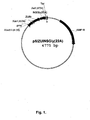
- Example 1 Construction of p5/ZUINSGly(22A) plasmid and obtaining of a strain transformed with this plasmid.
- p5/ZUINS plasmid in which a DNA fragment encoding recombined insulin precursor is added to a modified gene of synthetic ubiquitin.
- ubiquitin gene arginine codons have been replaced with alanine codons and to the C terminus of ubiquitin gene there has been added aditional arginine codon.
- Peptide which constitutes part of ubiquitin is a carrier for insulin precursor, and is a condition for high efficiency of fusion protein synthesis in E. coli.
- the region encoding the modified fusion protein ubiquitin-human insulin is placed under control of pms ( WO05066344 A2 ) promoter.
- the plasmid carries ampicillin resistance gene.
- pIGAL1 plasmid whose sequence deposited in Gene Bank has number AY424310.
- the recombined INSGly(22A) proinsulin gene differs from the model human proinsulin gene in such a way, that it has attached additional GGT codon at C terminus of chain A.
- amino acid sequence of chain A is being elongated at position 22 with Gly - glycine - amino acid residue.
- Plasmid with the modified gene encoding recombined p5/ZUINSGly(22A) proinsulin has been used in transformation of competent E. coli DH5 ⁇ cells which were subsequently cultivated for 18 hours in LB medium with addition of ampicillin (0.01 mg/ml) in the volume of 500 ml, at 37°C, 200 rpm.
- Bacteria material has been prepared for strain bank, samples containing 1:1 bacterial cultures and 40% glycerol have been deposited at -70 °C.
- Obtained Escherichia coli strain constitutes the initial biological material in the process of obtaining GKR insulin via biosynthesis, according to Example 10.
- Plasmid p5/ZUINSGly(22A) is 4775 base pairs long and is built of following regulatory sequences and genes:
- Example 2 Construction of p5/ZUINSGly(22A)Arg(31B) plasmid and obtaining a strain transformed with it.
- Obtained Escherichia coli strain is the initial biological material in the process of manufacturing SR insulin via biosynthesis according to Example 12.
- Example 4 Construction of p5/ZUINSAla(22A) plasmid and obtaining of a strain transformed with it.
- Obtained Escherichia coli strain is the initial biological material in the process of manufacturing AKR insulin via biosynthesis according to Example 13.
- Example 5 Construction of p5/ZUINSGly(22A)Glu(3B) plasmid and obtaining of a strain transformed with it
- Obtained Escherichia coli strain is the initial biological material in the process of manufacturing GEKR insulin via biosynthesis according to Example 14.
- examples 1-5 as the plasmid hosts there have been used DH5 ⁇ E. coli bacteria, but in described above, model realisation of the invention there can be used also other E. coli strains, for example DH5 or HB101.
- p6/ZUINS plasmid in which DNA fragment encoding precursor of recombined insulin is appended to modified gene encoding synthetic ubiquitin.
- ubiquitin-encoding gene arginine codons have been replaced with alanine codons and to the C terminus of ubiquitin gene there has been added an additional arginine codon.
- the peptide constituting part of ubiquitin is a carrier for insulin precursor, which conditions high efficiency of fusion protein expression in E. coli.
- the region encoding the modified ubiquitin-human insulin fusion protein is placed under control of pms promoter ( WO05066344 A2 ).
- the plasmid carries tetracycline resistance gene.
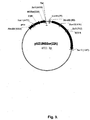
- the plasmid with the modified gene encoding p6/ZUINSSer(22A) proinsulin has been used to transform E. coli DH5 ⁇ bacteria. Subsequently the bacteria were cultivated for 18 hours in LB media with addition of tetracycline (0.01 mg/ml) in 500 ml volume at 37°C, 200 rpm. Bacteria material has been preparated for strain bank samples containing 1:1 bacterial cultures and 40% glycerol have been deposited at -70°C.
- Obtained Escherichia coli strain constitutes initial biological material in the process of manufacturing SKR insulin via biosynthesis according to Example 15.
- p6/ZUINSSer(22A) plasmid is 4911 base pairs long and is made of following regulatory sequences and genes:
- Example 7 Construction of p6/ZUINSGly(22A) plasmid and obtaining of a strain transformed with it.
- Obtained Escherichia coli strain constitutes initial biological material in the process of manufacturing GKR insulin via biosynthesis according to Example 16.
- Example 8 Construction of p6/ZUINSGly(22A)Glu(3B) plasmid and obtaining of a strain transformed with it.
- Obtained Escherichia coli strain is the initial biological material in the process of manufacturing GEKR insulin via biosynthesis according to Example 17.
- Obtained Escherichia coli strain is the initial biological material in the process of manufacturing GR insulin via biosynthesis according to Example 18.
- GKR insulin has been manufactured in a biosynthesis process realised in the classical way (inoculum, seed culture, production culture) using Escherichia coli strain with a DNA fragment encoding GKR insulin precursor obtained according to Example 1.
- Production cultivation has been conducted in 150 dm 3 fermentation tank for 20 hours at 37 °C, controlling pH, temperature, optical density, glucose concentration and aeration.
- GKR analogue has been produced intracellulary in inclusion bodies.
- the fermentation broth After the end of fermentation the fermentation broth has been concentrated and subsequently digested with lysosyme and bacterial cells have been subjected to disintegration. Obtained suspension has been diluted with water and after incubation with Triton centrifuged. Created raw deposit of inclusion bodies was initially purified, finally obtaining inclusion bodies homogenate.
- the obtained homogenate has been dissolved (10-15 mg/cm 3 ) in the solution of sodium carbonate with addition of EDTA, subjected to renaturation and, for protection of lysine free amino groups, subjected to reversible process of citraconylation in a reaction with citraconic anhydride.
- the dissolved protein had been subjected to trypsine digestion in order to cleave the leader protein out and to cleave the insulin chains. In the result of trypsine activity there was obtained GKR insulin.
- the solution after digestion with trypsine has been subjected to purification with low pressure liquid chromatography on DEAE Sepharose FF gel, and subsequently diafiltration and concentration -- second low pressure liquid chromatography on Q Sepharose FF gel.
- Main fraction has been subjected to purification with high pressure liquid chromatography on Kromasil-RPC8100A 10 ⁇ m gel.
- Main fraction has been concentration using dialysis to concentration of 30-40 mg/cm 3 and purified GKR insulin has been separated by crystallisation, using sodium citrate, zinc acetate, citric acid.
- Example 10 using Escherichia coli strain with DNA fragment encoding GR insulin precursor, obtained in accordance with Example 2, there has been obtained from analogous batch of inclusion bodies 5.2 g of GR insulin of HPLC purity equal to 97.5%.
- Example 10 using Escherichia coli strain with DNA fragment encoding SR insulin precursor, obtained in accordance with Example 3, there has been obtained from analogous batch of inclusion bodies 5.5 g of SR insulin of HPLC purity equal to 97%.
- Example 10 using Escherichia coli strain with DNA fragment encoding AKR insulin precursor, obtained in accordance with Example 4, there has been obtained from analogous batch of inclusion bodies 4.7 g of AKR insulin of HPLC purity equal to 96.5%.
- Example 10 using Escherichia coli strain with DNA fragment encoding GEKR insulin precursor, obtained in accordance with Example 5, there has been obtained from analogous batch of inclusion bodies 5.0 g of GEKR insulin of HPLC purity equal to 97.5%. Product's structure has been confirmed by following data:
- Example 10 using Escherichia coli strain with DNA fragment encoding GKR insulin precursor, obtained in accordance with Example 7, there has been obtained from analogous batch of inclusion bodies 6.3 g of GKR insulin of HPLC purity equal to 95.5%. Remaining properties of the product (GKR insulin) as in Example 10.
- Example 14 Proceeding analogously to Example 10, using Escherichia coli strain with DNA fragment encoding GEKR insulin precursor, obtained in accordance with Example 8, there has been obtained from analogous batch of inclusion bodies 6.0 g of GEKR insulin of HPLC purity equal to 97%. Remaining properties of the product (GEKR insulin) as in Example 14.
- Example 11 Proceeding analogously to Example 10, using Escherichia coli strain with DNA fragment encoding GR insulin precursor, obtained in accordance with Example 9, there has been obtained from analogous batch of inclusion bodies 5.5 g of GR insulin of HPLC purity equal to 96.5%. Remaining properties of the product (GR insulin) as in Example 11.
- GR insulin solution manufactured according to Example 11 or 18 (2 mg/ml), in 100mM MES/KOH buffer, pH 4.5, there has been added 1 ⁇ M CuSO 4 , 100 ⁇ g/ml catalase, 5mM ascorbic acid and 2 ⁇ M PAM enzyme, and subsequently the solution has been mildly mixed for 1 hour at 37°C. The reaction has been stopped by addition of 1 mM Na 2 EDTA. The solution after reaction with PAM has been subjected to purification by ionexchange and HPLC methods.
- the main fraction containing insulin concentrated and subjected to crystallisation using sodium citrate, zinc citrate, citric acid. From one batch of reaction mixture there was obtained 22 mg of crystalline ZR insulin of HPLC purity of 98%.
- Example 21 Manufacturing of pharmaceutical preparation of GKR insulin (100 u/ml)
- GKR insulin 100 u/ml of pharmaceutical preparation of GKR insulin (100 u/ml) of following composition (values per 1.0 ml): GKR insulin (Example 16) 3.69 mg/ml (as 100% substance, 100 u/ml) m-cresol 2.7 mg/ml anhydrous glycerine 16 mg/ml zinc 30 ⁇ g/ml water for injection to 10 ml pH 4.5
- Zinc oxide in amount necessary to reach the final concentration of Zn ions of 30 ⁇ g/ml were dissolved in 40 ml of 10 mM hydrochloric acid. After that, to obtained solution was added insulin GKR in amount corresponding to 10 000 u of insulin GKR, under mild stirring until obtaining a clear solution and then pH adjusted to value 4,5.
- Solution 1 was added under stirring to Solution 2, supplemented with water for injection to volume 100 ml and in case of need corrected pH to value 4,5 with 10 mM hydrochloric acid or 0,2 M solution of sodium hydroxide. Resulting mixture was in sterile condition filtered through 0,22 ⁇ m filter and aliquoted into glass 3 ml vials. It was determined that the preparation containing GKR insulin (100 u/ml) exhibits stability in room temperature investigated period of 56 days, in the accelerated stability test (Example 24).
- Example 22 Manufacturing of pharmaceutical preparation of GR insulin (100 u/ml)
- GR insulin 100 ml of pharmaceutical preparation of GR insulin (100 u/ml) of the following composition (values per 1.0 ml): GR insulin (Example 11) 3.61 mg/ml (as 100% substance, 100 u/ml) m-cresol 2.7 mg/ml anhydrous glycerine 16 mg/ml zinc 30 ⁇ g/ml injection water up to 1.0 ml pH 4.0
- GR insulin Example 11
- 3.61 mg/ml as 100% substance, 100 u/ml
- m-cresol 2.7 mg/ml anhydrous glycerine 16 mg/ml zinc 30 ⁇ g/ml injection water up to 1.0 ml pH 4.0
- the procedure was identical as in Example 21, apart of that that instead of GKR insulin there was used GR insulin (in the amount of 361 mg, 10 000 u) and that the final value of pH was 4.0.
- Example 23 Manufacturing of pharmaceutical preparation of GEKR insulin (100 u/ml)
- GEKR insulin 100 ml of pharmaceutical preparation of GEKR insulin (100 u/ml) of the following composition (values per 1.0 ml): GEKR insulin (Example 14) 3.70 mg/ml (as 100% substance, 100 u/ml) m-cresol 2.7 mg/ml anhydrous glycerine 16 mg/ml zinc 30 ⁇ g/ml injection water up to 1.0 ml pH 4.0
- the procedure was identical as in Example 21, apart of that that instead of GKR insulin there was used GEKR insulin (in the amount of, 10 000 u) and that the final value of pH was 4.0.
- Example 25 Examination of accelerated stability of pharmaceutical preparation of GEKR insulin (100 u/ml)
- GKR insulin Recombined human insulin analogue
- Gensulin N Recombined isophane human insulin
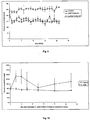
- hypoglycaemic activity of both preparations have been observed in 0.5 and 1 hour after administration. In this time there is observed fast and deep decrease of glucose concentration after GKR insulin. Peak activity of GKR insulin and Gensulin N is in 2 nd hour.
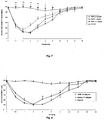
- GKR insulin is an active analogue of prolonged hypoglycaemic activity. Decrease in glucose level after GKR insulin administration was observed for up to 12 hours, while levels of glucose after 24 hours were similar to initial. Results of reaction of normoglycaemic rats to single administration of GKR insulin and Gensulin N preparations (taking into account mean values ⁇ SEM) are shown in Table 1 and Figure 5 .
- Example 27 Determination of GKR insulin activity on animals with experimental diabetes
- Example 28 Determination of GR insulin activity in animals with experimental diabetes
- Activity of GR insulin after administration of single doses - 5 u or 10 u/kg bm has been determined to be fast and strong. Beginning of activity occurs already after 30 minutes after administration of the preparation and remains at the same level up to 2 hours, and subsequently weakens until reaching initial levels in 24 th -36 th hour.
- Results describing influence of GR insulin preparation on glucose concentration in blood of rats after single dose administration of 5 u and 10 u/kg bm doses in a model of moderate streptozotocin-induced diabetes (in comparison with Lantus preparation) are shown in Table 6.
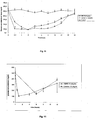
- a plot of glucose concentration/time changes after administration of 5 u/kg bm of GR insulin is shown in Fig.11 .
- Example 29 Determination of GEKR insulin activity in animals with experimental diabetes
- Results describing influence of GEKR insulin on glucose concentration in rat blood after single dose administration of 10 u/kg bm in a moderate streptozotocin-induced model of diabetes, in comparison with preparation Levemir, are shown in Table 7, and a plot of glucose concentration change as a function of time after administration 10 u/kg bm of GEKR insulin in Fig 12 .
- Table 6 Influence of single dose administration of GR insulin (doses of 5 u/kg bm and 10 u/kg bm) on glucose concentration in blood of rats with moderate streptozotocin-induced diabetes in comparison with Lantus preparation (insulin glargine). diabetes model Tested preparati on dose s.c.
- Lantus Table 7 Influence of single dose administration of GEKR insulin (in a dose of 10 u/kg bm) on glucose concentration in blood of rats with moderate diabetes, in comparison with Levemir preparation (insulin detemir). diabetes model Tested preparation and dose s.c.
Landscapes
- Health & Medical Sciences (AREA)
- Chemical & Material Sciences (AREA)
- Life Sciences & Earth Sciences (AREA)
- Organic Chemistry (AREA)
- Diabetes (AREA)
- General Health & Medical Sciences (AREA)
- Endocrinology (AREA)
- Medicinal Chemistry (AREA)
- Toxicology (AREA)
- Biophysics (AREA)
- Biochemistry (AREA)
- Genetics & Genomics (AREA)
- Gastroenterology & Hepatology (AREA)
- Molecular Biology (AREA)
- Proteomics, Peptides & Aminoacids (AREA)
- Zoology (AREA)
- Emergency Medicine (AREA)
- Animal Behavior & Ethology (AREA)
- Bioinformatics & Cheminformatics (AREA)
- Hematology (AREA)
- Obesity (AREA)
- Chemical Kinetics & Catalysis (AREA)
- General Chemical & Material Sciences (AREA)
- Nuclear Medicine, Radiotherapy & Molecular Imaging (AREA)
- Pharmacology & Pharmacy (AREA)
- Engineering & Computer Science (AREA)
- Public Health (AREA)
- Veterinary Medicine (AREA)
- Medicines That Contain Protein Lipid Enzymes And Other Medicines (AREA)
- Peptides Or Proteins (AREA)
- Pharmaceuticals Containing Other Organic And Inorganic Compounds (AREA)
- Preparation Of Compounds By Using Micro-Organisms (AREA)
- Saccharide Compounds (AREA)
Description
- The subjects of the invention are insulin derivative or its pharmaceutically acceptable salt, pharmaceutical composition, use of insulin derivative or its pharmaceutically acceptable salt and method of treatment of patients suffering from diabetes mellitus. More particularly the invention concerns new biosynthetic analogues of recombined human insulin of prolonged therapeutic activity, which may find use in prophylaxis and treatment of diabetes mellitus.
- Insulin and its various derivatives are used in large amounts in treatments of diabetes mellitus and are often manufactured on a large industrial scale. While there are many different known modified derivatives of insulin and many pharmaceutical preparations of diverse activity profiles, a drug is still sought, which would enable to maintain a constant level of glucose in a human organism for an extended period of time.
- To achieve the effect of delayed and/or prolonged activity some preparations of normal human insulin contain specific additions, e.g. various amounts of protamin, a protein that forms an insoluble complex with insulin which forms deposits in subcutaneous tissues, and from which insulin is gradually released.
- There are known various human insulin derivatives used in treatment of diabetes, which contain additional amino acids or have modified sequence of some amino acids. Changes of primary structure of insulin influence its secondary and tertiary structure, which affects protein's chemical and biological properties, and that in turn results in pharmacokinetic and pharmacodynamic effects. These changes are of different character, can lead to accelerated or delayed and prolonged activity of modified insulin. Active form of insulin is a monomer, which easily filters into blood after subcutaneous injection. It is known, that exogenous human insulin in solutions has hexameric form, which after application dissociates to dimers and subsequently to monomers before filtering into blood stream. One of insulin derivatives characterised by accelerated activity is lispro-insulin (Humalog®), in which the sequence of proline (28)-lysine (29) in chain B has been inverted. It makes difficult, from the sterical point, to form dimers of insulin in a solution. Second such a derivative is insulin in which proline in the position 28 of chain B has been replaced with aspartic acid. Such introduced negative charge lowers possibility of self-association of insulin monomers. Both these insulin derivatives are absorbed faster due to their structure.
- Prolonged-activity recombined human insulin analogues are constructed by elongating chain B with alkaline amino acids or acylating ε-amino group in lysine in chain B with aliphatic acid of about a dozen carbon atoms.
- Introduction of these extra alkaline amino acids changes some chemical or physical properties of insulin. The most important change is a shift of isoelectric point in respect to unmodified natural insulin from 5.4 to the range of about 5.5 to about 8.5, which results from introduction of superfluous positive charges into the molecule. In consequence solubility of these analogues in neutral water environment is reduced, and therefore necessity of using slightly acidic environment for production of pharmaceutical preparations containing such modified insulin.
- However, beside obvious advantages resulting from introduction of extra alkaline amino acids there is observed also disadvantageous reduction of stability of new analogues, stemming primarily from deamination of asparagine in position A21 occurring in acidic environment.
- This issue is addressed by replacement of A21Asn with other amino acid, such as aspartic acid, glycine, alanine, threonine and others. One of such analogues is recombinant human insulin derivative in which in chain A asparagine(21) has been replaced with glycine(21) and to the C terminus of chain B have been attached two arginine residues. This is so-called glargine derivative of insulin, manufactured under the name Lantus (patent
US 5.656.722 ). - In the course of our research it has been established, that a human insulin derivative, where to the C terminus of chain B have been attached residues of lysine (B31 Lys) and arginine (B32Arg) shows biological activity that is similar to glargine derivative, which is already present on the market. Preliminary research performed on animals indicates, that this preparation, called lizarginsulin, is characterised by prolonged activity and a flat release profile mimicking secretion of natural insulin, and from a clinical point of view - reduction of nocturnal hypoglycaemias. Because of exceptional similarity to human insulin and also to proinsulin, there could be expected good research results, enabling gradual development of the drug candidate and its final commercialisation. It is crucial, that LysArg sequence at C terminus of chain B of human insulin is found in human proinsulin, and one should expect transformation of lizarginsulin into human insulin by present carboxypeptidase C. This means, that first metabolite of lizarginsulin in human organism can be human insulin of well known and acceptable characteristics, even in the case of exogenous hormone. There was performed extended pre-clinical research on rats, which confirmed prolonged activity of the new insulin analogue (
WO 2006/096079 ). - However it came out that this derivative apart of its advantageous biological activity is characterised by insufficient stability in acidic injection solutions. The main cause of insufficient stability, which manifests itself primarily as deamidation, is presence of asparagine residue at C terminus of chain A, where in acidic water environment can occur a deamidation autocatalysed by a proton from carboxyl group.
- Therefore the aim of this invention is providing new analogues of insulin, which would be characterised by an adequate stability in acidic injection solutions (pH 3.5 - 5), and at the same time would possess the required biological activity. It is especially desirable that they would show characteristics of biological activity of natural insulin. It is also particularly important, that the start of activity of the new derivatives was practically immediate, just after administration to the patient, with the ability of prolonged release of a part of the dose. This would enable to provide both accelerated and prolonged activity of the pharmaceutical preparation containing insulin analogues.
- New insulin analogues of formula I which are the subject matter of the present application are characterised by a shift of isoelectric point what was achieved by three types of changes (from the chemical point of view). Compounds with RR in position B31B32: ID 1-5+
ID 8 are the first type of change, second type of change is represent by compound with KR in position B31B32: ID 1-5+ ID 7,9 and the third subgroup are compounds with R in position B32: ID 1-5+ID 10. The mentioned subgroups are joined in one common inventive idea by ultra-extended effect and high stability in relation to analogue described inWO 2006/096079 . - The above stated goal was unexpectedly achieved in this invention as defined in the appended claims. The basic aspect of the disclosure is an Insulin derivative or its pharmaceutically acceptable salt containing two polypeptides forming chain A and chain B, characterised by being a new polipeptide of
formula 1, wherein
- wherein R denotes group NH2 or group of formula Asn-R2, where R2 denotes neutral L-amino acid or group NH2; and R1 denotes B31Lys-B32Arg or B31Arg, where B3Asn can be optionally replaced by another amino acid, favourably by Glu,
- wherein amino acid sequence of chain A has been chosen from SEQ ID No 1 - 6, while amino acid sequence of chain B has been chosen from SEQ ID No 7 -10,
- and wherein a new polipeptide of formula is an analogue of recombined human insulin of isoelectric point 5-8.5.
- Preferably, insulin derivative or its pharmaceutically acceptable salt according to above, characterised by containing two polypeptides forming chain A and chain B, wherein amino acid sequence of chain A has been chosen from SEQ ID No 1 - 6, while amino acid sequence of chain B has been chosen from SEQ ID No 7 - 10 and wherein insulin derivative or its pharmaceutically acceptable salt is selected from SEQ ID No. 1 with 7, SEQ ID No. 1 with 9, SEQ ID No. 1 with 10, SEQ ID No. 2 with 7, SEQ ID No. 2 with 9, SEQ ID No. 2 with 10, SEQ ID No. 3 with 7, SEQ ID No. 3 with 9, SEQ ID No. 3 with 10, SEQ ID No. 4 with 7, SEQ ID No. 4 with 9, SEQ ID No. 4 with 10, SEQ ID No. 5 with 7, SEQ ID No. 5 with 9, SEQ ID No. 5 with 10 or SEQ ID No. 6 with 8. Preferably, R2 denotes single neutral L-amino acid or group NH2.
- Preferably,
- R in
formula 1 denotes group of formula Asn- R2, where R2 denotes Gly and R1 denotes B31 Lys-B32Arg, or - R in
formula 1 denotes group of formula Asn- R2, where R2 denotes Ala and R1 denotes B31 Lys-B32Arg, or - R in
formula 1 denotes group of formula Asn- R2, where R2 denotes Ser and R1 denotes B31 Lys-B32Arg, or - R in
formula 1 denotes group of formula Asn- R2, where R2 denotes Thr and R1 denotes B31 Lys-B32Arg, or - R in
formula 1 denotes group of formula Asn- R2, where R2 denotes group NH2 and R1 denotes B31 Lys-B32Arg, or - R in
formula 1 denotes group NH2 and R1 denotes B31 Lys-B32Arg, or - R in
formula 1 denotes group of formula Asn- R2, where R2 denotes Gly, and R1 denotes B31 Arg, or - R in
formula 1 denotes group of formula Asn- R2, where R2 denotes Ala, and R1 denotes B31 Arg, or - R in
formula 1 denotes group of formula Asn- R2, where R2 denotes Thr, and R1 denotes B31 Arg, or - R in
formula 1 denotes group of formula Asn- R2, where R2 denotes Ser, and R1 denotes B31 Arg, or - R in
formula 1 denotes group of formula Asn- R2, where R2 denotes group NH2, and R1 denotes B31 Arg, or - R in
formula 1 denotes group NH2 and R1 denotes B31 Arg, or - R in
formula 1 denotes group of formula Asn- R2 where R2 denotes Gly, R1 denotes B31 Lys-B32Arg, and B3Asn has been replaced with B3Glu. - The next subject of invention is a pharmaceutical composition, characterised in, that it contains effectively acting amount of insulin derivative or its pharmaceutically acceptable salt according to the above.
Preferably, pharmaceutical composition contains 10 up to 50 µg/ml of zinc. - The next subject of invention is a use of insulin derivative or its pharmaceutically acceptable salt according to the above to manufacture a medicine for treatment or prevention of diabetes mellitus.
- The next subject of the disclosure is a method of treatment of patients suffering from diabetes mellitus, characterised in, that to patient requiring such a treatment is administered an effectively acting amount of pharmaceutical composition according to the above.
- As described before, in the case of glargin the problem of low stability has been solved by replacing asparagine in the position A21 with glycine. Research, which aimed at obtaining an insulin analogue exhibiting prolonged activity and stability in acidic injection solutions as described in the invention, went in different direction. In order to block carboxyl group responsible for low stability, there were obtained new derivatives of lizarginsulin with carboxyl group in asparagine residue modified in different ways, using methods of genetic engineering and enzymatic transformation. As a result of the conducted research it unexpectedly turned out, that chemical and biological properties, similar to these of glargine and lizargine derivative, are exhibited by derivatives of human insulin of
formula 1, where chain A has been elongated at C terminus with a residuum of neutral amino acid (A22) or where carboxyl group of asparagine or cysteine at C terminus of chain A has been transformed into carboxyamid group, and to the C terminus of chain B there were attached residues of lysine and arginine (B31 Lys-B32Arg), or two arginine residues (B31Arg-B32Arg), or one arginine residue (B31Arg). New analogues obtained in such a way are characterised by proper stability in acidic injection solutions (pH 3.5 - 5) and at the same time exhibit desired biological activity. - Introduced modification unexpectedly led to obtaining stable pharmaceutical compositions of insulin derivatives, at the same time preserving biological activity and causing a shift of isoelectric point to pH between 5 and 8, therefore reducing solubility of the new insulin derivative in physiological pH at the place of injection. This causes precipitation of insulin derivative microdeposit in subcutaneous tissue and subsequently slow release of the substance to the blood, which causes maintaining of theraupetical level by a prolonged time.
Properties of these compounds and their compositions have been confirmed by stability research and by researching their activity in animals with experimental diabetes. During these there was unexpectedly found remarkably prolonged effect of hypoglycaemic activity, which lasted also for a long time after stopping administration of the medicine, in contrast to what was observed for a reference commercially available insulin derivative of prolonged activity. This allows supposing, that properties of derivatives, which are the subject of the invention, will enable significantly less frequent administration of the medicine, which will increase effectiveness, safety and comfort of the patients therapy. It is also important, that start of activity of the new derivatives according to the invention is practically immediate, which means that these compounds unexpectedly exhibit characteristics of biological activity of known insulin analogues of both accelerated and prolonged activity. - Examples of insulin derivatives of
formula 1 are such as, but not limited to, these exhibited below.A22Gly - human insulin - B31LysB32Arg (insulin GKR) A22Ala - human insulin - B31LysB32Arg (insulin AKR) A22Ser - human insulin - B31LysB32Arg (insulin SKR) A22Thr - human insulin - B31LysB32Arg (insulin TKR) de(A21Asn)A20Cys-NH2 - human insulin - B31LysB32Arg (insulin XKR) A21Asn-NH2 - human insulin - B31LysB32Arg (insulin ZKR) A22Gly - human insulin - B3GluB31LysB32Arg (insulin GEKR) A22Gly - human insulin - B31ArgB32Arg (insulin GRR) A22Ala - human insulin - B31ArgB32Arg (insulin ARR) A22Ser - human insulin - B31ArgB32Arg (insulin SRR) A22Thr - human insulin - B31ArgB32Arg (insulin TRR) de(A21Asn)A20Cys-NH2 - human insulin - B31ArgB32Arg (insulin XRR) A21Asn-NH2 - human insulin - B31ArgB32Arg (insulin ZRR) A22Gly - human insulin - B31Arg (insulin GR) A22Ala - human insulin - B31Arg (insulin AR) A22Ser - human insulin - B31Arg (insulin SR) A22Thr - human insulin - B31Arg (insulin TR) de(A21Asn)A20Cys-NH2 - human insulin - B31Arg (insulin XR) A21Asn-NH2 - human insulin - B31Arg (insulin ZR) - To simplify names of recombined human insulin analogues, which are the subject of the invention, they were assigned symbols which are composed of the name "insulin" and 2-4 capital letters of alphabet, which denote amino acid residues, which were added or which replaced these present in the parent particle of human insulin. In the most cases these letters are consistent with one-letter amino acid residues code recognised in the literature. Only for two residues, that do not occur naturally, there were used additional letters, namely "Z" and "X". In both cases the letter denotes a residue placed at C terminus of chain A, which where instead of the terminal COOH group there's CONH2 group; letter "Z" denotes corresponding asparagine amide (that is A21Asn-NH2), and letter "X" - cysteine amide (that is de(A21Asn)A20Cys-NH2).
- Insulin analogues of
formula 1 were produced by a series of genetic manipulations using standard methods of genetic engineering. - To this end there were constructed modifications of the gene encoding recombined human proinsulin using genetic techniques such as for example site specific mutagenesis. Site-specific mutagenesis reaction has been performed using Stratagene kit (cat. no. 200518-5), as a template has been used plasmid DNA pIGALZUINS - p5/ZUINS or pIGTETZUINS - p6/ZUINS. Also any other DNA containing proper sequence encoding recombined human proinsulin or preproinsulin can be used as the template.
- According to the invention, in the light of recognised terminology, recombined human proinsulin is understood as a polypeptide chain where chains A and B of human insulin are connected by dipeptide Lys-Arg or Arg-Arg, and the recombined preproinsulin - a combination of proinsulin and an additional leader polypeptide, for example ubiquitin, or SOD or their fragments.
- Reaction mixture was used to transform competent cells of a proper Escherichia coli strain, as for example DH5α, DH5, or HB101, however it is possible to use cells of other E. coli strains or cells of other microorganisms, or other known cell lines which can be used for expression of recombined proteins. Plasmid containing given modification of a gene encoding recombined human proinsulin was isolated and sequenced in order to verify correctness of nucleotide sequence. According to the variant of the invention, plasmid with the modified gene encoding recombined human proinsulin was used to transform competent E. coli DH5α cells and bacteria were cultured in LB media with addition of selection antibiotic (0.01 mg/ml) in the volume of 500 ml, at temp. 37°C, 200 rpm for 18 h. Bacterial material was prepared for strain bank, samples in proportion 1:1 of bacteria culture and 40% glycerol were deposited at -70 °C.
- Variants of recombined preproinsulin obtained by expression in E. coli strains were isolated in the form of inclusion bodies, after the cells had been disintegrated, and subsequently were subjected to standard processes of fusion proteins purification. Solution of hybrid protein with insulin analog obtained after renaturation was subjected to controlled treatment with tripsine, analogously to case of many methods known beforehand and described e.g. by Kemmlera et al. in J. Biol. Chem., Vol. 246, page 6786-6791 (1971) or patents
US 6686177 andUS 6100376 . Obtained insulin analogues were subjected to the process of purification using known methods, mainly low-pressure chromatography, ultrafiltration and/or HPLC. The product was precipitated from sufficiently purified solution of insulin analogue. - In order to obtain derivatives containing at the C terminus of chain A residue A21Asn-NH2 or A20Cys-NH2, there were used α-amidating enzymes (α-AE), catalysing conversion of naturally appearing in living organisms prohormones, which are reaction substrates converted into active α-amid forms.
- Enzyme PAM (peptidylglycine α-amidating monooxygenase) is a protease with dual activity, denoted as activity PHM (Peptidylglycine alpha-hydroxylating monooxygenase) and PAL (peptidylamidoglycolate lyase activity) (Diagram 1), which enables obtaining C terminal amide. It was investigated, that half of peptide hormones, such as oxytocin or vasopressin require achieving their optimal activity a C-terminal amid group. In this reaction the amid group originates from C-terminal gycine residue, which is here direct reaction precursor (Satani M., Takahashi K., Sakamoto H., Harada S., Kaida Y., Noguchi M.; Expression and characterization of human bifunctional peptidylglycine alpha-amidating monooxygenase. Protein Expr Purif. 2003 Apr; 28(2):293-302.; Miller D. A., Sayad K. U., Kulathila R., Beaudry G. A., Merkler D. J., Bertelsen A. H.; Characterization of a bifunctional peptidylglycine alpha-amidating enzyme expressed in Chinese hamster ovary cells. Arch Biochem Biophys. 1992 ).

PAM protease is a protein which is found inter alia in eukaryotic organisms of different length of amino acid chain. In this project there was used a protease originating from human organism (Homo sapiens), in which there are found 6 genes encoding proteins exhibiting activity of α-amidating protease. - The basic physicochemical property of recombined human insulin analogues of
formula 1, which differentiates them from human insulin, is their value of isoelectric point, which has values from about 5 to about 8. This means good solubility of the compounds in solutions of acidic to slightly acidic pH. This property enabled preparation of composition - solutions of new insulin derivatives in acidic pH. - An aspect of the invention is also pharmaceutical composition characterised by this, that it contains effectively acting amount of insulin derivative according to the invention or its pharmaceutically acceptable salt, which are defined above. Favourably, the pharmaceutical composition according to the invention contains also from 10 to 50 µg/ml of zinc.
- Consecutive aspect of the invention is also use of insulin derivative according to the invention or its pharmaceutically acceptable salt, which were defined above, to manufacture drug for treatment or prevention of diabetes.
- In accordance with the above, the pharmaceutical composition, according to the disclosure contains effectively acting amount of biosynthetic analogue of human insulin of
formula 1 or its pharmacologically acceptable salt and auxiliary substances. - A salt of biosynthetic human insulin analogue according to the invention can be for example a salt of alkaline metal or ammonium salt.
- Intended for administration composition according to the disclosure is prepared in the form of solution and contains: effectively acting amount of biosynthetic analogue of human insulin of
formula 1 or its pharmacologically acceptable salt and auxiliary substances, such as: isotonic agents, preservatives agents, stabilizing agents, optionally buffering agents. - Amount of the active substance used in the composition according to the invention is about 1-1600, favourably 10-1200, especially favourably 10-500 u/ml. In case of each human insulin analogue, which is subject of this invention, by 1 unit (1u) is meant 1 auxiliary unit, containing the same number of moles of the analogue as 1 international unit of insulin, corresponding to 6 nMol (that is 6 x 10⁻⁹ Mol).
- For pharmaceutical composition according to the invention pH value of the solution is from about 3.5 to about 5, favourably 4.0-4.5.
- Generally, auxiliary substances in compositions according to the invention are the same substances that are used in preparations containing known recombined human insulin.
- Isotonic substance according to the invention can be any substance, which allows obtaining solution isoosmotic in respect to human blood plasma. To typical isotonic agents used in pharmacy belong such substances as sodium chloride, mannitol, glycine, preferably glycerine. Favourable is use of glycerine.
- Useful conserving agents to be used in composition according to the invention are compounds chosen from the group to which belongs m-cresole, phenol or their mixtures.
- New derivatives, similarly to recombined normal human insulin, are stabilised by addition of zinc ions, introduced into the solution in the form of, among other, zinc chloride or oxide. Amount of the zinc can range from around 5 µg/ml to around 150 µg/ml.
- A following example of a content of the composition containing derivatives of recombined human insulin has been developed: 10-500 u/ml of biosynthetic analogue of human insulin of
formula 1 or its pharmacologically acceptable salt, 16 mg/ml of glycerine, 2.7 - 3 mg/ml m-cresole, 10-50 µg/ml of zinc and water for injection to 1 ml. - To better explain the essence of the invention this description has been extended with a detailed discussion of examples of the invention's realisation, which encompasses also enclosed list of sequences and figures, of which:
-
Figure 1 presents structure of plasmid p5/ZUINSGly(22A) containing a gene encoding GKR protein of recombined insulin. -
Figure 2 and SEQ ID. No. 24 presents nucleotide and amino acid sequence of plasmid p5/ZUINSGly(22A). -
Figure 3 presents structure of plasmid p6/ZUINSSer(22A) containing a gene encoding insulin SKR protein. -
Figure 4 and SEQ ID. No. 25 presents nucleotide and amino acid sequence of plasmid p6/ZUINSSer(22A). -
Figure 5 presents influence of single dose administration of GKR insulin (in the dose of 5 u/kg of body mass on glucose concentration in blood of normoglycaemic rats, compared with preparation of Gensulin N. Average values ± SEM. Statistical significance **p<0.01: Insulin GKR vs. initial glucose concentration; ##p<0.01, #p<0.05: Gensulin N vs. initial glucose concentration; ^^p<0.01: Insulin GKR vs. Gensulin N. -
Figure 6 presents influence of single dose administration of GKR insulin (in dose of 5u per kg of body mass) on glucose concentration in blood of rats with mild streptozotocin-induced diabetes (in comparison with Lantus preparation). 0 - fixed hyperglycaemia; control -physiological salt solution 10 µl/200 g bm. Statistical significance: ** p < 0.01, * p < 0.05 GKR vs. Lantus; -
Figure 7 presents influence of single dose administration of GKR insulin (in doses of 2.5 u, 5u and 7.5 u per kg of body mass) on glucose concentration in blood of rats with severe streptozotocin-induced diabetes. 0 - fixed hyperglycaemia; control -physiological salt solution 10 µl/200 g bm. Statistical significance: ** p < 0.01 * p < 0.05GKR 2,5 u vs control; ^^ p < 0.01 ^ p < 0.05 GKR 5 u vs control; ## p < 0.01 # p < 0.05 GKR 7.5 u vs control -
Figure 8 presents influence of single dose administration of GKR insulin (in dose of 7.5u per kg of body mass) on glucose concentration in blood of rats with severe streptozotocin-induced diabetes (in comparison with Lantus preparation). 0 - fixed hyperglycaemia; control -physiological salt solution 10 µl/200 g bm. Statistical significance: ** p < 0.01, * p < 0.05 GKR vs. Lantus; -
Figure 9 presents glucose concentration in blood of rats after multiple administrations of GKR insulin in doses of 5 u per kg of body mass in a model of mild streptozotocin-induced diabetes (in comparison with Lantus preparation); 0 - fixed hyperglycaemia; control - physiological salt solution10 µl/200 g bm. -
Figure 10 presents glucose concentration in blood of rats in the period after stopping administration of GKR insulin in dose of 5 u per kg of body mass in a model of mild streptozotocin-induced diabetes (in comparison with Lantus preparation); -
Figure 11 presents influence of single dose administration of GR insulin (in doses of 10 u per kg of body mass) on glucose concentration in blood of rats with moderate streptozotocin-induced diabetes compared with Lantus preparation. 0 - fixed hyperglycaemia; control -physiological salt 10 µl/200 g bm. 0 - fixed hyperglycaemia; control -physiological salt solution 10 µl/200 g bm. Statistical significance: ** p < 0.01, * p < 0.05 GR vs. Lantus; -
Figure 12 presents influence of single dose administration of GEKR insulin (in dose of 10 u per kg of body mass) on glucose concentration in blood of rats with moderate streptozotocin-induced diabetes compared with Levemir preparation. 0 - fixed hyperglycaemia. - To construct a gene encoding recombined INSGly(22A) proinsulin there was used p5/ZUINS plasmid, in which a DNA fragment encoding recombined insulin precursor is added to a modified gene of synthetic ubiquitin. In the ubiquitin gene arginine codons have been replaced with alanine codons and to the C terminus of ubiquitin gene there has been added aditional arginine codon. Peptide which constitutes part of ubiquitin is a carrier for insulin precursor, and is a condition for high efficiency of fusion protein synthesis in E. coli. The region encoding the modified fusion protein ubiquitin-human insulin is placed under control of pms (
WO05066344 A2 - The recombined INSGly(22A) proinsulin gene differs from the model human proinsulin gene in such a way, that it has attached additional GGT codon at C terminus of chain A. In result amino acid sequence of chain A is being elongated at position 22 with Gly - glycine - amino acid residue.
- In order to modify the gene encoding human recombined proinsulin sequence by adding of GGT (Gly) codon at its C terminus, there were designed following primers for point mutagenesis reaction:The point mutagenesis reaction was carried out using Stratagene kit (catalogue no 200518-5). As the template there has been used plasmid DNA p5/ZUINS. Escherichia coli DH5 α competent cells were transformed with reaction mixture. Plasmid p5/ZUINSGly(22A) has been isolated and sequenced in order to verify presence of GGT nucleotides encoding glycine and the validity of plasmid sequence. Plasmid with the modified gene encoding recombined p5/ZUINSGly(22A) proinsulin has been used in transformation of competent E. coli DH5α cells which were subsequently cultivated for 18 hours in LB medium with addition of ampicillin (0.01 mg/ml) in the volume of 500 ml, at 37°C, 200 rpm. Bacteria material has been prepared for strain bank, samples containing 1:1 bacterial cultures and 40% glycerol have been deposited at -70 °C.

- Obtained Escherichia coli strain constitutes the initial biological material in the process of obtaining GKR insulin via biosynthesis, according to Example 10.
- Plasmid p5/ZUINSGly(22A) is 4775 base pairs long and is built of following regulatory sequences and genes:
- from 374 bp to 1234 bp there is ampicillin resistance gene AMP R,
- from 4158 bp to 4323 bp there is a region encoding pms promoter,
- from 4327 bp to 4554 bp there is a sequence encoding modified synthetic ubiquitin gene ZUBI,
- from 4558 bp to 4722 bp there is a sequence encoding the recombined INSGly(22A) proinsulin gene,
- from 4729 bp to 4775 bp there is a region encoding transcription terminator Ter. Structure of p5/ZUINSGly(22A) plasmid containing the gene encoding recombined human insulin protein (GKR insulin) is shown schematically in
Figure 1 , and its nucleotide and amino acid sequence atFigure 2 . - In construction of recombined INSGly(22A)Arg(31B) proinsulin gene there was used p5/ZUINSGly(22A) plasmid. The recombined INSGly(22A)Arg(31B) gene is characterised by replacement of AAG (Lys) codon with CGT (Arg) codon at position 31 of chain B.
- In order to modify the gene encoding sequence of recombined INSGly(22A) proinsulin there were designed following primers for point mutagenesis reaction:Stratagene kit (cat. no 200518-5) has been used to conduct point mutagenesis reaction. Isolation, verification of validity of plasmid nucleotide sequence and obtaining E. coli DH5α bacteria with p5/ZUINSGly(22A)Arg(31B) plasmid have been performed as in Example 1. Obtained Escherichia coli strain is the initial biological material in the process of manufacturing GR insulin via the biosynthesis according the Example 11.

- To construct a gene of recombined INSSer(22A)Arg(31B) proinsulin there was used p5/ZUINSGly(22A)Arg(31B) plasmid. The difference between the gene encoding recombined INSSer(22A)Arg(31B) proinsulin and the gene encoding recombined proinsulin INSGly(22A)Arg(31B) is a replacement of GGT (Gly) codon with TCT (Ser) codon at position 22 of chain A.
- In order to modify the gene encoding the sequence of recombined INSGly(22A)Arg(31B) proinsulin by replacement of GGT (Gly) with TCT (Ser) codon at position 22 of chain A, there were designed following primers for point mutagenesis reaction:Stratagene kit (cat. no 200518-5) has been used to conduct point mutagenesis reaction. Isolation, verification of validity of plasmid nucleotide sequence and obtaining E. coli DH5α bacteria with p5/ZUINSSer(22A)Arg(31B) plasmid have been performed as in Example 1.

- Obtained Escherichia coli strain is the initial biological material in the process of manufacturing SR insulin via biosynthesis according to Example 12.
- To construct a gene of recombined INSAla(22A) proinsulin there has been used p5/ZUINS plasmid. The difference between the gene of recombined INSAla(22A) proinsulin and the model human proinsulin gene is addition of GCT codon to the C terminus of chain A of the former. In result the amino acid sequence of chain A is elongated at position 22 with Ala - alanine amino acid residue.
- In order to modify the gene encoding the sequence of recombined human insulin by addition of GCT (Ala) codon at its C terminus, there were designed following primers for point mutagenesis:Stratagene kit (cat. no 200518-5) has been used to conduct point mutagenesis reaction. Isolation, verification of validity of plasmid nucleotide sequence and obtaining E. coli DH5α bacteria with p5/ZUINSAla(22A) plasmid have been performed as in Example 1.

- Obtained Escherichia coli strain is the initial biological material in the process of manufacturing AKR insulin via biosynthesis according to Example 13.
- To construct a gene of recombined p5/ZUINSGly(22A)Glu(3B) proinsulin there was used p5/ZUINSGly(22A) plasmid. The difference between the gene encoding recombined INSGly(22A)Glu(3B) proinsulin and the gene encoding recombined INSGly(22A) proinsulin is a replacement of AAC (Asn) codon with GAA (Glu) codon at position 3 of chain B.
- In order to modify the gene encoding the sequence of recombined INSGly(22A) proinsulin by replacement of AAC (Asn) with GAA (Glu) codon at position 3 of chain B, there were designed following primers for point mutagenesis reaction:Stratagene kit (cat. no 200518-5) has been used to conduct point mutagenesis reaction. Isolation, verification of validity of plasmid nucleotide sequence and obtaining E. coli DH5α bacteria with p5/ZUINSGly(22A)Glu(31B) plasmid have been performed as in Example 1.

- Obtained Escherichia coli strain is the initial biological material in the process of manufacturing GEKR insulin via biosynthesis according to Example 14.
- In examples 1-5 as the plasmid hosts there have been used DH5α E. coli bacteria, but in described above, model realisation of the invention there can be used also other E. coli strains, for example DH5 or HB101.
- To construct a gene encoding recombined INSSer(22A) proinsulin there was used p6/ZUINS plasmid, in which DNA fragment encoding precursor of recombined insulin is appended to modified gene encoding synthetic ubiquitin. In the ubiquitin-encoding gene arginine codons have been replaced with alanine codons and to the C terminus of ubiquitin gene there has been added an additional arginine codon. The peptide constituting part of ubiquitin is a carrier for insulin precursor, which conditions high efficiency of fusion protein expression in E. coli. The region encoding the modified ubiquitin-human insulin fusion protein is placed under control of pms promoter (
WO05066344 A2 - The difference between the gene encoding recombined INSSer(22A) proinsulin and the model human proinsulin gene is that the former has appended additional TCT codon at C terminus of chain A. In result amino acid sequence of chain A is elongated at position 22 with Ser - serine amino acid residue.
- In order to modify the gene encoding the sequence of recombined proinsulin by appending TCT (Ser) codon at its C terminus, there were designed following primers for point mutagenesis reaction:Stratagene kit (cat. no 200518-5) has been used to conduct point mutagenesis reaction, as the template has been used p6/ZUINS plasmid DNA. Escherichia coli DH5α competent cells have been transformed with the reaction mixture. p6/ZUINSSer(22A) plasmid has been isolated and sequenced in order to verify presence of TCT nucleotides encoding serine and correctness of the plasmid sequence. The plasmid with the modified gene encoding p6/ZUINSSer(22A) proinsulin has been used to transform E. coli DH5α bacteria. Subsequently the bacteria were cultivated for 18 hours in LB media with addition of tetracycline (0.01 mg/ml) in 500 ml volume at 37°C, 200 rpm.

Bacteria material has been preparated for strain bank samples containing 1:1 bacterial cultures and 40% glycerol have been deposited at -70°C. - Obtained Escherichia coli strain constitutes initial biological material in the process of manufacturing SKR insulin via biosynthesis according to Example 15.
- p6/ZUINSSer(22A) plasmid is 4911 base pairs long and is made of following regulatory sequences and genes:
- from 146 bp to 1336 bp there is a tetracycline resistance gene TET R,
- from 4304 bp to 4469 bp there is a region encoding pms promoter,
- from 4473 bp to 4703 bp there is a region encoding the gene encoding the modified synthetic ubiquitin; there are following modifications: replacement of arginine amino acid at positions 42, 54, 72, 74 in the ubiquitin gene with alanine and addition of arginine at position 77 which allows to remove the ubiquitin,
- from 4704 bp to 4868 bp there is a sequence encoding the gene encoding recombined INSSer(22A) proinsulin,
- from 4875 bp to 4911 bp there is a region encoding transcription terminator Ter. Structure of p6/ZUINSSer(22A) plasmid containing the gene encoding recombined human insulin protein (SKR protein) is shown schematically in
Figure 3 , and its nucleotide and amino acid sequence inFig. 4 . - To construct a gene encoding recombined INSGly(22A) proinsulin there was used p6/ZUINS plasmid, in which DNA fragment encoding precursor of recombined insulin is appended to modified gene encoding synthetic ubiquitin.
- The difference between the gene encoding recombined INSGly(22A) proinsulin and the model human proinsulin gene is that the former has appended additional GGT codon at C terminus of chain A. In result amino acid sequence of chain A is elongated at position 22 with Gly - glycine amino acid residue.
- In order to modify the gene encoding the sequence of recombined human proinsulin by appending GGT (Gly) codon at its C terminus, there were designed following primers for point mutagenesis reaction:

- Stratagene kit (cat. no 200518-5) has been used to conduct point mutagenesis reaction. Isolation, verification of validity of plasmid nucleotide sequence and obtaining E. coli DH5 bacteria with p6/ZUINSGly(22A) plasmid have been performed as in Example 6.
- Obtained Escherichia coli strain constitutes initial biological material in the process of manufacturing GKR insulin via biosynthesis according to Example 16.
- To construct a gene of recombined INSGly(22A)Glu(3B) proinsulin there has been used p6/ZUINSGly(22A) plasmid. The difference between the gene of recombined INSGly(22A)Glu(3B) proinsulin and the recombined INSGly(22A) proinsulin gene is replacement of AAC (Asn) codon with GAA (Glu) codon at position 3 of chain B.
- In order to modify the gene encoding the sequence of recombined INSGly(22A) proinsulin by replacement of AAC (Asn) codon with GAA (Glu) codon at position 3 in chain B, there were designed following primers for point mutagenesis:Stratagene kit (cat. no 200518-5) has been used to conduct point mutagenesis reaction. Isolation, verification of validity of plasmid nucleotide sequence and obtaining E. coli DH5 bacteria with p6/ZUINSGly(22A)Glu(31B) plasmid have been performed as in Example 6.
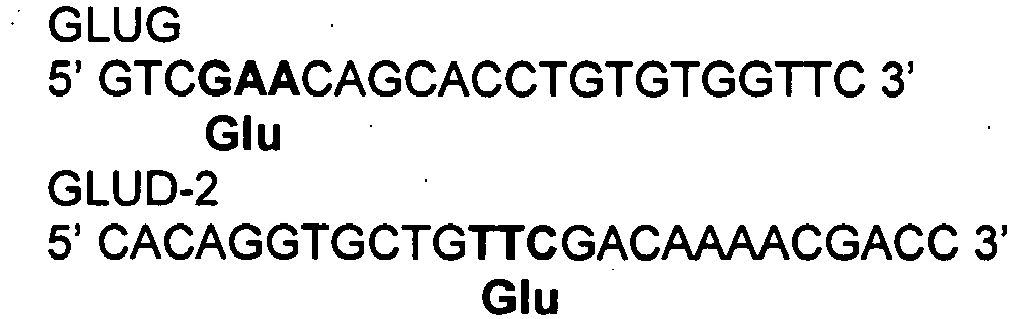
- Obtained Escherichia coli strain is the initial biological material in the process of manufacturing GEKR insulin via biosynthesis according to Example 17.
- To construct a gene of recombined INSGly(22A)Arg(31B) proinsulin there has been used p6/ZUINSGly(22A) plasmid. The gene encoding recombined INSGly(22A)Arg(31B) proinsulin is characterised by this, that it has replaced AAG (Lys) codon with CGT (Arg) codon at position 31 of chain B.
- In order to modify the gene encoding the sequence of recombined INSGly(22A) proinsulin there were designed following primers for point mutagenesis:Stratagene kit (cat. no 200518-5) has been used to conduct point mutagenesis reaction. Isolation, verification of validity of plasmid nucleotide sequence and obtaining E. coli DH5 bacteria with p6/ZUINSGly(22A)Arg(31B) plasmid have been performed as in Example 6.

- Obtained Escherichia coli strain is the initial biological material in the process of manufacturing GR insulin via biosynthesis according to Example 18.
- GKR insulin has been manufactured in a biosynthesis process realised in the classical way (inoculum, seed culture, production culture) using Escherichia coli strain with a DNA fragment encoding GKR insulin precursor obtained according to Example 1. Production cultivation has been conducted in 150 dm3 fermentation tank for 20 hours at 37 °C, controlling pH, temperature, optical density, glucose concentration and aeration. In the fermentation conditions GKR analogue has been produced intracellulary in inclusion bodies. After the end of fermentation the fermentation broth has been concentrated and subsequently digested with lysosyme and bacterial cells have been subjected to disintegration. Obtained suspension has been diluted with water and after incubation with Triton centrifuged. Created raw deposit of inclusion bodies was initially purified, finally obtaining inclusion bodies homogenate.
- The obtained homogenate has been dissolved (10-15 mg/cm3) in the solution of sodium carbonate with addition of EDTA, subjected to renaturation and, for protection of lysine free amino groups, subjected to reversible process of citraconylation in a reaction with citraconic anhydride. The dissolved protein had been subjected to trypsine digestion in order to cleave the leader protein out and to cleave the insulin chains. In the result of trypsine activity there was obtained GKR insulin. The solution after digestion with trypsine has been subjected to purification with low pressure liquid chromatography on DEAE Sepharose FF gel, and subsequently diafiltration and concentration -- second low pressure liquid chromatography on Q Sepharose FF gel. Main fraction has been subjected to purification with high pressure liquid chromatography on Kromasil-RPC8100A 10µm gel. Main fraction has been concentration using dialysis to concentration of 30-40 mg/cm3 and purified GKR insulin has been separated by crystallisation, using sodium citrate, zinc acetate, citric acid.
- From one batch of inclusion bodies has been obtained about 5.4 g of crystallised GKR insulin of HPLC purity 97%.
- The product's structure has been confirmed by following data:
- molecular mass determined by mass spectroscopy is equal to 6149 and conforms to the theoretical value (6149.1);
- peptide map: conforms;
- sequence and amino acid composition: conforming to theoretical.
- Isoelectric point determined by capillary electrophoresis is 7.19.
- Proceeding analogously to Example 10, using Escherichia coli strain with DNA fragment encoding GR insulin precursor, obtained in accordance with Example 2, there has been obtained from analogous batch of inclusion bodies 5.2 g of GR insulin of HPLC purity equal to 97.5%.
- Product's structure has been confirmed by following data:
- molecular mass determined by mass spectroscopy equals 6021 and conforms to theoretical value (6020.9);
- peptide map: conforms,
- sequence and amino acid composition: conform to theoretical.
- Proceeding analogously to Example 10, using Escherichia coli strain with DNA fragment encoding SR insulin precursor, obtained in accordance with Example 3, there has been obtained from analogous batch of inclusion bodies 5.5 g of SR insulin of HPLC purity equal to 97%.
- Product's structure has been confirmed by following data:
- molecular mass determined by mass spectroscopy equals 6051 and conforms to theoretical value (6050.9);
- peptide map: conforms,
- Proceeding analogously to Example 10, using Escherichia coli strain with DNA fragment encoding AKR insulin precursor, obtained in accordance with Example 4, there has been obtained from analogous batch of inclusion bodies 4.7 g of AKR insulin of HPLC purity equal to 96.5%.
- Product's structure has been confirmed by following data:
- molecular mass determined by mass spectroscopy equals 6163 and conforms to theoretical value (6163.1);
- peptide map: conforms.
- Proceeding analogously to Example 10, using Escherichia coli strain with DNA fragment encoding GEKR insulin precursor, obtained in accordance with Example 5, there has been obtained from analogous batch of inclusion bodies 5.0 g of GEKR insulin of HPLC purity equal to 97.5%.
Product's structure has been confirmed by following data: - molecular mass determined by mass spectroscopy equals 6164 and conforms to theoretical value (6164.1);
- peptide map: conforms.
- Proceeding analogously to Example 10, using Escherichia coli strain with DNA fragment encoding SKR insulin precursor, obtained in accordance with Example 6, there has been obtained from analogous batch of inclusion bodies 5.3 g of SKR insulin of HPLC purity equal to 98%.
Product's structure has been confirmed by following results: - molecular mass determined by mass spectroscopy equals 6179 and conforms to theoretical value (6179.1);
- peptide map: conforms,
- Proceeding analogously to Example 10, using Escherichia coli strain with DNA fragment encoding GKR insulin precursor, obtained in accordance with Example 7, there has been obtained from analogous batch of inclusion bodies 6.3 g of GKR insulin of HPLC purity equal to 95.5%.
Remaining properties of the product (GKR insulin) as in Example 10. - Proceeding analogously to Example 10, using Escherichia coli strain with DNA fragment encoding GEKR insulin precursor, obtained in accordance with Example 8, there has been obtained from analogous batch of inclusion bodies 6.0 g of GEKR insulin of HPLC purity equal to 97%.
Remaining properties of the product (GEKR insulin) as in Example 14. - Proceeding analogously to Example 10, using Escherichia coli strain with DNA fragment encoding GR insulin precursor, obtained in accordance with Example 9, there has been obtained from analogous batch of inclusion bodies 5.5 g of GR insulin of HPLC purity equal to 96.5%.
Remaining properties of the product (GR insulin) as in Example 11. - To 1000 ml of GKR insulin solution manufactured according to Example 10 or 16 (concentration 0.1 mg/ml), in 100 mM MES/KOH buffer pH 5.0-5.5 there has been added 1µM CuSO4, 100 µg/ml catalase, 5 mM ascorbic acid and 2 µM PAM enzyme (obtained according to Satani M., Takahashi K., Sakamoto H., Harada S., Kaida Y., Noguchi M.; Expression and characterization of human bifunctional peptidylglycine alpha-amidating monooxygenase. Protein Expr Purif. 2003 Apr; 28(2):293-302.), and subsequently mixture have been left for 2 hours at 37°C. The reaction has been stopped by addition of 1 mM Na2EDTA.
- After filtration the obtained solution has been subjected to purification with ionexchange chromatography and HPLC methods.
- Main fraction containing ZKR insulin concentrated and subjected to crystallisation using sodium citrate, zinc citrate, citric acid. From one batch of reaction mixture there has been obtained about 10 mg of crystalline ZKR insulin of HPLC purity of 97%.
Product's structure has been confirmed by following results: - molecular mass determined by mass spectroscopy equals 6091 and conforms to theoretical value (6091.1);
- peptide map: conforms.
- To 100 ml of GR insulin solution, manufactured according to Example 11 or 18 (2 mg/ml), in 100mM MES/KOH buffer, pH 4.5, there has been added 1 µM CuSO4, 100 µg/ml catalase, 5mM ascorbic acid and 2µM PAM enzyme, and subsequently the solution has been mildly mixed for 1 hour at 37°C. The reaction has been stopped by addition of 1 mM Na2EDTA. The solution after reaction with PAM has been subjected to purification by ionexchange and HPLC methods.
- The main fraction containing insulin concentrated and subjected to crystallisation using sodium citrate, zinc citrate, citric acid. From one batch of reaction mixture there was obtained 22 mg of crystalline ZR insulin of HPLC purity of 98%.
- Product's structure has been confirmed by following results:
- molecular mass determined by mass spectroscopy equals 5963 and conforms to theoretical value (5962.9);
- peptide map: conforms.
- There was made 100 ml of pharmaceutical preparation of GKR insulin (100 u/ml) of following composition (values per 1.0 ml):
GKR insulin (Example 16) 3.69 mg/ml (as 100% substance, 100 u/ml) m-cresol 2.7 mg/ml anhydrous glycerine 16 mg/ml zinc 30 µg/ml water for injection to 10 ml pH 4.5 - Preparation procedure was as follows:
- There were made two following solutions:
- Zinc oxide in amount necessary to reach the final concentration of Zn ions of 30 µg/ml were dissolved in 40 ml of 10 mM hydrochloric acid. After that, to obtained solution was added insulin GKR in amount corresponding to 10 000 u of insulin GKR, under mild stirring until obtaining a clear solution and then pH adjusted to
value - Separately, 270 mg of m-cresol and 1600 ml of anhydrous glycerol were dissolved in 40 ml water for injection.
-
Solution 1 was added under stirring toSolution 2, supplemented with water for injection tovolume 100 ml and in case of need corrected pH tovalue - There was made 100 ml of pharmaceutical preparation of GR insulin (100 u/ml) of the following composition (values per 1.0 ml):
GR insulin (Example 11) 3.61 mg/ml (as 100% substance, 100 u/ml) m-cresol 2.7 mg/ml anhydrous glycerine 16 mg/ml zinc 30 µg/ml injection water up to 1.0 ml pH 4.0 - There was made 100 ml of pharmaceutical preparation of GEKR insulin (100 u/ml) of the following composition (values per 1.0 ml):
GEKR insulin (Example 14) 3.70 mg/ml (as 100% substance, 100 u/ml) m-cresol 2.7 mg/ml anhydrous glycerine 16 mg/ml zinc 30 µg/ml injection water up to 1.0 ml pH 4.0 - Pharmaceutical preparation of GKR insulin (100u/ml), made according to Example 21, has been subjected to examination of accelerated stability (25°C ± 2°C). During this examination there were performed analysis of purity and level of protein contamination. Below there are exhibited HPLC purity of the product (GKR insulin) and the proportional contribution: highest single contamination, deamido derivative and polymers, in HPLC test, in time points of: "0", 28, 42 and 56 days.
HPLC purity test "0" 28 days 42 days 56 days Main peak [%] 95.10 94.33 93.98 93.60 Highest single contamination [%] 1.07 1.70 1.72 1.98 Deamido [%] 0.28 0.37 0.32 0.36 Polymers [%] 0.17 0.37 0.44 0.48 - Pharmaceutical preparation of GEKR insulin (100u/ml), made according to Example 23, has been subjected to examination of accelerated stability (25°C ± 2°C). During this examination there were performed analysis of purity and level of protein contamination. Below there are exhibited HPLC purity of the product (GEKR insulin) and the proportional contribution: highest single contamination, and polymers, in HPLC test, in time points of: "0", and 14 days and 1, 2 and 3 months.
HPLC purity test "0" 14 days 1 months 2 months 3 months Main peak[%] 97.33 97.14 96.42 94.55 94.41 Highest single contamination [%] 0.55 0.45 0.67 1.08 1.26 Polymers[%] not determined 0.09 not determined 0.50 not determined - Recombined human insulin analogue (GKR insulin), similarly to Gensulin N (recombined isophane human insulin) exhibits prolonged activity time, and hypoglycaemic of normoglycaemic rats has similar course. Significant differences in hypoglycaemic activity of both preparations have been observed in 0.5 and 1 hour after administration. In this time there is observed fast and deep decrease of glucose concentration after GKR insulin. Peak activity of GKR insulin and Gensulin N is in 2nd hour.
- Initial research confirmed that GKR insulin is an active analogue of prolonged hypoglycaemic activity. Decrease in glucose level after GKR insulin administration was observed for up to 12 hours, while levels of glucose after 24 hours were similar to initial. Results of reaction of normoglycaemic rats to single administration of GKR insulin and Gensulin N preparations (taking into account mean values ± SEM) are shown in Table 1 and
Figure 5 . - Studies on experimental model of rat diabetes (induction with streptozotocin) confirmed irrefutably hypoglycaemic activity of GKR insulin. This activity has properties of prolonged activity.
- After single dose administration, the lowering of glucose concentration in blood of the examined rats remains statistically significant up to 8th-10th hour (depending on intensity of diabetes and dose), in comparison with control. During the research there was demonstrated faster beginning of activity and faster achieving of peak activity (beginning 30 mins, peak 1-2 hours) by GKR insulin compared to the reference preparation - insulin glargine (Lantus). Statistical significance of this phenomenon has been confirmed in severe and moderate diabetes.
- Also the research of multiple dose administration of GKR insulin and the reference preparation of insulin glargine demonstrated similar activity of that both analogues. Administered for 21 days, three times per day, preparations caused improvement of glycaemy parameters in mild diabetes and, in principle, did not differ statistically in the intensity of the effect. The only difference was noticeably more equalised activity profile of GKR insulin.
- Additionally there was observed very interesting phenomenon of long-lasting hypoglycaemic effect after termination of administration of GKR preparation. This observation has been conducted on 9 rats treated with GKR preparation and 3 treated with Lantus, of the group with mild diabetes, who were administered analogues in the dose of 5 u/kg bm for 21 days. Obtained results can be an evidence of existence of very strong bounding of GKR insulin in tissues (possibly subcutaneous tissue). They support thesis of existence of compartment, in which insulin is accumulated and slowly redistributed. This phenomenon was not observed for the reference preparation. This property, after its confirmation in humans, could be a breakthrough in therapy with prolonged activity insulin analogues, allowing e.g. administration of less than one dose of the medicine per day.
- The results describing glucose concentration in rat blood after single dose administration of GKR insulin in the dose of 5 u/kg bm in the mild streptozotocin-induced diabetes model (in comparison with Lantus preparation) are shown in Table 2 and
Fig. 6 . - The results describing influence of GKR insulin on glucose concentration in rat blood after single dose one-time administration of doses 2.5 u/kg bm, 5 u/kg bm and 7.5 u/kg bm in severe streptozotocin-induced diabetes model (in comparison with Lantus preparation and control) are shown in Table 3.
- The results presenting influence of GKR insulin on glucose concentration in rat blood after single dose administration of doses 2.5 u/kg bm, 5 u/kg bm and 7.5 u/kg bm in severe streptozotocin-induced diabetes model (in comparison with control) are shown in
Fig 7 . - The results presenting influence of GKR insulin on glucose concentration in rat blood after single dose administration of 7.5 u/kg bm in severe streptozotocin-induced diabetes model (in comparison with Lantus preparation) are shown in
Fig 8 . - The results describing glucose concentration in rat blood after multiple dose administrations of 5 u/kg bm of GKR insulin in mild streptozotocin-induced diabetes model (in comparison with Lantus preparation) are shown in Table 4 and
Fig 9 . - The results describing glucose concentration in rat blood after termination of administrations of 5 u/kg bm of GKR insulin in mild streptozotocin-induced diabetes model (in comparison with Lantus preparation) are shown in Table 5 and
Fig 10 .Table 1. Influence of single dose administration of GKR insulin (in the dose of 5 u/kg bm) on glucose concentration in blood of normoglycaemic rats, in comparison with Gensulin N (isophane recombined human insulin). Tested preparation Dose [u/kg bm] Glucose concentration in blood [mg/dl]* Number of animals in groups Before administration time of determination in hours after administration 0,5 1 2 4 6 8 10 12 GKR Insulin 5 87.5 ±1.0 45.3±3.64** ^^ 32.8±1.3** ^^ 26.7±3.5** 41.2±4.1** 58.2±2.0** 60.7±2.9** 59.6±1.9** 65.8±2.7** 10*** Gensulin N 2 87.6 ±3.7 81.2±4.2 55.6±4.3## 39.1±4.4## 33.8±5.1## 46.8±5.4## 51.3±5.0** 65.3±3.2## 70.7±3.5## 10 0,9% NaCl solution control Volume s.c. ,3ml/ 300 g bm 91.5±2.0 87.0±2.1 88.7±1.7 88.9±2.0 87.4±3.2 88.7±2.2 93.0±2.0 91.3±2.2 93.0±2.9 10 Experimental groups n=10; * mean values ± SEM;
Statistical significance **p<0,01 GKR insulin vs. initial glucose concentration; ##p<0,01, #p<0,05 Gensulin N vs. initial glucose concentration; ^^p<0,01 GKR insulin 5 u/kg bm vs. Gensulin N 2 u /kg bm.
*** Noted death of one animal in the 2nd hour.Table 2. Influence of single dose administration of GKR insulin in a dose of 5 u/kg bm on glucose concentration in blood of rats with mild streptozotocyn-induced diabetes, compared with Lantus preparation (insulin glargine). diabetes model Tested preparation dose s.c. number of rats in the group concentration of glucose in rat blood mean value (mg/dl) ± SEM normo-glycaemy fixed hyperglycae my time of blood sampling after single dose administration of the preparation (hours) 0 0,5 1 2 4 6 8 10 12 24 36 mild streptozotocyn-induced - 32 mg/kg bm., i.m.) GKR 5 u/ kg bm 20 82.5±3.0 250.7 ± 22.2 115.6 ± 16.1 ^^ 84.1 ± 7.8 ^^ 93.3 ± 4.8 ^^ 106.7 ± 7.2 ^^ 117.0± 4.9**^^ 130.3 ± 6.9 ^^ 142.0 ± 7.9 ^^ 173.4 ± 18.6 209.2 ± 20.4 218.2 ± 16.8 Lantus 9 103.6±2.9 229.2 ± 32.5 135.6 ± 27.1 72.6 ± 5.2 69.7 ± 8.4 77.9 ± 6.8 76.8 ± 5.7 106.1 ± 6.0 128.2 ± 13.1 199.8 ± 36.6 224.3± 28.8 228.7 ± 29.7 control 10 nl/200g bm 9 91.3 ± 5.9 236.1 ± 7.7 222.2 ± 24.8 205.3 ± 21.5 207.4 ± 21.8 203.4 ± 20.4 205.9 ± 21.3 212.0 ± 24.1 213.6 ± 23.1 213.2 ± 25.6 214.8 ± 23.0 215.7 ± 24.7 Statistical significance: ** p < 0,01 * p < 0,05 GKR vs. Lantus
^^ p<0,01 ^ p < 0,05 GKR vs. controlTable 3. Influence of single dose administration of GKR insulin (in dose of 2.5 u, 5 u and 7.5 u/kg bm) on glucose concentration in blood of rats with severe streptozotocin-induced diabetes, compared with Lantus preparation (insulin glargine). diabetes model Tested preparation dose s.c. number of rats in the group glucose concentration in rat blood mean value (mg/dl) ± SEM normogly caemy fixed hyperglycaemia time of blood sampling after single dose administration of the preparation (hours) 0 0,5 1 2 4 6 8 10 12 24 36 severe streptozotocin-induced - 45 mg/kg bm, i.m.) GKR 2,5 u/kg bm 10 86.3 ± 3.4 570.8 ± 20.1 251.4 ± 41.2 ** AA 170.2 ± 28.8 ** ^^ 250.0 ± 37.8 ** ^^ 377.4 ± 35.0 ** ^^ 426.0 ± 36.9 463.1 ± 42.1 524.2 ± 45.3 560.1 ± 33.0 551.0 ± 40.2 576.4 ± 22.7 Lantus 10 84.4 ± 3.8 596.8 ± 3.1 376.5 ± 24.3 284.3 ± 28.7 134.55 ± 22.9 209.1 34.4 314.6 ± 52.4 415.2 ± 40.0 502.6 ± 25.5 546.4 ± 17.5 537.6 ± 23.2 584.0 ± 25.8 GKR 5 u/kg bm 11 84.7 ± 4.0 585.9 ± 7.5 235.3 ± 32.0 ^^ 122.6 ± 21.1 ^^ 119.6 ± 11.6 ^^ 245.2 ± 26.7 ** ^^ 367.4 ± 29.9 ** ^^ 421.1 ± 33.8 ** ^ 483.5 ± 30.6 546.7 ± 40.1 594.4 ± 3.8 596.0 ± 3.3 Lantus 11 81.6 ± 3.2 572.9 ± 12.6 302.3 ± 42.7 173.4 ± 33.7 123.1 ± 21.4 131.3 ± 10.9 152.5 ± 14.6 262.2 ± 36.7 426.7 ± 39.8 502.6 ± 26.5 580.2 ± 10.5 594.6 ± 3.1 GKR 7.5 u/kg bm 10 89.0 ± 3.4 573.9 ± 18.8 259.1 ± 14.2 * ^^ 133.1 ± 19.3 ^^ 109.2 ± 11.8 ^^ 216.1 ± 32.6 ** ^^ 280.6 ± 42.3 ^^ 350.6 ± 49.2 ^^ 508.7 ± 34.0 * 526.4 ± 27.3 571.0 ± 20.4 583.0 ± 17.0 Lantus 10 82.4 ± 3.5 594.0 ± 6.0 335.4 ± 28.5 198.3 ± 36.7 106.1 ± 22.4 105.5 ± 16.8 188.7 ± 28.7 309.5 ± 54.1 402.6 ± 49.3 461.6 ± 38.4 596.8 ± 3.09 599.3 ± 0.7 control 10 µl/200 g bm 9 74 ± 3.6 592.1 ± 5.4 578.6 ± 10.2 594.2 ± 5.4 579.2 ± 13.0 548.8 ± 23.5 526.0 ± 25.5 547.3 ± 23.7 544.9 ± 14.0 575.3 ± 12.4 593.3 ± 6.7 594.3 ± 2.6 Statistical significance: ** p < 0,01 * p < 0,05 GKR vs. Lantus
^^ p < 0,01 ^ p < 0,05 GKR vs. controlTable 4. Influence of multiple administrations of GKR insulin at a dose of 5 u/kg bm on glucose concentration in blood of rats with mild streptozotocin-induced diabetes compared with Lantus preparation (insulin glargine). Tested preparation number of rats in the group glucose concentration in blood of the rats, mean value (mg/dl) ± SEM normogly caemia fixed hyperglycaemia consecutive days of study 1 2 3 4 5 6 7 8 9 10 GKR 5 u/kg bm 20 82.5 ± 3.0 198.1 ± 12.1 155.4 ± 7.1 ^^ 156.8 ± 6.2 ^^ 157.7 ± 7.4 ^^ 148.1 ± 4.5 ** ^^ 144.1 ± 5.3 ^^ 151.6 ± 5.5 ^^ 156.6 ± 6.0 ^^ 152.9 ± 5.7 ^^ 147.0 ± 3.2 ^^ 152.3 ± 3.8 ^^ Lantus 5 u/kg bm. 9 103.6 ± 2.9 228.9 ± 30.7 136.3 ± 8.1 147.0 ± 9.0 173.7 ± 10.4 184.9 ± 12.7 163.7 ± 11.2 171.4 ± 10.4 175.8 ± 8.8 168.4 ± 15.7 142.9 ± 20.3 160.4 ± 14.4 control 10 nl/200g bm 5 88.8 ± 9.4 243.4 ± 4.7 229.4 ± 13.3 232.6 ± 10.6 227.0 ± 9.9 254.4 ± 9.1 257.0 ± 8.2 247.0 ± 32.7 258.0 ± 6.7 257.0 ± 7.9 259.8 ± 12.4 252.0 ± 6.7 Tested preparation number of rats in the group glucose concentration in blood of the rats, mean value (mg/dl) ± SEM normogly caemia fixed hyperglycaemia consecutive days of study 11 12 13 14 15 16 17 18 19 20 21 GKR 5 u/kg bm. 20 82.5 ± 3.0 198.1 ± 12.1 152.6 ± 2.3 ^^ 153.6 ± 2.9 ^^ 149.7 ± 3.1 ^^ 151.5 ± 3.3 ^^ 151.1 ± 3.4 ^^ 149.0 ± 5.6 ^^ 142.7 ± 3.2 ** ^^ 143.0 ± 4.9 ^^ 149.7 ± 4.7 ^ 149.9 ± 4.3 ^^ 149.2 ± 4.2 * ^^ Lantus 5 u/kg bm. 9 103.6 ± 2.9 228.9 ± 30.7 164.8 ± 13.9 170.6 ± 19.3 161.6 ± 15.6 144.0 ± 18.3 124.9 ± 14.7 156.7 ± 7.5 191.3 ± 19.1 141.0 ± 11.4 172.1 ± 33.1 145.7 ± 15.1 132.2 ± 8.9 control 10 nl/200g bm 5 88.8 ± 9.4 243.4 ± 4.7 248.4 ± 8.4 255.0 ± 5.5 260.0 ± 11.7 252.0 ± 14.9 249.6 ± 20.4 256.2 ± 8.8 255.0 ± 19.4 259.4 ± 16.7 233.6 ± 11.4 270.2 ± 11.0 268.8 ± 3.7 Statistical significance: ** p < 0,01 * p < 0,05 GKR vs. Lantus
^^ p < 0,01 ^ p < 0,05 GKR vs. controlTable 5. Glucose concentration in the period after termination of administration of GKR insulin in the dose of 5 u/kg bm in the model of mild streptozotocin-induced, in comparison with Lantus preparation (insulin glargine). Tested preparation glucose concentration in rat blood, mean value (mg/dl) normoglycaemia fixed hyperglycaemia in the last day of administration days after termination of administration of tested preparations 1 2 3 5 8 11 GKR 5 u/kg bm 86.1 ± 3.7 214.4 ± 24.3 148.3 ± 8.5 146.4 ± 9.4 136.0 ± 7.8 137.4 ± 6.6 132.8 ± 3.1 123.2 ± 3.1 126.4 ± 3.5 Lantus 5 u/kg bm 103.3 ± 1.2 254.0 ± 67.8 141.0 ± 18.2 282.3 ± 58.2 277.7 ± 72.6 235.0 ± 89.7 158.7 ± 40.3 195.3 ± 63.1 222.3 ± 86.4 - Hypoglycaemic activity of GR insulin has been confirmed in a moderate streptozotocin-induced diabetes in rats.
- Activity of GR insulin after administration of single doses - 5 u or 10 u/kg bm has been determined to be fast and strong. Beginning of activity occurs already after 30 minutes after administration of the preparation and remains at the same level up to 2 hours, and subsequently weakens until reaching initial levels in 24th-36th hour.
- Results describing influence of GR insulin preparation on glucose concentration in blood of rats after single dose administration of 5 u and 10 u/kg bm doses in a model of moderate streptozotocin-induced diabetes (in comparison with Lantus preparation) are shown in Table 6. A plot of glucose concentration/time changes after administration of 5 u/kg bm of GR insulin is shown in
Fig.11 . - Hypoglycaemic activity of GEKR insulin analogue has been confirmed in a preliminary study on a rat streptozotocin-induced diabetes of moderate course.
- After single administration of GEKR insulin in a dose of 10u/kg bm there was observed very quick (already after 0.5 hour), strong activity reducing glucose concentration in animals' blood. This activity peaked already one hour after administration of the preparation and slowly decreases, still causing significant decrease of glucose level in comparison to initial values up to 12 hours after administration. This research was conducted in comparison with Levemir preparation, insulin analogue of prolonged activity (insulin detemir).
- Results describing influence of GEKR insulin on glucose concentration in rat blood after single dose administration of 10 u/kg bm in a moderate streptozotocin-induced model of diabetes, in comparison with preparation Levemir, are shown in Table 7, and a plot of glucose concentration change as a function of time after administration 10 u/kg bm of GEKR insulin in
Fig 12 .Table 6. Influence of single dose administration of GR insulin (doses of 5 u/kg bm and 10 u/kg bm) on glucose concentration in blood of rats with moderate streptozotocin-induced diabetes in comparison with Lantus preparation (insulin glargine). diabetes model Tested preparati on dose s.c. number of rats in the group glucose concentration in rat blood mean (mg/dl) ± SEM normogly caemia fixed hyperglycae mia time of blood sample acquisition after single dose preparation administration (hours) 0 0.5 1 2 4 6 8 10 12 24 36 moderate streptozotocin-induced - 40 mg/kg bm i.m.) GR 5.0 u/ kg bm 15 80.6 ± 2.4 507.4 ± 22.9 113.9 ± 10.8** 98.5± 7.6 92.5± 6.7 160.3± 18.3 198.1±2 2.6* 268.7± 29.3 294.9± 29.4 353.0± 28.5 406.9t 28.3** 498.4± 26.8 Lantus 5 83.0 ± 4.3 600.0 ± 0.0 324.8 ± 35.3 136.6 ± 27.6 102.2 ± 20.4 97.2 ± 11.2 94.8 ± 5.3 157.6 ± 26.7 266.6 ± 60.5 401.4 ± 60.4 600.0 ± 0.0 594.0 ± 5.5 GR 10 u/ kg bm 15 84.9 ± 3.7 498.7 ± 25.4 96.1 ± 8.1** 85.7 ± 4.4** 77.0 ± 3.5 151.5 ± 14.9 168.3 ± 21.0 200.3 ± 26.2* 248.9 ± 30.6 326.1 ± 27.9 389.3 ± 27.6 431.6 ± 24.4 Lantus 6 77.8 ± 2.3 550.2 ± 33.9 247.8 ± 25.6 134.0 ± 21.8 75.0 ± 8.1 109.3 ± 16.0 94.7 ± 20.0 103.7 ± 20.9 148.8 ± 20.4 223.3 ± 42.2 389.2 ± 17.8 453.7 ± 28.3 control 10 µl/200 g bm 6 80.5 ± 2.9 509.5 ± 40.6 527.2 ± 32.5 532.0 ± 30.9 495.5 ± 26.8 463.5 ± 26.9 497.2 ± 23.6 452.8 ± 31.8 491.7 ± 27.8 520.3 ± 31.2 503.7 ± 35.5 507.7 ± 35.3 Statistical significance: ** p < 0,01 * p < 0,05 GR vs. Lantus Table 7. Influence of single dose administration of GEKR insulin (in a dose of 10 u/kg bm) on glucose concentration in blood of rats with moderate diabetes, in comparison with Levemir preparation (insulin detemir). diabetes model Tested preparation and dose s.c. Concentration of glucose in rat blood mean value (mg/dl) ± SEM normoglycaemia fixed hyperglycaemia Time of blood sampling after single dose administration (hours) 0.5 1 4 6 8 12 moderate streptozotocin-induced - 40 mg/kg bm, i.m.) GEKR 10 u/kg bm 90.5 ± 6.4 469.5 ± 65.8 218.0 ± 19.7 109.3 ±10.1 143.7 ± 22.4 - 242.3 ±59.2 329.3 ± 155.3 Levemir 10 u/kq bm 98.5 ± 3.5 502.5 ± 26.2 - - - 142.3 ± 22.3 - 384.0 ± 38.7 -
- <110> Instytut Biotechnologii i Antybiotyków
- <120> Insulin derivative or its pharmaceutically acceptable salt, pharmaceutical composition, use of insulin derivative or its pharmaceutically acceptable and method of treatment
<130> 12275/11
<160> 25
<170> PatentIn version 3.3 - <210> 1
<211> 22
<212> PRT
<213> artificial - <220>
<223> insulin chain A mutant - <400> 1

- <210> 2
<211> 22
<212> PRT
<213> artificial - <220>
<223> insulin chain A mutant - <400> 2

- <210> 3
<211> 22
<212> PRT
<213> artificial - <220>
<223> insulin chain A mutant - <400> 3

- <210> 4
<211> 21
<212> PRT
<213> artificial - <220>
<223> insulin chain A mutant - <220>
<221> MISC_FEATURE
<222> (21) .. (21)
<223> Xaa = amid Asn - <400> 4

- <210> 5
<211> 20
<212> PRT
<213> artificial - <220>
<223> insulin chain A mutant - <220>
<221> MISC_FEATURE
<222> (20) .. (20)
<223> Xaa = amid Lys - <220>
<221> MISC_FEATURE
<222> (20) .. (20)
<223> Xaa = amid Cys - <400> 5

- <210> 6
<211> 22
<212> PRT
<213> artificial sequence - <220>
<223> insulin chain A mutant - <400> 6

- <210> 7
<211> 32
<212> PRT
<213> artificial - <220>
<223> insulin chain B mutant - <400> 7

- <210> 8
<211> 32
<212> PRT
<213> artificial - <220>
<223> insulin chain B mutant
- <210> 9
<211> 32
<212> PRT
<213> artificial - <220>
<223> insulin chain B mutant - <400> 9

- <210> 10
<211> 31
<212> PRT
<213> artificial - <220>
<223> insulin chain B mutant - <400> 10

- <210> 11
<211> 30
<212> DNA
<213> artificial - <220>
<223> primer GLYG - <400> 11
aactactgca atggttaagt cgactctagc 30 - <210> 12
<211> 28
<212> DNA
<213> artificial - <220>
<223> primer GLYD - <400> 12
gtagctagag tcgacttaac cattgcag 28 - <210> 13
<211> 29
<212> DNA
<213> artificial - <220>
<223> primer ARGG - <400> 13
ctaaaacacg tcgcggcatc gttgaacag 29 - <210> 14
<211> 29
<212> DNA
<213> artificial - <220>
<223> primer ARGD - <400> 14
cgatgccgcg acgtgtttta ggagtgtag 29 - <210> 15
<211> 21
<212> DNA
<213> artificial - <220>
<223> primer SERG - <400> 15
caattcttaa ggatcctcta g 21 - <210> 16
<211> 25
<212> DNA
<213.> artificial - <220>
<223> primer SERD - <400> 16
cttaagaatt gcagtagttc tccag 25 - <210> 17
<211> 21
<212> DNA
<213> artificial - <220>
<223> primer ALAG - <400> 17
caatgcttaa ggatcctcta g 21 - <210> 18
<211> 25
<212> DNA
<213> artificial - <220>
<223> primer ALAD - <400> 18
cttaagcatt gcagtagttc tccag 25 - <210> 19
<211> 23
<212> DNA
<213> artificial - <220>
<223> primer GLUG - <400> 19
gtcgaacagc acctgtgtgg ttc 23 - <210> 20
<211> 25
<212> DNA
<213> artificial - <220>
<223> primer GLUD - <400> 20
gctgttcgac aaaacgagga cctgc 25 - <210> 21
<211> 24
<212> DNA
<213> artificial - <220>
<223> primer SKRG - <400> 21
gaactactgc aattcttaag tcga 24 - <210> 22
<211> 25
<212> DNA
<213> artificial - <220>
<223> primer SKRD - <400> 22
tagagtcgac ttaagaattg cagta 25 - <210> 23
<211> 26
<212> DNA
<213> artificial - <220>
<223> primer GLUD-2 - <400> 23
cacaggtgct gttcgacaaa acgacc 26 - <210> 24
<211> 4775
<212> DNA
<213> artificial sequence - <220>
<223> plasmid p5/ZUINSGly(22A) - <400> 24
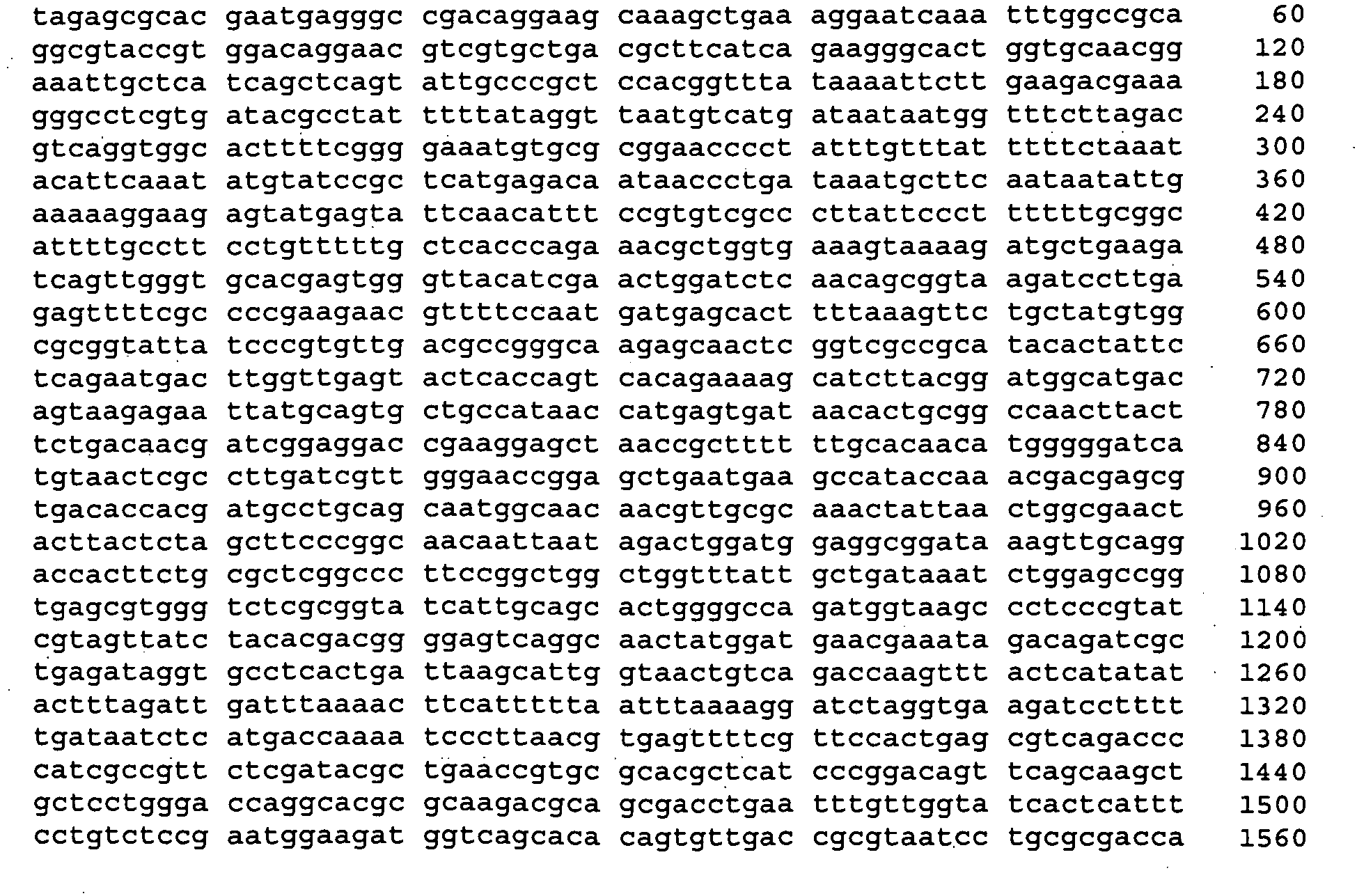

- <210> 25
<211> 4775
<212> DNA
<213> artificial sequence - <220>
<223> plasmid p6/ZUINSSer(22A) - <400> 25


Claims (6)
- Insulin derivative or its pharmaceutically acceptable salt containing two polypeptides forming chain A and chain B, characterised by being a new polypeptide of formula 1:
 wherein R denotes group of formula Asn-R2, where R2 denotes neutral L-amino acid or group NH2; and R1 denotes B31Lys-B32Arg or B31Arg-B32Arg or B31Arg, where B3Asn can be optionally replaced by Glu,wherein amino acid sequence of chain A has been chosen from SEQ ID No 1 - 4 and 6, while amino acid sequence of chain B has been chosen from SEQ ID No 7 - 10,and wherein said insulin derivative is characterised by isoelectric point from 5 to 8.5,and wherein said insulin derivative is characterised by proper stability in acidic injection solutions at pH 3,5-5.
 - Insulin derivative or its pharmaceutically acceptable salt according to claim 1, wherein insulin derivative or its pharmaceutically acceptable salt is selected from SEQ ID No. 1 with 7, SEQ ID No. 1 with 9, SEQ ID No. 1 with 10, SEQ ID No. 2 with 7, SEQ ID No. 2 with 9, SEQ ID No. 2 with 10, SEQ ID No. 3 with 7, SEQ ID No. 3 with 9, SEQ ID No. 3 with 10, SEQ ID No. 4 with 7, SEQ ID No. 4 with 9, SEQ ID No. 4 with 10, SEQ ID No. 6 with 7, SEQ ID No. 6 with 9 or SEa 10 No.6 with 10.
- Insulin derivative or its pharmaceutically acceptable salt according to claim 2, characterised in that:R in formula 1 denotes group of formula Asn-R2, where R2 denotes Gly and R1 denotes B31Lys-B32Arg, orR in formula 1 denotes group of formula Asn-R2, where R2 denotes Ala and R1 denotes B31 Lys-B32Arg, orR in formula 1 denotes group of formula Asn-R2, where R2 denotes Ser and R1 denotes B31Lys-B32Arg, orR in formula 1 denotes group of formula Asn-R2, where R2 denotes Thr and R1 denotes B31Lys-B32Arg, orR in formula 1 denotes group of formula Asn-R2, where R2 denotes group NH2 and R1 denotes B31Lys-B32Arg, orR in formula 1 denotes group of formula Asn-R2, where R2 denotes Gly, and R1 denotes B31Arg, orR in formula 1 denotes group of formula Asn-R2, where R2 denotes Ala, and R1 denotes B31Arg, orR in formula 1 denotes group of formula Asn-R2, where R2 denotes Thr, and R1 denotes B31Arg, orR in formula 1 denotes group of formula Asn-R2, where R2 denotes Ser, and R1 denotes B31Arg, orR in formula 1 denotes group of formula Asn-R2, where R2 denotes group NH2, and R1 denotes B31Arg, orR in formula 1 denotes group of formula Asn-R2 where R2 denotes Gly, R1 denotes B31Lys-B32Arg, and B3Asn has been replaced with B3Glu.
- Pharmaceutical composition, characterised in, that it contains effectively acting amount of insulin derivative or its pharmaceutically acceptable salt according to one of claims from 1 to 3.
- Pharmaceutical composition according to claim 4, characterised in, that it contains 10 µg/ml to 50 µg/ml of zinc.
- Use of insulin derivative or its pharmaceutically acceptable salt according to one of claims from 1 to 3 for the manufacture of a medicament for the treatment or prevention of diabetes mellitus.
Priority Applications (1)
| Application Number | Priority Date | Filing Date | Title |
|---|---|---|---|
| PL11003008T PL2371853T3 (en) | 2008-07-04 | 2009-07-04 | Insulin derivatives or its pharmaceutically acceptable salt, pharmaceutical composition, use of insulin derivative or its pharmaceutically acceptable salt and method of treatment |
Applications Claiming Priority (2)
| Application Number | Priority Date | Filing Date | Title |
|---|---|---|---|
| PL385586A PL219335B1 (en) | 2008-07-04 | 2008-07-04 | New slow-release insulin analogues |
| EP09773816A EP2321344A2 (en) | 2008-07-04 | 2009-07-04 | New insulin analogues of prolonged activity |
Related Parent Applications (2)
| Application Number | Title | Priority Date | Filing Date |
|---|---|---|---|
| EP09773816.5 Division | 2009-07-04 | ||
| EP09773816A Division EP2321344A2 (en) | 2008-07-04 | 2009-07-04 | New insulin analogues of prolonged activity |
Publications (3)
| Publication Number | Publication Date |
|---|---|
| EP2371853A2 EP2371853A2 (en) | 2011-10-05 |
| EP2371853A3 EP2371853A3 (en) | 2012-10-03 |
| EP2371853B1 true EP2371853B1 (en) | 2017-09-13 |
Family
ID=41130257
Family Applications (2)
| Application Number | Title | Priority Date | Filing Date |
|---|---|---|---|
| EP11003008.7A Not-in-force EP2371853B1 (en) | 2008-07-04 | 2009-07-04 | Insulin derivatives or its pharmaceutically acceptable salt, pharmaceutical composition, use of insulin derivative or its pharmaceutically acceptable salt and method of treatment |
| EP09773816A Withdrawn EP2321344A2 (en) | 2008-07-04 | 2009-07-04 | New insulin analogues of prolonged activity |
Family Applications After (1)
| Application Number | Title | Priority Date | Filing Date |
|---|---|---|---|
| EP09773816A Withdrawn EP2321344A2 (en) | 2008-07-04 | 2009-07-04 | New insulin analogues of prolonged activity |
Country Status (8)
| Country | Link |
|---|---|
| US (2) | US8618048B2 (en) |
| EP (2) | EP2371853B1 (en) |
| JP (1) | JP2011526886A (en) |
| CN (1) | CN102083855A (en) |
| CA (1) | CA2729938C (en) |
| EA (1) | EA023559B1 (en) |
| PL (2) | PL219335B1 (en) |
| WO (1) | WO2010002283A2 (en) |
Families Citing this family (32)
| Publication number | Priority date | Publication date | Assignee | Title |
|---|---|---|---|---|
| US10100098B2 (en) | 2006-12-13 | 2018-10-16 | Stelis Biopharma Private Limited | Insulin production methods and proinsulin constructs |
| AU2008365557A1 (en) | 2008-12-15 | 2011-07-21 | Zealand Pharma A/S | Glucagon analogues |
| EA020537B1 (en) | 2008-12-15 | 2014-11-28 | Зилэнд Фарма А/С | Glucagon analogues |
| MX2011006314A (en) | 2008-12-15 | 2011-09-22 | Zealand Pharma As | Glucagon analogues. |
| PL2370462T3 (en) | 2008-12-15 | 2015-01-30 | Zealand Pharma As | Glucagon analogues |
| AP3329A (en) | 2009-07-13 | 2015-06-30 | Zealand Pharma As | Acylated glucagon analogues |
| UY33462A (en) | 2010-06-23 | 2012-01-31 | Zealand Pharma As | GLUCAGON ANALOGS |
| KR20130086343A (en) | 2010-06-24 | 2013-08-01 | 질랜드 파마 에이/에스 | Glucagon analogues |
| SG192038A1 (en) | 2011-01-20 | 2013-08-30 | Zealand Pharma As | Combination of acylated glucagon analogues with insulin analogues |
| WO2012115638A1 (en) * | 2011-02-23 | 2012-08-30 | Elona Biotechnologies | Glargine proinsulin compositions and methods of producing glargine insulin analogs therefrom |
| NZ702333A (en) | 2012-05-03 | 2017-06-30 | Zealand Pharma As | Gip-glp-1 dual agonist compounds and methods |
| PL222975B1 (en) * | 2012-05-23 | 2016-09-30 | Inst Biotechnologii I Antybiotyków | Insulin analog or a pharmaceutically tolerated salt thereof, a pharmaceutical composition of prolonged therapeutic use of insulin analog, dosage and method for treatment of diabetes |
| WO2014015078A1 (en) * | 2012-07-17 | 2014-01-23 | Michael Weiss | O-linked carbohydrate-modified insulin analogues |
| US9624287B2 (en) | 2012-07-17 | 2017-04-18 | Case Western Reserve University | O-linked carbohydrate-modified insulin analogues |
| MX356957B (en) | 2012-07-23 | 2018-06-20 | Zealand Pharma As | Glucagon analogues. |
| TWI608013B (en) | 2012-09-17 | 2017-12-11 | 西蘭製藥公司 | Glucagon analog |
| EP2945643A4 (en) * | 2013-01-15 | 2017-04-26 | Phasebio Pharmaceuticals, Inc. | Therapeutic agents, compositions, and methods for glycemic control |
| WO2014122651A1 (en) * | 2013-02-07 | 2014-08-14 | Valin Technologies Ltd. | Process for preparing insulin |
| CN103981242A (en) * | 2013-02-07 | 2014-08-13 | 华凌科技有限公司 | Preparation method of insulin |
| WO2014122653A1 (en) * | 2013-02-07 | 2014-08-14 | Valin Technologies Ltd. | Process for preparing insulin |
| CN103981243A (en) * | 2013-02-07 | 2014-08-13 | 华凌科技有限公司 | Preparation method of insulin |
| US9988429B2 (en) | 2013-10-17 | 2018-06-05 | Zealand Pharma A/S | Glucagon analogues |
| LT3057984T (en) | 2013-10-17 | 2018-12-27 | Zealand Pharma A/S | Acylated glucagon analogues |
| KR102310392B1 (en) | 2013-11-06 | 2021-10-13 | 질랜드 파마 에이/에스 | Glucagon-glp-1-gip triple agonist compounds |
| AU2014345569B2 (en) | 2013-11-06 | 2020-08-13 | Zealand Pharma A/S | GIP-GLP-1 dual agonist compounds and methods |
| RU2716985C2 (en) | 2014-10-29 | 2020-03-17 | Зилэнд Фарма А/С | Gip agonist compounds and methods |
| JP6989385B2 (en) | 2015-04-16 | 2022-01-05 | ジーランド ファーマ アクティーゼルスカブ | Acylated glucagon analog |
| PL239062B1 (en) * | 2016-01-22 | 2021-11-02 | Inst Biotechnologii I Antybiotykow | Method for producing insulin and its derivatives and the hybrid peptide used in this method |
| CA3044565A1 (en) * | 2016-11-21 | 2018-05-24 | Case Western Reserve University | Rapid-acting insulin analogues of enhanced stability |
| KR102666154B1 (en) * | 2018-08-08 | 2024-05-20 | 주식회사 대웅제약 | Long-acting Insulin Analog and Derivatives Thereof |
| WO2020120477A1 (en) | 2018-12-11 | 2020-06-18 | Sanofi | Insulin analogs having reduced insulin receptor binding affinity |
| WO2021081335A1 (en) * | 2019-10-24 | 2021-04-29 | University Of Utah Research Foundation | Novel mini-insulin with extended c-terminal a chain |
Family Cites Families (22)
| Publication number | Priority date | Publication date | Assignee | Title |
|---|---|---|---|---|
| DE3327709A1 (en) * | 1983-07-29 | 1985-02-07 | Hoechst Ag, 6230 Frankfurt | INSULIN DERIVATIVE CRYSTAL SUSPENSIONS, METHOD FOR THE PRODUCTION AND USE THEREOF |
| US5434247A (en) * | 1986-10-10 | 1995-07-18 | Board Of Regents, The University Of Texas System | Peptides for inducing monocyte cytotoxicity in diagnostics |
| US5135736A (en) * | 1988-08-15 | 1992-08-04 | Neorx Corporation | Covalently-linked complexes and methods for enhanced cytotoxicity and imaging |
| DE3837825A1 (en) * | 1988-11-08 | 1990-05-10 | Hoechst Ag | NEW INSULIN DERIVATIVES, THEIR USE AND A PHARMACEUTICAL PREPARATION CONTAINING THEM |
| DE3844211A1 (en) * | 1988-12-29 | 1990-07-05 | Hoechst Ag | NEW INSULINE DERIVATIVES, THE PROCESS FOR THEIR PRODUCTION, THEIR USE AND A PHARMACEUTICAL PREPARATION CONTAINING THEM |
| EP0547544B1 (en) * | 1991-12-18 | 1997-03-12 | Hoechst Aktiengesellschaft | Process for the preparation of insulin-containing solutions |
| ES2190784T3 (en) * | 1992-02-28 | 2003-08-16 | Autoimmune Inc | SUPPRESSION OF AUTOIMMUNE DISEASES BY SPECTING ANTIGENS. |
| DE4405179A1 (en) * | 1994-02-18 | 1995-08-24 | Hoechst Ag | Method of obtaining insulin with correctly connected cystine bridges |
| DE19652713C2 (en) * | 1996-12-18 | 2001-11-22 | Aventis Pharma Gmbh | Process for the purification of insulin and insulin derivatives by chromatography on a strongly acidic cation exchanger |
| DE19825447A1 (en) | 1998-06-06 | 1999-12-09 | Hoechst Marion Roussel De Gmbh | New insulin analogues with increased zinc formation |
| CA2356109C (en) * | 1999-01-06 | 2008-04-22 | Genentech, Inc. | Insulin-like growth factor (igf) i mutant variants |
| US6777207B2 (en) * | 1999-12-29 | 2004-08-17 | Novo Nordisk A/S | Method for making insulin precursors and insulin precursor analogues having improved fermentation yield in yeast |
| ATE405660T1 (en) | 2003-06-17 | 2008-09-15 | Sembiosys Genetics Inc | METHOD FOR INSULIN PRODUCTION IN PLANTS |
| PL213561B1 (en) | 2004-01-09 | 2013-03-29 | Inst Biotechnologii I Antybiotykow | New plasmides, their derivatives and fragments, the method for their obtaining and application |
| US7893197B2 (en) * | 2004-08-25 | 2011-02-22 | Janssen Pharmaceutica N.V. | Relaxin-3 chimeric polypeptides and their preparation and use |
| EP2801366A3 (en) * | 2004-09-02 | 2015-04-29 | Cognosci, Inc. | Improved apo E analogs and methods for their use |
| PL373543A1 (en) * | 2005-03-10 | 2006-09-18 | Instytut Biotechnologii i Antybiotyków | Pharmaceutical compound containing human insulin biosynthetic analogue as well as its application in diabetic treatment |
| AU2006259307B2 (en) * | 2005-06-17 | 2012-12-20 | Mannkind Corporation | Epitope analogues |
| DE102005051366A1 (en) * | 2005-10-25 | 2007-04-26 | Degussa Gmbh | Drug delivery systems |
| JP2009530243A (en) * | 2006-03-13 | 2009-08-27 | ノボ・ノルデイスク・エー/エス | Acylated single chain insulin |
| JP5550338B2 (en) * | 2006-07-31 | 2014-07-16 | ノボ・ノルデイスク・エー/エス | PEGylated insulin |
| WO2008049711A1 (en) * | 2006-10-27 | 2008-05-02 | Novo Nordisk A/S | Peptide extended insulins |
-
2008
- 2008-07-04 PL PL385586A patent/PL219335B1/en unknown
-
2009
- 2009-07-04 PL PL11003008T patent/PL2371853T3/en unknown
- 2009-07-04 EP EP11003008.7A patent/EP2371853B1/en not_active Not-in-force
- 2009-07-04 US US13/002,520 patent/US8618048B2/en not_active Expired - Fee Related
- 2009-07-04 EA EA201170149A patent/EA023559B1/en not_active IP Right Cessation
- 2009-07-04 CA CA2729938A patent/CA2729938C/en not_active Expired - Fee Related
- 2009-07-04 JP JP2011516197A patent/JP2011526886A/en active Pending
- 2009-07-04 EP EP09773816A patent/EP2321344A2/en not_active Withdrawn
- 2009-07-04 WO PCT/PL2009/050010 patent/WO2010002283A2/en not_active Ceased
- 2009-07-04 CN CN2009801261044A patent/CN102083855A/en active Pending
-
2013
- 2013-11-26 US US14/090,496 patent/US20140121353A1/en not_active Abandoned
Non-Patent Citations (1)
| Title |
|---|
| None * |
Also Published As
| Publication number | Publication date |
|---|---|
| US20140121353A1 (en) | 2014-05-01 |
| CN102083855A (en) | 2011-06-01 |
| EP2371853A3 (en) | 2012-10-03 |
| JP2011526886A (en) | 2011-10-20 |
| WO2010002283A9 (en) | 2011-01-20 |
| EP2321344A2 (en) | 2011-05-18 |
| CA2729938C (en) | 2018-11-06 |
| PL385586A1 (en) | 2010-01-18 |
| EA201170149A1 (en) | 2011-06-30 |
| CA2729938A1 (en) | 2010-01-07 |
| US8618048B2 (en) | 2013-12-31 |
| PL2371853T3 (en) | 2018-06-29 |
| EA023559B1 (en) | 2016-06-30 |
| WO2010002283A3 (en) | 2010-04-29 |
| EP2371853A2 (en) | 2011-10-05 |
| US20110136736A1 (en) | 2011-06-09 |
| WO2010002283A2 (en) | 2010-01-07 |
| PL219335B1 (en) | 2015-04-30 |
Similar Documents
| Publication | Publication Date | Title |
|---|---|---|
| US8618048B2 (en) | Insulin analogues of prolonged activity | |
| AU2009203810B2 (en) | Novel insulin derivatives having an extremely delayed time-action profile | |
| RU2529952C2 (en) | Novel insulin derivatives with strongly slowed profile time/action | |
| CN102007143B (en) | There is the novel insulin derivates of super delayed aging feature | |
| WO2010016069A9 (en) | A process for preparation of insulin compounds | |
| CN113105536B (en) | New proinsulin glargine and method for preparing insulin glargine by using same | |
| EP3405484A1 (en) | A method for producing insulin and insulin derivatives, and hybrid peptide used in this method | |
| CA2330183C (en) | Novel insulin analogs with enhanced zinc binding | |
| CN113773399B (en) | Insulin glargine derivative and application thereof | |
| EP4163376A1 (en) | Insulin aspart derivative, and preparation method therefor and use thereof | |
| WO2014122653A1 (en) | Process for preparing insulin | |
| CN113773391B (en) | Preparation method of insulin aspart | |
| EP2852400B1 (en) | An insulin analogue or its pharmaceutically acceptable salt, pharmaceutical composition with prolonged therapeutic effect, use of the insulin analogue, dosage method and method of treatment of diabetes | |
| HK1148542B (en) | Insulin derivatives having an extremely delayed time-action profile | |
| HK1149772B (en) | Novel insulin derivatives having an extremely delayed time-action profile | |
| HK1200873A1 (en) | Process for preparing insulin |
Legal Events
| Date | Code | Title | Description |
|---|---|---|---|
| PUAI | Public reference made under article 153(3) epc to a published international application that has entered the european phase |
Free format text: ORIGINAL CODE: 0009012 |
|
| 17P | Request for examination filed |
Effective date: 20110426 |
|
| AC | Divisional application: reference to earlier application |
Ref document number: 2321344 Country of ref document: EP Kind code of ref document: P |
|
| AK | Designated contracting states |
Kind code of ref document: A2 Designated state(s): AT BE BG CH CY CZ DE DK EE ES FI FR GB GR HR HU IE IS IT LI LT LU LV MC MK MT NL NO PL PT RO SE SI SK SM TR |
|
| AX | Request for extension of the european patent |
Extension state: AL BA RS |
|
| PUAL | Search report despatched |
Free format text: ORIGINAL CODE: 0009013 |
|
| AK | Designated contracting states |
Kind code of ref document: A3 Designated state(s): AT BE BG CH CY CZ DE DK EE ES FI FR GB GR HR HU IE IS IT LI LT LU LV MC MK MT NL NO PL PT RO SE SI SK SM TR |
|
| AX | Request for extension of the european patent |
Extension state: AL BA RS |
|
| RIC1 | Information provided on ipc code assigned before grant |
Ipc: C07K 14/62 20060101AFI20120824BHEP Ipc: A61K 38/28 20060101ALI20120824BHEP |
|
| 17Q | First examination report despatched |
Effective date: 20130620 |
|
| GRAP | Despatch of communication of intention to grant a patent |
Free format text: ORIGINAL CODE: EPIDOSNIGR1 |
|
| INTG | Intention to grant announced |
Effective date: 20161006 |
|
| RIN1 | Information on inventor provided before grant (corrected) |
Inventor name: STADNIK, DOROTA Inventor name: KURZYNOGA, DARIUSZ Inventor name: GLABSKI, TADEUSZ Inventor name: ZIELINSKI, MARCIN Inventor name: BOROWICZ, PIOTR Inventor name: MIKIEWICZ-SYGULA, DIANA Inventor name: STEPNIEWSKI, JACEK Inventor name: SOKOLOWSKA, IWONA Inventor name: PAWLUKOWIEC, TOMASZ Inventor name: PLUCIENNICZAK, ANDRZEJ Inventor name: SLAWINSKI, WOJCIECH Inventor name: PLUCIENNICZAK, GRAZYNA Inventor name: BOGIEL, MONIKA Inventor name: MIKOLAJCZYK, JERZY Inventor name: PSTRZOCH, JACEK Inventor name: ANTOSIK, JAROSLAW Inventor name: WOJTOWICZ-KRAWIEC, ANNA Inventor name: CECUDA-ADAMCZEWSKA, VIOLETTA Inventor name: KESIK-BRODACKA, MALGORZATA Inventor name: BERNAT, JUSTYNA |
|
| GRAJ | Information related to disapproval of communication of intention to grant by the applicant or resumption of examination proceedings by the epo deleted |
Free format text: ORIGINAL CODE: EPIDOSDIGR1 |
|
| GRAP | Despatch of communication of intention to grant a patent |
Free format text: ORIGINAL CODE: EPIDOSNIGR1 |
|
| GRAJ | Information related to disapproval of communication of intention to grant by the applicant or resumption of examination proceedings by the epo deleted |
Free format text: ORIGINAL CODE: EPIDOSDIGR1 |
|
| INTC | Intention to grant announced (deleted) | ||
| INTG | Intention to grant announced |
Effective date: 20170308 |
|
| GRAP | Despatch of communication of intention to grant a patent |
Free format text: ORIGINAL CODE: EPIDOSNIGR1 |
|
| INTC | Intention to grant announced (deleted) | ||
| INTG | Intention to grant announced |
Effective date: 20170407 |
|
| GRAS | Grant fee paid |
Free format text: ORIGINAL CODE: EPIDOSNIGR3 |
|
| GRAA | (expected) grant |
Free format text: ORIGINAL CODE: 0009210 |
|
| AC | Divisional application: reference to earlier application |
Ref document number: 2321344 Country of ref document: EP Kind code of ref document: P |
|
| AK | Designated contracting states |
Kind code of ref document: B1 Designated state(s): AT BE BG CH CY CZ DE DK EE ES FI FR GB GR HR HU IE IS IT LI LT LU LV MC MK MT NL NO PL PT RO SE SI SK SM TR |
|
| REG | Reference to a national code |
Ref country code: GB Ref legal event code: FG4D |
|
| REG | Reference to a national code |
Ref country code: CH Ref legal event code: EP |
|
| REG | Reference to a national code |
Ref country code: IE Ref legal event code: FG4D |
|
| REG | Reference to a national code |
Ref country code: AT Ref legal event code: REF Ref document number: 928029 Country of ref document: AT Kind code of ref document: T Effective date: 20171015 |
|
| REG | Reference to a national code |
Ref country code: DE Ref legal event code: R096 Ref document number: 602009048393 Country of ref document: DE |
|
| REG | Reference to a national code |
Ref country code: NL Ref legal event code: MP Effective date: 20170913 |
|
| REG | Reference to a national code |
Ref country code: LT Ref legal event code: MG4D |
|
| PG25 | Lapsed in a contracting state [announced via postgrant information from national office to epo] |
Ref country code: FI Free format text: LAPSE BECAUSE OF FAILURE TO SUBMIT A TRANSLATION OF THE DESCRIPTION OR TO PAY THE FEE WITHIN THE PRESCRIBED TIME-LIMIT Effective date: 20170913 Ref country code: NO Free format text: LAPSE BECAUSE OF FAILURE TO SUBMIT A TRANSLATION OF THE DESCRIPTION OR TO PAY THE FEE WITHIN THE PRESCRIBED TIME-LIMIT Effective date: 20171213 Ref country code: LT Free format text: LAPSE BECAUSE OF FAILURE TO SUBMIT A TRANSLATION OF THE DESCRIPTION OR TO PAY THE FEE WITHIN THE PRESCRIBED TIME-LIMIT Effective date: 20170913 Ref country code: SE Free format text: LAPSE BECAUSE OF FAILURE TO SUBMIT A TRANSLATION OF THE DESCRIPTION OR TO PAY THE FEE WITHIN THE PRESCRIBED TIME-LIMIT Effective date: 20170913 Ref country code: HR Free format text: LAPSE BECAUSE OF FAILURE TO SUBMIT A TRANSLATION OF THE DESCRIPTION OR TO PAY THE FEE WITHIN THE PRESCRIBED TIME-LIMIT Effective date: 20170913 |
|
| REG | Reference to a national code |
Ref country code: AT Ref legal event code: MK05 Ref document number: 928029 Country of ref document: AT Kind code of ref document: T Effective date: 20170913 |
|
| PG25 | Lapsed in a contracting state [announced via postgrant information from national office to epo] |
Ref country code: LV Free format text: LAPSE BECAUSE OF FAILURE TO SUBMIT A TRANSLATION OF THE DESCRIPTION OR TO PAY THE FEE WITHIN THE PRESCRIBED TIME-LIMIT Effective date: 20170913 Ref country code: GR Free format text: LAPSE BECAUSE OF FAILURE TO SUBMIT A TRANSLATION OF THE DESCRIPTION OR TO PAY THE FEE WITHIN THE PRESCRIBED TIME-LIMIT Effective date: 20171214 Ref country code: ES Free format text: LAPSE BECAUSE OF FAILURE TO SUBMIT A TRANSLATION OF THE DESCRIPTION OR TO PAY THE FEE WITHIN THE PRESCRIBED TIME-LIMIT Effective date: 20170913 Ref country code: BG Free format text: LAPSE BECAUSE OF FAILURE TO SUBMIT A TRANSLATION OF THE DESCRIPTION OR TO PAY THE FEE WITHIN THE PRESCRIBED TIME-LIMIT Effective date: 20171213 |
|
| PG25 | Lapsed in a contracting state [announced via postgrant information from national office to epo] |
Ref country code: NL Free format text: LAPSE BECAUSE OF FAILURE TO SUBMIT A TRANSLATION OF THE DESCRIPTION OR TO PAY THE FEE WITHIN THE PRESCRIBED TIME-LIMIT Effective date: 20170913 |
|
| PG25 | Lapsed in a contracting state [announced via postgrant information from national office to epo] |
Ref country code: CZ Free format text: LAPSE BECAUSE OF FAILURE TO SUBMIT A TRANSLATION OF THE DESCRIPTION OR TO PAY THE FEE WITHIN THE PRESCRIBED TIME-LIMIT Effective date: 20170913 Ref country code: RO Free format text: LAPSE BECAUSE OF FAILURE TO SUBMIT A TRANSLATION OF THE DESCRIPTION OR TO PAY THE FEE WITHIN THE PRESCRIBED TIME-LIMIT Effective date: 20170913 |
|
| PG25 | Lapsed in a contracting state [announced via postgrant information from national office to epo] |
Ref country code: EE Free format text: LAPSE BECAUSE OF FAILURE TO SUBMIT A TRANSLATION OF THE DESCRIPTION OR TO PAY THE FEE WITHIN THE PRESCRIBED TIME-LIMIT Effective date: 20170913 Ref country code: IT Free format text: LAPSE BECAUSE OF FAILURE TO SUBMIT A TRANSLATION OF THE DESCRIPTION OR TO PAY THE FEE WITHIN THE PRESCRIBED TIME-LIMIT Effective date: 20170913 Ref country code: IS Free format text: LAPSE BECAUSE OF FAILURE TO SUBMIT A TRANSLATION OF THE DESCRIPTION OR TO PAY THE FEE WITHIN THE PRESCRIBED TIME-LIMIT Effective date: 20180113 Ref country code: SM Free format text: LAPSE BECAUSE OF FAILURE TO SUBMIT A TRANSLATION OF THE DESCRIPTION OR TO PAY THE FEE WITHIN THE PRESCRIBED TIME-LIMIT Effective date: 20170913 Ref country code: SK Free format text: LAPSE BECAUSE OF FAILURE TO SUBMIT A TRANSLATION OF THE DESCRIPTION OR TO PAY THE FEE WITHIN THE PRESCRIBED TIME-LIMIT Effective date: 20170913 Ref country code: AT Free format text: LAPSE BECAUSE OF FAILURE TO SUBMIT A TRANSLATION OF THE DESCRIPTION OR TO PAY THE FEE WITHIN THE PRESCRIBED TIME-LIMIT Effective date: 20170913 |
|
| REG | Reference to a national code |
Ref country code: DE Ref legal event code: R097 Ref document number: 602009048393 Country of ref document: DE |
|
| REG | Reference to a national code |
Ref country code: FR Ref legal event code: PLFP Year of fee payment: 10 |
|
| PLBE | No opposition filed within time limit |
Free format text: ORIGINAL CODE: 0009261 |
|
| STAA | Information on the status of an ep patent application or granted ep patent |
Free format text: STATUS: NO OPPOSITION FILED WITHIN TIME LIMIT |
|
| PG25 | Lapsed in a contracting state [announced via postgrant information from national office to epo] |
Ref country code: DK Free format text: LAPSE BECAUSE OF FAILURE TO SUBMIT A TRANSLATION OF THE DESCRIPTION OR TO PAY THE FEE WITHIN THE PRESCRIBED TIME-LIMIT Effective date: 20170913 |
|
| 26N | No opposition filed |
Effective date: 20180614 |
|
| PG25 | Lapsed in a contracting state [announced via postgrant information from national office to epo] |
Ref country code: SI Free format text: LAPSE BECAUSE OF FAILURE TO SUBMIT A TRANSLATION OF THE DESCRIPTION OR TO PAY THE FEE WITHIN THE PRESCRIBED TIME-LIMIT Effective date: 20170913 |
|
| REG | Reference to a national code |
Ref country code: CH Ref legal event code: PL |
|
| PG25 | Lapsed in a contracting state [announced via postgrant information from national office to epo] |
Ref country code: MC Free format text: LAPSE BECAUSE OF FAILURE TO SUBMIT A TRANSLATION OF THE DESCRIPTION OR TO PAY THE FEE WITHIN THE PRESCRIBED TIME-LIMIT Effective date: 20170913 Ref country code: LU Free format text: LAPSE BECAUSE OF NON-PAYMENT OF DUE FEES Effective date: 20180704 |
|
| REG | Reference to a national code |
Ref country code: BE Ref legal event code: MM Effective date: 20180731 |
|
| REG | Reference to a national code |
Ref country code: IE Ref legal event code: MM4A |
|
| PG25 | Lapsed in a contracting state [announced via postgrant information from national office to epo] |
Ref country code: CH Free format text: LAPSE BECAUSE OF NON-PAYMENT OF DUE FEES Effective date: 20180731 Ref country code: IE Free format text: LAPSE BECAUSE OF NON-PAYMENT OF DUE FEES Effective date: 20180704 Ref country code: LI Free format text: LAPSE BECAUSE OF NON-PAYMENT OF DUE FEES Effective date: 20180731 |
|
| PG25 | Lapsed in a contracting state [announced via postgrant information from national office to epo] |
Ref country code: BE Free format text: LAPSE BECAUSE OF NON-PAYMENT OF DUE FEES Effective date: 20180731 |
|
| PG25 | Lapsed in a contracting state [announced via postgrant information from national office to epo] |
Ref country code: MT Free format text: LAPSE BECAUSE OF NON-PAYMENT OF DUE FEES Effective date: 20180704 |
|
| PG25 | Lapsed in a contracting state [announced via postgrant information from national office to epo] |
Ref country code: TR Free format text: LAPSE BECAUSE OF FAILURE TO SUBMIT A TRANSLATION OF THE DESCRIPTION OR TO PAY THE FEE WITHIN THE PRESCRIBED TIME-LIMIT Effective date: 20170913 |
|
| PG25 | Lapsed in a contracting state [announced via postgrant information from national office to epo] |
Ref country code: PT Free format text: LAPSE BECAUSE OF FAILURE TO SUBMIT A TRANSLATION OF THE DESCRIPTION OR TO PAY THE FEE WITHIN THE PRESCRIBED TIME-LIMIT Effective date: 20170913 Ref country code: HU Free format text: LAPSE BECAUSE OF FAILURE TO SUBMIT A TRANSLATION OF THE DESCRIPTION OR TO PAY THE FEE WITHIN THE PRESCRIBED TIME-LIMIT; INVALID AB INITIO Effective date: 20090704 |
|
| PG25 | Lapsed in a contracting state [announced via postgrant information from national office to epo] |
Ref country code: MK Free format text: LAPSE BECAUSE OF NON-PAYMENT OF DUE FEES Effective date: 20170913 Ref country code: CY Free format text: LAPSE BECAUSE OF FAILURE TO SUBMIT A TRANSLATION OF THE DESCRIPTION OR TO PAY THE FEE WITHIN THE PRESCRIBED TIME-LIMIT Effective date: 20170913 |
|
| PGFP | Annual fee paid to national office [announced via postgrant information from national office to epo] |
Ref country code: GB Payment date: 20200703 Year of fee payment: 12 Ref country code: DE Payment date: 20200729 Year of fee payment: 12 Ref country code: FR Payment date: 20200716 Year of fee payment: 12 |
|
| PGFP | Annual fee paid to national office [announced via postgrant information from national office to epo] |
Ref country code: PL Payment date: 20200701 Year of fee payment: 12 |
|
| REG | Reference to a national code |
Ref country code: DE Ref legal event code: R119 Ref document number: 602009048393 Country of ref document: DE |
|
| GBPC | Gb: european patent ceased through non-payment of renewal fee |
Effective date: 20210704 |
|
| PG25 | Lapsed in a contracting state [announced via postgrant information from national office to epo] |
Ref country code: GB Free format text: LAPSE BECAUSE OF NON-PAYMENT OF DUE FEES Effective date: 20210704 Ref country code: DE Free format text: LAPSE BECAUSE OF NON-PAYMENT OF DUE FEES Effective date: 20220201 |
|
| PG25 | Lapsed in a contracting state [announced via postgrant information from national office to epo] |
Ref country code: FR Free format text: LAPSE BECAUSE OF NON-PAYMENT OF DUE FEES Effective date: 20210731 |
|
| PG25 | Lapsed in a contracting state [announced via postgrant information from national office to epo] |
Ref country code: PL Free format text: LAPSE BECAUSE OF NON-PAYMENT OF DUE FEES Effective date: 20210704 |