EP2366696A1 - Process for producing 4-aminoquinazolines - Google Patents
Process for producing 4-aminoquinazolines Download PDFInfo
- Publication number
- EP2366696A1 EP2366696A1 EP10181554A EP10181554A EP2366696A1 EP 2366696 A1 EP2366696 A1 EP 2366696A1 EP 10181554 A EP10181554 A EP 10181554A EP 10181554 A EP10181554 A EP 10181554A EP 2366696 A1 EP2366696 A1 EP 2366696A1
- Authority
- EP
- European Patent Office
- Prior art keywords
- alkyl
- optionally substituted
- quinazolinone
- och
- nitrogen
- Prior art date
- Legal status (The legal status is an assumption and is not a legal conclusion. Google has not performed a legal analysis and makes no representation as to the accuracy of the status listed.)
- Withdrawn
Links
- 238000000034 method Methods 0.000 title claims abstract description 39
- DRYRBWIFRVMRPV-UHFFFAOYSA-N quinazolin-4-amine Chemical class C1=CC=C2C(N)=NC=NC2=C1 DRYRBWIFRVMRPV-UHFFFAOYSA-N 0.000 title description 3
- 150000001875 compounds Chemical class 0.000 claims abstract description 150
- 150000003839 salts Chemical class 0.000 claims abstract description 83
- QMNUDYFKZYBWQX-UHFFFAOYSA-N 1H-quinazolin-4-one Chemical compound C1=CC=C2C(=O)N=CNC2=C1 QMNUDYFKZYBWQX-UHFFFAOYSA-N 0.000 claims description 166
- -1 -OH Chemical group 0.000 claims description 146
- IJGRMHOSHXDMSA-UHFFFAOYSA-N Atomic nitrogen Chemical compound N#N IJGRMHOSHXDMSA-UHFFFAOYSA-N 0.000 claims description 143
- 229910052757 nitrogen Inorganic materials 0.000 claims description 122
- NINIDFKCEFEMDL-UHFFFAOYSA-N Sulfur Chemical group [S] NINIDFKCEFEMDL-UHFFFAOYSA-N 0.000 claims description 105
- QVGXLLKOCUKJST-UHFFFAOYSA-N atomic oxygen Chemical group [O] QVGXLLKOCUKJST-UHFFFAOYSA-N 0.000 claims description 105
- 229910052760 oxygen Inorganic materials 0.000 claims description 105
- 239000001301 oxygen Chemical group 0.000 claims description 105
- 229910052717 sulfur Chemical group 0.000 claims description 105
- 239000011593 sulfur Chemical group 0.000 claims description 105
- 125000005842 heteroatom Chemical group 0.000 claims description 103
- 229920006395 saturated elastomer Polymers 0.000 claims description 103
- QJGQUHMNIGDVPM-UHFFFAOYSA-N nitrogen group Chemical group [N] QJGQUHMNIGDVPM-UHFFFAOYSA-N 0.000 claims description 99
- 125000003118 aryl group Chemical group 0.000 claims description 87
- 125000001072 heteroaryl group Chemical group 0.000 claims description 83
- 229910052736 halogen Inorganic materials 0.000 claims description 82
- 125000005843 halogen group Chemical group 0.000 claims description 79
- 125000002950 monocyclic group Chemical group 0.000 claims description 71
- 125000001931 aliphatic group Chemical group 0.000 claims description 56
- 229910052731 fluorine Inorganic materials 0.000 claims description 56
- 125000002023 trifluoromethyl group Chemical group FC(F)(F)* 0.000 claims description 55
- 229910052739 hydrogen Inorganic materials 0.000 claims description 52
- 239000001257 hydrogen Substances 0.000 claims description 52
- 125000000956 methoxy group Chemical group [H]C([H])([H])O* 0.000 claims description 51
- 229910052794 bromium Inorganic materials 0.000 claims description 50
- 229910052801 chlorine Inorganic materials 0.000 claims description 47
- 125000004429 atom Chemical group 0.000 claims description 43
- 125000003178 carboxy group Chemical group [H]OC(*)=O 0.000 claims description 40
- 125000002619 bicyclic group Chemical group 0.000 claims description 39
- 125000004435 hydrogen atom Chemical group [H]* 0.000 claims description 39
- WWABBFPTGJZEDN-UHFFFAOYSA-N quinazoline-6-carboxylic acid Chemical compound N1=CN=CC2=CC(C(=O)O)=CC=C21 WWABBFPTGJZEDN-UHFFFAOYSA-N 0.000 claims description 34
- 125000000051 benzyloxy group Chemical group [H]C1=C([H])C([H])=C(C([H])=C1[H])C([H])([H])O* 0.000 claims description 30
- 125000002887 hydroxy group Chemical group [H]O* 0.000 claims description 30
- 229910006074 SO2NH2 Inorganic materials 0.000 claims description 29
- 125000001160 methoxycarbonyl group Chemical group [H]C([H])([H])OC(*)=O 0.000 claims description 29
- 125000002496 methyl group Chemical group [H]C([H])([H])* 0.000 claims description 29
- 125000000876 trifluoromethoxy group Chemical group FC(F)(F)O* 0.000 claims description 26
- DHMQDGOQFOQNFH-UHFFFAOYSA-N Glycine Chemical compound NCC(O)=O DHMQDGOQFOQNFH-UHFFFAOYSA-N 0.000 claims description 24
- 125000001997 phenyl group Chemical group [H]C1=C([H])C([H])=C(*)C([H])=C1[H] 0.000 claims description 22
- 125000004200 2-methoxyethyl group Chemical group [H]C([H])([H])OC([H])([H])C([H])([H])* 0.000 claims description 19
- LMBFAGIMSUYTBN-MPZNNTNKSA-N teixobactin Chemical compound C([C@H](C(=O)N[C@@H]([C@@H](C)CC)C(=O)N[C@@H](CO)C(=O)N[C@H](CCC(N)=O)C(=O)N[C@H]([C@@H](C)CC)C(=O)N[C@@H]([C@@H](C)CC)C(=O)N[C@@H](CO)C(=O)N[C@H]1C(N[C@@H](C)C(=O)N[C@@H](C[C@@H]2NC(=N)NC2)C(=O)N[C@H](C(=O)O[C@H]1C)[C@@H](C)CC)=O)NC)C1=CC=CC=C1 LMBFAGIMSUYTBN-MPZNNTNKSA-N 0.000 claims description 17
- 125000001495 ethyl group Chemical group [H]C([H])([H])C([H])([H])* 0.000 claims description 16
- JWVCLYRUEFBMGU-UHFFFAOYSA-N quinazoline Chemical compound N1=CN=CC2=CC=CC=C21 JWVCLYRUEFBMGU-UHFFFAOYSA-N 0.000 claims description 16
- OKTJSMMVPCPJKN-UHFFFAOYSA-N Carbon Chemical compound [C] OKTJSMMVPCPJKN-UHFFFAOYSA-N 0.000 claims description 15
- 125000001559 cyclopropyl group Chemical group [H]C1([H])C([H])([H])C1([H])* 0.000 claims description 15
- 229910052799 carbon Inorganic materials 0.000 claims description 14
- 125000000951 phenoxy group Chemical group [H]C1=C([H])C([H])=C(O*)C([H])=C1[H] 0.000 claims description 14
- 125000001511 cyclopentyl group Chemical group [H]C1([H])C([H])([H])C([H])([H])C([H])(*)C1([H])[H] 0.000 claims description 13
- 125000000999 tert-butyl group Chemical group [H]C([H])([H])C(*)(C([H])([H])[H])C([H])([H])[H] 0.000 claims description 13
- 239000004471 Glycine Substances 0.000 claims description 12
- 125000001301 ethoxy group Chemical group [H]C([H])([H])C([H])([H])O* 0.000 claims description 11
- 125000004434 sulfur atom Chemical group 0.000 claims description 11
- GLUUGHFHXGJENI-UHFFFAOYSA-N Piperazine Chemical compound C1CNCCN1 GLUUGHFHXGJENI-UHFFFAOYSA-N 0.000 claims description 10
- 125000001309 chloro group Chemical group Cl* 0.000 claims description 9
- 125000002294 quinazolinyl group Chemical group N1=C(N=CC2=CC=CC=C12)* 0.000 claims description 9
- FERIUCNNQQJTOY-UHFFFAOYSA-N Butyric acid Chemical compound CCCC(O)=O FERIUCNNQQJTOY-UHFFFAOYSA-N 0.000 claims description 8
- 125000001449 isopropyl group Chemical group [H]C([H])([H])C([H])(*)C([H])([H])[H] 0.000 claims description 8
- 125000004194 piperazin-1-yl group Chemical group [H]N1C([H])([H])C([H])([H])N(*)C([H])([H])C1([H])[H] 0.000 claims description 8
- UFHFLCQGNIYNRP-UHFFFAOYSA-N Hydrogen Chemical group [H][H] UFHFLCQGNIYNRP-UHFFFAOYSA-N 0.000 claims description 7
- 238000006243 chemical reaction Methods 0.000 claims description 7
- 125000000267 glycino group Chemical group [H]N([*])C([H])([H])C(=O)O[H] 0.000 claims description 7
- 150000002148 esters Chemical class 0.000 claims description 6
- 239000011737 fluorine Substances 0.000 claims description 6
- 150000004702 methyl esters Chemical class 0.000 claims description 6
- 125000002924 primary amino group Chemical group [H]N([H])* 0.000 claims description 6
- 150000001408 amides Chemical class 0.000 claims description 5
- WPYMKLBDIGXBTP-UHFFFAOYSA-N benzoic acid Chemical compound OC(=O)C1=CC=CC=C1 WPYMKLBDIGXBTP-UHFFFAOYSA-N 0.000 claims description 5
- 230000008878 coupling Effects 0.000 claims description 5
- 238000010168 coupling process Methods 0.000 claims description 5
- 238000005859 coupling reaction Methods 0.000 claims description 5
- 125000004573 morpholin-4-yl group Chemical group N1(CCOCC1)* 0.000 claims description 5
- 125000004214 1-pyrrolidinyl group Chemical group [H]C1([H])N(*)C([H])([H])C([H])([H])C1([H])[H] 0.000 claims description 4
- 125000004566 azetidin-1-yl group Chemical group N1(CCC1)* 0.000 claims description 4
- JBDSSBMEKXHSJF-UHFFFAOYSA-N cyclopentanecarboxylic acid Chemical compound OC(=O)C1CCCC1 JBDSSBMEKXHSJF-UHFFFAOYSA-N 0.000 claims description 4
- XBDQKXXYIPTUBI-UHFFFAOYSA-N dimethylselenoniopropionate Natural products CCC(O)=O XBDQKXXYIPTUBI-UHFFFAOYSA-N 0.000 claims description 4
- 125000001153 fluoro group Chemical group F* 0.000 claims description 4
- 125000000959 isobutyl group Chemical group [H]C([H])([H])C([H])(C([H])([H])[H])C([H])([H])* 0.000 claims description 4
- FGKJLKRYENPLQH-UHFFFAOYSA-N isocaproic acid Chemical compound CC(C)CCC(O)=O FGKJLKRYENPLQH-UHFFFAOYSA-N 0.000 claims description 4
- DUWWHGPELOTTOE-UHFFFAOYSA-N n-(5-chloro-2,4-dimethoxyphenyl)-3-oxobutanamide Chemical compound COC1=CC(OC)=C(NC(=O)CC(C)=O)C=C1Cl DUWWHGPELOTTOE-UHFFFAOYSA-N 0.000 claims description 4
- 235000019260 propionic acid Nutrition 0.000 claims description 4
- 125000004076 pyridyl group Chemical group 0.000 claims description 4
- VEXZGXHMUGYJMC-UHFFFAOYSA-N Hydrochloric acid Chemical compound Cl VEXZGXHMUGYJMC-UHFFFAOYSA-N 0.000 claims description 3
- ISWSIDIOOBJBQZ-UHFFFAOYSA-N Phenol Chemical compound OC1=CC=CC=C1 ISWSIDIOOBJBQZ-UHFFFAOYSA-N 0.000 claims description 3
- 238000010438 heat treatment Methods 0.000 claims description 3
- 125000000229 (C1-C4)alkoxy group Chemical group 0.000 claims description 2
- HTSGKJQDMSTCGS-UHFFFAOYSA-N 1,4-bis(4-chlorophenyl)-2-(4-methylphenyl)sulfonylbutane-1,4-dione Chemical compound C1=CC(C)=CC=C1S(=O)(=O)C(C(=O)C=1C=CC(Cl)=CC=1)CC(=O)C1=CC=C(Cl)C=C1 HTSGKJQDMSTCGS-UHFFFAOYSA-N 0.000 claims description 2
- QTBSBXVTEAMEQO-UHFFFAOYSA-M Acetate Chemical compound CC([O-])=O QTBSBXVTEAMEQO-UHFFFAOYSA-M 0.000 claims description 2
- 239000005711 Benzoic acid Substances 0.000 claims description 2
- IAOCWIJPRUPBEH-UHFFFAOYSA-N [2-(4-oxo-1h-quinazolin-2-yl)phenyl] acetate Chemical compound CC(=O)OC1=CC=CC=C1C1=NC2=CC=CC=C2C(=O)N1 IAOCWIJPRUPBEH-UHFFFAOYSA-N 0.000 claims description 2
- 235000010233 benzoic acid Nutrition 0.000 claims description 2
- KXDHJXZQYSOELW-UHFFFAOYSA-N carbonic acid monoamide Natural products NC(O)=O KXDHJXZQYSOELW-UHFFFAOYSA-N 0.000 claims description 2
- YMGUBTXCNDTFJI-UHFFFAOYSA-N cyclopropanecarboxylic acid Chemical compound OC(=O)C1CC1 YMGUBTXCNDTFJI-UHFFFAOYSA-N 0.000 claims description 2
- 150000002576 ketones Chemical group 0.000 claims description 2
- CQDGTJPVBWZJAZ-UHFFFAOYSA-N monoethyl carbonate Chemical compound CCOC(O)=O CQDGTJPVBWZJAZ-UHFFFAOYSA-N 0.000 claims description 2
- RFIOZSIHFNEKFF-UHFFFAOYSA-N piperazine-1-carboxylic acid Chemical compound OC(=O)N1CCNCC1 RFIOZSIHFNEKFF-UHFFFAOYSA-N 0.000 claims description 2
- KJAMZCVTJDTESW-UHFFFAOYSA-N tiracizine Chemical compound C1CC2=CC=CC=C2N(C(=O)CN(C)C)C2=CC(NC(=O)OCC)=CC=C21 KJAMZCVTJDTESW-UHFFFAOYSA-N 0.000 claims description 2
- QTBSBXVTEAMEQO-UHFFFAOYSA-N acetic acid Substances CC(O)=O QTBSBXVTEAMEQO-UHFFFAOYSA-N 0.000 claims 2
- MOKNCCJRANEBEU-UHFFFAOYSA-N 6-chloro-2-(2-hydroxyphenyl)-3H-quinazolin-4-one Chemical compound ClC=1C=C2C(NC(=NC2=CC1)C1=C(C=CC=C1)O)=O MOKNCCJRANEBEU-UHFFFAOYSA-N 0.000 claims 1
- PNQIAXCXIAZYBW-UHFFFAOYSA-N 6-chloro-2-(5-chloro-2-hydroxyphenyl)-3H-quinazolin-4-one Chemical compound OC1=CC=C(Cl)C=C1C1=NC2=CC=C(Cl)C=C2C(=O)N1 PNQIAXCXIAZYBW-UHFFFAOYSA-N 0.000 claims 1
- RWLIHEQTFKJXHK-UHFFFAOYSA-N 6-chloro-2-[5-chloro-2-(2,2-dimethoxyethoxy)phenyl]-1h-quinazolin-4-one Chemical compound COC(OC)COC1=CC=C(Cl)C=C1C1=NC(=O)C2=CC(Cl)=CC=C2N1 RWLIHEQTFKJXHK-UHFFFAOYSA-N 0.000 claims 1
- 125000002915 carbonyl group Chemical group [*:2]C([*:1])=O 0.000 claims 1
- NLFBCYMMUAKCPC-KQQUZDAGSA-N ethyl (e)-3-[3-amino-2-cyano-1-[(e)-3-ethoxy-3-oxoprop-1-enyl]sulfanyl-3-oxoprop-1-enyl]sulfanylprop-2-enoate Chemical compound CCOC(=O)\C=C\SC(=C(C#N)C(N)=O)S\C=C\C(=O)OCC NLFBCYMMUAKCPC-KQQUZDAGSA-N 0.000 claims 1
- 125000004005 formimidoyl group Chemical group [H]\N=C(/[H])* 0.000 claims 1
- 239000000543 intermediate Substances 0.000 abstract description 7
- 239000003112 inhibitor Substances 0.000 abstract description 4
- 102000003922 Calcium Channels Human genes 0.000 abstract description 3
- 102000016913 Voltage-Gated Sodium Channels Human genes 0.000 abstract description 3
- 108010053752 Voltage-Gated Sodium Channels Proteins 0.000 abstract description 3
- 108091023044 voltage-gated calcium channel activity Proteins 0.000 abstract description 3
- 125000001424 substituent group Chemical group 0.000 description 17
- YMWUJEATGCHHMB-UHFFFAOYSA-N Dichloromethane Chemical compound ClCCl YMWUJEATGCHHMB-UHFFFAOYSA-N 0.000 description 15
- AFVFQIVMOAPDHO-UHFFFAOYSA-N Methanesulfonic acid Chemical group CS(O)(=O)=O AFVFQIVMOAPDHO-UHFFFAOYSA-N 0.000 description 14
- MUBZPKHOEPUJKR-UHFFFAOYSA-N Oxalic acid Chemical compound OC(=O)C(O)=O MUBZPKHOEPUJKR-UHFFFAOYSA-N 0.000 description 14
- 239000007787 solid Substances 0.000 description 13
- 125000000623 heterocyclic group Chemical group 0.000 description 12
- ZMXDDKWLCZADIW-UHFFFAOYSA-N N,N-Dimethylformamide Chemical compound CN(C)C=O ZMXDDKWLCZADIW-UHFFFAOYSA-N 0.000 description 11
- 239000000203 mixture Substances 0.000 description 9
- SJRJJKPEHAURKC-UHFFFAOYSA-N N-Methylmorpholine Chemical compound CN1CCOCC1 SJRJJKPEHAURKC-UHFFFAOYSA-N 0.000 description 8
- ZMANZCXQSJIPKH-UHFFFAOYSA-N Triethylamine Chemical compound CCN(CC)CC ZMANZCXQSJIPKH-UHFFFAOYSA-N 0.000 description 8
- 0 CCCC1(C)CSCCN(*CC)C1 Chemical compound CCCC1(C)CSCCN(*CC)C1 0.000 description 7
- LFQSCWFLJHTTHZ-UHFFFAOYSA-N Ethanol Chemical compound CCO LFQSCWFLJHTTHZ-UHFFFAOYSA-N 0.000 description 7
- OFOBLEOULBTSOW-UHFFFAOYSA-N Malonic acid Chemical compound OC(=O)CC(O)=O OFOBLEOULBTSOW-UHFFFAOYSA-N 0.000 description 7
- 125000000217 alkyl group Chemical group 0.000 description 7
- 150000002367 halogens Chemical class 0.000 description 7
- YXFVVABEGXRONW-UHFFFAOYSA-N Toluene Chemical compound CC1=CC=CC=C1 YXFVVABEGXRONW-UHFFFAOYSA-N 0.000 description 6
- SULRNXDKROKRKQ-UHFFFAOYSA-N 4-(3-methylanilino)-1,3-benzoxazin-2-one Chemical compound CC1=CC=CC(N=C2C=3C=CC=CC=3OC(=O)N2)=C1 SULRNXDKROKRKQ-UHFFFAOYSA-N 0.000 description 5
- 125000003545 alkoxy group Chemical group 0.000 description 5
- 150000002431 hydrogen Chemical class 0.000 description 5
- 125000006239 protecting group Chemical group 0.000 description 5
- XLYOFNOQVPJJNP-UHFFFAOYSA-N water Substances O XLYOFNOQVPJJNP-UHFFFAOYSA-N 0.000 description 5
- LMDZBCPBFSXMTL-UHFFFAOYSA-N 1-ethyl-3-(3-dimethylaminopropyl)carbodiimide Chemical compound CCN=C=NCCCN(C)C LMDZBCPBFSXMTL-UHFFFAOYSA-N 0.000 description 4
- GMCHFFGHXBTXGT-UHFFFAOYSA-N 2-(2-hydroxyphenyl)-7-methyl-3H-quinazolin-4-one Chemical compound C=1C(C)=CC=C(C(N2)=O)C=1N=C2C1=CC=CC=C1O GMCHFFGHXBTXGT-UHFFFAOYSA-N 0.000 description 4
- YARLEXXHLAVLTN-UHFFFAOYSA-N 2-(7-methyl-4-piperazin-1-ylquinazolin-2-yl)phenol Chemical compound N=1C2=CC(C)=CC=C2C(N2CCNCC2)=NC=1C1=CC=CC=C1O YARLEXXHLAVLTN-UHFFFAOYSA-N 0.000 description 4
- 239000004215 Carbon black (E152) Substances 0.000 description 4
- OAICVXFJPJFONN-UHFFFAOYSA-N Phosphorus Chemical compound [P] OAICVXFJPJFONN-UHFFFAOYSA-N 0.000 description 4
- JUJWROOIHBZHMG-UHFFFAOYSA-N Pyridine Chemical compound C1=CC=NC=C1 JUJWROOIHBZHMG-UHFFFAOYSA-N 0.000 description 4
- LBHOUOMYZNDCSE-UHFFFAOYSA-N [2-(4-chloro-7-methylquinazolin-2-yl)phenyl] 2,2-dimethylpropanoate Chemical compound N=1C2=CC(C)=CC=C2C(Cl)=NC=1C1=CC=CC=C1OC(=O)C(C)(C)C LBHOUOMYZNDCSE-UHFFFAOYSA-N 0.000 description 4
- JHPDEVHQSWGELJ-UHFFFAOYSA-N [2-(7-methyl-4-oxo-1h-quinazolin-2-yl)phenyl] 2,2-dimethylpropanoate Chemical compound C=1C(C)=CC=C(C(N2)=O)C=1N=C2C1=CC=CC=C1OC(=O)C(C)(C)C JHPDEVHQSWGELJ-UHFFFAOYSA-N 0.000 description 4
- 239000002253 acid Substances 0.000 description 4
- 125000004122 cyclic group Chemical group 0.000 description 4
- 125000000753 cycloalkyl group Chemical group 0.000 description 4
- 125000004185 ester group Chemical group 0.000 description 4
- 229930195733 hydrocarbon Natural products 0.000 description 4
- NPZTUJOABDZTLV-UHFFFAOYSA-N hydroxybenzotriazole Substances O=C1C=CC=C2NNN=C12 NPZTUJOABDZTLV-UHFFFAOYSA-N 0.000 description 4
- 235000006408 oxalic acid Nutrition 0.000 description 4
- 229910052698 phosphorus Inorganic materials 0.000 description 4
- 239000011574 phosphorus Substances 0.000 description 4
- 239000000126 substance Substances 0.000 description 4
- WEVYAHXRMPXWCK-UHFFFAOYSA-N Acetonitrile Chemical compound CC#N WEVYAHXRMPXWCK-UHFFFAOYSA-N 0.000 description 3
- LSNNMFCWUKXFEE-UHFFFAOYSA-M Bisulfite Chemical compound OS([O-])=O LSNNMFCWUKXFEE-UHFFFAOYSA-M 0.000 description 3
- XEKOWRVHYACXOJ-UHFFFAOYSA-N Ethyl acetate Chemical compound CCOC(C)=O XEKOWRVHYACXOJ-UHFFFAOYSA-N 0.000 description 3
- XUIMIQQOPSSXEZ-UHFFFAOYSA-N Silicon Chemical compound [Si] XUIMIQQOPSSXEZ-UHFFFAOYSA-N 0.000 description 3
- 125000003342 alkenyl group Chemical group 0.000 description 3
- 125000006615 aromatic heterocyclic group Chemical group 0.000 description 3
- 150000001721 carbon Chemical group 0.000 description 3
- USIUVYZYUHIAEV-UHFFFAOYSA-N diphenyl ether Chemical compound C=1C=CC=CC=1OC1=CC=CC=C1 USIUVYZYUHIAEV-UHFFFAOYSA-N 0.000 description 3
- RAXXELZNTBOGNW-UHFFFAOYSA-N imidazole Natural products C1=CNC=N1 RAXXELZNTBOGNW-UHFFFAOYSA-N 0.000 description 3
- 238000011065 in-situ storage Methods 0.000 description 3
- 229940098779 methanesulfonic acid Drugs 0.000 description 3
- 239000003960 organic solvent Substances 0.000 description 3
- 229910052710 silicon Inorganic materials 0.000 description 3
- 239000010703 silicon Substances 0.000 description 3
- KGWNMFPUBOIZOE-JOCHJYFZSA-N (2R)-2-hydroxy-1-[4-[2-(2-hydroxyphenyl)-7-methylquinazolin-4-yl]piperazin-1-yl]-4-methylpentan-1-one Chemical compound C1CN(C(=O)[C@H](O)CC(C)C)CCN1C1=NC(C=2C(=CC=CC=2)O)=NC2=CC(C)=CC=C12 KGWNMFPUBOIZOE-JOCHJYFZSA-N 0.000 description 2
- 125000006570 (C5-C6) heteroaryl group Chemical group 0.000 description 2
- 125000003903 2-propenyl group Chemical group [H]C([*])([H])C([H])=C([H])[H] 0.000 description 2
- 125000002774 3,4-dimethoxybenzyl group Chemical group [H]C1=C([H])C(=C([H])C(OC([H])([H])[H])=C1OC([H])([H])[H])C([H])([H])* 0.000 description 2
- XKRFYHLGVUSROY-UHFFFAOYSA-N Argon Chemical compound [Ar] XKRFYHLGVUSROY-UHFFFAOYSA-N 0.000 description 2
- PXGOKWXKJXAPGV-UHFFFAOYSA-N Fluorine Chemical compound FF PXGOKWXKJXAPGV-UHFFFAOYSA-N 0.000 description 2
- VZCYOOQTPOCHFL-OWOJBTEDSA-N Fumaric acid Chemical compound OC(=O)\C=C\C(O)=O VZCYOOQTPOCHFL-OWOJBTEDSA-N 0.000 description 2
- HEDRZPFGACZZDS-MICDWDOJSA-N Trichloro(2H)methane Chemical compound [2H]C(Cl)(Cl)Cl HEDRZPFGACZZDS-MICDWDOJSA-N 0.000 description 2
- ZCOHODUSYJVHPK-UHFFFAOYSA-N [2-(7-methyl-4-piperazin-1-ylquinazolin-2-yl)phenyl] 2,2-dimethylpropanoate Chemical compound N=1C2=CC(C)=CC=C2C(N2CCNCC2)=NC=1C1=CC=CC=C1OC(=O)C(C)(C)C ZCOHODUSYJVHPK-UHFFFAOYSA-N 0.000 description 2
- 125000005137 alkenylsulfonyl group Chemical group 0.000 description 2
- 150000005215 alkyl ethers Chemical class 0.000 description 2
- 125000004390 alkyl sulfonyl group Chemical group 0.000 description 2
- 125000003710 aryl alkyl group Chemical group 0.000 description 2
- 125000005160 aryl oxy alkyl group Chemical group 0.000 description 2
- 125000004391 aryl sulfonyl group Chemical group 0.000 description 2
- 125000001797 benzyl group Chemical group [H]C1=C([H])C([H])=C(C([H])=C1[H])C([H])([H])* 0.000 description 2
- 150000004649 carbonic acid derivatives Chemical class 0.000 description 2
- 239000003153 chemical reaction reagent Substances 0.000 description 2
- 239000012141 concentrate Substances 0.000 description 2
- 239000007819 coupling partner Substances 0.000 description 2
- IJGRMHOSHXDMSA-UHFFFAOYSA-O diazynium Chemical group [NH+]#N IJGRMHOSHXDMSA-UHFFFAOYSA-O 0.000 description 2
- KPUWHANPEXNPJT-UHFFFAOYSA-N disiloxane Chemical class [SiH3]O[SiH3] KPUWHANPEXNPJT-UHFFFAOYSA-N 0.000 description 2
- 150000002170 ethers Chemical class 0.000 description 2
- 239000000284 extract Substances 0.000 description 2
- 238000001914 filtration Methods 0.000 description 2
- 239000012458 free base Substances 0.000 description 2
- 125000001188 haloalkyl group Chemical group 0.000 description 2
- 125000004475 heteroaralkyl group Chemical group 0.000 description 2
- 125000005114 heteroarylalkoxy group Chemical group 0.000 description 2
- VZCYOOQTPOCHFL-UPHRSURJSA-N maleic acid Chemical compound OC(=O)\C=C/C(O)=O VZCYOOQTPOCHFL-UPHRSURJSA-N 0.000 description 2
- 150000007530 organic bases Chemical class 0.000 description 2
- 125000006503 p-nitrobenzyl group Chemical group [H]C1=C([H])C(=C([H])C([H])=C1[N+]([O-])=O)C([H])([H])* 0.000 description 2
- 125000005547 pivalate group Chemical group 0.000 description 2
- BWHMMNNQKKPAPP-UHFFFAOYSA-L potassium carbonate Chemical compound [K+].[K+].[O-]C([O-])=O BWHMMNNQKKPAPP-UHFFFAOYSA-L 0.000 description 2
- 229910000027 potassium carbonate Inorganic materials 0.000 description 2
- 239000002243 precursor Substances 0.000 description 2
- 238000000746 purification Methods 0.000 description 2
- UMJSCPRVCHMLSP-UHFFFAOYSA-N pyridine Natural products COC1=CC=CN=C1 UMJSCPRVCHMLSP-UHFFFAOYSA-N 0.000 description 2
- 239000011541 reaction mixture Substances 0.000 description 2
- 238000003786 synthesis reaction Methods 0.000 description 2
- 125000004001 thioalkyl group Chemical group 0.000 description 2
- JOXIMZWYDAKGHI-UHFFFAOYSA-N toluene-4-sulfonic acid Chemical compound CC1=CC=C(S(O)(=O)=O)C=C1 JOXIMZWYDAKGHI-UHFFFAOYSA-N 0.000 description 2
- VZCYOOQTPOCHFL-UHFFFAOYSA-N trans-butenedioic acid Natural products OC(=O)C=CC(O)=O VZCYOOQTPOCHFL-UHFFFAOYSA-N 0.000 description 2
- 230000009466 transformation Effects 0.000 description 2
- 238000000844 transformation Methods 0.000 description 2
- SODPIMGUZLOIPE-UHFFFAOYSA-N (4-chlorophenoxy)acetic acid Chemical compound OC(=O)COC1=CC=C(Cl)C=C1 SODPIMGUZLOIPE-UHFFFAOYSA-N 0.000 description 1
- ZOJKRWXDNYZASL-NSCUHMNNSA-N (e)-4-methoxybut-2-enoic acid Chemical compound COC\C=C\C(O)=O ZOJKRWXDNYZASL-NSCUHMNNSA-N 0.000 description 1
- PJUPKRYGDFTMTM-UHFFFAOYSA-N 1-hydroxybenzotriazole;hydrate Chemical compound O.C1=CC=C2N(O)N=NC2=C1 PJUPKRYGDFTMTM-UHFFFAOYSA-N 0.000 description 1
- CPPGZWWUPFWALU-UHFFFAOYSA-N 1-isocyanato-3-methylbenzene Chemical compound CC1=CC=CC(N=C=O)=C1 CPPGZWWUPFWALU-UHFFFAOYSA-N 0.000 description 1
- 238000005160 1H NMR spectroscopy Methods 0.000 description 1
- 125000000453 2,2,2-trichloroethyl group Chemical group [H]C([H])(*)C(Cl)(Cl)Cl 0.000 description 1
- PGZVFRAEAAXREB-UHFFFAOYSA-N 2,2-dimethylpropanoyl 2,2-dimethylpropanoate Chemical compound CC(C)(C)C(=O)OC(=O)C(C)(C)C PGZVFRAEAAXREB-UHFFFAOYSA-N 0.000 description 1
- FFFIRKXTFQCCKJ-UHFFFAOYSA-M 2,4,6-trimethylbenzoate Chemical compound CC1=CC(C)=C(C([O-])=O)C(C)=C1 FFFIRKXTFQCCKJ-UHFFFAOYSA-M 0.000 description 1
- HUHXLHLWASNVDB-UHFFFAOYSA-N 2-(oxan-2-yloxy)oxane Chemical class O1CCCCC1OC1OCCCC1 HUHXLHLWASNVDB-UHFFFAOYSA-N 0.000 description 1
- VFOSEVHGZYVBLG-UHFFFAOYSA-N 2-[2-[2-[2-(carboxymethylamino)-4-hydroxy-5-(4-oxo-3H-quinazolin-2-yl)phenoxy]ethoxy]-3,4-difluoroanilino]acetic acid Chemical compound OC(=O)CNC1=CC(O)=C(C=2N=C3C=CC=CC3=C(O)N=2)C=C1OCCOC1=C(NCC(O)=O)C=CC(F)=C1F VFOSEVHGZYVBLG-UHFFFAOYSA-N 0.000 description 1
- HCOPEWRYHUNFFE-UHFFFAOYSA-N 2-[2-[2-[2-(carboxymethylamino)-4-hydroxy-5-(4-oxo-3H-quinazolin-2-yl)phenoxy]ethoxy]-4-methylanilino]acetic acid Chemical compound CC1=CC=C(NCC(O)=O)C(OCCOC=2C(=CC(O)=C(C=2)C=2N=C3C=CC=CC3=C(O)N=2)NCC(O)=O)=C1 HCOPEWRYHUNFFE-UHFFFAOYSA-N 0.000 description 1
- CHZCERSEMVWNHL-UHFFFAOYSA-N 2-hydroxybenzonitrile Chemical compound OC1=CC=CC=C1C#N CHZCERSEMVWNHL-UHFFFAOYSA-N 0.000 description 1
- GPVOTFQILZVCFP-UHFFFAOYSA-N 2-trityloxyacetic acid Chemical compound C=1C=CC=CC=1C(C=1C=CC=CC=1)(OCC(=O)O)C1=CC=CC=C1 GPVOTFQILZVCFP-UHFFFAOYSA-N 0.000 description 1
- KLDLRDSRCMJKGM-UHFFFAOYSA-N 3-[chloro-(2-oxo-1,3-oxazolidin-3-yl)phosphoryl]-1,3-oxazolidin-2-one Chemical compound C1COC(=O)N1P(=O)(Cl)N1CCOC1=O KLDLRDSRCMJKGM-UHFFFAOYSA-N 0.000 description 1
- XMIIGOLPHOKFCH-UHFFFAOYSA-M 3-phenylpropionate Chemical compound [O-]C(=O)CCC1=CC=CC=C1 XMIIGOLPHOKFCH-UHFFFAOYSA-M 0.000 description 1
- VHYFNPMBLIVWCW-UHFFFAOYSA-N 4-Dimethylaminopyridine Chemical compound CN(C)C1=CC=NC=C1 VHYFNPMBLIVWCW-UHFFFAOYSA-N 0.000 description 1
- JOOXCMJARBKPKM-UHFFFAOYSA-M 4-oxopentanoate Chemical compound CC(=O)CCC([O-])=O JOOXCMJARBKPKM-UHFFFAOYSA-M 0.000 description 1
- KHBQMWCZKVMBLN-UHFFFAOYSA-N Benzenesulfonamide Chemical compound NS(=O)(=O)C1=CC=CC=C1 KHBQMWCZKVMBLN-UHFFFAOYSA-N 0.000 description 1
- NHBRSYDKPRHDJD-UHFFFAOYSA-N CC(C)(C=CC=C1)C=C1/N=C(/C(C=[N](C)(C)=CC=C1)=C1O1)\NC1=O Chemical compound CC(C)(C=CC=C1)C=C1/N=C(/C(C=[N](C)(C)=CC=C1)=C1O1)\NC1=O NHBRSYDKPRHDJD-UHFFFAOYSA-N 0.000 description 1
- AYTGARGOCPEHGL-UHFFFAOYSA-N Cc(cc1)cc2c1OCCO2 Chemical compound Cc(cc1)cc2c1OCCO2 AYTGARGOCPEHGL-UHFFFAOYSA-N 0.000 description 1
- ROHFNLRQFUQHCH-RXMQYKEDSA-N D-leucine Chemical compound CC(C)C[C@@H](N)C(O)=O ROHFNLRQFUQHCH-RXMQYKEDSA-N 0.000 description 1
- 229930182819 D-leucine Natural products 0.000 description 1
- GSNUFIFRDBKVIE-UHFFFAOYSA-N DMF Natural products CC1=CC=C(C)O1 GSNUFIFRDBKVIE-UHFFFAOYSA-N 0.000 description 1
- YZCKVEUIGOORGS-OUBTZVSYSA-N Deuterium Chemical compound [2H] YZCKVEUIGOORGS-OUBTZVSYSA-N 0.000 description 1
- QOSSAOTZNIDXMA-UHFFFAOYSA-N Dicylcohexylcarbodiimide Chemical compound C1CCCCC1N=C=NC1CCCCC1 QOSSAOTZNIDXMA-UHFFFAOYSA-N 0.000 description 1
- LCGLNKUTAGEVQW-UHFFFAOYSA-N Dimethyl ether Chemical group COC LCGLNKUTAGEVQW-UHFFFAOYSA-N 0.000 description 1
- ZHNUHDYFZUAESO-UHFFFAOYSA-N Formamide Chemical compound NC=O ZHNUHDYFZUAESO-UHFFFAOYSA-N 0.000 description 1
- BDAGIHXWWSANSR-UHFFFAOYSA-M Formate Chemical compound [O-]C=O BDAGIHXWWSANSR-UHFFFAOYSA-M 0.000 description 1
- 108090000862 Ion Channels Proteins 0.000 description 1
- 102000004310 Ion Channels Human genes 0.000 description 1
- ROHFNLRQFUQHCH-YFKPBYRVSA-N L-leucine Chemical compound CC(C)C[C@H](N)C(O)=O ROHFNLRQFUQHCH-YFKPBYRVSA-N 0.000 description 1
- ROHFNLRQFUQHCH-UHFFFAOYSA-N Leucine Natural products CC(C)CC(N)C(O)=O ROHFNLRQFUQHCH-UHFFFAOYSA-N 0.000 description 1
- JGFZNNIVVJXRND-UHFFFAOYSA-N N,N-Diisopropylethylamine (DIPEA) Chemical compound CCN(C(C)C)C(C)C JGFZNNIVVJXRND-UHFFFAOYSA-N 0.000 description 1
- KDYFGRWQOYBRFD-UHFFFAOYSA-N Succinic acid Natural products OC(=O)CCC(O)=O KDYFGRWQOYBRFD-UHFFFAOYSA-N 0.000 description 1
- DTQVDTLACAAQTR-UHFFFAOYSA-M Trifluoroacetate Chemical compound [O-]C(=O)C(F)(F)F DTQVDTLACAAQTR-UHFFFAOYSA-M 0.000 description 1
- YZCKVEUIGOORGS-NJFSPNSNSA-N Tritium Chemical compound [3H] YZCKVEUIGOORGS-NJFSPNSNSA-N 0.000 description 1
- 150000001241 acetals Chemical class 0.000 description 1
- 150000001242 acetic acid derivatives Chemical class 0.000 description 1
- 150000007513 acids Chemical class 0.000 description 1
- 125000002015 acyclic group Chemical group 0.000 description 1
- 239000003570 air Substances 0.000 description 1
- 125000001118 alkylidene group Chemical group 0.000 description 1
- 125000000304 alkynyl group Chemical group 0.000 description 1
- 239000000010 aprotic solvent Substances 0.000 description 1
- 229910052786 argon Inorganic materials 0.000 description 1
- 239000002585 base Substances 0.000 description 1
- XMIIGOLPHOKFCH-UHFFFAOYSA-N beta-phenylpropanoic acid Natural products OC(=O)CCC1=CC=CC=C1 XMIIGOLPHOKFCH-UHFFFAOYSA-N 0.000 description 1
- 238000004166 bioassay Methods 0.000 description 1
- 230000015572 biosynthetic process Effects 0.000 description 1
- 125000003865 brosyl group Chemical group [H]C1=C([H])C(=C([H])C([H])=C1Br)S(*)(=O)=O 0.000 description 1
- KDYFGRWQOYBRFD-NUQCWPJISA-N butanedioic acid Chemical compound O[14C](=O)CC[14C](O)=O KDYFGRWQOYBRFD-NUQCWPJISA-N 0.000 description 1
- 125000004432 carbon atom Chemical group C* 0.000 description 1
- 150000007942 carboxylates Chemical group 0.000 description 1
- OVVWPYNVWLHEGE-UHFFFAOYSA-N chembl1526444 Chemical compound OC1=CC=CC=C1C1=NC2=CC=CC=C2C(=O)N1 OVVWPYNVWLHEGE-UHFFFAOYSA-N 0.000 description 1
- 229910052729 chemical element Inorganic materials 0.000 description 1
- 238000001311 chemical methods and process Methods 0.000 description 1
- FOCAUTSVDIKZOP-UHFFFAOYSA-M chloroacetate Chemical compound [O-]C(=O)CCl FOCAUTSVDIKZOP-UHFFFAOYSA-M 0.000 description 1
- 229940089960 chloroacetate Drugs 0.000 description 1
- 239000007822 coupling agent Substances 0.000 description 1
- LDHQCZJRKDOVOX-NSCUHMNNSA-N crotonic acid Chemical compound C\C=C\C(O)=O LDHQCZJRKDOVOX-NSCUHMNNSA-N 0.000 description 1
- 125000000392 cycloalkenyl group Chemical group 0.000 description 1
- 238000001514 detection method Methods 0.000 description 1
- 229910052805 deuterium Inorganic materials 0.000 description 1
- 238000011161 development Methods 0.000 description 1
- GDTRAYDPXKZJGD-UHFFFAOYSA-N dichlorophosphoryl hypochlorite Chemical compound ClOP(Cl)(Cl)=O GDTRAYDPXKZJGD-UHFFFAOYSA-N 0.000 description 1
- 238000006073 displacement reaction Methods 0.000 description 1
- 238000001035 drying Methods 0.000 description 1
- 125000001033 ether group Chemical group 0.000 description 1
- 150000004675 formic acid derivatives Chemical class 0.000 description 1
- 239000001530 fumaric acid Substances 0.000 description 1
- 125000000524 functional group Chemical group 0.000 description 1
- 238000007429 general method Methods 0.000 description 1
- 125000000262 haloalkenyl group Chemical group 0.000 description 1
- 125000004438 haloalkoxy group Chemical group 0.000 description 1
- 150000002430 hydrocarbons Chemical class 0.000 description 1
- 125000001183 hydrocarbyl group Chemical group 0.000 description 1
- 239000005457 ice water Substances 0.000 description 1
- 239000011976 maleic acid Substances 0.000 description 1
- 238000004519 manufacturing process Methods 0.000 description 1
- RMIODHQZRUFFFF-UHFFFAOYSA-M methoxyacetate Chemical compound COCC([O-])=O RMIODHQZRUFFFF-UHFFFAOYSA-M 0.000 description 1
- 125000004184 methoxymethyl group Chemical group [H]C([H])([H])OC([H])([H])* 0.000 description 1
- TZIHFWKZFHZASV-UHFFFAOYSA-N methyl formate Chemical compound COC=O TZIHFWKZFHZASV-UHFFFAOYSA-N 0.000 description 1
- 125000004170 methylsulfonyl group Chemical group [H]C([H])([H])S(*)(=O)=O 0.000 description 1
- 125000004092 methylthiomethyl group Chemical group [H]C([H])([H])SC([H])([H])* 0.000 description 1
- 125000004433 nitrogen atom Chemical group N* 0.000 description 1
- AKRYBBWYDSDZHG-UHFFFAOYSA-N nitrosobis(2-oxopropyl)amine Chemical compound CC(=O)CN(N=O)CC(C)=O AKRYBBWYDSDZHG-UHFFFAOYSA-N 0.000 description 1
- 125000001736 nosyl group Chemical group S(=O)(=O)(C1=CC=C([N+](=O)[O-])C=C1)* 0.000 description 1
- 239000012044 organic layer Substances 0.000 description 1
- 125000004430 oxygen atom Chemical group O* 0.000 description 1
- 125000006505 p-cyanobenzyl group Chemical group [H]C1=C([H])C(=C([H])C([H])=C1C#N)C([H])([H])* 0.000 description 1
- 230000000737 periodic effect Effects 0.000 description 1
- FAQJJMHZNSSFSM-UHFFFAOYSA-N phenylglyoxylic acid Chemical compound OC(=O)C(=O)C1=CC=CC=C1 FAQJJMHZNSSFSM-UHFFFAOYSA-N 0.000 description 1
- 125000000587 piperidin-1-yl group Chemical group [H]C1([H])N(*)C([H])([H])C([H])([H])C([H])([H])C1([H])[H] 0.000 description 1
- 238000002360 preparation method Methods 0.000 description 1
- 125000000719 pyrrolidinyl group Chemical group 0.000 description 1
- 150000003254 radicals Chemical class 0.000 description 1
- 239000012429 reaction media Substances 0.000 description 1
- 238000011084 recovery Methods 0.000 description 1
- 238000010992 reflux Methods 0.000 description 1
- 238000011160 research Methods 0.000 description 1
- 239000000523 sample Substances 0.000 description 1
- 238000007127 saponification reaction Methods 0.000 description 1
- 229910000029 sodium carbonate Inorganic materials 0.000 description 1
- 238000003756 stirring Methods 0.000 description 1
- 150000003871 sulfonates Chemical class 0.000 description 1
- 150000003460 sulfonic acids Chemical class 0.000 description 1
- 239000000725 suspension Substances 0.000 description 1
- ILMRJRBKQSSXGY-UHFFFAOYSA-N tert-butyl(dimethyl)silicon Chemical group C[Si](C)C(C)(C)C ILMRJRBKQSSXGY-UHFFFAOYSA-N 0.000 description 1
- 125000002088 tosyl group Chemical group [H]C1=C([H])C(=C([H])C([H])=C1C([H])([H])[H])S(*)(=O)=O 0.000 description 1
- ITMCEJHCFYSIIV-UHFFFAOYSA-M triflate Chemical compound [O-]S(=O)(=O)C(F)(F)F ITMCEJHCFYSIIV-UHFFFAOYSA-M 0.000 description 1
- 125000000025 triisopropylsilyl group Chemical group C(C)(C)[Si](C(C)C)(C(C)C)* 0.000 description 1
- 125000000026 trimethylsilyl group Chemical group [H]C([H])([H])[Si]([*])(C([H])([H])[H])C([H])([H])[H] 0.000 description 1
- 229910052722 tritium Inorganic materials 0.000 description 1
- 125000002221 trityl group Chemical group [H]C1=C([H])C([H])=C([H])C([H])=C1C([*])(C1=C(C(=C(C(=C1[H])[H])[H])[H])[H])C1=C([H])C([H])=C([H])C([H])=C1[H] 0.000 description 1
- NQPDZGIKBAWPEJ-UHFFFAOYSA-N valeric acid Chemical compound CCCCC(O)=O NQPDZGIKBAWPEJ-UHFFFAOYSA-N 0.000 description 1
- 125000000391 vinyl group Chemical group [H]C([*])=C([H])[H] 0.000 description 1
- 229920002554 vinyl polymer Polymers 0.000 description 1
Classifications
-
- C—CHEMISTRY; METALLURGY
- C07—ORGANIC CHEMISTRY
- C07D—HETEROCYCLIC COMPOUNDS
- C07D403/00—Heterocyclic compounds containing two or more hetero rings, having nitrogen atoms as the only ring hetero atoms, not provided for by group C07D401/00
- C07D403/02—Heterocyclic compounds containing two or more hetero rings, having nitrogen atoms as the only ring hetero atoms, not provided for by group C07D401/00 containing two hetero rings
- C07D403/04—Heterocyclic compounds containing two or more hetero rings, having nitrogen atoms as the only ring hetero atoms, not provided for by group C07D401/00 containing two hetero rings directly linked by a ring-member-to-ring-member bond
-
- C—CHEMISTRY; METALLURGY
- C07—ORGANIC CHEMISTRY
- C07D—HETEROCYCLIC COMPOUNDS
- C07D265/00—Heterocyclic compounds containing six-membered rings having one nitrogen atom and one oxygen atom as the only ring hetero atoms
- C07D265/04—1,3-Oxazines; Hydrogenated 1,3-oxazines
- C07D265/12—1,3-Oxazines; Hydrogenated 1,3-oxazines condensed with carbocyclic rings or ring systems
- C07D265/14—1,3-Oxazines; Hydrogenated 1,3-oxazines condensed with carbocyclic rings or ring systems condensed with one six-membered ring
- C07D265/24—1,3-Oxazines; Hydrogenated 1,3-oxazines condensed with carbocyclic rings or ring systems condensed with one six-membered ring with hetero atoms directly attached in positions 2 and 4
-
- A—HUMAN NECESSITIES
- A61—MEDICAL OR VETERINARY SCIENCE; HYGIENE
- A61K—PREPARATIONS FOR MEDICAL, DENTAL OR TOILETRY PURPOSES
- A61K31/00—Medicinal preparations containing organic active ingredients
- A61K31/33—Heterocyclic compounds
- A61K31/395—Heterocyclic compounds having nitrogen as a ring hetero atom, e.g. guanethidine or rifamycins
- A61K31/495—Heterocyclic compounds having nitrogen as a ring hetero atom, e.g. guanethidine or rifamycins having six-membered rings with two or more nitrogen atoms as the only ring heteroatoms, e.g. piperazine or tetrazines
- A61K31/505—Pyrimidines; Hydrogenated pyrimidines, e.g. trimethoprim
- A61K31/517—Pyrimidines; Hydrogenated pyrimidines, e.g. trimethoprim ortho- or peri-condensed with carbocyclic ring systems, e.g. quinazoline, perimidine
-
- A—HUMAN NECESSITIES
- A61—MEDICAL OR VETERINARY SCIENCE; HYGIENE
- A61P—SPECIFIC THERAPEUTIC ACTIVITY OF CHEMICAL COMPOUNDS OR MEDICINAL PREPARATIONS
- A61P43/00—Drugs for specific purposes, not provided for in groups A61P1/00-A61P41/00
-
- C—CHEMISTRY; METALLURGY
- C07—ORGANIC CHEMISTRY
- C07C—ACYCLIC OR CARBOCYCLIC COMPOUNDS
- C07C271/00—Derivatives of carbamic acids, i.e. compounds containing any of the groups, the nitrogen atom not being part of nitro or nitroso groups
- C07C271/06—Esters of carbamic acids
- C07C271/40—Esters of carbamic acids having oxygen atoms of carbamate groups bound to carbon atoms of six-membered aromatic rings
- C07C271/58—Esters of carbamic acids having oxygen atoms of carbamate groups bound to carbon atoms of six-membered aromatic rings with the nitrogen atom of at least one of the carbamate groups bound to a carbon atom of a six-membered aromatic ring
-
- C—CHEMISTRY; METALLURGY
- C07—ORGANIC CHEMISTRY
- C07D—HETEROCYCLIC COMPOUNDS
- C07D239/00—Heterocyclic compounds containing 1,3-diazine or hydrogenated 1,3-diazine rings
- C07D239/70—Heterocyclic compounds containing 1,3-diazine or hydrogenated 1,3-diazine rings condensed with carbocyclic rings or ring systems
- C07D239/72—Quinazolines; Hydrogenated quinazolines
- C07D239/86—Quinazolines; Hydrogenated quinazolines with hetero atoms directly attached in position 4
- C07D239/88—Oxygen atoms
- C07D239/91—Oxygen atoms with aryl or aralkyl radicals attached in position 2 or 3
-
- C—CHEMISTRY; METALLURGY
- C07—ORGANIC CHEMISTRY
- C07D—HETEROCYCLIC COMPOUNDS
- C07D239/00—Heterocyclic compounds containing 1,3-diazine or hydrogenated 1,3-diazine rings
- C07D239/70—Heterocyclic compounds containing 1,3-diazine or hydrogenated 1,3-diazine rings condensed with carbocyclic rings or ring systems
- C07D239/72—Quinazolines; Hydrogenated quinazolines
- C07D239/86—Quinazolines; Hydrogenated quinazolines with hetero atoms directly attached in position 4
- C07D239/94—Nitrogen atoms
-
- C—CHEMISTRY; METALLURGY
- C07—ORGANIC CHEMISTRY
- C07D—HETEROCYCLIC COMPOUNDS
- C07D413/00—Heterocyclic compounds containing two or more hetero rings, at least one ring having nitrogen and oxygen atoms as the only ring hetero atoms
- C07D413/02—Heterocyclic compounds containing two or more hetero rings, at least one ring having nitrogen and oxygen atoms as the only ring hetero atoms containing two hetero rings
- C07D413/04—Heterocyclic compounds containing two or more hetero rings, at least one ring having nitrogen and oxygen atoms as the only ring hetero atoms containing two hetero rings directly linked by a ring-member-to-ring-member bond
-
- C—CHEMISTRY; METALLURGY
- C07—ORGANIC CHEMISTRY
- C07D—HETEROCYCLIC COMPOUNDS
- C07D417/00—Heterocyclic compounds containing two or more hetero rings, at least one ring having nitrogen and sulfur atoms as the only ring hetero atoms, not provided for by group C07D415/00
- C07D417/02—Heterocyclic compounds containing two or more hetero rings, at least one ring having nitrogen and sulfur atoms as the only ring hetero atoms, not provided for by group C07D415/00 containing two hetero rings
- C07D417/04—Heterocyclic compounds containing two or more hetero rings, at least one ring having nitrogen and sulfur atoms as the only ring hetero atoms, not provided for by group C07D415/00 containing two hetero rings directly linked by a ring-member-to-ring-member bond
Definitions
- the present invention relates to methods of preparing compounds useful as inhibitors of ion channels, and intermediates thereto.
- the present invention provides processes for producing 4-amino-quinazolines and analogs thereof. These compounds are useful as inhibitors of voltage-gated sodium channels and calcium channels.
- the present invention provides methods for preparing compounds useful as inhibitors of voltage-gated sodium channels and calcium channels.
- Such compounds include compounds of formula I: or suitable salts thereof; wherein Cy, R 3 , x, R5a, R 5 and y are as defined in any of the embodiments herein.
- the present invention also provides compounds useful as intermediates in the processes of the present invention.
- the compounds of the present invention include compounds of formula I: or suitable salts thereof; wherein: Cy is a ring selected from: wherein Cy is optionally substituted at one or more substitutable carbon, nitrogen, or sulfur atoms with z independent occurrences of -R 4 ; each z is independently 0-5; each R 4 is independently halogen, CN, NO z , -N(R') 2, -CH 2 N(R')2 , -OR', -CH z OR', -SR', -CH 2 SR', -COOR', -NRCOR', -CON(R') 2 , -OCON(R') 2 , COR', -NHCOOR', -SO2R', -S0 2 N(R') z , or an optionally substituted group selected from C t .C 6 aliphatic, aryl, heteroaryl, cycloaliphatic, heterocycloaliphatic, aryIC t
- each R 5 is independently halogen, CN, N0 2 , -N(R')2 , -CH 2 N(R')2 , -OR', -CH 2 0R', -SR', -CH 2 SR', -NRCOR', -CON(R') 2, -S(O) 2 N(R') 2 , -OCOR', -COR', -C0 2 R', -OCON(R')2 , -NR'SO2R', -OP(O)(OR')2 , -P(O)(OR')2 , -OP(O) 2 0R' , -P(O) 2 OR', -PO(R')2 , -OPO(R')2 , or an optionally substituted group selected from C 1 -C 6 aliphatic, aryl, heteroaryl, cycloaliphatic, heterocycloaliphatic, or an optionally substituted
- compounds of the invention may optionally be substituted with one or more substituents, such as are illustrated generally above, or as exemplified by particular classes, subclasses, and species of the invention.
- substituents such as are illustrated generally above, or as exemplified by particular classes, subclasses, and species of the invention.
- phrase “optionally substituted” is used interchangeably with the phrase “substituted or unsubstituted.”
- substituted refers to the replacement of hydrogen radicals in a given structure with the radical of a specified substituent.
- an optionally substituted group may have a substituent at each substitutable position of the group, and when more than one position in any given structure may be substituted with more than one substituent selected from a specified group, the substituent may be either the same or different at every position.
- Combinations of substituents envisioned by this invention are preferably those that result in the formation of stable or chemically feasible compounds.
- stable refers to compounds that are not substantially altered when subjected to conditions to allow for their production, detection, and preferably their recovery, purification, and use for one or more of the purposes disclosed herein.
- a stable compound or chemically feasible compound is one that is not substantially altered when kept at a temperature of 40°C or less, in the absence of moisture or other chemically reactive conditions, for at least a week.
- aliphatic or "aliphatic group”, as used herein, means a straight-chain (i.e., unbranched) or branched, substituted or unsubstituted hydrocarbon chain that is completely saturated or that contains one or more units of unsaturation, or a monocyclic hydrocarbon or bicyclic hydrocarbon that is completely saturated or that contains one or more units of unsaturation, but which is not aromatic (also referred to herein as “carbocycle” "cycloaliphatic” or “cycloalkyl”), that has a single point of attachment to the rest of the molecule.
- aliphatic groups contain 1-20 aliphatic carbon atoms.
- aliphatic groups contain 1-10 aliphatic carbon atoms. In other embodiments, aliphatic groups contain 1-8 aliphatic carbon atoms. In still other embodiments, aliphatic groups contain 1-6 aliphatic carbon atoms, and in yet other embodiments aliphatic groups contain 1-4 aliphatic carbon atoms.
- cycloaliphatic refers to a monocyclic C 3 -C s hydrocarbon or bicyclic C 8 -C 12 hydrocarbon that is completely saturated or that contains one or more units of unsaturation, but which is not aromatic, that has a single point of attachment to the rest of the molecule wherein any individual ring in said bicyclic ring system has 3-7 members.
- Suitable aliphatic groups include, but are not limited to, linear or branched, substituted or unsubstituted alkyl, alkenyl, alkynyl groups and hybrids thereof such as (cycloalkyl)alkyl, (cycloalkenyl)alkyl or (cycloalkyl)alkenyl.
- heteroaliphatic means aliphatic groups wherein one or two carbon atoms are independently replaced by one or more of oxygen, sulfur, nitrogen, phosphorus, or silicon. Heteroaliphatic groups may be substituted or unsubstituted, branched or unbranched, cyclic or acyclic, and include "heterocycle”, “heterocyclyl”, “heterocycloaliphatic”, or “heterocyclic” groups.
- heterocycle means non-aromatic, monocyclic, bicyclic, or tricyclic ring systems in which one or more ring members are an independently selected heteroatom.
- the "heterocycle”, “heterocyclyl”, “heterocycloaliphatic”, or “heterocyclic” group has three to fourteen ring members in which one or more ring members is a heteroatom independently selected from oxygen, sulfur, nitrogen, or phosphorus, and each ring in the system contains 3 to 7 ring members.
- heteroatom means one or more of oxygen, sulfur, nitrogen, phosphorus, or silicon (including, any oxidized form of nitrogen, sulfur, phosphorus, or silicon; the quaternized form of any basic nitrogen or; a substitutable nitrogen of a heterocyclic ring, for example N (as in 3,4-dihydro-2H-pyrrolyl), NH (as in pyrrolidinyl) or NR' (as in N-substituted pyrrolidinyl)).
- unsaturated means that a moiety has one or more units of unsaturation.
- alkoxy refers to an alkyl group, as previously defined, attached to the principal carbon chain through an oxygen (“alkoxy”) or sulfur (“thioalkyl”) atom.
- haloalkyl means alkyl, alkenyl or alkoxy, as the case may be, substituted with one or more halogen atoms.
- halogen means F, Cl, Br, or I.
- aryl used alone or as part of a larger moiety as in “aralkyl”, “aralkoxy”, or “aryloxyalkyl”, refers to monocyclic, bicyclic, and tricyclic ring systems having a total of five to fourteen ring members, wherein at least one ring in the system is aromatic and wherein each ring in the system contains 3 to 7 ring members.
- aryl may be used interchangeably with the term “aryl ring”.
- aryl also refers to heteroaryl ring systems as defined hereinbelow.
- heteroaryl used alone or as part of a larger moiety as in “heteroaralkyl” or “heteroarylalkoxy”, refers to monocyclic, bicyclic, and tricyclic ring systems having a total of five to fourteen ring members, wherein at least one ring in the system is aromatic, at least one ring in the system contains one or more heteroatoms, and wherein each ring in the system contains 3 to 7 ring members.
- heteroaryl may be used interchangeably with the term “heteroaryl ring” or the term “heteroaromatic”.
- aryl including aralkyl, aralkoxy, aryloxyalkyl and the like
- heteroaryl including heteroaralkyl and heteroarylalkoxy and the like
- Optional substituents on the aliphatic group of R° are selected from NH 2 , NH(C 1 . 4 aliphatic), N(C 1-4 aliphatic) 2 , halogen, C 1-4 aliphatic, OH, O(C 1-4 aliphatic), NO 2 , CN, CO 2 H, CO 2 (C 1-4 aliphatic), O(haloC 1-4 aliphatic), or haloC 1-4 aliphatic, wherein each of the foregoing C 1-4 aliphatic groups of R° is unsubstituted.
- An aliphatic or heteroaliphatic group, or a non-aromatic heterocyclic ring may contain one or more substituents and thus may be "optionally substituted".
- Optional substituents on the aliphatic group or the phenyl ring of R + are selected from -NH 2 , -NH(C 1 - 4 aliphatic), -N(C 1 - 4 aliphatic) 2 , halogen, C ⁇ -4 aliphatic, -OH, -O(C 1-4 aliphatic), -NO 2 , -CN, -CO 2 H, -CO 2 (C 1-4 aliphatic), -O(halo C 1-4 aliphatic), or halo(C 1-4 aliphatic), wherein each of the foregoing C 1-4 aliphatic groups of R + is unsubstituted.
- alkylidene chain refers to a straight or branched carbon chain that may be fully saturated or have one or more units of unsaturation and has two points of attachment to the rest of the molecule.
- two independent occurrences of R° are taken together with the atom(s) to which they are bound to form an optionally substituted 3-12 membered saturated, partially unsaturated, or fully unsaturated monocyclic or bicyclic ring having 0-4 heteroatoms independently selected from nitrogen, oxygen, or sulfur.
- Exemplary rings that are formed when two independent occurrences of R° (or R + , R, R' or any other variable similarly defined herein), are taken together with the atom(s) to which each variable is bound include, but are not limited to the following: a) two independent occurrences of R° (or R + , R, R' or any other variable similarly defined herein) that are bound to the same atom and are taken together with that atom to form a ring, for example, N(R°) 2 , where both occurrences of R° are taken together with the nitrogen atom to form a piperidin-1-yl, piperazin-1-yl, or morpholin-4-yl group; and b) two independent occurrences of R° (or R + , R, R' or any other variable similarly defined herein) that are bound to different atoms and are taken together with both of those atoms to form a ring, for example OR° where a phenyl group is substituted with two occurrences of OR 0 va ORO
- structures depicted herein are also meant to include all isomeric (e.g., enantiomeric, diastereomeric, and geometric (or conformational)) forms of the structure; for example, the R and S configurations for each asymmetric center, (Z) and (E) double bond isomers, and (Z) and (E) conformational isomers. Therefore, single stereochemical isomers as well as enantiomeric, diastereomeric, and geometric (or conformational) mixtures of the present compounds are within the scope of the invention. Unless otherwise stated, all tautomeric forms of the compounds of the invention are within the scope of the invention.
- structures depicted herein are also meant to include compounds that differ only in the presence of one or more isotopically enriched atoms.
- compounds having the present structures except for the replacement of hydrogen by deuterium or tritium, or the replacement of a carbon by a 13 C- or 14 C-enriched carbon are within the scope of this invention.
- Such compounds are useful, for example, as analytical tools or probes in biological assays.
- the methods described herein are useful for preparing compounds of formula Ia: or suitable salts thereof; wherein: Cy is a ring selected from: wherein Cy is optionally substituted at one or more substitutable carbon, nitrogen, or sulfur atoms with z independent occurrences of -R 4 ; each z is independently 0-5; each R 4 is independently halogen, CN, N0 2 , -N(R') z , -CH 2 N(R') 2 , -OR', -CH 2 OR', -SR', -CH 2 SR', -COOR', -NRCOR', -CON(R') 2 , -OCON(R')2 , COR', -NHCOOR', -SO 2 R', -S02N(R')z, or an optionally substituted group selected from C 1- C 6 aliphatic, aryl, heteroaryl, cycloaliphatic, heterocycloaliphatic, ary
- each R 3 is independently halogen, CN, N0 2 , -N(R') 2 , -CH2N(R')z, -OR', -CH 2 OR', -SR', -CH 2 SR', -COOR', -NRCOR', -CON(R') 2 , -OCON(R') 2 , COR', -NHCOOR', -SO2R', -SO 2 N(R') 2 , or an optionally substituted group selected from C ⁇ .C 6 aliphatic, aryl, heteroaryl, cycloaliphatic, heterocycloaliphatic, arylC i -C 6 alkyl, heteroarylC l -C 6 alkyl, cycloaliphaticC ⁇ -C 6 alkyl, or heterocycloaliphaticC1-C 6 alkyl.
- each R S is independently halogen, CN, N0 2 , -N(R')2 , -CH 2 N(R') 2 , -OR', -CH 2 OR', -SR', -CH 2 SR', -NRCOR', -CON(R') 2 , -S(O) 2 N(R') 2 , -OCOR', -COR', -CO 2 R', -OCON(R') 2 , -NR'SO 2 R'; -OP(O)(OR')2 , -P(O)(OR')z, -OP(0) 2 0R', -P(O)zOR', -PO(R')2 , -OPO(R')2 , or an optionally substituted group selected from C l -C 6 aliphatic, aryl, heteroaryl, cycloaliphatic, heterocycloaliphatic, arylC
- the methods described herein are useful for preparing compounds of formula Ia: or suitable salts thereof; wherein: Cy is azetidin-1-yl (j,j), pyrrolidin-1-yl (ff), piperidinl-yl (dd), or piperazin-1-yl (cc), wherein Cy is optionally substituted with 0-4 occurences of R 4 ; each R 4 is independently Cl, Br, F, CF 3 , CH 3 , -CH 2 CH 3 , CN, -COOH, -N(CH 3 ) 2 , -N(Et) 2 , -N(iPr) 2 , -O(CH 2 ) 2 0CH 3 , -CONH 2 , -COOCH 3 , -OH, -CH 2 OH, -NHCOCH 3 , -S0 2 NH 2 , -S02(CH2 ) 3CH3 , -S02CH ( CH3 ) 2
- R 3 is independently Cl, Br, F, CF 3 , -OCF 3 , Me, Et, CN, -COOH, -NH 2 , -N(CH 3 ) 2 , -N(Et) 2 , -N(iPr) 2 , -O(CH 2 ) 2 0CH 3 , -CONH 2 , -COOCH 3 , -OH, -OCH 3 , - OCH 2 cH 3 , -CH 2 OH, -NHCOCH 3 , -NHCOCH(CH 3 ) 2 , -S0 2 NH 2 , -CONH(cyclopropyl), -
- the methods described herein are useful for preparing compounds of formula Ia wherein x is 1 and R 3 is at the 7-position of the quinazoline ring and is -Cl, -CH 3 , -CH 2 CH 3 , -F, -CF 3 , -OCF 3 , -CONHCH 3 , -CONHCH 2 CH 3 , - CONH(cyclopropyl), -OCH 3 , -NH 2 , -OCH 2 CH 3 , or -CN.
- x is 1 and R 3 is at the 7-position of the quinazoline ring and is -Cl, -CH 3 , -CH 2 CH 3 , -F, -CF 3 , - OCF 3 , -OCH 3 , or -OCH 2 CH 3 . In certain other embodiments, x is 1 and R 3 is at the 7-position of the quinazoline ring and is methyl.
- Cy is piperazin-1-yl (cc), y is 0, x is 1 and R 3 is at the 7-position of the quinazoline ring and is methyl.
- the methods described herein are useful for preparing compounds of formula Ia : or suitable salts thereof; wherein: Cy is an optionally substituted ring selected from azetidin-1-yl (jj), pyrrolidin-1-yl (ff), piperidinl-yl ( dd ), or piperazin-1-yl (cc), wherein Cy is optionally substituted with 0-4 occurences of R 4 ; each R 4 is independently Cl, Br, F, CF 3 , CH 3 , -CH 2 CH 3 , CN, -COOH, -N(CH 3 ) 2 , -N(Et) 2 , -N(iPr) 2 , -O(CH 2 ) 2 0CH 3 , -CONH 2 , -COOCH 3 , -OH, -CH 2 OH, -NHCOCH 3 , -S0 2 NH 2 , -S0 2 (CH 2 ) 3 CH 3 CH 3
- each R 3 is independently Cl, Br, F, CF 3 , -OCF 3 , Me, Et, CN, -COOH, -OH, or -OCH 3 ; y is 0 or 1; and each R 5 is independently Cl, Br, F, CF 3 , Me, -OH, -OCH 3 , -OCH 2 CH 3 , -CH 2 OH, - NHCOCH 3 , -SO 2 NH 2 , -S0 2 NHC(CH 3 ) 2 .
- the methods described herein are useful for preparing compounds of formula Ia : or suitable salts thereof; wherein: Cy is unsubstituted piperazin-1-yl, x is 1 and y is 0.
- the methods described herein are useful for preparing compounds of formula Ia : or suitable salts thereof; wherein: Cy is piperazin-1-yl optionally substituted on the nitrogen with R 4 , x is 1 and y is 0.
- Scheme I above depicts a general method for preparing compounds of formula Ia .
- such compounds of formula Ia correspond to compounds of formula I wherein R 5 a is -OH.
- R 5 a is -OH.
- One of ordinary skill in the art would recognize that a variety of compounds of formula I , wherein R 5 a is other than -OH are prepared from intermediate 6 or a suitable salt thereof using methods known in the art.
- the -OH group of intermediate 6 may be converted to a suitable leaving group.
- a suitable leaving group is a chemical moiety that is readily displaced by a desired incoming chemical moiety. Suitable leaving groups are well known in the art, e.g., see, " Advanced Organic Chemistry,” Jerry March, 4th Ed., pp. 351-357, John Wiley and Sons, N.Y. (1992 ) and " Comprehensive Organic Transformations," Larock, Richard C., 2°d Ed., John Wiley & Sons, 1999 , the contents both of which are incorporated herein by reference.
- Such leaving groups include, but are not limited to, halogen, alkoxy, sulphonyloxy, optionally substituted alkylsulphonyl, optionally substituted alkenylsulfonyl, optionally substituted arylsulfonyl, and diazonium moieties.
- the suitable leaving group may then be displaced by a variety of moieties to form compounds of formula I .
- a variety of functional groups may be incorporated to form a compound of formula I having a variety of R 5a groups.
- said leaving group by be displaced by halogen, a haloalkyl moiety, an alkyl moiety, CN, a carboxylate moiety, NH 3 , NH(CH 3 ) z , N(Et) 2 , NH(iPr) 2 , HO(CH 2 ) 2 OCH 3 , HCONH 2 , HCOOCH 3 , HOCH 3 , HOCH 2 CH 3 , HCH 2 OH, NH 2 COCH 3 , HS0 2 NH 2 , HSO 2 NHC(CH 3 ) 2 , HOCOC(CH 3 ) 3 , HOCOCH 2 C(CH 3 ) 3 , HO(CH 2 ) 2 N(CH 3 ) 2 , 4-CH 3 -piperazin-l-yl, HOCOCH(CH 3 ) 2 , HOCO(cyclopentyl), HCOCH 3 , optionally substituted phenoxy, or optionally substituted benzyl
- the methods described herein are useful for preparing compound Iaa-1 or a suitable salt thereof: wherein R 3 is methyl or hydrogen and R S is fluorine or hydrogen.
- the methods described herein are useful for preparing a compound of formula V from a compound of formula Iaa-1 : comprising the additional step of:
- R 6 is isopropyl, R 3 is methyl, and R 5 is hydrogen. In another embodiment of formula V, R 6 is t-butyl, R 3 is methyl, and R 5 is hydrogen. In yet another embodiment of formula V, R 6 is isopropyl, R 3 is hydrogen, and R 5 - is hydrogen. In yet another embodiment of formula V, R 6 is t-butyl, R 3 is methyl, and R 5 is fluorine. Or, in formula V, R 6 is t-butyl, R 3 is hydrogen, and R S is fluorine.
- suitable amide coupling conditions include a variety of commonly used organic solvents (such as methylene chloride, THE, ethyl acetate, acetonitrile, DMF, etc.), commercially available amide coupling reagents known to those skilled in the art (such as EDC, BOP, BOP-Cl, DCC, HOBt, etc.), inorganic (such as K 2 C0 3 , Na 2 C0 3 , C S2 C0 3 ) or organic bases (Et 3 N, Hunigs base, N-methylmorpholine, imidazole, 4-DMAP,etc.) and a suitable reaction temperature (from 0°C to greater than 100°C) and a suitable atmosphere (such as air, nitrogen , argon, etc.).
- the organic solvent in DMF, the the coupling agents are EDC and HOBt
- the organic base is 4-methylmorpholine
- the atmosphere is nitrogen adn
- the temperature is room temperature.
- the method further comprises the step of forming a salt of the compound of formula V .
- the salt is a methanesulfonic acid salt.
- compounds of formula V may be prepared using methods known in the art. For instance, for preparing compound V , wherein R 6 is isopropyl or t-butyl, the commercially available or synthesized acid intermediate coupling partner is used along with the suitable amide coupling reagents either with or without added organic or inorganinc base and in a variety of commonly used organic solvents. In one embodiment, wherein R 6 is isopropyl, one of skill in the art would be able to make the coupling partner isocaproic acid from leucine by known organic chemistry techniques. Finally, one of skill in the art would recognize that the free base of compounds of formula V may be converted to a suitable salt for further purification. In one embodiment, the methanesulfonic acid salt is useful for purifying compounds of formula V .
- the compound of formula Ia is produced as a salt of a sulfonic acid or a dicarboxylic acid.
- the specific sulfonic acid or dicarboxylic acid useful for producing the salt of compound of formula Ia may be selected from acids known in the art. See, e.g., " Practical Process, Research, & Development,” Anderson, Neal G., Academic Press, 2000 , the contents of which are incorporated herein by reference.
- the compound of formula Ia is produced as a salt of a sulfonic acid.
- exemplary sulfonic acids include methylsulfonic acid, p-toluenesulfonic acid, etc.
- the compound of formula Ia is produced as a methylsulfonic acid salt.
- the compound of formula Ia is produced as a salt of a dicarboxylic acid.
- the dicarboxylic acid is selected from oxalic acid, malonic acid, succinic acid, maleic, or fumaric acid.
- the dicarboxyclic acid is oxalic acid.
- the present invention provides a method for preparing a compound of formula Ia : or a suitable salt thereof; wherein: Cy is a ring selected from: and Cy is optionally substituted at one or more substitutable carbon, nitrogen, or sulfur atoms with z independent occurrences of -R 4 ; each z is independently 0-5; each R 4 is independently halogen, CN, N0 2 , -N(R') 2, -CH 2 N(R')2 , -OR', -CH 2 OR', -SR', -CH z SR', -COOR', -NRCOR', -CON(R') 2 , -OCON(R') 2 , COR', -NHCOOR', - SO 2 R', -SO2N(R') 2 , or an optionally substituted group selected from C 1 -C 6 aliphatic, aryl, heteroaryl, cycloaliphatic, heterocycloalipha
- the method of preparing a compound of formula Ia or a suitable salt thereof from a compound of formula II or a suitable salt thereof further comprises the steps of:
- Suitable hydroxyl protecting groups are well known in the art and include those described in detail in " Protecting Groups in Organic Synthesis", T. W. Greene and P. G. M. Wuts, 3 ⁇ d edition, John Wiley & Sons, 1999 , the entirety of which is incorporated herein by reference.
- suitable hydroxyl protecting group PG' of compounds of formulae IIa, IIb, and IIc further include, but are not limited to, esters, allyl ethers, ethers, silyl ethers, alkyl ethers, arylalkyl ethers, and alkoxyalkyl ethers. Examples of such esters include formates, acetates, carbonates, and sulfonates.
- Specific examples include formate, benzoyl formate, chloroacetate, trifluoroacetate, methoxyacetate, triphenylmethoxyacetate, p-chlorophenoxyacetate, 3-phenylpropionate, 4-oxopentanoate, 4,4-(ethylenedithio)pentanoate, pivaloate (trimethylacetyl), crotonate, 4-methoxy-crotonate, benzoate, p-benylbenzoate, 2,4,6-trimethylbenzoate, carbonates such as methyl, 9-fluorenylmethyl, ethyl, 2,2,2-trichloroethyl, 2-(trimethylsilyl)ethyl, 2-(phenylsulfonyl)ethyl, vinyl, allyl, and p-nitrobenzyl.
- silyl ethers examples include trimethylsilyl, triethylsilyl, t-butyldimethylsilyl, t-butyldiphenylsilyl, triisopropylsilyl, and other trialkylsilyl ethers.
- Alkyl ethers include methyl, benzyl, p-methoxybenzyl, 3,4-dimethoxybenzyl, trityl, t-butyl, allyl, and allyloxycarbonyl ethers or derivatives.
- Alkoxyalkyl ethers include acetals such as methoxymethyl, methylthiomethyl, (2-methoxyethoxy)methyl, benzyloxymethyl, beta-(trimethylsilyl)ethoxymethyl, and tetrahydropyranyl ethers.
- arylalkyl ethers include benzyl, p-methoxybenzyl (MPM), 3,4-dimethoxybenzyl, O-nitrobenzyl, p-nitrobenzyl, p-halobenzyl, 2,6-dichlorobenzyl, p-cyanobenzyl, 2- and 4-picolyl.
- the suitable hydroxyl protecting group PG 1 of compounds of formulae IIa, IIb, and IIc is an ester group. In other embodiments, the suitable hydroxyl protecting group PG 1 of compounds of formulae IIa, lib, and IIc is a pivaloate (trimethylacetyl) group. In certain embodiments, the suitable hydroxyl protecting group PG' of compounds of formulae IIa, lib, and IIc is an ether group. In other embodiments, the suitable hydroxyl protecting group PG' of compounds of formulae IIa, lib, and IIc is a methyl ether group.
- a suitable leaving group is a chemical moiety that is readily displaced by a desired incoming chemical moiety.
- Suitable leaving groups are well known in the art, e.g., see, “ Advanced Organic Chemistry,” Jerry March, 4th Ed., pp. 351-357, John Wiley and Sons, N.Y. (1992 ) and “ Comprehensive Organic Transformations,” Larock, Richard C., 2"d Ed., John Wiley & Sons, 1999 .
- suitable leaving group L l of formula lib include, but are not limited to, halogen, alkoxy, sulphonyloxy, optionally substituted alkylsulphonyl, optionally substituted alkenylsulfonyl, optionally substituted arylsulfonyl, and diazonium moieties.
- suitable leaving group L 1 of formula IIb include chloro, iodo, bromo, fluoro, methanesulfonyl (mesyl), tosyl, triflate, nitro-phenylsulfonyl (nosyl), and bromo-phenylsulfonyl (brosyl).
- the suitable leaving group L 1 of formula lib is a halogen group.
- the suitable leaving group L of formula IIb is a chloro group.
- the suitable leaving group may be generated in situ within the reaction medium.
- a leaving group may be generated in situ from a precursor of that compound wherein said precursor contains a group readily replaced by said leaving group in situ.
- the preparation of a compound of formula Ia from a compound of formula II further comprises the step of forming a salt of the compound of formula Ia.
- salt is the oxalic acid salt.
- the compound of formula Ia is treated with oxalic acid to form the oxalic acid salt thereof then that salt is freebased and treated with methanesulfonic acid to form the mesylate salt of a compound of formula Ia.
- the present invention provides a method for preparing a compound of formula Ia: or a suitable salt thereof; wherein: Cy is a ring selected from: and Cy is optionally substituted at one or more substitutable carbon, nitrogen, or sulfur atoms with z independent occurrences of -R 4 ; each z is independently 0-5; each R 4 is independently halogen, CN, N0 2 , -N(R') 2 , -CH 2 N(R') 2 , -OR', -CH 2 OR', -SR', -CH 2 SR', -COOR', -NRCOR', -CON(R') 2 , -OCON(R')2 , COR', -NHCOOR', - SO Z R', -S0 2 N(R')2 , or an optionally substituted group selected from C ⁇ .C 6 aliphatic, aryl, heteroaryl, cycloaliphatic, heterocycloalipha
- step (b) the conversion of a compound of formula III to a compound of formula II , at step (b), is affected by heating.
- step (b) is performed at 150-275 °C.
- step (b) is performed at 200-250 °C in an aprotic solvent.
- step (b) is performed in phenylether.
- the present invention provides a compound of formula II : or a suitable salt thereof; wherein: x is 0-4; each R 3 is independently halogen, CN, NO 2 , -N(R')2 , -CH 2 N(R')2 , -OR', -CH 2 OR', -SR', -CH 2 SR', -COOR', -NRCOR', -CON(R') 2 , -OCON(R') 2 , COR', -NHCOOR', -SO 2 R', -SO 2 N(R') 2 , or an optionally substituted group selected from C 1 -C 6 aliphatic, aryl, heteroaryl, cycloaliphatic, heterocycloaliphatic, arylC 1 -C 6 alkyl, heteroarylC 1 -C 6 atkyt, cycloaliphaticC 1- t-C 6 alkyl, or heterocycloaliphaticC 1
- the present invention provides a compound of formula II : or a suitable salt thereof; wherein: x is 0-4; each R 3 is independently halogen, CN, NO 2 , -N(R') 2 , -CH 2 N(R') 2 , -OR', -CH 2 OR', -SR', -CH 2 SR', -COOR', -NRCOR', -CON(R') 2 , -OCON(R') 2 , COR', -NHCOOR', -SO 2 R', -SO 2 N(R') 2 , or an optionally substituted group selected from C1-C 6 aliphatic, aryl, heteroaryl, cycloaliphatic, heterocycloaliphatic, arylC 1 -C 6 alkyl, heteroarylC 1 -C 6 alkyl, cycloaliphaticC 1 -C 6 alkyl, or heterocycloaliphaticC 1 -C 1 -
- the present invention provides a compound of formula II: or a suitable salt thereof; wherein: x is 1 or 2; each R 3 is independently Cl, Br, F, CF 3 , -OCF 3 , Me, Et, CN, -COOH, -NH 2 , -N(CH 3 ) 2 , - N(Et) 2 , -N(iPr) 2 , -O(CH 2 ) 2 OCH 3 , -CONH 2 , -COOCH 3 , -OH, -OCH 3 , -OCH 2 CH 3 , - CH 2 OH, -NHCOCH 3 , -NHCOCH(CH 3 ) 2 , -SO 2 NH 2 , -CONH(cyclopropyl), -CONHCH 3 , -CONHCH 2 CH 3 , or an optionally substituted group selected from -piperidinyl, piperizinyl, morpholino, phenyl, or an optionally substitute
- the present invention provides a compound of formula II: or a suitable salt thereof; wherein: x is 1; each R 3 is independently Cl, Br, F, CF 3 , -OCF 3 , Me, Et, CN, -COOH, -OH, or -OCH 3 ; yis 0 or 1; and each R 5 is independently Cl, Br, F, CF 3 , Me, -OH, -OCH 3 , -OCH 2 CH 3 , -CH 2 OH, - NHCOCH 3 , -SO 2 NH 2 , -SO 2 NHC(CH 3 ) 2 .
- the present invention provides compound II-1 or a suitable salt thereof:
- the present invention provides a compound of formula IIa: or a suitable salt thereof; wherein: PG 1 is a suitable hydroxyl protecting group; x is 0-4; each R 3 is independently halogen, CN, NO 2 , -N(R') 2 , -CH 2 N(R') 2 , -OR', -CH 2 OR', -SR', -CH 2 SR', -COOR', -NRCOR'., -CON(R') 2 , -OCON(R') 2 , COR', -NHCOOR', -SO 2 R', -SO 2 N(R') 2, or an optionally substituted group selected from C 1 -C 6 aliphatic, aryl, heteroaryl, cycloaliphatic, heterocycloaliphatic, arylC 1 -C 6 alkyl, heteroarylC 1 -C 6 alkyl, cycloaliphaticC 1 -C 6 alkyl; cycl
- the present invention provides a compound of formula IIa: or a suitable salt thereof; wherein: PG 1 is a suitable hydroxyl protecting group; x is 0-4; each R 3 is independently halogen, CN, NO 2 , -N(R') 2 , -CH 2 N(R') 2 , -OR', -CH 2 OR', -SR', -CH 2 SR', -COOR', -NRCOR', -CON(R') 2 , -OCON(R') 2 , COR', -NHCOOR', -SO 2 R', -SO 2 N(R') 2 , or an optionally substituted group selected from C 1 -C 6 aliphatic, aryl, heteroaryl, cycloaliphatic, heterocycloaliphatic, arylC 1 -C 6 alkyl, heteroarylC 1 -C 6 alkyl, cycloaliphaticC 1 -C 6 alkyl,
- the x moiety of formula IIa is 1 or 2, and each R 3 is independently Cl, Br, F, CF 3 , -OCF 3 , Me, Et, CN, -COOH, -NH 2 , -N(CH 3 ) 2 , -N(Et) 2 , -N(iPr) 2 , -O(CH 2 ) 2 OCH 3 , -CONH 2 , -COOCH 3 , -OH, -OCH 3 , -OCH 2 CH 3 , -CH 2 OH, -NHCOCH 3 , -NHCOCH(CH 3 ) 2 , -SO 2 NH 2 , -CONH(cyclopropyl), -CONHCH 3 , -CONHCH 2 CH 3 , or an optionally substituted group selected from -piperidinyl, piperizinyl, morpholino, phenyl, phenyloxy, benzyl, or benzy
- the x moiety of formula IIa is 1, and R 3 is Cl, Br, F, CF 3 , -OCF 3 , Me, Et, CN, -COOH, -OH, or -OCH 3 .
- the y moiety of formula IIa is 0-4, and each R 5 is independently Cl, Br, F, CF 3 , Me, Et, CN, -COOH, -NH 2 , -N(CH 3 ) 2 , -N(Et) 2 , -N(iPr) 2 , -O(CH 2 ) 2 OCH 3 , -CONH 2 , -COOCH 3 , -OH, -OCH 3 , -OCH 2 CH 3 , -CH 2 OH, -NHCOCH 3 , -SO 2 NH 2 , -sO 2 NHC(CH 3 ) 2 , -OCOC(CH 3 ) 3 , -OCOCH 2 C(CH 3 ) 3 , -O(CH 2 ) 2 N(CH 3 ) 2 ,4-CH 3 -piperazin-1-yl, OCOCH(CH 3 ) 2 , OCO(cyclopentyl), -
- the y moiety of formula IIa is 0 or 1, and R 5 is Cl, Br, F, CF 3 , Me, -OH, -OCH 3 , -OCH 2 CH 3 , -CH 2 OH, -NHCOCH 3 , -SO 2 NH 2 , - SO 2 NHC(CH 3 ) 2 .
- the PG 1 group of formula IIa is an ester group.
- the present invention provides compound IIa-1 or a suitable salt thereof:
- the present invention provides a compound of formula IIb: or a suitable salt thereof; wherein: PG 1 is a suitable hydroxyl protecting group; L 1 is a suitable leaving group; x is 0-4; each R 3 is independently halogen, CN, NO 2 , -N(R') 2 , -CH 2 N(R') 2 , -OR', -CH Z OR', -SR', -CH 2 SR', -COOR', -NRCOR', -CON(R') 2 , -OCON(R') 2 , COR', -NHCOOR', -SO 2 R', -SO 2 N(R') 2 , or an optionally substituted group selected from C 1- C 6 aliphatic, aryl, heteroaryl, cycloaliphatic, heterocycloaliphatic, arylC 1 -C 6 alkyl, heteroarylc 1 -C 6 alkyl, cyaoalid group selected from
- the x moiety of formula IIb is 1 or 2, and each R 3 is independently Cl, Br, F, CF 3 , -OCF 3 , Me, Et, CN, -COOH, -NH 2 , -N(CH 3 ) 2 , -N(Et) 2 , -N(iPr) 2 , -O(CH 2 ) 2 OCH 3 , -CONH 2 , -COOCH 3 , -OH, -OCH 3 , -OCH 2 CH 3 , -CH 2 OH, -NHCOCH 3 , -NHCOCH(CH 3 ) 2 , -SO 2 NH 2 , -CONH(cyclopropyl), -CONHCH 3 , -CONHCH 2 CH 3 , or an optionally substituted group selected from -piperidinyl, piperizinyl, morpholino, phenyl, phenyloxy, benzyl, or benzy
- the x moiety of formula IIb is 1, and R 3 is CI, Br, F, CF 3 , -OCF 3 , Me, Et, CN, -COOH, -OH, or -OCH 3 .
- the y moiety of formula IIb is 0-4, and each R 5 is independently Cl, Br, F, CF 3 , Me, Et, CN, -COOH, -NH 2 , -N(CH 3 ) 2 , -N(Et) 2 , -N(iPr) 2 , -O(CH 2 ) 2 OCH 3 , -CONH 2 , -COOCH 3 , -OH, -OCH 3 , -OCH 2 CH 3 , -CH 2 OH, -NHCOCH 3 , -SO 2 NH 2 , -SO 2 NHC(CH 3 ) 2 , -OCOC(CH 3 ) 3 , -OCOCH 2 C(CH 3 ) 3 , -O(CH 2 ) 2 N(CH 3 ) 2 ,4-CH 3 -piperazin-1-yl, OCOCH(CH 3 ) 2 , OCO(cyclopentyl), -CO(cyclopenty
- the y moiety of formula IIb is 0 or 1
- R 5 is Cl, Br, F, CF 3 , Me, -OH, -OCH 3 , -OCH 2 CH 3 , -CH 2 OH, -NHCOCH 3 , -SO 2 NH 2 , SO 2 NHC(CH 3 ) 2
- the PG 1 group of formula IIb is an ester group.
- the present invention provides compound IIb-1 or a suitable salt thereof:
- the present invention provides a compound of formula IIc: or a suitable salt thereof; wherein: PG 1 is a suitable hydroxyl protecting group; Cy is a ring selected from: and Cy is optionally substituted at one or more substitutable carbon, nitrogen, or sulfur atoms with z independent occurrences of -R 4 ; each z is independently 0-5; each R 4 is independently halogen, CN, NO 2 , -N(R') 2 , -CH 2 N(R') 2 , -OR', -CH 2 OR', -SR', -CH 2 SR', -COOR', -NRCOR', -CON(R') 2 , -OCON(R') 2 , COR', -NHCOOR', -SO 2 R', -SO 2 N(R') 2 , or an optionally substituted group selected from C 1- C 6 aliphatic, aryl, heteroaryl, cycloaliphatic, hetero
- the present invention provides a compound of formula IIc: or a suitable salt thereof; wherein: PG 1 is a suitable hydroxyl protecting group; Cy is a ring selected from: and Cy is optionally substituted at one or more substitutable carbon, nitrogen, or sulfur atoms with z independent occurrences of -R 4 ; each z is independently 0-5; each R 4 is independently halogen, CN, NO 2 , -N(R') 2 , -CH 2 N(R') 2 , -OR', -CH 2 OR', -SR', -CH 2 SR', -COOR', -NRCOR', -CON(R') 2 , -OCON(R') 2 , COR', -NHCOOR', -SO 2 R', -SO 2 N(R') 2 , or an optionally substituted group selected from C 1 -C 6 aliphatic, aryl, heteroaryl, cycloalipha
- the present invention provides a compound of formula IIc: or a suitable salt thereof; wherein: PG 1 is a suitable hydroxyl protecting group; Cy is azetidin-1-yl (jj), pyrrolidin-1-yl (ff), piperidinl-yl (dd), or piperazin-1-yl (cc) optionally substituted with 0-4 occurrences of R 4 ; each R 4 is independently Cl, Br, F, CF 3 , CH 3 , -CH 2 CH 3 , CN, -COOH, -N(CH 3 ) 2 , -N(Et) 2 , -N(iPr) 2 , -O(CH 2 ) Z OCH 3 , -CONH 2 , -COOCH 3 , -OH, -CH 2 OH, -NHCOCH 3 , -SO 2 NH 2 , -SO 2 (CH 2 ) 3 CH 3 , -SO 2 CH(CH 3
- the x moiety of formula IIc is 1 and R 3 is at the 7-position of the quinazoline ring and is -Cl, -CH 3 , -CH 2 CH 3 , -F, -CF 3 , -OCF 3 , -CONHCH 3 , - CONHCH 2 CH 3 , -CONH(cyclopropyl), -OCH 3 , -NH 2 , -OCH 2 CH 3 , or -CN.
- the x moiety of formula IIc is 1 and R 3 is at the 7-position of the quinazoline ring and is -Cl, -CH 3 , -CH 2 CH 3 , -F, -CF 3 , -OCF 3 , -OCH 3 , or -OCH 2 CH 3 -
- the x moiety of formula IIc is 1 and R 3 is at the 7-position of the quinazoline ring and is methyl.
- the present invention provides compound IIc-1 or a suitable salt thereof:
- the present invention provides a compound of formula III: or a suitable salt thereof; wherein: x is 0-4; each R 3 is independently halogen, CN, NO 2 , -N(R') 2 , -CH 2 N(R') 2 , -OR', -CH 2 OR', -SR', -CH 2 SR', -COOR', -NRCOR', -CON(R') 2 , -OCON(R') 2 , COR', -NHCOOR', -SO 2 R', -SO 2 N(R') 2 , or an optionally substituted group selected from C 1 -C 6 aliphatic, aryl, heteroaryl, cycloaliphatic, heterocycloaliphatic, arylC 1 -C 6 alkyl, heteroarylC 1 -C 6 alkyl, cyc1oaliphaticC 1 -C 6 alkyl, or heterocycloaliphatic
- the x moiety of formula III is 1 or 2, and each R 3 is independently Cl, Br, F, CF 3 , -OCF 3 , Me, Et, CN, -COOH, -NH 2 , -N(CH 3 ) 2 , -N(Et) 2 , -N(iPr) 2 , -O(CH 2 ) 2 OCH 3 , -CONH 2 , -COOCH 3 , -OH, -OCH 3 , -OCH 2 CH 3 , -CH 2 OH, -NHCOCH 3 , -NHCOCH(CH 3 ) 2 , -S0O 2 NH 2 , -CONH(cyclopropyl), -CONHCH 3 , -CONHCH 2 CH 3 , or an optionally substituted group selected from -piperidinyl, piperizinyl, morpholino, phenyl, phenyloxy, benzyl, or benz
- the x moiety of formula III is 1, and R 3 is Cl, Br, F, CF 3 , -OCF 3 , Me, Et, CN, -COOH, -OH, or -OCH 3 .
- the y moiety of formula III is 0-4, and each R 5 is independently Cl, Br, F, CF 3 , Me, Et, CN, -COOH, -NH 2 , -N(CH 3 ) 2 , -N(Et) 2 , -N(iPr) 2 , -O(CH 2 ) 2 OCH 3 , -CONH 2 , -COOCH 3 , -OH, -OCH 3 , -OCH 2 CH 3 , -CH 2 OH, -NHCOCH 3 , -SO 2 NH 2 , -SO 2 NHC(CH 3 ) 2 , -OCOC(CH 3 ) 3 , -OCOCH 2 C(CH 3 ) 3 , -O(CH 2 ) 2 N(CH 3 ) 2 , 4-CH 3 -piperazin-1-yl, OCOCH(CH 3 ) 2 , OCO(cyclopentyl), -COCH 3
- the y moiety of formula III is 0 or 1, and R 5 is Cl, Br, F, CF 3 , Me, -OH, -OCH 3 , -OCH 2 CH 3 , -CH 2 OH, -NHCOCH 3 , -SO 2 NH 2 , - SO 2 NHC(CH 3 ) 2 .
- the present invention provides compound III-1 or a suitable salt thereof:
- Yet another embodiment of the present invention provides a compound of formula IV: or a suitable salt thereof; wherein: x is 0-4; each R 3 is independently halogen, CN, NO 2 , -N(R') 2 , -CH 2 N(R')2 , -OR', -CH 2 OR', -SR', -CH 2 SR', -COOR', -NRCOR', -CON(R') 2 , -OCON(R') 2 , COR', -NHCOOR', -SO 2 R', -SO 2 N(R') 2 , or an optionally substituted group selected from C 1 -C 6 aliphatic, aryl, heteroaryl, cycloaliphatic, heterocycloaliphatic, arylC 1 -C 6 alkyl, heteroarylC 1 -C 6 alkyl, cycloaliphaticC 1 -C 6 alkyl, or heterocycloaliphaticC 1 -
- the x moiety of formula IV is 1 or 2, and each R 3 is independently Cl, Br, F, CF 3 , -OCF 3 , Me, Et, CN, -COOH, -NH 2 , -N(CH 3 ) 2 , -N(Et) 2 , -N(iPr) 2 , -O(CH 2 ) 2 OCH 3 , -CONH 2 , -COOCH 3 , -OH, -OCH 3 , -OCH 2 CH 3 , -CH 2 OH, -NHCOCH 3 , -NHCOCH(CH 3 ) 2 , -SO 2 NH 2 , -CONH(cyclopropyl), -CONHCH 3 , -CONHCH 2 CH 3 , or an optionally substituted group selected from -piperidinyl, piperizinyl, morpholino, phenyl, phenyloxy, benzyl, or benzyl
- the x moiety of formula IV is 1, and R 3 is Cl, Br, F, CF 3 , -OCF 3 , Me, Et, CN, -COOH, -OH, or -OCH 3 .
- the y moiety of formula IV is 0-4, and each R 5 is independently Cl, Br, F, CF 3 , Me, Et, CN, -COOH, -NH 2 , -N(CH 3 ) 2 , -N(Et) 2 , -N(iPr) 2 , -O(CH 2 ) 2 OCH 3 , -CONH 2 , -COOCH 3 , -OH, -OCH 3 , -OCH 2 CH 3 , -CH 2 OH, -NHCOCH 3 , -SO 2 NH 2 , -SO 2 NHC(CH 3 ) 2 , -OCOC(CH 3 ) 3 , -OCOCH 2 C(CH 3 ) 3 , -O(CH 2 ) 2 N(CH 3 ) 2 , 4-CH 3 -piperazin-1-yl, OCOCH(CH 3 ) 2 , OCO(cyclopentyl), -COCH 3
- the y moiety of formula IV is 0 or 1, and R 5 is Cl, Br, F, CF 3 , Me, -OH, -OCH 3 , -OCH 2 CH 3 , -CH 2 OH, -NHCOCH 3 , -SO 2 NH 2 , - SO 2 NHC(CH 3 ) 2 .
- the present invention provides compound IV -1 or a suitable salt thereof:
Landscapes
- Chemical & Material Sciences (AREA)
- Organic Chemistry (AREA)
- Health & Medical Sciences (AREA)
- Life Sciences & Earth Sciences (AREA)
- Veterinary Medicine (AREA)
- Public Health (AREA)
- General Health & Medical Sciences (AREA)
- Medicinal Chemistry (AREA)
- Animal Behavior & Ethology (AREA)
- Pharmacology & Pharmacy (AREA)
- Chemical Kinetics & Catalysis (AREA)
- Nuclear Medicine, Radiotherapy & Molecular Imaging (AREA)
- General Chemical & Material Sciences (AREA)
- Bioinformatics & Cheminformatics (AREA)
- Engineering & Computer Science (AREA)
- Epidemiology (AREA)
- Pharmaceuticals Containing Other Organic And Inorganic Compounds (AREA)
- Low-Molecular Organic Synthesis Reactions Using Catalysts (AREA)
- Organic Low-Molecular-Weight Compounds And Preparation Thereof (AREA)
- Heterocyclic Carbon Compounds Containing A Hetero Ring Having Nitrogen And Oxygen As The Only Ring Hetero Atoms (AREA)
- Plural Heterocyclic Compounds (AREA)
Abstract
Description
- The present application claims the benefit, under 35 U.S.C. § 119, of United States Provisional Application number:
60/637,278 filed December 17, 2004 - The present invention relates to methods of preparing compounds useful as inhibitors of ion channels, and intermediates thereto.
- The present invention provides processes for producing 4-amino-quinazolines and analogs thereof. These compounds are useful as inhibitors of voltage-gated sodium channels and calcium channels.
- As described herein, the present invention provides methods for preparing compounds useful as inhibitors of voltage-gated sodium channels and calcium channels. Such compounds include compounds of formula I:

wherein Cy, R3, x, R5a, R5 and y are as defined in any of the embodiments herein. - The present invention also provides compounds useful as intermediates in the processes of the present invention.
- The compounds of the present invention include compounds of formula I:

wherein:
Cy is a ring selected from:
each z is independently 0-5;
each R4 is independently halogen, CN, NOz, -N(R')2, -CH2N(R')2, -OR', -CHzOR', -SR', -CH2SR', -COOR', -NRCOR', -CON(R')2, -OCON(R')2, COR', -NHCOOR', -SO2R', -S02N(R')z, or an optionally substituted group selected from Ct.C6aliphatic, aryl, heteroaryl, cycloaliphatic, heterocycloaliphatic, aryICt-C6alkyl, heteroarylCI-C6alkyl, cycloaliphaticCl-C6alkyl, or heterocycloaliphaticC¡-C6alkyl;
x is 0-4;
each R3 is independently halogen, CN, NO2, -N(R')2, -CH2N(R')2, -OR', -CH20R', -SR', -CH2SR', -COOR', -NRCOR', -CON(R')2, -OCON(R')2, COR', -NHCOOR', -S02R', -S02N(R')2, or an optionally substituted group selected from Cl-C6aliphatic, aryl, heteroaryl, cycloaliphatic, heterocycloaliphatic, arylC1-C6alkyl, heteroarylCI-C6alkyl, cycloaliphaticCl-C6alkyl, or heterocycloaliphaticCl-C6alkyl.
y is 0-5;
each R5 is independently halogen, CN, N02, -N(R')2, -CH2N(R')2, -OR', -CH20R', -SR', -CH2SR', -NRCOR', -CON(R')2, -S(O)2N(R')2, -OCOR', -COR', -C02R', -OCON(R')2, -NR'SO2R', -OP(O)(OR')2, -P(O)(OR')2, -OP(O)20R' , -P(O)2OR', -PO(R')2, -OPO(R')2, or an optionally substituted group selected from C1-C6aliphatic, aryl, heteroaryl, cycloaliphatic, heterocycloaliphatic, aryIC¡-C6alkyl, heteroarylCl-C6alkyl, cycloaliphaticCl-C6alkyl, or heterocycloaliphaticC¡-C6alkyl;
R 5a is Cl, Br, F, CF3, Me, Et, CN, -COOH, -NH2, -N(CH3)2, -N(Et)2, -N(iPr)2, -O(CH2)20CH3, -CONH2, -COOCH3, -OH, -OCH3, -OCH2CH3, -CH20H, -NHCOCH3, -S02NH2, -so2NHC(CH3)2, -OCOC(CH3)3, -OCOCH2C(CH3)3, -O(CH2)2N(CH3)2,4-CH3-piperazin-1-yl, OCOCH(CH3)2, OCO(cyclopentyl), -COCH3, optionally substituted phenoxy, or optionally substituted benzyloxy; and
each occurrence of R' is independently hydrogen or an optionally substituted C¡-6 aliphatic
group, a 3-8-membered saturated, partially unsaturated, or fully unsaturated monocyclic ring having 0-3 heteroatoms independently selected from nitrogen, oxygen, or sulfur, or an 8-12 membered saturated, partially unsaturated, or fully unsaturated bicyclic ring system having 0-5 heteroatoms independently selected from nitrogen, oxygen, or sulfur; or:
two occurrences of R' are taken together with the atom(s) to which they are bound to form an optionally substituted 3-12 membered saturated, partially unsaturated, or fully unsaturated monocyclic or bicyclic ring having 0-4 heteroatoms independently selected from nitrogen, oxygen, or sulfur. - Compounds of this invention include those described generally above, and are further illustrated by the classes, subclasses, and species disclosed herein. As used herein, the following definitions shall apply unless otherwise indicated. For purposes of this invention, the chemical elements are identified in accordance with the Periodic Table of the Elements, CAS version, Handbook of Chemistry and Physics, 75th Ed. Additionally, general principles of organic chemistry are described in "Organic Chemistry", Thomas Sorrell, University Science Books, Sausalito: 1999, and "March's Advanced Organic Chemistry", 5 th Ed., Ed.: Smith, M.B. and March, J., John Wiley & Sons, New York: 2001, the entire contents of which are hereby incorporated by reference.
- As described herein, compounds of the invention may optionally be substituted with one or more substituents, such as are illustrated generally above, or as exemplified by particular classes, subclasses, and species of the invention. It will be appreciated that the phrase "optionally substituted" is used interchangeably with the phrase "substituted or unsubstituted." In general, the term "substituted", whether preceded by the term "optionally" or not, refers to the replacement of hydrogen radicals in a given structure with the radical of a specified substituent. Unless otherwise indicated, an optionally substituted group may have a substituent at each substitutable position of the group, and when more than one position in any given structure may be substituted with more than one substituent selected from a specified group, the substituent may be either the same or different at every position. Combinations of substituents envisioned by this invention are preferably those that result in the formation of stable or chemically feasible compounds. The term "stable", as used herein, refers to compounds that are not substantially altered when subjected to conditions to allow for their production, detection, and preferably their recovery, purification, and use for one or more of the purposes disclosed herein. In some embodiments, a stable compound or chemically feasible compound is one that is not substantially altered when kept at a temperature of 40°C or less, in the absence of moisture or other chemically reactive conditions, for at least a week.
- The term "aliphatic" or "aliphatic group", as used herein, means a straight-chain (i.e., unbranched) or branched, substituted or unsubstituted hydrocarbon chain that is completely saturated or that contains one or more units of unsaturation, or a monocyclic hydrocarbon or bicyclic hydrocarbon that is completely saturated or that contains one or more units of unsaturation, but which is not aromatic (also referred to herein as "carbocycle" "cycloaliphatic" or "cycloalkyl"), that has a single point of attachment to the rest of the molecule. Unless otherwise specified, aliphatic groups contain 1-20 aliphatic carbon atoms. In some embodiments, aliphatic groups contain 1-10 aliphatic carbon atoms. In other embodiments, aliphatic groups contain 1-8 aliphatic carbon atoms. In still other embodiments, aliphatic groups contain 1-6 aliphatic carbon atoms, and in yet other embodiments aliphatic groups contain 1-4 aliphatic carbon atoms. In some embodiments, "cycloaliphatic" (or "carbocycle" or "cycloalkyl") refers to a monocyclic C3-Cs hydrocarbon or bicyclic C8-C12 hydrocarbon that is completely saturated or that contains one or more units of unsaturation, but which is not aromatic, that has a single point of attachment to the rest of the molecule wherein any individual ring in said bicyclic ring system has 3-7 members. Suitable aliphatic groups include, but are not limited to, linear or branched, substituted or unsubstituted alkyl, alkenyl, alkynyl groups and hybrids thereof such as (cycloalkyl)alkyl, (cycloalkenyl)alkyl or (cycloalkyl)alkenyl.
- The term "heteroaliphatic", as used herein, means aliphatic groups wherein one or two carbon atoms are independently replaced by one or more of oxygen, sulfur, nitrogen, phosphorus, or silicon. Heteroaliphatic groups may be substituted or unsubstituted, branched or unbranched, cyclic or acyclic, and include "heterocycle", "heterocyclyl", "heterocycloaliphatic", or "heterocyclic" groups.
- The term "heterocycle", "heterocyclyl", "heterocycloaliphatic", or "heterocyclic" as used herein means non-aromatic, monocyclic, bicyclic, or tricyclic ring systems in which one or more ring members are an independently selected heteroatom. In some embodiments, the "heterocycle", "heterocyclyl", "heterocycloaliphatic", or "heterocyclic" group has three to fourteen ring members in which one or more ring members is a heteroatom independently selected from oxygen, sulfur, nitrogen, or phosphorus, and each ring in the system contains 3 to 7 ring members.
- The term "heteroatom" means one or more of oxygen, sulfur, nitrogen, phosphorus, or silicon (including, any oxidized form of nitrogen, sulfur, phosphorus, or silicon; the quaternized form of any basic nitrogen or; a substitutable nitrogen of a heterocyclic ring, for example N (as in 3,4-dihydro-2H-pyrrolyl), NH (as in pyrrolidinyl) or NR' (as in N-substituted pyrrolidinyl)).
- The term "unsaturated", as used herein, means that a moiety has one or more units of unsaturation.
- The term "alkoxy", or "thioalkyl", as used herein, refers to an alkyl group, as previously defined, attached to the principal carbon chain through an oxygen ("alkoxy") or sulfur ("thioalkyl") atom.
- The terms "haloalkyl", "haloalkenyl" and "haloalkoxy" means alkyl, alkenyl or alkoxy, as the case may be, substituted with one or more halogen atoms. The term "halogen" means F, Cl, Br, or I.
- The term "aryl" used alone or as part of a larger moiety as in "aralkyl", "aralkoxy", or "aryloxyalkyl", refers to monocyclic, bicyclic, and tricyclic ring systems having a total of five to fourteen ring members, wherein at least one ring in the system is aromatic and wherein each ring in the system contains 3 to 7 ring members. The term "aryl" may be used interchangeably with the term "aryl ring". The term "aryl" also refers to heteroaryl ring systems as defined hereinbelow.
- The term "heteroaryl", used alone or as part of a larger moiety as in "heteroaralkyl" or "heteroarylalkoxy", refers to monocyclic, bicyclic, and tricyclic ring systems having a total of five to fourteen ring members, wherein at least one ring in the system is aromatic, at least one ring in the system contains one or more heteroatoms, and wherein each ring in the system contains 3 to 7 ring members. The term "heteroaryl" may be used interchangeably with the term "heteroaryl ring" or the term "heteroaromatic".
- An aryl (including aralkyl, aralkoxy, aryloxyalkyl and the like) or heteroaryl (including heteroaralkyl and heteroarylalkoxy and the like) group may contain one or more substituents and thus may be "optionally substituted". Unless otherwise defined above and herein, suitable substituents on the unsaturated carbon atom of an aryl or heteroaryl group are generally selected from halogen; -R°; -OR°; -SR°; phenyl (Ph) optionally substituted with R°; -O(Ph) optionally substituted with R°; -(CH2)1-2(Ph), optionally substituted with R°; -CH=CH(Ph), optionally substituted with R°; -N02; -CN; -N(R°)2; -NR°C(O)R°; - NR°C(S)R°; -NR°C(O)N(R°)2; -NR°C(S)N(R°)2; -NR°CO2R°; -NR°NR°C(O)R°; -NR'NR-C(O)N(R-)2; -NR°NR°CO2R°; -C(O)C(O)R°; -C(O)CH2C(O)R°; -CO2R°; - C(O)R°; -C(S)R°; -C(O)N(R°)2; -C(S)N(R°)2; -OC(O)N(R°)2; -OC(O)R°; -C(O)N(OR°) R°; -C(NOR') R°; -S(O)2R°; -S(O)3R°; -S02N(R°)2; -S(O)R°; -NR°SO2N(R°)2; -NR'S02R'; -N(OR°)R°; -C(=NH)-N(R°)21 -P(O)2R°; -PO(R°)2; -OPO(R°)2; -(CH2)0-2NHC(O)R°; phenyl (Ph) optionally substituted with R°; -O(Ph) optionally substituted with R°; -(CH2)1-2(Ph), optionally substituted with R°; or -CH=CH(Ph), optionally substituted with R°; wherein each independent occurrence of R° is selected from hydrogen, optionally substituted CI-6 aliphatic, an unsubstituted 5-6 membered heteroaryl or heterocyclic ring, phenyl, -O(Ph), or -CH2(Ph), or, notwithstanding the definition above, two independent occurrences of R°, on the same substituent or different substituents, taken together with the atom(s) to which each R° group is bound, to form an optionally substituted 3-12 membered saturated, partially unsaturated, or fully unsaturated monocyclic or bicyclic ring having 0-4 heteroatoms independently selected from nitrogen, oxygen, or sulfur.
- Optional substituents on the aliphatic group of R° are selected from NH2, NH(C1. 4aliphatic), N(C1-4aliphatic)2, halogen, C1-4aliphatic, OH, O(C1-4aliphatic), NO2, CN, CO2H, CO2(C1-4aliphatic), O(haloC1-4 aliphatic), or haloC1-4aliphatic, wherein each of the foregoing C1-4aliphatic groups of R° is unsubstituted.
- An aliphatic or heteroaliphatic group, or a non-aromatic heterocyclic ring may contain one or more substituents and thus may be "optionally substituted". Unless otherwise defined above and herein, suitable substituents on the saturated carbon of an aliphatic or heteroaliphatic group, or of a non-aromatic heterocyclic ring are selected from those listed above for the unsaturated carbon of an aryl or heteroaryl group and additionally include the following: =O, =S, =NNHR*, =NN(R*)2, =NNHC(O)R*, =NNHCO2(alkyI), =NNHS02(alkyl), or =NR*, where each R* is independently selected from hydrogen or an optionally substituted C1-6 aliphatic group.
- Unless otherwise defined above and herein, optional substituents on the nitrogen of a non-aromatic heterocyclic ring are generally selected from -R+, -N(R+)2, -C(O)R+, -CO2R+, -C(O)C(O)R+, -C(O)CH2C(O)R+, -S02R+, -S02N(R+)2, -C(=S)N(R+')2, -C(=NH)-N(R+)2, or -NR+SO2R+; wherein R+ is hydrogen, an optionally substituted Ct-6¡aliphatic, optionally substituted phenyl, optionally substituted -O(Ph), optionally substituted -CH2(Ph), optionally substituted -(CH2)1-2(Ph); optionally substituted -CH=CH(Ph); or an unsubstituted 5-6 membered heteroaryl or heterocyclic ring having one to four heteroatoms independently selected from oxygen, nitrogen, or sulfur, or, notwithstanding the definition above, two independent occurrences of R+, on the same substituent or different substituents, taken together with the atom(s) to which each R+ group is bound, form an optionally substituted 3-12 membered saturated, partially unsaturated, or fully unsaturated monocyclic or bicyclic ring having 0-4 heteroatoms independently selected from nitrogen, oxygen, or sulfur.
- Optional substituents on the aliphatic group or the phenyl ring of R+ are selected from -NH2, -NH(C1-4 aliphatic), -N(C1-4 aliphatic)2, halogen, C¡-4 aliphatic, -OH, -O(C1-4 aliphatic), -NO2, -CN, -CO2H, -CO2(C1-4 aliphatic), -O(halo C1-4 aliphatic), or halo(C1-4 aliphatic), wherein each of the foregoing C1-4aliphatic groups of R+ is unsubstituted.
- The term "alkylidene chain" refers to a straight or branched carbon chain that may be fully saturated or have one or more units of unsaturation and has two points of attachment to the rest of the molecule.
- As detailed above, in some embodiments, two independent occurrences of R° (or R+, R, R' or any other variable similarly defined herein), are taken together with the atom(s) to which they are bound to form an optionally substituted 3-12 membered saturated, partially unsaturated, or fully unsaturated monocyclic or bicyclic ring having 0-4 heteroatoms independently selected from nitrogen, oxygen, or sulfur.
- Exemplary rings that are formed when two independent occurrences of R° (or R+, R, R' or any other variable similarly defined herein), are taken together with the atom(s) to which each variable is bound include, but are not limited to the following: a) two independent occurrences of R° (or R+, R, R' or any other variable similarly defined herein) that are bound to the same atom and are taken together with that atom to form a ring, for example, N(R°)2, where both occurrences of R° are taken together with the nitrogen atom to form a piperidin-1-yl, piperazin-1-yl, or morpholin-4-yl group; and b) two independent occurrences of R° (or R+, R, R' or any other variable similarly defined herein) that are bound to different atoms and are taken together with both of those atoms to form a ring, for example OR°


- Unless otherwise stated, structures depicted herein are also meant to include all isomeric (e.g., enantiomeric, diastereomeric, and geometric (or conformational)) forms of the structure; for example, the R and S configurations for each asymmetric center, (Z) and (E) double bond isomers, and (Z) and (E) conformational isomers. Therefore, single stereochemical isomers as well as enantiomeric, diastereomeric, and geometric (or conformational) mixtures of the present compounds are within the scope of the invention. Unless otherwise stated, all tautomeric forms of the compounds of the invention are within the scope of the invention. Additionally, unless otherwise stated, structures depicted herein are also meant to include compounds that differ only in the presence of one or more isotopically enriched atoms. For example, compounds having the present structures except for the replacement of hydrogen by deuterium or tritium, or the replacement of a carbon by a 13C- or 14C-enriched carbon are within the scope of this invention. Such compounds are useful, for example, as analytical tools or probes in biological assays.
- In certain embodiments, the methods described herein are useful for preparing compounds of formula Ia:

wherein:
Cy is a ring selected from:


each z is independently 0-5;
each R4 is independently halogen, CN, N02, -N(R')z, -CH2N(R')2, -OR', -CH2OR', -SR', -CH2SR', -COOR', -NRCOR', -CON(R')2, -OCON(R')2, COR', -NHCOOR', -SO2R', -S02N(R')z, or an optionally substituted group selected from C1-C6aliphatic, aryl, heteroaryl, cycloaliphatic, heterocycloaliphatic, arylC1-C6alkyl, heteroarylC1-C6alkyl, cyaoaliphaticci-C6alkyl, or heterocycloaliphaticCt-C6alkyl.
x is 0-4;
each R3 is independently halogen, CN, N02, -N(R')2, -CH2N(R')z, -OR', -CH2OR', -SR', -CH2SR', -COOR', -NRCOR', -CON(R')2, -OCON(R')2, COR', -NHCOOR', -SO2R', -SO2N(R')2, or an optionally substituted group selected from C¡.C6aliphatic, aryl, heteroaryl, cycloaliphatic, heterocycloaliphatic, arylCi-C6alkyl, heteroarylCl-C6alkyl, cycloaliphaticC¡-C6alkyl, or heterocycloaliphaticC1-C6alkyl.
y is 0-5;
each RS is independently halogen, CN, N02, -N(R')2, -CH2N(R')2, -OR', -CH2OR', -SR', -CH2SR', -NRCOR', -CON(R')2, -S(O)2N(R')2, -OCOR', -COR', -CO2R', -OCON(R')2, -NR'SO2R'; -OP(O)(OR')2, -P(O)(OR')z, -OP(0)20R', -P(O)zOR', -PO(R')2, -OPO(R')2, or an optionally substituted group selected from Cl-C6aliphatic, aryl, heteroaryl, cycloaliphatic, heterocycloaliphatic, arylCI-C6alkyl, heteroary]C,-C6alkyl, cycloaliphaticci-C6alkyl, or heterocycloaliphaticci-C6alkyl; and
each occurrence of R' is independently hydrogen or an optionally substituted C1-6 aliphatic
group, a 3-8-membered saturated, partially unsaturated, or fully unsaturated monocyclic ring having 0-3 heteroatoms independently selected from nitrogen, oxygen, or sulfur, or an 8-12 membered saturated, partially unsaturated, or fully unsaturated bicyclic ring system having 0-5 heteroatoms independently selected from nitrogen, oxygen, or sulfur; or:
two occurrences of R' are taken together with the atom(s) to which they are bound to
form an optionally substituted 3-12 membered saturated, partially unsaturated, or fully unsaturated monocyclic or bicyclic ring having 0-4 heteroatoms independently selected from nitrogen, oxygen, or sulfur. - In other embodiments, the methods described herein are useful for preparing compounds of formula Ia:

Cy is azetidin-1-yl (j,j), pyrrolidin-1-yl (ff), piperidinl-yl (dd), or piperazin-1-yl (cc), wherein
Cy is optionally substituted with 0-4 occurences of R4;
each R4 is independently Cl, Br, F, CF3, CH3, -CH2CH3, CN, -COOH, -N(CH3)2, -N(Et)2, -N(iPr)2, -O(CH2)20CH3, -CONH2, -COOCH3, -OH, -CH2OH, -NHCOCH3, -S02NH2, -S02(CH2)3CH3, -S02CH(CH3)2, -S02N(CH3)2, -SO2CH2CH3, -C(O)OCH2CH(CH3)2, -C(O)NHCH2CH(CH3)2, -C(O)CH(OH)CH2CH(CH3)2, -C(O)CH(OH)CH2C(CH3)3, -NHCOOCH3, -C(O)C(CH3)3, -COO(CH2)2CH3, -C(O)NHCH(CH3)2, -C(O)CH2CH3, or an optionally substituted group selected from -piperidinyl, piperizinyl, morpholino, Ct. 4alkoxy, phenyl, phenyloxy, benzyl, benzyloxy, -CH2Cyclohexyl, pyridyl, -CH2pyridyl, or -CH2thiazolyl;
x is 1 or 2;
each occurrence of R3 is independently Cl, Br, F, CF3, -OCF3, Me, Et, CN, -COOH, -NH2, -N(CH3)2, -N(Et)2, -N(iPr)2, -O(CH2)20CH3, -CONH2, -COOCH3, -OH, -OCH3, - OCH2cH3, -CH2OH, -NHCOCH3, -NHCOCH(CH3)2, -S02NH2, -CONH(cyclopropyl), - CONHCH3, -CONHCH2CH3, or an optionally substituted group selected from - piperidinyl, piperizinyl, morpholino, phenyl, phenyloxy, benzyl, or benzyloxy;
y is 0-4; and
each RS is independently Cl, Br, F, CF3, Me, Et, CN, -COOH, -NH2, -N(CH3)2, -N(Et)2, - N(iPr)2, -O(CH2)20CH3, -CONH2, -COOCH3, -OH, -OCH3, -OCHzCH3, -CH2OH, - NHCOCH3, -S02NH2, -s02NHC(CH3)2, -OCOC(CH3)3, -OCOCH2C(CH3)3, - 0(CHz)zN(CH3)z, 4-CH3-piperazin-l-yt, OCOCH(CH3)2, OCO(cyclopentyl), -COCH3, optionally substituted phenoxy, or optionally substituted benzyloxy. - In still other embodiments, the methods described herein are useful for preparing compounds of formula Ia wherein x is 1 and R3 is at the 7-position of the quinazoline ring and is -Cl, -CH3, -CH2CH3, -F, -CF3, -OCF3, -CONHCH3, -CONHCH2CH3, - CONH(cyclopropyl), -OCH3, -NH2, -OCH2CH3, or -CN. In yet other embodiments, x is 1 and R3 is at the 7-position of the quinazoline ring and is -Cl, -CH3, -CH2CH3, -F, -CF3, - OCF3, -OCH3, or -OCH2CH3. In certain other embodiments, x is 1 and R3 is at the 7-position of the quinazoline ring and is methyl.
- According to another embodiment, Cy is piperazin-1-yl (cc), y is 0, x is 1 and R3 is at the 7-position of the quinazoline ring and is methyl.
- According to yet another embodiment, the methods described herein are useful for preparing compounds of formula Ia:

Cy is an optionally substituted ring selected from azetidin-1-yl (jj), pyrrolidin-1-yl (ff),
piperidinl-yl (dd), or piperazin-1-yl (cc), wherein Cy is optionally substituted with 0-4 occurences of R4;
each R4 is independently Cl, Br, F, CF3, CH3, -CH2CH3, CN, -COOH, -N(CH3)2, -N(Et)2, -N(iPr)2, -O(CH2)20CH3, -CONH2, -COOCH3, -OH, -CH2OH, -NHCOCH3, -S02NH2, -S02(CH2)3CH3, -S02CH(CH3)2, -SO2N(CH3)2, -S02CH2CH3, -C(O)OCH2CH(CH3)2, -C(O)NHCH2CH(CH3)2, -C(O)CH(OH)CH2CH(CH3)2, -C(O)CH(OH)CH2C(CH3)3, -NHCOOCH3, -C(O)C(CH3)3, -coo(CH2)2CH3, -C(O)NHCH(CH3)2, -C(O)CH2CH3, or an optionally substituted group selected from -piperidinyl, piperizinyl, morpholino, Ct. 4alkoxy, phenyl, phenyloxy, benzyl, benzyloxy, -CH2Cyclohexyl, pyridyl, -CH2Pyridyl, or -CH2thiazolyl;
x is 1;
each R3 is independently Cl, Br, F, CF3, -OCF3, Me, Et, CN, -COOH, -OH, or -OCH3; y is 0 or 1; and
each R5 is independently Cl, Br, F, CF3, Me, -OH, -OCH3, -OCH2CH3, -CH2OH, - NHCOCH3, -SO2NH2, -S02NHC(CH3)2. - In certain embodiments, the methods described herein are useful for preparing compounds of formula Ia:

wherein:
Cy is unsubstituted piperazin-1-yl, x is 1 and y is 0. - In certain other embodiments, the methods described herein are useful for preparing compounds of formula Ia:

Cy is piperazin-1-yl optionally substituted on the nitrogen with R4, x is 1 and y is 0. - Compounds of formula Ia are prepared generally as depicted in Scheme I, below. Scheme I


- Scheme I above depicts a general method for preparing compounds of formula Ia. As is readily apparent, such compounds of formula Ia correspond to compounds of formula I wherein R 5a is -OH. One of ordinary skill in the art would recognize that a variety of compounds of formula I, wherein R 5a is other than -OH are prepared from intermediate 6 or a suitable salt thereof using methods known in the art. For example, the -OH group of intermediate 6 may be converted to a suitable leaving group. As used herein, a suitable leaving group is a chemical moiety that is readily displaced by a desired incoming chemical moiety. Suitable leaving groups are well known in the art, e.g., see, "Advanced Organic Chemistry," Jerry March, 4th Ed., pp. 351-357, John Wiley and Sons, N.Y. (1992) and "Comprehensive Organic Transformations," Larock, Richard C., 2°d Ed., John Wiley & Sons, 1999, the contents both of which are incorporated herein by reference.
- Such leaving groups include, but are not limited to, halogen, alkoxy, sulphonyloxy, optionally substituted alkylsulphonyl, optionally substituted alkenylsulfonyl, optionally substituted arylsulfonyl, and diazonium moieties.
- The suitable leaving group may then be displaced by a variety of moieties to form compounds of formula I. Thus, it will be appreciated that after the hydroxyl group of intermediate 6 is converted to a suitable leaving group, a variety of functional groups may be incorporated to form a compound of formula I having a variety of R5a groups. For example, said leaving group by be displaced by halogen, a haloalkyl moiety, an alkyl moiety, CN, a carboxylate moiety, NH3, NH(CH3)z, N(Et)2, NH(iPr)2, HO(CH2)2OCH3, HCONH2, HCOOCH3, HOCH3, HOCH2CH3, HCH2OH, NH2COCH3, HS02NH2, HSO2NHC(CH3)2, HOCOC(CH3)3, HOCOCH2C(CH3)3, HO(CH2)2N(CH3)2, 4-CH3-piperazin-l-yl, HOCOCH(CH3)2, HOCO(cyclopentyl), HCOCH3, optionally substituted phenoxy, or optionally substituted benzyloxy to form a compound of formula I. One of ordinary skill in the art would also recognize that these groups may be activated in order to affect said displacement.
- According to another embodiment of the present invention, the methods described herein are useful for preparing compound Iaa-1 or a suitable salt thereof:

- According to another embodiment of the present invention, the methods described herein are useful for preparing a compound of formula V from a compound of formula Iaa-1:

- (a) reacting a compound of formula Iaa-1 with with a suitable acid under suitable amide coupling conditions; wherein R6 is isopropyl or t-butyl, R3 is methyl or hydrogen, and R5 is fluorine or hydrogen.
- In one embodiment of compounds of formula V, R6 is isopropyl, R3 is methyl, and R5 is hydrogen. In another embodiment of formula V, R6 is t-butyl, R3 is methyl, and R5 is hydrogen. In yet another embodiment of formula V, R6 is isopropyl, R3 is hydrogen, and R5 - is hydrogen. In yet another embodiment of formula V, R6 is t-butyl, R3 is methyl, and R5 is fluorine. Or, in formula V, R6 is t-butyl, R3 is hydrogen, and RS is fluorine.
- In one embodiment, suitable amide coupling conditions include a variety of commonly used organic solvents (such as methylene chloride, THE, ethyl acetate, acetonitrile, DMF, etc.), commercially available amide coupling reagents known to those skilled in the art (such as EDC, BOP, BOP-Cl, DCC, HOBt, etc.), inorganic (such as K2C03, Na2C03, CS2C03) or organic bases (Et3N, Hunigs base, N-methylmorpholine, imidazole, 4-DMAP,etc.) and a suitable reaction temperature (from 0°C to greater than 100°C) and a suitable atmosphere (such as air, nitrogen , argon, etc.). In one embodiment for preparing compounds of formula V, the organic solvent in DMF, the the coupling agents are EDC and HOBt, the organic base is 4-methylmorpholine, the atmosphere is nitrogen adn the temperature is room temperature.
- In another embodiment, the method further comprises the step of forming a salt of the compound of formula V. In one embodiment the salt is a methanesulfonic acid salt.
- One of ordinary skill in the art would recognize that compounds of formula V may be prepared using methods known in the art. For instance, for preparing compound V, wherein R6 is isopropyl or t-butyl, the commercially available or synthesized acid intermediate coupling partner is used along with the suitable amide coupling reagents either with or without added organic or inorganinc base and in a variety of commonly used organic solvents. In one embodiment, wherein R6 is isopropyl, one of skill in the art would be able to make the coupling partner isocaproic acid from leucine by known organic chemistry techniques. Finally, one of skill in the art would recognize that the free base of compounds of formula V may be converted to a suitable salt for further purification. In one embodiment, the methanesulfonic acid salt is useful for purifying compounds of formula V.
- In another embodiment, the compound of formula Ia is produced as a salt of a sulfonic acid or a dicarboxylic acid. The specific sulfonic acid or dicarboxylic acid useful for producing the salt of compound of formula Ia may be selected from acids known in the art. See, e.g., "Practical Process, Research, & Development," Anderson, Neal G., Academic Press, 2000, the contents of which are incorporated herein by reference.
- According to one embodiment, the compound of formula Ia is produced as a salt of a sulfonic acid. Exemplary sulfonic acids include methylsulfonic acid, p-toluenesulfonic acid, etc. According to one embodiment, the compound of formula Ia is produced as a methylsulfonic acid salt. According to another embodiment, the compound of formula Ia is produced as a salt of a dicarboxylic acid. In one embodiment, the dicarboxylic acid is selected from oxalic acid, malonic acid, succinic acid, maleic, or fumaric acid. Or, the dicarboxyclic acid is oxalic acid.
- In certain embodiments, the present invention provides a method for preparing a compound of formula Ia:

wherein:
Cy is a ring selected from:


each z is independently 0-5;
each R4 is independently halogen, CN, N02, -N(R')2, -CH2N(R')2, -OR', -CH2OR', -SR',
-CHzSR', -COOR', -NRCOR', -CON(R')2, -OCON(R')2, COR', -NHCOOR', - SO2R', -SO2N(R')2, or an optionally substituted group selected from C1-C6aliphatic, aryl, heteroaryl, cycloaliphatic, heterocycloaliphatic, arylC1-C6alkyl, heteroarylcl-C6alkyl, cycloaliphaticCt-C6alkyl, or heterocycloaliphaticC1-C6alkyl;
x is 0-4;
each R3 is independently halogen, CN, NO2, -N(R')2, -CH2N(R')2, -OR', -CH2OR', -SR',
-CH2SR', -COOR', -NRCOR', -CON(R')2, -OCON(R')2, COR', -NHCOOR', -
SO2R', -SO2N(R')2, or an optionally substituted group selected from C1-C6aliphatic, aryl, heteroaryl, cycloaliphatic, heterocycloaliphatic, arylC1-C6alkyl, heteroarylCl-C6alkyl, cycloaliphaticC1-C6alkyl, or heterocycloaliphaticC1-C6alkyl;
y is 0-5;
each R5 is independently halogen, CN, NO2, -N(R')2, -CH2N(R')2, -OR', -CHzOR', -
SR', -CH2SR', -NRCOR', -CON(R')2, -S(O)2N(R')2, -OCOR', -COR', -CO2R', -OCON(R')2, -NR'SO2R', -OP(O)(OR')2, -P(O)(OR')2, -OP(O)2OR', -P(O)2OR', -PO(R')2, -OPO(R')2, or an optionally substituted group selected from C1-C6aliphatic, aryl, heteroaryl, cycloaliphatic, heterocycloaliphatic, arylC1-C6alkyl, heteroarylC1-C6alkyl, cycloaliphaticC1-C6alkyl, or heterocycloaliphaticc,-C6alkyl; and
each occurrence of R' is independently hydrogen or an optionally substituted C1-6
aliphatic group, a 3-8-membered saturated, partially unsaturated, or fully unsaturated monocyclic ring having 0-3 heteroatoms independently selected from nitrogen, oxygen, or sulfur, or an 8-12 membered saturated, partially unsaturated, or fully unsaturated bicyclic ring system having 0-5 heteroatoms-independently selected from nitrogen, oxygen, or sulfur; or: two occurrences of R' are taken together with the atom(s) to which they are bound
to form an optionally substituted 3-12 membered saturated, partially unsaturated, or fully unsaturated monocyclic or bicyclic ring having 0-4 heteroatoms independently selected from nitrogen, oxygen, or sulfur;
comprising the steps of: - (a) providing a compound of formula II:


wherein:
x is 0-4;
each R3 is independently halogen, CN, N02, -N(R')2, -CH2N(R')2, -OR', -CH2OR', -SR', -CH2SR', -COOR', -NRCOR', -CON(R')2, -OCON(R')2, COR', -NHCOOR', -SO2R', -SO2N(R')2, or an optionally substituted group selected from C1-C6aliphatic, aryl, heteroaryl, cycloaliphatic, heterocycloaliphatic, arylC1-C6alkyl, heteroaryl)-C6alkyl, cycloaliphaticC1-C6alkyl, or heterocycloaliphaticC1-C6alkyl;
yis0-5;
each R5 is independently halogen, CN, N02, -N(R')2, -CH2N(R')2, -OR', -CH2OR', -SR', -CH2SR', -NRCOR', -CON(R')2, -S(O)2N(R')2, -OCOR', -COR', -CO2R', - OCON(R')2, -NR'SO2R', -OP(O)(OR')2, -P(O)(OR')2, -OP(O)2OR', -P(O)2OR' , - PO(R')2, -OPO(R')2, or an optionally substituted group selected from C1-C6aliphatic, aryl, heteroaryl, cycloaliphatic, heterocycloaliphatic, arylC1-C6alkyl, heteroaryIC)-C6alkyl, cyaoaliphaticC1-C6alkyl, or heterocycloaliphaticC1-C6alkyl; and
each occurrence of R' is independently hydrogen or an optionally substituted C1-6
aliphatic group, a 3-8-membered saturated, partially unsaturated, or fully unsaturated monocyclic ring having 0-3 heteroatoms independently selected from nitrogen, oxygen, or sulfur, or an 8-12 membered saturated, partially unsaturated, or fully unsaturated bicyclic ring system having 0-5 heteroatoms independently selected from nitrogen; oxygen, or sulfur; or: 1.
two occurrences of R' are taken together with the atom(s) to which they are bound to form an optionally substituted 3-12 membered saturated, partially unsaturated, or fully unsaturated monocyclic or bicyclic ring having 0-4
heteroatoms independently selected from nitrogen, oxygen, or sulfur;
and - (b) converting said compound of formula II or a suitable salt thereof to a compound of formula Ia.
- In certain embodiments, the method of preparing a compound of formula Ia or a suitable salt thereof from a compound of formula II or a suitable salt thereof further comprises the steps of:
- (a) protecting the hydroxyl group of compound II with a suitable hydroxyl protecting group to form a compound of formula IIa:

wherein:
PG' is a suitable hydroxyl protecting group;
x is 0-4;
each R3 is independently halogen, CN, NO2, -N(R')2, -CH2N(R')2, -OR', -CHZOR', -SR', -CH2SR', -COOR', -NRCOR', -CON(R')2, -OCON(R')2, COR', -NHCOOR', -SO2R', -SO2N(R')2, or an optionally substituted group selected from C1-C6aliphatic, aryl, heteroaryl, cycloaliphatic, heterocycloaliphatic, arylC1-C6alkyl, heteroarylcl-C6alkyl, cycloaliphaticC1-C6alkyl, or heterocycloaliphaticC1-C6alkyl;
y is 0-5;
each R5 is independently halogen, CN, NO2, -N(R')2, -CH2N(R')2, -OR', -CH2OR', -SR', -CH2SR', -NRCOR', -CON(R')2, -S(O)2N(R')2, -OCOR', -COR', -CO2R', - OCON(R')2, -NR'SO2R', -OP(O)(OR')2, -P(O)(OR')2, -OP(O)2OR', -P(O)2OR' , - PO(R')2, -OPO(R')2, or an optionally substituted group selected from C1-C6aliphatic, aryl, heteroaryl, cycloaliphatic, heterocycloaliphatic, arylC1-C6alkyl, heteroarylC1-C6alkyl, cycloaliphaticC1-C6alkyl, or heterocycloaliphaticC1-C6alkyl; and
each occurrence of R' is independently hydrogen or an optionally substituted C1-6
aliphatic group, a 3-8-membered saturated, partially unsaturated, or fully unsaturated monocyclic ring having 0-3 heteroatoms independently selected from nitrogen, oxygen, or sulfur, or an 8-12 membered saturated, partially unsaturated, or fully unsaturated bicyclic ring system having 0-5 heteroatoms independently selected from nitrogen, oxygen, or sulfur; or:
two occurrences of R' are taken together with the atom(s) to which they are bound
to form an optionally substituted 3-12 membered saturated, partially unsaturated, or fully unsaturated monocyclic or bicyclic ring having 0-4 heteroatoms independently selected from nitrogen, oxygen, or sulfur; - (b) converting the the ketone moiety of the compound of formula IIa or a suitable salt thereof, to a suitable leaving group to form a compound of formula IIb:

wherein:
PG' is a suitable hydroxyl protecting group;
Ll is a suitable leaving group;
x is 0-4;
each R3 is independently halogen, CN, NO2, -N(R')2, -CH2N(R')2, -OR', -CH2OR', -SR', -CH2SR', -COOR', -NRCOR', -CON(R')2, -OCON(R')2, COR', -NHCOOR', -SO2R', -SO2N(R')2, or an optionally substituted group selected from C1-C6aliphatic, aryl, heteroaryl, cycloaliphatic, heterocycloaliphatic, arylC1-C6alkyl, heteroarylc1-C6alkyl, cycloaliphaticC1-C6alkyl, or heterocycloaliphaticC1-C6a]kyl;
y is 0-5;
each R5 is independently halogen, CN, NO2, -N(R')2, -CH2N(R')2, -OR', -CH2OR', -SR', -CH2SR', -NRCOR', -CON(R')2, -S(O)2N(R')2, -OCOR', -COR', -CO2R', - OCON(R')2, -NR'SO2R', -OP(O)(OR')2, -P(O)(OR')2, -OP(O)2OR', -P(O)2OR' , - PO(R')2, -OPO(R')2, or an optionally substituted group selected from C1-C6aliphatic, aryl, heteroaryl, cycloaliphatic, heterocycloaliphatic, arylC1-C6a]kyl, heteroarylcl-C6alkyl, cycloaliphaticC1-C6alkyl, or heterocycloaliphaticC1-C6alkyl; and
each occurrence of R' is independently hydrogen or an optionally substituted C1-6
aliphatic group, a 3-8-membered saturated, partially unsaturated, or fully unsaturated monocyclic ring having 0-3 heteroatoms independently selected from nitrogen, oxygen, or sulfur, or an 8-12 membered saturated, partially unsaturated, or fully unsaturated bicyclic ring system having 0-5 heteroatoms independently selected from nitrogen, oxygen, or sulfur; or:
two occurrences of R' are taken together with the atom(s) to which they are bound to form an optionally substituted 3-12 membered saturated, partially unsaturated, or fully unsaturated monocyclic or bicyclic ring having 0-4 heteroatoms independently selected from nitrogen, oxygen, or sulfur; - (c) displacing said suitable leaving group with a suitable Cy moiety to form a compound of formula IIc:

wherein:
PG' is a suitable hydroxyl protecting group;
Cy is a ring selected from: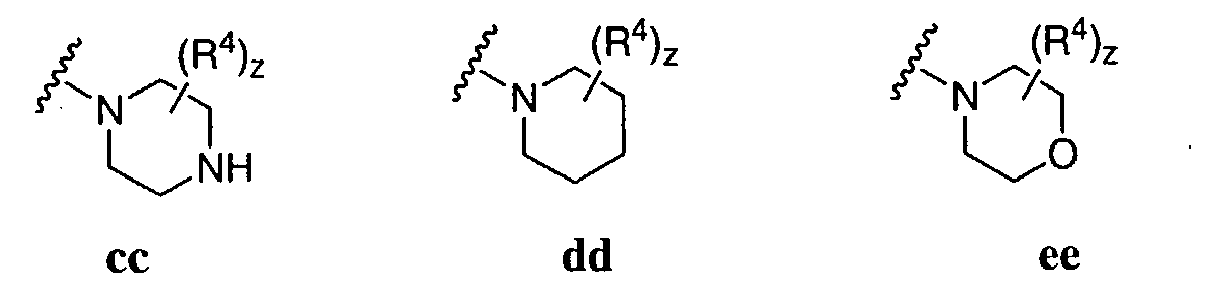


each z is independently 0-5;
each R4 is independently halogen, CN, N02, -N(R')2, -CH2N(R')2, -OR', -CH2OR', -SR',
-CH2SR', -COOR', -NRCOR', -CON(R')2, -OCON(R')2, COR', -NHCOOR', -
S02R', -S02N(R')2, or an optionally substituted group selected from Cl-C6aliphatic, aryl, heteroaryl, cycloaliphatic, heterocycloaliphatic, arylCI-C6alkyl, heteroarylcl-C6alkyl, cydoaliphaticci-C6alkyl, or heterocycloaliphaticC¡-C6alkyl;
x is 0-4;
each R3 is independently halogen, CN, N02, -N(R')2, -CH2N(R')2, -OR', -CH2OR', -SR', -CH2SR', -COOR', -NRCOR', -CON(R')2, -OCON(R')2, COR', -NHCOOR', -SO2R', -SOzN(R')2, or an optionally substituted group selected from C¡.C6aliphatic, aryl, heteroaryl, cycloaliphatic, heterocycloaliphatic, arylC1-C6alkyl, heteroarylcl-C6alkyl, cycloaliphaticCl-C6alkyl, or heterocycloaliphaticC1-C6alkyl;
y is 0-5;
each R5 is independently halogen, CN, NO2, -N(R')2, -CH2N(R')2, -OR', -CHzOR', -SR', -CH2SR', -NRCOR', -CON(R')2, -S(O)2N(R')2, -OCOR', -COR', -CO2R', - OCON(R')2, -NR'S02R', -OP(O)(OR')2, -P(O)(OR')2, -OP(O)20R' , -P(O)20R' , - PO(R')2, -OPO(R')2, or an optionally substituted group selected from Cl-C6aliphatic, aryl, heteroaryl, cycloaliphatic, heterocycloaliphatic, arylCI-C6alkyl, heteroarylcl-C6alkyl, cycloaliphaticC,-C6alkyl, or heterocycloaliphaticC1-C6alkyl; and
each occurrence of R' is independently hydrogen or an optionally substituted C1-6
aliphatic group, a 3-8-membered saturated, partially unsaturated, or fully unsaturated monocyclic ring having 0-3 heteroatoms independently selected from nitrogen, oxygen, or sulfur, or an 8-12 membered saturated, partially unsaturated, or fully unsaturated bicyclic ring system having 0-5 heteroatoms independently selected from nitrogen, oxygen, or sulfur; or:
two occurrences of R' are taken together with the atom(s) to which they are bound
to form an optionally substituted 3-12 membered saturated, partially unsaturated, or fully unsaturated monocyclic or bicyclic ring having 0-4 heteroatoms independently selected from nitrogen, oxygen, or sulfur;
and - (d) removing the suitable hydroxyl protecting group to form a compound of formula Ia or a suitable salt thereof.
- Suitable hydroxyl protecting groups are well known in the art and include those described in detail in "Protecting Groups in Organic Synthesis", T. W. Greene and P. G. M. Wuts, 3`d edition, John Wiley & Sons, 1999, the entirety of which is incorporated herein by reference. Examples of suitable hydroxyl protecting group PG' of compounds of formulae IIa, IIb, and IIc further include, but are not limited to, esters, allyl ethers, ethers, silyl ethers, alkyl ethers, arylalkyl ethers, and alkoxyalkyl ethers. Examples of such esters include formates, acetates, carbonates, and sulfonates. Specific examples include formate, benzoyl formate, chloroacetate, trifluoroacetate, methoxyacetate, triphenylmethoxyacetate, p-chlorophenoxyacetate, 3-phenylpropionate, 4-oxopentanoate, 4,4-(ethylenedithio)pentanoate, pivaloate (trimethylacetyl), crotonate, 4-methoxy-crotonate, benzoate, p-benylbenzoate, 2,4,6-trimethylbenzoate, carbonates such as methyl, 9-fluorenylmethyl, ethyl, 2,2,2-trichloroethyl, 2-(trimethylsilyl)ethyl, 2-(phenylsulfonyl)ethyl, vinyl, allyl, and p-nitrobenzyl. Examples of such silyl ethers include trimethylsilyl, triethylsilyl, t-butyldimethylsilyl, t-butyldiphenylsilyl, triisopropylsilyl, and other trialkylsilyl ethers. Alkyl ethers include methyl, benzyl, p-methoxybenzyl, 3,4-dimethoxybenzyl, trityl, t-butyl, allyl, and allyloxycarbonyl ethers or derivatives. Alkoxyalkyl ethers include acetals such as methoxymethyl, methylthiomethyl, (2-methoxyethoxy)methyl, benzyloxymethyl, beta-(trimethylsilyl)ethoxymethyl, and tetrahydropyranyl ethers. Examples of arylalkyl ethers include benzyl, p-methoxybenzyl (MPM), 3,4-dimethoxybenzyl, O-nitrobenzyl, p-nitrobenzyl, p-halobenzyl, 2,6-dichlorobenzyl, p-cyanobenzyl, 2- and 4-picolyl. In certain embodiments, the suitable hydroxyl protecting group PG1 of compounds of formulae IIa, IIb, and IIc is an ester group. In other embodiments, the suitable hydroxyl protecting group PG1 of compounds of formulae IIa, lib, and IIc is a pivaloate (trimethylacetyl) group. In certain embodiments, the suitable hydroxyl protecting group PG' of compounds of formulae IIa, lib, and IIc is an ether group. In other embodiments, the suitable hydroxyl protecting group PG' of compounds of formulae IIa, lib, and IIc is a methyl ether group.
- Methods of adding and removing such hydroxyl protecting groups are well-known in the art and available, for example, in P. J. Kocienski, Protecting Groups, Thieme, 1994, (which is hereby incorpoarted in its entirety by reference) and in T. W. Greene and P. G. M. Wuts, Protective Groups in Organic Synthesis, 3`d edition, John Wiley & Sons, 1999. One of ordinary skill in the art would recognize that the method appropriate to achieve removal of the protecting group of a compound of formula lie, at step (d), depends upon the actual protecting groups used and includes those described by Greene. For example, when said hydroxyl protecting group of a compound of formula IIc is an ester group, such removal may be achieved by saponification.
- As used herein, a suitable leaving group is a chemical moiety that is readily displaced by a desired incoming chemical moiety. Suitable leaving groups are well known in the art, e.g., see, "Advanced Organic Chemistry," Jerry March, 4th Ed., pp. 351-357, John Wiley and Sons, N.Y. (1992) and "Comprehensive Organic Transformations," Larock, Richard C., 2"d Ed., John Wiley & Sons, 1999. Examples of suitable leaving group Ll of formula lib include, but are not limited to, halogen, alkoxy, sulphonyloxy, optionally substituted alkylsulphonyl, optionally substituted alkenylsulfonyl, optionally substituted arylsulfonyl, and diazonium moieties. Examples of suitable leaving group L1 of formula IIb include chloro, iodo, bromo, fluoro, methanesulfonyl (mesyl), tosyl, triflate, nitro-phenylsulfonyl (nosyl), and bromo-phenylsulfonyl (brosyl). In certain embodiments, the suitable leaving group L1 of formula lib is a halogen group. In other embodiments, the suitable leaving group L of formula IIb is a chloro group.
- According to an alternate embodiment, the suitable leaving group may be generated in situ within the reaction medium. For example, a leaving group may be generated in situ from a precursor of that compound wherein said precursor contains a group readily replaced by said leaving group in situ.
- In other embodiments, the preparation of a compound of formula Ia from a compound of formula II further comprises the step of forming a salt of the compound of formula Ia. According to one aspect of the present invention, salt is the oxalic acid salt. According to another aspect of the present invention, the compound of formula Ia is treated with oxalic acid to form the oxalic acid salt thereof then that salt is freebased and treated with methanesulfonic acid to form the mesylate salt of a compound of formula Ia.
- According to another embodiment, the present invention provides a method for preparing a compound of formula Ia:

wherein:
Cy is a ring selected from:


each z is independently 0-5;
each R4 is independently halogen, CN, N02, -N(R')2, -CH2N(R')2, -OR', -CH2OR', -SR', -CH2SR', -COOR', -NRCOR', -CON(R')2, -OCON(R')2, COR', -NHCOOR', - SOZR', -S02N(R')2, or an optionally substituted group selected from C¡.C6aliphatic, aryl, heteroaryl, cycloaliphatic, heterocycloaliphatic, arylCt-C6alkyl, heteroarylcl-C6alkyl, cycloaliphaticC,-C6alkyl, or heterocycloaliphaticC,-C6alkyl;
x is 0-4;
each R3 is independently halogen, CN, NO2, -N(R')2, -CH2N(R')2, -OR', -CH2OR', -SR', -CH2SR', -COOR', -NRCOR', -CON(R')2, -OCON(R')2, COR', -NHCOOR', - S02R', -S02N(R')2, or an optionally substituted group selected from C¡_C6aliphatic, aryl, heteroaryl, cycloaliphatic, heterocycloaliphatic, arylC1-C6alkyl, heteroarylcl-C6alkyl, cycloaliphaticC1-C6alkyl, or heterocycloaliphaticC1-C6alkyl;
y is 0-5;
each R5 is independently halogen, CN, NO2, -N(R')2, -CH2N(R')2, -OR', -CH2OR', -SR', -CH2SR', -NRCOR', -CON(R')2, -S(0)2N(R')2, -OCOR', -COR', -COzR', - OCON(R')2, -NR'S02R', -OP(O)(OR')2, -P(O)(OR')2, -OP(O)20R' , -P(O)20R' , - PO(R')2, -OPO(R')2, or an optionally substituted group selected from C1-C6aliphatic, aryl, heteroaryl, cycloaliphatic, heterocycloaliphatic, arylC1-C6alkyl, heteroarylC]-C6alkyl, cycloaliphaticC1-C6alkyl, or heterocycloaliphaticC,-C6a]kyl; and
each occurrence of R' is independently hydrogen or an optionally substituted C¡-6 aliphatic group, a 3-8-membered saturated, partially unsaturated, or fully unsaturated monocyclic ring having 0-3 heteroatoms independently selected from nitrogen, oxygen, or sulfur, or an 8-12 membered saturated, partially unsaturated, or fully unsaturated bicyclic ring system having 0-5 heteroatoms independently selected from nitrogen, oxygen, or sulfur; or:
two occurrences of R' are taken together with the atom(s) to which they are bound
to form an optionally substituted 3-12 membered saturated, partially unsaturated, or fully unsaturated monocyclic or bicyclic ring having 0-4 heteroatoms independently selected from nitrogen, oxygen, or sulfur;
comprising the steps of: - (a) providing a compound of formula III:

wherein:
x is 0-4;
each R3 is independently halogen, CN, N02, -N(R')2, -CH2N(R')2, -OR', -CH2OR', -SR', -CHzSR', -COOR', -NRCOR', -CON(R')2, -OCON(R')2, COR', -NHCOOR', - SOzR', -SO2N(R')2, or an optionally substituted group selected from Cl-C6aliphatic, aryl, heteroaryl, cycloaliphatic, heterocycloaliphatic, arylC1-C6alkyl, heteroarylcl-C6alkyl, cycloaliphaticC1-C6alkyl, or heterocycloaliphaticC1-C6alkyl;
y is 0-5;
each R5 is independently halogen, CN, N02, -N(R')2, -CH2N(R')2, -OR', -CH2OR', -SR', -CH2SR', -NRCOR', -CON(R')2, -S(O)2N(R')Z, -OCOR', -COR', -CO2R', - OCON(R')2, -NR'S02R', -OP(O)(OR')2, -P(O)(OR')2, -OP(0)20R', -P(O)20R', - PO(R')2,- -OPO(R')2, or an optionally substituted group selected from C,_C6aliphatic, aryl, heteroaryl, cycloaliphatic, heterocycloaliphatic, arylC1-C6alkyl, heteroarylc1-C6alkyl, cycloaliphaticC1-C6alkyl, or heterocycloaliphaticC1-C6alkyl; and
each occurrence of R' is independently hydrogen or an optionally substituted C1-6 aliphatic group, a 3-8-membered saturated, partially unsaturated, or fully unsaturated monocyclic ring having 0-3 heteroatoms independently selected from nitrogen, oxygen, or sulfur, or an 8-12 membered saturated, partially unsaturated, or fully unsaturated bicyclic ring system having 0-5 heteroatoms independently selected from nitrogen, oxygen, or sulfur; or:
two occurrences of R' are taken together with the atom(s) to which they are bound
to form an optionally substituted 3-12 membered saturated, partially unsaturated, or fully unsaturated monocyclic or bicyclic ring having 0-4 heteroatoms independently selected from nitrogen, oxygen, or sulfur; - (b) converting said compound of formula III to a compound of formula II:

wherein:
x is 0-4;
each R3 is independently halogen, CN, NO2, -N(R')2, -CH2N(R')2, -OR', -CH2OR', -SR', -CH2SR', -COOR', -NRCOR', -CON(R')2, -OCON(R')2, COR', -NHCOOR', -SO2R', -SO2N(R')2, or an optionally substituted group selected from C1-C6aliphatic, aryl, heteroaryl, cycloaliphatic, heterocycloaliphatic, arylC1-C6alkyl, heteroarylC1-C6alkyl, cycloaliphaticC1-C6alkyl, or heterocycloaliphaticC,-C6alkyl;
y is 0-5;
each R5 is independently halogen, CN, NO2, -N(R')2, -CH2N(R')2, -OR', -CH2OR', -SR', -CH2SR', -NRCOR', -CON(R')2, -S(O)2N(R')2, -OCOR', -COR', -CO2R', - OCON(R')2, -NR'SO2R', -OP(O)(OR')2, -P(O)(OR')2, -OP(O)20R' , -P(O)20R', - PO(R')2, -OPO(R')2, or an optionally substituted group selected from C1-C6aliphatic, aryl, heteroaryl, cycloaliphatic, heterocycloaliphatic, arylC1-C6alkyl, heteroarylC1-C6alkyl, cycloaliphaticC1-C6alkyl, or heterocycloaliphaticC1-C6alkyl; and
each occurrence of R' is independently hydrogen or an optionally substituted C1-6 aliphatic group, a 3-8-membered saturated, partially unsaturated, or fully unsaturated monocyclic ring having 0-3 heteroatoms independently selected from nitrogen, oxygen, or sulfur, or an 8-12 membered saturated, partially unsaturated, or fully unsaturated bicyclic ring system having 0-5 heteroatoms independently selected from nitrogen, oxygen, or sulfur; or: two occurrences of R' are taken together with the atom(s) to which they are bound
to form an optionally substituted 3-12 membered saturated, partially unsaturated, or fully unsaturated monocyclic or bicyclic ring having 0-4 heteroatoms independently selected from nitrogen, oxygen, or sulfur;
and - (c) converting said compound of formula II to a compound of formula Ia.
- In certain embodiments, the conversion of a compound of formula III to a compound of formula II, at step (b), is affected by heating. In other embodiments, step (b) is performed at 150-275 °C. In still other embodiments, step (b) is performed at 200-250 °C in an aprotic solvent. According to another embodiment, step (b) is performed in phenylether.
- According to another embodiment, the present invention provides a compound of formula II:

x is 0-4;
each R3 is independently halogen, CN, NO2, -N(R')2, -CH2N(R')2, -OR', -CH2OR', -SR', -CH2SR', -COOR', -NRCOR', -CON(R')2, -OCON(R')2, COR', -NHCOOR', -SO2R', -SO2N(R')2, or an optionally substituted group selected from C1-C6aliphatic, aryl, heteroaryl, cycloaliphatic, heterocycloaliphatic, arylC1-C6alkyl, heteroarylC1-C6atkyt, cycloaliphaticC1-t-C6alkyl, or heterocycloaliphaticC1-C6alkyl;
y is 0-5;
each R5 is independently halogen, CN, NO2, -N(R')2, -CH2N(R')2, -OR', -CH2OR', -SR', -CH2SR', -NRCOR', -CON(R')2, -S(O)2N(R')2, -OCOR', -COR', -CO2R', -OCON(R')2, -NR'SO2R', -OP(O)(OR')2, -P(O)(OR')2, -OP(O)2OR', -P(O)2OR' , -PO(R')2, -OPO(R')2, or an optionally substituted group selected from C1-C6aliphatic, aryl, heteroaryl, cycloaliphatic, heterocycloaliphatic, arylC1-C6alkyl, heteroarylC1-C6alkyl, cyaoaliphaticc1-C6alkyl, or heterocycloaliphaticC1-C6alkyl; and
each occurrence of R' is independently hydrogen or an optionally substituted C1-6 aliphatic
group, a 3-8-membered saturated, partially unsaturated, or fully unsaturated monocyclic ring having 0-3 heteroatoms independently selected from nitrogen, oxygen, or sulfur, or an 8-12 membered saturated, partially unsaturated, or fully unsaturated bicyclic ring system having 0-5 heteroatoms independently selected from nitrogen, oxygen, or sulfur; or:
two occurrences of R' are taken together with the atom(s) to which they are bound to
form an optionally substituted 3-12 membered saturated, partially unsaturated, or fully unsaturated monocyclic or bicyclic ring having 0-4 heteroatoms independently selected from nitrogen, oxygen, or sulfur. - In certain other embodiments, the present invention provides a compound of formula II:

x is 0-4;
each R3 is independently halogen, CN, NO2, -N(R')2, -CH2N(R')2, -OR', -CH2OR', -SR', -CH2SR', -COOR', -NRCOR', -CON(R')2, -OCON(R')2, COR', -NHCOOR', -SO2R', -SO2N(R')2, or an optionally substituted group selected from C1-C6aliphatic, aryl, heteroaryl, cycloaliphatic, heterocycloaliphatic, arylC1-C6alkyl, heteroarylC1-C6alkyl, cycloaliphaticC1-C6alkyl, or heterocycloaliphaticC1-C6alkyl;
y is 0-5;
each R5 is independently halogen, CN, NO2, -N(R')2, -CH2N(R')2, -OR', -CH2OR', -SR', -CH2SR', -NRCOR', -CON(R')2, -S(O)2N(R')2, -OCOR', -COR', -CO2R', -OCON(R')2, -NR'SO2R', -OP(O)(OR')2, -P(O)(OR')2, -OP(O)2OR', -P(O)2OR', -PO(R')2, -OPO(R')2, or an optionally substituted group selected from C1-C6aliphatic, aryl, heteroaryl, cycloaliphatic, heterocycloaliphatic, arylC1-C6alkyl, heteroarylC1-C6alkyl, cycloaliphaticC1-C6alkyl, or heterocycloaliphaticC1-C6alkyl; and
each occurrence of R' is independently hydrogen or an optionally substituted C1-6 aliphatic
group, a 3-8-membered saturated, partially unsaturated, or fully unsaturated monocyclic ring having 0-3 heteroatoms independently selected from nitrogen, oxygen, or sulfur, or an 8-12 membered saturated, partially unsaturated, or fully unsaturated bicyclic ring system having 0-5 heteroatoms independently selected from nitrogen, oxygen, or sulfur; or:
two occurrences of R' are taken together with the atom(s) to which they are bound to form an optionally substituted 3-12 membered saturated, partially unsaturated, or fully unsaturated monocyclic or bicyclic ring having 0-4 heteroatoms independently selected from nitrogen, oxygen, or sulfur;
provided that the following compounds are excluded: - Glycine, N-[2-[2-[6-[bis(carboxymethyl)amino]-2,3-difluorophenoxy]ethoxy]-4-(3,4-dihydro-4-oxo-2-quinazolinyl)-5-hydroxyphenyl]-N-(carboxymethyl)-, tetrapotassium salt;
- Glycine, N-[2-[2-[2-[bis(carboxymethyl)amino]-5-(1,4-dihydro-4-oxo-2-quinazolinyl)-4-hydroxyphenoxy]ethoxy]-4-fluorophenyl]-N-(carboxymethyl)-, tetrapotassium salt;
- Glycine, N-[2-[2-[2-[bis(2-methoxy-2-oxoethyl)amino]-5-(1,4-dihydro-4-oxo-2-quinazolinyl)-4-hydroxyphenoxy]ethoxy]-4-fluorophenyl]-N-(2-methoxy-2-oxoethyl)-, methyl ester;
- Glycine, N-[2-[2-[6-[bis(2-methoxy-2-oxoethyl)amino]-2,3-difluorophenoxy]ethoxy]-4-(3,4-dihydro-4-oxo-2-quinazolinyl)-5-hydroxyphenyl]-N-(2-methoxy-2-oxoethyl)-, methyl ester;
- Glycine, N-[2-[2-[2-[bis(carboxymethyl)amino]-5-(1,4-dihydro-4-oxo-2-quinazolinyl)-4-hydroxyphenoxy]ethoxy]-4-methylphenyl]-N-(carboxymethyl)-;
- Glycine, N-[2-[2-[2-[bis(carboxymethyl)amino]-5-(1,4-dihydro-4-oxo-2-quinazolinyl)-4-hydroxyphenoxy]ethoxy]-4-fluorophenyl]-N-(carboxymethyl)-; 4(1H)-Quinazolinone, 6-amino-2-(2-hydroxyphenyl)-;
- 4(1H)-Quinazolinone, 2-(2-hydroxyphenyl)-6-nitro-;
- 4(1H)-Quinazolinone, 2-(2-hydroxyphenyl)-;
- 4(1H)-Quinazolinone, 6-chloro-2-(5-chloro-2-hydroxyphenyl)-:
- 4(1H)-Quinazolinone, 6-butyl-2-(5-butyl-2-hydroxyphenyl)-;
- 4(1H)-Quinazolinone, 6-bromo-2-(5-bromo-2-hydroxyphenyl)-;
- 4(1H)-Quinazolinone, 2-(2-hydroxy-5-pentylphenyl)-6-pentyl-;
- 4(1H)-Quinazolinone, 2-(2-hydroxyphenyl)-;
- 4(1H)-Quinazolinone, 6-chloro-2-(2-hydroxyphenyl)- ;
- 4(1H)-Quinazolinone, 2-(2-hydroxyphenyl)-6-methyl-;
- 4(1H)-Quinazolinone, 6-chloro-2-(5-chloro-2-hydroxyphenyl)-;
- 4(1H)-Quinazolinone, 2-(2-hydroxyphenyl)-6-iodo-;
- 4(1H)-Quinazolinone, 2-(5-chloro-2-hydroxyphenyl)-;
- 4(1H)-Quinazolinone, 2-(2-hydroxy-4-methoxyphenyl)-;
- 4(1H)-Quinazolinone, 6-chloro-2-(2-hydroxyphenyl)-;
- 4(1H)-Quinazolinone, 2-(2-hydroxyphenyl)-6-nitro-;
- 4(1H)-Quinazolinone, 6-chloro-2-(5-chloro-2-hydroxyphenyl)-;
- 4(1H)-Quinazolinone, 6-chloro-2-(3,5-dichloro-2-hydroxyphenyl)-;
- 4(1H)-Quinazolinone, 2-(2-hydroxy-5-methoxyphenyl)-;
- 4(1H)-Quinazolinone, 2-(2-hydroxy-5-nitrophenyl)-;
- 4(1H)-Quinazolinone, 6-chloro-2-(2-hydroxy-5-methoxyphenyl)-;
- 4(1H)-Quinazolinone, 2-(2-hydroxy-5-nitrophenyl)-6-nitro-;
- 4(1H)-Quinazolinone, 6-chloro-2-(2-hydroxy-5-nitrophenyl)-;
- 4(1H)-Quinazolinone, 2-(3-fluoro-2-hydroxyphenyl)-;
- 4(1H)-Quinazolinone, 6-chloro-2-(3-fluoro-2-hydroxyphenyl)-;
- 4(1H)-Quinazolinone, 2-[5-(1,1-dimethylethyl)-2-hydroxyphenyl]-;
- 4(1H)-Quinazolinone, 2-(4-hydroxy[1,1'-biphenyl]-3-yl)-;
- 4(1H)-Quinazolinone, 2-(4-chloro-2-hydroxyphenyl)-;
- 4(1H)-Quinazolinone, 2-(2-hydroxy-3-methylphenyl)-;
- 4(1H)-Quinazolinone, 2-(3,5-dibromo-2-hydroxyphenyl)-;
- 4(1H)-Quinazolinone, 8-bromo-2-(3,5-dibromo-2-hydroxyphenyl)-;
- 4(1H)-Quinazolinone, 6,8-dibromo-2-(3,5-dibromo-2-hydroxyphenyl)-;
- 4(1H)-Quinazolinone, 2-(3,5-dichloro-2-hydroxyphenyl)-;
- 4(3H)-Quinazolinone, 2-(4-ethoxy-2-hydroxyphenyl)-;
- 4(3H)-Quinazolinone, 6-chloro-2-(2-hydroxy-m-tolyl)-;
- 4(3H)-Quinazolinone, 2-(2-hydroxy-m-tolyl)-6-nitro-;
- 4(3H)-Quinazolinone, 2-(3,5-dichloro-2-hydroxyphenyl)-6-nitro-;
- 4(3H)-Quinazolinone, 2-(3,5-dichloro-2-hydroxyphenyl)-6-nitro-;
- 4(1H)-Quinazolinone, 2-(5-chloro-2-hydroxyphenyl)-6-nitro-;
- 4(3H)-Quinazolinone, 2-(2-hydroxy-5-iodophenyl)-;
- 4(3H)-Quinazolinone, 6-chloro-2-(2-hydroxy-5-iodophenyl)-;
- 4(3H)-Quinazolinone, 2-(2-hydroxy-5-iodophenyl)-6-nitro-;
- 4(3H)-Quinazolinone, 2-(5-bromo-2-hydroxyphenyl)-6-chloro-;
- 4(3H)-Quinazolinone, 2-(5-bromo-2-hydroxyphenyl)-6-nitro-;
- 4(3H)-Quinazolinone, 6-chloro-2-(4-ethoxy-2-hydroxyphenyl)-;
- 4(3H)-Quinazolinone, 2-(4-ethoxy-2-hydroxyphenyl)-6-nitro-;
- 4(3H)-Quinazolinone, 6-chloro-2-(2,4-dihydroxyphenyl)-;
- 4(3H)-Quinazolinone, 2-(2,4-dihydroxyphenyl)-6-nitro-;
- 4(3H)-Quinazolinone, 6-chloro-2-(3,5-dibromo-2-hydroxyphenyl)-;
- 4(3H)-Quinazolinone, 2-(3,5-dibromo-2-hydroxyphenyl)-6-nitro-;
- 4(3H)-Quinazolinone, 2-(2-hydroxy-3-biphenylyl)-;
- 4(3H)-Quinazolinone, 2-(2,5-dihydroxyphenyl)-;
- 4(3H)-Quinazolinone, 6-chloro-2-(2,5-dihydroxyphenyl)-;
- 4(3H)-Quinazolinone, 2-(2,5-dihydroxyphenyl)-6-nitro-;
- [2-{2-[2-(Carboxymethyl-amino)-5-methyl-phenoxy]-ethoxy}-5-hydroxy-4-(4-hydroxy-quinazolin-2-yl)-phenylamino]-acetic acid; and
- [2-{(2-[6-(Carboxymethyl-amino)-2,3-difluoro-phenoxy]-ethoxy)}-5-hydroxy-4-(4-hydroxy-quinazolin-2-yl)-phenylamino]-acetic acid.
- In certain embodiments, the present invention provides a compound of formula II:

wherein:
x is 1 or 2;
each R3 is independently Cl, Br, F, CF3, -OCF3, Me, Et, CN, -COOH, -NH2, -N(CH3)2, -
N(Et)2, -N(iPr)2, -O(CH2)2OCH3, -CONH2, -COOCH3, -OH, -OCH3, -OCH2CH3, - CH2OH, -NHCOCH3, -NHCOCH(CH3)2, -SO2NH2, -CONH(cyclopropyl), -CONHCH3, -CONHCH2CH3, or an optionally substituted group selected from -piperidinyl, piperizinyl, morpholino, phenyl, phenyloxy, benzyl, or benzyloxy;
y is 0-4; and
each R5 is independently Cl, Br, F, CF3, Me, Et, CN, -COOH, -NH2, -N(CH3)2, -N(Et)2, - N(iPr)2, -O(CH2)2OCH3, -CONH2, -COOCH3, -OH, -OCH3, -OCH2CH3, -CH2OH, - NHCOCH3, -SO2NH2, -SO2NHC(CH3)2, -OCOC(CH3)3, -OCOCH2C(CH3)3, - O(CH2)2N(CH3)2, 4-CH3-piperazin-l-yl, OCOCH(CH3)2, OCO(cyclopentyl), -COCH3, optionally substituted phenoxy, or optionally substituted benzyloxy. - In other embodiments, the present invention provides a compound of formula II:

x is 1;
each R3 is independently Cl, Br, F, CF3, -OCF3, Me, Et, CN, -COOH, -OH, or -OCH3; yis 0 or 1; and
each R5 is independently Cl, Br, F, CF3, Me, -OH, -OCH3, -OCH2CH3, -CH2OH, - NHCOCH3, -SO2NH2, -SO2NHC(CH3)2. - According to another embodiment, the present invention provides compound II-1 or a suitable salt thereof:

- According to another embodiment, the present invention provides a compound of formula IIa:

PG1 is a suitable hydroxyl protecting group;
x is 0-4;
each R3 is independently halogen, CN, NO2, -N(R')2, -CH2N(R')2, -OR', -CH2OR', -SR', -CH2SR', -COOR', -NRCOR'., -CON(R')2, -OCON(R')2, COR', -NHCOOR', -SO2R', -SO2N(R')2, or an optionally substituted group selected from C1-C6aliphatic, aryl, heteroaryl, cycloaliphatic, heterocycloaliphatic, arylC1-C6alkyl, heteroarylC1-C6alkyl, cycloaliphaticC1-C6alkyl, or heterocycloaliphaticC1-C6alkyl;
y is 0-5;
each R5 is independently halogen, CN, NO2, -N(R')2, -CH2N(R')2, -OR', -CH2OR', -SR', -CH2SR', -NRCOR', -CON(R')2, -S(O)2N(R')2, -OCOR', -COR', -CO2R', -OCON(R')2, -NR'SO2R', -OP(O)(OR')2, -P(O)(OR')2, -OP(O)2OR', -P(O)2OR', -PO(R')2, -OPO(R')2, or an optionally substituted group selected from C1-C6aliphatic, aryl, heteroaryl, cycloaliphatic, heterocycloaliphatic, arylC1-C6alkyl, heteroarylC1-C6alkyl, cycloaliphaticC1-C6alkyl, or heterocycloaliphaticC,-C6alkyl; and
each occurrence of R' is independently hydrogen or an optionally substituted C1-6 aliphatic
group, a 3-8-membered saturated, partially unsaturated, or fully unsaturated monocyclic ring having 0-3 heteroatoms independently selected from nitrogen, oxygen, or sulfur, or an 8-12 membered saturated, partially unsaturated, or fully unsaturated bicyclic ring system having 0-5 heteroatoms independently selected from nitrogen, oxygen, or sulfur; or:
two occurrences of R' are taken together with the atom(s) to which they are bound to
form an optionally substituted 3-12 membered saturated, partially unsaturated, or fully unsaturated monocyclic or bicyclic ring having 0-4 heteroatoms independently selected from nitrogen, oxygen, or sulfur. - In certain other embodiments, the present invention provides a compound of formula IIa:

wherein:
PG1 is a suitable hydroxyl protecting group;
x is 0-4;
each R3 is independently halogen, CN, NO2, -N(R')2, -CH2N(R')2, -OR', -CH2OR', -SR', -CH2SR', -COOR', -NRCOR', -CON(R')2, -OCON(R')2, COR', -NHCOOR', -SO2R', -SO2N(R')2, or an optionally substituted group selected from C1-C6aliphatic, aryl, heteroaryl, cycloaliphatic, heterocycloaliphatic, arylC1-C6alkyl, heteroarylC1-C6alkyl, cycloaliphaticC1-C6alkyl, or heterocycloaliphaticC1-C6alkyl;
y is 0-5;
each R5 is independently halogen, CN, NO2, -N(R')2, -CH2N(R')2, -OR', -CH2OR', -SR', -CH2SR', -NRCOR', -CON(R')2, -S(O)2N(R')2, -OCOR', -COR', -CO2R', -OCON(R')2, -NR'SO2R', -OP(O)(OR')2, -P(O)(OR')2, -OP(O)20R', -P(O)2OR', -PO(R')2, -OPO(R')2, or an optionally substituted group selected from C1-C6aliphatic, aryl, heteroaryl, cycloaliphatic, heterocycloaliphatic, arylC1-C6alkyl, heteroarylC1-C6alkyl, cycloaliphaticC1,-C6alkyl, or heterocycloaliphaticC1-C6alkyl; and
each occurrence of R' is independently hydrogen or an optionally substituted C1-6 aliphatic
group, a 3-8-membered saturated, partially unsaturated, or fully unsaturated monocyclic ring having 0-3 heteroatoms independently selected from nitrogen, oxygen, or sulfur, or an 8-12 membered saturated, partially unsaturated, or fully unsaturated bicyclic ring system having 0-5 heteroatoms independently selected from nitrogen, oxygen, or sulfur;
or:
two occurrences of R' are taken together with the atom(s) to which they are bound to form an optionally substituted 3-12 membered saturated, partially unsaturated, or fully unsaturated monocyclic or bicyclic ring having 0-4 heteroatoms independently selected from nitrogen, oxygen, or sulfur;
provided that the following compounds are excluded: - 4(1H)-Quinazolinone, 6-chloro-2-[5-chloro-2-(2,2-dimethoxyethoxy)phenyl]-;
- 4(1H)-Quinazolinone, 2-(2-methoxyphenyl)-;
- 4(1H)-Quinazolinone, 2-(2,4-dimethoxyphenyl)-;
- 4(1H)-Quinazolinone, 2-(2,3-dimethoxyphenyl)-;
- 4(1H)-Quinazolinone, 2-(2,5-dimethoxyphenyl)-;
- Benzoic acid, 4-[(aminoiminomethyl)amino]-, 2-(1,4-dihydro-4-oxo-2-quinazolinyl)phenyl ester, monohydrochloride;
- 4(1H)-Quinazolinone, 2-[2-(acetyloxy)phenyl]-;
- 4(1H)-Quinazolinone, 2-(2-methoxyphenyl)-;
- 4(1H)-Quinazolinone, 2-(2-methoxyphenyl)-7-(trifluoromethyl)-;
- 4(1H)-Quinazolinone, 2-(2-methoxyphenyl)-7-methyl-;
- 4(1H)-Quinazolinone, 2-[2-(acetyloxy)-5-chlorophenyl]-6-chloro-;
- 6-Quinazolinecarboxylic acid, 2-(2,3-dimethoxyphenyl)-1,4-dihydro-4-oxo-;
- 6-Quinazolinecarboxylic acid, 2-(5-ethoxy-2-methoxyphenyl)-1,4-dihydro-4-;
- 6-Quinazolinecarboxylic acid, 1,4-dihydro-2-[2-methoxy-5-(2-propenyloxy)phenyl]-4-oxo-;
- 6-Quinazolinecarboxylic acid, 1,4-dihydro-2-(2-methoxy-3-methylphenyl)-4-oxo-;
- 6-Quinazolinecarboxylic acid, 1,4-dihydro-2-[2-methoxy-5-(1-methylethoxy)phenyl]-4-oxo-;
- 6-Quinazolinecarboxylic acid, 1,4-dihydro-2-(2-methoxy-5-propoxyphenyl)-4-oxo-;
- 6-Quinazolinecarboxylic acid, 2-[5-(2-ethoxyethoxy)-2-methoxyphenyl]-1,4-dihydro-4-oxo-;
- 6-Quinazolinecarboxylic acid, 2-(3-ethoxy-2-methoxyphenyl)-1,4-dihydro-4-oxo-;
- 6-Quinazolinecarboxylic acid, 1,4-dihydro-2-(2-methoxyphenyl)-4-oxo-;
- 6-Quinazolinecarboxylic acid, 1,4-dihydro-4-oxo-2-[2-(2-propenyloxy)phenyl]-;
- 6-Quinazolinecarboxylic acid, 2-[2-(2-ethoxyethoxy)phenyl]-1,4-dihydro-4-oxo-;
- 6-Quinazolinecarboxylic acid, 2-(2,3-dimethoxyphenyl)-1,4-dihydro-4-oxo-;
- 6-Quinazolinecarboxylic acid, 1,4-dihydro-2-(2-methoxy-3-methylphenyl)-4-oxo-;
- 6-Quinazolinecarboxylic acid, 1,4-dihydro-2-(2-methoxy-5-methylphenyl)-4-oxo-;
- 6-Quinazolinecarboxylic acid, 2-[2-(2-ethoxyethoxy)-3-methoxyphenyl]-1,4-dihydro-4-oxo-;
- 6-Quinazolinecarboxylic acid, 1,4-dihydro-2-(2-methoxyphenyl)-4-oxo-, methyl ester;
- 4(1H)-Quinazolinone, 6,7,8-trimethoxy-2-(2,3,4-trimethoxyphenyl)-;
- Carbonic acid, ethyl ester, ester with 2-(o-hydroxyphenyl)-4(3H)-Quinazolinone;
- 4(3H)-Quinazolinone, 6-butyl-2-(o-methoxyphenyl)-;
- 4(1H)-Quinazolinone, 2-(3,5-dibromo-2-methoxyphenyl)-; and
- 2-(2'-acetoxyphenyl)-4(3H)-quinazolinone.
- In certain embodiments, the x moiety of formula IIa is 1 or 2, and each R3 is independently Cl, Br, F, CF3, -OCF3, Me, Et, CN, -COOH, -NH2, -N(CH3)2, -N(Et)2, -N(iPr)2, -O(CH2)2OCH3, -CONH2, -COOCH3, -OH, -OCH3, -OCH2CH3, -CH2OH, -NHCOCH3, -NHCOCH(CH3)2, -SO2NH2, -CONH(cyclopropyl), -CONHCH3, -CONHCH2CH3, or an optionally substituted group selected from -piperidinyl, piperizinyl, morpholino, phenyl, phenyloxy, benzyl, or benzyloxy.
- In other embodiments, the x moiety of formula IIa is 1, and R3 is Cl, Br, F, CF3, -OCF3, Me, Et, CN, -COOH, -OH, or -OCH3.
- In still other embodiments, the y moiety of formula IIa is 0-4, and each R5 is independently Cl, Br, F, CF3, Me, Et, CN, -COOH, -NH2, -N(CH3)2, -N(Et)2, -N(iPr)2, -O(CH2)2OCH3, -CONH2, -COOCH3, -OH, -OCH3, -OCH2CH3, -CH2OH, -NHCOCH3, -SO2NH2, -sO2NHC(CH3)2, -OCOC(CH3)3, -OCOCH2C(CH3)3, -O(CH2)2N(CH3)2,4-CH3-piperazin-1-yl, OCOCH(CH3)2, OCO(cyclopentyl), -COCH3, optionally substituted phenoxy, or optionally substituted benzyloxy.
- According to another embodiment, the y moiety of formula IIa is 0 or 1, and R5 is Cl, Br, F, CF3, Me, -OH, -OCH3, -OCH2CH3, -CH2OH, -NHCOCH3, -SO2NH2, - SO2NHC(CH3)2.
- In other embodiments, the PG1 group of formula IIa is an ester group.
- According to another embodiment, the present invention provides compound IIa-1 or a suitable salt thereof:

- In certain embodiments, the present invention provides a compound of formula IIb:

PG1 is a suitable hydroxyl protecting group;
L1 is a suitable leaving group;
x is 0-4;
each R3 is independently halogen, CN, NO2, -N(R')2, -CH2N(R')2, -OR', -CHZOR', -SR', -CH2SR', -COOR', -NRCOR', -CON(R')2, -OCON(R')2, COR', -NHCOOR', -SO2R', -SO2N(R')2, or an optionally substituted group selected from C1-C6aliphatic, aryl, heteroaryl, cycloaliphatic, heterocycloaliphatic, arylC1-C6alkyl, heteroarylc1-C6alkyl, cyaoaliphaticC1-C6alkyl, or heterocycloaliphaticC1-C6alkyl;
y is 0-5;
each R5 is independently halogen, CN, NO2, -N(R')2, -CH2N(R')2, -OR', -CH2OR', -SR', -CH2SR', -NRCOR', -CON(R')2, -S(O)2N(R')2, -OCOR', -COR', -CO2R', - OCON(R')2, -NR'SO2R', -OP(O)(OR')2, -P(O)(OR')2, -OP(O)2OR' , -P(O)2OR' , - PO(R')2, -OPO(R')2, or an optionally substituted group selected from C1-C6aliphatic, aryl, heteroaryl, cycloaliphatic, heterocycloaliphatic, arylC1-C6alkyl, heteroarylC1-C6alkyl, cycloaliphaticC1-C6alkyl, or heterocycloaliphaticC1-C6alkyl; and
each occurrence of R' is independently hydrogen or an optionally substituted C1-6 aliphatic group, a 3-8-membered saturated, partially unsaturated, or fully unsaturated monocyclic ring having 0-3 heteroatoms independently selected from nitrogen, oxygen, or sulfur, or an 8-12 membered saturated, partially unsaturated, or fully unsaturated bicyclic ring system having 0-5 heteroatoms independently selected from nitrogen, oxygen, or sulfur; or:
two occurrences of R' are taken together with the atom(s) to which they are bound
to form an optionally substituted 3-12 membered saturated, partially unsaturated, or fully unsaturated monocyclic or bicyclic ring having 0-4 heteroatoms independently selected from nitrogen, oxygen, or sulfur. - In certain embodiments, the x moiety of formula IIb is 1 or 2, and each R3 is independently Cl, Br, F, CF3, -OCF3, Me, Et, CN, -COOH, -NH2, -N(CH3)2, -N(Et)2, -N(iPr)2, -O(CH2)2OCH3, -CONH2, -COOCH3, -OH, -OCH3, -OCH2CH3, -CH2OH, -NHCOCH3, -NHCOCH(CH3)2, -SO2NH2, -CONH(cyclopropyl), -CONHCH3, -CONHCH2CH3, or an optionally substituted group selected from -piperidinyl, piperizinyl, morpholino, phenyl, phenyloxy, benzyl, or benzyloxy.
- In other embodiments, the x moiety of formula IIb is 1, and R3 is CI, Br, F, CF3, -OCF3, Me, Et, CN, -COOH, -OH, or -OCH3.
- In still other embodiments, the y moiety of formula IIb is 0-4, and each R5 is independently Cl, Br, F, CF3, Me, Et, CN, -COOH, -NH2, -N(CH3)2, -N(Et)2, -N(iPr)2, -O(CH2)2OCH3, -CONH2, -COOCH3, -OH, -OCH3, -OCH2CH3, -CH2OH, -NHCOCH3, -SO2NH2, -SO2NHC(CH3)2, -OCOC(CH3)3, -OCOCH2C(CH3)3, -O(CH2)2N(CH3)2,4-CH3-piperazin-1-yl, OCOCH(CH3)2, OCO(cyclopentyl), -COCH3, optionally substituted phenoxy, or optionally substituted benzyloxy.
- According to another embodiment, the y moiety of formula IIb is 0 or 1, and R5 is Cl, Br, F, CF3, Me, -OH, -OCH3, -OCH2CH3, -CH2OH, -NHCOCH3, -SO2NH2, SO2NHC(CH3)2
- In other embodiments, the PG1 group of formula IIb is an ester group.
- According to another embodiment, the present invention provides compound IIb-1 or a suitable salt thereof:

- According to another aspect, the present invention provides a compound of formula IIc:

PG1 is a suitable hydroxyl protecting group;
Cy is a ring selected from:


each z is independently 0-5;
each R4 is independently halogen, CN, NO2, -N(R')2, -CH2N(R')2, -OR', -CH2OR', -SR', -CH2SR', -COOR', -NRCOR', -CON(R')2, -OCON(R')2, COR', -NHCOOR', -SO2R', -SO2N(R')2, or an optionally substituted group selected from C1-C6aliphatic, aryl, heteroaryl, cycloaliphatic, heterocycloaliphatic, arylC1-C6alkyl, heteroarylC1-C6alkyl, cycloaliphaticC1-C6a]kyl, or heterocycloaliphaticC1-C6alkyl;
x is 0-4;
each R3 is independently halogen, CN, NO2, -N(R')2, -CH2N(R')2, -OR', -CH2OR', -SR', -CH2SR', -COOR', -NRCOR', -CON(R')2, -OCON(R')2, COR', -NHCOOR', -SO2R', -SO2N(R')2, or an optionally substituted group selected from C1-C6aliphatic, aryl, heteroaryl, cycloaliphatic, heterocycloaliphatic, arylC1-C6alkyl, heteroarylC1-C6alkyl, cycloaliphaticC1-C6alkyl, or heterocycloaliphaticC1-C6alkyl;
y is 0-5;
each R5 is independently halogen, CN, NO2, -N(R')2, -CH2N(R')2, -OR', -CH2OR', -SR', -CH2SR', -NRCOR', -CON(R')2, -S(O)2N(R')2, -OCOR', -COR', -CO2R', -OCON(R')2, -NR'SO2R', -OP(O)(OR')2, -P(O)(OR')2, -OP(O)2OR', -P(0)2OR', -PO(R')2, -OPO(R')2, or an optionally substituted group selected from C1-C6aliphatic, aryl, heteroaryl, cycloaliphatic, heterocycloaliphatic, arylC1-C6alkyl, heteroarylC1-C6alkyl, cycloaliphaticC1-C6alkyl, or heterocycloaliphaticC1-C6alkyl; and
each occurrence of R' is independently hydrogen or an optionally substituted C1-6 aliphatic
group, a 3-8-membered saturated, partially unsaturated, or fully unsaturated monocyclic ring having 0-3 heteroatoms independently selected from nitrogen, oxygen, or sulfur, or an 8-12 membered saturated, partially unsaturated, or fully unsaturated bicyclic ring system having 0-5 heteroatoms independently selected from nitrogen, oxygen, or sulfur; or:
two occurrences of R' are taken together with the atom(s) to which they are bound to
form an optionally substituted 3-12 membered saturated, partially unsaturated, or fully unsaturated monocyclic or bicyclic ring having 0-4 heteroatoms independently selected from nitrogen, oxygen, or sulfur. - In certain other embodiments, the present invention provides a compound of formula IIc:

wherein:
PG1 is a suitable hydroxyl protecting group;
Cy is a ring selected from:


each z is independently 0-5;
each R4 is independently halogen, CN, NO2, -N(R')2, -CH2N(R')2, -OR', -CH2OR', -SR', -CH2SR', -COOR', -NRCOR', -CON(R')2, -OCON(R')2, COR', -NHCOOR', -SO2R', -SO2N(R')2, or an optionally substituted group selected from C1-C6aliphatic, aryl, heteroaryl, cycloaliphatic, heterocycloaliphatic, arylC1-C6alkyl, heteroarylC1-C6alkyl, cycloaliphaticC1-C6alkyl, or heterocycloaliphaticC1-C6alkyl;
x is 0-4;
each R3 is independently halogen, CN, NO2, -N(R')2, -CH2N(R')2, -OR', -CH2OR', -SR', -CH2SR', -COOR', -NRCOR', -CON(R')2, -OCON(R')2, COR', -NHCOOR', -SO2R', -SO2N(R')2, or an optionally substituted group selected from C1-C6aliphatic, aryl, heteroaryl, cycloaliphatic, heterocycloaliphatic, arylC1-C6alkyl, heteroarylC1-C6alkyl, cycloaliphaticC1-C6alkyl, or heterocycloaliphaticC1-C6alkyl;
y is 0-5;
each R5 is independently halogen, CN, NO2, -N(R')2, -CH2N(R')2, -OR', -CH2OR', -SR', -CH2SR', -NRCOR', -CON(R')2, -S(O)2N(R')2, -OCOR', -COR', -CO2R', -OCON(R')2, -NR'SO2R', -OP(O)(OR')2, -P(O)(OR')2, -OP(O)2OR', -P(O)2OR', -PO(R')2, -OPO(R')2, or an optionally substituted group selected from C1-C6aliphatic, aryl, heteroaryl, cycloaliphatic, heterocycloaliphatic, arylC1-C6alkyl, heteroarylC1-C6alkyl, cycloaliphaticC1-C6alkyl, or heterocycloaliphaticC1-C6alkyl; and
each occurrence of R' is independently hydrogen or an optionally substituted C1-6 aliphatic
group, a 3-8-membered saturated, partially unsaturated, or fully unsaturated monocyclic ring having 0-3 heteroatoms independently selected from nitrogen, oxygen, or sulfur, or an 8-12 membered saturated, partially unsaturated, or fully unsaturated bicyclic ring system having 0-5 heteroatoms independently selected from nitrogen, oxygen, or sulfur; or:
two occurrences of R' are taken together with the atom(s) to which they are bound to form an
optionally substituted 3-12 membered saturated, partially unsaturated, or fully unsaturated monocyclic or bicyclic ring having 0-4 heteroatoms independently selected from nitrogen, oxygen, or sulfur;
provided that the following compounds are excluded: - Quinazoline, 2-(2-methoxyphenyl)-4-(1-pyrrolidinyl)-;
- Quinazoline, 6-bromo-2-(2-methoxyphenyl)-4-(4-morpholinyl)-;
- Quinazoline, 6,8-dichloro-2-(2-methoxyphenyl)-4-(4-morpholinyl)-;
- Quinazoline, 6-bromo-2-(2-methoxyphenyl)-4-(1-pyrrolidinyl)-;
- Quinazoline, 6,8-dichloro-2-(2-methoxyphenyl)-4-(1-pyrrolidinyl)-;
- Quinazoline, 2-(2-fluoro-6-methoxyphenyl)-6-methoxy-4-(4-morpholinyl)-;
- Quinazoline, 2-(2-fluoro-6-methoxyphenyl)-4-(4-methyl-1-piperidinyl)-7-(trifluoromethyl)-;
- Cyclopropanecarboxylic acid, 3-fluoro-2-[7-methyl-4-(4-methyl-1-piperidinyl)-2-quinazolinyl]phenyl ester;
- Propanoic acid, 2-methyl-, 3-fluoro-2-[7-methyl-4-(4-methyl-1-piperidinyl)-2-quinazolinyl]phenyl ester;
- Butanoic acid, 3-methyl-, 3-fluoro-2-[7-methyl-4-(4-methyl-1-piperidinyl)-2-quinazolinyl]phenyl ester;
- Cyclopentanecarboxylic acid, 3-fluoro-2-[7-methyl-4-(4-methyl-1-piperidinyl)-2-quinazolinyl]phenyl ester;
- Propanoic acid, 2,2-dimethyl-, 3-fluoro-2-[7-methyl-4-(4-methyl-1-piperidinyl)-2-quinazolinyl]phenyl ester;
- Butanoic acid, 3,3-dimethyl-, 3-fluoro-2-[7-methyl-4-(4-methyl-l-piperidinyl)-2-quinazolinyl]phenyl ester;
- Quinazoline, 7-chloro-2-(2-methoxyphenyl)-4-[3-(trifluoromethyl)-1-pyrrolidinyl];
- Piperazine, 1-(butylsulfonyl)-4-[2-(2,4-dimethoxyphenyl)-7-methyl-4-quinazolinyl]-;
- Phenol, 3-fluoro-2-[7-methyl-4-(4-methyl-1-piperidinyl)-2-quinazolinyl]-, acetate (ester);
- Piperazine, 1-(butylsulfonyl)-4-[2-(2-fluoro-6-methoxyphenyl)-7-(trifluoromethyl)-4-quinazolinyl]-;
- 1-Piperazinecarboxylic acid, 4-[6-bromo-2-(2-methoxyphenyl)-4-quinazolinyl]-, 1,1-dimethylethyl ester;
- Carbamic acid, (2-methylpropyl)-, 1-[2-(2-methoxyphenyl)-7-methyl-4-quinazolinyl]-4-piperidinyl ester;
- 6-Quinazolinecarboxylic acid, 4-[4-[(1,1-dimethylethoxy)carbonyll-l-piperazinyl]-2-(2-methoxyphenyl)-; and
- Benzenesulfonamide, 2-methoxy-5-[2-[4-[2-(2-methoxyphenyl)-4-quinazolinyl]-1-piperazinyllethyl]-, (2Z)-2-butenedioate (2:3).
- In certain embodiments, the present invention provides a compound of formula IIc:

PG1 is a suitable hydroxyl protecting group;
Cy is azetidin-1-yl (jj), pyrrolidin-1-yl (ff), piperidinl-yl (dd), or piperazin-1-yl (cc)
optionally substituted with 0-4 occurrences of R4;
each R4 is independently Cl, Br, F, CF3, CH3, -CH2CH3, CN, -COOH, -N(CH3)2, -N(Et)2, -N(iPr)2, -O(CH2)ZOCH3, -CONH2, -COOCH3, -OH, -CH2OH, -NHCOCH3, -SO2NH2, -SO2(CH2)3CH3, -SO2CH(CH3)2, -SO2N(CH3)2, -SO2CH2CH3, -C(O)OCH2CH(CH3)2, -C(O)NHCH2CH(CH3)2, -C(O)CH(OH)CH2CH(CH3)2, -C(O)CH(OH)CH2C(CH3)3, -NHCOOCH3, -C(O)C(CH3)3, -COO(CH2)2CH3, -C(O)NHCH(CH3)2, -C(O)CH2CH3, or an optionally substituted group selected from -piperidinyl, piperizinyl, morpholino, C1-4alkoxy, phenyl, phenyloxy, benzyl, benzyloxy, -CH2cyclohexyl, pyridyl, -CH2pyridyl, or -CH2thiazolyl;
x is 1 or 2;
each R3 is independently Cl, Br, F, CF3, -OCF3, Me, Et, CN, -COOH, -NH2, -N(CH3)2, -
N(Et)2, -N(iPr)2, -O(CH2)2OCH3, -CONH2, -COOCH3, -OH, -OCH3, -OCH2CH3, - CH2OH, -NHCOCH3, -NHCOCH(CH3)2, -SO2NH2, -CONH(cyclopropyl), -CONHCH3, -CONHCH2CH3, or an optionally substituted group selected from -piperidinyl, piperizinyl, morpholino, phenyl, phenyloxy, benzyl, or benzyloxy;
y is 0-4; and
each R5 is independently Cl, Br, F, CF3, Me, Et, CN, -COOH, -NH2, -N(CH3)2, -N(Et)2, - N(iPr)2, -O(CH2)2OCH3, -CONH2, -COOCH3, -OH, -OCH3, -OCH2CH3, -CH2OH, - NHCOCH3, -SO2NH2, -SO2NHC(CH3)2, -OCOC(CH3)3, -OCOCH2C(CH3)3, - O(CH2)2N(CH3)2, 4-CH3-piperazin-1-yl, OCOCH(CH3)2, OCO(cyclopentyl), -COCH3, optionally substituted phenoxy, or optionally substituted benzyloxy. - In other embodiments, the x moiety of formula IIc is 1 and R3 is at the 7-position of the quinazoline ring and is -Cl, -CH3, -CH2CH3, -F, -CF3, -OCF3, -CONHCH3, - CONHCH2CH3, -CONH(cyclopropyl), -OCH3, -NH2, -OCH2CH3, or -CN. In yet other embodiments, the x moiety of formula IIc is 1 and R3 is at the 7-position of the quinazoline ring and is -Cl, -CH3, -CH2CH3, -F, -CF3, -OCF3, -OCH3, or -OCH2CH3- In certain other embodiments, the x moiety of formula IIc is 1 and R3 is at the 7-position of the quinazoline ring and is methyl.
- According to another embodiment, the present invention provides compound IIc-1 or a suitable salt thereof:

- According to yet another embodiment, the present invention provides a compound of formula III:

x is 0-4;
each R3 is independently halogen, CN, NO2, -N(R')2, -CH2N(R')2, -OR', -CH2OR', -SR', -CH2SR', -COOR', -NRCOR', -CON(R')2, -OCON(R')2, COR', -NHCOOR', -SO2R', -SO2N(R')2, or an optionally substituted group selected from C1-C6aliphatic, aryl, heteroaryl, cycloaliphatic, heterocycloaliphatic, arylC1-C6alkyl, heteroarylC1-C6alkyl, cyc1oaliphaticC1-C6alkyl, or heterocycloaliphaticC1-C6alkyl;
y is 0-5;
each R5 is independently halogen, CN, NO2, -N(R')2, -CH2N(R')2, -OR', -CH2OR', -SR', -CH2SR', -NRCOR', -CON(R')2, -S(O)2N(R')2, -OCOR', -COR', -CO2R', -OCON(R')2, -NR'SO2R', -OP(O)(OR')2, -P(O)(OR')2, -OP(O)2OR', -P(O)2OR', -PO(R')2, -OPO(R')2, or an optionally substituted group selected from C1-C6aliphatic, aryl, heteroaryl, cycloaliphatic, heterocycloaliphatic, arylC1C6alkyl, heteroarylC1-C6alkyl, cycloaliphaticC,-C6alkyl, or heterocycloaliphaticC1-C6alkyl; and
each occurrence of R' is independently hydrogen or an optionally substituted C1-6 aliphatic
group, a 3-8-membered saturated, partially unsaturated, or fully unsaturated monocyclic ring having 0-3 heteroatoms independently selected from nitrogen, oxygen, or sulfur, or an 8-12 membered saturated, partially unsaturated, or fully unsaturated bicyclic ring system having 0-5 heteroatoms independently selected from nitrogen, oxygen, or sulfur; or:
two occurrences of R' are taken together with the atom(s) to which they are bound to
form an optionally substituted 3-12 membered saturated, partially unsaturated, or fully unsaturated monocyclic or bicyclic ring having 0-4 heteroatoms independently selected from nitrogen, oxygen, or sulfur;
provided that: - (i) x and y are not simultaneously zero; and
- (ii) when y is zero, and x is one, then R3 is not:
- chloro in the para-position; or
- methyl in the para-position.
- In certain embodiments, the x moiety of formula III is 1 or 2, and each R3 is independently Cl, Br, F, CF3, -OCF3, Me, Et, CN, -COOH, -NH2, -N(CH3)2, -N(Et)2, -N(iPr)2, -O(CH2)2OCH3, -CONH2, -COOCH3, -OH, -OCH3, -OCH2CH3, -CH2OH, -NHCOCH3, -NHCOCH(CH3)2, -S0O2NH2, -CONH(cyclopropyl), -CONHCH3, -CONHCH2CH3, or an optionally substituted group selected from -piperidinyl, piperizinyl, morpholino, phenyl, phenyloxy, benzyl, or benzyloxy.
- In other embodiments, the x moiety of formula III is 1, and R3 is Cl, Br, F, CF3, -OCF3, Me, Et, CN, -COOH, -OH, or -OCH3.
- In still other embodiments, the y moiety of formula III is 0-4, and each R5 is independently Cl, Br, F, CF3, Me, Et, CN, -COOH, -NH2, -N(CH3)2, -N(Et)2, -N(iPr)2, -O(CH2)2OCH3, -CONH2, -COOCH3, -OH, -OCH3, -OCH2CH3, -CH2OH, -NHCOCH3, -SO2NH2, -SO2NHC(CH3)2, -OCOC(CH3)3, -OCOCH2C(CH3)3, -O(CH2)2N(CH3)2, 4-CH3-piperazin-1-yl, OCOCH(CH3)2, OCO(cyclopentyl), -COCH3, optionally substituted phenoxy, or optionally substituted benzyloxy.
- According to another embodiment, the y moiety of formula III is 0 or 1, and R5 is Cl, Br, F, CF3, Me, -OH, -OCH3, -OCH2CH3, -CH2OH, -NHCOCH3, -SO2NH2, - SO2NHC(CH3)2.
- According to another embodiment, the present invention provides compound III-1 or a suitable salt thereof:

- Yet another embodiment of the present invention provides a compound of formula IV:


wherein:
x is 0-4;
each R3 is independently halogen, CN, NO2, -N(R')2, -CH2N(R')2, -OR', -CH2OR', -SR', -CH2SR', -COOR', -NRCOR', -CON(R')2, -OCON(R')2, COR', -NHCOOR', -SO2R', -SO2N(R')2, or an optionally substituted group selected from C1-C6aliphatic, aryl, heteroaryl, cycloaliphatic, heterocycloaliphatic, arylC1-C6alkyl, heteroarylC1-C6alkyl, cycloaliphaticC1-C6alkyl, or heterocycloaliphaticC1-C6alkyl;
y is 0-5;
each R5 is independently halogen, CN, NO2, -N(R')2, -CH2N(R')2, -OR', -CH2OR', -SR', -CH2SR', -NRCOR', -CON(R')2, -S(O)2N(R')2, -OCOR', -COR', -CO2R', -OCON(R')2, -NR'SO2R', -OP(O)(OR')2, -P(O)(OR')2, -OP(O)2OR', -P(O)2OR', -PO(R')2, -OPO(R')2, or an optionally substituted group selected from C1-C6aliphatic, aryl, heteroaryl, cycloaliphatic, heterocycloaliphatic, arylC1-C6alkyl, heteroarylC1-C6alkyl, cyloaliphaticC1-C6alkyl, or heterocyloaliphaticC1-C6alkyl; and
each occurrence of R' is independently hydrogen or an optionally substituted C1-6 aliphatic
group, a 3-8-membered saturated, partially unsaturated, or fully unsaturated monocyclic ring having 0-3 heteroatoms independently selected from nitrogen, oxygen, or sulfur, or an 8-12 membered saturated, partially unsaturated, or fully unsaturated bicyclic ring system having 0-5 heteroatoms independently selected from nitrogen, oxygen, or sulfur; or:
two occurrences of R' are taken together with the atom(s) to which they are bound to
form an optionally substituted 3-12 membered saturated, partially unsaturated, or fully unsaturated monocyclic or bicyclic ring having 0-4 heteroatoms independently selected from nitrogen, oxygen, or sulfur; provided that when x is one and R3 is methyl in the 3-position, then when y is one, R5 is not -S-CN in the 4-position. - In certain embodiments, the x moiety of formula IV is 1 or 2, and each R3 is independently Cl, Br, F, CF3, -OCF3, Me, Et, CN, -COOH, -NH2, -N(CH3)2, -N(Et)2, -N(iPr)2, -O(CH2)2OCH3, -CONH2, -COOCH3, -OH, -OCH3, -OCH2CH3, -CH2OH, -NHCOCH3, -NHCOCH(CH3)2, -SO2NH2, -CONH(cyclopropyl), -CONHCH3, -CONHCH2CH3, or an optionally substituted group selected from -piperidinyl, piperizinyl, morpholino, phenyl, phenyloxy, benzyl, or benzyloxy.
- In other embodiments, the x moiety of formula IV is 1, and R3 is Cl, Br, F, CF3, -OCF3, Me, Et, CN, -COOH, -OH, or -OCH3.
- In still other embodiments, the y moiety of formula IV is 0-4, and each R5 is independently Cl, Br, F, CF3, Me, Et, CN, -COOH, -NH2, -N(CH3)2, -N(Et)2, -N(iPr)2, -O(CH2)2OCH3, -CONH2, -COOCH3, -OH, -OCH3, -OCH2CH3, -CH2OH, -NHCOCH3, -SO2NH2, -SO2NHC(CH3)2, -OCOC(CH3)3, -OCOCH2C(CH3)3, -O(CH2)2N(CH3)2, 4-CH3-piperazin-1-yl, OCOCH(CH3)2, OCO(cyclopentyl), -COCH3, optionally substituted phenoxy, or optionally substituted benzyloxy.
- According to another embodiment, the y moiety of formula IV is 0 or 1, and R5 is Cl, Br, F, CF3, Me, -OH, -OCH3, -OCH2CH3, -CH2OH, -NHCOCH3, -SO2NH2, - SO2NHC(CH3)2.
- According to another embodiment, the present invention provides compound IV-1 or a suitable salt thereof:

- In order that the invention described herein may be more fully understood, the following examples are set forth. It should be understood that these examples are for illustrative purposes only and are not to be construed as limiting this invention in any manner.
- 4-m-Tolylimino-3,4-dihydro-benzo[e][1,3]oxazin-2-one (III-1): 2-Cyanophenol (2.4 g) and m-tolylisocyanate (2.6 g) were combined with toluene (10 mL) and triethylamine (3 drops) and the resulting mixture heated at reflux. After 18 hours, the resulting solid was collected to afford 4.0 g of the title compound.
- 2-(2-Hydroxy-phenyl)-7-methyl-3H-quinazolin-4-one (II-1): 4-m-Tolylimino-3,4-dihydro-benzo[e][1,3]oxazin-2-one (1.014 g) was combined with diphenyl ether. The resulting mixture was heated at 250°C for 1 hour. The reaction was allowed to cool and the resulting solid was collected to afford 0.91 g of the title compound as a tan solid. 1H-NMR (CDCl3): 8.25 (1H, d), 8.0 (1H, d), 7.55 (1H, s), 7.45 (1H, t), 7.4 (1H, d), 6.85 (1H, d), 6.8 (1H, t).
-


- 2,2-Dimethyl-propionic acid 2-(7-methyl-4-oxo-3,4-dihydro-quinazolin-2-yl)-phenyl ester (IIa-1): 2-(2-Hydroxy-phenyl)-7-methyl-3H-quinazolin-4-one (1.0 g) was suspended in DMF (10 mL). Trimethylacetic anhydride (1.0 mL) and pyridine (0.63 mL) were added and the resulting mixture heated at 50°C for 1 hour. The reaction was poured into water (100 mL) and extracted with methylene chloride (3 x 50 mL). The organic extracts were combined and concentrated in vacuo to afford the title compound which was used directly in the next step.
- 2,2-Dimethyl-propionic acid 2-(4-chloro-7-methyl-quinazolin-2-yl)-phenyl ester (IIb-1): The 2,2-dimethyl-propionic acid 2-(7-methyl-4-oxo-3,4-dihydro-quinazolin-2-yl)-phenyl ester prepared above was dissolved in toluene (10 mL) and treated with phosphoryl oxychloride (0.37 mL) and pyridine (0.63 mL). The resulting solution was stirred at 80°C. The reaction was then poured into ice water and extracted with methylene chloride (3 x 50 mL). The combined organic extracts were concentrated in vacuo to approximately 20 mL and this concentrate was used directly in the next step.
- 2,2-Dimethyl-propionic acid 2-(7-methyl-4-piperazin-1-yl-quinazolin-2-yl)-phenyl ester (IIIc-1): To the concentrate from above was added piperazine (1.36 g) and triethylamine (3.36 mL). The resulting mixture was allowed to stir. The reaction mixture was washed with water then concentrated in vacuo and the resulting solid used directly in the next step.
- 2-(7-Methyl-4-piperazin-1-yl-quinazolin-2-yl)-phenol (Ia-2) and mesylate salt (Ia-3): The solid formed above was dissolved in ethanol (28 mL) and treated with KOH (3.0 g). Upon complete reaction, the mixture was poured into water (100 mL), neutralized with HCl and extracted with methylene chloride (3 x 50 mL). To the resulting solution was added oxalic acid. The resulting solids were collected then freebased and treated with methanesulfonic acid. The resulting solids were recrystallized from ethanol (10 mL) to afford 0.71 g of the mesylate salt as a yellow solid.
-

- (R)-2-hydroxy-1-(4-(2-(2-hydroxyphenyl)-7-methylquinazolin-4-yl)piperazin-1-yl)-4-methylpentan-1-one (7): A mechanically stirred suspension of 2-(7-methyl-4-piperazin-1-yl-quinazolin-2-yl)-phenol (Ia-2) in DMF (3.6 liters) and N-methylmorpholine (214 ml, 1.2 equivalents) was treated with 1-(3-dimethylaminopropyl)-3-ethylcarbodiimide HCl (EDC, 200g, 1.2 equivalents) and 1-hydroxybenzotriazole hydrate (HOBt, 160g, 1.2 equivalents). A solution of (R)-isocaproic acid (140g, 1.2 equivalents, prepared by methods know in the art from D-leucine) in dimethylformamide (400 ml) was added to the mixture over a period of 6 hours. The mixture was cooled to 0-5°C and water (8 liters) was added slowly to the mixture. The resulting solid was removed from the reaction mixture both manually and via filtration and the solid was then dissolved in THF (2.0 liters), filtered, and treated with methane sulfonic acid (1.2 equivalents). The resulting solid salt was filtered, then dissolved with heating in anhydrous ethanol (3A grade, 4 liters), cooled to 45°C, held at that temperature for 1 hour and then allowed to cool to room temperature. The resulting mesylate was collected by filtration. The salt was then suspended in methylene chloride (2 liters) and treated with potassium carbonate (145.12g, 2 equivalents) previously dissolved in water (2 liters). The organic layer was collected and evaporated to afford a yellow solid, which after drying under vacuum (125 Torr, room temperature) gave 261.2g of desired product 5 (63% yield) as a yellow solid and as the free base with consistent analytical data. The present invention further comprises the aspects defined in the following clauses (which form part of the present description but are not considered as claims in accordance with decision J 15/88 of Legal Board of Appeal of the European Patent Office):
Claims (38)
- A method for preparing a compound of formula Ia:

Cy is a ring selected from:


each z is independently 0-5;
each R4 is independently halogen, CN, NO2, -N(R')2, -CH2N(R')2, -OR', -CH2OR', -SR', -CH2SR', -COOR', -NRCOR', -CON(R')2, -OCON(R')2, COR', -NHCOOR', - SO2R', -SO2N(R')2, or an optionally substituted group selected from C1-C6aliphatic, aryl, heteroaryl, cycloaliphatic, heterocycloaliphatic, arylC1-C6alkyl, heteroarylC1-C6alkyl, cycloaliphaticC1-C6alkyl, or heterocycloaliphaticC1-C6alkyl,
x is 0-4;
each R3 is independently halogen, CN, NO2, -N(R')2, -CH2N(R')2, -OR', -CH2OR', -SR', -CH2SR', -COOR', -NRCOR', -CON(R')2, -OCON(R')2, COR', -NHCOOR', - SO2R', -SO2N(R')2, or an optionally substituted group selected from C1-C6aliphatic, aryl, heteroaryl, cycloaliphatic, heterocycloaliphatic, arylC1-C6alkyl, heteroarylC1-C6alkyl, cycloaliphaticC1-C6alkyl, or heterocycloaliphaticC1-C6alkyl;
y is 0-5;
each R5 is independently halogen, CN, NO2, -N(R')2, -CH2N(R')2, -OR', -CH2OR', - SR', -CH2SR', -NRCOR', -CON(R')2, -S(O)2N(R')2, -OCOR', -COR', -CO2R', -OCON(R')2, -NR'SO2R', -OP(O)(OR')2, -P(O)(OR')2, -OP(O)2OR', -P(O)2OR', -PO(R')2, -OPO(R')2, or an optionally substituted group selected from C1-C6aliphatic, aryl, heteroaryl, cycloaliphatic, heterocycloaliphatic, arylC1-C6alkyl, heteroarylC1C6alkyl, cycloaliphaticC1-4alkyl, or heterocycloaliphaticC1-C6alkyl; and
each occurrence of R' is independently hydrogen or an optionally substituted C1-6
aliphatic group, a 3-8-membered saturated, partially unsaturated, or fully unsaturated monocyclic ring having 0-3 heteroatoms independently selected from nitrogen, oxygen, or sulfur, or an 8-12 membered saturated, partially unsaturated, or fully unsaturated bicyclic ring system having 0-5 heteroatoms independently selected from nitrogen, oxygen, or sulfur; or:
two occurrences of R' are taken together with the atom(s) to which they are bound
to form an optionally substituted 3-12 membered saturated, partially unsaturated, or fully unsaturated monocyclic or bicyclic ring having 0-4 heteroatoms independently selected from nitrogen, oxygen, or sulfur;
comprising the steps of:(a) providing a compound of formula II:
wherein:
x is 0-4;
each R3 is independently halogen, CN, N02, -N(R')2, -CH2N(R')2, -OR', -CH2OR', -SR', -CH2SR', -COOR', -NRCOR', -CON(R')2, -OCON(R')2, COR', -NHCOOR', -SO2R', -SO2N(R')2, or an optionally substituted group selected from C1-C6aliphatic, aryl, heteroaryl, cycloaliphatic, heterocycloaliphatic, arylCt-C6alkyl, heteroarylCl-C6alkyl, cycloaliphaticC.-C6alkyl, or beterocycloaliphaticCt-C6alkyl;
y is 0-5;
each R5 is independently halogen, CN, N02, -N(R')2, -CH2N(R')2, -OR', -CH2OR', -SR', -CH2SR', -NRCOR', -CON(R')2, -S(O)2N(R')2, -OCOR', -COR', -CO2R', - OCON(R')2, -NR'SO2R', -OP(O)(OR')2, -P(O)(OR')2, -OP(O)2OR', -P(O)20R', - PO(R')2, -OPO(R')2, or an optionally substituted group selected from C1-C6aliphatic, aryl, heteroaryl, cycloaliphatic, heterocycloaliphatic, ary]C1-C6a]kyl, heteroarylC1-C6alkyl, cyaoaliphaticci-C6alkyl, or heterocycloaliphaticC,-C6alkyl; and
each occurrence of R' is independently hydrogen or an optionally substituted C1-6
aliphatic group, a 3-8-membered saturated, partially unsaturated, or fully unsaturated monocyclic ring having 0-3 heteroatoms independently selected from nitrogen, oxygen, or sulfur, or an 8-12 membered saturated, partially unsaturated, or fully unsaturated bicyclic ring system having 0-5 heteroatoms independently selected from nitrogen, oxygen, or sulfur; or: two occurrences of R' are taken together with the atom(s) to which they are bound
to form an optionally substituted 3-12 membered saturated, partially unsaturated, or fully unsaturated monocyclic or bicyclic ring having 0-4 heteroatoms independently selected from nitrogen, oxygen, or sulfur;
and(b) converting said compound of formula II or a suitable salt thereof, to a compound of formula Is or a suitable salt thereof. - The method according to clause 1, further comprising the steps of:(a) protecting the hydroxyl group of compound II with a suitable hydroxyl protecting group to form a compound of formula IIa:

wherein:
PG' is a suitable hydroxyl protecting group;
x is 0-4;
each R3 is independently halogen, CN, N02, -N(R')2, -CH2N(R')2, -OR', -CH2OR', -SR', -CH2SR', -COOR', -NRCOR', -CON(R')2, -OCON(R')2, COR', -NHCOOR', -SO2R', -S02N(R')z, or an optionally substituted group selected from CI-Qatiphatic, . aryl, heteroaryl, cycloaliphatic, heterocycloaliphatic, arylC1-4alkyl, heteroarylcl-C6alkyl, cycloaliphaticCI-4alkyl, or heterocycloaliphaticC.-4alkyl;
y is 0-5;
each R5 is independently halogen, CN, N02, -N(R')2, -CH2N(R')2. -OR', -CH2OR', -SR', -CH2SR', -NRCOR', -CON(R')2, -S(O)2N(R')2, -OCOR', -COR', -CO2R', - OCON(R')2, -NR'S02R', -OP(O)(OR')2, -P(O)(OR')2, -OP(O)2OR', -P(O)20R', - PO(R')2, -OPO(R')2, or an optionally substituted group selected from C1.C6aliphatic, aryl, heteroaryl, cycloaliphatic, heterocycloaliphatic, arylC1 -C6alkyl, heteroarylC1 C6alkyl, cycloaliphaticC1-C6alkyl, or heterocycloaliphaticCt-4alkyl; and
each occurrence of R' is independently hydrogen or an optionally substituted C1-6
aliphatic group, a 3-8-membered saturated, partially unsaturated, or fully unsaturated monocyclic ring having 0-3 heteroatoms independently selected from nitrogen, oxygen, or sulfur, or an 8-12 membered saturated, partially unsaturated, or fully unsaturated bicyclic ring system having 0-5 heteroatoms independently selected from nitrogen, oxygen, or sulfur; or:
two occurrences of R' are taken together with the atom(s) to which they are bound to form an optionally substituted 3-12 membered saturated, partially
unsaturated, or fully unsaturated monocyclic or bicyclic ring having 0-4
heteroatoms independently selected from nitrogen, oxygen, or sulfur;(b) converting the ketone moiety of the compound of formula IIa or a suitable salt thereof, to a suitable leaving group to form a compound of formula IIb:
wherein:
PG' is a suitable hydroxyl protecting group;
Ll is a suitable leaving group;
x is 0-4;
each R3 is independently halogen, CN, NO2, -N(R')2, -CH2N(R')2, -OR.' , -CH2OR', -SR', -CH2SR', -COOR', -NRCOR', -CON(R')2, -OCON(R')2, COR', -NHCOOR', -SO2R', -SO2N(R')2, or an optionally substituted group selected from Cl-C6aliphatic, aryl, heteroaryl, cycloaliphatic, heterocycloaliphatic, arylC1-C6alkyl, heteroaryIC1-C6alkyl, cycloaliphaticci-C6alkyl, or heterocycloaliphaticC1-C6alkyl;
y is 0-5;
each R5 is independently halogen, CN, N02, -N(R.')2, -CH2N(R')2, -OR', -CH2OR', -SR', -CH2SR', -NRCOR', -CON(R')2, -S(OhN(R')2, -OCOR', -COR', -CO2R', - OCON(R')2, -NR'SO2R', -OP(O)(OR')2, -P(O)(OR')2, -OP(O)20R', -P(O)2OR', - PO(R')2, -OPO(R')2, or an optionally substituted group selected from C1.C6aliphatic, aryl, heteroaryl, cycloaliphatic, heterocycloaliphatic, atylC1-C6alkyl, heteroarylc1-C6alkyl, cycloaliphaticC1-C6allcyl, or heterocycloaliphaticC1-C6a]kyl; and
each occurrence of R' is independently hydrogen or an optionally substituted C1-6
aliphatic group, a 3-8-membered saturated, partially unsaturated, or fully unsaturated monocyclic ring having 0-3 heteroatoms independently selected from nitrogen, oxygen, or sulfur, or an 8-12 membered saturated, partially unsaturated, or fully unsaturated bicyclic ring system having 0-5 heteroatoms independently selected from nitrogen, oxygen, or sulfur; or:
two occurrences of R' are taken together with the atom(s) to which they are bound
to form an optionally substituted 3-12 membered saturated, partially unsaturated, or fully unsaturated monocyclic or bicyclic ring having 0-4 heteroatoms independently selected from nitrogen, oxygen, or sulfur;(c) displacing said suitable leaving group with a suitable Cy moiety to form a compound of formula IIc:
wherein:
PG' is a suitable hydroxyl protecting group;
Cy is a ring selected from:


each z is independently 0-5;
each R4 is independently halogen, CN, NO2, -N(R')2, -CH2N(R')2, -OR', -CH2OR', -SR', -CH2SR', -COOR', -NRCOR', -CON(R')2, -OCON(R')2, COR', -NHCOOR', - SO2R', -SO2N(R'h, or an optionally substituted group selected from C1-C6aliphatic, aryl, heteroaryl, cycloaliphatic, heterocycloaliphatic, arylC1-C681kyl, heteromylC1-C6alkyl, cycloaliphaticC1-C6S,lkyl, or heterocyclaaliphatic1-C6alkyl;
x is 0-4;
each R3 is independently halogen, CN, NO2, -N(R')2, -CH2N(R')2, -OR', -CH2OR', -SR', -CH2SR', -COOR', -NRCOR', -CON(R')2, -OCON(R')2, COR', -NHCOOR', -SO2R', -SO2N(R')2, or an optionally substituted group selected from C1C6aliphatic, aryl, heteroaryl, cycloaliphatic, heterocycloaliphatic, arylC1-C6alkyl, heteroarylC1-C6alkyl, cycloaliphaticCl-C6alkyl, or heterocycloaliphaticC1-C6alkyl;
y is 0-5;
each R5 is independently halogen, CN, NO2, -N(R')2, -CH2N(R')2, -OR', -CH2OR', -SR', -CH2SR', -NRCOR', -CON(R')2, -S(O)2N(R')2, -OCOR', -COR', -CO2R', - OCON(R')2, -NR'SO2R', -OP(O)(OR')2, -P(O)(OR')2, -OP(O)2OR', -P(O)2OR', - PO(R')2, -OPO(R')2, or an optionally substituted group selected from C1.C6aliphatic, aryl, heteroaryl, cycloaliphatic, heterocycloaliphatic, arylC1-C6alkyl, heteroarylC1-C6alkyl, cycloaliphaticC1-C6alkyl, or heterocycloaliphaticc1-c6alkyl; and
each occurrence of R' is independently hydrogen or an optionally substituted C1-6 aliphatic group, a 3-8-membered saturated, partially unsaturated, or fully unsaturated monocyclic ring having 0-3 heteroatoms independently selected from nitrogen, oxygen, or sulfur, or an 8-12 membered saturated, partially unsaturated, or fully unsaturated bicyclic ring system having 0-5 heteroatoms independently selected from nitrogen, oxygen, or sulfur; or:
two occurrences of R' are taken together with the atom(s) to which they are bound
to form an optionally substituted 3-12 membered saturated, partially unsaturated, or fully unsaturated monocyclic or bicyclic ring having 0-4 heteroatoms independently selected from nitrogen, oxygen, or sulfur;
and(d) removing the suitable hydroxyl protecting group to form a compound of formula Ia. - The method according to clause 2, wherein said method further comprises the step of forming a salt of the compound of formula Ia.
- A method for preparing a compound of formula Ia:

Cy is a ring selected from:


each z is independently 0-5;
each R4 is independently halogen, CN, NO2, -N(R')2, -CH2N(R')2, -OR', -CH2OR', -SR', -CH2SR', -COOR', -NRCOR', -CON(R')2, -OCON(R')-2, COR', -NHCOOR', - SO2R', -SO2N(R')2, or an optionally substituted group selected from C1-C6aliphatic, aryl, heteroaryl, cyctoaliphatic, heterocycloaliphatic, arylC1-C6alkyl, beteroarylc1-C6alkyl, cycloaliphaticC1-C6alkyl, or heterocycloaliphaticC1-C6alky I;
x is 0-4;
each R3 is independently halogen, CN, N02, -N(R')2, -CH2N(R')2, -OR', -CH2OR', -SR', -CH2SR', -COOR', -NRCOR', -CON(R')2, -OCON(R')2, COR', -NHCOOR', - S02R', -S02N(R')2, or an optionally substituted group selected from C1-C6aliphatic, aryl, heteroaryl, cycloaliphatic, heterocycloaliphatic, arylC1-C6a]kyl, heteroarylC1-C6alkyl, cyaoaliphaticc1-C6alkyl, or heterocycloaliphaticC1-C6alkyl;
y is 0-5;
each R5 is independently halogen, CN, N02, -N(R')2, -CH2N(R')2, -OR', -CH2OR', -SR', -CH2SR', -NRCOR', -CON(R')2, -S(0)2N(R')2, -OCOR', -COR', -CO2R', - OCON(R')2, NR'SO2R', -OP(O)(OR')2, -P(0)(OR')2, -OP(0)20R', -P(O)2OR', - PO(R')2, -OPO(R')2, or an optionally substituted group selected from C1.C6aliphatic, aryl, heteroaryl, cycloaliphatic, heterocycloaliphatic, arylC1-C6alkyl, heteroarylc1-C6alkyl, cycloaliphaticC1-C6alkyl, or heterocycloaliphaticC1-C6alkyl; and
each occurrence of R' is independently hydrogen or an optionally substituted Cl-6
aliphatic group, a 3-8-membered saturated, partially unsaturated, or fully unsaturated monocyclic ring having 0-3 heteroatoms independently selected from nitrogen, oxygen, or sulfur, or an 8-12 membered saturated, partially unsaturated, or fully unsaturated bicyclic ring system having 0-5 heteroatoms independently selected from nitrogen, oxygen, or sulfur; or: two occurrences of R' are taken together with the atom(s) to which they are bound
to form an optionally substituted 3-12 membered saturated, partially unsaturated, or fully unsaturated monocyclic or bicyclic ring having 0-4 heteroatoms independently selected from nitrogen, oxygen, or sulfur;
comprising the steps of:(a) providing a compound of formula III:
wherein:
x is 0-4;
each R3 is independently halogen, CN, NO2, -N(R')2, .CH2N(R')2, -OR', -CH2OR', -SR', -CH2SR', -COOR', -NRCOR', -CON(R')2, -OCON(R')2, COR', -NHCOOR', - SO2R', -SO2N(R')2, or an optionally substituted group selected from C1-C6aliphatic, aryl, heteroaryl, cycloaliphatic, heterocycloaliphatic, arylC1-C6alkyl, heteroarylCl-C6alkyl, cycloaliphaticC1-C6alkyl, or hetervcycloaliphaticC1-Csalkyl;
y is 0-5;
each R5 is independently halogen, CN, NO2, -N(R')2, -CH2N(R')z, -OR', -CH2OR', -SR', .-CH2SR', -NRCOR', -CON(R')2, -S(O)2N(R')2, -OCOR', -COR', -CO2R', - OCON(R')2, -NR'SO2R', -OP(O)(OR')2, -P(O)(OR')2, -OP(O)zOR', -P(O)2OR', - PO(R')2, -OPO(R')2, or an optionally substituted group selected from C1-C,6a]iphatic, aryl, heteroaryl, cycloaliphatic, heterocycloaliphatic, arylC1-C6alkyl, heteroarylC1-C6alkyl, cycloaliphaticC1-C6alkyl, or heterocycloaliphaticC1-C6alkyl; and
each occurrence of R' is independently hydrogen or an optionally substituted C1-6
aliphatic group, a 3-8-membered saturated, partially unsaturated, or fully unsaturated monocyclic ring having 0-3 heteroatoms independently selected from nitrogen, oxygen, or sulfur, or an 8-12 membered saturated, partially unsaturated, or Fully unsaturated bicyclic ring system having 0-5 heteroatoms independently selected from nitrogen, oxygen, or sulfur; or:
two occurrences of R' are taken together with the atom(s) to which they are bound
to form an optionally substituted 3-12 membered saturated, partially unsaturated, or fully unsaturated monocyclic or bicyclic ring having 0-4 heteroatoms independently selected from nitrogen, oxygen, or sulfur;(b) converting said compound of formula III or a suitable salt thereof, to a compound of formula II:
wherein:
x is 0-4;
each R3 is independently halogen, CN, NO2, -N(R')2, -CH2N(R')2, -OR', -CH2OR', -SR', -CH2SR', -COOR', -NRCOR', -CON(R')2, -OCON(R')2. COR', -NHCOOR', -SO2R', -SO2N(R')2, or an optionally substituted group selected from C1-C6aliphatic, aryl, heteroaryl, cycloaliphatic, heterocycloaliphatic, arylC1-C6alkyl, heteroarylC1-C6alkyl, cycloaliphatícC¡-C6alkyl, or heterocyaoaliphaticC1-C6alkyl;
y is 0-5;
each R5 is independently halogen, CN, NO2, -N(R')2, -CH2N(R')2, -OR', -CH2OR', -SR', -CH2SR', -NRCOR', -CON(R')2, -S(O)3N(R')2, -OCOR', -COR', -CO2R', - OCON(R')2, -NR'SO2R', -OP(O)(OR')2, -P(O)(OR')2, -OP(O)2OR', -P(O)2OR', - PO(R')2, -OPO(R')2, or an optionally substituted group selected from C1.C6anphatic, aryl, heteroaryl, cycloaliphatic, heterocycloaliphatic, arylC1-C6alkyl, heteroarylc1-C6alkyl, cycloaliphaticC1-C6alkyl, or heterocycloaliphaticC1-C6alkyl; and
each occurrence of R' is independently hydrogen or an optionally substituted C1-6
aliphatic group, a 3-8-membered saturated, partially unsaturated, or fully unsaturated monocyclic ring having 0-3 heteroatoms independently selected from nitrogen, oxygen, or sulfur, or an 8-12 membered saturated, partially unsaturated, or fully unsaturated bicyclic ring system having 0-5 heteroatoms independently selected from nitrogen, oxygen, or sulfur; or: two occurrences of R' are taken together with the atom(s) to which they are bound
to form an optionally substituted 3-12 membered saturated, partially unsaturated, or fully unsaturated monocyclic or bicyclic ring having 0-4 heteroatoms independently selected from nitrogen, oxygen, or sulfur;
and(c) converting said compound of formula II or a suitable salt thereof, to a compound of formula Ia or a suitable salt thereof. - The method according to clause 4, wherein the conversion of a compound of formula III to a compound of formula II, at step (b), is affected by heating.
- The method according to clause 4 to prepare a compound of formula V from a compound of formula Iaa-1:
 (a) reacting compound of formula laa-1 with (R) isocaproic acid under suitablewherein R6 is isopropyl or t-butyl, R3 is methyl or hydrogen, and R5 is fluorine or hydrogen.
amide coupling conditions; - The method according to clause 6, wherein said method further comprises the step of forming a salt of the compound of formula V.
- The method according to clause 6 or 7, wherein R6 is isopropyl, R3 is methyl,
and R5 is hydrogen. - The method according to clause 6 or 7, wherein R6 is t-butyl, R3 is methyl, and R5 is hydrogen.
- The method according to clause 6 or 7, wherein R6 is isopropyl, R3 is hydrogen, and R5 is hydrogen.
- The method according to clause 6 or 7, wherein R6 is t-butyl, R3 is methyl, and R5 is fluorine.
- A compound of formula II:

wherein:
x is 0-4;
each R3 is independently halogen, CN, NO2, .N(R' )2, -CH2N(R')2, -OR', -CH2OR', -SR', -CH2SR', -COOR', -NRCOR', -CON(R')2, -OCON(R')2, COR', -NHCOOR', -SO2R', -SO2N(R')2, or an optionally substituted group selected from C1-C6aliphatic, aryl, heteroaryl, cycloaliphatic, heterocycloaliphatic, arylC1-C6alkyl, heteroarylC1-C6alkyl, cycloaliphaticC1-C6alkyl, or heterocycloaliphaticC1-C6alkyl;
y is 0-5;
each R5 is independently halogen, CN, NO2, -N(R')2, -CH2N(R')2, -OR', -CH2OR', -SR', -CH2SR', -NRCOR', -CON(R')2, -S(0)2N(R')2, -OCOR', -COR', -CO2R', -OCON(R')2, -NR'SO2R', -OP(O)(OR')2, -P(O)(OR')2, -OP(0)20R', -P(0)20R'-, -PO(R')2, -OPO(R')2, or an optionally substituted group selected from C1_C6aliphatic, aryl, heteroaryl, cycloaliphatic, heterocycloaliphatic, arylCI-C6alkyl, heteroary1C1-C6alkyl, cycloaliphaticC1-C6alkyl, or heterocycloaliphaticC1-C61kyl; and
each occurrence of R' is independently hydrogen or an optionally substituted C1-6 aliphatic
group, a 3-8-membered saturated, partially unsaturated, or fully unsaturated monocyclic ring having 0-3 heteroatoms independently selected from nitrogen, oxygen, or sulfur, or an 8-12 membered saturated, partially unsaturated, or fully unsaturated bicyclic ring system having 0-5 heteroatoms independently selected from nitrogen, oxygen, or sulfur; or:
two occurrences of R' are taken together with the atom(s) to which they are bound to form an optionally substituted 3-12 membered saturated, partially unsaturated, or fully unsaturated monocyclic or bicyclic ring having 0-4 heteroatoms independently selected from nitrogen, oxygen, or sulfur;
provided that the following compounds are excluded;Glycine, N-[2-[2-[6-[bis(carboxymethyl)amino]-2,3-difluorophenoxylethoxy]-4-(3,4-dihydro-4-oxo-2-quinazolinyl)-5-hydroxyphenyl]-N-(carboxymethyl)-, tetrapotassium salt;Glycine, N-[2-[2-[2-[bis(carhoxymethyi}amino]-5-(1,4-dihydro-4-oxo-2-quinazolinyl)-4-hydroxyphenoxy]ethoxy]-4-fluorophenyl]-N-(carboxymethyl)-, tetrapotassium salt;Glycine, N-[2-[2-[2-[bis(2-methoxy-2-oxoethyl)amino]-5-(1,4-dihydro-4-oxo-2-quinazolinyl)-4-hydroxyphenoxy]ethoxy]-4-fluorophenyl]-N-(2-methoxy-2-oxoethyl)-, methyl ester;Glycine, N-[2-[2-[6-[bis(2-methoxy-2-oxoethyl)amino]-2,3-difluorophenoxy]ethoxy]-4-(3,4-dihydro-4-oxo-2-quinazolinyl)-5-hydroxyphenyl]-N-(2-methoxy-2-oxoethyl)-, methyl ester;Glycine, N-[2-[2-[2-[bis(carboxymethyl)amino]-5-(1,4-dihydro-4-oxo-2-quinazolinylp4-hydroxyphenoxy]ethoxy]-4-methylphenyl]-N-(carboxymethyl)-;Glycine, N-[2-[2-[2-[bis(carboxymethyl)amino]-5-(1,4-dihydro-4-oxo-2-quinazolinyl)-4-hydroxyphenoxy]ethoxy]-4-fluorophenyl]-N-(carboxymethyl)-; 4(1H)-Quinazolinone, 6-amino-2-(2-hydroxyphenyl)-;4(1H)-Quinazolinone, 2-(2-hydroxyphenyl)-6-nitro-;4(1H)-Quinazolinone, 2-(2-hydroxyphenyl)-;4(1H)-Quinazolinone, 6-chloro-2-(5-chloro-2-hydroxyphenyl)4(1H)-Quinazolinone, 6-butyl-2-(5-butyl-2-hydroxyphenyl)-;4(IH)-Quinazolinone, 6-bromo-2-(5-bromo-2-hydroxyphenyl}-;4(1H)-Quinazolinone, 2-(2-hydroxy-5-pentylphenyl)-6-pentyt-;4(1H)-Quinazolinone, 2-(2-hydroxyphenyl)-;4(1H)-Quinazofinane, 6-chloro-2-(2-hydroxyphenyl)4(l H)-Quinazolinone, 2-(2-hydroxyphenyl)-6-methyl-;4(1 H)-Quinazolinone, 6-chloro-2-(5-chloro-2-hydroxyphenyl)-,4(1 H)-Quinazolinone. 2-(2-hydroxyphenyl)-6-iodo-;4(1H)-Quinazolinone, 2-(5-chloro-2-hydroxyphenyl)-;4(1 H)-QuinazoJinone, 2-(2-hydroxy-4-methoxyphenyl)-;4(1 H)-Quinazolinone, 6-chloro-2-(2-hydroxyphenyl)-;4(1 H)-Quinazohnone, 2-(2-hydroxyphenyl)-6-nitro-;4(1 H)-Quinazolinone, 6-chloro-2-(5-chloro-2-hydroxypheny 1)-;4(1H)-Quinazolinone, 6-chloro-2-{3,5-dichloro-2-hydraxyphenyl)-;4(1H)-Quinazolinane, 2-(2-hydTOXy-5-methoxyphenyl)-;4(IH)-Quinazolinone, 2-(2-hydrox y-5-nitrophenyl)-;4(1H)-Quinazolinone, 6-chloro-2-(2-hydroxy-5-methoxyphenyl)-;4(IH)-Quinazolinone, 2-(2-hydroxy-5-nitrophenyl)-6-nitro-;4(1H)-Quinazolinone, 6-chloro-2-(2-hydroxy-5-nitrophenyl)-;4(1H}-Quinazolinone, 2-(3-fluoro-2-hydroxyphenyl)-;4(1H)-Quinazolinone, 6-chloro-2-(3-fluoro-2-hydroxyphenyl)-;4(1H)-Quinazolinone, 2-[5-( 1 , 1-dimethylethyl)-2-hydroxyphenyl]-;4(1H)-Quinazolinone, 2-(4-hydroxy[1,1'-biphenyll-3-yi)-;4(1H)-Quinazolinone, 2-(4-chloro-2-hydroxyphenyl}-;4(1H)-Quinazolinone, 2-(2-hydroxy-3-methylphenyI)-;4(1H)-Quinazolinone, 2-(3,5-dibromo-2-hydroxyphenyt)-;4(1H)-Quinazolinone, 8-bromo-2-(3,5-dibromo-2-hydroxyphenyl)-;4(1H)-Quinazolinone, b,8-dibroimo-2-(3,5-dibromo-2-hydroxyphenyl)-;4(1H)-Quinazolinone, 2-(3,S-dichloro-2-hydroxyphenyl)-;4(3H)-Quinazolinone, 2-(4-ethoxy-2-hydroxyphenyl)-;4(3H)-Quinazolinone, 6-chloro-2-(2-hydrox y-m-tolyl)-;4(3H)-Quinazolinone, 2-(2-hydroxy-m-tolyl)-6-nitro-;4(3H)-Quinazolinone, 2-(3,5-dichloro-2-hydroxyphenyl)-6-nitro-;4(3H)-Quinazolinone, 2-(3,5-dichloro-2-hydroxyphenyl)-6-nitro-;4(1 H)-Quinazolinone, 2-(5-chloro-2-hydroxyphenyl)-6-nitro-;4(3H)-Quinazolinone, 2-(2-hydroxy-5-iodophenyl)-;4(3H)-Quinazolinone, 6-chloro-2-(2-hy&oxy-5-iodophenyl)-;4(3H)-Quinazolinone, 2-(2-hydroxy-5-iodophenyl)-6-nitro-;4(3H)-Quinazolinone, 2-(5-bromo-2-hydroxyphenyl)-6-chloro-;4(3H)-Quinazolinone, 2-(5-bromo-2-hydroxyphenyl)-6-nitro-;4(3H)-Quinazolinone, 6-chloro.2-( 4-ethoxy- 2-hydroxyphenyl)-;4(3H)-Quinazolinone, 2-(4-ethoxy-2-hydroxyphenyl)-6-nitro-;4(3H)-Quinazolinone, 6-chloro-2-(2,4-dihydroxyphenyl)-;4(3H)-Quinazolinone, 2-(2,4-dihydroxyphenyl)-6-nitro-;4(3H)-Quinazolinone, 6-chloro-2-(3,5-dibromo-2-hydroxyphenyl)-;4(3H)-Quinazolinone, 2-(3,5-dibromo-2-hydroxyphenyl}-b-nitro-;4(3H)-Quinazoli none, 2-(2-hydroxy-3-biphenylyl)-;4(3H)-Quinazoli none, 2-(2,5-dihydroxyphenyl)--,4(3H)-Quinazolinone, 6-chloro-2-(2,5-dihydroxyphenyl)-;4(3H)-Quinazolinone, 2-(2,5-dihydroxyphenyl)-6-nitro-;[2-(2-12-(Carboxymethyl-amino)-5-methyl-phenoxy]-ethoxyl-5-hydroxy-4-(4-hydroxy-quinazolin-2-yl)-phenylamino]-acetic acid; and12-(2-[6-(CaTboxyrnethyl-amino)-2,3-difluoro-phenoxyl-ethoxy)-5-hydroxy-4-(4-hydroxy-quinazolin-2-yI)-phenylamino]-acetic acid. - The compound according to clause 12, wherein:
x is 1 or 2;
each R3 is independently Cl, Br, F, CF3, -OCF3, Me, Et, CN, -COOH, -NH2, -N(CH3h, - N(Etl2, -N(iPr)2, -O(CH2)20CH3, -CONH2, -COOCH3, -OH, -OCH3, -OCH2CH3, - CH2OH, -NHCOCH3, -NHCOCH(CH3)2, -SO2NH2, -CONH(Cyclopropyl), -CONHCH3, -CONHCH2CH3, or an optionally substituted group selected from -piperidinyl, piperizinyl, morpholino, phenyl, phenyloxy, benzyl, or benzyloxy;
y is 0-4; and
each R5 is independently Cl, Br, F, CF3, Me, Et, CN, -COOH, -NH2, -N(CH3)2, -N(Et)z, - N(iPrh. -O(CH2)20CH3, -CONH2, -COOCH3, -OH, -OCH3, -OCH2CH3, -CH2OH, _ NHCOCH3, -SO2NH2, -S02NHC(CH3)2, -OCOC(CH3)3, -OCOCH2C(CH3h, - Q(CHz)zN(CH3h. 4-CH3-Piperazin-1-yl, OCOCH(CH),2. OCO(cyclopentyl), -COCH3. optionally substituted phenoxy, or optionally substituted benzyloxy. - The compound according to clause 13 wherein:
x is 1;
each R3 is independently Cl, Br, F, CF3, -OCF3, Me, Et, CN, -COOH, -OH, or -OCH3;
y is 0 or 1; and
each Rs is independently Cl, Br, F, CF3, Me, -OH, -OCH3, -OCH2CH3, -CH2OH, - NHCOCH3, -SO2NH2, -S02NHC(CH3)2. clause - The compound according to clause 14, wherein said compound is compound II-1 or a suitable salt thereof:

- A compound of formula IIa:

wherein:
PGt is a suitable hydroxyl protecting group;
x is 0-4;
each R3 is independently halogen, CN, NO2, -N(R')x, -CH2N(R')2, -OR', -CH20R', -SR', -CH2SR', -COOR', -NRCOR', -CON(R')z, -OCON(R')2, COR', -NHCOOR', .S02R' , -SO2N(R'}2, or an optionally substituted group selected from Cl_C6aliphatic, aryl, heteroaryl, cycloaliphatic, heterocycloaliphatic, arylC1-C6alkyl, heteroaryIC¡-C6alky I, cycloaliphaticCt-4alkyl, or heterocycloaliphaticCl-C6alkyl;
y is 0-5;
each R5 is independently halogen, CN, NO2, -N(R')2, -CH2N(R')z, -OR', -CHzOR', -SR', -CHZSR', -NRCOR', -CON(R')2, -S(0)2N(R')2, -OCOR', -COR', -CO2R', -OCON(R')2, -NR'S02R', -OP(O)(OR'h, -P(O)(OR')2, -OP(O)zOR', -P(O)2OR', -PO(R')2, -OPO(R')2, or an optionally substituted group selected from CI.C6aliphatic, aryl, heteroaryl, cycloaliphatic, heterocycloaliphatic, arylCi-C6alkyl, heteroarylC,-C6alkyl, cycloaliphaticC,-C6a]kyl, or heterocycloaliphaticC1-C6alkyl; and
each occurrence of R' is independently hydrogen or an optionally substituted Cl.6 aliphatic
group, a 3-8-membered saturated, partially unsaturated, or fully unsaturated monocyclic ring having 0-3 heteroatoms independently selected from nitrogen, oxygen, or sulfur, or an 8-12 membered saturated, partially unsaturated, or fully unsaturated bicyclic ring system having 0-5 heteroatoms independently selected from nitrogen, oxygen, or sulfur; or:
two occurrences of R' are taken together with the atom(s) to which they are bound to form an optionally substituted 3-12 membered saturated, partially unsaturated, or fully unsaturated monocyclic or bicyclic ring having 0-4 heteroatoms independently selected from nitrogen, oxygen, or sulfur;
provided that the following compounds are excluded:4(1H)-Quinazolinone, 6-chloro-2-[5-chloro-2-(2,2-dimethoxyethoxy)phenyl]-4(1H)-Quinazolinone, 2-(2-methoxyphenyl)-;4(1H)-Quinazolinone, 2-(2,4-dimethoxyphenyl)-;4(1H)-Quinazolinone, 2-(2,3-dimethoxyphenyl)-;4(1H)-Quinazolinone, 2-(2,5-dimethoxyphenyl)-;Benzoic acid, 4-[(aminoiminomethyl)amino]-, 2-(1,4-dihydro-4-oxo-2-quinazolinyl)phenyl ester, monohydrochloride;4(1H)-Quinazolinone, 2- [2-(acetytoxy)phenyl]-;4(1H)-Quinazolinone, 2-(2-methoxyphenyl)-;4(1H)-Quinazoli none, 2-(2-methoxyphenyl)-7-{trifluaramethyl}-;4(1H)-Quinazolinone, 2-(2-methoxyphenyl)-7-methyl-;4(1H)-Quinazolinone, 2-[2-(acetyloxy)-5-chlorophenyl]-6-chloro-;6-Quinazolinecarboxylic acid, 2-(2,3-dimethoxyphenyl)-1,4-dihydro-4-oxo-;6-Quinazolinecarboxylic acid, 2-(5-edioxy-2-methoxyphenyl)-1,4-dihydro-4-;6-Quinazolinecarboxylic acid, 1,4-dihydro-2-[2-methoxy-5-(2-propenyloxy)phenyl]-4-oxo-;6-Quinazolinecarboxylic acid, 1 ,4-dihydro-2-(2.methoxy-3-methylphenyl)-4-oxo-;6-Quinazolinecarboxylic acid, 1,4-dihydro-2-[2-methoxy-5-(1-methylethoxy)phenyl]-4-oxo-;6-Quinazolinecarboxylic acid, 1,4-dihydro-2-(2-methoxy-5-propoxyphenyl)-4-oxo-;6-Quinazolinecarboxylic acid, 2-[5-(2-ethoxyethoxy)-2-methoxyphenyl]-1,4-dihydro-4-oxo-;6-Quinazolinecarboxylic acid, 2-(3-ethoxy-2-methoxyphenyl)-1,4-dihydro-4-oxo-;6-Quinazolinecarboxylic acid, 1,4-dihydra-2-(2-methoxyphenyl)-4-oxo-; 6-Quinazolinecarboxylic acid, 1,4-dihytlro-4-oxa-2-[2-(2-propenyloxy)phenyl]-;6-Quinazolinecarboxylic acid, 2-[2-(2-ethoxyethoxy)phenyl]-1,4-dihydro-4-oxo-;6-Quinazolinecarboxylic acid, 2-(2,3-dimethoxyphenyl)-I,4-dihydro-4-oxo-;6-Quinazolinecarboxylic acid, 1,4-dihydra-2-(2-methoxy-3-methylphenyl)-4-oxo-;6-Quinazolinecarboxylic acid, 1,4-dihydro-2-(2-methoxy-5-methylphenyl)-4-oxo-;6-Quinazolinecarboxylic acid, 2-[2-(2-ethoxyethoxy)-3-methoxyphenyt]-1,4-dihydro-4-oxo-;6-Quinazolinecarboxylic acid, 1,4-dihydro-2-(2-methoxyphenyl)-4-oxo-, methyl ester;4(1H)-Quinazolinone, 6,7 ,8-trimethoxy-2-(2,3,4-trimethoxyphenyl)-; Carbonic acid, ethyl ester, ester with 2-(o-hydroxypbenyl)-4(3H)-Quinazolinone;4(3H)-Quinazolinone, 6-butyl-2-(o-methoxyphenyl)-;4(1H)-Quinazolinone, 2-(3,5-dibromo-2-methoxyphenyl)-; and2-(2'-acetoxyphenyl)-4(3H)-quinazolinone. - The compound according to clause 16, wherein:
x is 1 or 2; and
each R3 is independently Cl, Br, F, CF3, -OCF3, Me, Et, CN, -COOH, -NH2, -N(CH3)2, -
N(Et)2, .N(iPr)2, -O(CH2)20CH3, -CONH2, -COOCH3, -OH, -OCH3, -OCH2CH3, - CH2OH, -NHCOCH3, -NHCOCH(CH3)2, -SO2NH2, -CONH(cyclopropyl), -CONHCH3, -CONHCH2CH3, or an optionally substituted group selected from -piperidinyl, piperizinyl, morpholino, phenyl, phenyloxy, benzyl, or benzyloxy. - The compound according to clause 17, wherein:
x is 1; and
R3 i5 Cl, Br, F, CF3, -OCF3, Me, Et, CN, -COOH, -OH, or -OCH3. - The compound according to clause 18, wherein:
y is 0-4; and
each R5 is independently Cl, Br, F, CF3, Me, Et, CN, -COOH, -NH2, -N(CH3)2, -N(Et)2, - N(iPr)2, -O(CH2)2OCH3, -CONH2, -COOCH3, -OH, -OCH3, -OCH2CH3, -CH2OH, - NHCOCH3, -SO2NH2, -SOzNHC(CH3)2, -OCOC(CH3)3, -OCOCH2C(CH3)3, - O(CH2)2N(CH3)2,4-CH3-piperazin-1-yl, OCOCH(CH3)2, OCO(cyclopentyl), -COCH3, optionally substituted phenoxy, or optionally substituted benzyloxy. - The compound according to clause 19, wherein:
y is 0 or 1; and
R5 is Cl, Br, F, CF3, Me, -OH, -OCH3, -OCH2CH3, -CH2OH, -NHCOCH3, -S02NH2, -SO2NHC(CH3)2. - The compound according to clause 16, wherein said compound is compound IIa-l or a suitable salt thereof:

- A compound of formula IIc:

wherein:
PG' is a suitable hydroxyl protecting group;
Cy is a ring selected from:




each z is independently 0-5;
each R4 is independently halogen, CN, NO2, -N(R')2, -CH2N(R')2, -OR', -CH2OR', -SR', -CH2SR', -COOR', -NRCOR', -CON(R')2, -OCON(R')2, COR', -NHCOOR', -SO2R', -SO2N(R')2, or an optionally substituted group selected from C1-C6aliphatic, aryl, heteroaryl, cycloaliphatic, hete;ocycloaiipharic, arylC1-C6alkyl, heteroarylCI-C6alkyl, cycloaliphaticC1-C6alkyl, or heterocycloaliphaticC1-C6alkyl;
x is 0-4;
each R3 is independently halogen, CN, NO2, -N(R')2, -CH2N(R')2, -OR', -CH2OR', -SR', -CH2SR', -COOR', -NRCOR', -CON(R')2, -OCON(R')2, COR', -NHCOOR', -SO2R', -S02N(R')2, or an optionally substituted group selected from C1-C6aliphatic, aryl, heteroaryl, cycloaliphatic, heterocycloaliphatic, arylC1-C6alkyl, heteroarylCI-C6alkyl, cycloaliphaticC1-C6alkyl, or heterocycloaliphaticC1-C6alkyl;
y is 0-5;
each R5 is independently halogen, CN, NO2, -N(R')2, -CH2N(R')2, -OR', -CH2OR', -SR', -CH2SR', -NRCOR', -CON(R')2, -S(O)2N(R')2, -OCOR', -COR', -CO2R', -OCON(R')2, -NR'SO2R', -OP(O)(OR')2, -P(O)(OR')2, -OP(O)2OR', -P(O)2OR', -PO(R')2, -OPO(R')2,
or an optionally substituted group selected from C1-C6aliphatic, aryl, heteroaryl, cycloaliphatic, heterocycloaliphatic, arylC1-C6alkyl, heteroarylC1-C6alkyl, cycloaliphaticC1-C6alkyl, or heterocycloaliphaticC1-C6alkyl; and
each occurrence of R' is independently hydrogen or an optionally substituted Cl-6 aliphatic group, a 3-8-membered saturated, partially unsaturated, or fully unsaturated monocyclic ring having 0-3 heteroatoms independently selected from nitrogen, oxygen, or sulfur, or an $-12 membered saturated, partially unsaturated, or fully unsaturated bicyclic ring system having 0-5 heteroatoms independently selected from nitrogen, oxygen, or sulfur;
or:
two occurrences of R' are taken together with the atom(s) to which they are bound to form an
optionally substituted 3-12 membered saturated, partially unsaturated, or fully unsaturated monocyclic or bicyclic ring having 0-4 heteroatoms independently selected from nitrogen, oxygen, or sulfur;
provided that the following compounds are excluded:Quinazoline, 2-(2-methoxyphenyl)-4-(1-pyrrolidinyl)-;Quinazoline, 6-bromo-2-(2-methoxyphenyl)-4-(4-morpholinyl)-;Quinazoline, 6,8-dichloro-2-(2-methoxyphenyl)-4-(4-morpholinyl)-;Quinazoline, 6-bromo-2-(2-methoxyphenyl)-4-(1-pyrrolidinyl)-;Quinazoline, 6,8-dichloro-2-(2-methoxyphenyl)-4-(1-pyrrolidinyl)-;Quinazoline, 2-(2-fluoro-6-methoxyphenyl)-6-methoxy-4-(4-morpholinyl)-;Quinazoline, 2-(2-fluoro-6-methoxyphenyl)-4-(4-methyl- I -piperidinyl)-7-(trifluoromethyl)-;Cyclopropanecarboxylic acid, 3-fluoro-2-[7-methyl-4-(4-methyl-1-piperidinyl)-2-quinazolinyl]phenyl ester;Propanoic acid, 2-methyl-, 3-fluoro-2-[7-methyl-4-(4-methyl-1-piperidinyl)-2-quinazolinyl]phenyl ester;Butanoic acid, 3-methyl-, 3-fluoro-2-[7-methyl-4-(4-methyl-1-piperidinyl)-2-quinazolinyl]phenyl ester;Cyclopentanecarboxylic acid, 3-fluoro-2-[7-methyl-4-(4-methyl-1-piperidinyl)-2-quinazolinyl]phenyl ester;Propanoic acid, 2,2-dimethyl-, 3-fluoro-2-[7-methyl-4-(4-methyl-1-piperidinyl)-2-quinazolinyl]phenyl ester;Butanoic acid, 3,3-dimethyl-, 3-fluoro-2-[7-methyl-4-(4-methyl-l-piperidinyl)-2-quinazolinyl]phenyl ester;Quinazoline, 7-chloro-2-(2-methoxyphenyl)-4-[3-(trifluoromethyl)-1-pyrrolidinyl];Piperazine, 1-(butylsulfonyl)-4-[2-(2,4-dimethoxyphenyl)-7-methyl-4-quinazolinyl]-;Phenol, 3-fluoro-2-[7-methyl-4-(4-methyl-1-piperidinyl)-2-quinazolinyl]-, acetate (ester);Piperazine, 1-(butylsulfonyl)-4-[2-(2-fluoro-6-methoxyphenyl)-7-(trifluoromethyl)-4-quinazolinyl]-;1-Piperazinecarboxylic acid, 4-[6-bromo-2-(2-methoxyphenyl)-4-quinazolinyl]-, 1,1-dimethylethyl ester;Carbamic acid, (2-methylpropyl)-, 1-[2-(2-methoxyghenyl)-7-methyl-4-quinazolinyl]-4-piperidinyl ester;6-Quinazolinecarboxylic acid, 4-[4-[(1,1-dimethytethoxy)carbonyl]-1-piperazinyl]-2-(2-methoxyphenyl)-; andBenzenesulfonaxnide, 2-methoxy-5-[2-(4-[2-(2-methoxyphenyl)-4-quinazolinyl]-1-piperazinyl]ethyl]-, (2Z)-Z-butenedioate (2:3). - The compound according to clause 22, wherein:
PG1 is a suitable hydroxyl protecting group;
Cy is azetidin-1-yl (jj), pyrrolidin-1-yl (ff), piperidinl-yl (dd), or piperazin-1-yl (cc)
optionally substituted with 0-4 occurrences of R4;
each R4 is independently Cl, Br, F, CF3, CH3, -CH2CH3, CN, -COOH, -N(CH3)2, -N(Et)2, -N(iPr)2, -O(CH2)2OCH3, -CONH2, -COOCH3, -OH, -CH2OH, -NHCOCH3, -S02NH2, -SO2(CH2)3CH3, -SO2CH(CH3)2, -SO2N(CH3)2, -SO2CH2CH3, -C(O)OCH2CH(CH3)2, -C(0)NHCH2CH(CH3)2, -C(O)CH(OH)CH2CH(CH3)2, -C(O)CH(OH)CH2C(CH3)3. -NHCOOCH3, -C(O)C(CH3)3, -COO(CH2)2CH3, -C(O)NHCH(CH3)2, -C(O)CH2CH3, or an optionally substituted group selected from -piperidinyl, piperizinyl, morpholino, C1-4alkoxy, phenyl, phenyloxy, benzyl, benzyloxy, -CH2cyclohexyl, pyridyl, -CH2pyridyl, or
-CH2thiazolyl;
x is I or2;
each R3 is independently Cl, Br, F, CF3, -OCF3, Me, Et, CN, -COOH, -NH2, -N(CH3)2, -
N(Et)2. -N(iPr)2, -O(CH2)2OCH3, -CONH2, -COOCH3, -OH, -OCH3, -OCH2CH3, - CH2OH, -NHCOCH3, -NHCOCH(CH3)2, -SO2NH2, -CONH(cyclopropyl), -CONHCH3, -CONHCH2CH3, or an optionally substituted group selected from -piperidinyl, piperizinyl, morpholino, phenyl, phenyloxy, benzyl, or benzyloxy;
y is 0-4; and
each R5 is independently Cl, Br, F, CF3, Me, Et, CN, -COOH, -NH2, -N(CH3)2, -N(Et)2,-N(iPr)2, -O(CH2)20CH3, -CONH2, -COOCH3, -OH, -OCH3, -OCH2CH3, -CH2OH, - NHCOCH3, -SO2NH2, -SO2NHC(CH3)2, -OCOC(CH3)3, -OCOCH2C(CH3)3, - 0(CH2)2N(CH3)2, 4-CH3-piperazin-1-yl, OCOCH(CH3)2, OCO(cyclopentyl),-COCH3, optionally substituted phenoxy, or optionally substituted benzyloxy. - The compound of clause 16, wherein:
x is 1; and
R3 is at the 7-position of the quinazoline ring and is -Cl, -CH3, -CH2CH3, -F, -CF3, -OCF3t -CONHCH3, -CONHCH2CH3. -CONH(cyclopropyl), -OCH3, -NH2, -OCH2CH3, or -CN. - The compound according to clause 24, wherein:
x is 1; and
R3 is at the 7-position of the quinazoline ring and is -Cl, -CH3, -CH2CH3, -F, -CF3, -OCF3, -OCH3, or -OCH2CH3 - The compound according to clause 25, wherein said compound is compound IIc-1 or a suitable salt thereof:

- A compound of formula III:

x is 0-4;
each R3 is independently halogen; CN, N02, -N(R')2, -CH2N(R')2, -OR', -CH2OR', -SR', -CH2SR', -COOR', -NRCOR', -CON(R')2, -OCON(R')2, COR', -NHCOOR', -SO2R', -SO2N(R')2, or an optionally substituted group selected from C1-C6aliphatic, aryl, heteroaryl, cycloaliphatic, heterocycloaliphatic, arylC1-C6alkyl, heteroarylC1-C6alkyl, cycloaliphaticC1-C6alkyl, or heterocycloaliphaticC1-C6alkyl;
y is 0-5;
each R5 is independently halogen, CN, N02, -N(R')2, -CH2N(R')2, -OR', -CH2OR', -SR', -CH2SR', -NRCOR', -CON(R')2, -S(O)2N(R')2, -OCOR', -COR', -CO2R', -OCON(R')2, -NR'S02R', -OP(O)(OR')2, -P(O)(OR')2, -OP(O)2OR', -P(O)2OR', -PO(R')2, -OPO(R')2, or an optionally substituted group selected from C1-C6aliphatic, aryl, heteroaryl, cycloaliphatic, heterocycloaliphatic, arylC1-C6alkyl, heteroarylC1-C6alkyl, cycloaliphaticC1-C6alkyl, or heterocycloaliphaticC1-C6alkyl; and
each occurrence of R' is independently hydrogen or an optionally substituted C1-6 aliphatic group, a 3-8-membered saturated, partially unsaturated, or fully unsaturated monocyclic ring having 0-3 heteroatoms independently selected from nitrogen, oxygen, or sulfur, or an $-12 membered saturated, partially unsaturated, or fully unsaturated bicyclic ring system having 0-5 heteroatoms independently selected from nitrogen, oxygen, or sulfur;
or:
two occurrences of R' are taken together with the atom(s) to which they are bound to form an optionally substituted 3-12 membered saturated, partially unsaturated, or fully unsaturated monocyclic or bicyclic ring having 0-4 heteroatoms independently selected from nitrogen, oxygen, or sulfur;
provided that:(i) x and y are not simultaneously zero; and(ii) when y is zero, and x is one, then R3 is not:chloro in the para-position; ormethyl in the para-position. - The compound according to clause 27, wherein:
x is 1 or 2; and
each R3 is independently C1, Br, F, CF3, -OCF3, Me, Et, CN, -COOH, -NH2, -N(CH3)2, - N(Et)2, -N(iPr)2, -O(CH2)2OCH3, -CONH2, -COOCH3, -OH, -OCH3, -OCH2CH3, - CH2OH, -NHCOCH3, -NHCOCH(CH3)2, -S02NH2, -CONH(cyclopropyl), -CONHCH3,
-CONHCHzCH3, or an optionally substituted group selected from -piperidinyl, piperizinyl, morpholino, phenyl, phenyloxy, benzyl, or benzyloxy. - The compound according to clause 28, wherein:
x is 1; and
R3 is Cl, Br, F, CF3, -OCF3, Me, Et, CN, -COO, -OH, or -OCH3. clause - The compound according to clause 29, wherein:
y is 0-4; and
each R5 is independently Cl, Br, F, CF3, Me, Et, CN, -COOH, -NH2, -N(CH3)2, -N(Et)Z, - N(iPr)2, -O(CH2hOCH), -CONH2, -COOCH3, -OH, -OCH3, -OCH2CH3, -CH2OH, - NHCOCH3, -SO2NH2, -S02NHC(CH3)2, -OCOC(CH3)3, -OCOCH2C(CH3)3, - 0(CH2)2N(CH3)2, 4-CH3-piperazin-1-yl, OCOCH(CH3)2, OCO( cyc1opentyl), -COCH, optionally substituted phenoxy, or optionally substituted benzyloxy. - The compound according to clause 30, wherein:
y is 0 or 1; and
R5 is Cl. Br, F, CF3, Me, -OH, -OCH3, -OCHZCH3, -CH2OH, -NHCOCH3, -S02NH2, - S02NHC(CH3)2. - The compound according to clause 31, wherein said compound is compound III.1 or a suitable salt thereof:

- A compound of formula IV.

or a suitable salt thereof;
wherein;
x is 0-4.;
each R3 is independently halogen, CN, NO2, -N(R')2, -CH2N(R')2, -OR', -CH2OR', -SR', -CH2SR', -COOR', -NRCOR', -CON(R')2, -OCON(R')2, COR', -NHCOOR', -SO2R', -SO2N(R')2, or an optionally substituted group selected from C1-C6aliphatic, aryl, heteroaryl, cycloaliphatic, heterocycloaliphatic, arylC1-C6alkyl, heteroarylC1-C6alkyl, cycloaliphaticC1-C6alkyl, or heterocycloaliphaticC1-C6alkyl;
y is 0-5;
each R5 is independently halogen, CN, NO2, -N(R')2, -CH2N(R')2, -OR', -CH2OR', -SR', -CH2SR', -NRCOR', -CON(R')2, -S(O)2N(R')2, -OCOR', -COR', -CO2R', -OCON(R')2, -NR'SO2R', -OP(O)(OR')2, -P(O)(OR')2, -OP(O)2OR', -P(O)20R', -PO(R')2, -OPO(R')2, or an optionally substituted group selected from C1-C6alipbatic, aryl, heteroaryl, cycloaliphatic, heterocycloaliphatic, arylC1-C6alkyl, heteroarylC1-C6alkyl, cyc1oaliphaticCt-Ctialkyt, or heterocycloaliphaticC1-C6alkyl; and
each occurrence of R' is independently hydrogen or an optionally substituted C1-6 aliphatic group, a 3-8-membered saturated, partially unsaturated, or fully unsaturated monocyclic ring having 0-3 heteroatoms independently selected from nitrogen, oxygen, or sulfur, or an 8-12 membered saturated, partially unsaturated, or fully unsaturated bicyclic ring system having 0-5 heteroatoms independently selected from nitrogen, oxygen, or sulfur;
or:
two occurrences of R' are taken together with the atom(s) to which they are bound to form an optionally substituted 3-12 membered saturated, partially unsaturated, or fully unsaturated monocyclic or bicyclic ring having 0-4 heteroatoms independently selected from nitrogen, oxygen, or sulfur;
provided that when x is one and R3 is methyl in the 3-position, then when y is one, R5 is not -S-CN in the 4-position. - The compound according to clause 33, wherein:
x is 1 or 2; and
each R3 is independently Cl, Br, F, CF3, -OCF3, Me, Et, CN, -COOH, -NH2, -N(CH3)2, - N(Et)2, -N(iPr)2, -O(CH2)2OCH3, -CONH2, -COOCH3, -OH, -OCH3, -OCH2CH3, - CH2OH, -NHCOCH3, -NHCOCH(CH3)2, -SO2NH2, -CONH(cyclopropyl), -CONHCH3, -CONHCH2CH3, or an optionally substituted group selected from -piperidinyl, piperizinyl, morpholino, phenyl, phenyloxy, benzyl, or benzyloxy. - The compound according to clause 34, wherein:
x is 1; and
R3 is Cl, Br, F, CF3, -OCF3, Me, Et, CN, -COOH, -OH, or .-OCH3. clause - The compound according to clause 35, wherein:
y is 0-4; and
each R5 is independently Cl, Br, F, CF3, Me, Et, CN, -COOH, -NHz, -N(CH3)2, -N(Et)z, - N(iPr)2, -O(CH2)2OCH3, -CONH2, -COOCH3, -OH, -OCH3, -OCH2CH3, -CH2OH, - NHCOCH3, -SO2NH2, -SO2NHC(CH3), -OCOC(CH3)3, -OCOCH2C(CH3)3, - O(CH2)2N(CH3)2,4-CH3-piperazin-1-yl, OCOCH(CH3)2, OCO(cyclopentyl), -COCH3, optionally substituted phenoxy, or optionally substituted benzyloxy. - The compound according to clause 36, wherein:
y is 0 or 1; and
R5 is Cl, Br, F, CF3, Me, -OH, -OCH3, -OCH2CH3, -CH2OH, -NHCOCH3, -SO2NH2, -SO2NHC(CH3)2- - The compound according to clause 37, wherein said compound is compound IV-1 or a suitable salt thereof:

Applications Claiming Priority (2)
| Application Number | Priority Date | Filing Date | Title |
|---|---|---|---|
| US63727804P | 2004-12-17 | 2004-12-17 | |
| EP05854269A EP1828150B1 (en) | 2004-12-17 | 2005-12-15 | Processes for producing 4-aminoquinazolines |
Related Parent Applications (1)
| Application Number | Title | Priority Date | Filing Date |
|---|---|---|---|
| EP05854269.7 Division | 2005-12-15 |
Publications (1)
| Publication Number | Publication Date |
|---|---|
| EP2366696A1 true EP2366696A1 (en) | 2011-09-21 |
Family
ID=36588571
Family Applications (2)
| Application Number | Title | Priority Date | Filing Date |
|---|---|---|---|
| EP10181554A Withdrawn EP2366696A1 (en) | 2004-12-17 | 2005-12-15 | Process for producing 4-aminoquinazolines |
| EP05854269A Expired - Lifetime EP1828150B1 (en) | 2004-12-17 | 2005-12-15 | Processes for producing 4-aminoquinazolines |
Family Applications After (1)
| Application Number | Title | Priority Date | Filing Date |
|---|---|---|---|
| EP05854269A Expired - Lifetime EP1828150B1 (en) | 2004-12-17 | 2005-12-15 | Processes for producing 4-aminoquinazolines |
Country Status (18)
| Country | Link |
|---|---|
| US (1) | US20060166963A1 (en) |
| EP (2) | EP2366696A1 (en) |
| JP (2) | JP5030787B2 (en) |
| KR (1) | KR20070091660A (en) |
| CN (1) | CN101111487A (en) |
| AR (1) | AR053317A1 (en) |
| AT (1) | ATE549314T1 (en) |
| AU (1) | AU2005316454B2 (en) |
| BR (1) | BRPI0519600A2 (en) |
| CA (1) | CA2591588A1 (en) |
| ES (1) | ES2382200T3 (en) |
| IL (1) | IL183983A (en) |
| MX (1) | MX2007007446A (en) |
| PL (1) | PL382927A1 (en) |
| RU (1) | RU2007127315A (en) |
| TW (1) | TW200635905A (en) |
| WO (1) | WO2006066044A2 (en) |
| ZA (1) | ZA200704972B (en) |
Families Citing this family (9)
| Publication number | Priority date | Publication date | Assignee | Title |
|---|---|---|---|---|
| US7713983B2 (en) * | 2003-03-03 | 2010-05-11 | Vertex Pharmaceuticals Incorporated | Quinazolines useful as modulators of ion channels |
| CL2004000409A1 (en) * | 2003-03-03 | 2005-01-07 | Vertex Pharma | COMPOUNDS DERIVED FROM 2- (REPLACED CILO) -1- (AMINO OR REPLACED OXI) -CHINAZOLINE, INHIBITORS OF IONIC SODIUM AND CALCIUM VOLTAGE DEPENDENTS; PHARMACEUTICAL COMPOSITION; AND USE OF THE COMPOUND IN THE TREATMENT OF ACUTE PAIN, CHRONIC, NEU |
| US7928107B2 (en) * | 2004-09-02 | 2011-04-19 | Vertex Pharmaceuticals Incorporated | Quinazolines useful as modulators of ion channels |
| US8283354B2 (en) * | 2004-09-02 | 2012-10-09 | Vertex Pharmaceuticals Incorporated | Quinazolines useful as modulators of ion channels |
| US7718658B2 (en) * | 2004-09-02 | 2010-05-18 | Vertex Pharmaceuticals Incorporated | Quinazolines useful as modulators of ion channels |
| ATE540033T1 (en) * | 2005-11-14 | 2012-01-15 | Vertex Pharma | CHINAZOLINES SUITABLE AS MODULATORS OF VOLTAGE-CONTROLLED ION CHANNELS |
| AU2006329202A1 (en) * | 2005-12-21 | 2007-06-28 | Painceptor Pharma Corporation | Compositions and methods for modulating gated ion channels |
| AU2007328336B2 (en) * | 2006-12-01 | 2014-04-17 | President And Fellows Of Harvard College | Compounds and methods for enzyme-mediated tumor imaging and therapy |
| CN106632088B (en) * | 2015-10-30 | 2019-04-19 | 华南理工大学 | A kind of aggregation-induced luminescence probe based on quinazolinone compounds, preparation method and application thereof |
Citations (1)
| Publication number | Priority date | Publication date | Assignee | Title |
|---|---|---|---|---|
| WO2004078733A1 (en) * | 2003-03-03 | 2004-09-16 | Vertex Pharmaceuticals Incorporated | Quinazolines useful as modulators of ion channels |
Family Cites Families (11)
| Publication number | Priority date | Publication date | Assignee | Title |
|---|---|---|---|---|
| US3637693A (en) * | 1968-07-12 | 1972-01-25 | Du Pont | Hydroxyarylquinazolines and their use as uv-absorbers |
| US3819628A (en) * | 1972-07-31 | 1974-06-25 | Sandoz Ag | 2-phenyl-4-substituted amino-quinazolines and nitrates thereof |
| DE19756388A1 (en) * | 1997-12-18 | 1999-06-24 | Hoechst Marion Roussel De Gmbh | New 2-aryl-4-amino-6,7-di:methoxy-quinazoline derivatives useful as guanylate cyclase activators for treating cardiovascular diseases, etc. |
| US6184226B1 (en) * | 1998-08-28 | 2001-02-06 | Scios Inc. | Quinazoline derivatives as inhibitors of P-38 α |
| US6608053B2 (en) * | 2000-04-27 | 2003-08-19 | Yamanouchi Pharmaceutical Co., Ltd. | Fused heteroaryl derivatives |
| WO2002029802A1 (en) * | 2000-09-29 | 2002-04-11 | Matsushita Electric Industrial Co., Ltd. | Optical disk device |
| US7713983B2 (en) * | 2003-03-03 | 2010-05-11 | Vertex Pharmaceuticals Incorporated | Quinazolines useful as modulators of ion channels |
| US7189733B2 (en) * | 2003-03-12 | 2007-03-13 | Millennium Pharmaceuticals, Inc. | Compositions and methods for inhibiting TGF-β |
| US8283354B2 (en) * | 2004-09-02 | 2012-10-09 | Vertex Pharmaceuticals Incorporated | Quinazolines useful as modulators of ion channels |
| US7718658B2 (en) * | 2004-09-02 | 2010-05-18 | Vertex Pharmaceuticals Incorporated | Quinazolines useful as modulators of ion channels |
| ATE540033T1 (en) * | 2005-11-14 | 2012-01-15 | Vertex Pharma | CHINAZOLINES SUITABLE AS MODULATORS OF VOLTAGE-CONTROLLED ION CHANNELS |
-
2005
- 2005-12-15 WO PCT/US2005/045506 patent/WO2006066044A2/en not_active Ceased
- 2005-12-15 KR KR1020077016333A patent/KR20070091660A/en not_active Ceased
- 2005-12-15 EP EP10181554A patent/EP2366696A1/en not_active Withdrawn
- 2005-12-15 BR BRPI0519600-0A patent/BRPI0519600A2/en not_active IP Right Cessation
- 2005-12-15 CA CA002591588A patent/CA2591588A1/en not_active Abandoned
- 2005-12-15 US US11/304,238 patent/US20060166963A1/en not_active Abandoned
- 2005-12-15 AT AT05854269T patent/ATE549314T1/en active
- 2005-12-15 EP EP05854269A patent/EP1828150B1/en not_active Expired - Lifetime
- 2005-12-15 CN CNA2005800475989A patent/CN101111487A/en active Pending
- 2005-12-15 JP JP2007546915A patent/JP5030787B2/en not_active Expired - Fee Related
- 2005-12-15 ES ES05854269T patent/ES2382200T3/en not_active Expired - Lifetime
- 2005-12-15 RU RU2007127315/04A patent/RU2007127315A/en not_active Application Discontinuation
- 2005-12-15 MX MX2007007446A patent/MX2007007446A/en not_active Application Discontinuation
- 2005-12-15 ZA ZA200704972A patent/ZA200704972B/en unknown
- 2005-12-15 AU AU2005316454A patent/AU2005316454B2/en not_active Expired - Fee Related
- 2005-12-15 PL PL382927A patent/PL382927A1/en not_active Application Discontinuation
- 2005-12-16 TW TW094144956A patent/TW200635905A/en unknown
- 2005-12-16 AR ARP050105321A patent/AR053317A1/en not_active Application Discontinuation
-
2007
- 2007-06-17 IL IL183983A patent/IL183983A/en not_active IP Right Cessation
-
2011
- 2011-12-20 JP JP2011278926A patent/JP2012056968A/en not_active Withdrawn
Patent Citations (1)
| Publication number | Priority date | Publication date | Assignee | Title |
|---|---|---|---|---|
| WO2004078733A1 (en) * | 2003-03-03 | 2004-09-16 | Vertex Pharmaceuticals Incorporated | Quinazolines useful as modulators of ion channels |
Non-Patent Citations (8)
| Title |
|---|
| ANDERSON, NEAL G.,: "Practical Process, Research, & Development", 2000, ACADEMIC PRESS |
| JERRY MARCH: "Advanced Organic Chemistry, 4th Ed.,", 1992, JOHN WILEY AND SONS, pages: 351 - 357 |
| LAROCK, RICHARD C.: "Comprehensive Organic Transformations, 2nd Ed.,", 1999, JOHN WILEY & SONS |
| P. J. KOCIENSKI: "Protecting Groups", 1994, THIEME |
| SMITH, M.B. AND MARCH, J.,: "March's Advanced Organic Chemistry, 5th Ed.,", 2001, JOHN WILEY & SONS |
| T. W. GREENE; P. G. M. WUTS: "Protecting Groups in Organic Synthesis, 3rd edition,", 1999, JOHN WILEY & SONS |
| T. W. GREENE; P. G. M. WUTS: "Protective Groups in Organic Synthesis, 3rd edition,", 1999, JOHN WILEY & SONS |
| THOMAS SORRELL: "Organic Chemistry", 1999, UNIVERSITY SCIENCE BOOKS |
Also Published As
| Publication number | Publication date |
|---|---|
| EP1828150B1 (en) | 2012-03-14 |
| AU2005316454A1 (en) | 2006-06-22 |
| JP5030787B2 (en) | 2012-09-19 |
| CN101111487A (en) | 2008-01-23 |
| MX2007007446A (en) | 2008-01-14 |
| JP2012056968A (en) | 2012-03-22 |
| WO2006066044A3 (en) | 2007-05-10 |
| IL183983A (en) | 2012-04-30 |
| KR20070091660A (en) | 2007-09-11 |
| PL382927A1 (en) | 2008-02-04 |
| ZA200704972B (en) | 2008-09-25 |
| US20060166963A1 (en) | 2006-07-27 |
| IL183983A0 (en) | 2007-10-31 |
| BRPI0519600A2 (en) | 2009-02-25 |
| ATE549314T1 (en) | 2012-03-15 |
| RU2007127315A (en) | 2009-01-27 |
| CA2591588A1 (en) | 2006-06-22 |
| AU2005316454B2 (en) | 2012-09-06 |
| WO2006066044A2 (en) | 2006-06-22 |
| JP2008524238A (en) | 2008-07-10 |
| AR053317A1 (en) | 2007-05-02 |
| TW200635905A (en) | 2006-10-16 |
| EP1828150A2 (en) | 2007-09-05 |
| ES2382200T3 (en) | 2012-06-06 |
Similar Documents
| Publication | Publication Date | Title |
|---|---|---|
| JP2012056968A (en) | Method for producing 4-aminoquinazoline | |
| KR101629356B1 (en) | Methods of preparing quinazolinone derivatives | |
| AU2006257415B2 (en) | Method for producing dihydroquinazolines | |
| KR20120030436A (en) | Novel pyrimidine derivatives and their use in the treatment of cancer and further diseases | |
| AU659279B2 (en) | Pyrimidine derivatives | |
| EP2586785B1 (en) | Phosphoric acid ester compound of hydroxy acid substituted phenyl ester, synthesis method and medical use thereof | |
| US4749704A (en) | Cyclopenta[d]pyrimidine derivatives and use as antidepressants | |
| DE69422795T2 (en) | METHOD FOR PRODUCING 9-AMINO CAMPTOTHECIN | |
| HRP920759A2 (en) | A process for the production of 3h-pteridinones-4 and medicinal preparations containing them | |
| JP5161764B2 (en) | Process for producing optionally 2-substituted 1,6-dihydro-6-oxo-4-pyrimidinecarboxylic acid | |
| KR900004319B1 (en) | 2-oxy-4h-3,1-benzoxazin-4-ones derivative | |
| US4745116A (en) | 2-oxy-4H-3,1-benzoxazin-4-ones and related compounds and pharmaceutical use | |
| HK1111689A (en) | Processes for producing 4-aminoquinazolines | |
| US5480882A (en) | Benzoxazinone and benzothiazinone derivatives having cardiovascular activity | |
| CN100361972C (en) | A method for synthesizing alternarinic acid and isoalternarinic acid | |
| KR20020038739A (en) | 1,4-dihydropyridine-5-carboxylic acid ester derivatives and method for the preparation thereof | |
| US20040106808A1 (en) | Processes for preparing calanolide a and intermediates thereof | |
| US3390147A (en) | Alpha-(thienyl-2)-4-stilbenol | |
| CN116199682A (en) | Phenyl thiazolyl benzamide compound and application thereof | |
| KR100327553B1 (en) | Method for manufacturing 4-hydroxycoumarin and its analogs | |
| KR920002916B1 (en) | Purification of 2,4-dinitro chrolo benzene | |
| ITMI942219A1 (en) | "CARDIOVASCULAR ACTIVITY COMPOUNDS" | |
| Bradsher et al. | Reactivity of 3, 5-Dinitro-2-chlorobiphenyl | |
| ITMI952522A1 (en) | BENZOSSAZINONI WITH ANTI-THROMBOTIC ACTIVITY | |
| JPS61263993A (en) | Production of sucrose fatty acid ester in high efficiency |
Legal Events
| Date | Code | Title | Description |
|---|---|---|---|
| PUAI | Public reference made under article 153(3) epc to a published international application that has entered the european phase |
Free format text: ORIGINAL CODE: 0009012 |
|
| AC | Divisional application: reference to earlier application |
Ref document number: 1828150 Country of ref document: EP Kind code of ref document: P |
|
| AK | Designated contracting states |
Kind code of ref document: A1 Designated state(s): AT BE BG CH CY CZ DE DK EE ES FI FR GB GR HU IE IS IT LI LT LU LV MC NL PL PT RO SE SI SK TR |
|
| 17P | Request for examination filed |
Effective date: 20120313 |
|
| 17Q | First examination report despatched |
Effective date: 20120921 |
|
| STAA | Information on the status of an ep patent application or granted ep patent |
Free format text: STATUS: THE APPLICATION IS DEEMED TO BE WITHDRAWN |
|
| 18D | Application deemed to be withdrawn |
Effective date: 20130403 |