EP2365683A1 - Method to adapt a phone handset to several wideband earpieces - Google Patents
Method to adapt a phone handset to several wideband earpieces Download PDFInfo
- Publication number
- EP2365683A1 EP2365683A1 EP11290112A EP11290112A EP2365683A1 EP 2365683 A1 EP2365683 A1 EP 2365683A1 EP 11290112 A EP11290112 A EP 11290112A EP 11290112 A EP11290112 A EP 11290112A EP 2365683 A1 EP2365683 A1 EP 2365683A1
- Authority
- EP
- European Patent Office
- Prior art keywords
- tooling
- wideband
- earpiece
- parts
- toolings
- Prior art date
- Legal status (The legal status is an assumption and is not a legal conclusion. Google has not performed a legal analysis and makes no representation as to the accuracy of the status listed.)
- Withdrawn
Links
- 238000000034 method Methods 0.000 title claims abstract description 23
- 238000012360 testing method Methods 0.000 claims abstract description 20
- 238000004519 manufacturing process Methods 0.000 claims abstract description 15
- 238000004891 communication Methods 0.000 description 3
- 238000013461 design Methods 0.000 description 3
- 239000006185 dispersion Substances 0.000 description 2
- 239000000463 material Substances 0.000 description 2
- 238000012986 modification Methods 0.000 description 2
- 230000004048 modification Effects 0.000 description 2
- 238000005516 engineering process Methods 0.000 description 1
Images


Classifications
-
- H—ELECTRICITY
- H04—ELECTRIC COMMUNICATION TECHNIQUE
- H04M—TELEPHONIC COMMUNICATION
- H04M1/00—Substation equipment, e.g. for use by subscribers
- H04M1/02—Constructional features of telephone sets
- H04M1/03—Constructional features of telephone transmitters or receivers, e.g. telephone hand-sets
- H04M1/035—Improving the acoustic characteristics by means of constructional features of the housing, e.g. ribs, walls, resonating chambers or cavities
Definitions
- the present invention relates to a field of telecommunication, and in particular, to a manufacturing and testing method to adapt a phone handset to several wideband earpieces.
- Telecommunication networks already offer the ability to have an audio communication in a larger frequency band other than the classical 300-3400Hz frequency range.
- the problem is to adapt together the handset with any other similar earpieces but having different acoustic parameters, by keeping the same acoustic wideband capability.
- the present invention has been made to overcome or alleviate the above mentioned drawbacks or disadvantages in the art. Accordingly, it is an object of the present invention to a manufacturing and testing method to adapt a phone handset to several wideband earpieces.
- a further object of the present invention is to provide a manufacturing and testing method to adapt a phone handset to several wideband earpieces which has lower cost.
- a manufacturing and testing method to adapt a phone handset to several types of wideband earpieces the method at least comprises the steps of:
- the step of designing a plurality of toolings further comprises the steps of:
- the step of adjusting the tooling may further comprises the step of removing some parts in the first tooling to form the second tooling.
- the step of adjusting the tooling may further comprises the step of adding some parts onto the first tooling to form the second tooling.
- the first tooling is a standard tooling.
- the removed parts from the first tooling are integrally with other parts of the first tooling.
- the added parts from the first tooling are integrally with other parts of the first tooling.
- the removed parts from the first tooling are detachably with other parts of the first tooling.
- the added parts onto the first tooling are detachably with other parts of the first tooling.
- the method further comprises the steps of:
- the method may further comprise the step of testing the handset assembled with the certain wideband earpiece.
- the present invention has at least the following advantages.
- the basic idea of the invention is to create a plastic arrangement belonging to the front shell of the handset which can be easily removed partially or totally, by using a tool during the manufacturing process, without creating another mould, to adapt the handset cavity to the acoustic characteristics of an earpiece.
- This operation is also included in a manufacturing process in order to compensate deviations of acoustic characteristics of loudspeakers.
- One embodiment concerns the front resonator leak used for modifying the high frequency response characteristics.
- the high frequency band can be raised by creating calibrated leakages between the front and the rear volume of the loudspeaker.
- the solution consists in integrating a number of leaks into the handset in the plastic or any other material of the handset.
- the calibrating leaks can be removed or enlarged one by one in order to fit perfectly with the characteristics of the loudspeaker used in the handset.
- a kind of stamping design has been created in order to modify easily with a tool the shape of the leakage without building a new mould.
- the present invention provides a manufacturing and testing method to adapt a phone handset to several types of wideband earpieces, the method at least comprises the following steps. Firstly, to design a plurality of toolings for the manufactures of several types of phone handsets according to the acoustic characteristics of several types of wideband earpieces. To test the plurality of toolings respectively. Secondly, to determine the plurality of toolings which correspond to said several types of wideband earpieces one by one. Then, to give one wideband earpiece and confirming the type of the wideband earpiece. Next, to select a certain tooling from the plurality of toolings according to the certain type of the wideband earpiece. Then, to manufacture a phone handset by using the selected tooling; and finally, to mount the current wideband earpiece onto the phone handset.
- the step of designing a plurality of toolings may further comprises the steps of:
- the step of adjusting the tooling may further comprises the step of removing some parts in the first tooling to form the second tooling.
- the removed parts from the first tooling are integrally with other parts of the first tooling. In another embodiment, the removed parts from the first tooling are detachable from other parts of the first tooling.
- the method further comprises the steps of:
- the method may further comprise the step of testing the handset assembled with the certain wideband earpiece.
- Fig. 4 shows handset manufacturing and testing process.
- the basic idea of the invention is to create a plastic arrangement belonging to the front shell of the handset which can be easily removed partially or totally, by using a tool during the manufacturing process, without creating another mould, to adapt the handset cavity to the acoustic characteristics of an earpiece. This operation is also included in a manufacturing process in order to compensate deviations of acoustic characteristics of loudspeakers.
Landscapes
- Physics & Mathematics (AREA)
- Acoustics & Sound (AREA)
- Engineering & Computer Science (AREA)
- Signal Processing (AREA)
- Telephone Function (AREA)
- Telephone Set Structure (AREA)
Abstract
designing a plurality of toolings for the manufactures of several types of phone handsets according to the acoustic characteristics of several types of wideband earpieces;
testing the plurality of toolings respectively;
determining the toolings which correspond to said several types of wideband earpieces one by one;
giving one wideband earpiece and confirming the type of the wideband earpiece;
selecting a certain tooling from the plurality of toolings according to said type of the wideband earpiece;
manufacturing a phone handset by using the selected tooling; and
mounting said wideband earpiece onto the phone handset.
Description
- The present invention relates to a field of telecommunication, and in particular, to a manufacturing and testing method to adapt a phone handset to several wideband earpieces.
- Telecommunication networks already offer the ability to have an audio communication in a larger frequency band other than the classical 300-3400Hz frequency range.
- By using appropriate codecs it is possible to transmit and receive audio wideband signal to improve drastically the quality of the communication.
- Even if many phones integrate the technology to enable wideband communication, a very few number of phones are able to recover acoustically the whole richness of the wideband electrical signal.
- The technical problem solved is to avoid changing mechanical parts of a handset as soon as the earpieces have to be changed frequently because either:
- not only one manufacturer provides different type of earpieces;
- type of earpieces is no more manufactured and another supplier provides another earpiece instead;
- depending of batch delivery, acoustic characteristics deviation can occur even from the same earpiece manufacturer.
- The problem is to adapt together the handset with any other similar earpieces but having different acoustic parameters, by keeping the same acoustic wideband capability.
- Most of the solutions existing today are based on a special design of the earpiece or by adding front and rear Helmholtz type resonators made by cavity between several caps and by creating front and rear leakage, or by inserting a special diaphragm to be compliant with the wideband frequency response.
- The present invention has been made to overcome or alleviate the above mentioned drawbacks or disadvantages in the art. Accordingly, it is an object of the present invention to a manufacturing and testing method to adapt a phone handset to several wideband earpieces.
- A further object of the present invention is to provide a manufacturing and testing method to adapt a phone handset to several wideband earpieces which has lower cost.
- According to an aspect of the present invention, there is provided a manufacturing and testing method to adapt a phone handset to several types of wideband earpieces, the method at least comprises the steps of:
- designing a plurality of toolings for the manufactures of several types of phone handsets according to the acoustic characteristics of several types of wideband earpieces;
- testing the plurality of toolings respectively;
- determining the plurality of toolings which correspond to said several types of wideband earpieces one by one;
- giving one wideband earpiece and confirming the type of the wideband earpiece;
- selecting a certain tooling from the plurality of toolings according to the certain type of the wideband earpiece;
- manufacturing a phone handset by using the selected tooling; and
- mounting the current wideband earpiece onto the phone handset.
- Preferably, the step of designing a plurality of toolings further comprises the steps of:
- designing a first tooling according to the acoustic characteristics of a first type of wideband earpiece;
- testing the first tooling and finally determining the first tooling;
- introducing a second type of wideband earpiece which has the acoustic characteristics different from that of the first type of wideband earpiece;
- adjusting the first tooling into a second tooling according to the acoustic characteristics of a second type of wideband earpiece; and
- testing the second tooling and finally determining the second tooling.
- Preferably, the step of adjusting the tooling may further comprises the step of removing some parts in the first tooling to form the second tooling. Alternatively, the step of adjusting the tooling may further comprises the step of adding some parts onto the first tooling to form the second tooling.
- Preferably, the first tooling is a standard tooling.
- In one embodiment, the removed parts from the first tooling are integrally with other parts of the first tooling. In an alternative embodiment, the added parts from the first tooling are integrally with other parts of the first tooling.
- In another embodiment, the removed parts from the first tooling are detachably with other parts of the first tooling. In an alternative embodiment, the added parts onto the first tooling are detachably with other parts of the first tooling.
- Specifically, the method further comprises the steps of:
- introducing the plurality of toolings into a tooling store; and
- choosing a certain tooling from the tooling store according to the certain type of the certain wideband earpiece.
- Also, the method may further comprise the step of testing the handset assembled with the certain wideband earpiece.
- As apparent from the above, the present invention has at least the following advantages.
- The basic idea of the invention is to create a plastic arrangement belonging to the front shell of the handset which can be easily removed partially or totally, by using a tool during the manufacturing process, without creating another mould, to adapt the handset cavity to the acoustic characteristics of an earpiece.
- This operation is also included in a manufacturing process in order to compensate deviations of acoustic characteristics of loudspeakers.
- The advantages of the invention over any existing solutions are:
- to avoid complex mounting of earpiece and additional pieces inside the handset;
- to reduce the cost unit of wideband handset;
- to keep the capability of changing the loudspeaker without modifying the shape of the handset;
- to avoid defining of a new mould which is a costly operation;
- to compensate technical dispersion of characteristics of the loudspeakers from one batch to another.
- These and/or other aspects and advantages of the invention will become apparent and more readily appreciated from the following description of the embodiments, taken in conjunction with the accompanying drawings of which:
-
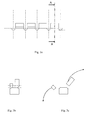
Fig. 1 shows frequency response of an earpiece introduced in a conventional handset; -
Fig. 2 shows Frequency response after modification of the calibrated leakage; -
Figs. 3a, 3b and 3c show some parts of a leakage array removed from the tooling to adapt a new loudspeaker to the acoustic shape of the handset; -
Fig. 4 shows handset manufacturing and testing process. - Exemplary embodiments of the present disclosure will be described hereinafter in detail with reference to the attached drawings. The present disclosure may, however, be embodied in many different forms and should not be construed as being limited to the embodiment set forth herein; rather, these embodiments are provided so that the present disclosure will be thorough and complete, and will fully convey the concept of the disclosure to those skilled in the art.
- The scope of the present invention will in no way be limited to the simply schematic views, the number of constituting components, the materials thereof, the shapes thereof, the relative arrangement thereof, etc., and are disclosed simply as an example of an embodiment.
- One embodiment concerns the front resonator leak used for modifying the high frequency response characteristics.
- In acoustic theory when applying low impedance earpiece or loudspeaker directly to the human ear, with small compliance as it is the case in handset use, the high frequency band can be raised by creating calibrated leakages between the front and the rear volume of the loudspeaker.
- The solution consists in integrating a number of leaks into the handset in the plastic or any other material of the handset.
- The calibrating leaks can be removed or enlarged one by one in order to fit perfectly with the characteristics of the loudspeaker used in the handset.
- A kind of stamping design has been created in order to modify easily with a tool the shape of the leakage without building a new mould.
- Please see
Figs. 1-4 , the present invention provides a manufacturing and testing method to adapt a phone handset to several types of wideband earpieces, the method at least comprises the following steps. Firstly, to design a plurality of toolings for the manufactures of several types of phone handsets according to the acoustic characteristics of several types of wideband earpieces. To test the plurality of toolings respectively. Secondly, to determine the plurality of toolings which correspond to said several types of wideband earpieces one by one. Then, to give one wideband earpiece and confirming the type of the wideband earpiece. Next, to select a certain tooling from the plurality of toolings according to the certain type of the wideband earpiece. Then, to manufacture a phone handset by using the selected tooling; and finally, to mount the current wideband earpiece onto the phone handset. - Preferably, the step of designing a plurality of toolings may further comprises the steps of:
- designing a first tooling according to the acoustic characteristics of a first type of wideband earpiece;
- testing the first tooling and finally determining the first tooling;
- introducing a second type of wideband earpiece which has the acoustic characteristics different from that of the first type of wideband earpiece;
- adjusting the first tooling into a second tooling according to the acoustic characteristics of a second type of wideband earpiece; and
- testing the second tooling and finally determining the second tooling.
- Also, the step of adjusting the tooling may further comprises the step of removing some parts in the first tooling to form the second tooling.
- In one embodiment, the removed parts from the first tooling are integrally with other parts of the first tooling. In another embodiment, the removed parts from the first tooling are detachable from other parts of the first tooling.
- Further, the method further comprises the steps of:
- introducing the plurality of toolings into a tooling store; and
- choosing a certain tooling from the tooling store according to the certain type of the certain wideband earpiece.
- Also, the method may further comprise the step of testing the handset assembled with the certain wideband earpiece.
-
Fig. 4 shows handset manufacturing and testing process. - Concerning the above, the basic idea of the invention is to create a plastic arrangement belonging to the front shell of the handset which can be easily removed partially or totally, by using a tool during the manufacturing process, without creating another mould, to adapt the handset cavity to the acoustic characteristics of an earpiece. This operation is also included in a manufacturing process in order to compensate deviations of acoustic characteristics of loudspeakers.
- The advantages of the invention over any existing solutions are:
- to avoid complex mounting of earpiece and additional pieces inside the handset,
- to reduce the cost unit of wideband handset,
- to keep the capability of changing the loudspeaker without modifying the shape of the handset,
- to avoid defining of a new mould which is a costly operation, and
- to compensate technical dispersion of characteristics of the loudspeakers from one batch to another.
- Although several exemplary embodiments have been shown and described, it would be appreciated by those skilled in the art that various changes or modifications may be made in these embodiments without departing from the principles and spirit of the disclosure, the scope of which is defined in the claims and their equivalents.
Claims (11)
- A method to adapt a phone handset to several types of wideband earpieces, the method at least comprises the steps of:designing a plurality of toolings for the manufactures of several types of phone handsets according to the acoustic characteristics of several types of wideband earpieces;testing the plurality of toolings respectively;determining the toolings which correspond to said several types of wideband earpieces one by one;giving one wideband earpiece and confirming the type of the wideband earpiece;selecting a certain tooling from the plurality of toolings according to said type of the wideband earpiece;manufacturing a phone handset by using the selected tooling; andmounting said wideband earpiece onto the phone handset.
- The method as claimed in claim 1, wherein the step of designing a plurality of toolings further comprises the steps of:designing a first tooling according to the acoustic characteristics of a first type of wideband earpiece;testing the first tooling and finally determining the first tooling;introducing a second type of wideband earpiece which has the acoustic characteristics different from that of the first type of wideband earpiece;adjusting the first tooling into a second tooling according to the acoustic characteristics of a second type of wideband earpiece; andtesting the second tooling and finally determining the second tooling.
- The method as claimed in claim 1 or 2, wherein the step of adjusting the tooling further comprises the step of:removing some parts from the first tooling to form the second tooling.
- The method as claimed in claims 1 to 3, wherein the step of adjusting the tooling further comprises the step of:adding some parts onto the first tooling to form the second tooling.
- The method as claimed in claims 1 to 4, wherein the first tooling is a standard tooling.
- The method as claimed in claims 1 to 5, wherein the removed parts from the first tooling are integrally with other parts of the first tooling.
- The method as claimed in claims 1 to 6, wherein the added parts from the first tooling are integrally with other parts of the first tooling.
- The method as claimed in claims 1 to 7, wherein the removed parts from the first tooling are detachable from other parts of the first tooling.
- The method as claimed in claims 1 to 8, wherein the added parts onto the first tooling are detachable from other parts of the first tooling.
- The method as claimed in claims 1 to 9, further comprising the steps of:introducing the plurality of toolings into a tooling store; andchoosing a certain tooling from the tooling store according to said type of wideband earpiece.
- The method as claimed in claims 1 to 10, further comprising the step of:testing the handset assembled with said wideband earpiece.
Applications Claiming Priority (1)
| Application Number | Priority Date | Filing Date | Title |
|---|---|---|---|
| CN 201010129006 CN102196078B (en) | 2010-03-04 | 2010-03-04 | Method for producing and detecting earphone |
Publications (1)
| Publication Number | Publication Date |
|---|---|
| EP2365683A1 true EP2365683A1 (en) | 2011-09-14 |
Family
ID=44069889
Family Applications (1)
| Application Number | Title | Priority Date | Filing Date |
|---|---|---|---|
| EP11290112A Withdrawn EP2365683A1 (en) | 2010-03-04 | 2011-03-04 | Method to adapt a phone handset to several wideband earpieces |
Country Status (2)
| Country | Link |
|---|---|
| EP (1) | EP2365683A1 (en) |
| CN (1) | CN102196078B (en) |
Cited By (1)
| Publication number | Priority date | Publication date | Assignee | Title |
|---|---|---|---|---|
| CN109309748A (en) * | 2018-09-07 | 2019-02-05 | 广州微算互联信息技术有限公司 | Cloud mobile phone hardware quality batch testing method and system |
Families Citing this family (1)
| Publication number | Priority date | Publication date | Assignee | Title |
|---|---|---|---|---|
| CN120263890B (en) * | 2025-06-05 | 2025-08-01 | 深圳市华粤世通软件科技有限公司 | Energy-saving detection device for mobile phone screen |
Citations (4)
| Publication number | Priority date | Publication date | Assignee | Title |
|---|---|---|---|---|
| EP1127673A1 (en) * | 2000-02-23 | 2001-08-29 | Telefonaktiebolaget Lm Ericsson | A method of manufacturing a shell element provided with an opening in an angled part and a shell element manufactured by said method |
| US20010040001A1 (en) * | 1996-09-27 | 2001-11-15 | Naoto Toyooka | Cellular phone top cover and method of manufacturing the cellular phone top cover |
| US20080149417A1 (en) * | 2006-12-21 | 2008-06-26 | Apple Computer, Inc. | Acoustic assembly for personal media device |
| US20080277058A1 (en) * | 2007-05-11 | 2008-11-13 | The Boeing Company | Configurable Tooling and Molding Method Using The Same |
Family Cites Families (1)
| Publication number | Priority date | Publication date | Assignee | Title |
|---|---|---|---|---|
| CN1917715A (en) * | 2005-08-19 | 2007-02-21 | 固昌通讯股份有限公司 | Headphones and Speaker Modules for Headphones |
-
2010
- 2010-03-04 CN CN 201010129006 patent/CN102196078B/en active Active
-
2011
- 2011-03-04 EP EP11290112A patent/EP2365683A1/en not_active Withdrawn
Patent Citations (4)
| Publication number | Priority date | Publication date | Assignee | Title |
|---|---|---|---|---|
| US20010040001A1 (en) * | 1996-09-27 | 2001-11-15 | Naoto Toyooka | Cellular phone top cover and method of manufacturing the cellular phone top cover |
| EP1127673A1 (en) * | 2000-02-23 | 2001-08-29 | Telefonaktiebolaget Lm Ericsson | A method of manufacturing a shell element provided with an opening in an angled part and a shell element manufactured by said method |
| US20080149417A1 (en) * | 2006-12-21 | 2008-06-26 | Apple Computer, Inc. | Acoustic assembly for personal media device |
| US20080277058A1 (en) * | 2007-05-11 | 2008-11-13 | The Boeing Company | Configurable Tooling and Molding Method Using The Same |
Cited By (1)
| Publication number | Priority date | Publication date | Assignee | Title |
|---|---|---|---|---|
| CN109309748A (en) * | 2018-09-07 | 2019-02-05 | 广州微算互联信息技术有限公司 | Cloud mobile phone hardware quality batch testing method and system |
Also Published As
| Publication number | Publication date |
|---|---|
| CN102196078A (en) | 2011-09-21 |
| CN102196078B (en) | 2013-10-23 |
Similar Documents
| Publication | Publication Date | Title |
|---|---|---|
| CN103618984B (en) | Loudspeaker module and manufacturing method thereof | |
| US8989425B2 (en) | Earphone | |
| US10397719B2 (en) | Ported headphones and related methods | |
| CN107231598B (en) | Self-adaptive audio debugging method and system and mobile terminal | |
| KR100629033B1 (en) | Electro-acoustic communication unit | |
| CN206402399U (en) | Double frequency earphone | |
| WO2009068696A2 (en) | Method of manufacturing hearing devices | |
| US11330380B2 (en) | Modularization of components of an ear-wearable device | |
| CN100355259C (en) | Structural arrangement for a wireless communication terminal including loudspeaker and earphone | |
| EP2365683A1 (en) | Method to adapt a phone handset to several wideband earpieces | |
| CN102204275A (en) | Electronic devices including vertically mounted loudspeakers and related assemblies and methods | |
| CN102932726B (en) | Method and device for detecting and processing sound cavity leakage | |
| KR20010049152A (en) | Telephone handset, cordless telephone or mobile telephone | |
| US12425759B2 (en) | Multi-mic earphone design and assembly | |
| US20140066140A1 (en) | Receiver and mobile communication terminal including the receiver | |
| WO2011041901A1 (en) | Iaturized receiver assembly for in-ear noise- isolating earphones | |
| CN105554654A (en) | Loudspeaker module | |
| DK2814265T3 (en) | Method and apparatus for advertising-supported hearing aid device | |
| CN101562769A (en) | High-sensitivity miniature telephone receiver for digital communication | |
| KR101972520B1 (en) | Ultra-thin earphone speaker unit | |
| CN205408140U (en) | Loudspeaker module group | |
| CN215010671U (en) | Earphone set | |
| US20130291370A1 (en) | Method for producing an earpiece with a vent | |
| CN101189909A (en) | SMD condenser microphone using gasket and manufacturing method thereof | |
| CN109600692A (en) | A kind of noise-eliminating earphone |
Legal Events
| Date | Code | Title | Description |
|---|---|---|---|
| PUAI | Public reference made under article 153(3) epc to a published international application that has entered the european phase |
Free format text: ORIGINAL CODE: 0009012 |
|
| AK | Designated contracting states |
Kind code of ref document: A1 Designated state(s): AL AT BE BG CH CY CZ DE DK EE ES FI FR GB GR HR HU IE IS IT LI LT LU LV MC MK MT NL NO PL PT RO RS SE SI SK SM TR |
|
| AX | Request for extension of the european patent |
Extension state: BA ME |
|
| 17P | Request for examination filed |
Effective date: 20120314 |
|
| 17Q | First examination report despatched |
Effective date: 20130424 |
|
| 111Z | Information provided on other rights and legal means of execution |
Free format text: AL AT BE BG CH CY CZ DE DK EE ES FI FR GB GR HR HU IE IS IT LI LT LU LV MC MK MT NL NO PL PT RO RS SE SI SK SM TR Effective date: 20130410 |
|
| RAP1 | Party data changed (applicant data changed or rights of an application transferred) |
Owner name: ALCATEL LUCENT |
|
| D11X | Information provided on other rights and legal means of execution (deleted) | ||
| STAA | Information on the status of an ep patent application or granted ep patent |
Free format text: STATUS: THE APPLICATION IS DEEMED TO BE WITHDRAWN |
|
| 18D | Application deemed to be withdrawn |
Effective date: 20150519 |