EP2365261A2 - Method and device for removing residual fluids present in at least one external service hose of a machine for recharging / recovering a refrigerant into / from a vehicle airconditioning system - Google Patents
Method and device for removing residual fluids present in at least one external service hose of a machine for recharging / recovering a refrigerant into / from a vehicle airconditioning system Download PDFInfo
- Publication number
- EP2365261A2 EP2365261A2 EP11155108A EP11155108A EP2365261A2 EP 2365261 A2 EP2365261 A2 EP 2365261A2 EP 11155108 A EP11155108 A EP 11155108A EP 11155108 A EP11155108 A EP 11155108A EP 2365261 A2 EP2365261 A2 EP 2365261A2
- Authority
- EP
- European Patent Office
- Prior art keywords
- refrigerant
- external
- service hose
- connector
- recovery means
- Prior art date
- Legal status (The legal status is an assumption and is not a legal conclusion. Google has not performed a legal analysis and makes no representation as to the accuracy of the status listed.)
- Granted
Links
Images

Classifications
-
- F—MECHANICAL ENGINEERING; LIGHTING; HEATING; WEAPONS; BLASTING
- F25—REFRIGERATION OR COOLING; COMBINED HEATING AND REFRIGERATION SYSTEMS; HEAT PUMP SYSTEMS; MANUFACTURE OR STORAGE OF ICE; LIQUEFACTION SOLIDIFICATION OF GASES
- F25B—REFRIGERATION MACHINES, PLANTS OR SYSTEMS; COMBINED HEATING AND REFRIGERATION SYSTEMS; HEAT PUMP SYSTEMS
- F25B45/00—Arrangements for charging or discharging refrigerant
-
- B—PERFORMING OPERATIONS; TRANSPORTING
- B60—VEHICLES IN GENERAL
- B60H—ARRANGEMENTS OF HEATING, COOLING, VENTILATING OR OTHER AIR-TREATING DEVICES SPECIALLY ADAPTED FOR PASSENGER OR GOODS SPACES OF VEHICLES
- B60H1/00—Heating, cooling or ventilating devices
- B60H1/00507—Details, e.g. mounting arrangements, desaeration devices
- B60H1/00585—Means for monitoring, testing or servicing the air-conditioning
-
- F—MECHANICAL ENGINEERING; LIGHTING; HEATING; WEAPONS; BLASTING
- F25—REFRIGERATION OR COOLING; COMBINED HEATING AND REFRIGERATION SYSTEMS; HEAT PUMP SYSTEMS; MANUFACTURE OR STORAGE OF ICE; LIQUEFACTION SOLIDIFICATION OF GASES
- F25B—REFRIGERATION MACHINES, PLANTS OR SYSTEMS; COMBINED HEATING AND REFRIGERATION SYSTEMS; HEAT PUMP SYSTEMS
- F25B2345/00—Details for charging or discharging refrigerants; Service stations therefor
- F25B2345/005—Service stations therefor
- F25B2345/0052—Service stations therefor having wheels
-
- F—MECHANICAL ENGINEERING; LIGHTING; HEATING; WEAPONS; BLASTING
- F25—REFRIGERATION OR COOLING; COMBINED HEATING AND REFRIGERATION SYSTEMS; HEAT PUMP SYSTEMS; MANUFACTURE OR STORAGE OF ICE; LIQUEFACTION SOLIDIFICATION OF GASES
- F25B—REFRIGERATION MACHINES, PLANTS OR SYSTEMS; COMBINED HEATING AND REFRIGERATION SYSTEMS; HEAT PUMP SYSTEMS
- F25B2400/00—Component parts or details not otherwise provided for in this subclass
- F25B2400/18—Refrigerant conversion
-
- F—MECHANICAL ENGINEERING; LIGHTING; HEATING; WEAPONS; BLASTING
- F25—REFRIGERATION OR COOLING; COMBINED HEATING AND REFRIGERATION SYSTEMS; HEAT PUMP SYSTEMS; MANUFACTURE OR STORAGE OF ICE; LIQUEFACTION SOLIDIFICATION OF GASES
- F25B—REFRIGERATION MACHINES, PLANTS OR SYSTEMS; COMBINED HEATING AND REFRIGERATION SYSTEMS; HEAT PUMP SYSTEMS
- F25B43/00—Arrangements for separating or purifying gases or liquids; Arrangements for vaporising the residuum of liquid refrigerant, e.g. by heat
Definitions
- the present invention relates to a method and a device for removing residual fluids present in at least one external service hose of a machine for recharging/recovering a refrigerant into/from a vehicle air-conditioning system, such as for example a motor vehicle, to which the following description refers purely by way of example without this implying any loss of generality.
- recharging/recovering machines for recharging/recovering refrigerants into/from vehicle air-conditioning systems are typically provided with two external flexible hoses, which can be coupled to corresponding terminals or connectors present in the air-conditioning system of the vehicle.
- the service hoses communicate through respective connectors with a main hydraulic circuit present in the fluids recovery/recharging unit that is present in the machine and comprise: a first flexible service hose, which is structured so that it can be traversed by a high-pressure fluid, and is provided, on its own free end, with a connector designed to be coupled to a corresponding high-pressure connector of the vehicle system; and a second flexible service hose, which is structured to be traversed by a low-pressure fluid and is provided, on its own free end, with a connector which can be coupled to a corresponding low-pressure connector of the system itself.
- the patent application US2009/0188263 discloses a method for clearing the residual lubricating oil from the service hoses of the machine, which envisages connecting together the two free ends of the first hose and of the second hose so as to connect them in series, through an additional auxiliary duct, in such a way as to form an external hydraulic branch that sets in communication the connectors of the main circuit with one another so as to form with the latter a closed hydraulic loop.
- the method moreover envisages: injecting the refrigerant into the hydraulic branch in a first direction in such a way that the fluid itself flushes in sequence the first service hose and the second service hose; and then reversing the direction of injection of the refrigerant in such a way that the fluid itself flushes through in sequence the second service hose and the first service hose.
- the alternated injection of the refrigerant in the two opposite directions through the closed hydraulic branch obtained from the connection in series of the two service hoses implemented through the aforesaid method entails the passage of the residual oil through both of the service hoses, disadvantageously causing a contamination thereof even when the residual lubricating oil, that is potentially contaminating, is present only in one service hose and is altogether absent in the other, i.e., even when one of the service hoses is clean.
- the method described above in addition to not enabling flushing of a single service hose to be carried out, necessarily causes contamination of a service hose that initially was without any trace of lubricating oil with the contaminating oil that may be present in the other service hose since the residual fluid contained in one service hose necessarily flows through the other service hose.
- the document No. US2006/0130511 describes, instead, an apparatus provided with: a refrigerant source; a refrigerant-recovery circuit configured for recovering refrigerant from a cooling circuit; and a flushing circuit, which is coupled to the refrigerant-recovery circuit and is configured for supplying refrigerant through the refrigerant-recovery circuit itself.
- the aim of the present invention is consequently to provide a device and a method that, in addition to being simple and fast to implement, will be able to clear a residual fluid from an external high-pressure or low-pressure service hose without entailing contamination of the other service hose.
- a method for clearing a fluid from an external service hose of a machine for recharging/recovering a refrigerant into/from a vehicle air-conditioning system is provided according to what is specified in Claim 1 and preferably, but not necessarily, in any one of the claims that depend either directly or indirectly upon Claim 1.
- a machine for recharging/recovering a refrigerant into/from a vehicle air-conditioning system equipped with a device for removing a residual fluid present in an external service hose of the machine itself is moreover provided according to what is specified in Claim 5 and preferably, but not necessarily, in any one of the claims that depend either directly or indirectly upon Claim 5.
- a refrigerant recharging/recovering machine for recharging/recovering a refrigerant into/from an air-conditioning system of a vehicle, such as for example a land vehicle, in particular a motor vehicle (not illustrated).
- the machine 1 further comprises a refrigerant-recovery unit 9, preferably arranged inside the casing 4 and having the function of filtering and separating the refrigerant recovered from the residual lubricating oil so as to store them in the refrigerant containing tank 6 and in the lubricating oil recovery tank 7, respectively.
- a refrigerant-recovery unit 9 preferably arranged inside the casing 4 and having the function of filtering and separating the refrigerant recovered from the residual lubricating oil so as to store them in the refrigerant containing tank 6 and in the lubricating oil recovery tank 7, respectively.
- the machine 1 further comprises: a main hydraulic circuit 10 designed to be connected to the vehicle air-conditioning system and co-operate with the refrigerant-recovery unit 9, with the refrigerant containing tank 6, with the oil recovery tank 7, and with a lubricating oil recharging vessel 8 so as to draw in/supply the refrigerant and the lubricating oil from/into the vehicle air-conditioning system; and a vacuum pump 11 connected to the main hydraulic circuit 10 so as to create, upon command, the negative pressures inside it.
- the main hydraulic circuit 10 comprises: a connector 12, which can be connected to a high-pressure terminal of the vehicle air-conditioning system (not illustrated) via a high-pressure external service hose 13, preferably made of flexible material; a connector 14, which can be connected to a low-pressure terminal of the vehicle air-conditioning system (not illustrated) via a low-pressure external service hose 15, preferably made of flexible material; a connector 16 connected to the vacuum pump 11; a connector 18, coupled to which is the vessel 8 for recharging the lubricating oil; a connector 19, connected to the refrigerant-recovery unit 9; and a connector 20, connected to an outlet of the refrigerant containing tank 6 in order to receive, upon command, the refrigerant therefrom.
- the term "high-pressure external service hose 13" will be used to indicate a service hose which is arranged on the outside of the machine 1 and is able to be manually connected to a terminal/connector of the high-pressure circuit of the vehicle air-conditioning system (which are not illustrated), whereas the term “low-pressure external service hose 13” will be used to indicate a service hose which is arranged on the outside of the machine 1 and is able to be manually connected to a terminal/connector of the low-pressure circuit of the vehicle air-conditioning system (which are not illustrated).
- the low pressure is lower than approximately 5 ⁇ 10 5 Pa, whilst the high pressure is higher than approximately 5 ⁇ 10 5 Pa.
- the main hydraulic circuit 10 further comprises a main pipe or manifold 21, which is connected to the connectors 12, 14, 16, 18, 19 and 20 through hydraulic stretches or branches 22, and a series of on-off valves, which are arranged along the hydraulic branches 22 between the connectors 12, 14, 18, 16, 19 and 20 and the main manifold 21, and which can be controlled selectively in opening/closing through respective electrical control signals Si so as to enable or alternatively prevent, upon command, passage of a fluid through the hydraulic branches 22 themselves.
- the main hydraulic circuit 10 comprises: at least one on-off valve 23, arranged along the hydraulic branch 22 between the connector 12 and the main manifold 21; at least one on-off valve 24, arranged along the hydraulic branch 22 between the connector 14 and the main manifold 21; a on-off valve 25, arranged along the hydraulic branch 22 between the connector 19 and the main manifold 21; at least one on-off valve 26, arranged along the hydraulic branch 22 between the connector 18 and the main manifold 21; at least one on-off valve 27, arranged along the hydraulic branch 22 between the connector 20 and the main manifold 21; and a on-off valve 26a, arranged along the hydraulic branch 22 between the connector 16 and the main manifold 21.
- the refrigerant-recovery unit 9 comprises a hydraulic recovery circuit 28 having an inlet terminal 29 connected to the connector 19 of the main hydraulic circuit 10 through a pipe 30 for receiving the refrigerant recovered from the vehicle system; an outlet 31 connected to an inlet of the refrigerant containing tank 6, through a pipe 32; and an outlet 33 connected to the lubricating oil recovery tank 7.
- the refrigerant-recovery unit 9 further comprises: a mechanical filter 34 arranged along the pipe 30 and having the function of filtering the impurities present in the refrigerant in the gaseous state received from the vehicle air-conditioning system; a distillator-separator apparatus 35 designed to separate the lubricating oil from the refrigerant; a first dehydration filter 36; a condenser apparatus 37; a compressor 38; and a second dehydration filter 39.
- the distillator-separator apparatus 35 comprises: a first terminal connected to the inlet terminal 29; a second terminal connected to a first terminal of the compressor 38 through the first separator filter 36; a third terminal connected to the second terminal of the compressor 38 through the second separator filter 39; a fourth terminal connected to the outlet 31 through the condenser apparatus 37; and a fifth terminal connected to the outlet 33.
- the refrigerant-recovery unit 9 is of a known type and consequently will not be described further, except to point out that it is configured to cause, through the inlet terminal 29, the refrigerant in a gaseous state to be conveyed into the distillator/separator apparatus 35, which separates the refrigerant from the lubricating oil and supplies the separated refrigerant to the compressor 38 through the first separator filter 36.
- the compressor 38 compresses the refrigerant so as to raise the pressure and the temperature thereof and supplies it again through the second separator filter 39 to the distillator/separator apparatus 35, which in turn, following upon the process of condensation carried out via the condenser apparatus 37, feeds it to the refrigerant containing tank 6.
- the machine 1 further comprises a device 45 designed to remove the residual fluid that has remained inside at least one of the service hoses 13 and 15.
- the device 45 basically comprises: at least one auxiliary external connector connected to the inlet terminal 29 of the refrigerant-recovery unit 9 through a pipe 46; and an electronic control unit 48, configured to drive the on-off valves 23-27 and the compressor 38 of the refrigerant-recovery unit 9 based on the operations comprised in the method described in detail hereinafter.
- the device 45 further comprises at least one on-off valve 47, which is arranged along the pipe 46 and can be controlled selectively in opening/closing through an electrical control signal Si so as to enable or alternatively prevent, upon command, passage of a fluid through the pipe 46.
- at least one on-off valve 47 which is arranged along the pipe 46 and can be controlled selectively in opening/closing through an electrical control signal Si so as to enable or alternatively prevent, upon command, passage of a fluid through the pipe 46.
- the external auxiliary connector is structured so that it can be coupled to the free ends 13b and 15b of the external service hoses 13 and 15 of the machine 1.
- the free ends 13b and 15b of the service hoses 13 and 15 can be provided with corresponding connectors 49 and 50, respectively, each designed to be coupled in a stable, but easily removable, way to the external auxiliary connector.
- the device 45 of the machine 1 advantageously comprises two external auxiliary connectors 51 and 52, both of which communicate with the inlet terminal 29 of the recovery unit 9 through the pipe 46, and preferably, but not necessarily, two on-off valves 47 set in positions corresponding to the respective external auxiliary connectors 51 and 52.
- the method initially comprises making a connection of a service hose 13 or 15 to be flushed with the auxiliary connector.
- the initial step of the method comprises connecting manually both of the free ends 13b and 15b of the service hoses 13 and 15 to the corresponding external connectors 51 and 52, respectively, of the device 45 (block 100).
- the method provides for the electronic control unit 48: generating the control signals Si to close the on-off valves 25, 26 and 26a; opening the on-off valves 23, 24 and 27 and 47 (block 110); and finally generating the control signal Sc for turning-on of the compressor 38 (block 120).
- the refrigerant is expelled from the refrigerant containing tank 6 in such a way as to enter the main manifold 21, be divided into two branches between the service hose 13 and the service hose 15, and, after traversing said hoses, be drawn into the refrigerant-recovery unit 9 (block 130).
- the refrigerant thanks to its own solvent power, removes and flushes any trace of residual fluid, and in particular of lubricating oil, that may be present inside the service hoses 13 and 15.
- the refrigerant mixes with the residual lubricating oil thus clearing it out of the service hoses 13 and 15, and entrains it progressively towards the recovery unit 9.
- Suction of the refrigerant by the recovery unit 9 can be maintained for a pre-set interval in such a way as to ensure, on the one hand, complete flushing of the service hoses 13 and 15 and, on the other hand, completion of suction of the refrigerant present in the main hydraulic circuit 10.
- the electronic control unit 48 of the device 45 closes the on-off valve 27 and after an additional time interval turns-off the compressor 38 and closes the on-off valves 23, 24 and 47.
- part of the refrigerant contained in the tank 6 traverses the main hydraulic circuit 10, and proceeds from the external connector 12 to the external auxiliary connector 51 traversing exclusively the external service hose 13 in such a way as to remove exclusively the residual fluid contained therein.
- the device 45 is extremely advantageous in so far as, unlike the devices according to the prior art, it: enables flushing of one of the two external service hoses, even in the absence of the other external service hose, or of supplementary service hoses/adapters designed to connect the service hoses in series with one another; prevents the service hose from being contaminated by residual fluids/oils contained in other hoses; prevents the residual fluid/oil contained in the service hose from contaminating other hoses; and enables the flushing to be carried out with a single operation of passage of the refrigerant in a single direction.
- the machine 1 instead of having two external auxiliary connectors, can be provided with a single external auxiliary connector to which the first service hose 13 and/or the second service hose 15 can be connected.
- the service hose to be flushed is connected to the external auxiliary connector, and the electronic control unit 48 will implement the same control operations as the ones referred to above.
- the electronic control unit 48 can correspond to, or form part of, a supervision electronic control unit able to control all the functions implemented by the machine 1.
- the electronic control unit 48 can be provided with a microprocessor and a memory containing a software program designed to be loaded into the microprocessor to enable the latter to generate the control signals Si/Sc so as to control the on-off valves, which in the examples illustrated are solenoid valves, and the refrigerant-recovery unit 9 according to the operating modes described above.
- the method is extremely advantageous in so far as it does not require the use of additional detergent fluids, but exploits the solvent power of the refrigerant already present in the machine.
- the method is extremely practical to implement in so far as it requires the operator to connect simply one or both of the free ends of the service hoses to the external auxiliary connectors, and to cause the electronic control unit to execute the software program for removal of the residual fluid.
- the method described above in addition to advantageously enabling flushing selectively of just one or both of the service hoses, enables clearing of the lubricating oil from each hose without contaminating the other service hose.
- the method is particularly fast in so far as it performs clearing of the residual fluid from the service hose/hoses causing the refrigerant to pass in just one direction, i.e., from the tank to the refrigerant-recovery unit, without requiring the opposite operation, i.e., passage of the refrigerant through the service hoses from the refrigeration unit to the tank.
Landscapes
- Engineering & Computer Science (AREA)
- Physics & Mathematics (AREA)
- Mechanical Engineering (AREA)
- Thermal Sciences (AREA)
- General Engineering & Computer Science (AREA)
- Air-Conditioning For Vehicles (AREA)
- Secondary Cells (AREA)
- Cleaning In General (AREA)
Abstract
Description
- The present invention relates to a method and a device for removing residual fluids present in at least one external service hose of a machine for recharging/recovering a refrigerant into/from a vehicle air-conditioning system, such as for example a motor vehicle, to which the following description refers purely by way of example without this implying any loss of generality.
- As is known, recharging/recovering machines for recharging/recovering refrigerants into/from vehicle air-conditioning systems are typically provided with two external flexible hoses, which can be coupled to corresponding terminals or connectors present in the air-conditioning system of the vehicle.
- In detail, the service hoses communicate through respective connectors with a main hydraulic circuit present in the fluids recovery/recharging unit that is present in the machine and comprise: a first flexible service hose, which is structured so that it can be traversed by a high-pressure fluid, and is provided, on its own free end, with a connector designed to be coupled to a corresponding high-pressure connector of the vehicle system; and a second flexible service hose, which is structured to be traversed by a low-pressure fluid and is provided, on its own free end, with a connector which can be coupled to a corresponding low-pressure connector of the system itself.
- The technical problem existing in the machines described above is represented by the fact that, at the end of each operation of recharging of the refrigerant into the vehicle system, a residual amount of lubricating oil remains present inside the service hose used during recharging and consequently, during subsequent recharging, can contaminate the vehicle systems, when the latter use lubricating oils of a type different from the one present in the service hose.
- For this purpose methods have been devised, which, at the end of the recharging operation, remove the lubricating oil that has remained inside the service hoses of the machine.
- In particular, the patent application
US2009/0188263 discloses a method for clearing the residual lubricating oil from the service hoses of the machine, which envisages connecting together the two free ends of the first hose and of the second hose so as to connect them in series, through an additional auxiliary duct, in such a way as to form an external hydraulic branch that sets in communication the connectors of the main circuit with one another so as to form with the latter a closed hydraulic loop. - The method moreover envisages: injecting the refrigerant into the hydraulic branch in a first direction in such a way that the fluid itself flushes in sequence the first service hose and the second service hose; and then reversing the direction of injection of the refrigerant in such a way that the fluid itself flushes through in sequence the second service hose and the first service hose.
- The alternated injection of the refrigerant in the two opposite directions through the closed hydraulic branch obtained from the connection in series of the two service hoses implemented through the aforesaid method entails the passage of the residual oil through both of the service hoses, disadvantageously causing a contamination thereof even when the residual lubricating oil, that is potentially contaminating, is present only in one service hose and is altogether absent in the other, i.e., even when one of the service hoses is clean.
- In other words, the method described above, in addition to not enabling flushing of a single service hose to be carried out, necessarily causes contamination of a service hose that initially was without any trace of lubricating oil with the contaminating oil that may be present in the other service hose since the residual fluid contained in one service hose necessarily flows through the other service hose.
- In addition, the need to supply the refrigerant into the external hydraulic branch in the two opposite directions, in addition to increasing the operative complexity of the machine, has a considerable adverse effect on the times required for completing removal of the lubricating oil from the service hoses.
- The document No.
US2006/0130511 describes, instead, an apparatus provided with: a refrigerant source; a refrigerant-recovery circuit configured for recovering refrigerant from a cooling circuit; and a flushing circuit, which is coupled to the refrigerant-recovery circuit and is configured for supplying refrigerant through the refrigerant-recovery circuit itself. - The aim of the present invention is consequently to provide a device and a method that, in addition to being simple and fast to implement, will be able to clear a residual fluid from an external high-pressure or low-pressure service hose without entailing contamination of the other service hose.
- According to the present invention, a method for clearing a fluid from an external service hose of a machine for recharging/recovering a refrigerant into/from a vehicle air-conditioning system is provided according to what is specified in
Claim 1 and preferably, but not necessarily, in any one of the claims that depend either directly or indirectly uponClaim 1. - According to the present invention, a machine for recharging/recovering a refrigerant into/from a vehicle air-conditioning system equipped with a device for removing a residual fluid present in an external service hose of the machine itself is moreover provided according to what is specified in Claim 5 and preferably, but not necessarily, in any one of the claims that depend either directly or indirectly upon Claim 5.
- The present invention will now be described with reference to the annexed drawings, which illustrate a non-limiting example of embodiment thereof and in which:
-
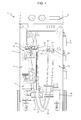
Figure 1 is a schematic view in front elevation, with parts removed for clarity, of a refrigerant recharging/recovering machine provided with a device for removing a residual fluid from an external service hose, according to the present invention; -
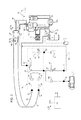
Figure 2 is a schematic illustration of the main hydraulic circuit and of the refrigerant-recovery unit of the machine shown inFigure 1 ; -
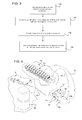
Figure 3 is a flowchart regarding the operations implemented by the method provided by the present invention; -
Figure 4 shows an example of the connection of the two external service hoses to auxiliary connectors of the machine shown inFigure 1 ; and -
Figure 5 is a variant of the machine shown inFigure 1 . - With reference to
Figure 1 , designated as a whole by 1 is a refrigerant recharging/recovering machine for recharging/recovering a refrigerant into/from an air-conditioning system of a vehicle, such as for example a land vehicle, in particular a motor vehicle (not illustrated). - In the example shown in
Figure 1 , themachine 1 comprises: acasing 4 provided with wheels resting on the ground to enable displacement of themachine 1; a user control interface 5, configured to enable a user to impart commands to themachine 1; and atank 6 containing the refrigerant and atank 7 recovering the lubricating oil, which are arranged preferably, but not necessarily, inside thecasing 4. - The
machine 1 further comprises a refrigerant-recovery unit 9, preferably arranged inside thecasing 4 and having the function of filtering and separating the refrigerant recovered from the residual lubricating oil so as to store them in therefrigerant containing tank 6 and in the lubricatingoil recovery tank 7, respectively. - The
machine 1 further comprises: a mainhydraulic circuit 10 designed to be connected to the vehicle air-conditioning system and co-operate with the refrigerant-recovery unit 9, with therefrigerant containing tank 6, with theoil recovery tank 7, and with a lubricating oil recharging vessel 8 so as to draw in/supply the refrigerant and the lubricating oil from/into the vehicle air-conditioning system; and avacuum pump 11 connected to the mainhydraulic circuit 10 so as to create, upon command, the negative pressures inside it. - In the example shown in
Figures 1 and2 , the mainhydraulic circuit 10 comprises: aconnector 12, which can be connected to a high-pressure terminal of the vehicle air-conditioning system (not illustrated) via a high-pressureexternal service hose 13, preferably made of flexible material; aconnector 14, which can be connected to a low-pressure terminal of the vehicle air-conditioning system (not illustrated) via a low-pressureexternal service hose 15, preferably made of flexible material; aconnector 16 connected to thevacuum pump 11; aconnector 18, coupled to which is the vessel 8 for recharging the lubricating oil; aconnector 19, connected to the refrigerant-recovery unit 9; and aconnector 20, connected to an outlet of therefrigerant containing tank 6 in order to receive, upon command, the refrigerant therefrom. - It should be pointed out that hereinafter the term "high-pressure
external service hose 13" will be used to indicate a service hose which is arranged on the outside of themachine 1 and is able to be manually connected to a terminal/connector of the high-pressure circuit of the vehicle air-conditioning system (which are not illustrated), whereas the term "low-pressureexternal service hose 13" will be used to indicate a service hose which is arranged on the outside of themachine 1 and is able to be manually connected to a terminal/connector of the low-pressure circuit of the vehicle air-conditioning system (which are not illustrated). Preferably, the low pressure is lower than approximately 5·105 Pa, whilst the high pressure is higher than approximately 5·105 Pa. - Referring to
Figure 2 , the mainhydraulic circuit 10 further comprises a main pipe ormanifold 21, which is connected to theconnectors branches 22, and a series of on-off valves, which are arranged along thehydraulic branches 22 between theconnectors main manifold 21, and which can be controlled selectively in opening/closing through respective electrical control signals Si so as to enable or alternatively prevent, upon command, passage of a fluid through thehydraulic branches 22 themselves. - Preferably, in the schematic example illustrated in
Figure 2 , the mainhydraulic circuit 10 comprises: at least one on-offvalve 23, arranged along thehydraulic branch 22 between theconnector 12 and themain manifold 21; at least one on-offvalve 24, arranged along thehydraulic branch 22 between theconnector 14 and themain manifold 21; a on-offvalve 25, arranged along thehydraulic branch 22 between theconnector 19 and themain manifold 21; at least one on-offvalve 26, arranged along thehydraulic branch 22 between theconnector 18 and themain manifold 21; at least one on-offvalve 27, arranged along thehydraulic branch 22 between theconnector 20 and themain manifold 21; and a on-offvalve 26a, arranged along thehydraulic branch 22 between theconnector 16 and themain manifold 21. - As regards the refrigerant-
recovery unit 9, it comprises ahydraulic recovery circuit 28 having aninlet terminal 29 connected to theconnector 19 of the mainhydraulic circuit 10 through apipe 30 for receiving the refrigerant recovered from the vehicle system; anoutlet 31 connected to an inlet of therefrigerant containing tank 6, through apipe 32; and anoutlet 33 connected to the lubricatingoil recovery tank 7. - Preferably, in the example illustrated in
Figure 2 , the refrigerant-recovery unit 9 further comprises: amechanical filter 34 arranged along thepipe 30 and having the function of filtering the impurities present in the refrigerant in the gaseous state received from the vehicle air-conditioning system; a distillator-separator apparatus 35 designed to separate the lubricating oil from the refrigerant; afirst dehydration filter 36; acondenser apparatus 37; acompressor 38; and asecond dehydration filter 39. - Preferably, the distillator-
separator apparatus 35 comprises: a first terminal connected to theinlet terminal 29; a second terminal connected to a first terminal of thecompressor 38 through thefirst separator filter 36; a third terminal connected to the second terminal of thecompressor 38 through thesecond separator filter 39; a fourth terminal connected to theoutlet 31 through thecondenser apparatus 37; and a fifth terminal connected to theoutlet 33. - The refrigerant-
recovery unit 9 is of a known type and consequently will not be described further, except to point out that it is configured to cause, through theinlet terminal 29, the refrigerant in a gaseous state to be conveyed into the distillator/separator apparatus 35, which separates the refrigerant from the lubricating oil and supplies the separated refrigerant to thecompressor 38 through thefirst separator filter 36. Thecompressor 38 compresses the refrigerant so as to raise the pressure and the temperature thereof and supplies it again through thesecond separator filter 39 to the distillator/separator apparatus 35, which in turn, following upon the process of condensation carried out via thecondenser apparatus 37, feeds it to therefrigerant containing tank 6. - With reference to
Figures 1 and2 , themachine 1 further comprises adevice 45 designed to remove the residual fluid that has remained inside at least one of theservice hoses - Preferably, the
device 45 basically comprises: at least one auxiliary external connector connected to theinlet terminal 29 of the refrigerant-recovery unit 9 through apipe 46; and anelectronic control unit 48, configured to drive the on-off valves 23-27 and thecompressor 38 of the refrigerant-recovery unit 9 based on the operations comprised in the method described in detail hereinafter. - Preferably, but not necessarily, the
device 45 further comprises at least one on-offvalve 47, which is arranged along thepipe 46 and can be controlled selectively in opening/closing through an electrical control signal Si so as to enable or alternatively prevent, upon command, passage of a fluid through thepipe 46. - According to the example illustrated in
Figures 1 and2 , the external auxiliary connector is structured so that it can be coupled to thefree ends external service hoses machine 1. - For this purpose the
free ends service hoses corresponding connectors - In the example shown in
Figures 1 ,2 , and4 thedevice 45 of themachine 1 advantageously comprises two externalauxiliary connectors inlet terminal 29 of therecovery unit 9 through thepipe 46, and preferably, but not necessarily, two on-offvalves 47 set in positions corresponding to the respective externalauxiliary connectors - With reference to the flowchart shown in
Figure 3 , the operating steps of the method for clearing the residual fluid will be described hereinafter. - The method initially comprises making a connection of a
service hose - In the following example it is assumed, without this implying any loss of generality, that the removal of the residual fluid has being carried out on both of the
service hoses free ends service hoses external connectors - Following upon this connection, the method provides for the electronic control unit 48: generating the control signals Si to close the on-off
valves valves - Turning-on of the
compressor 38 generates a negative difference of pressure between theinlet terminal 29 of the refrigerant-recovery unit 9 and the terminal of therefrigerant containing tank 6 connected to theconnector 20. - Thanks to the presence of the pressure difference, the refrigerant is expelled from the
refrigerant containing tank 6 in such a way as to enter themain manifold 21, be divided into two branches between theservice hose 13 and theservice hose 15, and, after traversing said hoses, be drawn into the refrigerant-recovery unit 9 (block 130). - During passage through the
service hoses service hoses - In particular, during passage through the
service hoses service hoses recovery unit 9. - The residual lubricating oil and the refrigerant drawn in by the
recovery unit 9 are then separated and introduced into therespective tanks - Suction of the refrigerant by the
recovery unit 9 can be maintained for a pre-set interval in such a way as to ensure, on the one hand, complete flushing of theservice hoses hydraulic circuit 10. - Once the operation of flushing and recovery has been completed, i.e., at the end of the pre-set interval, the
electronic control unit 48 of thedevice 45 closes the on-offvalve 27 and after an additional time interval turns-off thecompressor 38 and closes the on-offvalves - From what has been described above it is evident that the operations listed above can be implemented also for carrying out removal of the residual fluid contained in just one service hose, for example the
service hose 13, by coupling the secondfree end 13b directly to the externalauxiliary connector 51, and operating the refrigerant-recovery unit 9 in such a way that the refrigerant contained in thetank 6 will reach the externalauxiliary connector 51, and then the refrigerant-recovery unit 9, traversing sequentially and exclusively the mainhydraulic circuit 10, in particular themain manifold 21, and theexternal service hose 13, and then entering directly theinlet terminal 29. - In other words, part of the refrigerant contained in the
tank 6 traverses the mainhydraulic circuit 10, and proceeds from theexternal connector 12 to the externalauxiliary connector 51 traversing exclusively theexternal service hose 13 in such a way as to remove exclusively the residual fluid contained therein. - It is evident that the
device 45 is extremely advantageous in so far as, unlike the devices according to the prior art, it: enables flushing of one of the two external service hoses, even in the absence of the other external service hose, or of supplementary service hoses/adapters designed to connect the service hoses in series with one another; prevents the service hose from being contaminated by residual fluids/oils contained in other hoses; prevents the residual fluid/oil contained in the service hose from contaminating other hoses; and enables the flushing to be carried out with a single operation of passage of the refrigerant in a single direction. - With reference to the variant shown schematically in
Figure 5 , themachine 1, instead of having two external auxiliary connectors, can be provided with a single external auxiliary connector to which thefirst service hose 13 and/or thesecond service hose 15 can be connected. - In this case, the service hose to be flushed is connected to the external auxiliary connector, and the
electronic control unit 48 will implement the same control operations as the ones referred to above. - From what has been described above it should moreover be pointed out that the
electronic control unit 48 can correspond to, or form part of, a supervision electronic control unit able to control all the functions implemented by themachine 1. - Finally, it should be pointed out that the
electronic control unit 48 can be provided with a microprocessor and a memory containing a software program designed to be loaded into the microprocessor to enable the latter to generate the control signals Si/Sc so as to control the on-off valves, which in the examples illustrated are solenoid valves, and the refrigerant-recovery unit 9 according to the operating modes described above. - The advantages of the machine and of the method described above are evident: in the first place, clearing of the lubricating oil from the service hose is carried out in an extremely simple way, i.e., without requiring the addition in the machine of auxiliary electronic apparatuses, and/or external auxiliary ducts, or bypass adapters for connecting in series the two service hoses, consequently leading to an evident containment of costs. In fact, the solution described above, in addition to envisaging implementation of the control operations by a traditional supervision electronic control unit, simply requires connection of an external auxiliary connector to the inlet terminal of the refrigerant-recovery unit, traditionally present in the machine.
- In addition, the method is extremely advantageous in so far as it does not require the use of additional detergent fluids, but exploits the solvent power of the refrigerant already present in the machine.
- In the second place, the method is extremely practical to implement in so far as it requires the operator to connect simply one or both of the free ends of the service hoses to the external auxiliary connectors, and to cause the electronic control unit to execute the software program for removal of the residual fluid.
- Furthermore, the method described above, in addition to advantageously enabling flushing selectively of just one or both of the service hoses, enables clearing of the lubricating oil from each hose without contaminating the other service hose.
- In fact, during the removal step, the residual lubricating oil of each hose is entrained by the refrigerant directly to the recovery unit without passing through the other service hose.
- Finally, the method is particularly fast in so far as it performs clearing of the residual fluid from the service hose/hoses causing the refrigerant to pass in just one direction, i.e., from the tank to the refrigerant-recovery unit, without requiring the opposite operation, i.e., passage of the refrigerant through the service hoses from the refrigeration unit to the tank.
- Finally, it is clear that modifications and variations may be made to the method and the machine described and illustrated herein without thereby departing from the scope of the present invention, as defined by the annexed claims.
Claims (8)
- A method for removing a residual fluid contained in at least one external service hose (13)(15) associated to a high-pressure or low-pressure fluid, which is designed to connect a refrigerant recharging/recovering machine (1) for recharging/recovering a refrigerant into/from an vehicle air-conditioning system;
said refrigerant recharging/recovering machine (1) comprising:- a main hydraulic circuit (10) provided with at least one first external connector (12)(14), connected to which is a first end of said external service hose (13)(15); said external service hose (13)(15) having a second free end (13b)(15b) structured to be coupled in a stable, but easily removable, way to a connector of said vehicle air-conditioning system;- refrigerant-recovery means (9), which comprise an inlet terminal (29) connected to said main hydraulic circuit (10) for receiving, through the latter, the refrigerant contained in the vehicle air-conditioning system, and are configured to filter the refrigerant from additional fluids to supply the filtered refrigerant itself to a tank (6); and- at least one external auxiliary connector (51)(52), connected to said inlet terminal (29) of said refrigerant-recovery means (9) and structured to be coupled in a stable, but easily removable, way to said second free end (13b)(15b) of said external service hose (13)(15);said method being characterized in that it comprises the following steps:- manually coupling said second free end (13b)(15b) of said at least one service hose (13) (15) directly to the external auxiliary connector (51)(52); and- operating said refrigerant-recovery means (9) to cause part of the refrigerant contained in said tank (6) to pass through the main hydraulic circuit (10) and to flow from said first external connector (12) (14) to said external auxiliary connector (51) (52) traversing exclusively said external service hose (13) (15) in such a way as to remove exclusively the residual fluid contained therein. - The method according to Claim 1, wherein said refrigerant recharging/recovering machine (1) is configured to remove a residual fluid contained in a first service hose (13) associated to a high-pressure fluid and the residual fluid contained in a second service hose (15) associated to a low-pressure fluid; said first and second service hoses (13)(15) being designed to connect said refrigerant recharging/recovering machine (1) into/from said vehicle air-conditioning system;- the first external connector (12) of said main hydraulic circuit (10) being connected to a first end of said first external service hose (13); the main hydraulic circuit (10) further comprising a second external connector (14) to which a first end of said second external service hose (15) is connected; said first and second service hoses (13) (15) having second free ends (13b) (15b) structured to be coupled to respective high-pressure and low-pressure connectors of said vehicle air-conditioning system; and- two external auxiliary connectors (51) (52), both connected to said inlet terminal (29) of said refrigerant-recovery means (9); said external auxiliary connectors (51) (52) being structured to be coupled in a stable, but easily removable, way to the second free ends (13b) (15b) of said first and second external service hoses (13)(15);said method comprising the steps of:- manually coupling said second free ends (13b)(15b) of said first and second external service hoses (13) (15) to the respective external auxiliary connectors (51)(52); and- operating said refrigerant-recovery means (9) to cause part of the refrigerant contained in the tank (6) to pass through the main hydraulic circuit (10) and be divided into two branches between the first service hose (13) and the second service hose (15), in such a way that the residual fluid contained in one service hose (13) (15) will be entrained into the corresponding external auxiliary connector (51) (52) without coming into contact with the other service hose (15) (13) and with the other external auxiliary connector (52) (51) in such a way as not to contaminate them.
- The method according to Claim 1 or Claim 2, wherein:- said main hydraulic circuit (10) comprises a main manifold (21); and- said refrigerant-recovery means (9) comprise a compressor (38);said machine (1) comprising:- a first on-off valve (23)(24) set between said at least one first external connector (12) (14) and said main manifold (21); and- a second on-off valve (27) set between said main manifold (21) and said tank (6);said method comprising the steps of:opening said first on-off valve (23) (24) and said second on-off valve (27); andturning on said compressor (38) to generate a negative pressure in a region corresponding to said inlet terminal (29) of said refrigerant-recovery means (9) to cause the refrigerant to be expelled from said tank (6) and to pass sequentially through said main manifold (21) and exclusively through said external service hose (13) (15) to remove exclusively the residual fluid contained therein and feed it to said external auxiliary connector (51).
- The method according to Claim 3, wherein:- said main hydraulic circuit (10) comprises a first terminal (19) connected to said inlet terminal (29) of said refrigerant-recovery means (9) through a first internal pipe (30) to supply the refrigerant recovered from the vehicle system;- said machine (1) comprising a third on-off valve (25) arranged between the first terminal (19) and said main manifold (21);- said auxiliary connector (51) (52) being connected to said inlet terminal (29) through a second internal pipe (46); said method comprising the steps of:- closing the third on-off valve (25) to prevent transfer of fluid from the main manifold (21) to said refrigerant-recovery means (9) through said first internal pipe (30); and- opening said first on-off valve (23) and said second on-off valve (27) in such a way that the refrigerant contained in the tank (6) is drawn in by the refrigerant-recovery means (9) through the main manifold, said external service hose (13)(15), the auxiliary connector (51)(52) and the second internal pipe (46).
- A refrigerant recharging/recovering machine (1) configured to recharge/recover a refrigerant into/from a vehicle air-conditioning system;
said machine (1) comprising:- a main hydraulic circuit (10) provided with at least one first external connector (12)(14), connected to which is a first end of an external service hose (13)(15) associated to a high-pressure fluid or a low-pressure fluid; said external service hose (13) (15) having a second free end (13b)(15b) structured so as to be coupled in a stable, but easily removable, way to a connector of said vehicle air-conditioning system;- refrigerant-recovery means (9), which have an inlet terminal (29) connected to said main hydraulic circuit (10) for receiving, through the latter, the refrigerant contained in the vehicle air-conditioning system, and are configured to filter the refrigerant from additional fluids so as to supply the filtered refrigerant itself to a tank (6); and- a residual fluid removing device (45) configured to remove a residual fluid contained in said at least one external service hose (13) (15);said machine (1) being characterized in that said residual fluid removing device (45) comprises:- at least one external auxiliary connector (51)(52) connected to said inlet terminal (29) of said refrigerant-recovery means (9) and structured so that it can be coupled in a stable, but easily removable, way to said second free end (13b)(15b) of said external service hose (13)(15); and- electronic control means (48) configured to control said refrigerant-recovery means (9) to cause, when said second free end (13b)(15b) of said external service hose (13)(15) is connected to said external auxiliary connector (51) (52), part of the refrigerant contained in said tank (6) to pass through the main hydraulic circuit (10), and to flow from said first external connector (12)(14) to said external auxiliary connector (51)(52) traversing exclusively said external service hose (13) (15) in such a way as to remove exclusively the residual fluid contained therein. - The machine according to Claim 5, comprising a first service hose (13) associated to a high-pressure fluid and a second service hose (15) associated to a low-pressure fluid; said first and second service hoses (13)(15) being designed to connect said refrigerant recharging/recovering machine (1) with said vehicle air-conditioning system;- the first external connector (12) of said main hydraulic circuit (10) being connected to a first end of said first external service hose (13); the main hydraulic circuit (10) further comprising a second external connector (14), connected to which is a first end of said second external service hose (15); said first (13) and second service hoses (13) (15) having second free ends (13b) (15b) structured to be coupled to respective high-pressure and low-pressure connectors of said vehicle air-conditioning system;said residual fluid removing device device (45) comprising:- two external auxiliary connectors (51) (52), both connected to said inlet terminal (29) of said refrigerant-recovery means (9); said external auxiliary connectors (51)(52) being structured so as to be coupled in a stable, but easily removable, way to the second free ends (13b)(15b) of said first and second external service hoses (13)(15); and- said electronic control means (48) being configured to control said refrigerant-recovery means (9) to cause, when said second free ends (13b)(15b) of said first and second external service hoses (13) (15) are coupled to the respective external auxiliary connectors (51)(52), part of the refrigerant contained in the tank (6) to pass through the main hydraulic circuit (10) and be divided into two branches between the first service hose (13) and the second service hose (15) in such a way that the residual fluid contained in one service hose (13) (15) will be entrained towards the corresponding external auxiliary connector (51)(52) without coming into contact with the other service hose (15) (13) and with the other external auxiliary connector (52)(51) in such a way as to not contaminate them.
- The machine according to Claim 5 or Claim 6, wherein:- said main hydraulic circuit (10) comprises a main manifold (21); and- said refrigerant-recovery means (9) comprise a compressor (38);said machine (1) comprising:- a first on-off valve (23) (24) arranged between said at least one first external connector (12)(14) and said main manifold (21); and- a second on-off valve (27) arranged between said main manifold (21) and said tank (6);said electronic control means (48) being configured to:- open said first on-off valve (23) (24) and said second on-off valve (27); and- turn on said compressor (38) to generate a negative pressure in a region corresponding to said inlet terminal (29) of said refrigerant-recovery means (9) to cause the refrigerant to be expelled from said tank (6) and to pass sequentially through said main manifold (21) and exclusively through said external service hose (13) (15) in such a way as to remove exclusively the residual fluid contained therein and feed it to said external auxiliary connector (51).
- The machine according to Claim 7, wherein:- said main hydraulic circuit (10) comprises a first terminal (19) connected to said inlet terminal (29) of said refrigerant-recovery means (9) through a first internal pipe (30) to supply the refrigerant recovered from the vehicle system;- said machine (1) comprising a third on-off valve (25) arranged between the first terminal (19) and said main manifold (21); and- said auxiliary connector (51) (52) being connected to said inlet terminal (29) through a second internal pipe (46);said electronic control means (48) being configured to:- close the third on-off valve (25) in such to prevent transfer of fluid from the main manifold (21) to said refrigerant-recovery means (9) through said first internal pipe (30); and- open said first on-off valve (23) and said second on-off valve (27) in such a way that the refrigerant contained in the tank (6) will be drawn in by the refrigerant-recovery means (9) through the main manifold, said external service hose (13)(15), the auxiliary connector (51 (52), and the second internal pipe (46).
Applications Claiming Priority (1)
| Application Number | Priority Date | Filing Date | Title |
|---|---|---|---|
| ITTV2010A000017A IT1399006B1 (en) | 2010-02-18 | 2010-02-18 | METHOD AND DEVICE TO REMOVE RESIDUAL FLUIDS PRESENT IN AT LEAST AN EXTERNAL FITTING TUBE OF A MACHINE TO RECHARGE / RECOVER A REFRIGERANT FLUID IN / FROM A VEHICLE CONDITIONING / AIR CONDITIONING SYSTEM |
Publications (3)
| Publication Number | Publication Date |
|---|---|
| EP2365261A2 true EP2365261A2 (en) | 2011-09-14 |
| EP2365261A3 EP2365261A3 (en) | 2016-05-25 |
| EP2365261B1 EP2365261B1 (en) | 2019-12-11 |
Family
ID=43012582
Family Applications (1)
| Application Number | Title | Priority Date | Filing Date |
|---|---|---|---|
| EP11155108.1A Active EP2365261B1 (en) | 2010-02-18 | 2011-02-18 | Method and device for removing residual fluids present in at least one external service hose of a machine for recharging / recovering a refrigerant into / from a vehicle airconditioning system |
Country Status (2)
| Country | Link |
|---|---|
| EP (1) | EP2365261B1 (en) |
| IT (1) | IT1399006B1 (en) |
Cited By (5)
| Publication number | Priority date | Publication date | Assignee | Title |
|---|---|---|---|---|
| WO2012059901A3 (en) * | 2010-11-06 | 2013-11-07 | Ecotechnics S.P.A. | Device, method and kit for cleaning passage ducts of a coolant fluid in a recovery and depuration apparatus |
| JP2015114018A (en) * | 2013-12-10 | 2015-06-22 | 株式会社岡常歯車製作所 | Fluid recovery and refilling equipment |
| EP2944486A1 (en) * | 2014-05-12 | 2015-11-18 | AVL DiTest GmbH | Device and method for maintenance of an air conditioner |
| IT201600081272A1 (en) * | 2016-08-02 | 2018-02-02 | Texa Spa | AIR CONDITIONING MACHINE FOR AIR CONDITIONING OF MOTOR VEHICLES |
| WO2020041461A1 (en) * | 2018-08-21 | 2020-02-27 | Dort Richard | Hvac system repair method and apparatus |
Citations (2)
| Publication number | Priority date | Publication date | Assignee | Title |
|---|---|---|---|---|
| US20060130511A1 (en) | 2004-11-30 | 2006-06-22 | William Brown | Internal clearing function for a refrigerant recovery/recharge machine |
| US20090188263A1 (en) | 2008-01-29 | 2009-07-30 | Murray Gary P | Apparatus to Clear Oil from the Hoses and Front End of a Recovery Recharge Machine |
Family Cites Families (1)
| Publication number | Priority date | Publication date | Assignee | Title |
|---|---|---|---|---|
| IT1402613B1 (en) * | 2010-11-06 | 2013-09-13 | Ecotechnics S P A | EQUIPMENT, METHOD AND KIT FOR THE CLEANING OF PIPES FLOWING A REFRIGERANT FLUID IN A RECOVERY AND PURIFICATION EQUIPMENT |
-
2010
- 2010-02-18 IT ITTV2010A000017A patent/IT1399006B1/en active
-
2011
- 2011-02-18 EP EP11155108.1A patent/EP2365261B1/en active Active
Patent Citations (2)
| Publication number | Priority date | Publication date | Assignee | Title |
|---|---|---|---|---|
| US20060130511A1 (en) | 2004-11-30 | 2006-06-22 | William Brown | Internal clearing function for a refrigerant recovery/recharge machine |
| US20090188263A1 (en) | 2008-01-29 | 2009-07-30 | Murray Gary P | Apparatus to Clear Oil from the Hoses and Front End of a Recovery Recharge Machine |
Cited By (7)
| Publication number | Priority date | Publication date | Assignee | Title |
|---|---|---|---|---|
| WO2012059901A3 (en) * | 2010-11-06 | 2013-11-07 | Ecotechnics S.P.A. | Device, method and kit for cleaning passage ducts of a coolant fluid in a recovery and depuration apparatus |
| JP2015114018A (en) * | 2013-12-10 | 2015-06-22 | 株式会社岡常歯車製作所 | Fluid recovery and refilling equipment |
| EP2944486A1 (en) * | 2014-05-12 | 2015-11-18 | AVL DiTest GmbH | Device and method for maintenance of an air conditioner |
| IT201600081272A1 (en) * | 2016-08-02 | 2018-02-02 | Texa Spa | AIR CONDITIONING MACHINE FOR AIR CONDITIONING OF MOTOR VEHICLES |
| WO2018025200A1 (en) * | 2016-08-02 | 2018-02-08 | Texa S.P.A. | Air conditioning recharging machine for vehicle air-conditioning system |
| US11565570B2 (en) | 2016-08-02 | 2023-01-31 | Texa S.P.A. | Air conditioning recharging machine for vehicle air-conditioning system |
| WO2020041461A1 (en) * | 2018-08-21 | 2020-02-27 | Dort Richard | Hvac system repair method and apparatus |
Also Published As
| Publication number | Publication date |
|---|---|
| ITTV20100017A1 (en) | 2011-08-19 |
| IT1399006B1 (en) | 2013-03-28 |
| EP2365261A3 (en) | 2016-05-25 |
| EP2365261B1 (en) | 2019-12-11 |
Similar Documents
| Publication | Publication Date | Title |
|---|---|---|
| EP2365261B1 (en) | Method and device for removing residual fluids present in at least one external service hose of a machine for recharging / recovering a refrigerant into / from a vehicle airconditioning system | |
| CN103687735B (en) | Service device for a vehicle air-conditioning system and method for operating the service device, in particular for its self-cleaning | |
| US8616011B2 (en) | Internal clearing function for a refrigerant recovery/recharge machine | |
| CN103438629B (en) | Multi-functional refrigerant machine | |
| JP5754926B2 (en) | Refrigerant processing equipment | |
| CN103453703A (en) | Method and apparatus for recovering the refrigerant from an air conditioning system | |
| JP7062459B2 (en) | Refrigerant treatment equipment | |
| CN103143539B (en) | A kind of system and method utilizing cold-producing medium to carry out pipelines of automobile air conditioner cleaning | |
| JP5650705B2 (en) | Filtration device | |
| JP6050855B2 (en) | Fluid recovery / regeneration and filling apparatus and fluid recovery / regeneration and filling method | |
| JP2014085082A (en) | Refrigerant processor | |
| JP6140212B2 (en) | Fluid recovery and refilling equipment | |
| US5117641A (en) | Refrigerant recovery system with flush mode | |
| CN202441673U (en) | Oil cylinder testing platform | |
| JP3577282B2 (en) | Method and apparatus for cleaning oil circulation path of internal combustion engine | |
| CN208998387U (en) | Automatic refrigerant recovery and filling machine | |
| JP6235090B1 (en) | Fluid recovery and refilling equipment | |
| CN213981480U (en) | A high-power automatic hydraulic transmission bench test hydraulic oil filter device | |
| EP3162599A1 (en) | Method and device for recovery and recharging of refrigerant fluid in motor vehicles with oil recovery | |
| JP7163239B2 (en) | Refrigerant circuit manufacturing method and processing apparatus | |
| KR101194323B1 (en) | Oil-separator for air-conditioning system of automobile | |
| CN201416746Y (en) | Filling and recycling device | |
| JPH0328676A (en) | Refrigerant recovery device | |
| JPH11148350A (en) | Coolant exchange device for vehicle engine | |
| US7033508B2 (en) | Contaminant flushing device, system, and method, particularly suited for refrigeration system servicing |
Legal Events
| Date | Code | Title | Description |
|---|---|---|---|
| PUAI | Public reference made under article 153(3) epc to a published international application that has entered the european phase |
Free format text: ORIGINAL CODE: 0009012 |
|
| AK | Designated contracting states |
Kind code of ref document: A2 Designated state(s): AL AT BE BG CH CY CZ DE DK EE ES FI FR GB GR HR HU IE IS IT LI LT LU LV MC MK MT NL NO PL PT RO RS SE SI SK SM TR |
|
| AX | Request for extension of the european patent |
Extension state: BA ME |
|
| PUAL | Search report despatched |
Free format text: ORIGINAL CODE: 0009013 |
|
| AK | Designated contracting states |
Kind code of ref document: A3 Designated state(s): AL AT BE BG CH CY CZ DE DK EE ES FI FR GB GR HR HU IE IS IT LI LT LU LV MC MK MT NL NO PL PT RO RS SE SI SK SM TR |
|
| AX | Request for extension of the european patent |
Extension state: BA ME |
|
| RIC1 | Information provided on ipc code assigned before grant |
Ipc: B60H 1/00 20060101ALI20160415BHEP Ipc: F25B 45/00 20060101AFI20160415BHEP Ipc: F25B 43/00 20060101ALN20160415BHEP |
|
| STAA | Information on the status of an ep patent application or granted ep patent |
Free format text: STATUS: REQUEST FOR EXAMINATION WAS MADE |
|
| 17P | Request for examination filed |
Effective date: 20161123 |
|
| RBV | Designated contracting states (corrected) |
Designated state(s): AL AT BE BG CH CY CZ DE DK EE ES FI FR GB GR HR HU IE IS IT LI LT LU LV MC MK MT NL NO PL PT RO RS SE SI SK SM TR |
|
| STAA | Information on the status of an ep patent application or granted ep patent |
Free format text: STATUS: EXAMINATION IS IN PROGRESS |
|
| 17Q | First examination report despatched |
Effective date: 20181010 |
|
| RIC1 | Information provided on ipc code assigned before grant |
Ipc: F25B 45/00 20060101AFI20190514BHEP Ipc: B60H 1/00 20060101ALI20190514BHEP Ipc: F25B 43/00 20060101ALN20190514BHEP |
|
| GRAP | Despatch of communication of intention to grant a patent |
Free format text: ORIGINAL CODE: EPIDOSNIGR1 |
|
| STAA | Information on the status of an ep patent application or granted ep patent |
Free format text: STATUS: GRANT OF PATENT IS INTENDED |
|
| RIC1 | Information provided on ipc code assigned before grant |
Ipc: B60H 1/00 20060101ALI20190606BHEP Ipc: F25B 45/00 20060101AFI20190606BHEP Ipc: F25B 43/00 20060101ALN20190606BHEP |
|
| INTG | Intention to grant announced |
Effective date: 20190627 |
|
| GRAS | Grant fee paid |
Free format text: ORIGINAL CODE: EPIDOSNIGR3 |
|
| GRAA | (expected) grant |
Free format text: ORIGINAL CODE: 0009210 |
|
| STAA | Information on the status of an ep patent application or granted ep patent |
Free format text: STATUS: THE PATENT HAS BEEN GRANTED |
|
| AK | Designated contracting states |
Kind code of ref document: B1 Designated state(s): AL AT BE BG CH CY CZ DE DK EE ES FI FR GB GR HR HU IE IS IT LI LT LU LV MC MK MT NL NO PL PT RO RS SE SI SK SM TR |
|
| REG | Reference to a national code |
Ref country code: GB Ref legal event code: FG4D |
|
| REG | Reference to a national code |
Ref country code: CH Ref legal event code: EP |
|
| REG | Reference to a national code |
Ref country code: AT Ref legal event code: REF Ref document number: 1212593 Country of ref document: AT Kind code of ref document: T Effective date: 20191215 |
|
| REG | Reference to a national code |
Ref country code: DE Ref legal event code: R096 Ref document number: 602011063894 Country of ref document: DE |
|
| REG | Reference to a national code |
Ref country code: IE Ref legal event code: FG4D |
|
| REG | Reference to a national code |
Ref country code: NL Ref legal event code: MP Effective date: 20191211 |
|
| REG | Reference to a national code |
Ref country code: LT Ref legal event code: MG4D |
|
| PG25 | Lapsed in a contracting state [announced via postgrant information from national office to epo] |
Ref country code: NO Free format text: LAPSE BECAUSE OF FAILURE TO SUBMIT A TRANSLATION OF THE DESCRIPTION OR TO PAY THE FEE WITHIN THE PRESCRIBED TIME-LIMIT Effective date: 20200311 Ref country code: BG Free format text: LAPSE BECAUSE OF FAILURE TO SUBMIT A TRANSLATION OF THE DESCRIPTION OR TO PAY THE FEE WITHIN THE PRESCRIBED TIME-LIMIT Effective date: 20200311 Ref country code: LT Free format text: LAPSE BECAUSE OF FAILURE TO SUBMIT A TRANSLATION OF THE DESCRIPTION OR TO PAY THE FEE WITHIN THE PRESCRIBED TIME-LIMIT Effective date: 20191211 Ref country code: GR Free format text: LAPSE BECAUSE OF FAILURE TO SUBMIT A TRANSLATION OF THE DESCRIPTION OR TO PAY THE FEE WITHIN THE PRESCRIBED TIME-LIMIT Effective date: 20200312 Ref country code: SE Free format text: LAPSE BECAUSE OF FAILURE TO SUBMIT A TRANSLATION OF THE DESCRIPTION OR TO PAY THE FEE WITHIN THE PRESCRIBED TIME-LIMIT Effective date: 20191211 Ref country code: LV Free format text: LAPSE BECAUSE OF FAILURE TO SUBMIT A TRANSLATION OF THE DESCRIPTION OR TO PAY THE FEE WITHIN THE PRESCRIBED TIME-LIMIT Effective date: 20191211 Ref country code: FI Free format text: LAPSE BECAUSE OF FAILURE TO SUBMIT A TRANSLATION OF THE DESCRIPTION OR TO PAY THE FEE WITHIN THE PRESCRIBED TIME-LIMIT Effective date: 20191211 Ref country code: ES Free format text: LAPSE BECAUSE OF FAILURE TO SUBMIT A TRANSLATION OF THE DESCRIPTION OR TO PAY THE FEE WITHIN THE PRESCRIBED TIME-LIMIT Effective date: 20191211 |
|
| PG25 | Lapsed in a contracting state [announced via postgrant information from national office to epo] |
Ref country code: HR Free format text: LAPSE BECAUSE OF FAILURE TO SUBMIT A TRANSLATION OF THE DESCRIPTION OR TO PAY THE FEE WITHIN THE PRESCRIBED TIME-LIMIT Effective date: 20191211 Ref country code: RS Free format text: LAPSE BECAUSE OF FAILURE TO SUBMIT A TRANSLATION OF THE DESCRIPTION OR TO PAY THE FEE WITHIN THE PRESCRIBED TIME-LIMIT Effective date: 20191211 |
|
| PG25 | Lapsed in a contracting state [announced via postgrant information from national office to epo] |
Ref country code: AL Free format text: LAPSE BECAUSE OF FAILURE TO SUBMIT A TRANSLATION OF THE DESCRIPTION OR TO PAY THE FEE WITHIN THE PRESCRIBED TIME-LIMIT Effective date: 20191211 |
|
| PG25 | Lapsed in a contracting state [announced via postgrant information from national office to epo] |
Ref country code: CZ Free format text: LAPSE BECAUSE OF FAILURE TO SUBMIT A TRANSLATION OF THE DESCRIPTION OR TO PAY THE FEE WITHIN THE PRESCRIBED TIME-LIMIT Effective date: 20191211 Ref country code: NL Free format text: LAPSE BECAUSE OF FAILURE TO SUBMIT A TRANSLATION OF THE DESCRIPTION OR TO PAY THE FEE WITHIN THE PRESCRIBED TIME-LIMIT Effective date: 20191211 Ref country code: RO Free format text: LAPSE BECAUSE OF FAILURE TO SUBMIT A TRANSLATION OF THE DESCRIPTION OR TO PAY THE FEE WITHIN THE PRESCRIBED TIME-LIMIT Effective date: 20191211 Ref country code: EE Free format text: LAPSE BECAUSE OF FAILURE TO SUBMIT A TRANSLATION OF THE DESCRIPTION OR TO PAY THE FEE WITHIN THE PRESCRIBED TIME-LIMIT Effective date: 20191211 Ref country code: PT Free format text: LAPSE BECAUSE OF FAILURE TO SUBMIT A TRANSLATION OF THE DESCRIPTION OR TO PAY THE FEE WITHIN THE PRESCRIBED TIME-LIMIT Effective date: 20200506 |
|
| PG25 | Lapsed in a contracting state [announced via postgrant information from national office to epo] |
Ref country code: SM Free format text: LAPSE BECAUSE OF FAILURE TO SUBMIT A TRANSLATION OF THE DESCRIPTION OR TO PAY THE FEE WITHIN THE PRESCRIBED TIME-LIMIT Effective date: 20191211 Ref country code: IS Free format text: LAPSE BECAUSE OF FAILURE TO SUBMIT A TRANSLATION OF THE DESCRIPTION OR TO PAY THE FEE WITHIN THE PRESCRIBED TIME-LIMIT Effective date: 20200411 Ref country code: SK Free format text: LAPSE BECAUSE OF FAILURE TO SUBMIT A TRANSLATION OF THE DESCRIPTION OR TO PAY THE FEE WITHIN THE PRESCRIBED TIME-LIMIT Effective date: 20191211 |
|
| REG | Reference to a national code |
Ref country code: DE Ref legal event code: R097 Ref document number: 602011063894 Country of ref document: DE |
|
| REG | Reference to a national code |
Ref country code: CH Ref legal event code: PL |
|
| REG | Reference to a national code |
Ref country code: AT Ref legal event code: MK05 Ref document number: 1212593 Country of ref document: AT Kind code of ref document: T Effective date: 20191211 |
|
| PLBE | No opposition filed within time limit |
Free format text: ORIGINAL CODE: 0009261 |
|
| STAA | Information on the status of an ep patent application or granted ep patent |
Free format text: STATUS: NO OPPOSITION FILED WITHIN TIME LIMIT |
|
| REG | Reference to a national code |
Ref country code: BE Ref legal event code: MM Effective date: 20200229 |
|
| PG25 | Lapsed in a contracting state [announced via postgrant information from national office to epo] |
Ref country code: DK Free format text: LAPSE BECAUSE OF FAILURE TO SUBMIT A TRANSLATION OF THE DESCRIPTION OR TO PAY THE FEE WITHIN THE PRESCRIBED TIME-LIMIT Effective date: 20191211 Ref country code: MC Free format text: LAPSE BECAUSE OF FAILURE TO SUBMIT A TRANSLATION OF THE DESCRIPTION OR TO PAY THE FEE WITHIN THE PRESCRIBED TIME-LIMIT Effective date: 20191211 Ref country code: LU Free format text: LAPSE BECAUSE OF NON-PAYMENT OF DUE FEES Effective date: 20200218 |
|
| 26N | No opposition filed |
Effective date: 20200914 |
|
| PG25 | Lapsed in a contracting state [announced via postgrant information from national office to epo] |
Ref country code: AT Free format text: LAPSE BECAUSE OF FAILURE TO SUBMIT A TRANSLATION OF THE DESCRIPTION OR TO PAY THE FEE WITHIN THE PRESCRIBED TIME-LIMIT Effective date: 20191211 Ref country code: CH Free format text: LAPSE BECAUSE OF NON-PAYMENT OF DUE FEES Effective date: 20200229 Ref country code: SI Free format text: LAPSE BECAUSE OF FAILURE TO SUBMIT A TRANSLATION OF THE DESCRIPTION OR TO PAY THE FEE WITHIN THE PRESCRIBED TIME-LIMIT Effective date: 20191211 Ref country code: LI Free format text: LAPSE BECAUSE OF NON-PAYMENT OF DUE FEES Effective date: 20200229 Ref country code: PL Free format text: LAPSE BECAUSE OF FAILURE TO SUBMIT A TRANSLATION OF THE DESCRIPTION OR TO PAY THE FEE WITHIN THE PRESCRIBED TIME-LIMIT Effective date: 20191211 |
|
| PG25 | Lapsed in a contracting state [announced via postgrant information from national office to epo] |
Ref country code: IE Free format text: LAPSE BECAUSE OF NON-PAYMENT OF DUE FEES Effective date: 20200218 Ref country code: IT Free format text: LAPSE BECAUSE OF FAILURE TO SUBMIT A TRANSLATION OF THE DESCRIPTION OR TO PAY THE FEE WITHIN THE PRESCRIBED TIME-LIMIT Effective date: 20191211 |
|
| PG25 | Lapsed in a contracting state [announced via postgrant information from national office to epo] |
Ref country code: BE Free format text: LAPSE BECAUSE OF NON-PAYMENT OF DUE FEES Effective date: 20200229 |
|
| PG25 | Lapsed in a contracting state [announced via postgrant information from national office to epo] |
Ref country code: TR Free format text: LAPSE BECAUSE OF FAILURE TO SUBMIT A TRANSLATION OF THE DESCRIPTION OR TO PAY THE FEE WITHIN THE PRESCRIBED TIME-LIMIT Effective date: 20191211 Ref country code: MT Free format text: LAPSE BECAUSE OF FAILURE TO SUBMIT A TRANSLATION OF THE DESCRIPTION OR TO PAY THE FEE WITHIN THE PRESCRIBED TIME-LIMIT Effective date: 20191211 Ref country code: CY Free format text: LAPSE BECAUSE OF FAILURE TO SUBMIT A TRANSLATION OF THE DESCRIPTION OR TO PAY THE FEE WITHIN THE PRESCRIBED TIME-LIMIT Effective date: 20191211 |
|
| PG25 | Lapsed in a contracting state [announced via postgrant information from national office to epo] |
Ref country code: MK Free format text: LAPSE BECAUSE OF FAILURE TO SUBMIT A TRANSLATION OF THE DESCRIPTION OR TO PAY THE FEE WITHIN THE PRESCRIBED TIME-LIMIT Effective date: 20191211 |
|
| P01 | Opt-out of the competence of the unified patent court (upc) registered |
Effective date: 20230607 |
|
| PGFP | Annual fee paid to national office [announced via postgrant information from national office to epo] |
Ref country code: GB Payment date: 20260223 Year of fee payment: 16 |
|
| PGFP | Annual fee paid to national office [announced via postgrant information from national office to epo] |
Ref country code: DE Payment date: 20260220 Year of fee payment: 16 |
|
| PGFP | Annual fee paid to national office [announced via postgrant information from national office to epo] |
Ref country code: FR Payment date: 20260227 Year of fee payment: 16 |