EP2364986A1 - Novel phosphate compounds, preparation method thereof, and flame-retardant thermoplastic resin compositions using same - Google Patents
Novel phosphate compounds, preparation method thereof, and flame-retardant thermoplastic resin compositions using same Download PDFInfo
- Publication number
- EP2364986A1 EP2364986A1 EP09832013A EP09832013A EP2364986A1 EP 2364986 A1 EP2364986 A1 EP 2364986A1 EP 09832013 A EP09832013 A EP 09832013A EP 09832013 A EP09832013 A EP 09832013A EP 2364986 A1 EP2364986 A1 EP 2364986A1
- Authority
- EP
- European Patent Office
- Prior art keywords
- chemical formula
- compound
- thermoplastic resin
- phosphoric
- resin composition
- Prior art date
- Legal status (The legal status is an assumption and is not a legal conclusion. Google has not performed a legal analysis and makes no representation as to the accuracy of the status listed.)
- Withdrawn
Links
- 229920005992 thermoplastic resin Polymers 0.000 title claims abstract description 59
- 239000011342 resin composition Substances 0.000 title claims abstract description 47
- 239000003063 flame retardant Substances 0.000 title claims description 15
- RNFJDJUURJAICM-UHFFFAOYSA-N 2,2,4,4,6,6-hexaphenoxy-1,3,5-triaza-2$l^{5},4$l^{5},6$l^{5}-triphosphacyclohexa-1,3,5-triene Chemical compound N=1P(OC=2C=CC=CC=2)(OC=2C=CC=CC=2)=NP(OC=2C=CC=CC=2)(OC=2C=CC=CC=2)=NP=1(OC=1C=CC=CC=1)OC1=CC=CC=C1 RNFJDJUURJAICM-UHFFFAOYSA-N 0.000 title claims description 14
- 238000002360 preparation method Methods 0.000 title description 4
- 125000002467 phosphate group Chemical class [H]OP(=O)(O[H])O[*] 0.000 title 1
- 150000001875 compounds Chemical class 0.000 claims abstract description 103
- 238000000034 method Methods 0.000 claims abstract description 22
- -1 bis(2,4,6-trimethylphenyl) phenyl Chemical group 0.000 claims description 118
- 239000000126 substance Substances 0.000 claims description 79
- 125000003118 aryl group Chemical group 0.000 claims description 38
- 239000011347 resin Substances 0.000 claims description 35
- 229920005989 resin Polymers 0.000 claims description 35
- 239000000203 mixture Substances 0.000 claims description 32
- 229920002554 vinyl polymer Polymers 0.000 claims description 29
- 239000002952 polymeric resin Substances 0.000 claims description 23
- 229920001955 polyphenylene ether Polymers 0.000 claims description 21
- JUJWROOIHBZHMG-UHFFFAOYSA-N Pyridine Chemical compound C1=CC=NC=C1 JUJWROOIHBZHMG-UHFFFAOYSA-N 0.000 claims description 20
- 229910052751 metal Inorganic materials 0.000 claims description 20
- 239000002184 metal Substances 0.000 claims description 20
- 125000004169 (C1-C6) alkyl group Chemical group 0.000 claims description 18
- 238000006243 chemical reaction Methods 0.000 claims description 18
- 239000007795 chemical reaction product Substances 0.000 claims description 15
- QYPPIMVTOXESDD-UHFFFAOYSA-N 1-tert-butyl-4-[(4-tert-butylphenoxy)-phenylphosphoryl]oxybenzene Chemical compound C1=CC(C(C)(C)C)=CC=C1OP(=O)(C=1C=CC=CC=1)OC1=CC=C(C(C)(C)C)C=C1 QYPPIMVTOXESDD-UHFFFAOYSA-N 0.000 claims description 14
- 229920001971 elastomer Polymers 0.000 claims description 12
- 239000005060 rubber Substances 0.000 claims description 12
- UMJSCPRVCHMLSP-UHFFFAOYSA-N pyridine Natural products COC1=CC=CN=C1 UMJSCPRVCHMLSP-UHFFFAOYSA-N 0.000 claims description 10
- ZMANZCXQSJIPKH-UHFFFAOYSA-N Triethylamine Chemical compound CCN(CC)CC ZMANZCXQSJIPKH-UHFFFAOYSA-N 0.000 claims description 9
- 229920005990 polystyrene resin Polymers 0.000 claims description 9
- 239000000654 additive Substances 0.000 claims description 7
- 125000006736 (C6-C20) aryl group Chemical group 0.000 claims description 6
- 238000002485 combustion reaction Methods 0.000 claims description 6
- GHMLBKRAJCXXBS-UHFFFAOYSA-N resorcinol Chemical compound OC1=CC=CC(O)=C1 GHMLBKRAJCXXBS-UHFFFAOYSA-N 0.000 claims description 6
- 125000001997 phenyl group Chemical group [H]C1=C([H])C([H])=C(*)C([H])=C1[H] 0.000 claims description 5
- QIGBRXMKCJKVMJ-UHFFFAOYSA-N Hydroquinone Chemical compound OC1=CC=C(O)C=C1 QIGBRXMKCJKVMJ-UHFFFAOYSA-N 0.000 claims description 4
- 239000004734 Polyphenylene sulfide Substances 0.000 claims description 4
- 229920005669 high impact polystyrene Polymers 0.000 claims description 4
- 239000004797 high-impact polystyrene Substances 0.000 claims description 4
- 239000011256 inorganic filler Substances 0.000 claims description 4
- 229910003475 inorganic filler Inorganic materials 0.000 claims description 4
- 229920005668 polycarbonate resin Polymers 0.000 claims description 4
- 239000004431 polycarbonate resin Substances 0.000 claims description 4
- 229920000069 polyphenylene sulfide Polymers 0.000 claims description 4
- 239000011541 reaction mixture Substances 0.000 claims description 4
- 238000010992 reflux Methods 0.000 claims description 4
- 238000003756 stirring Methods 0.000 claims description 4
- 239000004793 Polystyrene Substances 0.000 claims description 3
- 229910052782 aluminium Inorganic materials 0.000 claims description 3
- 229920006164 aromatic vinyl copolymer Polymers 0.000 claims description 3
- 239000003795 chemical substances by application Substances 0.000 claims description 3
- 239000000975 dye Substances 0.000 claims description 3
- 229920000578 graft copolymer Polymers 0.000 claims description 3
- 239000012760 heat stabilizer Substances 0.000 claims description 3
- 239000004611 light stabiliser Substances 0.000 claims description 3
- STSRVFAXSLNLLI-UHFFFAOYSA-N penta-2,4-dienenitrile Chemical compound C=CC=CC#N STSRVFAXSLNLLI-UHFFFAOYSA-N 0.000 claims description 3
- 239000000049 pigment Substances 0.000 claims description 3
- 239000004014 plasticizer Substances 0.000 claims description 3
- 125000000391 vinyl group Chemical group [H]C([*])=C([H])[H] 0.000 claims description 3
- 229910052725 zinc Inorganic materials 0.000 claims description 3
- 125000004178 (C1-C4) alkyl group Chemical group 0.000 claims description 2
- 125000000041 C6-C10 aryl group Chemical group 0.000 claims description 2
- UFHFLCQGNIYNRP-UHFFFAOYSA-N Hydrogen Chemical compound [H][H] UFHFLCQGNIYNRP-UHFFFAOYSA-N 0.000 claims description 2
- 239000004743 Polypropylene Substances 0.000 claims description 2
- 239000003963 antioxidant agent Substances 0.000 claims description 2
- 229910052791 calcium Inorganic materials 0.000 claims description 2
- 125000000753 cycloalkyl group Chemical group 0.000 claims description 2
- 238000001035 drying Methods 0.000 claims description 2
- 238000001914 filtration Methods 0.000 claims description 2
- 239000001257 hydrogen Substances 0.000 claims description 2
- 229910052739 hydrogen Inorganic materials 0.000 claims description 2
- 229910052749 magnesium Inorganic materials 0.000 claims description 2
- 229920003229 poly(methyl methacrylate) Polymers 0.000 claims description 2
- 229920006122 polyamide resin Polymers 0.000 claims description 2
- 229920001707 polybutylene terephthalate Polymers 0.000 claims description 2
- 229920013716 polyethylene resin Polymers 0.000 claims description 2
- 239000005020 polyethylene terephthalate Substances 0.000 claims description 2
- 229920000139 polyethylene terephthalate Polymers 0.000 claims description 2
- 239000004926 polymethyl methacrylate Substances 0.000 claims description 2
- 229920001155 polypropylene Polymers 0.000 claims description 2
- 238000005406 washing Methods 0.000 claims description 2
- 238000000465 moulding Methods 0.000 abstract description 4
- 239000002341 toxic gas Substances 0.000 abstract description 2
- RTZKZFJDLAIYFH-UHFFFAOYSA-N Diethyl ether Chemical compound CCOCC RTZKZFJDLAIYFH-UHFFFAOYSA-N 0.000 description 36
- 239000000047 product Substances 0.000 description 9
- 239000007787 solid Substances 0.000 description 9
- NRRPZVYDISZYGV-UHFFFAOYSA-N CC(C=C1C)=CC(C)=C1C1=CC=CC(OP(O)=O)=C1C1=C(C)C=C(C)C=C1C Chemical compound CC(C=C1C)=CC(C)=C1C1=CC=CC(OP(O)=O)=C1C1=C(C)C=C(C)C=C1C NRRPZVYDISZYGV-UHFFFAOYSA-N 0.000 description 8
- XLYOFNOQVPJJNP-UHFFFAOYSA-N water Substances O XLYOFNOQVPJJNP-UHFFFAOYSA-N 0.000 description 8
- 238000007033 dehydrochlorination reaction Methods 0.000 description 7
- 229910052736 halogen Inorganic materials 0.000 description 7
- 150000002367 halogens Chemical class 0.000 description 7
- 239000000178 monomer Substances 0.000 description 7
- 230000000052 comparative effect Effects 0.000 description 6
- 239000000243 solution Substances 0.000 description 5
- KAKZBPTYRLMSJV-UHFFFAOYSA-N butadiene group Chemical group C=CC=C KAKZBPTYRLMSJV-UHFFFAOYSA-N 0.000 description 4
- 229920001577 copolymer Polymers 0.000 description 4
- 238000002290 gas chromatography-mass spectrometry Methods 0.000 description 4
- AOJFQRQNPXYVLM-UHFFFAOYSA-N pyridin-1-ium;chloride Chemical compound [Cl-].C1=CC=[NH+]C=C1 AOJFQRQNPXYVLM-UHFFFAOYSA-N 0.000 description 4
- VEXZGXHMUGYJMC-UHFFFAOYSA-N Hydrochloric acid Chemical compound Cl VEXZGXHMUGYJMC-UHFFFAOYSA-N 0.000 description 3
- 229910052787 antimony Inorganic materials 0.000 description 3
- WATWJIUSRGPENY-UHFFFAOYSA-N antimony atom Chemical compound [Sb] WATWJIUSRGPENY-UHFFFAOYSA-N 0.000 description 3
- 239000006227 byproduct Substances 0.000 description 3
- IBDMRHDXAQZJAP-UHFFFAOYSA-N dichlorophosphorylbenzene Chemical compound ClP(Cl)(=O)C1=CC=CC=C1 IBDMRHDXAQZJAP-UHFFFAOYSA-N 0.000 description 3
- 238000004821 distillation Methods 0.000 description 3
- 239000007789 gas Substances 0.000 description 3
- 239000012433 hydrogen halide Substances 0.000 description 3
- 229910000039 hydrogen halide Inorganic materials 0.000 description 3
- 239000008188 pellet Substances 0.000 description 3
- 239000003505 polymerization initiator Substances 0.000 description 3
- 238000006116 polymerization reaction Methods 0.000 description 3
- 238000005160 1H NMR spectroscopy Methods 0.000 description 2
- BPRYUXCVCCNUFE-UHFFFAOYSA-N 2,4,6-trimethylphenol Chemical compound CC1=CC(C)=C(O)C(C)=C1 BPRYUXCVCCNUFE-UHFFFAOYSA-N 0.000 description 2
- OZAIFHULBGXAKX-UHFFFAOYSA-N 2-(2-cyanopropan-2-yldiazenyl)-2-methylpropanenitrile Chemical compound N#CC(C)(C)N=NC(C)(C)C#N OZAIFHULBGXAKX-UHFFFAOYSA-N 0.000 description 2
- QHPQWRBYOIRBIT-UHFFFAOYSA-N 4-tert-butylphenol Chemical compound CC(C)(C)C1=CC=C(O)C=C1 QHPQWRBYOIRBIT-UHFFFAOYSA-N 0.000 description 2
- HEDRZPFGACZZDS-UHFFFAOYSA-N Chloroform Chemical compound ClC(Cl)Cl HEDRZPFGACZZDS-UHFFFAOYSA-N 0.000 description 2
- RRHGJUQNOFWUDK-UHFFFAOYSA-N Isoprene Chemical compound CC(=C)C=C RRHGJUQNOFWUDK-UHFFFAOYSA-N 0.000 description 2
- 229910019142 PO4 Inorganic materials 0.000 description 2
- 239000004952 Polyamide Substances 0.000 description 2
- PPBRXRYQALVLMV-UHFFFAOYSA-N Styrene Chemical compound C=CC1=CC=CC=C1 PPBRXRYQALVLMV-UHFFFAOYSA-N 0.000 description 2
- 125000000217 alkyl group Chemical group 0.000 description 2
- LJCFOYOSGPHIOO-UHFFFAOYSA-N antimony pentoxide Chemical compound O=[Sb](=O)O[Sb](=O)=O LJCFOYOSGPHIOO-UHFFFAOYSA-N 0.000 description 2
- ADCOVFLJGNWWNZ-UHFFFAOYSA-N antimony trioxide Chemical compound O=[Sb]O[Sb]=O ADCOVFLJGNWWNZ-UHFFFAOYSA-N 0.000 description 2
- 238000012662 bulk polymerization Methods 0.000 description 2
- ZQMIGQNCOMNODD-UHFFFAOYSA-N diacetyl peroxide Chemical compound CC(=O)OOC(C)=O ZQMIGQNCOMNODD-UHFFFAOYSA-N 0.000 description 2
- 239000012153 distilled water Substances 0.000 description 2
- 238000001125 extrusion Methods 0.000 description 2
- 239000003999 initiator Substances 0.000 description 2
- 238000001746 injection moulding Methods 0.000 description 2
- 150000002978 peroxides Chemical class 0.000 description 2
- NBIIXXVUZAFLBC-UHFFFAOYSA-K phosphate Chemical compound [O-]P([O-])([O-])=O NBIIXXVUZAFLBC-UHFFFAOYSA-K 0.000 description 2
- 239000010452 phosphate Substances 0.000 description 2
- 229920002647 polyamide Polymers 0.000 description 2
- 229920000728 polyester Polymers 0.000 description 2
- 229920005672 polyolefin resin Polymers 0.000 description 2
- 238000000425 proton nuclear magnetic resonance spectrum Methods 0.000 description 2
- 150000003839 salts Chemical class 0.000 description 2
- 239000002904 solvent Substances 0.000 description 2
- MVRTWJSHYDMQAF-UHFFFAOYSA-N 1,3,5-trimethyl-2-[phenyl-(2,4,6-trimethylphenoxy)phosphoryl]oxybenzene Chemical compound CC1=CC(C)=CC(C)=C1OP(=O)(C=1C=CC=CC=1)OC1=C(C)C=C(C)C=C1C MVRTWJSHYDMQAF-UHFFFAOYSA-N 0.000 description 1
- SMZOUWXMTYCWNB-UHFFFAOYSA-N 2-(2-methoxy-5-methylphenyl)ethanamine Chemical compound COC1=CC=C(C)C=C1CCN SMZOUWXMTYCWNB-UHFFFAOYSA-N 0.000 description 1
- NIXOWILDQLNWCW-UHFFFAOYSA-N 2-Propenoic acid Natural products OC(=O)C=C NIXOWILDQLNWCW-UHFFFAOYSA-N 0.000 description 1
- VEORPZCZECFIRK-UHFFFAOYSA-N 3,3',5,5'-tetrabromobisphenol A Chemical compound C=1C(Br)=C(O)C(Br)=CC=1C(C)(C)C1=CC(Br)=C(O)C(Br)=C1 VEORPZCZECFIRK-UHFFFAOYSA-N 0.000 description 1
- NIXOWILDQLNWCW-UHFFFAOYSA-M Acrylate Chemical compound [O-]C(=O)C=C NIXOWILDQLNWCW-UHFFFAOYSA-M 0.000 description 1
- 239000004925 Acrylic resin Substances 0.000 description 1
- NLHHRLWOUZZQLW-UHFFFAOYSA-N Acrylonitrile Chemical compound C=CC#N NLHHRLWOUZZQLW-UHFFFAOYSA-N 0.000 description 1
- 239000004342 Benzoyl peroxide Substances 0.000 description 1
- OMPJBNCRMGITSC-UHFFFAOYSA-N Benzoylperoxide Chemical compound C=1C=CC=CC=1C(=O)OOC(=O)C1=CC=CC=C1 OMPJBNCRMGITSC-UHFFFAOYSA-N 0.000 description 1
- IISBACLAFKSPIT-UHFFFAOYSA-N Bisphenol A Natural products C=1C=C(O)C=CC=1C(C)(C)C1=CC=C(O)C=C1 IISBACLAFKSPIT-UHFFFAOYSA-N 0.000 description 1
- WLZCKWSAMUYUHC-UHFFFAOYSA-N Br.O1C=COC=C1 Chemical compound Br.O1C=COC=C1 WLZCKWSAMUYUHC-UHFFFAOYSA-N 0.000 description 1
- 239000004709 Chlorinated polyethylene Chemical group 0.000 description 1
- 239000004593 Epoxy Substances 0.000 description 1
- CERQOIWHTDAKMF-UHFFFAOYSA-N Methacrylic acid Chemical compound CC(=C)C(O)=O CERQOIWHTDAKMF-UHFFFAOYSA-N 0.000 description 1
- 125000005907 alkyl ester group Chemical group 0.000 description 1
- 239000010425 asbestos Substances 0.000 description 1
- 235000019400 benzoyl peroxide Nutrition 0.000 description 1
- 235000010290 biphenyl Nutrition 0.000 description 1
- 239000004305 biphenyl Substances 0.000 description 1
- 125000006267 biphenyl group Chemical group 0.000 description 1
- MDJACXVQEDUUFG-UHFFFAOYSA-N bis(2,3-dimethylphenyl) hydrogen phosphate;phenol Chemical compound OC1=CC=CC=C1.OC1=CC=CC=C1.CC1=CC=CC(OP(O)(=O)OC=2C(=C(C)C=CC=2)C)=C1C MDJACXVQEDUUFG-UHFFFAOYSA-N 0.000 description 1
- WZZNZLTYLRKPII-UHFFFAOYSA-N bis(2,4-ditert-butylphenyl) (3-hydroxyphenyl) phosphate Chemical compound CC(C)(C)C1=CC(C(C)(C)C)=CC=C1OP(=O)(OC=1C(=CC(=CC=1)C(C)(C)C)C(C)(C)C)OC1=CC=CC(O)=C1 WZZNZLTYLRKPII-UHFFFAOYSA-N 0.000 description 1
- GUDSEWUOWPVZPC-UHFFFAOYSA-N bis(2,4-ditert-butylphenyl) hydrogen phosphate Chemical compound CC(C)(C)C1=CC(C(C)(C)C)=CC=C1OP(O)(=O)OC1=CC=C(C(C)(C)C)C=C1C(C)(C)C GUDSEWUOWPVZPC-UHFFFAOYSA-N 0.000 description 1
- OJUVOJCIHNPHSA-UHFFFAOYSA-N bis(2,6-dimethylphenyl) (3-hydroxyphenyl) phosphate Chemical compound CC1=CC=CC(C)=C1OP(=O)(OC=1C(=CC=CC=1C)C)OC1=CC=CC(O)=C1 OJUVOJCIHNPHSA-UHFFFAOYSA-N 0.000 description 1
- APOXBWCRUPJDAC-UHFFFAOYSA-N bis(2,6-dimethylphenyl) hydrogen phosphate Chemical compound CC1=CC=CC(C)=C1OP(O)(=O)OC1=C(C)C=CC=C1C APOXBWCRUPJDAC-UHFFFAOYSA-N 0.000 description 1
- 238000000071 blow moulding Methods 0.000 description 1
- GDTBXPJZTBHREO-UHFFFAOYSA-N bromine Substances BrBr GDTBXPJZTBHREO-UHFFFAOYSA-N 0.000 description 1
- 229910052794 bromium Inorganic materials 0.000 description 1
- 125000001246 bromo group Chemical group Br* 0.000 description 1
- 125000000484 butyl group Chemical group [H]C([*])([H])C([H])([H])C([H])([H])C([H])([H])[H] 0.000 description 1
- 238000005266 casting Methods 0.000 description 1
- 239000000919 ceramic Substances 0.000 description 1
- 238000007796 conventional method Methods 0.000 description 1
- 238000007720 emulsion polymerization reaction Methods 0.000 description 1
- 229920006351 engineering plastic Polymers 0.000 description 1
- 150000002148 esters Chemical class 0.000 description 1
- 125000001495 ethyl group Chemical group [H]C([H])([H])C([H])([H])* 0.000 description 1
- BIJYTFXMFWNECP-UHFFFAOYSA-N furan;hydrobromide Chemical compound Br.C=1C=COC=1 BIJYTFXMFWNECP-UHFFFAOYSA-N 0.000 description 1
- 239000003365 glass fiber Substances 0.000 description 1
- 229920001519 homopolymer Polymers 0.000 description 1
- 239000003112 inhibitor Substances 0.000 description 1
- 238000002347 injection Methods 0.000 description 1
- 239000007924 injection Substances 0.000 description 1
- FPYJFEHAWHCUMM-UHFFFAOYSA-N maleic anhydride Chemical compound O=C1OC(=O)C=C1 FPYJFEHAWHCUMM-UHFFFAOYSA-N 0.000 description 1
- 238000004519 manufacturing process Methods 0.000 description 1
- 239000000463 material Substances 0.000 description 1
- 125000002496 methyl group Chemical group [H]C([H])([H])* 0.000 description 1
- 238000012986 modification Methods 0.000 description 1
- 230000004048 modification Effects 0.000 description 1
- 150000002825 nitriles Chemical class 0.000 description 1
- 230000003647 oxidation Effects 0.000 description 1
- 238000007254 oxidation reaction Methods 0.000 description 1
- 239000002245 particle Substances 0.000 description 1
- ZUOUZKKEUPVFJK-UHFFFAOYSA-N phenylbenzene Natural products C1=CC=CC=C1C1=CC=CC=C1 ZUOUZKKEUPVFJK-UHFFFAOYSA-N 0.000 description 1
- 229920003023 plastic Polymers 0.000 description 1
- 239000004033 plastic Substances 0.000 description 1
- 229920000642 polymer Polymers 0.000 description 1
- 125000001436 propyl group Chemical group [H]C([*])([H])C([H])([H])C([H])([H])[H] 0.000 description 1
- 229910052895 riebeckite Inorganic materials 0.000 description 1
- 150000003440 styrenes Chemical class 0.000 description 1
- 150000003467 sulfuric acid derivatives Chemical class 0.000 description 1
- 239000013589 supplement Substances 0.000 description 1
- 238000010557 suspension polymerization reaction Methods 0.000 description 1
- 239000000454 talc Substances 0.000 description 1
- 229910052623 talc Inorganic materials 0.000 description 1
- 125000000999 tert-butyl group Chemical group [H]C([H])([H])C(*)(C([H])([H])[H])C([H])([H])[H] 0.000 description 1
- CIHOLLKRGTVIJN-UHFFFAOYSA-N tert‐butyl hydroperoxide Chemical compound CC(C)(C)OO CIHOLLKRGTVIJN-UHFFFAOYSA-N 0.000 description 1
- 238000012719 thermal polymerization Methods 0.000 description 1
- 229920001169 thermoplastic Polymers 0.000 description 1
- 239000004416 thermosoftening plastic Substances 0.000 description 1
- XZZNDPSIHUTMOC-UHFFFAOYSA-N triphenyl phosphate Chemical compound C=1C=CC=CC=1OP(OC=1C=CC=CC=1)(=O)OC1=CC=CC=C1 XZZNDPSIHUTMOC-UHFFFAOYSA-N 0.000 description 1
- 238000009834 vaporization Methods 0.000 description 1
- 230000008016 vaporization Effects 0.000 description 1
Images

Classifications
-
- C—CHEMISTRY; METALLURGY
- C07—ORGANIC CHEMISTRY
- C07F—ACYCLIC, CARBOCYCLIC OR HETEROCYCLIC COMPOUNDS CONTAINING ELEMENTS OTHER THAN CARBON, HYDROGEN, HALOGEN, OXYGEN, NITROGEN, SULFUR, SELENIUM OR TELLURIUM
- C07F9/00—Compounds containing elements of Groups 5 or 15 of the Periodic Table
- C07F9/02—Phosphorus compounds
-
- C—CHEMISTRY; METALLURGY
- C08—ORGANIC MACROMOLECULAR COMPOUNDS; THEIR PREPARATION OR CHEMICAL WORKING-UP; COMPOSITIONS BASED THEREON
- C08K—Use of inorganic or non-macromolecular organic substances as compounding ingredients
- C08K5/00—Use of organic ingredients
- C08K5/49—Phosphorus-containing compounds
- C08K5/51—Phosphorus bound to oxygen
- C08K5/53—Phosphorus bound to oxygen bound to oxygen and to carbon only
- C08K5/5317—Phosphonic compounds, e.g. R—P(:O)(OR')2
-
- C—CHEMISTRY; METALLURGY
- C07—ORGANIC CHEMISTRY
- C07F—ACYCLIC, CARBOCYCLIC OR HETEROCYCLIC COMPOUNDS CONTAINING ELEMENTS OTHER THAN CARBON, HYDROGEN, HALOGEN, OXYGEN, NITROGEN, SULFUR, SELENIUM OR TELLURIUM
- C07F9/00—Compounds containing elements of Groups 5 or 15 of the Periodic Table
- C07F9/02—Phosphorus compounds
- C07F9/06—Phosphorus compounds without P—C bonds
- C07F9/08—Esters of oxyacids of phosphorus
-
- C—CHEMISTRY; METALLURGY
- C07—ORGANIC CHEMISTRY
- C07F—ACYCLIC, CARBOCYCLIC OR HETEROCYCLIC COMPOUNDS CONTAINING ELEMENTS OTHER THAN CARBON, HYDROGEN, HALOGEN, OXYGEN, NITROGEN, SULFUR, SELENIUM OR TELLURIUM
- C07F9/00—Compounds containing elements of Groups 5 or 15 of the Periodic Table
- C07F9/02—Phosphorus compounds
- C07F9/28—Phosphorus compounds with one or more P—C bonds
- C07F9/38—Phosphonic acids [RP(=O)(OH)2]; Thiophosphonic acids ; [RP(=X1)(X2H)2(X1, X2 are each independently O, S or Se)]
- C07F9/40—Esters thereof
- C07F9/4003—Esters thereof the acid moiety containing a substituent or a structure which is considered as characteristic
- C07F9/4021—Esters of aromatic acids (P-C aromatic linkage)
Definitions
- the present invention relates to a novel phosphoric compound, method for preparing the same, and flameproof thermoplastic resin composition using the same. More particularly, the present invention relates to a phosphoric compound having new structure, and flameproof thermoplastic resin composition using the phosphoric compound as a flame retardant in a blend comprising an aromatic vinyl polymer resin and a polyphenylene ether resin.
- thermoplastic resin has been applied to almost all moldings because of excellent processability and mechanical properties.
- the thermoplastic resin has disadvantages in that the thermoplastic resin can be easily burned by ignition sources and can spread fire more broadly. Therefore, in order to apply the thermoplastic resin into housings of electronic heat-emitting products such as computers, facsimiles, and the like, the flame retardancy should be imparted in the thermoplastic resin.
- halogen-containing compound and an antimony-containing compound had been applied to the thermoplastic resin to impart flame retardancy.
- the halogen-containing compound include polybromodiphenyl ether, tetrabromobisphenol-A, epoxy compound substituted by bromine, chlorinated polyethylene, and the like.
- the antimony-containing compound include antimony trioxide and antimony pentoxide.
- the method for improving the flame retardancy by applying the halogen-containing compound and the antimony-containing compound has advantages in that it is easy to ensure flame retardancy and also properties of the thermoplastic resin is hardly deteriorated, the method has disadvantages in that hydrogen halide gases generated during the molding process are fatally harmful to human body.
- polybromodiphenyl ether mainly used for a halogen-containing flame retardant, tends to generate toxic gases such as bromide dioxin or bromide furan during combustion. Therefore, there is an increased need for improving flame retardancy of the thermoplastic without using halogen-containing compound.
- a known and most widely used method of imparting flameproof without using halogen-containing flame retardants is to apply a phosphoric ester flame retardant.
- the resin compositions have a disadvantage in that it is necessary to add an exceeding amount of flame retardant or flame retardant supplement in order to obtain an acceptable level of flameproof.
- the present inventors have developed a phosphoric compound having new structure and better flame retardancy than those, and a non-halogen containing flameproof thermoplastic resin composition having excellent flame retardancy by applying the phosphoric compound as flame retardant.
- An object of the present invention is to provide a novel phosphoric compound having excellent flameproof.
- Another object of the present invention is to provide a novel phosphoric compound that does not generate the fatal hydrogen halide gases.
- Another object of the present invention is to provide a phosphoric compound that has a better flame retardancy than conventional phosphoric flame retardant.
- Another object of the present invention is to provide a thermoplastic resin composition having excellent flame retardancy by using the phosphoric compound.
- Another object of the present invention is to provide an eco-friendly thermoplastic resin composition that does not generate the hydrogen halide gases during process or combustion of the resin composition.
- Another object of the present invention is to provide a thermoplastic resin composition having excellent flame retardancy as well as moldability, by using the phosphoric compound and thereby reducing an amount of a polyphenylene ether resin.
- An aspect of the present invention provides a phosphoric compound represented by the following Chemical Formula 1.
- R 1 and R 2 are independently each other C 1 -C 6 alkyl group or aryl group; and m is an integer of 1 to 3.
- R 1 may be a phenyl group and R 2 may be a C 1 -C 6 alkyl group.
- the phosphoric compound may be a bis(4-tert-butylphenyl) phenyl phosphonate or a bis(2,4,6-trimethylphenyl) phenyl phosphonate.
- Another aspect of the present invention provides a method for preparing the phosphoric compound represented by the Chemical Formula 1.
- the method comprises reacting a compound represented by following Chemical Formula 4 with a compound represented by following Chemical Formula 5 under presence of an organic amine compound.
- R 2 is C 1 -C 6 alkyl group or aryl group; and m is an integer of 1 to 3.
- R 1 is C 1 -C 6 alkyl group or aryl group.
- the organic amine compound may be a pyridine, a triethylamine, or mixtures thereof.
- a reaction molar ratio of the compound represented by the Chemical Formula 4 to the compound represented by the Chemical Formula 5 is about 2 to 3:1.
- a reaction molar ratio of the organic amine compound to the compound represented by the Chemical Formula 5 is about 2 to 50:1.
- the method comprises the following steps: reacting the compound represented by the Chemical Formula 4 with the compound represented by the Chemical Formula 5 under presence of an organic amine compound for about 10 to 30 hours at about 120 to 160 °C while stirring and refluxing the reaction mixture; removing an unreacted organic amine compound by depressurizing the reaction product obtained by the reaction; and filtering and drying the reaction product, in which the unreacted organic amine compound was removed, after washing the reaction product.
- Another aspect of the present invention relates to a flame retardant that is comprised of the phosphoric compound represented by the Chemical Formula 1.
- thermoplastic resin composition that is comprised of the phosphoric compound represented by the Chemical Formula 1 or mixtures thereof.
- the composition comprises about 0.5 to 30 parts by weight of the phosphoric compound represented the above Chemical Formula 1 or mixtures thereof on the basis of 100 parts by weight of the thermoplastic resin.
- the phosphoric compound may be a bis(4-tert-butylphenyl) phenylphosphonate, a bis(2,4,6-trimethylphenyl) phenylphosphonate, or mixtures thereof.
- thermoplastic resin is especially not limited.
- the thermoplastic resin may include aromatic vinyl polymer resin, polyphenylene ether resin, polyphenylene sulfide resin, polycarbonate resin, polyolefin-based resin, polyester, polyamide, and the like.
- the thermoplastic resin may be used alone or in combination thereof.
- the thermoplastic resin may include (A) about 80 to 95 % by weight of an aromatic vinyl polymer resin and (B) about 5 to 20 % by weight of a polyphenylene ether resin.
- the thermoplastic resin may further include flame retardant including (D1) an aromatic phosphoric acid ester compound, (D2) an alkyl phosphinic acid metal salt compound, or mixtures thereof.
- flame retardant including (D1) an aromatic phosphoric acid ester compound, (D2) an alkyl phosphinic acid metal salt compound, or mixtures thereof.
- the composition comprises about 1 to 25 parts by weight of (D1) the aromatic phosphoric acid ester compound, (D2) the alkyl phosphinic acid metal salt compound, or mixtures thereof on the basis of 100 parts by weight of the thermoplastic resin.
- the resin composition may further comprise additives such as plasticizer, heat stabilizer, oxidation inhibitor, anti-dripping agent, compatibilizer, light stabilizer, pigment, dye, inorganic filler, and the like.
- the first average combustion time of the resin composition measured in accordance with the UL 94 VB for specimens having a thickness of about 1/8" is less than 38 seconds.
- a phosphoric compound of the present invention is represented by the following Chemical Formula 1.
- R 1 and R 2 are independently each other C 1 -C 6 alkyl group or aryl group; and m is an integer of 1 to 3.
- C 1 -C 6 alkyl group may be linear or branched.
- the aryl group is C 6 -C 20 aryl group or C 1 -C 6 alkyl group- substituted C 6 -C 20 aryl group.
- R 1 may be phenyl group and the R 2 may be C 1 -C 6 alkyl group.
- R 2 is C 1 -C 2 alkyl group and m is 2 or 3. More preferably, m is 3.
- R 1 is phenyl group
- R 2 is branched C 3 -C 6 alkyl group
- m is 1. More preferably, R 2 is tert-butyl group.
- the exemplary embodiments of the phosphoric compound represented by the Chemical Formula 1 include bis(4-tert-butylphenyl) phenyl phosphonate represented by the following Chemical Formula 2 and bis(2,4,6-trimethylphenyl) phenyl phosphonate represented by the following Chemical Formula 3.
- a phosphoric compound of the present invention is prepared by reacting the compound represented by the Chemical Formula 4 with the compound represented by the Chemical Formula 5 under presence of an organic amine compound as shown in the following Reaction Equation 1. Specifically, the phosphoric compound of the Chemical Formula 1 is prepared by dehydrochlorination reaction of the compound represented by the Chemical Formula 4 and the compound represented by the Chemical Formula 5.
- R 1 and R 2 are independently each other C 1 -C 6 alkyl group or aryl group; and m is an integer of 1 to 3.
- the exemplary embodiments of the compound represented by the Chemical Formula 4 may include, but are not limited to, 4-tert-butyl phenol, 2,4,6-trimethyl phenol.
- the exemplary embodiments of the compound represented by the Chemical Formula 5 may include, but is not limited to, phenylphosphonic dichloride.
- the organic amine compound promotes the dehydrochlorination reaction, removes the HCl, which is a by-product of the dehydrochlorination reaction, and at the same time works like solvent.
- the exemplary embodiments of the organic amine compound may include, but are not limited to, pyridine, triethylamine or mixtures thereof. It is preferable to use the pyridine.
- a reaction molar ratio of the compound represented by the Chemical Formula 4 to the compound represented by the Chemical Formula 5 may be about 2:1 or more. In exemplary embodiments of the present invention, a reaction molar ratio of the compound represented by the Chemical Formula 4 to the compound represented by the Chemical Formula 5 may be about 2:1. However, because some of the compound represented by the Chemical Formula 4 may not participate in the reaction due to vaporization during reaction, it is preferable that the reaction molar ratio of the compound represented by the Chemical Formula 4 to the compound represented by the Chemical Formula 5 may be about 2:1 or more, preferably about 2 to 3:1 to prevent this problem.
- the organic amine compound may be used in an excess amount on the basis of 1 mole of the compound represented by the Chemical Formula 5.
- a reaction molar ratio of the organic amine compound to the compound represented by the Chemical Formula 5 may be about 2 to 50:1. More preferably, the reaction molar ratio of the organic amine compound to the compound represented by the Chemical Formula 5 may be about 2 to 10:1.
- the maximum value of the reaction molar ratio of the organic amine compound to the compound represented by the Chemical Formula 5 is not particularly limited, it is preferable not to exceed 50 molar ratio for saving the manufacturing costs and the collecting cost of unreacted organic amine compound.
- the method comprises: reacting the compound represented by the Chemical Formula 4 with the compound represented by the Chemical Formula 5 at about 120 to 160°C for about 10 to 30 hours, preferably about 20 to 27 hours, while stirring and refluxing the reaction mixture.
- the compound represented by the Chemical Formula 4 is reacted with the compound represented by the Chemical Formula 5 while stirring and refluxing the reaction mixture, and then the phosphoric compound represented by the Chemical Formula 1 is formed by the dehydrochlorination reaction as mentioned above.
- the HCl which is a by-product of the dehydrochlorination reaction, bonds with the organic amine compound and thereby forms an organic amine hydrochloride.
- the method may further comprising removing the unreacted organic amine compound and the organic amine hydrochloride from reaction product obtained by the dehydrochlorination reaction.
- the unreacted organic amine compound is removed by depressurizing the reaction product including the phosphoric compound represented by Chemical Formula 1, the organic amine hydrochloride and the unreacted organic amine compound.
- the depressurizing is carried out by a rotary distillation apparatus at room temperature.
- the reaction product is washed filtered and dried. Specifically, the water is added into the reaction product, in which the unreacted organic amine compound is removed, the resulting solution is stirred for about 0.5 to 2 hours and filtered, the organic amine hydrochloride present in the reaction product is dissolved in water and removed, and the phosphoric compound represented by the Chemical Formula 1, which is insoluble in water and in the form of solid, is obtained. And the water present in the phosphoric compound represented by the Chemical Formula 1 is completely removed by using the depressurizing oven, and the like.
- the present invention provides a flameproof thermoplastic resin composition using the phosphoric compound represented by the Chemical Formula 1.
- the resin composition comprises the thermoplastic resin and the phosphoric compound represented by the Chemical Formula 1 or mixtures thereof.
- the flameproof thermoplastic resin composition comprises about 100 parts by weight of the thermoplastic resin, and about 0.5 to 30 parts by weight, preferably about 2 to 25 parts by weight, more preferably about 2.5 to 20 parts by weight of the phosphoric compound represented by the Chemical Formula 1 or mixtures thereof.
- the resin composition does not obtain a sufficient flame retardancy.
- the amount of the phosphoric compound represented by the Chemical Formula 1 or mixtures thereof is more than about 30 parts by weight, fundamental properties of the resin composition may be deteriorated.
- thermoplastic resin used in the present invention are especially not limited.
- aromatic vinyl polymer resin polyphenylene ether resin, polyphenylene sulfide resin, polyalkyl(meth)acrylate resin, polycarbonate resin, polyolefin-based resin, polyester, polyamide, and the like may be used.
- aromatic vinyl polymer resin including polystyrene resin (PS), rubber modified polystyrene resin (HIPS), aromatic vinyl-vinyl cyanide graft copolymer resin (ABS), vinyl cyanide-aromatic vinyl copolymer resin (SAN); polyphenylene ether resin, polyphenylene sulfide resin, polycarbonate resin, polyethylene resin, polypropylene resin, polyethylene terephthalate, polybutylene terephthalate, polymethylmethacrylate, polyamide resin, and the like may be used.
- the thermoplastic resin may be used alone or in combination thereof.
- the resin composition comprises a mixture comprising (A) an aromatic vinyl polymer resin and (B) a polyphenylene ether resin as the thermoplastic resin. More specifically, the resin composition comprises 100 parts by weight of a mixture comprising (A) about 80 to 95 % by weight of the aromatic vinyl polymer resin and (B) about 5 to 20 % by weight of the polyphenylene ether resin, and about 0.5 to 30 parts by weight of the phosphoric compound represented by the Chemical Formula 1 or mixtures thereof.
- the aromatic vinyl polymer resin (A) may be a homopolymer of aromatic vinyl monomers or a polymer of rubber and aromatic vinyl monomer. Also, the aromatic vinyl polymer resin (A) can further comprise alkyl ester monomer, unsaturated nitrile monomer, or mixtures thereof.
- the aromatic vinyl polymer resin is polystyrene resin (PS), rubber modified polystyrene resin (HIPS), aromatic vinyl-vinyl cyanide graft copolymer resin (ABS), vinyl cyanide-aromatic vinyl copolymer resin (SAN), and the like, preferably rubber modified polystyrene resin (HIPS).
- PS polystyrene resin
- HIPS rubber modified polystyrene resin
- ABS aromatic vinyl-vinyl cyanide graft copolymer resin
- SAN vinyl cyanide-aromatic vinyl copolymer resin
- HIPS rubber modified polystyrene resin
- the rubber is selected from the group consisting of butadiene-based rubber, isoprene based rubber, copolymer of butadiene and styrene, alkyl(meth)acrylate rubber , and mixtures thereof. And about 3 to 30 % by weight of the rubber is used on the basis of gross weight of the aromatic vinyl polymer resin (A), preferably about 5 to 15 % by weight.
- the aromatic vinyl monomer is used in an amount of about 70 to 97 % by weight, preferably about 85 to 95 % by weight, on the basis of total weight of the aromatic vinyl polymer resin (A).
- the aromatic vinyl polymer resin (A) may also contain other monomer such as acrylonitrile, acrylic acid, methacrylic acid, maleic acid anhydride, N-substituted maleimide, and the like, in order to impart properties such as chemical resistance, processability, flameproof, and the like.
- An amount of the other monomers is preferably about 40 % by weight or less on the basis of total weight of the aromatic vinyl polymer resin (A).
- the aromatic vinyl polymer resin (A) is manufactured by polymerization under the presence of a polymerization initiator or by thermal polymerization without a polymerization initiator.
- the polymerization initiator is one or more of a peroxide-based initiator comprising benzoyl peroxide, t-butyl hydro peroxide, acetyl peroxide, cumenhydro peroxide, and the like; and an azo-based initiator comprising azobisisobutyronitrile, and the like; but is not limited to.
- the aromatic vinyl polymer resin (A) is manufactured by using the bulk polymerization, suspension polymerization, emulsion polymerization, or mixture method thereof, preferably bulk polymerization.
- the size of the rubber phase particle is preferable about 0.1 to 2.0 ⁇ m for the best properties.
- the aromatic vinyl polymer resin (A) is used in an amount of about 80 to 95 % by weight, preferably about 80 to 90 % by weight on the basis of total weight of (A) + (B).
- a polyphenylene ether resin (B) is added in the aromatic vinyl polymer resin (A) for more improving the flame retardancy and heat resistance of the thermoplastic resin composition.
- polyphenylene ether resin (B) examples comprise poly(2,6-dimethyl-1,4-phenylene)ether, poly(2,6-diethyl-1,4-phenylene)ether, poly(2,6-dipropyl-1,4-phenylene)ether, poly(2-methyl-6-ethyl-1,4-phenylene)ether, poly(2-methyl-6-propyl-1,4-phenylene)ether, poly(2-ethyl-6-propyl-1,4-phenylene)ether, poly(2,6-diphenyl-1,4-phenylene)ether, copolymer of poly(2,6-dimethyl-1,4-phenylene)ether and poly(2,3,6-trimethyl-1,4-phenylene)ether, copolymer of poly(2,6-dimethyl-1,4-phenylene)ether and poly(2,3,5-triethyl-1,4-phenylene)ether, and the like, but are not limited to.
- the polyphenylene ether resin may be used alone or in combination thereof.
- copolymer of poly(2,6-dimethyl-1,4-phenylene)ether and poly(2,3,6-trimethyl-1,4-phenylene)ether, or poly(2,6-dimethyl-1,4-phenylene)ether is used, and most preferably poly(2,6-dimethyl-1,4-phenylene)ether is used.
- the degree of polymerization of the polyphenylene ether resin (B) is especially not limited.
- the degree of polymerization of the polyphenylene ether resin that is measured in chloroform solvent at 25°C is preferably about 0.2 to 0.8 in view of heat stability and workability of the thermoplastic resin composition according to the exemplary embodiments of the present invention.
- the polyphenylene ether resin (B) is used in amount of about 5 to 20 % by weight, preferably about 10 to 20 % by weight on the basis of total weight of (A) + (B).
- an amount of the polyphenylene ether resin (B) is less than about 5 % by weight, flamer retardancy of the resin compositionmay be deteriorated.
- an amount of the polyphenylene ether resin (B) is more than about 20 % by weight, moldability of that may be deteriorated.
- thermoplastic resin composition may further include aromatic phosphoric acid ester compound (D1), alkyl phosphinic acid metal salt compound (D2), or mixtures thereof, in order to improve flame retardancy.
- D1 aromatic phosphoric acid ester compound
- D2 alkyl phosphinic acid metal salt compound
- the aromatic phosphoric acid ester compound (D1), alkyl phosphinic acid metal salt compound (D2), or mixtures thereof is used in amount of about 1 to 25 parts by weight, preferably about 5 to 20 parts by weight, more preferably about 10 to 15 parts by weight on the basis of 100 parts by weight of the thermoplastic resin.
- the aromatic phosphoric acid ester compound (D1) that is used in the thermoplastic resin composition according to another exemplary embodiment of the present invention has a structure of the following Chemical Formula 6.
- R 3 , R 4 , and R 5 are independently each other hydrogen or C 1 -C 4 alkyl group;
- X is C 6 -C 20 aryl group or C 1 -C 4 alkyl-substituted C 6 -C 20 aryl group and is derived from dialcohol of resorcinol, hydroquinol, or bisphenol- A; and
- n is an integer of 0 to 4.
- Examples of the aromatic phosphoric acid ester compound (D1) are as follows.
- the compound represented by the Chemical Formula 6 includes triphenyl phosphate, tri(2,6-dimethyl) phosphate, and the like, but is not limited to.
- the compound represented by the Chemiclal Formula 6 includes resorcinol bis(diphenyl) phosphate, resorcinol bis(2,6-dimethylphenyl) phosphate, resorcinol bis(2,4-ditertiarybutylphenyl) phosphate, hydroquinol bis (2,6-dimethylphenyl) phosphate, hydroquinol bis(2,4-ditertiarybutylphenyl) phosphate, and the like, but is not limited to.
- the aromatic phosphoric acid ester compound can be used alone or in combination thereof.
- the alkyl phosphinic acid metal salt compound (D2) that is used in the thermoplastic resin composition according to another exemplary embodiment of the present invention has a structure of the following Chemical Formula 7.
- R is C 1 -C 6 alkyl group, C 4 -C 6 cycloalkyl group, or C 6 -C 10 aryl group;
- M is metal of Al, Zn, Mg or Ca; and
- n is an integer of 2 or 3.
- R is methyl group, ethyl group, propyl group, butyl group or phenyl group, and M is Al or Zn.
- alkyl phosphinic acid metal salt compound (D2) may include diethyl phosphinic acid aluminum metal salt, but are not limited to.
- the average diameter of the alkyl phosphinic acid metal salt compound (D2) is preferably about 10 ⁇ m or less, more preferably about 0.01 to 10 ⁇ m.
- the average diameter of the alkyl phosphinic acid metal salt compound (D2) is more than about 10 ⁇ m, the impact strength and flame retardancy of the resin composition may be deteriorated.
- the average diameter of the alkyl phosphinic acid metal salt compound (D2) is less than about 0.01 ⁇ m, there may be a problem in preparing the product, and the extrusion or injection processability of the resin composition may be deteriorated.
- the thermoplastic resin composition may further include additives depending on its use.
- the additives may include plasticizers, heat stabilizers, antioxidants, anti-dripping agents, compatibilizers, light-stabilizers, pigments, dyes, inorganic fillers, and the like, but are not limited to.
- the inorganic fillers may include asbestos, glass fibers, talc, ceramic, sulfates, and the like.
- the additives can be used alone or in combination thereof.
- the additives can be added in an amount of about 30 parts by weight or less, preferably about 0.001 to 30 parts by weight on the basis of 100 parts by weight of the thermoplastic resin.
- thermoplastic resin composition according to the present invention can be manufactured by conventional methods.
- the thermoplastic resin composition can be manufactured in the form of pellet by melt extruding in the extruding machine.
- the flameproof thermoplastic resin composition according to the present invention can be applied to various products due to its excellent flame retardancy.
- the flameproof thermoplastic resin composition can be widely used to exterior materials of electric/electronic goods such as housings of televisions, computers, audios, air conditioners, office automation equipments, and the like, to which strict flameproof regulations are required.
- the method for preparing the plastic products from the flameproof thermoplastic resin composition according to the present invention is especially not limited.
- extrusion molding, injection molding, blow molding, casting molding, and the like can be applied. And these methods are easily carried out by a person with ordinary skill in the art.
- Rubber modified styrene resin made by Cheil Industries Inc. of Korea (product name: HG-1760S) was used.
- Diethyl Phosphinic acid aluminum metal salt made by Clariant company (product name: Exolit OP930) was used.
- the average diameter is 5 ⁇ m.
- each component was added into a conventional mixer in an amount as described in the following Table 1, and the mixture was extruded through a conventional twin screw extruder at a temperature range of 200 to 280°C to prepare a product in pellet form.
- the pellets were dried at 80°C for 2 hours and then molded into test specimens in a 6Oz injection molding machine at 180 to 280°C with a mold temperature of 40 to 80°C.
- Comparative examples 1 to 2 were conducted in the same manner as in the Examples except each component was used in a different amount. The results of comparative examples 1 to 2 are shown in Table 1. Table 1 Examples Comparative Examples 3 4 5 6 7 8 1 2 (A) 85 85 85 85 85 85 85 85 (B) 15 15 15 15 15 15 15 15 15 (C) (C1) 20 - 5 - 25 - - - C2) - 20 - 5 - 25 - - (D) (D1) - - 15 15 10 10 20 15 (D2) - - - - - 25 25 - 5 First average combustion time (1/8", sec) 37.5 23.0 27.7 20.9 15.2 8.5 41.3 41.5 Second average combustion time (1/8", sec) 27.0 24.7 5.7 23.8 19.8 15.1 31.5 10.2
Landscapes
- Chemical & Material Sciences (AREA)
- Organic Chemistry (AREA)
- Health & Medical Sciences (AREA)
- Life Sciences & Earth Sciences (AREA)
- Biochemistry (AREA)
- General Health & Medical Sciences (AREA)
- Molecular Biology (AREA)
- Chemical Kinetics & Catalysis (AREA)
- Medicinal Chemistry (AREA)
- Polymers & Plastics (AREA)
- Compositions Of Macromolecular Compounds (AREA)
Abstract
The present invention provides novel phosphoric compound, and method for preparing the same. A thermoplastic resin composition comprising the phosphoric compound of the present invention has excellent flame retardancy, and is eco-friendly because it does not generate toxic gas during molding or combusting.
Description
- The present invention relates to a novel phosphoric compound, method for preparing the same, and flameproof thermoplastic resin composition using the same. More particularly, the present invention relates to a phosphoric compound having new structure, and flameproof thermoplastic resin composition using the phosphoric compound as a flame retardant in a blend comprising an aromatic vinyl polymer resin and a polyphenylene ether resin.
- A thermoplastic resin has been applied to almost all moldings because of excellent processability and mechanical properties. However, the thermoplastic resin has disadvantages in that the thermoplastic resin can be easily burned by ignition sources and can spread fire more broadly. Therefore, in order to apply the thermoplastic resin into housings of electronic heat-emitting products such as computers, facsimiles, and the like, the flame retardancy should be imparted in the thermoplastic resin.
- Conventionally, a halogen-containing compound and an antimony-containing compound had been applied to the thermoplastic resin to impart flame retardancy. Examples of the halogen-containing compound include polybromodiphenyl ether, tetrabromobisphenol-A, epoxy compound substituted by bromine, chlorinated polyethylene, and the like. Examples of the antimony-containing compound include antimony trioxide and antimony pentoxide.
- Although the method for improving the flame retardancy by applying the halogen-containing compound and the antimony-containing compound has advantages in that it is easy to ensure flame retardancy and also properties of the thermoplastic resin is hardly deteriorated, the method has disadvantages in that hydrogen halide gases generated during the molding process are fatally harmful to human body. Especially, polybromodiphenyl ether, mainly used for a halogen-containing flame retardant, tends to generate toxic gases such as bromide dioxin or bromide furan during combustion. Therefore, there is an increased need for improving flame retardancy of the thermoplastic without using halogen-containing compound.
- A known and most widely used method of imparting flameproof without using halogen-containing flame retardants is to apply a phosphoric ester flame retardant. However, the resin compositions have a disadvantage in that it is necessary to add an exceeding amount of flame retardant or flame retardant supplement in order to obtain an acceptable level of flameproof.
- Accordingly, in order to solve the problems of the conventional phosphoric flame retardant, the present inventors have developed a phosphoric compound having new structure and better flame retardancy than those, and a non-halogen containing flameproof thermoplastic resin composition having excellent flame retardancy by applying the phosphoric compound as flame retardant.
- An object of the present invention is to provide a novel phosphoric compound having excellent flameproof.
- Another object of the present invention is to provide a novel phosphoric compound that does not generate the fatal hydrogen halide gases.
- Another object of the present invention is to provide a phosphoric compound that has a better flame retardancy than conventional phosphoric flame retardant.
- Another object of the present invention is to provide a thermoplastic resin composition having excellent flame retardancy by using the phosphoric compound.
- Another object of the present invention is to provide an eco-friendly thermoplastic resin composition that does not generate the hydrogen halide gases during process or combustion of the resin composition.
- Another object of the present invention is to provide a thermoplastic resin composition having excellent flame retardancy as well as moldability, by using the phosphoric compound and thereby reducing an amount of a polyphenylene ether resin.
- Other objects and advantages of this invention will be apparent from the ensuing disclosure and appended claims.
- An aspect of the present invention provides a phosphoric compound represented by the following Chemical Formula 1.

- In the Chemical Formula 1, R1 and R2 are independently each other C1-C6 alkyl group or aryl group; and m is an integer of 1 to 3.
- In exemplary embodiments of the present invention, R1 may be a phenyl group and R2 may be a C1-C6 alkyl group.
- In another exemplary embodiments of the present invention, the phosphoric compound may be a bis(4-tert-butylphenyl) phenyl phosphonate or a bis(2,4,6-trimethylphenyl) phenyl phosphonate.
- Another aspect of the present invention provides a method for preparing the phosphoric compound represented by the Chemical Formula 1. The method comprises reacting a compound represented by following Chemical Formula 4 with a compound represented by following Chemical Formula 5 under presence of an organic amine compound.

- In the
Chemical Formula 4, R2 is C1-C6 alkyl group or aryl group; and m is an integer of 1 to 3.
- In the Chemical Formula 5, R1 is C1-C6 alkyl group or aryl group.
- In exemplary embodiments of the present invention, the organic amine compound may be a pyridine, a triethylamine, or mixtures thereof.
- In exemplary embodiments of the present invention, a reaction molar ratio of the compound represented by the Chemical Formula 4 to the compound represented by the Chemical Formula 5 is about 2 to 3:1.
- In exemplary embodiments of the present invention, a reaction molar ratio of the organic amine compound to the compound represented by the Chemical Formula 5 is about 2 to 50:1.
- In another of exemplary embodiments of the present invention, the method comprises the following steps: reacting the compound represented by the Chemical Formula 4 with the compound represented by the Chemical Formula 5 under presence of an organic amine compound for about 10 to 30 hours at about 120 to 160 °C while stirring and refluxing the reaction mixture; removing an unreacted organic amine compound by depressurizing the reaction product obtained by the reaction; and filtering and drying the reaction product, in which the unreacted organic amine compound was removed, after washing the reaction product.
- Another aspect of the present invention relates to a flame retardant that is comprised of the phosphoric compound represented by the Chemical Formula 1.
- Another aspect of the present invention relates to a flameproof thermoplastic resin composition that is comprised of the phosphoric compound represented by the Chemical Formula 1 or mixtures thereof. In exemplary embodiments of the present invention, the composition comprises about 0.5 to 30 parts by weight of the phosphoric compound represented the above Chemical Formula 1 or mixtures thereof on the basis of 100 parts by weight of the thermoplastic resin.
- In exemplary embodiments of the present invention, the phosphoric compound may be a bis(4-tert-butylphenyl) phenylphosphonate, a bis(2,4,6-trimethylphenyl) phenylphosphonate, or mixtures thereof.
- The thermoplastic resin is especially not limited. In exemplary embodiments of the present invention, the thermoplastic resin may include aromatic vinyl polymer resin, polyphenylene ether resin, polyphenylene sulfide resin, polycarbonate resin, polyolefin-based resin, polyester, polyamide, and the like. The thermoplastic resin may be used alone or in combination thereof.
- In exemplary embodiments of the present invention, the thermoplastic resin may include (A) about 80 to 95 % by weight of an aromatic vinyl polymer resin and (B) about 5 to 20 % by weight of a polyphenylene ether resin.
- In another of exemplary embodiments of the present invention, the thermoplastic resin may further include flame retardant including (D1) an aromatic phosphoric acid ester compound, (D2) an alkyl phosphinic acid metal salt compound, or mixtures thereof. In exemplary embodiments of the present invention, the composition comprises about 1 to 25 parts by weight of (D1) the aromatic phosphoric acid ester compound, (D2) the alkyl phosphinic acid metal salt compound, or mixtures thereof on the basis of 100 parts by weight of the thermoplastic resin.
- In exemplary embodiments of the present invention, the resin composition may further comprise additives such as plasticizer, heat stabilizer, oxidation inhibitor, anti-dripping agent, compatibilizer, light stabilizer, pigment, dye, inorganic filler, and the like.
- In exemplary embodiments of the present invention, the first average combustion time of the resin composition measured in accordance with the UL 94 VB for specimens having a thickness of about 1/8" is less than 38 seconds.
-
-
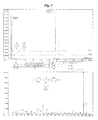
FIG. 1 shows a GC-MS chromatogram of phosphoric compound (C1) prepared in Example 1. -
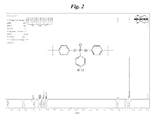
FIG. 2 shows a 1H-NMR spectrum of phosphoric compound (C1) prepared in Example 1. -
FIG. 3 shows a GC-MS chromatogram of phosphoric compound (C2) prepared in Example 2. -
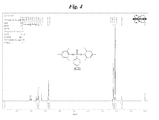
FIG. 4 shows a 1H-NMR spectrum of phosphoric compound (C2) prepared in Example 2. - A phosphoric compound of the present invention is represented by the following Chemical Formula 1.

- In the Chemical Formula 1, R1 and R2 are independently each other C1-C6 alkyl group or aryl group; and m is an integer of 1 to 3.
- Specifically, C1-C6 alkyl group may be linear or branched. The aryl group is C6-C20 aryl group or C1-C6 alkyl group- substituted C6-C20 aryl group.
- In exemplary embodiments of the present invention, R1 may be phenyl group and the R2 may be C1-C6 alkyl group. Preferably, R2 is C1-C2 alkyl group and m is 2 or 3. More preferably, m is 3.
- Preferably, R1 is phenyl group, R2 is branched C3-C6 alkyl group, and m is 1. More preferably, R2 is tert-butyl group.
- The exemplary embodiments of the phosphoric compound represented by the Chemical Formula 1 include bis(4-tert-butylphenyl) phenyl phosphonate represented by the following
Chemical Formula 2 and bis(2,4,6-trimethylphenyl) phenyl phosphonate represented by the following Chemical Formula 3.

- A phosphoric compound of the present invention is prepared by reacting the compound represented by the
Chemical Formula 4 with the compound represented by the Chemical Formula 5 under presence of an organic amine compound as shown in the following Reaction Equation 1. Specifically, the phosphoric compound of the Chemical Formula 1 is prepared by dehydrochlorination reaction of the compound represented by theChemical Formula 4 and the compound represented by the Chemical Formula 5.
- In the Reaction Equation 1, R1 and R2 are independently each other C1-C6 alkyl group or aryl group; and m is an integer of 1 to 3.
- The exemplary embodiments of the compound represented by the
Chemical Formula 4 may include, but are not limited to, 4-tert-butyl phenol, 2,4,6-trimethyl phenol. The exemplary embodiments of the compound represented by the Chemical Formula 5 may include, but is not limited to, phenylphosphonic dichloride. - The organic amine compound promotes the dehydrochlorination reaction, removes the HCl, which is a by-product of the dehydrochlorination reaction, and at the same time works like solvent. The exemplary embodiments of the organic amine compound may include, but are not limited to, pyridine, triethylamine or mixtures thereof. It is preferable to use the pyridine.
- In exemplary embodiments of the present invention, a reaction molar ratio of the compound represented by the
Chemical Formula 4 to the compound represented by the Chemical Formula 5 may be about 2:1 or more. In exemplary embodiments of the present invention, a reaction molar ratio of the compound represented by theChemical Formula 4 to the compound represented by the Chemical Formula 5 may be about 2:1. However, because some of the compound represented by theChemical Formula 4 may not participate in the reaction due to vaporization during reaction, it is preferable that the reaction molar ratio of the compound represented by theChemical Formula 4 to the compound represented by the Chemical Formula 5 may be about 2:1 or more, preferably about 2 to 3:1 to prevent this problem. - The organic amine compound may be used in an excess amount on the basis of 1 mole of the compound represented by the Chemical Formula 5. Preferably, a reaction molar ratio of the organic amine compound to the compound represented by the Chemical Formula 5 may be about 2 to 50:1. More preferably, the reaction molar ratio of the organic amine compound to the compound represented by the Chemical Formula 5 may be about 2 to 10:1. When the organic amine compound is used in an amount of less than about 2 mole on the basis of the compound represented by the Chemical formula 5, the dehydrochlorination reaction does not proceed smoothly and it is hard to remove the HCl of by-product. Although the maximum value of the reaction molar ratio of the organic amine compound to the compound represented by the Chemical Formula 5 is not particularly limited, it is preferable not to exceed 50 molar ratio for saving the manufacturing costs and the collecting cost of unreacted organic amine compound.
- In exemplary embodiments of the present invention, the method comprises: reacting the compound represented by the
Chemical Formula 4 with the compound represented by the Chemical Formula 5 at about 120 to 160°C for about 10 to 30 hours, preferably about 20 to 27 hours, while stirring and refluxing the reaction mixture. - In exemplary embodiments of the present invention, the compound represented by the
Chemical Formula 4 is reacted with the compound represented by the Chemical Formula 5 while stirring and refluxing the reaction mixture, and then the phosphoric compound represented by the Chemical Formula 1 is formed by the dehydrochlorination reaction as mentioned above. And the HCl, which is a by-product of the dehydrochlorination reaction, bonds with the organic amine compound and thereby forms an organic amine hydrochloride. - In another of exemplary embodiments of the present invention, the method may further comprising removing the unreacted organic amine compound and the organic amine hydrochloride from reaction product obtained by the dehydrochlorination reaction.
- First, the unreacted organic amine compound is removed by depressurizing the reaction product including the phosphoric compound represented by Chemical Formula 1, the organic amine hydrochloride and the unreacted organic amine compound. In this case, it is preferable that the depressurizing is carried out by a rotary distillation apparatus at room temperature.
- After the unreacted organic amine compound is removed by the depressurizing process, the reaction product is washed filtered and dried. Specifically, the water is added into the reaction product, in which the unreacted organic amine compound is removed, the resulting solution is stirred for about 0.5 to 2 hours and filtered, the organic amine hydrochloride present in the reaction product is dissolved in water and removed, and the phosphoric compound represented by the Chemical Formula 1, which is insoluble in water and in the form of solid, is obtained. And the water present in the phosphoric compound represented by the Chemical Formula 1 is completely removed by using the depressurizing oven, and the like.
- The present invention provides a flameproof thermoplastic resin composition using the phosphoric compound represented by the Chemical Formula 1. The resin composition comprises the thermoplastic resin and the phosphoric compound represented by the Chemical Formula 1 or mixtures thereof.
- In exemplary embodiments of the present invention, the flameproof thermoplastic resin composition comprises about 100 parts by weight of the thermoplastic resin, and about 0.5 to 30 parts by weight, preferably about 2 to 25 parts by weight, more preferably about 2.5 to 20 parts by weight of the phosphoric compound represented by the Chemical Formula 1 or mixtures thereof. When an amount of the phosphoric compound represented by the Chemical Formula 1 or mixtures thereof is less than about 0.5 parts by weight, the resin composition does not obtain a sufficient flame retardancy. On the other hand, when the amount of the phosphoric compound represented by the Chemical Formula 1 or mixtures thereof is more than about 30 parts by weight, fundamental properties of the resin composition may be deteriorated.
- Examples of the thermoplastic resin used in the present invention are especially not limited. For example, aromatic vinyl polymer resin, polyphenylene ether resin, polyphenylene sulfide resin, polyalkyl(meth)acrylate resin, polycarbonate resin, polyolefin-based resin, polyester, polyamide, and the like may be used. In exemplary embodiments, aromatic vinyl polymer resin including polystyrene resin (PS), rubber modified polystyrene resin (HIPS), aromatic vinyl-vinyl cyanide graft copolymer resin (ABS), vinyl cyanide-aromatic vinyl copolymer resin (SAN); polyphenylene ether resin, polyphenylene sulfide resin, polycarbonate resin, polyethylene resin, polypropylene resin, polyethylene terephthalate, polybutylene terephthalate, polymethylmethacrylate, polyamide resin, and the like may be used. The thermoplastic resin may be used alone or in combination thereof.
- In exemplary embodiments of the present invention, the resin composition comprises a mixture comprising (A) an aromatic vinyl polymer resin and (B) a polyphenylene ether resin as the thermoplastic resin. More specifically, the resin composition comprises 100 parts by weight of a mixture comprising (A) about 80 to 95 % by weight of the aromatic vinyl polymer resin and (B) about 5 to 20 % by weight of the polyphenylene ether resin, and about 0.5 to 30 parts by weight of the phosphoric compound represented by the Chemical Formula 1 or mixtures thereof.
- In exemplary embodiments of the present invention, the aromatic vinyl polymer resin (A) may be a homopolymer of aromatic vinyl monomers or a polymer of rubber and aromatic vinyl monomer. Also, the aromatic vinyl polymer resin (A) can further comprise alkyl ester monomer, unsaturated nitrile monomer, or mixtures thereof.
- In exemplary embodiments of the present invention, the aromatic vinyl polymer resin is polystyrene resin (PS), rubber modified polystyrene resin (HIPS), aromatic vinyl-vinyl cyanide graft copolymer resin (ABS), vinyl cyanide-aromatic vinyl copolymer resin (SAN), and the like, preferably rubber modified polystyrene resin (HIPS).
- The rubber is selected from the group consisting of butadiene-based rubber, isoprene based rubber, copolymer of butadiene and styrene, alkyl(meth)acrylate rubber , and mixtures thereof. And about 3 to 30 % by weight of the rubber is used on the basis of gross weight of the aromatic vinyl polymer resin (A), preferably about 5 to 15 % by weight.
- The aromatic vinyl monomer is used in an amount of about 70 to 97 % by weight, preferably about 85 to 95 % by weight, on the basis of total weight of the aromatic vinyl polymer resin (A). The aromatic vinyl polymer resin (A) may also contain other monomer such as acrylonitrile, acrylic acid, methacrylic acid, maleic acid anhydride, N-substituted maleimide, and the like, in order to impart properties such as chemical resistance, processability, flameproof, and the like. An amount of the other monomers is preferably about 40 % by weight or less on the basis of total weight of the aromatic vinyl polymer resin (A).
- The aromatic vinyl polymer resin (A) is manufactured by polymerization under the presence of a polymerization initiator or by thermal polymerization without a polymerization initiator. The polymerization initiator is one or more of a peroxide-based initiator comprising benzoyl peroxide, t-butyl hydro peroxide, acetyl peroxide, cumenhydro peroxide, and the like; and an azo-based initiator comprising azobisisobutyronitrile, and the like; but is not limited to.
- The aromatic vinyl polymer resin (A) is manufactured by using the bulk polymerization, suspension polymerization, emulsion polymerization, or mixture method thereof, preferably bulk polymerization.
- In the blend comprising the aromatic vinyl polymer resin (A) and the polyphenylene ether resin (B), the size of the rubber phase particle is preferable about 0.1 to 2.0 µm for the best properties.
- The aromatic vinyl polymer resin (A) is used in an amount of about 80 to 95 % by weight, preferably about 80 to 90 % by weight on the basis of total weight of (A) + (B).
- In exemplary embodiments of the present invention, a polyphenylene ether resin (B) is added in the aromatic vinyl polymer resin (A) for more improving the flame retardancy and heat resistance of the thermoplastic resin composition.
- Examples of the polyphenylene ether resin (B) comprise poly(2,6-dimethyl-1,4-phenylene)ether, poly(2,6-diethyl-1,4-phenylene)ether, poly(2,6-dipropyl-1,4-phenylene)ether, poly(2-methyl-6-ethyl-1,4-phenylene)ether, poly(2-methyl-6-propyl-1,4-phenylene)ether, poly(2-ethyl-6-propyl-1,4-phenylene)ether, poly(2,6-diphenyl-1,4-phenylene)ether, copolymer of poly(2,6-dimethyl-1,4-phenylene)ether and poly(2,3,6-trimethyl-1,4-phenylene)ether, copolymer of poly(2,6-dimethyl-1,4-phenylene)ether and poly(2,3,5-triethyl-1,4-phenylene)ether, and the like, but are not limited to. The polyphenylene ether resin may be used alone or in combination thereof. Preferably, copolymer of poly(2,6-dimethyl-1,4-phenylene)ether and poly(2,3,6-trimethyl-1,4-phenylene)ether, or poly(2,6-dimethyl-1,4-phenylene)ether is used, and most preferably poly(2,6-dimethyl-1,4-phenylene)ether is used.
- The degree of polymerization of the polyphenylene ether resin (B) is especially not limited. However, the degree of polymerization of the polyphenylene ether resin that is measured in chloroform solvent at 25°C is preferably about 0.2 to 0.8 in view of heat stability and workability of the thermoplastic resin composition according to the exemplary embodiments of the present invention.
- The polyphenylene ether resin (B) is used in amount of about 5 to 20 % by weight, preferably about 10 to 20 % by weight on the basis of total weight of (A) + (B). When an amount of the polyphenylene ether resin (B) is less than about 5 % by weight, flamer retardancy of the resin compositionmay be deteriorated. On the other hand, when an amount of the polyphenylene ether resin (B) is more than about 20 % by weight, moldability of that may be deteriorated.
- In another exemplary embodiments of the present invention, the thermoplastic resin composition may further include aromatic phosphoric acid ester compound (D1), alkyl phosphinic acid metal salt compound (D2), or mixtures thereof, in order to improve flame retardancy.
- The aromatic phosphoric acid ester compound (D1), alkyl phosphinic acid metal salt compound (D2), or mixtures thereof is used in amount of about 1 to 25 parts by weight, preferably about 5 to 20 parts by weight, more preferably about 10 to 15 parts by weight on the basis of 100 parts by weight of the thermoplastic resin.
- When an amount of the aromatic phosphoric acid ester compound (D1), alkyl phosphinic acid metal salt compound (D2), or mixtures thereof is less than about 1 part by weight, the resin composition does not obtain sufficient flame retardancy. On the other hand, when an amount of the aromatic phosphoric acid ester mixture (D1), alkyl phosphinic acid metal salt compound (D2), or mixtures thereof is more than about 25 parts by weight, properties such as impact strength may be deteriorated.
- The aromatic phosphoric acid ester compound (D1) that is used in the thermoplastic resin composition according to another exemplary embodiment of the present invention has a structure of the following Chemical Formula 6.


- In the Chemical Formula 6, R3, R4, and R5 are independently each other hydrogen or C1-C4 alkyl group; X is C6-C20 aryl group or C1-C4 alkyl-substituted C6-C20 aryl group and is derived from dialcohol of resorcinol, hydroquinol, or bisphenol- A; and n is an integer of 0 to 4.
- Examples of the aromatic phosphoric acid ester compound (D1) are as follows. When n is 0 in the Chemical Formula 6, the compound represented by the Chemical Formula 6 includes triphenyl phosphate, tri(2,6-dimethyl) phosphate, and the like, but is not limited to. When n is 1 in the Chemical Formula 6, the compound represented by the Chemiclal Formula 6 includes resorcinol bis(diphenyl) phosphate, resorcinol bis(2,6-dimethylphenyl) phosphate, resorcinol bis(2,4-ditertiarybutylphenyl) phosphate, hydroquinol bis (2,6-dimethylphenyl) phosphate, hydroquinol bis(2,4-ditertiarybutylphenyl) phosphate, and the like, but is not limited to. The aromatic phosphoric acid ester compound can be used alone or in combination thereof.
- The alkyl phosphinic acid metal salt compound (D2) that is used in the thermoplastic resin composition according to another exemplary embodiment of the present invention has a structure of the following Chemical Formula 7.


- In the Chemical Formula 7, R is C1-C6 alkyl group, C4-C6 cycloalkyl group, or C6-C10 aryl group; M is metal of Al, Zn, Mg or Ca; and n is an integer of 2 or 3.
- In exemplary embodiments, R is methyl group, ethyl group, propyl group, butyl group or phenyl group, and M is Al or Zn.
- Examples of the alkyl phosphinic acid metal salt compound (D2) may include diethyl phosphinic acid aluminum metal salt, but are not limited to.
- The average diameter of the alkyl phosphinic acid metal salt compound (D2) is preferably about 10 µm or less, more preferably about 0.01 to 10 µm. When the average diameter of the alkyl phosphinic acid metal salt compound (D2) is more than about 10 µm, the impact strength and flame retardancy of the resin composition may be deteriorated. On the other hand, when the average diameter of the alkyl phosphinic acid metal salt compound (D2) is less than about 0.01 µm, there may be a problem in preparing the product, and the extrusion or injection processability of the resin composition may be deteriorated.
- In other exemplary embodiments of the present invention, the thermoplastic resin composition may further include additives depending on its use. Examples of the additives may include plasticizers, heat stabilizers, antioxidants, anti-dripping agents, compatibilizers, light-stabilizers, pigments, dyes, inorganic fillers, and the like, but are not limited to. Examples of the inorganic fillers may include asbestos, glass fibers, talc, ceramic, sulfates, and the like. The additives can be used alone or in combination thereof. The additives can be added in an amount of about 30 parts by weight or less, preferably about 0.001 to 30 parts by weight on the basis of 100 parts by weight of the thermoplastic resin.
- The thermoplastic resin composition according to the present invention can be manufactured by conventional methods. In exemplary embodiments, after the above-stated components are mixed with additives, the thermoplastic resin composition can be manufactured in the form of pellet by melt extruding in the extruding machine.
- The flameproof thermoplastic resin composition according to the present invention can be applied to various products due to its excellent flame retardancy. Especially, the flameproof thermoplastic resin composition can be widely used to exterior materials of electric/electronic goods such as housings of televisions, computers, audios, air conditioners, office automation equipments, and the like, to which strict flameproof regulations are required.
- The method for preparing the plastic products from the flameproof thermoplastic resin composition according to the present invention is especially not limited. For example, extrusion molding, injection molding, blow molding, casting molding, and the like can be applied. And these methods are easily carried out by a person with ordinary skill in the art.
- The invention may be better understood by reference to the following examples which are intended for the purpose of illustration and are not to be construed as in any way limiting the scope of the present invention, which is defined in the claims appended hereto.
-

- 4-tert-butyl phenol (60 g, 0.40 mol), phenyl phosphonic dichloride (43 g, 0.20 mol), and pyridine (400 mL, 4.97 mol) were added into a reactor, refluxed and stirred at 140 °C for about 20 hours. The temperature of the reactor was cooled down to room temperature and then the unreacted pyridine was removed by depressurizing the reaction product using a rotary distillation apparatus. 500 mL of distilled water was added into the reaction product, which is in the form of solid by removing the unreacted pyridine, the resulting solution was stirred for 1 hour to dissolve pyridine hydrochloride produced during the reaction in the water layer, and the resulting solution was filtered to obtain a water-insoluble solid compound (C1). The filtered solid compound (C1) was dried for 24 hours in an oven under reduced pressure to obtain a pure white solid of bis(4-tert-butylphenyl)phenyl phosphonate (C1) (79 g, yield: 96%). The resultant compound (C1) was analyzed by GC-MS and 1H-NMR, and the results are shown in
Figs. 1 and2 , respectively. -

- 2,4,6-trimethyl phenol (54 g, 0.40 mol), phenyl phosphonic dichloride (43 g, 0.20 mol), and pyridine (400 mL, 4.97 mol) were added into a reactor, refluxed, and stirred at 140 °C for about 20 hours. The temperature of the reactor was cooled down to room temperature and then the unreacted pyridine was removed by depressurizing the reaction product using a rotary distillation apparatus. 500 mL of distilled water was added into the reaction product, which is in the form of solid by removing the unreacted pyridine, the resulting solution was stirred for 1 hour to dissolve pyridine hydrochloride produced during the reaction in the water layer, and the resulting solution was filtered to obtain a water-insoluble solid compound (C2). The filtered solid compound (C2) was dried for 24 hours in an oven under reduced pressure to obtain a pure white solid of bis(2,4,6-trimethylphenyl)phenyl phosphonate (C2) (75.7 g, yield: 96%). The resultant compound (C2) was analyzed by GC-MS and 1H-NMR, and the results are shown in
Figs. 3 and4 , respectively. - Specifications of each components used in the following examples and comparative examples are as follows.
- Rubber modified styrene resin made by Cheil Industries Inc. of Korea (product name: HG-1760S) was used.
- Poly(2,6-dimethyl-1,4-phenylene)ether made by Mitsubishi Engineering Plastic company of Japan (product name: PX-100F) was used.
- (C1) Bis(4-tert-butylphenyl)phenyl phosphonate prepared in the example 1 was used.
- (C2) Bis(2,4,6-trimethylphenyl)phenyl phosphonate prepared in the example 2 was used.
- Bis(dimethylphenyl) phosphate bisphenol A made by Daihachi Chemical Industry Co., Ltd. of Japan (product name: CR741 S) was used.
- Diethyl Phosphinic acid aluminum metal salt made by Clariant company (product name: Exolit OP930) was used. The average diameter is 5 µ m.
- The each components were added into a conventional mixer in an amount as described in the following Table 1, and the mixture was extruded through a conventional twin screw extruder at a temperature range of 200 to 280°C to prepare a product in pellet form. The pellets were dried at 80°C for 2 hours and then molded into test specimens in a 6Oz injection molding machine at 180 to 280°C with a mold temperature of 40 to 80°C.
- The flame retardancy was measured in accordance with the UL 94 VB for the specimens having a thickness of about 1/8". The results of examples 3 to 8 are shown in Table 1.
- Comparative examples 1 to 2 were conducted in the same manner as in the Examples except each component was used in a different amount. The results of comparative examples 1 to 2 are shown in Table 1.
Table 1 Examples Comparative
Examples3 4 5 6 7 8 1 2 (A) 85 85 85 85 85 85 85 85 (B) 15 15 15 15 15 15 15 15 (C) (C1) 20 - 5 - 25 - - - C2) - 20 - 5 - 25 - - (D) (D1) - - 15 15 10 10 20 15 (D2) - - - - 25 25 - 5 First average combustion time (1/8", sec) 37.5 23.0 27.7 20.9 15.2 8.5 41.3 41.5 Second average combustion time (1/8", sec) 27.0 24.7 5.7 23.8 19.8 15.1 31.5 10.2 - As shown in Table 1, it can be seen that Examples 3 to 4 using only flameproof phosphoric compound and Examples 5 to 8 using flameproof phosphoric compound as well as conventional phosphoric flame retardant exhibit excellent flameproof, compared to Comparative Examples 1 to 2 using only conventional phosphoric flame retardant.
- Many modifications and changes of the present invention may be easily carried out by a person with ordinary skill in the art and may be deemed to be with the scope of the present invention as defined in the following claims.
Claims (19)
- A phosphoric compound represented by the following Chemical Formula 1:

- The phosphoric compound of claim 1, wherein R1 is phenyl group and R2 is C1-C6 alkyl group.
- The phosphoric compound of claim 1, wherein the phosphoric compound is a bis(4-tert-butylphenyl) phenyl phosphonate represented by the following Chemical Formula 2 or a bis(2,4,6-trimethylphenyl) phenyl phosphonate represented by the following Chemical Formula 3.


- A method for preparing a phosphoric compound represented by the following Chemical Formula 1 comprising reacting a compound represented by the following Chemical Formula 4 with a compound represented by the following Chemical Formula 5 under presence of an organic amine compound:


- The method of Claim 4, wherein said organic amine compound is pyridine, triethylamine, or a mixture thereof.
- The method of Claim 4, a reaction molar ratio of the compound represented by the Chemical Formula 4 to the compound represented by the Chemical Formula 5 is about 2 to 3 : 1.
- The method of Claim 4, wherein a reaction molar ratio of the organic amine compound to the compound represented by the Chemical Formula 5 is about 2 to 50:1.
- The method of Claim 4, comprising:reacting the compound represented by the Chemical Formula 4 with the compound represented by the Chemical Formula 5 under presence of an organic amine compound for about 10 to 30 hours at about 120 to 160 °C while stirring and refluxing the reaction mixture;removing an unreacted organic amine compound by depressurizing the reaction product obtained by the reaction; andfiltering and drying the reaction product, in which the unreacted organic amine compound was removed, after washing the reaction product.
- A flame retardant represented by the following Chemical Formula 1:


- A flameproof thermoplastic resin composition comprising:100 parts by weight of a thermoplastic resin; andabout 0.5 to 30 parts by weight of a phosphoric compound represented by the following Chemical Formula 1 or mixtures thereof:

- The flameproof thermoplastic resin composition of Claim 10, wherein the phosphoric compound is a bis(4-tert-butylphenyl) phenyl phosphonate represented by the following Chemical Formula 2 or a bis(2,4,6-trimethylphenyl) phenyl phosphonate represented by the following Chemical Formula 3.


- The flameproof thermoplastic resin composition of Claim 10, wherein the thermoplastic resin is selected from the group consisting of aromatic vinyl polymer resin including polystyrene resin(PS), rubber modified polystyrene resin(HIPS), aromatic vinyl-vinyl cyanide graft copolymer resin(ABS), vinyl cyanide-aromatic vinyl copolymer resin(SAN); polyphenylene ether resin, polyphenylene sulfide resin, polycarbonate resin, polyethylene resin, polypropylene resin, polyethylene terephthalate, polybutylene terephthalate, polymethylmethacrylate, polyamide resin, and mixture thereof.
- The flameproof thermoplastic resin composition of Claim 10, wherein the thermoplastic resin comprises (A) about 80 to 95 % by weight of an aromatic vinyl polymer resin and (B) about 5 to 20 % by weight of a polyphenylene ether resin.
- The flameproof thermoplastic resin composition of Claim 10, further comprising about 1 to 25 parts by weight of (D1) aromatic phosphoric acid ester compound, (D2) alkyl phosphinic acid metal salt compound, or mixtures thereof on the basis of 100 parts by weight of the thermoplastic resin.
- The flameproof thermoplastic resin composition of Claim 14, wherein the aromatic phosphoric acid ester compound (D1) has a structure of the following Chemical Formula 6:

- The flameproof thermoplastic resin composition of Claim 14, wherein an average diameter of the alkyl phosphinic acid metal salt compound (D2) is about 10 µm or less.
- The flameproof thermoplastic resin composition of Claim 14, wherein the alkyl phosphinic acid metal salt compound (D2) has a structure of the following Chemical Formula 7:

- The flameproof thermoplastic resin composition of Claim 10, further comprising additives selected from the group consisting of plasticizers, heat stabilizers, antioxidants, anti-dripping agents, compatibilizers, light-stabilizers, pigments, dyes, inorganic fillers and mixtures thereof.
- The flameproof thermoplastic resin composition of Claim 13, wherein a first average combustion time of the resin composition measured in accordance with the UL 94 VB for specimens having a thickness of 1/8" is less than about 38 seconds.
Applications Claiming Priority (2)
| Application Number | Priority Date | Filing Date | Title |
|---|---|---|---|
| KR1020080124486A KR101098415B1 (en) | 2008-12-09 | 2008-12-09 | Novel Phosphoric Compound, Method of Preparing the Same and Flameproof Thermoplastic Resin Composition Using the Same |
| PCT/KR2009/001975 WO2010067926A1 (en) | 2008-12-09 | 2009-04-16 | Novel phosphate compounds, preparation method thereof, and flame-retardant thermoplastic resin compositions using same |
Publications (1)
| Publication Number | Publication Date |
|---|---|
| EP2364986A1 true EP2364986A1 (en) | 2011-09-14 |
Family
ID=42242900
Family Applications (1)
| Application Number | Title | Priority Date | Filing Date |
|---|---|---|---|
| EP09832013A Withdrawn EP2364986A1 (en) | 2008-12-09 | 2009-04-16 | Novel phosphate compounds, preparation method thereof, and flame-retardant thermoplastic resin compositions using same |
Country Status (5)
| Country | Link |
|---|---|
| US (1) | US8461236B2 (en) |
| EP (1) | EP2364986A1 (en) |
| KR (1) | KR101098415B1 (en) |
| CN (1) | CN102245619A (en) |
| WO (1) | WO2010067926A1 (en) |
Cited By (1)
| Publication number | Priority date | Publication date | Assignee | Title |
|---|---|---|---|---|
| WO2015200739A1 (en) * | 2014-06-27 | 2015-12-30 | 3M Innovative Properties Company | Biodegradable polylactic acid resin composition with excellent heat resistance and article manufactured therefrom |
Families Citing this family (6)
| Publication number | Priority date | Publication date | Assignee | Title |
|---|---|---|---|---|
| KR101098415B1 (en) | 2008-12-09 | 2011-12-23 | 제일모직주식회사 | Novel Phosphoric Compound, Method of Preparing the Same and Flameproof Thermoplastic Resin Composition Using the Same |
| KR20140090290A (en) * | 2012-12-17 | 2014-07-17 | 제일모직주식회사 | Flame retardant thermoplastic resin composition and article produced therefrom |
| CN105175445A (en) * | 2014-06-23 | 2015-12-23 | 三星Sdi株式会社 | High Refractive Index Acrylic Compound And Method For Preparing The Same |
| CN105566385B (en) * | 2016-01-19 | 2018-06-22 | 苏州科技大学 | The preparation method of tetrabromobisphenol A organic phosphonate compounds |
| KR102600976B1 (en) * | 2020-10-14 | 2023-11-10 | 주식회사 신아티앤씨 | Phosphorous compound |
| KR102869259B1 (en) * | 2023-11-17 | 2025-10-14 | 경기대학교 산학협력단 | Method for manufacturing flame retardants and flame retardant polymer resin compositions containing the same |
Family Cites Families (8)
| Publication number | Priority date | Publication date | Assignee | Title |
|---|---|---|---|---|
| US2769743A (en) * | 1952-04-18 | 1956-11-06 | Union Oil Co | Pest control utilizing pesticidal compositions of phosphorus |
| US4152373A (en) * | 1975-09-22 | 1979-05-01 | Stauffer Chemical Company | Process for preparing diaryl methylphosphonate and derivatives thereof |
| US4083818A (en) * | 1975-09-29 | 1978-04-11 | Ethyl Corporation | Flame retardant polymers |
| JPS57105435A (en) * | 1980-12-20 | 1982-06-30 | Asahi Chem Ind Co Ltd | Stabilized flame-retardant composition |
| KR100665802B1 (en) * | 2004-12-30 | 2007-01-09 | 제일모직주식회사 | Flame retardant styrene resin composition |
| KR100560151B1 (en) * | 2004-12-30 | 2006-03-10 | 제일모직주식회사 | Flame Retardant Polycarbonate Resin Composition |
| US7622522B2 (en) * | 2007-09-27 | 2009-11-24 | Sabic Innovative Plastics Ip B.V. | Flame-retardant poly(arylene ether) composition and its use as a covering for coated wire |
| KR101098415B1 (en) | 2008-12-09 | 2011-12-23 | 제일모직주식회사 | Novel Phosphoric Compound, Method of Preparing the Same and Flameproof Thermoplastic Resin Composition Using the Same |
-
2008
- 2008-12-09 KR KR1020080124486A patent/KR101098415B1/en not_active Expired - Fee Related
-
2009
- 2009-04-16 WO PCT/KR2009/001975 patent/WO2010067926A1/en not_active Ceased
- 2009-04-16 CN CN2009801491987A patent/CN102245619A/en active Pending
- 2009-04-16 EP EP09832013A patent/EP2364986A1/en not_active Withdrawn
-
2011
- 2011-06-02 US US13/151,616 patent/US8461236B2/en not_active Expired - Fee Related
Non-Patent Citations (1)
| Title |
|---|
| See references of WO2010067926A1 * |
Cited By (1)
| Publication number | Priority date | Publication date | Assignee | Title |
|---|---|---|---|---|
| WO2015200739A1 (en) * | 2014-06-27 | 2015-12-30 | 3M Innovative Properties Company | Biodegradable polylactic acid resin composition with excellent heat resistance and article manufactured therefrom |
Also Published As
| Publication number | Publication date |
|---|---|
| US8461236B2 (en) | 2013-06-11 |
| CN102245619A (en) | 2011-11-16 |
| KR20100065901A (en) | 2010-06-17 |
| WO2010067926A1 (en) | 2010-06-17 |
| KR101098415B1 (en) | 2011-12-23 |
| US20110263768A1 (en) | 2011-10-27 |
Similar Documents
| Publication | Publication Date | Title |
|---|---|---|
| EP1404760B1 (en) | Flame retardant thermoplastic resin composition | |
| EP1651718B1 (en) | Flameproof thermoplastic resin composition | |
| US8461236B2 (en) | Phosphoric compound, method for preparing the same, and flame retardant thermoplastic resin composition including the same | |
| EP2143754B1 (en) | Flame retardent and impact modifier, method for preparing thereof, and thermoplastic resin composition containing the same | |
| KR101234601B1 (en) | Novel phosphoanate based compound and flame retardant thermoplastic resin composition including the same | |
| EP1838780B1 (en) | Flameproof styrenic resin composition | |
| EP1654321B1 (en) | Flameproof rubber-reinforced styrenic resin composition | |
| EP1543070B1 (en) | Flameproof styrenic resin composition | |
| KR100654525B1 (en) | Carboxyethyl Phosphate Ester Salt Compounds and Flame Retardant Thermoplastic Resin Containing the Same | |
| DE102008064234B4 (en) | Symmetrical cyclic phosphonate compound including flame retardant styrenic resin composition | |
| KR100778010B1 (en) | Non-halogen flame retardant styrene resin composition | |
| EP2215159B1 (en) | Non-halogen flameproof resin composition | |
| EP2377870B1 (en) | Novel phosphonate compounds and flame retardant styrene resin compositions containing the same | |
| KR101139864B1 (en) | Novel Phosphoric Compound, Method of Preparing the Same and Flameproof Thermoplastic Resin Composition Using the Same | |
| KR101127439B1 (en) | Non-halogen flameproof styrenic resin composition | |
| KR100815992B1 (en) | Flame Retardant Thermoplastic Composition | |
| KR100600554B1 (en) | Flame Retardant Rubber Reinforced Polystyrene Resin Composition | |
| KR100776212B1 (en) | Non-halogen flame retardant styrene resin composition | |
| KR100654530B1 (en) | Flame-retardant thermoplastic resin composition containing titanium-containing organic nitrogen compound | |
| KR20050070981A (en) | Flameproof thermoplastic resin composition | |
| KR20140090290A (en) | Flame retardant thermoplastic resin composition and article produced therefrom |
Legal Events
| Date | Code | Title | Description |
|---|---|---|---|
| PUAI | Public reference made under article 153(3) epc to a published international application that has entered the european phase |
Free format text: ORIGINAL CODE: 0009012 |
|
| 17P | Request for examination filed |
Effective date: 20110519 |
|
| AK | Designated contracting states |
Kind code of ref document: A1 Designated state(s): AT BE BG CH CY CZ DE DK EE ES FI FR GB GR HR HU IE IS IT LI LT LU LV MC MK MT NL NO PL PT RO SE SI SK TR |
|
| DAX | Request for extension of the european patent (deleted) | ||
| STAA | Information on the status of an ep patent application or granted ep patent |
Free format text: STATUS: THE APPLICATION HAS BEEN WITHDRAWN |
|
| 18W | Application withdrawn |
Effective date: 20141202 |