EP2364100B1 - Apparatus for and method of steam treating of fodder - Google Patents
Apparatus for and method of steam treating of fodder Download PDFInfo
- Publication number
- EP2364100B1 EP2364100B1 EP09785176.0A EP09785176A EP2364100B1 EP 2364100 B1 EP2364100 B1 EP 2364100B1 EP 09785176 A EP09785176 A EP 09785176A EP 2364100 B1 EP2364100 B1 EP 2364100B1
- Authority
- EP
- European Patent Office
- Prior art keywords
- steam
- fodder
- lances
- bale
- manifold
- Prior art date
- Legal status (The legal status is an assumption and is not a legal conclusion. Google has not performed a legal analysis and makes no representation as to the accuracy of the status listed.)
- Active
Links
Images

Classifications
-
- A—HUMAN NECESSITIES
- A23—FOODS OR FOODSTUFFS; TREATMENT THEREOF, NOT COVERED BY OTHER CLASSES
- A23K—FODDER
- A23K10/00—Animal feeding-stuffs
-
- A—HUMAN NECESSITIES
- A23—FOODS OR FOODSTUFFS; TREATMENT THEREOF, NOT COVERED BY OTHER CLASSES
- A23K—FODDER
- A23K10/00—Animal feeding-stuffs
- A23K10/30—Animal feeding-stuffs from material of plant origin, e.g. roots, seeds or hay; from material of fungal origin, e.g. mushrooms
-
- A—HUMAN NECESSITIES
- A23—FOODS OR FOODSTUFFS; TREATMENT THEREOF, NOT COVERED BY OTHER CLASSES
- A23K—FODDER
- A23K30/00—Processes specially adapted for preservation of materials in order to produce animal feeding-stuffs
- A23K30/10—Processes specially adapted for preservation of materials in order to produce animal feeding-stuffs of green fodder
-
- A—HUMAN NECESSITIES
- A23—FOODS OR FOODSTUFFS; TREATMENT THEREOF, NOT COVERED BY OTHER CLASSES
- A23K—FODDER
- A23K40/00—Shaping or working-up of animal feeding-stuffs
-
- A—HUMAN NECESSITIES
- A23—FOODS OR FOODSTUFFS; TREATMENT THEREOF, NOT COVERED BY OTHER CLASSES
- A23K—FODDER
- A23K50/00—Feeding-stuffs specially adapted for particular animals
-
- A—HUMAN NECESSITIES
- A23—FOODS OR FOODSTUFFS; TREATMENT THEREOF, NOT COVERED BY OTHER CLASSES
- A23K—FODDER
- A23K50/00—Feeding-stuffs specially adapted for particular animals
- A23K50/20—Feeding-stuffs specially adapted for particular animals for horses
-
- A—HUMAN NECESSITIES
- A23—FOODS OR FOODSTUFFS; TREATMENT THEREOF, NOT COVERED BY OTHER CLASSES
- A23N—MACHINES OR APPARATUS FOR TREATING HARVESTED FRUIT, VEGETABLES OR FLOWER BULBS IN BULK, NOT OTHERWISE PROVIDED FOR; PEELING VEGETABLES OR FRUIT IN BULK; APPARATUS FOR PREPARING ANIMAL FEEDING- STUFFS
- A23N17/00—Apparatus specially adapted for preparing animal feeding-stuffs
-
- A—HUMAN NECESSITIES
- A23—FOODS OR FOODSTUFFS; TREATMENT THEREOF, NOT COVERED BY OTHER CLASSES
- A23N—MACHINES OR APPARATUS FOR TREATING HARVESTED FRUIT, VEGETABLES OR FLOWER BULBS IN BULK, NOT OTHERWISE PROVIDED FOR; PEELING VEGETABLES OR FRUIT IN BULK; APPARATUS FOR PREPARING ANIMAL FEEDING- STUFFS
- A23N17/00—Apparatus specially adapted for preparing animal feeding-stuffs
- A23N17/004—Apparatus specially adapted for preparing animal feeding-stuffs for treating by application of heat, e.g. by means of potato cookers
Definitions
- the invention relates to an apparatus for and method of steam treating of fodder, for example animal fodder (such as grasses, herbaceous legumes, tree legumes, silage and crop residues), which is typically in baled form, which is intended to include bales as well as retaining nets, baskets or similar receptacles.
- animal fodder such as grasses, herbaceous legumes, tree legumes, silage and crop residues
- baled form which is intended to include bales as well as retaining nets, baskets or similar receptacles.
- the purpose of steam treating is to kill mesophilic and thermophilic mould spores that are either attached to the fodder or detach when disturbed and become airborne. These airborne particles are commonly assumed as dust spores, together with any living organisms and can include insects and the like.
- the purpose therefore of treating the fodder is to kill all the aforesaid prior to the fodder being fed to livestock; thus reducing the risks of creating or aggravating respiratory problems, infections and allergies from such or similar organisms.
- the problem associated with respiratory conditions, infections and allergies applies to both livestock being fed as well as humans handling the fodder or when preparing and feeding the fodder to livestock.
- Fodder is one of the cheapest and most widely available natural forms of feeding livestock and provides most of the nutrients required.
- fodder such as grasses and crop residues
- fodder When fodder, such as grasses and crop residues, is cut, it is usually compressed into bales for ease of storage and manoeuvrability. All fodder contains leaf shatter, soil, mesophilic moulds, plant particles, fragments of sundry inorganic materials, bacteria, fungi and fungal spores, insects, and other organisms in varying amounts.
- additional organisms thermoophilic actinomycetes
- Much of this dust is present in particles of less than 5 microns in diameter (respirable particles) and these particles can cause an allergic reaction within some livestock (e.g. horses and certain goat species).
- the allergic reaction is precipitated by a hypersensitivity to the respirable particles which leads to airway inflammation, bronchoconstriction and accumulation of mucoid secretion in the animal's airways.
- Clinical signs such as coughing and reduced capacity for exercise are persistent. These conditions include the well known Recurrent Airway Obstruction (RAO) - also known as Chronic Obstructive Pulmonary Disorder (COPD) - and are responsible for a significant loss of revenue in terms of days in training and reduced performance. Moreover these respirable particles are the cause of the debilitating condition in humans known as farmers Lung, as well as more common hayfevers. Some livestock owners soak their fodder, such as hay, to reduce the number of airborne particles released during feeding.
- REO Recurrent Airway Obstruction
- COPD Chronic Obstructive Pulmonary Disorder
- hay steamer is made and sold by Happy Horse Products limited and includes a conventional steam generator which delivers steam, via a lance, into loosely packed fodder which is contained in a bag.
- a conventional steam generator which delivers steam, via a lance, into loosely packed fodder which is contained in a bag.
- the bag is waterproof steam condenses in the bag with the result that there is a build up of hot water condensate in the bag and the aforementioned risk of leaching of nutrients from the fodder.
- the bag is permeable, a disadvantage of this system is that fodder has to be handled twice. Firstly it needs to be removed from a bale or hay rick and placed in the bag; then it has to be removed from the bag for feeding.
- the present invention overcomes problems associated with the aforementioned prior art systems.
- the invention provides an apparatus and a method for steam treating animal fodder as defined in the appended independent claims, to which reference should now be made. Preferred or advantageous features of the invention are set out in dependent sub-claims.
- the invention may thus advantageously provide an apparatus for steam treating fodder, which includes a manifold that is adapted to receive steam from a source, the manifold defining passages for distributing steam to a plurality of lances, said lances being adapted so that in use, they penetrate a bale of fodder, whereby steam is supplied to the interior volume of the fodder.
- the steam manifold in use, is arranged to impale a bale of fodder, by placing the bale thereon, thus the weight of the bale assists in the process of ensuring the lances penetrate into the bulk of the bale.
- the manifold may be adapted to rest on the ground or floor of an area and a bale may be placed on it.
- the apparatus is preferably formed from a strong and heat resistant material, such as stainless steel, other metals or synthetic plastics material which is able to withstand temperatures in excess of 110 degrees Centigrade.
- the manifold ideally includes a plurality of lances, which may be in the form of prongs or spikes, each being adapted to impale a bale so that they penetrate deep into the bale, thereby enabling steam to pass into the bulk of the bale and percolate from the centre outwards. This ensures deep and thorough heating - and thus steam treatment - of the fodder.
- lances There may be two, but ideally there are three, four, five or more lances arranged in an array so that the lances are in a form that enhances even distribution of steam throughout the bale. Again ensuring deep and thorough heating - and thus steam treatment - of the fodder.
- the source of steam includes an immersion heater and a thermostat cut-off switch.
- the apparatus includes a heater which has an immersion element and is adapted for use with either 240 Volts or 110 Volts.
- the heater generates steam in the well known manner.
- the source of steam includes a residual current detector (RCD) for isolating an electricity supply in the event of a fault.
- RCD residual current detector
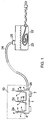
- FIG. 1 there is shown a diagrammatic representation of an apparatus for steam treatment of fodder.
- FIG. 1 there is shown in general a steam treatment of fodder comprising a water reservoir 20 in which is located a heating element 22.
- the water reservoir can also be a sealed vessel and thus capable of heating water to more than its normal boiling point.
- the manifold 1 is what distributes the steam into a bale 10.
- the apparatus is connected by means of pipe work to a steam generator in reservoir and optionally includes conventional safety equipment such as thermostatic settings, boil dry warning and residual current detectors (RCD) for use in damp and outdoor environments.
- a steam generator in reservoir and optionally includes conventional safety equipment such as thermostatic settings, boil dry warning and residual current detectors (RCD) for use in damp and outdoor environments.
- RCD residual current detectors
- Figure 2 shows a manifold, which is in the form of a generally square frame and has passages 20 formed therein for distribution of steam
- the manifold 1 is fitted with a number of substantially vertical lances 2, which are in communication with the passages 20.
- Each lance 2 has a pointed end 3 for ease of penetration into a compacted bale or receptacles of fodder 10.
- Lances 2 have apertures 4, extending a proportion of their length, for the release and distribution of steam and condensed steam into the centre of the fodder.
- the supply of steam may be switched on or off by way of a trigger or other valve or switch (not shown).
- Apertures 4 may be vertically disposed or they may be in the form of slits or slots, extending lengthwise or helically about circular lances 2. Alternatively the apertures may take the form of holes formed in the lances so that the steam and condensed steam permeate outwards to the extremities of the fodder ensuring full effectiveness and contact of the steam throughout the fodder. It has been found that with use of the manifold the temperature of a bale may exceed 100 degrees Centigrade.
- one or more steam distribution manifolds 1 of various lengths (to accommodate different size bales and receptacles to ensure effective central penetration) is provided.
- Lances 2 may be of different lengths and optionally these may be removable and fitted onto a common manifold. Thus for example in the event of damage to a lance, it may be removed and replaced with a similar lance.
- the manifold is required for use with larger bales, longer lances may be fitted to the manifold.
- the steam is distributed from the reservoir, via the hose and through the lances and where the steam condenses the water content is absorbed, in the majority, by the fodder leaving it damp.
- the temperature rises exponentially due to the increased efficiency of water as a heat conducting medium within the fodder, compared to air in the fodder's dry state.
- the fodder is exposed to continuous steam from the apparatus, typically for a period of approximately 40 minutes and the temperature rises within the bale exponentially during this period of time.
- the aforementioned apparatus can be used either in open space or within an enclosed environment, such as horse box, stable or barn; in a designated closed container or in a moulded preform, for use with any of the aforesaid.
- manifold could be formed from aluminium, which may be cast, or a metal alloy.
Landscapes
- Life Sciences & Earth Sciences (AREA)
- Polymers & Plastics (AREA)
- Chemical & Material Sciences (AREA)
- Engineering & Computer Science (AREA)
- Food Science & Technology (AREA)
- Zoology (AREA)
- Animal Husbandry (AREA)
- Birds (AREA)
- Physiology (AREA)
- Health & Medical Sciences (AREA)
- Mycology (AREA)
- Molecular Biology (AREA)
- Botany (AREA)
- Biotechnology (AREA)
- Apparatuses For Bulk Treatment Of Fruits And Vegetables And Apparatuses For Preparing Feeds (AREA)
- Fodder In General (AREA)
Description
- The invention relates to an apparatus for and method of steam treating of fodder, for example animal fodder (such as grasses, herbaceous legumes, tree legumes, silage and crop residues), which is typically in baled form, which is intended to include bales as well as retaining nets, baskets or similar receptacles.
- The purpose of steam treating is to kill mesophilic and thermophilic mould spores that are either attached to the fodder or detach when disturbed and become airborne. These airborne particles are commonly assumed as dust spores, together with any living organisms and can include insects and the like. The purpose therefore of treating the fodder is to kill all the aforesaid prior to the fodder being fed to livestock; thus reducing the risks of creating or aggravating respiratory problems, infections and allergies from such or similar organisms. The problem associated with respiratory conditions, infections and allergies applies to both livestock being fed as well as humans handling the fodder or when preparing and feeding the fodder to livestock.
- Most forms of livestock are fed predominantly on conserved fodder from manmade bales; in their whole, in part, or detached from the whole bale and inserted in a receptacle such as a net or basket.
- Fodder is one of the cheapest and most widely available natural forms of feeding livestock and provides most of the nutrients required. When fodder, such as grasses and crop residues, is cut, it is usually compressed into bales for ease of storage and manoeuvrability. All fodder contains leaf shatter, soil, mesophilic moulds, plant particles, fragments of sundry inorganic materials, bacteria, fungi and fungal spores, insects, and other organisms in varying amounts. When the fodder has been cut and stored additional organisms (thermophilic actinomycetes) are also present. All of this matter is generally classified as dust. Much of this dust is present in particles of less than 5 microns in diameter (respirable particles) and these particles can cause an allergic reaction within some livestock (e.g. horses and certain goat species). The allergic reaction is precipitated by a hypersensitivity to the respirable particles which leads to airway inflammation, bronchoconstriction and accumulation of mucoid secretion in the animal's airways.
- Clinical signs such as coughing and reduced capacity for exercise are persistent. These conditions include the well known Recurrent Airway Obstruction (RAO) - also known as Chronic Obstructive Pulmonary Disorder (COPD) - and are responsible for a significant loss of revenue in terms of days in training and reduced performance. Moreover these respirable particles are the cause of the debilitating condition in humans known as Farmers Lung, as well as more common hayfevers. Some livestock owners soak their fodder, such as hay, to reduce the number of airborne particles released during feeding.
- However, the initial handling of the material usually results in the dust becoming airborne and present in the atmosphere exposing animals and humans alike to hazardous respirable particles. While soaking fodder has proved effective in reducing respirable particle numbers, it does not kill the fungi and bacteria present and thus ingestion of these pathogens still occurs and can lead to other associated problems, particularly in breeding livestock. Furthermore soaking has been scientifically proven to leach some of the nutritional content from the fodder; and produces a post-soak liquid that has a high biological oxygen demand classifying it as an environmental pollutant.
- Examples of steam treating fodder are described in UK Patent Application
GB 2 338 167 A (Meech & Davis - Another type of fodder steam treatment system is described in UK Patent Application
GB 2 387 311 A (Bottomley - Although the aforementioned systems operated with a reasonable degree of success they suffered from a number of drawbacks.
- Another type of hay steamer is made and sold by Happy Horse Products limited and includes a conventional steam generator which delivers steam, via a lance, into loosely packed fodder which is contained in a bag. In the event that the bag is waterproof steam condenses in the bag with the result that there is a build up of hot water condensate in the bag and the aforementioned risk of leaching of nutrients from the fodder. In the event that the bag is permeable, a disadvantage of this system is that fodder has to be handled twice. Firstly it needs to be removed from a bale or hay rick and placed in the bag; then it has to be removed from the bag for feeding.
- The present invention overcomes problems associated with the aforementioned prior art systems.
- The invention provides an apparatus and a method for steam treating animal fodder as defined in the appended independent claims, to which reference should now be made. Preferred or advantageous features of the invention are set out in dependent sub-claims.
- The invention may thus advantageously provide an apparatus for steam treating fodder, which includes a manifold that is adapted to receive steam from a source, the manifold defining passages for distributing steam to a plurality of lances, said lances being adapted so that in use, they penetrate a bale of fodder, whereby steam is supplied to the interior volume of the fodder.
- Ideally the steam manifold, in use, is arranged to impale a bale of fodder, by placing the bale thereon, thus the weight of the bale assists in the process of ensuring the lances penetrate into the bulk of the bale.
- The manifold may be adapted to rest on the ground or floor of an area and a bale may be placed on it. Thus there is a single action involved in steam treating the fodder and once treated, any baler twine or other binding is cut and the fodder can be distributed. Therefore the process is quick to implement and a user is free to do other things whilst a bale of fodder is steam treated.
- The apparatus is preferably formed from a strong and heat resistant material, such as stainless steel, other metals or synthetic plastics material which is able to withstand temperatures in excess of 110 degrees Centigrade.
- The manifold ideally includes a plurality of lances, which may be in the form of prongs or spikes, each being adapted to impale a bale so that they penetrate deep into the bale, thereby enabling steam to pass into the bulk of the bale and percolate from the centre outwards. This ensures deep and thorough heating - and thus steam treatment - of the fodder.
- There may be two, but ideally there are three, four, five or more lances arranged in an array so that the lances are in a form that enhances even distribution of steam throughout the bale. Again ensuring deep and thorough heating - and thus steam treatment - of the fodder.
- Preferably, the source of steam includes an immersion heater and a thermostat cut-off switch.
- Ideally the apparatus includes a heater which has an immersion element and is adapted for use with either 240 Volts or 110 Volts. The heater generates steam in the well known manner.
- Preferably, the source of steam includes a residual current detector (RCD) for isolating an electricity supply in the event of a fault.
- Preferred embodiments of the invention will now be described, by way of examples only, and with reference to the Figures in which:
-
-
Figure 1 is an overall diagrammatical view of one embodiment of the invention and illustrates the principle of operation; and -
Figure 2 is an overall view of an example of a manifold. - Referring to
Figure 1 there is shown a diagrammatic representation of an apparatus for steam treatment of fodder. - Referring to
Figure 1 there is shown in general a steam treatment of fodder comprising awater reservoir 20 in which is located aheating element 22. The water reservoir can also be a sealed vessel and thus capable of heating water to more than its normal boiling point. A high pressureflexible hose 24, which is ideally insulated, conducts steam from the reservoir to a manifold, ideally via a flexible oruniversal joints bale 10. - The apparatus is connected by means of pipe work to a steam generator in reservoir and optionally includes conventional safety equipment such as thermostatic settings, boil dry warning and residual current detectors (RCD) for use in damp and outdoor environments.
-
Figure 2 shows a manifold, which is in the form of a generally square frame and haspassages 20 formed therein for distribution of steam The manifold 1 is fitted with a number of substantially vertical lances 2, which are in communication with thepassages 20. Each lance 2 has a pointed end 3 for ease of penetration into a compacted bale or receptacles offodder 10. Lances 2 have apertures 4, extending a proportion of their length, for the release and distribution of steam and condensed steam into the centre of the fodder. The supply of steam may be switched on or off by way of a trigger or other valve or switch (not shown). - Apertures 4 may be vertically disposed or they may be in the form of slits or slots, extending lengthwise or helically about circular lances 2. Alternatively the apertures may take the form of holes formed in the lances so that the steam and condensed steam permeate outwards to the extremities of the fodder ensuring full effectiveness and contact of the steam throughout the fodder. It has been found that with use of the manifold the temperature of a bale may exceed 100 degrees Centigrade.
- As a result of the
lances receptacle 10 onto the manifold 1. The lances penetrate so as to ensure steam reaches all of the bale. If the manifold is arranged to rest on the ground during operation, an optional foot or feet 7 may be provided or formed on the manifold to prevent damage to it, for example by shock loading that may occur when a bale is dropped onto the lances. - In an alternative embodiment one or more steam distribution manifolds 1 of various lengths (to accommodate different size bales and receptacles to ensure effective central penetration) is provided. Lances 2 may be of different lengths and optionally these may be removable and fitted onto a common manifold. Thus for example in the event of damage to a lance, it may be removed and replaced with a similar lance. Alternatively, where the manifold is required for use with larger bales, longer lances may be fitted to the manifold.
- Steam and condensed steam permeate through the fodder increasing the temperature of the fodder to between 70 and at least 100 degrees Centigrade (depending upon ambient temperature) killing thermophilic and mesophilic mould spores and other living organisms as mentioned above and effectively steam treating the fodder as well as dampening dust spores thus restricting their ability to become airborne.
- The steam is distributed from the reservoir, via the hose and through the lances and where the steam condenses the water content is absorbed, in the majority, by the fodder leaving it damp. As the moisture content within the fodder increases, the temperature rises exponentially due to the increased efficiency of water as a heat conducting medium within the fodder, compared to air in the fodder's dry state.
- The fodder is exposed to continuous steam from the apparatus, typically for a period of approximately 40 minutes and the temperature rises within the bale exponentially during this period of time.
- The aforementioned apparatus can be used either in open space or within an enclosed environment, such as horse box, stable or barn; in a designated closed container or in a moulded preform, for use with any of the aforesaid.
- The invention has been described by way of embodiments only with modifications and alternatives, but having read and understood this description, further embodiments and modifications will be apparent to those skilled in the art.
All such embodiments and modifications are intended to fall within the scope of the present invention as defined in the claims. By way of example the manifold could be formed from aluminium, which may be cast, or a metal alloy.
Claims (15)
- An apparatus for steam treating animal fodder includes a steam manifold that is adapted to receive steam from a source, the manifold defines passages for distributing steam to a plurality of lances, said lances being adapted so that in use, by placing a bale of fodder thereon the lances penetrate the bale of fodder, the weight of the bale assisting penetration of the lances into the bale, whereby steam is supplied to the interior volume of the fodder.
- An apparatus according to claim 1 wherein the steam manifold is in a closed container.
- An apparatus according to claim 1 wherein the steam manifold, in use, has a foot or feet adapted to rest on a surface so that the manifold is arranged to impale the bale of fodder, by placing the bale thereon, so that the weight of the bale assists the penetration of the lances into the bulk of the bale.
- An apparatus according to claim 3 wherein the steam manifold is in a closed container and the surface is a surface of the closed container.
- An apparatus according to claim 1 or 3 wherein the apparatus is formed from a synthetic plastics material or metal which are able to withstand temperatures in excess of 100 degrees Centigrade.
- An apparatus according to any preceding claim wherein there are two, three, four or five lances arranged in a form that enhances even distribution of steam throughout the bale.
- An apparatus according to any preceding claim wherein different length lances are provided for use with different sized bales.
- An apparatus according to claim 7 wherein the lances are removable.
- An apparatus according to any preceding claim wherein in use, the lances are vertical.
- An apparatus according to any preceding claim wherein each of the lances has a pointed end and/or each lance has apertures extending a proportion of its length.
- A method for steam treating animal fodder comprising the steps of;
providing an apparatus including a steam manifold that is adapted to receive steam from a source, the manifold defining passages for distributing steam to a plurality of lances;
placing a bale of fodder on the lances, the weight of the bale assisting in the process of ensuring that the lances penetrate into the bale; and
supplying steam through the lances into an interior volume of the fodder. - A method according to claim 11 wherein the step of placing the bale on the lances comprises dropping the bale onto the lances.
- A method according to claim 11 or 12 wherein the steam manifold is in a closed container, and the manifold is used to supply steam into the interior volume of the fodder in the closed container.
- A method according to claim 11 wherein the temperature of steam heats the fodder to between 70 and 110 degrees Centigrade, and/or wherein fodder is exposed to continuous steam from the apparatus for a period of in excess of 30 minutes.
- A method according to any of claims 11 to 14 for dampening dust spores thus restricting their ability to become airborne, and/or so as to kill living organisms in the fodder.
Applications Claiming Priority (2)
| Application Number | Priority Date | Filing Date | Title |
|---|---|---|---|
| GB0817846A GB2454969B (en) | 2008-09-30 | 2008-09-30 | Apparatus for and method of steam treating of fodder |
| PCT/GB2009/002319 WO2010038012A1 (en) | 2008-09-30 | 2009-09-29 | Apparatus for and method of steam treating of fodder |
Publications (2)
| Publication Number | Publication Date |
|---|---|
| EP2364100A1 EP2364100A1 (en) | 2011-09-14 |
| EP2364100B1 true EP2364100B1 (en) | 2016-05-11 |
Family
ID=40019769
Family Applications (1)
| Application Number | Title | Priority Date | Filing Date |
|---|---|---|---|
| EP09785176.0A Active EP2364100B1 (en) | 2008-09-30 | 2009-09-29 | Apparatus for and method of steam treating of fodder |
Country Status (10)
| Country | Link |
|---|---|
| US (4) | US8959721B2 (en) |
| EP (1) | EP2364100B1 (en) |
| AU (2) | AU2009299652B2 (en) |
| CA (1) | CA2738620C (en) |
| DK (1) | DK2364100T3 (en) |
| GB (2) | GB2454969B (en) |
| NZ (1) | NZ591912A (en) |
| PL (1) | PL2364100T3 (en) |
| PT (1) | PT2364100T (en) |
| WO (1) | WO2010038012A1 (en) |
Cited By (6)
| Publication number | Priority date | Publication date | Assignee | Title |
|---|---|---|---|---|
| WO2021044164A1 (en) | 2019-09-06 | 2021-03-11 | Haygain Ltd | Apparatus for and method of steam treating of plant fibres |
| WO2021044167A1 (en) | 2019-09-06 | 2021-03-11 | Haygain Ltd | Apparatus for and method of steam treating cannabis |
| GB202114046D0 (en) | 2021-09-30 | 2021-11-17 | Haygain Ltd | Apparatus for and method of steam treating of plant fibers |
| GB202114041D0 (en) | 2021-09-30 | 2021-11-17 | Haygain Ltd | Apparatus for and method of steam treating of plant fibers |
| DE102021002391A1 (en) | 2021-05-05 | 2022-11-10 | DMB Apparatebau GmbH | Process for steaming and sterilizing hay |
| WO2023052792A1 (en) | 2021-09-30 | 2023-04-06 | Haygain Ltd | Apparatus for and method of steam treating of plant fibres |
Families Citing this family (9)
| Publication number | Priority date | Publication date | Assignee | Title |
|---|---|---|---|---|
| GB2454969B (en) | 2008-09-30 | 2009-10-07 | Propress Equine Ltd | Apparatus for and method of steam treating of fodder |
| DE102016103489B3 (en) | 2016-02-26 | 2017-03-30 | OMT Engineering GmbH | Apparatus and method for treating feed |
| CN107440147B (en) * | 2017-09-05 | 2020-08-07 | 泉州台商投资区国进信息技术有限公司 | Foodstuff uniform mixing equipment for large chicken farm |
| CN107646705B (en) * | 2017-09-29 | 2021-05-04 | 盛宝富 | Tail gas recycling system and tail gas recovery formula plant |
| GB2593165B (en) * | 2020-03-15 | 2023-05-03 | Lock Sarah | Inline herb infusing unit |
| GB202104025D0 (en) | 2021-03-23 | 2021-05-05 | Sanderson Environmental Ltd | An apparatus for steaming animal fodder |
| GB202104027D0 (en) | 2021-03-23 | 2021-05-05 | Boult Wade Tennant Llp | An apparatus for steaming animal fodder |
| CN113558263A (en) * | 2021-08-20 | 2021-10-29 | 安徽湘大骆驼饲料有限公司 | Feed disinfection and sterilization device for improving feed production |
| DE112023002974T5 (en) | 2022-07-05 | 2025-04-24 | Farm & Stable GmbH & Co. KG | DEVICE AND METHOD FOR TREATING ANIMAL FEED |
Family Cites Families (14)
| Publication number | Priority date | Publication date | Assignee | Title |
|---|---|---|---|---|
| US1332629A (en) * | 1919-06-30 | 1920-03-02 | Mcintyre Peter | Apparatus for preparing feed for stock |
| SU588968A1 (en) | 1976-05-18 | 1978-01-25 | Краснодарский политехнический институт | Apparatus for steam-thermal treatment of tobacco bales |
| IE51724B1 (en) * | 1980-07-15 | 1987-03-04 | Korsgaard Ebbe | A method and a system for treating large straw bales,particularly round bales,with ammonia or other lye agents |
| FR2501691A1 (en) * | 1981-03-11 | 1982-09-17 | Sanofi Sa | THIOALKYLAMIDES, PREPARATION METHOD AND PHARMACEUTICAL COMPOSITIONS CONTAINING SAME |
| US4383538A (en) * | 1981-04-10 | 1983-05-17 | R. J. Reynolds Tobacco Company | Apparatus for moisture and heat conditioning compacted tobacco mass |
| AU561014B2 (en) | 1983-02-25 | 1987-04-30 | Riyate Pty Limited | Hay pre-conditioner |
| US4705936A (en) * | 1985-01-17 | 1987-11-10 | Masco Corporation | Electronically controlled electric steam humidifier |
| RU2099989C1 (en) | 1996-01-05 | 1997-12-27 | Кубанский государственный технологический университет | Tobacco heap steaming and moistening apparatus |
| GB2338167B (en) | 1998-06-09 | 2001-12-19 | Susan Meech | Control of spores in hay or straw |
| US6126985A (en) * | 1998-08-06 | 2000-10-03 | Robert A. Stokes | Method, apparatus and composition for treating a bale of hay |
| US6454996B1 (en) * | 1999-02-24 | 2002-09-24 | Lin Cubing Inc. | Method for treating agricultural products for harmful infestations |
| GB0109453D0 (en) * | 2001-04-18 | 2001-06-06 | Cogger Clifford F | Feeding horses |
| GB2387311B (en) * | 2003-03-25 | 2004-03-17 | Steven Ben Bottomley | Hay and feed steamer |
| GB2454969B (en) | 2008-09-30 | 2009-10-07 | Propress Equine Ltd | Apparatus for and method of steam treating of fodder |
-
2008
- 2008-09-30 GB GB0817846A patent/GB2454969B/en active Active
-
2009
- 2009-04-21 US US12/385,810 patent/US8959721B2/en active Active
- 2009-09-29 PL PL09785176.0T patent/PL2364100T3/en unknown
- 2009-09-29 NZ NZ591912A patent/NZ591912A/en not_active IP Right Cessation
- 2009-09-29 WO PCT/GB2009/002319 patent/WO2010038012A1/en not_active Ceased
- 2009-09-29 EP EP09785176.0A patent/EP2364100B1/en active Active
- 2009-09-29 DK DK09785176.0T patent/DK2364100T3/en active
- 2009-09-29 GB GB1107277.4A patent/GB2477874B/en active Active
- 2009-09-29 PT PT97851760T patent/PT2364100T/en unknown
- 2009-09-29 CA CA2738620A patent/CA2738620C/en active Active
- 2009-09-29 AU AU2009299652A patent/AU2009299652B2/en not_active Ceased
-
2015
- 2015-01-08 US US14/592,535 patent/US20150118375A1/en not_active Abandoned
-
2016
- 2016-03-04 AU AU2016201464A patent/AU2016201464A1/en not_active Abandoned
-
2019
- 2019-05-08 US US16/406,888 patent/US20190261650A1/en not_active Abandoned
-
2021
- 2021-12-02 US US17/540,790 patent/US20220087287A1/en not_active Abandoned
Cited By (6)
| Publication number | Priority date | Publication date | Assignee | Title |
|---|---|---|---|---|
| WO2021044164A1 (en) | 2019-09-06 | 2021-03-11 | Haygain Ltd | Apparatus for and method of steam treating of plant fibres |
| WO2021044167A1 (en) | 2019-09-06 | 2021-03-11 | Haygain Ltd | Apparatus for and method of steam treating cannabis |
| DE102021002391A1 (en) | 2021-05-05 | 2022-11-10 | DMB Apparatebau GmbH | Process for steaming and sterilizing hay |
| GB202114046D0 (en) | 2021-09-30 | 2021-11-17 | Haygain Ltd | Apparatus for and method of steam treating of plant fibers |
| GB202114041D0 (en) | 2021-09-30 | 2021-11-17 | Haygain Ltd | Apparatus for and method of steam treating of plant fibers |
| WO2023052792A1 (en) | 2021-09-30 | 2023-04-06 | Haygain Ltd | Apparatus for and method of steam treating of plant fibres |
Also Published As
| Publication number | Publication date |
|---|---|
| GB2477874B (en) | 2013-05-15 |
| PT2364100T (en) | 2016-08-18 |
| NZ591912A (en) | 2013-08-30 |
| GB2477874A (en) | 2011-08-17 |
| CA2738620A1 (en) | 2010-04-08 |
| GB2454969B (en) | 2009-10-07 |
| AU2009299652A1 (en) | 2010-04-08 |
| AU2016201464A1 (en) | 2016-04-07 |
| GB0817846D0 (en) | 2008-11-05 |
| EP2364100A1 (en) | 2011-09-14 |
| DK2364100T3 (en) | 2016-08-29 |
| PL2364100T3 (en) | 2016-11-30 |
| US20150118375A1 (en) | 2015-04-30 |
| GB201107277D0 (en) | 2011-06-15 |
| CA2738620C (en) | 2019-02-12 |
| US20220087287A1 (en) | 2022-03-24 |
| GB2454969A (en) | 2009-05-27 |
| US20190261650A1 (en) | 2019-08-29 |
| WO2010038012A1 (en) | 2010-04-08 |
| US8959721B2 (en) | 2015-02-24 |
| AU2009299652B2 (en) | 2015-12-03 |
| US20100080878A1 (en) | 2010-04-01 |
Similar Documents
| Publication | Publication Date | Title |
|---|---|---|
| CA2738620C (en) | Apparatus for and method of steam treating of fodder | |
| GB2589819A (en) | Apparatus for and method of steam for treating of plant fibres | |
| JP7265585B2 (en) | Bacterial strains and their use for controlling plant diseases | |
| Mlambo et al. | Field efficacy of hermetic and other maize grain storage options under smallholder farmer management | |
| GB2126087A (en) | Process and apparatus for treating bulk commodities | |
| Kumari et al. | Efficacy of botanicals and insecticides against Callosobruchus chinensis L. on pigeon pea seeds | |
| US20220330601A1 (en) | Apparatus for and method of steam treating of plant fibres | |
| US20220312800A1 (en) | Apparatus for and method of steam treating cannabis | |
| Karavina et al. | Phytoparasitic nematode management post-methyl bromide: Where to for Zimbabwe | |
| WO2021044167A1 (en) | Apparatus for and method of steam treating cannabis | |
| Hasan et al. | Evaluation of some plant essential oils as repellent and toxicant against Trogoderma granarium (Everts)(Coleoptera: Dermestidae) | |
| ES2586462T3 (en) | Apparatus and method of treating steam fodder | |
| Gahukar | Storage of food grains and insect control in developing countries | |
| Akuba et al. | Potentials of botanicals, solar radiation, and muslin cloth for the management of cowpea bruchid (Callosobruchus maculatus F.) on stored cowpea (Vigna unguiculata L.) | |
| WO2023052792A1 (en) | Apparatus for and method of steam treating of plant fibres | |
| US20250262654A1 (en) | Systems and methods for environmentally sound reprocessing and recycling of animal bedding for providing positive health aspects to animals and humans | |
| RU2168898C2 (en) | Method of control of murine-like rodents | |
| Chadda | Scope of Pesticides in Integrated Management of Storage Pests p. 223-249 Chapter 8, published in a book entitled “Agrochemicals for Sustainability in Agriculture” Edited by Supradip Saha and Aditi Kundu | |
| Matovu et al. | Botanical control of pre and post-harvest crop pests in the Teso farming system. | |
| Sheaffer et al. | Hay preservation | |
| Swathi et al. | Post-Harvest Losses–Use of Triple Layer Plastic Bag–An Innovative Eco-Friendly Low Cost Approach to Mitigate the Problem in Developing Countries | |
| Sweedman et al. | Drying and cleaning seeds after collection | |
| Peairs | Insect damage to farm-stored grain | |
| Talebi et al. | Analysis of compression as a disinfestation technique for the Hessian fly (Mayetiola destructor (Say)) in timothy hay: second field test results | |
| DE112023002974T5 (en) | DEVICE AND METHOD FOR TREATING ANIMAL FEED |
Legal Events
| Date | Code | Title | Description |
|---|---|---|---|
| PUAI | Public reference made under article 153(3) epc to a published international application that has entered the european phase |
Free format text: ORIGINAL CODE: 0009012 |
|
| 17P | Request for examination filed |
Effective date: 20110428 |
|
| AK | Designated contracting states |
Kind code of ref document: A1 Designated state(s): AT BE BG CH CY CZ DE DK EE ES FI FR GB GR HR HU IE IS IT LI LT LU LV MC MK MT NL NO PL PT RO SE SI SK SM TR |
|
| DAX | Request for extension of the european patent (deleted) | ||
| GRAP | Despatch of communication of intention to grant a patent |
Free format text: ORIGINAL CODE: EPIDOSNIGR1 |
|
| INTG | Intention to grant announced |
Effective date: 20150908 |
|
| GRAS | Grant fee paid |
Free format text: ORIGINAL CODE: EPIDOSNIGR3 |
|
| RBV | Designated contracting states (corrected) |
Designated state(s): AT BE BG CH CY CZ DE DK EE ES FI FR GR HR HU IE IS IT LI LT LU LV MC MK MT NL NO PL PT RO SE SI SK SM TR |
|
| RAP3 | Party data changed (applicant data changed or rights of an application transferred) |
Owner name: HAYGAIN LTD |
|
| GRAA | (expected) grant |
Free format text: ORIGINAL CODE: 0009210 |
|
| AK | Designated contracting states |
Kind code of ref document: B1 Designated state(s): AT BE BG CH CY CZ DE DK EE ES FI FR GR HR HU IE IS IT LI LT LU LV MC MK MT NL NO PL PT RO SE SI SK SM TR |
|
| RIC1 | Information provided on ipc code assigned before grant |
Ipc: A23N 17/00 20060101AFI20160404BHEP Ipc: A23K 50/00 20160101ALI20160404BHEP Ipc: A23K 10/30 20160101ALI20160404BHEP |
|
| REG | Reference to a national code |
Ref country code: CH Ref legal event code: EP |
|
| REG | Reference to a national code |
Ref country code: AT Ref legal event code: REF Ref document number: 797916 Country of ref document: AT Kind code of ref document: T Effective date: 20160515 |
|
| REG | Reference to a national code |
Ref country code: IE Ref legal event code: FG4D |
|
| REG | Reference to a national code |
Ref country code: DE Ref legal event code: R096 Ref document number: 602009038637 Country of ref document: DE |
|
| REG | Reference to a national code |
Ref country code: PT Ref legal event code: SC4A Ref document number: 2364100 Country of ref document: PT Date of ref document: 20160818 Kind code of ref document: T Free format text: AVAILABILITY OF NATIONAL TRANSLATION Effective date: 20160810 |
|
| REG | Reference to a national code |
Ref country code: NL Ref legal event code: FP |
|
| REG | Reference to a national code |
Ref country code: DK Ref legal event code: T3 Effective date: 20160822 |
|
| REG | Reference to a national code |
Ref country code: CH Ref legal event code: NV Representative=s name: ING. MARCO ZARDI C/O M. ZARDI AND CO. S.A., CH |
|
| REG | Reference to a national code |
Ref country code: SE Ref legal event code: TRGR |
|
| REG | Reference to a national code |
Ref country code: LT Ref legal event code: MG4D |
|
| REG | Reference to a national code |
Ref country code: FR Ref legal event code: PLFP Year of fee payment: 8 |
|
| REG | Reference to a national code |
Ref country code: ES Ref legal event code: FG2A Ref document number: 2586462 Country of ref document: ES Kind code of ref document: T3 Effective date: 20161014 |
|
| REG | Reference to a national code |
Ref country code: NO Ref legal event code: T2 Effective date: 20160511 |
|
| PG25 | Lapsed in a contracting state [announced via postgrant information from national office to epo] |
Ref country code: LT Free format text: LAPSE BECAUSE OF FAILURE TO SUBMIT A TRANSLATION OF THE DESCRIPTION OR TO PAY THE FEE WITHIN THE PRESCRIBED TIME-LIMIT Effective date: 20160511 |
|
| PG25 | Lapsed in a contracting state [announced via postgrant information from national office to epo] |
Ref country code: GR Free format text: LAPSE BECAUSE OF FAILURE TO SUBMIT A TRANSLATION OF THE DESCRIPTION OR TO PAY THE FEE WITHIN THE PRESCRIBED TIME-LIMIT Effective date: 20160812 Ref country code: HR Free format text: LAPSE BECAUSE OF FAILURE TO SUBMIT A TRANSLATION OF THE DESCRIPTION OR TO PAY THE FEE WITHIN THE PRESCRIBED TIME-LIMIT Effective date: 20160511 Ref country code: LV Free format text: LAPSE BECAUSE OF FAILURE TO SUBMIT A TRANSLATION OF THE DESCRIPTION OR TO PAY THE FEE WITHIN THE PRESCRIBED TIME-LIMIT Effective date: 20160511 |
|
| PG25 | Lapsed in a contracting state [announced via postgrant information from national office to epo] |
Ref country code: EE Free format text: LAPSE BECAUSE OF FAILURE TO SUBMIT A TRANSLATION OF THE DESCRIPTION OR TO PAY THE FEE WITHIN THE PRESCRIBED TIME-LIMIT Effective date: 20160511 Ref country code: SK Free format text: LAPSE BECAUSE OF FAILURE TO SUBMIT A TRANSLATION OF THE DESCRIPTION OR TO PAY THE FEE WITHIN THE PRESCRIBED TIME-LIMIT Effective date: 20160511 Ref country code: RO Free format text: LAPSE BECAUSE OF FAILURE TO SUBMIT A TRANSLATION OF THE DESCRIPTION OR TO PAY THE FEE WITHIN THE PRESCRIBED TIME-LIMIT Effective date: 20160511 |
|
| REG | Reference to a national code |
Ref country code: DE Ref legal event code: R097 Ref document number: 602009038637 Country of ref document: DE |
|
| PG25 | Lapsed in a contracting state [announced via postgrant information from national office to epo] |
Ref country code: SM Free format text: LAPSE BECAUSE OF FAILURE TO SUBMIT A TRANSLATION OF THE DESCRIPTION OR TO PAY THE FEE WITHIN THE PRESCRIBED TIME-LIMIT Effective date: 20160511 |
|
| PLBE | No opposition filed within time limit |
Free format text: ORIGINAL CODE: 0009261 |
|
| STAA | Information on the status of an ep patent application or granted ep patent |
Free format text: STATUS: NO OPPOSITION FILED WITHIN TIME LIMIT |
|
| 26N | No opposition filed |
Effective date: 20170214 |
|
| PG25 | Lapsed in a contracting state [announced via postgrant information from national office to epo] |
Ref country code: MC Free format text: LAPSE BECAUSE OF FAILURE TO SUBMIT A TRANSLATION OF THE DESCRIPTION OR TO PAY THE FEE WITHIN THE PRESCRIBED TIME-LIMIT Effective date: 20160511 |
|
| PG25 | Lapsed in a contracting state [announced via postgrant information from national office to epo] |
Ref country code: SI Free format text: LAPSE BECAUSE OF FAILURE TO SUBMIT A TRANSLATION OF THE DESCRIPTION OR TO PAY THE FEE WITHIN THE PRESCRIBED TIME-LIMIT Effective date: 20160511 |
|
| REG | Reference to a national code |
Ref country code: FR Ref legal event code: PLFP Year of fee payment: 9 |
|
| REG | Reference to a national code |
Ref country code: AT Ref legal event code: UEP Ref document number: 797916 Country of ref document: AT Kind code of ref document: T Effective date: 20160511 |
|
| PG25 | Lapsed in a contracting state [announced via postgrant information from national office to epo] |
Ref country code: CY Free format text: LAPSE BECAUSE OF FAILURE TO SUBMIT A TRANSLATION OF THE DESCRIPTION OR TO PAY THE FEE WITHIN THE PRESCRIBED TIME-LIMIT Effective date: 20160511 Ref country code: HU Free format text: LAPSE BECAUSE OF FAILURE TO SUBMIT A TRANSLATION OF THE DESCRIPTION OR TO PAY THE FEE WITHIN THE PRESCRIBED TIME-LIMIT; INVALID AB INITIO Effective date: 20090929 |
|
| PG25 | Lapsed in a contracting state [announced via postgrant information from national office to epo] |
Ref country code: TR Free format text: LAPSE BECAUSE OF FAILURE TO SUBMIT A TRANSLATION OF THE DESCRIPTION OR TO PAY THE FEE WITHIN THE PRESCRIBED TIME-LIMIT Effective date: 20160511 Ref country code: MT Free format text: LAPSE BECAUSE OF NON-PAYMENT OF DUE FEES Effective date: 20160930 Ref country code: IS Free format text: LAPSE BECAUSE OF FAILURE TO SUBMIT A TRANSLATION OF THE DESCRIPTION OR TO PAY THE FEE WITHIN THE PRESCRIBED TIME-LIMIT Effective date: 20160511 Ref country code: MK Free format text: LAPSE BECAUSE OF FAILURE TO SUBMIT A TRANSLATION OF THE DESCRIPTION OR TO PAY THE FEE WITHIN THE PRESCRIBED TIME-LIMIT Effective date: 20160511 |
|
| PG25 | Lapsed in a contracting state [announced via postgrant information from national office to epo] |
Ref country code: BG Free format text: LAPSE BECAUSE OF FAILURE TO SUBMIT A TRANSLATION OF THE DESCRIPTION OR TO PAY THE FEE WITHIN THE PRESCRIBED TIME-LIMIT Effective date: 20160511 |
|
| REG | Reference to a national code |
Ref country code: FR Ref legal event code: PLFP Year of fee payment: 10 |
|
| REG | Reference to a national code |
Ref country code: DK Ref legal event code: EBP Effective date: 20190930 |
|
| PGFP | Annual fee paid to national office [announced via postgrant information from national office to epo] |
Ref country code: LU Payment date: 20230331 Year of fee payment: 14 Ref country code: IE Payment date: 20230331 Year of fee payment: 14 Ref country code: FR Payment date: 20230331 Year of fee payment: 14 Ref country code: FI Payment date: 20230331 Year of fee payment: 14 Ref country code: ES Payment date: 20230330 Year of fee payment: 14 Ref country code: DK Payment date: 20230330 Year of fee payment: 14 Ref country code: AT Payment date: 20230331 Year of fee payment: 14 |
|
| PGFP | Annual fee paid to national office [announced via postgrant information from national office to epo] |
Ref country code: SE Payment date: 20230331 Year of fee payment: 14 Ref country code: PT Payment date: 20230328 Year of fee payment: 14 Ref country code: PL Payment date: 20230329 Year of fee payment: 14 Ref country code: IT Payment date: 20230330 Year of fee payment: 14 Ref country code: BE Payment date: 20230331 Year of fee payment: 14 |
|
| PGFP | Annual fee paid to national office [announced via postgrant information from national office to epo] |
Ref country code: NL Payment date: 20230330 Year of fee payment: 14 |
|
| P01 | Opt-out of the competence of the unified patent court (upc) registered |
Effective date: 20230530 |
|
| PGFP | Annual fee paid to national office [announced via postgrant information from national office to epo] |
Ref country code: SE Payment date: 20230331 Year of fee payment: 14 Ref country code: NO Payment date: 20230403 Year of fee payment: 14 Ref country code: CZ Payment date: 20230329 Year of fee payment: 14 Ref country code: CH Payment date: 20230404 Year of fee payment: 14 |
|
| REG | Reference to a national code |
Ref country code: DK Ref legal event code: EBP Effective date: 20190930 Ref country code: DK Ref legal event code: EBP Effective date: 20230930 |
|
| PG25 | Lapsed in a contracting state [announced via postgrant information from national office to epo] |
Ref country code: FI Free format text: LAPSE BECAUSE OF NON-PAYMENT OF DUE FEES Effective date: 20230929 Ref country code: CZ Free format text: LAPSE BECAUSE OF NON-PAYMENT OF DUE FEES Effective date: 20230929 |
|
| REG | Reference to a national code |
Ref country code: CH Ref legal event code: PL Ref country code: SE Ref legal event code: EUG |
|
| REG | Reference to a national code |
Ref country code: NL Ref legal event code: MM Effective date: 20231001 |
|
| REG | Reference to a national code |
Ref country code: AT Ref legal event code: MM01 Ref document number: 797916 Country of ref document: AT Kind code of ref document: T Effective date: 20230929 |
|
| PG25 | Lapsed in a contracting state [announced via postgrant information from national office to epo] |
Ref country code: LU Free format text: LAPSE BECAUSE OF NON-PAYMENT OF DUE FEES Effective date: 20230929 |
|
| REG | Reference to a national code |
Ref country code: BE Ref legal event code: MM Effective date: 20230930 |
|
| PG25 | Lapsed in a contracting state [announced via postgrant information from national office to epo] |
Ref country code: LU Free format text: LAPSE BECAUSE OF NON-PAYMENT OF DUE FEES Effective date: 20230929 |
|
| PG25 | Lapsed in a contracting state [announced via postgrant information from national office to epo] |
Ref country code: NL Free format text: LAPSE BECAUSE OF NON-PAYMENT OF DUE FEES Effective date: 20231001 |
|
| PG25 | Lapsed in a contracting state [announced via postgrant information from national office to epo] |
Ref country code: NL Free format text: LAPSE BECAUSE OF NON-PAYMENT OF DUE FEES Effective date: 20231001 |
|
| REG | Reference to a national code |
Ref country code: IE Ref legal event code: MM4A |
|
| PG25 | Lapsed in a contracting state [announced via postgrant information from national office to epo] |
Ref country code: IE Free format text: LAPSE BECAUSE OF NON-PAYMENT OF DUE FEES Effective date: 20230929 |
|
| PG25 | Lapsed in a contracting state [announced via postgrant information from national office to epo] |
Ref country code: CH Free format text: LAPSE BECAUSE OF NON-PAYMENT OF DUE FEES Effective date: 20230930 |
|
| PG25 | Lapsed in a contracting state [announced via postgrant information from national office to epo] |
Ref country code: AT Free format text: LAPSE BECAUSE OF NON-PAYMENT OF DUE FEES Effective date: 20230929 |
|
| PG25 | Lapsed in a contracting state [announced via postgrant information from national office to epo] |
Ref country code: NO Free format text: LAPSE BECAUSE OF NON-PAYMENT OF DUE FEES Effective date: 20230930 Ref country code: IE Free format text: LAPSE BECAUSE OF NON-PAYMENT OF DUE FEES Effective date: 20230929 Ref country code: FR Free format text: LAPSE BECAUSE OF NON-PAYMENT OF DUE FEES Effective date: 20230930 Ref country code: CH Free format text: LAPSE BECAUSE OF NON-PAYMENT OF DUE FEES Effective date: 20230930 Ref country code: AT Free format text: LAPSE BECAUSE OF NON-PAYMENT OF DUE FEES Effective date: 20230929 |
|
| PG25 | Lapsed in a contracting state [announced via postgrant information from national office to epo] |
Ref country code: PT Free format text: LAPSE BECAUSE OF NON-PAYMENT OF DUE FEES Effective date: 20240401 |
|
| PG25 | Lapsed in a contracting state [announced via postgrant information from national office to epo] |
Ref country code: SE Free format text: LAPSE BECAUSE OF NON-PAYMENT OF DUE FEES Effective date: 20230930 Ref country code: PT Free format text: LAPSE BECAUSE OF NON-PAYMENT OF DUE FEES Effective date: 20240401 Ref country code: BE Free format text: LAPSE BECAUSE OF NON-PAYMENT OF DUE FEES Effective date: 20230930 |
|
| PG25 | Lapsed in a contracting state [announced via postgrant information from national office to epo] |
Ref country code: DK Free format text: LAPSE BECAUSE OF NON-PAYMENT OF DUE FEES Effective date: 20230930 |
|
| PG25 | Lapsed in a contracting state [announced via postgrant information from national office to epo] |
Ref country code: DK Free format text: LAPSE BECAUSE OF NON-PAYMENT OF DUE FEES Effective date: 20230930 |
|
| REG | Reference to a national code |
Ref country code: ES Ref legal event code: FD2A Effective date: 20241104 |
|
| REG | Reference to a national code |
Ref country code: DE Ref legal event code: R081 Ref document number: 602009038637 Country of ref document: DE Owner name: FARM & STABLE SUPPLIES LLP, WATERLOOVILLE, GB Free format text: FORMER OWNER: HAYGAIN LTD, LAMBOURN, BERKSHIRE, GB |
|
| PG25 | Lapsed in a contracting state [announced via postgrant information from national office to epo] |
Ref country code: IT Free format text: LAPSE BECAUSE OF NON-PAYMENT OF DUE FEES Effective date: 20230929 |
|
| PG25 | Lapsed in a contracting state [announced via postgrant information from national office to epo] |
Ref country code: IT Free format text: LAPSE BECAUSE OF NON-PAYMENT OF DUE FEES Effective date: 20230929 |
|
| PG25 | Lapsed in a contracting state [announced via postgrant information from national office to epo] |
Ref country code: PL Free format text: LAPSE BECAUSE OF NON-PAYMENT OF DUE FEES Effective date: 20230929 |
|
| PG25 | Lapsed in a contracting state [announced via postgrant information from national office to epo] |
Ref country code: ES Free format text: LAPSE BECAUSE OF NON-PAYMENT OF DUE FEES Effective date: 20230930 |
|
| PG25 | Lapsed in a contracting state [announced via postgrant information from national office to epo] |
Ref country code: PL Free format text: LAPSE BECAUSE OF NON-PAYMENT OF DUE FEES Effective date: 20230929 Ref country code: ES Free format text: LAPSE BECAUSE OF NON-PAYMENT OF DUE FEES Effective date: 20230930 |
|
| PGFP | Annual fee paid to national office [announced via postgrant information from national office to epo] |
Ref country code: DE Payment date: 20250926 Year of fee payment: 17 |