EP2363830B1 - Method and system for conducting identity matching - Google Patents
Method and system for conducting identity matching Download PDFInfo
- Publication number
- EP2363830B1 EP2363830B1 EP11155716.1A EP11155716A EP2363830B1 EP 2363830 B1 EP2363830 B1 EP 2363830B1 EP 11155716 A EP11155716 A EP 11155716A EP 2363830 B1 EP2363830 B1 EP 2363830B1
- Authority
- EP
- European Patent Office
- Prior art keywords
- biometric
- data
- matching
- probe
- modality
- Prior art date
- Legal status (The legal status is an assumption and is not a legal conclusion. Google has not performed a legal analysis and makes no representation as to the accuracy of the status listed.)
- Active
Links
Images




Classifications
-
- G—PHYSICS
- G06—COMPUTING OR CALCULATING; COUNTING
- G06V—IMAGE OR VIDEO RECOGNITION OR UNDERSTANDING
- G06V40/00—Recognition of biometric, human-related or animal-related patterns in image or video data
- G06V40/70—Multimodal biometrics, e.g. combining information from different biometric modalities
-
- G—PHYSICS
- G06—COMPUTING OR CALCULATING; COUNTING
- G06F—ELECTRIC DIGITAL DATA PROCESSING
- G06F18/00—Pattern recognition
- G06F18/20—Analysing
- G06F18/25—Fusion techniques
- G06F18/254—Fusion techniques of classification results, e.g. of results related to same input data
- G06F18/256—Fusion techniques of classification results, e.g. of results related to same input data of results relating to different input data, e.g. multimodal recognition
-
- G—PHYSICS
- G06—COMPUTING OR CALCULATING; COUNTING
- G06V—IMAGE OR VIDEO RECOGNITION OR UNDERSTANDING
- G06V30/00—Character recognition; Recognising digital ink; Document-oriented image-based pattern recognition
- G06V30/10—Character recognition
- G06V30/24—Character recognition characterised by the processing or recognition method
- G06V30/242—Division of the character sequences into groups prior to recognition; Selection of dictionaries
-
- G—PHYSICS
- G06—COMPUTING OR CALCULATING; COUNTING
- G06V—IMAGE OR VIDEO RECOGNITION OR UNDERSTANDING
- G06V30/00—Character recognition; Recognising digital ink; Document-oriented image-based pattern recognition
- G06V30/10—Character recognition
- G06V30/24—Character recognition characterised by the processing or recognition method
- G06V30/248—Character recognition characterised by the processing or recognition method involving plural approaches, e.g. verification by template match; Resolving confusion among similar patterns, e.g. "O" versus "Q"
- G06V30/2504—Coarse or fine approaches, e.g. resolution of ambiguities or multiscale approaches
Definitions
- This invention relates generally to methods and systems for conducting identity matching, and more particularly, to conducting biometric identification matching.
- Biometric fusion combines a plurality of biometric samples, of the same or different biometric modality, to yield higher accuracy and lower false accept rates during matching in large scale 1:N biometric matching systems.
- Known biometric fusion techniques include parallel fusion and cascade fusion.
- Parallel fusion techniques generally involve score-level fusion of individual biometric scores into a single composite score.
- known parallel fusion techniques always require biometric data for each modality to be matched.
- Cascade fusion techniques generally execute a series of algorithms such that a subsequent algorithm is executed against candidate matches determined by a previous algorithm.
- cascade fusion assumes that every candidate always includes all the biometric modalities.
- all members of the population rarely are able to provide all biometric modalities required by either parallel or cascade fusion techniques.
- amputees may not be able to provide finger biometric data samples.
- the legacy data may not include all the biometric data required by parallel and cascade fusion systems.
- FIG 1 is an expanded block diagram of an exemplary embodiment of a system architecture of a Sequential Fusion Computer (SFC) System 10 for implementing large scale 1:N identity matching that accounts for individuals who are not associated with all the modalities of biometric data used by the SFC system 10.
- the SFC system 10 includes a Global Population Manager and Match Coordinator (GPMMC) System 12, a plurality of biometric matching systems MSn, at least one front end enrollment client system 14, and (optionally) one back end client system 16.
- GPSMC Global Population Manager and Match Coordinator
- MSn Global Population Manager and Match Coordinator
- MSn biometric matching systems
- front end enrollment client system 14 at least one front end enrollment client system
- back end client system 16 one back end client system 16.
- a 1 :N identity match refers to identification of an individual by comparing the identifying information of the individual against identifying information of a plurality of other individuals.
- biometric data is the identifying information.
- the GPMMC system 12 includes components such as, but not limited to, a web server, a database server, an application server, a match coordination server, a directory server and a disk storage unit 18.
- the disk storage unit 18 may be used to store any kind of data.
- the match coordination server is configured to manage matching of any biometric modality or information associated with individuals enrolled in the GPMMC system 12 such that large scale 1:N identity matching may be conducted as described herein.
- the GPMMC system 12 is typically configured to be communicatively coupled to end users at the client systems 14, 16 using a communications network 20 such as, but not limited to, a LAN, a WAN, or the Internet.
- a communications network 20 such as, but not limited to, a LAN, a WAN, or the Internet.
- the network 20 may include any combination of a LAN, a WAN and the Internet.
- the GPMMC system 12 is also configured to be communicatively coupled to the biometric matching systems over the LAN 21.
- the GPMMC system 12 is a computer system that manages the overall process of large scale 1:N identity matching.
- the clients systems 14, 16, the GPMMC system 12, and the matching systems MSn may be associated with any entity involved with conducting identity matching including, but are not limited to, motor vehicle administrations, national identity registrars, pension system administration agencies, welfare system administration agencies, financial institutions and medical service providers.
- the GPMMC system 12 may be any computer system associated with any entity that performs large-scale 1:N matching.
- the GPMMC system 12 is configured to store therein biometric data of a population to be processed. That is, the GPMMC system 12 is configured to store and manage biometric data of the entire population being processed, such that large scale 1:N identity matching for the entire population stored therein may be conducted.
- the GPMMC system 12 is configured to at least determine at least one of the matching systems MSn that is to be used for conducting 1:N identity matching and 1:1 identity verification, determine data quality levels, define subpopulations within a population, generate a matrix, and determine a plurality of biometric modalities. Using biometrics as the basis for identification facilitates enhancing trust in the 1:N identity matching.
- the GPMMC system 12 stores raw biometric data in the form of GPMMC enrollment data records.
- raw biometric data includes an image corresponding to a captured biometric modality such as, but not limited to, fingerprints and face.
- the raw data is processed to generate a matching template which is stored and used by the matching systems MSn.
- the GPMMC enrollment data records include at least raw biometric data obtained from each individual enrolled therein. It should be appreciated that in other embodiments the GPMMC enrollment data records may also include matching templates for each individual derived from the obtained raw biometric data.
- each of the matching systems MSn includes components such as, but not limited to, a web server, a disk storage device 22, a database management server, an application server, and a matching server.
- these components are combined into a single structure in the exemplary embodiment, it should be appreciated that in other embodiments these components may be separately positioned at different locations and operatively coupled together in a network such as, but not limited to, a LAN, a WAN, or the Internet.
- the disk storage device 22 may be used for storing at least matching templates derived from raw biometric data captured from individuals enrolled in the GPMMC system 12, and the database management system may be used to facilitate transferring data to and from the disk storage device 22.
- Each match server is configured to perform matching using a specific biometric modality to conduct a large scale 1:N identity match of enrollees as described herein. However, it should be appreciated that in other embodiments each match server may also be configured to conduct identity matching with any information associated with an enrollee such as, but not limited to, biographic data, and to verify the claimed identity of an individual by performing a 1:1 search. It should be appreciated that the designation "n" as used in conjunction with the matching systems MSn, is intended to indicate that any number "n" of matching systems may be used that facilitates conducting large scale 1:N identity matching of enrollees as described herein.
- each of the matching systems MSn is configured to store therein biometric data of a portion of an entire population. That is, each matching system MSn is configured to store and manage a portion of the entire population enrolled in the GPMMC system 12, and to conduct large scale 1:N identity matching for only that portion of the entire population stored therein. Similar to the GPMMC system 12, each of the matching systems MSn is configured to store biometric data in the form of matching system enrollment data records.
- the matching system enrollment data records include at least matching templates derived from raw biometric data obtained from each individual enrolled therein. In other embodiments the matching system enrollment data records may also include the raw biometric data obtained from each individual enrolled therein.
- each matching system MSn stores biometric data for different enrollees.
- different matching systems MSn may also store biometric data for a number of the same enrollees.
- each of the matching systems MSn is configured to store therein a respective matching application that causes the respective matching system MSn to execute a matching algorithm particular to the subpopulation stored therein.
- each subpopulation is defined primarily based on characteristics of the subpopulation's biometric data.
- the matching algorithm executed by each matching system MSn corresponds to the biometric data characteristics of a respective subpopulation.
- each subpopulation is associated with at least one corresponding matching system MSn.
- Each of the matching systems MSn is configured to be communicatively coupled to the GPMMC system 12 over the LAN 21. It should be appreciated that the matching systems MSn are not configured to be communicatively coupled to the clients systems 14, 16. Likewise, the client systems 14, 16 are not configured to be communicatively coupled to the matching systems MSn.
- raw biometric data corresponding to any biometric modality may be collected and stored as GPMMC enrollment data records in the GPMMC system 12, and matching templates derived from the collected raw biometric data stored in the matching systems MSn.
- biometric modalities include, but are not limited to, finger, iris, face and voice.
- the raw biometric data may take any form such as, but not limited to, images, photographs, and electronic data representations.
- the raw biometric data of a plurality of individuals should be collected and stored in the GPMMC system 12, and corresponding matching templates derived and stored in the matching systems MSn, prior to conducing large scale 1:N identity matches.
- Obtaining and storing such data prior to conducting identity matching operations is generally known as enrolling an individual. It should be appreciated that the GPMMC enrollment data records and the matching system enrollment data records, together constitute a gallery of enrollment data.
- the client systems 14 are configured to include enrollment screens appropriate for collecting finger, face, and iris raw biometric data during enrollment, and are configured to include biometric capture devices 24 for capturing finger, face, and iris biometric data submitted by individuals.
- the raw biometric data may be provided by any method other than enrollment stations and entered into the GPMMC system 12, and corresponding matching templates may be provided and entered into the matching systems MSn using any method that facilitates large scale 1:N identity matching as described herein.
- Such methods include, but are not limited to, automatically reading the desired raw biometric data or matching template from identity documents, and extracting the desired raw biometric data or desired matching template from legacy databases included in other client systems 16.
- Such other client systems 16 include, but are not limited to, client systems 16 associated with motor vehicle administrations, social security administrations, welfare system administrations, financial institutions and health care providers.
- identity documents include, but are not limited to, passports and driver's licenses.
- biographic data may also be collected from individuals and stored in the GPMMC system 12, and in the matching systems MSn.
- the biographic data is included in the GPMMC enrollment data records such that the biographic data is associated with the raw biometric data of the corresponding enrollee in the GPMMC system 12.
- the biographic data is included in the matching system enrollment data records such that the biographic data is associated with the matching template of the corresponding enrollees in the matching systems MSn.
- biographic data includes any demographic information regarding an individual as well as contact information pertinent to the individual. Such demographic information includes, but is not limited to, an individual's name, age, date of birth, address, citizenship and marital status. Moreover, biographic data may include contact information such as, but not limited to, telephone numbers and e-mail addresses. However, it should be appreciated that in other embodiments any desired data associated with the individual may be enrolled.
- the front end enrollment client systems 14 and the back end client systems 16 each may include devices, such as, but not limited to, a CD-ROM drive for reading data from computer-readable recording mediums, such as a compact disc-read only memory (CD-ROM), a magneto-optical disc (MOD) and a digital versatile disc (DVD). Additionally, the computers included in each of the client systems 14, 16 may include a memory (not shown). Moreover, each of the client systems 14, 16 may include display devices, such as, but not limited to, liquid crystal displays (LCD), cathode ray tubes (CRT) and color monitors.
- LCD liquid crystal displays
- CRT cathode ray tubes
- each of the client systems 14, 16 may include printers and input devices such as, but not limited to, a mouse (not shown), keypad (not shown), a keyboard, a microphone (not shown).
- the enrollment client systems 14 may include components such as, but not limited to, a web server, a database server, an application server, a directory server and a disk storage unit 15, and biometric capture devices 24.
- the disk storage unit 15 may be used to store any kind of data.
- Each of the biometric capture devices 24 includes hardware configured to capture a specific type of biometric sample.
- each biometric capture device 24 may be any device that captures any kind of desired biometric data sample that facilitates conducting large scale 1:N identity matching as described herein. Such devices include, but are not limited to, iris scanners, fingerprint scanners, vascular scanners, digital cameras, and microphones. It should be appreciated that although the exemplary embodiment includes one enrollment client system 14 and one back end client system 16, other embodiments may include any number of enrollment client systems 14 and any number of back end client systems 16.
- the GPMMC system 12, each of the matching systems MSn, and each of the client systems 14, 16 includes a processor (not shown) and a memory (not shown).
- processor is not limited to just those integrated circuits referred to in the art as a processor, but broadly refers to a computer, an application specific integrated circuit, and any other programmable circuit.
- processor executes instructions, or computer programs, stored in the memory (not shown). The above examples are exemplary only, and are thus not intended to limit in any way the definition and/or meaning of the term "processor.”
- the memory (not shown) in the GPMMC system 12, in each of the matching systems MSn and in the client systems 14, 16, can be implemented using any appropriate combination of alterable, volatile or non-volatile memory or non-alterable, or fixed, memory.
- the alterable memory, whether volatile or non-volatile, can be implemented using any one or more of static or dynamic RAM (Random Access Memory), a floppy disc and disc drive, a writeable or re-writeable optical disc and disc drive, a hard drive, flash memory or the like.
- non-alterable or fixed memory can be implemented using any one or more of ROM (Read-Only Memory), PROM (Programmable Read-Only Memory), EPROM (Erasable Programmable Read-Only Memory), EEPROM (Electrically Erasable Programmable Read-Only Memory), an optical ROM disc, such as a CD-ROM or DVD-ROM disc, and disc drive or the like.
- ROM Read-Only Memory
- PROM PROM
- PROM Program Memory
- EPROM Erasable Programmable Read-Only Memory
- EEPROM Electrical Erasable Programmable Read-Only Memory
- an optical ROM disc such as a CD-ROM or DVD-ROM disc, and disc drive or the like.
- GPMMC system 12 the memory of each of the matching systems MSn, and the memory included in the client systems 14, 16, is used to store executable instructions, or computer programs, therein.
- computer program is intended to encompass an executable program that exists permanently or temporarily on any computer-readable recordable medium that causes the computer or computer processor to execute the program.
- FIG. 2 is a flowchart 26 illustrating an exemplary process for dividing a population of individuals into subpopulations.
- the process starts 28 by determining 30 a plurality of biometric modalities based on criteria such as, but not limited to, strong 1:N identity matching performance, low cost, reliability, and prevalence in legacy databases.
- Processing continues by establishing a hierarchy of the biometric modalities 30 by determining which of the biometric modalities best conforms to the criteria.
- the biometric modalities are iris, face and finger. Finger biometric data is judged to best conform to the criteria because finger biometric data is associated with highly reliable and highly accurate 1:N identity matching results, and is prevalent amongst many legacy databases.
- finger biometric data is determined to be the primary biometric modality used for conducting large scale 1:N identity matching in the exemplary embodiment. Because iris biometric data is also associated with very strong large scale 1:N identity matching performance and favorable cost characteristics, iris biometric data is determined to be the secondary biometric modality. Face biometric data is currently associated with unacceptably poor 1:N identity matching performance and is currently associated with high false accept rates. Thus, it is determined that face biometric data poorly conform to the criteria. As a result, face biometric data is determined to be the tertiary biometric modality used for large scale 1:N identity matching in the exemplary embodiment.
- the primary biometric modality is the preferred biometric modality for conducting 1:N identity matches.
- secondary biometric modality data is used, and when adequate secondary biometric modality data is not available, tertiary biometric modality data is used to conduct large scale 1:N identity matching in the exemplary embodiment. Consequently, in the exemplary embodiment a hierarchy of biometric modalities is established that includes a primary biometric modality, a secondary biometric modality, and a tertiary biometric modality. It should be understood that the use of a primary, secondary or tertiary biometric does not preclude the additional use of other biometrics to assist in refining the matches for each sub-population.
- biometric data is categorized as one of high quality data, low quality data and unavailable data.
- High quality data indicates that biometric data satisfies a required quality threshold
- low quality data indicates that biometric data has been collected, but does not satisfy the required quality threshold. It should be appreciated that individuals associated with high quality data are considered to be fully enrolled with respect to the respective biometric modality, and that individuals associated with low quality biometric data are not successfully enrolled with respect to the respective biometric modality.
- Unavailable data indicates that particular biometric data for an individual simply was not successfully collected from the individual during enrollment.
- enrollment includes extracting desired raw biometric data or matching templates from at least one legacy database and storing the extracted raw biometric data or extracted matching templates in the GPMMC system 12 or in at least a respective one of the matching systems MSn, respectively.
- individuals may be enrolled in the GPMMC system 12 and in the matching systems MSn electronically without having to again collect raw biometric data from the individual.
- the particular biometric data may not have been obtained because associated fingers were amputated, or the enrollment data records for an individual were obtained electronically from a different biometric system and the particular biometric data was not included in the enrollment data record because the particular biometric was not obtained during enrollment in that legacy system.
- each sub-hierarchy is determined based on the quality of biometric data to be included in the hierarchy.
- the primary biometric modality is subdivided into a category for individuals associated with high quality finger biometric data, a category for individuals associated with low quality finger biometric data, and a category for individuals from whom finger biometric data has not been obtained and who thus are not associated with finger biometric data.
- the secondary biometric modality is subdivided into a category for individuals associated with high quality iris biometric data, a category for individuals associated with low quality iris biometric data, and a category for individuals from whom iris biometric data has not been obtained and who thus are not associated with iris biometric data.
- the tertiary biometric modality is subdivided into categories for individuals associated with high and low face biometric data.
- the tertiary biometric modality is not subdivided into a category for unavailable face biometric data in the exemplary embodiment. It should be understood that the high quality biometric data category for each of the primary and secondary modalities is preferred for conducting large scale 1:N identity matching in the exemplary embodiment.
- biometric data When high quality biometric data is not available, low quality biometric data may be used, but may be processed differently than high quality data. Consequently, a sub-hierarchy of each biometric modality based on biometric data quality is established that includes high quality biometric modality data, low quality biometric modality data and unavailable data.
- biometric modalities of finger, iris and face any other biometric modality may be used that conforms to the criteria described herein. Such other biometric modalities include, but are not limited to, voice.
- biometric modalities include, but are not limited to, voice.
- three biometric modalities are described in the exemplary embodiment, it should be appreciated that in other embodiments any number of biometric modalities may be used that facilitates subdividing populations as described herein.
- the exemplary embodiment defines the primary, secondary and tertiary biometric modalities as finger, iris, and face, it should be appreciated that in other embodiments the primary, secondary and tertiary biometric modalities may be defined using any combination of biometric data.
- the primary, secondary and tertiary biometric modalities may be defined as iris, face and voice, respectively.
- processing continues by dividing a population of individuals, enrolled in the GPMMC system 12, into subpopulations in accordance with the primary biometric modality sub-hierarchy 34.
- each individual enrolled in the GPMMC system 12 is associated with a respective one of the high quality finger biometric data category, the low quality finger biometric data category, and the unavailable data category.
- the entire population of individuals enrolled in the GPMMC system 12 is subdivided into three different subpopulations.
- a first subpopulation includes individuals associated with high quality finger biometric data
- a second subpopulation includes individuals associated with low quality finger biometric data
- a third subpopulation includes individuals who are not associated with finger biometric data.
- Processing continues by further subdividing each of the first, second and third subpopulations in accordance with a subsequent biometric modality sub-hierarchy 36.
- the subsequent biometric modality is the second biometric modality.
- each individual included in the first, second and third subpopulations is associated with a respective one of the high quality iris biometric data category, the low quality iris biometric data category, and the unavailable iris data category.
- each of the first, second and third subpopulations is further divided into three different subpopulations such that the total population enrolled in the GPMMC system 12 is divided in to nine different subpopulations.
- processing continues by determining whether another biometric modality is to be used for further subdividing the nine different subpopulations 38.
- another biometric modality is not to be used for subdividing the nine different subpopulations 38
- processing continues by assigning subpopulation designations to each of the nine different subpopulations 40.
- processing continues by further subdividing each of the nine different subpopulations in accordance with a different subsequent biometric modality sub-hierarchy 36.
- the different subsequent biometric modality is the tertiary biometric modality.
- each individual included in the nine different subpopulations is associated with a respective one of the high quality face biometric data category and the low quality face biometric data category.
- each of the nine different subpopulations is further divided into two different subpopulations such that the total populations enrolled in the GPMMC system 12 is divided into eighteen different subpopulations.
- processing continues by determining that another biometric modality is not to be used for subdividing the eighteen subpopulations 38, and assigning subpopulation designations 40 to each of the eighteen subpopulations.
- alphabetic characters are used to designate each subpopulation.
- any method for designating the subpopulations may be used including, but not limited to, designating the subpopulations with alphanumeric characters.
- Figure 3 is a diagram 44 illustrating a graphical representation of the subpopulations determined using the subdividing process 26 described herein and as illustrated in Figure 2 .
- the diagram 44 includes a column for each of the hierarchy of biometric modalities.
- the diagram 44 includes a column for the primary biometric modality 46, a column for the secondary biometric modality 48, and a column for the tertiary biometric modality 50.
- the diagram 44 includes another column for subpopulation designations 52.
- the first, second and third subpopulations determined according to the subdividing process 26 are represented as high quality finger data 46-1, low quality finger data 46-2, and no finger data 46-3, respectively.
- the nine subpopulations determined according to the subdividing process 26 are represented as high quality iris data 48-1, 48-2, 48-3, low quality iris data 48-2, 48-5, 48-8, and no iris data 48-3, 48-6, 48-8. It should be understood that each of the high quality iris data subpopulations 48-1, 48-4, 48-7 are different, each of the low quality iris data subpopulations 48-2, 48-5, 48-8 is different, and each of the no iris data subpopulations is different.
- the eighteen subpopulations determined according to the subdividing process 26 are represented as high quality face data 50-1, 50-3, 50-5, 50-7, 50-9, 50-11, 50-13, 50-15, 50-17, and low quality face data 50-2, 50-4, 50-6, 50-8, 50-10, 50-12, 50-14, 50-16, 50-18. It should be understood that each of the high quality face data populations 50-1 to 50-17 is different, and that each of the low quality face data populations 50-2 to 50-18 is different.
- the subpopulations designation column 52 includes subpopulation designations A-R that each correspond to one of the face data populations 50-1 to 50-18.
- the high quality finger data population 46-1 is associated with the iris populations 48-1, 48-2, 48-3; low quality finger data population 46-2 is associated with iris subpopulations 48-4, 48-5, 48-6; and, the no finger data subpopulation 46-3 is associated with iris subpopulations 48-7, 48-8, 48-9.
- the iris subpopulations 48-1 to 48-9 are associated with a corresponding different one of the high quality face subpopulations and a corresponding different one of the low quality face subpopulations.
- diagram 44 is also a graphical representation of the subdividing process 26.
- individuals included in the subpopulation 46-1 may also be included in the high quality iris biometric data subpopulation 48-1.
- individuals included in the high quality iris biometric data subpopulation 48-1 may also be included in the high quality face biometric data subpopulation 50-1, which corresponds to subpopulation "A.”
- enrollees having high quality finger 46-1, iris 48-1, and face 50-1 biometric data are subdivided from the entire population by virtue of being included in the subpopulation "A.”
- enrollees having high quality finger and iris biometric data, but low quality face biometric data are subdivided from the rest of the population by virtue of being included in subpopulation "B.”
- individuals included in the low quality finger biometric data subpopulation 46-2 may have high quality iris 48-4 biometric data.
- these individuals are also included in the high quality iris biometric data subpopulation 48-4 associated with the low quality finger biometric data subpopulation 46-2.
- individuals included in the subpopulation 48-4 may have high quality face biometric data.
- these individuals are also included in the high quality face biometric data subpopulation 50-7, which corresponds to subpopulation designation "G.”
- G subpopulation designation "G”
- enrollees having low quality finger biometric data 46-2, high quality iris biometric data 48-4, and high quality face biometric data 50-7 are subdivided from the entire population by virtue of being included in the subpopulation "G.”
- individuals having low quality finger biometric data 46-2, high quality iris biometric 48-1 and low quality face biometric data 50-8 are subdivided from the rest of the population by virtue of being included in subpopulation "H.”
- individuals included in the subpopulation 46-3 without finger biometric data may also have high quality iris biometric data 48-7.
- these individuals are also included in the high quality iris biometric data subpopulation 48-7.
- individuals included in the subpopulation 48-7 may also have high quality face biometric data 50-13.
- biometric data of a new enrollee is compared against the enrollment data records of all previously enrolled individuals.
- large scale 1:N identity matching may be conducted with individuals other than new enrollees.
- the biometric data of an enrollee that is used in a comparison is also known as a probe.
- the biometric characteristics of the probe may be converted into one of the subpopulation designations A-R such that an appropriate matching technique may be determined.
- Figure 4 is a diagram illustrating an exemplary matching matrix 54 of gallery subpopulations 53 plotted against probe characteristics 56.
- gallery subpopulation designations 53 corresponding to the subpopulation designations A-R, are sequentially positioned along a first side of the matching matrix 54 such that the subpopulation designations A-R are listed along the first side.
- the subpopulation designations A-R are also sequentially positioned along a second side of the matching matrix 54 such that the subpopulation characteristics of a probe are listed sequentially along the second side.
- the second side of the matching matrix 54 is substantially orthogonal to the first side.
- subpopulation designations A-R listed sequentially along the first side of the matching matrix 54 together represent the entire population.
- the subpopulation descriptions A-R listed along the first side constitute a gallery of the subpopulations 53.
- the subpopulation designations A-R listed sequentially along the second side of the matching matrix 54 together represent all of the possible subpopulation characteristics of the probe of an individual new enrollee.
- the subpopulation designations A-R listed along the second side of the matching matrix 54 also represent all of the potential combinations of biometric characteristics for the probe.
- matching matrix 54 includes a plurality of cells, or matrix entries, defined by row and column designations.
- a probe having characteristics of the subpopulation C may be compared against the subpopulation A. Plotting the row of matrix 54 corresponding to a probe having characteristics of the subpopulation C, against the column of matrix 54 corresponding to subpopulation A yields an intersecting cell, or matrix entry, having an address of C, A.
- each matrix entry compatible with the primary biometric modality is associated with the primary biometric modality and a corresponding matching system MSn that includes an algorithm for conducting 1:N identity matching based on the primary biometric modality.
- Each matrix entry that is compatible with the secondary biometric modality, and that is not already assigned to the primary biometric modality, is associated with the secondary biometric modality and a corresponding matching system MSn that includes an algorithm for conducting 1:N identity matching based on the secondary biometric modality.
- a corresponding matching system MSn that includes an algorithm for conducting 1:N identity matching based on the secondary biometric modality.
- matrix entries compatible with either the primary or secondary biometric modality may also be associated with at least one additional biometric modality and at least one additional matching system MSn that includes an algorithm, corresponding to the at least one additional biometric modality, for conducting a 1:1 verification.
- Matrix entries not compatible with the primary and secondary biometric modalities are associated with any available biometric data and with at least one of the matching systems MSn that includes an algorithm, corresponding to available biometric modality data, for conducting unimodal or parallel fusion, as supported by the available data. Because each matrix entry is associated with biometric modality data and at least one corresponding matching system MSn, by virtue of plotting an appropriate probe characteristic against each subpopulation included in the gallery of subpopulations 53, an appropriate biometric modality for conducting identity matching may be determined, as well as the respective matching system MSn for the identity matching.
- plotting a probe with the characteristics of subpopulation "B" against subpopulation N yields a matrix entry address of B, N.
- Matrix entry B, N indicates that iris biometric data is to be used for conducting the 1:N identity match and that an appropriate respective matching system MSn is to be used for conducting the 1:N identity match.
- Iris matching is associated with the matrix entry B, N because subpopulation N does not include high quality finger biometric data. It should be appreciated that probe characteristic "B" and the subpopulation N include the secondary biometric.
- the 1:N identity matching may identify one or more candidate matches.
- the candidates are further refined by applying the additional biometric modality and conducting a 1:1 verification with the at least one additional matching system MSn. Because the number of candidates generated during the 1:N identity matching is very small compared to the size of the sub-population, it is possible to apply the at least one additional biometric modality using 1:1 or 1:few matching.
- the 1:N identity matching biometric matching threshold “lower” it is possible to increase the accuracy of the first biometric used, while accepting the generation of additional candidate matches.
- By lowering the initial threshold to increase accuracy then sequentially applying the at least one additional biometric to eliminate candidate matches that are not true matches, the benefits of parallel fusion are realized at far lower costs in terms of algorithm and hardware costs.
- shaded area 54-1 designates an area within the matching matrix 54 that indicates where high quality finger biometric data is used to conduct 1:N identity matching.
- Shaded areas 54-2 designate areas where high quality iris biometric data are used to conduct the 1:N identity match. All other areas within the matching matrix 54 represent cases where a highly reliable 1:N biometric does not exist to execute a 1:N identity match.
- parallel fusion is used. Because these residual subpopulations are small compared to the subpopulations represented by boxes 54-1 and 54-2 in the matrix, parallel fusion matching techniques provide reliable and accurate identity matching results at a low cost.
- each row in the matching matrix 54 corresponding to a probe characteristic 56, describes how a given probe can best be matched against all the subpopulations A-R to yield a highest quality 1 :N identity matching result with the lowest resource consumption.
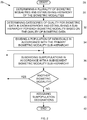
- FIG. 5 is a flowchart 58 illustrating an exemplary process for generating the matching matrix 54 illustrated in Figure 4 .
- the process starts 60 by identifying a plurality of biometric modalities 62 to be used in conducting the 1:N identity matches and determining 62 data quality levels in accordance with the process 26 as described herein and as illustrated in Figure 2 .
- the biometric modalities used for conducting the identity matches are finger and iris. It should be appreciated that for some biometric modalities, such as face, a "no data" quality level may not be included.
- Processing continues by defining 64 a plurality of subpopulations A-R in accordance with the process 26 described herein and as illustrated in Figure 2 .
- the process continues by generating 66 a matrix including a grid that defines a plurality of matrix entries, positioning 66 the subpopulation designations A-R along a first side of the grid, and positioning 66 the subpopulation designations A-R along a second side of the grid. It should be understood that each subpopulation designation A-R positioned along the first side labels a column of the matching matrix 54 and that each subpopulation designation positioned along the second side labels a row of the matching matrix 54.
- the process continues by determining 68, in accordance with the process 26 as described herein and as illustrated in Figure 2 , one of the plurality of biometric modalities that is to be the primary biometric modality used for conducting the 1:N identity matching, and determining 68 a primary biometric matching algorithm, based on the primary biometric modality, for conducting identity matching. Moreover, a secondary matching algorithm is determined that corresponds to the second biometric modality.
- the primary and secondary biometric modalities provide highly reliable 1:N identity matching results, at low cost and are associated with few false candidate identity matching results.
- These highly reliable biometrics cover the vast majority of the entire population-that is, an extremely high percentage of the overall population has high quality data for finger, or iris, or both. For these individuals, sequential fusion works very efficiently, and only the small percentage of persons with neither high quality finger nor iris data require the use of parallel fusion techniques to maintain high accuracy.
- the process continues by determining 70 whether the primary biometric matching algorithm is compatible with each matrix entry.
- a matrix entry corresponds to the required quality of the primary biometric modality
- the matrix entry is compatible with the primary biometric matching algorithm.
- Processing continues by assigning 72 the matching algorithm to the matrix entry and associating the matrix entry with at least one additional biometric modality and at least one additional matching system MSn that includes an algorithm, corresponding to the at least one additional biometric modality, for conducting a 1:1 verification.
- processing continues by determining 74 whether there is another matrix entry that has not been evaluated for compatibility. When another matrix entry is available for evaluation of compatibility processing continues by determining 70 whether the matching algorithm is compatible with the other matrix entry.
- processing continues by determining 76 whether the matching algorithm of another reliable biometric modality that has not been evaluated for compatibility with the other matrix entry is available. Specifically, the method continues by determining 76 whether the secondary matching algorithm has been evaluated for compatibility with the other matrix entry. When the secondary algorithm has not been evaluated for compatibility with the other matrix entry, the method continues by determining 70 whether the secondary algorithm is compatible with the other matrix entry. When the secondary algorithm is incompatible with the other matrix entry, processing continues by determining 76 whether the matching algorithm of another reliable biometric modality that has not been evaluated for compatibility with the other matrix entry is available.
- processing continues by assigning 78 a parallel fusion algorithm to the other matrix entry. It should be appreciated that parallel fusion economically compensates for the lack of high quality data because it is applied to very small subsets of the entire population.
- the method continues by determining 74 whether another matrix entry is available that has not been evaluated for compatibility. When another matrix entry is not available the method continues by associating 80 one of the matching systems MSn to each matrix entry. It should be understood that each matrix entry is associated with at least one of the matching systems MSn that is configured to execute the matching algorithm assigned to the matrix entry. Next, processing ends 82.
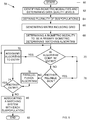
- FIG. 6 is a flowchart 84 illustrating an exemplary process for managing subpopulations included in a gallery of biometric data subpopulations to account for enrollees that are unable to provide desired biometric data samples.
- the process starts 86 by obtaining 88 the primary, secondary and tertiary biometric data from an enrollee and including the obtained biometric data in a probe.
- the primary, secondary, and tertiary biometrics are finger, iris and face biometric data, respectively.
- Processing continues by determining the characteristics of the probe 90 by evaluating the quality of the obtained primary, secondary and tertiary biometric data. The characteristics of the probe are compared against the characteristics of each subpopulation A-R and the probe is associated with one of the subpopulations A-R having the same characteristics.
- processing continues by determining 92 a first matrix entry corresponding to the probe and to a first one of the subpopulations A-R, and determining 92 the matching system MSn associated with the first matrix entry.
- the determined matching system MSn either conducts a 1:N identity matching by comparing 94 the probe against the matching system enrollment data records of the subpopulation stored therein, or conducts a 1:1 parallel fusion matching, and determining 96 whether any of the matching system enrollment data records stored therein match the probe.
- processing continues by sequentially evaluating the matches using any secondary or tertiary biometrics assigned to the first matrix entry. Any candidates that are confirmed are stored in a queue 98. Processing continues by determining 100 whether the probe has been compared against all of the subpopulations A-R. Otherwise, when the probe does not match a matching system enrollment data record in the determined matching system 96, processing continues by determining 100 whether the probe has been compared against all of the subpopulations A-R. When the probe has not been compared 100 against all of the subpopulations A-R, processing continues by determining a matrix entry 92 for the next subpopulation A-R to be matched.
- processing continues by providing 102 the queue to the entity requiring the 1:N identity match.
- the queue may be communicated to a motor vehicle administration, a financial institution, a health care provider, the Internal Revenue Service, or the social security administration.
- processing ends 104.
- the above described methods of managing subpopulations of biometric data facilitate quickly, accurately, and economically conducting 1:N identity matching by using highly reliable 1:N biometrics followed by 1:1 verification for short candidate lists for the bulk of an overall population.
- the remaining small portions of the population which cannot support a highly reliable 1:N biometric are processed using parallel fusion or other techniques.
- a subpopulation matrix is generated and is used to facilitate associating a plurality of different matching systems with corresponding segments, or subpopulations, within an entire population.
- Each matching system includes a different matching algorithm that may be configured to conduct 1:N identity matching or 1:1 verification on the corresponding subpopulation, and the results from each 1:N identity match and 1:1 verification generated by the different matching systems are aggregated into a single consolidated response.
- results from large scale 1:N identity matching conducted for an entire population where different subsets of the population have different sets of biometric data are facilitated to be accurate, and the time and costs associated with such large scale 1:N identity matching is facilitated to be reduced. Accordingly, economic and efficient management of data is facilitated to be enhanced in a cost effective and reliable manner.
- results from large scale 1:N identity matching conducted for an entire population where different subsets of the population have different sets of biometric data are facilitated to be accurate, and the time and costs associated with such large scale 1:N identity matching is facilitated to be reduced. Accordingly, economic and efficient management of data is facilitated to be enhanced in a cost effective and reliable manner.
Landscapes
- Engineering & Computer Science (AREA)
- Theoretical Computer Science (AREA)
- Physics & Mathematics (AREA)
- General Physics & Mathematics (AREA)
- Multimedia (AREA)
- Computer Vision & Pattern Recognition (AREA)
- Human Computer Interaction (AREA)
- Data Mining & Analysis (AREA)
- Life Sciences & Earth Sciences (AREA)
- Artificial Intelligence (AREA)
- Bioinformatics & Cheminformatics (AREA)
- Bioinformatics & Computational Biology (AREA)
- Evolutionary Biology (AREA)
- Evolutionary Computation (AREA)
- General Engineering & Computer Science (AREA)
- Collating Specific Patterns (AREA)
- Measurement Of The Respiration, Hearing Ability, Form, And Blood Characteristics Of Living Organisms (AREA)
Description
- This invention relates generally to methods and systems for conducting identity matching, and more particularly, to conducting biometric identification matching.
- Biometric fusion combines a plurality of biometric samples, of the same or different biometric modality, to yield higher accuracy and lower false accept rates during matching in large scale 1:N biometric matching systems. Known biometric fusion techniques include parallel fusion and cascade fusion. Parallel fusion techniques generally involve score-level fusion of individual biometric scores into a single composite score. However, known parallel fusion techniques always require biometric data for each modality to be matched.
- Cascade fusion techniques generally execute a series of algorithms such that a subsequent algorithm is executed against candidate matches determined by a previous algorithm. However, cascade fusion assumes that every candidate always includes all the biometric modalities. When considering large populations, all members of the population rarely are able to provide all biometric modalities required by either parallel or cascade fusion techniques. For example, amputees may not be able to provide finger biometric data samples. Furthermore, when using data from legacy systems to conduct large scale 1:N identity matching, the legacy data may not include all the biometric data required by parallel and cascade fusion systems.
- Known biometric matching systems fail to separate management of the overall population from the provisioning of the matching systems. Thus, using known biometric matching systems, it is difficult, time consuming and expensive to apply certain matching algorithms to data from specific groups of individuals within the overall population. Consequently, it appears that separating management of the overall population from the provisioning of the matching systems may facilitate easier application of certain matching algorithms against data from specific groups of individuals, and may thereby reduce associated time and costs.
- The documents
US 2007/071286 A1 andEP 1 965 331 A2 describe known methods and systems for conducting biometric identification matching based on a plurality of biometric modalities, taking into account that different individuals may have biometric data of different quantity or quality. - In one aspect, there is provided a method as detailed in claim 1. Advantageous features are provided in the dependent claims. A system for conducting biometric identification matching as detailed in claim 5 may also be provided. Advantageous features of the system are provided in its dependent claims.
-
-
Figure 1 is an expanded block diagram of an exemplary embodiment of a system architecture of a Sequential Fusion Computer (SFC) System; -
Figure 2 is a flowchart illustrating an exemplary process for dividing a population of individuals into subpopulations; -
Figure 3 is a diagram illustrating a graphical representation of the exemplary process for dividing a population of individuals into subpopulations as illustrated inFigure 2 ; -
Figure 4 is a diagram illustrating an exemplary matrix of gallery subpopulations plotted against probe characteristics; -
Figure 5 is a flowchart illustrating an exemplary process for generating the exemplary matrix illustrated inFigure 4 ; and -
Figure 6 is a flowchart illustrating an exemplary process for executing efficient 1:N identity matching in a large population system. -
Figure 1 is an expanded block diagram of an exemplary embodiment of a system architecture of a Sequential Fusion Computer (SFC)System 10 for implementing large scale 1:N identity matching that accounts for individuals who are not associated with all the modalities of biometric data used by the SFCsystem 10. More specifically, the SFCsystem 10 includes a Global Population Manager and Match Coordinator (GPMMC)System 12, a plurality of biometric matching systems MSn, at least one front endenrollment client system 14, and (optionally) one backend client system 16. It should be understood that as described herein a 1 :N identity match refers to identification of an individual by comparing the identifying information of the individual against identifying information of a plurality of other individuals. In the exemplary embodiment, biometric data is the identifying information. - In the exemplary embodiment, the GPMMC
system 12 includes components such as, but not limited to, a web server, a database server, an application server, a match coordination server, a directory server and adisk storage unit 18. Thedisk storage unit 18 may be used to store any kind of data. The match coordination server is configured to manage matching of any biometric modality or information associated with individuals enrolled in the GPMMCsystem 12 such that large scale 1:N identity matching may be conducted as described herein. Although these components are combined to form a single structure in the form of theGPMMC system 12 in the exemplary embodiment, it should be appreciated that in other embodiments these components may be separately positioned at different locations and operatively coupled together in a network such as, but not limited to, a local area network (LAN), a wide area network (WAN), or the Internet. TheGPMMC system 12 is typically configured to be communicatively coupled to end users at theclient systems communications network 20 such as, but not limited to, a LAN, a WAN, or the Internet. Moreover, thenetwork 20 may include any combination of a LAN, a WAN and the Internet. TheGPMMC system 12 is also configured to be communicatively coupled to the biometric matching systems over theLAN 21. It should be understood that any authorized end user at theclient systems GPMMC system 12. In the exemplary embodiment, the GPMMCsystem 12 is a computer system that manages the overall process of large scale 1:N identity matching. Theclients systems system 12, and the matching systems MSn may be associated with any entity involved with conducting identity matching including, but are not limited to, motor vehicle administrations, national identity registrars, pension system administration agencies, welfare system administration agencies, financial institutions and medical service providers. Thus, it should be appreciated that theGPMMC system 12 may be any computer system associated with any entity that performs large-scale 1:N matching. - It should be understood that the
GPMMC system 12 is configured to store therein biometric data of a population to be processed. That is, the GPMMCsystem 12 is configured to store and manage biometric data of the entire population being processed, such that large scale 1:N identity matching for the entire population stored therein may be conducted. TheGPMMC system 12 is configured to at least determine at least one of the matching systems MSn that is to be used for conducting 1:N identity matching and 1:1 identity verification, determine data quality levels, define subpopulations within a population, generate a matrix, and determine a plurality of biometric modalities. Using biometrics as the basis for identification facilitates enhancing trust in the 1:N identity matching. In order to facilitate properly conducting large scale 1:N identity matching, the GPMMCsystem 12 stores raw biometric data in the form of GPMMC enrollment data records. It should be understood that raw biometric data includes an image corresponding to a captured biometric modality such as, but not limited to, fingerprints and face. The raw data is processed to generate a matching template which is stored and used by the matching systems MSn. In the exemplary embodiment, the GPMMC enrollment data records include at least raw biometric data obtained from each individual enrolled therein. It should be appreciated that in other embodiments the GPMMC enrollment data records may also include matching templates for each individual derived from the obtained raw biometric data. - In the exemplary embodiment, each of the matching systems MSn includes components such as, but not limited to, a web server, a
disk storage device 22, a database management server, an application server, and a matching server. Although these components are combined into a single structure in the exemplary embodiment, it should be appreciated that in other embodiments these components may be separately positioned at different locations and operatively coupled together in a network such as, but not limited to, a LAN, a WAN, or the Internet. Thedisk storage device 22 may be used for storing at least matching templates derived from raw biometric data captured from individuals enrolled in theGPMMC system 12, and the database management system may be used to facilitate transferring data to and from thedisk storage device 22. Each match server is configured to perform matching using a specific biometric modality to conduct a large scale 1:N identity match of enrollees as described herein. However, it should be appreciated that in other embodiments each match server may also be configured to conduct identity matching with any information associated with an enrollee such as, but not limited to, biographic data, and to verify the claimed identity of an individual by performing a 1:1 search. It should be appreciated that the designation "n" as used in conjunction with the matching systems MSn, is intended to indicate that any number "n" of matching systems may be used that facilitates conducting large scale 1:N identity matching of enrollees as described herein. - In the exemplary embodiment, in contrast to the
GPMMC system 12, each of the matching systems MSn is configured to store therein biometric data of a portion of an entire population. That is, each matching system MSn is configured to store and manage a portion of the entire population enrolled in theGPMMC system 12, and to conduct large scale 1:N identity matching for only that portion of the entire population stored therein. Similar to theGPMMC system 12, each of the matching systems MSn is configured to store biometric data in the form of matching system enrollment data records. The matching system enrollment data records include at least matching templates derived from raw biometric data obtained from each individual enrolled therein. In other embodiments the matching system enrollment data records may also include the raw biometric data obtained from each individual enrolled therein. It should be appreciated that, in general, each matching system MSn stores biometric data for different enrollees. However, due to practical design considerations such as total numbers of matching systems MSn and various ways individuals may attempt to circumvent duplicate detection, different matching systems MSn may also store biometric data for a number of the same enrollees. - It should be understood that each of the matching systems MSn is configured to store therein a respective matching application that causes the respective matching system MSn to execute a matching algorithm particular to the subpopulation stored therein. In the exemplary embodiment each subpopulation is defined primarily based on characteristics of the subpopulation's biometric data. The matching algorithm executed by each matching system MSn corresponds to the biometric data characteristics of a respective subpopulation. Thus, in the exemplary embodiment, each subpopulation is associated with at least one corresponding matching system MSn. Each of the matching systems MSn is configured to be communicatively coupled to the
GPMMC system 12 over theLAN 21. It should be appreciated that the matching systems MSn are not configured to be communicatively coupled to theclients systems client systems - In the exemplary embodiment, raw biometric data corresponding to any biometric modality may be collected and stored as GPMMC enrollment data records in the
GPMMC system 12, and matching templates derived from the collected raw biometric data stored in the matching systems MSn. Such biometric modalities include, but are not limited to, finger, iris, face and voice. Moreover, the raw biometric data may take any form such as, but not limited to, images, photographs, and electronic data representations. - In order to perform large scale 1:N identity matching of individuals with the
GPMMC system 12 and the matching systems MSn, the raw biometric data of a plurality of individuals should be collected and stored in theGPMMC system 12, and corresponding matching templates derived and stored in the matching systems MSn, prior to conducing large scale 1:N identity matches. Obtaining and storing such data prior to conducting identity matching operations is generally known as enrolling an individual. It should be appreciated that the GPMMC enrollment data records and the matching system enrollment data records, together constitute a gallery of enrollment data. - In the exemplary embodiment the
client systems 14 are configured to include enrollment screens appropriate for collecting finger, face, and iris raw biometric data during enrollment, and are configured to includebiometric capture devices 24 for capturing finger, face, and iris biometric data submitted by individuals. However, it should be appreciated that in other embodiments, the raw biometric data may be provided by any method other than enrollment stations and entered into theGPMMC system 12, and corresponding matching templates may be provided and entered into the matching systems MSn using any method that facilitates large scale 1:N identity matching as described herein. Such methods include, but are not limited to, automatically reading the desired raw biometric data or matching template from identity documents, and extracting the desired raw biometric data or desired matching template from legacy databases included inother client systems 16. Suchother client systems 16 include, but are not limited to,client systems 16 associated with motor vehicle administrations, social security administrations, welfare system administrations, financial institutions and health care providers. Such identity documents include, but are not limited to, passports and driver's licenses. However, in other embodiments biographic data may also be collected from individuals and stored in theGPMMC system 12, and in the matching systems MSn. In such other embodiments, the biographic data is included in the GPMMC enrollment data records such that the biographic data is associated with the raw biometric data of the corresponding enrollee in theGPMMC system 12. Moreover, in such other embodiments, the biographic data is included in the matching system enrollment data records such that the biographic data is associated with the matching template of the corresponding enrollees in the matching systems MSn. - The term "biographic data" as used herein includes any demographic information regarding an individual as well as contact information pertinent to the individual. Such demographic information includes, but is not limited to, an individual's name, age, date of birth, address, citizenship and marital status. Moreover, biographic data may include contact information such as, but not limited to, telephone numbers and e-mail addresses. However, it should be appreciated that in other embodiments any desired data associated with the individual may be enrolled.
- The front end
enrollment client systems 14 and the backend client systems 16 each may include devices, such as, but not limited to, a CD-ROM drive for reading data from computer-readable recording mediums, such as a compact disc-read only memory (CD-ROM), a magneto-optical disc (MOD) and a digital versatile disc (DVD). Additionally, the computers included in each of theclient systems client systems client systems enrollment client systems 14 may include components such as, but not limited to, a web server, a database server, an application server, a directory server and adisk storage unit 15, andbiometric capture devices 24. Thedisk storage unit 15 may be used to store any kind of data. - Each of the
biometric capture devices 24 includes hardware configured to capture a specific type of biometric sample. In the exemplary embodiment, eachbiometric capture device 24 may be any device that captures any kind of desired biometric data sample that facilitates conducting large scale 1:N identity matching as described herein. Such devices include, but are not limited to, iris scanners, fingerprint scanners, vascular scanners, digital cameras, and microphones. It should be appreciated that although the exemplary embodiment includes oneenrollment client system 14 and one backend client system 16, other embodiments may include any number ofenrollment client systems 14 and any number of backend client systems 16. - The
GPMMC system 12, each of the matching systems MSn, and each of theclient systems - The memory (not shown) in the
GPMMC system 12, in each of the matching systems MSn and in theclient systems - It should be appreciated that the memory of
GPMMC system 12, the memory of each of the matching systems MSn, and the memory included in theclient systems -
Figure 2 is aflowchart 26 illustrating an exemplary process for dividing a population of individuals into subpopulations. The process starts 28 by determining 30 a plurality of biometric modalities based on criteria such as, but not limited to, strong 1:N identity matching performance, low cost, reliability, and prevalence in legacy databases. Processing continues by establishing a hierarchy of thebiometric modalities 30 by determining which of the biometric modalities best conforms to the criteria. In the exemplary embodiment, the biometric modalities are iris, face and finger. Finger biometric data is judged to best conform to the criteria because finger biometric data is associated with highly reliable and highly accurate 1:N identity matching results, and is prevalent amongst many legacy databases. Because finger biometric data best conforms to the criteria, finger biometric data is determined to be the primary biometric modality used for conducting large scale 1:N identity matching in the exemplary embodiment. Because iris biometric data is also associated with very strong large scale 1:N identity matching performance and favorable cost characteristics, iris biometric data is determined to be the secondary biometric modality. Face biometric data is currently associated with unacceptably poor 1:N identity matching performance and is currently associated with high false accept rates. Thus, it is determined that face biometric data poorly conform to the criteria. As a result, face biometric data is determined to be the tertiary biometric modality used for large scale 1:N identity matching in the exemplary embodiment. - It should be understood that the primary biometric modality is the preferred biometric modality for conducting 1:N identity matches. When adequate primary biometric modality data is not available secondary biometric modality data is used, and when adequate secondary biometric modality data is not available, tertiary biometric modality data is used to conduct large scale 1:N identity matching in the exemplary embodiment. Consequently, in the exemplary embodiment a hierarchy of biometric modalities is established that includes a primary biometric modality, a secondary biometric modality, and a tertiary biometric modality. It should be understood that the use of a primary, secondary or tertiary biometric does not preclude the additional use of other biometrics to assist in refining the matches for each sub-population.
- After establishing the hierarchy of
biometric modalities 30, processing continues by determining categories of quality for biometric data to be used to further divide subpopulations ofdata 32. In the exemplary embodiment, biometric data is categorized as one of high quality data, low quality data and unavailable data. High quality data indicates that biometric data satisfies a required quality threshold, and low quality data indicates that biometric data has been collected, but does not satisfy the required quality threshold. It should be appreciated that individuals associated with high quality data are considered to be fully enrolled with respect to the respective biometric modality, and that individuals associated with low quality biometric data are not successfully enrolled with respect to the respective biometric modality. Unavailable data indicates that particular biometric data for an individual simply was not successfully collected from the individual during enrollment. It should be understood that as used herein, enrollment includes extracting desired raw biometric data or matching templates from at least one legacy database and storing the extracted raw biometric data or extracted matching templates in theGPMMC system 12 or in at least a respective one of the matching systems MSn, respectively. Thus, individuals may be enrolled in theGPMMC system 12 and in the matching systems MSn electronically without having to again collect raw biometric data from the individual. The particular biometric data may not have been obtained because associated fingers were amputated, or the enrollment data records for an individual were obtained electronically from a different biometric system and the particular biometric data was not included in the enrollment data record because the particular biometric was not obtained during enrollment in that legacy system. - Next, processing continues by establishing a sub-hierarchy 32 for each biometric modality included in the hierarchy of biometric modalities. In the exemplary embodiment, each sub-hierarchy is determined based on the quality of biometric data to be included in the hierarchy. Thus, the primary biometric modality is subdivided into a category for individuals associated with high quality finger biometric data, a category for individuals associated with low quality finger biometric data, and a category for individuals from whom finger biometric data has not been obtained and who thus are not associated with finger biometric data. Likewise, the secondary biometric modality is subdivided into a category for individuals associated with high quality iris biometric data, a category for individuals associated with low quality iris biometric data, and a category for individuals from whom iris biometric data has not been obtained and who thus are not associated with iris biometric data. The tertiary biometric modality is subdivided into categories for individuals associated with high and low face biometric data. The tertiary biometric modality is not subdivided into a category for unavailable face biometric data in the exemplary embodiment. It should be understood that the high quality biometric data category for each of the primary and secondary modalities is preferred for conducting large scale 1:N identity matching in the exemplary embodiment. When high quality biometric data is not available, low quality biometric data may be used, but may be processed differently than high quality data. Consequently, a sub-hierarchy of each biometric modality based on biometric data quality is established that includes high quality biometric modality data, low quality biometric modality data and unavailable data.
- Although the exemplary embodiment uses biometric modalities of finger, iris and face, it should be appreciated that in other embodiments any other biometric modality may be used that conforms to the criteria described herein. Such other biometric modalities include, but are not limited to, voice. Moreover, although three biometric modalities are described in the exemplary embodiment, it should be appreciated that in other embodiments any number of biometric modalities may be used that facilitates subdividing populations as described herein. Although the exemplary embodiment defines the primary, secondary and tertiary biometric modalities as finger, iris, and face, it should be appreciated that in other embodiments the primary, secondary and tertiary biometric modalities may be defined using any combination of biometric data. For example, in such other embodiments, the primary, secondary and tertiary biometric modalities may be defined as iris, face and voice, respectively.
- Next, processing continues by dividing a population of individuals, enrolled in the
GPMMC system 12, into subpopulations in accordance with the primarybiometric modality sub-hierarchy 34. Specifically, each individual enrolled in theGPMMC system 12 is associated with a respective one of the high quality finger biometric data category, the low quality finger biometric data category, and the unavailable data category. By virtue of associating each of the individuals with a respective category included in the sub-hierarchy, the entire population of individuals enrolled in theGPMMC system 12 is subdivided into three different subpopulations. A first subpopulation includes individuals associated with high quality finger biometric data, a second subpopulation includes individuals associated with low quality finger biometric data, and a third subpopulation includes individuals who are not associated with finger biometric data. - Processing continues by further subdividing each of the first, second and third subpopulations in accordance with a subsequent
biometric modality sub-hierarchy 36. In the exemplary embodiment the subsequent biometric modality is the second biometric modality. Thus, each individual included in the first, second and third subpopulations is associated with a respective one of the high quality iris biometric data category, the low quality iris biometric data category, and the unavailable iris data category. By virtue of associating each of the individuals with a respective category included in the sub-hierarchy of the secondary biometric modality, each of the first, second and third subpopulations is further divided into three different subpopulations such that the total population enrolled in theGPMMC system 12 is divided in to nine different subpopulations. - After subdividing the first, second and
third subpopulations 36, processing continues by determining whether another biometric modality is to be used for further subdividing the ninedifferent subpopulations 38. When another biometric modality is not to be used for subdividing the ninedifferent subpopulations 38, processing continues by assigning subpopulation designations to each of the ninedifferent subpopulations 40. Otherwise, processing continues by further subdividing each of the nine different subpopulations in accordance with a different subsequentbiometric modality sub-hierarchy 36. The different subsequent biometric modality is the tertiary biometric modality. Thus, each individual included in the nine different subpopulations is associated with a respective one of the high quality face biometric data category and the low quality face biometric data category. By virtue of associating each of the individuals with a respective category included in the sub-hierarchy of the tertiary biometric modality, each of the nine different subpopulations is further divided into two different subpopulations such that the total populations enrolled in theGPMMC system 12 is divided into eighteen different subpopulations. Next, processing continues by determining that another biometric modality is not to be used for subdividing the eighteensubpopulations 38, and assigningsubpopulation designations 40 to each of the eighteen subpopulations. In the exemplary embodiment, alphabetic characters are used to designate each subpopulation. However, in other embodiments any method for designating the subpopulations may be used including, but not limited to, designating the subpopulations with alphanumeric characters. Next, processing ends 42. -
Figure 3 is a diagram 44 illustrating a graphical representation of the subpopulations determined using thesubdividing process 26 described herein and as illustrated inFigure 2 . Specifically, the diagram 44 includes a column for each of the hierarchy of biometric modalities. Thus, the diagram 44 includes a column for the primarybiometric modality 46, a column for the secondarybiometric modality 48, and a column for the tertiarybiometric modality 50. It should be appreciated that the diagram 44 includes another column for subpopulation designations 52. The first, second and third subpopulations determined according to thesubdividing process 26 are represented as high quality finger data 46-1, low quality finger data 46-2, and no finger data 46-3, respectively. Moreover, the nine subpopulations determined according to thesubdividing process 26 are represented as high quality iris data 48-1, 48-2, 48-3, low quality iris data 48-2, 48-5, 48-8, and no iris data 48-3, 48-6, 48-8. It should be understood that each of the high quality iris data subpopulations 48-1, 48-4, 48-7 are different, each of the low quality iris data subpopulations 48-2, 48-5, 48-8 is different, and each of the no iris data subpopulations is different. Furthermore, the eighteen subpopulations determined according to thesubdividing process 26 are represented as high quality face data 50-1, 50-3, 50-5, 50-7, 50-9, 50-11, 50-13, 50-15, 50-17, and low quality face data 50-2, 50-4, 50-6, 50-8, 50-10, 50-12, 50-14, 50-16, 50-18. It should be understood that each of the high quality face data populations 50-1 to 50-17 is different, and that each of the low quality face data populations 50-2 to 50-18 is different. Thesubpopulations designation column 52 includes subpopulation designations A-R that each correspond to one of the face data populations 50-1 to 50-18. - The high quality finger data population 46-1 is associated with the iris populations 48-1, 48-2, 48-3; low quality finger data population 46-2 is associated with iris subpopulations 48-4, 48-5, 48-6; and, the no finger data subpopulation 46-3 is associated with iris subpopulations 48-7, 48-8, 48-9. Moreover, the iris subpopulations 48-1 to 48-9 are associated with a corresponding different one of the high quality face subpopulations and a corresponding different one of the low quality face subpopulations.
- It should be understood that the diagram 44 is also a graphical representation of the subdividing
process 26. For example, reading the diagram 44 from the primarybiometric modality column 46 to thesubpopulation designation column 52, individuals included in the subpopulation 46-1 may also be included in the high quality iris biometric data subpopulation 48-1. Moreover, individuals included in the high quality iris biometric data subpopulation 48-1 may also be included in the high quality face biometric data subpopulation 50-1, which corresponds to subpopulation "A." As a result, it should be understood that enrollees having high quality finger 46-1, iris 48-1, and face 50-1 biometric data are subdivided from the entire population by virtue of being included in the subpopulation "A." It should be understood that enrollees having high quality finger and iris biometric data, but low quality face biometric data, are subdivided from the rest of the population by virtue of being included in subpopulation "B." - As another example, reading diagram 44 from the primary
biometric modality column 46 to thesubpopulation designation column 52, individuals included in the low quality finger biometric data subpopulation 46-2 may have high quality iris 48-4 biometric data. Thus, these individuals are also included in the high quality iris biometric data subpopulation 48-4 associated with the low quality finger biometric data subpopulation 46-2. Furthermore, individuals included in the subpopulation 48-4 may have high quality face biometric data. Thus, these individuals are also included in the high quality face biometric data subpopulation 50-7, which corresponds to subpopulation designation "G." As a result, it should be understood that enrollees having low quality finger biometric data 46-2, high quality iris biometric data 48-4, and high quality face biometric data 50-7 are subdivided from the entire population by virtue of being included in the subpopulation "G." It should be understood that individuals having low quality finger biometric data 46-2, high quality iris biometric 48-1 and low quality face biometric data 50-8 are subdivided from the rest of the population by virtue of being included in subpopulation "H." - As yet another example, reading diagram 44 from the primary
biometric modality column 46 to thesubpopulation designation column 52, individuals included in the subpopulation 46-3 without finger biometric data may also have high quality iris biometric data 48-7. Thus, these individuals are also included in the high quality iris biometric data subpopulation 48-7. Moreover, individuals included in the subpopulation 48-7 may also have high quality face biometric data 50-13. Thus, these individuals are also included in the high quality face biometric data subpopulation 50-13, which corresponds to subpopulation designation "M." As a result, it should be understood that individuals without finger biometric data 46-3, but having high quality iris 48-7 and face biometric data 50-13 are subdivided from the entire population by virtue of being included in subpopulation "M." It should be understood that individuals without finger biometric data 46-3, having high quality biometric data 48-7 and low quality face biometric data 50-14 are subdivided from the rest of the population by virtue of being included in subpopulation "N." - It should be understood that in the exemplary embodiment, as part of large scale 1:N identity matching, biometric data of a new enrollee is compared against the enrollment data records of all previously enrolled individuals. However, it should be appreciated that in other embodiments large scale 1:N identity matching may be conducted with individuals other than new enrollees. The biometric data of an enrollee that is used in a comparison is also known as a probe. Thus, it should be appreciated that the biometric characteristics of the probe may be converted into one of the subpopulation designations A-R such that an appropriate matching technique may be determined.
-
Figure 4 is a diagram illustrating anexemplary matching matrix 54 ofgallery subpopulations 53 plotted againstprobe characteristics 56. Specifically, gallery subpopulation designations 53, corresponding to the subpopulation designations A-R, are sequentially positioned along a first side of the matchingmatrix 54 such that the subpopulation designations A-R are listed along the first side. The subpopulation designations A-R are also sequentially positioned along a second side of the matchingmatrix 54 such that the subpopulation characteristics of a probe are listed sequentially along the second side. It should be appreciated that the second side of the matchingmatrix 54 is substantially orthogonal to the first side. - It should be understood that the subpopulation designations A-R listed sequentially along the first side of the matching
matrix 54 together represent the entire population. Thus, the subpopulation descriptions A-R listed along the first side constitute a gallery of thesubpopulations 53. Furthermore, it should be understood the subpopulation designations A-R listed sequentially along the second side of the matchingmatrix 54 together represent all of the possible subpopulation characteristics of the probe of an individual new enrollee. Thus, the subpopulation designations A-R listed along the second side of the matchingmatrix 54 also represent all of the potential combinations of biometric characteristics for the probe. - It should be appreciated that matching
matrix 54 includes a plurality of cells, or matrix entries, defined by row and column designations. A probe having characteristics of the subpopulation C may be compared against the subpopulation A. Plotting the row ofmatrix 54 corresponding to a probe having characteristics of the subpopulation C, against the column ofmatrix 54 corresponding to subpopulation A yields an intersecting cell, or matrix entry, having an address of C, A. It should be appreciated that in the exemplary embodiment each matrix entry compatible with the primary biometric modality is associated with the primary biometric modality and a corresponding matching system MSn that includes an algorithm for conducting 1:N identity matching based on the primary biometric modality. Each matrix entry that is compatible with the secondary biometric modality, and that is not already assigned to the primary biometric modality, is associated with the secondary biometric modality and a corresponding matching system MSn that includes an algorithm for conducting 1:N identity matching based on the secondary biometric modality. It should be understood that in the exemplary embodiment only matrix entries associated with high quality finger biometric data or high quality iris biometric data are associated with matching systems MSn that are configured to conduct 1:N identity matching based on the corresponding biometric modality. Such matrix entries are indicated in the shaded regions 54-1 and 54-2 of thematrix 54. Moreover, it should be appreciated that matrix entries compatible with either the primary or secondary biometric modality may also be associated with at least one additional biometric modality and at least one additional matching system MSn that includes an algorithm, corresponding to the at least one additional biometric modality, for conducting a 1:1 verification. - Matrix entries not compatible with the primary and secondary biometric modalities are associated with any available biometric data and with at least one of the matching systems MSn that includes an algorithm, corresponding to available biometric modality data, for conducting unimodal or parallel fusion, as supported by the available data. Because each matrix entry is associated with biometric modality data and at least one corresponding matching system MSn, by virtue of plotting an appropriate probe characteristic against each subpopulation included in the gallery of
subpopulations 53, an appropriate biometric modality for conducting identity matching may be determined, as well as the respective matching system MSn for the identity matching. - For example, plotting a probe with the characteristics of subpopulation "B" against subpopulation N yields a matrix entry address of B, N. Matrix entry B, N indicates that iris biometric data is to be used for conducting the 1:N identity match and that an appropriate respective matching system MSn is to be used for conducting the 1:N identity match. Iris matching is associated with the matrix entry B, N because subpopulation N does not include high quality finger biometric data. It should be appreciated that probe characteristic "B" and the subpopulation N include the secondary biometric.
- When 1:N identity matching is conducted, the 1:N identity matching may identify one or more candidate matches. In the exemplary embodiment, the candidates are further refined by applying the additional biometric modality and conducting a 1:1 verification with the at least one additional matching system MSn. Because the number of candidates generated during the 1:N identity matching is very small compared to the size of the sub-population, it is possible to apply the at least one additional biometric modality using 1:1 or 1:few matching. By setting the 1:N identity matching biometric matching threshold "lower" it is possible to increase the accuracy of the first biometric used, while accepting the generation of additional candidate matches. By lowering the initial threshold to increase accuracy, then sequentially applying the at least one additional biometric to eliminate candidate matches that are not true matches, the benefits of parallel fusion are realized at far lower costs in terms of algorithm and hardware costs.
- It should be appreciated that the shaded area 54-1 designates an area within the matching
matrix 54 that indicates where high quality finger biometric data is used to conduct 1:N identity matching. Shaded areas 54-2 designate areas where high quality iris biometric data are used to conduct the 1:N identity match. All other areas within the matchingmatrix 54 represent cases where a highly reliable 1:N biometric does not exist to execute a 1:N identity match. When a highly reliable biometric does not exist, to obtain high 1:N matching accuracy, parallel fusion is used. Because these residual subpopulations are small compared to the subpopulations represented by boxes 54-1 and 54-2 in the matrix, parallel fusion matching techniques provide reliable and accurate identity matching results at a low cost. Thus, it should be understood that each row in the matchingmatrix 54, corresponding to a probe characteristic 56, describes how a given probe can best be matched against all the subpopulations A-R to yield a highest quality 1 :N identity matching result with the lowest resource consumption. -
Figure 5 is aflowchart 58 illustrating an exemplary process for generating the matchingmatrix 54 illustrated inFigure 4 . The process starts 60 by identifying a plurality ofbiometric modalities 62 to be used in conducting the 1:N identity matches and determining 62 data quality levels in accordance with theprocess 26 as described herein and as illustrated inFigure 2 . In the exemplary embodiment, the biometric modalities used for conducting the identity matches are finger and iris. It should be appreciated that for some biometric modalities, such as face, a "no data" quality level may not be included. - Processing continues by defining 64 a plurality of subpopulations A-R in accordance with the
process 26 described herein and as illustrated inFigure 2 . After defining 64 the plurality of subpopulations A-R, the process continues by generating 66 a matrix including a grid that defines a plurality of matrix entries, positioning 66 the subpopulation designations A-R along a first side of the grid, and positioning 66 the subpopulation designations A-R along a second side of the grid. It should be understood that each subpopulation designation A-R positioned along the first side labels a column of the matchingmatrix 54 and that each subpopulation designation positioned along the second side labels a row of the matchingmatrix 54. - The process continues by determining 68, in accordance with the
process 26 as described herein and as illustrated inFigure 2 , one of the plurality of biometric modalities that is to be the primary biometric modality used for conducting the 1:N identity matching, and determining 68 a primary biometric matching algorithm, based on the primary biometric modality, for conducting identity matching. Moreover, a secondary matching algorithm is determined that corresponds to the second biometric modality. It should be understood that in the exemplary embodiment the primary and secondary biometric modalities provide highly reliable 1:N identity matching results, at low cost and are associated with few false candidate identity matching results. These highly reliable biometrics cover the vast majority of the entire population-that is, an extremely high percentage of the overall population has high quality data for finger, or iris, or both. For these individuals, sequential fusion works very efficiently, and only the small percentage of persons with neither high quality finger nor iris data require the use of parallel fusion techniques to maintain high accuracy. - Next, the process continues by determining 70 whether the primary biometric matching algorithm is compatible with each matrix entry. When a matrix entry corresponds to the required quality of the primary biometric modality, the matrix entry is compatible with the primary biometric matching algorithm. Processing continues by assigning 72 the matching algorithm to the matrix entry and associating the matrix entry with at least one additional biometric modality and at least one additional matching system MSn that includes an algorithm, corresponding to the at least one additional biometric modality, for conducting a 1:1 verification. Next, processing continues by determining 74 whether there is another matrix entry that has not been evaluated for compatibility. When another matrix entry is available for evaluation of compatibility processing continues by determining 70 whether the matching algorithm is compatible with the other matrix entry.
- When the primary biometric matching algorithm is incompatible with the other matrix entry, processing continues by determining 76 whether the matching algorithm of another reliable biometric modality that has not been evaluated for compatibility with the other matrix entry is available. Specifically, the method continues by determining 76 whether the secondary matching algorithm has been evaluated for compatibility with the other matrix entry. When the secondary algorithm has not been evaluated for compatibility with the other matrix entry, the method continues by determining 70 whether the secondary algorithm is compatible with the other matrix entry. When the secondary algorithm is incompatible with the other matrix entry, processing continues by determining 76 whether the matching algorithm of another reliable biometric modality that has not been evaluated for compatibility with the other matrix entry is available. In the exemplary embodiment, when the primary and secondary matching algorithms have been evaluated, and because another reliable biometric modality and corresponding matching algorithm are not available, processing continues by assigning 78 a parallel fusion algorithm to the other matrix entry. It should be appreciated that parallel fusion economically compensates for the lack of high quality data because it is applied to very small subsets of the entire population.
- Next, the method continues by determining 74 whether another matrix entry is available that has not been evaluated for compatibility. When another matrix entry is not available the method continues by associating 80 one of the matching systems MSn to each matrix entry. It should be understood that each matrix entry is associated with at least one of the matching systems MSn that is configured to execute the matching algorithm assigned to the matrix entry. Next, processing ends 82.
-
Figure 6 is aflowchart 84 illustrating an exemplary process for managing subpopulations included in a gallery of biometric data subpopulations to account for enrollees that are unable to provide desired biometric data samples. The process starts 86 by obtaining 88 the primary, secondary and tertiary biometric data from an enrollee and including the obtained biometric data in a probe. In the exemplary embodiment, the primary, secondary, and tertiary biometrics are finger, iris and face biometric data, respectively. Processing continues by determining the characteristics of the probe 90 by evaluating the quality of the obtained primary, secondary and tertiary biometric data. The characteristics of the probe are compared against the characteristics of each subpopulation A-R and the probe is associated with one of the subpopulations A-R having the same characteristics. - Next, processing continues by determining 92 a first matrix entry corresponding to the probe and to a first one of the subpopulations A-R, and determining 92 the matching system MSn associated with the first matrix entry. Depending on the biometric data available and the associated matching system MSn, the determined matching system MSn either conducts a 1:N identity matching by comparing 94 the probe against the matching system enrollment data records of the subpopulation stored therein, or conducts a 1:1 parallel fusion matching, and determining 96 whether any of the matching system enrollment data records stored therein match the probe. When the probe matches a matching system enrollment data record stored in the determined matching system during a 1:N identity match, processing continues by sequentially evaluating the matches using any secondary or tertiary biometrics assigned to the first matrix entry. Any candidates that are confirmed are stored in a
queue 98. Processing continues by determining 100 whether the probe has been compared against all of the subpopulations A-R. Otherwise, when the probe does not match a matching system enrollment data record in thedetermined matching system 96, processing continues by determining 100 whether the probe has been compared against all of the subpopulations A-R. When the probe has not been compared 100 against all of the subpopulations A-R, processing continues by determining amatrix entry 92 for the next subpopulation A-R to be matched. Otherwise, when the probe has been compared 100 against all of the subpopulations A-R, processing continues by providing 102 the queue to the entity requiring the 1:N identity match. For example, the queue may be communicated to a motor vehicle administration, a financial institution, a health care provider, the Internal Revenue Service, or the social security administration. Next, processing ends 104. - Although a subsequent 1:1 verification process occurs in the exemplary embodiment after conducting a 1:N identity matching, it should be appreciated that in other embodiments a subsequent verification process need not be conducted.
- In the exemplary embodiments, the above described methods of managing subpopulations of biometric data, facilitate quickly, accurately, and economically conducting 1:N identity matching by using highly reliable 1:N biometrics followed by 1:1 verification for short candidate lists for the bulk of an overall population. The remaining small portions of the population which cannot support a highly reliable 1:N biometric are processed using parallel fusion or other techniques. It should be appreciated that different subsets of the population have different combinations of biometric data, so these techniques may vary by sub-population. More specifically, a subpopulation matrix is generated and is used to facilitate associating a plurality of different matching systems with corresponding segments, or subpopulations, within an entire population. Each matching system includes a different matching algorithm that may be configured to conduct 1:N identity matching or 1:1 verification on the corresponding subpopulation, and the results from each 1:N identity match and 1:1 verification generated by the different matching systems are aggregated into a single consolidated response.
- Consequently, results from large scale 1:N identity matching conducted for an entire population where different subsets of the population have different sets of biometric data are facilitated to be accurate, and the time and costs associated with such large scale 1:N identity matching is facilitated to be reduced. Accordingly, economic and efficient management of data is facilitated to be enhanced in a cost effective and reliable manner.
- While the invention has been described in terms of various specific embodiments, those skilled in the art will recognize that the invention can be practiced with modification within the scope of the claims.
- Consequently, results from large scale 1:N identity matching conducted for an entire population where different subsets of the population have different sets of biometric data are facilitated to be accurate, and the time and costs associated with such large scale 1:N identity matching is facilitated to be reduced. Accordingly, economic and efficient management of data is facilitated to be enhanced in a cost effective and reliable manner.
- While the invention has been described in terms of various specific embodiments, those skilled in the art will recognize that the invention can be practiced with modification within the spirit and scope of the claims.
Claims (8)
- A method of conducting biometric identification matching comprising:determining (30, 62) a plurality of biometric modalities (46, 48, 50) based on criteria;defining (64) a plurality of subpopulations (46-1,..., 46-3, 48-1, ..., 48-9, 50-1, ..., 50-18) of an overall population of individuals enrolled in an authentication system by dividing biometric data of the overall population of individuals based on the biometric modalities and a quality of each of the biometric modalities (32);providing a plurality of matching computer hardware systems (MS1, MS2, MSn), each of these matching computer hardware systems being configured to store biometric enrollment data of a respective subpopulation and to conduct a 1:N identity match for only that sub-population;obtaining biometric data from a user and configuring the obtained biometric data as a probe, wherein the probe is categorized based on biometric modalities and quality of each of the biometric modalities;conducting a 1:N identity match between the probe and each subpopulation by using each of the matching computer hardware systems (MS1, MS2, MSn) for conducting a 1:N identity match between biometric data of the probe and biometric enrollment data of the respective subpopulation ;determining a candidate match (96) when the probe matches a matching computer hardware system enrollment data record stored in a matching computer hardware system;storing the candidate match in a queue (98) when the candidate match is confirmed;communicating the queue to an entity (102) requiring the identity match; the method further comprising:determining (68) one of the plurality of biometric modalities that best conforms to the criteria as a primary biometric modality (46);determining another one of the plurality of biometric modalities as a secondary biometric modality (48) based on conformance to the criteria; anddetermining a third one of the plurality of biometric modalities as a tertiary biometric modality (50) based on conformance to the criteria;and performing the 1:N identity match between the probe and the enrollment data records of a subpopulation by:using the primary biometric modality (46) if both the probe and the respective subpopulation have high quality data in said primary biometric modality (54-1),using the secondary biometric modality (48) if the probe or the respective subpopulation have no high quality biometric data in the primary biometric modality, but both the probe and the subpopulation have high quality data in the secondary biometric modality (54-2), orapplying parallel fusion (78) to the available modalities in all other cases.
- A method in accordance with claim 1, further comprising conducting a 1:1 verification to eliminate the candidate match if the candidate match is not a true match.
- A method in accordance with claim 2, further comprising executing said conducting a 1:1 verification operation with an additional biometric modality matching algorithm.
- A method in accordance with claim 1, said dividing operation further comprising:establishing a hierarchy of the biometric modalities (62); andestablishing a sub-hierarchy for each biometric modality (62) included in the hierarchy, each sub-hierarchy being based on the quality of biometric modality data to be included in the hierarchy and including at least high and low quality biometric modality data.
- A system (10) for conducting biometric identification matching comprising:a plurality of matching computer hardware systems (MS1, MS2, MSn), each of these matching computer hardware systems being configured to store biometric enrollment data of a respective subpopulation and to conduct a 1:N identity match for only that sub-population;each subpopulation having been defined by determining a plurality of biometric modalities (46, 48,50) based on criteria and by dividing biometric data of an overall population of individuals enrolled in the system based on the biometric modalities and a quality of the biometric modalities;at least one client system (14,16) configured to obtain biometric data, wherein the obtained biometric data is configured as a probe; anda computer configured as a server (12), said server including at least a database, said server being configured to store within said database at least enrollment data records for subpopulations, wherein said server, said at least one client system and said matching computer hardware systems communicate over a network (20, 21);said server is further configured to include biometric data in a probe and determine biometric modalities and quality of each of the biometric modalities of the probe,each matching computer hardware system (MS1, MS2, MSn) is further configured to conduct a 1:N identity match between biometric data of the probe and biometric enrollment data of the respective subpopulation, the server is configured to determine a candidate match when the probe matches a matching computer hardware system enrollment data record stored in a matching computer hardware system,said server is further configured to store the candidate match in a queue when the candidate match is confirmed, and communicate the queue to an entity requiring the identity match;said server is further configured to determine one of the plurality of biometric modalities that best conforms to the criteria as a primary biometric modality (46);determine another one of the plurality of biometric modalities as a secondary biometric modality (48) based on conformance to the criteria; anddetermine a third one of the plurality of biometric modalities as a tertiary biometric modality (50) based on conformance to the criteria;and wherein each matching computer hardware system is further configured to perform the 1:N identity match between the probe and the enrollment data records of a subpopulation by:using the primary biometric modality (46) if both the probe and the respective subpopulation have high quality data in said primary biometric modality (54-1),using the secondary biometric modality (48) if the probe or the respective subpopulation have no high quality biometric data in the primary biometric modality, but both the probe and the subpopulation have high quality data in the secondary biometric modality (54-2), orapplying parallel fusion (78) to the available modalities in all other cases.
- A system in accordance with claim 5, said server being further configured to conduct a 1:1 verification to eliminate the candidate match if the candidate match is not a true match.
- A system in accordance with claim 6, said server being further configured to:generate a matrix (54) including a plurality of matrix entries, each of the matrix entries being associated with one of a plurality of subpopulations; anddetermine a row in the matrix (54) corresponding to the probe.
- A system in accordance with claim 7, said server being further configured to compare the probe against the enrollment data records of the entire population by communicating with each of said matching computer hardware systems associated with the row such that each of said matching computer hardware systems associated with the row conducts a 1:N identity match, for the respective subpopulation, between the probe and the matching system enrollment data records stored therein.
Applications Claiming Priority (2)
| Application Number | Priority Date | Filing Date | Title |
|---|---|---|---|
| US12/714,568 US20110211734A1 (en) | 2010-03-01 | 2010-03-01 | Method and system for conducting identity matching |
| US12/870,870 US7835548B1 (en) | 2010-03-01 | 2010-08-30 | Method and system for conducting identity matching |
Publications (3)
| Publication Number | Publication Date |
|---|---|
| EP2363830A2 EP2363830A2 (en) | 2011-09-07 |
| EP2363830A3 EP2363830A3 (en) | 2014-05-14 |
| EP2363830B1 true EP2363830B1 (en) | 2020-03-25 |
Family
ID=43065903
Family Applications (1)
| Application Number | Title | Priority Date | Filing Date |
|---|---|---|---|
| EP11155716.1A Active EP2363830B1 (en) | 2010-03-01 | 2011-02-23 | Method and system for conducting identity matching |
Country Status (3)
| Country | Link |
|---|---|
| US (2) | US20110211734A1 (en) |
| EP (1) | EP2363830B1 (en) |
| WO (1) | WO2011109208A1 (en) |
Families Citing this family (19)
| Publication number | Priority date | Publication date | Assignee | Title |
|---|---|---|---|---|
| US8516562B2 (en) | 2008-05-13 | 2013-08-20 | Veritrix, Inc. | Multi-channel multi-factor authentication |
| US8468358B2 (en) | 2010-11-09 | 2013-06-18 | Veritrix, Inc. | Methods for identifying the guarantor of an application |
| US8006291B2 (en) * | 2008-05-13 | 2011-08-23 | Veritrix, Inc. | Multi-channel multi-factor authentication |
| US8166297B2 (en) | 2008-07-02 | 2012-04-24 | Veritrix, Inc. | Systems and methods for controlling access to encrypted data stored on a mobile device |
| WO2010051342A1 (en) | 2008-11-03 | 2010-05-06 | Veritrix, Inc. | User authentication for social networks |
| US8041956B1 (en) * | 2010-08-16 | 2011-10-18 | Daon Holdings Limited | Method and system for biometric authentication |
| US8989520B2 (en) * | 2010-03-01 | 2015-03-24 | Daon Holdings Limited | Method and system for conducting identification matching |
| US8474014B2 (en) | 2011-08-16 | 2013-06-25 | Veritrix, Inc. | Methods for the secure use of one-time passwords |
| US8995729B2 (en) * | 2011-08-30 | 2015-03-31 | The Mitre Corporation | Accelerated comparison using scores from coarse and fine matching processes |
| US8984276B2 (en) | 2012-01-10 | 2015-03-17 | Jpmorgan Chase Bank, N.A. | System and method for device registration and authentication |
| US20130231954A1 (en) * | 2012-01-12 | 2013-09-05 | Brian Jeffry Bryant | Computer system and method for managing medical care |
| WO2014085500A1 (en) * | 2012-11-27 | 2014-06-05 | Security Solutions & Management Llc | Identification acquisition device for reducing the likelihood of incidence of a lapse in proper discharge of a security procedure |
| US9286528B2 (en) * | 2013-04-16 | 2016-03-15 | Imageware Systems, Inc. | Multi-modal biometric database searching methods |
| US9344419B2 (en) | 2014-02-27 | 2016-05-17 | K.Y. Trix Ltd. | Methods of authenticating users to a site |
| JP2015170101A (en) * | 2014-03-06 | 2015-09-28 | 富士通株式会社 | biometric authentication device, method and program |
| NO344910B1 (en) * | 2016-01-12 | 2020-06-29 | Kk88 No As | Device for verifying the identity of a person |
| CN107958174A (en) * | 2016-11-01 | 2018-04-24 | 深圳信炜科技有限公司 | Bio-identification module and mobile terminal |
| US11449587B2 (en) * | 2017-11-20 | 2022-09-20 | Ppip, Llc | Systems and methods for biometric identity and authentication |
| CN113611381A (en) * | 2021-07-28 | 2021-11-05 | 上海德衡数据科技有限公司 | Outpatient service information registration method and system based on intelligent medical treatment |
Family Cites Families (38)
| Publication number | Priority date | Publication date | Assignee | Title |
|---|---|---|---|---|
| US5229764A (en) * | 1991-06-20 | 1993-07-20 | Matchett Noel D | Continuous biometric authentication matrix |
| JP2821348B2 (en) * | 1993-10-21 | 1998-11-05 | 日本電気ソフトウェア株式会社 | Fingerprint collation device |
| US7248719B2 (en) * | 1994-11-28 | 2007-07-24 | Indivos Corporation | Tokenless electronic transaction system |
| EP2224368B1 (en) * | 2001-06-18 | 2013-01-09 | Daon Holdings Limited | An electronic data vault providing biometrically protected electronic signatures |
| US6950536B2 (en) * | 2002-01-25 | 2005-09-27 | Houvener Robert C | High volume mobile identity verification system and method using tiered biometric analysis |
| US6757408B2 (en) * | 2002-01-25 | 2004-06-29 | Robert C. Houvener | Quality assurance and training system for high volume mobile identity verification system and method |
| US7242810B2 (en) * | 2004-05-13 | 2007-07-10 | Proximex Corporation | Multimodal high-dimensional data fusion for classification and identification |
| US20060021003A1 (en) * | 2004-06-23 | 2006-01-26 | Janus Software, Inc | Biometric authentication system |
| US7492943B2 (en) * | 2004-10-29 | 2009-02-17 | George Mason Intellectual Properties, Inc. | Open set recognition using transduction |
| US7616788B2 (en) * | 2004-11-12 | 2009-11-10 | Cogent Systems, Inc. | System and method for fast biometric pattern matching |
| US7298873B2 (en) * | 2004-11-16 | 2007-11-20 | Imageware Systems, Inc. | Multimodal biometric platform |
| US7519217B2 (en) * | 2004-11-23 | 2009-04-14 | Microsoft Corporation | Method and system for generating a classifier using inter-sample relationships |
| US20090037978A1 (en) * | 2004-12-22 | 2009-02-05 | Merkatum Corporation | Self-adaptive multimodal biometric authentication method and system for performance thereof |
| US7287013B2 (en) * | 2005-01-14 | 2007-10-23 | Ultra-Scan Corporation | Multimodal fusion decision logic system |
| US7558765B2 (en) * | 2005-01-14 | 2009-07-07 | Ultra-Scan Corporation | Multimodal fusion decision logic system using copula model |
| US20060171571A1 (en) * | 2005-02-01 | 2006-08-03 | Chan Michael T | Systems and methods for quality-based fusion of multiple biometrics for authentication |
| US20070036400A1 (en) * | 2005-03-28 | 2007-02-15 | Sanyo Electric Co., Ltd. | User authentication using biometric information |
| US7769207B2 (en) * | 2005-04-01 | 2010-08-03 | Olivo Jr John W | System and method for collection, storage, and analysis of biometric data |
| US8122259B2 (en) * | 2005-09-01 | 2012-02-21 | Bricom Technologies Ltd | Systems and algorithms for stateless biometric recognition |
| KR100734837B1 (en) * | 2005-09-16 | 2007-07-03 | 한국전자통신연구원 | Multi biometrics system and method thereof |
| US7545961B2 (en) * | 2005-12-22 | 2009-06-09 | Daon Holdings Limited | Biometric authentication system |
| US7747044B2 (en) * | 2006-01-20 | 2010-06-29 | The Johns Hopkins University | Fusing multimodal biometrics with quality estimates via a bayesian belief network |
| US20070183625A1 (en) * | 2006-01-27 | 2007-08-09 | Dussich Jeffrey A | Statistical Match For Facial Biometric To Reduce False Accept Rate/False Match Rate (FAR/FMR) |
| DE602007010523D1 (en) * | 2006-02-15 | 2010-12-30 | Toshiba Kk | Apparatus and method for personal identification |
| TW200740165A (en) * | 2006-04-10 | 2007-10-16 | Mitac Int Corp | Fingerprint authentication method for accessing wireless network systems |
| US20070288452A1 (en) * | 2006-06-12 | 2007-12-13 | D&S Consultants, Inc. | System and Method for Rapidly Searching a Database |
| CN103336941A (en) * | 2006-07-19 | 2013-10-02 | 光谱辨识公司 | Multibiometric multispectral imager |
| US20080052527A1 (en) * | 2006-08-28 | 2008-02-28 | National Biometric Security Project | method and system for authenticating and validating identities based on multi-modal biometric templates and special codes in a substantially anonymous process |
| KR100826873B1 (en) * | 2006-09-07 | 2008-05-06 | 한국전자통신연구원 | Biometric method and apparatus therefor |
| JP5012092B2 (en) * | 2007-03-02 | 2012-08-29 | 富士通株式会社 | Biometric authentication device, biometric authentication program, and combined biometric authentication method |
| KR100927596B1 (en) * | 2007-09-21 | 2009-11-23 | 한국전자통신연구원 | Data protected pattern recognition method and apparatus |
| US8239685B2 (en) * | 2007-10-24 | 2012-08-07 | Electronics And Telecommunications Research Institute | Biometric authentication method |
| US8031981B2 (en) * | 2007-12-21 | 2011-10-04 | Daon Holdings Limited | Method and systems for generating a subset of biometric representations |
| US9135620B2 (en) * | 2008-02-08 | 2015-09-15 | Microsoft Technology Licensing, Llc | Mobile device security using wearable security tokens |
| US8150108B2 (en) * | 2008-03-17 | 2012-04-03 | Ensign Holdings, Llc | Systems and methods of identification based on biometric parameters |
| US8838990B2 (en) * | 2008-04-25 | 2014-09-16 | University Of Colorado Board Of Regents | Bio-cryptography: secure cryptographic protocols with bipartite biotokens |
| JP5121681B2 (en) * | 2008-04-30 | 2013-01-16 | 株式会社日立製作所 | Biometric authentication system, authentication client terminal, and biometric authentication method |
| JP2010049357A (en) * | 2008-08-19 | 2010-03-04 | Fujitsu Ltd | Authentication device, authentication system, and authentication method |
-
2010
- 2010-03-01 US US12/714,568 patent/US20110211734A1/en not_active Abandoned
- 2010-08-30 US US12/870,870 patent/US7835548B1/en active Active
-
2011
- 2011-02-23 EP EP11155716.1A patent/EP2363830B1/en active Active
- 2011-02-24 WO PCT/US2011/026009 patent/WO2011109208A1/en not_active Ceased
Non-Patent Citations (1)
| Title |
|---|
| None * |
Also Published As
| Publication number | Publication date |
|---|---|
| EP2363830A2 (en) | 2011-09-07 |
| EP2363830A3 (en) | 2014-05-14 |
| WO2011109208A1 (en) | 2011-09-09 |
| US7835548B1 (en) | 2010-11-16 |
| US20110211734A1 (en) | 2011-09-01 |
Similar Documents
| Publication | Publication Date | Title |
|---|---|---|
| US7835548B1 (en) | Method and system for conducting identity matching | |
| US8989520B2 (en) | Method and system for conducting identification matching | |
| US11985153B2 (en) | System and method for detecting anomalous activity based on a data distribution | |
| US8977861B2 (en) | Method and system for biometric authentication | |
| US8131745B1 (en) | Associating user identities with different unique identifiers | |
| US8520903B2 (en) | Method and system of accounting for positional variability of biometric features | |
| US8607319B2 (en) | Methods and systems for determining biometric data for use in authentication transactions | |
| US20160283603A1 (en) | Methods and systems for testing performance of biometric authentication systems | |
| CN112989295A (en) | User identification method and device | |
| CN115880702A (en) | Data processing method, device, equipment, program product and storage medium | |
| US11669604B2 (en) | Methods and systems for authenticating a user | |
| EP4116928A1 (en) | Control method, control program, and information processing device | |
| US11935331B2 (en) | Methods and systems for real-time electronic verification of content with varying features in data-sparse computer environments | |
| WO2012143939A2 (en) | System and method for demographic analytics based on multimodal information | |
| CA3131616C (en) | System and method for detecting anomalous activity based on a data distribution | |
| US20180293289A1 (en) | Biometric data brokerage system and method for transfer of biometric records between biometric collection devices and biometric processing services | |
| US20230282032A1 (en) | Methods and systems for signature verification | |
| US11195170B1 (en) | Method and a system for creating a behavioral user profile | |
| AU2011200382A1 (en) | Method and System for Biometric Authentication | |
| US20210232839A1 (en) | File capture and processing system with in-line error detection | |
| CN117172899A (en) | Transaction processing method, equipment and storage medium for banking outlets | |
| CN118353954A (en) | Data pushing method, device, computer equipment and storage medium | |
| CN115474200A (en) | Method and device for monitoring interaction process between user terminal and node equipment | |
| CN118131893A (en) | Data processing method, device, electronic device and computer readable storage medium |
Legal Events
| Date | Code | Title | Description |
|---|---|---|---|
| PUAI | Public reference made under article 153(3) epc to a published international application that has entered the european phase |
Free format text: ORIGINAL CODE: 0009012 |
|
| AK | Designated contracting states |
Kind code of ref document: A2 Designated state(s): AL AT BE BG CH CY CZ DE DK EE ES FI FR GB GR HR HU IE IS IT LI LT LU LV MC MK MT NL NO PL PT RO RS SE SI SK SM TR |
|
| AX | Request for extension of the european patent |
Extension state: BA ME |
|
| PUAL | Search report despatched |
Free format text: ORIGINAL CODE: 0009013 |
|
| AK | Designated contracting states |
Kind code of ref document: A3 Designated state(s): AL AT BE BG CH CY CZ DE DK EE ES FI FR GB GR HR HU IE IS IT LI LT LU LV MC MK MT NL NO PL PT RO RS SE SI SK SM TR |
|
| AX | Request for extension of the european patent |
Extension state: BA ME |
|
| RIC1 | Information provided on ipc code assigned before grant |
Ipc: G06K 9/68 20060101ALI20140408BHEP Ipc: G06K 9/62 20060101ALI20140408BHEP Ipc: G06K 9/00 20060101AFI20140408BHEP |
|
| 17P | Request for examination filed |
Effective date: 20141114 |
|
| RBV | Designated contracting states (corrected) |
Designated state(s): AL AT BE BG CH CY CZ DE DK EE ES FI FR GB GR HR HU IE IS IT LI LT LU LV MC MK MT NL NO PL PT RO RS SE SI SK SM TR |
|
| RAP1 | Party data changed (applicant data changed or rights of an application transferred) |
Owner name: DAON HOLDINGS LIMITED |
|
| 17Q | First examination report despatched |
Effective date: 20160614 |
|
| STAA | Information on the status of an ep patent application or granted ep patent |
Free format text: STATUS: EXAMINATION IS IN PROGRESS |
|
| GRAP | Despatch of communication of intention to grant a patent |
Free format text: ORIGINAL CODE: EPIDOSNIGR1 |
|
| STAA | Information on the status of an ep patent application or granted ep patent |
Free format text: STATUS: GRANT OF PATENT IS INTENDED |
|
| INTG | Intention to grant announced |
Effective date: 20191029 |
|
| GRAS | Grant fee paid |
Free format text: ORIGINAL CODE: EPIDOSNIGR3 |
|
| GRAA | (expected) grant |
Free format text: ORIGINAL CODE: 0009210 |
|
| STAA | Information on the status of an ep patent application or granted ep patent |
Free format text: STATUS: THE PATENT HAS BEEN GRANTED |
|
| AK | Designated contracting states |
Kind code of ref document: B1 Designated state(s): AL AT BE BG CH CY CZ DE DK EE ES FI FR GB GR HR HU IE IS IT LI LT LU LV MC MK MT NL NO PL PT RO RS SE SI SK SM TR |
|
| REG | Reference to a national code |
Ref country code: GB Ref legal event code: FG4D |
|
| REG | Reference to a national code |
Ref country code: AT Ref legal event code: REF Ref document number: 1249406 Country of ref document: AT Kind code of ref document: T Effective date: 20200415 Ref country code: IE Ref legal event code: FG4D |
|
| REG | Reference to a national code |
Ref country code: DE Ref legal event code: R096 Ref document number: 602011065786 Country of ref document: DE |
|
| PG25 | Lapsed in a contracting state [announced via postgrant information from national office to epo] |
Ref country code: RS Free format text: LAPSE BECAUSE OF FAILURE TO SUBMIT A TRANSLATION OF THE DESCRIPTION OR TO PAY THE FEE WITHIN THE PRESCRIBED TIME-LIMIT Effective date: 20200325 Ref country code: NO Free format text: LAPSE BECAUSE OF FAILURE TO SUBMIT A TRANSLATION OF THE DESCRIPTION OR TO PAY THE FEE WITHIN THE PRESCRIBED TIME-LIMIT Effective date: 20200625 Ref country code: FI Free format text: LAPSE BECAUSE OF FAILURE TO SUBMIT A TRANSLATION OF THE DESCRIPTION OR TO PAY THE FEE WITHIN THE PRESCRIBED TIME-LIMIT Effective date: 20200325 |
|
| PG25 | Lapsed in a contracting state [announced via postgrant information from national office to epo] |
Ref country code: HR Free format text: LAPSE BECAUSE OF FAILURE TO SUBMIT A TRANSLATION OF THE DESCRIPTION OR TO PAY THE FEE WITHIN THE PRESCRIBED TIME-LIMIT Effective date: 20200325 Ref country code: LV Free format text: LAPSE BECAUSE OF FAILURE TO SUBMIT A TRANSLATION OF THE DESCRIPTION OR TO PAY THE FEE WITHIN THE PRESCRIBED TIME-LIMIT Effective date: 20200325 Ref country code: SE Free format text: LAPSE BECAUSE OF FAILURE TO SUBMIT A TRANSLATION OF THE DESCRIPTION OR TO PAY THE FEE WITHIN THE PRESCRIBED TIME-LIMIT Effective date: 20200325 Ref country code: BG Free format text: LAPSE BECAUSE OF FAILURE TO SUBMIT A TRANSLATION OF THE DESCRIPTION OR TO PAY THE FEE WITHIN THE PRESCRIBED TIME-LIMIT Effective date: 20200625 Ref country code: GR Free format text: LAPSE BECAUSE OF FAILURE TO SUBMIT A TRANSLATION OF THE DESCRIPTION OR TO PAY THE FEE WITHIN THE PRESCRIBED TIME-LIMIT Effective date: 20200626 |
|
| REG | Reference to a national code |
Ref country code: NL Ref legal event code: MP Effective date: 20200325 |
|
| REG | Reference to a national code |
Ref country code: LT Ref legal event code: MG4D |
|
| PG25 | Lapsed in a contracting state [announced via postgrant information from national office to epo] |
Ref country code: NL Free format text: LAPSE BECAUSE OF FAILURE TO SUBMIT A TRANSLATION OF THE DESCRIPTION OR TO PAY THE FEE WITHIN THE PRESCRIBED TIME-LIMIT Effective date: 20200325 |
|
| PG25 | Lapsed in a contracting state [announced via postgrant information from national office to epo] |
Ref country code: CZ Free format text: LAPSE BECAUSE OF FAILURE TO SUBMIT A TRANSLATION OF THE DESCRIPTION OR TO PAY THE FEE WITHIN THE PRESCRIBED TIME-LIMIT Effective date: 20200325 Ref country code: LT Free format text: LAPSE BECAUSE OF FAILURE TO SUBMIT A TRANSLATION OF THE DESCRIPTION OR TO PAY THE FEE WITHIN THE PRESCRIBED TIME-LIMIT Effective date: 20200325 Ref country code: RO Free format text: LAPSE BECAUSE OF FAILURE TO SUBMIT A TRANSLATION OF THE DESCRIPTION OR TO PAY THE FEE WITHIN THE PRESCRIBED TIME-LIMIT Effective date: 20200325 Ref country code: PT Free format text: LAPSE BECAUSE OF FAILURE TO SUBMIT A TRANSLATION OF THE DESCRIPTION OR TO PAY THE FEE WITHIN THE PRESCRIBED TIME-LIMIT Effective date: 20200818 Ref country code: EE Free format text: LAPSE BECAUSE OF FAILURE TO SUBMIT A TRANSLATION OF THE DESCRIPTION OR TO PAY THE FEE WITHIN THE PRESCRIBED TIME-LIMIT Effective date: 20200325 Ref country code: SM Free format text: LAPSE BECAUSE OF FAILURE TO SUBMIT A TRANSLATION OF THE DESCRIPTION OR TO PAY THE FEE WITHIN THE PRESCRIBED TIME-LIMIT Effective date: 20200325 Ref country code: IS Free format text: LAPSE BECAUSE OF FAILURE TO SUBMIT A TRANSLATION OF THE DESCRIPTION OR TO PAY THE FEE WITHIN THE PRESCRIBED TIME-LIMIT Effective date: 20200725 Ref country code: SK Free format text: LAPSE BECAUSE OF FAILURE TO SUBMIT A TRANSLATION OF THE DESCRIPTION OR TO PAY THE FEE WITHIN THE PRESCRIBED TIME-LIMIT Effective date: 20200325 |
|
| REG | Reference to a national code |
Ref country code: AT Ref legal event code: MK05 Ref document number: 1249406 Country of ref document: AT Kind code of ref document: T Effective date: 20200325 |
|
| REG | Reference to a national code |
Ref country code: DE Ref legal event code: R097 Ref document number: 602011065786 Country of ref document: DE |
|
| PG25 | Lapsed in a contracting state [announced via postgrant information from national office to epo] |
Ref country code: ES Free format text: LAPSE BECAUSE OF FAILURE TO SUBMIT A TRANSLATION OF THE DESCRIPTION OR TO PAY THE FEE WITHIN THE PRESCRIBED TIME-LIMIT Effective date: 20200325 Ref country code: DK Free format text: LAPSE BECAUSE OF FAILURE TO SUBMIT A TRANSLATION OF THE DESCRIPTION OR TO PAY THE FEE WITHIN THE PRESCRIBED TIME-LIMIT Effective date: 20200325 Ref country code: IT Free format text: LAPSE BECAUSE OF FAILURE TO SUBMIT A TRANSLATION OF THE DESCRIPTION OR TO PAY THE FEE WITHIN THE PRESCRIBED TIME-LIMIT Effective date: 20200325 Ref country code: AT Free format text: LAPSE BECAUSE OF FAILURE TO SUBMIT A TRANSLATION OF THE DESCRIPTION OR TO PAY THE FEE WITHIN THE PRESCRIBED TIME-LIMIT Effective date: 20200325 |
|
| PLBE | No opposition filed within time limit |
Free format text: ORIGINAL CODE: 0009261 |
|
| STAA | Information on the status of an ep patent application or granted ep patent |
Free format text: STATUS: NO OPPOSITION FILED WITHIN TIME LIMIT |
|
| PG25 | Lapsed in a contracting state [announced via postgrant information from national office to epo] |
Ref country code: PL Free format text: LAPSE BECAUSE OF FAILURE TO SUBMIT A TRANSLATION OF THE DESCRIPTION OR TO PAY THE FEE WITHIN THE PRESCRIBED TIME-LIMIT Effective date: 20200325 |
|
| 26N | No opposition filed |
Effective date: 20210112 |
|
| PG25 | Lapsed in a contracting state [announced via postgrant information from national office to epo] |
Ref country code: SI Free format text: LAPSE BECAUSE OF FAILURE TO SUBMIT A TRANSLATION OF THE DESCRIPTION OR TO PAY THE FEE WITHIN THE PRESCRIBED TIME-LIMIT Effective date: 20200325 |
|
| PG25 | Lapsed in a contracting state [announced via postgrant information from national office to epo] |
Ref country code: MC Free format text: LAPSE BECAUSE OF FAILURE TO SUBMIT A TRANSLATION OF THE DESCRIPTION OR TO PAY THE FEE WITHIN THE PRESCRIBED TIME-LIMIT Effective date: 20200325 |
|
| REG | Reference to a national code |
Ref country code: BE Ref legal event code: MM Effective date: 20210228 |
|
| PG25 | Lapsed in a contracting state [announced via postgrant information from national office to epo] |
Ref country code: CH Free format text: LAPSE BECAUSE OF NON-PAYMENT OF DUE FEES Effective date: 20210228 Ref country code: LU Free format text: LAPSE BECAUSE OF NON-PAYMENT OF DUE FEES Effective date: 20210223 Ref country code: LI Free format text: LAPSE BECAUSE OF NON-PAYMENT OF DUE FEES Effective date: 20210228 |
|
| REG | Reference to a national code |
Ref country code: DE Ref legal event code: R079 Ref document number: 602011065786 Country of ref document: DE Free format text: PREVIOUS MAIN CLASS: G06K0009000000 Ipc: G06V0010000000 |
|
| REG | Reference to a national code |
Ref country code: GB Ref legal event code: 732E Free format text: REGISTERED BETWEEN 20220120 AND 20220126 |
|
| REG | Reference to a national code |
Ref country code: DE Ref legal event code: R081 Ref document number: 602011065786 Country of ref document: DE Owner name: DAON TECHNOLOGY UNLTD., IM Free format text: FORMER OWNER: DAON HOLDINGS LTD., GEORGE TOWN, GRAND CAYMAN, KY Ref country code: DE Ref legal event code: R081 Ref document number: 602011065786 Country of ref document: DE Owner name: DAON ENTERPRISES LTD., MT Free format text: FORMER OWNER: DAON HOLDINGS LTD., GEORGE TOWN, GRAND CAYMAN, KY Ref country code: DE Ref legal event code: R081 Ref document number: 602011065786 Country of ref document: DE Owner name: DAON ENTERPRISES LTD., CASTLETOWN, GB Free format text: FORMER OWNER: DAON HOLDINGS LTD., GEORGE TOWN, GRAND CAYMAN, KY |
|
| PG25 | Lapsed in a contracting state [announced via postgrant information from national office to epo] |
Ref country code: BE Free format text: LAPSE BECAUSE OF NON-PAYMENT OF DUE FEES Effective date: 20210228 |
|
| PGFP | Annual fee paid to national office [announced via postgrant information from national office to epo] |
Ref country code: IE Payment date: 20230224 Year of fee payment: 13 Ref country code: FR Payment date: 20230224 Year of fee payment: 13 |
|
| REG | Reference to a national code |
Ref country code: DE Ref legal event code: R081 Ref document number: 602011065786 Country of ref document: DE Owner name: DAON TECHNOLOGY UNLTD., IM Free format text: FORMER OWNER: DAON ENTERPRISES LTD., CASTLETOWN, ISLE OF MAN, GB Ref country code: DE Ref legal event code: R081 Ref document number: 602011065786 Country of ref document: DE Owner name: DAON ENTERPRISES LTD., MT Free format text: FORMER OWNER: DAON ENTERPRISES LTD., CASTLETOWN, ISLE OF MAN, GB |
|
| PG25 | Lapsed in a contracting state [announced via postgrant information from national office to epo] |
Ref country code: HU Free format text: LAPSE BECAUSE OF FAILURE TO SUBMIT A TRANSLATION OF THE DESCRIPTION OR TO PAY THE FEE WITHIN THE PRESCRIBED TIME-LIMIT; INVALID AB INITIO Effective date: 20110223 Ref country code: CY Free format text: LAPSE BECAUSE OF FAILURE TO SUBMIT A TRANSLATION OF THE DESCRIPTION OR TO PAY THE FEE WITHIN THE PRESCRIBED TIME-LIMIT Effective date: 20200325 |
|
| PGFP | Annual fee paid to national office [announced via postgrant information from national office to epo] |
Ref country code: GB Payment date: 20230227 Year of fee payment: 13 Ref country code: DE Payment date: 20230227 Year of fee payment: 13 |
|
| REG | Reference to a national code |
Ref country code: DE Ref legal event code: R081 Ref document number: 602011065786 Country of ref document: DE Owner name: DAON TECHNOLOGY UNLTD., IM Free format text: FORMER OWNER: DAON ENTERPRISES LTD., FLORIANA, MT |
|
| REG | Reference to a national code |
Ref country code: GB Ref legal event code: 732E Free format text: REGISTERED BETWEEN 20230817 AND 20230823 |
|
| PG25 | Lapsed in a contracting state [announced via postgrant information from national office to epo] |
Ref country code: MK Free format text: LAPSE BECAUSE OF FAILURE TO SUBMIT A TRANSLATION OF THE DESCRIPTION OR TO PAY THE FEE WITHIN THE PRESCRIBED TIME-LIMIT Effective date: 20200325 |
|
| PG25 | Lapsed in a contracting state [announced via postgrant information from national office to epo] |
Ref country code: TR Free format text: LAPSE BECAUSE OF FAILURE TO SUBMIT A TRANSLATION OF THE DESCRIPTION OR TO PAY THE FEE WITHIN THE PRESCRIBED TIME-LIMIT Effective date: 20200325 |
|
| REG | Reference to a national code |
Ref country code: DE Ref legal event code: R119 Ref document number: 602011065786 Country of ref document: DE |
|
| PG25 | Lapsed in a contracting state [announced via postgrant information from national office to epo] |
Ref country code: MT Free format text: LAPSE BECAUSE OF FAILURE TO SUBMIT A TRANSLATION OF THE DESCRIPTION OR TO PAY THE FEE WITHIN THE PRESCRIBED TIME-LIMIT Effective date: 20200325 |
|
| GBPC | Gb: european patent ceased through non-payment of renewal fee |
Effective date: 20240223 |
|
| PG25 | Lapsed in a contracting state [announced via postgrant information from national office to epo] |
Ref country code: DE Free format text: LAPSE BECAUSE OF NON-PAYMENT OF DUE FEES Effective date: 20240903 |
|
| PG25 | Lapsed in a contracting state [announced via postgrant information from national office to epo] |
Ref country code: GB Free format text: LAPSE BECAUSE OF NON-PAYMENT OF DUE FEES Effective date: 20240223 |
|
| PG25 | Lapsed in a contracting state [announced via postgrant information from national office to epo] |
Ref country code: FR Free format text: LAPSE BECAUSE OF NON-PAYMENT OF DUE FEES Effective date: 20240229 |
|
| PG25 | Lapsed in a contracting state [announced via postgrant information from national office to epo] |
Ref country code: IE Free format text: LAPSE BECAUSE OF NON-PAYMENT OF DUE FEES Effective date: 20240223 |
|
| PG25 | Lapsed in a contracting state [announced via postgrant information from national office to epo] |
Ref country code: IE Free format text: LAPSE BECAUSE OF NON-PAYMENT OF DUE FEES Effective date: 20240223 Ref country code: GB Free format text: LAPSE BECAUSE OF NON-PAYMENT OF DUE FEES Effective date: 20240223 Ref country code: FR Free format text: LAPSE BECAUSE OF NON-PAYMENT OF DUE FEES Effective date: 20240229 Ref country code: DE Free format text: LAPSE BECAUSE OF NON-PAYMENT OF DUE FEES Effective date: 20240903 |