EP2362226B1 - Diagnostic method for neurodegenerative diseases based on measurement of SIRT1 levels or activity - Google Patents
Diagnostic method for neurodegenerative diseases based on measurement of SIRT1 levels or activity Download PDFInfo
- Publication number
- EP2362226B1 EP2362226B1 EP10187871.8A EP10187871A EP2362226B1 EP 2362226 B1 EP2362226 B1 EP 2362226B1 EP 10187871 A EP10187871 A EP 10187871A EP 2362226 B1 EP2362226 B1 EP 2362226B1
- Authority
- EP
- European Patent Office
- Prior art keywords
- resveratrol
- sirt1
- activity
- disease
- lifespan
- Prior art date
- Legal status (The legal status is an assumption and is not a legal conclusion. Google has not performed a legal analysis and makes no representation as to the accuracy of the status listed.)
- Expired - Lifetime
Links
Images





























Classifications
-
- C—CHEMISTRY; METALLURGY
- C12—BIOCHEMISTRY; BEER; SPIRITS; WINE; VINEGAR; MICROBIOLOGY; ENZYMOLOGY; MUTATION OR GENETIC ENGINEERING
- C12Q—MEASURING OR TESTING PROCESSES INVOLVING ENZYMES, NUCLEIC ACIDS OR MICROORGANISMS; COMPOSITIONS OR TEST PAPERS THEREFOR; PROCESSES OF PREPARING SUCH COMPOSITIONS; CONDITION-RESPONSIVE CONTROL IN MICROBIOLOGICAL OR ENZYMOLOGICAL PROCESSES
- C12Q1/00—Measuring or testing processes involving enzymes, nucleic acids or microorganisms; Compositions therefor; Processes of preparing such compositions
- C12Q1/34—Measuring or testing processes involving enzymes, nucleic acids or microorganisms; Compositions therefor; Processes of preparing such compositions involving hydrolase
-
- A—HUMAN NECESSITIES
- A61—MEDICAL OR VETERINARY SCIENCE; HYGIENE
- A61K—PREPARATIONS FOR MEDICAL, DENTAL OR TOILETRY PURPOSES
- A61K31/00—Medicinal preparations containing organic active ingredients
-
- A—HUMAN NECESSITIES
- A61—MEDICAL OR VETERINARY SCIENCE; HYGIENE
- A61K—PREPARATIONS FOR MEDICAL, DENTAL OR TOILETRY PURPOSES
- A61K31/00—Medicinal preparations containing organic active ingredients
- A61K31/01—Hydrocarbons
- A61K31/015—Hydrocarbons carbocyclic
-
- A—HUMAN NECESSITIES
- A61—MEDICAL OR VETERINARY SCIENCE; HYGIENE
- A61K—PREPARATIONS FOR MEDICAL, DENTAL OR TOILETRY PURPOSES
- A61K31/00—Medicinal preparations containing organic active ingredients
- A61K31/12—Ketones
- A61K31/122—Ketones having the oxygen directly attached to a ring, e.g. quinones, vitamin K1, anthralin
-
- A—HUMAN NECESSITIES
- A61—MEDICAL OR VETERINARY SCIENCE; HYGIENE
- A61P—SPECIFIC THERAPEUTIC ACTIVITY OF CHEMICAL COMPOUNDS OR MEDICINAL PREPARATIONS
- A61P25/00—Drugs for disorders of the nervous system
-
- A—HUMAN NECESSITIES
- A61—MEDICAL OR VETERINARY SCIENCE; HYGIENE
- A61P—SPECIFIC THERAPEUTIC ACTIVITY OF CHEMICAL COMPOUNDS OR MEDICINAL PREPARATIONS
- A61P25/00—Drugs for disorders of the nervous system
- A61P25/14—Drugs for disorders of the nervous system for treating abnormal movements, e.g. chorea, dyskinesia
-
- A—HUMAN NECESSITIES
- A61—MEDICAL OR VETERINARY SCIENCE; HYGIENE
- A61P—SPECIFIC THERAPEUTIC ACTIVITY OF CHEMICAL COMPOUNDS OR MEDICINAL PREPARATIONS
- A61P25/00—Drugs for disorders of the nervous system
- A61P25/14—Drugs for disorders of the nervous system for treating abnormal movements, e.g. chorea, dyskinesia
- A61P25/16—Anti-Parkinson drugs
-
- A—HUMAN NECESSITIES
- A61—MEDICAL OR VETERINARY SCIENCE; HYGIENE
- A61P—SPECIFIC THERAPEUTIC ACTIVITY OF CHEMICAL COMPOUNDS OR MEDICINAL PREPARATIONS
- A61P25/00—Drugs for disorders of the nervous system
- A61P25/28—Drugs for disorders of the nervous system for treating neurodegenerative disorders of the central nervous system, e.g. nootropic agents, cognition enhancers, drugs for treating Alzheimer's disease or other forms of dementia
-
- A—HUMAN NECESSITIES
- A61—MEDICAL OR VETERINARY SCIENCE; HYGIENE
- A61P—SPECIFIC THERAPEUTIC ACTIVITY OF CHEMICAL COMPOUNDS OR MEDICINAL PREPARATIONS
- A61P43/00—Drugs for specific purposes, not provided for in groups A61P1/00-A61P41/00
-
- G—PHYSICS
- G01—MEASURING; TESTING
- G01N—INVESTIGATING OR ANALYSING MATERIALS BY DETERMINING THEIR CHEMICAL OR PHYSICAL PROPERTIES
- G01N33/00—Investigating or analysing materials by specific methods not covered by groups G01N1/00 - G01N31/00
- G01N33/48—Biological material, e.g. blood, urine; Haemocytometers
- G01N33/50—Chemical analysis of biological material, e.g. blood, urine; Testing involving biospecific ligand binding methods; Immunological testing
- G01N33/68—Chemical analysis of biological material, e.g. blood, urine; Testing involving biospecific ligand binding methods; Immunological testing involving proteins, peptides or amino acids
- G01N33/6893—Chemical analysis of biological material, e.g. blood, urine; Testing involving biospecific ligand binding methods; Immunological testing involving proteins, peptides or amino acids related to diseases not provided for elsewhere
- G01N33/6896—Neurological disorders, e.g. Alzheimer's disease
-
- G—PHYSICS
- G01—MEASURING; TESTING
- G01N—INVESTIGATING OR ANALYSING MATERIALS BY DETERMINING THEIR CHEMICAL OR PHYSICAL PROPERTIES
- G01N2500/00—Screening for compounds of potential therapeutic value
-
- G—PHYSICS
- G01—MEASURING; TESTING
- G01N—INVESTIGATING OR ANALYSING MATERIALS BY DETERMINING THEIR CHEMICAL OR PHYSICAL PROPERTIES
- G01N2800/00—Detection or diagnosis of diseases
- G01N2800/28—Neurological disorders
-
- G—PHYSICS
- G01—MEASURING; TESTING
- G01N—INVESTIGATING OR ANALYSING MATERIALS BY DETERMINING THEIR CHEMICAL OR PHYSICAL PROPERTIES
- G01N2800/00—Detection or diagnosis of diseases
- G01N2800/28—Neurological disorders
- G01N2800/2814—Dementia; Cognitive disorders
- G01N2800/2821—Alzheimer
Definitions
- Yeast lifespan extension is governed by PNC1, a calorie restriction (CR)-and stress-responsive gene that depletes nicotinamide, a potent inhibitor of the longevity protein Sir2.
- PNC1 and SIR2 are required for lifespan extension by CR or mild stress 5,6 and additional copies of these genes extend lifespan 30-70% 5-7 . Based on these results we proposed that CR may confer health benefits in a variety of species because it is a mild stress that induces a sirtuin-mediated organismal defense response 6 .
- Sir2 a histone deacetylase (HDAC), is the founding member of the sirtuin deacetylase family, which is characterized by a requirement for NAD + as a co-substrate 8-13 .
- SIR2 was originally identified as a gene required for the formation of transcriptionally silent heterochromatin at yeast mating-type loci 14 .
- Subsequent studies have shown that Sir2 suppresses recombination between repetitive DNA sequences at ribosomal RNA genes (rDNA) 15-17 .
- rDNA ribosomal RNA genes
- sirtuins are conserved 19-22 .
- additional copies of sir-2.1 extend lifespan by 50% via the insulin/IGF-1 signalling pathway, the same pathway recently shown to regulate lifespan in rodents 23-25 .
- a method for determining whether a subject has a neurodegenerative disease comprising:
- Activating a sirtuin protein refers to the action of producing an activated sirtuin protein, i.e., a sirtuin protein that is capable of performing at least one of its biological activities to at least some extent, e.g., with an increase of activity of at least about 10%, 50%, 2 fold or more.
- Biological activities of sirtuin proteins include deacetylation, e.g., of histones and p53; extending lifespan; increasing genomic stability; silencing transcription; and controlling the segregation of oxidized proteins between mother and daughter cells.
- activating compound or a “sirtuin activating compound” refers to a compound that activates a sirtuin protein or stimulates or increases at least one of its activities. Activating compounds may have a formula selected from the group of formulas 1-25,30 and 32-65.
- agent is used herein to denote a chemical compound, a mixture of chemical compounds, a biological macromolecule (such as a nucleic acid, an antibody, a protein or portion thereof, e.g., a peptide), or an extract made from biological materials such as bacteria, plants, fungi, or animal (particularly mammalian) cells or tissues.
- a biological macromolecule such as a nucleic acid, an antibody, a protein or portion thereof, e.g., a peptide
- an extract made from biological materials such as bacteria, plants, fungi, or animal (particularly mammalian) cells or tissues.
- the activity of such agents may render it suitable as a "therapeutic agent” which is a biologically, physiologically, or pharmacologically active substance (or substances) that acts locally or systemically in a subject.
- a "form that is naturally occurring" when referring to a compound means a compound that is in a form, e.g., a composition, in which it can be found naturally. For example, since resveratrol can be found in red wine, it is present in red wine in a form that is naturally occurring. A compound is not in a form that is naturally occurring if, e.g., the compound has been purified and separated from at least some of the other molecules that are found with the compound in nature.
- “Inhibiting a sirtuin protein” refers to the action of reducing at I east one of the biological activities of a sirtuin protein to at least some extent, e.g., at least about 10%, 50%, 2 fold or more.
- inhibitory compound refers to a compound that inhibits a sirtuin protein.
- Inhibitory compounds may have a formula selected from the group of formulas 26-29, 31 and 66-68.
- a “naturally occurring compound” refers to a compound that can be found in nature, i.e., a compound that has not been designed by man.
- a naturally occurring compound may have been made by man or by nature.
- resveratrol is a naturally-occurring compound.
- a “non-naturally occurring compound” is a compound that is not known to exist in nature or that does not occur in nature.
- Replicative lifespan of a cell refers to the number of daughter cells produced by an individual "mother cell.”
- Chronological aging or “chronological lifespan,” on the other hand, refers to the length of time a population of non-dividing cells remains viable when deprived of nutrients.
- Increasing the lifespan of a cell or “extending the lifespan of a cell,” as applied to cells or organisms, refers to increasing the number of daughter cells produced by one cell; increasing the ability of cells or organisms to cope with stresses and combat damage, e.g., to DNA, proteins; and/or increasing the ability of cells or organisms to survive and exist in a living state for longer under a particular condition, e.g., stress. Lifespan can be increased by at least about 20%, 30%, 40%, 50%, 60% or between 20% and 70%, 30% and 60%, 40% and 60% or more using methods described herein.
- “Sirtuin deacetylase protein family members;” “Sir2 family members;” “Sir2 protein family members;” or “sirtuin proteins” includes yeast Sir2, Sir-2.1, and human SIRT1 and SIRT2 proteins.
- the nucleotide and amino acid sequences of the human sirtuin, SIRT1 are set forth as SEQ ID NOs: 1 and 2, respectively (corresponding to GenBank Accession numbers NM_012238 and NP_036370, respectively).
- the mouse homolog of SIRT1 is Sirt2 ⁇ ..
- Human Sirt2 corresponds to Genbank Accession numbers NM_012237 and NP_036369 (for variant 1; SEQ ID NOs: 3 and 4, respectively) and NM_030593 and NP_085096 (for variant 2; SEQ ID NOs: 5 and 6, respectively).
- HST genes h omologues of Sir t wo
- HST genes h omologues of Sir t wo
- hSIRT3 corresponding to Genbank Accession numbers NM_012239 and NP_036371; SEQ ID NOs: 7 and 8, respectively
- hSIRT4 corresponding to Genbank Accession numbers NM_012240 and NP_036372; SEQ ID NOs: 9 and 10, respectively
- hSIRT5 corresponding to Genbank Accession numbers NM_012241 and NP_036373 for variant 1 (SEQ ID NOs: 11 and 12, respectively) and NM_031244 and NP_112534 for variant 2 (SEQ ID NOs: 13 and 14, respectively)
- hSIRT6 corresponding to Genbank Accession numbers NM_016539 and NP_057623; SEQ ID NOs: 15 and 16, respectively
- hSIRT7 corresponding to Genbank Accession numbers NM_016539 and NP_057623
- sirtuins are those that share more similarities with SIRT1, i.e., hSIRT1, and/or Sir2 than with SIRT2, such as those members having at least part of the N-terminal sequence present in SIRT1 and absent in SIRT2 such as SIRT3 has.
- Biologically active portion of a sirtuin refers to a portion of a sirtuin protein having a biological activity, such as the ability to deacetylate.
- Biologically active portions of sirtuins may comprise the core domain of sirtuins.
- amino acids 62-293 of SIRT1 having SEQ ID NO: 2, which are encoded by nucleotides 237 to 932 of SEQ ID NO: 1 encompass the NAD + binding domain and the substrate binding domain. Therefore, this region is sometimes referred to as the core domain.
- SIRT1 also sometimes referred to as core domains
- core domains include about amino acids 261 to 447 of SEQ ID NO: 2, which are encoded by nucleotides 834 to 1394 of SEQ ID NO: 1; about amino acids 242 to 493 of SEQ ID NO: 2, which are encoded by nucleotides 777 to 1532 of SEQ ID NO: 1; or about amino acids 254 to 495 of SEQ ID NO: 2, which are encoded by nucleotides 813 to 1538 of SEQ ID NO: 1.
- a "direct activator” of a sirtuin is a molecule that activates a sirtuin by binding to it.
- a “direct inhibitor” of a sirtuin is a molecule that inhibits a sirtuin by binding to it
- Neuronal neuronal cell toxicity and cell death refers to a wide range of diseases and/or disorders of the central and peripheral nervous system, such as Parkinson's disease, Alzheimer's disease (AD), amyotrophic lateral sclerosis (ALS), denervation atrophy, otosclerosis, stroke, dementia, multiple sclerosis, Huntington's disease, encephalopathy associated with acquired immunodeficiency disease (AIDS), and other diseases associated with neuronal cell toxicity and cell death.
- AD Alzheimer's disease
- ALS amyotrophic lateral sclerosis
- otosclerosis stroke
- dementia dementia
- multiple sclerosis Huntington's disease
- AIDS acquired immunodeficiency disease
- percent identical refers to sequence identity between two amino acid sequences or between two nucleotide sequences. Identity can each be determined by comparing a position in each sequence which may be aligned for purposes of comparison. When an equivalent position in the compared sequences is occupied by the same base or amino acid, then the molecules are identical at that position; when the equivalent site occupied by the same or a similar amino acid residue (e.g., similar in steric and/or electronic nature), then the molecules can be referred to as homologous (similar) at that position.
- Expression as a percentage of homology, similarity, or identity refers to a function of the number of identical or similar amino acids at positions shared by the compared sequences.
- FASTA FASTA
- BLAST BLAST
- ENTREZ is available through the National Center for Biotechnology Information, National Library of Medicine, National Institutes of Health, Bethesda, Md.
- the percent identity of two sequences can be determined by the GCG program with a gap weight of 1, e.g., each amino acid gap is weighted as if it were a single amino acid or nucleotide mismatch between the two sequences.
- MPSRCH uses a Smith-Waterman algorithm to score sequences on a massively parallel computer. This approach improves ability to pick up distantly related matches, and is especially tolerant of small gaps and nucleotide sequence errors. Nucleic acid-encoded amino acid sequences can be used to search both protein and DNA databases.
- Cis configurations are often labeled as (Z) configurations.
- Trans is art-recognized and refers to the arrangement of two atoms or groups around a double bond such that the atoms or groups are on the opposite sides of a double bond.
- Trans configurations are often labeled as (E) configurations.
- covalent bond is art-recognized and refers to a bond between two atoms where electrons are attracted electrostatically to both nuclei of the two atoms, and the net effect of increased electron density between the nuclei counterbalances the internuclear repulsion.
- covalent bond includes coordinate bonds when the bond is with a metal ion.
- therapeutic agent is art-recognized and refers to any chemical moiety that is a biologically, physiologically, or pharmacologically active substance that acts locally or systemically in a subject
- the term thus means any substance intended for use in the diagnosis, cure, mitigation, treatment or prevention of disease or in the enhancement of desirable physical or mental development and/or conditions in an animal or human.
- therapeutic effect is art-recognized and refers to a local or systemic effect in animals, particularly mammals, and more particularly humans caused by a pharmacologically active substance.
- therapeutically-effective amount means that amount of such a substance that produces some desired local or systemic effect at a reasonable benefit/risk ratio applicable to any treatment.
- the therapeutically effective amount of such substance will vary depending upon the subject and disease condition being treated, the weight and age of the subject, the severity of the disease condition, the manner of administration and the like, which can readily be determined by one of ordinary skill in the art.
- certain compositions described herein may be administered in a sufficient amount to produce a at a reasonable benefit/risk ratio applicable to such treatment.
- meso compound is art-recognized and refers to a chemical compound which has at least two chiral centers but is achiral due to a plane or point of symmetry.
- chiral is art-recognized and refers to molecules which have the property of non-superimposability of the mirror image partner, while the term “achiral” refers to molecules which are superimposable on their mirror image partner.
- a "prochiral molecule” is a molecule which has the potential to be converted to a chiral molecule in a particular process.
- stereoisomers is art-recognized and refers to compounds which have identical chemical constitution, but differ with regard to the arrangement of the atoms or groups in space.
- enantiomers refer to two stereoisomers of a compound which are non-superimposable mirror images of one another.
- Diastereomers refers to stereoisomers with two or more centers of dissymmetry and whose molecules are not mirror images of one another.
- a “stereoselective process” is one which produces a particular stereoisomer of a reaction product in preference to other possible stereoisomers of that product.
- An “enantioselective process” is one which favors production of one of the two possible enantiomers of a reaction product.
- regioisomers is art-recognized and refers to compounds which have the same molecular formula but differ in the connectivity of the atoms. Accordingly, a "regioselective process" is one which favors the production of a particular regioisomer over others, e.g., the reaction produces a statistically significant increase in the yield of a certain regioisomer.
- esters are art-recognized and refers to molecules with identical chemical constitution and containing more than one stereocenter, but which differ in configuration at only one of these stereocenters.
- ED 50 is art-recognized. In certain embodiments, ED 50 means the dose of a drug which produces 50% of its maximum response or effect, or alternatively, the dose which produces a pre-determined response in 50% of test subjects or preparations.
- LD 50 is art-recognized. In certain embodiments, LD 50 means the dose of a drug which is lethal in 50% of test subjects.
- therapeutic index is an art-recognized term which refers to the therapeutic index of a drug, defined as LD 50 /ED 50 .
- structure-activity relationship or "(SAR)” is art-recognized and refers to the way in which altering the molecular structure of a drug or other compound alters its biological activity, e.g., its interaction with a receptor, enzyme, nucleic acid or other target and the like.
- aliphatic is art-recognized and refers to a linear, branched, cyclic alkane, alkene, or alkyne.
- aliphatic groups in the present compounds are linear or branched and have from 1 to about 20 carbon atoms.
- alkyl is art-recognized, and includes saturated aliphatic groups, including straight-chain alkyl groups, b ranched-chain alkyl groups, cycloalkyl (alicyclic) groups, alkyl substituted cycloalkyl groups, and cycloalkyl substituted alkyl groups.
- a straight chain or branched chain alkyl has about 30 or fewer carbon atoms in its backbone (e.g., C 1 -C 30 for straight chain, C 3 -C 30 for branched chain), and alternatively, about 20 or fewer.
- cycloalkyls have from about 3 to about 10 carbon atoms in their ring structure, and alternatively about 5, 6 or 7 carbons in the ring structure.
- alkyl is also defined to include halosubstituted alkyls.
- aralkyl is art-recognized and refers to an alkyl group substituted with an aryl group (e.g., an aromatic or heteroaromatic group).
- alkenyl and alkynyl are art-recognized and refer to unsaturated aliphatic groups analogous in length and possible substitution to the alkyls described above, but that contain at least one double or triple bond respectively.
- lower alkyl refers to an alkyl group, as defined above, but having from one to about ten carbons, alternatively from one to about six carbon atoms in its backbone structure.
- lower alkenyl and “lower alkynyl” have similar chain lengths.
- heteroatom is art-recognized and refers to an atom of any element other than carbon or hydrogen.
- Illustrative heteroatoms include boron, nitrogen, oxygen, phosphorus, sulfur and selenium.
- aryl is art-recognized and refers to 5-, 6- and 7-membered single-ring aromatic groups that may include from zero to four heteroatoms, for example, benzene, naphtalene, anthracene, pyrene, pyrrole, furan, thiophene, imidazole, oxazole, thiazole, triazole, pyrazole, pyridine, pyrazine, pyridazine and pyrimidine, and the like.
- aryl groups having heteroatoms in the ring structure may also be referred to as "aryl heterocycles" or “heteroaromatics.”
- the aromatic ring may be substituted at one or more ring positions with such substituents as described above, for example, halogen, azide, alkyl, aralkyl, alkenyl, alkynyl, cycloalkyl, hydroxyl, alkoxyl, amino, nitro, sulfhydryl, imino, amido, phosphonate, phosphinate, carbonyl, carboxyl, silyl, ether, alkylthio, sulfonyl, sulfonamido, ketone, aldehyde, ester, heterocyclyl, aromatic or heteroaromatic moieties, - CF 3 , -CN, or the like.
- aryl also includes polycyclic ring systems having two or more cyclic rings in which two or more carbons are common to two adjoining rings (the rings are "fused rings") wherein at least one of the rings is aromatic, e.g., the other cyclic rings may be cycloalkyls, cycloalkenyls, cycloalkynyls, aryls and/or heterocyclyls.
- ortho , meta and para are art-recognized and refer to 1,2-, 1,3- and 1,4-disubstituted benzenes, respectively.
- 1,2-dimethylbenzene and ortho -dimethylbenzene are synonymous.
- heterocyclyl or “heterocyclic group” are art-recognized and refer to 3-to about 10-membered ring structures, alternatively 3- to about 7-membered rings, whose ring structures include one to four heteroatoms. Heterocycles may also be polycycles.
- Heterocyclyl groups include, for example, thiophene, thianthrene, furan, pyran, isobenzofuran, chromene, xanthene, phenoxanthene, pyrrole, imidazole, pyrazole, isothiazole, isoxazole, pyridine, pyrazine, pyrimidine, pyridazine, indolizine, isoindole, indole, indazole, purine, quinolizine, isoquinoline, quinoline, phthalazine, naphthyridine, quinoxaline, quinazoline, cinnoline, pteridine, carbazole, carboline, phenanthridine, acridine, pyrimidine, phenanthroline, phenazine, phenarsazine, phenothiazine, furazan, phenoxazine, pyrrolidine, o
- the heterocyclic ring may be substituted at one or more positions with such substituents as described above, as for example, halogen, alkyl, aralkyl, alkenyl, alkynyl, cycloalkyl, hydroxyl, amino, nitro, sulfhydryl, imino, amido, phosphonate, phosphinate, carbonyl, carbonyl, silyl, ether, alkylthio, sulfonyl, ketone, aldehyde, ester, a heterocyclyl, an aromatic or heteroaromatic moiety, -CF 3 , -CN, or the like.
- substituents as described above, as for example, halogen, alkyl, aralkyl, alkenyl, alkynyl, cycloalkyl, hydroxyl, amino, nitro, sulfhydryl, imino, amido, phosphonate, phosphinate, carbonyl, carbony
- polycyclyl or “polycyclic group” are art-recognized and refer to two or more rings (e.g., cycloalkyls, cycloalkenyls, cycloalkynyls, aryls and/or heterocyclyls) in which two or more carbons are common to two adjoining rings, e.g., the rings are "fused rings". Rings that are joined through non-adjacent atoms are termed "bridged" rings.
- Each of the rings of the polycycle may be substituted with such substituents as described above, as for example, halogen, alkyl, aralkyl, alkenyl, alkenyl, cycloalkyl, hydroxyl, amino, nitro, sulfhydryl, imino, amido, phosphonate, phosphinate, carbonyl, carboxyl, silyl, ether, alkylthio, sulfonyl, ketone, aldehyde, ester, a heterocyclyl, an aromatic or heteroaromatic moiety, -CF 3 , -CN, or the like.
- substituents as described above, as for example, halogen, alkyl, aralkyl, alkenyl, alkenyl, cycloalkyl, hydroxyl, amino, nitro, sulfhydryl, imino, amido, phosphonate, phosphinate, carbonyl, carboxyl, silyl
- carrier is art-recognized and refers to an aromatic or non-aromatic ring in which each atom of the ring is carbon.
- nitro is art-recognized and refers to -NO 2 ;
- halogen is art-recognized and refers to -F, -Cl, -Br or -I;
- sulfhydryl is art-recognized and refers to -SH;
- hydroxyl means -OH;
- sulfonyl is art-recognized and refers to -SO 2 - .
- Halide designates the corresponding anion of the halogens, and "pseudohalide” has the definition set forth on 560 of "Advanced Inorganic Chemistry " by Cotton and Wilkinson.
- amine and “amino” are art-recognized and refer to both unsubstituted and substituted amines, e.g., a moiety that may be represented by the general formulas: wherein R50, R51 and R52 each independently represent a hydrogen, an alkyl, an alkenyl, - (CH 2 ) m -R61, or R50 and R51, taken together with the N atom to which they are attached complete a heterocycle having from 4 to 8 atoms in the ring structure; R61 represents an aryl, a cycloalkyl, a cycloalkenyl, a heterocycle or a polycycle; and m is zero or an integer in the range of 1 to 8.
- R50 or R51 may be a carbonyl, e.g., R50, R51 and the nitrogen together do not form an imide.
- R50 and R51 each independently represent a hydrogen, an alkyl, an alkenyl, or -(CH 2 ) m -R61.
- alkylamine includes an amine group, as defined above, having a substituted or unsubstituted alkyl attached thereto, i.e., at least one of R50 and R51 is an alkyl group.
- acylamino is art-recognized and refers to a moiety that may be represented by the general formula: wherein R50 is as defined above, and R54 represents a hydrogen, an alkyl, an alkenyl or - (CH 2 ) m -R61, where m and R61 are as defined above.
- amide is art recognized as an amino-substituted carbonyl and includes a moiety that may be represented by the general formula: wherein R50 and R51 are as defined above. Certain embodiments of amides may not include imides which may be unstable.
- alkylthio refers to an alkyl group, as defined above, having a sulfur radical attached thereto.
- the "alkylthio" moiety is represented by one of -S-alkyl, -S-alkenyl, -S-alkynyl, and -S-(CH 2 ) m -R61, wherein m and R61 are defined above.
- Representative alkylthio groups include methylthio, ethyl thio, and the like.
- carbonyl is art recognized and includes such moieties as may be represented by the general formulas: wherein X50 is a bond or represents an oxygen or a sulfur, and R55 and R56 represents a hydrogen, an alkyl, an alkenyl, -(CH 2 ) m -R61 or a pharmaceutically acceptable salt, R56 represents a hydrogen, an alkyl, an alkenyl or -(CH 2 ) m -R61, where m and R61 are defined above. Where X50 is an oxygen and R55 or R56 is not hydrogen, the formula represents an "ester".
- alkoxyl or "alkoxy” are art-recognized and refer to an alkyl group, as defined above, having an oxygen radical attached thereto.
- Representative alkoxyl groups include methoxy, ethoxy, propyloxy, tert-butoxy and the like.
- An "ether” is two hydrocarbons covalently linked by an oxygen. Accordingly, the substituent of an alkyl that renders that alkyl an ether is or resembles an alkoxyl, such as may be represented by one of -O-alkyl, -O-alkenyl, -O-alkynyl, -O--(CH 2 ) m -R61, where m and R61 are described above.
- sulfonate is art recognized and refers to a moiety that may be represented by the general formula: in which R57 is an electron pair, hydrogen, alkyl, cycloalkyl, or aryl.
- sulfonamido is art recognized and includes a moiety that may be represented by the general formula: in which R50 and R56 are as defined above.
- sulfamoyl is art-recognized and refers to a moiety that may be represented by the general formula: in which R50 and R51 are as defined above.
- sulfonyl is art-recognized and refers to a moiety that may be represented by the general formula: in which R58 is one of the following: hydrogen, alkyl, alkenyl, alkynyl, cycloalkyl, heterocyclyl, aryl or heteroaryl.
- sulfoxido is art-recognized and refers to a moiety that may be represented by the general formula: in which R58 is defined above.
- phosphoryl is art-recognized and may in general be represented by the formula: wherein Q 50 represents S or O, and R 59 represents hydrogen, a lower alkyl or an aryl.
- the phosphoryl group of the phosphorylalkyl may be represented by the general formulas: wherein Q50 and R59, each independently, are defined above, and Q51 represents O, S or N.
- Q50 is S
- the phosphoryl moiety is a "phosphorothioate”.
- phosphonamidite is art-recognized and may be represented in the general formulas: wherein Q51, R50, R51 and R59 are as defined above, and R60 represents a lower alkyl or an aryl.
- Analogous substitutions may be made to alkenyl and alkynyl groups to produce, for example, aminoalkenyls, aminoalkynyls, amidoalkenyls, amidoalkynyls, iminoalkenyls, iminoalkynyls, thioalkenyls, thioalkynyls, carbonyl-substituted alkenyls or alkynyls.
- each expression e.g. alkyl, m, n, and the like, when it occurs more than once in any structure, is intended to be independent of its definition elsewhere in the same structure.
- selenoalkyl is art-recognized and refers to an alkyl group having a substituted seleno group attached thereto.
- exemplary "selenoethers" which may be substituted on the alkyl are selected from one of -Se-alkyl, -Se-alkenyl, -Se-alkynyl, and - Se-(CH 2 ) m -R61, m and R61 being defined above.
- triflyl, tosyl, mesyl, and nonaflyl are art-recognized and refer to trifluoromethanesulfonyl, p -toluenesulfonyl, methanesulfonyl, and nonafluorobutanesulfonyl groups, respectively.
- triflate, tosylate, mesylate, and nonaflate are art-recognized and refer to trifluoromethanesulfonate ester, p -toluenesulfonate ester, m ethanesulfonate ester, and nonafluorobutanesulfonate ester functional groups and molecules that contain said groups, respectively.
- Me, Et, Ph, Tf, Nf, Ts, and Ms represent methyl, ethyl, phenyl, trifluoromethanesulfonyl, nonafluorobutanesulfonyl, p -toluenesulfonyl and methanesulfonyl, respectively.
- a more comprehensive list of the abbreviations utilized by organic chemists of ordinary skill in the art appears in the first issue of each volume of the Journal of Organic Chemistry ; this list is typically presented in a table entitled Standard List of Abbreviations.
- compositions described herein may exist in particular geometric or stereoisomeric forms.
- compounds may also be optically active. Contemplated herein are all such compounds, including cis- and trans-isomers, Rand S -enantiomers, diastereomers, (D)-isomers, (L)-isomers, the racemic mixtures thereof, and other mixtures thereof. Additional asymmetric carbon atoms may be present in a substituent such as an alkyl, group. All such isomers, as well as mixtures thereof, are encompassed herein.
- a particular enantiomer of a compound may be prepared by asymmetric synthesis, or by derivation with a chiral auxiliary, where the resulting diastereomeric mixture is separated and the auxiliary group cleaved to provide the pure desired enantiomers.
- the molecule contains a basic functional group, such as amino, or an acidic functional group, such as carbonyl, diastereomeric salts are formed with an appropriate optically-active acid or base, followed by resolution of the diastereomers thus formed by fractional crystallization or chromatographic means well known in the art, and subsequent recovery of the pure enantiomers.
- substitution or “substituted with” includes the implicit proviso that such substitution is in accordance with permitted valence of the substituted atom and the substituent, and that the substitution results in a stable compound, e.g., which does not spontaneously undergo transformation such as by rearrangement, cyclization, elimination, or other reaction.
- substituted is also contemplated to include all permissible substituents of organic compounds.
- the permissible substituents include acyclic and cyclic, branched and unbranched, carbocyclic and heterocyclic, aromatic and nonaromatic substituents of organic compounds.
- Illustrative substituents include, for example, those described herein above.
- the permissible substituents may be one or more and the same or different for appropriate organic compounds.
- Heteroatoms such as nitrogen may have hydrogen substituents and/or any permissible substituents of organic compounds described herein which satisfy the valences of the heteroatoms.
- Compounds are not intended to be limited in any manner by the permissible substituents of organic compounds.
- protecting group is art-recognized and refers to temporary substituents that protect a potentially reactive functional group from undesired chemical transformations.
- protecting groups include esters of carboxylic acids, silyl ethers of alcohols, and acetals and ketals of aldehydes and ketones, respectively.
- the field of protecting group chemistry has been reviewed by Greene and Wuts in Protective Groups in Organic Synthesis (2nd ed., Wiley: New York, 1991 ).
- hydroxyl-protecting group refers to those groups intended to protect a hydroxyl group against undesirable reactions during synthetic procedures and includes, for example, benzyl or other suitable esters or ethers groups known in the art.
- carboxyl-protecting group refers to those groups intended to protect a carboxylic acid group, such as the C-terminus of an amino acid or peptide or an acidic or hydroxyl azepine ring substituent, against undesirable reactions during synthetic procedures and includes.
- Examples, for protecting groups for carboxyl groups involve, for example, benzyl ester, cyclohexyl ester, 4-nitrobenzyl ester, t-butyl ester, 4-pyridylmethyl ester, and the like.
- amino-blocking group refers to a group which will prevent an amino group from participating in a reaction carried out on some other functional group, but which can be removed from the amine when desired.
- amino-blocking group refers to a group which will prevent an amino group from participating in a reaction carried out on some other functional group, but which can be removed from the amine when desired.
- Such groups are discussed by in Ch. 7 of Greene and Wuts, cited above, and by Barton, Protective Groups in Organic Chemistry c h. 2 (McOmie, ed., Plenum Press, New York, 1973 ).
- acyl protecting groups such as, to illustrate, formyl, dansyl, acetyl, benzoyl, trifluoroacetyl, succinyl, methoxysuccinyl, benzyl and substituted benzyl such as 3,4-dimethoxybenzyl, o-nitrobenzyl, and triphenylmethyl; those of the formula -COOR where R includes such groups as methyl, ethyl, propyl, isopropyl, 2,2,2-trichloroethyl, 1-methyl-1-phenylethyl, isobutyl, t-butyl, t-amyl, vinyl, allyl, phenyl, benzyl, p-nitrobenzyl, o-nitrobenzyl, and 2,4-dichlorobenzyl; acyl groups and substituted acyl such as formyl, acetyl, chloroacetyl, dichloroacetyl,
- Preferred amino-blocking groups are benzyl (-CH 2 C 6 H 5 ), acyl [C(O)R1] or SiR1 3 where R1 is C 1 -C 4 alkyl, halomethyl, or 2-halo-substituted-(C 2 -C 4 alkoxy), aromatic urethane protecting groups as, for example, carbonylbenzyloxy (Cbz); and aliphatic urethane protecting groups such as t-butyloxycarbonyl (Boc) or 9-fluorenylmethoxycarbonyl (FMOC).
- each expression e.g. lower alkyl, m, n, p and the like, when it occurs more than once in any structure, is intended to be independent of its definition elsewhere in the same structure.
- electron-withdrawing group is art-recognized, and refers to the tendency of a substituent to attract valence electrons from neighboring atoms, i.e., the substituent is electronegative with respect to neighboring atoms.
- ⁇ Hammett sigma
- Exemplary electron-withdrawing groups include nitro, acyl, formyl, sulfonyl, trifluoromethyl, cyano, chloride, and the like.
- Exemplary electron-donating groups include amino, methoxy, and the like.
- small molecule is art-recognized and refers to a composition which has a molecular weight of less than about 2000 amu, or less than about 1000 amu, and even less than about 500 amu.
- Small molecules may be, for example, nucleic acids, peptides, polypeptides, peptide nucleic acids, peptidomimetics, carbohydrates, lipids or other organic (carbon containing) or inorganic molecules.
- Many pharmaceutical companies have extensive libraries of chemical and/or biological mixtures, often fungal, bacterial, or algal extracts, which can be screened with any of the assays described herein.
- small organic molecule refers to a small molecule that is often identified as being an organic or medicinal compound, and does not include molecules that are exclusively nucleic acids, peptides or polypeptides.
- modulation is art-recognized and refers to up regulation (i.e., activation or stimulation), down regulation (i.e., inhibition or suppression) of a response, or the two in combination or apart.
- treating is art-recognized and refers to curing as well as ameliorating at least one symptom of any condition or disease or preventing a condition or disease from worsening.
- prophylactic or therapeutic treatment refers to administration of a drug to a host. If it is administered prior to clinical manifestation of the unwanted condition (e.g., disease or other unwanted state of the host animal) then the treatment is prophylactic, i.e., it protects the host against developing the unwanted condition, whereas if administered after manifestation of the unwanted condition, the treatment is therapeutic (i.e., it is intended to diminish, ameliorate or maintain the existing unwanted condition or side effects therefrom).
- a "patient,” “subject” or “host” to be treated by the subject method may mean either a human or non-human animal.
- mammals include humans, primates, bovines, porcines, canines, felines, and rodents (e.g., mice and rats).
- bioavailable when referring to a compound is art-recognized and refers to a form of a compound that allows for it, or a portion of the amount of compound administered, to be absorbed by, incorporated to, or otherwise physiologically available to a subject or patient to whom it is administered.
- pharmaceutically-acceptable salts refers to the relatively non-toxic, inorganic and organic acid addition salts of compounds, including, for example, those contained in compositions described herein.
- pharmaceutically acceptable carrier refers to a pharmaceutically-acceptable material, composition or vehicle, such as a liquid or solid filler, diluent, excipient, solvent or encapsulating material, involved in carrying or transporting any subject composition or component thereof from one organ, or portion of the body, to another organ, or portion of the body.
- a pharmaceutically-acceptable material such as a liquid or solid filler, diluent, excipient, solvent or encapsulating material, involved in carrying or transporting any subject composition or component thereof from one organ, or portion of the body, to another organ, or portion of the body.
- Each carrier must be “acceptable” in the sense of being compatible with the subject composition and its components and not injurious to the patient.
- materials which may serve as pharmaceutically acceptable carriers include: (1) sugars, such as lactose, glucose and sucrose; (2) starches, such as corn starch and potato starch; (3) cellulose, and its derivatives, such as sodium carboxymethyl cellulose, ethyl cellulose and cellulose acetate; (4) powdered tragacanth; (5) malt; (6) gelatin; (7) talc; (8) excipients, such as cocoa butter and suppository waxes; (9) oils, such asp eanut oil, cottonseed oil, safflower oil, sesame oil, olive oil, c om oil and soybean oil; (10) glycols, such as propylene glycol; (11) polyols, such as glycerin, sorbitol, mannitol and polyethylene glycol; (12) esters, such as ethyl oleate and ethyl laurate; (13) agar; (14) buffering agents, such as magnesium hydrox
- systemic administration refers to the administration of a subject composition, therapeutic or other material other than directly into the central nervous system, such that it enters the patient's system and, thus, is subject to metabolism and other like processes.
- parenteral administration and “administered parenterally” are art-recognized and refer to modes of administration other than enteral and topical administration, usually by injection, and includes, without limitation, intravenous, intramuscular, intraarterial, intrathecal, intracapsular, intraorbital, intracardiac, intradermal, intraperitoneal, transtracheal, subcutaneous, subcuticular, intra-articulare, subcapsular, subarachnoid, intraspinal, and intrasternal injection and infusion.
- diagnostic methods e.g., methods for determining whether a subject has neuronal cell death or a neurodegenerative disorder.
- the method comprises determining the level or activity of the SIRT1 protein.
- the diagnostic method comprises (i) obtaining a biological sample of a subject and (ii) determining the level or activity of a sirtuin protein in the biological sample, wherein a higher level or activity of the sirtuin in the biological sample of the subject relative to a control indicates that the subject has or is likely to develop a neurodegenerative disease.
- the biological sample may be a cell sample, e.g., a blood sample, a spinal cord sample or a brain sample.
- a control in the diagnostic assay may be a value corresponding to the level or activity of a sirtuin protein in an individual who does not have or is not likely to develop a neurodegenerative disease.
- a control may also be a value corresponding to the average of the level or activity of a sirtuin protein in two or more individuals who do not have or are not likely to develop a neurodegenerative disease.
- a control value may be an average of at least 5, 10, 50 or 100 individuals.
- a higher level or activity of a sirtuin in a biological sample of a subject relative to a control may include levels that are at least about 50%, 2, 3, 5, 10, 30, 50 or more fold higher in the subject than in the control.
- a method for diagnosing includes any immunoassay, such as assays which utilize biotin and avidin or streptavidin, ELISAs, RIAs, Western blots, and immunoprecipitation. Diagnostic methods may use an antibody that specifically binds to a sirtuin. Other diagnostic assays comprise the use of nucleic acids, e.g., for determining the level of RNA, such as mRNA, or for determining the presence of a mutation in a sirtuin gene.
- the agent that is used in a diagnostic assay e.g., an antibody or a nucleic acid, may be labeled and/or linked, covalently or not, to a solid surface.
- a diagnostic method may comprise determining the level or activity of a sirtuin once or several times, e.g., several times within a determined period of time.
- a diagnostic method may comprise obtaining a first biological sample of a subject, and obtaining a second biological sample several hours or days (e.g., 1, 2, 3, or 7 days) or weeks (e.g., 1, 2, 3 or 4 weeks) or months (e.g., 1, 2, 3, 6, 10 or more months) or years later.
- a change in the level of protein or activity of a sirtuin within the two samples may be indicative that a disease, e.g., a neurodegenerative disease, is evolving in the subject.
- An increase in the level of protein or activity of a sirtuin with time in a subject may indicate that the subject is developing a disease.
- a decrease in the level of protein or activity of a sirtuin with time in a subject may indicate that the disease or at least one or more symptoms thereof is being treated or prevented effectively.
- a diagnosis of a disease may also comprise monitoring another characteristic of the disease, e.g., the presence or absence or level of a marker of the disease.
- the diagnosis of Alzheimer's disease as described herein may be combined with the detection of ⁇ -amyloid plaques.
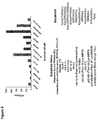
- the substrate used in the assay was a fluorogenic peptide based on the sequence encompassing the p53-K382 acetylation site, a known target of SIRT1 in vivo 20,21,27 . This substrate was preferred over a variety of other fluorogenic peptide substrates that were based on other known HDAC targets ( Fig. 5 ).
- the small molecule libraries included analogues of nicotinamide, ⁇ -acetyl lysine, NAD + , nucleotides, nucleotide analogues and purinergic ligands.
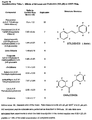
- Piceatannol comprises two phenyl groups trans to one another across a linking ethylene moiety.
- the trans-stilbene ring structures of piceatannol are superimposable on the flavonoid A and B rings of quercetin, with the ether oxygen and carbon-2 of the C ring aligning with the ethylene carbons in piceatannol (see structures, Table 1). Further, the 5, 7, 3' and 4' hydroxyl group positions in quercetin can be aligned, respectively, with the 3, 5, 3' and 4' hydroxyls of piceatannol.
- Both quercetin and piceatannol are polyphenols, members of a large and diverse group of plant secondary metabolites that includes flavones, stilbenes, flavanones, isoflavones, catechins (flavan-3-ols), chalcones, tannins and anthocyanidins 30,31 .
- Polyphenols noteworthy with respect to potential longevity-enhancing effects include resveratrol, a stilbene found in red wine and epigallocatechin gallate (EGCG) from green tea.
- resveratrol acts only on K m , it could be classified as an allosteric effector of 'K system' type 34 . This can imply that only the substrate binding affinity of the enzyme has been altered, rather than a rate-limiting catalytic step.
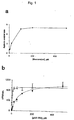
- Nicotinamide in contrast to resveratrol, affects the SIRT1 V max (note 30% and 36% V max decreases in absence of resveratrol, Fig. 1d and see ref. 26 ). In the presence of 50 ⁇ M nicotinamide, resveratrol appears to have complex, concentration-dependent effects on the kinetics of SIRT1 ( Fig. 1d ).
- Example 3 Activating compounds extend yeast lifespan
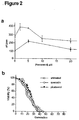
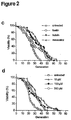
- Resveratrol and four other potent sirtuin activators were tested for their effect on yeast lifespan. Due to the potential impediment by the yeast cell wall or plasma membrane and suspected slow oxidation of the compound in the medium, we chose to use a concentration (10 ⁇ M) slightly higher than the optimal resveratrol concentration in vitro. As shown in Fig. 2b , quercetin and piceatannol had no significant effect on lifespan. In contrast, butein, fisetin and resveratrol increased average lifespan by 31, 55 and 70%, respectively, and all three significantly increased maximum lifespan ( Fig. 2c ). Concentrations of resveratrol higher than 10 ⁇ M provided no added lifespan benefit and there was no lasting effect of the compound on the lifespan of pre-treated young cells ( Fig. 2d and data not shown).
- resveratrol For subsequent yeast genetic experiments we focused on resveratrol because it was the most potent SIRT1 activator and provided the greatest lifespan extension.
- Glucose restriction a form of CR in yeast, resulted in no significant extension of the long-lived resveratrol-treated cells ( Fig. 3a ), indicating that resveratrol likely acts via the same pathway as CR. Consistent with this, resveratrol had no effect on the lifespan of a sir2 null mutant ( Fig. 3b ).
- yeast aging A major cause of yeast aging is thought to stem from the inherent instability of the repetitive rDNA locus 2,5,37-39 . Homologous recombination between rDNA repeats can generate an extrachromosomal circular form of rDNA (ERC) that is replicated until it reaches toxic levels in old cells.
- ERP extrachromosomal circular form of rDNA
- Sir2 is thought to extend lifespan by suppressing recombination at the replication fork barrier of rDNA 40 . Consistent with the lifespan extension we observed for resveratrol, this compound reduced the frequency of rDNA recombination by ⁇ 60% ( Fig. 3c ), in a SIR2 -dependent manner ( Fig. 3d ).
- Another measure of lifespan in S. cerevisiae is the length of time cells can survive in a metabolically active but nutrient deprived state. Aging under these conditions (i.e. chronological aging) is primarily due to oxidative damage 41 . Resveratrol (10 ⁇ M or 100 ⁇ M) failed to extend chronological lifespan (not shown), indicating that the sirtuin-stimulatory effect of resveratrol may be more relevant in vivo than its antioxidant activity 30,31 .
- FIG. 4a A schematic of the assay procedure is depicted in Fig. 4a .
- Cells are incubated with media containing the fluorogenic ⁇ -acetyl-lysine substrate, 'Fluor de Lys' (FdL).
- This substrate neutral when acetylated, becomes positively charged upon deacetylation and accumulates within cells (see Fig. 6a ). Lysis of the cells and addition of the non-cell-permeable 'Developer' reagent releases a fluorophor specifically from those substrate molecules that have been deacetylated ( Fig. 4a and see Methods).
- TSA trichostatin A
- class III sirtuins
- SIRT1 One known target of SIRT1 in vivo is lysine 382 of p53. Deacetylation of this residue by SIRT1 decreases the activity and half-life of p53 20,21,27 .
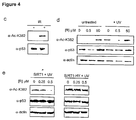
- K382 To follow the acetylation status of K382 we generated a rabbit polyclonal antibody that recognizes the acetylated form of K382 (Ac-K382) on Western blots of whole cell lysates. As a control we showed that the signal was specifically detected in extracts from cells exposed to ionizing radiation ( Fig. 4c ), but not in extracts from cells lacking p53 or where arginine had been substituted for lysine 382 (data not shown).
- U2OS osteosarcoma cells were pre-treated for 4 hours with resveratrol (0.5 and 50 ⁇ M) and exposed to UV radiation.
- resveratrol 0.5 and 50 ⁇ M
- concentrations of resveratrol >50 ⁇ M
- the ability of low concentrations of resveratrol to promote deacetylation of p53 was diminished in cells expressing a dominant-negative SIRT1 allele (H363Y) ( Fig.
- sirtuin activators all of which are plant polyphenols. These compounds can dramatically stimulate sirtuin activity in vitro and promote effects consistent with increased sirtuin activity in vivo.
- resveratrol promotes SIRT1-mediated p53 deacetylation of K382.
- yeast the effect of resveratrol on lifespan is as great as any longevity-promoting genetic manipulation 6 and has been linked convincingly to the direct activation of Sir2.
- Sirtuins have been found in diverse eukaryotes, including fungi, protozoans, metazoans and plants 46,47 , and likely evolved early in life's history 1 . Plants are known to produce a variety of polyphenols, including resveratrol, in response to stresses such as dehydration, nutrient deprivation, UV radiation and pathogens 48,49 . Therefore it is plausible that these compounds may be synthesized to regulate a sirtuin-mediated plant stress response. This would be consistent with the recently discovered relationship between environmental stress and Sir2 activity in yeast 6 .
- sirtuins from fungi and animals because they mimic an endogenous activator, as is the case for the opiates/endorphins, cannabinols/endocannabinoids and various polyphenols with estrogen-like activity 30,31 .
- animal and fungal sirtuins may have retained or developed an ability to respond to these plant metabolites because they are a useful indicator of a deteriorating environment and/or food supply.
- Example 5 Materials and Methods for Examples 1-4
- SIRT1 and GST-tagged recombinant Sir2 were prepared as previously described 26 . From 0.1 to 1 ⁇ g of SIRT1 and 1.5 ⁇ g of Sir2 were used per deacetylation assay (in 50 ⁇ l total reaction) as previously described 26 . SIRT1 assays and certain of those for Sir2 employed the p53-382 acetylated substrate ('Fluor de Lys-SIRT1', BIOMOL) rather than FdL.
- DMSO dimethylsulfoxide
- HeLa cells were grown and the cellular deacetylation assays were performed and read, as above, but in full-volume 96-well microplates (Coming Costar 3595). Unless otherwise indicated all initial rate measurements were means of three or more replicates, obtained with single incubation times, at which point 5% or less of the substrate initially present had been deacetylated. Calculation of net fluorescence increases included subtraction of a blank value, which in the case of Sir2 was obtained by omitting the enzyme from the reaction and in the case of SIRT1 by adding an inhibitor (200 ⁇ M suramin or 1 mM nicotinamide) to the reaction prior to the acetylated substrate.
- an inhibitor 200 ⁇ M suramin or 1 mM nicotinamide
- yeast strains were grown at 30°C in complete yeast extract/bactopeptone, 2.0% (w/v) glucose (YPD) medium except where stated otherwise. Calorie restriction was induced in 0.5% glucose.
- Synthetic complete (SC) medium consisted of 1.67% yeast nitrogen base, 2% glucose, 40 mg/litre each of auxotrophic markers. SIR2 was integrated in extra copy and disrupted as described 5 . Other strains are described elsewhere 26 . For cellular deacetylation assays, HeLa S3 cells were used.
- HEK 293 cells were cultured adherently in Dulbecco's Modified Eagle's Medium (DMEM) containing 10% fetal calf serum (FCS) with 1.0% glutamine and 1.0% penecillin/streptomycin.
- DMEM Dulbecco's Modified Eagle's Medium
- FCS fetal calf serum
- HEK 293 overexpressing dominant negative SIRT1 H363Y was a gift of R. Frye (U. Pittsburgh).
- Lifespan measurements were performed using PSY316AT MAT ⁇ as previously described 35 . All compounds for lifespan analyses were dissolved in 95% ethanol and plates were dried and used within 24 hours. Prior to lifespan analysis, cells were pre-incubated on their respective media for at least 15 hours. Following transfer to a new plate, cells were equilibrated on the medium for a minimum of 4 hours prior to micro-manipulating them. At least 30 cells were examined per experiment and each experiment was performed at least twice. Statistical significance of lifespan differences was determined using the Wilcoxon rank sum test. Differences are stated to be significant when the confidence is higher than 95%.
- Ribosomal DNA silencing assays using the URA3 reporters were performed as previously described 26 .
- Ribosomal DNA recombination frequencies were determined by plating W303AR cells 37 on YPD medium with low adenine/histidine and counting the fraction of half-red sectored colonies using Bio-Rad Quantity One software as previously described 35 . At least 6000 cells were analyzed per experiment and all experiments were performed in triplicate. All strains were pre-grown for 15 hours with the relevant compound prior to plating.
- Recombinant Sir2-GST was expressed and purified from E. coli as previously described except that lysates were prepared using sonication 26 .
- Recombinant SIRT1 from E. coli was prepared as previously described 26 .
- Polyclonal antiserum against p53-AcK382 was generated using an acetylated peptide antigen as previously described 20 , with the following modifications.
- Anti-Ac-K382 antibody was affinity purified using non-acetylated p53-K382 peptides and stored in PBS at -70°C and recognized an acetylated but not a non-acetylated p53 peptide.
- Yeast Sir2 and human SIRT1 are very homologous and differ from human SIRT2 by the addition of an N-terminal domain that is absent in SIRT2.
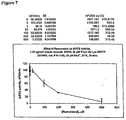
- the effect of resveratrol was assayed on human recombinant SIRT2 as follows. Human recombinant SIRT2 was incubated at a concentration of 1.25 ⁇ g/well with 25 ⁇ M of Fluor de Lys-SIRT2 (BIOMOL cat. # KI-179) and 25 ⁇ M NAD+ for 20 minutes at 37°C, as described above.
- the results, which are shown in Figure 7 indicate that, in contrast to SIRT1, increasing concentrations of resveratrol decrease SIRT2 activity.
- SIRT1 and SIRT2 based on the difference in structure of SIRT1 and SIRT2, i.e., the absence of an N-terminal domain (see Fig. 8 ), it is believed that the N-terminal domain of SIRT1 and Sir2 is necessary for activation by the compounds described herein. In particular, it is likely that the activator compounds described herein interact with the N-terminal portion of sirtuins.
- the N-terminal portion of SIRT1 that is necessary for the action of the compounds is from about amino acid 1 to about amino acid 176, and that of Sir2 is from about amino acid 1 to about amino acid 175.
- Example 7 Resveratrol extends the lifespan of C. elegans
- C . elegans worms (strain N2) were grown in the presence or absence of 100 ⁇ M resveratrol for 17 days. On day 17, only 5 worms in the control group without resveratrol were alive, whereas 17 worms were alive in the group that was treated with resveratrol. Thus, the presence of resveratrol in the growth media of C . elegans extends their lifespan.
- t 1/2 Stability determinations (t 1/2 ) derived from SIRT1 rate measurements performed in a similar way to those described above, except that 5 ⁇ M p53-382 acetylated peptide substrate was used rather than 25 ⁇ M.
- the fold-stimulation (ratio to control) obtained with a compound diluted from an aged stock solution was compared to an identical dilution from a stock solution freshly prepared from the solid compound.
- t 1/2 is defined as the time required for the SIRT1 fold-stimulation of the compound from the aged solution to decay to one-half of that obtained from a freshly prepared solution.
- Ethanol stocks of resveratrol, BML-212 and BML-221 were prepared at 2.5 mM and the compounds were assayed at a final concentration of 50 ⁇ M.
- the water stock of resveratrol was 100 ⁇ M and the assay performed at 10 ⁇ M.
- Stocks were aged by storage at room temperature, in glass vials, under a nitrogen atmosphere.
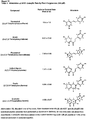
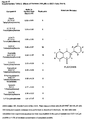
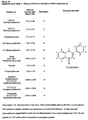
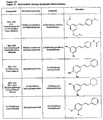
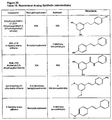
- SIRT1 activation results from several of these new analogs confirmed the importance of planarity, or at least the potential for planarity, between and within the two rings of the active compounds.
- Reduction of the double bond of the ethylene function, between, the two rings essentially abolishes activity (compare Resveratrol, Table A and Dihydroresveratrol, Table E).
- Replacement of a phenyl moiety with a cyclohexyl group is nearly as detrimental to SIRT1 stimulating activity (compare Pinosylvin, Table 9 and BML-224, Table 12). Amide bonds are thought to have a partially double bond character.
- Resveratrol is currently one of the most potent known activator of "SIRT1.
- the collection of analogs described above, particularly the group entailing substitutions at the 4' position, may be instrumental in informing the design of new SIRT1 ligands with improved pharmacological properties.
- One parameter that may be of interest in this regard is stability.
- One 4'-substituted analog, BML-221 displays a vast improvement in solution stability relative to resveratrol and although diminished in in vitro SIRT1 activating ability, retains much of resveratrol's biological activity (see lifespan data).
- the 4'-hydroxyl of resveratrol is thought to be of primary importance to resveratrol's free-radical scavenging reactivity ( S.
- results obtained with 4'-substituted analogs may indicate promising routes to explore while seeking to increase SIRT1 binding affinity.
- the efficacy of the 4'-ethyl compound (BML-225) might indicate the presence of a narrow, hydrophobic binding pocket at the SIRT1 site corresponding to the 4' end of resveratrol.
- Several new series of 4'-substituted analogs are planned, the simplest comprising straight-chain aliphatic groups of various lengths.
- Example 11 Dose-response analysis of SIRT1 deacetylation by resveratrol and BML-230
- SIRT1 initial rates as a function of activator concentration were determined at 25 ⁇ M each of NAD + and p53-382 acetylated peptide, with 20 minutes incubations.
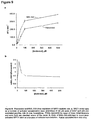
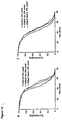
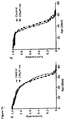
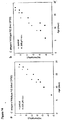
- Plots of the dose responses of SIRT1 to BML-230 and resveratrol show that the BML-230-stimulated activity exceeds that stimulated by resveratrol at all concentrations tested ( Figure 9a ). This could be due to a greater binding affinity of SIRT1 for BML-230, greater activity of the SIRT1/BML-230 complex or some combination of the two.
- v 1 /v 2 rate for pure SIRT1BML-230 divided by that for pure SIRT1/resveratrol
- ⁇ 1.4 R at 500 ⁇ M
- the SIRT1/BML-230 complex indeed has a lower dissociation constant than SLRT1/resveratrol (K L1 ⁇ K L2 ).
- Example 13 Sirtuin activators mimic calorie restriction and delay aging in metazoans
- Caloric restriction extends lifespan in numerous species.
- this effect requires Sir2 1 , a member of the sirtuin family of NAD + -dependent deacetylases 2,3 .
- Sirtuin-activating compounds STACs
- STACs can promote the survival of human cells and extend the replicative lifespan of yeast 4 .
- resveratrol and other STACs activate sirtuins from Caenorhabditis elegans and Drosophila melanogaster and extend the lifespan of these animals up to 29% without reducing fecundity. Lifespan extension is dependent on functional Sir2 and is not observed when nutrients are restricted. Together these data indicate that STACs slow metazoan ageing by mechanisms related to CR.
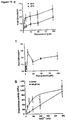
- Sir2-like proteins are a family of NAD + -dependent deacetylases conserved from E.coli to humans 5,9 ( Fig. 10a ) that play important roles in gene silencing, DNA repair, rDNA recombination and ageing in model organisms 2,10-12 .
- diet is restricted (calorie restriction, CR)
- lifespan is extended in diverse species, suggesting there is a conserved mechanism for nutrient regulation of ageing 13-17 .
- CR calorie restriction
- extra copies this gene extend lifespan by 30% apparently by mimicking CR 1,18 .
- STACs group of compounds that stimulate the catalytic activity of yeast and human sirtuins, and extend the replicative lifespan of yeast cells up to 60% 4 .
- resveratrol stimulated deacetylation up to 2.5-fold for SIR-2.1 ( Fig. 10e ) and 2.4-fold for dSir2 ( Fig. 10f ).
- resveratrol lowered the K m of Slur-2.1 for the co-substrate NAD + ( Fig. 10g ).
- the increase in egg production suggests that the lifespan extending effect of resveratrol in D . melanogaster was not due to CR induced by food aversion or lack of appetite.
- resveratrol-fed flies Fig. 12h .
- resveratrol-fed flies maintained normal weight ( Fig. 12i ), except during days 3 through when resveratrol fed females were laying significantly more eggs than control fed females.
- Resveratrol increased longevity a small but statistically significant amount in flies homozygous for a hypomorphic dSir2 allele (dSir2 KG0087 / dSir2 KG0087 ) (Table 20, Trial 6) and increased lifespan up to 17% in flies with one copy of the hypomorphic allele and one copy of a wild-type dSir2 (Canton-S/ dSir2 KG008 ) (Table 20, Trial 7). These data demonstrate that the ability of resveratrol to extend fly lifespan requires functional Sir2.
- STACs extend the lifespan of replicating yeast cells by mimicking CR 4 .
- chronological and reproductive aging are inseparable in the measure of replicative lifespan.
- STACs can extend lifespan in C. elegans and D. melanogaster, both of which are comprised of primarily non-dividing (post-mitotic) cells as adults, and whose somatic and reproductive aging are independent measures of senescence.
- resveratrol increases lifespan in a Sir2-dependent manner and, at least for the fly, this action appears to function through a pathway common to CR.
- STACs may still entail trade-offs under some environmental conditions 21,22 or in the context of selection acting upon the network of traits that determine fitness 23,24 .
- Plants synthesize STACs such as resveratrol in response to stress and nutrient limitations, possibly to activate their own sirtuin pathways 4 .
- These molecules may activate animal sirtuins because they serve as plant defense mechanisms against consumers or because they are ancestrally orthologous to endogenous activators within metazoans.
- animals may use plant stress molecules as a cue to prepare for a decline in their environment or food supply 4 . Understanding the adaptive significance, endogenous function, and evolutionary origin of sirtuin activators will lead to further insights into the underlying mechanisms of longevity regulation and aid in the development of interventions that provide the health benefits of CR.
- Example 14 Materials and methods for Example 14
- His 6 -tagged recombinant SIR-2.1 and dSir2 were purified from E. coli BL21(DE3) plysS cells harboring either pET28a-sir-2.1 or pRSETc-dSir2 plasmids.
- Cells were grown in LB medium, containing kanamycin (50 ⁇ g/mL) for pET28a-sir-2.1 or ampicillin (100 ⁇ g/ml) and chloramphenicol (25 ⁇ g/ml) for pRSETc-dSir2 at 30°C (dSir2) or 37°C (SIR-2.1) to an OD 600 of 0.6-0.8.
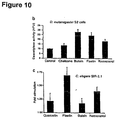
- Drosophila S2 cells were grown in Schneider media with fetal calf serum at 23-28°C, seeded at 9x10 4 cells/well, grown overnight and then exposed to 1 ⁇ M TSA, 500 ⁇ M polyphenols, and 200 ⁇ M FdL for 2 hr. Deacetylation of FdL with lysate from whole cells was determined as described 4 . Unless otherwise indicated all initial rate measurements were means of three or more replicates obtained with single incubation times, at which point 5% or less of the substrate initially present was deacetylated.
- sir-2.1 mutant strain was generated by backcrossing VC199 ( sir-2.1(ok434) ) to N2 four times. Cultures were grown on standard NGM media and maintained on E. coli strain OP50. For the lifespan assays, synchronized animals were transferred to treatment plates as young adults (2 d after hatching, day 0 of assay), and were transferred to fresh treatment plates every 2 days for the first 6 to 8 days of the assay.
- Treatment plates were standard NGM media with the reproductive suppressant FUdR (Sigma; 100mg/-L) containing resveratrol or solvent (DMSO, which does not affect lifespan) added either directly into the agar before pouring (for live OP50 trials) or diluted into PBS and added to the surface of a dry plate to the indicated final concentration (for dead OP50 trials).
- FUdR reproductive suppressant
- DMSO solvent
- heat-killed OP50 were used as a food source.
- OP50 cultures were heated to 65°C for 30 minutes, then pelleted and resuspended in 1/10 volume in S Basal supplemented with 10mM MgSO 4 .
- worms were monitored daily for mortality by gently probing with a platinum pick. Assays were performed at 24°C.
- worms at the indicated stages where placed on treatment plates (no FUdR) for 4-5 hours, then videoed for 1 minute using a Pixelink PL-662 camera. The frame rate was slowed and the pumping rate of the pharynx was counted.
- gravid hermaphrodites (5 per plate, raised from synchronized L1s on normal or treatment plates) were allowed to lay eggs on their respective media for 5 hours, and the total number of eggs was counted.
- Test compounds in 100 ⁇ l of EtOH were mixed into melted aliquots of the adult food media to make a final concentration of 0, 10 or 100 ⁇ M. Fresh stock solutions and adult media were prepared weekly. In the second laboratory, lifespan trials were conducted with the wild type strain Canton-S, sir2 4.5 and dSir2 5.26 (S. Smolik, University of Oregon), dSir2 17 (S. Astrom, Sweden), and dSir2 KG00871 (Drosophila Stock Center, Bloomington, IN). Larvae for all tests were reared on standard cornmeal-sugar-yeast diet.
- Newly eclosed adults were incubated in plastic shell vials containing 5 ml of 15% sugar-yeast diet (15% SY) or 5% sugar-yeast (5% SY) diet (15% SY: 15% yeast, 15% sucrose, 2% agar; 5% SY: 5% yeast, 5% sucrose, 2% agar as per Ref. 20 ).
- ⁇ 20 males with ⁇ 20 females were placed into each of 10 vials/treatment group. Every two days, flies were passed into new vials and dead flies were counted.
- Resveratrol in EtOH or EtOH alone in controls
- Fresh stock solution and adult media was prepared weekly.
- Feeding rate was measured in yw females with the crop-filling assay 27 .
- Females were held overnight with water and placed on 2% CSY diet containing food colour (FDA Blue 1) and 0, 10 or 100 ⁇ M resveratrol with EtOH.
- the presence of dye-marked food in the crop was scored in sets of 20 females across five 5-minute intervals.
- 10 vials with 20 males and 20 females each of wild type CS-5 flies were kept on 15% SY diet with EtOH or with resveratrol in EtOH (10 ⁇ M). Males and females were weighed daily.
- reaction mixture contains (final): 0.5 units/reaction SIRT1 deacetylase (BIOMOL); 200 ⁇ M NAD + ; 5 ⁇ M Fluor de Lys-SIRT1 substrate (BIOMOL); buffer (25 mM Tris/Cl, pH 8.0, 137 mM NaCl, 2.7 mM KCl, 1 mM MgCl 2 , and 1 mg/ml BSA).
- a reaction mixture containing no enzyme was made so that each well receiving compound has a corresponding "no enzyme control" well. Reactions were performed in black 384 well plates (NUNC) in a final volume of 25 ⁇ l/ well.
- the reactions were started by combining enzyme and substrate in a reaction mixture immediately prior to aliquoting in plates (or substrate only for "no enzyme control” plates). Mixture were aliquoted to plates using Biotek ⁇ Fill (Biotek Instruments). Control mixtures were manually added to designated wells. A library compound was added at a desired concentration by pin transfer to both "with enzyme” and “no enzyme” plates. Compounds were added in at least triplicate (with enzyme reaction in duplicate and no enzyme controls) at a final concentration of roughly 50 ⁇ M. The plates were incubated at 37° C for 30-60 minutes. Then 25 w ⁇ l of 1x Developer II (BIOMOL) plus 2 mM nicotinamide were added to all wells to stop the reactions.
- BIOMOL 1x Developer II
- the reactions were left for at least 30 minutes at 37°C for the signal to develop.
- the plates were read in a microplate-reading fluorometer capable of excitation at a wavelength in the range of 350-380 nm and detection of emitted light in the range of 440-460 nm. A read time of 0.1 sec per well was used.
- resveratrol resveratrol. 4"-methyl ether (3,5-dihydroxy-4'-methoxy-trans-stilbene, also referred to herein as BML-233, and set forth in Table 10)
- pinosylvin which activated SIRT1 2.2 fold, 2.1 fold and 3.28 fold, respectively.
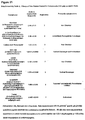
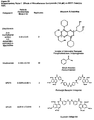
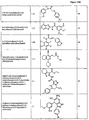
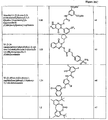
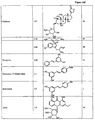
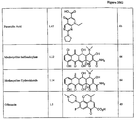
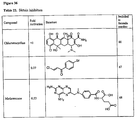
- the activators are listed in Table 21 and the inhibitors are listed in Table 22.
- mice were sacrificed by intraperitoneal injection of chloral hydrate.
- Total protein extracts of mouse spinal cord, mouse forebrain, mouse hippocampus or human prefontal cortex were obtained by homogenization in SDS-urea ⁇ -mercaptoethanol (0.5% SDS, 8M urea in 7.4 phosphate buffer) or Triton X-100 (10 mM Tris-HCl [pH 7.5], 150 mM NaCl, 1 mM EDTA [pH 8.0], and 1% Triton).
- the protein concentration was estimated by the Bradford procedure (Bio-Rad Laboratories, Hercules, CA).
- Proteins were fractionated on 7.5% SDS-PAGE and blotted on a nitrocellulose or PVDF membrane for western blot analysis.
- Membranes were incubated with antibodies against SIRT1 (07-131, Upstate), ⁇ -Tubulin (B512, Sigma), actin (MAB 1501, Chemicon), FAK (C-20, Santa Cruz Biotechnology), Bax (N-20, Santa Cruz), GFP (B-2, Santa Cruz).
- the western blots were revealed by RENAISSANCE, a Western blot chemiluminescence kit from NEN Life Science (Boston, MA). Quantitations were corrected with levels of actin, ⁇ -Tubulin and FAK and performed with the Labscan program (Image Master, 2D software v 3.10, Amersham Pharmacia biotech).
- Rat cortical/primary neurons were isolated, cultured and transfected with Lipofectamine 2000 according to Nguyen, M. D. et al. (Nat Cell Biol 6, 595-608 (2004 )) in a ratio 3 (SIRT1 or SIRT1 H363Y or p53 RNAi): 1 (p25-GFP, WT SOD1 or SOD1G93A or GFP).
- Treatment of primary cortical neurons with ionomycin (1 ⁇ m), hydrogen peroxide (25 ⁇ m) or Resveratrol (50 nm to 500 nm) were performed according to Lee, M. S. et al. (Nature 405, 360-4 (2000 )).
- mice overexpressing SOD1 G37R (line 29) (G37R) and p25-CK trangenic have been generated as described previously and have been maintained on a pure C57BL6 background ( Cruz, J. C., et al., Neuron 40, 471-83 (2003 ); Nguyen, M. D. et al., Neuron 30, 135-47 (2001 ).
- Double cannulae (Plastic 1) were implanted seven days before the experiments under 1.2 % avertin anesthesia (0.4 ml/mouse), as described previously ( Fischer, A., et al., J Neurosci 24, 1962-6 (2004 ).
- the cannulae were placed into both lateral brain ventricles, AP - 0.5 mm, lateral 1 mm, depth 2 mm.
- Resveratrol (5 ⁇ g/ ⁇ l) or vehicle were injected bilaterally 2-3 x/week (5 ⁇ g Resveratrol/1 ⁇ l/mouse) using a microinjector (CMA/Microdialysis) over a 60 s period, so that a volume of 0.5 ⁇ l was injected in each side.
- Resveratrol (25%DMSO/artificial cerebrospinal fluid) was prepared fresh immediately before each injection.
- cannulae were placed in the dorsal hippocampus, AP-1.5 mm, lateral 1 mm, depth 2 mm.
- SIRT1-HA lentivirus (1.5 ⁇ l) was injected as described above into the left hippocampus whereas SIRT1-HA lentivirus (1.5 ⁇ l) was injected into the right hippocampus of 1 week induced CK-p25 mice.
- Number of GFP neurons were counted 1 to 2 mm caudal to the injection site.
- a ratio of neurons control side/neurons SIRT1 side was calculated to quantify variations in % of neurons between both sides.
- the fear conditiong apparatus consisted of two test boxes with defined light and background noise that were connected to a control unit and a PC computer.
- the experimental protocols were designed and performed using TSE fear conditioning software. Boxl contained a grid to apply the electric foot-shock and was cleaned with 70% ethanol before each training or test session. The second box had no grid and was cleaned with 1% acetic acid before each test This box was used to analyze tonedependent fear memories.
- Fear conditioning consisted of a single exposure to context (Box 1; 3 min) followed by a foot shock (2s, 0.7 mA, constant current). Context-dependent freezing was measured 24 h later every 10 th s over 180 s by two observers in a blind manner and expressed as % of toal number of observations.
- RNAi sequence were selected based on the criteria proposed by Sui et al. ( Sui, G. et al., Proc Natl Acad Sci U S A 99, 5515-20 (2002 )). Complementary hair pin sequences were commercially synthesized and cloned into pSilencer 2.0 under promoter U6 (Ambion). Sequence for p53 are base pairs: gga gtc ttc cag tgt gat gat (SEQ ID NO: 32). A random sequence without homology to any known mRNA was used for control RNAi. All RNAi constructs were tested in cell lines and primary neuronal cultures.
- Immunoprecipitations were performed according to Nguyen, M. D. et al. (Nat Cell Biol 6, 595-608 (2004 )) on 8 forebrains from p25 transgenic mice and wild type mice with a monoclonal antibody directed against p53 (Ab-3) (Calbiochem/Oncogene). Membranes were probed with a home made Ac-p53 Ab and a mouse monoclonal p53 antibody (pAb-240, Abeam).
- the SIR2 gene promotes longevity in a variety of organisms and may underlie the health benefits of caloric restriction, a diet that delays aging and neurodegeneration in mammals.
- a human homologue of SIR2, SIRT1 is upregulated in brain tissue from Alzheimer's patients, in mouse models for AD, ALS and in primary neurons challenged with neurotoxic insults.
- SIRT1 and resveratrol a SIRT1-activating molecule, both promote neuronal survival.
- SIRT1 provides a unique molecular link between aging and human neurodegenerative disorders and the SIRT1 activation is a promising avenue for therapeutic intervention.
- neurodegenerative disorders are relatively cell-type specific, many of the underlying pathogenic processes are similar, including protein misfolding, oxidative stress, cytoskeletal abnormalities, disruption of calcium homeostasis, and inflammation, all of which increase during aging ( Bossy-Wetzel et al., Nat Med 10 Suppl, S2-9 (2004 ); Forman, M. S. et al., Nat Med 10, 1055-63 (2004 ); Selkoe, D. J., Nat Cell Biol 6, 1054-61 (2004 )).
- SIRT1-7 seven Sir2 homologues whose biological functions remain poorly defined.
- the SIRT1 gene is believed to provide cell protection during times of cell stress ( Cohen, H. Y. et al., Science 305, 390-2 (2004 ); Brunet, A. et al., Science 303, 2011-5 (2004 ); Motta, M. C. et al., Cell 116, 551-63 (2004 ); Langley, E.
- Braak and Braak classification recognizes the following six stages in disease progression: I-II, transentorhinal (clinically silent cases); III-IV, limbic (incipient AD); V-VI, neocortical (fully-developed AD) ( Braak, H. & Braak, E., J Neural Transm Suppl 53, 127-40 (1998 ).
- SIRT1 is upregulated in regions of the brain that are degenerating.
- CDK5 cyclin-dependent kinase 5
- SOD1G37R superoxide dismutase 1
- SIRT1 protein levels increased as early as two weeks after p25 induction and persisted throughout the progression of the pathology to 12 weeks ( Figure 37A-B ).
- SIRT1 is not only induced in mouse models of neurodegeneration but also in primary cultured neurons under neurotoxic stresses.
- SIRT1 activation in context of neurodegeneration, we first tested the effects of resveratrol, a polyphenolic SIRT1 activating compound (STAC) ( Howitz, K. T. et al., Nature 425, 191-6 (2003 )), on the viability of primary mouse neurons expressing p25 or mutant SOD1G93A ( Patrick, G. N. et al., Nature 402, 615-22 (1999 )). Doses of up to 500 nM resveratrol showed no evidence of toxicity to primary neurons transfected with GFP ( Figure 39A ). Transfection with p25-GFP resulted in a high degree of cell death (50% after 24 hours) ( Lee, M. S.
- STAC polyphenolic SIRT1 activating compound
- p53 plays a key role in mediating neuroprotection for the following reasons.
- p25/Cdk5 is known to phosphorylate p53 and upregulate its transcriptional activity ( Zhang, J., et al., J Neurochem 81, 307-13 (2002 )).
- Resveratrol may also stimulate the deacetylation of FOXO3/4 transcription factors, thereby enhancing gene expression of anti-oxidative molecules and upregulating DNA repair ( Brunet, A. et al., Science 303, 2011-5 (2004 ); Nguyen, M. D. et al., Cell Death Differ 9, 1294-306 (2002 ); Smith, P. D. et al., Cell Cycle 3, 289-91 (2004 )).
- SIRT1 is thought to be a key regulator of an evolutionarily conserved pathway that allows organisms cope with and survival adversity. Consistent with this, yeast Sir2 and mammalian SIRT1 are upregulated by various biological stresses including caloric restriction, the diet that prevents numerous diseases of aging in mammals ( Bordone, L. & Guarente, L., Nat Rev Mol Cell Biol 6, 298-305 (2005 ); Lombard, D. B. et al., Cell 120, 497-512 (2005 ); Lamming, D. W. et al., Mol Microbiol 53, 1003-9 (2004 )).
- SIRT1-activating molecules As described herein, we show for the first time the ability of SIRT1-activating molecules to prevent an age-dependent neurodegenerative diseases, and predict that such molecules will prove efficacious in a variety of other diseases associated with aging.
- the SIRT1 gene resides in a locus on chromosome 10 that is associated with familial AD (WIPO, international publication WO 2005/004815 A2 ). It is possible that mutations or polymorphisms in SIRT1 affect the susceptibility of individuals to neurodegeneration.
Landscapes
- Health & Medical Sciences (AREA)
- Life Sciences & Earth Sciences (AREA)
- Chemical & Material Sciences (AREA)
- Engineering & Computer Science (AREA)
- General Health & Medical Sciences (AREA)
- Medicinal Chemistry (AREA)
- Biomedical Technology (AREA)
- Organic Chemistry (AREA)
- Pharmacology & Pharmacy (AREA)
- Animal Behavior & Ethology (AREA)
- Public Health (AREA)
- Veterinary Medicine (AREA)
- Bioinformatics & Cheminformatics (AREA)
- Neurology (AREA)
- Neurosurgery (AREA)
- Proteomics, Peptides & Aminoacids (AREA)
- Immunology (AREA)
- Molecular Biology (AREA)
- Epidemiology (AREA)
- Nuclear Medicine, Radiotherapy & Molecular Imaging (AREA)
- General Chemical & Material Sciences (AREA)
- Chemical Kinetics & Catalysis (AREA)
- Physics & Mathematics (AREA)
- Analytical Chemistry (AREA)
- Urology & Nephrology (AREA)
- Hematology (AREA)
- Biotechnology (AREA)
- Microbiology (AREA)
- Wood Science & Technology (AREA)
- Zoology (AREA)
- Biochemistry (AREA)
- Biophysics (AREA)
- Food Science & Technology (AREA)
- Pathology (AREA)
- General Physics & Mathematics (AREA)
- Cell Biology (AREA)
- General Engineering & Computer Science (AREA)
- Psychology (AREA)
- Genetics & Genomics (AREA)
- Psychiatry (AREA)
Description
- There is now good evidence from model organisms that the pace of aging can be regulated1. Longevity regulatory genes have been identified in many eukaryotes, including rodents, flies, nematode worms and even single-celled organisms such as baker's yeast (reviewed in2,3). These genes appear to be part of an evolutionarily conserved longevity pathway that evolved to promote survival in response to deteriorating environmental conditions1,4. The yeast S. cerevisiae has proven a particularly useful model in which to study cell autonomous pathways of longevity regulation2. In this organism, replicative lifespan is defined as the number of daughter cells an individual mother cell produces before dying. Yeast lifespan extension is governed by PNC1, a calorie restriction (CR)-and stress-responsive gene that depletes nicotinamide, a potent inhibitor of the longevity protein Sir2. Both PNC1 and SIR2 are required for lifespan extension by CR or mild stress5,6 and additional copies of these genes extend lifespan 30-70% 5-7. Based on these results we proposed that CR may confer health benefits in a variety of species because it is a mild stress that induces a sirtuin-mediated organismal defense response6.
- Sir2, a histone deacetylase (HDAC), is the founding member of the sirtuin deacetylase family, which is characterized by a requirement for NAD+ as a co-substrate8-13. SIR2 was originally identified as a gene required for the formation of transcriptionally silent heterochromatin at yeast mating-type loci14. Subsequent studies have shown that Sir2 suppresses recombination between repetitive DNA sequences at ribosomal RNA genes (rDNA)15-17. Sir2 has also been implicated in the partitioning of carbonylated proteins to yeast mother cells during budding18. Studies in C. elegans, mammalian cells, and the single-celled parasite Leishmania, indicate that the survival and longevity functions of sirtuins are conserved19-22. In C. elegans additional copies of sir-2.1 extend lifespan by 50% via the insulin/IGF-1 signalling pathway, the same pathway recently shown to regulate lifespan in rodents23-25.
- Thus, there is provided a method for determining whether a subject has a neurodegenerative disease comprising:
- i) obtaining a biological sample from a subject; and
- ii) determining the level or activity of a sirtuin protein in the biological sample, wherein a higher level or activity of the sirtuin protein in the biological sample of the subject relative to a control level indicates that the subject has a neurodegenerative disease, wherein the sirtuin protein is SIRT1.
-
-
Figure 1 shows the effects of resveratrol on the kinetics of recombinant human SIRT1. a, Resveratrol dose-response of SIRT1 catalytic rate at 25 µM NAD+, 25 µM p53-382 acetylated peptide. Relative initial rates are the mean of two determinations, each derived from the slopes of fluorescence (arbitrary fluorescence units, AFU) vs. time plots with data obtained at 0, 5, 10 and 20 min. of deacetylation. b, SIRT1 initial rate at 3 mM NAD+, as a function of p 53-382 acetylated peptide concentration in the presence (Δ) or absence (v) of 100 µM resveratrol. Lines represent non-linear least-squares fits to the Michaelis-Menten equation. Kinetic constants: Km(control, v)= 64 µM, Km (+resveratrol, Δ)=1.8 µM; Vmax(control, v)=1107 AFU/min., Vmax(+resveratrol, Δ)=926 AFU/min. c, SIRT1 initial rate at 1 mM p53-382 acetylated peptide, as a function of NAD+ concentration, in the presence Δ) or absence (v) of 100 µM resveratrol. Lines represent non-linear least-squares fits to the Michaelis-Menten equation. Kinetic constants: Km(control, v)= 558 µM, Km(+resveratrol, Δ)=101 µM; Vmax(control, v)=1863 AFU/min., Vmax(+resveratrol, Δ)=1749 AFU/min. d, Effects of resveratrol on nicotinamide inhibition of SIRT1. Kinetic constants are shown relative to those of the control (no nicotinamide, no resveratrol) and represent the mean of two determinations. Error bars are standard errors of the mean. The variable substrate in each experiment (N = NAD+, P = p53 acetylated peptide), the presence/absence of nicotinamide (+/-) and the resveratrol concentration (µM) are indicated beneath each pair of Km-Vmax bars. -
Figure 2 shows the effects of polyphenols on Sir2 and S. cerevisiae lifespan. a, Initial deacetylation rate of recombinant GST-Sir2 as a function of resveratrol concentration. Rates were determined at the indicated resveratrol concentrations, either with 100 µM 'Fluor de Lys' acetylated lysine substrate (FdL) plus 3 mM NAD+ (Δ) or with 200 µM p53-382 acetylated peptide substrate plus 200 µM NAD+ (v). b, Lifespan analyses were determined by micro-manipulating individual yeast cells as described37 on complete 2% glucose medium with 10 µM of each compound, unless otherwise stated. Average lifespan for wild type, 22.9 generations, quercetin, 23.4; piceatannol. 24.0. c, Average lifespan for wild type, 22.9 generations; fisetin, 30.0; butein, 35.5; resveratrol, 36.8. d, Average lifespan for wild type untreated, 21.0 generations; growth on resveratrol, 10 µM, 35.7; 100 µM, 29.4; 500 µM, 29.3. -
Figure 3 shows that resveratrol extends lifespan by mimicking CR and suppressing rDNA recombination. Yeast lifespans were determined as inFig. 2 . a, Average lifespan for wild type (wt) untreated, 19.0 generations; wild type + resveratrol (wt+R) 37.8; glucose-restricted + resveratrol (CR+R), 39.9. b, Average lifespans for wild type sir2Δ, 9.9; sir2Δ + resveratrol, 10.0; pnc1Δ, 19.2; pnc1Δ+ resveratrol, 33.1. c, Resveratrol suppresses the frequency of ribosomal DNA recombination in the presence and absence of nicotinamide (NAM). Frequencies were determined by loss of the ADE2 marker gene from the rDNA locus (RDN1). d, Resveratrol does not suppress rDNA recombination in a sir2 strain e, Resveratrol and other sirtuin activators do not significantly increase rDNA silencing compared to a 2xSIR2 strain. Pre-treated cells (RDN1::URA3) were harvested and spotted as 10-fold serial dilutions on either SC or SC with 5-fluororotic acid (5-FOA). In this assay, increased rDNA silencing results in increased survival on 5-FOA medium. f, Quantitation of the effect of resveratrol on rDNA silencing by counting numbers of surviving cells on FOA/total plated. -
Figure 4 shows that resveratrol and other polyphenols stimulate SIRT1 activity in human cells. a, Method for assaying intracellular deacetylase activity with a fluorogenic, cell-permeable substrate, FdL ('Fluor de Lys', BIOMOL). FdL (200 µM) is added to growth media and cells incubated for 1-3 hours to allow F dL to enter the cells and the lysine-deacetylated product (deAc-FdL) to accumulate intracellularly. Cells are lysed with detergent in the presence of 1 µM TSA, 1 mM nicotinamide. Addition of the non-cell-permeable Developer (BIOMOL) releases a fluorophor, specifically from deAc-FdL. b, SIRT1 activating polyphenols can stimulate TSA-insensitive, FdL deacetylation by HeLa S3 cells. Cells were grown adherently in DMEM/10% FCS and treated for 1 hour with 200 µM FdL, 1 µM TSA and either vehicle (0.5% final DMSO, Control) or 500 µM of the indicated compound. Intracellular accumulation of deAc-FdL was then determined as described briefly in a. The intracellular deAc-FdL level for each compound (mean of six replicates) are plotted against the ratios to the control rate obtained in the in vitro SIRT1 polyphenol screen (see Table 1, Supplementary Tables 1 and 3). c, U2OS osteosarcoma cells grown to ≥90% confluence in DMEM/10% FCS were exposed to 0 or 10 grays of gamma irradiation (IR). Whole cell lysates were prepared 4 hours post-irradiation and were probed by Western blotting with indicated antibodies. d, U2OS cells cultured as above were pre-treated with the indicated amounts of resveratrol or a 0.5% DMSO blank for 4 hours after which cells were exposed to 0 or 50 J/cm2 of UV radiation. Lysates were prepared and analyzed by Western blot as in c. e, Human embryonic kidney cells (HEK 293) expressing wild type SIRT1 or dominant negative SIRT1-H363Y (SIRT1-HY) protein were cultured as above, pre-treated with the indicated amounts of resveratrol or a 0.5% DMSO blank for 4 hours and exposed to 50 J/cm2 of UV radiation as above. Lysates were prepared and analyzed as above. -
Figure 5 shows that intracellular deacetylation activity may be measured with a cell-permeable, fluorogenic HDAC and sirtuin substrate. HeLa S3 cells were grown to confluence in DMEM/10% FCS and then incubated with fresh medium containing 200 µM FdL for the indicated times, 37°C. Intracellular and medium levels of deacetylated substrate (deAc-FdL) were determined according to the manufacturer's instructions (HDAC assay kit, BIOMOL). All data points represent the mean of two determinations. a, Concentration ratio of intracellular ([deAc-FdL]i) to medium ([deAc-FdL]o) concentrations in the presence (Δ) or a bsence (ν) o f 1 µM trichostatin A (TSA). b, Total accumulation of deacetylated substrate (deAc-FdL) in the presence (Δ) or absence (v) of 1 µM TSA. c, Intracellular accumulation of deacetylated substrate (deAc-FdL) in the presence (Δ) or absence (ν) of 1 µMTSA. -
Figure 6 shows that deacetylation site preferences of recombinant SIRT1. Initial rates of deacetylation were determined for a series of fluorogenic acetylated peptide substrates based on short stretches of human histone H3, H4 and p53 sequence (see key to substrate name and single letter peptide sequence below the bar graph). Recombinant human SIRT1 (1 µg, BIOMOL), was incubated 10 min, 37°C, with 25 µM of the indicated fluorogenic acetylated peptide substrate and 500 µM NAD+. Reactions were stopped by the addition of 1 mM nicotinamide and the deacetylation-dependent fluorescent signal was determined. -
Figure 7 is a graph representing SIRT2 activity as a function of resveratrol concentration. -
Figure 8 shows an alignment of the amino acid sequences of hSIRT2, hSIRT1 and S. cerevisiae Sir2. -
Figure 9A shows resveratrol and BML-230 dose responses of SIRT1 catalytic rate. Points represent the mean of three determinations and error bars are standard errors of the mean. -
Figure 9B shows the ratio of BML-230-activated to resveratrol-activated SIRT1 rates as a function of activator concentration (the ratios were calculated from data ofFigure 9A ). -
Figure 10 shows the effect of polyphenolic STACs on metazoan sirtuins. a, Schematic of Sir2 polypeptides from human, yeast, C. elegans and D. melanogaster aligned to show conserved regions. Amino acids forming the NAD+-binding pocket (grey) and substrate binding groove (black) are indicated. Percentages refer to the homology to SIRT1. b, Effect of polyphenolic STACs (500 µM) on NAD+-dependent, trichostatin A (TSA)-insensitive deacetylase activity in Drosophila S2 cells. c, Fold stimulation of recombinant SIR-2.1 by STACs (10 µM). d, Fold stimulation of recombinant dSir2 by STACs (10 µM). Values are the mean of at least three determinations (+/- standard error). e, Dose-dependent activation of C. elegans SIR-2.1 by resveratrol. Rates were determined using a fluorogenic acetylated lysine substrate (Fluor de Lys). f, Dose-dependent activation of Drosophila dSir2 by resveratrol. g, SIR-2.1 initial rate at 10 µM Fluor de Lys as a function of NAD+ concentration, in the presence or absence of 100 µM resveratrol. AFU, arbitrary fluorescence units. -
Figure 11 shows the C. elegans survival on resveratrol. a, Survivorship of adult wild-type N2 C. elegans treated with 100 µM resveratrol fed with heat-killed OP50 E. coli. Mean lifespan relative to control (triangles, n = 47) was increased by 14.5% (Log-Rank test, P <.0001) by 100 µM resveratrol (squares, n = 46). b, Survivorship of sir-2.1 mutants treated with resveratrol fed with heat-killed OP50. Adult lifespan of sir-2.1 animals does not differ significantly from N2 controls (Log-Rank, P = .68) and the effect on lifespan of 100 µM resveratrol on sir-2.1 mutant animals was not statistically significant (5.2% extension, Log-Rank P = .058; n = 60 control, 58 treated). c, Survivorship of wild-type N2 C. elegans on 100 µM resveratrol fed with live OP50 (12.6% extension, P<.0001; n = 47 control, 67 treated). d, Survivorship of sir-2.1 mutants on 100 µM resveratrol fed with live OP50 (3.3% extension, P=0.81; n = 57 control, 51 treated) e, Fecundity of adult hermaphrodites treated with 100 µM resveratrol. Controls: 106 eggs/5 worms/5 hours (s.d. 10.0); resveratrol-treated: 99 eggs/5 worms/5 hours (s.d. 13.0). f, Feeding rates of L4 larval and adult hermaphrodites treated with 100 µM resveratrol. L4 on live OP50: control 310+10.2 pumps/min, resveratrol 315±9.8; Adult on dead OP50: control 228±26.2, resveratrol 2833±31.9; Adult on live OP50: control 383±16.0, resveratrol 383±22.7. -
Figure 12 shows wild-type female D. melanogaster survival with adults fed resveratrol or fisetin. a, Canton-S on 15% SY media. b, Canton-S on 5% SY media with resveratrol at two concentrations. c, Strain yw on 3% CSY media. d, Strain yw on 2% CSY media with resveratol at two concentrations. e, Strain yw on 3% CSY media with 100 µM resveratrol or fisetin. f, Strain yw on 2% CSY media with 100 µM resveratrol or fisetin. Life table statistics for this figure, for males and for additional trials are in Table 20. g, Mean daily fecundity per female (s.e.) estimated over 5-day intervals of Canton-S on 15% SY media with 0 or 10 µM resveratrol. h, Proportion (s.e.) of yw females feeding on diet with and without resveratrol in crop-filling assay. i, Mean (s.e.) body mass of Canton-S males and females feeding on diet without and with resveratrol (10µM). -
Figure 13 shows the survivorship of D. melanogaster adults with mutant alleles of dSir2 when fed resveratrol (100µM). Females (a) and males (b) with loss-of-function genotype dSir24.5 /dSir25.26. Females (c) and males (d) with strong hypomorphic genotype dSir217 /dSir2KG00871. -
Figure 14 shows the mortality rates of control and resveratrol treated adults. Mortality was estimated as ln(-ln(px )) where px is the survival probability at day x to x+1. a, C. elegans wild-type N2 on heat-killed OP50 E. coli. b, C. elegans wild-type N2 on live OP50 E. coli. In a and b mortality is plotted only at days with observed mortality. c, D. melanogaster wildtype females ofTrial 1 at effective doses of resveratrol on 15% SY diet. d, D. melanogaster wildtype males ofTrial 1 at effective doses of resveratrol on 15% SY diet. In c and d mortality is smoothed from 3-day running average of px . -
Figure 15 shows the stimulation ofSIRT 1 catalytic rate by 100 µM plant polyphenols (Table 1). -
Figure 16 shows the effect of 100 µM stilbenes and chalcones onSIRT 1 catalytic rate (Supplementary Table 1). -
Figure 17 shows the effect of 100 µM flavones onSIRT 1 catalytic rate (Supplementary Table 2). -
Figure 18 shows the effect of 100 µM flavones onSIRT 1 catalytic rate (Supplementary Table 3). -
Figure 19 shows the effect of 100 µM isoflavones, flavanones and anthocyanidins onSIRT 1 catalytic rate (Supplementary Table 4). -
Figure 20 shows the effect of 100 µM catechins (Flavan-3-ols) onSIRT 1 catalytic rate (Supplementary Table 5). -
Figure 21 shows the effect of 100 µM free radical protective compounds onSIRT 1 catalytic rate (Supplementary Table 6). -
Figure 22 shows the effect of 100 µM miscellaneous compounds onSIRT 1 catalytic rate (Supplementary Table 7). -
Figure 23 shows the effect of 100 µM of various modulators onSIRT 1 catalytic rate (Supplementary Table 8). -
Figure 24 shows the effect of 100 µM of new resveratrol analogs onSIRT 1 catalytic rate (Table 9). -
Figure 25 shows the effect of 100 µM of new resveratrol analogs onSIRT 1 catalytic rate (Table 10). -
Figure 26 shows the effect of 100 µM of new resveratrol analogs onSIRT 1 catalytic rate (Table 11). -
Figure 27 shows the effect of 100 µM of new resveratrol analogs onSIRT 1 catalytic rate (Table 12). -
Figure 28 shows the effect of 100 µM of new resveratrol analogs onSIRT 1 catalytic rate (Table 13). -
Figure 29 shows synthetic intermediates of resveratrol analog synthesis (Table 14). -
Figure 30 shows synthetic intermediates of resveratrol analog synthesis (Table 15). -
Figure 31 shows synthetic intermediates of resvezatrol analog synthesis (Table 16). -
Figure 32 shows synthetic intermediates of resveratrol analog synthesis (Table 17). -
Figure 33 shows synthetic intermediates of resveratrol analog synthesis (Table 18). -
Figure 34 shows the effect of resveratrol on Drosophila melanogaster (Table 20). -
Figures 35A-G shows sirtuin activators and the fold activation of SIRT1 (Table 21). -
Figure 36 shows sirtuin inhibitors and the fold inhibition of SIRT1 (Table 22). -
Figure 37 shows the upregulation of SIRT1 in mouse models displaying progressive and severe neurodegeneration. (A) is an immunoblot showing the upregulation of SIRT1 in p25 transgenic (Tg) mice during progressive neurodegeneration (after 2-12 weeks of induction). (B) is a graph showing the quantification of levels of SIRT1 in p25 Tg mice. ** P(T<=t) two tails: 0.004. (C) is a graph showing mRNA levels of Sirtuin family members in p25 Tg mice revealed by microarrays. ** P(T<=t) two tails: 0.003. (D) is an immunoblot showing the progressive increase of SIRT1 in mutant SOD1G37R (line 29) peaking at stage of massive neurodegeneration (10-12 month). (E) is a graph showing the quantification of levels of SIRT1 in SOD1G37R mice. ** P(T<=t) two tails: 0.005. *** P(T<=t) two tails: 0.002. (F) in an immunoblot showing the treatment of primary cortical neurons with low concentrations of ionomycin (1 µm) and hydrogen peroxide (25 µm) induces the rapid upregulation of SIRT associated with generation of p25. Time expressed in minutes. -
Figure 38 provides a western blot and a graph showing the levels of SIRT1 in forbrains of PDAPP-V717F mice. There is no increase of SIRT1 in brains of PDAPP-V717F mice. -
Figure 39 shows primary neurons treated with resveratrol are protected against either p25 or mutant SOD1 toxicity. (A) is a series of immunofluorescence images showing n o toxicity observed in GFP-transfected neurons treated with resveratrol for 4 8 hours (50 to 500 nm). For all experiments (A to E), primary rat neurons were transfected at DIV1 with plasmids and resveratrol was added to the medium at 2-3 hours after transfection. Characterization of neuronal integrity was performed 24 to 48 hours after transfection. Bar: 40 µm. (B) shows representative confocal images of dying and healthy neurons transfected with p25-GFP and treated with DMSO (control) or resveratrol (250 nm) for 24 hours, respectively. Bar: 20 µm. (C) is a graph showing the quantification of surviving p25-GFP expressing neurons after treatment with DMSO (control) or 250 nm of resveratrol for 24 hours expressed in % (49 +/- 2 % vs 72 +/- 8 %; ** P(T<=t) two tails: 0.01). (D) shows representative confocal images of neurons transfected with SOD1G93A-FLAG and treated with DMSO (Control) or 500 nm of resveratrol for 48 hours. Bar: 25 µm. (E) is a graph showing the quantification of surviving SOD1G93A-FLAG-expressing neurons after treatment with control (DMSO) or resveratrol (500 nm) for 48 hours expressed in %. (28 +/- 3 % vs 41 +/- 3 %; ** P(T<=t) two tails: 0.01). -
Figure 40 shows that overexpression of SIRT1 protects against p25 and mutant SOD1 toxicity. (A) is a series of immunofluorescence images of primary neurons transfected with p 25-GFP and the effects of overexpression of SIRT1 or SIRT1 lacking deacetylase activity (H363Y) on p25 GFP toxicity. Arrows point to neurons with ectopic expression of SIRT1. Bar: 20 µm. p25-GFP is shown in green and SIRT1 in red. (B) is a graph showing the quantification of surviving p25-GFP expressing neurons with or without ectopic expression of SIRT1 or H363Y. ** P(T<=t) two tails: 0.001. Non-significant (NS); P(T<=t) two tails: 0.27. (C) is an immunoblot showing unchanged levels of p25-GFP following expression of SIRT1 or H363Y. h: human; m: mouse. Comparison of HEK and CAD cells for SIRT1 expression. (D) is a series of immunofluorescence images showing primary neurons transfected with wild type hSOD1 or mutant hSOD1G93A and the effects of overexpression of SIRT1 or H363Y on SOD1G93A toxicity. Arrows point to SOD1 aggregates as detected with FLAG Ab. WTSOD1 is not toxic. Bar: 25 µm. hSOD1 is in red; Flag is in green; DAPI in blue. (E) is a graph showing the quantification of surviving SOD193A and WT SOD1-expressing neurons with or without ectopic expression of SIRT1 or H363Y. ** P(T<=t) two tails: 0.001. Non-significant (NS); P(T<=t) two tails: 0.33. -
Figure 41 is a series of immunofluorescence images showing the effects of SIRT1 overexpression on p25-GFP expressing neurons. Intact neuronal processes and nuclear morphology in primary neurons co-transfected with p25-GFP and SIRT1 (white arrow). No protection is observed in singly p25-transfected neurons (white arrowheads). Bar: 10 µm. -
Figure 42 is a series of immunofluorescence images showing the subcellular localization of SIRT1 in CNS neurons. SIRT1 localizes in nucleus and cell bodies of spinal motor neurons in wild-type (WT) and SOD1G93A mice. Bar: 15 µm. -
Figure 43 shows the upregulation of SIRT1 in prefontal cortex of post-mortem AD samples. (A) is an immunoblot and a graph showing the levels of SIRT1 in post-mortem prefontal cortex of control (n=9) and AD (n=11) patients scored by graph (average +/standard error). Two sets of samples were processed independently. P(T<=t) two tails: 0.004. (B) is a series of confocal images of prefontal cortex SIRT1-positive neurons fromcontrol # 1 andAD patients # AD samples -
Figure 44 shows that resveratrol prevents neurodegeneration in p25 transgenic mice. (A) is a schematic diagram showing the experimental design for intracerebral ventricular (ICV) injection of resveratrol (Resv) or Vehicle (Veh) in p25 transgenic mice (n=5 for vehicle; n=9 for resveratrol). (B) is an immunoblot showing the downgulation of Bax, activated caspase-3 and GFAP, markers of apoptosis and astrogliosis, in the hippocampus of p25 transgenic mice treated with resveratrol (n=3) compared to p25 animals injected with vehicle (n=2) as revealed by western blots. Actin and FAK are used for loading controls. (C) is a pair of immunofluorescence images showing reduction of GFAP-expressing cells in CA1 of p25 transgenic mice treated with resveratrol (n=3) compared to p25 animals injected with vehicle (n=2) as revealed by immunofluorescence staining. (D) is a series of images showing immunofluorescence staining revealed reduced caspase-3 activation and higher number of p25-GFP -expressing cells in CA1 of p25 transgenic mice (n=2) injected with resveratrol versus vehicle (n=2). (E) is a pair of images showing preservation of the integrity of neuronal processes in resveratrol-treated p25 mice (n=4) but not in vehicle-injected p25 mice (n=3) as visualized by confocal microscopy. Bar: 15 µm. (F) is a pair graphs showing two weeks induced p25 mice were injected icv with either resveratrol (n=9) or vehicle (n=5) 2-3x/week for 3 weeks. Subsequently resveratrol and vehicle treated p25 and whild type mice (n=12) were subjected to contextual fear conditiong. Left: Vehicle treated p25 mice displayed reduced freezing behavior during the memory test when compared to wild type littermates (t(1,15) =3.028; P= 0.006). However, when compared to the vehicle group resveratrol-treated p25 mice showed significantly improved freezing behavoir during the memory test (t(1,12) =2.675; P=0.0202) that was indistinguishable from wild type littermates. Right: Resveratrol had no effect on the escape response to the electric foot shock during the training procedure, suggesting preserved a ssociative learning in resveratrol-treatedp 25 mice. P<0.05; ES, electric foot shock. -
Figure 45 shows the acetylation of p53, a SIRT1 substrate, in p25 transgenic mice reversed by resveratrol. (A) is an immunoblot showing upregulation of p53 in p25 transgenic mice (n=4) detected by immunoprecipitation followed by western blot. (B) is an immunoblot showing acetylation of p53 at lysine 382 in p25 transgenic mice (n=3) detected by immunoprecipitation followed by western blot. (C) is an immunoblot and an graph showing efficient knock down of p53 by RNAi in cell line transfected with p53. P53 knock down in p25-expressing primary hippocampal neurons rescues p25 neurotoxicity by 25%. **P(T<=t) two tails: 0.001. (D) is an immunoblot showing reduced acetylation of p53 at lysine 382 and downregulation of p53 in p25 transgenic mice (n=3) treated with resveratrol. -
Figure 46 shows SIRT1 expression prevents neurodegeneration in p25 transgenic mice. (A) is a series of confocal pictures of right side forebrain of p25trangenic mouse 807 injected with a control lentivirus. A low number of CA1 hippocampal neurons in p25 transgenic mice caudal to the injection site are GFP-positive. The white arrow indicates the side of injection. Bar: 200 µm. (B) is a series of confocal pictures of left side forebrain of p25trangenic mice animal 807 injected with a SIRT1 lentivirus. Numerous CA1 hippocampal neurons in p25 transgenic mice caudal to the injection site are GFP-positive. The white arrow indicates the side of injection. (C) and (D) are confocal pictures of CA1 hippocampal GFP-positive neurons in control and SIRT1-injectedp25 mouse 806. Bar: 100 µm. (E) and (F) are high magnification confocal pictures of CA1 hippocampal GFP-positive neurons in control and SIRT1-injectedp25 mouse 807. Neuronal integrity in SIRT1-injected p25 mice is better preserved than in contralateral control injected side. Bar: 15 µm.(G)-(I) are images of GFP-positive neurons expressing SIRT1 as revealed by co-staining with HA antibody. Bar: 15 µm. -
Figure 47 shows the effects of resveratrol on neurodegeneration in hippocampus and CA3 of p25 mice. (A) is a graph showing the quantification of the downgulation of Bax, activated caspase-3 and GFAP, markers of apoptosis and astrogliosis, in the hippocampus of p25 transgenic mice treated with resveratrol (n=3) compared to p25 animals injected with vehicle (n=2). (B) is a pair of images showing that reduced number of activated caspase-3-expressing neurons in the CA3 of p25 mice treated with resveratrol compared to vehicle-injected mice (black arrows). Bar: 10 µm. - As used herein, the following terms and phrases shall have the meanings set forth below. Unless defined otherwise, all technical and scientific terms used herein have the same meaning as commonly understood to one of ordinary skill in the art
- The singular forms "a," "an," and "the" include plural reference unless the context clearly dictates otherwise.
- "Activating a sirtuin protein" refers to the action of producing an activated sirtuin protein, i.e., a sirtuin protein that is capable of performing at least one of its biological activities to at least some extent, e.g., with an increase of activity of at least about 10%, 50%, 2 fold or more. Biological activities of sirtuin proteins include deacetylation, e.g., of histones and p53; extending lifespan; increasing genomic stability; silencing transcription; and controlling the segregation of oxidized proteins between mother and daughter cells.
- An "activating compound" or a "sirtuin activating compound" refers to a compound that activates a sirtuin protein or stimulates or increases at least one of its activities. Activating compounds may have a formula selected from the group of formulas 1-25,30 and 32-65.
- The term "agent" is used herein to denote a chemical compound, a mixture of chemical compounds, a biological macromolecule (such as a nucleic acid, an antibody, a protein or portion thereof, e.g., a peptide), or an extract made from biological materials such as bacteria, plants, fungi, or animal (particularly mammalian) cells or tissues. The activity of such agents may render it suitable as a "therapeutic agent" which is a biologically, physiologically, or pharmacologically active substance (or substances) that acts locally or systemically in a subject.
- A "form that is naturally occurring" when referring to a compound means a compound that is in a form, e.g., a composition, in which it can be found naturally. For example, since resveratrol can be found in red wine, it is present in red wine in a form that is naturally occurring. A compound is not in a form that is naturally occurring if, e.g., the compound has been purified and separated from at least some of the other molecules that are found with the compound in nature.
- "Inhibiting a sirtuin protein" refers to the action of reducing at I east one of the biological activities of a sirtuin protein to at least some extent, e.g., at least about 10%, 50%, 2 fold or more.
- An "inhibitory compound" or "inhibiting compound" or "sirtuin inhibitory compound" refers to a compound that inhibits a sirtuin protein. Inhibitory compounds may have a formula selected from the group of formulas 26-29, 31 and 66-68.
- A "naturally occurring compound" refers to a compound that can be found in nature, i.e., a compound that has not been designed by man. A naturally occurring compound may have been made by man or by nature. For example, resveratrol is a naturally-occurring compound. A "non-naturally occurring compound" is a compound that is not known to exist in nature or that does not occur in nature.
- "Replicative lifespan" of a cell refers to the number of daughter cells produced by an individual "mother cell." " Chronological aging" or "chronological lifespan," on the other hand, refers to the length of time a population of non-dividing cells remains viable when deprived of nutrients. "Increasing the lifespan of a cell" or "extending the lifespan of a cell," as applied to cells or organisms, refers to increasing the number of daughter cells produced by one cell; increasing the ability of cells or organisms to cope with stresses and combat damage, e.g., to DNA, proteins; and/or increasing the ability of cells or organisms to survive and exist in a living state for longer under a particular condition, e.g., stress. Lifespan can be increased by at least about 20%, 30%, 40%, 50%, 60% or between 20% and 70%, 30% and 60%, 40% and 60% or more using methods described herein.
- "Sirtuin deacetylase protein family members;" "Sir2 family members;" "Sir2 protein family members;" or "sirtuin proteins" includes yeast Sir2, Sir-2.1, and human SIRT1 and SIRT2 proteins. The nucleotide and amino acid sequences of the human sirtuin, SIRT1 (silent mating
type information regulation 2 homolog), are set forth as SEQ ID NOs: 1 and 2, respectively (corresponding to GenBank Accession numbers NM_012238 and NP_036370, respectively). The mouse homolog of SIRT1 is Sirt2α.. Human Sirt2 corresponds to Genbank Accession numbers NM_012237 and NP_036369 (forvariant 1; SEQ ID NOs: 3 and 4, respectively) and NM_030593 and NP_085096 (forvariant 2; SEQ ID NOs: 5 and 6, respectively). Other family members include the four additional yeast Sir2-like genes termed "HST genes" (homologues of Sir two) HOST1, HST2, HST3 and HST4, and the five other human homologues hSIRT3 (corresponding to Genbank Accession numbers NM_012239 and NP_036371; SEQ ID NOs: 7 and 8, respectively), hSIRT4 (corresponding to Genbank Accession numbers NM_012240 and NP_036372; SEQ ID NOs: 9 and 10, respectively), hSIRT5 (corresponding to Genbank Accession numbers NM_012241 and NP_036373 for variant 1 (SEQ ID NOs: 11 and 12, respectively) and NM_031244 and NP_112534 for variant 2 (SEQ ID NOs: 13 and 14, respectively)), hSIRT6 (corresponding to Genbank Accession numbers NM_016539 and NP_057623; SEQ ID NOs: 15 and 16, respectively) and hSIRT7 (corresponding to Genbank Accession numbers N_016538 and NP_057622; SEQ ID NOs: 17 and 18, respectively) (Brachmann et al. (1995) Genes Dev. 9:2888 and Frye et al. (1999) BBRC 260:273). Preferred sirtuins are those that share more similarities with SIRT1, i.e., hSIRT1, and/or Sir2 than with SIRT2, such as those members having at least part of the N-terminal sequence present in SIRT1 and absent in SIRT2 such as SIRT3 has. - "Biologically active portion of a sirtuin" refers to a portion of a sirtuin protein having a biological activity, such as the ability to deacetylate. Biologically active portions of sirtuins may comprise the core domain of sirtuins. For example, amino acids 62-293 of SIRT1 having SEQ ID NO: 2, which are encoded by
nucleotides 237 to 932 of SEQ ID NO: 1, encompass the NAD+ binding domain and the substrate binding domain. Therefore, this region is sometimes referred to as the core domain. Other biologically active portions of SIRT1, also sometimes referred to as core domains, include aboutamino acids 261 to 447 of SEQ ID NO: 2, which are encoded by nucleotides 834 to 1394 of SEQ ID NO: 1; about amino acids 242 to 493 of SEQ ID NO: 2, which are encoded by nucleotides 777 to 1532 of SEQ ID NO: 1; or about amino acids 254 to 495 of SEQ ID NO: 2, which are encoded by nucleotides 813 to 1538 of SEQ ID NO: 1. - The terms "comprise" and "comprising" are used in the inclusive, open sense, meaning that additional elements may be included.
- A "direct activator" of a sirtuin is a molecule that activates a sirtuin by binding to it. A "direct inhibitor" of a sirtuin is a molecule that inhibits a sirtuin by binding to it
- The term "including" is used to mean "including but not limited to". "Including" and "including but not limited to" are used interchangeably.
- "Neurodegenerative disorder" or "neurodegenerative disease" or "neuropathology" refers to a wide range of diseases and/or disorders of the central and peripheral nervous system, such as Parkinson's disease, Alzheimer's disease (AD), amyotrophic lateral sclerosis (ALS), denervation atrophy, otosclerosis, stroke, dementia, multiple sclerosis, Huntington's disease, encephalopathy associated with acquired immunodeficiency disease (AIDS), and other diseases associated with neuronal cell toxicity and cell death.
- The term "percent identical" refers to sequence identity between two amino acid sequences or between two nucleotide sequences. Identity can each be determined by comparing a position in each sequence which may be aligned for purposes of comparison. When an equivalent position in the compared sequences is occupied by the same base or amino acid, then the molecules are identical at that position; when the equivalent site occupied by the same or a similar amino acid residue (e.g., similar in steric and/or electronic nature), then the molecules can be referred to as homologous (similar) at that position. Expression as a percentage of homology, similarity, or identity refers to a function of the number of identical or similar amino acids at positions shared by the compared sequences. Expression as a percentage of homology, similarity, or identity refers to a function of the number of identical or similar amino acids at positions shared by the compared sequences. Various alignment algorithms and/or programs may be used, including FASTA, BLAST, or ENTREZ. FASTA and BLAST are available as a part of the GCG sequence analysis package (University of Wisconsin, Madison, Wis.), and can be used with, e.g., default settings. ENTREZ is available through the National Center for Biotechnology Information, National Library of Medicine, National Institutes of Health, Bethesda, Md. In one embodiment, the percent identity of two sequences can be determined by the GCG program with a gap weight of 1, e.g., each amino acid gap is weighted as if it were a single amino acid or nucleotide mismatch between the two sequences.
- Other techniques for alignment are described in Methods in Enzymology, vol. 266: Computer Methods for Macromolecular Sequence Analysis (1996), ed. Doolittle, Academic Press, Inc., a division of Harcourt Brace & Co., San Diego, California, USA. Preferably, an alignment program that permits gaps in the sequence is utilized to align the sequences. The Smith-Waterman is one type of algorithm that permits gaps in sequence alignments. See Meth. Mol. Biol. 70: 173-187 (1997). Also, the GAP program using the Needleman and Wunsch alignment method can be utilized to align sequences. An alternative search strategy uses MPSRCH software, which runs on a MASPAR computer. MPSRCH uses a Smith-Waterman algorithm to score sequences on a massively parallel computer. This approach improves ability to pick up distantly related matches, and is especially tolerant of small gaps and nucleotide sequence errors. Nucleic acid-encoded amino acid sequences can be used to search both protein and DNA databases.
- The term "cis" is art-recognized and refers to the arrangement of two atoms or groups around a double bond such that the atoms or groups are on the same side of the double bond. Cis configurations are often labeled as (Z) configurations.
- The term "trans" is art-recognized and refers to the arrangement of two atoms or groups around a double bond such that the atoms or groups are on the opposite sides of a double bond. Trans configurations are often labeled as (E) configurations.
- The term "covalent bond" is art-recognized and refers to a bond between two atoms where electrons are attracted electrostatically to both nuclei of the two atoms, and the net effect of increased electron density between the nuclei counterbalances the internuclear repulsion. The term covalent bond includes coordinate bonds when the bond is with a metal ion.
- The term "therapeutic agent" is art-recognized and refers to any chemical moiety that is a biologically, physiologically, or pharmacologically active substance that acts locally or systemically in a subject The term thus means any substance intended for use in the diagnosis, cure, mitigation, treatment or prevention of disease or in the enhancement of desirable physical or mental development and/or conditions in an animal or human.
- The term "therapeutic effect" is art-recognized and refers to a local or systemic effect in animals, particularly mammals, and more particularly humans caused by a pharmacologically active substance. The phrase "therapeutically-effective amount" means that amount of such a substance that produces some desired local or systemic effect at a reasonable benefit/risk ratio applicable to any treatment. The therapeutically effective amount of such substance will vary depending upon the subject and disease condition being treated, the weight and age of the subject, the severity of the disease condition, the manner of administration and the like, which can readily be determined by one of ordinary skill in the art. For example, certain compositions described herein may be administered in a sufficient amount to produce a at a reasonable benefit/risk ratio applicable to such treatment.
- The term "synthetic" is art-recognized and refers to production by in vitro chemical or enzymatic synthesis.
- The term "meso compound" is art-recognized and refers to a chemical compound which has at least two chiral centers but is achiral due to a plane or point of symmetry.
- The term "chiral" is art-recognized and refers to molecules which have the property of non-superimposability of the mirror image partner, while the term "achiral" refers to molecules which are superimposable on their mirror image partner. A "prochiral molecule" is a molecule which has the potential to be converted to a chiral molecule in a particular process.
- The term "stereoisomers" is art-recognized and refers to compounds which have identical chemical constitution, but differ with regard to the arrangement of the atoms or groups in space. In particular, "enantiomers" refer to two stereoisomers of a compound which are non-superimposable mirror images of one another. "Diastereomers", on the other hand, refers to stereoisomers with two or more centers of dissymmetry and whose molecules are not mirror images of one another.
- Furthermore, a "stereoselective process" is one which produces a particular stereoisomer of a reaction product in preference to other possible stereoisomers of that product. An "enantioselective process" is one which favors production of one of the two possible enantiomers of a reaction product.
- The term "regioisomers" is art-recognized and refers to compounds which have the same molecular formula but differ in the connectivity of the atoms. Accordingly, a "regioselective process" is one which favors the production of a particular regioisomer over others, e.g., the reaction produces a statistically significant increase in the yield of a certain regioisomer.
- The term "epimers" is art-recognized and refers to molecules with identical chemical constitution and containing more than one stereocenter, but which differ in configuration at only one of these stereocenters.
- The term "ED50" is art-recognized. In certain embodiments, ED50 means the dose of a drug which produces 50% of its maximum response or effect, or alternatively, the dose which produces a pre-determined response in 50% of test subjects or preparations. The term "LD50" is art-recognized. In certain embodiments, LD50 means the dose of a drug which is lethal in 50% of test subjects. The term "therapeutic index" is an art-recognized term which refers to the therapeutic index of a drug, defined as LD50/ED50.
- The term "structure-activity relationship" or "(SAR)" is art-recognized and refers to the way in which altering the molecular structure of a drug or other compound alters its biological activity, e.g., its interaction with a receptor, enzyme, nucleic acid or other target and the like.
- The term "aliphatic" is art-recognized and refers to a linear, branched, cyclic alkane, alkene, or alkyne. In certain embodiments, aliphatic groups in the present compounds are linear or branched and have from 1 to about 20 carbon atoms.
- The term "alkyl" is art-recognized, and includes saturated aliphatic groups, including straight-chain alkyl groups, b ranched-chain alkyl groups, cycloalkyl (alicyclic) groups, alkyl substituted cycloalkyl groups, and cycloalkyl substituted alkyl groups. In certain embodiments, a straight chain or branched chain alkyl has about 30 or fewer carbon atoms in its backbone (e.g., C1-C30 for straight chain, C3-C30 for branched chain), and alternatively, about 20 or fewer. Likewise, cycloalkyls have from about 3 to about 10 carbon atoms in their ring structure, and alternatively about 5, 6 or 7 carbons in the ring structure. The term "alkyl" is also defined to include halosubstituted alkyls.
- The term "aralkyl" is art-recognized and refers to an alkyl group substituted with an aryl group (e.g., an aromatic or heteroaromatic group).
- The terms "alkenyl" and "alkynyl" are art-recognized and refer to unsaturated aliphatic groups analogous in length and possible substitution to the alkyls described above, but that contain at least one double or triple bond respectively.
- Unless the number of carbons is otherwise specified, "lower alkyl" refers to an alkyl group, as defined above, but having from one to about ten carbons, alternatively from one to about six carbon atoms in its backbone structure. Likewise, "lower alkenyl" and "lower alkynyl" have similar chain lengths.
- The term "heteroatom" is art-recognized and refers to an atom of any element other than carbon or hydrogen. Illustrative heteroatoms include boron, nitrogen, oxygen, phosphorus, sulfur and selenium.
- The term "aryl" is art-recognized and refers to 5-, 6- and 7-membered single-ring aromatic groups that may include from zero to four heteroatoms, for example, benzene, naphtalene, anthracene, pyrene, pyrrole, furan, thiophene, imidazole, oxazole, thiazole, triazole, pyrazole, pyridine, pyrazine, pyridazine and pyrimidine, and the like. Those aryl groups having heteroatoms in the ring structure may also be referred to as "aryl heterocycles" or "heteroaromatics." The aromatic ring may be substituted at one or more ring positions with such substituents as described above, for example, halogen, azide, alkyl, aralkyl, alkenyl, alkynyl, cycloalkyl, hydroxyl, alkoxyl, amino, nitro, sulfhydryl, imino, amido, phosphonate, phosphinate, carbonyl, carboxyl, silyl, ether, alkylthio, sulfonyl, sulfonamido, ketone, aldehyde, ester, heterocyclyl, aromatic or heteroaromatic moieties, - CF3, -CN, or the like. The term "aryl" also includes polycyclic ring systems having two or more cyclic rings in which two or more carbons are common to two adjoining rings (the rings are "fused rings") wherein at least one of the rings is aromatic, e.g., the other cyclic rings may be cycloalkyls, cycloalkenyls, cycloalkynyls, aryls and/or heterocyclyls.
- The terms ortho, meta and para are art-recognized and refer to 1,2-, 1,3- and 1,4-disubstituted benzenes, respectively. For example, the
names 1,2-dimethylbenzene and ortho-dimethylbenzene are synonymous. - The terms "heterocyclyl" or "heterocyclic group" are art-recognized and refer to 3-to about 10-membered ring structures, alternatively 3- to about 7-membered rings, whose ring structures include one to four heteroatoms. Heterocycles may also be polycycles. Heterocyclyl groups include, for example, thiophene, thianthrene, furan, pyran, isobenzofuran, chromene, xanthene, phenoxanthene, pyrrole, imidazole, pyrazole, isothiazole, isoxazole, pyridine, pyrazine, pyrimidine, pyridazine, indolizine, isoindole, indole, indazole, purine, quinolizine, isoquinoline, quinoline, phthalazine, naphthyridine, quinoxaline, quinazoline, cinnoline, pteridine, carbazole, carboline, phenanthridine, acridine, pyrimidine, phenanthroline, phenazine, phenarsazine, phenothiazine, furazan, phenoxazine, pyrrolidine, oxolane, thiolane, oxazole, piperidine, piperazine, morpholine, lactones, lactams such as azetidinones and pyrrolidinones, sultams, sultones, and the like. The heterocyclic ring may be substituted at one or more positions with such substituents as described above, as for example, halogen, alkyl, aralkyl, alkenyl, alkynyl, cycloalkyl, hydroxyl, amino, nitro, sulfhydryl, imino, amido, phosphonate, phosphinate, carbonyl, carbonyl, silyl, ether, alkylthio, sulfonyl, ketone, aldehyde, ester, a heterocyclyl, an aromatic or heteroaromatic moiety, -CF3, -CN, or the like.
- The terms "polycyclyl" or "polycyclic group" are art-recognized and refer to two or more rings (e.g., cycloalkyls, cycloalkenyls, cycloalkynyls, aryls and/or heterocyclyls) in which two or more carbons are common to two adjoining rings, e.g., the rings are "fused rings". Rings that are joined through non-adjacent atoms are termed "bridged" rings. Each of the rings of the polycycle may be substituted with such substituents as described above, as for example, halogen, alkyl, aralkyl, alkenyl, alkenyl, cycloalkyl, hydroxyl, amino, nitro, sulfhydryl, imino, amido, phosphonate, phosphinate, carbonyl, carboxyl, silyl, ether, alkylthio, sulfonyl, ketone, aldehyde, ester, a heterocyclyl, an aromatic or heteroaromatic moiety, -CF3, -CN, or the like.
- The term "carbocycle" is art-recognized and refers to an aromatic or non-aromatic ring in which each atom of the ring is carbon.
- The term "nitro" is art-recognized and refers to -NO2; the term "halogen" is art-recognized and refers to -F, -Cl, -Br or -I; the term "sulfhydryl" is art-recognized and refers to -SH; the term "hydroxyl" means -OH; and the term "sulfonyl" is art-recognized and refers to -SO2 -. "Halide" designates the corresponding anion of the halogens, and "pseudohalide" has the definition set forth on 560 of "Advanced Inorganic Chemistry" by Cotton and Wilkinson.
- The terms "amine" and "amino" are art-recognized and refer to both unsubstituted and substituted amines, e.g., a moiety that may be represented by the general formulas:

- The term "acylamino" is art-recognized and refers to a moiety that may be represented by the general formula:

- The term "amido" is art recognized as an amino-substituted carbonyl and includes a moiety that may be represented by the general formula:

- The term "alkylthio" refers to an alkyl group, as defined above, having a sulfur radical attached thereto. In certain embodiments, the "alkylthio" moiety is represented by one of -S-alkyl, -S-alkenyl, -S-alkynyl, and -S-(CH2)m-R61, wherein m and R61 are defined above. Representative alkylthio groups include methylthio, ethyl thio, and the like.
- The term "carbonyl" is art recognized and includes such moieties as may be represented by the general formulas:

- The terms "alkoxyl" or "alkoxy" are art-recognized and refer to an alkyl group, as defined above, having an oxygen radical attached thereto. Representative alkoxyl groups include methoxy, ethoxy, propyloxy, tert-butoxy and the like. An "ether" is two hydrocarbons covalently linked by an oxygen. Accordingly, the substituent of an alkyl that renders that alkyl an ether is or resembles an alkoxyl, such as may be represented by one of -O-alkyl, -O-alkenyl, -O-alkynyl, -O--(CH2)m-R61, where m and R61 are described above.
- The term "sulfonate" is art recognized and refers to a moiety that may be represented by the general formula:

- The term "sulfate" is art recognized and includes a moiety that may be represented by the general formula:

- The term "sulfonamido" is art recognized and includes a moiety that may be represented by the general formula:

- The term "sulfamoyl" is art-recognized and refers to a moiety that may be represented by the general formula:

- The term "sulfonyl" is art-recognized and refers to a moiety that may be represented by the general formula:

- The term "sulfoxido" is art-recognized and refers to a moiety that may be represented by the general formula:

- The term "phosphoryl" is art-recognized and may in general be represented by the formula:

Q 50 represents S or O, andR 59 represents hydrogen, a lower alkyl or an aryl. When used to substitute, e.g., an alkyl, the phosphoryl group of the phosphorylalkyl may be represented by the general formulas:
- The term "phosphoramidite" is art-recognized and may be represented in the general formulas:

- The term "phosphonamidite" is art-recognized and may be represented in the general formulas:

- Analogous substitutions may be made to alkenyl and alkynyl groups to produce, for example, aminoalkenyls, aminoalkynyls, amidoalkenyls, amidoalkynyls, iminoalkenyls, iminoalkynyls, thioalkenyls, thioalkynyls, carbonyl-substituted alkenyls or alkynyls.
- The definition of each expression, e.g. alkyl, m, n, and the like, when it occurs more than once in any structure, is intended to be independent of its definition elsewhere in the same structure.
- The term "selenoalkyl" is art-recognized and refers to an alkyl group having a substituted seleno group attached thereto. Exemplary "selenoethers" which may be substituted on the alkyl are selected from one of -Se-alkyl, -Se-alkenyl, -Se-alkynyl, and - Se-(CH2)m-R61, m and R61 being defined above.
- The terms triflyl, tosyl, mesyl, and nonaflyl are art-recognized and refer to trifluoromethanesulfonyl, p-toluenesulfonyl, methanesulfonyl, and nonafluorobutanesulfonyl groups, respectively. The terms triflate, tosylate, mesylate, and nonaflate are art-recognized and refer to trifluoromethanesulfonate ester, p-toluenesulfonate ester, m ethanesulfonate ester, and nonafluorobutanesulfonate ester functional groups and molecules that contain said groups, respectively.
- The abbreviations Me, Et, Ph, Tf, Nf, Ts, and Ms represent methyl, ethyl, phenyl, trifluoromethanesulfonyl, nonafluorobutanesulfonyl, p-toluenesulfonyl and methanesulfonyl, respectively. A more comprehensive list of the abbreviations utilized by organic chemists of ordinary skill in the art appears in the first issue of each volume of the Journal of Organic Chemistry; this list is typically presented in a table entitled Standard List of Abbreviations.
- Certain compounds contained in compositions described herein may exist in particular geometric or stereoisomeric forms. In addition, compounds may also be optically active. Contemplated herein are all such compounds, including cis- and trans-isomers, Rand S-enantiomers, diastereomers, (D)-isomers, (L)-isomers, the racemic mixtures thereof, and other mixtures thereof. Additional asymmetric carbon atoms may be present in a substituent such as an alkyl, group. All such isomers, as well as mixtures thereof, are encompassed herein.
- If, for instance, a particular enantiomer of a compound is desired, it may be prepared by asymmetric synthesis, or by derivation with a chiral auxiliary, where the resulting diastereomeric mixture is separated and the auxiliary group cleaved to provide the pure desired enantiomers. Alternatively, where the molecule contains a basic functional group, such as amino, or an acidic functional group, such as carbonyl, diastereomeric salts are formed with an appropriate optically-active acid or base, followed by resolution of the diastereomers thus formed by fractional crystallization or chromatographic means well known in the art, and subsequent recovery of the pure enantiomers.
- It will be understood that "substitution" or "substituted with" includes the implicit proviso that such substitution is in accordance with permitted valence of the substituted atom and the substituent, and that the substitution results in a stable compound, e.g., which does not spontaneously undergo transformation such as by rearrangement, cyclization, elimination, or other reaction.
- The term "substituted" is also contemplated to include all permissible substituents of organic compounds. In a broad aspect, the permissible substituents include acyclic and cyclic, branched and unbranched, carbocyclic and heterocyclic, aromatic and nonaromatic substituents of organic compounds. Illustrative substituents include, for example, those described herein above. The permissible substituents may be one or more and the same or different for appropriate organic compounds. Heteroatoms such as nitrogen may have hydrogen substituents and/or any permissible substituents of organic compounds described herein which satisfy the valences of the heteroatoms. Compounds are not intended to be limited in any manner by the permissible substituents of organic compounds.
- The chemical elements are identified in accordance with the Periodic Table of the Elements, C AS version, Handbook of Chemistry and Physics, 67th Ed., 1986-87, inside cover.
- The term "protecting group" is art-recognized and refers to temporary substituents that protect a potentially reactive functional group from undesired chemical transformations. Examples of such protecting groups include esters of carboxylic acids, silyl ethers of alcohols, and acetals and ketals of aldehydes and ketones, respectively. The field of protecting group chemistry has been reviewed by Greene and Wuts in Protective Groups in Organic Synthesis (2nd ed., Wiley: New York, 1991).
- The term "hydroxyl-protecting group" is art-recognized and refers to those groups intended to protect a hydroxyl group against undesirable reactions during synthetic procedures and includes, for example, benzyl or other suitable esters or ethers groups known in the art.
- The term "carboxyl-protecting group" is art-recognized and refers to those groups intended to protect a carboxylic acid group, such as the C-terminus of an amino acid or peptide or an acidic or hydroxyl azepine ring substituent, against undesirable reactions during synthetic procedures and includes. Examples, for protecting groups for carboxyl groups involve, for example, benzyl ester, cyclohexyl ester, 4-nitrobenzyl ester, t-butyl ester, 4-pyridylmethyl ester, and the like.
- The term "amino-blocking group" is art-recognized and refers to a group which will prevent an amino group from participating in a reaction carried out on some other functional group, but which can be removed from the amine when desired. Such groups are discussed by in Ch. 7 of Greene and Wuts, cited above, and by Barton, Protective Groups in Organic Chemistry c h. 2 (McOmie, ed., Plenum Press, New York, 1973). Examples of suitable groups include acyl protecting groups such as, to illustrate, formyl, dansyl, acetyl, benzoyl, trifluoroacetyl, succinyl, methoxysuccinyl, benzyl and substituted benzyl such as 3,4-dimethoxybenzyl, o-nitrobenzyl, and triphenylmethyl; those of the formula -COOR where R includes such groups as methyl, ethyl, propyl, isopropyl, 2,2,2-trichloroethyl, 1-methyl-1-phenylethyl, isobutyl, t-butyl, t-amyl, vinyl, allyl, phenyl, benzyl, p-nitrobenzyl, o-nitrobenzyl, and 2,4-dichlorobenzyl; acyl groups and substituted acyl such as formyl, acetyl, chloroacetyl, dichloroacetyl, trichloroacetyl, trifluoroacetyl, benzoyl, and p-methoxybenzoyl; and other groups such as methanesulfonyl, p-toluenesulfonyl, p-bromobenzenesulfonyl, p-nitrophenylethyl, and p-toluenesulfonyl-aminocarbonyl. Preferred amino-blocking groups are benzyl (-CH2C6H5), acyl [C(O)R1] or SiR13 where R1 is C1-C4 alkyl, halomethyl, or 2-halo-substituted-(C2-C4 alkoxy), aromatic urethane protecting groups as, for example, carbonylbenzyloxy (Cbz); and aliphatic urethane protecting groups such as t-butyloxycarbonyl (Boc) or 9-fluorenylmethoxycarbonyl (FMOC).
- The definition of each expression, e.g. lower alkyl, m, n, p and the like, when it occurs more than once in any structure, is intended to be independent of its definition elsewhere in the same structure.
- The term "electron-withdrawing group" is art-recognized, and refers to the tendency of a substituent to attract valence electrons from neighboring atoms, i.e., the substituent is electronegative with respect to neighboring atoms. A quantification of the level of electron-withdrawing capability is given by the Hammett sigma (σ) constant. This well known constant is described in many references, for instance, March, Advanced Organic Chemistry 251-59 (McGraw Hill Book Company: New York, 1977). The Hammett constant values are generally negative for electron donating groups (σ(P) = - 0.66 for NH2) and positive for electron withdrawing groups (σ(P) = 0.78 for a nitro group), σ(P) indicating para substitution. Exemplary electron-withdrawing groups include nitro, acyl, formyl, sulfonyl, trifluoromethyl, cyano, chloride, and the like. Exemplary electron-donating groups include amino, methoxy, and the like.
- The term "small molecule" is art-recognized and refers to a composition which has a molecular weight of less than about 2000 amu, or less than about 1000 amu, and even less than about 500 amu. Small molecules may be, for example, nucleic acids, peptides, polypeptides, peptide nucleic acids, peptidomimetics, carbohydrates, lipids or other organic (carbon containing) or inorganic molecules. Many pharmaceutical companies have extensive libraries of chemical and/or biological mixtures, often fungal, bacterial, or algal extracts, which can be screened with any of the assays described herein. The term "small organic molecule" refers to a small molecule that is often identified as being an organic or medicinal compound, and does not include molecules that are exclusively nucleic acids, peptides or polypeptides.
- The term "modulation" is art-recognized and refers to up regulation (i.e., activation or stimulation), down regulation (i.e., inhibition or suppression) of a response, or the two in combination or apart.
- The term "treating" is art-recognized and refers to curing as well as ameliorating at least one symptom of any condition or disease or preventing a condition or disease from worsening.
- The term "prophylactic" or "therapeutic" treatment is art-recognized and refers to administration of a drug to a host. If it is administered prior to clinical manifestation of the unwanted condition (e.g., disease or other unwanted state of the host animal) then the treatment is prophylactic, i.e., it protects the host against developing the unwanted condition, whereas if administered after manifestation of the unwanted condition, the treatment is therapeutic (i.e., it is intended to diminish, ameliorate or maintain the existing unwanted condition or side effects therefrom).
- A "patient," "subject" or "host" to be treated by the subject method may mean either a human or non-human animal.
- The term "mammal" is known in the art, and exemplary mammals include humans, primates, bovines, porcines, canines, felines, and rodents (e.g., mice and rats).
- The term "bioavailable" when referring to a compound is art-recognized and refers to a form of a compound that allows for it, or a portion of the amount of compound administered, to be absorbed by, incorporated to, or otherwise physiologically available to a subject or patient to whom it is administered.
- The term "pharmaceutically-acceptable salts" is art-recognized and refers to the relatively non-toxic, inorganic and organic acid addition salts of compounds, including, for example, those contained in compositions described herein.
- The term "pharmaceutically acceptable carrier" is art-recognized and refers to a pharmaceutically-acceptable material, composition or vehicle, such as a liquid or solid filler, diluent, excipient, solvent or encapsulating material, involved in carrying or transporting any subject composition or component thereof from one organ, or portion of the body, to another organ, or portion of the body. Each carrier must be "acceptable" in the sense of being compatible with the subject composition and its components and not injurious to the patient. Some examples of materials which may serve as pharmaceutically acceptable carriers include: (1) sugars, such as lactose, glucose and sucrose; (2) starches, such as corn starch and potato starch; (3) cellulose, and its derivatives, such as sodium carboxymethyl cellulose, ethyl cellulose and cellulose acetate; (4) powdered tragacanth; (5) malt; (6) gelatin; (7) talc; (8) excipients, such as cocoa butter and suppository waxes; (9) oils, such asp eanut oil, cottonseed oil, safflower oil, sesame oil, olive oil, c om oil and soybean oil; (10) glycols, such as propylene glycol; (11) polyols, such as glycerin, sorbitol, mannitol and polyethylene glycol; (12) esters, such as ethyl oleate and ethyl laurate; (13) agar; (14) buffering agents, such as magnesium hydroxide and aluminum hydroxide; (15) alginic acid; (16) pyrogen-free water; (17) isotonic saline; (18) Ringer's solution; (19) ethyl alcohol; (20) phosphate buffer solutions; and (21) other non-toxic compatible substances employed in pharmaceutical formulations.
- The terms "systemic administration," "administered systemically," "peripheral administration" and "administered peripherally" are art-recognized and refer to the administration of a subject composition, therapeutic or other material other than directly into the central nervous system, such that it enters the patient's system and, thus, is subject to metabolism and other like processes.
- The terms "parenteral administration" and "administered parenterally" are art-recognized and refer to modes of administration other than enteral and topical administration, usually by injection, and includes, without limitation, intravenous, intramuscular, intraarterial, intrathecal, intracapsular, intraorbital, intracardiac, intradermal, intraperitoneal, transtracheal, subcutaneous, subcuticular, intra-articulare, subcapsular, subarachnoid, intraspinal, and intrasternal injection and infusion.
- Provided herein are diagnostic methods, e.g., methods for determining whether a subject has neuronal cell death or a neurodegenerative disorder. The method comprises determining the level or activity of the SIRT1 protein. The diagnostic method comprises (i) obtaining a biological sample of a subject and (ii) determining the level or activity of a sirtuin protein in the biological sample, wherein a higher level or activity of the sirtuin in the biological sample of the subject relative to a control indicates that the subject has or is likely to develop a neurodegenerative disease. The biological sample may be a cell sample, e.g., a blood sample, a spinal cord sample or a brain sample. Methods for determining the level of a sirtuin protein are known in the art and may involve using an antibody binding to the sirtuin protein. Methods for determining the activity of a sirtuin protein are also known in the art, and may involve determining its deacetylation efficiency. A control in the diagnostic assay may be a value corresponding to the level or activity of a sirtuin protein in an individual who does not have or is not likely to develop a neurodegenerative disease. A control may also be a value corresponding to the average of the level or activity of a sirtuin protein in two or more individuals who do not have or are not likely to develop a neurodegenerative disease. A control value may be an average of at least 5, 10, 50 or 100 individuals. A higher level or activity of a sirtuin in a biological sample of a subject relative to a control may include levels that are at least about 50%, 2, 3, 5, 10, 30, 50 or more fold higher in the subject than in the control.
- "A method for diagnosing" includes any immunoassay, such as assays which utilize biotin and avidin or streptavidin, ELISAs, RIAs, Western blots, and immunoprecipitation. Diagnostic methods may use an antibody that specifically binds to a sirtuin. Other diagnostic assays comprise the use of nucleic acids, e.g., for determining the level of RNA, such as mRNA, or for determining the presence of a mutation in a sirtuin gene. The agent that is used in a diagnostic assay, e.g., an antibody or a nucleic acid, may be labeled and/or linked, covalently or not, to a solid surface.
- A diagnostic method may comprise determining the level or activity of a sirtuin once or several times, e.g., several times within a determined period of time. For example, a diagnostic method may comprise obtaining a first biological sample of a subject, and obtaining a second biological sample several hours or days (e.g., 1, 2, 3, or 7 days) or weeks (e.g., 1, 2, 3 or 4 weeks) or months (e.g., 1, 2, 3, 6, 10 or more months) or years later. A change in the level of protein or activity of a sirtuin within the two samples may be indicative that a disease, e.g., a neurodegenerative disease, is evolving in the subject. An increase in the level of protein or activity of a sirtuin with time in a subject may indicate that the subject is developing a disease. A decrease in the level of protein or activity of a sirtuin with time in a subject may indicate that the disease or at least one or more symptoms thereof is being treated or prevented effectively.
- A diagnosis of a disease may also comprise monitoring another characteristic of the disease, e.g., the presence or absence or level of a marker of the disease. For example, the diagnosis of Alzheimer's disease as described herein may be combined with the detection of β-amyloid plaques.
- The practice of the present methods will employ, unless otherwise indicated, conventional techniques of cell biology, cell culture, molecular biology, transgenic biology, microbiology, recombinant DNA, and immunology, which are within the skill of the art. Such techniques are explained fully in the literature. See, for example, Molecular Cloning A Laboratory Manual, 2nd Ed., ed. by Sambrook, Fritsch and Maniatis (Cold Spring Harbor Laboratory Press: 1989); DNA Cloning, Volumes I and II (D. N. Glover ed., 1985); Oligonucleotide Synthesis (M. J. Gait ed., 1984);
Mullis et al. U.S. Patent No: 4,683,195 ; Nucleic Acid Hybridization (B. D. Hames & S. J. Higgins eds. 1984); Transcription And Translation (B. D. Hames & S. J. Higgins eds. 1984); Culture Of Animal Cells (R. I. Freshney, Alan R. Liss, Inc., 1987); Immobilized Cells And Enzymes (IRL Press, 1986); B. Perbal, A Practical Guide To Molecular Cloning (1984); the treatise, Methods In Enzymology (Academic Press, Inc., N.Y.); Gene Transfer Vectors For Mammalian Cells (J. H. Miller and M. P. Calos eds., 1987, Cold Spring Harbor Laboratory); Methods In Enzymology, Vols. 154 and 155 (Wu et al. eds.), Immunochemical Methods In Cell And Molecular Biology (Mayer and Walker, eds., Academic Press, London, 1987); Handbook Of Experimental Immunology, Volumes I-IV (D. M. Weir and C. C. Blackwell, eds., 1986); Manipulating the Mouse Embryo, (Cold Spring Harbor Laboratory Press, Cold Spring Harbor, N.Y., 1986). - To identify compounds that modulate SIRT1 activity, we screened a number of small molecule libraries using a fluorescent deacetylation assay in 96-well plates26. The substrate used in the assay was a fluorogenic peptide based on the sequence encompassing the p53-K382 acetylation site, a known target of SIRT1 in vivo 20,21,27. This substrate was preferred over a variety of other fluorogenic peptide substrates that were based on other known HDAC targets (
Fig. 5 ). The small molecule libraries included analogues of nicotinamide, ε-acetyl lysine, NAD+, nucleotides, nucleotide analogues and purinergic ligands. From the initial screen, several sirtuin inhibitors were found (Supplementary Table 7). However, the most striking outcome was the identification of two compounds, quercetin and piceatannol, that stimulated SIRT1 activity five and eight-fold, respectively (Table 1). Both quercetin and piceatannol have been previously identified as protein kinase inhibitors28,29. - Comparison of the structures of the two activating compounds suggested a possible structure-activity relationship. Piceatannol comprises two phenyl groups trans to one another across a linking ethylene moiety. The trans-stilbene ring structures of piceatannol are superimposable on the flavonoid A and B rings of quercetin, with the ether oxygen and carbon-2 of the C ring aligning with the ethylene carbons in piceatannol (see structures, Table 1). Further, the 5, 7, 3' and 4' hydroxyl group positions in quercetin can be aligned, respectively, with the 3, 5, 3' and 4' hydroxyls of piceatannol.
- Given the demonstrated longevity-enhancing effects of sirtuin activity in S. cerevisiae 7 and C. elegans 19, it was naturally of interest to further explore the structure-activity relationship among compounds that stimulate SIRT1. Both quercetin and piceatannol are polyphenols, members of a large and diverse group of plant secondary metabolites that includes flavones, stilbenes, flavanones, isoflavones, catechins (flavan-3-ols), chalcones, tannins and anthocyanidins30,31. Polyphenols noteworthy with respect to potential longevity-enhancing effects include resveratrol, a stilbene found in red wine and epigallocatechin gallate (EGCG) from green tea. Both have been suggested on the basis of epidemiological and mechanistic investigations to exert cancer chemopreventive and cardioprotective effects30-32. We therefore performed a secondary screen encompassing resveratrol, EGCG and additional representatives from a number of the polyphenol classes listed above. The screen emphasized flavones due to the great number of hydroxyl position variants available in this group31. The results of this screen are summarized in Supplementary Tables 1 - 6. In the tables, a "ratio to control rate" above 1 indicates that a compound with such a rate is an activator of the sirtuin tested and a number under 1 indicates that a compound is an inhibitor.
- Additional potent SIRT1 activators were found among the stilbenes, chalcones and flavones (Table 1, Supplementary Tables 1 and 2). The six most active flavones had 3' and 4' hydroxyls (Supplementary Table 2), although it should be noted that the most active compound overall, resveratrol (3,5,4'-trihydroxystilbene), was more active than piceatannol, which differs only by its additional 3'-hydroxyl (Table 1). The importance of the 4'-hydroxyl to activity is underscored by the fact that each of the 12 most stimulatory flavones share this feature (Supplementary Tables 1 and 2).
- Many, but not all of the most active compounds include hydroxyls in the two meta positions (e.g. 5,7-dihydroxylated flavones) of the ring (A ring), trans to that with the 4' or 3',4' pattern (B ring, see Table 1, Supplementary Tables 1 and 2). A potentially coplanar orientation of the trans phenyl rings may be important for activity since catechins and flavanones, which lack the 2,3 double-bond, have weak activity despite having equivalent hydroxylation patterns to various stimulatory flavones (compare Supplementary Tables 2 and 3 with 4 and 5). The absence of activity in the isoflavone genistein, although hydroxylated in an equivalent way to the stimulatory compounds apigenin and resveratrol (see Supplementary Tables 1, 2 and 4), is consistent with the idea that the trans positioning and spacing of the hydroxylated rings contributes strongly to activity.
- The biological effects of polyphenols are frequently attributed to antioxidant, metal ion chelating and/or free-radical scavenging activity30,32. We considered the possibility that the apparent polyphenol stimulation of SIRT1 might simply represent the repair of oxidative and/or metal-ion induced damage incurred during preparation of the recombinant protein. Two features of our results argue against this being the case. First, a variety of free-radical protective compounds, including antioxidants, chelators and radical scavengers, failed to stimulate SIRT1 (see Supplementary Table 6.). Second, among various polyphenols of equivalent antioxidant capacity we observed diverse SIRT1 stimulating activity (e.g. compare resveratrol, quercetin and the epicatechins in Supplementary Tables 1, 2 and 5 and see 33).
- Detailed enzyme kinetic investigations were performed using the most potent activator, resveratrol. Dose-response experiments performed under the conditions of the polyphenol screening assays (25 µM NAD+, 25 µM p53-382 acetylated peptide), showed that the activating effect doubled the rate at ∼11 µM and was essentially saturated at 100 µM resveratrol (
Fig. 1a ). Initial enzyme rates, in the presence or absence of 100 µM resveratrol, were determined either as a function of acetyl-peptide concentration with high NAD+ (3 mM NAD+,Fig. 1b ) or as a function of NAD+ concentration with high acetyl-peptide (1 mM p53-382 acetylated peptide,Fig. 1c ). Although resveratrol had no significant effect on the two Vmax determinations (Figs. 1b ,1c ), it had pronounced effects on the two apparent Kms. Its effect on the acetylated peptide Km was particularly striking, amounting to a 35-fold decrease (Fig. 1b ). Resveratrol also lowered the Km for NAD+ over 5-fold (Fig. 1c ). Since resveratrol acts only on Km, it could be classified as an allosteric effector of 'K system' type34. This can imply that only the substrate binding affinity of the enzyme has been altered, rather than a rate-limiting catalytic step. - Our previous kinetic analysis of SIRT1 and Sir226 and our genetic analysis of Sir2's role in yeast lifespan extension6,35 have implicated nicotinamide (a product of the sirtuin reaction) as a physiologically important inhibitor of sirtuin activity. Therefore the effects of resveratrol on nicotinamide inhibition were tested. In experiments similar to those of
Figs. 1b and1c , kinetic constants in the presence of 50 µM nicotinamide were determined either by varying the concentration of NAD+ or that of the p53-382 acetylated peptide (Fig. 1d ). Nicotinamide, in contrast to resveratrol, affects the SIRT1 Vmax (note 30% and 36% Vmax decreases in absence of resveratrol,Fig. 1d and see ref.26). In the presence of 50 µM nicotinamide, resveratrol appears to have complex, concentration-dependent effects on the kinetics of SIRT1 (Fig. 1d ). Apparent Km for NAD+ and acetylated substrate appear to actually be raised by 5 µM resveratrol when nicotinamide is present At 20 and 100 µM, in the presence of 50 µM nicotinamide, resveratrol lowers the Km for both NAD+ and acetylated peptide, without reversing the nicotinamide-induced Vmax decrease. It has been proposed that sirtuins may bind nicotinamide at a second site, known as "the C pocket", distinct from the "B" site that interacts with the nicotinamide moiety of NAD+26. In light of this potential complexity, further kinetic studies, supplemented by structural/crystallographic information, will likely be necessary to fully elucidate the interplay between the effects of nicotinamide and polyphenols. - To investigate whether these compounds could stimulate sirtuins in vivo, we utilized S. cerevisiae, an organism in which the upstream regulators and downstream targets of Sir2 are relatively well understood. A resveratrol dose-response study of Sir2 deacetylation rates (
Fig. 2a ) indeed reveals that resveratrol stimulates Sir2 in vitro, with the optimum concentration of activator being 2- 5 µM. Levels of activation were somewhat lower than those for SIRT1, and unlike SIRT1, inhibition was seen at concentrations greater than ∼100 µM. - Resveratrol and four other potent sirtuin activators, representatives of the stilbene, flavone, and chalcone families, were tested for their effect on yeast lifespan. Due to the potential impediment by the yeast cell wall or plasma membrane and suspected slow oxidation of the compound in the medium, we chose to use a concentration (10 µM) slightly higher than the optimal resveratrol concentration in vitro. As shown in
Fig. 2b , quercetin and piceatannol had no significant effect on lifespan. In contrast, butein, fisetin and resveratrol increased average lifespan by 31, 55 and 70%, respectively, and all three significantly increased maximum lifespan (Fig. 2c ). Concentrations of resveratrol higher than 10 µM provided no added lifespan benefit and there was no lasting effect of the compound on the lifespan of pre-treated young cells (Fig. 2d and data not shown). - For subsequent yeast genetic experiments we focused on resveratrol because it was the most potent SIRT1 activator and provided the greatest lifespan extension. Glucose restriction, a form of CR in yeast, resulted in no significant extension of the long-lived resveratrol-treated cells (
Fig. 3a ), indicating that resveratrol likely acts via the same pathway as CR. Consistent with this, resveratrol had no effect on the lifespan of a sir2 null mutant (Fig. 3b ). Given that resveratrol is reported to have fungicidal properties at high concentrations36, and that mild stress can extend yeast lifespan by activating PNC16, it was plausible that resveratrol was extending lifespan by inducing PNC1, rather than acting on Sir2 directly. However, resveratrol extended the lifespan of a pnc1 null mutant nearly as well as it did wild type cells (Fig. 3b ). Together these data show that resveratrol acts downstream of PNC1 and requires SIR2 for its effect. Thus, the simplest explanation for our observations is that resveratrol increases lifespan by directly stimulating Sir2 activity. - A major cause of yeast aging is thought to stem from the inherent instability of the repetitive rDNA locus2,5,37-39. Homologous recombination between rDNA repeats can generate an extrachromosomal circular form of rDNA (ERC) that is replicated until it reaches toxic levels in old cells. Sir2 is thought to extend lifespan by suppressing recombination at the replication fork barrier of rDNA40. Consistent with the lifespan extension we observed for resveratrol, this compound reduced the frequency of rDNA recombination by ∼60% (
Fig. 3c ), in a SIR2-dependent manner (Fig. 3d ). In the presence of the Sir2 inhibitor nicotinamide, recombination was also decreased by resveratrol (Fig. 3c ), in agreement with the kinetic data (seeFig. 1d ). Interestingly, we found that resveratrol and other sirtuin activators had only minor effects on rDNA silencing (Fig. 3e and f ). Work is underway to elucidate how these various compounds can differentially affect rDNA stability and silencing. - Another measure of lifespan in S. cerevisiae is the length of time cells can survive in a metabolically active but nutrient deprived state. Aging under these conditions (i.e. chronological aging) is primarily due to oxidative damage41. Resveratrol (10 µM or 100 µM) failed to extend chronological lifespan (not shown), indicating that the sirtuin-stimulatory effect of resveratrol may be more relevant in vivo than its antioxidant activity30,31.
- To test whether these compounds could stimulate human SIRT1 in vivo, we first employed a cellular deacetylase assay that we had developed. A schematic of the assay procedure is depicted in
Fig. 4a . Cells are incubated with media containing the fluorogenic ε-acetyl-lysine substrate, 'Fluor de Lys' (FdL). This substrate, neutral when acetylated, becomes positively charged upon deacetylation and accumulates within cells (seeFig. 6a ). Lysis of the cells and addition of the non-cell-permeable 'Developer' reagent releases a fluorophor specifically from those substrate molecules that have been deacetylated (Fig. 4a and see Methods). With HeLa cells growing adherently, 5-10% of the signal produced in this assay is insensitive to 1 µM trichostatin A (TSA), a potent inhibitor of class I and II HDACs but not sirtuins (class III)42 (Figs. 6b and 6c ). - A selection of SIRT1-stimulatory and non-stimulatory polyphenols were tested for their effects on this TSA-insensitive signal (
Fig. 4b ). Cellular deacetylation signals in the presence of each compound (y-axis,Fig. 4b ) were plotted against their fold-stimulations of SIRT1 in vitro (x-axis,Fig. 4b , data from Supplementary Tables 1-3). For most of the compounds, the in vitro activity roughly corresponded to the cellular signal. Compounds with little or no in vitro activity clustered around the negative control (Group A,Fig. 4b ). Another grouping, of strong in vitro activators is clearly distanced from the low activity cluster in both dimensions (Group B,Fig. 4b ). A notable outlier was butein, a potent activator of SIRT1 in vitro which had no effect on the cellular signal. With allowances for possible variation among these compounds in properties unrelated to direct sirtuin stimulation, such as cell-permeability and rates of metabolism, these data are consistent with the idea that certain polyphenols can activate native sirtuins in vivo. - One known target of SIRT1 in vivo is lysine 382 of p53. Deacetylation of this residue by SIRT1 decreases the activity and half-life of p5320,21,27. To follow the acetylation status of K382 we generated a rabbit polyclonal antibody that recognizes the acetylated form of K382 (Ac-K382) on Western blots of whole cell lysates. As a control we showed that the signal was specifically detected in extracts from cells exposed to ionizing radiation (
Fig. 4c ), but not in extracts from cells lacking p53 or where arginine had been substituted for lysine 382 (data not shown). U2OS osteosarcoma cells were pre-treated for 4 hours with resveratrol (0.5 and 50 µM) and exposed to UV radiation. We consistently observed a marked decrease in the level of Ac-K382 in the presence of 0.5 µM resveratrol, compared to untreated cells (Fig. 4d ). At higher concentrations of resveratrol (>50 µM) the effect was reversed (Fig. 4d and data not shown), consistent with previous reports of increased p53 activity at such concentrations43. The ability of low concentrations of resveratrol to promote deacetylation of p53 was diminished in cells expressing a dominant-negative SIRT1 allele (H363Y) (Fig. 4e ), demonstrating that SIRT1 is necessary for this effect. This biphasic dose-response of resveratrol could explain the dichotomy in the literature regarding the effects of resveratrol on cell survival30,43,44. - Thus, we have discovered the first known class of small molecule sirtuin activators, all of which are plant polyphenols. These compounds can dramatically stimulate sirtuin activity in vitro and promote effects consistent with increased sirtuin activity in vivo. In human cells, resveratrol promotes SIRT1-mediated p53 deacetylation of K382. In yeast, the effect of resveratrol on lifespan is as great as any longevity-promoting genetic manipulation6 and has been linked convincingly to the direct activation of Sir2. The correlation between lifespan and rDNA recombination, but not silencing, adds to the body of evidence that yeast aging is due to DNA instability2,5,37-39 not gene dysregulation45.
- How can we explain the activation of the yeast and human sirtuins by so many plant metabolites? Sirtuins have been found in diverse eukaryotes, including fungi, protozoans, metazoans and plants46,47, and likely evolved early in life's history1. Plants are known to produce a variety of polyphenols, including resveratrol, in response to stresses such as dehydration, nutrient deprivation, UV radiation and pathogens48,49. Therefore it is plausible that these compounds may be synthesized to regulate a sirtuin-mediated plant stress response. This would be consistent with the recently discovered relationship between environmental stress and Sir2 activity in yeast6. Perhaps these compounds have stimulatory activity on sirtuins from fungi and animals because they mimic an endogenous activator, as is the case for the opiates/endorphins, cannabinols/endocannabinoids and various polyphenols with estrogen-like activity30,31. Alternatively, animal and fungal sirtuins may have retained or developed an ability to respond to these plant metabolites because they are a useful indicator of a deteriorating environment and/or food supply.
- His6-tagged recombinant SIRT1 and GST-tagged recombinant Sir2 were prepared as previously described26. From 0.1 to 1 µg of SIRT1 and 1.5 µg of Sir2 were used per deacetylation assay (in 50 µl total reaction) as previously described26. SIRT1 assays and certain of those for Sir2 employed the p53-382 acetylated substrate ('Fluor de Lys-SIRT1', BIOMOL) rather than FdL.
- Themed compound libraries (BIOMOL) were used for primary and secondary screening. Most polyphenol compounds were dissolved at 10 mM in dimethylsulfoxide (DMSO) on the day of the assay. For water soluble compounds and negative controls, 1% v/v DMSO was added to the assay. In vitro fluorescence assay results were read in white 1/2-volume 96-well microplates (Corning Costar 3693) with a CytoFluor™II fluorescence plate reader (PerSeptive Biosystems, Ex. 360 nm, Em. 460 nm, gain = 85). HeLa cells were grown and the cellular deacetylation assays were performed and read, as above, but in full-volume 96-well microplates (Coming Costar 3595). Unless otherwise indicated all initial rate measurements were means of three or more replicates, obtained with single incubation times, at which point 5% or less of the substrate initially present had been deacetylated. Calculation of net fluorescence increases included subtraction of a blank value, which in the case of Sir2 was obtained by omitting the enzyme from the reaction and in the case of SIRT1 by adding an inhibitor (200 µM suramin or 1 mM nicotinamide) to the reaction prior to the acetylated substrate. A number of the polyphenols partially quenched the fluorescence produced in the assay and correction factors were obtained by determining the fluorescence increase due to a 3 µM spike of an FdL deacetylated standard (BIOMOL, catalog number KI -142). All error bars represent the standard error of the mean.
- All yeast strains were grown at 30°C in complete yeast extract/bactopeptone, 2.0% (w/v) glucose (YPD) medium except where stated otherwise. Calorie restriction was induced in 0.5% glucose. Synthetic complete (SC) medium consisted of 1.67% yeast nitrogen base, 2% glucose, 40 mg/litre each of auxotrophic markers. SIR2 was integrated in extra copy and disrupted as described5. Other strains are described elsewhere26. For cellular deacetylation assays, HeLa S3 cells were used. U2OS osteosarcoma and human embryonic kidney (HEK 293) cells were cultured adherently in Dulbecco's Modified Eagle's Medium (DMEM) containing 10% fetal calf serum (FCS) with 1.0% glutamine and 1.0% penecillin/streptomycin.
HEK 293 overexpressing dominant negative SIRT1 H363Y was a gift of R. Frye (U. Pittsburgh). - Lifespan measurements were performed using PSY316AT MATα as previously described35. All compounds for lifespan analyses were dissolved in 95% ethanol and plates were dried and used within 24 hours. Prior to lifespan analysis, cells were pre-incubated on their respective media for at least 15 hours. Following transfer to a new plate, cells were equilibrated on the medium for a minimum of 4 hours prior to micro-manipulating them. At least 30 cells were examined per experiment and each experiment was performed at least twice. Statistical significance of lifespan differences was determined using the Wilcoxon rank sum test. Differences are stated to be significant when the confidence is higher than 95%.
- Ribosomal DNA silencing assays using the URA3 reporters were performed as previously described26. Ribosomal DNA recombination frequencies were determined by plating W303AR cells37 on YPD medium with low adenine/histidine and counting the fraction of half-red sectored colonies using Bio-Rad Quantity One software as previously described35. At least 6000 cells were analyzed per experiment and all experiments were performed in triplicate. All strains were pre-grown for 15 hours with the relevant compound prior to plating.
- Recombinant Sir2-GST was expressed and purified from E. coli as previously described except that lysates were prepared using sonication26. Recombinant SIRT1 from E. coli was prepared as previously described26. Polyclonal antiserum against p53-AcK382 was generated using an acetylated peptide antigen as previously described20, with the following modifications. Anti-Ac-K382 antibody was affinity purified using non-acetylated p53-K382 peptides and stored in PBS at -70°C and recognized an acetylated but not a non-acetylated p53 peptide. Western hybridizations using anti-acetylated K382 or anti-actin (Chemicon) antibody were performed at 1:1000 dilution of antibody. Hybridizations with polyclonal p53 antibody (Santa Cruz Biotech.) used 1:500 dilution of antibody. Whole cell extracts were prepared by lysing cells in buffer containing 150 mM NaCl, 1 mM MgCl2, 10% glycerol, 1% NP40, 1 mM DTT and anti-protease cocktail (Roche).
-
- 1. Kenyon, C. Cell 105, 165-168 (2001).
- 2. Sinclair, D. A. Mech Ageing Dev 123, 857-67 (2002).
- 3. Hekimi, S. & Guarente Science 299, 1351-4 (2003).
- 4. Guarente, L. & Kenyon, C. Nature 408, 255-62. (2000).
- 5. Lin et al. Science 289, 2126-8. (2000).
- 6. Anderson et al. Nature 423, 181-5 (2003).
- 7. Kaeberlein et al. Genes Dev 13, 2570-80. (1999).
- 8. Landry et al. Proc Natl Acad Sci USA 97, 5807-11. (2000).
- 9. Imai et al. ).
- 10. Smith et al. Proc Natl Acad Sci U SA 97, 6658-63. (2000).
- 11. Tanner et al. Proc Natl Acad Sci USA 97, 14178-82. (2000).
- 12. Tanny et al. Cell 99, 735-45. (1999).
- 13. Tanny et al. Proc Natl ).
- 14. Laurenson et al. ).
- 15. Smith et al. ).
- 16. Bryk, M. et al. Genes Dev 11,255-69. (1997).
- 17. Gottlieb et al. ).
- 18. Aguilaniu et al. Science (2003).
- 19. Tissenbaum et al. Nature 410, 227-30. (2001).
- 20. Vaziri et al. Cell 107, 149-59. (2001).
- 21. Luo et al. Cell 107, 137-48. (2001).
- 22. Vergnes et al. Gene 296, 139-50 (2002).
- 23. Holzenberger et al. Nature 421, 182-7 (2003).
- 24. Shimokawa et al. ).
- 25. Tatar et al. Science 299, 1346-51 (2003).
- 26. Bitterman et al. JBiol Chem 277, 45099-107. (2002).
- 27. Langley et al. EMBO J21, 2383-2396 (2002).
- 28. Glossmann et al. Naunyn Schmiedebergs Arch Pharmacol 317, 100-2 (1981).
- 29. Oliver et al. JBiol Chem 269, 29697-703 (1994).
- 30. Ferguson et al. Mutat Res 475, 89-111 (2001).
- 31. Middleton et al. ).
- 32. Jang et al. Science 275, 218-20 (1997).
- 33. Stojanovic et al. Arch Biochem Biophys 391, 79-89 (2001).
- 34. Monod et al. J. Mol. Biol. 12, 88-118 (1965).
- 35. Anderson et al. JBiol Chem 277, 18881-90. (2002).
- 36. Pont et al. J Phytopathol 130, 1-8 (1990).
- 37. Sinclair et al. Cell 91, 1033-42. (1997).
- 38. Defossez et al. Mol ).
- 39. Park et al. ).
- 40. Benguria et al. Nucleic Acids Res 31, 893-8 (2003).
- 41. Longo et al. Science 299, 1342-6 (2003).
- 42. Denu et al. ).
- 43. Dong et al. Mutat Res 523-524, 145-50 (2003).
- 44.Nicolini et al. Neurosci Lett 302, 41-4 (2001).
- 45. Jazwinski, S. M. et al. Ann N Y Acad Sci 908, 21-30 (2000).
- 46. Pandey et al. ).
- 47. Frye, R. A. Biochem Biophys Res Commun 273, 793-8. (2000).
- 48. Soleas et al. ).
- 49. Coronado et al. ).
- 50. Masoro, ).
- Yeast Sir2 and human SIRT1 are very homologous and differ from human SIRT2 by the addition of an N-terminal domain that is absent in SIRT2. The effect of resveratrol was assayed on human recombinant SIRT2 as follows. Human recombinant SIRT2 was incubated at a concentration of 1.25µg/well with 25µM of Fluor de Lys-SIRT2 (BIOMOL cat. # KI-179) and 25µM NAD+ for 20 minutes at 37°C, as described above. The results, which are shown in
Figure 7 , indicate that, in contrast to SIRT1, increasing concentrations of resveratrol decrease SIRT2 activity. Thus, based on the difference in structure of SIRT1 and SIRT2, i.e., the absence of an N-terminal domain (seeFig. 8 ), it is believed that the N-terminal domain of SIRT1 and Sir2 is necessary for activation by the compounds described herein. In particular, it is likely that the activator compounds described herein interact with the N-terminal portion of sirtuins. The N-terminal portion of SIRT1 that is necessary for the action of the compounds is from aboutamino acid 1 to aboutamino acid 176, and that of Sir2 is from aboutamino acid 1 to aboutamino acid 175. - 50 C. elegans worms (strain N2) were grown in the presence or absence of 100 µM resveratrol for 17 days. On
day 17, only 5 worms in the control group without resveratrol were alive, whereas 17 worms were alive in the group that was treated with resveratrol. Thus, the presence of resveratrol in the growth media of C. elegans extends their lifespan. - Using the screening assay described in Example 1, five more sirtuin activators have been identified. These are set forth in supplementary Table 8.
- Using the screening assay described in Example 1, more inhibitors were identified. These are set forth in the appended supplementary Table 8, and correspond to the compounds having a ratio to control rate of less than 1.
- Additional activators and inhibitors of sirtuins were identified, and are listed in Tables 9-13. In these Tables, "SE" stands for Standard error of the mean and N is the number of replicates used to calculate mean ratio to the control rate and standard error.
- All SIRT1 rate measurements used in the calculation of "Ratio to Control Rate" were obtained with 25 µM NAD+ and 25 µM p53-382 acetylated peptide substrate were performed as described above and in K.T. Hcwitz et al. Nature (2003) 425: 191. All ratio data were calculated from experiments in which the total deacetylation in the control reaction was 0.25-1.25 µM peptide or 1-5% of the initial concentration of acetylated peptide.
- Stability determinations (t1/2) derived from SIRT1 rate measurements performed in a similar way to those described above, except that 5 µM p53-382 acetylated peptide substrate was used rather than 25 µM. The fold-stimulation (ratio to control) obtained with a compound diluted from an aged stock solution was compared to an identical dilution from a stock solution freshly prepared from the solid compound. "t1/2" is defined as the time required for the SIRT1 fold-stimulation of the compound from the aged solution to decay to one-half of that obtained from a freshly prepared solution. Ethanol stocks of resveratrol, BML-212 and BML-221 were prepared at 2.5 mM and the compounds were assayed at a final concentration of 50 µM. The water stock of resveratrol was 100 µM and the assay performed at 10 µM. Stocks were aged by storage at room temperature, in glass vials, under a nitrogen atmosphere.
- The effect of some of these compounds on lifespan was determined in yeast and C. elegans, as described above. The results are set forth below in Table 19:
Compound % change in yeast replicative lifespan relative to untreated organisms (10 µM)a % change in C. elegans lifespan relative to untreated organisms (100/500 µM)b untreated 100% 100 % Resveratrol 3,5,4'-Trihydroxy-trans-stilbene 170 - 180% 110 % Pinosylvin 3,5-Dihydroxy-trans-stilbene 114% ND BML-212 3,5-Dihydroxy-4'-fluoro-trans- stilbene 98% ND BML-217 3,5-Dihydroxy-4'-chloro-trans-stilbene 90% ND BML-221 3,4'-Dihydroxy-5-acetoxy-trans-stilbene 165% >100% (ongoing) BML-233 ND 70% (10) 3,5-Dihydroxy-4'-methoxy-trans- stilbene 50% (500) a. Replicative lifespans performed using 2% (w/v) glucose standard yeast compete medium (YPD) under standard conditions.
b. Lifespan assays performed on N2 worms using E. coli as food under standard conditions.
ND. Not determined. - The results indicate that resveratrol significantly extends lifespan in yeast and in C. elegans. Since BML-233 was shown to be a strong activator of sirtuins (see above), the results obtained in C. elegans may indicate that the compound is toxic to the cells.
- Without wanting to be limited to particular structures, it appears that the following structure/activity relationships exist SIRT1 activation results from several of these new analogs confirmed the importance of planarity, or at least the potential for planarity, between and within the two rings of the active compounds. Reduction of the double bond of the ethylene function, between, the two rings essentially abolishes activity (compare Resveratrol, Table A and Dihydroresveratrol, Table E). Replacement of a phenyl moiety with a cyclohexyl group is nearly as detrimental to SIRT1 stimulating activity (compare Pinosylvin, Table 9 and BML-224, Table 12). Amide bonds are thought to have a partially double bond character. However, replacement of the ethylene function with a carboxamide abolished activity (compare Pinosylvin, Table 9, with BML-219, Table 13). It is possible that this effect could be due in part to the position that carbonyl oxygen must assume in the conformation that places the two rings trans to one another. If so, a compound in which the positions of the amide nitrogen and carbonyl are reversed might be expected to have greater activity.
- In twelve of the analogs resveratrol's 4'-hydroxyl was replaced with various functionalities (see Tables 9 and 10, BML-221 in Table 11, BML-222 in Tables 12). Although none of the replacements tried led to substantial increases in SIRT1 stimulating activity, this parameter was, in general, remarkably tolerant of substitutions at this position. Small groups (H- in Pinosylvin, Cl- in BML-217, -CH3 in BML-228) did the least to decrease activity. There is some evidence of a preference in the enzyme's stilbene binding/activation site for unbranched (ethyl in BML-225, azido in BML-232, -SCH3 in BML-230) and hydrophobic functions (compare isopropyl in BML-231 to acetoxy in BML-221, acetamide in BML-222). Solution stability relative to resveratrol was strongly increased by one of the two 4'-substitutions (acetoxy, BML-221) tested for this so far.
- Resveratrol is currently one of the most potent known activator of "SIRT1. The collection of analogs described above, particularly the group entailing substitutions at the 4' position, may be instrumental in informing the design of new SIRT1 ligands with improved pharmacological properties. One parameter that may be of interest in this regard is stability. One 4'-substituted analog, BML-221, displays a vast improvement in solution stability relative to resveratrol and although diminished in in vitro SIRT1 activating ability, retains much of resveratrol's biological activity (see lifespan data). The 4'-hydroxyl of resveratrol is thought to be of primary importance to resveratrol's free-radical scavenging reactivity (S. Stojanovic et al. Arch. Biochem. Biophys. 2001 391 79). Most of the 4'-substituted analogs have yet to be tested for solution stability, but if resveratrol's instability in solution is due to redox reactivity, many of the other analogs would be expected to also exhibit improved stability.
- The results obtained with 4'-substituted analogs may indicate promising routes to explore while seeking to increase SIRT1 binding affinity. For example, the efficacy of the 4'-ethyl compound (BML-225) might indicate the presence of a narrow, hydrophobic binding pocket at the SIRT1 site corresponding to the 4' end of resveratrol. Several new series of 4'-substituted analogs are planned, the simplest comprising straight-chain aliphatic groups of various lengths.
- SIRT1 initial rates as a function of activator concentration were determined at 25 µM each of NAD+ and p53-382 acetylated peptide, with 20 minutes incubations. Plots of the dose responses of SIRT1 to BML-230 and resveratrol show that the BML-230-stimulated activity exceeds that stimulated by resveratrol at all concentrations tested (
Figure 9a ). This could be due to a greater binding affinity of SIRT1 for BML-230, greater activity of the SIRT1/BML-230 complex or some combination of the two. A plot of the ratio of the rates of BML-230-stimulated enzyme to that of resveratrol-stimulated enzyme suggests that increased binding affinity does contribute to the improvement in activity of BML-230 (Figure 9b ). A simple two state model of the binding and activation process assumes that the observed rate (v) is the sum of the fractional contributions of the unliganded and liganded enzymes, where v0 is the unstimulated rate, v1 is the rate of the enzyme with bound ligand-1 (LI) and KL1 is the dissociation constant of the enzyme/ligand-1 complex:
A similar equation can be prepared for ligand-2 and the ratio (R) of the two rates calculated, an equation which will include, given the conditions ofFigure 9 , the substitution [L]=[L1]=[L2]. It can be shown that if the two ligand dissociation constants were equal (KL1=KL2=KL), this ratio would be:
If KL1 ≠ KL2, this ratio would instead be:
In the first case the plot of R vs. [L] would be a simple hyperbola that monotonically approaches v1/v2 as [L] increases. In the second case, as inFig. 9b , the plot would pass through a maximum before approaching v1/v2 at higher [L] values. The data ofFig. 9b would imply that v1/v2 (rate for pure SIRT1BML-230 divided by that for pure SIRT1/resveratrol) is no more than ∼1.4 (R at 500 µM) and that the SIRT1/BML-230 complex indeed has a lower dissociation constant than SLRT1/resveratrol (KL1 < KL2). - One of the difficulties in the use of resveratrol as a pharmacologic agent is the relatively low serum concentrations of the aglycone form that can be achieved and maintained when it is administered orally (<<1 µM; see for example D.M Goldberg et al. Clin. Biochem. 2003 36 79). Increasing the SIRT1 binding affinity of synthetic derivatives will improve this aspect of the drug. As sest forth above, various replacements of the
resveratrol 4'-hydroxyl e.g. the H- of pinosylvin or Cl- of BML-217, did not significantly diminish the SIRT1 activating effect. The results obtained with BML-230 indicate that it will be possible to actually increase SIRT1/activator binding affinity by modifications at that site. The 4'-thiomethyl of BML-230 therefore represents a new starting point in seeking further improvements in SIRT1 binding affinity by the synthesis of related derivatives (e.g. 4'-thioethyl etc.). -
Human 293 were grown to exponential phase under standard conditions and subjected to a dose of compound (50 micromolar) for 96 hours. The number of live cells each time point was counted using a Coulter counter.Table 24: Survival statistics of 293 cells: Time (h) Resveratrol Thio-Methyl Ethyl Methyl Isopropyl BML-230 BML-225 BML-228 BML-231 0 100% 100% 100% 100% 100% 48 5% 55% 5% 46% 0% 96 0% 57% 8% 32% 0% - Caloric restriction (CR) extends lifespan in numerous species. In the budding yeast S. cerevisiae, this effect requires Sir21, a member of the sirtuin family of NAD+ -dependent deacetylases2,3. Sirtuin-activating compounds (STACs) can promote the survival of human cells and extend the replicative lifespan of yeast4. Here we show that resveratrol and other STACs activate sirtuins from Caenorhabditis elegans and Drosophila melanogaster and extend the lifespan of these animals up to 29% without reducing fecundity. Lifespan extension is dependent on functional Sir2 and is not observed when nutrients are restricted. Together these data indicate that STACs slow metazoan ageing by mechanisms related to CR.
- Sir2-like proteins (sirtuins) are a family of NAD+-dependent deacetylases conserved from E.coli to humans5,9 (
Fig. 10a ) that play important roles in gene silencing, DNA repair, rDNA recombination and ageing in model organisms2,10-12. When diet is restricted (calorie restriction, CR), lifespan is extended in diverse species, suggesting there is a conserved mechanism for nutrient regulation of ageing13-17. In budding yeast, extra copies this gene extend lifespan by 30% apparently by mimicking CR1,18. We recently described a group of compounds (STACs) that stimulate the catalytic activity of yeast and human sirtuins, and extend the replicative lifespan of yeast cells up to 60%4. - To establish whether STACs could activate sirtuins from multicellular animals, we developed a cell-based deacetylation assay for D. melanogaster S2 cells. Several classes of polyphenolic STACs, including chalcones, flavones and stilbenes, increased the rate of deacetylation in an NAD+-dependent manner (
Fig. 10b ). To determine whether this activity was due to direct stimulation of a Sir2 homolog, we purified recombinant SIR-2.1 of C. elegans and dSir2 of D. melanogaster and determined the effect of various STACs on enzymatic activity in vitro (Fig. 10c ,d ). In a dose-dependent manner, resveratrol stimulated deacetylation up to 2.5-fold for SIR-2.1 (Fig. 10e ) and 2.4-fold for dSir2 (Fig. 10f ). As previously observed with the yeast and human Sir2 enzymes, resveratrol lowered the Km of Slur-2.1 for the co-substrate NAD+ (Fig. 10g ). - Because resveratrol can significantly extend replicative lifespan in yeast4, we asked whether STACs could also extend lifespan in the metazoans C. elegans and D. melanogaster. Wild-type worms were transferred to plates containing 0 or 100 µM of resveratrol shortly after reaching adulthood. Lifespan was reproducibly extended up to 15%, using either heat-killed or live E. coli as food supply (
Fig. 11a, c respectively) and mortality was decreased across all adult ages (Fig. 14 ). To test whether the lifespan extension depends on functional SIR-2.1, we constructed a sir-2.1 null mutant. The lifespan of this strain was not appreciably shorter than the wildtype N2 control and adults treated with resveratrol did not exhibit a significant lifespan extension relative to untreated worms (Fig. 11b ,d ). There was no decrease in fecundity associated with resveratrol treatment (Fig. 11e ). To rule out the possibility that resveratrol was causing the animals to eat less, thereby inducing a CR effect indirectly, we measured feeding rates of both L4 larval and adult worms with or without resveratrol and found no differences (Fig. 11f ). - We also tested whether STACs could extend lifespan in D. melanogaster using the standard laboratory wild type strain Canton-S. and normal fly culturing conditions (vials), and a yw marked wild type strain and demographic culturing conditions (cages) (Table 20). Across independent tests in males and females, lifespan was extended up to 23% with fisetin and up to 29% with resveratrol (
Fig. 12a ,c ,e ). Increased longevity was associated with reduced mortality prior to day 40 (Fig. 14 ). A restricted diet increased lifespan by 40% in females and by 14% in males (averaged across trials), and under these conditions neither resveratrol nor fisetin further increased longevity (Fig. 12b ,d ,f ), suggesting that resveratrol extends lifespan through a mechanism related to CR. - Surprisingly, while diet manipulations that extend D. melanogaster longevity typically reduce fecundity19,20, longevity-extending doses of resveratrol modestly increased egg production(10 µM resveratrol: 69.8 eggs/5days, s.e.= 2.2; control: 59.9 eggs/5days, s.e. = 2.2; t = 3.17, P = 0.0017), particularly in the earliest days of adult life (
Fig. 12g ). The increase in egg production suggests that the lifespan extending effect of resveratrol in D. melanogaster was not due to CR induced by food aversion or lack of appetite. Consistent with this, no decrease in food uptake was seen with resveratrol-fed flies (Fig. 12h ). Furthermore, resveratrol-fed flies maintained normal weight (Fig. 12i ), except duringdays 3 through when resveratrol fed females were laying significantly more eggs than control fed females. - To determine whether resveratrol extends fly lifespan in a Sir2-dependent manner, we analyzed a dSir2 allelic series with increasing amounts of dSir2. Adult offspring from crosses between independently derived alleles of dSir2 were tested. Resveratrol failed to extend lifespan in flies completely lacking functional dSir2 (dSir24.5 /dSir25.26 ) (
Fig. 13a, b ) or in flies in which dSir2 is severely decreased (dSir217 /dSir2KG00871 ) (Fig. 13c, d ). Resveratrol increased longevity a small but statistically significant amount in flies homozygous for a hypomorphic dSir2 allele (dSir2KG0087 /dSir2KG0087 ) (Table 20, Trial 6) and increased lifespan up to 17% in flies with one copy of the hypomorphic allele and one copy of a wild-type dSir2 (Canton-S/dSir2KG008 ) (Table 20, Trial 7). These data demonstrate that the ability of resveratrol to extend fly lifespan requires functional Sir2. - We previously reported that STACs extend the lifespan of replicating yeast cells by mimicking CR4. In yeast, chronological and reproductive aging are inseparable in the measure of replicative lifespan. Here we show that STACs can extend lifespan in C. elegans and D. melanogaster, both of which are comprised of primarily non-dividing (post-mitotic) cells as adults, and whose somatic and reproductive aging are independent measures of senescence. In both species, resveratrol increases lifespan in a Sir2-dependent manner and, at least for the fly, this action appears to function through a pathway common to CR.
- Our observation that resveratrol can increase longevity without an apparent cost of reproduction is counter to prevalent concepts of senescence evolution. However, STACs may still entail trade-offs under some environmental conditions21,22 or in the context of selection acting upon the network of traits that determine fitness23,24. Plants synthesize STACs such as resveratrol in response to stress and nutrient limitations, possibly to activate their own sirtuin pathways4. These molecules may activate animal sirtuins because they serve as plant defense mechanisms against consumers or because they are ancestrally orthologous to endogenous activators within metazoans. Alternatively, animals may use plant stress molecules as a cue to prepare for a decline in their environment or food supply4. Understanding the adaptive significance, endogenous function, and evolutionary origin of sirtuin activators will lead to further insights into the underlying mechanisms of longevity regulation and aid in the development of interventions that provide the health benefits of CR.
- His6-tagged recombinant SIR-2.1 and dSir2 were purified from E. coli BL21(DE3) plysS cells harboring either pET28a-sir-2.1 or pRSETc-dSir2 plasmids. Cells were grown in LB medium, containing kanamycin (50 µg/mL) for pET28a-sir-2.1 or ampicillin (100 µg/ml) and chloramphenicol (25 µg/ml) for pRSETc-dSir2 at 30°C (dSir2) or 37°C (SIR-2.1) to an OD600 of 0.6-0.8. After addition of IPTG (1 mM, flasks were shifted to 16°C for 20 h. Cell pellets were resuspended in cold PBS buffer containing 300 mM NaCl, 0.5 mM DTT, 0.5 mM PMSF and EDTA-free protease inhibitor tablets and lysed by sonication. Ni2+-NTA beads were added to the clarified extract and after 1-3 hours they were loaded on a column, washed with buffer (50 mM Tris. Cl pH 7.4, 200 mM NaCl, 30 mM imidazole) then eluted with the same buffer containing 600 mM imidazole.
- From 0.1 to 1 µg of SIR-2.1 and 1 µg of dSir2 were used per deacetylation assay as previously described with modifications (SIR-2.1: 200 µM NAD+, 10 µM Fluor de Lys, FdL; dSir2: 25 µM NAD+, 10 µM FdL)26. STACs were dissolved at 10 mM in dimethylsulfoxide (DMSO) the day of the assay. In vitro fluorescence assay results were read in 96-well microplates (Coming Costar 3693) with a Wallac Victor Multilabel counter (Perkin Elmer, excitation at 360 nm, emission at 450 nm). Drosophila S2 cells were grown in Schneider media with fetal calf serum at 23-28°C, seeded at 9x10⁴ cells/well, grown overnight and then exposed to 1 µM TSA, 500 µM polyphenols, and 200 µM FdL for 2 hr. Deacetylation of FdL with lysate from whole cells was determined as described4. Unless otherwise indicated all initial rate measurements were means of three or more replicates obtained with single incubation times, at which point 5% or less of the substrate initially present was deacetylated.
- Bristol N2 (Caenorhabditis Genetics Center) was used as the wild-type strain. The sir-2.1 mutant strain was generated by backcrossing VC199 (sir-2.1(ok434)) to N2 four times. Cultures were grown on standard NGM media and maintained on E. coli strain OP50. For the lifespan assays, synchronized animals were transferred to treatment plates as young adults (2 d after hatching,
day 0 of assay), and were transferred to fresh treatment plates every 2 days for the first 6 to 8 days of the assay. Treatment plates were standard NGM media with the reproductive suppressant FUdR (Sigma; 100mg/-L) containing resveratrol or solvent (DMSO, which does not affect lifespan) added either directly into the agar before pouring (for live OP50 trials) or diluted into PBS and added to the surface of a dry plate to the indicated final concentration (for dead OP50 trials). For some lifespan trials, heat-killed OP50 were used as a food source. OP50 cultures were heated to 65°C for 30 minutes, then pelleted and resuspended in 1/10 volume in S Basal supplemented with 10mM MgSO4. In all assays, worms were monitored daily for mortality by gently probing with a platinum pick. Assays were performed at 24°C. - To assay worm feeding rates, worms at the indicated stages where placed on treatment plates (no FUdR) for 4-5 hours, then videoed for 1 minute using a Pixelink PL-662 camera. The frame rate was slowed and the pumping rate of the pharynx was counted. To assay fecundity, gravid hermaphrodites (5 per plate, raised from synchronized L1s on normal or treatment plates) were allowed to lay eggs on their respective media for 5 hours, and the total number of eggs was counted.
- Survival assays were conducted independently with adult D. melanogaster in two laboratories. In the first laboratory, all trials used an yw marked wild-type strain. Larvae were reared on standard cornmeal-sugar-yeast (CSY) agar diet (
cornmeal 5%, sucrose 10.5%,SAF yeast 2%, and agar 0.7%). Newly eclosed adults were placed in 1L demography cages with approximately 75 males and 75 females. Three to four replicate 1L demography cages were used for each treatment group in each trial. Every two days, dead flies were removed and scored, and food vials were replenished. Food vials contained cornmeal-sugar-yeast diet with SAF yeast as either 2% or 3% by weight. Test compounds in 100 µl of EtOH (or blank EtOH in controls) were mixed into melted aliquots of the adult food media to make a final concentration of 0, 10 or 100 µM. Fresh stock solutions and adult media were prepared weekly. In the second laboratory, lifespan trials were conducted with the wild type strain Canton-S, sir2 4.5 and dSir2 5.26 (S. Smolik, University of Oregon), dSir217 (S. Astrom, Stockholm University, Sweden), and dSir2KG00871 (Drosophila Stock Center, Bloomington, IN). Larvae for all tests were reared on standard cornmeal-sugar-yeast diet. Newly eclosed adults were incubated in plastic shell vials containing 5 ml of 15% sugar-yeast diet (15% SY) or 5% sugar-yeast (5% SY) diet (15% SY: 15% yeast, 15% sucrose, 2% agar; 5% SY: 5% yeast, 5% sucrose, 2% agar as per Ref. 20). In all trials, ∼20 males with ∼20 females were placed into each of 10 vials/treatment group. Every two days, flies were passed into new vials and dead flies were counted. Resveratrol in EtOH (or EtOH alone in controls) was added to the media during its preparation after it had cooled to 65°C and mixed vigorously. Final compound concentrations were 0, 10, 100 or 200 µM. Fresh stock solution and adult media was prepared weekly. - Feeding rate was measured in yw females with the crop-filling assay27. Females were held overnight with water and placed on 2% CSY diet containing food colour (FDA Blue 1) and 0, 10 or 100 µM resveratrol with EtOH. The presence of dye-marked food in the crop was scored in sets of 20 females across five 5-minute intervals. For body mass measurements, 10 vials with 20 males and 20 females each of wild type CS-5 flies were kept on 15% SY diet with EtOH or with resveratrol in EtOH (10µM). Males and females were weighed daily.
-
- 1. Lin, S. J., Defossez, P. A. & Guarente, L. Requirement of NAD and SIR2 for lifespan extension by calorie restriction in Saccharomyces cerevisiae. Science 289, 2126-8. (2000).
- 2. Gasser, S. C. M. The molecular biology of the SIR proteins. Gene 279, 1-16 (2001).
- 3. Hekimi, S. & Guarente, L. Genetics and the specificity of the aging process. Science 299, 1351-4 (2003).
- 4. Howitz, K. T. et al. Small molecule activators of sirtuins extend Saccharomyces cerevisiae lifespan. ).
- 5. Landry, J. et al. The silencing protein SIR2 and its homologs are NAD-dependent protein deacetylases. Proc Natl Acad Sci U S A 97, 5807-11. (2000).
- 6. Imai, S., Armstrong, C. M., Kaeberlein, M. & Guarente,, L. Transcriptional silencing and longevity protein Sir2 is an NAD- dependent histone deacetylase. ).
- 7. Smith, J. S. et al. A phylogenetically conserved NAD+-dependent protein deacetylase activity in the Sir2 protein family. Proc Natl Acad Sci U S A 97, 6658-63. (2000).
- 8. Tanner, K. G., Landry, J., Sternglanz, R. & Denu, J. M. ).
- 9. Tanny, J. C., Dowd, G. J., Huang, J., Hilz, H. & Moazed, D. An enzymatic activity in the yeast Sir2 protein that is essential for gene silencing. Cell 99, 735-45. (1999).
- 10. Guarente, L. Sir2 links chromatin silencing, metabolism, and aging. ).
- 11. Tissenbaum, H. A. & Guarente, L. Increased dosage of a sir-2 gene extends lifespan in Caenorhabditis elegans. Nature 410,227-30. (2001).
- 12. Rogina, B., Helfand, S. L. & Frankel, S. Longevity regulation by Drosophila Rpd3 deacetylase and caloric restriction. Science 298, 1745. (2002).
- 13. Jiang, J. C., Jaruga, E., Repnevskaya, M. V. & Jazwinski, S. M. An intervention resembling caloric restriction prolongs life span and retards aging in yeast. ).
- 14. Kenyon, C. A conserved regulatory mechanism for aging. Cell 105, 165-168 (2001).
- 15. Masoro, E. J. Caloric restriction and aging: an update. ).
- 16. Koubova, J. & Guarente, L. How does calorie restriction work? ).
- 17. Sinclair, D. A. Paradigms and pitfalls of yeast longevity research. Mech Ageing Dev 123, 857-67 (2002).
- 18. Kaeberlein, M., McVey, M. & Guarente, L. The SIR2/3/4 complex and SIR2 alone promote longevity in Saccharomyces cerevisiae by two different mechanisms. Genes Dev 13, 2570-80. (1999).
- 19. Chippindale, A. K., Leroi, Armand M., Kim, Sung B., and Rose, Michael R. Phenotypic plasticity and selection in Drosophila life-history evolution. Journal of ).
- 20. Chapman, T. & Partridge, L. Female fitness in Drosophila melanogaster: an interaction between the effect of nutrition and of encounter rate with males. Proc R Soc Lond B Biol Sci 263, 755-9 (1996).
- 21. Walker, D. W., McColl, G., Jenkins, N. L., Harris, J. & Lithgow, G. J. Evolution of lifespan in C. elegans. Nature 405,296-7 (2000).
- 22. Marden, J. H., Rogina, B., Montooth, K. L. & Helfand, S. L. Conditional tradeoffs between aging and organismal performance of Indy long-lived mutant flies. Proc Natl ).
- 23. Schmid-Hempel, P. On the evolutionary ecology of host-parasite interaction: addressing the question with regard to bumblebees and their parasites. ).
- 24. Ebert, D. & Bull, J. J. Challenging the trade-off model for the evolution of virulence: is virulence management feasible? ).
- 25. Soleas, G. J., Diamandis, E. P. & Goldberg, D. M. Resveratrol: a molecule whose time has come? And gone? ).
- 26. Bitterman, K. J., Anderson, R. M., Cohen, H. Y., Latorre-Esteves, M. & Sinclair, D. A. Inhibition of silencing and accelerated aging by nicotinamide, a putative negative regulator of yeast sir2 and human SIRT1. JBiol Chem 277, 45099-107. (2002).
- 27. Edgecomb, R. S., Harth, C. E. & Schneiderman, A. M. Regulation of feeding behavior in adult Drosophila melanogaster varies with feeding regime and nutritional state. J Exp Biol 197, 215-35 (1994).
- The following high-throughput screening protocol was used to identify additional small molecule sirtuin activators and inhibitors from an ICCB library.
- The following wells were designated for control reactions: a) with enzyme; DMSO blank, b) with enzyme; with resveratrol (50 µM) positive control. The reaction mixture contains (final): 0.5 units/reaction SIRT1 deacetylase (BIOMOL); 200 µM NAD+; 5 µM Fluor de Lys-SIRT1 substrate (BIOMOL); buffer (25 mM Tris/Cl, pH 8.0, 137 mM NaCl, 2.7 mM KCl, 1 mM MgCl2, and 1 mg/ml BSA). In addition, a reaction mixture containing no enzyme was made so that each well receiving compound has a corresponding "no enzyme control" well. Reactions were performed in black 384 well plates (NUNC) in a final volume of 25 µl/ well.
- The reactions were started by combining enzyme and substrate in a reaction mixture immediately prior to aliquoting in plates (or substrate only for "no enzyme control" plates). Mixture were aliquoted to plates using Biotek µFill (Biotek Instruments). Control mixtures were manually added to designated wells. A library compound was added at a desired concentration by pin transfer to both "with enzyme" and "no enzyme" plates. Compounds were added in at least triplicate (with enzyme reaction in duplicate and no enzyme controls) at a final concentration of roughly 50 µM. The plates were incubated at 37° C for 30-60 minutes. Then 25 wµl of 1x Developer II (BIOMOL) plus 2 mM nicotinamide were added to all wells to stop the reactions. The reactions were left for at least 30 minutes at 37°C for the signal to develop. The plates were read in a microplate-reading fluorometer capable of excitation at a wavelength in the range of 350-380 nm and detection of emitted light in the range of 440-460 nm. A read time of 0.1 sec per well was used.
- The following positive controls were used: resveratrol, resveratrol. 4"-methyl ether (3,5-dihydroxy-4'-methoxy-trans-stilbene, also referred to herein as BML-233, and set forth in Table 10), and pinosylvin, which activated SIRT1 2.2 fold, 2.1 fold and 3.28 fold, respectively. The activators are listed in Table 21 and the inhibitors are listed in Table 22.
- The mice were sacrificed by intraperitoneal injection of chloral hydrate. Total protein extracts of mouse spinal cord, mouse forebrain, mouse hippocampus or human prefontal cortex were obtained by homogenization in SDS-urea β-mercaptoethanol (0.5% SDS, 8M urea in 7.4 phosphate buffer) or Triton X-100 (10 mM Tris-HCl [pH 7.5], 150 mM NaCl, 1 mM EDTA [pH 8.0], and 1% Triton). The protein concentration was estimated by the Bradford procedure (Bio-Rad Laboratories, Hercules, CA). Proteins were fractionated on 7.5% SDS-PAGE and blotted on a nitrocellulose or PVDF membrane for western blot analysis. Membranes were incubated with antibodies against SIRT1 (07-131, Upstate), α-Tubulin (B512, Sigma), actin (MAB 1501, Chemicon), FAK (C-20, Santa Cruz Biotechnology), Bax (N-20, Santa Cruz), GFP (B-2, Santa Cruz). The western blots were revealed by RENAISSANCE, a Western blot chemiluminescence kit from NEN Life Science (Boston, MA). Quantitations were corrected with levels of actin, α-Tubulin and FAK and performed with the Labscan program (Image Master, 2D software v 3.10, Amersham Pharmacia biotech).
- Rat cortical/primary neurons were isolated, cultured and transfected with
Lipofectamine 2000 according to Nguyen, M. D. et al. ()) in a ratio 3 (SIRT1 or SIRT1 H363Y or p53 RNAi): 1 (p25-GFP, WT SOD1 or SOD1G93A or GFP). Treatment of primary cortical neurons with ionomycin (1 µm), hydrogen peroxide (25 µm) or Resveratrol (50 nm to 500 nm) were performed according to Lee, M. S. et al. (Nature 405, 360-4 (2000)). - Staining on cells were performed according to Nguyen, M. D. et al. ()) with antibodies against Tubulin (Tuj1; α-Tubulin, B512, Sigma Aldrich), GFP (Molecular Probes), SOD1 (Biodesign), FLAG (M2, Sigma). Staining of human prefontal cortex tissues cord tissues were performed according to Cruz, J. C. et al. ()) with antibodies against SIRT1 (07-131, Upstate) and APP/Aβ (4G8). Generation of SOD1G37R transgenic mice and p25 inducible transgenic mice
- Transgenic mice overexpressing SOD1G37R (line 29) (G37R) and p25-CK trangenic have been generated as described previously and have been maintained on a pure C57BL6 background (Cruz, J. C., et al., ); Nguyen, M. D. et al., ).
- Double cannulae (Plastic 1) were implanted seven days before the experiments under 1.2 % avertin anesthesia (0.4 ml/mouse), as described previously (Fischer, A., et al., ). For resveratrol injection the cannulae were placed into both lateral brain ventricles, AP - 0.5 mm, lateral 1 mm,
depth 2 mm. Resveratrol (5µg/µl) or vehicle were injected bilaterally 2-3 x/week (5µg Resveratrol/1µl/mouse) using a microinjector (CMA/Microdialysis) over a 60 s period, so that a volume of 0.5 µl was injected in each side. Resveratrol (25%DMSO/artificial cerebrospinal fluid) was prepared fresh immediately before each injection. For SILT1 lentivirus injection cannulae were placed in the dorsal hippocampus, AP-1.5 mm, lateral 1 mm,depth 2 mm. SIRT1-HA lentivirus (1.5 µl) was injected as described above into the left hippocampus whereas SIRT1-HA lentivirus (1.5 µl) was injected into the right hippocampus of 1 week induced CK-p25 mice. Number of GFP neurons were counted 1 to 2 mm caudal to the injection site. A ratio of neurons control side/neurons SIRT1 side was calculated to quantify variations in % of neurons between both sides. - The fear conditiong apparatus (TSE Systems) consisted of two test boxes with defined light and background noise that were connected to a control unit and a PC computer. The experimental protocols were designed and performed using TSE fear conditioning software. Boxl contained a grid to apply the electric foot-shock and was cleaned with 70% ethanol before each training or test session. The second box had no grid and was cleaned with 1% acetic acid before each test This box was used to analyze tonedependent fear memories. Fear conditioning consisted of a single exposure to context (
Box 1; 3 min) followed by a foot shock (2s, 0.7 mA, constant current). Context-dependent freezing was measured 24 h later every 10th s over 180 s by two observers in a blind manner and expressed as % of toal number of observations. - P53 RNAi sequence were selected based on the criteria proposed by Sui et al. (Sui, G. et al., Proc Natl Acad Sci U S A 99, 5515-20 (2002)). Complementary hair pin sequences were commercially synthesized and cloned into pSilencer 2.0 under promoter U6 (Ambion). Sequence for p53 are base pairs: gga gtc ttc cag tgt gat gat (SEQ ID NO: 32). A random sequence without homology to any known mRNA was used for control RNAi. All RNAi constructs were tested in cell lines and primary neuronal cultures.
- Immunoprecipitations were performed according to Nguyen, M. D. et al. ()) on 8 forebrains from p25 transgenic mice and wild type mice with a monoclonal antibody directed against p53 (Ab-3) (Calbiochem/Oncogene). Membranes were probed with a home made Ac-p53 Ab and a mouse monoclonal p53 antibody (pAb-240, Abeam).
- A progressive loss of neurons with age underlies a variety of debilitating neurological disorders including Alzheimer's disease (AD) and amyotrophic lateral sclerosis (ALS), yet few effective treatments are currently available. The SIR2 gene promotes longevity in a variety of organisms and may underlie the health benefits of caloric restriction, a diet that delays aging and neurodegeneration in mammals. We describe herein that a human homologue of SIR2, SIRT1, is upregulated in brain tissue from Alzheimer's patients, in mouse models for AD, ALS and in primary neurons challenged with neurotoxic insults. In cell-based models for AD/Tauopathies and ALS, SIRT1 and resveratrol, a SIRT1-activating molecule, both promote neuronal survival. In the p25 transgenic mouse, a model of AD/Tauopathies, resveratrol reduced neurodegeneration in the hippocampus and decreased acetylation of p53, a known SIRT1 substrate. Two downstream p53 effectors that mediate cell death,
caspase 3 and Bax, were also attenuated. Furthermore, injection of SIRT1 lentivirus in the hippocampus of p25 mice prevents massive neurodegeneraton. Thus, SIRT1 provides a unique molecular link between aging and human neurodegenerative disorders and the SIRT1 activation is a promising avenue for therapeutic intervention. - Although neurodegenerative disorders are relatively cell-type specific, many of the underlying pathogenic processes are similar, including protein misfolding, oxidative stress, cytoskeletal abnormalities, disruption of calcium homeostasis, and inflammation, all of which increase during aging (Bossy-Wetzel et al., ); Forman, M. S. et al., ); Selkoe, D. J., )). The existence of related mechanisms underlying neurodegeneration raises the possibility of developing a class of therapeutic interventions that treat a variety of neurological disorders by activating the body's own defenses against age-related deterioration and cell death (Bossy-Wetzel et al., ); Foreman, M. S. et al., ); Selkoe, D. J., )). Studies from yeast identified the evolutionary-conserved NAD+-dependent deacetylase Sir2 as a critical regulator of the aging process (Anderson, R. M. et al., Science 302, 2124-6 (2003); Anderson, R. M. et al., Nature 423, 181-5 (2003); Cohen, H. Y. et al., ); Howitz, K T. et al., ); Kaeberlein, M. et al., Genes Dev 13, 2570-80 (1999); Imai, S. et al., )). An additional copy of the SIR2 gene extends life span in yeast and metazoans by a process seemingly analogous to caloric restriction (Anderson, R. M. et al., Science 302, 2124-6 (2003); Anderson, R. M. et al., Nature 423, 181-5 (2003); Lin, S. J. et al., Science 289, 2126-8 (2000)), a diet that delays diseases of aging in mammals including neurodegeneration (Cohen, H. Y. et al., ); Howitz, K. T. et al., ); Brunet, A. et al., Science 303, 2011-5 (2004); Motta, M. C. et al., ); Langley, E. et al., ); Cohen, H. Y. et al., Mol Cell 13, 627-38 (2004); Luo, J. et al., Cell 107, 137-48 (2001); Vaziri, H. et al., Cell 107, 149-59 (2001)). Mammals possess seven Sir2 homologues (SIRT1-7) whose biological functions remain poorly defined. The SIRT1 gene is believed to provide cell protection during times of cell stress (Cohen, H. Y. et al., ); Brunet, A. et al., Science 303, 2011-5 (2004); Motta, M. C. et al., ); Langley, E. et al., ); Cohen, H. Y. et al., Mol Cell 13, 627-38 (2004)). Consistent with this, knockdown of the SIRT1 gene in cultured mouse dorsal roots ganglion sensory neurons abrogates the protective effects of increased NAD+ synthesis on axonal degeneration following acute axotomy (Araki, T., et al., )).
- We hypothesized that SIRT1 levels may increase as a protective response to neurodegenerative disorders such as AD in human patients, and surveyed SIRT1 levels in normal non-demented post-mortem brain samples (n=9) and postmortem brains from patients with different stages of AD (n=11). For evaluation of human brains, we utilized Braak and Braak classification of progressive neuronal changes in AD (Braak, H. & Break, E., J ). Using neurofibrillary tangles and a neuropil thread characteristic distribution pattern, Braak and Braak classification recognizes the following six stages in disease progression: I-II, transentorhinal (clinically silent cases); III-IV, limbic (incipient AD); V-VI, neocortical (fully-developed AD) (Braak, H. & Braak, E., J ). As detected by immunoblotting, AD samples exhibited higher levels of SIRT1 protein when compared to controls (2.55 ± 0.23 vs 1.36 ± 0.27; P (T<=t) two-tails: 0.004) (
Figure 43A ), although no consistent correlation was found between levels of SIRT1 and the Braak and Braak stages. The localization of SIRT1 in paraffin-embedded prefontal cortex tissues from three individuals (control # 1 andAD # 1 and 2) was then determined using indirect immunofluorescence. Consistent with immunoblot data, there was a dramatically higher level of SIRT1 in neurons of gray matter of prefontal cortex from AD samples while the white matter regions of all samples rarely exhibited SIRT1-positive cells (Figure 43B ). The areas of intense SIRT1 staining were not confined to neurons adjacent to β-amyloid plaques, a hallmark of AD pathology (AD samples # 2 and #3;Fig.1C ). Collectively, these results indicate that SIRT1 is upregulated in regions of the brain that are degenerating. - To corroborate these in vivo results, we determined levels of SIRT1 in various mouse models for human age-dependent neurodegeneration. Mice expressing a toxic co-activator of cyclin-dependent kinase 5 (CDK5), p25, display massive degeneration of forebrain with features of AD/Tauopathies (Cruz, J. C. et al. )), whereas transgenic mice expressing a mutant form of superoxide dismutase 1 (SOD1G37R), which has been linked to human ALS, exhibit severe motor neuron and axon degeneration in spinal cord (Wong, P. C. et al., ); Gurney, M. E. et al., Science 264, 1772-5 (1994)).
- In the forebrains of p25 transgenic mice (n=9) SIRT1 protein levels increased as early as two weeks after p25 induction and persisted throughout the progression of the pathology to 12 weeks (
Figure 37A-B ). Microarray analysis of brain tissue samples from these mice (n=3) showed that SIRT1 mRNA levels progressively increased as the disease progressed, but the levels of the other Sir2 family members, SIRT2-7, did not change (Figure 37C ). In spinal cord of mutant SOD1G37R mice, SIRT1 was only slightly upregulated at 4 months (n=4), a stage with little degeneration but levels of SIRT1 were highly expressed when severe neurodegeneration was evident at 10 to 12 months (n=8) (Nguyen, M. D. et al., )) (Figure 37D-E ). Mice expressing a mutant form of Amyloid Precursor Protein (APP) linked to Familial AD (PDAPP-V717F, n=7; 2-12 months) (Games, D. et al., Nature 373, 523-7 (1995)) do not exhibit significant degeneration although they display, in an age-dependent manner, substantial β-amyloid plaques, a hallmark of AD (Games, D. et al., Nature 373, 523-7 (1995)) (Figure 38 ). These mice showed no significant increase in SIRT1 in the forebrain (Figure 38 ). These results indicate that SIRT1 levels correlate with neurodegeneration accompanied by progressive and severe loss of neurons, but not with β-amyloid plaque pathology in the absence of severe degeneration. - Since both p25 and mutant SOD1 trigger disruption of calcium homeostasis and generate oxidative stress (Cruz, J. C. et al., ); Bruijn, L. I. et al., Annu Rev Neurosci 27, 723-49 (2004)), we tested whether SIRT1 is induced in neurons in response to ionomycin (1 µm), a calcium ionophore, or hydrogen peroxide (25 µm), a free-radical generator. These specific stresses have previously been shown to trigger the deterioration of neuronal morphology and the formation of p25 in cultured neurons (Lee, M. S. et al., Nature 405, 360-4 (2000); Kusakawa, G. et al., J Biol Chem 275, 17166-72 (2000); Nath, R. et al., Biochem )). Treatment of primary cortical neurons with either ionomycin or H2O2 rapidly induced SIRT1 protein expression, and the increased levels lasted up to 1 hour (
Figure 37F ). Thus, SIRT1 is not only induced in mouse models of neurodegeneration but also in primary cultured neurons under neurotoxic stresses. - To understand the physiological significance of SIRT1 activation in context of neurodegeneration, we first tested the effects of resveratrol, a polyphenolic SIRT1 activating compound (STAC) (Howitz, K. T. et al., )), on the viability of primary mouse neurons expressing p25 or mutant SOD1G93A (Patrick, G. N. et al., )). Doses of up to 500 nM resveratrol showed no evidence of toxicity to primary neurons transfected with GFP (
Figure 39A ). Transfection with p25-GFP resulted in a high degree of cell death (50% after 24 hours) (Lee, M. S. et al., Nature 405, 360-4 (2000); Patrick, G. N. et al., ); Zhang, J., Krishnamurthy et al. J Neurochem 81, 307-13 (2002); Hamdane, M. et al., J Biol Chem 278, 34026-34 (2003)), based on a decreased integrity of neuronal processes (GFP and Tubulin staining), condensed chromatin and disrupted nuclear morphology as shown with DAPI staining (Figure 39B-C ). Resveratrol treatment reduced by 45% the extent of cell death caused by p25 (Figure 39B-C ) (P(T<=t) two tails: 0.01). Resveratrol also provided 45 % protection against SOD1G93A toxicity (P(T<=t) two tails: 0.01) (Figure 39D-E ). These results are in line with a recent report showing that in cultured neurons derived from transgenic mice overexpressing a mutant (109Q) huntingtin, resveratrol suppressed the neurotoxic effects of the mutant protein (Parker, J. A. et al., )). - To directly verify the protective role of SIRT1 in neurodegeneration, we transfected primary neurons with p25-GFP or SOD1G93A together with either SIRT1 or SIRT1 lacking catalytic activity (H363Y). Forty eight hours after transfection, approximately 80% of neurons with p25-GFP underwent degeneration (
Figure 40B ). Overexpression of SIRT1, but not H363Y, rescued the rate of cell death from 80% to 50% (82.7 +/- 7 % vs 53.0 +/-6.2 %; P (T<=t) two-tails: 0.001; 82.7 +/- 7 % vs 78.0 +/- 5.8 %; P (T<=t) two-tails: 0.27) (Figure 40A-B ;Figure 41 ). The morphology of the p25-GFP/SIRT1-overexpressing neurons appeared normal and indistinguishable from control GFP-transfected neurons. This protective effect was not due to an effect of SIRT1 on the stability of p25-GFP because similar levels of p25-GFP were detected in the presence or absence of SIRT1 overexpression (Figure 40C ). - We also sought to determine whether SIRT1 overexpression protected against mutant SOD1-induced neurotoxicty. Approximately 60% (62.3 +/- 8.9 %) of primary neurons transfected with mutant SOD1G93A but not wild-type SOD1 exhibited cytoskeletal disruption and SOD1 aggregates, two hallmarks of ALS-linked SOD1 toxicity (
Figure 40D-E ). The overexpression of SIRT1, but not H363Y, also protected against SOD1G93A toxicity with a 50% reduction of neurons displaying the degenerative phenotype (62.3 +/- 8.9 % vs 30.1 +/- 10.2 %; P (T<=t) two-tails: 0.001; 62.3 +/- 8.9 % vs 78.0 +/- 11.0 %; P (T<=t) two-tails: 0.33) (Figure 40D-E ). Together, these results indicate that increased levels of SIRT1 in primary neurons confer potent protection against neurotoxicity induced by p25 or mutant SOD1. The observation that the H363Y mutant did not confer protection demonstrates that the deacetylase activity of SIRT1 is required for neuroprotection. - To test the neuroprotective effects of resveratrol in vivo, resveratrol (Resv) or vehicle (Veh) were introduced by ICV (see Fischer, A. et al., )) in 2 week-induced p25 mice for 3 weeks at a dose of 5 µg/µl - 1µl injected every 2 to 3 days (Veh-treated animals, n=5; Resv-treated animals, n=9) (
Figure 44A ). After 5 weeks of p25 induction, cell death and neurodegeneration were evident in the hippocampus of the vehicle-treated animals, consistent with prior observations (Cruz, J. C. et al., )). In contrast, administration of resveratrol reduced neurodegeneration in CA1 and CA3 regions of the hippocampus, as revealed by lower levels of two apoptotic markers, Bax and activatedcaspase 3, and a marker of astrogliosis, GFAP (Figure 44B-D ,F ;Figure 47 ). GFP immunostaining, which labels p25-GFP-expressing neurons, was more robust in the hippocampus of resveratrol-treated animals, suggesting the neurons were better able to tolerate and survive p25 expression (Figure 44D ). At higher magnification, CA1 neurons from resveratrol-treated brains exhibited a better preservation of dendritic morphology (Figure 44E ). We previously reported that by 5-6 weeks of induction, p25 mice have dramatically decreased associative learning capabilities as revealed by contextual fear conditioning paradigm (Fischer et al., Neuron in press). Together, these results show that resveratrol provides neuroprotection in an animal model of CNS degeneration that features massive neuronal loss and tau pathologies (Figure 44E-F ). - To gain insights into the mechanism by which resveratrol confers neuroprotection in vivo, we hypothesized that p53 plays a key role in mediating neuroprotection for the following reasons. First, p25/Cdk5 is known to phosphorylate p53 and upregulate its transcriptional activity (Zhang, J., et al., J Neurochem 81, 307-13 (2002)). Second, we found that p53 protein levels are significantly increased in p25 transgenic mice (
Figure 45A ). Third, this increase is accompanied by an increase in the acetylation status of lysine 382 of p53 (Figure 45B ), a modification known to stabilize p53 and potentiate its apoptotic function of p53 (Langley, E. et al., ); Luo, J. et al., Cell 107, 137-48 (2001); Vaziri, H. et al., Cell 107,149-59 (2001)). Fourth, lysine 382 of p53 (K382-p53) is a well-characterized SIRT1 target and activation of SIRT1 by resveratrol would be consistent with the effects we observed in vivo. - We first tested whether p53 contributes to p25-induced cell death by co-transfecting cortical neurons with p25-GFP together with either a control siRNA vector or p53 siRNA vector. Knockdown of p53 provided a 25% increase in cell survival (
Figure 45C ), which is similar in extent to what we observed for resveratrol-treated neurons (seeFigure 39 ) and the acetylation status of K382-p53 was also reduced by resveratrol treatment (Figure 45D ) (Langley, E. et al., ); Vaziri, H. et al., Cell 107, 149-59 (2001)). Next, we asked whether resveratrol had a similar effect in vivo. As shown inFigure 45D , the acetylation status of K382-p53 was lower in resveratrol-treated hippocampal tissue of p25 transgenic mice, relative to vehicle. Overall p53 levels were also decreased by resveratrol-treatment, which is consistent with the deacetylated form being less stable (Luo, J. et al., Cell 107, 137-48 (2001)). - Further, to ascertain a role for
SIRT 1 in neuroprotection in vivo, we introduced lentivirus carrying HA-tagged SIRT1 or control virus into the hippocampus of p25 mice (n=4) by stereotaxic injection as described in Methods. Briefly, 2 week induced p25 transgenic mice were subjected to a single injection of control or SIRT1 expressing virus in each side of the brain. Mice were sacrificed 3 weeks after the viral injections. GFP immunofluorescence staining showed that GFP positive p25 expressing neurons are more prominent in the CA1 regions receiving the SIRT1 virus compared to those receiving the control virus (Figure 46A-F ), indicating that they can tolerate higher levels of p25, as seen in resveratrol treated animals (Figure 44 ). In general, the SIRT1 virus injected side exhibited 38% + / - 13% higher number of neurons than the control virus injected side, and the neurons were morphologically healthier. At higher magnification, it was clear that the surviving neurons expressed SIRT1 as detected by co-immunostaining with HA and GFP antibodies (Figure 46G-I ). These results provide futher evidence that that resveratrol's protective effects are due to SIRT1 activation and demonstrate a neuroprotective role of SIRT1 in vivo. - Together, these results show that it is possible to slow neurodegeneration with resveratrol, a SIRT1-activating molecule, and by expression of SIRT1. Also provided is evidence that the neuroprotective effect is due, at least in part, to deacetylation of K382-p53 (
Figure 45 ). We do not rule out the possibility that other known substrates of SIRT1 are involved, such as Ku70, a protein that sequesters the apoptotic protein Bax from mitochondria (Brunet, A. et al., Science 303, 2011-5 (2004); Cohen, H. Y. et al., Mol Cell 13, 627-38 (2004)). Resveratrol may also stimulate the deacetylation of FOXO3/4 transcription factors, thereby enhancing gene expression of anti-oxidative molecules and upregulating DNA repair (Brunet, A. et al., Science 303, 2011-5 (2004); Nguyen, M. D. et al., Cell Death Differ 9, 1294-306 (2002); Smith, P. D. et al., )). - SIRT1 is thought to be a key regulator of an evolutionarily conserved pathway that allows organisms cope with and survival adversity. Consistent with this, yeast Sir2 and mammalian SIRT1 are upregulated by various biological stresses including caloric restriction, the diet that prevents numerous diseases of aging in mammals (Bordone, L. & Guarente, L., Nat Rev ); Lombard, D. B. et al., ); Lamming, D. W. et al., )). As described herein, we show for the first time the ability of SIRT1-activating molecules to prevent an age-dependent neurodegenerative diseases, and predict that such molecules will prove efficacious in a variety of other diseases associated with aging. Interestingly, the SIRT1 gene resides in a locus on
chromosome 10 that is associated with familial AD (WIPO, international publicationWO 2005/004815 A2 ). It is possible that mutations or polymorphisms in SIRT1 affect the susceptibility of individuals to neurodegeneration. -
- <110> PRESIDENT AND FELLOWS OF HARVARD COLLEGE
- <120> SIRTUIN RELATED THERAPEUTICS AND DIAGNOSTICS FOR NEURODEGENERATIVE DISEASES
- <130> HMV-089.27
- <140>
PCT/US2006/008290
<141> 2006-03-07 - <150>
10/884,022
<151> 2004-07-01 - <150>
10/884,879
<151> 2004-07-01 - <150>
60/532,158
<151> 2003-12-23 - <150>
60/483,949
<151> 2003-07-01 - <160> 31
- <170> PatentIn Ver. 3.3
- <210> 1
<211> 4107
<212> DNA
<213> Homo sapiens - <220>
<221> CDS
<222> (54)..(2294) - <400> 1


- <210> 2
<211> 747
<212> PRT
<213> Homo sapiens - <400> 2


- <210> 3
<211> 1963
<212> DNA
<213> Homo sapiens - <220>
<221> CDS
<222> (201)..(1367) - <400> 3


- <210> 4
<211> 389
<212> PRT
<213> Homo sapiens - <400> 4


- <210> 5
<211> 1931
<212> DNA
<213> Homo sapiens - <220>
<221> CDS
<222> (257)..(1312) - <400> 5


- <210> 6
<211> 352
<212> PRT
<213> Homo sapiens - <400> 6

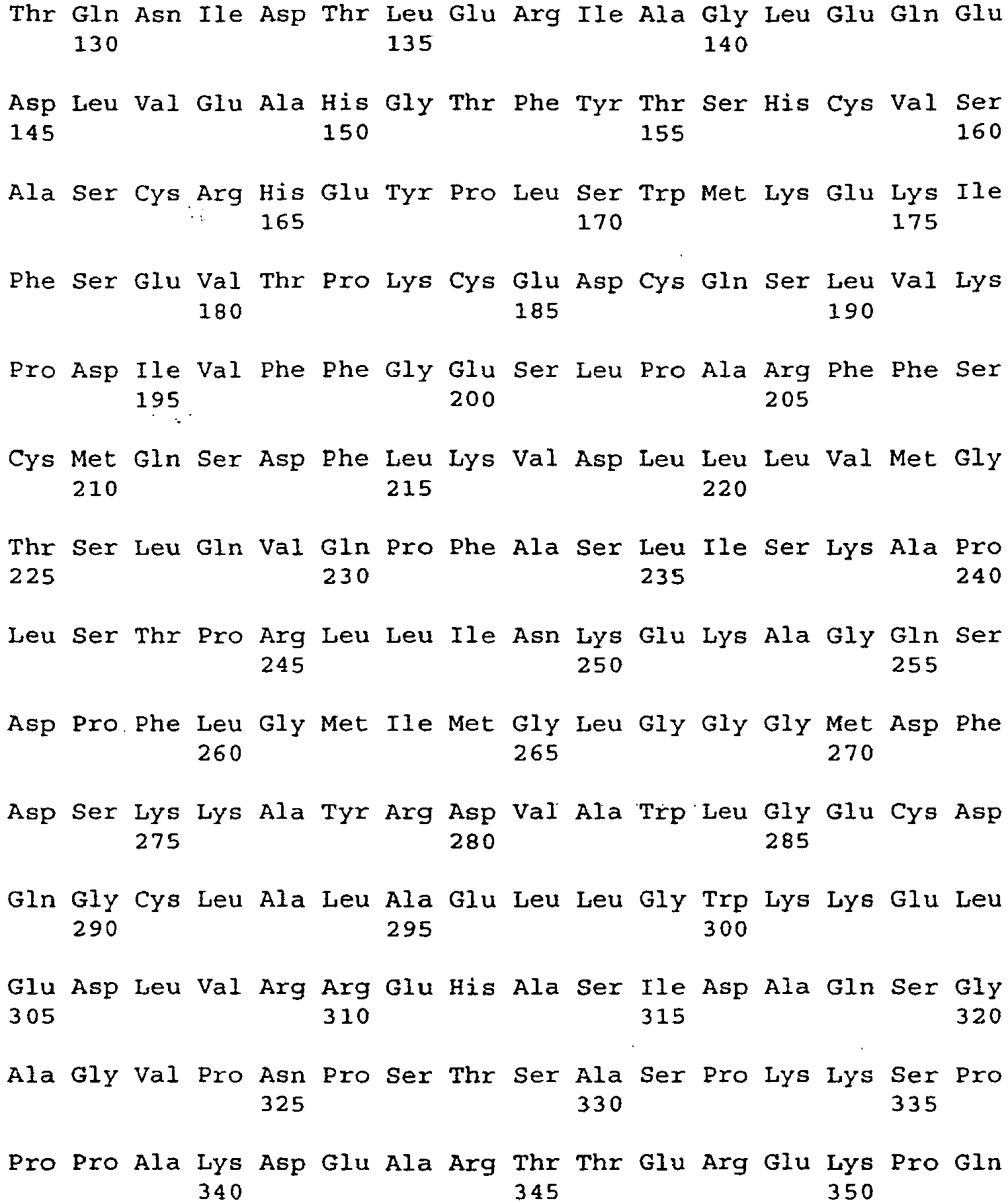
- <210> 7
<211> 1927
<212> DNA
<213> Homo sapiens - <220>
<221> CDS
<222> (103)..(1299) - <400> 7


- <210> 8
<211> 399
<212> PRT
<213> Homo sapiens - <400> 8


- <210> 9
<211> 1174
<212> DNA
<213> Homo sapiens - <220>
<221> CDS
<222> (21)..(962) - <400> 9


- <210> 10
<211> 314
<212> PRT
<213> Homo sapiens - <400> 10


- <210> 11
<211> 2350
<212> DNA
<213> Homo sapiens - <220>
<221> CDS
<222> (219)..(1115) - <400> 11


- <210> 12
<211> 299
<212> PRT
<213> Homo sapiens - <400> 12


- <210> 13
<211> 1670
<212> DNA
<213> Homo sapiens - <220>
<221> CDS
<222> (297)..(1226) - <400> 13


- <210> 14
<211> 310
<212> PRT
<213> Homo sapiens - <400> 14


- <210> 15
<211> 1638
<212> DNA
<213> Homo sapiens - <220>
<221> CDS
<222> (61)..(1125) - <400> 15


- <210> 16
<211> 355
<212> PRT
<213> Homo sapiens - <400> 16

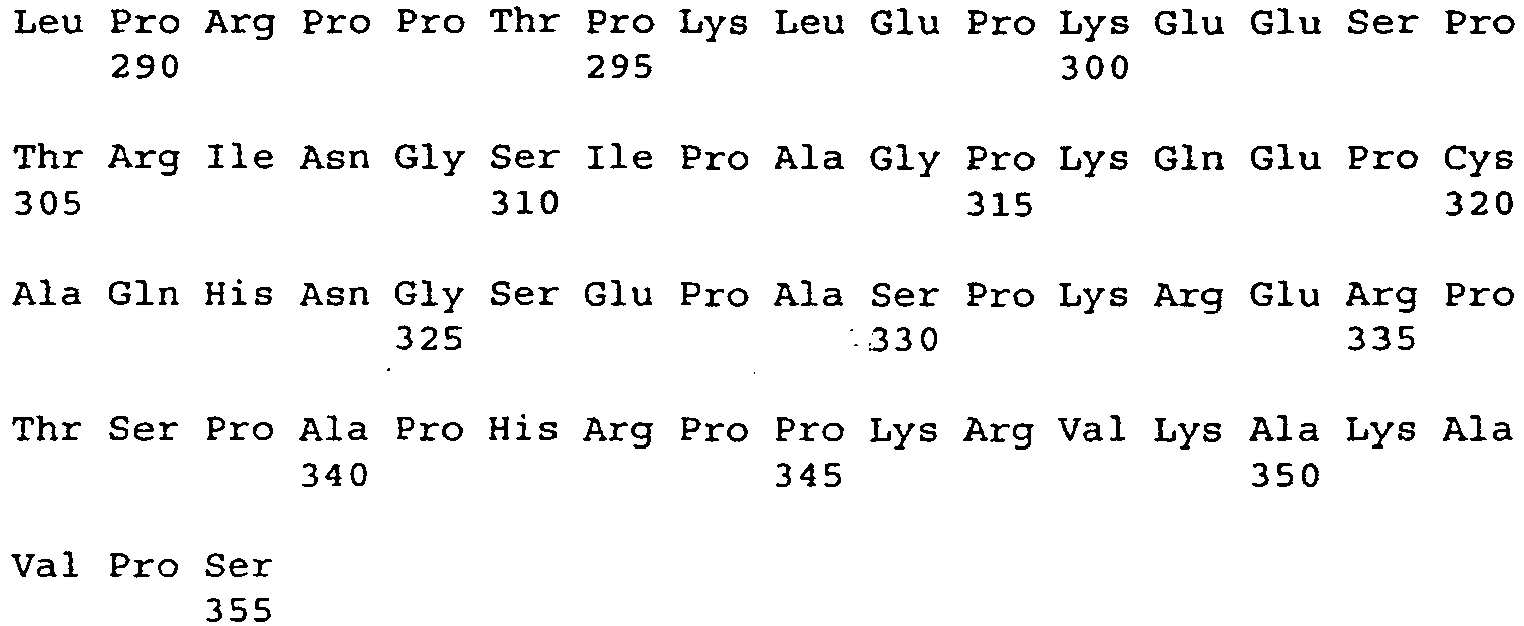
- <210> 17
<211> 1718
<212> DNA
<213> Homo sapiens - <220>
<221> CDS
<222> (34)..(1233) - <400> 17


- <210> 18
<211> 400
<212> PRT
<213> Homo sapiens - <400> 18


- <210> 19
<211> 6
<212> PRT
<213> Homo sapiens - <220>
<221> MOD_RES
<222> (1)
<223> Lys(Ac) - <220>
<221> MOD_RES
<222> (6)
<223> Lys(Ac) - <400> 19

- <210> 20
<211> 6
<212> PRT
<213> Homo sapiens - <220>
<221> MOD_RES
<222> (1)
<223> Lys(Ac) - <220>
<221> MOD_RES
<222> (6)
<223> Lys(Ac) - <400> 20

- <210> 21
<211> 6
<212> PRT
<213> Homo sapiens - <220>
<221> MOD_RES
<222> (1)
<223> Lys(Ac) - <220>
<221> MOD_RES
<222> (2)
<223> Ser(PO3) - <220>
<221> MOD_RES
<222> (6)
<223> Lys(Ac) - <400> 21

- <210> 22
<211> 5
<212> PRT
<213> Homo sapiens - <220>
<221> MOD_RES
<222> (1)
<223> Lys(Ac) - <220>
<221> MOD_RES
<222> (5)
<223> Lys(Ac) - <400> 22

- <210> 23
<211> 5
<212> PRT
<213> Homo sapiens - <220>
<221> MOD_RES
<222> (5)
<223> Lys(Ac) - <400> 23

- <210> 24
<211> 5
<212> PRT
<213> Homo sapiens - <220>
<221> MOD_RES
<222> (5)
<223> Lys(Ac) - <400> 24

- <210> 25
<211> 5
<212> PRT
<213> Homo sapiens - <220>
<221> MOD_RES
<222> (1)
<223> Lys(Ac) - <220>
<221> MOD_RES
<222> (5)
<223> Lys(Ac) - <400> 25

- <210> 26
<211> 4
<212> PRT
<213> Homo sapiens - <220>
<221> MOD_RES
<222> (4)
<223> Lys(Ac) - <400> 26

- <210> 27
<211> 4
<212> PRT
<213> Homo sapiens - <220>
<221> MOD_RES
<222> (1)
<223> Lys(Ac) - <220>
<221> MOD_RES
<222> (4)
<223> Lys(Ac) - <400> 27

- <210> 28
<211> 4
<212> PRT
<213> Homo sapiens - <220>
<221> MOD_RES
<222> (4)
<223> Lys(Ac) - <400> 28

- <210> 29
<211> 4
<212> PRT
<213> Homo sapiens - <220>
<221> MOD_RES
<222> (3)
<223> Lys(Ac) - <220>
<221> MOD_RES
<222> (4)
<223> Lys(Ac) - <400> 29

- <210> 30
<211> 369
<212> PRT
<213> Homo sapiens - <400> 30


- <210> 31
<211> 562
<212> PRT
<213> Saccharomyces cerevisiae - <400> 31


Claims (15)
- A method for determining whether a subject has a neurodegenerative disease comprising:determining the level or activity of a sirtuin protein in a biological sample obtained from a subject, wherein higher level or activity of the sirtuin protein in the biological sample of the subject relative to a control level indicates that the subject has a neurodegenerative disease, wherein the sirtuin protein is SIRT1.
- The method of claim 1, wherein the biological sample is a cell sample.
- The method of claim 2, wherein the cell sample is a brain sample.
- The method of claim 2, wherein the cell sample is a blood sample.
- The method of claim 2, wherein the cell sample is a spinal cord sample.
- The method of any one of claims 1-5, wherein the level of the sirtuin protein in the biological sample is determined using an antibody.
- The method of any one of claims 1-5, wherein the activity of the sirtuin protein in the biological sample is measured by determining deacetylation activity of the sirtuin protein.
- The method of any one of claims 1-7, wherein the control level corresponds to the level or activity of a sirtuin protein in a biological sample from an individual who does not have a neurodegenerative disease.
- The method of any one of claims 1-7, wherein the control level corresponds to the average of the level or activity of a sirtuin protein in biological samples from 2 or more individuals who do not have a neurodegenerative disease.
- The method of any one of claims 1-9, wherein the level or activity of the sirtuin protein is determined once.
- The method of any one of claims 1-9, wherein the level or activity of the sirtuin protein is determined more than once.
- The method of any one of claims 1-11, wherein the neurodegenerative disease is selected from the group consisting of: Alzheimer's disease, amyotrophic lateral sclerosis (ALS), a spongiform encephalopathy, dementia (including Lewy Body disease, mild cognitive impairment (MCI), Primary Senile Degenerative Dementia, Alzheimer Type Senile Dementia and Alzheimer Type Dementia), Parkinsonian disorders (including Parkinson's disease, Lewy Body disease and Parkinsonism-linked to chromosome 17 (FTDP-17)), Progressive Supranuclear Palsy (also known as Steele-Richardson-Olszewski Syndrome or Disease, Progressive Supranuclear Ophthalmoplegia), Pick's disease and corticobasal degeneration.
- The method of claim 12, wherein the neurodegenerative disease is Alzheimer's disease.
- The method of claim 12, wherein the neurodegenerative disease is amyotrophic lateral sclerosis (ALS).
- The method of claim 11, wherein a change in the level of protein or activity of the sirtuin protein within the two samples indicates that the neurodegenerative disease is progressing in the subj ect.
Applications Claiming Priority (2)
| Application Number | Priority Date | Filing Date | Title |
|---|---|---|---|
| US11/074,374 US20060025337A1 (en) | 2003-07-01 | 2005-03-07 | Sirtuin related therapeutics and diagnostics for neurodegenerative diseases |
| EP06737459A EP1863461A2 (en) | 2005-03-07 | 2006-03-07 | Sirtuin related therapeutics and diagnostics for neurodegenerative diseases |
Related Parent Applications (2)
| Application Number | Title | Priority Date | Filing Date |
|---|---|---|---|
| EP06737459A Division EP1863461A2 (en) | 2005-03-07 | 2006-03-07 | Sirtuin related therapeutics and diagnostics for neurodegenerative diseases |
| EP06737459.5 Division | 2006-03-07 |
Publications (3)
| Publication Number | Publication Date |
|---|---|
| EP2362226A1 EP2362226A1 (en) | 2011-08-31 |
| EP2362226B1 true EP2362226B1 (en) | 2016-02-17 |
| EP2362226B8 EP2362226B8 (en) | 2016-04-06 |
Family
ID=36676490
Family Applications (2)
| Application Number | Title | Priority Date | Filing Date |
|---|---|---|---|
| EP10187871.8A Expired - Lifetime EP2362226B8 (en) | 2005-03-07 | 2006-03-07 | Diagnostic method for neurodegenerative diseases based on measurement of SIRT1 levels or activity |
| EP06737459A Withdrawn EP1863461A2 (en) | 2005-03-07 | 2006-03-07 | Sirtuin related therapeutics and diagnostics for neurodegenerative diseases |
Family Applications After (1)
| Application Number | Title | Priority Date | Filing Date |
|---|---|---|---|
| EP06737459A Withdrawn EP1863461A2 (en) | 2005-03-07 | 2006-03-07 | Sirtuin related therapeutics and diagnostics for neurodegenerative diseases |
Country Status (7)
| Country | Link |
|---|---|
| US (1) | US20060025337A1 (en) |
| EP (2) | EP2362226B8 (en) |
| JP (1) | JP5075112B2 (en) |
| AU (1) | AU2006220554B2 (en) |
| CA (1) | CA2599125C (en) |
| ES (1) | ES2572372T3 (en) |
| WO (1) | WO2006096780A2 (en) |
Families Citing this family (68)
| Publication number | Priority date | Publication date | Assignee | Title |
|---|---|---|---|---|
| US20050096256A1 (en) * | 2003-07-01 | 2005-05-05 | President And Fellows Of Harvard College | Compositions for manipulating the lifespan and stress response of cells and organisms |
| US20050158376A1 (en) * | 2003-10-23 | 2005-07-21 | Sardi William F. | Dietary supplement and method of processing same |
| US20090169585A1 (en) * | 2003-10-23 | 2009-07-02 | Resveratrol Partners, Llc | Resveratrol-Containing Compositions And Their Use In Modulating Gene Product Concentration Or Activity |
| CN101247793B (en) * | 2003-12-29 | 2013-04-10 | 哈佛大学校长及研究员协会 | Compositions for treating or preventing obesity and insulin resistance disorders |
| US8017634B2 (en) | 2003-12-29 | 2011-09-13 | President And Fellows Of Harvard College | Compositions for treating obesity and insulin resistance disorders |
| AU2005207029B2 (en) * | 2004-01-20 | 2011-09-01 | Brigham Young University | Novel sirtuin activating compounds and methods for making the same |
| US20090117543A1 (en) * | 2004-05-04 | 2009-05-07 | President And Fellows Of Harvard College | Methods and compositions for inducing sirtuins |
| CN1964627B (en) * | 2004-06-04 | 2011-10-19 | 华盛顿大学 | Methods and compositions for treating neuropathy |
| US20060014705A1 (en) * | 2004-06-30 | 2006-01-19 | Howitz Konrad T | Compositions and methods for selectively activating human sirtuins |
| JP2008527002A (en) * | 2005-01-13 | 2008-07-24 | サートリス ファーマシューティカルズ, インコーポレイテッド | Novel composition for preventing and treating neurodegenerative disorders and blood coagulation disorders |
| US20090142335A1 (en) * | 2005-02-15 | 2009-06-04 | Joslin Diabetes Center | Methods of diagnosis and treatment of metabolic disorders |
| US20090215681A1 (en) * | 2005-02-15 | 2009-08-27 | Joslin Diabetes Center | Methods of Diagnosis and Treatment of Metabolic Disorders |
| EP1877054A2 (en) * | 2005-03-30 | 2008-01-16 | Sirtris Pharmaceuticals, Inc. | Nicotinamide riboside and analogues thereof |
| US20070014833A1 (en) * | 2005-03-30 | 2007-01-18 | Sirtris Pharmaceuticals, Inc. | Treatment of eye disorders with sirtuin modulators |
| WO2007084162A2 (en) * | 2005-04-08 | 2007-07-26 | President And Fellows Of Harvard College | Sirtuin inhibiting compounds |
| MX2007014114A (en) | 2005-05-10 | 2008-03-14 | Intermune Inc | DERIVATIVES OF PIRIDONA TO MODULATE THE SYSTEM OF PROTEIN KINASE ACTIVATED BY STRESS. |
| US20060292099A1 (en) * | 2005-05-25 | 2006-12-28 | Michael Milburn | Treatment of eye disorders with sirtuin modulators |
| WO2006138418A2 (en) * | 2005-06-14 | 2006-12-28 | President And Fellows Of Harvard College | Improvement of cognitive performance with sirtuin activators |
| US20070149466A1 (en) * | 2005-07-07 | 2007-06-28 | Michael Milburn | Methods and related compositions for treating or preventing obesity, insulin resistance disorders, and mitochondrial-associated disorders |
| EP1999147A1 (en) * | 2006-03-27 | 2008-12-10 | Ablynx N.V. | Medical delivery device for therapeutic proteins based on single domain antibodies |
| CA2661024A1 (en) * | 2006-08-28 | 2008-03-06 | The Regents Of The University Of California | Small molecule potentiator of hormonal therapy for breast cancer |
| WO2008027379A2 (en) * | 2006-08-29 | 2008-03-06 | Sirtris Pharmaceuticals, Inc. | Indicators of sirtuin activity and methods of use thereof |
| US8802638B1 (en) * | 2007-01-25 | 2014-08-12 | University Of South Florida | Flavonoid treatment of glycogen synthase kinase-based disease |
| US8778986B1 (en) * | 2007-01-25 | 2014-07-15 | University Of South Florida | Treatment of glycogen synthase kinase-based disease |
| CA2676609A1 (en) * | 2007-01-26 | 2008-07-31 | Washington University | Methods and compositions for treating neuropathies |
| US8180580B2 (en) | 2007-02-01 | 2012-05-15 | The Wistar Institute | Method for identifying a compound that modulates SIR2 protein activity |
| US20090326007A1 (en) * | 2007-02-01 | 2009-12-31 | Ronen Marmorstein | Compounds and methods for modulating sir2 protein activity |
| EP1955715A1 (en) * | 2007-02-09 | 2008-08-13 | Max-Planck-Gesellschaft zur Förderung der Wissenschaften e.V. | Use of Sirt7 for treating age-related diseases |
| US8865646B2 (en) * | 2007-03-28 | 2014-10-21 | University Of South California | Dietary compositions and methods for protection against chemotherapy, radiotherapy, oxidative stress, and aging |
| ES2891733T3 (en) * | 2007-03-28 | 2022-01-31 | Univ Southern California | Induction of differential stress resistance and uses thereof |
| JP2010523720A (en) * | 2007-04-12 | 2010-07-15 | プレジデント アンド フェロウズ オブ ハーバード カレッジ | Sirtuin-based methods and compositions for the treatment of β-catenin related diseases |
| TWI366565B (en) | 2007-06-06 | 2012-06-21 | Otsuka Pharma Co Ltd | Quinolone compound and pharmaceutical composition |
| US8703161B2 (en) * | 2007-08-13 | 2014-04-22 | Elc Management, Llc | Skin repair compositions comprising circadian gene activators and a synergistic combination of Sirt1 gene activators |
| WO2009054994A2 (en) * | 2007-10-23 | 2009-04-30 | President And Fellows Of Harvard College | Sirt-3 related methods and compositions for mimicking exercise |
| WO2009108361A1 (en) * | 2008-02-27 | 2009-09-03 | The Regents Of The University Of California | Methods for treatment and prevention of breast cancer |
| GB0808196D0 (en) * | 2008-05-07 | 2008-06-11 | Coressence Ltd | Topical composition |
| JP5627574B2 (en) * | 2008-06-03 | 2014-11-19 | インターミューン, インコーポレイテッド | Compounds and methods for treating inflammatory and fibrotic diseases |
| KR20110033304A (en) * | 2008-07-23 | 2011-03-30 | 메사추세츠 인스티튜트 오브 테크놀로지 | Activation of histone deacetylase 1 (HDAC1) to protect against DNA damage and increase neuronal survival |
| US9895344B2 (en) | 2008-07-25 | 2018-02-20 | Emory University | Treating various disorders with 7,8-dihydroxyflavone and derivatives thereof |
| AU2009295948B2 (en) * | 2008-09-29 | 2013-12-05 | GlaxoSmithKline, LLC | Quinazolinone, quinolone and related analogs as sirtuin modulators |
| EP2370086A2 (en) * | 2008-12-01 | 2011-10-05 | Lifespan Extension Llc | Methods and compositions for altering health, wellbeing, and lifespan |
| TWI472525B (en) | 2008-12-05 | 2015-02-11 | Otsuka Pharma Co Ltd | Quinolone compound and pharmaceutical composition |
| JP2012529659A (en) * | 2009-06-09 | 2012-11-22 | バナー・サン・ヘルス・リサーチ・インスティテュート | Methods and systems for detecting, diagnosing, and monitoring the progression of Alzheimer's disease |
| WO2011029956A1 (en) * | 2009-09-14 | 2011-03-17 | Institut National De La Sante Et De La Recherche Medicale (Inserm) | Flavones and flavanones derivates as dna methyltransferases inhibitors |
| BR112012010587A2 (en) | 2009-11-06 | 2015-09-29 | David Gladstone Inst | methods and compositions for modulating tau levels. |
| EP2533814A2 (en) | 2010-02-11 | 2012-12-19 | Ablynx N.V. | Delivery of immunoglobulin variable domains and constructs thereof |
| CN105566272A (en) | 2010-06-09 | 2016-05-11 | 爱默蕾大学 | TRKB agonists and methods of use |
| WO2013002880A1 (en) | 2011-06-29 | 2013-01-03 | The General Hospital Corporation | Compositions and methods for enhancing bioenergetic status in female germ cells |
| TR201901856T4 (en) | 2011-07-22 | 2019-03-21 | Massachusetts Inst Technology | Activators of class I histone deacetylase (HDACs) and their uses. |
| US8916528B2 (en) | 2011-11-16 | 2014-12-23 | Resveratrol Partners, Llc | Compositions containing resveratrol and nucleotides |
| CN103387508A (en) * | 2012-05-07 | 2013-11-13 | 长沙理工大学 | Preparation of trans-3, 5-dihydroxy-4' -acetamido-diphenylethene |
| JO3407B1 (en) | 2012-05-31 | 2019-10-20 | Eisai R&D Man Co Ltd | Tetrahydropyrazolopyrimidines |
| EP2877461B1 (en) | 2012-07-27 | 2018-05-09 | Emory University | Heterocyclic flavone derivatives, compositions, and methods related thereto |
| AR092742A1 (en) | 2012-10-02 | 2015-04-29 | Intermune Inc | ANTIFIBROTIC PYRIDINONES |
| WO2014059034A2 (en) | 2012-10-09 | 2014-04-17 | President And Fellows Of Harvard College | Nad biosynthesis and precursors for the treatment and prevention of cancer and proliferation |
| AU2014214326B2 (en) * | 2013-02-07 | 2018-07-05 | Prexton Therapeutics Sa | Substituted quinoxaline derivatives and their use as positive allosteric modulators of mGluR4 |
| US9737525B2 (en) | 2013-06-07 | 2017-08-22 | The General Hospital Corporation | Small molecule activators of NRF2 pathway |
| US10172915B2 (en) | 2013-10-20 | 2019-01-08 | Duke University | Methods and compositions for activation of sirtuins with Annexin A1 peptides |
| US10233195B2 (en) | 2014-04-02 | 2019-03-19 | Intermune, Inc. | Anti-fibrotic pyridinones |
| CN110662542B (en) | 2016-11-11 | 2025-04-08 | 英国贝尔法斯特女王大学 | Efficient and scalable synthesis of nicotinoyl riboside and reduced nicotinoyl riboside, modified derivatives thereof, phosphorylated analogs thereof, adenosine dinucleotide conjugates thereof, and novel crystalline forms thereof |
| US11071747B2 (en) | 2016-11-29 | 2021-07-27 | University Of Iowa Research Foundation | Use of NAD precursors for breast enhancement |
| US11633421B2 (en) | 2016-11-29 | 2023-04-25 | University Of Iowa Research Foundation | Use of NAD precursors for improving maternal health and/or offspring health |
| US11512111B2 (en) * | 2017-11-27 | 2022-11-29 | The University Of Hong Kong | Yeats inhibitors and methods of use thereof |
| CN113116871A (en) * | 2021-05-06 | 2021-07-16 | 南京大学 | Application of stilbene compounds in anti-aging small molecule drugs |
| KR20240101561A (en) | 2021-10-14 | 2024-07-02 | 인사이트 코포레이션 | Quinoline compounds as inhibitors of KRAS |
| DK4426434T3 (en) | 2021-11-02 | 2025-11-10 | Flare Therapeutics Inc | PPARG INVERSE AGONISTS AND USES THEREOF |
| CN117534545B (en) * | 2022-12-26 | 2026-04-10 | 东北大学 | Compound for treating Alzheimer's disease based on artificial intelligence design, preparation method and medical application thereof |
| CN118995579B (en) * | 2024-09-09 | 2025-10-03 | 西北农林科技大学 | An ICSI operation method for improving the efficiency of in vitro OPU sexed embryo production in dairy cows |
Family Cites Families (106)
| Publication number | Priority date | Publication date | Assignee | Title |
|---|---|---|---|---|
| FR2543550B1 (en) * | 1983-04-01 | 1985-08-09 | Cortial | NOVEL TETRAHYDROXY-3 ', 4', 5.7 FLAVONE DERIVATIVES, THEIR PREPARATION METHOD AND THEIR THERAPEUTIC USE |
| CA1247547A (en) * | 1983-06-22 | 1988-12-28 | Paul Hadvary | Leucine derivatives |
| US4683195A (en) | 1986-01-30 | 1987-07-28 | Cetus Corporation | Process for amplifying, detecting, and/or-cloning nucleic acid sequences |
| US5689046A (en) * | 1987-09-30 | 1997-11-18 | Bayer Aktiengesellschaft | Stilbene synthase gene |
| DE4107396A1 (en) * | 1990-06-29 | 1992-01-02 | Bayer Ag | STYLE SYNTHASE GENES FROM VINEYARD |
| US5063507A (en) | 1990-09-14 | 1991-11-05 | Plains Cotton Cooperative Association | Goods database employing electronic title or documentary-type title |
| JPH07507689A (en) | 1992-06-08 | 1995-08-31 | ザ リージェンツ オブ ザ ユニバーシティ オブ カリフォルニア | Specific tissue targeting methods and compositions |
| AU689755B2 (en) | 1992-09-22 | 1998-04-09 | Biofocus Discovery Limited | Recombinant viruses displaying a nonviral polypeptide on their external surface |
| EP0746625B1 (en) | 1992-11-09 | 2004-03-31 | THE UNITED STATES GOVERNMENT as represented by THE SECRETARY OF THE DEPARTMENT OF HEALTH AND HUMAN SERVICES | Targetable vector particles |
| IL107642A0 (en) * | 1992-11-20 | 1994-02-27 | Amgen Inc | Progenitor b cell stimulating factor |
| US6048903A (en) * | 1994-05-03 | 2000-04-11 | Robert Toppo | Treatment for blood cholesterol with trans-resveratrol |
| DE4440200A1 (en) * | 1994-11-10 | 1996-05-15 | Bayer Ag | DNA sequences and their use |
| DE4444238A1 (en) * | 1994-12-13 | 1996-06-20 | Beiersdorf Ag | Cosmetic or dermatological drug combinations of cinnamic acid derivatives and flavone glycosides |
| US5589483A (en) * | 1994-12-21 | 1996-12-31 | Geron Corporation | Isoquinoline poly (ADP-ribose) polymerase inhibitors to treat skin diseases associated with cellular senescence |
| IT1276225B1 (en) * | 1995-10-17 | 1997-10-27 | Sigma Tau Ind Farmaceuti | PHARMACEUTICAL COMPOSITIONS CONTAINING L-CARNITINE AND ALKANOYL L-CARNITINE IN ASSOCIATION WITH RESVERATROL OR ITS DERIVATIVES USEFUL FOR |
| FR2741238B1 (en) * | 1995-11-17 | 2001-11-30 | Goemar Lab Sa | USE OF ALUMINUM CHLORIDE AS AN ELICITOR OF RESVERATROL SYNTHESIS |
| US6184248B1 (en) * | 1996-09-05 | 2001-02-06 | Robert K. K. Lee | Compositions and methods for treatment of neurological disorders and neurodegenerative diseases |
| IT1291113B1 (en) * | 1997-03-20 | 1998-12-29 | Sigma Tau Ind Farmaceuti | NUTRITIONAL THERAPEUTIC COMPOSITION FOR SUBJECTS WITH DIABETES MELLITUS |
| FR2766176B1 (en) * | 1997-07-15 | 1999-10-29 | Caudalie | COMPOSITIONS BASED ON RESVERATROL DERIVATIVES |
| US6270780B1 (en) | 1997-07-25 | 2001-08-07 | Chesebrough-Pond's Usa Co., Division Of Conopco | Cosmetic compositions containing resveratrol |
| AU760140B2 (en) * | 1997-10-24 | 2003-05-08 | John P. Blass | Nutritional supplement for cerebral metabolic insufficiencies |
| WO1999022728A1 (en) * | 1997-10-31 | 1999-05-14 | Arch Development Corporation | Methods and compositions for regulation of 5-alpha reductase activity |
| US6414037B1 (en) * | 1998-01-09 | 2002-07-02 | Pharmascience | Pharmaceutical formulations of resveratrol and methods of use thereof |
| US6245814B1 (en) * | 1998-05-08 | 2001-06-12 | Calyx Therapeutics, Inc. | Diphenylethylene compounds |
| US6022901A (en) * | 1998-05-13 | 2000-02-08 | Pharmascience Inc. | Administration of resveratrol to prevent or treat restenosis following coronary intervention |
| WO1999059561A2 (en) * | 1998-05-18 | 1999-11-25 | Hensley, Kenneth, L. | Resveratrol inhibition of myeloperoxidase |
| US20030086986A1 (en) * | 1998-08-06 | 2003-05-08 | Bruijn Chris De | Ophthalmic, pharmaceutical and other healthcare preparations with naturally occurring plant compounds, extracts and derivatives |
| US6197834B1 (en) * | 1998-09-01 | 2001-03-06 | Northeastern Ohio Universities College Of Medicine | Method of inhibiting formation of infectious herpes virus particles |
| IT1302365B1 (en) * | 1998-10-09 | 2000-09-05 | Sigma Tau Healthscience Spa | USE OF CARNITINE AND RESVERATROL TO PRODUCE A COMPOSITION FOR THE PREVENTION OR THERAPEUTIC TREATMENT OF BRAIN ALTERATIONS |
| US20030078212A1 (en) * | 1998-10-30 | 2003-04-24 | Jia-He Li | Pharmaceutical compositions containing poly(adp-ribose) glycohydrolase inhibitors and methods of using the same |
| US6087385A (en) * | 1998-10-30 | 2000-07-11 | University Of Mississippi | Flavonoid derivatives |
| US6361815B1 (en) * | 1998-12-21 | 2002-03-26 | Pure World Botanicals, Inc. | Products comprising trihydroxystilbenes and derivatives thereof and methods for their manufacture and use |
| US6190716B1 (en) * | 1999-02-17 | 2001-02-20 | Scott O. Galbreath, Jr. | Method for preparing a grape derived product |
| EP1169647B1 (en) * | 1999-04-12 | 2007-06-20 | Sumitomo Chemical Company, Limited | Method for analyzing the amount of intraabdominal adipose tissue |
| FR2795643B1 (en) * | 1999-07-02 | 2004-06-11 | Oreal | FIRMING COSMETIC COMPOSITION INCLUDING AT LEAST ONE HYDROXYSTILBENE IN ASSOCIATION WITH ASCORBIC ACID |
| US6573299B1 (en) * | 1999-09-20 | 2003-06-03 | Advanced Medical Instruments | Method and compositions for treatment of the aging eye |
| AU7596100A (en) * | 1999-09-21 | 2001-04-24 | Rutgers, The State University | Resveratrol analogs for prevention of disease |
| US6264995B1 (en) * | 1999-10-19 | 2001-07-24 | Thomas Newmark | Herbal composition for reducing inflammation and methods of using same |
| US6358517B1 (en) * | 1999-10-22 | 2002-03-19 | Unilever Home & Personal Care Usa, Division Of Conopco | Cosmetic compositions containing resveratrol and retinoids |
| US20020002200A1 (en) * | 2000-02-04 | 2002-01-03 | Bishwagit Nag | Novel diphenylethylene compounds |
| US6416806B1 (en) * | 2000-03-20 | 2002-07-09 | James H. Zhou | Herbal caffeine replacement composition and food products incorporating same |
| IT1317034B1 (en) * | 2000-05-30 | 2003-05-26 | Istituto Di Medicina Speriment | METHOD OF EXTRACTION OF PHARMACEUTICAL ACTIVITY PRODUCTS FROM PLANTS SPERMATOPHYTES, PRODUCTS SO OBTAINED AND THEIR USE IN MEDICINE, IN |
| ITNA20000037A1 (en) * | 2000-06-02 | 2001-12-02 | Dev Biotechnological Proces Se | INNOVATIVE MULTIFUNCTION SOLAR FILTER. |
| IT1318565B1 (en) * | 2000-06-09 | 2003-08-27 | World Pharma Tech Ltd | NADH OCTOCOSANOL EVITAMIN E PROENERGETIC FOOD SUPPLEMENT |
| US6812248B2 (en) * | 2000-07-05 | 2004-11-02 | John Hopkins University School Of Medicine | Prevention and treatment of degenerative diseases by glutathione and phase II detoxification enzymes |
| US6541522B2 (en) * | 2000-08-16 | 2003-04-01 | Insmed Incorporated | Methods of using compositions containing hypotriglyceridemically active stilbenoids |
| US6410596B1 (en) * | 2000-08-16 | 2002-06-25 | Insmed Incorporated | Compositions containing hypoglycemically active stillbenoids |
| US6552085B2 (en) * | 2000-08-16 | 2003-04-22 | Insmed Incorporated | Compositions containing hypoglycemically active stilbenoids |
| US20030082647A1 (en) * | 2000-12-12 | 2003-05-01 | Reenan Robert A. | Transporter protein |
| US20040005574A1 (en) * | 2002-07-08 | 2004-01-08 | Leonard Guarente | SIR2 activity |
| AU2002226650A1 (en) * | 2001-01-18 | 2002-07-30 | Arnold Hoffman | Redox therapy for tumors |
| ITMI20010528A1 (en) | 2001-03-13 | 2002-09-13 | Istituto Biochimico Pavese Pha | RESVERATROL COMPLEXES WITH PHOSPHOLIPIDS THEIR PREPARATION AND PHARMACEUTICAL AND COSMETIC COMPOSITIONS |
| US20030044946A1 (en) * | 2001-04-03 | 2003-03-06 | Longo Valter D. | Genes, mutations, and drugs that increase cellular resistance to damage and extend longevity in organisms from yeast to humans |
| US6387416B1 (en) * | 2001-04-05 | 2002-05-14 | Thomas Newmark | Anti-Inflammatory herbal composition and method of use |
| WO2002085327A2 (en) * | 2001-04-18 | 2002-10-31 | Oraltech Pharmaceuticals, Inc. | Use of nsaids for prevention and treatment of cellular abnormalities of the female reproductive tract |
| US20030004142A1 (en) * | 2001-04-18 | 2003-01-02 | Prior Christopher P. | Use of NSAIDs for prevention and treatment of cellular abnormalities of the lung or bronchial pathway |
| US6426061B1 (en) * | 2001-04-20 | 2002-07-30 | Weiwei Li | Method and composition for preventing sweat-related odor |
| US6368617B1 (en) * | 2001-05-15 | 2002-04-09 | Reliv' International, Inc. | Dietary supplement |
| WO2002102981A2 (en) * | 2001-06-15 | 2002-12-27 | The Trustees Of Columbia University In The City Of New York | SIR2α-BASED THERAPEUTIC AND PROPHYLACTIC METHODS |
| CN1398838A (en) * | 2001-07-26 | 2003-02-26 | 中国人民解放军军事医学科学院放射医学研究所 | Diphenylethylene compound and its prepn and application in preventing and treating diabetes |
| US20030044474A1 (en) * | 2001-08-03 | 2003-03-06 | Shaklee Corporation | High molecular weight, lipophilic, orally ingestible bioactive agents in formulations having improved bioavailability |
| CA2457370A1 (en) * | 2001-08-15 | 2003-02-27 | Elixir Pharmaceuticals, Inc. | Age-associated markers |
| AU2002341566A1 (en) * | 2001-08-16 | 2003-04-01 | Mucosal Therapeutics, Inc. | Treatment and prevention of mucositis in cancer patients |
| US6656969B2 (en) * | 2001-09-20 | 2003-12-02 | Mayo Foundation For Medical Education And Research | Methods and compositions for inhibiting the proliferation of prostate cancer cells |
| US20030054053A1 (en) * | 2001-09-20 | 2003-03-20 | Charles Young | Methods and compositions for inhibiting the proliferation of prostate cancer cells |
| US6680342B2 (en) * | 2001-09-20 | 2004-01-20 | Mayo Foundation For Medical Education And Research | Methods and compositions for inhibiting the proliferation of prostate cancer cells |
| US20030055114A1 (en) * | 2001-09-20 | 2003-03-20 | Charles Young | Methods and compositions for inhibiting the proliferation of prostate cancer cells |
| PL369336A1 (en) * | 2001-09-21 | 2005-04-18 | The Administrators Of The Tulane Educational Fund | Diagnostic or therapeutic somatostatin or bombesin analog conjugates and uses thereof |
| US20030082116A1 (en) * | 2001-09-28 | 2003-05-01 | Closure Medical Corporation | Adhesive compositions containing dual function stabilizers and active agents |
| DE60105820D1 (en) * | 2001-10-22 | 2004-10-28 | Pera Ivo E | Composition for reducing or weaning nicotine addiction |
| US6767563B2 (en) * | 2001-10-30 | 2004-07-27 | Michael D. Farley | Immune functions |
| KR100567125B1 (en) * | 2001-11-01 | 2006-03-31 | 주식회사 안지오랩 | Pharmaceutical composition for inhibiting matrix metalloprotease activity containing chalcone or derivatives thereof |
| US20030118536A1 (en) * | 2001-11-06 | 2003-06-26 | Rosenbloom Richard A. | Topical compositions and methods for treatment of adverse effects of ionizing radiation |
| US6544564B1 (en) * | 2001-11-27 | 2003-04-08 | Michael Donald Farley | Cytotoxic pharmaceutical composition |
| US20030118617A1 (en) * | 2001-12-21 | 2003-06-26 | Avon Products, Inc. | Resveratrol analogues |
| WO2003090681A2 (en) * | 2002-04-24 | 2003-11-06 | Research Development Foundation | SYNERGISTIC EFFECTS OF NUCLEAR TRANSCRIPTION FACTOR NF-κB INHIBITORS AND ANTI-NEOPLASTIC AGENTS |
| WO2003094833A2 (en) * | 2002-05-10 | 2003-11-20 | Orchid Chemicals & Pharmaceuticals Limited | A new stereoselective route to produce tris-o-substituted-(e)-( 3,5-dihydroxyphenyl)-2-(4- hydroxyphenyl)ethene |
| US7351542B2 (en) * | 2002-05-20 | 2008-04-01 | The Regents Of The University Of California | Methods of modulating tubulin deacetylase activity |
| US20040014721A1 (en) * | 2002-06-10 | 2004-01-22 | Oklahoma Medical Research Foundation | Method for using tethered bis(polyhydroxyphenyls) and O-alkyl derivatives thereof in treating inflammatory conditions of the central nervous system |
| US7064760B2 (en) | 2002-06-19 | 2006-06-20 | Nokia Corporation | Method and apparatus for extending structured content to support streaming |
| DE10230961A1 (en) * | 2002-07-10 | 2004-02-12 | Lorenz, Peter, Dr. | Use of hydroxyresveratrol or a mulberry extract to prepare a neuroprotective agent for preventing or treating diseases of the central and peripheral nervous systems |
| WO2004009539A2 (en) * | 2002-07-19 | 2004-01-29 | Orchid Chemicals And Pharmaceuticals Limited | Method for the conversion of a z-isomer into e-isomer |
| CA2421269A1 (en) | 2002-08-09 | 2004-02-09 | President And Fellows Of Harvard College | Methods and compositions for extending the life span and increasing the stress resistance of cells and organisms |
| US7977049B2 (en) * | 2002-08-09 | 2011-07-12 | President And Fellows Of Harvard College | Methods and compositions for extending the life span and increasing the stress resistance of cells and organisms |
| DE10244282A1 (en) * | 2002-09-23 | 2004-04-01 | Merck Patent Gmbh | Preparation with antioxidant properties |
| US7437405B1 (en) | 2002-10-01 | 2008-10-14 | Danger, Inc. | System and method for managing data objects in a wireless device |
| WO2004035013A2 (en) | 2002-10-21 | 2004-04-29 | L'oreal | Process for dissolving lipophilic compounds, and cosmetic composition |
| EP1418164A1 (en) * | 2002-11-07 | 2004-05-12 | Institut National De La Sante Et De La Recherche Medicale (Inserm) | New stilbene derivatives and their use as aryl hydrocarbon receptor ligand antagonists |
| US7691296B2 (en) | 2002-11-25 | 2010-04-06 | Amorepacific Corporation | Method for stabilizing active components using polyol/polymer microcapsule, and cosmetic composition containing the microcapsule |
| US7763588B2 (en) * | 2003-06-13 | 2010-07-27 | The Salk Institute For Biological Studies | Method for increasing cognitive function and neurogenesis |
| US20050096256A1 (en) * | 2003-07-01 | 2005-05-05 | President And Fellows Of Harvard College | Compositions for manipulating the lifespan and stress response of cells and organisms |
| US20050003080A1 (en) | 2003-07-02 | 2005-01-06 | John Badera | Soil bonding composition and apparatus for and method of application |
| US20070105109A1 (en) * | 2003-07-02 | 2007-05-10 | Geesaman Bard J | Sirt1 and genetic disorders |
| WO2005002527A2 (en) * | 2003-07-03 | 2005-01-13 | Massachusetts Institute Of Technology | Sirt1 modulation of adipogenesis and adipose function |
| US20050038125A1 (en) * | 2003-08-15 | 2005-02-17 | Smit Hobbe Friso | Method for the treatment of arthritis and pain |
| US20050049208A1 (en) * | 2003-09-03 | 2005-03-03 | Kaufmann Doug A. | Method of treating and method of preventing diabetes |
| US20050107338A1 (en) * | 2003-11-17 | 2005-05-19 | Seidman Michael D. | Nutritional supplement enhancing mitochondrial function |
| US8017634B2 (en) * | 2003-12-29 | 2011-09-13 | President And Fellows Of Harvard College | Compositions for treating obesity and insulin resistance disorders |
| US20090117543A1 (en) * | 2004-05-04 | 2009-05-07 | President And Fellows Of Harvard College | Methods and compositions for inducing sirtuins |
| CN1964627B (en) * | 2004-06-04 | 2011-10-19 | 华盛顿大学 | Methods and compositions for treating neuropathy |
| EP1765316A2 (en) * | 2004-06-16 | 2007-03-28 | The President and Fellows of Harvard College | Methods and compositions for modulating bax-ku70-mediated apoptosis |
| US20060014705A1 (en) * | 2004-06-30 | 2006-01-19 | Howitz Konrad T | Compositions and methods for selectively activating human sirtuins |
| JP2008527002A (en) * | 2005-01-13 | 2008-07-24 | サートリス ファーマシューティカルズ, インコーポレイテッド | Novel composition for preventing and treating neurodegenerative disorders and blood coagulation disorders |
| WO2009054994A2 (en) * | 2007-10-23 | 2009-04-30 | President And Fellows Of Harvard College | Sirt-3 related methods and compositions for mimicking exercise |
| US20120021924A1 (en) * | 2008-10-23 | 2012-01-26 | President And Fellows Of Harvard College | Detection and modulation of cytochrome c acetylation |
| EP2446048A4 (en) * | 2009-06-23 | 2013-04-03 | Harvard College | MEASURING METHODS AND KITS FOR ENZYMATIC ACTIVITY |
-
2005
- 2005-03-07 US US11/074,374 patent/US20060025337A1/en not_active Abandoned
-
2006
- 2006-03-07 WO PCT/US2006/008290 patent/WO2006096780A2/en not_active Ceased
- 2006-03-07 CA CA2599125A patent/CA2599125C/en not_active Expired - Fee Related
- 2006-03-07 ES ES10187871T patent/ES2572372T3/en not_active Expired - Lifetime
- 2006-03-07 EP EP10187871.8A patent/EP2362226B8/en not_active Expired - Lifetime
- 2006-03-07 EP EP06737459A patent/EP1863461A2/en not_active Withdrawn
- 2006-03-07 AU AU2006220554A patent/AU2006220554B2/en not_active Ceased
- 2006-03-07 JP JP2008500879A patent/JP5075112B2/en not_active Expired - Fee Related
Also Published As
| Publication number | Publication date |
|---|---|
| AU2006220554B2 (en) | 2013-05-30 |
| AU2006220554A1 (en) | 2006-09-14 |
| EP1863461A2 (en) | 2007-12-12 |
| WO2006096780A3 (en) | 2007-01-18 |
| WO2006096780A2 (en) | 2006-09-14 |
| JP5075112B2 (en) | 2012-11-14 |
| CA2599125A1 (en) | 2006-09-14 |
| CA2599125C (en) | 2016-05-10 |
| EP2362226A1 (en) | 2011-08-31 |
| ES2572372T3 (en) | 2016-05-31 |
| EP2362226B8 (en) | 2016-04-06 |
| JP2008533024A (en) | 2008-08-21 |
| US20060025337A1 (en) | 2006-02-02 |
Similar Documents
| Publication | Publication Date | Title |
|---|---|---|
| AU2006220554B2 (en) | Sirtuin related therapeutics and diagnostics for neurodegenerative diseases | |
| AU2004253579B2 (en) | Sirt1 modulators for manipulating cells/organism lifespan/stress response | |
| US20060276416A1 (en) | Methods and compositions for treating flushing and drug induced weight gain | |
| AU2006204699B2 (en) | Novel compositions for preventing and treating neurodegenerative and blood coagulation disorders | |
| EP3280404B1 (en) | Methods for selecting phosphatase selective and non-selective phosphatase inhibitors | |
| AU2013201279B2 (en) | Sirt1 modulators for manipulating cells/organism lifespan/stress response | |
| Lamming Jr | The regulation of lifespan by sirtuins in Saccharomyces cerevisiae | |
| HK1250929B (en) | Methods for selecting phosphatase selective and non-selective phosphatase inhibitors | |
| Yao | Modeling LRRK2-associated Parkinson's disease in C. elegans |
Legal Events
| Date | Code | Title | Description |
|---|---|---|---|
| PUAI | Public reference made under article 153(3) epc to a published international application that has entered the european phase |
Free format text: ORIGINAL CODE: 0009012 |
|
| AC | Divisional application: reference to earlier application |
Ref document number: 1863461 Country of ref document: EP Kind code of ref document: P |
|
| AK | Designated contracting states |
Kind code of ref document: A1 Designated state(s): AT BE BG CH CY CZ DE DK EE ES FI FR GB GR HU IE IS IT LI LT LU LV MC NL PL PT RO SE SI SK TR |
|
| 17P | Request for examination filed |
Effective date: 20120228 |
|
| 17Q | First examination report despatched |
Effective date: 20121203 |
|
| RIC1 | Information provided on ipc code assigned before grant |
Ipc: C12Q 1/34 20060101ALI20150601BHEP Ipc: G01N 33/68 20060101AFI20150601BHEP Ipc: A61P 25/28 20060101ALI20150601BHEP |
|
| GRAP | Despatch of communication of intention to grant a patent |
Free format text: ORIGINAL CODE: EPIDOSNIGR1 |
|
| INTG | Intention to grant announced |
Effective date: 20150811 |
|
| GRAS | Grant fee paid |
Free format text: ORIGINAL CODE: EPIDOSNIGR3 |
|
| GRAA | (expected) grant |
Free format text: ORIGINAL CODE: 0009210 |
|
| AC | Divisional application: reference to earlier application |
Ref document number: 1863461 Country of ref document: EP Kind code of ref document: P |
|
| AK | Designated contracting states |
Kind code of ref document: B1 Designated state(s): AT BE BG CH CY CZ DE DK EE ES FI FR GB GR HU IE IS IT LI LT LU LV MC NL PL PT RO SE SI SK TR |
|
| REG | Reference to a national code |
Ref country code: GB Ref legal event code: FG4D |
|
| REG | Reference to a national code |
Ref country code: CH Ref legal event code: EP |
|
| GRAT | Correction requested after decision to grant or after decision to maintain patent in amended form |
Free format text: ORIGINAL CODE: EPIDOSNCDEC |
|
| REG | Reference to a national code |
Ref country code: IE Ref legal event code: FG4D |
|
| REG | Reference to a national code |
Ref country code: AT Ref legal event code: REF Ref document number: 775892 Country of ref document: AT Kind code of ref document: T Effective date: 20160315 |
|
| REG | Reference to a national code |
Ref country code: DE Ref legal event code: R096 Ref document number: 602006047999 Country of ref document: DE |
|
| RAP2 | Party data changed (patent owner data changed or rights of a patent transferred) |
Owner name: BIOMOL INTERNATIONAL L.P. Owner name: PRESIDENT AND FELLOWS OF HARVARD COLLEGE |
|
| REG | Reference to a national code |
Ref country code: FR Ref legal event code: PLFP Year of fee payment: 11 |
|
| REG | Reference to a national code |
Ref country code: ES Ref legal event code: FG2A Ref document number: 2572372 Country of ref document: ES Kind code of ref document: T3 Effective date: 20160531 |
|
| REG | Reference to a national code |
Ref country code: NL Ref legal event code: MP Effective date: 20160217 |
|
| REG | Reference to a national code |
Ref country code: LT Ref legal event code: MG4D |
|
| REG | Reference to a national code |
Ref country code: AT Ref legal event code: MK05 Ref document number: 775892 Country of ref document: AT Kind code of ref document: T Effective date: 20160217 |
|
| PG25 | Lapsed in a contracting state [announced via postgrant information from national office to epo] |
Ref country code: GR Free format text: LAPSE BECAUSE OF FAILURE TO SUBMIT A TRANSLATION OF THE DESCRIPTION OR TO PAY THE FEE WITHIN THE PRESCRIBED TIME-LIMIT Effective date: 20160518 Ref country code: FI Free format text: LAPSE BECAUSE OF FAILURE TO SUBMIT A TRANSLATION OF THE DESCRIPTION OR TO PAY THE FEE WITHIN THE PRESCRIBED TIME-LIMIT Effective date: 20160217 |
|
| PG25 | Lapsed in a contracting state [announced via postgrant information from national office to epo] |
Ref country code: BE Free format text: LAPSE BECAUSE OF NON-PAYMENT OF DUE FEES Effective date: 20160331 Ref country code: SE Free format text: LAPSE BECAUSE OF FAILURE TO SUBMIT A TRANSLATION OF THE DESCRIPTION OR TO PAY THE FEE WITHIN THE PRESCRIBED TIME-LIMIT Effective date: 20160217 Ref country code: AT Free format text: LAPSE BECAUSE OF FAILURE TO SUBMIT A TRANSLATION OF THE DESCRIPTION OR TO PAY THE FEE WITHIN THE PRESCRIBED TIME-LIMIT Effective date: 20160217 Ref country code: NL Free format text: LAPSE BECAUSE OF FAILURE TO SUBMIT A TRANSLATION OF THE DESCRIPTION OR TO PAY THE FEE WITHIN THE PRESCRIBED TIME-LIMIT Effective date: 20160217 Ref country code: PT Free format text: LAPSE BECAUSE OF FAILURE TO SUBMIT A TRANSLATION OF THE DESCRIPTION OR TO PAY THE FEE WITHIN THE PRESCRIBED TIME-LIMIT Effective date: 20160617 Ref country code: LV Free format text: LAPSE BECAUSE OF FAILURE TO SUBMIT A TRANSLATION OF THE DESCRIPTION OR TO PAY THE FEE WITHIN THE PRESCRIBED TIME-LIMIT Effective date: 20160217 Ref country code: LT Free format text: LAPSE BECAUSE OF FAILURE TO SUBMIT A TRANSLATION OF THE DESCRIPTION OR TO PAY THE FEE WITHIN THE PRESCRIBED TIME-LIMIT Effective date: 20160217 Ref country code: PL Free format text: LAPSE BECAUSE OF FAILURE TO SUBMIT A TRANSLATION OF THE DESCRIPTION OR TO PAY THE FEE WITHIN THE PRESCRIBED TIME-LIMIT Effective date: 20160217 |
|
| PG25 | Lapsed in a contracting state [announced via postgrant information from national office to epo] |
Ref country code: EE Free format text: LAPSE BECAUSE OF FAILURE TO SUBMIT A TRANSLATION OF THE DESCRIPTION OR TO PAY THE FEE WITHIN THE PRESCRIBED TIME-LIMIT Effective date: 20160217 Ref country code: DK Free format text: LAPSE BECAUSE OF FAILURE TO SUBMIT A TRANSLATION OF THE DESCRIPTION OR TO PAY THE FEE WITHIN THE PRESCRIBED TIME-LIMIT Effective date: 20160217 |
|
| REG | Reference to a national code |
Ref country code: CH Ref legal event code: PL |
|
| RAP2 | Party data changed (patent owner data changed or rights of a patent transferred) |
Owner name: BIOMOL INTERNATIONAL, INC. Owner name: PRESIDENT AND FELLOWS OF HARVARD COLLEGE |
|
| REG | Reference to a national code |
Ref country code: DE Ref legal event code: R097 Ref document number: 602006047999 Country of ref document: DE |
|
| PG25 | Lapsed in a contracting state [announced via postgrant information from national office to epo] |
Ref country code: CZ Free format text: LAPSE BECAUSE OF FAILURE TO SUBMIT A TRANSLATION OF THE DESCRIPTION OR TO PAY THE FEE WITHIN THE PRESCRIBED TIME-LIMIT Effective date: 20160217 Ref country code: SK Free format text: LAPSE BECAUSE OF FAILURE TO SUBMIT A TRANSLATION OF THE DESCRIPTION OR TO PAY THE FEE WITHIN THE PRESCRIBED TIME-LIMIT Effective date: 20160217 Ref country code: RO Free format text: LAPSE BECAUSE OF FAILURE TO SUBMIT A TRANSLATION OF THE DESCRIPTION OR TO PAY THE FEE WITHIN THE PRESCRIBED TIME-LIMIT Effective date: 20160217 |
|
| PLBE | No opposition filed within time limit |
Free format text: ORIGINAL CODE: 0009261 |
|
| STAA | Information on the status of an ep patent application or granted ep patent |
Free format text: STATUS: NO OPPOSITION FILED WITHIN TIME LIMIT |
|
| REG | Reference to a national code |
Ref country code: IE Ref legal event code: MM4A |
|
| PG25 | Lapsed in a contracting state [announced via postgrant information from national office to epo] |
Ref country code: BE Free format text: LAPSE BECAUSE OF FAILURE TO SUBMIT A TRANSLATION OF THE DESCRIPTION OR TO PAY THE FEE WITHIN THE PRESCRIBED TIME-LIMIT Effective date: 20160217 |
|
| 26N | No opposition filed |
Effective date: 20161118 |
|
| PG25 | Lapsed in a contracting state [announced via postgrant information from national office to epo] |
Ref country code: LI Free format text: LAPSE BECAUSE OF NON-PAYMENT OF DUE FEES Effective date: 20160331 Ref country code: IE Free format text: LAPSE BECAUSE OF NON-PAYMENT OF DUE FEES Effective date: 20160307 Ref country code: CH Free format text: LAPSE BECAUSE OF NON-PAYMENT OF DUE FEES Effective date: 20160331 |
|
| PG25 | Lapsed in a contracting state [announced via postgrant information from national office to epo] |
Ref country code: BG Free format text: LAPSE BECAUSE OF FAILURE TO SUBMIT A TRANSLATION OF THE DESCRIPTION OR TO PAY THE FEE WITHIN THE PRESCRIBED TIME-LIMIT Effective date: 20160517 Ref country code: SI Free format text: LAPSE BECAUSE OF FAILURE TO SUBMIT A TRANSLATION OF THE DESCRIPTION OR TO PAY THE FEE WITHIN THE PRESCRIBED TIME-LIMIT Effective date: 20160217 |
|
| REG | Reference to a national code |
Ref country code: FR Ref legal event code: PLFP Year of fee payment: 12 |
|
| REG | Reference to a national code |
Ref country code: FR Ref legal event code: RU Effective date: 20170329 |
|
| REG | Reference to a national code |
Ref country code: FR Ref legal event code: D7 Effective date: 20170724 |
|
| REG | Reference to a national code |
Ref country code: FR Ref legal event code: PLFP Year of fee payment: 13 |
|
| PG25 | Lapsed in a contracting state [announced via postgrant information from national office to epo] |
Ref country code: CY Free format text: LAPSE BECAUSE OF FAILURE TO SUBMIT A TRANSLATION OF THE DESCRIPTION OR TO PAY THE FEE WITHIN THE PRESCRIBED TIME-LIMIT Effective date: 20160217 Ref country code: HU Free format text: LAPSE BECAUSE OF FAILURE TO SUBMIT A TRANSLATION OF THE DESCRIPTION OR TO PAY THE FEE WITHIN THE PRESCRIBED TIME-LIMIT; INVALID AB INITIO Effective date: 20060307 |
|
| PG25 | Lapsed in a contracting state [announced via postgrant information from national office to epo] |
Ref country code: MC Free format text: LAPSE BECAUSE OF FAILURE TO SUBMIT A TRANSLATION OF THE DESCRIPTION OR TO PAY THE FEE WITHIN THE PRESCRIBED TIME-LIMIT Effective date: 20160217 Ref country code: IS Free format text: LAPSE BECAUSE OF FAILURE TO SUBMIT A TRANSLATION OF THE DESCRIPTION OR TO PAY THE FEE WITHIN THE PRESCRIBED TIME-LIMIT Effective date: 20160217 Ref country code: TR Free format text: LAPSE BECAUSE OF FAILURE TO SUBMIT A TRANSLATION OF THE DESCRIPTION OR TO PAY THE FEE WITHIN THE PRESCRIBED TIME-LIMIT Effective date: 20160217 Ref country code: LU Free format text: LAPSE BECAUSE OF NON-PAYMENT OF DUE FEES Effective date: 20160307 |
|
| PGFP | Annual fee paid to national office [announced via postgrant information from national office to epo] |
Ref country code: FR Payment date: 20210325 Year of fee payment: 16 Ref country code: IT Payment date: 20210323 Year of fee payment: 16 |
|
| PGFP | Annual fee paid to national office [announced via postgrant information from national office to epo] |
Ref country code: GB Payment date: 20210329 Year of fee payment: 16 Ref country code: DE Payment date: 20210329 Year of fee payment: 16 |
|
| PGFP | Annual fee paid to national office [announced via postgrant information from national office to epo] |
Ref country code: ES Payment date: 20210405 Year of fee payment: 16 |
|
| REG | Reference to a national code |
Ref country code: DE Ref legal event code: R119 Ref document number: 602006047999 Country of ref document: DE |
|
| GBPC | Gb: european patent ceased through non-payment of renewal fee |
Effective date: 20220307 |
|
| PG25 | Lapsed in a contracting state [announced via postgrant information from national office to epo] |
Ref country code: GB Free format text: LAPSE BECAUSE OF NON-PAYMENT OF DUE FEES Effective date: 20220307 Ref country code: FR Free format text: LAPSE BECAUSE OF NON-PAYMENT OF DUE FEES Effective date: 20220331 Ref country code: DE Free format text: LAPSE BECAUSE OF NON-PAYMENT OF DUE FEES Effective date: 20221001 |
|
| REG | Reference to a national code |
Ref country code: ES Ref legal event code: FD2A Effective date: 20230428 |
|
| PG25 | Lapsed in a contracting state [announced via postgrant information from national office to epo] |
Ref country code: IT Free format text: LAPSE BECAUSE OF NON-PAYMENT OF DUE FEES Effective date: 20220307 |
|
| PG25 | Lapsed in a contracting state [announced via postgrant information from national office to epo] |
Ref country code: ES Free format text: LAPSE BECAUSE OF NON-PAYMENT OF DUE FEES Effective date: 20220308 |