EP2361925A1 - Inhibitors of serine proteases, particularly HCV NS3-NS4A protease - Google Patents
Inhibitors of serine proteases, particularly HCV NS3-NS4A protease Download PDFInfo
- Publication number
- EP2361925A1 EP2361925A1 EP10183579A EP10183579A EP2361925A1 EP 2361925 A1 EP2361925 A1 EP 2361925A1 EP 10183579 A EP10183579 A EP 10183579A EP 10183579 A EP10183579 A EP 10183579A EP 2361925 A1 EP2361925 A1 EP 2361925A1
- Authority
- EP
- European Patent Office
- Prior art keywords
- ring
- aliphatic
- cycloalkyl
- aryl
- heteroaryl
- Prior art date
- Legal status (The legal status is an assumption and is not a legal conclusion. Google has not performed a legal analysis and makes no representation as to the accuracy of the status listed.)
- Withdrawn
Links
- 102000012479 Serine Proteases Human genes 0.000 title claims abstract description 26
- 108010022999 Serine Proteases Proteins 0.000 title claims abstract description 26
- 108091005804 Peptidases Proteins 0.000 title claims abstract description 14
- 239000004365 Protease Substances 0.000 title claims abstract description 13
- 102100037486 Reverse transcriptase/ribonuclease H Human genes 0.000 title claims abstract 4
- 239000003112 inhibitor Substances 0.000 title claims description 40
- 150000001875 compounds Chemical class 0.000 claims abstract description 263
- 239000000203 mixture Substances 0.000 claims abstract description 71
- 238000000034 method Methods 0.000 claims abstract description 57
- 150000003839 salts Chemical class 0.000 claims abstract description 24
- 239000003443 antiviral agent Substances 0.000 claims abstract description 22
- 230000000694 effects Effects 0.000 claims abstract description 12
- 208000015181 infectious disease Diseases 0.000 claims abstract description 11
- 229910052757 nitrogen Inorganic materials 0.000 claims description 204
- 125000006376 (C3-C10) cycloalkyl group Chemical group 0.000 claims description 194
- 125000001424 substituent group Chemical group 0.000 claims description 189
- -1 -R' Chemical group 0.000 claims description 178
- 229910052760 oxygen Inorganic materials 0.000 claims description 177
- 125000005842 heteroatom Chemical group 0.000 claims description 175
- 229910052717 sulfur Inorganic materials 0.000 claims description 173
- 125000000623 heterocyclic group Chemical group 0.000 claims description 161
- 125000000041 C6-C10 aryl group Chemical group 0.000 claims description 126
- 125000006714 (C3-C10) heterocyclyl group Chemical group 0.000 claims description 120
- 125000001072 heteroaryl group Chemical group 0.000 claims description 111
- 125000004429 atom Chemical group 0.000 claims description 109
- 125000003118 aryl group Chemical group 0.000 claims description 88
- 125000006717 (C3-C10) cycloalkenyl group Chemical group 0.000 claims description 85
- 125000000165 tricyclic carbocycle group Chemical group 0.000 claims description 57
- 125000001931 aliphatic group Chemical group 0.000 claims description 49
- 239000001257 hydrogen Substances 0.000 claims description 46
- 229910052739 hydrogen Inorganic materials 0.000 claims description 46
- 229910052736 halogen Inorganic materials 0.000 claims description 38
- 125000004169 (C1-C6) alkyl group Chemical group 0.000 claims description 32
- IJGRMHOSHXDMSA-UHFFFAOYSA-N Atomic nitrogen Chemical compound N#N IJGRMHOSHXDMSA-UHFFFAOYSA-N 0.000 claims description 32
- 239000003795 chemical substances by application Substances 0.000 claims description 31
- 125000004433 nitrogen atom Chemical group N* 0.000 claims description 30
- UFHFLCQGNIYNRP-UHFFFAOYSA-N Hydrogen Chemical compound [H][H] UFHFLCQGNIYNRP-UHFFFAOYSA-N 0.000 claims description 29
- 125000000876 trifluoromethoxy group Chemical group FC(F)(F)O* 0.000 claims description 27
- 125000004043 oxo group Chemical group O=* 0.000 claims description 23
- 125000005843 halogen group Chemical group 0.000 claims description 22
- 125000004432 carbon atom Chemical group C* 0.000 claims description 19
- 102000006992 Interferon-alpha Human genes 0.000 claims description 18
- 108010047761 Interferon-alpha Proteins 0.000 claims description 18
- 125000000392 cycloalkenyl group Chemical group 0.000 claims description 18
- 125000000464 thioxo group Chemical group S=* 0.000 claims description 18
- 150000002367 halogens Chemical class 0.000 claims description 16
- 229910052799 carbon Inorganic materials 0.000 claims description 15
- 239000008194 pharmaceutical composition Substances 0.000 claims description 15
- 125000002887 hydroxy group Chemical group [H]O* 0.000 claims description 14
- 230000002519 immonomodulatory effect Effects 0.000 claims description 14
- IWUCXVSUMQZMFG-AFCXAGJDSA-N Ribavirin Chemical group N1=C(C(=O)N)N=CN1[C@H]1[C@H](O)[C@H](O)[C@@H](CO)O1 IWUCXVSUMQZMFG-AFCXAGJDSA-N 0.000 claims description 13
- 239000002552 dosage form Substances 0.000 claims description 13
- 229920006395 saturated elastomer Polymers 0.000 claims description 13
- 125000002837 carbocyclic group Chemical group 0.000 claims description 12
- 125000006574 non-aromatic ring group Chemical group 0.000 claims description 12
- 125000003396 thiol group Chemical group [H]S* 0.000 claims description 12
- 125000006721 (C5-C10) heteroaryl (C1-C6) alkyl group Chemical group 0.000 claims description 11
- 125000006719 (C6-C10) aryl (C1-C6) alkyl group Chemical group 0.000 claims description 11
- 210000004369 blood Anatomy 0.000 claims description 11
- 239000008280 blood Substances 0.000 claims description 11
- 125000002950 monocyclic group Chemical group 0.000 claims description 11
- 229960000329 ribavirin Drugs 0.000 claims description 11
- 125000004122 cyclic group Chemical group 0.000 claims description 10
- 125000001153 fluoro group Chemical group F* 0.000 claims description 10
- 125000004435 hydrogen atom Chemical group [H]* 0.000 claims description 10
- HZCAHMRRMINHDJ-DBRKOABJSA-N ribavirin Natural products O[C@@H]1[C@H](O)[C@@H](CO)O[C@H]1N1N=CN=C1 HZCAHMRRMINHDJ-DBRKOABJSA-N 0.000 claims description 9
- 210000001124 body fluid Anatomy 0.000 claims description 7
- 239000010839 body fluid Substances 0.000 claims description 7
- 108060004795 Methyltransferase Proteins 0.000 claims description 6
- NCDNCNXCDXHOMX-UHFFFAOYSA-N Ritonavir Natural products C=1C=CC=CC=1CC(NC(=O)OCC=1SC=NC=1)C(O)CC(CC=1C=CC=CC=1)NC(=O)C(C(C)C)NC(=O)N(C)CC1=CSC(C(C)C)=N1 NCDNCNXCDXHOMX-UHFFFAOYSA-N 0.000 claims description 6
- 108010046075 Thymosin Proteins 0.000 claims description 6
- 102000007501 Thymosin Human genes 0.000 claims description 6
- DKNWSYNQZKUICI-UHFFFAOYSA-N amantadine Chemical compound C1C(C2)CC3CC2CC1(N)C3 DKNWSYNQZKUICI-UHFFFAOYSA-N 0.000 claims description 6
- 229960003805 amantadine Drugs 0.000 claims description 6
- 125000002527 bicyclic carbocyclic group Chemical group 0.000 claims description 6
- 229960000311 ritonavir Drugs 0.000 claims description 6
- NCDNCNXCDXHOMX-XGKFQTDJSA-N ritonavir Chemical group N([C@@H](C(C)C)C(=O)N[C@H](C[C@H](O)[C@H](CC=1C=CC=CC=1)NC(=O)OCC=1SC=NC=1)CC=1C=CC=CC=1)C(=O)N(C)CC1=CSC(C(C)C)=N1 NCDNCNXCDXHOMX-XGKFQTDJSA-N 0.000 claims description 6
- LCJVIYPJPCBWKS-NXPQJCNCSA-N thymosin Chemical compound SC[C@@H](N)C(=O)N[C@H](CO)C(=O)N[C@H](CC(O)=O)C(=O)N[C@@H](C)C(=O)N[C@@H](C)C(=O)N[C@H](C(C)C)C(=O)N[C@H](CC(O)=O)C(=O)N[C@H](C(C)C)C(=O)N[C@H](CO)C(=O)N[C@H](CO)C(=O)N[C@H](CCC(O)=O)C(=O)N[C@H]([C@@H](C)CC)C(=O)N[C@H]([C@H](C)O)C(=O)N[C@H](C(C)C)C(=O)N[C@H](CCCCN)C(=O)N[C@H](CC(O)=O)C(=O)N[C@H](CC(C)C)C(=O)N[C@H](CCCCN)C(=O)N[C@H](CCC(O)=O)C(=O)N[C@H](CCCCN)C(=O)N[C@H](CCCCN)C(=O)N[C@H](CCC(O)=O)C(=O)N[C@H](C(C)C)C(=O)N[C@H](C(C)C)C(=O)N[C@H](CCC(O)=O)C(=O)N[C@H](CCC(O)=O)C(=O)N[C@@H](C)C(=O)N[C@H](CCC(O)=O)C(O)=O LCJVIYPJPCBWKS-NXPQJCNCSA-N 0.000 claims description 6
- 208000003311 Cytochrome P-450 Enzyme Inhibitors Diseases 0.000 claims description 5
- 102000003996 Interferon-beta Human genes 0.000 claims description 5
- 108090000467 Interferon-beta Proteins 0.000 claims description 5
- 102000008070 Interferon-gamma Human genes 0.000 claims description 5
- 108010074328 Interferon-gamma Proteins 0.000 claims description 5
- 125000000217 alkyl group Chemical group 0.000 claims description 5
- 239000012472 biological sample Substances 0.000 claims description 5
- 229940122280 Cytochrome P450 inhibitor Drugs 0.000 claims description 4
- 102000005741 Metalloproteases Human genes 0.000 claims description 4
- 108010006035 Metalloproteases Proteins 0.000 claims description 4
- 125000001797 benzyl group Chemical group [H]C1=C([H])C([H])=C(C([H])=C1[H])C([H])([H])* 0.000 claims description 4
- IQFYYKKMVGJFEH-UHFFFAOYSA-N beta-L-thymidine Natural products O=C1NC(=O)C(C)=CN1C1OC(CO)C(O)C1 IQFYYKKMVGJFEH-UHFFFAOYSA-N 0.000 claims description 4
- 125000000113 cyclohexyl group Chemical group [H]C1([H])C([H])([H])C([H])([H])C([H])(*)C([H])([H])C1([H])[H] 0.000 claims description 4
- 229940044627 gamma-interferon Drugs 0.000 claims description 4
- 150000002431 hydrogen Chemical group 0.000 claims description 4
- 239000000523 sample Substances 0.000 claims description 4
- LMBFAGIMSUYTBN-MPZNNTNKSA-N teixobactin Chemical compound C([C@H](C(=O)N[C@@H]([C@@H](C)CC)C(=O)N[C@@H](CO)C(=O)N[C@H](CCC(N)=O)C(=O)N[C@H]([C@@H](C)CC)C(=O)N[C@@H]([C@@H](C)CC)C(=O)N[C@@H](CO)C(=O)N[C@H]1C(N[C@@H](C)C(=O)N[C@@H](C[C@@H]2NC(=N)NC2)C(=O)N[C@H](C(=O)O[C@H]1C)[C@@H](C)CC)=O)NC)C1=CC=CC=C1 LMBFAGIMSUYTBN-MPZNNTNKSA-N 0.000 claims description 4
- IQFYYKKMVGJFEH-CSMHCCOUSA-N telbivudine Chemical compound O=C1NC(=O)C(C)=CN1[C@H]1O[C@@H](CO)[C@H](O)C1 IQFYYKKMVGJFEH-CSMHCCOUSA-N 0.000 claims description 4
- 229960005311 telbivudine Drugs 0.000 claims description 4
- 125000006273 (C1-C3) alkyl group Chemical group 0.000 claims description 3
- 125000004210 cyclohexylmethyl group Chemical group [H]C([H])(*)C1([H])C([H])([H])C([H])([H])C([H])([H])C([H])([H])C1([H])[H] 0.000 claims description 3
- 125000000959 isobutyl group Chemical group [H]C([H])([H])C([H])(C([H])([H])[H])C([H])([H])* 0.000 claims description 3
- 125000000286 phenylethyl group Chemical group [H]C1=C([H])C([H])=C(C([H])=C1[H])C([H])([H])C([H])([H])* 0.000 claims description 3
- 101800001838 Serine protease/helicase NS3 Proteins 0.000 claims description 2
- 239000002671 adjuvant Substances 0.000 claims description 2
- 238000011109 contamination Methods 0.000 claims description 2
- 230000002401 inhibitory effect Effects 0.000 claims description 2
- 239000011232 storage material Substances 0.000 claims description 2
- 238000000338 in vitro Methods 0.000 claims 1
- 241000711549 Hepacivirus C Species 0.000 abstract description 12
- 230000008569 process Effects 0.000 abstract description 7
- 230000002452 interceptive effect Effects 0.000 abstract description 2
- 0 CC(*)(*CNS(**)=O)NC(**)=O Chemical compound CC(*)(*CNS(**)=O)NC(**)=O 0.000 description 56
- XEKOWRVHYACXOJ-UHFFFAOYSA-N Ethyl acetate Chemical compound CCOC(C)=O XEKOWRVHYACXOJ-UHFFFAOYSA-N 0.000 description 47
- 150000003254 radicals Chemical class 0.000 description 39
- 238000002360 preparation method Methods 0.000 description 29
- 235000002639 sodium chloride Nutrition 0.000 description 27
- XLYOFNOQVPJJNP-UHFFFAOYSA-N water Substances O XLYOFNOQVPJJNP-UHFFFAOYSA-N 0.000 description 26
- 102000014150 Interferons Human genes 0.000 description 25
- 108010050904 Interferons Proteins 0.000 description 25
- IAZDPXIOMUYVGZ-UHFFFAOYSA-N Dimethylsulphoxide Chemical compound CS(C)=O IAZDPXIOMUYVGZ-UHFFFAOYSA-N 0.000 description 23
- LFQSCWFLJHTTHZ-UHFFFAOYSA-N Ethanol Chemical compound CCO LFQSCWFLJHTTHZ-UHFFFAOYSA-N 0.000 description 23
- HEDRZPFGACZZDS-MICDWDOJSA-N Trichloro(2H)methane Chemical compound [2H]C(Cl)(Cl)Cl HEDRZPFGACZZDS-MICDWDOJSA-N 0.000 description 22
- 238000006243 chemical reaction Methods 0.000 description 19
- 235000019439 ethyl acetate Nutrition 0.000 description 19
- 229940079322 interferon Drugs 0.000 description 19
- YMWUJEATGCHHMB-UHFFFAOYSA-N Dichloromethane Chemical compound ClCCl YMWUJEATGCHHMB-UHFFFAOYSA-N 0.000 description 17
- VEXZGXHMUGYJMC-UHFFFAOYSA-N Hydrochloric acid Chemical compound Cl VEXZGXHMUGYJMC-UHFFFAOYSA-N 0.000 description 17
- 239000007787 solid Substances 0.000 description 17
- 150000001412 amines Chemical class 0.000 description 16
- 239000012267 brine Substances 0.000 description 15
- HPALAKNZSZLMCH-UHFFFAOYSA-M sodium;chloride;hydrate Chemical compound O.[Na+].[Cl-] HPALAKNZSZLMCH-UHFFFAOYSA-M 0.000 description 15
- 239000000243 solution Substances 0.000 description 14
- 238000005160 1H NMR spectroscopy Methods 0.000 description 12
- 208000005176 Hepatitis C Diseases 0.000 description 12
- 239000002253 acid Substances 0.000 description 12
- WYURNTSHIVDZCO-UHFFFAOYSA-N Tetrahydrofuran Chemical compound C1CCOC1 WYURNTSHIVDZCO-UHFFFAOYSA-N 0.000 description 11
- 238000011282 treatment Methods 0.000 description 11
- 102000035195 Peptidases Human genes 0.000 description 10
- VYPSYNLAJGMNEJ-UHFFFAOYSA-N Silicium dioxide Chemical compound O=[Si]=O VYPSYNLAJGMNEJ-UHFFFAOYSA-N 0.000 description 10
- PMZURENOXWZQFD-UHFFFAOYSA-L Sodium Sulfate Chemical compound [Na+].[Na+].[O-]S([O-])(=O)=O PMZURENOXWZQFD-UHFFFAOYSA-L 0.000 description 10
- 229910052938 sodium sulfate Inorganic materials 0.000 description 10
- WEVYAHXRMPXWCK-UHFFFAOYSA-N Acetonitrile Chemical compound CC#N WEVYAHXRMPXWCK-UHFFFAOYSA-N 0.000 description 9
- FAPWRFPIFSIZLT-UHFFFAOYSA-M Sodium chloride Chemical compound [Na+].[Cl-] FAPWRFPIFSIZLT-UHFFFAOYSA-M 0.000 description 9
- 125000002619 bicyclic group Chemical group 0.000 description 9
- 238000007429 general method Methods 0.000 description 9
- 238000004128 high performance liquid chromatography Methods 0.000 description 9
- 239000000543 intermediate Substances 0.000 description 9
- 235000011152 sodium sulphate Nutrition 0.000 description 9
- 201000010099 disease Diseases 0.000 description 8
- 208000037265 diseases, disorders, signs and symptoms Diseases 0.000 description 8
- 150000002148 esters Chemical class 0.000 description 8
- 229940047124 interferons Drugs 0.000 description 8
- 239000002904 solvent Substances 0.000 description 8
- DTQVDTLACAAQTR-UHFFFAOYSA-N trifluoroacetic acid Substances OC(=O)C(F)(F)F DTQVDTLACAAQTR-UHFFFAOYSA-N 0.000 description 8
- 230000003612 virological effect Effects 0.000 description 8
- ZMXDDKWLCZADIW-UHFFFAOYSA-N N,N-Dimethylformamide Chemical compound CN(C)C=O ZMXDDKWLCZADIW-UHFFFAOYSA-N 0.000 description 7
- 239000000284 extract Substances 0.000 description 7
- NPZTUJOABDZTLV-UHFFFAOYSA-N hydroxybenzotriazole Substances O=C1C=CC=C2NNN=C12 NPZTUJOABDZTLV-UHFFFAOYSA-N 0.000 description 7
- 239000000463 material Substances 0.000 description 7
- 235000019419 proteases Nutrition 0.000 description 7
- 239000000725 suspension Substances 0.000 description 7
- 238000002560 therapeutic procedure Methods 0.000 description 7
- GQHTUMJGOHRCHB-UHFFFAOYSA-N 2,3,4,6,7,8,9,10-octahydropyrimido[1,2-a]azepine Chemical compound C1CCCCN2CCCN=C21 GQHTUMJGOHRCHB-UHFFFAOYSA-N 0.000 description 6
- VHYFNPMBLIVWCW-UHFFFAOYSA-N 4-Dimethylaminopyridine Chemical compound CN(C)C1=CC=NC=C1 VHYFNPMBLIVWCW-UHFFFAOYSA-N 0.000 description 6
- WVDDGKGOMKODPV-UHFFFAOYSA-N Benzyl alcohol Chemical compound OCC1=CC=CC=C1 WVDDGKGOMKODPV-UHFFFAOYSA-N 0.000 description 6
- CSNNHWWHGAXBCP-UHFFFAOYSA-L Magnesium sulfate Chemical compound [Mg+2].[O-][S+2]([O-])([O-])[O-] CSNNHWWHGAXBCP-UHFFFAOYSA-L 0.000 description 6
- OKKJLVBELUTLKV-UHFFFAOYSA-N Methanol Chemical compound OC OKKJLVBELUTLKV-UHFFFAOYSA-N 0.000 description 6
- 108010076039 Polyproteins Proteins 0.000 description 6
- HEMHJVSKTPXQMS-UHFFFAOYSA-M Sodium hydroxide Chemical compound [OH-].[Na+] HEMHJVSKTPXQMS-UHFFFAOYSA-M 0.000 description 6
- 235000001014 amino acid Nutrition 0.000 description 6
- 229940024606 amino acid Drugs 0.000 description 6
- 208000006454 hepatitis Diseases 0.000 description 6
- VLKZOEOYAKHREP-UHFFFAOYSA-N hexane Substances CCCCCC VLKZOEOYAKHREP-UHFFFAOYSA-N 0.000 description 6
- 239000000137 peptide hydrolase inhibitor Substances 0.000 description 6
- 238000000746 purification Methods 0.000 description 6
- 239000011780 sodium chloride Substances 0.000 description 6
- 239000000126 substance Substances 0.000 description 6
- QTBSBXVTEAMEQO-UHFFFAOYSA-N Acetic acid Chemical compound CC(O)=O QTBSBXVTEAMEQO-UHFFFAOYSA-N 0.000 description 5
- 229940124158 Protease/peptidase inhibitor Drugs 0.000 description 5
- 241000700605 Viruses Species 0.000 description 5
- 150000001413 amino acids Chemical class 0.000 description 5
- 230000000840 anti-viral effect Effects 0.000 description 5
- 239000000969 carrier Substances 0.000 description 5
- 238000003776 cleavage reaction Methods 0.000 description 5
- 208000019423 liver disease Diseases 0.000 description 5
- 238000004949 mass spectrometry Methods 0.000 description 5
- 239000000047 product Substances 0.000 description 5
- 239000003001 serine protease inhibitor Substances 0.000 description 5
- YLQBMQCUIZJEEH-UHFFFAOYSA-N tetrahydrofuran Natural products C=1C=COC=1 YLQBMQCUIZJEEH-UHFFFAOYSA-N 0.000 description 5
- 230000001225 therapeutic effect Effects 0.000 description 5
- CXWGKAYMVASWDQ-UHFFFAOYSA-N 1,2-dithiane Chemical compound C1CCSSC1 CXWGKAYMVASWDQ-UHFFFAOYSA-N 0.000 description 4
- SJRJJKPEHAURKC-UHFFFAOYSA-N N-Methylmorpholine Chemical compound CN1CCOCC1 SJRJJKPEHAURKC-UHFFFAOYSA-N 0.000 description 4
- 229940122055 Serine protease inhibitor Drugs 0.000 description 4
- 101710102218 Serine protease inhibitor Proteins 0.000 description 4
- UIIMBOGNXHQVGW-UHFFFAOYSA-M Sodium bicarbonate Chemical compound [Na+].OC([O-])=O UIIMBOGNXHQVGW-UHFFFAOYSA-M 0.000 description 4
- UIIMBOGNXHQVGW-DEQYMQKBSA-M Sodium bicarbonate-14C Chemical class [Na+].O[14C]([O-])=O UIIMBOGNXHQVGW-DEQYMQKBSA-M 0.000 description 4
- DKGAVHZHDRPRBM-UHFFFAOYSA-N Tert-Butanol Chemical compound CC(C)(C)O DKGAVHZHDRPRBM-UHFFFAOYSA-N 0.000 description 4
- 230000003197 catalytic effect Effects 0.000 description 4
- 239000002270 dispersing agent Substances 0.000 description 4
- 238000009472 formulation Methods 0.000 description 4
- 239000005457 ice water Substances 0.000 description 4
- 150000002576 ketones Chemical class 0.000 description 4
- PQIOSYKVBBWRRI-UHFFFAOYSA-N methylphosphonyl difluoride Chemical group CP(F)(F)=O PQIOSYKVBBWRRI-UHFFFAOYSA-N 0.000 description 4
- 108010092853 peginterferon alfa-2a Proteins 0.000 description 4
- 108010092851 peginterferon alfa-2b Proteins 0.000 description 4
- 229940106366 pegintron Drugs 0.000 description 4
- 238000012545 processing Methods 0.000 description 4
- 230000007017 scission Effects 0.000 description 4
- 238000009097 single-agent therapy Methods 0.000 description 4
- 239000007858 starting material Substances 0.000 description 4
- 239000000758 substrate Substances 0.000 description 4
- DYHSDKLCOJIUFX-UHFFFAOYSA-N tert-butoxycarbonyl anhydride Chemical compound CC(C)(C)OC(=O)OC(=O)OC(C)(C)C DYHSDKLCOJIUFX-UHFFFAOYSA-N 0.000 description 4
- 125000000999 tert-butyl group Chemical group [H]C([H])([H])C(*)(C([H])([H])[H])C([H])([H])[H] 0.000 description 4
- 230000029812 viral genome replication Effects 0.000 description 4
- OZAIFHULBGXAKX-UHFFFAOYSA-N 2-(2-cyanopropan-2-yldiazenyl)-2-methylpropanenitrile Chemical compound N#CC(C)(C)N=NC(C)(C)C#N OZAIFHULBGXAKX-UHFFFAOYSA-N 0.000 description 3
- YEDUAINPPJYDJZ-UHFFFAOYSA-N 2-hydroxybenzothiazole Chemical compound C1=CC=C2SC(O)=NC2=C1 YEDUAINPPJYDJZ-UHFFFAOYSA-N 0.000 description 3
- OYPBMIAOTCXDQQ-UHFFFAOYSA-N 3-acetyl-1h-indole-2-carboxylic acid Chemical compound C1=CC=C2C(C(=O)C)=C(C(O)=O)NC2=C1 OYPBMIAOTCXDQQ-UHFFFAOYSA-N 0.000 description 3
- WFDIJRYMOXRFFG-UHFFFAOYSA-N Acetic anhydride Chemical compound CC(=O)OC(C)=O WFDIJRYMOXRFFG-UHFFFAOYSA-N 0.000 description 3
- CSCPPACGZOOCGX-UHFFFAOYSA-N Acetone Chemical compound CC(C)=O CSCPPACGZOOCGX-UHFFFAOYSA-N 0.000 description 3
- RTZKZFJDLAIYFH-UHFFFAOYSA-N Diethyl ether Chemical compound CCOCC RTZKZFJDLAIYFH-UHFFFAOYSA-N 0.000 description 3
- 102000004190 Enzymes Human genes 0.000 description 3
- 108090000790 Enzymes Proteins 0.000 description 3
- PEDCQBHIVMGVHV-UHFFFAOYSA-N Glycerine Chemical compound OCC(O)CO PEDCQBHIVMGVHV-UHFFFAOYSA-N 0.000 description 3
- 239000007821 HATU Substances 0.000 description 3
- 206010019799 Hepatitis viral Diseases 0.000 description 3
- 101710200424 Inosine-5'-monophosphate dehydrogenase Proteins 0.000 description 3
- 108010078049 Interferon alpha-2 Proteins 0.000 description 3
- 241000124008 Mammalia Species 0.000 description 3
- JGFZNNIVVJXRND-UHFFFAOYSA-N N,N-Diisopropylethylamine (DIPEA) Chemical compound CCN(C(C)C)C(C)C JGFZNNIVVJXRND-UHFFFAOYSA-N 0.000 description 3
- KDLHZDBZIXYQEI-UHFFFAOYSA-N Palladium Chemical compound [Pd] KDLHZDBZIXYQEI-UHFFFAOYSA-N 0.000 description 3
- DNIAPMSPPWPWGF-UHFFFAOYSA-N Propylene glycol Chemical compound CC(O)CO DNIAPMSPPWPWGF-UHFFFAOYSA-N 0.000 description 3
- JBPUGFODGPKTDW-SFHVURJKSA-N [(3s)-oxolan-3-yl] n-[[3-[[3-methoxy-4-(1,3-oxazol-5-yl)phenyl]carbamoylamino]phenyl]methyl]carbamate Chemical compound C=1C=C(C=2OC=NC=2)C(OC)=CC=1NC(=O)NC(C=1)=CC=CC=1CNC(=O)O[C@H]1CCOC1 JBPUGFODGPKTDW-SFHVURJKSA-N 0.000 description 3
- 239000004480 active ingredient Substances 0.000 description 3
- 125000000304 alkynyl group Chemical group 0.000 description 3
- 239000012298 atmosphere Substances 0.000 description 3
- 125000001584 benzyloxycarbonyl group Chemical group C(=O)(OCC1=CC=CC=C1)* 0.000 description 3
- 230000015572 biosynthetic process Effects 0.000 description 3
- 230000037396 body weight Effects 0.000 description 3
- 229910052796 boron Inorganic materials 0.000 description 3
- 239000000872 buffer Substances 0.000 description 3
- 239000003054 catalyst Substances 0.000 description 3
- 238000004587 chromatography analysis Methods 0.000 description 3
- 230000001684 chronic effect Effects 0.000 description 3
- KRKNYBCHXYNGOX-UHFFFAOYSA-N citric acid Chemical compound OC(=O)CC(O)(C(O)=O)CC(O)=O KRKNYBCHXYNGOX-UHFFFAOYSA-N 0.000 description 3
- 229910052681 coesite Inorganic materials 0.000 description 3
- 230000008878 coupling Effects 0.000 description 3
- 238000010168 coupling process Methods 0.000 description 3
- 238000005859 coupling reaction Methods 0.000 description 3
- 229910052906 cristobalite Inorganic materials 0.000 description 3
- 239000013058 crude material Substances 0.000 description 3
- 125000000753 cycloalkyl group Chemical group 0.000 description 3
- FAMRKDQNMBBFBR-BQYQJAHWSA-N diethyl azodicarboxylate Substances CCOC(=O)\N=N\C(=O)OCC FAMRKDQNMBBFBR-BQYQJAHWSA-N 0.000 description 3
- CSJLBAMHHLJAAS-UHFFFAOYSA-N diethylaminosulfur trifluoride Chemical compound CCN(CC)S(F)(F)F CSJLBAMHHLJAAS-UHFFFAOYSA-N 0.000 description 3
- 239000003085 diluting agent Substances 0.000 description 3
- 239000003814 drug Substances 0.000 description 3
- 239000003937 drug carrier Substances 0.000 description 3
- OBKLUIREWBKOKC-UHFFFAOYSA-N ethyl 3-acetyl-1h-indole-2-carboxylate Chemical compound C1=CC=C2C(C(C)=O)=C(C(=O)OCC)NC2=C1 OBKLUIREWBKOKC-UHFFFAOYSA-N 0.000 description 3
- VZMCGCQUHGLKMY-UHFFFAOYSA-N ethyl 5-acetyl-1h-indole-2-carboxylate Chemical compound CC(=O)C1=CC=C2NC(C(=O)OCC)=CC2=C1 VZMCGCQUHGLKMY-UHFFFAOYSA-N 0.000 description 3
- 239000000706 filtrate Substances 0.000 description 3
- 238000004401 flow injection analysis Methods 0.000 description 3
- 239000006260 foam Substances 0.000 description 3
- 231100000283 hepatitis Toxicity 0.000 description 3
- 208000010710 hepatitis C virus infection Diseases 0.000 description 3
- 206010073071 hepatocellular carcinoma Diseases 0.000 description 3
- 231100000844 hepatocellular carcinoma Toxicity 0.000 description 3
- 238000002347 injection Methods 0.000 description 3
- 239000007924 injection Substances 0.000 description 3
- 239000007788 liquid Substances 0.000 description 3
- 229910052943 magnesium sulfate Inorganic materials 0.000 description 3
- 235000019341 magnesium sulphate Nutrition 0.000 description 3
- 238000004519 manufacturing process Methods 0.000 description 3
- 230000001404 mediated effect Effects 0.000 description 3
- 210000000056 organ Anatomy 0.000 description 3
- 239000012044 organic layer Substances 0.000 description 3
- 229940002988 pegasys Drugs 0.000 description 3
- 235000019271 petrolatum Nutrition 0.000 description 3
- 229920001223 polyethylene glycol Polymers 0.000 description 3
- 235000018102 proteins Nutrition 0.000 description 3
- 102000004169 proteins and genes Human genes 0.000 description 3
- 108090000623 proteins and genes Proteins 0.000 description 3
- 239000000741 silica gel Substances 0.000 description 3
- 229910002027 silica gel Inorganic materials 0.000 description 3
- 239000000377 silicon dioxide Substances 0.000 description 3
- 229910052682 stishovite Inorganic materials 0.000 description 3
- 208000024891 symptom Diseases 0.000 description 3
- 238000003786 synthesis reaction Methods 0.000 description 3
- CXWXQJXEFPUFDZ-UHFFFAOYSA-N tetralin Chemical compound C1=CC=C2CCCCC2=C1 CXWXQJXEFPUFDZ-UHFFFAOYSA-N 0.000 description 3
- 230000000699 topical effect Effects 0.000 description 3
- 229910052905 tridymite Inorganic materials 0.000 description 3
- 201000001862 viral hepatitis Diseases 0.000 description 3
- PUPZLCDOIYMWBV-UHFFFAOYSA-N (+/-)-1,3-Butanediol Chemical compound CC(O)CCO PUPZLCDOIYMWBV-UHFFFAOYSA-N 0.000 description 2
- XMAYWYJOQHXEEK-OZXSUGGESA-N (2R,4S)-ketoconazole Chemical compound C1CN(C(=O)C)CCN1C(C=C1)=CC=C1OC[C@@H]1O[C@@](CN2C=NC=C2)(C=2C(=CC(Cl)=CC=2)Cl)OC1 XMAYWYJOQHXEEK-OZXSUGGESA-N 0.000 description 2
- SCYULBFZEHDVBN-UHFFFAOYSA-N 1,1-Dichloroethane Chemical compound CC(Cl)Cl SCYULBFZEHDVBN-UHFFFAOYSA-N 0.000 description 2
- FPIRBHDGWMWJEP-UHFFFAOYSA-N 1-hydroxy-7-azabenzotriazole Chemical compound C1=CN=C2N(O)N=NC2=C1 FPIRBHDGWMWJEP-UHFFFAOYSA-N 0.000 description 2
- 229960000549 4-dimethylaminophenol Drugs 0.000 description 2
- ZOXJGFHDIHLPTG-UHFFFAOYSA-N Boron Chemical group [B] ZOXJGFHDIHLPTG-UHFFFAOYSA-N 0.000 description 2
- BIKJYHOZGSFHGG-UHFFFAOYSA-N CC(C1N(C)C2CSC1CC2)=O Chemical compound CC(C1N(C)C2CSC1CC2)=O BIKJYHOZGSFHGG-UHFFFAOYSA-N 0.000 description 2
- QKWXRMKIRIHECZ-UHFFFAOYSA-N CC(C1N(C)C2SCC1CC2)=O Chemical compound CC(C1N(C)C2SCC1CC2)=O QKWXRMKIRIHECZ-UHFFFAOYSA-N 0.000 description 2
- OHHQYXYGHPMPPS-UHFFFAOYSA-N CC(C1NCC2C=NOC12)=O Chemical compound CC(C1NCC2C=NOC12)=O OHHQYXYGHPMPPS-UHFFFAOYSA-N 0.000 description 2
- VEXZGXHMUGYJMC-UHFFFAOYSA-M Chloride anion Chemical compound [Cl-] VEXZGXHMUGYJMC-UHFFFAOYSA-M 0.000 description 2
- PCLITLDOTJTVDJ-UHFFFAOYSA-N Chlormethiazole Chemical compound CC=1N=CSC=1CCCl PCLITLDOTJTVDJ-UHFFFAOYSA-N 0.000 description 2
- 206010008909 Chronic Hepatitis Diseases 0.000 description 2
- 229920002261 Corn starch Polymers 0.000 description 2
- PMATZTZNYRCHOR-CGLBZJNRSA-N Cyclosporin A Chemical compound CC[C@@H]1NC(=O)[C@H]([C@H](O)[C@H](C)C\C=C\C)N(C)C(=O)[C@H](C(C)C)N(C)C(=O)[C@H](CC(C)C)N(C)C(=O)[C@H](CC(C)C)N(C)C(=O)[C@@H](C)NC(=O)[C@H](C)NC(=O)[C@H](CC(C)C)N(C)C(=O)[C@H](C(C)C)NC(=O)[C@H](CC(C)C)N(C)C(=O)CN(C)C1=O PMATZTZNYRCHOR-CGLBZJNRSA-N 0.000 description 2
- 229930105110 Cyclosporin A Natural products 0.000 description 2
- 108010036949 Cyclosporine Proteins 0.000 description 2
- 102000002004 Cytochrome P-450 Enzyme System Human genes 0.000 description 2
- ULGZDMOVFRHVEP-RWJQBGPGSA-N Erythromycin Chemical compound O([C@@H]1[C@@H](C)C(=O)O[C@@H]([C@@]([C@H](O)[C@@H](C)C(=O)[C@H](C)C[C@@](C)(O)[C@H](O[C@H]2[C@@H]([C@H](C[C@@H](C)O2)N(C)C)O)[C@H]1C)(C)O)CC)[C@H]1C[C@@](C)(OC)[C@@H](O)[C@H](C)O1 ULGZDMOVFRHVEP-RWJQBGPGSA-N 0.000 description 2
- DHMQDGOQFOQNFH-UHFFFAOYSA-N Glycine Chemical compound NCC(O)=O DHMQDGOQFOQNFH-UHFFFAOYSA-N 0.000 description 2
- OAKJQQAXSVQMHS-UHFFFAOYSA-N Hydrazine Chemical compound NN OAKJQQAXSVQMHS-UHFFFAOYSA-N 0.000 description 2
- DGAQECJNVWCQMB-PUAWFVPOSA-M Ilexoside XXIX Chemical compound C[C@@H]1CC[C@@]2(CC[C@@]3(C(=CC[C@H]4[C@]3(CC[C@@H]5[C@@]4(CC[C@@H](C5(C)C)OS(=O)(=O)[O-])C)C)[C@@H]2[C@]1(C)O)C)C(=O)O[C@H]6[C@@H]([C@H]([C@@H]([C@H](O6)CO)O)O)O.[Na+] DGAQECJNVWCQMB-PUAWFVPOSA-M 0.000 description 2
- GUBGYTABKSRVRQ-QKKXKWKRSA-N Lactose Natural products OC[C@H]1O[C@@H](O[C@H]2[C@H](O)[C@@H](O)C(O)O[C@@H]2CO)[C@H](O)[C@@H](O)[C@H]1O GUBGYTABKSRVRQ-QKKXKWKRSA-N 0.000 description 2
- WMFOQBRAJBCJND-UHFFFAOYSA-M Lithium hydroxide Chemical compound [Li+].[OH-] WMFOQBRAJBCJND-UHFFFAOYSA-M 0.000 description 2
- YNAVUWVOSKDBBP-UHFFFAOYSA-N Morpholine Chemical compound C1COCCN1 YNAVUWVOSKDBBP-UHFFFAOYSA-N 0.000 description 2
- 239000004264 Petrolatum Substances 0.000 description 2
- 239000002202 Polyethylene glycol Substances 0.000 description 2
- KYQCOXFCLRTKLS-UHFFFAOYSA-N Pyrazine Chemical compound C1=CN=CC=N1 KYQCOXFCLRTKLS-UHFFFAOYSA-N 0.000 description 2
- 108700010756 Viral Polyproteins Proteins 0.000 description 2
- 208000036142 Viral infection Diseases 0.000 description 2
- GYCPCOJTCINIFZ-JXFKEZNVSA-N [(2s)-1-cyanobutan-2-yl] n-[(1s)-1-[3-[[3-methoxy-4-(1,3-oxazol-5-yl)phenyl]carbamoylamino]phenyl]ethyl]carbamate Chemical compound N#CC[C@H](CC)OC(=O)N[C@@H](C)C1=CC=CC(NC(=O)NC=2C=C(OC)C(C=3OC=NC=3)=CC=2)=C1 GYCPCOJTCINIFZ-JXFKEZNVSA-N 0.000 description 2
- 230000001154 acute effect Effects 0.000 description 2
- 125000003342 alkenyl group Chemical group 0.000 description 2
- VSCWAEJMTAWNJL-UHFFFAOYSA-K aluminium trichloride Chemical compound Cl[Al](Cl)Cl VSCWAEJMTAWNJL-UHFFFAOYSA-K 0.000 description 2
- 238000004458 analytical method Methods 0.000 description 2
- HOPRXXXSABQWAV-UHFFFAOYSA-N anhydrous collidine Natural products CC1=CC=NC(C)=C1C HOPRXXXSABQWAV-UHFFFAOYSA-N 0.000 description 2
- 239000007900 aqueous suspension Substances 0.000 description 2
- 239000002585 base Substances 0.000 description 2
- 235000019445 benzyl alcohol Nutrition 0.000 description 2
- HSDAJNMJOMSNEV-UHFFFAOYSA-N benzyl chloroformate Chemical compound ClC(=O)OCC1=CC=CC=C1 HSDAJNMJOMSNEV-UHFFFAOYSA-N 0.000 description 2
- 150000001649 bromium compounds Chemical class 0.000 description 2
- 239000002775 capsule Substances 0.000 description 2
- 239000001768 carboxy methyl cellulose Substances 0.000 description 2
- 229960001265 ciclosporin Drugs 0.000 description 2
- 229960004414 clomethiazole Drugs 0.000 description 2
- UTBIMNXEDGNJFE-UHFFFAOYSA-N collidine Natural products CC1=CC=C(C)C(C)=N1 UTBIMNXEDGNJFE-UHFFFAOYSA-N 0.000 description 2
- 229940125904 compound 1 Drugs 0.000 description 2
- 229940125782 compound 2 Drugs 0.000 description 2
- 239000008120 corn starch Substances 0.000 description 2
- 229940099112 cornstarch Drugs 0.000 description 2
- 229930182912 cyclosporin Natural products 0.000 description 2
- WHBIGIKBNXZKFE-UHFFFAOYSA-N delavirdine Chemical compound CC(C)NC1=CC=CN=C1N1CCN(C(=O)C=2NC3=CC=C(NS(C)(=O)=O)C=C3C=2)CC1 WHBIGIKBNXZKFE-UHFFFAOYSA-N 0.000 description 2
- 238000011161 development Methods 0.000 description 2
- JXTHNDFMNIQAHM-UHFFFAOYSA-N dichloroacetic acid Chemical compound OC(=O)C(Cl)Cl JXTHNDFMNIQAHM-UHFFFAOYSA-N 0.000 description 2
- 235000014113 dietary fatty acids Nutrition 0.000 description 2
- LOZWAPSEEHRYPG-UHFFFAOYSA-N dithiane Natural products C1CSCCS1 LOZWAPSEEHRYPG-UHFFFAOYSA-N 0.000 description 2
- 239000003995 emulsifying agent Substances 0.000 description 2
- FAMRKDQNMBBFBR-UHFFFAOYSA-N ethyl n-ethoxycarbonyliminocarbamate Chemical compound CCOC(=O)N=NC(=O)OCC FAMRKDQNMBBFBR-UHFFFAOYSA-N 0.000 description 2
- 230000029142 excretion Effects 0.000 description 2
- 239000000194 fatty acid Substances 0.000 description 2
- 229930195729 fatty acid Natural products 0.000 description 2
- 150000004665 fatty acids Chemical class 0.000 description 2
- RIKMMFOAQPJVMX-UHFFFAOYSA-N fomepizole Chemical compound CC=1C=NNC=1 RIKMMFOAQPJVMX-UHFFFAOYSA-N 0.000 description 2
- 229960004285 fomepizole Drugs 0.000 description 2
- 210000001035 gastrointestinal tract Anatomy 0.000 description 2
- 125000005456 glyceride group Chemical group 0.000 description 2
- 230000007062 hydrolysis Effects 0.000 description 2
- 238000006460 hydrolysis reaction Methods 0.000 description 2
- 229960002751 imiquimod Drugs 0.000 description 2
- DOUYETYNHWVLEO-UHFFFAOYSA-N imiquimod Chemical compound C1=CC=CC2=C3N(CC(C)C)C=NC3=C(N)N=C21 DOUYETYNHWVLEO-UHFFFAOYSA-N 0.000 description 2
- 230000028993 immune response Effects 0.000 description 2
- 230000006872 improvement Effects 0.000 description 2
- 238000001802 infusion Methods 0.000 description 2
- 108010006088 interferon alfa-n1 Proteins 0.000 description 2
- 108700027921 interferon tau Proteins 0.000 description 2
- 150000004694 iodide salts Chemical class 0.000 description 2
- 229960004125 ketoconazole Drugs 0.000 description 2
- 239000008101 lactose Substances 0.000 description 2
- 238000004895 liquid chromatography mass spectrometry Methods 0.000 description 2
- 210000004185 liver Anatomy 0.000 description 2
- 230000007774 longterm Effects 0.000 description 2
- HQKMJHAJHXVSDF-UHFFFAOYSA-L magnesium stearate Chemical compound [Mg+2].CCCCCCCCCCCCCCCCCC([O-])=O.CCCCCCCCCCCCCCCCCC([O-])=O HQKMJHAJHXVSDF-UHFFFAOYSA-L 0.000 description 2
- 230000014759 maintenance of location Effects 0.000 description 2
- BDAGIHXWWSANSR-UHFFFAOYSA-N methanoic acid Natural products OC=O BDAGIHXWWSANSR-UHFFFAOYSA-N 0.000 description 2
- HPNSFSBZBAHARI-UHFFFAOYSA-N micophenolic acid Natural products OC1=C(CC=C(C)CCC(O)=O)C(OC)=C(C)C2=C1C(=O)OC2 HPNSFSBZBAHARI-UHFFFAOYSA-N 0.000 description 2
- 239000002480 mineral oil Substances 0.000 description 2
- 235000010446 mineral oil Nutrition 0.000 description 2
- 238000002156 mixing Methods 0.000 description 2
- HPNSFSBZBAHARI-RUDMXATFSA-N mycophenolic acid Chemical compound OC1=C(C\C=C(/C)CCC(O)=O)C(OC)=C(C)C2=C1C(=O)OC2 HPNSFSBZBAHARI-RUDMXATFSA-N 0.000 description 2
- 229960000951 mycophenolic acid Drugs 0.000 description 2
- 239000000346 nonvolatile oil Substances 0.000 description 2
- 239000003921 oil Substances 0.000 description 2
- 235000019198 oils Nutrition 0.000 description 2
- 239000002674 ointment Substances 0.000 description 2
- 239000012074 organic phase Substances 0.000 description 2
- 230000008520 organization Effects 0.000 description 2
- 230000003647 oxidation Effects 0.000 description 2
- 238000007254 oxidation reaction Methods 0.000 description 2
- 230000036961 partial effect Effects 0.000 description 2
- 229940066842 petrolatum Drugs 0.000 description 2
- 239000002953 phosphate buffered saline Substances 0.000 description 2
- 125000000587 piperidin-1-yl group Chemical group [H]C1([H])N(*)C([H])([H])C([H])([H])C([H])([H])C1([H])[H] 0.000 description 2
- 125000004483 piperidin-3-yl group Chemical group N1CC(CCC1)* 0.000 description 2
- BWHMMNNQKKPAPP-UHFFFAOYSA-L potassium carbonate Chemical compound [K+].[K+].[O-]C([O-])=O BWHMMNNQKKPAPP-UHFFFAOYSA-L 0.000 description 2
- 238000002953 preparative HPLC Methods 0.000 description 2
- 239000003755 preservative agent Substances 0.000 description 2
- 230000002265 prevention Effects 0.000 description 2
- 238000000425 proton nuclear magnetic resonance spectrum Methods 0.000 description 2
- 239000011541 reaction mixture Substances 0.000 description 2
- 230000002829 reductive effect Effects 0.000 description 2
- 238000012552 review Methods 0.000 description 2
- 238000000926 separation method Methods 0.000 description 2
- 239000011734 sodium Substances 0.000 description 2
- 229910052708 sodium Inorganic materials 0.000 description 2
- 235000017557 sodium bicarbonate Nutrition 0.000 description 2
- 229910000030 sodium bicarbonate Inorganic materials 0.000 description 2
- 229940124530 sulfonamide Drugs 0.000 description 2
- 239000000375 suspending agent Substances 0.000 description 2
- GFYHSKONPJXCDE-UHFFFAOYSA-N sym-collidine Natural products CC1=CN=C(C)C(C)=C1 GFYHSKONPJXCDE-UHFFFAOYSA-N 0.000 description 2
- 239000003826 tablet Substances 0.000 description 2
- 238000012360 testing method Methods 0.000 description 2
- VZCYOOQTPOCHFL-UHFFFAOYSA-N trans-butenedioic acid Natural products OC(=O)C=CC(O)=O VZCYOOQTPOCHFL-UHFFFAOYSA-N 0.000 description 2
- RIOQSEWOXXDEQQ-UHFFFAOYSA-N triphenylphosphine Chemical compound C1=CC=CC=C1P(C=1C=CC=CC=1)C1=CC=CC=C1 RIOQSEWOXXDEQQ-UHFFFAOYSA-N 0.000 description 2
- LQCLVBQBTUVCEQ-QTFUVMRISA-N troleandomycin Chemical compound O1[C@@H](C)[C@H](OC(C)=O)[C@@H](OC)C[C@@H]1O[C@@H]1[C@@H](C)C(=O)O[C@H](C)[C@H](C)[C@H](OC(C)=O)[C@@H](C)C(=O)[C@@]2(OC2)C[C@H](C)[C@H](O[C@H]2[C@@H]([C@H](C[C@@H](C)O2)N(C)C)OC(C)=O)[C@H]1C LQCLVBQBTUVCEQ-QTFUVMRISA-N 0.000 description 2
- 229960005041 troleandomycin Drugs 0.000 description 2
- 239000003981 vehicle Substances 0.000 description 2
- 230000009385 viral infection Effects 0.000 description 2
- 230000017613 viral reproduction Effects 0.000 description 2
- LSPHULWDVZXLIL-UHFFFAOYSA-N (+/-)-Camphoric acid Chemical compound CC1(C)C(C(O)=O)CCC1(C)C(O)=O LSPHULWDVZXLIL-UHFFFAOYSA-N 0.000 description 1
- WAMWSIDTKSNDCU-ZETCQYMHSA-N (2s)-2-azaniumyl-2-cyclohexylacetate Chemical compound OC(=O)[C@@H](N)C1CCCCC1 WAMWSIDTKSNDCU-ZETCQYMHSA-N 0.000 description 1
- CUSYTUPJAYLNFQ-AWEZNQCLSA-N (2s)-2-cyclohexyl-2-(phenylmethoxycarbonylamino)acetic acid Chemical compound N([C@H](C(=O)O)C1CCCCC1)C(=O)OCC1=CC=CC=C1 CUSYTUPJAYLNFQ-AWEZNQCLSA-N 0.000 description 1
- STBLNCCBQMHSRC-BATDWUPUSA-N (2s)-n-[(3s,4s)-5-acetyl-7-cyano-4-methyl-1-[(2-methylnaphthalen-1-yl)methyl]-2-oxo-3,4-dihydro-1,5-benzodiazepin-3-yl]-2-(methylamino)propanamide Chemical compound O=C1[C@@H](NC(=O)[C@H](C)NC)[C@H](C)N(C(C)=O)C2=CC(C#N)=CC=C2N1CC1=C(C)C=CC2=CC=CC=C12 STBLNCCBQMHSRC-BATDWUPUSA-N 0.000 description 1
- 125000004178 (C1-C4) alkyl group Chemical group 0.000 description 1
- 125000006528 (C2-C6) alkyl group Chemical group 0.000 description 1
- 125000006272 (C3-C7) cycloalkyl group Chemical group 0.000 description 1
- WRIDQFICGBMAFQ-UHFFFAOYSA-N (E)-8-Octadecenoic acid Natural products CCCCCCCCCC=CCCCCCCC(O)=O WRIDQFICGBMAFQ-UHFFFAOYSA-N 0.000 description 1
- RTHCYVBBDHJXIQ-MRXNPFEDSA-N (R)-fluoxetine Chemical compound O([C@H](CCNC)C=1C=CC=CC=1)C1=CC=C(C(F)(F)F)C=C1 RTHCYVBBDHJXIQ-MRXNPFEDSA-N 0.000 description 1
- IGVKWAAPMVVTFX-BUHFOSPRSA-N (e)-octadec-5-en-7,9-diynoic acid Chemical compound CCCCCCCCC#CC#C\C=C\CCCC(O)=O IGVKWAAPMVVTFX-BUHFOSPRSA-N 0.000 description 1
- 125000003088 (fluoren-9-ylmethoxy)carbonyl group Chemical group 0.000 description 1
- 108091032973 (ribonucleotides)n+m Proteins 0.000 description 1
- 102000040650 (ribonucleotides)n+m Human genes 0.000 description 1
- 125000004502 1,2,3-oxadiazolyl group Chemical group 0.000 description 1
- 125000004511 1,2,3-thiadiazolyl group Chemical group 0.000 description 1
- 125000001399 1,2,3-triazolyl group Chemical group N1N=NC(=C1)* 0.000 description 1
- 125000004504 1,2,4-oxadiazolyl group Chemical group 0.000 description 1
- 125000004506 1,2,5-oxadiazolyl group Chemical group 0.000 description 1
- 125000004517 1,2,5-thiadiazolyl group Chemical group 0.000 description 1
- 125000004520 1,3,4-thiadiazolyl group Chemical group 0.000 description 1
- 125000003363 1,3,5-triazinyl group Chemical group N1=C(N=CN=C1)* 0.000 description 1
- AICIYIDUYNFPRY-UHFFFAOYSA-N 1,3-dihydro-2H-imidazol-2-one Chemical compound O=C1NC=CN1 AICIYIDUYNFPRY-UHFFFAOYSA-N 0.000 description 1
- WORJRXHJTUTINR-UHFFFAOYSA-N 1,4-dioxane;hydron;chloride Chemical compound Cl.C1COCCO1 WORJRXHJTUTINR-UHFFFAOYSA-N 0.000 description 1
- WZZBNLYBHUDSHF-DHLKQENFSA-N 1-[(3s,4s)-4-[8-(2-chloro-4-pyrimidin-2-yloxyphenyl)-7-fluoro-2-methylimidazo[4,5-c]quinolin-1-yl]-3-fluoropiperidin-1-yl]-2-hydroxyethanone Chemical compound CC1=NC2=CN=C3C=C(F)C(C=4C(=CC(OC=5N=CC=CN=5)=CC=4)Cl)=CC3=C2N1[C@H]1CCN(C(=O)CO)C[C@@H]1F WZZBNLYBHUDSHF-DHLKQENFSA-N 0.000 description 1
- VFWCMGCRMGJXDK-UHFFFAOYSA-N 1-chlorobutane Chemical compound CCCCCl VFWCMGCRMGJXDK-UHFFFAOYSA-N 0.000 description 1
- VUQPJRPDRDVQMN-UHFFFAOYSA-N 1-chlorooctadecane Chemical class CCCCCCCCCCCCCCCCCCCl VUQPJRPDRDVQMN-UHFFFAOYSA-N 0.000 description 1
- PJUPKRYGDFTMTM-UHFFFAOYSA-N 1-hydroxybenzotriazole;hydrate Chemical compound O.C1=CC=C2N(O)N=NC2=C1 PJUPKRYGDFTMTM-UHFFFAOYSA-N 0.000 description 1
- IIZPXYDJLKNOIY-JXPKJXOSSA-N 1-palmitoyl-2-arachidonoyl-sn-glycero-3-phosphocholine Chemical compound CCCCCCCCCCCCCCCC(=O)OC[C@H](COP([O-])(=O)OCC[N+](C)(C)C)OC(=O)CCC\C=C/C\C=C/C\C=C/C\C=C/CCCCC IIZPXYDJLKNOIY-JXPKJXOSSA-N 0.000 description 1
- 125000001462 1-pyrrolyl group Chemical group [*]N1C([H])=C([H])C([H])=C1[H] 0.000 description 1
- VUZNLSBZRVZGIK-UHFFFAOYSA-N 2,2,6,6-Tetramethyl-1-piperidinol Chemical compound CC1(C)CCCC(C)(C)N1O VUZNLSBZRVZGIK-UHFFFAOYSA-N 0.000 description 1
- YJUFGFXVASPYFQ-UHFFFAOYSA-N 2,3-dihydro-1-benzothiophene Chemical compound C1=CC=C2SCCC2=C1 YJUFGFXVASPYFQ-UHFFFAOYSA-N 0.000 description 1
- CHHHXKFHOYLYRE-UHFFFAOYSA-M 2,4-Hexadienoic acid, potassium salt (1:1), (2E,4E)- Chemical compound [K+].CC=CC=CC([O-])=O CHHHXKFHOYLYRE-UHFFFAOYSA-M 0.000 description 1
- TXHAHOVNFDVCCC-UHFFFAOYSA-N 2-(tert-butylazaniumyl)acetate Chemical compound CC(C)(C)NCC(O)=O TXHAHOVNFDVCCC-UHFFFAOYSA-N 0.000 description 1
- VHVPQPYKVGDNFY-DFMJLFEVSA-N 2-[(2r)-butan-2-yl]-4-[4-[4-[4-[[(2r,4s)-2-(2,4-dichlorophenyl)-2-(1,2,4-triazol-1-ylmethyl)-1,3-dioxolan-4-yl]methoxy]phenyl]piperazin-1-yl]phenyl]-1,2,4-triazol-3-one Chemical compound O=C1N([C@H](C)CC)N=CN1C1=CC=C(N2CCN(CC2)C=2C=CC(OC[C@@H]3O[C@](CN4N=CN=C4)(OC3)C=3C(=CC(Cl)=CC=3)Cl)=CC=2)C=C1 VHVPQPYKVGDNFY-DFMJLFEVSA-N 0.000 description 1
- JKMHFZQWWAIEOD-UHFFFAOYSA-N 2-[4-(2-hydroxyethyl)piperazin-1-yl]ethanesulfonic acid Chemical compound OCC[NH+]1CCN(CCS([O-])(=O)=O)CC1 JKMHFZQWWAIEOD-UHFFFAOYSA-N 0.000 description 1
- 125000002941 2-furyl group Chemical group O1C([*])=C([H])C([H])=C1[H] 0.000 description 1
- 229940080296 2-naphthalenesulfonate Drugs 0.000 description 1
- LEACJMVNYZDSKR-UHFFFAOYSA-N 2-octyldodecan-1-ol Chemical compound CCCCCCCCCCC(CO)CCCCCCCC LEACJMVNYZDSKR-UHFFFAOYSA-N 0.000 description 1
- WMPPDTMATNBGJN-UHFFFAOYSA-N 2-phenylethylbromide Chemical class BrCCC1=CC=CC=C1 WMPPDTMATNBGJN-UHFFFAOYSA-N 0.000 description 1
- 125000004105 2-pyridyl group Chemical group N1=C([*])C([H])=C([H])C([H])=C1[H] 0.000 description 1
- 125000004485 2-pyrrolidinyl group Chemical group [H]N1C([H])([H])C([H])([H])C([H])([H])C1([H])* 0.000 description 1
- 125000000389 2-pyrrolyl group Chemical group [H]N1C([*])=C([H])C([H])=C1[H] 0.000 description 1
- 125000000175 2-thienyl group Chemical group S1C([*])=C([H])C([H])=C1[H] 0.000 description 1
- LQJBNNIYVWPHFW-UHFFFAOYSA-N 20:1omega9c fatty acid Natural products CCCCCCCCCCC=CCCCCCCCC(O)=O LQJBNNIYVWPHFW-UHFFFAOYSA-N 0.000 description 1
- FSUYMKXZLQOFQY-UHFFFAOYSA-N 3,4-dihydro-1,2-benzodithiine Chemical compound C1=CC=C2SSCCC2=C1 FSUYMKXZLQOFQY-UHFFFAOYSA-N 0.000 description 1
- FPQQSJJWHUJYPU-UHFFFAOYSA-N 3-(dimethylamino)propyliminomethylidene-ethylazanium;chloride Chemical compound Cl.CCN=C=NCCCN(C)C FPQQSJJWHUJYPU-UHFFFAOYSA-N 0.000 description 1
- NHQDETIJWKXCTC-UHFFFAOYSA-N 3-chloroperbenzoic acid Chemical compound OOC(=O)C1=CC=CC(Cl)=C1 NHQDETIJWKXCTC-UHFFFAOYSA-N 0.000 description 1
- ZRPLANDPDWYOMZ-UHFFFAOYSA-N 3-cyclopentylpropionic acid Chemical compound OC(=O)CCC1CCCC1 ZRPLANDPDWYOMZ-UHFFFAOYSA-N 0.000 description 1
- 125000003682 3-furyl group Chemical group O1C([H])=C([*])C([H])=C1[H] 0.000 description 1
- XMIIGOLPHOKFCH-UHFFFAOYSA-M 3-phenylpropionate Chemical compound [O-]C(=O)CCC1=CC=CC=C1 XMIIGOLPHOKFCH-UHFFFAOYSA-M 0.000 description 1
- 125000003349 3-pyridyl group Chemical group N1=C([H])C([*])=C([H])C([H])=C1[H] 0.000 description 1
- 125000004575 3-pyrrolidinyl group Chemical group [H]N1C([H])([H])C([H])([H])C([H])(*)C1([H])[H] 0.000 description 1
- 125000001397 3-pyrrolyl group Chemical group [H]N1C([H])=C([*])C([H])=C1[H] 0.000 description 1
- 125000001541 3-thienyl group Chemical group S1C([H])=C([*])C([H])=C1[H] 0.000 description 1
- OSWFIVFLDKOXQC-UHFFFAOYSA-N 4-(3-methoxyphenyl)aniline Chemical compound COC1=CC=CC(C=2C=CC(N)=CC=2)=C1 OSWFIVFLDKOXQC-UHFFFAOYSA-N 0.000 description 1
- OZUXGFRLSKQVMI-UHFFFAOYSA-N 4-chloro-1h-pyridin-2-one Chemical compound OC1=CC(Cl)=CC=N1 OZUXGFRLSKQVMI-UHFFFAOYSA-N 0.000 description 1
- 125000000339 4-pyridyl group Chemical group N1=C([H])C([H])=C([*])C([H])=C1[H] 0.000 description 1
- KDDQRKBRJSGMQE-UHFFFAOYSA-N 4-thiazolyl Chemical group [C]1=CSC=N1 KDDQRKBRJSGMQE-UHFFFAOYSA-N 0.000 description 1
- 125000001054 5 membered carbocyclic group Chemical group 0.000 description 1
- CCPPDGXVPFOREY-UHFFFAOYSA-N 5-acetyl-1h-indole-2-carboxylic acid Chemical compound CC(=O)C1=CC=C2NC(C(O)=O)=CC2=C1 CCPPDGXVPFOREY-UHFFFAOYSA-N 0.000 description 1
- CWDWFSXUQODZGW-UHFFFAOYSA-N 5-thiazolyl Chemical group [C]1=CN=CS1 CWDWFSXUQODZGW-UHFFFAOYSA-N 0.000 description 1
- FHVDTGUDJYJELY-UHFFFAOYSA-N 6-{[2-carboxy-4,5-dihydroxy-6-(phosphanyloxy)oxan-3-yl]oxy}-4,5-dihydroxy-3-phosphanyloxane-2-carboxylic acid Chemical compound O1C(C(O)=O)C(P)C(O)C(O)C1OC1C(C(O)=O)OC(OP)C(O)C1O FHVDTGUDJYJELY-UHFFFAOYSA-N 0.000 description 1
- HBAQYPYDRFILMT-UHFFFAOYSA-N 8-[3-(1-cyclopropylpyrazol-4-yl)-1H-pyrazolo[4,3-d]pyrimidin-5-yl]-3-methyl-3,8-diazabicyclo[3.2.1]octan-2-one Chemical class C1(CC1)N1N=CC(=C1)C1=NNC2=C1N=C(N=C2)N1C2C(N(CC1CC2)C)=O HBAQYPYDRFILMT-UHFFFAOYSA-N 0.000 description 1
- QSBYPNXLFMSGKH-UHFFFAOYSA-N 9-Heptadecensaeure Natural products CCCCCCCC=CCCCCCCCC(O)=O QSBYPNXLFMSGKH-UHFFFAOYSA-N 0.000 description 1
- OZAIFHULBGXAKX-VAWYXSNFSA-N AIBN Substances N#CC(C)(C)\N=N\C(C)(C)C#N OZAIFHULBGXAKX-VAWYXSNFSA-N 0.000 description 1
- QTBSBXVTEAMEQO-UHFFFAOYSA-M Acetate Chemical compound CC([O-])=O QTBSBXVTEAMEQO-UHFFFAOYSA-M 0.000 description 1
- 239000004475 Arginine Substances 0.000 description 1
- 108010017640 Aspartic Acid Proteases Proteins 0.000 description 1
- 102000004580 Aspartic Acid Proteases Human genes 0.000 description 1
- NOWKCMXCCJGMRR-UHFFFAOYSA-N Aziridine Chemical compound C1CN1 NOWKCMXCCJGMRR-UHFFFAOYSA-N 0.000 description 1
- KHBQMWCZKVMBLN-UHFFFAOYSA-N Benzenesulfonamide Chemical compound NS(=O)(=O)C1=CC=CC=C1 KHBQMWCZKVMBLN-UHFFFAOYSA-N 0.000 description 1
- 102000004506 Blood Proteins Human genes 0.000 description 1
- 108010017384 Blood Proteins Proteins 0.000 description 1
- KZMGYPLQYOPHEL-UHFFFAOYSA-N Boron trifluoride etherate Chemical compound FB(F)F.CCOCC KZMGYPLQYOPHEL-UHFFFAOYSA-N 0.000 description 1
- FERIUCNNQQJTOY-UHFFFAOYSA-M Butyrate Chemical compound CCCC([O-])=O FERIUCNNQQJTOY-UHFFFAOYSA-M 0.000 description 1
- FERIUCNNQQJTOY-UHFFFAOYSA-N Butyric acid Natural products CCCC(O)=O FERIUCNNQQJTOY-UHFFFAOYSA-N 0.000 description 1
- ZVBWWIFERMQXDJ-UHFFFAOYSA-N C/C(/C1N(C)Cc2c1nccc2)=[O]/C Chemical compound C/C(/C1N(C)Cc2c1nccc2)=[O]/C ZVBWWIFERMQXDJ-UHFFFAOYSA-N 0.000 description 1
- 125000000882 C2-C6 alkenyl group Chemical group 0.000 description 1
- 125000000172 C5-C10 aryl group Chemical group 0.000 description 1
- LAZYRYDORNKLED-UHFFFAOYSA-N CC(C(C1)C(C(CCC2)NC)N2C1=O)=O Chemical compound CC(C(C1)C(C(CCC2)NC)N2C1=O)=O LAZYRYDORNKLED-UHFFFAOYSA-N 0.000 description 1
- CTXPLGQPAAMXDK-UHFFFAOYSA-N CC(C(C1)N(C)C2C1CCCC2)=O Chemical compound CC(C(C1)N(C)C2C1CCCC2)=O CTXPLGQPAAMXDK-UHFFFAOYSA-N 0.000 description 1
- MWPFJDYCOVSMJN-UHFFFAOYSA-N CC(C(C1)N(C)C2C1CCOC2)=O Chemical compound CC(C(C1)N(C)C2C1CCOC2)=O MWPFJDYCOVSMJN-UHFFFAOYSA-N 0.000 description 1
- URANUHIETULJDJ-UHFFFAOYSA-N CC(C(C1)N(C)C2C1CCSC2)=O Chemical compound CC(C(C1)N(C)C2C1CCSC2)=O URANUHIETULJDJ-UHFFFAOYSA-N 0.000 description 1
- HYXCPLPTPBRWBF-UHFFFAOYSA-N CC(C(C1)N(C)C2C1CNC2)=O Chemical compound CC(C(C1)N(C)C2C1CNC2)=O HYXCPLPTPBRWBF-UHFFFAOYSA-N 0.000 description 1
- LFOCDBILVXQRBW-UHFFFAOYSA-N CC(C(C1)N(C)C2C1COCC2)=O Chemical compound CC(C(C1)N(C)C2C1COCC2)=O LFOCDBILVXQRBW-UHFFFAOYSA-N 0.000 description 1
- JGAYKYAKZBATFB-UHFFFAOYSA-N CC(C(C1)N(C)C2C1CSC2)=O Chemical compound CC(C(C1)N(C)C2C1CSC2)=O JGAYKYAKZBATFB-UHFFFAOYSA-N 0.000 description 1
- LJFMZKZMZYQOHL-UHFFFAOYSA-N CC(C(C1)N(C)C2C1CSCC2)=O Chemical compound CC(C(C1)N(C)C2C1CSCC2)=O LJFMZKZMZYQOHL-UHFFFAOYSA-N 0.000 description 1
- PSYGDLIDUQPOKY-UHFFFAOYSA-N CC(C(C1)N(C)CC1OCc1cc2ccccc2cc1)=O Chemical compound CC(C(C1)N(C)CC1OCc1cc2ccccc2cc1)=O PSYGDLIDUQPOKY-UHFFFAOYSA-N 0.000 description 1
- MSALOQXDUIXDDG-UHFFFAOYSA-N CC(C(C1)N(C)CC1OCc1cccc2c1cccc2)=O Chemical compound CC(C(C1)N(C)CC1OCc1cccc2c1cccc2)=O MSALOQXDUIXDDG-UHFFFAOYSA-N 0.000 description 1
- DNCOHZODLHDVGD-UHFFFAOYSA-N CC(C(C1)N(C)CC1OCc1ccccc1)=O Chemical compound CC(C(C1)N(C)CC1OCc1ccccc1)=O DNCOHZODLHDVGD-UHFFFAOYSA-N 0.000 description 1
- CJJIOQWQNCHWOP-MRTLOADZSA-N CC(C(C1)N(C)C[C@@H]1[n](nc1-c2ccccc2)nc1-c1ccccc1)=O Chemical compound CC(C(C1)N(C)C[C@@H]1[n](nc1-c2ccccc2)nc1-c1ccccc1)=O CJJIOQWQNCHWOP-MRTLOADZSA-N 0.000 description 1
- CXEGGXFNEDVUCY-UHFFFAOYSA-N CC(C(C1)N(C)Cc2c1cncc2)=O Chemical compound CC(C(C1)N(C)Cc2c1cncc2)=O CXEGGXFNEDVUCY-UHFFFAOYSA-N 0.000 description 1
- ILUUJRMSHYFDRO-UHFFFAOYSA-N CC(C(C12)C(C)(C)C)NC1Nc1c2cccc1 Chemical compound CC(C(C12)C(C)(C)C)NC1Nc1c2cccc1 ILUUJRMSHYFDRO-UHFFFAOYSA-N 0.000 description 1
- ZNBBAPQTPOPEEA-UHFFFAOYSA-N CC(C(C12)c3ccccc3)NC1Nc1c2cccc1 Chemical compound CC(C(C12)c3ccccc3)NC1Nc1c2cccc1 ZNBBAPQTPOPEEA-UHFFFAOYSA-N 0.000 description 1
- BZYFFSJCOIASRM-UHFFFAOYSA-N CC(C(CC1)N(C)c2c1cccn2)=O Chemical compound CC(C(CC1)N(C)c2c1cccn2)=O BZYFFSJCOIASRM-UHFFFAOYSA-N 0.000 description 1
- UJMSIGJDPWZTSQ-UHFFFAOYSA-N CC(C(CC1)N(C)c2c1ccnc2)=O Chemical compound CC(C(CC1)N(C)c2c1ccnc2)=O UJMSIGJDPWZTSQ-UHFFFAOYSA-N 0.000 description 1
- JKVJIVNJXJGLAJ-UHFFFAOYSA-N CC(C(CC1)N(CC2C(C(C)=O)N(C)c3ncccc3C2)c2c1ccnc2)=O Chemical compound CC(C(CC1)N(CC2C(C(C)=O)N(C)c3ncccc3C2)c2c1ccnc2)=O JKVJIVNJXJGLAJ-UHFFFAOYSA-N 0.000 description 1
- VHHZELYOBBFTEI-UHFFFAOYSA-N CC(C(CC12)N(C)C1Nc1c2cccc1)=O Chemical compound CC(C(CC12)N(C)C1Nc1c2cccc1)=O VHHZELYOBBFTEI-UHFFFAOYSA-N 0.000 description 1
- HWOFCQIUOYUXPV-HCMZFASKSA-N CC(C)C1C2c(cccc3)c3NC2N(C)[C@@H]1C Chemical compound CC(C)C1C2c(cccc3)c3NC2N(C)[C@@H]1C HWOFCQIUOYUXPV-HCMZFASKSA-N 0.000 description 1
- ZECZWTKQPIDXSO-UHFFFAOYSA-N CC(C12)NC(C3)C13ON=C2c1ccccc1 Chemical compound CC(C12)NC(C3)C13ON=C2c1ccccc1 ZECZWTKQPIDXSO-UHFFFAOYSA-N 0.000 description 1
- QHCQGXPZSOMMPX-UHFFFAOYSA-N CC(C1=CCN(CC2NC)N1C2=O)=O Chemical compound CC(C1=CCN(CC2NC)N1C2=O)=O QHCQGXPZSOMMPX-UHFFFAOYSA-N 0.000 description 1
- BUSATPNPBQWCMP-UHFFFAOYSA-N CC(C1N(C)C2CC1CC2)=O Chemical compound CC(C1N(C)C2CC1CC2)=O BUSATPNPBQWCMP-UHFFFAOYSA-N 0.000 description 1
- YVLVMRBHPXMMQT-UHFFFAOYSA-N CC(C1N(C)C2CCC1CC2)=O Chemical compound CC(C1N(C)C2CCC1CC2)=O YVLVMRBHPXMMQT-UHFFFAOYSA-N 0.000 description 1
- IWQIXCODDIRWMS-UHFFFAOYSA-N CC(C1N(C)CC2=C1C=CNC2)=O Chemical compound CC(C1N(C)CC2=C1C=CNC2)=O IWQIXCODDIRWMS-UHFFFAOYSA-N 0.000 description 1
- VCVKJWSRVHPNMF-UHFFFAOYSA-N CC(C1N(C)CCc2c1ccnc2)=O Chemical compound CC(C1N(C)CCc2c1ccnc2)=O VCVKJWSRVHPNMF-UHFFFAOYSA-N 0.000 description 1
- WFGWRLYBPGOTFE-UHFFFAOYSA-N CC(C1N(C)CCc2ncccc12)=O Chemical compound CC(C1N(C)CCc2ncccc12)=O WFGWRLYBPGOTFE-UHFFFAOYSA-N 0.000 description 1
- GAMYUCUDQAXAIO-UHFFFAOYSA-N CC(C1N(C)Cc2c1cccn2)=O Chemical compound CC(C1N(C)Cc2c1cccn2)=O GAMYUCUDQAXAIO-UHFFFAOYSA-N 0.000 description 1
- NUXQLGXYEWGPDX-UHFFFAOYSA-N CC(C1N(C)Cc2c1ccnc2)=O Chemical compound CC(C1N(C)Cc2c1ccnc2)=O NUXQLGXYEWGPDX-UHFFFAOYSA-N 0.000 description 1
- FYMOBWGCQXGBDI-UHFFFAOYSA-N CC(C1N(C)Cc2cccnc2C1)=O Chemical compound CC(C1N(C)Cc2cccnc2C1)=O FYMOBWGCQXGBDI-UHFFFAOYSA-N 0.000 description 1
- PMFYKPXMBWUJPV-UHFFFAOYSA-N CC(C1N(C)Cc2cnccc2C1)=O Chemical compound CC(C1N(C)Cc2cnccc2C1)=O PMFYKPXMBWUJPV-UHFFFAOYSA-N 0.000 description 1
- PIWXPAUYHAVZDD-UHFFFAOYSA-N CC(C1N(C)Cc2ncccc2C1)=O Chemical compound CC(C1N(C)Cc2ncccc2C1)=O PIWXPAUYHAVZDD-UHFFFAOYSA-N 0.000 description 1
- AKGKPVCVTHMGPI-UHFFFAOYSA-N CC(C1N(C)c2ccccc2C1)=O Chemical compound CC(C1N(C)c2ccccc2C1)=O AKGKPVCVTHMGPI-UHFFFAOYSA-N 0.000 description 1
- NWTVYVJSHUOOCE-UHFFFAOYSA-N CC(C1N(CC(CC2)NC)C2NC1)=O Chemical compound CC(C1N(CC(CC2)NC)C2NC1)=O NWTVYVJSHUOOCE-UHFFFAOYSA-N 0.000 description 1
- APHUYPADINESLM-UHFFFAOYSA-N CC(C1N(CC(CC2)NC)C2OC1)=O Chemical compound CC(C1N(CC(CC2)NC)C2OC1)=O APHUYPADINESLM-UHFFFAOYSA-N 0.000 description 1
- CDBCZVHVBAQYIF-IKXAHOJESA-N CC(C1N(CCC(C2N(C)[C@@H](C3)C3C2)=O)C(CCC2)C2C1)=O Chemical compound CC(C1N(CCC(C2N(C)[C@@H](C3)C3C2)=O)C(CCC2)C2C1)=O CDBCZVHVBAQYIF-IKXAHOJESA-N 0.000 description 1
- YVIVRJLWYJGJTJ-UHFFFAOYSA-N CC(CC1)NC1=O Chemical compound CC(CC1)NC1=O YVIVRJLWYJGJTJ-UHFFFAOYSA-N 0.000 description 1
- XPMMAKUHNMSONL-UHFFFAOYSA-N CC(CCC1)NC1=O Chemical compound CC(CCC1)NC1=O XPMMAKUHNMSONL-UHFFFAOYSA-N 0.000 description 1
- DWEQVNFWAKJCEY-UHFFFAOYSA-N CC(CN1)NC1=O Chemical compound CC(CN1)NC1=O DWEQVNFWAKJCEY-UHFFFAOYSA-N 0.000 description 1
- HMECOQNVPPKWOF-UHFFFAOYSA-N CC(CN1)NS1=O Chemical compound CC(CN1)NS1=O HMECOQNVPPKWOF-UHFFFAOYSA-N 0.000 description 1
- VAJFEOKPKHIPEN-UHFFFAOYSA-N CC(CO1)NC1=O Chemical compound CC(CO1)NC1=O VAJFEOKPKHIPEN-UHFFFAOYSA-N 0.000 description 1
- JUGKVRVJTSDEBU-UHFFFAOYSA-N CC(CS1)NC1=O Chemical compound CC(CS1)NC1=O JUGKVRVJTSDEBU-UHFFFAOYSA-N 0.000 description 1
- JEAVIRYCMBDJIU-UHFFFAOYSA-N CC(N1)=CC=CC1=O Chemical compound CC(N1)=CC=CC1=O JEAVIRYCMBDJIU-UHFFFAOYSA-N 0.000 description 1
- XVBRWTVSTZYJIB-UHFFFAOYSA-N CC(c1c(C)[nH]c(C)c1C)=O Chemical compound CC(c1c(C)[nH]c(C)c1C)=O XVBRWTVSTZYJIB-UHFFFAOYSA-N 0.000 description 1
- QKKKXFJMMHXQES-ZKBGSAEASA-N CC1N(C)C(C2)[C@@]22C1N=NC2 Chemical compound CC1N(C)C(C2)[C@@]22C1N=NC2 QKKKXFJMMHXQES-ZKBGSAEASA-N 0.000 description 1
- ITXAOUUDVHABHI-PEZBUJJGSA-N CCC(C)C1NC2CCCCC/N=N\C1C2 Chemical compound CCC(C)C1NC2CCCCC/N=N\C1C2 ITXAOUUDVHABHI-PEZBUJJGSA-N 0.000 description 1
- QAGYKUNXZHXKMR-UHFFFAOYSA-N CPD000469186 Natural products CC1=C(O)C=CC=C1C(=O)NC(C(O)CN1C(CC2CCCCC2C1)C(=O)NC(C)(C)C)CSC1=CC=CC=C1 QAGYKUNXZHXKMR-UHFFFAOYSA-N 0.000 description 1
- OYPRJOBELJOOCE-UHFFFAOYSA-N Calcium Chemical compound [Ca] OYPRJOBELJOOCE-UHFFFAOYSA-N 0.000 description 1
- OKTJSMMVPCPJKN-UHFFFAOYSA-N Carbon Chemical compound [C] OKTJSMMVPCPJKN-UHFFFAOYSA-N 0.000 description 1
- 229920002134 Carboxymethyl cellulose Polymers 0.000 description 1
- GAEXBUFVNHZLOI-UHFFFAOYSA-N Cc([nH]1)cc(Cl)c1Cl Chemical compound Cc([nH]1)cc(Cl)c1Cl GAEXBUFVNHZLOI-UHFFFAOYSA-N 0.000 description 1
- WLLZFOKCJMRIQJ-UHFFFAOYSA-N Cc1c(C)c2ccc1[o]2 Chemical compound Cc1c(C)c2ccc1[o]2 WLLZFOKCJMRIQJ-UHFFFAOYSA-N 0.000 description 1
- ZIXVQYBDSTZZTH-UHFFFAOYSA-N Cc1nnc[n]1N Chemical compound Cc1nnc[n]1N ZIXVQYBDSTZZTH-UHFFFAOYSA-N 0.000 description 1
- 208000006154 Chronic hepatitis C Diseases 0.000 description 1
- KRKNYBCHXYNGOX-UHFFFAOYSA-K Citrate Chemical compound [O-]C(=O)CC(O)(CC([O-])=O)C([O-])=O KRKNYBCHXYNGOX-UHFFFAOYSA-K 0.000 description 1
- 206010010144 Completed suicide Diseases 0.000 description 1
- 229940126062 Compound A Drugs 0.000 description 1
- 108010015742 Cytochrome P-450 Enzyme System Proteins 0.000 description 1
- FEWJPZIEWOKRBE-JCYAYHJZSA-N Dextrotartaric acid Chemical compound OC(=O)[C@H](O)[C@@H](O)C(O)=O FEWJPZIEWOKRBE-JCYAYHJZSA-N 0.000 description 1
- XBPCUCUWBYBCDP-UHFFFAOYSA-N Dicyclohexylamine Chemical class C1CCCCC1NC1CCCCC1 XBPCUCUWBYBCDP-UHFFFAOYSA-N 0.000 description 1
- 239000006144 Dulbecco’s modified Eagle's medium Substances 0.000 description 1
- 241000792859 Enema Species 0.000 description 1
- 206010016654 Fibrosis Diseases 0.000 description 1
- VZCYOOQTPOCHFL-OWOJBTEDSA-N Fumaric acid Chemical compound OC(=O)\C=C\C(O)=O VZCYOOQTPOCHFL-OWOJBTEDSA-N 0.000 description 1
- WQZGKKKJIJFFOK-GASJEMHNSA-N Glucose Natural products OC[C@H]1OC(O)[C@H](O)[C@@H](O)[C@@H]1O WQZGKKKJIJFFOK-GASJEMHNSA-N 0.000 description 1
- 239000004471 Glycine Substances 0.000 description 1
- 229940124771 HCV-NS3 protease inhibitor Drugs 0.000 description 1
- 239000007995 HEPES buffer Substances 0.000 description 1
- NLDMNSXOCDLTTB-UHFFFAOYSA-N Heterophylliin A Natural products O1C2COC(=O)C3=CC(O)=C(O)C(O)=C3C3=C(O)C(O)=C(O)C=C3C(=O)OC2C(OC(=O)C=2C=C(O)C(O)=C(O)C=2)C(O)C1OC(=O)C1=CC(O)=C(O)C(O)=C1 NLDMNSXOCDLTTB-UHFFFAOYSA-N 0.000 description 1
- 102000008100 Human Serum Albumin Human genes 0.000 description 1
- 108091006905 Human Serum Albumin Proteins 0.000 description 1
- 241000725303 Human immunodeficiency virus Species 0.000 description 1
- CPELXLSAUQHCOX-UHFFFAOYSA-N Hydrogen bromide Chemical compound Br CPELXLSAUQHCOX-UHFFFAOYSA-N 0.000 description 1
- 102000002227 Interferon Type I Human genes 0.000 description 1
- 108010014726 Interferon Type I Proteins 0.000 description 1
- 102100040018 Interferon alpha-2 Human genes 0.000 description 1
- 108010079944 Interferon-alpha2b Proteins 0.000 description 1
- 102000013462 Interleukin-12 Human genes 0.000 description 1
- 108010065805 Interleukin-12 Proteins 0.000 description 1
- 102000000588 Interleukin-2 Human genes 0.000 description 1
- 108010002350 Interleukin-2 Proteins 0.000 description 1
- 102000004889 Interleukin-6 Human genes 0.000 description 1
- 108090001005 Interleukin-6 Proteins 0.000 description 1
- 239000003810 Jones reagent Substances 0.000 description 1
- KJHKTHWMRKYKJE-SUGCFTRWSA-N Kaletra Chemical compound N1([C@@H](C(C)C)C(=O)N[C@H](C[C@H](O)[C@H](CC=2C=CC=CC=2)NC(=O)COC=2C(=CC=CC=2C)C)CC=2C=CC=CC=2)CCCNC1=O KJHKTHWMRKYKJE-SUGCFTRWSA-N 0.000 description 1
- CKLJMWTZIZZHCS-REOHCLBHSA-N L-aspartic acid Chemical compound OC(=O)[C@@H](N)CC(O)=O CKLJMWTZIZZHCS-REOHCLBHSA-N 0.000 description 1
- JVTAAEKCZFNVCJ-UHFFFAOYSA-M Lactate Chemical compound CC(O)C([O-])=O JVTAAEKCZFNVCJ-UHFFFAOYSA-M 0.000 description 1
- KDXKERNSBIXSRK-UHFFFAOYSA-N Lysine Natural products NCCCCC(N)C(O)=O KDXKERNSBIXSRK-UHFFFAOYSA-N 0.000 description 1
- 239000004472 Lysine Substances 0.000 description 1
- AFVFQIVMOAPDHO-UHFFFAOYSA-N Methanesulfonic acid Chemical compound CS(O)(=O)=O AFVFQIVMOAPDHO-UHFFFAOYSA-N 0.000 description 1
- BYBLEWFAAKGYCD-UHFFFAOYSA-N Miconazole Chemical compound ClC1=CC(Cl)=CC=C1COC(C=1C(=CC(Cl)=CC=1)Cl)CN1C=NC=C1 BYBLEWFAAKGYCD-UHFFFAOYSA-N 0.000 description 1
- MBBZMMPHUWSWHV-BDVNFPICSA-N N-methylglucamine Chemical compound CNC[C@H](O)[C@@H](O)[C@H](O)[C@H](O)CO MBBZMMPHUWSWHV-BDVNFPICSA-N 0.000 description 1
- 101710198130 NADPH-cytochrome P450 reductase Proteins 0.000 description 1
- 239000007832 Na2SO4 Substances 0.000 description 1
- PVNIIMVLHYAWGP-UHFFFAOYSA-N Niacin Chemical compound OC(=O)C1=CC=CN=C1 PVNIIMVLHYAWGP-UHFFFAOYSA-N 0.000 description 1
- 101800000515 Non-structural protein 3 Proteins 0.000 description 1
- 101710144111 Non-structural protein 3 Proteins 0.000 description 1
- 101800001020 Non-structural protein 4A Proteins 0.000 description 1
- 239000005642 Oleic acid Substances 0.000 description 1
- ZQPPMHVWECSIRJ-UHFFFAOYSA-N Oleic acid Natural products CCCCCCCCC=CCCCCCCCC(O)=O ZQPPMHVWECSIRJ-UHFFFAOYSA-N 0.000 description 1
- MUBZPKHOEPUJKR-UHFFFAOYSA-N Oxalic acid Chemical compound OC(=O)C(O)=O MUBZPKHOEPUJKR-UHFFFAOYSA-N 0.000 description 1
- 229910019142 PO4 Inorganic materials 0.000 description 1
- 208000037581 Persistent Infection Diseases 0.000 description 1
- PCNDJXKNXGMECE-UHFFFAOYSA-N Phenazine Natural products C1=CC=CC2=NC3=CC=CC=C3N=C21 PCNDJXKNXGMECE-UHFFFAOYSA-N 0.000 description 1
- 229920003171 Poly (ethylene oxide) Polymers 0.000 description 1
- 229920001214 Polysorbate 60 Polymers 0.000 description 1
- XBDQKXXYIPTUBI-UHFFFAOYSA-M Propionate Chemical compound CCC([O-])=O XBDQKXXYIPTUBI-UHFFFAOYSA-M 0.000 description 1
- GOOHAUXETOMSMM-UHFFFAOYSA-N Propylene oxide Chemical compound CC1CO1 GOOHAUXETOMSMM-UHFFFAOYSA-N 0.000 description 1
- 102000007327 Protamines Human genes 0.000 description 1
- 108010007568 Protamines Proteins 0.000 description 1
- 108010012770 Rebetron Proteins 0.000 description 1
- HVUMOYIDDBPOLL-XWVZOOPGSA-N Sorbitan monostearate Chemical compound CCCCCCCCCCCCCCCCCC(=O)OC[C@@H](O)[C@H]1OC[C@H](O)[C@H]1O HVUMOYIDDBPOLL-XWVZOOPGSA-N 0.000 description 1
- 108020005719 Species specific proteins Proteins 0.000 description 1
- 102000007397 Species specific proteins Human genes 0.000 description 1
- 230000005867 T cell response Effects 0.000 description 1
- 239000012317 TBTU Substances 0.000 description 1
- ZMZDMBWJUHKJPS-UHFFFAOYSA-M Thiocyanate anion Chemical compound [S-]C#N ZMZDMBWJUHKJPS-UHFFFAOYSA-M 0.000 description 1
- 108010067390 Viral Proteins Proteins 0.000 description 1
- 108020000999 Viral RNA Proteins 0.000 description 1
- 241000710772 Yellow fever virus Species 0.000 description 1
- 101900322197 Yellow fever virus Serine protease NS3 Proteins 0.000 description 1
- SZPWXAOBLNYOHY-UHFFFAOYSA-N [C]1=CC=NC2=CC=CC=C12 Chemical group [C]1=CC=NC2=CC=CC=C12 SZPWXAOBLNYOHY-UHFFFAOYSA-N 0.000 description 1
- CLZISMQKJZCZDN-UHFFFAOYSA-N [benzotriazol-1-yloxy(dimethylamino)methylidene]-dimethylazanium Chemical compound C1=CC=C2N(OC(N(C)C)=[N+](C)C)N=NC2=C1 CLZISMQKJZCZDN-UHFFFAOYSA-N 0.000 description 1
- 229940124532 absorption promoter Drugs 0.000 description 1
- DPXJVFZANSGRMM-UHFFFAOYSA-N acetic acid;2,3,4,5,6-pentahydroxyhexanal;sodium Chemical compound [Na].CC(O)=O.OCC(O)C(O)C(O)C(O)C=O DPXJVFZANSGRMM-UHFFFAOYSA-N 0.000 description 1
- PBCJIPOGFJYBJE-UHFFFAOYSA-N acetonitrile;hydrate Chemical compound O.CC#N PBCJIPOGFJYBJE-UHFFFAOYSA-N 0.000 description 1
- 238000005903 acid hydrolysis reaction Methods 0.000 description 1
- 150000007513 acids Chemical class 0.000 description 1
- 230000004913 activation Effects 0.000 description 1
- 239000013543 active substance Substances 0.000 description 1
- 125000002252 acyl group Chemical group 0.000 description 1
- 125000005073 adamantyl group Chemical group C12(CC3CC(CC(C1)C3)C2)* 0.000 description 1
- WNLRTRBMVRJNCN-UHFFFAOYSA-L adipate(2-) Chemical compound [O-]C(=O)CCCCC([O-])=O WNLRTRBMVRJNCN-UHFFFAOYSA-L 0.000 description 1
- 229940072056 alginate Drugs 0.000 description 1
- 235000010443 alginic acid Nutrition 0.000 description 1
- 229920000615 alginic acid Polymers 0.000 description 1
- 229910052783 alkali metal Inorganic materials 0.000 description 1
- 229910052784 alkaline earth metal Inorganic materials 0.000 description 1
- 150000001350 alkyl halides Chemical class 0.000 description 1
- AWUCVROLDVIAJX-UHFFFAOYSA-N alpha-glycerophosphate Natural products OCC(O)COP(O)(O)=O AWUCVROLDVIAJX-UHFFFAOYSA-N 0.000 description 1
- PNEYBMLMFCGWSK-UHFFFAOYSA-N aluminium oxide Inorganic materials [O-2].[O-2].[O-2].[Al+3].[Al+3] PNEYBMLMFCGWSK-UHFFFAOYSA-N 0.000 description 1
- CEGOLXSVJUTHNZ-UHFFFAOYSA-K aluminium tristearate Chemical compound [Al+3].CCCCCCCCCCCCCCCCCC([O-])=O.CCCCCCCCCCCCCCCCCC([O-])=O.CCCCCCCCCCCCCCCCCC([O-])=O CEGOLXSVJUTHNZ-UHFFFAOYSA-K 0.000 description 1
- 229940063655 aluminum stearate Drugs 0.000 description 1
- 150000003863 ammonium salts Chemical class 0.000 description 1
- YMARZQAQMVYCKC-OEMFJLHTSA-N amprenavir Chemical compound C([C@@H]([C@H](O)CN(CC(C)C)S(=O)(=O)C=1C=CC(N)=CC=1)NC(=O)O[C@@H]1COCC1)C1=CC=CC=C1 YMARZQAQMVYCKC-OEMFJLHTSA-N 0.000 description 1
- 229960001830 amprenavir Drugs 0.000 description 1
- 230000000845 anti-microbial effect Effects 0.000 description 1
- 230000000798 anti-retroviral effect Effects 0.000 description 1
- 238000013459 approach Methods 0.000 description 1
- 239000008346 aqueous phase Substances 0.000 description 1
- 239000007864 aqueous solution Substances 0.000 description 1
- ODKSFYDXXFIFQN-UHFFFAOYSA-N arginine Natural products OC(=O)C(N)CCCNC(N)=N ODKSFYDXXFIFQN-UHFFFAOYSA-N 0.000 description 1
- 229940009098 aspartate Drugs 0.000 description 1
- 238000003556 assay Methods 0.000 description 1
- 239000012131 assay buffer Substances 0.000 description 1
- QVGXLLKOCUKJST-UHFFFAOYSA-N atomic oxygen Chemical group [O] QVGXLLKOCUKJST-UHFFFAOYSA-N 0.000 description 1
- 235000013871 bee wax Nutrition 0.000 description 1
- 239000012166 beeswax Substances 0.000 description 1
- 229940077388 benzenesulfonate Drugs 0.000 description 1
- SRSXLGNVWSONIS-UHFFFAOYSA-M benzenesulfonate Chemical compound [O-]S(=O)(=O)C1=CC=CC=C1 SRSXLGNVWSONIS-UHFFFAOYSA-M 0.000 description 1
- 125000003785 benzimidazolyl group Chemical group N1=C(NC2=C1C=CC=C2)* 0.000 description 1
- 229940050390 benzoate Drugs 0.000 description 1
- 125000004618 benzofuryl group Chemical group O1C(=CC2=C1C=CC=C2)* 0.000 description 1
- WPYMKLBDIGXBTP-UHFFFAOYSA-N benzoic acid Chemical compound OC(=O)C1=CC=CC=C1 WPYMKLBDIGXBTP-UHFFFAOYSA-N 0.000 description 1
- 125000004196 benzothienyl group Chemical group S1C(=CC2=C1C=CC=C2)* 0.000 description 1
- WQZGKKKJIJFFOK-VFUOTHLCSA-N beta-D-glucose Chemical compound OC[C@H]1O[C@@H](O)[C@H](O)[C@@H](O)[C@@H]1O WQZGKKKJIJFFOK-VFUOTHLCSA-N 0.000 description 1
- XMIIGOLPHOKFCH-UHFFFAOYSA-N beta-phenylpropanoic acid Natural products OC(=O)CCC1=CC=CC=C1 XMIIGOLPHOKFCH-UHFFFAOYSA-N 0.000 description 1
- 230000004071 biological effect Effects 0.000 description 1
- 210000000601 blood cell Anatomy 0.000 description 1
- 230000036765 blood level Effects 0.000 description 1
- 210000001185 bone marrow Anatomy 0.000 description 1
- RAXXELZNTBOGNW-UHFFFAOYSA-N c1cnc[nH]1 Chemical compound c1cnc[nH]1 RAXXELZNTBOGNW-UHFFFAOYSA-N 0.000 description 1
- 239000011575 calcium Substances 0.000 description 1
- 229910052791 calcium Inorganic materials 0.000 description 1
- MIOPJNTWMNEORI-UHFFFAOYSA-N camphorsulfonic acid Chemical compound C1CC2(CS(O)(=O)=O)C(=O)CC1C2(C)C MIOPJNTWMNEORI-UHFFFAOYSA-N 0.000 description 1
- 125000003178 carboxy group Chemical group [H]OC(*)=O 0.000 description 1
- 235000010948 carboxy methyl cellulose Nutrition 0.000 description 1
- 150000001732 carboxylic acid derivatives Chemical class 0.000 description 1
- 239000008112 carboxymethyl-cellulose Substances 0.000 description 1
- 239000012876 carrier material Substances 0.000 description 1
- 239000004359 castor oil Substances 0.000 description 1
- 235000019438 castor oil Nutrition 0.000 description 1
- 210000004027 cell Anatomy 0.000 description 1
- 230000004663 cell proliferation Effects 0.000 description 1
- 239000001913 cellulose Substances 0.000 description 1
- 229920002678 cellulose Polymers 0.000 description 1
- 235000010980 cellulose Nutrition 0.000 description 1
- 210000003169 central nervous system Anatomy 0.000 description 1
- 229940081733 cetearyl alcohol Drugs 0.000 description 1
- 238000012512 characterization method Methods 0.000 description 1
- 239000003153 chemical reaction reagent Substances 0.000 description 1
- 238000002512 chemotherapy Methods 0.000 description 1
- 125000001309 chloro group Chemical group Cl* 0.000 description 1
- 208000020403 chronic hepatitis C virus infection Diseases 0.000 description 1
- 229960001380 cimetidine Drugs 0.000 description 1
- CCGSUNCLSOWKJO-UHFFFAOYSA-N cimetidine Chemical compound N#CNC(=N/C)\NCCSCC1=NC=N[C]1C CCGSUNCLSOWKJO-UHFFFAOYSA-N 0.000 description 1
- 230000007882 cirrhosis Effects 0.000 description 1
- 208000019425 cirrhosis of liver Diseases 0.000 description 1
- 229940110456 cocoa butter Drugs 0.000 description 1
- 235000019868 cocoa butter Nutrition 0.000 description 1
- 239000008119 colloidal silica Substances 0.000 description 1
- 239000003086 colorant Substances 0.000 description 1
- 239000012230 colorless oil Substances 0.000 description 1
- 238000002648 combination therapy Methods 0.000 description 1
- 229940126214 compound 3 Drugs 0.000 description 1
- 229940125878 compound 36 Drugs 0.000 description 1
- 238000001816 cooling Methods 0.000 description 1
- 239000006071 cream Substances 0.000 description 1
- 125000001995 cyclobutyl group Chemical group [H]C1([H])C([H])([H])C([H])(*)C1([H])[H] 0.000 description 1
- 125000001162 cycloheptenyl group Chemical group C1(=CCCCCC1)* 0.000 description 1
- 125000000582 cycloheptyl group Chemical group [H]C1([H])C([H])([H])C([H])([H])C([H])([H])C([H])(*)C([H])([H])C1([H])[H] 0.000 description 1
- 125000000596 cyclohexenyl group Chemical group C1(=CCCCC1)* 0.000 description 1
- 125000001511 cyclopentyl group Chemical group [H]C1([H])C([H])([H])C([H])([H])C([H])(*)C1([H])[H] 0.000 description 1
- 125000001559 cyclopropyl group Chemical group [H]C1([H])C([H])([H])C1([H])* 0.000 description 1
- 125000002704 decyl group Chemical group [H]C([H])([H])C([H])([H])C([H])([H])C([H])([H])C([H])([H])C([H])([H])C([H])([H])C([H])([H])C([H])([H])C([H])([H])* 0.000 description 1
- 229960005319 delavirdine Drugs 0.000 description 1
- 230000001419 dependent effect Effects 0.000 description 1
- 239000008121 dextrose Substances 0.000 description 1
- 150000008050 dialkyl sulfates Chemical class 0.000 description 1
- 229960005215 dichloroacetic acid Drugs 0.000 description 1
- GJQPMPFPNINLKP-UHFFFAOYSA-N diclofenamide Chemical compound NS(=O)(=O)C1=CC(Cl)=C(Cl)C(S(N)(=O)=O)=C1 GJQPMPFPNINLKP-UHFFFAOYSA-N 0.000 description 1
- 235000005911 diet Nutrition 0.000 description 1
- 230000037213 diet Effects 0.000 description 1
- 125000004177 diethyl group Chemical group [H]C([H])([H])C([H])([H])* 0.000 description 1
- GXGAKHNRMVGRPK-UHFFFAOYSA-N dimagnesium;dioxido-bis[[oxido(oxo)silyl]oxy]silane Chemical compound [Mg+2].[Mg+2].[O-][Si](=O)O[Si]([O-])([O-])O[Si]([O-])=O GXGAKHNRMVGRPK-UHFFFAOYSA-N 0.000 description 1
- 125000000118 dimethyl group Chemical group [H]C([H])([H])* 0.000 description 1
- GAFRWLVTHPVQGK-UHFFFAOYSA-N dipentyl sulfate Chemical class CCCCCOS(=O)(=O)OCCCCC GAFRWLVTHPVQGK-UHFFFAOYSA-N 0.000 description 1
- ZPWVASYFFYYZEW-UHFFFAOYSA-L dipotassium hydrogen phosphate Chemical compound [K+].[K+].OP([O-])([O-])=O ZPWVASYFFYYZEW-UHFFFAOYSA-L 0.000 description 1
- 229910000396 dipotassium phosphate Inorganic materials 0.000 description 1
- 235000019797 dipotassium phosphate Nutrition 0.000 description 1
- LOKCTEFSRHRXRJ-UHFFFAOYSA-I dipotassium trisodium dihydrogen phosphate hydrogen phosphate dichloride Chemical compound P(=O)(O)(O)[O-].[K+].P(=O)(O)([O-])[O-].[Na+].[Na+].[Cl-].[K+].[Cl-].[Na+] LOKCTEFSRHRXRJ-UHFFFAOYSA-I 0.000 description 1
- 229940042399 direct acting antivirals protease inhibitors Drugs 0.000 description 1
- 231100000676 disease causative agent Toxicity 0.000 description 1
- BNIILDVGGAEEIG-UHFFFAOYSA-L disodium hydrogen phosphate Chemical compound [Na+].[Na+].OP([O-])([O-])=O BNIILDVGGAEEIG-UHFFFAOYSA-L 0.000 description 1
- 125000003438 dodecyl group Chemical group [H]C([H])([H])C([H])([H])C([H])([H])C([H])([H])C([H])([H])C([H])([H])C([H])([H])C([H])([H])C([H])([H])C([H])([H])C([H])([H])C([H])([H])* 0.000 description 1
- MOTZDAYCYVMXPC-UHFFFAOYSA-N dodecyl hydrogen sulfate Chemical compound CCCCCCCCCCCCOS(O)(=O)=O MOTZDAYCYVMXPC-UHFFFAOYSA-N 0.000 description 1
- 229940043264 dodecyl sulfate Drugs 0.000 description 1
- 229940079593 drug Drugs 0.000 description 1
- 239000000890 drug combination Substances 0.000 description 1
- 238000007876 drug discovery Methods 0.000 description 1
- 230000036267 drug metabolism Effects 0.000 description 1
- 239000003792 electrolyte Substances 0.000 description 1
- 238000000132 electrospray ionisation Methods 0.000 description 1
- 230000001804 emulsifying effect Effects 0.000 description 1
- 239000008387 emulsifying waxe Substances 0.000 description 1
- 239000000839 emulsion Substances 0.000 description 1
- 239000007920 enema Substances 0.000 description 1
- 229940095399 enema Drugs 0.000 description 1
- 239000003623 enhancer Substances 0.000 description 1
- 238000001952 enzyme assay Methods 0.000 description 1
- 229960003276 erythromycin Drugs 0.000 description 1
- OLAMWIPURJGSKE-UHFFFAOYSA-N et2o diethylether Chemical compound CCOCC.CCOCC OLAMWIPURJGSKE-UHFFFAOYSA-N 0.000 description 1
- CCIVGXIOQKPBKL-UHFFFAOYSA-M ethanesulfonate Chemical compound CCS([O-])(=O)=O CCIVGXIOQKPBKL-UHFFFAOYSA-M 0.000 description 1
- HFTNNOZFRQLFQB-UHFFFAOYSA-N ethenoxy(trimethyl)silane Chemical compound C[Si](C)(C)OC=C HFTNNOZFRQLFQB-UHFFFAOYSA-N 0.000 description 1
- BEFDCLMNVWHSGT-UHFFFAOYSA-N ethenylcyclopentane Chemical compound C=CC1CCCC1 BEFDCLMNVWHSGT-UHFFFAOYSA-N 0.000 description 1
- QQXQAEWRSVZPJM-UHFFFAOYSA-N ethyl 1h-indole-2-carboxylate Chemical compound C1=CC=C2NC(C(=O)OCC)=CC2=C1 QQXQAEWRSVZPJM-UHFFFAOYSA-N 0.000 description 1
- 125000001495 ethyl group Chemical group [H]C([H])([H])C([H])([H])* 0.000 description 1
- 235000019197 fats Nutrition 0.000 description 1
- 239000000796 flavoring agent Substances 0.000 description 1
- RFHAOTPXVQNOHP-UHFFFAOYSA-N fluconazole Chemical compound C1=NC=NN1CC(C=1C(=CC(F)=CC=1)F)(O)CN1C=NC=N1 RFHAOTPXVQNOHP-UHFFFAOYSA-N 0.000 description 1
- 229960004884 fluconazole Drugs 0.000 description 1
- 239000012530 fluid Substances 0.000 description 1
- 229960002464 fluoxetine Drugs 0.000 description 1
- CJOFXWAVKWHTFT-XSFVSMFZSA-N fluvoxamine Chemical compound COCCCC\C(=N/OCCN)C1=CC=C(C(F)(F)F)C=C1 CJOFXWAVKWHTFT-XSFVSMFZSA-N 0.000 description 1
- 229960004038 fluvoxamine Drugs 0.000 description 1
- 235000019253 formic acid Nutrition 0.000 description 1
- MLBVMOWEQCZNCC-OEMFJLHTSA-N fosamprenavir Chemical compound C([C@@H]([C@H](OP(O)(O)=O)CN(CC(C)C)S(=O)(=O)C=1C=CC(N)=CC=1)NC(=O)O[C@@H]1COCC1)C1=CC=CC=C1 MLBVMOWEQCZNCC-OEMFJLHTSA-N 0.000 description 1
- 229960003142 fosamprenavir Drugs 0.000 description 1
- 239000012458 free base Substances 0.000 description 1
- 230000002068 genetic effect Effects 0.000 description 1
- ZEMPKEQAKRGZGQ-XOQCFJPHSA-N glycerol triricinoleate Natural products CCCCCC[C@@H](O)CC=CCCCCCCCC(=O)OC[C@@H](COC(=O)CCCCCCCC=CC[C@@H](O)CCCCCC)OC(=O)CCCCCCCC=CC[C@H](O)CCCCCC ZEMPKEQAKRGZGQ-XOQCFJPHSA-N 0.000 description 1
- 229960002449 glycine Drugs 0.000 description 1
- 150000004820 halides Chemical class 0.000 description 1
- 230000036541 health Effects 0.000 description 1
- 210000002216 heart Anatomy 0.000 description 1
- 210000002443 helper t lymphocyte Anatomy 0.000 description 1
- 108700012707 hepatitis C virus NS3 Proteins 0.000 description 1
- MNWFXJYAOYHMED-UHFFFAOYSA-N heptanoic acid Chemical compound CCCCCCC(O)=O MNWFXJYAOYHMED-UHFFFAOYSA-N 0.000 description 1
- FUZZWVXGSFPDMH-UHFFFAOYSA-N hexanoic acid Chemical compound CCCCCC(O)=O FUZZWVXGSFPDMH-UHFFFAOYSA-N 0.000 description 1
- 239000004030 hiv protease inhibitor Substances 0.000 description 1
- XMBWDFGMSWQBCA-UHFFFAOYSA-N hydrogen iodide Chemical compound I XMBWDFGMSWQBCA-UHFFFAOYSA-N 0.000 description 1
- ZMZDMBWJUHKJPS-UHFFFAOYSA-N hydrogen thiocyanate Natural products SC#N ZMZDMBWJUHKJPS-UHFFFAOYSA-N 0.000 description 1
- QAOWNCQODCNURD-UHFFFAOYSA-M hydrogensulfate Chemical compound OS([O-])(=O)=O QAOWNCQODCNURD-UHFFFAOYSA-M 0.000 description 1
- 229960002591 hydroxyproline Drugs 0.000 description 1
- 125000002962 imidazol-1-yl group Chemical group [*]N1C([H])=NC([H])=C1[H] 0.000 description 1
- 229960001936 indinavir Drugs 0.000 description 1
- CBVCZFGXHXORBI-PXQQMZJSSA-N indinavir Chemical compound C([C@H](N(CC1)C[C@@H](O)C[C@@H](CC=2C=CC=CC=2)C(=O)N[C@H]2C3=CC=CC=C3C[C@H]2O)C(=O)NC(C)(C)C)N1CC1=CC=CN=C1 CBVCZFGXHXORBI-PXQQMZJSSA-N 0.000 description 1
- 125000003387 indolinyl group Chemical group N1(CCC2=CC=CC=C12)* 0.000 description 1
- 125000001041 indolyl group Chemical group 0.000 description 1
- 229940090438 infergen Drugs 0.000 description 1
- 230000005764 inhibitory process Effects 0.000 description 1
- 229940102223 injectable solution Drugs 0.000 description 1
- 229940102213 injectable suspension Drugs 0.000 description 1
- 229950000038 interferon alfa Drugs 0.000 description 1
- 229960003521 interferon alfa-2a Drugs 0.000 description 1
- 229960003507 interferon alfa-2b Drugs 0.000 description 1
- 108010010648 interferon alfacon-1 Proteins 0.000 description 1
- 229960003130 interferon gamma Drugs 0.000 description 1
- 239000002799 interferon inducing agent Substances 0.000 description 1
- 229960001388 interferon-beta Drugs 0.000 description 1
- 229940117681 interleukin-12 Drugs 0.000 description 1
- 229940100601 interleukin-6 Drugs 0.000 description 1
- 238000007917 intracranial administration Methods 0.000 description 1
- 238000007918 intramuscular administration Methods 0.000 description 1
- 238000007919 intrasynovial administration Methods 0.000 description 1
- 238000007913 intrathecal administration Methods 0.000 description 1
- 238000001990 intravenous administration Methods 0.000 description 1
- 150000002500 ions Chemical class 0.000 description 1
- SUMDYPCJJOFFON-UHFFFAOYSA-N isethionic acid Chemical compound OCCS(O)(=O)=O SUMDYPCJJOFFON-UHFFFAOYSA-N 0.000 description 1
- 238000002955 isolation Methods 0.000 description 1
- QXJSBBXBKPUZAA-UHFFFAOYSA-N isooleic acid Natural products CCCCCCCC=CCCCCCCCCC(O)=O QXJSBBXBKPUZAA-UHFFFAOYSA-N 0.000 description 1
- 125000002183 isoquinolinyl group Chemical group C1(=NC=CC2=CC=CC=C12)* 0.000 description 1
- 125000001786 isothiazolyl group Chemical group 0.000 description 1
- 229960004130 itraconazole Drugs 0.000 description 1
- 210000003734 kidney Anatomy 0.000 description 1
- 239000000787 lecithin Substances 0.000 description 1
- 235000010445 lecithin Nutrition 0.000 description 1
- 229940067606 lecithin Drugs 0.000 description 1
- 230000000670 limiting effect Effects 0.000 description 1
- 238000004811 liquid chromatography Methods 0.000 description 1
- 208000018191 liver inflammation Diseases 0.000 description 1
- 229960004525 lopinavir Drugs 0.000 description 1
- 239000006210 lotion Substances 0.000 description 1
- 239000000314 lubricant Substances 0.000 description 1
- 210000004072 lung Anatomy 0.000 description 1
- 210000004324 lymphatic system Anatomy 0.000 description 1
- 159000000003 magnesium salts Chemical class 0.000 description 1
- 239000000391 magnesium silicate Substances 0.000 description 1
- 235000019359 magnesium stearate Nutrition 0.000 description 1
- 229910000386 magnesium trisilicate Inorganic materials 0.000 description 1
- 229940099273 magnesium trisilicate Drugs 0.000 description 1
- 235000019793 magnesium trisilicate Nutrition 0.000 description 1
- 238000012423 maintenance Methods 0.000 description 1
- VZCYOOQTPOCHFL-UPHRSURJSA-N maleic acid Chemical compound OC(=O)\C=C/C(O)=O VZCYOOQTPOCHFL-UPHRSURJSA-N 0.000 description 1
- 239000002609 medium Substances 0.000 description 1
- 230000004060 metabolic process Effects 0.000 description 1
- 125000002496 methyl group Chemical group [H]C([H])([H])* 0.000 description 1
- GDOPTJXRTPNYNR-UHFFFAOYSA-N methyl-cyclopentane Natural products CC1CCCC1 GDOPTJXRTPNYNR-UHFFFAOYSA-N 0.000 description 1
- 229960002509 miconazole Drugs 0.000 description 1
- 229940042472 mineral oil Drugs 0.000 description 1
- 150000007522 mineralic acids Chemical class 0.000 description 1
- 238000012986 modification Methods 0.000 description 1
- 230000004048 modification Effects 0.000 description 1
- 239000003607 modifier Substances 0.000 description 1
- 238000010369 molecular cloning Methods 0.000 description 1
- 238000012544 monitoring process Methods 0.000 description 1
- 230000035772 mutation Effects 0.000 description 1
- 125000001421 myristyl group Chemical group [H]C([*])([H])C([H])([H])C([H])([H])C([H])([H])C([H])([H])C([H])([H])C([H])([H])C([H])([H])C([H])([H])C([H])([H])C([H])([H])C([H])([H])C([H])([H])C([H])([H])[H] 0.000 description 1
- KVBGVZZKJNLNJU-UHFFFAOYSA-M naphthalene-2-sulfonate Chemical compound C1=CC=CC2=CC(S(=O)(=O)[O-])=CC=C21 KVBGVZZKJNLNJU-UHFFFAOYSA-M 0.000 description 1
- 125000001624 naphthyl group Chemical group 0.000 description 1
- 239000007922 nasal spray Substances 0.000 description 1
- VRBKIVRKKCLPHA-UHFFFAOYSA-N nefazodone Chemical compound O=C1N(CCOC=2C=CC=CC=2)C(CC)=NN1CCCN(CC1)CCN1C1=CC=CC(Cl)=C1 VRBKIVRKKCLPHA-UHFFFAOYSA-N 0.000 description 1
- 229960001800 nefazodone Drugs 0.000 description 1
- QAGYKUNXZHXKMR-HKWSIXNMSA-N nelfinavir Chemical compound CC1=C(O)C=CC=C1C(=O)N[C@H]([C@H](O)CN1[C@@H](C[C@@H]2CCCC[C@@H]2C1)C(=O)NC(C)(C)C)CSC1=CC=CC=C1 QAGYKUNXZHXKMR-HKWSIXNMSA-N 0.000 description 1
- 229960000884 nelfinavir Drugs 0.000 description 1
- 235000001968 nicotinic acid Nutrition 0.000 description 1
- 239000011664 nicotinic acid Substances 0.000 description 1
- QJGQUHMNIGDVPM-UHFFFAOYSA-N nitrogen group Chemical group [N] QJGQUHMNIGDVPM-UHFFFAOYSA-N 0.000 description 1
- 231100000344 non-irritating Toxicity 0.000 description 1
- 231100000252 nontoxic Toxicity 0.000 description 1
- 230000003000 nontoxic effect Effects 0.000 description 1
- GLDOVTGHNKAZLK-UHFFFAOYSA-N octadecan-1-ol Chemical compound CCCCCCCCCCCCCCCCCCO GLDOVTGHNKAZLK-UHFFFAOYSA-N 0.000 description 1
- ZQPPMHVWECSIRJ-KTKRTIGZSA-N oleic acid Chemical compound CCCCCCCC\C=C/CCCCCCCC(O)=O ZQPPMHVWECSIRJ-KTKRTIGZSA-N 0.000 description 1
- 239000004006 olive oil Substances 0.000 description 1
- 235000008390 olive oil Nutrition 0.000 description 1
- 150000007524 organic acids Chemical class 0.000 description 1
- 235000005985 organic acids Nutrition 0.000 description 1
- 150000007530 organic bases Chemical class 0.000 description 1
- 239000001301 oxygen Substances 0.000 description 1
- 230000020477 pH reduction Effects 0.000 description 1
- 229960003930 peginterferon alfa-2a Drugs 0.000 description 1
- 230000035515 penetration Effects 0.000 description 1
- JRKICGRDRMAZLK-UHFFFAOYSA-L peroxydisulfate Chemical compound [O-]S(=O)(=O)OOS([O-])(=O)=O JRKICGRDRMAZLK-UHFFFAOYSA-L 0.000 description 1
- 239000000546 pharmaceutical excipient Substances 0.000 description 1
- 230000000144 pharmacologic effect Effects 0.000 description 1
- 239000012071 phase Substances 0.000 description 1
- 125000001997 phenyl group Chemical group [H]C1=C([H])C([H])=C(*)C([H])=C1[H] 0.000 description 1
- UYWQUFXKFGHYNT-UHFFFAOYSA-N phenylmethyl ester of formic acid Natural products O=COCC1=CC=CC=C1 UYWQUFXKFGHYNT-UHFFFAOYSA-N 0.000 description 1
- 235000021317 phosphate Nutrition 0.000 description 1
- 150000003013 phosphoric acid derivatives Chemical class 0.000 description 1
- 229940075930 picrate Drugs 0.000 description 1
- OXNIZHLAWKMVMX-UHFFFAOYSA-M picrate anion Chemical compound [O-]C1=C([N+]([O-])=O)C=C([N+]([O-])=O)C=C1[N+]([O-])=O OXNIZHLAWKMVMX-UHFFFAOYSA-M 0.000 description 1
- 125000004482 piperidin-4-yl group Chemical group N1CCC(CC1)* 0.000 description 1
- 229950010765 pivalate Drugs 0.000 description 1
- IUGYQRQAERSCNH-UHFFFAOYSA-N pivalic acid Chemical compound CC(C)(C)C(O)=O IUGYQRQAERSCNH-UHFFFAOYSA-N 0.000 description 1
- 229920000058 polyacrylate Polymers 0.000 description 1
- 229920000642 polymer Polymers 0.000 description 1
- 239000001818 polyoxyethylene sorbitan monostearate Substances 0.000 description 1
- 235000010989 polyoxyethylene sorbitan monostearate Nutrition 0.000 description 1
- 229920001451 polypropylene glycol Polymers 0.000 description 1
- 229920000136 polysorbate Polymers 0.000 description 1
- 229940113124 polysorbate 60 Drugs 0.000 description 1
- 239000001267 polyvinylpyrrolidone Substances 0.000 description 1
- 229920000036 polyvinylpyrrolidone Polymers 0.000 description 1
- 235000013855 polyvinylpyrrolidone Nutrition 0.000 description 1
- 229910000027 potassium carbonate Inorganic materials 0.000 description 1
- 159000000001 potassium salts Chemical class 0.000 description 1
- 239000004302 potassium sorbate Substances 0.000 description 1
- 235000010241 potassium sorbate Nutrition 0.000 description 1
- 229940069338 potassium sorbate Drugs 0.000 description 1
- 230000003389 potentiating effect Effects 0.000 description 1
- 230000002335 preservative effect Effects 0.000 description 1
- ZJLMKPKYJBQJNH-UHFFFAOYSA-N propane-1,3-dithiol Chemical compound SCCCS ZJLMKPKYJBQJNH-UHFFFAOYSA-N 0.000 description 1
- 230000000069 prophylactic effect Effects 0.000 description 1
- 125000001436 propyl group Chemical group [H]C([*])([H])C([H])([H])C([H])([H])[H] 0.000 description 1
- 235000013772 propylene glycol Nutrition 0.000 description 1
- 229950008679 protamine sulfate Drugs 0.000 description 1
- 235000019833 protease Nutrition 0.000 description 1
- 230000006337 proteolytic cleavage Effects 0.000 description 1
- 125000000561 purinyl group Chemical group N1=C(N=C2N=CNC2=C1)* 0.000 description 1
- NIPZZXUFJPQHNH-UHFFFAOYSA-N pyrazine-2-carboxylic acid Chemical compound OC(=O)C1=CN=CC=N1 NIPZZXUFJPQHNH-UHFFFAOYSA-N 0.000 description 1
- 125000003373 pyrazinyl group Chemical group 0.000 description 1
- 125000003226 pyrazolyl group Chemical group 0.000 description 1
- 125000002206 pyridazin-3-yl group Chemical group [H]C1=C([H])C([H])=C(*)N=N1 0.000 description 1
- 125000002098 pyridazinyl group Chemical group 0.000 description 1
- 125000000246 pyrimidin-2-yl group Chemical group [H]C1=NC(*)=NC([H])=C1[H] 0.000 description 1
- 125000004527 pyrimidin-4-yl group Chemical group N1=CN=C(C=C1)* 0.000 description 1
- 125000004528 pyrimidin-5-yl group Chemical group N1=CN=CC(=C1)* 0.000 description 1
- 125000002943 quinolinyl group Chemical group N1=C(C=CC2=CC=CC=C12)* 0.000 description 1
- 229940100618 rectal suppository Drugs 0.000 description 1
- 239000006215 rectal suppository Substances 0.000 description 1
- 210000000664 rectum Anatomy 0.000 description 1
- 230000000306 recurrent effect Effects 0.000 description 1
- 230000009467 reduction Effects 0.000 description 1
- 230000010076 replication Effects 0.000 description 1
- 230000000717 retained effect Effects 0.000 description 1
- 238000007127 saponification reaction Methods 0.000 description 1
- 229960001852 saquinavir Drugs 0.000 description 1
- QWAXKHKRTORLEM-UGJKXSETSA-N saquinavir Chemical compound C([C@@H]([C@H](O)CN1C[C@H]2CCCC[C@H]2C[C@H]1C(=O)NC(C)(C)C)NC(=O)[C@H](CC(N)=O)NC(=O)C=1N=C2C=CC=CC2=CC=1)C1=CC=CC=C1 QWAXKHKRTORLEM-UGJKXSETSA-N 0.000 description 1
- 238000012216 screening Methods 0.000 description 1
- VGKDLMBJGBXTGI-SJCJKPOMSA-N sertraline Chemical compound C1([C@@H]2CC[C@@H](C3=CC=CC=C32)NC)=CC=C(Cl)C(Cl)=C1 VGKDLMBJGBXTGI-SJCJKPOMSA-N 0.000 description 1
- 229960002073 sertraline Drugs 0.000 description 1
- 235000012239 silicon dioxide Nutrition 0.000 description 1
- AWUCVROLDVIAJX-GSVOUGTGSA-N sn-glycerol 3-phosphate Chemical compound OC[C@@H](O)COP(O)(O)=O AWUCVROLDVIAJX-GSVOUGTGSA-N 0.000 description 1
- 235000019812 sodium carboxymethyl cellulose Nutrition 0.000 description 1
- 229920001027 sodium carboxymethylcellulose Polymers 0.000 description 1
- MIXCUJKCXRNYFM-UHFFFAOYSA-M sodium;diiodomethanesulfonate;n-propyl-n-[2-(2,4,6-trichlorophenoxy)ethyl]imidazole-1-carboxamide Chemical compound [Na+].[O-]S(=O)(=O)C(I)I.C1=CN=CN1C(=O)N(CCC)CCOC1=C(Cl)C=C(Cl)C=C1Cl MIXCUJKCXRNYFM-UHFFFAOYSA-M 0.000 description 1
- 230000003381 solubilizing effect Effects 0.000 description 1
- 239000004334 sorbic acid Substances 0.000 description 1
- 235000010199 sorbic acid Nutrition 0.000 description 1
- 229940075582 sorbic acid Drugs 0.000 description 1
- 239000001587 sorbitan monostearate Substances 0.000 description 1
- 235000011076 sorbitan monostearate Nutrition 0.000 description 1
- 229940035048 sorbitan monostearate Drugs 0.000 description 1
- 241000894007 species Species 0.000 description 1
- 230000003595 spectral effect Effects 0.000 description 1
- 239000007921 spray Substances 0.000 description 1
- 239000011550 stock solution Substances 0.000 description 1
- 238000007920 subcutaneous administration Methods 0.000 description 1
- KDYFGRWQOYBRFD-UHFFFAOYSA-L succinate(2-) Chemical compound [O-]C(=O)CCC([O-])=O KDYFGRWQOYBRFD-UHFFFAOYSA-L 0.000 description 1
- NVBFHJWHLNUMCV-UHFFFAOYSA-N sulfamide Chemical compound NS(N)(=O)=O NVBFHJWHLNUMCV-UHFFFAOYSA-N 0.000 description 1
- 150000003456 sulfonamides Chemical class 0.000 description 1
- 150000003457 sulfones Chemical class 0.000 description 1
- 150000003462 sulfoxides Chemical class 0.000 description 1
- QAOWNCQODCNURD-UHFFFAOYSA-N sulfuric acid Substances OS(O)(=O)=O QAOWNCQODCNURD-UHFFFAOYSA-N 0.000 description 1
- RGKBHCHHMKMETO-UHFFFAOYSA-N sulfurous diamide Chemical compound NS(N)=O RGKBHCHHMKMETO-UHFFFAOYSA-N 0.000 description 1
- YBBRCQOCSYXUOC-UHFFFAOYSA-N sulfuryl dichloride Chemical compound ClS(Cl)(=O)=O YBBRCQOCSYXUOC-UHFFFAOYSA-N 0.000 description 1
- 239000000829 suppository Substances 0.000 description 1
- 239000004094 surface-active agent Substances 0.000 description 1
- 239000003765 sweetening agent Substances 0.000 description 1
- 229940095064 tartrate Drugs 0.000 description 1
- FESDUDPSRMWIDL-UHFFFAOYSA-N tert-butyl n,n'-di(propan-2-yl)carbamimidate Chemical compound CC(C)NC(OC(C)(C)C)=NC(C)C FESDUDPSRMWIDL-UHFFFAOYSA-N 0.000 description 1
- 125000005931 tert-butyloxycarbonyl group Chemical group [H]C([H])([H])C(OC(*)=O)(C([H])([H])[H])C([H])([H])[H] 0.000 description 1
- MHXBHWLGRWOABW-UHFFFAOYSA-N tetradecyl octadecanoate Chemical compound CCCCCCCCCCCCCCCCCC(=O)OCCCCCCCCCCCCCC MHXBHWLGRWOABW-UHFFFAOYSA-N 0.000 description 1
- 125000003039 tetrahydroisoquinolinyl group Chemical group C1(NCCC2=CC=CC=C12)* 0.000 description 1
- 125000000147 tetrahydroquinolinyl group Chemical group N1(CCCC2=CC=CC=C12)* 0.000 description 1
- 125000003831 tetrazolyl group Chemical group 0.000 description 1
- 210000001519 tissue Anatomy 0.000 description 1
- 229960000707 tobramycin Drugs 0.000 description 1
- NLVFBUXFDBBNBW-PBSUHMDJSA-N tobramycin Chemical compound N[C@@H]1C[C@H](O)[C@@H](CN)O[C@@H]1O[C@H]1[C@H](O)[C@@H](O[C@@H]2[C@@H]([C@@H](N)[C@H](O)[C@@H](CO)O2)O)[C@H](N)C[C@@H]1N NLVFBUXFDBBNBW-PBSUHMDJSA-N 0.000 description 1
- JOXIMZWYDAKGHI-UHFFFAOYSA-N toluene-4-sulfonic acid Chemical compound CC1=CC=C(S(O)(=O)=O)C=C1 JOXIMZWYDAKGHI-UHFFFAOYSA-N 0.000 description 1
- 238000011200 topical administration Methods 0.000 description 1
- 239000012049 topical pharmaceutical composition Substances 0.000 description 1
- 238000013519 translation Methods 0.000 description 1
- 238000011269 treatment regimen Methods 0.000 description 1
- 125000001425 triazolyl group Chemical group 0.000 description 1
- 230000024275 uncoating of virus Effects 0.000 description 1
- ZDPHROOEEOARMN-UHFFFAOYSA-N undecanoic acid Chemical compound CCCCCCCCCCC(O)=O ZDPHROOEEOARMN-UHFFFAOYSA-N 0.000 description 1
- 229960005486 vaccine Drugs 0.000 description 1
- 235000013311 vegetables Nutrition 0.000 description 1
- 230000008478 viral entry into host cell Effects 0.000 description 1
- 230000006514 viral protein processing Effects 0.000 description 1
- 238000005406 washing Methods 0.000 description 1
- 239000001993 wax Substances 0.000 description 1
- 239000000080 wetting agent Substances 0.000 description 1
- 239000003871 white petrolatum Substances 0.000 description 1
- 210000002268 wool Anatomy 0.000 description 1
- 229940051021 yellow-fever virus Drugs 0.000 description 1
- 150000003751 zinc Chemical class 0.000 description 1
Classifications
-
- C—CHEMISTRY; METALLURGY
- C07—ORGANIC CHEMISTRY
- C07K—PEPTIDES
- C07K7/00—Peptides having 5 to 20 amino acids in a fully defined sequence; Derivatives thereof
- C07K7/04—Linear peptides containing only normal peptide links
- C07K7/06—Linear peptides containing only normal peptide links having 5 to 11 amino acids
-
- A—HUMAN NECESSITIES
- A61—MEDICAL OR VETERINARY SCIENCE; HYGIENE
- A61K—PREPARATIONS FOR MEDICAL, DENTAL OR TOILETRY PURPOSES
- A61K38/00—Medicinal preparations containing peptides
- A61K38/04—Peptides having up to 20 amino acids in a fully defined sequence; Derivatives thereof
- A61K38/08—Peptides having 5 to 11 amino acids
-
- A—HUMAN NECESSITIES
- A61—MEDICAL OR VETERINARY SCIENCE; HYGIENE
- A61P—SPECIFIC THERAPEUTIC ACTIVITY OF CHEMICAL COMPOUNDS OR MEDICINAL PREPARATIONS
- A61P1/00—Drugs for disorders of the alimentary tract or the digestive system
- A61P1/16—Drugs for disorders of the alimentary tract or the digestive system for liver or gallbladder disorders, e.g. hepatoprotective agents, cholagogues, litholytics
-
- A—HUMAN NECESSITIES
- A61—MEDICAL OR VETERINARY SCIENCE; HYGIENE
- A61P—SPECIFIC THERAPEUTIC ACTIVITY OF CHEMICAL COMPOUNDS OR MEDICINAL PREPARATIONS
- A61P31/00—Antiinfectives, i.e. antibiotics, antiseptics, chemotherapeutics
- A61P31/12—Antivirals
-
- A—HUMAN NECESSITIES
- A61—MEDICAL OR VETERINARY SCIENCE; HYGIENE
- A61P—SPECIFIC THERAPEUTIC ACTIVITY OF CHEMICAL COMPOUNDS OR MEDICINAL PREPARATIONS
- A61P31/00—Antiinfectives, i.e. antibiotics, antiseptics, chemotherapeutics
- A61P31/12—Antivirals
- A61P31/14—Antivirals for RNA viruses
-
- A—HUMAN NECESSITIES
- A61—MEDICAL OR VETERINARY SCIENCE; HYGIENE
- A61P—SPECIFIC THERAPEUTIC ACTIVITY OF CHEMICAL COMPOUNDS OR MEDICINAL PREPARATIONS
- A61P37/00—Drugs for immunological or allergic disorders
- A61P37/02—Immunomodulators
-
- A—HUMAN NECESSITIES
- A61—MEDICAL OR VETERINARY SCIENCE; HYGIENE
- A61P—SPECIFIC THERAPEUTIC ACTIVITY OF CHEMICAL COMPOUNDS OR MEDICINAL PREPARATIONS
- A61P43/00—Drugs for specific purposes, not provided for in groups A61P1/00-A61P41/00
Definitions
- the present invention relates to compounds that inhibit serine protease activity, particularly the activity of hepatitis C virus NS3-NS4A protease. As such, they act by interfering with the life cycle of the hepatitis C virus and are also useful as antiviral agents.
- the invention further relates to compositions comprising these compounds either for ex vivo use or for administration to a patient suffering from HCV infection.
- the invention also relates to methods of treating an HCV infection in a patient by administering a composition comprising a compound of this invention.
- HCV hepatitis C virus
- the HCV genome encodes a polyprotein of 3010-3033 amino acids [ Q.L. Choo, et. al., "Genetic Organization and Diversity of the Hepatitis C Virus.” Proc. Natl. Acad. Sci. USA, 88, pp. 2451-2455 (1991 ); N. Kato et al., "Molecular Cloning of the Human Hepatitis C Virus Genome From Japanese Patients with Non-A, Non-B Hepatitis," Proc. Natl. Acad. Sci. USA, 87, pp. 9524-9528 (1990 ); A. Takamizawa et. al., "Structure and Organization of the Hepatitis C Virus Genome Isolated From Human Carriers," J.
- the HCV nonstructural (NS) proteins are presumed to provide the essential catalytic machinery for viral replication.
- the NS proteins are derived by proteolytic cleavage of the polyprotein [ R. Bartenschlager et. al., "Nonstructural Protein 3 of the Hepatitis C Virus Encodes a Serine-Type Proteinase Required for Cleavage at the NS3/4 and NS4/5 Junctions," J. Virol., 67, pp. 3835-3844 (1993 ); A. Grakoui et.
- the HCV NS protein 3 contains a serine protease activity that helps process the majority of the viral enzymes, and is thus considered essential for viral replication and infectivity. It is known that mutations in the yellow fever virus NS3 protease decrease viral infectivity [ Chambers, T.J. et. al., "Evidence that the N-terminal Domain of Nonstructural Protein NS3 From Yellow Fever Virus is a Serine Protease Responsible for Site-Specific Cleavages in the Viral Polyprotein", Proc. Natl. Acad. Sci. USA, 87, pp. 8898-8902 (1990 )].
- the first 181 amino acids of NS3 have been shown to contain the serine protease domain of NS3 that processes all four downstream sites of the HCV polyprotein [ C. Lin et al., "Hepatitis C Virus NS3 Serine Proteinase: Trans-Cleavage Requirements and Processing Kinetics", J. Virol., 68, pp. 8147-8157 (1994 )].
- HCV NS3 serine protease and its associated cofactor, NS4A helps process all of the viral enzymes, and is thus considered essential for viral replication. This processing appears to be analogous to that carried out by the human immunodeficiency virus aspartyl protease, which is also involved in viral enzyme processing. HIV protease inhibitors, which inhibit viral protein processing, are potent antiviral agents in man indicating that interrupting this stage of the viral life cycle results in therapeutically active agents. Consequently HCV NS3 serine protease is also an attractive target for drug discovery.
- Such inhibitors would have therapeutic potential as protease inhibitors, particularly as serine protease inhibitors, and more particularly as HCV NS3 protease inhibitors. Specifically, such compounds may be useful as antiviral agents, particularly as anti-HCV agents.
- the present invention addresses these needs by providing a compound of formula I: or a pharmaceutically acceptable salt or mixtures thereof, wherein the variables are as defined herein.
- the present invention also provides a compound of formula II: or a pharmaceutically acceptable salt or mixtures thereof, wherein the variables are as defined herein.
- the present invention also provides a compound of formula IV: or a pharmaceutically acceptable salt or mixtures thereof wherein the variables are as defined herein.
- compositions that comprise the above compounds and the use thereof.
- Such compositions may be used to pre-treat invasive devices to be inserted into a patient, to treat biological samples, such as blood, prior to administration to a patient, and for direct administration to a patient.
- the composition will be used to inhibit HCV replication and to lessen the risk of or the severity of HCV infection.
- the invention also relates to processes for preparing the compounds of formula I.
- the present invention provides a compound of formula I: or a pharmaceutically acceptable salt or mixtures thereof, wherein:
- the present invention provides a compound of formula II: or a pharmaceutically acceptable salt or mixtures thereof, wherein:
- the present invention provides a compound of formula IV: or a pharmaceutically acceptable salt or mixtures thereof, wherein:
- the present invention provides compounds of formula I other than compounds of formula II.
- aryl as used herein means a monocyclic or bicyclic carbocyclic aromatic ring system. Phenyl is an example of a monocyclic aromatic ring system. Bicyclic aromatic ring systems include systems wherein both rings are aromatic, e.g., naphthyl, and systems wherein only one of the two rings is aromatic, e.g., tetralin. It is understood that as used herein, the term “(C6-C10)-aryl-” includes any one of a C6, C7, C8, C9, and C10 monocyclic or bicyclic carbocyclic aromatic ring system.
- heterocyclyl as used herein means a monocyclic or bicyclic non-aromatic ring system having 1 to 3 heteroatom or heteroatom groups in each ring selected from O, N, NH, S, SO, or SO 2 in a chemically stable arrangement.
- heterocyclyl one or both rings may contain said heteroatom or heteroatom groups.
- (C5-C10)-heterocyclyl- includes any one of a 5, 6, 7, 8, 9, and 10 atom monocyclic or bicyclic non-aromatic ring system having 1 to 3 heteroatoms or heteroatom groups in each ring selected from O, N, NH, and S in a chemically stable arrangement.
- Heterocyclic rings include, but are not limited to, 3-1H-benzimidazol-2-one, 3-(1-alkyl)-benzimidazol-2-one, 2-tetrahydrofuranyl, 3-tetrahydrofuranyl, 2-tetrahydrothiophenyl, 3-tetrahydrothiophenyl, 2-morpholino, 3-morpholino, 4-morpholino, 2-thiomorpholino, 3-thiomorpholino, 4-thiomorpholino, 1-pyrrolidinyl, 2-pyrrolidinyl, 3-pyrrolidinyl, 1-tetrahydropiperazinyl, 2-tetrahydropiperazinyl, 3-tetrahydropiperazinyl, 1-piperidinyl, 2-piperidinyl, 3-piperidinyl, 1-pyrazolinyl, 3-pyrazolinyl, 4-pyrazolinyl, 5-pyrazolinyl, 1-piperidinyl, 2-piperidinyl, 3-pipe
- heteroaryl as used herein means a monocyclic or bicyclic aromatic ring system having 1 to 3 heteroatom or heteroatom groups in each ring selected from O, N, NH or S in a chemically stable arrangement.
- heteroaryl a monocyclic or bicyclic aromatic ring system having 1 to 3 heteroatom or heteroatom groups in each ring selected from O, N, NH or S in a chemically stable arrangement.
- Heteroaryl rings include, but are not limited to, 2-furanyl, 3-furanyl, N-imidazolyl, 2-imidazolyl, 4-imidazolyl, 5-imidazolyl, benzimidazolyl, 3-isoxazolyl, 4-isoxazolyl, 5-isoxazolyl, 2-oxazolyl, 4-oxazolyl, 5-oxazolyl, N-pyrrolyl, 2-pyrrolyl, 3-pyrrolyl, 2-pyridyl, 3-pyridyl, 4-pyridyl, 2-pyrimidinyl, 4-pyrimidinyl, 5-pyrimidinyl, pyridazinyl (e.g., 3-pyridazinyl), 2-thiazolyl, 4-thiazolyl, 5-thiazolyl, tetrazolyl (e.g., 5-tetrazolyl), triazolyl (e.g., 2-triazolyl and 5-triazolyl), 2-thien
- Each of the above aryl, heterocyclyl or heteroaryl above may contain up to 3 substituents independently selected from, for example, halogen, -OR', -NO 2 , -CF 3 , -OCF 3 , -R', oxo, -OR', -O-benzyl, - O-phenyl, 1,2-methylenedioxy, 1,2-ethylenedioxy, -N(R') 2, - C(O)R', -COOR' or -CON(R') 2, wherein R' is independently selected from H, (C1-C6)-alkyl, (C2-C6)-alkenyl or alkynyl.
- aliphatic as used herein means a straight chained or branched alkyl, alkenyl or alkynyl. It is understood that as used herein, the term “(C1-C12)-aliphatic-” includes any one of a C1, C2, C3, C4, C5, C6, C7, C8, C9, C10, C11 and C12 straight or branched alkyl chain of carbon atoms. It is understood that alkenyl or alkynyl embodiments need at least two carbon atoms in the aliphatic chain.
- cycloalkyl or cycloalkenyl refers to a monocyclic or fused or bridged bicyclic carbocyclic ring system that is not aromatic.
- Cycloalkenyl rings have one or more units of unsaturation. It is also understood that as used herein, the term "(C3-C10)-cycloalkyl- or -cycloalkenyl-" includes any one of a C3, C4, C5, C6, C7, C8, C9, and C10 monocyclic or fused or bridged bicyclic carbocyclic ring. Cycloalkyl groups include, but are not limited to, cyclopropyl, cyclobutyl, cyclopentyl, cyclohexyl, cyclohexenyl, cycloheptyl, cycloheptenyl, nornbornyl, adamantyl and decalin-yl.
- the carbon atom designations may have the indicated integer and any intervening integer.
- the number of carbon atoms in a (C1-C4)-alkyl group is 1, 2, 3, or 4. It should be understood that these designation refer to the total number of atoms in the appropriate group.
- the total number of carbon atoms and heteroatoms is 3 (as in aziridine), 4, 5, 6 (as in morpholine), 7, 8, 9, or 10.
- chemically stable arrangement refers to a compound structure that renders the compound sufficiently stable to allow manufacture and administration to a mammal by methods known in the art. Typically, such compounds are stable at a temperature of 40°C or less, in the absence of moisture or other chemically reactive condition, for at least a week.
- the present invention provides compounds of formula III, wherein P 1 , P 2 , P 3 , P 4 designate the residues of a serine protease inhibitor as known to those skilled in the art, m is 1 or 2, U is a bond or NR 17 , and V, R, T, and R 17 , are as defined in any of the embodiments herein.
- the present invention provides compounds of formula IIIa, wherein P 1 , P 2 , and P 3 designate the residues of a serine protease inhibitor as known to those skilled in the art, m is 1 or 2, U is a bond or NR 17 , and V, R, T, and R 17 , are as defined in any of the embodiments herein.
- any compound of the above publications may be modified to have this acyl sulfonamide moiety, or derivatives thereof. Any such compound is part of this invention.
- compound A in WO 02/18369 (p. 41): may be modified to provide the following compound of this invention: wherein m is 1 or 2, U is a bond or NR 17 , and R 17 is as defined in any of the embodiments herein.
- R 12 is isobutyl, cyclohexyl, cyclohexylmethyl, benzyl, or phenylethyl.
- R 11' and R 12 are H.
- the radical is: wherein n is 0 or 1 and Z and Z' are S or O.
- each B independently forms a 3- to a 20-membered carbocyclic or heterocyclic ring system; wherein each ring B is either aromatic or nonaromatic; wherein each heteroatom in the heterocyclic ring system is N, NH, O, S, SO, or SO 2 ; wherein, in the bi- and tri-cyclic ring system, each ring is linearly fused, bridged, or spirocyclic; wherein each ring is optionally fused to a (C6-C10)aryl, (C5-C10)heteroaryl, (C3-C10)cycloalkyl, or (C3-C10)heterocyclyl; and wherein each ring is optionally substituted with up to 3 substituents selected independently from J.
- ring systems are: wherein each ring C, D, and E are as defined above for ring B and Z 3 is a carbon atom, -CHR'-N-, -HN-CR'- or -CHR'-CHR'-, -O-CHR'-, -S-CHR'-, -SO-CHR'-, -SO 2 -CHR'-, or -N-.
- R' is (C1-C12)-aliphatic, (C6-C10)-aryl, (C6-C10)aryl-(C1-C12)-aliphatic, or (C3-C10)-cycloalkyl.
- R' is (C2-C6)-alkyl or (C3-C7)-cycloalkyl.
- ring C is selected from: wherein R is:
- ring C is selected from: wherein R is:
- ring D is selected from: wherein R is:
- ring D is selected from: wherein R is:
- rings A and B, together with the ring connected thereto include:
- the radical is: wherein each B independently forms a 3- to a 20-membered carbocyclic or heterocyclic ring system; wherein each ring B is either aromatic or nonaromatic; wherein each heteroatom in the heterocyclic ring system is N, NH, O, S, SO, or SO 2 ; wherein, in the ring system, each ring is linearly fused, bridged, or spirocyclic; wherein each ring is optionally fused to a (C6-C10)aryl, (C5-C10)heteroaryl, (C3-C10)cycloalkyl, or (C3-C10)heterocyclyl; and wherein each ring is optionally substituted with up to 3 substituents selected independently from J.
- the radical is:
- the radical is:
- the radical is:
- the radical is: wherein B forms a 3- to a 20-membered carbocyclic or heterocyclic ring system; wherein each ring B is either aromatic or nonaromatic; wherein each heteroatom in the heterocyclic ring system is N, NH, O, S, SO, or SO 2 ; wherein, in the ring system, each ring is linearly fused, bridged, or spirocyclic; wherein each ring is optionally fused to a (C6-C10) aryl, (C5-C10)heteroaryl, (C3-C10)cycloalkyl, or (C3-C10)heterocyclyl; wherein, in the carbocyclic or heterocyclic ring system, each ring is linearly fused, bridged, or spirocyclic; and wherein each ring is optionally substituted with up to 3 substituents selected independently from J.
- the radical is:
- R 11 and R 12 together with the atoms to which they are bound form a 6- to 10-membered mono- or bicyclic carbocyclic or heterocyclic ring system; wherein each heteroatom in the heterocyclic ring system is selected from the group consisting of N, NH, O, S, SO, and SO 2 ; and wherein said ring has up to 3 substituents selected independently from J.
- any of the ring systems may be substituted as set forth herein.
- the ring substituents are oxo, fluoro, difluoro (particularly vicininal difluoro), and hydroxy.
- the following ring systems and are optionally substituted with oxo, fluoro, difluoro (particularly vicininal difluoro), and hydroxy; wherein ring B is a 5-membered carbocyclic ring, optionally having one unsaturated bond.
- heteroatoms are selected from the group consisting of N, NH, O, SO, and SO 2 .
- R 5' is H and R 5 is (C1-C6)-alkyl, wherein the alkyl group is optionally substituted with fluoro or -SH.
- the (C1-C6)-alkyl group is substituted with 1 to 3 fluoro groups.
- R 5 and R 5' are independently:
- R 5' is H and R 5 is:
- R 13' is hydrogen and R 13 is:
- R 13 is:
- R 1' is hydrogen and R 1 is:
- R 1 is:
- T is selected from: (C6-C10)-aryl, (C6-C10)-aryl-(C1-C12)aliphatic, (C3-C10)-cycloalkyl or - cycloalkenyl, [(C3-C10)-cycloalkyl or -cycloalkenyl)-(C1-C12)-aliphatic, (C3-C10)-heterocyclyl, (C3-C10)-heterocyclyl-(C1-C12)-aliphatic, (C5-C10)heteroaryl, or (C5-C10)heteroaryl-(C1-C12)-aliphatic, wherein each T is optionally substituted with up to 3 J substituents.
- T is (C5-C10)heteroaryl, wherein T is optionally substituted with up to 3 J substitutents.
- T is:
- T is:
- T is:
- T is: or
- T contains at least one hydrogen bond donor moiety selected from -NH 2 , -NH-, -OH, and -SH.
- T is: wherein:
- T is: wherein:
- T is: wherein:
- T is:
- V-R-T is selected from:
- V-R-T is: wherein:
- V-R-T is:
- R 2 if present, and R 4 , and R 8 are each independently H or (C1-C3)-alkyl.
- R 2 if present, and R 4 , and R 8 are each H.
- R 8 is hydrogen, V is -C(O)-, R is a bond and T is as defined in any of the embodiments herein.
- R 8 is hydrogen
- W is as defined in any of the embodiments herein
- V is -C(O)-
- R is oxygen
- T is selected from:
- W is: wherein R 17 is:
- W is: wherein R 17 is:
- W is: wherein R 17 is:
- W is: wherein R 17 is:
- W is: wherein R 17 is:
- W is: wherein R 17 is:
- J is halogen -OR', -NO 2 , -CF 3 , -OCF 3 , -R', oxo, 1,2-methylenedioxy, -N(R') 2 , -SR', -SOR', -SO 2 R', -C(O)R' , -COOR' -CON(R') 2, -N(R')COR', - N(COR')COR', -CN, or -SO 2 N(R') 2.
- J 2 is halogen, -OR', - NO 2 , -CF 3 , -OCF 3 , -R', oxo, 1,2-methylenedioxy, -N(R') 2 , -SR', -SOR', -SO 2 R' , -C(O)R' , -COOR' -CON(R') 2, -N(R')COR', - N(COR')COR', -CN, or -SO 2 N(R') 2 .
- the halogen is chloro or fluoro. In another embodiment, the halogen is fluoro.
- R 1' is H.
- R 13 is H.
- R 11' is H.
- R 12 is H.
- Another embodiment of this invention provides a process for preparing a compound of this invention. These processes are described in the schemes and examples.
- the compound is:
- the compounds of this invention may contain one or more asymmetric carbon atoms and thus may occur as racemates and racemic mixtures, single enantiomers, diastereomeric mixtures and individual diastereomers. All such isomeric forms of these compounds are expressly included in the present invention.
- Each stereogenic carbon may be of the R or S configuration.
- the compounds of this invention have the structure and stereochemistry depicted in compounds 1-3.
- Scheme 1 above provides a general route for the preparation of compounds of formula I, formula II, or formula IV wherein T, R 1 , R 3 , Razz, and ring B are as defined in any of the embodiments herein. It will be appreciated by one of skill in the art that compounds of formula IV may be prepared according to scheme 1 wherein one less CBz-Xaa-OH group is coupled during the assembly of the compound.
- Scheme 2 above provides an alternate general route for the preparation of compounds of formula I, formula II, or formula IV wherein T, R 1 , R 3 , R 17 , and ring B are as defined in any of the embodiments herein. It will be appreciated by one of skill in the art that compounds of formula IV may be prepared according to scheme 2 wherein one less CBz-Xaa-OH group is coupled during the assembly of the compound.
- Scheme 1 or 2 in combination with scheme 3 above provides another general method for the preparation of compounds of formula I, formula II, or formula IV.
- Scheme 1 or 2 in combination with scheme 4 above provides another general method for the preparation of compounds of formula I, formula II, or formula IV.
- Scheme 1 or 2 in combination with scheme 5 above provides another general method for the preparation of certain compounds of formula I, formula II, or formula IV.
- Scheme 1 or 2 in combination with scheme 6 above provides another general route for the preparation of compounds of formula I, formula II, or formula IV.
- Scheme 1 or 2 in combination with scheme 7 above provides another general method for the preparation of certain compounds of formula I, formula II, or formula IV.
- Scheme 1 or 2 in combination with scheme 8 above provides yet another general method for the preparation of compounds of formula I, formula II, or formula IV.
- Scheme 1 or 2 in combination with scheme 9 above provides a general method for the preparation of compounds of formula I, formula II, or formula IV.
- Scheme 1 or 2 in combination with scheme 10 above provides a general method for the preparation of compounds of formula I, formula II, or formula IV.
- Scheme 1 or 2 in combination with scheme 11 above provides a general method for the preparation of compounds of formula I, formula II, or formula IV.
- Scheme 12 depicts a synthetic route for another P2 of interest.
- Scheme 1 or 2 in combination with scheme 12 above provides a general method for the preparation of compounds of formula I, formula II, or formula IV.
- Scheme 14 above provides a general route for the preparation of compounds wherein V-R-T is as shown above and R 17 is as described in any of the embodiments herein.
- commercially available amine and sulfonyl chloride is condensed and then hydrolyzed under basic conditions to provide an intermediate acid.
- the acid may be further converted to compounds of formula I or formula IV using the methods outlined in scheme 1 or 2.
- Scheme 15 above provides a general route for the preparation of compounds or formula I, wherein V-R-T is as depicted above, and R 17 and R 1 as described in any of the embodiments herein.
- commercially available amino acid ester 30 is converted to the corresponding N-chlorosulfonyl ester 31 according to the procedure described by Kempf, D.J. et al., J. Med. Chem., pp. 320-330 (1993 ).
- Coupling of 31 with commercially available hydrazine 32 followed by hydrolysis yields acid 34.
- Acid 34 may be converted to compounds of formula I using the methods outlined in schemes 1 and 2 above.
- Scheme 17 above provides a route for the preparation of compound 2 from commercially available starting materials (6b) .
- Scheme 18 above provides a route for the preparation of compound 1 from intermediate 8a .
- Intermediate 8a is prepared according to the procedures listed in scheme 17 using the appropriate Boc protected amino acids instead of the Cbz protected amino acids.
- Various 3, 4, and 5-substituted proline analogues may either be purchased commercially or prepared according to known literature procedures. For instance, certain 3-substituted proline analogues of interest may be prepared according to the method of Holladay, M.W. et al., J. Med. Chem., 34, pp. 457-461 (1991 ). Additionally various 3,4-disubstituted proline analogues may be prepared according to the method of Kanamasa, S. et al., J. Org. Chem, 56, pp. 2875-2883 (1991 ).
- Another embodiment of this invention provides a pharmaceutical composition
- a pharmaceutical composition comprising a compound of formula I, formula II or formula IV or pharmaceutically acceptable salts or mixtures of salts thereof.
- the compound of formula I, of formula II or of formula IV is present in an amount effective to decrease the viral load in a sample or in a patient, wherein said virus encodes a serine protease necessary for the viral life cycle, and a pharmaceutically acceptable carrier.
- salts of the compounds of this invention are preferably derived from inorganic or organic acids and bases. Included among such acid salts are the following: acetate, adipate, alginate, aspartate, benzoate, benzene sulfonate, bisulfate, butyrate, citrate, camphorate, camphor sulfonate, cyclopentanepropionate, digluconate, dodecylsulfate, ethanesulfonate, fumarate, glucoheptanoate, glycerophosphate, hemisulfate, heptanoate, hexanoate, hydrochloride, hydrobromide, hydroiodide, 2-hydroxyethanesulfonate, lactate, maleate, methanesulfonate, 2-naphthalenesulfonate, nicotinate, oxalate, pamoate, pec
- Base salts include ammonium salts, alkali metal salts, such as sodium and potassium salts, alkaline earth metal salts, such as calcium and magnesium salts, salts with organic bases, such as dicyclohexylamine salts, N-methyl-D-glucamine, and salts with amino acids such as arginine, lysine, and so forth.
- the basic nitrogen-containing groups may be quaternized with such agents as lower alkyl halides, such as methyl, ethyl, propyl, and butyl chloride, bromides and iodides; dialkyl sulfates, such as dimethyl, diethyl, dibutyl and diamyl sulfates, long chain halides such as decyl, lauryl, myristyl and stearyl chlorides, bromides and iodides, aralkyl halides, such as benzyl and phenethyl bromides and others. Water or oil-soluble or dispersible products are thereby obtained.
- lower alkyl halides such as methyl, ethyl, propyl, and butyl chloride, bromides and iodides
- dialkyl sulfates such as dimethyl, diethyl, dibutyl and diamyl sulfates
- long chain halides such
- compositions and methods of this invention may also be modified by appending appropriate functionalities to enhance selective biological properties.
- modifications are known in the art and include those which increase biological penetration into a given biological system (e.g., blood, lymphatic system, central nervous system), increase oral availability, increase solubility to allow administration by injection, alter metabolism and alter rate of excretion.
- compositions include, but are not limited to, ion exchangers, alumina, aluminum stearate, lecithin, serum proteins, such as human serum albumin, buffer substances such as phosphates, glycine, sorbic acid, potassium sorbate, partial glyceride mixtures of saturated vegetable fatty acids, water, salts or electrolytes, such as protamine sulfate, disodium hydrogen phosphate, potassium hydrogen phosphate, sodium chloride, zinc salts, colloidal silica, magnesium trisilicate, polyvinyl pyrrolidone, cellulose-based substances, polyethylene glycol, sodium carboxymethylcellulose, polyacrylates, waxes, polyethylene-polyoxypropylene-block polymers, polyethylene glycol and wool fat.
- ion exchangers alumina, aluminum stearate, lecithin
- serum proteins such as human serum albumin
- buffer substances such as phosphates, glycine, sorbic acid, potassium sorbate, partial g
- compositions of this invention are formulated for pharmaceutical administration to a mammal.
- said mammal is a human being.
- compositions of the present invention may be administered orally, parenterally, by inhalation spray, topically, rectally, nasally, buccally, vaginally or via an implanted reservoir.
- parenteral as used herein includes subcutaneous, intravenous, intramuscular, intra-articular, intra-synovial, intrasternal, intrathecal, intrahepatic, intralesional and intracranial injection or infusion techniques.
- the compositions are administered orally or intravenously.
- Sterile injectable forms of the compositions of this invention may be aqueous or oleaginous suspension. These suspensions may be formulated according to techniques known in the art using suitable dispersing or wetting agents and suspending agents.
- the sterile injectable preparation may also be a sterile injectable solution or suspension in a non-toxic parenterally acceptable diluent or solvent, for example as a solution in 1,3-butanediol.
- the acceptable vehicles and solvents that may be employed are water, Ringer's solution and isotonic sodium chloride solution.
- sterile, fixed oils are conventionally employed as a solvent or suspending medium. For this purpose, any bland fixed oil may be employed including synthetic mono- or di-glycerides.
- Fatty acids such as oleic acid and its glyceride derivatives are useful in the preparation of injectables, as are natural pharmaceutically-acceptable oils, such as olive oil or castor oil, especially in their polyoxyethylated versions.
- These oil solutions or suspensions may also contain a long-chain alcohol diluent or dispersant, such as carboxymethyl cellulose or similar dispersing agents which are commonly used in the formulation of pharmaceutically acceptable dosage forms including emulsions and suspensions.
- a long-chain alcohol diluent or dispersant such as carboxymethyl cellulose or similar dispersing agents which are commonly used in the formulation of pharmaceutically acceptable dosage forms including emulsions and suspensions.
- Other commonly used surfactants such as Tweens, Spans and other emulsifying agents or bioavailability enhancers which are commonly used in the manufacture of pharmaceutically acceptable solid, liquid, or other dosage forms may also be used for the purposes of formulation.
- dosage levels of between about 0.01 and about 100 mg/kg body weight per day of the protease inhibitor compounds described herein are useful in a monotherapy for the prevention and treatment of antiviral, particularly anti-HCV mediated disease.
- dosage levels of between about 0.5 and about 75 mg/kg body weight per day of the protease inhibitor compounds described herein are useful in a monotherapy for the prevention and treatment of antiviral, particularly anti-HCV mediated disease.
- the pharmaceutical compositions of this invention will be administered from about 1 to about 5 times per day or alternatively, as a continuous infusion. Such administration can be used as a chronic or acute therapy.
- the amount of active ingredient that may be combined with the carrier materials to produce a single dosage form will vary depending upon the host treated and the particular mode of administration.
- a typical preparation will contain from about 5% to about 95% active compound (w/w). In one embodiment, such preparations contain from about 20% to about 80% active compound.
- compositions of this invention comprise a combination of a compound of either formula I, formula II, or formula IV and one or more additional therapeutic or prophylactic agents
- both the compound and the additional agent should be present at dosage levels of between about 10 to 100% of the dosage normally administered in a monotherapy regimen.
- the additional agent should be present at dosage levels of between about 10 to 80% of the dosage normally administered in a monotherapy regimen.
- compositions of this invention may be orally administered in any orally acceptable dosage form including, but not limited to, capsules, tablets, aqueous suspensions or solutions.
- carriers that are commonly used include lactose and corn starch.
- Lubricating agents such as magnesium stearate, are also typically added.
- useful diluents include lactose and dried cornstarch.
- aqueous suspensions are required for oral use, the active ingredient is combined with emulsifying and suspending agents. If desired, certain sweetening, flavoring or coloring agents may also be added.
- compositions of this invention may be administered in the form of suppositories for rectal administration.
- suppositories may be prepared by mixing the agent with a suitable non-irritating excipient which is solid at room temperature but liquid at rectal temperature and therefore will melt in the rectum to release the drug.
- suitable non-irritating excipient include cocoa butter, beeswax and polyethylene glycols.
- compositions of this invention may also be administered topically, especially when the target of treatment includes areas or organs readily accessible by topical application, including diseases of the eye, the skin, or the lower intestinal tract. Suitable topical formulations are readily prepared for each of these areas or organs.
- Topical application for the lower intestinal tract may be effected in a rectal suppository formulation (see above) or in a suitable enema formulation. Topically-transdermal patches may also be used,
- the pharmaceutical compositions may be formulated in a suitable ointment containing the active component suspended or dissolved in one or more carriers.
- Carriers for topical administration of the compounds of this invention include, but are not limited to, mineral oil, liquid petrolatum, white petrolatum, propylene glycol, polyoxyethylene, polyoxypropylene compound, emulsifying wax and water.
- the pharmaceutical compositions may be formulated in a suitable lotion or cream containing the active components suspended or dissolved in one or more pharmaceutically acceptable carriers.
- Suitable carriers include, but are not limited to, mineral oil, sorbitan monostearate, polysorbate 60, cetyl esters wax, cetearyl alcohol, 2-octyldodecanol, benzyl alcohol and water.
- the pharmaceutical compositions may be formulated as micronized suspensions in isotonic, pH adjusted sterile saline, or, preferably, as solutions in isotonic, pH adjusted sterile saline, either with our without a preservative such as benzylalkonium chloride.
- the pharmaceutical compositions may be formulated in an ointment such as petrolatum.
- compositions of this invention may also be administered by nasal aerosol or inhalation.
- Such compositions are prepared according to techniques well known in the art of pharmaceutical formulation and may be prepared as solutions in saline, employing benzyl alcohol or other suitable preservatives, absorption promoters to enhance bioavailability, fluorocarbons, and/or other conventional solubilizing or dispersing agents.
- the pharmaceutical compositions are formulated for oral administration.
- compositions of this invention additionally comprise another anti-viral agent, preferably an anti-HCV agent.
- anti-viral agents include, but are not limited to, immunomodulatory agents, such as ⁇ -, ⁇ -, and ⁇ -interferons, pegylated derivatized interferon- ⁇ compounds, and thymosin; other anti-viral agents, such as ribavirin, amantadine, and telbivudine; other inhibitors of hepatitis C proteases (NS2-NS3 inhibitors and NS3-NS4A inhibitors); inhibitors of other targets in the HCV life cycle, including helicase and polymerase inhibitors; inhibitors of internal ribosome entry; broad-spectrum viral inhibitors, such as IMPDH inhibitors (e.g., compounds of United States Patent 5,807,876 , 6,498,178 , 6,344,465 , 6,054,472 , WO 97/40028 , WO 98/40381
- PEG-Intron means PEG-INTRON ® , peginteferon alfa-2b, available from Schering Corporation, Kenilworth, NJ;
- Intron means INTRON-A ® , interferon alfa-2b available from Schering Corporation, Kenilworth, NJ;
- ribavirin means ribavirin (1-beta-D-ribofuranosyl-1H-1,2,4-triazole-3-carboxamide, available from ICN Pharmaceuticals, Inc., Costa Mesa, CA; described in the Merck Index, entry 8365, Twelfth Edition; also available as REBETROL ® from Schering Corporation, Kenilworth, NJ, or as COPEGASUS ® from Hoffmann-La Roche, Nutley, NJ;
- Pagasys means PEGASYS ® , peginterferon alfa-2a available Hoffmann-La Roche, Nutley, NJ;
- ROFERON ® recombinant interferon alfa-2a available from Hoffmann-La Roche, Nutley, NJ;
- Berefor means BEREFOR ® , interferon alfa 2 available from Boehringer Ingelheim Pharmaceutical, Inc., Ridgefield, CT;
- SUMIFERON ® a purified blend of natural alpha interferons such as Sumiferon available from Sumitomo, Japan;
- WELLFERON ® interferon alpha n1 available from Glaxo_Wellcome LTd., Great Britain;
- ALFERON ® a mixture of natural alpha interferons made by Interferon Sciences, and available from Purdue Frederick Co., CT;
- interferon means a member of a family of highly homologous species-specific proteins that inhibit viral replication and cellular proliferation, and modulate immune response, such as interferon alpha, interferon beta, or interferon gamma.
- the interferon is ⁇ -interferon.
- a therapeutic combination of the present invention utilizes natural alpha interferon 2a.
- the therapeutic combination of the present invention utilizes natural alpha interferon 2b.
- the therapeutic combination of the present invention utilizes recombinant alpha interferon 2a or 2b.
- the interferon is pegylated alpha interferon 2a or 2b.
- Interferons suitable for the present invention include:
- a protease inhibitor would be preferably administered orally. Interferon is not typically administered orally. Nevertheless, nothing herein limits the methods or combinations of this invention to any specific dosage forms or regime. Thus, each component of a combination according to this invention may be administered separately, together, or in any combination thereof.
- the protease inhibitor and interferon are administered in separate dosage forms.
- any additional agent is administered as part of a single dosage form with the protease inhibitor or as a separate dosage form.
- the specific amounts of each compound may be dependent on the specific amounts of each other compound in the combination.
- dosages of interferon are typically measured in IU (e.g., about 4 million IU to about 12 million IU).
- agents whether acting as an immunomodulatory agent or otherwise
- agents include, but are not limited to, interferon-alph 2B (INTRON-A ® , Schering Plough); REBETRON ® (Schering Plough, Inteferon-alpha 2B + Ribavirin); pegylated interferon alpha ( Reddy, K.R. et al. "Efficacy and Safety of Pegylated (40-kd) interferon alpha-2a compared with interferon alpha-2a in noncirrhotic patients with chronic hepatitis C (Hepatology, 33, pp.
- Interferons may ameliorate viral infections by exerting direct antiviral effects and/or by modifying the immune response to infection.
- the antiviral effects of interferons are often mediated through inhibition of viral penetration or uncoating, synthesis of viral RNA, translation of viral proteins, and/or viral assembly and release.
- non-immunomodulatory or immunomodulatory compounds may be used in combination with a compound of this invention including, but not limited to, those specified in WO 02/18369 , which is incorporated herein by reference (see, e.g., page 273, lines 9-22 and page 274, line 4 to page 276, line 11).
- This invention may also involve administering a cytochrome P450 monooxygenase inhibitor.
- CYP inhibitors may be useful in increasing liver concentrations and/or increasing blood levels of compounds that are inhibited by CYP.
- any CYP inhibitor that improves the pharmacokinetics of the relevant NS3/4A protease may be used in a method of this invention.
- CYP inhibitors include, but are not limited to, ritonavir ( WO 94/14436 ), ketoconazole, troleandomycin, 4-methyl pyrazole, cyclosporin, clomethiazole, cimetidine, itraconazole, fluconazole, miconazole, fluvoxamine, fluoxetine, nefazodone, sertraline, indinavir, nelfinavir, amprenavir, fosamprenavir, saquinavir, lopinavir, delavirdine, erythromycin, VX-944, and VX-497.
- Preferred CYP inhibitors include ritonavir, ketoconazole, troleandomycin, 4-methyl pyrazole, cyclosporin, and clomethiazole.
- ritonavir for preferred dosage forms of ritonavir, see United States Patent 6,037, 157 , and the documents cited therein: United States Patent 5,484,801 , United States Application 08/402,690 , and International Applications WO 95/07696 and WO 95/09614 ).
- a maintenance dose of a compound, composition or combination of this invention may be administered, if necessary. Subsequently, the dosage or frequency of administration, or both, may be reduced, as a function of the symptoms, to a level at which the improved condition is retained when the symptoms have been alleviated to the desired level, treatment should cease. Patients may, however, require intermittent treatment on a long-term basis upon any recurrence of disease symptoms.
- a specific dosage and treatment regimen for any particular patient will depend upon a variety of factors, including the activity of the specific compound employed, the age, body weight, general health, sex, diet, time of administration, rate of excretion, drug combination, and the judgment of the treating physician and the severity of the particular disease being treated.
- the amount of active ingredients will also depend upon the particular described compound and the presence or absence and the nature of the additional anti-viral agent in the composition.
- the invention provides a method for treating a patient infected with a virus characterized by a virally encoded serine protease that is necessary for the life cycle of the virus by administering to said patient a pharmaceutically acceptable composition of this invention.
- the methods of this invention are used to treat a patient suffering from a HCV infection. Such treatment may completely eradicate the viral infection or reduce the severity thereof.
- the patient is a human being.
- the methods of this invention additionally comprise the step of administering to said patient an anti-viral agent preferably an anti-HCV agent.
- anti-viral agents include, but are not limited to, immunomodulatory agents, such as ⁇ -, ⁇ -, and ⁇ -interferons, pegylated derivatized interferon- ⁇ compounds, and thymosin; other anti-viral agents, such as ribavirin, amantadine, and telbivudine; other inhibitors of hepatitis C proteases (NS2-NS3 inhibitors and NS3-NS4A inhibitors); inhibitors of other targets in the HCV life cycle, including but not limited to helicase and polymerase inhibitors; inhibitors of internal ribosome entry; broad-spectrum viral inhibitors, such as IMPDH inhibitors (e.g., VX-497 and other IMPDH inhibitors disclosed in United States Patents 5,807,876 and 6,498,178 , mycophenolic acid and derivatives thereof
- Such additional agent may be administered to said patient as part of a single dosage form comprising both a compound of this invention and an additional anti-viral agent.
- the additional agent may be administered separately from the compound of this invention, as part of a multiple dosage form, wherein said additional agent is administered prior to, together with or following a composition comprising a compound of this invention.
- the present invention provides a method of pre-treating a biological substance intended for administration to a patient comprising the step of contacting said biological substance with a pharmaceutically acceptable composition comprising a compound of this invention.
- biological substances include, but are not limited to, blood and components thereof such as plasma, platelets, subpopulations of blood cells and the like; organs such as kidney, liver, heart, lung, etc; sperm and ova; bone marrow and components thereof, and other fluids to be infused into a patient such as saline, dextrose, etc.
- the invention provides methods of treating materials that may potentially come into contact with a virus characterized by a virally encoded serine protease necessary for its life cycle.
- This method comprises the step of contacting said material with a compound according to the invention.
- materials include, but are not limited to, surgical instruments and garments (e.g. clothes, gloves, aprons, gowns, masks, eyeglasses, footwear, etc.); laboratory instruments and garments (e.g. clothes, gloves, aprons, gowns, masks, eyeglasses, footwear, etc.); blood collection apparatuses and materials; and invasive devices, such as shunts, stents, etc.
- the compounds of this invention may be used as laboratory tools to aid in the isolation of a virally encoded serine protease.
- This method comprises the steps of providing a compound of this invention attached to a solid support; contacting said solid support with a sample containing a viral serine protease under conditions that cause said protease to bind to said solid support; and eluting said serine protease from said solid support.
- the viral serine protease isolated by this method is HCV NS3-NS4A protease.
- R t (min) refers to the HPLC retention time, in minutes, associated with the compound.
- the HPLC retention times listed were either obtained from the mass spec. data or using the following method:
- Boc-protected sulfonamide 4 (500mg, 1.0 eq) in 10 mL CH 2 Cl 2 was treated with 3.5 mL of 4N HCl/Dioxane (10eq) and stirred for 3 hours. The reaction mixture was then concentrated in vacuo to give crude amine 5 which was used without further purification.
- the tert-butyl ester 10 was hydrolyzed to the carboxylic acid by treatment with 50% trifluoroacetic acid in dichloromethane for 3 hours. The solvent was removed under vacuum, and then the residue was taken up with 0.1N NaOH, and washed with EtOAc. The aqueous phase was acidified with 5% citric acid, and then extracted with EtOAc. The resultant organic phase was washed with water and then brine, and then the organic extract was dried with sodium sulfate and concentrated in vacuo to give acid 11 as a colorless foam, which was used as is in the next step.
- Acid 11 (25mg, 1.0eq) was stirred in 0.5mL DMF and treated with sulfonamide amine 6a (13mg, 1.2eq), then HATU (32mg, 2.0eq) followed by collidine (6.6uL, 1.2eq). Ethyl acetate was added upon completion of the reaction and the organics were washed with 1.0N HCl and brine, dried over magnesium sulfate, filtered and concentrated. Prep HPLC yielded 25mg (71%) of 2 as a white solid with consistent spectral data.
- Ketone 12 (3.64g, 1.0eq) in 175mL of CH 2 Cl 2 was cooled in an ice bath then treated with 1,3-propanedithiol (0.798mL, 1.1 eq) followed by slow addition of BF 3 -OEt 2 (1.07mL, 1.15eq). The ice bath was removed and the mixture stirred while monitoring via HPLC to observe removal of the Boc group followed by formation of the dithiane. Upon completion, added 0.54g potassium carbonate (in 8mL water) followed by sodium bicarbonate to bring the solution to pH 8-9. Ethyl acetate waas added, the mixture washed with sodium bicarbonate solution, then water and brine.
- Zwitterionic amine 6a (50mg, 1.0eq) in 0.5mL DMF was treated with acid 15 (27mg, 1.2eq), then HATU (66mg, 2.0eq) and collidine (14uL, 1.2eq). Ethyl acetate was added upon reaction completion and the organics were washed with 1.0N HCl and brine, dried over magnesium sulfate, filtered and concentrated. Prep HPLC yielded 27mg (38%) of 1 as a white solid with consistent analytical data.
- Buffer 50 mM HEPES, pH 7.8; 20% glycerol; 100 mM NaCl
- Total assay volume was 100 ⁇ L Reagent X1 ( ⁇ L) conc. in assay Buffer 86.5 see above 5 mM KK4A 0.5 25 ⁇ M 1 M DTT 0.5 5 mM DMSO or inhibitor 2.5 2.5% v/v 50 ⁇ M tNS3 0.05 25 nM 250 ⁇ M 5AB (initiate) 20 25 ⁇ M
- the buffer, KK4A, DTT, and tNS3 were combined; distributed 78 ⁇ L each into wells of 96 well plate. This was incubated at 30 C for ⁇ 5-10 min.
- test compound 2.5 ⁇ L was dissolved in DMSO (DMSO only for control) and added to each well. This was incubated at room temperature for 15 min.
Landscapes
- Health & Medical Sciences (AREA)
- Chemical & Material Sciences (AREA)
- Life Sciences & Earth Sciences (AREA)
- Medicinal Chemistry (AREA)
- General Health & Medical Sciences (AREA)
- Organic Chemistry (AREA)
- Veterinary Medicine (AREA)
- Public Health (AREA)
- Animal Behavior & Ethology (AREA)
- Pharmacology & Pharmacy (AREA)
- Engineering & Computer Science (AREA)
- Bioinformatics & Cheminformatics (AREA)
- Proteomics, Peptides & Aminoacids (AREA)
- General Chemical & Material Sciences (AREA)
- Immunology (AREA)
- Chemical Kinetics & Catalysis (AREA)
- Nuclear Medicine, Radiotherapy & Molecular Imaging (AREA)
- Gastroenterology & Hepatology (AREA)
- Molecular Biology (AREA)
- Genetics & Genomics (AREA)
- Biochemistry (AREA)
- Biophysics (AREA)
- Virology (AREA)
- Epidemiology (AREA)
- Communicable Diseases (AREA)
- Oncology (AREA)
- Pharmaceuticals Containing Other Organic And Inorganic Compounds (AREA)
- Medicines That Contain Protein Lipid Enzymes And Other Medicines (AREA)
- Peptides Or Proteins (AREA)
- Medicines Containing Material From Animals Or Micro-Organisms (AREA)
- Acyclic And Carbocyclic Compounds In Medicinal Compositions (AREA)
- Hydrogenated Pyridines (AREA)
Abstract
Description
- The present invention relates to compounds that inhibit serine protease activity, particularly the activity of hepatitis C virus NS3-NS4A protease. As such, they act by interfering with the life cycle of the hepatitis C virus and are also useful as antiviral agents. The invention further relates to compositions comprising these compounds either for ex vivo use or for administration to a patient suffering from HCV infection. The invention also relates to methods of treating an HCV infection in a patient by administering a composition comprising a compound of this invention.
- Infection by hepatitis C virus ("HCV") is a compelling human medical problem. HCV is recognized as the causative agent for most cases of non-A, non-B hepatitis, with an estimated human sero-prevalence of 3% globally [A. Alberti et al., "Natural History of Hepatitis C," J. Hepatology, 31., (Suppl. 1), pp. 17-24 (1999)]. Nearly four million individuals may be infected in the United States alone [M.J. Alter et al., "The Epidemiology of Viral Hepatitis in the United States, Gastroenterol. Clin. North Am., 23, pp. 437-455 (1994); M. J. Alter "Hepatitis C Virus Infection in the United States," J. Hepatology, 31., (Suppl. 1), pp. 88-91 (1999)].
- Upon first exposure to HCV only about 20% of infected individuals develop acute clinical hepatitis while others appear to resolve the infection spontaneously. In almost 70% of instances, however, the virus establishes a chronic infection that persists for decades [S. Iwarson, "The Natural Course of Chronic Hepatitis," FEMS Microbiology Reviews, 14, pp. 201-204 (1994); D. Lavanchy, "Global Surveillance and Control of Hepatitis C," J. Viral Hepatitis, 6, pp. 35-47 (1999)]. This usually results in recurrent and progressively worsening liver inflammation, which often leads to more severe disease states such as cirrhosis and hepatocellular carcinoma [M.C. Kew, "Hepatitis C and Hepatocellular Carcinoma", FEMS Microbiolog Reviews, 14, pp. 211-220 (1994); I. Saito et. al., "Hepatitis C Virus Infection is Associated with the Development of Hepatocellular Carcinoma," Proc. Natl. Acad. Sci. USA, 87, pp. 6547-6549 (1990)]. Unfortunately, there are no broadly effective treatments for the debilitating progression of chronic HCV.
- The HCV genome encodes a polyprotein of 3010-3033 amino acids [Q.L. Choo, et. al., "Genetic Organization and Diversity of the Hepatitis C Virus." Proc. Natl. Acad. Sci. USA, 88, pp. 2451-2455 (1991); N. Kato et al., "Molecular Cloning of the Human Hepatitis C Virus Genome From Japanese Patients with Non-A, Non-B Hepatitis," Proc. Natl. Acad. Sci. USA, 87, pp. 9524-9528 (1990); A. Takamizawa et. al., "Structure and Organization of the Hepatitis C Virus Genome Isolated From Human Carriers," J. Virol., 65, pp. 1105-1113 (1991)]. The HCV nonstructural (NS) proteins are presumed to provide the essential catalytic machinery for viral replication. The NS proteins are derived by proteolytic cleavage of the polyprotein [R. Bartenschlager et. al., "Nonstructural Protein 3 of the Hepatitis C Virus Encodes a Serine-Type Proteinase Required for Cleavage at the NS3/4 and NS4/5 Junctions," J. Virol., 67, pp. 3835-3844 (1993); A. Grakoui et. al., "Characterization of the Hepatitis C Virus-Encoded Serine Proteinase: Determination of Proteinase-Dependent Polyprotein Cleavage Sites," J. Virol., 67, pp. 2832-2843 (1993); A. Grakoui et. al., "Expression and Identification of Hepatitis C Virus Polyprotein Cleavage Products," J. Virol., 67, pp. 1385-1395 (1993); L. Tomei et. al., "NS3 is a serine protease required for processing of hepatitis C virus polyprotein", J. Virol., 67, pp. 4017-4026 (1993)].
- The HCV NS protein 3 (NS3) contains a serine protease activity that helps process the majority of the viral enzymes, and is thus considered essential for viral replication and infectivity. It is known that mutations in the yellow fever virus NS3 protease decrease viral infectivity [Chambers, T.J. et. al., "Evidence that the N-terminal Domain of Nonstructural Protein NS3 From Yellow Fever Virus is a Serine Protease Responsible for Site-Specific Cleavages in the Viral Polyprotein", Proc. Natl. Acad. Sci. USA, 87, pp. 8898-8902 (1990)]. The first 181 amino acids of NS3 (residues 1027-1207 of the viral polyprotein) have been shown to contain the serine protease domain of NS3 that processes all four downstream sites of the HCV polyprotein [C. Lin et al., "Hepatitis C Virus NS3 Serine Proteinase: Trans-Cleavage Requirements and Processing Kinetics", J. Virol., 68, pp. 8147-8157 (1994)].
- The HCV NS3 serine protease and its associated cofactor, NS4A, helps process all of the viral enzymes, and is thus considered essential for viral replication. This processing appears to be analogous to that carried out by the human immunodeficiency virus aspartyl protease, which is also involved in viral enzyme processing. HIV protease inhibitors, which inhibit viral protein processing, are potent antiviral agents in man indicating that interrupting this stage of the viral life cycle results in therapeutically active agents. Consequently HCV NS3 serine protease is also an attractive target for drug discovery.
- There are not currently any satisfactory anti-HCV agents or treatments. Until recently, the only established therapy for HCV disease was interferon treatment. Until recently, the only established therapy for HCV disease was interferon treatment. However, interferons have significant side effects [M. A. Wlaker et al., "Hepatitis C Virus: An Overview of Current Approaches and Progress," DDT, 4, pp. 518-29 (1999); D. Moradpour et al., "Current and Evolving Therapies for Hepatitis C," Eur. J. Gastroenterol. Hepatol., 11, pp. 1199-1202 (1999); H. L. A. Janssen et al. "Suicide Associated with Alfa-Interferon Therapy for Chronic Viral Hepatitis," J. Hepatol., 21, pp. 241-243 (1994); P.F. Renault et al., "Side Effects of Alpha Interferon," Seminars in Liver Disease, 9, pp. 273-277. (1989) ] and induce long term remission in only a fraction (∼ 25%) of cases [O. Weiland, "Interferon Therapy in Chronic Hepatitis C Virus Infection", FEMS Microbiol. Rev., 14, pp. 279-288 (1994)]. Recent introductions of the pegylated forms of interferon (PEG-INTRON® and PEGASYS®) and the combination therapy of ribavirin and pegylated interferon (REBETROL®) have resulted in only modest improvements in remission rates and only partial reductions in side effects. Moreover, the prospects for effective anti-HCV vaccines remain uncertain.
- Thus, there is a need for more effective anti-HCV therapies. Such inhibitors would have therapeutic potential as protease inhibitors, particularly as serine protease inhibitors, and more particularly as HCV NS3 protease inhibitors. Specifically, such compounds may be useful as antiviral agents, particularly as anti-HCV agents.
- The present invention addresses these needs by providing a compound of formula I:

- The present invention also provides a compound of formula II:

- The present invention also provides a compound of formula IV:

- The invention also relates to compositions that comprise the above compounds and the use thereof. Such compositions may be used to pre-treat invasive devices to be inserted into a patient, to treat biological samples, such as blood, prior to administration to a patient, and for direct administration to a patient. In each case the composition will be used to inhibit HCV replication and to lessen the risk of or the severity of HCV infection.
- The invention also relates to processes for preparing the compounds of formula I.
- The present invention provides a compound of formula I:

- V is -C(O)-, -S(O)-, -C(R')2- or -S(O)2-;
- R is -C(O)-, -S(O)-, -S(O)2-, -N(R8)-, -O-, or a bond;
- T is:
- (C6-C10)-aryl,
- (C6-C10)-aryl-(C1-C12) aliphatic,
- (C3-C10)-cycloalkyl or -cycloalkenyl,
- [(C3-C10)-cycloalkyl or -cycloalkenyl]-(C1-C12)-aliphatic,
- (C3-C10)-heterocyclyl,
- (C3-C10)-heterocyclyl-(C1-C12)-aliphatic,
- (C5-C10)heteroaryl, or
- (C5-C10)heteroaryl-(C1-C12)-aliphatic;
wherein each T may be optionally substituted with up to 3 J substituents; - J is halogen, -OR', -OC(O)N(R')2, -NO2, -CN, -CF3, -OCF3, -R', oxo, thioxo, 1,2-methylenedioxy, 1,2-ethylenedioxy, -N(R')2, -SR', -SOR', -SO2R', -SO2N(R')2, -SO3R', -C(O)R', -C(O)C(O)R', -C(O)CH2C(O)R', -C(S)R', -C(O)OR', -OC(O)R', -C(O)N(R')2, -OC(O)N(R')2, -C(S)N(R')2, -(CH2)0-2NHC(O)R', -N(R')N(R')COR', -N(R')N(R')C(O)OR', -N(R')N(R')CON(R')2, -N(R')SO2R', -N(R')SO2N(R')2, -N(R')C(O)OR', -N(R')C(O)R', -N(R')C(S)R', -N(R')C(O)N(R')2, -N(R')C(S)N(R')2, -N(COR')COR', -N(OR')R', -C(=NH)N(R')2, -C(O)N(OR')R', -C(=NOR')R', -OP(O) (OR')2, -P(O) (R')2, -P(O) (OR')2, or -P(O)(H)(OR'), wherein;
two R' groups together with the atoms to which they are bound form a 3- to 10-membered aromatic or non-aromatic ring system having up to 3 heteroatoms independently selected from N, NH, O, S, SO, or SO2, wherein the ring is optionally fused to a (C6-C10)aryl, (C5-C10)heteroaryl, (C3-C110)cycloalkyl, or a (C3-C10)heterocyclyl, and wherein any ring has up to 3 substituents selected independently from J2;
each R' is independently selected from:- hydrogen-,
- (C1-C12)-aliphatic-,
- (C3-C10)-cycloalkyl or -cycloalkenyl-,
- [(C3-C10)-cycloalkyl or -cycloalkenyl]-(C1-C12)-aliphatic-,
- (C6-C10)-aryl-,
- (C6-C10)-aryl-(C1-C12)aliphatic-,
- (C3-C10)-heterocyclyl-,
- (C6-C10)-heterocyclyl-(C1-C12)aliphatic-,
- (C5-C10)-heteroaryl-, or
- (C5-C10)-heteroaryl-(C1-C12)-aliphatic-,
wherein R' has up to 3 substituents selected independently from J2;
- J2 is halogen, -OR', -OC(O)N(R')2' -NO2, -CN, -CF3, -OCF3, -R', oxo, thioxo, 1,2-methylenedioxy, -N(R')2, -SR', -SOR', -SO2R', -SO2N(R')2, -SO3R', -C(O)R', -C(O)C(O)R', -C(O)CH2C(O)R', -C(S)R', -C(O)OR', -OC(O)R', -C(O)N(R')2' -OC(O)N(R')2, -C(S)N(R')2, -(CH2)0-2NHC(O)R', -N(R')N(R')COR', -N(R')N(R')C(O)OR', -N(R')N(R')CON(R')2, -N(R')SO2R', -N(R')SO2N(R')2, -N(R')C(O)OR', -N(R')C(O)R', -N(R')C(S)R', -N(R')C(0)N(R')2, -N(R')C(S)N(R')2, -N(COR')COR', -N(OR')R', -C(=NH)N(R')2, -C(O)N(OR')R', -C(=NOR')R', -OP(O)(OR')2, -P(O)(R')2, -P(O) (OR')2, or -P(O) (H) (OR'); or
- T is:

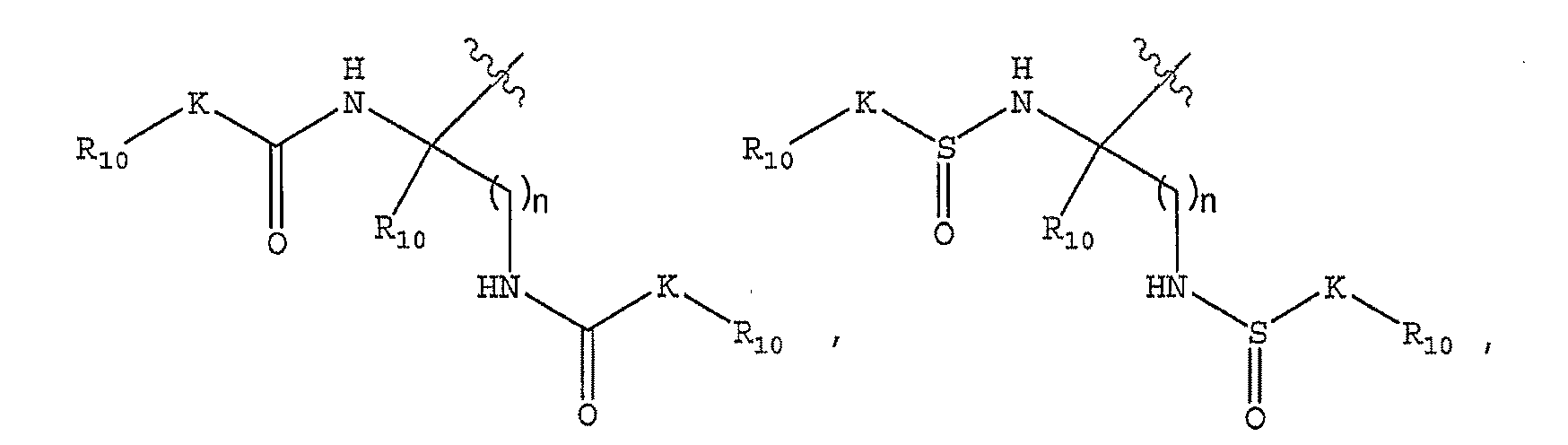


- R10 is:
- hydrogen,
- (C1-C12)-aliphatic,
- (C6-C10)-aryl,
- (C6-C10)-aryl-(C1-C12)aliphatic,
- (C3-C10)-cycloalkyl or -cycloalkenyl,
- [(C3-C10)-cycloalkyl or -cycloalkenyl]-(C1-C12)-aliphatic,
- (C3-C10)-heterocyclyl,
- (C3-C10)-heterocyclyl-(C1-C12)-aliphatic,
- (C5-C10)-heteroaryl, or
- (C5-C10)-heteroaryl-(C1-C12)-aliphatic,
- K is a bond, (C1-C12)-aliphatic, -O-, -S-, -XR9-, -C(O)-, or -C(O) -NR9-, wherein R9 is hydrogen or (C1-C12)-aliphatic; n is 1-3; or
- R10 is:
- T is selected from N(R17)2; W is:
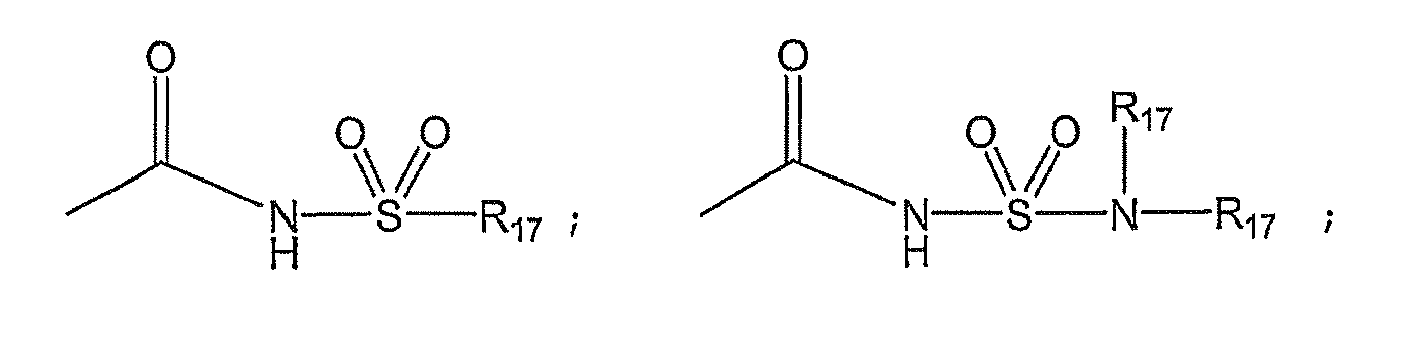

- hydrogen-, (C1-C12)-aliphatic-,
- (C3-C10)-cycloalkyl- or cycloalkenyl-,
- [(C3-C10)-cycloalkyl- or cycloalkenyl]-(C1-C12)-aliphatic-,
- (C6-C10)-aryl-,
- (C6-C10)-aryl-(C1-C12)aliphatic-,
- (C3-C10)-heterocyclyl-,
- (C3-C10)-heterocyclyl-(C1-C12)-aliphatic-,
- (C5-C10)heteroaryl-, or
- (C5-C10)heteroaryl-(C1-C12)-aliphatic-, or
wherein R17 is optionally substituted with up to 3 J substituents; - R5 and R5, are independently hydrogen or (C1-C12)-aliphatic, wherein any hydrogen is optionally replaced with halogen, and wherein any terminal carbon atom is optionally substituted with sulfhydryl or hydroxy, and wherein up to two aliphatic carbon atoms may be replaced by a heteroatom selected from, NH, O, S, SO, or SO2; or
- R5 and R5' together with the atom to which they are bound optionally form a 3- to 6-membered ring having up to 2 heteroatoms selected from N, NH, O, S, SO, or SO2; wherein the ring has up to 2 substituents selected independently from J;
- R1, R1' R11, R11', R13, and R13' are independently:
- hydrogen-, (C1-C12)-aliphatic-,
- (C3-C10)-cycloalkyl or -cycloalkenyl-,
- [(C3-C10)-cycloalkyl or -cycloalkenyl]-(C1-C12)-aliphatic-,
- (C6-C10) -aryl-,
- (C6-C10)-aryl-(C1-C12)aliphatic-,
- (C3-C10)-heterocyclyl-,
- (C6-C10)-heterocyclyl-(C1-C12)aliphatic,
- (C5-C10)-heteroaryl-, or
- (C5-C10)-heteroaryl-(C1-C12)-aliphatic-,
wherein any ring is optionally fused to a (C6-C10)aryl, (C5-C10)heteroaryl, (C3-C10)cycloalkyl, or (C3-C10)heterocyclyl;
wherein up to 3 aliphatic carbon atoms in each of R1, R1', R11, R11', R13, and R13' may be replaced by a heteroatom selected from O, N, NH, S, SO, or SO2 in a chemically stable arrangement; or - R1 and R11 together with the atom to which they are bound optionally form a 3- to 6-membered ring having up to 2 heteroatoms selected from N, NH, O, S, SO, or SO2; wherein the ring system has up to 2 substituents selected independently from J; or
- R11 and R11' together with the atom to which they are bound optionally form a 3- to 6-membered ring having up to 2 heteroatoms selected from N, NH, O, S, SO, or SO2; wherein the ring has up to 2 substituents selected independently from J; or
- R13 and R13' together with the atom to which they are bound is a 3- to 6-membered ring having up to 2 heteroatoms selected from N, NH, O, S, SO, or SO2; wherein the ring has up to 2 substituents selected independently from J;
- R2, R4, R8, and R12 are independently
- hydrogen-, (C1-C12)-aliphatic-,
- (C3-C10)-cycloalkyl or -cycloalkenyl-,
- [(C3-C10)-cycloalkyl or -cycloalkenyl]-(C1-C12)-aliphatic-,
- (C6-C10)-aryl-,
- (C6-C10)-aryl-(C1-C12)aliphatic-,
- (C3-C10)-heterocyclyl-,
- (C6-C10)-heterocyclyl-(C1-C12)aliphatic,
- (C5-C10)-heteroaryl-, or
- (C5-C10)-heteroaryl-(C1-C12)-aliphatic-,
wherein up to two aliphatic carbon atoms in R2, R4, R8, and R12 may be replaced by a heteroatom selected from O, N, NH, S, SO, or SO2; or - R11 and R12 together with the atoms to which they are bound form a 3- to a 20-membered mono-, a 4- to 20-membered bi-, or a 5- to 20-membered tri-cyclic carbocyclic or heterocyclic ring system;
wherein, in the bi- and tri-cyclic ring system, each ring is linearly fused, bridged, or spirocyclic;
wherein each ring is either aromatic or nonaromatic;
wherein each heteroatom in the heterocyclic ring system is selected from the group consisting of N, NH, O, S, SO, and SO2;
wherein each ring is optionally fused to a (C6-C10)aryl, (C5-C10)heteroaryl, (C3-C10)cycloalkyl, or (C3-C10)heterocyclyl; and
wherein said ring has up to 3 substituents selected independently from J; or - R12 and R13 together with the atoms to which they are bound form a 4- to a 20-membered mono-, a 5- to 20-membered bi-, or a 6- to 20-membered tri-cyclic carbocyclic or heterocyclic ring system;
wherein, in the bi- and tri-cyclic ring system, each ring is linearly fused, bridged, or spirocyclic;
wherein each ring is either aromatic or nonaromatic;
wherein each heteroatom in the heterocyclic ring system is selected from the group consisting of N, NH, O, S, SO, and SO2;
wherein each ring is optionally fused to a (C6-C10)aryl, (C5-C10)heteroaryl, (C3-C10)cycloalkyl, or (C3-C10)heterocyclyl; and
wherein said ring has up to 3 substituents selected independently from J; or - R11 and R13 together with the atoms to which they are bound form a 5- to a 20-membered mono-, a 6- to 20-membered bi-, or a 7- to 20-membered tri-cyclic carbocyclic or heterocyclic ring system;
wherein, in the bi- and tri-cyclic ring system, each ring is linearly fused, bridged, or spirocyclic;
wherein each ring is either aromatic or nonaromatic;
wherein each heteroatom in the heterocyclic ring system is selected from the group consisting of N, NH, O, S, SO, and SO2;
wherein each ring is optionally fused to a (C6-C10)aryl, (C5-C10)heteroaryl, (C3-C10)cycloalkyl, or (C3-C10)heterocyclyl; and
wherein said ring has up to 3 substituents selected independently from J; or - R11, R12, and R13 together with the atoms to which they are bound form a 5- to a 20-membered bi-, or a 6- to 20-membered tri-cyclic carbocyclic or heterocyclic ring system;
wherein, in the bi- and tri-cyclic ring system, each ring is linearly fused, bridged, or spirocyclic;
wherein each ring is either aromatic or nonaromatic;
wherein each heteroatom in the heterocyclic ring system is selected from the group consisting of N, NH, O, S, SO, and SO2;
wherein each ring is optionally fused to a (C6-C10)aryl, (C5-C10)heteroaryl, (C3-C10)cycloalkyl, or (C3-C10)heterocyclyl; and
wherein said ring has up to 3 substituents selected independently from J; or - R13' and R2 together with the atoms to which they are bound form a 3- to a 20-membered mono-, a 4- to 20-membered bi-, or a 5- to 20-membered tri-cyclic carbocyclic or heterocyclic ring system;
wherein, in the bi- and tri-cyclic ring system, each ring is linearly fused, bridged, or spirocyclic;
wherein each ring is either aromatic or nonaromatic;
wherein each heteroatom in the heterocyclic ring system is selected from the group consisting of N, NH, O, S, SO, and SO2;
wherein each ring is optionally fused to a (C6-C10)aryl, (C5-C10)heteroaryl, (C3-C10)cycloalkyl, or (C3-C10)heterocyclyl; and
wherein said ring has up to 3 substituents selected independently from J; or - R5 and R13 together with the atoms to which they are bound form a 18- to a 23-membered mono-, a 19- to 24-membered bi-, or a 20- to 25-membered tri-cyclic carbocyclic or heterocyclic ring system;
wherein, in the bi- and tri-cyclic ring system, each ring is linearly fused, bridged, or spirocyclic;
wherein each ring is either aromatic or nonaromatic;
wherein each heteroatom in the heterocyclic ring system is selected from the group consisting of N, NH, O, S, SO, and SO2;
wherein each ring is optionally fused to a (C6-C10)aryl, (C5-C10)heteroaryl, (C3-C10)cycloalkyl, or (C3-C10)heterocyclyl; and
wherein said ring has up to 6 substituents selected independently from J; or - R1 and R12 together with the atoms to which they are bound form a 18- to a 23-membered mono-, a 19- to 24-membered bi-, or a 20- to 25-membered tri-cyclic carbocyclic or heterocyclic ring system;
wherein, in the bi- and tri-cyclic ring system, each ring is linearly fused, bridged, or spirocyclic;
wherein each ring is either aromatic or nonaromatic;
wherein each heteroatom in the heterocyclic ring system is selected from the group consisting of N, NH, O, S, SO, and SO2;
wherein each ring is optionally fused to a (C6-C10)aryl, (C5-C10)heteroaryl, (C3-C10)cycloalkyl, or (C3-C10)heterocyclyl; and
wherein said ring has up to 6 substituents selected independently from J. - In another embodiment, the present invention provides a compound of formula II:

- X1 is -N(R20)-, -O-, -S-, or -C(R')2-;
- X2 is -C(O)-, -C(S)-, -S(O)-, or -S(O)2-;
- W is:


- hydrogen-, (C1-C12)-aliphatic-,
- (C3-C10)-cycloalkyl or -cycloalkenyl-,
- [(C3-C10)-cycloalkyl or -cycloalkenyl]-(C1-C12)-aliphatic-,
- (C6-C10)-aryl-,
- (C6-C10)-aryl-(C1-C12)aliphatic-,
- (C3-C10)-heterocyclyl-,
- (C3-C10)-heterocyclyl-(C1-C12)-aliphatic-,
- (C5-C10)heteroaryl-, or
- (C5-C10)heteroaryl-(C1-C12)-aliphatic-, or
wherein R17 is optionally substituted with up to 3 J substituents;
each R18 is independently -OR'; or both OR' groups together with the boron atom, is a (C5-C20)-membered heterocyclic ring having in addition to the boron up to 3 additional heteroatoms selected from N, NH, O, S, SO, and SO2, wherein the ring is monocyclic or bicyclic, wherein the bicyclic ring, if present, is linearly fused, bridged, or spirocyclic. - R5 is (C1-C12)-aliphatic, wherein any hydrogen is optionally replaced with halogen, and wherein any terminal carbon atom of R5 is optionally substituted with sulfhydryl or hydroxy;
- R5' is hydrogen or (C1-C12)-aliphatic, wherein any hydrogen is optionally replaced with halogen, and wherein any terminal carbon atom of R5 is optionally substituted with sulfhydryl or hydroxy; or
- R5 and R5' together with the atom to which they are bound is a 3- to 6-membered ring having up to 2 heteroatoms selected from N, NH, O, S, SO, or SO2; wherein the ring has up to 2 substituents selected independently from J;
R1, R1', R11, R11', R13, and R13' are independently:- hydrogen-, (C1-C12)-aliphatic-,
- (C3-C10)-cycloalkyl or -cycloalkenyl-,
- [(C3-C10)-cycloalkyl or -cycloalkenyl]-(C1-C12)-aliphatic-,
- (C6-C10)-aryl-,
- (C6-C10)-aryl-(C1-C12)aliphatic-,
- (C3-C10)-heterocyclyl-,
- (C6-C10)-heterocyclyl-(C1-C12)aliphatic,
- (C5-C10)-heteroaryl-, or
- (C5-C10)-heteroaryl-(C1-C12)-aliphatic-; or
- R1 and R1' together with the atom to which they are bound is a 3- to 6-membered ring having up to 2 heteroatoms selected from N, NH, O, S, SO, or SO2; wherein the ring has up to 2 substituents selected independently from J; or
- R11 and R11' together with the atom to which they are bound is a 3- to 6-membered ring having up to 2 heteroatoms selected from N, NH, O, S, SO, or SO2; wherein the ring has up to 2 substituents selected independently from J; or
- R13 and R13' together with the atom to which they are bound is a 3- to 6-membered ring having up to 2 heteroatoms selected from N, NH, O, S, SO, or SO2; wherein the ring has up to 2 substituents selected independently from J;
wherein each of R1, R1', R11, R11', R13, and R13' is independently and optionally substituted with up to 3 substituents independently selected from J; and wherein any ring is optionally fused to a (C6-C10)aryl, (C5-C10)heteroaryl, (C3-C10)cycloalkyl, or (C3-C10)heterocyclyl; and wherein up to 3 aliphatic carbon atoms in each of R1, R1', R11, R11', R13, and R13' may be replaced by a heteroatom selected from O, N, NH, S, SO, or SO2 in a chemically stable arrangement;
R2, R4, R12, and R20 are independently- hydrogen-, (C1-C12)-aliphatic-,
- (C3-C10)-cycloalkyl-,
- (C3-C10)-cycloalkyl-(C1-C12)-aliphatic-, or
- (C6-C10)aryl-(C1-C12)-aliphatic-,
wherein up to two aliphatic carbon atoms in R2, R4, R12, and R20 may be replaced by a heteroatom selected from O, N, NH, S, SO, or SO2; or
R11 and R12 together with the atoms to which they are bound form a 3- to a 20-membered mono-, a 4- to 20-membered bi-, or a 5- to 20-membered tri-cyclic carbocyclic or heterocyclic ring system;
wherein, in the bi- and tri-cyclic ring system, each ring is linearly fused, bridged, or spirocyclic;
wherein each ring is either aromatic or nonaromatic;
wherein each heteroatom in the heterocyclic ring system is selected from the group consisting of N, NH, O, SO, and SO2;
wherein each ring is optionally fused to a (C6-C10)aryl, (C5-C10) heteroaryl, (C3-C10)cycloalkyl, or (C3-C10)heterocyclyl; and
wherein said ring has up to 3 substituents selected independently from J; or - R12 and R13 together with the atoms to which they are bound form a 4- to a 20-membered mono-, a 5- to 20-membered bi-, or a 6- to 20-membered tri-cyclic carbocyclic or heterocyclic ring system;
wherein, in the bi- and tri-cyclic ring system, each ring is linearly fused, bridged, or spirocyclic;
wherein each ring is either aromatic or nonaromatic;
wherein each heteroatom in the heterocyclic ring system is selected from the group consisting of N, NH, 0, S, SO, and SO2;
wherein each ring is optionally fused to a (C6-C10)aryl, (C5-C10)heteroaryl, (C3-C10)cycloalkyl, or (C3-C10)heterocyclyl; and
wherein said ring has up to 3 substituents selected independently from J; or - R11 and R13 together with the atoms to which they are bound form a 5- to a 20-membered mono-, a 6- to 20-membered bi-, or a 7- to 20-membered tri-cyclic carbocyclic or heterocyclic ring system;
wherein, in the bi- and tri-cyclic ring system, each ring is linearly fused, bridged, or spirocyclic;
wherein each ring is either aromatic or nonaromatic;
wherein each heteroatom in the heterocyclic ring system is selected from the group consisting of N, NH, O, S, SO, and SO2;
wherein each ring is optionally fused to a (C6-C10)aryl, (C5-C10)heteroaryl, (C3-C10)cycloalkyl, or (C3-C10)heterocyclyl; and
wherein said ring has up to 3 substituents selected independently from J; or - R11, R12, and R13 together with the atoms to which they are bound form a 5- to a 20-membered bi-, or a 6- to 20-membered tri-cyclic carbocyclic or heterocyclic ring system;
wherein, in the bi- and tri-cyclic ring system, each ring is linearly fused, bridged, or spirocyclic;
wherein each ring is either aromatic or nonaromatic;
wherein each heteroatom in the heterocyclic ring system is selected from the group consisting of N, NH, O, S, SO, and SO2;
wherein each ring is optionally fused to a (C6-C10)aryl, (C5-C10)heteroaryl, (C3-C10)cycloalkyl, or (C3-C10)heterocyclyl; and
wherein said ring has up to 3 substituents selected independently from J; or - R13' and R2 together with the atoms to which they are bound form a 3- to a 20-membered mono-, a 4- to 20-membered bi-, or a 5- to 20-membered tri-cyclic carbocyclic or heterocyclic ring system;
wherein, in the bi- and tri-cyclic ring system, each ring is linearly fused, bridged, or spirocyclic;
wherein each ring is either aromatic or nonaromatic;
wherein each heteroatom in the heterocyclic ring system is selected from the group consisting of N, NH, O, S, SO, and SO2;
wherein each ring is optionally fused to a (C6-C10)aryl, (C5-C10)heteroaryl, (C3-C10)cycloalkyl, or (C3-C10)heterocyclyl; and
wherein said ring has up to 3 substituents selected independently from J; - R14 is -H, -S(O)R', -S(O)2R', -C(O)R', -C(O)OR'. -C(O)N(R')2, -N(R')C(O)R', -N(COR')COR', -SO2N(R')2, -SO3R', -C(O)C(O)R', -C(O)CH2C(O)R', -C(S)R', -C(S)N(R')2, -(CH2)0-2NHC(O)R', -N(R')N(R')COR', -N(R')N(R')C(O)OR', -N(R')N(R')CON(R')2, -N(R')SO2R', -N(R')SO2N(R')2, -N(R')C(O)OR', -N(R')C(O)R', -N(R')C(S)R', -N(R')C(O)N(R')2, -N(R')C(S)N(R')2, -N(COR')COR', -N(OR')R', -C(=NH)N(R')2, -C(O)N(OR')R', -C(=NOR')R', -OP(O)(OR')2, -P(O)(R')2, -P(O) (OR')2, or -P(O) (H) (OR');
- R15 and R16 are independently halogen, -OR', -OC(O)N(R')2, -NO2, -CN, -CF3, -OCF3, -R', oxo, 1,2-methylenedioxy, 1,2-ethylenedioxy, -N(R')2, -SR', -SOR', -SO2R', -SO2N(R')2, -SO3R', -C(O)R', -C(0)C(0)R', -C(O)CH2C(O)R', -C(S)R', -C(O)OR', -OC(O)R', -C(O)N(R')2, -OC(O)N(R')2, -C(S)N(R')2, -(CH2)0-2NHC(O)R', -N(R')N(R')COR', -N(R')N(R')C(O)OR', -N(R')N(R')CON(R')2, -N(R')SO2R', -N(R')SO2N(R')2, -N(R')C(O)OR', -N(R')C(O)R', -N(R')C(S)R', -N(R')C(O)N(R')2, -N(R')C(S)N(R')2, -N(COR')COR', -N(OR')R', -CN, -C(=NH)N(R')2, -C(O)N(OR')R', -C(=NOR')R', -OP(O)(OR')2, -P(O)(R')2, -P(O) (OR')2, or -P(O) (H) (OR')
- Z2 is =O, =NR', =NOR', or =C(R')2;
- R19 is -OR', -CF3, -OCF3, -R', -N(R')2, -SR', -C(O)R', - COOR' -CON(R')2, -N(R')COR', or -N(COR')COR';
- J is halogen, -OR', -OC(O)N(R')2, -NO2, -CN, -CF3, -OCF3, -R', oxo, thioxo, 1,2-methylenedioxy, 1,2-ethyenedioxy, - N(R')2, -SR', -SOR', -SO2R', -SO2N(R')2, -SO3R', -C(O)R', -C(O)C(O)R', -C(O)CH2C(O)R', -C(S)R', -C(O)OR', -OC(O)R', -C(O)N(R')2, -OC(O)N(R')2, -C(S)N(R')2, -(CH2)0-2NHC(O)R', -N(R')N(R') COR', -N(R')N(R')C(O)OR', -N(R')N(R')CON(R')2, -N(R')SO2R', -N(R')SO2N(R')2, -N(R')C(O)OR', -N(R')C(O)R', -N(R')C(S)R', -N(R')C(O)N(R')2, -N(R')C(S)N(R')2, -N(COR')COR', -N(OR')R', -CN, -C(=NH)N(R')2, -C(O)N(OR')R', -C(=NOR')R', -OP(O) (OR')2, -P(O) (R')2, -P(O) (OR')2, or -P(O) (H) (OR');
wherein:- two R' groups together with the atoms to which they are bound form a 3- to 10-membered aromatic or non-aromatic ring having up to 3 heteroatoms independently selected from N, NH, O, S, SO, or SO2, wherein the ring is optionally fused to a (C6-C10)aryl, (C5-C10)heteroaryl, (C3-C10)cycloalkyl, or a (C3-C10)heterocyclyl, and wherein any ring has up to 3 substituents selected independently from J2; or
each R' is independently selected from:- hydrogen-, (C1-C12)-aliphatic-,
- (C3-C10)-cycloalkyl or -cycloalkenyl-,
- [(C3-C10) -cycloalkyl or -cycloalkenyl]-(C1-C12)-aliphatic-,
- (C6-C10)-aryl-,
- (C6-C10)-aryl-(C1-C12)aliphatic-,
- (C3-C10)-heterocyclyl-,
- (C6-C10)-heterocyclyl-(C1-C12)aliphatic-,
- (C5-C10)-heteroaryl-, or
- (C5-C10)-heteroaryl-(C1-C12)-aliphatic-;
- two R' groups together with the atoms to which they are bound form a 3- to 10-membered aromatic or non-aromatic ring having up to 3 heteroatoms independently selected from N, NH, O, S, SO, or SO2, wherein the ring is optionally fused to a (C6-C10)aryl, (C5-C10)heteroaryl, (C3-C10)cycloalkyl, or a (C3-C10)heterocyclyl, and wherein any ring has up to 3 substituents selected independently from J2; or
- J2 is halogen, -OR', -OC(O)N(R')2, -NO2, -CN, -CF3, -OCF3, -R', OXO, thioxo, 1,2-methylenedioxy, 1,2-ethylenedioxy, - N(R')2, -SR', -SOR', -SO2R', -SO2N(R')2, -SO3R', -C(O)R', -C(O)C(O)R', -C(O)CH2C(O)R', -C(S)R', -C(O)OR', -OC(O)R', -C(O)N(R')2, -OC(O)M(R')2, -C(S)N(R')2, -(CH2)0-2NHC(O)R' -N(R')N(R')COR', -N(R')N(R')C(O)OR', -N(R')N(R')CON(R')2, -N(R')SO2R', -N(R')SO2N(R')2, -N(R')C(O)OR', -N(R')C(O)R', -N(R')C(S)R', -N(R')C(O)N(R')2, -N(R')C(S)N(R')2, -N(COR')COR', -N(OR')R', -CN, -C(=NH)N(R')2, -C(O)N(OR')R', -C(=NOR')R', -OP(O)(OR')2, -P(O)(R')2, -P(O)(OR')2, or -P(O)(H)(OR').
- In another embodiment, the present invention provides a compound of formula IV:

- V is -C(O)-, -S(O)-, -C(R')2- or -S(O)2-;
- R is -C(O)-, -S(O)-, -S(O)2-, -N(R8)-, -O-, or a bond; T is:
- (C6-C10) -aryl,
- (C6-C10)-aryl-(C1-C12)aliphatic,
- (C1-C12)-aliphatic-,
- (C3-C10)-cycloalkyl or -cycloalkenyl,
- [(C3-C10)-cycloalkyl or -cycloalkenyl]-(C1-C12)-aliphatic,
- (C3-C10)-heterocyolyl,
- (C3-C10)-heterocyclyl-(C1-C12)-aliphatic,
- (C5-C10) heteroaryl, or
- (C5-C10)heteroaryl-(C1-C12)-aliphatic;
wherein each T may be optionally substituted with up to 3 J substituents; - J is halogen, -OR', -OC(O)N(R')2, -NO2, -CN, -CF3, -OCF3, -R', oxo, thioxo, 1,2-methylenedioxy, 1,2-ethylenedioxy, -N(R')2, -SR', -SOR', -SO2R', -SO2N(R' )2', -SO3R', -C(O)R', -C(O)C(O)R', -C(O)CH2C(O)R', -C(S)R', -C'(O)OR.', -OC(O)R', -C(O)N(R')2, -OC(O)N(R')2, -C(S)N(R')2, -(CH2)O-2NHC(O)R', -N(R')N(R')COR', -N(R')N(R')G(O)OR', -N(R')N(R')CON(R')2, -N(R')SO2R', -N(R')SO2N(R')2, -N(R')C(O)OR', -N(R')C(O)R', -N(R')C(S)R', -N(R')C(O)N(R')2' -N(R')C(S)N(R')2, -N(COR')COR', -N(OR')R', -C(=NH)N(R')2, -C(O)N(OR')R', -C(=NOR')R', -OP(O)(OR')2' -P(O)(R')2'-P(O)(OR')2, or -p(O)(H)(OR'), wherein;
two R' groups together with the atoms to which they are bound form-a 3- to 10-membered aromatic or non-aromatic ring system having up to 3 heteroatoms independently selected from N, NH, O, S, SO, or SO2, wherein the ring is optionally fused to a (C6-C10)aryl, (C5-C10)heteroaryl, (C3-C10)cycloalkyl, or a (C3-C10)heterocyclyl, and wherein any ring has up to 3 substituents selected independently from J2;
each R' is independently selected from:- hydrogen-, (C1-C12)-aliphatic-,
- (C3-C10)-cycloalkyl or -cycloalkenyl-,
- [(C3-C10)-cycloalkyl or -cycloalkenyl]-(C1-C12)-aliphatic-,
- (C6-C10)-aryl-,
- (C6-C10)-aryl-(C1-C12)aliphatic-,
- (C3-C10)-heterocyclyl-,
- (C6-C10)-heterocyclyl-(C1-C12)aliphatic-,
- (C5-C10)-heteroaryl-, or
- (C5-C10)-heteroaryl-(C1-C12)-aliphatic-,
- J2 is halogen, -OR', -OC(O)N(R')2, -NO2, -CN, -CF3, -OCF3, -R', oxo, thioxo, 1,2-methylenedioxy, -N(R')2, -SR', -SOR', -SO2R', -SO2N(R')2, -SO3R', -C(O)R', -C(O)C(O)R', -C(O)CH2C(O)R', -C(S)R', -C(O)OR', -OC(O)R', -C(O)N(R')2, -OC(O)N(R')2, -C(S)N(R')2, -(CH2)0-2NHC(O)R', -N(R')N(R')COR' , -N(R')N(R')C(O)OR', -N(R')N(R')CON(R')2, -N(R')SO2R', -N(R')SO2N(R')2, -N(R')C(O)OR', -N(R')C(O)R', -N(R')C(S)R', -N(R')C(O)N(R')2, -N(R')C(S)N(R')2, -N(COR')COR', -N(OR')R', -C(=NH)N(R')2, -C(O)N(OR')R', -C(=NOR')R', -OP(O)(OR')2, -P(O)(R')2, -P(O)(OR')2, or -P(O)(H)(OR'); or
- T is:


- R10 is:
- hydrogen, (C1-C12)-aliphatic,
- (C6-C10)-aryl,
- (C6-C10)-aryl-(C1-C12)aliphatic,
- (C3-C10)-cycloalkyl or -cycloalkenyl,
- [(C3-C10)-cycloalkyl or -cycloalkenyl]-(C1-C12)-aliphatic,
- (C3-C10)-heterocyclyl,
- (C3-C10)-heterocyclyl-(C1-C12)-aliphatic,
- (C5-C10)-heteroaryl, or
- (C5-C10)-heteroaryl-(C1-C12)-aliphatic,
- K is a bond, (C1-C12)-aliphatic, -O-, -S-, -NR9-, -C(O)-, or -C(O)-NR9-, wherein R9 is hydrogen or (C1-C12) - aliphatic; n is 1-3; or
- R10 is:
- T is selected from N(R17)2; W is:

- hydrogen-, (C1-C12)-aliphatic-,
- (C3-C10)-cycloalkyl- or cycloalkenyl-,
- [(C3-C10)-cycloalkyl- or cycloalkenyl]-(C1-C12)-aliphatic-,
- (C6-C10)-aryl-,
- (C6-C10)-aryl-(C1-C12)aliphatic-,
- (C3-C10)-heterocyclyl-,
- (C3-C10)-heterocyclyl-(C1-C12)-aliphatic-,
- (C5-C10) heteroaryl-, or
- (C5-C10)heteroaryl-(C1-C12)-aliphatic-, or
wherein R17 is optionally substituted with up to 3 J substituents; - R5 and R5, are independently hydrogen or (C1-C12)-aliphatic, wherein any hydrogen is optionally replaced with halogen, and wherein any terminal carbon atom is optionally substituted with sulfhydryl or hydroxy, and wherein up to two aliphatic carbon atoms may be replaced by a heteroatom selected from N, NH, O, S, SO, or SO2; or
- R5 and R5' together with the atom to which they are bound optionally form a 3- to 6-membered ring having up to 2 heteroatoms selected from N, NH, O, S, SO, or SO2; wherein the ring has up to 2 substituents selected independently from J;
- R11, R11', R13, and R13' are independently:
- hydrogen-, (C1-C12)-aliphatic-,
- (C3-C10)-cycloalkyl or -cycloalkenyl-,
- [(C3-C10)-cycloalkyl or -cycloalkenyl]-(C1-C12)-aliphatic-,
- (C6-C10)-aryl-,
- (C6-C10)-aryl-(C1-C12) aliphatic-,
- (C3-C10)-heterocyclyl-,
- (C6-C10)-heterocyclyl-(C1-C12)aliphatic,
- (C5-C10)-heteroaryl-, or
- (C5-C10)-heteroaryl-(C1-C12)-aliphatic-,
wherein any ring is optionally fused to a (C6-C10) aryl, (C5-C10) heteroaryl, (C3-C10) cycloalkyl, or (C3-C10) heterocyclyl;
wherein up to 3 aliphatic carbon atoms in each of R11, R11', R13, and R13' may be replaced by a heteroatom selected from O, N, NH, S, SO, or SO2 in a chemically stable arrangement; or - R11 and R11' together with the atom to which they are bound optionally form a 3- to 6-membered ring having up to 2 heteroatoms selected from N, NH, O, S, SO, or SO2; wherein the ring has up to 2 substituents selected independently from J; or
- R13 and R13' together with the atom to which they are bound is a 3- to 6-membered ring having up to 2 heteroatoms selected from N, NH, O, S, SO, or SO2; wherein the ring has up to 2 substituents selected independently from J;
- R4, R8, and R12 are independently
- hydrogen-, (C1-C12)-aliphatic-,
- (C3-C1O)-cycloalkyl or -cycloalkenyl-,
- [(C3-C10)-cycloalkyl or -cycloalkenyl]-(C1-C12)-aliphatic-,
- (C6-C10)-aryl-,
- (C6-C10)-aryl-(C1-C12)aliphatic-,
- (C3-C10)-heterocyclyl-,
- (C6-C10)-heterocyclyl-(C1-C12)aliphatic,
- (C5-C10) -heteroaryl-, or
- (C5-C10)-heteroaryl-(C1-C12)-aliphatic-,
wherein up to two aliphatic carbon atoms in R4, R8, and R12 may be replaced by a heteroatom selected from O, N, NH, S, SO, or SO2; or - R11 and R12 together with the atoms to which they are bound form a 3- to a 20-membered mono-, a 4- to 20-membered bi-, or a 5- to 20-membered tri-cyclic carbocyclic or heterocyclic ring system;
wherein, in the bi- and tri-cyclic ring system, each ring is linearly fused, bridged, or spirocyclic;
wherein each ring is either aromatic or nonaromatic;
wherein each heteroatom in the heterocyclic ring system is selected from the group consisting of N, NH, O, S, SO, and SO2;
wherein each ring is optionally fused to a (C6-C10)aryl, (C5-C10)heteroaryl, (C3-C10)cycloalkyl, or (C3-C10)heterocyclyl; and
wherein said ring has up to 3 substituents selected independently from J; or - R12 and R13 together with the atoms to which they are bound form a 4- to a 20-membered mono-, a 5- to 20-membered bi-, or a 6- to 20-membered tri-cyclic carbocyclic or heterocyclic ring system;
wherein, in the bi- and tri-cyclic ring system, each ring is linearly fused, bridged, or spirocyclic;
wherein each ring is either aromatic or nonaromatic;
wherein each heteroatom in the heterocyclic ring system is selected from the group consisting of N, NH, O, S, SO, and SO2 ;
wherein each ring is optionally fused to a (C6-C10)aryl, (C5-C10)heteroaryl, (C3-C10)cycloalkyl, or (C3-C10)heterocyclyl; and
wherein said ring has up to 3 substituents selected independently from J; or - R11 and R13 together with the atoms to which they are bound form a 5- to a 20-membered mono-, a 6- to 20-membered bi-, or a 7- to 20-membered tri-cyclic carbocyclic or heterocyclic ring system;
wherein, in the bi- and tri-cyclic ring system, each ring is linearly fused, bridged, or spirocyclic;
wherein each ring is either aromatic or nonaromatic;
wherein each heteroatom in the heterocyclic ring system is selected from the group consisting of N, NH, O, S, SO, and SO2;
wherein each ring is optionally fused to a (C6-C10)aryl, (C5-C10)heteroaryl, (C3-C10) cycloalkyl, or (C3-C10) heterocyclyl; and
wherein said ring has up to 3 substituents selected independently from J; or - R11, R12, and R13 together with the atoms to which they are bound form a 5- to a 20-membered bi-, or a 6- to 20-membered tri-cyclic carbocyclic or heterocyclic ring system;
wherein, in the bi- and tri-cyclic ring system, each ring is linearly fused, bridged, or spirocyclic;
wherein each ring is either aromatic or nonaromatic;
wherein each heteroatom in the heterocyclic ring system is selected from the group consisting of N, NH, O, S, SO, and SO2;
wherein each ring is optionally fused to a (C6-C10)aryl, (C5-C10)heteroaryl, (C3-C10)cycloalkyl, or (C3-C10)heterocyclyl; and
wherein said ring has up to 3 substituents selected independently from J; or - R13' and R8 together with the atoms to which they are bound form a 3- to a 20-membered mono-, a 4- to 20-membered bi-, or a 5- to 20-membered tri-cyclic carbocyclic or heterocyclic ring system;
wherein, in the bi- and tri-cyclic ring system, each ring is linearly fused, bridged, or spirocyclic;
wherein each ring is either aromatic or nonaromatic;
wherein each heteroatom in the heterocyclic ring system is selected from the group consisting of N, NH, O, S, SO, and SO2;
wherein each ring is optionally fused to a (C6-C10)aryl, (C5-C10)heteroaryl, (C3-C10)cycloalkyl, or (C3-C10)heterocyclyl; and
wherein said ring has up to 3 substituents selected independently from J; or - R5 and R13 together with the atoms to which they are bound form a 18- to a 23-membered mono-, a 19- to 24-membered bi-, or a 20- to 25-membered tri-cyclic carbocyclic or heterocyclic ring system;
wherein, in the bi- and tri-cyclic ring system, each ring is linearly fused, bridged, or spirocyclic;
wherein each ring is either aromatic or nonaromatic;
wherein each heteroatom in the heterocyclic ring system is selected from the group consisting of N, NH, O, S, SO, and SO2;
wherein each ring is optionally fused to a (C6-C10)aryl, (C5-C10)heteroaryl, (C3-C10)cycloalkyl, or (C3-C10) heterocyclyl; and
wherein said ring has up to 6 substituents selected independently from J; or - when R5 and R5, together with the atom to which they are bound form an optionally substituted 3- to 6-membered ring having up to 2 heteroatoms selected from N, NH, O, S, SO, or SO2, then one of the substitutable atoms in said ring is taken together with R13 and the atom to which R13 is bound to form a 14- to a 19-membered mono-, a 19- to 24-membered bi-, or a 20- to 25-membered tri-cyclic carbocyclic or heterocyclic ring system;
wherein, in the bi- and tri-cyclic ring system, each ring is linearly fused, bridged, or spirocyclic;
wherein each ring is either aromatic or nonaromatic;
wherein each heteroatom in the heterocyclic ring system is selected from the group consisting of N, NH, O, S, SO, and SO2;
wherein each ring is optionally fused to a (C6-C10)aryl, (C5-C10) heteroaryl, (C3-C10)cycloalkyl, or (C3-C10)heterocyclyl; and
wherein said ring has up to 6 substituents selected independently from J. - In another embodiment, the present invention provides compounds of formula I other than compounds of formula II.
- The term "aryl" as used herein means a monocyclic or bicyclic carbocyclic aromatic ring system. Phenyl is an example of a monocyclic aromatic ring system. Bicyclic aromatic ring systems include systems wherein both rings are aromatic, e.g., naphthyl, and systems wherein only one of the two rings is aromatic, e.g., tetralin. It is understood that as used herein, the term "(C6-C10)-aryl-" includes any one of a C6, C7, C8, C9, and C10 monocyclic or bicyclic carbocyclic aromatic ring system.
- The term "heterocyclyl" as used herein means a monocyclic or bicyclic non-aromatic ring system having 1 to 3 heteroatom or heteroatom groups in each ring selected from O, N, NH, S, SO, or SO2 in a chemically stable arrangement. In a bicyclic non-aromatic ring system embodiment of "heterocyclyl" one or both rings may contain said heteroatom or heteroatom groups. It is understood that as used herein, the term "(C5-C10)-heterocyclyl-" includes any one of a 5, 6, 7, 8, 9, and 10 atom monocyclic or bicyclic non-aromatic ring system having 1 to 3 heteroatoms or heteroatom groups in each ring selected from O, N, NH, and S in a chemically stable arrangement.
- Heterocyclic rings include, but are not limited to, 3-1H-benzimidazol-2-one, 3-(1-alkyl)-benzimidazol-2-one, 2-tetrahydrofuranyl, 3-tetrahydrofuranyl, 2-tetrahydrothiophenyl, 3-tetrahydrothiophenyl, 2-morpholino, 3-morpholino, 4-morpholino, 2-thiomorpholino, 3-thiomorpholino, 4-thiomorpholino, 1-pyrrolidinyl, 2-pyrrolidinyl, 3-pyrrolidinyl, 1-tetrahydropiperazinyl, 2-tetrahydropiperazinyl, 3-tetrahydropiperazinyl, 1-piperidinyl, 2-piperidinyl, 3-piperidinyl, 1-pyrazolinyl, 3-pyrazolinyl, 4-pyrazolinyl, 5-pyrazolinyl, 1-piperidinyl, 2-piperidinyl, 3-piperidinyl, 4-piperidinyl, 2-thiazolidinyl, 3-thiazolidinyl, 4-thiazolidinyl, 1-imidazolidinyl, 2-imidazolidinyl, 4-imidazolidinyl, 5-imidazolidinyl, indolinyl, tetrahydroquinolinyl, tetrahydroisoquinolinyl, benzothiolane, benzodithiane, and 1,3-dihydro-imidazol-2-one.
- The term "heteroaryl" as used herein means a monocyclic or bicyclic aromatic ring system having 1 to 3 heteroatom or heteroatom groups in each ring selected from O, N, NH or S in a chemically stable arrangement. In such a bicyclic aromatic ring system embodiment of "heteroaryl":
- one or both rings may be aromatic; and
- one or both rings may contain said heteroatom or heteroatom groups. It is understood that as used herein, the term "(C5-C10)-heteroaryl-" includes any one of a 5, 6, 7, 8, 9, and 10 atom monocyclic or bicyclic aromatic ring system having 1 to 3 heteroatoms or heteroatom groups in each ring selected from O, N, NH, and S in a chemically stable arrangement.
- Heteroaryl rings include, but are not limited to, 2-furanyl, 3-furanyl, N-imidazolyl, 2-imidazolyl, 4-imidazolyl, 5-imidazolyl, benzimidazolyl, 3-isoxazolyl, 4-isoxazolyl, 5-isoxazolyl, 2-oxazolyl, 4-oxazolyl, 5-oxazolyl, N-pyrrolyl, 2-pyrrolyl, 3-pyrrolyl, 2-pyridyl, 3-pyridyl, 4-pyridyl, 2-pyrimidinyl, 4-pyrimidinyl, 5-pyrimidinyl, pyridazinyl (e.g., 3-pyridazinyl), 2-thiazolyl, 4-thiazolyl, 5-thiazolyl, tetrazolyl (e.g., 5-tetrazolyl), triazolyl (e.g., 2-triazolyl and 5-triazolyl), 2-thienyl, 3-thienyl, benzofuryl, benzothiophenyl, indolyl (e.g., 2-indolyl), pyrazolyl (e.g., 2-pyrazolyl), isothiazolyl, 1,2,3-oxadiazolyl, 1,2,5-oxadiazolyl, 1,2,4-oxadiazolyl, 1,2,3-triazolyl, 1,2,3-thiadiazolyl, 1,3,4-thiadiazolyl, 1,2,5-thiadiazolyl, purinyl, pyrazinyl, 1,3,5-triazinyl, quinolinyl (e.g., 2-quinolinyl, 3-quinolinyl, 4-quinolinyl), and isoquinolinyl (e.g., 1-isoquinolinyl, 3-isoquinolinyl, or 4-isoquinolinyl). Each of the above aryl, heterocyclyl or heteroaryl above may contain up to 3 substituents independently selected from, for example, halogen, -OR', -NO2, -CF3, -OCF3, -R', oxo, -OR', -O-benzyl, - O-phenyl, 1,2-methylenedioxy, 1,2-ethylenedioxy, -N(R')2, - C(O)R', -COOR' or -CON(R')2, wherein R' is independently selected from H, (C1-C6)-alkyl, (C2-C6)-alkenyl or alkynyl.
- The term "aliphatic" as used herein means a straight chained or branched alkyl, alkenyl or alkynyl. It is understood that as used herein, the term "(C1-C12)-aliphatic-" includes any one of a C1, C2, C3, C4, C5, C6, C7, C8, C9, C10, C11 and C12 straight or branched alkyl chain of carbon atoms. It is understood that alkenyl or alkynyl embodiments need at least two carbon atoms in the aliphatic chain. The term "cycloalkyl or cycloalkenyl" refers to a monocyclic or fused or bridged bicyclic carbocyclic ring system that is not aromatic. Cycloalkenyl rings have one or more units of unsaturation. It is also understood that as used herein, the term "(C3-C10)-cycloalkyl- or -cycloalkenyl-" includes any one of a C3, C4, C5, C6, C7, C8, C9, and C10 monocyclic or fused or bridged bicyclic carbocyclic ring. Cycloalkyl groups include, but are not limited to, cyclopropyl, cyclobutyl, cyclopentyl, cyclohexyl, cyclohexenyl, cycloheptyl, cycloheptenyl, nornbornyl, adamantyl and decalin-yl.
- As used herein, the carbon atom designations may have the indicated integer and any intervening integer. For example, the number of carbon atoms in a (C1-C4)-alkyl group is 1, 2, 3, or 4. It should be understood that these designation refer to the total number of atoms in the appropriate group. For example, in a (C3-C10)-heterocyclyl the total number of carbon atoms and heteroatoms is 3 (as in aziridine), 4, 5, 6 (as in morpholine), 7, 8, 9, or 10.
- The phrase "chemically stable arrangement" as used herein refers to a compound structure that renders the compound sufficiently stable to allow manufacture and administration to a mammal by methods known in the art. Typically, such compounds are stable at a temperature of 40°C or less, in the absence of moisture or other chemically reactive condition, for at least a week.
- In another embodiment, the present invention provides compounds of formula III, wherein P1, P2, P3, P4 designate the residues of a serine protease inhibitor as known to those skilled in the art, m is 1 or 2, U is a bond or NR17, and V, R, T, and R17, are as defined in any of the embodiments herein.

- In another embodiment, the present invention provides compounds of formula IIIa, wherein P1, P2, and P3 designate the residues of a serine protease inhibitor as known to those skilled in the art, m is 1 or 2, U is a bond or NR17, and V, R, T, and R17, are as defined in any of the embodiments herein.

- All compounds, therefore, having: 1) structural elements of a serine protease inhibitor; and 2) the acyl sulfonamide-moiety are considered part of this invention. Compounds having the structural elements of a serine protease inhibitor include, but are not limited to, the compounds of the following publications:
WO 97/43310 US 20020016294 ,WO 01/81325 WO 02/08198 WO 01/77113 WO 02/08187 WO 02/08256 WO 02/08244 WO 03/006490 WO 01/74768 WO 99/50230 WO 98/17679 WO 02/48157 US 20020177725 ,WO 02/060926 US 20030008828 ,WO 02/48116 WO 01/64678 WO 01/07407 WO 98/46630 WO 00/59929 WO 99/07733 WO 00/09588 US 20020016442 ,WO 00/09543 WO 99/07734 US 6,018,020 ,WO 98/22496 US 5,866,684 ,WO 02/079234 WO 00/31129 WO 99/38888 WO 99/64442 WO 2004072243 , andWO 02/18369 - Thus, any compound of the above publications may be modified to have this acyl sulfonamide moiety, or derivatives thereof. Any such compound is part of this invention. For example, compound A in
WO 02/18369 

- According to one embodiment of compounds of formula I, formula II, or formula IV;
- R11 is H; and
- R12 is
- (C1-C6)-alkyl,
- (C3-C10)-cycloalkyl,
- [(C3-C10)-cycloalkyl]-(C1-C12)-alkyl,
- (C6-C10)-aryl,
- (C6-C10)-aryl-(C1-C6) alkyl,
- (C3-C10)-heterocyclyl,
- (C6-C10)-heterocyclyl-(C1-C6)alkyl,
- (C5-C10)-heteroaryl, or
- (C5-C10)-heteroaryl-(C1-C6)-alkyl.
- According to another embodiment of compounds of formula I, formula II, or formula IV, R12 is isobutyl, cyclohexyl, cyclohexylmethyl, benzyl, or phenylethyl.
- According to another embodiment of compounds of formula I, formula II, or formula IV,
- R11 is:
- (C1-C6)-alkyl,
- (C3-C10)-cycloalkyl,
- [(C3-C10)-cycloalkyl]-(C1-C12)-alkyl,
- (C6-C10)-aryl,
- (C6-C10)-aryl-(C1-C6)alkyl,
- (C3-C10)-heterocyclyl,
- (C6-C10)-heterooyclyl-(C1-C6)alkyl,
- (C5-C10)-heteroaryl, or
- (C5-C10)-heteroaryl-(C1-C6)-alkyl; and
- R12 is H.
- According to another embodiment of compounds of formula I, formula II, or formula IV, R11' and R12 are H.
- According to another embodiment of compounds of formula I, formula II, or formula IV, the

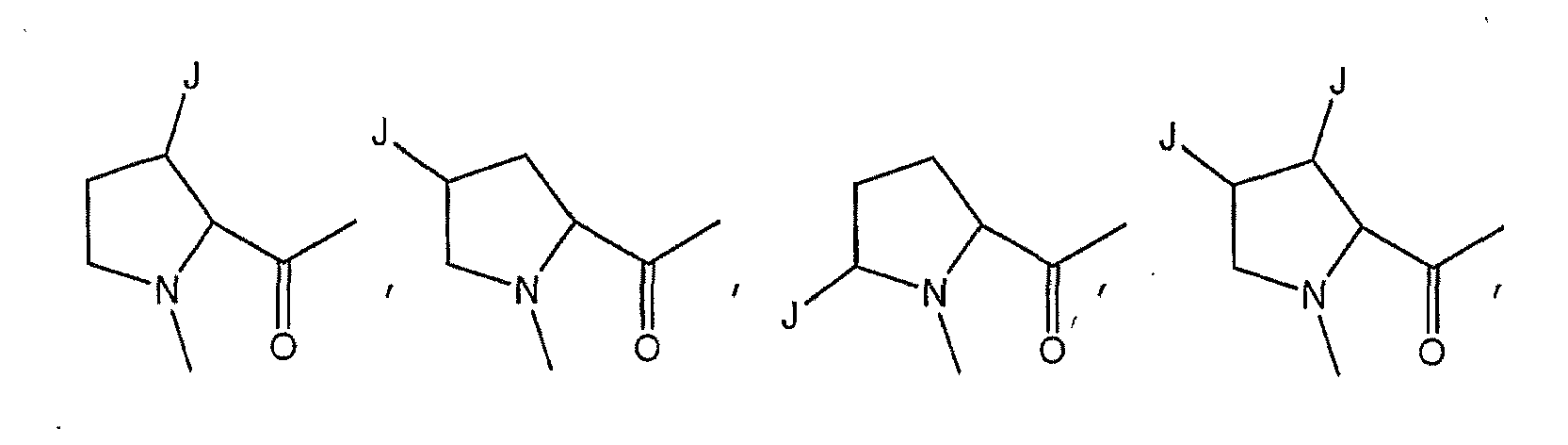

- According to another embodiment of compounds of formula I, formula II, or formula IV, the


- According to another embodiment of compounds of formula I, formula II, or formula IV, the


- According to another embodiment of compounds of formula I, formula II, or formula IV, the


- According to another embodiment of compounds of formula I, formula II, or formula IV, the


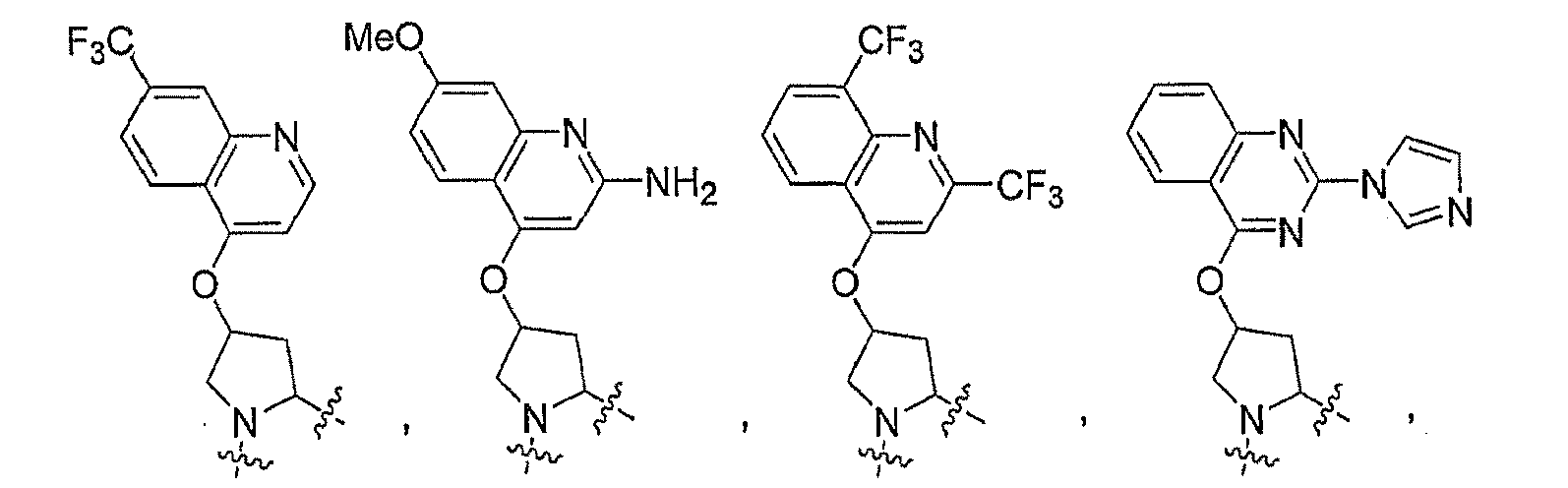


- According to another embodiment of compounds of formula I, formula II, or formula IV, the


- According to another embodiment of compounds of formula I, formula II, or formula IV, the


wherein each ring B is either aromatic or nonaromatic;
wherein each heteroatom in the heterocyclic ring system is N, NH, O, S, SO, or SO2;
wherein, in the bi- and tri-cyclic ring system, each ring is linearly fused, bridged, or spirocyclic;
wherein each ring is optionally fused to a (C6-C10)aryl, (C5-C10)heteroaryl, (C3-C10)cycloalkyl, or (C3-C10)heterocyclyl; and
wherein each ring is optionally substituted with up to 3 substituents selected independently from J. - According to another embodiment of compounds of formula I, formula II, or formula IV, ring systems are:

- According to another embodiment of compounds of formula I, formula II, or formula IV, ring C is selected from:


- (C1-C12)-aliphatic-,
- (C3-C10)-cycloalkyl or -cycloalkenyl-,
- (C6-C10)-aryl-, or
- (C6-C10)-aryl-(C1-C12)aliphatic-.
- According to another embodiment of compounds of formula I, formula II, or formula IV, ring C is selected from:


- (C1-C12)-aliphatic-,
- (C3-C10)-cycloalkyl or -cycloalkenyl-,
- (C6-C10)-aryl-, or
- (C6-C10)-aryl-(C1-C12)aliphatic-.
- According to another embodiment of compounds of formula I, formula II, or formula IV, ring D is selected from:


- (C1-C12)-aliphatic-,
- (C3-C10)-cycloalkyl or -cycloalkenyl-,
- (C6-C10)-aryl-, or
- (C6-C10)-aryl-(C1-C12)aliphatic-.
- According to another embodiment of compounds of formula I, formula II, or formula IV, ring D is selected from:


- (C1-C12)-aliphatic-,
- (C3-C10)-cycloalkyl or -cycloalkenyl-,
- (C6-C10)-aryl-, or
- (C6-C10)-aryl-(C1-C12) aliphatic-.
- According to another embodiment of compounds of formula I, formula II, or formula IV, rings A and B, together with the ring connected thereto include:


- According to another embodiment of compounds of formula I, formula II, or formula IV, the


- According to another embodiment of compounds of formula I, formula II, or formula IV, the
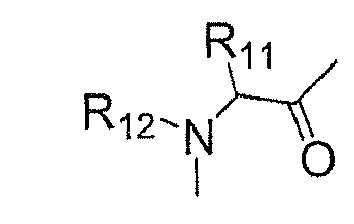


- According to another embodiment of compounds of formula I, formula II, or formula IV, the


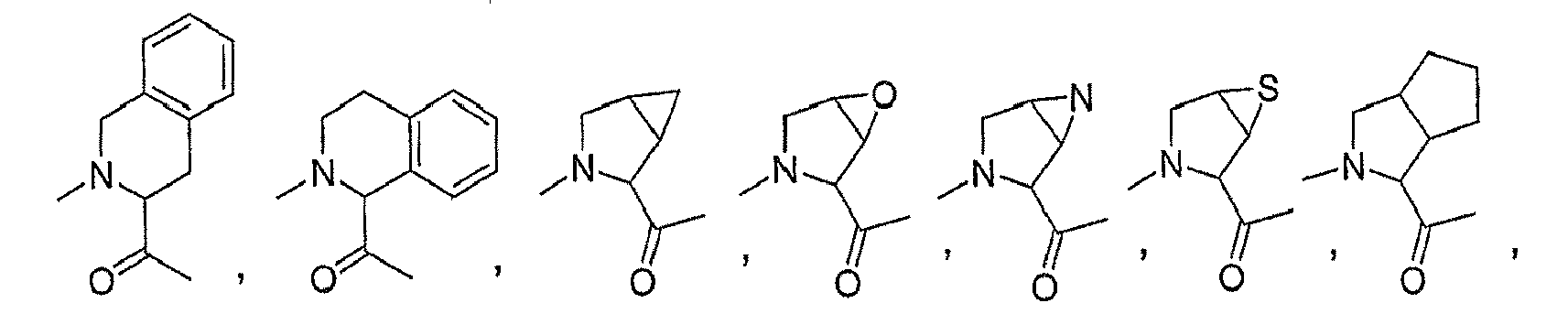


- According to another embodiment of compounds of formula I, formula II, or formula IV, the




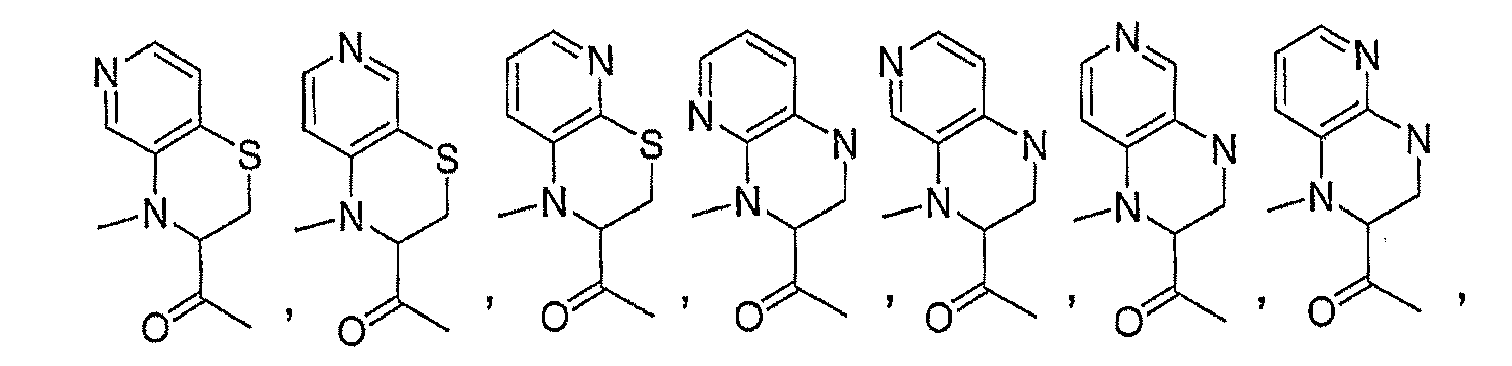


- According to another embodiment of compounds of formula I, formula II, or formula IV, the


- According to another embodiment of compounds of formula I, formula II, or formula IV, the


- According to another embodiment of compounds of formula I, formula II, or formula IV, the


- According to another embodiment of compounds of formula I or formula II, the


wherein each ring B is either aromatic or nonaromatic;
wherein each heteroatom in the heterocyclic ring system is N, NH, O, S, SO, or SO2;
wherein, in the ring system, each ring is linearly fused, bridged, or spirocyclic;
wherein each ring is optionally fused to a (C6-C10)aryl, (C5-C10)heteroaryl, (C3-C10)cycloalkyl, or (C3-C10)heterocyclyl; and
wherein each ring is optionally substituted with up to 3 substituents selected independently from J. - According to another embodiment of compounds of formula I or formula II, the




- According to another embodiment of compounds of formula I or formula II, the






- According to another embodiment of compounds of formula I or formula II, the


- According to another embodiment of compounds of formula I or formula II, the


wherein each ring B is either aromatic or nonaromatic;
wherein each heteroatom in the heterocyclic ring system is N, NH, O, S, SO, or SO2;
wherein, in the ring system, each ring is linearly fused, bridged, or spirocyclic;
wherein each ring is optionally fused to a (C6-C10) aryl, (C5-C10)heteroaryl, (C3-C10)cycloalkyl, or (C3-C10)heterocyclyl;
wherein, in the carbocyclic or heterocyclic ring system, each ring is linearly fused, bridged, or spirocyclic; and
wherein each ring is optionally substituted with up to 3 substituents selected independently from J. - According to another embodiment of compounds of formula I or formula II, the


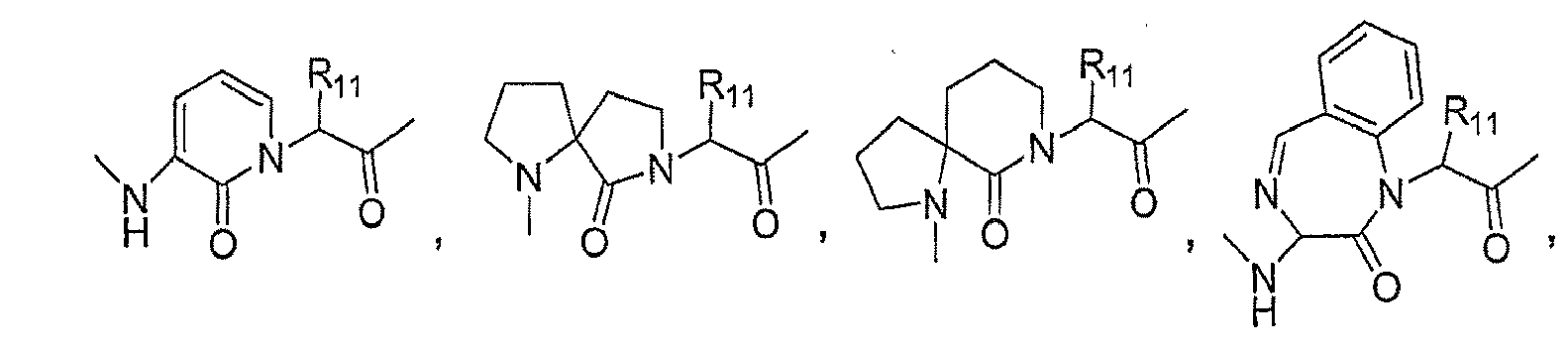


- In the above radicals it is understood that the R11 variable is H.
- According to another embodiment of compounds of formula I, formula II, or formula IV,
R11and R12 together with the atoms to which they are bound form a 6- to 10-membered mono- or bicyclic carbocyclic or heterocyclic ring system;
wherein each heteroatom in the heterocyclic ring system is selected from the group consisting of N, NH, O, S, SO, and SO2; and
wherein said ring has up to 3 substituents selected independently from J. - Any of the ring systems may be substituted as set forth herein. In one embodiment of compounds of formula I, formula II, or formula IV, the ring substituents are oxo, fluoro, difluoro (particularly vicininal difluoro), and hydroxy. In another embodiment, the following ring systems:

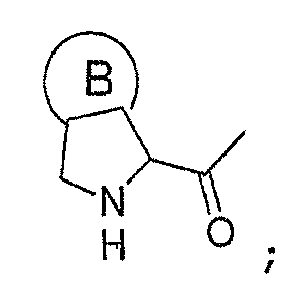
- In another embodiment of compounds of formula I, formula II, or formula IV, heteroatoms are selected from the group consisting of N, NH, O, SO, and SO2.
- According to another embodiment of compounds of formula I, formula II, or formula IV, R5' is H and R5 is (C1-C6)-alkyl, wherein the alkyl group is optionally substituted with fluoro or -SH.
- According to another embodiment of compounds of formula I, formula II, or formula IV, the (C1-C6)-alkyl group is substituted with 1 to 3 fluoro groups.
- According to another embodiment of compounds of formula I, formula II, or formula IV, R5 and R5'are independently:

- According to another embodiment of compounds of formula I, formula II, or formula IV, R5' is H and R5 is:

- According to another embodiment of compounds of formula I, formula II, or formula IV, R5 and R5, is:

- According to another embodiment of compounds of formula I, formula II, or formula IV,
- R13 is:
- (C1-C6)-alkyl,
- (C3-C10)-cycloalkyl,
- [(C3-C10)-cycloalkyl]-(C1-C12)-alkyl,
- (C6-C10)-aryl,
- (C6-C10)-aryl-(C1-C6)alkyl,
- (C3-C10)-heterocyclyl,
- (C6-C10)-heterocyclyl-(C1-C6)alkyl,
- (C5-C10)-heteroaryl, or
- (CS-C10)-heteroaryl-(C1-C6)-alkyl;
wherein up to 3 aliphatic carbon atoms in R13 may be replaced by a heteroatom selected from O, NH, S, SO, or SO2 in a chemically stable arrangement. - According to another embodiment of compounds of formula I, formula II, or formula IV, R13' is hydrogen and R13 is:


- According to another embodiment of compounds of formula I, formula II, or formula IV, R13 is:


- According to another embodiment of compounds of formula I or formula II,
- R1 is:
- (C1-C6)-alkyl,
- (C3-C10)-cycloalkyl,
- [(C3-C10)-cycloalkyl]-(C1-C12)-alkyl, (C6-C10)-aryl,
- (C6-C10)-aryl-(C1-C6)alkyl,
- (C3-C10)-heterocyclyl,
- (C6-C10)-heterocyclyl-(C1-C6)alkyl,
- (C5-C10)-heteroaryl, or
- (C5-C10)-heteroaryl-(C1-C6)-alkyl;
wherein up to 3 aliphatic carbon atoms in R1may be replaced by a heteroatom selected from O, NH, S, SO, or SO2 in a chemically stable arrangement. - According to another embodiment of compounds of formula I or formula II, R1' is hydrogen and R1 is:


- According to another embodiment of compounds of formula I or formula II, R1 is:


- According to another embodiment of compounds of formula I or formula IV, T is selected from: (C6-C10)-aryl, (C6-C10)-aryl-(C1-C12)aliphatic, (C3-C10)-cycloalkyl or - cycloalkenyl, [(C3-C10)-cycloalkyl or -cycloalkenyl)-(C1-C12)-aliphatic, (C3-C10)-heterocyclyl, (C3-C10)-heterocyclyl-(C1-C12)-aliphatic, (C5-C10)heteroaryl, or (C5-C10)heteroaryl-(C1-C12)-aliphatic, wherein each T is optionally substituted with up to 3 J substituents.
- According to another embodiment of compounds of formula I, formula II, or formula IV, T is (C5-C10)heteroaryl, wherein T is optionally substituted with up to 3 J substitutents.
- According to another embodiment of compounds of formula I or formula IV, T is:

- According to another embodiment of compounds of formula I, formula II, or formula IV, T is:

- According to another embodiment of compounds of formula I or formula IV, T is:


- According to another embodiment of compounds of formula I or formula IV, T is:


- According to another embodiment of compounds of formula I or formula IV, T contains at least one hydrogen bond donor moiety selected from -NH2, -NH-, -OH, and -SH.
- According to another embodiment of compounds of formula I or formula IV, T is:


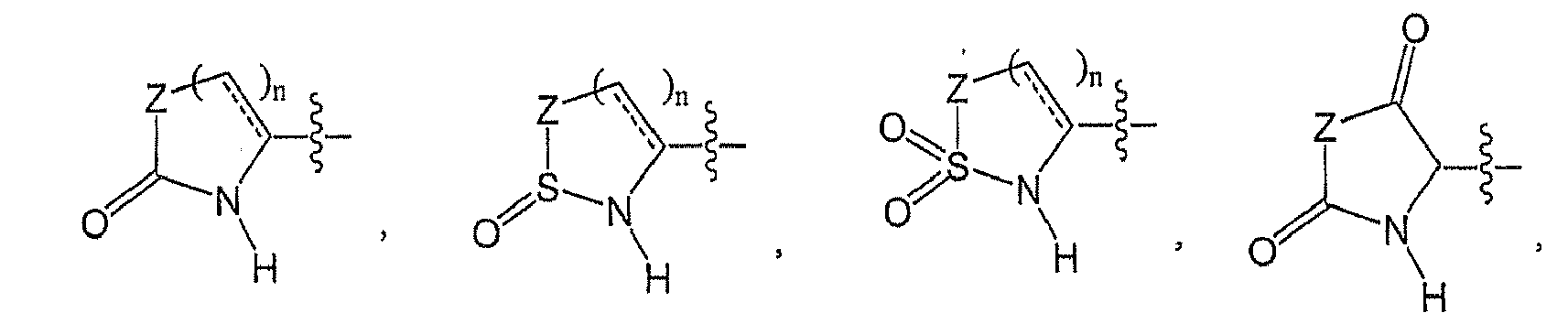

- T is optionally substituted with up to 3 J substituents, wherein J is as defined in claim 1;
- Z is independently O, S, NR10, C(R10)2 wherein R10 is as defined in claim 1;
- n is independently 1 or 2; and
- is independently a single bond or a double bond.
- According to another embodiment of compounds of formula I or formula IV, T is:

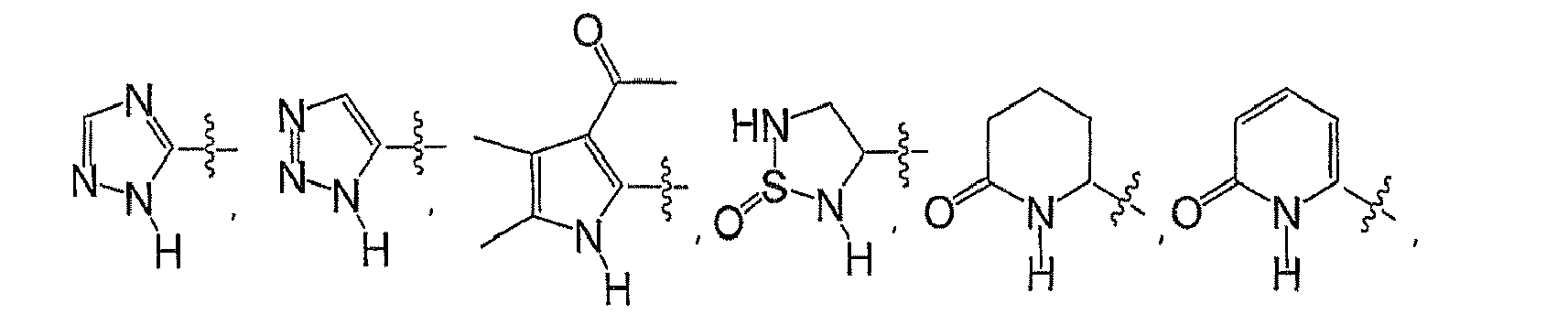


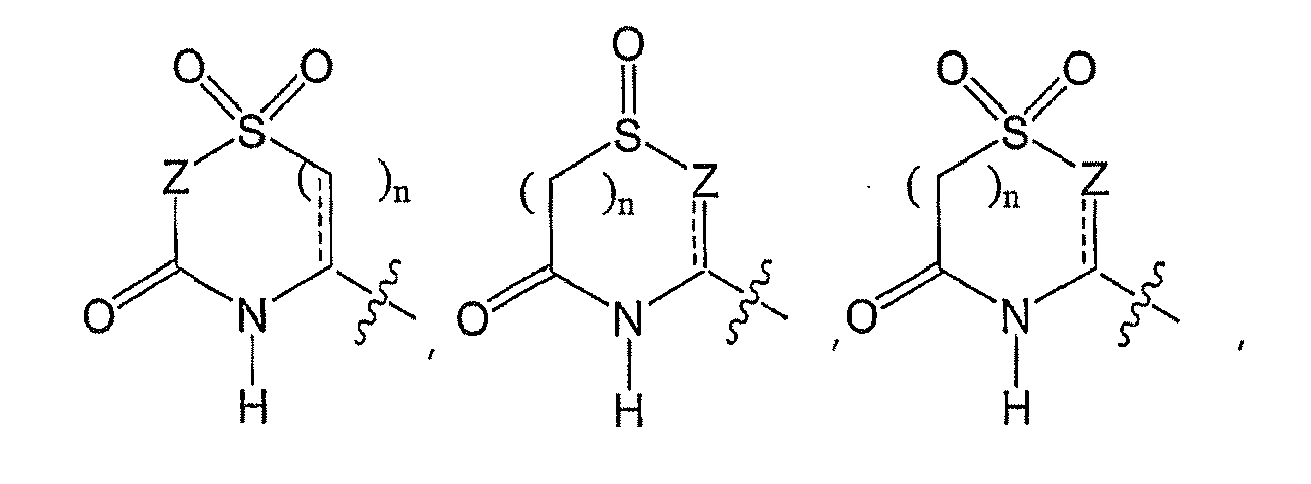


- T is optionally substituted with up to 4 J substituents, wherein J is as defined in claim 1;
- Z is independently O, S, NR10, (R10)2, SO, SO2, wherein R10 is as defined in claim 1;
- n is independently 1 or 2; and
- is independently a single bond or a double bond.

- According to another embodiment of compounds of formula I or formula IV, T is:


- T is optionally substituted with up to 4 J substituents, wherein J is as defined in claim 1; and
- Z is independently O, S, NR10, C(R10)2, SO, SO2, wherein R10 is as defined in claim 1.
- According to another embodiment of compounds of formula I or formula IV, T is:


- According to another embodiment of compounds of formula I or formula IV, V-R-T is selected from:


- According to another embodiment for compounds of formula I or formula IV, V-R-T is:

- one R17 is hydrogen; and
- one R17 is:
- (C1-C12)-aliphatic-;
- (C6-C10)-aryl-(C1-C12)aliphatic-, or
- (C3-C10)-cycloalkyl or -cycloalkenyl-;
wherein R17 is optionally substituted with up to 3 substituents independently selected from J. - According to another embodiment for compounds of formula I or formula IV, V-R-T is:


- According to another embodiment of compounds of formula I, formula II, or formula IV, R2 if present, and R4, and R8 are each independently H or (C1-C3)-alkyl.
- According to another embodiment of compounds of formula I, formula II, or formula IV, R2 if present, and R4, and R8 are each H.
- According to another embodiment of compounds of formula I, formula II, or formula IV, R8 is hydrogen, V is -C(O)-, R is a bond and T is as defined in any of the embodiments herein.
- According to one embodiment of compounds of formula IV, R8 is hydrogen, W is as defined in any of the embodiments herein, V is -C(O)-, R is oxygen, and T is selected from:
- (C1-C12)-aliphatic,
- (C3-C10)-cycloalkyl or -cycloalkenyl, or
- [(C3-C10)-cycloalkyl or -cycloalkenyl]-(C1-C12)" aliphatic.
- According to another embodiment of compounds of formula I or formula II, W is:

- hydrogen-, (C1-C12)-aliphatic-,
- (C3-C10)-cycloalkyl- or cycloalkenyl-,
- C(C3-C10)-cycloalkyl- or cycloalkenyl]-(C1-C12)-aliphatic-,
- (C6-C10)-aryl-,
- (C6-C10)-aryl-(C1-C12) aliphatic-,
- (C3-C10)-heterocyclyl-,
- (C3-C20)-heterocyclyl-(C1-C12)-aliphatic-,
- (C5-C10)heteroaryl-, or
- (C5-C10)heteroaryl-(C1-C12)-aliphatic-, or
- According to another embodiment of compounds of formula I or formula II, W is:

- (C1-C12)-aliphatic-,
- (C3-C10)-cycloalkyl- or cycloalkenyl-,
- [(C3-C10)--cycloalkyl- or cycloalkenyl]-(C1-C12)-aliphatic-,
- (C6-C10)-aryl-,
- (C6-C10)-aryl-(C1-C12)aliphatic-,
- (C3-C10)-heterocyclyl-,
- (C3-C10)-heterocyclyl-(C1-C12)-aliphatic-,
- (C5-C10) heteroaryl-, or
- (C5-C10) heteroaryl-(C1-C12)-aliphatic-, or
- According to another embodiment of compounds of formula I or formula II, W is:

- (C6-C10)-aryl-,
- (C6-C10)-aryl-(C1-C12)aliphatic-,
- (C5-C10)heteraaryl-, or
- (C5-C10)heteroaryl-(C1-C12)-aliphatic-,
- According to another embodiment of compounds of formula I or formula II, W is:

- (C6-C10)-aryl-,
- (C6-C10)-aryl-(C1-C12)aliphatic-,
- (C5-C10) heteroaryl-, or
- (C5-C10)heteroaryl-(C1-C12)-aliphatic-, and R17 is unsubstituted.
- According to another embodiment of compounds of formula I or formula II, W is:

- (C6-C10)-aryl-,
- (C6-C10)-aryl-(C1-C12)aliphatic-,
- According to another embodiment of compounds of formula I or formula II, W is:

- (C6-C10)-aryl-,
- (C6-C10)-aryl-(C1-C12) aliphatic-, and R17 is unsubstituted.
- According to another embodiment of compounds of formula I, formula II, or formula IV, J is halogen -OR', -NO2, -CF3, -OCF3, -R', oxo, 1,2-methylenedioxy, -N(R')2, -SR', -SOR', -SO2R', -C(O)R' , -COOR' -CON(R')2, -N(R')COR', - N(COR')COR', -CN, or -SO2N(R')2.
- According to another embodiment of compounds of formula I, formula II, or formula IV, J2 is halogen, -OR', - NO2, -CF3, -OCF3, -R', oxo, 1,2-methylenedioxy, -N(R')2, -SR', -SOR', -SO2R' , -C(O)R' , -COOR' -CON(R')2, -N(R')COR', - N(COR')COR', -CN, or -SO2N(R')2.
- According to another embodiment of compounds of formula I, formula II, or formula IV, in J and J2 the halogen is chloro or fluoro. In another embodiment, the halogen is fluoro.
- According to another embodiment of compounds of formula I or formula II, R1' is H.
- According to another embodiment of compounds of formula I, formula II, or formula IV, R13, is H.
- According to another embodiment of compounds of formula I, formula II, or formula IV, R11' is H.
- According to another embodiment of compounds of formula I, formula II, or formula IV, R12 is H.
- Another embodiment of this invention provides a process for preparing a compound of this invention. These processes are described in the schemes and examples.
- According to another embodiment in compounds of formula I, the compound is:
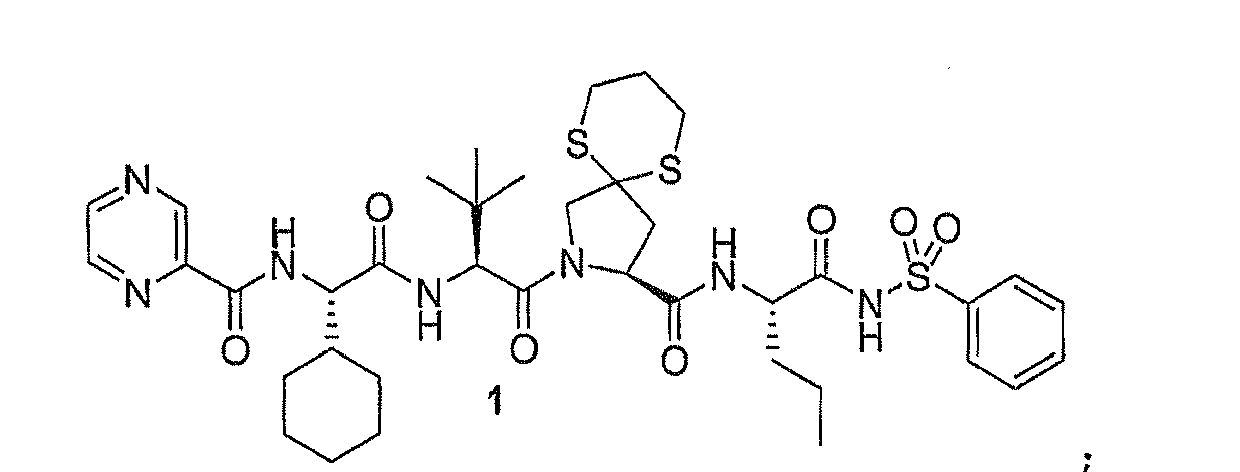


- The compounds of this invention may contain one or more asymmetric carbon atoms and thus may occur as racemates and racemic mixtures, single enantiomers, diastereomeric mixtures and individual diastereomers. All such isomeric forms of these compounds are expressly included in the present invention. Each stereogenic carbon may be of the R or S configuration.
- In another embodiment, the compounds of this invention have the structure and stereochemistry depicted in compounds 1-3.
- Any of the embodiments recited above, including those embodiments in the above species, may be combined to produce another embodiment of this invention.
- Abbreviations which are used in the schemes, preparations and the examples that follow are:
- THF: tetrahydrofuran
- DMF: N,N,-dimethylformamide
- EtOAc: ethyl acetate
- AcOH: acetic acid
- NMM: N-methylmorpholine
- NMP: N-methylpyyrolidinone
- EtOH: ethanol
- t-BuOH: tert-butanol
- Et2O diethyl ether
- DMSO: dimethyl sulfoxide
- DCCA: dichloroacetic acid
- DIEA: diisopropylethylamine
- MeCN: acetonitrile
- TFA: trifluoroacetic acid
- DBU: 1,8-diazabicyclo[5.4.0]undec-7-ene
- DEAD: diethyl azodicarboxylate
- HOBt: 1-hydroxybenzotriazole hydrate
- HOAt: 1-hydroxy-7-azabenzotriazole
- EDC: 1-(3-dimethylaminopropyl)-3-ethylcarbodiimide hydrochloride
- Boc: tert-butyloxycarbonyl
- Boc2O: di-tert-butyldicarbonate
- Cbz: benzyloxycarbonyl
- Cbz-Cl: benzyl chloroformate
- Fmoc: 9-fluorenyl methyloxycarbonyl
- Chg: cyclohexylglycine
- t-BG: tert-butylglycine
- mCBPA: 3-chloroperoxybenzoic acid
- DAST: (diethylamino)sulfur trifluoride
- TEMPO: 2,2,6,6-tetramethyl-1-piperidinyloxy, free radical PyBOP: tris(pyrrolidino)bromophosphonium hexafluorophosphate
- TBTU or HATU: 2-(1H-benzotriazole-1-yl)-1,1,3,3-tetramethyluronium tetrafluoroborate
- DMAP: 4-dimethylaminopyridine
- AIBN: 2,2'-azobisisobutyronitrile
- DMEM: Dulbecco's minimal essential media
- PBS: phosphate-buffered saline
- rt or RT: room temperature
- ON: overnight
- ND: not determined
- MS: mass spectrometry
- LC: liquid chromatography
- The compounds of this invention may be prepared in general by methods known to those skilled in the art. Schemes 1-19 below illustrate synthetic routes to the compounds of the present invention. Other equivalent schemes, which will be readily apparent to the ordinary skilled organic chemist, may alternatively be used to synthesize various portions of the molecule as illustrated by the general scheme below, and the preparative examples that follow.

- Scheme 1 above provides a general route for the preparation of compounds of formula I, formula II, or formula IV wherein T, R1, R3, Razz, and ring B are as defined in any of the embodiments herein. It will be appreciated by one of skill in the art that compounds of formula IV may be prepared according to scheme 1 wherein one less CBz-Xaa-OH group is coupled during the assembly of the compound.

- Scheme 2 above provides an alternate general route for the preparation of compounds of formula I, formula II, or formula IV wherein T, R1, R3, R17, and ring B are as defined in any of the embodiments herein. It will be appreciated by one of skill in the art that compounds of formula IV may be prepared according to scheme 2 wherein one less CBz-Xaa-OH group is coupled during the assembly of the compound.


- Scheme 1 or 2 in combination with scheme 3 above provides another general method for the preparation of compounds of formula I, formula II, or formula IV.

- Scheme 1 or 2 in combination with scheme 4 above provides another general method for the preparation of compounds of formula I, formula II, or formula IV.


- Scheme 1 or 2 in combination with scheme 5 above provides another general method for the preparation of certain compounds of formula I, formula II, or formula IV.

- Scheme 1 or 2 in combination with scheme 6 above provides another general route for the preparation of compounds of formula I, formula II, or formula IV.

- Scheme 1 or 2 in combination with scheme 7 above provides another general method for the preparation of certain compounds of formula I, formula II, or formula IV.

- Scheme 1 or 2 in combination with scheme 8 above provides yet another general method for the preparation of compounds of formula I, formula II, or formula IV.


- Scheme 1 or 2 in combination with scheme 9 above provides a general method for the preparation of compounds of formula I, formula II, or formula IV.

- Scheme 1 or 2 in combination with scheme 10 above provides a general method for the preparation of compounds of formula I, formula II, or formula IV.

- Scheme 1 or 2 in combination with scheme 11 above provides a general method for the preparation of compounds of formula I, formula II, or formula IV.

- Scheme 12 depicts a synthetic route for another P2 of interest. Scheme 1 or 2 in combination with scheme 12 above provides a general method for the preparation of compounds of formula I, formula II, or formula IV.

- Scheme 13 above provides a synthetic scheme for the preparation of amino sulfonamide 6a using the procedures described in Bioorg. & Med. Chem., 11, pp. 2551-2568 (2003).

- Scheme 14 above provides a general route for the preparation of compounds wherein V-R-T is as shown above and R17 is as described in any of the embodiments herein. Therein, commercially available amine and sulfonyl chloride is condensed and then hydrolyzed under basic conditions to provide an intermediate acid. The acid may be further converted to compounds of formula I or formula IV using the methods outlined in scheme 1 or 2.

- Scheme 15 above provides a general route for the preparation of compounds or formula I, wherein V-R-T is as depicted above, and R17 and R1 as described in any of the embodiments herein. Therein, commercially available amino acid ester 30 is converted to the corresponding N-chlorosulfonyl ester 31 according to the procedure described by Kempf, D.J. et al., J. Med. Chem., pp. 320-330 (1993). Coupling of 31 with commercially available hydrazine 32 followed by hydrolysis yields acid 34. Acid 34 may be converted to compounds of formula I using the methods outlined in schemes 1 and 2 above. It will be appreciated by one of skill in the art that compounds of formula IV may be prepared according to this procedure and those depicted in schemes 1 and 2 by using the appropriate starting material. For instance, in the scheme detailed above, R1 in compound 30 would replaced by R13 wherein R13 is as described in any of the embodiments herein.

- Scheme 16 above provides a general route for the preparation of compounds wherein V-R-T is as depicted above, and R17 and R1 as described in any of the embodiments herein. Chloroester 37 is prepared according to the methods described in J. Org. Chem., pp. 2624-2629 (1979). Coupling of commercially available amino t-butyl ester 36 with chloride 37 gives sulfonamide 38. Basic hydrolysis of mixed ester 38 followed by coupling with commercially available amine 39 affords intermediate ester 40. Oxidation with one equivalent of mCBPA affords sulfoxide 41, wherein V is ―S(O)1-. Alternatively, oxidation with two equivalents of mCBPA affords sulfone 41, wherein V is ―S(O)2-. Acidic hydrolysis of t-butyl ester 40 yields acid 41, which can be further elaborated to compounds of formula I or formula II according to the procedures outlined above in schemes 1 and 2. It will be appreciated by one of skill in the art that compounds of formula IV may be prepared according to this procedure and those depicted in schemes 1 and 2 by using the appropriate starting material. For instance, in the scheme detailed above, R1 in compound 36 would replaced by R13 wherein R13 is as described in any of the embodiments herein.


- Scheme 17 above provides a route for the preparation of compound 2 from commercially available starting materials (6b) .
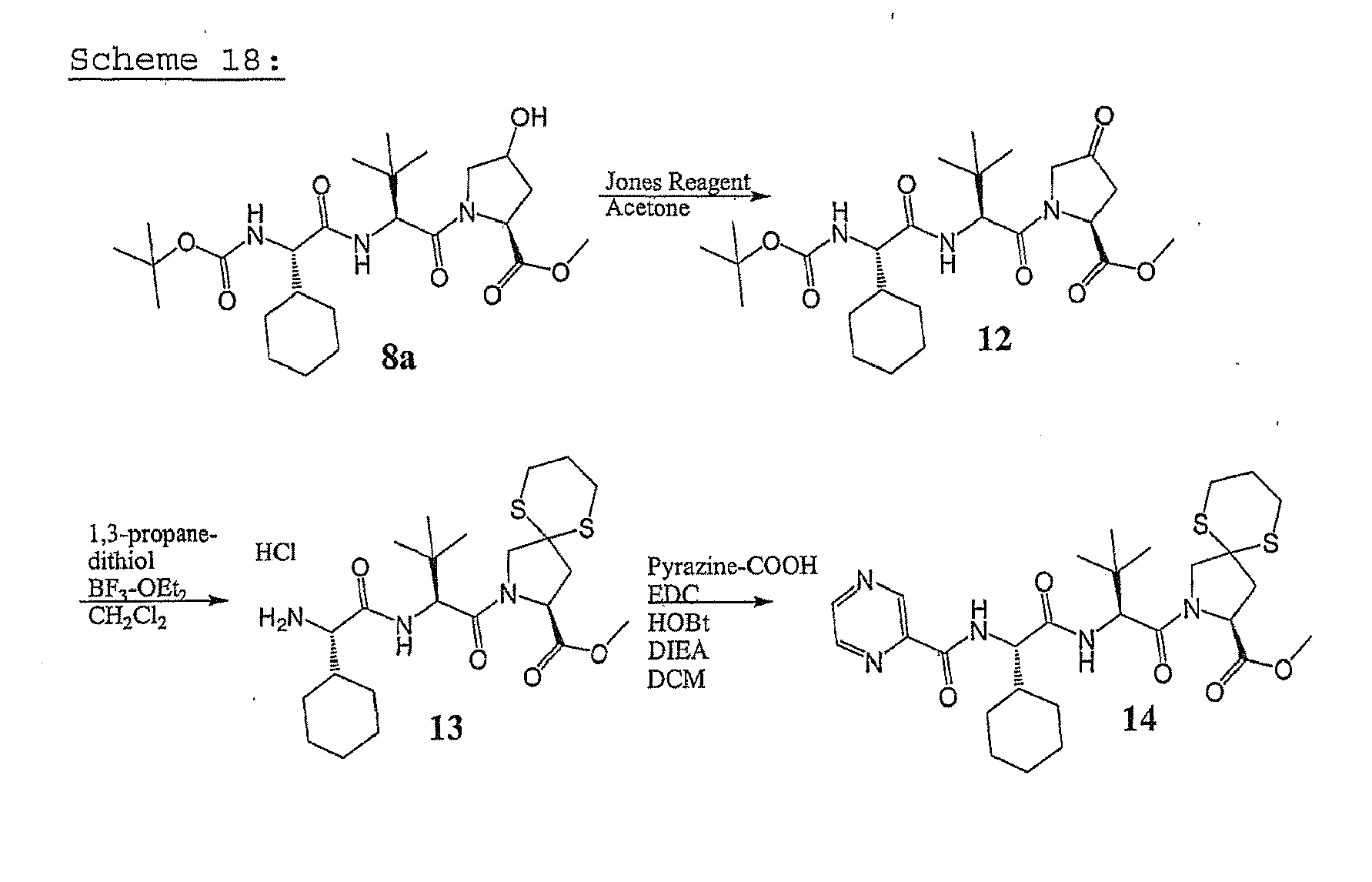

- Scheme 18 above provides a route for the preparation of compound 1 from intermediate 8a. Intermediate 8a is prepared according to the procedures listed in scheme 17 using the appropriate Boc protected amino acids instead of the Cbz protected amino acids.

- Scheme 19 above provides a synthetic scheme for the preparation of amino sulfinamide intermediate 44 using the procedures described in J. Med. Chem., 33(9), pp. 2437-2451 (1990). Intermediate 44 may be further converted to compounds of formula I, formula II, or formula IV using the methods outlined in scheme 1 or 2.
- The preparation of various other optionally substituted multicyclic azaheterocyclyl intermediates to prepare compounds of formula I, formula II or formula IV via schemes 1 and 2 above, may be accomplished by the methods described in
PCT publication No. WO 02/18369 - Various 3, 4, and 5-substituted proline analogues may either be purchased commercially or prepared according to known literature procedures. For instance, certain 3-substituted proline analogues of interest may be prepared according to the method of Holladay, M.W. et al., J. Med. Chem., 34, pp. 457-461 (1991). Additionally various 3,4-disubstituted proline analogues may be prepared according to the method of Kanamasa, S. et al., J. Org. Chem, 56, pp. 2875-2883 (1991). In each of the syntheses involving 3, 4, or 5-substituted prolines or 3,4-disubstituted prolines, the intermediates may be further elaborated by the routes defined above in schemes 1 or 2 to prepare compounds of formula I, formula II, or formula IV.
- Although certain embodiments are depicted and described below, it will be appreciated that compounds of this invention can be prepared according to the methods described generally above using appropriate starting materials generally available to one of ordinary skill in the art.
- Another embodiment of this invention provides a pharmaceutical composition comprising a compound of formula I, formula II or formula IV or pharmaceutically acceptable salts or mixtures of salts thereof. According to another embodiment, the compound of formula I, of formula II or of formula IV is present in an amount effective to decrease the viral load in a sample or in a patient, wherein said virus encodes a serine protease necessary for the viral life cycle, and a pharmaceutically acceptable carrier.
- If pharmaceutically acceptable salts of the compounds of this invention are utilized in these compositions, those salts are preferably derived from inorganic or organic acids and bases. Included among such acid salts are the following: acetate, adipate, alginate, aspartate, benzoate, benzene sulfonate, bisulfate, butyrate, citrate, camphorate, camphor sulfonate, cyclopentanepropionate, digluconate, dodecylsulfate, ethanesulfonate, fumarate, glucoheptanoate, glycerophosphate, hemisulfate, heptanoate, hexanoate, hydrochloride, hydrobromide, hydroiodide, 2-hydroxyethanesulfonate, lactate, maleate, methanesulfonate, 2-naphthalenesulfonate, nicotinate, oxalate, pamoate, pectinate, persulfate, 3-phenyl-propionate, picrate, pivalate, propionate, succinate, tartrate, thiocyanate, tosylate and undecanoate. Base salts include ammonium salts, alkali metal salts, such as sodium and potassium salts, alkaline earth metal salts, such as calcium and magnesium salts, salts with organic bases, such as dicyclohexylamine salts, N-methyl-D-glucamine, and salts with amino acids such as arginine, lysine, and so forth.
- Also, the basic nitrogen-containing groups may be quaternized with such agents as lower alkyl halides, such as methyl, ethyl, propyl, and butyl chloride, bromides and iodides; dialkyl sulfates, such as dimethyl, diethyl, dibutyl and diamyl sulfates, long chain halides such as decyl, lauryl, myristyl and stearyl chlorides, bromides and iodides, aralkyl halides, such as benzyl and phenethyl bromides and others. Water or oil-soluble or dispersible products are thereby obtained.
- The compounds utilized in the compositions and methods of this invention may also be modified by appending appropriate functionalities to enhance selective biological properties. Such modifications are known in the art and include those which increase biological penetration into a given biological system (e.g., blood, lymphatic system, central nervous system), increase oral availability, increase solubility to allow administration by injection, alter metabolism and alter rate of excretion.
- Pharmaceutically acceptable carriers that may be used in these compositions include, but are not limited to, ion exchangers, alumina, aluminum stearate, lecithin, serum proteins, such as human serum albumin, buffer substances such as phosphates, glycine, sorbic acid, potassium sorbate, partial glyceride mixtures of saturated vegetable fatty acids, water, salts or electrolytes, such as protamine sulfate, disodium hydrogen phosphate, potassium hydrogen phosphate, sodium chloride, zinc salts, colloidal silica, magnesium trisilicate, polyvinyl pyrrolidone, cellulose-based substances, polyethylene glycol, sodium carboxymethylcellulose, polyacrylates, waxes, polyethylene-polyoxypropylene-block polymers, polyethylene glycol and wool fat.
- According to another embodiment, the compositions of this invention are formulated for pharmaceutical administration to a mammal. In one embodiment said mammal is a human being.
- Such pharmaceutical compositions of the present invention may be administered orally, parenterally, by inhalation spray, topically, rectally, nasally, buccally, vaginally or via an implanted reservoir. The term "parenteral" as used herein includes subcutaneous, intravenous, intramuscular, intra-articular, intra-synovial, intrasternal, intrathecal, intrahepatic, intralesional and intracranial injection or infusion techniques. Preferably, the compositions are administered orally or intravenously.
- Sterile injectable forms of the compositions of this invention may be aqueous or oleaginous suspension. These suspensions may be formulated according to techniques known in the art using suitable dispersing or wetting agents and suspending agents. The sterile injectable preparation may also be a sterile injectable solution or suspension in a non-toxic parenterally acceptable diluent or solvent, for example as a solution in 1,3-butanediol. Among the acceptable vehicles and solvents that may be employed are water, Ringer's solution and isotonic sodium chloride solution. In addition, sterile, fixed oils are conventionally employed as a solvent or suspending medium. For this purpose, any bland fixed oil may be employed including synthetic mono- or di-glycerides. Fatty acids, such as oleic acid and its glyceride derivatives are useful in the preparation of injectables, as are natural pharmaceutically-acceptable oils, such as olive oil or castor oil, especially in their polyoxyethylated versions. These oil solutions or suspensions may also contain a long-chain alcohol diluent or dispersant, such as carboxymethyl cellulose or similar dispersing agents which are commonly used in the formulation of pharmaceutically acceptable dosage forms including emulsions and suspensions. Other commonly used surfactants, such as Tweens, Spans and other emulsifying agents or bioavailability enhancers which are commonly used in the manufacture of pharmaceutically acceptable solid, liquid, or other dosage forms may also be used for the purposes of formulation.
- In one embodiment, dosage levels of between about 0.01 and about 100 mg/kg body weight per day of the protease inhibitor compounds described herein are useful in a monotherapy for the prevention and treatment of antiviral, particularly anti-HCV mediated disease. In another embodiment, dosage levels of between about 0.5 and about 75 mg/kg body weight per day of the protease inhibitor compounds described herein are useful in a monotherapy for the prevention and treatment of antiviral, particularly anti-HCV mediated disease. Typically, the pharmaceutical compositions of this invention will be administered from about 1 to about 5 times per day or alternatively, as a continuous infusion. Such administration can be used as a chronic or acute therapy. The amount of active ingredient that may be combined with the carrier materials to produce a single dosage form will vary depending upon the host treated and the particular mode of administration. A typical preparation will contain from about 5% to about 95% active compound (w/w). In one embodiment, such preparations contain from about 20% to about 80% active compound.
- When the compositions of this invention comprise a combination of a compound of either formula I, formula II, or formula IV and one or more additional therapeutic or prophylactic agents, both the compound and the additional agent should be present at dosage levels of between about 10 to 100% of the dosage normally administered in a monotherapy regimen. In another embodiment, the additional agent should be present at dosage levels of between about 10 to 80% of the dosage normally administered in a monotherapy regimen.
- The pharmaceutical compositions of this invention may be orally administered in any orally acceptable dosage form including, but not limited to, capsules, tablets, aqueous suspensions or solutions. In the case of tablets for oral use, carriers that are commonly used include lactose and corn starch. Lubricating agents, such as magnesium stearate, are also typically added. For oral administration in a capsule form, useful diluents include lactose and dried cornstarch. When aqueous suspensions are required for oral use, the active ingredient is combined with emulsifying and suspending agents. If desired, certain sweetening, flavoring or coloring agents may also be added.
- Alternatively, the pharmaceutical compositions of this invention may be administered in the form of suppositories for rectal administration. These may be prepared by mixing the agent with a suitable non-irritating excipient which is solid at room temperature but liquid at rectal temperature and therefore will melt in the rectum to release the drug. Such materials include cocoa butter, beeswax and polyethylene glycols.
- The pharmaceutical compositions of this invention may also be administered topically, especially when the target of treatment includes areas or organs readily accessible by topical application, including diseases of the eye, the skin, or the lower intestinal tract. Suitable topical formulations are readily prepared for each of these areas or organs.
- Topical application for the lower intestinal tract may be effected in a rectal suppository formulation (see above) or in a suitable enema formulation. Topically-transdermal patches may also be used,
- For topical applications, the pharmaceutical compositions may be formulated in a suitable ointment containing the active component suspended or dissolved in one or more carriers. Carriers for topical administration of the compounds of this invention include, but are not limited to, mineral oil, liquid petrolatum, white petrolatum, propylene glycol, polyoxyethylene, polyoxypropylene compound, emulsifying wax and water. Alternatively, the pharmaceutical compositions may be formulated in a suitable lotion or cream containing the active components suspended or dissolved in one or more pharmaceutically acceptable carriers. Suitable carriers include, but are not limited to, mineral oil, sorbitan monostearate, polysorbate 60, cetyl esters wax, cetearyl alcohol, 2-octyldodecanol, benzyl alcohol and water.
- For ophthalmic use, the pharmaceutical compositions may be formulated as micronized suspensions in isotonic, pH adjusted sterile saline, or, preferably, as solutions in isotonic, pH adjusted sterile saline, either with our without a preservative such as benzylalkonium chloride. Alternatively, for ophthalmic uses, the pharmaceutical compositions may be formulated in an ointment such as petrolatum.
- The pharmaceutical compositions of this invention may also be administered by nasal aerosol or inhalation. Such compositions are prepared according to techniques well known in the art of pharmaceutical formulation and may be prepared as solutions in saline, employing benzyl alcohol or other suitable preservatives, absorption promoters to enhance bioavailability, fluorocarbons, and/or other conventional solubilizing or dispersing agents.
- In one embodiment, the pharmaceutical compositions are formulated for oral administration.
- In another embodiment, the compositions of this invention additionally comprise another anti-viral agent, preferably an anti-HCV agent. Such anti-viral agents include, but are not limited to, immunomodulatory agents, such as α-, β-, and γ-interferons, pegylated derivatized interferon-α compounds, and thymosin; other anti-viral agents, such as ribavirin, amantadine, and telbivudine; other inhibitors of hepatitis C proteases (NS2-NS3 inhibitors and NS3-NS4A inhibitors); inhibitors of other targets in the HCV life cycle, including helicase and polymerase inhibitors; inhibitors of internal ribosome entry; broad-spectrum viral inhibitors, such as IMPDH inhibitors (e.g., compounds of United States Patent
5,807,876 ,6,498,178 ,6,344,465 ,6,054,472 ,WO 97/40028 WO 98/40381 WO 00/56331 U.S. Patent 6,541,496 .
- The following definitions are used herein (with trademarks referring to products available as of this application's filing date).
- "Peg-Intron" means PEG-INTRON®, peginteferon alfa-2b, available from Schering Corporation, Kenilworth, NJ;
- "Intron" means INTRON-A®, interferon alfa-2b available from Schering Corporation, Kenilworth, NJ;
- "ribavirin" means ribavirin (1-beta-D-ribofuranosyl-1H-1,2,4-triazole-3-carboxamide, available from ICN Pharmaceuticals, Inc., Costa Mesa, CA; described in the Merck Index, entry 8365, Twelfth Edition; also available as REBETROL® from Schering Corporation, Kenilworth, NJ, or as COPEGASUS® from Hoffmann-La Roche, Nutley, NJ;
- "Pagasys" means PEGASYS®, peginterferon alfa-2a available Hoffmann-La Roche, Nutley, NJ;
- "Roferon" mean ROFERON®, recombinant interferon alfa-2a available from Hoffmann-La Roche, Nutley, NJ;
- "Berefor" means BEREFOR®, interferon alfa 2 available from Boehringer Ingelheim Pharmaceutical, Inc., Ridgefield, CT;
- SUMIFERON®, a purified blend of natural alpha interferons such as Sumiferon available from Sumitomo, Japan;
- WELLFERON®, interferon alpha n1 available from Glaxo_Wellcome LTd., Great Britain;
- ALFERON®, a mixture of natural alpha interferons made by Interferon Sciences, and available from Purdue Frederick Co., CT;
- The term "interferon" as used herein means a member of a family of highly homologous species-specific proteins that inhibit viral replication and cellular proliferation, and modulate immune response, such as interferon alpha, interferon beta, or interferon gamma. The Merck Index, entry 5015, Twelfth Edition.
- According to one embodiment of the present invention, the interferon is α-interferon. According to another embodiment, a therapeutic combination of the present invention utilizes natural alpha interferon 2a. Or, the therapeutic combination of the present invention utilizes natural alpha interferon 2b. In another embodiment, the therapeutic combination of the present invention utilizes recombinant alpha interferon 2a or 2b. In yet another embodiment, the interferon is pegylated alpha interferon 2a or 2b. Interferons suitable for the present invention include:
- (a) INTRON-A® (interferon-alpha 2B, Schering Plough),
- (b) PEG-INTRON®,
- (c) PEGASYS®,
- (d) ROFERON®,
- (e) BEREFOR®,
- (f) SUMIFEPON®,
- (g) WELLFERON®,
- (h) consensus alpha interferon available from Amgen, Inc., Newbury Park, CA,
- (i) ALFERON®;
- (j) VIRAFERON®;
- (k) INFERGEN®.
- As is recognized by skilled practitioners, a protease inhibitor would be preferably administered orally. Interferon is not typically administered orally.
Nevertheless, nothing herein limits the methods or combinations of this invention to any specific dosage forms or regime. Thus, each component of a combination according to this invention may be administered separately, together, or in any combination thereof. - In one embodiment, the protease inhibitor and interferon are administered in separate dosage forms. In one embodiment, any additional agent is administered as part of a single dosage form with the protease inhibitor or as a separate dosage form. As this invention involves a combination of compounds, the specific amounts of each compound may be dependent on the specific amounts of each other compound in the combination. As recognized by skilled practitioners, dosages of interferon are typically measured in IU (e.g., about 4 million IU to about 12 million IU).
- , Accordingly, agents (whether acting as an immunomodulatory agent or otherwise) that may be used in combination with a compound of this invention include, but are not limited to, interferon-alph 2B (INTRON-A®, Schering Plough); REBETRON® (Schering Plough, Inteferon-alpha 2B + Ribavirin); pegylated interferon alpha (Reddy, K.R. et al. "Efficacy and Safety of Pegylated (40-kd) interferon alpha-2a compared with interferon alpha-2a in noncirrhotic patients with chronic hepatitis C (Hepatology, 33, pp. 433-438 (2001); consensus interferon (Kao, J.H., et al., "Efficacy of Consensus Interferon in the Treatement of Chronic Hepatitis" J. Gastroenterol. Hepatol. 15, pp. 1418-1423 (2000), interferon-alpha 2A (Roferon A; Roche), lymphoblastoid or "natural" interferon; interferon tau (Clayette, P. et al., "IFN-tau, A New Interferon Type I with Antiretroviral activity" Pathol. Biol. (Paris) 47, pp. 553-559 (1999); interleukin 2 (Davis, G.L. et al., "Future Options for the Management of Hepatitis C." Seminars in Liver Disease, 19, pp. 103-112 (1999); Interleukin 6 (Davis et al. "Future Options for the Management of Hepatitis C." Seminars in Liver Disease 19, pp. 103-112 (1999); interleukin 12 (Davis, G.L. et al., "Future Options for the Management of Hepatitis C." Seminars in Liver Disease, 19, pp. 103-112 (1999) ; Ribavirin; and compounds that enhance the development of type 1 helper T cell response (Davis et al., "Future Options for the Management of Hepatitis C." Seminars in Liver Disease, 19, pp. 103-112 (1999). Interferons may ameliorate viral infections by exerting direct antiviral effects and/or by modifying the immune response to infection. The antiviral effects of interferons are often mediated through inhibition of viral penetration or uncoating, synthesis of viral RNA, translation of viral proteins, and/or viral assembly and release.
- Compounds that stimulate the synthesis of interferon in cells (Tazulakhova, E.B. et al., "Russian Experience in Screening, analysis, and Clinical Application of Novel Interferon Inducers" J. Interferon Cytokine Res., 21 pp. 65-73) include, but are not limited to, double stranded RNA, alone or in combination with tobramycin, and Imiquimod (3M Pharmaceuticals; Sauder, D.N. "Immunomodulatory and Pharmacologic Properties of Imiquimod" J. Am. Acad. Dermatol., 43 pp. S6-11 (2000).
- Other non-immunomodulatory or immunomodulatory compounds may be used in combination with a compound of this invention including, but not limited to, those specified in
WO 02/18369 - This invention may also involve administering a cytochrome P450 monooxygenase inhibitor. CYP inhibitors may be useful in increasing liver concentrations and/or increasing blood levels of compounds that are inhibited by CYP.
- If an embodiment of this invention involves a CYP inhibitor, any CYP inhibitor that improves the pharmacokinetics of the relevant NS3/4A protease may be used in a method of this invention. These CYP inhibitors include, but are not limited to, ritonavir (
WO 94/14436 6,037, 157 , and the documents cited therein: United States Patent5,484,801 , United States Application08/402,690 , and International ApplicationsWO 95/07696 WO 95/09614 - Methods for measuring the ability of a compound to inhibit cytochrome P450 monooxygenase activity are known (see
US 6,037,157 and Yun, et al. Drug Metabolism & Disposition, vol. 21, pp. 403-407 (1993). - Upon improvement of a patient's condition, a maintenance dose of a compound, composition or combination of this invention may be administered, if necessary. Subsequently, the dosage or frequency of administration, or both, may be reduced, as a function of the symptoms, to a level at which the improved condition is retained when the symptoms have been alleviated to the desired level, treatment should cease. Patients may, however, require intermittent treatment on a long-term basis upon any recurrence of disease symptoms.
- It should also be understood that a specific dosage and treatment regimen for any particular patient will depend upon a variety of factors, including the activity of the specific compound employed, the age, body weight, general health, sex, diet, time of administration, rate of excretion, drug combination, and the judgment of the treating physician and the severity of the particular disease being treated. The amount of active ingredients will also depend upon the particular described compound and the presence or absence and the nature of the additional anti-viral agent in the composition.
- According to another embodiment, the invention provides a method for treating a patient infected with a virus characterized by a virally encoded serine protease that is necessary for the life cycle of the virus by administering to said patient a pharmaceutically acceptable composition of this invention. In one embodiment, the methods of this invention are used to treat a patient suffering from a HCV infection. Such treatment may completely eradicate the viral infection or reduce the severity thereof. In another embodiment, the patient is a human being.
- In an alternate embodiment, the methods of this invention additionally comprise the step of administering to said patient an anti-viral agent preferably an anti-HCV agent. Such anti-viral agents include, but are not limited to, immunomodulatory agents, such as α-, β-, and γ-interferons, pegylated derivatized interferon-α compounds, and thymosin; other anti-viral agents, such as ribavirin, amantadine, and telbivudine; other inhibitors of hepatitis C proteases (NS2-NS3 inhibitors and NS3-NS4A inhibitors); inhibitors of other targets in the HCV life cycle, including but not limited to helicase and polymerase inhibitors; inhibitors of internal ribosome entry; broad-spectrum viral inhibitors, such as IMPDH inhibitors (e.g., VX-497 and other IMPDH inhibitors disclosed in United States Patents
5,807,876 and6,498,178 , mycophenolic acid and derivatives thereof); inhibitors of cytochrome P-450, such as ritonavir, or combinations of any of the above. - Such additional agent may be administered to said patient as part of a single dosage form comprising both a compound of this invention and an additional anti-viral agent. Alternatively the additional agent may be administered separately from the compound of this invention, as part of a multiple dosage form, wherein said additional agent is administered prior to, together with or following a composition comprising a compound of this invention.
- In yet another embodiment the present invention provides a method of pre-treating a biological substance intended for administration to a patient comprising the step of contacting said biological substance with a pharmaceutically acceptable composition comprising a compound of this invention. Such biological substances include, but are not limited to, blood and components thereof such as plasma, platelets, subpopulations of blood cells and the like; organs such as kidney, liver, heart, lung, etc; sperm and ova; bone marrow and components thereof, and other fluids to be infused into a patient such as saline, dextrose, etc.
- According to another embodiment the invention provides methods of treating materials that may potentially come into contact with a virus characterized by a virally encoded serine protease necessary for its life cycle. This method comprises the step of contacting said material with a compound according to the invention. Such materials include, but are not limited to, surgical instruments and garments (e.g. clothes, gloves, aprons, gowns, masks, eyeglasses, footwear, etc.); laboratory instruments and garments (e.g. clothes, gloves, aprons, gowns, masks, eyeglasses, footwear, etc.); blood collection apparatuses and materials; and invasive devices, such as shunts, stents, etc.
- In another embodiment, the compounds of this invention may be used as laboratory tools to aid in the isolation of a virally encoded serine protease. This method comprises the steps of providing a compound of this invention attached to a solid support; contacting said solid support with a sample containing a viral serine protease under conditions that cause said protease to bind to said solid support; and eluting said serine protease from said solid support. In one embodiment, the viral serine protease isolated by this method is HCV NS3-NS4A protease.
- In order that this invention be more fully understood, the following preparative and testing examples are set forth. These examples are for the purpose of illustration only and are not to be construed as limiting the scope of the invention in any way.
- 1H-NMR spectra were recorded at 500 MHz using a Bruker AMX 500 instrument. Mass spec. samples were analyzed on a MicroMass ZQ or Quattro II mass spectrometer operated in single MS mode with electrospray ionization. Samples were introduced into the mass spectrometer using flow injection (FIA) or chromatography. Mobile phase for all mass spec. analysis consisted of acetonitrile-water mixtures with 0.2% formic acid as a modifier.
- As used herein, the term "Rt (min)" refers to the HPLC retention time, in minutes, associated with the compound. The HPLC retention times listed were either obtained from the mass spec. data or using the following method:
- Instrument: Hewlett Packard HP-1050;
- Column: YMC C18 (Cat. No. 326289C46);
- Gradient/Gradient Time: 10-90% CH3CN/H2O over 9 minutes, then 100% CH3CN for 2 minutes;
- Flow Rate: 0.8ml/min;
- Detector Wavelength: 215nM and 245nM.
- Chemical naming for selected compounds herein was accomplished using the naming program provided by CambridgeSoft Corporations ChemDraw Ultra®, version 7.0.1.
- Preparation of compounds 4b and 5b:
- Aluminum chloride (7.75 g, 0.058 mol) was suspended in 200ml of anhydrous dichloroethane at room temp. followed by a slow addition of acetic anhydride (2.74 mL, 0.03 mol). The mixture was stirred at room temp for 10 minutes after which, 1H-indole-2-carboxylic acid ethyl ester (1b, 5.0 g, 0.0264 mol) was added as a solution in 15 mL of dichloroethane. The reaction mixture was stirred under nitrogen at 40°C for 10 h. The reaction was quenched with an ice-water mixture and the organic layer was washed with water (3X). The organic phase was dried over anh. Na2SO4, filtered and concentrated in vacuo. Chromatography on SiO2 (4% Ethyl acetate / 96% CH2Cl2) provided 3.2 g of 3-acetyl-1H-indole-2-carboxylic acid ethyl ester 2b (52%) and 770 mg of 5-acetyl-1H-indole-2-carboxylic acid ethyl ester 3b (13%).
2b: 1H NMR (CDCl3) δ 9.1 (bs,1H), 8.1 (d,1H), 7.5 (m,2H), 7.3 (s,1H), 4.4 (q,2H), 2.7 (s,3H), 1.5 (t,3H) ppm.
3b: 1H NMR (CDCl3) δ 9.3 (bs,1H), 8.25 (s,1H) , 8.1 (d,1H), 7.6 (d,1H), 7.2 (s,1H), 4.3 (q,2H), 2.7 (s,3H), 1.7 (t, 3H) ppm. - Saponification of 2b and 3b with 10% KOH in ethanol at 60°C for 1h followed by acidification with 1M HCl provided 3-acetyl-1H-indole-2-carboxylic acid 4b and 5-acetyl-1H-indole-2-carboxylic acid 5b in 95% and 93% yield respectively. The crude acids were used directly without further purification.
- Preparation of compound 6a:
- Commercially available compound 3 (1.0g, 1.0eq) stirred in 20 mL of CH2Cl2 was treated with EDC (2.21g, 2.5eq), and HOBt (1.76g, 2.5eq). After activation, benzene sulfonamide (1.45g, 2.0eq) and DBU (1.38mL, 2.0eq) were added and the mixture was stirred for 5 hours. Ethyl acetate was added and the organics were washed with 1.0N HCl, followed by brine, dried over sodium sulfated, filtered, and concentrated. Silica gel purification eluting with 5% MeOH/CH2Cl2 yielded 1.2g (73%) of sulfonamide 4 as a white solid with consistent analytical data. FIA M+H=357.2 M-H=355.2 1H NMR (d6 DMSO) δ 7.60 (m, 5H), 4. 80 (m, 1H), 1.70 (m, 2H), 1.40 (s,9H), 1.20 (m, 2H), 0.90 (t,3H) ppm.
- Boc-protected sulfonamide 4 (500mg, 1.0 eq) in 10 mL CH2Cl2 was treated with 3.5 mL of 4N HCl/Dioxane (10eq) and stirred for 3 hours. The reaction mixture was then concentrated in vacuo to give crude amine 5 which was used without further purification.
- Crude amine 5 in 15mL of EtOH was treated with propylene oxide (1.45 mL, 11.0eq) and heated to 50 degrees. After 3 hours, desired zwitterionic amine 6a 300mg (83%, 2 steps) was obtained as a white solid.
1H NMR (d6 DMSO) 7.80 (d, 2H), 7.40 (m, 3H), 3.30 (m, 1H), 1.65 (m, 1H), 1.55 (m, 1H), 1.30 (m, 2H), 0.80 (s, 3H) ppm. - Preparation of compound 2:
- Commercially available (Bachem) Z-Hydroxy-proline (10g, 42.51mmols) was dissolved 90mls of THF (tetrahydrofuran) and was cooled to 0 °C with an ice water bath. To this was added previously prepared tert-butyl N,N'-diisopropyl-imidocarbamate (27ml, 135mmol) via a dropping funnel over 30 minutes. After addition the cooling bath was removed and the reaction stirred at ambient temperature for 24 hours. The volume of the reaction was reduced and then diethyl ether was added prior to washing with saturated sodium bicarbonate, then 0.5M hydrochloric acid, then water, and finally with brine. The organic layer was dried with sodium sulfate and concentrated in vacuo to give 15g of crude material. Material was run through a plug of SiO2 and eluted with 45% EtOAc-Hexanes to give tert-butyl ester 6b as a colorless oil 11.0g (81%)
1H NMR (CDCl3, ppm) δ 7.35 (m, 5H), 5.2 (m,2H), 4.3 (m,2H), 4.65 (m,3H),2.35 (m,1H), 2.1 (t,1H), 1.35,1.55 (rotomers, 1.45,9H) ppm. - Mixed 6b in EtOH, and added catalytic amount of 10% Pd on carbon, then stirred under 1 atmosphere of hydrogen using a balloon. After 12 hours the reaction was shown to be complete by tlc, and the catalyst was filtered and washed with EtOH. The filtrate was concentrated and dried under high vacuum to give the amine as a yellow solid, which was carried on into the next step. Z-Tbg-OH (8.3g, 31.1mmols) was dissolved in NMP and to it was added EDC (6.0g, 31.1mmols), HOBT (4.2g, 31.1mmols), DMAP (340mgs, 2.8mmols), and cooled to 0°C using and ice-water bath. To this mixture was added the amine as a solution in NMP, and the reaction was stirred for 2 days. The reaction was poured over ice and acidified with 0.5N hydrochloric acid to pH 5, and then extracted with EtOAc. The organic extracts were washed with saturated sodium bicarbonate, then water, and finally with brine. The organic layer was dried with sodium sulfate and concentrated in vacuo to give 14.8g of crude material. Purification was carried out using chromatography on SiO2, eluting with 50% EtOAc - Hexanes. Concentration of the homogeneous fractions yielded 10.5 grams of 7 as a colorless foam (85%) which was used as is in the next step.
- To a mixture of 7 (10.5g, 24.16mmol) in EtOH, was added a catalytic amount of 10% Pd on carbon, then stirred under 1 atmosphere of hydrogen using a balloon. After 12 hours the reaction was shown to be complete by tlc, and the catalyst was filtered and washed with EtOH. The filtrate was concentrated and dried under high vacuum to give the amine as a yellow solid, which was carried on into the next step. Z-Chg-OH (7.7g, 26.6mmols) was dissolved in NMP and to it was added EDC (5.1g, 26.7mmols), HOBT (3.6g, 26.6mmols), and cooled to 0°C using and ice-water bath. To this mixture was added the previously prepared amine as a solution in NMP, and the reaction was stirred for 2 days. The reaction was poured over ice and brine, and then extracted with EtOAc. The organic extracts were washed with 0.5N hydrochloric acid, saturated sodium bicarbonate, water, and finally with brine. The organic extract was dried with sodium sulfate and concentrated in vacuo to give 15.31g of 8 as crude material, which was used as is in the next step.
- To a solution of 8 (5.6g, 9.76mmol) in EtOH, was added a catalytic amount of 10% Pd on carbon, then stirred under 1 atmosphere of hydrogen using a balloon. After 12 hours the reaction was shown to be complete by tlc, and the catalyst was filtered and washed with EtOH. The filtrate was concentrated and dried under high vacuum to give the amine as an amorphous solid, which was carried on into the next step. Pyrazine-2-carboxylic acid (1.45g, 11.7mmols) was dissolved in NMP and to it was added EDC (2.24g, 11.7mmols), HOBT (1.34g, 11.7mmols), and cooled to 0°C using and ice bath. To this mixture was added the previously prepared amine as a solution in NMP, and the reaction was stirred for 2 days. The reaction was poured over ice and brine, and then extracted with EtOAc. The organic extracts were washed with 0.5N hydrochloric acid, saturated sodium bicarbonate, water, and finally with brine. The organic extract was dried with sodium sulfate and concentrated in vacuo to give 5.3g (99%) of 9 as a colorless foam, which was used as is in the next step.
- To a solution of 9 (0.15g, 0.28mmols) in anhydrous THF was added triphenylphosphine (0.131g, 0.5mmols), 2-hydroxy-4-chloro-pyridine (65mgs, 0.5mmols), and last was added the diethyl azodicarboxylate (0.100mL, 1.85mmols). The reaction was stirred at room temperature for 18 hours or until the reaction showed no 8 remaining by HPLC. THF was removed from the reaction and then the material was taken up in EtOAc, and washed with 0.1N NaOH, 0.5N hydrochloric acid, water, and finally with brine. The organic extract was dried with sodium sulfate and concentrated in vacuo to give the crude tert-butyl ester 10, which was used as is in the next step.
- The tert-butyl ester 10 was hydrolyzed to the carboxylic acid by treatment with 50% trifluoroacetic acid in dichloromethane for 3 hours. The solvent was removed under vacuum, and then the residue was taken up with 0.1N NaOH, and washed with EtOAc. The aqueous phase was acidified with 5% citric acid, and then extracted with EtOAc. The resultant organic phase was washed with water and then brine, and then the organic extract was dried with sodium sulfate and concentrated in vacuo to give acid 11 as a colorless foam, which was used as is in the next step.
- Acid 11 (25mg, 1.0eq) was stirred in 0.5mL DMF and treated with sulfonamide amine 6a (13mg, 1.2eq), then HATU (32mg, 2.0eq) followed by collidine (6.6uL, 1.2eq). Ethyl acetate was added upon completion of the reaction and the organics were washed with 1.0N HCl and brine, dried over magnesium sulfate, filtered and concentrated. Prep HPLC yielded 25mg (71%) of 2 as a white solid with consistent spectral data. FIA M+H=839.5, M-H=837.9.
1H NMR (CDCl3) δ 9.40 (s, 1H), 8.80 (s, 1H), 8.60 (s, 1H), 8.25 (d, 1H), 8.10 (s, 1H), 8.0 (d. 2H), 7.60 (m, 1H), 7.50 (m, 3H), 7.15 (m, 1H), 6.90 (m, 1H), 6.60 (m, 1H), 5.60 (s, 1H), 4.60 (m, 2H), 4.50 (m, 1H), 4.40 (m, 1H), 4.20 (m, 1H), 4.00 (m, 1H), 1.50-1.90 (m, 9H), 1.20-1.40 (m, 5H), 1.10 (m, 3H), 1.00 (s, 9H), 0.90 (m, 1H), 0.80 (t, 3H) ppm. - Preparation of compound 1:
- Jones Reagent was prepared by mixing 94mg sodium dichromate dihydrate with 94 uL concentrated sulfuric acid in 276uL water. This was added to a suspension of intermediate 8a (0.5g, 1.0eq) in 4.5mL acetone resulting in he orange solution turning green. Added water and extracted with ethyl acetate 3 times. The organics were washed with water and brine then dried over sodium sulfate, filtered and concentrated. Silica gel purification (eluting with 30% ethyl acetate/hexanes) yielded 350mg (70%) of ketone 12 as a white solid with consistent analytical data. FIA M+H=496.2, M-H=494.3.
1H NMR (CDCl3) δ 6.60 (d, 1H), 5.10 (d, 1H), 4.95 (bs, 1H), 4.40 (m, 2H), 4.10 (m, 1H), 3.90 (m, 1H), 3.80 (s, 3H), 2.95 (m, 1H), 2.65 (dd, 1H), 1.60-1.80 (m, 5H), 1.45 (s, 9H), 1.10-1.30 (m, 5H), 1.10 (S, 9H) ppm. - Ketone 12 (3.64g, 1.0eq) in 175mL of CH2Cl2 was cooled in an ice bath then treated with 1,3-propanedithiol (0.798mL, 1.1 eq) followed by slow addition of BF3-OEt2 (1.07mL, 1.15eq). The ice bath was removed and the mixture stirred while monitoring via HPLC to observe removal of the Boc group followed by formation of the dithiane. Upon completion, added 0.54g potassium carbonate (in 8mL water) followed by sodium bicarbonate to bring the solution to pH 8-9. Ethyl acetate waas added, the mixture washed with sodium bicarbonate solution, then water and brine. Dried over sodium sulfate, filtered and concentrated to yield 3.47g (97%) of dithiane 13 as a white solid with consistent analytical data. FIA M+H=486.2, M-H=483.9
1H NMR (CDCl3) δ 4.70 (m, 1H), 4.60 (d, 1H), 3.70 (s, 3H), 3.05 (m, 1H), 2.80 (m, 2H), 2.65 (m, 2H), 1.00-2.00 (m, 17H), 1.05 (s, 9H) ppm. - A mixture of pyrazine acid (537mg, 1.2eq), EDC (828mg, 1.2eq), and HOBt (661mg, 1.2eq) in 15 mL CH2Cl2 was treated 13 (free base) (1.75g, 1.0eq) in CH2Cl2 (3mL) and stirred at RT for 20 minutes. Added EtOAc, washed with 1.0N HCl, and brine, dried over sodium sulfate, filtered, and concentrated. Silica gel purification eluting with 40% ethyl acetate/hexanes yielded 1.38g (65%) of ester 14 as a white solid. FIA M+H = 592.1, M-H = 590.2.
- Ester 14 (40mg, 1.0eq)) in THF:H2O:MeOH (1.0mL:0.5mL:0.5mL) was treated with LiOH (5.5mg, 2.0eq) and stirred for 3 hours. Concentrated, added EtOAc and washed with 1.0N HCl, then brine. Dried over magnesium sulfate, filtered, and concentrated to yield 37mg (95%) or free acid 15 as a white solid with consistent analytical data. FIA M+H = 578.0, M-H = 576.2.
1H NMR (CDCl3) δ 9.40 (s,1H), 8.80 (s,1H), 8.60 (s,1H), 8.3 (d, 1H), 6.75 (d, 1H), 4.80 (m,2H), 4.70 (d, 1H), 4.50 (t, 1H), 3.75 (d, 1H), 3.05 (m, 1H), 2.85 (m, 1H), 2.75 (m, 1H), 2.60 (m, 1H), 2.50 (m, 1H), 1.60-2.20 (m, 9H), 1.00-1.30 (m, 5H), 1.05 (s, 9H) ppm. - Zwitterionic amine 6a (50mg, 1.0eq) in 0.5mL DMF was treated with acid 15 (27mg, 1.2eq), then HATU (66mg, 2.0eq) and collidine (14uL, 1.2eq). Ethyl acetate was added upon reaction completion and the organics were washed with 1.0N HCl and brine, dried over magnesium sulfate, filtered and concentrated. Prep HPLC yielded 27mg (38%) of 1 as a white solid with consistent analytical data. FIA M+H=816.5, M-H=814.7
1H NMR (CDCl3) δ 8.80 (s,1H), 8.60 (s, 1H), 8.30 (d, 1H), 8.00 (d, 2H), 7.65 (m, 1H), 7.55 (m, 3H), 7.20 (m, 1H), 6.85 (m, 1H), 4.75 (d, 1H), 4.65 (t, 1H), 4.60 (m, 1H), 4.50 (m, 1H), 3.80 (d, 1H), 3.00 (m, 2H), 2.80 (m, 1H), 2.70 (m, 1H), 2.60 (m, 1H), 2.40 (m, 1H), 2.10 (m, 1H), 1.50-2.00 (m, 8H), 1.00-1.35 (m, 6H), 1.00 (s, 9H), 0.85 (t, 3H) ppm. - HPLC Microbore method for separation of 5AB substrate and products Substrate:
- NH2-Glu-Asp-Val-Val-(alpha)Abu-Cys-Ser-Met-Ser-Tyr-COOH
- A stock solution of 20 mM 5AB (or concentration of your choice) was made in DMSO w/ 0.2M DTT. This was stored in aliquots at -20 C.
- Buffer: 50 mM HEPES, pH 7.8; 20% glycerol; 100 mM NaCl
- Total assay volume was 100 µL
Reagent X1
(µL)conc. in assay Buffer 86.5 see above 5 mM KK4A 0.5 25 µM 1 M DTT 0.5 5 mM DMSO or inhibitor 2.5 2.5% v/v 50 µM tNS3 0.05 25 nM 250 µM 5AB (initiate) 20 25 µM - The buffer, KK4A, DTT, and tNS3 were combined; distributed 78 µL each into wells of 96 well plate. This was incubated at 30 C for ∼5-10 min.
- 2.5 µL of appropriate concentration of test compound was dissolved in DMSO (DMSO only for control) and added to each well. This was incubated at room temperature for 15 min.
- Initiated reaction by addition of 20 µL of 250 µM 5AB substrate (25 µM concentration is equivalent or slightly lower than the Km for 5AB).
Incubated for 20 min at 30 C.
Terminated reaction by addition of 25 µL of 10% TFA
Transferred 120 µL aliquots to HPLC vials - Separated SMSY product from substrate and KK4A by the following method:
- Microbore separation method: Instrumentation: Agilent 1100
- Degasser G1322A
- Binary pump G1312A
- Autosampler G1313A
- Column thermostated chamber G1316A
- Diode array detector G1315A
- Column:
- Phenomenex Jupiter; 5 micron C18; 300 angstroms; 150x2 mm; P/O 00F-4053-B0
- Column thermostat: 40 C
- Injection volume: 100 µL
- Solvent A = HPLC grade water + 0.1% TFA
- Solvent B = HPLC grade acetonitrile + 0.1% TFA
- Compounds with Ki's ranging from below 1µM to 1µM are designated A. Compounds with Ki's ranging from 1µM to 5µM are designated B. Compounds with Ki's above 5µM are designated C. Table 1 below depicts Mass Spec., HPLC, 1H-NMR, and Ki data for certain compounds of the invention. "ND" means no data. 1H-NMR spectra were recorded at 500 MHz using a Bruker AMX 500 instrument.
Table 1: Compound LC/MS (M+H) LC/MS Rt (min) FIA/MS 1H-NMR : solvent Ki range 1 816.5 4.26 816.50 CDCl3 C 2 839.2 4.30 ND CDCl3 C 3 ND ND 873.60 CDCl3 B - 1. A compound of formula I:

- V is -C(O)-, -S(O)-, -C(R')2- or -S(O)2-;
- R is -C(O)-, -S(O)-, -S(O)2-, -N(R8)-, -O-, or a bond; T is:
- (C6-C10)-aryl,
- (C5-C10)-aryl-(C1-C12)aliphatic,
- (C3-C10)-cycloalkyl or -cycloalkenyl,
- [(C3-C10)-cycloalkyl or -cycloalkenyl]-(C1-C12)-aliphatic, (C3-C10)-heterocyclyl,
- (C3-C10)-heterocyclyl-(C1-C12)-aliphatic, (C5-C10)heteroaryl, or
- (C5-C10)heteroaryl-(C1-C12)-aliphatic;
wherein each T may be optionally substituted with up to 3 J substituents; - J is halogen, -OR', -OC(O)N(R')2, -NO2, -CN, -CF3, -OCF3, -R', oxo, thioxo, 1,2-methylenedioxy, 1,2-ethylenedioxy, -N(R')2, -SR', -SOR', -SO2R', -SO2N(R')2, -SO3R', -C(O)R', -C(O)C(O)R', -C(O)CH2C(O)R', -C(S)R', -C(O)OR', -OC(O)R', -C(O)N(R')2, -OC(O)N(R')2, -C(S)N(R')2, -(CH2)0-2NHC(O)R', -N(R')N(R')COR', -N(R')N(R')C(O)OR', -N(R')N(R')CON(R')2, -N(R')SO2R', -N(R')SO2N(R')2, -N(R')C(O)OR', -N(R')C(O)R', -N(R')C(S)R', -N(R')C(O)N(R')2, -N(R')C(S)N(R')2, -N(COR')COR', -N(OR')R', -C(=NH)N(R')2, -C(O)N(OR')R', -C(=NOR')R', -OP(O)(OR')2, -P(O)(R')2, -P(O)(OR')2, or -P(O) (H) (OR'), wherein;
two R' groups together with the atoms to which they are bound form a 3- to 10-membered aromatic or non-aromatic ring system having up to 3 heteroatoms independently selected from N, NH, O, S, SO, or SO2, wherein the ring is optionally fused to a (C6-C10)aryl, (C5-C10)heteroaryl, (C3-C10)cycloalkyl, or a (C3-C10)heterocyclyl, and wherein any ring has up to 3 substituents selected independently from J2;
each R' is independently selected from:- hydrogen-, (C1-C12)-aliphatic-,
- (C3-C10)-cycloalkyl or -cycloalkenyl-,
- [(C3-C10)-cycloalkyl or -cycloalkenyl]-(C1-C12)-aliphatic-,
- (C6-C10)-aryl-,
- (C6-C10)-aryl-(C1-C12)aliphatic-,
- (C3-C10)-heterocyclyl-,
- (C6-C10)-heterocyclyl-(C1-C12)aliphatic-,
- (C5-C10)-heteroaryl-, or
- (C5-C10)-heteroaryl-(C1-C12)-aliphatic-,
independently from J2; - J2 is halogen, -OR', -OC(O)N(R')2, -NO2, -CN, -CF3, -OCF3, -R', oxo, thioxo, 1,2-methylenedioxy, -N(R')2, -SR', -SOR', -SO2R', -SO2N(R')2, -SO3R', -C(O)R', -C(O)C(O)R', -C(O)CH2C(O)R', -C(S)R', -C(O)OR', -OC(O)R', -C(O)N(R')2, -OC(O)N(R')2, -C(S)N(R')2, -(CH2)0-2NHC(O)R', -N(R')N(R')COR', -N(R')N(R')C(O)OR', -N(R')N(R')CON(R')2, -N(R')SO2R', -N(R')SO2N(R')2, -N(R')C(O)OR', -N(R')C(O)R', -N(R')C(S)R', -N(R')C(O)N(R')2, -N(R')C(s)N(R')2, -N(COR')COR', -N(OR')R', -C(=NH)N(R')2, -C(O)N(OR')R', -C(=NOR')R', -OP(O) (OR')2, -P(O) (R')2, -P(O) (OR')2, or -P(O) (H) (OR') ; or
- T is:


- R10 is:
- hydrogen, (C1-C12)-aliphatic,
- (C6-C10)-aryl,
- (C6-C10)-aryl-(C1-C12)aliphatic,
- (C3-C10)-cycloalkyl or -cycloalkenyl,
- [(C3-C10)-cycloalkyl or -cycloalkenyl] - (C1-C12)-aliphatic,
- (C3-C10) -heterocyclyl,
- (C3-C10)-heterocyclyl-(C1-C12)-aliphatic,
- (C5-C10)-heteroaryl, or
- (C5-C10)-heteroaryl-(C1-C12)-aliphatic,
- K is a bond, (C1-C12)-aliphatic, -O-, -S-, -NR9-, -C(O)-, or -C (O) -NR9-, wherein R9 is hydrogen or (C1-C12) - aliphatic;
- n is 1-3; or
- R10 is:
- T is selected from N(R17)2;
- W is:
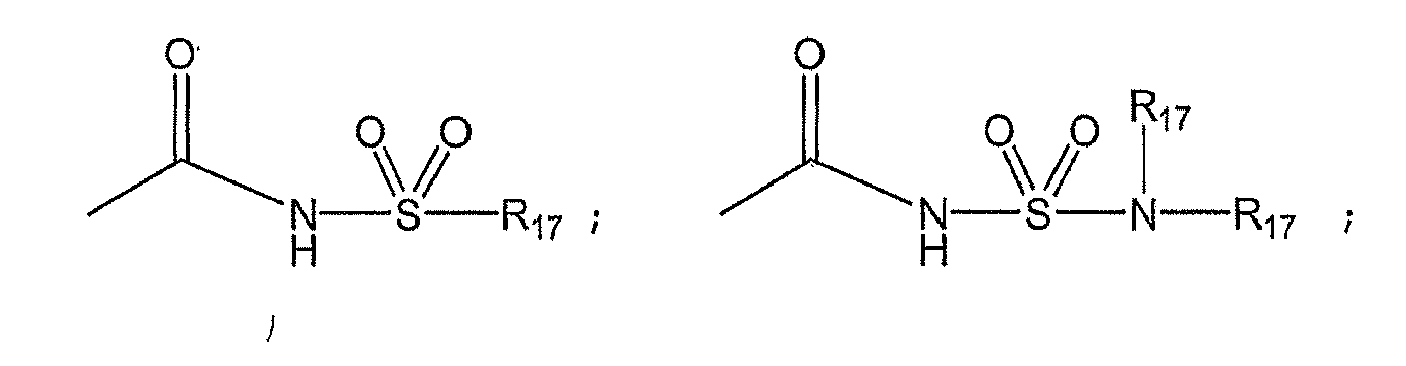

- hydrogen-, (C1-C12)-aliphatic-,
- (C3-C10)-cycloalkyl- or cycloalkenyl-,
- [(C3-C10)-cycloalkyl- or cycloalkenyl]-(C1-C12)-aliphatic-,
- (C6-C20)-aryl-,
- (C6-C10)-aryl-(C1-C12)aliphatic-,
- (C3-C10)-heterocyclyl-,
- (C3-C10)-heterocyclyl-(C1-C12)-aliphatic-,
- (C5-C10)heteroaryl-, or
- (C5-C10)heteroaryl-(C1-C12)-aliphatic-, or
wherein R17 is optionally substituted with up to 3 J substituents; - R5 and R5, are independently hydrogen or (C1-C12) -aliphatic, wherein any hydrogen is optionally replaced with halogen, and wherein any terminal carbon atom is optionally substituted with sulfhydryl or hydroxy, and wherein up to two aliphatic carbon atoms may be replaced by a heteroatom selected from N, NH, O, S, SO, or SO2; or
- R5 and R5, together with the atom to which they are bound optionally form a 3- to 6-membered ring having up to 2 heteroatoms selected from N, NH, O, S, SO, or SO2; wherein the ring has up to 2 substituents selected independently from J;
- R1, R1', R11 , R11', R13, and R13' are independently:
- hydrogen-, (C1-C12)-aliphatic-,
- (C3-C10)-cycloalkyl or -cycloalkenyl-,
- [(C3-C10)-cycloalkyl or -cycloalkenyl]-(C1-C12)-aliphatic-,
- (C6-C10)-aryl-,
- (C6-C10)-aryl-(C1-C12)aliphatic-,
- (C3-C10)-heterocyclyl-,
- (C6-C10)-heterocyclyl-(C1-C12)aliphatic,
- (C5-C10)-heteroaryl-, or
- (C5-C10) -heteroaryl- (C1-C12) -aliphatic-,
wherein any ring is optionally fused to a (C6-C10)aryl, (C5-C10) heteroaryl, (C3-C10)cycloalkyl, or (C3-C10)heterocyclyl;
wherein up to 3 aliphatic carbon atoms in each of R1, R1', R11, R11', R13, and R13' may be replaced by a heteroatom selected from O, N, NH, S, SO, or SO2 in a chemically stable arrangement; or - R1 and R1' together with the atom to which they are bound optionally form a 3- to 6-membered ring having up to 2 heteroatoms selected from, NH, O, S, SO, or SO2; wherein the ring system has up to 2 substituents selected independently from J; or
- R11 and R11' together with the atom to which they are bound optionally form a 3- to 6-membered ring having up to 2 heteroatoms selected from N, NH, O, S, SO, or SO2; wherein the ring has up to 2 substituents selected independently from J; or
- R13 and R13, together with the atom to which they are bound is a 3- to 6-membered ring having up to 2 heteroatoms selected from N, NH, O, S, SO, or SO2; wherein the ring has up to 2 substituents selected independently from J;
- R2, R4, R8, and R12 are independently
- hydrogen-, (C1-C12)-aliphatic-,
- (C3-C10)-cycloalkyl or -cycloalkenyl-,
- [(C3-C10) -cycloalkyl or -cycloalkenyl]-(C1-C12)-aliphatic-,
- (C6-C10)-aryl-,
- (C6-C10)-aryl-(C1-C12)aliphatic-,
- (C3-C10)-heterocyclyl-,
- (C6-C10)-heterocyclyl-(C1-C12)aliphatic,
- (C5-C10)-heteroaryl-, or
- (C5-C10)-heteroaryl-(C1-C12)-aliphatic-,
wherein up to two aliphatic carbon atoms in R2, R4, R8, and R12 may be replaced by a heteroatom selected from O, N, NH, S, SO, or SO2; or - R11 and R12 together with the atoms to which they are bound form a 3- to a 20-membered mono-, a 4- to 20-membered bi-, or a 5- to 20-membered tri-cyclic carbocyclic or heterocyclic ring system;
wherein, in the bi- and tri-cyclic ring system, each ring is linearly fused, bridged, or spirocyclic;
wherein each ring is either aromatic or nonaromatic;
wherein each heteroatom in the heterocyclic ring system is selected from the group consisting of N, NH, O, S, SO, and SO2;
wherein each ring is optionally fused to a (C6-C10)aryl, (C5-C10)heteroaryl, (C3-C10)cycloalkyl, or (C3-C10)heterocyclyl; and
wherein said ring has up to 3 substituents selected independently from J; or - R12 and R13 together with the atoms to which they are bound form a 4- to a 20-membered mono-, a 5- to 20-membered bi-, or a 6- to 20-membered tri-cyclic carbocyclic or heterocyclic ring system;
wherein, in the bi- and tri-cyclic ring system, each ring is linearly fused, bridged, or spirocyclic;
wherein each ring is either aromatic or nonaromatic;
wherein each heteroatom in the heterocyclic ring system is selected from the group consisting of N, NH, O, S, SO, and SO2;
wherein each ring is optionally fused to a (C6-C10)aryl, (C5-C10)heteroaryl, (C3-C10)cycloalkyl, or (C3-C10)heterocyclyl; and
wherein said ring has up to 3 substituents selected independently from J; or - R11 and R13 together with the atoms to which they are bound form a 5- to a 20-membered mono-, a 6- to 20-membered bi-, or a 7- to 20-membered tri-cyclic carbocyclic or heterocyclic ring system;
wherein, in the bi- and tri-cyclic ring system, each ring is linearly fused, bridged, or spirocyclic;
wherein each ring is either aromatic or nonaromatic;
wherein each heteroatom in the heterocyclic ring system is selected from the group consisting of N, NH, O, S, SO, and SO2;
wherein each ring is optionally fused to a (C6-C10)aryl, (C5-C10)heteroaryl, (C3-C10)cycloalkyl, or (C3-C10)heterocyclyl; and
wherein said ring has up to 3 substituents selected independently from J; or - R11, R12, and R13 together with the atoms to which they are bound form a 5- to a 20-membered bi-, or a 6- to 20-membered tri-cyclic carbocyclic or heterocyclic ring system;
wherein, in the bi- and tri-cyclic ring system, each ring is linearly fused, bridged, or spirocyclic;
wherein each ring is either aromatic or nonaromatic;
wherein each heteroatom in the heterocyclic ring system is selected from the group consisting of N, NH, O, S, SO, and SO2;
wherein each ring is optionally fused to a (C6-C10)aryl, (C5-C10)heteroaryl, (C3-C10)cycloalkyl, or (C3-C10)heterocyclyl; and
wherein said ring has up to 3 substituents selected independently from J; or - R13, and R2 together with the atoms to which they are bound form a 3- to a 20-membered mono-, a 4- to 20-membered bi-, or a 5- to 20-membered tri-cyclic carbocyclic or heterocyclic ring system;
wherein, in the bi- and tri-cyclic ring system, each ring is linearly fused, bridged, or spirocyclic;
wherein each ring is either aromatic or nonaromatic;
wherein each heteroatom in the heterocyclic ring system is selected from the group consisting of N, NH, O, S, SO, and SO2;
wherein each ring is optionally fused to a (C6-C10)aryl, (C5-C10)heteroaryl, (C3-C10)cycloalkyl, or (C3-C10)heterocyclyl; and
wherein said ring has up to 3 substituents selected independently from J; or - R5 and R13 together with the atoms to which they are bound form a 18- to a 23-membered mono-, a 19- to 24-membered bi-, or a 20- to 25-membered tri-cyclic carbocyclic or heterocyclic ring system;
wherein, in the bi- and tri-cyclic ring system, each ring is linearly fused, bridged, or spirocyclic;
wherein each ring is either aromatic or nonaromatic;
wherein each heteroatom in the heterocyclic ring system is selected from the group consisting of N, NH, O, S, SO, and SO2;
wherein each ring is optionally fused to a (C6-C10)aryl, (C5-C10)heteroaryl, (C3-C10)cycloalkyl, or (C3-C10)heterocyclyl; and
wherein said ring has up to 6 substituents selected independently from J; or - R1 and R12 together with the atoms to which they are bound form a 18- to a 23-membered mono-, a 19- to 24-membered bi-, or a 20- to 25-membered tri-cyclic carbocyclic or heterocyclic ring system;
wherein, in the bi- and tri-cyclic ring system, each ring is linearly fused, bridged, or spirocyclic;
wherein each ring is either aromatic or nonaromatic;
wherein each heteroatom in the heterocyclic ring system is selected from the group consisting of N, NH, O, S, SO, and SO2;
wherein each ring is optionally fused to a (C6-C10)aryl, (C5-C10)heteroaryl, (C3-C10)cycloalkyl, or (C3-C10)heterocyclyl; and
wherein said ring has up to 6 substituents selected independently from J.
- 2. A compound of formula II:

- X1 is -N(R20)-, -O-, -S-, or -C(R')2-;
- X2 is -C(O)-, -C(S)-, -S(O)-, or -S(O)2-;
- W is:


- hydrogen-, (C1-C12)-aliphatic-,
- (C3-C10)-cycloalkyl or -cycloalkenyl-,
- [(C3-C10)-cycloalkyl or -cycloalkenyl]-(C1-C12)-aliphatic-,
- (C6-C10)-aryl-,
- (C6-C10)-aryl-(C1-C12)aliphatic-,
- (C3-C10)-heterocyclyl-,
- (C3-C10)-heterocyclyl-(C1-C12)-aliphatic-,
- (C5-C10)heteroaryl-, or
- (C5-C10)heteroaryl-(C1-C12)-aliphatic-, or
wherein R17 is optionally substituted with up to 3 J substituents; - R5 is (C1-C12)-aliphatic, wherein any hydrogen is optionally replaced with halogen, and wherein any terminal carbon atom of R5 is optionally substituted with sulfhydryl or hydroxy;
- R5, is hydrogen or (C1-C12)-aliphatic, wherein any hydrogen is optionally replaced with halogen, and wherein any terminal carbon atom of R5 is optionally substituted with sulfhydryl or hydroxy; or
- R5 and R5' together with the atom to which they are bound is a 3- to 6-membered ring having up to 2 heteroatoms selected from N, NH, O, S, SO, or SO2; wherein the ring has up to 2 substituents selected independently from J;
- R1, R1', R11, R11', R13, and R13' are independently:
- hydrogen-, (C1-C12) -aliphatic-,
- (C3-C10)-cycloalkyl or -cycloalkenyl-,
- [(C3-C10) -cycloalkyl or -cycloalkenyl] - (C1-C12) - aliphatic-,
- (C6-C10) yl-,
- (C6-C10)-aryl-(C1-C12)aliphatic-,
- (C3-C10)-heterocyclyl-,
- (C6-C10)-heterocyclyl-(C1-C12)aliphatic,
- (C5-C10)-heteroaryl-, or
- (C5-C10)-heteroaryl-(C1-C12)-aliphatic-; or
- R1 and R1, together with the atom to which they are bound is a 3- to 6-membered ring having up to 2 heteroatoms selected from N, NH, O, S, SO, or SO2; wherein the ring has up to 2 substituents selected independently from J; or
- R11 and R11, together with the atom to which they are bound is a 3- to 6-membered ring having up to 2 heteroatoms selected from N, NH, O, S, SO, or SO2; wherein the ring has up to 2 substituents selected independently from J; or
- R13 and R13' together with the atom to which they are bound is a 3- to 6-membered ring having up to 2 heteroatoms selected from N, NH, O, S, SO, or SO2; wherein the ring has up to 2 substituents selected independently from J;
wherein each of R1, R11, R11, R11', R13, and R13' is independently and optionally substituted with up to 3 substituents independently selected from J; and wherein any ring is optionally fused to a (C6-C10)aryl, (C5-C10)heteroaryl, (C3-C10)cycloalkyl, or (C3-C10)heterocyclyl; and wherein up to 3 aliphatic carbon atoms in each of R1, R1', R11, R11, R13, and R13, may be replaced by a heteroatom selected from O, N, NH, S, SO, or SO2 in a chemically stable arrangement;
R2, R4, R12, and R20 are independently- hydrogen-, (C1-C12) -aliphatic-,
- (C3-C10)-cycloalkyl-,
- (C3-C10)-cycloalkyl-(C1-C12)-aliphatic-, or
- (C6-C10)aryl-(C1-C12)-aliphatic-,
wherein up to two aliphatic carbon atoms in R2, R4, R12, and R20 may be replaced by a heteroatom selected from O, N, NH, S, SO, or SO2; or - R11 and R12 together with the atoms to which they are bound form a 3- to a 20-membered mono-, a 4- to 20-membered bi-, or a 5- to 20-membered tri-cyclic carbocyclic or heterocyclic ring system;
wherein, in the bi- and tri-cyclic ring system, each ring is linearly fused, bridged, or spirocyclic;
wherein each ring is either aromatic or nonaromatic;
wherein each heteroatom in the heterocyclic ring system is selected from the group consisting of N, NH, O, SO, and SO2;
wherein each ring is optionally fused to a (C6-C10)aryl, (C5-C10)heteroaryl, (C3-C10)cycloalkyl, or (C3-C10)heterocyclyl; and
wherein said ring has up to 3 substituents selected independently from J; or - R12 and R13 together with the atoms to which they are bound form a 4- to a 20-membered mono-, a 5- to 20-membered bi-, or a 6- to 20-membered tri-cyclic carbocyclic or heterocyclic ring system;
wherein, in the bi- and tri-cyclic ring system, each ring is linearly fused, bridged, or spirocyclic;
wherein each ring is either aromatic or nonaromatic;
wherein each heteroatom in the heterocyclic ring system is selected from the group consisting of N, NH, O, S, SO, and SO2;
wherein each ring is optionally fused to a (C6-C10)aryl, (C5-C10)heteroaryl, (C3-C10)cycloalkyl, or (C3-C10) heterocyclyl; and
wherein said ring has up to 3 substituents selected independently from J; or - R11 and R13 together with the atoms to which they are bound form a 5- to a 20-membered mono-, a 6- to 20-membered bi-, or a 7- to 20-membered tri-cyclic carbocyclic or heterocyclic ring system;
wherein, in the bi- and tri-cyclic ring system, each ring is linearly fused, bridged, or spirocyclic;
wherein each ring is either aromatic or nonaromatic;
wherein each heteroatom in the heterocyclic ring system is selected from the group consisting of N, NH, O, S, SO, and SO2;
wherein each ring is optionally fused to a (C6-C10)aryl, (C5-C10)heteroaryl, (C3-C10)cycloalkyl, or (C3-C10) heterocyclyl; and
wherein said ring has up to 3 substituents selected independently from J; or - R11, R12, and R13 together with the atoms to which they are bound form a 5- to a 20-membered bi-, or a 6- to 20-membered tri-cyclic carbocyclic or heterocyclic ring system;
wherein, in the bi- and tri-cyclic ring system, each ring is linearly fused, bridged, or spirocyclic;
wherein each ring is either aromatic or nonaromatic;
wherein each heteroatom in the heterocyclic ring system is selected from the group consisting of N, NH, O, S, SO, and SO2;
wherein each ring is optionally fused to a (C6-C10)aryl, (C5-C10)heteroaryl, (C3-C10)cycloalkyl, or (C3-C10)heterocyclyl; and
wherein said ring has up to 3 substituents selected independently from J; or - R13' and R2 together with the atoms to which they are bound form a 3- to a 20-membered mono-, a 4- to 20-membered bi-, or a 5- to 20-membered tri-cyclic carbocyclic or heterocyclic ring system;
wherein, in the bi- and tri-cyclic ring system, each ring is linearly fused, bridged, or spirocyclic;
wherein each ring is either aromatic or nonaromatic;
wherein each heteroatom in the heterocyclic ring system is selected from the group consisting of N, NH, O, S, SO, and SO2;
wherein each ring is optionally fused to a (C6-C10)aryl, (C5-C10)heteroaryl, (C3-C10)cycloalkyl, or (C3-C10)heterocyclyl; and
wherein said ring has up to 3 substituents selected independently from J; - R14 is -H, -S(O)R', -S(O)2R', -C(O)R', -C(O)OR', -C(O)N(R')2, -N(R')C(O)R', -N (COR')COR', -SO2N(R')2, -SO3R', -C(O)C(O)R', C(O)CH2C(O)R', -C(S)R', -C(S)N(R')2, -(CH2)0-2NHC(O)R', -N(R')N(R')COR', -N(R')N(R')C(O)OR', -N(R')N(R')CON(R')2, -N(R')SO2R', -N(R')SO2N(R')2, -N(R')C(O)OR', -N(R')C(O)R', -N(R')C(S)R', -N(R')C(O)N(R')2, -N(R')C(S)N(R')2, -N(COR')COR', -N(OR')R', -C(=NH)N(R')2, -C(O)N(OR')R', -C(=NOR')R', -OP(O) (OR')2, -P(O) (R')2, -P(O)(OR')2, or -P(O)(H)(OR');
- R15 and R16 are independently halogen, -OR', -OC(O)N(R')2, -NO2, -CN, -CF3, -OCF3, -R', oxo, 1,2-methylenedioxy, 1,2-ethylenedioxy, -N(R')2, -SR', -SOR', -SO2R', -SO2N (R')2, -SO3R', -C(O)R', -C(O)C(O)R', -C(O)CH2C(O)R', -C(S)R', -C(O)OR', -OC(O)R', -C(O)N(R')2, -OC(O)N(R')2, -C(S)N(R')2, -(CH2)0-2NHC(O)R', -N(R')N(R')COR', -N(R')N(R')C(O)OR', -N(R')N(R')CON(R')2, -N(R')SO2R', -N(R')SO2N(R')2, -N(R')C(O)OR', -N(R')C(O)R', -N(R')C(S)R', -N(R')C(O)N(R')2, -N(R')C(S)N(R')2, -N(COR')COR', -N(OR')R', -CN, -C(=NH)N(R')2, -C(O)N(OR')R', -C(=NOR')R', -OP(O)(OR')2, -P(O) (R')2, -P(O)(OR')2, or -P(O)(H)(OR');
- Z2 is =O, =NR', =NOR', or =C (R' )2;
- R19 is -OR', -CF3, -OCF3, -R', -N(R')2, -SR' , -C(O)R', - COOR' -CON(R')2, -N(R')COR', or -N(COR')COR';
- J is halogen, -OR', -OC (O) N (R' ) 2, -NO2, -CN, -CF3, -OCF3, -R', oxo, thioxo, 1,2-methylenedioxy, 1,2-ethyenedioxy, - N(R')2, -SR' , -SOR', -SO2R', -SO2N(R')2, -SO3R', -C(O)R', -C(O)C(O)R' , -C(O)CH2C(O)R' , -C(S)R', -C(O)OR' , -OC(O)R', -C(O)N(R')2, -OC(O)N(R')2, -C(S)N(R')2, -(CH2)0-2NHC(O)R', -N(R')N(R')COR', -N(R')N(R')C(O)OR', -N(R')N(R')CON(R')2, -N(R')SO2R', -N(R')SO2N(R')2, -N(R')C(O)OR', -N(R')C(O)R', -N(R')C(S)R', N(R')C(O)N(R')2, -N(R')C(S)N(R')2, -N(COR')COR', -N(OR')R', -CN, -C(=NH)N(R')2, -C(O)N(OR')R', -C(=NOR')R', -OP(O) (OR')2, -P(O)(R')2, -P(O)(OR')2, or -P(O) (H) (OR') wherein:
- two R' groups together with the atoms to which they are bound form a 3- to 10-membered aromatic or non-aromatic ring having up to 3 heteroatoms independently selected from N, NH, O, S, SO, or SO2, wherein the ring is optionally fused to a (C6-C10)aryl, (C5-C10)heteroaryl, (C3-C10)cycloalkyl, or a (C3-C10)heterocyclyl, and wherein any ring has up to 3 substituents selected independently from J2; or
- each R' is independently selected from:
- hydrogen-, (C1-C12)-aliphatic-,
- (C3-C10)-cycloalkyl or -cycloalkenyl-,
- [(C3-C10)-cycloalkyl or -cycloalkenyl]-(C1-C12)-aliphatic-,
- (C6-C10)-aryl-,
- (C6-C10)-aryl-(C1-C12)aliphatic-,
- (C3-C1O)-heterocyclyl-,
- (C6-C10)-heterocyclyl-(C1-C12)aliphatic-,
- (C5-C10)-heteroaryl-, or
- (C5-C10)-heteroaryl-(C1-C12)-aliphatic-;
- J2 is halogen, -OR', -OC(O)N(R')2, -NO2, -CN, -CF3, -OCF3, -R', oxo, thioxo, 1,2-methylenedioxy, 1,2-ethylenedioxy, - N(R')2, -SR', -SOR' , -SO2R' -SO2N(R')2, -SO3R' , -C(O)R', -G(O)C(O)R', -C(O)CH2C(O)R', -C(S)R', -C (O) OR' , -OC(O)R', -C(O)N(R')2, -OC(O)N(R')2, -C(S)N(R')2, -(GH2)0-2NHC(O)R', -N(R')N(R')COR', -N(R')N(R')C(O)OR', -N(R')N(R')CON(R')2, -N(R')SO2R', -N(R')SO2N(R')2, -N(R')C(O)OR', -N(R')C(O)R', -N(R')C(S)R.', -N(R')C(O)N(R')2, -N(R')C(S)N(R')2, -N(COR')COR', -N(OR')R', -CN, -C(=NH)N(R')2, -C(O)N(OR')R', -C(=NOR')R', -OP(O) (OR')2, -P(O) (R')2, -P(O)(OR')2, or -P(O)(H)(OR').
- 3. A compound of formula IV:

- V is -C(O)-, -S(O)-, -C(R')2- or -S(O)2-;
- R is -C(O)-, -S(O)-, -S(O)2-, -N(R8)-, -O-, or a bond; T is:
- (C6-C10)-aryl,
- (C6-C10)-aryl-(C1-C12)aliphatic,
- (C1-C12)-aliphatic-,
- (C3-C10)-cycloalkyl or -cycloalkenyl,
- [(C3-C10)-cycloalkyl or -cycloalkenyl]-(C1-C12)-aliphatic,
- (C3-C10)-heterocyclyl,
- (C3-C10)-heterocyclyl-(C1-C12)-aliphatic,
- (C5-C10)heteroaryl, or
- (C5-C10) heteroaryl-(C1-C12)-aliphatic;
wherein each T may be optionally substituted with up to 3 J substituents; - J is halogen, -OR', -OC(O)N(R')2, -NO2, -CN, -CF3, -OCF3, -R', oxo, thioxo, 1,2-methylenedioxy, 1,2-ethylenedioxy, -N(R')2, -SR' , -SOR', -sO2R', -SO2N(R')2, -SO3R', -C(O)R', -C(O)C(O)R', -C(O)CH2C(O)R', -C(S)R', -C(O)OR', -OC(O)R', -C(O)N(R')2, -OC(O)N(R')2, -C(S)N(R')2, -(CH2)0-2NHC(O)R', -N(R')N(R')COR', -N(R')N(R')C(O)OR', -N(R')N(R')CON(R')2, -N(R')SO2R', -N(R')SO2N(R')2, -N(R')C(O)OR', -N(R')C(O)R', -N(R')C(S)R', -N(R')C(O)N(R')2, -N(R')C(S)N(R')2, -N(COR')COR', -N(OR')R', -C(=NH)N(R')2, -C(O)N(OR')R', -C(=NOR')R', -OP(O)(OR')2, -P(O)(R')2, -p(O)(OR')2, or -P(O)(H)(OR'), wherein;
two R' groups together with the atoms to which they are bound form a 3- to 10-membered aromatic or non-aromatic ring system having up to 3 heteroatoms independently selected from N, NH, O, S, SO, or SO2, wherein the ring is optionally fused to a (C6-C10)aryl, (C5-C10)heteroaryl, (C3-C10)cycloalkyl, or a (C3-C10)heterocyclyl, and wherein any ring has up to 3 substituents selected independently from J2;
each R' is independently selected from:- hydrogen-, (C1-C12)-aliphatic-,
- (C3-C10)-cycloalkyl or -cycloalkenyl-,
- [(C3-C10)-cycloalkyl or -Cycloalkenyl]-(C1-C12) - aliphatic-,
- (C6-C10)-aryl-,
- (C6-C10)-aryl-(C1-C12)aliphatic-,
- (C3-C10)-heterocyclyl-,
- (C6-C10)-heterocyclyl-(C1-C12)aliphatic-,
- (C5-C10)-heteroaryl-, or
- (C5-C10)-heteroaryl-(C2-C12)-aliphatic-,
- J2 is halogen, -OR', -OC(O)N(R')2, -NO2, -CN, -CF3, -OCF3, -R', oxo, thioxo, 1, 2-methylenedioxy, -N(R')2, -SR', -SOR' , -SO2R', -SO2N(R')2, -SO3R' , -C(O)R', -C(O)C(O)R', -C(O)CH2C(O)R', -C(S)R', -C(O)OR', -OC(O)R', -C(O)N(R')2, -OC(O)N(R')2, -C(S)N(R')2, -(CH2)0-2NHC(O)R', -N(R')N(R')COR', -N(R')N(R')C(O)OR', -N(R')N(R')CON(R')2, -N(R')SO2R', -N(R')SO2N(R')2, -N(R')C(O)OR', -N(R')C(O)R', -N(R')C(S)R', -N(R')C(O)N(R')2, -N(R')C(S)N(R')2, -N(COR')COR', -N(OR')R', -C(=NH)N(R')2, -C(O)N(OR')R', -C(=NOR')R', -OP(O) (OR')2, -P(O) (R')2, -P(O) (OR')2, or -P(O)(H)(OR'); or
- T is:


- R10 is:
- hydrogen, (C1-C12)-aliphatic,
- (C6-C10)-aryl,
- (C6-C10)-aryl-(C1-C12)aliphatic,
- (C3-C10)-cycloalkyl or -cycloalkenyl,
- [(C3-C10)-cycloalkyl or -cycloalkenyl]-(C1-C12)-aliphatic,
- (C3-C10)-heteracyclyl,
- (C3-C10)-heterocyolyl-(C1-C12)-aliphatic,
- (C5-C10)-heteraaryl, or
- (C5-C10)-heteroaryl-(C1-C12)-aliphatic,
- K is a bond, (C1-C12)-aliphatic, -O-, -S-, -NR9-, -C(O)-, or -C(O)-NR9-, wherein R9 is hydrogen or (C1-C12)-aliphatic;
- n is 1-3; or
- R10 is:
- T is selected from N(R17)2;
- W is:

- hydrogen-, (C1-C12)-aliphatic-,
- (C3-C10)-cycloalkyl- or cycloalkenyl-,
- [(C3-C10)-cycloalkyl- or cycloalkenyl]-(C1-C12)-aliphatic-,
- (C6-C10)-aryl-,
- (C6-C10)-aryl-(C1-C12)aliphatic-,
- (C3-C10)-heterocyclyl-,
- (C3-C10)-heterocyclyl-(C1-C12)-aliphatic-,
- (C5-C10) heteroaryl-, or
- (C5-C10)heteroaryl-(C1-C12)-aliphatic-, or
wherein R17 is optionally substituted with up to 3 J substituents; - R5 and R5, are independently hydrogen or (C1-C12)-aliphatic, wherein any hydrogen is optionally replaced with halogen, and wherein any terminal carbon atom is optionally substituted with sulfhydryl or hydroxy, and wherein up to two aliphatic carbon atoms may be replaced by a heteroatom selected from N, NH, O, S, SO, or SO2; or
- R5 and R5, together with the atom to which they are bound optionally form a 3- to 6-membered ring having up to 2 heteroatoms selected from N, NH, O, S, SO, or SO2; wherein the ring has up to 2 substituents selected independently from J;
- R11 R11', R13 , and R13' are independently:
- hydrogen-,
- (C1-C12)-aliphatic-,
- (C3-C10)-cycloalkyl or -cycloalkenyl-,
- [(C3-C10)-cycloalkyl or -cycloalkenyl]-(C1-C12)-aliphatic-,
- (C6-C10)-aryl-,
- (C6-C10)-aryl-(C1-C12)aliphatic-,
- (C3-C10)-heterocyclyl-,
- (C6-C10)-heterocyclyl-(C1-C12)aliphatic,
- (C5-C10)-heteroaryl-, or
- (CS-C10)-heteroaryl-(C1-C12)-aliphatic-,
wherein any ring is optionally fused to a (C6-C10)aryl, (C5-C10) heteroaryl, (C3-C10) cycloalkyl, or (C3-C10)heterocyclyl;
wherein up to 3 aliphatic carbon atoms in each of R11, R11', R13, and R13, may be replaced by a heteroatom selected from O, N, NH, S, SO, or SO2 in a chemically stable arrangement; or - R11 and R11' together with the atom to which they are bound optionally form a 3- to 6-membered ring having up to 2 heteroatoms selected from N, NH, O, S, SO, or SO2; wherein the ring has up to 2 substituents selected independently from J; or
- R13 and R13' together with the atom to which they are bound is a 3- to 6-membered ring having up to 2 heteroatoms selected from N, NH, O, S, SO, or SO2; wherein the ring has up to 2 substituents selected independently from J;
- R4, R8, and R12 are independently
- hydrogen-, (C1-C12)-aliphatic-,
- (C3-C10)-cycloalkyl or -cycloalkenyl-,
- [(C3-C10)-cycloalkyl or -cycloalkenyl]-(C1-C12)-aliphatic-,
- (C6-C10)-aryl-,
- (C6-C10)-aryl-(C1-C12)aliphatic-,
- (C3-C10)-heterocyclyl-,
- (C6-C10)-heterocyclyl-(C1-C12) aliphatic,
- (C5-C10)-heteroaryl-, or
- (C5-C10)-heteroaryl-(C1-C12)-aliphatic-,
wherein up to two aliphatic carbon atoms in R4, R8, and R12 may be replaced by a heteroatom selected from O, N, NH, S, SO, or SO2; or - R11 and R12 together with the atoms to which they are bound form a 3- to a 20-membered mono-, a 4- to 20-membered bi-, or a 5- to 20-membered tri-cyclic carbocyclic or heterocyclic ring system;
wherein, in the bi- and tri-cyclic ring system, each ring is linearly fused, bridged, or spirocyclic;
wherein each ring is either aromatic or nonaromatic;
wherein each heteroatom in the heterocyclic ring system is selected from the group consisting of N, NH, O, S, SO, and SO2;
wherein each ring is optionally fused to a (C6-C10)aryl, (C5-C10)heteroaryl, (C3-C10)cycloalkyl, or (C3-C10)heterocyclyl; and
wherein said ring has up to 3 substituents selected independently from J; or - R12 and R13 together with the atoms to which they are bound form a 4- to a 20-membered mono-, a 5- to 20-membered bi-, or a 6- to 20-membered tri-cyclic carbocyclic or heterocyclic ring system;
wherein, in the bi- and tri-cyclic ring system, each ring is linearly fused, bridged, or spirocyclic;
wherein each ring is either aromatic or nonaromatic;
wherein each heteroatom in the heterocyclic ring system is selected from the group consisting of N, NH, O, S, SO, and SO2;
wherein each ring is optionally fused to a (C6-C10)aryl, (C5-C10)heteroaryl, (C3-C10)cycloalkyl, or (C3-C10) heterocyclyl; and
wherein said ring has up to 3 substituents selected independently from J; or - R11 and R13 together with the atoms to which they are bound form a 5- to a 20-membered mono-, a 6- to 20-membered bi-, or a 7- to 20-membered tri-cyclic carbocyclic or heterocyclic ring system;
wherein, in the bi- and tri-cyclic ring system, each ring is linearly fused, bridged, or spirocyclic;
wherein each ring is either aromatic or nonaromatic;
wherein each heteroatom in the heterocyclic ring system is selected from the group consisting of N, NH, O, S, SO, and SO2;
wherein each ring is optionally fused to a (C6-C10)aryl, (C5-C10)heteroaryl, (C3-C10)cycloalkyl, or (C3-C10)heterocyclyl; and
wherein said ring has up to 3 substituents selected independently from J; or - R11, R12, and R13 together with the atoms to which they are bound form a 5- to a 20-membered bi-, or a 6- to 20-membered tri-cyclic carbocyclic or heterocyclic ring system;
wherein, in the bi- and tri-cyclic ring system, each ring is linearly fused, bridged, or spirocyclic;
wherein each ring is either aromatic or nonaromatic;
wherein each heteroatom in the heterocyclic ring system is selected from the group consisting of N, NH, O, S, SO, and SO2;
wherein each ring is optionally fused to a (C6-C10)aryl, (C5-C10)heteroaryl, (C3-C10)cycloalkyl, or (C3-C10) heterocyclyl; and
wherein said ring has up to 3 substituents selected independently from J; or - R13, and R8 together with the atoms to which they are bound form a 3- to a 20-membered mono-, a 4- to 20-membered bi-, or a 5- to 20-membered tri-cyclic carbocyclic or heterocyclic ring system;
wherein, in the bi- and tri-cyclic ring system, each ring is linearly fused, bridged, or spirocyclic;
wherein each ring is either aromatic or nonaromatic;
wherein each heteroatom in the heterocyclic ring system is selected from the group consisting of N, NH, O, S, SO, and SO2;
wherein each ring is optionally fused to a (C6-C10)aryl, (C5-C10)heteroaryl, (C3-C10)cycloalkyl, or (C3-C10)heterocyclyl; and
wherein said ring has up to 3 substituents selected independently from J; or - R5 and R13 together with the atoms to which they are bound form a 18- to a 23-membered mono-, a 19- to 24-membered bi-, or a 20- to 25-membered tri-cyclic carbocyclic or heterocyclic ring system;
wherein, in the bi- and tri-cyclic ring system, each ring is linearly fused, bridged, or spirocyclic;
wherein each ring is either aromatic or nonaromatic;
wherein each heteroatom in the heterocyclic ring system is selected from the group consisting of N, NH, O, S, SO, and SO2;
wherein each ring is optionally fused to a (C6-C10)aryl, (C5-C10)heteroaxyl, (C3-C10) cycloalkyl, or (C3-C10)heterocyclyl; and
wherein said ring has up to 6 substituents selected independently from J; or - when R5 and R5' together with the atom to which they are bound form an optionally substituted 3- to 6-membered ring having up to 2 heteroatoms selected from N, NH, O, S, SO, or SO2, then one of the substitutable atoms in said ring is taken together with R13 and the atom to which R13 is bound to form a 14- to a 19-membered mono-, a 19- to 24-membered bi-, or a 20- to 25-membered tri-cyclic carbocyclic or heterocyclic ring system;
wherein, in the bi- and tri-cyclic ring system, each ring is linearly fused, bridged, or spirocyclic;
wherein each ring is either aromatic or nonaromatic;
wherein each heteroatom in the heterocyclic ring system is selected from the group consisting of N, NH, O, S, SO, and SO2;
wherein each ring is optionally fused to a (C5-C10)aryl, (C5-C10) heteroaryl, (C3-C10)cycloalkyl, or (C3-C10)heterocyclyl; and
wherein said ring has up to 6 substituents selected independently from J.
- 4. The compound according to clause 1 or clause 3 wherein T is:

- 5. The compound according to clause 1 or clause 2 wherein W is:

- hydrogen-, (C1-C12)-aliphatic-,
- (C3-C10)-cycloalkyl- or cycloalkenyl-,
- [(C3-C10)-cycloalkyl- or cycloalkenyl]-(C1-C12)-aliphatic-,
- (C6-C10)-aryl-,
- (C6-C10)-aryl-(C1-C12)aliphatic-,
- (C3-C10)-heterocyclyl-,
- (C3-C10)-heterocyclyl-(C1-C12)-aliphatic-,
- (C5-C10)heteroaryl-, or
- (C5-C10)heteroaryl-(C1-C12)-aliphatic-, or
wherein R17 is optionally substituted with up to 3 J substituents. - 6. The compound according to clause 5 wherein W is:

- (C1-C12)-aliphatic-,
- (C3-C10)-cycloalkyl- or cycloalkenyl-,
- [(C3-C10)-aycloalkyl- or cycloalkenyl]-(C1-C12)-aliphatic-,
- (C6-C10)-aryl-,
- (C6-C10)-aryl-(C1-C12)aliphatic-,
- (C3-C10)-heterocyclyl-,
- (C3-C10)-heterocyclyl-(C1-C12)-aliphatic-,
- (C5-C10)heteroaryl-, or
- (C5-C10)heteroaryl-(C1-C12)-aliphatic-, or
wherein R17 is optionally substituted with up to 3 J substituents. - 7. The compound according to any one of clauses 1-6, wherein:
- R11 is H; and
- R12 is
- (C1-C6)-alkyl,
- (C3-C10)-cycloalkyl,
- [(C3-C10)-cycloalkyl]-(C1-C12)-alkyl,
- (C6-C10)-aryl,
- (C6-C10)-aryl-(C1-C6)alkyl,
- (C3-C10)-heterocyclyl,
- (C6-C10)-heterocyclyl-(C1-C6)alkyl,
- (C5-C10)-heteroaryl, or
- (C5-C10)-heteroaryl-(C1-C6)-alkyl.
- 8. The compound according to clause 7, wherein R12 is isobutyl, cyclohexyl, cyclohexylmethyl, benzyl, or phenylethyl.
- 9. The compound according to any one of clause 1-3 wherein:
- R11 is:
- (C1-C6)-alkyl,
- (C3-C10)-cycloalkyl,
- [(C3-C10)-cycloalkyl]-(C1-C12)-alkyl,
- (C6-C10)-aryl,
- (C6-C10)-aryl-(C1-C6)alkyl;
- (C3-C10)-heterocyclyl,
- (C6-C10)-heterocyclyl-(C1-C6)alkyl,
- (C5-C10)-heteroaryl, or
- (C5-C10)-heteroaryl-(C1-C6)-alkyl; and
- R12 is H.
- R11 is:
- 10. The compound according to any one of clauses 1-3, wherein the


- 11. The compound according to clause 10, wherein the


- 12. The compound according to clause 10, wherein the


- 13. The compound according to clause 10, wherein the


- 14. The compound according to any one of clauses 1-3, wherein the


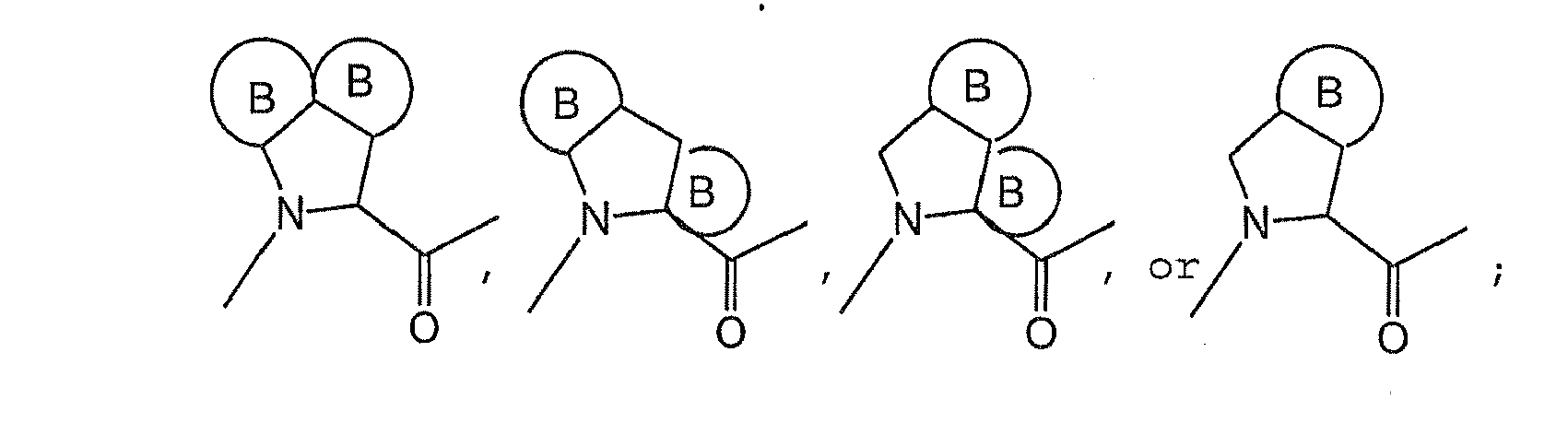
wherein each ring B is either aromatic or nonaromatic;
wherein each heteroatom in the heterocyclic ring system is N, NH, O, S, SO, or SO2;
wherein, in the bi- and tri-cyclic ring system, each ring is linearly fused, bridged, or spirocyclic;
wherein each ring is optionally fused to a (C6-C10)aryl, (C5-C10) heteroaryl, (C3-C10)cycloalkyl, or (C3-C10)heterocyclyl; and
wherein each ring is optionally substituted with up to 3 substituents selected independently from J. - 15. The compound according to clause 14, wherein the


- 16. The compound according to clause 14, wherein the


- 17. The compound according to clause 14, wherein the


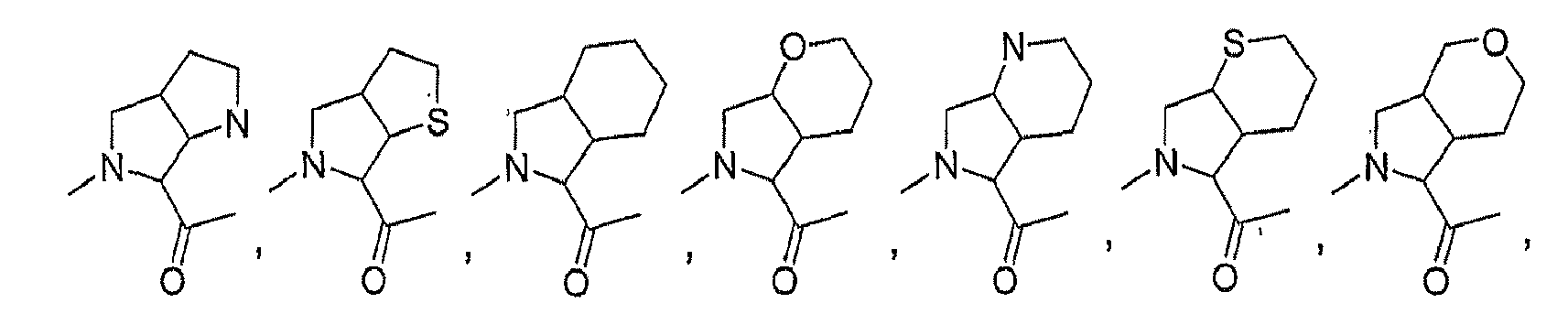


- 18. The compound according to clause 14, wherein the


- 19. The compound according to clause 14, wherein the

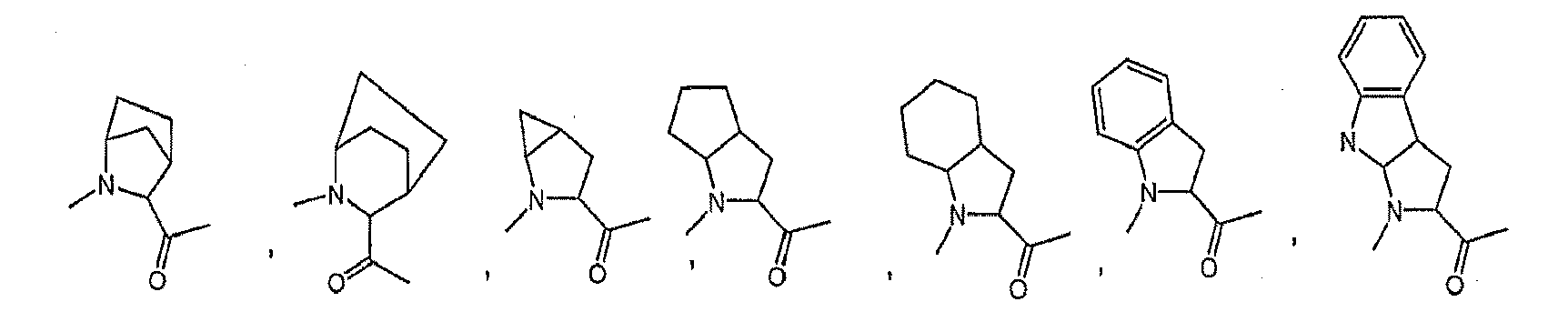

- 20. The compound according to clause 19, wherein the


- 21. The compound according to clause 20, wherein the


- 22. The compound according to clause 1 or clause 2, wherein the


wherein each ring B is either aromatic or nonaromatic;
wherein each heteroatom in the heterocyclic ring system is N, NH, O, S, SO, or SO2;
wherein, in the ring system, each ring is linearly fused, bridged, or spirocyclic;
wherein each ring is optionally fused to a (C6-C10)aryl, (C5-C10)heteroaryl, (C3-C10)cycloalkyl, or (C3-C10)heterocyclyl; and
wherein each ring is optionally substituted with up to 3 substituents selected independently from J. - 23. The compound according to clause 22, wherein the


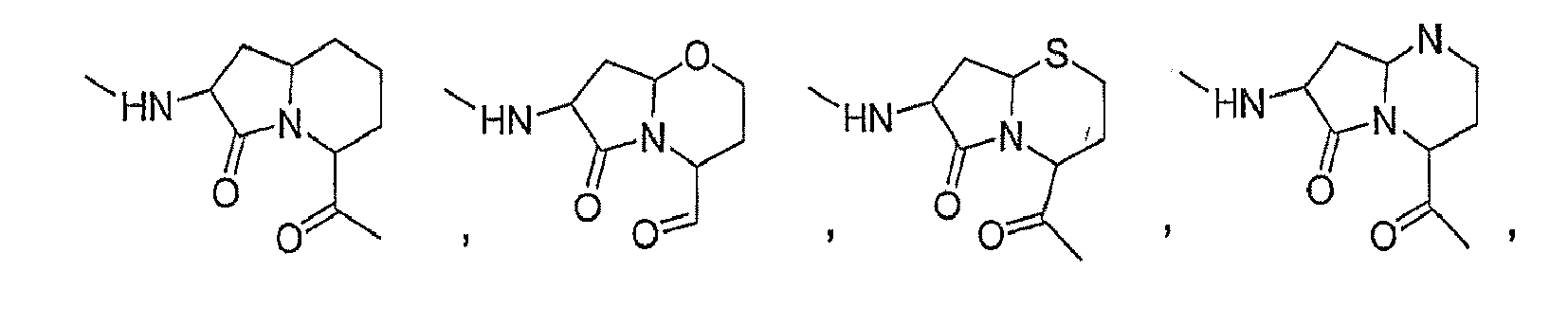


- 24. The compound according to clause 22, wherein the


- 25. The compound according to clause 1 or clause 2, wherein the


- 26. The compound according to clause 1 or clause 2, wherein the
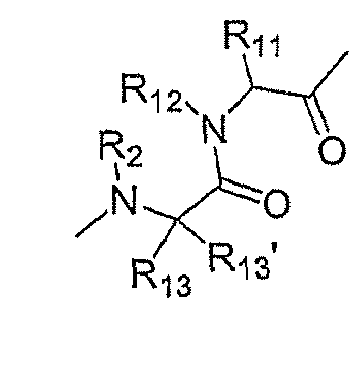

wherein each ring B is either aromatic or nonaromatic;
wherein each heteroatom in the heterocyclic ring system is N, NH, O, S, SO, or SO2;
wherein each ring is optionally fused to a (C6-C10)aryl, (C5-C10)heteroaryl, (C3-C10) cycloalkyl, or (C3-C10)heterocyclyl;
wherein, in the carbocyclic or heterocyclic ring system, each ring is linearly fused, bridged, or spirocyclic; and
wherein each ring is optionally substituted with up to 3 substituents selected independently from J. - 27. The compound according to clause 26, wherein the


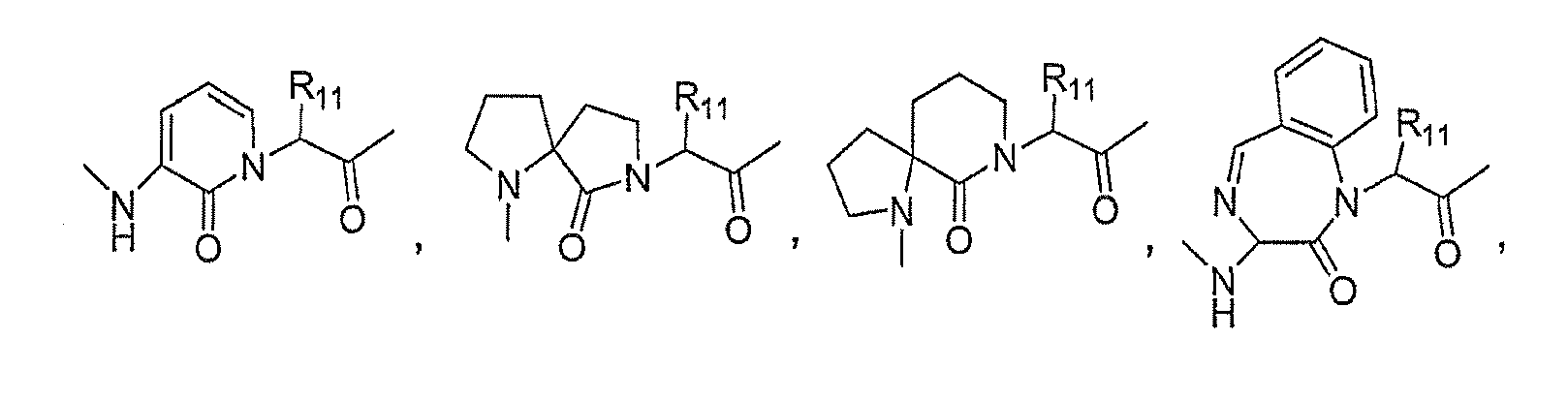


- 28. The compound according to clause 1 or clause 2,
wherein R11 and R12 together with the atoms to which they are bound form a 6- to 10-membered mono- or bicyclic carbocyclic or heterocyclic ring system;
wherein each heteroatom in the heterocyclic ring system is selected from the group consisting of N, NH, O, S, SO, and SO2; and
wherein said ring has up to 3 substituents selected independently from J. - 29. The compound according to any one of clauses 1-28, wherein R5 and R5, is:

- 30. The compound according to any one of clauses 1-28, wherein R5, is H and R5 is (C7-C6)-alkyl, wherein the alkyl is optionally substituted with fluoro or -SH.
- 31. The compound according to clause 30, wherein the (C1-C6)-alkyl is substituted with 1 to 3 fluoro groups.
- 32. The compound according to any one of clauses 1-28, wherein R5 and R5' are independently:

- 33. The compound according to any one of clauses 1-32,
wherein R13 is:- (C1-C6)-alkyl,
- (C3-C10)-cycloalkyl,
- [(C3-C10)-cycloalkyl]-(C1-C12)-alkyl,
- (C6-C10)-aryl,
- (C6-C10)-aryl-(C1-C6)alkyl,
- (C3-C10)-heterocyclyl,
- (C6-C10)-heterocyclyl-(C1-C6)alkyl,
- (C5-C10)-heteroaryl, or
- (C5-C10)-heteroaryl-(C1-C6)-alkyl;
wherein up to 3 aliphatic carbon atoms in R13 may be replaced by a heteroatom selected from O, NH, S, SO, or SO2 in a chemically stable arrangement. - 34. The compound according to clause 33, wherein R13 is:


- 35. The compound according to any one of clauses 1-34,
wherein R1 if present is- (C1-C6)-alkyl,
- (C3-C10)-cycloalkyl,
- [(C3-C10)-cycloalkyl]-(C1-C12)-alkyl, (C6-C10)-aryl,
- (C6-C10-aryl-(C1-C6)alkyl,
- (C3-C10)-heterocyclyl,
- (C6-C10)-heterocyclyl-(C1-C6)alkyl,
- (C5-C10)-heteroaryl, or
- (C5-C10)-heteroaryl-(C1-C6)-alkyl;
wherein up to 3 aliphatic carbon atoms in R1 may be replaced by a heteroatom selected from 0, NH, S, SO, or SO2 in a chemically stable arrangement. - 36. The compound according to clause 35, wherein R1 is:


- 37. The compound according to any one of clauses 1-36, wherein T is:
- (C5-C10)heteroaryl, wherein T is optionally substituted with up to 3 J substitutents.
- 38. The compound according to clause 37 wherein T is:

- 39. The compound according to clause 1 or clause 3, wherein T is:


- 40. The compound according to clause 39, wherein T is:

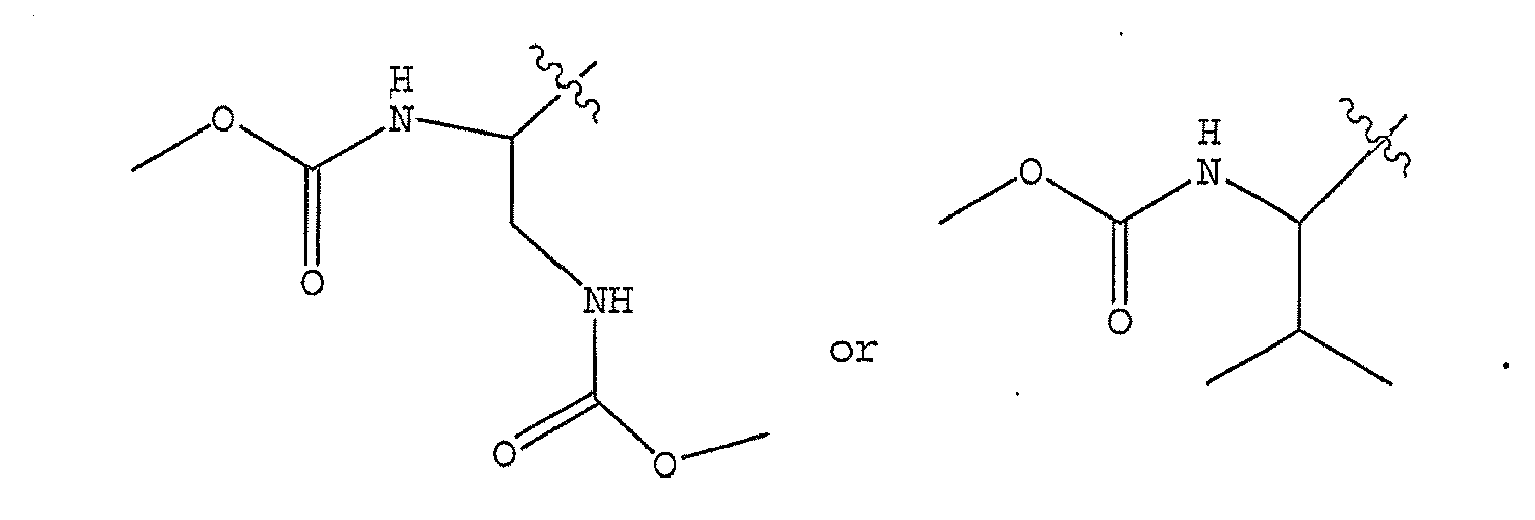
- 41. The compound according to clause 1 or clause 3 wherein T contains at least one hydrogen bond donor moiety selected from -NH2, -NH-, -OH, and -SH.
- 42. The compound according to clause 41, wherein T is:


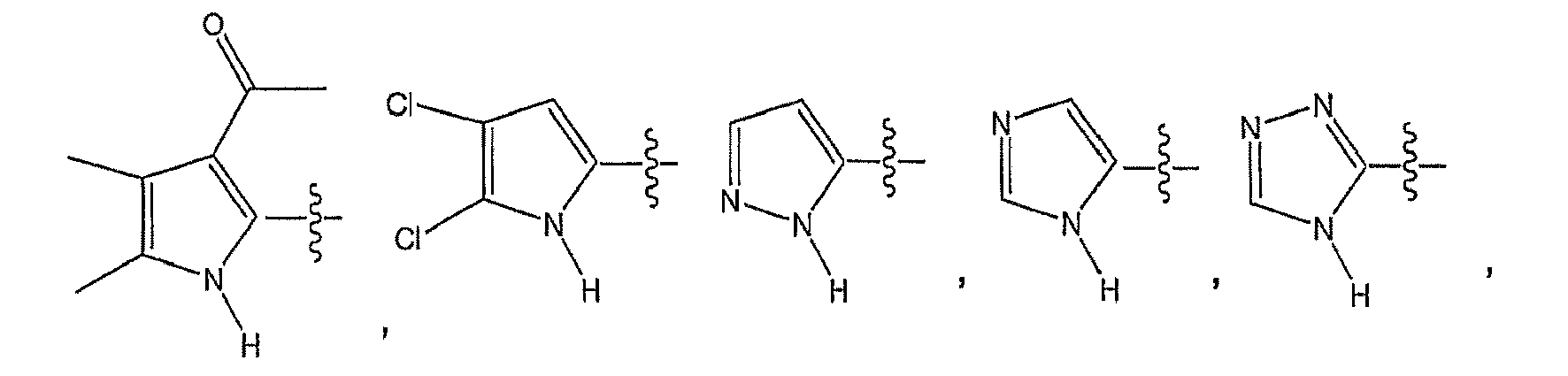


- T is optionally substituted with up to 3 J substituents, wherein J is as defined in clause 1;
- Z is independently O, S, NR10, or C(R10)2, wherein R10 is as defined in claim 1;
- n is independently 1 or 2; and
- is independently a single bond or a double bond.
- 43. The compound according to clause 42, wherein T is:


- T is optionally substituted with up to 4 J substituents, wherein J is as defined in clause 1;
- Z is independently O, S, NR10, C(R10)2, SO, or SO2 wherein R10 is as defined in clause 1;
- n is independently 1 or 2; and
- is independently a single bond or a double bond.

- 44. The compound according to clause 43, wherein T is :


- T is optionally substituted with up to 4 J substituents, wherein J is as defined in clause 1; and
- Z is independently O, S, NR10, C(R10)2, SO, or SO2 wherein R10 is as defined in clause 1.
- 45. The compound according to clause 44, wherein T is:


- 46. The compound according to any one of clauses 1-45, wherein R2 if present, and R4 and R8 are each independently H or (C1-C3)-alkyl.
- 47. The compound according to clause 46, wherein R2 if present, and R4 and R8 are each H.
- 48. The compound according to any one of clauses 1-47, wherein R8 is hydrogen, V is -C(O)-, and R is a bond.
- 49. The compound according to clause 1 or clause 2,
wherein said compound is selected from:


- 50. A pharmaceutical composition comprising a compound according to any one of clauses 1-49 or a pharmaceutically acceptable salt thereof in an amount effective to inhibit a serine protease; and a acceptable carrier, adjuvant or vehicle.
- 51. The composition according to clause 50, wherein said composition is formulated for administration to a patient.
- 52. The composition according to clause 51, wherein said composition comprises an additional agent selected from an immunomodulatory agent; an antiviral agent; a second inhibitor of HCV protease; an inhibitor of another target in the HCV life cycle; and a cytochrome P-450 inhibitor; or combinations thereof.
- 53. The composition according to clause 50, wherein said immunomodulatory agent is α-, β-, or γ-interferon or thymosin; said antiviral agent is ribavirin, amantadine, or telbivudine; or said inhibitor of another target in the HCV life cycle is an inhibitor of HCV helicase, polymerase, or metalloprotease.
- 54. The composition according to clause 52, wherein said cytochrome P-450 inhibitor is ritonavir.
- 55. A method of inhibiting the activity of a serine protease comprising the step of contacting said serine protease with a compound according to any one of clauses 1-49 .
- 56. The method according to clause 55, wherein said serine protease is an HCV NS3 protease.
- 57. A method of treating an HCV infection in a patient comprising the step of administering to said patient a composition according to clause 51.
- 58. The method according to clause 57, comprising the additional step of administering to said patient an additional agent selected from an immunomodulatory agent; an antiviral agent; a second inhibitor of HCV protease; an inhibitor of another target in the HCV life cycle; or combinations thereof; wherein said additional agent is administered to said patient as part of said composition according to clause 51 or as a separate dosage form.
- 59. The method according to clause 58, wherein said immunomodulatory agent is α―, β―, or γ-interferon or thymosin; said antiviral agent is ribavarin or amantadine; or said inhibitor of another target in the HCV life cycle is an inhibitor of HCV helicase, polymerase, or metalloprotease.
- 60. A method of eliminating or reducing HCV contamination of a biological sample or medical or laboratory equipment, comprising the step of contacting said biological sample or medical or laboratory equipment with a composition according to clause 50.
- 61. The method according to clause 60, wherein said sample or equipment is selected from blood, other body fluids, biological tissue, a surgical instrument, a surgical garment, a laboratory instrument, a laboratory garment, a blood or other body fluid collection apparatus; a blood or other body fluid storage material.
- 62. The method according to clause 61, wherein said body fluid is blood.
wherein R17 is optionally substituted with up to 3 J substituents.
wherein R17 is optionally substituted with up to 3 J substituents.
| Time (min) | %B | Flow (ml/min) | Max press. |
| 0 | 5 | 0.2 | 400 |
| 12 | 60 | 0.2 | 400 |
| 13 | 100 | 0.2 | 400 |
| 16 | 100 | 0.2 | 400 |
| 17 | 5 | 0.2 | 400 |
| Stop time: 17 min Post-run time: 10 min. |
Claims (28)
- A compound of formula I:
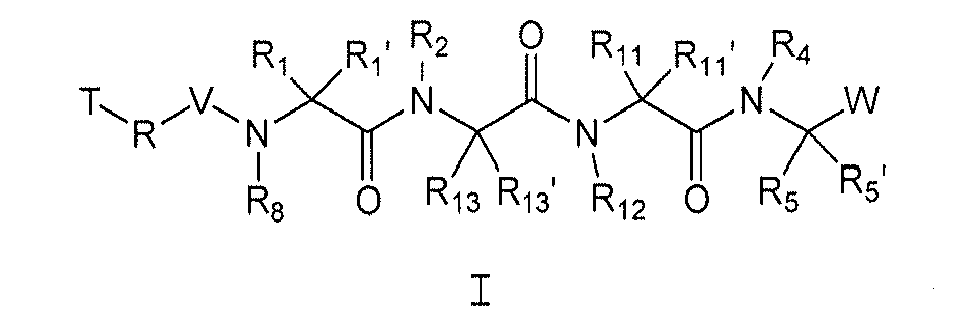 V is -C(O)-, -S(O)-, -C(R')2- or -S(O)2-;R is -C(O)-, -S(O)-, -S(O)2-, -N(R8)-, -O-, or a bond;T is:(C6-C10)-aryl,(C6-C10)-aryl-(C1-C12)aliphatic,(C3-C10)-cycloalkyl or -cycloalkenyl,[(C3-C10)-cycloalkyl or -cycloalkenyl]-(C1-C12)-aliphatic,(C3-C10)-heterocyclyl,(C3-C10)-heterocyclyl-(C1-C12)-aliphatic,(C5-C10)heteroaryl, or(C5-C10)heteroaryl-(C1-C12)-aliphatic;wherein up to 3 aliphatic carbon atoms in T may be optionally replaced with -S-, -S(O)-, -S(O)2-, -O-, -N-, or -N(H)-, in a chemically stable arrangement;
wherein each T may be optionally substituted with up to 3 J substituents;J is halogen, -OR', -OC(O)N(R')2, -NO2, -CN, -CF3, -OCF3, -R', oxo, thioxo, 1,2-methylenedioxy, 1,2-ethylenedioxy, -N(R')2, -SR', -SOR', -SO2R', -SO2N(R')2, -SO3R', -C(O)R', -C(O)C(O)R', -C(O)CH2C(O)R', -C(S)R', -C(O)OR', -OC(O)R', -C(O)N(R')2, -OC(O)N(R')2, -C(S)N(R')2, -(CH2)0-2NHC(O)R', -N(R')N(R')COR', -N(R')N(R')C(O)OR', -N(R')N(R')CON(R')2, -N(R')SO2R', -N(R')SO2N(R')2, -N(R')C(O)OR', -N(R')C(O)R', -N(R')C(S)R', -N(R')C(O)N(R')2, -N(R')C(S)N(R')2, -N(COR')COR', -N(OR')R', -C(=NH)N(R')2, -C(O)N(OR')R', -C(=NOR')R', -OP(O)(OR')2. -P(O)(R')2, -P(O)(OR')2, or -P(O) (H) (OR'), wherein;
two R' groups together with the atoms to which they are bound form a 3- to 10-membered aromatic or non-aromatic ring system having up to 3 heteroatoms independently selected from N, NH, O, S, SO, or SO2, wherein the ring is optionally fused to a (C6-C10)aryl, (C5-C10)heteroaryl, (C3-C10)cycloalkyl, or a (C3-C10)heterocyclyl, and wherein any ring has up to 3 substituents selected independently from J2;
each R' is independently selected from:hydrogen-,(C1-C12)-aliphatic-,(C3-C10)-cycloalkyl or -cycloalkenyl-,[(C3-C10)-cycloalkyl or -cycloalkenyl]-(C1-C12)-aliphatic-,(C6-C10)-aryl-,(C6-C10)-aryl-(C1-C12)aliphatic-,(C3-C10)-heterocyclyl-,(C6-C10)-heterocyclyl-(C1-C12)aliphatic-,(C5-C10)-heteroaryl-, or(C5-C10)-heteroaryl-(C1-C12)-aliphatic-,wherein R' has up to 3 substituents selected
independently from J2;J2 is halogen, -OR', -OC(O)N(R')2, -NO2, -CN, -CF3, -OCF3, -R', oxo, thioxo, 1,2-methylenedioxy, -N(R')2, -SR', -SOR', -SO2R', -SO2N(R')2, -SO3R', -C(O)R', -C(O)C(O)R', -C(O)CH2C(O)R', -C(S)R', -C(O)OR', -OC(O)R', -C(O)N(R')2, -OC(O)N(R')2, -C(S)N(R')2,-(CH2)0-2NHC(O)R', -N(R')N(R')COR', -N(R')N(R')C(0)OR', -N(R')N(R`)CON(R')2, -N-N(R')SO2R', -N(R')SO2N(R')2, -N(R')C(O)OR', -N(R')C(O)R', -N(R')C(S)R', -N(R')C(O)N(R')2, -N(R')C(S)N(R')2, -N(COR')COR', -N(OR')R', -C(=NH)N(R')2, -C(O)N(OR')R', -C(=NOR')R', -OP (O) (OR')2, -P(O) (R')2, -P(O) (OR')2, or -P(O)(H)(OR'); orT is:


 R10 is:hydrogen,(C1-C12)-aliphatic,(C6-C10)-aryl,(C6-C10)-aryl-(C1-C12)aliphatic,(C3-C10)-cycloalkyl or -cycloalkenyl,[(C3-C10)-cycloalkyl or -cycloalkenyl]-(C1-C12)-aliphatic,(C3-C10)-heterocyclyl,(C3-C10)-heterocyclyl-(C1-C12)-aliphatic,(C5-C10)-heteroaryl, or(C5-C10)-heteroaryl-(C1-C12)-aliphatic,K is a bond, (C1-C12)-aliphatic, -O-, -S-, -NR9-, -C(O)-,
or -C(O)-NR9-, wherein R9 is hydrogen or (C1-C12)-aliphatic;n is 1-3; orT is selected from N(R17)2;W is:
 hydrogen-,(C1-C12)-aliphatic-,(C3-C10)-cycloalkyl- or cycloalkenyl-,[(C3-C10)-cycloalkyl- or cycloalkenyl]-(C1-C12)-aliphatic-,(C6-C10)-aryl-,(C6-C10)-aryl-(C1-C12)aliphatic-, (C3-C10)-heterocyclyl-,(C3-C10)-heterocyclyl-(C1-C12)-aliphatic-, (C5-C10)heteroaryl-, or(C5-C10)heteroaryl-(C1-C12)-aliphatic-, orwherein two R17 groups, which are bound to the same nitrogen atom, together with that nitrogen atom, optionally form a (C3-C10)-membered saturated or partially unsaturated heterocyclic ring system having in addition to the nitrogen up to 2 additional heteroatoms selected from N, NH, O, S, SO, and SO2 and wherein said ring is optionally substituted with up to 3 J substituents;
wherein R17 is optionally substituted with up to 3 J substituents;R5 and R5' are independently hydrogen or (C1-C12)-aliphatic, wherein any hydrogen is optionally replaced with halogen, and wherein any terminal carbon atom is optionally substituted with sulfhydryl or hydroxy, and wherein up to two aliphatic carbon atoms may be replaced by a heteroatom selected from N, NH, O, S, SO, or SO2; orR5 and R5' together with the atom to which they are bound optionally form a 3- to 6-membered ring having up to 2 heteroatoms selected from N, NH, O, S, SO, or SO2; wherein the ring has up to 2 substituents selected independently from J;R1, R1, R11, R11', R13, and R13' are independently:hydrogen-,(C1-C12)-aliphatic-,(C3-C10)-cycloalkyl or -cycloalkenyl-,[ (C3-C10)-cycloalkyl or -cycloalkenyl]-(C1-C12)-aliphatic-,(C6-C10)-aryl-,(C6-C10)-aryl-(C1-C12)aliphatic-,(C3-C10)-heterocyclyl-,(C6-C10)-heterocyclyl-(C1-C12)aliphatic,(C5-C10)-heteroaryl-, or(C5-C10)-heteroaryl-(C1-C12)-aliphatic-,wherein each of R1, R1', R11, R11, R13, and R13' is independently and optionally substituted with up to 3 substituents independently selected from J;
wherein any ring is optionally fused to a (C6-C10)aryl, (C5-C10)heteroaryl, (C3-C10)cycloalkyl, or (C3-C10)heterocyclyl;
wherein up to 3 aliphatic carbon atoms in each of R1, R1', R11, R11', R13, and R13' may be replaced by a heteroatom selected from O, N, NH, S, SO, or SO2 in a chemically stable arrangement; orR1 and R1, together with the atom to which they are bound optionally form a 3- to 6-membered ring having up to 2 heteroatoms selected from N, NH, O, S, SO, or SO2; wherein the ring system has up to 2 substituents selected independently from J; orR11 and R11, together with the atom to which they are bound optionally form a 3- to 6-membered ring having up to 2 heteroatoms selected from N, NH, O, S, SO, or SO2; wherein the ring has up to 2 substituents selected independently from J; orR13 and R13, together with the atom to which they are bound is a 3- to 6-membered ring having up to 2 heteroatoms selected from N, NH, O, S, SO, or SO2; wherein the ring has up to 2 substituents selected independently from J;R2, R4, R8, and R12 are independentlyhydrogen-, (C1-C12)-aliphatic-,(C3-C10)-cycloalkyl or -cycloalkenyl-,[(C3-C10)-cycloalkyl or -cycloalkenyl]-(C1-C12)-aliphatic-,(C6-C10)-aryl-,(C6-C10)-aryl-(C1-C12)aliphatic-,(C3-C10)-heterocyclyl-,(C6-C10)-heterocyclyl-(C1-C12)aliphatic,(C5-C10)-heteroaryl-, or(C5-C10)-heteroaryl-(C1-C12)-aliphatic-,wherein each R2, R4, R8, and R12 is independently and optionally substituted with up to 3 substituents independently selected from J;
wherein up to two aliphatic carbon atoms in R2, R4, R8, and R12 may be replaced by a heteroatom selected from O, N, NH, S, SO, or SO2; orR11 and R12 together with the atoms to which they are bound form a 3- to a 20-membered mono-, a 4- to 20-membered bi-, or a 5- to 20-membered tri-cyclic carbocyclic or heterocyclic ring system;
wherein, in the bi- and tri-cyclic ring system, each ring is linearly fused, bridged, or spirocyclic;
wherein each ring is either aromatic or nonaromatic; wherein each heteroatom in the heterocyclic ring system is selected from the group consisting of N, NH, O, S, SO, and SO2;
wherein each ring is optionally fused to a (C6-C10)aryl, (C5-C10)heteroaryl, (C3-C10)cycloalkyl, or (C3-C10)heterocyclyl; and
wherein said ring has up to 3 substituents selected independently from J; orR12 and R13 together with the atoms to which they are bound form a 4- to a 20-membered mono-, a 5- to 20-membered bi-, or a 6- to 20-membered tri-cyclic carbocyclic or heterocyclic ring system;
wherein, in the bi- and tri-cyclic ring system, each ring is linearly fused, bridged, or spirocyclic;
wherein each ring is either aromatic or nonaromatic;
wherein each heteroatom in the heterocyclic ring system is selected from the group consisting of N, NH, O, S, SO, and SO2;
wherein each ring is optionally fused to a (C6-C10)aryl, (C5-C10)heteroaryl, (C3-C10)cycloalkyl, or (C3-C10)heterocyclyl; and
wherein said ring has up to 3 substituents selected independently from J; orR11 and R13 together with the atoms to which they are bound form a 5- to a 20-membered mono-, a 6- to 20-membered bi-, or a 7- to 20-membered tri-cyclic carbocyclic or heterocyclic ring system;
wherein, in the bi- and tri-cyclic ring system, each ring is linearly fused, bridged, or spirocyclic;
wherein each ring is either aromatic or nonaromatic; wherein each heteroatom in the heterocyclic ring system is selected from the group consisting of N, NH, O, S, SO, and SO2;
wherein each ring is optionally fused to a (C6-C10)aryl, (C5-C10)heteroaryl, (C3-C10)cycloalkyl, or (C3-C10)heterocyclyl; and
wherein said ring has up to 3 substituents selected independently from J; orR11, R12, and R13 together with the atoms to which they are bound form a 5- to a 20-membered bi-, or a 6- to 20-membered tri-cyclic carbocyclic or heterocyclic ring system;
wherein, in the bi- and tri-cyclic ring system, each ring is linearly fused, bridged, or spirocyclic;
wherein each ring is either aromatic or nonaromatic; wherein each heteroatom in the heterocyclic ring system is selected from the group consisting of N, NH, O, S, SO, and SO2;
wherein each ring is optionally fused to a (C6-C10)aryl, (C5-C10)heteroaryl, (C3-C10)cycloalkyl, or (C3-C10)heterocyclyl; and
wherein said ring has up to 3 substituents selected independently from J; orR13, and R2 together with the atoms to which they are bound form a 3- to a 20-membered mono-, a 4- to 20-membered bi-, or a 5- to 20-membered tri-cyclic carbocyclic or heterocyclic ring system;
wherein, in the bi- and tri-cyclic ring system, each ring is linearly fused, bridged, or spirocyclic;
wherein each ring is either aromatic or nonaromatic; wherein each heteroatom in the heterocyclic ring system is selected from the group consisting of N, NH, O, S, SO, and SO2;
wherein each ring is optionally fused to a (C6-C10)aryl, (C5-C10)heteroaryl, (C3-C10)cycloalkyl, or (C3-C10)heterocyclyl; and
wherein said ring has up to 3 substituents selected independently from J; orR5 and R13 together with the atoms to which they are bound form a 18- to a 23-membered mono-, a 19- to 24-membered bi-, or a 20- to 25-membered tri-cyclic carbocyclic or heterocyclic ring system;
wherein, in the bi- and tri-cyclic ring system, each ring is linearly fused, bridged, or spirocyclic;
wherein each ring is either aromatic or nonaromatic; wherein each heteroatom in the heterocyclic ring system is selected from the group consisting of N, NH, O, S, SO, and SO2;
wherein each ring is optionally fused to a (C6-C10)aryl, (C5-C10)heteroaryl, (C3-C10)cycloalkyl, or (C3-C10)heterocyclyl; and
wherein said ring has up to 6 substituents selected independently from J; orR1 and R12 together with the atoms to which they are bound form a 18- to a 23-membered mono-, a 19- to 24-membered bi-, or a 20- to 25-membered tri-cyclic carbocyclic or heterocyclic ring system;
wherein, in the bi- and tri-cyclic ring system, each ring is linearly fused, bridged, or spirocyclic;
wherein each ring is either aromatic or nonaromatic; wherein each heteroatom in the heterocyclic ring system is selected from the group consisting of N, NH, O, S, SO, and SO2;
wherein each ring is optionally fused to a (C6-C10)aryl, (C5-C10)heteroaryl, (C3-C10)cycloalkyl, or (C3-C10)heterocyclyl; and
wherein said ring has up to 6 substituents selected independently from J; or a compound of formula II: X1 is -N(R20)-, -O-, -S-, or -C(R')2-;X2 is -C(O)-, -C(S)-, -S(O)-, or -S(O)2-;W is:
 hydrogen-,(C1-C12)-aliphatic-,(C3-C10)-cycloalkyl or -cycloalkenyl-,[(C3-C10)-cycloalkyl or -cycloalkenyl]-(C1-C12)-aliphatic-,(C6-C10)-aryl-,(C6-C10)-aryl-(C1-C12)aliphatic-,(C3-C10)-heterocyclyl-,(C3-C10)-heterocyclyl-(C1-C12)-aliphatic-, (C5-C10)heteroaryl-, or(CS-C10)heteroaryl-(C1-C12)-aliphatic-, ortwo R17 groups, which are bound to the same nitrogen atom, form together with that nitrogen atom, a (C3-C10)-membered heterocyclic ring having in addition to the nitrogen up to 2 additional heteroatoms selected from N, NH, O, S, SO, and SO2;
wherein R17 is optionally substituted with up to 3 J substituents;R5 is (C1-C12)-aliphatic, wherein any hydrogen is optionally replaced with halogen, and wherein any terminal carbon atom of R5 is optionally substituted with sulfhydryl or hydroxy;R5, is hydrogen or (C1-C12)-aliphatic, wherein any hydrogen is optionally replaced with halogen, and wherein any terminal carbon atom of R5 is optionally substituted with sulfhydryl or hydroxy; orR5 and R5' together with the atom to which they are bound is a 3- to 6-membered ring having up to 2 heteroatoms selected from N, NH, O, S, SO, or SO2; wherein the ring has up to 2 substituents selected independently from J;R1, Rr, R11, R11', R13, and R13' are independently:hydrogen-,(C1-C12)-aliphatic-,(C3-C10)-cycloalkyl or -cycloalkenyl-,[(C3-C10)-cycloalkyl or -cycloalkenyl]-(C1-C12)-aliphatic-,(C6-C10)-aryl-,(C6-C10)-aryl-(C1-C12)aliphatic-,(C3-C10)-heterocyclyl-,(C6-C10)-heterocyclyl-(C1-C12)aliphatic,(C5-C10)-heteroaryl-, or(C5-C10)-heteroaryl-(C1-C12)-aliphatic-; orR1 and R1' together with the atom to which they are bound is a 3- to 6-membered ring having up to 2 heteroatoms selected from N, NH, O, S, SO, or SO2; wherein the ring has up to 2 substituents selected independently from J; orR11 and R11' together with the atom to which they are bound is a 3- to 6-membered ring having up to 2 heteroatoms selected from N, NH, O, S, SO, or SO2; wherein the ring has up to 2 substituents selected independently from J; orR13 and R13' together with the atom to which they are bound is a 3- to 6-membered ring having up to 2 heteroatoms selected from N, NH, O, S, SO, or SO2; wherein the ring has up to 2 substituents selected independently from J;
wherein each of R1, R1' R11, R11', R13, and R13' is independently and optionally substituted with up to 3 substituents independently selected from J; and wherein any ring is optionally fused to a (C6-C10)aryl, (C5-C10)heteroaryl, (C3-C10)cycloalkyl, or (C3-C10)heterocyclyl; and wherein up to 3 aliphatic carbon atoms in each of R1, R1', R11, R11'. R13, and R13' may be replaced by a heteroatom selected from O, N, NH, S, SO, or SO2 in a chemically stable arrangement;R2, R4, R12, and R20 are independentlyhydrogen-, (C1-C12)-aliphatic-,(C3-C10)-cycloalkyl-,(C3-C10)-cycloalkyl-(C1-C12)-aliphatic-, or(C6-C10)aryl-(C1-C12)-aliphatic-,wherein each R2, R4, R12, and R20 is independently and optionally substituted with up to 3 substituents independently selected from J;
wherein up to two aliphatic carbon atoms in R2, R4, R12, and R20 may be replaced by a heteroatom selected from O, N, NH, S, SO, or SO2; orR11 and R12 together with the atoms to which they are bound form a 3- to a 20-membered mono-, a 4- to 20-membered bi-, or a 5- to 20-membered tri-cyclic carbocyclic or heterocyclic ring system;
wherein, in the bi- and tri-cyclic ring system, each ring is linearly fused, bridged, or spirocyclic;
wherein each ring is either aromatic or nonaromatic; wherein each heteroatom in the heterocyclic ring system is selected from the group consisting of N, NH, O, SO, and SO2;
wherein each ring is optionally fused to a (C6-C10)aryl, (C5-C10)heteroaryl, (C3-C10)cycloalkyl, or (C3-C10)heterocyclyl; and
wherein said ring has up to 3 substituents selected independently from J; orR12 and R13 together with the atoms to which they are bound form a 4- to a 20-membered mono-, a 5- to 20-membered bi-, or a 6- to 20-membered tri-cyclic carbocyclic or heterocyclic ring system;
wherein, in the bi- and tri-cyclic ring system, each ring is linearly fused, bridged, or spirocyclic;
wherein each ring is either aromatic or nonaromatic; wherein each heteroatom in the heterocyclic ring system is selected from the group consisting of N, NH, O, S, SO, and SO2;
wherein each ring is optionally fused to a (C6-C10)aryl, (C5-C10)heteroaryl, (C3-C10)cycloalkyl, or (C3-C10)heterocyclyl; and
wherein said ring has up to 3 substituents selected independently from J; orR11 and R13 together with the atoms to which they are bound form a 5- to a 20-membered mono-, a 6- to 20-membered bi-, or a 7- to 20-membered tri-cyclic carbocyclic or heterocyclic ring system;
wherein, in the bi- and tri-cyclic ring system, each ring is linearly fused, bridged, or spirocyclic;
wherein each ring is either aromatic or nonaromatic; wherein each heteroatom in the heterocyclic ring system is selected from the group consisting of N, NH, O, S, SO, and SO2;
wherein each ring is optionally fused to a (C6-C10)aryl, (C5-C10)heteroaryl, (C3-C10)cycloalkyl, or (C3-C10)heterocyclyl; and
wherein said ring has up to 3 substituents selected independently from J; orR11, R12, and R13 together with the atoms to which they are bound form a 5- to a 20-membered bi-, or a 6- to 20-membered tri-cyclic carbocyclic or heterocyclic ring system;
wherein, in the bi- and tri-cyclic ring system, each ring is linearly fused, bridged, or spirocyclic;
wherein each ring is either aromatic or nonaromatic;
wherein each heteroatom in the heterocyclic ring system is selected from the group consisting of N, NH, O, S, SO, and SO2;
wherein each ring is optionally fused to a (C6-C10)aryl, (C5-C10)heteroaryl, (C3-C10)cycloalkyl, or (C3-C10)heterocyclyl; and
wherein said ring has up to 3 substituents selected independently from J; orR13, and R2 together with the atoms to which they are bound form a 3- to a 20-membered mono-, a 4- to 20-membered bi-, or a 5- to 20-membered tri-cyclic carbocyclic or heterocyclic ring system;
wherein, in the bi- and tri-cyclic ring system, each ring is linearly fused, bridged, or spirocyclic;
wherein each ring is either aromatic or nonaromatic; wherein each heteroatom in the heterocyclic ring system is selected from the group consisting of N, NH, O, S, SO, and SO2;
wherein each ring is optionally fused to a (C6-C10)aryl, (C5-C10)heteroaryl, (C3-C10)cycloalkyl, or (C3-C10)heterocyclyl; and
wherein said ring has up to 3 substituents selected independently from J;R14 is -H, -S(O)R', -S(O)2R', -C(O)R', -C(O)OR', -C(O)N(R')2, -N(R')C(O)R', -N(COR')COR' -SO2N(R')2, -SO3R', -C(O)C(O)R', -C(O)CH2C(O)R', -C(S)R', -C(S)N(R')2, -(CH2)0-2NHC(O)R', -N(R')N(R')COR', -N(R')N(R')C(O)OR', -N(R')N(R')CON(R')2, -N(R')SO2R', -N(R')SO2N(R')2, -N(R')C(O)OR', -N(R')C(O)R', -N(R')C(S)R', -N(R')C(O)N(R')2, -N(R')C(S)N(R')2, -N(COR')COR', -N(OR')R', -C(=NH)N(R')2, -C(O)N(OR')R', -C(=NOR')R', -OP(O)(OR')2, -P(O)(R')2, -P(O)(OR')2, or -P(O)(H)(OR');R15 and R16 are independently halogen, -OR', -OC(O)N(R')2, -NO2, -CN, -CF3, -OCF3, -R', oxo, 1,2-methylenedioxy, 1,2-ethylenedioxy, -N(R')2, -SR', -SOR', -SO2R', -SO2N(R')2, -SO3R', -C(O)R', -C(O)C(O)R', -C(O)CH2C(O)R', -C(S)R', -C(O)OR', -OC(O)R', -C(O)N(R')2, -OC(O)N(R')2, -C(S)N(R')2, -(CH2)0-2NHC(O)R', -N(R')N(R')COR', -N(R')N(R')C(O)OR', -N(R')N(R')CON(R')2, -N(R')SO2R', -N(R')SO2N(R')2, -N(R')C(O)OR', -N(R')C(O)R', -N(R')C(S)R', -N(R')C(O)N(R')2, -N(R')C(S)N(R')2, -N(COR')COR', -N(OR')R', -CN, -C(=NH)N(R')2, -C(O)N(OR')R', -C(=NOR')R', -OP(O)(OR')2, -P(O)(R')2, -P(O)(OR')2, or -P(O)(H)(OR');Z2 is =O, =NR', =NOR', or =C(R')2;R19 is -OR', -CF3, -OCF3, -R', -N(R')2, -SR', -C(O)R', - COOR' -CON(R')2. -N(R')COR', or -N(COR')COR';J is halogen, -OR', -OC(O)N(R)2, -NO2, -CN, -CF3, -OCF3, -R', oxo, thioxo, 1,2-methylenedioxy, 1,2-ethyenedioxy, - N(R')2, -SR', -SOR', -SO2R', -SO2N(R')2, -SO3R' , -C(O)R', -C(O)C(O)R', -C(O)CH2C(O)R, -C(S)R', -C(O)OR', -OC(O)R', -C(O)N(R')2, -OC(O)N(R)2, -C(S)N(R')2, -(CH2)0-2NHC(O)R', -N(R')N(R')COR', -N(R')N(R')C(O)OR', -N(R')N(R')CON(R')2, -N(R')SO2R', -N(R')SO2N(R')2, -N(R')C(O)OR', -N(R')C(O)R', -N(R')C(S)R', -N(R')C(O)N(R')2, -N(R')C(S)N(R')2, -N(COR')COR', -N(OR')R', -CN, -C(=NH)N(R')2, -C(O)N(OR')R', -C(=NOR')R', -OP(O)(OR')2, -P(O)(R')2, -P(O) (OR')2, or -P(O)(H)(OR');
wherein:two R' groups together with the atoms to which they are bound form a 3- to 10-membered aromatic or non-aromatic ring having up to 3 heteroatoms independently selected from N, NH, O, S, SO, or SO2, wherein the ring is optionally fused to a (C6-C10)aryl, (C5-C10)heteroaryl, (C3-C10)cycloalkyl, or a (C3-C10)heterocyclyl, and wherein any ring has up to 3 substituents selected independently from J2; oreach R' is independently selected from:hydrogen-,(C1-C12)-aliphatic-,(C3-C10)-cycloalkyl or -cycloalkenyl-,[(C3-C10)-cycloalkyl or -cycloalkenyl]-(C1-C12)-aliphatic-,(C6-C10)-aryl-,(C6-C10)-aryl-(C1-C12)aliphatic-,(C3-C10)-heterocyclyl-,(C6-C10)-heterocyclyl-(C1-C12)aliphatic-,(C5-C10)-heteroaryl-, or(C5-C10)-heteroaryl-(C1-C12)-aliphatic-;wherein R' has up to 3 substituents selected independently from J2; andJ2 is halogen, -OR', -OC(O)N(R')2, -NO2, -CN, -CF3, -OCF3, -R', oxo, thioxo, 1,2-methylenedioxy, 1,2-ethylenedioxy, - N(R')2, -SR', -SOR' -SO2R', -SO2N(R')2, -SO3R', -C(O)R', -C(O)C(O)R', -C(O)CH2C(O)R', -C(S)R', -C(O)OR', -OC(O)R', -C(O)N(R')2, -OC(O)N(R')2, -C(S)N(R')2, -(CH2)0-2NHC(O)R', -N(R')N(R')COR', -N(R')N(R')C(O)OR', -N(R')N(R')CON(R')2, -N(R')SO2R', -N(R')SO2N(R')2, -N(R')C(O)OR', -N(R')C(O)R', -N(R')C(S)R', -N(R')C(O)N(R')2, -N(R')C(S)N(R')2, -N(COR')COR', -N(OR')R', -CN, -C(=NH)N(R')2, -C(O)N(OR')R', -C(=NOR')R', -OP(O)(OR')2, -P(O)(R')2, -P(O)(OR')2, or -P(O)(H)(OR'); or a compound of formula IV: V is -C(O)-, -S(O)-, -C(R')2- or -S(O)2-;R is -C(O)-, -S(O)-, -S(O)2-, -N(R8)-, -O-, or a bond; T is:wherein up to 3 aliphatic carbon atoms in T may be optionally replaced with -S-, -S(O)-, -S(O)2-, -O-, -N-, or -N(H)-, in a chemically stable arrangement;(C6-C10)-aryl,(C6-C10)-aryl-(C1-C12)aliphatic,(C1-C12)-aliphatic-,(C3-C10)-cycloalkyl or -cycloalkenyl,[(C3-C10)-cycloalkyl or -cycloalkenyl]-(C1-C12)-aliphatic, (C3-C10)-heterocyclyl,(C3-C10)-heterocyclyl-(C1-C12)-aliphatic,(C5-C10)heteroaryl, or(C5-C10)heteroaryl-(C1-C12)-aliphatic;
wherein each T may be optionally substituted with up to 3 J substituents;J is halogen, -OR', -OC(O)N(R')2, -NO2, -CN, -CF3, -OCF3, -R', oxo, thioxo, 1,2-methylenedioxy, 1,2-ethylenedioxy, -N(R')2, -SR', -SOR', -SO2R', -SO2N(R')2, -SO3R', -C(O)R', -C(O)C(O)R', -C(O)CH2C(O)R', -C(S)R', -C(O)OR', -OC(O)R', -C(O)N(R')2, -OC(O)N(R')2, -C(S)N(R')2, -(CH2)0-2NHC(O)R', -N(R')N(R')COR', -N(R')N(R')C(O)OR', -N(R')N(R')CON(R')2, -N(R')SO2R', -N(R')SO2N(R')2, -N(R')C(O)OR', -N(R')C(O)R', -N(R')C(S)R', -N(R')C(O)N(R')2, -N(R')C(S)N(R')2, -N(COR')COR', -N(OR')R', -C(=NH)N(R')2, -C(O)N(OR')R', -C(=NOR')R', -OP(O)(OR')2, -P(O)(R')2, -P(O)(OR')2, or -P(O)(H)(OR'), wherein;
two R' groups together with the atoms to which they are bound form a 3- to 10-membered aromatic or non-aromatic ring system having up to 3 heteroatoms independently selected from N, NH, O, S, SO, or SO2, wherein the ring is optionally fused to a (C6-C10)aryl, (C5-C10)heteroaryl, (C3-C10)cycloalkyl, or a (C3-C10)heterocyclyl, and wherein any ring has up to 3 substituents selected independently from J2;
each R' is independently selected from:hydrogen-,(C1-C12)-aliphatic-,(C3-C10)-cycloalkyl or -cycloalkenyl-,[(C3-C10)-cycloalkyl or -cycloalkenyl]-(C1-C12)-aliphatic-,(C6-C10)-aryl-,(C6-C10)-aryl-(C1-C12)aliphatic-,(C3-C10)-heterocyclyl-,(C6-C10)-heterocyclyl-(C1-C12)aliphatic-,(C5-C10)-heteroaryl-, or(C5-C10)-heteroaryl-(C1-C12)-aliphatic-,wherein R' has up to 3 substituents selected independently from J2;J2 is halogen, -OR', -OC(O)N(R')2, -NO2, -CN, -CF3, -OCF3, -R', oxo, thioxo, 1,2-methylenedioxy, -N(R')2, -SR', -SOR', -SO2R', -SO2N(R')2, -SO3R', -C(O)R', -C(O)C(O)R', -C(O)CH2C(O)R', -C(S)R', -C(O)OR', -OC(O)R', -C(O)N(R')2, -OC(O)N(R')2, -C(S)N(R')2, -(CH2)0-2NHC(O)R', -N(R')N(R')COR', -N(R')N(R')C(O)OR', -N(R')N(R')CON(R')2, -N(R')SO2R', -N(R')SO2N(R')2, -N(R')C(O)OR', -N(R')C(O)R' -N(R')C(S)R', -N(R')C(O)N(R')2, -N(R')C(S)N(R')2, -N(COR')COR', -N(OR')R', -C(=NH)N(R')2, -C(O)N(OR')R', -C(=NOR')R', -OP(O)(OR')2, -P(O)(R')2, -P(O)(OR')2, or -P(O)(H)(OR'); orT is:


 R10 is:hydrogen,(C1-C12)-aliphatic, (C6-C10)-aryl,(C6-C10)-aryl-(C1-C12)aliphatic,(C3-C10)-cycloalkyl or -cycloalkenyl,[(C3-C10)-cycloalkyl or -cycloalkenyl]-(C1-C12)-aliphatic,(C3-C10)-heterocyclyl,(C3-C10)-heterocyclyl-(C1-C12)-aliphatic,(C5-C10)-heteroaryl, or(C5-C10)-heteroaryl-(C1-C12)-aliphatic,K is a bond, (C1-C12)-aliphatic, -O-, -S-, -NR9-, -C(O)-, or -C(O)-NR9-, wherein R9 is hydrogen or (C1-C12)-aliphatic;n is 1-3; orT is selected from N(R17)2; W is:
 hydrogen-,(C1-C12)-aliphatic-,(C3-C10)-cycloalkyl- or cycloalkenyl-,[(C3-C10)-cycloalkyl- or cycloalkenyl]-(C1-C12)-aliphatic-,(C6-C10)-aryl-,(C6-C10)-aryl-(C1-C12)aliphatic-, (C3-C10)-heterocyclyl-,(C3-C10)-heterocyclyl-(C1-C12)-aliphatic-, (C5-C10)-heteroaryl-, or(C5-C10)heteroaryl-(C1-C12)-aliphatic-, orwherein two R17 groups, which are bound to the same nitrogen atom, together with that nitrogen atom, optionally form a (C3-C10)-membered saturated or partially unsaturated heterocyclic ring system having in addition to the nitrogen up to 2 additional heteroatoms selected from N, NH, O, S, SO, and SO2 and wherein said ring is optionally substituted with up to 3 J substituents;
wherein R17 is optionally substituted with up to 3 J substituents;R5 and R5, are independently hydrogen or (C1-C12)-aliphatic, wherein any hydrogen is optionally replaced with halogen, and wherein any terminal carbon atom is optionally substituted with sulfhydryl or hydroxy, and wherein up to two aliphatic carbon atoms may be replaced by a heteroatom selected from N, NH, O, S, SO, or SO2; orR5 and R5' together with the atom to which they are bound optionally form a 3- to 6-membered ring having up to 2 heteroatoms selected from N, NH, O, S, SO, or SO2; wherein the ring has up to 2 substituents selected independently from J;R11, R11', R13, and R13' are independently:hydrogen-,(C1-C12)-aliphatic-,(C3-C10)-cycloalkyl or -cycloalkenyl-,[(C3-C10)-cycloalkyl or -cycloalkenyl]-(C1-C12)-aliphatic-,(C6-C10)-aryl-,(C6-C10)-aryl-(C1-C12)aliphatic-, (C3-C10)-heterocyclyl-,(C6-C10)-heterocyclyl-(C1-C12)aliphatic, (C5-C10)-heteroaryl-, or(C5-C10)-heteroaryl-(C1-C12)-aliphatic-,wherein each of R11, R11', R13, and R13' is independently and optionally substituted with up to 3 substituents independently selected from J;
wherein any ring is optionally fused to a (C6-C10)aryl, (C5-C10)heteroaryl, (C3-C10)cycloalkyl, or (C3-C10)heterocyclyl;
wherein up to 3 aliphatic carbon atoms in each of R11, R11', R13, and R13' may be replaced by a heteroatom selected from O, N, NH, S, SO, or SO2 in a chemically stable arrangement; orR11 and R11' together with the atom to which they are bound optionally form a 3- to 6-membered ring having up to 2 heteroatoms selected from N, NH, O, S, SO, or SO2; wherein the ring has up to 2 substituents selected independently from J; orR13 and R13' together with the atom to which they are bound is a 3- to 6-membered ring having up to 2 heteroatoms selected from N, NH, O, S, SO, or SO2; wherein the ring has up to 2 substituents selected independently from J;R4, R8, and R12 are independentlyhydrogen-, (C1-C12)-aliphatic-,(C3-C10)-cycloalkyl or -cycloalkenyl-,[(C3-C10)-cycloalkyl or -cycloalkenyl]-(C1-C12)-aliphatic-,(C6-C10)-aryl-,(C6-C10)-aryl-(C1-C12)aliphatic-,(C3-C10)-heterocyclyl-,(C6-C10)-heterocyclyl-(C1-C12)aliphatic,(C5-C10)-heteroaryl-, or(C5-C10)-heteroaryl-(C1-C12)-aliphatic-,wherein each R4, R8, and R12 is independently and optionally substituted with up to 3 substituents independently selected from J;
wherein up to two aliphatic carbon atoms in R4, R8, and R12 may be replaced by a heteroatom selected from O, N, NH, S, SO, or SO2; orR11 and R12 together with the atoms to which they are bound form a 3- to a 20-membered mono-, a 4- to 20-membered bi-, or a 5- to 20-membered tri-cyclic carbocyclic or heterocyclic ring system;
wherein, in the bi- and tri-cyclic ring system, each ring is linearly fused, bridged, or spirocyclic;
wherein each ring is either aromatic or nonaromatic; wherein each heteroatom in the heterocyclic ring system is selected from the group consisting of N, NH, O, S, SO, and SO2;
wherein each ring is optionally fused to a (C6-C10)aryl, (C5-C10)heteroaryl, (C3-C10)cycloalkyl, or (C3-C10)heterocyclyl; and
wherein said ring has up to 3 substituents selected independently from J; orR12 and R13 together with the atoms to which they are bound form a 4- to a 20-membered mono-, a 5- to 20-membered bi-, or a 6- to 20-membered tri-cyclic carbocyclic or heterocyclic ring system;
wherein, in the bi- and tri-cyclic ring system, each ring is linearly fused, bridged, or spirocyclic;
wherein each ring is either aromatic or nonaromatic; wherein each heteroatom in the heterocyclic ring system is selected from the group consisting of N, NH, O, S, SO, and SO2;
wherein each ring is optionally fused to a (C6-C10)aryl, (C5-C10)heteroaryl, (C3-C10)cycloalkyl, or (C3-C10)heterocyclyl; and
wherein said ring has up to 3 substituents selected independently from J; orR11 and R13 together with the atoms to which they are bound form a 5- to a 20-membered mono-, a 6- to 20-membered bi-, or a 7- to 20-membered tri-cyclic carbocyclic or heterocyclic ring system;
wherein, in the bi- and tri-cyclic ring system, each ring is linearly fused, bridged, or spirocyclic;
wherein each ring is either aromatic or nonaromatic; wherein each heteroatom in the heterocyclic ring system is selected from the group consisting of N, NH, O, S, SO, and SO2;
wherein each ring is optionally fused to a (C6-C10)aryl, (C5-C10)heteroaryl, (C3-C10)cycloalkyl, or (C3-C10)heterocyclyl; and
wherein said ring has up to 3 substituents selected independently from J; orR11, R12, and R13 together with the atoms to which they are bound form a 5- to a 20-membered bi-, or a 6- to 20-membered tri-cyclic carbocyclic or heterocyclic ring system;
wherein, in the bi- and tri-cyclic ring system, each ring is linearly fused, bridged, or spirocyclic;
wherein each ring is either aromatic or nonaromatic; wherein each heteroatom in the heterocyclic ring system is selected from the group consisting of N, NH, O, S, SO, and SO2;
wherein each ring is optionally fused to a (C6-C10)aryl, (C5-C10)heteroaryl, (C3-C10)cycloalkyl, or (C3-C10)heterocyclyl; and
wherein said ring has up to 3 substituents selected independently from J; orR13, and R8 together with the atoms to which they are bound form a 3- to a 20-membered mono-, a 4- to 20-membered bi-, or a 5- to 20-membered tri-cyclic carbocyclic or heterocyclic ring system;
wherein, in the bi- and tri-cyclic ring system, each ring is linearly fused, bridged, or spirocyclic;
wherein each ring is either aromatic or nonaromatic; wherein each heteroatom in the heterocyclic ring system is selected from the group consisting of N, NH, O, S, SO, and SO2;
wherein each ring is optionally fused to a (C6-C10)aryl, (C5-C10) heteroaryl, (C3-C10)cycloalkyl, or (C3-C10)heterocyclyl; and
wherein said ring has up to 3 substituents selected independently from J; orR5 and R13 together with the atoms to which they are bound form a 18- to a 23-membered mono-, a 19- to 24-membered bi-, or a 20- to 25-membered tri-cyclic carbocyclic or heterocyclic ring system;
wherein, in the bi- and tri-cyclic ring system, each ring is linearly fused, bridged, or spirocyclic;
wherein each ring is either aromatic or nonaromatic; wherein each heteroatom in the heterocyclic ring system is selected from the group consisting of N, NH, O, S, SO, and SO2;
wherein each ring is optionally fused to a (C6-C10)aryl, (C5-C10) heteroaryl, (C3-C10) cycloalkyl, or (C3-C10)heterocyclyl; and
wherein said ring has up to 6 substituents selected independently from J; orwhen R5 and R5' together with the atom to which they are bound form an optionally substituted 3- to 6-membered ring having up to 2 heteroatoms selected from N, NH, O, S, SO, or SO2, then one of the substitutable atoms in said ring is taken together with R13 and the atom to which R13 is bound to form a 14- to a 19-membered mono-, a 19- to 24-membered bi-, or a 20- to 25-membered tri-cyclic carbocyclic or heterocyclic ring system;
wherein, in the bi- and tri-cyclic ring system, each ring is linearly fused, bridged, or spirocyclic;
wherein each ring is either aromatic or nonaromatic; wherein each heteroatom in the heterocyclic ring system is selected from the group consisting of N, NH, O, S, SO, and SO2;
wherein each ring is optionally fused to a (C6-C10)aryl, (C5-C10)heteroaryl, (C3-C10)cycloalkyl, or (C3-C10)heterocyclyl; and
wherein said ring has up to 6 substituents selected independently from J. - The compound of formula I or IV according to claim 1 wherein T is:

- The compound of formula I or II according to claim 1 wherein W is:
 hydrogen-,(C1-C12)-aliphatic-,(C3-C10)-cycloalkyl- or cycloalkenyl-,[(C3-C10)-cycloalkyl- or cycloalkenyl]-(C1-C12)-aliphatic-,(C6-C10)-aryl-,(C6-C10)-aryl-(C1-C12)aliphatic-,(C3-C10)-heterocyclyl-,(C3-C10)-heterocyclyl-(C1-C12)-aliphatic-, (C5-C10)heteroaryl-, or(C5-C10)heteroaryl-(C1-C12)-aliphatic-, orwherein two R17 groups, which are bound to the same nitrogen atom, together with that nitrogen atom, optionally
form a (C3-C10)-membered saturated or partially unsaturated heterocyclic ring system having in addition to the nitrogen up to 2 additional heteroatoms selected from N, NH, O, S, SO, and SO2;
wherein R17 is optionally substituted with up to 3 J substituents. - The compound according to claim 3 wherein W is:
 (C1-C12)-aliphatic-,(C3-C10)-cycloalkyl- or cycloalkenyl-,[(C3-C10)-cycloalkyl- or cycloalkenyl]-(C1-C12)-aliphatic-,(C6-C10)-aryl-,(C6-C10)-aryl-(C1-C12)aliphatic-, (C3-C10)-heterocyclyl-,(C3-C10)-heterocyclyl-(C1-C22)-aliphatic-, (C5-C10)heteroaryl-, or(C5-C10)heteroaryl-(C1-C12)-aliphatic-, orwherein two R17 groups, which are bound to the same nitrogen atom, together with that nitrogen atom, optionally form a (C3-C10)-membered saturated or partially unsaturated heterocyclic ring system having in addition to the nitrogen up to 2 additional heteroatoms selected from N, NH, O, S, SO, and SO2 and wherein said ring is optionally substituted with up to 3 J substituents; and
wherein R17 is optionally substituted with up to 3 J substituents. - The compound according to any one of claims 1-4, wherein:R11 is H; andR12 iswherein R12 is isobutyl, cyclohexyl, cyclohexylmethyl, benzyl, or phenylethyl.(C1-C6)-alkyl,(C3-C10)-cycloalkyl,[(C3-C10)-cycloalkyl]-(C1-C12)-alkyl,(C6-C10)-aryl,(C6-C10)-aryl-(C1-C6)alkyl,(C3-C10)-heterocyclyl,(C6-C10)-heterocyclyl-(C1-C6)alkyl,(C5-C10)-heteroaryl, or(C5-C10)-heteroaryl-(C1-C6)-alkyl, and, optionally,
- The compound according to claim 1, wherein:R11 is:(C1-C6)-alkyl,(C3-C10)-cycloalkyl,[(C3-C10)-cycloalkyl]-(C1-C12)-alkyl,(C6-C10)-aryl,(C6-C10)-aryl-(C1-C6)alkyl;(C3-C10)-heterocyclyl,(C6-C10)-heterocyclyl-(C1-C6)alkyl,(C5-C10)-heteroaryl, or(C5-C10)-heteroaryl-(C1-C6)-alkyl; andR12 is H.
- The compound according to claim 1, wherein the


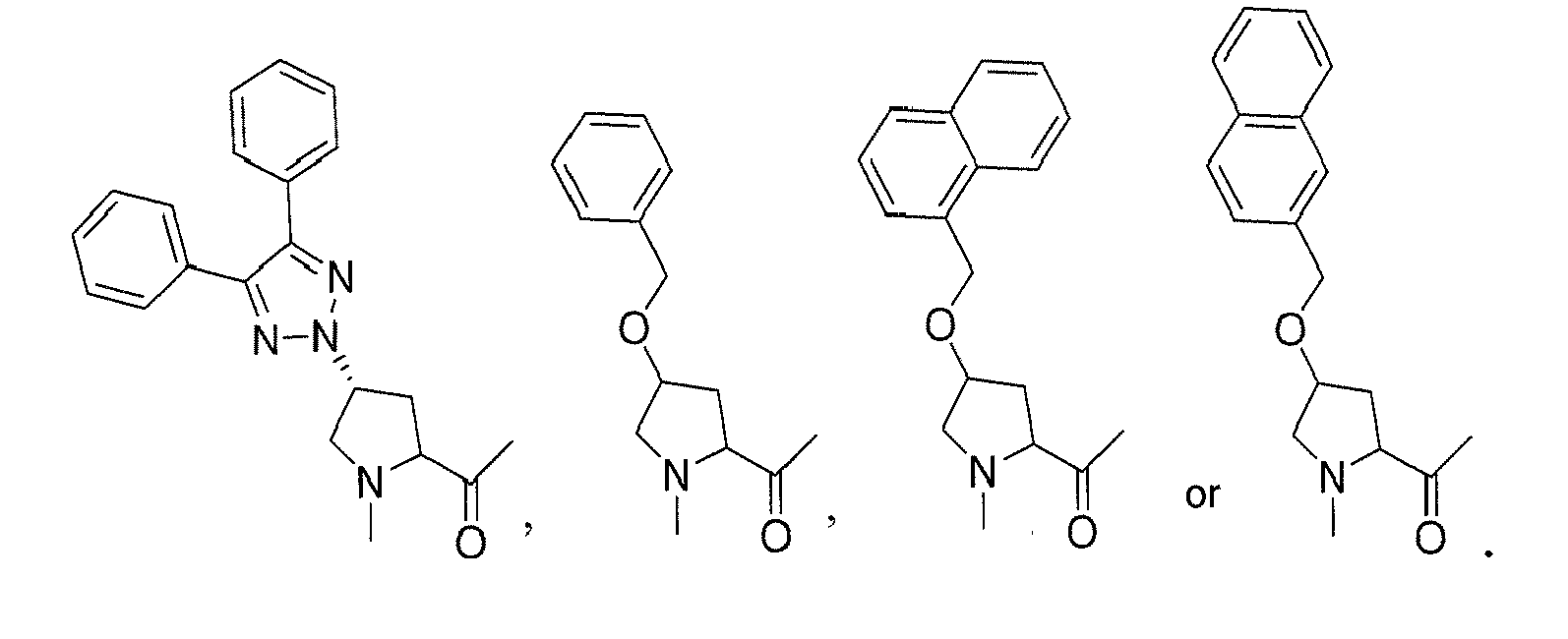
- The compound according to claim 1, wherein the


wherein each ring B is either aromatic or nonaromatic; wherein each heteroatom in the heterocyclic ring system is N, NH, O, S, SO, or SO2;
wherein, in the bi- and tri-cyclic ring system, each ring is linearly fused, bridged, or spirocyclic;
wherein each ring is optionally fused to a (C6-C10)aryl, (C5-C10)heteroaryl (C3-C10)cycloalkyl, or (C3-C10)heterocyclyl; and
wherein each ring is optionally substituted with up to 3 substituents selected independently from J; wherein, optionally, the


- The compound of formula I or II according to claim 1, wherein the


wherein each ring B is either aromatic or nonaromatic; wherein each heteroatom in the heterocyclic ring system is N, NH, O, S, SO, or SO2;
wherein, in the ring system, each ring is linearly fused, bridged, or spirocyclic;
wherein each ring is optionally fused to a (C6-C10)aryl, (C5-C10)heteroaryl, (C3-C10)cycloalkyl, or (C3-C10)heterocyclyl; and
wherein each ring is optionally substituted with up to 3 substituents selected independently from J. - The compound according to claim 9, wherein the





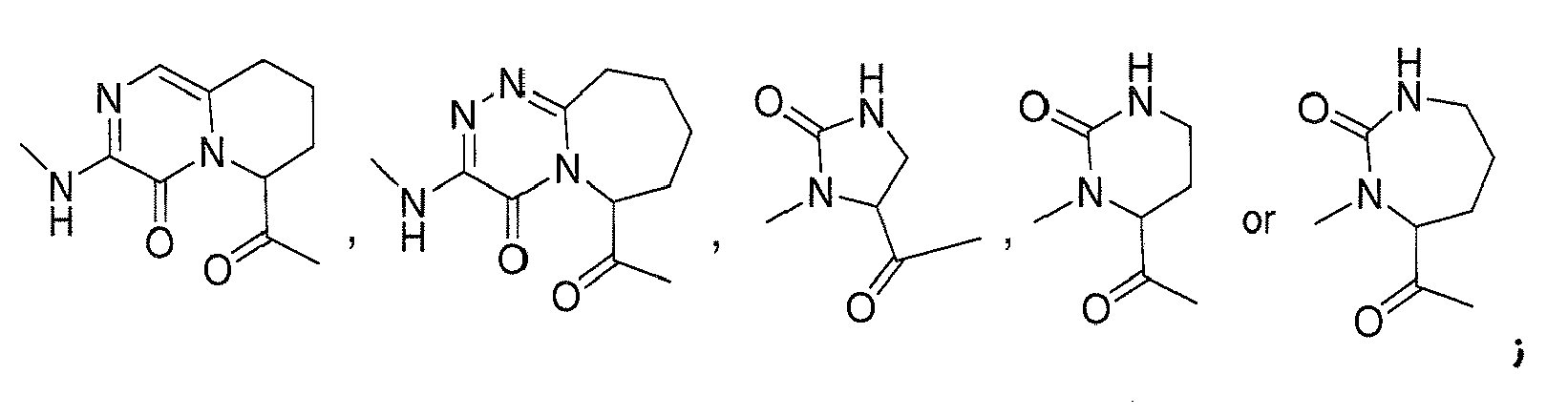


wherein each ring B is either aromatic or nonaromatic; wherein each heteroatom in the heterocyclic ring system is N, NH, O, S, SO, or SO2;
wherein each ring is optionally fused to a (C6-C10)aryl, (C5-C10)heteroaryl, (C3-C10)cycloalkyl, or (C3-C10)heterocyclyl;
wherein, in the carbocyclic or heterocyclic ring system, each ring is linearly fused, bridged, or spirocyclic; and
wherein each ring is optionally substituted with up to 3 substituents selected independently from J; or wherein the


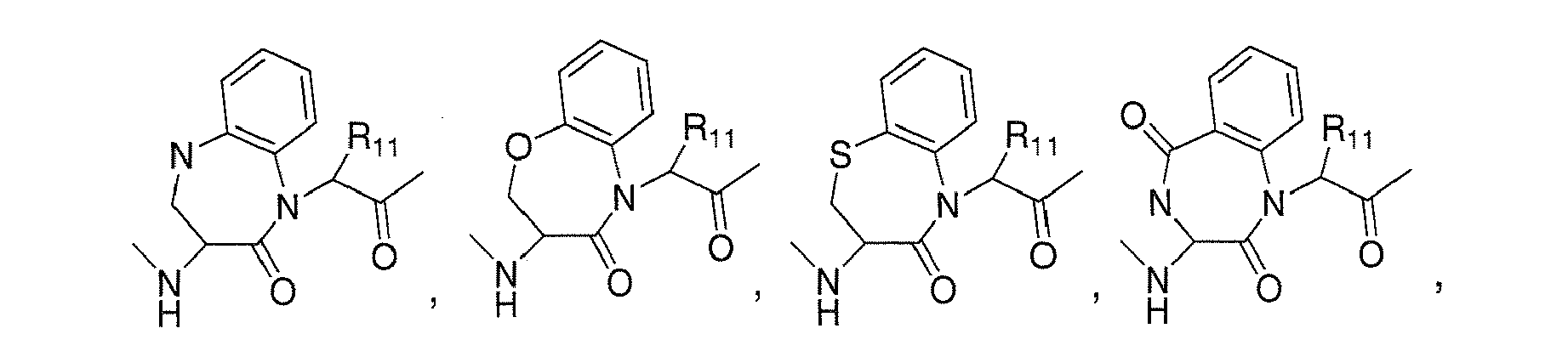

- The compound of formula I or II according to claim 1, wherein R11 and R12 together with the atoms to which they are bound form a 6- to 10-membered mono- or bicyclic carbocyclic or heterocyclic ring system;
wherein each heteroatom in the heterocyclic ring system is selected from the group consisting of N, NH, O, S, SO, and SO2; and
wherein said ring has up to 3 substituents selected independently from J. - The compound according to any one of claims 1-11, wherein R5 and R5' is:

- The compound according to any one of claims 1-11, wherein R5, is H and R5 is (C1-C6)-alkyl, wherein the alkyl is optionally substituted with fluoro or -SH, wherein, optionally, the (C1-C6)-alkyl is substituted with 1 to 3 fluoro groups.
- The compound according to any one of claims 1-11, wherein R5 and R5, are independently:

- The compound according to any one of claims 1-14, wherein R13 is:(C1-C6)-alkyl,(C3-C10)-cycloalkyl,[(C3-C10)-cycloalkyl]-(C1-C12)-alkyl,(C6-C10)-aryl,(C6-C10)-aryl-(C1-C6)alkyl,(C3-C10)-heterocyclyl,(C6-C10)-heterocyclyl-(C1-C6) alkyl,(C5-C10)-heteroaryl, or(C5-C10)-heteroaryl-(C1-C6)-alkyl;wherein R13 is optionally substituted with up to 3 substituents independently selected from J; and
wherein up to 3 aliphatic carbon atoms in R13 may be replaced by a heteroatom selected from O, NH, S, SO, or SO2 in a chemically stable arrangement; and, optionally, wherein R13 is:

- The compound according to any one of claims 1-15, wherein R1 if present is(C1-C6)-alkyl,(C3-C10)-cycloalkyl,[(C3-C10)-cycloalkyl]-(C1-C12)-alkyl,(C6-C10)-aryl,(C6-C10)-aryl-(C1-C6)alkyl,(C3-C10)-heterocyclyl,(C6-C10)-heterocyclyl-(C1-C6)alkyl,(C5-C10)-heteroaryl, or(C5-C10)-heteroaryl-(C1-C6)-alkyl;wherein R1 is optionally substituted with up to 3 substituents independently selected from J; and
wherein up to 3 aliphatic carbon atoms in R1 may be replaced by a heteroatom selected from O, NH, S, SO, or SO2 in a chemically stable arrangement; and, optionally, wherein R1 is:

- The compound according to any one of claims 1-16, wherein T is:(C5-C10)heteroaryl, wherein T is optionally substituted with up to 3 J substitutents; or wherein T is:
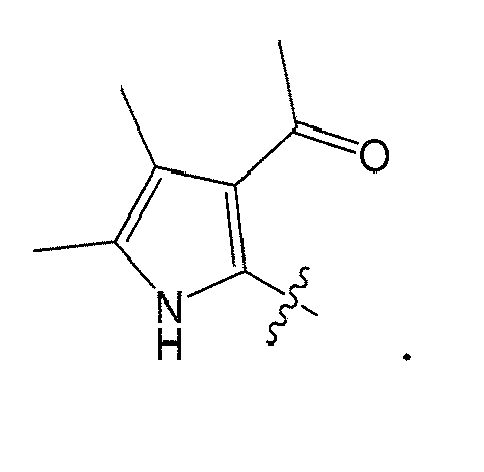
- The compound of formula I or IV according to claim 1, wherein T is:


T is optionally substituted with up to 3 J substituents, wherein J is as defined in claim 1;Z is independently O, S, NR10, or C(R10)2, wherein R10 is as defined in claim 1;n is independently 1 or 2; andis independently a single bond or a double bond; or wherein T is:


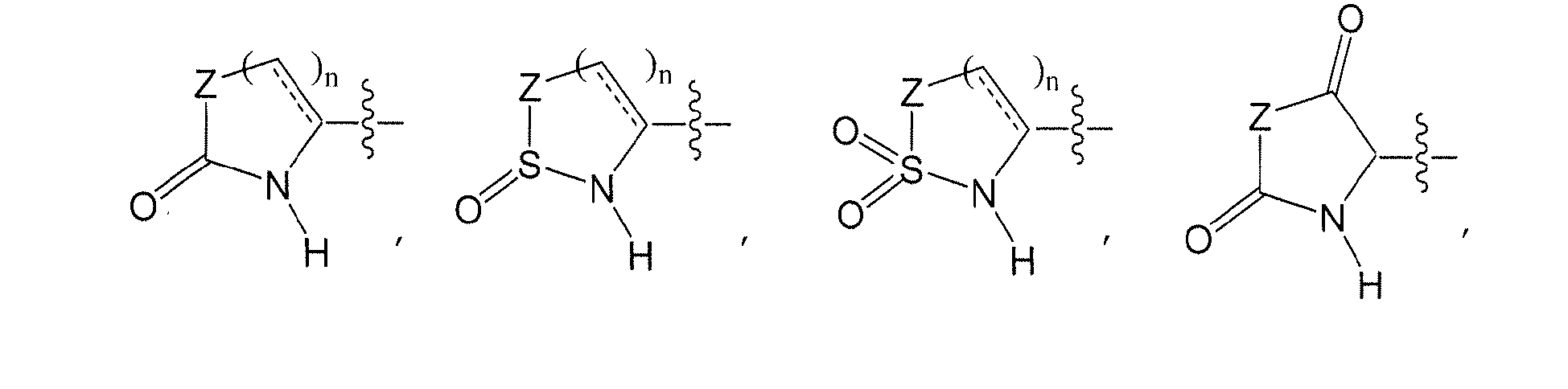
 T is optionally substituted with up to 4 J substituents, wherein J is as defined in claim 1;Z is independently O, S, NR10, C(R10)2, SO, or SO2 wherein R10 is as defined in claim 1;n is independently 1 or 2; andwherein T is:is independently a single bond or a double bond; or


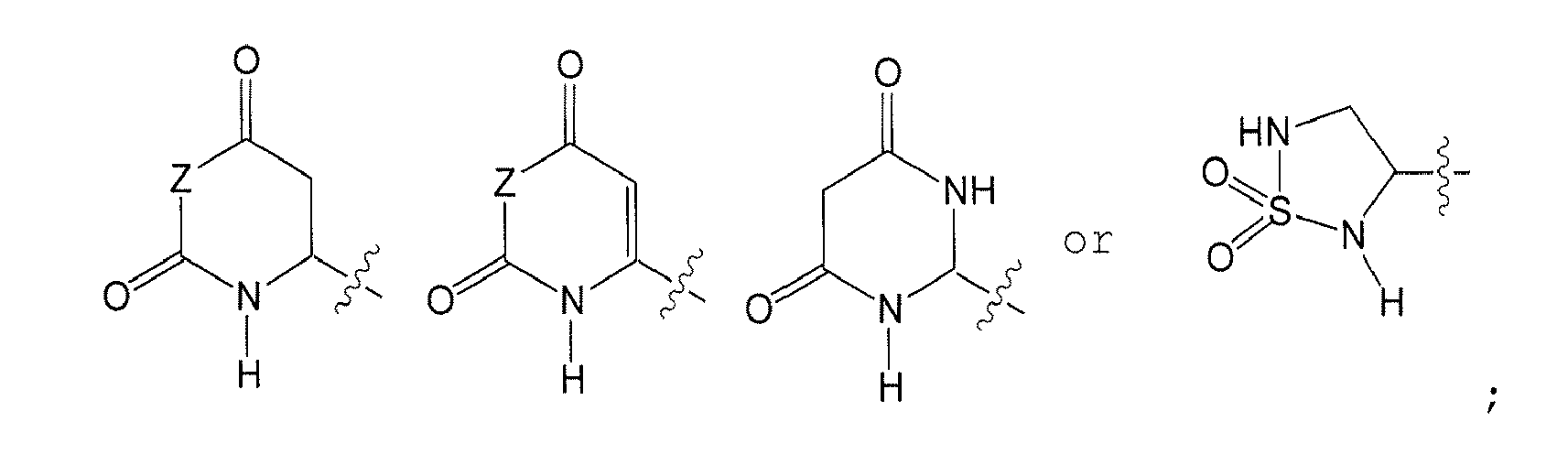
T is optionally substituted with up to 4 J substituents, wherein J is as defined in claim 1; and
Z is independently O, S, NR10, C(R10)2, SO, or SO2 wherein R10 is as defined in claim 1; or wherein T is:

- The compound according to any one of claims 1-18, wherein R2 if present, and R4 and R8 are each independently H or (C1-C3)-alkyl; or wherein R2 if present, and R4 and R8 are each H.
- The compound according to any one of claims 1-19, wherein R8 is hydrogen, V is -C(O)-, and R is a bond.
- The compound of formula I or II according to claim 1, wherein said compound is selected from:


- A pharmaceutical composition comprising a compound according to any one of claims 1-21 or a pharmaceutically acceptable salt thereof in an amount effective to inhibit a serine protease; and a acceptable carrier, adjuvant or vehicle, and, optionally, wherein said composition is formulated for administration to a patient.
- The composition according to claim 22, wherein said composition comprises an additional agent selected from an immunomodulatory agent; an antiviral agent; a second inhibitor of HCV protease; an inhibitor of another target in the HCV life cycle; and a cytochrome P-450 inhibitor; or combinations thereof, wherein said immunomodulatory agent optionally is α-, β-, or γ-interferon or thymosin; said antiviral agent optionally is ribavirin, amantadine, or telbivudine; said inhibitor of another target in the HCV life cycle optionally is an inhibitor of HCV helicase, polymerase, or metalloprotease; or said cytochrome P-450 inhibitor optionally is ritonavir.
- A method of inhibiting the activity of a serine protease in vitro comprising the step of contacting said serine protease with a compound according to any one of claims 1-21, said serine protease optionally being an HCV NS3 protease.
- Use of a compound of any one of claims 1 to 21 or a composition according to claim 22 for treating an HCV infection in a patient.
- The use according to claim 25, wherein said compound or composition is administered to said patient in combination with an additional agent selected from an immunomodulatory agent; an antiviral agent; a second inhibitor of HCV protease; an inhibitor of another target in the HCV life cycle; or combinations thereof; wherein said additional agent is administered to said patient as part of said composition according to claim 22 or as a separate dosage form; and, optionally, wherein said immunomodulatory agent is α-, β-, or γ-interferon or thymosin; said antiviral agent is ribavarin or amantadine; or said inhibitor of another target in the HCV life cycle is an inhibitor of HCV helicase, polymerase, or metalloprotease.
- A method of eliminating or reducing HCV contamination of a biological sample or medical or laboratory equipment, comprising the step of contacting said biological sample or medical or laboratory equipment with a composition according to claim 22 or a compound according to any one of claims 1 to 21.
- The method according to claim 27, wherein said sample or equipment is selected from blood, other body fluids, biological tissue, a surgical instrument, a surgical garment, a laboratory instrument, a laboratory garment, a blood or other body fluid collection apparatus; a blood or other body fluid storage material.
Applications Claiming Priority (3)
| Application Number | Priority Date | Filing Date | Title |
|---|---|---|---|
| US51015603P | 2003-10-10 | 2003-10-10 | |
| US51376803P | 2003-10-23 | 2003-10-23 | |
| EP04794554.8A EP1692157B1 (en) | 2003-10-10 | 2004-10-08 | Inhibitors of serine proteases, particularly hcv ns3-ns4a protease |
Related Parent Applications (1)
| Application Number | Title | Priority Date | Filing Date |
|---|---|---|---|
| EP04794554.8 Division | 2004-10-08 |
Publications (1)
| Publication Number | Publication Date |
|---|---|
| EP2361925A1 true EP2361925A1 (en) | 2011-08-31 |
Family
ID=34467967
Family Applications (2)
| Application Number | Title | Priority Date | Filing Date |
|---|---|---|---|
| EP10183579A Withdrawn EP2361925A1 (en) | 2003-10-10 | 2004-10-08 | Inhibitors of serine proteases, particularly HCV NS3-NS4A protease |
| EP04794554.8A Expired - Lifetime EP1692157B1 (en) | 2003-10-10 | 2004-10-08 | Inhibitors of serine proteases, particularly hcv ns3-ns4a protease |
Family Applications After (1)
| Application Number | Title | Priority Date | Filing Date |
|---|---|---|---|
| EP04794554.8A Expired - Lifetime EP1692157B1 (en) | 2003-10-10 | 2004-10-08 | Inhibitors of serine proteases, particularly hcv ns3-ns4a protease |
Country Status (14)
| Country | Link |
|---|---|
| US (2) | US7208600B2 (en) |
| EP (2) | EP2361925A1 (en) |
| JP (2) | JP2007532474A (en) |
| KR (2) | KR20060130027A (en) |
| CN (1) | CN101857631A (en) |
| AU (1) | AU2004282148A1 (en) |
| CA (1) | CA2541634A1 (en) |
| IL (1) | IL174863A0 (en) |
| MX (1) | MXPA06004006A (en) |
| NO (1) | NO20062101L (en) |
| NZ (1) | NZ546663A (en) |
| RU (1) | RU2006115558A (en) |
| TW (1) | TW200528472A (en) |
| WO (1) | WO2005037860A2 (en) |
Families Citing this family (122)
| Publication number | Priority date | Publication date | Assignee | Title |
|---|---|---|---|---|
| CZ298749B6 (en) * | 1996-10-18 | 2008-01-16 | Vertex Pharmaceuticals Incorporated | Inhibitors of serine proteases and pharmaceutical compositions in which the inhibitors are comprised |
| JP4806154B2 (en) * | 2000-04-03 | 2011-11-02 | バーテックス ファーマシューティカルズ インコーポレイテッド | Inhibitors of serine proteases, especially hepatitis C virus NS3 protease |
| SV2003000617A (en) * | 2000-08-31 | 2003-01-13 | Lilly Co Eli | INHIBITORS OF PROTEASA PEPTIDOMIMETICA REF. X-14912M |
| MY140680A (en) | 2002-05-20 | 2010-01-15 | Bristol Myers Squibb Co | Hepatitis c virus inhibitors |
| TW200510391A (en) * | 2003-04-11 | 2005-03-16 | Vertex Pharma | Inhibitors of serine proteases, particularly HCV NS3-NS4A protease |
| US7176208B2 (en) | 2003-04-18 | 2007-02-13 | Enanta Pharmaceuticals, Inc. | Quinoxalinyl macrocyclic hepatitis C serine protease inhibitors |
| BRPI0412761A (en) | 2003-07-18 | 2006-09-26 | Vertex Pharma | serine protease inhibitors, particularly vhc protease ns3-ns4a |
| PE20050374A1 (en) * | 2003-09-05 | 2005-05-30 | Vertex Pharma | SERINE PROTEASE INHIBITORS, IN PARTICULAR HCV PROTEASE NS3-NS4A |
| CA2538791A1 (en) | 2003-09-18 | 2005-03-31 | Vertex Pharmaceuticals Incorporated | Inhibitors of serine proteases, particularly hcv ns3-ns4a protease |
| CA2541634A1 (en) * | 2003-10-10 | 2005-04-28 | Vertex Pharmaceuticals Incorporated | Inhibitors of serine proteases, particularly hcv ns3-ns4a protease |
| US7491794B2 (en) * | 2003-10-14 | 2009-02-17 | Intermune, Inc. | Macrocyclic compounds as inhibitors of viral replication |
| EP1677827B1 (en) * | 2003-10-27 | 2008-12-10 | Vertex Pharmaceuticals Incorporated | Combinations for hcv treatment |
| EP2311851A3 (en) * | 2004-02-04 | 2011-05-25 | Vertex Pharmaceuticals Incorporated | Inhibitors of serine proteases, particularly HCV NS3-NS4A protease |
| US7323447B2 (en) | 2005-02-08 | 2008-01-29 | Bristol-Myers Squibb Company | Hepatitis C virus inhibitors |
| US7592336B2 (en) | 2005-05-10 | 2009-09-22 | Bristol-Myers Squibb Company | Hepatitis C virus inhibitors |
| US7601686B2 (en) | 2005-07-11 | 2009-10-13 | Bristol-Myers Squibb Company | Hepatitis C virus inhibitors |
| JP5249028B2 (en) * | 2005-07-25 | 2013-07-31 | インターミューン・インコーポレーテッド | Novel macrocyclic inhibitor of hepatitis C virus replication |
| CA2617679A1 (en) * | 2005-08-02 | 2007-02-08 | Steve Lyons | Inhibitors of serine proteases |
| US8399615B2 (en) | 2005-08-19 | 2013-03-19 | Vertex Pharmaceuticals Incorporated | Processes and intermediates |
| AR055395A1 (en) * | 2005-08-26 | 2007-08-22 | Vertex Pharma | INHIBITING COMPOUNDS OF THE ACTIVITY OF SERINA PROTEASA NS3-NS4A OF HEPATITIS C VIRUS |
| US7964624B1 (en) * | 2005-08-26 | 2011-06-21 | Vertex Pharmaceuticals Incorporated | Inhibitors of serine proteases |
| GEP20104956B (en) | 2005-10-11 | 2010-04-12 | Array Biopharma Inc | Compounds for inhibiting hepatitis c viral replication and use thereof |
| US7772183B2 (en) | 2005-10-12 | 2010-08-10 | Bristol-Myers Squibb Company | Hepatitis C virus inhibitors |
| US7741281B2 (en) | 2005-11-03 | 2010-06-22 | Bristol-Myers Squibb Company | Hepatitis C virus inhibitors |
| CA2643688A1 (en) | 2006-02-27 | 2007-08-30 | Vertex Pharmaceuticals Incorporated | Co-crystals and pharmaceutical compositions comprising the same |
| WO2007109080A2 (en) | 2006-03-16 | 2007-09-27 | Vertex Pharmaceuticals Incorporated | Deuterated hepatitis c protease inhibitors |
| CA2643680A1 (en) * | 2006-04-11 | 2007-11-22 | Novartis Ag | Hcv/hiv inhibitors and their uses |
| US7951823B2 (en) | 2006-05-23 | 2011-05-31 | Irm Llc | Compounds and compositions as channel activating protease inhibitors |
| KR20090024834A (en) * | 2006-07-05 | 2009-03-09 | 인터뮨, 인크. | New Inhibitors of Hepatitis C Virus Replication |
| EP2049474B1 (en) | 2006-07-11 | 2015-11-04 | Bristol-Myers Squibb Company | Hepatitis c virus inhibitors |
| US8343477B2 (en) | 2006-11-01 | 2013-01-01 | Bristol-Myers Squibb Company | Inhibitors of hepatitis C virus |
| US7772180B2 (en) | 2006-11-09 | 2010-08-10 | Bristol-Myers Squibb Company | Hepatitis C virus inhibitors |
| US7763584B2 (en) | 2006-11-16 | 2010-07-27 | Bristol-Myers Squibb Company | Hepatitis C virus inhibitors |
| US7888464B2 (en) | 2006-11-16 | 2011-02-15 | Bristol-Myers Squibb Company | Hepatitis C virus inhibitors |
| US8003604B2 (en) | 2006-11-16 | 2011-08-23 | Bristol-Myers Squibb Company | Hepatitis C virus inhibitors |
| KR20090108131A (en) | 2007-02-09 | 2009-10-14 | 아이알엠 엘엘씨 | Compounds and Compositions as Channel Activating Protease Inhibitors |
| WO2008106058A2 (en) * | 2007-02-27 | 2008-09-04 | Vertex Pharmaceuticals Incorporated | Inhibitors of serine proteases |
| GEP20125645B (en) | 2007-02-27 | 2012-09-25 | Vertex Pharma | Co-crystals and pharmaceutical compositions comprising the same |
| KR20100024920A (en) * | 2007-05-03 | 2010-03-08 | 인터뮨, 인크. | Novel macrocyclic inhibitors of hepatitis c virus replication |
| MX2009012093A (en) | 2007-05-10 | 2010-01-25 | Intermune Inc | Novel peptide inhibitors of hepatitis c virus replication. |
| WO2009032198A1 (en) | 2007-08-30 | 2009-03-12 | Vertex Pharmaceuticals Incorporated | Co-crystals and pharmaceutical compositions comprising the same |
| US8419332B2 (en) * | 2007-10-19 | 2013-04-16 | Atlas Bolt & Screw Company Llc | Non-dimpling fastener |
| CA2710144A1 (en) | 2007-12-21 | 2009-07-02 | Avila Therapeutics, Inc. | Hcv protease inhibitors and uses thereof |
| US8309685B2 (en) * | 2007-12-21 | 2012-11-13 | Celgene Avilomics Research, Inc. | HCV protease inhibitors and uses thereof |
| US8202996B2 (en) | 2007-12-21 | 2012-06-19 | Bristol-Myers Squibb Company | Crystalline forms of N-(tert-butoxycarbonyl)-3-methyl-L-valyl-(4R)-4-((7-chloro-4-methoxy-1-isoquinolinyl)oxy)-N- ((1R,2S)-1-((cyclopropylsulfonyl)carbamoyl)-2-vinylcyclopropyl)-L-prolinamide |
| US8293705B2 (en) | 2007-12-21 | 2012-10-23 | Avila Therapeutics, Inc. | HCV protease inhibitors and uses thereof |
| WO2009082697A1 (en) | 2007-12-21 | 2009-07-02 | Avila Therapeutics, Inc. | Hcv protease inhibitors and uses thereof |
| CA2712940A1 (en) * | 2008-01-24 | 2009-07-30 | Enanta Pharmaceuticals, Inc. | Heteroaryl-containing tripeptide hcv serine protease inhibitors |
| KR20100118991A (en) | 2008-02-04 | 2010-11-08 | 아이데닉스 파마슈티칼스, 인코포레이티드 | Macrocyclic serine protease inhibitors |
| KR20110005869A (en) * | 2008-04-15 | 2011-01-19 | 인터뮨, 인크. | Novel Macrocyclic Inhibitors of Hepatitis C Virus Replication |
| US8163921B2 (en) | 2008-04-16 | 2012-04-24 | Bristol-Myers Squibb Company | Hepatitis C virus inhibitors |
| US8044023B2 (en) | 2008-05-29 | 2011-10-25 | Bristol-Myers Squibb Company | Hepatitis C virus inhibitors |
| US7964560B2 (en) | 2008-05-29 | 2011-06-21 | Bristol-Myers Squibb Company | Hepatitis C virus inhibitors |
| WO2010014134A1 (en) | 2008-07-02 | 2010-02-04 | Idenix Pharamaceuticals, Inc. | Compounds and pharmaceutical compositions for the treatment of viral infections |
| US8207341B2 (en) | 2008-09-04 | 2012-06-26 | Bristol-Myers Squibb Company | Process or synthesizing substituted isoquinolines |
| US8563505B2 (en) | 2008-09-29 | 2013-10-22 | Bristol-Myers Squibb Company | Hepatitis C virus inhibitors |
| US8044087B2 (en) | 2008-09-29 | 2011-10-25 | Bristol-Myers Squibb Company | Hepatitis C virus inhibitors |
| CN102216321A (en) * | 2008-10-15 | 2011-10-12 | 因特蒙公司 | Therapeutic antiviral peptides |
| US8283310B2 (en) | 2008-12-15 | 2012-10-09 | Bristol-Myers Squibb Company | Hepatitis C virus inhibitors |
| US8315815B2 (en) | 2008-12-30 | 2012-11-20 | The Invention Science Fund I, Llc | Computational methods and systems for suggesting modulators of CYP450 as treatment options |
| US8073633B2 (en) * | 2008-12-30 | 2011-12-06 | The Invention Science Fund I, Llc | Computational methods and systems for suggesting modulators of CYP450 as treatment options |
| US8321151B2 (en) | 2008-12-30 | 2012-11-27 | The Invention Science Fund I, Llc | Computational methods and systems for treatment in relation to modulation of CYP450 enzyme activity |
| US8102720B2 (en) * | 2009-02-02 | 2012-01-24 | Qualcomm Incorporated | System and method of pulse generation |
| AR075584A1 (en) * | 2009-02-27 | 2011-04-20 | Intermune Inc | THERAPEUTIC COMPOSITIONS THAT INCLUDE beta-D-2'-DESOXI-2'-FLUORO-2'-C-METHYLYCTIDINE AND A CARDIEX ISOINDOL ACID DERIVATIVE AND ITS USES. COMPOUND. |
| JP5690286B2 (en) | 2009-03-04 | 2015-03-25 | イデニク プハルマセウティカルス,インコーポレイテッド | Phosphothiophene and phosphothiazole HCV polymerase inhibitors |
| US8377962B2 (en) | 2009-04-08 | 2013-02-19 | Idenix Pharmaceuticals, Inc. | Macrocyclic serine protease inhibitors |
| US20110182850A1 (en) * | 2009-04-10 | 2011-07-28 | Trixi Brandl | Organic compounds and their uses |
| US8512690B2 (en) * | 2009-04-10 | 2013-08-20 | Novartis Ag | Derivatised proline containing peptide compounds as protease inhibitors |
| US9284307B2 (en) | 2009-08-05 | 2016-03-15 | Idenix Pharmaceuticals Llc | Macrocyclic serine protease inhibitors |
| WO2011038293A1 (en) * | 2009-09-28 | 2011-03-31 | Intermune, Inc. | Cyclic peptide inhibitors of hepatitis c virus replication |
| WO2011041551A1 (en) * | 2009-10-01 | 2011-04-07 | Intermune, Inc. | Therapeutic antiviral peptides |
| US20110117055A1 (en) | 2009-11-19 | 2011-05-19 | Macdonald James E | Methods of Treating Hepatitis C Virus with Oxoacetamide Compounds |
| SG181797A1 (en) | 2009-12-18 | 2012-07-30 | Idenix Pharmaceuticals Inc | 5,5-fused arylene or heteroarylene hepatitis c virus inhibitors |
| TWI515000B (en) | 2010-04-01 | 2016-01-01 | 伊迪尼克製藥公司 | Compounds and pharmaceutical compositions for the treatment of viral infections |
| US9353100B2 (en) | 2011-02-10 | 2016-05-31 | Idenix Pharmaceuticals Llc | Macrocyclic serine protease inhibitors, pharmaceutical compositions thereof, and their use for treating HCV infections |
| CN103842369A (en) | 2011-03-31 | 2014-06-04 | 埃迪尼克斯医药公司 | Compounds and pharmaceutical compositions for the treatment of viral infections |
| US20120252721A1 (en) | 2011-03-31 | 2012-10-04 | Idenix Pharmaceuticals, Inc. | Methods for treating drug-resistant hepatitis c virus infection with a 5,5-fused arylene or heteroarylene hepatitis c virus inhibitor |
| US8957203B2 (en) | 2011-05-05 | 2015-02-17 | Bristol-Myers Squibb Company | Hepatitis C virus inhibitors |
| US8691757B2 (en) | 2011-06-15 | 2014-04-08 | Bristol-Myers Squibb Company | Hepatitis C virus inhibitors |
| AR088441A1 (en) | 2011-09-12 | 2014-06-11 | Idenix Pharmaceuticals Inc | SUBSTITUTED CARBONYLOXYMETHYLPHOSPHORAMIDATE COMPOUNDS AND PHARMACEUTICAL COMPOSITIONS FOR THE TREATMENT OF VIRAL INFECTIONS |
| WO2013039855A1 (en) | 2011-09-12 | 2013-03-21 | Idenix Pharmaceuticals, Inc. | Compounds and pharmaceutical compositions for the treatment of viral infections |
| TW201331221A (en) | 2011-10-14 | 2013-08-01 | Idenix Pharmaceuticals Inc | Substituted 3',5'-cyclic phosphates of purine nucleotide compounds and pharmaceutical compositions for the treatment of viral infections |
| CA3131037A1 (en) | 2011-11-30 | 2013-06-06 | Emory University | Antiviral jak inhibitors useful in treating or preventing retroviral and other viral infections |
| WO2013133927A1 (en) | 2012-02-13 | 2013-09-12 | Idenix Pharmaceuticals, Inc. | Pharmaceutical compositions of 2'-c-methyl-guanosine, 5'-[2-[(3-hydroxy-2,2-dimethyl-1-oxopropyl)thio]ethyl n-(phenylmethyl)phosphoramidate] |
| EP2852604B1 (en) | 2012-05-22 | 2017-04-12 | Idenix Pharmaceuticals LLC | 3',5'-cyclic phosphoramidate prodrugs for hcv infection |
| AP3913A (en) | 2012-05-22 | 2016-11-26 | Idenix Pharamaceuticals Inc | D-amino acid compounds for liver disease |
| US9296778B2 (en) | 2012-05-22 | 2016-03-29 | Idenix Pharmaceuticals, Inc. | 3′,5′-cyclic phosphate prodrugs for HCV infection |
| SG11201502750UA (en) | 2012-10-08 | 2015-06-29 | Idenix Pharmaceuticals Inc | 2'-chloro nucleoside analogs for hcv infection |
| SI2909205T1 (en) | 2012-10-19 | 2017-02-28 | Bristol-Myers Squibb Company | 9-methyl substituted hexadecahydrocyclopropa(e)pyrrolo(1,2-a)(1,4)diazacyclopentadecinyl carbamate derivatives as non-structural 3 (ns3) protease inhibitors for the treatment of hepatitis c virus infections |
| US20140112886A1 (en) | 2012-10-19 | 2014-04-24 | Idenix Pharmaceuticals, Inc. | Dinucleotide compounds for hcv infection |
| EP2909222B1 (en) | 2012-10-22 | 2021-05-26 | Idenix Pharmaceuticals LLC | 2',4'-bridged nucleosides for hcv infection |
| EP2914613B1 (en) | 2012-11-02 | 2017-11-22 | Bristol-Myers Squibb Company | Hepatitis c virus inhibitors |
| US9643999B2 (en) | 2012-11-02 | 2017-05-09 | Bristol-Myers Squibb Company | Hepatitis C virus inhibitors |
| EP2914598B1 (en) | 2012-11-02 | 2017-10-18 | Bristol-Myers Squibb Company | Hepatitis c virus inhibitors |
| US9409943B2 (en) | 2012-11-05 | 2016-08-09 | Bristol-Myers Squibb Company | Hepatitis C virus inhibitors |
| EP2920195A1 (en) | 2012-11-14 | 2015-09-23 | IDENIX Pharmaceuticals, Inc. | D-alanine ester of rp-nucleoside analog |
| US20140140952A1 (en) | 2012-11-14 | 2014-05-22 | Idenix Pharmaceuticals, Inc. | D-Alanine Ester of Sp-Nucleoside Analog |
| EP2935304A1 (en) | 2012-12-19 | 2015-10-28 | IDENIX Pharmaceuticals, Inc. | 4'-fluoro nucleosides for the treatment of hcv |
| US9309275B2 (en) | 2013-03-04 | 2016-04-12 | Idenix Pharmaceuticals Llc | 3′-deoxy nucleosides for the treatment of HCV |
| WO2014137930A1 (en) | 2013-03-04 | 2014-09-12 | Idenix Pharmaceuticals, Inc. | Thiophosphate nucleosides for the treatment of hcv |
| US9580463B2 (en) | 2013-03-07 | 2017-02-28 | Bristol-Myers Squibb Company | Hepatitis C virus inhibitors |
| EP2981542B1 (en) | 2013-04-01 | 2021-09-15 | Idenix Pharmaceuticals LLC | 2',4'-fluoro nucleosides for the treatment of hcv |
| US10005779B2 (en) | 2013-06-05 | 2018-06-26 | Idenix Pharmaceuticals Llc | 1′,4′-thio nucleosides for the treatment of HCV |
| WO2015017713A1 (en) | 2013-08-01 | 2015-02-05 | Idenix Pharmaceuticals, Inc. | D-amino acid phosphoramidate pronucleotides of halogeno pyrimidine compounds for liver disease |
| WO2015042375A1 (en) | 2013-09-20 | 2015-03-26 | Idenix Pharmaceuticals, Inc. | Hepatitis c virus inhibitors |
| WO2015061683A1 (en) | 2013-10-25 | 2015-04-30 | Idenix Pharmaceuticals, Inc. | D-amino acid phosphoramidate and d-alanine thiophosphoramidate pronucleotides of nucleoside compounds useful for the treatment of hcv |
| WO2015066370A1 (en) | 2013-11-01 | 2015-05-07 | Idenix Pharmaceuticals, Inc. | D-alanine phosphoramidate pronucleotides of 2'-methyl 2'-fluoro guanosine nucleoside compounds for the treatment of hcv |
| EP3074399A1 (en) | 2013-11-27 | 2016-10-05 | Idenix Pharmaceuticals LLC | 2'-dichloro and 2'-fluoro-2'-chloro nucleoside analogues for hcv infection |
| EP3083654A1 (en) | 2013-12-18 | 2016-10-26 | Idenix Pharmaceuticals LLC | 4'-or nucleosides for the treatment of hcv |
| EP2899207A1 (en) | 2014-01-28 | 2015-07-29 | Amikana.Biologics | New method for testing HCV protease inhibition |
| US20170066779A1 (en) | 2014-03-05 | 2017-03-09 | Idenix Pharmaceuticals Llc | Solid forms of a flaviviridae virus inhibitor compound and salts thereof |
| WO2015134561A1 (en) | 2014-03-05 | 2015-09-11 | Idenix Pharmaceuticals, Inc. | Pharmaceutical compositions comprising a 5,5-fused heteroarylene flaviviridae inhibitor and their use for treating or preventing flaviviridae infection |
| WO2015134780A1 (en) | 2014-03-05 | 2015-09-11 | Idenix Pharmaceuticals, Inc. | Solid prodrug forms of 2'-chloro-2'-methyl uridine for hcv |
| WO2015161137A1 (en) | 2014-04-16 | 2015-10-22 | Idenix Pharmaceuticals, Inc. | 3'-substituted methyl or alkynyl nucleosides for the treatment of hcv |
| US11072581B2 (en) * | 2015-02-13 | 2021-07-27 | Oxford Drug Design Limited | N-acyl-arylsulfonamide derivatives as aminoacyl-tRNA synthetase inhibitors |
| SG10201913587WA (en) | 2016-02-05 | 2020-02-27 | Denali Therapeutics Inc | Inhibitors of receptor-interacting protein kinase 1 |
| GB201617064D0 (en) | 2016-10-07 | 2016-11-23 | Inhibox Limited And Latvian Institute Of Organic Synthesis The | Compounds and their therapeutic use |
| DK3552017T3 (en) | 2016-12-09 | 2022-05-16 | Denali Therapeutics Inc | COMPOUNDS USEFUL AS RIPK1 INHIBITORS |
| CA3114883A1 (en) * | 2018-10-02 | 2020-04-09 | Disc Medicine, Inc. | Matriptase 2 inhibitors and uses thereof |
| US20220099637A1 (en) | 2018-12-04 | 2022-03-31 | Bristol-Myers Squibb Company | Methods of analysis using in-sample calibration curve by multiple isotopologue reaction monitoring |
| US20220348563A1 (en) * | 2019-09-13 | 2022-11-03 | Dana-Farber Cancer Institute, Inc. | Kdm inhibitors and uses thereof |
| WO2023137035A1 (en) | 2022-01-12 | 2023-07-20 | Denali Therapeutics Inc. | Crystalline forms of (s)-5-benzyl-n-(5-methyl-4-oxo-2, 3,4,5- tetrahydropyrido [3,2-b] [l,4]oxazepin-3-yl)-4h-l,2,4-triazole-3-carboxamide |
Citations (49)
| Publication number | Priority date | Publication date | Assignee | Title |
|---|---|---|---|---|
| WO1994014436A1 (en) | 1992-12-29 | 1994-07-07 | Abbott Laboratories | Retroviral protease inhibiting compounds |
| WO1995007696A1 (en) | 1993-09-13 | 1995-03-23 | Abbott Laboratories | Pharmaceutical composition of hiv-protease inhibitors |
| WO1995009614A1 (en) | 1993-10-01 | 1995-04-13 | Abbott Laboratories | Pharmaceutical composition |
| EP0675112A1 (en) * | 1994-03-31 | 1995-10-04 | Bristol-Myers Squibb Company | Imidazole-containing inhibitors of farnesyl protein transferase |
| US5484801A (en) | 1994-01-28 | 1996-01-16 | Abbott Laboratories | Pharmaceutical composition for inhibiting HIV protease |
| WO1997040028A1 (en) | 1996-04-23 | 1997-10-30 | Vertex Pharmaceuticals Incorporated | Urea derivatives as inhibitors of impdh enzyme |
| WO1997043310A1 (en) | 1996-05-10 | 1997-11-20 | Schering Corporation | Synthetic inhibitors of hepatitis c virus ns3 protease |
| WO1998017679A1 (en) | 1996-10-18 | 1998-04-30 | Vertex Pharmaceuticals Incorporated | Inhibitors of serine proteases, particularly hepatitis c virus ns3 protease |
| WO1998022496A2 (en) | 1996-11-18 | 1998-05-28 | F. Hoffmann-La Roche Ag | Antiviral peptide derivatives |
| US5807876A (en) | 1996-04-23 | 1998-09-15 | Vertex Pharmaceuticals Incorporated | Inhibitors of IMPDH enzyme |
| WO1998040381A1 (en) | 1997-03-14 | 1998-09-17 | Vertex Pharmaceuticals Incorporated | Inhibitors of impdh enzyme |
| WO1998046630A1 (en) | 1997-04-16 | 1998-10-22 | Peptide Therapeutics Limited | Hepatitis c ns3 protease inhibitors |
| WO1999007734A2 (en) | 1997-08-11 | 1999-02-18 | Boehringer Ingelheim (Canada) Ltd. | Hepatitis c inhibitor peptide analogues |
| WO1999007733A2 (en) | 1997-08-11 | 1999-02-18 | Boehringer Ingelheim (Canada) Ltd. | Hepatitis c inhibitor peptides |
| WO1999038888A2 (en) | 1998-02-02 | 1999-08-05 | Istituto Di Ricerche Di Biologia Molecolare | Peptide inhibitors of the serine protease activity associated to the ns3 protein of hcv, relevant uses and process of production |
| WO1999050230A1 (en) | 1998-03-31 | 1999-10-07 | Vertex Pharmaceuticals Incorporated | Inhibitors of serine proteases, particularly hepatitis c virus ns3 protease |
| WO1999064442A1 (en) | 1998-06-10 | 1999-12-16 | Istituto Di Ricerche Di Biologia Molecolare P Angeletti S.P.A. | Peptide inhibitors of hepatitis c virus ns3 protease |
| WO2000009588A1 (en) | 1998-08-12 | 2000-02-24 | Universität Stuttgart | Modification of engineering-polymers with basic n groups and ion-exchange groups in the side chain |
| WO2000009543A2 (en) | 1998-08-10 | 2000-02-24 | Boehringer Ingelheim (Canada) Ltd. | Hepatitis c inhibitor tri-peptides |
| US6037157A (en) | 1995-06-29 | 2000-03-14 | Abbott Laboratories | Method for improving pharmacokinetics |
| US6054472A (en) | 1996-04-23 | 2000-04-25 | Vertex Pharmaceuticals, Incorporated | Inhibitors of IMPDH enzyme |
| WO2000031129A1 (en) | 1998-11-26 | 2000-06-02 | Istituto Di Ricerche Di Biologia Molecolare P Angeletti Spa | Pharmaceutical compounds for the inhibition of hepatitis c virus ns3 protease |
| WO2000056331A1 (en) | 1999-03-19 | 2000-09-28 | Vertex Pharmaceuticals Incorporated | Inhibitors of impdh enzyme |
| WO2000059929A1 (en) | 1999-04-06 | 2000-10-12 | Boehringer Ingelheim (Canada) Ltd. | Macrocyclic peptides active against the hepatitis c virus |
| WO2001007407A1 (en) | 1999-07-26 | 2001-02-01 | Bristol-Myers Squibb Pharma Company | Lactam inhibitors of hepatitis c virus ns3 protease |
| WO2001064678A2 (en) | 2000-02-29 | 2001-09-07 | Bristol-Myers Squibb Pharma Company | Inhibitors of hepatitis c virus ns3 protease |
| WO2001074768A2 (en) | 2000-04-03 | 2001-10-11 | Vertex Pharmaceuticals Incorporated | Inhibitors of serine proteases, particularly hepatitis c virus ns3 protease |
| WO2001077113A2 (en) | 2000-04-05 | 2001-10-18 | Schering Corporation | Macrocyclic ns3-serine protease inhibitors of hepatitis c virus comprising n-cyclic p2 moieties |
| WO2001081325A2 (en) | 2000-04-19 | 2001-11-01 | Schering Corporation | Macrocyclic ns3-serine protease inhibitors of hepatitis c virus comprising alkyl and aryl alanine p2 moieties |
| WO2002008244A2 (en) | 2000-07-21 | 2002-01-31 | Schering Corporation | Peptides as ns3-serine protease inhibitors of hepatitis c virus |
| WO2002008256A2 (en) | 2000-07-21 | 2002-01-31 | Schering Corporation | Peptides as ns3-serine protease inhibitors of hepatitis c virus |
| WO2002008198A2 (en) | 2000-07-21 | 2002-01-31 | Schering Corporation | Novel imidazolidinones as ns3-serine protease inhibitors of hepatitis c virus |
| WO2002008187A1 (en) | 2000-07-21 | 2002-01-31 | Schering Corporation | Novel peptides as ns3-serine protease inhibitors of hepatitis c virus |
| WO2002018369A2 (en) | 2000-08-31 | 2002-03-07 | Eli Lilly And Company | Peptidomimetic protease inhibitors |
| WO2002048116A2 (en) | 2000-12-13 | 2002-06-20 | Bristol-Myers Squibb Pharma Company | Inhibitors of hepatitis c virus ns3 protease |
| WO2002048157A2 (en) | 2000-12-13 | 2002-06-20 | Bristol-Myers Squibb Pharma Company | Imidazolidinones and their related derivatives as hepatitis c virus ns3 protease inhibitors |
| WO2002060926A2 (en) | 2000-11-20 | 2002-08-08 | Bristol-Myers Squibb Company | Hepatitis c tripeptide inhibitors |
| WO2002079234A1 (en) | 2001-03-29 | 2002-10-10 | Istituto Di Ricerche Di Biologia Molecolare P. Angeletti Spa | Peptides and their use as inhibitors of hepatitis c virus ns3 protease |
| US20020177725A1 (en) | 2000-10-23 | 2002-11-28 | Priestley E. Scott | Peptide inhibitors of hepatitis C virus NS3 protein |
| US20030008828A1 (en) | 1999-07-26 | 2003-01-09 | Priestley E. Scott | Novel lactam inhibitors of hepatitis C virus NS3 protease |
| WO2003006490A1 (en) | 2001-07-11 | 2003-01-23 | Vertex Pharmaceuticals Incorporated | Bridged bicyclic serine protease inhibitors |
| WO2003035060A1 (en) * | 2001-10-24 | 2003-05-01 | Vertex Pharmaceuticals Incorporated | Inhibitors of serine protease, particularly hepatitis c virus ns3-ns4a protease, incorporating a fused ring system |
| WO2003064416A1 (en) * | 2002-02-01 | 2003-08-07 | Boehringer Ingelheim International Gmbh | Heterocyclic tripeptides as hepatitis c inhibitors |
| WO2003087092A2 (en) * | 2002-04-11 | 2003-10-23 | Vertex Pharmaceuticals Incorporated | Inhibitors of serine proteases, particularly hepatitis c virus ns3 - ns4 protease |
| WO2004037855A1 (en) * | 2002-10-25 | 2004-05-06 | Boehringer Ingelheim International Gmbh | Macrocyclic peptides active against the hepatitis c virus |
| WO2004072243A2 (en) | 2003-02-07 | 2004-08-26 | Enanta Pharmaceuticals, Inc. | Macrocyclic hepatitis c serine protease inhibitors |
| WO2004092161A1 (en) * | 2003-04-11 | 2004-10-28 | Vertex Pharmaceuticals Incorporated | Inhibitors of serine proteases, particularly hcv ns3-ns4a protease |
| WO2004092162A1 (en) * | 2003-04-11 | 2004-10-28 | Vertex Pharmaceuticals, Incorporated | Inhibitors of serine proteases, particularly hcv ns3-ns4a protease |
| WO2004103996A1 (en) * | 2003-05-21 | 2004-12-02 | Boehringer Ingelheim International Gmbh | Hepatitis c inhibitor compounds |
Family Cites Families (8)
| Publication number | Priority date | Publication date | Assignee | Title |
|---|---|---|---|---|
| DE10315645B4 (en) | 2003-04-04 | 2005-07-14 | Zf Boge Elastmetall Gmbh | Hydraulically damping rubber bush bearing for vertical mounting |
| EP1617811B1 (en) | 2003-05-01 | 2008-02-27 | The Procter & Gamble Company | Striped liquid personal cleansing compositions containing a cleansing phase and a separate benefit phase comprising a water in oil emulsion |
| BRPI0412761A (en) * | 2003-07-18 | 2006-09-26 | Vertex Pharma | serine protease inhibitors, particularly vhc protease ns3-ns4a |
| PE20050374A1 (en) * | 2003-09-05 | 2005-05-30 | Vertex Pharma | SERINE PROTEASE INHIBITORS, IN PARTICULAR HCV PROTEASE NS3-NS4A |
| CA2538791A1 (en) * | 2003-09-18 | 2005-03-31 | Vertex Pharmaceuticals Incorporated | Inhibitors of serine proteases, particularly hcv ns3-ns4a protease |
| CA2541634A1 (en) * | 2003-10-10 | 2005-04-28 | Vertex Pharmaceuticals Incorporated | Inhibitors of serine proteases, particularly hcv ns3-ns4a protease |
| EP2311851A3 (en) * | 2004-02-04 | 2011-05-25 | Vertex Pharmaceuticals Incorporated | Inhibitors of serine proteases, particularly HCV NS3-NS4A protease |
| AR055395A1 (en) * | 2005-08-26 | 2007-08-22 | Vertex Pharma | INHIBITING COMPOUNDS OF THE ACTIVITY OF SERINA PROTEASA NS3-NS4A OF HEPATITIS C VIRUS |
-
2004
- 2004-10-08 CA CA002541634A patent/CA2541634A1/en not_active Abandoned
- 2004-10-08 KR KR1020067006901A patent/KR20060130027A/en not_active Ceased
- 2004-10-08 WO PCT/US2004/033238 patent/WO2005037860A2/en not_active Ceased
- 2004-10-08 JP JP2006534377A patent/JP2007532474A/en active Pending
- 2004-10-08 CN CN201010183514A patent/CN101857631A/en active Pending
- 2004-10-08 AU AU2004282148A patent/AU2004282148A1/en not_active Abandoned
- 2004-10-08 TW TW093130680A patent/TW200528472A/en unknown
- 2004-10-08 RU RU2006115558/04A patent/RU2006115558A/en not_active Application Discontinuation
- 2004-10-08 KR KR1020117029638A patent/KR20120010278A/en not_active Ceased
- 2004-10-08 MX MXPA06004006A patent/MXPA06004006A/en active IP Right Grant
- 2004-10-08 EP EP10183579A patent/EP2361925A1/en not_active Withdrawn
- 2004-10-08 EP EP04794554.8A patent/EP1692157B1/en not_active Expired - Lifetime
- 2004-10-08 NZ NZ546663A patent/NZ546663A/en not_active IP Right Cessation
- 2004-10-12 US US10/964,214 patent/US7208600B2/en not_active Expired - Fee Related
-
2006
- 2006-04-09 IL IL174863A patent/IL174863A0/en unknown
- 2006-05-10 NO NO20062101A patent/NO20062101L/en unknown
-
2007
- 2007-03-09 US US11/716,248 patent/US8039623B2/en not_active Expired - Fee Related
-
2011
- 2011-08-18 JP JP2011179106A patent/JP2011246487A/en active Pending
Patent Citations (56)
| Publication number | Priority date | Publication date | Assignee | Title |
|---|---|---|---|---|
| WO1994014436A1 (en) | 1992-12-29 | 1994-07-07 | Abbott Laboratories | Retroviral protease inhibiting compounds |
| WO1995007696A1 (en) | 1993-09-13 | 1995-03-23 | Abbott Laboratories | Pharmaceutical composition of hiv-protease inhibitors |
| WO1995009614A1 (en) | 1993-10-01 | 1995-04-13 | Abbott Laboratories | Pharmaceutical composition |
| US5484801A (en) | 1994-01-28 | 1996-01-16 | Abbott Laboratories | Pharmaceutical composition for inhibiting HIV protease |
| EP0675112A1 (en) * | 1994-03-31 | 1995-10-04 | Bristol-Myers Squibb Company | Imidazole-containing inhibitors of farnesyl protein transferase |
| US6037157A (en) | 1995-06-29 | 2000-03-14 | Abbott Laboratories | Method for improving pharmacokinetics |
| US5807876A (en) | 1996-04-23 | 1998-09-15 | Vertex Pharmaceuticals Incorporated | Inhibitors of IMPDH enzyme |
| US6344465B1 (en) | 1996-04-23 | 2002-02-05 | Vertex Pharmaceuticals, Incorporated | Inhibitors of IMPDH enzyme |
| WO1997040028A1 (en) | 1996-04-23 | 1997-10-30 | Vertex Pharmaceuticals Incorporated | Urea derivatives as inhibitors of impdh enzyme |
| US6054472A (en) | 1996-04-23 | 2000-04-25 | Vertex Pharmaceuticals, Incorporated | Inhibitors of IMPDH enzyme |
| US6541496B1 (en) | 1996-04-23 | 2003-04-01 | Vertex Pharmaceuticals Incorporated | Inhibitors of IMPDH enzyme |
| WO1997043310A1 (en) | 1996-05-10 | 1997-11-20 | Schering Corporation | Synthetic inhibitors of hepatitis c virus ns3 protease |
| WO1998017679A1 (en) | 1996-10-18 | 1998-04-30 | Vertex Pharmaceuticals Incorporated | Inhibitors of serine proteases, particularly hepatitis c virus ns3 protease |
| WO1998022496A2 (en) | 1996-11-18 | 1998-05-28 | F. Hoffmann-La Roche Ag | Antiviral peptide derivatives |
| US6018020A (en) | 1996-11-18 | 2000-01-25 | Hoffman-La Roche Inc. | Amino acid derivatives |
| US5866684A (en) | 1996-11-18 | 1999-02-02 | Hoffmann-La Roche Inc. | Peptidyl inhibitors of viral proteases |
| WO1998040381A1 (en) | 1997-03-14 | 1998-09-17 | Vertex Pharmaceuticals Incorporated | Inhibitors of impdh enzyme |
| WO1998046630A1 (en) | 1997-04-16 | 1998-10-22 | Peptide Therapeutics Limited | Hepatitis c ns3 protease inhibitors |
| WO1999007733A2 (en) | 1997-08-11 | 1999-02-18 | Boehringer Ingelheim (Canada) Ltd. | Hepatitis c inhibitor peptides |
| WO1999007734A2 (en) | 1997-08-11 | 1999-02-18 | Boehringer Ingelheim (Canada) Ltd. | Hepatitis c inhibitor peptide analogues |
| WO1999038888A2 (en) | 1998-02-02 | 1999-08-05 | Istituto Di Ricerche Di Biologia Molecolare | Peptide inhibitors of the serine protease activity associated to the ns3 protein of hcv, relevant uses and process of production |
| WO1999050230A1 (en) | 1998-03-31 | 1999-10-07 | Vertex Pharmaceuticals Incorporated | Inhibitors of serine proteases, particularly hepatitis c virus ns3 protease |
| WO1999064442A1 (en) | 1998-06-10 | 1999-12-16 | Istituto Di Ricerche Di Biologia Molecolare P Angeletti S.P.A. | Peptide inhibitors of hepatitis c virus ns3 protease |
| WO2000009543A2 (en) | 1998-08-10 | 2000-02-24 | Boehringer Ingelheim (Canada) Ltd. | Hepatitis c inhibitor tri-peptides |
| US20020016442A1 (en) | 1998-08-10 | 2002-02-07 | Montse Llinas-Brunet | Hepatitis C inhibitor tri-peptides |
| WO2000009588A1 (en) | 1998-08-12 | 2000-02-24 | Universität Stuttgart | Modification of engineering-polymers with basic n groups and ion-exchange groups in the side chain |
| WO2000031129A1 (en) | 1998-11-26 | 2000-06-02 | Istituto Di Ricerche Di Biologia Molecolare P Angeletti Spa | Pharmaceutical compounds for the inhibition of hepatitis c virus ns3 protease |
| WO2000056331A1 (en) | 1999-03-19 | 2000-09-28 | Vertex Pharmaceuticals Incorporated | Inhibitors of impdh enzyme |
| US6498178B2 (en) | 1999-03-19 | 2002-12-24 | Vertex Pharmaceuticals Incorporated | Inhibitors of IMPDH enzyme |
| WO2000059929A1 (en) | 1999-04-06 | 2000-10-12 | Boehringer Ingelheim (Canada) Ltd. | Macrocyclic peptides active against the hepatitis c virus |
| WO2001007407A1 (en) | 1999-07-26 | 2001-02-01 | Bristol-Myers Squibb Pharma Company | Lactam inhibitors of hepatitis c virus ns3 protease |
| US20030008828A1 (en) | 1999-07-26 | 2003-01-09 | Priestley E. Scott | Novel lactam inhibitors of hepatitis C virus NS3 protease |
| WO2001064678A2 (en) | 2000-02-29 | 2001-09-07 | Bristol-Myers Squibb Pharma Company | Inhibitors of hepatitis c virus ns3 protease |
| WO2001074768A2 (en) | 2000-04-03 | 2001-10-11 | Vertex Pharmaceuticals Incorporated | Inhibitors of serine proteases, particularly hepatitis c virus ns3 protease |
| WO2001077113A2 (en) | 2000-04-05 | 2001-10-18 | Schering Corporation | Macrocyclic ns3-serine protease inhibitors of hepatitis c virus comprising n-cyclic p2 moieties |
| US20020016294A1 (en) | 2000-04-19 | 2002-02-07 | Srikanth Venkatraman | Macrocyclic NS-3 serine protease inhibitors of hepatitis C virus comprising alkyl and aryl alanine P2 moieties |
| WO2001081325A2 (en) | 2000-04-19 | 2001-11-01 | Schering Corporation | Macrocyclic ns3-serine protease inhibitors of hepatitis c virus comprising alkyl and aryl alanine p2 moieties |
| WO2002008244A2 (en) | 2000-07-21 | 2002-01-31 | Schering Corporation | Peptides as ns3-serine protease inhibitors of hepatitis c virus |
| WO2002008198A2 (en) | 2000-07-21 | 2002-01-31 | Schering Corporation | Novel imidazolidinones as ns3-serine protease inhibitors of hepatitis c virus |
| WO2002008256A2 (en) | 2000-07-21 | 2002-01-31 | Schering Corporation | Peptides as ns3-serine protease inhibitors of hepatitis c virus |
| WO2002008187A1 (en) | 2000-07-21 | 2002-01-31 | Schering Corporation | Novel peptides as ns3-serine protease inhibitors of hepatitis c virus |
| WO2002018369A2 (en) | 2000-08-31 | 2002-03-07 | Eli Lilly And Company | Peptidomimetic protease inhibitors |
| US20020177725A1 (en) | 2000-10-23 | 2002-11-28 | Priestley E. Scott | Peptide inhibitors of hepatitis C virus NS3 protein |
| WO2002060926A2 (en) | 2000-11-20 | 2002-08-08 | Bristol-Myers Squibb Company | Hepatitis c tripeptide inhibitors |
| WO2002048116A2 (en) | 2000-12-13 | 2002-06-20 | Bristol-Myers Squibb Pharma Company | Inhibitors of hepatitis c virus ns3 protease |
| WO2002048157A2 (en) | 2000-12-13 | 2002-06-20 | Bristol-Myers Squibb Pharma Company | Imidazolidinones and their related derivatives as hepatitis c virus ns3 protease inhibitors |
| WO2002079234A1 (en) | 2001-03-29 | 2002-10-10 | Istituto Di Ricerche Di Biologia Molecolare P. Angeletti Spa | Peptides and their use as inhibitors of hepatitis c virus ns3 protease |
| WO2003006490A1 (en) | 2001-07-11 | 2003-01-23 | Vertex Pharmaceuticals Incorporated | Bridged bicyclic serine protease inhibitors |
| WO2003035060A1 (en) * | 2001-10-24 | 2003-05-01 | Vertex Pharmaceuticals Incorporated | Inhibitors of serine protease, particularly hepatitis c virus ns3-ns4a protease, incorporating a fused ring system |
| WO2003064416A1 (en) * | 2002-02-01 | 2003-08-07 | Boehringer Ingelheim International Gmbh | Heterocyclic tripeptides as hepatitis c inhibitors |
| WO2003087092A2 (en) * | 2002-04-11 | 2003-10-23 | Vertex Pharmaceuticals Incorporated | Inhibitors of serine proteases, particularly hepatitis c virus ns3 - ns4 protease |
| WO2004037855A1 (en) * | 2002-10-25 | 2004-05-06 | Boehringer Ingelheim International Gmbh | Macrocyclic peptides active against the hepatitis c virus |
| WO2004072243A2 (en) | 2003-02-07 | 2004-08-26 | Enanta Pharmaceuticals, Inc. | Macrocyclic hepatitis c serine protease inhibitors |
| WO2004092161A1 (en) * | 2003-04-11 | 2004-10-28 | Vertex Pharmaceuticals Incorporated | Inhibitors of serine proteases, particularly hcv ns3-ns4a protease |
| WO2004092162A1 (en) * | 2003-04-11 | 2004-10-28 | Vertex Pharmaceuticals, Incorporated | Inhibitors of serine proteases, particularly hcv ns3-ns4a protease |
| WO2004103996A1 (en) * | 2003-05-21 | 2004-12-02 | Boehringer Ingelheim International Gmbh | Hepatitis c inhibitor compounds |
Non-Patent Citations (41)
| Title |
|---|
| 0. WEILAND: "Interferon Therapy in Chronic Hepatitis C Virus Infection", FEMS MICROBIOL. REV., vol. 14, 1994, pages 279 - 288 |
| A. ALBERTI ET AL.: "Natural History of Hepatitis C", J. HEPATOLOGY, vol. 31, no. 1, 1999, pages 17 - 24 |
| A. GRAKOUI: "Characterization of the Hepatitis C Virus-Encoded Serine Proteinase: Determination of Proteinase-Dependent Polyprotein Cleavage Sites", J. VIROL., vol. 67, 1993, pages 2832 - 2843 |
| A. GRAKOUI: "Expression and Identification of Hepatitis C Virus Polyprotein Cleavage Products", J. VIROL., vol. 67, 1993, pages 1385 - 1395 |
| A. TAKAMIZAWA: "Structure and Organization of the Hepatitis C Virus Genome Isolated From Human Carriers", J. VIROL., vol. 65, 1991, pages 1105 - 1113 |
| BIOORG. & MED. CHEM., vol. 11, 2003, pages 2551 - 2568 |
| C. LIN ET AL.: "Hepatitis C Virus NS3 Serine Proteinase: Trans-Cleavage Requirements and Processing Kinetics", J. VIROL., vol. 68, 1994, pages 8147 - 8157 |
| CHAMBERS, T.J.: "Evidence that the N-terminal Domain of Nonstructural Protein NS3 From Yellow Fever Virus is a Serine Protease Responsible for Site-Specific Cleavages in the Viral Polyprotein", PROC. NATL. ACAD. SCI. USA, vol. 87, 1990, pages 8898 - 8902 |
| CLAYETTE, P. ET AL.: "IFN-tau, A New Interferon Type I with Antiretroviral activity", PATHOL. BIOL. (PARIS), vol. 47, 1999, pages 553 - 559 |
| D. LAVANCHY: "Global Surveillance and Control of Hepatitis C", J. VIRAL HEPATITIS, vol. 6, 1999, pages 35 - 47 |
| D. MORADPOUR ET AL.: "Current and Evolving Therapies for Hepatitis C", EUR. J. GASTROENTEROL. HEPATOL., vol. 11, 1999, pages 1199 - 1202 |
| DAVIS ET AL.: "Future Options for the Management of Hepatitis C", SEMINARS IN LIVER DISEASE, vol. 19, 1999, pages 103 - 112 |
| DAVIS, G.L. ET AL.: "Future Options for the Management of Hepatitis C", SEMINARS IN LIVER DISEASE, vol. 19, 1999, pages 103 - 112 |
| H. L. A. JANSSEN ET AL.: "Suicide Associated with Alfa-Interferon Therapy for Chronic Viral Hepatitis", J. HEPATOL., vol. 21, 1994, pages 241 - 243 |
| HOLLADAY, M.W. ET AL., J. MED. CHEM., vol. 34, 1991, pages 457 - 461 |
| I. SAITO: "Hepatitis C Virus Infection is Associated with the Development of Hepatocellular Carcinoma", PROC. NATL. ACAD. SCI. USA, vol. 87, 1990, pages 6547 - 6549 |
| J. MED. CHEM., vol. 33, no. 9, 1990, pages 2437 - 2451 |
| J. ORG. CHEM., 1979, pages 2624 - 2629 |
| JOHANSSON ANJA ET AL: "Acyl sulfonamides as potent protease inhibitors of the hepatitis C virus full-length NS3 (protease-helicase/NTPase): A comparative study of different C-terminals", BIOORGANIC & MEDICINAL CHEMISTRY, ELSEVIER SCIENCE LTD, GB, vol. 11, no. 12, 12 June 2003 (2003-06-12), pages 2551 - 2568, XP002272318, ISSN: 0968-0896 * |
| KANAMASA, S. ET AL., J. ORG. CHEM, vol. 56, 1991, pages 2875 - 2883 |
| KAO, J.H. ET AL.: "Efficacy of Consensus Interferon in the Treatement of Chronic Hepatitis", J. GASTROENTEROL. HEPATOL., vol. 15, 2000, pages 1418 - 1423 |
| KEMPF, D.J. ET AL., J. MED. CHEM., 1993, pages 320 - 330 |
| L. TOMEI: "NS3 is a serine protease required for processing of hepatitis C virus polyprotein", J. VIROL., vol. 67, 1993, pages 4017 - 4026 |
| M. A. WLAKER ET AL.: "Hepatitis C Virus: An Overview of Current Approaches and Progress", DDT, vol. 4, 1999, pages 518 - 29 |
| M. J. ALTER: "Hepatitis C Virus Infection in the United States", J. HEPATOLOGY, vol. 31, no. 1, 1999, pages 88 - 91 |
| M.C. KEW: "Hepatitis C and Hepatocellular Carcinoma", FEMS MICROBIOLOGY REVIEWS, vol. 14, 1994, pages 211 - 220 |
| M.J. ALTER ET AL.: "The Epidemiology of Viral Hepatitis in the United States", GASTROENTEROL. CLIN. NORTH AM., vol. 23, 1994, pages 437 - 455 |
| N. KATO ET AL.: "Molecular Cloning of the Human Hepatitis C Virus Genome From Japanese Patients with Non-A, Non-B Hepatitis", PROC. NATL. ACAD. SCI. USA, vol. 87, 1990, pages 9524 - 9528 |
| P.F. RENAULT ET AL.: "Side Effects of Alpha Interferon", SEMINARS IN LIVER DISEASE, vol. 9, 1989, pages 273 - 277 |
| PERNI R B ET AL: "Inhibitors of hepatitis C virus NS3.4A protease 2. Warhead SAR and optimization", BIOORGANIC & MEDICINAL CHEMISTRY LETTERS, OXFORD, GB, vol. 14, no. 6, 2004, pages 1441 - 1446, XP002296491, ISSN: 0960-894X * |
| PERNI R B ET AL: "INHIBITORS OF HEPATITIS C VIRUS NS3.4A PROTEASE. PART 3: P2 PROLINE VARIANTS", BIOORGANIC & MEDICINAL CHEMISTRY LETTERS, OXFORD, GB, vol. 14, no. 8, 19 April 2004 (2004-04-19), pages 1939 - 1942, XP008037248, ISSN: 0960-894X * |
| PERNI ROBERT B ET AL: "Inhibitors of hepatitis C virus NS3cntdot4A protease 1. Non-charged tetrapeptide variants.", BIOORGANIC & MEDICINAL CHEMISTRY LETTERS, vol. 13, no. 22, 17 November 2003 (2003-11-17), pages 4059 - 4063, XP002317469, ISSN: 0960-894X * |
| POLIAKOV A ET AL: "Structure-activity relationships for the selectivity of hepatitis C virus NS3 protease inhibitors", BBA - GENERAL SUBJECTS, ELSEVIER SCIENCE PUBLISHERS, NL, vol. 1672, no. 1, 7 April 2004 (2004-04-07), pages 51 - 59, XP004501064, ISSN: 0304-4165 * |
| Q.L. CHOO: "Genetic Organization and Diversity of the Hepatitis C Virus", PROC. NATL. ACAD. SCI. USA, vol. 88, 1991, pages 2451 - 2455 |
| R. BARTENSCHLAGER: "Nonstructural Protein 3 of the Hepatitis C Virus Encodes a Serine-Type Proteinase Required for Cleavage at the NS3/4 and NS4/5 Junctions", J. VIROL., vol. 67, 1993, pages 3835 - 3844 |
| REDDY, K.R. ET AL.: "Efficacy and Safety of Pegylated (40-kd) interferon alpha-2a compared with interferon alpha-2a in noncirrhotic patients with chronic hepatitis C", HEPATOLOGY, vol. 33, 2001, pages 433 - 438 |
| S. IWARSON: "The Natural Course of Chronic Hepatitis", FEMS MICROBIOLOGY REVIEWS, vol. 14, 1994, pages 201 - 204 |
| SAUDER, D.N.: "Immunomodulatory and Pharmacologic Properties of Imiquimod", J. AM. ACAD. DERMATOL., vol. 43, 2000, pages 6 - 11 |
| TAZULAKHOVA, E.B. ET AL.: "Russian Experience in Screening, analysis, and Clinical Application of Novel Interferon Inducers", J. INTERFERON CYTOKINE RES., vol. 21, pages 65 - 73 |
| W. MARKLAND ET AL., ANTIMICROBIAL & ANTIVIRAL CHEMOTHERAPY, vol. 44, 2000, pages 859 |
| YUN ET AL., DRUG METABOLISM & DISPOSITION, vol. 21, 1993, pages 403 - 407 |
Also Published As
| Publication number | Publication date |
|---|---|
| AU2004282148A1 (en) | 2005-04-28 |
| JP2011246487A (en) | 2011-12-08 |
| IL174863A0 (en) | 2008-02-09 |
| CA2541634A1 (en) | 2005-04-28 |
| NO20062101L (en) | 2006-07-05 |
| US8039623B2 (en) | 2011-10-18 |
| KR20060130027A (en) | 2006-12-18 |
| NZ546663A (en) | 2010-01-29 |
| RU2006115558A (en) | 2007-11-20 |
| US20050137140A1 (en) | 2005-06-23 |
| MXPA06004006A (en) | 2006-06-28 |
| US7208600B2 (en) | 2007-04-24 |
| KR20120010278A (en) | 2012-02-02 |
| TW200528472A (en) | 2005-09-01 |
| WO2005037860A3 (en) | 2005-11-10 |
| CN101857631A (en) | 2010-10-13 |
| JP2007532474A (en) | 2007-11-15 |
| EP1692157A2 (en) | 2006-08-23 |
| WO2005037860A2 (en) | 2005-04-28 |
| EP1692157B1 (en) | 2013-04-17 |
| US20070161789A1 (en) | 2007-07-12 |
Similar Documents
| Publication | Publication Date | Title |
|---|---|---|
| EP1692157B1 (en) | Inhibitors of serine proteases, particularly hcv ns3-ns4a protease | |
| US8426359B2 (en) | Inhibitors of serine proteases, particularly HCV NS3-NS4A protease | |
| US8536136B2 (en) | Inhibitors of serine proteases, particularly HCV NS3-NS4A protease | |
| US7378422B2 (en) | Inhibitors of serine proteases, particularly HCV NS3-NS4A protease | |
| CN1906208B (en) | Inhibitors of serine proteases, especially HCV NS3-NS4A proteases | |
| AU2011253940A1 (en) | Inhibitors of serine proteases, particularly hcv ns3-ns4a protease | |
| HK1149572A (en) | Inhibitors of serine proteases, particularly hcv ns3-ns4a protease | |
| AU2012202822A1 (en) | Inhibitors of Serine Proteases, Particularly HCV NS3-NS4A Protease | |
| HK1101402B (en) | Inhibitors of serine proteases, particularly hcv ns3-ns4a protease |
Legal Events
| Date | Code | Title | Description |
|---|---|---|---|
| PUAI | Public reference made under article 153(3) epc to a published international application that has entered the european phase |
Free format text: ORIGINAL CODE: 0009012 |
|
| AC | Divisional application: reference to earlier application |
Ref document number: 1692157 Country of ref document: EP Kind code of ref document: P |
|
| AK | Designated contracting states |
Kind code of ref document: A1 Designated state(s): AT BE BG CH CY CZ DE DK EE ES FI FR GB GR HU IE IT LI LU MC NL PL PT RO SE SI SK TR |
|
| AX | Request for extension of the european patent |
Extension state: AL HR LT LV MK |
|
| 17P | Request for examination filed |
Effective date: 20120229 |
|
| 17Q | First examination report despatched |
Effective date: 20130725 |
|
| RAP1 | Party data changed (applicant data changed or rights of an application transferred) |
Owner name: VERTEX PHARMACEUTICALS INC. |
|
| STAA | Information on the status of an ep patent application or granted ep patent |
Free format text: STATUS: THE APPLICATION IS DEEMED TO BE WITHDRAWN |
|
| 18D | Application deemed to be withdrawn |
Effective date: 20140205 |