EP2361634A1 - Proteins/peptides having immunogenic properties and their biological applications - Google Patents
Proteins/peptides having immunogenic properties and their biological applications Download PDFInfo
- Publication number
- EP2361634A1 EP2361634A1 EP20100290094 EP10290094A EP2361634A1 EP 2361634 A1 EP2361634 A1 EP 2361634A1 EP 20100290094 EP20100290094 EP 20100290094 EP 10290094 A EP10290094 A EP 10290094A EP 2361634 A1 EP2361634 A1 EP 2361634A1
- Authority
- EP
- European Patent Office
- Prior art keywords
- proteins
- aedae
- protein
- peptides
- activity
- Prior art date
- Legal status (The legal status is an assumption and is not a legal conclusion. Google has not performed a legal analysis and makes no representation as to the accuracy of the status listed.)
- Granted
Links
Images



Classifications
-
- C—CHEMISTRY; METALLURGY
- C07—ORGANIC CHEMISTRY
- C07K—PEPTIDES
- C07K14/00—Peptides having more than 20 amino acids; Gastrins; Somatostatins; Melanotropins; Derivatives thereof
- C07K14/435—Peptides having more than 20 amino acids; Gastrins; Somatostatins; Melanotropins; Derivatives thereof from animals; from humans
- C07K14/43504—Peptides having more than 20 amino acids; Gastrins; Somatostatins; Melanotropins; Derivatives thereof from animals; from humans from invertebrates
- C07K14/43563—Peptides having more than 20 amino acids; Gastrins; Somatostatins; Melanotropins; Derivatives thereof from animals; from humans from invertebrates from insects
- C07K14/43577—Peptides having more than 20 amino acids; Gastrins; Somatostatins; Melanotropins; Derivatives thereof from animals; from humans from invertebrates from insects from flies
-
- A—HUMAN NECESSITIES
- A61—MEDICAL OR VETERINARY SCIENCE; HYGIENE
- A61K—PREPARATIONS FOR MEDICAL, DENTAL OR TOILETRY PURPOSES
- A61K39/00—Medicinal preparations containing antigens or antibodies
- A61K39/0003—Invertebrate antigens
-
- Y—GENERAL TAGGING OF NEW TECHNOLOGICAL DEVELOPMENTS; GENERAL TAGGING OF CROSS-SECTIONAL TECHNOLOGIES SPANNING OVER SEVERAL SECTIONS OF THE IPC; TECHNICAL SUBJECTS COVERED BY FORMER USPC CROSS-REFERENCE ART COLLECTIONS [XRACs] AND DIGESTS
- Y02—TECHNOLOGIES OR APPLICATIONS FOR MITIGATION OR ADAPTATION AGAINST CLIMATE CHANGE
- Y02A—TECHNOLOGIES FOR ADAPTATION TO CLIMATE CHANGE
- Y02A50/00—TECHNOLOGIES FOR ADAPTATION TO CLIMATE CHANGE in human health protection, e.g. against extreme weather
- Y02A50/30—Against vector-borne diseases, e.g. mosquito-borne, fly-borne, tick-borne or waterborne diseases whose impact is exacerbated by climate change
Definitions
- the invention relates to proteins/peptides having immunogenic properties, such as obtained from Aedes mosquitoes, particularly from salivary gland extracts of Ae.aegypti or Ae.albopictus.
- Dengue virus causes dengue fever and the more severe conditions dengue hemorrhagic fever (DHF) and dengue shock syndrome (DSS).
- DHF dengue hemorrhagic fever
- DFS dengue shock syndrome
- Mosquitoes feed on sugar to sustain life, and the females also feed on blood to obtain the nutrients necessary to produce yolk proteins and eggs; during such blood meals, pathogens can be transmitted from the insect vector to a vertebrate host.
- Pathogens such as DV pass through the insect's midgut (MG) epithelial cells into the lymph and thence to other organs. They ultimately reach the salivary gland (SG) where virus propagation takes place, with subsequent transfer to a vertebrate host at the next feeding.
- MG insect's midgut
- SG salivary gland
- the MG a site of nutrient digestion and absorption, is also an important immune site, but the molecular mechanisms that prevent pathogen infection in mosquito MG is less understood. It has been proposed that the infection barriers in the mosquitoes are the midgut infection barrier, which prevents DV invasion of MG epithelial cells, and the MG escape barrier, which prevents the dissemination of DV to other tissues.
- the mosquito SG is the last organ in the vector with which viruses are in contact before being inoculated into a vertebrate host, and SG-derived factors may enhance virus transmission.
- the SG plays an important role in food digestion as well as transmission of pathogens.
- Mosquito saliva is vital for successful blood feeding because it contains anticoagulant, anti-inflammatory, and immunosuppressive factors.
- Saliva proteins are also antigenic and immunogenic, involving immunoglobulin E, immunoglobulin G, and T-lymphocyte-mediated hypersensitivity response.
- the inventors have developped means to identify the physiological differences between sugar-fed (SF) and blood-fed (BF) mosquitoes.
- proteomics they have, first, elaborated an Ae. aegypti protein map of MG and SG by using 2D-PAGE coupled to MS, and second, compared blood-fed (BF) and sugar-fed (SF) mosquitoes to identify candidate proteins potentially involved in pathogen invasion of mosquitoes and transmission to vertebrate hosts.
- 2-D DIGE coupled with mass spectrometry (MS) was employed to analyze and compare SG and MG proteomes of Ae.
- the invention thus relates to proteins/peptides having immunogenic properties, such as obtained from Aedes mosquitoes, particularly from salivary gland extracts of Ae.aegypti or Ae.albopictus, using a method comprising
- the invention particularly relates,to proteins/peptides of sequences SEQ ID N° 1-9, 12-14, 16, 18, 21-24 as new products.
- SEQ ID N°25 is the Aedes aegypti equivalent of QSMIT3 identified in Aedes albopictus.
- SEQ ID N°26 has 99% of homology with Q17NCE.
- the proteins/peptides having the above sequences have been identified by mass spectrometry, particularly by Maldi-TOF SM analysis. They are advantageously obtainable from salivary glands of mosquitoes or by genetic engenering recombination, for example in a baculovirus system.
- the invention relates to proteins/peptides of sequences SEQ ID N°1-26 for use as drugs.
- compositions comprising a therapeutically effective amount of at least one of the above defined proteins/peptidesof sequences SEQ ID N°1-26, more particularly of sequences SEQ ID 1-9, 12-14, 16, 18, 21-26, in association with a pharmaceutically inert carrier.
- Said pharmaceutical compositions are under appropriate forms for an administration by the oral, injectable or topic route.
- compositions are presented, for example, in the form of tablets, pills, capsules, drops, patchs or sprays.
- the pharmaceutical compositions are under the form of solutions for injections by the intravenous, subcutaneous, or intramuscular route.
- compositions of the invention may also be under the form of gels for a topic administration.
- compositions are particularly useful for preventing or treating patients susceptible to be exposed to Aedes mosquitoes bits or patients with viral infections such as dengue infections.
- the doses will be chosen by the one skilled in the art taking into account the age and condition of the patient and the severity of the infection.
- the invention relates to the use of the proteins/peptides of sequences SEQ ID N° 10, 11, 15, 17 and 19-20 for making immune response immunomodulators for treating or preventing viral infections.
- the invention relates to a method for treating a viral infection, such as dengue infection, by administering to a patient in need thereof therapeutically effective amount of at least one of the above defined proteins/peptides in association with a pharmaceutically inert carrier.
- Ae. aegypti female mosquitoes Liverpool strain
- MG were dissected at 3 and 10 days after feeding in order to have early and late physiological status of the midgut. Previous studies have demonstrated that DV infection was detected in MG epithelial cells at 2 Days Post Infection (DPI) and viral titers then increased until 10 DPI [12]. SG were sampled 10 days after feeding, a time frame corresponding to the extrinsic incubation period of DV, i.e., the time from initial infection of the mosquito to transmission.
- DPI Days Post Infection
- SG were sampled 10 days after feeding, a time frame corresponding to the extrinsic incubation period of DV, i.e., the time from initial infection of the mosquito to transmission.
- the Pellet was resuspended in IEF buffer (7 M urea, 2 M thiourea, 4% CHAPS, 0.8% IPG buffer, 0.2% Tergitol, 100 mM DTT) for 2D-PAGE or DIGE buffer (7 M urea, 2 M thiourea, 4% CHAPS, 0.5% Triton X 100, and 40 mM Tris-HCI) for 2D-DIGE. Protein concentrations were measured using a 2-D Quant kit (GE Healthcare, Germany).
- 2-DE was carried out with 100 ⁇ g of Ae. aegypti MG or SG protein extracts on 18 cm ImmobilineTM DryStrips pH 3 ⁇ 11 non-linear (NL) (GE Healthcare, Germany). Strips were rehydrated for 10 ⁇ 12 h at 20°C with protein samples made up to 350 ⁇ L by adding IEF buffer 1.22% DeStreak (GE Healthcare, Germany). Run conditions were as follows : temperature at 20°C; current at 50 ⁇ A per strip; 300 V (gradient) for 5 min; 300 V (step) for 30 min; 5000 V (gradient) for 3 h and then 5000 V steps up to 60,000 V ⁇ h. 2-DE was performed on 12% SDS-PAGE gel at 40 V for 45 min and then at 45 mA/gel until the bromophenol blue front had reached the end of the gel.
- the labeled samples were then pooled (according to the experimental design) and the sample volume was made up to 450 ⁇ L by adding rehydration buffer (7 M urea, 2 M thiourea, 4% CHAPS, 0.5% Triton X 100, 40 mM Tris-HCI, 1% IPG buffer and 1.2% DeStreak) prior to separation by IEF.
- IEF was performed with 24 cm ImmobilineTM DryStrip, pH 3 ⁇ 10 NL.
- the run conditions were as followed: rehydration for 14 h at 20°C; current 50 ⁇ A per strip; 60 V (step) for 3 h; 1000 V (gradient) for 4 h; 8000 V (gradient) for 4 h; and 8000 V (step) until reaching total 64,000 V ⁇ h.
- 2-DE was performed on 12% SDS-PAGE gel at 15 mA/gel for 6 h and then at 30 mA/gel until the bromophenol blue front reached the end of the gel. Gels were scanned using a TyphoonTM 9400 imager (Amersham Biosciences). All gel images were acquired at 100 ⁇ m pixel resolution under nonsaturating conditions. 2D-DIGE images were analyzed using Progenesis SameSpots 3.1 software.
- 2D-PAGE protein map the gels were stained with PageBlueTM protein Staining Solution overnight. After washes, visible spots were then excised manually in a laminar flow hood.
- 2-D DIGE two 2-DE gels were run with 100 ⁇ g of a mix of protein from the different samples for the MG and SG, and stained with CBB. Spots of interest in MG and SG were localized on the gel by comparing the CBB-stained spot pattern with the 2-D DIGE protein pattern. Spots were then excised. Enzymatic in-gel digestion and peptide spotting was performed automatically (Tecan freedom evo® proteomics) as previously described (1).
- protein spots were digested using 150 ng of trypsin, peptide extraction was performed using 5 sonication cycles of 2 min each and peptides were concentrated 1 hour at 50°C.
- peptides were deposited on a 384-well MALDI anchorship target using the dry-droplet procedure.
- Peptide sample were then desalted on target using a 10 mM phosphate buffer.
- Peptide Mass Fingerprint identification of proteins was performed by searching against the Insecta entries of either SwissProt or TrEMBL databases (http://www.expasy.ch) and by using the Mascot v 2.2 algorithm (http://www.matrixscience.com) with trypsin enzyme specificity and one trypsin missed cleavage (2). Carbamidomethyl was set as fixed cystein modification and oxidation was set as variable methionine modification for searches. A mass tolerance of 50 ppm was allowed for identification. Matching peptides with one missed cleavage were considered as pertinent when there were two consecutives basic residues or when arginine and lysine residues were in an acidic context. Mascot scores higher than 65 were considered as significant (p ⁇ 0.05) for SwissProt and TrEMBL databases interrogation.
- SG proteins 80 ug protein from BF mosquitoes were loaded on two Immobiline DryStrips (11 cm, pH 3 ⁇ 10 NL). Each sample was run in duplicate: one was stained with colloidal blue while the other was transferred to a PVDF membrane for Western blotting. The membrane was blocked in TBS Tween (0.1%, v/v), milk (5%, v/v) and incubated with a_pool of serum from ten patients with DHF. An alkaline phosphatase ⁇ conjugated monoclonal mouse anti-human IgG was used as secondary antibody and detected using the Lumi-PhosTM WB Chemiluminescent substrate (Pierce). For reblotting with pooled sera from bitten and non-infected individuals, membranes were stripped as previously reported (3).
- Proteins from each organ were classified according to function in the MG and SG (Table S1,and Fig. S1, supporting information only concern the results obtained with SG).
- MG proteins Almost all of the characterized MG proteins were classified as housekeeping types, i.e. cytoskeletal proteins; proteins involved in protein modification machinery, transcription machinery, and translation machinery; transcription factors; ribosomal proteins; proteasome machinery and proteolysis proteins; transporters, and many proteins implicated in energy generation and signal transduction.
- Proteins involved in metabolism were also characterized, i.e., in oxidant metabolism, carbohydrate metabolism, amino acid metabolism, lipid metabolism, and transport or intermediate metabolism.
- Two secreted protease inhibitors were recognized: QOIEW2_AEDAE and Q0IEW4_AEDAE.
- One phosphatidylethanolamine binding protein was identified as a secreted carrier-like protein belonging to the D7 family.
- proteins were also identified in the SG such as secreted carrier-like proteins including D7 family, serpins, enzymes, immunity-related proteins, and proteins with unknown function.
- SG proteins D7 family, apyrase, serpin family, angiopoietin, antigen 5 protein, 30 kDa protein, F0F1 ATPase subunit, protein disulfide isomerase, adenosine deaminase, amylase, HSP70, and actin
- various proteins belonging to the apyrase, serpin, and D7 families as well as housekeeping proteins such as aconitase, paramyosin, saccharopine dehydrogenase, carbonic anhydrase, and myosin heavy chain.
- Aedes species Ae. albopictus : (i) long form D7 salivary protein D712 (Q5MIW6_AEDAL), (ii) long form D7Bclu1 salivary protein d711 (Q5MIW7_AEDAL) ; (iii) salivary apyrase (Q5MIX3_AEDAL), and (iv) serpin protein (Q5MIW0_AEDAL).
- Aedes species Ae. albopictus
- D7 salivary protein D712 Q5MIW6_AEDAL
- ii long form D7Bclu1 salivary protein d711
- salivary apyrase Q5MIX3_AEDAL
- serpin protein Q5MIW0_AEDAL
- the MG protein profile is more complex than the SG one, considering the number of proteins present in each organ (see Fig. 1 ).
- One of the most important parameters in the 2-DE technique is the quantity of proteins loaded onto each gel (which must be the same). There may have been some differences but not in these pI and Mw ranges. It is also well known that the molecular weight of proteins detected in 2-DE experiments is generally limited to the range of 150 ⁇ 15 kDa so very high and low molecular weight proteins as well as peptides are missed.
- the long form D7 salivary protein D712 is one type of Ae. albopictus D7 protein that is best matched with the 37 kDa salivary gland allergen Aed a 2 (D7 protein precursor: ALL2_AEDAE) of Ae. aegypti D7 protein.
- the D7 protein family is related to odorant binding proteins that are able to bind host biogenic amine to antagonize vasoconstictor, platelet-aggregating, and pain-inducing properties. Additionally, the long form D7Bclu1 salivary protein d711 ( Ae. albopictus protein), also identified in the protein map of the invention, matches best with a putative D7 protein, Q0IF93_AEDAE. These similarities were discussed above in the part of protein map. Aldehyde dehydrogenase possesses oxidoreductase activity that catalyzes the NAD + -dependent oxidation of aldehyde to carboxylic acid, and this ubiquitous enzyme is related to energy metabolism.
- Adenosine deaminase was also up-regulated in SG after a blood meal. This enzyme hydrolyzes adenosine to inosine and ammonia, and the removal of adenosine may inhibit platelet aggregation and mast cell degranulation. Inosine interferes with host coagulation at the bite site to inhibit the production of inflammatory cytokines. All these processes may enhance blood feeding.
- Salivary serpin putative anticoagulant (Q5MIW0_AEDAL: Ae. albopictus -specific protein) was expressed 3.5 times more in BF SG than SF SG.
- the serpin superfamily is reported to inhibit endogenous proteases like the serine proteases involved in regulating coagulation, such as thrombin and factor Xa.
- a serine protease cascade is one innate insect immune response which activates prophenoloxidase in plasma.
- Drosophila serpins have been shown to be inhibitory and involved in regulating Toll and prophenoloxidase signaling pathways).
- Two spots of differentially expressed salivary apyrase were identified as Ae. albopictus specific: they were found at levels 2-3.1 times higher in BF SG compared to SF one.
- Apyrase is an enzyme that inhibits ADP-dependent platelet aggregation during blood-feeding and prevents neutrophil activation. Apyrase is synthesized in the adult female SG and accumulates in the distal lateral lobes .
- a putative 30 kDa allergen-like protein (accession number UniProtKB/TrEMBL: Q8T9T8_AEDAE) previously identified as a 30 kDa antigen (gi: 18568322) by Ribeiro et al.(4), a species of unknown function, is ubiquitously found in the SGs of adult mosquitoes. Studying saliva allergens could provide valuable information on immune responses, with a view to developing new diagnostic tests for allergies to mosquito bites.
- Q8T9V0_AEDAE which binds a receptor involved in signal transduction
- a 19.6 kDa secreted protein precursor Q58HB7_AEDAE
- a putative secreted protein Q8T9W0_AEDAE
- a putative uncharacterized protein Q17NC3_AEDAE
- paramyosin a component of the thick filament core-regulating complex of invertebrate muscle.
- Actin the main protein of muscle and cytoskeleton, is the major component of thin filament in muscle. It is also one of three subclasses of the cytoskeleton (microfilament, intermediate filament, and microtubule) found in the cytoplasm of all cells. It plays important roles in cellular dynamics such as the maintenance of cell shape, cell growth, cellular motion, intracellular transport, and cell division and differentiation. Differential actin expression of actin was also studied by immunofluorescence (IF) and will be discussed below in detail in the section of IF assay.
- IF immunofluorescence
- Mitochondrial porin and ATP synthase subunit beta are housekeeping products involved in anion and hydrogen ion transport, respectively. Porins are major channel-forming proteins found in the mitrochondrial outer membrane. All metabolites as well as ATP and ADP pass through these channels.
- Mitochondrial aconitase mitochondrial ATP synthase ⁇ chain, NADH-ubiquinone oxidoreductase 75 kDa subunit, ubiquinol ⁇ cytochrome c reductase complex, pyruvate kinase, and probable citrate synthase 1 and 2 are enzymes involved in the cell's energy-generating machinery. Oxidative phosphorylation occurs at the inner membrane of the mitochondrion depending on the relative proportions of NADH, oxygen, ATP, ADP, and inorganic phosphate. Both pyruvate kinase and citrate synthase are involved in glycolysis and the tricarboxylic acid cycle .
- Saccharopine dehydrogenase plays a role in conversion of lysine to glutamate.
- Two enzymes of lysine catabolism are synthesized from the lysine-ketoglutarate reductase/saccharopine dehydrogenase (LKR/SDH) gene and this bifunctional enzyme is conserved from plants through animals.
- Acyl-CoA dehydrogenase catalyzes the initial mitochondrial step in the ⁇ -oxidation fatty acid cycle. Apart from pyruvate kinase, all these proteins are mitochondria-specific and their preferential expression in SF mosquitoes points to their role in basic metabolism.
- One uncharacterized protein (Q16QU2_AEDAE) of unknown function showed highly differential protein expression.
- actin and paramyosin were more highly expressed in SF SG (Table 1). These proteins are constituents of the cytoskeleton and muscle fibers. The disruption of cytoskeletal links leads to changes in cell shape. Blood-feeding probably modifies the cytoskeleton and/or the shape of SG cells. For these reasons, SG morphology was checked by IF. Whole SG from BF and SF mosquitoes were dissected out, actin expression was labeled using TRITC-phalloidin, and nuclei were stained with Hoechst dye ( Fig. 2 ).
- Actin seemed to localize to the cell boundary and along the duct of each lobe in both SF and BF SG. Nuclei were located apically. No difference was observed between the two SG groups morphology, condition, or cytoskeletal organization. These results suggest that after a blood meal there is no disruption of the SG cytoskeletal.
- DHF DHF/DSS
- the major pathophysiologic hallmarks that determine disease severity and distinguish DHF from dengue fever are plasma leakage (as a result of increased vascular permeability) and abnormal coagulation.
- the mechanisms that lead to DHF/DSS are a subject of intense debate.
- the possible role of mosquito saliva in these mechanisms has never been evaluated. Remoue et al.(52) demonstrated that some salivary proteins are immunogenic and can initiate a specific antibody response.
- the anti-saliva antibody response is a reliable marker of exposure to vector-borne diseases in individuals exposed to bites of arthropod vectors.
- the SG molecules detected by serum of DHF_patients may enhance virus infection and thus constitute vaccine targets.
- the inventors identified for the first time the immunogenic salivary molecules of Ae. aegypti, with sera of DHF patients and bitten non-infected individuals ( Fig. 3 ).
- immunogenic proteins of sequences SEQ ID N°1-15 were identified in the study: heat shock cognate 70, ATP synthase subunit beta vacuole, putative adenosine deaminase, salivary apyrase and its precursor, putative serpin, salivary anti-FXa serpin, fibrinogen and fibronectin, angiopoietin-like protein variant, putative secreted salivary 34 kDa family, D7 protein precursor, long form D7Bclu1 salivary protein d711, and two putative uncharacterized proteins (62kDa, Q17NC2_AEDAE and Q17F11_AEDAE).
- Serine protease inhibitor - Aedes aegypti Q17HD8_AEDAE 70 gi
- Serine-type endopeptidase inhibitor activity Belongs to the serpin family Salivary serpin putative anticoagulant - albopictus Q5MIW0_AEDAL 65 gil74903324 46739 6.15 98 24 Serine-type endopeptidase inhibitor activity Belongs to the serpin family.
- SERPIN1 protein putative - Aedes aegypti Q17G63 AEDAE 72, 73, 74, 75, 77, 78 gi
- V-ATPase vacuolar ATPase is responsible for acidifying a variety of intracellular compartments in eukaryotic cells.
- V-ATPase is an heteromultimeric enzyme composed of a peripheral catalytic V1 complex (main components: subunits A, B, C, D, E, and F) attached to an integral membrane V0 proton pore complex (main component: the protein).
- 122095158 53940 5.02 282 47 Produces ATP from ADP in Produces from ADP the presence of a proton gradient across the membrane. ATP binding, hydrogen ion transporting ATP synthase activity, rotational mechanism, hydrogen ion transporting ATPase activity, hydrogen-exporting ATPase activity, phosphorylative mechanism, metal ion binding, ATP synthesis coupled proton transport Integral to membrane, proton-transporting ATP synthase complex, catalytic core F(1) Belongs to the ATPase alpha/beta chains family.
- Energy generation machinery Mitochondrial F1F0-ATP synthase subunit d/ATP7 - Aedes aegypti Q1HR21_AEDAE 132 gi
- Heat shock cognate 70 Aedes aegypti Q1HQZ5_AEDAE 25 gi
- HSP HSP - Aedes aegypti Q16PB5_AEDAE 16 gi
- ER protein disulfide isomerase - Aedes aegypti Q1HR78_AEDAE 48, 57, 58, 59 gi
- Tubulin is the major constituent of microtubules. It binds 2 mol of GTP, one at an exchangeable site on the beta chain and one at a nonexchangeable site on the alpha-chain. GTP binding, GTPase activity, structural molecule activity, microtubule-based movement, protein polymerization Microtubule, protein complex Belongs to the tubulin family.
Landscapes
- Health & Medical Sciences (AREA)
- Life Sciences & Earth Sciences (AREA)
- Chemical & Material Sciences (AREA)
- Insects & Arthropods (AREA)
- Zoology (AREA)
- Organic Chemistry (AREA)
- Biochemistry (AREA)
- Gastroenterology & Hepatology (AREA)
- Toxicology (AREA)
- Biophysics (AREA)
- General Health & Medical Sciences (AREA)
- Genetics & Genomics (AREA)
- Medicinal Chemistry (AREA)
- Molecular Biology (AREA)
- Proteomics, Peptides & Aminoacids (AREA)
- Tropical Medicine & Parasitology (AREA)
- Medicines That Contain Protein Lipid Enzymes And Other Medicines (AREA)
- Peptides Or Proteins (AREA)
Abstract
- submitting said extracts to a two-dimensional electrophoresis, staining the gels with a protein staining agent, followed by a Western blot, wherein the gels have been labelled or coloured to specifically detect the proteins/peptides,
- detecting IgG proteins on membranes with a pool of DHF patients' sera.
Description
- The invention relates to proteins/peptides having immunogenic properties, such as obtained from Aedes mosquitoes, particularly from salivary gland extracts of Ae.aegypti or Ae.albopictus.
- Dengue virus (DV) causes dengue fever and the more severe conditions dengue hemorrhagic fever (DHF) and dengue shock syndrome (DSS). The World Health Organization estimates that there are 50 million dengue infections every year worldwide. Aedes aegypti and Aedes albopictus, common vectors of DV, are both found in Thailand together in some areas where they pose a major risk of epidemic DHF.
- An understanding of the mosquito's normal physiology could help with controlling its pathogenic state. Mosquitoes feed on sugar to sustain life, and the females also feed on blood to obtain the nutrients necessary to produce yolk proteins and eggs; during such blood meals, pathogens can be transmitted from the insect vector to a vertebrate host.
- Pathogens such as DV pass through the insect's midgut (MG) epithelial cells into the lymph and thence to other organs. They ultimately reach the salivary gland (SG) where virus propagation takes place, with subsequent transfer to a vertebrate host at the next feeding.
- The MG, a site of nutrient digestion and absorption, is also an important immune site, but the molecular mechanisms that prevent pathogen infection in mosquito MG is less understood. It has been proposed that the infection barriers in the mosquitoes are the midgut infection barrier, which prevents DV invasion of MG epithelial cells, and the MG escape barrier, which prevents the dissemination of DV to other tissues.
- Currently, only the proteomic analysis of larvae Ae. aegypti midgut brush border membrane vesicles is available. Knowing that only adult females can transmit pathogens, the MG protein profile of the adult females must be further characterized in order to understand the physiological function of this organ.
- The mosquito SG is the last organ in the vector with which viruses are in contact before being inoculated into a vertebrate host, and SG-derived factors may enhance virus transmission. The SG plays an important role in food digestion as well as transmission of pathogens. Mosquito saliva is vital for successful blood feeding because it contains anticoagulant, anti-inflammatory, and immunosuppressive factors. Saliva proteins are also antigenic and immunogenic, involving immunoglobulin E, immunoglobulin G, and T-lymphocyte-mediated hypersensitivity response.
- In an approach for studying the physiological processes that appear during a blood meal, the inventors have developped means to identify the physiological differences between sugar-fed (SF) and blood-fed (BF) mosquitoes. Using proteomics, they have, first, elaborated an Ae. aegypti protein map of MG and SG by using 2D-PAGE coupled to MS, and second, compared blood-fed (BF) and sugar-fed (SF) mosquitoes to identify candidate proteins potentially involved in pathogen invasion of mosquitoes and transmission to vertebrate hosts. Thus, 2-D DIGE coupled with mass spectrometry (MS) was employed to analyze and compare SG and MG proteomes of Ae. aegypti adult females to identify proteins with altered levels within these two organs between BF and SF female mosquitoes. It was thus observed that certain SG proteins were highly expressed only in BF mosquitoes. In SF mosquitoes, housekeeping proteins were highly expressed (especially those related to energy metabolism) and actin was up-regulated. For the first time, the 2-DE profiles of immunogenic Ae. aegypti SG BF-related proteins were generated giving new data useful for the understanding of the physiological processes that appear during the blood meal and for developing new tools useful for therapeutical applications..
- The invention thus relates to proteins/peptides having immunogenic properties, such as obtained from Aedes mosquitoes, particularly from salivary gland extracts of Ae.aegypti or Ae.albopictus, using a method comprising
- submitting said extracts to a two-dimensional electrophoresis, staining the gels with a protein staining agent, followed by a Western blot, wherein the gels have been labelled or coloured to specifically detect the proteins/peptides,
- detecting IgG proteins on membranes with a pool of DHF patients' sera.
- The invention particularly relates,to proteins/peptides of sequences SEQ ID N° 1-9, 12-14, 16, 18, 21-24 as new products.
- Proteins/peptides of sequences SEQ ID N°1-12 are particularly obtained from Ae.aegypti.
They respectively correspond to
SEQ ID N°1: -Heat shock cognate 70 (Q1HQZ5_AEDAE)
SEQ ID N°2: ATP synthase subunit beta vacuole (Q9XYC8)
SEQ ID N°3: Putative adenosine deaminase (Q8T9T6_AEDAE)
SEQ ID N°4: Salivary apyrase precurssor (P50635 APY_AEDAE)
SEQ ID N°5: Salivary apyrase (Q176L8_AEDAE)
SEQ ID N°6: Putative serpin (Q8T9U7_AEDAE)
SEQ ID N°7: Salivary anti―FXa serpin (Q1HRU9 _AEDAE)
SEQ ID N°8: Fibrinogen and fibronectin (Q17NC0_AEDAE)
SEQ ID N°9: Angiopoietin-like protein variant (Q1HRV2_AEDAE)
SEQ ID N° 12: Long form D7Bclul salivary protein d711 (Q5MIW7_AEDAL)
SEQ ID N° 13: putative uncharacterized protein (62 kDa,Q17NC2_AEDAE)
SEQ ID N° 14: putative uncharacterized protein (Q17F11_AEDAE) - Proteins/peptides of sequences SEQ ID N°16, 18 and 21-24 are particularly obtained from Ae.albopictus.
They respectively correspond to
SEQ ID N°16: D7 salivary Protein d7S6 (Q5MIP1_AEDAL)
SEQ ID N° 18: V-type proton ATPase catalytic subunit A (O16109/VATA_AEDAL)
SEQ ID N°21: Salivary antigen-5 related protein AG5-4 (Q5MIT3)
SEQ ID N° 22: Putative salivary serpin (Q5MIW4)
SEQ ID N°23: Putative adenosine deaminase (Q5MLY2_AEDAL)
SEQ ID N°24: Gelsolin (Q177L3_AEDAE) - The invention also relates as new products to the proteins/peptides of sequences SEQ ID N°25 and 26. SEQ ID N°25 is the Aedes aegypti equivalent of QSMIT3 identified in Aedes albopictus. SEQ ID N°26 has 99% of homology with Q17NCE.
- The proteins/peptides having the above sequences have been identified by mass spectrometry, particularly by Maldi-TOF SM analysis. They are advantageously obtainable from salivary glands of mosquitoes or by genetic engenering recombination, for example in a baculovirus system.
- Particulary, the invention relates to proteins/peptides of sequences SEQ ID N°1-26 for use as drugs.
- The proteins/peptides of sequences 13-15, 17 and 19-20, respectively correspond to:
SEQ ID N°10: Putative 34 kDa family secreted salivary (Q1HRW0_AEDAE)
SEQ ID N°11: D7 protein precursor (ALL2_AEDAE)
SEQ ID N°15: putative 30 kDa allergen like protein (Q8T9T8_AEDAE)
SEQ ID N° 17: salivary secredted protein34k-2 (Q5MIU2_AEDAL)
SEQ ID N° 19: salivary apyrase (Q5MIX3_AEDAL)
SEQ ID N° 20: putative salivary secreted protein62 k-2 (Q5MIV0_AEDAL) - It is then an object of the invention to provide pharmaceutical compositions comprising a therapeutically effective amount of at least one of the above defined proteins/peptidesof sequences SEQ ID N°1-26, more particularly of sequences SEQ ID 1-9, 12-14, 16, 18, 21-26, in association with a pharmaceutically inert carrier.
- Said pharmaceutical compositions are under appropriate forms for an administration by the oral, injectable or topic route.
- For oral administration, the above defined pharmaceutical compositions are presented, for example, in the form of tablets, pills, capsules, drops, patchs or sprays.
- For an administration by injection, the pharmaceutical compositions are under the form of solutions for injections by the intravenous, subcutaneous, or intramuscular route.
- The pharmaceutical compositions of the invention may also be under the form of gels for a topic administration.
- The above defined compositions are particularly useful for preventing or treating patients susceptible to be exposed to Aedes mosquitoes bits or patients with viral infections such as dengue infections.
- The doses will be chosen by the one skilled in the art taking into account the age and condition of the patient and the severity of the infection.
- According to another object, the invention relates to the use of the proteins/peptides of sequences SEQ ID N° 10, 11, 15, 17 and 19-20 for making immune response immunomodulators for treating or preventing viral infections.
- In still another object, the invention relates to a method for treating a viral infection, such as dengue infection, by administering to a patient in need thereof therapeutically effective amount of at least one of the above defined proteins/peptides in association with a pharmaceutically inert carrier.
- The antibodies raised against the above defined proteins/peptides are new products and are thus part of the invention.
- Other characteristics and advantages of the invention are given in the following Examples with reference to
Figures 1-4 and S1 which represent, respectively: -
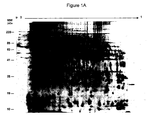
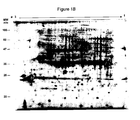
Figure 1 . 2D-DIGE synthetic gel of Ae. aegypti MG (day 3) (A) and SG (day 10) (B) proteins for the SF and BF groups with a p1 scale of 3―10. The molecular weight scales are indicated in the Figures. Protein spots differentially expressed in MG and SG are indicated by number and symbols: SF (□), BF (Δ). -
Figure 2 . Expression of actin in Ae. aegypti SG for SF and BF groups. Actin was detected in red by IFA at 10 days post sugar meal (A―C) or blood meal (D―F). Nuclei were marked with Hoechst in blue. Similar results were observed in three separate experiments. -
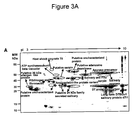
Figure 3 . Immunogenic proteins of Ae. aegyti. 2-DE followed by Western blot of BF salivary gland extracts of Ae. aegypti was carried out onImmobiline DryStrips 11 cm,pH 3―10. (A) The gels were stained with PageBlue protein staining, and (B) IgG responsive proteins on PVDF membrane were detected with the pool of ten DHF patients' sera. (C) The immunoblot was then stripped and reblotted with the pool of ten Ae. aegypti bitten and non-infected individuals'sera. Green circles represent proteins that are not immunogenics in DHF patients. Similar results were observed in two separate experiments. -
Figure 4 . Immunogenic proteins of Ae.albopictus. Two dimentional electrophoresis follow by western blot of salivary gland extracts of Ae. albopictus was processed onimmobiline DryStrips 11 cm, pH 3-11. The gels were stained with PageBlue™ protein staining (A) and IgG responsed proteins on PVDF membrane were detected with the pool of DHF patients' sera (B).
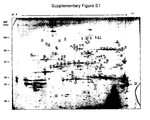
Figure S1. 2-DE profile of a pooled sample of SF and BF Ae. aegypti SG (50 µg of each group). The gel was stained with PageBlue™ protein staining then cored, and proteins were identified by mass spectrometry. Spot number corresponds to data presented inTable S 1. - Ae. aegypti female mosquitoes (Liverpool strain) were reared and maintained at 26°C ± 0.5°C with 75―80% relative humidity and a 12:12 h (light:dark) photoperiod.
- For female mosquitoes, MG were dissected at 3 and 10 days after feeding in order to have early and late physiological status of the midgut. Previous studies have demonstrated that DV infection was detected in MG epithelial cells at 2 Days Post Infection (DPI) and viral titers then increased until 10 DPI [12]. SG were sampled 10 days after feeding, a time frame corresponding to the extrinsic incubation period of DV, i.e., the time from initial infection of the mosquito to transmission.
- In addition, Liverpool mosquitoes SG viral titer was detected at 10 DPI.
- For the two groups of Ae. aegypti female : (i) fed exclusively on 10% sugar, i.e., "control" (SF) and (ii) fed with defibrinated human blood, the experimental group (BF), MG and SG were dissected in PBS and the tissues were subjected to three freeze―thaw cycles (liquid nitrogen) then centrifuged for 45 min at 4°C and 13,000 rpm before collection of the supernatant. Protein extracts were then desalted using a 2-D Clean-Up Kit (GE Healthcare, Germany). The Pellet was resuspended in IEF buffer (7 M urea, 2 M thiourea, 4% CHAPS, 0.8% IPG buffer, 0.2% Tergitol, 100 mM DTT) for 2D-PAGE or DIGE buffer (7 M urea, 2 M thiourea, 4% CHAPS, 0.5
% Triton X - 2-DE was carried out with 100 µg of Ae. aegypti MG or SG protein extracts on 18 cm Immobiline
™ DryStrips pH 3―11 non-linear (NL) (GE Healthcare, Germany). Strips were rehydrated for 10―12 h at 20°C with protein samples made up to 350 µL by adding IEF buffer 1.22% DeStreak (GE Healthcare, Germany). Run conditions were as follows : temperature at 20°C; current at 50 µA per strip; 300 V (gradient) for 5 min; 300 V (step) for 30 min; 5000 V (gradient) for 3 h and then 5000 V steps up to 60,000 V·h. 2-DE was performed on 12% SDS-PAGE gel at 40 V for 45 min and then at 45 mA/gel until the bromophenol blue front had reached the end of the gel. - For each sample, 40 mosquitoes were dissected for SG and MG in triplicate from which 30 ug of proteins were used. For analytical 2D-DIGE, control and treated protein samples were compared using the CyDye™ DIGE Fluors for Ettan DIGE (Cy2, Cy3, and Cy5). Proteins were labeled according to the Ettan DIGE minimal labeling protocol (Ettan DIGE User Manual, GE Healthcare). For each sample, 20 µg of protein was labeled with 150 pmol of CyDye. An equal amount of each sample was labeled with Cy2 and added to each gel as an internal standard. The labeled samples were then pooled (according to the experimental design) and the sample volume was made up to 450 µL by adding rehydration buffer (7 M urea, 2 M thiourea, 4% CHAPS, 0.5
% Triton X pH 3―10 NL. The run conditions were as followed: rehydration for 14 h at 20°C; current 50 µA per strip; 60 V (step) for 3 h; 1000 V (gradient) for 4 h; 8000 V (gradient) for 4 h; and 8000 V (step) until reaching total 64,000 V·h. 2-DE was performed on 12% SDS-PAGE gel at 15 mA/gel for 6 h and then at 30 mA/gel until the bromophenol blue front reached the end of the gel. Gels were scanned using a Typhoon™ 9400 imager (Amersham Biosciences). All gel images were acquired at 100 µm pixel resolution under nonsaturating conditions. 2D-DIGE images were analyzed using Progenesis SameSpots 3.1 software. Statistical analysis and protein quantification were carried out using the same software with a cut-off of 1.8 fold up- or down-regulated and ANOVA (p) < 0.05. Protein spots with a significant altered expression (p < 0.05) were trypsin digested and identified with MS. - For 2D-PAGE protein map, the gels were stained with PageBlue™ protein Staining Solution overnight. After washes, visible spots were then excised manually in a laminar flow hood. For 2-D DIGE, two 2-DE gels were run with 100 µg of a mix of protein from the different samples for the MG and SG, and stained with CBB. Spots of interest in MG and SG were localized on the gel by comparing the CBB-stained spot pattern with the 2-D DIGE protein pattern. Spots were then excised. Enzymatic in-gel digestion and peptide spotting was performed automatically (Tecan freedom evo® proteomics) as previously described (1). Briefly, protein spots were digested using 150 ng of trypsin, peptide extraction was performed using 5 sonication cycles of 2 min each and peptides were concentrated 1 hour at 50°C. 0.5 µl of sample peptide and 0.5 µl of alpha-cyano-4-hydroxy-trans-cinnamic acid were deposited on a 384-well MALDI anchorship target using the dry-droplet procedure. Peptide sample were then desalted on target using a 10 mM phosphate buffer. Analyses were performed using an UltraFlex I MALDI TOF-TOF mass spectrometer (Bruker Daltonics, Bremen, Germany) in the reflectron mode with a 26 kV accelerating voltage and a 50 ns delayed extraction. Mass spectra were acquired manually or in the automatic mode using the AutoXecute™ module of Flexcontrol™ (Bruker Daltonics) (laser power ranged from 30 to 50%, 600 shots). Spectra were analyzed using FlexAnalysis™ software (Bruker Daltonics) and calibrated internally with the autoproteolysis peptides of trypsin (m/z 842,51 ; 1045,56 ; 2211,10). Peptides were selected in the mass range of 900-3000 Da. Peptide Mass Fingerprint identification of proteins was performed by searching against the Insecta entries of either SwissProt or TrEMBL databases (http://www.expasy.ch) and by using the Mascot v 2.2 algorithm (http://www.matrixscience.com) with trypsin enzyme specificity and one trypsin missed cleavage (2). Carbamidomethyl was set as fixed cystein modification and oxidation was set as variable methionine modification for searches. A mass tolerance of 50 ppm was allowed for identification. Matching peptides with one missed cleavage were considered as pertinent when there were two consecutives basic residues or when arginine and lysine residues were in an acidic context. Mascot scores higher than 65 were considered as significant (p < 0.05) for SwissProt and TrEMBL databases interrogation.
- Ten day BF and SF SGs of Ae. aegypti females were dissected in PBS and fixed in 4% paraformaldehyde, PBS pH 7.4 for 1 h. The tissue was then blocked for 30 min in 10% goat serum 0.3% Triton X-100 and incubated with Tetramethyl Rhodamine IsoThiocyanate (TRITC) -phalloidin for 2 h at room temperature. Hoechst dye was used to visualize the nucleus. Preparations were examined with a confocal microscope (
Zeiss 5 Live Duo). - SG proteins (80 ug protein) from BF mosquitoes were loaded on two Immobiline DryStrips (11 cm,
pH 3―10 NL). Each sample was run in duplicate: one was stained with colloidal blue while the other was transferred to a PVDF membrane for Western blotting. The membrane was blocked in TBS Tween (0.1%, v/v), milk (5%, v/v) and incubated with a_pool of serum from ten patients with DHF. An alkaline phosphatase―conjugated monoclonal mouse anti-human IgG was used as secondary antibody and detected using the Lumi-Phos™ WB Chemiluminescent substrate (Pierce). For reblotting with pooled sera from bitten and non-infected individuals, membranes were stripped as previously reported (3). - The separation and identification of 10 days post feeding Ae. aegypti SF and BF pooled proteins revealed 220 MG protein spots and 102 SG protein spots for a pI scale of 3―11 and a Mw scale of 15―278 kDa.
- Proteins from each organ were classified according to function in the MG and SG (Table S1,and Fig. S1, supporting information only concern the results obtained with SG).
- Almost all of the characterized MG proteins were classified as housekeeping types, i.e. cytoskeletal proteins; proteins involved in protein modification machinery, transcription machinery, and translation machinery; transcription factors; ribosomal proteins; proteasome machinery and proteolysis proteins; transporters, and many proteins implicated in energy generation and signal transduction.
- Proteins involved in metabolism were also characterized, i.e., in oxidant metabolism, carbohydrate metabolism, amino acid metabolism, lipid metabolism, and transport or intermediate metabolism.
- Two secreted protease inhibitors (serpins) were recognized: QOIEW2_AEDAE and Q0IEW4_AEDAE.
- One phosphatidylethanolamine binding protein was identified as a secreted carrier-like protein belonging to the D7 family.
- One enzyme involved in sugar digestion (alpha-amylase), one immunity-related protein (galectin); and 16 secreted and nonsecreted proteins with unknown function were also detected in the MG.
- Similar types of housekeeping genes were expressed in the two organs, except that transcription factors, ribosomal proteins, proteasome elements, proteases, and proteins involved in signal transduction were not identified in SGs. However, this does not necessarily mean that these proteins were entirely nonexpressed in the SG; it is possible that differential expression levels exist in the two organs and there was a failure to detect the proteins in the SG.
- Other groups of proteins were also identified in the SG such as secreted carrier-like proteins including D7 family, serpins, enzymes, immunity-related proteins, and proteins with unknown function.
- Furthermore, Aedes-specific proteins and proteins with unknown function found in hematophagous dipteran saliva were also detected on the SG 2-DE gels.
- In addition to a number of major, previously characterized SG proteins (D7 family, apyrase, serpin family, angiopoietin,
antigen 5 protein, 30 kDa protein, F0F1 ATPase subunit, protein disulfide isomerase, adenosine deaminase, amylase, HSP70, and actin), many other proteins that have never been characterized on 2-DE analysis of SG were detected: various proteins belonging to the apyrase, serpin, and D7 families as well as housekeeping proteins such as aconitase, paramyosin, saccharopine dehydrogenase, carbonic anhydrase, and myosin heavy chain. - Spot numbers in
Table S 1 correspond to the SG proteins shown in Fig.S 1. - Among the identified proteins, four of them were recognized as being from another Aedes species (Ae. albopictus): (i) long form D7 salivary protein D712 (Q5MIW6_AEDAL), (ii) long form D7Bclu1 salivary protein d711 (Q5MIW7_AEDAL); (iii) salivary apyrase (Q5MIX3_AEDAL), and (iv) serpin protein (Q5MIW0_AEDAL). Such homologies would be expected between two mosquitoes of the same subgenus.
- The differential expression of protein by 2D-DIGE in each organ with regard to diet was investigated for a comprehensive understanding of the normal MG and SG proteomes could be useful when it comes to pathogenesis.
- These results extend the understanding of the 2D profile of salivary proteins and provide the first comparison by 2D-DIGE of the level of SF and BF protein expression in female Ae. aegypti mosquitoes at 3 and 10 days post feeding for MG and 10 days for SG.
- After detection of protein spots, image gels were "cleaned off' for speckling and artefact spots. In total, 2000 spots were detected on the MG gel (
Fig. 1A ) and 706 on the SG gel (Fig. 1B ). - The MG protein profile is more complex than the SG one, considering the number of proteins present in each organ (see
Fig. 1 ). One of the most important parameters in the 2-DE technique is the quantity of proteins loaded onto each gel (which must be the same). There may have been some differences but not in these pI and Mw ranges. It is also well known that the molecular weight of proteins detected in 2-DE experiments is generally limited to the range of 150―15 kDa so very high and low molecular weight proteins as well as peptides are missed. - However, in the SG, 84 protein spots were detected as being differentially expressed: 37 spots were denser in the BF insects and 47 spots were weaker (
Fig. 1B ). The absence of any difference in global protein profile suggests that all these proteins are normally expressed in each organ but the nature of the ingested meal can modulate their expression levels. - A total of 32 protein spots were characterized in Ae. aegypti SG: 17 were up-regulated and 15 down-regulated in the BF group compared to the SF group (Table 1,
Fig. 1B ). From the 17 spots that were up-regulated, 13 proteins could be identified (see Table 1). Among the up-regulated SG proteins, three D7 proteins were highly expressed in BF SG: long form D7 salivary protein D712 (Q5MIW6_AEDAL), D7 protein, and putative (Q0IF93_AEDAE) and D7 protein precursor (D7_AEDAE). - The long form D7 salivary protein D712 is one type of Ae. albopictus D7 protein that is best matched with the 37 kDa salivary gland allergen Aed a 2 (D7 protein precursor: ALL2_AEDAE) of Ae. aegypti D7 protein.
- The D7 protein family is related to odorant binding proteins that are able to bind host biogenic amine to antagonize vasoconstictor, platelet-aggregating, and pain-inducing properties. Additionally, the long form D7Bclu1 salivary protein d711 (Ae. albopictus protein), also identified in the protein map of the invention, matches best with a putative D7 protein, Q0IF93_AEDAE. These similarities were discussed above in the part of protein map. Aldehyde dehydrogenase possesses oxidoreductase activity that catalyzes the NAD+-dependent oxidation of aldehyde to carboxylic acid, and this ubiquitous enzyme is related to energy metabolism.
- Adenosine deaminase was also up-regulated in SG after a blood meal. This enzyme hydrolyzes adenosine to inosine and ammonia, and the removal of adenosine may inhibit platelet aggregation and mast cell degranulation. Inosine interferes with host coagulation at the bite site to inhibit the production of inflammatory cytokines. All these processes may enhance blood feeding.
- Salivary serpin putative anticoagulant (Q5MIW0_AEDAL: Ae. albopictus-specific protein) was expressed 3.5 times more in BF SG than SF SG. The serpin superfamily is reported to inhibit endogenous proteases like the serine proteases involved in regulating coagulation, such as thrombin and factor Xa.
- In addition, a serine protease cascade is one innate insect immune response which activates prophenoloxidase in plasma. (Drosophila serpins have been shown to be inhibitory and involved in regulating Toll and prophenoloxidase signaling pathways).
- The up-regulation of salivary apyrase and its precursor in BF SG was also observed.
- Two spots of differentially expressed salivary apyrase (Q5MIX3_AEDAL) were identified as Ae. albopictus specific: they were found at levels 2-3.1 times higher in BF SG compared to SF one.
- Apyrase is an enzyme that inhibits ADP-dependent platelet aggregation during blood-feeding and prevents neutrophil activation. Apyrase is synthesized in the adult female SG and accumulates in the distal lateral lobes .
- A putative 30 kDa allergen-like protein (accession number UniProtKB/TrEMBL: Q8T9T8_AEDAE) previously identified as a 30 kDa antigen (gi: 18568322) by Ribeiro et al.(4), a species of unknown function, is ubiquitously found in the SGs of adult mosquitoes. Studying saliva allergens could provide valuable information on immune responses, with a view to developing new diagnostic tests for allergies to mosquito bites.
- Four secreted proteins were identified: Q8T9V0_AEDAE, which binds a receptor involved in signal transduction; a 19.6 kDa secreted protein precursor (Q58HB7_AEDAE); a putative secreted protein (Q8T9W0_AEDAE); and a putative uncharacterized protein (Q17NC3_AEDAE). The functions of the last three proteins are unknown.
- Almost all the proteins that were up-regulated in BF SG seem to have an important role in successful blood feeding.
- The proteins that were down-regulated in BF group (up-regulated in SF mosquitoes) tended to have housekeeping functions (Table 1): paramyosin, long form and actin-1 are cytoskeletal proteins. Paramyosin is a component of the thick filament core-regulating complex of invertebrate muscle. Actin, the main protein of muscle and cytoskeleton, is the major component of thin filament in muscle. It is also one of three subclasses of the cytoskeleton (microfilament, intermediate filament, and microtubule) found in the cytoplasm of all cells. It plays important roles in cellular dynamics such as the maintenance of cell shape, cell growth, cellular motion, intracellular transport, and cell division and differentiation. Differential actin expression of actin was also studied by immunofluorescence (IF) and will be discussed below in detail in the section of IF assay.
- Many proteins that were up-regulated in the SG of SF Ae. aegypti have a function in metabolism, ion transport, and energy generation. Mitochondrial porin and ATP synthase subunit beta are housekeeping products involved in anion and hydrogen ion transport, respectively. Porins are major channel-forming proteins found in the mitrochondrial outer membrane. All metabolites as well as ATP and ADP pass through these channels.
- Mitochondrial aconitase, mitochondrial ATP synthase β chain, NADH-ubiquinone oxidoreductase 75 kDa subunit, ubiquinol―cytochrome c reductase complex, pyruvate kinase, and
probable citrate synthase - Two groups of proteins were distinct: those proteins that were up-regulated in SF mosquitoes seemed to be specific to the maintenance of physiological functions, whereas those that were up-regulated in BF mosquitoes were proteins that facilitate the process of blood-feeding. All those sequences that up-regulated in BF mosquitoes contained a cleavage site meaning that they were secreted proteins in saliva. This characteristic confirms their important role in facilitating blood feeding when the mosquito takes a blood meal. It is believed by the inventors that the production of these molecules is strongly stimulated after mosquitoes have had their first blood meal because they are only weakly expressed when mosquitoes are feeding exclusively on sugar.
- As described above in the section of differential protein expression between SF and BF groups in MG and SG, actin and paramyosin were more highly expressed in SF SG (Table 1). These proteins are constituents of the cytoskeleton and muscle fibers. The disruption of cytoskeletal links leads to changes in cell shape.
Blood-feeding probably modifies the cytoskeleton and/or the shape of SG cells. For these reasons, SG morphology was checked by IF. Whole SG from BF and SF mosquitoes were dissected out, actin expression was labeled using TRITC-phalloidin, and nuclei were stained with Hoechst dye (Fig. 2 ). Actin seemed to localize to the cell boundary and along the duct of each lobe in both SF and BF SG. Nuclei were located apically. No difference was observed between the two SG groups morphology, condition, or cytoskeletal organization. These results suggest that after a blood meal there is no disruption of the SG cytoskeletal. - The major risk of DHF is exacerbation to fatal DSS. The major pathophysiologic hallmarks that determine disease severity and distinguish DHF from dengue fever are plasma leakage (as a result of increased vascular permeability) and abnormal coagulation. The mechanisms that lead to DHF/DSS are a subject of intense debate. The possible role of mosquito saliva in these mechanisms has never been evaluated. Remoue et al.(52) demonstrated that some salivary proteins are immunogenic and can initiate a specific antibody response. In addition, the anti-saliva antibody response is a reliable marker of exposure to vector-borne diseases in individuals exposed to bites of arthropod vectors. As described for maxadilan, which enhances Leishmania infection, the SG molecules detected by serum of DHF_patients may enhance virus infection and thus constitute vaccine targets. In this study, the inventors identified for the first time the immunogenic salivary molecules of Ae. aegypti, with sera of DHF patients and bitten non-infected individuals (
Fig. 3 ). - Within the BF SG proteins of Ae. aegypti, fifteen immunogenic proteins of sequences SEQ ID N°1-15 were identified in the study:
heat shock cognate 70, ATP synthase subunit beta vacuole, putative adenosine deaminase, salivary apyrase and its precursor, putative serpin, salivary anti-FXa serpin, fibrinogen and fibronectin, angiopoietin-like protein variant, putative secreted salivary 34 kDa family, D7 protein precursor, long form D7Bclu1 salivary protein d711, and two putative uncharacterized proteins (62kDa, Q17NC2_AEDAE and Q17F11_AEDAE). - These results show that there is a strong immune response to Ae. aegypti salivary proteins.
- The above results present the first differentially expressed Aedes SG proteins analysis by 2D-DIGE relative to blood feeding. Additionally, the protein map of Ae. aegypti MG and SG was completed. Moreoser, for the first time, identified Ae. aegypti saliva proteins exhibiting immunogenic properties in Ae. aegypti-bitten individuals were identified and characterisez. These proteins play a role in dengue virus infection or are epidemiological indicators of exposure to dengue. Understanding the interactions between vectors and vertebrate hosts will promote the development of effective and novel control strategies for this major human emerging disease.
Table 1. Differential protein expression between SF and BF groups in Ae. aegypti salivary gland. Spotnumber ANOVA(p-value) X-fold average ANVa) Accession no. Name of proteinb) MASCOTscorec) Coverage(%) Sugar Blood Up-regulated 1 0.002 8.1 0.188 1.528 Q5MIW6_AEDAL Long form D7 salivary protein D712 73 22 5 9.96E-04 3.7 0.46 1.715 Q16P57_AEDAE Aldehyde dehydrogenase 85 18 6 0.003 3.5 0.461 1.626 Q5MIWO_AEDAL Salivary serpin putative anticoagulant 98 24 8 0.001 3.1 0.45 1.375 Q5MIX3_AEDAL Salivary apyrase 142 30 10 0.002 2.9 0.506 1.487 APY_AEDAE Apyrase precursor 260 48 13 5.89E-04 2.7 0.595 1.602 Q0IF93_AEDAE D7 protein, putative 69 17 18 1.66E-04 2.2 0.762 1.701 D7_AEDAE D7 protein precursor 83 30 19 4.43E-04 2.2 0.651 1.435 APY_AEDAE Apyrase precursor 253 42 22 0.002 2.1 0.694 1.439 Q17NC3-AEDAE Putative uncharacterized protein 203 40 23 0.008 2.1 0.966 1.987 Q58HB7_AEDAE Putative 19.6 kDa secreted protein precursor 90 23 24 8.04E-04 2.0 0.693 1.395 Q179D4_AEDAE Adenosine deaminase 142 31 25 0.004 2.0 0.635 1.254 Q8T9W0_AEDAE Putative secreted protein 59 27 26 0.006 2.0 0.657 1.282 Q5MIX3_AEDAL Salivary apyrase 152 31 27 6.71E-05 1.9 0.792 1.53 Q8T9V0_AEDAE Putative secreted protein 76 23 28 0.009 1.9 0.91 1.685 Q8T9T8_AEDAE Putative 30 kDa allergenlike protein (putative uncharacterized protein) 81 28 29 6.16E-04 1.8 0.749 1.334 Q179D4_AEDAE Adenosine deaminase 159 29 30 0.019 1.8 0.904 1.591 Q58HB7_AEDAE Putative 19.6 kDa secreted protein precursor 90 23 Down-regulated 2 0.009 7.5 2.482 0.331 Q16QU2_AEDAE Putative uncharacterized protein 72 23 3 7.05E-05 6.5 2.124 0.327 Q16RF4_AEDAE Paramyosin, long form 169 20 4 7.28E-04 4.5 2.181 0.49 ACTI-AEDAE Actin-1 57 21 7 4.91E-04 3.2 1.975 0.617 Q16LR5_AEDAE NADH-ubiquinone oxidoreductase 75 kDa subunit 149 23 9 0.003 3.0 1.772 0.582 Q16KR4_AEDAE Aconitase, mitochondrial 255 35 11 0.004 2.9 1.617 0.558 Q179J9_AEDAE Mitochondrial ATP synthase b chain 70 33 12 0.002 2.9 1.795 0.622 Q1HR57_AEDAE Mitochondrial porin 160 42 14 0.012 2.4 1.698 0.718 Q16KR4-AEDAE Aconitase, mitochondrial 255 35 15 0.001 2.3 1.707 0.749 Q17AK0_AEDAE Ubiquinol-cytochrome c reductase complex core protein 131 34 16 0.011 2.3 1.631 0.72 Q16KR4_AEDAE Aconitase, mitochondrial 255 35 17 0.003 2.2 1.68 0.748 Q17FL3_AEDAE ATP synthase subunit beta 266 45 20 0.008 2.1 1.675 0.781 Q17GM7 CISY1_AEDAE Probable citrate synthase 1, mitochondria 136 35 Q16P20 CISY2_AEDAE Probable citrate synthase 2, mitochondrial precursor 134 35 21 0.003 2.1 1.555 0.746 Q16LP4_AEDAE Pyruvate kinase 123 22 31 8.18E-04 1.8 1.38 0.786 Q16FJ9_AEDAE Saccharopine dehydrogenase 127 19 32 0.002 1.8 1.467 0.837 Q16GA1_AEDAE Acyl-CoA dehydrogenase 202 40 a) Average normalized volume.
b) Accession number in SwissProt and TrEMBL protein databases (http://www.expasy.org/).
c) MASCOT scores >50 indicate significant identity or extensive homology.Table S1: Salivary gland proteins identified by 2D-PAGE and MALDI-TOF. Database searches used the MASCOTprogram and SwissProt/TrEMBL databases. Molecular mass, pI, MASCOT score (Sc) for the best match and coveredsequence (cv) are shown Identification SwissProt/TrEMBL Spot no. Accession no. Mass
(Da)pl Sc cv Comments/biological activity Subcellular localization/cellular component Similarity Secreted carrier-like proteins including D7 family D7 protein, putative - Aedes aeqypti Q01F93_AEDAE 109 gi|122115019 38603.0 9.32 69 17 Odorant binding, transport Long form D7 salivary protein D712 - Aedes albopictus Q5MIW6_AEDAL 114 gil74767432 36883.0 8.60 73 22 Odorant binding, transport D7 protein precursor- Aedes aegypti ALL2_AEDAE 101, 102,103, 105, 107 gil205525919 37005 8.36 83 30 Thought to be involved in blood-feeding Secreted, expressed in the distal-lateral and medial lobes of the adult female salivary gland Two named isoforms (FASTA) produced by alternative splicing Long form D7Bclul salivary protein d711 - Aedes albopictus Q5MIW7_AEDAL 108 gil74767433 38404 8.87 64 22 Transport, odorant binding Secreted protease inhibitors Serpins Serine protease inhibitor (serpin-4) putative - Aedes aegypti Q17HD9_AEDAE 66, 70 gi|122118433 47752 6.27 141 35 Peptidase activity, serine-type endopeptidase inhibitor activity Belongs to the serpin family. Serine protease inhibitor - Aedes aegypti Q17HD8_AEDAE 70 gi|22118432 41802.0 7.55 93 23 Peptidase activity, serine-type endopeptidase inhibitor activity Salivary anti FXa serpin - Aedes aegypti Q1HRU9_AEDAE 67 gi|121959442 47873.0 6.13 84 24 Serine-type endopeptidase inhibitor activity Belongs to the serpin family Salivary serpin putative anticoagulant - albopictus Q5MIW0_AEDAL 65 gil74903324 46739 6.15 98 24 Serine-type endopeptidase inhibitor activity Belongs to the serpin family. SERPIN1 protein, putative - Aedes aegypti Q17G63 AEDAE 72, 73, 74, 75, 77, 78 gi|122106702 47009 5.41 290 43 Serine-type endopeptidase inhibitor activity Belongs to the serpin Putative serpin - Aedes aegypti Q8T9U7_AEDAE 73, 74 gi|74934477 47087.0 5.18 249 40 Serine-type endopeptidase inhibitor activity family Belongs to the serpin family Enzyme Nucleotidases Salivary apyrase - Aedes albopictus Q5MIX3_AEDAL 40 gil74837243 62760.0 8.66 152 31 Hydrolase activity, acting on ester bonds, metal ion binding, nucleotide binding, nucleotide catabolic process Secreted Belongs to the 5'-nucleotidase family Salivary apyrase, putative - Aedes aegypti Q176L8_AEDAE 34,35 gi|122106133 63199 8.65 93 16 Hydrolase activity, nucleotide catabolic process Secreted Belongs to the 5'-nucleotidase family Apyrase precursor- Aedes aegypti APY_AEDAE 29, 30, 31, 32, 33 gil193806340 62691.0 8.47 260 48 process Facilitates hematophagy by preventing ADP-dependent platelet aggregation in the host. May reduce probing time by facilitating the speed of locating blood. Secreted, salivary gland specific Belongs to the 5'-nucleotidase family. Adenosine deaminase - Aedes aegypti Q179D4_AEDAE 37 gi|122094769 59834 6.37 142 31 Deaminase activity, purine ribonucleoside monophosphate biosynthetic process Putative adenosine deaminase - Aedes aegypti Q8T9T6_AEDAE 38, 39, 43, 44 gil74819780 60525 6.51 227 50 Deaminase activity, purine ribonucleoside monophosphate biosynthetic process Inosine-uridine preferring nucleoside hydrolase - Aedes aegypti Q175Y5_AEDAE 95 gil122106110 37911 4.93 82 23 Hydrolase activity Sugar digestion related Alpha-amylase precursor - Aedes aegypti AMY1_AEDAE 4, 6 gi|205638829 80937 6.41 112 21 Alpha-amylase activity Expressed specifically in the proximal-lateral lobes of the adult female salivary gland. Belongs to the glycosyl hydrolase 13 familyImmunity related proteins Angiopoietin Angiopoietin-like protein variant - Aedes aegypti Q1HRV2_AEDAE 60, 99, 104 gi|121959445 33401 5.74 139 38 Receptor binding, signal transduction Contains 1 fibrinogen C-terminal domain Fibrinogen and fibronectin - Aedes aegypti Q17NC0_AEDAE 80, 91 gi|122095637 33611 6.04 96 31 Receptor binding, signal transduction Contains 1 fibrinogen C-terminal domain. Putative secreted protein - Aedes aegypti Q8T9V0_AEDAE 85 gil74819788 33698.0 5.12 76 23 Receptor binding, signal transduction Contains 1 fibrinogen C-terminal domain Putative uncharacterized protein - Aedes aegypti Q17NB9_AEDAE 98 gi|122107139 33361.0 5.74 89 31 Receptor binding, signal transduction Contains 1 fibrinogen C-terminal domain. Housekeeping product Transporters Vacuolar ATP synthase catalytic subunit A - Aedes aegypti VATA_AEDAE 25 gi|145559538 68186 5.26 237 38 Catalytic subunit of the peripheral V1 complex of vacuolar ATPase. V-ATPase vacuolar ATPase is responsible for acidifying a variety of intracellular compartments in eukaryotic cells. V-ATPase is an heteromultimeric enzyme composed of a peripheral catalytic V1 complex (main components: subunits A, B, C, D, E, and F) attached to an integral membrane V0 proton pore complex (main component: the protein). Belongs to the ATPase alpha/beta chains family Vacuolar ATPase B subunit - Aedes aegypti Q9XYC8_AEDAE 55 gi|74949759 55181 5.38 80 20 Hydrogen ion transporting ATP synthase activity, rotational mechanism, hydrogen ion transporting ATPase activity, hydrogen-exporting ATPase activity, phosphorylative mechanism, ATP metabolic process, energy coupled proton transport, against electrochemical gradient Cytoplasm, proton-transporting two-sector ATPase complex Belongs to the ATPase alpha/beta chains family. Carbonic anhydrase - Aedes aegypti Q17BL7 AEDAE 119 gi|122094901 31287 5.73 92 33 Carbonate dehydratase activity, zinc ion binding, one-carbon compound metabolic process Mitochondrial porin (voltage-dependent anion channel, voltage-dependent anion-selective channel) Aedes aegypti ATP synthase subunit Q1HR57_AEDAE 121, 122 gi|121959252 30677 8.63 160 42 Voltage-gated anion channel activity, anion transport Integral to membrane, mitochondrial outer membrane ATP synthase subunit beta - Aedes aegypti Q1HR61_AEDAE 57 gi|121959256 53937.0 5.03 89 29 Produces ATP from ADP in the presence of a proton gradient across the membrane, ATP binding, hydrogen ion transporting ATP synthase activity, rotational mechanism, hydrogen ion transporting ATPase activity, hydrogen-exporting ATPase activity, phosphorylative mechanism, metal ion binding, ATP synthesis coupled proton transport Integral to membrane, proton-transporting ATP synthase complex, catalytic core F(1) Belongs to the ATPase alpha/beta chains family. ATP synthase subunit beta - Aedes aegypti Q17FL3_AEDAE 57, 58, 59 gi|122095158 53940 5.02 282 47 Produces ATP from ADP in Produces from ADP the presence of a proton gradient across the membrane. ATP binding, hydrogen ion transporting ATP synthase activity, rotational mechanism, hydrogen ion transporting ATPase activity, hydrogen-exporting ATPase activity, phosphorylative mechanism, metal ion binding, ATP synthesis coupled proton transport Integral to membrane, proton-transporting ATP synthase complex, catalytic core F(1) Belongs to the ATPase alpha/beta chains family. Catalase - Aedes aegypti Q1HRH7_AEDAE 53 gi|122107851 48494 7.28 175 40 Catalase activity, response to oxidative stress Carbohydrate metabolism Triosephosphate isomerase - Aedes aegypti Q17HW3_AEDAE 130 gil122118464 26305.0 5.38 113 41 Triose-phosphate isomerase activity, metabolic process Cytoplasmic Belongs to the triosephosphate isomerase family Phosphoglycerate kinase - Aedes aegypti Q95UR6_AEDAE 76 gi|74938314 43699 7.63 128 43 ATP binding, phosphoglycerate kinase activity, glycolysis Belongs to the phosphoglycerate kinase Phosphoglycerate kinase - Aedes aegypti Q8WQLO_AEDAE 76 gi|74935682 43829.0 6.63 70 33 ATP binding, phosphoglycerate kinase activity, glycolysis Cytoplasmic Belongs to the phosphoglycerate kinase family Probable citrate synthase 1, mitochondrial - Aedes aegypti CISY1_AEDAE 90 gi|122095223 51624 8.91 136 35 Citrate (Si)-synthase activity, tricarboxylic acid cycle, carbohydrate metabolic process Mitochondrion matrix Belongs to the citrate synthase family Probable citrate synthase 2, mitochondrial precursor - Aedes aegypti CISY2_AEDAE 90 gi|122067459 51608.0 8.91 134 35 Citrate (Si)-synthase activity, tricarboxylic acid cycle, carbohydrate metabolic process Mitochondrion matrix Belongs to the citrate synthase family Lipid metabolism Acyl-CoA dehydrogenase - Aedes aegypti Q16GA1_AEDAE 93 gil122104662 45542 8.35 202 40 Acyl-CoA dehydrogenase activity, electron carrier activity, FAD binding, metabolic process Acyl-CoA dehydrogenase - Aedes aegypti Q171S4_AEDAE 96 gi|122117595 46380 6.05 52 12 Acyl-CoA dehydrogenase activity, electron carrier activity, FAD binding, metabolic process Amino acid metabolism Saccharopine dehydrogenase - Aedes aegypti Q16FJ9_AEDAE 2, 3 gi|122116345 102704 6.37 127 19 Binding, oxidoreductase activity, electron transport Glutamate semialdehyde dehydrogenase - Aedes aegypti Q174N2_AEDAE 14, 15 gi|122068317 86904 6.76 208 26 Glutamate 5-kinase activity, glutamate-5-semialdehyde dehydrogenase activity, proline biosynthetic process Cytoplasm Aspartate ammonia lyase - Aedes aegypti Q16ZL0 _AEDAE 69 gi|122068091 54328 8.64 81 21 Fumarate hydratase activity, fumarate metabolic process, tricarboxylic acid cycle Tricarboxylic acid cycle enzyme complex Intermediate metabolism Transketolase - Aedes aegypti Q17CTO_AEDAE 36 gi|22068739 67891 6.54 205 35 Transferase activity, metabolic process 4-Hydroxybutyrate CoA-transferase, putative - Aedes aegypti QOlG02_AEDAE 56 gi|122115056 51817 8.15 147 34 Transferase activity, acetyl-CoA metabolic process Cyclohex-1-ene-1-carboxyl-CoA hydratase, putative - Aedes aegypti Q17E10_AEDAE 129 gi|122106558 31510 8.72 109 29 Catalytic activity, metabolic process Belongs to the enoyl-CoA hydratase/isomerase family Aldo-keto reductase - Aedes aegypti Q17DM9_AEDAE 100 gi|22106530 36387 6.56 88 28 Oxidoreductase activity family Mandelate racemase - Aedes aegypti Q17LB3_AEDAE 61 gi|22107012 51506.0 5.56 52 15 Catalytic activity, metabolic process Transcription machinery Elongation factor 1-gamma - Aedes aegypti Q1HR56_AEDAE 81, 89 gi|22070113 48953 6.04 145 32 Translation elongation factor activity, translational elongation Eukaryotic translation elongation factor 1 complex Contains one GST C-terminal domain Ebna2 binding protein P100 - Aedes aegypti Q17PM3_AEDAE 5, 6, 7, 10 gi|22107223 103314 7.03 243 33 Nuclease activity, nucleic acid binding, protein RNA interference RNA-induced silencing complex Polyadenylate-binding protein - Aedes aegypti Q1HR66_AEDAE 26 gi|22127519 69679 9.48 97 25 Nucleotide binding, RNA binding Contains one PABC domain Translation machinery Elongation factor 1-alpha Aedes aegypti Q1HR88_AEDAE 64 gi|22107849 50441.0 9.16 93 24 Promotes the GTP-dependent binding of aminoacyl-tRNA to the A-site of ribosomes during protein biosynthesis. GTP binding, GTPase activity, translation elongation factor activity translational elongation Cytoplasm Belongs to the GTP-binding elongation factor family. EF-Tu/EF-1A subfamily Elongation factor 2 - Aedes aegypti Q8T4S0_AEDAE 9 gi|75017946 94280 5.99 112 17 GTP binding, GTPase activity, translation elongation factor activity Elongation factor 2 - Aedes aegypti Q9BME7_AEDAE 9 gi|75021733 94344.0 5.99 137 22 GTP binding, GTPase activity, translation elongation factor activity Elongation factor tu - Aedes aegypti Q16YK5_AEDAE 68 gi|122105752 51063 8.05 131 33 Promotes the GTP-dependent binding of aminoacyl-tRNA to the A-site of ribosomes during protein biosynthesis. GTP binding, GTPase activity, translation elongation factor activity, translational elongation Intracellular Belongs to the GTP-binding elongation factor family. EF-Tu/EF-1A subfamily. Energy generation machinery Mitochondrial F1F0-ATP synthase subunit d/ATP7 - Aedes aegypti Q1HR21_AEDAE 132 gi|12959223 19545.0 5.26 63 31 Hydrogen ion transporting ATP synthase activity, rotational mechanism, hydrogen ion transporting ATPase activity, ATP synthesis coupled proton transport Proton-transporting 2-sector ATPase complex NADH-ubiquinone oxidoreductase 75 kDa subunit - Aedes aegypti Q16LR5_AEDAE 20 gi|122067320 79150 6.54 149 23 Two iron, two sulfur cluster binding, four iron, four sulfur cluster binding, iron ion binding, NADH dehydrogenase (ubiquinone) activity, ATP synthesis coupled electron transport Membrane Belongs to the complex 175 kDa subunit family. NADH- ubiquinone oxidoreductase 39 kDa subunit - Aedes aegyptiQ16VZ4_AEDAE 94 gi|122105600 46039 9.03 153 42 Catalytic activity, coenzyme binding, cellular metabolic process Ubiquinol-cytochrome c reductase complex core protein - Aedes aegypti Q17AKO_AEDAE 92 gi|122094838 45542 7.66 131 34 Metalloendopeptidase activity, zinc ion binding, proteolysis Belongs to the peptidase M16 family Aldehyde dehydrogenase - Aedes aegypti Q16P57_ AEDAE 51 gi|122105128 58257 6.82 85 18 Oxidoreductase activity, metabolic process Mitochondrial ATP synthase alpha subunit - Aedes aegypti Q1HRQ7_AEDAE 62, 63 gi|22127537 59355 9.01 211 37 Produces ATP from ADP in the presence of a proton gradient across the membrane. ATP binding, hydrogen ion transporting ATP synthase activity, rotational mechanism, hydrogen ion transporting ATPase activity, metal ion binding, ATP synthesis coupled proton transport Proton-transporting ATP synthase complex, catalytic core F(1) Belongs to the ATPase alpha/beta chains family Mitochondrial ATP synthase b chain - Aedes aegypti Q179J9_AEDAE 131 gi|122094781 27023.0 8.96 70 33 Hydrogen ion transporting ATP synthase activity, rotational mechanism,hydrogen ion transporting ATPase activity, ATP synthesis coupled proton transport Proton-transporting two-sector ATPase complex Adenylate kinase - Aedes aegypti Q1HQK0_AEDAE 125 gi|121959090 26257 6.54 101 35 Adenylate kinase activity, ATP binding, nucleobase, nucleoside, nucleotide and nucleic acid metabolic process Belongs to the adenylate kinase family Pyruvate kinase - Aedes aegypti Q16LP4_AEDAE 52 gi|122116721 55510 7.1 123 22 Magnesium ion binding, potassium ion binding, pyruvate kinase activity, glycolysis Belongs to the pyruvate kinase family Enolase-Aedes aegypti Q17KK5_AEDAE 71, 76 gi|122106964 46592 6.28 171 51 Magnesium ion binding, phosphopyruvate hydratase activity, glycolysis Phosphopyruvate hydratase complex Belongs to the enolase family Succinyl-CoA synthetase beta chain - Aedes aegypti Q16P82_AEDAE 79 gi|122093623 48773 7.68 71 12 ATP binding, ligase activity, metabolic process Belongs to the succinate/malate CoA ligase beta subunit family NADP-specific isocitrate dehydrogenase - Aedes aegypti Q16LK8_AEDAE 88, 89 gi|122093450 36956 8.65 169 42 Isocitrate dehydrogenase (NADP+) activity, metabolic process Belongs to the isocitrate and isopropylmalate dehydrogenases family Aconitase, mitochondrial - Aedes aegypti Q16KR4_AEDAE 13 gi|122093385 85670 8.67 255 35 Four iron, four sulfur cluster binding, aconitate hydratase activity, iron ion binding, tricarboxylic acid cycle Isocitrate dehydrogenase - Aedes aegypti Q17P79_AEDAE 97 gi|122118862 43584 8.72 63 20 Isocitrate dehydrogenase (NAD+) activity, tricarboxylic acid cycle Mitochondrion Belongs to the isocitrate and isopropylmalate dehydrogenases family Electron transfer flavoprotein beta-subunit - Aedes aegypti Q17B68_AEDAE 128 gi|122094871 22849.0 8.98 96 41 Electron carrier activity, electron transport, transport Thioredoxin reductase - Aedes aegypti Q17GT5_AEDAE 47 gi|122106729 53985 6.21 61 14 Electron carrier activity, FAD binding, NADP binding, oxidoreductase activity, acting on NADH or NADPH, disulfide as acceptor, cell redox homeostasis Cytoplasm Belongs to the class-I pyridine nucleotide-disulfide oxidoreductase family. Spermatogenesis-associated factor- Aedes aegypti Q16SH1_AEDAE 12 gi|122093853 88750 5.3 147 28 ATP binding, nucleoside-triphosphatase activity Belongs to the AAA ATPase family Protein modification machinery Heat shock cognate 70 - Aedes aegypti Q1HR69_AEDAE 17 gi|122096258 72242 5.06 393 47 Probably plays a role in facilitating the assembly of multimeric protein complexes inside the ER. ATP binding, response to stress ER lumen Belongs to theHSP70 family Heat shock cognate 70 Aedes aegypti Q1HQZ5_AEDAE 25 gi|121959204 71103 5.31 237 36 ATP binding, response to stress Belongs to theHSP70 family. HSP - Aedes aegypti Q16PB5_AEDAE 16 gi|122116881 81419 4.94 147 31 ATP binding, unfolded protein binding, protein folding, response to stress Protein disulfide isomerase - Aedes aegypti Q17L92_AEDAE 49, 50 gi|122107007 55211 5.5 195 35 Isomerase activity, cell redox homeostasis ER Belongs to the protein disulfide isomerase family, J51. Contains two thioredoxin domains. ER protein disulfide isomerase - Aedes aegypti Q1HR78_AEDAE 48, 57, 58, 59 gi|122127522 55918 4.95 241 46 Isomerase activity, cell redox homeostasis ER Belongs to the protein disulfide isomerase family. Contains two thioredoxin domains. Calreticulin - Aedes aegypti Q17Ml1_AEDAE 46, 91 gi|122107082 46698 4.42 96 20 Calcium ion binding, unfolded protein binding, protein folding ER Peptidyl-prolyl cis-trans isomerase - Aedes aegypti Q1HRP6_AEDAE 133 gi|122127536 21435.0 8.71 133 59 PPlases accelerate the folding of proteins. It catalyzes the cis-trans isomerization of proline imidic peptide bonds in oligopeptides peptidyl-prolyl cis-trans isomerase activity, protein folding Belongs to the cyclophilin-type PPlase family. Contains one PPlase cyclophilin-type domain. Endoplasmin - Aedes aegypti Q16KZ2_AEDAE 11 gi|122093400 91072 4.81 269 36 ATP binding, unfolded protein binding, protein folding Dihydrolipoyl dehydrogenase - Aedes aegypti Q174D6_AEDAE 45 gi|122106034 53626 6.36 88 22 Dihydrolipoyl dehydrogenase activity, FAD binding, cell redox homeostasis Cytoplasm Belongs to the class-I pyridine nucleotide-disulfide oxidoreductase family Cytoskeletal proteins Actin - Aedes aegypti Q178A9_AEDAE 86 gi|122068491 41615.7 5.29 78 23 Actins are highly conserved proteins that are involved in various types of cell motility and are ubiquitously expressed in all eukaryotic cells. ATP binding, protein binding, structural molecule activity Cytoplasm, cytoskeleton Belongs to the actin family. Actin 1 - Aedes aegypti ACT1_AEDAE 86 gi|193806368 41764.0 5.74 57 21 Actins are highly conserved proteins that are involved in various types of cell motility and are ubiquitously expressed in all eukaryotic cells Cytoplasm, cytoskeleton Belongs to the actin family. Actin 5 Aedes aegypti Q4PKE5_AEDAE 86 gi|75029718 41795 5.3 230 48 Actins are highly conserved proteins that are involved in various types of cell motility and are ubiquitously expressed in all eukaryotic cells. ATP binding, protein binding, structural molecule activity Cytoplasm, cytoskeleton Belongs to the actin family Alpha tubulin - Aedes aegypti Q1HR53_AEDAE 41, 42 gi|121959249 49876 5.01 155 35 Tubulin is the major constituent of microtubules. It binds 2 mol of GTP, one at an exchangeable site on the beta chain and one at a nonexchangeable site on the alpha-chain. GTP binding, GTPase activity, structural molecule activity, microtubule-based movement, protein polymerization Microtubule, protein complex Belongs to the tubulin family. Beta-1 tubulin - Aedes aegypti QOPHPO_AEDAE 48 gi|122103701 48053 4.67 121 20 Tubulin is the major constituent of microtubules. It binds 2 mol of GTP, one at an exchangeable site on the beta chain and one at a nonexchangeable site on the alpha-chain. GTP binding, GTPase activity, structural molecule activity, microtubule-based movement, protein polymerization Microtubule, protein complex Belongs to the tubulin family Myosin heavy chain, nonmuscle or smooth muscle - Aedes aegypti Q178Y4_AEDAE 1 gi|122117926 224072 5.74 140 9 Actin binding, ATP binding, motor activity, striated muscle contraction Striated muscle thick filament Contains one myosin head-like domain. Paramyosin, long form - Aedes aegypti Q16RF4_AEDAE 10 gi|122093778 103164 5.48 169 20 Moesin/ezrin/radixin -Aedes aegypti Q170J7_AEDAE 18, 19 gi|122068139 69024 5.75 120 25 Cytoskeletal protein binding Cytoplasm, cytoskeleton, extrinsic to membrane Contains one FERM domain Gelsolin - Aedes aegypti Q177K9_AEDAE 82, 83, 84 gi|122094688 43021 9.05 328 58 Actin binding Aedes genus specific 34 kDa Putative 34 kDa family secreted salivary - Aedes aegypti Q1HRW0_AEDAE 106, 112, 113 gi|121959452 35698 6.1 173 48 Putative uncharacterized protein - Aedes aegypti Q17F11_AEDAE 111 gi|121956903 36170 5.2 139 42 62 kDa family Putative secreted protein - Aedes aegypti Q8T9U8_AEDAE 28 gi|74843993 64367 5.99 199 36 Putative uncharacterized protein - Aedes aegypti Q17NC3_AEDAE 18, 22, 23, 24 gi|121957667 66197 5.8 203 40 Putative uncharacterized protein - Aedes aegypti Q17NC2_AEDAE 27 gi|122107140 64595 5.99 109 22 Unknown function and ubiquitous Antigen 5 protein family Allergen, putative - Aedes aegypti Q01G82_AEDAE 126 gi|122115068 24677 9.09 40 16 Extracellular region Putative secreted protein - Aedes Aedes aegypti Q8T9WO_AEDAE 126 gi|74843996 29469.0 9.02 59 27 Extracellular region Other Putative uncharacterized protein - Aedes aegypti Q17GF0_AEDAE 87 gi|122106714 38583 5.27 182 32 Putative uncharacterized protein - Aedes aegypti Q175J4_AEDAE 124 gi|121956138 21245 9.04 37 21 Putative uncharacterized protein - Aedes aeqypti Q16QU2_AEDAE 116 gi|122067558 30942 6.51 72 23 Putative uncharacterized protein - Aedes aeqypti Q16K12_AEDAE 8 gi|122067251 78625 5.46 57 15 Putative uncharacterized protein - Aedes aeqypti Q16U69_AEDAE 21 gi|121955332 81210 9.1 90 16 Putative uncharacterized protein - Aedes aegypti Q17A21_AEDAE aegypti 8 gi|122094812 160557 5.39 44 4 Cell-matrix adhesion Putative uncharacterized protein - Aedes aegypti Q16ZT8_AEDAE 54 gi|122105841 47542 9.13 58 15 Unknown function, found in Hematophagous Diptera salivary 30 kDa salivary gland allergen Aed a 3 - Aedes aegypti ALL3_AEDAE 110, 118 gi|14423642 27130.0 4.25 151 30 Secreted Putative 30 kDa allergen-like protein - Aedes aegypti Q8T9T8_AEDAE 115 gi|74819782 23569 4.57 81 28 Putative 19.6 kDa secreted protein (precursor) Aedes aegypti Q58HB7_ AEDAE 115, 120, 127 gi|74835438 21777.0 4.78 90 23 -
- 1 : Lefevre, T., Thomas, F., Schwartz, A., Levashina, E. et al., Malaria Plasmodium agent induces alteration in the head proteome of their Anopheles mosquito host. .
- 2 : Wilkins, M.R., Williams, K.L., Cross-species protein identification using amino acid composition, peptide mass fingerprinting, isoelectric point and molecular mass: a theoretical evaluation. J. Theor. Biol. 1997, 186, 7-15.
- 3 : Missé, D., Cerutti, M., Noraz, N., Jourdan, P., et al., A CD4-independent interaction of human immunodeficiency virus-1 gp120 with CXCR4 induces their cointemalization, cell signaling, and T-cell chemotaxis. Blood 1999, 93, 2454-2462.
- 4 : Ribeiro, J. M., Arcà, B., Lombardo, F., Calvo, E. et al., An annotated catalogue of salivary gland transcripts in the adult female mosquito, Aedes aegypti. BMC Genomics 2007, 8, 6.
- 5 : Thisyakorn, U., Nimmannitya, S., Nutritional status of children with dengue hemorrhagic fever. Clin. Infect. Dis. 1993, 16, 295-297 .


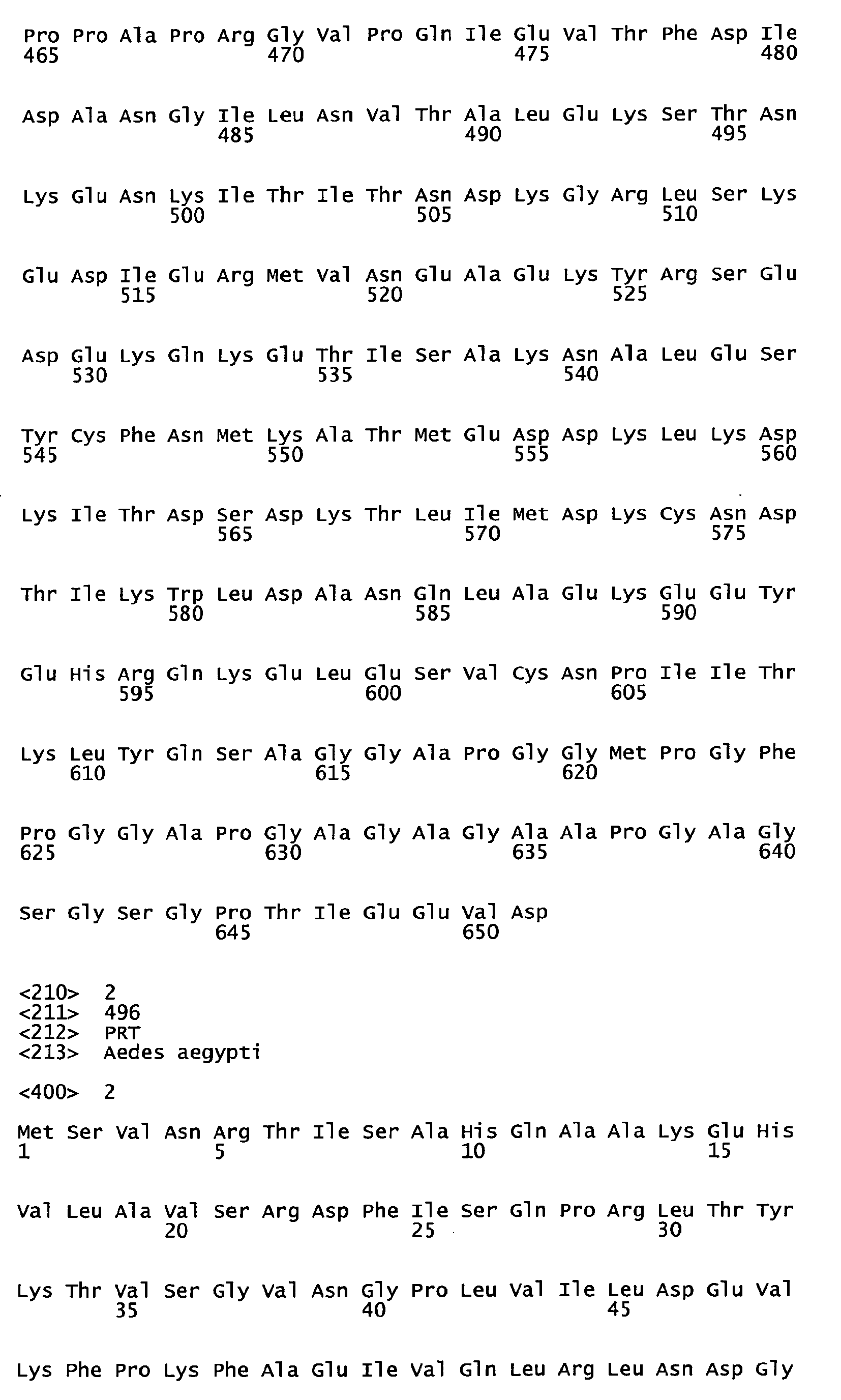


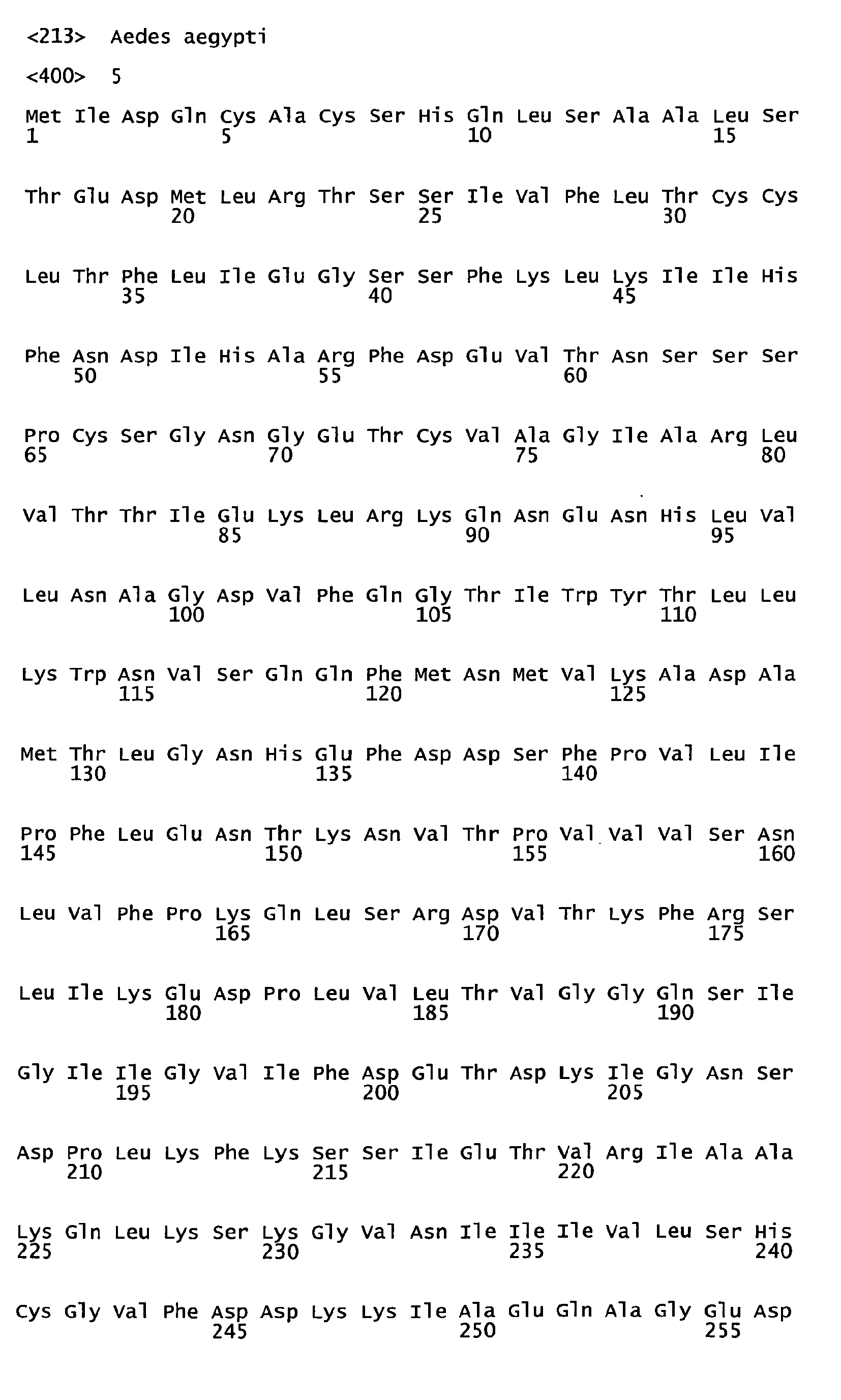
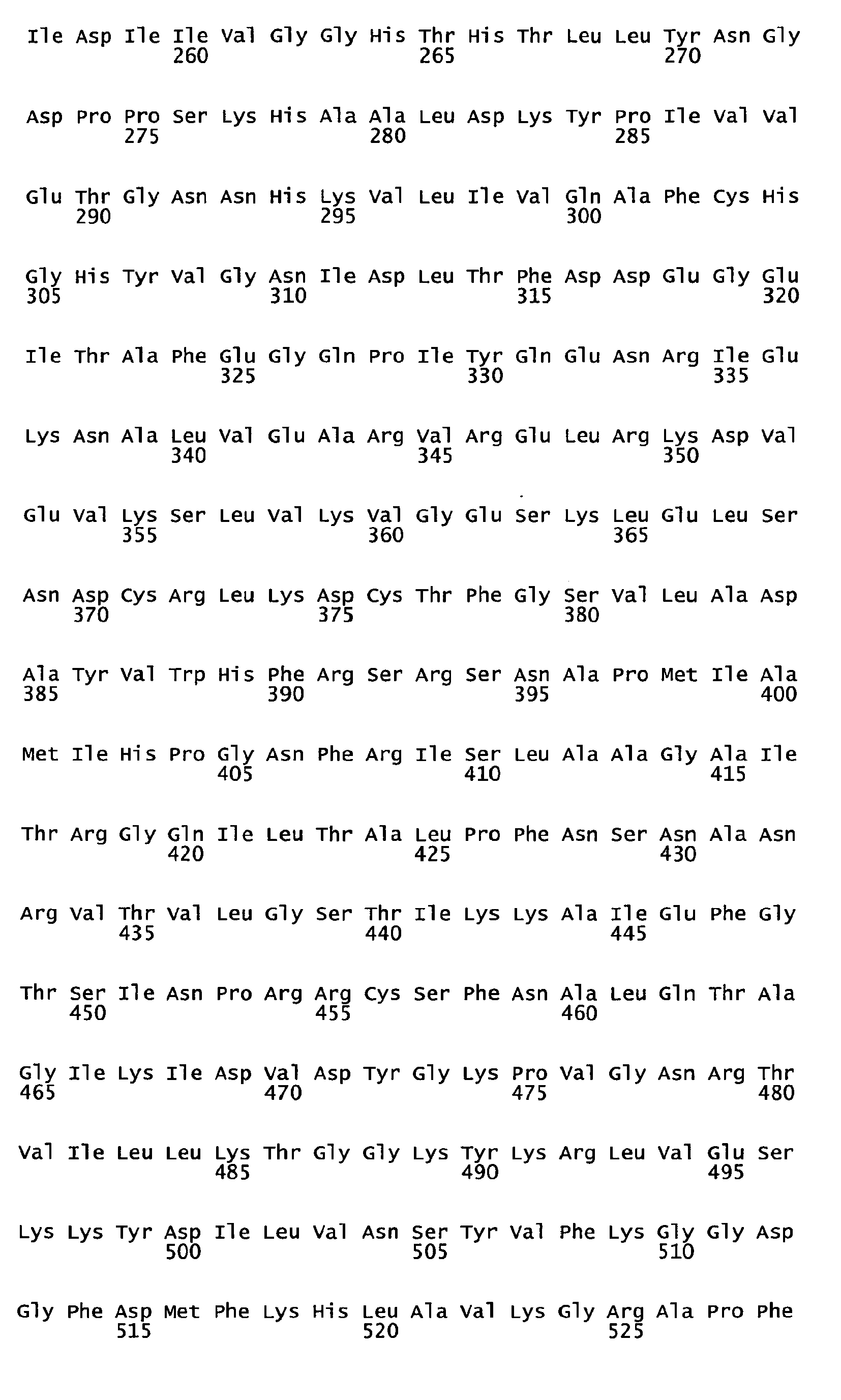


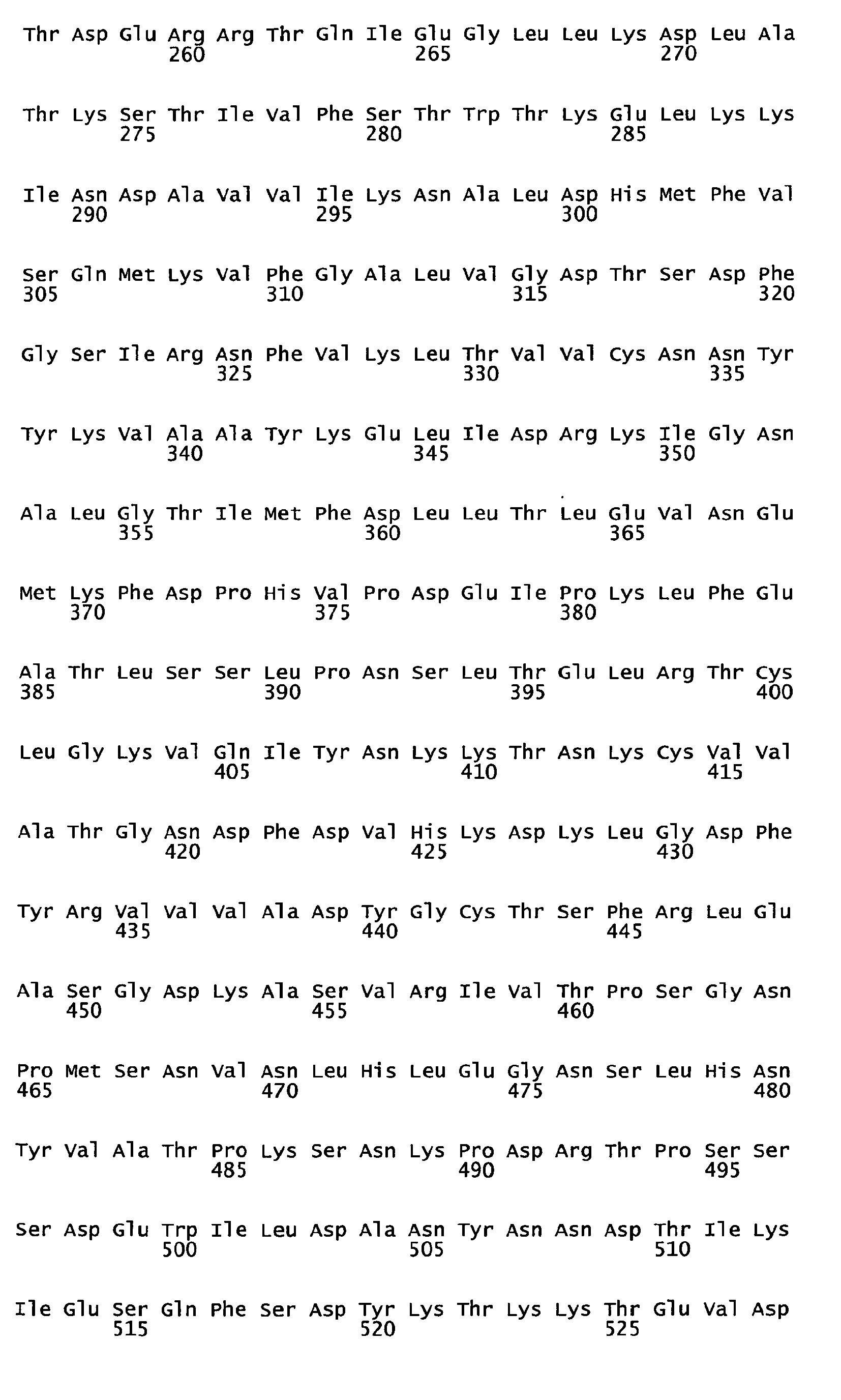


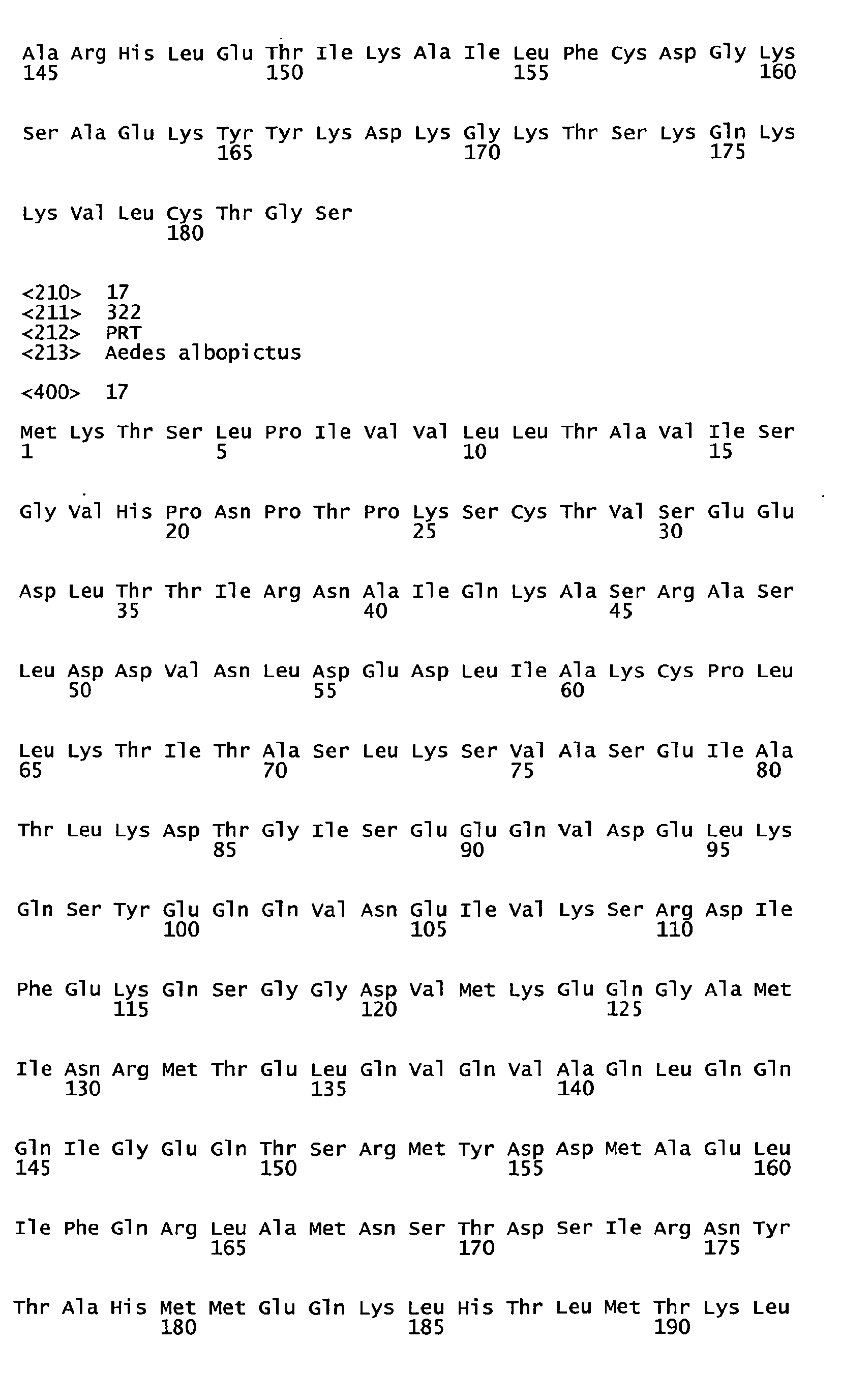


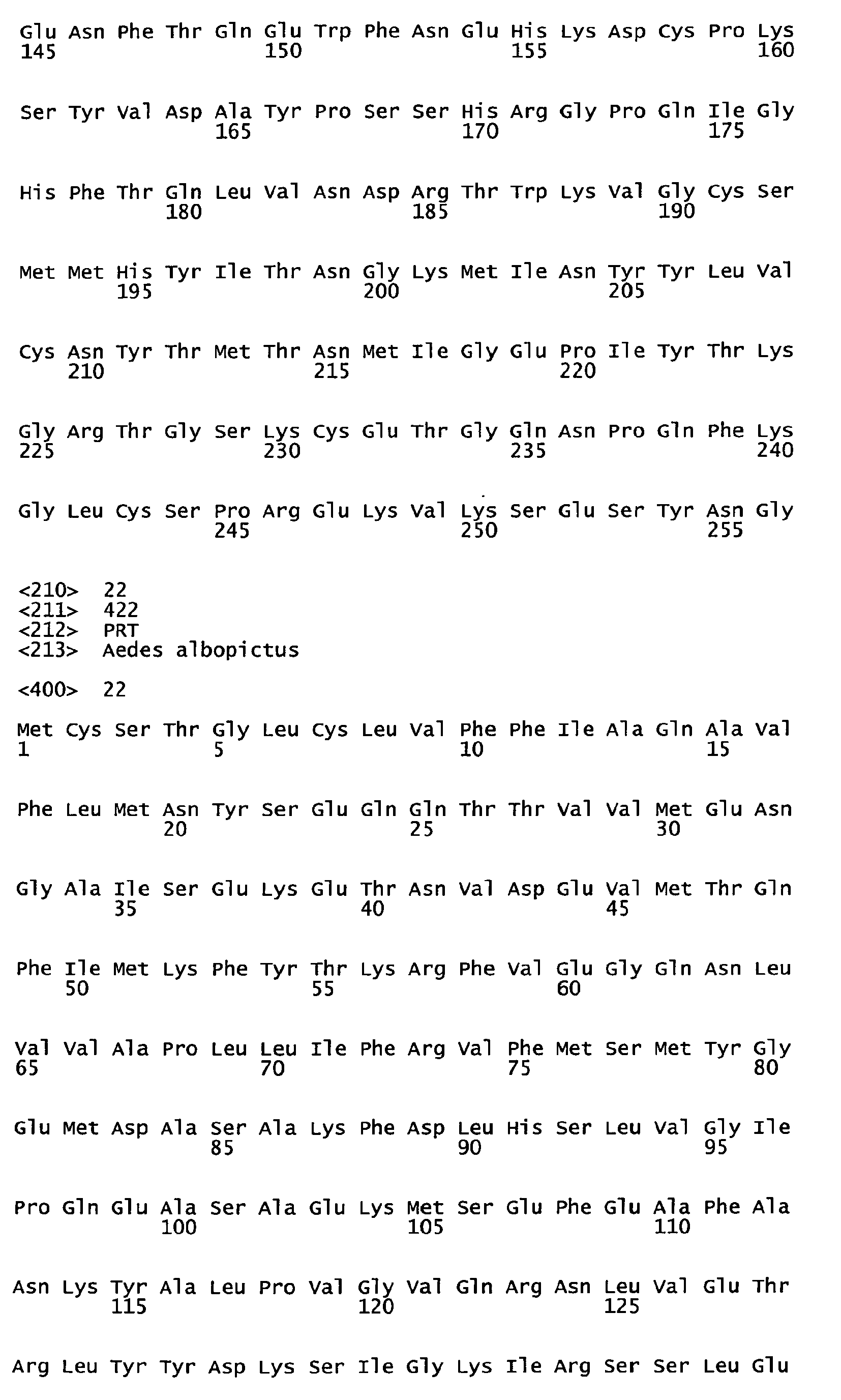


Claims (12)
- Proteins/peptides having immunogenic properties, such as obtained from Aedes mosquitoes, particularly from salivary gland extracts of Ae.aegypti or Ae.albopictus, using a method comprising- submitting said extracts to a two-dimensional electrophoresis, staining the gels with a protein staining agent, followed by a Western blot, wherein the gels have been labelled or coloured to specifically detect the proteins/peptides,- detecting IgG proteins on membranes with a pool of DHF patients' sera.
- Proteins/peptides according to claim 1, of sequences SEQ ID N° 1-9, 12-14, 16, 18, 21-26
- Proteins/peptides according to claim 1, of sequences SEQ ID N°16, 18 and 21-26.
- Proteins/peptides of sequences SEQ ID N°1-26 for use as drugs.
- Pharmaceutical compositions comprising a therapeutically effective amount of at least one of the proteins/peptides of sequences SEQ ID N° 1-26 in association with a pharmaceutically inert carrier.
- The pharmaceutical compositions of claim 5, under a form for an administration by the oral , injectable or topic route.
- The pharmaceutical compositions of claim 6, for oral administration, under the form of tablets, pills, capsules, drops, patchs or sprays.
- The pharmaceutical compositions of claim 5, for administration by injection, under the form of solutions for injections by the intravenous, subcutaneous, or intramuscular route.
- The pharmaceutical compositions of claim 5, under the form of gels for a topic administration.
- The pharmaceutical compositions of anyone of claims 5-9, for preventing or treating patients susceptible to be exposed to Aedes mosquitoes bits or patients with viral infections such as dengue infections.
- The use of the proteins/peptides of sequences SEQ ID N° 10, 11, 15, 17 and 19-20 for making drugs having immuno-modulating properties with respect to the immune response, for treating or preventing viral infections.
- The antibodies raised against the proteins/peptides of claim 1 to 3.
Priority Applications (2)
| Application Number | Priority Date | Filing Date | Title |
|---|---|---|---|
| EP10290094.1A EP2361634B1 (en) | 2010-02-25 | 2010-02-25 | Proteins/peptides having immunogenic properties and their biological applications |
| PCT/IB2011/050783 WO2011104684A1 (en) | 2010-02-25 | 2011-02-24 | Proteins/peptides having immunogenic properties and their biological applications |
Applications Claiming Priority (1)
| Application Number | Priority Date | Filing Date | Title |
|---|---|---|---|
| EP10290094.1A EP2361634B1 (en) | 2010-02-25 | 2010-02-25 | Proteins/peptides having immunogenic properties and their biological applications |
Publications (2)
| Publication Number | Publication Date |
|---|---|
| EP2361634A1 true EP2361634A1 (en) | 2011-08-31 |
| EP2361634B1 EP2361634B1 (en) | 2015-10-21 |
Family
ID=42342770
Family Applications (1)
| Application Number | Title | Priority Date | Filing Date |
|---|---|---|---|
| EP10290094.1A Not-in-force EP2361634B1 (en) | 2010-02-25 | 2010-02-25 | Proteins/peptides having immunogenic properties and their biological applications |
Country Status (2)
| Country | Link |
|---|---|
| EP (1) | EP2361634B1 (en) |
| WO (1) | WO2011104684A1 (en) |
Cited By (3)
| Publication number | Priority date | Publication date | Assignee | Title |
|---|---|---|---|---|
| FR3005421A1 (en) * | 2013-05-13 | 2014-11-14 | Inst Rech Developpement Ird | AEDES AEGYPTI PROTEIN AS A TARGET FOR PREVENTING OR TREATING DENGUE INFECTION |
| CN104711283A (en) * | 2015-02-05 | 2015-06-17 | 温州医科大学 | Expression preparation method and application of novel anticoagulant Aedes albopictus salivary gland aegyptin-like protein ALP |
| CN116047084A (en) * | 2023-02-28 | 2023-05-02 | 江西农业大学 | Screening and Identification of Common Immunogenic Proteins in Eimeria maxima Sporozoite Soluble Proteins |
-
2010
- 2010-02-25 EP EP10290094.1A patent/EP2361634B1/en not_active Not-in-force
-
2011
- 2011-02-24 WO PCT/IB2011/050783 patent/WO2011104684A1/en not_active Ceased
Non-Patent Citations (12)
| Title |
|---|
| ARCA ET AL: "An insight into the sialome of the adult female mosquito Aedes albopictus", INSECT BIOCHEMISTRY AND MOLECULAR BIOLOGY, ELSEVIER SCIENCE LTD, GB LNKD- DOI:10.1016/J.IBMB.2006.10.007, vol. 37, no. 2, 20 January 2007 (2007-01-20), pages 107 - 127, XP005855349, ISSN: 0965-1748 * |
| COCIANCICH S O ET AL: "Vesicular ATPase-overexpressing cells determine the distribution of malaria parasite oocysts on the midguts of mosquitoes.", 30 April 1999, THE JOURNAL OF BIOLOGICAL CHEMISTRY 30 APR 1999 LNKD- PUBMED:10212245, VOL. 274, NR. 18, PAGE(S) 12650 - 12655, ISSN: 0021-9258, XP002594407 * |
| HUANG CHIN-GI ET AL: "Intestinal expression of H+ V-ATPase in the mosquito Aedes albopictus is tightly associated with gregarine infection.", March 2006, THE JOURNAL OF EUKARYOTIC MICROBIOLOGY 2006 MAR-APR LNKD- PUBMED:16579815, VOL. 53, NR. 2, PAGE(S) 127 - 135, ISSN: 1066-5234, XP002594408 * |
| JAMES A A ET AL: "Isolation and characterization of the gene expressing the major salivary gland protein of the female mosquito, Aedes aegypti", MOLECULAR AND BIOCHEMICAL PARASITOLOGY, ELSEVIER SCIENCE PUBLISHERS, AMSTERDAM, NL LNKD- DOI:10.1016/0166-6851(91)90010-4, vol. 44, no. 2, 1 February 1991 (1991-02-01), pages 245 - 253, XP023896959, ISSN: 0166-6851, [retrieved on 19910201] * |
| LEFEVRE, T.; THOMAS, F.; SCHWARTZ, A.; LEVASHINA, E. ET AL.: "Malaria Plasmodium agent induces alteration in the head proteome of their Anopheles mosquito host", PROTEOMICS, vol. 11, 2007, pages 1908 - 1915 |
| MISSÉ, D.; CERUTTI, M.; NORAZ, N.; JOURDAN, P. ET AL.: "A CD4-independent interaction of human immunodeficiency virus-1 gp120 with CXCR4 induces their cointernalization, cell signaling, and T-cell chemotaxis", BLOOD, vol. 93, 1999, pages 2454 - 2462 |
| NENE VISHVANATH ET AL: "Genome sequence of Aedes aegypti, a major arbovirus vector.", 22 June 2007, SCIENCE (NEW YORK, N.Y.) 22 JUN 2007 LNKD- PUBMED:17510324, VOL. 316, NR. 5832, PAGE(S) 1718 - 1723, ISSN: 1095-9203, XP002594409 * |
| RIBEIRO JOSÉ MC ET AL: "An annotated catalogue of salivary gland transcripts in the adult female mosquito, AEdes aegypti*", BMC GENOMICS, BIOMED CENTRAL, LONDON, GB LNKD- DOI:10.1186/1471-2164-8-6, vol. 8, no. 1, 4 January 2007 (2007-01-04), pages 6, XP021022366, ISSN: 1471-2164 * |
| RIBEIRO, J. M.; ARCÀ, B.; LOMBARDO, F.; CALVO, E. ET AL.: "An annotated catalogue of salivary gland transcripts in the adult female mosquito", AEDES AEGYPTI. BMC GENOMICS, vol. 8, 2007, pages 6 |
| THISYAKORN, U.; NIMMANNITYA, S.: "Nutritional status of children with dengue hemorrhagic fever", CLIN. INFECT. DIS., vol. 16, 1993, pages 295 - 297 |
| VALENZUELA J G ET AL: "Toward a description of the sialome of the adult female mosquito Aedes aegypti.", September 2002, INSECT BIOCHEMISTRY AND MOLECULAR BIOLOGY SEP 2002 LNKD- PUBMED:12213246, VOL. 32, NR. 9, PAGE(S) 1101 - 1122, ISSN: 0965-1748, XP002594406 * |
| WILKINS, M.R.; WILLIAMS, K.L.: "Cross-species protein identification using amino acid composition, peptide mass fingerprinting, isoelectric point and molecular mass: a theoretical evaluation", J. THEOR. BIOL., vol. 186, 1997, pages 7 - 15 |
Cited By (4)
| Publication number | Priority date | Publication date | Assignee | Title |
|---|---|---|---|---|
| FR3005421A1 (en) * | 2013-05-13 | 2014-11-14 | Inst Rech Developpement Ird | AEDES AEGYPTI PROTEIN AS A TARGET FOR PREVENTING OR TREATING DENGUE INFECTION |
| WO2014184735A1 (en) * | 2013-05-13 | 2014-11-20 | Institut De Recherche Pour Le Developpement (Ird) | Aedes aegypti protein usable as a target for preventing or treating a dengue infection |
| CN104711283A (en) * | 2015-02-05 | 2015-06-17 | 温州医科大学 | Expression preparation method and application of novel anticoagulant Aedes albopictus salivary gland aegyptin-like protein ALP |
| CN116047084A (en) * | 2023-02-28 | 2023-05-02 | 江西农业大学 | Screening and Identification of Common Immunogenic Proteins in Eimeria maxima Sporozoite Soluble Proteins |
Also Published As
| Publication number | Publication date |
|---|---|
| WO2011104684A1 (en) | 2011-09-01 |
| EP2361634B1 (en) | 2015-10-21 |
Similar Documents
| Publication | Publication Date | Title |
|---|---|---|
| Pitarch et al. | Proteomics‐based identification of novel Candida albicans antigens for diagnosis of systemic candidiasis in patients with underlying hematological malignancies | |
| Wasinpiyamongkol et al. | Blood‐feeding and immunogenic Aedes aegypti saliva proteins | |
| Virginio et al. | Excretory/secretory products from in vitro-cultured Echinococcus granulosus protoscoleces | |
| Pérez‐Sánchez et al. | Proteomic analysis of the tegument and excretory‐secretory products of adult Schistosoma bovis worms | |
| Monteiro et al. | Proteomic analysis of the Echinococcus granulosus metacestode during infection of its intermediate host | |
| US7241613B1 (en) | Identification of Candida cell surface proteins and their uses | |
| Ang et al. | Application of 16O/18O reverse proteolytic labeling to determine the effect of biofilm culture on the cell envelope proteome of Porphyromonas gingivalis W50 | |
| Tournier et al. | Anthrax, toxins and vaccines: a 125-year journey targeting Bacillus anthracis | |
| Lingam et al. | Proteomics and antivenom immunoprofiling of Russell’s viper (Daboia siamensis) venoms from Thailand and Indonesia | |
| Yano et al. | Proteomic analysis of the cilia membrane of Paramecium tetraurelia | |
| JP2014529396A (en) | Pasteurella vaccine | |
| EP3632926A1 (en) | Antigen of allergy and epitope thereof | |
| EP2361634B1 (en) | Proteins/peptides having immunogenic properties and their biological applications | |
| Velkova et al. | N-glycan structures of β-HlH subunit of Helix lucorum hemocyanin | |
| Chen et al. | Haemocyte protein expression profiling of scallop Chlamys farreri response to acute viral necrosis virus (AVNV) infection | |
| Maslov et al. | A putative novel nuclear-encoded subunit of the cytochrome c oxidase complex in trypanosomatids | |
| Weng et al. | Comparative proteome analysis of Actinoplanes utahensis grown on various saccharides based on 2D-DIGE and MALDI-TOF/TOF-MS | |
| Pitarch et al. | Contributions of proteomics to diagnosis, treatment, and prevention of candidiasis | |
| EP3368070B1 (en) | Neospora vaccine composition | |
| KR20210141433A (en) | Compositions for diagnosis of allergy to Fagales plant pollen, diagnosis methods using the same, and composition for prevention or treatment of allergy to Fagales plant pollen | |
| Hernandez-Haro et al. | Immunoproteomic profiling of Saccharomyces cerevisiae systemic infection in a murine model | |
| Mobilon et al. | Cloning and purification of Ipac antigen from Shigella Flexneri: proposal of a new methodology | |
| Matthews et al. | The application of mass spectrometry to identify immunogenic components of excretory/secretory products from adult Dictyocaulus viviparus | |
| US20240043486A1 (en) | Manufacture of granulocyte macrophage-colony stimulating factor | |
| Hamilton | The Leish Niche: The secretome of Leishmania and its role in parasite virulence |
Legal Events
| Date | Code | Title | Description |
|---|---|---|---|
| PUAI | Public reference made under article 153(3) epc to a published international application that has entered the european phase |
Free format text: ORIGINAL CODE: 0009012 |
|
| AK | Designated contracting states |
Kind code of ref document: A1 Designated state(s): AT BE BG CH CY CZ DE DK EE ES FI FR GB GR HR HU IE IS IT LI LT LU LV MC MK MT NL NO PL PT RO SE SI SK SM TR |
|
| AX | Request for extension of the european patent |
Extension state: AL BA RS |
|
| 17P | Request for examination filed |
Effective date: 20120229 |
|
| 17Q | First examination report despatched |
Effective date: 20120813 |
|
| GRAP | Despatch of communication of intention to grant a patent |
Free format text: ORIGINAL CODE: EPIDOSNIGR1 |
|
| INTG | Intention to grant announced |
Effective date: 20150508 |
|
| GRAS | Grant fee paid |
Free format text: ORIGINAL CODE: EPIDOSNIGR3 |
|
| GRAA | (expected) grant |
Free format text: ORIGINAL CODE: 0009210 |
|
| AK | Designated contracting states |
Kind code of ref document: B1 Designated state(s): AT BE BG CH CY CZ DE DK EE ES FI FR GB GR HR HU IE IS IT LI LT LU LV MC MK MT NL NO PL PT RO SE SI SK SM TR |
|
| REG | Reference to a national code |
Ref country code: GB Ref legal event code: FG4D Ref country code: NL Ref legal event code: MP Effective date: 20151021 |
|
| REG | Reference to a national code |
Ref country code: CH Ref legal event code: EP |
|
| REG | Reference to a national code |
Ref country code: AT Ref legal event code: REF Ref document number: 756162 Country of ref document: AT Kind code of ref document: T Effective date: 20151115 |
|
| REG | Reference to a national code |
Ref country code: IE Ref legal event code: FG4D |
|
| REG | Reference to a national code |
Ref country code: DE Ref legal event code: R096 Ref document number: 602010028363 Country of ref document: DE |
|
| REG | Reference to a national code |
Ref country code: LT Ref legal event code: MG4D |
|
| REG | Reference to a national code |
Ref country code: FR Ref legal event code: PLFP Year of fee payment: 7 |
|
| REG | Reference to a national code |
Ref country code: AT Ref legal event code: MK05 Ref document number: 756162 Country of ref document: AT Kind code of ref document: T Effective date: 20151021 |
|
| PG25 | Lapsed in a contracting state [announced via postgrant information from national office to epo] |
Ref country code: NO Free format text: LAPSE BECAUSE OF FAILURE TO SUBMIT A TRANSLATION OF THE DESCRIPTION OR TO PAY THE FEE WITHIN THE PRESCRIBED TIME-LIMIT Effective date: 20160121 Ref country code: NL Free format text: LAPSE BECAUSE OF FAILURE TO SUBMIT A TRANSLATION OF THE DESCRIPTION OR TO PAY THE FEE WITHIN THE PRESCRIBED TIME-LIMIT Effective date: 20151021 Ref country code: HR Free format text: LAPSE BECAUSE OF FAILURE TO SUBMIT A TRANSLATION OF THE DESCRIPTION OR TO PAY THE FEE WITHIN THE PRESCRIBED TIME-LIMIT Effective date: 20151021 Ref country code: LT Free format text: LAPSE BECAUSE OF FAILURE TO SUBMIT A TRANSLATION OF THE DESCRIPTION OR TO PAY THE FEE WITHIN THE PRESCRIBED TIME-LIMIT Effective date: 20151021 Ref country code: IS Free format text: LAPSE BECAUSE OF FAILURE TO SUBMIT A TRANSLATION OF THE DESCRIPTION OR TO PAY THE FEE WITHIN THE PRESCRIBED TIME-LIMIT Effective date: 20160221 Ref country code: ES Free format text: LAPSE BECAUSE OF FAILURE TO SUBMIT A TRANSLATION OF THE DESCRIPTION OR TO PAY THE FEE WITHIN THE PRESCRIBED TIME-LIMIT Effective date: 20151021 Ref country code: IT Free format text: LAPSE BECAUSE OF FAILURE TO SUBMIT A TRANSLATION OF THE DESCRIPTION OR TO PAY THE FEE WITHIN THE PRESCRIBED TIME-LIMIT Effective date: 20151021 |
|
| PG25 | Lapsed in a contracting state [announced via postgrant information from national office to epo] |
Ref country code: LV Free format text: LAPSE BECAUSE OF FAILURE TO SUBMIT A TRANSLATION OF THE DESCRIPTION OR TO PAY THE FEE WITHIN THE PRESCRIBED TIME-LIMIT Effective date: 20151021 Ref country code: PT Free format text: LAPSE BECAUSE OF FAILURE TO SUBMIT A TRANSLATION OF THE DESCRIPTION OR TO PAY THE FEE WITHIN THE PRESCRIBED TIME-LIMIT Effective date: 20160222 Ref country code: BE Free format text: LAPSE BECAUSE OF NON-PAYMENT OF DUE FEES Effective date: 20160229 Ref country code: SE Free format text: LAPSE BECAUSE OF FAILURE TO SUBMIT A TRANSLATION OF THE DESCRIPTION OR TO PAY THE FEE WITHIN THE PRESCRIBED TIME-LIMIT Effective date: 20151021 Ref country code: AT Free format text: LAPSE BECAUSE OF FAILURE TO SUBMIT A TRANSLATION OF THE DESCRIPTION OR TO PAY THE FEE WITHIN THE PRESCRIBED TIME-LIMIT Effective date: 20151021 Ref country code: PL Free format text: LAPSE BECAUSE OF FAILURE TO SUBMIT A TRANSLATION OF THE DESCRIPTION OR TO PAY THE FEE WITHIN THE PRESCRIBED TIME-LIMIT Effective date: 20151021 Ref country code: FI Free format text: LAPSE BECAUSE OF FAILURE TO SUBMIT A TRANSLATION OF THE DESCRIPTION OR TO PAY THE FEE WITHIN THE PRESCRIBED TIME-LIMIT Effective date: 20151021 Ref country code: GR Free format text: LAPSE BECAUSE OF FAILURE TO SUBMIT A TRANSLATION OF THE DESCRIPTION OR TO PAY THE FEE WITHIN THE PRESCRIBED TIME-LIMIT Effective date: 20160122 |
|
| PGFP | Annual fee paid to national office [announced via postgrant information from national office to epo] |
Ref country code: FR Payment date: 20160311 Year of fee payment: 7 |
|
| REG | Reference to a national code |
Ref country code: DE Ref legal event code: R097 Ref document number: 602010028363 Country of ref document: DE |
|
| PG25 | Lapsed in a contracting state [announced via postgrant information from national office to epo] |
Ref country code: CZ Free format text: LAPSE BECAUSE OF FAILURE TO SUBMIT A TRANSLATION OF THE DESCRIPTION OR TO PAY THE FEE WITHIN THE PRESCRIBED TIME-LIMIT Effective date: 20151021 |
|
| PLBE | No opposition filed within time limit |
Free format text: ORIGINAL CODE: 0009261 |
|
| STAA | Information on the status of an ep patent application or granted ep patent |
Free format text: STATUS: NO OPPOSITION FILED WITHIN TIME LIMIT |
|
| PG25 | Lapsed in a contracting state [announced via postgrant information from national office to epo] |
Ref country code: RO Free format text: LAPSE BECAUSE OF FAILURE TO SUBMIT A TRANSLATION OF THE DESCRIPTION OR TO PAY THE FEE WITHIN THE PRESCRIBED TIME-LIMIT Effective date: 20151021 Ref country code: DK Free format text: LAPSE BECAUSE OF FAILURE TO SUBMIT A TRANSLATION OF THE DESCRIPTION OR TO PAY THE FEE WITHIN THE PRESCRIBED TIME-LIMIT Effective date: 20151021 Ref country code: EE Free format text: LAPSE BECAUSE OF FAILURE TO SUBMIT A TRANSLATION OF THE DESCRIPTION OR TO PAY THE FEE WITHIN THE PRESCRIBED TIME-LIMIT Effective date: 20151021 Ref country code: SM Free format text: LAPSE BECAUSE OF FAILURE TO SUBMIT A TRANSLATION OF THE DESCRIPTION OR TO PAY THE FEE WITHIN THE PRESCRIBED TIME-LIMIT Effective date: 20151021 Ref country code: SK Free format text: LAPSE BECAUSE OF FAILURE TO SUBMIT A TRANSLATION OF THE DESCRIPTION OR TO PAY THE FEE WITHIN THE PRESCRIBED TIME-LIMIT Effective date: 20151021 |
|
| REG | Reference to a national code |
Ref country code: DE Ref legal event code: R119 Ref document number: 602010028363 Country of ref document: DE |
|
| 26N | No opposition filed |
Effective date: 20160722 |
|
| PG25 | Lapsed in a contracting state [announced via postgrant information from national office to epo] |
Ref country code: MC Free format text: LAPSE BECAUSE OF FAILURE TO SUBMIT A TRANSLATION OF THE DESCRIPTION OR TO PAY THE FEE WITHIN THE PRESCRIBED TIME-LIMIT Effective date: 20151021 Ref country code: LU Free format text: LAPSE BECAUSE OF FAILURE TO SUBMIT A TRANSLATION OF THE DESCRIPTION OR TO PAY THE FEE WITHIN THE PRESCRIBED TIME-LIMIT Effective date: 20160225 |
|
| REG | Reference to a national code |
Ref country code: CH Ref legal event code: PL |
|
| GBPC | Gb: european patent ceased through non-payment of renewal fee |
Effective date: 20160225 |
|
| PG25 | Lapsed in a contracting state [announced via postgrant information from national office to epo] |
Ref country code: CH Free format text: LAPSE BECAUSE OF NON-PAYMENT OF DUE FEES Effective date: 20160229 Ref country code: LI Free format text: LAPSE BECAUSE OF NON-PAYMENT OF DUE FEES Effective date: 20160229 |
|
| PG25 | Lapsed in a contracting state [announced via postgrant information from national office to epo] |
Ref country code: SI Free format text: LAPSE BECAUSE OF FAILURE TO SUBMIT A TRANSLATION OF THE DESCRIPTION OR TO PAY THE FEE WITHIN THE PRESCRIBED TIME-LIMIT Effective date: 20151021 |
|
| REG | Reference to a national code |
Ref country code: IE Ref legal event code: MM4A |
|
| PG25 | Lapsed in a contracting state [announced via postgrant information from national office to epo] |
Ref country code: BE Free format text: LAPSE BECAUSE OF FAILURE TO SUBMIT A TRANSLATION OF THE DESCRIPTION OR TO PAY THE FEE WITHIN THE PRESCRIBED TIME-LIMIT Effective date: 20151021 |
|
| PG25 | Lapsed in a contracting state [announced via postgrant information from national office to epo] |
Ref country code: DE Free format text: LAPSE BECAUSE OF NON-PAYMENT OF DUE FEES Effective date: 20160901 Ref country code: IE Free format text: LAPSE BECAUSE OF NON-PAYMENT OF DUE FEES Effective date: 20160225 Ref country code: GB Free format text: LAPSE BECAUSE OF NON-PAYMENT OF DUE FEES Effective date: 20160225 |
|
| PG25 | Lapsed in a contracting state [announced via postgrant information from national office to epo] |
Ref country code: MT Free format text: LAPSE BECAUSE OF FAILURE TO SUBMIT A TRANSLATION OF THE DESCRIPTION OR TO PAY THE FEE WITHIN THE PRESCRIBED TIME-LIMIT Effective date: 20151021 |
|
| REG | Reference to a national code |
Ref country code: FR Ref legal event code: ST Effective date: 20171031 |
|
| PG25 | Lapsed in a contracting state [announced via postgrant information from national office to epo] |
Ref country code: FR Free format text: LAPSE BECAUSE OF NON-PAYMENT OF DUE FEES Effective date: 20170228 |
|
| PG25 | Lapsed in a contracting state [announced via postgrant information from national office to epo] |
Ref country code: HU Free format text: LAPSE BECAUSE OF FAILURE TO SUBMIT A TRANSLATION OF THE DESCRIPTION OR TO PAY THE FEE WITHIN THE PRESCRIBED TIME-LIMIT; INVALID AB INITIO Effective date: 20100225 Ref country code: CY Free format text: LAPSE BECAUSE OF FAILURE TO SUBMIT A TRANSLATION OF THE DESCRIPTION OR TO PAY THE FEE WITHIN THE PRESCRIBED TIME-LIMIT Effective date: 20151021 |
|
| PG25 | Lapsed in a contracting state [announced via postgrant information from national office to epo] |
Ref country code: MT Free format text: LAPSE BECAUSE OF FAILURE TO SUBMIT A TRANSLATION OF THE DESCRIPTION OR TO PAY THE FEE WITHIN THE PRESCRIBED TIME-LIMIT Effective date: 20160229 Ref country code: MK Free format text: LAPSE BECAUSE OF FAILURE TO SUBMIT A TRANSLATION OF THE DESCRIPTION OR TO PAY THE FEE WITHIN THE PRESCRIBED TIME-LIMIT Effective date: 20151021 Ref country code: TR Free format text: LAPSE BECAUSE OF FAILURE TO SUBMIT A TRANSLATION OF THE DESCRIPTION OR TO PAY THE FEE WITHIN THE PRESCRIBED TIME-LIMIT Effective date: 20151021 |
|
| PG25 | Lapsed in a contracting state [announced via postgrant information from national office to epo] |
Ref country code: BG Free format text: LAPSE BECAUSE OF FAILURE TO SUBMIT A TRANSLATION OF THE DESCRIPTION OR TO PAY THE FEE WITHIN THE PRESCRIBED TIME-LIMIT Effective date: 20151021 |