EP2361091B1 - Bile acids and biguanides as protease inhibitors for preserving the integrity of peptides in the gut - Google Patents
Bile acids and biguanides as protease inhibitors for preserving the integrity of peptides in the gut Download PDFInfo
- Publication number
- EP2361091B1 EP2361091B1 EP09817101.0A EP09817101A EP2361091B1 EP 2361091 B1 EP2361091 B1 EP 2361091B1 EP 09817101 A EP09817101 A EP 09817101A EP 2361091 B1 EP2361091 B1 EP 2361091B1
- Authority
- EP
- European Patent Office
- Prior art keywords
- compound
- acid
- peptide
- pharmaceutically acceptable
- gut
- Prior art date
- Legal status (The legal status is an assumption and is not a legal conclusion. Google has not performed a legal analysis and makes no representation as to the accuracy of the status listed.)
- Active
Links
Images





Classifications
-
- A—HUMAN NECESSITIES
- A61—MEDICAL OR VETERINARY SCIENCE; HYGIENE
- A61K—PREPARATIONS FOR MEDICAL, DENTAL OR TOILETRY PURPOSES
- A61K31/00—Medicinal preparations containing organic active ingredients
- A61K31/56—Compounds containing cyclopenta[a]hydrophenanthrene ring systems; Derivatives thereof, e.g. steroids
- A61K31/575—Compounds containing cyclopenta[a]hydrophenanthrene ring systems; Derivatives thereof, e.g. steroids substituted in position 17 beta by a chain of three or more carbon atoms, e.g. cholane, cholestane, ergosterol, sitosterol
-
- A—HUMAN NECESSITIES
- A61—MEDICAL OR VETERINARY SCIENCE; HYGIENE
- A61K—PREPARATIONS FOR MEDICAL, DENTAL OR TOILETRY PURPOSES
- A61K31/00—Medicinal preparations containing organic active ingredients
- A61K31/13—Amines
- A61K31/155—Amidines (), e.g. guanidine (H2N—C(=NH)—NH2), isourea (N=C(OH)—NH2), isothiourea (—N=C(SH)—NH2)
-
- A—HUMAN NECESSITIES
- A61—MEDICAL OR VETERINARY SCIENCE; HYGIENE
- A61K—PREPARATIONS FOR MEDICAL, DENTAL OR TOILETRY PURPOSES
- A61K38/00—Medicinal preparations containing peptides
- A61K38/04—Peptides having up to 20 amino acids in a fully defined sequence; Derivatives thereof
- A61K38/12—Cyclic peptides, e.g. bacitracins; Polymyxins; Gramicidins S, C; Tyrocidins A, B or C
-
- A—HUMAN NECESSITIES
- A61—MEDICAL OR VETERINARY SCIENCE; HYGIENE
- A61K—PREPARATIONS FOR MEDICAL, DENTAL OR TOILETRY PURPOSES
- A61K45/00—Medicinal preparations containing active ingredients not provided for in groups A61K31/00 - A61K41/00
- A61K45/06—Mixtures of active ingredients without chemical characterisation, e.g. antiphlogistics and cardiaca
-
- A—HUMAN NECESSITIES
- A61—MEDICAL OR VETERINARY SCIENCE; HYGIENE
- A61P—SPECIFIC THERAPEUTIC ACTIVITY OF CHEMICAL COMPOUNDS OR MEDICINAL PREPARATIONS
- A61P1/00—Drugs for disorders of the alimentary tract or the digestive system
-
- C—CHEMISTRY; METALLURGY
- C07—ORGANIC CHEMISTRY
- C07J—STEROIDS
- C07J9/00—Normal steroids containing carbon, hydrogen, halogen or oxygen substituted in position 17 beta by a chain of more than two carbon atoms, e.g. cholane, cholestane, coprostane
-
- A—HUMAN NECESSITIES
- A61—MEDICAL OR VETERINARY SCIENCE; HYGIENE
- A61K—PREPARATIONS FOR MEDICAL, DENTAL OR TOILETRY PURPOSES
- A61K9/00—Medicinal preparations characterised by special physical form
- A61K9/20—Pills, tablets, discs, rods
- A61K9/2004—Excipients; Inactive ingredients
- A61K9/2013—Organic compounds, e.g. phospholipids, fats
-
- A—HUMAN NECESSITIES
- A61—MEDICAL OR VETERINARY SCIENCE; HYGIENE
- A61K—PREPARATIONS FOR MEDICAL, DENTAL OR TOILETRY PURPOSES
- A61K9/00—Medicinal preparations characterised by special physical form
- A61K9/20—Pills, tablets, discs, rods
- A61K9/28—Dragees; Coated pills or tablets, e.g. with film or compression coating
Definitions
- This invention relates to methods of preserving the integrity of peptides in the gut.
- it concerns the new use of certain compounds as inhibitors of serine proteases.
- Peptides and in particular polypeptides such as proteins, are increasingly becoming recognised as desirable agents for the treatment of diseases manifesting in the gut (gastrointestinal tract).
- Protein therapeutics are often based on natural products with a long history of medicinal use, which have a higher safety profile than small molecules that have been newly synthesised and whose effects on the body are largely unknown.
- proteins can exhibit a high degree of specificity and selectivity, and at the same time can be designed to take advantage of their large size to display multi-functionality, enabling them to interact concurrently with two or more different targets.
- Proteins with antioxidant activity are examples of such therapeutic applications.
- Other examples are monoclonal antibodies, which can act as anti-infectives by binding to sites on infectious organisms invading the gut. Alternatively, such antibodies can bind to receptor sites on intestinal cells, and interfere with adhesion processes and the colonisation of infectious organisms. In addition, these antibodies can interact with cells of the immune system to stimulate their activity in combating infectious diseases.
- Other types of therapeutic peptides include peptide hormones, such as appetite suppressing agents.
- proteases can be found both in the stomach (e.g. pepsin), and in the upper intestine, and have evolved to enable the digestive tract to break down peptides ingested as food, by proteolysis, into amino acids which can be taken up as nutrients by receptor-mediated mechanisms.
- the peptide can be protected from breakdown in the stomach by placing it inside an enteric-coated capsule, tablet or other device which resists dissolution at the low pH found in the stomach, but disintegrates at higher pH to release the peptide into the small intestine, e.g. the duodenum, jejunum or ileum.
- the action of the proteases found in the small intestine is such that they can rapidly break down and destroy peptides once they have been released from such a device. This clearly limits the efficacy of orally administered therapeutic peptides, and a means of preventing their degradation by proteases would markedly enhance their performance.
- inhibitors acting as protease inhibitors that are known to those skilled in the art, few, if any, are appropriate for this particular application. Most known inhibitors, e.g. antipain, leupeptin, are used for research purposes only, and are not acceptable for human administration. Some inhibitors, e.g diisopropyl fluorophosphate or phenylmethyl sulphonyl fluoride have a high degree of potency, but display a very broad specificity, so there is a risk of their exerting their action in undesirable parts of the body, in addition to the gut.
- inhibitors such as the new class of protease inhibitors employed in the treatment of HIV, are so selective in the nature of the proteases they inhibit that they have no effect on serine proteases in the gut.
- Two serine protease inhibitors that have been administered to humans are aprotinin and soybean trypsin inhibitor.
- these are relatively expensive to synthesise, and would have to be included in a medicament at such high levels that the cost of the final product would prohibit the manufacture of a medicament for routine daily use.
- the present invention seeks to address or at least ameliorate one or more the problems associated with prior art devices.
- the inventors have discovered that certain compounds, whose interaction with gut proteases has never previously been recognised, surprisingly, inhibit serine proteases. This enables one to use them to protect peptides from proteolysis (i.e. degradation by serine proteases).
- the compounds identified as having this activity are certain biguanides, certain bile acids and pharmaceutically acceptable salts of these compounds.
- the present invention provides the following (1) to (6).
- the mechanism by which the compounds for use according to the invention inhibit serine proteases is structure-specific, presumably the result of a direct binding interaction between the compounds and receptor sites on the proteases.
- Evidence for this is the fact that other bile acids such as cholic acid, taurocholic acid and taurodeoxycholic acid do not have this inhibitory effect (see Figures 5 and 6 ).
- the inhibitory effect manifests itself at relatively high concentrations of the bile acid, biguanide or derivative thereof, one can rule out non-specific routes of inhibition based on e.g. surfactant interactions or a change in pH. Under the appropriate conditions, the inhibition of protease activity can be 100%.
- Inhibitory activity can be demonstrated using fluorogenic or chromogenic peptide substrates. Inhibitory effects have been observed with a range of different peptide substrates, indicating that the effect is not the result of a specific interaction between the peptide substrate and the inhibitor.
- the compounds for use according to the present invention are for use as inhibitors of one or more serine proteases.
- gut means gastrointestinal tract, and preferably it means the small intestine, such as the duodenum, jejunum or ileum.
- the serine proteases are small intestine proteases, i.e. proteases found in the small intestine.
- Said serine proteases may be chosen from trypsin, chymotrypsin, elastase, carboxypeptidase and combinations thereof.
- the compound for use according to the present invention is for use in inhibiting the proteolysis of a peptide, in the gut, by said one or more serine proteases.
- the compound of the present invention is a bile acid or a pharmaceutically acceptable salt thereof, preferably it is chenodeoxycholate or a pharmaceutically acceptable salt thereof.
- any appropriate pharmaceutically acceptable positively charged ion can be used.
- an alkali metal such as sodium or potassium is used.
- Alternative counterions may be used, e.g. an ammonium ion, though this is less preferred.
- the salt is usually used in preference to the acid, though the same anionic species is formed in the gut in either case; whether the salt or its conjugate acid is present depends on the pH of the medium.
- the compound of the present invention is a biguanide or a pharmaceutically acceptable salt thereof
- the biguanide is metformin or phenformin or pharmaceutically acceptable salts thereof.
- the pharmaceutically acceptable salts are suitably the chloride, bromide, iodide or salts of organic acids such as the acetate, propionate, mesylate (methyl sulphonate) or glucuronate.
- the present disclosure relates to a method of inhibiting one or more serine proteases, which is typically a method of inhibiting the proteolysis of a peptide in the gut by one or more serine proteases, which method comprises administering to a subject a compound for use according to the present invention or a pharmaceutical composition for use according to the present invention.
- the present invention is concerned with the treatment of humans, e.g. where "gut” is mentioned it typically refers to the human gut, although in one aspect the invention concerns the treatment of non-human animals. Accordingly the subject in whom the present invention may find specific utility includes, by way of illustration: humans, mammals, companion animals and birds.
- the present disclosure relates to a product containing (a) a compound of the present invention as defined herein, and (b) a peptide, wherein (a) and (b) are prepared for simultaneous, separate or sequential use in the treatment or prevention of a disease or condition.
- the present disclosure relates to a pharmaceutical composition
- a pharmaceutical composition comprising a compound for use according to the present invention together with a peptide (the proteolysis of which is to be inhibited by said compound).
- a peptide the proteolysis of which is to be inhibited by said compound.
- the concentration of said compound in the composition is at least 20mg/ml. Generally, it is 100mg/ml or less.
- the concentration of the peptide obviously depends on the nature and intended effect of the peptide and the age, size and medical background of the patient.
- the compound for use according to the present invention as defined above is a bile acid or a pharmaceutically acceptable salt thereof as defined above, its concentration in the composition is preferably 20-100mg/ml. Further, the bile acid or pharmaceutically acceptable salt thereof may be present in the composition in an amount of at least 50% by weight, preferably from 60 to 95% and more preferably from 80 to 90%.
- the disclosure also relates to a pharmaceutical composition
- a pharmaceutical composition comprising:
- the disclosure also relates to the use of: (i) a peptide or polypeptide; and (ii) a bile salt or pharmaceutically acceptable salt thereof as defined above, in the manufacture of a medicament, wherein said bile salt or pharmaceutically acceptable salt thereof is present in the composition at a concentration of 20 to 100 mg/ml and the composition is formulated for delivery through the intestinal tract.
- the bile salt is preferably one or more of ursodeoxycholic acid, glycochenodeoxycholate, glycodeoxycholate and their pharmaceutically acceptable salts.
- the compound for use according to the present invention as defined above is a biguanide or a pharmaceutically acceptable salt thereof
- its concentration is preferably 20-100mg/ml.
- the biguanide or pharmaceutically acceptable salt thereof may be present in the composition in an amount of at least 50% by weight, preferably from 60 to 95% and more preferably from 80 to 90%.
- the disclosure also relates to a pharmaceutical composition
- a pharmaceutical composition comprising:
- the disclosure also relates to the use of: (i) a peptide or polypeptide; and (ii) a biguanide or pharmaceutically acceptable salt thereof as defined above, in the manufacture of a medicament, wherein said biguanide or pharmaceutically acceptable salt thereof is present in the composition at a concentration of 20 to 100 mg/ml and the composition is formulated for delivery through the intestinal tract.
- a pharmaceutical composition for use according to the present invention is suitable for oral administration.
- a vehicle that allows passage across the stomach intact.
- a vehicle may be a tablet, capsule, or pellet, coated, if necessary, with an enteric film that resists dissolution under those conditions found in the stomach, but which is able to break down and release its contents in the small intestine.
- compositions are formulated as tablets, they can be uncoated or coated by known techniques to delay disintegration and absorption in the intestinal tract and thereby provide a sustained action over a longer period.
- a time delay material such as glyceryl monostearate or glyceryl distearate may be employed.
- compositions for use according to the present invention that are suitable for oral administration are preferably coated with an enteric coating which becomes permeable at a pH of from 3 to 7. More preferably the coating becomes permeable at a pH of 4 to 6.5 and most preferably 5 to 6.
- Suitable enteric coatings are known in the art.
- the compounds for use according to the present invention are typically formulated with such an enteric coating.
- a pharmaceutical composition for use according to the present invention may comprise other standard pharmaceutical excipients in admixture, to provide a composition in the form of a powder, a liquid, a gel, a paste, a wax or a suspension.
- pharmaceutical excipients capable of enhancing dissolution of the compound of the invention or the peptide, or which act as anti-oxidants, preservatives, glidants (for example magnesium stearate, stearic acid or talc), swelling agents, disintegrants (for example, corn starch, or alginic acid), binding agents, (for example starch, gelatin or acacia) etc may also be included in the pharmaceutical compositions.
- the term peptide refers to an amide obtainable from two or more amino carboxylic acid molecules, which may be the same or different, by formation of a covalent bond from the carbonyl carbon of one to the nitrogen atom of another with formal loss of water.
- the amino acid molecules can be of the D- or L-form.
- the peptides are obtainable from ⁇ -amino acids, but they may also be obtainable from non ⁇ -amino acids or a mixture of ⁇ - and non ⁇ -amino acids.
- the peptides are obtainable from natural amino acids.
- the amino acids are obtainable or obtained by chemically modifying natural amino acids after the peptide has been synthesized.
- the peptides are polypeptides, i.e. peptides with 10 or more amino acid residues.
- the polypeptide is a protein.
- the peptide has 2 to 9 amino acid residues.
- the peptides and polypeptides that have particular application to the invention may be derived from human, plant, animal, bacterial or fungal sources, and extracted either from natural sources, prepared as recombinants by fermentation or chemically synthesised.
- the compounds for use according to the present invention inhibit proteolysis, which involves the breaking down of peptide bonds, they may be used to inhibit the proteolysis of any peptide.
- the peptide should be one that is capable of having a beneficial effect when placed in the gut.
- the beneficial effect may be, for example, therapeutic, or preventative such as prophylactic.
- the peptide can be of natural (biological), synthetic or semi-synthetic origin.
- compositions for use according to the present invention may be made by preparation of a substantially anhydrous mixture containing the peptide and the compound for use according to the present invention. Depending on the desired formulation of the composition it may then be appropriate to fill uncoated capsules with the mixture and then coat the capsules with an appropriate polymer mixture to achieve particular permeability properties. Depending on the nature of additional excipients employed, the pharmaceutical composition of the invention may be in liquid, solid, semisolid or gel form.
- the invention includes all of the steps and features referred to or indicated in the specification, individually or collectively and any and all combinations or any two or more of the steps or features.
- Examples 1-9, 12 and 13 the progress of the enzymatic reaction was assessed by measuring the appearance of reaction product (amino-4-methyl coumarin) fluorimetrically using an excitation wavelength of 365nm, and an emission wavelength of 440nm (cut-off 435nm) on a Spectramax Gemini XS machine from Molecular Devices.
- HBSS Hanks Balanced Salt Solution
- the substrate Z-L-arginine 4-methyl-7-coumarinylamide was dissolved in HBSS at a concentration of 0.01mg/ml, and sodium chenodeoxycholate was dissolved at a range of concentrations starting at 100mg/ml.
- the assay was conducted in the wells of 96-well black plastic microplates, in which 20:l of enzyme solution and 60:l of bile salt were mixed together, and then 20:l of substrate was added, with mixing, at the start of the reaction, which proceeded at room temperature for up to 30 minutes, with measurement at various intermediate time points. Inhibition of enzyme activity by chenodeoxycholate over time is shown in Figure 1 , and a dose response curve with chenodeoxycholate at different concentrations is shown in Figure 2 .
- Example 1 was repeated but with chymotrypsin as the protease (instead of trypsin) and with glutaryl-L-phenylalanine 4-methyl-7-coumarinylamide as the substrate.
- Example 1 was repeated but with sodium deoxycholate (Comparative Example) instead of sodium chenodeoxycholate. Inhibition of enzyme activity by deoxycholate over time is shown in Figure 5 . As further Comparative Examples, figure 5 also includes results for when cholate, taurocholate and taurodeoxycholate were used instead of deoxycholate, showing that these three compounds do not inhibit trypsin.
- Example 2 was repeated but with sodium deoxycholate (Comparative Example) instead of sodium chenodeoxycholate. Inhibition of enzyme activity by deoxycholate over time is shown in Figure 6 . As further Comparative Examples, figure 6 also includes results for when cholate and taurocholate were used instead of deoxycholate, showing that these two compounds do not inhibit chymotrypsin.
- the substrate Z-L-arginine 4-methyl-7-coumarinylamide was dissolved in HBSS at a concentration of 0.01mg/ml, and sodium ursodeoxycholate was dissolved at a range of concentrations starting at 50mg/ml.
- the assay was conducted in the wells of 96-well black plastic microplates, in which 20:l of enzyme solution and 100:l of bile salt were mixed together, and then 20:l of substrate was added, with mixing, at the start of the reaction, which proceeded at 37°C for up to 30 minutes, with measurement at various intermediate time points. Inhibition of enzyme activity by ursodeoxycholate over time is shown in Figure 7 , and a dose response curve with ursodeoxycholate at different concentrations is shown in Figure 8 .
- the substrate Z-L-arginine 4-methyl-7-coumarinylamide was dissolved in HBSS at a concentration of 0.01mg/ml, and sodium glycodeoxycholate was dissolved at a range of concentrations starting at 100mg/ml.
- the assay was conducted in the wells of 96-well black plastic microplates, in which 20:l of enzyme solution and 100:1 of bile salt were mixed together, and then 20:l of substrate was added, with mixing, at the start of the reaction, which proceeded at 37°C for up to 30 minutes, with measurement at various intermediate time points. Inhibition of enzyme activity by glycodeoxycholate over time is shown in Figure 9 .
- Example 5 was repeated but with sodium glycochenodeoxycholate instead of sodium ursodeoxycholate. Inhibition of enzyme activity by glycochenodeoxycholate over time is shown in Figure 10 .
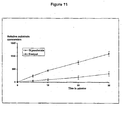
- Example 6 was repeated but with sodium glycocholate (Comparative Example) instead of sodium glycodeoxycholate. Inhibition of enzyme activity by glycocholate over time is shown in Figure 11 .
- Chymotrypsin from bovine plasma, was dissolved in HBSS at a concentration of 0.02 mg/ml.
- the substrate Boc- ⁇ -benzyl-Asp-Pro-Arg-7-amido-4-methylcoumarin was dissolved in HBSS at a concentration of 0.01mg/ml, and sodium chenodeoxycholate was dissolved at 100mg/ml.
- the assay was conducted in the wells of 96-well clear plastic microplates, in which 20:l of enzyme solution and 60:1 of bile salt were mixed together, and then 20:l of substrate was added, with mixing, at the start of the reaction, which proceeded at 37° C for up to 30 minutes, with measurement at various intermediate time points. Inhibition of enzyme activity by chenodeoxycholate over time is shown in Figure 12 .
- Thrombin from bovine plasma, was dissolved in HBSS at a concentration of 0.5 mg/ml.
- the substrate N-Benzoyl-Phe-Val-Arg-p-nitroanilide hydrochloride was dissolved in HBSS at a concentration of 0.5mg/ml, and sodium chenodeoxycholate was dissolved at a range of concentrations starting at 100mg/ml.
- the assay was conducted in the wells of 96-well clear plastic microplates, in which 50:1 of enzyme solution and 100:1 of bile salt were mixed together, and then 50:1 of substrate was added, with mixing, at the start of the reaction, which proceeded at 37° C for up to 30 minutes, with measurement at various intermediate time points.
- reaction product p-nitroaniline
- Anthos reader 2001 from Anthos Labtec Instruments.
- Inhibition of enzyme activity by chenodeoxycholate over time is shown in Figure 13 .
- Example 10 was repeated but with sodium deoxycholate (Comparative Example) instead of sodium chenodeoxycholate. Inhibition of enzyme activity by deoxycholate over time is shown in Figure 14 .
- Example 9 was repeated but with trypsin (instead of chymotrypsin) from bovine plasma, Z-L-arginine 4-methyl-7-coumarinylamide as the substrate and metformin as the inhibitor. Inhibition of enzyme activity by metformin over time is shown in Figure 15 .
- the substrate Z-L-arginine 4-methyl-7-coumarinylamide was dissolved in HBSS at a concentration of 0.01mg/ml, and phenformin was dissolved at 100mg/ml.
- the assay was conducted in the wells of 96-well black plastic microplates, in which 20:1 of enzyme solution and 100:1 of bile salt were mixed together, and then 20:1 of substrate was added, with mixing, at the start of the reaction, which proceeded at 37°C for up to 30 minutes, with measurement at various intermediate time points. Inhibition of enzyme activity by phenformin over time is shown in Figure 16 .
Landscapes
- Health & Medical Sciences (AREA)
- Life Sciences & Earth Sciences (AREA)
- Chemical & Material Sciences (AREA)
- General Health & Medical Sciences (AREA)
- Pharmacology & Pharmacy (AREA)
- Veterinary Medicine (AREA)
- Public Health (AREA)
- Medicinal Chemistry (AREA)
- Animal Behavior & Ethology (AREA)
- Epidemiology (AREA)
- Bioinformatics & Cheminformatics (AREA)
- Engineering & Computer Science (AREA)
- Organic Chemistry (AREA)
- Gastroenterology & Hepatology (AREA)
- Immunology (AREA)
- Proteomics, Peptides & Aminoacids (AREA)
- Nuclear Medicine, Radiotherapy & Molecular Imaging (AREA)
- General Chemical & Material Sciences (AREA)
- Chemical Kinetics & Catalysis (AREA)
- Medicines That Contain Protein Lipid Enzymes And Other Medicines (AREA)
- Acyclic And Carbocyclic Compounds In Medicinal Compositions (AREA)
- Pharmaceuticals Containing Other Organic And Inorganic Compounds (AREA)
Description
- This invention relates to methods of preserving the integrity of peptides in the gut. In particular, it concerns the new use of certain compounds as inhibitors of serine proteases.
- The following discussion of the background art is intended to facilitate an understanding of the present invention only. The discussion is not an acknowledgement or admission that any of the material referred to is or was part of the common general knowledge as at the priority date of the application.
- Peptides, and in particular polypeptides such as proteins, are increasingly becoming recognised as desirable agents for the treatment of diseases manifesting in the gut (gastrointestinal tract). Protein therapeutics are often based on natural products with a long history of medicinal use, which have a higher safety profile than small molecules that have been newly synthesised and whose effects on the body are largely unknown. Also, proteins can exhibit a high degree of specificity and selectivity, and at the same time can be designed to take advantage of their large size to display multi-functionality, enabling them to interact concurrently with two or more different targets.
- Proteins with antioxidant activity, such as superoxide dismutase, are examples of such therapeutic applications. Other examples are monoclonal antibodies, which can act as anti-infectives by binding to sites on infectious organisms invading the gut. Alternatively, such antibodies can bind to receptor sites on intestinal cells, and interfere with adhesion processes and the colonisation of infectious organisms. In addition, these antibodies can interact with cells of the immune system to stimulate their activity in combating infectious diseases. Other types of therapeutic peptides include peptide hormones, such as appetite suppressing agents.
- One important drawback to the use of peptides in the intestine is their extreme sensitivity to gut proteases. These proteases can be found both in the stomach (e.g. pepsin), and in the upper intestine, and have evolved to enable the digestive tract to break down peptides ingested as food, by proteolysis, into amino acids which can be taken up as nutrients by receptor-mediated mechanisms.
- If the intended site of action of a therapeutic or prophylactic peptide is the small intestine, then the peptide can be protected from breakdown in the stomach by placing it inside an enteric-coated capsule, tablet or other device which resists dissolution at the low pH found in the stomach, but disintegrates at higher pH to release the peptide into the small intestine, e.g. the duodenum, jejunum or ileum. However, the action of the proteases found in the small intestine (in particular the serine proteases, trypsin, chymotrypsin, elastase and carboxypeptidase) is such that they can rapidly break down and destroy peptides once they have been released from such a device. This clearly limits the efficacy of orally administered therapeutic peptides, and a means of preventing their degradation by proteases would markedly enhance their performance.
- Although there are many agents acting as protease inhibitors that are known to those skilled in the art, few, if any, are appropriate for this particular application. Most known inhibitors, e.g. antipain, leupeptin, are used for research purposes only, and are not acceptable for human administration. Some inhibitors, e.g diisopropyl fluorophosphate or phenylmethyl sulphonyl fluoride have a high degree of potency, but display a very broad specificity, so there is a risk of their exerting their action in undesirable parts of the body, in addition to the gut. On the other hand, other inhibitors, such as the new class of protease inhibitors employed in the treatment of HIV, are so selective in the nature of the proteases they inhibit that they have no effect on serine proteases in the gut. Two serine protease inhibitors that have been administered to humans are aprotinin and soybean trypsin inhibitor. However, these are relatively expensive to synthesise, and would have to be included in a medicament at such high levels that the cost of the final product would prohibit the manufacture of a medicament for routine daily use.
- The present invention seeks to address or at least ameliorate one or more the problems associated with prior art devices.
- The inventors have discovered that certain compounds, whose interaction with gut proteases has never previously been recognised, surprisingly, inhibit serine proteases. This enables one to use them to protect peptides from proteolysis (i.e. degradation by serine proteases). The compounds identified as having this activity are certain biguanides, certain bile acids and pharmaceutically acceptable salts of these compounds.
- Accordingly, the present invention provides the following (1) to (6).
- (1) A compound for use in a method of treatment of a disease of the human or animal body by therapy, in which method (i) the human or animal body is treated by administering one or more therapeutic peptides to the gut, and (ii) said compound is administered to the gut to inhibit degradation of said one or more peptides by one or more serine proteases,
wherein said compound is a bile acid or a biguanide, or a pharmaceutically acceptable salt of said bile acid or biguanide, wherein said bile acid is chosen from chenodeoxycholic acid, ursodeoxycholic acid, glycochenodeoxycholic acid and glycodeoxycholic acid, and wherein said biguanide is metformin or phenformin,
wherein said one or more therapeutic peptides are selected from insulin, calcitonin, growth hormone, growth hormone releasing factors, galanin, parathyroid hormone, peptide YY, oxyntomodulin, erythropoeitins, colony stimulating factors, platelet-derived growth factors, epidermal growth factors, fibroblast growth factors, transforming growth factors, GLP-1, GLP-2, exendin, leptin, neurotrophic factors, insulin-like growth factors, cartilage-inducing factors, IL-1, IL-2, IL-3, IL-4, IL-5, IL-6, IL-7, IL-8, IL-9, IL-10, IL-11, IL-12, interferon-gamma, interferon -la, interferon alphas, and conjugates of any of the above. - (2) A compound according to claim (1) for a use as defined in (1), wherein the compound is chosen from chenodeoxycholic acid, ursodeoxycholic acid, glycochenodeoxycholic acid, glycodeoxycholic acid or pharmaceutically acceptable salt of these compounds.
- (3) A compound according to (1) for a use as defined in (1), wherein the compound is chenodeoxycholic acid or a pharmaceutically acceptable salt thereof.
- (4) A compound according to (1) for a use as defined in (1), wherein the compound is metformin or phenformin or a pharmaceutically acceptable salt of metformin or phenformin.
- (5) A compound according to (1) for a use as defined in (1), wherein the compound is metformin or a pharmaceutically acceptable salt thereof
- (6) A product or pharmaceutical composition containing: (a) a compound as defined in any one of (1) to (5), and (b) a peptide or polypeptide, wherein (a) and (b) are prepared for simultaneous, separate or sequential delivery to a subject, wherein said peptide or polypeptide is for placing in the gut for use in the treatment by therapy of a disease or condition affecting the subject, or for use in preventing a disease or condition affecting the subject, and wherein said compound is for use as an inhibitor of the degradation of said peptide or polypeptide by one or more serine proteases, and wherein said peptide or polypeptide is selected from the peptides defined in (1).
- The mechanism by which the compounds for use according to the invention inhibit serine proteases is structure-specific, presumably the result of a direct binding interaction between the compounds and receptor sites on the proteases. Evidence for this is the fact that other bile acids such as cholic acid, taurocholic acid and taurodeoxycholic acid do not have this inhibitory effect (see
Figures 5 and6 ). Thus, although the inhibitory effect manifests itself at relatively high concentrations of the bile acid, biguanide or derivative thereof, one can rule out non-specific routes of inhibition based on e.g. surfactant interactions or a change in pH. Under the appropriate conditions, the inhibition of protease activity can be 100%. - Inhibitory activity can be demonstrated using fluorogenic or chromogenic peptide substrates. Inhibitory effects have been observed with a range of different peptide substrates, indicating that the effect is not the result of a specific interaction between the peptide substrate and the inhibitor.
- As noted above, the compounds for use according to the present invention are for use as inhibitors of one or more serine proteases. Where the word "gut" is used in this specification, it means gastrointestinal tract, and preferably it means the small intestine, such as the duodenum, jejunum or ileum.
- Preferably the serine proteases are small intestine proteases, i.e. proteases found in the small intestine. Said serine proteases may be chosen from trypsin, chymotrypsin, elastase, carboxypeptidase and combinations thereof. The compound for use according to the present invention is for use in inhibiting the proteolysis of a peptide, in the gut, by said one or more serine proteases.
- When the compound of the present invention is a bile acid or a pharmaceutically acceptable salt thereof, preferably it is chenodeoxycholate or a pharmaceutically acceptable salt thereof.
- When pharmaceutically acceptable salts of bile acids are referred to, any appropriate pharmaceutically acceptable positively charged ion can be used. Typically an alkali metal such as sodium or potassium is used. Alternative counterions may be used, e.g. an ammonium ion, though this is less preferred. When the compound of the present invention is a bile acid or pharmaceutically acceptable salt thereof, the salt is usually used in preference to the acid, though the same anionic species is formed in the gut in either case; whether the salt or its conjugate acid is present depends on the pH of the medium.
- When the compound of the present invention is a biguanide or a pharmaceutically acceptable salt thereof, the biguanide is metformin or phenformin or pharmaceutically acceptable salts thereof. The pharmaceutically acceptable salts are suitably the chloride, bromide, iodide or salts of organic acids such as the acetate, propionate, mesylate (methyl sulphonate) or glucuronate.
- The present disclosure relates to a method of inhibiting one or more serine proteases, which is typically a method of inhibiting the proteolysis of a peptide in the gut by one or more serine proteases, which method comprises administering to a subject a compound for use according to the present invention or a pharmaceutical composition for use according to the present invention.
- Generally, the present invention is concerned with the treatment of humans, e.g. where "gut" is mentioned it typically refers to the human gut, although in one aspect the invention concerns the treatment of non-human animals. Accordingly the subject in whom the present invention may find specific utility includes, by way of illustration: humans, mammals, companion animals and birds.
- The present disclosure relates to a product containing (a) a compound of the present invention as defined herein, and (b) a peptide, wherein (a) and (b) are prepared for simultaneous, separate or sequential use in the treatment or prevention of a disease or condition.
- In one aspect, the present disclosure relates to a pharmaceutical composition comprising a compound for use according to the present invention together with a peptide (the proteolysis of which is to be inhibited by said compound). Typically, the concentration of said compound in the composition is at least 20mg/ml. Generally, it is 100mg/ml or less. The concentration of the peptide obviously depends on the nature and intended effect of the peptide and the age, size and medical background of the patient.
- When the compound for use according to the present invention as defined above is a bile acid or a pharmaceutically acceptable salt thereof as defined above, its concentration in the composition is preferably 20-100mg/ml. Further, the bile acid or pharmaceutically acceptable salt thereof may be present in the composition in an amount of at least 50% by weight, preferably from 60 to 95% and more preferably from 80 to 90%.
- The disclosure also relates to a pharmaceutical composition comprising:
- (i) a peptide or polypeptide; and
- (ii) a compound chosen from ursodeoxycholic acid, glycochenodeoxycholate, glycodeoxycholate and their pharmaceutically acceptable salts,
wherein said compound is present in the composition at a concentration of 20 to 100 mg/ml. Although the bile acids and their derivatives in component (ii) are known, they have not previously been used at the high concentrations. - The disclosure also relates to the use of: (i) a peptide or polypeptide; and (ii) a bile salt or pharmaceutically acceptable salt thereof as defined above, in the manufacture of a medicament, wherein said bile salt or pharmaceutically acceptable salt thereof is present in the composition at a concentration of 20 to 100 mg/ml and the composition is formulated for delivery through the intestinal tract.
- In this regard the bile salt is preferably one or more of ursodeoxycholic acid, glycochenodeoxycholate, glycodeoxycholate and their pharmaceutically acceptable salts.
- When the compound for use according to the present invention as defined above is a biguanide or a pharmaceutically acceptable salt thereof, its concentration is preferably 20-100mg/ml. Further, the biguanide or pharmaceutically acceptable salt thereof may be present in the composition in an amount of at least 50% by weight, preferably from 60 to 95% and more preferably from 80 to 90%.
- The disclosure also relates to a pharmaceutical composition comprising:
- (i) a peptide or polypeptide; and
- (ii) a compound chosen from metformin or phenformin or pharmaceutically acceptable salts thereof,
wherein said compound is present in the composition at a concentration of 20 to 100 mg/ml. - The disclosure also relates to the use of: (i) a peptide or polypeptide; and (ii) a biguanide or pharmaceutically acceptable salt thereof as defined above, in the manufacture of a medicament, wherein said biguanide or pharmaceutically acceptable salt thereof is present in the composition at a concentration of 20 to 100 mg/ml and the composition is formulated for delivery through the intestinal tract.
- Usually, a pharmaceutical composition for use according to the present invention is suitable for oral administration. In this embodiment, to successfully use a compound for use according to the invention to protect a peptide against degradation by intestinal serine proteases, it is desirable for the compound for use according to the invention to be co-administered together with the peptide within a vehicle that allows passage across the stomach intact. Such a vehicle may be a tablet, capsule, or pellet, coated, if necessary, with an enteric film that resists dissolution under those conditions found in the stomach, but which is able to break down and release its contents in the small intestine. Where the composition is formulated as tablets, they can be uncoated or coated by known techniques to delay disintegration and absorption in the intestinal tract and thereby provide a sustained action over a longer period. For example, a time delay material such as glyceryl monostearate or glyceryl distearate may be employed.
- Pharmaceutical compositions for use according to the present invention that are suitable for oral administration are preferably coated with an enteric coating which becomes permeable at a pH of from 3 to 7. More preferably the coating becomes permeable at a pH of 4 to 6.5 and most preferably 5 to 6. Suitable enteric coatings are known in the art. The compounds for use according to the present invention are typically formulated with such an enteric coating.
- A pharmaceutical composition for use according to the present invention may comprise other standard pharmaceutical excipients in admixture, to provide a composition in the form of a powder, a liquid, a gel, a paste, a wax or a suspension. For instance, pharmaceutical excipients capable of enhancing dissolution of the compound of the invention or the peptide, or which act as anti-oxidants, preservatives, glidants (for example magnesium stearate, stearic acid or talc), swelling agents, disintegrants (for example, corn starch, or alginic acid), binding agents, (for example starch, gelatin or acacia) etc may also be included in the pharmaceutical compositions.
- As used herein, the term peptide refers to an amide obtainable from two or more amino carboxylic acid molecules, which may be the same or different, by formation of a covalent bond from the carbonyl carbon of one to the nitrogen atom of another with formal loss of water. The amino acid molecules can be of the D- or L-form. Typically, the peptides are obtainable from α-amino acids, but they may also be obtainable from non α-amino acids or a mixture of α- and non α-amino acids. Preferably, the peptides are obtainable from natural amino acids. In one aspect the amino acids are obtainable or obtained by chemically modifying natural amino acids after the peptide has been synthesized.
- In one embodiment the peptides are polypeptides, i.e. peptides with 10 or more amino acid residues. In a preferred aspect of this embodiment the polypeptide is a protein. In another embodiment the peptide has 2 to 9 amino acid residues.
- The peptides and polypeptides that have particular application to the invention may be derived from human, plant, animal, bacterial or fungal sources, and extracted either from natural sources, prepared as recombinants by fermentation or chemically synthesised.
- As the compounds for use according to the present invention inhibit proteolysis, which involves the breaking down of peptide bonds, they may be used to inhibit the proteolysis of any peptide. However, the peptide should be one that is capable of having a beneficial effect when placed in the gut. The beneficial effect may be, for example, therapeutic, or preventative such as prophylactic. The peptide can be of natural (biological), synthetic or semi-synthetic origin.
- Pharmaceutical compositions for use according to the present invention may be made by preparation of a substantially anhydrous mixture containing the peptide and the compound for use according to the present invention. Depending on the desired formulation of the composition it may then be appropriate to fill uncoated capsules with the mixture and then coat the capsules with an appropriate polymer mixture to achieve particular permeability properties. Depending on the nature of additional excipients employed, the pharmaceutical composition of the invention may be in liquid, solid, semisolid or gel form.
- The invention includes all of the steps and features referred to or indicated in the specification, individually or collectively and any and all combinations or any two or more of the steps or features.
- Throughout this specification, unless the context requires otherwise, the word "comprise" or variations such as "comprises" or "comprising", will be understood to imply the inclusion of a stated integer or group of integers but not the exclusion of any other integer or group of integers. It is also noted that in this disclosure and particularly in the claims and/or paragraphs, terms such as "comprises", "comprised", "comprising" and the like can have the meaning attributed to it in U.S. Patent law; e.g., they can mean "includes", "included", "including", and the like; and that terms such as "consisting essentially of" and "consists essentially of" have the meaning ascribed to them in U.S. Patent law, e.g., they allow for elements not explicitly recited, but exclude elements that are found in the prior art or that affect a basic or novel characteristic of the invention.
- Furthermore, throughout the specification and claims, unless the context requires otherwise, the word "include" or variations such as "includes" or "including", will be understood to imply the inclusion of a stated integer or group of integers.
- Other definitions for selected terms used herein may be found within the description of the invention and apply throughout. Unless otherwise defined, all other technical terms used herein have the same meaning as commonly understood to one of ordinary skill in the art to which the invention belongs.
- Aspects of the invention will now be described, by way of example only, with reference to the following description and figures.
-
Figure 1 illustrates the inhibition of trypsin by chenodeoxycholate in a time course reaction where the peptide substrate is Z-L-Arg 7-amido-4-methylcoumarin HCl Chenodeoxycholate at 100mg/ml. -
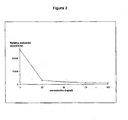
Figure 2 illustrates inhibition of trypsin activity by chenodeoxycholate. A dose-response curve is presented for the peptide substrate - Z-L-Arg 7-amido-4-methylcoumarin HCl, wherein the incubation time is 20 minutes. -
Figure 3 illustrates the inhibition of chymotrypsin by chenodeoxycholate in a time course reaction where the peptide substrate is glutaryl -L-phenylalanine 4-methyl-7-coumarinylamide chenodeoxycholate at a concentration of 100mg/ml. -
Figure 4 illustrates inhibition of chymotrypsin activity by chenodeoxycholate. A dose response curve is presented for the peptide substrate - glutaryl -L-phenylalanine 4-methyl-7-coumarinylamide, over an incubation time of 20 minutes. -
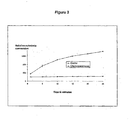
Figure 5 illustrates inhibition of trypsin by deoxycholate (Comparative Example) in a time course reaction where the peptide substrate is Z-L-Arg 7-amido-4-methylcoumarin HCl Deoxycholate at a concentration of 25mg/ml. -
Figure 6 illustrates inhibition of chymotrypsin by deoxycholate (Comparative Example) in a time course reaction where the peptide substrate is glutaryl -L-phenylalanine 4-methyl-7-coumarinylamide bile salt at a concentration of 25mg/ml. -
Figure 7 illustrates inhibition of trypsin activity by ursodeoxycholate in a time course reaction where the peptide substrate is Z-L-Arg 7-amido-4-methylcoumarin HCl Bile salt at a concentration of 25mg/ml. -
Figure 8 illustrates inhibition of trypsin activity by ursodeoxycholate. A dose response curve is presented for the peptide substrate Z-L-Arg 7-amido-4-methylcoumarin HCl with an incubation time - 20 minutes. -
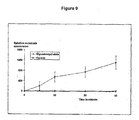
Figure 9 illustrates inhibition of trypsin activity by glycodeoxycholate in a time course reaction wherein the peptide substrate is Z-L-Arg 7-amido-4-methylcoumarin HCl Bile salt at a concentration of 25mg/ml. -
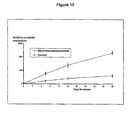
Figure 10 illustrates inhibition of trypsin activity by glycochenodeoxycholate in a time course reaction where the peptide substrate is Z-L-Arg 7-amido-4-methylcoumarin HCl and the incubation time is 20 minutes. -
Figure 11 illustrates inhibition of trypsin activity by glycocholate (Comparative Example) in a time course reaction where the peptide substrate is Z-L-Arg 7-amido-4-methylcoumarin HCl and the incubation time is 20 minutes. -
Figure 12 illustrates inhibition of chymotrypsin activity by chenodeoxycholate in a time course reaction where the peptide substrate is Boc-β-benzyl-Asp-Pro-Arg-7-amido-4-methylcoumarin HCl and the Incubation time is 20 minutes. -
Figure 13 illustrates inhibition of thrombin activity by chenodeoxycholate in a time course reaction where the peptide substrate is N-Benzoyl-Phe-Val-Arg-p-nitroanilide hydrochloride and the Incubation time is 20 minutes. -
Figure 14 illustrates inhibition of thrombin activity by deoxycholate (Comparative Example) in a time-course reaction where the peptide substrate is N-Benzoyl-Phe-Val-Arg-p-nitroanilide hydrochloride and the Incubation time is 20 minutes. -
Figure 15 illustrates the inhibition of trypsin activity by metformin in a time course reaction where the peptide substrate is Z-L-Arg 7-amido-4-methylcoumarin HCl and the incubation time is 20 minutes. -
Figure 16 illustrates inhibition of trypsin activity by phenformin in a time course reaction where the peptide substrate is Z-L-arginine 4-methyl-7-coumarinylamide and the incubation time is 20 minutes. - The following Examples serve to illustrate the present invention, and should not be construed as limiting. In Examples 1-9, 12 and 13 the progress of the enzymatic reaction was assessed by measuring the appearance of reaction product (amino-4-methyl coumarin) fluorimetrically using an excitation wavelength of 365nm, and an emission wavelength of 440nm (cut-off 435nm) on a Spectramax Gemini XS machine from Molecular Devices.
- Trypsin, from bovine pancreas, was dissolved in Hanks Balanced Salt Solution (HBSS) at a concentration of 0.02 mg/ml. The substrate Z-L-arginine 4-methyl-7-coumarinylamide was dissolved in HBSS at a concentration of 0.01mg/ml, and sodium chenodeoxycholate was dissolved at a range of concentrations starting at 100mg/ml. The assay was conducted in the wells of 96-well black plastic microplates, in which 20:l of enzyme solution and 60:l of bile salt were mixed together, and then 20:l of substrate was added, with mixing, at the start of the reaction, which proceeded at room temperature for up to 30 minutes, with measurement at various intermediate time points. Inhibition of enzyme activity by chenodeoxycholate over time is shown in
Figure 1 , and a dose response curve with chenodeoxycholate at different concentrations is shown inFigure 2 . - Example 1 was repeated but with chymotrypsin as the protease (instead of trypsin) and with glutaryl-L-phenylalanine 4-methyl-7-coumarinylamide as the substrate.
- Inhibition of enzyme activity by chenodeoxycholate over time is shown in
Figure 3 , and a dose response curve with chenodeoxycholate at different concentrations is shown inFigure 4 . - Example 1 was repeated but with sodium deoxycholate (Comparative Example) instead of sodium chenodeoxycholate. Inhibition of enzyme activity by deoxycholate over time is shown in
Figure 5 . As further Comparative Examples,figure 5 also includes results for when cholate, taurocholate and taurodeoxycholate were used instead of deoxycholate, showing that these three compounds do not inhibit trypsin. - Example 2 was repeated but with sodium deoxycholate (Comparative Example) instead of sodium chenodeoxycholate. Inhibition of enzyme activity by deoxycholate over time is shown in
Figure 6 . As further Comparative Examples,figure 6 also includes results for when cholate and taurocholate were used instead of deoxycholate, showing that these two compounds do not inhibit chymotrypsin. - Trypsin, from bovine pancreas, was dissolved in HBSS at a concentration of 0.02 mg/ml. The substrate Z-L-arginine 4-methyl-7-coumarinylamide was dissolved in HBSS at a concentration of 0.01mg/ml, and sodium ursodeoxycholate was dissolved at a range of concentrations starting at 50mg/ml. The assay was conducted in the wells of 96-well black plastic microplates, in which 20:l of enzyme solution and 100:l of bile salt were mixed together, and then 20:l of substrate was added, with mixing, at the start of the reaction, which proceeded at 37°C for up to 30 minutes, with measurement at various intermediate time points. Inhibition of enzyme activity by ursodeoxycholate over time is shown in
Figure 7 , and a dose response curve with ursodeoxycholate at different concentrations is shown inFigure 8 . - Trypsin, from bovine pancreas, was dissolved in HBSS at a concentration of 0.02 mg/ml. The substrate Z-L-arginine 4-methyl-7-coumarinylamide was dissolved in HBSS at a concentration of 0.01mg/ml, and sodium glycodeoxycholate was dissolved at a range of concentrations starting at 100mg/ml. The assay was conducted in the wells of 96-well black plastic microplates, in which 20:l of enzyme solution and 100:1 of bile salt were mixed together, and then 20:l of substrate was added, with mixing, at the start of the reaction, which proceeded at 37°C for up to 30 minutes, with measurement at various intermediate time points. Inhibition of enzyme activity by glycodeoxycholate over time is shown in
Figure 9 . - Example 5 was repeated but with sodium glycochenodeoxycholate instead of sodium ursodeoxycholate. Inhibition of enzyme activity by glycochenodeoxycholate over time is shown in
Figure 10 . - Example 6 was repeated but with sodium glycocholate (Comparative Example) instead of sodium glycodeoxycholate. Inhibition of enzyme activity by glycocholate over time is shown in
Figure 11 . - Chymotrypsin, from bovine plasma, was dissolved in HBSS at a concentration of 0.02 mg/ml. The substrate Boc-β-benzyl-Asp-Pro-Arg-7-amido-4-methylcoumarin was dissolved in HBSS at a concentration of 0.01mg/ml, and sodium chenodeoxycholate was dissolved at 100mg/ml. The assay was conducted in the wells of 96-well clear plastic microplates, in which 20:l of enzyme solution and 60:1 of bile salt were mixed together, and then 20:l of substrate was added, with mixing, at the start of the reaction, which proceeded at 37° C for up to 30 minutes, with measurement at various intermediate time points. Inhibition of enzyme activity by chenodeoxycholate over time is shown in
Figure 12 . - Thrombin, from bovine plasma, was dissolved in HBSS at a concentration of 0.5 mg/ml. The substrate N-Benzoyl-Phe-Val-Arg-p-nitroanilide hydrochloride was dissolved in HBSS at a concentration of 0.5mg/ml, and sodium chenodeoxycholate was dissolved at a range of concentrations starting at 100mg/ml. The assay was conducted in the wells of 96-well clear plastic microplates, in which 50:1 of enzyme solution and 100:1 of bile salt were mixed together, and then 50:1 of substrate was added, with mixing, at the start of the reaction, which proceeded at 37° C for up to 30 minutes, with measurement at various intermediate time points. The progress of the enzymatic reaction was assessed by measuring the appearance of reaction product (p-nitroaniline) colorimetrically using a wavelength of 405nm on an Anthos reader 2001 from Anthos Labtec Instruments. Inhibition of enzyme activity by chenodeoxycholate over time is shown in
Figure 13 . - Example 10 was repeated but with sodium deoxycholate (Comparative Example) instead of sodium chenodeoxycholate. Inhibition of enzyme activity by deoxycholate over time is shown in
Figure 14 . - Example 9 was repeated but with trypsin (instead of chymotrypsin) from bovine plasma, Z-L-arginine 4-methyl-7-coumarinylamide as the substrate and metformin as the inhibitor. Inhibition of enzyme activity by metformin over time is shown in
Figure 15 . - Trypsin, from bovine pancreas, was dissolved in HBSS at a concentration of 0.02 mg/ml. The substrate Z-L-arginine 4-methyl-7-coumarinylamide was dissolved in HBSS at a concentration of 0.01mg/ml, and phenformin was dissolved at 100mg/ml. The assay was conducted in the wells of 96-well black plastic microplates, in which 20:1 of enzyme solution and 100:1 of bile salt were mixed together, and then 20:1 of substrate was added, with mixing, at the start of the reaction, which proceeded at 37°C for up to 30 minutes, with measurement at various intermediate time points. Inhibition of enzyme activity by phenformin over time is shown in
Figure 16 .
Claims (6)
- A compound for use in a method of treatment of a disease of the human or animal body by therapy, in which method (i) the human or animal body is treated by administering one or more therapeutic peptides to the gut, and (ii) said compound is administered to the gut to inhibit degradation of said one or more peptides by one or more serine proteases,
wherein said compound is a bile acid or a biguanide, or a pharmaceutically acceptable salt of said bile acid or biguanide, wherein said bile acid is chosen from chenodeoxycholic acid, ursodeoxycholic acid, glycochenodeoxycholic acid and glycodeoxycholic acid, and wherein said biguanide is metformin or phenformin,
wherein said one or more therapeutic peptides are selected from insulin, calcitonin, growth hormone, growth hormone releasing factors, galanin, parathyroid hormone, peptide YY, oxyntomodulin, erythropoeitins, colony stimulating factors, platelet-derived growth factors, epidermal growth factors, fibroblast growth factors, transforming growth factors, GLP-1, GLP-2, exendin, leptin, neurotrophic factors, insulin-like growth factors, cartilage-inducing factors, IL-1, IL-2, IL-3, IL-4, IL-5, IL-6, IL-7, IL-8, IL-9, IL-10, IL-11, IL-12, interferon-gamma, interferon -Ia, interferon alphas, and conjugates of any of the above. - A compound according to claim 1 for a use as defined in claim 1, wherein the compound is chosen from chenodeoxycholic acid, ursodeoxycholic acid, glycochenodeoxycholic acid, glycodeoxycholic acid or pharmaceutically acceptable salt of these compounds.
- A compound according to claim 1 for a use as defined in claim 1, wherein the compound is chenodeoxycholic acid or a pharmaceutically acceptable salt thereof.
- A compound according to claim 1 for a use as defined in claim 1, wherein the compound is metformin or phenformin or a pharmaceutically acceptable salt of metformin or phenformin.
- A compound according to claim 1 for a use as defined in claim 1, wherein the compound is metformin or a pharmaceutically acceptable salt thereof.
- A product or pharmaceutical composition containing: (a) a compound as defined in any one of claims 1 to 5, and (b) a peptide or polypeptide, wherein (a) and (b) are prepared for simultaneous, separate or sequential delivery to a subject, wherein said peptide or polypeptide is for placing in the gut for use in the treatment by therapy of a disease or condition affecting the subject, or for use in preventing a disease or condition affecting the subject, and wherein said compound is for use as an inhibitor of the degradation of said peptide or polypeptide by one or more serine proteases, and wherein said peptide or polypeptide is selected from the peptides defined in claim 1.
Priority Applications (3)
| Application Number | Priority Date | Filing Date | Title |
|---|---|---|---|
| SI200931174T SI2361091T1 (en) | 2008-10-01 | 2009-10-01 | Bile acids and biguanides as protease inhibitors for preserving the integrity of peptides in the gut |
| EP20140197777 EP2873420A1 (en) | 2008-10-01 | 2009-10-01 | Bile acids and biguanides as protease inhibitors for preserving the integrity of peptides in the gut |
| PL09817101T PL2361091T3 (en) | 2008-10-01 | 2009-10-01 | Bile acids and biguanides as protease inhibitors for preserving the integrity of peptides in the gut |
Applications Claiming Priority (2)
| Application Number | Priority Date | Filing Date | Title |
|---|---|---|---|
| GBGB0817969.9A GB0817969D0 (en) | 2008-10-01 | 2008-10-01 | Pharmaceutical composition |
| PCT/AU2009/001305 WO2010037173A1 (en) | 2008-10-01 | 2009-10-01 | Bile acids and biguanides as protease inhibitors for preserving the integrity of peptides in the gut |
Related Child Applications (2)
| Application Number | Title | Priority Date | Filing Date |
|---|---|---|---|
| EP20140197777 Division-Into EP2873420A1 (en) | 2008-10-01 | 2009-10-01 | Bile acids and biguanides as protease inhibitors for preserving the integrity of peptides in the gut |
| EP20140197777 Division EP2873420A1 (en) | 2008-10-01 | 2009-10-01 | Bile acids and biguanides as protease inhibitors for preserving the integrity of peptides in the gut |
Publications (3)
| Publication Number | Publication Date |
|---|---|
| EP2361091A1 EP2361091A1 (en) | 2011-08-31 |
| EP2361091A4 EP2361091A4 (en) | 2012-05-23 |
| EP2361091B1 true EP2361091B1 (en) | 2015-01-21 |
Family
ID=40019875
Family Applications (2)
| Application Number | Title | Priority Date | Filing Date |
|---|---|---|---|
| EP20140197777 Withdrawn EP2873420A1 (en) | 2008-10-01 | 2009-10-01 | Bile acids and biguanides as protease inhibitors for preserving the integrity of peptides in the gut |
| EP09817101.0A Active EP2361091B1 (en) | 2008-10-01 | 2009-10-01 | Bile acids and biguanides as protease inhibitors for preserving the integrity of peptides in the gut |
Family Applications Before (1)
| Application Number | Title | Priority Date | Filing Date |
|---|---|---|---|
| EP20140197777 Withdrawn EP2873420A1 (en) | 2008-10-01 | 2009-10-01 | Bile acids and biguanides as protease inhibitors for preserving the integrity of peptides in the gut |
Country Status (17)
| Country | Link |
|---|---|
| US (1) | US9913850B2 (en) |
| EP (2) | EP2873420A1 (en) |
| KR (1) | KR101731656B1 (en) |
| CN (1) | CN102307582B (en) |
| AU (1) | AU2009299112B2 (en) |
| CA (1) | CA2740477C (en) |
| DK (1) | DK2361091T3 (en) |
| ES (1) | ES2535260T3 (en) |
| GB (1) | GB0817969D0 (en) |
| HK (1) | HK1209643A1 (en) |
| IL (1) | IL212050A (en) |
| PL (1) | PL2361091T3 (en) |
| PT (1) | PT2361091E (en) |
| RU (1) | RU2525290C2 (en) |
| SI (1) | SI2361091T1 (en) |
| WO (1) | WO2010037173A1 (en) |
| ZA (1) | ZA201102401B (en) |
Families Citing this family (3)
| Publication number | Priority date | Publication date | Assignee | Title |
|---|---|---|---|---|
| KR101724431B1 (en) | 2015-08-19 | 2017-04-18 | 대우조선해양 주식회사 | Thruster mounting method for ship and jig for determination of alignment thereof |
| CA3168207A1 (en) * | 2020-01-23 | 2021-07-29 | Axcess (Uk) Ltd. | Cellular uptake |
| EP4281062A1 (en) * | 2021-01-22 | 2023-11-29 | AXCESS (UK) Ltd. | Edta and egta for use in preserving the integrity of therapeutic compounds |
Family Cites Families (20)
| Publication number | Priority date | Publication date | Assignee | Title |
|---|---|---|---|---|
| IL68769A (en) * | 1983-05-23 | 1986-02-28 | Hadassah Med Org | Pharmaceutical compositions containing insulin for oral administration |
| US6156731A (en) * | 1989-05-10 | 2000-12-05 | G. D. Searle & Co. | Polypeptide composition for oral administration |
| US5085864A (en) * | 1989-10-30 | 1992-02-04 | Abbott Laboratories | Injectable formulation for lipophilic drugs |
| GB9013448D0 (en) | 1990-06-15 | 1990-08-08 | Sandoz Ltd | Pharmaceutical resorption-improved somatostatin compositions,their preparation and use |
| DK36392D0 (en) * | 1992-03-19 | 1992-03-19 | Novo Nordisk As | USE OF CHEMICAL COMPOUND |
| DK0640344T3 (en) * | 1993-08-30 | 1999-07-05 | Medichemie Ag | Ursodesoxycholic acid-containing drug in liquid administration form |
| GB9417524D0 (en) * | 1994-08-31 | 1994-10-19 | Cortecs Ltd | Pharmaceutical compositions |
| AU1808897A (en) | 1995-12-13 | 1997-07-03 | Dullatur Limited | A calcitonin preparation |
| DE19845403B4 (en) * | 1998-10-02 | 2005-02-10 | Aventis Pharma Deutschland Gmbh | Propanolamine derivatives linked to bile acids, process for their preparation, pharmaceutical compositions containing them and their use |
| GB2355009A (en) | 1999-07-30 | 2001-04-11 | Univ Glasgow | Peptides conjugated to bile acids/salts |
| US7524515B2 (en) * | 2003-01-10 | 2009-04-28 | Mutual Pharmaceuticals, Inc. | Pharmaceutical safety dosage forms |
| US8088734B2 (en) | 2003-01-21 | 2012-01-03 | Unigene Laboratories Inc. | Oral delivery of peptides |
| GB0308734D0 (en) * | 2003-04-15 | 2003-05-21 | Axcess Ltd | Uptake of macromolecules |
| US20070265187A1 (en) * | 2004-04-29 | 2007-11-15 | Slobodan Vukicevic | Oral Formulations Comprising Bone Morphogenetic Proteins For Treating Metabolic Bone Diseases |
| CA2573856A1 (en) | 2004-08-03 | 2006-02-16 | Emisphere Technologies, Inc. | Antidiabetic oral insulin-biguanide combination |
| TW200716679A (en) | 2005-05-26 | 2007-05-01 | Bristol Myers Squibb Co | N-terminally modified GLP-1 receptor modulators |
| AU2006288703B2 (en) * | 2005-09-06 | 2011-09-22 | Oramed Pharmaceuticals, Inc. | Methods and compositions for oral administration of proteins |
| JP2009508847A (en) | 2005-09-16 | 2009-03-05 | イッサム リサーチ ディヴェロップメント カンパニー オブ ザ ヘブリュー ユニバーシティー オブ エルサレム | Compounds for improving nutritional status, cognition and survival |
| GB0603252D0 (en) * | 2006-02-17 | 2006-03-29 | Axcess Ltd | Dissolution aids for oral peptide delivery |
| US8242294B2 (en) * | 2007-06-19 | 2012-08-14 | Kythera Biopharmaceuticals, Inc. | Synthetic bile acid compositions and methods |
-
2008
- 2008-10-01 GB GBGB0817969.9A patent/GB0817969D0/en not_active Ceased
-
2009
- 2009-10-01 US US13/122,241 patent/US9913850B2/en active Active
- 2009-10-01 ES ES09817101.0T patent/ES2535260T3/en active Active
- 2009-10-01 EP EP20140197777 patent/EP2873420A1/en not_active Withdrawn
- 2009-10-01 PT PT98171010T patent/PT2361091E/en unknown
- 2009-10-01 PL PL09817101T patent/PL2361091T3/en unknown
- 2009-10-01 SI SI200931174T patent/SI2361091T1/en unknown
- 2009-10-01 CN CN200980146495.6A patent/CN102307582B/en active Active
- 2009-10-01 CA CA2740477A patent/CA2740477C/en active Active
- 2009-10-01 KR KR1020117009813A patent/KR101731656B1/en not_active Expired - Fee Related
- 2009-10-01 RU RU2011117267/04A patent/RU2525290C2/en active
- 2009-10-01 AU AU2009299112A patent/AU2009299112B2/en not_active Ceased
- 2009-10-01 WO PCT/AU2009/001305 patent/WO2010037173A1/en not_active Ceased
- 2009-10-01 EP EP09817101.0A patent/EP2361091B1/en active Active
- 2009-10-01 DK DK09817101T patent/DK2361091T3/en active
-
2011
- 2011-03-31 IL IL212050A patent/IL212050A/en not_active IP Right Cessation
- 2011-03-31 ZA ZA2011/02401A patent/ZA201102401B/en unknown
-
2015
- 2015-10-27 HK HK15110575.5A patent/HK1209643A1/en unknown
Non-Patent Citations (1)
| Title |
|---|
| WERLE M ET AL: "Design and evaluation of a chitosan-aprotinin conjugate for the peroral delivery of therapeutic peptides and proteins susceptible to enzymatic degradation", JOURNAL OF DRUG TARGETING 200706 GB, vol. 15, no. 5, June 2007 (2007-06-01), pages 327 - 333, ISSN: 1061-186X * |
Also Published As
| Publication number | Publication date |
|---|---|
| AU2009299112A1 (en) | 2010-04-08 |
| EP2361091A1 (en) | 2011-08-31 |
| US9913850B2 (en) | 2018-03-13 |
| CA2740477C (en) | 2017-06-27 |
| HK1155376A1 (en) | 2012-05-18 |
| IL212050A (en) | 2016-08-31 |
| PT2361091E (en) | 2015-05-20 |
| DK2361091T3 (en) | 2015-04-20 |
| CN102307582A (en) | 2012-01-04 |
| HK1209643A1 (en) | 2016-04-08 |
| SI2361091T1 (en) | 2015-07-31 |
| ES2535260T3 (en) | 2015-05-07 |
| EP2361091A4 (en) | 2012-05-23 |
| AU2009299112B2 (en) | 2013-09-26 |
| KR101731656B1 (en) | 2017-04-28 |
| ZA201102401B (en) | 2011-11-30 |
| IL212050A0 (en) | 2011-06-30 |
| RU2011117267A (en) | 2012-11-10 |
| CA2740477A1 (en) | 2010-04-08 |
| CN102307582B (en) | 2015-10-07 |
| KR20110128782A (en) | 2011-11-30 |
| US20120035116A1 (en) | 2012-02-09 |
| GB0817969D0 (en) | 2008-11-05 |
| WO2010037173A1 (en) | 2010-04-08 |
| EP2873420A1 (en) | 2015-05-20 |
| PL2361091T3 (en) | 2015-08-31 |
| RU2525290C2 (en) | 2014-08-10 |
Similar Documents
| Publication | Publication Date | Title |
|---|---|---|
| CN1332954C (en) | Effector of dipeptidyl peptidase IV | |
| EP3600257B1 (en) | Alkaline phosphatase formulations | |
| JPH11508606A (en) | Oral peptide drugs | |
| US20090192075A1 (en) | Amylin Formulations | |
| EP1585503B1 (en) | Improved oral delivery of peptides | |
| US8119125B2 (en) | Compositions and methods for enhanced gastrointestinal stability of oligopeptides and polypeptides | |
| US20080069869A1 (en) | Formulations and methods for modulating satiety | |
| EP3703817A2 (en) | Oral delivery of glp-1 peptide analogs | |
| DK2361091T3 (en) | Bile acid and biguanides as protease inhibitors for the preservation of the integrity of peptides in the gut | |
| WO2009126132A1 (en) | Formulations and methods for modulating satiety | |
| US20240239860A1 (en) | Thioamide-modified peptides and uses thereof | |
| HK1155376B (en) | Bile acids and biguanides as protease inhibitors for preserving the integrity of peptides in the gut | |
| Wen et al. | Protein and peptide degradation in the intestine of the common brushtail possum (Trichosurus vulpecula) | |
| AU2022209467A1 (en) | Edta and egta for use in preserving the integrity of therapeutic compounds |
Legal Events
| Date | Code | Title | Description |
|---|---|---|---|
| PUAI | Public reference made under article 153(3) epc to a published international application that has entered the european phase |
Free format text: ORIGINAL CODE: 0009012 |
|
| 17P | Request for examination filed |
Effective date: 20110426 |
|
| AK | Designated contracting states |
Kind code of ref document: A1 Designated state(s): AT BE BG CH CY CZ DE DK EE ES FI FR GB GR HR HU IE IS IT LI LT LU LV MC MK MT NL NO PL PT RO SE SI SK SM TR |
|
| RAP1 | Party data changed (applicant data changed or rights of an application transferred) |
Owner name: AXCESS LIMITED |
|
| DAX | Request for extension of the european patent (deleted) | ||
| REG | Reference to a national code |
Ref country code: HK Ref legal event code: DE Ref document number: 1155376 Country of ref document: HK |
|
| A4 | Supplementary search report drawn up and despatched |
Effective date: 20120423 |
|
| RIC1 | Information provided on ipc code assigned before grant |
Ipc: A61K 38/12 20060101ALI20120417BHEP Ipc: A61K 45/06 20060101ALI20120417BHEP Ipc: A61K 31/155 20060101ALI20120417BHEP Ipc: A61K 31/575 20060101AFI20120417BHEP Ipc: A61K 38/00 20060101ALI20120417BHEP |
|
| 17Q | First examination report despatched |
Effective date: 20130322 |
|
| REG | Reference to a national code |
Ref country code: DE Ref legal event code: R079 Ref document number: 602009029152 Country of ref document: DE Free format text: PREVIOUS MAIN CLASS: A61K0031575000 Ipc: A61K0047160000 |
|
| GRAP | Despatch of communication of intention to grant a patent |
Free format text: ORIGINAL CODE: EPIDOSNIGR1 |
|
| RIC1 | Information provided on ipc code assigned before grant |
Ipc: A61K 47/16 20060101AFI20140724BHEP Ipc: A61K 47/28 20060101ALI20140724BHEP |
|
| INTG | Intention to grant announced |
Effective date: 20140806 |
|
| GRAS | Grant fee paid |
Free format text: ORIGINAL CODE: EPIDOSNIGR3 |
|
| GRAA | (expected) grant |
Free format text: ORIGINAL CODE: 0009210 |
|
| AK | Designated contracting states |
Kind code of ref document: B1 Designated state(s): AT BE BG CH CY CZ DE DK EE ES FI FR GB GR HR HU IE IS IT LI LT LU LV MC MK MT NL NO PL PT RO SE SI SK SM TR |
|
| REG | Reference to a national code |
Ref country code: GB Ref legal event code: FG4D |
|
| REG | Reference to a national code |
Ref country code: CH Ref legal event code: EP |
|
| REG | Reference to a national code |
Ref country code: IE Ref legal event code: FG4D |
|
| REG | Reference to a national code |
Ref country code: DE Ref legal event code: R096 Ref document number: 602009029152 Country of ref document: DE Effective date: 20150305 |
|
| REG | Reference to a national code |
Ref country code: AT Ref legal event code: REF Ref document number: 708849 Country of ref document: AT Kind code of ref document: T Effective date: 20150315 |
|
| REG | Reference to a national code |
Ref country code: DK Ref legal event code: T3 Effective date: 20150415 |
|
| REG | Reference to a national code |
Ref country code: CH Ref legal event code: NV Representative=s name: STOLMAR AND PARTNER PATENT- UND MARKENANWAELTE, CH |
|
| REG | Reference to a national code |
Ref country code: ES Ref legal event code: FG2A Ref document number: 2535260 Country of ref document: ES Kind code of ref document: T3 Effective date: 20150507 |
|
| REG | Reference to a national code |
Ref country code: SE Ref legal event code: TRGR |
|
| REG | Reference to a national code |
Ref country code: PT Ref legal event code: SC4A Free format text: AVAILABILITY OF NATIONAL TRANSLATION Effective date: 20150420 |
|
| REG | Reference to a national code |
Ref country code: GR Ref legal event code: EP Ref document number: 20150400864 Country of ref document: GR Effective date: 20150518 |
|
| REG | Reference to a national code |
Ref country code: LT Ref legal event code: MG4D |
|
| REG | Reference to a national code |
Ref country code: NO Ref legal event code: T2 Effective date: 20150121 |
|
| PG25 | Lapsed in a contracting state [announced via postgrant information from national office to epo] |
Ref country code: BG Free format text: LAPSE BECAUSE OF FAILURE TO SUBMIT A TRANSLATION OF THE DESCRIPTION OR TO PAY THE FEE WITHIN THE PRESCRIBED TIME-LIMIT Effective date: 20150421 Ref country code: HR Free format text: LAPSE BECAUSE OF FAILURE TO SUBMIT A TRANSLATION OF THE DESCRIPTION OR TO PAY THE FEE WITHIN THE PRESCRIBED TIME-LIMIT Effective date: 20150121 Ref country code: LT Free format text: LAPSE BECAUSE OF FAILURE TO SUBMIT A TRANSLATION OF THE DESCRIPTION OR TO PAY THE FEE WITHIN THE PRESCRIBED TIME-LIMIT Effective date: 20150121 |
|
| REG | Reference to a national code |
Ref country code: SK Ref legal event code: T3 Ref document number: E 18539 Country of ref document: SK |
|
| PG25 | Lapsed in a contracting state [announced via postgrant information from national office to epo] |
Ref country code: IS Free format text: LAPSE BECAUSE OF FAILURE TO SUBMIT A TRANSLATION OF THE DESCRIPTION OR TO PAY THE FEE WITHIN THE PRESCRIBED TIME-LIMIT Effective date: 20150521 Ref country code: LV Free format text: LAPSE BECAUSE OF FAILURE TO SUBMIT A TRANSLATION OF THE DESCRIPTION OR TO PAY THE FEE WITHIN THE PRESCRIBED TIME-LIMIT Effective date: 20150121 |
|
| REG | Reference to a national code |
Ref country code: PL Ref legal event code: T3 |
|
| REG | Reference to a national code |
Ref country code: HK Ref legal event code: GR Ref document number: 1155376 Country of ref document: HK |
|
| REG | Reference to a national code |
Ref country code: DE Ref legal event code: R097 Ref document number: 602009029152 Country of ref document: DE |
|
| PG25 | Lapsed in a contracting state [announced via postgrant information from national office to epo] |
Ref country code: EE Free format text: LAPSE BECAUSE OF FAILURE TO SUBMIT A TRANSLATION OF THE DESCRIPTION OR TO PAY THE FEE WITHIN THE PRESCRIBED TIME-LIMIT Effective date: 20150121 |
|
| REG | Reference to a national code |
Ref country code: RO Ref legal event code: EPE |
|
| PLBE | No opposition filed within time limit |
Free format text: ORIGINAL CODE: 0009261 |
|
| STAA | Information on the status of an ep patent application or granted ep patent |
Free format text: STATUS: NO OPPOSITION FILED WITHIN TIME LIMIT |
|
| REG | Reference to a national code |
Ref country code: HU Ref legal event code: AG4A Ref document number: E024748 Country of ref document: HU |
|
| 26N | No opposition filed |
Effective date: 20151022 |
|
| REG | Reference to a national code |
Ref country code: CH Ref legal event code: PFA Owner name: AXCESS LIMITED, GB Free format text: FORMER OWNER: AXCESS LIMITED, GB |
|
| PG25 | Lapsed in a contracting state [announced via postgrant information from national office to epo] |
Ref country code: LU Free format text: LAPSE BECAUSE OF FAILURE TO SUBMIT A TRANSLATION OF THE DESCRIPTION OR TO PAY THE FEE WITHIN THE PRESCRIBED TIME-LIMIT Effective date: 20151001 |
|
| PG25 | Lapsed in a contracting state [announced via postgrant information from national office to epo] |
Ref country code: MC Free format text: LAPSE BECAUSE OF FAILURE TO SUBMIT A TRANSLATION OF THE DESCRIPTION OR TO PAY THE FEE WITHIN THE PRESCRIBED TIME-LIMIT Effective date: 20150121 |
|
| REG | Reference to a national code |
Ref country code: FR Ref legal event code: PLFP Year of fee payment: 8 |
|
| REG | Reference to a national code |
Ref country code: AT Ref legal event code: UEP Ref document number: 708849 Country of ref document: AT Kind code of ref document: T Effective date: 20150121 |
|
| PGFP | Annual fee paid to national office [announced via postgrant information from national office to epo] |
Ref country code: SI Payment date: 20160912 Year of fee payment: 8 |
|
| PG25 | Lapsed in a contracting state [announced via postgrant information from national office to epo] |
Ref country code: SM Free format text: LAPSE BECAUSE OF FAILURE TO SUBMIT A TRANSLATION OF THE DESCRIPTION OR TO PAY THE FEE WITHIN THE PRESCRIBED TIME-LIMIT Effective date: 20150121 |
|
| PG25 | Lapsed in a contracting state [announced via postgrant information from national office to epo] |
Ref country code: CY Free format text: LAPSE BECAUSE OF FAILURE TO SUBMIT A TRANSLATION OF THE DESCRIPTION OR TO PAY THE FEE WITHIN THE PRESCRIBED TIME-LIMIT Effective date: 20150121 |
|
| PG25 | Lapsed in a contracting state [announced via postgrant information from national office to epo] |
Ref country code: MT Free format text: LAPSE BECAUSE OF FAILURE TO SUBMIT A TRANSLATION OF THE DESCRIPTION OR TO PAY THE FEE WITHIN THE PRESCRIBED TIME-LIMIT Effective date: 20150121 |
|
| REG | Reference to a national code |
Ref country code: FR Ref legal event code: PLFP Year of fee payment: 9 |
|
| REG | Reference to a national code |
Ref country code: CH Ref legal event code: PCAR Free format text: NEW ADDRESS: RUE DU CENDRIER 15 CP 1489, 1201 GENEVE (CH) |
|
| PGFP | Annual fee paid to national office [announced via postgrant information from national office to epo] |
Ref country code: TR Payment date: 20170921 Year of fee payment: 9 |
|
| PG25 | Lapsed in a contracting state [announced via postgrant information from national office to epo] |
Ref country code: MK Free format text: LAPSE BECAUSE OF FAILURE TO SUBMIT A TRANSLATION OF THE DESCRIPTION OR TO PAY THE FEE WITHIN THE PRESCRIBED TIME-LIMIT Effective date: 20150121 |
|
| REG | Reference to a national code |
Ref country code: SI Ref legal event code: KO00 Effective date: 20180508 |
|
| PG25 | Lapsed in a contracting state [announced via postgrant information from national office to epo] |
Ref country code: SI Free format text: LAPSE BECAUSE OF NON-PAYMENT OF DUE FEES Effective date: 20171002 |
|
| REG | Reference to a national code |
Ref country code: FR Ref legal event code: PLFP Year of fee payment: 10 |
|
| PGFP | Annual fee paid to national office [announced via postgrant information from national office to epo] |
Ref country code: SK Payment date: 20180917 Year of fee payment: 10 |
|
| REG | Reference to a national code |
Ref country code: FI Ref legal event code: MAE |
|
| REG | Reference to a national code |
Ref country code: NO Ref legal event code: MMEP |
|
| PG25 | Lapsed in a contracting state [announced via postgrant information from national office to epo] |
Ref country code: CZ Free format text: LAPSE BECAUSE OF NON-PAYMENT OF DUE FEES Effective date: 20191001 |
|
| REG | Reference to a national code |
Ref country code: SK Ref legal event code: MM4A Ref document number: E 18539 Country of ref document: SK Effective date: 20191001 |
|
| PG25 | Lapsed in a contracting state [announced via postgrant information from national office to epo] |
Ref country code: NO Free format text: LAPSE BECAUSE OF NON-PAYMENT OF DUE FEES Effective date: 20191031 Ref country code: FI Free format text: LAPSE BECAUSE OF NON-PAYMENT OF DUE FEES Effective date: 20191001 Ref country code: RO Free format text: LAPSE BECAUSE OF NON-PAYMENT OF DUE FEES Effective date: 20191001 |
|
| PG25 | Lapsed in a contracting state [announced via postgrant information from national office to epo] |
Ref country code: HU Free format text: LAPSE BECAUSE OF NON-PAYMENT OF DUE FEES Effective date: 20191002 Ref country code: SK Free format text: LAPSE BECAUSE OF NON-PAYMENT OF DUE FEES Effective date: 20191001 |
|
| PG25 | Lapsed in a contracting state [announced via postgrant information from national office to epo] |
Ref country code: TR Free format text: LAPSE BECAUSE OF NON-PAYMENT OF DUE FEES Effective date: 20191001 |
|
| PGFP | Annual fee paid to national office [announced via postgrant information from national office to epo] |
Ref country code: PT Payment date: 20250918 Year of fee payment: 17 |
|
| PGFP | Annual fee paid to national office [announced via postgrant information from national office to epo] |
Ref country code: PL Payment date: 20250922 Year of fee payment: 17 |
|
| REG | Reference to a national code |
Ref country code: CH Ref legal event code: U11 Free format text: ST27 STATUS EVENT CODE: U-0-0-U10-U11 (AS PROVIDED BY THE NATIONAL OFFICE) Effective date: 20251101 |
|
| PGFP | Annual fee paid to national office [announced via postgrant information from national office to epo] |
Ref country code: NL Payment date: 20251021 Year of fee payment: 17 |
|
| PGFP | Annual fee paid to national office [announced via postgrant information from national office to epo] |
Ref country code: DE Payment date: 20251021 Year of fee payment: 17 |
|
| PGFP | Annual fee paid to national office [announced via postgrant information from national office to epo] |
Ref country code: GB Payment date: 20251022 Year of fee payment: 17 |
|
| PGFP | Annual fee paid to national office [announced via postgrant information from national office to epo] |
Ref country code: AT Payment date: 20251022 Year of fee payment: 17 |
|
| PGFP | Annual fee paid to national office [announced via postgrant information from national office to epo] |
Ref country code: DK Payment date: 20251027 Year of fee payment: 17 Ref country code: IT Payment date: 20251024 Year of fee payment: 17 |
|
| PGFP | Annual fee paid to national office [announced via postgrant information from national office to epo] |
Ref country code: FR Payment date: 20251029 Year of fee payment: 17 |
|
| PGFP | Annual fee paid to national office [announced via postgrant information from national office to epo] |
Ref country code: GR Payment date: 20251022 Year of fee payment: 17 Ref country code: BE Payment date: 20251021 Year of fee payment: 17 |
|
| PGFP | Annual fee paid to national office [announced via postgrant information from national office to epo] |
Ref country code: CH Payment date: 20251101 Year of fee payment: 17 Ref country code: SE Payment date: 20251021 Year of fee payment: 17 |
|
| PGFP | Annual fee paid to national office [announced via postgrant information from national office to epo] |
Ref country code: IE Payment date: 20251024 Year of fee payment: 17 |
|
| PGFP | Annual fee paid to national office [announced via postgrant information from national office to epo] |
Ref country code: ES Payment date: 20251210 Year of fee payment: 17 |