EP2360823A2 - Contrôl de la tension d'un convertisseur CC/CC - Google Patents
Contrôl de la tension d'un convertisseur CC/CC Download PDFInfo
- Publication number
- EP2360823A2 EP2360823A2 EP20100171796 EP10171796A EP2360823A2 EP 2360823 A2 EP2360823 A2 EP 2360823A2 EP 20100171796 EP20100171796 EP 20100171796 EP 10171796 A EP10171796 A EP 10171796A EP 2360823 A2 EP2360823 A2 EP 2360823A2
- Authority
- EP
- European Patent Office
- Prior art keywords
- converter
- power
- input voltage
- regulating
- power source
- Prior art date
- Legal status (The legal status is an assumption and is not a legal conclusion. Google has not performed a legal analysis and makes no representation as to the accuracy of the status listed.)
- Withdrawn
Links
Images




Classifications
-
- H—ELECTRICITY
- H02—GENERATION; CONVERSION OR DISTRIBUTION OF ELECTRIC POWER
- H02M—APPARATUS FOR CONVERSION BETWEEN AC AND AC, BETWEEN AC AND DC, OR BETWEEN DC AND DC, AND FOR USE WITH MAINS OR SIMILAR POWER SUPPLY SYSTEMS; CONVERSION OF DC OR AC INPUT POWER INTO SURGE OUTPUT POWER; CONTROL OR REGULATION THEREOF
- H02M3/00—Conversion of DC power input into DC power output
- H02M3/02—Conversion of DC power input into DC power output without intermediate conversion into AC
- H02M3/04—Conversion of DC power input into DC power output without intermediate conversion into AC by static converters
- H02M3/10—Conversion of DC power input into DC power output without intermediate conversion into AC by static converters using discharge tubes with control electrode or semiconductor devices with control electrode
- H02M3/145—Conversion of DC power input into DC power output without intermediate conversion into AC by static converters using discharge tubes with control electrode or semiconductor devices with control electrode using devices of a triode or transistor type requiring continuous application of a control signal
- H02M3/155—Conversion of DC power input into DC power output without intermediate conversion into AC by static converters using discharge tubes with control electrode or semiconductor devices with control electrode using devices of a triode or transistor type requiring continuous application of a control signal using semiconductor devices only
- H02M3/156—Conversion of DC power input into DC power output without intermediate conversion into AC by static converters using discharge tubes with control electrode or semiconductor devices with control electrode using devices of a triode or transistor type requiring continuous application of a control signal using semiconductor devices only with automatic control of output voltage or current, e.g. switching regulators
-
- H—ELECTRICITY
- H02—GENERATION; CONVERSION OR DISTRIBUTION OF ELECTRIC POWER
- H02J—ELECTRIC POWER NETWORKS; CIRCUIT ARRANGEMENTS OR SYSTEMS FOR SUPPLYING OR DISTRIBUTING ELECTRIC POWER; SYSTEMS FOR STORING ELECTRIC ENERGY
- H02J7/00—Circuit arrangements for charging or discharging batteries or for supplying loads from batteries
- H02J7/34—Parallel operation in networks using both storage and other DC sources, e.g. providing buffering
- H02J7/35—Parallel operation in networks using both storage and other DC sources, e.g. providing buffering with light sensitive cells
-
- H—ELECTRICITY
- H02—GENERATION; CONVERSION OR DISTRIBUTION OF ELECTRIC POWER
- H02M—APPARATUS FOR CONVERSION BETWEEN AC AND AC, BETWEEN AC AND DC, OR BETWEEN DC AND DC, AND FOR USE WITH MAINS OR SIMILAR POWER SUPPLY SYSTEMS; CONVERSION OF DC OR AC INPUT POWER INTO SURGE OUTPUT POWER; CONTROL OR REGULATION THEREOF
- H02M3/00—Conversion of DC power input into DC power output
- H02M3/02—Conversion of DC power input into DC power output without intermediate conversion into AC
-
- H—ELECTRICITY
- H02—GENERATION; CONVERSION OR DISTRIBUTION OF ELECTRIC POWER
- H02M—APPARATUS FOR CONVERSION BETWEEN AC AND AC, BETWEEN AC AND DC, OR BETWEEN DC AND DC, AND FOR USE WITH MAINS OR SIMILAR POWER SUPPLY SYSTEMS; CONVERSION OF DC OR AC INPUT POWER INTO SURGE OUTPUT POWER; CONTROL OR REGULATION THEREOF
- H02M3/00—Conversion of DC power input into DC power output
- H02M3/02—Conversion of DC power input into DC power output without intermediate conversion into AC
- H02M3/04—Conversion of DC power input into DC power output without intermediate conversion into AC by static converters
- H02M3/10—Conversion of DC power input into DC power output without intermediate conversion into AC by static converters using discharge tubes with control electrode or semiconductor devices with control electrode
- H02M3/145—Conversion of DC power input into DC power output without intermediate conversion into AC by static converters using discharge tubes with control electrode or semiconductor devices with control electrode using devices of a triode or transistor type requiring continuous application of a control signal
- H02M3/155—Conversion of DC power input into DC power output without intermediate conversion into AC by static converters using discharge tubes with control electrode or semiconductor devices with control electrode using devices of a triode or transistor type requiring continuous application of a control signal using semiconductor devices only
-
- H—ELECTRICITY
- H02—GENERATION; CONVERSION OR DISTRIBUTION OF ELECTRIC POWER
- H02M—APPARATUS FOR CONVERSION BETWEEN AC AND AC, BETWEEN AC AND DC, OR BETWEEN DC AND DC, AND FOR USE WITH MAINS OR SIMILAR POWER SUPPLY SYSTEMS; CONVERSION OF DC OR AC INPUT POWER INTO SURGE OUTPUT POWER; CONTROL OR REGULATION THEREOF
- H02M3/00—Conversion of DC power input into DC power output
- H02M3/02—Conversion of DC power input into DC power output without intermediate conversion into AC
- H02M3/04—Conversion of DC power input into DC power output without intermediate conversion into AC by static converters
- H02M3/10—Conversion of DC power input into DC power output without intermediate conversion into AC by static converters using discharge tubes with control electrode or semiconductor devices with control electrode
- H02M3/145—Conversion of DC power input into DC power output without intermediate conversion into AC by static converters using discharge tubes with control electrode or semiconductor devices with control electrode using devices of a triode or transistor type requiring continuous application of a control signal
- H02M3/155—Conversion of DC power input into DC power output without intermediate conversion into AC by static converters using discharge tubes with control electrode or semiconductor devices with control electrode using devices of a triode or transistor type requiring continuous application of a control signal using semiconductor devices only
- H02M3/156—Conversion of DC power input into DC power output without intermediate conversion into AC by static converters using discharge tubes with control electrode or semiconductor devices with control electrode using devices of a triode or transistor type requiring continuous application of a control signal using semiconductor devices only with automatic control of output voltage or current, e.g. switching regulators
- H02M3/157—Conversion of DC power input into DC power output without intermediate conversion into AC by static converters using discharge tubes with control electrode or semiconductor devices with control electrode using devices of a triode or transistor type requiring continuous application of a control signal using semiconductor devices only with automatic control of output voltage or current, e.g. switching regulators with digital control
-
- H—ELECTRICITY
- H02—GENERATION; CONVERSION OR DISTRIBUTION OF ELECTRIC POWER
- H02M—APPARATUS FOR CONVERSION BETWEEN AC AND AC, BETWEEN AC AND DC, OR BETWEEN DC AND DC, AND FOR USE WITH MAINS OR SIMILAR POWER SUPPLY SYSTEMS; CONVERSION OF DC OR AC INPUT POWER INTO SURGE OUTPUT POWER; CONTROL OR REGULATION THEREOF
- H02M5/00—Conversion of AC power input into AC power output, e.g. for change of voltage, for change of frequency, for change of number of phases
- H02M5/40—Conversion of AC power input into AC power output, e.g. for change of voltage, for change of frequency, for change of number of phases with intermediate conversion into DC
- H02M5/42—Conversion of AC power input into AC power output, e.g. for change of voltage, for change of frequency, for change of number of phases with intermediate conversion into DC by static converters
Definitions
- Embodiments of the invention generally rely on power systems for mobile devices, and more particularly to voltage regulation of a DC/DC converter suited for solar and thermal power management.
- SMPS Switch Mode Power Supply
- output voltage regulation to the current power management tree will generate conflicts with the existing power management circuits used to charge the battery or supply electronic functions. Stated otherwise, there will be conflict with another SMPS connected to the same output in the case of supplying an electronic function.
- EP1905222 discloses a DC/DC voltage converter intended to connect a fuel cell to a filter capable of being connected to a battery of a mobile phone in a charge operation.
- the converter includes means for maintaining, during the charge operation, the voltage across the fuel cell at a given working voltage.
- a filter has to be connected between the DC/DC voltage converter and the battery for allowing the charge operation.
- a first aspect of the invention relates to a power system comprising at least one power source and a DC/DC converter with an input coupled to the power source, and an output which is configured to be coupled to a load for allowing power transfer from the power source to the load.
- the system comprises means for regulating an input voltage of the DC/DC converter.
- the performances of the power source may be optimized, in particular if the power source is a solar cell or a thermoelectric generator.
- the DC/DC converter may be a switch mode power supply DC/DC converter, the means for regulating an input voltage then comprising a control loop, a controller, a reference block, and a power switch, the controller being configured to compare feedback information of the control loop to data of the reference block and to regulate the input voltage of the DC/DC converter, based on the comparison, through the power switch.
- the power source may comprise a solar cell.
- the controller may be configured to regulate the input voltage of the DC/DC converter based on levels of illumination by ambient light.
- the power source may comprise a thermoelectric generator.
- the controller may be configured to regulate the input voltage of the DC/DC converter based on temperature gradient between hot and cold sources and absolute temperature values for hot and cold sources.
- the load may comprise a battery to be charged and/or an electronic function to be powered and that may consume current.
- the DC/DC converter is a multi-DC/DC converter, with several inputs respectively coupled to several power sources.
- the power system then preferably comprises means for regulating each of the several input voltages of the multi-DC/DC converter.
- a second aspect of the invention relates to a user equipment comprising a power system as describe above.
- the user equipment may be a cellular phone or other mobile device of that type, such as a smart phone.
- a third aspect of the invention relates to a communication system comprising a plurality of such user equipments.
- a fourth aspect of the invention relates to a method for managing a power system comprising at least one power source and a DC/DC converter with an input coupled to the power source, comprising :
- the DC/DC converter is a switch mode power supply DC/DC converter comprising a control loop, a controller, a reference block, and a power switch.
- the step of regulating an input voltage then preferably comprises comparing feedback information of the control loop to data of the reference block and regulating the input voltage of the DC/DC converter, based on the comparison, through the power switch.
- the power source may comprises a solar cell, the method then comprising regulating the input voltage of the DC/DC converter based on levels of illumination by ambient light.
- the power source may comprises a thermoelectric generator, the method then comprising regulating the input voltage of the DC/DC converter based on temperature gradient between hot and cold sources and absolute temperature values for hot and cold sources.
- the DC/DC converter is a multi-DC/DC converter, with several inputs respectively coupled to several power sources.
- the method then comprises regulating each of the several input voltages of the multi-DC/DC converter.
- PV Cell refers to a photovoltaic cell, which is equivalent to a solar cell.
- thermoelectric generators In order to optimize solar cells or thermoelectric generators performances, it is suitable to regulate their voltage at the biasing point where they can deliver maximum power. Due to a quasi-linear current to voltage characteristic for solar cells and thermoelectric generators near the regulated point, embodiments of the invention ensure a constant charge current through the voltage consign range.
- the power source and its associated DC/DC converter with input voltage regulation are seen by the load as a current source. It simplifies its integration in the power tree and does not enter in conflict with an electronic function supply by another DC/DC converter (regulated on the output).
- the power source may comprise at least one of solar cells and/or thermoelectric generators.
- the load can comprise a battery and/or an electronic function.
- Embodiments of the invention rely on a multi-DC/DC architecture with input voltage regulation (each power is regulate at its maximum power capability) and concentrating all this power on a single load.
- Input voltage regulation ensures optimum power efficiency during all the battery charging process, whatever being the battery voltage level. In addition, in the case where it supplies an electronic function, it will not enter in conflict with another SMPS used to supply this electronic function which is not the case with the classical DC/DC with output voltage regulation.
- the power source solar cells or thermoelectric generators
- its associated DC/DC converter with input voltage regulation are seen as a current source by the load (battery or electronic function) which simplifies the DC/DC integration in the power tree and does not enter in conflict with an other DC/DC converter (regulated on the output).
- the proposed multi DC/DC architecture with input voltage regulation optimizes power efficiency of the overall system and reaches the maximum power from each source.
- FIG. 1 there is shown therein solar cell characteristics, namely curves giving the current and power versus one cell voltage, for various values of the sun voltage.
- Curves I 10 , I 11 , I 12 , I 13 and I 14 are curves giving the current versus one cell voltage, for illumination by the ambient light corresponding to 0.1 sun, 0.2sun, 0.3sun, 0.5sun, and 1 sun light intensity, respectively.
- Curves P 10 , P 11 , P 12 , P 13 and P 14 are curves giving the power versus one cell voltage, for the same illumination conditions as curves I 10 , I 11 , I 12 ,I 13 and I 14 , respectively.
- curves P 10 , P 11 , P 12 , P 13 and P 14 show that voltage corresponding to maximum power are lightly influenced by illumination level, so that a programmable input voltage regulator transfers the maximum power to the load. Indeed to strictly achieve the maximum performance whatever levels of illumination maximum power point tracking system can be integrated, for adapting the maximum power point to the illumination level.
- Fig.2 gives thermo electrical generators characteristics, for various values of temperature gradient between hot and cold sources of the thermo electrical generators, and absolute temperature values for hot and cold sources, respectively.
- Curve I 20 gives the current versus the voltage, for temperature gradient of 10°, absolute temperature value for hot source of 95°, and absolute value for cold source of 85°.
- Curve I 21 gives the current versus the voltage, for temperature gradient of 20°, absolute temperature value for hot source of 105°, and absolute value for cold source of 85°.
- Curve I 22 gives the current versus the voltage, for temperature gradient of 35°, absolute temperature value for hot source of 120°, and absolute value for cold source of 85°.
- Curve I 23 gives the current versus the voltage, for temperature gradient of 40°, absolute temperature value for hot source of 125°, and absolute value for cold source of 85°.
- Curve I 24 gives the current versus the voltage, for temperature gradient of 55°, absolute temperature value for hot source of 125°, and absolute value for cold source of 70°.
- Curves P 20 , P 21 , P 22 , P 23 and P 24 are curves giving the power versus the voltage, for the same temperature gradient and absolute temperature values as curves I 20 , I 21 , I 22 , I 23 and I 24 , respectively.
- thermoelectric generators waves representing power versus voltage show clearly a large dispersion of the voltage to achieve maximum power transfer depending on temperature gradient and absolute temperature values for hot and cold sources, so that a maximum power point tracking system should be added to input voltage regulation
- Fig.3 is a block diagram of a DC/DC converter 31 comprising an input voltage regulation loop 33 according to embodiments of the present invention.
- the DC/DC power converter is a switch mode power supply DC/DC converter.
- the DC/DC converter may also be a linear DC/DC converter.
- Input IN of the converter 31 is connected to a power source 30, comprising solar cells or thermoelectric generators.
- Output OUT of the converter 31 is connected to a load, comprising a battery 39 and/or an electronic function 40.
- the optimal working point corresponds to a step down, a step up or a step up-down architecture schematically shows in Fig.3 by power switch 37 and controller 35.
- a tank capacitor 32 may be inserted in parallel to it in order to provide high frequency energy required by the switching mode converter.
- Power DC source 30 is coming from solar cell or thermoelectric generator.
- Tank capacitor 32 is inserted in parallel to it so as to provide high frequency energy.
- Input voltage is regulated by the mean of the control loop 33 comprising feedback 34.
- Feedback 34 is connected on input IN to assume input voltage regulation.
- the DC/DC power converter 31 comprises controller 35, reference 36 and power switch 37. Controller 35 by comparing feedback information to reference 36 generates the corresponding duty-cycle to the regulation point through power switch 37.
- Output capacitor 38 connected on output OUT, ensures loop 33 stability and provides power peak consuming by electronic function 40 if the battery 39 is not connected.
- control loop 33 will put automatically the system in low consumption mode without external control when no other load is connected on the output.
- Fig.4 is a block diagram of a multi-DC/DC power converter 131 controlling power sources 130A, 130B supplying a single battery 139 and/or an electronic function 140.
- the power sources 130A, 130B are solar cells or thermoelectric generators, for example two solar cells or two thermoelectric generators.
- a tank capacitor 132A, 132B may be inserted in parallel to each of the power sources 130A, 130B in order to provide high frequency energy required by the switching mode converter 131.
- Input voltage is regulated by input voltage regulation control blocks 141A, 141B, each of them regulating an input voltage on the corresponding input IN A , IN B of the converter 131 by the mean of a control loop similar to control loop 3.
- Each voltage regulation control blocks 141A, 141B thus comprises feedback, controller and reference, as in figure 3 .
- Feedback of a control loop is connected to corresponding input IN A , IN B to assume input voltage regulation.
- Controller by comparing feedback information to reference generates the corresponding duty-cycle to the regulation point through corresponding power switch 137A, 137B.
- Output capacitor 138 connected on output OUT, ensures loop stability and provides power peak consuming by electronic function 140 if the battery 139 is not connected.
- the power sources 130A, 130B (solar cells or thermoelectric generators) and its associated DC/DC converter 131 with input voltage regulation is seen by the load (battery 139 and/or electronic function 140) as a current source.
- the block diagram of Fig.5 illustrates an embodiment of an autonomous self powered DC/DC converter with dedicated scheme for start-up to go on lower PV cell voltage.
- the DC/DC converter comprises feedback 234, controller 235, reference 236 and power switch 237.
- Input IN of the DC/DC converter is connected to power source 230, which is a solar cell or a thermo electric generator.
- Output OUT of the DC/DC converter is connected to a load 240.
- Fig.6 illustrates the general architecture of a demonstrator which can be used to demonstrate the feasibility and advantages of the proposed solution in the context of a power hub.
- This architecture is based on two chips, called COMPASS chip 50 and HARVEST chip 60, respectively.
- the HARVEST chip 60 comprises a step-down Voltage Source 61 suitable for fuel cells 330A of 3.6V/1A for instance, and a step-up Current Source 62 suitable for solar cells 330B of 2.8V/5mA for instance.
- the COMPASS chip 50 comprises a power path 51 and a Constant Current/Constant Voltage (CCCV) charger 52.
- the COMPASS chip 50 is connected to a battery 337 and to an electronic function 340, for example a SMAB device, which is an audio device.
- the COMPASS chip 50 is able to load the battery 337 when the power is sufficient, and to unload the battery 337 if necessary.
- Ampere meters 70A, 70B are connected between the demonstrator and the battery 337 and between the demonstrator and the electronic function 340, respectively.
- the demonstrator may be realized based on HCMOS9A technology. It may comprise a 1.5A step-down converter for fuel cells and a 150mA step-up converter for solar cells, as well a state machine and an I2C bus to control/supply a SMAB device (like a STw5230 circuit of STMicroelectronics).
- Fig.7A to 7C show more details of a possible architecture of the power hub demonstrator of Fig.6 .
- the solar power is superior to the consumption by the load.
- the power provided by the solar cells 330B is sufficient to feed the audio application 340 (arrow 90) and to load, through the charger 52, the battery 337 (arrow 91).
- the solar power is equal to the consumption by the load. In this case, all the power provided by the solar cells 330B is used to feed the audio application 340 (arrow 92).
- the solar power is inferior to the consumption by the load.
- all the power provided by the solar cells 330B is used to feed the audio application 340 (arrow 93) and the charger 52 unloads the battery 337 to complete the supply of the application 340 (arrow 94).
- Fig.8, Fig.9 and Fig. 10 are charts which illustrate the Step up efficiency versus the input power, versus the input current and versus the output current, respectively, for various values of the input voltage Vin and of the output voltage V out.
- curve E 1 gives the efficiency versus input power, for input voltage value of 1,4V and output voltage value of 3V.
- Curve E 2 gives the efficiency versus input power, for input voltage value of 1,4V and output voltage value of 3,6V.
- Curve E 3 gives the efficiency versus input power, for input voltage value of 1,55V and output voltage value of 3V.
- Curve E 4 gives the efficiency versus input power, for input voltage value of 1,55V and output voltage value of 3,6V.
- Curve E 5 gives the efficiency versus input power, for input voltage value of 1,8V and output voltage value of 3V.
- Curve E 6 gives the efficiency versus input power, for input voltage value of 1,8V and output voltage value of 3,6V.
- Curves E 11 , E 12 , E 13 , E 14 and E 15 of Fig.9 are curves giving efficiency versus the input current for the same values of the input voltage and of the output voltage as curves E 1 , E 2 , E 3 , E 4 and E 5 , respectively.
- Curves E 21 , E 22 , E 23 , E 24 and E 25 of Fig.10 are curves giving efficiency versus the output current for the same values of the input voltage and of the output voltage as curves E 1 , E 2 , E 3 , E 4 and E 5 , respectively.
- Embodiments of the hysteretic control which has been described above include at least some of the following advantages: a relative simple architecture, no loop compensation needed, no error amplifier needed, no ramp, relatively self stabilized architecture, fast response in load transient, and characteristics (voltage, current) relatively independent from spread of components.
Landscapes
- Engineering & Computer Science (AREA)
- Power Engineering (AREA)
- Charge And Discharge Circuits For Batteries Or The Like (AREA)
- Dc-Dc Converters (AREA)
- Rectifiers (AREA)
- Direct Current Feeding And Distribution (AREA)
- Control Of Electrical Variables (AREA)
Abstract
Description
- Embodiments of the invention generally rely on power systems for mobile devices, and more particularly to voltage regulation of a DC/DC converter suited for solar and thermal power management.
- The approaches described in this section could be pursued, but are not necessarily approaches that have been previously conceived or pursued. Therefore, unless otherwise indicated herein, the approaches described in this section are not prior art to the claims in this application and are not admitted to be prior art by inclusion in this section.
- As a classical DC/DC converter conventionally operates by regulating the output voltage, it does not allow keeping the power source such as a solar cell or a thermoelectric generator at the maximum power biasing point. This drastically decreases the power transmitted to the load such as a battery or an electronic function, and the overall power efficiency of the system comprised of the power source and the DC/DC converter.
- Further, in case of charging a battery, not all the battery voltage range is covered.
- Still further, addition of another power source managed by, for instance, an SMPS (Switch Mode Power Supply) with output voltage regulation to the current power management tree will generate conflicts with the existing power management circuits used to charge the battery or supply electronic functions. Stated otherwise, there will be conflict with another SMPS connected to the same output in the case of supplying an electronic function.
-
EP1905222 discloses a DC/DC voltage converter intended to connect a fuel cell to a filter capable of being connected to a battery of a mobile phone in a charge operation. The converter includes means for maintaining, during the charge operation, the voltage across the fuel cell at a given working voltage. However, a filter has to be connected between the DC/DC voltage converter and the battery for allowing the charge operation. - A first aspect of the invention relates to a power system comprising at least one power source and a DC/DC converter with an input coupled to the power source, and an output which is configured to be coupled to a load for allowing power transfer from the power source to the load. The system comprises means for regulating an input voltage of the DC/DC converter.
- Thanks to these provisions, the performances of the power source may be optimized, in particular if the power source is a solar cell or a thermoelectric generator.
- The DC/DC converter may be a switch mode power supply DC/DC converter, the means for regulating an input voltage then comprising a control loop, a controller, a reference block, and a power switch, the controller being configured to compare feedback information of the control loop to data of the reference block and to regulate the input voltage of the DC/DC converter, based on the comparison, through the power switch.
- The power source may comprise a solar cell. In this case, the controller may be configured to regulate the input voltage of the DC/DC converter based on levels of illumination by ambient light.
- Alternately, the power source may comprise a thermoelectric generator. In this case the controller may be configured to regulate the input voltage of the DC/DC converter based on temperature gradient between hot and cold sources and absolute temperature values for hot and cold sources.
- The load may comprise a battery to be charged and/or an electronic function to be powered and that may consume current.
- In one embodiment, the DC/DC converter is a multi-DC/DC converter, with several inputs respectively coupled to several power sources. The power system then preferably comprises means for regulating each of the several input voltages of the multi-DC/DC converter.
- A second aspect of the invention relates to a user equipment comprising a power system as describe above. The user equipment may be a cellular phone or other mobile device of that type, such as a smart phone.
- A third aspect of the invention relates to a communication system comprising a plurality of such user equipments.
- A fourth aspect of the invention relates to a method for managing a power system comprising at least one power source and a DC/DC converter with an input coupled to the power source, comprising :
- coupling an output of the DC/DC converter to a load, for allowing power transfer from the power source to the load, and
- regulating an input voltage of the DC/DC converter.
- In one embodiment, the DC/DC converter is a switch mode power supply DC/DC converter comprising a control loop, a controller, a reference block, and a power switch. The step of regulating an input voltage then preferably comprises comparing feedback information of the control loop to data of the reference block and regulating the input voltage of the DC/DC converter, based on the comparison, through the power switch.
- The power source may comprises a solar cell, the method then comprising regulating the input voltage of the DC/DC converter based on levels of illumination by ambient light.
- The power source may comprises a thermoelectric generator, the method then comprising regulating the input voltage of the DC/DC converter based on temperature gradient between hot and cold sources and absolute temperature values for hot and cold sources.
- The DC/DC converter is a multi-DC/DC converter, with several inputs respectively coupled to several power sources. The method then comprises regulating each of the several input voltages of the multi-DC/DC converter.
- Embodiments of the invention are illustrated by way of example, and not by way of limitation, in the figures of the accompanying drawings, in which like reference numerals refer to similar elements and in which:
-
Fig.1 shows solar cells characteristics, for various values of the sun voltage; -
Fig.2 shows thermo electrical generators characteristics, for various values of temperature gradient and absolute temperature values for hot and cold sources, respectively; -
Fig.3 is a schematic block diagram of a DC/DC converter comprising an input voltage regulation loop; -
Fig.4 is a schematic block diagram of a multi DC/DC converters system comprising input voltage regulation loops; -
Fig.5 is a block diagram of a step-up converter; -
Fig.6 and Fig. 7A to 7C are block diagrams of a demonstrator device which may be used to demonstrate the feasibility and advantages of embodiments of the present invention; and, -
Fig.8 to Fig.10 are charts which show the step up efficiency versus the input power, versus the input current and versus the output current, respectively, of the proposed solution. - There is disclosed herein solutions to a need which arises, in particular, for power systems comprising solar cells or thermoelectric generators as power sources. In what follows, the expression "PV Cell" refers to a photovoltaic cell, which is equivalent to a solar cell.
- In order to optimize solar cells or thermoelectric generators performances, it is suitable to regulate their voltage at the biasing point where they can deliver maximum power. Due to a quasi-linear current to voltage characteristic for solar cells and thermoelectric generators near the regulated point, embodiments of the invention ensure a constant charge current through the voltage consign range.
- The power source and its associated DC/DC converter with input voltage regulation are seen by the load as a current source. It simplifies its integration in the power tree and does not enter in conflict with an electronic function supply by another DC/DC converter (regulated on the output).
- The power source may comprise at least one of solar cells and/or thermoelectric generators. The load can comprise a battery and/or an electronic function.
- To optimize power efficiency of the overall system, power sources have to be connected in parallel rather than in series. The direct connection in parallel of solar cells or thermoelectric generators is not efficient due to the fact that power sharing will occur between the most powerful to the less one.
- Embodiments of the invention rely on a multi-DC/DC architecture with input voltage regulation (each power is regulate at its maximum power capability) and concentrating all this power on a single load.
- Input voltage regulation ensures optimum power efficiency during all the battery charging process, whatever being the battery voltage level. In addition, in the case where it supplies an electronic function, it will not enter in conflict with another SMPS used to supply this electronic function which is not the case with the classical DC/DC with output voltage regulation.
- The power source (solar cells or thermoelectric generators) and its associated DC/DC converter with input voltage regulation are seen as a current source by the load (battery or electronic function) which simplifies the DC/DC integration in the power tree and does not enter in conflict with an other DC/DC converter (regulated on the output).
- The proposed multi DC/DC architecture with input voltage regulation optimizes power efficiency of the overall system and reaches the maximum power from each source.
- Referring to
Fig. 1 , there is shown therein solar cell characteristics, namely curves giving the current and power versus one cell voltage, for various values of the sun voltage. - Curves I10, I11, I12, I13 and I14 are curves giving the current versus one cell voltage, for illumination by the ambient light corresponding to 0.1 sun, 0.2sun, 0.3sun, 0.5sun, and 1 sun light intensity, respectively.
- Curves P10, P11, P12, P13 and P14 are curves giving the power versus one cell voltage, for the same illumination conditions as curves I10, I11, I12,I13 and I14, respectively.
- In the case of solar cells, curves P10, P11, P12, P13 and P14 show that voltage corresponding to maximum power are lightly influenced by illumination level, so that a programmable input voltage regulator transfers the maximum power to the load. Indeed to strictly achieve the maximum performance whatever levels of illumination maximum power point tracking system can be integrated, for adapting the maximum power point to the illumination level.
-
Fig.2 gives thermo electrical generators characteristics, for various values of temperature gradient between hot and cold sources of the thermo electrical generators, and absolute temperature values for hot and cold sources, respectively. - Curve I20 gives the current versus the voltage, for temperature gradient of 10°, absolute temperature value for hot source of 95°, and absolute value for cold source of 85°. Curve I21 gives the current versus the voltage, for temperature gradient of 20°, absolute temperature value for hot source of 105°, and absolute value for cold source of 85°. Curve I22 gives the current versus the voltage, for temperature gradient of 35°, absolute temperature value for hot source of 120°, and absolute value for cold source of 85°. Curve I23 gives the current versus the voltage, for temperature gradient of 40°, absolute temperature value for hot source of 125°, and absolute value for cold source of 85°. Curve I24 gives the current versus the voltage, for temperature gradient of 55°, absolute temperature value for hot source of 125°, and absolute value for cold source of 70°.
- Curves P20, P21, P22, P23 and P24 are curves giving the power versus the voltage, for the same temperature gradient and absolute temperature values as curves I20, I21, I22, I23 and I24, respectively.
- As can be seen on these curves, in the case of thermoelectric generators, waves representing power versus voltage show clearly a large dispersion of the voltage to achieve maximum power transfer depending on temperature gradient and absolute temperature values for hot and cold sources, so that a maximum power point tracking system should be added to input voltage regulation
-
Fig.3 is a block diagram of a DC/DC converter 31 comprising an inputvoltage regulation loop 33 according to embodiments of the present invention. - For example, the DC/DC power converter is a switch mode power supply DC/DC converter. The DC/DC converter may also be a linear DC/DC converter.
- Input IN of the
converter 31 is connected to apower source 30, comprising solar cells or thermoelectric generators. Output OUT of theconverter 31 is connected to a load, comprising abattery 39 and/or anelectronic function 40. - Depending on the number of solar cells or thermoelectric generators puts in series, the optimal working point corresponds to a step down, a step up or a step up-down architecture schematically shows in
Fig.3 bypower switch 37 andcontroller 35. - To avoid any stress on the
power source 30, atank capacitor 32 may be inserted in parallel to it in order to provide high frequency energy required by the switching mode converter. -
Power DC source 30 is coming from solar cell or thermoelectric generator. -
Tank capacitor 32 is inserted in parallel to it so as to provide high frequency energy. - Input voltage is regulated by the mean of the
control loop 33 comprisingfeedback 34.Feedback 34 is connected on input IN to assume input voltage regulation. The DC/DC power converter 31 comprisescontroller 35,reference 36 andpower switch 37.Controller 35 by comparing feedback information to reference 36 generates the corresponding duty-cycle to the regulation point throughpower switch 37. -
Output capacitor 38, connected on output OUT, ensuresloop 33 stability and provides power peak consuming byelectronic function 40 if thebattery 39 is not connected. - Thus, should the
battery 39 be mechanically disconnected from the converter circuit, then thecontrol loop 33 will put automatically the system in low consumption mode without external control when no other load is connected on the output. -
Fig.4 is a block diagram of a multi-DC/DC power converter 131controlling power sources single battery 139 and/or anelectronic function 140. Thepower sources - To avoid any stress on the
power sources tank capacitor power sources mode converter 131. - Input voltage is regulated by input voltage
regulation control blocks converter 131 by the mean of a control loop similar to controlloop 3. Each voltageregulation control blocks figure 3 . Feedback of a control loop is connected to corresponding input INA, INB to assume input voltage regulation. Controller by comparing feedback information to reference generates the corresponding duty-cycle to the regulation point throughcorresponding power switch -
Output capacitor 138, connected on output OUT, ensures loop stability and provides power peak consuming byelectronic function 140 if thebattery 139 is not connected. - The
power sources DC converter 131 with input voltage regulation is seen by the load (battery 139 and/or electronic function 140) as a current source. - Several branches can be put in parallel. Current on the
load DC converter 131, the parallel connection of solar panel or thermoelectric generator would not be so efficient due to a current sharing between most powerful devices to less powerful devices stemming from different equivalent impedance. - The block diagram of
Fig.5 illustrates an embodiment of an autonomous self powered DC/DC converter with dedicated scheme for start-up to go on lower PV cell voltage. The DC/DC converter comprisesfeedback 234,controller 235,reference 236 andpower switch 237. Input IN of the DC/DC converter is connected topower source 230, which is a solar cell or a thermo electric generator. Output OUT of the DC/DC converter is connected to aload 240. -
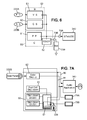
Fig.6 illustrates the general architecture of a demonstrator which can be used to demonstrate the feasibility and advantages of the proposed solution in the context of a power hub. This architecture is based on two chips, calledCOMPASS chip 50 andHARVEST chip 60, respectively. - The
HARVEST chip 60 comprises a step-downVoltage Source 61 suitable forfuel cells 330A of 3.6V/1A for instance, and a step-up Current Source 62 suitable forsolar cells 330B of 2.8V/5mA for instance. - The
COMPASS chip 50 comprises apower path 51 and a Constant Current/Constant Voltage (CCCV)charger 52. TheCOMPASS chip 50 is connected to a battery 337 and to anelectronic function 340, for example a SMAB device, which is an audio device. TheCOMPASS chip 50 is able to load the battery 337 when the power is sufficient, and to unload the battery 337 if necessary. -
Ampere meters electronic function 340, respectively. - The demonstrator may be realized based on HCMOS9A technology. It may comprise a 1.5A step-down converter for fuel cells and a 150mA step-up converter for solar cells, as well a state machine and an I2C bus to control/supply a SMAB device (like a STw5230 circuit of STMicroelectronics).
-
Fig.7A to 7C show more details of a possible architecture of the power hub demonstrator ofFig.6 . - In
Fig.7A , the solar power is superior to the consumption by the load. In this case, the power provided by thesolar cells 330B is sufficient to feed the audio application 340 (arrow 90) and to load, through thecharger 52, the battery 337 (arrow 91). - In
Fig.7B , the solar power is equal to the consumption by the load. In this case, all the power provided by thesolar cells 330B is used to feed the audio application 340 (arrow 92). - In
Fig.7C , the solar power is inferior to the consumption by the load. In this case, all the power provided by thesolar cells 330B is used to feed the audio application 340 (arrow 93) and thecharger 52 unloads the battery 337 to complete the supply of the application 340 (arrow 94). -
Fig.8, Fig.9 andFig. 10 are charts which illustrate the Step up efficiency versus the input power, versus the input current and versus the output current, respectively, for various values of the input voltage Vin and of the output voltage V out. - In
Fig.8 , curve E1 gives the efficiency versus input power, for input voltage value of 1,4V and output voltage value of 3V. Curve E2 gives the efficiency versus input power, for input voltage value of 1,4V and output voltage value of 3,6V. Curve E3 gives the efficiency versus input power, for input voltage value of 1,55V and output voltage value of 3V. Curve E4 gives the efficiency versus input power, for input voltage value of 1,55V and output voltage value of 3,6V. Curve E5 gives the efficiency versus input power, for input voltage value of 1,8V and output voltage value of 3V. Curve E6 gives the efficiency versus input power, for input voltage value of 1,8V and output voltage value of 3,6V. - Curves E11, E12, E13, E14 and E15 of
Fig.9 are curves giving efficiency versus the input current for the same values of the input voltage and of the output voltage as curves E1, E2, E3, E4 and E5, respectively. - Curves E21, E22, E23, E24 and E25 of
Fig.10 are curves giving efficiency versus the output current for the same values of the input voltage and of the output voltage as curves E1, E2, E3, E4 and E5, respectively. - Embodiments of the hysteretic control which has been described above include at least some of the following advantages: a relative simple architecture, no loop compensation needed, no error amplifier needed, no ramp, relatively self stabilized architecture, fast response in load transient, and characteristics (voltage, current) relatively independent from spread of components.
- While there has been illustrated and described what are presently considered to be the preferred embodiments of the present invention, it will be understood by those skilled in the art that various other modifications may be made, and equivalents may be substituted, without departing from the true scope of the present invention. Additionally, many modifications may be made to adapt a particular situation to the teachings of the present invention without departing from the central inventive concept described herein. Furthermore, an embodiment of the present invention may not include all of the features described above. Therefore, it is intended that the present invention not be limited to the particular embodiments disclosed, but that the invention include all embodiments falling within the scope of the invention as broadly defined above.
- Expressions such as "comprise", "include", "incorporate", "contain", "is" and "have" are to be construed in a non-exclusive manner when interpreting the description and its associated claims, namely construed to allow for other items or components which are not explicitly defined also to be present. Reference to the singular is also to be construed in be a reference to the plural and vice versa.
- A person skilled in the art will readily appreciate that various parameters disclosed in the description may be modified and that various embodiments disclosed may be combined without departing from the scope of the invention.
Claims (15)
- Power system comprising at least one power source (30, 130A, 130B, 230, 330A, 330B) and a DC/DC converter (31, 131) with an input (IN, INA, INB) coupled to the power source, and an output (OUT) which is configured to be coupled to a load (39, 40, 139, 140, 240, 339, 340) for allowing power transfer from the power source to the load, characterized in that it comprises means (33, 34, 35, 36, 37, 141A, 141B, 234, 235, 236, 237) for regulating an input voltage of the DC/DC converter.
- Power system according to claim 1, wherein the DC/DC converter (31, 131) is a switch mode power supply DC/DC converter, the means for regulating an input voltage comprising a control loop (32), a controller (35, 235), a reference block (36, 236), and a power switch (37, 237), the controller being configured to compare feedback information of the control loop to data of the reference block and to regulate the input voltage of the DC/DC converter, based on the comparison, through the power switch (37, 237).
- Power system according to claim 1, wherein the power source comprises a solar cell (30, 130A, 130B, 230, 330B).
- Power system according to claims 2 and 3, wherein the controller is configured to regulate the input voltage of the DC/DC converter based on levels of illumination by ambient light.
- Power system according to claim 1, wherein the power source comprises a thermoelectric generator (30, 130A, 130B, 330A).
- Power system according to claims 2 and 5, wherein the controller is configured to regulate the input voltage of the DC/DC converter based on temperature gradient between hot and cold sources and absolute temperature values for hot and cold sources.
- Power system according to claim 1, wherein the load comprises a battery (39, 139, 339) and/or an electronic function (40, 140, 240, 340).
- Power system according to claim 1, wherein the DC/DC converter is a multi-DC/DC converter (131), with several inputs (INA, INB) respectively coupled to several power sources (130A, 130B), the power system comprising means for regulating each of the several input voltages of the multi-DC/DC converter.
- User equipment comprising a power system according to any one of claim 1 to 8.
- Communication system comprising a plurality of user equipments according to claim 9.
- Method for managing a power system comprising at least one power source (30, 130A, 130B, 230, 330A, 330B) and a DC/DC converter (31, 131) with an input (IN, INA, INB) coupled to the power source, comprising :- coupling an output (OUT) of the DC/DC converter to a load (39, 40, 139, 140, 240, 339, 340), for allowing power transfer from the power source to the load, and- regulating an input voltage of the DC/DC converter.
- Method according to claim 11, wherein the DC/DC converter (31, 131) is a switch mode power supply DC/DC converter comprising a control loop (32), a controller (35, 235), a reference block (36, 236), and a power switch (37, 237), the step of regulating an input voltage comprising comparing feedback information of the control loop to data of the reference block and regulating the input voltage of the DC/DC converter, based on the comparison, through the power switch (37, 237).
- Method according to claim 11, wherein the power source comprises a solar cell (30, 130A, 130B, 230, 330B), the method comprising regulating the input voltage of the DC/DC converter based on levels of illumination by ambient light.
- Method according to claim 11, wherein the power source comprises a thermoelectric generator (30, 130A, 130B, 330A), the method comprising regulating the input voltage of the DC/DC converter based on temperature gradient between hot and cold sources and absolute temperature values for hot and cold sources.
- Method according to claim 11, wherein the DC/DC converter is a multi-DC/DC converter (131), with several inputs (INA, INB) respectively coupled to several power sources (130A, 130B), the method comprising regulating each of the several input voltages of the multi-DC/DC converter.
Priority Applications (4)
| Application Number | Priority Date | Filing Date | Title |
|---|---|---|---|
| EP10171796.5A EP2360823A3 (en) | 2010-02-12 | 2010-08-03 | Contrôl de la tension d'un convertisseur CC/CC |
| PCT/EP2011/051777 WO2011098435A2 (en) | 2010-02-12 | 2011-02-08 | Voltage regulation of a dc/dc converter |
| CN2011800088873A CN102859854A (en) | 2010-02-12 | 2011-02-08 | Voltage Regulation for DC/DC Converters |
| US13/578,626 US9537391B2 (en) | 2010-02-12 | 2011-02-08 | Voltage regulation of a DC/DC converter |
Applications Claiming Priority (2)
| Application Number | Priority Date | Filing Date | Title |
|---|---|---|---|
| EP10290070 | 2010-02-12 | ||
| EP10171796.5A EP2360823A3 (en) | 2010-02-12 | 2010-08-03 | Contrôl de la tension d'un convertisseur CC/CC |
Publications (2)
| Publication Number | Publication Date |
|---|---|
| EP2360823A2 true EP2360823A2 (en) | 2011-08-24 |
| EP2360823A3 EP2360823A3 (en) | 2017-03-22 |
Family
ID=44121760
Family Applications (1)
| Application Number | Title | Priority Date | Filing Date |
|---|---|---|---|
| EP10171796.5A Withdrawn EP2360823A3 (en) | 2010-02-12 | 2010-08-03 | Contrôl de la tension d'un convertisseur CC/CC |
Country Status (4)
| Country | Link |
|---|---|
| US (1) | US9537391B2 (en) |
| EP (1) | EP2360823A3 (en) |
| CN (1) | CN102859854A (en) |
| WO (1) | WO2011098435A2 (en) |
Families Citing this family (6)
| Publication number | Priority date | Publication date | Assignee | Title |
|---|---|---|---|---|
| JP6416033B2 (en) * | 2015-03-31 | 2018-10-31 | 株式会社東芝 | Thermoelectric generator |
| ES2907585T3 (en) * | 2015-04-28 | 2022-04-25 | UNIV AUTòNOMA DE BARCELONA | A thermoelectric power generating system |
| TWI584111B (en) * | 2015-12-23 | 2017-05-21 | 廣達電腦股份有限公司 | Electronic device |
| US10468984B2 (en) | 2016-07-01 | 2019-11-05 | Dialog Semiconductor (Uk) Limited | DC-DC switching converter with adaptive voltage positioning combined with digital-to-analog converter servo |
| TWI626522B (en) * | 2016-08-15 | 2018-06-11 | 財團法人工業技術研究院 | Power point tracking method and apparatus thereof |
| US11262776B2 (en) | 2019-06-27 | 2022-03-01 | International Business Machines Corporation | Modifying regulator output voltage with a peltier device |
Citations (1)
| Publication number | Priority date | Publication date | Assignee | Title |
|---|---|---|---|---|
| EP1905222A2 (en) | 2005-07-18 | 2008-04-02 | STMicroelectronics SA | Dc/dc converter-regulator |
Family Cites Families (26)
| Publication number | Priority date | Publication date | Assignee | Title |
|---|---|---|---|---|
| US5982156A (en) | 1997-04-15 | 1999-11-09 | The United States Of America As Represented By The Secretary Of The Air Force | Feed-forward control of aircraft bus dc boost converter |
| JP3473509B2 (en) * | 1999-07-16 | 2003-12-08 | 三菱電機株式会社 | Switching regulator |
| JP2002058174A (en) * | 2000-08-08 | 2002-02-22 | Nippon Telegr & Teleph Corp <Ntt> | Independent photovoltaic power generation system and control method thereof |
| US6819011B2 (en) * | 2002-11-14 | 2004-11-16 | Fyre Storm, Inc. | Switching power converter controller with watchdog timer |
| US6914418B2 (en) * | 2003-04-21 | 2005-07-05 | Phoenixtec Power Co., Ltd. | Multi-mode renewable power converter system |
| JP2006129658A (en) * | 2004-11-01 | 2006-05-18 | Hakko Denki Kk | Thermoelectric generator, DC-DC converter manufacturing method, and boost conversion method |
| US20060127710A1 (en) * | 2004-12-15 | 2006-06-15 | Juergen Schulte | System and method for bypassing failed stacks in a multiple stack fuel cell |
| CN1797892A (en) * | 2004-12-30 | 2006-07-05 | 中国科学院电工研究所 | Tracker for maximum power of light-volt electric-power production by solar energy, and control method |
| TWI274454B (en) * | 2005-03-04 | 2007-02-21 | Ind Tech Res Inst | A power management method and system of a hybrid power supply |
| CN101213679B (en) * | 2005-06-28 | 2010-09-29 | Bsst有限责任公司 | Thermoelectric Generators for Variable Thermal Power Sources |
| TWI316217B (en) * | 2005-12-23 | 2009-10-21 | Innolux Display Corp | Display device and control method |
| FR2896211B1 (en) * | 2006-01-19 | 2009-07-03 | Renault Sas | ELECTRICAL MANAGEMENT DEVICE FOR POWER SUPPLY OF VEHICLE |
| US8963369B2 (en) * | 2007-12-04 | 2015-02-24 | Solaredge Technologies Ltd. | Distributed power harvesting systems using DC power sources |
| US7681090B2 (en) | 2007-01-25 | 2010-03-16 | Solarbridge Technologies, Inc. | Ripple correlation control based on limited sampling |
| EP2162967B1 (en) * | 2007-06-15 | 2020-03-04 | Fisher Controls International Llc | Input regulated dc to dc converter for power scavenging |
| CN201100577Y (en) * | 2007-08-08 | 2008-08-13 | 深圳帝光电子有限公司 | LED lamp |
| US20090072779A1 (en) | 2007-09-14 | 2009-03-19 | Kurt Kuhlmann | Low Voltage Energy System |
| CN201121826Y (en) * | 2007-10-12 | 2008-09-24 | 深圳帝光电子有限公司 | Lamp fitting |
| EP3496258B1 (en) * | 2007-12-05 | 2025-02-05 | Solaredge Technologies Ltd. | Safety mechanisms in distributed power installations |
| JP5089359B2 (en) * | 2007-12-06 | 2012-12-05 | 三菱電機株式会社 | Power converter |
| CN101464065B (en) * | 2007-12-18 | 2011-11-09 | 广东红日太阳能有限公司 | All-weather automatic intelligent identification controller |
| US20090189574A1 (en) * | 2008-01-23 | 2009-07-30 | Alpha Technologies, Inc. | Simplified maximum power point control utilizing the pv array voltage at the maximum power point |
| US8279644B2 (en) | 2008-05-14 | 2012-10-02 | National Semiconductor Corporation | Method and system for providing maximum power point tracking in an energy generating system |
| CN101582655B (en) * | 2008-05-16 | 2013-05-08 | 鸿富锦精密工业(深圳)有限公司 | Portable electronic device provided with solar battery |
| WO2010071877A2 (en) * | 2008-12-21 | 2010-06-24 | Navsemi, Inc. | System and method for selectively controlling a solar panel in segments |
| CN102422242A (en) * | 2009-04-30 | 2012-04-18 | 夏普株式会社 | Control device and control method |
-
2010
- 2010-08-03 EP EP10171796.5A patent/EP2360823A3/en not_active Withdrawn
-
2011
- 2011-02-08 WO PCT/EP2011/051777 patent/WO2011098435A2/en not_active Ceased
- 2011-02-08 CN CN2011800088873A patent/CN102859854A/en active Pending
- 2011-02-08 US US13/578,626 patent/US9537391B2/en active Active
Patent Citations (1)
| Publication number | Priority date | Publication date | Assignee | Title |
|---|---|---|---|---|
| EP1905222A2 (en) | 2005-07-18 | 2008-04-02 | STMicroelectronics SA | Dc/dc converter-regulator |
Also Published As
| Publication number | Publication date |
|---|---|
| WO2011098435A2 (en) | 2011-08-18 |
| EP2360823A3 (en) | 2017-03-22 |
| US20120306278A1 (en) | 2012-12-06 |
| US9537391B2 (en) | 2017-01-03 |
| CN102859854A (en) | 2013-01-02 |
| WO2011098435A3 (en) | 2012-03-08 |
Similar Documents
| Publication | Publication Date | Title |
|---|---|---|
| US11171490B2 (en) | System and method for low-cost, high-efficiency solar panel power feed | |
| US11728645B2 (en) | Enhanced system and method for string balancing | |
| CN204119035U (en) | Produce the device that bucking voltage exports | |
| US8773077B1 (en) | Controllers for battery chargers and battery chargers therefrom | |
| KR20230025389A (en) | SIMO DC-DC converter | |
| US9059593B2 (en) | Charge controlling system, charge controlling apparatus, charge controlling method and discharge controlling apparatus | |
| US20090189574A1 (en) | Simplified maximum power point control utilizing the pv array voltage at the maximum power point | |
| US8643323B2 (en) | Photovoltaic system | |
| US9537391B2 (en) | Voltage regulation of a DC/DC converter | |
| US20110006742A1 (en) | Dynamic Energy Harvesting Control | |
| US8432143B2 (en) | Electrically parallel connection of photovoltaic modules in a string to provide a DC voltage to a DC voltage bus | |
| JP2013138530A (en) | Solar cell power generation system | |
| US11601898B2 (en) | Integrated communication power system switching between AC-to-DC, DC-to-DC, and maximum power point tracking modes | |
| US8427097B2 (en) | Hybrid electrical power source | |
| US10855170B2 (en) | Power management integrated circuit with programmable cold start | |
| US8937402B2 (en) | Converter circuit and electronic system comprising such a circuit | |
| JP5978596B2 (en) | Control apparatus and control method | |
| EP2159895A2 (en) | Electrically parallel connection of photovoltaic modules in a string to provide a DC voltage to a DC voltage bus | |
| KR20230006275A (en) | power converting apparatus having multi-level structure | |
| JP2013099207A (en) | Control apparatus and control method | |
| Shao et al. | A single inductor DIDO DC-DC converter for solar energy harvesting applications using band-band control | |
| US12500520B2 (en) | Flexible system for creating multiple main system rails from a current limited input source | |
| Nirmala et al. | Investigations of DC-DC converter topologies for pv fed telecom applications | |
| Zheng | Modular plug-and-play photovoltaic subpanel system | |
| RU2699084C1 (en) | Spacecraft power supply system |
Legal Events
| Date | Code | Title | Description |
|---|---|---|---|
| PUAI | Public reference made under article 153(3) epc to a published international application that has entered the european phase |
Free format text: ORIGINAL CODE: 0009012 |
|
| PUAI | Public reference made under article 153(3) epc to a published international application that has entered the european phase |
Free format text: ORIGINAL CODE: 0009012 |
|
| AK | Designated contracting states |
Kind code of ref document: A2 Designated state(s): AL AT BE BG CH CY CZ DE DK EE ES FI FR GB GR HR HU IE IS IT LI LT LU LV MC MK MT NL NO PL PT RO SE SI SK SM TR |
|
| AX | Request for extension of the european patent |
Extension state: BA ME RS |
|
| RAP1 | Party data changed (applicant data changed or rights of an application transferred) |
Owner name: OCT CIRCUIT TECHNOLOGIES INTERNATIONAL LIMITED |
|
| PUAL | Search report despatched |
Free format text: ORIGINAL CODE: 0009013 |
|
| AK | Designated contracting states |
Kind code of ref document: A3 Designated state(s): AL AT BE BG CH CY CZ DE DK EE ES FI FR GB GR HR HU IE IS IT LI LT LU LV MC MK MT NL NO PL PT RO SE SI SK SM TR |
|
| AX | Request for extension of the european patent |
Extension state: BA ME RS |
|
| RIC1 | Information provided on ipc code assigned before grant |
Ipc: H02M 3/02 20060101ALI20170210BHEP Ipc: H02J 7/35 20060101ALI20170210BHEP Ipc: H02M 3/157 20060101ALI20170210BHEP Ipc: H02M 3/156 20060101ALI20170210BHEP Ipc: H02M 3/00 20060101ALI20170210BHEP Ipc: H02M 3/155 20060101AFI20170210BHEP Ipc: H02M 5/42 20060101ALI20170210BHEP |
|
| 17P | Request for examination filed |
Effective date: 20170922 |
|
| RBV | Designated contracting states (corrected) |
Designated state(s): AL AT BE BG CH CY CZ DE DK EE ES FI FR GB GR HR HU IE IS IT LI LT LU LV MC MK MT NL NO PL PT RO SE SI SK SM TR |
|
| STAA | Information on the status of an ep patent application or granted ep patent |
Free format text: STATUS: THE APPLICATION HAS BEEN WITHDRAWN |
|
| 18W | Application withdrawn |
Effective date: 20180427 |