EP2360203A1 - Novel multi-arm polyethylene glycol, preparation method and uses thereof - Google Patents
Novel multi-arm polyethylene glycol, preparation method and uses thereof Download PDFInfo
- Publication number
- EP2360203A1 EP2360203A1 EP09828521A EP09828521A EP2360203A1 EP 2360203 A1 EP2360203 A1 EP 2360203A1 EP 09828521 A EP09828521 A EP 09828521A EP 09828521 A EP09828521 A EP 09828521A EP 2360203 A1 EP2360203 A1 EP 2360203A1
- Authority
- EP
- European Patent Office
- Prior art keywords
- polyethylene glycol
- arm polyethylene
- integer
- active derivative
- general formula
- Prior art date
- Legal status (The legal status is an assumption and is not a legal conclusion. Google has not performed a legal analysis and makes no representation as to the accuracy of the status listed.)
- Withdrawn
Links
- 0 CCC(C)*(C)(CC)C1C*(C)CC1 Chemical compound CCC(C)*(C)(CC)C1C*(C)CC1 0.000 description 2
- KJSBCHYZICJDPV-UHFFFAOYSA-N CC(CCN(C(C=C1)=O)C1=O)=O Chemical compound CC(CCN(C(C=C1)=O)C1=O)=O KJSBCHYZICJDPV-UHFFFAOYSA-N 0.000 description 1
- UORQAXQHLSZGRH-UHFFFAOYSA-N CCC(C)CC1CCCC1 Chemical compound CCC(C)CC1CCCC1 UORQAXQHLSZGRH-UHFFFAOYSA-N 0.000 description 1
- JYXBRHTWHDXJFA-UHFFFAOYSA-N CCC(CC)C(C)C1CCCC1 Chemical compound CCC(CC)C(C)C1CCCC1 JYXBRHTWHDXJFA-UHFFFAOYSA-N 0.000 description 1
- BUSVSUNWKDHMRC-UHFFFAOYSA-N CNCCNC(CCN(C(C=C1)=O)C1=O)=O Chemical compound CNCCNC(CCN(C(C=C1)=O)C1=O)=O BUSVSUNWKDHMRC-UHFFFAOYSA-N 0.000 description 1
Classifications
-
- C—CHEMISTRY; METALLURGY
- C08—ORGANIC MACROMOLECULAR COMPOUNDS; THEIR PREPARATION OR CHEMICAL WORKING-UP; COMPOSITIONS BASED THEREON
- C08G—MACROMOLECULAR COMPOUNDS OBTAINED OTHERWISE THAN BY REACTIONS ONLY INVOLVING UNSATURATED CARBON-TO-CARBON BONDS
- C08G65/00—Macromolecular compounds obtained by reactions forming an ether link in the main chain of the macromolecule
- C08G65/02—Macromolecular compounds obtained by reactions forming an ether link in the main chain of the macromolecule from cyclic ethers by opening of the heterocyclic ring
- C08G65/26—Macromolecular compounds obtained by reactions forming an ether link in the main chain of the macromolecule from cyclic ethers by opening of the heterocyclic ring from cyclic ethers and other compounds
- C08G65/2603—Macromolecular compounds obtained by reactions forming an ether link in the main chain of the macromolecule from cyclic ethers by opening of the heterocyclic ring from cyclic ethers and other compounds the other compounds containing oxygen
- C08G65/2606—Macromolecular compounds obtained by reactions forming an ether link in the main chain of the macromolecule from cyclic ethers by opening of the heterocyclic ring from cyclic ethers and other compounds the other compounds containing oxygen containing hydroxyl groups
- C08G65/2609—Macromolecular compounds obtained by reactions forming an ether link in the main chain of the macromolecule from cyclic ethers by opening of the heterocyclic ring from cyclic ethers and other compounds the other compounds containing oxygen containing hydroxyl groups containing aliphatic hydroxyl groups
-
- A—HUMAN NECESSITIES
- A61—MEDICAL OR VETERINARY SCIENCE; HYGIENE
- A61K—PREPARATIONS FOR MEDICAL, DENTAL OR TOILETRY PURPOSES
- A61K47/00—Medicinal preparations characterised by the non-active ingredients used, e.g. carriers or inert additives; Targeting or modifying agents chemically bound to the active ingredient
- A61K47/50—Medicinal preparations characterised by the non-active ingredients used, e.g. carriers or inert additives; Targeting or modifying agents chemically bound to the active ingredient the non-active ingredient being chemically bound to the active ingredient, e.g. polymer-drug conjugates
- A61K47/51—Medicinal preparations characterised by the non-active ingredients used, e.g. carriers or inert additives; Targeting or modifying agents chemically bound to the active ingredient the non-active ingredient being chemically bound to the active ingredient, e.g. polymer-drug conjugates the non-active ingredient being a modifying agent
- A61K47/56—Medicinal preparations characterised by the non-active ingredients used, e.g. carriers or inert additives; Targeting or modifying agents chemically bound to the active ingredient the non-active ingredient being chemically bound to the active ingredient, e.g. polymer-drug conjugates the non-active ingredient being a modifying agent the modifying agent being an organic macromolecular compound, e.g. an oligomeric, polymeric or dendrimeric molecule
- A61K47/59—Medicinal preparations characterised by the non-active ingredients used, e.g. carriers or inert additives; Targeting or modifying agents chemically bound to the active ingredient the non-active ingredient being chemically bound to the active ingredient, e.g. polymer-drug conjugates the non-active ingredient being a modifying agent the modifying agent being an organic macromolecular compound, e.g. an oligomeric, polymeric or dendrimeric molecule obtained otherwise than by reactions only involving carbon-to-carbon unsaturated bonds, e.g. polyureas or polyurethanes
- A61K47/60—Medicinal preparations characterised by the non-active ingredients used, e.g. carriers or inert additives; Targeting or modifying agents chemically bound to the active ingredient the non-active ingredient being chemically bound to the active ingredient, e.g. polymer-drug conjugates the non-active ingredient being a modifying agent the modifying agent being an organic macromolecular compound, e.g. an oligomeric, polymeric or dendrimeric molecule obtained otherwise than by reactions only involving carbon-to-carbon unsaturated bonds, e.g. polyureas or polyurethanes the organic macromolecular compound being a polyoxyalkylene oligomer, polymer or dendrimer, e.g. PEG, PPG, PEO or polyglycerol
-
- C—CHEMISTRY; METALLURGY
- C08—ORGANIC MACROMOLECULAR COMPOUNDS; THEIR PREPARATION OR CHEMICAL WORKING-UP; COMPOSITIONS BASED THEREON
- C08G—MACROMOLECULAR COMPOUNDS OBTAINED OTHERWISE THAN BY REACTIONS ONLY INVOLVING UNSATURATED CARBON-TO-CARBON BONDS
- C08G65/00—Macromolecular compounds obtained by reactions forming an ether link in the main chain of the macromolecule
- C08G65/02—Macromolecular compounds obtained by reactions forming an ether link in the main chain of the macromolecule from cyclic ethers by opening of the heterocyclic ring
- C08G65/32—Polymers modified by chemical after-treatment
- C08G65/329—Polymers modified by chemical after-treatment with organic compounds
- C08G65/331—Polymers modified by chemical after-treatment with organic compounds containing oxygen
- C08G65/332—Polymers modified by chemical after-treatment with organic compounds containing oxygen containing carboxyl groups, or halides, or esters thereof
- C08G65/3322—Polymers modified by chemical after-treatment with organic compounds containing oxygen containing carboxyl groups, or halides, or esters thereof acyclic
-
- C—CHEMISTRY; METALLURGY
- C08—ORGANIC MACROMOLECULAR COMPOUNDS; THEIR PREPARATION OR CHEMICAL WORKING-UP; COMPOSITIONS BASED THEREON
- C08G—MACROMOLECULAR COMPOUNDS OBTAINED OTHERWISE THAN BY REACTIONS ONLY INVOLVING UNSATURATED CARBON-TO-CARBON BONDS
- C08G65/00—Macromolecular compounds obtained by reactions forming an ether link in the main chain of the macromolecule
- C08G65/02—Macromolecular compounds obtained by reactions forming an ether link in the main chain of the macromolecule from cyclic ethers by opening of the heterocyclic ring
- C08G65/32—Polymers modified by chemical after-treatment
- C08G65/329—Polymers modified by chemical after-treatment with organic compounds
- C08G65/333—Polymers modified by chemical after-treatment with organic compounds containing nitrogen
- C08G65/33331—Polymers modified by chemical after-treatment with organic compounds containing nitrogen containing imide group
- C08G65/33337—Polymers modified by chemical after-treatment with organic compounds containing nitrogen containing imide group cyclic
-
- C—CHEMISTRY; METALLURGY
- C08—ORGANIC MACROMOLECULAR COMPOUNDS; THEIR PREPARATION OR CHEMICAL WORKING-UP; COMPOSITIONS BASED THEREON
- C08G—MACROMOLECULAR COMPOUNDS OBTAINED OTHERWISE THAN BY REACTIONS ONLY INVOLVING UNSATURATED CARBON-TO-CARBON BONDS
- C08G65/00—Macromolecular compounds obtained by reactions forming an ether link in the main chain of the macromolecule
- C08G65/02—Macromolecular compounds obtained by reactions forming an ether link in the main chain of the macromolecule from cyclic ethers by opening of the heterocyclic ring
- C08G65/32—Polymers modified by chemical after-treatment
- C08G65/329—Polymers modified by chemical after-treatment with organic compounds
- C08G65/333—Polymers modified by chemical after-treatment with organic compounds containing nitrogen
- C08G65/33396—Polymers modified by chemical after-treatment with organic compounds containing nitrogen having oxygen in addition to nitrogen
-
- C—CHEMISTRY; METALLURGY
- C08—ORGANIC MACROMOLECULAR COMPOUNDS; THEIR PREPARATION OR CHEMICAL WORKING-UP; COMPOSITIONS BASED THEREON
- C08G—MACROMOLECULAR COMPOUNDS OBTAINED OTHERWISE THAN BY REACTIONS ONLY INVOLVING UNSATURATED CARBON-TO-CARBON BONDS
- C08G65/00—Macromolecular compounds obtained by reactions forming an ether link in the main chain of the macromolecule
- C08G65/02—Macromolecular compounds obtained by reactions forming an ether link in the main chain of the macromolecule from cyclic ethers by opening of the heterocyclic ring
- C08G65/32—Polymers modified by chemical after-treatment
- C08G65/329—Polymers modified by chemical after-treatment with organic compounds
- C08G65/334—Polymers modified by chemical after-treatment with organic compounds containing sulfur
- C08G65/3344—Polymers modified by chemical after-treatment with organic compounds containing sulfur containing oxygen in addition to sulfur
-
- C—CHEMISTRY; METALLURGY
- C08—ORGANIC MACROMOLECULAR COMPOUNDS; THEIR PREPARATION OR CHEMICAL WORKING-UP; COMPOSITIONS BASED THEREON
- C08G—MACROMOLECULAR COMPOUNDS OBTAINED OTHERWISE THAN BY REACTIONS ONLY INVOLVING UNSATURATED CARBON-TO-CARBON BONDS
- C08G65/00—Macromolecular compounds obtained by reactions forming an ether link in the main chain of the macromolecule
- C08G65/02—Macromolecular compounds obtained by reactions forming an ether link in the main chain of the macromolecule from cyclic ethers by opening of the heterocyclic ring
- C08G65/32—Polymers modified by chemical after-treatment
- C08G65/329—Polymers modified by chemical after-treatment with organic compounds
- C08G65/337—Polymers modified by chemical after-treatment with organic compounds containing other elements
-
- C—CHEMISTRY; METALLURGY
- C08—ORGANIC MACROMOLECULAR COMPOUNDS; THEIR PREPARATION OR CHEMICAL WORKING-UP; COMPOSITIONS BASED THEREON
- C08G—MACROMOLECULAR COMPOUNDS OBTAINED OTHERWISE THAN BY REACTIONS ONLY INVOLVING UNSATURATED CARBON-TO-CARBON BONDS
- C08G2650/00—Macromolecular compounds obtained by reactions forming an ether link in the main chain of the macromolecule
- C08G2650/22—Macromolecular compounds obtained by reactions forming an ether link in the main chain of the macromolecule characterised by the initiator used in polymerisation
- C08G2650/24—Polymeric initiators
-
- C—CHEMISTRY; METALLURGY
- C08—ORGANIC MACROMOLECULAR COMPOUNDS; THEIR PREPARATION OR CHEMICAL WORKING-UP; COMPOSITIONS BASED THEREON
- C08L—COMPOSITIONS OF MACROMOLECULAR COMPOUNDS
- C08L2203/00—Applications
- C08L2203/02—Applications for biomedical use
Definitions
- the present invention relates to a polyethylene glycol, especially a multi-arm polyethylene glycol, its active derivatives, preparation method thereof, the conjugation with pharmaceutical molecules and gel materials formed from the polyethylene glycol.
- the invention also relates to the use of the novel multi-arm PEG and the gel formed from the multi-arm PEG in the preparation of the materials for medical devices and the pharmaceuticals.
- PEG derivatives are widely used for conjugation with proteins, peptides and other pharmaceuticals to extend the physical half-life of pharmaceuticals described to reduce its immunogenicity and toxicity.
- PEG and its derivatives have been widely used in many pharmaceuticals as a carrier of pharmaceutical preparations, and the trial of bonding PEG into pharmaceutical molecules has also been under considerable development in the last decade, which is widely used in many approved pharmaceuticals, such as PEGasys®, the conjugation of ⁇ -interferon and PEG, showing a longer circulating half-life and better treatment.
- PEG's metabolic process in the human body has been quite clear, which is a safe synthetic polymer material without side effects.
- PEG polystyrene-maleic anhydride copolymer
- Baxter's CoSeal, Covidien's SprayGel and DuraSeal are all new types of medical equipment listed in the U.S. or Europe in recent years. They have applied a multi-arm PEG. These products are not marketed in China.
- the multi-arm PEG In terms of pharmaceutical modification, compared to straight-chain PEG, the multi-arm PEG has multiple end groups, and thus has the advantage of loading multiple pharmaceutical molecules through multiple connection points with pharmaceuticals.
- the multi-arm PEG is widely used in PEG modification of peptide and small molecule pharmaceuticals.
- the multi-arm PEG can be used as crosslinking agents in production of gel, while the gel can be used in medical devices as adhesives, anti-leak agents, anti-adhesion agents and hemostatic materials.
- the multi-arm PEG in the market includes three arms, four arms, six arms, eight arms and so on, of which the three-arm and four-arm PEGs are induced by polymerization of ethylene oxide with glycerol and pentaerythritol as the central molecule. Since glycerol and pentaerythritol are small molecules of single molecular weight, the three-arm and four-arm PEGs induced and produced by them are similar to straight-chain PEG in molecular weight distribution, which is reflected in quality by polydispersity of less than 1.08.
- the six-arm and eight-arm PEGs are basically induced by polymerization of ethylene oxide with poly glycerol as the central molecule, which is a liquid mixture, the higher polyglycerol the more difficult to get products with high purity.
- the synthetic multi-arm PEG with poly glycerol as the central molecular initiator basically has relatively wide molecular weight distribution, which is reflected in quality by the polydispersity index of greater than 1.08.
- the multi-arm PEG has an increase of only one arm.
- the central molecule of eight-arm PEG is six polyglycerol, which requires six glycerol molecules to get together.
- the purpose of the present invention is to overcome the lack of purity in multi-arm PEG, especially in six-arm and eight-arm PEGs in the existing technology, and provide a new type of multi-arm PEG and its preparation method, as well as the active derivatives of multi-arm PEG described, the gel formed and its conjugation with pharmaceutical molecules and applications.
- the present invention provides a series of multi-arm PEG with oligomeric pentaerythritol as the central molecular initiator. Since dimeric entaerythritol can generate six-arm PEG; trimeric pentaerythritol can generate eight-arm PEG; also the purity of both dimeric and trimeric pentaerythritol can be greater than 95%, the polydispersity of multi-arm PEG generated by using them as the central molecular initiator can be reduced, and product quality can be greatly improved. Meanwhile, the invention also provides the preparation method of this new multi-arm PEG as well as its conjugation with pharmaceutical molecules and formation of gel materials. The invention also relates to application of the new multi-arm PEG described and the gel it forms in the preparation of medical devices and materials.
- the present invention provides a novel multi-arm PEG, which has the structure of general formula I: in which, the PEGs are the same or different -(CH 2 CH 2 O) m -, the average of m is an integer of 3-250; l is an integer ⁇ 2.
- l is an integer ⁇ 2 and ⁇ 10, more preferably, an integer ⁇ 2 and ⁇ 5, and in particular, the optimal l is an integer ⁇ 2 and ⁇ 4, specifically 2 or 3.
- the molecular weight of multi-arm PEG as described is 1000-80,000.
- the invention also provides an active derivative of the novel multi-arm PEG, which has the structure of general formula II: in which:
- l is an integer ⁇ 2 and ⁇ 10, more preferably, an integer ⁇ 2 and ⁇ 5, and in particular, the optimal l is an integer ⁇ 2 and ⁇ 4, specifically 3.
- the molecular weight of multi-arm PEG as described is 1000-80000.
- the active derivative of the multi-arm PEG as described is multi-arm PEG with the structure of the following general formula III: in which:
- the active derivative of the multi-arm PEG as described is multi-arm PEG acetic acid with the structure of the following general formula IV: in which:
- the active derivative of multi-arm PEG as described is an active NHS ester derivative of the novel multi-arm PEG with the structure of the following general formula V: in which:
- the active derivative of the multi-arm PEG as described is an active MAL derivative of the new multi-arm PEG with the structure of the following general formula VI: in which: F is the PEGs are the same or different -(CH 2 CH 2 O) m -, the average of m is an integer of 3-250; l is an integer ⁇ 2, preferably 2 or 3.
- the active derivative of the multi-arm PEG as described is a succinate
- the present invention provides a gel formed by the active derivative of the multi-arm PEG as described.
- the gel as described is degradable in aqueous solution.
- the gel as described is formed by mixing the neutral or alkaline aqueous solution of the active derivatives of multi-arm PEG in the general formula III and VII.
- the molar ratio of the active derivatives of multi-arm PEG in the general formula III and VII is 1:0.7-1:1.3.
- the invention provides conjugation of the active derivatives of multi-arm PEG as described and pharmaceutical molecules through end group F.
- the pharmaceutical molecules as described are selected from the group consisting of the following pharmaceutical molecules: amino acids, proteins, enzymes, nucleosides, saccharides, organic acids, flavonoids, quinones, terpenoids, phenylpropanoids, steroids and its glycosides, alkaloids and its conjugates.
- the invention provides the conjugation of eight-arm PEG acetic acid and irrinitecan or docetaxel.
- the invention further provides the application of these conjugates in the preparation of pharmaceuticals.
- the invention provides the preparation methods of the new multi-arm PEG, which include the steps of ethylene oxide polymerization with pentaerythritol oligomers as an initiator.
- the initiative molecule When R is the non-hydroxy part of pentaerythritol, the initiative molecule is pentaerythritol, whose chemical structure is as the following formula: where n is equal to 4, a four-arm PEG is formed; when R is the non-hydroxy part of dimeric pentaerythritol, the initiative molecule is dimeric pentaerythritol, whose chemical structure is as follows: where n is equal to 6, a six-arm PEG is formed; when R is the non-hydroxy part of trimeric pentaerythritol, the initiative molecule is trimeric pentaerythritol, whose chemical structure is as follows: where n is equal to 8, an eight-arm PEG is formed.
- molecular weight is commonly used, as long as the molecular weight of single arm of the PEG formed is 300 to 60,000 Dalton, which means m is about 6 to 1300. More preferably, m is 28, 112 or 450, which corresponds to molecular weight of 1325, 5000 or 20,000. Due to the potential heterogeneity of the starting PEG compound limited by its average molecular weight rather than self-repeated unit, molecular weight is preferred to characterize PEG polymers, rather than using m to represent the self-repeated unit in PEG polymers.
- PEG can be prepared through polymerization with oligomeric pentaerythritol as an initiator; the preparation process as described can be available in accordance with the general synthesis and preparation methods in the field. Different claim-based structures of compound require adopting appropriate synthesis and preparation methods; specific circumstances can refer to various technologic literature and patent outcomes in the field.
- MAL multi-arm PEG with maleimide functional groups
- Many pharmaceuticals contain active amino, carboxyl, hydroxyl and other functional groups, which usually conjugate with simple saccharides, polysaccharides, nucleosides, poly nucleosides, phosphorus acyl and other elements to form active pharmacological structure in organisms.
- PEG derivatives modified by functional groups can conjugate with these pharmaceutical molecules in the same way as an alternative to bio-organic molecules, so as to overcome the disadvantages of short physical half-life and short efficacy duration of bio-organic molecules in organisms.
- the active derivatives of multi-arm PEG in the present invention can conjugate with pharmaceutical molecules through appropriates functional groups (F), which link proteins, peptides or other free amino, hydroxyl, sulfur, hydroxyl, etc. in natural medicines with PEG derivatives.
- F functional groups
- each multi-arm PEG molecule can bond multiple pharmaceutical molecules.
- PEG derivatives have a higher pharmaceutical loading rate to ensure proper pharmaceutical concentration and enhanced release features so as to improve the physiological function of pharmaceutical molecules in organisms.
- pharmaceutical molecules are preferably amino acids, proteins, enzymes, nucleotides, carbohydrates, organic acids, flavonoids, quinones, terpenoids, phenylpropanoid phenols, steroids, glycosides, biological alkali, etc. While pharmaceutical molecules in protein are preferably interferon drugs, EPO drugs, growth hormone drugs, antibody drugs, and so on.
- the conjugates of the present invention can be delivered in the form of pure compounds or suitable pharmaceutical composition, through any acceptable mode of delivery or reagents used for similar purposes. Therefore, the delivery mode through mouth, nasal, rectal, transdermal or injection can be adopted, in the form of solid, semi-solid, lyophilized powder or liquid reagents, for example, tablets, suppositories, pills, soft and hard gelatin capsules, powder, solution, agents, suspensions or aerosols, etc., preferably the unit form of simple delivery for precise dosage.
- Composition may contain conventional pharmaceutical carrier or excipient and the conjugates of the present invention as the active ingredient (one or more); in addition, it can also contain other agents, carriers, auxiliary agents, etc.
- a pharmaceutically acceptable composition will contain about 1-99 weight% of the conjugates of the invention, and 99-1 weight% of the appropriate medicinal excipients.
- Preferred composition contains about 5-75 weight% of the conjugates of the invention, and appropriate pharmaceutical excipients for the rest.
- the preferred way of delivery is injection, through conventional daily dose program, which can be adjusted according to the severity of disease.
- the conjugates of the present invention or a pharmaceutically acceptable salt can be formulated into injectable agent; for example, dispersing about 0.5-50% of the active ingredient in medicinal adjuvant which can be delivered in liquid form, such as water , salt water, glucose water, glycerol, ethanol, etc., to form the solution or suspension agent.
- compositions can be delivered in liquid form; for example, dissolving and dispersing the conjugates of the present invention (about 0.5-20%) and selected existing pharmaceutical auxiliary agent in the carrier, such as water, salt water, glucose water, glycerol, ethanol, etc., to form the solution or suspension agent.
- compositions of the invention can also contain small amounts of auxiliary substances, such as wetting agents or emulsifiers, pH buffers, antioxidants, etc., for example: citric acid, dehydrated sorbitol monolaurate, triethanolamine oil ester, butylated hydroxy toluene.
- auxiliary substances such as wetting agents or emulsifiers, pH buffers, antioxidants, etc., for example: citric acid, dehydrated sorbitol monolaurate, triethanolamine oil ester, butylated hydroxy toluene.
- compositions used will contain therapeutically effective amount of conjugates of the invention for the treatment of appropriate disease.
- Example 2 Put 100 grams of eight-arm PEG with the molecular weight of 10,000 (obtained in Example 2) in nitrogen atmosphere for azeotropic distillation with toluene for 2 hours, and then reduce to room temperature. Add 300 ml of dry dichloromethane and 28 ml of triethylamine. Cool the mixture in an ice bath and add dry chloride drop by drop, stir in nitrogen atmosphere at room temperature overnight, and then add 30 ml of ethanol to stop the reaction immediately. Recycle the solvent with rotary evaporator for concentration, filter out the sediment, and then add 500 ml of ether, filter and collect sediment to dry in vacuum .Yield: 95 g (95%).
- Example 2 Put 40 grams of eight-arm PEG with the molecular weight of 10,000 (obtained in Example 2) into a 1000 ml flask, add 500 ml of toluene, and evaporate out 150 ml of toluene through heating in a nitrogen atmosphere. After cooling the solution down till 50°C, add 30 ml of toluene solution with 16g of potassium tert-butylate for isothermal reaction for 2 hours, then reduce to room temperature, add 16 ml of tert-Butyl bromoacetate, stir in nitrogen atmosphere overnight. Evaporated, add into 1 liter of isopropanol for sedimentation; filter the sediment for washing, and then vacuum drying.
- Example 10 Conjugate of eight-arm PEG acetic acid and docetaxel
- Example 11 Conjugate of eight-arm PEG acetic acid and Irrinitecan derivatives
- Example 12 conjugate of eight-arm PEG acetic acid and scopoletin
- This Example illustrates the preparation process of typical pharmaceutical composition with non-gastrointestinal delivery, which contains conjugates of the present invention.
- Example 11 Dissolve 2 grams of the conjugation in Example 11 into 0.9% of saline solution to obtain 100 ml of intravenous solution, before filtering with 0.2 ⁇ m membrane material and packaging under sterile conditions.
Landscapes
- Chemical & Material Sciences (AREA)
- Health & Medical Sciences (AREA)
- Medicinal Chemistry (AREA)
- Chemical Kinetics & Catalysis (AREA)
- Polymers & Plastics (AREA)
- Organic Chemistry (AREA)
- General Chemical & Material Sciences (AREA)
- Bioinformatics & Cheminformatics (AREA)
- Engineering & Computer Science (AREA)
- Pharmacology & Pharmacy (AREA)
- Epidemiology (AREA)
- Life Sciences & Earth Sciences (AREA)
- Animal Behavior & Ethology (AREA)
- General Health & Medical Sciences (AREA)
- Public Health (AREA)
- Veterinary Medicine (AREA)
- Medicinal Preparation (AREA)
- Polyethers (AREA)
Abstract

Description
- The present invention relates to a polyethylene glycol, especially a multi-arm polyethylene glycol, its active derivatives, preparation method thereof, the conjugation with pharmaceutical molecules and gel materials formed from the polyethylene glycol. The invention also relates to the use of the novel multi-arm PEG and the gel formed from the multi-arm PEG in the preparation of the materials for medical devices and the pharmaceuticals.
- Currently, the PEG derivatives are widely used for conjugation with proteins, peptides and other pharmaceuticals to extend the physical half-life of pharmaceuticals described to reduce its immunogenicity and toxicity. In clinical uses, PEG and its derivatives have been widely used in many pharmaceuticals as a carrier of pharmaceutical preparations, and the trial of bonding PEG into pharmaceutical molecules has also been under considerable development in the last decade, which is widely used in many approved pharmaceuticals, such as PEGasys®, the conjugation of α-interferon and PEG, showing a longer circulating half-life and better treatment. PEG's metabolic process in the human body has been quite clear, which is a safe synthetic polymer material without side effects.
- As a safe synthetic polymer material without side effects, PEG is also widely used in the preparation of new medical devices. For example, Baxter's CoSeal, Covidien's SprayGel and DuraSeal are all new types of medical equipment listed in the U.S. or Europe in recent years. They have applied a multi-arm PEG. These products are not marketed in China.
- In terms of pharmaceutical modification, compared to straight-chain PEG, the multi-arm PEG has multiple end groups, and thus has the advantage of loading multiple pharmaceutical molecules through multiple connection points with pharmaceuticals. Currently, the multi-arm PEG is widely used in PEG modification of peptide and small molecule pharmaceuticals. In application of medical devices, the multi-arm PEG can be used as crosslinking agents in production of gel, while the gel can be used in medical devices as adhesives, anti-leak agents, anti-adhesion agents and hemostatic materials.
- Currently, the multi-arm PEG in the market includes three arms, four arms, six arms, eight arms and so on, of which the three-arm and four-arm PEGs are induced by polymerization of ethylene oxide with glycerol and pentaerythritol as the central molecule. Since glycerol and pentaerythritol are small molecules of single molecular weight, the three-arm and four-arm PEGs induced and produced by them are similar to straight-chain PEG in molecular weight distribution, which is reflected in quality by polydispersity of less than 1.08. The six-arm and eight-arm PEGs are basically induced by polymerization of ethylene oxide with poly glycerol as the central molecule, which is a liquid mixture, the higher polyglycerol the more difficult to get products with high purity. The synthetic multi-arm PEG with poly glycerol as the central molecular initiator basically has relatively wide molecular weight distribution, which is reflected in quality by the polydispersity index of greater than 1.08. In poly glycerol, for each additional glycerol, the multi-arm PEG has an increase of only one arm. For example, the central molecule of eight-arm PEG is six polyglycerol, which requires six glycerol molecules to get together. The purity of six polyglycerol is very difficult to exceed 85%, while the polydispersity of many eight-arm PEGs is much larger than 1.08, even greater than 1.10. The relatively wide molecular weight distribution plays a limited role in the application of eight-arm PEG in pharmaceuticals. In terms of medical devices, it also adds a quality control problem. Looking for a new central molecule to replace poly glycerol has been the subject in medical and medicinal fields of multi-arm PEG. U.S. Patent (Patent No.
6,858,736 ) describes a kind of six-arm PEG with sorbitol as the central molecular initiator. As for the demand for more than six arms, saccharidemolecules have a limitation as the central molecular initiator. - The purpose of the present invention is to overcome the lack of purity in multi-arm PEG, especially in six-arm and eight-arm PEGs in the existing technology, and provide a new type of multi-arm PEG and its preparation method, as well as the active derivatives of multi-arm PEG described, the gel formed and its conjugation with pharmaceutical molecules and applications.
- In particular, the present invention provides a series of multi-arm PEG with oligomeric pentaerythritol as the central molecular initiator. Since dimeric entaerythritol can generate six-arm PEG; trimeric pentaerythritol can generate eight-arm PEG; also the purity of both dimeric and trimeric pentaerythritol can be greater than 95%, the polydispersity of multi-arm PEG generated by using them as the central molecular initiator can be reduced, and product quality can be greatly improved. Meanwhile, the invention also provides the preparation method of this new multi-arm PEG as well as its conjugation with pharmaceutical molecules and formation of gel materials. The invention also relates to application of the new multi-arm PEG described and the gel it forms in the preparation of medical devices and materials.
- The present invention provides a novel multi-arm PEG, which has the structure of general formula I:

- In a preferred embodiment, l is an integer ≥2 and ≤10, more preferably, an integer ≥2 and ≤5, and in particular, the optimal l is an integer ≥2 and ≤4, specifically 2 or 3.
- In a preferred embodiment, the molecular weight of multi-arm PEG as described is 1000-80,000.
- The invention also provides an active derivative of the novel multi-arm PEG, which has the structure of general formula II:

- the PEGs are the same or different -(CH2CH2O)m-, the average of m is an integer of 3-250; l is an integer ≧ 2;
- X is a linking group, selected from a group consisting of:
- -(CH2)i- ; -(CH2)¡-NH- ;


- i is an integer of 0-10, preferably 0-3;
- F is an active end-group, selected from a group consisting of:
- -H ; -NH2;


- In a preferred embodiment, l is an integer ≥2 and ≤10, more preferably, an integer ≥2 and ≤5, and in particular, the optimal l is an integer ≥2 and ≤4, specifically 3.
- In a preferred embodiment, the molecular weight of multi-arm PEG as described is 1000-80000.
- In a specific embodiment, the active derivative of the multi-arm PEG as described is multi-arm PEG with the structure of the following general formula III:

- the PEGs are the same or different -(CH2CH2O)m- the average of m is an integer of 3-250; l is an integer ≧ 2, preferably 2 or 3.
- In a specific embodiment, the active derivative of the multi-arm PEG as described is multi-arm PEG acetic acid with the structure of the following general formula IV:

- the PEGs are the same or different -(CH2CH2O)m-, the average of m is an integer of 3-250; l is an integer ≧ 2, preferably 2 or 3.
- In a specific embodiment, the active derivative of multi-arm PEG as described is an active NHS ester derivative of the novel multi-arm PEG with the structure of the following general formula V:

- the PEG are the same or different -(CH2CH2O)m- the average of m is an integer of 3-250; l is an integer ≧ 2, preferably 2 or 3.
- In a specific embodiment, the active derivative of the multi-arm PEG as described is an active MAL derivative of the new multi-arm PEG with the structure of the following general formula VI:


l is an integer ≧ 2, preferably 2 or 3. - In a specific embodiment, the active derivative of the multi-arm PEG as described is a succinate
- active NHS ester derivatives of the new multi-arm PEG with the structure of the following general formula VII:
- the PEGs are the same or different -(CH2CH2O)m-, the average of m is an integer of 3-250; l is an integer ≧ 2, preferably 2 or 3.
- Besides, the present invention provides a gel formed by the active derivative of the multi-arm PEG as described.
- In some embodiments, the gel as described is degradable in aqueous solution. In a specific embodiment, the gel as described is formed by mixing the neutral or alkaline aqueous solution of the active derivatives of multi-arm PEG in the general formula III and VII. Preferably, the molar ratio of the active derivatives of multi-arm PEG in the general formula III and VII is 1:0.7-1:1.3.
- Also the invention provides conjugation of the active derivatives of multi-arm PEG as described and pharmaceutical molecules through end group F. In some embodiments, the pharmaceutical molecules as described are selected from the group consisting of the following pharmaceutical molecules: amino acids, proteins, enzymes, nucleosides, saccharides, organic acids, flavonoids, quinones, terpenoids, phenylpropanoids, steroids and its glycosides, alkaloids and its conjugates. Preferably, the invention provides the conjugation of eight-arm PEG acetic acid and irrinitecan or docetaxel.
- The invention further provides the application of these conjugates in the preparation of pharmaceuticals.
- Furthermore, the invention provides the preparation methods of the new multi-arm PEG, which include the steps of ethylene oxide polymerization with pentaerythritol oligomers as an initiator.
- Below specific examples are used to illustrate the preparation methods of the new multi-arm PEG and its active derivatives in the present invention.
- The general formula of the multi-arm PEG chain structure is as follows:

- R is the non-hydroxy part of the central or initiative molecule, usually C1-12 alkyl, cycloalkyl or aralkyl;
- n is the number of branches or arms;
- PEG is the same or different -(CH2CH2O)m-, m is any integer, representing the degree of polymerization of PEG arm.
- When R is the non-hydroxy part of pentaerythritol, the initiative molecule is pentaerythritol, whose chemical structure is as the following formula:


- In terms of PEG, molecular weight is commonly used, as long as the molecular weight of single arm of the PEG formed is 300 to 60,000 Dalton, which means m is about 6 to 1300. More preferably, m is 28, 112 or 450, which corresponds to molecular weight of 1325, 5000 or 20,000. Due to the potential heterogeneity of the starting PEG compound limited by its average molecular weight rather than self-repeated unit, molecular weight is preferred to characterize PEG polymers, rather than using m to represent the self-repeated unit in PEG polymers.
- According to the invention, PEG can be prepared through polymerization with oligomeric pentaerythritol as an initiator; the preparation process as described can be available in accordance with the general synthesis and preparation methods in the field. Different claim-based structures of compound require adopting appropriate synthesis and preparation methods; specific circumstances can refer to various technologic literature and patent outcomes in the field.
- In the application of the active derivatives of multi-arm PEG according to the present invention, different functional end group F determines the different purposes of derivatives. The introduction of these functional groups will determine the applied field and structure of derivatives. The most common functional group is NHS, as the formula V shows. The active derivatives of NHS ester structure can be linked with groups of amine structure.
- Similarly, according to the description of this manual, the technicians in this field can obtain the active derivatives of multi-arm PEG with amine functional groups, as the formula III shows.
- Similarly, the technicians in this field can obtain the active derivatives of multi-arm PEG with carboxyl functional groups, as the formula IV shows.
- Similarly, the technicians in this field can obtain the active derivatives of multi-arm PEG with maleimide functional groups (MAL), as the formula VI shows. The active derivatives of MAL structure can be linked with groups of thiol structure.
- Many pharmaceuticals contain active amino, carboxyl, hydroxyl and other functional groups, which usually conjugate with simple saccharides, polysaccharides, nucleosides, poly nucleosides, phosphorus acyl and other elements to form active pharmacological structure in organisms.
- Therefore, PEG derivatives modified by functional groups can conjugate with these pharmaceutical molecules in the same way as an alternative to bio-organic molecules, so as to overcome the disadvantages of short physical half-life and short efficacy duration of bio-organic molecules in organisms.
- The active derivatives of multi-arm PEG in the present invention can conjugate with pharmaceutical molecules through appropriates functional groups (F), which link proteins, peptides or other free amino, hydroxyl, sulfur, hydroxyl, etc. in natural medicines with PEG derivatives. For small molecular pharmaceuticals, each multi-arm PEG molecule can bond multiple pharmaceutical molecules. Such PEG derivatives have a higher pharmaceutical loading rate to ensure proper pharmaceutical concentration and enhanced release features so as to improve the physiological function of pharmaceutical molecules in organisms.
- All of the above applications are intended to provide a possible reference model for the medical application of PEG derivatives; the specific use and selection must be confirmed according to pharmacological, toxicological, clinical and other necessary experiments.
- In the conjugates of the present invention, pharmaceutical molecules are preferably amino acids, proteins, enzymes, nucleotides, carbohydrates, organic acids, flavonoids, quinones, terpenoids, phenylpropanoid phenols, steroids, glycosides, biological alkali, etc. While pharmaceutical molecules in protein are preferably interferon drugs, EPO drugs, growth hormone drugs, antibody drugs, and so on.
- The conjugates of the present invention can be delivered in the form of pure compounds or suitable pharmaceutical composition, through any acceptable mode of delivery or reagents used for similar purposes. Therefore, the delivery mode through mouth, nasal, rectal, transdermal or injection can be adopted, in the form of solid, semi-solid, lyophilized powder or liquid reagents, for example, tablets, suppositories, pills, soft and hard gelatin capsules, powder, solution, agents, suspensions or aerosols, etc., preferably the unit form of simple delivery for precise dosage. Composition may contain conventional pharmaceutical carrier or excipient and the conjugates of the present invention as the active ingredient (one or more); in addition, it can also contain other agents, carriers, auxiliary agents, etc.
- Typically, depending on the desired mode of delivery, a pharmaceutically acceptable composition will contain about 1-99 weight% of the conjugates of the invention, and 99-1 weight% of the appropriate medicinal excipients. Preferred composition contains about 5-75 weight% of the conjugates of the invention, and appropriate pharmaceutical excipients for the rest.
- The preferred way of delivery is injection, through conventional daily dose program, which can be adjusted according to the severity of disease. The conjugates of the present invention or a pharmaceutically acceptable salt can be formulated into injectable agent; for example, dispersing about 0.5-50% of the active ingredient in medicinal adjuvant which can be delivered in liquid form, such as water , salt water, glucose water, glycerol, ethanol, etc., to form the solution or suspension agent.
- The pharmaceutical compositions can be delivered in liquid form; for example, dissolving and dispersing the conjugates of the present invention (about 0.5-20%) and selected existing pharmaceutical auxiliary agent in the carrier, such as water, salt water, glucose water, glycerol, ethanol, etc., to form the solution or suspension agent.
- If necessary, the pharmaceutical compositions of the invention can also contain small amounts of auxiliary substances, such as wetting agents or emulsifiers, pH buffers, antioxidants, etc., for example: citric acid, dehydrated sorbitol monolaurate, triethanolamine oil ester, butylated hydroxy toluene.
- The actual preparation of such formulations is known or obvious to technical staff in the field, which can be found in Remington's Pharmaceutical Sciences, 18th Edition, (Mack Publishing Company, Easton, Pennsylvania, 1990). In any case, in accordance with the technology of the invention, the compositions used will contain therapeutically effective amount of conjugates of the invention for the treatment of appropriate disease.
- Below is description with examples of the conjugates of the invention and its preparation method, which does not limit the present invention; the scope of the present invention is limited by the claims.
- Unless otherwise indicated, the reagents used in the following Examples are purchased from Beijing Chemical Reagent Company or other similar companies selling public chemicals.
-
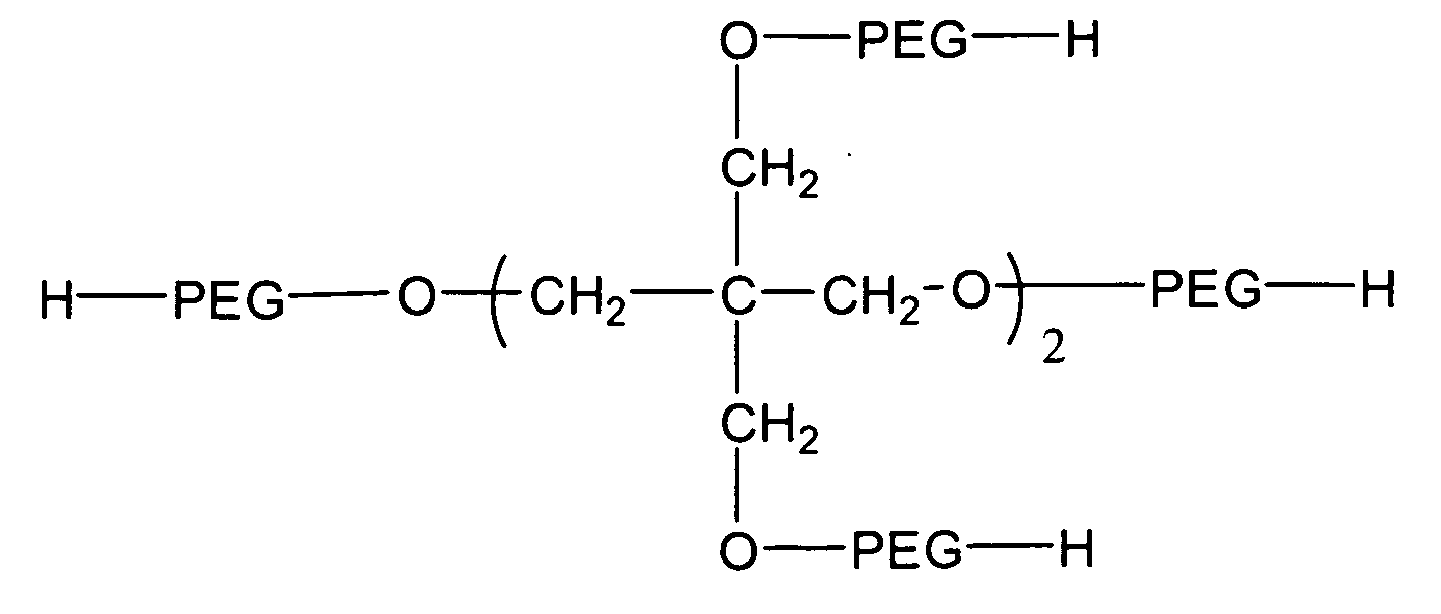
- Put dimeric pentaerythritol (2540 g) and appropriate amount of catalyst into the reactor together. Heat it until 110°C. Vacuum for 2 hours. Introduce 100 kg of ethylene oxide until the reaction is completed. Products are measured by MALDI to determine molecular weight, which is 10000. NMR(DMSO)δ: 3.50 (br, m, hydrogen in PEG), 4.58 (t, 6x1 hydrogen).
-

- Put trimeric pentaerythritol (3720 g) and appropriate amount of catalyst into the reactor together. Heat it until 110°C. Vacuum for 2 hours. Introduce 100 kg of ethylene oxide until the reaction is completed. Products are measured by MALDI to determine molecular weight, which is 10000. NMR(DMSO)δ: 3.50 (br, m, hydrogen in PEG), 4.58 (t, 6x1 hydrogen).
-

- Put 100 grams of eight-arm PEG with the molecular weight of 10,000 (obtained in Example 2) in nitrogen atmosphere for azeotropic distillation with toluene for 2 hours, and then reduce to room temperature. Add 300 ml of dry dichloromethane and 28 ml of triethylamine. Cool the mixture in an ice bath and add dry chloride drop by drop, stir in nitrogen atmosphere at room temperature overnight, and then add 30 ml of ethanol to stop the reaction immediately. Recycle the solvent with rotary evaporator for concentration, filter out the sediment, and then add 500 ml of ether, filter and collect sediment to dry in vacuum .Yield: 95 g (95%).
- Dissolve 50 grams of eight-arm PEG - methyl sulfonyl ester with the molecular weight of 10,000 (obtained in last step) into 3000 ml of ammonia solution with 5% of ammonium chloride. Stir the solution at room temperature for 72 hours, extract it with dichloromethane solution for three times, then combine organic phase and dry with anhydrous sodium sulfate. Distill the solvent in vacuum, add the residue into 500 ml of isopropanol, and collect sediment to dry in vacuum. Yield: 0.7 g (70%). NMR(DMSO) δ: 3.50 (br, m, hydrogen in PEG), 2.61 (t, 8x2 hydrogen).
-

- Put 40 grams of eight-arm PEG with the molecular weight of 10,000 (obtained in Example 2) into a 1000 ml flask, add 500 ml of toluene, and evaporate out 150 ml of toluene through heating in a nitrogen atmosphere. After cooling the solution down till 50°C, add 30 ml of toluene solution with 16g of potassium tert-butylate for isothermal reaction for 2 hours, then reduce to room temperature, add 16 ml of tert-Butyl bromoacetate, stir in nitrogen atmosphere overnight. Evaporated, add into 1 liter of isopropanol for sedimentation; filter the sediment for washing, and then vacuum drying.
- Prepare 2 liters of NaOH solution with pH = 12, and add the above product for hydrolysis overnight. Adjust concentrated hydrochloric acid to pH = 2, add 100g of sodium chloride to dissolve, extract with dichloromethane for 3 times, and combine extracts; then dry with anhydrous sodium sulfate, evaporate the organic phase, add to 1 liter of isopropanol for sedimentation, filter the sediment for washing, and then vacuum drying. Thus eight-arm PEG acetic acid is obtained (IV), yield: 32 g (80%), NMR(DMSO) δ: 3.50 (br, m, hydrogen in PEG), 2.61 (t, 8x2 hydrogen).
-

- Dissolve 10 grams of eight-arm PEG acetic acid (with molecular weight of 10,000, obtained in Example 4) in 100 ml of dichloromethane, add 900 mg of N-hydroxysuccinimide and 2.5 g of dicyclohexyl carbodiimide, stir at room temperature for 6 hours, and distill the solvent in vacuum. Put the residue into 500 ml of isopropanol, filter and collect sediment for drying in vacuum. Yield: 9.6 g (96%). NMR(DMSO) δ: 3.50 (br, m, hydrogen in PEG), 2.81 (s, 8x4 hydrogen), 4.58 (s, 8x2 hydrogen).
-


- Dissolve 5 grams of eight-arm PEG amine with the molecular weight of 10,000 (obtained in Example 3) in acetonitrile, add to the solution 30 mg of maleimide acid-N-succinimide ester, stir the solution at room temperature overnight, and distill the solvent in vacuum; add the residue into 100 ml of isopropanol, then collect the sediment and dry in vacuum. Yield: 4.2 g (84%). NMR(DMSO) δ: 3.50 (br, m, hydrogen in PEG), 2.56 (t, 8x2 hydrogen), 6.71 (s, 8x2 hydrogen in maleimide).
-

- Add 100 grams of eight-arm PEG with the molecular weight of 10,000 (obtained in Example 2) to 1000 ml of toluene, evaporate out 250 ml of toluene through heating in nitrogen atmosphere; after the solution is cooled down to 50°C, add 16 grams of succinate anhydride to reflux for 6 hours, then reduce to room temperature, add 16 grams of tert-Butyl bromoacetate, and stir under the protection of N2 overnight. Evaporated, add to 1 liter of isopropanol for sedimentation, and then filter the sediment, wash and dry in vacuum.
- Further dissolve the above product in 500 ml of methylene chloride, add 10 grams of N-hydroxysuccinimide and 25 grams of dicyclohexyl carbodiimide, and stir at room temperature for 6 hours before vacuum recycling the solvent, then add the residue to 500 ml of isopropanol, filter and collect sediment and dry in vacuum. Yield: 92 g (92%). NMR(DMSO) δ: 3.50 (br, m, hydrogen in PEG), 2.81 (s, 8x4 hydrogen), 4.28 (t, 8x2 hydrogen), 2.58 (t, 8x2 hydrogen), 2.93 (t, 8x2 hydrogen).
- Dissolve 1 gram of eight-arm PEG amine (IIIa) with the molecular weight of 10,000 (obtained in Example 3) in 10ml of phosphate buffer (100 mM, pH 9). Dissolve 1 gram of eight-arm PEG succinate-NHS ester with the molecular weight of 10,000 (VIIa) (obtained in Example 7) in 10ml of phosphate salt buffer (pH 7.4). Then mix these two solutions quickly, put it aside so that biodegradable eight-arm PEG gel will be formed within 1 minute. Put the gel formed into 100 ml of phosphate salt buffer (pH 7.4) and store it at 37°C, the gel will degrade and dissolve within 10 days.
- Dissolve 1 gram of eight-arm PEG amine (IIIa) with the molecular weight of 10,000 (obtained in Example 3) in 10ml of phosphate buffer (100 mM, pH 9). Dissolve 1 gram of eight-arm PEG acetic acid-NHS ester (Va) (obtained in Example 5) in 10ml of phosphate salt buffer (pH 7.4). Then mix these two solutions quickly, put it aside so that eight-arm PEG gel will be formed within 1 minute. Put the gel formed into 100 ml of phosphate salt buffer (pH 7.4) and store it at 37°C, the gel will remain stable within 360 days without degrading or dissolving.
- Dissolve 1 gram of eight-arm PEG acetic acid (IVa) (obtained in Example 4) in 10 ml of dichloromethane, then add 90 mg of docetaxel (purchased from Chengdu Furunde Industrial Co., Ltd.), 8 mg of dimethylamino pyridine and 25 mg of dicyclohexyl carbodiimide. Stir this solution at room temperature for 6 hours before vacuum recycling the solvent, add the residue into 20 ml of isopropanol, filter and collect sediment and then wash with ethyl ether before vacuum drying. Yield: 0.8 g (80%), melting point: 55-57°C.
- Dissolve 1 gram of eight-arm PEG acetic acid (IVa) (obtained in Example 4) in 10 ml of dichloromethane, and then add 0.12 g of glycine-irrinitecan (purchased from Chengdu Furunde Industry Co., Ltd.), 50 mg of dimethylamino pyridine and 95 mg of dicyclohexyl carbodiimide. Stir this solution at room temperature for 6 hours before vacuum recycling the solvent, then add the residue into 20 ml of 1,4-dioxane to dissolve. Filter to remove sediment, evaporate the solution, add the residue into 20 ml of diethyl ether, and filter to collect sediment before washing with diethyl ether and vacuum drying. Yield: 0.8 g (80%), melting point: 56-58°C.
- Dissolve 1 gram of eight-arm PEG acetic acid (IVa) (obtained in Example 4) in 20 ml of dichloromethane, then add 30 mg of scopoletin (purchased from Tianjin Cenway Company), 20 mg of 1-hydroxy benzotriazole, 20 mg of dimethylamino pyridine and 38 mg of dicyclohexyl carbodiimide. Stir this solution at room temperature for 12 hours under nitrogen before vacuum recycling the solvent, add the residue into 20 ml of 1,4-dioxane, filter to collect sediment before washing with diethyl ether and drying. After vacuum recovery of solvent, add the residue into 100 ml of isopropanol, filter to collect sediment before washing with diethyl ether and drying. Combine the sediments for vacuum drying. Yield: 0.92 g (92%), melting point: 56-58°C.
- This Example illustrates the preparation process of typical pharmaceutical composition with non-gastrointestinal delivery, which contains conjugates of the present invention.
-
Conjugate in Example 11 2g 0.9% of saline solution Up to 100ml - Dissolve 2 grams of the conjugation in Example 11 into 0.9% of saline solution to obtain 100 ml of intravenous solution, before filtering with 0.2µm membrane material and packaging under sterile conditions.

Claims (31)
- A multi-arm polyethylene glycol of general formula I

the PEGs are the same or different -(CH2CH2O)m-, the average of m is an integer of 3-250; and l is an integer ≥2. - The multi-arm polyethylene glycol of Claim 1, wherein l is an integer ≥2 and ≤10.
- The multi-arm polyethylene glycol of Claim 1, wherein l is an integer ≥2 and ≤5.
- The multi-arm polyethylene glycol of Claim 1, wherein l is an integer ≥2 and ≤4.
- The multi-arm polyethylene glycol of Claim 1, wherein l is 2 or 3.
- The multi-arm polyethylene glycol of any one of Claims 1 to 5, wherein the molecular weight of the multi-arm polyethylene glycol is 1000-80,000.
- An active derivative of the multi-arm polyethylene glycol of the general formula II,

the PEGs are the same or different -(CH2CH2O)m-, the average of m is an integer of 3-250; l is an integer ≥2;
X is a linking group, selected from a group consisting of the following groups:
-(CH2)i- ; -(CH2)i-NH- ;


F is an active end-group, selected from a group consisting of:
-H;-NH2;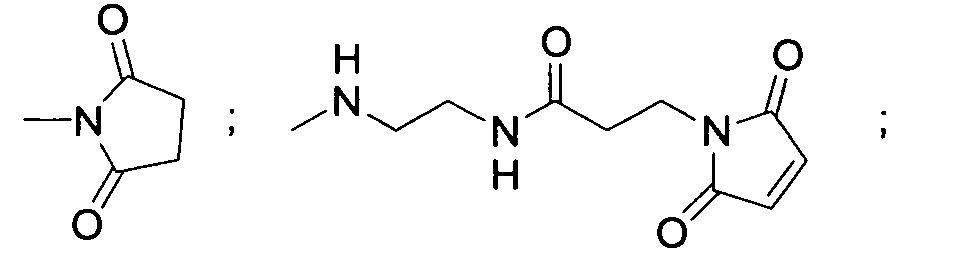

- The active derivative of the multi-arm polyethylene glycol of Claim 7, wherein l is an integer ≥2 and ≤10.
- The active derivative of the multi-arm polyethylene glycol of Claim 7, wherein l is an integer ≥2 and ≤5.
- The active derivative of multi-arm polyethylene glycol of Claim 7, wherein l is an integer ≥2 and ≤4.
- The Multi-arm polyethylene glycol of Claim 7, wherein l is 3.
- The active derivative of the multi-arm polyethylene glycol of any one of Claims 8 to 11, wherein the molecular weight of multi-arm polyethylene glycol is 1000-80,000.
- The active derivative of the multi-arm polyethylene glycol of Claim 7, having a structure of following general formula III:
 the PEGs are the same or different -(CH2CH2O)m-, the average of m is an integer of 3-250; and l is an integer ≥2.
 - The active derivative of the multi-arm polyethylene glycol of Claim 7, having a structure of the following general formula IV:
 the PEGs are the same or different -(CH2CH2O)m-, the average of m is an integer of 3-250; and l is an integer ≥2.
 - The active derivative of the multi-arm polyethylene glycol of Claim 7, having a structure of the following general formula V:
 the PEGs are the same or different -(CH2CH2O)m-, the average of m is an integer of 3-250; and l is an integer ≥2.
 - The active derivative of the multi-arm polyethylene glycol of Claim 7, having a structure of the following general formula VI:


- The active derivative of multi-arm polyethylene glycol of Claim 7, having a structure of the following general formula VII:
 the PEGs are the same or different -(CH2CH2O)m- the average of m is an integer of 3-250; and l is an integer ≥2.
 - The active derivative of the multi-arm polyethylene glycol of any one of Claims 13-17, wherein l is 2 or 3.
- Gel formed from the active derivative of the multi-arm polyethylene glycol of any one of Claims 7 to 18.
- The gel of Claim 19, wherein the gel is degradable in aqueous solution.
- The gel of Claim 20, wherein the gel is formed by mixing a neutral or alkaline aqueous solution of the active derivative of the multi-arm polyethylene glycol of the general formula III with a neutral or alkaline aqueous solution of the active derivative of the multi-arm polyethylene glycol of the general formula VII.
- The gel of Claim 21, wherein the molar ratio of the aqueous solution of the active derivative of the multi-arm polyethylene glycol of the general formula III and the active derivative of multi-arm polyethylene glycol of the general formula VII is 1:0.7-1:1.3.
- The gel of Claim 19, wherein the gel is stable in an aqueous solution.
- The gel of Claim 23, wherein the gel is formed by mixing a neutral or alkaline aqueous solution of the active derivative of the multi-arm polyethylene glycol of the general formula III a neutral or alkaline aqueous solution of the active derivative of the multi-arm polyethylene glycol of the general formula V.
- The gel of Claim 24, wherein the molar ratio of the aqueous solution of active derivative of multi-arm polyethylene glycol of the general formula III and the active derivative of multi-arm polyethylene glycol of the general formula V is 1:0.7-1:1.3.
- A conjugate formed from the active derivative of the multi-arm polyethylene glycol of any one of Claims 7 to 18 and a pharmaceutical molecule through the end group F of the active derivative.
- The conjugation of Claim 26, wherein the pharmaceutical molecule is selected from a group consisting of the following pharmaceutical molecules: amino acids, proteins, enzymes, nucleosides, saccharides, organic acids, flavonoids, quinones, terpenoids, benzene phenols, steroids, glycosides, alkaloids and the combination thereof.
- The conjugate of Claim 27, wherein the pharmaceutical molecule is Irrinitecan.
- The conjugate of Claim 27, wherein the pharmaceutical molecule is docetaxel.
- Use of the conjugate of any one of Claims 27-29 in the manufacture of medications.
- A method for preparing the multi-arm polyethylene glycol of any one of Claims 1-6, characterized in that said method includes steps of ethylene oxide polymerization with oligomeric pentaerythritol as an initiator.
Applications Claiming Priority (2)
| Application Number | Priority Date | Filing Date | Title |
|---|---|---|---|
| CN200810225650A CN101724144A (en) | 2008-11-03 | 2008-11-03 | Novel multi-arm polyethylene glycol, preparation method and application thereof |
| PCT/CN2009/001088 WO2010060260A1 (en) | 2008-11-03 | 2009-09-28 | Novel multi-arm polyethylene glycol, preparation method and uses thereof |
Publications (2)
| Publication Number | Publication Date |
|---|---|
| EP2360203A1 true EP2360203A1 (en) | 2011-08-24 |
| EP2360203A4 EP2360203A4 (en) | 2012-07-25 |
Family
ID=42225201
Family Applications (1)
| Application Number | Title | Priority Date | Filing Date |
|---|---|---|---|
| EP09828521A Withdrawn EP2360203A4 (en) | 2008-11-03 | 2009-09-28 | Novel multi-arm polyethylene glycol, preparation method and uses thereof |
Country Status (4)
| Country | Link |
|---|---|
| US (1) | US11208530B2 (en) |
| EP (1) | EP2360203A4 (en) |
| CN (1) | CN101724144A (en) |
| WO (1) | WO2010060260A1 (en) |
Cited By (6)
| Publication number | Priority date | Publication date | Assignee | Title |
|---|---|---|---|---|
| WO2013147015A1 (en) | 2012-03-30 | 2013-10-03 | 日油株式会社 | Multi-arm polyethylene glycol derivative, intermediate of same, and production method of same |
| EP3315531A4 (en) * | 2015-06-23 | 2018-06-20 | Xiamen Sinopeg Biotech Co., Ltd. | 8-arm polyethylene glycol derivative, manufacturing method and modified bio-related substance thereby |
| WO2019007754A1 (en) * | 2017-07-07 | 2019-01-10 | Basf Se | Alkoxylated esteramines and salts thereof |
| WO2019066658A1 (en) * | 2017-09-29 | 2019-04-04 | Polyganics Ip B.V. | Improved tissue-adhesive polymers |
| CN110997891A (en) * | 2017-07-07 | 2020-04-10 | 宝洁公司 | Cleaning compositions comprising alkoxylated esteramines |
| US11324827B2 (en) | 2014-10-01 | 2022-05-10 | Xiamen Sinopeg Biotech Co., Ltd. | Multifunctionalized polyethylene glycol derivative and preparation method therefor |
Families Citing this family (48)
| Publication number | Priority date | Publication date | Assignee | Title |
|---|---|---|---|---|
| CN102329335B (en) * | 2010-07-13 | 2014-01-22 | 哈尔滨工业大学 | Pentaerythritol-based composite lipid and preparation method and application thereof |
| CA2782899C (en) | 2009-12-15 | 2019-06-11 | Incept, Llc | Implants and biodegradable fiducial markers |
| CN102108119A (en) | 2009-12-25 | 2011-06-29 | 天津键凯科技有限公司 | Multi-arm polyethylene glycol derivatives and their conjugates and gels with drugs |
| EP2598171A2 (en) * | 2010-07-28 | 2013-06-05 | Smartcells, Inc. | Drug-ligand conjugates, synthesis thereof, and intermediates thereto |
| CN101934089B (en) * | 2010-09-01 | 2013-05-01 | 北京大学人民医院 | Application of in-situ crosslinking hydrogel capable of intraocular injection in preparing artificial vitreous bodies |
| CN102367291B (en) * | 2011-04-26 | 2014-01-15 | 厦门赛诺邦格生物科技有限公司 | Mono-functional group-containing multilevel branched polyethylene glycol and synthesis method thereof |
| CN102382290A (en) * | 2011-11-02 | 2012-03-21 | 浙江合诚化学有限公司 | Method for synthesizing triallyl polyether |
| CN103044675B (en) * | 2013-01-17 | 2015-09-09 | 厦门赛诺邦格生物科技有限公司 | A kind of single functionalized branched polyethylene glycol |
| US9700633B2 (en) | 2013-01-28 | 2017-07-11 | Jenkem Technology Co., Ltd., Tianjin Branch | Conjugates of water soluble polymer-amino acid oligopeptide-drug, preparation method and use thereof |
| CN104225611B (en) * | 2013-06-18 | 2017-06-30 | 天津键凯科技有限公司 | The conjugate of Dasatinib and non-linear configurations polyethylene glycol |
| CR20160132A (en) | 2013-08-12 | 2016-08-25 | Genentech Inc | COMPOSITIONS AND METHOD TO TREAT CONDITIONS ASSOCIATED WITH THE COMPLEMENT |
| CN104371098B (en) * | 2013-08-14 | 2016-12-28 | 北京键凯科技有限公司 | Multiple-limb hydrophilic polymer isocyanate derivates |
| CN103626990A (en) * | 2013-11-27 | 2014-03-12 | 浙江皇马科技股份有限公司 | Method for synthesizing trimethyl allyl polyoxypropylene ether |
| EP3078699B1 (en) * | 2013-12-02 | 2019-08-21 | Jenkem Technology Co. Ltd. (Tianjin) | Multi-arm polyethylene glycol-nitrine derivative |
| WO2015081832A1 (en) * | 2013-12-02 | 2015-06-11 | 北京键凯科技有限公司 | Alkynyl multi-arm polyethylene glycol derivative |
| KR20160147855A (en) | 2014-05-01 | 2016-12-23 | 제넨테크, 인크. | Anti-factor d antibody variants and uses thereof |
| WO2016050209A1 (en) * | 2014-10-01 | 2016-04-07 | 厦门赛诺邦格生物科技有限公司 | Heterofunctionalized polyethylene glycol derivative, preparation method, and bio-related substance |
| CN105561404B (en) * | 2015-01-07 | 2019-07-26 | 北京赛奇科科技有限公司 | A kind of medical material and preparation method thereof to prevent adhesion for gynemetrics |
| EP3368074A2 (en) | 2015-10-30 | 2018-09-05 | Hoffmann-La Roche AG | Anti-factor d antibodies and conjugates |
| HK1257422A1 (en) | 2015-10-30 | 2019-10-18 | 豪夫迈‧罗氏有限公司 | Anti-factor d antibody variant conjugates and uses thereof |
| CN107019803B (en) * | 2016-01-29 | 2020-09-15 | 北京键凯科技股份有限公司 | Pegylated opioids with low addictive effect |
| CN107200838A (en) * | 2016-03-18 | 2017-09-26 | 北京键凯科技股份有限公司 | A kind of multi-arm polyethylene glycol and its reactive derivative |
| CN107303393B (en) * | 2016-04-19 | 2018-11-20 | 石家庄蒎格医药科技有限公司 | The preparation and application of Propofol polyethylene glycol conjugation prodrug |
| CN108525016B (en) * | 2017-03-01 | 2020-09-22 | 中国科学院化学研究所 | PEG hydrogel based on rapidly degradable chemical bond and its preparation method and application |
| CN108653746B (en) * | 2017-03-29 | 2021-04-27 | 北京键凯科技股份有限公司 | Multi-drug-loading-point high-drug-loading-rate ligand drug conjugate |
| EP3604480B1 (en) * | 2017-03-31 | 2022-01-26 | Jenkem Technology Co., Ltd. (Beijing) | Composition of polyethylene glycol maleimide derivative and polymerization inhibitor |
| CN108659498A (en) * | 2017-03-31 | 2018-10-16 | 北京键凯科技股份有限公司 | A kind of composition of polyethylene glycol maleimide derivatives and polymerization inhibitor |
| US11844842B2 (en) | 2017-03-31 | 2023-12-19 | Jenkem Technology Co., Ltd. (Beijing) | Composition of polyethylene glycol maleimide derivative and polymerization inhibitor |
| CN107137715B (en) * | 2017-04-26 | 2019-02-19 | 石家庄蒎格医药科技有限公司 | A kind of paliperidone polyethylene glycol conjugated prodrug and preparation |
| WO2019001472A1 (en) * | 2017-06-28 | 2019-01-03 | 北京键凯科技股份有限公司 | Branched polyglycol epoxy derivative cross-linked sodium hyaluronate gel, preparation therefor, and application thereof |
| CN109096483B (en) * | 2017-06-28 | 2020-09-04 | 北京键凯科技股份有限公司 | Branched polyglyol epoxy derivative cross-linked sodium hyaluronate gel and preparation and application thereof |
| CN108623451B (en) | 2017-06-30 | 2022-09-02 | 北京键凯科技股份有限公司 | Multi-arm single molecular weight polyethylene glycol and active derivative thereof, and preparation and application thereof |
| JP6830165B2 (en) * | 2017-12-27 | 2021-02-17 | 三洋化成工業株式会社 | Raw materials or additives for drug substances and drug substances or drugs using these |
| WO2019192488A1 (en) * | 2018-04-02 | 2019-10-10 | 北京键凯科技有限公司 | Cell-penetrating peptide-multiarm polyethylene glycol-drug conjugate having targeting property and application thereof |
| CN110643034B (en) * | 2018-06-26 | 2022-05-06 | 湖南华腾医药有限公司 | Multi-arm PEG (polyethylene glycol) oritavancin derivative and preparation thereof |
| CN109762181B (en) * | 2019-01-16 | 2020-12-08 | 湖南华腾制药有限公司 | Modified Ebefu, hydrogel, preparation method and plastic and cosmetic material |
| CN111346234B (en) * | 2020-03-23 | 2023-03-31 | 沈阳药科大学 | Deferoxamine-eight-arm star-shaped polyethylene glycol conjugate and application thereof |
| PE20230414A1 (en) | 2020-03-24 | 2023-03-07 | Genentech Inc | TIE2 FIXING AGENTS AND METHODS OF USE |
| US12161777B2 (en) | 2020-07-02 | 2024-12-10 | Davol Inc. | Flowable hemostatic suspension |
| US11739166B2 (en) | 2020-07-02 | 2023-08-29 | Davol Inc. | Reactive polysaccharide-based hemostatic agent |
| CN116744984A (en) | 2020-12-28 | 2023-09-12 | 达沃有限公司 | Reactive dry powdered hemostatic material containing protein and polyfunctionalized modified polyethylene glycol-based cross-linker |
| CN116410486A (en) * | 2022-03-04 | 2023-07-11 | 西安交通大学 | A cross-linked material based on amino-modified gelatin and its preparation method, and amino-gelatin sponge and its preparation method |
| CN114854053B (en) * | 2022-07-11 | 2022-09-09 | 北京大学第三医院(北京大学第三临床医学院) | Polyethylene glycol-chitosan double-network hydrogel and preparation method and application thereof |
| CN115160799B (en) * | 2022-08-08 | 2023-08-04 | 邱赟竹 | Edible protein film and preparation method thereof |
| CN118239863B (en) * | 2022-12-23 | 2026-04-10 | 菲鹏生物股份有限公司 | Amphoteric multi-arm polyethylene glycol derivative and application thereof |
| CN116041739B (en) * | 2023-02-07 | 2025-01-07 | 盘锦凯正医药科技有限公司 | A multi-arm polyethylene glycol gel and preparation method thereof |
| KR20260043131A (en) * | 2023-07-26 | 2026-03-31 | 토모이케 바이오 리미티드 | A branched multi-hydroxyl group protected oligomer, a linker formed by combining the same, and a branched multi-hydroxyl group oligomer formed by deprotecting the linker |
| CN117547641A (en) * | 2023-11-15 | 2024-02-13 | 深圳聚环科技有限公司 | A kind of tissue viscous absorbable material and its preparation method and application |
Family Cites Families (12)
| Publication number | Priority date | Publication date | Assignee | Title |
|---|---|---|---|---|
| US2441597A (en) * | 1943-04-24 | 1948-05-18 | Heyden Chemical Corp | Manufacture of polypentaerythritols |
| DE2620010A1 (en) * | 1976-05-06 | 1977-12-01 | Basf Ag | MIXTURES OF PENTAERYTHRITE CARBAMATES WITH POLYALKYLENE GLYCOL ETHER CARBAMATES AND WITH ALKYLALKYLENE GLYCOL CARBAMATES AND METHOD FOR THEIR PRODUCTION |
| AU8943991A (en) * | 1990-11-08 | 1992-06-11 | Henkel Corporation | Polymeric thickeners for aqueous compositions |
| TWI246524B (en) * | 2001-01-19 | 2006-01-01 | Shearwater Corp | Multi-arm block copolymers as drug delivery vehicles |
| SE523934C2 (en) * | 2001-09-24 | 2004-06-01 | Perstorp Specialty Chem Ab | Process for alkoxylation of di-, tri- and polyalcohols |
| KR20040040782A (en) * | 2002-11-08 | 2004-05-13 | 선바이오(주) | Novel hexa-arm polyethylene glycol and its derivatives and the methods of preparation thereof |
| CN100475837C (en) * | 2004-06-11 | 2009-04-08 | 北京键凯科技有限公司 | Branched polyglycol-amino acid oligopeptide and active derivative and medicinal composition thereof |
| US8568705B2 (en) * | 2005-07-18 | 2013-10-29 | Nektar Therapeutics | Method for preparing branched functionalized polymers using branched polyol cores |
| US7947758B2 (en) * | 2006-08-09 | 2011-05-24 | Ethicon, Inc. | Moisture activated latent curing adhesive or sealant |
| CN101541857B (en) * | 2006-11-27 | 2012-12-12 | 阿克塔马克斯手术器材有限责任公司 | Multi-functional polyalkylene oxide, hydrogel tissue adhesives |
| CN1995094A (en) * | 2006-12-21 | 2007-07-11 | 复旦大学 | Multiple-arm polyethylene glycol with functional group at long chain end, its preparation method and uses |
| US8299291B2 (en) | 2008-08-07 | 2012-10-30 | Xenoport, Inc. | Methods of synthesizing 1-(acyloxy)-alkyl carbamate prodrugs |
-
2008
- 2008-11-03 CN CN200810225650A patent/CN101724144A/en active Pending
-
2009
- 2009-09-28 WO PCT/CN2009/001088 patent/WO2010060260A1/en not_active Ceased
- 2009-09-28 US US13/127,349 patent/US11208530B2/en active Active
- 2009-09-28 EP EP09828521A patent/EP2360203A4/en not_active Withdrawn
Cited By (16)
| Publication number | Priority date | Publication date | Assignee | Title |
|---|---|---|---|---|
| US20150073155A1 (en) * | 2012-03-30 | 2015-03-12 | Nof Corporation | Multi-arm polyethylene glycol derivative, intermediate thereof, and method for producing same |
| US9428609B2 (en) | 2012-03-30 | 2016-08-30 | Nof Corporation | Multi-arm polyethylene glycol derivative, intermediate thereof, and method for producing same |
| US9908971B2 (en) | 2012-03-30 | 2018-03-06 | Nof Corporation | Multi-arm polyethylene glycol derivative, intermediate thereof, and method for producing same |
| WO2013147015A1 (en) | 2012-03-30 | 2013-10-03 | 日油株式会社 | Multi-arm polyethylene glycol derivative, intermediate of same, and production method of same |
| US11324827B2 (en) | 2014-10-01 | 2022-05-10 | Xiamen Sinopeg Biotech Co., Ltd. | Multifunctionalized polyethylene glycol derivative and preparation method therefor |
| EP3315531A4 (en) * | 2015-06-23 | 2018-06-20 | Xiamen Sinopeg Biotech Co., Ltd. | 8-arm polyethylene glycol derivative, manufacturing method and modified bio-related substance thereby |
| US10434182B2 (en) | 2015-06-23 | 2019-10-08 | Xiamen Sinopeg Biotech Co., Ltd. | Eight-arm polyethylene glycol derivative, production method therefor, and modified bio-related substance thereof |
| US10660969B2 (en) | 2015-06-23 | 2020-05-26 | Xiamen Sinopeg Biotech Co., Ltd. | Eight-arm polyethylene glycol derivative, production method therefor, and modified bio-related substance thereof |
| CN110997891A (en) * | 2017-07-07 | 2020-04-10 | 宝洁公司 | Cleaning compositions comprising alkoxylated esteramines |
| CN110997891B (en) * | 2017-07-07 | 2021-05-07 | 宝洁公司 | Cleaning compositions comprising alkoxylated esteramines |
| WO2019007754A1 (en) * | 2017-07-07 | 2019-01-10 | Basf Se | Alkoxylated esteramines and salts thereof |
| US11673854B2 (en) | 2017-07-07 | 2023-06-13 | Basf Se | Alkoxylated esteramines and salts thereof |
| US11981619B2 (en) | 2017-07-07 | 2024-05-14 | Basf Se | Alkoxylated esteramines and salts thereof |
| WO2019066658A1 (en) * | 2017-09-29 | 2019-04-04 | Polyganics Ip B.V. | Improved tissue-adhesive polymers |
| NL2019650B1 (en) * | 2017-09-29 | 2019-04-08 | Polyganics Ip B V | Improved tissue-adhesive polymers |
| US11801325B2 (en) | 2017-09-29 | 2023-10-31 | Polyganics Ip B.V. | Tissue-adhesive polymers |
Also Published As
| Publication number | Publication date |
|---|---|
| US11208530B2 (en) | 2021-12-28 |
| CN101724144A (en) | 2010-06-09 |
| US20110286956A1 (en) | 2011-11-24 |
| EP2360203A4 (en) | 2012-07-25 |
| WO2010060260A1 (en) | 2010-06-03 |
Similar Documents
| Publication | Publication Date | Title |
|---|---|---|
| US11208530B2 (en) | Multi-arm polyethylene glycol, preparation method and uses thereof | |
| EP1496076B1 (en) | Hydrophilic polymer derivate with y type branch and preparation method of it medical composite comprising above compound | |
| CN103755949B (en) | Multi-arm polyethylene glycol derivative and with the binding substances of medicine and gel | |
| EP1489125B1 (en) | Compound of hydrophilic polymer-polycarboxyl oligopeptide and medicines, medical composite comprising above compound and use of above compound in medicines | |
| US5880131A (en) | High molecular weight polymer-based prodrugs | |
| JP5655147B2 (en) | Therapeutic peptide-polymer conjugates, particles, compositions and related methods | |
| JP6790133B2 (en) | Multi-arm polyethylene glycol and its active derivatives | |
| JPWO1996032434A1 (en) | Polyethylene oxide having a sugar at one end and a different functional group at the other end and its manufacturing method | |
| EP3284474B1 (en) | Polyion complex of poly(l-arginine) segment-containing block copolymer and polyanionic polymer | |
| CN104292454A (en) | Polyethylene glycol-cyclooctyne derivative | |
| KR20090083334A (en) | Polyalkylene oxides with hindered ester based biodegradable linkers | |
| TW200922623A (en) | Polymeric drug delivery systems containing an aromatic allylic acid | |
| JP6147664B2 (en) | Compositions comprising polymers prepared from 2-hydroxyalkyl acids | |
| BRPI0913281A2 (en) | Method of preparing high purity polyethylene glycol aldehyde derivatives | |
| CN101569747B (en) | Preparation method of taxol prodrug using polyethylene glycol as carrier | |
| US7708978B2 (en) | Targeted hydrophilic polymer, binders with interferon and medical composite comprising above binders | |
| CN103396556B (en) | Based on amphipathic nature block polymer and the synthetic method thereof of chitosan | |
| CN121731240A (en) | Lamivudine prodrug long-acting PLGA microsphere and preparation method thereof | |
| HK1209631B (en) | Modified macromolecule |
Legal Events
| Date | Code | Title | Description |
|---|---|---|---|
| PUAI | Public reference made under article 153(3) epc to a published international application that has entered the european phase |
Free format text: ORIGINAL CODE: 0009012 |
|
| 17P | Request for examination filed |
Effective date: 20110606 |
|
| AK | Designated contracting states |
Kind code of ref document: A1 Designated state(s): AT BE BG CH CY CZ DE DK EE ES FI FR GB GR HR HU IE IS IT LI LT LU LV MC MK MT NL NO PL PT RO SE SI SK SM TR |
|
| DAX | Request for extension of the european patent (deleted) | ||
| A4 | Supplementary search report drawn up and despatched |
Effective date: 20120626 |
|
| RIC1 | Information provided on ipc code assigned before grant |
Ipc: C08G 65/48 20060101ALI20120620BHEP Ipc: A61K 47/48 20060101ALI20120620BHEP Ipc: C08G 65/08 20060101AFI20120620BHEP Ipc: C08G 65/00 20060101ALI20120620BHEP |
|
| STAA | Information on the status of an ep patent application or granted ep patent |
Free format text: STATUS: THE APPLICATION IS DEEMED TO BE WITHDRAWN |
|
| 18D | Application deemed to be withdrawn |
Effective date: 20150401 |