EP2359881A1 - Medication administering device - Google Patents
Medication administering device Download PDFInfo
- Publication number
- EP2359881A1 EP2359881A1 EP09833109A EP09833109A EP2359881A1 EP 2359881 A1 EP2359881 A1 EP 2359881A1 EP 09833109 A EP09833109 A EP 09833109A EP 09833109 A EP09833109 A EP 09833109A EP 2359881 A1 EP2359881 A1 EP 2359881A1
- Authority
- EP
- European Patent Office
- Prior art keywords
- formulation
- drug administration
- syringe
- color
- administration apparatus
- Prior art date
- Legal status (The legal status is an assumption and is not a legal conclusion. Google has not performed a legal analysis and makes no representation as to the accuracy of the status listed.)
- Granted
Links
Images







Classifications
-
- A—HUMAN NECESSITIES
- A61—MEDICAL OR VETERINARY SCIENCE; HYGIENE
- A61M—DEVICES FOR INTRODUCING MEDIA INTO, OR ONTO, THE BODY; DEVICES FOR TRANSDUCING BODY MEDIA OR FOR TAKING MEDIA FROM THE BODY; DEVICES FOR PRODUCING OR ENDING SLEEP OR STUPOR
- A61M5/00—Devices for bringing media into the body in a subcutaneous, intra-vascular or intramuscular way; Accessories therefor, e.g. filling or cleaning devices, arm-rests
- A61M5/14—Infusion devices, e.g. infusing by gravity; Blood infusion; Accessories therefor
- A61M5/142—Pressure infusion, e.g. using pumps
- A61M5/145—Pressure infusion, e.g. using pumps using pressurised reservoirs, e.g. pressurised by means of pistons
- A61M5/1452—Pressure infusion, e.g. using pumps using pressurised reservoirs, e.g. pressurised by means of pistons pressurised by means of pistons
- A61M5/14546—Front-loading type injectors
-
- G—PHYSICS
- G16—INFORMATION AND COMMUNICATION TECHNOLOGY [ICT] SPECIALLY ADAPTED FOR SPECIFIC APPLICATION FIELDS
- G16H—HEALTHCARE INFORMATICS, i.e. INFORMATION AND COMMUNICATION TECHNOLOGY [ICT] SPECIALLY ADAPTED FOR THE HANDLING OR PROCESSING OF MEDICAL OR HEALTHCARE DATA
- G16H20/00—ICT specially adapted for therapies or health-improving plans, e.g. for handling prescriptions, for steering therapy or for monitoring patient compliance
- G16H20/10—ICT specially adapted for therapies or health-improving plans, e.g. for handling prescriptions, for steering therapy or for monitoring patient compliance relating to drugs or medications, e.g. for ensuring correct administration to patients
- G16H20/17—ICT specially adapted for therapies or health-improving plans, e.g. for handling prescriptions, for steering therapy or for monitoring patient compliance relating to drugs or medications, e.g. for ensuring correct administration to patients delivered via infusion or injection
-
- A—HUMAN NECESSITIES
- A61—MEDICAL OR VETERINARY SCIENCE; HYGIENE
- A61M—DEVICES FOR INTRODUCING MEDIA INTO, OR ONTO, THE BODY; DEVICES FOR TRANSDUCING BODY MEDIA OR FOR TAKING MEDIA FROM THE BODY; DEVICES FOR PRODUCING OR ENDING SLEEP OR STUPOR
- A61M5/00—Devices for bringing media into the body in a subcutaneous, intra-vascular or intramuscular way; Accessories therefor, e.g. filling or cleaning devices, arm-rests
- A61M5/14—Infusion devices, e.g. infusing by gravity; Blood infusion; Accessories therefor
- A61M5/142—Pressure infusion, e.g. using pumps
- A61M5/145—Pressure infusion, e.g. using pumps using pressurised reservoirs, e.g. pressurised by means of pistons
- A61M5/1452—Pressure infusion, e.g. using pumps using pressurised reservoirs, e.g. pressurised by means of pistons pressurised by means of pistons
- A61M5/14546—Front-loading type injectors
- A61M2005/14553—Front-loading type injectors comprising a pressure jacket
-
- A—HUMAN NECESSITIES
- A61—MEDICAL OR VETERINARY SCIENCE; HYGIENE
- A61M—DEVICES FOR INTRODUCING MEDIA INTO, OR ONTO, THE BODY; DEVICES FOR TRANSDUCING BODY MEDIA OR FOR TAKING MEDIA FROM THE BODY; DEVICES FOR PRODUCING OR ENDING SLEEP OR STUPOR
- A61M2205/00—General characteristics of the apparatus
- A61M2205/50—General characteristics of the apparatus with microprocessors or computers
-
- A—HUMAN NECESSITIES
- A61—MEDICAL OR VETERINARY SCIENCE; HYGIENE
- A61M—DEVICES FOR INTRODUCING MEDIA INTO, OR ONTO, THE BODY; DEVICES FOR TRANSDUCING BODY MEDIA OR FOR TAKING MEDIA FROM THE BODY; DEVICES FOR PRODUCING OR ENDING SLEEP OR STUPOR
- A61M2205/00—General characteristics of the apparatus
- A61M2205/58—Means for facilitating use, e.g. by people with impaired vision
- A61M2205/581—Means for facilitating use, e.g. by people with impaired vision by audible feedback
-
- A—HUMAN NECESSITIES
- A61—MEDICAL OR VETERINARY SCIENCE; HYGIENE
- A61M—DEVICES FOR INTRODUCING MEDIA INTO, OR ONTO, THE BODY; DEVICES FOR TRANSDUCING BODY MEDIA OR FOR TAKING MEDIA FROM THE BODY; DEVICES FOR PRODUCING OR ENDING SLEEP OR STUPOR
- A61M2205/00—General characteristics of the apparatus
- A61M2205/58—Means for facilitating use, e.g. by people with impaired vision
- A61M2205/582—Means for facilitating use, e.g. by people with impaired vision by tactile feedback
-
- A—HUMAN NECESSITIES
- A61—MEDICAL OR VETERINARY SCIENCE; HYGIENE
- A61M—DEVICES FOR INTRODUCING MEDIA INTO, OR ONTO, THE BODY; DEVICES FOR TRANSDUCING BODY MEDIA OR FOR TAKING MEDIA FROM THE BODY; DEVICES FOR PRODUCING OR ENDING SLEEP OR STUPOR
- A61M2205/00—General characteristics of the apparatus
- A61M2205/58—Means for facilitating use, e.g. by people with impaired vision
- A61M2205/583—Means for facilitating use, e.g. by people with impaired vision by visual feedback
-
- A—HUMAN NECESSITIES
- A61—MEDICAL OR VETERINARY SCIENCE; HYGIENE
- A61M—DEVICES FOR INTRODUCING MEDIA INTO, OR ONTO, THE BODY; DEVICES FOR TRANSDUCING BODY MEDIA OR FOR TAKING MEDIA FROM THE BODY; DEVICES FOR PRODUCING OR ENDING SLEEP OR STUPOR
- A61M2205/00—General characteristics of the apparatus
- A61M2205/58—Means for facilitating use, e.g. by people with impaired vision
- A61M2205/583—Means for facilitating use, e.g. by people with impaired vision by visual feedback
- A61M2205/584—Means for facilitating use, e.g. by people with impaired vision by visual feedback having a color code
-
- A—HUMAN NECESSITIES
- A61—MEDICAL OR VETERINARY SCIENCE; HYGIENE
- A61M—DEVICES FOR INTRODUCING MEDIA INTO, OR ONTO, THE BODY; DEVICES FOR TRANSDUCING BODY MEDIA OR FOR TAKING MEDIA FROM THE BODY; DEVICES FOR PRODUCING OR ENDING SLEEP OR STUPOR
- A61M2205/00—General characteristics of the apparatus
- A61M2205/60—General characteristics of the apparatus with identification means
- A61M2205/6063—Optical identification systems
- A61M2205/6081—Colour codes
Definitions
- the present invention relates to a drug administration apparatus that has a formulation syringe containing formulation mounted inside and can administer drug to a living body and so forth, and more particularly, relates to a drug administration apparatus that automatically identifies the mounted formulation.
- a drug administration apparatus administers drug solution from a formulation syringe to a test subject by moving a piston member relative to a cylinder member by means of an injecting mechanism, in response to predetermined operation.
- a drug injection system including a drug administration apparatus has come into practical use, in which a barcode reader provided in the drug administration apparatus reads the barcode printed on a formulation packing material, or the barcode affixed to a formulation syringe, and the result is displayed on a display section, so that the operator can easily and reliably check the formulation (e.g. Patent Literature I).
- FIGs.1A and B each show a configuration of a conventional drug administration apparatus
- FIG.2 shows a display example of the barcode label on the conventional drug administration apparatus.
- a drug injection system has drug solution injecting device 100 and drug solution syringe 200.
- Drug solution injecting device 100 is provided with touch panel 105, barcode reader 108 and injection head 110.
- Two concave parts 112, as a syringe holding mechanism, are formed in injection head 110, and cylinder members 201 in respective drug solution syringes 200 are removably held in these concave parts 112 separately.
- Drug solution syringe 200 is composed of cylinder member 201 and piston member 202, and piston member 202 is slidably inserted in cylinder member 201.
- Cylinder member 201 is filled with drug solution and capped with sealing cap 203, and then sealed with packing material 204 wholly.
- Identification data 205 on drug solution is recoded on at least one of the packing material, cylinder member and piston member in drug solution syringe 200, and the drug administration apparatus stores drug solution data per identification data 205.
- barcode reader 108 retrieves read drug solution data, and display section 108 displays it, and therefore, the operator can easily and reliably check various data about drug solution to be injected into the test subject.
- this conventional formulation injection system identifies formulation by barcode, and therefore has a problem that it is difficult for the user to identify formulation only by looking at a formulation syringe.
- the drug administration apparatus that has a formulation syringe containing formulation mounted inside and administers drug to a living body adopts a configuration to include: an identification section that identifies formulation loaded in the formulation syringe, or the formulation syringe containing the formulation; and a reporting section that reports a result of identification by the identification section.
- FIG.3 is an overall perspective view showing a drug administration apparatus according to Embodiment 1 of the present invention.
- drug administration apparatus 1 is configured to include housing 2, tip cap 3, check window 4, syringe cover 5, detecting protrusion 5b (see FIG.4 ), power supply button 6, air-bleeding button 7, completion button 8, drug administration button 9 and LCD (liquid crystal display) 10, which is a display means.
- Drug administration apparatus 1 is covered with housing 2, which is the exterior of the apparatus body.
- Tip cap 3 is removably mounted to one end of housing 2 and, if necessary, is mounted or removed when formulation syringe 11 is mounted or removed, and an injection needle for injecting drug solution is mounted or removed.
- Tip cap 3 has check window 4 for checking the inside, and therefore, it is possible to visually check the presence or absence and the type of formulation syringe 11 (see FIG.4 ), the amount of formulation and so forth through syringe cover 5 made of a transparent member.
- tip cap 3 serves to cover an injection needle for drug administration in order not to expose the injection needle, and, at the time of drug administration, skin is made contact tip cap 3 and punctured with an injection needle for drug administration from a top opening part in tip cap 3 to administer drug.
- Tip cap 3 secures safety in operation by covering a member having a sharply pointed tip such as an injection needle.
- Check window 24 is a window for checking the inside, which visually checks the presence or absence and the type of formulation syringe 11 (see FIG.4 ), and the amount of formulation and so forth through syringe cover 5 made of a transparent member.
- Check window 4 may be made of, for example, a transparent or semi-transparent member, or may be an opening physically clipped off as long as check window 4 allows the inside to be visually checked.
- Power supply button 6 turns on and off the power supply of drug administration apparatus 1. By this means, drug administration apparatus 1 is activated.
- Air-bleeding button 7 is used when air in formulation syringe 11 (see FIG.4 ) is bled. In case formulation syringe 11 or an injection needle (hollow needle whose inside is hollow) for drug administration contains air, this air-bleeding button 7 removes the inside air from formulation syringe 11 and so forth.
- Completion button 8 allows the step to move the next step after air-bleeding operation, or when necessary operation, including checking various displays and so forth, is completed.
- drug administration button 9 is pushed at the time of drug administration.
- LCD 10 displays various necessary information including a battery level, air-bleeding operation and so forth.
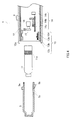
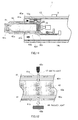
- FIGs.4 and 5 are cross sectional views showing states before and after formulation syringe 11 is mounted in drug administration apparatus 1.
- FIG.4 is a cross sectional view showing the internal state before formulation syringe 11 is mounted in syringe holder 50, which is a mounting section in the drug administration apparatus 1 side.
- FIG.5 is a cross sectional view showing the internal state after formulation syringe 11 is mounted in syringe holder 50.
- Syringe holder 50 is a mounting section that mounts formulation syringe 11 in drug administration apparatus 1 body, and includes piston case 12, attaching and removing groove 12a, piston 15 and so forth. Syringe holder 50 restricts formulation syringe 11 from inserting in syringe holder 50 in the direction of the central axis of formulation syringe 11 and holds it by making the bottom of formulation syringe 11 contact piston 15, and restricts formulation syringe 11 from shifting in the direction of the outer surface of formulation syringe 11 and holds it by fitting formulation syringe 11 into piston case 12 and attaching and removing groove 12a.
- syringe cover 5 In a state before syringe cover 5 is mounted as shown in FIG.4 , syringe cover 5 is removed from drug administration apparatus 1, and, after formulation syringe 11 is inserted in drug administration apparatus 1, syringe cover 5 is mounted, and then fitted into piston case 12 placed in housing 2. As shown in FIG.4 , syringe cover 5 has attaching and removing protrusion 5a, detecting protrusion 5b and opening 5c.
- attaching and removing protrusion 5a is fitted into attaching and removing groove 12a formed in the inner surface of piston case 12 provided in housing 2.
- Detecting protrusion 5b is provided to push one end of syringe cover detecting lever 14a formed in housing 2.
- Formulation syringe 11 has label 11a used for color detection.
- Piston case 12 is a member having an approximately cylindrical shape and provided along the inner surface of housing 2.
- Drug administration button 9 is provided in the outer surface side of piston case 12, and detecting section 13, which is an identification means, syringe cover detecting section 14, piston 15 and piston driving motor 16 are provided in piston case 12.
- Drug administration button 9 is provided on the side surface of drug administration apparatus 1 and pressed at the time of drug administration.
- Piston 15 moves forward and pushes formulation toward the direction of drug administration (the left in FIG.5 ).
- Syringe cover detecting section 14 has syringe cover detecting lever 14a, syringe cover detecting lever spring 14b and syringe cover detecting switch 14c.
- syringe cover detecting lever 14a When syringe cover 5 is inserted in piston case 12, syringe cover detecting lever 14a is pushed by detecting protrusion 5b provided on syringe cover 5 and moves against the spring force of syringe cover detecting lever spring 14b to press syringe cover detecting switch 14c.
- syringe cover detecting lever 14a is pushed by detecting protrusion 5b provided on syringe cover 5 and moves against the spring force of syringe cover detecting lever spring 14b to press syringe cover detecting switch 14c.
- Piston driving motor 16 moves piston 15 forward and backward (expands and contracts piston 15) in the direction of drug administration by rotating in a desired direction.
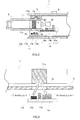
- FIG.6 is an enlarged view showing parts nearby color detecting section, which is an example of an identification means.
- color detecting section 13 has LED 13a, light blocking wall 13b, color sensor 13c and printed substrate 13d.
- color detecting section 13 when white light 17 outputted from LED 13a and containing RGB components passes through opening 5c and hits label 11a affixed to formulation syringe 11, white light 17 is converted into reflected light 18 having the same color component as label 11a, and color sensor 13c receives reflected light 18 which passes through opening 5c and arrives at color sensor 13c, performs digital-conversion on reflected light 18 and outputs the result to microprocessor 20 (see FIG.7 ), and therefore, it is possible to accomplish color detection.
- Light blocking wall 13b serves to prevent white light 17 of LED 13a from directly entering color sensor 13c and allows accurate color detection of label 11a affixed to a formulation syringe.
- FIG.7 is a block diagram showing the electrical circuit of drug administration apparatus 1 and its nearby parts.
- drug administration apparatus 1 As shown in FIG.7 , in drug administration apparatus 1, power supply button 6, air-bleeding button 7, completion button 8, drug administration button 9, color detecting section 13, syringe cover detecting switch 14c and piston driving motor 16 are electrically connected to microprocessor 20, which is a control section.
- drug administration apparatus 1 is configured to include power supply section 19, which is the power supply of the apparatus, motor drive circuit 21, current detecting circuit 22, encoder 23, display section 24 (LCD 10), sounder 25 and vibrator 26.
- Power supply button 6 is used to switch the power supply between on and off in drug administration apparatus 1. By turning on the power supply, drug administration apparatus 1 is activated.
- Air-bleeding button 7 is used to perform air-bleeding operation, which is generally performed as advance preparation before drug administration.
- Completion button 8 is pressed at the time necessary operation is completed to move the step to the next step.
- Drug administration button 9 is used when it is desired to start drug administration operation.
- Power supply section 19 represents the power supply part of drug administration apparatus 1.
- Power supply section 19 has a mobility-focused configuration and is composed of rechargeable battery 19a and charging circuit 19b.
- power supply section 19 can operate using a primary battery.
- Nickel metal hydride battery and a lithium-ion battery may be used as rechargeable battery 19.
- Display section 24, sounder 25 and vibrator 26 are used as means for reporting to the user.
- Display section 24 refers to LCD 10, an LED, organic electro-luminescence and so forth, and is used to visually check the current operation state, warning display and so forth.
- An optical reporting method using a display LED and so forth can be realized by illuminating, flashing and so forth.
- a multicolor type display LED and so forth it is possible to visually report the degree of importance or urgency of the reported content by switching RGB components and illuminating or flashing any color based on the ratio between colors. Therefore, it is useful for people with impaired hearing.
- Display section 24 may be arranged nearby a mounting section to mount formulation syringe 11 in drug administration apparatus 1.
- Sounder 25 is used to perform auditory reporting by warning sound, the sound during drug administration, audio output at the time of starting and ending electrical charging, announce of operation by sound, and so forth, according to audio signals from microprocessor 20. Therefore, it is useful for people with impaired sight.
- Vibrator 26 reports warning and so forth by vibration. Vibrator 26 reports an abnormal state and so forth to the user by vibration instead of or as well as a warning sound or voice, and therefore can effectively and reliably inform the state of a drug administration apparatus and so forth.
- Microprocessor 20 controls the overall operation of the apparatus and also controls operation of the apparatus corresponding to each of various buttons 6 to 9, according to electrical signals transmitted from these buttons 6 to 9.
- microprocessor 20 controls operation of drug administration.
- microprocessor 20 checks syringe cover detecting switch 14c and color detecting section 13 to check whether or not formulation syringe 11 is normally mounted. After checking whether or not formulation syringe 11 is normally mounted, microprocessor 20 transmits an electrical signal to motor drive circuit 21 to operate piston driving motor 16.
- piston driving motor 16 rotates, piston 15 (see FIG.4 ) mechanically connected to piston driving motor 16 moves forward, and therefore drug is administered from formulation syringe 11 into the living body.
- the dosage of drug is determined and managed by counting output signals (pulse signals) from encoder 23 connected to piston driving motor 16.
- microprocessor 20 has a function as an identification means to identify a formulation syringe by executing a program described later with reference to FIG.8 and FIG.9 .
- microprocessor 20 can administer drug into a living body by automatically controlling the dosage of drug by motor drive circuit 21, based on information about a preset dosage of drug. That is, microprocessor 20 also has a drug dosage control section.
- microprocessor 20 further has a drug administration information setting section that sets information about drug administration such as the dosage of drug.
- a reference value to identify color of formulation or a formulation syringe is preset, and information about drug administration including the reference value and the dosage of drug is stored in a memory.
- microprocessor 20 determines that there is something wrong and stops the drug administration operation, and then, reports the abnormality to the user by displaying an error and so forth on LCD 10, flashing a display LED, outputting a warning sound by sounder 25 and vibrating vibrator 26.
- Syringe cover detecting switch 14c constituting syringe detecting section 14 is equivalent to a formulation syringe detecting section that detects whether or not formulation or formulation syringe 11 has been mounted in drug administration apparatus 1 and detects whether a formulation syringe is correctly mounted at the time of replacing a formulation syringe.
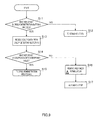
- FIG.8 is a flowchart showing operation of formulation identification at the time of replacing formulation syringe 11, and this flow is executed by microprocessor 20.
- S represents each step in the operation flow.
- step S1 microprocessor 20 checks whether formulation syringe 11 has been correctly mounted in drug administration apparatus 1 using syringe cover detecting switch 14c and so forth. When formulation syringe 11 has not been mounted, the step moves to a stand-by mode in step S2.
- microprocessor 20 receives color data from color detecting section 13 in step S3.
- step S4 microprocessor 20 determines whether or not the color data received from color detecting section 13 is within the reference value. If the color data is within the reference value, the step moves to step S5, and, on the other hand, when the color data is out of the reference value, the step moves to step S6.
- step S5 assume that a correct formulation syringe has been mounted, microprocessor 20 moves the step to pre-administration preparation processing including air-bleeding operation.
- step S6 assume that a wrong formulation syringe has been mounted, microprocessor 20 issues a message to warn and report that the formulation should be checked.
- microprocessor 20 displays a warning such as a message indicating "! remove and check formulation" on LCD 10, which is a display means.
- microprocessor 20 makes sounder 25 issue a warning sound and also makes vibrator 26 vibrate.
- reporting may be made by flashing a display LED. Moreover, combination of these is possible.
- step S7 microprocessor 20 makes drug administration apparatus 1 automatically stop in order to prevent wrong drug from being administered. Automatically preventing wrong drug from being administered in the drug administration apparatus 1 side is greatly useful to secure the safety of the user.
- identifying formulation and/or a formulation syringe is also performed at the time of staring drug administration.
- FIG.9 is a flowchart showing formulation identification operation at the time of administering drug from formulation syringe 11. The basic operation is the same as the flow shown in FIG.8 .
- step S11 microprocessor 20 checks whether or not drug administration button 9 has been pressed by the user. If drug administration button 9 has not been pressed by the user, the step moves to a stand-by mode in step S12.
- step S13 If drug administration button 9 has been pressed by the user, the step moves to step S13, and microprocessor 20 receives color data from color detecting section 13.
- step S14 microprocessor 20 determines whether or not the color data received from color detecting section 13 is within the reference value. If the color data is within the reference value, the step moves to step S 1 5, and, on the other hand, if the color data is out of the reference value, the step moves to step S16.
- step S15 assuming that a correct formulation syringe is mounted, microprocessor 20 moves to drug administration processing.
- microprocessor 20 sends a message to report that formulation should be checked.
- microprocessor 20 displays a warning indicating "! remove and check formulation" on LCD 10.
- microprocessor 20 makes sounder 25 issue a warning sound and also makes vibrator 26 vibrate.
- microprocessor 20 may issue a warning by flashing display LED. Furthermore, combination of these is possible.
- step S17 assuming that a wrong formulation syringe is mounted, microprocessor 20 makes drug administration apparatus 1 automatically stop in order to prevent wrong drug from being administered. Automatically preventing wrong drug from being administered in the drug administration apparatus 1 side is greatly useful to secure the safety of the user.
- formulation is identified at the time of starting drug administration (including just before starting drug administration), so that it is possible to reduce the risk of administering wrong drug. This processing prevents wrong drug administration.
- the reason formulation is identified before drug administration is to certainly prevent wrong drug administration even if formulation identification processing has not been performed for some reason at the time of formulation replacement shown in FIG.8 .
- the reason formulation identification processing is performed both at the time of drug administration shown in FIG.9 and at the time of formulation replacement shown in FIG.8 , is to improve reliability by double checking, and that it is preferable to avoid stopping administering drug at the last minute and find wrong drug in the preparation stage before administration.
- formulation identification processing may be performed either at the time of drug administration shown in FIG.9 or at the time of formulation replacement shown in FIG.8 .
- the present embodiment is preferable in which formulation identification processing is performed both at the time of drug administration and at the time of formulation replacement.
- microprocessor 20 provided in drug administration apparatus 1 according to the present embodiment identifies the availability and so forth of formulation by determining the color of formulation or a formulation syringe based on the reference value, and reports the result of the identification to the user using LCD 10 and so forth, so that it is possible to automatically identify formulation syringes to administer correct drug.
- the user does not need work including checking a formulation syringe by the user's eyes, and therefore can check a formulation syringe without trouble.
- the size of the apparatus does not increase.
- the syringe cover detecting means and the color detecting means shown in FIG.4 , FIG.5 and FIG.6 are provided to determine whether or not a formulation syringe has been mounted and it is possible to use formulation.
- Replacing a formulation syringe and pressing the drug administration button are necessary work for drug administration, and this work allows automatic detection of the validity of a formulation syringe. Consequently, it is possible to easily and reliably determine whether or not drug can be administered, and then, the result of the determination is reported to the user, so that the user can easily administer drug.
- the color of formulation or formulation syringe 11 is detected by reflected light
- the present invention is not limited to this, and, when formulation syringe 11 and syringe cover 5 are integrated, an identification method by coloring syringe cover 5 itself for identification is possible, and also an identification method by attaching color identification label 11a to syringe cover 5 is possible. Basically, it is possible to provide the same effect as in the present embodiment by using the same method as in the present embodiment.
- Embodiment 2 is an example in which a transmissive color detecting section is applied to a color detecting means.
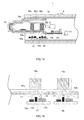
- FIG.10 and FIG.11 are cross sectional views showing states before and after formulation syringe 42 is mounted in drug administration apparatus 1 according to Embodiment 2 of the present invention.
- FIG.10 is a cross sectional view showing the internal state before formulation syringe 42 is mounted in syringe holder 50.
- FIG.11 is a cross sectional view showing the internal state in which formulation syringe 42 is mounted in syringe holder 50.
- the same components as in FIG.4 and FIG.5 are assigned the same reference numerals and overlapping descriptions will be omitted.
- syringe cover 41 is a transmissive color detecting means, and has first opening 41a and second opening 41 b.
- syringe cover 41 is partly or entirely formed by a transparent member.
- Formulation syringe 42 is formed as a transparent container, and has formulation 42a, first gasket 42b, second gasket 42c and container 42d.
- Transmissive color detecting section 43 has LED 43a and color sensor 43b. Detailed description will be explained with reference to FIG.12 .
- syringe cover 41 In a state before syringe cover 41 is mounted as shown in FIG.10 , syringe cover 41 is removed from drug administration apparatus 1, and, after formulation syringe 42 is inserted in drug administration apparatus 1, syringe cover 41 is mounted, and then fitted into piston case 12 placed in housing 2.
- FIG.11 shows a state after syringe cover 41 is mounted, where formulation syringe 42 is covered with syringe cover 41, and first opening 41a and second opening 41b in syringe cover 41 match LED 43a and color sensor 43b in transmissive color detecting section 43, respectively.
- FIG.12 is an enlarged cross sectional view showing primary parts nearby the above-described transmissive color detecting section 43.
- transmissive color detecting section 43 has LED 43a and color sensor 43b.
- white light 47 containing RGB components outputted from LED 43a passes through formulation syringe 42 to convert passed light 44, and color sensor 43b performs digital-conversion on this passed light 44 and outputs the result to microprocessor 20.
- Passed light 44 passes through formulation 42a accommodated in formulation syringe 42 or container 42d, and therefore, has the same color component as formulation 42a or container 42d by filler effect. Therefore, it is possible to detect the color of formulation 42a or container 42d.
- Embodiment 2 like Embodiment 1, the color of formulation or a formulation container is automatically identified, so that the user does not need work including checking a formulation syringe by the user's eyes, and therefore can check whether or not the formulation is correct without trouble. It is possible to easily and reliably determine whether or not the formulation is correct based on the color of the formulation itself without damaging convenience for the user, so that it is possible to improve the safety and also operability.
- Embodiment 2 it is possible to identify the color of formulation itself, and this provides a specific effect that can automatically identify formulation even if blood flows back from the living body side to the formulation syringe side, or event if the color of formulation changes in a poor state of preservation.
- Embodiment 3 is an example in which the characteristic of the reflective color detecting section according to Embodiment 1 is exploited and a plurality of color detecting means are further provided.
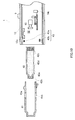
- FIG.13 and FIG.14 are cross sectional view showing states before and after formulation syringe 46 is mounted in drug administration apparatus 1 according to Embodiment 3 of the present invention.
- FIG.13 is a cross sectional view showing the internal state before formulation syringe 46 is mounted in syringe holder 50.
- FIG.14 is a cross sectional view showing the internal state after formulation syringe 46 is mounted in syringe holder 50.
- the same components as in FIG.4 and FIG.5 are assigned the same reference numerals, and overlapping descriptions will be omitted.
- drug administration apparatus 1 has first color detecting section 47 and second color detecting section 48.
- First color detecting section 47 and second color detecting section 48 will be described later with reference to FIG.15 .
- Providing two color detecting sections, first color detecting section 47 and second color detecting section 48, allows color detection in a plurality of positions and also allows more advanced automatic identification of formulation.
- Syringe cover 45 has first opening 45a and second opening 45b.
- Formulation syringe 46 is used by dissolving drug, and has powder formulation 46a, syringe convex part 46b, first basket 46c, drug solution 46d and second gasket 46e.
- FIG.13 shows a state before syringe cover 45 is mounted, where syringe cover 45 is removed from drug administration apparatus 1, and, after formulation syringe 46 is inserted in drug administration apparatus 1, syringe cover 45 is mounted, and then fitted into piston case 12 placed in housing 2.
- FIG.14 shows a state after syringe cover is mounted.
- FIG.15 is an enlarged cross sectional view showing primary parts nearby the above-described first color detecting section 47 and second color detecting section 48.
- the same components as in FIG.6 are assigned the same reference numerals, and overlapping descriptions will be omitted.
- First color detecting section 47 and second color detecting section 48 have the same configuration as color detecting section 13 shown in FIG.6 .
- Color detecting sections 13 shown in FIG.6 are provided in two positions as first color detecting section 47 and second color detecting section 48.
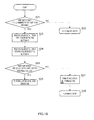
- FIG.16 is a flowchart showing operation of formulation identification at the time of replacing formulation syringe 46 (used by dissolving drug).
- step S21 microprocessor 20 checks whether or not drug administration button 9 has been pressed by the user. If drug administration button 9 has not been pressed by the user, the step moves to a stand-by mode in step S22.
- step S23 microprocessor 20 receives color data 1 from first color detecting section 47, and next, receives color data 2 from second color detecting section 48 in step S24.
- step S25 microprocessor 20 determines whether or not color data 1 and color data 2 received from first color detecting section 47 and second color detecting section 48 are within reference values, respectively.
- microprocessor 20 determines that inserted formulation syringe 46 is new, and moves to step S26.
- step S26 microprocessor 20 drives piston driving motor 16 incorporated in drug administration apparatus 1 to move piston 15 forward a certain distance, so that formulation automatically dissolve.
- step S27 If color data 1 and color data 2 are out of the reference values in the above step S25, the step moves to step S27.
- microprocessor 20 issues a message indicating that formulation should be checked.
- microprocessor 20 displays a caution or warning as a message indicating "! remove and check formulation" on LCD 10, which is a display means.
- microprocessor 20 makes sounder 25 issue a warning sound and also makes vibrator 26 vibrate.
- microprocessor 20 may issue a warning by flashing a display LED. Furthermore, combination of these is possible.
- step S28 microprocessor 20 commands drug administration apparatus 1 to automatically stop in order to prevent wrong drug from being administered.
- Providing a drug administration preventing means for automatically preventing wrong drug from being administered in the drug administration apparatus 1 side is greatly useful to secure the safety of the user.
- Embodiment 3 it is possible to identify the color of gaskets in a formulation syringe, and therefore it is possible to easily automatically identify the state of preservation of formulation, that is, it is determine whether or not the formulation is new.
- Embodiment 4 is an example in which two types of color detecting means, a reflective color detecting section and a transmissive color detecting section, are provided.
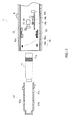
- FIG.17 and FIG.18 are cross sectional views showing states before and after formulation syringe 11 is mounted in drug administration apparatus 1 according to Embodiment 4 of the present invention.
- FIG.17 is a cross sectional view showing the internal state before formulation syringe 11 is mounted in syringe holder 50.
- FIG.18 is a cross sectional view showing the internal state after formulation syringe 11 is mounted in syringe holder 50.
- the same components as in FIG.4 , FIG.5 , FIG.13 and FIG.14 are assigned the same reference numerals, and overlapping descriptions will be omitted.
- syringe cover 57 is used to detect colors in a plurality of positions, and has first opening section 57a, second opening section 57b and third opening section 57c.
- Formulation syringe 11 has label 11a used for color detection.
- First color detecting section 58 has LED 58a and color sensor 58b, and can detect colors by performing digital-conversion on passed light from formulation syringe 11 and outputting the result to microprocessor 20, like transmissive color detecting section 43 shown in FIG.12 .
- Second color detecting section 59 has the same configuration as color detecting section 13 shown in FIG.6 , and can detect colors by performing digital-conversion on passed light from formulation syringe 11 and outputting the result to microprocessor 20.
- first color detecting section 58 and second color detecting section 59 placed in two positions allows color detection in a plurality of positions, and also allows more advanced automatic identification of formulation.
- FIG.19 is a flowchart showing operation of formulation identification using first color detecting section 58 and second color detecting section 59.
- step 31 microprocessor checks whether or not drug administration button 9 has been pressed by the user. If drug administration button 9 has not been pressed by the user, the step moves to a stand-by mode in step S32.
- microprocessor 20 receives color data 2 from second color detecting section 59 in step S33.
- step S34 microprocessor 20 determines whether or not color data 2 received from second color detecting section 49 is within the reference value.
- microprocessor 20 issues a message indicating that formulation should be checked.
- microprocessor 20 displays a caution or warning as a message indicating "! remove and check formulation" on LCD 10, which is a display means.
- microprocessor 20 makes sounder 25 issue a warning sound and also makes vibrator 26 vibrate.
- microprocessor 20 may issue a warning by flashing a display LED. Furthermore, combination of these is possible.
- step S36 microprocessor 20 commands drug administration apparatus 1 to automatically stop in order to prevent wrong drug from being administered. Automatically preventing wrong drug from being administered in the drug administration apparatus 1 side is greatly useful to secure the safety of the user.
- microprocessor 20 receives color data 1 from first color detecting section 58 in step S37.
- step S38 microprocessor 20 determines whether or not color data 1 received from first color detecting section 58 is within the reference value.
- microprocessor 20 determines that inserted formulation syringe 11 is new, and moves to step S39.
- step S39 microprocessor 20 moves to drug administration processing.
- microprocessor 20 issues a message indicating that formulation should be checked in step S40.
- microprocessor 20 displays a caution or warning as a message indicating "! formulation has been discolored" on LCD 10.
- microprocessor 20 makes sounder 25 issue a warning sound and also makes vibrator 26 vibrate.
- microprocessor 20 may issue a warning by flashing a display LED. Moreover, combination of these is possible.
- step S41 microprocessor 20 makes drug administration apparatus 1 automatically stop in order to prevent deteriorated or defective drug from being administered.
- Providing a drug administration preventing means that prevents deteriorated or defective drug from being automatically administered in the drug administration apparatus 1 side is greatly useful to secure the safety of the user.
- second color detecting section 59 detects the color of label 11 a affixed to formulation syringe 11 to automatically identify the type of formulation syringe 11.
- first color detecting section 58 detects the color of the formulation itself to automatically determine whether or not the formulation has been discolored.
- first color detecting section 58 is substituted for a reflective color detecting section as shown in Embodiment 1, and, for example, (1) irreversible temperature control indicators manufactured by Nichiyu Giken Kogyo Co., Ltd. or (2) humidity indicators such as "HumiJudge TM" manufactured by Kyodo Printing Co., Ltd are arranged in predetermined positions, so that it is possible to detect the colors, or change in the colors of the temperature control indicators or the humidity indicators.
- An advantage is found that these color detections are applicable to a drug administration apparatus required to automatically identify more accurately the preservation state of formulation (the temperature and humidity around formulation). There color detections are expected to be widely used in various drug administration apparatuses.
- drug administration apparatus is used in the embodiments for ease of explanation, “drug injecting device”, “drug administration system” and so forth are possible naturally.
- the type, the number, the connection method and so forth of components constituting the above-described drug administration apparatus are not limited.
- the above-described drug administration method may be realized by a program to operate this drug administration method.
- This program is stored in a computer-readable storage medium.
- the drug administration apparatus is useful as a drug administration apparatus that has a function to automatically and correctly identify a formulation syringe by performing operation required for drug administration, has a formulation syringe containing formulation mounted inside, and can administer drug to a living body and so forth. Particularly, it is useful for injection into elderly people, children and physically-challenged people by themselves, injection into patients by their families, and so forth.
Landscapes
- Health & Medical Sciences (AREA)
- Engineering & Computer Science (AREA)
- General Health & Medical Sciences (AREA)
- Public Health (AREA)
- Vascular Medicine (AREA)
- Anesthesiology (AREA)
- Medicinal Chemistry (AREA)
- Medical Informatics (AREA)
- Primary Health Care (AREA)
- Bioinformatics & Cheminformatics (AREA)
- Chemical & Material Sciences (AREA)
- Epidemiology (AREA)
- Biomedical Technology (AREA)
- Heart & Thoracic Surgery (AREA)
- Hematology (AREA)
- Life Sciences & Earth Sciences (AREA)
- Animal Behavior & Ethology (AREA)
- Veterinary Medicine (AREA)
- Infusion, Injection, And Reservoir Apparatuses (AREA)
- Medical Treatment And Welfare Office Work (AREA)
Abstract
Description
- The present invention relates to a drug administration apparatus that has a formulation syringe containing formulation mounted inside and can administer drug to a living body and so forth, and more particularly, relates to a drug administration apparatus that automatically identifies the mounted formulation.
- When administering drug solution from a formulation syringe to a test subject, the operator prepares a formulation syringe containing appropriate drug solution. A drug administration apparatus administers drug solution from a formulation syringe to a test subject by moving a piston member relative to a cylinder member by means of an injecting mechanism, in response to predetermined operation.
- Conventionally, a drug injection system including a drug administration apparatus has come into practical use, in which a barcode reader provided in the drug administration apparatus reads the barcode printed on a formulation packing material, or the barcode affixed to a formulation syringe, and the result is displayed on a display section, so that the operator can easily and reliably check the formulation (e.g. Patent Literature I).
-
FIGs.1A and B each show a configuration of a conventional drug administration apparatus, andFIG.2 shows a display example of the barcode label on the conventional drug administration apparatus. - As shown in
FIGs.1A and B and FIG.2 , a drug injection system has drug solution injectingdevice 100 anddrug solution syringe 200. - Drug solution injecting
device 100 is provided withtouch panel 105,barcode reader 108 andinjection head 110. Twoconcave parts 112, as a syringe holding mechanism, are formed ininjection head 110, andcylinder members 201 in respectivedrug solution syringes 200 are removably held in theseconcave parts 112 separately. -
Drug solution syringe 200 is composed ofcylinder member 201 andpiston member 202, andpiston member 202 is slidably inserted incylinder member 201.Cylinder member 201 is filled with drug solution and capped with sealingcap 203, and then sealed withpacking material 204 wholly. -
Identification data 205 on drug solution is recoded on at least one of the packing material, cylinder member and piston member indrug solution syringe 200, and the drug administration apparatus stores drug solution data peridentification data 205. In the drug administration apparatus,barcode reader 108 retrieves read drug solution data, anddisplay section 108 displays it, and therefore, the operator can easily and reliably check various data about drug solution to be injected into the test subject. -
-
PTL 1
Japanese Patent Application Laid-Open No.2004-298550 - However, this conventional formulation injection system identifies formulation by barcode, and therefore has a problem that it is difficult for the user to identify formulation only by looking at a formulation syringe.
- In addition, in the above-described case, identifying formulation by the barcode and mounting a formulation syringe in the drug solution injecting device are not performed at the same time, and therefore, if the user mounts a formulation syringe different from one identified by the barcode by mistake, there is a risk of administrating wrong drug. Moreover, there is a problem that it is necessary to provide a barcode reader in the drug administration apparatus side, so that the size of the apparatus increases, and therefore mobility deteriorates and the cost increases.
- In view of the above-described problems, it is therefore an object of the present invention to provide a drug administration apparatus that can administer correct drug by automatically identifying formulation syringes.
- The drug administration apparatus according to the present invention that has a formulation syringe containing formulation mounted inside and administers drug to a living body adopts a configuration to include: an identification section that identifies formulation loaded in the formulation syringe, or the formulation syringe containing the formulation; and a reporting section that reports a result of identification by the identification section.
- According to the present invention, it is possible to administer correct drug by automatically identifying formulation loaded into a formulation syringe or a formulation syringe containing formulation and reporting the result of the identification.
- In addition, it is possible to realize a compact drug administration apparatus that can easily and reliably identify formulation without damaging convenience for the user, and it is possible to provide a safe and secure drug administration apparatus that prevents wrong drug from being administered.
-
-
FIGs.1A and B each show a configuration of a conventional drug administration apparatus; -
FIG.2 shows a display example of the barcode label on the conventional drug administration apparatus; -
FIG.3 is an overall perspective view showing a drug administration apparatus according toEmbodiment 1 of the present invention; -
FIG.4 is a cross sectional view showing the internal state before a formulation syringe is mounted in a syringe holder in the drug administration apparatus according toEmbodiment 1; -
FIG.5 is a cross sectional view showing the internal state after a formulation syringe is mounted in a syringe holder in the drug administration apparatus according toEmbodiment 1; -
FIG.6 is an enlarged cross sectional view showing primary parts nearby a color detecting section in the drug administration apparatus according toEmbodiment 1; -
FIG.7 is a block diagram showing the electrical circuit of the drug administration apparatus according toEmbodiment 1; -
FIG.8 is a flowchart showing operation of formulation identification when a formulation syringe is replaced in the drug administration apparatus according toEmbodiment 1; -
FIG.9 is a flowchart showing operation of formulation identification when drug is administered from a formulation syringe in the drug administration apparatus according toEmbodiment 1; -
FIG.10 is a cross sectional view showing the internal state before a formulation syringe is mounted in a syringe holder in a drug administration apparatus according toEmbodiment 2 of the present invention; -
FIG.11 is a cross sectional view showing the internal state after a formulation syringe is mounted in a syringe holder in the drug administration apparatus according toEmbodiment 2; -
FIG.12 is an enlarged cross sectional view showing primary parts nearby a transmissive color detecting section in the drug administration apparatus according toEmbodiment 2; -
FIG.13 is a cross sectional view showing the internal state before a formulation syringe is mounted in a syringe holder in a drug administration apparatus according toEmbodiment 3 of the present invention; -
FIG. 14 is a cross sectional view showing the internal state after a formulation syringe is mounted in a syringe holder in the drug administration apparatus according toEmbodiment 3; -
FIG.15 is an enlarged cross sectional view showing primary parts nearby a first color detecting section and a second color detecting section in the drug administration apparatus according toEmbodiment 3; -
FIG.16 is a flowchart showing operation of formulation identification when a formulation syringe is replaced in the drug administration apparatus according toEmbodiment 1; -
FIG.17 is a cross sectional view showing the internal state before a formulation syringe is mounted in a syringe holder in a drug administration apparatus according to Embodiment 4 of the present invention; -
FIG.18 is a cross sectional view showing the internal state after a formulation syringe is mounted in a syringe holder in the drug administration apparatus according to Embodiment 4; and -
FIG.19 is a flowchart showing operation of formulation identification using a first color detecting section and a second color detecting section in the drug administration apparatus according to Embodiment 4. - Now, embodiments of the present invention will be described in detail with reference to the accompanying drawings.
-
FIG.3 is an overall perspective view showing a drug administration apparatus according toEmbodiment 1 of the present invention. - As shown in
FIG.3 ,drug administration apparatus 1 is configured to includehousing 2,tip cap 3, check window 4,syringe cover 5, detectingprotrusion 5b (seeFIG.4 ),power supply button 6, air-bleeding button 7,completion button 8,drug administration button 9 and LCD (liquid crystal display) 10, which is a display means. -
Drug administration apparatus 1 is covered withhousing 2, which is the exterior of the apparatus body. -
Tip cap 3 is removably mounted to one end ofhousing 2 and, if necessary, is mounted or removed whenformulation syringe 11 is mounted or removed, and an injection needle for injecting drug solution is mounted or removed. -
Tip cap 3 has check window 4 for checking the inside, and therefore, it is possible to visually check the presence or absence and the type of formulation syringe 11 (seeFIG.4 ), the amount of formulation and so forth throughsyringe cover 5 made of a transparent member. - In addition,
tip cap 3 serves to cover an injection needle for drug administration in order not to expose the injection needle, and, at the time of drug administration, skin is madecontact tip cap 3 and punctured with an injection needle for drug administration from a top opening part intip cap 3 to administer drug.Tip cap 3 secures safety in operation by covering a member having a sharply pointed tip such as an injection needle. - Check
window 24 is a window for checking the inside, which visually checks the presence or absence and the type of formulation syringe 11 (seeFIG.4 ), and the amount of formulation and so forth throughsyringe cover 5 made of a transparent member. Check window 4 may be made of, for example, a transparent or semi-transparent member, or may be an opening physically clipped off as long as check window 4 allows the inside to be visually checked. -
Power supply button 6 turns on and off the power supply ofdrug administration apparatus 1. By this means,drug administration apparatus 1 is activated. - Air-
bleeding button 7 is used when air in formulation syringe 11 (seeFIG.4 ) is bled. Incase formulation syringe 11 or an injection needle (hollow needle whose inside is hollow) for drug administration contains air, this air-bleeding button 7 removes the inside air fromformulation syringe 11 and so forth. -
Completion button 8 allows the step to move the next step after air-bleeding operation, or when necessary operation, including checking various displays and so forth, is completed. - After completing preparation for drug administration,
drug administration button 9 is pushed at the time of drug administration. -
LCD 10 displays various necessary information including a battery level, air-bleeding operation and so forth. -
FIGs.4 and5 are cross sectional views showing states before and afterformulation syringe 11 is mounted indrug administration apparatus 1.FIG.4 is a cross sectional view showing the internal state beforeformulation syringe 11 is mounted insyringe holder 50, which is a mounting section in thedrug administration apparatus 1 side.FIG.5 is a cross sectional view showing the internal state afterformulation syringe 11 is mounted insyringe holder 50. -
Syringe holder 50 is a mounting section that mountsformulation syringe 11 indrug administration apparatus 1 body, and includespiston case 12, attaching and removinggroove 12a,piston 15 and so forth.Syringe holder 50 restrictsformulation syringe 11 from inserting insyringe holder 50 in the direction of the central axis offormulation syringe 11 and holds it by making the bottom offormulation syringe 11contact piston 15, and restrictsformulation syringe 11 from shifting in the direction of the outer surface offormulation syringe 11 and holds it byfitting formulation syringe 11 intopiston case 12 and attaching and removinggroove 12a. - In a state before
syringe cover 5 is mounted as shown inFIG.4 ,syringe cover 5 is removed fromdrug administration apparatus 1, and, afterformulation syringe 11 is inserted indrug administration apparatus 1,syringe cover 5 is mounted, and then fitted intopiston case 12 placed inhousing 2. As shown inFIG.4 ,syringe cover 5 has attaching and removingprotrusion 5a, detectingprotrusion 5b andopening 5c. - As shown in
FIG.5 , in a state aftersyringe cover 5 is mounted indrug administration apparatus 1, attaching and removingprotrusion 5a is fitted into attaching and removinggroove 12a formed in the inner surface ofpiston case 12 provided inhousing 2. - Detecting
protrusion 5b is provided to push one end of syringecover detecting lever 14a formed inhousing 2. -
Formulation syringe 11 haslabel 11a used for color detection. -
Piston case 12 is a member having an approximately cylindrical shape and provided along the inner surface ofhousing 2.Drug administration button 9 is provided in the outer surface side ofpiston case 12, and detectingsection 13, which is an identification means, syringecover detecting section 14,piston 15 andpiston driving motor 16 are provided inpiston case 12. -
Drug administration button 9 is provided on the side surface ofdrug administration apparatus 1 and pressed at the time of drug administration. -
Piston 15 moves forward and pushes formulation toward the direction of drug administration (the left inFIG.5 ). - Syringe
cover detecting section 14 has syringecover detecting lever 14a, syringe cover detectinglever spring 14b and syringecover detecting switch 14c. Whensyringe cover 5 is inserted inpiston case 12, syringecover detecting lever 14a is pushed by detectingprotrusion 5b provided onsyringe cover 5 and moves against the spring force of syringe cover detectinglever spring 14b to press syringecover detecting switch 14c. By this means, it is possible to detectsyringe cover 5 being mounted inpiston case 12. -
Piston driving motor 16moves piston 15 forward and backward (expands and contracts piston 15) in the direction of drug administration by rotating in a desired direction. -
FIG.6 is an enlarged view showing parts nearby color detecting section, which is an example of an identification means. - As shown in
FIG.6 ,color detecting section 13 has LED 13a,light blocking wall 13b,color sensor 13c and printedsubstrate 13d. - In
color detecting section 13, whenwhite light 17 outputted fromLED 13a and containing RGB components passes throughopening 5c and hitslabel 11a affixed toformulation syringe 11,white light 17 is converted into reflected light 18 having the same color component aslabel 11a, andcolor sensor 13c receives reflected light 18 which passes throughopening 5c and arrives atcolor sensor 13c, performs digital-conversion on reflected light 18 and outputs the result to microprocessor 20 (seeFIG.7 ), and therefore, it is possible to accomplish color detection.Light blocking wall 13b serves to preventwhite light 17 ofLED 13a from directly enteringcolor sensor 13c and allows accurate color detection oflabel 11a affixed to a formulation syringe. -
FIG.7 is a block diagram showing the electrical circuit ofdrug administration apparatus 1 and its nearby parts. - As shown in
FIG.7 , indrug administration apparatus 1,power supply button 6, air-bleedingbutton 7,completion button 8,drug administration button 9,color detecting section 13, syringecover detecting switch 14c andpiston driving motor 16 are electrically connected tomicroprocessor 20, which is a control section. In addition,drug administration apparatus 1 is configured to includepower supply section 19, which is the power supply of the apparatus,motor drive circuit 21, current detectingcircuit 22,encoder 23, display section 24 (LCD 10), sounder 25 andvibrator 26. -
Power supply button 6 is used to switch the power supply between on and off indrug administration apparatus 1. By turning on the power supply,drug administration apparatus 1 is activated. - Air-bleeding
button 7 is used to perform air-bleeding operation, which is generally performed as advance preparation before drug administration. -
Completion button 8 is pressed at the time necessary operation is completed to move the step to the next step. -
Drug administration button 9 is used when it is desired to start drug administration operation. -
Power supply section 19 represents the power supply part ofdrug administration apparatus 1.Power supply section 19 has a mobility-focused configuration and is composed ofrechargeable battery 19a and chargingcircuit 19b. Here,power supply section 19 can operate using a primary battery. Nickel metal hydride battery and a lithium-ion battery may be used asrechargeable battery 19. -
Display section 24, sounder 25 andvibrator 26 are used as means for reporting to the user.Display section 24 refers toLCD 10, an LED, organic electro-luminescence and so forth, and is used to visually check the current operation state, warning display and so forth. - An optical reporting method using a display LED and so forth can be realized by illuminating, flashing and so forth. In addition, when a multicolor type display LED and so forth is used, it is possible to visually report the degree of importance or urgency of the reported content by switching RGB components and illuminating or flashing any color based on the ratio between colors. Therefore, it is useful for people with impaired hearing.
- In addition, the above-described display LED may be provided separately from
LCD 10.Display section 24 may be arranged nearby a mounting section to mountformulation syringe 11 indrug administration apparatus 1. -
Sounder 25 is used to perform auditory reporting by warning sound, the sound during drug administration, audio output at the time of starting and ending electrical charging, announce of operation by sound, and so forth, according to audio signals frommicroprocessor 20. Therefore, it is useful for people with impaired sight. -
Vibrator 26 reports warning and so forth by vibration.Vibrator 26 reports an abnormal state and so forth to the user by vibration instead of or as well as a warning sound or voice, and therefore can effectively and reliably inform the state of a drug administration apparatus and so forth. -
Microprocessor 20 controls the overall operation of the apparatus and also controls operation of the apparatus corresponding to each ofvarious buttons 6 to 9, according to electrical signals transmitted from thesebuttons 6 to 9. - Particularly,
microprocessor 20 controls operation of drug administration. To be more specific, whendrug administration button 9 is pushed,microprocessor 20 checks syringecover detecting switch 14c andcolor detecting section 13 to check whether or notformulation syringe 11 is normally mounted. After checking whether or notformulation syringe 11 is normally mounted,microprocessor 20 transmits an electrical signal tomotor drive circuit 21 to operatepiston driving motor 16. Whenpiston driving motor 16 rotates, piston 15 (seeFIG.4 ) mechanically connected topiston driving motor 16 moves forward, and therefore drug is administered fromformulation syringe 11 into the living body. The dosage of drug is determined and managed by counting output signals (pulse signals) fromencoder 23 connected topiston driving motor 16. - In addition,
microprocessor 20 has a function as an identification means to identify a formulation syringe by executing a program described later with reference toFIG.8 andFIG.9 . Moreover,microprocessor 20 can administer drug into a living body by automatically controlling the dosage of drug bymotor drive circuit 21, based on information about a preset dosage of drug. That is,microprocessor 20 also has a drug dosage control section. In addition,microprocessor 20 further has a drug administration information setting section that sets information about drug administration such as the dosage of drug. A reference value to identify color of formulation or a formulation syringe is preset, and information about drug administration including the reference value and the dosage of drug is stored in a memory. - When abnormal load is applied to piston driving motor 16 (when an injection needle cannot be mounted or clogs), a current value varies more greatly than usual, and current detecting
circuit 22 detects the abnormal current value and transmits an electrical signal tomicroprocessor 20. Upon receiving the electrical signal,microprocessor 20 determines that there is something wrong and stops the drug administration operation, and then, reports the abnormality to the user by displaying an error and so forth onLCD 10, flashing a display LED, outputting a warning sound by sounder 25 and vibratingvibrator 26. - Syringe
cover detecting switch 14c constitutingsyringe detecting section 14 is equivalent to a formulation syringe detecting section that detects whether or not formulation orformulation syringe 11 has been mounted indrug administration apparatus 1 and detects whether a formulation syringe is correctly mounted at the time of replacing a formulation syringe. - Now, operation of
drug administration apparatus 1 configured as described above, will be explained. - First, operation of
formulation syringe 11 at the time of replacement will be described. -
FIG.8 is a flowchart showing operation of formulation identification at the time of replacingformulation syringe 11, and this flow is executed bymicroprocessor 20. In the figure, S represents each step in the operation flow. - In step S1,
microprocessor 20 checks whetherformulation syringe 11 has been correctly mounted indrug administration apparatus 1 using syringecover detecting switch 14c and so forth. Whenformulation syringe 11 has not been mounted, the step moves to a stand-by mode in step S2. - When
formulation syringe 11 has been mounted,microprocessor 20 receives color data fromcolor detecting section 13 in step S3. - In step S4,
microprocessor 20 determines whether or not the color data received fromcolor detecting section 13 is within the reference value. If the color data is within the reference value, the step moves to step S5, and, on the other hand, when the color data is out of the reference value, the step moves to step S6. - In step S5, assume that a correct formulation syringe has been mounted,
microprocessor 20 moves the step to pre-administration preparation processing including air-bleeding operation. - In step S6, assume that a wrong formulation syringe has been mounted,
microprocessor 20 issues a message to warn and report that the formulation should be checked. To be more specific, in order to inform the user about that wrong drug is likely to be administered,microprocessor 20 displays a warning such as a message indicating "! remove and check formulation" onLCD 10, which is a display means. In addition,microprocessor 20 makes sounder 25 issue a warning sound and also makesvibrator 26 vibrate. In addition, reporting may be made by flashing a display LED. Moreover, combination of these is possible. - In step S7,
microprocessor 20 makesdrug administration apparatus 1 automatically stop in order to prevent wrong drug from being administered. Automatically preventing wrong drug from being administered in thedrug administration apparatus 1 side is greatly useful to secure the safety of the user. - In addition, operation of identifying formulation and/or a formulation syringe is also performed at the time of staring drug administration.
-
FIG.9 is a flowchart showing formulation identification operation at the time of administering drug fromformulation syringe 11. The basic operation is the same as the flow shown inFIG.8 . - In step S11,
microprocessor 20 checks whether or notdrug administration button 9 has been pressed by the user. Ifdrug administration button 9 has not been pressed by the user, the step moves to a stand-by mode in step S12. - If
drug administration button 9 has been pressed by the user, the step moves to step S13, andmicroprocessor 20 receives color data fromcolor detecting section 13. - In step S14,
microprocessor 20 determines whether or not the color data received fromcolor detecting section 13 is within the reference value. If the color data is within the reference value, the step moves to stepS 1 5, and, on the other hand, if the color data is out of the reference value, the step moves to step S16. - In step S15, assuming that a correct formulation syringe is mounted,
microprocessor 20 moves to drug administration processing. - In step S16,
microprocessor 20 sends a message to report that formulation should be checked. To be more specific, in order to inform the user that wrong drug is likely to be administered,microprocessor 20 displays a warning indicating "! remove and check formulation" onLCD 10. In addition,microprocessor 20 makes sounder 25 issue a warning sound and also makesvibrator 26 vibrate. Moreover,microprocessor 20 may issue a warning by flashing display LED. Furthermore, combination of these is possible. - In step S17, assuming that a wrong formulation syringe is mounted,
microprocessor 20 makesdrug administration apparatus 1 automatically stop in order to prevent wrong drug from being administered. Automatically preventing wrong drug from being administered in thedrug administration apparatus 1 side is greatly useful to secure the safety of the user. - In this way, formulation is identified at the time of starting drug administration (including just before starting drug administration), so that it is possible to reduce the risk of administering wrong drug. This processing prevents wrong drug administration.
- The reason formulation is identified before drug administration is to certainly prevent wrong drug administration even if formulation identification processing has not been performed for some reason at the time of formulation replacement shown in
FIG.8 . In addition, the reason formulation identification processing is performed both at the time of drug administration shown inFIG.9 and at the time of formulation replacement shown inFIG.8 , is to improve reliability by double checking, and that it is preferable to avoid stopping administering drug at the last minute and find wrong drug in the preparation stage before administration. - Here, formulation identification processing may be performed either at the time of drug administration shown in
FIG.9 or at the time of formulation replacement shown inFIG.8 . However, from the viewpoint of reliably preventing wrong drug administration, the present embodiment is preferable in which formulation identification processing is performed both at the time of drug administration and at the time of formulation replacement. - As described above in detail,
microprocessor 20 provided indrug administration apparatus 1 according to the present embodiment identifies the availability and so forth of formulation by determining the color of formulation or a formulation syringe based on the reference value, and reports the result of the identification to theuser using LCD 10 and so forth, so that it is possible to automatically identify formulation syringes to administer correct drug. The user does not need work including checking a formulation syringe by the user's eyes, and therefore can check a formulation syringe without trouble. In addition, it is possible to easily and reliably identify formulation without damaging convenience for the user. Moreover, the size of the apparatus does not increase. - In addition, with the present embodiment, the syringe cover detecting means and the color detecting means shown in
FIG.4 ,FIG.5 and FIG.6 are provided to determine whether or not a formulation syringe has been mounted and it is possible to use formulation. Replacing a formulation syringe and pressing the drug administration button are necessary work for drug administration, and this work allows automatic detection of the validity of a formulation syringe. Consequently, it is possible to easily and reliably determine whether or not drug can be administered, and then, the result of the determination is reported to the user, so that the user can easily administer drug. - Moreover, although with the present embodiment, the color of formulation or
formulation syringe 11 is detected by reflected light, the present invention is not limited to this, and, whenformulation syringe 11 andsyringe cover 5 are integrated, an identification method bycoloring syringe cover 5 itself for identification is possible, and also an identification method by attachingcolor identification label 11a tosyringe cover 5 is possible. Basically, it is possible to provide the same effect as in the present embodiment by using the same method as in the present embodiment. -
Embodiment 2 is an example in which a transmissive color detecting section is applied to a color detecting means. -
FIG.10 andFIG.11 are cross sectional views showing states before and afterformulation syringe 42 is mounted indrug administration apparatus 1 according toEmbodiment 2 of the present invention.FIG.10 is a cross sectional view showing the internal state beforeformulation syringe 42 is mounted insyringe holder 50.FIG.11 is a cross sectional view showing the internal state in whichformulation syringe 42 is mounted insyringe holder 50. The same components as inFIG.4 andFIG.5 are assigned the same reference numerals and overlapping descriptions will be omitted. - As shown in
FIG.10 andFIG.11 ,syringe cover 41 is a transmissive color detecting means, and hasfirst opening 41a andsecond opening 41 b. In addition,syringe cover 41 is partly or entirely formed by a transparent member. -
Formulation syringe 42 is formed as a transparent container, and hasformulation 42a,first gasket 42b,second gasket 42c andcontainer 42d. - Transmissive
color detecting section 43 has LED 43a andcolor sensor 43b. Detailed description will be explained with reference toFIG.12 . - In a state before
syringe cover 41 is mounted as shown inFIG.10 ,syringe cover 41 is removed fromdrug administration apparatus 1, and, afterformulation syringe 42 is inserted indrug administration apparatus 1,syringe cover 41 is mounted, and then fitted intopiston case 12 placed inhousing 2. -
FIG.11 shows a state aftersyringe cover 41 is mounted, whereformulation syringe 42 is covered withsyringe cover 41, andfirst opening 41a andsecond opening 41b insyringe cover 41match LED 43a andcolor sensor 43b in transmissivecolor detecting section 43, respectively. -
FIG.12 is an enlarged cross sectional view showing primary parts nearby the above-described transmissivecolor detecting section 43. - As shown in
FIG.12 , transmissivecolor detecting section 43 has LED 43a andcolor sensor 43b. In transmissivecolor detecting section 43,white light 47 containing RGB components outputted fromLED 43a passes throughformulation syringe 42 to convert passed light 44, andcolor sensor 43b performs digital-conversion on this passed light 44 and outputs the result tomicroprocessor 20. - Passed light 44 passes through
formulation 42a accommodated informulation syringe 42 orcontainer 42d, and therefore, has the same color component asformulation 42a orcontainer 42d by filler effect. Therefore, it is possible to detect the color offormulation 42a orcontainer 42d. - In this way, according to
Embodiment 2, likeEmbodiment 1, the color of formulation or a formulation container is automatically identified, so that the user does not need work including checking a formulation syringe by the user's eyes, and therefore can check whether or not the formulation is correct without trouble. It is possible to easily and reliably determine whether or not the formulation is correct based on the color of the formulation itself without damaging convenience for the user, so that it is possible to improve the safety and also operability. - In addition, with
Embodiment 2, it is possible to identify the color of formulation itself, and this provides a specific effect that can automatically identify formulation even if blood flows back from the living body side to the formulation syringe side, or event if the color of formulation changes in a poor state of preservation. - Moreover, it was found that even if different types of formulation having the same color were used, it was possible to automatically identify formulation by varying the color of a container for each kind of formulation and identifying the color of each container.
-
Embodiment 3 is an example in which the characteristic of the reflective color detecting section according toEmbodiment 1 is exploited and a plurality of color detecting means are further provided. -
FIG.13 andFIG.14 are cross sectional view showing states before and afterformulation syringe 46 is mounted indrug administration apparatus 1 according toEmbodiment 3 of the present invention.FIG.13 is a cross sectional view showing the internal state beforeformulation syringe 46 is mounted insyringe holder 50.FIG.14 is a cross sectional view showing the internal state afterformulation syringe 46 is mounted insyringe holder 50. The same components as inFIG.4 andFIG.5 are assigned the same reference numerals, and overlapping descriptions will be omitted. - As shown in
FIG.13 andFIG.14 ,drug administration apparatus 1 has firstcolor detecting section 47 and secondcolor detecting section 48. Firstcolor detecting section 47 and secondcolor detecting section 48 will be described later with reference toFIG.15 . Providing two color detecting sections, firstcolor detecting section 47 and secondcolor detecting section 48, allows color detection in a plurality of positions and also allows more advanced automatic identification of formulation. -
Syringe cover 45 has first opening 45a andsecond opening 45b. -
Formulation syringe 46 is used by dissolving drug, and haspowder formulation 46a, syringeconvex part 46b,first basket 46c,drug solution 46d andsecond gasket 46e. -
FIG.13 shows a state beforesyringe cover 45 is mounted, where syringe cover 45 is removed fromdrug administration apparatus 1, and, afterformulation syringe 46 is inserted indrug administration apparatus 1,syringe cover 45 is mounted, and then fitted intopiston case 12 placed inhousing 2. -
FIG.14 shows a state after syringe cover is mounted. -
FIG.15 is an enlarged cross sectional view showing primary parts nearby the above-described firstcolor detecting section 47 and secondcolor detecting section 48. The same components as inFIG.6 are assigned the same reference numerals, and overlapping descriptions will be omitted. - First
color detecting section 47 and secondcolor detecting section 48 have the same configuration ascolor detecting section 13 shown inFIG.6 .Color detecting sections 13 shown inFIG.6 are provided in two positions as firstcolor detecting section 47 and secondcolor detecting section 48. - When
white light 17 containing RGB components outputted fromLED 13a hitsfirst gasket 46c andsecond gasket 46e,white light 17 is converted into reflectedlights 18 respectively having the same color components as gaskets (46c and 46E). Firstcolor detecting section 47 and secondcolor detecting section 48 perform digital-conversion on each reflectedlight 18 and outputs the result tomicroprocessor 20 to accomplish color detection. -
FIG.16 is a flowchart showing operation of formulation identification at the time of replacing formulation syringe 46 (used by dissolving drug). - In step S21,
microprocessor 20 checks whether or notdrug administration button 9 has been pressed by the user. Ifdrug administration button 9 has not been pressed by the user, the step moves to a stand-by mode in step S22. - On the other hand, if
drug administration button 9 has been pressed by the user, the step moves to step S23, andmicroprocessor 20 receivescolor data 1 from firstcolor detecting section 47, and next, receivescolor data 2 from secondcolor detecting section 48 in step S24. - In step S25,
microprocessor 20 determines whether or notcolor data 1 andcolor data 2 received from firstcolor detecting section 47 and secondcolor detecting section 48 are within reference values, respectively. - If
color data 1 andcolor data 2 are within the reference values,microprocessor 20 determines that insertedformulation syringe 46 is new, and moves to step S26. - In step S26,
microprocessor 20 drivespiston driving motor 16 incorporated indrug administration apparatus 1 to movepiston 15 forward a certain distance, so that formulation automatically dissolve. - If
color data 1 andcolor data 2 are out of the reference values in the above step S25, the step moves to step S27. - In step S27,
microprocessor 20 issues a message indicating that formulation should be checked. To be more specific, in order to report to the user that wrong drug is likely to be administrated,microprocessor 20 displays a caution or warning as a message indicating "! remove and check formulation" onLCD 10, which is a display means. In addition,microprocessor 20 makes sounder 25 issue a warning sound and also makesvibrator 26 vibrate. Moreover,microprocessor 20 may issue a warning by flashing a display LED. Furthermore, combination of these is possible. - In step S28,
microprocessor 20 commandsdrug administration apparatus 1 to automatically stop in order to prevent wrong drug from being administered. Providing a drug administration preventing means for automatically preventing wrong drug from being administered in thedrug administration apparatus 1 side is greatly useful to secure the safety of the user. - In this way, according to
Embodiment 3, it is possible to identify the color of gaskets in a formulation syringe, and therefore it is possible to easily automatically identify the state of preservation of formulation, that is, it is determine whether or not the formulation is new. - For example, in a drug administration apparatus in which formulation is dissolved in use, it is possible to automatically dissolve formulation after the color of gaskets placed in two positions in the formulation syringe is determined. In addition, a specific effect of supporting automatic identification of various types of formulation is provided.
- Embodiment 4 is an example in which two types of color detecting means, a reflective color detecting section and a transmissive color detecting section, are provided.
-
FIG.17 andFIG.18 are cross sectional views showing states before and afterformulation syringe 11 is mounted indrug administration apparatus 1 according to Embodiment 4 of the present invention.FIG.17 is a cross sectional view showing the internal state beforeformulation syringe 11 is mounted insyringe holder 50.FIG.18 is a cross sectional view showing the internal state afterformulation syringe 11 is mounted insyringe holder 50. The same components as inFIG.4 ,FIG.5 ,FIG.13 andFIG.14 are assigned the same reference numerals, and overlapping descriptions will be omitted. - As shown in
FIG.17 andFIG.18 ,syringe cover 57 is used to detect colors in a plurality of positions, and has first openingsection 57a,second opening section 57b andthird opening section 57c. -
Formulation syringe 11 haslabel 11a used for color detection. - First
color detecting section 58 has LED 58a andcolor sensor 58b, and can detect colors by performing digital-conversion on passed light fromformulation syringe 11 and outputting the result tomicroprocessor 20, like transmissivecolor detecting section 43 shown inFIG.12 . - Second
color detecting section 59 has the same configuration ascolor detecting section 13 shown inFIG.6 , and can detect colors by performing digital-conversion on passed light fromformulation syringe 11 and outputting the result tomicroprocessor 20. - Providing first
color detecting section 58 and secondcolor detecting section 59 placed in two positions allows color detection in a plurality of positions, and also allows more advanced automatic identification of formulation. -
FIG.19 is a flowchart showing operation of formulation identification using firstcolor detecting section 58 and secondcolor detecting section 59. - In step 31, microprocessor checks whether or not
drug administration button 9 has been pressed by the user. Ifdrug administration button 9 has not been pressed by the user, the step moves to a stand-by mode in step S32. - On the other hand, if
drug administration button 9 has been pressed by the user,microprocessor 20 receivescolor data 2 from secondcolor detecting section 59 in step S33. - In step S34,
microprocessor 20 determines whether or notcolor data 2 received from second color detecting section 49 is within the reference value. - If
color data 2 is out of the reference value in the above step S35,microprocessor 20 issues a message indicating that formulation should be checked. To be more specific, in order to report to the user that wrong drug is likely to be administrated,microprocessor 20 displays a caution or warning as a message indicating "! remove and check formulation" onLCD 10, which is a display means. In addition,microprocessor 20 makes sounder 25 issue a warning sound and also makesvibrator 26 vibrate. Moreover,microprocessor 20 may issue a warning by flashing a display LED. Furthermore, combination of these is possible. - In step S36,
microprocessor 20 commandsdrug administration apparatus 1 to automatically stop in order to prevent wrong drug from being administered. Automatically preventing wrong drug from being administered in thedrug administration apparatus 1 side is greatly useful to secure the safety of the user. - If
color data 2 is within the reference value in the above step S34,microprocessor 20 receivescolor data 1 from firstcolor detecting section 58 in step S37. - In step S38,
microprocessor 20 determines whether or notcolor data 1 received from firstcolor detecting section 58 is within the reference value. - If
color data 1 is within the reference value,microprocessor 20 determines that insertedformulation syringe 11 is new, and moves to step S39. - In step S39,
microprocessor 20 moves to drug administration processing. - If
color data 1 is out of the reference value in theabove step 38,microprocessor 20 issues a message indicating that formulation should be checked in step S40. To be more specific, in order to report to the user that deteriorated or defective drug is likely to be administrated,microprocessor 20 displays a caution or warning as a message indicating "! formulation has been discolored" onLCD 10. In addition,microprocessor 20 makes sounder 25 issue a warning sound and also makesvibrator 26 vibrate. In addition,microprocessor 20 may issue a warning by flashing a display LED. Moreover, combination of these is possible. - In step S41,
microprocessor 20 makesdrug administration apparatus 1 automatically stop in order to prevent deteriorated or defective drug from being administered. Providing a drug administration preventing means that prevents deteriorated or defective drug from being automatically administered in thedrug administration apparatus 1 side is greatly useful to secure the safety of the user. - In this way, according to Embodiment 4, firstly, second
color detecting section 59 detects the color oflabel 11 a affixed toformulation syringe 11 to automatically identify the type offormulation syringe 11. Secondly, firstcolor detecting section 58 detects the color of the formulation itself to automatically determine whether or not the formulation has been discolored. These two kinds of color detection are performed, so that the user does not need work including checking a formulation syringe by the user's eyes, and therefore can identify a formulation without trouble. That is, by performing color detection on the above-described two items, the user can easily and reliably identify a formulation syringe without damaging convenience for the user, and it is possible to use the drug administration apparatus more safely and improve operability. - Moreover, a case is possible where first
color detecting section 58 is substituted for a reflective color detecting section as shown inEmbodiment 1, and, for example, (1) irreversible temperature control indicators manufactured by Nichiyu Giken Kogyo Co., Ltd. or (2) humidity indicators such as "HumiJudge ™" manufactured by Kyodo Printing Co., Ltd are arranged in predetermined positions, so that it is possible to detect the colors, or change in the colors of the temperature control indicators or the humidity indicators. An advantage is found that these color detections are applicable to a drug administration apparatus required to automatically identify more accurately the preservation state of formulation (the temperature and humidity around formulation). There color detections are expected to be widely used in various drug administration apparatuses. - The above description is illustration of preferred embodiments of the present invention and the scope of the invention is not limited to this.
- Although the name "drug administration apparatus" is used in the embodiments for ease of explanation, "drug injecting device", "drug administration system" and so forth are possible naturally.
- Moreover, the type, the number, the connection method and so forth of components constituting the above-described drug administration apparatus are not limited.
- The above-described drug administration method may be realized by a program to operate this drug administration method. This program is stored in a computer-readable storage medium.
- The disclosure of Japanese Patent Application No.
2008-320056, filed on December 16, 2008 - The drug administration apparatus according to the present invention is useful as a drug administration apparatus that has a function to automatically and correctly identify a formulation syringe by performing operation required for drug administration, has a formulation syringe containing formulation mounted inside, and can administer drug to a living body and so forth. Particularly, it is useful for injection into elderly people, children and physically-challenged people by themselves, injection into patients by their families, and so forth.
-
- 1
- Drug administration apparatus
- 2
- Housing
- 3
- Tip cap
- 4
- Check window
- 5, 41, 45, 57
- Syringe cover
- 5a
- Attaching and removing protrusion
- 5b
- Detecting protrusion
- 5c
- Opening
- 6
- Power supply button
- 8
- Completion button
- 7
- Air-bleeding button
- 8
- Completion button
- 9
- Drug administration button
- 10
- LCD
- 11, 42, 46
- Formulation syringe
- 11a
- Label
- 12
- Piston case
- 12a
- Attaching and removing groove
- 13
- Color detecting section
- 13a,
43a 58a - LED
- 13b
- Light blocking wall
- 13c,
- 43b, 58b Color sensor
- 13d
- Printed substrate
- 14
- Syringe cover detecting section
- 14a
- Syringe cover detecting lever
- 14b
- Syringe cover detecting lever spring
- 14c
- Syringe cover detecting switch
- 15
- Piston
- 16
- Piston driving motor
- 19
- Power supply section
- 19a
- Rechargeable battery
- 19b
- Charging circuit
- 20
- Microprocessor
- 21
- Motor drive circuit
- 22
- Current detecting circuit
- 23
- Encoder
- 24
- Display section
- 25
- Sounder
- 26
- Vibrator
- 41a, 45a, 57a
- First opening
- 41b, 45b, 57b
- Second opening
- 42a
- Formulation
- 42b, 46c
- First gasket
- 42c, 46e
- Second gasket
- 42d
- Container
- 43
- Transmissive color detecting section
- 46a
- Powder formulation
- 46d
- Drug solution
- 47, 58
- First color detecting section
- 48, 59
- Second color detecting section
- 50
- Syringe holder
- 57c
- Third opening
Claims (22)
- A drug administration apparatus that has a formulation syringe containing formulation mounted inside and administers drug to a living body, the drug administration apparatus comprising:an identification section that identifies formulation loaded in the formulation syringe, or the formulation syringe containing the formulation; anda reporting section that reports a result of identification by the identification section.
- The drug administration apparatus according to claim 1, wherein the identification section has a color detecting section that detects at least one or more of a color of the formulation, a color of the formulation syringe, a color of a cap provided in a tip of the formulation syringe, a color of a gasket in the formulation syringe and a color of a label affixed to the formulation syringe.
- The drug administration apparatus according to claim 2, wherein the color detecting section detects a color by detecting passed light passing through the formulation.
- The drug administration apparatus according to claim 3, further comprising a syringe cover that covers the formulation syringe, wherein the syringe cover has a window part, an opening or a transparent member that passes through the passed light when the formulation syringe is mounted in the drug administration apparatus.
- The drug administration apparatus according to claim 2, wherein the color detecting section detects a color of reflected light reflecting from at least one or more of the color of the formulation, the color of the formulation syringe, the color of the cap provided in the tip of the formulation syringe, the color of the gasket in the formulation syringe and the color of the label affixed to the formulation syringe.
- The drug administration apparatus according to claim 5, further comprising a syringe cover that covers the formulation syringe; wherein:the syringe cover has a window part, an opening or a transparent member; andthe color detecting section detects a color through the window part, the opening or the transparent member in the syringe cover.
- The drug administration apparatus according to claim 2, further comprising a syringe cover that covers the formulation syringe; wherein:the syringe cover is integrally formed with the formulation syringe; andthe color detecting section detects a color of the syringe cover or the color of the label affixed to the syringe cover.
- The drug administration apparatus according to claim 1, wherein the identification section has a plurality of color detecting sections that identify colors of a plurality of objects to be identified, respectively.
- The drug administration apparatus according to claim 1, wherein the reporting section displays the result of the identification.
- The drug administration apparatus according to claim 1, wherein the reporting section reports the result of the identification by an auditory means.
- The drug administration apparatus according to claim 1, wherein the reporting section reports the result of the identification by vibration.
- The drug administration apparatus according to claim 1, wherein the reporting section reports the result of the identification by a visual means.
- The drug administration apparatus according to claim 1, further comprising:a drug administration section that performs drug administration; anda drug administration preventing section that stops the drug administration when the identification section determines that the formulation syringe mounted in the drug administration apparatus is not applicable.
- The drug administration apparatus according to claim 1, further comprising a formulation replacement detecting section, wherein the identification section performs the identification when the formulation replacement detecting section detects the formulation syringe being replaced.
- The drug administration apparatus according to claim 1, further comprising a drug administration section that performs drug administration, wherein the identification section performs the identification when the drug administration section starts drug administration.
- The drug administration apparatus according to claim 1, further comprising a mounting part that mounts the formulation syringe containing formulation in a drug administration apparatus body, wherein the identification section performs the identification when or after the formulation syringe is mounted in the mounting part.
- The drug administration apparatus according to claim 16, further comprising the mounting part that mounts the formulation syringe containing formulation in the drug administration apparatus body, wherein the identification section performs the identification when or after the formulation syringe is mounted in the mounting part and also performs the identification when the drug administration starts.
- The drug administration apparatus according to claim 16, wherein the reporting section is provided nearby the mounting part to mount the formulation syringe.
- The drug administration apparatus according to claim 1, further comprising a formulation syringe detecting section that detects the formulation or the formulation syringe being mounted in a drug administration apparatus body.
- The drug administration apparatus according to claim 1, further comprising a drug dosage control section that automatically administers a predetermined dosage of drug from the formulation syringe into a living body, according to information about the predetermined dosage of drug set in advance.
- The drug administration apparatus according to claim 20, further comprising a drug administration information setting section that can set in advance information about a dosage of drug to be administered to the living body.
- The drug administration apparatus according to claim 1, wherein the identification section has a color detecting section that determines that the formulation or the formulation syringe is new.
Applications Claiming Priority (2)
| Application Number | Priority Date | Filing Date | Title |
|---|---|---|---|
| JP2008320056 | 2008-12-16 | ||
| PCT/JP2009/005499 WO2010070799A1 (en) | 2008-12-16 | 2009-10-20 | Medication administering device |
Publications (3)
| Publication Number | Publication Date |
|---|---|
| EP2359881A1 true EP2359881A1 (en) | 2011-08-24 |
| EP2359881A4 EP2359881A4 (en) | 2013-04-17 |
| EP2359881B1 EP2359881B1 (en) | 2022-07-20 |
Family
ID=42268485
Family Applications (1)
| Application Number | Title | Priority Date | Filing Date |
|---|---|---|---|
| EP09833109.3A Active EP2359881B1 (en) | 2008-12-16 | 2009-10-20 | Medication administering device |
Country Status (5)
| Country | Link |
|---|---|
| US (1) | US8771233B2 (en) |
| EP (1) | EP2359881B1 (en) |
| JP (2) | JPWO2010070799A1 (en) |
| CN (1) | CN102256642B (en) |
| WO (1) | WO2010070799A1 (en) |
Cited By (3)
| Publication number | Priority date | Publication date | Assignee | Title |
|---|---|---|---|---|
| EP2526986A4 (en) * | 2010-03-01 | 2015-02-11 | Panasonic Healthcare Co Ltd | DEVICE FOR DELIVERY OF MEDICAMENT |
| WO2016036709A3 (en) * | 2014-09-05 | 2016-06-02 | Norgren Kloehn, Inc. | Apparatus having multi-color indicator and related method |
| US12564688B2 (en) | 2015-08-28 | 2026-03-03 | Bayer Healthcare Llc | System and method for syringe fluid fill verification and image recognition of power injector system features |
Families Citing this family (34)
| Publication number | Priority date | Publication date | Assignee | Title |
|---|---|---|---|---|
| US8492369B2 (en) | 2010-04-12 | 2013-07-23 | Clarus Therapeutics Inc | Oral testosterone ester formulations and methods of treating testosterone deficiency comprising same |
| CA2604943C (en) | 2005-04-15 | 2013-09-17 | Clarus Therapeutics, Inc. | Pharmaceutical delivery systems for hydrophobic drugs and compositions comprising same |
| DE102007054868A1 (en) * | 2007-11-07 | 2009-05-20 | Arzneimittel Gmbh Apotheker Vetter & Co. Ravensburg | Device and method for mounting a pharmaceutical application aid |
| CA2754144A1 (en) * | 2009-03-05 | 2010-09-10 | Sanofi-Aventis Deutschland Gmbh | Drug delivery device |
| WO2011125518A1 (en) * | 2010-04-05 | 2011-10-13 | 株式会社根本杏林堂 | Medical apparatus |
| CN103269735A (en) * | 2010-08-13 | 2013-08-28 | 赛诺菲-安万特德国有限公司 | Classification for drug delivery devices |
| RU2727040C2 (en) * | 2011-01-24 | 2020-07-17 | Эббви Байотекнолоджи Лтд. | Automatic injection devices having molded gripping surfaces |
| EP2689359B1 (en) | 2011-03-24 | 2020-11-25 | Sanofi-Aventis Deutschland GmbH | Device and method for detecting an actuation action performable with a medical device |
| JP6106666B2 (en) | 2011-07-07 | 2017-04-05 | ノボ・ノルデイスク・エー/エス | Drug delivery injection pen with add-on medication acquisition / display module |
| WO2013038638A1 (en) * | 2011-09-12 | 2013-03-21 | パナソニック株式会社 | Drug infusion system |
| EP2756855B1 (en) * | 2011-09-12 | 2017-08-30 | Panasonic Healthcare Co., Ltd. | Drug injecting device |
| CN104363940B (en) * | 2012-02-13 | 2016-12-07 | 赛诺菲-安万特德国有限公司 | Auxiliary device for attachment to injection device |
| JP6087423B2 (en) | 2013-03-08 | 2017-03-01 | パナソニックヘルスケアホールディングス株式会社 | Drug injection device |
| JP6404209B2 (en) * | 2013-04-11 | 2018-10-10 | 株式会社根本杏林堂 | Chemical injection device and chemical injection system |
| US9782544B2 (en) * | 2013-04-22 | 2017-10-10 | Sanofi-Aventis Deutschland Gmbh | Supplemental device for use with an injection device |
| TR201905949T4 (en) | 2013-04-22 | 2019-05-21 | Sanofi Aventis Deutschland | Sensor device for insertion into drug delivery device. |
| WO2014173771A1 (en) * | 2013-04-22 | 2014-10-30 | Sanofi-Aventis Deutschland Gmbh | Supplemental device for attachment to an injection device |
| BR112015026031A2 (en) | 2013-04-22 | 2017-07-25 | Sanofi Aventis Deutschland | supplemental device for use with an injection device, method of operation thereof, and computer program for controlling an additional device for performing the method |
| US20160199592A1 (en) * | 2013-09-03 | 2016-07-14 | Sanofi-Aventis Deutschland Gmbh | Drug delivery device comprising a cap sensor and a radiation sensor |
| EP3088023B1 (en) | 2013-12-27 | 2018-12-12 | PHC Holdings Corporation | Drug administration device and method for controlling drug administration device |
| GB201402826D0 (en) * | 2014-02-18 | 2014-04-02 | Owen Mumford Ltd | Injection device |
| JP6578305B2 (en) * | 2014-06-10 | 2019-09-18 | サノフィ−アベンティス・ドイチュラント・ゲゼルシャフト・ミット・ベシュレンクテル・ハフツング | Apparatus for determining information associated with surface reflection characteristics |
| US11083838B2 (en) * | 2014-07-21 | 2021-08-10 | Medtronic Minimed, Inc. | Smart connection interface |
| EP3058970A1 (en) * | 2015-02-19 | 2016-08-24 | Sanofi-Aventis Deutschland GmbH | Data collection device for attachment to an injection device |
| EP3274017B1 (en) * | 2015-03-23 | 2020-08-26 | Adan Medical Innovation S.L. | Controlling products contained in container devices |
| EP4316552A3 (en) | 2015-06-09 | 2024-04-17 | Sanofi-Aventis Deutschland GmbH | Data collection apparatus for attachment to an injection device |
| WO2018160426A1 (en) * | 2017-02-28 | 2018-09-07 | Bayer Healthcare Llc | Identification tag reader system |
| LT3589340T (en) | 2017-02-28 | 2026-01-12 | Eli Lilly And Company | Dose detection and drug identification for a medication delivery device |
| JP7222985B2 (en) | 2017-09-22 | 2023-02-15 | ノボ・ノルデイスク・エー/エス | Accessory device for drug delivery device |
| EP3720525A1 (en) | 2017-12-04 | 2020-10-14 | Novo Nordisk A/S | Drug delivery system with multipolar magnet and sensor system |
| DK3755403T3 (en) | 2018-02-22 | 2024-09-23 | Lilly Co Eli | DRUG DELIVERY DEVICE WITH A REGISTERED ELEMENT |
| CN113164690B (en) | 2018-12-04 | 2023-12-22 | 诺和诺德股份有限公司 | Drug delivery components with mobile sensor systems |
| US11564933B2 (en) | 2019-04-12 | 2023-01-31 | Tolmar, Inc. | Methods of treating testosterone deficiency |
| US11617828B2 (en) | 2019-07-17 | 2023-04-04 | Medtronic Minimed, Inc. | Reservoir connection interface with detectable signature |
Family Cites Families (29)
| Publication number | Priority date | Publication date | Assignee | Title |
|---|---|---|---|---|
| JP3151230B2 (en) | 1991-04-12 | 2001-04-03 | 松下電工株式会社 | Pen injection device |
| US5468224A (en) * | 1993-11-30 | 1995-11-21 | Souryal; Tarek O. | Methods of color coding injectable medications |
| EP0796432A1 (en) * | 1995-10-09 | 1997-09-24 | Korea Ocean Research & Development Institute | An automated analyzing apparatus for measuring water quality with a cylinder-shaped syringe unit |
| KR100376646B1 (en) | 1996-07-01 | 2003-03-15 | 파마시아 에이비 | Delivery device and method for its operation |
| WO1999047062A1 (en) | 1998-03-17 | 1999-09-23 | The Cleveland Clinic Foundation | A syringe labeling system |
| US20020058928A1 (en) * | 1999-07-06 | 2002-05-16 | Antonio Lani D. | Intravenous tube coding system |
| JP2001017542A (en) | 1999-07-08 | 2001-01-23 | Ichiro Takai | Insulin injection instruction device |
| US6585698B1 (en) | 1999-11-01 | 2003-07-01 | Becton, Dickinson & Company | Electronic medical delivery pen having a multifunction actuator |
| GB0003197D0 (en) | 2000-02-11 | 2000-04-05 | Aid Medic Ltd | Improvements in and relating to controlling drug delivery |
| US6413241B1 (en) | 2000-03-31 | 2002-07-02 | Science & Technology Corporation @Unm | Per kilo doser |
| JP4332293B2 (en) * | 2000-11-30 | 2009-09-16 | キヤノン株式会社 | Inhalation device and discharge head control method |
| IL156245A0 (en) * | 2000-12-22 | 2004-01-04 | Dca Design Int Ltd | Drive mechanism for an injection device |
| US6585691B1 (en) | 2001-05-11 | 2003-07-01 | Jonathan J. Vitello | Tamper evident end cap assembly for a loaded syringe and process |
| US7264148B2 (en) * | 2001-09-12 | 2007-09-04 | Terumo Kabushiki Kaisha | Drug container and drug infusion device comprising the same |
| GB0129187D0 (en) | 2001-12-06 | 2002-01-23 | Dca Design Int Ltd | Improvements in and relating to a medicament cartridge |
| US7337455B2 (en) | 2001-12-31 | 2008-02-26 | Koninklijke Philips Electronics N.V. | Method, apparatus, and program for evolving algorithms for detecting content in information streams |
| JP2004261274A (en) * | 2003-02-28 | 2004-09-24 | Matsushita Electric Ind Co Ltd | Injection device |
| JP4481582B2 (en) | 2003-04-01 | 2010-06-16 | 株式会社根本杏林堂 | Chemical injection system |
| JP4507671B2 (en) | 2004-03-31 | 2010-07-21 | パナソニック株式会社 | Medical dosing device |
| CN101010112B (en) * | 2004-09-02 | 2010-04-21 | 诺和诺德公司 | Medical and sanitary equipment suitable for monitoring drug status |
| JP4769197B2 (en) * | 2004-11-18 | 2011-09-07 | 株式会社根本杏林堂 | Chemical injection system |
| MX2007009289A (en) * | 2005-02-01 | 2008-01-28 | Baxter Int | Infusion delivery system. |
| WO2006084464A1 (en) * | 2005-02-08 | 2006-08-17 | Novo Nordisk A/S | A medical apparatus with a code reader and a method for operating such apparatus |
| US20060206066A1 (en) | 2005-03-10 | 2006-09-14 | Bozidar Ferek-Petric | Communications system for an implantable device and a drug dispenser |
| CA2607894A1 (en) | 2005-05-16 | 2006-11-23 | Gary S. Wagner | Radiopharmaceutical pigs and portable powered injectors |
| CN101184518A (en) * | 2005-05-16 | 2008-05-21 | 马林克罗特公司 | Radiopharmaceutical tanks and portable power injectors |
| WO2007114446A1 (en) | 2006-04-05 | 2007-10-11 | Nemoto Kyorindo Co., Ltd. | Medicinal-liquid injection system |
| JP2010500133A (en) | 2006-08-15 | 2010-01-07 | フェドルコ、ルドウィック | Device, system and method for tracking medication during repackaging and administration procedures |
| ES2488667T3 (en) | 2007-01-22 | 2014-08-28 | Teva Pharmaceutical Industries Ltd | Syringe that has a syringe label |
-
2009
- 2009-10-20 JP JP2010542816A patent/JPWO2010070799A1/en active Pending
- 2009-10-20 WO PCT/JP2009/005499 patent/WO2010070799A1/en not_active Ceased
- 2009-10-20 US US13/133,229 patent/US8771233B2/en active Active
- 2009-10-20 CN CN200980150567.4A patent/CN102256642B/en active Active
- 2009-10-20 EP EP09833109.3A patent/EP2359881B1/en active Active
-
2012
- 2012-10-15 JP JP2012228056A patent/JP5603918B2/en active Active
Cited By (3)
| Publication number | Priority date | Publication date | Assignee | Title |
|---|---|---|---|---|
| EP2526986A4 (en) * | 2010-03-01 | 2015-02-11 | Panasonic Healthcare Co Ltd | DEVICE FOR DELIVERY OF MEDICAMENT |
| WO2016036709A3 (en) * | 2014-09-05 | 2016-06-02 | Norgren Kloehn, Inc. | Apparatus having multi-color indicator and related method |
| US12564688B2 (en) | 2015-08-28 | 2026-03-03 | Bayer Healthcare Llc | System and method for syringe fluid fill verification and image recognition of power injector system features |
Also Published As
| Publication number | Publication date |
|---|---|
| US8771233B2 (en) | 2014-07-08 |
| JP5603918B2 (en) | 2014-10-08 |
| WO2010070799A1 (en) | 2010-06-24 |
| JP2013039394A (en) | 2013-02-28 |
| EP2359881B1 (en) | 2022-07-20 |
| JPWO2010070799A1 (en) | 2012-05-24 |
| CN102256642A (en) | 2011-11-23 |
| CN102256642B (en) | 2014-09-17 |
| US20110238017A1 (en) | 2011-09-29 |
| EP2359881A4 (en) | 2013-04-17 |
Similar Documents
| Publication | Publication Date | Title |
|---|---|---|
| US8771233B2 (en) | Medication administering device | |
| US10953163B2 (en) | Medicine injection device | |
| US11948671B2 (en) | Intelligent accessories for medicine dispensing device | |
| US6913591B2 (en) | Personal injector for liquid medicine | |
| JP5945550B2 (en) | Drug syringe unit and drug injection device | |
| US10022494B2 (en) | Infusion pump | |
| JP6720203B2 (en) | Accessory device with mounting safety features | |
| US10293120B2 (en) | Redundant injection device status indication | |
| US20160259913A1 (en) | Drug delivery dose indicator | |
| JP2009261959A (en) | Medicament cartridge having identification means | |
| JPH11276583A (en) | Syringe and cartridge for filling injection liquid | |
| EA012166B1 (en) | Cap, particularly a disinfection cap, detection device for peritoneal dialysis, bag set for peritoneal dialysis, use thereof and method for closing off the abdominal connector used in peritoneal dialysis | |
| US20050043676A1 (en) | Means for administering an injectable product in doses | |
| JP2005511153A (en) | Drug cartridge and its improvement | |
| AU2020298273B2 (en) | Liquid delivery cap with alignment verification |
Legal Events
| Date | Code | Title | Description |
|---|---|---|---|
| PUAI | Public reference made under article 153(3) epc to a published international application that has entered the european phase |
Free format text: ORIGINAL CODE: 0009012 |
|
| 17P | Request for examination filed |
Effective date: 20110606 |
|
| AK | Designated contracting states |
Kind code of ref document: A1 Designated state(s): AT BE BG CH CY CZ DE DK EE ES FI FR GB GR HR HU IE IS IT LI LT LU LV MC MK MT NL NO PL PT RO SE SI SK SM TR |
|
| DAX | Request for extension of the european patent (deleted) | ||
| A4 | Supplementary search report drawn up and despatched |
Effective date: 20130319 |
|
| RIC1 | Information provided on ipc code assigned before grant |
Ipc: A61M 5/00 20060101ALI20130313BHEP Ipc: A61M 5/145 20060101AFI20130313BHEP |
|
| RAP1 | Party data changed (applicant data changed or rights of an application transferred) |
Owner name: PANASONIC HEALTHCARE CO., LTD. |
|
| RAP1 | Party data changed (applicant data changed or rights of an application transferred) |
Owner name: PANASONIC HEALTHCARE HOLDINGS CO., LTD. |
|
| STAA | Information on the status of an ep patent application or granted ep patent |
Free format text: STATUS: EXAMINATION IS IN PROGRESS |
|
| 17Q | First examination report despatched |
Effective date: 20170216 |
|
| RAP1 | Party data changed (applicant data changed or rights of an application transferred) |
Owner name: PHC HOLDINGS CORPORATION |
|
| GRAP | Despatch of communication of intention to grant a patent |
Free format text: ORIGINAL CODE: EPIDOSNIGR1 |
|
| STAA | Information on the status of an ep patent application or granted ep patent |
Free format text: STATUS: GRANT OF PATENT IS INTENDED |
|
| INTG | Intention to grant announced |
Effective date: 20220414 |
|
| RIN1 | Information on inventor provided before grant (corrected) |
Inventor name: KONDO, TSUGUHIRO Inventor name: KIKUCHI, SEIJI Inventor name: WATANABE, ATSUSHI |
|
| GRAS | Grant fee paid |
Free format text: ORIGINAL CODE: EPIDOSNIGR3 |
|
| GRAA | (expected) grant |
Free format text: ORIGINAL CODE: 0009210 |
|
| STAA | Information on the status of an ep patent application or granted ep patent |
Free format text: STATUS: THE PATENT HAS BEEN GRANTED |
|
| AK | Designated contracting states |
Kind code of ref document: B1 Designated state(s): AT BE BG CH CY CZ DE DK EE ES FI FR GB GR HR HU IE IS IT LI LT LU LV MC MK MT NL NO PL PT RO SE SI SK SM TR |
|
| REG | Reference to a national code |
Ref country code: GB Ref legal event code: FG4D |
|
| REG | Reference to a national code |
Ref country code: CH Ref legal event code: EP |
|
| REG | Reference to a national code |
Ref country code: DE Ref legal event code: R096 Ref document number: 602009064523 Country of ref document: DE |
|
| REG | Reference to a national code |
Ref country code: AT Ref legal event code: REF Ref document number: 1505133 Country of ref document: AT Kind code of ref document: T Effective date: 20220815 |
|
| REG | Reference to a national code |
Ref country code: IE Ref legal event code: FG4D |
|
| REG | Reference to a national code |
Ref country code: LT Ref legal event code: MG9D |
|
| REG | Reference to a national code |
Ref country code: NL Ref legal event code: MP Effective date: 20220720 |
|
| PG25 | Lapsed in a contracting state [announced via postgrant information from national office to epo] |
Ref country code: SE Free format text: LAPSE BECAUSE OF FAILURE TO SUBMIT A TRANSLATION OF THE DESCRIPTION OR TO PAY THE FEE WITHIN THE PRESCRIBED TIME-LIMIT Effective date: 20220720 Ref country code: PT Free format text: LAPSE BECAUSE OF FAILURE TO SUBMIT A TRANSLATION OF THE DESCRIPTION OR TO PAY THE FEE WITHIN THE PRESCRIBED TIME-LIMIT Effective date: 20221121 Ref country code: NO Free format text: LAPSE BECAUSE OF FAILURE TO SUBMIT A TRANSLATION OF THE DESCRIPTION OR TO PAY THE FEE WITHIN THE PRESCRIBED TIME-LIMIT Effective date: 20221020 Ref country code: NL Free format text: LAPSE BECAUSE OF FAILURE TO SUBMIT A TRANSLATION OF THE DESCRIPTION OR TO PAY THE FEE WITHIN THE PRESCRIBED TIME-LIMIT Effective date: 20220720 Ref country code: LV Free format text: LAPSE BECAUSE OF FAILURE TO SUBMIT A TRANSLATION OF THE DESCRIPTION OR TO PAY THE FEE WITHIN THE PRESCRIBED TIME-LIMIT Effective date: 20220720 Ref country code: LT Free format text: LAPSE BECAUSE OF FAILURE TO SUBMIT A TRANSLATION OF THE DESCRIPTION OR TO PAY THE FEE WITHIN THE PRESCRIBED TIME-LIMIT Effective date: 20220720 Ref country code: FI Free format text: LAPSE BECAUSE OF FAILURE TO SUBMIT A TRANSLATION OF THE DESCRIPTION OR TO PAY THE FEE WITHIN THE PRESCRIBED TIME-LIMIT Effective date: 20220720 Ref country code: ES Free format text: LAPSE BECAUSE OF FAILURE TO SUBMIT A TRANSLATION OF THE DESCRIPTION OR TO PAY THE FEE WITHIN THE PRESCRIBED TIME-LIMIT Effective date: 20220720 |
|
| REG | Reference to a national code |
Ref country code: AT Ref legal event code: MK05 Ref document number: 1505133 Country of ref document: AT Kind code of ref document: T Effective date: 20220720 |
|
| PG25 | Lapsed in a contracting state [announced via postgrant information from national office to epo] |
Ref country code: PL Free format text: LAPSE BECAUSE OF FAILURE TO SUBMIT A TRANSLATION OF THE DESCRIPTION OR TO PAY THE FEE WITHIN THE PRESCRIBED TIME-LIMIT Effective date: 20220720 Ref country code: IS Free format text: LAPSE BECAUSE OF FAILURE TO SUBMIT A TRANSLATION OF THE DESCRIPTION OR TO PAY THE FEE WITHIN THE PRESCRIBED TIME-LIMIT Effective date: 20221120 Ref country code: HR Free format text: LAPSE BECAUSE OF FAILURE TO SUBMIT A TRANSLATION OF THE DESCRIPTION OR TO PAY THE FEE WITHIN THE PRESCRIBED TIME-LIMIT Effective date: 20220720 Ref country code: GR Free format text: LAPSE BECAUSE OF FAILURE TO SUBMIT A TRANSLATION OF THE DESCRIPTION OR TO PAY THE FEE WITHIN THE PRESCRIBED TIME-LIMIT Effective date: 20221021 |
|
| REG | Reference to a national code |
Ref country code: DE Ref legal event code: R097 Ref document number: 602009064523 Country of ref document: DE |
|
| PG25 | Lapsed in a contracting state [announced via postgrant information from national office to epo] |
Ref country code: SM Free format text: LAPSE BECAUSE OF FAILURE TO SUBMIT A TRANSLATION OF THE DESCRIPTION OR TO PAY THE FEE WITHIN THE PRESCRIBED TIME-LIMIT Effective date: 20220720 Ref country code: RO Free format text: LAPSE BECAUSE OF FAILURE TO SUBMIT A TRANSLATION OF THE DESCRIPTION OR TO PAY THE FEE WITHIN THE PRESCRIBED TIME-LIMIT Effective date: 20220720 Ref country code: DK Free format text: LAPSE BECAUSE OF FAILURE TO SUBMIT A TRANSLATION OF THE DESCRIPTION OR TO PAY THE FEE WITHIN THE PRESCRIBED TIME-LIMIT Effective date: 20220720 Ref country code: CZ Free format text: LAPSE BECAUSE OF FAILURE TO SUBMIT A TRANSLATION OF THE DESCRIPTION OR TO PAY THE FEE WITHIN THE PRESCRIBED TIME-LIMIT Effective date: 20220720 Ref country code: AT Free format text: LAPSE BECAUSE OF FAILURE TO SUBMIT A TRANSLATION OF THE DESCRIPTION OR TO PAY THE FEE WITHIN THE PRESCRIBED TIME-LIMIT Effective date: 20220720 |
|
| PLBE | No opposition filed within time limit |
Free format text: ORIGINAL CODE: 0009261 |
|
| STAA | Information on the status of an ep patent application or granted ep patent |
Free format text: STATUS: NO OPPOSITION FILED WITHIN TIME LIMIT |
|
| PG25 | Lapsed in a contracting state [announced via postgrant information from national office to epo] |
Ref country code: SK Free format text: LAPSE BECAUSE OF FAILURE TO SUBMIT A TRANSLATION OF THE DESCRIPTION OR TO PAY THE FEE WITHIN THE PRESCRIBED TIME-LIMIT Effective date: 20220720 Ref country code: MC Free format text: LAPSE BECAUSE OF FAILURE TO SUBMIT A TRANSLATION OF THE DESCRIPTION OR TO PAY THE FEE WITHIN THE PRESCRIBED TIME-LIMIT Effective date: 20220720 Ref country code: EE Free format text: LAPSE BECAUSE OF FAILURE TO SUBMIT A TRANSLATION OF THE DESCRIPTION OR TO PAY THE FEE WITHIN THE PRESCRIBED TIME-LIMIT Effective date: 20220720 |
|
| REG | Reference to a national code |
Ref country code: CH Ref legal event code: PL |
|
| REG | Reference to a national code |
Ref country code: BE Ref legal event code: MM Effective date: 20221031 |
|
| 26N | No opposition filed |
Effective date: 20230421 |
|
| PG25 | Lapsed in a contracting state [announced via postgrant information from national office to epo] |
Ref country code: LU Free format text: LAPSE BECAUSE OF NON-PAYMENT OF DUE FEES Effective date: 20221020 |
|
| PG25 | Lapsed in a contracting state [announced via postgrant information from national office to epo] |
Ref country code: LI Free format text: LAPSE BECAUSE OF NON-PAYMENT OF DUE FEES Effective date: 20221031 Ref country code: CH Free format text: LAPSE BECAUSE OF NON-PAYMENT OF DUE FEES Effective date: 20221031 |
|
| PG25 | Lapsed in a contracting state [announced via postgrant information from national office to epo] |
Ref country code: SI Free format text: LAPSE BECAUSE OF FAILURE TO SUBMIT A TRANSLATION OF THE DESCRIPTION OR TO PAY THE FEE WITHIN THE PRESCRIBED TIME-LIMIT Effective date: 20220720 |
|
| PG25 | Lapsed in a contracting state [announced via postgrant information from national office to epo] |
Ref country code: BE Free format text: LAPSE BECAUSE OF NON-PAYMENT OF DUE FEES Effective date: 20221031 |
|
| PG25 | Lapsed in a contracting state [announced via postgrant information from national office to epo] |
Ref country code: IE Free format text: LAPSE BECAUSE OF NON-PAYMENT OF DUE FEES Effective date: 20221020 |
|
| PG25 | Lapsed in a contracting state [announced via postgrant information from national office to epo] |
Ref country code: HU Free format text: LAPSE BECAUSE OF FAILURE TO SUBMIT A TRANSLATION OF THE DESCRIPTION OR TO PAY THE FEE WITHIN THE PRESCRIBED TIME-LIMIT; INVALID AB INITIO Effective date: 20091020 |
|
| PG25 | Lapsed in a contracting state [announced via postgrant information from national office to epo] |
Ref country code: CY Free format text: LAPSE BECAUSE OF FAILURE TO SUBMIT A TRANSLATION OF THE DESCRIPTION OR TO PAY THE FEE WITHIN THE PRESCRIBED TIME-LIMIT Effective date: 20220720 |
|
| PG25 | Lapsed in a contracting state [announced via postgrant information from national office to epo] |
Ref country code: MK Free format text: LAPSE BECAUSE OF FAILURE TO SUBMIT A TRANSLATION OF THE DESCRIPTION OR TO PAY THE FEE WITHIN THE PRESCRIBED TIME-LIMIT Effective date: 20220720 Ref country code: IT Free format text: LAPSE BECAUSE OF FAILURE TO SUBMIT A TRANSLATION OF THE DESCRIPTION OR TO PAY THE FEE WITHIN THE PRESCRIBED TIME-LIMIT Effective date: 20220720 |
|
| PG25 | Lapsed in a contracting state [announced via postgrant information from national office to epo] |
Ref country code: TR Free format text: LAPSE BECAUSE OF FAILURE TO SUBMIT A TRANSLATION OF THE DESCRIPTION OR TO PAY THE FEE WITHIN THE PRESCRIBED TIME-LIMIT Effective date: 20220720 |
|
| PG25 | Lapsed in a contracting state [announced via postgrant information from national office to epo] |
Ref country code: BG Free format text: LAPSE BECAUSE OF FAILURE TO SUBMIT A TRANSLATION OF THE DESCRIPTION OR TO PAY THE FEE WITHIN THE PRESCRIBED TIME-LIMIT Effective date: 20220720 |
|
| PG25 | Lapsed in a contracting state [announced via postgrant information from national office to epo] |
Ref country code: MT Free format text: LAPSE BECAUSE OF FAILURE TO SUBMIT A TRANSLATION OF THE DESCRIPTION OR TO PAY THE FEE WITHIN THE PRESCRIBED TIME-LIMIT Effective date: 20220720 |
|
| PGFP | Annual fee paid to national office [announced via postgrant information from national office to epo] |
Ref country code: DE Payment date: 20251029 Year of fee payment: 17 |
|
| PGFP | Annual fee paid to national office [announced via postgrant information from national office to epo] |
Ref country code: GB Payment date: 20251027 Year of fee payment: 17 |
|
| PGFP | Annual fee paid to national office [announced via postgrant information from national office to epo] |
Ref country code: FR Payment date: 20251027 Year of fee payment: 17 |