EP2359839A2 - Method for preparing extract fraction reinforced with ginsenosides rg1 or rb1 from ginseng - Google Patents
Method for preparing extract fraction reinforced with ginsenosides rg1 or rb1 from ginseng Download PDFInfo
- Publication number
- EP2359839A2 EP2359839A2 EP09824954A EP09824954A EP2359839A2 EP 2359839 A2 EP2359839 A2 EP 2359839A2 EP 09824954 A EP09824954 A EP 09824954A EP 09824954 A EP09824954 A EP 09824954A EP 2359839 A2 EP2359839 A2 EP 2359839A2
- Authority
- EP
- European Patent Office
- Prior art keywords
- extract
- ginseng
- alcohol
- adsorption resin
- ginsenoside
- Prior art date
- Legal status (The legal status is an assumption and is not a legal conclusion. Google has not performed a legal analysis and makes no representation as to the accuracy of the status listed.)
- Withdrawn
Links
- 239000000284 extract Substances 0.000 title claims abstract description 108
- 235000008434 ginseng Nutrition 0.000 title claims abstract description 74
- 241000208340 Araliaceae Species 0.000 title claims abstract description 72
- 235000005035 Panax pseudoginseng ssp. pseudoginseng Nutrition 0.000 title claims abstract description 71
- 235000003140 Panax quinquefolius Nutrition 0.000 title claims abstract description 71
- YURJSTAIMNSZAE-HHNZYBFYSA-N ginsenoside Rg1 Chemical compound O([C@@](C)(CCC=C(C)C)[C@@H]1[C@@H]2[C@@]([C@@]3(C[C@@H]([C@H]4C(C)(C)[C@@H](O)CC[C@]4(C)[C@H]3C[C@H]2O)O[C@H]2[C@@H]([C@@H](O)[C@H](O)[C@@H](CO)O2)O)C)(C)CC1)[C@@H]1O[C@H](CO)[C@@H](O)[C@H](O)[C@H]1O YURJSTAIMNSZAE-HHNZYBFYSA-N 0.000 title claims abstract description 51
- YURJSTAIMNSZAE-UHFFFAOYSA-N UNPD89172 Natural products C1CC(C2(CC(C3C(C)(C)C(O)CCC3(C)C2CC2O)OC3C(C(O)C(O)C(CO)O3)O)C)(C)C2C1C(C)(CCC=C(C)C)OC1OC(CO)C(O)C(O)C1O YURJSTAIMNSZAE-UHFFFAOYSA-N 0.000 title claims abstract description 42
- 238000000034 method Methods 0.000 title claims abstract description 37
- LFQSCWFLJHTTHZ-UHFFFAOYSA-N Ethanol Chemical compound CCO LFQSCWFLJHTTHZ-UHFFFAOYSA-N 0.000 claims abstract description 88
- 239000011347 resin Substances 0.000 claims abstract description 53
- 229920005989 resin Polymers 0.000 claims abstract description 53
- 238000001179 sorption measurement Methods 0.000 claims abstract description 53
- XLYOFNOQVPJJNP-UHFFFAOYSA-N water Substances O XLYOFNOQVPJJNP-UHFFFAOYSA-N 0.000 claims abstract description 26
- CBEHEBUBNAGGKC-UHFFFAOYSA-N ginsenoside Rg1 Natural products CC(=CCCC(C)(OC1OC(CO)C(O)C(O)C1O)C2CCC3(C)C2C(O)CC4C5(C)CCC(O)C(C)(C)C5CC(OC6OC(CO)C(O)C(O)C6O)C34C)C CBEHEBUBNAGGKC-UHFFFAOYSA-N 0.000 claims abstract description 25
- UFNDONGOJKNAES-UHFFFAOYSA-N Ginsenoside Rb1 Natural products CC(=CCCC(C)(OC1OC(COC2OC(CO)C(O)C(O)C2O)C(O)C(O)C1O)C3CCC4(C)C3C(O)CC5C6(C)CCC(OC7OC(CO)C(O)C(O)C7OC8OC(CO)C(O)C(O)C8O)C(C)(C)C6CC(O)C45C)C UFNDONGOJKNAES-UHFFFAOYSA-N 0.000 claims abstract description 23
- GZYPWOGIYAIIPV-JBDTYSNRSA-N ginsenoside Rb1 Chemical compound C([C@H]1O[C@H]([C@@H]([C@@H](O)[C@@H]1O)O)O[C@@](C)(CCC=C(C)C)[C@@H]1[C@@H]2[C@@]([C@@]3(CC[C@H]4C(C)(C)[C@@H](O[C@H]5[C@@H]([C@@H](O)[C@H](O)[C@@H](CO)O5)O[C@H]5[C@@H]([C@@H](O)[C@H](O)[C@@H](CO)O5)O)CC[C@]4(C)[C@H]3C[C@H]2O)C)(C)CC1)O[C@@H]1O[C@H](CO)[C@@H](O)[C@H](O)[C@H]1O GZYPWOGIYAIIPV-JBDTYSNRSA-N 0.000 claims abstract description 23
- TXEWRVNOAJOINC-UHFFFAOYSA-N ginsenoside Rb2 Natural products CC(=CCCC(OC1OC(COC2OCC(O)C(O)C2O)C(O)C(O)C1O)C3CCC4(C)C3C(O)CC5C6(C)CCC(OC7OC(CO)C(O)C(O)C7OC8OC(CO)C(O)C(O)C8O)C(C)(C)C6CCC45C)C TXEWRVNOAJOINC-UHFFFAOYSA-N 0.000 claims abstract description 23
- 239000012153 distilled water Substances 0.000 claims abstract description 18
- 239000004615 ingredient Substances 0.000 claims abstract description 13
- 238000000605 extraction Methods 0.000 claims description 19
- 239000000203 mixture Substances 0.000 claims description 7
- 238000007865 diluting Methods 0.000 claims description 6
- 239000001397 quillaja saponaria molina bark Substances 0.000 description 39
- 229930182490 saponin Natural products 0.000 description 39
- 150000007949 saponins Chemical class 0.000 description 39
- 229930182494 ginsenoside Natural products 0.000 description 13
- 230000000694 effects Effects 0.000 description 12
- 238000004128 high performance liquid chromatography Methods 0.000 description 10
- 238000010828 elution Methods 0.000 description 8
- 235000020710 ginseng extract Nutrition 0.000 description 7
- 238000002360 preparation method Methods 0.000 description 7
- PVLHOJXLNBFHDX-XHJPDDKBSA-N Panaxadiol Chemical compound C[C@]1([C@H]2CC[C@@]3([C@@H]2[C@H](O)C[C@H]2[C@]3(CC[C@H]3C(C)(C)[C@@H](O)CC[C@@]32C)C)C)CCCC(C)(C)O1 PVLHOJXLNBFHDX-XHJPDDKBSA-N 0.000 description 6
- SYFJYASKXNAXKC-UHFFFAOYSA-N Panaxadiol Natural products CC1(C)CCCC(O1)C2CCC3(C)C2C(O)CC4C5(C)CCC(O)C(C)(C)C5CCC34C SYFJYASKXNAXKC-UHFFFAOYSA-N 0.000 description 6
- VIXIMKLMEZTTTC-UHFFFAOYSA-N Panaxatriol Natural products CC1(C)CCCC(O1)C2CCC3(C)C2C(O)CC4C5(C)CCC(O)C(C)(C)C5C(O)CC34C VIXIMKLMEZTTTC-UHFFFAOYSA-N 0.000 description 6
- QFJUYMMIBFBOJY-UXZRXANASA-N Panaxatriol Chemical compound C[C@]1([C@H]2CC[C@@]3([C@@H]2[C@H](O)C[C@H]2[C@]3(C[C@@H](O)[C@H]3C(C)(C)[C@@H](O)CC[C@@]32C)C)C)CCCC(C)(C)O1 QFJUYMMIBFBOJY-UXZRXANASA-N 0.000 description 6
- 230000008569 process Effects 0.000 description 5
- 235000002789 Panax ginseng Nutrition 0.000 description 4
- 230000002929 anti-fatigue Effects 0.000 description 4
- 239000012141 concentrate Substances 0.000 description 4
- 240000004371 Panax ginseng Species 0.000 description 3
- 229940089161 ginsenoside Drugs 0.000 description 3
- 230000001624 sedative effect Effects 0.000 description 3
- RTZKZFJDLAIYFH-UHFFFAOYSA-N Diethyl ether Chemical compound CCOCC RTZKZFJDLAIYFH-UHFFFAOYSA-N 0.000 description 2
- AGBCLJAHARWNLA-DQUQINEDSA-N Ginsenoside RG2 Chemical compound O[C@@H]1[C@H](O)[C@@H](O)[C@H](C)O[C@H]1O[C@H]1[C@H](O[C@@H]2[C@H]3C(C)(C)[C@@H](O)CC[C@]3(C)[C@@H]3[C@@]([C@@]4(CC[C@@H]([C@H]4[C@H](O)C3)[C@@](C)(O)CCC=C(C)C)C)(C)C2)O[C@H](CO)[C@@H](O)[C@@H]1O AGBCLJAHARWNLA-DQUQINEDSA-N 0.000 description 2
- 210000003169 central nervous system Anatomy 0.000 description 2
- 201000010099 disease Diseases 0.000 description 2
- 208000037265 diseases, disorders, signs and symptoms Diseases 0.000 description 2
- 235000020510 functional beverage Nutrition 0.000 description 2
- 238000001727 in vivo Methods 0.000 description 2
- JVTAAEKCZFNVCJ-UHFFFAOYSA-N lactic acid Chemical compound CC(O)C(O)=O JVTAAEKCZFNVCJ-UHFFFAOYSA-N 0.000 description 2
- 238000005259 measurement Methods 0.000 description 2
- XQYZDYMELSJDRZ-UHFFFAOYSA-N papaverine Chemical compound C1=C(OC)C(OC)=CC=C1CC1=NC=CC2=CC(OC)=C(OC)C=C12 XQYZDYMELSJDRZ-UHFFFAOYSA-N 0.000 description 2
- 239000000243 solution Substances 0.000 description 2
- 239000002904 solvent Substances 0.000 description 2
- 241000894007 species Species 0.000 description 2
- AGBCLJAHARWNLA-UHFFFAOYSA-N (20R)-ginsenoside Rg2 Natural products OC1C(O)C(O)C(C)OC1OC1C(OC2C3C(C)(C)C(O)CCC3(C)C3C(C4(CCC(C4C(O)C3)C(C)(O)CCC=C(C)C)C)(C)C2)OC(CO)C(O)C1O AGBCLJAHARWNLA-UHFFFAOYSA-N 0.000 description 1
- VCNKUCWWHVTTBY-UHFFFAOYSA-N 18alpha-Oleanane Natural products C1CCC(C)(C)C2CCC3(C)C4(C)CCC5(C)CCC(C)(C)CC5C4CCC3C21C VCNKUCWWHVTTBY-UHFFFAOYSA-N 0.000 description 1
- MIJYXULNPSFWEK-GTOFXWBISA-N 3beta-hydroxyolean-12-en-28-oic acid Chemical compound C1C[C@H](O)C(C)(C)[C@@H]2CC[C@@]3(C)[C@]4(C)CC[C@@]5(C(O)=O)CCC(C)(C)C[C@H]5C4=CC[C@@H]3[C@]21C MIJYXULNPSFWEK-GTOFXWBISA-N 0.000 description 1
- 229930008281 A03AD01 - Papaverine Natural products 0.000 description 1
- 102000004190 Enzymes Human genes 0.000 description 1
- 108090000790 Enzymes Proteins 0.000 description 1
- 239000004480 active ingredient Substances 0.000 description 1
- 239000011149 active material Substances 0.000 description 1
- 230000000202 analgesic effect Effects 0.000 description 1
- 230000002082 anti-convulsion Effects 0.000 description 1
- 230000002959 anti-hypotensive effect Effects 0.000 description 1
- 230000003247 decreasing effect Effects 0.000 description 1
- 235000015872 dietary supplement Nutrition 0.000 description 1
- 238000010790 dilution Methods 0.000 description 1
- 239000012895 dilution Substances 0.000 description 1
- 230000001747 exhibiting effect Effects 0.000 description 1
- 238000002474 experimental method Methods 0.000 description 1
- 238000001914 filtration Methods 0.000 description 1
- 235000013305 food Nutrition 0.000 description 1
- 238000005194 fractionation Methods 0.000 description 1
- 235000013376 functional food Nutrition 0.000 description 1
- 230000036541 health Effects 0.000 description 1
- 238000010438 heat treatment Methods 0.000 description 1
- SIOMFBXUIJKTMF-UHFFFAOYSA-N hypoglauterpenic acid Natural products C1CC(O)C(C)(C)C2=CCC3(C)C4(C)CCC5(C(O)=O)CCC(C)(C)CC5C4=CCC3C21C SIOMFBXUIJKTMF-UHFFFAOYSA-N 0.000 description 1
- 230000002401 inhibitory effect Effects 0.000 description 1
- 238000011835 investigation Methods 0.000 description 1
- 235000014655 lactic acid Nutrition 0.000 description 1
- 239000004310 lactic acid Substances 0.000 description 1
- 238000004519 manufacturing process Methods 0.000 description 1
- 239000000463 material Substances 0.000 description 1
- 238000002156 mixing Methods 0.000 description 1
- 239000003176 neuroleptic agent Substances 0.000 description 1
- 230000000701 neuroleptic effect Effects 0.000 description 1
- JURZHOVRCOWZFN-UHFFFAOYSA-N notoginsenoside R1 Natural products CC(=CCCC(C)(OC1OC(CO)C(O)C(O)C1O)C2CCC3(C)C2C(O)CC4C5(C)CCC(O)C(C)(C)C5C(CC34C)OC6OC(COC7OCC(O)C(O)C7O)C(O)C(O)C6O)C JURZHOVRCOWZFN-UHFFFAOYSA-N 0.000 description 1
- BPAWXSVOAOLSRP-UHFFFAOYSA-N oleanane Natural products CCCCCCCCCCCCCCCC(=O)OC1CCC2(C)C(CCC3(C)C2CC=C4C5CC(C)(C)CCC5(C)C(O)CC34C)C1(C)C BPAWXSVOAOLSRP-UHFFFAOYSA-N 0.000 description 1
- 229940124595 oriental medicine Drugs 0.000 description 1
- 229960001789 papaverine Drugs 0.000 description 1
- 239000003208 petroleum Substances 0.000 description 1
- 230000000144 pharmacologic effect Effects 0.000 description 1
- 230000001007 puffing effect Effects 0.000 description 1
- 239000002994 raw material Substances 0.000 description 1
- 230000001105 regulatory effect Effects 0.000 description 1
- 238000011160 research Methods 0.000 description 1
- -1 respectively Chemical compound 0.000 description 1
Images

Classifications
-
- A—HUMAN NECESSITIES
- A61—MEDICAL OR VETERINARY SCIENCE; HYGIENE
- A61K—PREPARATIONS FOR MEDICAL, DENTAL OR TOILETRY PURPOSES
- A61K36/00—Medicinal preparations of undetermined constitution containing material from algae, lichens, fungi or plants, or derivatives thereof, e.g. traditional herbal medicines
- A61K36/18—Magnoliophyta (angiosperms)
- A61K36/185—Magnoliopsida (dicotyledons)
- A61K36/25—Araliaceae (Ginseng family), e.g. ivy, aralia, schefflera or tetrapanax
- A61K36/258—Panax (ginseng)
-
- A—HUMAN NECESSITIES
- A61—MEDICAL OR VETERINARY SCIENCE; HYGIENE
- A61P—SPECIFIC THERAPEUTIC ACTIVITY OF CHEMICAL COMPOUNDS OR MEDICINAL PREPARATIONS
- A61P25/00—Drugs for disorders of the nervous system
- A61P25/20—Hypnotics; Sedatives
-
- A—HUMAN NECESSITIES
- A61—MEDICAL OR VETERINARY SCIENCE; HYGIENE
- A61K—PREPARATIONS FOR MEDICAL, DENTAL OR TOILETRY PURPOSES
- A61K2236/00—Isolation or extraction methods of medicinal preparations of undetermined constitution containing material from algae, lichens, fungi or plants, or derivatives thereof, e.g. traditional herbal medicine
- A61K2236/30—Extraction of the material
- A61K2236/37—Extraction at elevated pressure or temperature, e.g. pressurized solvent extraction [PSE], supercritical carbon dioxide extraction or subcritical water extraction
-
- A—HUMAN NECESSITIES
- A61—MEDICAL OR VETERINARY SCIENCE; HYGIENE
- A61K—PREPARATIONS FOR MEDICAL, DENTAL OR TOILETRY PURPOSES
- A61K2236/00—Isolation or extraction methods of medicinal preparations of undetermined constitution containing material from algae, lichens, fungi or plants, or derivatives thereof, e.g. traditional herbal medicine
- A61K2236/50—Methods involving additional extraction steps
- A61K2236/55—Liquid-liquid separation; Phase separation
Definitions
- the present invention relates to a method for preparing an extract fraction reinforced with specific saponin components from ginseng. More particularly, the present invention relates to a method for preparing an extract fraction reinforced with ginsenoside Rg1 known to have anti-fatigue functions OR ginsenoside Rb1 known to have sedative activity, among saponin components of ginseng.
- Panax ginseng C.A. Mayer (hereinafter, abbreviate to 'ginseng') is a generic ginseng plant of the Arliaceae family. Panax ginseng has been used for medicinal purposes in China since B.C. and has been employed for medicinal purposes or as a trade item in Korea since the era of the Three Kingdoms. Panax ginseng is now widely used for preparation of oriental medicines or health supplements used for a variety of applications.
- Ginseng generally includes about 3 to 6% of saponin-like materials called ginsenosides as species-specific ingredients and the ginsenosides are major physiological active materials and may be classified into panaxadiol (PD), panaxatriol (PT) and oleanane based ginsenosides. About 33 species of ginsenosides have recently been reported.
- PD panaxadiol
- PT panaxatriol
- oleanane based ginsenosides oleanane based ginsenosides.
- About 33 species of ginsenosides have recently been reported.
- PD based saponin and PT based saponin have different functions in vivo.
- PD based saponin including ginsenoside Rb1 as a representative example is known to exhibit inhibitory action on the central nervous system, in turn accomplishing tranquilization, neuroleptic, analgesic, anti-convulsive and/or hypotensive effects, influence upon papaverine content, or the like.
- PT based saponin including ginsenoside Rg1 as a representative example is known to excitedly react to the central nervous system, thus exhibiting anti-fatigue activity. Therefore, it is assumed that, if saponin components in ginseng having opposing activities are separated or reinforced, pharmacological activity of ginseng may be more efficiently attained.
- Korean Patent No. 620,107 discloses a process for production of ginsenoside Rg2 as a specific component of ginseng saponin by treating a water extract or an alcohol extract of ginseng using lactic acid.
- Korean Patents Nos. 517,128 and 192,678 disclose variation in yield of saponin depending upon alcohol concentration or extraction temperature in consideration of thermal stability when the saponin is extracted from ginseng.
- all of these techniques adopt petroleum ether as an extraction solvent, thus being unsuitable for foods or medical use.
- the foregoing arts neither disclosed nor suggested methods for preparing an extract fraction reinforced with ginsenoside Rg1 or Rb1.
- Korean Patent No. 0,444,394 describes a method for preparation of an extract having high saponin content through adsorption using an adsorption resin, a process of obtaining an extract fraction reinforced with specific saponin components is not disclosed or suggested therein.
- PD based saponin and PT based saponin present in ginseng generally show opposing activities. Therefore, according to a relative ratio of PD based saponin to PT based saponin, the ginseng may express different activities in vivo. Also, with regard to a composition including a ginseng extract, there are disadvantages such that: different activities may be imparted depending upon the ratio of ginsenoside Rb1 to Rg1; and, due to opposing activities of ginsenosides Rb1 and Rg1, effects of respective saponin components obtained from a ginseng extract may not be efficiently attained. Furthermore, health drinks usually consumed by normal healthy individuals without particular diseases requiring professional management of medical personnel, entail a problem such that some ingredients having undesirable effects may be taken without consciousness.
- the present inventors have extensively studied a method for preparation of ginseng saponin extract fractions having high ratio of specific saponin components (Rb1 or Rg1) of ginseng as well as increased content thereof and, as a result, have developed a method of sufficiently extracting saponin from ginseng and a method of obtaining a fraction reinforced with specific saponin components (Rb1 or Rg1) from the foregoing, thereby completing the present invention.
- an object of the present invention is to provide a method for preparing an extract fraction reinforced with ginsenoside Rg1 or Rb1 from ginseng.
- Another object of the present invention is to provide a functional beverage composition with reinforced anti-fatigue effects of ginseng saponin, including an extract fraction reinforced with ginsenoside Rg1 obtained from ginseng.
- Still another object of the present invention is to provide a functional beverage composition with reinforced sedative activity of ginseng saponin, including an extract fraction reinforced with gensenoside Rb1 obtained from ginseng.
- the present invention provides a method for preparing an extract fraction reinforced with ginsenoside Rg1 from ginseng, which includes:
- the present invention also provides a method for preparing an extract fraction reinforced with ginsenoside Rb1 from ginseng, which includes:
- the extract fraction prepared according to the present invention which is reinforced with ginsenoside Rg1 or Rb1, may be added to a functional drink as an active ingredient.
- the present invention may provide a functional drink composition having reinforced anti-fatigue effects of ginseng saponin, which includes an extract fraction reinforced with ginsenoside Rg1 prepared by the preparation method described above.
- the present invention may also provide a functional drink composition having reinforced sedative activity of ginseng saponin, which includes an extract fraction reinforced with ginsenoside Rb1 prepared by the preparation method described above.
- an extract reinforced with ginsenoside Rg1 may be obtained through elution using 30 to 40 v/v% alcohol, while an extract reinforced with gensenoside Rb1 may be obtained through elution using 50 to 80 v/v% alcohol.
- a ginseng extract reinforced with ginsenoside Rg1 or Rb1 was obtained.
- a method for preparing an extract fraction reinforced with ginsenoside Rg1 from ginseng comprising:
- the alcohol extract of ginseng may include any extract obtained by treating ginseng with alcohol, preferably, an extract having relatively high contents of ginsenosides Rg1 and Rb1.
- the extract having relatively high contents of ginsenosides Rg1 and Rb1 may be obtained by adding 60 to 80% alcohol to ginseng and agitating the mixture at 40 to 80°C for 24 to 36 hours to obtain an extract.
- the foregoing method has been developed and may be utilized as an extraction process yielding high concentrations of ginsenosides Rg1 and Rb1.
- an alcohol extract is obtained by adding 65 to 75 v/v% alcohol to ginseng and agitating the same at 65 to 75°C for 24 to 36 hours to conduct extraction. Most preferably, an alcohol extract is obtained by adding 70 v/v% alcohol to ginseng and agitating the same at 70°C for 24 hours to perform extraction.
- the extract used herein may be prepared by repeating extraction at least three times and mixing the resultant extracts.
- concentration may be conducted to reach a range of 70 to 90 brix, most preferably, to about 80 brix.
- the diluted extract may be introduced into an adsorption resin to be adsorbed thereto.
- Dilution extent with water is not particularly limited, provided that a concentrate of the alcohol extract may react with overall adsorption resin to allow saponin to be adsorbed thereto.
- a concentrate of the alcohol extract may react with overall adsorption resin to allow saponin to be adsorbed thereto.
- the adsorption resin may be Diaion HP-20 (Mitsubishi, Japan) and used in a packed column form to implement adsorption and fractionation.
- a process of eluting and removing unadsorbed ingredients may be executed.
- other components present in the alcohol extract of ginseng except for saponin may be eluted and removed.
- An amount of distilled water used to remove unadsorbed components is determined such that non-saponin components can be sufficiently eluted and removed, without being particularly limited.
- distilled water in an amount of about 5 times or more the capacity of the adsorption resin may be used.
- additional non-saponin components may be eluted and removed by adding about 20 v/v% alcohol.
- the ginseng used to prepare the ginseng extract described above may include any one containing saponin Rb1 or Rg1, for example, selected from a group consisting of white ginseng, undried ginseng, red ginseng, Tae-guk ginseng, black ginseng, puffing ginseng or enzyme-treated ginseng, or concentrates thereof.
- an extract fraction having reinforced ratio of ginsenoside Rg1 to ginsenoside Rb1, as well as increased contents thereof may be prepared from saponin components of ginseng.
- a functional food reinforced with saponin components of ginseng prepared by the method according to the present invention may be provided.
- extracts obtained using 60 to 80 v/v% alcohol generally have high total content of ginsenosides Rg1 and Rb1, especially, when using 60 to 70 v/v% alcohol, the extract has the highest total content of ginsenosides Rg1 and Rb1.
- An alcohol extract of ginseng was prepared by the same procedures as described in Example 1, except that the alcohol concentration was set to 70 v/v% and the alcohol extract of ginseng was prepared while varying extraction conditions as shown in the following Table 2. Then, contents of ginsenosides Rg1 and Rb1 were measured through HPLC. Measured results are shown in Table 2.
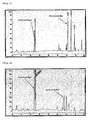
- an alcohol extract of ginseng is preferably prepared through treatment at 70°C for 24 hours and HPLC results of the alcohol extract obtained through treatment at 70°C for 24 hours are shown in FIG. 1 .
- an alcohol concentration was regulated to obtain a desired ginsenoside fraction.
- elution began at an alcohol concentration of 30 v/v% and continued until the alcohol concentration reached 40 v/v%, resulting in a fraction reinforced with ginsenoside Rg1.
- elution using alcohol began at an alcohol concentration of 50 v/v% and continued until the alcohol concentration reached 80 v/v%, in turn obtaining a fraction reinforced with ginsenoside Rb1. From these fractions, contents of ginsenosides Rg1 and Rb1 were respectively measured through HPLC. The measurement results are shown in Tables 3 and 4.
- an extract fraction reinforced with ginsenoside Rg1 or Rb1 may be obtained by elution using an adsorption resin.
Landscapes
- Health & Medical Sciences (AREA)
- Natural Medicines & Medicinal Plants (AREA)
- Life Sciences & Earth Sciences (AREA)
- Pharmacology & Pharmacy (AREA)
- Chemical & Material Sciences (AREA)
- Engineering & Computer Science (AREA)
- Veterinary Medicine (AREA)
- Public Health (AREA)
- General Health & Medical Sciences (AREA)
- Medicinal Chemistry (AREA)
- Animal Behavior & Ethology (AREA)
- Botany (AREA)
- Mycology (AREA)
- Epidemiology (AREA)
- Microbiology (AREA)
- Medical Informatics (AREA)
- Biotechnology (AREA)
- Alternative & Traditional Medicine (AREA)
- Biomedical Technology (AREA)
- Bioinformatics & Cheminformatics (AREA)
- Anesthesiology (AREA)
- Neurology (AREA)
- Neurosurgery (AREA)
- Chemical Kinetics & Catalysis (AREA)
- General Chemical & Material Sciences (AREA)
- Nuclear Medicine, Radiotherapy & Molecular Imaging (AREA)
- Organic Chemistry (AREA)
- Medicines Containing Plant Substances (AREA)
- Steroid Compounds (AREA)
- Pharmaceuticals Containing Other Organic And Inorganic Compounds (AREA)
Abstract
Description
- The present invention relates to a method for preparing an extract fraction reinforced with specific saponin components from ginseng. More particularly, the present invention relates to a method for preparing an extract fraction reinforced with ginsenoside Rg1 known to have anti-fatigue functions OR ginsenoside Rb1 known to have sedative activity, among saponin components of ginseng.
- Panax ginseng C.A. Mayer (hereinafter, abbreviate to 'ginseng') is a generic ginseng plant of the Arliaceae family. Panax ginseng has been used for medicinal purposes in China since B.C. and has been employed for medicinal purposes or as a trade item in Korea since the era of the Three Kingdoms. Panax ginseng is now widely used for preparation of oriental medicines or health supplements used for a variety of applications.
- Ginseng generally includes about 3 to 6% of saponin-like materials called ginsenosides as species-specific ingredients and the ginsenosides are major physiological active materials and may be classified into panaxadiol (PD), panaxatriol (PT) and oleanane based ginsenosides. About 33 species of ginsenosides have recently been reported.
- PD based saponin and PT based saponin have different functions in vivo. PD based saponin including ginsenoside Rb1 as a representative example, is known to exhibit inhibitory action on the central nervous system, in turn accomplishing tranquilization, neuroleptic, analgesic, anti-convulsive and/or hypotensive effects, influence upon papaverine content, or the like. On the other hand, PT based saponin including ginsenoside Rg1 as a representative example, is known to excitedly react to the central nervous system, thus exhibiting anti-fatigue activity. Therefore, it is assumed that, if saponin components in ginseng having opposing activities are separated or reinforced, pharmacological activity of ginseng may be more efficiently attained. However, most recent studies into ginsenosides are directed to a method for increasing contents of trace ingredients present in ginseng (
US Patent NO. 7,371,416 ), use of ginsenosides for treatment of particular diseases (WO 01/056585 - Korean Patent No.
620,107 517,128 192,678 - Moreover, although Korean Patent No.
0,444,394 - PD based saponin and PT based saponin present in ginseng generally show opposing activities. Therefore, according to a relative ratio of PD based saponin to PT based saponin, the ginseng may express different activities in vivo. Also, with regard to a composition including a ginseng extract, there are disadvantages such that: different activities may be imparted depending upon the ratio of ginsenoside Rb1 to Rg1; and, due to opposing activities of ginsenosides Rb1 and Rg1, effects of respective saponin components obtained from a ginseng extract may not be efficiently attained. Furthermore, health drinks usually consumed by normal healthy individuals without particular diseases requiring professional management of medical personnel, entail a problem such that some ingredients having undesirable effects may be taken without consciousness.
- Therefore, in order to overcome disadvantages of the ginseng saponin extract described above, the present inventors have extensively studied a method for preparation of ginseng saponin extract fractions having high ratio of specific saponin components (Rb1 or Rg1) of ginseng as well as increased content thereof and, as a result, have developed a method of sufficiently extracting saponin from ginseng and a method of obtaining a fraction reinforced with specific saponin components (Rb1 or Rg1) from the foregoing, thereby completing the present invention.
- Accordingly, an object of the present invention is to provide a method for preparing an extract fraction reinforced with ginsenoside Rg1 or Rb1 from ginseng.
- Another object of the present invention is to provide a functional beverage composition with reinforced anti-fatigue effects of ginseng saponin, including an extract fraction reinforced with ginsenoside Rg1 obtained from ginseng.
- Still another object of the present invention is to provide a functional beverage composition with reinforced sedative activity of ginseng saponin, including an extract fraction reinforced with gensenoside Rb1 obtained from ginseng.
- In order to achieve the objects described above, the present invention provides a method for preparing an extract fraction reinforced with ginsenoside Rg1 from ginseng, which includes:
- concentrating an alcohol extract of ginseng, diluting the concentrated extract in distilled water, and then, adding the diluted extract to an adsorption resin in order to adsorb the extract to the adsorption resin;
- passing distilled water through the adsorption resin and then eluting and removing unadsorbed ingredients; and
- adding 30 to 40 v/v% alcohol to the adsorption resin to obtain an eluate.
- The present invention also provides a method for preparing an extract fraction reinforced with ginsenoside Rb1 from ginseng, which includes:
- concentrating an alcohol extract of ginseng, diluting the concentrated extract in distilled water and then adding the diluted extract to an adsorption resin in order to adsorb the extract to the adsorption resin;
- passing distilled water through the adsorption resin and then eluting and removing unadsorbed ingredients; and
- adding 50 to 80 v/v% alcohol to the adsorption resin to obtain an eluate.
- The extract fraction prepared according to the present invention, which is reinforced with ginsenoside Rg1 or Rb1, may be added to a functional drink as an active ingredient.
- Accordingly, the present invention may provide a functional drink composition having reinforced anti-fatigue effects of ginseng saponin, which includes an extract fraction reinforced with ginsenoside Rg1 prepared by the preparation method described above.
- Alternatively, the present invention may also provide a functional drink composition having reinforced sedative activity of ginseng saponin, which includes an extract fraction reinforced with ginsenoside Rb1 prepared by the preparation method described above.
- Hereinafter, the present invention will be described in detail.
- The present inventors have found that, after removing non-saponin components from an alcohol extract of ginseng using an adsorption resin, an extract reinforced with ginsenoside Rg1 may be obtained through elution using 30 to 40 v/v% alcohol, while an extract reinforced with gensenoside Rb1 may be obtained through elution using 50 to 80 v/v% alcohol. As a result, a ginseng extract reinforced with ginsenoside Rg1 or Rb1 was obtained.
- Accordingly, in an aspect of the present invention, there is provided a method for preparing an extract fraction reinforced with ginsenoside Rg1 from ginseng, comprising:
- concentrating an alcohol extract of ginseng, diluting the concentrated extract in distilled water and then adding the diluted extract to an adsorption resin to adsorb the extract to the adsorption resin;
- passing distilled water through the adsorption resin and then eluting and removing unadsorbed ingredients; and
- adding 30 to 40 v/v% alcohol to the adsorption resin to obtain an eluate.
- In another aspect of the present invention, there is provided a method for preparing an extract fraction reinforced with ginsenoside Rb1 from ginseng, comprising:
- concentrating an alcohol extract of ginseng, diluting the concentrated extract in distilled water and then adding the diluted extract to an adsorption resin to adsorb the extract to the adsorption resin;
- passing distilled water through the adsorption resin and then eluting and removing unadsorbed ingredients; and
- adding 50 to 80 v/v% alcohol to the adsorption resin to obtain an eluate.
- The alcohol extract of ginseng may include any extract obtained by treating ginseng with alcohol, preferably, an extract having relatively high contents of ginsenosides Rg1 and Rb1. The extract having relatively high contents of ginsenosides Rg1 and Rb1 may be obtained by adding 60 to 80% alcohol to ginseng and agitating the mixture at 40 to 80°C for 24 to 36 hours to obtain an extract. As a result of extensive studies by the present inventors, the foregoing method has been developed and may be utilized as an extraction process yielding high concentrations of ginsenosides Rg1 and Rb1. If the extraction temperature exceeds 80°C, thermal stability of ginsenosides Rg1 and Rb1 is reduced, causing a decrease in contents of ginsenosides Rg1 and Rb1. On the other hand, when the extraction temperature is less than 40°C, extraction efficiency may be deteriorated. When extraction time exceeds the above range and too long, stability of ginsenosides and/or economic advantages may be reduced. On the other hand, if extraction time is too short, extraction efficiency may be deteriorated. More preferably, an alcohol extract is obtained by adding 65 to 75 v/v% alcohol to ginseng and agitating the same at 65 to 75°C for 24 to 36 hours to conduct extraction. Most preferably, an alcohol extract is obtained by adding 70 v/v% alcohol to ginseng and agitating the same at 70°C for 24 hours to perform extraction. The extract used herein may be prepared by repeating extraction at least three times and mixing the resultant extracts.
- Then, the obtained alcohol extract of ginseng is subjected to heating and concentration. In this regard, concentration may be conducted to reach a range of 70 to 90 brix, most preferably, to about 80 brix.
- Next, after adding water to the concentrated alcohol extract to dilute the extract, the diluted extract may be introduced into an adsorption resin to be adsorbed thereto. Dilution extent with water is not particularly limited, provided that a concentrate of the alcohol extract may react with overall adsorption resin to allow saponin to be adsorbed thereto. Preferably, about 4 to 6 fold water and, more preferably, about 5 fold water the weight of the concentrated extract may be added to the concentrated extract to dilute the same. The adsorption resin may be Diaion HP-20 (Mitsubishi, Japan) and used in a packed column form to implement adsorption and fractionation.
- Following this, after passing distilled water through the adsorption resin, a process of eluting and removing unadsorbed ingredients may be executed. According to this process, other components present in the alcohol extract of ginseng except for saponin may be eluted and removed. An amount of distilled water used to remove unadsorbed components is determined such that non-saponin components can be sufficiently eluted and removed, without being particularly limited. For instance, distilled water in an amount of about 5 times or more the capacity of the adsorption resin may be used. Preferably, additional non-saponin components may be eluted and removed by adding about 20 v/v% alcohol.
- When non-saponin components are removed from the adsorption resin, saponin may be eluted using alcohol at different concentrations to thereby yield a saponin fraction. For ginsenoside Rg1, using 30 to 40 v/v% alcohol may elute the adsorption resin, in turn yielding an extract fraction reinforced with ginsenoside Rg1. Likewise, for ginsenoside Rb1, using 50 to 80 v/v% alcohol may elute the adsorption resin, in turn yielding an extract fraction reinforced with ginsenoside Rb1. The extract fraction reinforced with ginsenoside Rg1 may have a relative ratio of ginsenoside Rg1 to ginsenoside Rb1 of at least 0.5. On the other hand, the extract fraction reinforced with ginsenoside Rb1 may have a relative ratio of ginsenoside Rb1 to ginsenoside Rg1 of at least 2.
- The ginseng used to prepare the ginseng extract described above may include any one containing saponin Rb1 or Rg1, for example, selected from a group consisting of white ginseng, undried ginseng, red ginseng, Tae-guk ginseng, black ginseng, puffing ginseng or enzyme-treated ginseng, or concentrates thereof.
- As apparent from the foregoing description, according to the method of the present invention, an extract fraction having reinforced ratio of ginsenoside Rg1 to ginsenoside Rb1, as well as increased contents thereof, may be prepared from saponin components of ginseng. Moreover, a functional food reinforced with saponin components of ginseng prepared by the method according to the present invention, may be provided.
- The above and other objects, features and other advantages of the present invention will be more clearly understood from the following detailed description, taken in conjunction with the accompanying drawings, in which:
-
FIG. 1 is an HPLC chromatogram of an alcohol extract obtained by extracting tail ginseng at 70°C for 24 hours using 70 v/v% alcohol; -
FIG. 2 is an HPLC chromatogram of a fraction reinforced with ginsenoside Rg1, which is obtained by extracting tail ginseng at 70°C for 24 hours using 70 v/v% alcohol to obtain an alcohol extract, adsorbing the alcohol extract to Diaion HP-20 adsorption resin and eluting the adsorbed extract using 30 to 40 v/v% alcohol; -
FIG. 3 is an HPLC chromatogram of a fraction reinforced with ginosenoside Rb1, which is obtained by extracting tail ginseng at 70°C for 24 hours using 70 v/v% alcohol to obtain an alcohol extract, adsorbing the alcohol extract to Diaion HP-20 adsorption resin and eluting the adsorbed extract using 50 to 80 v/v% alcohol; -
FIG. 4 is an HPLC chromatogram of a fraction obtained by extracting tail ginseng at 70°C for 24 hours using 70 v/v% alcohol to obtain an alcohol extract, adsorbing the alcohol extract to Diaion HP-20 adsorption resin and eluting the adsorbed extract using 10 to 20 v/v% alcohol; and -
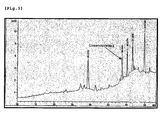
FIG. 5 is an HPLC chromatogram of a fraction obtained by extracting tail ginseng at 70°C for 24 hours using 70 v/v% alcohol to obtain an alcohol extract, adsorbing the alcohol extract to Diaion HP-20 adsorption resin and eluting the adsorbed extract using 80 to 100 v/v% alcohol. - Hereinafter, preferred embodiments and examples of the present invention will be described in detail. However, these examples are given for the purpose of illustration and are not intended to limit the invention.
- After adding about 15 fold (that is, 15 kg) 70 (v/v)% alcohol to 1kg of dried tail ginseng, the solution was extracted three times at 70°C for 24 hours each time, followed by filtration. Alternatively, using 60% and 80% alcohol, respectively, alcohol extracts of ginseng were prepared by the same procedures as described above.
- For each of the prepared alcohol extracts obtained by the foregoing methods, contents of ginsenosides Rg1 and Rb1 were measured using HPLC. Measured results are shown in the following Table 1.
TABLE 1 Extraction solvent Rg1 (mg/g) Rb1 (mg/g) Sum of contents of specific ginsenosides containing Rg1 and Rb1 (Rc, Rd, Re, Rb2) (mg/g) Yield of extract relative to raw material (%) 50 v/v% alcohol 5.3 14.5 62.6 50 60 v/v% alcohol 6.9 20.97 71.1 45 70 v/v% alcohol 6.8 20.18 72.5 45 80 v/v% alcohol 6.38 18.02 63.9 34 90 v/v% alcohol 6.21 16.45 62.1 25 - As apparent from the results, it was found that extracts obtained using 60 to 80 v/v% alcohol generally have high total content of ginsenosides Rg1 and Rb1, especially, when using 60 to 70 v/v% alcohol, the extract has the highest total content of ginsenosides Rg1 and Rb1.
- An alcohol extract of ginseng was prepared by the same procedures as described in Example 1, except that the alcohol concentration was set to 70 v/v% and the alcohol extract of ginseng was prepared while varying extraction conditions as shown in the following Table 2. Then, contents of ginsenosides Rg1 and Rb1 were measured through HPLC. Measured results are shown in Table 2.
TABLE 2 Extraction conditions Rg1 (mg/g) Rb1 (mg/g) Extraction conditions Rg1 (mg/g) Rb1 (mg/g) 40°C - 3hr 6.023 9.928 70°C - 3hr 6.118 11.098 40°C - 6hr 5.976 10.182 70°C - 6hr 6.500 13.001 40°C - 10hr 6.204 10.799 70°C - 10hr 6.581 16.127 40°C - 24hr 6.329 11.572 70°C - 24hr 6.845 20.186 50°C - 3hr 6.136 10.698 70°C - 30hr 6.751 20.904 50°C - 6hr 6.012 10.881 70°C - 36hr 6.650 21.405 50°C - 10hr 6.068 11.404 80°C - 3hr 6.015 14.957 50°C - 24hr 6.454 13.607 80°C - 6hr 6.040 15.598 60°C - 3hr 6.014 10.852 80°C - 10hr 6.176 17.254 60°C - 6hr 6.064 11.718 80°C - 24hr 5.773 17.841 60°C - 10hr 6.054 12.744 80°C - 30hr 5.415 16.776 60°C - 24hr 6.622 16.588 80°C - 36hr 5.209 15.836 - According to results of the foregoing experiments, it was confirmed that, if extraction is performed using 70 v/v% alcohol, contents of ginsenosides Rg1 and Rb1 vary slightly depending upon temperature conditions and, especially, Rb1 content is noticeably increased at 70°C. In addition, it was found that a total content of ginsenosides Rg1 and Rb1 is the highest at 70°C.
- With regard to treatment time, it was found that, when treating for 24 hours or more, contents of ginsenosides Rg1 and Rb1 are remarkably increased. Although, in the case of treating at 80°C, the contents of ginsenosides Rg1 and Rb1 are decreased as treatment time increases, this may seem to be due to temperature instability.
- It can be seen that an alcohol extract of ginseng is preferably prepared through treatment at 70°C for 24 hours and HPLC results of the alcohol extract obtained through treatment at 70°C for 24 hours are shown in
FIG. 1 . - The alcohol extract of ginseng obtained through extraction at 70°C for 24 hours in Experimental Example 1, was heated and concentrated to 80 brix. Then, after adding water in an amount of 5 times the weight of the formed concentrate to sufficiently dilute the concentrate, the diluted extract was passed through Diaion HP-20 adsorption resin, thus enabling a saponin component to be adsorbed to the resin. Next, unadsorbed ingredients were removed by continuously flowing distilled water in an amount of about 5 times the capacity of the resin through the adsorption resin.
- Following this, after passing 20 v/v% alcohol in an amount of about 5 times the capacity of the resin through the adsorption resin to remove non-saponin components, an alcohol concentration was regulated to obtain a desired ginsenoside fraction. By using alcohol, elution began at an alcohol concentration of 30 v/v% and continued until the alcohol concentration reached 40 v/v%, resulting in a fraction reinforced with ginsenoside Rg1. Alternatively, elution using alcohol began at an alcohol concentration of 50 v/v% and continued until the alcohol concentration reached 80 v/v%, in turn obtaining a fraction reinforced with ginsenoside Rb1. From these fractions, contents of ginsenosides Rg1 and Rb1 were respectively measured through HPLC. The measurement results are shown in Tables 3 and 4.
- In addition, after using 30 to 40 v/v%, 50 to 80 v/v%, 10 to 20 v/v%, and 80 to 100 v/v% alcohol, respectively, to conduct elution, contents of ginsenosides were measured through HPLC. The measurement results are shown in
FIGS. 2 ,3 ,4 and5 . From results shown inFIGS. 2 to 5 , it can be seen that a fraction reinforced with ginsenoside Rg1 may be obtained by elution using 30 to 40 v/v% alcohol, while yielding a fraction reinforced with ginsenoside Rb1 when elution is performed using 50 to 80 v/v% alcohol.TABLE 3 Rg1 content Content of ginsenoside in ginseng extract 0.7 wt.% Ginsenoside Rg1 reinforced fraction 12 wt.% or more TABLE 4 Rb1 content Content of ginsenoside in ginseng extract 2.0 wt.% Ginsenoside Rb1 reinforced fraction 18 wt.% or more - As understood from the foregoing results, an extract fraction reinforced with ginsenoside Rg1 or Rb1 may be obtained by elution using an adsorption resin.
Claims (5)
- A method for preparing an extract fraction reinforced with ginsenoside Rg1 from ginseng, the method comprising:concentrating an alcohol extract of ginseng, diluting the concentrated extract in distilled water, and then, adding the diluted extract to an adsorption resin in order to adsorb the extract to the adsorption resin;passing distilled water through the adsorption resin and then eluting and removing unadsorbed ingredients; andadding 30 to 40 v/v% alcohol to the adsorption resin to obtain an eluate.
- A method for preparing an extract fraction reinforced with ginsenoside Rb1 from ginseng, the method comprising:concentrating an alcohol extract of ginseng, diluting the concentrated extract in distilled water, and then, adding the diluted extract to an adsorption resin in order to adsorb the extract to the adsorption resin;passing distilled water through the adsorption resin and then eluting and removing unadsorbed ingredients; andadding 50 to 80 v/v% alcohol to the adsorption resin to obtain an eluate.
- The method according to claim 1 or 2, wherein the alcohol extract of ginseng is prepared by adding 60 to 80 v/v% alcohol to ginseng and agitating the mixture at 65 to 75°C for 24 to 36 hours to conduct extraction.
- The method according to claim 1 or 2, wherein the alcohol extract of ginseng is concentrated to 70 to 90 brix.
- The method according to claim 1 or 2, wherein the adsorption resin is Diaion HP-20.
Applications Claiming Priority (2)
| Application Number | Priority Date | Filing Date | Title |
|---|---|---|---|
| KR1020080109038A KR101052574B1 (en) | 2008-11-04 | 2008-11-04 | Method for preparing an extract fraction with enhanced ginsenosides Rg1 or Rb1 from ginseng |
| PCT/KR2009/006311 WO2010053271A2 (en) | 2008-11-04 | 2009-10-30 | Method for preparing extract fraction reinforced with ginsenosides rg1 or rb1 from ginseng |
Publications (2)
| Publication Number | Publication Date |
|---|---|
| EP2359839A2 true EP2359839A2 (en) | 2011-08-24 |
| EP2359839A4 EP2359839A4 (en) | 2012-08-22 |
Family
ID=42153371
Family Applications (1)
| Application Number | Title | Priority Date | Filing Date |
|---|---|---|---|
| EP09824954A Withdrawn EP2359839A4 (en) | 2008-11-04 | 2009-10-30 | Method for preparing extract fraction reinforced with ginsenosides rg1 or rb1 from ginseng |
Country Status (6)
| Country | Link |
|---|---|
| US (1) | US8623425B2 (en) |
| EP (1) | EP2359839A4 (en) |
| JP (1) | JP5524971B2 (en) |
| KR (1) | KR101052574B1 (en) |
| CN (1) | CN102196814B (en) |
| WO (1) | WO2010053271A2 (en) |
Families Citing this family (7)
| Publication number | Priority date | Publication date | Assignee | Title |
|---|---|---|---|---|
| KR101106487B1 (en) * | 2011-07-21 | 2012-01-20 | 대동고려삼 주식회사 | Ginsenoside Rg3 and Rh2 reinforced red ginseng concentrate manufacturing method |
| KR101682564B1 (en) | 2014-02-14 | 2016-12-05 | 주식회사 한국인삼공사 | Method for Making Red Ginseng Enriched with Ginsenoside Rg1 and Rb1, and Red Ginseng Obtained by the Same |
| KR101670444B1 (en) * | 2016-05-10 | 2016-11-09 | 자이글주식회사 | Infrared Heating-Cook Utensil |
| KR101993623B1 (en) | 2017-06-28 | 2019-06-28 | 남해군흑마늘 주식회사 | Method for producing ripen ginseng |
| KR102043433B1 (en) | 2018-04-12 | 2019-11-12 | 주식회사 한국인삼공사 | Method for Making Extract of Red Ginseng |
| CN114989238A (en) * | 2022-05-30 | 2022-09-02 | 泰州医药城国科化物生物医药科技有限公司 | High-purity pesticide residue-free ginsenoside Rb 1 Method for producing monomer compound |
| CN116655722A (en) * | 2023-06-02 | 2023-08-29 | 仁寿县人民医院 | Extraction method and application of ginsenoside Rg1 |
Family Cites Families (12)
| Publication number | Priority date | Publication date | Assignee | Title |
|---|---|---|---|---|
| JPS59118053A (en) * | 1982-12-24 | 1984-07-07 | Hayashibara Biochem Lab Inc | Food and drink, and its preparation |
| KR100192678B1 (en) | 1995-06-07 | 1999-06-15 | 손경식 | Processed ginseng products with enhanced efficacy |
| KR100444394B1 (en) | 1998-05-07 | 2004-12-29 | 주식회사 케이티앤지 | Preparation Method of Ginseng Extract with High Amount of Saponine Content |
| KR100325778B1 (en) * | 1999-07-20 | 2002-03-06 | 심건섭 | Method for Extraction of Ginseng Treated by Puffing Processing, and Health Foods Containing Said Extract |
| KR100375018B1 (en) | 2000-01-31 | 2003-03-06 | (주) 디지탈바이오텍 | Stimulator for Hippocampal Synaptogenesis Comprising Ginseng Extract |
| KR100444369B1 (en) * | 2001-05-16 | 2004-08-16 | 주식회사 한국인삼공사 | The memory increasing novel compound ginseno-jk from ginseng hairy roots and the manufacturing method of the ginseno-jk |
| IL159557A0 (en) * | 2001-07-24 | 2004-06-01 | Radicispandex Corp | A spandex produced from a polyurethane and methods for the production thereof |
| KR100517128B1 (en) | 2003-02-13 | 2005-09-27 | 주식회사 홍삼닷컴 | An extraction method of physiologically active in ginseng or red ginseng |
| KR100620107B1 (en) | 2004-12-24 | 2006-09-20 | 소망화장품주식회사 | Method for preparing ginsenoside Rg2 |
| US7371416B2 (en) | 2005-04-12 | 2008-05-13 | You-Sup Chung | Method for preparing processed ginseng to obtain increased amount of ginsenoside RG5 |
| KR100678490B1 (en) * | 2005-10-14 | 2007-02-02 | 주식회사 비티진 | Separation method of Panax diol and Panax triol |
| US8247541B2 (en) * | 2007-01-08 | 2012-08-21 | Her Majesty The Queen In Right Of Canada, As Represented By The Minister Of Agriculture And Agri-Food | Plant compositions enriched in dehydrosoyasaponin I (D-I) and methods of producing such compositions |
-
2008
- 2008-11-04 KR KR1020080109038A patent/KR101052574B1/en active Active
-
2009
- 2009-10-30 EP EP09824954A patent/EP2359839A4/en not_active Withdrawn
- 2009-10-30 WO PCT/KR2009/006311 patent/WO2010053271A2/en not_active Ceased
- 2009-10-30 CN CN200980142817XA patent/CN102196814B/en active Active
- 2009-10-30 JP JP2011533117A patent/JP5524971B2/en active Active
- 2009-10-30 US US13/127,371 patent/US8623425B2/en active Active
Non-Patent Citations (2)
| Title |
|---|
| No further relevant documents disclosed * |
| See also references of WO2010053271A2 * |
Also Published As
| Publication number | Publication date |
|---|---|
| US20110268823A1 (en) | 2011-11-03 |
| WO2010053271A3 (en) | 2010-08-12 |
| KR20100049975A (en) | 2010-05-13 |
| JP5524971B2 (en) | 2014-06-18 |
| HK1159522A1 (en) | 2012-08-03 |
| JP2012506422A (en) | 2012-03-15 |
| US8623425B2 (en) | 2014-01-07 |
| CN102196814B (en) | 2013-07-31 |
| EP2359839A4 (en) | 2012-08-22 |
| CN102196814A (en) | 2011-09-21 |
| WO2010053271A2 (en) | 2010-05-14 |
| KR101052574B1 (en) | 2011-07-29 |
Similar Documents
| Publication | Publication Date | Title |
|---|---|---|
| EP1467627B1 (en) | Method for processing ginseng and the uses of extract of processed ginseng | |
| US8623425B2 (en) | Method for preparing extract fracton reinforced with ginsenosides RG1 or RB1 from ginseng | |
| EP3151843B1 (en) | Compositions comprising cyclocarya paliurus extract and preparation method and uses thereof | |
| KR101593618B1 (en) | Composition for enhancing bioavailability of saponin | |
| JP4777776B2 (en) | Ginseng preparation using vinegar and method for producing the same | |
| JP7161064B2 (en) | Composition for prevention, treatment or improvement of male menopausal syndrome containing elderberry extract as an active ingredient | |
| CN103652203A (en) | Abelmoschus manihot medic tea bag and preparation method | |
| KR100854685B1 (en) | Preparation method of red ginseng concentrate and red ginseng concentrate prepared by the above method | |
| CN104605461A (en) | Brassica rapa L. extract composite solid beverage and preparation method thereof | |
| KR100979251B1 (en) | Jujube beverage and method for manufacturing thereof | |
| KR20110052940A (en) | Method for preparing an extract fraction enhanced with ginsenoside Rg3 from ginseng | |
| CN103040882B (en) | Passiflora edulis sims stem-leaf extract as well as pharmaceutical composition and antidepressant action of extract | |
| WO2017172407A1 (en) | Nutritional supplement and related method for activating a subject's antioxidant system | |
| TW201121559A (en) | Extract of Toona sinensis from supercritical fluid extraction for treating diabetes and metabolic diseases, the preparation method and the use thereof | |
| CN109453234B (en) | Mulberry bark product and preparation method thereof | |
| KR101435930B1 (en) | Products containing ginsenoside Rg3-fortified red ginseng extract as active ingredient and method of preparation thereof | |
| KR102043433B1 (en) | Method for Making Extract of Red Ginseng | |
| CN104958582A (en) | Lophatherum gracile extract product, preparation containing extract product, and use of extract product | |
| CN105030939B (en) | A kind of hypoglycemic granule and capsule | |
| CN106617060A (en) | Fructus phyllanthi polyphenols enriching and purifying method | |
| EP2089505A1 (en) | Reduced-hangover alcoholic beverage | |
| Umar et al. | In vivo antihyperglycaemic activity of crude and partitioned fractions of selected medicinal plants | |
| CN102599303A (en) | Ginseng leaf tea subjected to micronization and fermentation and preparation method thereof | |
| CN108497246A (en) | A kind of plant weight losing function beverage and preparation method thereof | |
| KR102597682B1 (en) | Red ginseng with enhanced ginsennoside content and manufacturing method thereof |
Legal Events
| Date | Code | Title | Description |
|---|---|---|---|
| PUAI | Public reference made under article 153(3) epc to a published international application that has entered the european phase |
Free format text: ORIGINAL CODE: 0009012 |
|
| 17P | Request for examination filed |
Effective date: 20110518 |
|
| AK | Designated contracting states |
Kind code of ref document: A2 Designated state(s): AT BE BG CH CY CZ DE DK EE ES FI FR GB GR HR HU IE IS IT LI LT LU LV MC MK MT NL NO PL PT RO SE SI SK SM TR |
|
| DAX | Request for extension of the european patent (deleted) | ||
| RIC1 | Information provided on ipc code assigned before grant |
Ipc: A61K 36/258 20060101AFI20120712BHEP |
|
| A4 | Supplementary search report drawn up and despatched |
Effective date: 20120720 |
|
| 17Q | First examination report despatched |
Effective date: 20130508 |
|
| STAA | Information on the status of an ep patent application or granted ep patent |
Free format text: STATUS: THE APPLICATION IS DEEMED TO BE WITHDRAWN |
|
| 18D | Application deemed to be withdrawn |
Effective date: 20140604 |