EP2357138A1 - Device and method for feeding a web of a packaging material - Google Patents
Device and method for feeding a web of a packaging material Download PDFInfo
- Publication number
- EP2357138A1 EP2357138A1 EP20100153478 EP10153478A EP2357138A1 EP 2357138 A1 EP2357138 A1 EP 2357138A1 EP 20100153478 EP20100153478 EP 20100153478 EP 10153478 A EP10153478 A EP 10153478A EP 2357138 A1 EP2357138 A1 EP 2357138A1
- Authority
- EP
- European Patent Office
- Prior art keywords
- web
- along
- advancing
- advancing means
- path
- Prior art date
- Legal status (The legal status is an assumption and is not a legal conclusion. Google has not performed a legal analysis and makes no representation as to the accuracy of the status listed.)
- Granted
Links
Images




Classifications
-
- B—PERFORMING OPERATIONS; TRANSPORTING
- B65—CONVEYING; PACKING; STORING; HANDLING THIN OR FILAMENTARY MATERIAL
- B65B—MACHINES, APPARATUS OR DEVICES FOR, OR METHODS OF, PACKAGING ARTICLES OR MATERIALS; UNPACKING
- B65B41/00—Supplying or feeding container-forming sheets or wrapping material
- B65B41/18—Registering sheets, blanks, or webs
-
- B—PERFORMING OPERATIONS; TRANSPORTING
- B31—MAKING ARTICLES OF PAPER, CARDBOARD OR MATERIAL WORKED IN A MANNER ANALOGOUS TO PAPER; WORKING PAPER, CARDBOARD OR MATERIAL WORKED IN A MANNER ANALOGOUS TO PAPER
- B31B—MAKING CONTAINERS OF PAPER, CARDBOARD OR MATERIAL WORKED IN A MANNER ANALOGOUS TO PAPER
- B31B50/00—Making rigid or semi-rigid containers, e.g. boxes or cartons
- B31B50/74—Auxiliary operations
- B31B50/81—Forming or attaching accessories, e.g. opening devices, closures or tear strings
- B31B50/84—Forming or attaching means for filling or dispensing contents, e.g. valves or spouts
-
- B—PERFORMING OPERATIONS; TRANSPORTING
- B31—MAKING ARTICLES OF PAPER, CARDBOARD OR MATERIAL WORKED IN A MANNER ANALOGOUS TO PAPER; WORKING PAPER, CARDBOARD OR MATERIAL WORKED IN A MANNER ANALOGOUS TO PAPER
- B31B—MAKING CONTAINERS OF PAPER, CARDBOARD OR MATERIAL WORKED IN A MANNER ANALOGOUS TO PAPER
- B31B50/00—Making rigid or semi-rigid containers, e.g. boxes or cartons
- B31B50/74—Auxiliary operations
- B31B50/81—Forming or attaching accessories, e.g. opening devices, closures or tear strings
- B31B50/84—Forming or attaching means for filling or dispensing contents, e.g. valves or spouts
- B31B50/85—Applying patches or flexible valve inserts, e.g. applying film-like valves
-
- B—PERFORMING OPERATIONS; TRANSPORTING
- B65—CONVEYING; PACKING; STORING; HANDLING THIN OR FILAMENTARY MATERIAL
- B65B—MACHINES, APPARATUS OR DEVICES FOR, OR METHODS OF, PACKAGING ARTICLES OR MATERIALS; UNPACKING
- B65B61/00—Auxiliary devices, not otherwise provided for, for operating on sheets, blanks, webs, binding material, containers or packages
- B65B61/18—Auxiliary devices, not otherwise provided for, for operating on sheets, blanks, webs, binding material, containers or packages for making package-opening or unpacking elements
-
- B—PERFORMING OPERATIONS; TRANSPORTING
- B31—MAKING ARTICLES OF PAPER, CARDBOARD OR MATERIAL WORKED IN A MANNER ANALOGOUS TO PAPER; WORKING PAPER, CARDBOARD OR MATERIAL WORKED IN A MANNER ANALOGOUS TO PAPER
- B31B—MAKING CONTAINERS OF PAPER, CARDBOARD OR MATERIAL WORKED IN A MANNER ANALOGOUS TO PAPER
- B31B50/00—Making rigid or semi-rigid containers, e.g. boxes or cartons
- B31B50/02—Feeding or positioning sheets, blanks or webs
- B31B50/10—Feeding or positioning webs
-
- B—PERFORMING OPERATIONS; TRANSPORTING
- B31—MAKING ARTICLES OF PAPER, CARDBOARD OR MATERIAL WORKED IN A MANNER ANALOGOUS TO PAPER; WORKING PAPER, CARDBOARD OR MATERIAL WORKED IN A MANNER ANALOGOUS TO PAPER
- B31B—MAKING CONTAINERS OF PAPER, CARDBOARD OR MATERIAL WORKED IN A MANNER ANALOGOUS TO PAPER
- B31B50/00—Making rigid or semi-rigid containers, e.g. boxes or cartons
- B31B50/74—Auxiliary operations
- B31B50/81—Forming or attaching accessories, e.g. opening devices, closures or tear strings
- B31B50/812—Applying tabs, patches, strips or strings on blanks or webs
- B31B50/8122—Applying patches
- B31B50/8123—Applying patches the blanks remaining stationary during application of the patches
Definitions
- the present invention relates to a device and to a method for feeding a web of a packaging material along a path and towards an application station, which applies, in use, a plurality of opening devices onto respective areas of the packaging material.
- pourable food products such as fruit juice, UHT (ultra-high-temperature treated) milk, wine, tomato sauce, etc.
- UHT ultra-high-temperature treated milk
- wine tomato sauce
- etc. are sold in packages made of sterilized packaging material.
- Tetra Brik Aseptic registered trademark
- a typical example of this type of package is the parallelepiped-shaped package for liquid or pourable food products known as Tetra Brik Aseptic (registered trademark), which is made by folding and sealing laminated strip packaging material.
- the packaging material has a multilayer structure substantially comprising a base layer for stiffness and strength, which may comprise a layer of fibrous material, e.g. paper, or mineral-filled polypropylene material, and a number of lamination layers of heat-seal plastic material, e.g. polyethylene films, covering both sides of the base layer.
- a base layer for stiffness and strength may comprise a layer of fibrous material, e.g. paper, or mineral-filled polypropylene material, and a number of lamination layers of heat-seal plastic material, e.g. polyethylene films, covering both sides of the base layer.
- the packaging material also comprises a layer of gas-barrier material, e.g. aluminium foil or ethyl vinyl alcohol (EVOH) film, which is superimposed on a layer of heat-seal plastic material, and is in turn covered with another layer of heat-seal plastic material forming the inner face of the package eventually contacting the food product.
- gas-barrier material e.g. aluminium foil or ethyl vinyl alcohol (EVOH) film
- Packages of this sort are normally produced on fully automatic packaging machines, on which a continuous tube is formed from the web-fed packaging material; the web of packaging material is sterilized on the packaging machine, e.g. by applying a chemical sterilizing agent, such as a hydrogen peroxide solution, which, once sterilization is completed, is removed from the surfaces of the packaging material, e.g. evaporated by heating; and the web of packaging material so sterilized is maintained in a closed, sterile environment, and is folded and sealed longitudinally to form a vertical tube.
- a chemical sterilizing agent such as a hydrogen peroxide solution
- the tube is filled with the sterilized or sterile-processed food product, and is sealed and subsequently cut along equally spaced cross sections to form pillow packs, which are then folded mechanically to form respective finished, e.g. substantially parallelepiped-shaped, packages.
- the packaging material may be cut into blanks, which are formed into packages on forming spindles, and the packages are filled with the food product and sealed.
- the so-called "gable-top” package known by the trade name Tetra Rex (registered trademark).
- a first solution of opening device comprises a patch defined by a small sheet of a heat-seal plastic material, and which is heat sealed over a respective hole on the side of the web eventually forming the inside of the package; and a pull-off tab applied to the opposite side of the packaging material and heat sealed to the patch.
- the tab and patch adhere to each other, so that, when the tab is pulled off, the portion of the patch heat sealed to it is also removed to uncover the hole.
- a second solution comprises closable opening devices which are applied by injecting plastic material directly onto the holes of the web.
- the application station is a molding station.
- a third solution of opening device comprises a frame defining an opening and fitted about a pierceable or removable portion of the packaging material.
- the pierceable portion of the package may be defined by a so-called "prelaminated” hole, i.e. a hole formed in the base layer only and covered by the other lamination layers, including the layer of gas-barrier material.
- the application station is a molding station.
- web is provided with a plurality of prelaminated holes in a packaging material factory and then fed to the packaging machine.
- Web is then wound off from a reel within the packaging machine. Subsequently, web is stepwise fed to the application station before that the packaging material is folded to form a tube. In particular, the web is fed towards the molding station along a first direction.
- the molding of opening devices at the molding station requires that pre-laminated holes are fed in a correct position relative to the molding station.
- the real positions of pre-laminated holes may differ from the theoretical positions, which are required for a correct molding of the opening device at the molding station.
- EP-A-122169 in the name of the same Applicant discloses a device for adjusting the position of the web of the packaging material on a packaging machine along a second direction, which is transversal to the first direction.
- the web of packaging material is fed through the machine along a path defined by a plurality of drive or transmission rollers.
- the path is, in particular, parallel to the first direction.
- the device comprises a slide movable along the second direction, a gripping member for gripping and moving the web in the second direction, and a motor for controlling the slide.
- Device also comprises a pair of sensors for detecting the position of the web, and a control unit connected to the sensors and which controls the motor to move the slide along the second direction in response to the values detected by the sensors.
- the packaging material is subjected to stress and therefore may be damaged.
- the gripping member of the device disclosed in EP-A-122169 comprises a supporting plate hinged to the slide.
- the plate is fitted with an arm supporting a shoe cooperating in use with an edge of the web.
- the gripping member is subjected to the elastic force of a low-stiffness spring stretched between a fastening member and an auxiliary arm projecting transversely from plate.
- Plate also supports two shafts, which are fitted with idler rollers rolling on opposite side of web. Accordingly, gripping member is, in use, tilted forwards in a position defined by a balance between the action of the spring, the reaction of web onto shoes, and the frictional force between moving web and rollers.
- a device for feeding a web of a packaging material along a path and towards an application station as claimed in Claim 1.
- the present invention also relates to a method for feeding a web of a packaging material along a path and towards an application station, as claimed in claim 9.
- Number 1 in Figure 1 indicates as a whole a unit for molding a plurality of opening devices 4 onto respective pre-laminated holes of a web 3 of a packaging material.
- Packaging material is intended to form a plurality of packages, which preferably contain a pourable food product, such as pasteurized or UHT milk, fruit juice, wine, etc.
- Packages may also contain a food product, which is pourable within a tube of packaging material when producing packages, and sets after packages are sealed.
- a food product is pourable within a tube of packaging material when producing packages, and sets after packages are sealed.
- One example of such a food product is a portion of cheese, which is melted when producing packages and sets after packages are sealed.
- the tube is formed in known manner downstream from unit 1 by longitudinally folding and sealing a known web 3 of heat-seal sheet material, which comprises a layer of paper material covered on both sides with layers of heat-seal plastic material, e.g. polyethylene.
- the packaging material comprises a layer of oxygen-barrier material, e.g. aluminium foil, which is superimposed on one or more layers of heat-seal plastic material eventually forming the inner face of package contacting the food product.
- the tube of packaging material is then filled with the food product for packaging, and is sealed and cut along equally spaced cross sections to form a number of pillow packs (not shown), which are then transferred to a folding unit where they are folded mechanically to form respective packages.
- a first solution of opening device 4 comprises a patch defined by a small sheet of a heat-seal plastic material, and which is heat sealed over a respective hole on the side of the web eventually forming the inside of the package; and a pull-off tab applied to the opposite side of the packaging material and heat sealed to the patch.
- the tab and patch adhere to each other, so that, when the tab is pulled off, the portion of the patch heat sealed to it is also removed to uncover the hole.
- a second solution comprises closable opening device 4 which are applied by injecting plastic material directly onto the holes of the web 3.
- web 3 comprises a number of removable portions (not shown in the Figures) equally spaced in a lengthwise direction A of the packaging material, and to which opening devices 4 are injection molded.
- removable portion is defined by a so-called pre-laminated hole, i.e. a hole (or opening) formed through base layer of packaging material and covered by lamination layers so that hole is sealed by a respective sheet cover portion.
- pre-laminated hole i.e. a hole (or opening) formed through base layer of packaging material and covered by lamination layers so that hole is sealed by a respective sheet cover portion.
- Web 3 finally comprises a plurality of magnetic markers C1, C2, C3 (shown in Figure 6 for sake of clarity, but not visible in reality).
- magnetic markers C1, C2, C3 are printed with a magnetizable ink which has been subsequently magnetized. More precisely, each magnetic marker C1, C2, C3 has respective north and south poles aligned along path P.
- Magnetic markers C1, C2, C3 are applied to web 3 in alignment with pre-laminated holes.
- Unit 1 substantially comprises ( Figure 1 ):
- Unit 1 also comprises a plurality of idler rollers 7 which are arranged upstream from device 10 and downstream from device 25 and are adapted to support web 3 while it advances along path P.
- device 10 stepwise feeds one after the other a plurality of portions 24 of web 3 each comprising a certain number of pre-laminated holes, three in the embodiment shown, towards molding station 26; and molding station 26 comprises a plurality, three in the embodiment shown, of moulds 27, which inject the plastic material forming respective opening devices 4 onto web 3 and at respective pre-laminate holes.
- each portion 24 comprises, proceeding from device 10 towards molding station 26, a first, a second and a third pre-laminated hole which are associated respectively to magnetic markers C1, C2, C3.
- the positions of magnetic markers C1, C2, C3 are associated to the positions of first, second and third pre-laminated holes.
- device 10 comprises ( figure 2 to 4 ) :
- Roller 12 is driven in rotation by motor 11 through the interposition of a belt 8. More precisely, belt 8 is wound onto a pulley 9a driven in rotation by motor 11 and a pulley 9b which drives in rotation roller 12.
- Roller 12 and corresponding counter-roller cooperate with opposite sides of web 3 which is being advanced towards molding station 26.
- Motor 14 is advantageously operatively connected to motor 11 and rollers 12 for moving them along a direction T transversal to path P and direction A.
- direction T is orthogonal to direction A and is arranged, in use, horizontally.
- Sensor 15 in the embodiment shown, detects the transition between respective north and south pole of magnetic markers C1, C2, C3, so detecting the positions of magnetic markers C1, C2, C3, and, therefore, the positions of relative first, second and third pre-laminated holes along direction A. Furthermore, sensor 15 detects the intensity of the magnetic field generated by magnetic markers C1, C2, C3, so detecting the relative positions of magnetic markers C1, C2, C3 and, therefore, the positions of relative first, second and third pre-laminated holes along direction T.
- device 10 comprises:
- Frame 16 in particular, supports a pair of elements 31 which are arranged on respective opposite sides of structure 17 along direction T and are connected by a crossbar 32 ( Figure 4 ).
- Sensor 15 generates measure signals M1, M2, M3, which are associated to the real positions of first, second and third pre-laminated hole corresponding to respective magnetic markers C1, C2, C3 along directions A and T.
- Unit 1 also comprises ( Figure 3 ):
- a bottom wall 22 of structure 17 comprises a plurality of slides 23 which may slide along direction T over respective guides 18 fixed with respect to frame 16 ( Figure 2 ).
- Unit 1 also comprises a control unit 30 (only schematically shown in Figure 6 ) which receives measure signals M1, M2, M3 from sensor 15 and generates control signals S1, S2 for motors 11, 14.
- control unit 30 (only schematically shown in Figure 6 ) which receives measure signals M1, M2, M3 from sensor 15 and generates control signals S1, S2 for motors 11, 14.
- control unit 30 has stored in memory the theoretical positions of pre-laminated holes with respect to moulds 27, and evaluates the difference between the detected position of first, second and third pre-laminated holes and the respective theoretical positions.
- Control signal S1 for motor 11 results in an additional displacement of web 3 along direction A.
- motor 11 moves web 3 along direction A for a length which is the algebraic sum of the additional displacement depending on control signal S1 and of a nominal constant displacement.
- control signal S1 is associated to the difference between the detected position and the theoretical position of only one, namely the second, pre-laminated hole.
- Control signal S2 for motor 14 results in a displacement of web 3 along direction T and is generated in the following way.
- control unit 30 evaluates for each first, second and third pre-laminated holes of portion 24, the distance between the theoretical and the detected position; and evaluates the maximum and the minimum value of said distances. Control unit 30 then generates control signal S2 which causes displacement of web 3 along direction T equal to the average between the maximum and the minimum value.
- Device 25 comprises ( Figure 5 ):
- Device 25 also comprises a pair of rubber wheels 55 (only one shown of which is shown in Figure 5 ) for guiding web 3 along direction A and driven in rotation by motor 44 through the interposition of a belt. More precisely, the belt is wound onto a first pulley driven in rotation by motor 44 and a second pulley which drives in rotation wheels 55.
- Motor 41 moves structure 43 and, therefore, motor 44 along direction T, so that also web 3 moves along direction T.
- motor 41 is operatively connected to structure 43 through the interposition of:
- Bottom plate 49 of structure 43 comprises a plurality of slides 50 which may slide along direction T over respective guides 42.
- Motors 41 and 44 are controlled by control unit 30 on the basis of the measured signals M1, M2, M3 generated by sensor 15.
- control unit 30 generates a control signal S3 for motor 44 which results in an additional displacement of web 3 along direction A.
- motor 44 moves web 3 along direction A for a length which is the algebraic sum of the additional displacement depending on control signal S3 and of a nominal constant displacement.
- control signal S3 is associated to the difference between the detected position and the theoretical position of only one, namely the second, pre-laminated hole.
- Control signal S4 for motor 14 results in a displacement of web 3 along direction T and is generated in the following way.
- control unit 30 evaluates for each first, second and third pre-laminated holes of portion 24, the distance between the theoretical and the detected position; and evaluates the maximum and the minimum value of said distances. Control unit 30 then generates control signal S4 which causes displacement of web 3 along direction T equal to the average between the maximum and the minimum value.
- Motors 11, 44 move web 3 for the same length along direction A. More precisely, motor 44 pulls web 3 along path P and towards moulds 27 while motor 11 provides web 3 with the correct level of tension.
- Motors 14, 41 move respective structures 17, 43 and, therefore, web 3 for the same length along direction T.
- motors 11, 44; 14, 41 are synchronized.
- Web 3 provided with pre-laminated holes and magnetic markers C1, C2, C3 is wound off from reel 3 along path P.
- Devices 10, 25 stepwise and horizontally move web 3 through molding station 26, and moulds 27 inject plastic material forming respective opening devices 4 onto web 3 and at respective pre-laminated holes.
- Sensor 15 detects the presence of magnetic markers C1, C2, C3 and generates measure signals M1, M2, M3 which are associated to the real position of corresponding first, second and third pre-laminated holes along directions A, T.
- Control unit 30 receives measured signals M1, M2, M3; evaluates the differences between real and theoretical positions of first, second and third pre-laminated holes along directions A, T; and generates control signals S1, S2, S3, S4 for motors 11, 14; 44, 41.
- motors 11 and 44 move web 3 along direction A for the same length and at the same time. More precisely, motor 44 pulls web 3 along path P and towards moulds 27 while motor 11 provides web 3 with the correct level of tension.
- Control signal S1 is associated to the difference between the detected and the theoretical position of the second pre-laminated hole along direction A.
- Motor 11 advances web 3 along direction A for a length which is the algebraic sum of the nominal displacement and of the additional displacement depending on control signal S1.
- Motor 14 displaces web 3 along direction T for a length which is determined by control signal S2 generated by control unit 30.
- control unit 30
- Motor 14 is controlled by control signal S2 and rotates roller screw 19 about direction T, so causing the translation of screw 20, plate 21 and whole structure 17 along this direction T.
- the displacement of structure 17 along direction T causes the movement of motor 11, rollers 12 and, therefore, of web 3, along direction T up to arrange the first, second and third pre-laminated holes in the respective correct positions as they reach molding station 26.
- second and third pre-laminated holes reach molding station 26, respective moulds 27 inject plastic material onto web 3 so as to form corresponding opening devices 4 at relative pre-laminated holes.
- Control signal S3 is associated to the difference between the detected and the theoretical position of the second pre-laminated hole along direction A.
- Motor 44 advances web 3 along direction A for a length which is the algebraic sum of the nominal displacement and of the additional displacement depending on control signal S3.
- Motor 41 displaces web 3 along direction T for a length which is determined by control signal S4 generated by control unit 30.
- control unit 30
- Motor 41 rotates roller screw 45 about direction T, so causing the translation of screw 46, plate 47 and whole structure 43 along this direction T.
- the movement of structure 43 causes the movement of motor 44 and wheels 55 and, therefore, of web 3, along direction T up to arrange pre-laminated holes in the respective correct positions as they reach molding station 26.
- the operation of motor 14 results in the movement along direction T of motor 11, rollers 12 and, therefore, of web 3.
- the first, second and third pre-laminated holes of web 3 may be arranged in the correct position along direction T relative to corresponding moulds 27, so correcting possible misalignments of the pre-laminated holes within the reel.
- device 10 comprises neither a gripping member nor a mechanical group adapted to tilt the gripping member towards web 3. Accordingly, the overall design of the device 10 is rather simple when compared with the device disclosed in EP-A-122169 .
- motor 11, 44 are controlled by control signal S1, S3 so as to generate an additional movement of web 3 along direction A.
- Such additional movement arranges first, second and third pre-laminated hole in the correct position with respect to relative moulds 27 also along direction A.
Landscapes
- Engineering & Computer Science (AREA)
- Mechanical Engineering (AREA)
- Making Paper Articles (AREA)
- Auxiliary Devices For And Details Of Packaging Control (AREA)
- Wrapping Of Specific Fragile Articles (AREA)
- Containers And Plastic Fillers For Packaging (AREA)
- Registering, Tensioning, Guiding Webs, And Rollers Therefor (AREA)
- Controlling Rewinding, Feeding, Winding, Or Abnormalities Of Webs (AREA)
- Injection Moulding Of Plastics Or The Like (AREA)
Abstract
Description
- The present invention relates to a device and to a method for feeding a web of a packaging material along a path and towards an application station, which applies, in use, a plurality of opening devices onto respective areas of the packaging material.
- As is known, many pourable food products, such as fruit juice, UHT (ultra-high-temperature treated) milk, wine, tomato sauce, etc., are sold in packages made of sterilized packaging material.
- A typical example of this type of package is the parallelepiped-shaped package for liquid or pourable food products known as Tetra Brik Aseptic (registered trademark), which is made by folding and sealing laminated strip packaging material.
- The packaging material has a multilayer structure substantially comprising a base layer for stiffness and strength, which may comprise a layer of fibrous material, e.g. paper, or mineral-filled polypropylene material, and a number of lamination layers of heat-seal plastic material, e.g. polyethylene films, covering both sides of the base layer.
- In the case of aseptic packages for long-storage products, such as UHT milk, the packaging material also comprises a layer of gas-barrier material, e.g. aluminium foil or ethyl vinyl alcohol (EVOH) film, which is superimposed on a layer of heat-seal plastic material, and is in turn covered with another layer of heat-seal plastic material forming the inner face of the package eventually contacting the food product.
- Packages of this sort are normally produced on fully automatic packaging machines, on which a continuous tube is formed from the web-fed packaging material; the web of packaging material is sterilized on the packaging machine, e.g. by applying a chemical sterilizing agent, such as a hydrogen peroxide solution, which, once sterilization is completed, is removed from the surfaces of the packaging material, e.g. evaporated by heating; and the web of packaging material so sterilized is maintained in a closed, sterile environment, and is folded and sealed longitudinally to form a vertical tube.
- The tube is filled with the sterilized or sterile-processed food product, and is sealed and subsequently cut along equally spaced cross sections to form pillow packs, which are then folded mechanically to form respective finished, e.g. substantially parallelepiped-shaped, packages.
- Alternatively, the packaging material may be cut into blanks, which are formed into packages on forming spindles, and the packages are filled with the food product and sealed. One example of this type of package is the so-called "gable-top" package known by the trade name Tetra Rex (registered trademark).
- To open the packages described above, various solutions of opening devices have been proposed.
- A first solution of opening device comprises a patch defined by a small sheet of a heat-seal plastic material, and which is heat sealed over a respective hole on the side of the web eventually forming the inside of the package; and a pull-off tab applied to the opposite side of the packaging material and heat sealed to the patch. The tab and patch adhere to each other, so that, when the tab is pulled off, the portion of the patch heat sealed to it is also removed to uncover the hole.
- Alternatively, a second solution comprises closable opening devices which are applied by injecting plastic material directly onto the holes of the web. In this case, the application station is a molding station.
- Finally, a third solution of opening device comprises a frame defining an opening and fitted about a pierceable or removable portion of the packaging material.
- The pierceable portion of the package may be defined by a so-called "prelaminated" hole, i.e. a hole formed in the base layer only and covered by the other lamination layers, including the layer of gas-barrier material. Also in this case, the application station is a molding station.
- More precisely, web is provided with a plurality of prelaminated holes in a packaging material factory and then fed to the packaging machine.
- Web is then wound off from a reel within the packaging machine. Subsequently, web is stepwise fed to the application station before that the packaging material is folded to form a tube. In particular, the web is fed towards the molding station along a first direction.
- The molding of opening devices at the molding station requires that pre-laminated holes are fed in a correct position relative to the molding station.
- However, due to several reasons, among which for example misalignments within the reel, the real positions of pre-laminated holes may differ from the theoretical positions, which are required for a correct molding of the opening device at the molding station.
- Accordingly, it is necessary to adjust the position of the web before it reaches the molding station.
-
EP-A-122169 - In greater detail, the web of packaging material is fed through the machine along a path defined by a plurality of drive or transmission rollers. The path is, in particular, parallel to the first direction.
- The device comprises a slide movable along the second direction, a gripping member for gripping and moving the web in the second direction, and a motor for controlling the slide.
- Device also comprises a pair of sensors for detecting the position of the web, and a control unit connected to the sensors and which controls the motor to move the slide along the second direction in response to the values detected by the sensors.
- Due to the fact that it is at the same time both supported by fixed rollers and moved by gripping member relative to the rollers, the packaging material is subjected to stress and therefore may be damaged.
- A need is felt within the industry to feed the application station with the packaging material having the areas at which the opening devices will be applied in the correct position while reducing the risk of damaging the packaging material.
- Furthermore, the gripping member of the device disclosed in
EP-A-122169 - A need is also felt within the industry to feed the application station with the packaging material having the areas at which the opening devices will be applied in the correct position while reducing the number of the overall components of the device.
- It is an object of the present invention to provide a device for feeding a web of a packaging material along a path and towards an application station, designed to meet at least one of the above-identified requirement.
- According to the present invention, there is provided a device for feeding a web of a packaging material along a path and towards an application station, as claimed in
Claim 1. - The present invention also relates to a method for feeding a web of a packaging material along a path and towards an application station, as claimed in claim 9.
- A preferred, non-limiting embodiment of the present invention will be described by way of example with reference to the accompanying drawings, in which:
-
Figure 1 shows a perspective view of a unit for molding a plurality of opening devices onto respective pre-laminated holes of a web of a packaging material, comprising a device for feeding the molding station according to the present invention; -
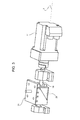
Figure 2 shows an enlarged perspective view of the device ofFigure 1 , with parts removed for clarity; -
Figure 3 shows a further enlarged perspective view of some particular of the device ofFigure 1 ; -
Figure 4 shows an enlarged perspective view of additional particulars of the device ofFigure 1 ; -
Figure 5 shows an enlarged perspective view of an additional device of the unit ofFigure 1 ; and -
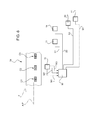
Figure 6 schematically shows some components of the unit ofFigure 1 . -
Number 1 inFigure 1 indicates as a whole a unit for molding a plurality ofopening devices 4 onto respective pre-laminated holes of aweb 3 of a packaging material. - Packaging material is intended to form a plurality of packages, which preferably contain a pourable food product, such as pasteurized or UHT milk, fruit juice, wine, etc.
- Packages may also contain a food product, which is pourable within a tube of packaging material when producing packages, and sets after packages are sealed. One example of such a food product is a portion of cheese, which is melted when producing packages and sets after packages are sealed.
- The tube is formed in known manner downstream from
unit 1 by longitudinally folding and sealing a knownweb 3 of heat-seal sheet material, which comprises a layer of paper material covered on both sides with layers of heat-seal plastic material, e.g. polyethylene. In the case of an aseptic package for long-storage products, such as UHT milk, the packaging material comprises a layer of oxygen-barrier material, e.g. aluminium foil, which is superimposed on one or more layers of heat-seal plastic material eventually forming the inner face of package contacting the food product. - The tube of packaging material is then filled with the food product for packaging, and is sealed and cut along equally spaced cross sections to form a number of pillow packs (not shown), which are then transferred to a folding unit where they are folded mechanically to form respective packages.
- A first solution of
opening device 4 comprises a patch defined by a small sheet of a heat-seal plastic material, and which is heat sealed over a respective hole on the side of the web eventually forming the inside of the package; and a pull-off tab applied to the opposite side of the packaging material and heat sealed to the patch. The tab and patch adhere to each other, so that, when the tab is pulled off, the portion of the patch heat sealed to it is also removed to uncover the hole. - Alternatively, a second solution comprises
closable opening device 4 which are applied by injecting plastic material directly onto the holes of theweb 3. - In a third solution,
web 3 comprises a number of removable portions (not shown in the Figures) equally spaced in a lengthwise direction A of the packaging material, and to whichopening devices 4 are injection molded. - In the embodiment shown, removable portion is defined by a so-called pre-laminated hole, i.e. a hole (or opening) formed through base layer of packaging material and covered by lamination layers so that hole is sealed by a respective sheet cover portion.
-
Web 3 finally comprises a plurality of magnetic markers C1, C2, C3 (shown inFigure 6 for sake of clarity, but not visible in reality). - In the embodiment shown, magnetic markers C1, C2, C3 are printed with a magnetizable ink which has been subsequently magnetized. More precisely, each magnetic marker C1, C2, C3 has respective north and south poles aligned along path P.
- Magnetic markers C1, C2, C3 are applied to
web 3 in alignment with pre-laminated holes. -
Unit 1 substantially comprises (Figure 1 ): - a
device 10 arranged downstream from the reel and adapted to advanceweb 3 along direction A which is parallel to path P; - a
molding station 26 stepwise fed withweb 3 bydevice 10 and adapted to injection mould aplurality opening devices 4, three in the embodiment shown, ontoweb 3 and at respective pre-laminated holes ofweb 3; and - a
device 25 arranged downstream from themolding station 20 along path P and adapted to advanceweb 3 along direction A. -
Unit 1 also comprises a plurality ofidler rollers 7 which are arranged upstream fromdevice 10 and downstream fromdevice 25 and are adapted to supportweb 3 while it advances along path P. - More precisely,
device 10 stepwise feeds one after the other a plurality ofportions 24 ofweb 3 each comprising a certain number of pre-laminated holes, three in the embodiment shown, towardsmolding station 26; andmolding station 26 comprises a plurality, three in the embodiment shown, ofmoulds 27, which inject the plastic material formingrespective opening devices 4 ontoweb 3 and at respective pre-laminate holes. - More precisely, each
portion 24 comprises, proceeding fromdevice 10 towardsmolding station 26, a first, a second and a third pre-laminated hole which are associated respectively to magnetic markers C1, C2, C3. In particular, the positions of magnetic markers C1, C2, C3 are associated to the positions of first, second and third pre-laminated holes. - In greater detail,
device 10 comprises (figure 2 to 4 ) : - a
motor 11 for horizontally and stepwise advancingweb 3 along direction A; - a plurality of
rollers 12 and counter-rollers (not shown) for guidingweb 3 along direction A; - a pair of
rollers 13 for damping the oscillations ofweb 3 in a vertical plane; - a
magnetic sensor 15 for detecting the positions of magnetic markers C1, C2, C3 ofweb 3 and generating respective measure signals M1, M2, M3 associated to the real position of the first, second and third pre-laminated holes; and - a
motor 14 controllable on the basis of measure signals M1, M2, M3. -
Roller 12 is driven in rotation bymotor 11 through the interposition of abelt 8. More precisely,belt 8 is wound onto apulley 9a driven in rotation bymotor 11 and apulley 9b which drives inrotation roller 12. -
Roller 12 and corresponding counter-roller cooperate with opposite sides ofweb 3 which is being advanced towardsmolding station 26. -
Motor 14 is advantageously operatively connected tomotor 11 androllers 12 for moving them along a direction T transversal to path P and direction A. In particular, direction T is orthogonal to direction A and is arranged, in use, horizontally. -
Sensor 15, in the embodiment shown, detects the transition between respective north and south pole of magnetic markers C1, C2, C3, so detecting the positions of magnetic markers C1, C2, C3, and, therefore, the positions of relative first, second and third pre-laminated holes along direction A. Furthermore,sensor 15 detects the intensity of the magnetic field generated by magnetic markers C1, C2, C3, so detecting the relative positions of magnetic markers C1, C2, C3 and, therefore, the positions of relative first, second and third pre-laminated holes along direction T. - In greater detail,
device 10 comprises: - a fixed
frame 16 supportingmotor 14 andsensor 15; - a
structure 17 which is movable relative to frame 16 along direction T, and carriesmotor 11,rollers 12 and respective counter-rollers. -
Frame 16, in particular, supports a pair ofelements 31 which are arranged on respective opposite sides ofstructure 17 along direction T and are connected by a crossbar 32 (Figure 4 ). -
Sensor 15 generates measure signals M1, M2, M3, which are associated to the real positions of first, second and third pre-laminated hole corresponding to respective magnetic markers C1, C2, C3 along directions A and T. -
Unit 1 also comprises (Figure 3 ): - a
roller screw 19 driven in rotation about direction T bymotor 14; - a
female screw 20 screwed to screw 19, so as to move along direction T whenscrew 19 rotates about direction T; and - a
plate 21 connected to screw 20 and to structure 17 in a not shown way. - A
bottom wall 22 ofstructure 17 comprises a plurality ofslides 23 which may slide along direction T overrespective guides 18 fixed with respect to frame 16 (Figure 2 ). -
Unit 1 also comprises a control unit 30 (only schematically shown inFigure 6 ) which receives measure signals M1, M2, M3 fromsensor 15 and generates control signals S1, S2 formotors - In particular,
control unit 30 has stored in memory the theoretical positions of pre-laminated holes with respect tomoulds 27, and evaluates the difference between the detected position of first, second and third pre-laminated holes and the respective theoretical positions. - Control signal S1 for
motor 11 results in an additional displacement ofweb 3 along direction A. - Accordingly,
motor 11 movesweb 3 along direction A for a length which is the algebraic sum of the additional displacement depending on control signal S1 and of a nominal constant displacement. - More precisely, the additional displacement of
web 3 along direction A generated by control signal S1 is associated to the difference between the detected position and the theoretical position of only one, namely the second, pre-laminated hole. - Control signal S2 for
motor 14 results in a displacement ofweb 3 along direction T and is generated in the following way. - More precisely,
control unit 30 evaluates for each first, second and third pre-laminated holes ofportion 24, the distance between the theoretical and the detected position; and evaluates the maximum and the minimum value of said distances.Control unit 30 then generates control signal S2 which causes displacement ofweb 3 along direction T equal to the average between the maximum and the minimum value. - In other words, the distance between the theoretical and detected positions of the pre-laminated hole which is different from the maximum and the minimum value is neglected.
-
Device 25 comprises (Figure 5 ): - a fixed
frame 40 comprising a plurality ofguides 42 which extend along direction T; - a
motor 41 supported byframe 40 in a fixed position relative to direction T; - a
structure 43 movable relative to frame 40 andmotor 41 along direction T; and - a motor 44 (shown in
Figure 1 ) fitted to structure 43 and adapted to advanceweb 3 along direction A and on the opposite side ofmolding station 26. -
Device 25 also comprises a pair of rubber wheels 55 (only one shown of which is shown inFigure 5 ) for guidingweb 3 along direction A and driven in rotation bymotor 44 through the interposition of a belt. More precisely, the belt is wound onto a first pulley driven in rotation bymotor 44 and a second pulley which drives inrotation wheels 55. -
Motor 41 movesstructure 43 and, therefore,motor 44 along direction T, so that alsoweb 3 moves along direction T. - To this purpose,
motor 41 is operatively connected to structure 43 through the interposition of: - a
roller screw 45 driven in rotation about direction T bymotor 41; - a
female screw 46 screwed to screw 45, so as to move along direction T whenscrew 45 rotates about direction T; and - a
plate 47 connected to screw 46 and to a bottom plate 49 (in a not-shown way) ofstructure 43. -
Bottom plate 49 ofstructure 43 comprises a plurality ofslides 50 which may slide along direction T over respective guides 42. -
Motors control unit 30 on the basis of the measured signals M1, M2, M3 generated bysensor 15. - More precisely,
control unit 30 generates a control signal S3 formotor 44 which results in an additional displacement ofweb 3 along direction A. - Accordingly,
motor 44 movesweb 3 along direction A for a length which is the algebraic sum of the additional displacement depending on control signal S3 and of a nominal constant displacement. - More precisely, the additional displacement of
web 3 along direction A generated by control signal S3 is associated to the difference between the detected position and the theoretical position of only one, namely the second, pre-laminated hole. - Control signal S4 for
motor 14 results in a displacement ofweb 3 along direction T and is generated in the following way. - More precisely,
control unit 30 evaluates for each first, second and third pre-laminated holes ofportion 24, the distance between the theoretical and the detected position; and evaluates the maximum and the minimum value of said distances.Control unit 30 then generates control signal S4 which causes displacement ofweb 3 along direction T equal to the average between the maximum and the minimum value. - In other words, the distance between theoretical and detected positions of pre-laminated hole which is different from the maximum and the minimum value is neglected.
-
Motors move web 3 for the same length along direction A. More precisely,motor 44 pullsweb 3 along path P and towardsmoulds 27 whilemotor 11 providesweb 3 with the correct level of tension. -
Motors respective structures web 3 for the same length along direction T. - In other words,
motors - The operation of
device 10 and ofunit 1 will be hereinafter described with reference to only oneportion 24 and to the relative first, second and third pre-laminated holes and corresponding magnetic markers C1, C2, C3. -
Web 3 provided with pre-laminated holes and magnetic markers C1, C2, C3 is wound off fromreel 3 along path P. -
Devices web 3 throughmolding station 26, and moulds 27 inject plastic material formingrespective opening devices 4 ontoweb 3 and at respective pre-laminated holes. -
Sensor 15 detects the presence of magnetic markers C1, C2, C3 and generates measure signals M1, M2, M3 which are associated to the real position of corresponding first, second and third pre-laminated holes along directions A, T. -
Control unit 30 receives measured signals M1, M2, M3; evaluates the differences between real and theoretical positions of first, second and third pre-laminated holes along directions A, T; and generates control signals S1, S2, S3, S4 formotors - In particular,
motors move web 3 along direction A for the same length and at the same time. More precisely,motor 44 pullsweb 3 along path P and towardsmoulds 27 whilemotor 11 providesweb 3 with the correct level of tension. - Control signal S1 is associated to the difference between the detected and the theoretical position of the second pre-laminated hole along direction A.
-
Motor 11 advancesweb 3 along direction A for a length which is the algebraic sum of the nominal displacement and of the additional displacement depending on control signal S1. -
Motor 14 displacesweb 3 along direction T for a length which is determined by control signal S2 generated bycontrol unit 30. - In particular, control unit 30:
- evaluates for each first, second and third pre-laminated holes of
portion 24, the distance between the theoretical and the detected position; - evaluates the maximum and the minimum value of said distances; and
- generates control signal S2 which causes displacement of
web 3 along direction T equal to the average between the maximum and the minimum value. -
Motor 14 is controlled by control signal S2 and rotatesroller screw 19 about direction T, so causing the translation ofscrew 20,plate 21 andwhole structure 17 along this direction T. - More precisely, as
plate 21 moves along direction T, slides 23 slide overrespective guides 18 along such direction T. - The displacement of
structure 17 along direction T causes the movement ofmotor 11,rollers 12 and, therefore, ofweb 3, along direction T up to arrange the first, second and third pre-laminated holes in the respective correct positions as they reachmolding station 26. - As first, second and third pre-laminated holes reach
molding station 26,respective moulds 27 inject plastic material ontoweb 3 so as to form corresponding openingdevices 4 at relative pre-laminated holes. - Control signal S3 is associated to the difference between the detected and the theoretical position of the second pre-laminated hole along direction A.
-
Motor 44 advancesweb 3 along direction A for a length which is the algebraic sum of the nominal displacement and of the additional displacement depending on control signal S3. -
Motor 41 displacesweb 3 along direction T for a length which is determined by control signal S4 generated bycontrol unit 30. - In particular, control unit 30:
- evaluates for each first, second and third pre-laminated holes of
portion 24, the distance between the theoretical and the detected position; - evaluates the maximum and the minimum value of said distances; and
- generates control signal S4 which causes displacement of
web 3 along direction T equal to the average between the maximum and the minimum value. -
Motor 41 rotatesroller screw 45 about direction T, so causing the translation ofscrew 46,plate 47 andwhole structure 43 along this direction T. - More precisely, as
plate 47 moves along direction T, slides 50 slide overrespective guides 42 along such direction T. - The movement of
structure 43 causes the movement ofmotor 44 andwheels 55 and, therefore, ofweb 3, along direction T up to arrange pre-laminated holes in the respective correct positions as they reachmolding station 26. - Since control signals S2, S4 are equal,
motor move web 3 of the same length along direction T. - The advantages of
device 10 and of the method according to the present invention will be clear from the foregoing description. - In particular, the operation of
motor 14 results in the movement along direction T ofmotor 11,rollers 12 and, therefore, ofweb 3. Accordingly, the first, second and third pre-laminated holes ofweb 3 may be arranged in the correct position along direction T relative to correspondingmoulds 27, so correcting possible misalignments of the pre-laminated holes within the reel. - Due to the fact that
web 3 is substantially not moved relative torollers 12 along direction T, the overall resulting stress onweb 3 is highly reduced when compared with stresses resulting by the operation of the gripping member of the device disclosed inEP-A-122169 - Furthermore,
device 10 comprises neither a gripping member nor a mechanical group adapted to tilt the gripping member towardsweb 3. Accordingly, the overall design of thedevice 10 is rather simple when compared with the device disclosed inEP-A-122169 - Finally,
motor web 3 along direction A. Such additional movement arranges first, second and third pre-laminated hole in the correct position with respect torelative moulds 27 also along direction A. - Clearly, changes may be made to
device 10 and to the method without, however, departing from the protective scope defined in the accompanying Claims.
Claims (16)
- A device (10) for feeding a web (3) of a packaging material along a path (P) and towards an application station (26); said packaging material comprising a plurality of areas at which said application station (26) applies, in use, respective opening devices (4);
said device (10) comprising:- advancing means (11, 12) for advancing said web (3) along a first direction (A) parallel to said path (P);- a sensor (15) for generating a plurality of measure signals (M1, M2, M3) associated to the positions of said areas; and- a first motor (14) controllable on the basis of at least one of said measure signals (M1, M2, M3);characterized in that said first motor (14) is operatively connected to said advancing means (11, 12) for moving said advancing means (11, 12) along a second direction (T) transversal to said path (P). - The device of claim 1, characterized by comprising a control unit (30) which, in use, receives said measure signals (M1, M2, M3) from said sensor (15) and generates, on the basis of at least one of said measure signals (M1, M2, M3), a first control signal (S2), for said first motor (14).
- The device of claim 1 or 2, characterized in that said measure signals (M1, M2, M3) are associated to the positions of respective magnetic markers (C1, C2, C3) carried by said web (3);
the positions of said magnetic markers (C1, C2, C3) being associated to the positions of respective said areas. - The device of claim 2 or 3, characterized in that said advancing means (11, 12) comprise a second motor (11) for advancing said packaging material along said first direction (A); said second motor (11) being controllable by using a second control signal (S1) which is generated by said control unit (30) on the basis of at least one of said measure signals (M1, M2, M3).
- The device according to anyone of the previous claims, characterized by comprising:- a fixed frame (16) carrying said first motor (14);
and- a structure (17) which is movable with respect to said frame (16) along said second direction (T) and to which said advancing means (11, 12) are fitted. - A unit for applying a plurality of said opening devices (4) onto said respective areas, comprising:- said application station (26);- a device according to anyone of claims 1 to 5 and which is arranged upstream from said application station (26) with reference to an advancing direction of said packaging material along said path (P); and- an additional device (25) which is arranged downstream from said application station (26) with reference to an advancing direction of said packaging material along said path (P);
said additional device (25) comprising, in turn,:- additional advancing means (44) for advancing said web (3) along said path (P); and- a third motor (41) operatively connected to said additional advancing means (44) for moving said additional advancing means (44) along said second direction (T). - The unit of claim 6, as claim 6 is appended to anyone of claims 2 to 5, characterized in that said third motor (44) is controllable by a third control signal (S4) generated by said control unit (30) on the basis at least one between said measure signals (M1, M2, M3) and operatively connected to said additional advancing means (44) for advancing said additional advancing means (44) along said second direction (T).
- The unit of claim 6 or 7, characterized in that said application station (26) is a molding station, and said areas are pre-laminated holes at which said application station (26) applies, in use, respective said opening devices (4).
- A method for feeding a web of a packaging material along a path (P) and towards an application station (26); said packaging material comprising a plurality of areas at which said application station (26) applies respective opening devices (4);
said method comprising the steps of:- advancing said web (3) along a first direction (A) parallel to said path (P) by using first advancing means (11, 12);- detecting the positions of said areas; and- generating a plurality of measure signals (M1, M2, M3) which are associated to the positions of said areas;said method being characterized by comprising the step of transversally moving, on the basis of at least one of said measured signal (M1, M2, M3), said first advancing means (11, 12) along a second direction (T) transversal to said path (P). - The method according to claim 9, characterized in that said step of generating comprises the step of detecting the positions of a plurality of magnetic markers (C1, C2, C3) which are carried by said web (3) and are associated to the positions of said areas.
- The method of claim 9 or 10, characterized in that said step of advancing comprises the step of stepwise advancing a portion (24) of said web having a given number of areas;
said step of generating comprising the steps of:- evaluating the difference between the detected and the theoretical positions of each areas of said given number; and- evaluating the maximum and the minimum value of said differences;said step of transversally moving comprising the step of moving said advancing means (11, 12) along said second direction (T) and on the basis of the average value between the said maximum and minimum value of said differences. - The method of anyone of claims 9 to 11, characterized in that said step of advancing comprises the step of advancing said web (3) on the basis of at least one of said measured signals (M1, M2, M3).
- The method of claim 12, when depending on claim 11, characterized in that said step of advancing is carried out on the basis of the difference between the detected position and the theoretical position of only one area of said given number.
- A method for applying a plurality of said opening devices onto said respective areas, comprising:- the steps of a method for feeding according to anyone of claims 9 to 13 upstream from said application station (26);- the step of further advancing said web (3) along said path (P) downstream from said application station (26) by using additional advancing means (44); and- the step of transversally moving, on the basis of said measured signals (M1, M2, M3), said additional advancing means (44) along said second direction (T) transversal to said path (P).
- The method of claim 14, characterized in that said step of transversally moving said advancing means (11, 12) comprises the step of moving said first advancing means (11, 12) for a first distance along said second direction (T), and said step of transversally moving said additional advancing means (44) comprises the step of moving said additional advancing means (44) for said first distance along said second direction (T).
- A software product loadable on a control unit (30) of a device (10) for feeding a web of a packaging material towards said application station (26) and which, when executed, implements the steps of a method as claimed in anyone of claims 9 to 15.
Priority Applications (10)
| Application Number | Priority Date | Filing Date | Title |
|---|---|---|---|
| ES10153478T ES2397645T3 (en) | 2010-02-12 | 2010-02-12 | Device and procedure for supplying a band of packaging material |
| EP20100153478 EP2357138B1 (en) | 2010-02-12 | 2010-02-12 | Device and method for feeding a web of a packaging material |
| RU2012138956/13A RU2555582C2 (en) | 2010-02-12 | 2011-02-12 | Device and method for packing material web feed |
| PCT/EP2011/052082 WO2011098591A1 (en) | 2010-02-12 | 2011-02-12 | Device and method for feeding a web of a packaging material |
| BR112012015454A BR112012015454A2 (en) | 2010-02-12 | 2011-02-12 | device for feeding a continuous sheet of a packaging material, unit for applying a plurality of opening devices in their respective areas, methods for feeding a continuous sheet of a packaging material and for applying a plurality of opening devices in their respective areas, and software product |
| CN201180009039.4A CN102741125B (en) | 2010-02-12 | 2011-02-12 | Device and method for feeding web of packaging material |
| MX2012007659A MX2012007659A (en) | 2010-02-12 | 2011-02-12 | Device and method for feeding a web of a packaging material. |
| JP2012552418A JP5934116B2 (en) | 2010-02-12 | 2011-02-12 | Apparatus and method for feeding a web of packaging material |
| US13/519,963 US9132930B2 (en) | 2010-02-12 | 2011-02-12 | Device and method for feeding a web of a packaging material |
| JP2015181189A JP2016011166A (en) | 2010-02-12 | 2015-09-14 | Device and method for feeding web of packaging material |
Applications Claiming Priority (1)
| Application Number | Priority Date | Filing Date | Title |
|---|---|---|---|
| EP20100153478 EP2357138B1 (en) | 2010-02-12 | 2010-02-12 | Device and method for feeding a web of a packaging material |
Publications (3)
| Publication Number | Publication Date |
|---|---|
| EP2357138A1 true EP2357138A1 (en) | 2011-08-17 |
| EP2357138A8 EP2357138A8 (en) | 2011-11-16 |
| EP2357138B1 EP2357138B1 (en) | 2012-10-17 |
Family
ID=42269973
Family Applications (1)
| Application Number | Title | Priority Date | Filing Date |
|---|---|---|---|
| EP20100153478 Active EP2357138B1 (en) | 2010-02-12 | 2010-02-12 | Device and method for feeding a web of a packaging material |
Country Status (9)
| Country | Link |
|---|---|
| US (1) | US9132930B2 (en) |
| EP (1) | EP2357138B1 (en) |
| JP (2) | JP5934116B2 (en) |
| CN (1) | CN102741125B (en) |
| BR (1) | BR112012015454A2 (en) |
| ES (1) | ES2397645T3 (en) |
| MX (1) | MX2012007659A (en) |
| RU (1) | RU2555582C2 (en) |
| WO (1) | WO2011098591A1 (en) |
Cited By (8)
| Publication number | Priority date | Publication date | Assignee | Title |
|---|---|---|---|---|
| CN103273744A (en) * | 2013-05-07 | 2013-09-04 | 苏州威仕科贸有限公司 | Simple and practical film winding and marking machine |
| EP2848399A1 (en) | 2013-09-13 | 2015-03-18 | Tetra Laval Holdings & Finance SA | A unit and a method for carrying out a first operation and a second operation on a web |
| EP2998103A1 (en) | 2014-09-18 | 2016-03-23 | Tetra Laval Holdings & Finance S.A. | A unit and a method for applying pre-formed opening devices onto a web of a packaging material |
| EP3081497A1 (en) * | 2015-04-14 | 2016-10-19 | Tetra Laval Holdings & Finance SA | Packaging machine and method for producing packages from a packaging material |
| EP3822071A1 (en) | 2019-11-13 | 2021-05-19 | Tetra Laval Holdings & Finance S.A. | Unit and method for applying opening devices to a web of packaging material |
| EP3950253A1 (en) * | 2020-08-04 | 2022-02-09 | Tetra Laval Holdings & Finance S.A. | Molding apparatus for molding opening devices and packaging machine having a molding apparatus |
| IT202400006760A1 (en) | 2024-03-26 | 2025-09-26 | Tetra Laval Holdings & Finance | METHOD AND UNIT FOR THE APPLICATION OF OPENING DEVICES ON A STRIP OF PACKAGING MATERIAL |
| EP4786389A1 (en) | 2025-01-30 | 2026-08-05 | Tetra Laval Holdings & Finance S.A. | Method for monitoring the quantity of packaging material in a buffer device of a packaging machine for producing sealed packages containing a pourable product and packaging machine |
Families Citing this family (1)
| Publication number | Priority date | Publication date | Assignee | Title |
|---|---|---|---|---|
| US9208422B2 (en) * | 2010-11-29 | 2015-12-08 | Tetra Laval Holdings & Finance S.A. | Packaging material comprising magnetisable portions |
Citations (6)
| Publication number | Priority date | Publication date | Assignee | Title |
|---|---|---|---|---|
| EP0122169A2 (en) | 1983-03-11 | 1984-10-17 | Alliance Technique Industrielle | Method and apparatus for joining optical fibres |
| EP0230986A2 (en) * | 1986-01-28 | 1987-08-05 | AB Tetra Pak | A method and an arrangement for the feeding of a material web |
| WO1998018608A1 (en) * | 1996-10-31 | 1998-05-07 | Tetra Laval Holdings & Finance S.A. | Apparatus and method for moulding an opening device on a packaging sheet |
| EP1110867A1 (en) * | 1999-12-22 | 2001-06-27 | Tetra Laval Holdings & Finance S.A. | Multi-stage unit for processing a web packaging material in a food product packaging machine |
| EP1170217A1 (en) * | 2000-07-07 | 2002-01-09 | Tetra Laval Holdings & Finance S.A. | Unit for processing a web of packaging material for producing sealed packages of pourable food products |
| EP1813410A1 (en) * | 2006-01-27 | 2007-08-01 | Tetra Laval Holdings & Finance S.A. | Unit and method for molding opening devices for application to packages of pourable food products |
Family Cites Families (10)
| Publication number | Priority date | Publication date | Assignee | Title |
|---|---|---|---|---|
| JPH03288758A (en) * | 1990-04-04 | 1991-12-18 | Sumitomo Metal Ind Ltd | Positioning of strip-shaped extremely low tension sheet |
| US5394676A (en) * | 1992-09-30 | 1995-03-07 | Automated Packaging Systems, Inc. | Packaging machine and method |
| JPH1199718A (en) * | 1997-09-26 | 1999-04-13 | Canon Inc | Image forming device |
| US6195967B1 (en) | 1998-11-03 | 2001-03-06 | Klockner Bartelt, Inc. | Packaging machine having continuous and intermittent modes |
| ATE256034T1 (en) | 2000-01-31 | 2003-12-15 | Tetra Laval Holdings & Finance | DEVICE FOR ADJUSTING THE TRANSVERSAL POSITION OF A WEB OF PACKAGING MATERIAL |
| EP1275588A1 (en) * | 2001-07-12 | 2003-01-15 | Tetra Laval Holdings & Finance SA | Gable-top package for pourable food products |
| SE526408C2 (en) | 2004-01-13 | 2005-09-06 | Tetra Laval Holdings & Finance | Multi-stage unit for processing a packaging material web |
| JP2006076784A (en) * | 2004-09-13 | 2006-03-23 | Fuji Xerox Co Ltd | Image forming device |
| BRPI0621626B8 (en) * | 2006-04-27 | 2021-06-22 | Essity Hygiene & Health Ab | method for detecting a coincident mark, arrangement for detecting a coincident disposition mark, method for manufacturing absorbent products and absorbent product |
| JPWO2009019781A1 (en) * | 2007-08-09 | 2010-10-28 | 株式会社皆藤製作所 | Displacement correction device for winding device |
-
2010
- 2010-02-12 EP EP20100153478 patent/EP2357138B1/en active Active
- 2010-02-12 ES ES10153478T patent/ES2397645T3/en active Active
-
2011
- 2011-02-12 US US13/519,963 patent/US9132930B2/en active Active
- 2011-02-12 CN CN201180009039.4A patent/CN102741125B/en active Active
- 2011-02-12 MX MX2012007659A patent/MX2012007659A/en active IP Right Grant
- 2011-02-12 BR BR112012015454A patent/BR112012015454A2/en not_active Application Discontinuation
- 2011-02-12 WO PCT/EP2011/052082 patent/WO2011098591A1/en not_active Ceased
- 2011-02-12 RU RU2012138956/13A patent/RU2555582C2/en not_active IP Right Cessation
- 2011-02-12 JP JP2012552418A patent/JP5934116B2/en active Active
-
2015
- 2015-09-14 JP JP2015181189A patent/JP2016011166A/en not_active Abandoned
Patent Citations (6)
| Publication number | Priority date | Publication date | Assignee | Title |
|---|---|---|---|---|
| EP0122169A2 (en) | 1983-03-11 | 1984-10-17 | Alliance Technique Industrielle | Method and apparatus for joining optical fibres |
| EP0230986A2 (en) * | 1986-01-28 | 1987-08-05 | AB Tetra Pak | A method and an arrangement for the feeding of a material web |
| WO1998018608A1 (en) * | 1996-10-31 | 1998-05-07 | Tetra Laval Holdings & Finance S.A. | Apparatus and method for moulding an opening device on a packaging sheet |
| EP1110867A1 (en) * | 1999-12-22 | 2001-06-27 | Tetra Laval Holdings & Finance S.A. | Multi-stage unit for processing a web packaging material in a food product packaging machine |
| EP1170217A1 (en) * | 2000-07-07 | 2002-01-09 | Tetra Laval Holdings & Finance S.A. | Unit for processing a web of packaging material for producing sealed packages of pourable food products |
| EP1813410A1 (en) * | 2006-01-27 | 2007-08-01 | Tetra Laval Holdings & Finance S.A. | Unit and method for molding opening devices for application to packages of pourable food products |
Cited By (21)
| Publication number | Priority date | Publication date | Assignee | Title |
|---|---|---|---|---|
| CN103273744A (en) * | 2013-05-07 | 2013-09-04 | 苏州威仕科贸有限公司 | Simple and practical film winding and marking machine |
| EP2848399A1 (en) | 2013-09-13 | 2015-03-18 | Tetra Laval Holdings & Finance SA | A unit and a method for carrying out a first operation and a second operation on a web |
| RU2636006C2 (en) * | 2013-09-13 | 2017-11-17 | Тетра Лаваль Холдингз Энд Файнэнс С.А. | Device and method for first operation and second operation on web |
| US10286583B2 (en) | 2013-09-13 | 2019-05-14 | Tetra Laval Holdings & Finance S.A. | Unit and a method for carrying out a first operation and a second operation on a web |
| EP2998103A1 (en) | 2014-09-18 | 2016-03-23 | Tetra Laval Holdings & Finance S.A. | A unit and a method for applying pre-formed opening devices onto a web of a packaging material |
| EP3081497A1 (en) * | 2015-04-14 | 2016-10-19 | Tetra Laval Holdings & Finance SA | Packaging machine and method for producing packages from a packaging material |
| WO2016165922A1 (en) * | 2015-04-14 | 2016-10-20 | Tetra Laval Holdings & Finance S.A. | Packaging machine and method for producing packages from a packaging material |
| CN107406160A (en) * | 2015-04-14 | 2017-11-28 | 利乐拉瓦尔集团及财务有限公司 | For the packing machine and method from packaging material production packaging |
| CN107406160B (en) * | 2015-04-14 | 2019-04-02 | 利乐拉瓦尔集团及财务有限公司 | Packaging machine and method for producing packaging from packaging material |
| US10399724B2 (en) | 2015-04-14 | 2019-09-03 | Tetra Laval Holdings & Finance S.A. | Packaging machine and method for producing packages from a packaging material |
| EP3822071A1 (en) | 2019-11-13 | 2021-05-19 | Tetra Laval Holdings & Finance S.A. | Unit and method for applying opening devices to a web of packaging material |
| WO2021094113A1 (en) | 2019-11-13 | 2021-05-20 | Tetra Laval Holdings & Finance S.A. | Unit and method for applying opening devices to a web of packaging material |
| EP3950253A1 (en) * | 2020-08-04 | 2022-02-09 | Tetra Laval Holdings & Finance S.A. | Molding apparatus for molding opening devices and packaging machine having a molding apparatus |
| WO2022028780A1 (en) * | 2020-08-04 | 2022-02-10 | Tetra Laval Holdings & Finance S.A. | Molding apparatus for molding opening devices and packaging machine having a molding apparatus |
| CN116171215A (en) * | 2020-08-04 | 2023-05-26 | 利乐拉瓦尔集团及财务有限公司 | Molding apparatus for molding opening means and packaging machine with molding apparatus |
| CN116171215B (en) * | 2020-08-04 | 2024-03-08 | 利乐拉瓦尔集团及财务有限公司 | Molding equipment for mold opening devices and packaging machines with molding equipment |
| IT202400006760A1 (en) | 2024-03-26 | 2025-09-26 | Tetra Laval Holdings & Finance | METHOD AND UNIT FOR THE APPLICATION OF OPENING DEVICES ON A STRIP OF PACKAGING MATERIAL |
| WO2025201999A1 (en) | 2024-03-26 | 2025-10-02 | Tetra Laval Holdings & Finance S.A. | Method and unit for applying opening devices on a web of packaging material |
| EP4647249A1 (en) | 2024-03-26 | 2025-11-12 | Tetra Laval Holdings & Finance S.A. | Method and unit for applying opening devices on a web of packaging material |
| EP4786389A1 (en) | 2025-01-30 | 2026-08-05 | Tetra Laval Holdings & Finance S.A. | Method for monitoring the quantity of packaging material in a buffer device of a packaging machine for producing sealed packages containing a pourable product and packaging machine |
| WO2026162334A1 (en) | 2025-01-30 | 2026-08-06 | Tetra Laval Holdings & Finance S.A. | Method for monitoring the quantity of packaging material in a buffer device of a packaging machine for producing sealed packages containing a pourable product and packaging machine |
Also Published As
| Publication number | Publication date |
|---|---|
| EP2357138A8 (en) | 2011-11-16 |
| JP2016011166A (en) | 2016-01-21 |
| WO2011098591A1 (en) | 2011-08-18 |
| RU2012138956A (en) | 2014-03-20 |
| US9132930B2 (en) | 2015-09-15 |
| JP2013519602A (en) | 2013-05-30 |
| US20120272619A1 (en) | 2012-11-01 |
| MX2012007659A (en) | 2012-08-01 |
| BR112012015454A2 (en) | 2016-03-15 |
| ES2397645T3 (en) | 2013-03-08 |
| RU2555582C2 (en) | 2015-07-10 |
| JP5934116B2 (en) | 2016-06-15 |
| CN102741125A (en) | 2012-10-17 |
| CN102741125B (en) | 2014-05-07 |
| EP2357138B1 (en) | 2012-10-17 |
Similar Documents
| Publication | Publication Date | Title |
|---|---|---|
| EP2357138B1 (en) | Device and method for feeding a web of a packaging material | |
| EP2944458B1 (en) | Sheet of packaging material for producing a container and method for producing containers | |
| EP2746175A1 (en) | Unit for the application of opening devices on sealed packages of food products | |
| EP3141488B1 (en) | Packaging machine for producing packages from a sheet of packaging material | |
| US10286583B2 (en) | Unit and a method for carrying out a first operation and a second operation on a web | |
| JP4744780B2 (en) | Unit for processing a web of packaging material | |
| EP2418154A1 (en) | Method and unit for detecting the effective position of an opening device applied onto a sealed package | |
| HK1177448A (en) | Device and method for feeding a web of a packaging material | |
| US12103262B2 (en) | Unit and method for applying opening devices to a web of packaging material | |
| EP2316737A1 (en) | Separating unit for separating a batch of packages of a product which is pourable within a tube of packaging material from a row of packages, and related method | |
| EP4647249A1 (en) | Method and unit for applying opening devices on a web of packaging material |
Legal Events
| Date | Code | Title | Description |
|---|---|---|---|
| PUAI | Public reference made under article 153(3) epc to a published international application that has entered the european phase |
Free format text: ORIGINAL CODE: 0009012 |
|
| AK | Designated contracting states |
Kind code of ref document: A1 Designated state(s): AT BE BG CH CY CZ DE DK EE ES FI FR GB GR HR HU IE IS IT LI LT LU LV MC MK MT NL NO PL PT RO SE SI SK SM TR |
|
| AX | Request for extension of the european patent |
Extension state: AL BA RS |
|
| RIN1 | Information on inventor provided before grant (corrected) |
Inventor name: ANDREOTTI, DAVIDE Inventor name: PALLADINO, DANIELE Inventor name: LEONARDI, LUCA Inventor name: ALGERI, PIERPAOLO Inventor name: ESPOSITO, GIUSEPPE Inventor name: CARRERI, MARCO Inventor name: TAVERNARI, FABRIZIO Inventor name: LOTTI, ENRICO Inventor name: RICCO', MARCO |
|
| 17P | Request for examination filed |
Effective date: 20120203 |
|
| GRAP | Despatch of communication of intention to grant a patent |
Free format text: ORIGINAL CODE: EPIDOSNIGR1 |
|
| GRAS | Grant fee paid |
Free format text: ORIGINAL CODE: EPIDOSNIGR3 |
|
| GRAA | (expected) grant |
Free format text: ORIGINAL CODE: 0009210 |
|
| AK | Designated contracting states |
Kind code of ref document: B1 Designated state(s): AT BE BG CH CY CZ DE DK EE ES FI FR GB GR HR HU IE IS IT LI LT LU LV MC MK MT NL NO PL PT RO SE SI SK SM TR |
|
| REG | Reference to a national code |
Ref country code: GB Ref legal event code: FG4D |
|
| REG | Reference to a national code |
Ref country code: CH Ref legal event code: EP |
|
| REG | Reference to a national code |
Ref country code: IE Ref legal event code: FG4D |
|
| REG | Reference to a national code |
Ref country code: AT Ref legal event code: REF Ref document number: 579785 Country of ref document: AT Kind code of ref document: T Effective date: 20121115 |
|
| REG | Reference to a national code |
Ref country code: DE Ref legal event code: R096 Ref document number: 602010003197 Country of ref document: DE Effective date: 20121213 |
|
| REG | Reference to a national code |
Ref country code: ES Ref legal event code: FG2A Ref document number: 2397645 Country of ref document: ES Kind code of ref document: T3 Effective date: 20130308 |
|
| REG | Reference to a national code |
Ref country code: AT Ref legal event code: MK05 Ref document number: 579785 Country of ref document: AT Kind code of ref document: T Effective date: 20121017 |
|
| REG | Reference to a national code |
Ref country code: NL Ref legal event code: VDEP Effective date: 20121017 |
|
| REG | Reference to a national code |
Ref country code: LT Ref legal event code: MG4D |
|
| PG25 | Lapsed in a contracting state [announced via postgrant information from national office to epo] |
Ref country code: IS Free format text: LAPSE BECAUSE OF FAILURE TO SUBMIT A TRANSLATION OF THE DESCRIPTION OR TO PAY THE FEE WITHIN THE PRESCRIBED TIME-LIMIT Effective date: 20130217 Ref country code: NL Free format text: LAPSE BECAUSE OF FAILURE TO SUBMIT A TRANSLATION OF THE DESCRIPTION OR TO PAY THE FEE WITHIN THE PRESCRIBED TIME-LIMIT Effective date: 20121017 Ref country code: SE Free format text: LAPSE BECAUSE OF FAILURE TO SUBMIT A TRANSLATION OF THE DESCRIPTION OR TO PAY THE FEE WITHIN THE PRESCRIBED TIME-LIMIT Effective date: 20121017 Ref country code: LT Free format text: LAPSE BECAUSE OF FAILURE TO SUBMIT A TRANSLATION OF THE DESCRIPTION OR TO PAY THE FEE WITHIN THE PRESCRIBED TIME-LIMIT Effective date: 20121017 Ref country code: HR Free format text: LAPSE BECAUSE OF FAILURE TO SUBMIT A TRANSLATION OF THE DESCRIPTION OR TO PAY THE FEE WITHIN THE PRESCRIBED TIME-LIMIT Effective date: 20121017 Ref country code: FI Free format text: LAPSE BECAUSE OF FAILURE TO SUBMIT A TRANSLATION OF THE DESCRIPTION OR TO PAY THE FEE WITHIN THE PRESCRIBED TIME-LIMIT Effective date: 20121017 Ref country code: NO Free format text: LAPSE BECAUSE OF FAILURE TO SUBMIT A TRANSLATION OF THE DESCRIPTION OR TO PAY THE FEE WITHIN THE PRESCRIBED TIME-LIMIT Effective date: 20130117 |
|
| PG25 | Lapsed in a contracting state [announced via postgrant information from national office to epo] |
Ref country code: GR Free format text: LAPSE BECAUSE OF FAILURE TO SUBMIT A TRANSLATION OF THE DESCRIPTION OR TO PAY THE FEE WITHIN THE PRESCRIBED TIME-LIMIT Effective date: 20130118 Ref country code: SI Free format text: LAPSE BECAUSE OF FAILURE TO SUBMIT A TRANSLATION OF THE DESCRIPTION OR TO PAY THE FEE WITHIN THE PRESCRIBED TIME-LIMIT Effective date: 20121017 Ref country code: BE Free format text: LAPSE BECAUSE OF FAILURE TO SUBMIT A TRANSLATION OF THE DESCRIPTION OR TO PAY THE FEE WITHIN THE PRESCRIBED TIME-LIMIT Effective date: 20121017 Ref country code: LV Free format text: LAPSE BECAUSE OF FAILURE TO SUBMIT A TRANSLATION OF THE DESCRIPTION OR TO PAY THE FEE WITHIN THE PRESCRIBED TIME-LIMIT Effective date: 20121017 Ref country code: PL Free format text: LAPSE BECAUSE OF FAILURE TO SUBMIT A TRANSLATION OF THE DESCRIPTION OR TO PAY THE FEE WITHIN THE PRESCRIBED TIME-LIMIT Effective date: 20121017 Ref country code: PT Free format text: LAPSE BECAUSE OF FAILURE TO SUBMIT A TRANSLATION OF THE DESCRIPTION OR TO PAY THE FEE WITHIN THE PRESCRIBED TIME-LIMIT Effective date: 20130218 |
|
| PG25 | Lapsed in a contracting state [announced via postgrant information from national office to epo] |
Ref country code: AT Free format text: LAPSE BECAUSE OF FAILURE TO SUBMIT A TRANSLATION OF THE DESCRIPTION OR TO PAY THE FEE WITHIN THE PRESCRIBED TIME-LIMIT Effective date: 20121017 |
|
| PG25 | Lapsed in a contracting state [announced via postgrant information from national office to epo] |
Ref country code: CZ Free format text: LAPSE BECAUSE OF FAILURE TO SUBMIT A TRANSLATION OF THE DESCRIPTION OR TO PAY THE FEE WITHIN THE PRESCRIBED TIME-LIMIT Effective date: 20121017 Ref country code: EE Free format text: LAPSE BECAUSE OF FAILURE TO SUBMIT A TRANSLATION OF THE DESCRIPTION OR TO PAY THE FEE WITHIN THE PRESCRIBED TIME-LIMIT Effective date: 20121017 Ref country code: DK Free format text: LAPSE BECAUSE OF FAILURE TO SUBMIT A TRANSLATION OF THE DESCRIPTION OR TO PAY THE FEE WITHIN THE PRESCRIBED TIME-LIMIT Effective date: 20121017 Ref country code: SK Free format text: LAPSE BECAUSE OF FAILURE TO SUBMIT A TRANSLATION OF THE DESCRIPTION OR TO PAY THE FEE WITHIN THE PRESCRIBED TIME-LIMIT Effective date: 20121017 Ref country code: BG Free format text: LAPSE BECAUSE OF FAILURE TO SUBMIT A TRANSLATION OF THE DESCRIPTION OR TO PAY THE FEE WITHIN THE PRESCRIBED TIME-LIMIT Effective date: 20130117 |
|
| PLBE | No opposition filed within time limit |
Free format text: ORIGINAL CODE: 0009261 |
|
| STAA | Information on the status of an ep patent application or granted ep patent |
Free format text: STATUS: NO OPPOSITION FILED WITHIN TIME LIMIT |
|
| PG25 | Lapsed in a contracting state [announced via postgrant information from national office to epo] |
Ref country code: RO Free format text: LAPSE BECAUSE OF FAILURE TO SUBMIT A TRANSLATION OF THE DESCRIPTION OR TO PAY THE FEE WITHIN THE PRESCRIBED TIME-LIMIT Effective date: 20121017 |
|
| 26N | No opposition filed |
Effective date: 20130718 |
|
| PG25 | Lapsed in a contracting state [announced via postgrant information from national office to epo] |
Ref country code: MC Free format text: LAPSE BECAUSE OF NON-PAYMENT OF DUE FEES Effective date: 20130228 |
|
| REG | Reference to a national code |
Ref country code: DE Ref legal event code: R097 Ref document number: 602010003197 Country of ref document: DE Effective date: 20130718 |
|
| PG25 | Lapsed in a contracting state [announced via postgrant information from national office to epo] |
Ref country code: CY Free format text: LAPSE BECAUSE OF FAILURE TO SUBMIT A TRANSLATION OF THE DESCRIPTION OR TO PAY THE FEE WITHIN THE PRESCRIBED TIME-LIMIT Effective date: 20121017 |
|
| REG | Reference to a national code |
Ref country code: IE Ref legal event code: MM4A |
|
| PG25 | Lapsed in a contracting state [announced via postgrant information from national office to epo] |
Ref country code: IE Free format text: LAPSE BECAUSE OF NON-PAYMENT OF DUE FEES Effective date: 20130212 |
|
| PG25 | Lapsed in a contracting state [announced via postgrant information from national office to epo] |
Ref country code: MT Free format text: LAPSE BECAUSE OF FAILURE TO SUBMIT A TRANSLATION OF THE DESCRIPTION OR TO PAY THE FEE WITHIN THE PRESCRIBED TIME-LIMIT Effective date: 20121017 |
|
| REG | Reference to a national code |
Ref country code: CH Ref legal event code: PL |
|
| GBPC | Gb: european patent ceased through non-payment of renewal fee |
Effective date: 20140212 |
|
| PG25 | Lapsed in a contracting state [announced via postgrant information from national office to epo] |
Ref country code: LI Free format text: LAPSE BECAUSE OF NON-PAYMENT OF DUE FEES Effective date: 20140228 Ref country code: CH Free format text: LAPSE BECAUSE OF NON-PAYMENT OF DUE FEES Effective date: 20140228 |
|
| PG25 | Lapsed in a contracting state [announced via postgrant information from national office to epo] |
Ref country code: GB Free format text: LAPSE BECAUSE OF NON-PAYMENT OF DUE FEES Effective date: 20140212 |
|
| PG25 | Lapsed in a contracting state [announced via postgrant information from national office to epo] |
Ref country code: SM Free format text: LAPSE BECAUSE OF FAILURE TO SUBMIT A TRANSLATION OF THE DESCRIPTION OR TO PAY THE FEE WITHIN THE PRESCRIBED TIME-LIMIT Effective date: 20121017 |
|
| PG25 | Lapsed in a contracting state [announced via postgrant information from national office to epo] |
Ref country code: MK Free format text: LAPSE BECAUSE OF FAILURE TO SUBMIT A TRANSLATION OF THE DESCRIPTION OR TO PAY THE FEE WITHIN THE PRESCRIBED TIME-LIMIT Effective date: 20121017 Ref country code: HU Free format text: LAPSE BECAUSE OF FAILURE TO SUBMIT A TRANSLATION OF THE DESCRIPTION OR TO PAY THE FEE WITHIN THE PRESCRIBED TIME-LIMIT; INVALID AB INITIO Effective date: 20100212 Ref country code: LU Free format text: LAPSE BECAUSE OF NON-PAYMENT OF DUE FEES Effective date: 20130212 |
|
| REG | Reference to a national code |
Ref country code: FR Ref legal event code: PLFP Year of fee payment: 7 |
|
| REG | Reference to a national code |
Ref country code: FR Ref legal event code: PLFP Year of fee payment: 8 |
|
| REG | Reference to a national code |
Ref country code: FR Ref legal event code: PLFP Year of fee payment: 9 |
|
| PGFP | Annual fee paid to national office [announced via postgrant information from national office to epo] |
Ref country code: ES Payment date: 20180305 Year of fee payment: 9 |
|
| PGFP | Annual fee paid to national office [announced via postgrant information from national office to epo] |
Ref country code: IE Payment date: 20190307 Year of fee payment: 14 |
|
| PGFP | Annual fee paid to national office [announced via postgrant information from national office to epo] |
Ref country code: TR Payment date: 20190130 Year of fee payment: 10 |
|
| REG | Reference to a national code |
Ref country code: ES Ref legal event code: FD2A Effective date: 20200330 |
|
| PG25 | Lapsed in a contracting state [announced via postgrant information from national office to epo] |
Ref country code: ES Free format text: LAPSE BECAUSE OF NON-PAYMENT OF DUE FEES Effective date: 20190213 |
|
| PG25 | Lapsed in a contracting state [announced via postgrant information from national office to epo] |
Ref country code: FR Free format text: LAPSE BECAUSE OF NON-PAYMENT OF DUE FEES Effective date: 20200229 |
|
| PG25 | Lapsed in a contracting state [announced via postgrant information from national office to epo] |
Ref country code: TR Free format text: LAPSE BECAUSE OF NON-PAYMENT OF DUE FEES Effective date: 20200212 |
|
| P01 | Opt-out of the competence of the unified patent court (upc) registered |
Effective date: 20230426 |
|
| PGFP | Annual fee paid to national office [announced via postgrant information from national office to epo] |
Ref country code: DE Payment date: 20260220 Year of fee payment: 17 |
|
| PGFP | Annual fee paid to national office [announced via postgrant information from national office to epo] |
Ref country code: IT Payment date: 20260220 Year of fee payment: 17 |